Spring Sale: Get 1 Year, Save 58%

Holy bodies, holy hungers: Pumping breast milk during the Pope’s pizza party for Mother Teresa

A contraption sucked milk from my breasts while my newborn slept next to my hospital bed and the Pope canonized Mother Teresa on TV.

He must have bussed in people without housing from Milan, Bologna, Florence and Naples while my nipples filled with colostrum thick as mozzarella. In St. Peter’s Square, he blessed the chefs who cooked pizzas over ovens set up in the streets.

The hungry were fed. My child, too, would be fed.

And so, earlier that day, nurses wheeled in a pump and told me to how to use it. I remember the wheeze of the machine, the relief of extraction, the way I lined up those little bottles with the yellow lids like an Aesop animal storing food for the winter.

One morning, I nearly slipped in the shower in shock when milk sprayed as if from a double-barreled squirt gun.

Weeks before labor, I would wake to cream beading on my nipples. One morning, I nearly slipped in the shower in shock when milk sprayed as if from a double-barreled squirt gun. Despite my readying body, I was surprised when my water broke the second day of a fall semester when I was supposed to be teaching college students how to form thesis statements.

In high school, I’d written a paper on Mother Teresa the year before she died, the year before I learned to give myself an orgasm. I was striving to be selfless, to feed the hungry, to French kiss and grope for ardency without baring my breasts.

Mother Teresa believed that every life mattered, and, as a teenager, I wanted to believe it too. Put me on a plane to India, I prayed. Let me never wish against pregnancy.

Mother Teresa hated birth control. My mother placed me on it when I was 14. She said it was to regulate my periods. I think it was in case I slipped, in case sex struck me dumb and hungry.

The doctors called me “geriatric” for getting pregnant in my late thirties. Mother Teresa might’ve been glad if I’d become a teen mother instead. At least then, ecstasy would have been for a purpose. I wouldn’t have thrusted and trembled and clung for the sake of ended possibilities. 

On the hospital TV a cadre of chefs fired up wood stoves on the cobblestones, and I gave my partner a withering look. He saw the brash machine slurping my skin and cringed. We made a pact then: He would change diapers — as many as possible over the baby and toddler years — and I would stretch and strain my body for this child.

We had been in love for over a decade, and for most of that time had decided not to have children. I’d take meandering train trips to Southern Virginia or Quebec City to visit friends and write to the lull of the rails. He’d jet set to photograph destination weddings and current events. We’d meet in between the bustle for crossword puzzles and long, naked mornings.

When the Pope came to Philadelphia a year before our son was born, my partner found himself with a press badge and a spot on the tarmac. Always amiable, he chatted with the local high school band director, who had decided at the last minute to bring along his entire family to catch a glimpse of the Pope, including his son Michael, who lived with severe cerebral palsy.

The Pope greeted the crowd from afar, then boarded his Fiat and began to speed away. Most of the press stayed behind, but my husband followed on foot. Suddenly, the Fiat stopped. The Pope emerged, a hair’s breadth from my partner, where he reached out to Michael and touched his forehead, holding his palm there, skin to skin.

My husband captured the photograph of that blessing, and it went viral.

Three months later, we’d stand in the hallway of our home, gazing unbelievingly at the stick, and we’d weep, anticipating what we hadn’t even known we’d wanted.

But before all that — before news outlets called and friends sent us clippings, before we had dinner with Michael’s family and learned that they’d adopted all three of their children, Michael being the twin that the agency said they “didn’t have to take if they didn’t want to” — my husband climbed into the press bus and wept. And then called me and wept, telling me the story, telling me how close he’d gotten to holy.

Three months later, we’d stand in the hallway of our home, gazing unbelievingly at the stick, and we’d weep, anticipating what we hadn’t even known we’d wanted.

Now, as the nurses changed shifts, dazzling pizza ovens packed the piazza. I could almost taste the dough, yeasty and full like afterbirth.

Pope Francis Invited 1500 Homeless People to a Pizza Party to Celebrate Mother TeresaPope Francis Invited 1500 Homeless People to a Pizza Party to Celebrate Mother Teresa at the Vatican on September 5, 2016. (MAURIX/Gamma-Rapho via Getty Images)

Our son was born five weeks early. The nurses said maybe it was Hurricane Hermine, creeping up the Eastern seaboard with its drop in barometric pressure. Maybe it was the soft orgasm I’d given myself the night before to relax my strained body that had tensed into sciatica. Maybe it was the breast milk, already eager to nourish.

But born our child was, ahead of schedule, and we were left to accept our new reality far sooner than expected. Friends put together our crib. Others installed a car seat. Someone brought home the baby blanket to the family dogs so that they could get used to the infant’s scent. And, of course, people delivered food.

Maybe this is why Mother Teresa was canonized — not for a chaste space of absence but for the places of satiation she created where famished people gather around pizza ovens, crib assembly instructions and ragged nipples.

Benedizioni a Lei, the Pope whispered, reminding us how close our bodies came, and came, and came again, to holy. 


Want a daily wrap-up of all the news and commentary Salon has to offer? Subscribe to our morning newsletter, Crash Course.


More essays about pregnancy and motherhood: 

How the world’s first all-vegan Jewish deli prepares for Passover

Growing up, restaurateur Andy Kalish associated two smells with Friday nights: his grandmother’s chicken soup and mothballs in his grandfather’s closet. Kalish’s grandparents, Sam and Gertie, were both immigrants — from Romania and Glasgow-by-way-of-Romania, respectively — who had settled in the Dexter-Davidson corridor of Detroit, a historically Jewish neighborhood

There, Kalish’s childhood was steeped with traditional Ashkenazi food, from lavish kiddush tables packed with bagels and lox to Gertie’s home-cooked Friday dinners, often served with platters of pickled herring, which Kalish would make wiggle by gently bumping the leg of the table with his knee. 

“Everything that my grandmother made and then everything that my Aunt Elaine — who was eventually the holder of my grandmother’s recipes and cooked for Hanukkah, Passover and Rosh Hashana — made, they came from these recipes,” Kalish said. “These wonderful, wonderful meals just kind of tasted the same forever.” 

Related: Gefilte fish isn’t just for Jews: The Passover staple is a great daily snack

As such, it may not be a surprise to learn that Kalish, along with his wife and fellow restaurateur Gina Marino-Kalish, decided to open Sam & Gertie’s — a Jewish deli in Chicago’s Uptown neighborhood — in 2020. Though the offerings would be based on Kalish’s family recipes and the food of his childhood, there was one big difference. It would be the world’s first all-vegan Jewish deli

“Everything we do vegan is meant to replace its animal-matter counterpart in every way we can possibly replicate it,” Kalish told me when I went to visit the deli (which is located on a quiet, tree-lined residential street next to the Kalishes’ other two vegan restaurants, Kal’ish and the upcoming L/A Mex). He lead me past a slowly-forming line of customers placing orders for bagels with “lox” — made by slow-smoking and thinly-slicing tomatoes — and dairy-free cream cheese

Once we sat at a table, he continued: “I mean, you didn’t ask the question, but I’ll give you an answer. ‘Why do we do this?’ We have a 23-year-old son, and in the span of his years, the world has changed dramatically. If everybody does a little something, there’s a shot of him having the rich and wonderful and hopefully long-tenured life that my grandparents had . . . If we do nothing, the world is just going to dissolve and burn into madness.” 

Sam & Gertie’s bread (Sam & Gertie’s )

Kalish feels that eating plant-based meals is one of the easiest and most democratic things that someone can do to save the planet. It also fills a need for vegan Jews, who want to enjoy traditional foods that are often made using dairy or schmaltz. That divide becomes apparent around holidays like Passover, where dishes such as brisket, matzo balls in chicken stock and kugel are commonly served. 

That’s why Kalish began offering a Passover menu through Sam & Gertie’s. It includes a dizzying array of dishes like faux brisket; gefilte “no” fish; matzo lasagna with tomato ragout and plant-starch cheese; potato onion kugel; and frosted chocolate deli cake

Striking upon a believable substitute for meat-based classics takes some work. During our chat, Kalish likened it to a science experiment. “One that never really ends,” he joked.

Sam & Gertie’s brisket, for instance, is made of almost 15 all-natural ingredients. Kalish didn’t want to give away any proprietary secrets, but it incorporates a variety of beans and grains cooked to varying degrees of doneness so as to mimic the “rings” of fat present in a cut of beef. 


Want more great food writing and recipes? Subscribe to Salon Food’s newsletter.


“Creating flavors is not complicated,” Kalish said. “Texture? A little more so.” 

In the end, this is Sam & Gertie’s version of a traditional seder — sans the egg and bone on the seder plate. 

“There’s the spirit of the law, and there’s the letter of the law,” Kalish said. “We really focus on the spirit of the experience — and we will sell several hundreds of these meals.” 

A lot of those meals are delivered en masse to Chicago suburbs like Skokie for large family gatherings. Many others are also picked up by individuals seeking to celebrate the holiday in their own way, which resonates deeply with Kalish. 

“I came here out of college 30 years ago, and I couldn’t go home for all the holidays,” Kalish said. “So, I found places where I could go and feel at home. I hope this does the same for someone else.”

 More stories about vegan food: 

This magic trick turns leftover hard-boiled eggs into absolutely addictive chocolate chunk cookies

I can confidently say that my family and I have never once finished off our Easter hard-boiled eggs. Maybe that’s because hard-boiled eggs are kind of gross? Yet even now that my kids are too old to believe in the Bunny (if not to expect a basket of candy), we still annually cap off Lent with a batch of festively dyed eggs, which we remember to throw away sometime around Mother’s Day.

I don’t want to do that anymore.

If you also aren’t an egg salad person, what’s the solution to these pesky holiday leftovers? Fortunately, this year, I remembered an intriguing recipe from Claire Saffitz for toasted flour sablés that incorporates cooked egg yolks into the dough for an ultra-tender treat.

RELATED: Transform your leftover Easter candy into gourmet-inspired cookies

I love sablés, scones and shortbreads (basically, any baked good whose instructions call for the creation of dough that just barely holds together). I think a lot of us are just barely holding together of late — and I respect a cookie that reflects that vibe.

I can’t really help with the hard-boiled egg whites situation this recipe still leaves behind (though I find shredding them with some kimchi makes an acceptable lunch!). However, I’m more than happy to help you repurpose your yolks into a crumbly treat that you actually want to eat. As James Schend explained for Taste of Home, “The little pieces of yolk intermix with the flour and once liquids are added, they act as a barrier stopping some of the gluten from forming.” In other words, this is magic.


Want more great food writing and recipes? Subscribe to Salon Food’s newsletter.


Because no one wants to wait for cookies, I ditched the flour toasting aspect of Saffitz’s recipe and cut down the chilling time. Inspired by Alison Roman’s legendary chocolate chunk shortbread cookies, I also introduced chopped chocolate to the mix. You can use your favorite chocolate bar or chocolate chips, though I would applaud your resourcefulness if you dismembered a chocolate bunny or two in service of your baking.

These cookies are absolutely addictive — buttery, crumbly and just the right amount of sweet. I’m going to keep making them until we run out of hard-boiled eggs around here . . . then I may just have to boil some more.

***

Recipe: Barely Holding It Together Chocolate Chunk Cookies
Inspired by Claire Saffitz and Alison Roman

Yields
 12 servings
Prep Time
10 minutes, plus chilling
Cook Time
 10 minutes

Ingredients

  • 1 cup all-purpose flour
  • 2 hard-boiled egg yolks, pressed through a fine-mesh sieve
  • 1/2 teaspoon fine sea salt
  • 5 tablespoons butter, room temperature
  • 4 1/2 tablespoons sugar, plus extra for sprinkling
  • 1 cup roughly chopped dark chocolate, chocolate chips or chocolate of your choice


Directions

  1. In a medium bowl, whisk together the flour, egg yolks and salt.

  2. Using a hand mixer, stand mixer or wooden spoon, beat the butter and sugar together until light and fluffy. Mix in the flour mixture until just incorporated. Add a tablespoon of water, if needed, then stir in the chocolate.

  3. Plop the dough on a piece of parchment or plastic wrap and roll it into a log. Chill for 30 minutes (or longer, if you wish). 

  4. Preheat the oven to 400°.

  5. Unwrap and slice the dough into 1/4-inch thick rounds. If you want, roll the scraps of the ends into an additional cookie.

  6. Place the rounds about 1 inch apart on a parchment-lined baking sheet. For more crunch, sprinkle a little sugar on top of each one.

  7. Bake the cookies, rotating the baking sheets halfway through, until very lightly golden, about 10 minutes.

  8. Let the cookies cool on the sheet for about 5 minutes, then transfer them to a wire rack (if you have one) eat warm. 


Cook’s Notes

In addition to a fine sieve, you can also press the yolks through a tea strainer.

Nothing on earth beats a freshly baked cookie. You can slice and bake these to order like you would any roll of store-bought cookie dough. Store the remainder in the fridge ’til next time.


More easy cookie recipes we love: 

Salon Food writes about stuff we think you’ll like. Salon has affiliate partnerships, so we may get a share of the revenue from your purchase.

The prettiest pickled egg recipe you ever did see

You know how people say salt your pasta water so it tastes like the sea? And if you don’t, no matter how much you salt your pasta sauce, you’re sort of already screwed? Pickling eggs has a similar effect. You can add all the vinegar you want to your egg salad, but using pickled eggs will always be brighter, punchier, and all around better..

But while eggshells adore natural dyes, egg whites are a bit more . . . how do we put this nicely . . . choosy. I tried pickling eggs with parsley, spinach, matcha, carrots, even Korean gochugaru — but all yielded a yellowish-grayish-brown shade of, well, eggshell. That certainly wasn’t the cheerful spring look that I was going for.

That was before I hit on turmeric, beet juice, and red cabbage — all ingredients that leave pickled eggs with a vibrant color naturally — and they’re delicious to boot. That means you can showcase these eggs — which are zingy from their vinegar water bath (think your favorite quick-pickled carrot, only instead of a carrot, you’ve got an egg) — on the dining table instead of hiding them in your backyard. Because they’re pickled and contain natural food dye, they’re less likely to go completely rotten (even when refrigerated) than traditional Easter eggs. And guess what, you don’t need to follow a pickled egg recipe in order to win Easter (or food coloring, for that matter). Follow our step-by-step formula to make pickled eggs for the holiday and beyond.

How to naturally dye pickled eggs

1. Boil the eggs.

Each batch of the master brine below will yield enough liquid to cover for four pickled eggs, but feel free to halve or double (or triple!), depending on how many bunnies are attending your Easter.

To start, fill a pot with cold water and set over high heat. Season with a pinch of salt, plus a splash of white vinegar (apple cider will work, too) — this makes the eggs easier to peel. Bring to a boil, then gingerly add the eggs with a spoon. Boil for 8 minutes. This creates an almost-gooey, half-baked yolk, which will begin to cure in the vinegar water solution. For a harder yolk, boil 1 to 2 minutes longer. (Of course, if you have another preferred method of hard-cooking eggs, you can go with that, especially if you eventually want to turn pickled eggs into pickled deviled eggs.)

Rinse under cool water and peel while warm. Or if you’d like the marbled effect, do not peel the eggs: Roll them on the surface so that the shell shatters but does not come away from the egg itself. Either way, you can proceed immediately to the brine or store in the fridge for a few days. A quick note: If you’re using pre-boiled, dyed and shelled Easter eggs for your pickling project, just make sure you’ve used a food dye (food coloring works, or any of the all-natural kinds here) or non-toxic dye (like any of the ones here!) to do the job.

2. Make your mother brine — aka the pickling liquid!

Combine all the following ingredients in a saucepan. Bring to a low simmer to dissolve the sugar and salt.

  • 1 1/2 cups white vinegar (or swap out 1/2 cup for a flavorful addition like apple cider, rice, red, or white wine vinegar)
  • 1/2 cup water
  • 2 tablespoons sugar
  • 1 1/4 teaspoons kosher salt

3. Pick your color and flavorings. Add them to the pot!

You’re wondering if the color leads to flavor. The answer: Some more than others. In the case of the pink dye, the eggs will take on a distinctly beet-y taste. And while the purple eggs have notes of caraway, they’re not particularly cabbage-y. The yellow and orange dyes are the most subtle of the bunch — the flavor is not far off from that of still-white pickled eggs. If you’re new to the process and flavor of pickled eggs, the turmeric-ginger-mustard blend is the best one to start off with (more on that later).

When it comes to adding more flavor to your brine, pretty much all vinegar-pickle principles apply here: Whole spices are ideal, and for a brine this size, I’d recommend sticking with an amount between a teaspoon to a tablespoon, depending on how strong you’d like it. Try black or pink peppercorns, mustard seeds, coriander seeds, cumin seeds, caraway seeds, or red pepper flakes. You can also experiment with herbs and alliums: Dill would work beautifully here, tarragon would be nice in the more subtle orange brine, and a few slices of garlic clove wouldn’t be out of place in any of the mixtures.

Add the ingredients for one color (these quantities correspond to one batch of the brine) and stir until saturated. Turn off the heat.

Pink

Yellow

  • 2 teaspoons ground turmeric
  • 1 teaspoon ground ginger
  • 1 teaspoon ground mustard

Orange

Mix together the pink and yellow recipes and you yield the best of both worlds — a bright tangerine. Leave the beet in the brine for at least an hour, then check the color. The longer it sticks around, the rosier the brine will become. Bring the mixture back to a simmer before you pour it over the eggs.

  • 2 teaspoons ground turmeric
  • 2 chunks of roasted beet the size of wine corks

Blue/Purple

Red cabbage is the chameleon of the vegetable world. Boil it in water and you get a deep purple liquid. But play with the pH level (how basic or acidic the solution is) and you can go from blue to green to pink. Because pickle brine is vinegar-based, you need some baking soda to balance the solution from magenta to lavender. It will fizz and fuss, but that’s just right.

  • 2 cups shredded red cabbage
  • 1 tablespoon caraway seeds
  • 2 3/4 teaspoons baking soda (or lower to 2 1/4 teaspoons for a more purply hue)

4. Dye.

Place the eggs in a glass jar with a tight-fitting, good-sealing lid (those asparagus-sized mason jarswork well). Pour the hot brine and its colorful add-ins on top. Secure the lid, then turn the jar upside down a couple of times to make sure the heat of the brine has touched all parts of the jar (and that every egg is fully submerged).

5. Choose your shade.

The eggs’ saturation — and sourness — depends entirely on how long they bathe. You can remove them as early as an hour or leave them there for weeks. To create an ombré effect, with a gradient of shades, pull the eggs progressively.

If you’re eating the pickled eggs that day, you can keep them on the counter. But any longer than that, transfer them to the fridge (you’ll want to let the jar plus its contents come to room temperature before placing it in the fridge — hot items in a cold fridge are a food-safety no-no, as they can bring down the temperature of the other things in there). Since the flavor and color will get more intense with time, I like to remove them from the brine within a week (but they will stay good for much longer than that if you keep them submerged). This is really just a matter of personal preference.

6. Eat!

If you’ve used ground spices in the brine, consider giving your eggs a quick rinse before digging in. The last thing you want is to take a bite and be confronted with a whole caraway seed or anise pod. Then, eat them as is or use them where you’d normally use hard- or soft-boiled eggs for a bright and punchy flavor base:

  • Pink Deviled Eggs: Slice the eggs in half. Separate the yolks into a bowl and mix with mayonnaise, Dijon, paprika, and cayenne. Spoon or pipe back into the white nooks. Finely dice the beets and sprinkle on top. Garnish with flaky salt and a dill sprig.
  • Yellow Curried Egg Salad: Dice or grate the eggs. Add mayonnaise, curry powder, and some chopped celery and scallion. Season with salt to taste. Serve with grainy toast, crackers, or cucumber slices.
  • Orange Gribiche Carrots: Finely dice the eggs and mix with olive oil, Dijon, white wine vinegar, capers, sliced cornichons, and chopped parsley. Blanch and shock carrots (preferably small, newly harvested ones!) in salty water. Serve hot or cold with gribiche on top. (Gribiche is also excellent on top of asparagus or pasta.)
  • Purple Breakfast Reuben: Melt lots of Swiss cheese on two pieces of rye bread. Sandwich together with thickly sliced eggs, the pickled cabbage, and Thousand Island dressing. Or make a sheet pan Reuben with them

How to use pickled eggs

Think beyond Easter egg hunts and consider all of the different ways to use pickled eggs. From egg salads to deviled eggs, these punchy bites are endlessly adaptable for post-holiday snacks and lunches.

1. The Scuttlebut

Pickled eggs make an epic sandwich filling — and especially so in this recipe, where other sour, snappy stuff-ins abound. If it’s too much “wham pow!”, feel free to swap out one of the pickled vegetables with fresh, shaved one (or, keep ’em all in, and use those eggs you brined for just an hour).

2. White Bean and Tuna Salad with Hard-Boiled Eggs and Dukkah

Canned tuna and white beans get instantly zhuzhed up with a handful of torn fresh parsley and a sprinkling of dukkah, a Middle Eastern nut-and-spice blend. A jammy boiled egg or two — or, better yet, a couple sliced pickled eggs (the cabbage and caraway–scented kind work wonderfully here) — completes the picture, as does a big hunk of crusty bread.

3. Virginia Willis’ Deviled Eggs

Did you know you can devil pickled eggs? Indeed you can, and they’re all the better for it. Here, in Virginia Willis’ game-changing recipe (which instructs us to use regular boiled eggs, which you can switch out for pickled), yolks are scooped out and mixed with the usual suspects — plus a bonus ingredient to make them creamier and dreamier, with a little bit less of a vinegary bite (in a good way!). Can you guess what it is?

4. Bagna Cauda Toasts with Radicchio, Egg, and Avocado

Eggs, meet bread (again). Here, crispy oil-brushed toasts are piled high with crunchy, slightly bitter radicchio, tender boiled eggs (but feel free to use pickled here, for a bit more of a bite), and chunks of creamy avocado to temper it all. A warm, anchovy-laden dressing brings it all together.

5. Curried Egg Salad + Pickled Red Onion Smørrebrød

We’ve been here before . . . at least, kind of. We’ve established that using pickled eggs for egg salad works every time, but this one specifically calls for pre-hard boiled eggs (perfect excuse to use up leftovers!). The eggs are tossed with Dijon mustard, mayonnaise, curry powder, ground cumin, and cilantro. Plus, you get even more tangy pickled flavor from the red onions. Just be sure that anyone you’re serving these to really loves pickled things because they. are. strong.

“Outer Range” is Amazon’s creepier answer to “Yellowstone” with a yawning hole of a mystery

Royal Abbott is burdened. 

The patriarch of a ranching family in rural Wyoming, Royal (Josh Brolin) in the new Amazon Prime show “Outer Range” must manage the land his wife’s family has owned for generations; stall the wealthy neighbors who say they actually own some of it; comfort his son and granddaughter after Royal’s daughter-in-law, Rebecca, goes missing; and deal with his wife Cecilia’s (Lili Taylor) increasingly devout Christian faith, which he doesn’t exactly share. His other grown son, a would-be rodeo star, is getting into fights again — maybe he’s gone too far this time. 

And then there’s that giant, yawning hole that’s opened up in Royal’s pasture.

Royal is also burdened with secrets. For a long time in the show, he tells no one, not even his family, about the hole, which he calls “the void,” and which he discovers after realizing a couple of cows have gone missing. 

You can guess where the cows probably ended up. And maybe even Rebecca. One of the mysteries of “Outer Range” is that sometimes things in the hole come back.

Related: Echoes of that “Ted Lasso” Midwest niceness in “Somebody Somewhere”

Like “Yellowstone,” the popular Paramount drama set in Montana starring Kevin Costner, “Outer Range,” created by Brian Watkins, centers on a stressed-out rancher grandfather and dramatizes the vast and contemporary American west. “Outer Range” differs from “Yellowstone” in its supernatural premise. The void is only the start of the mythical strangeness. 

Or, the cause of it.

Royal himself has murky beginnings, an origin story he doesn’t even really know. He “grew up hard” according to his wife, left his family as a child because “something happened that made him want to run away” (again, he doesn’t remember what and he doesn’t remember his parents) and turned up at her family’s ranch. 

There’s some reason he wants the Abbott’s west pasture for himself, where the void has opened up like a sarlacc.

Early in the first episode, someone else turns up, Autumn (Imogen Poots) a young woman with money from Boulder, Colorado, who describes herself as a poet. She’s a throwback, an earnest environmentalist interested in camping on Royal’s land because he manages it with consideration to the earth.

Not so the neighbors, engaged in a land dispute with the Abbotts. In a wonderful scene, Royal and his two sons ride out on horseback to inspect some fencing while we see the trio of grown neighbor boys zooming across the pastures on ATVs. Royal and his sons wear cowboy hats and chaps. The neighbors: expensive sunglasses and designer athletic gear. It’s old ranchers and new money ranchers, the old way of rural life vs the new.

“Outer Range” does a good job with the rural, from church basements to a landline phone with a long chord in the kitchen. I’ve lived less than two years in the American west, but I grew up in a midwestern farming family and Brolin’s clipped speech, gruff but not unfriendly (“We’re not in the market for poems,” he tells Autumn) basically channels my grandfather. 

The scenery is another character, with blue and white mountain ranges and vast fields. Blue skies with endless clouds and bright green pastures that recall René Magritte paintings. There are moving, stark images here, as when a buffalo appears beside Royal, arrows in its side perhaps indicative of Indigenous people (and perhaps telling on the animal’s origins). 

The neighbor patriarch, Wayne Tillerson (Will Patton, always great and as this character, really loving Clamato — me too, buddy), could have something to do with the buffalo. He has a hunting trophy of one’s head, after all, along with many other animals. Drunken or dying or both, Wayne calls the Abbotts and spouts wisdom that may be raving. 

At times, “Outer Range” feels mired in its own sense of gravitas.

Perhaps he knows what’s coming or is responsible for it. There’s some reason he wants the Abbott’s west pasture for himself, where the void has opened up like a sarlacc.

“Outer Range” wears its artfulness on its sleeve. It’s the latest in a line of visually dark shows. Car headlamps light up a grassy field. Royal keeps scanning pastures, which we see through the black vignette of his binoculars. The music adds to the doom ambiance with sonorous fog horn sounds.

Royal deals with lost time almost immediately but it takes a while for the central story to heat up. Meanwhile, “Outer Range” teems with low-pressure subplots — the rodeo career, an ex who went to college. Some are more compelling than others. The best may be “Schitt’s Creek” actor Noah Reid as the Tillerson son, Billy, a weird and earnest bleached-blond boy who dreams of being a singer (and practices in front of the mirror in his underwear). His performance of Peter Gabriel and Kate Bush’s “Don’t Give Up” is the best since “Somebody Somewhere” showcased the song – and the most inappropriately funny thing to happen at a funeral since Jean-Ralphio and Mona-Lisa tried to sneak past one in “Parks and Rec.”


Want a daily wrap-up of all the news and commentary Salon has to offer? Subscribe to our morning newsletter, Crash Course.


Flashes of dark humor and just plain surrealness keep the show from stalling, but it’s a slow burn with many burning questions. Throughout the crowding subplots, it’s hard not to think: Can we just get back to that giant hole in the ground, please? 

Many speculative stories of this ilk have a sense of inevitability around them (Christopher Nolan’s “Interstellar” comes to mind) and at times, “Outer Range” feels mired in its own sense of gravitas. “I’m glad to finally meet you,” Autumn says when first introduced to Royal, and Cecilia’s loaded description of him: “I feel like I was waiting for him my whole life,” gives the rancher a mythical presence. 

Is that importance earned? “Something is coming. Something is happening,” Wayne says. We’re not sure what it is yet exactly, but I’m willing to wait.

“Outer Range” premiered two episodes Friday, April 15, with two new episodes dropping weekly on Prime Video. Watch a trailer for it below, via YouTube.

More stories like this

Best Easter pageant ever? Half a century of “Jesus Christ Superstar”

In the days leading up to Easter Sunday, Christians around the world will participate in retellings of the story of the last days of Jesus’ life, from his entry into Jerusalem to the Last Supper and to his trial, crucifixion and resurrection. They may walk the Stations of the Cross — a processional ritual marking key points in the biblical narrative — attend a pageant or simply gather in church for religious services.

And some people will view or listen to “Jesus Christ Superstar,” the 1971 rock musical by Andrew Lloyd Webber and Tim Rice. NBC’s “Jesus Christ Superstar: Live in Concert,” featuring R&B star John Legend in the title role, was first broadcast on Easter Sunday 2018 and re-aired for Easter 2020. This year, if you find yourself in Dallas during Holy Week, you might even score a ticket to the latest touring production.

As I detail in my book “Playing God: The Bible on the Broadway Stage,” “Superstar” is the most commercially successful adaptation of a biblical story in Broadway history, with well over 1,000 performances spanning multiple productions. In some ways, this is unsurprising. Church reenactments of biblical scenes were foundational for the development of Western theater, especially the “quem quaeritis trope,” a 10th-century dialogue that reenacts the moment when Jesus’ body is supposedly discovered missing from the tomb. Put another way, Christians have seen drama as an appropriate way to communicate the story of Jesus’ passion and resurrection for more than a millennium.

Yet something about “Superstar” has always seemed a bit improbable, and its depiction of Holy Week set off controversy from the start. Composer Lloyd Webber has recounted how London producers initially regarded the project as “the worst idea in history.” Many religious audiences viewed the play with deep suspicion for what they considered an irreverent approach, questionable theology and its rock ‘n’ roll-influenced score.

As a theater professor, I see “Superstar” as an important step in the evolution of the Broadway musical, a groundbreaking rock opera that paved the way for contemporary hits like “Mamma Mia!” and “Hamilton.” But the musical’s now-canonical status was anything but inevitable.

‘Jesus is cool’

The show’s irreverent attitude is encapsulated in its title song, which combines a soaring choral hook (“Jesus Christ, Superstar, Do you think you’re what they say you are?”) with a series of pointed and ironic questions via rock melody — “Why’d you choose such a backward time and such a strange land?”

Though set in the Jerusalem of 2,000 years ago, the play uses modern language — “Jesus is cool” — and imagery, such as paparazzi following Jesus through the streets. By representing Jesus as a charismatic celebrity whose fame spirals out of control, “Superstar” offers audiences a contemporary framework for understanding the ancient biblical narrative. This is underlined by self-aware lyrics that offer commentary on how the Passion story would go on to be told. During the Last Supper scene, for example, Jesus’ disciples sing:

Always hoped that I’d be an apostle
Knew that I would make it if I tried
Then when we retire, we can write the gospels
So they’ll still talk about us when we’ve died.

For conservative Christians, such lighthearted paraphrasing of Scripture may have been offensive. More troubling, in the eyes of many religious leaders, was the musical’s theology. “Superstar” is structured similarly to a traditional Christian Passion play, depicting Jesus’ final days. But it abruptly ends with the crucifixion, omitting the resurrection that is at the heart of the Easter story — and Christianity itself. What’s more, the play hints at a romantic relationship between Jesus and his supporter Mary Magdalene, and gives a prominent role to Judas, the disciple whom the Gospels say betrayed Jesus — in fact, Judas is arguably the show’s leading man.

All this caused many Christian leaders to dismiss the show as blasphemous. Others argued that, while well-meaning, “Superstar” was overly focused on Christ’s humanity, to the exclusion of his divinity.

Meanwhile, Jewish organizations expressed concern that the play would inspire antisemitism by perpetuating the idea that Jews bear responsibility for the death of Christ. A trio of Jewish priests sings “This Jesus Must Die,” and later pressures a reluctant Pontius Pilate to have Jesus crucified.

In 1971, this was a particularly sore spot for Jewish-Christian relations. The idea that the Jewish people bore collective guilt for killing Jesus had long been part of antisemitic rhetoric from Catholic leaders like the Rev. Charles E. Coughlin. In fact, it wasn’t until 1965 that the Vatican officially declared, “what happened in [Christ’s] passion cannot be charged against all the Jews, without distinction, then alive, nor against the Jews of today.”

Rock ‘n’ rebels

Still, most early objections to “Superstar” were driven less by its content and more by its form. The mere idea of turning the Bible into a loud, flashy, rock ‘n’ roll spectacle was often seen as a kind of sacrilege. As religion scholar David Chidester and others have observed, conservative Christian groups have historically complained about the superficial and amoral nature of American popular culture, with particular distaste for its music. In this view, rock lyrics advocate sin while the loud, sensual and unrestrained nature of the music encourages it.

For such critics, “Jesus Christ Superstar” seemed to pose a threat simply by juxtaposing the sacred narrative of the Bible with the profane atmosphere of the rock concert.

Yet half a century after its premiere, the musical no longer generates much controversy. The recognition and appreciation of Jesus’ humanity has gradually become more acceptable among American Christians, though not to the exclusion of his divinity. Compared with earlier generations, Generation X and millennials are less likely to read Scripture, and therefore less likely to be concerned over fine points of theological interpretation.

Rock music, meanwhile, is aging along with its fans, while the rise of the American megachurch has blurred the line between rock concert and church service, between celebrities and spiritual leaders. No longer are electric instruments, flashy costumes, spotlights and microphones seen as disrespectful or inconsistent with worship.

Perhaps most significantly, today’s audiences, both religious and not, may simply have a greater regard for so-called superstars. For many people in the 1970s, the musical’s comparison of the deification of Christ and the idolatry of a rock star was inherently derogatory, undercutting Jesus’ spiritual significance. Yet today, in an era when Lady Gaga has six times as many Instagram followers as Pope Francis, arguably the title — and the musical itself — reads as a more sincere form of appreciation.

[The most interesting religion stories from three major news organizations. Get This Week in Religion.]

This article has been updated to correct the lyrics to “The Last Supper.”

Henry Bial, Professor of Theater and Dance, University of Kansas

This article is republished from The Conversation under a Creative Commons license. Read the original article.

Why I started watching porn when I turned 50

I was sipping a cup of herbal tea at the breakfast table when I looked up at my husband of 18 years. 

“I want to start watching porn,” I said abruptly.

I could tell from his expression that this was not the conversation he was expecting this early in the morning. His spoonful of oatmeal frozen mid-bite, he looked up at me with widened eyes, and chuckled.  

“Sounds good.”  

He’s a man of few words married to a woman of many words. His kind, non-judgmental Midwestern sensibility is what attracted me to him. And my endless need to entertain and make him laugh might have drawn him to me.

“Okay, I’m going to do it,” I replied, as though I were embarking on some exotic voyage.

Of course, I wasn’t: Porn is quotidian these days, just a click or a tap away. A 2015 YouGov poll found that 56 percent of American adults say they have watched pornography before, although men are much more frequent viewers than women. I suppose that I hadn’t explored internet porn because of my anxieties of watching it on the same laptop on which I do work —  that, and trepidation about my kids accidently seeing an image or video on one of my devices that would scar them for life. But now I was at the tail end of my legal career, and my kids were off to college in a few years and had probably already seen plenty of porn. 

Much of my interest was to satisfy my own curiosity. Perhaps I wanted to see what I had been missing, but also I wanted to be able to talk knowledgeably to my kids about this thing that they, presumably, knew more about than I did. Indeed, the youngest generation are avid consumers of porn, studies have found. And I wondered if my teenagers were consuming it in an unhealthy way. 

A few years ago, a fellow mom found shockingly explicit sexual images on her middle-school-aged son’s iPad. She was shocked. And concerned about the effect of it on him. She had to talk to him about a subject she never thought she’d have to broach so early. When my kids were her son’s age, most of my friends were certain their children hadn’t watched porn. Unfortunately, they were most likely wrong. Recent studies have found that 90 percent of teenagers — boys starting at around 13 and girls at 14 — have seen online porn, with 10 percent watching it daily. I had no idea what my kids had seen. 

That night, after I’d closed my bedroom door and shimmied into my flannel sheets, I reached for my iPhone and reading glasses (yes, I’m old) and got ready to explore.

 Hoping for some less overwhelming videos, I typed in: soft porn for women. 

Immediately my screen was filled with a bevy of options. The only website I’d heard of was PornHub, so I clicked on it, and was greeted the most in-your-face, sexually graphic images I’d ever seen: gadgets pumping male parts, up close images of holes being entered, and lots and lots of – how should I put this – bodily fluids. 

RELATED: My sexuality after porn: how years of internet smut screwed with my mind

Now, I’m sure many people have plenty of experience with this, but to the uninitiated it was startling. Every corner of my screen was filled with exaggerated human parts and positions I had not asked to see, which were now, unfortunately, embedded in my memory. 

Once I stopped cringing, I scrolled through the thumbnails and silly titles: “I was on my iPhone when he showed me his magic wand,” “my neighbor was my sugar daddy” and “a romantic walk turns into hot sex in public.” If this is what you get with “soft porn for women,” what would a straightforward search for “porn” provide? I was not ready to find out.

I clicked on a video of a petite woman who looked like she might be in her late twenties — the oldest looking one I could find — and a tall husky man with a muscular body.  

As I watched the actors strip, the first surprise was the lack of pubic hair. I had heard about this, but my first thought was concern for the young woman. It is typically painful to wax those areas.

Curious about the prevalence of this in the real world, I asked my OBGYN about it during my next visit. She told me that pubic hair grooming falls straight down age lines: younger women, no hair, older women, hair. I wondered if it has to do with porn-consumption habits. 

It turns out, it was the other way around; the hairless look came to porn after it had proliferated in the United States. In the late 80’s, seven Brazilian women known as the Padilha sisters opened a waxing studio in New York that offered “the Brazilian”  – a technique that removed most or all pubic hair. Then in 1998, the New York Observer published a story about the waxing craze with a titillating opening line, “It’s not your mother’s vulva anymore.” The piece circulated widely throughout the country. But it wasn’t until a Sex and the City episode — reputedly based on a real-life incident that happened to Sarah Jessica Parker, in which Carrie accidentally gets a Brazilian and tells her friends in a huff, “I feel like one of those freaking hairless dogs” — that women went in droves to remove their pubic hair. It was around this time porn actors fully embraced the look. Since then, this practice has stayed popular for young women, but it’s unclear whether it is driven by their own preferences or by the influence of porn’s massive consumption.

According to 2019 Google Analytics data, women make up 32 percent of PornHub’s 30 billion views annually. A 2006 study at McGill University assessed the effect of porn on genital arousal and found they were equal in men and women. And a Northwestern University study done two years earlier found while men responded more intensely to porn reflecting their specific gender orientation, women tended be aroused by a wider range of sexual situations and orientations.  

Science has come around to showing women are at least as stimulated by porn — and by a broader range of it — as men. The myths perpetuated about women’s sexual arousal and porn were not just wrong, but undermined women’s ability to feel empowered to take their sexual gratification into their own hands.

* * *

Ultimately, that first time I went searching for porn, I found what I came for and understood the popularity. It may take some Sherlock-Holmes-level investigations to find good porn for yourself but once you do, it’s a fast easy way to obtain self-pleasure.

In the next few months of exploration, what I also found was a porn orgasm was akin to fake sugar: it was a fast shot of sweetness, hitting your taste buds with its force. And even though you like the flavor and it does the job, it can sometimes leave an awkward aftertaste. At least it did for me. The first several times I tried it, I felt shame and disappointment in myself for using porn. 

Concerningly, porn has had a long and well-documented history of horrifying misogyny and violence against women. An Australian research study from 2021 noted that many women who reported intimate partner violence cited porn as having influenced the way their partner treated them. Some reported their partners trying to normalize sexual behavior and violence by citing pornography practices or fetishes as normal.

On the other hand, there are female-friendly websites like Bellesa, Bright Desire, Dispea, and Literotica. These sites are a good place to look for female empowered, mutually respectful sex, and lots of content to help with self-pleasure and sexually charged entertainment. Sites like these with ethically sourced porn – porn made legally, respecting the rights of performers, good working conditions and celebrating sexual diversity — are not always free, but they are safer for your computer and make the entire industry more female friendly both for the performers and the viewers. 

* * *

Watching porn freed me from the fear and judgment about it I had been carrying around, and gave me concrete information to talk to my teenage boys. 

What I told them was porn is a form of entertainment. Like superhero movies, it’s exaggerated to make you feel strong emotions and excitement. The men and women are actors playing a role — even those verified amateurs are performing for money in most cases—and the scenes and actions in the videos are not necessarily an accurate representation of what intimacy, love and sex is or should be. 

They shouldn’t compare their bodies to the ones on the screen, nor should they see the female bodies as the symbol of ideal beauty. Whether it’s the slim waists, big breasts and hairless bodies of the women or the acne-free, chiseled, large membered bodies of the men, these performers are not representative of the majority of humans. 

I wanted them to understand that porn is absolutely not a step-by-step tutorial of sex. And it’s not a guide to intimate communications with another person, including important discussions about consent with your partner, nor does it depict an accurate timeline of events when you’re having sex or engaging in intimacy. 

And they should not feel shame about looking at it. I did emphasize, however, that if and when they look at porn, they should see it for what it is, purely entertainment. 

On a personal front, as I explored different parts of this world, I also learned about myself. 

Turning 50 was a thing. I didn’t think it would be, it’s just a number, but it was a thing. I felt old. A great portion of what I did during those years was wrapped up in my wife and mom identities. I loved being those selves, and I loved being a mom to my children. But now, as they prepare to leave the protected shell I built for them and start their own lives, I want to rediscover all the sensations that made me feel alive and vibrant when I was just me, a woman. 

Watching porn once in a while can help us feel a little wild, a little free. It can also help us enjoy our bodies and our fantasies safely, privately and without any restrictions or limitations. 

As I thought further about it and researched people’s behaviors around it, I noticed, as a general matter, men weren’t embarrassed telling each other they watch porn but a lot of women my age were. They either didn’t do it because of the implication that if they did, they were immoral, unethical or anti-woman. Or they did watch it but hide it and felt shame around it, treating it as a dirty secret. 


Want more health and science stories in your inbox? Subscribe to Salon’s weekly newsletter The Vulgar Scientist.


It’s not dirty and shouldn’t be a secret.  

Now when I talk to friends who’ve been hesitant to try this type of entertainment, I tell them not to wait until they’re 50 to take a look. I advise them that it takes some work to find the right fit but when they do, it’s a fun and versatile tool that can easily be accessed, alone or with a partner, for pleasure and self-discovery. 

But I also let them know that when they start, they should choose their search words carefully. It’s like a hot bath, I tell them. You’ve got to go in slowly and get used to the water a bit at a time. But once you’re in, you’ll feel comfortable splashing around and enjoy exploring your body.

Read more on pornography and sexuality:

Didn’t make it to Coachella? Here’s what you’ve missed so far

The annual Coachella Valley Music and Arts Festival kicked off day one of its three-day event on Friday to the delight of a massive crowd of people of which I (and perhaps you) were not one. Music festivals are a lot of fun, don’t get me wrong, but you know what else is a lot of fun? Staying home in the air conditioning and watching back-to-back episodes of “Bewitched” on DVD with constant and easy access to clean bathrooms.

This year’s Coachella festival is the first since 2019 due to the COVID-19 pandemic and people are turning up in droves based on the fact that most of the tiered passes for the weekend are sold out; but that could also have something to do with this year’s big-name headliners: Harry Styles, Billie Eilish and The Weeknd.

Related: Candace Owens’ attack on Harry Styles’ masculinity reveals itself in that Marxist red herring 

According to local(ish) coverage by The San Diego Union-Tribune the event’s organizers made some changes this year in an effort to appeal to the TikTok generation, the festival’s current bread and butter.

“Starting in 1999, Coachella changed the landscape for music festivals in the United States,” said Lollapalooza co-founder Marc Geiger in a quote used by The San Diego Union-Tribune. “But if you are appealing to a Gen Z, Spotify and TikTok audience, you’re dealing with a different landscape.”

Festival goers cheer as Grupo Firme performs at Coachella on Friday, April 15, 2022 in Indio, CA. (Dania Maxwell / Los Angeles Times via Getty Images)


Want a daily wrap-up of all the news and commentary Salon has to offer? Subscribe to our morning newsletter, Crash Course.


Check out this year’s three-day lineup, and a round-up of some of the festival’s main attractions so far. We’ll be adding to this as clips become available, so make sure to check back throughout the weekend.

https://www.instagram.com/p/CcA5J7eluti/?utm_source=ig_web_copy_link 

Harry Styles performs “You’re Still the One” with Shania Twain

Harry Styles performs new song, “Boyfriends”

https://www.instagram.com/tv/CcZ1zZkFt6m/?utm_source=ig_web_copy_link

Phoebe Bridgers performs “Garden Song”

Arcade Fire performs “Wake Up”

Justin Bieber manifested sans shirt

Carly Rae Jepsen performed a new song, “Western Wind”

Snoop Dogg performed “ONDA DIFERENTE”

https://www.instagram.com/tv/CcapdK8FvV4/?utm_source=ig_web_copy_link

Timothée Chalamet poses with fans in the crowd

https://www.instagram.com/p/CcaMd3Lr8G9/?utm_source=ig_web_copy_link

https://www.instagram.com/p/CcaL1nBtwTs/?utm_source=ig_web_copy_link

Megan Thee Stallion performed “Body”

Megan Thee Stallion performed “WAP”

Billie Eilish performed “Happier Than Ever”

Someone had to say it

Read more:

18 Easter cocktail recipes to serve at brunch and beyond

Easter cocktails are the peak of two of our favorite things: brunch and the spring season. There are mid-morning classic drinks like Bloody Marys and mimosas (including a very festive variation on the timeless orange juice-based drink), plus spring sippers like a lemon and lavender gin cocktail and two different sangria recipes (one made with white wine, and the other made with red, so everyone gets what they want). Whether you’re hosting Easter brunch or Easter dinner, these cocktails will make every hour a hoppy one.

Our best Easter cocktail recipes

1. Our Best Classic Mimosa

No brunch menu is complete without a flute filled to the brim with a mimosa. Okay, make that a pitcher.

2. Jelly Bean Mimosas

For a fun Easter twist on a mimosa, infuse vodka with jelly beans (you heard me right) for a couple of hours before mixing with a little bit of lemon juice and champagne.

3. White Sangria

If you’re hosting a large group for Easter, a big batch of sangria is the way to go. This recipe is best made a few hours in advance, which will eliminate one extra thing that you need to do as you’re carving the ham, filling a bread basket of hot cross buns, and hiding eggs for your little ones.

4. A Very Good Bloody Mary

There are two kinds of brunch drinkers: mimosa lovers and Bloody Mary die-hards. This Easter cocktail recipe is for anyone who has a penchant for savory and spice: It features tomato juice, fresh lemon juice, dill pickle juice, horseradish, hot sauce, and, yes, vodka.

5. Lemon Drop Martini

Celebrate Easter with this candy-inspired martini that delivers bright citrus flavors from orange liqueur and fresh lemon juice.

6. Rosemary Paloma

Depending on the time of year, Easter may still fall on one of those chilly transitional weekends between winter and spring. This punchy grapefruit cocktail still embraces some winter flavors while welcoming spring with open arms.

7. Passion Fruit Bourbon Sour

“Passion fruit is absolutely iconic in the fruit world: tart and sweet, with one of the most intense tropical fruit flavors out there. It’s no wonder it’s a classic addition to cocktails of all styles. In this sour, passion fruit pairs with the vanilla and floral notes of bourbon, while the addition of egg white creates a dreamy almost meringue-like foam and velvety texture,” writes recipe developer Max Rappaport. We know that spring just arrived, but this cocktail will make you crave some serious summer sun.

8. Hibiscus Margarita from Shannon Mustipher

Spring is all about fresh blooms at every turn and this margarita made with hibiscus simple syrup is the perfect Easter cocktail.

9. Grapefruit Mule

We love that recipe developer Esteban Castillo made the switch from the usual lime juice for grapefruit juice, which makes this classic vodka cocktail feel just a little bit more appropriate for Easter.

10. The Spring Bloom Cocktail

Our editors say that this elegant, easy-sipping drink feels as fresh and springy as a bunch of just-picked tulips. With notes of rosemary and lavender — and a touch of sweetness via the honey syrup — it’s a serious springtime winner.

11. Blueberry Orange Spritz

A spritz isn’t strictly for summer sipping. This refreshing cocktail is perfect for serving during Easter brunch, especially if it falls on a warm Sunday in April.

12. Mixed Berry Shrub Cocktail

Looking for a low-ABV cocktail for Easter? This beautiful berry beverage should do the trick.

13. Spring Sangria with Strawberries and Mint

Entertaining for Easter — or any holiday for that matter — is all about getting ahead. That’s why we’re so excited to share this make-ahead sangria bursting with fragrant mint and juicy strawberries.

14. Lemon Lavender Gin Rickey

Lemon and lavender seem like the quintessential Easter pairing, don’t you think? And it doesn’t hurt that it’s so easy to make. Just pour gin, lemon juice, and honey over ice in a cocktail shaker and shake well. Strain the mixture into two highball glasses filled with ice, top with seltzer, and garnish with lavender and lemon slices.

15. Rosebud (Cointreau, Vodka, Rosewater, Cucumber, and Mint Cocktail)

Okay, I know tulips are the unofficial flower of Easter, but give this rose-flavored cocktail a chance.

16. The Written Word (Gin and Chartreuse Cocktail with Cointreau)

This boozy cocktail features three types of liquor: gin, Chartreuse, and Cointreau. “Anyone and everyone will appreciate this beautiful-looking cocktail that goes a step beyond your typical two-ingredient drinks,” writes our editorial team.

17. Salty Dog Cocktail

Don’t let the simplicity of this basic cocktail, which calls for 4 parts grapefruit juice to 1 part vodka (more or less), fool you — it’s so flavorful and so delicious.

18. Red Wine Sangria

Frankly, you should drink whatever you like with Easter ham. We’ve given you an option for white sangria and now it’s red wine’s turn.

Before “Russian Doll” returns, here’s a refresher – no time loops necessary

In 2019, many of us may have had a catchy song from the early ’70s stuck on a loop in our heads. The song was “Gotta Get Up” by Harry Nilsson and the reason for the earwig was “Russian Doll,” the series created by Natasha Lyonne, Leslye Headland and Amy Poehler that stars Lyonne as a trash-talking, chain-smoking New Yorker with a heart of gold (medallion) who keeps dying.

Related: Yes, “Russian Doll” is worth the hype

It’s 2022, and “Russian Doll” is back, baby! The much-loved and examined show returns for a second season on Netflix. And while it’s tempting to dive right back in, this is a complex, intense story and one that it may be hard to just tune into without a refresher. A lot has happened since 2019. We’ve all experienced time loops of our own.

What do you need to know to return to the nesting masterpiece that is “Russian Doll”? Here’s a primer:

This is not your average “Groundhog Day.”

“Sweet birthday baby!”

“Russian Doll” begins – and keeps beginning – with the 36th birthday party of Lyonne’s character, Nadia. Her friend, the delightful Maxine (Greta Lee) is throwing her a lavish birthday party in Maxine’s apartment and greets Nadia with the line “Sweet birthday baby!” Everything seems fine, though decadent, for a time. Then Nadia is struck and killed by a taxi while chasing after her somewhat feral cat, Oatmeal. 

Time loops

Nadia’s death is only the beginning. It’s only her first death ,and she keeps dying, though in different ways. When her ex saves her from the taxi and Nadia gets Oatmeal back but the cat disappears from her arms, she falls to her death. She also falls down stairs, falls into open sidewalk cellar doors, dies in car accidents, freezes to death.

After every death, Nadia wakes up back in Maxine’s cool bathroom with a glowing geode on the door and a gun-shaped door handle. That’s not symbolism or anything. The party rages on behind Nadia, and no one else (at first) seems to understand that time is repeating.  

“I die all the time,” he tells Nadia flatly, a great line in a show of great lines.

But this is not your average “Groundhog Day.” The more time repeats itself, the more things start to erode, disappear. Fruit and flowers rot. And it turns out Nadia is not alone in repeating the worst and last day of her life.

Alan 

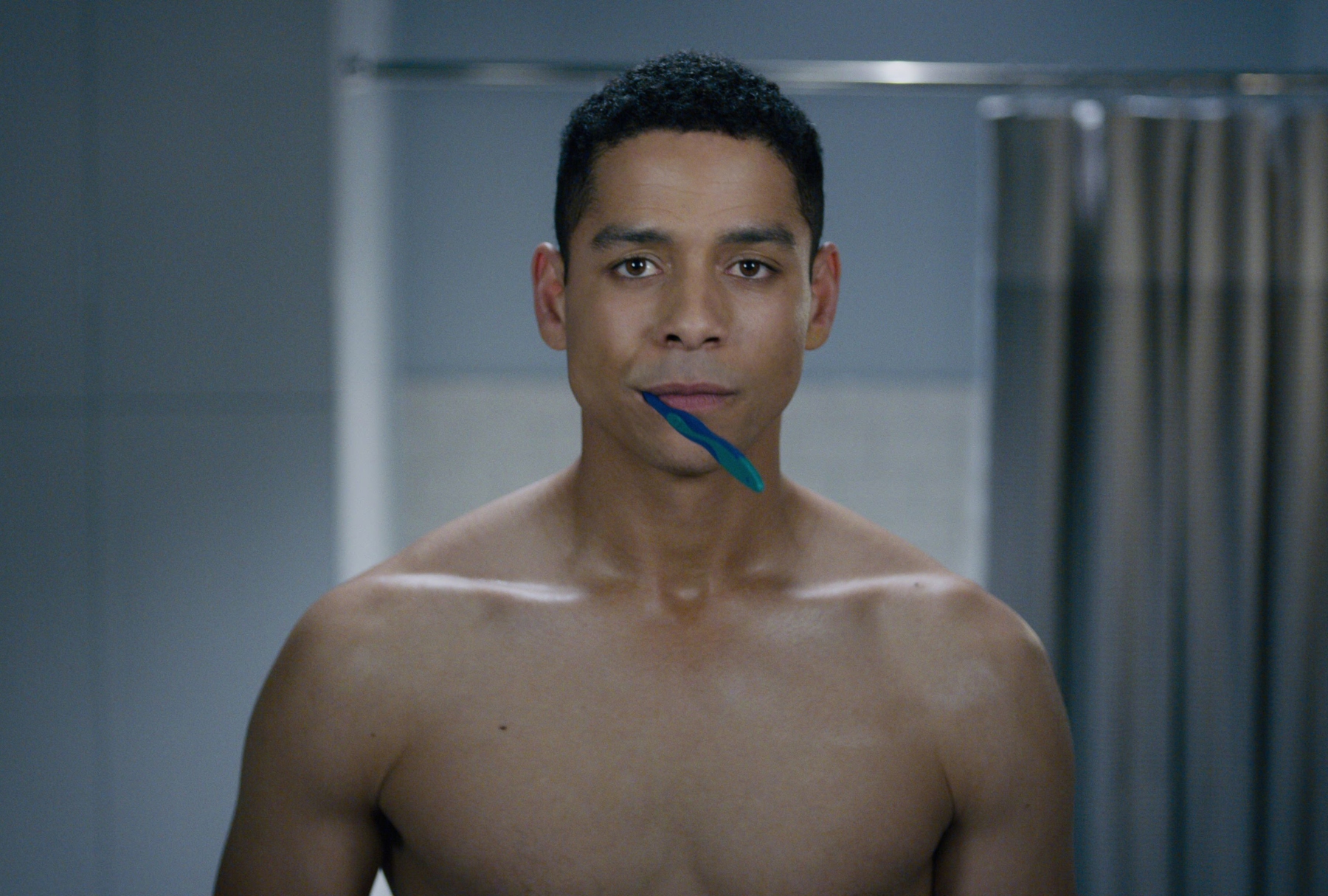
Charlie Barnett in “Russian Doll” (Netflix )Shortly before one of her deaths, this time in a plummeting elevator, Nadia meets Alan (Charlie Barnett), who understands what’s happening because it’s happened to him. “I die all the time,” he tells Nadia flatly, a great line in a show of great lines. Stuck in a time loop too, Alan and Nadia eventually join forces to figure out what the heck is going on with both of them.

The day before his first death, Alan had planned to propose to his girlfriend Beatrice (“Orange Is the New Black” star Dascha Polanco) but she broke up with him. In some timelines, she admits she’s been cheating on him with her professor. Alan eventually remembers his first death was the result of suicide. 

After rejecting a lot of theories — they keep repeating their deaths because they’re bad people, it’s a terrible drug trip, or Maxine’s apartment (a former Yeshiva school) is haunted — Nadia and Alan realize they crossed paths briefly before they died. And in order to stop dying, they need to help each other.

They do.

Ruth

In this mix, we have some wonderful supporting characters, some of whom have larger roles in the second season. Ruth (Elizabeth Ashley) is a standout and one to remember. A therapist who practices EMDR, Ruth acts as Nadia’s confidant. In her gravelly, wise voice, Ruth gives tough love advice and at one low point, helps get Nadia hospitalized for mental illness (but, wouldn’t you know it, the ambulance never makes it to the hospital).

They’re good friends to each other, despite the generational divide. Ruthie is a longtime family friend; she helped Nadia’s mother, Lenora (Chloë Sevigny) too, and eventually took in Nadia as a child when Lenora lost custody. Lenora never made it to her 36th birthday.

“This was always going to be a tough birthday,” Ruth tells Nadia at her party for her own 36th. Nadia answers: “Not everything is about Mom.”

“Emily of New Moon” 

But a lot is. Nadia had a difficult childhood. Her mom smashed mirrors in a fit of rage. She once obsessively bought watermelons. In one time loop, Nadia sees herself as a child, and child Nadia says to her: “This is the day we get free.”

Her only inheritance? One gold medallion she wears around her neck.

We aren’t given an explicit diagnosis for Lenora, but her instability and violence unmoored Nadia. As The Atlantic wrote, Nadia’s “great fear is that she shares that condition.” It’s a fear that ran like an electric undercurrent through the first season. “Nadia might or might not have a diagnosable condition, but inherited trauma like hers is the sort of thing that psychology and psychiatry seeks to treat.” 

Nadia’s favorite childhood book was “Emily of New Moon” by L.M. Montgomery, which comes up a lot in the first season of “Russian Doll.” Like a darker “Anne of Green Gables,” Montgomery’s novel, part of a series, is about a young girl who dreams of being a writer, despite her hard life (I remember being particularly upset as a child by a part in the book where Emily burns her journal to prevent her aunts from reading it again). Abused and neglected, Emily’s best friend is her reflection in the mirror. You can see the “Russian Doll” parallels already.

Like Emily, Nadia was orphaned. Her only inheritance? One gold medallion she wears around her neck.

Those Krugerrands

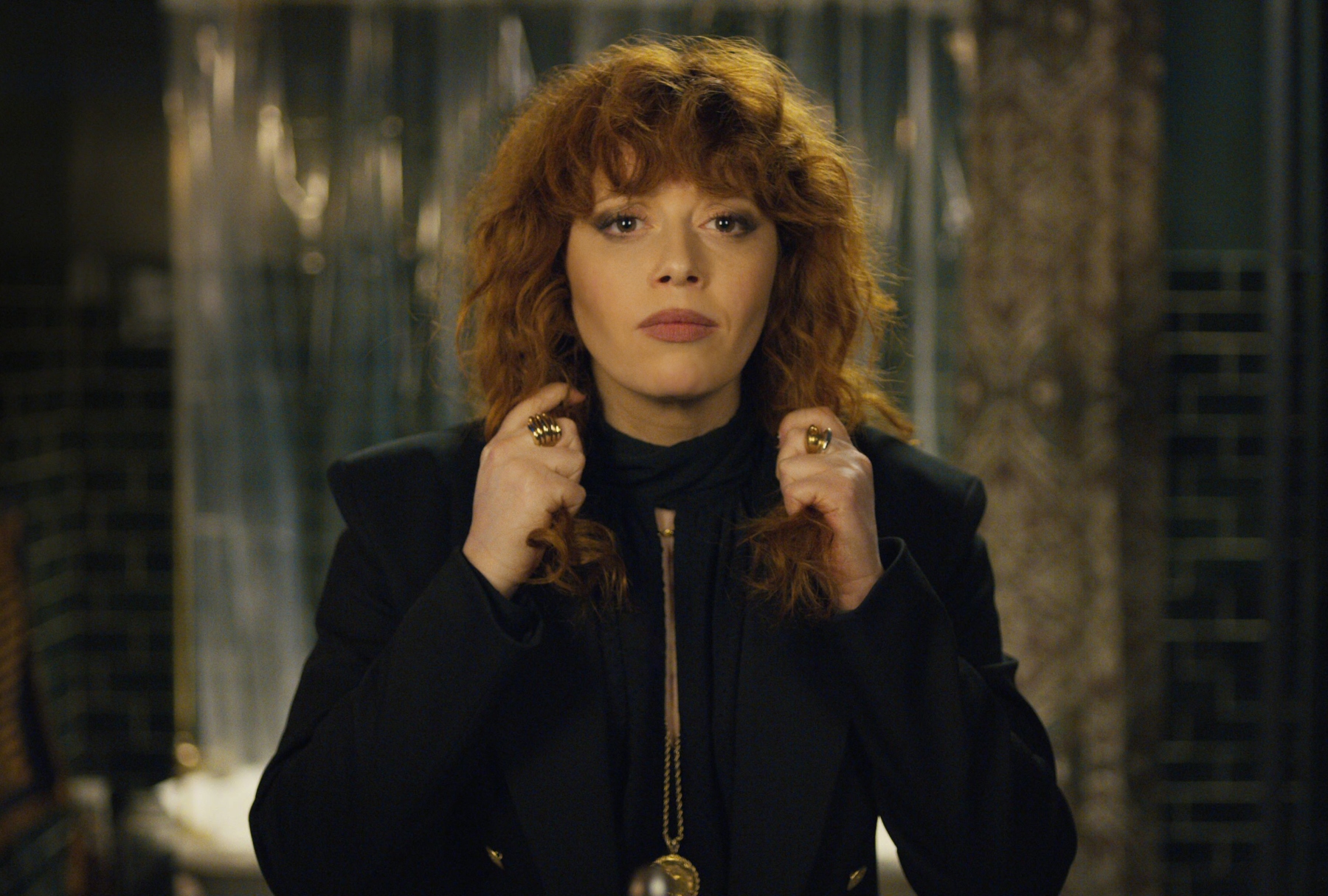
Natasha Lyonne on “Russian Doll” (Netflix)The necklace is the last of the gold her Holocaust-survivor grandmother turned all the family’s remaining valuables into after the war. She converted them into Krugerrands, a type of gold coin first minted in South Africa in 1967. Nadia explains to Alan: “You know, most survivors were a little bit paranoid about putting their money in banks, so my grandparents acquired 150 of these babies.”

But as a young woman, Nadia’s mother stole the Krugerrands from her own mother, and spent them all. The gold was supposed to be for Nadia’s college fund, but the one around Nadia’s neck is the only Krugerrand left. 


Want a daily wrap-up of all the news and commentary Salon has to offer? Subscribe to our morning newsletter, Crash Course.


It’s not simply pretty jewelry Nadia wears, but a symbol of what her family left behind, what was done to them and what was done to her. 

As Hey Alma wrote, “The darkness of this — Nadia’s grandparents survived the Holocaust, but no longer trusted anyone, and their daughter, Nadia’s mother, wasted all their money — is what makes this show so fundamentally Jewish.” 

Nadia’s Jewishness, like the gold, like her trauma and like her mother, will return in season two of “Russian Doll.” Like Nadia, returning to that mirror.

“Russian Doll” Season 2 begins its loop on April 20 (yes, 4/20) on Netflix. Watch a trailer for it below, via YouTube.

More stories like this:

Ukraine and genocide: A psychological roadmap of the killing grounds

If one looks at a map of Ukraine, the distance between Babi Yar and Bucha looks to be about 15 miles. The more revealing psycho-historical journey between the two places that is required of us at this moment runs through Moscow via a circuitous route, with mandatory detours marked along the way: One leads to the French village of Oradour-sur-Glane, another to the Katyn forest in western Russia. All these roadways are strewn with corpses. It is an itinerary of death, with silent guideposts pointing toward wartime atrocities that challenge our ability to understand how presumably ordinary people can so casually dehumanize and slaughter others.

  • In September 1941, a Nazi mobile killing unit, the infamous Einsatzgruppen C, began the systematic murder of Jews in what was then German-occupied Kyiv, efficiently machine-gunning more than 33,000 people in two days in a nearby ravine called Babi Yar. At the time, it was thought to be the largest mass murder of World War II; the existence of Auschwitz and other Nazi death camps for the purpose of mass extermination would not be exposed to the world for several more years. On March 1 of this year, Russian missiles struck the Babi Yar Holocaust Memorial Center, reportedly killing five people.
  • In June 1944, Oradour-sur-Glane, a small village in German-occupied France a few hours west of Lyon, was obliterated by a regiment of Nazi SS Panzer troops, who set about the task of razing every building to the ground, leaving behind the bodies of 642 civilian victims. Among the dead, 190 men were shot, including three parish priests; others (247 women and 205 children) died after being locked inside a church that was then doused with gasoline and set on fire by the SS troops. The ruins of Oradour-sur-Glane still exist today, preserved exactly as the Nazis left the village, offering a chilling reminder of the human capacity for deliberate cruelty as an organized technique of warfare. 
  • Evidence of a different sort of killing ground was uncovered in 1943 in western Russia, in the Katyn forest near the city of Smolensk, where Soviet NKVD secret police units, precursors to the KGB, summarily executed 4,443 captured Polish military officers on the orders of Joseph Stalin, who wanted to liquidate any potential opposition to his plans for controlling postwar Poland. While Stalin later attempted to shift blame for the corpses exhumed at Katyn to the Germans, forensic data left no doubt that their deaths were by Russian hands.

What ties these mass killings together — and connects them to the slaughter of innocents now occurring before our eyes in Ukraine — is the specific manner of death:  It was up close and personal, requiring individual soldiers to look into the faces of those whose lives they were about to end before pulling the trigger. 

RELATED: Will Russia’s war crimes in Ukraine convince the U.S. to consider its recent past?

These deaths were not the “unintentional” results of the kind of collateral damage that occurs in any war. Rather, what occurred were murders of individual human beings (whether known by name or unidentified), whose lives were taken as intentional instruments of terror, executed in cold blood by other persons (some of whom are known by name, others whose identities remain anonymous). Upon a random autopsy of any such individual case, then, a truthful medical examiner would be compelled to report that the manner of death was homicide. It is worth noting that such deliberate mass homicides of civilians unambiguously meet the internationally accepted legal criteria defining acts of genocide during war, as ratified in 1948 (in resolution 260-A) by the UN General Assembly. 

There can be no plausible deniability for war crimes of this nature, and certainly no credible alibis for those whose orders set the massive Russian war machine rolling into Ukraine. Consider as proof the intercepted radio communications between Russian troop units, clearly admissible as evidence for the prosecution — should this case ever be presented to the International Criminal Court in the Hague — that verifies the incontrovertible accounts of mass homicides and sadistic brutality: Exhibit A, entered as unwitting testimony recorded live from the killing grounds:

  • “Shell the villages directly,” one commander angrily shouts orders into his radio. “Raze them to the ground, got it?” 
  • Another officer is heard issuing damning instructions to his soldiers: “If there are civilians there, kill them all, for fuck sake!”
  • An intercepted personal cell phone call from a tank commander to a woman back in Russia captures him describing — with a tone of shame apparent in his voice — how three soldiers from his armored unit had repeatedly raped a 16-year-old Ukrainian girl the night before. “Our guys? Oh fuck,” replies the woman.

A Russian tank commander called a woman back home and described — with apparent shame — how three soldiers from his unit had raped a 16-year-old girl. “Our guys?” the woman replied. “Oh f**k.”

If anything is clear by now from this detour it’s that a sense of impunity is often a precursor to the commission of certain types of war crimes, especially when the uninvited intimacy of the up-close-and-personal manner of death or violent brutality allows the perpetrators to set aside the normal boundaries of simple human decency. In operational terms, the first step on the psychological pathway to genocide is to dehumanize the intended victims, then to enlist others in complicity.

In Ukraine, the evidentiary trail of accountability now leads clearly to the disturbing case of Vladimir Putin, whose enraged soldiers lined the streets of the Ukrainian village of Bucha with the decomposing bodies of civilians. Just as Stalin attempted to deflect responsibility for the dead Polish officers uncovered at Katyn onto real Nazis, Kremlin propagandists now label photographic and satellite evidence of Putin’s mass homicides at Bucha as “monstrous forgeries” — fake news invented by hostile Western governments and the alleged Ukrainian Nazis that have apparently taken up permanent residence in Putin’s fevered imagination. As the Russian president watches battlefield events unfolding in ways he never anticipated — and as the world recoils in collective horror from the televised scenes of his apparent war crimes — it must be the case that these enemies are secretly conspiring “to make Russia look bad,” as the Kremlin’s official press spokesman put it. No other explanation for this humiliating failure is allowable today in Moscow, certainly not the dangerous observation that Putin is rapidly achieving that unintended goal entirely on his own.  


Want a daily wrap-up of all the news and commentary Salon has to offer? Subscribe to our morning newsletter, Crash Course.


While judges and prosecutors at the Hague would likely view such presumptively absurd denials as consciousness of guilt — granted, some might be disposed to argue for a psychiatric defense involving a conspiratorial mode of paranoid thought disorder — neither the law nor psychiatry are of much use in understanding the depth of the collective pathological forces running wild throughout this cynical performance, an act that Putin described, curiously, as a necessary “self-purification” of Russian society.

A rapt world audience now has front-row seats to this public psychodrama with lethal consequences, a collective distortion of reality perhaps not seen since Joseph Goebbels, Nazi Germany’s propaganda chief. That may help explain why Putin unselfconsciously quoted Goebbels in remarks to a conference of Jewish leaders in Moscow in 2014, as reported in an Israeli newspaper at the time. Referring to the purported rise of Nazism in Ukraine, a recurring Kremlin theme, Putin recalled Goebbels’ dictum that “the more improbable the lie, the faster people will believe it.”  “And it worked,” Putin noted admiringly, calling Goebbels “a talented man.” 

More ominously for the future of Ukraine, Putin might also have been pondering Adolf Hitler’s 1939 thoughts on the twin pillars of impunity and genocide — “Who, after all, speaks today of the annihilation of the Armenians?” — as evidenced in a document introduced at the Nuremberg tribunal, when he gave the orders for the Russian military to crush what he considers the “nonexistent” Ukrainian people and their culture. First comes the well-crafted protocols for dehumanization, followed by the descent into moral complicity as the war machine begins its inexorable march toward genocide. 

Rarely has the psychology of impunity and genocide been made so explicit as it was in the October 1943 address by Heinrich Himmler, Reichsführer of the SS, during an address to a group of senior officers and Einsatzgruppen leaders in occupied Poland — chilling remarks acknowledging the stress involved for loyal German soldiers when carrying out orders for “the extermination of the Jewish people.”

Most of you here know what it means when 100 corpses lie next to each other, when there are 500 or when there are 1,000. To have endured this and at the same time to have remained a decent person — with exceptions due to human weaknesses — has made us tough, and is a glorious chapter that has not and will not be spoken of… We have the moral right, we had the duty to our people, to kill  this people who would kill us… We have carried out this most difficult task for the love of our people. And we have suffered no defect within us, in our soul, in our character.

Clearly, the Reichsführer took the term “consciousness of guilt” to an entirely new level, worried about the emotional strain of so many manual shootings of Jews on the mental health of his SS executioners. This problem would be alleviated by the use of gas chambers in the death camps, he assured them, technology that offered much more efficient (and therefore less stressful and more anonymous) killing grounds. “Yet we shall never speak of this in public,” Himmler cautioned.

Eyewitness reports from Bucha indicate that Russian soldiers went door to door asking “where the Nazis lived.” There weren’t any Nazis, so they started killing people.

Holding aside the psychological impact of Putin’s improbable lies on Russian citizens in general — some of whom have courageously risked imprisonment to protest the war, though most appear to have embraced (whether tacitly or enthusiastically) the patriotic necessity for the cultural annihilation of their neighbors — the actual battlefield behavior of Russian soldiers in particular yields clinical insight revealing as much about the collective descent into barbarism that occurred in Oradour-sur-Glane and the Katyn forest as about the deaths in Bucha. Eyewitness reports from survivors in Bucha indicate that Russian soldiers went door to door and randomly stopped residents in the street, angrily demanding to know “where the Nazis lived.” When told that there were no Nazis in Bucha — not the sort of compliant answer the Russians wanted to hear — the immediate consequence for such impertinent resistance was often another homicide committed with impunity (and in plain sight).  

At this critical moment, the requirement to effectively support Ukraine with the moral clarity of truth-told-in-plain-sight is every bit as powerful as the delivery of weaponry, which is why President Biden’s unequivocal J’accuse directed at Putin’s genocidal behavior may assist the world with the overdue recovery of long-forgotten memories, not simply the physical exhumation of corpses from the rubble of history. 

Russia is by no means the only place in the modern era where improbable lies have taken deep root — genocidal killings in Rwanda, Cambodia, the former Yugoslavia and now Myanmar have all competed for our attention at one time or another — but the current process of dehumanization against the Ukrainian people that is underway in Moscow’s media propaganda factory offers a special warning for citizens of democratic societies about the deliberate distortion of reality as a persuasive mechanism for driving human behavior down unthinkable pathways. Witness, especially, the virulent wave of dehumanizing rhetoric about the Ukrainian people now flooding the airways of Russian state-owned media outlets, with Putin’s loyal hacks sounding ever more frantic in their demands to “de-Ukrainianize” an entire culture and national identity.

Goebbels and his protégé in Moscow tell us that clever propaganda will always shape human perception and behavior to their genocidal ends. But sometimes truth manages to claw its way out of the graveyard, exposing the impotence of their improbable lies. 

Ukrainians are showing us the stark moral choice that now confronts the world: Either we tolerate the cruel impulse of certain nations to dominate others at any price, even that of genocidal murder; or we stand with those who seek nothing more than the right to choose their own independent identity at any price, even at risk of death.

We need to listen to what they are telling us.

Read more on Putin, Russia and the war in Ukraine:

Like food and sex, “Julia” and “Minx” are meant to be enjoyed together

If you’re looking for a good time, how about a show that follows a woman dedicated to transforming how we view a woman’s role in society, the worth of her domestic contributions, and normalizing sensual delight? As the season progresses we watch her endure setbacks and make significant sacrifices that pay off handsomely. She’s even able to claim her place in an industry dominated by men.

Am I talking about “Julia,” a light comedy based on Julia Child’s life, or its HBO Max sibling “Minx,” a romp that follows a young woman publishing a forward-thinking porn magazine for women?

That’s a trick question. The correct answer is both.

The only naked meat in “Julia” is the kind that goes in her boeuf bourguignon.

Child’s primmer viewers (if such a segment still exists) may take exception to this theory, even though it isn’t at all surprising; food and sex trigger the same parts of our brains that recognize pleasure. But hear us out: In many ways Joyce Prigger (Ophelia Lovibond), the heroine of “Minx,” is a spiritual sibling to Julia Child (Sarah Lancashire).

Joyce is a dyed-in-the-wool young feminist who teams with a shaggy porn publisher named Doug Renetti (Jake Johnson) to put out an adult magazine featuring fully nude men, but only as a lure. The mag’s real meat, Joyce insists, is its edgy coverage of the struggle for women’s rights.

The only naked meat in “Julia” is the kind that goes in her boeuf bourguignon. Indeed, little about Lancashire’s portrayal suggests an air of bawdiness about the saintly chef . . . aside, perhaps, from her intentionally saucy coq au vin pitch.

“It will fill your home with the marvelous aroma of sizzling bacon and garlic and herbs and onion and mushrooms and red wine,” Julia coos, drawing out each ingredient’s vowel before quipping, “and dare I say, it’s just about the most delicious coq I’ve ever put in my mouth. And that’s saying something!”

RELATED: How Julia Child’s dishes were recreated for TV

Double entendres are the lowest on the list of traits “Minx” and “Julia” share. Here’s a look at how else they’re eerily alike:

A woman’s vision without compromise

MinxJake Johnson and Ophelia Lovibond in “Minx” (Katrina Marcinowski/HBO Max)Five episodes into the first season of “Julia,” the hit status of “The French Chef” and her cookbook are amply established even if Julia is still saddled with paying for the food she cooks in each episode. (At least she’s not paying for the episodes themselves, as she originally agreed to do.) Yet the management’s boys club at her producing station WGBH still doesn’t view her expertise with the same respect as their more professorial hosts, and disregards Alice Naman (Brittany Radford), the woman who discovered Julia.

Substitute disgust for disdain, and you have a summary of Joyce’s first feeling about Doug on “Minx.” She’s disgusted by the fact that his magazine empire, Bottom Dollar Publications, cranks out cut-rate smut objectifying women into masturbation devices.  But Joyce can’t get any other publishers to fund the magazine she wants to publish, one that features honest, unsparing coverage of feminist issues.

Doug sees women as the erotic magazine industry’s great untapped market. Joyce helps him realize that the way to successfully appear to that tough-to-crack demographic is to pair titillation with intellectual stimulation. So they agree to use each other, on the condition that he give her near-total editorial control in exchange for featuring full frontal male nudity.

Redefining the traditional view of feminism

Sarah Lancashire on “Julia” (Seacia Pavao/HBO Max)From a 2022 perspective, Julia Child was a feminist through and through. “Julia” makes that argument by showing her constant resistance to snubbing by the men around her not only with charm but by showing them the higher worth of a necessary domestic activity typically derided as women’s work. The entirely fictional Joyce expands that view to encompass the entirety of relationships between men and women, questioning the uneven division of labor around the house and in bed.

“Male desire is celebrated. Why should female desire be any different? “

“Julia” and “Minx” also take place during the second wave era of feminism, with Julia Child rising to national prominence in the early ’60s, prior to the national push to ratify the Equal Rights Amendment. Joyce and Doug are operating in the thick of it, earning the ire of right-wing “family values”-focused councilwoman Bridget Westbury (Amy Landecker). But a fellow traditionalist on the feminist side of the court, Victoria Hartnett (Hope Davis), has no great love for Minx, much to Joyce’s shock when she appears with her on an episode of “The Dick Cavett Show.”

Child, meanwhile, was misinterpreted as a figure devoted to upholding the patriarchal status quo that relegates women to the kitchen; worse, she was accused of setting a high, unattainable bar for homemakers to meet. I won’t spoil how that plays out in “Julia” since that episode has yet to air, but in an interview conducted in the late ’70s she explains that this was never her goal.

“My point is to make cooking easy for people so that they can enjoy it and do it, rather than making it a kind of art for the ‘we happy few,'” she said. This echoes what Joyce comes to embrace about the demographic her magazine serves: women who believe they have as much of a right to erotic satisfaction as men.

“Male desire is celebrated. There’s an entire industry built on servicing it!” she tells a pair of sexist apes passing as radio shock jocks. “Why should female desire be any different? . . . Men like you are really good at limiting women’s options. Now maybe, just maybe, you guys are worried is that my magazine can offer them something that you can’t.”

Managing the male egos that should’ve been supportive

David Hyde Pierce and Sarah Lancashire in “Julia” (Seacia Pavao / HBO Max)

On “Minx” this doesn’t refer to Doug but Joyce’s ex-boyfriend Glenn (Michael Angarano), a fellow journalist who lands a job at a lad mag while Joyce struggles to get her periodical off the ground. Glenn’s admission that he doesn’t believe in Joyce’s dream leads to them breaking up. Once Minx grabs national attention (and after Cosmopolitan successfully mainstreams the softcore male centerfold ) he changes his tune.

Turns like this are fairly typical in season-long arcs. However, “Julia” creates this obstacle from the very start by proposing that the first man to stand in her way was none other than her husband Paul (David Hyde Pierce), which goes against the popular story of their great love affair.  By manipulating Paul into thinking her show is his idea with the help of her ally and editor Judith Jones (Fiona Glascott), Julia gets him on board without bruising his ego.

This is how Julia handles all the men who don’t believe in her, much to the dismay of her best friend Avis (Bebe Neuwirth). “I just think about how many more hours in the day we’d have if you didn’t have to spend so much of it apologizing to men for your success,” Avis says, which Julia shrugs off.

“Men just need a little boost sometimes,” she explains. “I find it terribly moving! It can’t be easy having a woman steal your shine.”

“What shine did you ever steal? That’s your shine,” Avis retorts.

Women supporting other women – and mothers as the secret weapon

Oscar Montoya, Jessica Lowe, Lennon Parham on “Minx” (Katrina Marcinowski / HBO Max)Joyce may see herself at the face of women’s equality, but her sister Shelly (Lennon Parham) and her centerfold coordinator Bambi (Jessica Lowe), one of Bottom Dollar’s most popular nude models, make her a better feminist. Shelly calls her out on her assumptions about stay-at-home mothers and contributes editorial suggestions that make the first issue of Minx success.

Bambi’s comfort with her sexuality and participating in Doug’s business forces Joyce to reconsider her long-held assumptions about sex workers.

Meanwhile, “Julia” affirms that the star could not have pulled off “The French Chef” without behind-the-scenes assistance from Avis and Julia’s other friend Dorothy (Lindsey Broad), the mother of a young baby who Julia inspires to pull her own career ambitions out of mothballs. After all, mothers know how to pull off the impossible.


Want great food writing and recipes? Subscribe to Salon Food’s newsletter, The Bite.


An attempt at intersectional allyship 

This point comes with giant caveats, foremost being that “Julia” and “Minx” are fantasies whose white-centered visions of female empowerment shouldn’t be sugar-coated. For one thing, neither of the Black women in its ensemble are real; Alice Naman is a composite based on several producers at WGBH. Despite taking place in the Civil Rights era – and in Boston, one of America’s most segregated cities – we never see her experience overt racism, preferring to make Alice’s struggles at WGBH akin to the sexism Julia confronts. 

JuliaQueen of Sheba cake from “Julia” (Seacia Pavao / HBO Max)

Having said all of that: just as Alice sees astronomical potential in Julia, Julia acknowledges that Alice is essential to her success. She advocates for Alice, encourages her to stand up for herself and backs her up when she does.

Meanwhile, in “Minx” Joyce wakes up to the fact that in the ’70s, mainstream feminism is defined by and primarily meant to benefit white, straight women. Doug’s – silent? secret? – business partner is Tina (Idara Victor), a Black woman he introduces as his secretary. Soon enough, though, anyone can see that she wields more power behind the scenes than Doug lets on. Doug is the face of Bottom Dollar while Tina is the brains. He knows the business won’t work without her.

But it truly doesn’t work without Bottom Dollar’s photographer Richie (Oscar Montoya), an underappreciated groundbreaker whose work broadens Minx’s market to appeal to both straight women and gay men. “All we get are these tortured physique poses – beefcakes on the boardwalk which, in the right mood, why not?” David Hockney (Laurence Fuller) tells him at a party. “But you’re giving us actual male desire. That’s really something.”

Over on “Julia” the star discovers the coincidental service she provides to people on the margins when she meets San Francisco drag performer Coco Vin while enjoying a night on the town with James Beard (Christian Clemenson), who is gay. The show depicts Julia as conflicted in her feelings about queer people, particularly when she crosses paths with a fellow Smith graduate who names her as the reason she embraced her lesbian identity. Julia is no less wary of Coco when they first meet but, for obvious reasons, it doesn’t take much for Julia to see herself in her biggest fan, perhaps nudging her closer to a more inclusive way of seeing the world.

This list could go on, delving into the way each show depicts what goes into producing magazine issues and TV episodes, or the myriad details in the set and costume designs that align with each show’s philosophy of prioritizing unapologetic gratification, whether in the domestic sphere or beyond. Heck, when a woman who has just taken a cooking class with Julia asks Avis if shrimp is an aphrodisiac, you can almost envision Joyce endeavoring to answer that question.

Take visualizing “Minx” as a “Julia” lookalike, and vice versa, as a compliment, not a dig. “Minx” has run through its full first season, which may leave its fans bereft – not to mention nervous, since HBO Max has yet to pick up a second season. “Julia” is still cooking off a few episodes, although we’re in no hurry for it to finish either. Knowing there’s more of everything is always comforting, and if you’ve been shy about turning on one of these shows, release those inhibitions and turn it on. We’ll bet you’ll develop a taste for both.

All first season episodes of “Minx” and the first five episodes of “Julia” are streaming on HBO Max. New episodes of “Julia” debut Thursdays through May 5.

More stories like this:


Writing the family story behind a tragic headline: “What felt so personal to me was already public”

Ashley Marie Farmer’s debut collection of essays, “Dear Damage,” opens with a straightforward description of an act of violence that shook her immediate family and shocked their Nevada community: “On January 19, 2014, my grandfather Bill walked into my grandmother Frances’s hospital room with a loaded gun he’d purchased that morning.” Her grandmother had been injured after a fall at home that left her paralyzed with “a type of neuropathy that causes an unrelenting pain that the strongest drugs don’t touch.” Frances had said more than once that she wanted to die. In what was meant to be a final act of love, Bill shot her in the hospital bed, then tried to shoot himself, but the gun broke, and he was arrested. It was deemed a “mercy killing,” with all the sensationalized press coverage and impassioned public debate a case like that tends to spark.

This cataclysmic event is the axis around which Farmer’s meditations and explorations of family, place, grief, loss and violence revolve, in essays that take both traditional and experimental forms. “Remembering an act of violence born not out of malice, but love,” Kat Chow writes in the New York Times, “Farmer’s narrative is melancholic, but still full of hope.” 

I interviewed Farmer recently about “Dear Damage,” which was published in March by Sarabande Press. 

Your book begins with a startling scene of violence. In the opening paragraph of the essay, “Mercy,” you describe the steps your grandfather took to shoot your grandmother, and then try and fail to shoot himself. There are places many readers’ minds will go — considering what we know about men and women and guns and violence — upon reading such a scene, though the truth of his motivation was much different. How did you decide on that opening?

“There was so much more to them than their final moments or any headlines.”

What you highlight in your question — that the shooting could conjure different thoughts about motive and intention — is part of the reason I opened with “Mercy”: I wanted to be upfront about the turn of events. It felt important not to hint at it or generate suspense in order to surprise readers at page 40 — I think that would’ve felt disingenuous to me, especially when the shooting was the impetus for this book. Instead, I wanted to lay down the facts (or my experience of them, at least) from the first paragraph as clearly and honestly as possible so that I could use the rest of the book to zoom out and explore a constellation of various peoples’ perspectives on it. Basically, I felt like I was saying to the reader, OK, let’s just get this out of the way — here’s what happened. Then I could write about my family and guns and art and love, all within the context of that January morning.

And on another level, I suppose I’m making an argument that, while this troubling, tragic event happened at the end of my grandparents’ lives, there was so much more to them than their final moments or any headlines. 

When a personal tragedy becomes a public event for consumption, that transformation is also a kind of violence. You write that you were reluctant to tell this story. Can you say more about that, and maybe how you overcame that?

My reluctance to write this book came from a place of wanting to do right by my family while simultaneously conveying my own complex thoughts about this incident — I didn’t know how well I could do that. But I was ultimately compelled to write this, frankly, because other people already had done so in news stories, journals, books and online comments. What felt so personal to me was already public.

For instance: The morning of the shooting, they let my siblings walk inside the locked-down hospital. A news crew filmed this and, from my laptop in California, I watched my sister, sister-and-law, and brother hurry inside — a moment almost dreamlike in its weirdness. Not long after, a couple of reporters appeared outside my grandparents’ house to broadcast near their driveway. I know this because I was Googling the story from my sofa — since I couldn’t fly there right away, my instinct was to look it up online and obsessively refresh. I watched in almost real time how other people perceived what my grandfather had done or speculated about his motives. Then, months later, an excerpt of a letter I’d written to the public defender appeared in some articles about the case and it was jarring to see my words quoted. I hadn’t known it would be part of a public record. 

“I thought I could challenge or complicate the knee-jerk assumptions and offhand comments strangers had made.”

So even though I was initially hesitant, I wanted to convey my own understanding as someone who knew these two people well. By doing so, I thought I could challenge or complicate the knee-jerk assumptions and offhand comments strangers had made. I also had an impulse to create something about my family that could last, to make something beautiful about who they are and were. Because there’s an irony in having a personal event in the news: Just as it’s a shock to see people you know in a broadcast, it’s also a shock to see just how quickly the story disappears. It’s so fast how the world moves on. Which is exactly like grief: You’re stopped in time, but everything around you continues.

Related to that public consumption of personal tragedy, do you have thoughts on true crime as a pop culture obsession?

The fascination with true crime in pop culture is interesting to me. I’m sure a psychologist could explain why we’re captivated by things that scare us or repel us or force us to face darkness. And from a storytelling perspective, this stuff makes for layered, dynamic narratives. But I think any interest I’ve personally had boils down to curiosity about how or why a fellow human does something they shouldn’t do. I mean, I didn’t write a true crime book here or anything, but I’ve spent several years trying to understand a trespass committed by someone I actually know. When I think of true crime podcasts I’ve been hooked on, it’s always been much less about the crime and more about wanting to understand the person.

Given my experience, when I listen to crime podcasts or hear about these events, I often think about the family and friends connected to these true stories. It’s kind of hard for me to tune in now without thinking about all of the people in the periphery and how they view the crime or were affected by it.

“Dear Damage” employs many different forms in this collection: transcripts from interviews with your grandparents, court documents, even online comments on news stories. Did you set out to write in this assemblage form? How do you decide when to present material as you found it and when to adapt it into narrative? 

“I was at my grandparents’ house for the holidays. … Eighteen days later, everything changed.”

I knew I wanted the audio transcripts threaded throughout the book. The fact that I even had them was kind of amazing: a few weeks before the shooting, I was at my grandparents’ house for the holidays. I told them I was writing a book about California and I wanted to know about their experiences. Eighteen days later, everything changed. So I felt from the start that their voices could bind the book together. And, as I mentioned earlier, I was also fascinated by other peoples’ voices — strangers’ voices — and originally included a lot more commentary from people who’d shared their takes on things through various lenses (religious, medical, political, etc.).

Ultimately, it made sense to use these available materials to convey my ideas about what happened: I was assembling my understanding of things as I went along, maybe. I’d had Anne Carson’s “Nox” on my mind in those early days of this project: I admire how she explored her brother’s life via her incredible mixed media book. Plus, I have to say that the kaleidoscopic approach is fun in this technical way — despite some of the seriousness of the content, there was real pleasure in moving text around, cutting things up and rearranging pieces. 

Your essays take place in Nevada, Kentucky, Syracuse, and California, but it’s California that has the biggest psychic hold — a character more than a place, even. How would you describe the role California plays in this book?

The ocean, surfers, Venice or Huntington Beach: all of this is my grandmother and mother’s California. I grew up romanticizing their experiences as I sat on the floor in Kentucky or Nevada, flipping through my mom’s old high school yearbooks and wishing I was a hippie kid back in her era. It’s the same with Frances: I loved her version of Los Angeles with the streetcars and big bands and orange groves, these rolling green hills. Their stories about California and the several generations of family I never met who’d lived there were so precious to me. I was born there, too, though my parents moved when I was six months old, so I liked imagining I was tethered to it.

What’s funny, though, is that even though I’ve lived there a few times — had my own California eras as an adult in many of the very same spots my relatives had lived — I hadn’t set out to go there intentionally because it’s California. It was school or a relationship or other external factors that brought me there. Almost by chance, I once had an apartment right down the road from the shipyard where my grandfather worked and I’d sometimes happen to drive through neighborhoods where my mom lived as a little girl. I’d call them up and ask about this beach or bridge or landmark, send them photos of The Queen Mary docked right down the street, a ship my grandfather worked on when it came in for the last time. So maybe it was inevitable — maybe I really am tied to the place after all. And though I don’t know that I’ll ever live there again, it’s still this dazzling, complicated place I love, one that tugs at me sometimes.

“Like so many other adjuncts, I’d hustled until I couldn’t any longer.”

One of the California-set essays, “American Dream Job,” is about adjunct teaching. In it you detail the pain of a path that is familiar to many who perform the on-demand labor that universities now run on. Can you talk a little about why you wanted to write about the adjunct path in this collection?

The adjunct essay came about because it’s another type of grief that basically showed up at the same time these family events transpired. Like so many other adjuncts, I’d hustled until I couldn’t any longer and then arrived at this moment of clarity about the system. The realization came with heartbreak — it felt like a loss because I loved (and still do love) teaching.

There are a lot of goodbyes in this book — to family, to California, to ideas about motherhood, to my belief that my life would look much like my parents’ or grandparents’. Making a living in academia was another idea I said farewell to — almost literally when my husband Ryan and I packed the car, put the cat in her crate, and drove out of the state.

This book tells a love story within a love story, too — your grandparents Frances and Bill, you and your husband Ryan. In a book about pain and suffering, there are many moments of beauty and light written in. How did you know when you had found the right balance?

Thank you! All the credit for this balance goes to Sarah Gorham, Sarabande’s brilliant and generous Editor-in-Chief that I had the privilege of working with on this book. In earlier drafts, I hadn’t written as much about Ryan and our life together — I think I’d be less inclined to write about romantic love if not nudged to do so, because it feels personal in a way that the heavier stuff somehow doesn’t. But Sarah helped me see early on that there were opportunities to create greater contrast and brighten parts of the book, which was originally much darker. I’m grateful for her advice. I learned a lot from her that I’ll carry into future writing projects.

You’re a poet and a fiction writer, too. Can you talk a bit about how — or if — poetry and fiction have helped shape your nonfiction writing?

In poetry and short fiction, I’m always excited by voice, language, and momentum. I tried to modulate across the book so that more lyrical essays bumped up against starker prose-poem-ish studies of people or geographies. The poet in me also enjoys compression: I never really envisioned this as a big book. Instead, I wanted it to feel distilled in some spots, urgent in others. I like the challenge of conveying big ideas and images within short bursts. As a reader, that’s the kind of writing that leaves a strong impression on me.

Memoir-plus and the linked essay collection feel like they’re having a good moment right now. I’m reading so many good books in those veins. As a reader and a writer, what draws you to this mode of personal narrative?

I agree! There are so many fantastic collections right now. As a reader, I appreciate the generosity of essays and memoirs — the fact that people let you into their lives and brains that way. From a writing/craft point of view, it feels like there are endless possibilities in terms of forms or approaches. There’s so much potential for experimentation and forging your own unique style, something I’m floored by in my peers’ work.

And finally, who and what are you reading these days?

For a project, I just reread “Night Rooms” by Gina Nutt, a friend and essayist I admire. She explores grief and loss through the lens of horror films. I’ve also been excited about poetry lately: I have on my nightstand the brilliant “Dear Weirdo” by Abraham Smith and Tyler Friend’s “Him or Her or Whatever,” which I got after hearing them give a wonderful reading. I just started Kat Chow’s “Seeing Ghosts: A Memoir” — so captivating. And I love anything from The Audacity, Roxane Gay’s newsletter that often features essays by emerging writers. Some of the writing I’ve loved most across the last year or so has shown up in my inbox that way.


Want a daily wrap-up of all the news and commentary Salon has to offer? Subscribe to our morning newsletter, Crash Course.


Read more Salon interviews with writers on memoir, grief and true crime: 

Pluto wasn’t the first: A brief history of our solar system’s forgotten planets

A kindergartener in 2005 and a kindergartener in 2006 would have learned very different facts about the number of planets in the solar system. 2006, of course, was the year Pluto was reclassified as a dwarf planet — a move that sparked outrage among a public that tends to romanticize our solar system. 

But long before the Pluto “controversy,” other objects moved on and off the official list of solar system planets. Indeed, a kindergartener in the early 1800s would have learned that Ceres was a planet. 

So while the argument over planethood might seem like a modern astronomical debate, 19th century astronomers were bedeviled by this question of how to define what actually counts as a planet.

RELATED: Hubble discovers a Jupiter-like planet forming in a very strange way

And, as alluded to, Ceres predates Pluto in his controversy. The asteroid belt, which sits roughly between Mars and Jupiter, is filled with minor planets and asteroids. One of those celestial bodies, Ceres, has a surface covered in minerals like clay and carbonates, as well as water ice. It is an odd world, to be sure: because it is not completely frozen and is covered in salt water, scientists believe Ceres could harbor microbial life. This places Ceres in stark contrast with Pluto, which is on the far side of the solar system and has an entirely frozen surface. In addition, whereas Ceres is a dull monochromatic gray, Pluto’s colors range from white and black to vivid orange.

Yet Ceres and Pluto have one very important thing in common: Astronomers at one point thought they should be classified as planets, but then changed their mind. It all comes down to size, which in the case of planetary science really does matter.

Flashback to the beginning of the 19th century. An Italian priest and astronomer named Giuseppe Piazzi at the Palermo Observatory had answered a nearly three-decade old question: Why did the orbits of Mars and Jupiter indicate that a planet existed between them even though none could be found? On Jan. 1, 1801, Piazzi seemed to answer this question by announcing that he had found a “star” which had moved from its position in the Taurus constellation. Scientists soon concluded that this must be the missing planet and assumed the matter was resolved.


Want more health and science stories in your inbox? Subscribe to Salon’s weekly newsletter The Vulgar Scientist.


Then another “planet” was discovered. On March 28, 1802, German physician and astronomer Heinrich Olbers discovered Pallas; this was rapidly followed by Juno in 1804 and Vesta in 1807. Each was duly designated as a planet, although astronomers began to have their doubts that this increasingly-cumbersome system was working out. Although scientists were given a breather for a few decades, a plethora of new discoveries between 1845 and 1852 left the astronomical community with 15 asteroids to account for. None of the new ones were labeled as planets, but it was becoming increasingly clear that reforms would be necessary. By 1867, it was clear that Ceres was too small to be grouped in with a body like Earth, and so it was given a new designation: Minor planet. And instead of being given fancy names and symbols, they would be labeled with numbers based on when they were discovered or their determination of orbit.

This bring us to Pluto. While Ceres has a diameter of 588 miles (compared to the Earth’s 7918 mile diameter), Pluto has a comparatively heftier diameter of 1477 miles. Yet this did not save Pluto from getting the axe as a planet when the International Astronomical Union met in 2006. The reason was, quite simply, that astronomers had decided that there were three criteria for being considered a planet:

So, the three criteria of the IAU for a full-sized planet are:

It is in orbit around the Sun.

It has sufficient mass to assume hydrostatic equilibrium (a nearly round shape).

It has “cleared the neighborhood” around its orbit.

Because Pluto did not meet the third requirement — it has not “cleared the neighborhood” around its orbit — it lost its status as a planet. Clearing the neighborhood means that the region of space near which it orbits the sun is bereft of larger bodies, having been absorbed into the planet. Ceres, like Pluto, clearly doesn’t pass this criteria: the asteroid belt in which Ceres resides is evidence of a “failed” planet that didn’t clear its neighborhood. Indeed, there are multiple other relatively massive bodies — Vesta, Pallas, and Hygiea — also in Ceres’ vicinity. 

Pluto had held this distinction of planet for 76 years, starting with its discovery in 1930 by American astronomer Clyde W. Tombaugh. The demotion of Pluto to dwarf planet remains controversial, and not just among lay astronomers. A team of American scientists published a paper in December in the scientific journal Icarus arguing that a “planet” should be defined as any geologically active celestial body. One co-author argued that we should say there are “probably over 150 planets in our solar system”; the paper claimed that the need to distinguish planets from moons is cultural, not scientific, and hinders proper understanding of astronomy.

“We found that during the 1800s the non-scientific public in the Latin west developed its own folk taxonomy about planets reflecting the concerns of astrology and theology, and that this folk taxonomy eventually affected the scientists,” the scientists explained. They later concluded that “using the geophysical planet concept with subcategories for the individual features (including gravitational dominance) makes the planet concept both useful and deeply insightful for communicating with the public.” This did not happen in 2006, they assert, because “because adequate time was not taken to sort these issues,” with the resulting vote leading to “a deeper split in the community.”

Ironically, even as Pluto was being demoted, Ceres nearly received a promotion. An earlier 21st century proposal for defining a planet would have done so by describing a planet as having enough mass to be nearly round and to orbit around a star without being a satellite of a planet or a star itself. Had this definition been accepted, Ceres would have become the fifth planet from the Sun.

For more Salon articles on astronomy:

Putin can’t take much more of this: What lies ahead, defeat or apocalypse?

Well, the Big Lie, Russian style, has begun. It’s not exactly like losing an election — that’s never going to happen in Vladimir Putin’s Russia — but losing a guided missile cruiser, the Moskva, the most important warship in Russia’s Black Sea fleet is, let us say, just a little hard for the big guy to stomach back at the Kremlin, or the dacha, or whatever bunker he’s keeping himself in these days. 

But not to worry! Russki spinners were on it before the big ship even hit the bottom! Uh … hmm … I’ve got it! A fire broke out on board! It spread to the ammunition stores! There was an explosion! That’s the ticket!

Anything but the obvious: it was sunk by two Neptune anti-ship missiles fired from Ukrainian soil. So what does Putin do? Why, he has one of his factotums deliver a diplomatic protest known as a démarche from the Russian embassy in Washington to the Department of State threatening “unpredictable consequences” unless the U.S. stops shipping advanced weapons to Ukraine. 

RELATED: Putin’s big fail: He’s a spook, not a military commander — and not even a good spook

The Russian threat came on the heels of a warning by CIA Director William J. Burns that Putin might resort to the use of tactical nuclear weapons to counter his losses on the battlefield and now the high seas. “Given the potential desperation of President Putin and the Russian leadership, given the setbacks that they’ve faced so far, militarily, none of us can take lightly the threat posed by a potential resort to tactical nuclear weapons or low-yield nuclear weapons,” Burns said in answer to a question from former Sen. Sam Nunn of Georgia, who was one of the architects of the agreement that removed nuclear weapons from Ukraine and other former Soviet client states 30 years ago. (You remember that jewel: Russia would take the nukes from Ukraine and the rest of the vassal states in return for providing their security.) Burns is a former ambassador to Russia who dealt directly with Putin while serving in Moscow and is the Biden administration official most familiar with his thinking.

Meanwhile, following Finland and Sweden’s announcements that they will petition to join NATO “within weeks, not months,” Moscow confirmed Burns’ suspicions by once again rattling its nuclear saber. Dmitry Medvedev, former president and deputy chairman of Russia’s Security Council, posted this on his official Telegram channel on Thursday: “If Sweden and Finland join NATO, the length of the alliance’s land borders with the Russian Federation will more than double. Naturally, these borders will have to be strengthened. Russia will seriously strengthen the grouping of land forces and air defense, deploy significant naval forces in the waters of the Gulf of Finland. In this case, it will no longer be possible to talk about any nuclear-free status of the Baltic.”

Putin has taken one body blow after another since he ordered the invasion of Ukraine almost two months ago. First, it was the humiliation of the 40-mile military convoy from Belarus to Kyiv that was supposed to take the Ukrainian capital city and decapitate its leadership, sending Volodymyr Zelenskyy into panicked flight. Didn’t happen. Instead, Putin’s convoy was repeatedly attacked by Ukrainian ground forces, stalling its progress outside of Kyiv. Many tanks, mobile artillery pieces and armored personnel carriers simply ran out of gas and turned into easy targets for Ukrainian soldiers armed with shoulder-fired rockets such as the Javelin and RPG-7 rocket fired grenades.

Russian soldiers, apparently frustrated by their inability to penetrate Ukrainian defenses around Kyiv, and possibly under the orders of  superiors they may have feared would shoot them in the back of their heads, struck out at civilians in the suburb of Bucha and other towns along the capital’s western border, shooting at least 95 percent of them in, you guessed it, the back of the head. “People were simply executed in the streets,” Andriy Nebytov, the head of Kyiv’s regional police force, told reporters as he supervised the investigation of the murders committed by Russian soldiers in Bucha. More than 900 bodies of Ukrainian civilians had been recovered as of Friday, according to reports. 

Attacks by the Ukrainian military, operating with small units in well-coordinated maneuvers, drove Russian forces into open retreat across the border in recent weeks, another humiliation for the Russian president, who by many accounts expected his war on Ukraine to be over within a week. The Times of London reported on Monday that Putin had fired as many as 150 officers in the Federal Security Bureau (FSB) Fifth Service, a department of the Russian intelligence service set up to operate within countries of the former Soviet Union, including Ukraine. The purge included jailing Sergei Beseda, the former head of the Fifth Service, in Lefortovo prison in Moscow, a facility long used by the KGB to interrogate and punish political prisoners in Soviet times. Putin appears to be scapegoating the FSB for the intelligence failures that have led to the disaster in Ukraine as the war heads into its third month with no real military gains he can point to as victories.


Want a daily wrap-up of all the news and commentary Salon has to offer? Subscribe to our morning newsletter, Crash Course.


At a background briefing on Thursday, a senior Pentagon official told reporters that Russia is continuing its buildup of forces in eastern Ukraine. “We continue to see Russia posture for offensive operations in the Donbas, and continue to see additional equipment arrive in western Russia and in that area to the north of the Donbas that we talked about, Valuyki and Rovenki, including, in fact, we’ve seen some additional helicopters make their way to be staged in that area for insertion.”

Translation: The Pentagon has eyes-in-the-sky watching every move the Russians make in and around Ukraine, including the areas of Russia and Belarus it has previously used as staging grounds for attack. When the Pentagon says stuff like, “additional helicopters,” that means they’re counting every one of them, which means they’re counting artillery pieces, tanks, refueling trucks — the whole lot — and passing that information directly to Ukraine.

Has Putin learned any lessons over the last 50-plus days? His offensive in eastern Ukraine looks to be a carbon copy of the one that failed to take Kyiv and Kharkiv in March.

Which makes you wonder why Putin hasn’t learned any lessons over the last 50-plus days. He appears to be readying a new offensive in eastern Ukraine that will be a carbon copy of the one he launched against Kyiv and Kharkiv in February and March. The Pentagon is being very open about what it is “seeing” on the ground in both Russian staging areas and in Ukraine itself, as it was before the invasion on Feb. 24. If the Pentagon was correct the last time about both Russian intentions and movements — and it was — the chances are very strong it’s correct this time as well. It would be safe to assume that the Ukrainian response to the new Russian offensive in the east will be at least as effective as it was before, given the new weapons systems that even now are making their way to Ukraine’s army. These include attack helicopters, long-range artillery and ground-to-ground rocket launchers, and the MIG-29s from Poland that are finally going to join Ukraine’s air arsenal.

The last time the Pentagon shared its intelligence about Russia with the world, Putin wasn’t listening. That means there is a strong chance his less-than-competent army will lose on the battlefield again. If that happens, who knows what the “unpredictable consequences” will be? Like another authoritarian leader I can think of, Vladimir Putin is going to learn that the Big Lie is a poor substitute for winning.

Read more on Putin, Russia and the war in Ukraine:

“Impulsive psychopaths like crypto”: “dark” personality traits increase Bitcoin enthusiasm

Since the invention of Bitcoin in 2009 the global cryptocurrency market has grown from nothing to a value of around US$2 trillion. From a price of US$1 in 2011, Bitcoin rose to an all-time high of more than US$63,000 in April 2021, and now hovers around the US$42,000 mark.

Large fluctuations in cryptocurrency prices are common, which makes them a highly speculative investment. What kind of people are willing to take the risk, and what motivates them?

We conducted a survey to find out. In particular, we wanted to know about the relationship between the so-called “dark tetrad” personality traits and attitudes towards cryptocurrency.

The dark tetrad

In psychology, the “dark tetrad” refers to a group of four personality traits. These are Machiavellianism, narcissism, and psychopathy (together known as the “dark triad“), plus sadism.

They are called “dark” because of their “evil” qualities: extreme selfishness and taking advantage of others without empathy. The dark tetrad are also often related to risk-taking behaviours.

The appeal of cryptocurrency

We identified two main areas of appeal. First, the high risks and high potential returns of crypto trading make it attractive to the kind of people who like gambling.

Second, cryptocurrencies are not issued or backed by governments like traditional or “fiat” currencies. This makes them attractive to people who distrust government.

What are the personalities of crypto buyers?

We asked 566 people to complete online personality surveys as well as answer questions about their attitudes to crypto and whether or not they planned to invest in it. Of our participants, 26% reported they own crypto and 64% showed interest in crypto investing.

We measured their dark tetrad traits using standard psychological tests. We also measured traits that might connect the dark tetrad to judgements about crypto: fear of missing out (FOMO; the feeling that others are experiencing better things than you are), positivity (the tendency to be positive or optimistic in life), and belief in conspiracy theories.

Why do people want to buy crypto? It’s not just about making money

A common reason to invest in crypto is the hope of earning high returns. Beyond the desire to build wealth, our research shows dark personality traits also drive crypto buying.

Machiavellianism is named after the Italian political philosophy of Niccolò Machiavelli. People who rate highly on this trait are good at deception and interpersonal manipulation.

Machiavellians take a calculated approach to achieving goals, and avoid impulsive decisions. They are less likely to engage in problem gambling.

Machiavellians also tend to believe strongly in government conspiracies. For example, they often believe politicians usually do not reveal their true motives, and that government agencies closely monitor all citizens.

We found Machiavellians like crypto primarily because they distrust politicians and government agencies. Many crypto supporters believe governments are corrupt, and crypto avoids government corruption.

Overconfidence and positivity

Narcissism is a self-centred personality trait, characterised by feelings of privilege and predominance over others. Narcissists are overconfident and are more willing to do things like make risky investments in the stock market and gamble.

Narcissists tend to focus on the positive side of life. We found narcissists like crypto because of their great faith in the future, and because of their confidence their own lives will improve.

Impulsive psychopaths like crypto

Psychopathy is a callous, impulsive antisocial personality trait. Psychopathic people often find it difficult to perceive, understand, or address emotions due to a lack of emotional intelligence and empathy.

The reckless nature of psychopaths makes them more resistant to stress and anxiety. As a result, psychopaths like stimulation-seeking and risk-taking. They are prone to gambling and gambling addiction.

We found that impulsive psychopaths like crypto, because they fear missing out on investing rewards that others are experiencing.

How is sadism involved?

Everyday sadism relates to a personality enjoying another’s suffering. Sadists often display aggression and cruel behaviours. For example, sadists troll others on the Internet for enjoyment.

At first glance, buying crypto is unlikely to harm others. However, we found sadists like crypto because they do not want to miss out on investment rewards either. To them, perhaps both the pleasure from seeing another’s pain and the fear of missing out are related to selfishness.

Unlike narcissists, we found both psychopaths and sadists lack positivity about their prospects, which cancels out their liking of crypto.

A psychological lens

Studying cryptocurrency through the psychological lens of the dark tetrad offers insight into why people want to buy crypto. We are not suggesting that everyone interested in crypto displays dark tetrad traits.

We studied only a subset of people interested in crypto who do have these traits. If you happen to be a Bitcoin or other crypto holder, you may or may not exhibit them.

If you want to know how you score for dark tetrad traits, you can do the Dark Triad Personality Test and Sadism Test online.

This article is republished from The Conversation under a Creative Commons license. Read the original article.

Florida bans selection of math text books for critical race theory reasons

The state of Florida is rejecting 28 mathematics textbooks as a result of Republicans’ purported outrage over Critical Race Theory.

On Friday, Florida Commissioner of Education Richard Corcoran announced that the state had rejected the math textbooks under the state’s Benchmarks for Excellent Student Thinking (B.E.S.T.) standards.

“The approved list followed a thorough review of submissions at the Department, which found 41 percent of the submitted textbooks were impermissible with either Florida’s new standards or contained prohibited topics – the most in Florida’s history. Reasons for rejecting textbooks included references to Critical Race Theory (CRT), inclusions of Common Core, and the unsolicited addition of Social Emotional Learning (SEL) in mathematics,” the department announced.

“The highest number of books rejected were for grade levels K-5, where an alarming 71 percent were not appropriately aligned with Florida standards or included prohibited topics and unsolicited strategies. Despite rejecting 41 percent of materials submitted, every core mathematics course and grade is covered with at least one textbook,” the department said.

Corcoran has been pushing the moral panic over Critical Race Theory.

In a December press release from Gov. Ron DeSantis, Corcoran claimed, “our classrooms, students and even teachers are under constant threat by Critical Race Theory advocates.”

DeSantis praised the banning of math textbooks.

“I’m grateful that Commissioner Corcoran and his team at the Department have conducted such a thorough vetting of these textbooks to ensure they comply with the law,” DeSantis said after Corcoran found 21% of math textbooks “incorporate prohibited topics or unsolicited strategies, including CRT.”

Despite Biden’s campaign promises, immigration reform is on the back burner

When Joe Biden ran against President Donald Trump in 2020, he promised to fight back against anti-immigrant policies, including those that punished “sanctuary cities” and that gave more local authorities power to act as an extra arm of federal immigration enforcement.

More than one year into Biden’s presidency, his administration has done little to support so-called sanctuaries — cities, counties or states that limit how much they help federal agents to investigate, arrest or detain immigrants.

Biden told voters he would dial back Trump’s expansion of cooperation agreements between local police officers and agencies like Immigration and Customs Enforcement (ICE). Instead, the Biden administration has left such collaborations in place and is even trying to convince local governments that refused to cooperate with ICE under Trump to start doing so now, a Capital & Main review of government documents and speeches shows.

While Trump used the presidential pulpit to drive sanctuary cities, and undocumented immigration more broadly, into a kind of culture war, the Biden White House has made it a lower priority, said Benjamin Gonzalez O’Brien, a San Diego State University political science professor who co-wrote a 2019 book about the history and politics of sanctuary policies.

In Congress, deep partisan divisions and internal party disagreements endure, and have caused immigration reform efforts to stall out, as Republicans falsely accuse Biden of overseeing “open borders” and Democrats fail to pass any of the nearly half-dozen immigration bills introduced so far.

But immigration remains a part of daily life in communities across the country, and local and state governments continue to pass laws and elect officials on one or the other side of the issue. These local decisions on whether or not to collaborate with federal enforcement can affect public safety and trust in law enforcement, including by diverting resources or encouraging racial profiling.

“We’re going to see the battle over sanctuary policies play out [in different localities] until we get some kind of national legislation,” said O’Brien. “There are still millions of people living in a legal gray zone who are afraid of leaving the house and interacting with other members of their community because that threat of deportation hangs over their head.”

The ‘Main Engine’ of Deportation

As a presidential candidate, Biden pledged to end Trump’s historic expansion of local-federal cooperation on immigration enforcement because the partnerships — known as 287(g) agreements — “undermine trust and cooperation between local law enforcement and the communities they are charged to protect.”

But under Biden, the federal government is still relying on local police partnerships as “the main engine of the deportation system,” said Lena Graber, a senior staff attorney with the Immigrant Legal Resource Center in San Francisco who studies the role of local police in immigration enforcement.

More than 140 local law enforcement agencies are currently signed up to help ICE, including by sharing information with federal agents when they arrest, detain or intend to release an undocumented immigrant.

A Capital & Main analysis of ICE data shows that under Trump, 111 sheriffs’ departments began partnering with ICE for the first time through the 287(g) program. Nearly half of all local agencies that did so were in Florida and Texas. Some pro-immigrant advocates, policy analysts and civil rights groups say Trump’s aggressive recruitment of local sheriffs facilitated discriminatory policing, such as racial profiling, that has separated families and created legal and financial challenges for people otherwise living quietly in the community.

Under Biden, ICE has only ended its collaboration with one sheriff’s office, Bristol County in Massachusetts, after guards responded to immigrant detainees protesting conditions during the COVID-19 pandemic by shooting pepper balls and siccing dogs on them.

The Biden administration has the authority to order ICE to cancel such partnerships at any time, Graber said. “It’s the easiest policy thing for them to do.”

Instead, contrary to campaign promises, the administration intends to expand local cooperation. Alejandro Mayorkas, the head of the Department of Homeland Security, which oversees ICE, recently sought to convince mayors that they should resume collaborating with federal immigration authorities because “the agency of today, and what it is focused upon, and what it is doing, is not the agency of the past.”

But the mayors of several cities — including Berkeley, Philadelphia and New York — have already said through spokespeople that they don’t intend to expand cooperation with ICE.

Prominent immigrant legal services groups called Mayorkas’ pitch a betrayal of the president’s commitments and warned in a public statement directed to him that such partnerships “co-opt local resources into questionable, racially discriminatory purposes, and strip communities of safety and public trust.”

Biden’s pick to run ICE, Ed Gonzalez, has promised to continue such local cooperation if he is confirmed by Congress, despite the fact that as sheriff of Harris County, Texas’ most populous, he canceled his department’s 287(g) agreement. During Trump’s final year in office, Gonzalez criticized the tactic, tweeting that “Diverting valuable law enforcement resources away from public safety threats would drive undocumented families further into the shadows & damage our community safety.”

When it comes to supporting sanctuaries, the Biden administration has taken some steps.

Biden’s administration has repealed a Trump-era ban that barred sanctuary cities like New York from receiving some federal grants. Under Biden, ICE has limited the scope of who its agents should arrest and detain, has committed to ending worksite raids and is now arresting and detaining fewer people within the United States than under Trump.

But the biggest change so far has been in how the administration talks about undocumented people, said César Cuauhtémoc García Hernández, an Ohio State University law professor who specializes in the intersection of criminal and immigration law.

In contrast with Trump, “we don’t see the kind of racist, abrasive, offensive language coming from the president,” García Hernández said. But the Biden administration is still struggling to find its footing when it comes to differentiating its actual immigration policies.

García Hernández said that city, county and state governments still have a “good amount of wiggle room when it comes to making life easier or harder for immigrants to live in their communities.”

The direction in which local authorities go is not so much a matter of law, but of their politics, he said.

The Tug-of-War Over Undocumented Immigrants

In the years since Trump turned up the pressure on immigrant sanctuaries, some state legislatures across the country have passed laws pushing in opposite directions, with some enacting sanctuary-style policies and others banning them.

Within the last year, states like Illinois and New Jersey passed laws limiting the ways their police departments and jails can cooperate with immigration enforcement, including by banning them from entering any new contracts to detain immigrants for ICE.

Some states have strengthened long-standing protections for undocumented immigrants. Oregon, the nation’s oldest sanctuary state, faced pushback from conservative state legislators over such policies during the Trump administration, and responded last summer. The state’s Democratic lawmakers passed a “sanctuary promise” law intended to reinforce immigrant access to social services and block local police from sharing information with ICE or detaining immigrants.

Some local agencies have pushed back against such efforts, including the counties of Kankakee and McHenry, outside of Chicago. They sued Illinois, saying the state couldn’t stop them from getting paid tens of millions of dollars per year to detain immigrants for ICE. But a federal judge recently ruled that the state does have the constitutional power to ban its counties from doing so.

At the same time, some states are going in the opposite direction by requiring their local agencies to cooperate with federal immigration enforcement. Texas, Florida and South Carolina are among at least 10 states that passed laws during Trump’s presidency blocking their cities and counties from engaging in “sanctuary” practices. A federal judge ruled that Florida’s ban is unconstitutional because it was adopted with discriminatory motives. A federal appeals court upheld most of Texas’ 2017 law, but legal challenges are pending.

No matter which way states go, immigration enforcement agencies still have the power to investigate, arrest and detain people anywhere in the country, including in sanctuaries.

To do so, ICE relies heavily on its expansive and long-standing partnership networks with local and state authorities. “Some are so deeply embedded that they remain in place irrespective of whether or not a community is a so-called sanctuary jurisdiction,” said Jorge Loweree, policy director of the American Immigration Council.

For example, California has passed several laws over the years intended to stop state and local police from sharing information with ICE or transferring people into ICE custody. But despite these protections, some sheriff’s offices have worked with ICE anyway. At times, these partnerships have led to potentially illegal practices, such as when California’s prison system transferred a U.S. citizen into ICE custody in 2020. The man was detained for a month by immigration authorities during the pandemic, until a judge finally ordered him released. In Seattle, also a longtime sanctuary, ICE similarly detained another U.S. citizen in 2019.

ICE also has access to a wide range of databases created by police agencies and information companies, such as the data mining corporation LexisNexis and the software creator Palantir, which was co-founded by the Trump-supporting billionaire Peter Thiel. Some immigrant rights advocates told Capital & Main these databases can help immigration officers obtain information that local agencies decline to provide.

Nonetheless, since Trump made anti-immigrant policies a centerpiece of his presidency and both campaign runs, some pro-immigrant activists have pushed back through local elections.

Max Rose, who directs the North Carolina-based Sheriffs for Trusting Communities, said his group works with local organizers across the country to elect more progressive sheriffs to replace those who have “fueled mass deportation, doubled down on over-policing in communities of color, and built jails that prioritize expansion rather than treatment and reentry.”

Rose said the communities he works with “are pretty tired of law enforcement demonizing immigrant families, and doing so at the expense of doing their job.” As a result, some sheriffs with a history of cooperating with ICE paid an electoral price in 2020, particularly in progressive pockets of the South. Democratic sheriffs ran and won on promises to cut such ties, including in Georgia’s populous Gwinnett and Cobb counties, where advocates claim community safety and relations have since improved.

The immigrant-friendly sheriffs “showed there’s a winning message on immigration,” Rose said. “It’s a line that the Democrats are trying to walk around the country. But I think there’s a path that was cleared in 2020.”

Some hardline sheriffs who had close relationships with the Trump administration are also expected to face challengers in elections later this year. Among them is Sheriff Thomas Hodgson in Bristol, the only county to have its ICE partnership terminated by the Biden administration.

Rose said that because Trump so polarized immigration enforcement and cooperation with local police, it’s no longer “politically palatable” for Biden to continue those same policies.

While some sheriffs continue “demonizing and scapegoating immigrants in their community,” Rose said, “we know it should no longer be acceptable for any sheriff to abuse that power, and to play the role of federal immigration enforcement.”


Corporate America steps up to fight for abortion access — after backing anti-abortion Republicans

Just after the Texas GOP’s near-total abortion ban (S.B.8) officially took effect last September, companies like Uber, Lyft, Bumble, and Match parachuted into the political fray by providing their Texas-based employees with benefits packages designed to dampen the impact of the bill. Uber and Lyft, for instance, created legal defense funds for drivers who might be sued for providing rides to abortion doctors. And Match, which owns Tinder, a created relief fund for staffers and their dependents seeking to get an abortion outside the Lone Star State. This week, Citigroup and Yelp vowed to cover similar out-of-state care for their employees, a move that no doubt reinforces Corporate America’s veneer of progressivism as more Republican-led states – like Idaho, Oklahoma, Arizona, South Dakota – join the race to pass draconian restrictions. 

But campaign finance records reveal that at least four out of the six named companies donated heavily to anti-abortion Republicans over the past three decades, underscoring the ongoing disconnect between Corporate America’s professed principles and its pocketbook. 

Over the past three decades, Citigroup has donated over $6.2 million to the Republican Party, according to the Center for Responsive Politics. In Texas, for instance, Citigroup has given at least $452,370 to various GOP candidates, including the state’s vehemently anti-abortion governor, Greg Abbott ($258,370), as well as many of the S.B.8’s legislative sponsors. Most notably, the company has directed at least $2,000 toward the bill’s chief architect, state Sen. Bryan Hughes. 

In Oklahoma, which made abortion provision a felony by up to ten years in prison, Citigroup has lined up the campaign coffers of state Rep. Frank D. Lucas ($27,500), who has consistently voted to undermine abortion access, as well as U.S. Sen. James Lankford, R-Okla. ($7,000), who just this year described himself as “the leading voice in Congress for the protection of life.”

Citigroup declined to respond to Salon’s request for comment. 

RELATED: Even if the U.S. did support mothers — and it doesn’t — there will always be a need for abortion

Yelp’s political contributions similarly fly in the face of its recent stance on abortion, despite the company’s reported “progressive” workplace.

Since 2014, Yelp has contributed at least $71,600 to both state and federal Republicans across the country, donating thousands to anti-abortion lawmakers like U.S. Sen. Mike Lee, R-Utah ($5,400), Louisiana Attorney General Jeff Landry ($5,000), Utah Attorney General Sean Reyes ($8,000), and former U.S. Rep. Randolph Farenthold, R-Texas ($5,500). The company has also donated to the National Republican Senatorial Committee, whose current chair, Sen. Rick Scott, R-Fla., rolled back abortion protections as the governor of Florida in 2016, imposing heightened requirements on abortion clinics and prohibiting them from collecting taxpayer dollars.

Asked about these donations, a Yelp spokesperson told Salon that the company’s “limited and bipartisan government relations effort is focused on advocating for antitrust policies that rein in Big Tech.”

“We take action against abortion bans that violate women’s individual freedoms in a number of ways, including evaluating our employee benefits, using our voice to call out these inequities, making sure that when people visit our platform they can find the trusted information they need about the services they are looking for, and donating to organizations that are fighting the legal battle against abortion bans, as well as those that provide reproductive health services and financial support to underserved women,” they said. 


Want a daily wrap-up of all the news and commentary Salon has to offer? Subscribe to our morning newsletter, Crash Course.


Needless to say, none of this is untrue – at least on paper. In 2019, for example, Yelp signed the “Don’t Ban Equality” letter condemning S.B. 8. And last year, it began double-matching employee donations to organizations that are pushing back against the measure. But still, these kinds of gestures are incredibly misaligned with the company’s political contributions, said Jennifer Stark, Senior Director of Corporate Strategy at the Tara Health Foundation.

“Companies need to align their political giving with [their rhetoric and benefits policies] so that women and people of color and LGBTQ+ community are no longer the collateral damage of corporate political giving,” Stark told Salon in an interview. “You can’t really ‘op-ed’ or ‘statement’ your way out of where we’re at. It takes structural reform on multiple levels.”

RELATED: Will Supreme Court conservatives overturn Roe? Their casual contempt for women is not a good sign

Even ride-sharing services like Uber and Lyft, which profit disproportionately from users in Democratic-led cities, bear responsibility in fueling the GOP’s war on reproductive rights. 

Uber has spent at least $78,000 on state and federal Republicans over the span of eight years, including anti-abortion advocates such as Illinois state Rep. Jim Durkin ($7,500), former Illinois state Sen. Bill Brady ($7,500), Georgia state Sen. Steve Gooch ($5,000), and California state Rep. Janet Nguyen ($4,900). The company has also given $100,000 to the Florida Republican Senate Campaign Committee, whose beneficiaries in the legislature recently passed a ban on abortion after fifteen weeks into pregnancy. 

Uber did not respond to Salon’s request for comment. 

Lyft has followed a similar pattern, donating at least $175,614 to state and federal Republicans over the past eight years. Among its most notable beneficiaries are Georgia Gov. Brian Kemp ($3,000), who signed a “fetal heartbeat” bill in 2019, former Missouri Gov. Eric Greitens ($2,500), who in 2017 signficantly curtailed the state’s access to abortion options; Gerogia Senate President Pro Tempore Butch Miller ($2,000), who is angling to pass a state measure along the lines of S.B.8; and Tennessee state Rep. Glen Casada ($2,000), who has consistently fought for a total ban on the abortion.

Likewise, Lyft has donated $101,100 to various GOP groups, like the Florida Republican Party ($30,000), the Texas Republican Legislative Caucus ($20,000), and the Senate Republican Caucus of Tennessee ($5,500). 

RELATED: The Supreme Court saves Trump from himself, twice — will it do the same with abortion?

Asked about these donations, a Lyft spokesperson told Salon that the company “could not be clearer about our stance on this issue.” 

“We believe women should be able to exercise their right to choose and have access to the healthcare they want and need,” they added. “We are committed to providing support for the drivers on our platform which is why we created a Driver Legal Defense Fund to cover 100% of legal fees for drivers sued while driving on our platform.” 

While abortion may be the latest issue in which Corporate America has found itself torn between good business and bad politics, it’s certainly not the only one.

Last year, Popular Information reported that 25 major U.S. corporations who advertised their support of Pride month donated over $10 million to lawmakers who have fought to curtail LGBTQ+ rights. 

And while big companies like Amazon, Starbucks, and Microsoft issued commitments to promoting diversity, equity, and inclusion, many continue to sit on and donate to police foundations, which allow police departments secretly green-light off-the-books expenditures for initiatives that disproportionately harm people of color.

Most notably, after the Capitol riot, much of big business announced that it would halt donations to any lawmakers who objected to the 2020 presidential election. Two years later, dozens of companies have completely reneged on this pledge, donating nearly $5 million to insurrectionist political groups and members of the Sedition Caucus, according to the government watchdog Citizens for Responsibility and Ethics in Washington (CREW). 

RELATED: As big corporations strike a pose for racial justice, they keep on funding the police

“We’ve only seen a handful of companies stick to their commitments to quit giving to folks that wouldn’t certify the election,” Stark said. “We want corporate America, who will continue to give to both sides for as long as it’s in their interest … to demand candidates that are less extreme, to demand a better quality of moderate. I think that is what we can and should hope for.

During “Stand by Me,” Wil Wheaton was being abused. Jerry O’Connell didn’t know

In 2021, as the seminal film “Stand by Me” celebrated its 35th anniversary, one of its stars came forward with his story. 

Wil Wheaton, who appeared in the movie as Gordie, a young boy who searches for a rumored dead body with his best friends in 1950s-era Oregon, said in an interview with Yahoo! Entertainment that he never wanted to perform, but his parents forced him. Wheaton said his mother, who was an actor, “made me do it. My mother coached me to go into her agency and tell the children’s agent, ‘I want to do what mommy does.’ “

This was part of a larger pattern of abuse, including psychological abuse and manipulation, Wheaton said he endured at the hands of his parents, from whom he is now estranged.  

Related: William Hurt and the silent epidemic of abuse

The subject came up because one of Wheaton’s co-stars in “Stand by Me” was Jerry O’Connell, a fellow child actor who now co-hosts the show “The Talk.” On his show, O’Connell publicly apologized to Wheaton for the first time for not realizing what Wheaton was enduring while the two were on set together – and for not doing anything about it. 

“I do want to apologize for not being there more for you when you were younger,” O’Connell said. “You never know what someone is going through when you’re with them. I don’t feel guilt, but I just want to say I’m sorry I wasn’t there for you more.”

Wheaton was only a preteen when he starred in “Stand by Me,” the Rob Reiner-directed Stephen King adaptation, which would go on to become a classic. His co-star O’Connell was even younger, the youngest member of the cast.

In the movie, 12-year-old Gordie and his three friends (played by River Phoenix, Corey Feldman and O’Connell) go in search of a dead body of a missing boy. This adventure brings them across leeches and an older gang of boys, but the experience together also brings them each personal catharsis as they reckon with hidden issues. In Gordie’s case, he is mourning the loss of a dead brother while also believing that his father hates him. The film is considered a coming-of-age classic.

Wheaton accepted O’Connell’s apology, saying, “I deeply appreciate that.” But Wheaton acknowledged the impossibility of the situation, how they were both children at the time and powerless to make change. 

“You were 11. . . How could you have possibly have known?” Wheaton said. “Also, everyone in the audience who is a trauma survivor knows this: We’re real, real, real good at covering up what we’re going through.”

On his website, Wheaton, who is also a writer and went on to star in such shows as “Star Trek: The Next Generation,” wrote of his father: “In my dysfunctional family, he made me the Scapegoat . . . I didn’t deserve it. No child deserves to be treated the way the man who was my father treated me. While he was bullying me, humiliating me, making me feel small and unworthy, my mother was enabling and protecting him.”

Wheaton said he channeled his own life to create his emotional and empathetic portrayal of Gordie. “Because Gordie’s experience very much reflected my experience. We’re both invisible in our homes . . . I never realized until I was in my 40s that I was Gordie because I was Gordie.”


Want a daily wrap-up of all the news and commentary Salon has to offer? Subscribe to our morning newsletter, Crash Course.


Wheaton said it is difficult for him to watch “Stand by Me” now: “I cannot ignore the unbelievable sadness in my eyes. And I cannot ignore the reality that it was that sadness, that isolation that I think gave me what Gordie needed to come to life and I think Rob Reiner saw that.”

But as Wheaton, who is now a father of two, as is O’Connell, wrote: “I broke the cycle. I am not the selfish bully I had the misfortune of being born to.”

Watch the conversation on “The Talk” below, via YouTube.

More stories like this:

Footage found of Putin singing “Blueberry Hill” at a children’s charity fundraiser

Footage has been unearthed of Vladimir Putin performing what’s being referred to as a “chilly” rendition of the 1956 Fats Domino classic, “Blueberry Hill.”

In the video, which we discovered in a report by Nola.com, Putin takes to the piano during a children’s fundraiser that took place in St. Petersburg in 2018. The event, which appears to have been heavily attended by some of the biggest celebrities of that time, had Goldie Hawn, Sharon Stone, Kurt Russell and Kevin Costner in the audience for the performance.

Watch here:

Related: Trump, Putin and their kind are still dangerous — but their time is almost up

Putin’s song selection may, at first, seem curious until you take into consideration that Antoine Dominique “Fats” Domino, a native of New Orleans, had just passed away the year prior.


Want a daily wrap-up of all the news and commentary Salon has to offer? Subscribe to our morning newsletter, Crash Course.


Chris Granger, the New Orleans based writer who first discovered the video while home sick with COVID described it in a tweet as “wrong on so many levels.”

This is not the first time that Putin has found occasion to showcase his musical abilities. In 2017 the Russian President  performed an impromptu recital at a Chinese state guesthouse in Beijing, according to CNN. During this particular performance Putin played two different Russian songs; “Moscow Windows” and “The City on the Free Neva River.” 

Putin’s performance in Beijing erupted into meme status resulting in many parodies including this one of Putin playing Vanessa Carlton’s “One Thousand Miles” instead of the Russian classics he actually played on the day in question.

Here’s another good one of Putin playing the “Imperial March” from Star Wars:

Read more:

“Fantastic Beasts 3” censors gay storyline for Chinese release

Before we get to today’s news about the latest “Fantastic Beasts” movie, “The Secrets of Dumbledore,” let’s recap all the scandals this franchise has endured in recent years:

  • Johnny Depp, who played the dark wizard Gellert Grindelwald in the first and second “Fantastic Beasts” films, comes under fire for abuse allegations and is replaced in the third film by Mads Mikkelsen.
  • In a bizarre turn of events, author J.K. Rowling outs herself as a committed bigot pushing to roll back the rights of trans people, earning condemnation from all quarters. (Vladimir Putin agrees with her, though.)
  • Ezra Miller, who plays Credence Barebone, is arrested for disorderly conduct, and that’s not the only instance of bad behavior on his part. Apparently, it’s gotten to the point where Warner Bros. may “hit pause” on his projects at the studio.
  • Worst of all, the movies themselves are just sorta blah. Like, they’re not terrible, but they certainly haven’t captured the world’s imagination like “Harry Potter” did back in the day. There was a significant drop in profits between the first and second films.

At this point, “Fantastic Beasts” may be the most scandal-prone movie series in history. I mean, what else could even happen?

Hold that thought.

Dumbledore and Grindelwald were “in love” . . . but not in the Chinese version of the movie

So the new movie is called “The Secrets of Dumbledore.” What secrets are we talking about? Well, one of the big ones is that Dumbledore, the elderly wizard from the “Harry Potter” movies played in these prequel films as a younger man by Jude Law, used to be in a romantic relationship with main villain Gellert Grindelwald. The two made a pact never to harm each other, which is why Dumblefore now has to fight his former lover (who’s gotten seriously fascist-y in the years since they split up) through proxies like Newt Scamander (Eddie Redmayne).

Rowling hinted that Dumbledore and Grindelwald had a thing in the pages of her 2007 book “Harry Potter and the Deathly Hallows.” She then famously confirmed that Dumbledore was gay in a 2009 press conference, but never explicitly said as much in the text of her future work. The silence went on for so long that fans eventually accused Rowling of wanting credit for including a queer character in her story without actually . . . y’know, having him be a queer character.

I think that’s a reasonable criticism, particularly when these new movies are about a battle between Dumbledore and Grindelwald, whose youthful love affair plays a part in their conflict. But the silence makes a lot more sense when you consider that openly acknowledging Dumbledore’s sexuality in the movies would risk losing the studio money, and they can’t have that.

To its credit, “The Secrets of Dumbledore” actually does acknowledge that Dumbledore and Grindelwald were an item, with lines like “because I was in love with you” and “the summer Gellert and I fell in love.” It’s still not much, but better late than never. However, Variety reports that these lines have been removed from the movie in China, which has a reputation for censorship.

“As a studio, we’re committed to safeguarding the integrity of every film we release, and that extends to circumstances that necessitate making nuanced cuts in order to respond sensitively to a variety of in-market factors,” Warner Bros. said in a statement. “Our hope is to release our features worldwide as released by their creators but historically we have faced small edits made in local markets.”

In the case of ‘Fantastic Beasts: The Secrets of Dumbledore,’ a six-second cut was requested and Warner Bros. accepted those changes to comply with local requirements but the spirit of the film remains intact. We want audiences everywhere in the world to see and enjoy this film, and it’s important to us that Chinese audiences have the opportunity to experience it as well, even with these minor edits.

Man, that is a lot of words to say, “the Chinese government is homophobic and we are bowing to their censorious demands rather than lose money.”

“Fantastic Beasts” has always been lame, is still lame

From the start, the “Fantastic Beasts” series has always seemed like a series in search of a reason to exist beyond money. Like, are you going to look me in the eye and say that we needed five movies about a couple of throwaway lines from the “Harry Potter” books? Even if the movies themselves weren’t so milquetoast, I’d be raising an eyebrow.

This decision is in line with that. The series wants to be about the conflict between Dumbledore and Grindelwald, but it’s consistently tip-toed around the nature of that conflict for fear of ticking off the wrong people and losing money. Then why even make it about that? Why include this angle at all if you don’t have the guts to actually explore it? The whole thing is just . . . weak.

“Fantastic Beasts: The Secrets of Dumbledore” opens in theaters this weekend . . . I mean, unless all the prints of the film spontaneously burst into flame for no reason. That would fit the pattern.

“Minx” is a breezy good time reminding the left to reclaim the lost politics of pleasure

Scratch a libertarian and you will find a prude. It’s a truth beautifully illustrated in the season finale of “Minx,” HBO’s breezy-yet-sharp comedy about a fictional ’70s-era magazine that combines Ms.-style feminist editorial with dicks-out Blueboy-esque nude male centerfolds. The show’s two “shock jock” characters, Willy (Eric Edelstein) and Franco (Samm Levine), use their airtime titillating drive-time listeners with stories about how much they love sex and partying. But Willy’s wife Wanda (Allison Tolman) gets her hands on a copy of “Minx” and decides to stand up for her own right to enjoy her life, instead wasting her time giving her husband joyless hand jobs between serving him meals. Suddenly the libertarians aren’t so pro-liberty anymore.

The politics of equality are useless, unless joined with a politics of pleasure.

Instead, the shock jocks interview Bridget Westbury (Amy Landecker), a Phyllis Schlafly-esque city councilwoman to announce a new partnership combining “men’s rights” with this religious right-tinged war on pornography. With the studio’s prominent nude painting of woman looming over the scene, the councilwoman rants about how she plans to clean up San Fernando Valley, and the two men eagerly join in with the anti-porn sentiment they discovered the second they found out that women have sexual fantasies, too. The whole scene is very reminiscient of Donald Trump smirking next to a smug Amy Coney Barrett, the “libertine” and the Bible-thumper joining forces to crush the hope of women’s liberation. 

RELATED: Stop feeding Joe Rogan’s trolls: Progressives must reclaim the politics of pleasure

It’s a hilarious satire of the sort of men who vote Trump and listen to Joe Rogan, and like to imagine they’re “pro-freedom,” despite having political views that stifle the much more real freedom struggles of women and LGBTQ people.

MinxAmy Landecker in “Minx” (Photograph by Katrina Marcinowski / HBO Max)But this bit also serves a larger, more pointed message aimed directly at the American left, which needs to hear it more than ever: The politics of equality are useless, unless joined with a politics of pleasure. “Give me bread, but give me roses, too” was a feminist slogan in the early 20th century, but it resonates across the 1970s and today for a reason. People aren’t moved by dry political treatises about justice. What moves people is imagining what a better life would be like. That means talking about pleasure. 


Want more Amanda Marcotte on politics? Subscribe to her newsletter Standing Room Only.


And on “Minx,” that means talking about dicks. “Minx” is primarily the story of the unsubtly named Joyce Prigger (Opehlia Lovibond), a feminist Vassar grad who reluctantly agrees to helm a male nudie magazine for porn publisher Doug Renetti (Jake Johnson). Joyce wants to publish a rather strident feminist magazine — originally called “Matriarchy Awakens” — but finds, understandably, no one in “respectable” publishing is willing to bet on such an obvious money-loser. But Doug is willing to back her with his company Bottom Dollar. He believes women want to see pictures of sexy naked men and he hopes padding the porn with more high-minded writing will make it an easier sell on the newsstand. Joyce hates the idea of porn and finds the whole subject of sexual pleasure uncomfortable. Still, she goes along, because otherwise, she’s never selling her magazine. 

Sexy photos are more than just the sugar that helps the feminist medicine go down.

What Joyce soon finds out, with the help of her sister (Lennon Parham) and Bottom Dollar employees Bambi Jessica Lowe) and Richie (Oscar Montoya), is that sexy photos are more than just the sugar that helps the feminist medicine go down. On the contrary, pleasure is central to the feminist project. One reason that sexism chafes so hard is that it deprives women of their right to pursue happiness. But if women don’t even know what happiness could look like, it’s hard to convince them to fight against the forces that keep them from having it. 

MinxOphelia Lovibond, Lennon Parham, Jessica Lowe, Oscar Montoya and Idara Victor in “Minx” (Photograph by Katrina Marcinowski / HBO Max)

As I’ve written about before, in recent years, progressives seem to have forgotten about the importance of pleasure. Much of the discourse on the left has taken on a hectoring tone, focused on pressuring people to give up stuff they enjoy, rather than imagining all the new joys that await us if we can liberate ourselves. The pandemic bears much of the blame, of course. The right wing resistance to emergency measures like social distancing and mask-wearing caused far too many on the left to start seeing these misery-inducing behaviors as moral signifiers instead of temporary inconveniences. Truth told, however, the turn to the grim on the left had started well before the pandemic, fueled by the way that social media rewards self-righteous posturing and the politics of showy self-sacrifice over the politics of pleasure. 

RELATED: Why “Bridgerton” probably won’t make Benedict queer (but should)

It’s been especially troubling for me, as I came up as a late third wave feminist and was part of the early aughts explosion of feminist blogging. We early feminist bloggers married the transgressive politics of pleasure to our demands for equality. We didn’t just say rape was bad. We had pro-pleasure actions like Slutwalk. We argued that the ever-present threat of rape constrains women from enjoying their lives, by preventing us from doing everything from taking early morning jogs to having late night sexual adventures. We didn’t just talk about reproductive rights in terms of coat hangers and young mothers damned to poverty. We talked about how contraception and abortion allowed women to having fun dating and to experiment sexually, instead of being tied down to the first guy you ever slept with. 


Want more Amanda Marcotte on politics? Subscribe to her newsletter Standing Room Only.


“Minx” is set in the ’70s, but very clearly speaking to the social dynamics of our time. The joyless progressivism one finds on Twitter is reimagined on the show as a New York City dinner party. Joyce’s pretentious Manhattanite friends sneer at her little porn magazine and trot out ignorant assumptions about how Bottom Dollar employees must be a bunch of lost souls and losers. That’s probably not how people talked at dinner parties then, but is very reminscient of lefty social media now, with its focus on over-the-top trauma talk and tendency to treat fun as an embarrassing waste of time. Joyce ends up sneaking out to have a drink and make out with a cute guy at a bar. In a sign of how much she’s grown, she refuses to apologize for wanting to have a good time. She doesn’t even try to justify it by calling it “self-care.”

MinxOphelia Lovibond and Taylor Zakhar Perez in “Minx” (Photograph by Katrina Marcinowski / HBO Max)

As “Minx” cleverly demonstrates, this kind of pleasure-centered feminism has real power. If nothing else, it exposes how the supposed “libertarian” right is no such thing. Even supposed hedonists like Trump are happy to pass all sorts of draconian restrictions on sexual freedoms and even free speech, just to keep women and LGBTQ people from enjoying the pleasures that come from equality.

As “Minx” cleverly demonstrates, this kind of pleasure-centered feminism has real power.

Unfortunately, all the grimness on the left these days has served Trump and his acolytes well, allowing them to portray themselves as the “fun” ones opposed to “cancel culture.” This, even though Republicans are trying to cancel your sex life, your ability to read what you want, and now even Oreos and Disneyland. The right’s is a mean and narrow view of pleasure, mostly about cheap insults and lame trolling. Even figures like Joe Rogan only appeal as some counterpoint to the supposed scolds of the left, but don’t really have much on offer in terms of actual fun, especially for anyone who isn’t a cis straight guy. 

“Minx,” in keeping with its pro-pleasure ideas, is a fun show, with lots of laughs and plenty of genuinely sexy stuff. (Though the comically fake penises are a rare misfire.) Freedom is a great idea in the abstract, but to make it worth fighting for, you have to remind people what it looks like in practice. On “Minx,” that’s lots and lots of dicks. But it can be anything you want, as long as you give yourself permission to enjoy it. 

More stories to read: 

“Game of Thrones” actor arrested for sexually explicit communication with a minor

Joseph Gatt appeared in the fourth season of “Game of Thrones” as a Thenn, a member of a wildling tribe known for their brutality. His character was introduced right at the beginning of the season — where he and his fellows were eating the body of a Night’s Watchmen — and died at the Battle of Castle Black in “The Watchers on the Wall.”

Gatt has also starred in films like “Thor,” “Dumbo,” “Star Trek Into Darkness” and the upcoming “Black Adam.” Now, Entertainment Weekly reports that Gatt has been arrested.

Gatt was being investigated by the LAPD’s Internet Crimes Against Children Task Force. Having received information about him engaging in sexually explicit communication with a minor in another state, the LAPD served a search warrant on his home in Los Angeles earlier this month. He was later arrested on an outstanding felony warrant.

Gatt has been released on $5,000 bail. Investigators are now looking for additional victims. Anyone with information is encouraged to contact Detective Denos Amarantos at 562-624-4027, or to leave an anonymous tip with LA Regional Crime Stoppers at 1-800-222-TIPS or as the LA Crime Stoppers website.