Spring Sale: Get 1 Year, Save 58%

There’s a deal to save the Colorado River — if California doesn’t blow it up

After months of tense negotiation, a half-dozen states have reached an agreement to drastically cut their water usage and stabilize the drought-stricken Colorado River — as long as California doesn’t blow up the deal. The plan, which was developed without the input of Mexico or Native American tribes that rely on the river, seeks to stave off total collapse in the river for another few years, giving water users time to find a comprehensive solution for the chronically-depleted waterway. 

On Monday, six out of the seven states that rely on the Colorado announced their support for steep emergency cuts totaling more than 2 million acre-feet of water, or roughly a quarter of annual usage from the river. The multi-state agreement, prodded into existence by the Biden administration’s threats to impose its own cuts, will likely serve as a blueprint for the federal government as it manages the river over the next four years, ushering in a new era of conservation in the drought-wracked Southwest. While the exact consequences of these massive cuts are still largely uncertain, they will almost certainly spell disaster for water-intensive agriculture operations and new residential development in the region’s booming cities.

But California, which takes more water than any other state, has rejected the proposal as too onerous, instead proposing its own plan with a less stringent scheme for cutting water usage. If the federal government does adopt the six-state framework, powerful farmers in California’s Imperial Valley may sue to stop it, setting up a legal showdown that could derail the Biden administration’s drought response efforts.

Nevertheless, the general consensus on pursuing immediate, dramatic water cuts is unprecedented.

“It puts something down on the table that we haven’t had before,” said Elizabeth Koebele, an associate professor at the University of Nevada-Reno who studies the Colorado River. “The states are saying, ‘We recognize just how bad it is, and we’re willing to take cuts much, much sooner than we had previously agreed to.'”

The Colorado River has been oversubscribed for more than a century thanks to a much-maligned 1922 contract that allocated more water than actually existed, but it has also been shrinking over the past 20 years thanks to a millennium-scale drought made worse by climate change. Last year, as high winter temperatures caused the snowpack that feeds the river to vanish, water levels plummeted in the river’s two key reservoirs, Lake Powell and Lake Mead, threatening to knock out electricity generation at two major dams.

Federal officials intervened in June, ordering the seven Colorado River Basin states to find a way to reduce their annual water usage by between 2 and 4 million acre-feet. This was a jaw-dropping demand, far more than the states had ever contemplated cutting, and they blew through an initial August deadline to find a solution. The feds upped the pressure in October, threatening to impose unilateral cuts if state officials didn’t work out a solution.
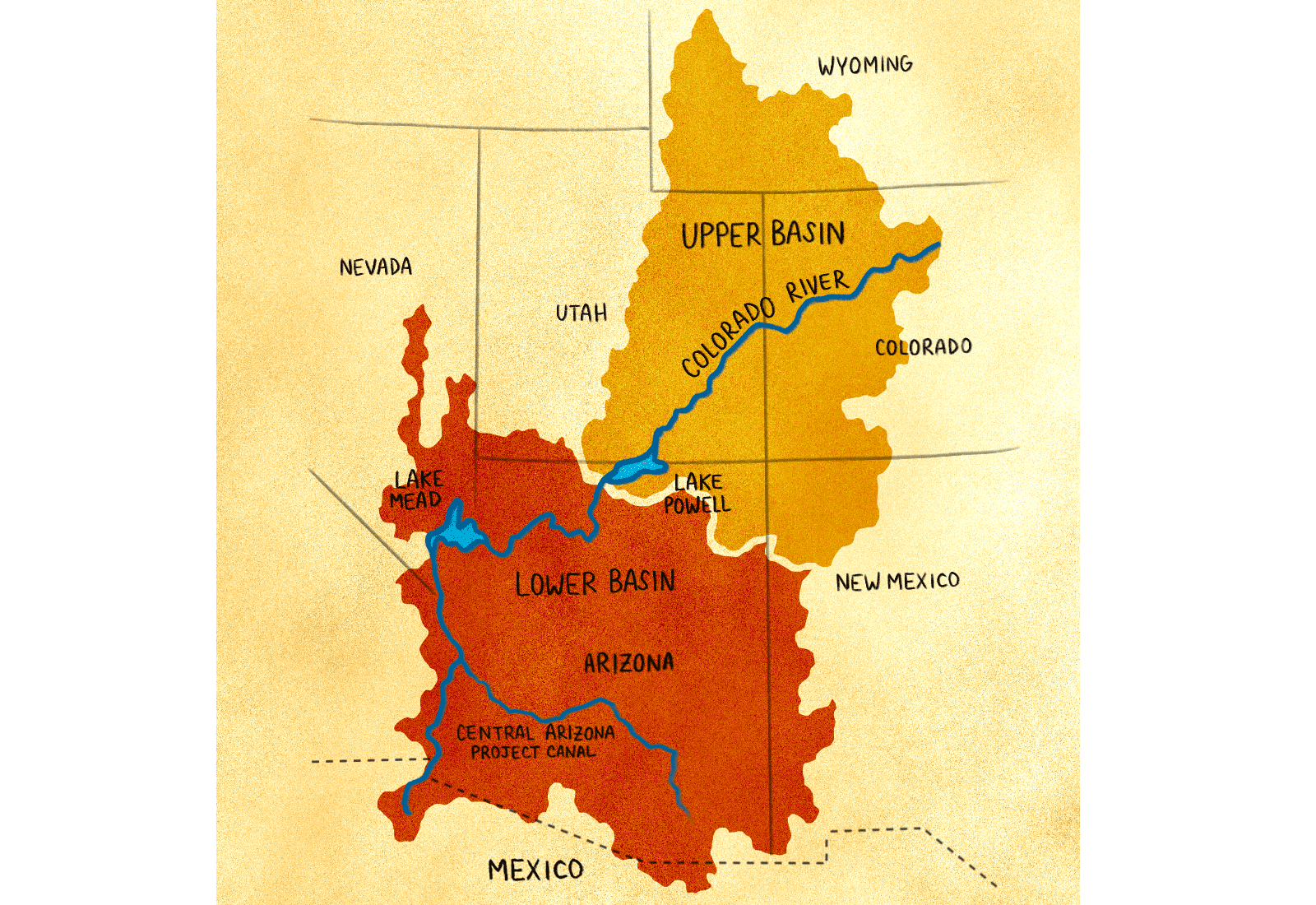
A map of the Colorado River
A century-old agreement divides the Colorado River Basin into two sections, the Upper Basin and the Lower Basin, which are now at odds over how to handle a climate-fueled drought. Grist / Amelia Bates

As the interstate talks proceeded, long-buried conflicts began to resurface. The first major conflict is between the Upper Basin states — Wyoming, Colorado, New Mexico, and Utah — and the Lower Basin states: Nevada, Arizona, California, and Mexico. The Upper Basin states argue that the Lower Basin states should be the ones to cut water in response to the drought. These states use much more water, the argument goes, and they also waste a lot of water that evaporates as it flows downstream through reservoirs and canals. The Lower Basin states, meanwhile, argue that no states should be exempt from cuts, given the scale of reductions needed.

The other main conflict is between Arizona and California, the two largest Lower Basin water users and the main targets of future cuts. California’s water rights trump Arizona’s, and therefore the Golden State argues that Arizona should shoulder almost the whole burden of future cuts. Arizona argues in turn that its farms and subdivisions have already cut their water usage in recent years as the drought has gotten worse, and that water-rich farmers in California should do more to help.

In the middle of these warring parties is Nevada, which takes only a tiny share of the river’s water and has emerged as the Switzerland of the Colorado River system over the past year. Water officials from the Silver State have been trying since late summer to broker a compromise between the Upper and Lower Basins and between Arizona and California, culminating in an intense session of talks in Las Vegas in December.

The talks were only partly successful. Officials managed to work out a framework that meets the Biden administration’s demands for major cuts, bringing an end to a year of uncertain back-and-forth. The proposal would cut more than a million acre-feet of water each from Arizona and California during the driest years, plus another 625,000 acre-feet from Mexico and 67,000 acre-feet from Nevada, adding new reductions to account for water that evaporates as it moves downstream. In return for these Lower Basin cuts, the Upper Basin states have agreed to move more water downstream to Lake Powell, helping protect that reservoir’s critical energy infrastructure — but they haven’t committed to reduce any water usage themselves.
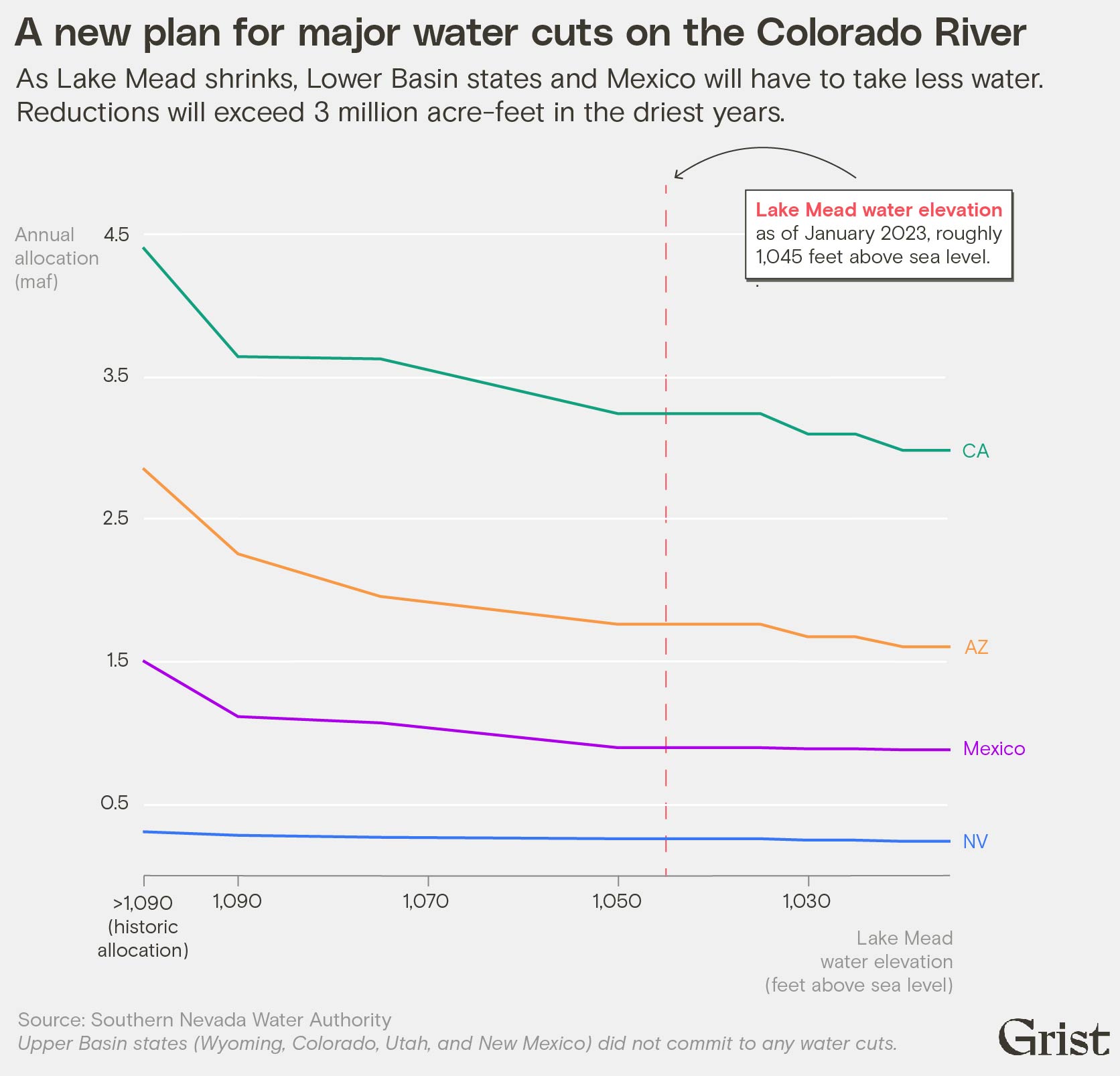
Multi-line chart shows proposed plan for water cuts among some states and Mexico in the Colorado River Basin.
Grist / Jessie Blaeser

“It seems like the Lower Basin states conceded to the Upper Basin,” said Koebele. An earlier version of the six-state proposal called for the Upper Basin to reduce water usage by a collective 500,000 acre-feet, but that call was absent from the final framework.

While the fight between the Upper and Lower Basin states appears neutralized, the conflict between the Lower Basin’s two biggest users is ongoing. Around 40 percent of the agreement’s proposed reductions come from California, where state officials have slammed it as a violation of their senior water rights, derived from a series of laws and court decisions known collectively as the “law of the river.”

“The modeling proposal submitted by the six other basin states is inconsistent with the Law of the River and does not form a seven-state consensus approach,” said J.B. Hamby, California’s lead representative in the talks. Hamby argued that penalizing California for evaporation losses on the river contradicts the legal precedent that gives California clear seniority over Arizona.

Officials from the Golden State released their own rough framework for dealing with the drought on Tuesday. The plan offers a more forgiving schedule than the six-state framework, saving the largest cuts for when Lake Mead’s water level is extremely low, and it forces more pain on Arizona and Mexico. The framework only requires California to cut around 400,000 acre-feet of new water, which the biggest water users already volunteered to do last September in exchange for federal money to restore the drought-stricken Salton Sea. Water users in the state haven’t made new commitments since.

If the Biden administration moves forward with the plan, it may trigger legal action from the Imperial Irrigation District, which represents powerful fruit and vegetable farmers in California’s Imperial Valley. The district sued to block a previous drought agreement back in 2019, and its farmers have the most to lose from the new framework, since they’ve been insulated from all previous cuts. The state’s other major water user, the Metropolitan Water District of Southern California, has signaled tentative approval for the broad strokes of six-state formula, indicating that a compromise between the two plans might be possible, although it’s not clear such a compromise would please Imperial’s farmers.

“I don’t see how we avoid Imperial suing, other than a bunch of big snowpack,” said John Fleck, a professor of water policy at the University of New Mexico. In response to a request for comment from Grist about litigation, an Imperial spokesperson emphasized the need for “constructive dialogue and mutual understanding.” If Imperial did sue and win, the outcome would likely be even further pain for Arizona and Mexico, where farmers and cities are already struggling to deal with previous cuts.
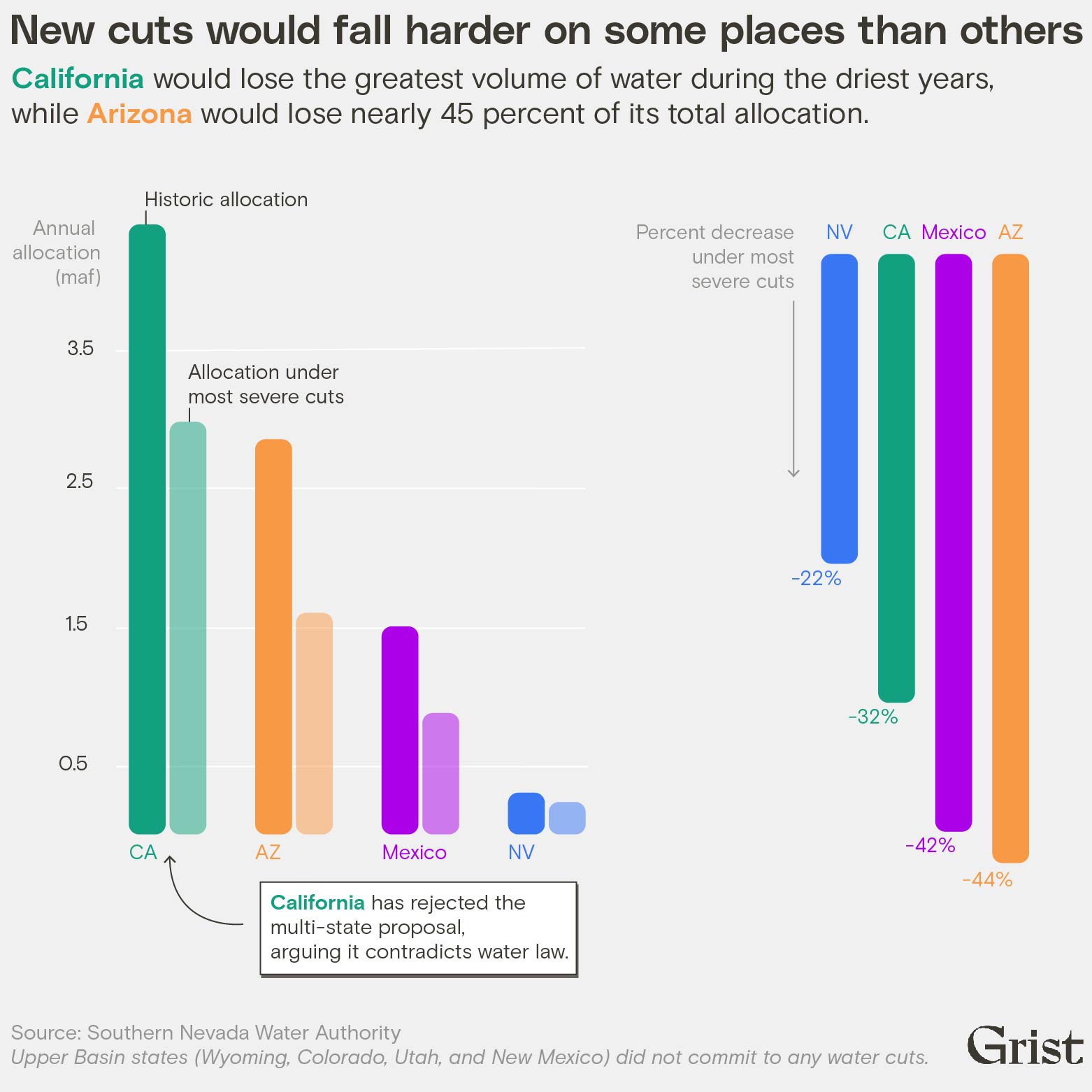
Two charts show the changes that could head towards Lower Basin states and Mexico. California would lose the largest volume of water under the most severe cuts, while Arizona would lose the greatest percent of its allocation.
Grist / Jessie Blaeser

Koebele told Grist that while the exact numbers may change, federal officials will likely adopt some version of the six-state proposal by the end of the summer. Even a modified version would alter life in the Southwest over the next four years, imposing a harsh new regime on a region whose water-guzzling produces a substantial portion of the nation’s vegetables and cattle feed. Major cities like Phoenix, Los Angeles, and Tijuana would also see water cuts, threatening growth in those places.

Steep as the new cuts are, though, they will only last until 2026, when basin leaders will gather again to work out a long-term plan for managing the river over the next two decades. Unlike the current round of emergency talks, that long-term negotiation will include representatives from Mexico and the dozens of Native American tribes that rely on the river.

Koebele said that the questions in those talks will be even more difficult than the ones the states are debating now. Instead of just figuring out who takes cuts in the driest years, the parties will have to figure out how to apportion a perennially smaller river while also fulfilling new tribal claims on long-sought water rights. The present crisis has only delayed progress on those bigger questions.

“Because of the dire situation, we’ve really had to turn our attention to managing for the present,” she said. “So these actions feel more like a Band-Aid to me.”
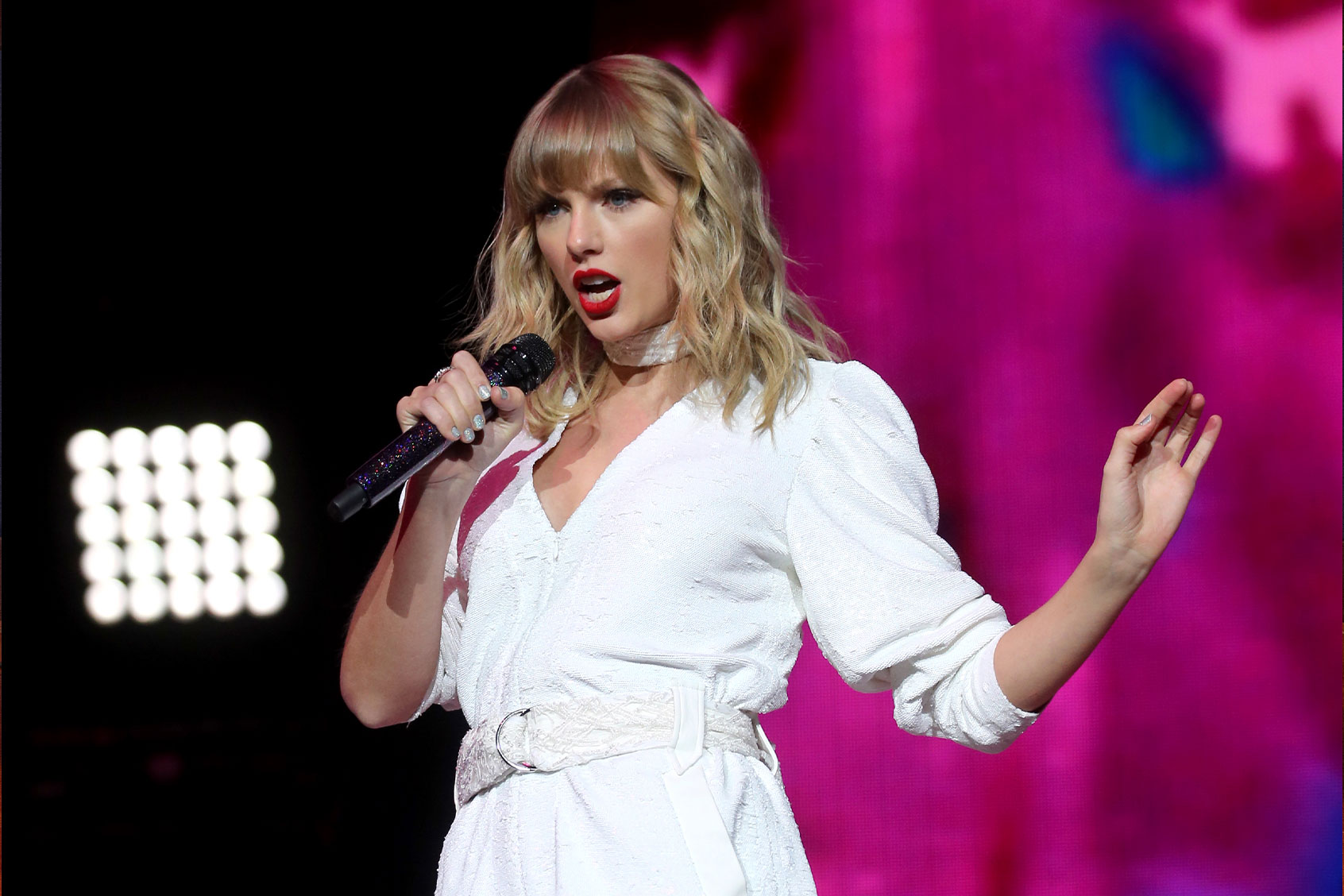
Advice from a Taylor Swift ticket holder on how to get Beyoncé “Renaissance” tickets

I thought the hardest part of getting Taylor Swift tickets was the fact I was going to be in an airplane at the time. I purchased the in-flight Wifi and hoped for the best, expecting it to be glitchy or out of commission entirely. Once 10 a.m. rolled around, the presale started, and I was somewhere over Alabama with my family. The Wifi was actually fine; it was the presale that was the problem.

As we now know, the Taylor Swift Ticketmaster presale for her upcoming “Eras” tour was a historic fiasco, so much so the Justice Department got involved. But I scored tickets (not while on the plane – more on that later) and I’d like to help you try to get seats too for what will surely be the hottest concert ticket of the summer: Beyoncé’s just announced “Renaissance” world tour.

There will be a ton of demand for these shows; like Swift, Beyoncé hasn’t done a solo tour for years, and this is a massive, global one. Shows will sell out. Inevitably the process of ticket buying will be stressful and complicated. 

To give yourself the best chance possible to get those seats, you need to do some planning in advance (i.e., now). You’ll want to register for Verified Fan, a program started by Ticketmaster, intended to weed out bots and get tickets into the hands of real people. It’s free and quick to sign up. It’s meant to prevent resellers from competing with actual fans for tickets, and there are often Verified Fan presales, which mean tickets are available to those registered ahead of the general public. 

Here’s a breakdown of what we know about impending sales for the “Renaissance” world tour so far, and ticket-buying tips from someone who survived the Swift trenches. 

Verified Fan and presales

Tickets for Beyoncé’s tour will start to go on sale in February – yes, this month – for North American shows which begin in July. Ticket sales will apparently be split into three groups: BeyHive Presale, Citi Presale and the General Verified Fan Onsale. There will also be a Verizon Up Presale.

Yes, it’s a lottery in the hopes of spending money. This is the world we live in now. 

Verified Fan registration has already opened at Ticketmaster and windows in which to register will close at different points, depending on your city, with some ending as soon as . . . last Thursday, mere days after the tour was even announced. So, it’s a good idea to decide where you hope to see a show and register for that location or locations as soon as possible. Rolling Stone calls Verified Fan “your best bet for getting real, verified Beyoncé tickets for now.” 

Registering does not guarantee you tickets. But it gets you a chance to buy tickets via presales. Yes, it’s a lottery in the hopes of spending money. This is the world we live in now. 

BeyHive members can register for Live Nation Verified Fan. Citi cardmembers can now register for Citi Verified Fan before the first Citi presale starts on Feb. 7.

Ticket resellers 

If you miss out on tickets in presales or general sales or shows sell out (which they’re almost certain to do), some tickets will end up on resellers, including Vivid Seats and StubHub. The disadvantage of resellers is that the prices are often jacked up above face value. Some of my friends recommend waiting until the last minute when sellers are more likely to “dump” their unsold seats before a concert, but this advice may not apply to big ticket shows like this tour. 

Taylor SwiftTaylor Swift performs onstage during day two of Capital’s Jingle Bell Ball with Seat at London’s O2 Arena. (Isabel Infantes/PA Images via Getty Images)Social media secrets

In general, it’s a good idea to follow on social media the musicians you want to experience in concert. Tours are first announced on social media now, and things like presale codes, for those ticket presales that require them, can often be found on Twitter, Instagram or Reddit.

Following the venue in which you want to go to a concert is also smart thinking. A venue’s social media account may announce presales, provide promo codes or otherwise disseminate useful information to you, future concert-attendee.   

May the odds be ever in your favor

The best seats aren’t always the first tickets released.

When it’s the big ticket-buying day, whether presale or general sales, log into your account ahead of time (make an account with the ticket seller in advance and save your payment information). Know how much you want to spend and where you’re hoping to be. Download or review a seating chart for the venue beforehand.

The best seats aren’t always the first tickets released so if you don’t get seats right away, try to be patient and hang in there. It may take time to get through incredibly overloaded ticketing systems, and more tickets may be released later or staggered on purpose.


Want a daily wrap-up of all the news and commentary Salon has to offer? Subscribe to our morning newsletter, Crash Course.


I didn’t get Swift tickets while in the air. Like thousands of others, I got stuck in a virtual waiting room after spending much of my flight anticipating a scheduled presale that was hopelessly delayed. But eventually it did start. We had landed at our destination by then, a family vacation. My kid was playing at the hotel arcade with his uncle, and I had had one cocktail when I decided to try again. I logged into the presale and this time I got through. I got seats . . . and lost them. I got seats again, and this time they went through.

Be persistent, flexible and patient. You may not get excellent seats (my Swift tickets certainly aren’t) but if you want to be in the room — or stadium — where it happens, don’t give up.

14 best winter dessert recipes for any occasion

When the holiday season ends but cold and darkness persist, we often find ourselves stuck inside, contemplating some of life’s bigger questions like, “What should I make for dessert this morningevening?” If you’ve asked yourself that question lately (as I have), there are countless options to choose from.

For me, winter is the season to celebrate the more subtle flavors of the dessert category (think: brown butter, maple, and olive oil). And while I’ll never say no to a warm, fresh-from-the-oven treat on a frigid day, winter desserts are much more than baking projects. Cold desserts like chocolate mousse and coffee ice cream are sometimes exactly what you’re in the mood for after a day of shoveling snow, sled pushing, or ice skating. Put plainly: Winter desserts have range and are worth exploring — here are 14 of our favorite recipes to try.

Our best winter dessert recipes

1. Maria Speck’s Greek Yogurt Chocolate Mousse

Chocolate mousse, without the cream, eggs, or fuss. Maria Speck’s chocolate dessert requires minimal prep and can be prepared an hour or a day in advance of when it will be served. To complement the chocolate, top the mousse with your favorite orange marmalade.

2. Dark Chocolate Avocado Truffles

These dark chocolate avocado truffles require only three ingredients, all of which you might already have. So if you want dessert right now, there’s a good chance you could be just an hour away from snacking on these.

3. Pudding Chomeur

A cross between sticky toffee pudding and pancakes with maple syrup, this pudding chomeur (a French Canadian dessert created during the Great Depression) is prepared and served in ramekins — making it the ideal treat for any upcoming winter dinner parties.

4. Nigella Lawson’s One-Step, No-Churn Coffee Ice Cream

Creamy, homemade ice cream that comes together with just a bowl, whisk, and freezer. Say no more.

5. Brown Butter and Butternut Loaf

This loaf tastes like butterscotch mixed with pumpkin, and fills the kitchen with a cozy aroma as it bakes. Added bonus: The recipe makes two loaves, meaning you could give your second loaf to a friend or family member (or you could just keep it because you’ll probably want it all to yourself after you eat the first loaf).

6. My Ginger Cookies

A reminder: Ginger cookies don’t have to be dry and brittle. This recipe from Alice Medrich is soft and chewy, and will remain that way for a few days. Enjoy with coffee, tea, ice cream, or nothing at all — these cookies work in every situation.

7. Vegan Chocolate Chip Cookies with Maple and Olive Oil

These cookies can be eaten at any time of day, but are especially good at breakfast. Maple syrup, olive oil, and minimal effort make these chocolate chip cookies both delicious and possible at either 7 a.m. or 7 p.m.

8. Cookie Butter Sweet Rolls

Like many others, I’ve always loved the Biscoff cookies you get while flying, but I never ate, bought, or thought about them outside of an airplane. Then I found cookie butter, a sweet and creamy spread made from Biscoff (or similar style) cookies. These rolls take the warming flavors of Biscoff cookies and bake them into a gooey-sweet dessert. What could be better on a cold winter day?

9. Sweet Cream Bundt Cake

Seemingly simple, this bundt cake is an example of a dessert that is greater than the sum of its parts. Make it once, and you’ll likely make it every winter.

10. Sherry and Olive Oil Pound Cake

This olive oil pound cake works for dessert and breakfast, which means a world exists where you could eat only olive oil cake for twelve hours. (I like that world.)

11. Butter & Scotch’s Birthday Cake

The perfect cake for your next winter birthday party. Accidentally created by Butter & Scotch bakery in Brooklyn, this cake takes the nostalgia of boxed birthday cakes from childhood and updates it with a denser texture and subtle cream cheese frosting.

12. Gingered Cranberry-Pear Pie

Pie deserves a seat at the winter dessert table, especially one with dough that is rolled out on gingersnap crumbs. This innovative pie-making-move gives you crunch and flakiness that is hard to replicate.

13. Oatmeal Cream Pies

A self-proclaimed “adult version” of the kid-favorite classic, these cookie pies use brown butter buttercream and bourbon oatmeal cookies to somehow improve upon an already flawless concept.

14. Crème Brûlée Pie

I love crème brûlée, but the thought of doing a bain marie at home always makes me nervous. With this brilliant recipe, you skip the water bath and swap inedible ramekins for flaky pie crust.

How this laughable sci-fi flick embarrassed Hollywood into doing better science

No matter how much you might hate a movie, it is doubtful you loathe it as much as scientists despise this one infamous flick.

There is a motion picture so scientifically irresponsible that merely mentioning its title instantly arouses ire in countless otherwise stolid academic personalities. When first released in 2003, it badly bombed at the box office, prompting one physicist to speculate that the public stayed away because it could smell garbage. It “did not make money because people understood the science was so out to lunch,” Emory University Physics Professor Sidney Perkowitz proclaimed at the time. Indeed, Perkowitz was so bothered by the movie’s misinformation that he crafted a set of guidelines to help Hollywood studios avoid future embarrassments. Hundreds of fellow scientists expressed support for Perkowitz’s position; today this movie is best remembered for helping inspire the creation of the Science & Entertainment Exchange, which promotes the use of better science in movies, television and other media.

“I got a call from the director who was in Hollywood and was upset at me because I had said these things. That’s the point at which I realized that he thought that it was scientifically accurate!”

The film in question, in case you have not yet figured it out, is “The Core,” an entry in the venerable science fiction genre by director Jon Amiel and starring Aaron Eckhart, Hilary Swank, Delroy Lindo, Stanley Tucci, DJ Qualls, Richard Jenkins and Bruce Greenwood. The premise of “The Core” is both simple and ridiculous: The Earth’s core has stopped rotating and a team of “terranauts” must journey to the center of the Earth with nuclear weapons to explode that pesky core into rotating again. Until the terranauts can succeed, though, all hell breaks loose on the surface, leading to the movie’s most memorable scenes. Pacemakers instantly stop working, causing hundreds to drop dead in a single second; electronic devices start breaking down and zapping their owners; birds are unable to navigate and crash into people and buildings; various unrealistic lightning storms destroy iconic landmarks like Rome’s Colosseum and San Francisco’s Golden Gate Bridge; and, amidst the devastation, a lone hacker controls the Internet to cover up the truth from an otherwise-panicky public.

In theory this could be entertaining in a campy, so-dumb-it’s-fun way; in reality, although the acting is top notch, the rest of “The Core” is too cliché and bloated to be enjoyable. Yet as Perkowitz observed 20 years ago, the bigger problem with “The Core” is that the information that it presents to audiences as legitimate science is, quite simply, bunk.

“The premise behind it is not quite right,” Perkowitz told Salon. “The scientists involved describe the Earth as being surrounded by an ‘electromagnetic field’ which is disrupted when the core stops spinning. That’s a misnomer. It is actually a ‘magnetic field.’ That’s the main scientific error in this whole discussion. It’s the magnetic field that gives us poles and all the rest of it.”

Of course, as Perkowitz emphasized when speaking with Salon, it is not unreasonable for a sci-fi film to take some creative liberties with scientific fact. “The Core,” however, plays so fast and loose with the truth that it becomes difficult to keep track of all of its mistakes. Among other things, the problem proposed would not suddenly cause any of the electronic malfunctions seen in the plot.

“I have a pacemaker myself and I would not drop dead if the Earth’s magnetic field stopped working because the pacemaker is an electronic device,” Perkowitz remarked. “Turning off the surrounding very weak magnetic field that comes from the Earth wouldn’t have the slightest effect on it and shouldn’t stop it.” The technological errors don’t stop there. At one point in the film a teenage hacker (Qualls) is able to control the entire Internet single-handedly to make sure no information is released about the planetary crisis.

“I have a pacemaker myself and I would not drop dead if the Earth’s magnetic field stopped working.”

“We’ve come to the point where we think that teenage hackers can do absolutely anything on the Internet,” Perkowitz remarked. This is ludicrous, to be sure, but not necessarily more outlandish than the moment when Lindo’s character explains that his ship can travel to the core with ultrasonic waves by using the same principles applied to breaking up kidney stones. “The sound waves can hit something solid and break it into pieces, but the amount of energy you would need to keep the lasers and the ultrasonics going through several thousand miles of solid rock is so immense that I just can’t see how any kind of portable ship could carry it,” Perkowitz noted.

The coup de grâce, however, is the terranauts’ plan to restart the core by setting off nuclear weapons around its perimeter. “The last item about setting off nuclear weapons near the core to nudge the core to start rotating again is just a crazy idea,” Perkowitz explained. “I don’t know how you would focus nuclear explosions.”

In short, “The Core” is more accurately categorized as fantasy than sci-fi — but apparently, this was news to the filmmakers. David J. Stevenson, a planetary scientist at the California Institute of Technology (Caltech), told Salon that he was asked to look at the script of “The Core” before it was released “but at a point where most of the movie had already been put together, so this was roughly six months before it was actually released to theaters.” Although he was not an official scientific consultant, Stevenson was treated as someone who could react to the movie’s merits and perhaps even comment positively on its science.

“The scientific content I thought was poor and I said that to other journalists and people,” Stevenson recalled. “I even said that to Scientific American. Then I got a call from the director [Jon Amiel] who was in Hollywood and was upset at me because I had said these things. That’s the point at which I realized that he thought that it was scientifically accurate!”


Want more health and science stories in your inbox? Subscribe to Salon’s weekly newsletter The Vulgar Scientist.


Amiel may not have had that problem if he had had access to the resources provided by the Science & Entertainment Exchange. Launched by the National Academy of Sciences (NAS) in 2008, its director today is science writer Rick Loverd, who described how popular entertainment like movies can be “hugely impactful” in people’s lives. To illustrate his point, Loverd pointed to the many scientists who say they were inspired by the 1966 TV show “Star Trek,” Air Force personnel who enlisted after seeing the 1986 movie “Top Gun” and forensic science students who compelled universities to create new departments after they were motivated by the 2000 TV show “CSI: Crime Scene Investigation.” Even something as simple as the Fonz getting a library card in the 1974 TV show “Happy Days” can have an effect; after that episode, legend has it that libraries were swarming with teenagers hoping to get library cards of their own (although these accounts have techically been unsubstantiated).

“There is a connection between what people see on screen and [their behavior], and the hardest thing to do is to influence people’s behavior, much less their thinking and understanding.”

“There is a connection between what people see on screen and [their behavior], and the hardest thing to do is to influence people’s behavior, much less their thinking and understanding,” Loverd told Salon. “But to change someone’s behavior: that’s the gold standard in communication. If you can go get somebody to get a library card, to get them to pursue a career . . . these are huge things.” For instance, the Science & Entertainment Exchange has encouraged filmmakers to meet scientists who are women of color and from other under-represented groups, so that way they do not reinforce assumptions about science being the exclusive province of white men.

Hidden FiguresHidden Figures (20th Century Fox)“I really do believe that people are going to be talking about films like ‘Hidden Figures’ soon and seeing measurable effects in enrollments in astrophysics classes as a result from women of color,” Loverd predicted. “I’m way out on a limb here. There is nothing to support what I’m saying — except the past and history. I do think that it’s a reasonable assumption on which our program operates that the characters of the past have influenced the STEM professionals of the present. When you look at that pattern and you look forward, it makes sense for an institution like the National Academy of Sciences to be reaching out to those storytellers to try to bring more characters like that to the screen to influence kids today.”

In contrast to the positive impact of a film like 2016’s “Hidden Figures” — which told the true story of three NASA scientists who faced discrimination for being Black American women — “The Core” is “one of those movies that is sort of widely cited by scientists, particularly if you’re talking to scientists of a particular discipline like geophysicists, when they talk about how this is the worst example of what Hollywood does to science,” explained Ann Merchant, Deputy Executive Director at the Office of Communications at NAS. “It’s that kind of film.”

“If you make that one assumption and then try to develop what the logical outcome would be, I think that makes a great story that is scientifically satisfying.”

Merchant added that “The Core” was not directly responsible for the creation of the Science & Entertainment Exchange, but rather a prominent catalyst for convincing scientific professionals that such an organization needed to exist. In a sense, “The Core” epitomized the kind of factual sloppiness that many scientists find worrying.

“We were certainly aware of its role in the minds of many scientists as having done damage to science in what they felt was the public consumption of science in entertainment,” Merchant told Salon. “It was from that point of view that we thought about movies like that. ‘How does the public respond to science in a movie like ‘The Core'”?

In the case of “The Core,” many scientists expressed concern that it was the equivalent of taking a science class with a teacher who knows nothing about science. Yet scientists do not always agree on how “bad” the science has to be in a film before it goes against the public interest. Take director Roland Emmerich’s 2004 disaster flick “The Day After Tomorrow,” which warns humanity about the real-world threat of climate change with very shaky science.

“With a movie like ‘The Day After Tomorrow’ on climate change, many scientists saw that as being not the way to communicate ‘accurately,” Merchant explained, as the film’s plot is riddled with errors. “On the other hand, if you have audience members that go into that movie and they say, ‘Oh, climate change, is that a thing?’ . . . the movie itself is not meant to be the primary mechanism for communicating accurate messaging around climate change. It’s meant to stimulate somebody’s thinking about the topic so that maybe they go learn more from more accurate sources.”

Avatar: The Way Of WaterRonal (Kate Winslet), Tonowari (Cliff Curtis), and the Metkayina clan in “Avatar: The Way Of Water.” (Photo courtesy of 20th Century Studios)By contrast, there are some popular sci-fi films that scientifically hold up, even with allowances made for poetic license.

“I do think that it’s a reasonable assumption on which our program operates that the characters of the past have influenced the STEM professionals of the present.”

“‘2001: A Space Odyssey’ is wonderful,” Stevenson told Salon about the classic 1968 film about the human species’ cosmic destiny. “It is a fantasy, of course, so I have no problem with ‘2001.’ I talked to [“2001″ author] Arthur C. Clarke once. A very talented person — obviously [director] Stanley Kubrick also falls in that category — can make something like ‘2001’ achieve the goal of getting across the wonder” of the scientific subjects contained in its story. While “2001” is legendary for diligently attempting to be as scientifically accurate as its fantastical premise would allow, director James Cameron’s 2009 movie “Avatar” passes Stevenson’s smell test for a somewhat opposite reason.

“The way I see it is the following: If you are presenting something that is so obviously different from the environment in which we live, it’s permissible to present things that seem to be difficult scientifically,” Stevenson explained. In the case of “Avatar,” “the whole idea is of a planet where there is a material called ‘unobtanium.’ That is almost a joke, meaning people who are watching it would I hope realize its status as that kind of fantasy, so I don’t have a problem with that.” By contrast, when “The Core” introduces its own substance called “unobtanium,” it is presented not as a MacGuffin but as a potentially viable scientific material.

For his part, Perkowitz praised director Christopher Nolan’s 2014 sci-fi film “Interstellar.” While developing it, Nolan worked closely with Caltech theoretical physicist Kip Thorne to ground the story in as much reliable science as possible.

Matthew McConaughey in “Interstellar” (Melinda Sue Gordon/Warner Bros. Entertainment, Inc.)“He worked very hard to come up with things that made scientific sense, or at least could make scientific sense, and yet told a dramatic story,” Perkowitz explained. “Yes, there has to be some creative license” — for instance, Perkowitz pointed out that most movies about outer space travel include ships that travel faster than the speed of light, which right now appears to be “completely out of the question” — but he argued that audiences can accept one big suspension of disbelief, as long as the rest of the story is told in good faith.

“If you make that one assumption and then try to develop what the logical outcome would be, I think that makes a great story that is scientifically satisfying,” Perkowitz told Salon.

Perfecting that blend — “great story” and “scientifically satisfying” — has bedeviled sci-fi writers since Mary Shelley invented the genre with the 1818 novel “Frankenstein.” It is likely that no sci-fi writer will ever find a combination that is absolutely flawless, but if “The Core” has any positive legacy, it is illustrating that this goal should always be sought. And for what it is worth, Perkowitz admitted that not all of the seemingly silly moments in “The Core” fail to hold up scientifically.

“It’s believed that many birds know to navigate over thousands of miles because they have an organic sensor that tells which way the Earth’s magnetic field is pointing, so if you turn off the magnetic field, it’s possible that birds would lose their sense of navigation and maybe crash into windows. That one would be OK . . .” Perkowitz trailed off, and then the frustration returned to his voice. “. . .  But again, they’re ascribing it to an ‘electromagnetic field,’ and that’s not what’s going on! It is a magnetic field!”

A genius trick for quicker, creamier oatmeal — with no sticky pot to clean

The elevator pitch for the recipe is a really good one: With one little equipment swap, you can make a quicker, creamier bowl of oatmeal, and leave no stubborn pot soaking in the sink.

This was how talented food stylistauthor, and TV star Samantha Seneviratne hooked me at a Genius video shoot years ago. She’d picked up the trick in a test kitchen and really put it to use feeding her toddler son Artie. Ready for it? Grab a nonstick skillet for cozy oats that cook down quicker and creamier than in a deep pot (and clean up way easier).

But, at least in my family, there’s even more to Sam’s genius than that. This is the breakfast my three-year-old asks for as she’s going to sleep. The one that taught her how to measure as we made it together morning after morning; the one with few ingredients to spill and slosh.

It’s the recipe we always double or triple now, because we all want more and the fridge and freezer welcome it. It’s the one that convinced me that Cocoa Puffs always had it right: Chocolate brings joy and ballast to bleary mornings. Only now, it’s powered by almond butter and sweetened with only as much maple as you like.

This is the recipe I squirreled away first for the “Simply Genius” cookbook, and the one I (and other parents) make the most. For the book, Sam also shared three more riffs: raspberry-cardamom, banana-cacao nib, and nutty multigrain — with leftover grains like quinoa or farro swirled in.

But the truth is, you can take Sam’s ratio and technique to any oatmeal you can dream up — again and again, no pots in the sink to hold you back.

Recipe: Cocoa Almond Oatmeal from Samantha Seneviratne

The “Simply Genius” cookbook is out now — you can snag a copy in Food52’s Shop, or so many other places! Like AmazonBarnes & NobleBooks-A-MillionBookshop.orgHudson BooksellersIndieBoundPowell’sTargetKitchen Arts & LettersNow ServingOmnivore Books on FoodBook Larder, or your favorite local bookstore.

This post contains products independently chosen (and loved) by Food52 editors and writers. As an Amazon Associate, Food52 earns an affiliate commission on qualifying purchases of the products we link to.

Nikki Haley “wants to carry on the Trump legacy,” according to expert Republican strategist

Nikki Haley “embodies” the collapse of the modern Republican Party post-Trump, said former Mitt Romney presidential chief strategist Stuart Stevens to Business Insider, according to an article released on Sunday.

“Mitt Romney’s former aide blasted Nikki Haley in a recent interview over the former South Carolina governor’s decision to enter the 2024 GOP presidential primary, saying she ‘doesn’t have anything else to do’ and arguing that she is actually seeking a vice presidential slot,” reported John L. Dorman. “Stuart Stevens — who was Romney’s chief strategist for his 2012 White House run and also a senior advisor for the anti-Trump group the Lincoln Project — questioned Haley’s motivation for running for the presidency during a February 2 interview on MSNBC.”

“Why is Nikki Haley running? I don’t think she’s really running because she thinks she’s going to be president of the United States,” said Stevens. “First of all, she doesn’t have anything else to do. She’s raised some money here in her PAC and she’ll run. And I would say she’s running to be vice president. I don’t think she’s going to go out there and attack Donald Trump.”

“No one else really embodies sort of the collapse of the party as well as Nikki Haley,” Stevens continued. “She was what the party was supposed to be. She went out and said that Donald Trump was everything that she taught her children not to be, and she went from that to saying that she wants to carry on the Trump legacy. It’s just so sad. She’s already broken before she gets in the race.”

Two years ago, Haley told reporters she would not run against Trump if he ran for president again. Last month, however, she reversed this in an interview on Fox News, saying she believes she can be part of a new generation of leaders in contrast to the more elderly Trump and President Joe Biden.

Haley is reportedly expected to launch her campaign for president formally later this month — which would make her the only major Republican presidential candidate to do so other than Trump himself, who is busy trying to reboot a campaign launch that was panned by experts as phoned in

The Doomsday Clock is an imperfect metaphor — but the existential danger is all too real

Every year, the Bulletin of the Atomic Scientists convenes a meeting to decide whether the minute hand of its famous Doomsday Clock will move forward, backward or stay put. Invented in 1947, the clock is a metaphor aimed at conveying our collective proximity to global destruction, which is represented by midnight: doom. Initially set to seven minutes before midnight, the minute hand has wiggled back and forth over the decades: In 1953, the year after the U.S. and Soviet Union detonated the first thermonuclear weapons, it inched forward to a mere two minutes before doom, where it stayed until 1960, when it returned to the original setting. In 1991, following the dissolution of the Soviet Union, which marked an official end to the Cold War, the minute hand was pushed back to a reassuring 17 minutes.

Since then, however, the time has pretty steadily lurched forward, and in 2018 the Bulletin’s Science and Security Board once again placed the time at two minutes before midnight, due to growing nuclear tensions and the ignominious failure of world governments to properly address the worsening climate crisis. Two years later, the minute hand moved forward to just 100 seconds before midnight, and this January — the most recent Doomsday Clock announcement — it was, for the first time ever, inched forward to 90 seconds.

But what exactly does this mean? The Doomsday Clock has plenty of critics, and my sense is that even those who like the metaphor agree that it’s not perfect. The minute hands of most clocks don’t move backward, and the Doomsday Clock, once its minute hand is set, doesn’t start ticking forward. Many people on social media dismiss it as “scare-mongering,” a way of frightening the public — which is not entirely wrong, as the Bulletin‘s purpose from the start was, to quote one of its founders, Eugene Rabinowitch, “to preserve civilization by scaring men into rationality.” There is, in fact, a long tradition since the Atomic Age began in 1945 of employing what historian Paul Boyer describes as “the strategy of manipulating fear to build support for political resolution of the atomic menace.”

One sees this very same strategy being employed today by environmentalists like Greta Thunberg, who declared before an audience at Davos in 2019: “I don’t want your hope. I don’t want you to be hopeful. I want you to panic. I want you to feel the fear I feel every day. And then I want you to act.” Fear can be paralyzing, but it can also be a great motivator. They key is to figure out how to inspire what the German philosopher Günther Anders described as “a special kind” of fear, one that “drive[s] us into the streets instead of under cover.” It’s hard to know whether the Doomsday Clock does this. It certainly hasn’t inspired large protests or demonstrations, although it is taken seriously by some political leaders, and in fact the Kremlin itself reacted with alarm to the announcement, blaming — of course — the U.S. and NATO.

Aside from potential problems with the metaphor and questions about the efficacy of fear, the Doomsday Clock does convey something important: Humanity is in a genuinely unprecedented situation these days, in the mid-morning of the 21st century. The fact is that before the invention of thermonuclear weapons in the early 1950s, there was no plausible way for humanity — much less a handful of individuals with twitching fingers next to some “launch” button — to completely destroy itself. Perhaps everyone around the world could have decided to stop having children, a possibility considered in 1874 by the English philosopher Henry Sidgwick (who said it would be “the greatest of conceivable crimes”). Some people around that time argued that we should do exactly that, arguing that life is so full of suffering that it would be better if our species were extinguished. Consider German philosopher Philipp Mainländer, who after receiving the first copies of his magnum opus on pessimism in 1876, stacked them up on the floor, climbed to the top of the pile and hanged himself.


Want a daily wrap-up of all the news and commentary Salon has to offer? Subscribe to our morning newsletter, Crash Course.


Yet even Mainländer acknowledged that persuading everyone to stop their baby-making activities (he advocated for celibacy) would be difficult. Human extinction by choosing not to procreate just isn’t realistic. But thermonuclear weapons really could create an anthropogenic extinction scenario. How? The main danger, you may be surprised to learn, isn’t from the initial blasts. Those would certainly be catastrophic, and indeed the most powerful thermonuclear weapon ever detonated — the Soviet-made Tsar Bomba, tested just once in 1961 — had an explosive yield more than 1,500 times that of the bomb dropped on Hiroshima, which destroyed much of the city. That’s bigger than most of the weapons in our nuclear arsenal, but these can still wreak horrific havoc, as you can see for yourself by testing out different weapons in different cities on Nuke Map.

But in fact, the greater threat comes from the possibility that nuclear explosions would ignite massive conflagrations called firestorms, so hot that they produce their own gale-force winds. The explosion over Hiroshima, in fact, triggered a hellish firestorm that, along with the initial blast, killed roughly 30 percent of the city’s population.The intense heat would catapult large quantities of the black soot produced by these fires straight through the troposphere — the layer of the atmosphere closest to Earth’s surface — and into the stratosphere, the next layer up, which you may have traversed if you’ve ever flown in a commercial jetliner over the poles.

Humanity is in a genuinely unprecedented situation in the mid-morning of the 21st century, facing multiple threats that could lead to the extinction of our species.

This is an important point, because there are several ways that soot could be removed from the atmosphere. The first is weather: You could think of rain as a kind of atmospheric sandpaper, removing aerosols floating about the air. The second is gravity: if some particulate matter is heavier than the air, it will eventually fall back to Earth. But first of all, there’s no weather in the stratosphere, so this mechanism of removing soot won’t work. And second, gravity takes a pretty long time to remove stuff like soot, which means once the soot is in the stratosphere, it’s going to stay there for a while — potentially years.

That soot would blocks incoming light from our life-giving sun. Without light, photosynthesis can’t happen, and without photosynthesis, plants die. Without plants, global agriculture and food chains would collapse, and the surface of our planet would plunge into subfreezing temperatures. So even someone thousands of miles away from any possible ground zero — that is, where the thermonuclear blasts occur — would sooner or later starve to death under pitch-black skies at noon. According to a 2020 study, a nuclear war between India and Pakistan could kill more than 2 billion people, while a war between the U.S. and Russia could result in 5 billion deaths, more than 60% of the entire human population. An all-out nuclear war involving every nuclear power in the world today? Carl Sagan himself wrote in 1983 that “there seems to be a real possibility of the extinction of the human species,” although not everyone would agree with this assessment.

So when people complain that the Doomsday Clock announcement is nothing but scare-mongering, spreading alarm for no good reason, they’re just plain wrong. The nuclear threat is real, which is why all the nuclear saber-rattling that Vladimir Putin engaged in leading up to the Ukraine war literally kept me up at night. In fact, what caused those sleepless nights wasn’t just the thought of Putin detonating a “tactical” nuclear device in Ukraine, although that could easily create a situation that quickly spirals out of control, creating a nuclear nightmare affecting billions.

Do not read the story of Vasili Arkhipov, the Soviet naval officer who saved the world from nuclear Armageddon in 1962, if you hope to get to sleep anytime soon.

I was also nervous about the possibility of a miscalculation, error, or accident that could trigger Armageddon. The history of nuclear near-misses is frankly shocking. My advice is not to fall down this particular rabbit-hole before bed. Did you know, for example, that an undetonated nuclear bomb is buried somewhere in the farmland around Goldsboro, North Carolina? It accidentally fell out of an airplane, and was never recovered. Consider the case of Vasili Arkhipov, who was a naval officer on a Soviet submarine during the Cuban missile crisis of 1962. After losing contact with Moscow, the submarine’s captain believed that war might have already broken out, and wanted to launch a nuclear torpedo at the U.S. But all three senior officers had to agree to such a launch, and Arkhipov stubbornly resisted. He may well have single-handedly saved the world, quite a legacy to leave behind.

Considering that history, I’ve wondered how many near-misses there may have been during the Ukraine war, especially since Putin put his nuclear forces on “high alert,” that we won’t learn about for many years (if we ever do). How close have we come to the brink without realizing it? It remains entirely possible that a mistake, tomorrow or next week or next month, could start World War III.

This is the world we now live in, and it’s why the warnings behind the Doomsday Clock are nothing to sneeze at. And we haven’t even gotten to climate change, the other major threat that the Bulletin considers when setting the clock’s time. Although it’s fair to say that climate change is unlikely to cause our complete extinction, the potential harm it could cause will be unprecedented in human history. The future world your grandchildren will live in will be profoundly different, and in many ways worse, than the one we now occupy. If civilization is an experiment, it’s failing. The only other single species to alter the biosphere as much as we have, and as we will in the coming centuries, was a single-celled critter called cyanobacteria, which some 2.5 billion years ago flooded the atmosphere with oxygen for the first time. Since oxygen is toxic to anaerobic organisms, that may have initiated a mass extinction event, although it’s hard to know for sure because there aren’t many fossil remains from that period of Earth’s history.

The point is that climate change also poses real, urgent and profound dangers. It will negatively impact the livability of our planet for the next 10,000 years, a significantly longer period than what we call “civilization” has existed. So this is no joke. The Doomsday Clock, for all its flaws, should be taken seriously by every citizen of our planet. Right now, it stands at 90 seconds to midnight, and given that climate change is worsening and there’s no end in sight to the war in Ukraine, we can expect the clock’s minute hand to keep moving forward.

China slams the Pentagon’s downing of a balloon in US airspace as an “excessive reaction”

China’s Foreign Affairs Ministry issued a statement Saturday condemning the Pentagon for shooting down a balloon that Beijing says was a civilian aircraft that drifted over the United States by mistake.

“The Chinese side clearly requested that the U.S. appropriately deal with this in a calm, professional, and restrained manner,” the ministry said, again dismissing the Pentagon’s claim that the high-altitude balloon was part of a surveillance operation aimed at monitoring sensitive military sites.

“For the United States to insist on using armed force is clearly an excessive reaction that seriously violates international convention,” the ministry continued, invoking force majeure, which under international law refers to unforeseen circumstances that are beyond a state’s control. China has claimed the balloon was a civilian weather research aircraft that was blown way off course by unexpected winds.

“China will resolutely defend the legitimate rights and interests of the enterprise involved, and retains the right to respond further,” the ministry concluded.

War hawks in the Republican Party, including former President Donald Trump, predictably reacted with hysteria to the Pentagon’s Thursday announcement that it detected the balloon over the state of Montana.

“President Biden should stop coddling and appeasing the Chinese communists. Bring the balloon down now and exploit its tech package, which could be an intelligence bonanza,” said Sen. Tom Cotton (R-Ark.), one of the most vocal warmongers in Congress. “And President Biden and Secretary Austin need to answer if this was detected over Alaskan airspace. If so, why didn’t we bring it down there? If not, why not? As usual, the Chinese Communists’ provocations have been met with weakness and hand-wringing.”

An unnamed Pentagon official said Saturday that this latest incident is one of several times a Chinese balloon has been detected in U.S. airspace in recent years. The other balloons were not shot down.

“[People’s Republic of China] government surveillance balloons transited the continental United States briefly at least three times during the prior administration and once that we know of at the beginning of this administration, but never for this duration of time,” the official said in a briefing with reporters.

Tensions between the U.S. and China have risen sharply in recent months, largely over Taiwan. The Biden administration recently announced that it is expanding the U.S. military’s footprint in the Philippines, a move widely characterized as a message to China.

As The New York Times reported Thursday, “A greater U.S. military presence in the Philippines would… make rapid American troop movement to the Taiwan Strait much easier. The archipelago of the Philippines lies in an arc south of Taiwan, and the bases there would be critical launch and resupply points in a war with China. The Philippines’ northernmost island of Itbayat is less than 100 miles from Taiwan.”

Rep. Michael McCaul (R-Texas) said late last month that the odds of a U.S. war with China within the next two years are “very high,” echoing the assessment of the head of the Air Mobility Command.

Far from promoting diplomatic talks with China, Republicans in Congress appear bent on ratcheting up tensions further—and some Democrats are joining them. Last month, with overwhelming bipartisan support, House Republicans established the Select Committee on the Strategic Competition Between the United States and the Chinese Communist Party.

Upon her appointment to the panel on Thursday, Rep. Mikie Sherrill (D-N.J.) called the Chinese Communist Party “a threat to our democracy and way of life” and said the select committee represents the “best opportunity to accomplish real results for Americans and respond to China’s aggression.”

Rep. Mike Gallagher (R-Wis.), the chair of the select committee, has said the panel’s goal is to help the U.S. “win this new Cold War” with China.

Nearly two dozen House progressives issued a statement last month opposing the formation of the committee, saying the U.S. “can and must work towards our economic and strategic competitiveness goals without ‘a new Cold War’ and without the repression, discrimination, hate, fear, degeneration of our political institutions, and violations of civil rights that such a ‘Cold War’ may entail.”

How cancer cured my eating disorder

I knew something was wrong. I had lived in my body for 38 years — for better or worse. The “better” portion included years of ballet dancing, running, and traveling the world. During “worse” moments, I detested my physical form. I’d abused my body for decades, struggling with various forms of eating disorders most of my life. I pretended to appreciate my body — but I didn’t. I hated it.

Ironically, the summer I finally owned up to having an eating disorder — and started investing time and energy into healing— I began to notice blood in my stool. Twice a month, I’d find a bright red splash mixed in with the clear toilet water. At first, I dismissed it. I was too busy rejoicing the fact I was finally OK eating Cheetos, and not throwing up after.

Throughout my childhood, I trained as a classical ballet dancer. Forced to stare at my still-developing body in the mirror for six hours a day — while silently critiquing every imperfection — I developed strategies for staying thin and lithe. It did not help that I am half Asian (obsessed with appearance and control) and half Italian American (obsessed with appearance and food). In my adolescent years, I learned to manage my emotions by controlling what was — or wasn’t — on my plate. If I made a mistake and ate too much, I knew I could always purge to fix it. In high school, I discovered laxatives and added them to my ED toolbox.

After two months of ignoring the blood in my stool, I finally called my doctor. I was told the cause of my vibrant toilet water display was stage 3 colorectal cancer. I sat in my oncologist’s office — in total disbelief — as she informed me the tumor had broken through the wall of my rectum and spread to nearby lymph nodes.

“The good news is your cancer is treatable,” she said. “The bad news is you are going to need chemotherapy, radiation, and two surgeries.”

My optimism — and sense of gratitude — immediately kicked in as soon as I heard the word “treatable.”

Then, she added, “You will also need to alter your diet immediately to focus on easily digestible foods, meaning simple foods made with white flour.” Nodding, I assured her I’d follow the strict dietary guidelines, knowing it had been a decade — if not more — since I’d eaten a full bagel or bowl of cereal.

Over the next nine months, as I underwent chemotherapy and radiation, I forced myself to eat a bland, white diet of flour-based foods. I ate carbs like my life depended on it — because it did.

My nutritionist advised me to immediately begin a low-residue diet and start taking Miralax to aid with digestion. It was agonizing to accept that I needed to take a daily laxative. My vice had become part of my cure, and my heart and brain were in shambles.

The irony was not lost on me: the experts were ordering me to eat carbs. They’d given me a prescription to consume things I’d spent years depriving my body of. A small part of me couldn’t help but wonder—did I give myself rectal cancer? Had years of abusing this specific area of my body resulted in this? I had been obsessed with digestion and mistreated my system in one way or another for the past twenty-five years.

Over the next nine months, as I underwent chemotherapy and radiation, I forced myself to eat a bland, white diet of flour-based foods. I ate carbs like my life depended on it — because it did. I ate bread, cereal, muffins, and pasta. Small bites at first—and then— full meals. I ate until my stomach was full and my body satiated.

I tried to ignore the anxiety I felt around gaining weight. I stopped bodychecking and weighing myself. I always answered “no,” when the nurse asked if I wanted to know my weight at my oncology visits. Once she responded, “If I were as thin as you, I would want to know.” I was shocked. I knew she meant it as a compliment, so I sighed with frustration at how messed-up beauty culture is, and awkwardly thanked her.

During the horror that is cancer treatment, I took small comfort in the food I usually restricted. Sampling different crackers, pizza, pancakes, and more, became a fun taste test game. I’d been ordered by my doctor to eat every few hours and never let my stomach go empty. With chemo, I felt so nauseous I didn’t want to eat much at all. But I had to.

It is not a coincidence that when I was diagnosed with cancer, I finally relinquished control over as much as I could. I’ve let go of the need for everything to be perfect.

After I got my ostomy, I was able to add additional foods to my diet, but I was frightened and hesitant to do so. The simple, white flour meals had become part of my treatment and I’d come to depend on them. They were easy to digest. My body endured so much during cancer— I didn’t want to suffer any further agony.

Now, following my ileostomy reversal, I am allowed to eat whatever I want. Sometimes, I’ll become too eager to enjoy a variety of cuisines, and subsequently find myself in horrendous discomfort. Unfortunately, this try-and-test method is the only way I’ll know what my body can and cannot handle.


Want more health and wellness stories in your inbox? Subscribe to Salon’s weekly newsletter The Vulgar Scientist.


During these moments, when I am weepy, exhausted, and frustrated, I seek white flour. I turn to it because I know it won’t hurt me. It will not disrupt my digestive system or make me cry out in pain — or cause instant weight gain. I desire the foods that were once the cause of my emotional and physical torment. I want bread with olive oil for every meal. A tortilla with cheese, white rice with soy sauce. These items — the very foods I once feared and avoided — have now become a great source of comfort.

Eating disorders are complex, and something I continue to face every day. I understand I tried to exert control over my emotions through eating and restricting. It is not a coincidence that when I was diagnosed with cancer, I finally relinquished control over as much as I could. I’ve let go of the need for everything to be perfect.

My relationship with my body remains contentious. I’m grateful my body was receptive to cancer treatment — not everyone is so lucky. But also, there are days I am furious at my body for ever letting cancer in. It’s a vicious cycle, and I’m still learning how to forgive myself.

At the very least, I forgive myself for the years of abuse. I mostly acknowledge that I did not give myself this merciless disease, though some days my mind still wanders.

Now, I listen to my body. I’ve learned how to give myself the things I need. In many ways, the disease that almost killed me also cured me of a lifelong mental illness. It turned my life upside down, and inside out. I have a new appreciation for my strong — and soft — body that carried me through cancer. And I am learning how to love myself, for better or worse.

White House says GOP bill would force “one of the biggest Medicare benefit cuts” in US history

The White House on Saturday condemned a newly introduced Republican bill that would repeal the Inflation Reduction Act, a law that includes a number of changes aimed at lowering costs for Medicare recipients.

Unveiled Thursday by freshman Rep. Andy Ogles (R-Tenn.), the bill has 20 original co-sponsors and is endorsed by several right-wing groups, including the Koch-funded organization Americans for Prosperity.

The Biden White House argued that rolling back the Inflation Reduction Act, which also contains major climate investments, would represent “one of the biggest Medicare benefit cuts in American history” as well as a “handout to Big Pharma.” According to Politico, which first reported the White House’s response to the GOP bill, the administration is planning to release “state-by-state data indicating how this would affect constituents in different areas.”

“House Republicans are trying to slash lifelines for middle-class families on behalf of rich special interests,” White House spokesperson Andrew Bates said in a statement. “Who on earth thinks that welfare for Big Pharma is worth selling out over a million seniors in their home state?”

The Inflation Reduction Act authorized a $35-per-month cap on insulin copayments for Medicare recipients, as well as an annual $2,000 total limit on out-of-pocket drug costs.

The bill will also, among other long-overdue changes, allow Medicare to begin negotiating the prices of a subset of the most expensive prescription drugs directly with pharmaceutical companies, which fiercely opposed the law and are working with Republicans to sabotage it. The newly negotiated prices are set to take effect in 2026.

Ogles, whose two-page bill would eliminate the above reforms, repeatedly attacked Medicare, Medicaid, and other federal programs and protections during his 2022 campaign for the U.S. House.

The White House’s critique of Ogles’ bill comes as Biden is facing pressure from advocates and physicians to cancel a Medicare privatization scheme that his administration inherited from its right-wing predecessor and rebranded.

It also comes as the White House is locked in a standoff with House Republicans over the debt ceiling. Republican lawmakers have pushed for deeply unpopular cuts to Medicare, Social Security, and other critical federal programs as a necessary condition for any deal to raise the country’s borrowing limit and avert a catastrophic default.

“In less than a month, MAGA extremists have threatened to drive the economy into a recession by defaulting on our debt, promised to bring up a bill to impose a 30% national sales tax, and now have introduced legislation to repeal the Inflation Reduction Act,” Patrick Gaspard, president and CEO of the Democratic Party-aligned Center for American Progress said in a statement. “This will cut taxes for corporations who earn billions in profit while empowering Big Pharma and Big Oil to continue ripping off the American people.”

“It is vital that all Americans understand what is at risk if MAGA extremists succeed in passing their latest dangerous idea: millions of lost jobs, millions more without health insurance, and higher costs for lifesaving insulin, utilities, and more,” Gaspard added.

Why Biden’s new protections don’t eliminate threats to the Tongass National Forest

Last week, the Biden administration restored protections for the world’s largest intact temperate rainforest, reversing a Trump-era initiative that opened up millions of acres to road-building and logging. The Tongass National Forest in Southeast Alaska covers 16.7 million acres — an area larger than West Virginia — and is home to old-growth Sitka spruce and cedars. Bald eagles swoop low over the forest’s dense canopy. Deer, moose, and black bears roam wild, and salmon swim in the forest’s streams.

Because the Tongass is a massive carbon sink, storing 8 percent of the total carbon in U.S. forests, it’s often called the “lungs of the country.” Locally, Alaskan Native tribes depend on the forest to hunt deer and moose, forage for medicines, and fish salmon. “It’s just very important that we keep [the forest] intact,” said Joel Jackson, president of the Organized Village of Kake, a federally recognized tribe located on the forest’s edge.

But the abundance of old-growth trees has long made the Tongass a target of the timber industry. A controversial Clinton-era policy called the Roadless Rule banned logging, roadbuilding, and other extractive industrial activity in the Tongass and other national forests. The rule has been weakened by legal challenges and the revisions of subsequent presidential administrations — some of them more friendly to logging interests. Most recently, the Trump administration repealed the Roadless Rule for more than 9 million acres of the Tongass. 

Those protections were reinstated on Wednesday by the U.S. Department of Agriculture. The move was welcomed by environmental groups, conservationists, and Native Alaskan tribal communities. 

“It’s incredibly important to have these sorts of common sense protections in place,” said Austin Williams, the Alaska director of law and policy for the nonprofit conservation group Trout Unlimited. The Roadless Rule is “central to making sure that these remote areas are managed in a way that is smart, that’s forward looking, and that’s responsive to the economic values in the region,” he added.

Even with the Roadless Rule firmly back in place, however, threats to the Tongass remain. An investigation by Grist in partnership with CoastAlaska and Earthrise Media last year found that vast swaths of the forest continue to be logged through the use of federally-approved land swaps. Congress can approve the exchange of federally-protected lands for private tracts. As a result, 88,000 acres have been transferred out of the Tongass National Forest to groups with logging interests since 2015. The analysis also found that 63 percent of the forest acreage razed between 2001 and 2014 had been transferred out of federal ownership. Restoring the Roadless Rule does little to prevent federal land swaps that can open up the Tongass to logging.

The Tongass is also reeling from the effects of a warming planet. Jackson said that in recent years the region has received very little rain and has experienced drought — an unusual phenomenon for a rainforest. When it does snow, it melts in a few days, and drought conditions have allowed the hemlock sawfly, which feeds on the foliage, to thrive.

“The cold usually kills the little insects that feed on a tree,” said Jackson. “It’s just too warm.”

Restoring Roadless Rule protections for the Tongass is part of a larger management strategy by the Biden administration for Southeast Alaska. In 2021, the Department of Agriculture announced a four-pronged plan to end large-scale logging in the Tongass and instead focus on forest restoration, recreation, and resilience. It also invests money in local communities to identify ways to conserve natural resources while increasing economic opportunities in the region. 

The plan also prioritizes engaging in meaningful consultation with tribes — a marked departure from the practices under the Trump administration, according to Jackson. In previous years, administration officials would meet with tribal representatives, listen to their concerns, but not take their feedback into consideration.

“They were just here to check the box,” said Jackson, referencing the federal government’s obligation to consult with tribes. “But now that’s changed. They’re taking more time and trying to listen.” 

In “Pamela, A Love Story,” Pamela Anderson proves the importance of receipts

There’s been a trend the last few years that’s both as infuriating as it is validating: how the world did women wrong. From Britney Spears to Janet Jackson to Evan Rachel Wood, tabloids in the ’90s and early 2000s painted famous women in a certain harsh light, as unstable, promiscuous and somehow deserving of the often-terrible abuse they were enduring, not even really behind closed doors.

One of the era’s targets was Pamela Anderson. Launched into a modeling career after being discovered in her early 20s at a football game, she became a global celebrity starring as C.J. in the popular action drama series “Baywatch.” Though she continued to act and model steadily, media homed in on her ill-fated romances, particularly her first marriage with rocker Tommy Lee. After Lee was arrested and served six months for spousal abuse, that marriage ended. But not before a private sex tape belonging to the couple was stolen and distributed. 

Any documentary worth its footage is going to try to shed a new light on its subject — and Netflix’s “Pamela, A Love Story” does so, presenting a more thoughtful, haunting and emotional side of Anderson’s story. What shouldn’t be a secret or a surprise: Anderson comes across as really intelligent, funny and introspective. And one of the smartest things she’s done? The star made infamous for a video has been recording her life this whole time.

Early in the documentary, Anderson speaks about the importance of words and writing to her life. Anderson has written, publishing four novels, including “Star,” a roman à clef, and three autobiographies — a much larger backlist than the average model/actor. Her latest book “Love, Pamela” is a memoir that includes original poetry. It received a starred review from Booklist.

Anderson is also an obsessive diarist. Much of the documentary is filmed in her childhood hometown in Canada, which she returned to during the pandemic in order to live closer to her parents, and then decided to stay. Part of being back home is dealing with your stuff, and Anderson has boxes of it: notebooks which she shares openly with the filmmakers. Anderson wrote it all down, including many of the difficulties as her life shifted. She covers childhood abuse from a babysitter to being raped as a child to disassociating as a means of self-protection to her decision to leave her first marriage. She wrote her feelings and she wrote what happened, keeping a detailed record.  

Diaries are also evidence

We think of diaries as being childish, the realm of overly emotional teenage girls. In their review, Buzzfeed says the documentary organizes milestones “in the same kind of fairy-tale way that Anderson recounts them.” But it’s not a fairy-tale to record, as Anderson did, observations like, “I always wrote stories about parents deserting their children. I must have been hurting a lot. Life keeps playing tricks on me.” Diaries are also evidence. 

Pamela, A Love StoryPamela Anderson in “Pamela, A Love Story” (Netflix)Anderson didn’t simply write her life down in pink-covered notebooks and dozens of yellow legal pads, she recorded it too. Anderson is a videographer. Decades before much of the world, famous or not, started documenting minutiae like meals and posting images online for strangers to observe, Anderson recorded her life, filming her TV work on locations, construction being done on her house, her children growing up and time spent with her-then husband Lee. “We filmed each other on vacations and stuff,” she says in the documentary. “This was just us being goofballs.”

Your undoing can take the same form as your deliverance.

Most people know of the fallout that came from some of those videos, stolen and spliced together into what would become the world’s first real viral video, the Pam and Tommy sex tape. But “Pamela, A Love Story” uses the same medium, Anderson’s home movies, to set the record straight about the sex tape, that she never consented to it, never profited off it and still doesn’t know who stole it. 

Your undoing can take the same form as your deliverance. For anyone who’s lived a life remotely in the spotlight in recent years, the footage exists. The receipts are there if you save them and bring them. Taken together, we can understand the patterns clearer than we could in the past. Witness parts of the Britney Spears doc, “Framing Britney Spears,” where Spears as a child is asked by a parade of adult talk show hosts about her body. 

“Pamela, A Love Story” has similar montages of male, late night hosts — and Matt Lauer — insistently pressuring Anderson about her breasts. The documentary also includes clips of Anderson deflecting the invasive questions again and again, both trying to use humor and trying to be honest. It’s hard not to recall at these times an earlier moment in the documentary where she first talks about learning to disassociate as a means of self-protection.


Want a daily wrap-up of all the news and commentary Salon has to offer? Subscribe to our morning newsletter, Crash Course.


With her journals and videos, Anderson left a trail for viewers to find their way to the thoughtful artist she’s been all along — and for her, to find her way back to herself. 

“Pamela: A Love Story” is now streaming on Netflix. Watch a trailer via YouTube below


Uncle Joe faces the right-wing zealots: State of the Union will be a tightrope walk

Facing a Republican-controlled House, a looming partisan budget battle and a swarm of GOP-led investigations, Joe Biden’s 2023 State of the Union address looks to be a tightrope walk. Political and ideological tension in a divided Congress has reached a level not seen in many decades — but if White House briefings are any indication, Biden’s determined to waltz right over them with an optimistic grin on his dad-visage.

Biden has only just begun his awkward courtship with House Speaker Kevin McCarthy, following the latter’s week-long torment at the hands of his own party’s radicals — but the two are still at the delicate “you show me yours, I’ll show you mine” phase of budget talks. Meanwhile, 20 GOP attorneys general are threatening pharmacists who distribute abortion pills under new FDA approvals. And Democrats are mounting a ferocious defense of Rep. Ilhan Omar, D-Minn., the “Squad” member who was booted from the House Foreign Affairs Committee on a party-line vote. And that’s not to mention the House Oversight Committee’s investigative insurgency, targeting the Justice Department’s open case files and the president’s own son

Of course we don’t know exactly what Biden will say, or how the speech will go over in the chamber. There’s still time for Biden’s speech to change dramatically. With a Republican response — to be delivered by newly-elected Arkansas Gov. Sarah Huckabee Sanders, formerly Donald Trump’s White House press secretary — expected to hammer him on inflation, can a bit of Biden soft-talk diffuse a debt ceiling showdown? Can he tease high-profile executive action on policing and gun reform without triggering reactionaries on the right? Will another rookie lawmaker’s outbursts elicit chamber-wide groans? 

Here’s everything we know so far — and our best guess at the rest — about the president’s upcoming speech.

What will Biden talk about?

SOTU addresses are generally a president’s best shot at party pace-setting in the first weeks of a congressional session — a forum for economic bragging and budget begging, where White House agenda priorities come into focus. Biden is expected to announce some top-line administrative policy changes and do some legislative wishcasting, thereby setting the stage for his likely re-election campaign in 2024. (Don’t expect him to announce that decision quite yet.)  

Policing and gun control

Police reform and gun control efforts are both stuck in the legislative mud, both nationally and in the statehouses. Biden is facing renewed calls from key Democratic groups to wield executive action on the two issues, where partisan gridlock and gun-lobby dollars have otherwise crippled progress.  

With the nation still traumatized by the death of Tyre Nichols at the hands of a Memphis police unit last month, Nichols’ parents will attend the State of the Union as guests of Rep. Steven Horsford, D-Nev., who chairs the Congressional Black Caucus. According to Politico, the CBC wants Biden to address police reform directly in his speech.  

“They want action,” Horsford said of his conversations with the Nichols family. “The action is legislative action; that’s here in Congress and at the state and local level, they want executive actions that still can be taken by the president and his administration.”

Meanwhile, a coalition of 117 gun safety groups have called on Biden to make good on last year’s historic gun reform passage, with real-world implementation announcements. In its Jan. 31 letter to the White House, the Time is Now Coalition asked Biden to enforce the new assault-weapon import ban, boost FTC regulation on gun ads aimed at minors, and appoint a gun czar. The coalition also wants the president to ask Congress for $5 billion in violence prevention funding. 

But in a Jan. 24 briefing, White House press secretary Karine Jean-Pierre basically punted the gun issue to Congress, in an almost explicit acknowledgment that major progress is now unlikely. The president “is going to continue to see what other executive actions can be taken from here,” Jean-Pierre said. “But at the end of the day, we need Congress to act. We need legislation that can be signed into law.”

Joe Biden State of the Union House Chamber 2022U.S. President Joe Biden delivers the State of the Union address before a joint session of Congress in the U.S. Capitol House Chamber on March 1, 2022 in Washington, DC. (Shawn Thew – Pool/Getty Images)
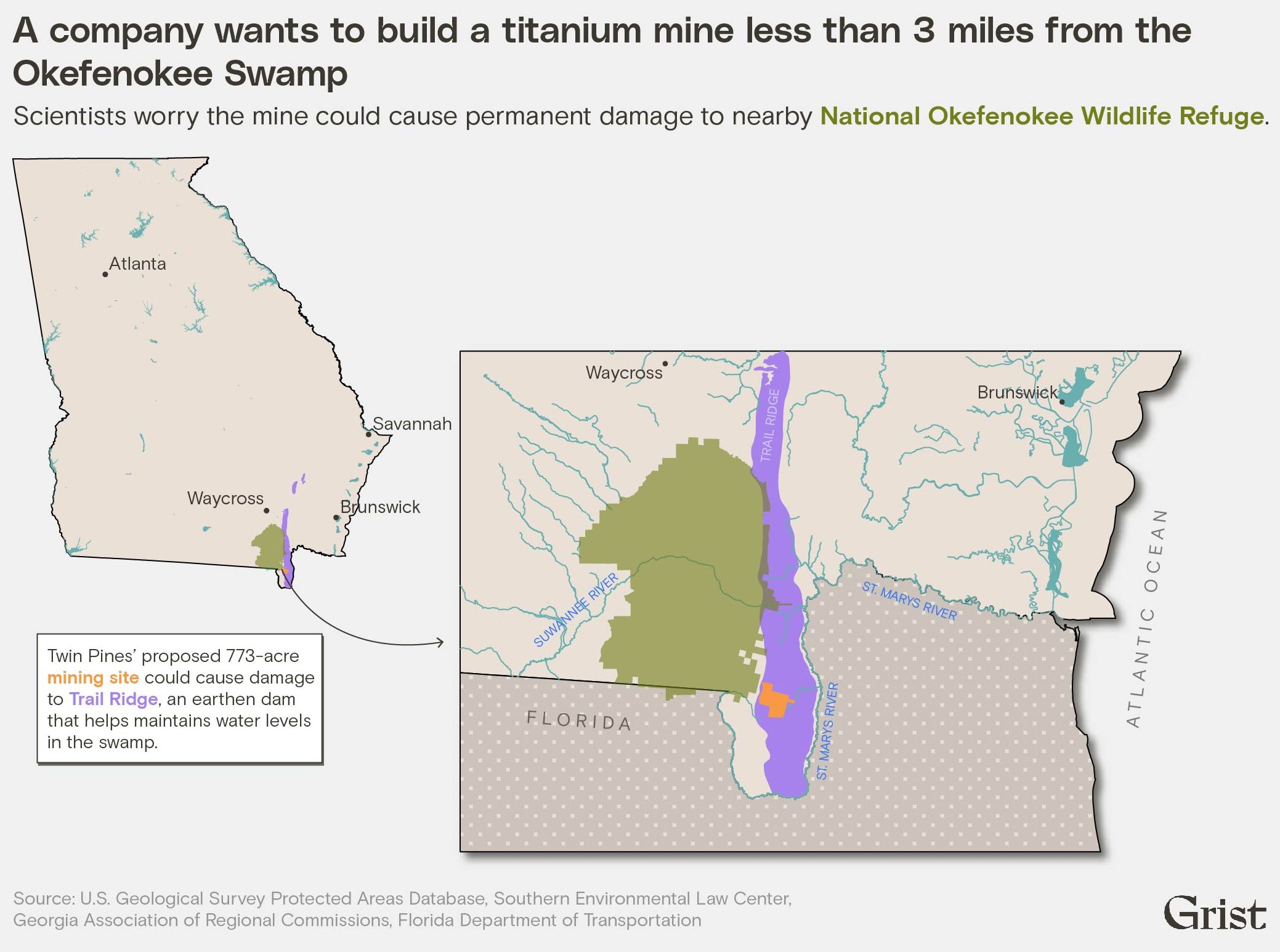


Keep the aid flowing to Ukraine

At some point this year, Biden will ask Congress to continue funding US aid to Ukraine, as it maintains its ongoing defense against Russian attacks. Ukraine was front and center in Biden’s speech last year, and his pledge to continue support for the war effort this year will need to overcome waning Republican support.  

The debt-ceiling showdown 

A vague post from the White House earlier this month dropped one important hint: Biden’s likely to try using the presidential bully pulpit to defuse impending budget brinkmanship.

“He looks forward to speaking with Republicans, Democrats, and the country about how we can work together to continue building an economy that works from the bottom up and the middle out,” the White House said in a Jan. 13 release

Biden’s SOTU comes fast on the heels of his meeting with McCarthy last Wednesday, where the two began talks aimed at staving off a potentially disastrous showdown over raising the debt ceiling. Treasury Secretary Janet Yellen’s Jan. 19 warning that the U.S. had hit its $31.3 trillion borrowing cap was expected, but GOP hardliners in the House are demanding budget cuts before raising that cap. To be clear, the debt ceiling isn’t some constitutional requirement. . It’s an artificially imposed limit, and since the 1960s lawmakers have raised that limit about 80 times.

With the announcement that Gov. Sanders would deliver the GOP response from Little Rock,  the top two Republicans in Congress — McCarthy and Senate Minority Leader Mitch McConnell — signaled key phrases we’re likely to hear from her: inflation, surging crime, border crisis, failing schools. 

When is the State of the Union address? 

Biden will address both chambers of Congress in a joint session on Feb. 7, beginning at 9 p.m. ET in the House chamber. McCarthy will gavel in the session and join Biden and Vice President Kamala Harris, in her capacity as Senate president, on the House dais. 

SOTU speeches usually last about an hour, although presidential winds have trended longer. Former President Bill Clinton holds the records for both the longest and second-longest recorded addresses, in 2000 (one hour, 29 minutes) and 1995 (1:25) respectively, according to UC Santa Barbara research. Richard Nixon went the other direction in 1972, wrapping it all up in just 28 minutes. Recording technology was unavailable for George Washington’s 1790 address, but its text ran just 1,089 words — shorter than this article. 

How to watch

Essentially every TV news network will broadcast the address live, including ABC, CBS, NBC, CNN, MSNBC and Fox News. CNN viewers won’t need a login to watch. All those networks will also stream the speech on their websites and through the apps available on Roku, FireTV, Android TV, Apple TV and similar devices or streaming services. 

Easiest of all, though, is the White House YouTube channel, with ASL interpretation available. Keep an eye on the White House Facebook and Twitter accounts for a fresh link on the day of the speech. 

San Francisco synagogue shooting suspect has been arrested

Police arrested a man late Friday for firing off blank rounds from a handgun earlier this week at a San Francisco synagogue.

The man, whose name has not been released, was arrested after police developed probable case to obtain a search warrant at the man’s home, where investigators said they found evidence from that incident and another one that happened nearly an hour later, reported KGO-TV.

Video shows the man entering Schneerson Jewish Center on Wednesday evening and firing gunshots, which turned out to be blank rounds, and then flee the synagogue.

“Terrorism doesn’t have to have killings,” said Rabbi Alon Chanukov, the vice president of the synagogue. “In my mind, what he did was he came and he did a terrorist attack. He came to terrorize people.”

Police said he took part in another unspecified incident nearly an hour later.

No injuries were reported in the synagogue shooting, but the congregation took additional security measures ahead of this weekend’s services.

Supreme Court security worse than leak investigation initially showed

Supreme Court employees raised security concerns that were not made public when an internal investigation was completed following the leak of a draft opinion reversing abortion rights.

Multiple sources familiar with the court’s operations told CNN that justices often used personal email accounts for sensitive communications, employees used printers that didn’t produce logs and “burn bags” to collect sensitive materials for destruction were often left open and unattended in hallways.

“This has been going on for years,” one former employee said.

Some justices were slow to adopt email technology — they were “not masters of information security protocol,” according to one source — and court employees were afraid to confront them over the security risks.

Supreme Court marshal Gail Curley in her investigative report noted that printer logs intended to track document production were insufficient, but a former employee said employees who had VPN access could print documents from any computer, and remote work during COVID-19 shutdowns and otherwise meant draft opinions could have been taken from the building in violation of court guidelines.

Curley’s report noted that court methods for destroying sensitive documents should be improved, but three employees said striped burn bags supplied to chambers were often left sitting out unattended, and each justice had their own protocols for disposing of court documents.

A source familiar with court security practices said some colleagues stapled burn bags shut, while others filled them to capacity and left them near their desks, and others simply left them sitting in hallways where anyone with access to non-public areas could have taken sensitive materials.

How a defunct Trump policy still threatens Georgia’s Okefenokee Swamp

For centuries, the Okefenokee Swamp has been a haven for people, animals, and plants. The wilderness, which straddles the Georgia-Florida border, is a mire of winding, midnight waters, giant cypress trees cloaked in Spanish moss, and peat islands floating among alligators and lily pads. The swamp has seen many chapters: It was part of the homelands of the Muscogee (Creek) Nation before the Tribe was forcibly removed from Georgia in the 1820s and 1830s. A hundred years later, the swamp came under federal protection as a national wildlife refuge. 

Now, yet another chapter may be approaching for the Okefenokee watershed: a titanium mining site. 

For years, the Okefenokee Swamp has been warding off Alabama-based Twin Pines Minerals, which in 2019 filed for permits for a mining project just outside of the refuge. The company hopes to extract titanium dioxide, which can be used to create bright white pigments used in a wide variety of consumer and industrial products. While the swamp itself is not at risk of being turned into a giant mining pit, the project would result in a 500-by-100-foot pit in the nearby Trail Ridge, which holds the swamp waters in place.

A map of the Okefenokee Swamp shows a proposed mining site less than 3 miles from the national wildlife refuge's border.
Grist / Jessie Blaeser / Amelia Bates

This January, the mine moved one step closer to breaking ground when the Georgia Environmental Protection Division released a draft plan for the development and opened a 60-day period of public comment. The progress was made possible by a short-lived Trump administration rule that created a window of opportunity for industrial projects to proceed along protected waterways — even without a federal permit.

“What we’re seeing at Twin Pines is not the only example of waterways that remain at risk because of the prior administration’s rule,” said Kelly Moser, senior attorney for the Southern Environmental Law Center, of the Okefenokee Swamp. “It is the most striking example, given that it jeopardizes one of our most iconic and valuable natural resources, but it is not alone.” 

During Trump’s time in office, the federal government rolled back hundreds of environmental protections, enacting many new pro-industry policies. Among those was the Navigable Waters Protection Rule, which removed the protection of the Clean Water Act — aimed at preventing water pollution — from huge swaths of streams and wetlands across the United States. 

a white bird with a long orange beak steps into shallow waters
An ibis steps into the waters at the Okefenokee National Wildlife Refuge. Steve Brookes / U.S. Fish and Wildlife Service

The rule lasted just over 16 months before it was vacated by a federal judge who cited “fundamental, substantive flaws” in the rule. But the damage had already been done: During that time period, the Environmental Protection Agency and the Army Corps of Engineers reported a three-fold increase in projects that no longer needed federal permits. At least 333 of those projects would have required a permit had it not been for the rule. 

Companies were trying to take advantage of “the fast food window” to grab their project clearances, said Stu Gillespie, a supervising senior attorney with Earthjustice. (The nonprofit has been involved in litigation against the Army Corps of Engineers and mining companies as a result of the Navigable Water Protection Rule.) He said these projects are likely to have environmental, cultural and potential health consequences that will play out over decades. 

“The harms are irreparable,” Gillespie said.

For the Twin Pines mining site, the Trump-era rule meant that for a brief but meaningful window, all the waters associated with the project site were abruptly excluded from federal protection. During that period, the Army Corps of Engineers determined the project only required state approval, a small hill to climb compared to the regulatory mountain that is the federal Clean Water Act, in order to proceed.

As with other projects where all the waters were determined not to be under federal protection during that period, the Corps’ decision at Twin Pines has been allowed to stand despite the fact that the rule they were based on is no longer in place. For projects where the federal government still had jurisdiction under the Navigable Waters Protection Rule, many of these had to go back to the starting line.

Scientists from the University of Georgia as well as the Fish and Wildlife Administration have warned against the Twin Pines project moving forward. In 2019, in a document obtained by the Defenders of Wildlife and shared with Grist, the Fish and Wildlife listed concerns about the project’s impact on water levels in the Okefenokee, increasing the likelihood of fires, and destroying habitats. “The effects of the action may be permanent to the entire 438,000-acre swamp and nearby ecosystems on nearby Trail Ridge,” the agency wrote.

Moser called the situation “an absurdity.” The Corps “is not protecting critical wetlands that have been waters of the United States and are waters of the United States,” she said. 

Across the country, about an hour south of Tucson, Arizona, another mining complex is already breaking ground as a result of the Navigable Waters Protection Rule. The Copper World Complex is owned by Hudbay Minerals, a Toronto-based mining company. Just like Twin Pines, the Trump-era rule allowed Hudbay to proceed without the need for a federal permit. Within the complex, ephemeral waterways — dry stream beds that turn into rivers or streams after periods during the monsoon season — weave through the slope of the Santa Rita Mountains. These waterways are essential to maintaining surface water levels of the Santa Cruz River, but were categorically excluded from protection under the Navigable Waters Protection Rule. 

Still, the two projects have faced multiple legal stumbling blocks. In June 2022, the Army Corps of Engineers identified the proposals in a memo rescinding its previous determinations as a result of the agency’s previous failure to consult local tribes: the Muscogee (Creek) Nation in Georgia, and the the Tohono O’odham Nation, Pascua Yaqui Tribe, and Hopi Tribe in Arizona. But after Twin Pines filed a civil suit, the Corps reinstated its Trump-era determination for that site, putting the fate of the project back in Georgia’s hands. 

The Corps seems to have applied the same thinking to Hudbay’s Arizona mining project. “Unlike Twin Pines, there hasn’t been any kind of out-of-court settlement with Hudbay or anything along those lines,” said Earthjustice’s Gillespie. The progress in the Copper World Mining Complex is “a direct result” of the Navigable Waters Protection Rule, he said.

Under the guise of Trump-era guidelines, Hudbay has already begun development in the Santa Rita Mountain range, filling the stream beds that are technically back under federal protection.

In November 2022, the Southern Environmental Law Center filed a lawsuit against the Army Corps of Engineers, arguing the agency was in charge of protecting “waters of the United States,” such as the freshwater wetlands on which the Twin Pines mining site might be built. But at the state level, there are no Georgia laws protecting freshwater wetlands. “The state has always abdicated that responsibility to the federal government,” said hydrologist and University of Georgia professor Rhett Jackson.

In order to proceed, both Twin Pines and Hudbay await only a handful of state permits from Georgia and Arizona, respectively. These permits are related to air quality and groundwater withdrawals, but do not need to address the potential destruction of the waterways in question.

In Arizona, state law restricts its own water department from regulating streams not under federal protection. But the Environmental Protection Agency has begun an investigation into the Copper World site to “determine whether there’s been violations to the Clean Water Act,” Gillespie said.

In Georgia, the project must first hurdle the 60-day period of public comment, which began January 19, for Twin Pines’ draft mining plan. With the fate of the Okefenokee Swamp at risk, voices have risen up against the mine both locally and nationally, with opposition likely to reach a fever pitch over the next few months. 

Jackson is one of those opposed to the project. “I have traveled all over the world (29 countries), hiked in many national parks, and worked as a wilderness ranger in the North Cascade Range of Washington State, and I have never seen anything more beautiful than the Okefenokee Swamp,” he wrote in an email to Grist.

a large alligator looks off to the left in front of a pool of water with lily pads
An alligator basks in the sun in Okefenokee National Wildlife Refuge. Stacy Shelton / U.S. Fish and Wildlife Service

Meanwhile, Twin Pines sees the period of public comment as a victory: It moves the project forward. 

“We are pleased to have reached this important milestone in the permitting process and appreciate the Georgia [Environmental Protection Division] EPD’s diligence in evaluating our application,” said Steve Ingle, president of Twin Pines Minerals, in a statement. “This is a great opportunity for people to learn the truth about what our operations will and will not do, and the absurdity of allegations that our shallow mining-to-land-reclamation process will ‘drain the swamp’ or harm it in any way.”

The Georgia Environmental Protection Division says it hopes to receive thoughtful feedback on the Twin Pines draft plan. “Good comments on the [Mining Land Use Plan] MLUP — additional analysis, data, technical perspectives, mitigation measures, etc. — helps EPD make better decisions and we look forward to the process,” said the department’s Communications Director, Sara Lips. 

The federal government, however, is putting pressure on Georgia to halt the project. In September 2022, Secretary of the Interior Deb Haaland visited the Okefenokee Wildlife Refuge along with Senator Jon Ossoff of Georgia. The pair spoke with over a dozen local leaders about protecting the area, according to WABE. Just two months later, Halaand wrote to Georgia Governor Brian Kemp, urging him to halt approval of the mine.

The recommendation is a reminder of how fast the wheels of politics can turn — albeit with lasting environmental consequences. “What the Trump rule did was embolden industry to flout the law, to ignore the science, and to rally around this false approach to protecting waters of the United States,” Gillespie said. Furthermore, it gave extractive industries a roadmap for circumventing the federal permitting process for protecting waterways.

We see that companies “are continuing to press those very same arguments,” Gillespie said.


Editor’s note: Earthjustice and Southern Environmental Law Center are advertisers with Grist. Advertisers have no role in Grist’s editorial decisions.

A love affair in life’s last act

What are the chances of a woman in her 80s finding a man to share her life — not just a companion, as pleasant as that would be, but real physical, mental and emotional love? Throughout the 16 years after my last husband died, I asked myself that question a thousand times. I knew the grim statistics. Harvard Health Publishing says that by age 85, 67% of the American population is female. Adding to the skewed odds, so few of the male population left standing are interested in women over a certain age. The likely ones, the men who have had good love relationships and desire another, do not seem to remain alone for more than a few months, if that long. A friend suggested to me that the best chance for a woman in her 70s or 80s to appeal to a good man would be through a meaningful friendship with a couple before his wife passes away. It never occurred to me that such a situation would ever happen to me.

In the summer of 2017, I went once a week to visit my lovely, long-time, friend Jen, who was enrolled in hospice with terminal pulmonary fibrosis. From our first marriages, we had shared so much in common. We raised our kids together throughout our many summer vacations in Maine. She was an accomplished artist. I owned an art gallery in New York. In mid-life, we had both gone through a divorce from our first husbands.

During those bittersweet visits with Jen during her last summer, I began to take notice of her husband David, his loving attention to her, his patient manner, and the way he kept what had to be deep suffering inside. I knew he had lost his first wife to cancer, and now he was living through losing Jen. How was he able to bear this painful situation? Who was he?

I had made peace with my aloneness after so many years, and I had even found pleasure in my independence.

David had always been a figure of mystery to me. His reputation was legendary: a prestigious, award-winning math genius, a distinguished professor. I admired his amazing career, but he seemed remote. I was not initially attracted to him. His gray goatee, ponytail and sailboat tattoo made him dramatically different from any of the men I had ever been attracted to. Watching him come and go during my visits with Jen, I silently wished him well in all that I knew was ahead of him.

Following my snowbird life, I left Maine in late October and was in Florida when Jen died the following February. I wrote David a note of condolence, but I did not hear back from him.

In the summer of 2018, after I returned to Maine, l invited David to dinner at my house. Having lived through the tragic loss of my second husband in 1985 and the loss of my third husband to COPD in 2002, I knew he was going through a time of painful loneliness. I made a conscious decision to have him without other guests, so we would have a chance to really talk. Talk we did, still at the table hours after the dinner was finished. Besides our obvious differences — his academic career and his self-confessed rejection of the social world and my art gallery career, literary life and social network — we discovered we had much in common. We related on a deep level to the love of family (his four children, my three, our numerous stepchildren and grandchildren) and friends, our committed passion for coastal Maine in the summer and our painful losses. Both of us had buried two spouses.

As part of our conversation, we decided that Shakespeare was right: “All the world’s a stage” and we had both played many roles. David said at our age we were headed for the “Last Act” in this lifetime. I got it. All people in their 80s, whether single or with a spouse or partner, are automatically headed for their Last Act. The question for every individual is how to play it best. In the days that followed, I began to wonder how it might be for me to play it with David.

Throughout the busy summer, we only saw each other again twice, once for dinner at his house and once for a movie in Rockland. At the end of September, close to the time I was leaving Maine again for the winter, David invited me to a farewell dinner. Despite the big noisy crowd and live music in the restaurant in Rockland, I felt his attraction to me. There was no missing the intensity of his eyes, the warmth of his hand holding mine. I felt my own surprising attraction to him. At the same time, I was acutely aware he had only been alone for six months. I feared it was not long enough for him to be open to another love in his life. By contrast, I had made peace with my aloneness after so many years, and I had even found pleasure in my independence. In spite of my lifelong desire to share my life, I had taken Mark Twain’s advice: “Happiness is a choice.” Was it possible, I wondered, that I could find love and happiness with David in our Last Act?

There was no missing the intensity of his eyes, the warmth of his hand holding mine.

As the winter winds began to blow and the leaves were off the trees, I left Maine without any further meetings. Within days in Florida, I discovered I was continuing to think about David, wondering how he was handling his first winter alone, wishing we were not so many miles apart. As it turned out, he was thinking about me too. We began an email courtship. Then we talked on the phone. One night he suggested we try FaceTime. I had never used FaceTime. I was surprised at the level of intimacy. I felt as if we were together, as close as any two people can get without touching. For the next six weeks, we spoke on FaceTime for over an hour every night, often from our beds in our respective houses. We talked about books we had just read — we both loved “Educated” — and we both loved opera, particularly Verdi and Puccini, and certain country music. And, of course, we talked about our children and the different ages and stages of their lives. 

One night, somewhere along the way, I hung up the phone and knew without question that my life had changed. I went on YouTube and played the Michael Ball rendition of “Love Changes Everything,” an Andrew Lloyd Webber song that spoke to all the feelings in my heart. I emailed David to tell him about it. He watched the video and wrote back immediately: Yes, he knew the words of the song were true. “Some people sadly have never known love,” he said, “but I know it well.” Both of his marriages were loving, good marriages. I had been fortunate to have known love and a good marriage, too. Slowly, at the end of our FaceTime sessions, we each began to say, “I love you.”  Over time it became obvious that we needed to find a way to be together. The question was clear: Could our experience on FaceTime be real? We needed to find out.

We decided to meet in Key West where I had attended the Key West Literary Seminar for many years in January. We planned to have four days together with no agenda beyond getting to know each other. In the meantime, questions on FaceTime became more intimate. “Will you sleep with me?” he asked one night, his voice soft and tentative. After a moment’s hesitation, I heard myself say “yes.” I could not believe I said it, that I meant it. What was I thinking? It just seemed so natural.

On the day he was arriving in Key West, I was so anxious I never heard a word of the morning presentation at the Literary Seminar. Our plan was for David to rent a car at the airport and meet me in front of the library, an easy GPS landmark. Questions besieged me. Suppose David didn’t appear in person as he had appeared to me on FaceTime? How did I really feel about his ponytail? Suppose I wasn’t the person he expected? I could hardly breathe when I spotted his car coming around the corner. Once he stopped, I stood and walked with determination toward the car, blocking all thought of the risk I knew deep inside I was taking. He took his hands off the steering wheel and held my shoulders. I couldn’t see the ponytail or the goatee. I saw the handsome, inviting face I had been seeing every night on FaceTime. We kissed in a way that felt urgent and magnetic. 


Want a daily wrap-up of all the news and commentary Salon has to offer? Subscribe to our morning newsletter, Crash Course.


There were awkward moments, of course. How do two people in their 80s take their clothes off in front of each other without awkward moments? Fortunately, we were able to break the tension with kind, supportive laughter. A sense of humor is imperative in any difficult life situation, but it certainly added lightness and fun to our beginning. At one point a thought occurred to me that Jen and my former husband Aubrey were cheering for us.

What we felt was a million miles beyond the green stage of a young couple in love, or even the coming together of two people in their 40s or 50s who have found each other after losing a spouse or a divorce. There we were, two twice-widowed grandparents embarking on a love affair, two people in their 80s, who were willing to step on the stage and take a role in the Last Act together. Four years later, the curtain has not come down.

A weeknight soufflé that’s even faster than the Stouffer’s classic

When a friend was getting sober a few years ago, he confessed his anxieties to his Irish American dad. “I’m so afraid all the time,” he said. And his father had simply replied, “You’re a grown man, what have you got to be afraid of?”

I think about those words of wisdom when I too am afraid, which is pretty much every day. I don’t mean just afraid of climate change and global pandemics and mass shootings and whatever else is terrorizing your own imagination today. I mean that I find it incredibly easy to psych myself out about the seemingly smallest things. I’m afraid a friend hasn’t replied to a text because she’s secretly mad about something. I’m afraid I’ll regret ordering the special when I had really been craving the usual. Afraid the chicken will turn out dry. Mostly, I’m afraid of messing up.

Yet I’ve learned in my life that the best antidote to those gnawing day-to-day fears is just trying anyway. Sometimes messing up and surviving it. Sometimes finding out it wasn’t such a big deal after all. Realizing that when I see that I really can master the small stuff, it makes me better equipped the handle the big challenges. (Not knocking therapy and medication either.) 

So I am going to endeavor from here on out to be less fearful of the things I can be less fearful of, and I hope you will too. Like soufflé.

I have long been a fan of strata, an easy, soufflé-adjacent egg dish that has the bonus attraction of containing bread. Yet I’ve also avoided soufflé because it just seemed too difficult. It demands a special dish to bake it in, right? And parchment paper and twine? And if you even look at the oven funny the whole thing falls apart, is my understanding? It feels like there’s a lot of opportunity for failure there. 


Want more great food writing and recipes? Subscribe to Salon Food’s newsletter, The Bite.


But while soufflé is undoubtedly challenging if you’re in the kitchen of a three-star restaurant where you’re churning out dozens of sky-high creations every night, there’s no need to be so intense about it at home. After all, the best soufflé in the world, in my opinion, resides in the frozen food aisle of your local supermarket.

The Stouffer’s spinach soufflé holds a place of deep nostalgic reverence in my heart. Like the iconic Sau-Sea shrimp cocktail, it’s one of the first things I ever ate that made me fancy and grown-up. It was the side dish that said, “Now this is a special occasion.” And it is no skyscraper. It is a dense, verdant dish, as unpretentious as eggs should be.

For my homage to the classic, I have used more greens than most spinach soufflé recipes call for, because you want this baby to be Stouffer’s level green. I have also borrowed from Ina Garten’s trick of adding an extra egg white to the mix for additional lift. And to hell with buying a special pan; I’ve baked the whole thing in my trusty Dutch oven. Make it once, learn it forever — and then look at us; we’re soufflé baking baddies now. 

People get nervous about the timing with soufflés, but guess what? You can do all of the prep work — yes, even folding in the egg whites — and then just pop it in the oven a half hour before you want to eat it. It bakes up beautifully and really is plenty tall straight out of the oven. Then it slumps, in a pleasantly relaxed way, as you start to dig in. It also takes less time to cook than a frozen dinner. It is, in short, about as far from intimidating as a dish can get. And when you proudly pull it from the oven, all impressive and delicious smelling, maybe you’ll hear the voice of my friend’s dad in your head, asking, “What did you have to be afraid of?”

* * *

Inspired by Ina Garten and Dinner Then Dessert

Stouffer’s-Style Dutch Oven Soufflé
Yields
 8 servings
Prep Time
 10 minutes
Cook Time
 30 minutes

Ingredients

  • 3 tablespoons of butter, plus extra for greasing the dish
  • 1/2 cup of grated Parmesan cheese, plus extra for the pan
  • 3 tablespoons all-purpose flour
  • 1 cup of room temperature whole milk
  • 1/4 teaspoon of nutmeg
  • Pinch of cayenne pepper
  • Salt and black pepper to taste
  • 5 large room temperature eggs, separated
  • 1 16-ounce package of frozen chopped spinach, defrosted and squeezed dry

Directions

  1. Preheat the oven to 400 degrees.
  2. Generously butter a dutch oven or high sided oven safe pan and sprinkle evenly with Parmesan. (I used a 2 quart vessel.)
  3. Melt the butter in a medium saucepan over low heat. Stir in the flour and keep stirring for 2 minutes until smooth and nutty smelling. Remove from the heat and slowly but constantly stir in the milk, followed by nutmeg, cayenne, salt and teaspoon pepper. Return to simmer over low heat, stirring constantly, for 1 minute.
  4. Remove from heat and whisk in 4 of the egg yolks, one at a time. Stir in the Parmesan and the spinach, and then add the whole mixture to a large bowl.
  5. Put all 5 egg whites and a pinch of salt in a separate bowl. Beat with a hand or stand mixer about 3 minutes, slowly increasing the speed as you go, until the whites are glossy and look a little dry.
  6. Stir 1/3 of the egg whites into the spinach mixture, and then lightly fold in the rest until just blended. Pour into the pan, and smooth the top. Place in the middle of the oven and turn the temperature down to 375 degrees. 
  7. Bake for 30 to 35 minutes, until puffed and golden. Resist the urge to open the oven door while baking. Serve immediately.

Cook’s Notes

This recipe leaves you with a lonely leftover egg yolk, but there’s no need to waste such a precious commodity. You can freeze leftover yolks for future custards, or just throw an extra yolk into any egg dish you’re making this week. Andy Baraghani’s insanely good crispy mushrooms are a natural here.

Salon Food writes about stuff we think you’ll like. While our editorial team independently selected these products, Salon has affiliate partnerships, so making a purchase through our links may earn us a commission.

These expert tips will help you avoid the 8 most common sheet pan cooking mistakes

The oven has become, in some circles, a criminally under-utilized cooking vehicle. While some people tend to love and prioritize their countertop appliances such as microwaves, slow cookers, rice cookers, Instant Pots and air fryers, certain ovens sit unused, collecting dust — or in Carrie Bradshaw’s case, as often referenced, relegated to nothing more than a makeshift closet, stuffed full of sweaters or seasonally-inappropriate clothing.

This is a shame, though.

Ovens are amazing, especially when paired with sheet pans. The arid cooking environment can produce super-crispy foods, hot and bubbly dishes, terrific cookies or baked goods. It can toast nuts and take them to a perfectly aromatic place, crisping fries or the skin of roasted poultry, making jammy, rich roasted fruit, perfectly browning a loaf of homemade bread and much, much more. You can even use it to caramelize onions!

This is all to say: oven hive, rise up! It’s our time to shine. 

In order to help convince you to preheat and use that oven of yours, here are the eight biggest mistakes home cooks make when making sheet pan meals in their ovens. 

01
They choose the wrong oven temperature
Anyone else remember that video of Karrueche Tran and Kylie Jenner making “shrimp tacos” in which they pile up a heaping mound of raw shrimp in a hilariously small saucepan with the heat barely on? Mysteriously, in one of the next shots of the shrimp, they’re inexplicably, beautifully cooked — but that would’ve never happened without some production (and culinary) “magic.”
 
I find that lots of home cooks seem to be suspicious or spooked by the concept of high heat cooking. If you want the oven to do its best work, I almost always opt for 375 degrees Fahrenheit or higher (truthfully, I’m usually in the 400 or higher range, but 350 to 375 is always the go-to for cookies). In order for your veggies to be perfectly browned and caramelized or for your chicken cutlets to crisp up as best as possible, don’t shy away from a high oven temperature. 
02
They select the wrong sheet tray
Please do not just automatically toss your sheet trays as soon as they look “used.” When I’m making my ultimate comfort food (as I did last night), I always reach for my go-to, well-used sheet pan. I find that when I’m making chicken parmesan, using that sheet pan helps to brown the cheese perfectly, resulting in “shards” of crisped melted cheese intermingled with brightly flavored sauce. I know how my chicken parm will cook in that sheet tray and it’s precisely the way I’d like it cooked. 
 
However, if your sheet trays are warped in some capacity or the coating is starting to wear off, then you should get rid of them. Warping can cause oils to pool, resulting in unevenly cooked ingredients — as well as more dangerous situations.  
 
This also goes for rimmed baking sheets. If you’re making chocolate chip cookies or something like pizza, feel free to use un-rimmed, but otherwise, please do not. Any sort of moisture will slide right off your sheet tray, burning or igniting on the floor of your oven. 
03
They don’t group foods with similar cook times
This one is super important: group foods of similar cook-times on a single sheet tray.
 

Most proteins, excluding braised items, should take no longer than 40 to 45 minutes, from chicken to pork or even tofu. That said, you should avoid pairing them on a sheet tray packed with certain vegetables with much lower cook times. You wouldn’t want to put kale and sweet potatoes on the same sheet tray, either; the kale would be done within ten minutes, while the sweet potatoes would need up to 40.

04
They forget to cook with fat
Roasting is a very dry-heat method, which necessities a certain amount of fat for cooking. While olive oil is the easy go-to for many, I generally prefer neutral oil for roasting. This is the time to have a slightly heavier hand than usual to ensure that all of your vegetables, proteins, nuts, herbs, fruits or anything else on the sheet tray are well-coated, which will help them cook evenly, not over-brown and add a bit of flavor. 
 
You don’t often see people chucking a stick of butter on a sheet tray, but as long as the food won’t cook for more than 45 minutes, butter can be a great fat option that will add both moisture and flavor. One helpful trick is adding it during the last 5 to 10 minutes of cooking so that it won’t burn.  


In addition to oils, you can choose options like bacon grease, duck fat, brown butter, coconut oil or lard for your sheet pan cooking. 


Want more great food writing and recipes? Subscribe to Salon Food’s newsletter, The Bite.


05
They don’t cook the food for enough time
The oven is a strong, dry heat source, so in most instances, you’re not looking for a tender, light cook like you might with something like poaching. 
 
There’s a bit of a back-and-forth game with roasting or baking, though, in terms of balancing the cook time and the temperature. You want the food to be slightly browned and somewhat crisped, but not to the point of burning. However, a longer bake time in the oven can result in more nuanced dishes. 
 

For example, I love it either way, but try a tomato sauce that’s been cooked on the stove vs. a tomato sauce that was cooked on a sheet pan. There’s a rich, complex differentiation in the further-cooked oven sauce, which has a sharper flavor and often a darker color. There’s a caramelization at hand here that deepens the flavor. (Note though that for certain sauces or additions, that deepening can result in bitterness or may sometimes outright burn.)

06
They over-crowd their sheet pan
No matter if making protein, vegetables, or even just toasting nuts, you almost always want to opt for a single layer. When it comes to vegetables, be sure to jiggle or even hit the sheet pan on the counter to ensure there’s an even distance between the pieces of food and that it’s not overcrowding on the pan. If the food is too tightly packed, then you’re risking that the items on top will burn before the bottom items are even cooked through, leaving them to get mushy.
 
If you have a ton of food, just divide between two sheet trays and ensure that everything has some room and space to breathe. 
07
They neglect to properly season their sheet pan ingredients

As I always say, make sure you’re salting well. Lots of vegetables need more sodium than you’d expect in order to bring out some of their latent flavors or inherent sweetness. Black pepper and I aren’t best pals, but I do tend to add a few cranks when I’m roasting. Conversely, I don’t like sprinkling onion or garlic powder on raw vegetables before tossing them in an oven: they usually burn pretty quickly. Other spices, like red pepper flakes, coriander, paprika, or cumin are great choices. 


When using fresh herbs, whole sprigs are usually advisable; a puny thyme leaf will probably burn, whereas the whole sprig may not. Be mindful of what is a “garnish” herb and what is a “cooking” herb, too! Browned fresh herbs aren’t super appealing in taste or aesthetic.


I’m all about a squeeze of citrus towards the end of cooking or even after removing the food from the oven. Go wild when garnishing with freshly chopped herbs, vinegars, cheeses, toasted nuts, brightly flavored condiments and pickled items.You can even opt for drizzles or additions of cream or brown butter after the food is removed from the oven. One of my go-tos is a roasted cauliflower or broccoli that then gets a last-minute addition of currants, pecans, feta and a drizzle of acid or some pickled aromatics after the vegetables have been removed from the oven. This results in an interesting, appealing juxtaposition of tastes, consistencies and temperatures.


Keep in mind: If everything is cooked in the same pan with the same flavorings, oils and seasonings, then it’s not nearly as dynamic. 

08
They ignore the importance of mise en place and knife cuts
One super frustrating roasting moment is when half of your veggies are cut in larger pieces than others, resulting in perfectly tender morsels alongside under-cooked chunks. To avoid this, ensure that you’re cutting everything in similar sizes. No matter if working with broccoli rabe, pork, salmon, squash or celeriac, it’s important to do this to result in even cooking.
 

If using garlic, try to go with smashed, whole cloves and not a fine mince, which will burn quite quickly. This is also true for shallots, onions, or other alliums; aim for larger, fuller cuts or slices, which will result in crisped edges and tender interiors, instead of errant blackened pieces that are destined for the garbage can.

Biden did, in fact, “take care of it”: The Chinese “surveillance balloon” has been shot down

After speaking with a reporter on Saturday regarding an action plan for the Chinese “surveillance balloon” first spotted in U.S. airspace early this week, President Joe Biden stated “We’re gonna take care of it.” And hours later, a U.S. military aircraft did just that.

According to AP News, the balloon was shot down on Saturday afternoon off the Carolina coast and an operation was deployed shortly after to clear the area below of any resulting debris. 

In footage shared to Twitter by Open Source Intelligence Monitor, they detail that it appears as though “a missile fired from one of the F-22s is what was used to shoot down the Chinese High-Altitude Surveillance Balloon.” 

 https://twitter.com/sentdefender/status/1621960119578673152?s=20&t=wbzSo-YurrNcDvNzXgB-Qw

In the AP’s report they state that the balloon “had been flying at about 60,000 feet and was estimated to be about the size of three school buses.”


Want a daily wrap-up of all the news and commentary Salon has to offer? Subscribe to our morning newsletter, Crash Course.


In a statement obtained from NBC after the balloon was shot down, Biden spoke of the strategy leading up to the event saying “They decided — without doing damage to anyone on the ground — they decided that the best time to do that was when it got over water. They successfully took it down and I want to compliment our aviators who did it. And we’ll have more to report on this a little later.”

Senate Majority Leader Chuck Schumer, who had announced yesterday that there was a briefing scheduled for next week with leaders from the House and Senate on the intelligence committees to discuss the balloon, gave a statement of his own on Saturday saying “I strongly condemn President Xi’s brazen incursion into American airspace, and I commend President Biden’s leadership in taking down the Chinese balloon over water to ensure safety for all Americans. Now we can collect the equipment and analyze the technology used by the CCP.”

After abuse,”Women Talking” challenges the misuse and metamorphosis of forgiveness

An early scene in “Women Talking” shows two teenage girls sitting side by side in the loft of a barn. Wordlessly, one begins to undo the folds and twists of the other’s intricate braid, and by the time the camera cuts back to them, they are tying off a new braid that blends their long hair together. Meanwhile, the other women in the room debate the possibilities and hazards of forming a new social order. The unruly braid that now binds the two girls, the intimacy and the whimsy of it, captures in simplified miniature the sort of reimagined order the women seek. 

The girls, Autje (Kate Hallett) and Neitje (Liv McNeil), are in the loft listening to their mothers, aunts, and grandmothers talk. It’s a heavy conversation: the women are members of a rural Mennonite colony, gathered to decide what to do in the aftermath of the discovery that men in the colony have been sneaking into women’s bedrooms, drugging them in their sleep with horse tranquilizer and raping them.

Brief flashbacks show the women waking bloodied, aching, confused and terrified. One of them, Ona (Rooney Mara), is pregnant with her assailant’s child; another, Salome (Claire Foy), walked a day and a half with her four-year-old daughter on her back to procure antibiotics for the sexually transmitted disease the child now suffers from. Neitje herself was taken in by Salome after her own mother died by suicide after an assault. Another woman, Mejal (Michelle McLeod), has taken up smoking and suffers intermittent panic attacks, and Autje’s mother Mariche (Jessie Buckley) attempts to bottle up her anger but betrays her fury and impatience with frequent snaps and barbs levied at the others. 

The film, directed by Sarah Polley and nominated for Best Picture at the upcoming Oscars, is an adaptation of Miriam Toews’ 2018 novel, which is itself based on a true story. Polley’s most significant revision of Toews’ text is to make Autje’s perspective the guiding consciousness of the film. (The novel is narrated by a kind and shy young man named August, who takes the minutes of the women’s meeting since they cannot read or write themselves.) The decision to frame the story through Autje’s voice instead, with her watchful gaze bearing witness to the proceedings, underscores both how deeply fraught this high-stakes decision is and how powerfully its potential effects might reverberate across generations. 

Women TalkingBen Whishaw stars as August, Rooney Mara as Ona and Claire Foy as Salome in “Women Talking” (Michael Gibson/Orion Pictures)The male leaders of the community have given the women two days to decide whether they will forgive their attackers or leave the colony altogether, on penalty of excommunication. According to their faith tradition, excommunication would entail forfeiting their places in heaven. The women are devout, but they are also furious — their faith and their rage provide the twin compasses that guide their debate. As they talk, it becomes clear that the knot at the center of their problem is the question of forgiveness, which seems at once spiritually necessary and emotionally impossible. Attempting to thread a needle between justice and peace, the women deliberate over three options: do nothing, stay and fight or leave. 
The concept of forgiveness, its power and its limitations, provides the essential metric against which the women evaluate their options. 

The conversation is contentious, to say the least. Scarface Janz (Frances McDormand) argues in favor of staying: “It is part of our faith to forgive. If we are excommunicated, we forfeit our place in heaven.” Salome scoffs at this: “I cannot forgive them. I will never forgive them,” a sentiment Mejal echoes. Ona, the most idealistic of the set, meanwhile muses over the metaphysics of forgiveness: “Is forgiveness that’s forced upon us true forgiveness?” The concept of forgiveness, its power and its limitations, provides the essential metric against which the women evaluate their options. 

Autje and Neitje don’t say much, and initially, their only contributions are expressions of frustration. “Why are you making this so complicated?” an exasperated Autje cries out. “It’s very, very boring,” Neitje muses flatly. The girls’ antics — swinging from ceiling beams, loudly knocking over a pail while hobbling around with their hair intertwined, plotting and executing a prank to shock the others — betray their impatience. As they see it, hashing out the abstruse subtleties wrapped up in the idea of forgiveness is a distraction from the task at hand. 

Women TalkingEmily Mitchell stars as Miep, Claire Foy as Salome and Rooney Mara as Ona in “Women Talking” (Michael Gibson/Orion Pictures)But as the sun sets over the horizon and the talk spins on and on, a turn in the conversation suddenly thrusts Autje into the center of a situation that forces her to confront the complexities of forgiveness on deeply personal, and deeply painful, terrain. An exchange between Ona and Mariche unexpectedly deflects the issue of forgiveness on to a separate but adjacent context, one that implicates Autje directly. Ona questions Mariche’s argument in favor of staying and fighting by bringing up the fact that Mariche’s husband and Autje’s father, Klaas, has a reputation for drinking and abuse. Ona asks Mariche why she wants to fight now, even though she has never stood up to Klaas’ past aggressions for her own sake or that of her children. At this question, Mariche explodes, spewing insults at Ona with the intensity of a cornered animal, making it clear that Ona has hit a nerve. The camera cuts to Autje, looking on with mouth trembling, softly repeating “Stop . . .  stop it,” though it’s not clear precisely whom she’s addressing.
What happens next in this scene, where the tension has abruptly reached a boiling point, offers a brief and poignant glimpse at what a new economy of forgiveness might look like, unfolding in the small and removed microcosm of the barn loft. Ona apologizes to Mariche, who begins to calm down until a second, unexpected apology is issued, this time from Mariche’s mother and Autje’s grandmother, Greta (Sheila McCarthy).

“What you were required to do was a misuse of forgiveness.”

“I am also sorry, Mariche,” Greta says solemnly. “What you say is true. You had no choice. You forgave him again and again, as you were told to. As I told you to. I’m sorry. I’m sorry. I’m sorry. I’m sorry,” she says, ending in tears. The camera cuts to Autje, crying silently, as Greta finishes: “What you were required to do was a misuse of forgiveness.”

Greta asks her daughter to forgive her for having encouraged Mariche to forgive Klaas: forgive me for expecting you to forgive him, she begs. This marks a slight shift in the center of gravity. No longer does forgiveness seem like a simple zero-sum game in which the victim inevitably gives and the offender ultimately gains. Instead, a more diffuse transaction comes into focus, a sort of forgiveness that circulates collectively rather than limiting itself to a direct one-on-one exchange. The contrast is clear between this moment and the version of forgiveness that the men’s ultimatum demands — that iteration is not possible and not desirable. Instead, the exchange that occurs between Greta and Mariche unfolds according to a different model, one that is spontaneous, fragile and poignant. 

This is a moment of clarity, in which all of the women in the room witness together both the necessity of forgiveness and its irreducible complications, its transformative power alongside its dangerous amenability to injustice. As Agata (Judith Ivey) points out, forgiveness becomes problematic when it seems to convey permission. Hearing this, Autje, who also has suffered Klaas’ violence firsthand, crosses the room and goes to her mother. Mariche reaches down to cradle Autje’s face and then pulls her into a tight embrace, both shaking with sobs.

By elevating Autje’s structural significance in the story, Polley invites us to contemplate the contours of forgiveness from within.

Autje suddenly looks much younger, a child seeking comfort in her mother’s arms, even though her gesture is both a request for as well as an offering of the necessary care. Autje has watched her mother forgive her mother’s own mother, and her embrace with Mariche conveys a permutation of that same forgiveness unfolding one generation down the line. Klaas and his violence may have precipitated the situation, but he is not given the power to set the terms by which they will access peace and move forward.  

Women TalkingMichelle McLeod stars as Mejal, Sheila McCarthy as Greta, Liv McNeil as Neitje, Jessie Buckley as Mariche, Claire Foy as Salome, Kate Hallett as Autje, Rooney Mara as Ona and Judith Ivey as Agata in “Women Talking” (Michael Gibson/Orion Pictures)“Have we made a decision? Are we leaving?” Greta asks shortly after this, as night falls in the loft. It is Autje who answers decisively: “Yes.” By elevating Autje’s structural significance in the story, Polley invites us to contemplate the contours of forgiveness from within. A new order premised on a new model of forgiveness may be full of snags and sticking points, but it also contains spots of breathtaking tenderness and possibility. Autje and Neitje represent the threshold of the future, fully aware of the trauma of the past but prepared to imagine that something better might lie ahead. 

It’s telling that Autje and Neitje are the only two who answer the call to be counted for the 2010 census. When the census taker drives through the colony in his truck, incongruously blaring a Monkees song, all of the other women ignore his megaphone instructions to come out and be recorded. Perhaps it is habit that makes each of them shut the windows and stay indoors, and fear or simple obedience that keeps the younger children at home. But Autje and Neitje sprint forward, presenting themselves to this outsider who stands in for the wide world beyond the colony. The camera focuses on the man’s face framed in his truck mirror, his sunglasses and easy smirk initially conveying a vague whiff of sexualized danger. But the girls are a match for it, smiling and holding a conversation with him, a strange man who perhaps is indeed a threat, but surely not one greater than what they’ve already faced and overcome. He drives off, and they return to the women talking.

Disobeying the colony norms, they respond to a different summons and ensure that their presence will be recorded. In doing so, Autje and Neitje firmly establish themselves on the fulcrum of a new futurity — unfamiliar, uncertain, and irresistible.

“Women Talking” is currently in theaters.

“Skinamarink” feels different for anyone who grew up in an abusive household

“Skinamarink,”  the experimental and somewhat plot-less horror film by Kyle Edward Ball that was just released on Shudder, is being lauded by many viewers as the scariest movie ever made. But for some, including myself, a movie that centers on waking up in your home as a child to find your parents missing feels more like a wish fulfilled than anything else.

Made with a budget of only $15,000, and filmed in the Edmonton, Alberta home Ball grew up in, “Skinamarink” premiered at the Fantasia Film Festival in July of 2022, but really accumulated buzz when “hackers broke into the streaming platform of a European genre festival,” according to Vulture, and a leak of the film began to circulate online prior to its official release.

I first learned of the film back in November when I saw a tweet from Jane Schoenbrun, writer and director of the fantastic “We’re All Going to the World’s Fair,” in which she sang its praises. Being that I enjoyed her film so much, I sought out the leak and prepared to be scared to death. Wanted, in fact, to be scared to death. But at the end of its one hour, 40 minute runtime I came away thinking, “Yeah, that’s about right,” because what I saw didn’t feel scary, it felt like something I’d already lived through.

“Skinamarink” is an effective take on horror, despite its mixed reviews, and I’m sad to feel like I’m missing out on the fun of it as a lover of horror, but watching two young siblings camp out in front of a television while trying to enjoy their cereal as strange things happen around them isn’t scary for someone whose mom once intentionally stopped short in her Jeep to send her kid through the windshield after she was caught sneaking off to the mall one random day. This movie asks the question, “What if you woke up and your parents were gone?” If you’d have asked me that in 1995, when this film takes place, I would have replied, “Thank God!”

The trailer for “Skinamarink” starts off with an ominous voice saying, “In this house,” and it – in a very Christina Crawford saying, “Jesus Christ!” in “Mommie Dearest” way – makes me think of my own childhood house, in which I experienced the truly scariest thing that’s ever happened to me. 


Want a daily wrap-up of all the news and commentary Salon has to offer? Subscribe to our morning newsletter, Crash Course.


As a child, after some sort of argument with my mom; I think it was over something I’d been begging for at the grocery store; she decided to punish me by making me kneel in the corner of my dark bedroom, with my eyes closed. As I was doing so, I opened my eyes and looked over to the right of me, to the crack between the wall and the door, and saw my mom on her knees peering in at me from the hallway. When I looked at her, she didn’t change expressions, she just stared back. I think of that moment sometimes and wonder how long she was there, waiting for me to notice her. I realize now that the real punishment wasn’t the kneeling in the darkness, it was the part where she scared the s**t out of me. But she gave me a gift by doing things like that all through childhood. Nothing scares me now. 

Still from “Skinamarink” (Courtesy of Shudder)

“Skinamarink” has a feel to it that’s somewhere in between David Lynch’s “Inland Empire” and the “Mirror, Father, Mirror” scene from “Ghost World.” 

With its title derived from the nursery rhyme of the same name, it builds tension by mixing elements of childhood such as saccharine cartoons played on a tube television and heaps of colorful Legos strewn about wall-to-wall carpeting with unexplainable events that would be confusing at any age. 

First the kid’s mom disappears, then their father, shortly followed by the disappearance of the home’s windows, doors and toilet. As the siblings in the film, Kevin (Lucas Paul) and Kaylee (Dali Rose Tetreault) fend for themselves and make do, malevolent voices guide them from one part of the home to the next.

One scene in which a voice tells Kevin to stick a knife in his eye comes so out of nowhere that it actually made me laugh out loud. Moments like these, although sporadic, expose creator Ball’s desire to make this into something it never really becomes. At least for me. But, maybe in this instance, be glad you’re not me?

In a more recent tweet, from Jan. 29, Jane Schoenbrun writes a long thread about the film that made me look forward to watching it properly, meaning not from an illegal leak.

“This is a Memory Film drawing influence from the liminal internet’s ‘cursed image’ aesthetic. We are being told to watch SKINAMARINK like a hazy memory,” Schoenbrun writes.

I guess that all depends on who’s doing the remembering. 

Even after my second watch, “Skinamarink,” at best, felt like a really long #backrooms video, the sort made popular on TikTok, but overall I’m left remembering things best left as fodder for someone else’s favorite new horror movie.

Food52’s 11 best soup recipes of all time, ranked

The days may (allegedly) be getting longer, but winter is still undeniably here. While the sun’s annual foray into playing hard to get comes to a close, it’s best to use our remaining time indoors to celebrate winter’s most iconic dish: soup. Here are our 11 most popular soup recipes of all time, from French onion to butternut squash, and beyond.

11. Marcella Hazan’s Rice and Smothered Cabbage Soup

A soup that proves an under-appreciated truth: cabbage is a bottomless reservoir of flavor. Top with parmesan for an additional umami kick.

10. Tomato Soup with a Whole Head of Garlic

Garlic improves this already-perfected soup without muddling any of its classic flavors. Bonus: You don’t need to peel the entire head of garlic to get to all that allium goodness — simply cut in half across the middle to save time.

9. Vegetable Beef Soup Like Great-Grandma Vera Mae’s

This recipe is childhood in soup form. A spoonful of beef, potato, and carrot — all covered in the rich, dark broth — brings me straight back to my mother’s kitchen table.

8. Marcella Hazan’s White Bean Soup with Garlic and Parsley

This soup is eaten in two stages. First, enjoy perfectly tender white beans bathing in parsley and garlic. Second, mop up the remaining broth with whatever bread you can find.

7. Leftover Turkey Soup

Print this out and leave it somewhere in your kitchen. Your future fully exhausted post-Thanksgiving self will thank you.

6. Creamy Butternut Squash Soup with Sherry

Classic butternut squash with an added kick from the sherry. We don’t need to sell something that’s already perfect.

5. Best French Onion Soup

Two facts: First, every dinner party is made better with French onion soup. Second, this is our most popular french onion soup.

4. Joanne Chang’s Hot and Sour Soup

This recipe makes a few convenient changes to traditional hot and sour soup, namely using ground instead of sliced pork and replacing cornstarch with eggs. Even with these swaps, this dish maintains all of its classic flavor.

3. Lentil and Sausage Soup for a Cold Winter’s Night

Perfect for chilly weather, this recipe relies on pantry items like lentils, frozen spinach, wine, and garlic, meaning you might be able to make this soup without braving the elements on a trip to the grocery store.

2. Roasted Carrot Soup

Despite only using seven ingredients, this soup produces an entire world of carrot flavor. Serve it up with homemade sourdough if you’re so inclined, or reach for any crusty bread you’ve got on hand.

1. Genius Cauliflower Soup from Paul Bertolli

This recipe highlights how cauliflower cauliflower’s ability to play the main character of any dish. It’s deeply flavorful, plus it’s our most popular soup of all time (and it uses water in place of stock).

How to improve your naps, according to experts

We all have trouble sleeping sometimes, no matter how much effort we put into improving our sleep hygiene. Sometimes a small supplement — meaning, a little nap — can be the perfect balm to a rough night tossing and turning.

“Napping should not be a one-size-fits-all approach.”

Other times, a nap makes everything worse, and you wake up feeling worse than before. What gives?

There’s sort of an art to the perfect nap, but everyone’s physiology is different, so not everyone will respond the same way. Experts say finding that sweet spot can be tedious trial and error. Some people probably shouldn’t nap to begin with. It all depends on a person’s general health, their environment and the quality of the sleep they receive each night.

“Napping should not be a one-size-fits-all approach,” Dr. Rui Pereira, a postdoctoral research fellow at the University of Birmingham, told Salon. His research has explored the links between sleep deprivation and social functioning, having previously researched sleep in professional athletes. All that travel, competition and training makes sports stars prone to sleep issues and napping between games or on layovers is common behavior.

“When you’re struggling with your sleep, you’ll probably feel moody, anxious, maybe even with some mild depressive symptom,” Pereira said. “You’ll feel cognitively slow or not up to your full capacities in terms of your mental performance. So napping can certainly be very helpful in that regard.”

Napping is a multi-cultural “sport,” if you will. Of course there’s siesta culture in Spain, which was exported to Mexico by colonists, but the idea of taking a nap in the middle of the day actually originates from Italy. The word siesta comes from the Latin sexta (hora) “sixth (hour),” because workers would break at the sixth hour after sunrise.

However, napping is a relatively new invention, according to 2015 research in the journal Current Biology. By studying the sleep patterns of modern hunter gatherer tribes — the Tsimane of Bolivia, the San of Namibia and the Hadza of Tanzania — researchers at the University of California, Los Angeles were able to make guesses about how ancient humans slept. These tribes don’t sleep more than modern humans (around 6 to 7 hours per night) and rarely take naps, leading the researchers to assume that ancient humans rarely napped as well.

“There’s this myth that humans used to take daily naps, but that now — because we’re so busy and we can’t get back to our homes — we suppress the naps,” Jerome Siegel, the study’s lead researcher and professor of psychiatry at UCLA’s Semel Institute of Neuroscience and Human Behavior, said in a statement. “In fact, napping, is relatively rare in these groups.”

Modern nap culture can still be rewarding if done right. A good nap comes with clear benefits: zapped fatigue, increased alertness, mood improvements and just pure relaxation. But if a nap goes sour, it can trigger sleep inertia, which is when you feel disoriented and groggy after waking up. A bad nap can even make it hard to sleep later, giving people insomnia, repeating the cycle of fatigue and poor attempts to fix it.


Want more health and science stories in your inbox? Subscribe to Salon’s weekly newsletter The Vulgar Scientist.


“Naps can be great if they are brief, early in the afternoon, and fairly consistent from day-to-day,” Dr. Jade Wu, a sleep psychologist, researcher and author of the upcoming book “Hello Sleep,” told Salon in an email. “But haphazard napping, or napping too long or too late (e.g., dozing off while watching TV after dinner) can make nighttime sleep worse.”

That said, here are a few practical tips on improving naps.

Duration

“It may be that napping is not even connected to your sleep quality at night at all. Napping can also be problematic or just downright impossible for some people.”

The difference between a good and a bad nap ultimately comes down to length of time spent napping. The Centers for Disease Control and Prevention (CDC), that federal agency tasked with counting COVID cases and overdose deaths, among other things, actually has guidelines for the optimal length of time for a nap. Short naps (15-30 minutes) or long naps (40 minutes or more) are generally the most beneficial. Somewhere in the middle can make some people feel worse.

The timing has a lot to do with sleep cycles. A short nap that lasts a few minutes allows the muscles to relax and systems in the body to slow down. But if you go beyond 40 minutes or so, you may enter REM sleep (short for rapid eye movement), which is when dreaming is most likely to occur. Interrupting this phase or not fully settling into it can make a nap ineffective.

Location

Experts say that where you nap matters. Whether it’s the couch, your bed or the back of your car on your lunch shift will impact the quality and effectiveness of resting. Getting too comfortable can backfire if you only mean to lie down for 20 minutes and wake up three hours later, dazed and confused, wondering how you slept through your niece’s recital and yet still don’t feel better. Somewhere dark or quiet may help some fully rest, while others might benefit from a warm, well-lit room that they know won’t send them off into oblivion too easily. Your mileage may vary.

Situation

Depending on how sleep deprived you are will also impact nap quality. “If you are very sleep deprived when you start your nap, your brain may progress to deep sleep more quickly,” the CDC advises. “As a result, sleep inertia may last longer making it more difficult for you to wake up and feel alert even after a short time asleep.”

If you’re already the type of person who naps, these tips might make it more effective. But some people may not need to nap, they might need to just sleep better at night instead.

“Don’t try to necessarily introduce napping just because you happen to sleep poorly on the night before because that may not turn out well,” Pereira said. “It may be that napping is not even connected to your sleep quality at night at all. Napping can also be problematic or just downright impossible for some people.”