Spring Sale: Get 1 Year, Save 58%

5 of our favorite cookbooks to carry you into 2023

2022 was a fantastic year for cookbooks; from Rick Martinez’s “Mi Cocina” to ​​”Bagels, Schmears and a Nice Piece of Fish” by Cathy Barrow to “My America: Recipes from a Young Black Chef” by Kwame Onwuachi and Joshua David Stein, there really has been something for everyone’s tastes. 

But when asked about their personal favorite cookbooks from this past year, there were some similarities among the Salon team’s picks. These are cookbooks that meet home cooks where they are and were crafted with accessibility in mind; they are all written by people whose approach to culinary instruction is engaging and empathetic; and, more than anything, they are packed with recipes that you’ll actually want to make at home (rather than simply living in your head as a “someday, when I’m less busy” recipe). 

For those reasons, these are cookbooks that serve as a beautiful bridge into the new year, whether you are looking to try new-to-you flavors or are trying to be more intentional about spending time in the kitchen rather than doom-scrolling on Twitter. 

“Korean American” by Eric Kim

Food has always been a central part of Eric Kim’s story. In his debut cookbook — which culture editor Hanh Nguyen spotlighted as one of her favorites of the year — the New York Times staff writer offers a primer for what Korean-American pantry looks like, how Korean cooking is interwoven throughout the history of America (especially in Atlanta where he grew up), and how he developed his “Korean-ish” meals for one —like Gochujang-Buttered Radish Toast and Caramelized-Kimchi Baked Potatoes

“Korean American” is defined by Kim’s playful combination of the two country’s cuisines, evident in dishes like cheeseburger kimbap and crispy lemon-pepper bulgogi with quick-pickled shallots. When Kim spoke with Salon Talks earlier this year, he beautifully encapsulated his view on teaching people to cook accessible, delicious food — even if you are just cooking for yourself. 

“I really have always been fascinated by the occasions of eating,” Kim said. “I think when I was writing about cooking for one, I was really obsessed with the occasions where we find ourselves eating alone. And I think this book happens to have recipes for one because even when we’re happily engaged or even if we have family around, sometimes you just have to feed yourself. I am, as a recipe developer, interested in how to scale down things that are very difficult or scale up things that don’t need to be scaled up.” 
 

“The Cook You Want to Be: Everyday Recipes to Impress” by Andy Baraghani

Salon’s Mary Elizabeth Williams spoke with cookbook author Andy Baraghani in June about his new cookbook “The Cook You Want to Be: Everyday Recipes to Impress,” which she points to as one of her favorite cookbooks of 2022, largely because, as she wrote, his style of cooking involves “with a few tools and no dishwasher.” 

One of the tools he recommends? A real timer. 

“I think a real timer is dedicated to just that, timing your dishes or counting down,” he said. “As soon as you start to grab your iPhone or your phone, assuming that people all have iPhones, it’s a place for so many distractions. Emails, phone calls, texts. I try to avoid that. I never use the timer on my phone, and I promise it’ll make you more focused.” 


Want more great food writing and recipes? Subscribe to Salon Food’s newsletter, The Bite.


If being more present is one of your 2023 resolutions, that sounds like a simple way to start — especially while making Baraghani’s lemony pasta

“Cook As You Are: Recipes for Real Life, Hungry Cooks, and Messy Kitchens” by Ruby Tandoh 

Another of Williams’ picks for best cookbooks of 2022, “Cook As You Are: Recipes for Real Life, Hungry Cooks and Messy Kitchens” by “Great British Bake Off” alum Ruby Tandoh is rooted in empathy. Instead of striving for aspirational recipes that you’ll never cook, “Cook As You Are” is a “cookbook for normal people — for real home cooks who are juggling childcare or long commutes or who have limited time and resources.” 

However, limited time and resources doesn’t translate to limited flavor. Some recipes from Tandoh’s book include: carrot, lemon and tahini soup; smoky chicken, okra and chorizo casserole; gnocchi with harissa butter and broccoli; and delectable lemon-mochi squares. 

Read Williams’ interview with Tandoh about the perils of wellness culture and learning to listen to our appetites

“I Dream of Dinner (so You Don’t Have To): Low-Effort, High-Reward Recipes” by Ali Slagle 

Staff writer Alison Stine flagged Ali Slagle’s “I Dream of Dinner (so You Don’t Have To)” as one of her favorite cookbooks of 2022. When interviewed by Mary Elizabeth Williams in April, Slagle shared this anecdote, the ethos of which is woven throughout her cookbook: 

I had this moment in the pandemic where I was like, what is left to eat? What ingredients are there? I go for a lot of walks, which is where I clear my brain, and the only thing I could think about was ginger and dill. I kept thinking about how that felt alive in a way that I wasn’t feeling alive. So instead of thinking about, “What protein am I going to eat tonight, or will I have a vegetable?” think about if there’s one semblance of anything that sounds exciting. Go with that, because just getting in the kitchen and cooking for yourself is a worthwhile effort.

One recipe that we over at Salon Food have found particularly exciting is this Ice Cream Sandwich Slider inspired by Slagle. 

“Tenderheart: A Cookbook about Vegetables and Unbreakable Family Bonds” by Hetty McKinnon

Recommended by senior politics writer Amanda Marcotte, “Tenderheart: A Cookbook About Vegetables and Unbreakable Family Bonds” by Hetty McKinnion is a love letter to both her father, who immigrated from China to Australia as a teenager, and to produce itself.

Recipes include miso mushroom ragu with baked polenta and celery; vermicelli spring rolls; and a sweet potato and black sesame marble bundt. “Tenderheart” spotlights 22 fruits and vegetables, using them as the basis for over 180 recipes. 

“Salad Freak: Recipes to Feed a Healthy Obsession” by Jess Damuck

“Salad Freak: Recipes to Feed a Healthy Obsession” by Jess Damuck is unquestionably my personal favorite cookbook of 2022 — and I can’t wait to take it with me into 2023. I bought this cookbook in late March, shortly after it was published and I immediately fell in love with Damuck’s approach to seasonal produce, which was cultivated, in large part, while she worked for Martha Stewart

“I have worked with Martha in many capacities,” Damuck wrote in the book’s introduction. “But one of my favorites has always been making meals for her, especially lunch. It has been during my ‘Martha Years’ that I have really been able to refine my salad making.” 

The lunches Damuck prepared for Martha became known as her “three-hour salads,” which started with Damuck visiting the farmers market to pick the best ingredients on-offer that day; from there she would prepare “each component with more attention and focus than I even knew that I had in me.” Her writing inspired me to take similar care with my cooking this year, something I hope to continue in 2023. 

Salon Food writes about stuff we think you’ll like. While our editorial team independently selected these products, Salon has affiliate partnerships, so making a purchase through our links may earn us a commission. 

Five crucial elections to watch around the world in 2023

Predicting the outcome of national elections can be a mug’s game. Polls are often wrong, and second-guessing how people will vote months down the line can leave even the most savvy election specialist with egg on their face.

In short, there are too many unknowns: the state of the economy, late political shocks and even the weather on election day. What is known is that 2023 has its fair share on consequential races. Democracy is on the ballot in a number of nations, while common themes — such as the handling of inflation and corruption — may determine how incumbent governments and presidents fare as the ballot box. The Conversation asked five experts to provide the lowdown on what is at stake in key national votes in 2023.

Here are their psephological pearls of wisdom:

Nigeria (Feb. 25)

Carl LeVan, professor of comparative and regional studies at American University

Some of the campaign dynamics heading into the Nigerian presidential election will seem familiar to those who follow the country, with politics still deeply entwined with the country’s geographic-religious divide between a predominantly Muslim north and its Christian south. And after eight years of a northerner — Muhammadu Buhari — holding the presidency, debate revolves around whether power should “shift” to the south.

Buhari, in line with the constitution, is stepping down after serving two four-year terms — and that changes the electoral landscape. For only the second time since the transition to civilian rule in 1999, there’s no incumbent presidential candidate.

Having no incumbent seeking re-election has historically increased the chances of opposition party victory in Africa. Arguably for the first time since the 1980s, each of the three major ethnic groups in Nigeria has produced a serious presidential contender: Atiku Abubakar, who is of Hausa-Fulani descent, the Yoruba former Lagos governor Bola Tinubu, and former Anambra governor Peter Obi, a member of the Igbo.

While this might seem like progress — and has advanced inter-ethnic cooperation in the presidential campaign — it also dramatically increases the risk that there will be no clear winner under the constitution‘s formula that requires both a plurality of votes and a geographical distribution of support. A runoff has never before taken place, and the electoral commission would have only a week to organize it.

Security and poverty are key electoral themes. Buhari won in 2015 by prioritizing economic growth, anti-corruption and the defeat of the world’s deadliest insurgency, Boko Haram. Yet today, more than 80 million Nigerians remain in poverty, while insecurity ravages the country. The scale of violence plaguing Nigeria has not been seen since the civil war ended in 1970, while the geographical scope is unprecedented. Meanwhile, only 15% of Nigerians feel more loyalty to their nation than to their ethnic group.

This raises the specter of electoral violence and voter intimidation in the run-up to the Feb. 23 vote. Political violence, both between and within political parties, increased in 2022. Despite this, candidates have been largely running on hopeful messages about economic diversification, anti-corruption and opportunities for Nigeria’s youth.

Turkey (June 18)

Ahmet Kuru, professor of political science at San Diego State University

People in Turkey tend to call every presidential election historic — but the June 2023 election will truly be historic. It will determine whether the increasingly autocratic rule of President Recep Tayyip Erdoğan will continue to dominate the country’s politics or not. What’s at stake is not simply “politics” in the narrow sense of the term, but also the direction in economic policy, religion, education and many other fields.

If Erdoğan wins, it could portend a further erosion of the remaining opposition in Turkish public life, especially given his past record of authoritarianism and vengefulness. Indeed, there is already a suspicion that potential presidential candidates are being targeted, with the popular mayor of Istanbul sentenced to prison in December — a conviction that if held up on appeal would bar him from running for any political office.

The danger is the Turkish opposition will lose hope for the future. It could also exacerbate the country’s “brain drain” problem — as well-educated people, including medical doctors, academics, and businesspeople, migrate to Western countries, weakening the opposition at home.

A large cut out head of a man is held aloft a crowd.

Erdoğan looms large over the Turkish vote. (Ozan Guzelce/dia images via Getty Images)

An Erdoğan loss would be hugely consequential. Those who have been silenced under his rule will be able to speak up again. Over 100,000 people have been jailed as part of Erdoğan’s political purge. It would not surprise me that in the event of Erdoğan’s defeat, legal action is taken against him and his civil servants over alleged abuses and against his crony capitalists over alleged corruption.

The outcome of the election will also determine the future of religion-state relations. Turkey’s Directorate of Religious Affairs, which controls 80,000 mosques, is a major ally of Erdoğan. Any change in the administration is likely to result in curtailing of the directorate’s powers.

The 2023 presidential election will be fought over politics, economics and religion. If Erdoğan wins, he will frame himself as the second founder of Turkey, after Mustafa Kemal Atatürk. If he loses, his political, business and religious allies will face the risk of being expunged.


Want a daily wrap-up of all the news and commentary Salon has to offer? Subscribe to our morning newsletter, Crash Course.


Zimbabwe (likely July-August)

Miles Tendi, associate professor of politics at the University of Oxford

The 2023 election in Zimbabwe will be the second national vote to take place after the downfall of former leader Robert Mugabe.

The country’s last election, in 2018, occurred a year after a military coup ended Mugabe’s oppressive 37-year leadership. But contrary to the hopes of many Zimbabweans and foreign governments, that ballot did not prove to be a momentous break from the country’s extensive history of disputed and violent elections — underlining that powerful systemic problems, such as the conflation of the ruling ZANU PF party and the state, generate flawed elections in Zimbabwe.

Whether Zimbabwe can finally stage an election that is universally accepted as credible is one of the key issues in 2023. A credible election in itself will not bring about consequential political, economic and social reforms. But Western states and international donors such as the International Monetary Fund will be looking for an unblemished national vote as a prerequisite to earnest economic and diplomatic re-engagement with Zimbabwe after years of strained relations.

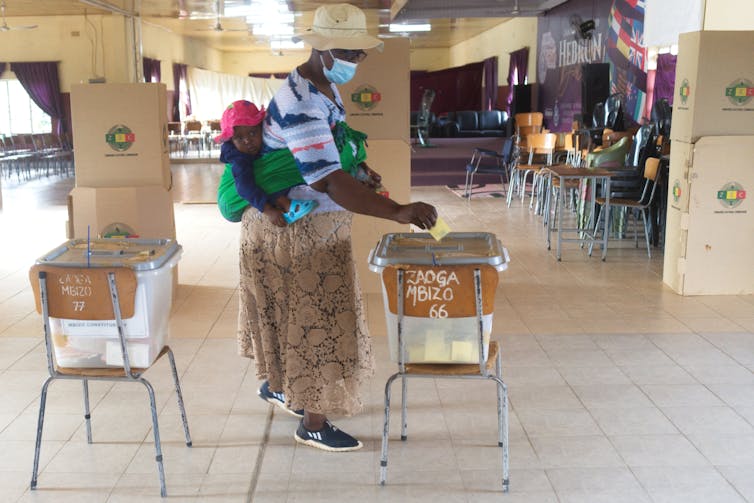
A woman cast a ballot during a Zimbabwean by-election on March 26, 2022. (Zinyange Auntony/AFP via Getty Images)

Observers will also be hoping for improvements on women’s political rights. The gendered nature of political leadership, violence, election campaigns and voting behavior have precluded equal representation for women in Zimbabwean politics. Only 26 of the 210 constituencies in the 2018 parliamentary election were won by women candidates. Although four women ran for president in 2018, none managed more than 4% of the vote share.

The future of opposition politics is also on the ballot. Since 2018, the main opposition Movement for Democratic Change (MDC) party has had to contend with state repression, internal splits and underfunding. In the intervening years it has failed to get large numbers of new voters onto the electoral register.

If the ruling ZANU PF party pulls off the overwhelming election victory it is working toward, it is likely that the opposition will be further saddled with division and disillusionment, posing an existential threat to the kind of vibrant opposition politics led by the MDC in the past two decades. And with no strong opposition to challenge and keep a check on ZANU PF, the danger is authoritarian rule will be solidified.

Argentina (Oct. 29)

Eduardo Gamarra, professor of politics and international relations at Florida International University

Even with a World Cup victory to savor, many Argentinians are pretty gloomy going into the 2023 election year — for good reason. The nation’s economy has been on the skids for a long time and it has one of the highest per capita debts in Latin America. On top of this there are sky-high inflation, low wages and poor growth — all worsened by the government’s handling of the COVID-19 pandemic.

Not all of these problems are the sole making of President Alberto Fernández and his powerful vice president, Cristina Fernández de Kirchner, both from the center-left Peronist faction. In fact, former President Mauricio Macri racked up massive levels of debt to the IMF before being voted out in 2019. But it is fair to say that Fernández and Fernández de Kirchner have been unable to solve the country’s economic problems.

A woman wearing a beige jacket flashes a 'v for victory' sign while standing on a balcony.

Will it be “V” for victory for Cristina Fernández de Kirchner? (Juan Mabromata/AFP via Getty Images)

Moreover, the pair have been plagued by other problems, notably corruption — both old-style political patronage and modern corruption based in drug trafficking throughout the country.

Indeed on Dec. 6, 2022, Fernández de Kirchner was sentenced to six years in jail in a scandal over a kickback scheme that saw public contracts go to a friend in return for bribes.

Some are even predicting that the combination of mishandling the economy and the corruption scandal could bring an end to Peronism, the political philosophy that has governed Argentina for much of last 70 years. Indeed the Peronists appear to be struggling with unifying around a candidate to contest the election.

Meanwhile, the party of Mauricio Macri is similarly split, with the former president facing strong challenges from within his own party.

These political and economic circumstances may favor a third contended: Javier Milei, a populist libertarian who has been rising in the polls and whose brusque style has drawn comparisons with Donald Trump.

Pakistan (by end of 2023)

Ayesha Jalal, professor of history at Tufts University

Pakistani elections are all about power. In particular, this one will be all about whether Prime Minister Imran Khan can get the two-thirds majority he says he wants to govern Pakistan. Anything less will not satisfy the former national cricket star.

A big question is when the elections will take place. In Pakistan, general elections are not held under an incumbent government. Instead, an interim government — typically made up of technocrats — takes over, with an election taking place within 90 days.

But with the ruling coalition seemingly intent on holding onto power for as long as possible while the country faces an economic crisis, environmental disaster and a credibility crisis, it is unclear when the national assembly will dissolve and an interim government take over. That could mean pushing the election toward the end of the year.

Either way, it will be a consequential election. It remains to be seen if the current coalition government — which ousted Khan’s Tehreek-e-Insaf party last year — will hold together, as it consists of a number of parties.

Khan has said he wants a two-thirds majority to bring about the constitutional changes he would like. So if he fails to get that, will he still be satisfied?

A man holds a poster depicting Imran Khan next to the words 'Last Hope'

Imran Khan is hoping for a two-thirds majority. (Aamir Qureshi/AFP via Getty Images)

Either way, the 2023 election is unlikely to be the answer to Pakistan’s woes. Whoever is in charge after will need to paper over the economic cracks with the help of the International Monetary Fund; without a further bailout, Pakistan won’t have the liquidity it needs to function.

You can never rule out electoral violence. Pakistan is awash with guns and very polarized. Violence marred the election in 2013 and there has been recent violence in northern Pakistan as well as the shooting of Khan at a rally.

That said, the hope is the nation’s security forces can keep a lid on violence during the election.The Conversation

This article is republished from The Conversation under a Creative Commons license. Read the original article.

Kevin McCarthy ambushed by Matt Gaetz in GOP caucus call — and bends the knee

Rep. Kevin McCarthy’s path to becoming speaker of the House continues to be a difficult one, as a call with the Republican Caucus ended with huge concessions and more debates with Rep. Matt Gaetz, R-Fla.

Politico reporter Olivia Beavers wrote that a GOP source told her that some members would only agree to support McCarthy if they get a rules change that would make it easier to topple the House speaker.

Newly-elected Rep. Mike Lawler, R-N.Y., reportedly asked Gaetz whether if Republicans lowered the threshold for the “motion to vacate,” he would ultimately support McCarthy for speaker. Gaetz then replied that McCarthy wouldn’t agree to it. McCarthy then argued that it was the conference that wouldn’t find it acceptable.

As Politico’s Alex Burns explained, “Lawler is emblematic of the members — center-right folks from Biden-supporting districts — who would be most at risk in a scenario where a weakened McCarthy wound up as speaker, with Gaetz and similar massively empowered to fire him at any time.”


Want a daily wrap-up of all the news and commentary Salon has to offer? Subscribe to our morning newsletter, Crash Course.


Lawler is one of several in Biden districts who has expressed concern over the House GOP being taken over by the far-right.

McCarthy then asked what Gaetz would say to something like that as a deal. Gaetz told the members that he’d think about it.

Beavers explained, “There is a huge concern that McCarthy is giving away too much without [the] promise of votes in return. Told call was mostly McCarthy allies talking.”

Punchbowl’s Jake Sherman explained that if McCarthy agrees to lower the threshold for such a motion from five members to one “it would mean one lawmaker who is angry at him can trigger a non-confidence vote. There are ways to delay the vote —[John] Boehner did when [Mark] Meadows filed his — but it has to come up eventually.”

He also argued that while five members is better than one, because of the size of the House one member can usually find four more to join them in a protest.

At the same time, the GOP’s narrow majority means that very little will actually get done in the House. McCarthy was already sidelined during budget negotiations.

Brazil’s Lula takes office, promising “hope and reconstruction” as Bolsonaro era ends

Hundreds of thousands took to the streets across Brazil on Sunday to celebrate the inauguration of leftist President Luiz Inácio Lula da Silva, whose return to the nation’s highest office also marked the exit of far-right Jair Bolsonaro who left his country and arrived in the U.S. state of Florida ahead of the weekend’s transfer of power.

After being sworn in during a ceremony at the National Congress, Lula addressed the assembled lawmakers as he lamented the “terrible ruins” left by Bolsonaro, though he did not actually mention his predecessor by name. But Lula also issued a message of renewal and hope.

“Our message to Brazil is one of hope and reconstruction,” Lula said in the speech. “The great edifice of rights, sovereignty and development that this nation built has been systematically demolished in recent years. To re-erect this edifice, we are going to direct all our efforts.”

“Democracy was the big winner in this election,” he declared. “Long live democracy! Love live the Brazilian people!”

Following his call for reconstruction, he vowed to “rebuild the nation and make a Brazil of all, for all.”


Want a daily wrap-up of all the news and commentary Salon has to offer? Subscribe to our morning newsletter, Crash Course.


Lula, who previously served as president from 2003 to 2010, beat Bolsonaro in a highly-contentious election in October amid concerns that the incumbent — often compared to former U.S. president Donald Trump — would not ultimately concede or relinquish the office.

In the capital city of Brasília on Sunday, throngs of Lula supporters were seen in the streets ahead of a presidential motorcade bringing the returning president to his swearing-in ceremony.

Music and dancing in the streets added to a festive atmosphere even as a strong security presence acted as a reminder of the reluctance by Bolsonaro and his right-wing supporters to admit defeat at the polls. As the Washington Post reports:

the carnival-like party on New Year’s Day comes against a tense backdrop, as supporters of outgoing President Jair Bolsonaro remain camped outside army barracks here and across the country, calling for a military overthrow of the incoming government to keep their candidate in office.

The threat of potential violence not far from the Planalto Palace, where Lula will be sworn in for a third term as president of Latin America’s most populous country, is a stark reminder of the division in the country he is now tasked with governing.

With Bolsonaro seeking refuge in Florida amid investigations into his political dealings and possible corruption during his time in office, the New York Times notes that means “there will be no ceremonial passing of the presidential sash on Sunday, an important symbol of the peaceful transition of power in a nation where many people still recall the 21-year military dictatorship that ended in 1985.”

Interviewed by the Associated Press on Saturday, Lula supporter Eduardo Coutinho, who traveled from his home to Brasília for the inauguration, said the ousted far-rights president’s departure is nearly as sweet as Lula’s return.

“I wish I were here when Bolsonaro’s plane took off, that is the only thing that makes me almost as happy as tomorrow’s event,” Coutinho said. “I’m not usually so over-the-top, but we need to let it out and I came here just to do that. Brazil needs this to move on.”

TikTok’s use of music poses a threat to artistic diversity — an expert explains why

It has been another bumper year for TikTok. The short-form video service has earned $12 billion (£10.5 billion) in advertising revenue in 2022, with many of its most popular videos featuring music – available to use for free – through its audio library.

Viral TikTok videos have meant success for new and established artists alike. Take a look at any week of the Official Charts and you’re bound to see some songs that started their rise on TikTok.

It’s no surprise, then, that some industry commentators have declared TikTok “the new radio.” This claim was also made about advertising 15 years ago, when the use of music in television commercials was credited with breaking and reviving artists’ careers.

Radio has been haunted repeatedly by enquiries about “payola” (potentially illegal payments for radio play) and the power of the major music companies to control the market. Similar questions are being asked of TikTok.

Responding to viral moments

Because TikTok is a user-driven social media, choice of music can be a simple reflection of user taste.

Take American user Nathan Apodaca, for example. He was just a regular TikTok user when he posted a video of himself skateboarding, chugging juice and lip syncing to “Dreams” by Fleetwood Mac in 2020. But it didn’t take long for dollar signs to appear in the eyes of brand and record label executives.

Downloads and streams of the Fleetwood Mac hit went through the roof, while the maker of the brand of juice featured in the video, Ocean Spray, gave Apodaca a truck filled with bottles of cranberry juice.

Music companies dedicated staff to TikTok promotion and the app soon became a central promotional strategy for record labels and artists. While Fleetwood Mac’s revenue from external streams and downloads increased as a result, the band didn’t profit directly from TikTok.

There is increasing pressure, too, on artists to include TikTok among their promotional tools. Teams at record labels monitor relevant activity on TikTok and organize private listening parties for popular TikTok influencers.

As songs continue to go viral unexpectedly through use by fans not on music label payroll, TikTok has become a hotbed of promotional partnerships and analysts who are trying to understand how TikTok’s virality works, so that it can be harnessed more systematically.

The future of TikTok and music

After Lil Nas X’s breakout single “Old Town Road” topped the 2019 charts on the back of the “yeehaw challenge” (where users created videos showing them changing into cowboy gear at the moment the song’s beat dropped), TikTok’s role as a key component of the music economy became clear.

Exposure to large audiences can have enormous value for musicians – a belief that underpinned the MTV model 40 years earlier, which ushered in the era of the slick, expensive promotional videos – though in the case of TikTok videos record labels and artists do not benefit proportionally from the increased revenue.

TikTok pays the “Big Three” record labels (Sony, Warner, Universal) and Merlin, which represents independent labels and distributors, a flat fee for access to their catalogues. They insist that the platform is a promotional complement to music listening.

Debates about royalty splits are likely to heat up. In March, TikTok launched SoundOn, which allows artists to bypass labels and earn royalties by uploading music directly to the platform. There are rumors that the company is preparing to launch a competitor streaming service – TikTok Music.

With a history of controversies involving censorship and ethical violations, however, the China-based company is unlikely to offer a fairer deal or more transparent process than established streaming services such as Spotify or Apple Music. Tencent Music Entertainment, the leading streaming company in China, pays out around $0.00015 (£0.00012) per stream, just 3.4% of what Spotify pays.

What does this mean for artists?

Only some songs hit the sweet spot for TikTok. Its algorithms favor videos featuring challenges, simple choreography and straightforward messages.

When the app does accommodate less typical genres, such as protest music, potential meaning is compromised by the promotional nature of the format. Users are free to pair a song with unrelated hashtags and brand partnerships, which may not be consistent with a song’s original meaning.

Commercial radio normalized popular music’s relationship to advertising. But the collapse between content and advertising exemplified by TikTok prompts us to consider how music making and music listening are shaped by promotional contexts.

When music is valued as interchangeable content, rather than as artistic expression, it’s worth remembering, to paraphrase Fleetwood Mac, what we had and what we lost. How we purchase and listen to music is changing – and not always for the best.

As TikTok has risen in importance, state-supported media such as the BBC – often an important space for independent bands and less popular genres – have been threatened with budget cuts.

If we want a media environment that can support a wide range of sounds and messages, the growing power of a single, commercial company such as TikTok is cause for concern.

Bethany Klein, Professor of Media and Communication, University of Leeds

This article is republished from The Conversation under a Creative Commons license.

Pelé: A global superstar and cultural icon who put passion at the heart of soccer

Pelé, soccer’s first global superstar, has died at the age of 82. To many fans, the Brazilian will be remembered as the best to have ever played the game.

For others it goes further: He was the symbol of soccer played with passion, gusto and a smile. Indeed, he helped to forge an image of the game, which even today lots of people continue to crave.

Pelé wasn’t just a great player and a wonderful ambassador for the world’s favorite game; he was a cultural icon. Indeed, he remains the face of a purity in soccer that existed long before big money and global geopolitics infiltrated the game.

It is testament to his legend that everyone from English 1966 World Cup winner Sir Bobby Charlton and current French superstar Kylian Mbappé to Luiz Inácio Lula da Silva – the former and incoming president of Brazil – and former U.S. President Barack Obama have led tributes to him.

Early days at Santos

Pelé was born Edson Arantes do Nascimento in Sao Paolo state, Brazil in 1940. His early years were the same as many soccer players who preceded him and countless who then followed and were inspired by him: born into poverty, introduced to the game by a family member, later becoming obsessed by a sport that taught him about life and gave him opportunities.

Youth team football came first, in 1953, when he signed for his local club, Bauru. But it was his first professional club, Santos, that propelled Pelé toward stardom. Having moved there in 1956, he played 636 matches and scored 618 goals before leaving in 1974. Not just the beating heart of the team, Pelé was also an immense, one-club loyalist.

Long before the feats of modern-day stars Cristiano Ronaldo or Erling Haaland, Pelé blazed a goal-scoring trail that marked him out as being significantly different to other players around him. Similarly, he displayed levels of skill which even today mean that some observers of the game place the Brazilian ahead of the likes of other contenders for the title of Greatest of All Time: Lionel Messi and Diego Maradona.

Within a year of signing for Santos, Pelé made his debut for Brazil, three months short of his 17th birthday. He scored in that game against Argentina, and 65 years later he remains the Brazilian national team’s youngest-ever scorer.

A year later, in 1958, this young player helped his national team win the World Cup in Sweden. Then again in 1962, at the World Cup in Chile, and once more at the 1970 tournament in Mexico.

Ultimately, Pelé played 92 times for Brazil, scoring 77 goals. By comparison, England’s Harry Kane has scored 53 times in 80 matches. In addition to his national team achievements, for his club Pelé won six Brazilian league titles and two South American championships.

The American years

Later, in 1975, he came out of semi-retirement to play for the New York Cosmos in the North American Soccer League. By then, Pelé was in his mid-30s but still managed to score 37 goals in 64 matches. Some believe that it was his brief stint playing in the United States that kick-started the country’s interest in football.

After his retirement, Pelé was venerated, adored and remained influential. He became FIFA’s Player of the 20th century, an award he shared with Maradona. In 2014, he was given FIFA’s first-ever Ballon d’Or Prix d’Honneur, and even Nelson Mandela spoke of his regard for the Brazilian when presenting him with a Laureus Lifetime Achievement Award, in 2000.

Pelé’s talent has never been in doubt. Yet it was fortuitous that he played at a time when soccer was emerging from the shadows cast by global conflict, when the world needed symbols of hope and sporting heroes.

The Brazilian was able to serve this purpose, though he did so during a period when television – first black-and-white, then color – brought soccer directly into people’s living rooms. At the time, Pelé was Messi, Ronaldo and Mbappé rolled into one – made globally consumable by this new technology.

Inevitably, during his life, Pelé encountered problems: his commercial activities were sometimes mired in controversy; at one stage he was labeled a left-wing antagonist of the Brazilian government, then was later described as being too conservative in his views of the Brazilian dictatorship. He had numerous children – some the result of affairs – and one of them, a son, Edinho, was sent to prison for laundering money made from drug deals.

However, the abiding memory is of a man who played soccer in a way that many of us – both amateurs and professionals – have all aspired to. Pelé was not only skillful, he also brought great joy to innumerable people across the world, over a period of decades. For all of us, even those with just the slightest interest in football, we will never forget him.

Simon Chadwick, Professor of Sport and Geopolitical Economy, SKEMA Business School

This article is republished from The Conversation under a Creative Commons license. Read the original article.

An AI that can “write” is feeding delusions about how smart artificial intelligence really is

The internet revolution has made many people rich, and the lure of outrageous fortune has tempted many to exaggerate what computers can do. During the dot-com bubble, many companies discovered they could double the price of their stock simply by adding .com, .net, or internet to their names. Now, we face an comparable AI bubble — in which many companies woo customers and investors by claiming to have a business model based on artificial intelligence.

While GPT-3 can string words together in convincing ways, it has no idea what the words mean.

If computers can defeat the most talented human players of chess, Go, and Jeopardy, they surely can outperform humans in any task — or so the thinking goes. That brings us to the recent hullabaloo about an AI program that can pen such compelling writing that it seems to be naturally intelligent. It’s called OpenAI’s GPT-3 large language model (LLM), and though the name is obscure to a layperson — GPT-3 is short for Generative Pre-trained Transformer 3, which doesn’t explain much more — what it does is relatively simple: GPT-3 can engage in remarkably articulate conversations and write compelling essays, stories, and even research papers. Many people—even some computer scientists—are convinced that GPT-3 demonstrates that computers now are (or soon will be) smarter than humans. As a finance professor and statistician who has written several books on AI and data science, I find this belief fanciful.

Alas, it is an illusion—a powerful illusion, but still an illusion reminiscent of the Eliza computer program that Joseph Weizenbaum created in the 1960s. Eliza was programmed to behave like a caricature of a psychiatrist. When a “patient” entered an input, Eliza would repeat the words and/or ask a followup question (“You were unhappy as a child? Tell me more about that.”).

Even though users knew they were interacting with a computer program, many were convinced that the program had human-like intelligence and emotions and were happy to share their deepest feelings and most closely held secrets. Scientists now call this the Eliza effect. We are vulnerable to this illusion because of our inclination to anthropomorphize—to attribute human-like qualities to non-human, even inanimate objects like computers.

If you play around with GPT-3 (and I encourage you to do so) your initial response is likely to be astonishment—a full-blown Eliza effect. You seem to be having a real conversation with a very intelligent person. However, probing deeper, you will soon discover that while GPT-3 can string words together in convincing ways, it has no idea what the words mean. Predicting that the word down is likely to follow the word fell does not require any understanding of what either word means — only a statistical calculation that these words often go together.

Consequently, GPT-3 is prone to making authoritative statements that are utterly and completely false. Consider this exchange:

Human:  I have 47 pennies. I throw away 44 of these pennies and divide the remaining pennies into three groups. How many pennies are in each group?

AI:          There would be 3 pennies in each group.

Human:  Are you sure?

AI:          Yes, I am sure. The result of 44 divided by 3 is 14.4, so the remainder after accounting for 44 pennies would be 3. Therefore, each group of pennies will have 3 pennies.

GPT-3’s answer and explanation are given confidently but are entirely incorrect. The answer is not determined by dividing 44 by 3. The result of 44 divided by 3 is not 14.4. The last sentence does not follow from any of the previous sentences and the correct answer is not 3.

Large Language Models (LLMs) like GPT-3 do not use calculators, attempt any kind of logical reasoning, or try to distinguish between fact and falsehood. They are trained to identify likely sequences of words—nothing more. It is mind-boggling that statistical text prediction models can generate coherent and convincing text. However, not knowing what words mean, LLMs have no way of assessing whether its utterances are true or false. GPT-3 asserts its BS so confidently that its behavior is not described as lying but rather hallucinating (yet another example of anthropomorphizing).

Humans interact with and learn from the real world in ways that we are only beginning to understand. LLMs and other AI algorithms live in math world, doing amazing tasks that do not require an understanding of the real world and are consequently utterly incapable of determining whether the statistical patterns they discover are meaningful or coincidental. Consider these (admittedly cherry-picked) exchanges with GPT-3:

Human:  I am going to ask you whether a particular statistical correlation—like the correlation between hand size and glove size—is most likely meaningful or a coincidental. I want you to answer with just one word—either “meaningful” or a “coincidental.” Do you understand?

AI:          Yes, I understand.

Human:  The amount forks are watered and how fast they grow

AI:          Meaningful.

Human:  The scores of 30 school children on a math test and the scores in 30 soccer matches.

AI:          Meaningful.

Human:  The number of U.S. Senators each year and voter turnout in California

AI:          Meaningful.

Human:  The temperature in New York the past 10 days and the temperature today in 10 U.S. cities

AI:          Meaningful.

In response to an avalanche of hallucination examples posted on the internet, Sam Altman, co-founder and CEO of OpenAI, tweeted this:

ChatGPT is incredibly limited, but good enough at some things to create a misleading impression of greatness. it’s a mistake to be relying on it for anything important right now. it’s a preview of progress; we have lots of work to do on robustness and truthfulness.

Scaling up LLMs by training on larger and larger databases may make the BS more convincing. But it will still be BS as long as the programs do not understand what words mean, and, consequently cannot use common sense, wisdom, or logical reasoning to distinguish truth from falsehood.

AI algorithms have an unrivaled ability to spot statistical patterns but have no way of distinguishing meaningful patterns from meaningless coincidences.

We might be amused by LLMs the same way we are entertained by a well-performed magic act. We know that it is not really magic but nonetheless enjoy being deceived. Unfortunately, LLM deceptions can have unwelcome consequences. One is that they may convince many people that computers are smarter than us and can be trusted to make important decisions in a wide range of areas including hiring selections, loan approvals, investment decisions, healthcare advice, criminal sentencing, and military operations.

An all-too-common example is the MIND stock fund, launched in 2017 with the boast that

The machine learning process underpinning MIND’s investment strategy is known as Deep Neural Network Learning—which is a construct of artificial neural networks that enable the A.I. system to recognize patterns and make its own decisions, much like how the human brain works, but at hyper-fast speeds.

From its 2017 launch until the spring of 2022, MIND investors had a negative 10 percent return while those who invested in an S&P 500 index fund had a +63 percent return. The fund was shut down this past May.

AI algorithms have an unrivaled ability to spot statistical patterns but have no way of distinguishing meaningful patterns from meaningless coincidences. As the data deluge continues, the probability that a computer-discovered pattern is meaningful approaches zero.


Want more health and science stories in your inbox? Subscribe to Salon’s weekly newsletter The Vulgar Scientist.


A second danger is that LLMs will inevitably escalate disinformation campaigns. Optimists used to believe that good information would win out over bad information in the court of public opinion. It now appears that the opposite is the case; indeed, the Oxford English Dictionary chose “post-truth” as the international word of the year in 2016.

As LLM-generated disinformation comes to dominate the internet, the text that future LLMs train on will become flooded by disinformation, increasing the likelihood that the text LLMs generate is untrue. On the other hand, when the internet becomes dominated by disinformation, perhaps people will finally stop believing everything they see on the internet. What a delicious irony that would be.

The word “AI” was selected by the Association of National Advertisers as the Marketing Word of the Year in 2017; and indeed, too often it seems that AI has become just a marketing ploy. One way to push back against the misimpression that computers are intelligent in any meaningful sense is to stop calling it artificial intelligence and, instead, use a more accurate label, such as faux intelligence or pseudo-intelligence.

Untangling catch shares with Lee van der Voo

Overfishing is a huge problem, one that requires sound policy to regulate. Over the course of the twentieth century, several important fisheries collapsed, leading to the United States developing policies to regulate it. These policies have earned the U.S. a good reputation when it comes to fisheries management, with a successful record of preventing overfishing and rehabilitating fish stocks in recent decades. But as we explore in our new FoodPrint of Wild Seafood report, not all management strategies have been a success for fisherpeople and their communities. The development of catch share programs, which privatize access to fisheries and limit who is allowed to use the ocean’s resources, are of particular concern.

In order to understand how catch shares have changed fisheries and fishing communities across the U.S., we spoke to journalist Lee van der Voo, who covered the topic extensively in her book “The Fish Market.”

Can you explain the basics of how a catch share program works and how it duffers from other ways of managing fisheries?

Every fishery has only a certain number of fish that can be caught in any given year, and that’s to ensure that the next year there are still fish, so most management strategies cap the allowable catch. The manner of capping the catch, if you will, is what changes. And catch share systems are one way of doing that. And they do it by taking the pie of all the fish that can be caught in a year, dividing those slices and then giving them away in ownership, almost like private properties to qualifying fishermen, sometimes companies. Essentially it’s a process that ensures hard caps on the fish that can be caught and it gives fishermen a lot of discretion over when to catch. So there are a lot of arguments about how it makes fishing safer, but creating that private annuity out of fishing has essentially turned the market on its head.

Not every fishery is under a catch share program. What are some of the big ones that we know and recognize when it comes to fish that’s on our plates?

Most whitefish off the East coast are in a catch share. Alaskan crab is famously in a catch share, along with red snapper and grouper in the Gulf of Mexico. So is the clam supply in New England — the chopped clams, the clam chowder clams, the little bits of fried clam that are so popular. Those are the big ones that come first to mind.

Where did this kind of push towards this system come from and how these programs got implemented?

The largest push toward catch shares came from the environmental community. There were a handful of groups, most notably the Environmental Defense Fund, that were really pushing this concept as a best-case scenario for creating more sustainability in American fisheries.

At the time, there certainly were issues there that really needed to be addressed. Some of the fisheries were being controlled by narrowing the window of time in which fish could be caught. And it was so derby style and crazy that one fishery had an actual starting gun that would be fired and people would race off to the ocean and catch as much as they could.

That just led to a lot of environmental damage and safety issues, because when people are rushing, if their gear gets tangled, they’re not going to sort it out. They’re going to cut off their ropes and leave them in the ocean to ghost fish [when abandoned gear snares fish and other wildlife] and move on. People in crab fisheries were piling their boats so high with pots that they would capsize and people would drown.

It was really terrible, and of course the product was not good. It would just be pounds and pounds and pounds of fish piling up on the dock waiting to be processed, which is why, 15 years ago, you would find a fish like halibut in the freezer aisle, flash frozen in some kind of square because there wasn’t much else you could do with that volume.

So the idea was to give fishermen an ownership stake in the fishery and that they would take care of it. They’ll be good stewards because they’ll have an investment interest into the future. And in that they can be better stewards of the ocean, they can be better stewards of the product. But the idea behind it was maybe a bit naive: like if you give everybody a house, it automatically means everybody’s going to cut their grass. And that’s just not true. Not everybody’s going to cut their grass. Not everybody’s going to be a good neighbor. Some people are going to become landlords! And that’s essentially what happened.

What determined who got shares versus who didn’t, and how has that shaken out in terms of winners and losers for fishing communities and others?

Well, who got what was determined in the end by regional fishery management councils that control the fisheries in America. There are eight of them around the country, and they’re like any other governing body in that they’re populated by people who have an interest of some sort in the fishery, and sometimes that interest really affected the direction of the catch shares.

Some were wired more in favor of industry, and some more in the environmental direction, because you do see folks with environmental interests on those councils. But as we usually see in the capitalist experiment that is America, any system shaped around private ownership eventually retools itself in the direction of the deepest pocket.

I was reporting back in 2014 about how Lion Capital, a British private equity firm, was kind of the first to snatch up ownership of the ocean in the United States by purchasing Bumblebee Foods, which at the time owned Snow’s, famous for the creamy white clam chowder. Snow’s was the holder of about 23 percent of the clams that dominate America’s canned clam industry. And those rights migrated overseas to a British private equity firm in that one sale.

So these are the folks that have begun to gain control of the fisheries. I recently saw some great reporting by the New Bedford Light and ProPublica about how the billionaire Dutch family that owns Blue Harvest Fisheries has emerged as a force in groundfish fishing off the coast of Massachusetts.

These are very wealthy, powerful equity groups and corporations that are acquiring access to the fisheries and passing the cost of owning them and fishing them onto fishermen. There’s been profound disenfranchisement of people who used to have a more personal stake in fishing and seafood. Everyone from indigenous communities in Southwest Alaska whose history with halibut goes back to the beginning of time to small-boat, family operations around the United States everywhere have been losing access. Whole communities have fallen apart over that.

Are they still exploring members of those same fisheries communities? And is the main change of ownership or have they also slimmed down the entire operation?

These operations have definitely become more consolidated and there are fewer jobs for sure. Economists like to refer to it as economic efficiency. What essentially it means is bigger boats with fewer people fishing, right? You know, maybe it’s not particularly economically efficient on a global scale to have a lot of little boats fishing, but there are a lot of folks whose jobs that was who would argue that that was working out just fine.

I’ve heard people describe what has happened to those jobs as the creation of a cubicle on a deck, right? These used to be family businesses staffed by generations of uncles and cousins, and they would go out to sea in a boat that they owned and fish for their living.

And sure, they can still get a job fishing for Blue Harvest or some equity group if they rent the right to go out to sea. But there are cases where those fishermen are paying 80% of the catch just to rent the right to go fishing, so the economic outcome is certainly not the same for those people.

Have any reforms o catch share programs — like ownership caps on shares — managed to avoid or reduce this economic harm?

In my reporting, any time that I have come across a rule that’s intended to keep boots on deck and keep deep pockets from getting ever deeper, there’s a game to be played to circumnavigate it. I have not seen where that’s been effective. There’s just no enforcement.

How has the implementation of catch share programs changed what we see at the grocery store in terms of price and availability?

From a consumer perspective, the business of pre-assigning catch is a huge win because it allows the marketplace to be a steady thing. There’s no longer a season for this or for that, because really only fish that migrate have seasons. The rest of them are there all the time. What we’d gotten used to as a seasonal adjustment was really just artifice in a lot of cases from management councils limiting seasons before catch shares. Now, for example, you can get halibut any time of year, and that’s the best example that I have of a fish that went from being a hideous frozen brick to a white tablecloth fish.

Of course the price changes with that too. You might have paid some very, very low sum for the frozen brick. Now maybe you’re going to pay prices up in the $28, $29 a pound for that fish fresh-caught. These products really should have always been more valuable, since it’s people going out on the ocean and hunting the last wild protein source in the world and bringing it to your table. But when most of that increased cost is captured by folks who have absolutely no relationship to the job of providing that fish, that’s worrisome. The consumer is absolutely padding the profits of equity firms overseas at this point. I used to have a calculation that it was only something like 62 cents a pound of that $28 halibut actually went to the fishermen. The fisherman’s share of the dollar is scary low.

With some catch share programs runnings for more that 10 years now, do we have solid data on whether or not they’re delivered on ending overfishing, cutting back on bycatch and other issues?

I think any hard cap on catch absolutely delivers on environmental outcomes, and a preassigned catch — saying, “Hey, you have this much to catch over a year” — is safer, does make better products, and the environmental outcomes are certainly there, at least to the extent that the science that’s built into it is accurate, right? That’s always a little dodgy when you’re talking about fish. We know precious little about what’s actually going on in the ocean.

So to that extent, pre-assignment and hard caps on catches can be effective, of course. But does it need to be a private property? That’s the issue here. There are ways of pre-assigning and capping catch in systems that aren’t about trading them later on private markets. There are examples in state fisheries where, when a person decides that they want to stop fishing, that share is retired back to the community and potentially goes to a younger fisherman. There are ways of keeping these things in the family as well that people undertake. But without that, granting these rights in perpetuity essentially means that the share is like a house or a car. Much like you can rent your house and just disappear and go do something else, you can rent your right to go fishing. And that is essentially what’s denying younger people opportunities and opening the door to private equity groups to come in and make an offer that is too good to say no to.

There are communities that have tried to navigate that. In Petersburg, Alaska, for example, I saw a lot of community discussion about strategic divestment, how to keep assets in the community, how to make sure that a place like Petersburg retains its economic hold as a fishing community.

And there are a lot of downstream consequences to that not being the case. It matters whether or not there’s fishing activity in a community to maintain boat storage, boat repair services, bait, ice and processing facilities, and all those things in turn translate to whether or not you’ve got enough people paying taxes and kids in the schools.

These are devastating outcomes for communities who cannot hang on. It’s not just losing the family business, losing the job or getting a divorce over whether or not you stay in or get out. It’s about whether the whole town can hang on.

It impacts tourism too. People really value going to these little towns and seeing all these beautiful small boats and docks. It’s such a part of our history that we know very little about culturally, sometimes, and what’s sad about it is that most of the non-fishing population of this country is only noticing when the boats are gone and the town isn’t as cute anymore.

You know, you’re there to play ski ball and there’s not much else going. That’s the evolution here. There’s only so many cute little boutique hotels that can sustain what used to be a fishing town.

As equity groups and others have more and more of a say in fisheries policy making, does that compromise regulators ability to impose scientifically-based management on these fisheries as those interests get more and more consolidated?

In certain fisheries in which extraordinary wealth has consolidated, there are folks who have accumulated enough power to influence the science, but I don’t know that it’s an active concern. I think we’ve seen it come up a couple times in the last two years with regard to the pollock fishery in terms of the impact that it’s having on marine wildlife populations in the Bering Sea and North Pacific, for example.

But on the whole, the system is mostly working fine from an environmental perspective. Pre-assigning and capping catch is the way to do it. There’s not a better alternative than that. It’s just this business of tethering it to the property rights that’s problematic.

Fishing itself is in danger from other things, notably climate change. But not from fishing.

When it comes to those other threats, fishing isn’t always the most secure investment. The snow crab fishery is the Bering Sea got shut down this year, for example. Are shareholders just eating that as a loss?

Absolutely. There’s a great many of them that can weather it, especially those who are coming have accumulated wealth and want to accumulate some more. But there are certainly shareholders who have bought in and mortgaged themselves to the gills to have these rights to go fishing because they’re fishermen and it’s where they want to be. But in the same way that people do with housing sometimes, they just get in over their head, and if it’s a bad year, that greatly impacts their ability to pay for their shares. I mean, these things can cost a couple hundred thousand dollars just to have a starting share. If you’re somebody who’s paying that with the nickels and dimes on your earnings, you can really get in over your head.

Who it really hurts are the people that go and do the fishing, especially non-shareholders, because they essentially rent the right to go fishing and pay as much as 80 percent of the catch to do that. And out of their 20 percent, they’re still paying bait and fuel, so they’re the ones that are going to be hardest hit if they can’t go fishing.

In the time since you’ve wrapped up the book, has anything changed in the public’s understanding of this problem?

I wish that there were more public awareness about this issue. In my experience, there’s very little. I think that we’re starting to see some conversations about why equity groups and multinational corporations are taking ownership of fisheries and how that happened, but we’re very far down the road to be having that conversation, and sadly, I think we’re past the point where we could have been having more meaningful conversations about who loses and who wins. Anybody who is going to lose has lost by now. There’s going to be more losers in the rental economy, but in terms of acquiring shares or not, it’s sad, but it’s done.

When it comes to groups pushing for reform or abolishing catch shares, have they made any traction?

Well, it’s been really interesting to watch the environmental community’s reaction to all of this. I think six years ago, seven, eight years ago, talking about equity was not as well received as it is in America today. And I think over time there has been an acknowledgement that this is a major equity failure.

In terms of fairness for fishing communities, it has gone horribly wrong. And what you’ve seen over the last decade or so is folks in the environmental world, mainly NGOs and also the philanthropies that fund them have stepped away from this particular idea. The exception is the Environmental Defense Fund, which has been its largest promoter of catch shares. But in recent days, even the EDF has suggested a willingness to talk about reform and what reform might look like.

Even then, we’ve arrived at this point where it’s going to be very hard to untangle these assets from these gigantic multinational corporations and equity firms that now own them. Theoretically these programs are malleable, but in practice, any effort to retool this business of having created these monetary rights is just going to turn into a drag out fight that’s stacked with lobbyists that plays out in ugly ways in the Capitol. Dismantling these programs would look like buy back programs on a scale that certainly isn’t COVID relief, but it would be a scary figure. Plus, you look at a buyback program and all of a sudden you’re funneling money into the pockets of people who were already vacuuming all the money out in the first place.

I think folks are much more interested in trying to pursue solutions that will work, which means modifying where we are because we’re decades into this, and despite its failures it’s going to be very hard to get out. But I would say that fishermen are a lot like farmers in that, culturally, they’re always fishermen. They would go back if there was a path to going back. And so I think the challenge now becomes how to make that path.

“America’s seditious mayor”: Rudy Giuliani trolled over “unintelligible” Mar-a-Lago greeting

Former New York City Mayor Rudy Giuliani spent New Year’s Eve vibing at ex-President Donald Trump‘s Mar-a-Lago golf resort in Palm Beach, Florida. At 10:16 p.m., Giuliani — whose pro bono role as Trump’s defense counsel on television and in dozens of failed court cases challenging the outcome of the 2020 election got his license to practice law suspended and exposed him to potential criminal consequences — tweeted a video of himself sitting at a table and mingling with guests.

“Mar-a-Lago 2023 New Year headed right to 2024!” Giuliani wrote, referring to Trump’s candidacy for the next Republican presidential nomination.

The footage also featured Giuliani speaking into the camera, although his words were drowned out by Kenny Loggins’ 1984 hit song “Footloose” blaring through the speakers in the half-empty ballroom.


Want a daily wrap-up of all the news and commentary Salon has to offer? Subscribe to our morning newsletter, Crash Course.


But for people who closed out 2022 scrolling Twitter, Giuliani’s inaudible chatter presented an opportunity to troll the embattled 78-year-old whose embrace of conspiracy theories sabotaged his revered reputation as “America’s mayor.” And neither of the two categories of reactions that emerged showed Giuliani any mercy.

Quoted retweets:

New York State Assemblymember Yuh-Line Niou:

Why is this in my feed???? He doesn’t even know what year it is.

Attorney Ron Filipkowski:

Quite a scene at Mar-a-Lago tonight.

Comedian Gareth Reynolds:

Talk about a wedding you weren’t invited to vibe!!!

User Chris Floyd:

Did not know Rudy Giuliani died. Yet here he is, posting selfies in hell.

“Vigilante Etymologist” Neal Shepperson:

Pretty sure that’s the hotel from The Shining.

Congressional Insider correspondent Bryan Metzger:

there were a few times in college when i’d look at my snapchat story in the morning after going out the night before and it would be some sh*t that looks like this and i’d feel a wave of shame

Investigative reporter Hunter Walker of Talking Points Memo:

Here are some unintelligible new year’s greetings from Mar-a-Lago

Television producer and Lincoln Project social media manager Keith Edwards:

Sir it’s 2022 heading into 2023. But good try!

Writer Adrie Rose:

damn the cocaine hittin like that?

Parody account Osborne Cox:

Smiling corpse tries to scream over loud music and other trashy Mar a Lago guests.

Quondam Twitter Trust and Safety Councilmember Lesley Podesta:

He doesn’t look right without the hair dye dripping down his face. Sad

Direct replies:

Jason Marks:

Crazy how you sold everything respectable about you for that invite. Imagine being a sycophant for Trump as your legacy. Feel bad for him. It’s like he got caught up in the vortex and got so deep he couldn’t get out. How embarrassed his kids must be.

Dave Bohnen:

People ask what happened to Rudy. Answer is he became a Trump supporter and it ruined his life and reputation

Tech Guru, MSCE, MBA:

2023, the year you end up in jail.

Nicole Yaldnif:

That room looks like it’s been decorated with The Dollar Store items. The items in the clearance cart.

Glenwood Hoskin Jr.:

My god I thought it was Danny deVitos ‘penguin’ in the Batman movies

JamesofQueensNY:

The sentinels of 9/11 mingle with your soul when you are alone and feeling embarrassed and disgraced. They will take you to the place of healing when all’s done. Until then, continue to party like you have no soul.

Neil Nealy:

I hope this is your last New Year’s party as a free man. If you get a good celly he can probably hook you up with some good prison brew so you can celebrate next New Years.

Bone Spurs:

Oil can Rudy. Was he leaking while he drunkenly slurred his words? America’s Seditious Mayor

Toadman:

Don’t cause another insurrection!

Watch below or at this link.

Should “food diaries” be assigned in schools? Experts point to potential dangers for youth

In September, this simple tweet went viral: “Please stop assigning food diaries to students. Please.” Nearly 50,000 Twitter users liked the statement, many of whom shared their own experiences with the exercise. 

Earlier that same month, Oona Hanson and Charlotte Markey wrote for the U.S. News & World Report that “food diaries are common nutrition assignments that pose a health risk to kids.” 

“It’s a pattern familiar to anyone who treats adolescents with eating disorders: a well-intended nutrition lesson triggers an unhealthy relationship with food that spirals into mental illness,” they wrote.

Usually kept over the course of a week or two, assigned food diaries ask students to track and record every single thing they consume, whether it be a juice box, gum or a rack of ribs. Ostensibly, this is to show the complete amount of food students consume on a weekly basis — which instructors can use to spark discussions about nutrition, food allergies and healthful choices.

However, when reached by email, Rebecca Firkser — who works as a writer, editor, recipe developer and food stylist — wrote that “if an assignment like this doesn’t promote full-blown food obsession/disordered eating behavior, it would certainly encourage the notion that…food choices have morality, which lay the groundwork for the former. I can see this being just as dangerous to elementary-age kids (whose parents are being told to monitor their kids’ weight) as to middle- and high-schoolers (battling body dysmorphia and diet culture as they are further exposed through media).”

Even students themselves have voiced concerns over this assignment. In 2017, Camille Caldera, who was then a student contributor for The Black and White at Walt Whitman High School in Bethesda, Md., wrote an opinion piece stating that “food tracking assignments cause students more harm than good.” 

Caldera noted that certain instructors would allow students who expressed discomfort with the assignment to opt out.

“However, not all affected students feel comfortable speaking to teachers about such a personal topic,” she wrote. “Discussing the issue is often the hardest part, [an] anonymous sophomore girl said. She didn’t feel comfortable asking to be excused from the assignment.” 

This begs the question, however: if there is already an established precedent of students needing to opt out of these assignments, for whatever reason, should this practice still be continued? 

To better understand the history of food diaries and their continued use, despite evidence that they may be harmful to students’ well-being, Salon Food spoke with Dr. Katherine Hill, a board-certified pediatrician who specializes in eating disorders, JD Ouellettea Lived Experience Lead, and Megan Holt Hellner, a registered dietitian and the Head of Nutrition and Physical Activity Research at Equip. All three work with Equip, a virtual eating disorder treatment platform founded in 2019 “with a dream of making sure that everyone has access to evidence-based treatment for eating disorders.” 

This conversation has been edited lightly for clarity and length.

Salon: What is most concerning about this up-and-coming practice of assigning food diaries as “schoolwork” which is to be graded, i.e mandated assignments?

Hill: There is no denying that by and large, our society has an obsessive and dysfunctional relationship with food. As early as preschool, many schools teach kids to sort foods into “healthy” (or “good”) foods and “unhealthy” (or “bad”) foods. Assignments like these teach young children that food has moral value, which can lead to feelings of guilt and shame if they eat foods that fall into the “bad” category. And these feelings can create complicated relationships with food and body that can last a lifetime. 

Ouellette: Food diaries fall into an area of education that I call “feelpinions”—things that we feel are just common sense, so we don’t even bother to look for, or even conduct, research to see if what we believe is true or not. It “feels” like talking to kids explicitly about nutrition, good and bad foods, etc. and teaching them to count food groups and calories would lead to kids changing eating habits in a positive way. We don’t have evidence that is true, and we have quite a bit of evidence it harms kids. 

“Intuitive eating – that is listening to and trusting your own body’s signals – is impossible if we “talk over” our body’s signals with food rules that are arbitrary and generic, and food diaries are a step toward doing that.”

Intuitive eating – that is listening to and trusting your own body’s signals – is impossible if we “talk over” our body’s signals with food rules that are arbitrary and generic, and food diaries are a step toward doing that. 

A decade ago I was an educator with a daughter who had just developed anorexia, and someone who had never thought overly much about nutrition assignments as a teacher or parent. I began to look into what is happening in schools around nutrition education. One of the most fascinating things I learned was that Arkansas was the first state to begin doing anti-obesity education, and has “food diaries” assignments built into their state standards. Almost 20 years later, there’s rising rates of both obesity and eating disorders. We have to rethink everything we currently do around nutrition and health education and that includes food diaries. 

What are the most challenging aspects about an assignment of this nature? What is the projected ‘takeaway’ from such an assignment? Is it possibly doing any good?

Hill: In middle and high school, a common assignment is for students to track their nutritional intake for a few days. For some, these assignments can lead to obsessive calorie counting and restrictive eating, both risk factors for developing an eating disorder. Furthermore, teachers may also critique or grade students’ dietary recalls, which can be problematic. For instance, teachers might point out if a student has exceeded an average person’s daily limits of calories or fat grams, or if they didn’t consume enough fresh produce. Every person is different in what their own individual body needs, and a growing, active male athlete, for instance, might have double the nutritional requirement of an average adult. And not every child (and their family) has access to foods like fresh produce, so it’s not fair to grade students on factors they can’t control; we know food insecurity is also an independent risk factor for eating disorders.

Ouellette: The projected takeaway is if we get kids to look at what they are eating in a day, where they are not following “the rules,” and where they can change their diet to mimic current thinking on food groups, good and bad food, amount of fruit and veg, etcetera, these children will be healthier in both childhood and life. 

Challenges to this practice, in addition to the absence of robust evidence-based support for food diaries that also look at unintended consequences, start with the fact that this is a judgmental and often shame-based assignment. 

Kids are largely eating food that is available to them. Children rarely set the budget for a family’s food or are responsible for stocking the refrigerator and pantry. So if their food diary is judged to be lacking, that is an inherent judgment of what the grownups in their life provide for them. Do we want to set up a dynamic where kids feel obligated to tell their families they are parenting them “wrong”? Do we want to promote the idea their family is failing them by not providing food diary A+-worthy meals and snacks?

It’s also important to accept that bodies and appetites both come in different sizes. We don’t expect everyone of the same height to wear the same size shoe, so why would we think it would be all the same for weight or appetite or intake? How is it even possible for a teacher, who is usually not also a medical doctor or registered dietitian, to appropriately judge and grade a child’s intake as healthy or not for them personally?

I don’t see a benefit to these assignments as they stand now. Again, I think we need to have robust research for an intervention rather than assuming it works. It’s highly problematic that we would seek to solve a societal issue involving matters of food policy, economics, social justice, food apartheid, etc. by framing it as individual choices, particularly with children. 

What is the history of food diaries? Were they an invention of nutritionists/dietitians to monitor food allergies, food intake, weight loss or gain, etc.? 

Hellner: Food diaries (or journals) are instruments for assessment of one’s nutrition, and have been common practice for many decades. Ancel Keys, author of the well known Minnesota Starvation Experiment which took place in the 1940s, had his study participants complete food diaries. Registered dietitians use them to assess adequacy of one’s diet, to identify nutrients of concern, food sensitivities/intolerances and maladaptive eating behaviors. Additionally, they’re often used as a tool to help an individual become more mindful of their eating behaviors and relationship with food. The objective of keeping a food journal will shift based upon patient needs. A patient seeking help for hypertension, for instance, may be asked to complete a food journal to assess their sodium intake, while the aim for someone struggling with binge eating disorder may be to identify patterns that are reinforcing binge urges. 

Students are often given an assignment to keep food journals as part of nutrition or health programming in school settings. However, while well intended, educators simply don’t have the training to give feedback in a way that is sound, safe, appropriate and helpful. Children and young adults are relentlessly subjected to feedback around weight and shape from diet culture, media, and peers, and are particularly vulnerable to struggles with food and body image. Food diaries, when used with intention and care – and with guidance from a trained professional – can be a helpful way to help one gain insight and shift away from dysfunctional behaviors. We discourage educators from engaging in this practice with students given the potential for doing harm.

Ouellette: Food diaries do have usefulness for folks figuring out migraine triggers, allergies, etc. and it’s important to highlight it as part of a medical intervention with trained professionals like MDs and dietitians. There is a long history of using food diaries to aid weight loss, and the evidence does show they are effective, at least in the short term, for adults who use them. We cannot discuss that piece of things without also being clear research shows long term weight loss is not achievable for most people, and also affirming the most common outcome of dieting is higher weight down the line. Food diaries to support restrictive eating is common in those with eating disorders and that speaks to the risk of introducing them to children. Food diaries can also be a positive resource for those in eating disorder treatment as a way to ensure adequate intake is happening. When we are treating children and adolescents, it’s the parent’s responsibility to ensure their children are receiving enough food intake. 

Do you find that this practice would be most concerning for a particular age group? 

Ouellette: Eating disorders are happening in children as young as five, so this practice is concerning at every age level. This process is teaching children to ignore their own body’s hunger cues rather than teaching them to listen to them. We are also endorsing that food is only fuel, rather than acknowledging food is an important component of culture, community and love. 


Want more great food writing and recipes? Subscribe to Salon Food’s newsletter, The Bite.


What are ways to shatter the harmful mentality that links morality and “goodness” with certain foods, diets, ingredients, etcetera?

Hill: Instead of categorizing foods as good or bad, it can be helpful to take an “all foods fit” approach, where no food is deemed off-limits and no food is given a moral value. For example, in a school assignment with 2 categories of “healthy” or “unhealthy”, a student might classify kale as “good” and ice cream as “bad”. And while we probably shouldn’t eat ice cream with every meal, on a hot summer day, for example, going out for ice cream can be a wonderful treat. Ice cream also has lots of nutrients, like carbs, fats, and proteins, that our bodies can use as fuel. We shouldn’t teach children that they should feel shame or guilt when enjoying a treat like ice cream now and then. And in fact, there are potential negative health consequences of eating too much kale as well! Instead of kale being “good” and ice cream being “bad”, it’s better to think of kale and ice cream as both having a role in a healthy, varied diet, and perhaps thinking instead in terms of “sometimes foods” and “everyday foods”. 

“Another reason food diaries can be problematic in young people is that children and even adolescents tend to think more concretely than adults.”

Another reason food diaries can be problematic in young people is that children and even adolescents tend to think more concretely than adults. I’ve had many young patients take away from school assignments messages like: “sugar is bad and if I eat sugar I’ll get diabetes”, and the next thing you know they are avoiding all sugar and rapidly losing weight. Or they’ve watched a documentary about the food industry and decided to abruptly cut out all animal products. For some kids, this might be fine, but for others, a restrictive diet can be a trigger for a dangerous eating disorder. 

Ouellette: It is a process to unlearn all of the “feelpinions” that have guided us and become embedded in our culture. I think acknowledging what we have been doing doesn’t work is a start. Dive into learning about intuitive eating—not through a diet/weight control lens, but through a return-to-trust-of-our-amazing bodies lens. If you have concerns about specific ingredients in our food supply, tackle those at a system level. 

Make a commitment not to moralize food, or the food anyone is eating. It’s not a measure of anyone’s worth or health or anything else. Eating organic or “clean” generally has more to do with someone’s disposable income than their “superior” approach to their diet. There is no food or ingredient as scary as being scared of food. 

What are the cultural and socioeconomic factors that might play into this, such as “food swamps,” less access to fresh produce, etcetera? 

Hill: There are many barriers that could prevent people from creating the kind of food diary that would be deemed “healthy.” 

Food diaries as school assignments can illuminate how varied access to fresh food can be. Economic barriers to health food are incredibly common: the USDA estimates that 23 million people, including 6 million children, live in food deserts, meaning that access to grocery stores, farmers markets, and other sources of “health” foods is severely limited. Food swamps, too, restrict meal options to fast-food restaurants, corner stores, and other outlets with a limited selection of highly processed items. When students simply don’t have the ability to access foods like fresh produce, forcing them to monitor and track their daily food intake quickly becomes an inequitable and unfair assignment. And beyond that, food insecurity and economic barriers to food are both risk factors for eating disorders, and they should be addressed on a systemic level, rather than called out as a failing on the students’ part. 

Cultural factors can also prevent the creation of an outwardly “healthy” food diary. We know that every culture’s food looks different from others – certain cuisines might heavily favor ingredients like vegetables or proteins, while others might leverage techniques including frying or marinating. As a result, it’s useful to understand how different cultural attitudes toward food can impact a child’s ability to eat what their teachers would consider a “healthy” diet.  

Ouellette: We always need to be attuned to the fact that not every student in a classroom comes from a family with an ample budget for the fresh fruit and vegetables a food diary theoretically wants to see. Parents may rely on convenience foods due to budgetary or logistical necessity. They may live in an area impacted by food apartheid—a compounding issue in relation to food diaries. One system is telling you that you cannot be healthy or good without meeting arbitrary food rules, and another system has made sure you don’t even have realistic access to the foods you are “supposed” to eat. This is not a recipe for success. 

Thank you for your insight! Any final notes?

Ouellette: I think a lot of school assignments around food, nutrition, movement and exercise would benefit from adults putting themselves in the shoes of the children doing them. How would you feel if someone told you your parents don’t buy the “right” food? How would you feel if you were told you need to play outdoors for X hours a day, but your school has barely any recess and your neighborhood isn’t safe or suited for outdoor play? How would you feel if you were in a large meeting and someone asked you to calculate your weight on the moon and wrote them all on the board? How would you feel if the school was telling you to eat two vegetables and a fruit for lunch, but the only way you get much playtime is to shove a bologna sandwich in your mouth and run off to the playground? 

There is a lot we could do to positively impact the health and wellbeing of our students that is our adult responsibility to change—and that doesn’t start with grading them on things largely out of their control.

The simplest 4-ingredient marinade for winter vegetables is sweet and savory

It’s officially winter. Let’s welcome the season with a wintery marinade and winter vegetables, shall we?

Marinades are a simple go-to technique for many. While some may often automatically assume marinades are only for proteins like chicken, pork or beef, vegetables are also an excellent vehicle for a marinade. Marinade flavor and ingredient inclusions can go in so many different directions; one marinade may be ten ingredients while another (like this one!) is much more minimalist. Of course, it’s important to note that marinating does take some pre-planning time, but don’t feel like marinating on the whole is a multi-day ordeal or something. For example, this recipe calls for less than an hour of marinating time. 

Or, you can feel free to get really kooky and even marinate some fruit!

Unsure of what exactly constitutes as a marinade? Derrick Riches at The Spruce Eats defines a marinade as “a liquid solution in which you soak foods, particularly meats, before cooking.”

Depending on the type of acid used and the protein or vegetable opted for, there is also a level of tenderizing that marinating imparts, in addition to more thoroughly flavored proteins and produce. Riches continues, noting that “the breakdown [of the marinated item due to the acidic elements in the marinade] allows fluids and seasonings to enter the meat [or vegetables or fruit] so it will maintain its moisture … and not dry out as quickly.” 

Lauren Salkend at Kitchn details further, noting that each marinade should contain standard components: acid, enzymes, fat, salt, aromatics, herbs and spices and sugars and other sweeteners. Of course, not all marinades need every single one of these inclusions, but a good mix-and-match is a great way to get creative, use ingredients you may not often use, or try out a new flavor profile. 

Some general marinating notes:

  • Don’t over-marinate! While it may seem like it would be wise to allow the marinating item to get a really luxuriating bath, this can actually be counter-productive and result in a soggy, unappetizing final product. 
  • Keep timing and components in mind. Certain marinated items may benefit from a simple marinade, then some garnishes once it’s finished cooking. Other marinated items may benefit from a really robust, intense marinade and then a simple cooking process. Some marinades may need to be tweaked based on cooking preference (i.e not grilling with a marinade with a ton of sugar, which may result in burning). 
  • Swap flavors. Don’t have a particular vinegar, herb, or oil on hand? Simply alternate for whatever you may have in your fridge or pantry at that time. It’s really no big deal at all if you’re swapping dried oregano for dried parsley, or agave for honey, or canola oil for vegetable oil. 
  • Be super mindful of cook time and medleys. Most vegetables must be cooked for different lengths to be sufficiently coked through, tenderized, or charred. Don’t just mindlessly chop up whatever you have, toss it with a marinade and throw it in the oven. This may result in undercooked cauliflower, burnt garlic and soggy zucchini. Prevent this by thinking about cooking times at large, the density or toughness of the vegetable on hand and the overall cook-time that you’re used to with certain produce. This also may come in handy when differentiating between fresh, canned or frozen produce. 

Heavier proteins often call for a few hours of marinating (or even overnight), but most vegetables only require about 30 minutes to be sufficiently marinated, though tougher or denser produce can be marinated a bit longer, perhaps an hour or 90 minutes.

  • Use leftover marinade. In this case of using vegetables, boil down your remaining marinade to turn it into a rich, thickened sauce. I love this method for vegetable marinades, but always be super careful with protein marinades. If raw meat has hung out in a liquid for an extended amount of time, that liquid will obviously need to be properly cooked down to ensure it’s safe for consumption. With marinated vegetables, though, you don’t need to worry about that.
  • Think of your vessel. I’m a fan of using a plastic food storage baggie of sorts for marinating, but feel free to use glass bowls or food storage containers. Always marinate in the refrigerator, not at room temperature on the counter. 

Heavier proteins often call for a few hours of marinating (or even overnight), but most vegetables only require about 30 minutes to be sufficiently marinated, though tougher or denser produce can be marinated a bit longer, perhaps an hour or 90 minutes.

Miso-Maple Marinated Winter Vegetables
Yields
06 servings
Prep Time
 30 minutes
Cook Time
45 hours minutes

Ingredients

1 to 2 pounds of your favorite winter vegetables (such as fennel, cauliflower, celeriac, rutabaga, parsnips, carrots, turnip, winter squash, radicchio, radish, beet, jicama, or kohlrabi), peeled (if necessary), cored (if applicable) and cut into manageable, bite-size cubes or chunks

2 tablespoons white miso

3 tablespoons rice wine vinegar

1/4 cup neutral oil of your choosing 

1 tablespoon maple syrup

Freeze-dried chives, for garnish

Toasted sesame seeds, for garnish

Toasted sesame oil, for garnish


Directions

  1. Preheat oven to 450 degrees.
  2. In a very large glass bowl or food storage baggie, combine miso, rice wine vinegar, oil and maple syrup until well mixed. 
  3. Be sure to opt for vegetables that have a similar cook time so that the cooking process is consistent and even. If that’s not a possibility, feel free to throw in a marinated vegetable that has a long cook time (i.e beets) first, wait a half hour and then add a vegetable with a lesser cook time (i.e radish). 
  4. Add your desired assortment of vegetables to the bag and let marinate in the refrigerator for at least a half hour.
  5. Remove marinated vegetables from refrigerator and carefully transfer to your largest sheet pan, trying your darnedest to leave the bulk of the liquid in the baggie itself. 
  6. Transfer to oven and cook until vegetables have cooked as desired, whether that be just-tender or completely charred. 
  7. Remove vegetables from oven and while still hot, garnish with chives, sesame seeds and a drizzle of sesame oil. 

Cook’s Notes

You may have notice that this is the first recipe I’ve published with absolutely no salt. This is because the miso is already quite salt-forward and some vegetables don’t need as much salt as a protein like chicken might call for. If you want to taste test before pulling the vegetables out of the oven, though, please feel free to do so! It won’t hurt to add a sprinkling of salt towards the end of the cooking process, or even to add a sprinkling along with the other garnishes.

“Yellowstone” depicts strong men as cowboys and strong women as unhinged lunatics

Watching “Yellowstone” actress Kelly Reilly in interviews, it can be hard to imagine how a soft-spoken woman with a proper English accent could so perfectly embody a character like Beth Dutton. 

Beth Dutton swigs hard liquor from sun up till sun down, breaks in newcomers to the Dutton Ranch by challenging them to fistfights in the front yard, and has scars on her face and burns on her back from being put through hell over five seasons of Taylor Sheridan‘s wildly popular Western series. Reilly attended Tolworth Girls’ School in Kingston for Christ’s sake. She doesn’t even like cigarettes, insisting on herbal substitutes for her character’s chainsmoking scenes. But watching Reilly in interviews, if you look closely, you can see that inner strength she pulls from to switch into Beth-mode. It’s there, just behind the eyes.

In real life, most women are afforded the privilege of letting their strength well up from within, but for the women of “Yellowstone,” they’re made to yell and scratch and claw in an outward endless cycle just to stake their claim alongside the male characters in the show who, when not gallantly riding off on horseback to the tune of a newly signed country artist, are playing grab-ass over a can of beans or something. On the Dutton Ranch strong men are just strong men, but strong women are grizzled war-torn hellcats which, especially in the fifth season, often reads as just “crazy” rather than strong. 

When the character Beth Dutton was introduced in Season 1 of “Yellowstone,” she quickly appealed to female viewers who could watch her live her outspoken — frequently violent — truth and fantasize about being in her expensive leather boots. But the problem with a character like this, who comes out swinging as hard as she did, is that there’s really no way to level up on her wildness while maintaining the original integrity of her character. 

To paint a comparison, Beth’s love interest on the show, Rip Wheeler (Cole Hauser) started off as a gruff but well-respected monosyllabic cowboy with a rocky past who, over five seasons, has developed into a wiser and even more dependable version of that very character sketch. Beth, on the other hand, started off as a sentient version of a freshly ignited piece of charcoal and has since gone from smoldering to red hot and now white hot. And though, at the time of this writing, the series has yet to be picked up for a sixth season, it would seem unlikely that the network would do away with a show this popular. Which presents the question, where can Beth go from here? If the show’s creators haven’t let their foot off her yet, there are only two options: allow her character to develop with the same dignity as the men of Dutton Ranch, or press down even harder and send her burning rubber straight towards prison, a mental facility or her grave. All of which would certainly bring about the end of the show because, at least for me, “Yellowstone” would not be anywhere near as enjoyable to watch without Beth.


Want a daily wrap-up of all the news and commentary Salon has to offer? Subscribe to our morning newsletter, Crash Course.


A sign that the series may be, sadly, headed towards the last option is the frequent use of other female characters who they can depict as being wildly unhinged when not focusing 100% on Beth for their punching bag purposes. There’s Summer Higgins (Piper Perabo) who was brought on last season as a love interest for John Dutton III himself (Kevin Costner) and Monica Long Dutton (Kelsey Asbille), wife of Kayce Dutton, who has been around since the beginning, mostly in scenes where she’s shown either crying or “nagging” about something, but has been getting more scene time this season. She’s still mostly crying about things, but now she gets to yell about stuff a fair amount as well. 

As a general rule, if there’s a woman on screen during “Yellowstone” she’s either fighting, f**king, crying or yelling. I guess that’s the cowboy way?

In an interview with Entertainment Weekly earlier this year, Reilly is asked to drop some hints on Season 5 of “Yellowstone” prior to it airing and says, “The problem is, how do we top it every year?” Which, in truth, is really only a problem for the show’s female characters in a series where the male characters are left in peace to occupy manly men space, clomping along in the friscalating dusklight, not having to endure physical and mental torture on the daily to remind viewers that they’re tough.

“Some of the same challenges; protecting the land, looking after my father,” Reilly says of her character’s journey in this most recent season. “Just when I think Beth might be trying to maybe mellow down a bit . . . that’s not happening.” 

As with the interview I mention at the top of the story, you can see a certain something in her eyes in this one as well. She’s exhausted. She likely hopes for her shooting days to not be so grueling with back-to-back tussles and screaming matches. If I’m reading her expression correctly, she wants to not have to fight so hard for viewers to catch on to the fact that she’s the strongest character on this show. Put some respect on Bethany Dutton’s name. Scratch that. She’s not a Bethany, she’s a Beth. And she’s not crazy, at all. She’s the reason this show is as big of a hit as it is. Strength and bravery have little to do with going wild-eyed foam-mouthed mental, and a character like Beth could show us what that looks like, if only given the chance. 

Chickenpox and shingles virus lying dormant in your neurons can reactivate

Over 90% of the world population has the virus that causes chickenpox lying dormant in their nervous system. Most people contract the varicella zoster virus, or VZV, when they get chickenpox as children. For around a third of these people, this same virus will reactivate years later and cause shingles, also called herpes zoster.

While most people are familiar with the painful rash that VZV causes for shingles, a wide spectrum of other complications can also occur even without visible skin symptoms. Among the most severe is stroke, in particular ischemic stroke, which occurs when the blood supply to the brain is restricted by narrowing arteries or blocked by a clot.

People with shingles have an approximately 80% higher risk of stroke than those without the disease, and this risk stays elevated for up to a year after the rash has resolved. Stroke risk is nearly doubled for those with the rash on their face, and tripled for those under the age of 40.

The mechanism behind this long-term stroke risk is mostly unknown. Some researchers have proposed that direct infection of the arteries may be the cause. However, some features of VZV infections suggest that this is not the full picture. A common theme of VZV infections is chronic inflammation that spreads beyond the original infection site, which can persist for weeks to months after the virus is no longer detectable and presumably dormant again.

I am a neurovirologist, and my lab studies how VZV contributes to neurological disorders such as stroke and dementia. In our recently published research, we found that VZV reactivation triggers the formation of cellular sacs, or exosomes, carrying proteins that contribute to blood clotting and inflammation. An increase in these proteins may lead to an increased risk in stroke.

Exosomes carry blood clotting proteins

Exosomes are small vesicles, or fluid-filled sacs, made inside cells throughout the body. They’re like duffle bags that carry cargo, such as proteins and nucleic acids, from the cell to distant tissues. Although critical for essential biological functions like communication between cells, exosomes can also play a key role in disease progression and are drug targets for many diseases.

We wanted to see whether shingles patients develop exosomes that carry proteins involved in blood clotting, increasing their risk of stroke. So we isolated exosomes from the blood of 13 patients at time of shingles rash and compared them to exosomes isolated from healthy donors.

When we analyzed the contents of these exosomes, we found that shingles patients had nine times higher levels of clotting proteins than healthy patients. Moreover, we found the exosomes of shingles patients still had elevated levels of these proteins three months after their initial rash.

To functionally confirm that the contents of these exosomes can induce clotting, we exposed platelets – cell fragments involved in blood clotting – of healthy people to exosomes from either shingles patients or healthy people. We found that exposing platelets to shingles exosomes triggered them to clump together and form aggregates with other types of blood cells, as they would in forming a blood clot.

These findings suggest that exosomes may be a potential mechanism for how the varicella zoster virus increases stroke risk for shingles patients.

Considering stroke with shingles

A Food and Drug Administration-approved vaccine to prevent shingles, Shingrix, is available for adults age 50 and older and immunocompromised adults age 18 and older. However, those at highest risk of stroke are under the age of 40 and are ineligible for Shingrix. A large group of these individuals were likely not vaccinated for chickenpox as children, as the chickenpox vaccine was only approved in the U.S. in 1995 and uptake by adults was quite low at the time. While vaccination with the chickenpox vaccine significantly reduces the risk of shingles, it is still possible for a latent infection to reactivate and cause the disease.

While our study provides evidence for a potential way that shingles can cause an increased risk of stroke during and soon after infection, further research on how long this risk persists is needed. We are conducting follow-up studies to evaluate how long patients may have an increased tendency to form blood clots after their shingles infection has resolved. These longitudinal studies will also examine whether exosomes can be used as a biomarker to monitor stroke risk after shingles.

Meanwhile, we hope that our findings may provide a potential target for treatment development, and encourage people to get vaccinated for shingles.


Andrew Bubak, Assistant Research Professor of Neurology, University of Colorado Anschutz Medical Campus

This article is republished from The Conversation under a Creative Commons license. Read the original article.

Can a politician’s mental fitness for office be diagnosed from afar?

It was a presidential election year. A magazine called “Fact” had reached out to all 12,356 members of the American Psychiatric Association (APA) about the Republican presidential candidate, who hailed from the party’s extreme right-wing and was intensely disliked by liberals. Of the 2,417 psychiatrists who responded, nearly half said the Republican nominee was psychologically unfit to be president (1,189), with the rest split almost evenly between saying that he was fit (657) and demurring altogether (571). Even though this means that fewer than 10 percent of the APA members actually denounced the Republican candidate as mentally unfit for office, the ones who did so used such colorful and memorable language that it made headlines. To understand why, simply look at one of the choice quotes from the anti-Goldwater psychiatrists:

“He is a mass-murderer at heart and … a dangerous lunatic. … Any psychiatrist who does not agree with the above is himself psychologically unfit to be a psychiatrist.”

While one might imagine those words being written about former President Donald Trump, their actual target was Sen. Barry Goldwater of Arizona, who ran in the 1964 election against President Lyndon Johnson. Even though the Johnson-Goldwater contest happened nearly six decades ago, Americans are still living with the ramifications of these psychiatrists’ public statements. For one thing, it will never be clear if they contributed to his landslide defeat; that said, Goldwater eventually sued Fact magazine for defamation and won, achieving an important symbolic victory over the liberal media outlets that had attacked him. Even before Goldwater’s legal victory, however, the APA released a new rule — later dubbed “the Goldwater Rule” — which prohibits psychiatrists from publicly commenting on an individual unless they have previously performed a “thorough clinical examination” on them as a patient.

In theory, the Goldwater Rule stops psychiatrists from abusing the public’s trust by misleadingly presenting subjective partisan opinions as objective medical information. Yet a bipartisan case could be made that the Goldwater Rule is out-of-date. Many of Trump’s critics claim that the Republican shows signs of narcissism and serious psychological diseases, while President Joe Biden’s opponents often accuse him of dementia and other cognitive disorders. Few medical experts would argue that it is appropriate for laypeople like pundits to diagnose politicians — but does that mean mental health professionals should not be able to offer informed observations?

“In my opinion, it is irresponsible for mental health professionals not to inform the public and initiation discussion regarding concerns based upon objective facts (not speculation).”

Salon spoke with five mental health experts on this subject. Only one of them, psychiatrist Dr. Paul S. Appelbaum from Columbia University, offered an unqualified endorsement of the Goldwater Rule.

“The Goldwater Rule is relevant today for the same reasons it was relevant when it was adopted,” Appelbaum told Salon by email. “Psychiatrists (the only mental health professionals technically covered by the Rule) are not capable of rendering accurate diagnoses in the absence of a personal examination; doing so risks dissemination of inaccurate information that can harm the person supposedly being diagnosed; and this kind of ‘shoot-from-the-hip’ approach to diagnosis can legitimately call into question the objectivity and responsibility of the psychiatric profession, thus deterring patients from seeking care.”

The other four mental health professionals were highly critical of the Goldwater Rule, albeit in varying degrees and by raising different points.

“The problem with the Goldwater rule is that it arose out of a political compromise,” explained psychiatrist Dr. Bandy Lee, who was fired from Yale University in 2020 for making public statements about Trump’s mental health and the president’s first impeachment lawyer, Alan Dershowitz. Lee pointed out that only a small percentage of the APA psychiatrists from 1964 responded to the “Fact” questionnaire, while most recognized the survey was sketchy and unreliable. Lee argued that the APA’s motives for creating the new rule were not as pure as they might want people to believe.

“Instead of keeping the professional world separate from the sensational, the American Psychiatric Association capitulated when the highly political — and mostly discredited for being overtly Republican — American Medical Association pressured it to respond,” Lee explained. “This is how the APA became the only mental health association, probably in the world, to have the Goldwater Rule — a ‘rule’ that violates the Geneva Declaration and most other core tenets of medical ethics. So I believe it should either be radically modified or be eliminated,” since there is a clear public interest in allowing psychiatric professionals to express grounded concerns.


Want more health and science stories in your inbox? Subscribe to Salon’s weekly newsletter The Vulgar Scientist.


“Of interest to the public are fitness and dangerousness, and these are different mental health assessments than diagnosis,” Lee pointed out. “Given the dangers of unfitness in an influential office, it should be one of the most vital societal responsibilities for health professionals to point this out, in order to protect the public’s health and safety.” 

Lee also noted how she had experienced adverse career consequences as a result of the Goldwater Rule — namely, her firing from Yale — and described this as “exemplary of the current authoritarian trend of silencing whistleblowers and truthtellers,” which was particularly ironic given that Lee says she was not part of the APA at the time.

In a similar vein Dr. Jerome Kroll, a professor of psychiatry emeritus at the University of Minnesota Twin Cities, also characterized the Goldwater Rule as oppressive to psychiatric professionals.

“What psychiatrists owe their patients (confidentiality, respect, thoughtfulness, technical knowledge) has nothing to do with offering public comments about a public figure about whom there is a controversy,” Kroll wrote to Salon. “I see this as an issue of free speech, which often leads to ill-advised, divisive, even stupid statements, but not to an ethical breach of my professional responsibilities. A court of law can determine my liability if the person commented on takes offense.”

“I see this as an issue of free speech, which often leads to ill-advised, divisive, even stupid statements, but not to an ethical breach of my professional responsibilities.”

Kroll added, “Those psychiatrists who think the Goldwater Rule is just incorrect and self-serving think that the APA leadership have no special expertise in ethical issues and no mandate to intrude upon Article I of the Bill of Rights.”

Kroll also drew attention to how the APA seems to not entirely comprehend how day-to-day psychiatrists do their jobs. The Goldwater Rule deems things like an “in-person interview” and “obtaining a ‘full’ psychiatric history and medical report” as essential to making informed psychiatric observations, yet “celebrity persons reveal much about themselves, whereas regular patients can and do often withhold important information (for various reasons) from their doctors.” In both this way and others, the notion that a doctor must physically meet someone and know them “fully” to make an accurate assessment flies in the face of doctors’ real-world experiences.

“Doctors in emergency rooms frequently have to make rapid diagnoses and important decisions of persons they have never seen before, have little reliable information, no previous records, and no reliable way to evaluate the accuracy of the person they are assessing,” Kroll pointed out. “Yet they have to assign a working diagnosis and a treatment plan, such as involuntary admission to a psychiatric ward, on just a few salient features of the interviewed person. This is accepted and ethical practice for doing all this; there is no luxury of delay in the ER, other than perhaps an overnight stay for observation. The APA leadership just ignores these realities of daily work of psychiatrists.”

When psychologist Dr. Ramani Durvasula explained to Salon why she thinks the Goldwater Rule “tends to be overinterpreted,” the professor of psychology and expert on narcissistic personality disorder and narcissistic abuse likewise detailed how the rule contradicts the realities of life in the medical profession.

“I think back to graduate school when we were regularly tested and did case conferences on the basis of cases we would read and then provide diagnostic hypotheses on — so we were reading about behavior, history etc and formulating a hypothesis,” Durvasula recalled. “This was an anonymous or fictional person, but I was in fact drawing a diagnostic hypothesis on someone without having treated or evaluated them (which are the assumptions of the Goldwater Rule).” In Durvasula’s point-of-view, that example from our education system illustrates how modern approaches to the Goldwater Rule take a potentially admirable impulse and move it too far in one direction.

“If a person is in the public eye and we are able to observe their behavior, their use of language, their appearance, and also have other historical data on them (past behavior, shifts from past behavior) — while I acknowledge that it is only the publicly facing behavior we are seeing — is it any different than a client coming in and telling us only what they tell us and leaving out what they want to leave out?” Durvasula asked.

“The right way to think about the Trump presidency was not to focus on the individual, as the APA did, but on the larger cultural phenomenon of his rise, what it indicated, and what it would do psychologically to larger society if we continued to allow it.”

Dr. David Reiss, a psychiatrist and expert in mental fitness evaluations who along with Lee contributed to the book “The Dangerous Case of Donald Trump: 27 Psychiatrists and Mental Health Experts Assess a President,” likewise told Salon by email that he believes the Goldwater Rule “definitely should be reformed.” While he acknowledged that there are good reasons to apply some limits on what mental health professionals can publicly say about public figures, the Goldwater Rule “is at least out of date – and in my opinion, was never well conceived.” If nothing else, it does nothing to distinguish between attacking a politician’s policy views by attributing them to mental illness — which Reiss agreed would be unprofessional and unethical — and clinical observations that are not only medically valid, but also can be serious enough to warrant the public being made aware of them.

“A psychiatrically-impaired POTUS is capable of doing so much harm,” Reiss told Salon. “In my opinion, it is irresponsible for mental health professionals not to inform the public and initiate discussion regarding concerns based upon objective facts (not speculation).”

Indeed, Lee believe that already happened in the case of Trump during his presidency.

“Everything we predicted happened, with the exact severity and the precise time course we estimated,” Lee told Salon. “This should not be surprising, since it is our area of scientific and clinical training. The right way to think about the Trump presidency was not to focus on the individual, as the APA did, but on the larger cultural phenomenon of his rise, what it indicated, and what it would do psychologically to larger society if we continued to allow it.”

Because Trump is running for president again, his mental health will once more become a focal point of public attention. Yet there are also public questions about Biden’s mental fitness, and while some of that criticism may be dismissed as ageism, many believe there are legitimate concerns.

“I have not personally seen (observed) any statements or behaviors by Biden that suggest cognitive impairment (including when I personally met and spoke with Biden, on a totally non-clinical basis, prior to his election),” Reiss wrote to Salon. “It is well known that Biden has had a life-long stutter – which has often been the basis for speculation about ‘cognitive impairment.'” At the same time, Reiss also said that regardless of a president’s party, all aspiring POTUSes should receive a “medical and cognitive Fitness-for-Duty” evaluation. Lee also supports that kind of testing.

“If basic mental fitness tests for presidents and presidential candidates were impossible to implement, then at least we should be able to inform the electorate on the basic principles of mental health — for the public to be able to protect itself — but mental health experts were muzzled and excluded from public discourse in order to placate the then-president,” Lee explained.

Looking ahead: Top food and agriculture stories for 2023

Every year at FoodPrint we look back on the big events in the world of food and agriculture and try to predict what might happen in the year ahead. This past year was an eventful and turbulent one, with soaring inflation, war in Ukraine and continued climate mayhem, none of which makes guessing what might come next any easier. Many of our predictions are bleak, about bad situations probably becoming worse. How we as a nation respond is where the variables lie: there’s a great need for change, change that large institutions will likely fight. But we maintain a sliver of hope that these dire situations could be the wakeup call policymakers and corporations need as we head into 2023.

The Farm Bill Will Bring Fights over Nutrition Policy, Climate Change to the Forefront

Between a pandemic, a global recession and a new administration in the White House, it’s been a couple of years of big changes in the world of food policy. 2023 brings an opportunity to get some recent temporary nutrition and climate provisions codified into more long-term policy through the reauthorization of the Farm Bill, the country’s most significant piece of food and agriculture legislation. The bill needs to be reauthorized every 5 years, making it one of the bigger legislative items of the upcoming year. But with a divided House and Senate and so much on the table, it may be a more contentious cycle than usual. Conservative lawmakers have already expressed their opposition to adding more climate legislation into the Farm Bill. They’ve also made cutting funding to SNAP and other nutrition assistance programs — the largest component of the Farm Bill — a priority, setting themselves in opposition to their Democratic colleagues and the administration, which have pledged support for climate programs in particular. The Farm Bill ultimately supports far too many subsidy and assistance programs for lawmakers to allow it to go unsettled, so compromise is usually the name of the game. But what does this mean for these critical provisions?

Looking ahead

We predict that the 2023 Farm Bill will go forward with fewer changes and additions than activists would like, thanks to these limitations. This means that it will be down to the administration to keep up support for on-farm climate initiatives through the USDA, along with little forward motion on expanding hunger programs, ultimately leaving some of the most important changes to climate and nutrition policy in the hands of the USDA and state agencies.

Food Prices Will Stabilize But Still Be Expensive

Inflation in every sector of the economy rocked U.S. households this year, but nowhere was it more evident than in food, where the cost increases were both more substantial and more lasting. Even as prices for gas and other goods have returned to more normal levels, food prices in U.S. grocery stores have remained relatively high. In spite of this, many food and grocery companies have posted record profits, indicating that some of the price changes we’ve seen have more to do with greed than they do with the economy itself.

Looking ahead

Inflation is already on the decline heading into 2023, and globally, food prices are finally returning to more normal levels. But this might not translate into relief at the grocery store checkout line. The proposed merger between Kroger and Albertsons could create an even larger mega-chain in an already consolidated industry where size makes price manipulation much easier, as well as creating new food deserts in areas where the chain cuts out newly “redundant” or unprofitable stores. And while the administration has made some steps to help relieve consolidation in the meat industry, it’ll be a while before any of those changes add up to changing prices on store shelves. All together, the industry’s inertia, along with the growing likelihood of global recession means that even if inflation technically lets up, food prices will still feel high to most of us.

Western States Will Get Drier

High snowfall in some previously parched areas towards the end of 2021 gave people hope, but the rest of 2022 saw the continuation of the worst drought the West has seen in over 1200 years. With lakes, rivers and reservoirs approaching record low levels, farmers were in a scramble over how to get the water they needed, andpeople in some agricultural areas like California’s Central Valley were left without safe drinking water. For farmers who couldn’t access groundwater, expensive water bills left them with few options but to leave fields fallow, which made a big dent in the yield of water intensive crops like rice. With surface water in lakes and rivers at such a premium, farmers and ranchers were often in conflict with conservationists and regulators who had to reserve some resources for wildlife. Consolidation of farms and instability in water management organizations only compounded these problems.

Looking ahead

With no end to the drought in sight, the next few growing seasons are going to be a time of difficult transitions for states like California and Arizona. As changing precipitation patterns make old water infrastructure unreliable, farmers will have to make more and more tough choices about whether or not they keep growing profitable but water-hungry crops like almonds and alfalfa (acreage of almonds shrank last year for the first time). In 2023, we predict that conservation methods like cover cropping on farms and orchards, along with other regenerative land management techniques, will continue to gain ground as farmers try to adapt to drier conditions.

Bird Flu will Prompt a Biosecurity Reckoning for Factory Farms

This year’s bird flu outbreak has already surpassed 2015’s in terms of mortality, with more than 53 million birds affected so far. Egg-laying flocks have been hit the hardest, but the flu has killed birds or forced farmers to cull flocks in 48 states (using cruel techniques like ventilation shutdown), seriously disrupting egg and poultry supplies while also infecting wild migratory birds. While the current outbreak hasn’t passed into humans so far, it still presents serious questions about ethics and biosecurity on factory farms.

Looking ahead

As the outbreak continues next year, the industry is likely to keep lobbying to use cruel culling techniques, simply because other methods are too costly.  But opposition from policymakers — including the recently introduced Transparency in Depopulation Act  — could put that on hold.

The fact that this outbreak persisted after the summer (most other bird flu outbreaks in the U.S. have been seasonally limited), suggests this flu could become endemic, leaving poultry farmers reliant on slower culling methods and forcing them to think more seriously about vaccinating birds and taking other measures to reduce spread. Eliminating factory farms, where crowded conditions serve as ideal amplification points for pathogens, could go a long way toward cutting the risks of bird flu and other diseases, but it’s more likely that the industry will continue business as usual while the risks of another zoonotic pandemic climb.

Large Companies Will Keep Growing and Exerting Power

This time last year we predicted that the government would continue to try to rein in meat companies and we were right. Last spring, Senators Booker, Tester, Merkley and Warren introduced a bill that would impose a moratorium on large agribusiness mergers. Around the same time, the Biden administration announced plans to make the poultry industry fairer with a set of mandatory disclosures for poultry processors, aiming to reduce exploitation of contract chicken growers. Those efforts were joined by continued legal battles (many unsuccessful) in price gouging cases against consolidated meatpackers, representing one of the broadest pushes for antitrust enforcement in recent decades.

Looking ahead

The administration is still interested in pursuing antitrust action, but they may find some roadblocks. After several Department of Justice-prosecuted cases lost in court, there’s some doubt over whether or not they’ll be able to block big mergers — like Kroger and Albertsons — from going forward. Still, some recently-implemented changes, like the new rules for the poultry industry and investments in alternative meat processing facilities take effect, a few of the food system’s most tightly consolidated sectors may start to become slightly more competitive and fair.

Ultra-Processed Meat Alternatives Will Continue to Fall

For the past two years there was a mainstream belief that plant-based meat alternatives — fake meat products from companies like Beyond and Impossible and sub-brands from giant meat conglomerates — would help us move away from our addiction to cheap meat and its huge carbon footprint.

But in July of this year, Nature published a report showing that “most plant-based meat alternative buyers also buy meat,” and the latest earnings reports from the plant-based meat sector have been dire recently, with earnings in the sector down 10%. The plant-based meat sector is not growing fast enough and the industrial meat conglomerates continue to grow.

In our 2021 FoodPrint of Fake Meat report we stated similar concerns, and while it does not feel good to be right about this, we will be glad to see reality take root sooner rather than later.

Looking ahead

The ever-growing number of vegans and vegetarians in the U.S. means that plant-based eating will continue to be popular. Happily, there are plenty of other options, including delicious homemade bean burgers. And what about cell-based, lab-grown meat? While there was an unexpected FDA approval of one product this year, there are enough commercial hurdles in place to suggest it probably won’t be available commercially in 2023.

Big Food Companies Will Not Take Labor Wins Lying Down

The year started out with some encouraging progress for food worker unions, especially in chains that have historically had a very hard time unionizing like Starbucks and Chipotle. But while union votes picked up a lot of steam, companies fought back hard, going so far as to shut down locations where union activity had taken place. These retaliatory moves have slowed down the speed of unionization at some workplaces.

Looking ahead

Still, there’s reason to be optimistic about unionization efforts in the food system moving forward: California recently established a Fast Food Council where workers will have a say in determining minimum wage for the industry. After a long march to Sacramento and some public pressure on the governor, farmworkers in California secured the right to vote by mail for unionization, a much-needed protection after a Supreme Court case last year seriously limited what actions labor organizers were allowed to take on farms, which have historically been holdouts against unionization. There’s also the recent National Labor Review Board decision that companies that illegally fire or demote unionizing workers can be held financially responsible for workers’ resulting financial issues like credit card late fees or lost housing. These gains won’t translate immediately into material changes for most workers, but they still affirm workers’ right and ability to organize.

The Slow Fight Against Plastics Manufacturers Will Grind On

As discussed in our recent episode on plastic food packaging, California joined Maine, Oregon and Massachusetts in passing an Extended Producer Responsibility (EPR) law, which shifts the responsibility for plastic recycling and disposal back to producers that use plastic packaging and away from consumers and municipalities. By taxing manufacturers of food and other packaged goods according to type and amount of plastic they use and funneling that money back into recycling infrastructure, these efforts help provide a big incentive for companies to actually use less plastic rather than putting the onus on individuals to recycle properly and/or reduce their individual consumption.

Looking ahead

California’s law also includes provisions that mandate shifts away from non-recyclable or compostable plastic, with the eventual goal of complete elimination. This and similar bills take time to go into effect, but as more and more state legislatures look at similar provisions, it’ll likely force changes to the plastic industry overall. At a federal level, changes will be harder, but with Senators like Oregon’s Jeff Merkley leading hearings on how to reduce plastic production nationwide, there’s some momentum to get federal policy on board with basic plastic reduction strategies like EPR.

“Why are these conflicts allowed?” Corporate giving to SCOTUS-linked group sparks blowback

Alarm and concern were expressed Saturday in response to new reporting about a charitable group with close ties to the U.S. Supreme Court that has been soliciting and accepting donations from corporate interests and far-right activists with cases before the court.

The New York Times exposé focused on the activities and fundraising of the Supreme Court Historical Society, a nonprofit that claims its mission is “dedicated to the collection and preservation” of the court’s history.

While the group refused to disclose its donors to the Times, reporters from the newspaper determined that much of the funding came from powerful companies like Chevron, Goldman Sachs, Time Warner and Facebook as well as anti-abortion activists like the Rev. Rob Schenck.

According to the newspaper:

The society has raised more than $23 million over the last two decades. Because of its nonprofit status, it does not have to publicly disclose its donors — and declined when asked to do so. But The New York Times was able to identify the sources behind more than $10.7 million raised since 2003, the first year for which relevant records were available.

At least $6.4 million — or 60 percent — came from corporations, special interest groups, or lawyers and firms that argued cases before the court, according to an analysis of archived historical society newsletters and publicly available records that detail grants given to the society by foundations. Of that, at least $4.7 million came from individuals or entities in years when they had a pending interest in a federal court case on appeal or at the high court, records show.

In the case of Chevron, the oil giant actively gave to the society even as it had a pending climate litigation working its way through the court.

In response to the new revelations, public interest attorney Steven Donzinger, who was himself targeted by Chevron for his work aimed at holding the company to account for its polluting activities in Ecuador, said the implications were “horrifying.”

“Why are these conflicts allowed?” asked Donzinger.


Want a daily wrap-up of all the news and commentary Salon has to offer? Subscribe to our morning newsletter, Crash Course.


Others quoted by the Times said the effort by people like Schenck, who admits to using the charitable group as a way to get other anti-abortion activists closer to the justices, creates a clear conflict of interest.

Charles Fried, a Harvard Law professor who once served as solicitor general in the Reagan administration and counts himself a donor to the Historical Society, told the newspaper he was so “horrified” by Schenck’s behavior that he may no longer give.

“It’s disgusting,” Fried said. “Many of the people who contribute have the same reasons I do. You go to a cocktail party and support a good cause. But it turns out that for some people it’s not that innocent.”

While the Times notes that the Historical Society is “ostensibly independent of the judicial branch of government,” the reality is that “the two are inextricably intertwined,” with court justices serving as chair of the board and hosting gala events where exclusive access is reportedly part of the allure.

The left-leaning Citizens for Responsibility and Ethics in Washington (CREW) said the reporting raises “significant questions” about the group which has “raked in millions — a significant chunk of it from groups with cases before the Court” over the last two decades.

Fix the Court, which acts as a watchdog organization for the Supreme Court, said the justification for the Historical Society’s existence just doesn’t hold water.

Gabe Roth, the group’s executive director, told the Times that if money was an issue for funding such a project it would be the best solution — one free of ethical concerns — for Congress to simply appropriate the money needed to maintain the history of the Supreme Court.

Trump walks away when questioned about Jan. 6 at New Year’s Eve party: report

Former President Donald Trump hosted a New Year’s Eve party at his Mar-a-Lago estate on Saturday, where he briefly spoke to the media.

According to the Palm Beach Post, the former president said he hoped that the Russia-Ukraine war would ” get straightened out very quickly.” He also claimed that he had received some poll numbers about his 2024 presidential bid that looked “fantastic” and insisted that the United States needed “a strong border and we need it now.”

“But Trump notably sidestepped questions about Florida Gov. Ron DeSantis’ call for an investigation of COVID vaccines, a key legacy of Trump’s single term in the White House, and whether he supported a national abortion ban,” the Palm Beach Post reported. “He also walked away from a question about how this week’s second anniversary of the Jan. 6 violence and alleged coup attempt at the U.S. Capitol should be observed.”


Want a daily wrap-up of all the news and commentary Salon has to offer? Subscribe to our morning newsletter, Crash Course.


In December, the House select committee that investigated the Jan. 6 attack voted to refer Trump to the Department of Justice for obstruction of an official proceeding of the U.S. government, conspiring to defraud the U.S., making false statements to the federal government, and inciting or engaging in an insurrection.

A final report issued by the committee raised the possibility of additional “seditious conspiracy” charges against Trump similar to those leveled against members of the Oath Keepers militia over the insurrection.

“The Department of Justice, through its investigative tools that exceed those of this committee, may have evidence sufficient to prosecute President Trump under Sections 372 and 2384,” it read.

“Accordingly, we believe sufficient evidence exists for a criminal referral of President Trump under these two statutes.”

Committee member Jamie Raskin, D-Md., said that any potential further charges, beyond the four it has recommended, would be “a judgment that the Department of Justice will have to make.”

With additional reporting by AFP.

Read more on the Jan. 6 committee:

Year of opportunity: Can America escape from political depression in 2023?

We know a great deal about how human beings respond to extreme danger. Most people exhibit a range of stress responses as a function of “fight or flight” instincts, which may include some or all of the following: dilation of the pupils, changes in heart rate and the circulatory system, rapid breathing, tunnel vision, time dilation, unreliable or overly acute memories, distorted hearing and loss of fine motor skills.

Some people stricken by fear may literally feel stuck in place, the phenomenon known as “cement feet,” where they are rendered helpless and unable to move. Others faced with extreme danger and peril will remain calm, take command of the situation and lead themselves and others to safety.

Many things in that litany may seem uncomfortably familiar, given what Americans have lived through since 2015 or so. These examples of the “fight or flight” response can apply to societies and groups as well as individuals. American society as a whole has suffered great physical, emotional, psychological, spiritual, intellectual and financial trauma from the Age of Trump and the rise of neofascism. That trauma has been most acutely felt by members of marginalized and other vulnerable communities.

Today’s Republican Party and “conservative” movement are experts at using political sadism and other forms of cruelty to advance their goals and agenda. The net effect is that many Americans feel disoriented and lost in time. Thus, the questions: What year is it really? Why have the last few years in America, dominated by the Trump fever dream and the COVID pandemic, simultaneously seemed to pass in the blink of an eye and to be endlessly, painfully slow? 

The Age of Trump was preceded (and made possible) by decades of previous abuse delivered by “conservative” politics and gangster capitalism, with its religious doctrine that profit comes before people, as well as by a larger culture of cruelty that has fueled a profoundly unhealthy society. This trauma and abuse have become so normalized that many Americans have literally lost the ability to imagine a more humane and truly democratic culture and way of living.

The result is that American society is sick with what social theorist David Theo Goldberg describes as “political depression.” He explored this in a 2018 essay for the Los Angeles Review of Books:

We awaken each day to the question: what horror faces us now? And we struggle to put our collective finger on the feeling of this moment, the gnawing sensibility of our time.

Political depression is too common a phrase to capture it. This is not the momentary defeat of a political party. There is something else at work now, responding to larger, more tectonic shifts.

The quality of “dread” has become a driver of our time. Prolonged dread is the mark of this moment, of its seeming inscrutability, its illegibility, where the improbable has become likely. Dread has many overlapping, interactive sources…. Less like fear and more in keeping with melancholia, dread has no defined object. It follows from lack: of possibility, of predictability, from denial of principle. Dread emerges out of an unpatchable tear in being, existential or social. It always seeks out that which will increase its own velocity, deepen its hold, magnify its unsettlement…. 

Dread freezes out all other feeling. It is world-surrounding, world-infusing. Vulgarity and violence, bigotry and brutality against the vulnerable become the bitcoin, the stealth cryptocurrency, of the politics of dread.

How are the American people grappling with their collective political depression at the dawn of 2023? Some better than others, of course. Here is an obvious bright sign: In the midterms, many Americans decided to vote against the Republicans and win a momentary victory in the long struggle to protect, strengthen and improve American democracy and freedom.  

Public opinion and other research shows, however, that feelings of mental and emotional unwellness, loneliness, feelings of social atomization and alienation, depression and anxiety, and a general sense that things are going in the wrong direction still dominate the American people’s collective mood and thinking.


Want a daily wrap-up of all the news and commentary Salon has to offer? Subscribe to our morning newsletter, Crash Course.


The dread is legitimate. The political depression and disorientation are understandable. But the American people cannot afford to succumb to hopelessness, learned helplessness and surrender. These moments of challenge and crisis also represent great opportunities for positive and potentially transformative social change.

This American interregnum, when the country’s democracy is still very much in flux, marks a moment when the American people still have agency, even against oppressive or hegemonic forces that sometimes feel impossible to defeat.

Shane Burley, the author of “Fascism Today” and “Why We Fight,” reflected on these possibilities in a 2021 interview with Truthout:

I think we need to take time to unpack the apocalypse. There is a cultural feeling of doom, this sense that Cthulhu underlies modern society, and we are waiting for it to collapse, or worse. And we can’t necessarily stop that. The far right is driven fully by this sense of millennialism, this questing after the end, and it only takes a small group of people committed to apocalypse to actually bring it to fruition in the form of mass shootings, bombings and other racist horrors. We have also reached (or passed) a tipping point ecologically and economically, it’s hard to see how the political challenge of the 21st century is anything other than organizing amid a collapse.

So, the stakes have been raised by conditions, but that also opens us up to what is possible. In the 21st century, the instability and rapidity of escalating technology and social relationships allows the possibility of cataclysmic shifts at an unprecedented scale.

But this moment of potential doom or apocalypse, Burley continues, contains other possibilities as well;

Just think about the mass actions in 2020, the culmination of the last decades of really huge social movements exploding quickly aided by a new multitudinous set of social relationships. Likewise, the failures of capital and states is on full display, and only increasingly so in the age of COVID-19. … This dialectic brings about a dual power situation, one whose ability to challenge the legitimacy of dominant institutions probably would not have been similarly possible 10 years ago. So, we don’t have to live in the misery of the end times, we can live in the optimism of what is possible, and we can do it by committing to that process of healing and with the hope that it will really bring human suffering to an end.

Ultimately, “democracy” is something we do. That consists of much more than voting in elections, important as that is. It also means joining civic groups or cooperative and mutual aid associations, building activist and advocacy movements, working on or donating to political campaigns and even running for office.

We can also do “democracy” in other, more surprising ways that on the surface may not seem “political.” Those might include talking to strangers, fostering animals that need homes, teaching adult literacy, visiting elderly or vulnerable people in residential facilities, supporting the arts, working in community gardens or food pantries, or helping maintain public parks, public libraries and other shared spaces.

All those activities and more can help generate the type of social capital that builds solidarity, community and a sense of human connectedness. Those kinds of relationships are a crucial bulwark against American neofascism and other civic evils that can flourish when individuals feel lost, lonely and alienated from society and community.

Several weeks before the midterms, I had the privilege of speaking with historian and journalist Adam Hochschild about America’s democracy crisis and its deep origins. I asked him to speak metaphorically about what time of day it is in the American story: Have we reached the darkness of midnight?

Hochschild understood the question. “I don’t think we’re at midnight yet,” he said. “But let’s put it this way: If we go one direction we’re heading for midnight and if we go another direction, then we’re heading for noon.”

One of the defining events of 2022 is that just enough Americans — or perhaps we should say almost enough Americans — chose the direction of sustained democracy. No one, however, can recapture the lost time, lost energy or lost lives of 2022 (or the preceding several years) that were stolen away by the traumas of the Age of Trump. In 2023 and moving forward, the American people have more crucial choices to make. Will they regain control and agency over their own lives and their society by organizing to resisting the Republican fascists on every level of political and cultural life, or will they default back to inaction and learned helplessness, once again becoming bystanders to history?

To make the question even more basic, how will they use their time? How will those of us still fortunate enough to be here use this precious year? America’s future hangs in the balance. 

22 books we’re looking forward to in 2023

A new year means new beginnings. A clean planner (maybe planning for the first time or trying out a different system of organization), a fresh start. And a whole new crop of books to read. 

Print books declined slightly in unit sales for the first part of 2022, a drop of 4.8%, but adult fiction remained solid all year with authors like Colleen Hoover, the self-published writer turned bestselling romance author turned thriller giant. Movies like “Where the Crawdads Sing” gave their original source material a bump. And readers still and always turned to nonfiction, like the hugely popular “Atomic Habits” by James Clear. What can we expect from 2023?

The year in books is already front-loaded with heavy hitters. Prince Harry’s first memoir, the hilariously named “Spare,” became an instant bestseller as soon as it was announced, and it’s coming already the first week of January. Tom Hanks, yes that Tom Hanks, has a book of fiction out this year. So do literary powerhouses like Kelly Link, Rebecca Makkai and Brandon Taylor. On the nonfiction side, Elliot Page will tell his story, Nicole Chung explores family and socioeconomic class, and Malcolm Harris takes a magnifying glass to Silicon Valley. 

From fairy tales to historical fiction, here are some of the books Salon is most looking forward to in 2023.

01
“The Survivalists” by Kashana Cauley  (Soft Skull Press, Jan. 10)
The Survivalists by Kashana CauleyThe Survivalists by Kashana Cauley (Soft Skull Press)
TV writer Kashana Cauley, who’s made us laugh with “The Daily Show” and FOX’s “The Great North,” brings her penchant for humor in this sharp debut about Aretha, a single Black lawyer whose dream is to make partner, especially after her parents’ deaths. But when she moves into the Brooklyn brownstone with her coffee entrepreneur boyfriend Aaron, he comes with gun-toting, doomsday prepper roommates. Soon, Aretha is sidetracked on her road to success, but is that the one she should’ve been taking anyway? – Hanh Nguyen
02
“Spare” by Prince Harry, Duke of Sussex (Random House, Jan. 10)
Spare by Prince Harry, Duke of SussexSpare by Prince Harry, Duke of Sussex (Random House)
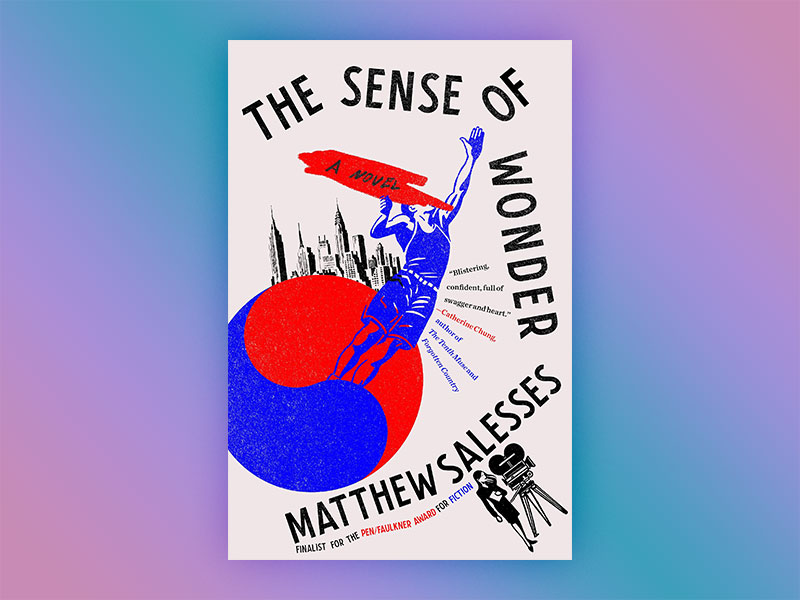
While Netflix’s “Harry & Meghan” docuseries ended up being somewhat disappointing in light of how much of the fairy tale romance was emphasized, the title of the Duke of Sussex’s memoir is a promise of burn-it-all down juiciness that we hope makes the Firm clutch its collective pearls. Touted as an “unflinching” memoir, it apparently has already made plenty of people flinch judging by the review-bombing of the book before it’s even been released. Harry is spilling the tea, and we’re all invited. Dainty sandwiches and scones with clotted cream optional. – Hanh Nguyen
03
“The Sense of Wonder” by Matthew Salesses (Little, Brown & Company, Jan. 17)
The Sense of Wonder by Matthew SalessesThe Sense of Wonder by Matthew Salesses (Little, Brown & Company)
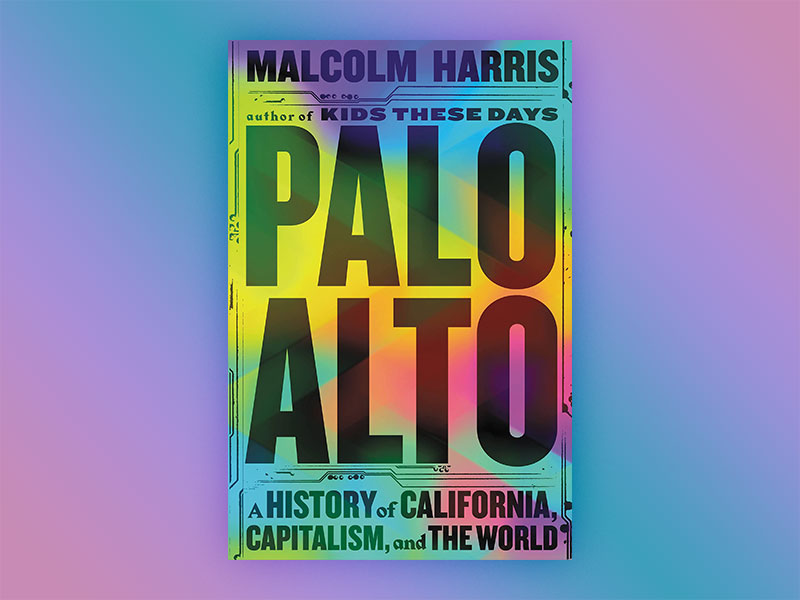
You get the feeling that PEN/Faulker finalist Matthew Salesses was made for this moment, for this particular story. Following his paradigm-shifting “Craft in the Real World,” which challenged and reformulated the fiction workshop, we find the results of that in this novel that intertwines the stories of three Asian Americans: a basketball star, a reporter and a producer who wants to create her own style of K-dramas in the U.S. Each is trying to have some aspect of their stories told and be seen, yet are butting against a country that doesn’t really know who they’re looking at or where to place them. Coming off his own love of Linsanity and k-dramas – and written when his wife learned of her stage 4 stomach cancer – Salesses spins this tale of Won Lee, whose NBA winning streak earns him the nickname “The Wonder” to seek miracles and hope in storytelling. – Hanh Nguyen
04
“Palo Alto” by Malcolm Harris (Little, Brown & Company, Feb. 14)
Palo Alto by Malcolm HarrisPalo Alto by Malcolm Harris (Little, Brown & Company)

Malcolm Harris, author of “Kids These Days: the Making of Millennials” returns with “Palo Alto: A History of California, Capitalism, and the World.” This doorstep sized tome explores the history of Silicon Valley and the town at its center, Palo Alto, California. Billed as the “first comprehensive, global history of Silicon Valley,” Harris traces over a hundred years of colonialism to explore how this unlikely suburb became the mecca for the digital gold rush. This book’s time is definitely now. As Harris wrote on Twitter, “I am very glad I priced in the fall of Tesla.” – Alison Stine
Wolfish: Wolf, Self and the Stories We Tell About Fear by Erica BerryWolfish: Wolf, Self and the Stories We Tell About Fear by Erica Berry (Flatiron Books)
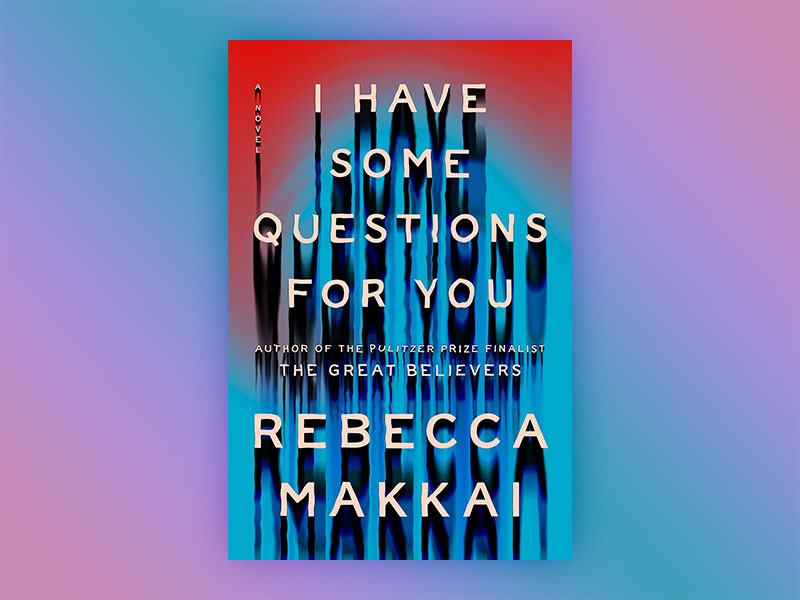
“My, grandma, what big eyes you have!” 
 

We’ve been told to fear wolves since we were children, from Red Riding Hood to the Big Bad Wolf and beyond. But how do these stories inform how we fear and square with real canids? Erica Berry looks at the concept of the wolf, those we talk about and those that walk among us – such as Oregon’s legendary OR-7. In following his path she interrogates femininity, our ideas of predator and prey, the bodies that carry our fear and the animals that never asked to have our grievances heaped upon them. – Hanh Nguyen

06
“I Have Some Questions for You” by Rebecca Makkai (Viking, Feb. 21)
I Have Some Questions for You by Rebecca MakkaiI Have Some Questions for You by Rebecca Makkai (Viking)
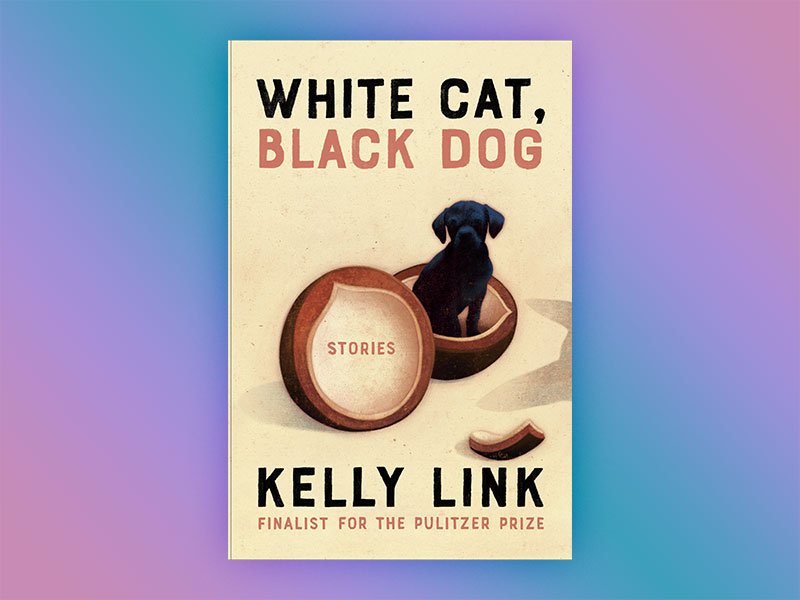
From Pulitzer Prize and National Book Award finalist for “The Great Believers” comes a riveting novel about a podcaster who, you guessed it, gets involved with a true crime story, one that ties to her own history. Bodie Kane, mother of two, would rather forget her miserable four years at the elite New England boarding school Granby, but when she returns to teach a course, the murder of one of her high school classmates is dredged back up. Although a man was convicted of the killing, other suspects may have been overlooked, with school and police possibly complicit. A reluctant Bodie gets pulled into reexamining the case, for which she may have had key information all along. – Hanh Nguyen
07
“White Cat, Black Dog” by Kelly Link (Random House, March 2)
White Cat, Black Dog by Kelly LinkWhite Cat, Black Dog by Kelly Link (Random House)
The latest from Kelly Link, a MacArthur genius fellowship recipient and finalist for the Pulitzer Prize, “White Cat, Black Dog” is a collection of seven short stories based on fairy tales, reinvented and shaped for the modern world. A billionaire is a king, a housesitting gig is a portal, and fans of “Station Eleven,” speculative fiction or simply anyone who needs a brief escape from the hard, cold world will find the prose here magically transporting. Under Link’s hand, the stories promise to be wild, wicked and utterly unforgettable. – Alison Stine
08
“Happily” by Sabrina Orah Mark (Random House, March 14)
Happily by Sabrina Orah MarkHappily by Sabrina Orah Mark (Random House)

Author of the short story collection “Wild Milk,” Sabrina Orah Mark’s upcoming release is a memoir in essays, inspired by the writer’s popular Paris Review column. Like Link, Mark organizes this book around the idea of fairy tales as format, unlocking a personal history set in a time of climate chaos, pandemic, social protest and deepening political unrest. In other words, right now. The “stories we tell ourselves to get by” are lovely, dark, difficult and worth exploring in all their stunning detail. – Alison Stine
09
“Brother & Sister Enter the Forest” by Richard Mirabella (Catapult, March 14)
Brother and Sister Enter the Forest by Richard MirabellaBrother and Sister Enter the Forest by Richard Mirabella (Catapult)

The debut novel from Richard Mirabella, “Brother & Sister Enter the Forest” is a queer coming-of-age story. It explores the dynamics between two siblings: sister Willa, who’s been a protector of her brother, and brother Justin, who struggles with substance abuse and appears on Willa’s doorstep, years after absence, needing her help. In high school, Justin fell under the spell of an older boy, whose violent act changed both their lives forever. A novel of beauty, family, and violence, and the long threads of trauma, unwoven by love. – Alison Stine
10
“Dust Child” by Nguyễn Phan Quế Mai (Algonquin, March 14)
Dust Child by Nguyen Phan Que MaiDust Child by Nguyen Phan Que Mai (Algonquin)
With her first novel “The Mountains Sing,” poet and journalist Nguyễn won acclaim and awards for her multigenerational story of a family decades before and though the Vietnam War. For her sophomore novel, she turns to the children of that war, specifically Amerasian children fathered and abandoned by the American occupying soldiers. Inspired by her research and reporting, Nguyễn creates multiple narratives that examine the women who turned to GIs for money during the war, the American veterans who return for the children they left behind, and those whose faces brand them as the “child of the enemy.” – Hanh Nguyen
11
“Poverty, by America” by Matthew Desmond (Crown Publishing Group, March 21)
Poverty, by America by Matthew DesmondPoverty, by America by Matthew Desmond (Crown Publishing Group)
Matthew Desmond won the Pulitzer Prize for “Evicted: Poverty and Profit in the American City.” With “Poverty, by America,” the sociologist blends history, research and firsthand reporting to show how the wealthy punish the poor and keep people living in poverty, both purposefully and without realizing. Passionate and empathetic, Desmond’s work promises not only to draw light to the problem of subsidizing wealth without eliminating poverty, but to offer potential solutions and a call to action. – Alison Stine
12
“Lone Women” by Victor LaValle (One World, March 21)
Lone Women by Victor LaValleLone Women by Victor LaValle (One World)
Victor LaValle is the author of six previous books of fiction. LaValle’s work is always darkly magical, suspenseful and deeply compelling, from the journey of a new father, a book dealer, to track down his wife in an enchanted place after unthinkable violence, to the hero of “The Ballad of Black Tom,” a con man who attracts the wrong kind of attention. In “Lone Women” LaValle tells the story of Adelaide, a homesteading woman in 1915 Montana with secrets – and a giant steamer trunk. Expect richness, surprise and beauty from this visionary new rendering of the historic American West. – Alison Stine
13
“A Living Remedy” by Nicole Chung ( Ecco, April 4)
A Living Remedy by Nicole ChungA Living Remedy by Nicole Chung (Ecco)
All You Can Ever Know” was Nicole Chung’s first memoir, about her adoption as a premature infant, who grew up in a white family in sheltered Oregon. The birth of the writer’s own child prompted her to search for the birth parents who had given her up. Chung’s latest memoir “A Living Remedy” explores Chung’s adoptive family, and the life she knew struggling to maintain middle class, living paycheck to paycheck with never enough insurance or help. After her father dies prematurely, from diabetes and kidney disease, Chung’s mother almost immediately faces a cancer diagnosis. And the two of them face a distance seemingly insurmountable due to the pandemic. – Alison Stine
14
“Chain Gang All Stars” by Nana Kwame Adjei-Brenyah (Pantheon, April 4)
Chain Gang All Stars by Nana Kwame Adjei-BrenyahChain Gang All Stars by Nana Kwame Adjei-Brenyah (Pantheon)
During the Roman Empire, criminals engaged in combat with gladiators for the chance at extending their life, commuting sentences and possibly obtaining glory. “Chain Gang All Stars” updates that concept to America’s modern-day prison system, creating the Criminal Action Penal Entertainment program (CAPE), which is the vehicle for the ultimate capitalist exploitation of inmates. CAPE prisoners Loretta Thurwar and Hamara “Hurricane Staxxx” Stacker are fan-favorite teammates and lovers, who compete with their freedom on the line. The novel provides a clear-eyed critique of our country’s prison system, along with the profit and racism inherent in them. – Hanh Nguyen
Better Living Through Birding: Notes from a Black Man in the Natural World by Christian CooperBetter Living Through Birding: Notes from a Black Man in the Natural World by Christian Cooper (Random House)
In May 2020, birdwatcher Christian Cooper was shoved into the public eye thanks to his viral video of a racist confrontation with an angry dog walker in Central Park. In this memoir/travalogue, he takes the reader on a journey, building a captivating picture of how birding and the natural world gave him tools to navigate America as a gay Black man. From vigilant protest skills to self-acceptance, the lessons Cooper gleaned are ones that he conveys and invites the readers to discover themselves. Looking is just the first step. – Hanh Nguyen
The Making of Another Major Motion Picture Masterpiece by Tom HanksThe Making of Another Major Motion Picture Masterpiece by Tom Hanks (Knopf)

Oscar winner Tom Hanks has made the most of his downtime. The actor published a collection of short stories in 2017, and 2023 will see the publication of his first novel, which has been described (by its publisher, anyway) as “wildly ambitious.” A historical novel with multiple timelines, “The Making of Another Major Motion Picture Masterpiece” tells the tale of filming a blockbuster superhero flick, along with the stories of the comic books that are the film’s inspiration. With a cast of characters including a WWII hero, an “extremely difficult male” actor and bonus comic books created by Hanks and illustrated by R. Sikoryak, this promises to be a starry, nostalgic novel debut which harkens back to the heyday of Hollywood. – Alison Stine
17
“Yellowface” by R.F. Kuang (William Morrow & Co., May 16)
Yellowface by R.F. KuangYellowface by R.F. Kuang (William Morrow & Co.)
“The Poppy War” trilogy and “Babel” author leaves historical fantasy behind for a contemporary tale that sets the world of publishing on fire: a white author who dares to masquerade as Asian. After witnessing the death of literary darling Athena Liu in an accident, struggling author June Hayward steals Athena’s manuscript – about Chinese laborers who contributed to the WWI efforts of the British and French – to publish as her own. “Rebranding” herself as Juniper Song, finally June achieves her dream of hitting the New York Times bestseller list with this stolen narrative. Told in first person, the novel examines not just racism in publishing but lays bare how Asian Americans are often exploited and erased in the west. – Hanh Nguyen
18
“The Late Americans” by Brandon Taylor (Riverhead, May 23)
The Late Americans by Brandon TaylorThe Late Americans by Brandon Taylor (Riverhead)

Booker Prize finalist Brandon Taylor, author of “Real Life” and “Filthy Animals,” is back with “The Late Americans,” a contemporary and searing novel about chosen family. Set in the artistic, academic and food industry communities of Iowa City (a town perhaps best known for its bloodthirsty creative writing graduate program), the new novel follows a compelling group of friends who set off together to a cabin to say goodbye to their former lives. There will be one last, earth-shattering moment together before the friends face uncertain futures. – Alison Stine

Want a daily wrap-up of all the news and commentary Salon has to offer? Subscribe to our morning newsletter, Crash Course.


19
“Pageboy: A Memoir” by Elliot Page (Flatiron Books, June 6)
Pageboy: A Memoir by Elliot PagePageboy: A Memoir by Elliot Page (Flatiron Books)
“Juno” had put Elliot Page on the map, gaining attention and acclaim for a rising star in Hollywood. But that whole time he was wincing from that spotlight, uncomfortable with the role that he had to play in the public eye but unsure exactly why. In this highly anticipated memoir, Page uncovers his journey of uncertainty and pain of trying to fit into the mold of the binary until he finally came into his own in public in December 2020 as a queer transgender man. “The Umbrella Academy” star’s fame and outspokenness has been a beacon of hope for so many queer and nonbinary people, and sharing the difficulties of his journey to eventual wholeness promises to broaden the world’s understanding of gender and identity. – Hanh Nguyen
20
“Maddalena and the Dark” by Julia Fine (Flatiron Books, June 13)
Maddalena and the Dark by Julia FineMaddalena and the Dark by Julia Fine (Flatiron Books)

Julia Fine’s first novel “The Upstairs House” was like a shot in the arm to a literary establishment who has neglected the stories of women and motherhood for far too long. “The Upstairs House” was haunting and haunted with postpartum trauma, an unfinished dissertation, a woman left to parent alone and a ghost. “Maddalena and the Dark” takes readers on a different but no less absorbing and necessary ride. Velvet-rich, thick with scrumptious detail, the novel is set in 1717 Venice where two young girls, music students from unlikely and very different circumstances, find each other and find love. – Alison Stine
21
“Crook Manifesto” by Colson Whitehead (Doubleday, July 18)
Crook Manifesto by Colson WhiteheadCrook Manifesto by Colson Whitehead (Doubleday)
The two-time Pulitzer Prize winner of “The Underground Railroad” returns to the world of “Harlem Shuffle” with its sequel to continue the Carney family saga filled with heists and humor in New York City. Told in three chunks in the 1970s, the story moves from ex-fence Ray Carney slipping into his old ways to afford Jackson 5 tickets for his daughter, his partner-in-crime Pepper working security on a Blaxploitation film, and a fiery ending during the Bicentennial. Filled with mobsters, drug dealers, corrupt cops and our own crooked duo, “Crook Manifesto” evokes Harlem in all its glory while under siege. – Hanh Nguyen
22
“Time’s Mouth” by Edan Lepucki (Counterpoint, Aug. 1)
Time's Mouth by Edan LepuckiTime’s Mouth by Edan Lepucki (Counterpoint)


Edan Lepucki’s first novel “California,” an apocalyptic tale of a couple, ignited a firestorm of discussion and book-buying after Stephen Colbert urged viewers to pre-order it in the midst of a dispute between the publisher and Amazon. “Time’s Mouth,” the next novel forthcoming from Lepucki, is set in the writer’s beloved California. But this time, the Golden State is the place the main character, Ursa, escapes to in the 1950s, seeking to flee her hometown and join the exciting counterculture. Ursa has abilities beyond the ordinary, which end up drawing a cult of women around her. And like all gifts, Ursa’s will come with a heavy price, which the next generation might pay. – Alison Stine


Don’t make big resolutions this year — aim for these small shifts recommended by experts

I love a big, ambitious swing as much as the next person. I get excited about New Years and clean slates and audacious transformations. But as I stare down the arrival of yet another fresh new calendar page, I am resolving to set extremely manageable intentions. Only about 4% of us actually stick with our resolutions. So this year, no more drama. Instead, let’s be modest and sensible together.

Meaningful change doesn’t come from doing one big thing, once. It comes from building habits, from making little shifts that feel good enough to stick with. It’s almost embarrassing how much better my life got this past year when I decided to eat more fruit and read more fiction. It’s incredible how much stress I’ve avoided on at least a weekly basis by heeding the wisdom that shutting up is free. Maybe 2023 is the year you buy less fast fashion or spend more time outdoors or learn to cook a few meals. And maybe in twelve months, you’ll be amazed at the ways in which doing little things, consciously and repeatedly, can add up.


Want more health and science stories in your inbox? Subscribe to Salon’s weekly newsletter The Vulgar Scientist.


Luckily for me, I regularly get to talk to very smart people about the small but seismic actions we can take to improve our lives. For the new year, I’ve rounded up some of their responses from the past year — and included several new words of wisdom. You don’t need to try all these things; you don’t need to try any of them. But if you want to feel better and have a happier new year, dream big, and start small.

Eat less meat

“The easiest shift we can each make in the new year to advance both our own health and that of the planet is to enjoy plant-based foods and less meat. Whether it’s swapping chicken wraps for chickpea wraps, or animal-based burgers for animal-free burgers, we’ll all benefit by cutting our reliance on animals for food.”

— Paul Shapiro, author of Clean Meat: How Growing Meat Without Animals Will Revolutionize Dinner and the World and CEO of The Better Meat Co. 

And try more vegetables

“Add one additional serving of vegetables to your day at least three times a week. (So if you eat no veggies, you’ll have one serving; if you eat some veggies, you’ll just have a little more.)”

Chef and dietician Abbie Gellman, MS RD CDN

Feed your head

“I’d like to make the time to read more. Don’t get me wrong… I read so much, but my reading usually involves non-fiction surrounding health or my nutrition business. ‘Relaxing reading,’ is something I’d like to make a regular habit. The health benefit is that reading can expand your mind to explore old classics, new ideas or travel without packing a bag!”  — Bonnie Taub-Dix, RDN, creator of BetterThanDieting.com and author of “Read It Before You Eat It: Taking You from Label to Table

Protect your ears

“You only have one set of ears so be proactive in your care. Protect them, get your hearing checked and don’t wait if you have concerns.”

Dr. Daniel S. Troast,  Doctor of Audiology at HearUSA

As well as your lungs

Back when we talked to Dr. MeiLan K. Han about respiratory health, she said, “The most important thing but not exciting answer is, limit your exposure to smoke…. When I say to not inhale anything, I mean anything. A lot of patients ask me about marijuana use, and the only thing I tell them is, just don’t smoke it.”

The other big factor?

“Assuming you’re not smoking and you aren’t around someone with smoke, believe it or not, as boring as it sounds, it’s exercise. We talk about exercise for heart health all the time. The thing that we’re learning about lung health is that the peak lung function achieved in early years may be determined by exercise, and that can ultimately impact your life course of lung health. People that maintain or even increase their fitness levels over time are going to have the healthiest lungs going into later adulthood.”

— Dr. MeiLan K. Han, author of “Breathing Lessons: A Doctor’s Guide to Lung Health

And remember to breathe

“Practice 4-7-8 breath if (when!) you need to calm down. It activates the parasympathetic nervous system, which is rest and digest, rather than fight/flight/freeze. Inhale for four, hold for seven, exhale for eight. Take two or three minutes to do this whenever your mind and body could use a little quiet.” 

— Stacey Linden, yoga instructor

Manage family gatherings better

When we talked to him this fall, conflict communication expert Dr. Jonathan Golden said, “Trying to set some terms for communication is not a bad practice. If there’s a history of caustic interactions at the table, then it’s actually pretty wise for someone to just say, ‘Okay, why don’t we all try and do this a little differently this year? Why don’t we see if we can have some ground rules for talking? We’ll take turns, everyone will say what they have to say, we won’t shout.’ Really simple stuff. It doesn’t have to be like you’ve put a paper in front of everybody and had them sign some compact. You can just make a very light statement about talking respectfully.” 

— Jonathan Golden, Ph.D., program director of Drew University’s Center on Religion, Culture & Conflict

Nurture your relationships

“The top piece of relationship advice is simple enough: We must be able to tell our relationship partners that something is wrong and have them respond in a manner that suggests they care, and that if they’re in a position to do something to help, that they will.”

“It might seem too simple, but most relationships consist of people who can’t trust their partner to understand or make meaningful change when the hurt or uncomfortable partner expresses pain or concern. For trust and relationship health to thrive, we must be able to listen and validate others’ experiences, even if we don’t quite think or feel the same things they do.”

Relationship coach Matthew Fray, author of “This Is How Your Marriage Ends

And your pets

“My tip would be to help your cat be happier and healthier by engaging in interactive play with them on a daily basis, which provides them with regular exercise, mental stimulation, and the opportunity to express natural predatory behaviors!”

Cat expert Mikel Delgado, PhD

Sidestep Zoom burnout

“One small thing would be to make phone calls instead of Zoom, at least one out of three times. Talking on the phone is less exhausting, less stressful, and helps to lift our mood and give us a sense of belonging. The telephone in 2023!”

Celeste Headlee, author of “Do Nothing

Take a break

“Elon Musk is wrong: spending hours in one place grinding away into fatigue and overload is exactly the wrong strategy.”

“Elon Musk is wrong: spending hours in one place grinding away into fatigue and overload is exactly the wrong strategy for ensuring the best productivity, creativity, and problem-solving. His employees, and all of us, best maximize our minds by giving them freedom to rest, relax, and roam, so be kind to your brain and give it a do-nothing break when you can.”

— Emily Willingham, Ph.D., author of “The Tailored Brain

Set boundaries

In February, negotiation expert Zoe Chance told us, “Not saying no is one of the biggest barriers for anyone who is nice to being influential, because we’re people pleasers and we don’t want people to dislike us or think that we’re greedy or arrogant or entitled.… The only way they’re not going to like us is if we’re a jerk when we say no. We don’t have to explain anything complicated.  We can just say, “No thank you” or “Sorry, not able to.”  We can take control of our lives and our attention, which is really the most valuable thing that we have.”

— Zoe Chance, author of “Influence Is Your Superpower”

And finally, believe you can do it 

“By simply changing our mindsets about willpower, we can find it much easier to stick to our New Year’s Resolutions — whatever they may be.

“Quite amazingly, these mindsets become self-fulfilling prophecies.”

“A huge amount of new research suggests that our reserves of willpower are the product of our mindsets. Some people have a non-limited willpower mindset — they believe that mental stamina can be self-sustaining. They’ll agree with statements such as ‘If you have just resisted a strong temptation, you feel strengthened and you can withstand new temptations.’ Other people have the limited willpower mindset, which sees self-control as a resource that is worn out easily. They’ll agree with statements such as ‘When situations accumulate that challenge you with temptations, it gets more and more difficult to resist temptations.’ Quite amazingly, these mindsets become self-fulfilling prophecies: your willpower is much more likely to be depleted if you believe that to be the case with the limited mindset. If, on the other hand, you have the non-limited mindset, and believe that practicing self-control can actually become easier over time, then that becomes your reality — and your willpower grows.”

David Robson, author of  “The Expectation Effect”

An unusual, long-lasting gamma-ray burst challenges theories about how they work

A bright flash of gamma rays from the constellation Boötes that lasted nearly one minute came from a kilonova, as we described in a new paper. This finding challenges what astronomers know about some of the most powerful events in the universe.

The unusual cosmic explosion was detected by the Neil Gehrels Swift observatory on Dec. 11, 2021, as the satellite orbited Earth. When astronomers pointed other telescopes at the part of the sky where this large blast of gamma rays – named GRB211211A – came from, they saw a glow of visible and infrared light known as a kilonova. The particular wavelengths of light coming from this explosion allowed our team to identify the source of the unusual gamma-ray burst as two neutron stars colliding and merging together.

Gamma rays are the most energetic form of electromagnetic radiation. In just a few seconds, a gamma-ray burst blasts out the same amount of energy that the Sun will radiate throughout its entire life. Gamma-ray bursts are the most powerful events in the universe, and astronomers think only two cosmic scenarios can produce gamma-ray bursts.

The most common sources are the deaths of stars 30 to 50 times more massive than the Sun. The catastrophic destruction of one these large stars is called a supernova. When they explode, the stars create black holes that consume the leftover debris. These black holes emit a jet of matter and electromagnetic radiation that moves at close to the speed of light. In moments after the black hole starts emitting this high-energy stream of matter and radiation, the jet produces a burst of gamma rays that can last for minutes.

A photo of galaxies and stars in the sky with a graph showing brightness and duration.

The unusual gamma-ray burst originated from the small red dot within the circle in this image. The graph shows how bright and long-lasting the burst was. International Gemini Observatory/NOIRLab/NSF/AURA/M. Zamani/NASA/ESA/Eleonora Troja, CC BY-ND

Kilonovae are the second type of events associated with gamma-ray bursts. Kilonovae occur when a neutron star merges with another neutron star or is consumed by a black hole. Neutron stars are rather small stars – about 1.4 to 2 times the mass of the Sun, though only dozens of miles across.

When two of these tiny, dense stars merge to produce a black hole, they leave very little material behind. Compared with the long-lasting feast a black hole gets after a supernova, kilonovae leave a black hole with little more than a snack that results in a gamma-ray burst that lasts only a second or two at most.

For over 20 years, astronomers thought that kilonovae accompanied short gamma-ray bursts and supernovae accompanied long ones. So when our team started looking at the wealth of data and images collected on the minute-long burst in December 2021, we expected to see a supernova. Much to our surprise, we found a kilonova.

Why it matters

Kilonovae are cosmic factories that create heavy metals, including gold, platinum, iodine and uranium. Because they enrich the chemical composition of the universe, kilonovae are critical to providing the basic ingredients for the formation of planets and life.

GRB211211A’s long duration contradicts existing theories of how gamma-ray bursts relate to supernovae and kilonovae. This finding shows that there is still a lot astronomers like us don’t understand about these powerful and important processes and suggests that there may be other ways the universe can produce heavy metals.

Kilonovae are responsible for producing heavy metals – like gold, uranium and iodine – that are important for many processes in the universe.

What still isn’t known

The initial images and data gathered on this interesting event look like a kilonova produced from the collision of two neutron stars. But the long-lasting burst of gamma rays throws doubt on what exactly happened. It is possible that one of the players was a rare neutron star with an incredibly powerful magnetic field – called a magnetar. The burst could also have been the result of a neutron star being torn apart by its companion black hole. Or astronomers could have just witnessed a new, previously unknown type of stellar crash.

What’s next

The few exotic stellar encounters that produce gamma-ray bursts can look very similar to one another across the electromagnetic spectrum. However, the unique gravitational wave signatures they produce could be the key to solving the enigma. The gravitational wave detectors LIGO, Virgo and KAGRA did not see GRB211211A, as they were all offline for improvements. If they can catch a long-duration gamma-ray burst after they begin operating again in 2023, the combination of gravitational wave and electromagnetic data may solve the mystery of this newly discovered event.


Eleonora Troja, Associate Professor of Astrophysics, University of Rome Tor Vergata and Simone Dichiara, Assistant Research Professor of Astrophysics, Penn State

This article is republished from The Conversation under a Creative Commons license. Read the original article.

Mindy of “Emily in Paris”: Nepo baby done good

Maybe it was the timing. The New York Magazine issue dropped in mid-December, when schools were about to close for winter break and the holiday daze was settling upon many people with all its associated stress, obligations and financial worries. What better time to absorb oneself in a cover story about kids who had it easy? Whatever the reason, the article “How a Nepo Baby is Born” ignited a firestorm. The accompanying, grotesque photo illustrations of celebrities with adult heads and diapered baby bodies probably didn’t hurt. Suddenly everyone was talking about this term. 

“Nepo baby” refers to a child who has benefited from their parents’ success in the same industry. “Nepo” is short for nepotism. 

Surprise, surprise. Having a successful parent helps you be successful in all fields, including show business, and the people who rise to great, artistic prominence don’t always do so because of talent and hard work. If this is news to you, perhaps you may be shocked to learn of generational poverty? The article was rife with examples, from Dakota Johnson to Lucas Hedges. The internet offered up still more, and some nepo babies loudly defended their careers.

While not known for always representing socioeconomics in a believable way, television can also offer us examples of the nepo baby. But one of the strongest examples in recent years also tries to buck the trend however she can. It’s Mindy from “Emily in Paris,” and she’s out here doing her best. 

“Emily in Paris,” now in its third season on Netflix, is, as benefitting most Darren Star productions, the story of a thin white girl without any real problems and with a seemingly limitless wardrobe. In this iteration, the “ugly American” is gorgeous (Lily Collins, speaking of nepo babies): Emily, a young marketing executive sent to Paris as a last-minute replacement. She finds she really likes it there, finds a lot of men to date and maybe eventually she will learn French.

She also finds, quite quickly, a wonderful friend and eventual roommate, Mindy Chen (the magnificent Ashley Park). 

Emily in ParisAshley Park as Mindy and Lily Collins as Emily in “Emily in Paris” (Courtesy of Netflix)

She’s working the difficult, thankless job of a childcare provider, and she’s not doing super well. 

Mindy is employed as a nanny in Paris when she and Emily meet, but her dream is to be a singer. It’s a dream she’s been working at and a dream that has been dashed, as Mindy froze while performing on the “American Idol“-like program “Chinese Popstar.” It’s made her a recognizable laughing stock in her home of Shanghai, the embarrassment magnified because Mindy’s family is so well-known. Her father owns a zipper and fastener company, which has made her family incredibly wealthy. (A lot of things need zippers, okay?) Mindy calls her father the “Zipper King.” And the tabloids, after her public fall from grace? They’ve dubbed her the “Zipper Princess.” 

She’s a nepo baby, baby! At least, she’s benefitted from the enormous financial support of her family, even if they haven’t made specific inroads into show biz yet (that’s for Mindy to do). But Mindy has shrugged that off as much as possible. She’s not living on her family’s money in Paris; she’s working the difficult, thankless job of a childcare provider, and she’s not doing super well. 

She’s also not following her family’s plans for her. Her father wanted to her to take over the family business, but that’s never happening. She went to Paris with the intention of going to business school, but once she drops out, her father cuts her off. The Zipper King’s plan is that without a stipend, Mindy will be forced to return home.

Emily in ParisAshley Park as Mindy in “Emily in Paris” (Marie Etchegoyen/Netflix)But Mindy resists. Her father tries to bribe her with a car and an actual house, but she turns them down. She’s going to make her own way or die trying. Fired from her nannying job, Mindy deals with eviction. Luckily, she has a friend — Emily — to move in with (this is a fantasy, after all). She handles other degrading situations, including working as the toilet attendant at a club she had hoped to perform at. She does perform, just in between managing the bathroom. Mindy doesn’t exploit her family connections. She’s not one to pipe up, Do you know who I am? No one knows who Mindy is, and that’s the way she likes it.

Mindy is just more compelling than Emily, a cardboard cutout who keeps falling up.

Except she’s destined for stardom. Mindy starts busking on the street, performing in a trio of other musicians, one of whom she dates, Fleetwood Mac-style. The band gets a chance for a real regular (paying) gig, but when it turns out the club owner only wants Mindy, she says no. Mindy has principles, and friends mean more to her than even her dream. This is one way the character deviates from Emily — also, Mindy is just more compelling than Emily, a cardboard cutout of a character who keeps failing up — Mindy puts people before career, before anything. She confronts her boyfriend when he treats her friend, Emily, poorly. If she’s made to choose between romance or friends who need her, she’ll choose friends every time.

Emily in ParisKevin Dias as Benoit and Ashley Park as Mindy in “Emily in Paris” (Courtesy of Netflix)Mindy takes risks. She’s had some wild outfits — all of the characters do in a Star production, of course — but her stage outfits have truly gone there, including a neon green “Tron”-esque bodysuit. Did you know we needed a French language “Shallow“? Well, we did. Thanks, Mindy (the character is fluent in three languages, by the way).   

Park is the real thing too. Allegedly, Star revised the character to include Park’s singing prowess (since music is so central to Mindy, you have to wonder what in the flat hell the character would have been like without it). A Tony Award and Grammy Award nominee, Park has starred on Broadway in “King and I,” “Sunday in the Park with George,” “Grand Horizons” and appeared as Gretchen Weiners in the musical version of “Mean Girls.”


Want a daily wrap-up of all the news and commentary Salon has to offer? Subscribe to our morning newsletter, Crash Course.


Mindy pays her dues. She pays for her friends. She’s got the chops and then some. She may have been born a Zipper Princess, but zip off the trappings of the life she was born into, and she’s got enough heart, grit and talent to make her own way, maybe even to make it.


They called 911 — but cops and prosecutors decided they were lying

ProPublica is a Pulitzer Prize-winning investigative newsroom. Sign up for The Big Story newsletter to receive stories like this one in your inbox.

Tracy Harpster, a deputy police chief from suburban Dayton, Ohio, was hunting for praise. He had a business to promote: a miracle method to determine when 911 callers are actually guilty of the crimes they are reporting. “I know what a guilty father, mother or boyfriend sounds like,” he once said.

Harpster tells police and prosecutors around the country that they can do the same. Such linguistic detection is possible, he claims, if you know how to analyze callers’ speech patterns — their tone of voice, their pauses, their word choice, even their grammar. Stripped of its context, a misplaced word as innocuous as “hi” or “please” or “somebody” can reveal a murderer on the phone.

So far, researchers who have tried to corroborate Harpster’s claims have failed. The experts most familiar with his work warn that it shouldn’t be used to lock people up.

Prosecutors know it’s junk science too. But that hasn’t stopped some from promoting his methods and even deploying 911 call analysis in court to win convictions.

In 2016, Missouri prosecutor Leah Askey wrote Harpster an effusive email, bluntly detailing how she skirted legal rules to exploit his methods against unwitting defendants.

“Of course this line of research is not ‘recognized’ as a science in our state,” Askey wrote, explaining that she had sidestepped hearings that would have been required to assess the method’s legitimacy. She said she disguised 911 call analysis in court by “getting creative … without calling it ‘science.'”

“I was confident that if a jury could hear this information and this research,” she added, “they would be as convinced as I was of the defendant’s guilt.”

What Askey didn’t say in her endorsement was this: She had once tried using Harpster’s methods against Russ Faria, a man wrongfully convicted of killing his wife. At trial, Askey played a recording of Faria’s frantic 911 call for the jury and put a dispatch supervisor on the stand to testify that it sounded staged. Lawyers objected but the judge let the testimony in. Faria was convicted and sentenced to life in prison.

After he successfully appealed, Askey prosecuted him again — and again called the supervisor to testify about all the reasons she thought Faria was guilty based on his word choice and demeanor during the 911 call. It was Harpster’s “analytical class,” the supervisor said, that taught her “to evaluate a call to see what the outcome would be.”

This judge wouldn’t allow her to continue and cut the testimony short. Faria was acquitted. He’d spent three and a half years in prison for a murder he didn’t commit.

None of this bothered Harpster, who needed fresh kudos to repackage as marketing material and for a chapter in an upcoming book. “We don’t have to say it was overturned,” he told Askey when soliciting the endorsement. “Hook me up. … Make it sing!”

Junk science in the justice system is nothing new. But unvarnished correspondence about how prosecutors wield it is hard to come by. It can be next to impossible to see how law enforcement — in league with paid, self-styled “experts” — spreads new, often unproven methods. The system is at its most opaque when prosecutors know evidence is unfit for court but choose to game the rules, hoping judges and juries will believe it and vote to convict.

People like Faria, defense lawyers and sometimes even the judges are blindsided. “I don’t want what happened to me to happen to anyone else,” Faria told me.

Askey, who now goes by Leah Chaney and is no longer a prosecutor, did not answer questions about the case other than to say she didn’t know about Harpster’s work until after Faria’s first trial. She has denied allegations of misconduct in other media interviews.

I first stumbled on 911 call analysis while reporting on a police department in northern Louisiana. At the time, it didn’t sound plausible even as a one-off gambit, let alone something pervasive that law enforcement nationwide had embraced as legitimate.

I was wrong. People who call 911 don’t know it, but detectives and prosecutors are listening in, ready to assign guilt based on the words they hear. For the past decade, Harpster has traveled the country quietly sowing his methods into the justice system case by case, city by city, charging up to $3,500 for his eight-hour class, which is typically paid for with tax dollars. Hundreds in law enforcement have bought into the obscure program and I had a rare opportunity to track, in real time, how the chief architect was selling it.

Harpster makes some astonishing claims in his promotional flyers. He says he has personally consulted in more than 1,500 homicide investigations nationwide. He promises that his training will let 911 operators know if they are talking to a murderer, give detectives a new way to identify suspects, and arm prosecutors with evidence they can exploit at trial.

The program has little online presence. Searches for 911 call analysis in national court dockets come up virtually empty too. A public defender in Virginia said, “I have never heard of any of that claptrap in my jurisdiction.” Dozens of other defense attorneys had similar reactions. One thought the premise sounded as arbitrary as medieval trials by fire, when those suspected of crimes were judged by how well they could walk over burning coals or hold hot irons.

Could it be true that Harpster, a man with no scientific background and next to no previous homicide investigation experience, had successfully sold the modern equivalent to law enforcement across the U.S. almost without notice?

First, I put together a list of agencies that had recently hosted him. In the months that followed, I sent more than 80 open records requests and interviewed some 120 people. Thousands of emails, police reports and other documents led to a web of thousands more in new states. When agencies refused to turn over public records, ProPublica’s lawyers threatened litigation and in one case sued.

I followed the paper trail Harpster left as he traveled the country, working law enforcement’s back channels. A story unfolded about a credulous, at times reckless, justice system functioning as an open market for junk science. Those responsible for ensuring honest police work and fair trials — from training boards to the judiciary — have instead helped 911 call analysis metastasize. It became clear that almost no one had bothered to ask even basic questions about the program.

Outside of law enforcement circles, Harpster is elusive. He tries to keep his methods secret and doesn’t let outsiders sit in on his classes or look at his data. “The more civilians who know about it,” he told me once, “the more who will try to get away with murder.”

In reality, people have been wrongfully accused and convicted of murder after someone misinterpreted their call for help, while those who used 911 call analysis against them face little or no consequences. I documented more than 100 cases in 26 states where Harpster’s methods played a pivotal role in arrests, prosecutions and convictions — likely a fraction of the actual figure.

All of it began in an unexpected place.

II.

In the winter of 2004, Harpster walked into the FBI Academy in Quantico, Virginia. He was one of dozens of local police officers from around the country who’d been invited to attend a 10-week training course called the National Academy. He listened to a lecture there given by an agent named Susan Adams, who the bureau had hired in the ’80s to teach interview and statement-analysis techniques.

Harpster was rapt. Then 43, he had spent most of his career with the Moraine, Ohio, police department. Moraine, population 6,500, is an unlikely crucible for a newfangled homicide investigative method, and Harpster is an unlikely figure to be the one who forged it. The city averages less than one murder a year.

Harpster had scant involvement in homicide investigations, according to his personnel file. The file shows a decorated career with commendations for good deeds like volunteering with underprivileged kids and organizing a Christmas food and gift drive for a family in need. He was once officer of the year, and he never took a single sick day.

After he left the FBI Academy that winter, Harpster enrolled at the University of Cincinnati to pursue a graduate degree in criminal justice. For his master’s thesis, he collected 100 recordings of 911 calls — half of the callers had been found guilty of something and the other half hadn’t. Harpster believed he could analyze these calls for clues. In his thesis’ acknowledgments, he said he wouldn’t have started the project without Adams, “the best teacher I’ve ever had.”

Based on patterns he heard in the tapes, Harpster said he was able to identify certain indicators that correlated with guilt and others with innocence. For instance, “Huh?” in response to a dispatcher’s question is an indicator of guilt in Harpster’s system. So is an isolated “please.” He identified 20 such indicators and then counted how often they appeared in his sample of guilty calls.


Want a daily wrap-up of all the news and commentary Salon has to offer? Subscribe to our morning newsletter, Crash Course.


Using that same sample of recordings, Harpster, Adams and an FBI behavioral scientist named John Jarvis set out to publish a study in 2008. But even before their work was published in a peer-reviewed journal as an “exploratory analysis” — a common qualifier meant to invite more research — police departments around the country learned about it.

That’s because the FBI sent a version of the study directly to them in a bulletin, which was not labeled exploratory. It included contact information for Harpster and Adams. The publication, which the bureau says typically has a readership of 200,000 but is not supposed to be an endorsement, had immediate impact. “It was required reading by our detective and communications personnel,” a police chief in Illinois told Harpster.

A sheriff’s sergeant in Colorado also read the FBI bulletin and, weeks later, asked Adams to analyze a 911 tape from a widow suspected of killing her husband. She and Harpster wrote a report of their findings.

The widow said the word “blood,” for example, and that’s a guilty indicator. (“Bleeding,” however, is not.) She said “somebody” at different points, which shows a lack of commitment. “Witnesses to a crime scene should be able to report their observations clearly,” Harpster and Adams wrote. She was inappropriately polite because she said “I’m sorry” and “thank you.” She interrupted herself, which “wastes valuable time and may add confusion.” She tried to divert attention by saying, “God, who would do this?” Harpster and Adams commented: “This is a curious and unexpected question.”

Their report became part of the police record — along with a significant amount of other evidence — and the prosecutor, Rich Tuttle, echoed their findings during trial. The widow was convicted of murder. Tuttle recently told me that he “did not directly use” 911 call analysis during trial because no witnesses testified about it.

But Tuttle once emailed Harpster about the impact his methods had. “We found your evaluation of the 911 call in this matter to be extremely insightful and helpful to our investigation and prosecution of the case,” Tuttle wrote.

The seeds were planted.

III.

For more than 12 years, the nation’s premier law enforcement agency helped 911 call analysis grow unabated. FBI officials at a charity fundraiser have even auctioned a copy of the book Harpster and Adams wrote about it. Harpster says he has presented his material at the FBI National Academy. He frequently trades on the FBI name, and others cite the affiliation when spreading word about 911 call analysis.

Then, in a 2020 study, experts from the bureau’s Behavioral Analysis Unit finally tried to see whether the methods had any actual merit. They tested Harpster’s guilty indicators against a sample of emergency calls, mostly from military bases, to try to replicate what they called “groundbreaking 911 call analysis research.”

Instead, they ended up warning against using that research to bring actual cases. The indicators were so inconsistent, the experts said, that some went “in the opposite direction of what was previously found.”

This fall, a separate group of FBI experts in the same unit tested Harpster’s model, this time in missing child cases. Again, their findings contradicted his, so much so that they said applying 911 call analysis in real life “may exacerbate bias.”

Academic researchers at Villanova and James Madison universities have come to similar conclusions. Every study, five in total, clashed with Harpster’s. The verdict: There was no scientific evidence that 911 call analysis worked.

The FBI, which declined to comment for this article, published some of the dissent in another law enforcement bulletin. But the reversal has gone largely unnoticed. John Bailey, a police sergeant in Pennsylvania, was among the first to tap Harpster and Adams for help after learning about their technique from the FBI. He believed in it so much that he planned to have Harpster testify in front of a grand jury. (That didn’t ultimately happen.)

I recently called Bailey, now a judge, to ask if he knew about the FBI’s more recent studies undercutting the work it had once promoted. He did not. “This is how it originated — at the FBI Academy,” he said. “You telling me that makes me scratch my head.”

Jarvis, one of the original co-authors from the FBI, told me he hasn’t spoken to Harpster since they published their study. He said he advised Harpster and Adams at the time that more research needed to back up what they’d found.

Jarvis said he was uncomfortable with the method’s use in real cases. He was even more surprised that prosecutors have bought in. “I don’t see where that work rises to the level of success by the scientific community,” he said. “There’s no definitive answer as to whether this is useful.”

Adams left the bureau and is now a private communications consultant. She recently wrote me an email defending Harpster and their work together. As proof of Harpster’s qualifications, Adams cited all the times he has been invited to speak about the program and claimed they’ve analyzed hundreds of 911 tapes.

No single indicator can be used to determine the likelihood of innocence or guilt, Adams said. “Instead, our study examined indicators in combination, just as 911 call analysis should be used in combination with case facts to uncover the truth.”

But the more records I saw, the less true that seemed.

IV.

It was easy to miss, a decades-old mystery solved by local police that made national headlines for a day before vanishing to the recesses of the internet. It’s the type of story that goes on to inspire “true crime” shows, always with a neat, satisfying ending. And the FBI was right in the middle of it.

This spring, U.S. marshals followed Jade Benning, a 48-year-old mother of three with jet-black hair, as she picked up her youngest son from school in Austin, Texas. Benning sold vintage clothing in town, drove a red 1969 Camaro and owned a menagerie of rescue pets. After she left the school’s parking lot, the marshals pulled her over and told her she was under arrest for a murder that happened 26 years ago.

In the small hours of Jan. 4, 1996, Benning twice called 911 and said a burglar broke into her Santa Ana, California, apartment, stabbed her boyfriend to death and slashed her hand before running off into the night. A neighbor reported that they had seen someone fleeing the area around that time. But officers didn’t find a murder weapon and the case went cold. Years went by. Benning moved states and started a family.

After Benning’s arrest this spring, the Santa Ana Police Department posted an Instagram video of officers in suits walking a handcuffed Benning through a parking garage. The post included a vague statement: A cold case detective named Michael Gibbons had solved the murder. After receiving an anonymous letter, he “conducted extensive follow-up” and consulted forensic experts, the department said.

Benning, who has pleaded not guilty, sent her kids to live with their grandmother part time while headlines circulated about their mother’s arrest.

The police department and district attorney’s office haven’t explained who those experts are or what evidence Gibbons had discovered. Gibbons and the agencies did not respond to interview requests and the agencies refused to release records I asked for.

But Gibbons told someone. Days after the arrest, he sent an email to Harpster, thanking him for analyzing Benning’s 911 calls. “It significantly helped our district attorney to realize the indicators of guilt in the phone calls,” Gibbons wrote, “as well as suggestions on how to introduce the 911 calls to the jury during trial.” He alluded to other forensic experts but said Harpster’s consultation was “instrumental in swaying the prosecutor to file charges.”

Gibbons said he didn’t just find out about Harpster by chance: The FBI’s Behavioral Analysis Unit recommended him. Gibbons’ email came two years after the bureau’s own experts in that same division first publicly warned law enforcement not to use 911 call analysis in actual cases.

V.

Junk science can catch fire in the legal system once so-called experts are allowed to take the stand in a single trial. Prosecutors and judges in future cases cite the previous appearance as precedent. But 911 call analysis was vexing because it didn’t look like Harpster had ever actually testified.

In 2009, Harpster learned about a double homicide in Woodbury County, Iowa, from a television documentary. He offered his services to the lead detective, saying he knew the defendant was guilty “solely upon his analysis of the defendant’s 911 call,” an assistant prosecutor for the county, Jill Esteves, noted later in an email.

Esteves’ office bought it. Prosecutors there tapped Harpster to consult and testify as an expert on a different case soon after, emails show. Harpster said he had a better idea. In surprisingly blunt language, Esteves spelled out her interpretation.

“He knows there will be a great legal hurdle getting the research admitted,” she wrote in an email to a colleague in another county, who also wanted Harpster to testify. “He doesn’t want a legal precedent prohibiting the admission of his research.” Earlier in 2009, a judge in Alabama had blocked Harpster from taking the stand because there were no other studies supporting his work.

So instead of testifying himself, Harpster began to teach others how to analyze 911 calls. His pupils are prosecutors, detectives, coroners and dispatchers. They are now the ambassadors who could present his work in court while Harpster himself is insulated from scrutiny. “No cross examination when you lecture,” Esteves quipped.

When I asked Esteves about this, she didn’t respond. But a colleague in her office, Mark Campbell, defended 911 call analysis. “Tracy Harpster’s work in analyzing 911 calls is new,” he wrote in an email, “but the need for attorneys, judges and juries to evaluate what witnesses say to determine their credibility is as old as the trial court system.” Campbell said he didn’t know of other studies in the field but that wasn’t relevant because much of 911 call analysis is similar to exercising common sense, “no different than what attorneys and judges have been pointing out since witnesses have been used.”

As Adams faded into the background, Harpster took their work on tour, from Florida to Alaska, to university lecture halls and international homicide conferences, city police academies and statewide coroners’ seminars. The extended curriculum is a two-day, 16-hour course that includes basic and advanced training.

Harpster has a motto he likes to say during his lectures: Police have but one master, the truth. A detective from Wisconsin told him that he’d hung the slogan up on his office wall.

In class, there’s a projector screen with the course title: “Is the caller the killer?” The bold, red font looks like dripping blood. He walks attendees through the indicators of guilt on a checklist that he and Adams invented called the COPS Scale, for Considering Offender Probability in Statements. It’s a one-page worksheet that they copyrighted. “COPS Scale don’t lie,” Harpster has told students, “boys do.”

Then the students listen to real 911 tapes, marking indicators on the sheet as they go. He displays two options on the screen, also in bold, red font: “guilty” or “innocent.”

VI.

Figuring out what his students went on to do with the training took some reverse engineering. There’s no list of 911 call analysis appearances and no way to easily search local court records. Police departments don’t track it either.

But Harpster does. Former students send him endorsements describing how they’ve used 911 call analysis in real cases. Then he repurposes those as marketing material when emailing law enforcement in other cities and states. It’s a feedback loop.

In emails, Harpster pitches both the curriculum and himself. “This training is unique and nobody else is doing it,” he told a local police training board in Illinois, “because I’m the only one who has done the research.”

He claims that one in three people who call 911 to report a death are actually murderers. No law enforcement officials in the records I’ve seen have questioned this figure, and many departments repeat it when promoting the training internally. In his thesis, Harpster originally said this number was one in five, and attributed the figure to an unpublished study by a now-dead detective and professor in Washington state. I found nothing to support either statistic.

Harpster makes himself available day and night to take phone calls from police and prosecutors looking to validate a hunch or strategize for trial. He once hosted a former student from Florida at his lakeside vacation house in Michigan, where he claimed on his Facebook page that they “solved a murder.” Last year, a detective called him for input while standing over someone’s body at a crime scene.

Police often email him 911 tapes for consultations — men and women wailing on the phone as they plead with the dispatcher to save a loved one. Sometimes it’s a parent holding a dead child. In one case, Harpster listened to an Ohio mother’s desperate call for help and then wrote back, simply, “Call me. … DIRTY!!!!” The mother was not charged.

His methods have now surfaced in at least 26 states, where many students embrace him like an oracle. They write in emails and course evaluations that his training is the best they’ve ever attended. They laud the “science” and send Harpster tales of arrests, prosecutions and convictions that they attribute at least in part to his program.

A group of North Dakota dispatchers listened to a 911 tape the day after Harpster’s class and decided the caller “didn’t seem to be appropriately shocked or upset” on the phone when reporting a homicide. One jumped up and down, shouting, “He’s guilty. He did it!!”

A police chief in Michigan said Harpster’s class paid off immediately after a man called 911 and said he had just found his mother and sister dead. “He made the mistake of saying ‘I need help,'” the chief explained.

A detective in Washington state, Marty Garland, told Harpster that a young mother had called 911 in November 2018 after her infant stopped breathing in his sleep. There was nothing suspicious at the scene and no detectives were dispatched, Garland wrote. Three separate pathologists were unable to rule the death a homicide based on the physical evidence. (One of those pathologists, hired by police, changed his conclusion to death by smothering after learning about some of the mother’s statements, which were related to him by police.)

But Garland had recently taken Harpster’s class and listened to a tape of the call. He noticed problems “from literally the first word by the ‘distraught mother.'” She had said “hi” to the dispatcher, which is considered a guilty indicator because it’s too polite. Garland shared his findings with a supervisor, who recategorized the baby’s death as suspicious. Harpster also consulted on the case.

Prosecutors charged the mother with second-degree murder, which carries a maximum sentence of life in prison. She took a plea deal — without admitting guilt — that resulted in a manslaughter conviction and she served about two years. “We would never have known the truth,” Garland wrote to Harpster, “if it hadn’t been for your book and your excellent training.”

This theme came up often in the records: Harpster and his acolytes position 911 call analysis in the no man’s land between intent and accident. With little physical evidence, they can claim, under the guise of science, to know that a suspect lied on the phone. Once murder is on the table, the accused may feel they have no choice but to plead to manslaughter to avoid a life sentence.

When I called Garland to ask about the case, he told me, “I can’t talk about it.”

VII.

Harpster is at once fiercely proud of his program and at the same time possessive of the data behind it. In today’s research community, it’s standard practice to follow the scientific method and share data. But he has refused those who ask.

Harpster once explained to a prosecutor one of the reasons he insists on secrecy: He thinks academics try to steal his work and claim it as their own to make money. “It never works out for them,” he wrote in an email, “because unless you have actually analyzed ALL the data, you will have no idea what the heck you are doing.”

His original study was based on just 100 emergency calls. Almost two-thirds of the calls came from Ohio and two-thirds of the callers were white. Experts told me that’s nowhere near enough data to draw conclusions from because that sample fails to account for who a 911 caller is and how that might affect the way they speak: their race, upbringing, geography, dialect, education. Not to mention that some callers may have autism or otherwise be neurodivergent, which could also affect their speech patterns. “So many things would weigh into this,” said Dr. Arthur Kleinman, a professor of anthropology and psychiatry at Harvard University.

Harpster and his co-authors also didn’t try to validate their model with separate data before publishing the study. In other words, they tested their list of guilty indicators on the same set of data they’d used to build it. Statisticians call that “double dipping.”

The experts said all of this isn’t necessarily dangerous as long as the methods stay academic, and studying 911 calls may very well be a worthwhile pursuit. “But you simply wouldn’t want to use highly exploratory work like this to inform practice without more evidence, even in a low-stakes situation,” said Michael Frank, a psychologist at Stanford University who is writing a book on statistical methods. “Let alone in high-stakes criminal justice situations.”

A team of researchers from Arizona State University and John Jay College of Criminal Justice recently received a federal grant to study 1,000 911 calls. In their grant application, they wrote about the potential danger of misinterpreting witness statements given “the countless accounts of how this presumed guilt can start a chain reaction of confirmation bias.”

In September, they asked Harpster for his data. He responded: “We never forward the data.”

The team at ASU is looking into whether police are any better at identifying liars on the phone than the rest of us might be. “We think there’s no normal way to act on a 911 call,” said the lead investigator, Jessica Salerno, a social psychologist at ASU. Given the gamut of human emotion, she explained, anyone claiming to know the right and wrong way to speak during an emergency has seen too much television.

Like most of the experts I talked to, Salerno didn’t know that Harpster’s model had already been adopted by police and prosecutors across the country. She didn’t know people were being arrested and charged because of it.

“If this were to get out,” Salerno said, “I feel like no one would ever call 911 again.”

VIII.

Harpster’s supporters say it’s easy to cast shade from the ivory tower.

When Jason Kiddey was a young detective in Fremont, Ohio, he saw Harpster speak at the state’s training academy. “I latched on to just about every word he said,” Kiddey told me. He was so impressed that he reached out to Harpster to tell him.

It was late 2012 and Kiddey had just finished interrogating a widower, Jason Risenburg, for almost six hours before Risenburg admitted to giving his wife the methadone that had killed her. “I also did what you asked and told him about the 911 call analysis and he just looked at me like I had no clue what I was talking about,” Kiddey wrote in an email to Harpster. “After throwing down the handout you gave me, he cracked. … True story!”

Before the interrogation took place, Kiddey’s only evidence was that 911 tape, he told me. Prosecutors charged Risenburg with murder and he took a plea deal for manslaughter. He was sentenced to 11 years in prison, where he remains today. “Because of your training,” Kiddey wrote to Harpster in another email, “a man is sitting in prison for killing his wife.”

He now considers Harpster a mentor and says 911 call analysis is a good tool to reveal clues. “I don’t weigh my case on that,” Kiddey said. “It’s a building block.”

In a phone call last July, Harpster defended his program with pride. It was clear from talking with him that he believes deeply in its value and is sure that he has helped bring killers to justice and offer peace to grieving families. “It’s my life’s work,” he told me.

Harpster said critics don’t understand his methods or how to use them. He said he helps defense attorneys and prosecutors alike and “the research is designed to find the truth wherever it goes.”

Harpster also believes that he’s the final authority on the subject, which makes him wary of scrutiny. I asked to sit in on one of his classes. No, he said, that’s out of the question. They’re only for law enforcement. During the height of the pandemic, Harpster told police he didn’t want to host virtual classes because he feared his course materials would leak out.

There’s also the book he and Adams co-wrote, currently listed on Amazon. “It’s really a textbook for law enforcement,” he said. “But it doesn’t help law enforcement if everybody out there uses it to defeat law enforcement.”

“I don’t want murderers to get away with killing babies,” he told me.

We agreed to talk again soon.

IX.

On a cold, clear night in February 2014, Kathy Carpenter sped from a secluded house in the Rocky Mountains and toward the police station in downtown Aspen. She clutched the wheel with one hand and a cellphone with the other. “OK my, my, my friend had a — I found my friend in the closet and she’s dead,” Carpenter told a 911 dispatcher between wails.

Her friend Nancy Pfister, a ski resort heiress and philanthropist, had been bludgeoned to death. Local police asked the Colorado Bureau of Investigation to help find out who did it. Kirby Lewis, agent in charge with CBI and one of Harpster’s earliest students, stepped in to analyze Carpenter’s call.

This is what he noted in a report: Carpenter said “help me”; she interrupted herself; she didn’t immediately answer when the dispatcher asked for the address. She provided “extraneous information” about Pfister’s dog. When the dispatcher asked if a defibrillator was in the house, Carpenter paused before saying, “Is there what?”

Lewis found 39 guilty indicators and zero indicators of innocence. Carpenter was arrested eight days later. Newspapers and television stations published the 56-year-old’s mugshot.

She spent three months in jail before someone else confessed to the crime.

Even when people weren’t convicted, some have faced irreparable harm after others decided they chose the wrong words on the phone. Carpenter recently told me the ordeal ruined her life. She lost her job as a bank teller, along with all of her savings and her home. Her car was repossessed. She was diagnosed with post-traumatic stress disorder. She had to move in with her mother across the state and now disguises herself in public. People still call her a murderer, she said. “I just want to go into solitude and just hide.”

Lewis didn’t respond to questions or interview requests and CBI declined to comment. His email correspondence and résumé suggest he’s a true believer in 911 call analysis, part of a cohort of former students who have become boosters of the program.

Lewis has said analyses of 911 calls shouldn’t be considered evidence but rather a suggestion of what a caller knows — an “investigative lead.” That may explain why the Carpenter case didn’t dampen his faith in the program. Since Carpenter was released from jail, Lewis has performed more than two dozen analyses of 911 calls for other departments in Colorado.

He also still trades notes with Harpster over email. Their correspondence shows the lengths some powerful officials have gone to set aside their own better judgment to pursue convictions. In one exchange, Harpster told Lewis that he had spent two hours on the phone with some officers and a prosecutor in Indiana. After the meeting, the prosecutor remarked that Harpster’s ideas sounded like “voodoo magic.”

“Flash forward a year,” Harpster wrote, “that same prosecutor called me up to see if I would testify in the case.”

X.

A document filed away in a Michigan appeals court was the first sign that some judges — the supposed gatekeepers of the justice system — have accepted 911 call analysis as actual expert testimony at trial.

One night in early December 2014, Riley Spitler, a scrawny 16-year-old from the suburbs, was playing with a gun when he accidentally shot his older brother, Patrick. Riley’s call for help was nearly incoherent. Two dispatchers tried to calm him down. “I think I killed him,” he screamed. “Oh my God, my life is over.” In shock, he couldn’t figure out how to open the glass front door from the inside so he shattered it with his hand.

Riley’s parents met him at the hospital and told him Patrick was dead. Riley sobbed so loudly the nurses could hear him down the hallway. In the days that followed, he told social workers he wouldn’t ever forgive himself, according to notes on their conversations. “I should be dead,” Riley said. “He should be alive.”

Police arrested Riley on murder charges — not manslaughter, which comes with a much lower possible prison sentence. The day after his arrest, Riley tried to kill himself in jail.

At Riley’s trial in 2016, prosecutors painted him as a drug-dealing, gun-toting teen who resented his popular brother so much that he murdered him and then started lying about it the moment he called 911. A detective who assisted on the case, Joseph Merritt, had taken Harpster’s course four years earlier. Since then, Merritt said in court, he’s applied the methods in four out of every five cases — more than 100 times. Prosecutors told the judge that Merritt should be able to testify as an expert about the guilty indicators he had identified in Riley’s call that night.

For instance, when the dispatcher asked, “What happened that he got shot?” Riley responded, “What hap— What do you mean?” This, Merritt wrote in an email to prosecutors, was an attempt to resist the dispatcher. Saying things like “my life is over” showed that he was concerned with himself and not his brother. “Very ‘me’ focused,” Merritt wrote. Riley said again and again that he thought his brother was dead. This is considered to be another guilty indicator known as “acceptance of death.”

Like most states, Michigan courts’ rules for evidence — adopted from the Daubert standard, which was named after a Supreme Court decision issued almost 30 years ago — say trial judges are responsible for making sure expert testimony has a reliable foundation.

Prosecutors in Lyon County, Nevada, once wanted a detective trained by Harpster to testify about the 911 call analysis used against a man accused of shooting his wife. The judge wouldn’t allow it. “I don’t see any reliable methodology or science,” he said. “I’m not going to let you say that it’s more likely that someone who is guilty or innocent or is more suspicious or less suspicious.”

The judge in Riley’s case, a former prosecutor named John McBain, was more credulous. He let Merritt testify as an expert and accepted 911 call analysis on its face. McBain explained his reasoning: Harpster’s course is recognized by the Michigan Commission on Law Enforcement Standards. This, McBain said, was proof of 911 call analysis’ value.

Joe Kempa, the commission’s acting deputy executive director, told me his agency does not technically certify or accredit courses — it just funds them. There is little review of the curriculum, he said, because the agency approves up to 10 courses a day from too many fields to count. Accrediting each would be too hard. As long as a course is “in the genre of policing” without posing an obvious health threat, it will likely be approved for state funds, he said.

Riley was convicted of second-degree murder. McBain sentenced him to 20 to 40 years in prison. McBain’s office didn’t respond to multiple interview requests.

Riley appealed on the grounds that Merritt’s testimony about the 911 call and other statement analysis techniques never should have been admitted. “This case is about junk science,” Riley’s attorney argued in court records, “used to convict a 16-year-old of murder.” The appellate judges threw out the murder conviction. Riley was re-sentenced for manslaughter and then released from prison in 2020.

Across the country, trial judges seldom restrict expert testimony brought in by prosecutors, the National Academy of Sciences found after reviewing publicly available federal rulings in 2009. The Daubert standard is applied unevenly because many judges don’t know how to spot sound science, the academy found. As one of the country’s leading experts put it later: “The justice system may be institutionally incapable of applying Daubert in criminal cases.”

Today, Riley is 24. He’s married with a newborn. He has a real estate license. He packed on pounds of muscle in prison and most people in town don’t recognize him anymore. Riley likes it that way.

After he was convicted, he felt despondent about both his brother’s death and how the outside world saw him. “People made me feel like a monster,” Riley told me. He replayed the trial over and over in his head, including Merritt’s testimony. He spent hours in the prison library studying Michigan’s rules on evidence standards.

Riley says McBain should have known 911 call analysis didn’t meet those standards. “It’s just insane that a judge wouldn’t be the wiser to that,” he said. “But that’s our system.”

After he learned of the public records requests I had sent to his department, Merritt called me. I told him about the story I was reporting and he said he’s not allowed to comment on the case. He didn’t respond to other interview requests later. The chief prosecutor in the county didn’t respond to my messages either.

In 2018 — one year after Riley’s conviction was overturned — Merritt took Harpster’s course again.

XI.

“It’s kind of like a human lie detector test.” That’s how a prosecutor in Michigan described 911 call analysis in a 2016 email exchange, acknowledging that he knew the COPS Scale wouldn’t be admissible in most jurisdictions. The question, then, was how to get the method into trial without litigating the science behind it or teeing up an appeal.

In chains of emails, they described a playbook to overcome this: First, identify law enforcement witnesses who have taken Harpster’s course. Then tell them how to testify about the guilty indicators by broadly referencing training and experience. As Esteves, the prosecutor in Iowa, put it in an email: “Have them testify why this 911 call is inconsistent with an innocent caller, consistent with someone with a guilty mind.”

Next, prime jurors during jury selection and opening arguments about how a normal person should and shouldn’t react in an emergency. Give them a transcript of the 911 call and then play the audio. “When they hear it,” a prosecutor in Louisiana once told Harpster, “it will be like a Dr. Phil ‘aha’ moment.” Finally, remind jurors about the indicators during closing arguments. “Reinforce all the incriminating sections of the call,” another prosecutor wrote, “omissions, lack of emotion, over emotion, failure to act appropriately.”

“Juries love it, it’s easy for them to understand,” Harpster once explained to a prosecutor, “unlike DNA which puts them to sleep.”

Phil Dixon, a career defense attorney who trains lawyers at the University of North Carolina’s School of Government, told me this is what makes 911 call analysis so pernicious: It can look very much like regular opinion testimony from a witness. But when prosecutors cross the line and intentionally circumvent court rules for evidence standards, he said, that’s cause for concern. He called it “attempting to clothe expert opinion in the guise of lay testimony.”

In many places, when prosecutors don’t introduce witnesses as experts, they also don’t have to disclose discovery material like consultations with Harpster or any analysis of the 911 tape. Without those disclosures, defense attorneys are caught off guard during trial. It also helps explain how 911 call analysis has spread far and wide almost undetected.

The former chief trial attorney in Macomb County, Michigan, told Harpster that she won convictions against parents in two separate child death cases partly thanks to him. In one case, she said she put a dispatcher, who’d been trained by Harpster, on the stand to testify. “This dispatcher had gained the tools and the knowledge from your class to make a HUGE impact on the prosecution of my child death case!” she wrote. Describing another case, the prosecutor said: “I used many of your points in my closing argument to show the guilt of the defendant and got a guilty verdict!”

Another prosecutor in Ohio said he huddled up with other local prosecutors who had taken the training course and listened to a 911 tape. “All of us finding it to be dirty, I called upon Tracy Harpster,” she wrote, explaining how Harpster helped prepare them for juror examinations and questions for witnesses about the 911 call. “We were able to direct the jury to the parts of the call that indicated a guilty party,” the prosecutor wrote. “Eventually we secured a guilty verdict.”

Both prosecutors either declined to comment or did not respond to interview requests.

“This is unconscionable,” David Faigman, dean of the University of California Hastings College of the Law, told me. As a leading authority on the legal standards for evidence, he’s usually one of the first to learn about new junk science. But even he didn’t know how some prosecutors were leveraging 911 call analysis. “There are so many things wrong with this,” Faigman said, “it’s hard to know where to begin.”

Former federal prosecutor Miriam Krinsky, who is now the executive director of Fair and Just Prosecution, said these prosecutors are supposed to be “ministers of justice” and should have known better. “We need to be very careful about things such as this.”

It’s not an accident that some prosecutors would put stock in the program. The Ohio Supreme Court has approved Harpster’s course for continuing education credits multiple times. That adds to its legitimacy because prosecutors need those credits to remain in good standing.

In 2018, Harpster emailed a local prosecutor, Nancy Moore, and asked her to sponsor his course by sending in the application forms with her signature, along with his resume and some class information.

About a week later, the court approved the program. Lyn Tolan, the court’s public information director, told me it’s the responsibility of the sponsor — not the court — to evaluate programs that the court approves. She said she was unaware of the independent studies of 911 calls. I asked what steps court officials took to find that information. Tolan repeated, “We rely on the sponsor for that.”

Moore didn’t respond to interview requests. She is now the state’s deputy inspector general. At least 20 Ohio prosecutors attended the training she sponsored for Harpster in 2018. One of them became a federal prosecutor.

Another is now a judge.

XII.

Time and again, many of those who host Harpster have not asked even basic questions about the program — or apparently done a cursory internet search for the man who helped create it. If they had, they’d have found his Facebook page.

On it, Harpster has openly espoused misogynistic, transphobic, Islamophobic and anti-immigrant views. He has called peaceful protesters “filthy scum,” and several posts have been flagged as false information. Ironically, he’s also singled out the government agency that launched his work. “The FBI is corrupt,” he wrote once.

Soon after the one-year anniversary of George Floyd’s death, Harpster shared a meme with Floyd’s face on a $20 bill that said “Treasury Department will honor George Floyd by placing his portrait on the counterfeit $20.” Floyd was originally accused of trying to use a counterfeit bill before he was murdered by a police officer.

Since fall 2021, Harpster has been temporarily banned from posting on Facebook at least twice for breaking the site’s rules. One suspension was for sharing a video of someone accidentally shooting themselves and the reason for the other is unclear.

All the while, he has maintained a steady stream of training sessions, often at police conferences. Those conferences, I discovered, appear to be one of the most efficient platforms for spreading junk science. Harpster spoke at more than 130 between 2006 and 2017, according to his resume.

One weekend in October 2019, he addressed more than 100 Arizona police officers and prosecutors at the Orleans Hotel and Casino in Las Vegas. They worked at some of the most powerful agencies in the state, including a local FBI office and the state attorney general’s office.

Casey Rucker, then a detective with the Flagstaff Police Department, was also vice president of the Arizona Homicide Investigators Association, which organized the event. Rucker coordinated an appearance by Harpster where he presented his material. He was paid $1,750.

Rucker also sponsored the seminar for education credits with the state’s Peace Officers Standards and Training Board. It’s another mark of legitimacy. The board told me that it didn’t review the program’s qualifications and instead left that up to Rucker and his home agency in Flagstaff. “Each chief or sheriff has the ability to decide the training needed by the men and women in their organization,” Matt Giordano, executive director of the board, told me in an email.

Flagstaff police asked Harpster for a course outline and presentation slides, but it’s unclear what other steps the department took to evaluate the curriculum. The department’s legal adviser said Rucker believes he discussed the sponsorship with a former supervisor to get approval. Rucker is now retired and didn’t respond to interview requests.

The conference had swift impact. At least three attendees reached out to Harpster afterwards, including a cold case detective who credited him with single-handedly changing the direction of a murder investigation.

Nathan Moffat, president of the association that put on the conference, said the extent of his vetting was talking to other groups that had sponsored Harpster previously. He said the reviews were good: Audiences found Harpster entertaining and well-informed.

Moffat, who is also a career detective, told me he’s personally never used 911 call analysis and distanced himself and the association from the program. “The only normal reaction is to not expect any specific reaction,” he said. “If someone tried testifying as an expert after the class, that’s mortifying.”

XIII.

Since we first spoke by phone back in July, Harpster had been dodging me. He said in a text that he was on vacation and wouldn’t be available to sit for an interview for months.

ProPublica was getting closer to publishing a story about Jessica Logan, a young mother in Illinois convicted of murdering her baby after Harpster’s methods were used against her. And I wanted to make sure Harpster had every chance to address what I’d found since we last spoke.

In chatting with detectives, Harpster occasionally mentions his vacation house on a lake in Michigan. So I searched lakeside property records and found a deed with his name on it. There was an address.

On a beautiful Saturday over Labor Day weekend, I drove about four hours north from Detroit to a bucolic neighborhood near the bridge to the Upper Peninsula. After I’d taken a few wrong turns, some neighbors pointed me down a dirt road that looked more like an ATV trail. It opened to a grass clearing with a crystal lake and cedar trees on the other side. Families were barbecuing along the shore. Boats motored by. I walked to the closest house and knocked.

Harpster opened the screen door. He’s a brawny guy with thick arms and a tight, white goatee. His head is cleanshaven now where there were once dark curls. I’d seen pictures of him before on his Facebook page, holding fish or posing alongside students of his program. He likes to get beers with them after class.

On my list of things to talk about were his relationship with law enforcement, with the FBI and with Adams; his emails with prosecutors; judges like McBain; the scientists and their problems with his data; the conferences and the many agencies that have given him the rubber stamp over the years; and the money he’s made off all of it.

Most importantly, there was Russ Faria, Jade Benning, Riley Spitler, Kathy Carpenter and 100 other similar cases I’d found around the country. Did he know these names?

In my six months of reporting, nobody had been willing to take responsibility for inviting 911 call analysis into the justice system or for the repercussions that followed. It seemed the buck didn’t stop anywhere. But it had started here, with him.

After I introduced myself, Harpster shook his head solemnly and said there would be no discussion. “I’m disappointed you would show up here unannounced,” Harpster told me before closing the door. “I’m on vacation.”

Three days later, he taught a 911 call analysis course in Texas.

Trump’s roster of “crazies” at Jan. 6 rally troubled advisors

A new report has shed light on the advice former President Donald Trump ignored despite the level of concern his advisors expressed leading up to the “Stop the Steal” rally.

According to a new report written by The Daily Beast’s Zachary Petrizzo, the details were reported in new depositions from the House Select Committee investigating the Jan.6 insurrection at the U.S. Capitol. In his article, Petrizzo explained the extent of advisors’ concerns as he highlighted both Ali Alexander and Infowars founder Alex Jones as examples of the type of far-right influences advisors were most concerned about.

“Trump confidants were so concerned about associating the president with Alexander that, despite Alexander being a central organizer for the Jan. 6 rally, they repeatedly took steps to distance Trump from Alexander,” Petrizzo wrote.

He went on to offer a brief history of Petrizzo’s seemingly checkered past as he explained why Trump’s advisors were so concerned about his presence.

“Alexander—whose real name is ‘Ali Akbar’—had a criminal record from 2007, when he pled guilty to felony property theft and was sentenced to 12 months probation. But more than that, Alexander had become a far-right agitator,” he wrote. “Ahead of Jan 6, he pushed the baseless conspiracy theory that now-Vice President Kamala Harris was not ‘Black,’ and when the Hotel Harrington closed its doors in the lead-up to Jan. 6, Alexander said that, if something bad happens to the downtown tourist hotel in response to their decision, ‘don’t ask me to denounce it.””

According to Petrizzo, Arthur Schwartz, a Republican strategist and friend of Don Trump Jr., asked the former president’s senior advisor Katrina Pierson, ‘Why are we letting our people share a stage with Ali Akbar and people like that?'”

She reportedly expressed similar concern, criticizing the decision. She reportedly said, “I’m so f—ing pissed. Such bull–t.”

Despite the concerns, Petrizzo noted that the former president “overruled” them. Petrizzo added, “And still, despite all the warnings, Trump overruled his advisors and made sure Alexander had a speaking spot—if not on Jan. 6 during Trump’s rally at the Ellipse, then at least at Freedom Plaza on Jan. 5.”

However, Trump’s override reportedly didn’t stop Pierson from trying to prevent the rally appearances.

“Pierson wasn’t deterred,” The Beast reported. “She gave it one last shot by going to White House Chief of Staff Mark Meadows, writing in a text message, according to the committee: ‘Things have gotten crazy, and I desperately need some direction.’ Moving the cast of controversial characters didn’t work, and she had to make the case to Trump himself at a Jan. 4 meeting, to ‘keep the fringe on the fringe’ and prohibit ‘convicted felons’—a not-so-veiled dig at Alexander—from damaging the reputation of other pro-Trump speakers.”

But the former president ultimately dismissed the concerns and “demanded that Alexander be issued a speaking slot, according to the committee.”