Spring Sale: Get 1 Year, Save 58%

Trump World is imploding — which could be the start of Trump’s big comeback

Donald Trump may be very wealthy, but he’s rapidly turning into a sad and pathetic figure. According to this report in the Washington Post, the former president tends to wander aimlessly around Mar-a-Lago, bored and lethargic, depending on his attendants to call around to allies to ask them to deliver “affirmations” and cheer him up. One former adviser characterized his new life as sad, saying he wanted to replicate the grandeur of the White House but it’s more like “a Barbie Dream House miniature.” Ouch.

This is not a picture of someone gearing up for an arduous presidential campaign. It’s a picture of an old man trying to grapple with the fact that he’s retired and doesn’t have much of a purpose anymore.

To say that his campaign rollout has been a disaster is an understatement. In fact, it hasn’t been a rollout at all. There have been no campaign appearances or rallies, no speeches, no interviews, no book tour — none of the things you’d expect any declared candidate to do in the early phases of the campaign. Last week, Trump teased a “big announcement” that turned out to be another one of his tawdry grifts, selling NFT trading cards. As far as we can tell, he’s just been playing golf and showing up in the dining room each night to receive obligatory applause from his paying guests.

This is not someone gearing up for an arduous presidential campaign. It’s more like a retired guy who plays a lot of golf, trying to grapple with the fact that he doesn’t have much of a purpose anymore.

Meanwhile, there’s a new circus ringmaster in town: Elon Musk, the second richest man in the world, who’s been sucking up all the outrage oxygen by banning people left and right (but mostly left) from Twitter in the name of free speech. The right-wingers are very excited — or at least they were before Musk ran one of his patented “polls” asking whether he should step down as Twitter boss, and a clear majority of users voted yes. While Musk is jetting off to Qatar to watch Sunday’s World Cup final with Jared Kushner and some Saudi pals, Trump is yelling at the clouds and nobody even notices.

But I’ve learned never to count Donald Trump out. When it comes to getting attention, he has a special set of skills. He may be a bit rusty but he’s about to get a big boost without having to lift a finger. On Monday, the House committee investigating the Jan. 6 insurrection will hold its last hearing before the Republicans take over next month and dissolve the entire operation. Members are reportedly preparing to refer former Trump to the Department of Justice for criminal prosecution. So he’s been ranting all weekend on his tiny social media platform:

They say that the Unselect Committee of Democrats, Misfits, and Thugs, without any representation from Republicans in good standing, is getting ready to recommend Criminal Charges to the highly partisan, political, and Corrupt ‘Justice’ Department for the “PEACEFULLY & PATRIOTICLY” speech I made on January 6th.This speech and my actions were mild & loving, especially when compared to Democrats wild spewing of HATE. Why didn’t they investigate massive Election Fraud or send in the Troops? SCAM!

That particular tantrum was in response to news reports on Saturday that the panel will vote to refer charges for Trump for violating “18 U.S.C. 2383, insurrection; 18 U.S.C. 1512(c), obstruction of an official proceeding; and 18 U.S.C. 371, conspiracy to defraud the United States government.” Just as Trump was the first president to be impeached twice, he will be the first ex-president ever to be referred for criminal conduct by the Congress. What a legacy.

The Justice Department has no obligation to do anything with the coming referral, but is already conducting its own investigation, now led by special counsel Jack Smith, whose team will no doubt be very anxious to see the report and all its underlying evidence, which the committee plans to release by Wednesday. You never know what they might have turned up that the DOJ doesn’t know about.

Trump is lashing out to get attention from his followers as much as anything else. He knows that portraying himself as the victim of government persecution usually provokes sympathy from the right-wing media and some quick cash in the campaign coffers. I think he’s still convinced that the government will never actually indict him — and he may be right. Right now, however, he needs to be back in the spotlight — and in that respect, this criminal referral is just what the doctor ordered.

His cronies may not be so lucky. The committee is said to be contemplating referring several GOP members of Congress who were involved in the attempted coup plot to the House Ethics Committee and some of Trump’s lawyers may be referred to various bar associations. Quite a few of these people are also under investigation by the Justice Department.


Want a daily wrap-up of all the news and commentary Salon has to offer? Subscribe to our morning newsletter, Crash Course.


Trump’s just getting started, however. After he Supreme Court finally cleared the way for the House Ways and Means Committee to obtain Trump’s tax returns, members finally have them. According to the New York Times, that committee will meet on Tuesday for a closed-door discussion on what to do with them, and let us fervently hope its members vote to release them to the public. Every president since Richard Nixon has voluntarily released their tax returns and since Trump is still the frontrunner for the 2024 Republican nomination, this is likely the only chance the public will ever get to see them.

Trump wrote on Truth Social that his “GREAT COMPANY” has great assets and little debt but is “very strong on deductions and depreciation” promising that we will “see these numbers very soon but not all from the tax returns which show very little.” Have any of his supporters asked themselves why he took the case all the way to the Supreme Court twice to stop Congress from seeing his tax returns if he had nothing to hide?

Axios reports that Trump’s Republican henchmen in the House are plotting to release their own rebuttal report from the “shadow” Jan. 6 committee, which has never done anything until now. It consists of the five Republican members who voted to overturn the election on Jan. 6, whom Speaker Nancy Pelosi later refused to seat on the real committee. This pseudo-panel is led by Rep. Jim Banks of Indiana, who says the report will “focus on security failures” which they claim the select committee didn’t bother to investigate. (In fact, it did, and those findings will be included in the final report.)

It may seem astonishing that Donald Trump could actually benefit from all these political, legal and financial troubles bearing down on him all at once, but that’s how it is. He badly needs a reboot of his campaign rollout and this is exactly the sort of boost that could get the media talking about him again and get his followers re-engaged. For him it’s always been about attention, and he’s never much cared what kind. So what if he’s the first former president in U.S. history to be referred for possible federal prosecution? That just makes him even more special than he already is! Perversely enough, this could be the start of Trump’s latest comeback. 

Right-wingers cry fraud as Twitter users overwhelmingly vote for Elon Musk to resign in his own poll

Twitter owner Elon Musk’s right-wing fans alleged fraud in a poll asking users whether he should step down as the head of the social network.

Musk, who had drawn growing backlash for cozying up to the far-right while suspending journalists and accounts that publish public information, posted the poll shortly after coming under fire from all sides for a new Twitter policy that banned users from linking to other social platforms like Instagram, Facebook and Mastodon. Musk abruptly changed the policy in response to criticism, limiting the rule only to accounts whose primary purpose is to promote competitors.

“Going forward, there will be a vote for major policy changes,” he tweeted. “My apologies. Won’t happen again.”

He followed up with a poll asking users whether he should let someone else run the platform. Musk has previously polled users on whether to reinstate suspended accounts and whether to reinstate former President Donald Trump.

“Should I step down as head of Twitter?” he wrote. “I will abide by the results of this poll.”

More than 57% of the 17.5 million users who participated in the poll voted “yes,” with 42.5% voting “no.”

Musk’s fans on the right quickly alleged that fraud may be to blame, as has become a common right-wing refrain anytime a vote does not go their way.

“Are you sure bots aren’t voting here???” questioned conservative pundit Michele Tafoya.

“Proof there’s still way too many liberal bots,” wrote right-wing pundit Curtis Houck.

“NO. STOP THE STEAL,” tweeted Newsmax host Benny Johnson.

Kyle Rittenhouse, who has become a Musk cheerleader since his Twitter takeover, pushed a similar claim.

“The votes saying ‘yes’ are most likely bots and there are far more tweets voting against you stepping down then [sic] there are in favor of it,” he wrote. “The majority of the people vote NO!”

Conspiracy theorist Kim Dotcom wrote to Musk that it was “unwise” to run a poll like this.

“They have the biggest bot army on Twitter. They have 100k ‘analysts’ with 30-40 accounts all voting against you. Let’s clean up and then run this poll again. The majority has faith in you,” he wrote, adding a kissy emoji.

Donald Trump Jr., meanwhile, suggested that Musk should have a “‘pipe burst’ with an hour left and then fill in however many votes you need to get your desired outcome.”

“Seems to work for the Democrats,” he wrote, pushing a conspiracy theory his family and their supporters have provided no evidence for despite years of false claims.


Want a daily wrap-up of all the news and commentary Salon has to offer? Subscribe to our morning newsletter, Crash Course.


Musk has said in the past that he does not plan to serve as the company’s CEO forever as his Tesla stock plummets over concerns that he is too focused on his new vanity project. Shares in Tesla have fallen by nearly 30% since Musk’s Twitter takeover.

“I expect to reduce my time at Twitter and find somebody else to run Twitter over time,” Musk reportedly said last month.

But it’s unclear how quickly Musk would “abide” by the results of the poll, if at all.

“The question is not finding a CEO, the question is finding a CEO who can keep Twitter alive,” he wrote on Sunday, claiming that the company has been “in the fast lane to bankruptcy since May.”

“No one wants the job who can actually keep Twitter alive,” he wrote. “There is no successor.”

Musk’s leadership of the company has been widely criticized as he unbanned right-wing accounts accused of inciting violence and spreading misinformation while suspending journalists that reported news about him and an account that used public information to track his private jet. He laid off thousands of Twitter workers, causing many others to leave in protest, and has repeatedly changed Twitter rules without notice and based on personal grievance despite accusing previous Twitter executives of doing the same on behalf of Democrats.

Musk released internal Twitter files to independent journalists Matt Taibbi and Bari Weiss, detailing internal content moderation discussions related to former President Donald Trump, right-wing accounts, and an article about Hunter Biden’s laptop. Musk tore into Twitter’s former team for making up rules as they went along but Weiss called him out for acting the same way after he suspended numerous prominent journalists from the platform.

“The old regime at Twitter governed by its own whims and biases and it sure looks like the new regime has the same problem,” Weiss tweeted. “I oppose it in both cases.”

Elon Musk’s censorship spree exposes the fundamental flaw in the right’s definition of “free speech”

On Twitter itself, it practically begs for the “how it started/how it’s going” meme: First photo: A screenshot of Tesla CEO Elon Musk claiming, with his purchase of Twitter, that he would turn it into a “digital town square, where a wide range of beliefs can be debated.” Second photo: Headlines about Musk banning the accounts of journalists for daring to report on some of the shadier moves of the self-appointed champion of “free speech.” 

After the outcry, Musk tried to justify his actions with a Twitter poll asking if he should reinstate the accounts, clearly hoping his legion of fanboys would tilt the results. Ordinary Twitter users caught wind of it, and voted for reinstatement. Pathetically, Musk tried again with a second poll, only to get the same result. So he reluctantly let most of the journalists back on. He was back at it again Saturday night, banning Washington Post tech columnist Taylor Lorenz for the high crime of asking for comment on a story. Then, in pure chaos mode, he caved again and reinstated her account. 

The simplest explanation for Musk’s ever-more-hilarious self-contradictory behavior as the new boss of Twitter is that the man is a narcissist and a hypocrite. Like his right wing brethren (no, his politics are not “complicated”), Musk subscribes to a “free speech for me, but not for thee” philosophy, which of course means he never believed in free speech at all. 

But it’s worth digging a little deeper, because this entire (extremely entertaining) debacle also helps reveal quite a bit about the right wing mythology around “free speech” that colonized Musk’s mind. It goes further than plain old hypocrisy and into the psychology of the right, especially the self-serving tale of their own alleged victimhood. 


Want more Amanda Marcotte on politics? Subscribe to her newsletter Standing Room Only.


Behind such right wing culture warrior catchphrases as “cancel culture” and “woke mobs” there is a very false, though very persistent mythology: That liberals pre-emptively reject right wing ideas, especially on “natural” human hierarchies, out of fear. That inside every liberal is a reactionary and bigot, which liberals only keep contained by carefully limiting their exposure to “different” ideas. In this fantasy, ideologies like white supremacy or homophobia are just so damn compelling that to encounter them at all is a sure path to conversion. To keep themselves from giving into temptation, the all-powerful liberal “elite” suppresses these “dangerous” ideas, to protect their own delicate minds from going to the dark side. 

This idea was captured in the slogan “In your heart, you know he’s right” of the segregation-apologist GOP candidate Barry Goldwater in 1964, who lost because Americans did not, in fact, secretly agree with him. Its modern manifestation comes courtesy of the overblown myth of “cancel culture.” 

It’s a romantic and very old idea, of course — “forbidden knowledge” so persuasive the powerful will do whatever they can to conceal it. It’s the story of the apple in the Garden of Eden and the fire handed down to humanity by Prometheus. It’s not even that it’s untrue. It’s just that usually the forbidden knowledge is progressive or scientific in nature, and therefore anathema to the right.  Throughout history, authorities have tried to suppress information they know would open the minds of people they are trying to control, from church authorities locking up Galileo for arguing that the Earth orbits the sun to Republican Gov. Ron DeSantis signing a “don’t say gay” law in Florida. 

The supposedly stifled right wing ideas are not hidden away at all. They are very old, very well-documented, and have been debated over centuries. The idea that white people are inherently superior to people of color, or that queer people are “unnatural,” aren’t notions locked away in some dusty tome, forgotten to time. On the contrary, they were the prevailing ideologies of many societies for centuries. They aren’t under-debated. They have been debated at length, and often at great personal cost to those who challenged them. And that long history shows bigoted theories, one by one, losing the debate.

Musk’s argument for letting neo-Nazis like Andrew Anglin back onto Twitter is that their ideas deserve a hearing, as if “what Nazis believe” is a wonderous mystery, like the contents of the briefcase in “Pulp Fiction.” In truth, most schoolkids learn the basic parameters of Nazi ideology in history class. Same with the views of other right wing trash that’s been reinstated on Twitter. No one sees someone arguing that white people are superior to Black people, or men are superior to women, or that straight people are superior to queer people, and thinks, “Wow, this is a novel argument! Please tell me more about a concept that has never before been on my radar.” Far from it, in fact. Unfortunately for many of us, we grew up in communities where those ideas were the guiding assumptions.


Want more Amanda Marcotte on politics? Subscribe to her newsletter Standing Room Only.


Bigots do not have anything illuminating to add to the “town square” any more than Flat Earthers enhance a discussion of astrophysics. Indeed, as I argued in my 2018 book “Troll Nation,” right wingers themselves understand their views have already been rejected in the marketplace of ideas, which is why you rarely see them try to make rational arguments anymore. Instead, it’s all bad faith, lies and trolling.

The far right figures reinstated by Musk weren’t banned for reason-based debate about their ideas. They were sent packing for harassment or lies, or in the case of ex-president Donald Trump, for inciting violence. Indeed, it’s the very indefensibility of their ideas that is fueling the current turn toward fascism on the American right. They can’t persuade people through words. Instead, they turn to force. 

In one sense, Musk and other right wing culture warriors like DeSantis are being quite consistent in whining about “cancel culture” and then using their power to ban books and suppress legitimate journalism. The common thread is avoidance of debate and discourse. The vast majority of griping about “cancel culture” is a response not to actual censorship, but to the criticism of right wing views. That’s how Dave Chappelle and Elon Musk can imagine they’re somehow free speech martyrs when they’re booed for their Marie Antoinette-style “humor” mocking the audience for not being as rich as they are. In reality, they are participating in a free exchange of ideas. Their ideas simply don’t perform well in that marketplace. 

While it’s a big pain to the journalists who have been unfairly banned from Twitter, in one sense, Musk has unintentionally done everyone a huge favor. He’s proved what critics of the right’s narrative of “free speech” have long been saying: That conservative claims of censorship are just psychological projection. In reality, it’s left wing ideas that are suppressed out of a genuine fear of their persuasiveness. Books are banned from schools so kids won’t learn that LGBTQ people are normal or that racism is wrong. Musk openly argues that the “woke mind virus” must be “defeated,” which is to say that threateningly convincing ideas about human equality must be banished from the discourse, lest they win people over. This view is many things — authoritarian, fascist, fearful — but it’s not free speech advocacy. That should have been obvious before. Now that Musk is banning journalists, it’s becoming impossible to deny. 

Criminal referral for Trump is coming — but it’s the Jan. 6 evidence that matters

As sure as the sun rises in the east, on Monday afternoon the House Jan. 6 committee will today refer former President Donald Trump to the Justice Department for criminal prosecution. The open questions are: On which charges, and who else will be referred?

Prosecutors and the committee, even as parts of different branches of government, share the mission of strengthening the rule of law. Prosecutors do it by charging and convicting those who violate criminal statutes. The committee’s principal task has been to marshal and present evidence that educates the American people about Trump’s role as the central actor in the conspiracy to end our democracy. 

It has succeeded. 

Even as Republicans hammered the issues of inflation and crime during the November midterms, post-election polls showed that 44% of voters ranked democracy as their No. 1 concern. 

The committee gets the lion’s share of credit for that; its televised hearings captured the country’s attention this summer, and shifted the narrative about Trump’s involvement and culpability. Trump’s multi-pronged efforts to unlawfully stay in power are sure to be front and center at Monday’s hearing. 

Over at the Justice Department, newly-appointed special counsel Jack Smith will care more about the committee’s evidence — expected to be released Wednesday, with its report — than about the referrals themselves. 

Smith will be especially interested in new evidence that the committee is likely to present or include in its report. Since its last hearing, the committee has interviewed new witnesses, including some of the Secret Service agents about whom former Trump aide Cassidy Hutchinson testified so dramatically in June.

One new witness whose testimony could be highly useful to prosecutors is Robin Vos, Wisconsin’s Republican Assembly speaker. More than a year after the 2020 election, Trump repeatedly phoned Vos, asking him to retroactively reverse Biden’s 20,000-vote Wisconsin win. 


Want a daily wrap-up of all the news and commentary Salon has to offer? Subscribe to our morning newsletter, Crash Course.


To prove criminal intent, prosecutors can often introduce evidence of similar acts — even later ones — intended to achieve the same unlawful end for which a person is on trial. Trump’s attempts to have Wisconsin’s election overturned had the same purpose as his infamous Jan. 2, 2021, call to Georgia Secretary of State Brad Raffensperger, seeking to interfere with that state’s election results. 

Only last week, as the new man on the job, Smith subpoenaed Raffensperger to testify before a grand jury. Trump’s phone call to Georgia could easily be central to federal charges against him for conspiracy to defraud the United States of its function of conducting honest elections. According to a Politico report on Friday, that’s one of the charges for which the committee will recommend potential indictment. 

Trump’s infamous phone call to Brad Raffensperger could easily become central to federal charges, most likely of conspiracy to defraud the United States of conducting honest elections.

Hard as it is not to focus on the headline-making criminal referrals, what will matter far more to prosecutors is the committee’s mountains of evidence. Smith needs to see the committee’s transcripts of depositions, not only for any evidence against Trump that DOJ prosecutors have not yet gathered, but also to weigh the credibility and usability of witnesses who might be called at trial. 

Examining witnesses’ prior sworn statements helps prosecutors assess their vulnerability on cross-examination. If they have changed their story, for example, juries may disregard their testimony, whatever they may say that inculpates a target.

As for Trump’s allies — in particular Mark Meadows, Rudy Giuliani, Trump lawyer John Eastman and former DOJ lawyer Jeffrey Clark — again, any referrals for prosecution will be less important to prosecutors than whatever evidence the committee has gathered against them, and what testimony they might offer against Trump if they were to cooperate. 

Giuliani, for example, reportedly led the “fake electors” scheme in seven states. The goal was to create alternative slates of Trump electors and then to manufacture purported “disputes” over whose electors were legitimate. Trump and his allies hoped that might provide a basis for Vice President Mike Pence not to certify Biden’s election. 

Pence refused to play along, but the attempted crime remains.

Only recently has Smith subpoenaed evidence from the seven states’ officials who were allegedly involved. The committee, with its considerable head start, is sure to have documents and testimony that Smith has not yet obtained. 

The fake-elector plot is important to prosecutors. Not only was it central to Trump’s attempted “quiet coup” to overturn the election, but it deployed fraudulent certification documents that purported to have official seals. Phony documents are a clear sign of corruption, likely to lead juries to convict.

Another important issue for the DOJ in deciding whom and how to indict will be the question of how best to try their targets — separately, or all together in a conspiracy. In March, federal Judge David Carter found it “more likely than not that President Trump and Dr. Eastman dishonestly conspired to obstruct the Joint Session of Congress” on Jan. 6, based on evidence the House committee had submitted under seal. Smith will soon have it.

Anyone who has paid attention to this slow-unfolding legal drama cannot help anticipating whom the committee names for criminal investigation. How much that means to the DOJ is an entirely different question. Indictments depend on evidence, and prosecutors should be receiving boatloads of that from the committee later this week.

What Democrats should have learned from the midterms: It’s time to fight for justice

America’s democracy crisis is also a moral crisis, and its fundamental questions are also moral questions.

Will women have control over their own bodies? Will an increasingly diverse society be governed by white minority rule? Will votes actually be counted fairly or will they be nullified if they support the “wrong” candidate or party — meaning anyone other than Republicans? Will White Christian nationalists be able to impose their will on society as a whole, with no regard for the Constitution?

Will America surrender to plutocracy and its extreme wealth and income inequality, or will the country instead become a social democracy where people on both sides of the color line have a reasonable chance at intergenerational upward mobility and the “American dream”? Will our democracy fulfill its promise at last, or degenerate into a system of “competitive authoritarianism” modeled on Russia or Hungary? 

These questions, among others, serve to remind us that the struggle to protect, renew and expand American democracy has a fundamental moral dimension. As such, the true nature of the challenge becomes clearer. Fascism and other illiberal politics prey on “midnight in the moral order,” to borrow a phrase from Dr. Martin Luther King Jr. Clear, precise and direct moral language allows us to pierce that darkness.

In a previous essay for Salon, I argued that a “refusal or reluctance to discuss Trumpism, neofascism, racial authoritarianism and other such ideologies and beliefs” in such plain language enables those forces “to mainstream their toxic policies and ideas” by claiming to stand for “free speech”:

Entirely too many liberals and progressives are overly willing to give such malign actors a platform or to engage them in “debate,” which only legitimates their toxic and dangerous ideas.

To this point, Republicans and “conservatives” with the assistance of the compliant news media, have successfully branded themselves as the guardians of “values” and “morality.” That was always an absurd claim, and today it is obscene. …The choice before us is clear enough: Avoiding the moral high ground, in an excess of delicacy or a desire for “dialogue,” is to invite disaster.

Scholar and cultural critic Henry A. Giroux, in a recent essay at CounterPunch, observes that among so-called conservatives, “moral, social, and ethical considerations have become objects of intense disdain, elevating a culture of cruelty and violence to unthinkable heights.”

In a related essay at The Washington Post, Perry Bacon Jr. explores the lessons Democrats should have learned from the 2022 midterms:

The election results from 2018, 2020 and this year … have clearly shown that Democrats can win by casting Republicans as a party of bigotry, intolerance and radicalism. They should embrace that approach — and give up on strategies that Democrats wish would work but don’t. …

“It’s been evident since at least 2017 that the largest force in American politics isn’t any economic coalition but a broad popular front in defense of liberal values like tolerance, democracy and cultural pluralism,” said Will Stancil, a policy researcher at the University of Minnesota who has written about how the increasing racial diversity of the suburbs benefits Democrats. “Rather than standing for any particular policy platform, this majority stands against Trump-driven reactionary politics.”…

There’s a third strategy staring Democrats right in the face. It’s what’s worked the past three cycles — whenever they’ve been willing to lean into it: Affirmatively running as the pro-tolerance, anti-Trumpism party — as some Democrats did, including Biden, right before the election. That approach both galvanizes the Democratic Party base and also wins over people who voted Republican in the past but are turned off by today’s version of the party.

Bacon quotes several experts who suggest that many Americans became convinced “that the GOP was the party of extremists,” quoting Tom Bonier of the political data firm TargetSmart:

Instead of droning on about infrastructure, Democrats can spend the next two years declaring bluntly that a vote for any Republican candidate, no matter how moderate, is still a vote for a party that bans abortions, treats transgender Americans as second-class citizens, makes it harder for Black people and those in urban areas to vote, dumps undocumented immigrants off in left-leaning areas without any consideration of their well-being, bans the works of Black and LGBTQ authors from public schools — and questions election results, particularly those from heavily Black areas, when they lose.

“We need to keep leaning, 100 percent, into the attacks on freedoms, the attacks on democracy. That is a strategy that works,” said Jenifer Fernandez Ancona, vice president of the left-leaning group Way to Win.

Beyond that, public opinion polls consistently show that the American public supports a range of progressive policies, including expanding the social safety net, protecting women’s reproductive rights, providing affordable health care, enacting reasonable gun control policies, improving infrastructure, ensuring that the richest Americans and big corporations pay their fair share of taxes, and addressing the global climate crisis.


Want a daily wrap-up of all the news and commentary Salon has to offer? Subscribe to our morning newsletter, Crash Course.


Contrary to the lazy “common sense” narrative usually offered by the political class, the American people are no longer “center-right” in terms of political values and beliefs, if they ever were. As Eric Levitz wrote in 2017 for the New York Times, the premise “that American voters are hostile to progressive economics and have punished the (increasingly left-wing) Democratic Party accordingly” is based on “ideological conviction, not empirical evidence”:

In truth, the Republican Party’s dominance has little to do with the American electorate’s “center-right” ideology. We know this for two simple reasons: First, the vast majority of that electorate has no ideology, whatsoever. And second, when polled on discrete policy questions, Americans consistently express majoritarian support for a left-of-center economic agenda.

Democrats have an opportunity to expand and strengthen their base by speaking clearly to how economic justice and democracy are inexorably linked in the moral struggle against the Republican fascists and their plutocratic agenda. In a recent essay at Common Dreams, the Rev. Dr. William J Barber II and the Rev. Jonathan Wilson-Heartgrove argue that the Democrats’ greatest potential gains lie in “uniting people around an economy that works for all of us”:

Without doubt, defending democracy and a Constitutional right to privacy and choice for women were strong motivating factors for Democratic voters. Many Democrats who held onto House seats could not have won without an increase in turn-out among voters under 30, who favored Democrats by 28 points, and reported abortion rights as a strong motivating factor. But another low-propensity voter demographic — people who earn less than $30,000 a year — also favored Democrats by 12 points. In an election cycle where Republicans tried to blame inflation on the Democratic President and run on “the economy,” Democrats won by a landslide among those who’ve felt the impact of inflation most acutely. …

According to research conducted by the Poor People’s Campaign after the 2020 election, these poor and low-income voters are the sleeping giant in American politics. Their participation in elections has consistently been 20 percentage points lower than their wealthier neighbors, leaving lots of room to grow the base for Democrats among a demographic they already win. When asked, the number one reason poor and low-income people who have not voted give for sitting out elections is that no politicians are speaking directly to their issues.

A governing majority for Democrats, the two reverends write, will only be possible if they “build on the lessons learned in this cycle and invest in a strong economic message that can unite a cross section of Americans and inspire poor and low-income people to vote for candidates who see them.” 

With opportunity also comes peril. The Republicans have successfully manipulated the justifiable anger felt by many white Americans, across class lines, toward an economic and political system that has betrayed the concerns and needs of most people. In a recent essay at The Lever, David Sirota warns that “laughing at the GOP’s fake populists … ignores a significant and dangerous trend”:

Democrats’ genuflections to their corporate donors — whether breaking a strike, authorizing corporate giveaways, or stalling a $15 minimum wage — have been handing conservatives myriad opportunities to court working-class voters.

And lately, polling data show those voters have been responding.

Since the 2018 midterm elections, Republicans have gained seven points among voters whose annual income is below $50,000, according to exit polls. In this year’s midterm elections, those surveys show the GOP won a plurality of all voters whose income is below $100,000 — also a seven-point gain since the last midterm. Republicans also won 42 percent of union households.

Democrats have lost the majority of “white working class” voters, but are also seeing erosion among Black and brown voters in the same class cohort:

“There is an impressively large decline in the Democrats’ margin among nonwhite working class voters between 2018 and 2022,” noted poll analyst Ruy Teixeira. “In 2018, Democrats carried this group by 57 points. By 2022, that margin was down to 34 points, a stunning 23 point decline. This was even larger than the fall among white working class voters where the Democrats’ deficit ballooned from 20 points in 2018 to 35 points in 2022.”

In a downwardly mobile country whose affluent class is shrinking and whose working class is growing, these numbers are bad news for Democrats and good news for Republicans. … It’s also why conservatives recently launched a new think tank to try to devise policies and messages that court the working class. All of them are dreaming of a realignment in which the GOP wins big as a conservative working-class party.

Many Americans are waking from the fascist fever dream, and voted in the midterms to slow or stop the Republican assault on democracy and freedom. Republicans failed to win the sweeping victories they expected, which leaves them vulnerable to counterattack. Yet at the moment, the Democratic Party’s leaders (and too many of its voters) are consolidating their forces and indulging in a premature victory celebration. It is far too early in this struggle to coast on inertia or play defense.

You have so many viruses in your body right now, we couldn’t fit the number in this headline

It’s rare to see a positive headline about viruses these days — or even a neutral one. From the yellow fever pandemic of 1793 to the COVID-19 outbreak that started here in 2020, viruses only make the news in the United States when they are killing people or, at the very least, stirring up a lot of fear. 

That is, perhaps unfortunate, because most of the viruses inside you are benign. Oh, and about those viruses inside you: there are a lot of them. And they are absolutely everywhere. If you think this article will give you advice on how to get rid of them, you are out of luck, because you have more viruses on or inside of you body than you have actual cells.

In fact, according to the scientific journal Nature, there are 10 to the 13th power — that’s a 1 with 13 zeroes, or 10,000,000,000,000 — virus particles per human. Welcome to your virome. Believe it or not, it is not a bad thing for you to have that many.

“There is the devastating negative aspect that viruses cause a number of illnesses as we are seeing now in COVID-times,” Dr. Travis Thomson, an assistant professor at the University of Massachusetts Medical School who specializes in junk DNA and indirectly endogenous retrovirus control, told Salon by email. “However, the earth’s biome needs viruses for its survival.”

If you read stories about how climate change could lead to more pandemics, that is because the oceans are teeming with the “living” creatures.

“Viruses are needed for the breakdown of all organic material in all ecosystems on, above, or in the Earth.”

“If viruses were not overturning — i.e., killing hosts in the ocean — there would be a huge deposition of detritus on ocean floors, which is needed for all life on the planet to survive,” Thomson wrote to Salon.

He added that this is not just the case for the ocean. “Viruses are needed for the breakdown of all organic material in all ecosystems on, above, or in the Earth,” Thomson explained. “Then there are the viruses that live in us: endogenous retroviruses, or transposons, that my group and others are discovering have functions in helping us carry out many physiological functions such as fighting off infections and even for proper neuronal development.”

Of course, it is not enough to simply say that the human body is brimming with viruses. A virus, after all, cannot “live” in any old organ of the body. By definition, a virus is a simple biological entity with a protein shell and genetic material (an RNA or DNA strand) as their core. They exist and reproduce by infecting living cells, infiltrating their nuclei and forcing the cells to manufacture copies of the virus. This means that the virome, though massive, is still confined by the fact that the viruses themselves must be involved with our cells.

As a result, the human virome is divided into two separate realms, some of which infect our own cells, and some of which affect the cells of other things that live inside us — things like gut bacteria and the like.


Want more health and science stories in your inbox? Subscribe to Salon’s weekly newsletter The Vulgar Scientist.


“The human virome (and the virome of any multicellular organism) consists of two major, distinct components,” explained Dr. Eugene Koonin, a biologist and Senior Investigator at the National Center for Biotechnology Information. Koonin wrote to Salon that there are viruses which reproduce inside a human being’s own cells, and then there are the viruses that infect the bacteria and archaea which can be found in our microbiome.

“Both components are important in their distinct ways,” Koonin observed. The ones that infect cells, as anyone who has gotten sick can tell you, are obviously capable of doing very bad things to us. At the same time, “there is also a healthy human virome that consists many diverse viruses reproducing in our cells without detectable pathological consequences.” Many of them leave behind genetic material known as junk DNA that can be repurposed by our own genome to help perform important functions. In one famous example, an ancient viral gene known as Arc is believed to be responsible for helping humans encode information (i.e., “learn”), form memories and in other ways perform processes essential to conscious thought.

Similarly, viruses can act as human body guards without even realizing it. When viruses infect your cells, it is not personal; they simply want to reproduce. If they can do that using the cells of other microbiota inside of you rather than you personally, that works just fine.

“The more we sequence the more we realize there is a spectacular amount of complexity of viruses, and how they interact with us both for the good and the bad, to be discovered.”

“Viruses infecting bacteria and archaea in our microbiomes regulate the population size of their hosts and through that can have various indirect effects on human health,” Koonin told Salon.

If there is any problem with the human virome, it is that we know as little about it as we do about the universe beyond Earth’s atmosphere. According to Dr. Jason D. Shepherd, an associate professor of neurobiology at the University of Utah School of Medicine, it is downright “unexplored.”

“We only just determined that bacteria have important functions in normal physiology,” Shepherd explained by email. “There’s an emerging idea that transposable elements, which are virus-like, are critical for normal development. Part of the hurdle has been detecting and sequencing viral genomes from cells. It’s also not clear if viruses can regulate normal physiology… the lines are blurred when we consider that there are virus-like proteins expressed in the body that may work just like viruses (e.g., our work on Arc).”

This lack of virome knowledge also means that scientists are more likely to be caught off-guard if a normally innocuous virus in our bodies suddenly turns on us.

“Some members of the healthy virome, however, can be triggered by various, only partially understood factors and become pathogens,” Koonin told Salon. “Herpesviruses and papillomaviruses are probably best known examples. Other viruses in the healthy virome apparently can protect the host from infection by their more aggressive relatives.”

There is good news, though: Scientists have already developed the technology to sequence viral genetic material. It may take a while, but humanity is slowly but surely beginning to understand its own internal ecosystem.

“The type of sequencing (DNA and RNA) needed to identify the complexity of all the viruses that live in the world around us, and as well as in us has just been developed,” Thomson told Salon. “The more we sequence, the more we realize there is a spectacular amount of complexity of viruses, and how they interact with us both for the good and the bad to be discovered.”

Trump Jr. says social media boosts right-wingers

Donald Trump Jr. accused social media platforms of promoting the content of conservative “lunatics” instead of his messages.

During a Sunday speech at Turning Point USA’s America Fest 2022, Trump Jr. claimed that the visibility of his social media posts had been restricted.

“Then we saw, it was me they were trying to cancel,” he told the crowd. “I’m like, shocking. I’m so shocked that people that are effective communicators, people who engage in the insanity we are up against, of course, those are the ones that they shut down.”

“You know who they [boosted]?” he asked. “People that can’t articulate a point, who look ridiculous, those are the people on the right because we all have our lunatics. They’ll boost that to make it seem like that’s the fight.”

Watch below:


Arkansas Republican Governor Asa Hutchinson teases 2024 presidential run

Arkansas Republican Governor Asa Hutchinson teased declaring a run for the 2024 GOP presidential nomination in early 2023 on Sunday’s edition of NBC’s Meet the Press. But he conceded that former President Donald Trump’s entry into the race following the November midterm elections forces himself and other prospective candidates to decide quickly.

Hutchinson – a right-wing religious conservative in every sense – has nonetheless emerged as a reliable critic of Trump since he incited the January 6th, 2021 insurrection at the United States Capitol.

NBC News Moderator Chuck Todd asked Hutchinson to specify his intentions:

Tell me this. What is, what is your timeline and what would make you decide not to run for president?

Hutchinson replied that at the soonest it would be when his tenure as governor concludes next month:

Well the timeline would be I finish January 10th after two terms as governor of Arkansas. I can focus at that point more on the future.

The fact that President Trump has already announced accelerates everyone’s timeframe. The first quarter of next year — you either need to be in or out.

Hutchinson also noted that carving out a receptive niche for somebody other than Trump to please the party’s primary voters is no small task:

And of course, an important factor is not what President Trump is doing necessarily but what’s the level of support out there, and that’s important to know. And so we’ve got some work to do. But I expect a decision to be made the first part of next year.

Watch below:

“The Wonder”: Netflix’s story of “fasting girls” shows us starving bodies remain a public spectacle

In October, U.S. tabloid the New York Post reported somewhat gleefully that the early 2000s trend for “heroin chic” is back. After a brief period of limited body diversity, it reported, runways were once again full of extremely young, wraith-like white women.

Visible bones, once photoshopped away to avoid public outcry, are once again the order of the day. While the reports framing the last few years as a “brief, shining moment of body positivity” are exaggerated, the shift towards a more extreme bodily ideal is concerning, with media commentators and eating disorder specialists raising concerns about its effect on viewers’ mental and physical health.

For some time now, media academics and commentators, such as myself, have noted western media cultures’ hunger for stories of self-denial in pursuit of bodily perfection. As film critic S.R. Benedict argues in her viral 2019 essay Everyone is Beautiful and No-one is Horny, celebrity narratives have tended to focus on tales of discipline, self-control and denial.

Celebrities like Kim Kardashian, once noted for their “bootylicious” curves, have showcased dramatic weight loss. Fasting and “clean eating” are the social media trends of the moment, along with Ozempic, an injectable diabetes drug that causes dramatic weight loss at the cost of distressing and potentially dangerous side effects.

“The Wonder” and our fascination with disordered eating

This morbid fascination with the suffering of the young and beautiful is not new. Sebastian Lelio’s Netflix film, “The Wonder,” based on the novel by Irish writer Emma Donoghue, is inspired by the “fasting girls” of the 19th century, young women whose “miraculous” starvation attracted much attention from an emerging mass media.

These cases have been seen as early instances of disordered eating. But Donohue’s novel suggests that the 19th century, with its emerging mass media and its repressive attitude to women’s bodies, can be reimagined to shed light on our own time.

In a controversial opening scene, the camera pans over a warehouse interior to a film set, while an Irish-accented woman’s voice tells us that what we are about to see is a story, but that we should empathize with the characters nonetheless.

Throughout the film, we are reminded of the importance of the stories we tell, how they shape our lives, determining what is possible and imaginable. “The Wonder” chimes with feminist media research that asks us to think about the ethics of the stories we tell about body weight, shape and eating, and the way we consume these stories.

Making the invisible, visible

In the main narrative, an English nurse – Lib Wright, in a typically incandescent performance by Florence Pugh – arrives in a remote Irish village which seems to conform to all the stereotypes of English representations of Ireland. It’s dirt poor, priest-ridden, with a bleak green-grey landscape and low, dim interiors echoing the image of a “backwards village.”

In this unlikely setting, a miracle has apparently occurred. A young girl, Anna O’Donnell, has lived without food for four months, apparently subsisting entirely on the power of prayer (or “manna from heaven”).

The girl and her mother appear locked in a spiral of mutual deception. If the girl is revealed to be a fraud, they will lose everything. Lib, recently returned from the Crimea with trauma of her own, has been summoned to keep watch on the girl and report any foul play. She is there “only to watch.”

But Lib, too, is disregarded and sidelined. Her well-meaning attempts to “save” Anna, including by force feeding, are met with frustration as she realizes that she, too, is powerless and will need to work against the establishment if she wants to make a difference.

This is a world where local people’s struggles are invisible, except for Anna, whose extreme behavior has made her an object of both veneration and horror. The village is thronged with “sightseers and gawkers.” There are articles in the Irish and British national press, the former awed, the latter satirical.

Anna is subject to medical surveillance by a nun, Sister Michael, and by Doctor O’Brearty who imagines becoming famous for discovering the secret to eternal life. At one point he suggests that her body is converting sunlight into nutrients “like a plant,” an idea that seems absurd until we remember that celebrity diet guru Gwyneth Paltrow has promoted something called “integrative photosynthesis” as part of an extreme “cleansing” diet.

The power of our stares

The film’s setting may be historical, but its overarching theme – of a world where food and bodily pleasure are seen as polluting, even as millions starve – is not.

Anna is an object of fascination because she appears to survive, even to thrive, in a world defined by hierarchy and deprivation. Denied a voice, she must tell a story using the only medium available to her: her body.

Feminist scholars have shown that the desire to “gawk” at starving bodies reflects the tensions and anxieties at stake in capitalism and patriarchy. By attracting attention to the fascinating spectacle of her self-denial, Anna forces the spectator to confront the reality of exploitation and abuse that has been erased from the public narrative.

It is a limited strategy, and one which almost kills her. By proposing a different ending to Anna’s story, the film asks: what does our fixation with suffering tell us about the things we repress, the stories we don’t want to hear?

Instead of comparing ourselves to a “barbaric,” “backward” past, “The Wonder” asks us to reflect on the fasting girls of our own time, and what they might tell us about our need to fetishize some forms of suffering, while silencing others.

Debra Ferreday, Senior Lecturer in Sociology, Lancaster University

This article is republished from The Conversation under a Creative Commons license.

Emo revival: why 2022 was the perfect time to bring the genre back from the dead

My Chemical Romance – mainstay alternative band of the Noughties – made a triumphant return in 2022 with new music and a reunion world tour.

There was also the blockbuster Hella Mega Tour with Fall Out Boy, Weezer and Green Day filling stadiums across the U.S. and UK. And promises of more emo reunions to come abound for 2023, most recently with the announcement of an extensive Paramore comeback tour (front woman Hayley Williams also hosted the podcast Everything Is Emo for BBC Sounds earlier this year).

Little wonder, then, that several music outlets decided to hail 2022 an “emo revival.”

Cue a chorus of internet commenters rushing to explain that My Chemical Romance are not emo, that emo is dead, that emo only ever lived in a handful of Washington DC basements in the late 1980s, and that anything in music that has happened since is merely corporate degeneracy consumed by 13-year-old girls who have never even heard of The Promise Ring.

As an expert in media and cultural studies, I have explored this tension in my book “Emo: How Fans Defined a Subculture,” which argues that musical genres are culturally created constructs, forever in struggle and flux. This has been obscured by musicology’s (the study of music) relatively late engagement with cultural studies perspectives, as opposed to say English literature or the visual arts.

When musicologist Susan McClary published “Feminine Endings” in 1991, the idea that music was constructive, not reflective, of gender was still groundbreaking work in the field of music, even though cultural theorists like Simon Frith and Angela McRobbie had been writing on the topic since the ’70s. The artificial boundaries between academic disciplines enabled this.

So, this article comes with a disclaimer. In speaking of an emo “revival” here, I am by no means claiming a set definition of “real emo,” because it doesn’t have one. Nor does “music,” incidentally.

What do I mean by “emo”?

By “emo,” I am referring to a specific style of melodic instrumentation over a relatively hard, driving beat, which first gathered mainstream popularity in the early 2000s.

The movement that came, somewhat retrospectively, to also be called emo, was varied both in style and composition, but did feature certain sonic and visual hallmarks. This included highly wrought confessional lyrics, long polysyllabic song titles, and the conjunction of hard, even thrash-derived sounds like a screamed chorus with much softer instrumental passages.

Emo tended to be more complex than the reliance on I, IV V power chords common to punk. Researchers Sam de Boise and Sarah Williams have also called attention to a distinct “emo voice” – a slightly nasal tenor with a diaphragmatic push.

Visually, the style favored straightened black hair, skinny jeans, band t-shirts and Converse trainers. It owed something to goth and something to punk and skater culture, with luminous pops of color adding more than a hint of self-conscious kitsch.

What has brought about the “emo revival”?

If there is an emo revival, I think that two of the same key factors which were at work to popularize it in the early 2000s are once again the cause: technology and nostalgia.

Partly, that is the nostalgia of 30-somethings like myself. In the face of an increasingly perilous economic and ecological adulthood, we’re repopulating our Spotify playlists with the music of our early teens. One of the new emo festivals is literally called When We Were Young. A bit on the nose there.

Equally, the revival is benefiting from the nostalgia of generation Z (people born after 1996) for a youth they didn’t experience. This is happening in the same way that early 2000s emo harked back nostalgically to a 1980s punk-basement adolescence I and my contemporaries never experienced.

Emo is a nostalgic genre, and hard times bring about nostalgia both real and artificial. Nostalgia is an easy sell in a tough economy.

Just as new digital norms for music creation, consumption and distribution were a factor in the early 2000s mainstreaming of emo, the dominance of digital algorithms in how we consume and share music today should be considered.

Gen Z has instant access to the entire back catalogues of emo artists who are returning to prominence. Simultaneously, the fusion phenomenon of emo rap and SoundCloud emo (where emergent artists are taking elements of the genre in new directions), are being displayed to listeners via streaming service recommendation features.

As I write this, I anticipate again the objections that rap is not emo; that emo is dead; that whatever happens on SoundCloud is not emo – that emo requires guitars.

At an instinctive level, I share them. This is not my emo, not the emo I grew up with. But as I came to conclude in writing my book, attempts at gatekeeping always lead us to incoherence.

Genres are constantly redefined by their audiences, in a process of negotiation with the music industry. My generation can adjust, and learn to listen to new sounds. Or, thanks to streaming services, we can keep the same six or seven albums from 2001-2009 on repeat for the rest of our crisis bedevilled lives. Spotify is good for that kind of nostalgia – so long as you’re paying for Premium.

Emo is dead; long live emo.The Conversation

Judith Fathallah, Outreach and Research Associate, Lancaster University

This article is republished from The Conversation under a Creative Commons license. Read the original article.

Why your cat is obsessed with destroying your Christmas tree — and how to make them stop

It’s the biggest, most chaotic battle of the season. Who will emerge undefeated this year — your cats, or your holiday spirit?

Maybe it’s because we are all — human and otherwise — already on our last good nerve this year. In the weeks since Thanksgiving, there has been a marked uptick in the news and on social media around keeping our cats from destroying everything in their paths as we round the final lap of 2022. Suddenly, my Reddit feed is full of images of brightly bedecked trees surrounded by high walled fencing, and defiant-looking kittens triumphantly burrowed in pine branches, broken glass strewn at their furry feet. My friends are sharing stories of their cats trying to eat things they shouldn’t eat. In my building, I can hear the wails of neighbors’ cats miserably freaking out over a constant stream of doorbells and visitors.

We all want a season that’s more ho-ho-ho than hairball. So how do we get through this time of year with everybody’s sanity, and decorations, intact? 


Want more health and science stories in your inbox? Subscribe to Salon’s weekly newsletter The Vulgar Scientist.


First, we have to get inside the minds of our cats. Our relationship with felines is embedded in our humanity. Cats have been knocking stuff off our tables and shredding up our belongings since the dawn of civilization, forever asserting their territoriality by behaving, as Salon’s Troy Farah recently wrote, “more like demanding roommates than pets.” It’s safe to assume that five minutes after the first family lit the first menorah or put the first candles in the first tree, a cat showed up to try to burn down the entire village.

If your cat is more high-maintenance than usual this time of year, it’s because disruption puts them on edge — as it does for humans, too. As founder of Floofmania Tommy Wilde notes, “Cats are extreme creatures of habit. You might have noticed that they get confused and sometimes a little upset when you change your decor or move your furniture around. What’s even worse is bringing a tree inside your living room (and you can’t really blame the cat for finding that odd).” 

Not just odd, though, it’s all also fascinating — and more than a little wild.

“A Christmas tree has a lot of really interesting outdoor smells,” explains Mikel Maria Delgado, PhD, a Sacramento animal behaviorist and cat behavior consultant. “For many cats, it’s probably the most interesting thing that they can climb in the house, because not enough people provide their cat climbing structures. So you’re competing with something very exciting, smells good, can be climbed, has outdoor odor smells, and is novel.” 

Patrik Holmboe, head veterinarian for the Dutch veterinary telemedicine provider Cooper Pet Care, concurs. “Outdoors, cats are able to express a variety of natural behaviors. These include climbing trees and structures, and hunting and stalking prey,” he says. “Many owners simply do not have the time to dedicate to providing adequate mental stimulation for their cat. For a cat that’s evolved to chase mice and other small creatures, a toy mouse simply lying out in the open just doesn’t cut it. Overall, it is safe to say that many indoor cats are basically bored, and are not given adequate opportunities to practice their natural behaviors. Now enters the Christmas tree. All of a sudden, there is a new and exciting structure in the house. This isn’t even taking the ornaments into consideration. With the ornaments, there is now all of a sudden an influx of new dangling, shiny and fun things to explore and play with.” Can you blame your cat for going bonkers?

But all of those intriguing new elements can be frustratingly fragile, and dangerous to your pet. Here’s what to look out for.

Edible risks

Owen Redford, founder of Things To Do, recommends, “Avoid having amaryllis, daffodils, hyacinths, iris, mistletoe, holly, and all kinds of lilies, because these are all dangerous to your cats. Poinsettias are less dangerous, but these can cause an upset stomach and vomiting in cats.” But be aware of less obvious threats to their delicate systems too. Paola Cuevas, a veterinarian and behaviorist with Excited Cats, adds, “Even if your friends and family offer only cat-safe foods, excessive ingestion of food can easily turn into gastrointestinal issues. It is very important that everyone knows and understands that feeding the cats from their plate puts their health at great risk. It is safer to make the clear rule and announcement that the cat or dog should not be fed by anyone, making special emphasis on explaining that bones and leftovers should not be fed either.” 

Decorations

Cuevas also advises common sense awareness of your environment. “Avoid unprotected cords and shiny lights, tinsel, crystal or glass decorations such as spheres, candles, or other fire hazards, unattended foods, or chocolates,” she says. “Make sure that any decoration or ornament used is safe and does not represent a choking or injury hazard to your cat. After opening presents, make sure there is no wrapping paper or ribbons left laying around.” And if your cat is especially tenacious about attacking the tree, she suggests “adding chicken wire or clear panels to barricade the tree to make it unreachable for your cat. Another option would be to make sure you use only cat-safe decorations such as citrus peels instead of shiny tinsel strands, which are a huge hazard for cats.” 

Don’t underestimate the power of diversion. Says Mikel Maria Delgado, “If you do not provide your cat with things to climb, scratch and play with year-round, then you should start there. If you have a cat tree, that’s something that your cat is using on a regular basis, so the holiday tree is not going to be quite as exciting.” Then, she says, “There are safety measures that you want to take with a holiday tree. Securing it to the wall is a good one, so your cat doesn’t knock it over. Limit the type of decorations that you put on it — nothing breakable, nothing that could injure your cat, keeping in mind things that they might swallow and get sick from eating. Tinsel can be problematic. Strings can be problematic. Cover the bottom of the tree so they can’t drink the tree water.”

But you also need to let a cat be a cat. “A lot of it really does come down to making sure that your cat has other fun things in their environment that they can get praise and attention for using,” says Delgado. “When they are using their cat tree and climbing it, give them treats, give them attention. Put it in the window so they can sit in the sun or look out at the street and watch birds. You really want to make the things you want them to do much more exciting and rewarding than the things you don’t want them to do.”

Stress

Finally, just be sensitive to your cat’s moods. Chyrle Bonk, a veterinarian with the pet furniture company Hepper, says, “Some cats don’t like a crowd and may choose to hide during your holiday dinner. Be sure to outfit their hiding spots with water and a comfy bed to reduce stress. You may also want to move their food bowl and litter box there if it’s not there already.”

And be patient. Your cats may look at you with steely intensity of master criminals, but they’re probably not actively trying to make your life harder here. “You know, your cat has a brain the size of a shelled walnut,” Mikel Maria Delgado reminds. “They’re not really thinking, ‘If I jump up on that and knock it over, it might break.’ They’re like, “Ooh, that looks fun and exciting. I want to jump up there.’ You’re the grown-up. It’s your responsibility to make the environment safe.”

Every time I eat tuna, I’m honoring my father

On November 20, 2021 — five days before Thanksgiving, two weeks before his wedding anniversary with my mother and three weeks before his 74th birthday — my dad passed away, suddenly and unexpectedly.

For as long as I can recall, my father had been renowned for his tuna. "Aug's famous tuna" was requested by many a family member and friend and the inexplicably creamy delicacy was the epitome of no frills: Bumblebee tuna in water and Hellman's mayonnaise, blended in a food processor or with a hand beater, until the disparate elements became one with each other. (It should be stated, though, that it was originally my mom's concoction.)

No salt, no pepper, no celery, no garnishes — the aroma would fill the kitchen, though, because he'd often make large "batches" of this concoction. It wasn't even so much a recipe as it was a method. My cousins, family and friends would come over, specifically clamoring for my dad's tuna. My aunt — my dad's twin sister — coincidentally also uses tuna in her macaroni salad, which is the most exquisite macaroni salad I've ever tasted and is one of the focal points of Christmas Eve dinner.

Every time my brother came home, I'd walk upstairs and immediately be greeted by the familiar, nostalgic aroma of tuna and mayonnaise, the sounds of the food processor or hand blender going — and it would run and run. My dad didn't merely stir or blend, he basically liquified the tuna and blended until the tuna and mayo had become one in the same. 

This was a "welcome home" sign, a food and smell that signified comfort, nostalgia, as well as a literal favor.

This was a "welcome home" sign, a food and smell that signified comfort, nostalgia, as well as a literal favor — my dad would wrap up multiple sandwiches in foil and hand them to me to have in the car when I'd scoop up my brother from the train station. My dad became synonymous with his tuna, and I bet he beat a world record when it came to purchasing Bumblebee tuna in water.

My father and brother would eat this tuna on "baguette bread" — as my dad called it — whilst I would opt for whole wheat or rye. Back in middle school, I recall garnering the ire of my classmates when I would bring tuna on whole wheat. They would complain about the smell, but I could care less. I loved those sandwiches and that tuna is the culinary equivalent of my father. 

No matter the situation, the season, the holiday, the extenuating circumstance — there was always tuna. It was our constant.

At my dad's service, a family friend joked with my mom that she thought about putting a can of tuna in his casket. We somberly chuckled in that bittersweet, mournful manner, but it resonated with me.

My dad was, by no means, a cook. His culinary repertoire was infinitesimal — you could count the entirety of his culinary lexicon on one hand: tuna, peanut butter and jelly, rice Krispies with sliced banana and grilled cheese, which he made by toasting two pieces of bread and then sticking a piece of cheese between them. He was obsessed with lightly toasted mini bagels "buttered" with I Can't Believe It's Not Butter (with a styrofoam cup of decaf coffee sweetened with Sweet & Low).

But his tuna was something else — unbelievably consistent, whipped, light as air and creamy, tuna-forward but not "fishy," never "mayonnaise-y" and perfectly blended. My culinary concoctions were a bit much for him, but sometimes, he'd go back for seconds and thirds when I made certain meals. I loved when he would do that.

My father and I connected through food. It was our primary connection. He'd pick up food for me during his trips to ShopRite, he'd come home with candy. If I even whispered that I was craving something, he'd somehow magically conjure said item and bring it home that night. When it came to food, I never had to want.

He had a long list of favorite foods: single chocolate layer cakes; pudding pies; Krispy Kreme's; salted pistachios and cashews; burgers and fries from a local, cherished burger spot called The Hot Grill that sells thin burgers slathered in a rich chili sauce; my mom's red sauce (with no errant chunks of tomato whatsoever) and macaroni. He adored Russell Stover Pecan Delights, dark chocolate Raisinets, Milk Duds, 100 Grand and Peanut Chews. 

He was a fan of Italian baked goods of any iteration, and he loved black-and-white cookies. He adored a local restaurant called Giuletta & Romeo so much that he'd pick up an order there maybe once a month for nearly 15 years. He would eat Martin's potato bread, microwaved buttered corn niblets and jarred brown gravy alongside many a meal. He loved "creamy provolone" from a truly iconic local Italian stalwart called Vitamia. During Christmas time, the line would wrap around the block. Driving to Vitamia with him (and waiting on line) remains a cherished memory.

I miss my dad a lot. He had a robust, jovial laugh that I think is recognizable in mine. He often kept to himself, but I know how deeply he cared about my mom, my brother, my dog and me. I remember once, a few years ago over Thanksgiving weekend, he showed me that he had saved a newspaper from the day I was born.

One of the things that sticks with me most about the past decade or so is his pure, unvarnished adoration for my dog — which was something so foreign to him for 75% of his life, when he had quite the distaste for pets. But he took to Winston so kindly and so wholly, adding ice cubes to his water dish, disallowing me from using his blankets and making the purchase of Winston's food as the focal point of his (nearly) daily ShopRite visits. He would pause the television and call me into the room whenever a dog-centric commercial came on or there was some sort of dog-adjacent segment on the news. Winston sparked some sort of shift in him, and I'm so happy they were able to befriend one another in such a meaningful way. 

For a good six months after my dad passed, I didn't touch a can of tuna.

For a good six months after my dad passed, I didn't touch a can of tuna. A few months back, though, I opted to try a new variation: with lots of herbs, lemon, celery and red onion — plus my dad's favorite, Hellman's. Each time I enjoy some tuna with potato chips or on toasted rye or whole wheat, I think that my dad would be happy. 

The aroma and flavor felt good, reassuring and familiar; it helped me to feel close to my dad again, using our shared love of food as a way to connect with him as best as I possibly can.

I love you, Dad. I'll relish every single time I ever make tuna — no matter the iteration — for the rest of my days. (And I'll try to always remember to put ice cubes in Winnie's water bowl).

My dad would've turned 75 this past Tuesday. Happy birthday, Dad — we miss you immeasurably and wholeheartedly.

Kate Hudson named a signature cocktail named after her mom. Here’s how to make “Goldie’s Mad Dash”

It goes without saying that Academy Award nominee Kate Hudson — co-star of the unfairly maligned “Bride Wars,” along with a slew of other rom-coms and films including “Almost Famous” — is Goldie Hawn’s daughter. 

Hawn is the sublime, Oscar-winning star of “Cactus Flower,” “Death Becomes Her,” and “Private Benjamin.” Oliver Hudson, Hawn’s other child with musician Bill Hudson, and Wyatt Russell, her son with actor Kurt Russell, are both in the industry, too. (Plus, Wyatt is married to Meredith Hagner, another one of my favorite actors, who starred in the criminally under-appreciated “Search Party.”) It’s a real family affair.

Off-screen, Hudson plans to release her first album next year. She’s also an entrepreneur, who has launched fashion and liquor companies, such as Fabletics, Happy x Nature, INBLOOM and King St. Vodka.

Hudson was recently on the popular “Hot Ones” YouTube series hosted by Sean Evans, where she promoted “Glass Onion: A Knives Out Mystery.” She co-stars in the sequel to 2019’s terrific “Knives Out,” which drops Dec. 23 on Netflix.

When Evans asked Hudson if she had a signature cocktail for the holidays, she revealed that she had recently developed one named after her mom.

“I made a lychee martini, and I did two ounces vodka, two ounces lychee, an ounce of the cranberry and then I did a dash of orange bitters,” Hudson said as she listed the ingredients. “And it’s so good, and something my mom loves. So, I called it ‘Goldie’s Mad Dash,’ which also is her personality.”


Want more great food writing and recipes? Subscribe to Salon Food’s newsletter, The Bite.


“I just love a good drink,” Hudson continued. “In the winter, I love my bourbons, and I’ll have a whiskey. You know, the fire — the cozy-by-the-fire drink.”

Cozy by the fire — say no more.

While the drink may veer into a bit of a sweet realm, it would certainly make a bright and festive libation to enjoy over the holidays. You can easily opt for one of the many alcohol-free vodkas currently on the market if you’re looking to skip the booze.

Whichever way you pour it, curling up by the fire with a Goldie’s Mad Dash and a movie like “The First Wives Club” or “Glass Onion” would make for a wildly cozy and entertaining holiday evening.

About one-third of the food Americans buy is wasted, hurting the climate and consumers’ wallets

You saw it at Thanksgiving, and you’ll likely see it at your next holiday feast: piles of unwanted food – unfinished second helpings, underwhelming kitchen experiments and the like – all dressed up with no place to go, except the back of the refrigerator. With luck, hungry relatives will discover some of it before the inevitable green mold renders it inedible.

U.S. consumers waste a lot of food year-round – about one-third of all purchased food. That’s equivalent to 1,250 calories per person per day, or $1,500 worth of groceries for a four-person household each year, an estimate that doesn’t include recent food price inflation. And when food goes bad, the land, labor, water, chemicals and energy that went into producing, processing, transporting, storing and preparing it are wasted, too.

Where does all that unwanted food go? Mainly underground. Food waste occupies almost 25% of landfill space nationwide. Once buried, it breaks down, generating methane, a potent greenhouse gas that contributes to climate change. Recognizing those impacts, the U.S. government has set a goal of cutting food waste in half by 2030.

Reducing wasted food could protect natural resources, save consumers money, reduce hunger and slow climate change. But as an agricultural economist and director of the Ohio State Food Waste Collaborative, I know all too well that there’s no ready elegant solution. Developing meaningful interventions requires burrowing into the systems that make reducing food waste such a challenge for consumers, and understanding how both physical and human factors drive this problem.

Consumers and the squander sequence

To avoid being wasted, food must avert a gauntlet of possible missteps as it moves from soil to stomach. Baruch College marketing expert Lauren Block and her colleagues call this pathway the squander sequence.

It’s an example of what economists call an O-ring technology, harking back to the rubber seals whose catastrophic failure caused the Space Shuttle Challenger disaster in 1986. As in that event, failure of even a small component in the multistage sequence of transforming raw materials into human nutrition leads to failure of the entire task.

MIT economist Michael Kremer has shown that when corporations of many types are confronted with such sequential tasks, they put their highest-skilled staff at the final stages of production. Otherwise, the companies risk losing all the value they have added to their raw materials through the production sequence.

Who performs the final stages of production in today’s modern food system? That would be us: frenzied, multitasking, money- and time-constrained consumers. At the end of a typical day, we’re often juggling myriad demands as we try to produce a nutritious, delicious meal for our households.

Unfortunately, sprawling modern food systems are not managed like a single integrated firm that’s focused on maximizing profits. And consumers are not the highly-skilled heavy hitters that Kremer envisioned to manage the final stage of the complex food system. It’s not surprising that failure – here, wasting food – often is the result.

Indeed, out of everyone employed across the fragmented U.S. food system, consumers may have the least professional training in handling and preparing food. Adding to the mayhem, firms may not always want to help consumers get the most out of food purchases. That could reduce their sales – and if food that’s been stored longer degrades and becomes less appetizing or safe, producers’ reputations could suffer.

Reducing household food waste is a step that everyone can take to help slow climate change – but consumers may not know where to start.

Three paths to squash the squandering

What options exist for reducing food waste in the kitchen? Here are several approaches.

  • Build consumer skills.

This could start with students, perhaps through reinvesting in family and consumer science courses – the modern, expanded realm of old-school home economics classes. Or schools could insert food-related modules into existing classes. Biology students could learn why mold forms, and math students could calculate how to expand or reduce recipes.

Outside of school, there are expanding self-education opportunities available online or via clever gamified experiences like Hellman’s Fridge Night Mission, an app that challenges and coaches users to get one more meal a week out of their fridges, freezers and pantries. Yes, it may involve adding some mayo.

Recent studies have found that when people had the opportunity to brush up on their kitchen management skills early in the COVID-19 pandemic, food waste declined. However, as consumers returned to busy pre-COVID schedules and routines such as eating out, wastage rebounded.

  • Make home meal preparation easier.

Enter the meal kit, which provides the exact quantity of ingredients needed. One recent study showed that compared to traditional home-cooked meals, wasted food declined by 38% for meals prepared from kits.

Meal kits generate increased packaging waste, but this additional impact may be offset by reduced food waste. Net environmental benefits may be case specific, and warrant more study.

  • Heighten the consequences for wasting food.

South Korea has begun implementing taxes on food wasted in homes by requiring people to dispose of it in special costly bags, or for apartment dwellers, through pay-as-you-go kiosks.

A recent analysis suggests that a small tax of 6 cents per kilogram – which, translated for a typical U.S. household, would total about $12 yearly – yielded a nearly 20% reduction in waste among the affected households. The tax also spurred households to spend 5% more time, or about an hour more per week, preparing meals, but the changes that people made reduced their yearly grocery bills by about $170.

No silver bullets

Each of these paths is promising, but there is no single solution to this problem. Not all consumers will seek out or encounter opportunities to improve their food-handling skills. Meal kits introduce logistical issues of their own and could be too expensive for some households. And few U.S. cities may be willing or able to develop systems for tracking and taxing wasted food.

As the National Academies of Science, Engineering and Medicine concluded in a 2020 report, there’s a need for many solutions to address food waste’s large contribution to global climate change and worldwide nutritional shortfalls. Both the United Nations and the U.S. National Science Foundation are funding efforts to track and measure food waste. I expect that this work will help us understand waste patterns more clearly and find effective ways to squelch the squander sequence.

Brian E. Roe, Professor of Agricultural, Environmental, and Development Economics, The Ohio State University

This article is republished from The Conversation under a Creative Commons license.

8 festive ways to use crescent dough this holiday season

Crescent dough —the seamless pastry dough sheet used for making flaky crescent rolls (not to be confused with croissants) — has always been a kitchen staple of mine amid the holidays. My go-tos are Pillsbury’s Original Crescent Dough Sheet and Crescent Rolls; however, recently, I’ve become a fan of both Immaculate Baking’s packaged rolls (I usually buy them from Whole Foods) and Trader Joe’s Crescent Rolls. 

What makes crescent dough so great is its versatility — it can be made into delicious, handheld desserts or meaty and cheesy savory appetizers. In preparation for festive cooking and feasting, Salon Food consulted the trusty food community on Reddit, which suggested a slew of seasonal recipes to make with crescent dough.

From sugary and sticky pull-apart bread to buttery pigs in a blanket, here are eight ways to use crescent dough this holiday season:

01
Cinnamon Rolls
If you’re looking to save time when making cinnamon rolls, simply roll out a sheet of crescent dough and then coat it with a layer of unsalted butter, brown sugar and ground cinnamon. Roll the dough into a narrow log, making sure to pack in the dry filling, before cutting 10-12 even rolls and arranging them in a lightly greased cake pan or baking pan. Once the rolls are done baking, drizzle them with a generous amount of cream cheese icing.
02
Sticky Pull-Apart Bread
Similar to cinnamon rolls, these sticky dessert bites are essentially pieces of soft baked dough sprinkled with cinnamon and sugar. Roll your crescent dough into small, even-sized balls, cover them in cinnamon sugar and then bake! For a more adventurous take on the classic recipe, user u/dootdootpup101 recommends stuffing the balls with marshmallows and covering them in hot cocoa mix and butter in lieu of cinnamon sugar to make s’mores-flavored pull-apart bread.
03
Stuffed Cheese Bread
User u/AssumptionLast913’s recipe calls for only five ingredients: crescent dough, string cheese, butter, garlic powder and parsley. To start, cut the string cheese in half and stuff them into triangles of crescent dough. Brush the stuffed rolls with the aforementioned garlic and parsley butter before baking. The final treat is a stuffed cheese bread that can be enjoyed on its own or dipped in homemade marinara sauce.
04
Pigs in a Blanket
This classic hors d’oeuvre is made from crescent dough, cocktail weiners (or your favorite sausages), butter and a dash of coarse salt. Place one cocktail weiner on the thick side of a cut-up crescent dough and roll to the opposite side. Arrange the rolls on a baking sheet, brush them with melted butter and sprinkle with salt before popping them in the oven. The baked pigs in a blanket are best enjoyed with ketchup, aioli, barbecue sauce or ranch dressing.


Want more great food writing and recipes? Subscribe to Salon Food’s newsletter, The Bite.


05
Veggie Pizza
Crescent dough can also be turned into pizza dough in this recipe for veggie pizza. First, unroll two cans of dough, arrange on an ungreased 15x10x1-inch pan and press up the sides to form a thick, sturdy crust. Bake the dough for approximately 13 to 17 minutes (or until golden brown) and cool completely before assembling the pizza. In a separate bowl, mix cream cheese, sour cream, dill and garlic powder until smooth and spread over the cooled crust. Add your raw and chopped or shredded vegetables of choice (the recipe suggests broccoli, cucumbers, tomatoes and carrots) and then enjoy! The pizza can also be covered or stored in the refrigerator for one to two hours before serving.
06
Breakfast Rolls
These mini morning pick-me-ups, recommended by user u/KithAndAkin, are made by placing a pre-cooked breakfast sausage link, a dollop of apple butter and some cream cheese in crescent dough. You can also substitute the breakfast sausages with Canadian bacon, turkey bacon or country ham. Enjoy these rolls fresh out of the oven, alongside a warm cup of coffee or tea.
07
Baked Brie

To make user u/rocker_spaniel’s recipe, start by wrapping crescent dough around a wheel of fresh Brie. Bake the brie dough until it’s golden brown in color and then drizzle it with a generous amount of honey. Serve the toasty brie alongside Wheat Thins, toasted baguette or your favorite crackers.   


“Could even get fancy and add caramelized onions or fruit/jam to the top of the Brie before wrapping and baking,” the user suggests. “Easy and delish. Always a hit.”

08
Taco Ring
Similar to the veggie pizza recipe, user u/KindConfection2’s recipe for taco pie begins by pressing crescent dough into a pie pan and baking until golden brown. The dough is then topped with leftover hamburger meat and cheese before going back into the oven until the cheese melts and the meat heats up. Once done, the pie can be adorned with additional toppings, including lettuce, chopped tomatoes, olives, taco sauce or your favorite salsa.

With “1923,” the “Yellowstone” universe grimly enlists Harrison Ford and Helen Mirren

Five seasons into “Yellowstone” it’s easy to see that all of its offshoots are possible because of Kevin Costner – not necessarily the actor himself, but our idea of him.

In John Dutton III, Taylor Sheridan has a part requiring someone heroic to such a degree as to allow him to get away with distasteful acts. John Dutton is great, but he’s not a good guy; his determination and independent streak appeal to an audience that admires the model of success that prioritizes legacy over sentiment and power over people. Costner has played an assortment of Western protagonists, but Sheridan’s wealthy rancher is a second skin enabling him to play against type. 

The match between actor and role is potent enough to inspire a whole family tree of prequels featuring Dutton forebears portrayed by Middle America’s heroes. “1883,” an instant hit for Paramount+, stars one of country music’s best-loved couples Faith Hill and Tim McGraw as John Dutton’s great-great grandparents Margaret and James Dutton, initially introduced in “Yellowstone.”  

Increasing the legendary cowboy quotient is Sam Elliott’s Pinkerton agent, with Tom Hanks and Billy Bob Thornton passing through to sweeten the deal. How do you step up from there? “1923” answers by enlisting Harrison Ford, the nation’s favorite cowboy-swashbuckling archaeologist-president rolled up in one perennially scowling Dutton ancestor named Jacob.

One episode does not a series make. But “1923” tests our faith.

This being a Sheridan product, there must be a fierce, respected lady figure to balance out Jacob’s life on the ranch; enter Helen Mirren as his Irish wife Cara. “Ford and Mirren” reads like quite the Golden Age cinematic duo, doesn’t it? And with the two of them in the place and an entire Montana prairie as their stage, what more do we need?

The premiere answers that by crying out for a cohesive point.

One episode does not a series make, even one of the limited variety. But “1923” tests our faith by presenting subplots running on separate tracks in various places on the planet. In one hourlong sweep, we’re transported from Montana to Kenya, where a relative is running from psychological damage inflicted by his tour in World War I by tracking apex predators, and back to Jacob Dutton’s locust-decimated land.

1923Aminah Nieves as Teonna in “1923” (James Minchin III/Paramount+)

Montana’s population has changed, and its conflicts are now between rival groups of European immigrants, with Dutton and his lawmen holding the badges and gavels of the “we were here first” class. Sheridan’s series take pains to remind viewers that isn’t true, but in “1923” that notion takes on bloodier implications.

Mirren is no shrinking violet, and neither is the woman she portrays.

While sheepherders and cattlemen battle over their right to graze their stock on land that can’t sustain them, Indigenous children have been forced into government boarding schools designed to strip them of their culture. As if to disabuse his viewers of any fantasies about how those places operated, Sheridan introduces Aminah Nieves’ Teonna Rainwater by having her spend most of her time onscreen being beaten bloody by a nun.

I’m merely a casual “Yellowstone” viewer, so I’ll leave tracing the family tree to others and discovery, especially since a few transformational changes transpired between “1883” and “1923” that are explained by a familiar-sounding narrator.

1923Helen Mirren as Cara Dutton in “1923” (Emerson Miller/Paramount+)
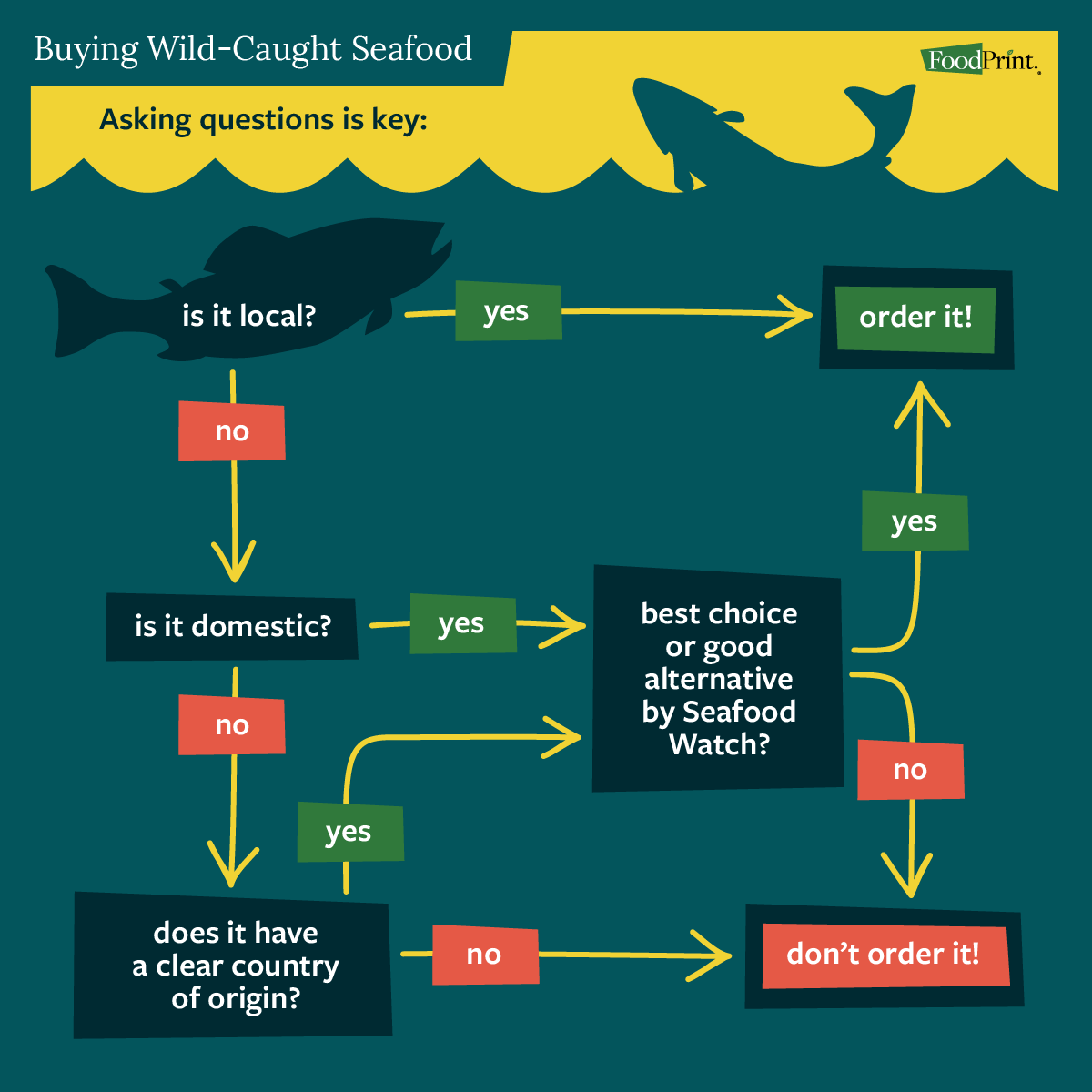
The unifying thread joining the now of “1923” and “1883’s” version of then is violence, established in both prequels by having its female stars survive some type of nastiness before doling out pain in kind. Mirren’s wrath rips through the screen in a heart-stopping scene I’m guessing will be explained later in the season but in the moment isn’t quite connected to anyway. That’s fine; its main purpose is to remind us of how physically imposing she can be when her characters are messed with. No shrinking violet, this performer, and neither is the woman she portrays.


Want a daily wrap-up of all the news and commentary Salon has to offer? Subscribe to our morning newsletter, Crash Course.


Ford’s stoicism leads the “1923”‘ mood, a match for the land nature has turned against Montana’s cattlemen. But it doesn’t make for the most compelling flavor over an hour that struggles to prevent the casual viewer’s attention from wandering. People lacking the stomach for history-inspired fiction that overcorrects for the years of whitewashing by showing the few non-white characters suffering horrendously may want to look elsewhere, too.

Others can take heart in what the Sheridan-verse holds as a central truth, which is that the spoils of the land are won by those willing to do terrible things to earn and keep it, and the rest can either bend to that way or take their shots. It’s a rough philosophy, but it frequently makes for riveting TV.

Sheridan’s track record leads me to guess that most people will trust that the scattered plot of “1923” will eventually knot into a story worth noting in the Dutton family Bible. For now, it proves that appreciating life in the present, as seen in “Yellowstone,” is preferable to gazing backward, no matter how starry that view may be.

“1923” premieres Sunday, Dec. 18 on Paramount+. New episodes stream weekly.


Holiday foods can be toxic to pets – a veterinarian explains which ones and why

During the holidays, it’s typical for people to indulge in special foods. Being a pet owner myself, I know that many pet parents want to give their fur babies special treats as well.

As a veterinarian and clinical veterinary researcher, however, I also know that some very common foods – including many popular holiday staples – are dangerous to pets.

Here are some of the most common food-related crises we veterinarians encounter in the animal ER during the holidays, and what to do if they happen.

Fatty food risks

Turkey with gravy is probably among the most popular holiday meals. And most dogs or cats would certainly agree with their humans that roast turkey is delicious.

However, the fat contained in turkey skin – and the excess of fatty, greasy foods that can accompany it, such as gravy, butter and bacon – don’t go down well with cats and dogs. Pets that ingest an overload of fats may develop pancreatitis, an inflammation of the pancreas, the organ that helps break down fat, protein and carbs.

Pancreatitis causes the pancreas to leak digestive enzymes and ultimately “digest” itself. If untreated, pancreatitis can affect other organ systems such as the kidneys and the liver and even cause blood clotting.

The most common symptoms of pancreatitis include vomiting and diarrhea. Pets that may have pancreatitis should be rushed to the closest veterinary hospital or ER. The vet will perform diagnostic blood tests, including a specific test for pancreatic enzymes called pancreatic lipase immunoreactivity or cPLI/fPLI.

Treatment for pancreatitis mostly involves dealing with its symptoms. The pet receives IV fluids to help establish electrolytes balance, with added anti-nausea and pain medications to stop the vomiting. Antibiotics may be necessary, as well as liver protectants and probiotics, and a special diet.

Onion offenses and bread badness

If only turkey were the sole problem! Many other common holiday ingredients can also harm pets.

Several allium species common to holiday cooking, such as leeks, garlic, onions, chives and shallots, can be healthy for people. For dogs and cats, though, alliums are toxic. If ingested, they can cause hemolytic anemia – a decreased number of red blood cells.

The signs of hemolytic anemia, which normally appear a few days after ingestion, include vomiting, diarrhea, lethargy and jaundice.

To treat hemolytic anemia in pets, veterinarians do blood tests to determine whether a transfusion is necessary. They address the symptoms of allium intoxication with IV fluids, antioxidants and anti-nausea drugs.

Yeast-risen foods like rolls and breads are also holiday dinner staples that people should keep away from their pets. The yeast in these foods can ferment in a pet’s warm stomach and produce toxic levels of ethanol. In pets, ethanol toxicity may lead to metabolic acidosis, which can cause sudden drop in blood glucose, respiratory depression, seizures and cardiac arrest.

Normally, pet owners do not suspect metabolic acidosis until it is almost too late, because it has few outward symptoms. So if there’s a possibility that a pet has swallowed any type of cooked or raw yeast dough, get it to a veterinary ER right away.

By the way, pets can also experience ethanol toxicity by lapping up cocktails or beer, so keep alcoholic drinks out of their reach as well.

No chocolate for pets

Now, what about a favorite holiday treat – chocolate?

Substances that may actually attract humans to chocolate – methylxanthines like theobromine and caffeine – are toxic to both dogs and cats. When vets provide emergency treatment for chocolate ingestion, we typically hear that children shared their candy with their beloved pet.

Pets that ingest chocolate can develop “chocolate intoxication,” a condition in which methylxanthines accumulate in the body and make them sick. Signs of chocolate intoxication in pets include tremors, increased heart rate, vomiting, diarrhea, restlessness and even seizures.

Chocolate intoxication in pets is a medical emergency. The pet needs to have its stomach emptied and receive support therapy with IV fluids and activated charcoal. The vet will probably want to know the type and how much chocolate the pet ate, because some kinds of chocolate, such as baking chocolate, can have worse toxic effects.

Chocolate also has a lot of fat, so the cat or dog’s pancreas will not enjoy it either.

Grapes and dogs don’t mix

How about fruits? Well, there is a fruit very toxic to dogs that often shows up at holiday gatherings: grapes, both fresh and dehydrated into raisins.

If eaten, the tartaric acid in grapes or raisins may cause acute kidney disease. Common signs of acute kidney disease in dogs are vomiting, intermittent diarrhea and increased intake of water.

Acute kidney disease in dogs is a medical emergency. If it is suspected, the pet should be rushed to a veterinary hospital or ER right away. Treatment is typically limited to stabilizing the pet with IV fluids.

Sweet for people, poison to pets

While xylitol toxicity is one of the more common emergencies we veterinarians see these days, it’s still largely unknown among pet owners.

Xylitol is an artificial sweetener often used in sugar-free products. While safe for humans, for cats and dogs it’s a fast-acting and potentially deadly poison.

Ingesting even the smallest amount of xylitol can cause a pet’s liver to rapidly release insulin, causing hypoglycemia – unusually low blood glucose levels. Within 30 minutes, the pet will experience symptoms such as vomiting, lethargy and seizures and lose coordination of its limbs – called ataxia.

Emergency treatment for a pet with xylitol toxicity involves giving the animal IV fluids containing dextrose to raise its blood glucose level and carefully monitoring its progress.

The bottom line? Several delicious foods that are safe for humans can be very dangerous for pets in general – not just cats and dogs, but also birds, reptiles and pocket pets like mice, hamsters and gerbils. So make the holidays special for furry or feathery babies by giving them treats from the pet food store or veterinarian’s office, and keep them away from the kitchen counter and trash can.


Leticia Fanucchi, Clinical Assistant Professor of Veterinary Clinical Sciences, Oklahoma State University

This article is republished from The Conversation under a Creative Commons license. Read the original article.

Can floating cities save us from rising sea levels?

Rising sea levels have spurred investment and interest in technology that can prevent or mitigate flooding. But some say it’s time to tackle the issue from a different angle: constructing floating cities that rise and fall with the water.

The idea is to build mobile parts that create a closed-loop, sustainable system and society.

Oceanix, the first floating community project with United Nations support, envisions extending existing cities using novel technologies. The South Korean city of Busan has given the non-profit Oceanix its blessing to build a prototype projecting from its shores, which is slated to be completed by 2026. This prototype would extend the tip of Busan into the sea using a series of reconfigurable and mobile parts, giving Busan the ability to tow entire neighborhoods.

“Once you get the neighborhood, it’s a matter of replicating that to create the city,” co-founder Itai Madamombe, a former U.N. senior advisor says. “You could expand indefinitely.”

Oceanix builds on past ideas regarding urban expansions into waters, but approaches it from a new angle. The idea is to build mobile parts that create a closed-loop, sustainable system and society — complete with energy creation, waste management systems and housing.

Yet floating city projects like Oceanix have a controversial, libertarian-leaning cousin: seasteading. While floating city projects like Oceanix rely on the support of the host country, the decades-old concept of the seastead aims to create self-governing, independent statesdeep in international waters — where no nation’s laws apply.

E Mare Libertas

The Seasteading Institute, founded in 2008, is the brainchild of Patri Friedman — grandson of Nobel Prize-winner Milton Friedman — and PayPal co-founder Peter Thiel, who jumped ship soon after funding its creation. The Institute is a non profit libertarian think tank focused on creating future-ready floating cities around the world. After multiple failed attempts, in 2017, it found a partner in the for-profit Blue Frontiers, and a location for its seastead: French Polynesia, a flat-low lying island threatened by rising waters. 

The seasteading group’s relation to French Polynesia was limited to it simply being the nearest country — the $66 million project was to be funded entirely by the Institute. The project was also expected to contribute monetarily to the French Polynesian economy, and create jobs and renewable energy for the country, as well as a unique economic zone, dubbed the “SeaZone.” 

The project fell through as the kindred beliefs once shared began to diverge — French Polynesia’s concerns laid in climate change mitigation. However, the Institute valued, and continues to prioritize creating a libertarian, government-free floating society for the wealthy that is reflective of their motto — which ironically encapsulates the differing interests — “E Mare Libertas,” or from the sea, freedom.

Manifest Destiny

Of the jurisdictions recognized for their tax avoidance, the lion’s share are located in the small islands of the Pacific. The wealthy have long exploited the lawlessness of international waters to skirt taxation responsibilities, using seasteads, yachts or even attempting the creation of residential ships to efficiently remain non-taxable. 

“Seasteads are a reminder… of the ability of the wealthiest to insulate themselves from global crises.” 

In French Polynesia, the Institute championed the support of the native people, yet, many saw the development as harmful, claiming that it is no more than tech colonialism. Those wealthy enough to make constructed worlds can create as many realities, virtual or location-based, as they please. Yet, those most affected by the activities of the ultra-wealthy and their emissions don’t have endless places to which to run. The majority of climate refugees don’t have the privilege of a constructed world.

“Seasteads are a reminder… of the ability of the wealthiest to insulate themselves from global crises,” writes Surabhi Ranganathan, Deputy Director of the Lauterpacht Centre for International Law. “They are an extension of the logic of panic rooms, gated communities, and nuclear bunkers  — supposedly universal technologies but actually available only to a privileged few…” 

Seasteading efforts in the Pacific create the illusion of a boundless, open and uninvestigated frontier — but, “[they] don’t always make sense when you follow them through to their logic,” says political geography professor Philip Steinberg, since “the very idea of international waters is itself a construction of the state system,” and establishing a seastead in international waters is intrinsically working with the system set up by the law of the sea and the nations that abide by it.  

The future is floating

Yet, seasteads are notably different from projects such as Oceanix. “Seasteading has been important in the last decade in keeping the idea alive. It’s just not what we’re doing,” says Madamombe. 

The United Nations backing of Oceanix and other projects legitimizes what it is trying to accomplish: extending existing land for a variety of purposes using sustainable development strategies. The versatile strategy theoretically allows Oceanix to create anything from neighborhoods to helicopter pads in the world’s oceans. 

In regards to climate refugees, “[Oceanix hopes to utilize] floating infrastructure to meet whatever needs a city has, so if it is an issue of climate refugees, that would be wonderful — if it is fundable,” Madamombe says. “We want this to be affordable… especially for the communities that need this, island nations that need this, and coastal cities that are vulnerable.”

Rules to follow when you buy wild seafood

Sustainability is rarely as simple as a yes or no question, and that’s especially true with seafood. Seafood is the last major source of wild-harvested food in our diets, which comes with some complications: there are hundreds of edible species, and each has its own role in marine ecosystems. And because fish populations vary from year to year and place to place, and because how fish was caught is a major factor in its sustainability, keeping track of what fish are best to eat is difficult for even the most educated consumers.

Thankfully, there are some rules that can help take the guesswork out of seafood without needing to learn about every fish in the ocean.

Sustainable fishing does exist, and by understanding the way that fisheries in the United States operate, we can develop simple rules to guide the our seafood purchases. FoodPrint’s latest report, produced in partnership with the Northwest Atlantic Marine Alliance (NAMA), identifies the key characteristics of sustainable seafood, explains the environmental, economic and social problems facing the industry, and offers suggestions for navigating the complicated world of seafood available to American consumers.

Here are the top takeaways:

Support local fisheries

If you live near a coast, and have access to a fish market where locally caught seafood is sold, buying there is a great way to support local, sustainability-minded fishermen.

Buying local seafood also helps avoid some of the potential pitfalls that come with buying seafood. Supply chains for seafood often get long and complicated, pulling resources away from communities and into the hands of corporations and investors. Especially as seafood crosses international borders, information about the catch gets more and more scarce the farther you get from the source, and the chance that there are serious problems in the supply chain— labor violations, seafood fraud and more — goes up dramatically.

If you live further from a coast, try to keep your purchases domestic: there are still problems, but the U.S. has better regulated fisheries than most other countries. Buying seafood that’s labeled as domestically caught is still a safer bet than buying international seafood that inherently comes with less information.

Try ordering direct

Buying sustainable seafood doesn’t always have to mean choosing it from a case at the market or the store. More and more options exist for buying seafood in a way that takes the guesswork out of sustainability. In many coastal areas, community supported fisheries (CSFs) have adopted the successful model of community supported agriculture, assembling boxes of locally caught, sustainable seafood for pickup or delivery. Typically, you don’t choose exactly what fish you receive in your subscription, but that allows fishermen to sell what’s most abundant, fresh and sustainable rather than what will sell the best at a store.

If you live far from the coast but still want to support sustainable fisheries, an increasing number of small-scale fisheries provide direct-to-consumer deliveries through the mail or internet. These are often flash-frozen to lock in quality and texture, and are comparable to fish that you might find at a high-quality market without the guesswork about where they came from.

graphic guide to buying wild seafoodClick here to view a larger version of this graphic
Stay open to frozen or tinned

Fresh fish out of the seafood counter might seem like the best option when it comes to quality, but the reality is that most of the fish you see at the supermarket have already been frozen at least once and then thawed out before sale. When it comes to quality and sustainability, other options can be just as good. Many small-scale fisheries make use of flash freezing to lock in the catch’s freshness right out of the water, so whether you find these options online or in the store, you can be assured that they’re good quality.

Fish in tins and cans can also be a sustainable and delicious option, with far more choices available than the cans of tuna many of us grew up with. Many of the small species that come in tins, like sardines and anchovies, are very sustainable because they come from lower rungs of the food chain, meaning they are more plentiful and have a smaller footprint than bigger fish. Even for popular species like salmon, tins can be a great way to get sustainably-harvested product far from the ocean or out of season.

Pay attention to how fish was caught

The type of fishing gear and the scale at which it’s used have a big impact on the environmental footprint of the fish. That’s why you’ll see labels and claims that say things like “line caught” or “pole caught” (these turn up on tuna cans a lot!).

Some fishing methods catch too many other fish along with the target fish, and that fish gets discarded (this is what’s known as “bycatch”). Some fishing methods disrupt the ocean floor. Some can be very fuel intensive, dramatically driving up the carbon footprint of your meal. The scale of a fishing operation can also make a big difference: overly intensive methods of catching fish can depopulate entire schools at once and cause serious imbalances in marine ecosystems. `

When you follow guidance advice from programs like Seafood Watch or Whole Foods’ rating system, you can find out which fishing methods were used and which ones are most problematic. If you buy from a local fishery you can ask them about their practices and what steps they’re taking to minimize bycatch and other ecosystem damage.

Look beyond the most popular fish

Many of the most popular fish, like tuna, eel and cod, are in such high demand that their populations are under stress. This is especially true for species that come from international waters where they may not be under careful monitoring and regulation.

Even when these populations are under stress, fishermen still feel pressured to bring them to market. Many consumers are intimidated by unfamiliar species that may be much more plentiful in their area, even if they can be cooked exactly like more popular options.

By asking your fish seller for their recommendation of what’s most plentiful, you’ll get exposed to a far wider variety of underutilized species. You may find some new favorites along the way!

If you can’t talk to the fishermen, it’s a good idea to look up an unfamiliar species through a reputable third party organization like Seafood Watch. While no perfect rating system exists, these can be a good indicator of whether or not a fish you haven’t seen before was caught sustainably.

Fascist politics, the return of antisemitism and the “disconnected present”

Hard truths are often hidden in grim realities. Time and again, far-reaching events appear in societies suggesting a profound political and moral reordering of the social fabric. Yet while these events are often warning signs — flashes of impending danger — they are largely ignored by political and financial elites as well as by the corporate media, all of whom have an inclination to isolate such events and deal with them unconnected from each other. Treated in isolation, they are quickly devoured and disappear into a neoliberal-driven image society dominated by a culture of short attention spans. In a capitalist order that has turned dark and increasingly unable to deliver on its promises, social and systemic problems appear disconnected, individualized and reduced to personal narratives, and quickly disappear in a neoliberal disimagination machine that relentlessly tries to normalize an existing misery-soaked state of affairs. 

Notable events, warnings and crises are now rendered digestible, insulated and politically insignificant, eliminating the necessity for in-depth analyses. This ideologically and pedagogically regressive approach to understanding the world offers no threat to the systemic capitalist relations of power and its darker mechanisms and effects, which are often hidden from view. Lost here are the connections between the pending crisis of environmental collapse, rampant inequality, the threat of a nuclear war, rising authoritarianism, collapse of civic society, rising antisemitism and the war on women’s reproductive rights. When disconnected, such events do not raise enough cause for serious alarm. Under such circumstances, the disruptions that emerge out of and lead to a broader crisis are not merely overlooked but covered up. At the same time, engaged and informed critique and the critical institutions that support a strong democracy are viewed with contempt. One consequence is that such warnings quickly disappear from public attention in spite of the fact that they speak to profound changes percolating in society that necessitate a critical understanding of the emergence of new political formations, more impending forms of domination and potential modes of resistance. 

The discourses of liberal, mainstream and dominant politics are too often disconnected from a fascist past and from the overlapping connections of the social problems they attempt to address. In this instance, they are marked by an analytic approach that treats issues in a disconnected and isolated manner, making such approaches incapable of making visible how various moments of violence and oppression inform and relate to each other. There is little understanding of how the attack on public schools, usually in the form of being defunded, is related to the neoliberal scourge of expanding inequality and the staggering concentration of wealth in the hands of the financial elite. Nor is the attack understood as part of a broader assault on public goods and critical institutions. At the same time, the rise of mass shootings is unrelated to a culture of violence that has been central to fascist politics — a culture that includes sports, the militarization of everything, mass entertainment and video game culture.

The discourse of mainstream politics is too often disconnected from the fascist past, and marked by an analytic approach that treats issues as disconnected and isolated.

Book banning in the U.S. cannot be removed from right-wing attempts to flood the schools with white Christian fundamentalist and white supremacist ideologies. Violence against people of color is too often disconnected from the rise of the carceral and punishing state. Attacks on the welfare state and public goods are rarely analyzed as part of the unchecked drive for profit under a savage neoliberal capitalism. The demonization of those considered unworthy of citizenship along with the rise of antisemitism, racism, xenophobia, nativism and the war against transgender youth are habitually removed from the legacy of fascism and its drive for racial purity and cultural genocide. 

When the media fails to connect Florida Gov. Ron DeSantis’ shameful treatment of migrants and politics of disposability with the rapper Ye’s use of his celebrity status to promote his virulent brand of antisemitism, and reports of former President Donald Trump dining with both Ye (formerly known as Kanye West) and an incorrigible white supremacist, it is more than a serious political mistake. It is a form of complicity that contributes to the emergence of fascist politics in the United States. Furthermore, while some pundits have  connected these specific events to an emerging authoritarianism, they still fail to both name the ongoing development of fascism in the U.S. and recognize that it takes different forms in different societies and historical formations. Nor do they equate Trumpism itself with a brand of fascist politics. 

As I have noted repeatedly, Primo Levi was right to state that every age reproduces its own fascism. Fascism is not some abstract idea that is permanently located in the past, it is a definable set of attributes that people such as Trump, Hungary’s leader Viktor Orbán, Italy’s Prime Minister Giorgia Meloni and India’s Prime Minister Narendra Modi know how to exploit and magnify. As renowned historians such as Timothy Snyder, Sarah Churchill, Jason Stanley and Ruth Ben-Ghiat make clear, fascism is never entirely interred in the past; it is a dangerous ideology that may go into remission but never disappears.

Fascism is far more dangerous than authoritarianism; the latter is too general a category and does not signal the specificity of a dangerous movement that includes the current brand of fascist politics. Fascism is a recurrent and infinitely translatable phenomenon and points to atrocities, banning books and bodies, withdrawal of citizens’ rights and the unimaginable horrors of the camps. As a present danger, it must be confronted. There is no room for silence or complicity. In the face of a culture with limited political horizons, it is crucial to learn from history and cultivate a critical consciousness in order to overcome the moral vacuity, manufactured ignorance and incitement to stupidity that gives rise to the fascist subject. Kelly Hayes writes in Truthout:

We must also understand that there can be no ethical silence in the face of fascism. Silence is complicity and cooperation, which helps facilitate atrocity. That might likewise be hard to hear. But how many liberals and leftists have fallen silent on trans issues as the Republicans make the elimination of trans people from public life the new centerpiece of their politics?

Authoritarian signals appear everywhere in American society. Racism, antisemitism, white supremacy, Christian nationalism, a culture of cruelty, raging inequality and an expanded politics of exclusion and disposability are burning democracy to the ground. Yet in too many cases, the larger significance of these incendiary calamities is missed because they are disconnected from each other. Examples of the landscape of disconnections and the fascist conjuncture that it supports are not difficult to find. The three seemingly disparate events I mentioned above: DeSantis’ demonization of migrants, the public displays of antisemitism by Kanye West, and Trump’s hosting of Nick Fuentes, a well-known white supremacist, antisemite and Holocaust denier at his Mar-a-Lago resort, received a great deal of attention but were easily forgotten.

These events were largely decontextualized in the mainstream and corporate-controlled media, treated as isolated issues, and as such illustrate the hegemonic power of a politics of disconnection. In the first instance, DeSantis ordered two planeloads of migrants from Venezuela transported to Martha’s Vineyard. The two planes left from Texas filled with lawful asylum seekers who were told by DeSantis’ staff that they would be provided with jobs and “up to eight months of cash assistance for income-eligible refugees in Massachusetts, apparently mimicking benefits offered to refugees who arrive in the United States through the country’s official resettlement program, which the Venezuelans were not part of.” They were also provided with a fake brochure titled “Refugee Migrant Benefits,” although they did not qualify for such benefits.

Judd Legum reports, “Several migrants told NPR they were told the flight was going to Boston, not Martha’s Vineyard. According to the migrants, a woman who identified herself as Perla also said that, if they traveled to Boston, they could receive ‘expedited work papers.” Legum adds, “The allegation that the migrants were misled is legally significant. It would mean that the flights were not just heartless, but potentially criminal.” DeSantis was criticized in the liberal media on a number of counts, including lying, committing a criminal offense, engaging in illegal trafficking, misusing state funds, kidnaping and using this cruel stunt as a publicity device to showcase his reactionary ideology regarding immigration. 

Very few analyses connected DeSantis’ stunt to the long-standing policy of right-wing GOP members in propping up a white nationalist agenda. Nor did they give much attention to how the stunt smacked of a segregationist past in which White Citizens’ Councils in the American South resisted activists of the early 1960s who traveled there as Freedom Riders “with the goal of integrating interstate buses and bus terminals.” Not only did segregationists and armed mobs confront the freedom riders when they pulled into Southern cities “with bats and firebombs,” they also “passed out leaflets and placed want ads in Southern newspapers to recruit Black families with the promise of jobs up north.”

Like DeSantis, Southern segregationists wanted to retaliate against Northern liberals. Unfortunately, the story of how this segregationist past was reproduced by DeSantis, echoing the Jim Crow era of racist policies and violence, was underplayed in the mainstream and liberal media. Almost nothing was said about how DeSantis’ politics of disposability was part of a similar logic carried to extremes in the past in fascist regimes such as Nazi Germany. Not only did DeSantis build on the legacy of American white supremacists such as former Alabama Gov. George Wallace, he also took a lesson from the history of fascism in trying to ride white supremacy and nationalism to further his political career. 

Almost nothing was said about how DeSantis’ Martha’s Vineyard stunt echoed the logic of fascist regimes and built on the Jim Crow-era legacy of American white supremacists like George Wallace. 

DeSantis’ publicity stunt of using migrants as political pawns was also disconnected in the mainstream and liberal media from his attempt to erase the Jim Crow era as part of his larger project of a politics of disposability. For instance, little was said connecting this racist policy to DeSantis’ enacting laws banning books about African American history and racial narratives from schools and libraries along with limiting what teachers can teach about racism — a policy that clearly indicates how DeSantis is following in the footsteps of the Nazification of education in Hitter’s Germany. Almost nothing was said connecting these incidents with DeSantis’ ignorant historical claim that it was the “American revolution that caused people to question slavery [and that] nobody had questioned it before we decided as Americans that we are endowed by our creator with inalienable rights and that we are all created equal. Then that birthed abolition movements.” 

As Sarah Pearsall notes, “The claim by DeSantis is completely incorrect. Plenty of people had questioned slavery before the American Revolution. Of course enslaved people had resisted the system since its inception, but there were also tracts by colonists [and] early abolitionists on both sides of the Atlantic [including] Quakers; their efforts in some cases predated the outbreak of the American Revolution.”

DeSantis’ lies, policies and embrace of historical revisionism cannot be separated from either an egregious fascist history or the current attempts by the GOP to erase migrants and Black and brown people from history in order to prop up a white nationalist agenda. Meaghan Ellis, citing the work of Brown University historian Seth Rockman, argues that DeSantis’ reading of slavery is especially “pernicious because it places black people outside the category of ‘we’ and ‘Americans’ [while pretending] that enslaved African and African-descended people aren’t worth taking seriously as people whose opinions about slavery might matter, then or now.”

James Baldwin was right to argue that this whitewashing of history makes clear that white people do not want to know the sordid racist past of American history and as a result are “barricaded inside their history.” DeSantis’ historical ignorance is about more than refusing a future free of racism, and the enactment of a more just world, it is part of a broader legacy deeply rooted in America’s fascist past. It is part of a legacy in which Trump and his right-wing extremist supporters refuse to tell the truth about America’s past while building the present in the image of a Jim Crow past. Writing in Salon, historian Robert S. McElvaine captures this GOP return to a racist past:

Today’s right-wing extremists seek to “Take Back America” in two senses: back from those who are not white or not male and back to the time when straight white males were in charge. An essential part of their overall quest to effect a second “Restoration” of white man’s rule is an attempt to restore the ignorance of American history that had prevailed before 1964.

The stark elements of a fascist past, reproduced in the pathologies of the current historical moment, took place in 2022 in another series of events, which stemmed from the same display of racism and embrace of a politics of disposability. From October to December 2022,  the rapper Ye (formerly known as Kanye West) spent a considerable amount of time performing as the celebrity poster child for spewing out a barrage of dangerous antisemitic comments. Joining a number of other celebrities who have massive followings, such as Brooklyn Nets guard Kyrie Irving, online conspiracy theorist Alex Jones and Rep. Marjorie Taylor Greene of Georgia, Ye found himself squarely in the company of neo-Nazis, proto-fascists and a gaggle of diverse demagogues who shared his hateful views.

Ye appeared to delight in flooding the media, along with his nearly 32 million followers, with hateful rhetoric that stoked fear, normalized white supremacy and ramped “up the risk of violence in a country already experiencing a sharp increase in antisemitism.” Indifferent to how his antisemitic rhetoric is aligned with both a Nazi history of genocide and current acts of violence against the Jewish community, particularly the 2018 massacre at the Tree of Life synagogue in Pittsburgh, Ye acted out his hatred of Jews and support for white supremacy with impunity while endorsing vitriolic ideas, concepts and actions that not only incite violence but are potentially murderous.

Ye has a disturbing history of antisemitism that has become more menacing over time. During the past decade, his quest for media attention, cultural power and political influence has become more vitriolic and alarming as he moved from uttering offensive anti-Jewish and self-hating anti-Black racist remarks to playing with a fascist aesthetic and more recently providing a full-fledged apology for Nazi ideology. Early on in the last decade, he began to integrate white supremacist symbols into his fashion aesthetic. For instance, he turned a Confederate flag into a shirt in 2013 and a decade later donned a sweater at the Yeezy Paris Fashion Week show emblazoned with the phrase “White Lives Matter” on its back. The phase has been adopted by white supremacist groups in response to the rise of the Black Lives Matter movement. In October, Ye’s antisemitic outburst took a dangerous turn when he tweeted that he would be going “death con 3 on Jewish people,” a dark and possibly confused reference to the defense readiness condition (DEFCON) used by the U.S. military.

While appearing on Infowars with far-right Sandy Hook conspiracy theorist Alex Jones, Ye said, “I see good things about Hitler,” claimed to love Nazis, denied the Holocaust took place, “accused Jews of being pedophiles” and chastised the “Jewish media” for claiming that the “Nazis and Hitler never offered us anything of value to the world.” Soon after airing his antisemitic and pro-Nazi views with Jones, he stooped to another low, reinforcing his image as “a vile repellent bigot” by posting an image of a swastika inside the star of David. He then added, “Let’s always remember this as my final tweet.” 

Ye has emerged as a public menace, a symbol of vindictive chaos and a warning sign of a rising fascism in the United States. His contempt for racial justice, equality and civic integrity correlates perfectly with his personal embrace of fascism and is symptomatic of the plague of authoritarianism that now bears down on every aspect of cultural, political and economic life in the United States. Fascism begins with hateful and dehumanizing language, opening the space for unimaginable violence. Ye’s language fundamentally structures as much as it expresses white supremacist and antisemitic thought and in doing so functions in the service of violence, deception and cruelty while collapsing the distinction between truth and lies, good and evil. 

Ye’s lies, comments and actions merge the hateful and the delusional and in doing help to mainstream and normalize fascist politics and its politics of terminal exclusion, social abandonment and dehumanization. His bigoted ideas and comments offer support to a range of white supremacists and antisemitic extremists who brazenly occupy public spaces with their fascist symbols and ideas. Celebrity wealth and power carry a lot of weight for real world consequences. For instance, on Oct. 22, Ye’s followers in Los Angeles rallied on a freeway overpass, displaying a banner declaring “Kanye is right about the Jews.”

Ye’s antisemitic rhetoric fuels and legitimates the hateful messages and videos produced in a range of media platforms used by white supremacists to wage violence against trans and queer people and other marginalized groups who “are at disproportionate risk of experiencing violence and mental trauma.” As a public figure, he has a massive following, especially among the young, and his influence does more than legitimize conspiracy theories and fascist ideology, it also shapes consciousness, normalizes bigotry, lowers the tolerance for violence, inspires racially motivated death threats and creates a culture of fear and rage. Ye’s language and actions are just one indication that we live at a time when totalitarian forms are with us again. 

Ye’s antisemitic rhetoric fuels and legitimates hateful messages across many media platforms directed against trans and queer people and other marginalized groups.

Ye’s influence and racist ideology expands far beyond his public persona. Prior to his interview with Alex Jones, he dined with Donald Trump at his home in Florida. The dinner came as no surprise since Ye has long supported Trump and his white supremacist politics. What caught the mainstream media’s attention was that Ye was accompanied by Nick Fuentes, an architect of the “Groyper” movement of internet trolls whose project is to protect and preserve white, European-American identity and culture. Matthew Chapman describes Fuentes as a high-profile extremist who seeks “to push white supremacist ideology into the political mainstream, has previously compared himself to Adolf Hitler, and advocates the creation of a white, Christian theocratic ethnostate in which Jews and nonwhite people are barred from political power.” 

Jacob Crosse adds that “Fuentes is not just another ‘far-right’ operative. He is an unapologetic racist, Christian reactionary, admirer of Adolf Hitler and Holocaust denier. In addition to glorifying Hitler, Fuentes has called for violence against Black people, Jews, women, immigrants, and LGBTQ persons. Fuentes’ words have led to real-life violence and death.” In the face of adverse publicity, Trump subsequently denied knowing Fuentes, but at the same time the former president “has refused to condemn Fuentes’s white supremacist views” — a pattern that links back to his first presidential campaign.  


Want a daily wrap-up of all the news and commentary Salon has to offer? Subscribe to our morning newsletter, Crash Course.


Some prominent Republicans criticized the outrageous dinner event but declined to condemn Trump for hosting racist antisemites — a further example of the degree to which the GOP and Trump have embraced and welcomed white supremacists, antisemites, neo-Nazis and a fringe group of ideological fanatics into the highest levels of political power. Of course the GOP has a long history of hypocrisy around this issue. For instance, most Republicans remained silent in the face of Trump’s association with overt racists such as former Ku Klux Klan leader David Duke. They failed to condemn his claim that there were “very fine people” among the Charlottesville neo-Nazis, not to mention his apparent embrace of the Proud Boys in a 2020 debate with Joe Biden.

Given the mainstreaming of American fascism, it is understandable, as Jonathan Greenblatt, CEO of the Anti-Defamation League, said in an interview, that the majority of American Jews live in fear of being objects of violence. And rightly so, given that “not only are incidents of violence against Jews at their highest levels since the 1970s, but the level of public animosity toward Jews is higher than it’s been in recent memory.” Of course this widespread fear of violence is not limited to the Jewish community, as made clear by the violence being waged by the right against Black and brown people, women and the LGBTQ community. When analyzed as isolated events, Ye’s comments and actions cover up a wider and long-standing history of racial cleansing and violence rooted in the same principles of antisemitism and racism that led to past policies of extermination that gave birth to unimaginable horrors and intolerable acts of mass violence.  

While these events deal with different issues, they are connected to each other as part of what Clarence Lusane characterizes as “a neoliberal, race-based version of all-American authoritarianism [that is] targeting every facet of public life.” He adds, “Don’t think of this phenomenon as right-wing conservativism either, but as a more dangerous, even violent movement whose ultimate aim is to overthrow liberal democracy.” He is only partly right, perhaps too cautious to name America’s current slide into racist demagoguery and bigotry as what amounts to a rebranded crisis of fascism. Fascism is not on the horizon; it is present at the highest level of politics. It saturates everyday life, culture and politics with its ominous and dangerous racial threats, lies, conspiracy theories and a constant barrage of rage, revenge and macho ebullience, echoed in the whining discourse of white replacement theory and its false appeal to the loss of white privilege. 

This updated fascism, as Geoff Mann notes, does not draw its energy from calls for a  “rebirth of classical fascism’s New Man”: 

This is a world in which [an] emergent fascism draws much of its energy from the dark and bitter nostalgia that fuels the contemporary right…. [T]oday’s emergent fascism is a political programme that indicts the present as a crime against the past. For much of its white base, the point is that the life they have “always lived” was not a disaster, that they are being “replaced” on the stage of history, that progressive politics turns what was a source of pride into an object of shame.

To his credit, Lusane states that “a true authoritarianism could indeed come to power in this country. And as history has shown, that could just be a prelude to a full-blown fascism.” We may not have a full-blown fascism yet, but we do have a Republican Party along with a range of financial institutions, media pundits, politicians and Supreme Court justices who support the GOP’s deeply authoritarian politics. We also have the ghosts of fascism re-emerging in the hard-wiring of the public imagination regarding white racist notions of citizenship, support for racial hierarchies, anti-Jewish hatred and a frozen conception of cultural differences and histories. In this context, as David Graeber has observed, fascism travels easily in a society “with extremely limited political horizons, indifferent to the habits of oligarchy, as though no other politics are possible.” 

Neoliberal capitalism’s emphasis on economic and moral individualism has paved the way for a fascist politics. It prospers on separating individuals from society and furthers the collapse of the critical institutions crucial to a substantive democracy. In this discourse, there is no self-determining collective subject in politics, only disembodied individuals held together by the allure of cults, demagogues and the strong odor of hate. It denies that individuals are interconnected and that, as Albert Einstein once argued, reproduces the greatest crisis of the time, which leads people to believe that meaningful social relations have no value and that the notion that we are bound together as human beings via the workings of the democratic social state is a liability.

Neoliberal capitalism’s emphasis on economic and moral individualism has paved the way for a resurgence of fascist politics, rooted in separating individuals from society.

This call to reclaim, strengthen and expand the social state, the collective tissue of mutual care and the common good must be matched by theoretical discourses and a politics that can deal with social issues within a broader comprehensive politics. It must reclaim those spaces in which books, blogs, journals, social media and the like create a formative culture in which people become critical thinkers and are politicized rather than depoliticized. It means learning from history in order to claim a sense of collective agency, love and care. 

The project of creating a socialist democracy begins with a vision of who we are, what kind of society we want to live in and how we articulate ideas into actions to make it possible. One might add that an emancipatory politics means that freedom cannot be either individualized or removed from the quest for economic and social justice. The late cultural critic Audre Lorde furthered this argument by insisting that any viable leftist politics must refashion struggle in collective and intersectional terms. In her words, “There is no such thing as a single-issue struggle because we do not live single-issue lives.” 

Khalid Lyamlahy adds to Lorde’s call for a united front, arguing for a return to a politics focused on “silent questions and neglected connections” that plays “with the limits of the obvious,” develops a language that generates a “more active affinity between people” and engages in pedagogical practices and cultural work highlighting a politics that refuses to “divorce itself from social institutions and material relations of power and domination.”

Such a language would make clear, for instance, that DeSantis’ migration policies share with Ye’s and Trump’s anti-Jewish hatred the rewriting of citizenship as the exclusive domain of white Christians and “is not only restrictive but has let loose the hounds of social violence.” In this discourse, citizenship is no longer equated with human dignity; this abuse is reinforced if not normalized with a larger discourse of dehumanization, racial capitalism and white supremacy, and must be addressed within a broader discourse of rights. Within a politics of connections and totality, the importance of historical consciousness, memory, moral witnessing, inclusive citizenship and equal rights provide a more capacious analytic scaffolding that makes visible overlapping themes, often hidden connections and visible relations of power that fuel a fascist politics. 

The United States is once again in the presence of a modern form of barbarity. This new barbarity parading as an upgraded fascism thrives in a broad-based socioeconomic context that disappears when its varied features — ranging from racial cleansing and the censoring of history to ultra-nationalism — are separated from each other. Under such circumstances, the violent histories of the past disappear, along with the notion that the future does not have to replicate the present. Under neoliberal fascism, historical memory, cultural memory, social solidarity and the living world of human interconnections fade into oblivion under the force of an annihilating nihilism. 

Khalid Lyamlahy argues for a united-front politics focused on “silent questions and neglected connections” that plays “with the limits of the obvious” and develops a “more active affinity between people.”

Fascism blossoms in a society that fails to address its overlapping forms of oppression, ignores broader symbolic and material constraints and limits its analyses to narrow, distinct issues. Fascism is a language of erasure and suppression, and uses words as theater to provide spectacles that offer audiences the thrill of cathartic violence. Fascism thrives on the language of dehumanization, bolstered by a politics of disconnection. As a discourse of erasure, fascism embraces ignorance and thoughtlessness. It eliminates those protecting spaces that enable individuals to question, think, analyze and hold power accountable. Wedded to a politics of disconnection, it refuses to align the struggle over immediate needs with a call for broader structural changes. Fascism in its updated form is the enemy of historical consciousness because it does not want its dark history revealed, especially disguised in new forms. Not only is fascism a discourse of terror and displacement, it is a project that assaults those ideas and institutions that enable individuals to understand the potential of education, language and theory to reveal how power and resistance are interconnected and can be woven into the landscapes of politics. 

Progressives and the left need a language and politics that address root causes in their interconnections. Rather than focusing on individual solutions, there is a dire need to confront the structural, cultural, educational and institutional underpinnings of authoritarianism in all its forms. Reframing the present in order to challenge the abyss of fascism demands a new language, politics, ethical grammar and sense of political agency, and a renewed effort to make matters of consciousness and education central to politics.

The fracturing of politics has become a form of complicity with neoliberal fascism, and it must be challenged in order to imagine a society free from the scourge of hatred, bigotry, inequality, racism and a crippling individualism. Progressives and the left need a robust language, energized politics and international social movement that captures the enormity of the danger fascism poses in the current historical moment. This should be a language that rebuilds and reimagines, believes another world is possible and insists on radical change. Given the existence and danger of a fascist threat that refuses to go away, the urgency of the times demands the resurgence of a mass movement — “more attentive to the intersections of race, gender, disability, and climate catastrophe” — willing to act, resist and give democracy room to breathe again. In an age of capitalist corruption, mass suffering and social atomization, it is crucial to develop new forms of solidarity, along with a new understanding of what we share in terms of values, visions and the kind of society in which we want to live. Socialist democracy is no longer an ideal waiting to be born; it must be grasped as an urgency essential to a future in which we can realize life beyond the nightmares of neoliberal fascism.

How deep is our love for “Saturday Night Fever,” which changed how John Travolta and disco were seen

Recent releases by Beyoncé, Lizzo, and even the up-and-coming new act Say She She have incorporated aspects of disco music into their songs. Lizzo’s “About Damn Time,” arguably the song of the year, sounds like an outtake from a Donna Summer or Gloria Gaynor record circa 1979. But there was a time when disco wasn’t so readily embraced. Unlike traditional rock or punk or metal or hip-hop, disco music has had a tumultuous history. It went from an underground scene to conquering the world to being the most reviled music to finally being reassessed and embraced by the world all over again.

The movie’s opening-credit sequence may be the most influential in movie history.

While disco had been bubbling up from the underground, its moment to shine came with the release of the movie and soundtrack to “Saturday Night Fever,” which premiered in December 1977. “Fever” was a crass commercial enterprise. Conceived by music manager and impresario Robert Stigwood and directed by crack journeyman filmmaker John Badham (“Wargames,” “Stakeout”), it was a combination of star vehicle for rising TV teen idol John Travolta, a Norman Lear-ish family sitcom, and an attempt to capitalize on a the then-fading subculture of disco. When you combine all those elements – mix, stir and pour out – you get something unexpectedly artful.

The movie’s opening-credit sequence may be the most influential in movie history. It created a movie star and kicked off a global phenomenon. Beginning with a midday shot of the New York City skyline followed by a subway train heading to a stop, we hear the spangly opening guitar riff to the strut-with-a-purpose “Stayin’ Alive.” We see a pair of shoes walking down a city sidewalk. The camera pans up to reveal Tony Manero (John Travolta), a 19-year-old working-class kid from Bay Ridge. Dressed in dark tight jeans, a red shirt with a gold crucifix around his neck, and leather jacket, Tony is almost always in motion. He moves to the music he hears in his head. His walking is so purposeful that we can hear his footsteps buried deep in the sound mix. We don’t know where he’s headed, but he does. On the rare moments he stops moving – like to grab a couple of slices of pizza – we can sense his pent-up energy.

Performed by the Bee Gees, “Stayin’ Alive” is Tony’s theme song. (“You can tell by the way I use my walk/I’m a woman’s man/No time to talk.”) It is also the theme song to anyone attempting to make it in the big city. The angelic falsettos of The Bee Gees  – brothers Barry, Maurice and Robin Gibb – give us and the song a lift — especially when the word “Alive” is stretched out enough to touch Heaven. (The sequence perfectly mirrors the equally indelible opening credits to 1971’s “Shaft.” That one was about empowerment; this one’s about restlessness.)

The album’s success allowed other underground disco artists to penetrate the culture …  Following the release of “Saturday Night Fever,” disco was rock.

At the time, disco was mostly relegated to the African-American and gay communities. Occasionally, disco songs managed to break into the mainstream. Songs like “Rock The Boat” or “Boogie Shoes” had enough pop qualities that both the mainstream music press and Top 40 radio didn’t feel compelled to use the word “disco.” That all changed with the soundtrack to “Saturday Night Fever.” The album fueled the movie’s success and the movie fueled the album’s success. Before “Fever,” the Bee Gees were best known as a harmony group that specialized in songs that mixed folk and pop. That all changed after “Fever” broke. For better or worse they will always be considered a disco group. And the album’s success allowed other underground disco artists to penetrate the culture. Performers like Summer, Gaynor and Sylvester became instant household names. In his memoir “Unrequited Infatuations,” Steven Van Zandt writes, “Rock music is dance music.” Following the release of “Fever,” disco was rock.

View of the cover of the soundtrack album from the film 'Saturday Night Fever,' 1977.View of the cover of the soundtrack album from the film ‘Saturday Night Fever,’ 1977. (Blank Archives/Getty Images)
The songs on the album can be broken into three categories. There are the instrumentals (“Manhattan Skyline,” “Salsation”) composed by David Shire. There are other disco songs performed by artists like K.C. and the Sunshine band and The Tramps. But the bulk of the soundtrack is anchored by the Bee Gees. Some songs (like the syncopated shaker “Jive Talkin'”) had been previously released, while others were created specifically for the movie.

A prime example is the dreamy mid-tempo reverie “Night Fever.” We first hear the song as Tony is getting ready to go out, blow-drying his hair, trying on various gold chains and meticulously buttoning his best dress shirt. These actions are intercut with quick images of dancers at the 2001 Odyssey disco club. (Tony can’t wait to get on the dancefloor.) Later, the song is reprised for an extended dance sequence. Tony and his roughhousing friends (who are known as the Faces) have arrived at the club and quickly begin to prowl for action. We’ve watched them crudely shout and antagonize one another and sneak off to the parking lot for some quick anonymous sex. Yet when “Night Fever” begins to play they fall into harmonious step and dance. Late movie critic Gene Siskel chose this sequence as his favorite dance number because it suggested a fevered dream of peace. It shows that if these kids can come together on the dance floor maybe they can find harmony off it. Tellingly, the sequence ends by transitioning to a shot of Tony asleep in his bed.

A lobby card for the 1977 US film 'Saturday Night Fever', featuring actor and dancer John Travolta.A lobby card for the 1977 US film ‘Saturday Night Fever’, featuring actor and dancer John Travolta. (Movie Poster Image Art/Getty Images)
Tony is referred to as the “king” whenever he dances. So, when a dance contest is announced — and the top prize is $500 — it is assumed Tony will win. Initially, he teams up with Annette (Donna Pescow), a spunky neighborhood girl who desperately wants to date Tony. They rehearse for the contest, but he’s thinking about changing partners when he sees Stephanie (Karen Lynn Gorney) dancing at 2001. She’s also from the neighborhood but has made it out and moved to Manhattan. She occasionally returns home to dance — and remind herself why she left. When Tony sees her practicing some solo dance routines at a local dance studio, he tries to pick her up. When she coolly blows him off, his pride won’t allow him to try again. Then, when his brother priest Frank Jr. (Martin Shakar) unexpectedly shows up at home to announce he is leaving the church, Tony begins to reconsider his attitude. In one of the movie’s rare scenes that has no music, Tony and Frank have a heart-to-heart conversation about their assigned roles in the family. Tony says, “Maybe if you ain’t so good, I ain’t so bad.” He is motivated to ask Stephanie again if she’ll be his partner. After some hesitation, she agrees.

This leads to the movie’s most romantic dance number. Meeting at the local dance studio they try out different versions of the Hustle. When Tony sneaks them into a larger dance studio the number opens up and recalls the great full-frame dance numbers of classic musicals. Scored to Tavares’ version of “More Than a Woman,” Tony and Stephanie come off as a working-class Disco-era version of Astaire and Rogers. (Like Rogers, there are moments when Gorney does everything Travolta does, but backward.) The number climaxes when the two break from their perfectly choreographed moves and hold each other’s hands and spin around and around. They’re like young lovers consummating their partnership. On the night of the dance contest Tony and Stephanie perform to the Bee Gees’ swoony version of “More Than a Woman.” For Tony, who is the product of a world where women are viewed in reductive terms, the song lets us know that he sees Stephanie as someone outside his orbit.

Actor John Travolta in the film 'Saturday Night Fever'.Actor John Travolta in the film ‘Saturday Night Fever’. (Michael Ochs Archives/Getty Images)
If the soundtrack to “Saturday Night Fever” is anchored by the Bee Gees, the movie is anchored by Travolta’s star performance.

Composer David Shire, who is best known for his haunting and tense scores for paranoid thrillers like “The Conversation” (1974) and “All the President’s Men” (1976), shows a completely different side with his work for “Fever.” Tracks like the lush yet ominous “Manhattan Skyline” or the derivative yet catchy “Salsation” blend in beautifully with the rest of the songs. The best instrumental is a version of “How Deep is Your Love,” which plays during a sequence where Tony and Stephanie are driving around and looking at the Brooklyn Bridge. The Bee Gees’ version is heard in the final scene where Tony starts to tentatively mature by asking Stephanie to be his friend. It’s like a love serenade.

And the non-Bee Gees songs do a good job of varying the movie’s tempo just enough so it doesn’t get monotonous. Walter Murphy’s “A Fifth of Beethoven” starts out as a novelty but quickly becomes something more. It connects the past to the present. (Like disco, classical music was the pop music of its day.) “Boogie Shoes,” with its joyous horn blasts and irresistible chorus plays at just the right moment to loosen up the tension. And the Tramps’ “Disco Inferno,” which has become the go-to song whenever anyone wants to make a joke about disco, is actually a James Brown-ish epic that says dancing might be the only thing you can do when the world is burning.

If the soundtrack to “Saturday Night Fever” is anchored by the Bee Gees, the movie is anchored by Travolta’s star performance. Until then, he was just a rising TV star best known as Vinnie Barbarino, the wisecracking member of the Sweathogs gang on “Welcome Back, Kotter.” The character of Tony Manero is far more complex and layered. We are asked to follow him through some dark passages. Tony is a casual racist and sexist, capable of being cruel, and in a shocking scene, attempts to rape Stephanie in the backseat of a car. On paper, the character seems irredeemable. Yet Travolta lets us see that Tony, unlike his meathead buddies, is a thinker. We respond to his street smarts and cockiness, but his startlingly mature eyes tell us his bravado conceals fears and insecurities he is barely capable of articulating.

John TravoltaAmerican actor John Travolta sits on a bench inside a subway car painted with graffiti in a still from director John Badham’s film ‘Saturday Night Fever’. (Paramount Pictures/Getty Images)

But Tony’s saving grace is his dancing. To be clear: Travolta is not a great dancer. Unlike James Cagney or Fred Astaire or Michael Jackson, he lacks the natural talent and grace of those performers. What distinguishes Travolta from them is he is a better actor. He acts like someone who loves to dance. This is most apparent in the movie’s centerpiece dance number: Tony’s dance solo at 2001. The number is filmed in an unbroken full-frame shot in order for us to see that Travolta is doing all the dancing. The song used for the sequence is the disco banger “You Should be Dancing.” With its Mariachi-like horn line and hard-rock guitar playing, the song has a propulsive energy that is matched by Travolta’s aggressive yet fluid dance moves. It’s what made the sequence an instant classic.


Want a daily wrap-up of all the news and commentary Salon has to offer? Subscribe to our morning newsletter, Crash Course.


Before “Fever,” soundtracks — with few exceptions like “The Sound of Music” (1965), “The Graduate” (1967), “American Graffiti” (1973) — were considered an afterthought. Consumers bought singles, not albums. The exception were the soundtracks for Black-themed movies like “Shaft,” “Superfly” (1972), and “Sparkle” (1976) — which were released months before the movies. The soundtrack to “Fever” used this practice as a blueprint. It created the model for how a soundtrack can be a crucial element to a movie’s success. (Four years later, with the launch of MTV, the synergistic relationship between Hollywood and the music industry would be solidified.) If a movie had a hit single on the soundtrack maybe that would translate to a better box office. Movies as varied as “Footloose” (1984), “Purple Rain” (1984) and “Singles” (1992) all had soundtracks that powered those movies’ success and vice versa.

Yet there was a time when the existence of “Saturday Night Fever” was nearly erased. Following the racist and homophobic “Disco sucks!” movement, disco music all but vanished from radio and the clubs. The 1980s was powered by synth-pop and club music, but disco became a word you didn’t dare speak. Then, in 1994, Quentin Tarantino’s crime epic triptych “Pulp Fiction” pulled off a cinematic sleight-of-hand by killing off its main character in order to resurrect the movie career of John Travolta. The scene where Travolta’s junkie hitman participates in a twist contest fulfilled our desire to see him dance. It was a sight we didn’t know we had been missing. Following the success of “Pulp Fiction,” a long overdue reassessment of “Fever” occurred. The movie was now considered a classic from the Golden Age of 1970s cinema. The Bee Gees were welcomed back. And disco was finally seen for what it truly was: the foundation for all pop music that would follow. And the audience would continue to show how deep their love is for the music. About damn time.

“Saturday Night Live” jabs at Trump’s NFT cards in the cold open for Cecily Strong’s last episode

Cecily Strong, a key member of “Saturday Night Live” over the past eleven seasons, bid a tearful goodbye during the show’s December 17 episode. Appearing in the cold open as MAGA news personality and fiancé to Trump Jr., Kimberly Guilfoyle, Strong kicked off her final episode in traditional fashion, by helping to make fun of Trump.

The cold open starts off as a “special Christmas announcement,” with standard holiday imagery fading into a graphic of James Austin Johnson as Trump in all his laser beam eyed “superhero” glory. 

“This is Donald Trump, hopefully your favorite president of all time,” Johnson as Trump says after the NFT graphics move off the screen. “You may have seen this week, I made a major announcement. I’m doing my first official collection of Donald J. Trump digital trading cards . . . they feature incredible artwork pertaining to my life and my career. For example, when I was an astronaut. Or me riding a big elephant.” Other cards are shown depicting Trump as a cowboy, and of him using his laser beam eyes to melt Biden’s ice cream cone.  

Johnson as Trump goes on to joke about how the cards were widely viewed as a scam, charging $99 for something that could easily just be looked at online, and then calls on his “third least embarrassing child,” Donald Trump Jr. (played by SNL’s Mikey Day) to provide further info.

“So good to be here for the launch of this amazing, totally legit product,” says Day as Trump Jr. “These cards are fantastic. And a steal. And I know what you’re thinking, ‘$99!? You can get two grams for that!’ While I’m here, I also wanted to share, I’m selling a Christmas CD from my fiancé, Kimberly Guilfoyle.


Want a daily wrap-up of all the news and commentary Salon has to offer? Subscribe to our morning newsletter, Crash Course.


Beckoning Strong as Guilfoyle, she receives hoots and cheers from the audience before launching into a sales pitch for her CD, “Now That’s What No One Calls Music.” 

Strong joined SNL in 2012 and is departing on good terms to focus on other projects. Most recently, Strong was performing in “The Search for Signs of Intelligent Life in the Universe,” a play written by Jane Wagner and originally performed by her longtime partner and friend of SNL, Lily Tomlin.

Watch Strong in her final cold open for SNL here:

The first climate change candidate: Inside Al Gore’s oddly prescient 1988 presidential run

The United States quietly hit a political tipping point some time in the 2010s, although few noticed at the time. That was the decade in which a majority of Americans polled said that climate change was really happening. Today, as many as 72 percent of Americans agree that climate change is real, according to the Yale Climate Opinion Map. 

For decades, climate scientists have known this is the case: there is no comparable debate happening in their field over whether climate change is “real”; they have known it is real and consider it established fact. For the rest of us, however, it seems that the confluence of bad natural disasters, extreme weather events, and droughts and floods have slowly changed our minds. Nowadays, it is normal for politicians on both sides of the aisle to speak of fighting climate change. In other words, it is a major (and normal) political issue to talk about. 

So it is perhaps hard to remember that wasn’t always the case. As recently as 30 years ago, making climate change the centerpiece of your political campaign — much less a major issue — was not necessarily a politically prudent move. Case in point: the first presidential campaign of Al Gore. 

The year was 1988, and Gore was a 39-year-old freshman senator from Tennessee with a reputation as a technology nerd. (Among other things, he was one of the main sponsors of the 1991 High Performance Computing and Communications Act, which opened up the internet to the general public.) It would be inaccurate to characterize Gore as a progressive during this time; during one of the Democratic primary debates, he insisted that he had a more hawkish foreign policy record than his Democratic colleagues. What’s more, as the Democratic field whittled down from more than a dozen candidates to just three — Gore, Massachusetts Gov. Michael Dukakis and Rev. Jesse Jackson — Gore branded himself as a centrist alternative to the liberal Dukakis and left-wing Jackson.

“I made hundreds of speeches about the greenhouse effect, the ozone problem, that were almost never reported at all,” Gore later recalled.

This effort failed, and he ultimately did so poorly that he dropped out and endorsed the eventual nominee, Dukakis. In any other scenario, this story would be little more than a footnote in Gore’s career. Yet there was one issue in 1988 in which Gore stood out from the pack — not because he was more liberal, mind you, but simply because no one else was discussing it at all. That issue, of course, was climate change.


Want more health and science stories in your inbox? Subscribe to Salon’s weekly newsletter The Vulgar Scientist.


“I made hundreds of speeches about the greenhouse effect, the ozone problem, that were almost never reported at all,” Gore later recalled. “There were several occasions where I prepared the ground in advance, released advanced texts, chose the place for the speech with symbolic care — and then nothing, nothing.”

On each of those occasions, Gore drew attention to the same basic problems that he would later highlight in thousands of speeches and two acclaimed documentaries: Since the Industrial Revolution, human civilization has been pumping so-called “greenhouse gases” like carbon dioxide, methane and water vapor into the atmosphere, trapping heat and radically altering the planet’s climate. If humanity did not collectively act to limit this type of pollution, Gore warned in 1988, future generations would inhabit a planet much different and worse than their own: More extreme weather like hurricanes, floods and wildfires; massive refugee crises; and a break down in the economy as vital resources become more scarce.

If humanity had listened to Gore in 1988, it would have had a massive head start in grappling with climate change, and may have even been able to avert its most severe consequences.

“I made hundreds of speeches about the greenhouse effect, the ozone problem, that were almost never reported at all. There were several occasions where I prepared the ground in advance, released advanced texts, chose the place for the speech with symbolic care — and then nothing, nothing.”

“While I think he did garner some attention for the issue back then (I can still remember), I think there were at least two factors that limited his ability to get the message out as widely as it deserved,” explained Dr. Michael E. Mann, a distinguished professor of atmospheric science at Penn State University, who wrote a book on this topic

Why didn’t Gore’s message stick? Mann has a few theories.

The first problem was that “the fossil fuel industry disinformation campaign was ramping up their efforts, and the media were very much engaged in false balance, where climate denialism was often granted undeserved prominence,” he opines. In addition, the scientific community had yet to reach a consensus that humans were impacting the climate as dramatically as was later discovered to be the case.

“Some scientists, like [Columbia University climate science professor] James Hansen — who was ahead of his time — were speaking out, but the IPCC [Intergovernmental Panel on Climate Change] didn’t reach a consensus that there was a discernible human influence on climate until the mid-1990s,” Mann pointed out.

In 1988, Gore was preaching to a choir that had not yet been assembled.

Dr. Kevin Trenberth of the National Center for Atmospheric Research worked on a report by the Intergovernmental Panel on Climate Change which, when released in 1995, famously made it clear to the world that global warming was indisputably linked to human activities. Trenberth also described Gore as being ahead of his time — and that this was precisely the reason why his attempts to run for president on that issue belly-flopped.

“In 1988 there was little or no public sentiment toward the idea that climate change was becoming a crisis,” Trenberth wrote to Salon. From a geopolitical perspective, humanity was not ready to start having that conversation — major milestones like the United Nations Framework Convention on Climate Change (signed in 1992), the Conference of Parties (set up in 1995) and the Kyoto Protocol (signed in 1997 and implemented starting in 2005) were years in the future. In addition, the scientific research had not yet been completed, with Trenberth writing that he and others had to produce papers on various aspects of climate change in the 1990s to garner more attention to the problem.

“Global warming was seen as a threat, but it was not till 1998 (a paper of mine) and subsequently that changes in precipitation with climate change were properly dealt with,” Trenberth recalled. “Prior to then precipitation was just precipitation amount.”

“Gore was really out in front on this issue. People didn’t really understand what needed to be done.”

Dr. Ken Caldeira, senior scientist (Emeritus) at the Carnegie Institution for Science, recalled 1988 as a year “when barges couldn’t run down the Mississippi” due to an infamous river drought.

“Gore was really out in front on this issue. People didn’t really understand what needed to be done,” Caldeira said. 

Like Trenberth, Caldeira cited a peer-reviewed paper of his from 1998 as an important one in advancing the frontiers of climate science, one that “looked at what stabilizing atmospheric CO2 content meant for the energy system.” Yet that, too, had not yet been released during Gore’s ill-fated first White House bid. In 1988, Gore was preaching to a choir that had not yet been assembled.

The good news is that, one-third of a century later, the choir is both present and belting out its tune. In his book “The New Climate War,” Mann points out that the “signal” of climate change awareness began to peek through the noise of other issues in the 1990s, and by the late 2010s the impacts became so significant that anti-climate change activity became global and passionate. Yet the bad news is that the people who profit off of climate change, or have ideological reasons to oppose anti-climate change efforts, are simply finding new tactics to make sure they prevail.

“We can thank the fossil fuel industry for costly decades of relative inaction. They are the villains in this story. But we can still be the heroes.”

“As I argue in the book, they’ve turned to other tactics in their efforts to keep us addicted to fossil fuels and prevent the needed transition to renewable energy—these tactics include delay, deflection, division, and despair-mongering,” Mann argued. “They don’t care about the path we take to inaction, they just care about the destination. They want us on the sidelines rather than the frontlines, and the New Climate War is all about how they seek to accomplish that.”

Trenberth was more blunt in his assessment: “The politics are a mess. The COPs [Conferences of Parties] are unruly at best and the focus is not present.”

This makes one wonder: What if Gore had actually won the presidency in 1988? Or, what if he hadn’t won, but his message had at least gotten through? How might history be different today if whoever America put in the White House that year — George H. W. Bush (the eventual winner), Dukakis, Bob DoleGary Hartanyone — had listened to Gore?

“No Trump!” Trenberth remarked. “America might still have real leadership in the world. As it stands that has been lost and is why I am in New Zealand. I could imagine a much more nature-friendly USA and the world, more biodiversity, and less strife.”

Mann echoed that sentiment.

“We wouldn’t be in the mess we’re in,” Mann wrote to Salon. “We can thank the fossil fuel industry for costly decades of relative inaction. They are the villains in this story. But we can still be the heroes.”

Is legislation to safeguard Americans against superbugs a boondoggle or breakthrough?

With time running out in the 2022 congressional session, a bipartisan coalition of lawmakers and infectious disease specialists is scrambling to pass a bill aimed at spurring the development of antibiotics to combat the deadly spread of drug-resistant pathogens.

The PASTEUR Act, as amended, would provide $6 billion in federal funding over several years to give drugmakers incentive to develop and manufacture lifesaving medications for the small but growing number of infections highly resistant to antibiotics.

A range of supporters in the health care and drug sectors say the measure would fix the “broken market” for antibiotics by providing stable funding for an industry that tends to focus its research on areas considered good business opportunities. In recent years, most major drug companies have abandoned antibiotic development due to lackluster sales, and several smaller ones involved in the work have declared bankruptcy.

But the measure also has staunch critics in the medical community who deride it as a multibillion-dollar boondoggle and giveaway to Big Pharma. They argue it won’t solve the longer-term problem of relying on profit as the primary motive to discover and develop antibiotics.

“This is a very clever maneuver to get the taxpayers to bail out an industry that’s foundering,” said Dr. Brad Spellberg, an infectious disease specialist and the chief medical officer at the Los Angeles County+USC Medical Center. “If the government is going to spend money on this, it should spend it smartly.”

The PASTEUR Act, which stands for Pioneering Antimicrobial Subscriptions to End Upsurging Resistance, was introduced by Sens. Michael Bennet, a Colorado Democrat, and Todd Young, an Indiana Republican, and in the House by Reps. Mike Doyle, a Pennsylvania Democrat, and Drew Ferguson, a Georgia Republican. It has more than 65 bipartisan co-sponsors across both chambers.

People for and against the bill agree that antimicrobial resistance is a critical problem the federal government needs to address. Superbugs that can’t be treated kill more than 35,000 Americans and an estimated 1.27 million people worldwide each year.

While pharmaceutical companies can make billions on medications that patients take for months or years, such as cancer therapies and cholesterol-lowering drugs, the industry often loses money on antibiotics, which are prescribed for only a few days or weeks, said Amanda Jezek, senior vice president for public policy and government relations at the Infectious Diseases Society of America.

Hospitals are trying to administer fewer antibiotics, whose use stimulates the growth of resistant organisms, and are particularly hesitant to employ newer antibiotics that target bugs highly resistant to drugs. That’s because such bacteria infect a minority of patients, and using the new drugs widely would only cause more mutations and resistance, Jezek said.

“When someone makes a new antibiotic, the first thing that infectious disease doctors say is, ‘Don’t use it,'” said Dr. Amesh Adalja, a senior scholar at the Johns Hopkins University Center for Health Security, who helps oversee antibiotic use at his hospital. “We need to save it until we really need it, because we don’t want to lose this drug.”

Instead of paying by the pill for antibiotics — a practice that encourages companies to promote their use — the PASTEUR Act would allow the federal government to advance lump sums for promising FDA-approved drugs that could then be administered to patients covered by government insurance programs such as Medicare and Medicaid. Such payments would provide manufacturers enough income to cover their costs for these drugs, even if they were rarely used.

But critics, including Public Citizen, say the PASTEUR Act offers the pharmaceutical industry what amounts to a windfall, without standards rigorous enough to ensure that new drugs are really safer and more effective than existing ones. And they cite a recent study that showed the vast majority of hospital deaths in patients with invasive bacterial infections were caused by treatable bugs, often in very old or frail patients.

Opponents also argue that drugmakers already have access to financial incentives to create antibiotics. Federal agencies including the National Institutes of Health and the Biomedical Advanced Research and Development Authority have invested hundreds of millions of dollars during the past decade in antibiotics research. Drugmakers also have access to financing from nonprofits such as CARB-X and Wellcome, as well as public-private partnerships such as the AMR Action Fund.

Congress and the FDA in recent years have made it easier for companies to get antibiotics approved and extend their marketing exclusivity.

The problem is not funding, but rather a lack of vigorous approval standards at the FDA, said Dr. Reshma Ramachandran, an assistant professor at the Yale School of Medicine.

The FDA approved 15 new antimicrobial drugs between 2016 and 2019. But a recently published study indicates these drugs often appear no more effective than older medications, even as companies charge up to 100 times more for them.

That explains why these drugs don’t sell, said Dr. John Powers, a former FDA official, clinical professor at George Washington University School of Medicine, and one of the study’s authors. “Insurers aren’t paying, doctors aren’t using them, because the evidence doesn’t show patients do better on them than older drugs.”

Powers argued that FDA reviews of new antibiotics don’t put enough emphasis on how they benefit patients. In one clinical trial of cefiderocol, for example, the drug was better at killing bacteria, but 34% of patients taking it died, compared with 18% taking older drugs. The FDA approved cefiderocol under a policy that allows approval of new drugs even if trials show they are less effective than old ones by as much as 10%.

“We need evidence these drugs improve patient outcomes,” Powers said. “They may kill more bacteria, but doctors don’t treat bacteria, doctors treat patients.”

Spellberg and other researchers have proposed an alternative. A federally funded nonprofit, or several nonprofits, endowed with $1 billion to $2 billion, could fund antibiotic research for decades, Spellberg predicted. A board made up of patient advocates, doctors, industry representatives, and others would regularly update an official list of which pathogens to target, aiming to ensure taxpayer dollars are being used where most needed.

Each nonprofit would include microbiologists, medical chemists, and pharmacologists “all under one roof,” Spellberg added. “They would not focus on one drug, per se. They would focus on discovering and developing new, impactful technologies.”

Supporters counter that the PASTEUR Act already includes built-in quality controls.

The bill would create a committee, similar to the board that Spellberg proposes, to identify the most dangerous superbugs. PASTEUR also would fund $500 million in federal grants to help hospitals improve stewardship of antibiotics — programs that manage their use with an eye to preventing the spread of resistant organisms — prioritizing rural and safety-net hospitals that serve low-income patients.

The United Kingdom has adopted a similar program, which supporters hope could demonstrate the effectiveness of subscription models.

Even supporters of PASTEUR, such as Dr. Thomas Frieden, a former director of the Centers for Disease Control and Prevention, note that antimicrobial resistance is a complex, long-term problem to be attacked on multiple fronts.

Hospital controls on antibiotic use have dramatically reduced the prevalence of one class of “nightmare bacteria,” the carbapenem-resistant Enterobacterales. Other tools, such as new vaccines, could reduce bacterial threats, he said. Doctors also could prescribe fewer antibiotics if they had rapid tests to allow them to quickly distinguish between viral and bacterial infections, and to determine which bacteria have mutations requiring a special approach.

“The idea here is not to come up with one superior best antibiotic,” said Dr. Cornelius Clancy, a University of Pittsburgh professor of medicine who supports the PASTEUR Act. “The point is to have a pipeline.”


KHN (Kaiser Health News) is a national newsroom that produces in-depth journalism about health issues. Together with Policy Analysis and Polling, KHN is one of the three major operating programs at KFF (Kaiser Family Foundation). KFF is an endowed nonprofit organization providing information on health issues to the nation.

Subscribe to KHN’s free Morning Briefing.