Spring Sale: Get 1 Year, Save 58%

Seismologists can’t predict an impending earthquake — but longer-term forecasts are possible

Almost like aftershocks, questions about earthquake prediction tend to follow disasters like the Feb. 6, 2023, Turkey-Syria quake. Could advance notice have prevented some of the devastation? Unfortunately, useful predictions are still in the realm of science fiction.

University of Washington professor of seismology and geohazards Harold Tobin heads the Pacific Northwest Seismic Network. He explains the differences between predicting and forecasting earthquakes, as well as early warning systems that are currently in place in some areas.

Can scientists predict a particular earthquake?

In short, no. Science has not yet found a way to make actionable earthquake predictions. A useful prediction would specify a time, a place and a magnitude – and all of these would need to be fairly specific, with enough advance notice to be worthwhile.

For example, if I predict that California will have an earthquake in 2023, that would certainly come true, but it’s not useful because California has many small earthquakes every day. Or imagine I predict a magnitude 8 or greater earthquake will strike in the Pacific Northwest. That is almost certainly true but doesn’t specify when, so it’s not helpful new information.

Earthquakes happen because the slow and steady motions of tectonic plates cause stresses to build up along faults in the Earth’s crust. Faults are not really lines, but planes extending down miles into the ground. Friction due to the enormous pressure from the weight of all the overlying rock holds these cracks together.

An earthquake starts in some small spot on the fault where the stress overcomes the friction. The two sides slip past each other, with the rupture spreading out at a mile or two per second. The grinding of the two sides against each other on the fault plane sends out waves of motion of the rock in every direction. Like the ripples in a pond after you drop in a stone, it’s those waves that make the ground shake and cause damage.

Most earthquakes strike without warning because the faults are stuck – locked up and stationary despite the strain of the moving plates around them, and therefore silent until that rupture begins. Seismologists have not yet found any reliable signal to measure before that initial break.

What about the likelihood of a quake in one area?

On the other hand, earthquake science today has come a long way in what I’ll call forecasting as opposed to prediction.

Seismologists can measure the movement of the plates with millimeter-scale precision using GPS technology and other means, and detect the places where stress is building up. Scientists know about the recorded history of past earthquakes and can even infer farther back in time using the methods of paleoseismology: the geologically preserved evidence of past quakes.

Putting all this information together allows us to recognize areas where conditions are ripe for a fault to break. These forecasts are expressed as the likelihood of an earthquake of a given size or greater in a region over a period of decades into the future. For example, the U.S. Geological Survey estimates the odds of a magnitude 6.7 or greater quake in the San Francisco Bay Area over the next 30 years is 72%.

Are there any hints a quake could be coming?

Only about 1 in 20 damaging earthquakes have foreshocks – smaller quakes that precede a larger one in the same place. By definition they aren’t foreshocks, though, until a bigger one follows. The inability to recognize whether an earthquake in isolation is a foreshock is a big part of why useful prediction still eludes us.

However, in the past decade or so, there have been a number of massive earthquakes of magnitude 8 or more, including the 2011 magnitude 9.0 Tohoku earthquake and tsunami in Japan and a 2014 magnitude 8.1 in Chile. Interestingly, a larger fraction of those very biggest earthquakes seem to have exhibited some precursory events, either in the form of a series of foreshocks detected by seismometers or sped-up movements of the nearby Earth’s crust detected by GPS stations, called “slow slip events” by earthquake scientists.

These observations suggest perhaps there really are precursory signals for at least some huge quakes. Maybe the sheer size of the ensuing quake made otherwise imperceptible changes in the region of the fault prior to the main event more detectable. We don’t know, because so few of these greater than magnitude 8 earthquakes happen. Scientists don’t have a lot of examples to go on that would let us test hypotheses with statistical methods.

In fact, while earthquake scientists all agree that we can’t predict quakes today, there are now essentially two camps: In one view, earthquakes are the result of complex cascades of tiny effects – a sensitive chain reaction of sorts that starts with the proverbial butterfly wing flapping deep within a fault – so they’re inherently unpredictable and will always remain so. On the other hand, some geophysicists believe we may one day unlock the key to prediction, if we can just find the right signals to measure and gain enough experience.

How do early warning systems work?

One real breakthrough today is that scientists have developed earthquake early warning systems like the USGS ShakeAlert now operating in California, Oregon and Washington state. These systems can send out an alert to residents’ mobile devices and to operators of critical machinery, including utilities, hospitals, trains and so on, providing warning of anywhere from a few seconds to more than a minute before shaking begins.

This sounds like earthquake prediction, but it is not. Earthquake early warning relies on networks of seismometers that detect the very beginning of an earthquake on a fault and automatically calculate its location and magnitude before the damaging waves have spread very far. The sensing, calculating and data transfer all happen near the speed of light, while the seismic waves move more slowly. That time difference is what allows early warning.

For example, if an earthquake begins off the coast of Washington state beneath the ocean, coastal stations can detect it, and cities like Portland and Seattle could get tens of seconds of warning time. People may well get enough time to take a life safety action like “Drop, Cover and Hold On” – as long as they are sufficiently far away from the fault itself.

What complications would predicting bring?

While earthquake prediction has often been referred to as the “holy grail” of seismology, it actually would present some real dilemmas if ever developed.

First of all, earthquakes are so infrequent that any early methods will inevitably be of uncertain accuracy. In the face of that uncertainty, who will make the call to take a major action, such as evacuating an entire city or region? How long should people stay away if a quake doesn’t materialize? How many times before it’s a boy-who-cried-wolf situation and the public stops heeding the orders? How do officials balance the known risks from the chaos of mass evacuation against the risk from the shaking itself? The idea that prediction technology will emerge fully formed and reliable is a mirage.

It is often said in the field of seismology that earthquakes don’t kill people, buildings do. Scientists are already good enough today at forecasting earthquake hazards that the best course of action is to redouble efforts to construct or retrofit buildings, bridges and other infrastructure so they’re safe and resilient in the event of ground shaking in any area known to be at risk from large future quakes. These precautions will pay off in lives and property saved far more than a hoped-for means of earthquake prediction, at least for the foreseeable future.


Harold Tobin, Professor of Seismology and Geohazards, University of Washington

This article is republished from The Conversation under a Creative Commons license. Read the original article.

“Women are regarded as a fragile vessel”: Dress code fight a back door to spread Christian theocracy

Charter Day School v. Peltier is a case that has no business being in front of the Supreme Court, and yet, there’s a very good chance it will get one of the few precious slots for arguments before the year is out. On its surface, the case is over a matter that the Supreme Court has, before now, largely treated as beneath their attention: Dress codes in secondary education.

The case was initially decided last summer by the Fourth Circuit Court, which found that it’s gender discrimination to force junior high girls to wear skirts while boys are allowed to wear pants. That finding should be obvious and unassailable, yet court watchers are deeply worried that the Supreme Court will take it up soon, and not just because of Justice Samuel Alito’s nostalgia for girls in knee socks and plaid skirts. 

No, the real danger here is the six Republican justices will see a case about outdated dress codes as an opportunity to advance a long-term and deeply unpopular right-wing agenda: Destroying secular public education and replacing it with theocratic indoctrination. 

It was official school policy, he explained, to treat girls “more gently than boys.”

On its surface, this case should be a cut-and-dry one. As Judge Barbara Milano Keenan explained in the Fourth Circuit opinion, Charter Day school in North Carolina “receives 95% of its funding from federal, state, and local governmental authorities” and is open to “all students who are eligible to attend North Carolina public schools.” Its dress code, which forced girls to wear skirts and boys to wear pants, isn’t just sexist on its surface. The justifications for this policy were proudly discriminatory. The school’s founder, Baker Mitchell, argued that the dress code was necessary to teach kids that “women are regarded as a fragile vessel that men are supposed to take care of and honor.” It was official school policy, he explained, to treat girls “more gently than boys.”


Want more Amanda Marcotte on politics? Subscribe to her newsletter Standing Room Only.


Rather than pretend this isn’t discrimination, however, the school is arguing that it shouldn’t have to abide by federal and state laws banning discrimination. That, too, should be an asinine argument, as the school is taxpayer funded. As legal experts Jessica Mason Pieklo and Imani Gandy of the “Boom! Lawyered” podcast point out, under normal circumstances, the Supreme Court would never take up such a specious case. But this is not a normal Supreme Court. This is a court that’s determined to pull every lever in its power to undermine the First Amendment and redefine “religious freedom” as the right of Christian conservatives to force their faith on others. This case gives them an opportunity to advance that agenda. 

To understand why, it’s crucial to look at why the Christian right is so gung-ho about charter schools. As Kathryn Joyce reported in a multi-part series for Salon, Christian conservatives put charter schools at the center of their long term plan to replace real education with right-wing indoctrination. Under the guise of “school choice,” they are creating these alternative schools that peddle far-right views, often ones that are completely false, about American history and science. Even though it’s technically illegal for these schools to use taxpayer money to promote religion, the fact that they’re run by private organizations means they often lack oversight and can skirt the boundaries or even straight-up break the laws against proselytization. The hope is that, by draining public money away from ordinary public schools and into charter schools, conservatives can destroy the former and leave parents with no options other than putting their kids in schools that are geared towards right-wing indoctrination. 

Despite the already appalling leeway such schools have to violate the constitutional rights of students, they still are technically expected to obey laws regarding religious freedom and equal protection, something that conservatives have been angry about for years. After Donald Trump got three justices seated on the Supreme Court, giving Republicans a solid 6-3 majority, however, conservatives correctly believe they’ve got a shot at tearing up even the most straightforward readings of constitutional law in order to start building the theocratic systems of their dreams. 

Conservatives are clearly hoping the Supreme Court will rule that these privately run schools can have it both ways: They can take public funding and function as replacements for public education, but they don’t have to follow the laws that protect public school students from discrimination. A broad ruling here could open the door to publicly funded schools treating non-Christian students as second class, implementing policies to harass and penalize LGBTQ kids, and even discriminating against students on the basis of race. 


Want more Amanda Marcotte on politics? Subscribe to her newsletter Standing Room Only.


This isn’t the only case in the pipeline that could be used to create a massive loophole in equal protection laws in education. As Aaron Rupar and Lisa Needham at Public Notice explained last week, “the Diocese of Tulsa and the Archdiocese of Oklahoma have joined forces to apply to open a Catholic charter school in the state.” This should, by any measure, be straight up illegal, because the First Amendment’s non-establishment clause means “tax dollars are not supposed to support religious institutions.” But the pro-theocracy bent of the current Supreme Court is such that they may very well ignore the plain text of the constitution in order to argue that yes, the state should be running unapologetically religious schools. 

Despite all the rhetoric about “school choice,” the long-term plan here is for such schools to completely replace public education. As with many other Republican ideas, like banning abortion or ending Social Security, they know the public isn’t on board. So they create these elaborate workarounds, hoping to covertly implement their ideas in a gradual way, so it passes public notice until it’s too late to stop them. 

One can see the evil genius here at work. The process of shifting government funds out of public schools and into private religious organizations will happen slowly, and most people won’t feel too worried about it so long as they believe they have a “choice” to put their kids in a secular institution. So when the plan finally comes to fruition and public schools collapse from defunding, most of the public will be caught flat-footed. The surface debate is over dress codes, but the larger agenda here is deeply radical. 

Ron DeSantis claims to be a history buff. Can he answer this one simple question?

When Ron DeSantis was asked by a Fox News host two years ago if the United States is “systemically racist,” the Florida governor quickly responded: “It’s a bunch of horse manure.” He went on to boast that he had banned such ideas in Florida’s schools.   

Boisterously banning bookseducational curricula and college programs that address racism or LGBTQ dignity – or both (with added bigotry toward queer writers of color like James Baldwin and Audre Lorde) – DeSantis is building his national “anti-woke” profile as he seems to be readying a presidential campaign against his former hero Donald Trump.   

A Yale history and Harvard law graduate, DeSantis briefly taught high-school history after Yale. So even DeSantis probably agrees that U.S. slavery was systemic racism. And I’m somewhat certain he agrees that legally enforced Jim Crow racial discrimination in the U.S. South was systemic racism, including Florida’s toxic racial-oppression-by-law that lasted for 100 years after the Civil War.

As late as 1967, sixty miles from where DeSantis would later grow up, a law was enacted by the city of Sarasota that stated: “Whenever members of two or more…races shall…be upon any public…bathing beach within the corporate limits of the City of Sarasota, it shall be the duty of the Chief of police or other officer…in charge of the public forces of the City…with the assistance of such police forces, to clear the area involved of all members of all races present.”   

Gov. DeSantis, who dislikes questioning from actual journalists (as opposed to Fox News hosts), seems bent on riding white fragility, anger and grievance into the White House. He should be confronted at every opportunity to answer a simple question: If it’s currently “horse manure,” when did systemic racism end in our country?    

If his answer is 1964, when Congress passed the landmark Civil Rights Act, DeSantis should be directed to Sarasota’s 1967 city ordinance. If his answer is that it ended with the 2008 election of biracial Barack Obama, he should be asked to explain persistent patterns of racial discrimination that outlived the Obama presidency such as racial segregation in housing and wide-ranging barriers to black homeownership like redlining and predatory bank lending. That’s also systemic racism and it’s happened in both the North and the South — as Newsday showed recently in its exhaustive study of discrimination faced by potential homeowners of color on Long Island, New York.   

Today, racially segregated neighborhoods lead to segregated schools, with people of color systemically offered inferior educational opportunities. The highest percentage of predominantly single-race schools in the 2020/21 school year were found not in the South, but in the Northeast and Midwest, according to a study by the U.S. Government Accountability Office.   

Environmental racism, meanwhile, is long-standing and enduring in our country as pollution and cancer-causing industries hit communities of color disproportionately, causing death and disease – compounded by pervasive racial disparities in the provision of medical care.     


Want a daily wrap-up of all the news and commentary Salon has to offer? Subscribe to our morning newsletter, Crash Course.


DeSantis hopes to run for president as a “law-and-order” candidate with the endorsements of police unions. He should be asked about criminal justice and police practices that systematically treat black citizens and other people of color differently and worse than whites. That’s a present-day problem, as shown in study after study across the country. After the police shooting of 18-year-old Michael Brown, for example, the U.S. Justice Department investigated the Ferguson, Missouri, police department and found that racial bias and the city’s need for revenue resulted in routine Constitutional violations that disproportionately affected African Americans – with officers “stopping people without reasonable suspicion, arresting them without probable cause, and using unreasonable force against them.”   

When DeSantis was reelected governor last November in a landslide, he received only 13 percent of the black vote, according to exit polls. I’ve been spending my winters in Florida, where it’s hard not to see black poverty, despair, and segregated neighborhoods. But DeSantis looks away.   

When I attended public elementary and middle schools in Detroit in the 1960s, we didn’t learn much of any Black history. Today’s champions of white victimhood claim that the teaching of ethnic history and ongoing/systemic racism stokes guilt feelings among white students and anger between students of different racial groups. If we’d had such teaching back in Detroit, I think it would have indeed prompted anger among Black and white students — not at each other, but at the persistent patterns of racism in our country, motivating many to activism.    

But greater unity around a shared understanding of history is exactly what DeSantis fears. He’s a divide-and-conquer politician, in the tradition of George Wallace, Richard Nixon and Donald Trump. He knows exactly what he’s doing, and he has the Ivy League degrees to accomplish it.  

An alarming study suggests prenatal alcohol exposure changes the shape of your baby’s face

In 2016, the Centers for Disease Control and Prevention (CDC) was criticized for making a strong recommendation about alcohol and the possibility of pregnancy: women who were not on birth control should abstain from alcohol to avoid the risk of giving birth to babies with fetal alcohol spectrum disorders, the agency said. The agency was lambasted for asking for a self-imposed constraint on such a large demographic: the number of American women not on birth control is enormous, and asking all of them to become teetotalers is a huge and invasive ask. 

The study concluded there could be an association between drinking three months before pregnancy and potential adverse health and developmental problems in a newborn child.

The recommendation came after a report estimated that 3.3 million women were at risk for an “alcohol-exposed pregnancy.” The Washington Post called the guidance “incredibly condescending.” “Forget that the real problem is abortion access and the fact that birth control occasionally fails,” Jezebel opined.

Still, the CDC currently warns that there is “no known safe amount of alcohol use during pregnancy or while trying to get pregnant.”

Now, a new study published in the journal Human Reproduction is resurfacing nuanced discussions around this topic. The reason? The study concluded there could be an association between drinking three months before and during pregnancy, and potential adverse health and developmental problems in a newborn child.

The study in question was published by researchers in the Netherlands, who used artificial intelligence (AI) to find an association between alterations in the shape of children’s faces and the amount of alcohol their mothers drank before and during pregnancy.

“I would call the face a ‘health mirror’ as it reflects the overall health of a child,” Gennady Roshchupkin, an assistant professor at Erasmus Medical Centre and lead author of the study, said in a statement.

To land on their conclusion, researchers used AI and deep learning technology to analyze three-dimensional images of children taken at ages 9 and 13 born between April 2009 and January 2006. These images were part of a study called Generation R in The Netherlands, which is an ongoing population study of pregnant women and their children.

Researchers looked at maternal alcohol consumption in early, mid and late pregnancy, which was reported by the pregnant women themselves. The researchers divided the treatment groups into three tiers. The first were those who drank three months before pregnancy and stopped after; the next were mothers who drank before pregnancy and during the first trimester; the final one being those who drank before pregnancy and throughout the pregnancy.

“We found a statistically significant association between prenatal alcohol exposure and face shape in the nine-year-old children… The more alcohol the mothers drank, the more statistically significant changes there were.”

“We found a statistically significant association between prenatal alcohol exposure and face shape in the nine-year-old children,” said Xianjing Liu, first author of the study and a PhD student in Prof. Roshchupkin’s group, who developed the AI algorithm, in a statement. “The more alcohol the mothers drank, the more statistically significant changes there were.”

Liu noted: “The most common traits were turned-up nose tip, shortened nose, turned-out chin and turned-in lower eyelid.”

The researchers also found an association with altered face shape in mothers who drank less than 12 grams of alcohol a week throughout pregnancy, which is the equivalent of a small glass or wine or beer. Notably, the association between face shape and a mother’s alcohol consumption decreased among the older group of children.

The researchers noted that the study included children from multiple ethnic backgrounds. Notably, the conclusion did rely on participants self-reporting their drinking habits, which may leave room for error. As a separate study suggested, self-reported maternal drinking habits are likely underreported. However the researchers concluded with a strict recommendation: “Our study suggests that women who are pregnant or want to become pregnant soon should quit alcohol consumption several months before conception and completely during pregnancy to avoid adverse health outcomes in the offspring.”

When studies like these come out with suggestions to completely abstain from something, it can be difficult to truly understand the causation. Dr. Vanessa Parisi, a Fetal Alcohol Spectrum Disorder (FASD) Champion of the American College of Obstetricians & Gynecologists (ACOG) who was not part of the study, told Salon this study adds to the literature that suggests there is no safe amount of alcohol to consume while pregnant. She notes that the safety guidelines on drinking during or before pregnancy touch on the fact that many do not actually know they are pregnant initially. As an OBGYN, Parisi said she does ask her patients to stop drinking when they’re actively trying to conceive.

“Many people do not know that they are pregnant until after organogenesis (organ formation) has occurred, weeks 3 to 8,” Parisi said. “This is a key time where structural deficits can occur; the study indicated that even some women who stopped after the first trimester when they found out they were pregnant, had children with these specific facial changes.”


Want more health and science stories in your inbox? Subscribe to Salon’s weekly newsletter The Vulgar Scientist.


When it comes to drinking during pregnancy, there is a lot of misinformation out there.  

“Sometimes things are not always what they appear, someone may feel, ‘Well my cousin had one glass of red wine a day or week with her pregnancy and her child is fine,” Parisi said, adding that studies have shown there is no way to predict which fetuses can be affected and unaffected by alcohol in pregnancy. “We’ve seen this in twin studies where one child (with the same prenatal exposure) expresses a more severe fetal alcohol spectrum disorder (FASD) versus another.”

However, Parisi added that the shape of a child’s face or facial characteristic is not always an indication of a health and developmental problem.

“Diagnosing an Fetal Alcohol Spectrum Disorder is a multidisciplinary approach,” Parisi said. “There are structural and/or neurocognitive deficits with FASDs, and the more subtle ones may be misdiagnosed or not diagnosed at all; the consequence of not diagnosing can be detrimental and very costly.”

As a whole, Parisi said that this study cannot “conclude that having a drink in the 3 months leading up to pregnancy can cause a change in your child’s face shape or an FASD,” adding more research is needed.


The 6 ways “Mayfair Witches” can turn the page in its second season

Anne Rice was an author who loved her fans and was genuinely interested in hearing their thoughts about her books, more so even than the big name critics paid to review them.

In late night messages written to Facebook or heartfelt letters posted to her website, she would address the millions of people across the world who held her work dear as, “People of the Page,” sharing a common bond over the written word and the gift of stories that have lives of their own in a reader’s imagination.

In the early part of her career, Rice had many of the same struggles that other fledgling authors do. She worked as a waitress, cook and even an insurance claims examiner, returning home at the end of her shifts to pound away at her typewriter, holding on to hope that one day she’d be able to support herself doing what she was meant to do. And after she gained the level of success she’d always dreamt of with the release of her debut novel in 1976, “Interview with the Vampire,” she developed another goal, to one day see her books adapted to film and television. 

In her journals, now archived at Tulane University since her death in 2021, Rice chronicled the many ways in which her initial dealings with studios left a bad taste in her mouth. Try as she might, after years of meetings and bad scripts, no potential adaptation seemed to meet her standards. She warmed to the 1994 “Interview with the Vampire” film starring Brad Pitt and Tom Cruise, but just barely, and that came after an initial repulsion over the casting of Cruise as her beloved Lestat de Lioncourt.

“Even when an author works closely with the director, the writer or the actors, the author’s voice is only one of many,” Rice writes in one of her journals. “Those controlling the financing for a project can shut the production down. Sometimes those who decide the fate of a production have never read the author’s books, and have little or no idea as to what the books are about.”

That’s the beauty and the pain of imagination. What you see in your own doesn’t always translate correctly in someone else’s.   

A year and a half before she died, Rice sold the rights to her “The Vampire Chronicles” and “The Lives of the Mayfair Witches” series — a combined 18 titles in total — to AMC Networks, believing she’d found the perfect fit for further immortalizing her work. 

In a statement made after AMC’s acquisition, Rice said, “It’s always been my dream to see the worlds of my two biggest series united under a single roof so that filmmakers could explore the expansive and interconnected universe of my vampires and witches. That dream is now a reality, and the result is one of the most significant and thrilling deals of my long career.”

But while AMC+ did a fantastic job with the first season of their “Interview with the Vampire” adaptation, The “People of the Page” (myself among them) mostly view the “Mayfair” adaptation as a nightmare rather than a dream come true, the only blessing being that Anne isn’t alive to suffer through being let down once again. 

Now that both adaptations have been renewed for second seasons, there’s hope that AMC+ will continue the good work already established with “Interview,” and take the hiatus between now and the filming of “Mayfair” Season 2 to go back to what Rice gave them and let it guide them to do better.

Using quotes from “The Witching Hour” as titles for each section, here are six ways they can go about doing that.

01
“Questions of failure, of haste, all the what if’s of life”
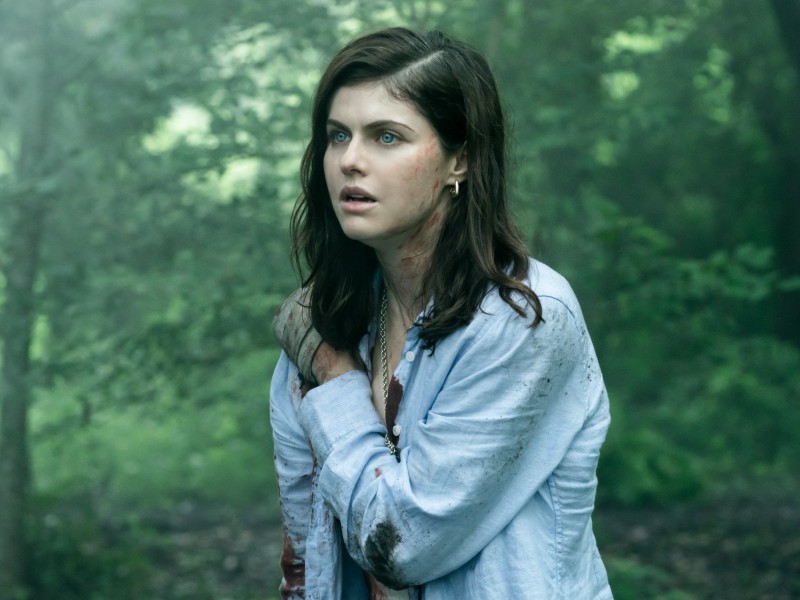
Alexandra Daddario as Dr. Rowan Fielding (Alfonso Bresciani/AMC)
While Alexandra Daddario has been captivating in other roles, namely “The White Lotus,” she seems befuddled as Rowan Fielding/Mayfair, the lead character in Rice’s “Mayfair” books, and this adaptation. 
 
In the source material, Rowan is described as being “tall and beautifully androgynous with ashen blond hair and piercing grey eyes,” but the switch-up in appearances is not what the issue is here.
 
In terms of her performance in the show, Daddario’s looks, as in any other show she’s in, could only ever be seen as a benefit. It’s her delivery in this role that’s the problem. Rowan is supposed to be strong, self-aware, and brave as she comes to learn that she’s the 13th witch in a long line of powerful women. 
 
Daddario rambles through the Spanish moss of New Orleans here, mouth gaping open, as though she’s high on goofballs. Rice did, in no way, write her witches as damsels in distress, and Daddario should dive into the books to learn more about how that should be communicated through her acting in Season 2. 
02
“She had understood before she had ever dreamed of a city such as this, where every texture, every color, leapt out at you, where every fragrance was a drug, and the air itself was something alive and breathing”
Lasher’s World (Alfonso Bresciani/AMC)
 “The Witching Hour” was the first book Rice wrote while living in New Orleans. Although she was born there, she spent a chunk of her formative and early adult years in Texas and San Francisco with her husband Stan Rice and their son Christopher before moving back to New Orleans after the death of their daughter.
 
“This is the first time I’ve actually been able to write with the sound of the rain falling on the banana trees and the smell of the river breeze coming in the window, and it’s really been wonderful,” Rice said in 1989, describing the experience of crafting the world of the Mayfairs while viewing it from outside her own home. 
 
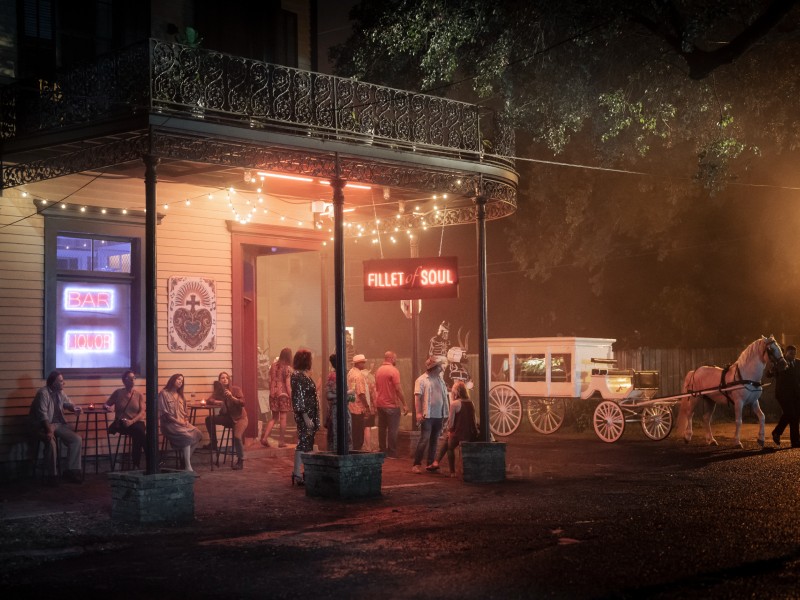
New Orleans, where I’ve personally lived for over eight years, is truly a place like no other, and it’s easy to see why so many TV shows and movies choose to film here as it can look like a variety of different places from all across the world, depending on what street the filming takes place. It’s dark and bright all at once, and can feel both anciently historic and shiplap new, from block to block. But in the first season of “Mayfair Witches,” aside from the occasional sweat stains on people’s shirts, it’s too easy forget that the show is set in New Orleans, a setting that takes center stage regardless of the quality of what’s being played out on it, except for in this case, which feels like just one in a series of missed opportunities. The show would benefit from pushing the city itself up on the call sheet. 
03
“Don’t gaze into a crystal ball for dollar bills”
Sam Evans as Patrick and Hannah Alline as Suzanne (Alfonso Bresciani/AMC)
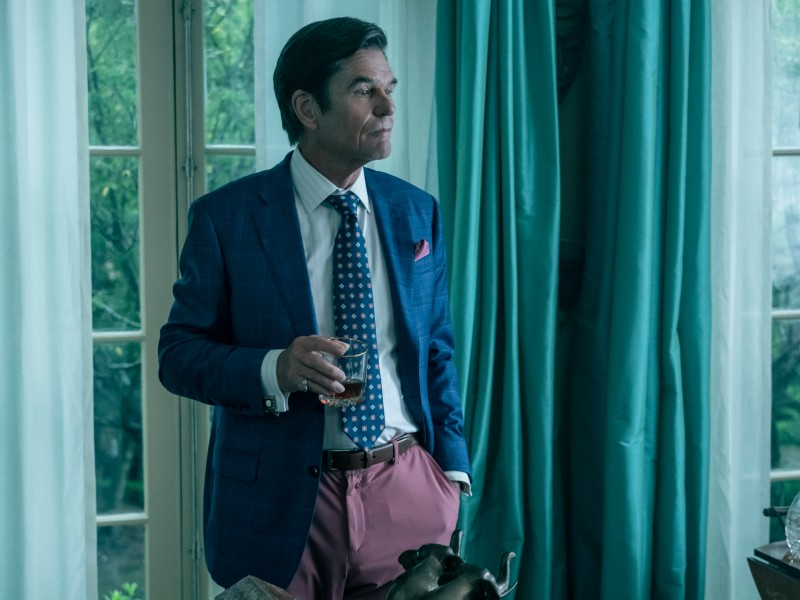
One of Anne Rice’s biggest gifts as a writer was to insert grace and a certain poetic dark mystery into everything she wrote. But for as big of a budget as AMC had in making “Mayfair Witches,” and for the caliber of its cast, that depth of expert world building did not make its way in.
 
No TV show or movie could ever compare to what it feels like to read a book by Anne Rice, which has been, and continues to be the main problem with all the adaptations of her work so far. But whereas the “Interview with the Vampire” series that came before this one at least looked the part in terms of the scenery, setting and overall feel, this first outing of “Mayfair Witches” has that soap opera/Lifetime movie cheesiness to it that is hard to describe, but you know it when you see it. Not sure what advice to give in order to fix that for the next season other than to suggest that the showrunners figure it out. 
04
“Give me a man or woman who has read a thousand books and you give me an interesting companion.”
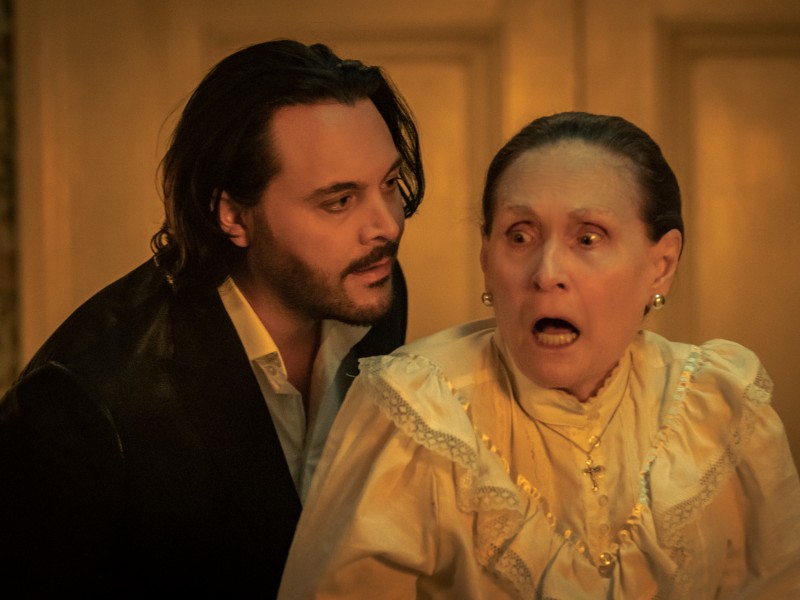
Harry Hamlin as Cortland Mayfair (Alfonso Bresciani/AMC)

During a panel with the cast of “Mayfair Witches” at Comic-Con in October 2022, Harry Hamlin, who plays Mayfair patriarch Cortland Mayfair, admitted to only making it a third of the way through “The Witching Hour,” the first book in Rice’s “Mayfair” series. 
 
In an interview with Cleveland.com in January 2023, he didn’t claim to have made any further progress there. When asked if he had knowledge of Rice’s work prior to signing on to the show, Hamlin stated, “I hadn’t, but, of course, I knew of Anne Rice and had seen ‘Interview with a Vampire.’ I listen to books now more than I read them. I did listen to the first 15 or 20 hours of this book, which is like 56 hours long.”
 
Hamlin isn’t alone there, with only Alexandra Daddario claiming to have finished that first book, but in his case it’s a glaring mistake that is visible onscreen. Hamlin delivers his lines with the same passion as someone asking for directions at the gas station and, in one scene in the first season finale, his pantomime of Cortland’s hands exhibiting early symptoms of ALS reads not like a man who’s sick, but like a man trying to flick a sticky booger off his finger.
 
Learning how to embody the character you’re playing by reading the author who created it seems like a great start towards improvement. 
05
“I like you both! And that’s better than loving you, for that’s expected, you know. But liking you, what a curious surprise”
Tongayi Chirisa as Ciprien Grieve (Alfonso Bresciani/AMC)
When I first learned that show creator Esta Spalding had made the decision of combing two different male characters from the Mayfair series into one new one, I was prepared to write this show off as a whole before I’d even watched it, and many other fans of the books expressed a similar feeling. 
 
The adaptation’s new character, Ciprien Grieve, is a creative melding of original characters Michael Curry and Aaron Lightner, which I still view as an odd and unnecessary move, but having watched the first season I’ve come away from the experience liking Tongayi Chirisa in the role.
 
But even having said that, it naturally makes me worry for what other big changes to Rice’s original storytelling will be coming. As I see it, her books were perfect, why change them at all? Owning the rights to something affords you the ability to make any changes you’d like, sure, but if they go against the creative mapping of the person who wrote what you bought, who or what could that possibly be benefitting? 
06
“He could lift me in the air, yes, lift my body, but I refused him. I turned my back on him. I told him, you go back to the hell from which you came”
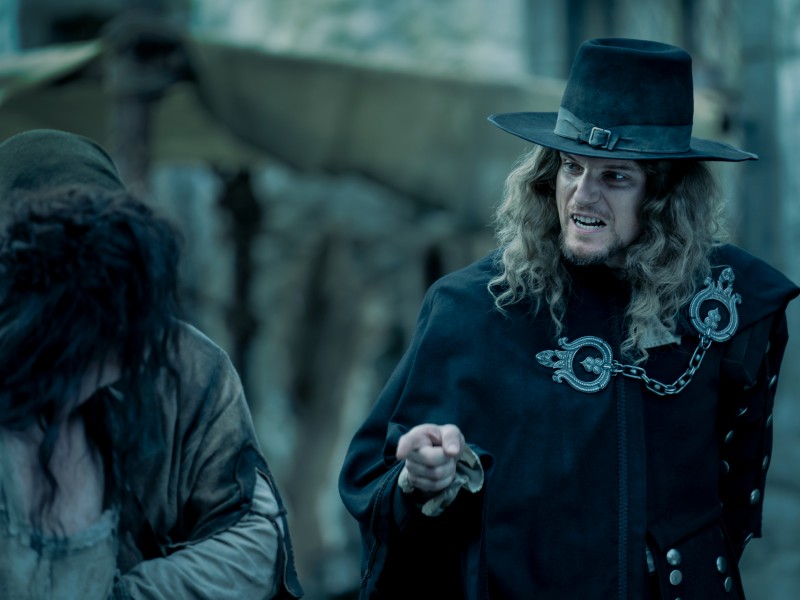
Jack Huston as Lasher and Beth Grant as Carlotta Mayfair (Alfonso Bresciani/AMC)
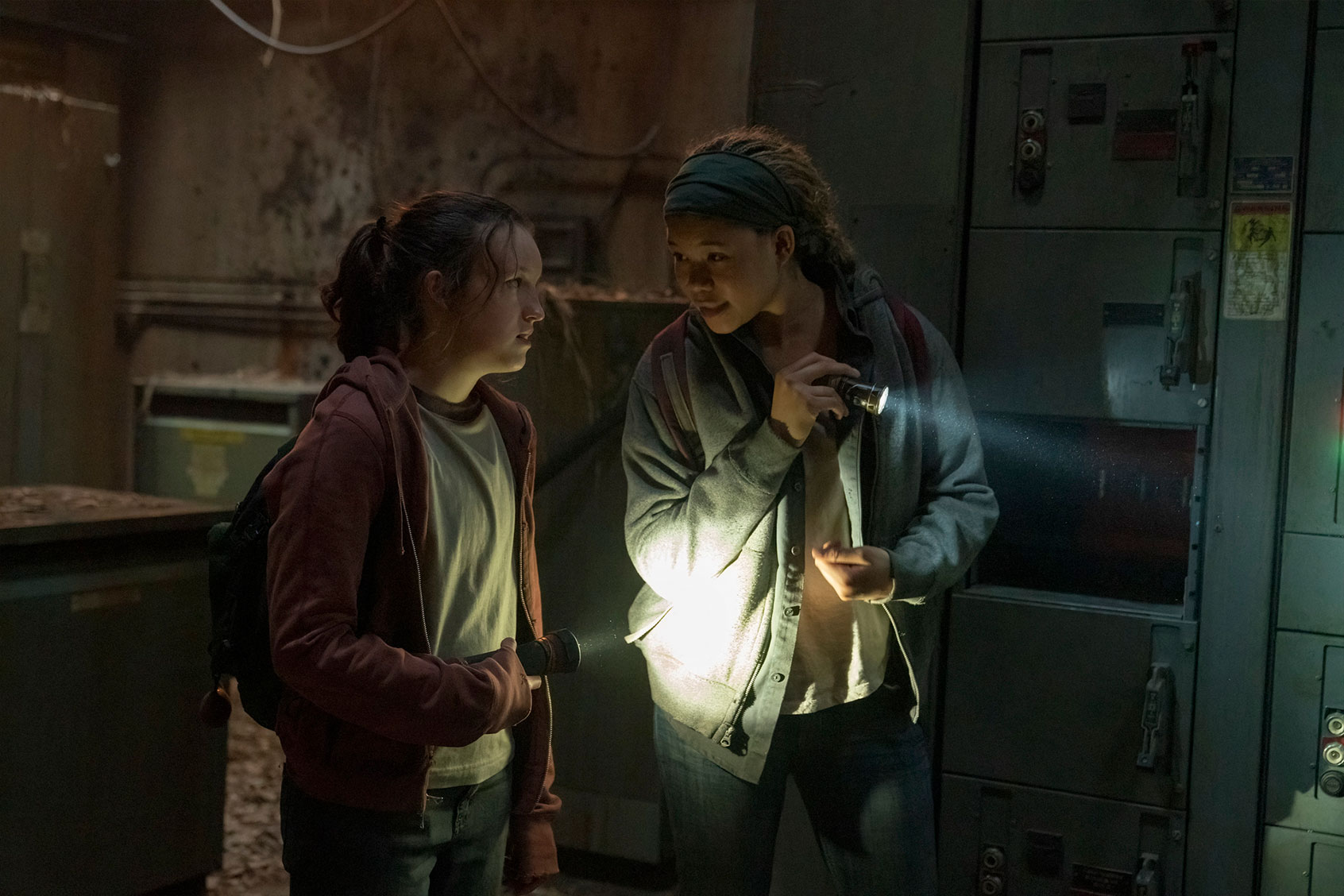
In describing my issue with the casting of Jack Huston in the role of Lasher, the manipulative and seductive entity attached to the Mayfair women for generations, I wish I could just write “no” and be done with it. It, honestly, would be me saying enough to get the point across, but I’ll elaborate. 
 
In Rice’s books, Lasher is more or less the witchy spirity version of Lestat, but in the AMC adaptation he is more akin to someone you’d see working at the Renaissance Festival. Similar to the response to the show’s combining Michael Curry and Aaron Lightner, Rice’s fans turned their noses up to Lasher not ending up as Rice intended, and barring a recast of the role, it’s unlikely we’ll see a fix for that next season. I’d suggest we could remedy this by turning away from the screen during Lasher’s scenes and reading along from the book instead, but it’s not likely that Season 2 will synch up with the book any better than the first season did, so that won’t work. 

“What is desire?”: “The Last of Us” director on the apocalyptic wonder of a trip to the mall

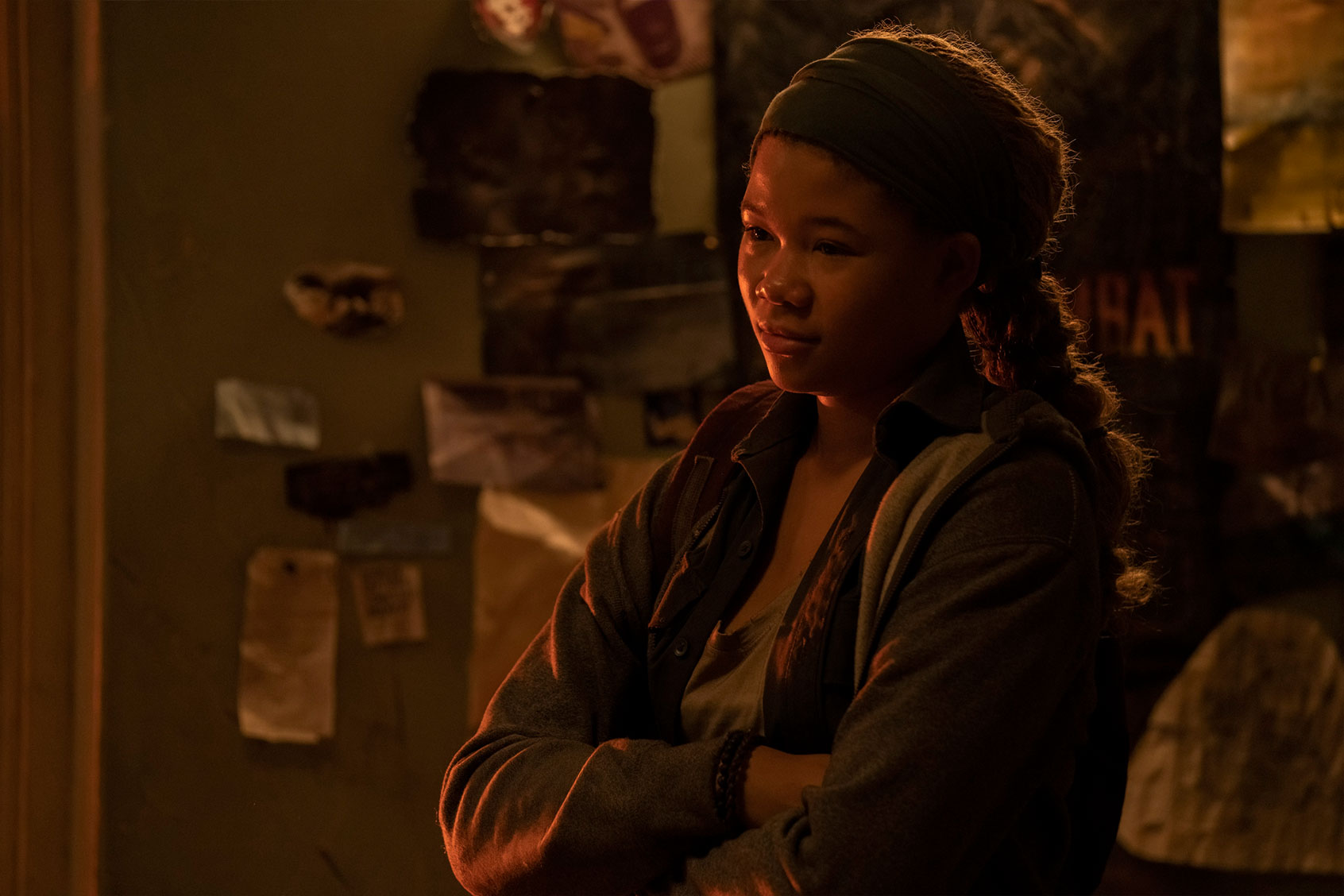
Society’s collapse would wipe out most of what we take for granted, but one substance that isn’t so easily erased is the spirit of a teenage girl. The much anticipated “Left Behind” episode of “The Last of Us” demonstrates this by providing a peek into Ellie’s past, and a fateful 24 hours buzzing with adolescent intensity that begins with her squaring off with a bully and ends with her losing her best friend Riley (Storm Reid).

Squeezed between those slices of acid and agony, and in the spirit of other iconic works involving zombies, there is a trip to the mall. Why wouldn’t there be? In the before times, the mall served as girlhood’s town square and its temple, selling all the trappings of unrealistic beauty standards alongside distracting games, scented candles and junk food. For director Liza Johnson, it’s all part of the balancing acting between horror and marvel “The Last of Us” walks through the perspective of Ellie (Bella Ramsey).

The Last of UsThe Last of Us (Liane Hentscher/HBO)Throughout her cross-country quest with her protector Joel (Pedro Pascal), Ellie encounters mundane items from the past that she ogles as if they’re precious relics. To her a plane’s wreckage isn’t a horror but proof that in the recent past, humans took to the skies as a matter of course. Imagine, then, not how she responds when Riley shows her a working escalator but the thrill that giggles through her veins.
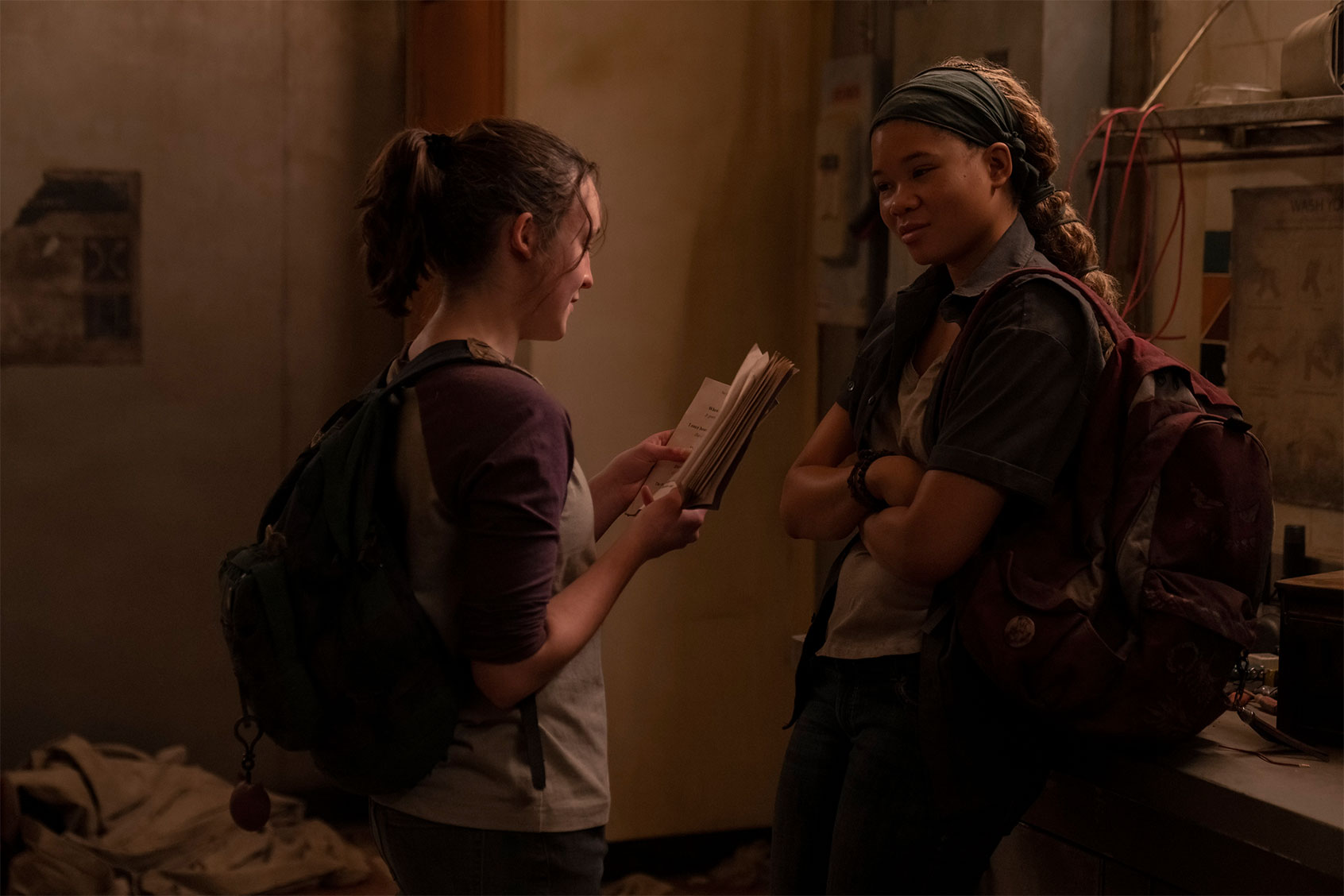
“That can only happen after the apocalypse,” Johnson told Salon in a recent video interview about the episode.

“The throughline … was to try to hold on to the spirit of discovery,” Johnson said.

“Left Behind” is a close adaptation of the 2014 expansion to series co-creator Neil Druckmann’s original video game, which introduces Ellie’s memory of Riley to inform a mission in which Ellie is forced to forage for supplies in a Colorado mall to help a gravely incapacitated Joel.

The series sticks with that impetus while expanding our view into the part of Ellie that hungers for family and true care. Before Joel came into her life, Riley was all Ellie had. From a barren house in wintry Colorado where Ellie brings her caretaker, who has been stabbed in the gut by roving raiders, we leap to the memory of the government-run school where Ellie was raised. Riley has disappeared, leaving Ellie on her own. Tougher girls think she’s an easy bullying target, which she disproves by putting one of her tormentors into the infirmary.

Late one night, Riley returns to let Ellie know she’s joined the resistance. But her other reason for coming back is to surprise Ellie with a clandestine trip through an abandoned mall located within Boston’s quarantine zone. The other denizens assume it’s crawling with infected. Riley assures Ellie it isn’t. Even better, some of its electrical power has been restored.

Malls can and do represent assorted degrees of relevance and meaning in our culture. In a post-apocalyptic world, depending on who’s doing the speculating, they are hulking, largely useless monuments to doomed decadence too sprawling to defend, as George R. Romero posits in his 1978 classic “Dawn of the Dead.” Another cult favorite, the campy 1984 flick “Night of the Comet,” imagines one as an arena for predatory adolescent debauchery.

The Last of UsThe Last of Us (Liane Hentscher/HBO)

Druckmann, who wrote the script for “Left Behind,” takes another view, seeing Ellie and Riley’s destination as one stage in a festival of what Johnson describes as the “universally uncomfortable” experience of that time in our lives.

“For me, the real attraction of the story is just the things that are anxiety-producing, but also wonderful, about discovery,” she said. “And I think it’s quite a different tone than much of the series where you experience these discoveries and hints of joy and fear around that joy . . .  that are reasons why you would want to stay alive. So, for me, that was really the throughline, which was to try to hold on to the spirit of discovery.”

The 2003 version of the mall is a fantasyland beckoning shoppers with luxuriant versions of necessities and frivolous impulse purchases. To Ellie, who steps into this capitalist Land of Oz at the other end of a rebellious run across rooftops and down dark, slimy hallways, it’s a true spectacle of electric lights and vintage magic. There’s a carousel. There’s that second edition of “No Pun Intended” that becomes one of Ellie’s most prized possessions after this excursion with Riley. 

There’s a photo booth and an arcade where Riley and Ellie battle each other on a stand-up version of Mortal Kombat II. Any gamer who was their age or close in 2003 might be hit with a pang of envy, since the two have endless quarters to feed the game’s coin slot that Riley liberated from a change machine. In a world destroyed by a fungal outbreak, their only value is to buy extra fantasy lives for two girls with limited choices.

“I don’t think that sexual desire and shopping are identical, but they’re also not unrelated,” Johnson said.

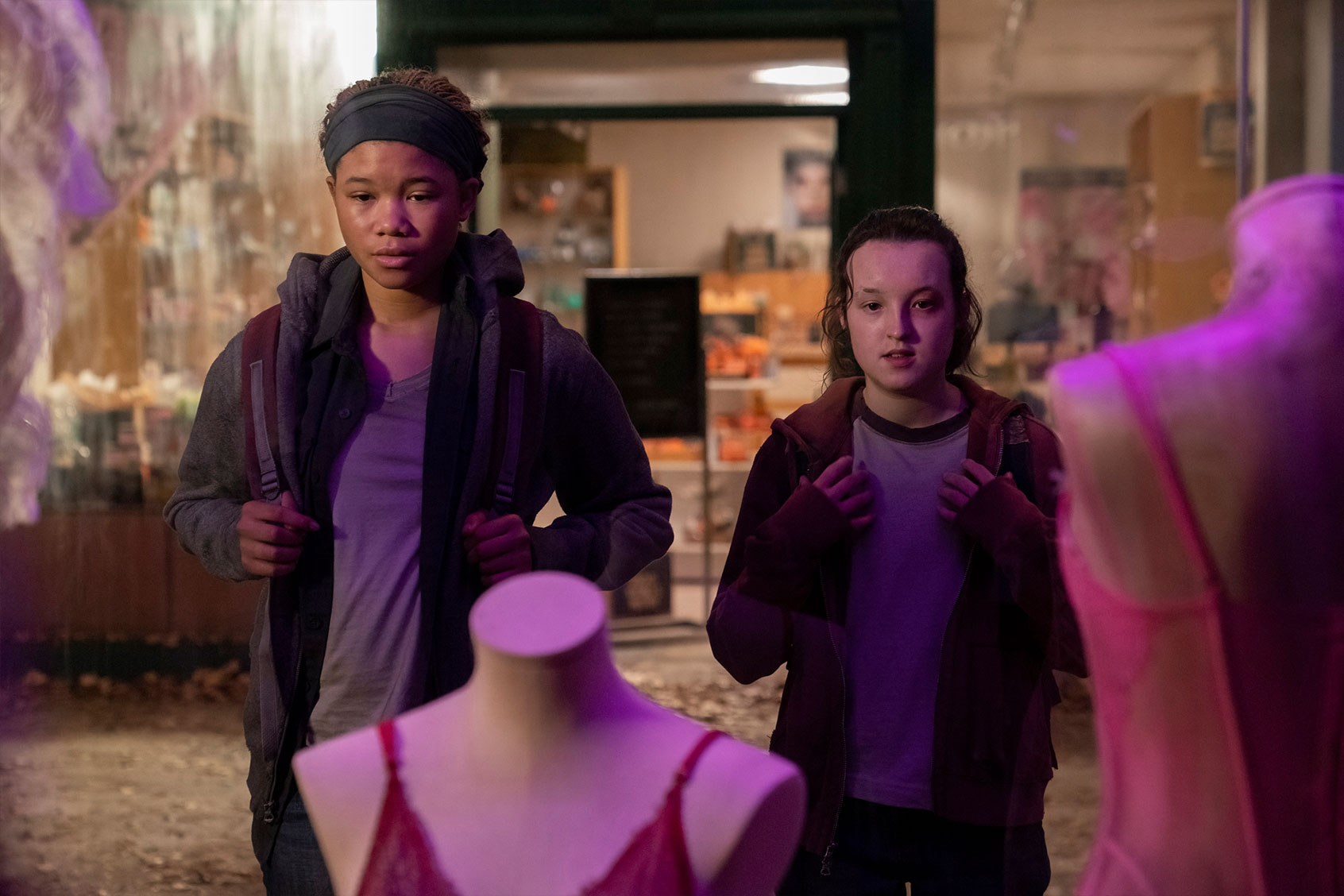
And there are boutiques, most of which have been picked clean by looters. But others, including its requisite Victoria’s Secret – of course Victoria’s Secret would survive the apocalypse – still lure with their threads or lace and ribbon, including a thong on a window display mannequin.

The Last of UsThe Last of Us (Liane Hentscher/HBO)

“In a way the Victoria’s Secret sort of speaks to, what is the meaning of the location?” Johnson said. “What is desire as you experience it with a person that you want to go on a date with, but also . . . . desire for stuff? That you want lingerie or you want other stuff you can buy in a mall, like objects and clothes. In my own mind, and sometimes with the cinematographer or with Craig, we would talk about, well, what does it mean to want something when there’s no one there to advertise it to you? What does that actually mean about your whole experience of what you want, interpersonally and sexually?”

She clarified, “Obviously I don’t think that sexual desire and shopping are identical, but they’re also not unrelated. But even in its very original form, in the game, [the story] raises those questions and I think it does it in a really elegant way that’s not too pointed. But you have to wonder what you would want if no one tried to make you want it for 20 years.”

They’re all players in the freedom Johnson evokes in juxtaposition with Ellie’s morose, rigid existence inside the FEDRA school. Ellie’s time with Riley is miraculous and dangerous, twin magnets for kids searching for a place they can be themselves by themselves, and an ideal place for their first date and their first kiss.

Johnson carefully captures their uncertain dance between the fervency of close friendship and pulsing attraction in each scene by channeling the reality of where they stand, physically and figuratively. Ramsey’s and Reid’s faces flush with a separate feeling as they share that carousel ride lit with soft golden glamour in the middle of the mall’s hollowed-out ruin.


Want a daily wrap-up of all the news and commentary Salon has to offer? Subscribe to our morning newsletter, Crash Course.


Many episodes of “The Last of Us” either reference or recreate cutscenes from the original game. But in adapting “Left Behind” Johnson, Druckmann and the actors have a fully released script that is in many ways only slightly expanded upon.

Johnson says Druckmann and co-creator Craig Mazin encouraged her and cinematographer Ksenia Sereda not to overthink replicating the experience, leaving them the liberty to foreground the wonder Ellie and Riley share despite the ever-present threat of an infected monster finding them.  

The human element makes all the difference, impressive as the digital graphics of the playable “Left Behind” are. There’s simply no replicating what Johnson refers to as the “fugitive traces of what’s happening in their relationship on their face and their bodies.” 

The Last of UsThe Last of Us (Liane Hentscher/HBO)

Johnson, who directed the first season finale of “The Sex Lives of College Girls” along with episodes of “Physical” and “Dead to Me,” says she didn’t have to press Reid or Ramsey on anything related to how their location amplifies the whirl of profound feelings they have for each other. The actors accurately and honestly play out that sarcastic response parents use to dismiss their teen’s tantrums, that at this age every moment feels like the world is ending. For these two it has, and it is.

All enchantments end, and this one, lamentably, ends with Ellie and Riley having their private dance party to Etta James’ version of “I Got You Babe” interrupted by an attacking infected who dooms them both. And in one of the many small details Druckmann changes between the 2014 game and the series, instead of Riley rallying Ellie to fight for every remaining second together before the Cordyceps overtakes their brains, she quotes “Thelma & Louise,” perhaps inadvertently. “Let’s keep going,” Riley says as she and Ellie stare over the edge of their cliff, and in that second, they’re heroes. They’re also too young to deal with all of this.

Johnson couldn’t confirm whether that change was intentional, although she imagines it was. She is watching the rest of the series with a director’s eye, taking in its balance of survival horror and Ellie’s veneration of all the novelty our forgotten past holds. And though “Left Behind” ends in tragedy, what strikes her more fiercely, she says, is the way Ellie’s various firsts are reminiscent of seeing Greta Garbo drink champagne for the first time. “And she’s like, is this good? Is this good? I’m not sure. Oh, it is. Oh, it is.”

New episodes of “The Last of Us” air 9 p.m. Sundays on HBO.

Professional “owl terrorists” scare off barred owls with shotguns in the name of conservation

I could hardly believe my luck. After coming down in sheets for most of the day, the rain stopped and the clouds lifted just in time to create the landscape of my dreams. The late-September understory in Washington’s Okanagan-Wenatchee National Forest was a pixilated yellow and rust. The conifers were refreshed after the day’s soaking, raindrops still clinging to hemlock needles and wolf lichen. It was cold enough for the peaks to wear an early mantle of snow. Their crests glowed tangerine in the evening light. The kaleidoscope on display sucked me in completely. But I had other things to focus on. I pulled my eyes back to Highway 903 just in time to see the tail lights of the U.S. Geological Survey truck ahead of me turn off the pavement and head into the forest.

Hunt is one of the best in the business at shooting barred owls out of trees with a shotgun.

When I stopped on the side of the dirt road ten minutes later, Melissa Hunt was already out of her truck and setting up the equipment. “Barred owls like drainages,” Hunt said, nodding in the direction of the gully that fell away from the road a few feet from where we parked. In the fading light, she placed a speaker loaded with barred owl calls on the roof of her rig. Hunt entered the time and weather conditions on her data sheet and activated her hand-held transmitter to start the fifteen-minute cycle. The speaker began shrieking a sequence of calls designed to make nearby owls think there was an intruder in their territory. Hoots the biologists named “pair duet,” “eight note,” and “banshee” pierced the thick woods. Hunt occasionally adjusted the direction of the speaker to cover the most ground. Our job for the night was to document which of the different hexagons marked on Hunt’s GPS contained barred owls.

“We will be in areas new to me tonight,” said Hunt. “For most of this study, I was a remover, not a surveyor.”

I tried hard not to blink.

“Remover” was an accurate term for what Hunt did. But it was a euphemism. Hunt is one of the best in the business at shooting barred owls out of trees with a shotgun. The twenty-eight-year-old, slightly-built wildlife management specialist from Belmont, New York, had spent five winters tracking barred owls and systematically blasting them from the canopy with a twelve-gauge. The goal was to reduce the barred owl population enough to relieve the pressure on spotted owls. It was a divisive study generating high emotions on all sides. But Hunt loved the work. “I’m kinda sad the removal part is over,” she said.

I wanted to meet Hunt because her work prompts a difficult question hovering over a range of wildlife recoveries. How much manipulation of a system is permissible to help a species return? I assumed wildlife must survive on their own to truly count as wild. But we live in an age when many cannot. In forest environments on both sides of the Atlantic, I found owls, bears, wildcats, and vultures all highly dependent on an array of interventions. This conflicted with a strong intuition I held about the need for wildlife to live independently of us. But I was starting to wonder if the intuition was wrong. And the owl prompting Hunt to wield her shotgun was charismatic enough that it might just help change my mind.

The northern spotted owl is again in trouble. The biggest threat to their survival this time is not a logger with a chainsaw. It is a bigger, more aggressive owl.

The spotted owl is one of thirteen hundred species listed under the U.S. Endangered Species Act. Its five subspecies range from British Columbia to Central Mexico. Northern spotted owls (Strix occidentalis caurina) are chestnut-colored with a generous spackling of white spots. The medium-sized predator has a wingspan up to four feet. Spotted owls have the sharply hooked beak typical of owls and dark eyes set symmetrically on a prominent facial disk. They live mainly in coastal forests and are highly dependent on the cavities and broken tops of old-growth trees for successful nesting. They do most of their eating at night by perching on a low branch and using their sharp eyesight to detect flying squirrels, voles, and woodrats. The owl swoops silently from its vantage point and grabs the prey in its talons, a strategy known as “perch and pounce.” Northern spotted owls hate any disturbance of their forest home, something they are finding increasingly hard to avoid.

In the 1990s, the dwindling owl population was the focus of a heated debate about how to manage the northwest’s remaining old growth. Spotted owls needed the giant spruce and fir to nest. Loggers wanted the trees to prop up a struggling industry. After a testy summit attended by President Bill Clinton and Vice President Al Gore, a new Forest Service policy reduced logging in the region by 80 percent. Logging companies packed their bags and moved to the southeast. It left a bitter taste in many mouths and turned the spotted owl into a hero or villain, depending on where on the environmental spectrum you stood.

Two decades later, despite the reduction in logging, the northern spotted owl is again in trouble. The biggest threat to their survival this time is not a logger with a chainsaw. It is a bigger, more aggressive owl from America’s East Coast that has moved into their territory. After the political battles of the 1990s, this turn of events has been a cruel blow to all involved, not least the spotted owls themselves. Biologists have wondered whether there is anything they can do about it. Hunt is at the epicenter of a highly controversial experiment in wildlife management to find out.

Whatever you thought about the experiment, Hunt had the skills for the job. Her dad taught her to shoot when she was seven. He instilled in her how to appreciate the woods as a hunter and an outdoorswoman. There was no question she was going to study wildlife in college. Hunt graduated from the State University of New York at Cobleskill with a wildlife management degree and was hired by a contractor who specialized in the control of problem animals. She was assigned four regional airports in New York and New Jersey together with a nearby city landfill. She kept gulls, deer, foxes, and woodchucks off the runways. She caught snowy owls at Buffalo-Niagara International Airport and released them a safe distance away. She used bangers and traps to help out with the landfill’s crow problem.


Want more conservation and science stories in your inbox? Subscribe to Salon’s weekly newsletter The Vulgar Scientist.


“My time was filled with lasers, paintballs, and pyrotechnics,” she told me with a smidgeon of glee. She also tried using drones to scare persistent offenders away. The wildlife were smart and quickly learned when she was bluffing. If all else failed, she stepped in with “lethal techniques” to persuade the remaining animals they needed to take her seriously.

Taking her skills to the owl project was a natural next step. She was the first female remover and the youngest on the team. Snowshoeing solo in winter through the northern Washington forest is not for the faint of heart. But Hunt is no-nonsense and is not intimidated by the woods. She had killed her first bull elk from eight yards with a bow a couple of weeks before we met and spent nineteen hours packing it out of the Idaho backcountry with her boyfriend. “I like being outside,” she said with a shrug. 

 The terms “owl-Qaeda” and “owl terrorist” had been thrown her way, and not always in jest. Shooting owls was controversial. “You never know who is going to get upset,” Hunt said.

The removal part of the experiment had just finished, and now the researchers were making their way through the control areas to see how many owls lived in untreated parts of the forest. For Hunt and her coworkers, this involved night after night navigating rough forest roads and trails to survey each hexagon marked on the map. She spent long evenings with only the trees and wildlife for company. Hunt had seen tons of deer and elk, a bear or two, and even a mountain beaver—a critter that resembles a marmot more than it does a beaver. One night, a cougar ran alongside her truck for several seconds before bolting back into the woods.

She knew the project was contentious. When people asked, she usually told them she worked in wildlife research. Her friends understood the need for the study. But the terms “owl-Qaeda” and “owl terrorist” had been thrown her way and not always in jest. Shooting owls was controversial. “You never know who is going to get upset,” she said.

When I asked her how she felt about the barred owls she was removing, she replied, “I like them. . . . I just don’t like them here.” She had formed an attachment to the charismatic raptor. “I have a strong appreciation for barred owls and have spent a lot of time with them. They command a lot of respect. They are no pushovers.”

One particular owl, she told me, had avoided her assiduously. “He went through three years of me removing every mate he had.” She saw him once in the first year, but after that he never came close enough to get a shot. She felt for him. But the ecologist in Hunt saw no option. Spotted owls were smaller and more timid and needed three times the home range of barred owls. The barred owls harassed them and stole the best nesting sites. On rare occasions, they killed them. The northern spotted owl population was plummeting. One owl biologist described the species as “circling the drain.” Barred owls, in stark contrast, were exploding. Hunt felt an obligation to act. “It’s a tough pill for many to swallow,” she conceded. But the alternative was to give up on spotted owls, something Hunt dismissed as the easy way out. Every time she pulled the trigger, she felt remorse. But her commitment to the spotted owl’s survival kept her going.

“It’s nothing that’s enjoyable to anyone — going out and shooting owls. That’s for sure. But from what I have seen, they have major ecosystem impacts.”

It was a difficult management dilemma, one that brought the human role in the survival of wild animals into focus. A vulnerable species needed a hand if it were to stand any chance of recovering from a precarious position. But the helping hand was not benign. It was wrapped around the stock of a well-oiled firearm.

I reached the lead investigator in the study, Dave Wiens, by phone in Oregon to talk through the ethics. He shared Hunt’s dedication to the cause.

“It’s nothing that’s enjoyable to anyone — going out and shooting owls. That’s for sure. But from what I have seen, they have major ecosystem impacts.” Barred owls may be cute, but they are ruinous in the wrong environment. “They are apex predators,” said Wiens, “and they are new to the system.” As formidable opportunists, Wiens told me, they had tapped into a niche that had not been fully tapped before. “They exploit aquatic prey species: amphibians, fish, snails. There are not many nocturnal predators that have exploited that particular environment. Many of these species are naive to nocturnal predation all together. And this isn’t to mention the prey species they really focus upon—like the small mammals and flying squirrels that are also important to native predators in the Pacific Northwest. They eat basically anything that moves in the forest within a particular size range.” And barred owls were booming. Really booming.

Some stretches of old-growth forest were coated with a feathered blanket of barred owls.

The picture Wiens was painting didn’t match my basic understanding of owls. Owls have a celebrated place in children’s stories and folklore. They sit patiently on snags and hoot in front of a full moon. They revolve their heads to see what is going on behind them, while wearing monocles and dispensing wisdom. They usually perch alone. They don’t invade old growth and certainly don’t wreak havoc on forest ecology. I had never thought of them as ruthless predators with devastating effects on native species.

The reality was something different. Barred owls had spread like a blight across the Pacific Northwest over the last half century. There were now more than 3.5 million of them across the country, making them one of the most numerous U.S. owls. Some stretches of old-growth forest were coated with a feathered blanket of barred owls.

“In the Oregon Coast Range, we see incredible densities of birds,” Wiens said. “They are so thick. No matter where you go on the Coast Range, if you are in the forest, you are going to be standing in barred owl territory.” At this density, they become a devastating aerial army. “During nesting season, they will have family groups of five or six birds per territory, and you have thousands and thousands of these territories spread across the landscape. It’s not hard to envision the impacts they must be having by clearing out the forest of prey species. It triggers in my mind a whole cascade as they deplete the resources.” Listening to Wiens turned my primitive understanding of the owl dilemma on its head. The need to manage barred owls had very little to do with the political capital invested in the spotted owl. It was because barred owls were wreaking havoc on the food chain. This proliferating species needed serious management if spotted owls were to survive.

The forests around Cle Elum where Hunt operated did not have the barred owl density of Oregon’s Coast Range. “We have to work harder for our owls,” she said with a dash of pride. After five stations without any sign, I wondered if today’s rain meant we were going to get skunked. Owls don’t fly much when it is wet. They don’t like the noise made by their damp feathers. At the sixth station, just when Hunt was getting to the crux of the story about her recent elk hunt, the recording on the speaker was suddenly interrupted by a more urgent call coming from somewhere to my left. Barred owl! Hunt switched on her powerful flashlight and flicked it around the nearby trees. We craned our necks upward. She stopped it on a snag right next to the road.

“There she is,” said Hunt.

I followed the beam to the tree and saw . . . absolutely nothing. The gray wood of the fifty-foot trunk came to an end with a couple of short stobs and what looked like a rounded husk of bark.

“Where?”

“Right in the beam. Plain as day. You can see the shine in her eyes.”

More than once, a female had struck Hunt’s caller with its talons. Other surveyors reported hats knocked off their heads by angry owls protecting their territory.

I still saw nothing. I always thought of my eyesight as decent, and the longer I looked, the more embarrassed I started to feel. Then the husk leant to one side for two seconds before moving back upright. I grabbed my binoculars and scanned them up the trunk of the tree until I reached the top. The husk had transformed into an owl, its chest feathers dappled with streaks of gray. Through the binoculars I could see a pair of black eyes glistening in the light.

“That would be a near perfect shot,” said Hunt. “Twenty meters or less. No branches blocking the way.”

It was a thrill to see the owl up close. As the recorded calls kept playing from the top of the truck, the owl leaned from one side to the other, calling back, trying to work out what was going on. She wanted to know who to challenge. If there was a pair, Hunt told me, the female almost always came in first. (Hunt muttered something about “wimpy males.”) The females were noticeably bigger than the males and, as with most raptors, bolder and more aggressive. Because owls fly so quietly, the females often deliberately smack their wings into a branch when they land — Hunt called it a limb crash — to broadcast to the intruder that trouble had arrived. More than once, a female had struck Hunt’s caller with its talons. Other surveyors reported hats knocked off their heads by angry owls protecting their territory. These owls can be ornery. There is even a case in North Carolina where some experts are convinced a barred owl caused the death of a woman found in a pool of blood with frightening skull lacerations.

The trick when planning to shoot them, Hunt told me, was to keep the owls interested until they sat on a tree long enough for her to get a good shot. This meant varying the calls on the speaker, something she could do with her hand-held transmitter. The owls moved around trying to get a better view of what was going on. There was a call known as the “goodbye hoot” that meant an owl had seen enough and was about to leave. If possible, when a pair was involved, Hunt tried to shoot the male first. The female would then swoop in close, “blind with rage,” as Hunt put it, offering her a chance to get the pair. If she shot the female first, the male tended to keep its distance. I took Hunt’s word for it. She told me she had removed over 350 owls in the course of her work.

Three stations later, the dynamic played out exactly as Hunt had described. With the caller shrieking on top of the truck, a pair of owls came in to investigate the potential intruder, with the female leading the way. The female’s calling was noticeably more aggressive. She kept moving from tree to tree in the glade where we stood. Her calls became louder and more urgent until she sounded like an enraged chimpanzee. The male, smaller and with a more muffled voice, followed behind at a distance. As the calls continued, the female became increasingly incensed. But even after ten minutes, neither owl had come very close. Removing owls was not an easy business.

Weeks after returning home, I still wondered about the ethics of shooting something as charismatic as an owl. It seemed like an extreme form of wildlife management. The previous summer at a Forest Service research station in Oregon’s Willamette National Forest, I had been on a guided walk with a veteran of eight years of fieldwork with northern spotted owls. Tim Fox had explained how he located spotted owl nesting sites. He spent hours stumbling across damp logs with a bucket full of white mice in his hand. The mice were the key to getting the owls to reveal their nests.

Fox had taught himself a pitch-perfect spotted owl call, which he sounded out into the forest as he walked through suspected nesting territory. If he heard an owl, he would hurry in the direction of the call. Spotted owls are hard to find, but when you do, they are not shy. Fox would often arrive to find an owl looking curiously at him from a nearby branch only ten or fifteen feet away.

The next part of the game was to set a mouse on the forest floor or on top of a log. The spotted owl, always looking for easy prey, would swoop down and grab the mouse in its talons before flying back in the direction of its nest. Fox now needed the nimbleness of a cat. He hurried through the undergrowth, keeping his eyes on the owl as it flew high into the canopy and disappeared into a hole or a crack in a giant Douglas fir or cedar. Fox would mark the spot on his GPS as he caught his breath. Sometimes, he would put another mouse at the foot of the nest tree just to be sure he had the right one. The spotted owl would step out of its nest and drop vertically, feet first, down the front of a 120-foot tree, plunging like a stone. As it neared the ground, it would puff out a few feathers to slow its descent, before landing right on top of the mouse. The owl wasn’t flying. It was parachuting.

Fox had given several years of his life to the spotted owl. He clearly loved them. So when we asked him whether he agreed with killing barred owls to save the spotteds, it was a surprise to hear him say no. It was too high a level of intervention, he said. He thought it unlikely to work. And he wasn’t too keen on the idea of killing a bird for doing what it was hardwired to do. Barred owls were simply exploiting a new niche. Despite all his work for spotted owls, Fox was ready to accept their fate at the hands of the barred owl.

A former employee at Montana’s Owl Research Institute I spoke with was also dubious about lethal management. “I don’t necessarily buy the argument that barred owls are not supposed to be there,” he said. “I certainly get the sentiment to aid the recovery of the spotted owl, but I tend to err on letting things play out more naturally than that. It doesn’t seem that removing one species to save another is an effective long-term solution.” Barred owls and spotted owls, he pointed out, are also closely related. When the first few barred owls arrive in spotted owl territory, they tend to hybridize with the spotteds to create “sparred owls.” The hybridization usually stops as more barred owls arrive in the territory. If the owls are that similar, how much does it matter if one replaces the other?

The two specialists may have had a point. In an ideal world, wild animals live wild. But here was a case where a heavy dose of management appeared necessary to keep a vulnerable species alive. The spotted owl was now, in today’s lingo, “conservation-reliant.” It was clear it needed help. But did this justify taking a shotgun to the barred owls? If so, wouldn’t this sort of management threaten to take the wild out of the wildlife?

The ethicist in me took a step back to consider how the case stacked up. There are several conditions to meet if the argument for shooting one owl to save another is to hold water. First, you needed to be extremely confident the villainous owl is responsible for the decline. The experts at the Owl Research Center had warned me owl populations are notoriously difficult to track. Owls are mostly nocturnal and often live in hard-to-reach places. Specialist owls such as northern spotted owls or snowy owls can fluctuate wildly alongside booms and busts in their prey species. Getting a good count requires consistent and accurate fieldwork over many seasons.

When I put the counting question to Dave Wiens, he acknowledged there were challenges but said the barred owl case was clear. “We are extremely confident about their growth rate as a species. The range expansion is a huge, powerful event on a continental scale, expanding from eastern North America, across the Great Plains, into western North America. We are able to monitor their populations there very well.” Ironically, many of the most convincing studies about barred owl numbers come from long-term spotted owl studies. The spotted owl is one of the most well-researched birds on the planet. Biologists looking for spotted owls always made a note when they encountered a barred owl.

“When first detected in the mid-sixties to mid-seventies in the Pacific Northwest,” Wiens said, “barred owls remained at low populations. As these long-term spotted owl studies continued, they really saw an increase in the number of barred owls. They had an exponential growth rate in the Pacific Northwest.” The bigger, feistier barred owls chased away the spotteds. The rise and fall of the two populations overlap perfectly. So the first condition about the barred owl’s responsibility for the problem seemed satisfied.

The next condition for the ethics to work is to have confidence the barred owls arrived in the Pacific Northwest as a result of human influence. If they made their own way, it would be hard to justify intervening in the natural expansion of a species. It would be nature at work. Barred owls were originally confined to the East Coast because the Great Plains formed a barrier to their westward movement. There weren’t enough trees to provide nesting sites for the several generations of owls it would take to expand across the country.

“All the evidence shows they are here because of human causes. They are just doing what they have always done. It’s too bad for the spotted owl they are so good at what they do.”

There are two candidate explanations for how barred owls overcame this barrier. The first is that natural swings in climate during the Pleistocene moved the Canadian forests far enough south for barred owls to do an end run around the Great Plains. A northern arc could have given them the trees they needed to move cross-country before dropping them back into Washington and Idaho after they passed the Rockies.

The problem with this explanation, says Wiens, is that the two species had a couple of million years to take advantage of fluctuations in forest cover throughout the Pleistocene. Despite the available windows, they didn’t do it. “We know that these two species have been separate for a long, long time,” Wiens said. “If it was climate change, barred owls would have had the opportunity to move earlier.”

The alternative explanation for their migration is that human settlement of the Great Plains created the conditions for barred owls to hopscotch their way across the country. “As the settlers were moving across Great Plains,” Wiens said, “they were planting tree belts.” They also trapped beavers along rivers and creeks. With fewer beavers, streamside willows, cottonwoods, and other vegetation grew thick enough to support an owl migration. Fire suppression also allowed trees to grow taller. The barred owls could ride the settlers’ coat tails across the Great Plains. “It is a pretty big coincidence that the migration happened at time of settlement,” said Wiens. “You look at the range expansion and when it occurred, and it is pretty telling.”

The science was not airtight, but it seemed to favor Wiens’s account. The human influence was part of what made Hunt, Wiens’s star remover, feel such remorse during her work. “All the evidence shows they are here because of human causes. It’s more our fault than theirs,” she told me. “They are just doing what they have always done. It’s too bad for the spotted owl they are so good at what they do.”

So we know barred owls are booming and causing a decline in spotted owls. It is also highly likely humans are responsible for their arrival. The remaining piece of the puzzle is whether killing them can actually solve the problem. This is what Wiens’s study was designed to find out.

In the Wenatchee-Okanagan Forest, Hunt had no doubt. “It works,” she told me without hesitation. She had seen barred owl numbers decline in her treatment areas. The evidence from her perspective was clear. Hunt’s biggest concern was that five years of hard work would be undone if a long-term management policy was not implemented soon. She knew firsthand the barred owls came back immediately if you stopped shooting them. “It will be like the removals never happened,” she said.

Both Wiens and Hunt had come to the same reluctant conclusion. It was ethically justified to kill one owl to save another.

Wiens’s report, filed six months after the experiment finished, supports Hunt’s anecdotal account. The report concluded that shooting invasive barred owls “had a strong, positive effect on survival of native spotted owls.” They found spotted owls stabilizing where there was barred owl removal and continuing to decline in control areas where they did nothing. In the areas Hunt staked out in Washington, barred owl populations at one point in the study had declined by 60 percent. Wiens told me the next step was to brainstorm a long-term policy for barred owl management with the U.S. Fish and Wildlife Service.

“Are there any options that don’t involve killing?” I asked.

“There’s a few,” Wiens replied without enthusiasm. You could shoot birds with a drug to sterilize them. But that’s even harder than shooting them with a twelve gauge. Some people talk about oiling barred owl eggs. “But to do that, you have to find the nest, which is exceedingly difficult,” Wiens said. “Habitat management is also an option,” he continued. “We have found subtle differences in how spotted owls and barred owls use the forest. One of the more interesting things is the vertical structure. Spotted owls tend to use the canopy layer and focus on canopy prey species like flying squirrels. Barred owls are more focused on the lower layers of the forest. Barred owls don’t like areas with really dense understory. Spotted owls are more indifferent because they spend more of their time in the canopy.” If you kept the understory thick, you could give spotted owls an advantage. But Wiens was also doubtful whether this strategy was practical. It would mean an awful lot of habitat management to marginally improve the odds. And the odds weren’t good. “In reality,” Wiens said, “maybe that would work if their population sizes were more equal, but now barred owls simply swamp out spotted owls.”

Wiens had obviously thought through all the angles. Both he and Hunt had come to the same reluctant conclusion. It was ethically justified to kill one owl to save another. But it still didn’t sound like fun leading such a controversial study. I asked Wiens how it felt to be the flagbearer for this work. “Certainly, there are a lot of people who don’t hesitate to tell me what I’m doing is wrong. This includes scientists who say any kind of killing is not going to be the answer to anything,” he said. After a pause, Wiens explained how he rationalized taking up the role of assassin in an ecosystem.

“Being an ecologist and studying predator populations for most of my career, in nature things work a little differently. Predation and apex predators have a large control over what’s going on in these natural communities. What I see is humans using predation within a management context to maintain biodiversity. What we have is quite a powerful tool. The effects are immediate.” Speed is important because northern spotted owls don’t have much time. The situation is becoming desperate. The government in British Columbia has started to discuss capturing the province’s last few northern spotted owls to breed them in captivity.

So humans, I put to him, study the situation and try to make a difference by behaving as if they were part of the ecological system. “It’s not quite like predators,” Wiens conceded. “We are not eating any barred owls. But the effects we are attempting to achieve are quite similar. Humans play that role with all kinds of other species. It’s just not in our face like shooting barred owls is.” When I raised this with Hunt, she pointed out the U.S. Fish and Wildlife Service conducted lethal management all the time. They have been killing cormorants for years to protect struggling salmon. Arctic foxes are culled for the benefit of a rare duck known as a Stellar’s eider. Oregon, Washington, and Idaho have all received permits to kill sea lions preying on salmon congregating beneath the region’s dams.

The obvious flaw in Wiens’s analogy is that nature’s predators don’t have shotguns and tend not to kill things they have no plans to eat. Even if the analogy was ecologically grounded, it risked making the person who offered it sound a bit cold-hearted. But you don’t have to talk to Wiens or Hunt for very long to realize this clearly isn’t the case. “I really want to emphasize that I do truly grapple with the ethical side,” Wiens said. “I think there are a lot of arguments that stepping back and putting your hands up and saying, ‘Well, we can’t do anything about this’ has ethical consequences that in my mind could be a lot bigger.” Doing nothing and watching spotted owls disappear could be at least as callous. Emma Marris, author of Wild Souls: Freedom and Flourishing in the Non-Human World and a well-known environmental science writer who wrestles with these dilemmas, has warned that doing nothing while watching a species slide to extinction leaves “blood on our hands.” This was blood that Melissa Hunt and Dave Wiens, by killing barred owls, were both trying to avoid.

The conundrum in the Okanagan-Wenatchee Forest is becoming more and more common in recovery contexts. Human activities are implicated in the decline of so many species. Given this culpability, isn’t there a strong obligation to help them make a return? And doesn’t this obligation sometimes involve interventions that seem highly unnatural? Perhaps there was a time when leaving animals alone was their best option. Perhaps that time may return. But in the interim, for some species, it might be necessary to wade into the system to help them survive.

I checked in with Melissa Hunt a few months later when her field season had wrapped up for the last time. She was getting ready to interview with Idaho Fish and Game for a more permanent job. She missed the owl project. She worried again about the time it was taking to reach a decision on how to manage the barred owls. All her hard work would be erased if nothing else was done. The barred owls were still reproducing and pouring into spotted owl territory.

I asked if she had any reflections on the ethical dilemma she had lived every night for five years now that she had a few months’ distance from it. She looked up and spoke as earnestly as I had heard her speak. “This isn’t something we are doing just because we want to,” she said. “It is something we are doing because all the data is pointing to the fact these barred owls are a huge problem.” 

Hunt knew how the project looked from the outside. “It is important for people to take their emotions out of it and look at the data,” she said, glancing down to the ground as she put her case together. I might have been overinterpreting, but I thought I detected a moment of hesitation. Science and her empathy for one of the forest’s most successful inhabitants collided for a moment. But then science won out, and she looked back up.

“If we want spotted owls, it is something that is going to have to take place. It’s not pretty . . . but one of those necessary things.”


Excerpted from “Tenacious Beasts: Wildlife Recoveries That Change How We Think About Animals by Christopher J. Preston. Reprinted with permission from The MIT Press. Copyright 2023.

A chef-approved tip for better meatballs, inspired by a soup dumpling technique

Thanks to Los Angeles-based chef David Kuo, a brilliant new hack for making meatballs has come to our attention: Enter, stock jelly.

Taking inspiration from classic xiao long bao (or soup dumpling) techniques, Chef Kuo incorporates coagulated stock into his meatball mixture so that—when cooked—warm, umami-rich liquid flows through each ball.

The technique

The process is simple. Begin by dissolving gelatin mix into heated store-bought stock (about 130 to 180°F) or by making a bone-heavy, gelatinous homemade stock. Next, chill the stock in the refrigerator until it becomes fully congealed. Finally, remove the stock jelly from the refrigerator and push it through a fine mesh sieve or cheesecloth so that it forms uniform, grain-sized pieces, then combine with your raw meatball mixture. As the meatballs cook, either in the oven or on the stove, the embedded pieces of jelly will transform into the moisture meatballs lack.

How it works 

The crux of this technique lies in creating stock jelly, a process that relies on your stock having ample collagen, which is what allows it to firm up. Since most store-bought stocks are relatively low in collagen, using an inexpensive gelatin packet to increase collagen makes this technique convenient enough that it could actually become part of anyone’s meatball making process. Of course, if you have homemade, collagen-rich stock on hand—or enough bones in your refrigerator to make some—you absolutely can forgo the gelatin mix and enjoy even richer flavored-liquid coursing through your meatballs.

When to use stock jelly

Stock jelly works for any meatball situation you may find yourself in. As Chef Kuo established, Italian American style meatballs work great. But incorporating beef stock into Swedish meatballs or these gochujang meatballs would also make sense. If you’re more interested in applying this to large-format meat, this technique is also perfect for your standard meatloaf.

As Giada departs The Food Network, an appreciation of the channel she helped define

Growing up, I was one of what I'm assuming is an infinitesimal amount of middle school boys who were eager for the end of the school day — not to get to sports practice, but to get into the kitchen. 

I would make crab legs and roasted red pepper sauce and chicken dishes galore. I remember once, when my brother was hosting an exchange student and the student's guardian came to the house and saw me cooking, she sheepishly asked my mother "… you make your son do the cooking?"

Little did she know that I did, and obviously still do, find a deep, personal satisfaction with all things chopping, sauteing, saucing, cooking and roasting. This passion was cultivated early on by the Food Network, and Giada De Laurentiis was one of the particular chef-personalities who resonated with me. Her "Everyday Italian" beautifully reflected the Italian-American cuisine with which I grew up, both at home and when dining out with my family.

Earlier this month, De Laurentiis announced that she would be leaving the network after 20 years, a period of time during which she has become a figurehead and icon among chef-personalities. Her departure marks not only a shift for her career, but for the channel as a whole as its programming has evolved since coming on-air in 1993. Some of these changes have been welcome, while others mark a period of obvious "growing pains" for the network. No matter these shifts, though, I remain appreciative for the foundation that the Food Network's educational programming provided me.

When I was in middle school, Rachael Ray's "30 Minute Meals" was my #1 Food Network go-to, but Giada presented something fresh for me, explaining just how to make some of my favorite Italian classics at home and detailing it in a way that was understandable and simple. I appreciated her hilariously over-the-top pronunciation, her Italian-ness, her culinary training and her easy advice. These culinary lessons by way of television programming were formative in a way that might even feel silly or overwrought to some — how the heck could some 30 minute TV shows cultivate such a passion? But they really did. 

Aside from Rachael and Giada, I was struck by the teachings of someone like Sara Moulton, who was amazingly informative and elucidating but never in a way that felt intimidating or overwhelming. As I grew and my palate and cooking abilities expanded, I shifted to the likes of Anne Burrell, Claire Robinson and Alex Guarnaschelli — who I then met a few years later while I was staging at her New York City restaurant Butter and she nonchalantly strolled up to me as a I frantically grated Parmegiano Reggiano and said "hey, Michael, how's it going?"

Programming at the Food Network shifted pretty exponentially in the early 2010s, a period of time during which they were impacted by a few very public scandals — including Sandra Lee's infamous Kwanzaa cake and the revelation that Paula Deen had used racial slurs in the workplace. Educational stand-and-stir shows were steadily replaced by countless competition shows, a ton of Guy Fieri… and not much else. 

As The Hollywood Reporter put succinctly, "Fieri has stepped into a respected elder statesman role in the food world, raising millions for workers unemployed due to COVID-19," but it's undeniable that familiarity can breed contempt — and for a very long time, it felt like The Food Network was exclusively playing either endless repeats of "Diners, Drive-Ins and Dives" or food competition programming. 

This fatigue is encapsulated by Tara Taghizadeh in Highbrow Magazine:

"Typical Tuesday programming includes reruns of "Food Paradise," followed by a 17-hour block of "Chopped." And a typical Friday lineup includes episodes of "Cake Wars," Food Paradise" and a never-ending block of Fieri's "Diners, Drive-Ins and Dives," which runs until 5 a.m. the next day. And on June 23, 2021, the entire Food Network lineups featured "Guy's Grocery Games" all day. Are you kidding?"

As Jesse David Fox wrote for Vulture, Food Network was an absolute juggernaut through 2013 or so, when it began to sharply decline in ratings. This is also about the same time I stopped watching, bored with their programing, their artificiality and their lack of any sort of original or interesting food (coincidentally, 2013 is also the year I began culinary school). 

To be fair, I've never been one for food competition shows (aside from Top Chef). I did, however, adore "The Next Food Network Star," which combined culinary competition with the camp energy of the most asinine "America's Next Top Model" challenges, all buoyed by some profoundly insufferable judges. I recall one episode in which competitors were instructed to act out absurd scenes that were completely unrelated to the food they were cooking; one woman inexplicably decided to cosplay as some sort of unhinged mad scientist's assistant and my brother and I laughed about it for hours. What a joy! It was pure, unadulterated reality show chaos (it's also worth noting, perhaps, that Guy Fieri was the winner of the show's second season). Unfortunately, after also engendering its fair share of controversy, "The Next Food Network Star" is no more. 

At the same time, though, Food Network still provided something bordering on tangible to its viewers. Fox continued in Vulture, writing "The network has become my audio-visual comfort food: I turn it on when I want to watch TV but not watch TV. Like a diner meal, I forget each bite as soon as it's chewed; the sustenance comes simply from being in a setting at which I can zone out and then leave feeling strangely relaxed, even if I'm not sure why."

I have felt this same way, for years and years — hearing the sounds of cooking in the background, the reliable voice of my favorite food personality gingerly, yet firmly, walking me through a recipe, learning an interesting tip or factoid, all wrapped up in a simple 30 minute episode leaves me with the same feeling I get while eating comfort food.


Want more great food writing and recipes? Subscribe to Salon Food's newsletter, The Bite.


Over the years  via both their shows and their cookbooks  I let Rachael, Giada, Anne and many other Food Network chef-personalities illuminate the world of food to me, explain techniques, describe textures and flavors, give tips and tricks and casually, kindly, generously lead me through menu ideation, timing and cookery at large. Food Network gets the credit, in that case, for helping to crystallize and distill my inherent passions, develop them more fully and help articulate an interest and a joy that has most certainly served me well ever since.

I legitimately learned from the networks' programming 20 years ago and while I don't know if that programming is still as informative, but I certainly hope there are some middle schoolers out there right now, learning bit by bit from their favorite Food Network personality, eager to leave school to spend time in the kitchen. 

While Giada's departure to greener pastures may signal yet another shift, the Food Network is no spring chicken! As it approaches its thirtieth anniversary, it can also be fun to be sardonic and cynical and dunk on the network for the changes its made (both good and bad), but the point remains that without the Food Network, TikTok wouldn't be crawling with "foodies," YouTube wouldn't be rife with cooking tutorials, "Cook With Me" playlists, and "grocery haul" videos, food media may never have become as prominent and wide-ranging as it is  and — let's be frank — I most likely wouldn't be writing this article.

So for that, to Food Network, I say thank you. No matter which food personalities depart, no matter how many cupcake competitions you air per day and no matter how inane the programming may get, I am endlessly appreciative for your helping to shape and refine something so important to me, both personally and professionally. 

No, those TikTok-famous collagen gummies aren’t a healthy meal replacement

TikTok, the addicting short-form video app akin to the dearly departed Vine, has its pros and cons. Pros: It’s home to a slew of entertaining content, from dance trends and mini skits to silly impersonations and laugh-out-loud gags. Cons: It’s also home to plenty of toxic content, especially in the realm of diet and nutrition

If there’s one thing to keep in mind about social media, it’s that not everyone is qualified to give good health advice. It’s a known fact that thousands and millions of likes aren’t a measure of credibility. And yet, users still deem it as so, thus allowing swarms of so-called “health and fitness influencers” to profit off of harmful misinformation.

The latest trend on health TikTok is homemade gelatin gummies, which greatly resemble the gelatinized cockroach protein bars eaten by the Tailies in “Snowpiercer.” Thankfully, these gummies don’t call for dead cockroaches. They are instead made from a mixture of bovine gelatin, fruit juice and natural sweeteners, like honey, stevia or agave syrup, that’s then put into molds and refrigerated overnight. Per Stephany Victoria (@stephanyvicx) — a holistic private chef, certified yoga instructor and fitness enthusiast — gelatin gummies promote “tighter skin, healthier hair, stronger nails, healthy gut, healthy joints, better quality sleep, stronger bones and a healthy heart.” The gummies are also said to “help your digestion, support joint health, reduce inflammation and [be] a great source of protein,” according to holistic health and fitness enthusiast Jules Cassano (@julescassano).

But elsewhere, the gummies are touted as “low-calorie” snacks — a classic health buzzword — and “meal replacements” that help with weight loss. 

Studies have shown that gelatin, which is made by cooking collagen, does encourage weight loss and can maximize satiety if consumed once a day. A 2013 study published in the scientific journal “Eating and Weight Disorders – Studies on Anorexia, Bulimia and Obesity,” found that gelatin consumption significantly increased levels of glucagon-like Peptide 1 (GLP-1) plasma, a gut hormone that targets appetite control, in patients of differing weights.

“In conclusion, a single gelatin meal induces a rise in plasma GLP-1 followed by an increase in serum levels of insulin,” the study said. “These findings may be applied to maximize satiety in obese patients as a means of improving adherence to calorie-controlled diets as well as provide better control of diabetic patients.”

Gelatin, however, only provides a sliver of the necessary nutrients needed on a daily-basis, meaning it can’t be consumed in lieu of meals. Gelatin is made almost entirely of protein — 98 to 99% to be exact, per Healthline — and contains several amino acids, including proline and glycine, which both help rebuild tissue that lines the digestive tract. But it’s not a rich source of vitamins and minerals.

TikTok’s recent gummy trend follows in the footsteps of other harmful food trends that have been portrayed as good. There’s videos of influencers glorifying extreme weight loss, promoting restrictive diets and “healthifying” specific foods, like substituting bread for lettuce and French fries for carrots. Such content is complicated because while eating a wide array of foods is important, perpetuating dogma about which foods are “good” and “bad” can lay the groundwork for disordered eating, including a lesser-known eating disorder known as orthorexia nervosa, which is “an extreme fixation on the purity of foods and the constant preoccupation with healthy eating,” as described by Angie Asche, RD, a certified specialist in sports dietetics at Eleat Sports Nutrition, in Lincoln, Nebraska.     


Want more great food writing and recipes? Subscribe to Salon Food’s newsletter, The Bite.


“These unhealthy behaviors on TikTok being presented as ‘normal’ eating habits can be so dangerous,” said Libby Moser, a registered dietitian at The Renfrew Center of Chicago, per Delish. “Most are promoting depriving your body of energy and nutrients, which can lead to metabolic changes, slowed metabolism, the breakdown of your body’s organs and muscles, and other serious complications.”

Unhealthy diet fads aren’t a new concept. They’ve existed for years and include everything from the meat-heavy carnivore diet to the cleanse diets that heavily push juices, supplements and small meals to routinely rid your body of “toxins.” Now, with TikTok, diet trends can reach a larger audience faster. Trends can also change with a snap of a finger — one moment it’s restrictive fasting, then gelatin gummies…what’s next?

Simply put, the problem with this trend isn’t making gelatin gummies. Aside from their looks, they actually sound quite tasty! The problem is promoting them as a harmful diet hack.

Are we having fun yet? “Party Down” addresses the pandemic the way few shows have

When Episode 1 starts, we don’t know what time it is. It could be any year. We’re in a restaurant/bar which could be any restaurant/bar. It’s dark inside and out. It could be any time of night. And the costumes of the characters, mainly pressed white shirts with pink satin bow ties and black pants, are timeless.

It’s “Party Down” and it’s back on Starz for a third season, more than a decade after the last one wrapped. The Ringer describes the new season as “an unlikely return to air.” The original run of the show was canceled in 2010, mere days after only 74,000 viewers watched the finale of Season 2. 

A lot has happened in 13 years. A seismic election, an attempted coup and a devasting pandemic that has killed millions of people and continues to be deadly. It’s this last area where the new “Party Down” surprisingly shines. It doesn’t flinch away. It doesn’t make the pandemic the whole story, but it acknowledges the threat always running in the background like a faulty refrigerator. It turns out, what the changed and difficult world needs now are cater waiters who understand, perhaps more than anyone, the unstable life we’ve been dealt.

“Party Down” centers on a group of aspiring performers and creatives in Los Angeles who pay the bills by working as cater waiters for fancy events. Ron Donald (Ken Marino) is the long-suffering, hapless boss of the outfit with employees like Henry Pollard (Adam Scott), who reached viral and fleeting fame long ago uttering the line, “Are we having fun yet?” in a blockbuster beer commercial. As Den of Greek pointed out, we have yet to see that ad, but I always pictured something along the lines of Seth Green’s 1992 Rally’s Hamburgers commercial.

In the return of “Party Down,” Henry works as a high school English teacher but goes back to the catering fold when he needs money. My personal favorite Martin Starr as the bitter, brilliant Roman is still there, moonlighting while trying to write science fiction. Ryan Hansen’s Kyle is an actor, sort of. Jane Lynch’s Constance and Megan Mullally’s Lydia have left the unit, existing as a rich widow and the manager of a child star, respectively. Only former waiter Casey (Lizzy Caplan) has made it in show biz — and in the “Party Down” world, making it means you aren’t around.

The party of the world was canceled, and the party cater waiters were out of luck.

As makes sense for a show that’s been gone for so long, there are meta elements of the story as it attempts to catch us back up. “OK, to review,” are the first words out of Ron’s mouth. But in many regards, the service industry is changeless. The uniforms are the same. The attitudes of the privileged guests and their disdain for their servers, the same. The appetizers are the same fancy shrimp (this is a source of frustration for new addition  Zoë Chao as chef Lucy). But one thing that has altered the food service industry? It was among the hardest hit by the pandemic. 

In the first three months of COVID, the industry lost 5.9 million jobs. People stopped going out to eat. Service workers were laid off, became ill, died. Restaurants closed. The party of the world was canceled, and the party cater waiters were out of luck. “It’s still not normal,” The Washington Post wrote in a late 2022 article headlined “How the pandemic altered the restaurant industry forever.” Current issues include a labor shortage. It makes sense that Henry (and Kyle, after his break and his luck run out) would return to work with the catering group.

Party DownParty Down (Starz)By the end of the first episode, we learn that it’s spring 2020. I’m not going to lie. It’s a sad first episode and a lot of setup for one biting reveal. Ron jokes that he’s cursed but believes his luck is going to turn around. “It’s an amazing feeling to know that for a fact this year, 2020, is going to be the best year of my life,” he says, sitting at the bar while the TV blares a news story on studio “production delays” due to an emerging virus — and Henry looks straight at the camera. 
Figuring out how to address or not address the pandemic is one of the central problems in current fiction. At its worst, it requires storytellers to be fortunetellers as well. 

But this isn’t just a gag to begin the relaunched show. Subsequent episodes, set later in time, address the pandemic in subtle and not-small ways, from some though not all party-goers wearing masks to the title of the second episode, “Jack Botty’s Delayed Post-Pandemic Surprise Party.” There’s sadness here, but all the characters have survived, so far, though survival has taken a toll. They’re weary but resilient. The party scheduled in the first episode does happen, though not as or when planned. 

Figuring out how to address or not address the pandemic is one of the central problems in current fiction. At its worst, it requires storytellers to be fortunetellers as well. How far in the future is this? My editor asked about my next novel, which mentions the pandemic but does not set its plot in the midst. “Are authors expected to somehow know when it ends?” I thought. A trick question, because it turns out it doesn’t. How shows, books, stories and other art tackle the virus will be one of the questions studied in the future, if we have a future.

Some recent shows like “Ted Lasso,” “Only Murders in the Building” and “The Chair” ignore it completely. Some, like “Grey’s Anatomy” and “The Morning Show” make it a huge part of the plot. This was hard to swallow, particularly at the beginning of the virus. Some take the terrible idea, as “You” did, of writing about an entirely different illness — in the case of “You,” the measles — and making it all feel like one big metaphor

When the first novels specifically incorporating COVID arrived, I was both shocked at the speediness — traditional publishing moves slow — and nauseated. We often read and watch fictions specifically to escape the world, not to be trapped inside its currently unfolding nightmares. “Does the world need COVID novels?” The Harvard Gazette asked in 2022.

It hasn’t worked out for the cater waiters, but that doesn’t mean it won’t one day, the eternal hope of both show business and the world since 2020.

The best books take existing anxieties and spin them into something different and hopefully gold, like the forthcoming “The Rachel Incident” by Caroline O’Donoghue (author of “Promising Young Woman“) which was written, as the writer says, “in the grip of late-stage pandemic blues, and I had just one goal in mind when I began: to make myself smile again. I wanted a book that would make me feel buoyant, hopeful and forgiving during a time where it was easy to feel bleak and enraged.” The book is about an intense friendship and an ill-fated love, and not the intense illness during which it was created.

Party DownParty Down (Starz)The best television does this too. “The Sex Lives of College Girls” mentions the pandemic in brief, passing examples; a character recalls a person because her brother contracted COVID from him, for instance. “Party Down” does both, the casual acknowledgement that this is with us — and the not-so casual acceptance that it will be for the future. Like all good comedies, this idea holds a lot of sadness. “There’s always someone up there messing with you,” Ron says, raising his eyes and finger to the heavens. He’s talking about a boss, but he could be talking about the big boss: God, fate, time, whatever you will.
Within this sadness, there is also possibility. When Season 3 starts, on the brink of COVID, the old ways are about to be burned forever. So too the characters are the edge of a new story. The best part of “Party Down,” was always that unflagging hope. It hasn’t worked out for the cater waiters, but that doesn’t mean it won’t one day, the eternal hope of both show business and the world since 2020. There’s still time to turn it around. As the “Cabaret” song goes, “Maybe this time I’ll win.”


Want a daily wrap-up of all the news and commentary Salon has to offer? Subscribe to our morning newsletter, Crash Course.


Perhaps the best way to address the pandemic in art is to acknowledge that things haven’t turned out the way we planned. We’re not the people we once were or hoped to be, and the world isn’t great, safe or the same. It probably never will be again. And also? We have to keep going. We have to keep living in it as long as we can.

In that sense, there are no better stewards through this shifting, disappointing landscape than the cater waiters who are writers, actors, dancers (or “content creators”), musicians and artists. We are all more than one thing. We are often not allowed to be most of them, especially not the identity we want most to inhabit. But we keep on showing up in clean shirts for work. 

“Party Down” airs new episodes Fridays on Starz.

In contrast to the Russians, Ukrainians master a mix of high- and low-end tech on the battlefield

In less than a year, Ukraine’s military has emerged as a modern, effective fighting force in large part due to an abundance of technology provided by the United States and its NATO allies.

On Feb. 24, 2022, the date of the Russian invasion of Ukraine, the Ukrainian military was still dependent on Russian-made military equipment, much of which was antiquated. Today it fields high-tech Western weapons systems like High Mobility Artillery Rocket System (HIMARS) and anti-radar missiles.

However, it is not technology alone that wins battles. Ukraine has managed to receive a large assortment of NATO equipment, learn how to use it and bring it to the battlefield with impressive speed and effectiveness. The past year has seen Ukraine become a technical fighting force, able to combine different levels of technology in support of a cohesive strategy.

In contrast, this year has shown that Russia, despite having modern technology and weapons, has been unable to use its seeming technological advantage due to poor leadership, bad strategy and lack of competence.

Much of the attention on Western-furnished technology has focused on top-tier systems like the Patriot missile battery, HIMARS, High-speed Anti-Radiation Missile (HARM) and Javelin portable antitank missile, and other precision anti-tank weapons. This does not do justice to the scale of technology Ukraine is using on a daily basis across the war zone.

Three tiers

Military technology in the war in Ukraine can be categorized in three tiers. The weapon systems mentioned above fall in the high-end tier. These systems have proved to be powerful weapons in the hands of Ukrainians, but have somewhat limited utility due to cost and training requirements. These factors limit the number of systems available to Ukrainian forces. Ukraine now fields 20 HIMARS, and will get only a single battery of the Patriot system.

The Patriot alone requires several months of training in the U.S. In addition to the training burden, these weapons require a large support system of highly specialized parts and maintenance. The long logistics tail for the highest tech systems decreases their utility. These high-end systems are critical to Ukraine’s fight, but need to be supplemented by mid- and low-tier systems that can be delivered and used in large numbers.

The mid-tier systems include drones like Turkey’s Bayraktar TB2 and the American-made Switchblade and ScanEagle. These systems have been provided in the hundreds and come with minimal outside training requirements, while offering an immediate advantage on the battlefield. This level of technology requires less training, which means it can enter the battlefield much more quickly and be put in more hands.

The Turkish-made Bayraktar TB2 drone is less capable than sophisticated American-made drones but considerably more affordable.

The ability to provide weapons systems that are more cost-effective and less training-intensive has supported the efforts to get high-end systems into Ukrainian hands by buying the Ukrainian military time. With mid-level technology as a stopgap, Ukraine has been able to meet the immediate Russian threats while preparing to use high-tech systems.

The low-end tier of systems should not be mistaken as less important than the other classes of weapons and capabilities. This tier includes commercially available, off-the-shelf products that have proved to be game changers in Ukraine, products like commercial quadcopter drones and Starlink satellite internet terminals.

Commercial technology has allowed Ukrainian forces to equip themselves with capabilities that dramatically improve command and control, communications and overall situational awareness. Command and control in a military context refers to battlefield commanders being able to efficiently direct the forces and systems under their command. Situational awareness in a military context refers to knowing battlefield conditions, including the positions and status of friendly and enemy forces.

Putting it together

Ukraine’s success has come by figuring out how to integrate these three tiers of weapons and technology into a cohesive battlefield strategy. They use Starlink to ensure connectivity between commanders, personnel who identify targets and front-line units who attack those targets.

Drones based on commercial quadcopters that have been retrofitted for military use and mid-tier drones provide critical targeting and surveillance data in real time. This connectivity and airborne intelligence allows small, mobile units to use their limited supplies of precision high-end munitions to greatest effect.

The speed with which Ukraine has taken this hodgepodge of technology and capabilities and mastered their integration and use is remarkable. It provides a stark contrast to Russia’s use of technology.

Russian mismanagement

In February 2022, Russia appeared to be technologically superior to Ukraine on the battlefield. The Russian military has continually failed to capitalize on this advantage because of poor command and control, lack of expertise and dismal performance of troops in the field.

Russia has faced many of the same pressures as Ukraine to adapt to new technology and has come to some similar solutions. Russian forces have also used quadcopter drones for tactical surveillance and reconnaissance, and, like the Ukrainians, have fitted some with grenades. They have hit civilian as well as military targets with Iranian-made Shahed-136 drones, which are a form of loitering munition that can fly overhead until a target is identified and detonate on impact.

Russia has embraced mid-level technology because it has been hesitant to commit its most advanced weapons systems like the beleaguered Su-57 fighter jet or the T-14 Armata tank, which was only recently deployed in Ukraine. Russia has been unable to secure air superiority or destroy Ukraine’s air defenses or long-range artillery, which means committing Russia’s best weapons puts them at great risk.

However, Russia still maintains an advantage in long-range precision strike weapons like cruise missiles. Despite the size of its arsenal, Russian forces have continued to squander their technological advantage and rely on low-quality, foreign options like the Shahed. The Russian military has failed to suppress Ukraine’s robust defenses while simultaneously relying on poor tactics, leadership and training.

Lessons from the war

While Russian forces continued to mismanage their technology, Ukraine was mastering theirs. This provides the key lesson for the West. The mere existence of cutting edge technology and high-tech weapons does not provide a military with a guarantee of success.

Western militaries can look to Ukraine for an example of how to integrate technologies and weapons to remain agile and adaptable. At the same time, they can look to Russia as an example of the dangers of lack of competence and poor command and control.

Ukraine is a window into future warfare. The next wars will also hinge on which side can better use all levels of technology and integrate them into a coherent strategy. Technology is a game changer, but only for those who make the best use of it.


Laura Jones, Doctoral Student in International Relations, Tufts University

This article is republished from The Conversation under a Creative Commons license. Read the original article.

More people over 45 are getting pregnant — and abortion laws aren’t ready for the complications

While the idea that a woman has a “prime” — as CNN anchor Don Lemon ludicrously suggested recently— is patently absurd, ageist and sexist, the biological deck is nevertheless undeniably stacked differently. While men have always enjoyed a lengthy span of time to accommodate the choice of if and when to have children, women are meanwhile categorized as being of “advanced maternal age” as soon as they’re over 35. In recent years, though, advancements in fertility treatment have pushed the window of opportunity to conceive and bear children wider than ever. In just the past few weeks, 48-year-old celebrities Da Brat and Hilary Swank have happily shared their respective first-time pregnancies with the press. Last year, the Montefiore Medical Center ran a campaign featuring a brain tumor survivor who welcomed her youngest child at the age of 57.

But the reality of pregnancy and birth after the age of 40, 45 and even 50 — especially in the post Dobbs decision era — is complicated. 


Want more health and science stories in your inbox? Subscribe to Salon’s weekly newsletter The Vulgar Scientist.


First, the good news. While the birth rate for women under 30 has plunged in the US over the last three decades, it has been exploding in the other direction. The Census reports a 132% increase in births by women over the age of 40 since 1990. That’s a clear indication of the possibility of safe and healthy pregnancy at ages that were once considered extremely precarious. Moreover, there is evidence that having children over 40 can reduce cognitive decline and increase life span in mothers, while their children may enjoy better health and higher educational achievement. 

“Some women believe, ‘I’m 47, I’m healthy, I can have a baby with my own eggs.’ That’s not the case.”

Concerns about fetal abnormalities — often a concern among those who have children at an older age — also need to be thought about in context. That’s because many of the women getting pregnant at an older age might not be using eggs that are as old as them.

“When we see people in the media, celebrities, they’re not going to announce, ‘I used an egg donor,’ because that’s private,” says Dr. Cynthia M. Murdock, a fertility specialist at Illume Fertility. “But it does lead some women to believe that ‘I’m 46, I’m 47, I’m healthy, I can have a baby with my own eggs.’ The reality is that’s not the case. And when you’re using a donated egg, you don’t have the risk of Down syndrome, of chromosomal problems, that you would with a 45-year-old who uses her own eggs. The risk of Down syndrome is associated with not the age of the woman, but the age of the eggs.”

Yet getting pregnant while you may also be perimenopausal remains an undeniable challenge. Estrogen levels decline as you age, and the odds of conceiving naturally are vanishingly slim. Parents notes that “At 45… likelihood of getting pregnant is no more than 3% or 4%.” With donor eggs, the odds of conceiving improve dramatically and can be as high as 60%, but successful conception can require multiple attempts, followed by the ever-present risks for miscarriage.

Meanwhile, the fees for donor eggs, insemination and related procedures can be astronomical. For many, at least some of the costs will have be shouldered out of pocket. The infertility foundation Resolve reports that only 20 states have have passed fertility insurance coverage laws, and only 14 cover IVF. There can be staggering unforeseen out of network costs, and time and wages lost for travel and appointments.

“Over 40, or really even over 35, most risks go up.”

Even in the best of circumstances, the health risks to a pregnant person are going to be different over a certain age, in part because health in general is different after a certain age. Pre-eclampsia and gestational hypertension rates are “significantly” higher for pregnant people over 40. “With age over 40, or really even age over 35, most risks go up,” says Dr. David N. Hackney, an associate professor in the Department of Reproductive Biology at Case Western Reserve “The risk of developing gestational diabetes goes up. The risk of stillbirth goes up. The risk of having a C-section goes up.”

He says, “We tend to accumulate diseases with age so as time goes on. We tend to develop diabetes, we gain weight, we have higher rates of high blood pressure. It’s always been difficult to split out what are true differences due to age and what are differences due to the diseases that we tend to acquire over time. That being said, in the best studies that have attempted to adjust for these confounders, there does appear to be some true core increased risk associated with age alone, especially after age 40 to age 45, with stillbirth risk being the one which is probably both the most clear in the data and of course, the most concerning.” 

The risks of stillbirth — as well as other forms of loss — are concerning on many levels. There is the obvious physical pain and emotional grief of the experience. And then there is the confusing and often draconian enforcement of abortion restrictions that puts the lives of people experiencing pregnancy complications in serious peril. Between 10 and 20% of all pregnancies end in miscarriage. And while people using donor eggs have better odds of carrying a pregnancy to term, a 2019 study in The BMJ found miscarriage rates in women aged 45 and over can be as high as 53%.

 “Spontaneous miscarriage happens very, very frequently, especially in women who are older.”

Handling a pregnancy loss, or deciding what to do about a nonviable fetus, requires supportive, skillful medical management. Patients often require a D&C [dilation and curettage] procedure or prescription medication to remove the contents of the uterus. As Dr. Sarah Prager told NPR last year, “The challenge is that the treatment for an abortion and the treatment for a miscarriage are exactly the same.”

“In roughly half the country now, abortion is essentially banned,” says gynecologic surgeon Dr. Julia Arnold VanRooyen. “Most of those states do have language in there around saving the life of the mother. The problem is, you can’t enumerate all of the possible scenarios that could happen during a pregnancy to put a mother’s life in risk. You can’t list them out one by one in bullet points. The doctors in the emergency room and the OB-GYNs who are taking care of these patients are stuck not knowing what will happen if they intervene.”

She continues, “Spontaneous miscarriage happens very, very frequently, especially in women who are older. In half the country where abortion has been essentially banned, if [the patients] are hemorrhaging, or if they’re maybe a little bit infected but not thoroughly septic yet, doctors who are taking care of them are going to scramble and say, ‘Can we do it? Can we not do it? Do we need to consult the hospital lawyer?’ Even if they have those things in place, that still causes a delay in care that never would have used to happen. So these women are getting sicker, they’re bleeding more, they’re getting more infected before they can get a simple D&C that’s going to save their life, even though there’s no chance that the pregnancy can continue.”

Abortion restrictions are an issue for every pregnant or potentially pregnant person in America, but they are a uniquely thorny one for someone facing pregnancy over 45.

It’s easy, when we see glowing celebrities of a certain age proudly showing off their baby bumps or medical centers celebrating AARP-aged cancer survivors holding their infants, to start to believe that this is a common and easy occurrence. The fact is that even with incredible advancements enabling more people than ever to realize their dreams of starting or expanding their families, conception and birth becomes a more challenging enterprise with age. That doesn’t necessarily take anybody’s dreams off the table. “We have many women who are very healthy,” says Dr. Murdock. “Any way that you can build your family, we’re supportive of and we encourage.”

But the truth of this dream for older women is that it almost assuredly cannot happen without intervention. If you’re fortunate enough to conceive, there then are health issues to consider, along with punitive, ignorant reproductive laws that could make any complications a serious and even life-threatening risk.

“I can’t imagine making the decision to go through all of that risk and expense to have a child and doing it knowingly in a state in the south,” says Dr. Arnold VanRooyen. “That would seem to be like a big flaw in your plan. Women who have the means and could really go anywhere, they have to pick a place like New York or Massachusetts, or, that still has robust abortion care. It is a part of healthcare, and you might need it.”

Abortion restrictions are an issue for every pregnant or potentially pregnant person in America, but they are a uniquely thorny one for someone facing pregnancy over 45. And anyone in that position, even with the best doctors and best care, needs to be aware of all those factors and to be willing to have tough conversations about worst case scenarios.

“If you’re considering conceiving, know who your OB-GYN is going to be,” says Dr. Hackney. “Meet with and talk to your OB-GYN, which is often going to be different than the fertility specialist. I would ask them what is the current state law and ask them, ‘What would you do if I had a miscarriage? What would you do if I had a serious or fatal birth defect or a genetic disorder? What if my bag of water breaks when I’m 18 weeks? What would you do right now?’ I guess for lack of a better description, do you trust that person? And is that person going to be brave?” 

How to tip in 2023, according to experts and industry pros

Tipping is more common than ever these days—you likely see an option to tip at coffee shops, takeout counters, and in all sorts of delivery apps—but is it required? And if so, how much should you leave? It can be confusing to navigate tipping across different industries, so we’ve gathered insights from a variety of experts to pin down tipping best practices in today’s day and age.

The following is a comprehensive guide to tipping in 2023, including everyone from servers to tattoo artists. (Spoiler alert: When in doubt, 20% is a safe bet.)


All things food and beverage

Many workers in the food and beverage industry rely heavily on tips to make a living—because they’re often considered “tipped employees,” their hourly wage can be as low as $2.13. For this reason, tipping is especially important when you go out to eat, and you should budget it in as a mandatory part of your meal.

Restaurant servers

A tip of 18 to 20% of your pre-tax bill is standard for waitstaff. “I’ve found that sometimes customers don’t realize tipping makes up a large percentage of income for hospitality and food and beverage workers,” explains Julia Kesler Imerman, Founder & Owner of Daily Chew. “I always recommend 20%, and even going over that a bit more if you receive better than expected service.”

If you’re not totally pleased with your service, consider talking to the manager to find a resolution instead of withholding a tip.

Bartenders

Even if you’re not ordering food, it’s recommended to leave a small tip for the bartender who serves you. “If you get drinks and leave, I recommend $1 per drink,” recommends Amanda Richards, a bartender in Rhode Island. “If you hang out at the bar and get entertained, leave 20%, like a meal.”

Baristas

Tipping isn’t necessary at your favorite coffee shop, as baristas are paid (at least) minimum wage, but it’s always appreciated. Bankrate recommends leaving 10 to 15% (which generally shakes out to just $1 or $2), especially if you have a complicated order or received great customer service.

Food delivery drivers

Thanks to an abundance of delivery apps, you can get all sorts of food brought straight to your door, including takeout, groceries, and more. While there are “delivery fees” for most of these services, that money doesn’t go to the driver, so you should be leaving a tip for the person doing the hard work.

GrubHub recommends leaving $5 or 20% for your delivery driver—whichever is higher. You should also consider adding a few extra dollars for large or complex deliveries, as well as when the weather is bad. If you aren’t willing to brave the rain/snow/cold to pick up your food, it’s nice to offer a little “thank you” for the person who does.

Pizza delivery

If you order pizza from your favorite local joint, be sure to tip the delivery driver. It’s common to give $3 for orders under $20, or 10 to 15% on larger orders. (This is different from app-based food delivery, as pizza shops typically pay their drivers an hourly wage.)

Takeout counter

If you’re simply picking up a takeout order from a restaurant, there’s no need to tip, according to etiquette expert Emily Post. However, if you have an overly large order (think: food for an entire office luncheon) or use curbside delivery, a 10% tip is appropriate.

Beauty industry

Tipping is also a common practice in beauty and personal care industries—in salons, spas, and barber shops, many providers rent their chair or treatment space, meaning they don’t end up taking home the full cost of the service. Plus, you’re trusting them with your appearance, so it makes sense to thank them for a job well done and build a good relationship for next time.

Hairdressers

The general rule of thumb is to leave 20% for your hairdresser, whether you’re having a trim, highlights, or anything in between. And yes, this goes for barbers, too.

You may want to consider bumping up to 25% for particularly complex tasks (think: multi-hour dye jobs) or if they’ve gone out of their way to accommodate you (e.g. if they fit you in last-minute or if you show up late).

Estheticians

Whether you’re getting a facial, wax, or other skincare treatment, you’ll want to leave a tip for your esthetician: “20% of the cost of your service is recommended,” says Lia Marchand, an esthetician in Boston. “This also applies to makeup applications!” Follow the same rule of thumb for nail techs—you may even want to leave more if your manicure includes complex nail art.

Massage therapists

In a spa setting, it’s common practice to leave your massage therapist a 20% tip. (Can you see a common trend in this industry?) However, if you’re getting massages at a chiropractic clinic or physical therapy office, tipping generally isn’t required.

Tattoo artists

Don’t forget to tip your tattoo artist. “A safe range is 15 to 25% of the total tattoo price,” says Jingxi Gu, owner and artist at Patch Tattoo Therapy. “It’s even more important if the tattoo artist went over and beyond. If touch-ups or future tattoos are needed later, it also helps to build good feelings.” This practice holds true for classic tattooing, as well as permanent makeup and other cosmetic tattoos.

Tipping at home

If you have service people who work in your home, tipping can help build rapport and trust. General tipping practices (aka 20% of the service cost) are appropriate for one-time services, but if you have a recurring provider, such as a weekly landscaper or house cleaner, you may want to tip once or twice a year.

Housekeepers

There are a few different ways that you can go about tipping a house cleaner. If it’s a one-time visit—for instance, a deep clean before you move out of your apartment—it’s common to tip 15 to 25%, depending on how much work is required.

For a recurring housekeeper, you don’t necessarily have to tip at every visit (though you can, if you’d like). Some people choose to offer a tip once a month, while others simply provide a larger tip at the end of the year. In the latter case, it’s standard to tip one week’s pay.

Gardeners

If you have a gardener or landscaper who cares for your yard throughout the year, it’s common to give an end-of-the-season tip. Standard practice is to offer the cost of one week of service—so if you pay $100 per week, tip them an extra $100.

Movers

The cost of professional movers can be quite expensive, so it doesn’t always make sense to tip a percentage of the cost. Instead, experts recommend basing your tip off the time it took.

“While there is no flat rate for moving tips, a good rule of thumb is to tip each of the movers $4 to $5 per hour,” recommends Nancy Zafrani, General Manager of Oz Moving & Storage. “So, if the moving process took 5 hours, it’s appropriate to tip each mover $20 to $25 for their service. For a day-long move that takes eight hours, tipping a maximum of $40 to each mover is appropriate.”

Furniture delivery

It isn’t mandatory to tip furniture delivery people, as you’ve likely already paid a delivery fee, but it is a nice gesture. Consider tipping $10 to $20 per person, especially if the item is extra heavy or if they have to carry it up stairs.

Other home deliveries

There are a number of other delivery people who might show up at your door from time to time, and while tips aren’t necessary, they’re always appreciated. For instance, it’s common to give $2 to $5 for a floral delivery.

Babysitters

If you have a babysitter who watches your children, a tip may occasionally be warranted. If they help you out on short notice, handle an unexpected situation, or simply go above and beyond when caring for your little ones, it’s nice to offer a little extra to thank them. There are no hard-and-fast rules here—you can give a few extra dollars, 20% of the total, or even an extra hour’s worth of pay.

Other home services

When you hire a plumber, electrician, or appliance repairman, there’s no need to tip them, as they’re typically paid a premium hourly rate. As an alternative, Angi recommends offering them a coffee in the morning or a bottle of water on a hot day. However, if they go out of their way to help you, coming during off-hours or fitting you in last-minute, you can always show your appreciation with a 10 to 20% tip.

If you use TaskRabbit (or a similar app) to hire someone for odd jobs around the house, tipping is optional. Taskers actually set their own rates through the app and choose the jobs they want to take, so they don’t have to rely on tips.

Other times to leave a tip

There are a few other situations when it’s customary to leave a tip these days.

Valet

When you use valet parking at a restaurant or hotel, it’s customary to give the attendant $2 to $5 when picking up your vehicle.

Hotel housekeeping

After a multi-night stay at a hotel, you’ll want to leave a few dollars per night for the housekeeping staff. An extra $5 is also encouraged if they accommodate special requests.

Rideshare drivers

If you’re using Uber, Lyft, or another ridesharing service, try to leave 10 to 20% of your fare as a tip, according to experts at The New York Times. You might offer a little extra if the driver was especially accommodating or their car was particularly clean. The same general rules apply to taxi drivers, according to Charity Cab—leave 10 % for an average ride or 20 % if they unload your luggage and provide pleasant chit chat along the way.

Bathroom attendants

While not common anymore, bathroom attendants—whose job is to keep the facilities clean and well-stocked—can still be found in high-end restaurants and other establishments, and it’s customary to tip them on your way out. If all they did was hand you a paper towel, a tip of $0.50 is plenty, but you may want to leave a few dollars if they helped you fix a hem or offered more personalized service.


What’s the deal in Ukraine after a year of war? Let Leon Trotsky explain

Just about a year ago, shortly after Vladimir Putin ordered the invasion of Ukraine that has since bedeviled the globe, protests erupted in cities all over Russia. It was no surprise to learn that not everyone in that huge and troubled nation was on board with Putin’s war — or was fooled by his mystifying rhetoric about “denazifying” and “demilitarizing” Ukraine — especially not among the younger, better educated and more Europeanized populations of Moscow and St. Petersburg. Still, Russian authorities were clearly not expecting the scale and energy of those demonstrations, and it took them a couple of weeks to get the public disorder under control.

Arguably, that was an early sign that nothing about this war would go according to plan. Of course the protest movement was ultimately crushed with brute force, in the great Russian tradition that stretches back for many centuries. Something like 20,000 people were arrested, quite possibly more. There is obviously continuing discord within Russian society — both about the invasion itself and about its notable lack of success — and some reports (possibly inflated by Western media) suggest that significant numbers of affluent and middle-class people have left the country. But nothing like those early large-scale public protests has recurred.

During those early days, a prominent Russian legislator from Putin’s political party gave a memorable interview to the BBC, which strikes me as offering both a profoundly mysterious and strangely clarifying insight into this murky, bloody historical episode. The protesters, said Vitaly Milonov, amounted to a few thousand “gays, lesbians, Trotskyists and left scum.” (For unclear reasons, the interview itself appears to have disappeared from BBC archives, leaving only a handful of social media breadcrumbs behind.)

On one hand: LOL and WTF? What century are we in, anyway? On the other: Hey, sign me up! I may not personally belong to any of those categories (granting that “left scum” is an inherently subjective judgment), but I’m proud to say that much of my life as a journalist, a writer and a human being has been spent among that approximate constellation of identities and orientations. Furthermore, I observe an inflexible rule when it comes to governments that start putting poets, artists and sexual renegades in jail, whatever their supposed ideology: Not a fan!

I claim no expertise in Russian politics, but it’s fair to note that Milonov is a well-known troll, bomb-thrower and bigot who represents the far right of Putin’s United Russia party. He wasn’t directly speaking for the government, although we can safely assume that he didn’t appear on the English-speaking world’s leading news outlet without official approval. Milonov seems to play something like Marjorie Taylor Greene’s role within Russia’s governing party, espousing overtly homophobic and xenophobic positions that make Putin sound reasonable by comparison. 

When I say that Milonov’s words were mysterious, I mean that they reflect the long, long tail of the historic divide among 20th-century Marxists between followers of Joseph Stalin and Leon Trotsky, which no doubt feels like inscrutable ancient history to nearly everyone in the West and seems utterly irrelevant to the geopolitical conditions of the 2020s.  

I observe an inflexible rule when it comes to governments that start putting poets, artists and sexual renegades in jail, whatever their supposed ideology: Not a fan!

When I say that they were clarifying, however, I mean that I hope everyone in what we might call the internationalist radical left who has felt tempted to make excuses for the Russian invasion or to see Putin — in some cold-blooded, “great game,” deep-focus historical sense — as the lesser of two evils was paying attention. Because that’s the guy you have chosen to ally yourself with, however reluctantly and with however many asterisks, in the supposed interest of opposing U.S. imperialism and neoliberal gangster capitalism and whatever else.

Vitaly Milonov may be a clown, but he’s no fool. Along with the random homophobic insults — if you oppose Putin’s manly cartoon-conception of Russian identity, you must be gay! — he was drawing a line in the sand, and asking listeners which side they were on. “Trotskyist,” in the Russian vernacular imagination, still signifies renegades, rebels, internal dissidents and exiled radicals, individualists and intellectuals. It also signifies Jews, by the way: The purge of so-called Trotskyists in the Soviet Communist Party of the 1930s became a thinly veiled campaign of antisemitism, and that energy is never far below the surface of Russian society.


Want a daily wrap-up of all the news and commentary Salon has to offer? Subscribe to our morning newsletter, Crash Course.


To state the obvious, if Milonov was calling the antiwar protesters in the streets of Petersburg and Moscow “Trotskyists,” he was explicitly identifying the Putin government with — yeah, with the other guy. That makes the small coterie of Western leftists who are Putin-apologist or Putin-curious or Putin-squishy into latter-day Stalinists or, to recycle another lost 20th-century term, into “tankies” — those who justified Soviet military intervention in Hungary in 1956 or Czechoslovakia in 1968 on the grounds that “socialism,” however badly it had screwed the pooch, had to be defended against the corrosive effects of Western-style liberal democracy.

But let’s back up a little here — or a lot, actually. When I say that I know for sure which side of Milonov’s line I fall on, I’m using the Stalin-Trotsky split as a governing metaphor about the left’s relationship to state power. I have zero interest in re-litigating the ideological particulars, and still less in pointless what-ifs about how the gruesome history of the Soviet Union might have turned out differently if Trotsky had ousted Stalin and claimed the throne after Lenin’s death. (Short answer: We’ll never know, and that was never a likely outcome.) 

Defending Stalin was historically inexcusable from the beginning, and looks a hell of a lot worse now than it did at the time, when his apologists could at least cling to the fading hypothetical promise of the Russian Revolution. Defending Putin, who is no better than a third-rate facsimile of Stalin — with the “Great Russia” nationalism, small-minded bigotry and police-state repression intact but the pretense of egalitarian ideology entirely stripped away — is just bizarre and pathetic. 

But hang on: Does that mean that leftists or progressives or whatever term of art you prefer should offer unquestioning support for what now looks like an intractable, destructive and dangerous U.S. proxy war in Ukraine? Of course not. The Ukraine war is a classic “security dilemma,” as my friends and Salon contributors Medea Benjamin and Nicolas J.S. Davies have argued, and in political and ideological terms, it’s something of a Gordian knot that defies any facile analysis. 

Volodymyr Zelenskyy has become a global celebrity, and the cause of a smaller nation defending its autonomy against a great power is inherently sympathetic. But to call Ukraine’s semi-autocratic and corruption-plagued government a democracy only suggests how much that term has been degraded, and it’s painfully naive to believe that the vast U.S. investment in military aid to Ukraine has anything to do with such airy-fairy concepts. It is almost certainly an attempt to reassert American hegemony in Europe and beyond, and to re-establish the primacy of the damaged neoliberal economic order — and even without American “boots on the ground,” there are already signs that it won’t end any better than all the other misbegotten U.S. military adventures of the last five or six decades.

Neither side is likely to “win” this war, in any conventional sense: The U.S. and NATO will never allow Russia to conquer Ukraine entirely, but Ukraine will never realistically retake the 15 to 20 percent of its previous national territory that Russia now controls. Exhaustion, bloodshed and economic suffering will ultimately compel some kind of unhappy negotiated compromise; that’s honestly the best we can hope for.

Those on the left (or on the right, for that matter) who conclude that a malevolent and vainglorious ideology of American expansionism is fundamentally to blame for the whole Ukraine disaster may have a point. But as Vitaly Milonov suggested a year ago, Leon Trotsky — who was a brilliant writer and thinker, if a terrible politician — could have elucidated the contradictions below the heavily propagandized surface of this ugly 20th-century throwback. The enemy of your enemy is often not your friend at all, he would have told us, and not every story has a hero or a villain. 

“Dear Edward” gets children’s grief right – just ask Prince Harry

I know I wasn’t supposed to, but the second time I watched the emotionally disemboweling prestige weeper “Dear Edward,” the Apple TV+ adaptation of Ann Napolitano’s best-selling 2020 novel, I thought of Prince Harry.

“Spare,” Harry’s memoir, had just come out, and the parallels between real-life Harry’s and fictional Edward’s experiences struck me. At age 12, both boys lost their mothers in a crash, although Edward felt the exponentially larger wallop of losing his entire family in the plane crash of which he was the sole survivor. (Napolitano, an executive producer of the series, has said that her novel was inspired by a real Dutch boy who alone survived a plane crash in 2010.) 

There’s more. Both 12-year-old boys had one older brother. Both boys received ghoulish media attention following their losses. And both boys indulged in magical thinking to help mitigate their grief: Edward sees and chats with his dead older brother, Jordan; Harry convinced himself that his mother, Diana, Princess of Wales, was only pretending to be dead (“Her life’s been miserable, she’s been hounded, harassed, lied about, lied to. So she’s staged an accident as a diversion and run away . . . Of course!”).

If Harry’s experience is any gauge, rarified though its particulars are, “Dear Edward” gets grief, and especially children’s grief, right.

As I rewatched “Dear Edward,” I took note of how the grown-ups in the kid’s life measured up to those in young Harry’s.

If “Spare” can be said to have a thesis statement other than that the British press is an army of unconscionable goons, it’s that the inattention to 12-year-old Harry’s mental health back in 1997, when his mother died, set him on a course of panic attacks and anxiety that were finally alleviated when he turned to therapy as an adult. As I rewatched “Dear Edward,” I took note of how the grown-ups in the kid’s life measured up to those in young Harry’s. In a sturdy series comprising a half-dozen stories centered on the plane-crash casualties’ loved ones, the mismanagement of Edward’s grief may be the only false note.

Dear EdwardColin O’Brien in “Dear Edward” (Apple TV+)
Before their plane shattered in a Colorado field, Edward (Colin O’Brien), Jordan (Maxwell Jenkins), and their parents were headed to Los Angeles, where Edward’s mother had accepted a screenwriting job; the whole family was relocating from Manhattan. When Edward is returned to the East Coast after the crash, he moves to Nyack, New York, to live with his mother’s sister, Lacey (the faultless Taylor Schilling), and her husband, John (Carter Hudson, in a low-key but deceptively exacting performance).

When Edward first pulls up to the house in the series’s second episode, a phalanx of lookie-loos and press people stick cameras and microphones in his face and call him “Miracle Boy.” Of course, for Harry the attention was on another scale entirely: “Willy and I walked up and down the crowds outside Kensington Palace, smiling, shaking hands . . . Hundreds and hundreds of hands were thrust continually into our faces, the fingers often wet” with tears. For both Harry and Edward, this sort of attention was unwanted and unhelpful: it reinforced that their loss was real.

“Grief is a thing best shared,” Harry writes in “Spare” — it could be the tagline for “Dear Edward.”

Over dinner, Lacey tells Edward that the airline will provide a psychologist to help him with what he’s going through. Taking a cue from the spectral Jordan, who is seated beside him, Edward tells Lacey he’ll think about it, the idea being that he won’t, and his aunt and uncle seem to accept this. Later in the episode, when Lacey and John sit down with a doctor to discuss Edward’s worrisome weight loss, it’s treated as strictly a medical problem. 

The absence of mental health support for Edward seems odd in a series in which the adults featured in its half-dozen stories meet at a grief group. “Grief is a thing best shared,” Harry writes in “Spare” — it could be the tagline for “Dear Edward.” Even my cursory bit of online sleuthing produces a wealth of bereavement group options for kids; did no one think to introduce Edward to the young Prince Harry equivalent of Nyack? (I also found myself wondering, Where are Edward’s grandparents and cousins to help him cope?) This isn’t late-1990s Britain; the social acceptance of therapy has only improved since young Harry first needed some. 

To be sure, “Dear Edward” isn’t asking viewers to believe that all the grown-ups in Edward’s life are paragons of responsible adulthood. Lacey and John aren’t certain they’re doing the right thing by hiding the mail Edward receives from people in thrall to Miracle Boy. And Lacey is a snarly mess — because of her failed infertility treatments, because she’s lost her sister. “I’m f**ked up,” she admits to Edward in the second episode, and she’s steadfast in her emotional availability to him — a step up from what the royals had to offer young Harry. But it’s not enough: Edward is barely hanging on.

In “Spare,” some tuned-in adults appeared when I least expected them. At Harry’s school, there were letter-writing days, and following Diana’s death, “the matrons asked me to write a ‘final’ letter to Mummy. I have a vague memory of wanting to protest that she was still alive . . . I probably dashed off something pro forma, saying I missed her, school was fine, so on and so forth . . . I remember, immediately thereafter, regretting that I hadn’t taken the writing more seriously.” Why didn’t some adult suggest that Edward write his family a letter? There’s no reason to believe he would have taken the suggestion — once again he might have said, “I’ll think about it.” But maybe he would have.


Want a daily wrap-up of all the news and commentary Salon has to offer? Subscribe to our morning newsletter, Crash Course.


It could be that “Dear Edward” neglects dear Edward’s mental health out of narrative necessity: who wants to watch a series about a bereaved kid with a crack team of specialists and an ultra-capable extended family who help him effortlessly reintegrate into society? Still, the degree to which Edward was shortchanged defies plausibility. Maybe that’s a quibble about a multifaceted drama that rewards repeated viewings. Among the bravura cast’s standouts is the formidable Connie Britton as a well-heeled new widow who finds comfort in breaking things. If only someone had thought to hand Edward some fine china and pointed him at a wall.

“Dear Edward” releases new episodes Fridays on Apple TV+.

“SNL” open has something for everyone: Trump riffs, weed jokes and anti-vax sentiments

Saturday Night Live” offered a grab bag of talking points during the show’s intro last night, riffing on Trump’s visit to East Palestine, Ohio, smoking weed, and what could very well be viewed as anti-vax statements made by host Woody Harrelson. 

In the cold-open for the episode, James Austin Johnson takes center stage in a well-written sketch poking fun at Trump visiting the site of the toxic derailment in Ohio on Wednesday to hand out bottles of “Trump Water.” 

In the sketch, Johnson as Trump greets a gathering of Ohio residents saying “I had to come here and see these wonderful people who have been abandoned by Biden,” going on to joke about the president being on “spring break in Ukraine.”

“Earlier today, a farmer came up to me, big fella, and he said ‘Sir, we have nothing to eat because our dirt is poison.’ And I said, well what are you doing eating the dirt? Don’t eat the dirt folks,” Johnson joked, getting big laughs from the studio audience.

Later into the short sketch, another big laugh came from “Trump” nicknaming Pete Buttigieg “Pete Butt.”

“Pete Buttigieg, this was his responsibility, unfortunately,” Johnson says in reference to the train derailment that has left Ohio with unsafe drinking water. “He was too busy being a nerd and being gay . . . and I have to tell you, I call him Pete Butt. I call him Pete Butt. There’s no way around it, that’s just the best one.”

After the Trump sketch, Woody Harrelson came out for his opening monologue, joking about how it’s his fifth time hosting but no one had run out to give him his “five-timers” jacket yet. 

Spending a good portion of his monologue making sure that everyone knows he loves weed, Harrelson shoehorned in a bit about being high in Central Park and reading a movie script about people being forced to take drugs and stay in their homes, a reference to the COVID-19 vaccine.


Want a daily wrap-up of all the news and commentary Salon has to offer? Subscribe to our morning newsletter, Crash Course.


“So the movie goes like this,” Harrelson says. “The biggest drug cartels in the world get together and buy up all the media and all the politicians and force all the people in the world to stay locked in their homes. And people can only come out if they take the cartel’s drugs and keep taking them over and over . . . I threw the script away. I mean, who was going to believe that crazy idea? Being forced to do drugs? I do that voluntarily all day.”

Watch below:

A nascent men’s movement eschews orgasms for health reasons. Experts say the science doesn’t add up

Never before in the history of humanity has so much pornography been so accessible to anyone with an internet connection. While one can debate whether this is socially healthy, a growing number of men contend that it isn’t physically healthy. This belief, which (naturally) has spread online, consists of men who are convinced that ejaculation — especially when coupled with pornography — is causing them major health issues. The only solution, they say, is to abstain from both.

Their internet circles include the million-plus members of Reddit’s “NoFap” community. There, you will find porn and masturbation blamed for everything from deficient penis size to low energy to lack of mental clarity. Above all, this self-pleasure is accused of causing erectile dysfunction, or the inability to sustain a satisfying erection.

A sort of cottage industry has sprouted around the idea of retaining semen and abstaining from masturbation and porn, despite a lack of evidence they work.

Sometimes self-describing as “fapstronauts,” — “fap” being onomatopoeic slang for male self-pleasure — these self-pleasure abolitionists are convinced that cutting out porn and masturbation will lead to a more fulfilling, healthy life. They also believe that using porn — even at a rate many sex researchers would consider “normal” — constitutes “addiction,” despite there being no scientific basis for porn addiction.

In the NoFap world, abstaining for long enough is called “rebooting,” based on the belief that abstinence resets the body and brain, which has been “rewired” by porn or masturbation. This, too, is not supported by neuroscience, psychology or basic human biology.

It may be true that porn and masturbation are problematic for some people. It may also be true that some people personally benefit from this sort of abstinence. Online support groups, which offer the benefit of pseudo-anonymity, might be the type of community that helps someone out of such a rut, if they need it. But some people may use similar online tools to cut alcohol or sugar out of their life — it doesn’t mean everyone has a problem with it or that it inherently destroys one’s life.

Yet these forums are quite militant in their beliefs that porn is a scourge on society that is emasculating men, an activity for “cucks” or “beta males” — all of which is part of a larger conspiracy to control and subjugate the masses. NoFap and other communities claim to be secular, but nonetheless, much of the language is reminiscent of Christian moralizing about masturbation. They’ve also adopted militant, often violent language, self-describing as “warriors” who are waging a battle against lust.

“Semen retention has a history that’s a lot longer than the internet, and still lingers today. Eighteenth-century philosopher Immanuel Kant considered masturbation morally worse than suicide,” Cole wrote.

There are many different subgroups that have adopted various rules about porn and self-pleasure, so it can be hard to make generalizations about all of them, but subreddits like “SemenRetention” (which has 134,000 subscribers) and the online forum NoFap.com do have something in common in that they present warped scientific evidence and misrepresent the concept of addiction.

Indeed, there’s no evidence that ejaculating makes one weaker, less intelligent or produces lower levels of testosterone, a hormone produced in both men and women. Low amounts of testosterone are implicated in reduced sex drive, but this is a bit of an oversimplification of a complex molecule our bodies uses for many processes.

Even though pornography has existed for thousands of years (just ask the ancient Egyptians), “porn addiction” is a relatively new category that arose in the ’90s as the modern web emerged. Samantha Cole, a journalist that covers the intersection of sex and tech, traces this history in her 2022 book “How Sex Changed the Internet and the Internet Changed Sex.”

“There’s a whole industry where people are going to, like, rehab for porn. And obviously, there’s something else going on there with them.”

“Semen retention has a history that’s a lot longer than the internet, and still lingers today. Eighteenth-century philosopher Immanuel Kant considered masturbation morally worse than suicide,” Cole wrote. “John Harvey Kellogg, the maker of Kellogg’s cereal, and Rev. Sylvester Graham, the creator of graham crackers, invented corn flakes and graham crackers to be so boring they’d kill libido.”

Even today, a sort of cottage industry has sprouted around the idea of retaining semen and abstaining from masturbation and porn, despite a lack of evidence they work.

“There’s a whole industry where people are going to, like, rehab for porn. And obviously, there’s something else going on there with them,” Cole told Salon. “They think it’s gonna be some kind of like magical fix for their lives and they feel better because it’s something that they can control. But that’s the thinking around a lot of different mental illnesses. Control some part of your physical self and maybe you can fix your emotional or your mental state. It’s brilliant marketing if you want to control people, but obviously, it’s so damaging in the long run.”

To those following MGTOW, porn is just another way for women to “shamelessly” use their bodies to “take financial advantage of men’s biological weakness.”

Perhaps unsurprisingly, these beliefs appeal to many right-wing figures, who perhaps see common cause in their puritanical nature. Hence, being anti-porn and anti-masturbation have become tenets of many misogynist groups, including the Proud Boys, an alt-right extremist group that forbids its members from ejaculating alone more than once a month. “If he needs to ejaculate it must be within one yard of a woman with her consent,” one of their rules read. “The woman may not be a prostitute.”

Not everyone on boards like NoFap are associated with misogynist groups, of course, but there is considerable overlap between the two.

“Whatever people want to do with their bodies is totally fine. It’s just that a lot of the communities become so evangelical about it, they have to recruit more people into the idea to then justify the behavior,” Cole says. “That’s kind of how it ends up snowballing into incels [involuntary celibates] or Men Going Their Own Way, or some of these other communities that are really toxic and damaging.”

Men Going Their Own Way (MGTOW) is just one anti-feminist, misogynistic realm of the broader “manosphere,” the digital manifestation of the Men’s Liberation Movement, which views women’s rights as an affront to male dominance. MGTOW specifically believe feminism has ruined society and the only solution is for men to “mobilise against a supposed gynocratic conspiracy,” as an article in The Guardian put it. To those following MGTOW, porn is just another way for women to “shamelessly” use their bodies to “take financial advantage of men’s biological weakness.”


Want more health and science stories in your inbox? Subscribe to Salon’s weekly newsletter The Vulgar Scientist.


Not everyone who dislikes porn or shuns masturbation has such extremist views. Regardless, there is not really much evidence to back up claims that porn or masturbation ruins one’s mental or physical health. However, when Dr. Nicole Prause, a neuroscientist and sexual psychophysiologist who founded Liberos, a sexual biotech company in Los Angeles, published research pushing back against these groups, she says she received death threats and harassment.

“I didn’t understand why you would threaten to kill someone over study results,” Prause told Salon. “It does color the kind of research that’s done. I’ve definitely had colleagues who don’t ask certain questions because they don’t want to get in their crosshairs. I do think scientists are fearful of getting involved in anything that might make them targets of these kinds of groups.”

NoFap was founded by Alexander Rhodes, a Pittsburgh web developer, in 2011. It began with a Reddit thread posted by Rhodes linking to a 2002 Chinese study that found participants that abstained from masturbation for a week experienced a 45 percent increase in testosterone levels.

But when Prause contacted the study authors to request some of their data (a normal procedure in scientific circles), she was met with a series of angry emails refusing to disclose anything. The paper was later retracted when it was discovered only one of the four authors could be accounted for and that the study had already been published. Scientific communities generally frown on self-plagiarism. The original, which had a small sample size and was not blinded, also showed a return to baseline on the 8th day, so the spike in testosterone wasn’t entirely significant, if it truly existed. Those are all some serious strikes against the conclusions drawn from this paper.

Masturbating doesn’t seem to lower testosterone levels — and why would it? If the body and mind are engaged sexually, they will produce more of the hormones involved, including testosterone. Both semen and testosterone are produced for a reason, but our bodies also like homeostasis. If someone tries to retain their semen, it will likely be expelled eventually through a nocturnal emission or “wet dream.” So much for trying to hold it in.

In fact, “long-term abstinence is more likely to decrease testosterone over time,” Prause says. “So I always find it strange that that’s one of their central claims. It’s literally the opposite. But we can’t get that myth dislodged.”

Though testosterone is related to sexual desire or libido, its levels in the blood don’t change much following orgasm. Instead, following climax, the brain releases many chemicals used for cellular signaling including dopamine, oxytocin and prolactin, which a 2019 study described as generating “a deep sense of well-being.” It’s not associated with brain damage, because obviously, humans evolved the ability to orgasm for a reason.

Stimulating this aspect of the brain artificially through pornography doesn’t automatically mean it will ruin one’s ability to enjoy sex, let alone permanently rewire the brain. This might go without saying, but porn will likely never be an adequate replacement for in person sex with other people, at least for the majority of folks. No amount of videos or virtual reality or silicon toys can replicate another person’s touch.

“The stimulus from porn cannot generalize to the partner context,” Prause says. “For example, within the dermis of your skin, there are things called afferent fibers. These only become active when stroked at a moderate velocity — not slow or fast — by another human hand. Porn cannot do that.”

Furthermore, porn is not addictive in the same way as drugs can be, though that doesn’t mean it can’t be problematic. Addiction is a very precise medical term defined by the American Psychiatric Association (APA) as uncontrolled use of a drug despite negative consequences. The APA does not classify viewing porn, even compulsively, as an addiction or a mental disorder.

Last year, the World Health Organization added compulsive sexual behavior disorder, (defined as inability to control intense sexual urges), to its eleventh edition of the International Classification of Diseases. The condition includes “extensive use of pornography,” but fits under a much broader umbrella of impulse control disorders related to sexual behavior and is still not classified as an addiction.

This might seem pedantic, but it’s an important distinction. Addiction, technically known as substance use disorder, really only applies to drugs. Addiction is really far more complex than being horny and relieving oneself with a video. At a certain age, it’s natural to have sexual urges and want to alleviate them. That’s why it’s so hard for some people to stop masturbating, because it’s fighting an innate part of human physiology. And for most people, it’s unlikely that porn will damage their sex lives or lead to less frequent sex with other people.

“We have decades of studies saying the opposite. That is, you view more porn, you have more partners, you want more sexual things in general,” Prause says. “We call it a breadth of sexual stimuli.”

Research suggests that porn isn’t the cause of poor mental health, but depression and anxiety are, in and of themselves, causing problems with sexual satisfaction.

In other words, porn can be part of a healthy, satisfying sex life. But some people do experience problems with being unable to stop watching porn, even when they want to abstain. This may create feelings of distress, depression, shame and anxiety, which can translate into the bedroom as reduced sexual performance.

Yet dozens of studies have failed to find a link between porn and erectile dysfunction (ED), and some of Prause’s research suggests that ED has more to do with poor mental health than viewing naked people online.

In a study published last October in the Journal of Psychosexual Health, Prause and her colleague James Binnie at London South Bank University’s department of psychology surveyed 669 people who were familiar with “rebooting.”

They found that those who participated in NoFap or Reboot treatments were more like to report ED, but also more likely to report anxiety. The worse their anxiety, the more they struggled with keeping it up, but this relationship was not influenced by how much porn was consumed.

In other words, this study and other research suggests that porn isn’t the cause of poor mental health, but depression and anxiety are, in and of themselves, causing problems with sexual satisfaction.

“We and others have found a lot of evidence for depression in these populations,” Prause says, referring to the anti-orgasm crowd. “You may really be struggling with something real, but it ain’t porn. You have depression and you’re trying to figure out how to feel better.”

Masturbation is quite normal. Many animals do it, including primates, bats, walruses, dolphins, rodents and even some birds. However, just because there is no scientific evidence that porn will cause brain damage or ruin your sex life, it’s never a bad thing to reevaluate your relationship with a behavior or habit. Ask yourself: Is this really serving me? Do I enjoy this? Is this harming my relationships or social responsibilities?

If porn or masturbation aren’t causing you harm, why feel ashamed of it? But if they are, shame still won’t help. No one is worthless or a pervert just for enjoying sexual content or self-pleasure, but self-control is key.

“I don’t doubt that people struggle with their sexual behaviors, and that people view more pornography than they intend to sometimes. The question is, when someone comes in and presents with that, what do you do?” Prause says. She recommends talking to a therapist or looking into Acceptance and Commitment Therapy, a process-based intervention that incorporates mindfulness strategies and acceptance to open up more psychological flexibility.

Prause says it’s fine to employ strategies that promote more self-control, “not because masturbation is an addiction or a pathology, it’s just a behavior that’s getting in the way of things you want to do that would be better for you.”

How frontotemporal dementia, the syndrome affecting Bruce Willis, changes the brain

Around 55 million people worldwide suffer from dementia such as Alzheimer’s disease. Recently, the actor Bruce Willis was diagnosed with frontotemporal dementia, or FTD, a rare type of dementia that typically affects people ages 45 to 64. In contrast to Alzheimer’s, in which the major initial symptom is memory loss, FTD typically involves changes in behavior.

The initial symptoms of FTD may include changes in personality, behavior and language production. For instance, some FTD patients exhibit inappropriate social behavior, impulsivity and loss of empathy. Others struggle to find words and to express themselves. This insidious disease can be especially hard for families and loved ones to deal with. There is no cure for FTD, and there are no effective treatments.

Up to 40% of FTD cases have some family history, which means a genetic cause may run in the family. Since researchers identified the first genetic mutations that cause FTD in 1998, more than a dozen genes have been linked to the disease. These discoveries provide an entry point to determine the mechanisms that underlie the dysfunction of neurons and neural circuits in the brain and to use that knowledge to explore potential approaches to treatment.

I am a researcher who studies the development of FTD and related disorders, including the motor neuron disease amyotrophic lateral sclerosis, or ALS. ALS, also known as Lou Gehrig’s disease, results in progressive muscle weakness and death. Uncovering the similarities in pathology and genetics between FTD and ALS could lead to new ways to treat both diseases.

Bruce Willis’ family announced his diagnosis of frontotemporal dementia on Feb. 16, 2023.

Genetic causes of FTD

Genes contain the instructions cells use to make the proteins that carry out functions essential to life. Mutated genes can result in mutated proteins that lose their normal function or become toxic.

How mutated proteins contribute to FTD has been under intense investigation for decades. For instance, one of the key proteins in FTD, called tau, helps stabilize certain structures in neurons and can form clumps in diseased brains. Another key protein, progranulin, regulates cell growth and a part of the cell called the lysosome that breaks down cellular waste products.

Remarkably, the most common genetic mutation in FTD – in a gene called C9orf72 – also causes ALS. In fact, apart from the mutations in genes that encode for tau and progranulin, most genetic mutations that cause FTD also cause ALS. Another protein, TDP-43, forms clumps in the brains of over 95% of ALS cases and almost half of FTD cases. Thus, these disorders share close links in genetics and pathology.

Frontotemporal dementia typically affects people under 60.

Modifier genes

The same genetic mutation can cause FTD in one patient, ALS in another or symptoms of both FTD and ALS at the same time. Remarkably, some people who carry these genetic mutations may have no obvious symptoms for decades.

One reason the same mutation can cause both FTD and ALS is that, in addition to lifestyle and environmental factors, other genes may also influence whether mutated genes lead to disease. Identifying these modifier genes in FTD, ALS and other neurodegenerative diseases could lead to new treatment approaches by boosting the activity of those that protect against disease or suppressing the activity of those that promote disease.

Modifier genes have long been a focus of research in my laboratory at the University of Massachusetts Chan Medical School. When my laboratory was still in San Francisco, we collaborated with neurologist Bruce Miller and generated the first stem cell lines from FTD patients with mutations in progranulin and C9orf72. These stem cells can be turned into neurons for researchers to study in a petri dish. My team also uses fruit flies to identify modifier genes and then test how they influence disease in neurons from patients with FTD or ALS.

For instance, in close collaboration with cell biologist J. Paul Taylor, my laboratory was among the first to discover a small subset of modifier genes that help transport molecules into or out of the nucleus of a neuron. We also discovered modifier genes that encode for some proteins that help repair damaged DNA. Targeting these modifier genes using gene-silencing techniques developed by Nobel laureate Craig Mello and other researchers at UMass Chan could offer potential treatments.

Treating behavioral changes in FTD

Because the brain is an extremely complex organ, it can be very difficult to understand what causes personality and behavioral changes in FTD patients.

Over the years, my team has used mice to study the causes of these changes. For instance, we found that the reduced social interaction we observed in mice engineered to have FTD is linked to two different disease proteins in the same part of the brain, suggesting that this symptom may be caused by defects in the same neural circuit. These deficits could be reversed by injecting a molecule called microRNA-124 into the prefrontal cortex, the part of the brain that controls social behaviors.

Moreover, with my longtime collaborator neuroscientist Wei-Dong Yao, our labs found that mice with FTD have defects at the synapses in this part of the brain. Synapses are areas where neurons are in contact with each other and play an important role in transporting information in the nervous system. Recently, he found that lack of empathy in another mouse model of FTD could be reversed by increasing activity in the prefrontal cortex.

Further research to understand the molecular mechanisms and brain circuitry behind FTD offer hope that its devastating symptoms, including behavioral and personality changes, will be treatable in the future.


Fen-Biao Gao, Professor of Neurology, Gov. Paul Cellucci Chair in Neuroscience Research, UMass Chan Medical School

This article is republished from The Conversation under a Creative Commons license. Read the original article.

Angela Davis shows us why “Finding Your Roots” complicates and strengthens the American story

The blonde girl’s face squinted up at me from the bottom of a bedside table’s drawer, looking as if she were as surprised to be found as I was to unearth her. My mother and I were decluttering her bedroom down to its cracks and corners. That meant emptying the places where she’d stuffed items that she didn’t want to lose but may have been comfortable forgetting for a while. Objects like this faded photo, its scalloped edges framing the figure of a child I’d never seen before, standing in some yard I had never visited and grinning into the sunshine.

I asked my mother who it was, and she stopped whatever she was doing to peer at the picture. “That’s your cousin,” she said, blithely as she would have identified an obsolete utensil – that goes there, you can throw that out – as opposed to a whole flesh-and-blood relative I’d never met.

She tried to resume her busy work, but I pressed her for an explanation. To the best of what I can recall, here’s what she said.  Sometime in the 1950s or ’60s, a family member moved to another state and passed for white. This was his kid. “Finding Your Roots” host Henry Louis Gates, Jr. might call her a page on my book of life.

That was all she saw fit to disclose, and if I were better at reading my mother’s hesitation, I would have recognized this to be a sensitive topic. But I was either a clueless teenager or in my thoughtless early 20s, and reduced it to its potential as material, as if life were an “In Living Color” sketch. When I floated the fantasy of what would happen if I tracked her whereabouts, my mother sternly shut that down. “Don’t be cruel,” she said. “Can you imagine what that would do to her life?”

This conversation happened long before the advent of consumer-friendly DNA testing kits and genealogy websites. Finding her would have required public document requests, phone calls, plane trips and physical effort. But my mother’s message was crystal shard-sharp: these histories must be handled with all the care you can muster.

When answers to the broadest questions of who we are and where we come from seem as simple as a trip to the mailbox, people forget that.

The viral video clip from Tuesday’s episode of “Finding Your Roots,” showing Angela Davis‘ incredulity at hearing she is a Mayflower descendant, should be a reminder that the weight of hereditary discovery lands heavier on some than others.

For a lot of people, it was. The excerpt from “And Still I Rise” prompted Black folks and other people of color to share their 23AndMe results on social media and commiserate over the high percentage of European ancestry in their breakdowns.

Other replies predictably reflected the careless truculence that fuels most Internet discourse: Cheap jokes from white supremacist half-wits trolling for attention or elated to have a small piece of information they can twist out of context to discredit Davis’ legacy of anti-racism. Fury toward Gates for appearing to present this information incautiously or for referring to the Mayflower’s passengers – colonizers – as “people who laid the foundation for this country.” Also, anger and honest confusion at Davis for being upset.

“No. I can’t believe this. No,” Davis says, laughing with dumbfounded disbelief as she recoils. “My ancestors did not come over on the Mayflower. No-no-no-no-no-no-no-no.” Gates assures her that yes, one of her ancestors was on that ship.

With a deep inhale, her smile dissolves. “Oof. That’s a little bit too much to deal with right now.”

Bear in mind that this provocative tease is within 49 seconds at the end of a 52-minute, 11-second episode. The same installment also uncovers former Secretary of Homeland Security Jeh Johnson’s ancestry, and those findings, along with much more about Davis’ history, are equally stunning.

Together their histories tell us much about the complex, messy manuscript that is the American story. The level of passion incited by less than a minute of it demonstrates why that story is constantly being edited and contested.

 Davis is a living, breathing page of American history. This episode only affirms that.

Provided you’re familiar with Angela Davis’ biography, the news may have smacked you sideways too. A few Twitter and Instagram users blasted PBS and Gates for airing this episode during Black History Month. The counter to this is that Davis is a living, breathing page of American history. This episode only affirms that while illustrating the ways that a single life can represent the nation’s labyrinthine identity.

Gates introduces Davis as a living legend, philosopher, feminist and civil rights activist, as well as a “tireless advocate for social justice, crisscrossing the globe to write and speak on behalf of the oppressed.” All this is factually accurate, but it doesn’t quite cover what she means to people or what her Mayflower connection triggers in those taking it in.

Davis an icon of resistance to some and a Communist devil to others. A fair share of “Finding Your Roots” viewers probably learned about her for the first time by watching this episode, making it somewhat simpler to comprehend the bewilderment at Davis’ reaction. For some genealogical hobbyists, a DNA-certified tie to the Pilgrims is the equivalent of winning Family Tree Powerball.

To Davis that information is laden with implications people of color understand immediately and viscerally, but also only in part, when they see Davis pushing back against the information – as in physically, palms pressed against the invisible force of it.

“Can you imagine what that would do to her life?” echoed in my ears as I viewed that. Watching the full episode in the wake of that dissolves that imagination into possibility and appreciation.

This is a good place to step back and point out that any guests of color who agree to participate in “Finding Your Roots” are generously subjecting themselves to a type of psychological and emotional vulnerability to which white guests and viewers can never fully relate. This is especially true of Gates’ Black subjects, for reasons explained plainly in his 2019 book In Search of Our Roots: How 19 Extraordinary African Americans Reclaimed Their Past” and excerpted on this site:

For the African American community, then, our DNA tells a story about the history of slavery that our ancestors might have preferred not to discuss: the fact that rape was a frequent, quite violent, and dehumanizing aspect of human bondage, and we all carry the genetic evidence of it in our skin tones, in the shape of our features, in our hair textures, but not often in what we in the United States call our heritage.

Gates is a firm evangelist of genealogical research, believing it to be the best way to tell a new American story. “It’s the real American history,” he says to Johnson as he contemplates similar data about one of his relatives. “It’s the real history of race. That’s why I want everybody to do their family trees.”

Not everyone receives the “Finding Your Roots” treatment, however – only the famous and notable. This makes it simpler to consume the series’ intimate revelations as pure entertainment instead of placing the episode’s findings into our broader history.

Combine that spirit with the prevalent mainstreaming of DNA testing as a self-expression device in a culture where large numbers of people publicly diarize their every move and opinion.

Genealogy products and services market to that obsession primarily through a white perspective – sure, you have European ancestry, but from which culture? Memorable commercials have dangled the potential to find non-white genetic markers as if they’re spicy fun, as a 2017 AncestryDNA ad does through a woman named Kim, whose glory at discovering her 26% Native American heritage is conveyed by the pottery displayed nearby. Then there was this ad from 2019.

Genealogy has a way of steering into sinister places. In the late 19th and early 20th centuries, ancestral verification was an upper-class sorting mechanism designed to preserve their definition of whiteness, excluding recently arrived European immigrants.

That view shifted after Alex Haley’s 1976 novel “Roots: The Saga of an American Family” became a bestseller and its 1977 miniseries adaptation a historic phenomenon, drawing an audience of 100 million for its finale. In the book’s epilogue Haley discusses his research methods and ruminates on the impact of that inquest.

“Roots” inspired an across-the-board rise in genealogical exploration – especially among white people. Defining oneself as a descendant of recently arrived immigrants provides a bridge to cultures and places long venerated in U.S. culture.

The Mayflower news is quite the lure, but ultimately it isn’t what elevates this episode.

Historian Matthew Frye Jacobson points out in his book “Roots Too: White Ethnic Revival in Post-Civil Rights America” that such quests also relieved millions from the psychic burden imposed by slavery’s central role in our history. The aggressive efforts to censor Black history and criminalize a clear-eyed teaching of it is one of the myriad ramifications of this.

Others are simple irritations, as Black folks are expressing on social media. “Every time I get a message from a distant cousin on MyAncestry, they’re asking how we’re related. It boggles my mind,” tweeted @prntgdcolonized.  “TF you think Susan?!”

So. When “Finding Your Roots” guests such as Questlove, Viola Davis, Regina King or Niecy Nash are transfixed by photographs of forebears whose existences they’re learning of for the first time, understand the fullness of what you’re witnessing. There is awe and joy, but you’re also watching a personal reckoning with a vestige of a relative who survived violence and trauma for them to be here.

This facet also accentuates what makes Davis’ “Finding Your Roots” discoveries extraordinary. Her heritage extends through the bloodlines of enslaved ancestors and those who abused and exploited their bodies, confirming what Gates says about the story pressed into the DNA of Black folk. And there are other interracial relationships whose nature isn’t entirely clear, including that of a white paternal grandfather and Black paternal grandmother who were, on paper, neighbors.

The public has glommed on to the cosmic irony of Davis, a Black radical, being descended from a group of people whom elitists view as a top determinant of social legitimacy. The Mayflower news is quite the lure, but ultimately it isn’t what elevates this episode – and, again, it marks the hour’s end. Instead, it’s the level at which Davis and Gates, both respected academics, engage with this information that proves to be both remarkable and instructional.


Want a daily wrap-up of all the news and commentary Salon has to offer? Subscribe to our morning newsletter, Crash Course.


Those who accuse Gates of recklessness with Davis’ emotions may find upon watching the full hour that it’s the inverse; their conversation is a model of extreme care. Her journey begins with a curiosity about her mother, Sallye Bell, who grew up in a foster home.

The series’ researchers don’t find any information on her maternal grandmother, but they pinpoint her mother’s father as a white Alabama lawyer named John Austin Darden. Gates shares a local paper’s obituary listing his achievements as a state legislator, publisher and senator.

A prominent member of his community, Gates says. Quite accomplished. Very well-educated.

“Well, was he a member of the Ku Klux Klan? Or the White Citizens’ Council? That’s something that I would also want to know,” Davis asks in response. “Because in those days, in order to achieve that power, one had to thoroughly embrace white supremacy.” Perspective and facts are vital historical filters.

But there’s a marvel, too, in the way we witness Davis process this and other parts of her history, acknowledging the breadth of emotions as she does so.

“I’m remembering that so many people have called those of us who try to fight against racism and who have visions of a more radical Democracy as un-American,” she says at one point. “I’ve always insisted that the best way to pay tribute to this country is to try to change it and allow it to develop into the kind of place where anyone can be free and equal and happy. So there’s a sense in which I identify with the identity of the patriot, but it has to be a radical identification.”

Genealogy search registries can repair sundered ancestral bonds, reuniting relatives yearning for kinship. This is how I met a previously unknown cousin from my father’s side, and I’m grateful I did. You can also tell we’re related by looking at us.

The person whose Blackness was intentionally obscured, and whose picture my mother forgot she’d been sleeping next to for years, remains a stranger. She also belongs to my lineage. If she’s still alive she’s at least a grandmother, living her own book. Whether she’s aware of the passages written in invisible ink in the margins and paragraph breaks is not for me to know or decode for my entertainment. That’s for her to figure out, determining how that fits with what she’s learned about our larger story.

The “Finding Your Roots” episode “And Still I Rise” is streaming on the PBS app and at PBS.org through Tuesday, March 21.


The GOP, the Supreme Court and social media: This won’t end well

Republicans are eager to stop social media companies from removing COVID-19 misinformation posts, flagging Stop the Steal rhetoric, banning racist users and purging propaganda bots. But to make that happen, the GOP needs to overturn or reform Section 230 of the 1996 Communications Decency Act, which has become a fixture of the right wing’s culture wars, and the centerpiece of two US Supreme Court cases argued last week. But Section 230 isn’t just the law that protects Twitter from being sued every time Dril dunks on Republicans; it’s also what holds together the internet as we know it. 

Following the high court’s obvious trepidation during last Tuesday and Wednesday’s hearings, experts are skeptical that the justices will hand down rulings against Google and Twitter. During Tuesday’s hearing of Gonzalez v. Google, the family of Nohemi Gonzalez, an American killed in the Islamic State’s 2015 Paris attack, asked the court to hold Google responsible for promoting ISIS’ videos via YouTube algorithms. Relatives of Nawras Alassaf, who was killed in another ISIS attack — in Istanbul in 2017 — attack, argued Wednesday in Twitter v. Taamneh that the platform should have done more to restrict content generated by Islamist militants. 

In both cases, the justices admitted their ignorance about the tech specifics at play, but also seemed baffled by the plaintiffs’ shaky claims, suggesting that remedies should be found in Congress. Even if the court rules in favor of Google and Twitter in June, it will get another chance to upend Section 230 during its October term. The court is then likely to consider challenges to a Florida law barring social media companies from suspending politicians, as well as a Texas law that could stop platforms from taking down neo-Nazi content. 

Since 2018, Republicans have used Section 230 as a political piñata whenever Twitter or Facebook brings down the hammer on a right-wing politician for violating content policies (or inspiring new ones). Social media platforms are indeed private companies, but they have become the primary engine for amplifying extreme right-wing political messaging to targeted groups. The hunger to seize control of that engine has only grown stronger as Republican leadership shifts ever more toward fringe candidates, whose xenophobic, racist or overtly violent rhetoric wouldn’t otherwise make it onto the nation’s regulated airwaves.  

Regardless of how it rules on any of the cases, the Supreme Court is poised to do what Congress so far won’t do: that is, to go beyond current copyright and child protection laws and compel the speech of private companies by forcing them to host content that violates their established standards. One potential outcome here is that the Supreme Court — which by the justices’ own admission is poorly positioned to rule on such cases — will face risks a tidal wave of costly, frivolous lawsuits. These lawsuits could force tech giants to become de facto partisan mouthpieces, and could also bankrupt small blogs, subreddits or news websites with comments sections that require moderation. 

What is Section 230?  

Section 230 protects free speech and an open internet by ensuring that individual users — instead of a site’s publishers — are held accountable for their own public posts. If you’re falsely accused of a crime in a news article, you can sue the news site (by way of its publisher) for libel; but if you’re falsely accused in someone’s tweet, you can only sue the person who posted it, not Twitter itself. 

The protections of Section 230 allow social media platforms to moderate user-generated content, and sound simple enough on the surface: “[N]o provider or user of an interactive computer service shall be treated as the publisher or speaker of any information provided by another information content provider.”


Want a daily wrap-up of all the news and commentary Salon has to offer? Subscribe to our morning newsletter, Crash Course.


It’s important to grasp that those 26 words cut both ways on the partisan scale. When it has to take down either nude photos or posts that encourage lynching, Facebook is immune from lawsuits from both amateur porn purveyors and the creators of neo-Confederate memes. Both forms of expression are constitutionally protected speech that the government cannot restrict — and so are Facebook’s content-removal policies. Facebook’s right to set the rules under its own roof is, for now, protected under 230. 

What’s up with Google’s Supreme Court case? 

In the Gonzalez case, the plaintiff’s central claim was clumsily defended but important to understand: There’s a crucial difference, the argument goes, between YouTube simply failing to find and remove ISIS-generated content and YouTube actually recommending that content. You could describe it as the difference between negligent inaction and malignant action. Under Section 230, YouTube would have legal immunity here for its failure to catch and remove all ISIS recruitment videos. But YouTube’s wildly profitable business model is about pushing content (and of course targeted advertising) at individual users based on the unregulated collection and algorithmic exploitation of personal data.

Republicans like to say that platform moderation should offer “political neutrality.” That’s upside-down reality: Neutrality is the last thing they want.

YouTube’s algorithm isn’t some blind worm eating through the sludge of user data; it’s a precise, aggressive and highly adaptive instrument devoted to generating revenue. As with Facebook, Twitter and other attention-economy platforms — YouTube’s algorithmic user-persuasion is the addiction-by-design product of millions of dollars in human behavioral research, which has yielded success rates rarely seen outside of Las Vegas and Phillip Morris. 

As University of Virginia professor Danielle Citron pointed out on Twitter, no algorithm is neutral. 

“It is built by engineers who have strong ideas and goals for what they are building. Given that business is online behavioral ads, they are building algos that mine personal data to optimize chance of like, clicks and shares. That ain’t neutral,” she wrote.

That brings us back to the problems with that 26-word legal shield meant to cover a vast array of internet services, including email providers, chat apps, file hosts and AI content generators. 

Even the slightest change to 230 could trigger sweeping changes across an industry that lawmakers in 1996 could never have imagined. Unless justices or lawmakers alter 230 with a surgeon’s eye, experts say, the internet could be polarized into two types of sites: completely unmoderated depravity bins like 8chan, or sites where content is choked by extreme censorship. 

How much right-wing bias is enough? 

Democrats and Republicans have both eyed changes to 230 — but for very different reasons. 

Democrats say they want to see greater content moderation from platforms to stem foreign election interference, disinformation campaigns from political operatives and medical misinformation. They also want platforms to do more to stop the spread of child exploitation material and the proliferation of cybersecurity threats — two points where Republicans generally agree.

Social media algorithms aren’t neutral. They aren’t blind worms burrowing through all that user data. They are precise, aggressive and highly adaptive instruments designed to maximize revenue.

Republicans, unsurprisingly, want more moderation restricting LGBTQ content and abortion advocacy. But they want less moderation of medical misinformation (read: Ivermectin prescriptives), election interference campaigns and far-right user content. Republicans also want social media platforms to break their own encrypted messaging protocols and provide law enforcement agencies a backdoor to spy on private user conversations. That last bit has now become a standalone debate, but remains part of the GOP’s Section 230 efforts

Democrats argue that social media platforms are still plagued with election-targeted propaganda, pseudoscientific disinformation and extremist organizing of various kinds. Indeed, it’s impossible to argue that any company designed to profit from users’ engagement with persuasively promoted ideas operates in an ethical and legal vacuum — especially not when chaotic flood-the-zone campaigns push dangerous lies about the pandemic or patently false claims about the legitimacy of the 2020 election, while also promoting the spread of anti-LGBTQ paranoia and curating white supremacist echo chambers. 

Republicans have a point of their own, sort of, although it contradicts some of their other points: If government agencies actually had pressured Twitter executives to yank down the infamous New York Post article on Hunter Biden’s laptop, and if Twitter had complied because of the threat of government penalty, then yes, that would have been censorship. But that isn’t really what happened, as the nothing-burger of the Twitter Files story makes clear. Rather, a private company exercised its right to craft a moderation policy — one which may have been flawed, but was not the result of government pressure. Similarly, Twitter and Facebook both exercised their right to coordinate with government officials on public safety measures, like flagging the worst kinds of COVID-19 conspiracy theory posts, even if the impetus to do so was mainly prompted by a desire to evade potential antitrust enforcement. 

Republicans like to say that social media platform moderation should offer “political neutrality,” a word that does not appear in 230. But of course neutrality isn’t really what they want. Social media moderation in recent years have largely helped to spread right-wing viewpoints. Facebook moderation didn’t censor conservative posters with its algorithmic changes — it boosted them, at the expense of liberal and left-wing posters. A 2021 study found that although right-leaning Facebook posts were only 26% of American political posts, they accounted for 43% of users’ political-post interactions.

“For years, right-wing media and conservative politicians have claimed that social media and tech companies are biased against them and censor their content, despite copious data proving otherwise,” wrote Media Matters, the study’s author. “In fact, we found that right-leaning pages consistently earn more interactions than left-leaning or ideologically nonaligned pages.”

House and Senate Republicans can hold as many theatrical hearings as they like about why conservative content isn’t as popular as they think they ought to be — whether that content came from Diamond and Silk or Marjorie Taylor Greene. But as long as Section 230 is in place and private companies still have First Amendment protection, neither Donald Trump nor Joe Biden can force Twitter’s engineers to give them an edge in online popularity contests. 

Elon Musk, on the other hand, is entirely free to do that — and a great deal more. 

The train derailment in Ohio was a disaster waiting to happen

When a freight train filled with volatile chemicals derailed in rural Ohio earlier this month, it set off a chain of reactions: the evacuation of a town of nearly 5,000 people; a massive black plume of smoke from a controlled burn; the death of fish in local waterways; and the necessity of monitoring the local air for pollutants.

While the disaster garners headlines, researchers and chemical spill experts told Grist it’s a situation that plays out far too often across the country.  

The train that derailed around 9 p.m. on February 3 was carrying chemicals used in a variety of industries, from plastics to agriculture, each with a specific degree of hazard.

The rail industry is responsible for a large share of the movement of highly volatile chemicals and explosives across the country. But for years, it has been plagued by harsh working conditions and a lack of rigorous safety standards and transparency. 

Justin Mikulka, a reporter who spent years researching the rail industry’s pitfalls and disasters and wrote the book Bomb Trains: How Industry Greed and Regulatory Failure Put the Public at Risk, said weakened regulations and a rush to reopen is to be expected. 

“While the trains are still burning, they’re rebuilding the rails,” Mikulka told Grist. “It’s again an excellent example of how they put profit over public safety.”

Mikulka said, be it chemicals or crude oil, trains are getting longer, going faster, and moving through the majority of the nation’s backyard. These lines are often dubbed “bomb trains” by those in the rail industry and environmental groups.

In the last two decades, train lengths have increased by 25 percent, according to the Government Accountability Office. Currently, the Federal Railroad Administration, or FRA, does not have a limit on how long a train can be. While derailments have decreased in recent years, the severity has increased as the industry focuses on longer trains with small crews.

“The accidents that do occur, because of the longer trains, tend to be bigger accidents — more cars and more potential damage,” Steven Ditmeyer, a former head of the office of research and development at the FRA, told Vox. 

Mikulka said that the Ohio derailment could have been worse. 

A Northfolk Southern spokesperson told Grist that there were three operators on board the train that derailed, one conductor, one engineer, and a conductor trainee, none of whom were injured. In recent years, rail companies have lobbied for one-person crews to cut costs and rail unions have urged for two-person crews to be mandated at the federal level. Under the Trump administration, the FRA dropped the two-crew proposal, saying at the time “no regulation of train crew staffing is necessary or appropriate for railroad operations to be conducted safely.” 

When crews are stretched thin, Mikulka said, accidents and derailments are just waiting to happen. He said calls from workers for increased safety measures have gone unheard. “There are so many different points in this process where we look at how we can make it safer, and the rail company says ‘Yeah, but we don’t want to pay for that.'”

At a press conference last week Ohio Governor Mike DeWine said the train that went through East Palestine was not marked as hazardous, despite the chemicals on board. He called it “absurd” and is asking Congress to investigate how hazardous materials are handled. 

“We should know when we have trains carrying hazardous material that are going through the state of Ohio,” DeWine said. 

The problem, however, is that freight trains are almost always carrying toxic materials, and most communities they barrel through don’t know what is onboard. 

Over 250 trains derailed in the last decade, according to the Pipeline and Hazardous Materials Safety Administration, or PHMSA,  a branch of the federal Department of Transportation. Nearly half of those derailments involved hazardous waste. 

Rick Hind, a retired legislative director with Greenpeace with decades of chemical regulation experience, has worked firsthand with various chemical spills. He said the nation’s rail systems are the “wild west” when it comes to regulation and transparency of moving hazardous materials. 

Currently, the Environmental Protection Agency, or EPA, monitors the chemicals used inside roughly 12,000 authorized chemical facilities which are estimated to impact nearly 175 million people in the country. But when those chemicals are on the rails going to and from facilities, regulations change. 

PHMSA is supposed to set safety standards for trains in motion, but the agency has a notoriously brittle track record. Former California congressperson Jackie Speier called the agency “fundamentally broken” in the aftermath of a 2010 natural gas pipeline explosion in her state.

“PHMSA is not only a toothless tiger, but one that has overdosed on Quaaludes and is passed out on the job,” Speier said in a 2016 hearing. When Washington State attempted to regulate the movement of hazardous chemicals and oils within its borders in 2019, the federal government stepped in to overturn this ruling, with PHMSA legal counsel saying “a state cannot use safety as a pretext for inhibiting market growth.”

The EPA is currently reviewing its rules for Safer Communities by Chemical Accident Prevention. But, industry pressure from a large rail industry lobbying group, the Association of American Railroads, has already mounted against the federal agency’s proposals for the management of moving hazardous materials. 

“We clearly need to revamp the safety rules on railroads,” Hind told Grist. “If there aren’t strong legal requirements, you can’t have strong regulations.”

Hind said workers in the rail industry face the compounding pressures of lack of paid sick and leave time, failing technology, and thin crews aboard trains that have gotten longer and longer over the years. 

“Figuratively speaking, how can you check the tires on a train that is a mile and a half long?,” Hind said. 

According to a report from Vice, the train that derailed in Ohio had a reputation for being difficult for rail workers, earning it the nickname “32 Nasty,” about the 32N name it was assigned. “This train is notorious for breaking knuckles or drawbars or some other malfunctions,” a rail worker told Vice

In addition to fighting against mandated crew size, train length regulations, brake technology changes, and new standards for moving hazardous chemicals, the rail industry has not been known to adhere to a National Transportation Safety Board, NTSB, voluntary, confidential “close call” reporting system, which is an anonymous way for employees to report near-misses and unsafe incidents. 

In a recent letter from Greg Regan, president of the Transportation Trades Department of the AFL-CIO union, to the head of the FRA, he said none of the seven major U.S. freight railroads voluntarily use this reporting program.

When asked if Norfolk uses this reporting system, a spokesperson told Grist that the company operates “its own reporting system of that nature with its workforce.” The spokesperson declined to comment or speculate on the cause of the derailment, citing an ongoing NTSB investigation. 

Ahead of the final investigation report, Pennsylvania Governor Josh Shapiro issued a letter to Norfolk Southern, outlining concerns that the company did not immediately notify Pennsylvania emergency management and was not forthcoming with the specific chemicals and amounts on board the derailed train. 

“Norfolk Southern failed to explore all potential courses of action, including some that may have kept the rail line closed longer but could have resulted in a safer overall approach for first responders, residents, and the environment,” the governor wrote.

While the people of East Palestine, Ohio, and officials await the NTSB investigation, expected to be released in the next few weeks, cleanup continues. Federal investigations could be underway as Congressmembers have expressed plans to investigate after the final investigation is released. A spokesperson for the Committee on Transportation and Infrastructure Republicans told Grist that they are currently in contact with the federal agencies involved and Norfolk Southern and will know the next steps once confirmed causes are determined.

Despite outcries from sitting members of Congress for more federal help, a spokesperson for Ohio Governor DeWine told Grist that they do not expect to announce a disaster declaration, which would qualify the state for the use of Federal Emergency Management Agency aid. Late last week, the Governor’s office announced they will be accepting federal on-the-ground assistance from the U.S. Department of Health and Human Services and the Centers for Disease Control and Prevention. 

DeWine spokesman Dan Tierney told Grist that one of the reasons for declining federal aid is that “Norfolk Southern has been picking up the tabs'” on expenses that would normally go to local and state governments. “They’re picking up the testing costs and providing that to third party vendors,” he continued. 

Tierney said that there has now become a “public expectation” that if there’s a high level of hazardous chemicals moving through a community on a freight train, state and local agencies should know ahead of time.


This article originally appeared in Grist at https://grist.org/accountability/train-derailments-business-usual-railroad-industry/.

Grist is a nonprofit, independent media organization dedicated to telling stories of climate solutions and a just future. Learn more at Grist.org

Big Ag doesn’t want you to know about the connection between cancer and this common herbicide

It’s a tale of corporate malfeasance as old as time: corporation discovers herbicide. Corporation markets herbicide. Corporation discovers herbicide does far more than kill weeds, but attacks critics and whistleblowers ad nauseum to sweep it under the rug. 

This, according to Dr. Chadi Nabhan, is the story of glyphosate, an herbicide often marketed under the name Roundup and sold by the quart in hardware and lawn stores across the United States. Nabhan, a cancer specialist, says that glyphosate doesn’t rinse off, but remains on our grains and produce, and anything made from them, right up until the moment we consume them… and longer: a study from last year found glyphosate in 80 percent of Americans’ urine, perhaps because the chemical appears to leech into our drinking water. It also covers the plants one might stroll past every day.

“I think we all know that there are situations where large corporations are able to influence science or bend the science, when they’re able to lobby for their own interest.”

Nabhan testified in the first three trials held alleging that various individuals who had been exposed to Roundup developed a type of cancer called non-Hodgkin lymphoma. Now, Nabhan has a new book, titled “Toxic Exposure,” which tells the story of how Monsanto (and later Bayer, which acquired Monsanto in 2018) became fantastically wealthy discovering glyphosate and developing effective weed killers. When scientists like Nabhan noticed links between the chemical and non-Hodgkin lymphoma, Monsanto waged war against its critics. As Nabhan attests, anyone who expressed concern was subject to attacks in addition to the anticipated denials, and Monsanto attempted to control its public image with reports backing up its own corporate bottom line. Although a World Health Organization (WHO)-affiliated institution declared that glyphosate was probably linked to cancer back in 2015, the Environmental Protection Agency (EPA) refused to admit the same thing and is currently being forced by a federal appellate judge to re-review the evidence. Their final report has yet to be released.

None of this, however, removes the glyphosate that lingers in our food and water supplies. The EPA remains reluctant to change its position on glyphosate. Speaking out against glyphosate still opens one up to a world of potential hurt. Yet Bayer has spent over $11 billion in settlements that Bayer entered with roughly 100,0000 plaintiffs, proving that there is hope for accountability — even if Earth’s ecological prospects seems as bleak as ever.

“One patient… had a form of lymphoma that disfigured his skin.”

Salon spoke to Dr. Nabhan about his research and his new book. In our interview, Nabhan explained, in layman’s terms, exactly how glyphosate gets into the body and what it does there; and how it gets into the environment and where it goes once it rinses into the soil and water.

This interview has been condensed and edited for print. 

What do we know for sure about glyphosate in terms of what it does to the body and in terms of its prevalence in our environment? 

It is extremely prevalent because glyphosate is the main ingredient and the active ingredient in Roundup, and Roundup is the most commonly used herbicide in the world – and, if we focus on the United States, of course, in the United States as well. In the mid-nineties, Monsanto came up with the Roundup-ready GMOs, the genetically modified organisms where the seeds are resistant to the Roundup weed killer activity. In other words, the farmers are able to plant the seeds and they can spray on them the Roundup. And despite all of that, they still are able to harvest without any harm, and they kill the weeds. Suddenly there was an explosion in the use of Roundup. But what that means, Matthew, is that the Roundup is obviously affecting the seeds that eventually come into our food and everything else. There is a lot of exposure to Roundup in the environment as well, in everything that we actually do, so there is a huge ubiquitous prevalence.

As far as the first portion of your question in terms of what we know, what we know is that the International Agency for Research on Cancer (IARC), which is a division of the World Health Organization (WHO), looked at the evidence in 2015. The way the IARC and the WHO work, they look at mechanistic studies, they look at animal studies, and they look at published human studies. And what they determined that glyphosate is a probable human carcinogen. What that means is that there is a possibility that glyphosate could cause cancer in some patients. Most of the linkage based on the epidemiologic studies was with a disease called Non-Hodgkin lymphoma, which is a form of cancer that involves the lymph glands and the bone marrow. 

Let’s talk a bit about what you discuss in your book. The theme that jumped out at me — and this won’t surprise you — is the role of money in all of this. Large agricultural and chemical companies are able to throw their money around in order to meddle with legitimate science. If you had to take a step back and describe the broader dynamics of how scientists are silenced, what are the main tactics that these special interests use to stop the truth from coming out?

That’s a very, very good question. I divide the physicians, the scientists and the other groups of people into two categories. There is definitely a category out there who believes that glyphosate or Roundup is fine, and it’s okay. And it’s really how they interpret the evidence. And they may believe that the Environmental Protection Agency (EPA) is doing great job and all of that, but maybe they have not done their homework enough. And maybe if they spent a little bit more time understanding, for example, how did the EPA reach out to this conclusion? What type of evidence did they evaluate? Did they do a good job or not? They would’ve come to a different conclusion. But maybe there’s a possibility that they’re able to convince themselves that there’s no issue there. 

And there’s the other category, I think what you are referencing, which may be influenced by economics and influenced by power. I think we all know that there are situations where large corporations are able to influence science or bend the science, when they’re able to lobby for their own interest. And I do believe that Monsanto has played a major role — in ghostwriting, as an example, where they would actually have a lot of input into scientific articles — and they never acknowledge that they even had input in these articles. They put the authors on these articles who would be major scientists and thought leaders, but there’s no way you would find out anywhere in the article that Monsanto even had any influence in the writing.

“‘Free speech’ does not mean you should mislead people with misinformation.”

So they had an influence in that. They certainly may have had — I really can’t really say I have a hundred percent proof, but there’s a lot of smoke in terms of the relationships between the EPA and Monsanto. This was not necessarily proven a hundred percent. I think we can leave readers to decide whether there is or not, but I have my opinion about that based on what I’ve seen. The EPA has a lot of scientists in there, epidemiologists, and if you look at the history, what the EPA did is at some point the EPA thought that glyphosate was a potential carcinogen. There were some issues and there were some problems with it, and they’d demanded some studies. These studies were never done. And suddenly, the classification changed at some point without any additional evidence, and glyphosate became non-harmful and non-carcinogenic. Now it’s extremely safe.

You gotta wonder sometimes as a consumer, “Well, why did this change?” Like, what changed that made the EPA change the recommendation? I think the core of what you’re saying, does money play a role? Does power play a role in bending sometimes the truth and bending the facts? Unfortunately the answer is yes, and it’s not only in medicine but in a lot of fields: Power, economics and money have an influence in changing the minds and “the truth.”

Now I want to talk about another theme from your book, which is the human element, the suffering of people who are exposed to this chemical and developed cancer. For everyday carcinogens, sometimes it seems like it’s hard for people to understand the serious consequences until there is a human face to it. Are there any stories that impacted you emotionally that you feel epitomize this problem and that you want to share? 

Maybe I have a different view just because I’ve taken care of patients for many years. The one thing I will say to your readers, and to all patients, every single one of us is going to be at some point a patient. There’s no one that’s gonna escape being a patient. I’ve always taken on the view, I could be in that situation. I could be the patient. So what would I want to do for my patient? And I think that is very important, that human element is important. The Monsanto lawyers are going to be patients at some point, and God forbid, I don’t want anybody to get any illness, but if anybody had non-Hodgkin lymphoma, any cancer, the first question they ask is, “why did I get that?”

Sometimes we know the answer, many times we don’t. There are lots of scenarios where I recall from the trials, Matthew, that have a human element. When I first met one patient, he had a form of lymphoma [that] disfigured his skin. And that type of lymphoma sometimes makes you a little bit self-conscious socially. So as you could imagine, if you have somebody with lots of these lesions on their skin. When I first met him, I extended my hand to shake his hand and introduced myself, and he just nodded. And he did not really extend his hand. And I think he felt embarrassed — yes he pain, but he also has scaly things on his skin. He was just very self-conscious in that social situation. He wasn’t able to look me in the eye for an hour.


Want more health and science stories in your inbox? Subscribe to Salon’s weekly newsletter The Vulgar Scientist.


I appreciate that. I’m now going to move to my final question. It’s a bit more philosophical. As I’m sure you know, there is a lot of conversation about the idea of “free speech.” And I would argue that free speech is more than just being able to say what you want. It involves transparency in what you read. If the discourse is overridden with bad faith actors, the good faith actors have a legitimate grievance in terms of “free speech” because they are putting their hard work out there in good faith, and it is being drowned out by work that exists in bad faith. When I was reading your book, my question is, from a free speech perspective, what can people who want to read legitimate science do as consumers of information to stop being inadvertently misled by misinformation? Do you that as a free speech issue?

That’s a great question. Basically “free speech” does not mean you should mislead people with misinformation. You can still be free to say wherever you want, but I think what’s really critical is if what you are saying is going to impact other people that are outside of your jurisdiction. I’m free to say whatever I want in my household and to my children, wherever it is, but if what I’m gonna say is going to effect my neighbors and it’s going to effect other people, then there should be some element of ability to vet the information that is being said. The problem here is that, as you know, most consumers of information have very limited time and they rely on other outlets to get the right information. It’s very challenging, Matthew, to tell a patient “You need to go and evaluate the EPA report.”

It’s not fair. They have to rely on other organizations to get the information. And I believe the burden is on our policy makers to make sure that they put in place the people who are going to provide the information that is most accurate. Now, accurate information has to be supported by evidence, because I can admit that science has a lot of nuance. It’s not perfect. If we have to always do science based on a hundred percent perfection, we’ll never advance the field. But we need to use common sense nuance and make sure that at the end of the day, we provide the information that is most useful for patients and society. So free speech does not mean you abuse that freedom and tell people whatever you want because you have a hidden agenda.

It means that you have actually more responsibility. You have to acknowledge that your free speech could impact people.

The strange history of how the Catholic Church declared beaver to be a fish — at least during Lent

Born to a very wealthy and well-connected family, François de Laval had a glimmering future in the 17th-century French Catholic Church. By the age of 24, Laval was ordained a priest; he was quickly named an archdeacon and eventually a bishop. According to his biographers, however, Laval dreamed of doing something with his life that would expand the mission of the church more meaningfully.

In 1659, Laval moved to Quebec on a mission to become the first Roman Catholic bishop in Canada. Soon after, he approached his superiors with a pressing theological query: Could beaver be eaten during Lent?

Historians generally agree that the 40-day period before Easter, known as Lent, emerged shortly following the Council of Nicea in 325 A.D. It was modeled after the 40 days that Jesus Christ spent fasting and resisting temptation in the desert, according to the Gospels. In observance, many Christians similarly engage in prayer and some form of fasting.

Throughout the history of the church, particular specifications regarding how to fast have changed. However, two rules have remained largely consistent for centuries. Both Ash Wednesday and Good Friday are obligatory days of fasting and abstinence; and on Fridays, Catholics must abstain from eating meat, as it was traditionally a celebratory food.

This has had a lot of implications for dining throughout the years, especially in cities with large Catholic populations. Lent is the reason that Lou Groen, a Cincinnati-based McDonald’s franchise owner, developed the Filet-O-Fish in 1962 after realizing that his business was hurting specifically on Fridays in the spring. (It’s also the reason my Catholic school only served cheese pizza on Fridays.)

He approached his superiors with a pressing theological query: “Could beaver be eaten during Lent?”

Beaver was already consumed fairly regularly in 17th-century Canada. It was an abundant source of food — this was the peak of the Canadian fur trade, during which there were an estimated 6 million beavers in the country — and broke down similarly to rabbits. In form, beavers are also more similar to rabbits than fish; they’re covered in coarse fur, give birth to live young, and like all mammals, are warm-blooded.

For ease and access, it would make sense that one would want to classify beavers as something other than meat during the Lenten season — but what would that be? Laval’s answer came from scholars at the Sorbonne University in Paris.

According to a 1760 publication called “The natural and civil history of the French dominions in North and South America,” in respect to the beaver’s tail, “he is a perfect fish, and has been judicially declared such by the College of Physicians at Paris, and the faculty of divinity have, in consequence of this declaration, pronounced it lawful to be eaten on days of fasting.”

Some early writings also speculate that the Canadian Catholic Church wasn’t the only group to explore this loophole. An 1850 issue of The Dublin University Magazine said beaver tail was usually eaten during Lent by the “strict churchmen of Northern Germany,” while the Canadian Journal of Industry, Science and Art wrote:

[A] Dutch writer, states that the animal was used as food in Holland, in the time of the Crusades ; and he repeats the common notice, that its tail and paws were eaten as fish, with a safe conscience, during the religious fasts but the monks of a convent of Chartreux, at Villeneuve-les- Avignon, seem to have carried this indulgent notion farther and to have accounted their entire carcass among the “mets maigres”

Other countries have sought special dispensations, as well.

As Cecily Ann Wong reported for Gastro Obscura, sometime between the 16th and 18th centuries (accounts vary), Venezuelan clergymen wrote to the Vatican with a special request.

“They had discovered an animal that lived in water, had webbed feet and tasted like fish,” Wong wrote. “With Lent approaching, they asked the Vatican to grant the animal the status of fish, so they might eat it during the upcoming days of meat-free fasting. By letter, the Catholic Church agreed, and the capybara — the largest living rodent in the world — became a coveted addition to many Lenten dinner tables.”


Want more great food writing and recipes? Subscribe to Salon Food’s newsletter, The Bite.


About a hundred years later, Father Gabriel Richard of Saint Anne Parish in Detroit lobbied for the region’s residents to be allowed to consume muskrat throughout the Lenten season, as the winters were especially harsh and parishioners were encouraged to abstain from meat for the entirety of Lent — not only on Fridays. Muskrat dinners are still commonplace in Michigan during Lent.

Throughout the centuries, Catholic leaders have debated whether indulging special requests such as these were (and still are) theologically sound. For instance, at least 80 Roman Catholic dioceses across the U.S. have said it’s permissible to enjoy corned beef and cabbage on St. Patrick’s Day, even if it falls on a Lenten Friday, though some Catholics still consider that “cheating.”

It goes to show that the tension between wanting to adhere to the intention of the season without being Pharisaic in this endeavor isn’t a new feeling for the devout — nor is the desire to find a spiritual loophole one that will likely be lost on future generations of Catholics.

It goes to show that the tension between wanting to adhere to the intention of the season without being Pharisaic in this endeavor isn’t a new feeling for the devout — nor is the desire to find a spiritual loophole one that will likely be lost on future generations of Catholics.

I’m reminded of a boy with whom I went to middle and high school who enjoyed finding ways to game the system during Lent, primarily as a way to annoy the teachers and any of the particularly pious students (and there were a few). One spring, he had already brought in steak-flavored novelty chips and a sandwich piled high with Tofurky slices, when he pulled out a pack of bacon-flavored gum.

He began to chew it, smacking his lips as though he was Violet Beauregarde eating Willy Wonka’s gum that contained an entire three-course dinner. My English teacher, a stern woman in her 60s, finally had enough and demanded that he spit it out, as it was a Friday.

“God knows it isn’t bacon,” he replied with a smirk.

You could see her eyes roll to the back of her head as she sighed and held out the waste basket.

“He also knows your heart.”