Spring Sale: Get 1 Year, Save 58%

Pelosi delays infrastructure vote: Progressives won’t budge without Build Back Better

House Speaker Nancy Pelosi on Thursday abruptly delayed a vote on bipartisan infrastructure legislation after progressives reasserted their commitment to not vote for that measure without also advancing the Build Back Better budget reconciliation package.

Instead, the House voted Thursday night to temporarily reauthorize transportation funding, which came hours after President Joe Biden announced a drastically watered-down version of the social spending plan.

Ahead of the vote, Congressional Progressive Caucus Chair Pramila Jayapal, D-Wash., reiterated her and others’ opposition to passing the $550 billion bipartisan infrastructure bill without the $1.75 trillion social spending bill.

“Members of our caucus will not vote for the infrastructure bill without the Build Back Better Act. We will work immediately to finalize and pass both pieces of legislation through the House together,” Jayapal said.

Jayapal’s statement follows Biden’s visit to Capitol Hill on Thursday to meet with Democratic leadership and caucus members about the $1.75 trillion spending plan — scaled back significantly from the original $3.5 trillion proposal. Key aspects of the legislation include investments in Medicare expansion, climate action, affordable housing and extending the child tax credit.

RELATED: Progressives draw their line in the sand: Medicare expansion must remain in Biden bill

“There is too much at stake for working families and our communities to settle for something that can be later misunderstood, amended or abandoned altogether,” said Jayapal. “That is why dozens of our members insist on keeping both bills linked and cannot vote only for one until they can be voted on together.”

People’s Action called on progressive Democrats to hold the line, with the group’s campaigns director Sondra Youdelman saying that “we have a once-in-a-generation moment to pass the boldest vision to build a multiracial democracy.”

“President Biden was elected on the back of a popular Build Back Better agenda, and it’s critical that we protect this agenda from cuts pushed by corporations and their allies,” Youdelman said.


Want a daily wrap-up of all the news and commentary Salon has to offer? Subscribe to our morning newsletter, Crash Course.


Some of the key social programs supported by progressives that were removed following pervasive corporate lobbying included free community college, paid family leave, allowing Medicare to negotiate lower prescription drug prices, parts of Medicare expansion and the Clean Electricity Performance Program (CEPP) designed to more rapidly transition the nation to renewable energy.

“Our communities need every Democrat in the caucus to do everything in their power to convince their colleagues to make good on their promise, seal the best deal possible, and only vote on the bipartisan infrastructure bill once everyone is on board with a plan to pass the Build Back Better Act,” said Youdelman.

Mary Small, national advocacy director for Indivisible, said in a statement Thursday that “House Progressives have once again demonstrated what effective collective power can do if we stay united in our fight for transformative policies for the American people.”

While applauding progressives for addressing the multiple crises facing U.S. families, Indivisible called out conservative Democrats like Sens. Joe Manchin of West Virginia and Kyrsten Sinema of Arizona for obstructing critical pieces of the Build Back Better agenda, including lower prescription drug prices, paid family leave and broad investments to save our planet from climate change.

“The reality is that while talks around the infrastructure bill lasted months in the Senate, there has only been serious discussion around the specifics of the larger Build Back Better Act in recent weeks, thanks to the Progressive Caucus holding the line and putting both parts of the agenda back on the table,” said Jayapal. “Now, Congress needs to finish the job and bring both bills to a vote together.”

More on the Build Back Better battle:

House Republican admits “wacko birds” in GOP forced vote to protect Bannon

When House Democrats recently voted to hold former White House Chief Strategist Steve Bannon in contempt of Congress for defying a subpoena from Speaker Nancy Pelosi’s January 6 committee, only nine Republicans voted with them. Rep. Ann Wagner of Missouri and Rep. Michael McCaul of Texas were among the many Republicans who voted against holding Bannon in contempt.

And Wagner — according to Politico’s Playbook — admitted that they did so because of the “wacko birds” in their party.

Politico Playbook reports that Wagner and McCaul (who is on the House Foreign Affairs Committee) “were at an event at Sonoma Restaurant and Wine Bar on Capitol Hill” when a “person in their group asked about redistricting in Missouri and said he hoped Wagner gets a more conservative district to help her win reelection.”


Want a daily wrap-up of all the news and commentary Salon has to offer? Subscribe to our morning newsletter, Crash Course.


But Wagner indicated that she didn’t want a more conservative district, saying, “Then you get those wacko birds.” And McCaul chimed in, “That’s why we had to vote the way we did today” — a reference, Politico Playbook says, to Wagner and McCaul’s votes against holding Bannon in contempt.

According to Politico Playbook, “Wagner’s office didn’t respond to a request for comment. Foreign Affairs’ spokeswoman, Leslie Shedd, denied the account and vowed that McCaul would ‘never speak to another Politico reporter’ if Playbook published this item.”

Liberty University could lose tax-exempt status after viral recording

Conservative Liberty University is potentially running afoul of the tax code by claiming to be a nonprofit organization while having a main goal of electing political candidates, according to a MSNBC columnist.

In a recording obtained by Politico, Liberty University President Jerry Prevo told Scott Lamb, who was then the university’s senior vice president for communications and public engagement, that he wanted the university to be more effective at political activity.

“Are they getting people elected? Which is one of our main goals,” Prevo said. “Are they really motivating our conservative people to really get out to vote? If they are, we ought to be seeing some changes in elected officials — and we are to some extent. All I want to do is to make us more effective.”

Prevo was discussing the university’s internal think tank, the Standing for Freedom Center, which describes itself as an organization dedicated “to uphold[ing] the Christian faith and defend[ing] America’s Constitution.”


Want a daily wrap-up of all the news and commentary Salon has to offer? Subscribe to our morning newsletter, Crash Course.


Prevo’s remark could have major implications for the school, MSNBC’s Steve Benen reports.

“Under federal tax law, Liberty is a 501c3 institution — which is the same tax-exempt designation given to houses of worship and non-political charitable organizations. As far as the IRS is concerned, the evangelical university is entitled to its tax-exempt status because it’s a school, focused primarily on education and spiritual matters,” Benen explained. “The revelations in the Politico report are important because they call Liberty’s purpose into question. If the school exists to influence election outcomes, then it’s not entitled to a tax exemption.”

Read the full report.

“Squid Game”: Why you shouldn’t be too hard on translators

“Squid Game” has recently become Netflix’s biggest debut ever, but the show has sparked controversy due to its English subtitles. This occurred after a Korean-speaking viewer took to Twitter and TikTok to criticise the subtitles for providing a “botched” translation, claiming: “If you don’t understand Korean you didn’t really watch the same show.”

Only this year, “Squid Game,” “Lupin,” and “Money Heist” — all non-English originals — have consistently been at the top of Netflix’s most-watched shows globally. This growing popularity of productions in languages other than English and streaming platforms investing more in them has led to an increase in the visibility of the work of translators.

When it comes to translating films and series, subtitling and dubbing are the most common forms of translation. Subtitles show the dialogue translated into text displayed at the bottom of the screen; while in dubbing, the original voices of the characters are replaced with voices in a new language.

Translation is not new to viewers, but the instant, almost frictionless access to different language versions of the same film or show definitely is. Streaming platforms allow viewers to swiftly change from watching a film with subtitles to listening to the dubbed version or the original. This creates an opportunity for viewers to compare the different versions.

Why do originals and translations differ?

Just because the translation doesn’t say exactly the same as the original, it doesn’t mean it’s wrong. Films and TV series are packed with cultural references, wordplay and jokes that require changes and adaptation to make sure what’s said and seen on screen makes sense across languages.

Making allowances and adapting what’s said are common practices in translation because, otherwise, the translators would need to include detailed notes to explain cultural differences.

Consider the representations of washoku (traditional Japanese cuisine) which are so beautifully embedded in Studio Ghibli films. While additional explanations about the significance of harmony, kinship and care represented in the bowls of ramen in Ponyo or the soft steaming red bean buns in Spirited Away could be interesting, they might get in the way of a viewer who just wants to enjoy the production.

Professional translators analyse the source content, understand the context, and consider the needs of the variety of viewers who will be watching. They then look for translation solutions that create an immersive experience for viewers who cannot fully access the original. Translators, similarly to screenwriters and filmmakers, need to make sure they provide good, engaging storytelling; sometimes that implies compromises.

For instance, some original dialogue from season two of “Money Heist” uses the expression “somanta de hostias“. Literally, “hostia” means host — as in the sacramental bread which is taken during communion at a church service. But it is also Spanish religious slang used as an expletive.

Original: Alberto, como baje del coche, te voy a dar una somanta de hostias que no te vas ni a mantener en pie.

Literal translation: Alberto, if I get out the car, I’m going to give you such a hell (hostia) of a beating that you won’t be able to stay on your feet.

Dubbed version: If I have to get out of the car, I’m gonna beat you so hard you don’t know what day it is.

Subtitles: Alberto, if I get out of the car, I’ll beat you senseless.

The dubbed version of the dialogue adopts the English expression “to beat someone”. The subtitled version uses the same expression but offers a shorter sentence. The difference between the two renderings reflects the constraints of each form of translation.

In dubbing, if the lip movements don’t match the sound, viewers often feel disconnected from the content. Equally, if subtitles are too wordy or poorly timed, viewers could become frustrated when reading them.


Read more: Squid Game: the real debt crisis shaking South Korea that inspired the hit TV show


Dubbing needs to match the duration of the original dialogue, follow the same delivery to fit the gesticulations of the characters, and adjust to the lip movements of the actors on the screen. Subtitles, on the other hand, need to be read quickly to keep up with the pace of the film. We talk faster than we can read, so subtitles rarely include all the spoken words. The longer the subtitle, the longer the viewer will take to read it and the less time they will have to watch. According to Netflix policies, for example, subtitles can’t have more than two lines and 42 characters, and shouldn’t stay on the screen for longer than seven seconds.

Additionally, in the above example, the translations do not reflect the reference to religious slang, typical of Spanish culture. Rather than fixating on this reference and assuming it is an essential part of the dialogue, a good translator would consider what an English-speaking character would say in this context and find a suitable alternative that will sound natural and make sense to the viewer.

New rules of engagement

It is encouraging to see that some viewers are so devoted to the content they watch: foreign films and TV shows help promote cultural understanding and empathy. But not all viewers act in the same way and the solutions provided by the translators need to cater to everyone who decides to watch the show.

This leads to different viewing experiences, but it only reflects the reality of watching any culturally charged product, even in our own languages. In English, for instance, consider all the references and nuances that a British viewer could miss when watching an English-language film produced in South Africa, Jamaica or Pakistan.

Translators do not blindly look for literal translations. On the contrary, in the translation profession, hints of literal translation often signal low-quality work. Translators focus on meaning and, in the case of films and series, will endeavour to provide viewers with a product that will create a similar experience to the original.

The case of “Squid Game” has been instrumental in bringing discussions about translation to the fore. Of course there are good and bad translations, but the main gain here is the opportunity to debate what determines this. Through such discussions, viewers are becoming more aware of the role and complexities of translation.The Conversation

David Orrego-Carmona, Lecturer in Translation Studies, Aston University

This article is republished from The Conversation under a Creative Commons license. Read the original article.

Here’s the Four Seasons Total Landscaping movie trailer you’ve been waiting for – thanks, MSNBC!

At last, we get the first glimpse of MSNBC’s highly anticipated “Four Seasons Total Documentary,” in advance of the anniversary of the hallowed fiasco that started it all – when a botched reservation plagued a measly Philadelphia-based landscaping shop and inadvertently transformed it into a media spectacle.   

The shop — Four Seasons Total Landscaping — first made headlines just four days after the 2020 presidential election. After a tweet and a series of calls involving Trump’s legal team all went awry, the landscaping shop became the unlikely host of an infamous press conference moderated by the former president’s attorney Rudy Giuliani. Four Seasons Total Landscaping has since become a sensation on social media and an inspiration for songs, spoofs and artwork.  

RELATED: The Four Seasons Total Landscaping debacle is finally getting the documentary treatment it deserves

Famously known for being sandwiched between an adult sex toy shop and a crematorium, the shop also capitalized off of its newfound fame with exclusive merchandise, a summer concert and a Super Bowl commercial.  

“We got put into a corner and we used our humor to get us out of it,” says a member of the shop in the film’s trailer.

We also hear additional snippets of testimonials from the shop’s workers and owners. In one instance, a shop worker is seen clearing the company landline phone’s voicemail box, which has been flooded with thousands of messages regarding the press conference.     


Want a daily wrap-up of all the news and commentary Salon has to offer? Subscribe to our morning newsletter, Crash Course.


Clips of passionate crowds bearing Trump paraphernalia supplement screenshots of social media posts making a mockery of the event. A sitcom-like tune plays in the background of video footage of Giuliani gleefully commencing the press conference.

“Wow, what a beautiful day thank you,” Giuliani says gamely in one scene. Indeed, it was.

“Four Seasons Total Documentary” premieres Sunday, Nov. 7 at 10 p.m. on MSNBC. Watch the trailer for it below via YouTube.

Other stories you might like: 

Andrew Cuomo charged with groping former aide, but complaint was filed “prematurely”: report

Former New York Gov. Andrew Cuomo was charged Thursday for groping a former aide, Brittany Commisso — though later confusion over the criminal complaint, which was filed in Albany City Court, muddied the waters as to what exactly will happen to the disgraced political scion. 

Hours after initial reporting suggested that Cuomo would be arrested sometime next week ahead of a Nov. 17 court appearance, it emerged that the criminal complaint had been “prematurely” issued by the court, the Albany Times Union reported. Neither the sheriff’s department nor the district attorney for Albany County had decided whether to formally file charges as of Thursday and learned of the filing through media reports, according to the paper.

In fact, a meeting was scheduled for Friday between the two agencies to discuss whether to move forward with any charges — though it’s unclear whether that meeting will still be held.

What happened, it appears, is that one of the lead law enforcement investigators on the case submitted paperwork summarizing their findings for the court, which was supposed to be used in conversations over the next week in determining whether both the victim and the court wanted to pursue formal charges. Instead, someone in Albany City Court went ahead and issued the summons anyways, without consulting any of the agencies involved in the case.


Want a daily wrap-up of all the news and commentary Salon has to offer? Subscribe to our morning newsletter, Crash Course.


It’s unclear what happens next, though for now, it appears the charges will remain. He is facing one misdemeanor count of criminal forcible touching, which, if convicted, could land Cuomo behind bars for up to a year — and force him to register as a sex offender.

“A misdemeanor complaint was filed in Albany City Court against the former governor this afternoon,” a spokesman for the court, Lucian Chalfen, told The New York Times, which was unable to get further answers from any of the agencies involved.

Cuomo seized on the confusion, with a lawyer connecting the situation to an earlier complaint his team had filed with the local district attorney alleging improper behavior by the sheriff’s deputies investigating his actions.

“Gov. Cuomo has never assaulted anyone, and Sheriff Apple’s motives here are patently improper. Sheriff Apple didn’t even tell the district attorney what he was doing,” his attorney, Rita Glavin, told the Times Union. “This is not professional law enforcement; this is politics.”

The complaint, which was signed earlier this week, accuses Cuomo of groping Commisso’s breast while the two were alone inside the governor’s residence last year, “for the purposes of degrading and gratifying his sexual desires.”

RELATED: Captaingate: Did Andrew Cuomo ditch his dog while moving out of the governor’s mansion?

Commisso’s lawyer also confirmed that she had not been consulted before the complaint was filed.

“It was my client’s understanding that the district attorney’s office was in agreement with the sheriff’s department that it was going to conduct a thorough, impartial and apolitical evaluation of the case, and only after completion of the investigation, speak to my client to allow her to make an informed decision as to whether she would proceed as a victim in the case,” Brian D. Premo, a lawyer for Commisso, said. “Like the district attorney’s office, she was informed about this recent filing through media.” 

The charges come just a few months after a report from the state Attorney General Letitia James alleged that Cuomo had engaged in a series of inappropriate behavior with female staffers, ranging from sexual remarks to grooming — as well as the accusations of groping that Commisso made. He subsequently stepped down from his post in August.

“The criminal charges brought today against Mr. Cuomo for forcible touching further validate the findings in our report,” James said immediately following the complaint becoming public.

Read the full complaint via the Albany Times Union:

Cuomo Criminal Complaint by cseiler8597

“Ted Lasso” gets corrupted by Mitt Romney and Kyrsten Sinema’s Halloween charade

With Halloween a few days away, Capitol Hill is getting spooky.

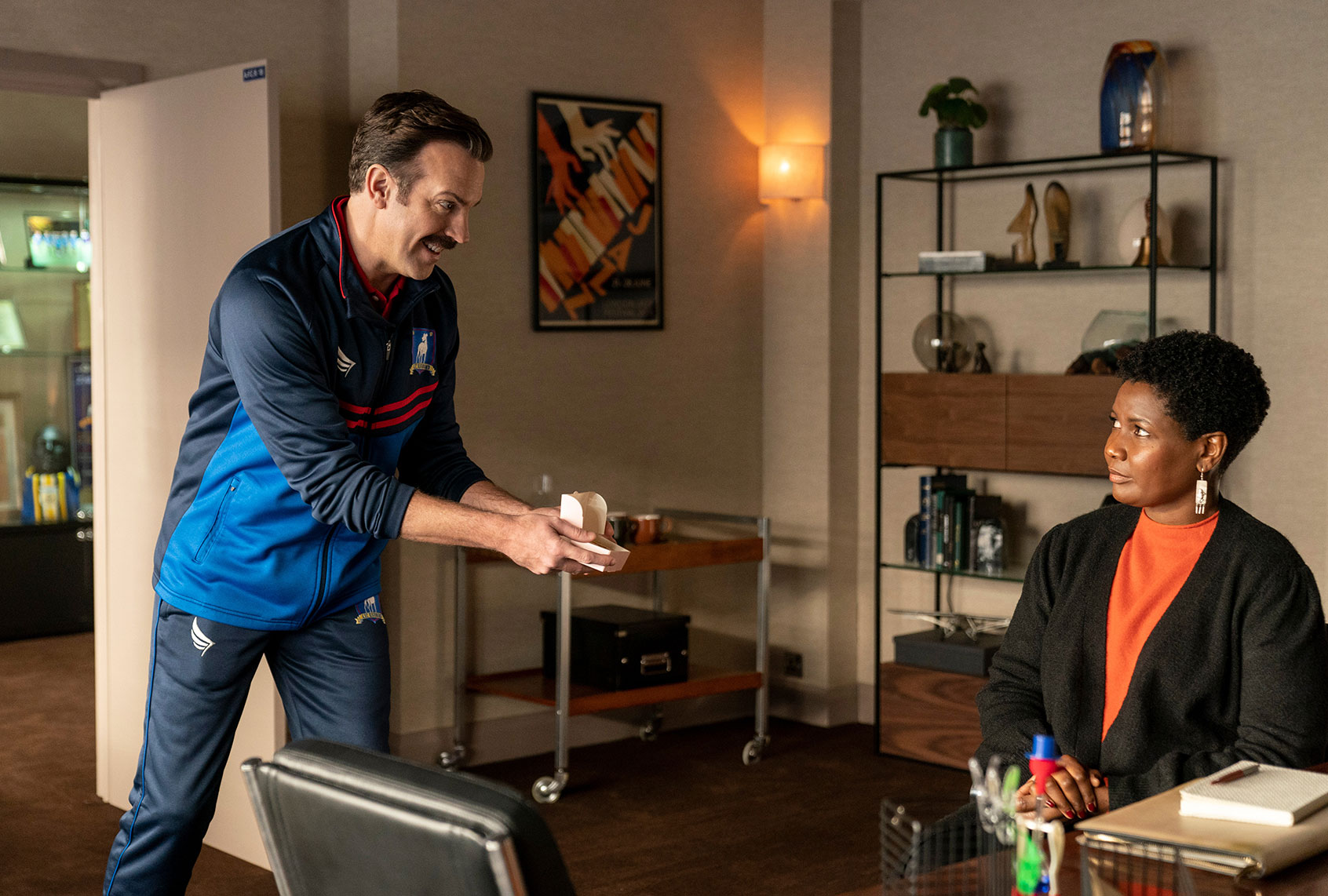
On Thursday, Utah Sen. Mitt Romney tweeted photos of him and Arizona Sen. Kyrsten Sinema dressed as fan-favorite characters Ted Lasso and Rebecca Welton from the Apple TV+ hit “Ted Lasso.” Ted is played by Jason Sudeikis with an iconic mustache, and Rebecca is played by Hannah Waddingham, who often dons stylish, fitted dresses and high heels.

The photos Romney shared recreate a classic Ted and Rebecca tradition, of Ted bringing freshly baked shortbread cookies to Rebecca each morning.

In the Emmy-winning comedy, Kansas native Ted is a famous American college football coach who moves to London to coach the AFC Richmond football club, which Rebecca owns. Since American football and the sport the rest of the world calls football are vastly different, it’s clear that his selection is unexpected to say the least.  

RELATED: The “Ted Lasso” way is comforting – and a counter to the hollow nationalism Americans have embraced

It turns out that Rebecca chose Ted to deliberately try and sabotage the team, which once belonged to her philandering ex-husband. She has no interest in seeing Ted succeed, let alone building a friendship with him – but somewhere between morning biscuit dropoffs and emotionally vulnerable conversations, the two build a deep, almost familial friendship. And for all Ted and Rebecca’s problems, like Ted’s compulsive need to be liked, as the Season 2 team therapist Dr. Sharon Fieldstone (Sarah Niles) points out, or Rebecca’s mean-spirited reasons for hiring Ted, both have become widely beloved characters on a show that’s famous for its prevailing niceness and positivity.

Ted LassoJason Sudeikis and Sarah Niles in “Ted Lasso” (Apple TV+)

It’s all just very nice, which is why Romney and Sinema’s cosplaying raised a few eyebrows.

One of the posts is a GIF of Romney as Ted proferring Sinema, in the role of Rebecca, a box of the signature biscuits. In another post, he shares a still photo of him handing her the box. “Biscuits with the boss,” he writes, and captions the follow-up tweet, “She’s one tough cookie.”

In another tweeted GIF, the mustachioed Romney tapping the yellow hand-lettered “BELIEVE” sign, mimicking the inspirational message that of Coach Lasso hangs above his doorway.

“If you believe in yourself, and have clear eyes and full hearts — you can’t lose,” he captions the post, paraphrasing another sports-centric series, “Friday Night Lights.”

And in yet another tweet, Romney tags Sudeikis directly, posing in Ted’s signature coaching attire with a soccer ball in one hand. “After 10 years, I’m finally returning the favor. How was my @TedLasso, @JasonSudeikis?” he writes.

The irony of Romney and Sinema posing as Ted and Rebecca hasn’t been lost on their critics on social media. The exchange is tantamount to two of the most controversial members of Congress cosplaying as, well, nice people. (They aren’t nice people.)

Romney, after all, is most famous for bucking his party to vote to impeach former President Trump during Trump’s first impeachment trial, only to go on to support nearly all of Trump’s agenda, including confirming his nightmarish Supreme Court and judicial nominees.

Sinema, on the other hand, has been in the news more lately, most notably for derailing nearly all of President Biden and the Democratic party’s agenda. Sinema has opposed minimum wage increases, climate change action, and ending the filibuster, which is key to almost any progressive policy change. The Arizona senator is increasingly cozying up to Republicans like Romney as a result. 

RELATED: Sinema’s giant flip-flop: She once campaigned on issues she now wants dropped from Biden’s plan

The irony of their supposed, feel-good, “across the aisle” friendship is that Romney’s own policy stances could have Sinema, who is openly bisexual, removed from her job. “A reminder that Mitt Romney’s public position is that it should be legal for Kyrsten Sinema to be fired from a job for being bisexual,” one user tweeted.

“It’s nice to see two people from two different parties come together over their mutual disdain for the poor and love for lining their own pockets,” another wrote.

Arguably in some ways, Romney and Sinema reflect the worst traits of the characters they’re dressed as. There’s Romney’s almost compulsive need to be liked by everyone, from anti-Trump Republicans and some liberals, as demonstrated by his pro-impeachment vote, to the most intolerant wings of the Republican party, as demonstrated by nearly all his policy stances. And as for Sinema, you’ll recall how Rebecca spent the entire first season of “Ted Lasso” sabotaging her own team. Well, Sinema, in real life, has spent the past year sabotaging her own political party.

MORE STORIES LIKE THIS:

For Stacey Abrams, crime does pay – CBS is redeveloping thriller “Never Tell” into a series

When Stacey Abrams, the former Democratic gubernatorial nominee in Georgia, isn’t flipping her state blue or championing voting rights for all, she’s a prolific author of several critically acclaimed novels, ranging from sizzling romances to true-to-life legal thrillers. 

Now, Abrams’ 2004 novel “Never Tell” is being adapted into a new series of the same name at CBS, Deadline reports. The drama was originally picked up by CBS in 2019, but is now being redeveloped with a new writer, Barbara Hall, although Abrams will remain on as an executive producer. Hall is the creator of the 2014 political drama “Madam Secretary” and a wide array of other CBS dramas over the last 20 years.

“Never Tell” brings to life the fictional story of criminal psychologist Dr. Erin Abbott, who moves to New Orleans to run from her past, and winds up linking with a local journalist and detective to solve a crime that’s rocked the city to its core. In the book, a romance brews between Abbott and the journalist, Gabriel Moss, but it’s not yet clear what direction the series will take. While the series is currently in development, CBS has yet to release any other information. Start your fan-casting now.


Want a daily wrap-up of all the news and commentary Salon has to offer? Subscribe to our morning newsletter, Crash Course.


Ever since Abrams’ expansive organizing contributed to the shock Democratic victories in both the presidential election in Georgia last November, and the special Senate races in the state in January, many have speculated about what would come next for the Democratic trailblazer. And while Abrams is widely expected to run for Governor in her state come 2022, her partnership with CBS makes it clear her future will also include more than just politics.

Just earlier this year, another of Abrams’ books, a legal thriller called “While Justice Sleeps,” was also greenlit for a show at NBCUniversal, Variety reported. The book chronicles the chaos that descends upon the nation when a sitting Supreme Court Justice falls into a coma. “While Justice Sleeps” is Abrams’ most recent fiction novel, following the release of her nonfiction memoir “Lead From the Outside” in 2019, and her 2020 book on voting rights and suppression, “Our Time Is Now Power, Purpose, and the Fight for a Fair America.”

Abrams’ other books, many of which have been written under the nom de plume Selena Montgomery, include “The Art of Desire,” “Hidden Sins,” “Secrets and Lies,” and others. Abrams has been honored with the Reviewer’s Choice Award and the Reader’s Favorite Award from Romance in Color for Best New Author. 

MORE STORIES LIKE THIS:

Biden Administration may pay out more than $1 billion to migrant families separated under Trump

The Biden Administration is reportedly considering a program that would compensate migrant families who were separated at the southern U.S. border by the Trump Administration — a move that comes as federal agencies work through a backlog of lawsuits filed by parents whose children were forcibly removed from their custody and allegedly suffered lasting trauma as a result of the so-called “zero-tolerance” policy

The Wall Street Journal reported Thursday that the program could pay out more than $1 billion, with payouts of around $450,000 per person or $1 million per family. The American Civil Liberties Union estimates close to 5,500 children were separated from their parents by the Trump Administration.

The anonymous government sources cited by the Journal noted that the numbers may change, and anticipated that the actual number of people who come forward to claim their payout would be much smaller than the total who were affected by the policy.

Around 940 claims have been filed so far, the newspaper reported:

The lawsuits allege some of the children suffered from a range of ailments, including heat exhaustion and malnutrition, and were kept in freezing cold rooms and provided little medical attention.

Many of the lawsuits describe lasting mental-health problems for the children from the trauma of the months without their parents in harsh conditions, including anxiety, a fear of strangers and nightmares. The lawsuits seek a range of payouts, with the average demand being roughly $3.4 million per family, some of the people said.

As for a timeline, lawyers for the migrants have apparently said in court that they are currently negotiating over settlements with the Biden Administration, and that they “hoped to reach a deal by the end of November,” according to the Journal.

“President Biden has agreed that the family separation policy is a historic moral stain on our nation that must be fully remedied,” said Lee Gelernt, deputy director of the ACLU’s immigrant-rights project and a lead negotiator on one of the lawsuits. “That remedy must include not only meaningful monetary compensation, but a pathway to remain in the country.”


Want a daily wrap-up of all the news and commentary Salon has to offer? Subscribe to our morning newsletter, Crash Course.


The approach has rankled Republican lawmakers, who continue to insist that the government did nothing wrong when separating children from their parents as a form of deterrent for families thinking about entering the United States illegally.

“The Biden administration’s promises of citizenship and entitlement programs have already caused the worst border crisis in history—a huge cash reward will make it even worse,” Sen. Tom Cotton of Arkansas said.

Aside from potential payouts, the government has not even been able to locate all of the children who were separated from their parents. The current administration is still in the process of finding families — just 52 have been reunited so far and there are apparently 200 more that are currently being vetted. 

Why did gun violence go up during the pandemic?

One of the more confounding aspects of a deadly, life altering pandemic for many Americans was its effect on one seemingly unrelated trend: a harsh spike in gun violence that has plagued the country and only seems to be getting worse.

Right-wing media has been quick to blame cultural factors for the surge in deaths — namely, a racial justice protest movement that began last summer and counts police reform as one of its primary goals. But reality is often more complicated.

That seems to be the conclusion of a recent paper published in the journal Scientific Reports. Researchers from Penn State — who were careful to emphasize that they are merely noting statistical trends and not definitively identifying causes — found that gun violence in the United States increased by more than 30% during the COVID-19 pandemic. The authors learned this by analyzing daily police reports of gun-related deaths and injuries in all 50 states and Washington, D.C. from March 1, 2020 to March 31, 2021.

In addition to finding a national jump of more than one-quarter, they also discovered significant increases in gun violence in 28 states. Only one state, Alaska, saw a significant drop.

In places like Michigan, Minnesota and New York, however, gun violence soared more than 100% over the previous year.


Want more health and science stories in your inbox? Subscribe to Salon’s weekly newsletter The Vulgar Scientist.


The scientists point to several factors that they suspect may have led to this increase.

They hypothesized that suicide rates would go up due to rising unemployment and the loss of important forms of social support, while violent crimes would likewise increase due to these factors, as well as subsequent increases in substance abuse, idle time and/or financial stress.

Further elevating the risk of gun violence was the increased availability of firearms — statistics indicate gun sales experienced a boost once people needed to stay at home. The National Instant Criminal Background Check System revealed a 41% increase in handguns sold in March 2020 compared to the same period in 2019. Studies have consistently found people are more likely to commit suicide or homicide if they have access to guns.

“Although our study was not framed to explore the mechanisms and specific risk factors that caused the increased rate of gun violence, the COVID-19 pandemic has been associated with psychological distress caused by the shelter-in-place orders, increased rates of domestic violence, disruption of social networks, unemployment, and record increases in gun sales and access to guns during the pandemic,” Dr. Paddy Ssentongo, assistant professor at the Penn State Center for Neural Engineering, told Salon by email. “All these factors are plausible reasons for the observed increase. Furthermore, it is well-established that access to firearms is a risk factor for gun-related suicide and homicide.”

Ssentongo added that this means the cause of reducing gun violence is linked to the cause of reducing COVID-19 fatalities and casualties. He noted that interventions like vaccinations and mask-wearing, by mitigating the COVID-19 pandemic, may have a similar effect on “the downstream effects” of that pandemic.

Notably, the study only found a “relatively weak” link between COVID-19 cases and gun violence when the statistics were adjusted for mean age, population, gender proportion and lockdown orders. (The correlation increased without those controls.)

It seems that the increase in gun violence, if it is a product of the COVID-19 era, is due to the social consequences of the outbreak rather than the disease itself.

“While stay-at-home orders and social distancing measures are vital to contain the spread of COVID 19, we also need to be aware of the unintended social and economic stressors that may lead to gun violence,” the authors write.

“Love Life” resets the rom-com by presenting a Black man’s perspective on what it’s like “out there”

Presumably the second season of “Love Life” was conceived, written and shot before August, when 40-year-old Alabama pastor Solomon Missouri dropped this year’s definitive State of the Single Life Twitter thread.

“Bud . . . Let me tell y’all something . . . You don’t wanna be out here,” Missouri shared, kicking off a red flag parade warning soon-to-be-divorced men to get used to concepts like turmeric and “chasing Cialis with Red Bull.”

“You don’t have the cholesterol to be out here,” he cautions before dropping the line that sent giddy readers stampeding to Google:

They pegging out here . . .

— So_a_king (@solomonmissouri) August 23, 2021

To describe these new “Love Life” episodes as its Cialis with Red Bull season would be a simple, cheeky joke. But this only somewhat fits the action in its first three episodes. That’s how long it takes for William Jackson Harper‘s Marcus Watkins to slide from comfortable marital stability into a whirlpool of disastrous hookups – none of which, to be clear, involve pegging. (As far as we know.)

In the installments that follow he resets his expectations and leaves emotional wreckage in his wake as he desperately tries to figure out who he is and what he wants. And it is this part of the show’s sophomore reset that transforms it from an enjoyable, frothy romantic comedy into an engaging piece of societal analysis.

RELATED: What William Jackson Harper wants viewers to take away from “Underground Railroad”

Rom-coms are a white woman-centered genre. Sure, a few feature Black casts and a couple of box office bangers place Jennifer Lopez in the driver’s seat. On the whole, however, we’re conditioned to expect to follow someone like Anna Kendrick (who also executive produces the show) on some marshmallow-flavored journey through singlehood that ends in a version of contentment.

Season 1 confirms that reputation, although several Millennial-appropriate twists change things up from the Julia Roberts and Renee Zellweger eras. Kendrick’s Darby Carter still ticks the usual boxes of a rom-com heroine, in that she comes from a solidly upper middle-class upbringing and has a challenging relationship with her mother. Surprise, surprise – this partly informs her low expectations of the men to whom she’s attracted.

Fording those rapids by way of a TV series instead of a movie allows co-showrunners Bridget Bedard and series creator Sam Boyd to shove us face first into Darby’s gritty frailty along with the psychological muck dripping off her nearest and dearest. Life changes for all of them over the course of a few years, and not always for the better. Some of her friends embrace adult responsibility more easily than others, and each accepts this doesn’t necessarily require them to find their person. Eventually she does – because if she didn’t, it wouldn’t be a true rom-com.

Nevertheless, in the main “Love Life” preaches the wisdom of figuring ourselves out before we try to weld our lives to other people’s. And this means different things for people like Marcus than it does for Darby, delineated for the viewer by Keith David’s professorial narration.

Viewers already know Harper from “The Good Place,” where his anxious, indecisive philosophy professor Chidi Anagonye fell for his supposed soul mate Eleanor Shellstrop, an uncultured mess played by Kristen Bell. Chidi and Eleanor came together in that show’s version of the afterlife, a place where race never factors into their relationship.

Marcus, in contrast, must always consider his Blackness because New York and the rest of the world remind him of it at every turn. He’s one of the very few Black guests at Darby’s 2016 wedding reception, which is where we meet him. When fellow guest Mia Hines (Jessica Williams) commiserates with Marcus about what that feels like, he feels seen. But when Marcus points out his white wife to Mia, who offhandedly blurts, “Makes sense!” before vanishing in an Uber, he’s suddenly left doubting the legitimacy of the view.

A number of series try to speak to the specific weight people of color carry into the dating pool, but the fact that this show deftly maintains its comedic buoyancy while making Marcus’ search for love stand apart in a way that’s captivating and ultimately heartening is noteworthy.

“Mixed-ish” writer Rachelle Williams joined the second season to share showrunner duties with Boyd and Bedard, and from its very first scenes her assured voice deftly incorporates Marcus into the familiar rom-com architecture without blandifying who he is.

At one point someone dubs Marcus an “off-brand Hugh Grant,” but remove the insult from that label and you’re basically describing Harper’s warm appeal. He’s an actor who personifies a refined, confident intellectual masculinity, and he stands out without needing to be the loudest voice in the room.

Marcus is, in fact, the type of safe, attentive and well-meaning romantic hero Grant honed to brilliance in ’90s flicks like “Four Weddings and a Funeral” and “Notting Hill.”  He isn’t awkward, exactly; it’s more like he’s used to being in spaces traditionally thought of as being the province of people who are white and well-off while also being accustomed to being judged for that.  


Want a daily wrap-up of all the news and commentary Salon has to offer? Subscribe to our morning newsletter, Crash Course.


This surfaces as a no-win situation in Marcus’ career as a book editor: he does his best to bring new Black authors into his mid-level publisher’s fold, but his boss often rejects them while burying Marcus in assignments that are beneath him.

Meanwhile the writers he wants to champion expect him to be a sellout. “We need guys like you to translate guys like me,” one emerging author (played by Jordan Rock) scoffs during a sit-down. By that the man means safe and non-threatening, name-dropping Barack Obama, Al Roker, LeVar Burton and Samuel L. Jackson as examples. That last one throws Marcus until the writer clears it up for him. “Do you think you get to go from ‘Pulp Fiction’ to Capital One if you really scare white people?”

Interracial relationships always provide a sore spot to poke within plots that are mindful and sensitive enough to dissect them instead of ignoring the challenges such pairings face, as most shows do. But “Love Life” isn’t content to take the basic out of implying that Marcus’ marital implosion is due to his wife Emily’s (Maya Kazan) inability to relate to him, despite an exchange where she confirms his fears about the image he projects. (This happens in the premiere, which Williams co-wrote with Boyd.)

Mainly it is Marcus’ very human tendency to doubt himself – where he’s going with his career, whether he’s with the right person – that gets him into trouble.

Sometimes in “Love Life” that notion relates to Marcus’ Blackness, since his place in New York’s social structure and his position in corporate culture force him to examine what that means and how other people relate to that part of him. Mia provides the catalyst for Marcus to ruminate on this simply by being charismatic and seductive; plus, Harper’s onscreen chemistry with Williams is undeniable.

Williams established her rom-com bona fides as the lead of 2017’s “The Incredible Jessica James,” and the way she draws out the mystery of Mia is sublime. Her performance elicits questions because she speaks with an air of knowing, one of the surest signs that someone is hiding or overcompensating for something. But this is one of the factors making her a refreshing presence in Marcus’ arc.

Harshening cultural forces in American society force a new certainty upon Marcus that comes to a head during the pandemic; like so many of us, he simply doesn’t have the time or the patience for inconsiderate people anymore. And this is before the viral video recording George Floyd’s murder reminds him how little so many people value of his life at all.

On a somewhat related note, among the most admirable aspects of this season is the way it looks at the much-vaunted notion of Black love via a subplot partnering Harper with a playwright played by “Saturday Night Live” star Ego Nwodim, and how that relationship proves that ideal is at once specific and real, and difficult to find and maintain.

Whether through Marcus or his sister Ida (Punkie Johnson), or his parents (Janet Hubert and John Jelks) and their decades-long marriage, or his settled-down friend Yogi (Chris Powell) “Love Life” suggests that any relationship’s success has less to do with sharing your mate’s culture than it does with understanding their soul, being aware of the ways they’ve been hurt in the past and accepting their flaws. That, along with refusing to settle for a union that has run its course, a sentiment that forcefully links the two seasons. Sharing a cultural shorthand as a baseline to relating to another person helps, of course – which the season also depicts quite well – but it isn’t the sole guarantee of a relationship’s success.

Marcus’ situation takes a while to smooth out in the way that all rom-com adventures do. But the wonderful writing and a superb cast makes riding out the rough chop of modern romance at his side an absolute pleasure – so much, actually, that it may inspire newcomers to go back and consider Season 1. 

“Love Life” doesn’t make the being “out there” look any more enticing than it does for any other romantic hero or heroine. Instead it offers the theory that finding something better, whether in an existing relationship or a new one, starts by stepping into the unknown to figure out what you want and therefore, who you need. On the other hand, you don’t want to be out there for a variety of reasons. Out there is uncomfortable. Sometimes, though, what’s on the other side is worth the risk. 

“Love Life” Season 2 launches with three episodes on Oct. 28 on HBO Max, continuing with three episodes on Nov.4 and concluding with four episodes on Nov. 11. Watch the trailer below via YouTube.

More stories like this:

WSJ editorial page calls Trump’s voter fraud letter “bananas,” but defends publishing it

The Wall Street Journal’s editorial page earlier this week ran a letter to the editor from former President Donald Trump in which he falsely claimed that Attorney General Bill Barr and Facebook CEO Mark Zuckerberg, among others, were responsible for stealing the 2020 election from him.

The editors defended their decision to run Trump’s letter in a Thursday column in which they said it was important to get an unfiltered view of the former president’s thinking.

“We think it’s news when an ex-President who may run in 2024 wrote what he did, even if (or perhaps especially if) his claims are bananas,” the editors wrote.

They then went on to debunk some of Trump’s claims, even though they acknowledged that the exercise was pointless because Trump would simply come out with even more false claims.


Want a daily wrap-up of all the news and commentary Salon has to offer? Subscribe to our morning newsletter, Crash Course.


“He insinuates that the presidential results include thousands of tardy votes, and ‘none of these should have been counted.'” they write. “They weren’t, per a directive by Justice Samuel Alito… Mr. Trump says that “25,000 ballots were requested from nursing homes at the exact same time.” His citation for this — no kidding — is a Nov. 9 cable-TV hit by Sen. Lindsey Graham.”

After debunking some of Trump’s claims, the Journal defended its decision to run his letter.

“Mr. Trump is making these claims elsewhere, so we hardly did him a special favor by letting him respond to our editorial,” they write. “We offer the same courtesy to others we criticize, even when they make allegations we think are false.”

Read the whole editorial here.

More like this:

How Netflix’s “Maid” shines a spotlight on food insecurity

In the first episode of Netflix’s adaptation of Stephanie Land’s acclaimed stunner “Maid,” the protagonist is cleaning the home of an affluent, entitled client. She is tasked with “cleaning out the fridge” in its entirety because the client at hand is going to be in New York City that weekend — so all of the food must go so the couple doesn’t come back to a house “smelling like kombucha.” Alex begins by throwing out cartons of fresh fruit, a cavalcade of berries going into the immaculate, stainless steel garbage can.

In a sudden switch to a fantasy sequence, Alex begins fervently eating with abandon, ravenously gorging herself on foods that are being discarded: whole layer cakes, whipped cream, fruit, chocolate, a turkey leg. To the aforementioned client, this is excess; it’s of no importance and is just going in the garbage. 

To Alex, who isn’t sure when her next meal might be, this food is sustenance. That kind of deep anxiety is far-reaching and all-consuming. Suddenly, Alex “snaps out of it” and resumes tossing out a surplus of fresh, incredibly edible food. This opening struck me and set the stage for what “Maid” is: a glimpse of the constant day-to-day anxieties, pressures and judgements with which those living in poverty must constantly navigate. 

Related: “This is food security for us”: How community gardens are persisting through the pandemic

Land captures this dichotomy — voracious hunger and tremendous waste — in aching clarity through the lens of food insecurity. Hunger is an entity that can ravage from the inside out and it’s something that many are privileged enough to never experience to such a degree. 

“Maid”  traces the life of Alex — played by Margaret Qualley and based on Land’s own experiences — as she jumps through hoops, scrapes by, and attempts to navigate the immensely challenging (and frustrating) landscape of government assistance. Throughout it all, she is plagued by a litany of yellow and red tape, bureaucracy and misogyny. 

Unfortunately, the events portrayed “Maid” aren’t just part of a Netflix series for many Americans.  

***

Millions upon millions of Americans — and people worldwide — struggle to feed themselves and their families, which has only been exacerbated by the pandemic. NPR notes that 2.37 billion people worldwide were food insecure in 2020 alone. 

The Conversation defines food insecurity as “the uncertainty of saving, or unable to acquire, enough food due to insufficient money or other resources.” City Harvest notes a 38% increase in food insecure New Yorkers over “pre-pandemic figures,” while one in three children living in New York City are food insecure — which is a whopping 64% increase. 


Want more great food writing and recipes? Subscribe to Salon Food’s newsletter.


The Conversation also notes that “SNAP (supplemental nutrition assistance program) recipients are up to 30% less likely to be food insecure than people who are eligible but do not get those benefits.” 

These are financial requirements in order to “qualify” for SNAP, including overall income, total asset, and other statistics that discern whether or not a family is deemed appropriate to be granted assistance by the program. If met, SNAP recipients receive an “electronic benefit transfer card” which they can then use at some grocery stores, supermarkets and other stores. 

However, the use of this program has long been stigmatized, especially because many members of groups who are already marginalized rely on SNAP benefits. 

CNN states that “single mothers like the character of Alex have often been demonized for relying on public benefits like child care subsidies and nutritional assistance, especially if they are Black or brown.” 

NPR notes that “black families are twice as likely” to be food insecure, and that Hispanic Americans are also disproportionately affected. Furthermore, 27% of those without a high school degree faced food insecurity, while only 5% of college graduates did. Furthermore, Slate notes that trans New York City residents are more food insecure than cisgender residents

***

The Counter writer Simran Sethi contemplates the difference between hunger and food insecurity, exploring the idea that the statement “I’m hungry” can mean something vastly different when said by one person versus another. Sethi also states that hunger is a “broad and imprecise term” that isn’t satisfactory enough to adequately discern the varying levels of hunger, from “easily remedied to utterly all-consuming.” 

For context, Sethi notes that “during the same year in which 45 of the 50 largest public companies have turned a profit, 40 million more Ameircans have become food-insecure.” That dichotomy is like the macro-version of the refrigerator clean-out scene in Netflix’s “Maid.” 

So what can be done? While donating to food banks is also immensely important, especially to keep up with such growing demands throughout the pandemic, Martin Caraher aptly wrote that “the rhetoric of many in government is that food banks and soup kitchens represent the caring face of society.” 

“But another way of viewing this is that charity provision is a testament of the failure of public authorities to deliver and this should not be seen as a permanent substitute for more robust social programmes,” he wrote. 

In a piece for TIME, Land herself shares her advice on how to best support. 

“We need to look marginalized people in our community in the eye and listen to their stories of struggle, heartache and impossibility,” she wrote. “We need to sit with the pain people in systemic poverty and systemic racism experience, especially because those two things go hand in hand.” 

She’s also very pointed in acknowledging her privilege as a college-educated white woman and the fact that her story of escaping poverty via a book deal is in no way common.

Being ensconced in various forms of privilege — a home, hot food, a bed — limits the understanding of the day-to-day minutiae for those who are living in poverty. Land also notes that it’s important to ask questions. 

“When people ask me how to help, I tell them to ask people what they need,” she said. “I’m betting the answers are things like tampons and diapers and $10 for gas, because life is so small and short-sighted when you’re that hungry that you can’t demand affordable housing and a living wage. That’s for all of us who have means to fight for.”

More stories about what we watch and what we eat: 

Facebook allowed trolls to reach 140 million Americans a month on the eve of the 2020 election

On the eve of the 2020 election, troll farms were running vast page networks on Facebook, mainly targeting Christians, Black Americans, and Native Americans.

A report obtained by MIT Technology Review found that troll-farms ran out of Eastern Europe operated troll-farm Facebook pages that when combined, formed the largest page on Facebook by 40%, reaching 140 million users in the United States monthly. 

“[W]e have not fundamentally changed the way our platform operates to make it resilient against these actors,” said in the report by Jeff Allen, a former Facebook employee. Allen found that troll-farms ran the largest Christian American page, the largest Black American page, the second largest Native American page, and the 5th largest Women’s page. “Our platform has given the largest voice in the African American community to a handful of bad actors, who, based on their media production practices, have never had an interaction with an African American,” wrote Allen. 

Even worse, troll-farms ran all of the top 15 Christian American pages, 10 of the top 15 Black American pages, and four of the top 12 Native American pages. 

MIT Technology Review found that five of the troll-farms in the report are still active today. One of these sites was the top page targeting Black Americans in October 2019, called “My Baby Daddy Ain’t Shit”. According to the report, the page reaches 30 million U.S. users monthly. 

These troll farms originate from Eastern European countries such as Kosovo and Macedonia. The demographics these troll farms are targeting were also the same exact demographics the Russian Internet Research Agency (IRA) during the 2016 election. Allen wrote “there are signs they have been in contact with the IRA. The fact that actors with possible ties to the IRA have access to huge audience numbers in the same demographic groups targeted by the IRA poses an enormous risk to the U.S. 2020 election.” 

“In addition, the behaviors and tactics of the Troll Farms are identical to the large broadcast tactics the IRA used in 2016,” continued Allen, “If the Troll Farms are reaching 30M US users with content targeted to African Americans, we should not at all be surprised if we discover the IRA also currently has large audiences there.” 

This report is one of many instances of Facebook’s clear understanding of the harm their platforms can cause. The Wall Street Journal has recently released a new series of investigations into multiple internal documents from the company, finding that Facebook knew the harm Instagram was doing to teen girls and how human traffickers and drug cartels were using Facebook as a platform for their activities. 

In another report from online advocacy group Avaaz, Facebook could have prevented 10.1 billion views for it’s top pages that regularly spread misinformation. 

Facebook has repeatedly disputed these reports in statements. To MIT Technology Review, Facebook spokesperson Jon Osborne said that the company “had already been investigating these topics” at the time of Allen’s report. Nick Clegg, Vice President of Global Affairs at Facebook, called the Wall Street Journal’s investigations as containing “deliberate mischaracterizations.” 

In concluding his report, Allen wrote “It will always strike me as profoundly weird that the largest Page on FB posting African American content is… run out of Kosovo. That’s so weird! And genuinely horrifying.”

Taryn Manning: “I don’t want to keep playing characters that pass away”

Taryn Manning didn’t set out to make you cry so much. Though she’s known for her gritty dramatic work in “8 Mile”, “Hustle & Flow,” “Sons of Anarchy” and, most famously, as Pennsatucky on “Orange is the New Black.”” 

Offscreen, she’s a dancer and musician who say’d love to do more comedy. “I don’t know why these parts find me,” she told me recently on “Salon Talks.”

She may have to wait a little longer for that rom-com recognition. In the action thriller “Every Last One of the Them,” she costars with Richard Dreyfuss and Michael Madsen as the pie-baking, gun-toting half of a brother-sister security firm with some deadly connections. 

Watch the full episode of “Salon Talks ” here or read a Q&A of our conversation below to hear more about how “Orange Is the New Black” changed her as an actor, who it was working with Brittany Murphy on “8 Mile” and why she’s ready “to play something a little more lighthearted.”

The following interview has been lightly edited for length and clarity.

This is such an interesting film. It goes in directions that are completely unexpected. You think you know where it’s going to go and it’s not. You play a character named Maggie. Tell me who Maggie is.

Maggie is a twisted Suzy homemaker. She just wants to keep the peace, really just wants a peaceful life. But she would do anything for her brother, anything, whatever it takes to protect him or protect their firm. They own a security firm. She’s pretty savage, it turns out. I like her because you wouldn’t really know that she has that in her, and then she blows you away with her skills.

I figure both of [the siblings] had a lot of training in this way. That’s why they opened up this business together. They’re on the up and up, but they’re the biggest security firm in the desert, so they’re in on stuff. They may or may not be a little corrupt. You really don’t know what’s going to happen. It really does take you on a wild ride. You don’t know who’s the good guys or who’s the bad guys.


Want a daily wrap-up of all the news and commentary Salon has to offer? Subscribe to our morning newsletter, Crash Course.


This is a story where you have an intense, strong bond with your brother. The whole dynamic is you and your family, and family comes first. Of course, you have been in business with your own brother. You were in a band for a long time. I was wondering how much of that experience of being in the family business did you bring to this role?

It’s an interesting question, because I tell people I love this role because of that. There’s one thing I can relate to, and that’s having an older brother that basically everybody always said, “So who’s the older one?” I definitely was the one that handled stuff like that. Every picture of us growing up, I’m just wrapped around him. I couldn’t get enough of him. I used to have to pay him to hang out in his bedroom, 10 cents or 25 cents, anything just to be around him. I can relate to that love. I always say there are parents, but when it comes to siblings, it’s like we’re all one, we’re all in. The bond between siblings can either be so strong, or when it’s not, it’s so painful. It’s like a piece of you is missing. Kellen and I, writing songs together, touring together, it’s also really hard to do, by the way, to work with your brother so closely. But I did relate to that aspect.

Because for Maggie, her brother is her whole world.

That’s her whole world, yeah.

And they’re two of the same mind. Usually there’s someone that maybe is the voice of reason, but I like them because they’re just partners. They’re equals.

You’re in so many other things right now. You’ve had four movies come out this year, and then you were also part of the Brittany Murphy documentary. I wanted to ask you about that and about participating in it, because she is having this rediscovery now so many years after her death. The things that you say about her in this film are just so lovely. What made you want to become part of this?

That was tough, because so many of her very good friends, day in and day out friends, didn’t want to be in it. I could understand; it’s so painful. Honestly, there’s not one ill word you can speak about the girl. What you saw in that documentary, you got a sense of her light, the beacon that she is. I just felt she touched me in such a way that I’ve never experienced. That’s, just a complete stranger coming to my trailer and an actress I looked up to, writing me a three-page letter about how grateful she was that I was there. [Manning and Murphy costarred in “8 Mile.”] There wasn’t even a word repeated. It was like she’s known me for years, and that’s how she embraced everything. She deserves any type of praise, because I just feel what happened with her is just so unfortunate, and doesn’t make sense really.

RELATED: “Your worst nightmare is to lose your child”: Amy Ryan on her Netflix film “Lost Girls”

You’ve done so many films, but obviously you did seven seasons of “Orange is the New Black.” To have this character change and have people get to know her and and care for her, what did that change about you as an actor? How did that inform what you’re doing now?

I really loved the arc, because I felt seen as an actor and also as a character. She really thought that she was just tough as nails, but a lot of times it just goes to show you that a lot of bullies and a lot of people that act like this, they really are hurt people. If you just show them, basically give them a taste of their own medicine, and then maybe embrace them, or just not put up with their stuff, you can turn lives around.

I’ve always wondered about her. Was she truly religious? Was she just spitting out things because she was completely sponsored through prison by default, because she happened to do what she did when a bunch of Christians were picketing outside? You always just wonder, who is this girl? It’s like she had this run of good luck, but at the same time, not really worthy of any type of religious sort of grace, if you will, because everything about her was just anti.

But I really loved her. I tried not to judge her too much. It was very hard to play that. A lot of times I felt really bad inside as Taryn. I remember probably the first time I ever went truly Method where I just had to just completely remove any type of judgment, like I said, or any trace of me, just so I could get through it. I love when they made her a little bit nicer. It was like, whew, because that stuff can wear on you after time. Then when you say it, you’re sincere in your acting. People, even your own castmates don’t know if you’re serious or not. “Guys, come on. It’s me.”

You’ve done so many interesting projects where you are cast as that character who is dark, who’s controversial, who’s not necessarily the most sympathetic person in the storyline. What is it about those roles that either you are drawn to, or are drawn to you? This character, Maggie, is a tough lady, I imagine to come home with at night.

Right. But at the same time, though, she’s not, as far as we know, suicidal or on drugs. It’s some just horrible tragedy. She’s not really to me, a victim. I don’t know why these parts find me. It’s funny, because when I was younger, I used to fight against it so much, and I said, “No, no, no, I want to play the girl next door. Aren’t I somewhat pretty or cute?” It never worked. Once I said, “No,” it never worked. I’m like, “Oh, man. Okay, let’s go back to the drawing board.” Basically at the end of the day, as I’ve gotten older, I can’t do it anymore.

I remember the last time I died of an overdose for the ninth time or committed suicide for the 20th time, I’m like, “You know what? I want to live. I want to live. This is ridiculous.” I don’t want to keep playing characters that pass away or that they’re going through so much. My life’s so full and so rich, and I’ve traveled the world. I’m a lot more well read than people know. I’ve just had to say no to paychecks, because I just can’t do it anymore. I can’t, because how does the universe know whether we’re acting or not acting when you’re putting your whole heart into it? It’s a frequency you’re putting out. The way I go in, it’s like, art imitates life. God forbid, I don’t want any of that to happen.

Rome wasn’t built overnight, and I’m appreciative for my life and my career. But I would love to see, rather than playing the mental patient, I’d rather play the counselor at the mental ward. I’m not too far out of my stereotype. People will still accept me in that, but I’m just tired of playing the down and out one.

And you’ve really done such a diverse spread of roles just over the past year, like doing “Last Call” with Jeremy Piven. That’s a very different role for you, and it’s interesting seeing you in these different lights. I’ve heard you say that you want to do full-blown comedy.

I wrote and directed a web series that’s a comedy. I love to have fun. Comedy timing is hard. That’s serious training when I get back into that. Yeah, I would love to do something lighthearted. With everything so serious and dismal, it’d be nice to play something a little more lighthearted and laughing, perhaps.

Speaking of things that are a little more lighthearted, I heard you in one interview describe yourself as a working actor and a struggling musician. Now that your career is really so much focused on acting, how do you nourish that side of yourself and your career?

It’s not so much. Because I was signed to Dreamworks, there was a time where it was all about getting signed again. Just my focus was wrong. I play guitar. I can play instruments. I just do it now just because I have to because it’s an outlet. Most of my friends that know me well, or anybody that knows me at all, knows that that’s my life, music and going to concerts. I mean, I love acting, don’t get me wrong. It’s amazing. It’s just with music, when you write your own lyrics and melodies, it’s just so fulfilling, especially when you can be in Japan where there’s a complete language barrier, but they’re singing all your words back. There’s nothing more exciting than touring and traveling. Those days were amazing, and all that’s amazing. It’s just a part of me, and I love it. It’s true, I’m a working actress, struggling musician.

More Salon Talks: 

The ultimate Chinese pancakes are vegan — and way better than takeout

You can’t call a book “Mooncakes and Milk Bread” and not have it come out in the fall. Bay Area author and food writer Kristina Cho’s warm, inviting debut arrived right around Mid-Autumn Festival season, when Chinese bakeries teem with elegant, intricate and dense traditional mooncakes. If you’re yet unfamiliar with the joys of Chinese pastries, this is definitely the time of year to discover them.

They are, however, something of a challenge for the home cook. “When I asked my pau pau if she’d ever attempted to make mooncakes at home or knew anyone who did,” Cho writes in her book, “she couldn’t fathom the concept.”

If, like me, you love to bake, the pleasures and rewards of Cho’s recipes are numerous. And once you master basics like milk bread dough, you can use them as the foundation for endless sweet and savory goods.

RELATED: A 3-ingredient cheesecake, no measuring needed

On a less project-oriented day, if you want to dip in to Cho’s inviting world of home cooking, there’s perhaps no better place to start than her sensational, incredibly customizable pancakes. They’re a kin of the kind you’ve probably ordered out a thousand times — except so much better.

“I think everyone loves granny pancakes,” Cho says. “It’s really hard to find any fault in crispy fried dough with some type of of aromatic in it.”

She adds, “Everything that I do, I like to put my own twist or take on it and push the recipe a little further than the classic. I have experimented with other recipes and put in cheese or pesto and other tender herbs in there — just whatever I have in my fridge or laying around in my little herb container. It’s a great quick and dirty recipe because you can, if you have dill, if you have tarragon or if you have basil that’s looking a little sad in your fridge, grab it and throw it in this dough and give it a second life. And it’s really delicious.”


Want more great food writing and recipes? Subscribe to “The Bite” Salon Food’s newsletter.


While Cho specifically created her cilantro and Chinese sausage version to challenge the traditional green onion pancake, I decided to make mine old school for a recent family dinner. It takes a little bit of extra time to let the dough rest, but they require very little actual effort and are easily the cheapest, most satisfying dinner you can make this week.

And just like Cho’s book, the result is a dish that’s exactly the kind of thing you want to curl up with when you’re having a bleak, foggy San Francisco day — or just wish you were. I serve these with chili oil and a little soy sauce mixed with vinegar and brown sugar. 

***

Recipe: Green Onion Pancakes

Inspired by Kristina Cho’s “Mooncakes and Milk Bread”

Makes 6

Ingredients:

  • 2 1/2 cups all-purpose flour
  • 1/2 teaspoon coarse salt
  • 3/4 cup warm water
  • 1/4 cup canola or other neutral-flavored oil
  • 2 tablespoons toasted sesame oil (It’s not the end of the world if you don’t have it and use vegetable oil.)
  • 1 cup cilantro leaves and stems, chopped (Hate cilantro? Use any herb you prefer!)
  • 4 green onions, trimmed and chopped
  • Optional: Crumbled cooked bacon or sausage

Directions:

  1. Combine flour, salt and warm water in a medium bowl. Knead with your hands or a mixer until smooth, about 8 minutes. (You may need to add a little more warm water.)
  2. Form dough into a ball and coat with a little oil. Cover and leave at room temperature at least 30 minutes. (You can also just make the dough in the morning and leave until dinnertime.)
  3. Cut the dough into six equal pieces. On a lightly oiled cutting board, roll one piece into a roughly 6 x 10-inch rectangle. If you don’t have a rolling pin, use a wine bottle or even a can.
  4. Brush your piece with a little sesame oil. Sprinkle green onion and cilantro (and meat, if you’re using) evenly over it.
  5. Starting at the wide end, roll your dough into a cylinder. Next, roll your cylinder into a coil. Tuck the end into the dough. It should be pretty tightly wrapped with as few air bubbles as possible, but don’t stress it.
  6. Repeat the process with your remaining five pieces of dough. Cover the dough, then let your pancakes rest about 15 minutes or so while you clean up.
  7. Heat your 1/4 cup of oil in a deep skillet until shimmering.
  8. Flatten a piece of dough with the heel of your hand, then roll out into a roughly 6-inch disc.
  9. Fry 1-2 minutes, then flip and fry about another minute. The pancake should be deeply golden. Transfer to a baking sheet and keep in the oven on low heat. Repeat for your other pancakes. Serve hot.

Note: You can reheat leftovers at 400°F for about 8 minutes. They’re ridiculously good the next day for breakfast.


More Quick & Dirty

GOP Sen. Richard Burr, brother-in law face insider trading probes for February 2020 stock dump

After Sen. Richard Burr of North Carolina dumped more than $1.6 million in stocks in February 2020 a week before the coronavirus market crash, he called his brother-in-law, according to a new Securities and Exchange Commission filing.

They talked for 50 seconds.

Burr, according to the SEC, had material nonpublic information regarding the incoming economic impact of coronavirus.

The very next minute, Burr’s brother-in-law, Gerald Fauth, called his broker.

ProPublica previously reported that Fauth, a member of the National Mediation Board, had dumped stock the same day Burr did. But it was previously unknown that Burr and Fauth spoke that day, and that their contact came just before Fauth began the process of dumping stock himself.

The revelations come as part of an effort by the SEC to force Fauth to comply with a subpoena that the agency said he has stonewalled for more than a year, and which was filed not long after ProPublica’s story.


Want a daily wrap-up of all the news and commentary Salon has to offer? Subscribe to our morning newsletter, Crash Course.


In the filings, the SEC also revealed that there is an ongoing insider trading investigation into both Burr and Fauth’s trades.

It had previously been reported that federal prosecutors had decided not to charge Burr.

Burr’s spokesperson did not immediately respond to questions. Fauth’s lawyer and the SEC did not respond to questions. Fauth hung up on a ProPublica reporter.

According to the SEC, Fauth has cited a medical condition for why he cannot comply with the subpoena, even as he has been healthy enough to continue his duties at the National Mediation Board. In its filings, the SEC accuses Fauth of engaging in “a relentless battle” to dodge the subpoena.

In 2017, President Donald Trump appointed Fauth to the three-person board, a federal agency that facilitates labor-management relations within the nation’s railroad and airline industries. President Joe Biden reappointed him to the board.

On the day he received the call from Burr, Fauth sold between $97,000 and $280,000 worth of shares in six companies — including several that were hit particularly hard in the market swoon and economic downturn. According to the SEC, the first broker he called after hearing from Burr was out of the office, so he immediately called another broker to execute the trades.

SALON EXCLUSIVE: GOP Rep. on cyber committee dumped MSFT stock shortly before $10B Pentagon contract was scrapped

In its filings, the SEC also alleges, for the first time, that Burr had material nonpublic information about the economic impact of the coming coronavirus crisis, based on his role at the time as chairman of the intelligence committee, as a member of the health committee and through former staffers who were directing key aspects of the government response to the virus.

The week after the trades, the market began its crash, falling by more than 30% in the subsequent month.

Burr came under scrutiny after ProPublica reported that he sold off a significant percentage of his stocks shortly before the market tanked, unloading between $628,000 and $1.72 million of his holdings on Feb. 13 in 33 separate transactions. The precise amount of his stock sales, more than $1.6 million, is also a new detail from this week’s SEC filings. In his roles on the intelligence and health committees, Burr had access to the government’s most highly classified information about threats to America’s security and public health concerns.

Before his sell-off, Burr had assured the public that the federal government was well prepared to handle the virus. In a Feb. 7 op-ed that he co-authored with another senator, he said “the United States today is better prepared than ever before to face emerging public health threats, like the coronavirus.”

RELATED: 3 GOP lawmakers face ethics complaints for failing to disclose $22 million in stock trades

That month, however, according to a recording obtained by NPR, Burr had given a VIP group at an exclusive social club a much more dire preview of the economic impact of the coronavirus, warning it could curtail business travel, cause schools to be closed and result in the military mobilizing to compensate for overwhelmed hospitals.

Burr defended his actions, saying he relied solely on public information, including CNBC reports, to inform his trades and did not rely on information he obtained as a senator.

Alice Fisher, Burr’s attorney, told ProPublica at the time that “Sen. Burr participated in the stock market based on public information and he did not coordinate his decision to trade on Feb. 13 with Mr. Fauth.”

Malt loaf is the must-try recipe from “The Great British Bake Off”

On Sept. 24, “The Great British Bake Off” celebrated the start of its 12th season on Netflix the only way bakers know how to do — with cake! Twelve home bakers participated in the first week of competition with mini rolls, malt loaves, and gravity-defying cakes. Wait . . . what’s a malt loaf? If you’re asking that question, you’re not alone. Nearly every contestant on GBBO asked the same question. Ahead, we’re explaining what this British tea-time treat is and which bakers rose — and which sank — during the first episode of Season 12.

What is a malt loaf?

Think of a malt loaf as a richer, denser fruit cake. Prue Leith, a judge on “The Great British Bake Off,” makes her malt loaf with freshly brewed black tearaisins, pitted prunes, malt extract, black treacle, and dark muscovado sugar (in addition to other pantry staples like flour, baking sodabaking powder, eggs, and butter). “This is a really old-fashioned recipe and those of you who are under 35 may never have heard of it. But don’t panic, just read the recipe,” said Leith to the contestants. A wise lesson to all home bakers who enter unfamiliar territory in the kitchen.

While it’s likely that you won’t encounter malt loaf state-side, across the pond, it’s been an essential part of tea time in the U.K. since John Montgomerie patented the recipe for “Malted Bread” in Scotland in 1889. The recipe has evolved from a loaf of bread to something closer to a fruit cake and is prepared with dried fruit and served with a pat of whipped butter on the side.

In the technical challenge during the competition, bakers were all given the same ingredients and a paired-down recipe to make their own. During this round of competition, home bakers were not given the chance to put their own twist on the tea-time classic, but rather had to follow the same recipe exactly in order for the judges to blindly determine who best executed it. “It should be rich and moist, like Old Hollywood,” said Noel Fielding, beloved GBBO co-presenter. In addition to the malt loaf, bakers were also tasked with whipping up homemade butter to serve alongside it.

What could go wrong?

Although Leith said that the loaf is pretty simple, there are a number of things that could go wrong during the process. After all, this is a competition, so what fun would it be to watch if all went smoothly? The British-South African restaurateur and chef said that it’s easy to undermix the batter, leaving lumps of flour scattered throughout. Underbaking the loaf may cause it to sink, while overbaking causes the loaf to become tough, chewy, and dry. The sign of a good malt loaf is fruit that is evenly distributed throughout each slice, a firm texture as you slice it, and a dark brown color.

“It’s sticky and rich . . . nobody doesn’t like a malt loaf,” says Leith.

Inside the tent

Among the contestants, there were plenty of over-35 bakers who had never heard of or tasted a malt loaf before, let alone tried their hand at baking one.

“I don’t know that I’ve ever seen malt extract before,” commented contestant Freya. Chigs had never baked with black treacle, a product that’s quite similar to molasses. Contestant Maggie hoped that by cutting the prunes to match the petite size of the raisins, they would be less likely to sink during the baking process. “This doesn’t look very promising, does it?” questioned Giuseppe as he mixed his batter.

“It’s dark, so how would you know if it’s over-baked?” asked a concerned Amanda.

Maggie thought it looked “scrumptious” and “really quite pretty” as she pulled her loaf out of the oven, but others were less convinced that theirs were fully cooked or totally presentable.

The final verdict

Leith and co-judge Paul Hollywood were impressed with how Freya’s malt loaf looked both on the outside and inside. The fruit was evenly distributed and Hollywood complimented the crystallization. “It’s got that characteristic chew,” said Hollywood. The judges liked the generous amount of candied peel on Maggie’s malt loaf and loved the flavor and color of her loaf. “That’s excellent. It’s got lots of fruit, a malty taste, and lots of tension,” says Leith upon tasting.

Other loaves lost points for being too small, tasting too-bread-like, or not having even distribution of fruit to bread. The biggest critique all-around was that many loaves were underbaked, resulting in a too-pale color and slightly doughy texture.

Ultimately Maggie came in first place with her “perfect malt loaf.”

7 all-natural cleaning products you can make at home

We know that you, our community, are all for natural cleaning products. We know this because each time we publish a story on how to clean something, we get lots of comments about new, alternate, and effective methods for how you clean things in your own homes. 

Here at Home52, we’re also always looking to our pantries and fridges for the best (and safest!) ways to get things done. Whether you have kids, pets, or just want to reduce the number of unpronounceable chemicals in your home for yourself, we’re here to help. Or, maybe you just want to cut down on the number of plastic bottles kicking around under your kitchen sink. Either way, there are plenty of ways to tackle every mess in your home, just by turning to ingredients you probably already have. 

What you’ll need:

Fresh lemons or lemon juice: Fresh lemons are great, lemon juice is a good backup. 

Natural soap (like Dr. Bronner’s Castille Soap): Castille soap is derived from olive oil, meaning it’s plant-based but effective. 

Washing soda: Though not the same as baking soda, this similar compound is used to remove stubborn stains from laundry, as well as cut through grease in the kitchen and even help natural dye adhere to fabric. 

Club soda: Not too far off from regular water, but with a little extra bubble and acid, which can help break down stains. 

Baking soda: Baking soda is a miracle worker, quite frankly. It’s a natural deodorizer, froths up when mixed with vinegar, and is slightly abrasive, so it has excellent scrubbing power. 

Distilled white vinegar: Vinegar is hailed as one of the best things to have on hand as a cleaning product, because, as a mild acid, can remove stains, break down rust, dissolve scale and soap scum, and leave a streak-free shine on glass and stainless steel. 

Borax: Borax can remove stains, dissolve mildew and mold, whiten clothing, and kill insects such as ants. 

Tea tree oil: Essential oils are great for adding to a cleanser to enhance the scent without an artificial fragrance

1. Basic Wood Cleaner

1/2 cup lemon juice (from about 4 lemons)
1/4 cup water
1/2 teaspoon natural liquid soap or detergent (I used Dr. Bronner’s Peppermint Castille Soap, aka the only soap you ever need.)
A few drops of olive oil 

Combine the ingredients in a bowl. Saturate a sponge fully with the mixture, squeeze out excess, and wash surfaces.

You can use either vinegar or lemon juice in this recipe. A vinegar solution will keep between uses in an airtight jar, but if you use lemon, like I did, you’ll want to make only as much as you need for one cleaning. You can also add 3 to 5 drops of essential oil for fragrance (if you choose to, peppermint and eucalyptus play nicely with lemon).

2. Super-Duper Grimy-Window Cleaner

1/4 teaspoon washing soda
1/2 cup hot water
1/4 teaspoon liquid soap or detergent
2 cups club soda

Dissolve the washing soda in the hot water, then pour into spray bottle. Add the liquid soap and club soda (which is also touted as an excellent cleaning agent by itself for stainless steel countertops and porcelain sinks). Shake to combine, then spray and wipe clean.  

3. Toilet Bowl Sizzler

1/2 cup baking soda 
1/2 cup white distilled vinegar

Pour the ingredients into the toilet. Let sizzle, then scrub. Flush.

First of all, how do you not love that name? Remember those volcanoes you used to make in elementary school? Imagine that chemical reaction plus extreme cleaning power! 

On the subject of baking soda, here are other best uses for it, aka, why your pantry should never be without it.

4. Mildew-Removing Soft Scrubber

Borax
Enough liquid soap or detergent to make a paste with a frosting-like consistency
A few drops tea tree oil

Place the borax in a bowl; slowly pour in the liquid soap, stirring all the while, until the consistency reaches that of a frosting. Add the oil and stir to combine. Scoop the creamy mixture onto a sponge, scrub the surface, and rinse. 

Bond has a recipe for a basic soft scrubber, too, but you might need extra power in the bathroom if you’re not using bleach. Borax, which you can find in the cleaning aisle of your grocery store, is surprisingly mighty for a natural ingredient.

5. All-Purpose Alkaline Cleaner

1/2 teaspoon washing soda (or baking soda if you want something a little gentler)
2 teaspoon borax
1/2 teaspoon liquid soap or detergent
2 cups hot water

Combine the washing soda, borax, and soap in a spray bottle. Pour in the hot water (it will dissolve the minerals), screw on the lid, and shake to completely blend and dissolve. Spritz every 6 inches of the surface once or twice, wiping off the cleanser with a rag as you go. For stains, leave the cleanser on for a few minutes before wiping it off. Shake the bottle before each use.

Vinegar
Olive Oil
Very soft or microfiber cloth

Spray the surface liberally with vinegar. Using a soft cloth, rub in the direction of the grain to clean. Polish by dipping the cloth in olive oil and rubbing again in the direction of the grain. 

7. Laundry Stripping Solution

1/4 cup borax 
1/4 cup washing soda 
1/2 cup of your preferred laundry detergeent 

Start by filling up your bathtub or wash bin with hot water — not just warm, but as hot as you can! Once the container is full, pour in the ingredients and stir them around to dissolve.Next, submerge the items you want to strip into the water and give ’em a good swish. Many people use the handle of a broom as a stirring rod for this! You should see the water get cloudy and brown as the dirt starts to come out of your laundry. Allow your laundry to soak until the water is completely cool, stirring it around every 30 minutes or so for a couple of hours. From here, you can remove the clothing and run it through the washing machine on a rinse cycle. Oh, and don’t forget to snap a photo of your disgusting bathwater to send to your friends.

And while on the subject of vinegar, here are 8 of our favorite ways to clean with vinegar.

A new theory puts dark matter on the chopping block, possibly upending our understanding of gravity

What if dark matter didn’t exist? Sure, scientists have never observed it, but they believe it exists because of apparent gravitational effects. But what if our current understanding of gravity was just plain wrong?

The question has been raised over the last several decades, but typically when a proposed modified Newtonian dynamics (MOND) theory is put forth it has too big a blindspot to be taken seriously in the scientific community. In this case, the theory arguing against the existence of dark matter can’t account for observations of the cosmic microwave background (CMB), which is the leftover glow of the Big Bang or explain what happens at a larger scale with galaxies. Certainly such a discovery would be a significant change in the world of physics and have a remarkable impact on science.

This month however, researchers Constantinos Skordis and Tom Zlosnik from the Czech Academy of Sciences published a paper in the journal Physical Review Letters suggesting that a new modification to the parameters of Newton’s theory of gravity could provide an answer as to why dark matter has yet to be detected. And unlike previously proposed MOND theories, this one just might stick because the new proposal can match observations of the cosmic microwave background (CMB), which is a key detail that has lacked in the previous MOND-like theories.

“This new paper suggests a way of having what is called a relativistic extension of MOND, a theory that is more general that can be applied to the universe at large,” Avi Loeb, the former chair of astronomy at Harvard University who was not involved in the paper, told Salon. “It introduces some new fields, and according to the authors, seems to satisfy both what happens on the scale of galaxies, as well as what happens on the scale of the universe and that’s quite a feat.”

READ MORE: New map shows how dark matter “bridges” tether galaxies

Dark matter is estimated to make up 27% of the universe’s total mass and energy, which is nearly five times more than the “normal” matter that comprises planets and stars. True to its name, dark matter is hard to directly observe. So far, none of the efforts to figure out the nature of the dark matter have gone very far. Yet astronomers are quite convinced it exists because of the huge gravitational effect it has on galaxies and the stars that live within them. As far as anyone can tell, dark matter is extremely non-interacting: just as humans walk through a still room barely noticing the atmosphere that surrounds us, dark matter seems to barely ever touch, even faintly, the normal matter that it hovers around. It is bound to our world by gravity only, and only tugs on other things that also possess gravity.


Want more health and science stories in your inbox? Subscribe to Salon’s weekly newsletter The Vulgar Scientist.


But the newly proposed MOND theory suggests that gravity is actually created by three fields instead of two. The researchers set parameters to suggest that in the early Universe, a gravitational effect imitated that of dark matter. After evolving over cosmic time, the gravitational force eventually aligned with the MOND proposal, which is Mordehai Milgrom’s alternative theory to replace Newtonian dynamics.

“It was difficult for many years to generalize [Milgrom’s] theory that applies to galaxies like the Milky Way and find a theory that would also apply to the Universe at large,” Loeb explained. “The Achilles heel of Milgrom’s theory before that was that it applies to galaxies, but we know that, when we look at the cosmic microwave background or the distribution of galaxies on very large scales, we know that there is evidence for dark matter, but it wasn’t clear that his theory can explain that.”

Loeb said now the question is if scientists can distinguish between particle dark matter and this modified theory of gravity to come to a conclusion on what’s going on with dark matter.

“And there are various ways you can think about it, there are ways to tell the difference between particle dark matter, and MOND,” Loeb said. “Most of the scientific community simply dismisses MOND, and they say it’s probably some particle that sounds the most natural [option], but the problem is we haven’t seen the particle yet.”

If this alternative gravity theory is correct, it would be a “major revolution,” Loeb said, emphasizing it would be at the scale of Newton’s law of gravitation and Einstein’s law of gravity.

“If we find there is no dark matter, but a different behavior, that would be at the same magnitude as the previous revolutions,” Loeb said. “It would be really major.”

Check out these other stories:

Border Patrol agents got lighter punishment than recommended for racist, sexist posts

The House Oversight and Reform Committee found that sixty border agents who violated the agency’s code of conduct received “significantly lighter” punishments than were originally advised by the agency’s disciplinary board.

Of the 135 agents investigated, 60 were found to have committed violations. And of those 60, 43 were suspended without pay and two were fired.

“I am deeply troubled by CBP’s broken disciplinary process that allowed for significant reductions in discipline and allowed agents to resume work with migrants and children after engaging in serious misconduct,” House Oversight Chairwoman Carolyn Maloney, N.Y., said in a statement. “CBP’s failure to prevent these violent and offensive statements by its own agents or impose adequate discipline creates a serious risk that this behavior will continue.”

The offenses often included making derogatory comments about migrants and revealing classified agency information. The violations were originally masked by the Trump administration, which reportedly redacted documents that detailed “which employees were charged with misconduct, the roles they held at CBP, how they were disciplined, and whether they continued to work with migrant populations,” the report notes. The House Oversight and Reform Committee issued a number of subpoenas to obtain such information over the course of Trump’s presidency, but all were shot down.

The federal investigation into CBP was initially launched in response to a 2019 ProPublica report that unearthed a Facebook group of past and present border agents joking about migrants dying, calling Latina members of congress “scum buckets” and “hoes,” sharing graphic imagery of Rep. Alexandria-Ocasio Cortez, D-N.Y., engaging in oral sex Donald Trump and a detained migrant.

RELATED: After a year, Border Patrol has little to say about agents’ misogynistic and racist Facebook group


Want a daily wrap-up of all the news and commentary Salon has to offer? Subscribe to our morning newsletter, Crash Course.


In one of the group’s posts, members derided the planned visits of border facilities conducted by members of the Congressional Hispanic Caucus back in 2019, where Reps. Ocasio-Cortez and Veronica Escobar, D-Texas, toured an El Paso border detention center that subjected migrants to horrific conditions. In some cases, child and adult detainees were reportedly cramped in exceedingly small cells and had no choice but to drink water from toilets – a situation one migrant called “psychological warfare.” 

RELATED: “Psychological warfare”: Alexandria Ocasio-Cortez exposes horrific conditions at migrant detentions

More unsettling were the illustrations shared of Ocasio-Cortez engaging in sexually graphic activities. In one case, the Democratic lawmaker was depicted performing oral sex on Donald Trump. “That’s right b**ches,” the poster commented on the photo. “The masses have spoken and today democracy won.” 

The House Oversight and Reform Committee found that the agent who posted sexual imagery of Ocasio-Cortez had their punishment water down from an expulsion to a 30-day suspension.

Do GOP voters actually believe Trump’s Big Lie about “rigged” elections? They don’t act like they do

The wildest thing about Donald Trump’s Big Lie is that his own supporters don’t actually believe it.

Oh, they say they do to any pollster who will ask them. A recent Morning Consult poll, like so many before it, shows nearly “7 in 10 GOP voters don’t believe the 2020 election was free and fair and/or have little to no trust in the U.S. election system, while 49 percent doubt that next year’s midterms will be free and fair.”

But when pollsters dug a little deeper, they found that Republican voters don’t behave like people who think the elections are rigged. On the contrary, Republicans are far more likely than Democrats to act like people who both believe that they will get a chance to vote and that their vote will be fairly counted. 

RELATED: Majority of GOP voters say they want the 2020 election overturned

“A full 92 percent of self-identified Republican voters said that they planned to vote in the 2022 elections, with just 4 percent saying they did not plan to,” explains Meredith McGraw at Politico. “By contrast, just 70 percent of self-identified Democrats said they planned to vote, and 29 percent said they did not plan to.”

People who think their vote doesn’t matter don’t get fired up to vote. So Democratic demoralization, for instance, is perfectly explicable in light of both widespread voter suppression and the rapidly dwindling possibility that President Joe Biden’s bold economic promises will ever come to pass. Feeling like your vote never changes anything isn’t unreasonable for Democratic voters, and they are accordingly less enthused about voting. 


Want more Amanda Marcotte on politics? Subscribe to her newsletter Standing Room Only.


Republicans, on the other hand, are acting very much like people who believe their vote matters. Indeed, as the poll reports, GOP voters who espouse faith in the Big Lie are more likely to believe their vote has power. 

What gives? How can people both “believe” elections are rigged against them, but behave like people who have total faith in the system?

The likeliest answer is also the simplest one: They’re lying.

RELATED: Tucker Carlson plays dumb on TV — but his stupidity is strategically weaponized

Like their hero, Donald Trump, Trump voters know full well that the 2020 election wasn’t stolen. They just repeat the lie, like a bunch of trolls. It’s a useful cover for their true agenda, which is seizing power in 2022 and 2024 by any means necessary — even if doing so requires cheating.

As Greg Sargent of the Washington Post noted on Twitter Thursday morning, “Their collective agreement to pretend the lies about 1/6 and 2020 are true is best understood as a collective unshackling of themselves from any obligation to abide by future election losses — the precondition to overturning them by whatever means are necessary.”

Sargent was responding to reports that Tucker Carlson of Fox News plans to do a “special” to amplify conspiracy theories that the January 6 insurrection was a “false flag” operation. As with the claims that the 2020 election was “rigged,” it’s important to understand that not only does Carlson not believe this, neither do his viewers — even as they eat up and repeat these conspiracy theories. 

We know this for a very simple reason: The same people making claims that January 6 was a “false flag” will, depending on the situation, flip around and make the contradictory claim that the insurrectionists were patriots and martyrs. It’s why Carlson will claim one minute that QAnon is a myth liberals made up to smear conservatives, and then the next minute defend the very real QAnon as a bunch of freethinkers resisting liberal hegemony. It’s how MyPillow CEO-turned-fascist-propagandist Mike Lindell can keep moving the date for Trump’s miraculous reinstallation in the White House without most of his followers starting to ask questions about why his predictions never pan out. It’s why Republicans aren’t rattled by the failure to turn up any real incidents of “voter fraud” for Biden. It wasn’t something they ever believed to begin with. 

RELATED: Facebook and Trump: America is sleepwalking towards fascism

Contradictions don’t faze right-wingers for the same reason they don’t change their minds in the face of facts: The truth does not matter. All that matters is power. Trolling through lies and contradictory claims is viewed as a crucial weapon in getting power. 

To be certain, there is absolutely nothing new about this observation. On the contrary, it’s quite clear that Trumpism is just fascism by another name, and the rhetorical game-playing of fascists is a subject that’s been well-scrutinized. Semiotician Umberto Eco wrote in his 1995 analysis of fascist rhetoric, fascism is “a beehive of contradictions,” because the point is to destroy rational discourse. To the fascist, Eco writes, “Thinking is a form of emasculation” and should be rejected in favor of a raw will to power. And, of course, there’s the popular quote from philosopher Jean-Paul Sartre about how fascists “know that their remarks are frivolous” and they “are amusing themselves, for it is their adversary who is obliged to use words responsibly, since he believes in words.” 


Want more Amanda Marcotte on politics? Subscribe to her newsletter Standing Room Only.


This is why conservatives are so impervious to facts and become more so as the GOP slides further and further down the fascist path. Facts are only persuasive to people who believe that truth and empiricism matter. For the authoritarian right, however, facts are understood as inconveniences and obstacles. In that light, it makes sense why they take so much delight in rejecting facts and driving liberals bonkers by doing so. It’s a show of power, to relish how reality itself cannot defeat them. 

Like many on the left, I was amused watching perennial GOP troll Rep. Marjorie Taylor Greene of Georgia freaking out at the possibility that her robotic repetition of the Big Lie might actually cause her followers to believe it and choose not to vote. And certainly, there are a small percentage of numpty-heads in the GOP coalition who don’t realize it’s all a big con and might elect to sit out elections because of it. In close elections, that extremely small percentage of Republicans who aren’t in on the joke may matter. But that 92% of Republicans are feeling confident and excited about voting in future elections shows that the faith in the Big Lie is, for the vast majority of them, an act performed for the cameras and not a sincerely held belief.

Republican voters are not misled by Trump’s Big Lie. They are empowered by the opportunity to join in. If there’s any chance of beating back the rising fascist movement in America, it starts with understanding this crucial difference. 

Poll: Majority of GOP voters say they want the 2020 election overturned

Over a third of all registered voters feel that the 2020 election – the results of which have been validated by countless audits and experts across the country – should be overturned in Donald Trump’s favor, according to a new poll. 

The poll, released on Wednesday by POLITICO and Morning Consult, found that 22% of American voters feel the election should “definitely” be reversed, with another 13% saying that it should “probably” be. 

On the other hand, about 11% of those polled reported feeling unsure, with 12% and 43% respectively saying it should “probably not” and “definitely not” be overturned. 

The poll also mapped this sentiment along party lines, finding that it was significantly more popular amongst Republicans, as expected. 

Among GOP voters, 60% claimed that the election should “probably” or “definitely” be invalidated. These same sentiments were shared by 16% and 27% of Democrats and Independents, respectively. 

Despite the GOP’s steadfast conviction that the election should be reversed, it appears widely acknowledged amongst Republicans that this day will never come to pass. 

According to the poll, just 23% of Republicans believe that Donald Trump will be reinstalled as president. Among Democrats, this number hovers around 18%. 


Want a daily wrap-up of all the news and commentary Salon has to offer? Subscribe to our morning newsletter, Crash Course.


As it currently stands, no evidence of election-altering fraud has been presented before any state or federal courts, including the Supreme Court. In Maricopa County, Arizona, where the state’s GOP-led legislature conducted a carnivalesque “forensic audit” spanning months, Republicans found that President Biden won the election by an even wider margin than originally reported. Other states like Wisconsin, Texas, and Pennsylvania have attempted to perform similar recounts, though none of them have shored up Trump’s Big Lie. This month, a major Trump-backed lawsuit alleging fraud was formally dismissed, dashing any Republican hopes of a statewide recount. 

RELATED: Experts find Arizona’s ‘hoax’ audit was even worse than it looked: “Made up the numbers”

As Salon’s Amanda Marcotte recently wrote, the GOP may be attempting to water down Trump’s conspiracy of election fraud, claiming that Democrats “rigged” the election by using perfectly legal routes of influence. For example, Trumpist writer Mollie Hemingway theorized that President Biden won the election by dint of “tech oligarchs” like Mark Zuckerberg, who donated money to liberal and progressive groups to expand access to voting for minorities. 

“It’s a fancy update on a very old right-wing talking point that paints any activist effort to assist voters — like offering rides to the polls, distributing food or water to voters waiting in line, or organizing “souls to the polls” events through churches — as somehow malevolent,” Marcotte wrote. 

RELATED: Yet another audit of Georgia’s election fails to find evidence of fraud

Though Donald Trump and his most ardent backers have continuously pushed the grandiose conspiracy of election fraud, it’s possible that campaign may have some unintended consequences. 

According to a poll conducted earlier this month by freshman Rep. Marjorie Taylor Greene, R-Ga., about 4% of Georgia’s electorate said that they wouldn’t vote at all “due to voter fraud.”

“This is WRONG,” Greene tweeted. “Legal votes by Rs are just as important as stopping illegal ones.”

RELATED: Marjorie Taylor Greene tweets panicked message to supporters following poll of GOP voters

Back in September, GOP consultant Ron Nehring echoed a similar concern, speculating that GOP voters may have stayed home in the California recall election due to claims of voter fraud, allowing incumbent Democratic Governor Gavin Newsom to retain his position. 

“We can’t have an evidence-based party if we are bulls—ing people in advance that this election was stolen when it was not,” Nehring said on Fox News. “One way not to have Republicans win is by telling Republican voters that their votes don’t matter. … Lying to Republicans claiming an election was stolen, before a single vote or result had been published, is grossly irresponsible.”

#SavePaidLeave: Twitter rallies to protect popular policy proposal from Joe Manchin’s threats

Senator Joe Manchin, a Democrat from West Virginia, seems to have successfully yanked a massively popular portion of President Joe Biden’s domestic agenda out of the $3.5 reconciliation bill currently under negotiations in Congress. 

In an attempt to appease reluctant Democrats, Biden has shaved the bill down with each passing week, now sitting at roughly $2 trillion. Paid family leave, a key feature of Biden’s social safety net agenda, is the latest item on the chopping block.

The United States is one of only six countries in the world without any paid leave, and the only rich country to offer exactly zero weeks of paid leave. Biden’s initial proposal within his “Build Back Better” plan included 12 weeks of paid family leave. This has been pared down to just four weeks due to opposition from Manchin, and other centrist Democrats, including Sen. Kyrsten Sinema.

“It’s down to four weeks,” Biden remarked at a CNN town hall on Thursday. “And, the reason it’s down to four weeks is I can’t get 12 weeks.” 

If passed, America would still be set apart: only one of the 185 countries with paid family leave offers less than four weeks. Nevertheless, Biden took to Twitter to tout the new, stripped down, plan:

And while the Biden administration sees the move as a compromise, many Americans fear that the provision is in jeopardy. On Tuesday, they took to Twitter to voice their displeasure.

Melissa Boteach, the Vice President of Income Security and Child Care at the National Women’s Law Center pointed to growing wealth disparities in the country as one of the main driving factors to support the working class through the paid leave plan.

“All of the pillars of the care agenda are essential – paid family and medical leave, child care and home and community based services. They are not interchangeable or expendable,” tweeted labor activist and director of the National Domestic Workers Alliance, Ai-Jen Poo.

The International President of the Service Employees International Union, Mary Kay Henry, highlighted how temporary paid leave saved lives during the pandemic.

Many have pointed out that to build back from a devastating pandemic does not mean going back to the way things were before. Instead, moving forward with the lessons learned, including the prioritization of caregiving and families.

A local group in Delaware, the Delaware Cares Coalition to Save Paid Leave, rallied at the Wilmington Train Station on Sunday, following the President’s meeting with Manchin and Senate Majority Leader Chuck Schumer. Their demonstration, too, attempted to pressure Manchin into a vote for the bill.

In the end, however, activists look to have rallied too late to save the proposal.