Help keep Salon independent

It’s Dolly Parton’s culinary world and we’re just living in it: Inside the superstar’s food empire

Dolly Parton, dubbed The Queen of Country, is adding a new nickname to her impressive résumé: The Queen of Food.

Back in 2022, Parton launched her own cake mixes and frostings via a multiyear partnership with Duncan Hines’ parent company, Conagra Brands. The launch was so successful that the brand released four more baking mixes in early 2023. They include a cornbread mix, biscuit mix and two brownie mixes inspired by Parton’s favorite family recipes. Parton also released a limited-edition baking collection, which included a Dolly-inspired collectible tea towel, spatula and recipe cards alongside the mixes.

“I knew Duncan Hines and I were bringing something special to the baking aisle when we launched our partnership last year, and I’ve been thrilled by the response,” Parton said at the time. “I’m really excited to launch more baking mixes steeped in my Southern roots, like cornbread and biscuits. I think folks are really going to like them and hope they’ll bake up some special memories with family and friends.”

The country superstar didn’t stop there. Last month, Parton and her sister, Rachel Parton George, released their joint cookbook, titled, “Good Lookin’ Cookin’: A Year of Meals.” The book itself centers on family, featuring the sisters’ tips for hosting holiday events along with twelve multi-course menus of their most beloved recipes. Honorable mentions include country ham and biscuits, Slaw of Many Colors, family favorite meatloaf and a classic strawberry shortcake.

“You’ll learn how much butter or whipped cream goes into a ‘Dolly Dollop,’ what condiment is almost always on the table at Parton family meals, and what special dish Rachel makes at Dolly’s request every year for her birthday,” the book’s longline reads, per Variety.

In addition to music, food played a key role in Parton’s upbringing, the singer-songwriter shared in an interview with Today. Growing up, the Parton family would enjoy chicken and dumplings or fried chicken together. “I think there’s something about Sundays and fried chicken — even in the country — that was just a special treat,” Parton told the outlet while recounting her most memorable childhood meals. Fried chicken, she added, was her family’s go-to dish to make when the preacher came to visit.

“The preacher in our family happened to be our grandpa, and grandpa loved fried chicken,” Parton continued. “But, he always felt like Sunday was his special day, even though he would eat with us at different times.”


Want more great food writing and recipes? Subscribe to Salon Food's newsletter, The Bite.


Channeling their passion for food, Parton and Parton George collaborated with meal solutions company Home Chef to release a few of their favorite meals from the cookbook. The four-week partnership, which was announced alongside the book’s release, allows fans to cook up several recipes, including Fried Chicken & Gravy, Sirloin Steak with Blue Cheese Butter, Country Fried Trout and more.

“We are so excited to know Home Chef is bringing some of our favorite recipes to homes across America,” Parton said in a statement. “My sister Rachel and I come from a long line of great cooks, and no matter how hard times were growing up, we always found time to gather around the table and celebrate with a meal as a family.”

Continuing her food legacy, Parton recently hopped on the pumpkin spice latte craze with her Dolly Parton Pumpkin Spice Cookie Mix, produced in collaboration with Duncan Hines. The seasonal mix is available for purchase online, through major retailers including Walmart and Kroger, and via Instacart.

“All love stories end in tragedy”: “The Notebook” author Nicholas Sparks defines his genre

Nicholas Sparks has a talent for making you weepy. His 24th novel, "Counting Miracles," which leapt to the top of the New York Times bestseller list in its first week and is already slated for a film adaptation, is no exception. The story of an Army Ranger's search for the father he never knew — and of the woman who steals his heart along the way — is replete with the classic Sparks themes of heartbreak, tragedy, loneliness, second chances, plenty of emotional plot twists and of course, romance. Taking inspiration from the Book of Job, Sparks explained during a recent Salon Talks conversation that the novel "explores the question of why bad things happen to people. I certainly think that that is an experience that most people can relate to." Sparks's fans agree — a recent Goodreads review enthuses that "The snot bubbles were bubbling the entire time I was reading this book."

This conversation has been lightly edited for clarity and length.

Your latest book, “Counting Miracles," will be your 24th novel. You have said that you always want to challenge yourself and you never want to repeat yourself. What's different about this one?

This one differs from something like, “The Notebook,” or “Message in a Bottle,” or “Dear John,” in that there's actually two stories going on. There's an “A” story and a “B” story, and of course, I've tried to make the characters very different from characters that I've created in the past. There's a fairly strong Biblical allusion in this novel, which I had never done before.

Faith is really very much front and center. There are Bible verses in it, there's clearly allegories and parallels between the struggles of these characters and Biblical stories. Tell me about how you wove that together and what that means for this story.

Yeah, it's interesting. I wouldn't necessarily characterize this as a Christian book or a Jewish book. There's a character whose life largely follows the pattern established in Job, and it explores the question [of] why bad things happen to people. 

I certainly think that that is an experience that most people can relate to, whether or not they believe, they look up and say, "This, too? I think I'm a little overwhelmed at the present time, but now my car got stolen, or now my best friend just got hit by a car. How can all this be happening at once?" I think that's a very universal feeling, and I wanted to capture that universality of, into every life, a little rain must pour. 

To do that, I said, "Okay, the most well-known story about that is really the Book of Job," so that's where the title came from. There's a line in the Book of Job about how your life is filled with uncounted miracles, so this one I entitled “Counting Miracles.”  

"I ask, 'What's your favorite book?' And so many people still say 'The Notebook.' And I'm like, 'Oh, my gosh, that means I've been going downhill for the last 25 years.'"

What does faith mean to you and what does it mean to be a Christian right now?

I'm coming up on 60 years old here, not quite there yet, but I'm coming up. About six years ago, I said, "You know, I want to feel more inner peace." And I said, "Okay, how do you do that?" 

I spent a few years trying all sorts of things like mindfulness work, meditation, reading Zen Buddhism stuff, did some yoga, listening to tapes or things like that. What really resonated with me more than any of those was prayer, and it was a specific kind of prayer. I'm Christian, I was raised Catholic so I do my traditional Catholic prayers, but it was prayers of gratitude for all of those people in my life who have helped shape me into the person I am today. Maybe they helped me, maybe they said something to me that changed my life.

I remember once, for instance, I had a manager. I was working as a waiter, I had two job offers. "Do I take this one or this one?" One would've had me out of town for six months out of the year, and I had a young child at the time. He said, "Well, there's no question, you take this one." This led to pharmaceuticals, which led me to North Carolina, which then led me to this back porch, where I began to imagine the story of “The Notebook.” Just this little comment changed the course of my life, and I'm very grateful to that, because I like my life. Or the coach who gave me a scholarship, or the runner who said, "If you work at this, you can be good." 

I find myself feeling very grateful for all of these people. And that leads to a gratitude with God and the life that I've led, and I feel very much at peace. That's what it's done for me. I can't say that prayer is going to work for everyone. I tried mindfulness, I tried meditation, this was what worked for me. I think the research by psychologists and sociologists [says], if you really try to build a feeling of gratitude in your life, you're a happier person generally. Life is a little easier to bear, even in the down times, when you're feeling gratitude. So it's a good thing. I'm a Christian. I certainly find beauty in any number of other religions as well. And if you're a Christian or if you're not, okay, great. Do what works for you.

“The Notebook” set you on a particular path. You talk about what it meant for you personally, but what has it meant for you as a writer? It did seem to create a certain kind of Nicholas Sparks genre.

It's funny, I had a book signing yesterday, and I asked, "What's your favorite book?" And so many people still say "The Notebook." And I'm like, "Oh, my gosh, that means I've been going downhill for the last 25 years." [Laughter.] I try not to think of it that way, but sure, it was a novel that spent a long time on the bestseller list, in both hardcover and paperback, and then eventually became this iconic film, and now it's a musical. It's certainly altered the path of my life and established me in this very specific kind of genre that nobody else really writes. 

They're novels with romantic elements in them. You never quite know the ending, whether it's going to be happy, or sad, or bittersweet. It's set in North Carolina. After that, part of the genre is also a surprise. You want a different story, and you want a different structure and different pacing, different voice, different perspective. The novels have all varied dramatically.

Your origin story with “The Notebook” is really interesting. It was rescued from the slush pile. It was inspired by a story from your own family. Do you think a novel like that could have that kind of rescue story now, given how different the industry is?

Sure. I'm really glad I am where I am right now, because I think part of what's making books break out, whether we're talking Colleen Hoover or Kristin Hannah, [is] a lot of online social media buzz. Either catch a wave by luck, or you create your own wave

"All great love stories must, by definition, end in tragedy."

When I first started, it was difficult too. Agents were rejecting 99% of new clients. Then, even when you got an agent, there was no guarantee you'd get a publisher. And then, let's say you did both, there was no guarantee that the novel would sell out of the store. So I think it's difficult, no matter what era you're in, to start, and certainly different now than it was. I caught a few breaks early on, and here I am today.

If I said, "Word association, Nicholas Sparks," what do you think people would say?

Quality.

I like that. I would also say crying. You make people cry, Nicholas, and they love it. How does that make you feel?

I think it's great. “Romeo and Juliet,” that's probably Shakespeare's most well-known play. More people can recite the plot of “Romeo and Juliet” than they can, let's say, “The Merchant of Venice.” When you look back at Hemingway, you make a case that “A Farewell to Arms” is his most well-known book. What's a great movie from, let's say the '40s and '50s? “Casablanca” is going to pop up on that list, and it's the same type of thing. It's a story with a romantic element, a couple of characters in there that you can very much relate to, and the ending is in doubt. There's always this curiosity as to whether the characters will get together, and there's no guarantee that they will.

Why do you think that is, that we seek that? We want to feel that sadness, we want to cry. Why?

There's a couple of reasons for that, so let's start with one. All great love stories, all of them must, by definition, end in tragedy. In real life, whether it's a pet, your child, a spouse, a sister, parents, the greater the love, the more tragic the loss, because no one lives forever. Every great love story comes to an end. You might say, "Ah, but what about in ‘The Notebook’ movie where they died at the same time?" Well, they left behind children, and those children weren't happy. They were broken-hearted, they were sad when Noah and Allie were gone." Love and tragedy go hand in hand, so that's part of it. If you're going to write about great love and make it real, you can't have one without the other. That's part one.

Part two is just probably a personal preference of mine, and it kind of goes to the genre in which I work. What you're trying to do is to evoke genuine emotion, and what is the purpose of my genre? It's to make you feel as if you've led a mini-life between the pages. That's different [from] a horror novel, where your purpose is to scare the reader, or a thriller novel, where you're supposed to thrill, or an adventure novel, you get lost in the adventure, or a mystery.

The purpose of my novels is to move you through all of the emotions of life so that you feel like you've led a mini-life between the pages. If you ignore one of the major emotions of life, i.e. sadness, [it] doesn't feel real. It feels like a fantasy. There's room for fantastic or fantasy-based literature. Cinderella, for example. There is room for that, and they can be memorable stories, but I prefer novels that move you through a variety of emotions and make you feel. They just tend to be more memorable to me.

How does that guide you in your own personal life when you're out there dating, when you're talking to your kids about their relationships? If I said to my daughters, "All love ends in tragedy," I don't know how they'd feel about that.

Well, number one, they should know, because it's true. But number two, to me, what that means is to enjoy the moments that you have, to make the most of them, to find reasons to be grateful, to find reasons to enjoy the company. 

I have children, and they're growing older. Fortunately, none of them have passed away. They're beginning to lead their own lives, they're having their own children, they're not here in the house, they're there. Visits are more sporadic. That is the ending of a specific kind of relationship. I can choose to be sad about that, that I don't see them as much, or I can find ways to be grateful for the time that I do spend with them or for the pride that I feel. And I just kind of wire my life that way. I think most people do, because if we get caught up in catastrophizing, that leads to a very miserable life. Nonetheless, no one lives forever. All love stories end in tragedy.

You've had 11 of your novels turned into movies. Now that you are established as also a cinematic brand, what does that do for you as you're thinking of your novel?

It's interesting. Most of that, the work of thinking about film or the possibility of film, takes place before I start a novel. Many stories, or story ideas, or story elements are rejected because they don't feel original enough to me. A real easy way to understand that is I would never write a love story based on the Titanic. You're like, "Why? There's not been a book." Yeah, but there's a pretty big movie about that, so it wouldn't be original. 

You're going through an idea and you're like, "Well, what if this, or what if that?" And you're like, "Okay, I don't really remember a book like that, but oh gosh, that was just a series on Apple," or, "Oh my gosh, there was a movie about that," or, "Oh my gosh, there was this other thing, a long-running series." It doesn't pass the originality test.

"I think disappointment and regret are just part of everyone's life. I tell my kids that challenge is part of everyone's life."

I filter things through originality for novels, and films, and television. You come up with the idea. Okay, now I'm ready to start writing. At that point, I do not think about the film at all. I just try to write the best novel I can. Now, I've finished with the novel. Okay, now, it might be being turned into a film. I only think about the film. I say, "These things worked in the book, but they won't work in the film, so let's remove those, and let's change some things up." And I'm perfectly willing to do that. So that's how I do it, it's all upfront.

You are, by any stretch, a successful person. With that level of success, what do you consider your disappointments? 

Growing up, I loved track and field. I had a dream of going to the Olympics and winning an Olympic medal. It's probably the biggest dream I ever had. I never made it. I had a pretty successful track career, and it's how I got through college, and had a successful college career, but it could have been more successful. There's a dream that I just didn't do. Every time I watch the Olympics, I'm like, "Man, I could have been somebody if the genetic cards, for instance, would've fallen more in my favor." 

I think every life is filled with disappointment. You raise kids and you look back and say, "Hey, what would've happened if I'd done this? What would've happened if I'd done that?" There's a disappointment, right? I was raised Catholic. I'm divorced now, and there's some feeling of regret or disappointment that that marriage didn't work out. I think disappointment and regret are just part of everyone's life. I tell my kids that challenge is part of everyone's life. 

I went on safari once, and I wanted to see the lions of the Sabi Sands. People can go on YouTube and see this, but [there] was this pack of six lions, and they ended up taking over this massive territory, and they killed everything. Eventually, there was just one lion left, because all of his brothers finally had been killed off. So he's the leader, he's the most powerful lion in Africa, you could say. I took a photograph from the distance of his face, and then of course, I zoomed [in]. It is just covered in scars, hoofs that hit him, or fights in the past, or this and that. I've actually given my kids that photograph and I say, "Look, this is the Jeff Bezos and Elon Musk of the lion world. He is the king of all the lions. This guy makes Simba and Mufasa look like nobodies. And look how hard life is for him.” Life is tough, whether you're successful or not successful, and navigating the challenges, the disappointments of life is pretty much what it means to live.

You are a busy guy, you're setting challenges for yourself all the time. What's your next big challenge?

Coming up on next year, I have to do a couple of stories, including one I can't really talk about it. That's going to be a challenge, because it's not something I usually do, and it's a different writing than, let's say, the novels that I'm known for. So I have to do that, plus I'm working on a novel that's particularly difficult for other reasons, and then I have to do this third thing.

I think that's what motivates me, is to say, "Hey, can I not only keep going, because keeping going, that's easy, but can I surprise myself? Can I write a novel that I think is better than anything I've done before?" Before I'm starting or conceiving a novel, I say, "My goal is to write the one. This is the one. I've done it,” and every reader says, 'This is it'." I'm still searching for that one, and the attempt to try and do that is what motivates me, because it's a high challenge, and I might never ever get there. But if you're not chasing a dream, why are we doing it?

“Joker: Folie à Deux” refers to a real mental illness in its title — and is great at showing it

When "Joker" hit theaters in 2019, I criticized the movie in a review that called out its shallow and problematic depictions of mental illness. Yes, "Joker" was very entertaining as a gritty Martin Scorsese-style psychological thriller, but it also stigmatized mental illness through the grotesque way it fixated on the myriad disorders held by antihero Arthur Fleck (performed with characteristic panache by Joaquin Phoenix). The consequence was that, when "Joker" evolved into an action movie with a bloody climax, Fleck's mental health became equated in viewers' minds with the subsequent outburst of graphic violence.

Not that moviegoers objected: "Joker" was a crowdpleaser, grossing over $1 billion worldwide and ranking 83 among voters for IMDB's Top 250 Movies of All Time. Perhaps inevitably a sequel was made, which brings us to the recently-released "Joker: Folie à Deux." The movie's subtitle refers to a real mental health condition; folie à deux, also known as shared psychosis or shared delusional disorder (SDD), occurs when symptoms of a delusional belief are transmitted between individuals.

In a lesser film, this could have been a warning sign of more insensitive characterizations of mental illness. Much to my delight, however, the subtitle "folie à deux" is not just a clever flourish by the filmmakers. As if to compensate for the first movie's deficiencies, "Joker: Folie à Deux" is a story entirely about thoughtful depictions of different psychological conditions — and the theme that drives the plot is the literal "folie à deux" of characters sharing Fleck's fantasies about being Joker, foremost among them Fleck's love interest Harleen "Lee" Quinzel (Lady Gaga). When Salon spoke to experts on folie à deux (who unlike the author had not seen the movie), they described a condition very similar to the one shown with surprising empathy and depth on the big screen.

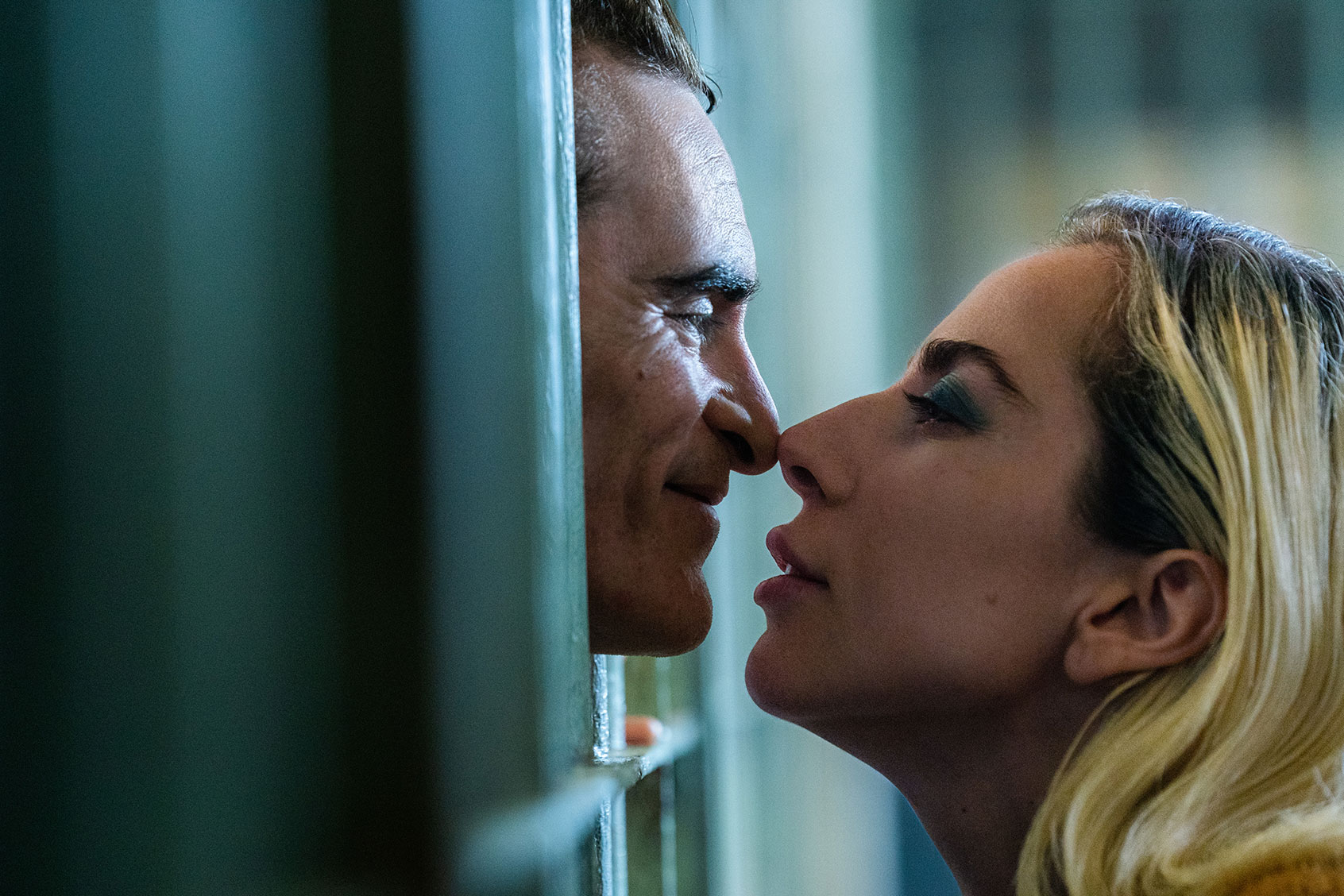
Joker: Folie A DeuxJoaquin Phoenix as Arthur Fleck and Lady Gaga as Lee Quinzel in "Joker: Folie A Deux" (Warner Bros. Pictures/Niko Tavernise/DC Comics)This is no mean feat, given that folie à deux is very difficult to study. Dr. Sanja Bjelan from the Clinical Center of Vojvodina' Psychiatry Clinic, who has written about folie à deux, told Salon that "regardless of the fact that it was first described back in 1860, the number of recognized and documented cases is still relatively small, so I consider the film (which I haven’t seen but now definitely plan to), to be a 'good' media attention that 'folie a deux' will attract." As Bjelan explained, folie à deux refers to situations in which delusions develop in an individual who is in close contact with one or more similarly deluded individual(s). For it to be folie à deux, the delusions must be similar enough in content to each other that one can reasonably deduce they were transmitted. Importantly, for folie à deux to exist, it must mean that "the disturbance is not better accounted for by another psychotic disorder (e.g., schizophrenia) or a mood disorder with psychotic features and is not due to the direct physiological effects of a substance (e.g., a drug of abuse, a medication) or a general medical condition."

Instead of stigmatizing mental illness, "Joker: Folie à Deux" becomes a meditation on what mental illnesses can reveal about our societies.

Dr. Giulia Menculini from the University of Perugia's Department of Psychiatry, who has also studied folie à deux, said that the "fixed and false beliefs" held by affected patients "are not necessarily bizarre and incoherent in their content and the transmission of a delusional belief from one individual to another. The contents of the delusions can be heterogeneous, so the clinical presentations of this disorder can be different — in some cases, since delusions are isolated symptoms, the disorder can remain undiagnosed for years. Generally, the relationship between the two individuals is very close (e.g., they are relatives) and one of them can be identified as 'dominant,' while the other one is more likely to present a dependent personality."

This is not precisely the way the condition is depicted in "Joker: Folie à Deux," although the creative liberties taken are mostly understandable. The premise of "Joker: Folie à Deux" is that Fleck — after spending several years in Arkham Asylum awaiting trial for five of his murders from the previous movie (there is a sixth for which he was never caught) — is now finally getting his day in court. As the legal drama unfolds, however, Fleck and Quinzel complicate things by sharing their mutual delusion of Fleck being Joker with as wide an audience as possible. The final act of "Joker" already established that thousands of people in this fictional universe identify with Fleck's antisocial behavior; the world is full of bullied victims like Fleck who wish they could one day lash out as he does. Because both Fleck and his followers suffer from genuine social and economic injustices, the movie shows a willful determination from all parties (led by Gaga's firecracker Quinzel) to embrace Fleck's delusion a la folie à deux.


Want a daily wrap-up of all the news and commentary Salon has to offer? Subscribe to our morning newsletter, Crash Course.


While only Quinzel and a handful of fellow Arkham inmates ever get personally close enough to Fleck to be direct recipients of his Joker fantasy in the manner of literal folie à deux, Fleck channels an energy of sincere social outrage, one that he can barely articulate but eloquently expresses through his mannerisms and behaviors whenever he assumes the Joker character.

Instead of stigmatizing mental illness, "Joker: Folie à Deux" becomes a meditation on what mental illnesses can reveal about our societies.

"The main point of depicting mental health issues — and particularly, severe mental illnesses such as schizophrenia spectrum disorders — in media is to avoid the stigmatization of psychiatric disorders," Menculini told Salon. "Indeed, talking about nosographic and diagnostic categories leads to a generalization of these conditions, while we are supposed to focus on people rather than on 'illnesses.'" Menculini urged the public to not equate mental health issues with the idea that a person is "harmful for the society," but rather that they are simply unique in often-innocuous ways that society should try to accommodate. "Many factors acting at a societal level influence the development and the course of mental disorders, but their consequences on the society are not necessarily related to being 'dangerous' or acting in violent ways towards others," Menculini said. "The media should help a positive vision of psychiatry, which needs to be reshaped as a medical and human discipline offering instruments to accurately diagnose specific conditions, as well as evidence-based treatments."

It is to the movie's credit that it foregoes the traditional action-oriented choices associated with the comic book genre.

Not only does "Joker: Folie à Deux" avoid stigmatizing mental illness, it actually includes several scenes that will ring true for those who struggle with psychological disorders. There is the doctor who deems a patient is "faking it" based on the vibes they give off, the supposed advocates who condescend instead of listening, the people who exploit an individual's quirks while they struggle for their own amusement. While "Joker" showed these things to create an archetypal origin story for Fleck — the bullied loser with mental problems finally snaps — the sequel examines these themes as ends worth exploring in their own right. The end result is a cry for compassion, one most poignantly expressed in a scene where Fleck confronts his former friend and co-worker Gary Puddles (a powerfully understated Leigh Gill) as he testifies about a murder he witnessed Fleck commit. Clearly suffering from PTSD and grieving the loss of his erstwhile friendship with Fleck, Puddles' words to Fleck are the unexpected fulcrum upon which both the plot and the story's larger themes rest. Without going into spoilers, suffice to say that prior to this scene part of the shared delusion held by Fleck and his supporters is that Jokers only strike out at the strong on behalf of the weak; after that scene, the moral foundation of the entire Joker fantasy starts to crumble, a development that profoundly impacts Fleck himself.

Yet long after viewers of "Joker: Folie à Deux" see the end credits for the first time, the real suffering of those with mental illnesses — and the desires that cause their ailments to become contagious — will continue to linger. It is to the movie's credit that it foregoes the traditional action-oriented choices associated with the comic book genre and instead opts to be a thoughtful look at society's real and prevalent misunderstanding of mental illness. For all of this to amount to more than simple entertainment, however, audiences will need to take away from the movie more than whether they simply liked or disliked it.

"The movies may not be able to highlight the multifactorial causation of these illnesses," Ravichandra Karkal, a consultant psychiatrist and psychotherapist from Yenepoya Speciality Hospital who has studied folie à deux, told Salon. He added as examples that "genetics and internal psychological processes are difficult to portray on the screen. The depiction of mental illness in movies invariably involves violence in some form." Most people with these mental illnesses, however, will never engage in violence whatsoever.

"In reality, many with these disorders suffer in silence for years," Karkal said.

New Woodward book: Trump secretly gave Putin COVID supplies — repeatedly called him since leaving WH

Former President Donald Trump has had multiple private phone calls with Russian President Vladimir Putin since leaving White House in 2021, according to a CNN report citing longtime journalist Bob Woodward's new book.

In the book, titled “War,” Woodward writes there have been "maybe as many as seven" private phone calls between the two men, according to a Trump aide. The former president also sent Putin COVID-19 tests for his own personal use, according to the aide.

The same aide was told to leave the room in Trump’s Mar-a-Lago residence so the former president could have a “private phone call” with the Russian president, Woodward recounts in the book. 

Spokesman Steven Cheung told The Hill “None of these made up stories by Bob Woodward are true.” 

The book, a copy of which was obtained by CNN, also includes a behind-the-scenes look at President Joe Biden's administration as it navigated unprecedented international crises, including the United States’ withdrawal from Afghanistan and Russia’s invasion of Ukraine. 

Woodward interviewed dozens of sources to explore Biden’s personal battles and revealed the president’s confrontational interactions with some of the world’s most infamous leaders. 

Before Russia invaded Ukraine in February 2022, Woodward writes that the Biden administration didn’t really believe the invasion would happen. When they realized it was, in fact, imminent, Woodward writes that Biden was shocked.

“Jesus Christ! Now I’ve got to deal with Russia swallowing Ukraine?” Biden said.

When Vice President Kamala Harris tried to warn Ukrainian President Volodymyr Zelenskyy, he didn’t believe her, Woodward writes.

After Israel began the invasion of Gaza on Oct. 13, 2023, Woodward writes that Biden had many arguments with Israeli Prime Minister Benjamin Netanyahu over his handling of the war, despite the United States supporting Israel publicly. 

“Bibi, you’ve got no strategy,” Biden told Netanyahu during a phone call in April, Woodward reports. 

After an Israeli airstrike killed a top Hezbollah official in Lebanon in July, Biden exploded. “Bibi, what the f**k?” he yelled at Netanyahu, Woodward writes.

“You know the perception of Israel around the world increasingly is that you’re a rogue state, a rogue actor,” Biden said to Netanyahu.

“War” is set to be released Oct. 15.

As Yelp turns 20, online reviews continue to confound and confuse shoppers

For the past 20 years, Yelp has been providing a platform for people to share their experiences at businesses ranging from bars to barbershops. According to the company, in that time the platform has published 287 million user reviews of over 600,000 businesses.

There's a reason review sites like Yelp are so popular. No one wants to spend their hard-earned money on a dud product, or fork over cash for a bad meal. So we'll seek advice from strangers and use various clues to judge if a particular review is authentic and reliable.

            An online 'four star' review reading, 'Show up early and take advantage of their sauna, showers and fruit bar before your massage.'

The very first Yelp review was a four-star review of Kabuki Springs & Spa, published on Oct. 12, 2004. Yelp
           

But sometimes these cues can lead shoppers down the wrong path. Other times, the reviews are simply fake.

I'm a linguist who studies "word of mouth," or what people tell each other about their experiences. Advances in text analysis have allowed researchers like me to detect patterns and draw conclusions from millions of product reviews.

Here are some key findings from research that I and others in my field have conducted:


Signs of foul play

How can you tell if the review you're reading is sincere?

Competition might sometimes push businesses to pay people to compose positive reviews for their products or negative reviews for competitors. Bots can also manufacture fake reviews that sound like they've been written by humans.

As a result, fake reviews have become a big problem that threatens to delegitimize online reviews altogether.

For example, a recent study estimates that fake reviews compel consumers to waste 12 cents for every dollar they spend online.

The reality is that people do a pretty poor job at discerning a fake review from a real one. It's essentially a coin flip – studies have shown that shoppers can correctly identify a fake review only half of the time.

Researchers have also tried to identify what characterizes a fake review. They've proposed that those that are too long or too short, in addition to those that don't use the past tense or a first-person pronoun.

Yelp has long been well aware of the issue. The company developed an algorithm that identifies and filters out "unhelpful" reviews – and that includes reviews that are too short.

It's important to think about the difference between how you might write a review after you've tried a product, or if you're coming up with something out of thin air.

In a 2023 study, my colleagues and I suggested that the main difference lies in whether specific language is used. For example, a real review will contain words that are more concrete and describe the "what, where, when" of the experience.

By contrast, if someone hasn't actually stayed at, say, the hotel they are reviewing, or didn't dine at the restaurant they are writing about, they'll use abstract generalities loosely related to the experience.

It's the difference between reading, in a review, "The room was clean and the beach was nice" and "The room was so clean, we felt like it was new. A sandy beach was steps away, which allowed us to easily take a dip after our hike. The shimmering ocean water also made the view from the window special."


Real reviews can still mislead

Even if all fake reviews were filtered out, do product reviews still help you make better decisions?

As is often the case in marketing research, it depends.

Researchers have delved into this question for years and can point to a variety of review features that can help your decision making.

For example, you might assume that if you've read a few reviews for a product, and they are similar to each other, this means there is a consensus about the product. Indeed, studies have shown that similarity across opinions is more likely to make readers more certain.

My research shows that similar reviews increase consumer certainty about the product. However, I've also found that these similar reviews are more likely to be written by consumers who are less certain about their experience with the product. It's likely that they simply repeated what others said in their reviews, pulling from those reviews to craft their own.

This creates a paradox. Readers of reviews that sound similar will be more certain that they're making the correct decision, even as the writers of those same reviews were less certain. At the same time, reviews that differ from each other will elicit hesitancy in readers, even though the writers of the review were in fact more certain about their experiences.

The text isn't the only element that influences readers. In ongoing research, I discovered that the sheer number of available reviews on a platform can influence how you perceive each individual review.

So, if you're reading a review and it is one of, say, 1,572 reviews, you'll think it is a more credible review than if that same review was one of, say, 72 reviews.

This might seem illogical, but it can be explained by the human tendency to take quantity as a sign of quality: If a product has many reviews, this could mean that it's popular and that many people have purchased it. A halo effect occurs, and you then subconsciously believe that everything about the product – including its reviews – is better.

But for the most part, despite these issues and others, consumers still make better purchasing decisions with reviews than without them.

It's just a matter of knowing what to look out for.


Ann Kronrod, Associate Professor of Marketing, Entrepreneurship and Innovation, UMass Lowell


This article is republished from The Conversation under a Creative Commons license. Read the original article.

Why the James Webb Space Telescope has been a gift to humanity

As the finger-like celestial objects seem to grasp into the heavens, the Pillars of Creation are almost impossible to adequately describe with human language. Located in Eagle Nebula in the Serpens constellation, the clusters of cool interstellar gas and dust appear splotchy in the Hubble Space Telescope's images, but thanks to the James Webb Space Telescope (JWST), the Pillars truly appear like solid columns.

With a normal earthbound telescope, one can only see the Serpens constellation in the northern part of the celestial hemisphere. The breathtaking beauty of the Pillars, which humanity can now appreciate in even finer detail, only became evident to those whose eyes turned toward the heavens within the last few years.

This is just one of many gifts the JWST has bestowed on humanity. One of the biggest fans of the next gen telescop is Ethan Siegel, a theoretical astrophysicist who used to teach at the academic level, but today most people know him for his work outside of the classroom as a science writer, especially his writing about space. Siegel's new book, "Infinite Cosmos: Visions From the James Webb Space Telescope," was released on Oct. 8th.

Good science writing is a fine balancing act between not speaking over the heads of laypeople and not insulting the intelligence of experts. Siegel achieves that whether explaining inflation prior to the Big Bang or penning a book on humanity's lifelong quest to understand the universe beyond our solar system, Siegel is adept at breaking down complex concepts in compelling yet accessible prose. In the past he has spoken with Salon about everything from debunking UFO hoaxes to understanding Dyson spheres.

Salon spoke with Siegel about how the JWST has challenged dominant theories about cosmology, consistently presenting mind-boggling images that defy explanation, as well as why space is for everyone, regardless of political affiliation or creed.

The following interview has been edited for length and clarity.

Which images from this book are your personal favorites? 

From a visual point of view, there are a number of stunning ones. I absolutely love the JWST [James Webb Space Telescope] images of the Pillars of Creation. We have pictures of the telescope while it was under construction as well. There is a picture of the ISIM module, which is the Integrated Science Instrument Module. This is a part of the telescope you don't normally see. It is gold in color, so it isn't just the JWST team mirror that's gold, but the instrument module itself is also gold. And I was really excited to get to see that, because that was a surprising one to me.

Pillars of CreationImages of the Pillars of Creation taken from NASA's Hubble Space Telescope in 2014 (L) and a new, near-infrared-light view from NASA’s James Webb Space Telescope (R) (NASA, ESA, CSA, STScI)I really like the images we have of the sunshield. That's the novel technology that keeps JWST so cool in the shade. I had never seen before images of JWST as it was transported and stowed for launch, and that was astonishing to see as well. As far as the science images goes, I thought the first light image which we have in detail that has never been published before is in there. And that is really spectacular for showcasing just how good JWST's eyes are.

There are also some images that you may not have heard that much about. I love a deep field image that shows the most distant galaxy cluster we've ever seen.


Want more health and science stories in your inbox? Subscribe to Salon's weekly newsletter Lab Notes.


"It is the largest, most sensitive space observatory ever built, and because of that, it has required new technologies that never existed before."

That's fascinating. I have to say, even though this is not a political book, when I'm reading anything that's about federally funded technology and how it advances our understanding of science, I feel this need to ask, do you feel that people should appreciate how this telescope exists because of, for lack of a better word, the military-industrial complex? 

I would go on to say that, when it comes to exploring the universe, we are limited in what we can do as individuals. It takes an enormous amount of resources and a tremendous number of people working together with a sustained investment to create something and to run and to launch and deploy and calibrate and keep maintaining something like the James Webb Space Telescope.

When you talk about it, I don't necessarily see that the military-industrial complex made this, but I do see that this took a sustained investment from the government, from its aerospace partners and from all of the scientists, engineers and technicians involved, all to bring something like this to fruition. I think what we're witnessing is sort of a real crown jewel of what humanity can achieve if we collectively invest resources in the endeavor of science for the good of us all.

Herbig-Haro 211; HH 211; young starNASA’s James Webb Space Telescope’s high resolution, near-infrared look at Herbig-Haro 211 reveals exquisite detail of the outflow of a young star, an infantile analogue of our Sun. (ESA/Webb, NASA, CSA, Tom Ray (Dublin))This then goes back to the question of, "What are the major achievements of this particular telescope? Can you explain how James Webb is a breakthrough compared to other telescopes that have been developed?"

For one thing, it is the largest, most sensitive space observatory ever built, and because of that, it has required new technologies that never existed before. It was designed and built — such as the folding segmented mirror, such as the five-layer sunshield and such as the science instruments that are onboarded — all of those represent newly-developed technologies. And because of that, because we have a new telescope with larger aperture, high-precision sensitive wavelengths and new instruments, we were able to discover a whole slew of new things about the universe that we never knew before.

These include the most distant galaxy cluster; it includes classes of objects like what we call JuMBOs, which stands for "Jupiter Mass Binary Objects." We saw star forming regions where you will have stars that form and planets form around them. We did not know we would find giant planets forming without parents stars at all, much less that we would see giant stars forming in pairs or binary systems with no stars at all. One of the most fascinating things that JWST has shown us, that I'm excited we do get to talk about in the book, is that around a nearby young star, a star called Fomalhaut, we don't see just an analogy of the solar system where you have planets and an asteroid belt and more planets and a hyper belt. We found in that system that there is a third belt, there is an intermediate belt in there. We never saw an intermediate belt before. We did not know that such things could exist.

And now we have to rethink our story about how planets and planetary systems form is our solar system typical or is the Fomalhaut system typical? We don't even know anymore, what is the most common configuration for planetary systems in the universe? 

Do you worry about the future of our ability to gather information about science if the wrong political party wins this election and guts a lot of the vital funding to these scientific projects? 

Well, I would like to say first off, that science is and should be for absolutely everyone, regardless of your political affiliation. If you are interested in learning about the joys and wonders of the universe, this is for you.

SMACS 0723NASA’s James Webb Space Telescope has produced the deepest and sharpest infrared image of the distant universe to date. Known as Webb’s First Deep Field, this image of galaxy cluster SMACS 0723 is overflowing with detail. (NASA, ESA, CSA, and STScI)As far as the endeavors we already have, the James Webb Space Telescope is already a tremendous success. It was planned to have a science lifetime of between five and a half and 10 years, but because of an exquisite launch, because of how perfectly things went during the launch of the telescope, they were able to conserve so much fuel that we are now expecting a 22 year science lifetime for JWST. So the good news is what we're talking about as far as science funding goes, if they got science funding, that that will affect future missions. 

But the James Webb Space Telescope is already up there and it already has most of its science lifetime still in front of it. So science will continue on, regardless of the outcome of the next election. But with that said, it's really important that the James Webb Space Telescope not be the last great flagship mission for NASA astrophysics. That this is an example of what we can do when we invest the right resources in it. And I would love to see the James Webb Space telescope usher in a new generation of NASA great observatories.

We need your help to stay independent

Do you think that there is an anti-science tendency in American politics today? 

I think there are elements of that. You can certainly see when people talk about alternative facts, when people talk about their own preferred theories or ideas, we saw this a lot during the pandemic, with a huge rise that still exists of anti-vaccine sentiment. I think in terms of science, a lot of people don't understand how much their daily lives are dependent on the science and technology that has been developed over the 20th and 21st centuries. I'm certainly aware of a large anti-science element, and certainly it's attractive when you're dealing with complex issues to look to simple explanations, even if they're incorrect, but that has never held any allure to me. I would rather know the truth about what is out there in the universe, about what goes on out there in the universe. 

This is why we look, this is why we explore, because we know there is more to learn out there. It's up to us to say, this is worth something. This spirit of investigation, this looking out to the universe itself to nature itself for the answers to our most deeply held questions, we're never going to answer these questions by simply saying what we think or looking at what's already known. If we want to learn more learn, we have to inquire. We have to ask questions to the universe, in novel and more powerful ways.

Read more

on astronomy:

Sally Field shares story of “life-altering” illegal abortion she had in Mexico at 17

Sally Field has opened up about a traumatic abortion experience she had as a teen, in an effort to support women's reproductive rights during this election cycle.

In a personal video shared to Instagram, the Academy Award-winning actress reflects on receiving an illegal abortion in the '60s in Tijuana before Roe v. Wade was passed, saying, “I still feel very ashamed of it because I was raised in the ‘50s and it’s ingrained in me. It was beyond hideous and life-altering.”

As a child of a less progressive era, Field described, "I had no choices in my life. I didn't have a lot of family support or finances. I didn't know what I was gonna be, and then I found out I was pregnant."

Field recalled that she was able to get the abortion because of her family doctor. Her mother, the doctor and his wife drove to Tijuana for Field to receive the procedure.

"We parked on a really scrungy looking street. It was scary," she says. "And he parked about three blocks away and said, 'See that building down there?' And he gave me an envelope with cash and I was to walk into that building and give them the cash and then come right back to him."

She recalled that during the procedure, she was given "a few puffs of ether" which numbed parts of her body but she was not under anesthesia. She shared that in the harrowing experience, she was molested. 

Not long after her experience, Field would headline the 1965 ABC sitcom "Gidget." She said she wanted to share her story because these are “the things that women are going through now,” referencing the increasing restrictions on reproductive rights since the repeal of Roe.

https://www.instagram.com/p/DAymdM8udzI/

Harris pulls ahead of Trump in latest NYT poll as more voters see her as the candidate of “change”

Vice President Kamala Harris has pulled ahead in the latest New York Times/Siena College poll, the first time she’s done so since President Joe Biden stepped down as the Democratic nominee in July.

Harris leads GOP nominee Donald Trump 49-46 in the poll, with more voters (46%) saying the vice president represents "change" for the country compared to Trump (43%). Among non-white voters, 61% said Harris is the "change" candidate, compared to just 29% who said the same of Trump.

 In a previous New York Times/Siena College poll conducted in mid-September, Harris and Trump were tied at 47-47. The Democratic nominee has since made gains with Republican voters, a strategy her campaign has been pushing for months. In the latest poll, 9% of Republicans said they would vote for Harris, a 4 point increase from last month.

With just four weeks left until November’s election, both candidates have focused their campaign efforts on critical battleground states.

On Saturday, Trump held a rally in Butler, Pa., where he previously survived an assassination attempt. Harris, meanwhile, visited North Carolina, another crucial battleground state, to survey damage from Hurricane Helene. She is also increasing her media appearances.

On Sunday, the vice president was interviewed on the popular podcast, “Call Her Daddy,” which is the top podcast among women, according to Spotify. She will also appear on Howard Stern’s radio show and “The Late Show” with Stephen Colbert. 

“Harris has to make strategic decisions about every second of her time these last few weeks. You just can’t capture undecided voters by sticking with the traditional press. So by necessity, you have to spend time in other places,” a Democratic strategist told Politico. 

The Harris campaign has also leaned into attracting young voters online by sharing videos of the 59-year-old dancing, laughing and playing on memes. 

Though Trump and his allies have endlessly made fun of her laugh and smile, 43% of voters said Harris is “more fun” than Trump, according to the Times/Siena suvey. She was also seen as more trustworthy and honest. 

Diddy’s mom comes to his defense amid sex abuse allegations, calling them “lies”

Janice Smalls Combs, mother of Sean "Diddy" Combs, is defending her son despite the growing legal troubles Diddy faces as he awaits the start of a federal sex trafficking trial.

The hip-hop billionaire was indicted on charges of racketeering conspiracy, sex trafficking and transportation to engage in prostitution earlier last month. He has pleaded not guilty to the charges. Diddy also faces countless sexual assault lawsuits from a sizable group of 120 people who have come together to sue the former hip-hop mogul for misconduct, CNN reported.

Despite the legal and public pressure around Diddy, Janice posted a statement to Instagram on Sunday through her attorney to show support for her son. 

“I come to you today as a mother that is devastated and profoundly saddened by the allegations made against my son, Sean Combs,” she wrote. “It is heartbreaking to see my son judged not for the truth, but for a narrative created out of lies . . . To bear witness [to] what seems like a public lynching of my son before he’s had the opportunity to prove his innocence is a pain too unbearable to put into words.”

Janice continued, "Like every human being, my son deserves to have his day in court, to finally share his side, and to prove his innocence."

Regarding the video of Diddy physically assaulting ex-girlfriend Cassie Ventura in 2016, his mother comments, “My son may not have been entirely truthful about certain things, such as denying he has ever gotten violent with an ex-girlfriend when the hotel’s surveillance showed otherwise."

"I am not here to portray my son as perfect because he is not," Janice furthers. "He has made mistakes in his past as we all have."

Diddy has been denied bail twice and will remain imprisoned until the unscheduled trial begins.

https://www.instagram.com/p/DAzDBw7p2pL/?img_index=1

CBS details Trump’s “shifting explanations” for why he backed out of “60 Minutes” interview

Before canceling his appearance on “60 Minutes” last week, former President Donald Trump demanded an apology from the show, CBS News anchor Scott Pelley revealed on Monday.

“It’s been a tradition for more than half a century that the major candidates for president sit down with '60 Minutes' in October,” Pelley said. “In 1968, it was Richard Nixon and Hubert Humphrey. This year, Vice President Kamala Harris and former President Donald Trump accepted our invitation.”

When CBS first announced that Trump was backing out of the interview on Oct. 1 was, his campaign director Steven Cheung responded with a lie, according to the network, falsely claiming that Trump had never agreed to do the interview in the first place. 

“There were initial discussions, but nothing was ever scheduled or locked in,” Cheung wrote on X.

But Pelley, detailing CBS's correspondence with the Trump campaign, said the sit-down interview was originally supposed to be held at Trump’s Mar-a-Logo residence in Florida. In addition, Trump’s campaign asked whether “60 Minutes” would meet Trump in Butler, Pennsylvania, where the 78-year-old faced an assassination attempt at one of his rallies back in July. CBS agreed, Pelley said.

Then came the Trump campaign's efforts to back out amid growing concerns over the candidate's mental fitness for office, with Pelley describing a series of "shifting explanations" for why the Republican nominee could no longer participate.

First, Trump's campaign complained that CBS would fact-check the interview (it fact checks everyone, Pelley noted). Then Trump said he wanted an apology from the show for his 2020 interview with host Leslie Stahl, when he walked out mid-interview after getting frustrated with her questions.

Pelley’s account of the Trump campaign's backtracking came right before “60 Minutes” aired Bill Whittaker’s interview with Vice President Kamala Harris, who has a flurry of media appearances scheduled this week.

“So, tonight may have been the largest audience for the candidates between now and election day,” Pelley said. “Our questions addressed the economy, immigration, reproductive rights, and the wars in the Middle East and Europe. Both campaigns understood this special would go ahead if either candidate backed out.”

Whittaker grilled Harris on a number of issues including her economic plans, gun ownership and immigration. When asked about Trump’s refusal to participate, Harris said voters should instead just watch his rallies. 

“You're gonna hear conversations that are about himself and all of his personal grievances,” Harris said.


“Directed by the Trump White House”: Senate Dem report suggests FBI’s Kavanaugh probe was a “sham”

Fake news, the former president called it.

“NBC News incorrectly reported (as usual) that I was limiting the FBI investigation of Judge Kavanaugh, and witnesses, only to certain people,” Donald Trump posted on Twitter, now called X, in Sept. 2018. “Actually, I want them to interview whoever they deem appropriate, at their discretion. Please correct your reporting!”

NBC News would in fact go on to report a few days later that Trump’s online directive had no impact in real life. In a report immediately following Trump’s corrective, the outlet noted that the FBI had received “no new instructions from the White House” and that the former president's claims aside, there were indeed limits imposed on the bureau’s investigation by the Trump White House, which, for example, prohibited an interview with a woman accusing the future Supreme Court justice of sexual misconduct, as well as Kavanaugh’s high school classmates.

Trump’s comments came after Christine Blasey Ford publicly accused Kavanaugh of assaulting her at a high school party decades earlier. Following that charge, the bureau told Sen. Sheldon Whitehouse, D-R.I., that it had received more than 4,500 tips regarding the conservative justice as part of the bureau’s “limited inquiry,” which ended on Oct. 4, 2018. Tips that were “relevant,” it said, were forwarded to the White House.

What the FBI did not say is that it failed to investigate a single one of those tips, according to a report from the Rhode Island Democrat that was first shared Tuesday with The Washington Post. According to the Post’s summary of the report, Trump’s claim that there would be a broader investigation with no limits imposed by the White House “came as a surprise to the FBI,” which continued to limit the scope of its inquiry in accordance with dictates from the White House counsel’s office.

Of the 4,500 tips that the FBI received, “None were investigated or even screened for indicia of credibility,” according to the report. In fact, a day before Trump denied “limiting the investigation,” his counsel instructed the FBI to forward those tips to the White House “without further investigation, no matter how reliable or corroborative the tips seemed,” the report states. The Trump administration also “declined to authorize the FBI to interview witnesses and pursue tips that might have uncovered the corroborating information some senators later claimed was lacking.”

Kavanaugh was confirmed by a 50-48 vote on Oct. 6, 2018.

We need your help to stay independent

In a statement, Whitehouse accused the FBI of conducting an inquiry so lacking that it was “unworthy” of the Senate. Contra claims that the inquiry was “by the book,” he said that there was no book upon which to rely: every step of the investigation was dictated by the Trump White House.

“This report shows that the supplemental background investigation was a sham, controlled by the Trump White House, to give political cover to Senate Republicans and put Justice Kavanaugh back on the political track to confirmation,” Whitehouse said. “The lack of FBI investigative standards helped the Trump White House thwart meaningful investigation of the allegations against Kavanaugh, denying senators information needed to fulfill their constitutional duties.”

The FBI declined to comment on the report itself, but a spokesperson told Salon that the bureau followed the same process for its Kavanaugh inquiry as it does for other so-called supplemental background investigations.

"In these investigations, the FBI follows a long-standing, established process through which the scope of the investigation is limited to what is requested," the spokesperson said.

But Deirdre Schifeling, chief political and advocacy officer at the ACLU, told Salon that the report raises serious questions about the independence of the FBI under the Trump administration.

"A hallmark of authoritarian governments is the abuse of government power to protect friends and punish opponents," she said.

Lawyers for Blasey Ford, meanwhile, said in a statement that they were disappointed but not surprised by the report’s findings.

“The congressional report published today confirms what we long suspected: the FBI supplemental investigation of then-nominee Brett M. Kavanaugh was, in fact, a sham effort directed by the Trump White House to silence brave victims and other witnesses who came forward and to hide the truth,” attorneys Debra Katz and Lisa Banks said.

Think you’re “bad with money?” Reduce financial stress without blaming yourself

I, like many of my peers, came into adulthood assuming I was “bad with money.” I spent my 20s accruing credit card debt and student loans, working low-paying jobs with no retirement plans or health insurance, not thinking about investing and never checking my credit score.

I didn’t get a financial education in school. I grew up in a working-class town surrounded by adults scraping by week to week and striving to lift themselves into the middle class. Responsible money management, to me, seemed to involve a lot of restriction and sacrifice I could never sustain. Or some gems of knowledge I’d never understand. Some people could achieve wealth; I was never going to be one of those people. I was destined to scrimp and save and worry about money for the rest of my life.

After about 10 years of this fraught relationship with money, I started working in personal finance media — a job that came with all the trappings of responsible adulthood and a masterclass in our financial products and systems. I learned I wasn’t destined to be “bad with money” — but I lived in a system that survived by keeping me (and many others) in that mindset.

“Shame often stems from societal and cultural expectations, particularly the pressure to have it all together,” says Kristie Tse, a psychotherapist and founder of the online therapy practice Uncover Mental Health Counseling.

Tse points out a key way shame plays into our cultural relationship with money. “Financial struggles can be perceived as personal failings, leading to deep-seated shame.”

Until learning how our financial systems work, I took for granted the way our culture individualizes money. When I struggled to keep up, I internalized all of the responsibility and shame that came with it. When I did well, I took all the credit. As I learned more about how these products and systems work, though, I realized just how much they set up so many people to be “bad with money.”

For example, I had a low credit score despite paying all of my bills and rent on time every month for years. It didn’t improve when I started repaying credit card debt or my student loans. It didn’t start rising until I opened a secured credit card — then it shot up about 100 points in just a couple of months. Despite being responsible enough with money to hold a job and keep a roof over my head, I could only benefit from this key metric of my financial life once I had access to the financial products it was built to support.

We need your help to stay independent

Typical financial advice perpetuates an emphasis on individual responsibility and ignores these kinds of inequities built into our financial systems. It insists that a low credit score reflects financial irresponsibility, for example, but ignores the ways credit scoring excludes so many folks — like renters, whose payments aren’t reported to credit bureaus; low-income folks who can’t afford the collateral for secured credit; Black Americans, who were deliberately excluded from credit and wealth-building for centuries; or LGBTQ+ folks whose protection from blatant discrimination in lending wasn’t codified until 2021.

“When I look at some of the attitudes that Black Americans have to financial institutions, I have to affirm or validate that reaction as being justified, because the financial services space has not historically been a friend to Black Americans,” says Rahkim Sabree, an accredited financial counselor with a focus on overcoming financial trauma.

Sabree notes the way community and family histories can travel through DNA and cultural experiences to pass financial trauma and beliefs across generations.

Those experiences, he says, “are going to all have a profound impact on how we Internalize our relationships with money.”

Regardless of your financial circumstances, so much of financial stress is the feeling that you’re not doing the so-called right things with money. You feel like you should spend less, save more or invest smarter, for example. You experience the stress of constantly trying to keep up with what you believe you should be doing — even if typical financial advice isn’t in line with who you are or what you’ve experienced.

Sabree points out that we often ignore the fact that financial advice isn’t delivered with us in mind. We try to follow the tenets of popular financial gurus, which shove aside the lived experiences of whole communities. Much of the work he does is to help folks recognize that dissonance and validate the impact their experiences have on their relationships with money.

That validation, he says, is a key step to casting aside the shame our culture thrusts onto your relationship with money and moving forward in a way that makes sense for you. Having these candid conversations about the obstacles that exist in our systems helps him empower the clients he works with.

Sabree says the point of validating experiences of discrimination isn’t to make you feel like a victim. Rather, it’s to put you in a mindset of “expecting the setback” so you can navigate it rather than feel ashamed and disempowered by it.

“Building a healthy relationship with money starts with dismantling the myths and expectations that fuel shame and embracing a more compassionate, realistic view of one’s financial journey,” says Tse.

To reduce your financial stress, let go of the shame so much financial advice makes you feel. Understand that you live in a system that thrives on your taking full responsibility for your financial circumstances so you never turn a critical eye to the ways that system is to blame.

Next time you feel stressed about money, ask yourself what’s at play that’s out of your control, and what’s within your control to keep moving forward toward your goals. Instead of turning to conventional financial advice to ask “what should I do?” seek financial education to ask “how does this work?”

That lets you stop trying to follow financial advice that was never meant for you. When you understand how financial systems and products work — including the ways they’re designed to work for or against people like you — you can begin to understand how they’ve contributed to your experiences and circumstances and choose the next move that makes sense for you.

The problem with reporting on Donald Trump is the press never took him seriously

The way political journalism worked before Donald Trump seems quaint in retrospect. If it was a presidential election year, a reporter was assigned a candidate to cover. The first thing task was to contact the campaign and notify them of the assignment. If the campaign was serious, press credentials were issued to allow access to the campaign headquarters and into his — it was always a “he” — rallies. In the old days, if the paper or network you worked for was important enough, your pass would get you onto the “press plane” and the bus populated by the “Boys on the Bus,” in the words of the title of Timothy Crouse’s best-selling book on the way the press covered the 1972 presidential campaign. The “boys” were the other political journalists following the campaign, because with perhaps one or two exceptions, there were no female political reporters. 

You didn’t have to cover American politics very long to realize that politicians lied, prevaricated and said things that were demonstrably untrue all the time. It didn’t take much longer to learn that you weren’t there to report their lies. You were there to report what politicians said. You were, in effect, a stenographer. Lies, if they were remarked upon at all, were the domain of pundits.

As a political reporter, you could point to gaffes, however. Remember gaffes? A good part of the job of a political journalist was to endure hours and days and weeks and months of tedium on the campaign trail waiting for that ever-hoped-for moment when the candidate would make a gaffe and you were there to witness it and write about it. A candidate would sometimes say what we now call “the quiet part out loud,” expressing his real view that cutting taxes actually did affect the deficit, rather than give his talking point that tax cuts would raise revenues instead of adding to the deficit. A candidate might misspeak, or, as Edmund Muskie was said to have done in New Hampshire while running in the 1972 Democratic primary, break down in tears right there in front of the press, and everyone would run to the phones to call in this groundbreaking political moment that was certain to bury his candidacy, which it did.

If you were lucky after days and weeks and months on the road, you might be there when a candidate makes a mistake, saying he was in Des Moines when he was actually in Detroit. If a candidate told a lie out loud, it wouldn’t be called that, of course, because the press didn’t accuse politicians of lying back then. It would be called a “distortion” or even a “falsehood,” but never a lie. The way you couched the statement that wasn’t true would indicate the seriousness of its falsity. If a politician claimed that he had never been unfaithful to his wife, you would repeat that, but then maybe indicate that he had been seen “in the company of” another woman once or twice, hinting at his unfaithfulness. Incredibly, it once took a photograph of presidential candidate Gary Hart with Donna Rice, a young campaign worker, sitting on his lap, to disprove Hart’s denial that he was a “womanizer.” But just as incredibly, he wasn’t called a liar for claiming faithfulness that wasn’t there.

Those were the “before” days. It boggles the mind that we have been in the “now” days for more than nine years, since the twice-divorced platinum playboy descended the golden escalator in Trump Tower in 2015 and, unburdened by the more than two dozen women who had accused him of sexual harassment and sexual assault, greeted the political press who had gathered, they thought, to report that Donald Trump had announced his candidacy for president. 

Trump lied his way all the way into the last month of the 2016 presidential election before the New York Times deigned to use the words “lie” and “Donald Trump” in the same sentence.

He did much, much more than that, beginning with his lies about immigrants: “They are bringing drugs, they’re bringing crime and they’re rapists.” Who was this buffoon? was the reaction of the national media. No one had ever announced a political campaign like this. A few months later, I wrote this for the Village Voice about Trump: “What we are watching every day is ‘pageant Trump,’ and it’s why the national political press has been so confused. Covering him is like covering the Victoria’s Secret fashion show: It’s supposed to be hot and sexy and fun and irresistible, but it turns out to be just a bunch of pneumatic posing – all feathers and sequins and nylon and cheap lace from China, as sexless as one of Trump’s silent wives. Donald Trump is the Wonderbra of American politics. He pushes everything Up and Out and In Your Face. But you know what’s left when the Wonderbra comes off, don’t you? Donald Trump sure as hell does.”

I wrote that in January of 2016. The national media certainly didn’t know what to make of Trump, and neither did I, because at the same time, I saw him as a buffoon, the rest of the press saw him, and treated him like a uniquely “American” figure in politics, with his fake hair and his fake tan and his supermodel wife and his exaggerations and outrageous statements nobody in American politics had ever made before. 

See if how I described it way back then sounds familiar: “Trump says something outrageous, and his fans parrot him with outrage of their own. Then he escalates the outrage. He says John McCain is a pansy, and the pundits are shocked, but then it’s okay. Then he wants to register Muslims, and the pundits haul out their pocket Constitutions and wave them around, and then that’s okay. He promises to bring back waterboarding, and the pundits loose the dread words, George W. Bush, at him like poison arrows — and waterboarding goes back down the memory hole. He wants to ban all immigration by Muslims, and a couple of Ivy League law professors write op-eds saying it might not be all that illegal, and once again the pundits put down their pens.”

We need your help to stay independent

I’m going to go ahead and drag out that hairy old cliché, it was all downhill from there, because, God help us, it was.   Trump lied his way all the way into the last month of the 2016 presidential election before the New York Times deigned to use the words “lie” and “Donald Trump” in the same sentence. It created such an earthquake in American journalism that the Washington Post put the story of the Times' apparent transformation on the front page.

But what did calling Trump a liar in late September of 2016 accomplish? It didn’t keep him out of the White House. He won on those lies.  It hardly put a dent in his support during his time in the Oval Office…just barely enough for Joe Biden to squeak out a victory in 2020 after jaw-droppers like Trump saying over and over again that the COVID pandemic “is going away” and advocating using bleach and a veterinary drug called Ivermectin to “cure” COVID. 

Did hundreds of thousands of pandemic deaths stop him, even as the death toll climbed to over one million after he left office? No, he led a conspiracy to blame the pandemic on an evil combination of China and Anthony Fauci and then opposed every attempt by the Biden administration to bring the pandemic under control using masks and getting vaccinated. This year, he accepted the endorsement of the world’s biggest anti-vaccine conspiracy theorist and called him a national hero. And of course, he continues to push what is now known as “the big lie” that he won the 2020 election and has forced the rest of the Republican Party, including its most senior leaders, to join in his lie.

The New York Times this week finally published a front-page story calling attention to Trump’s age and pointing out how frequently Trump “has seemed confused, forgetful, incoherent or disconnected from reality lately,” complete with actual unhinged quotes from his rallies and a linguistic statistical analysis of Trump’s speech patterns and most frequently used exaggerations and lies. But it’s the next sentence in the Times story that, for me at least, says it all: Speaking of Trump’s erratic speech on the campaign trail, the Times said, “In fact, it happens so often these days that it no longer even generates much attention.”


Want a daily wrap-up of all the news and commentary Salon has to offer? Subscribe to our morning newsletter, Crash Course.


Nine long years in, the man who began his first campaign for president as a buffoon has become a caricature of a buffoon, but we, including the political press, are all so used to it by now that the New York Times calling attention to Trump’s obvious unfitness for office became a story covered by the rest of the political press. Why? Because the Times and much of the rest of the national media played such a large role in normalizing behavior that once would have been disqualifying on the day it occurred. 

Let’s go back to just two disqualifying things Trump did and said. In an interview at the Family Leadership Council in 2015, Trump said of John McCain, “He’s not a war hero. He was a war hero because he was captured. I like people who weren’t captured.” Later, after McCain died in 2018 and his funeral was being planned, Trump said, “We’re not going to support that loser’s funeral,” and asked why flags were being flown at half-mast. And then there was his reference to the war dead from World War II as “losers” and his refusal to attend a ceremony honoring French and American graves at the cemetery at Belleau Wood. Libeling American war heroes and calling them losers in years past would have ended any politician's career immediately.

The orange-haired buffoon who first ran for president in 2015 showed us over the years who he was, and still much of the press let him slide, perhaps because his entire political party not only let these outrages slide, they celebrated him for them.  A discussion of how 70 million Americans could have followed Donald Trump’s long descent through one disqualifying act after another — he’s been criminally convicted of multiple crimes by a jury of his peers, remember? — is one for another day. In 2016, I called him a “toy fascist.” He was the real thing, not a toy. I mistook a buffoon for a monster, and I will be eternally sorry for that.

America’s need-to-know basis makes “Call Her Daddy” as valuable to Kamala Harris as “60 Minutes”

Over the weekend, a gaggle of media establishment figures lost their collective crackers at the news that Vice President Kamala Harris sat down with podcaster Alexandra Cooper for an episode of “Call Her Daddy.”

The general tenor of this “how dare she” reaction is a version of the constant refrain the Harris campaign has heard since the vice president announced her candidacy in late July.

Following the generally jovial digs into the “Kamala is Brat” phenomenon came the aggressive suggestions about what Harris needed to do, the topmost being the requirement to sit down immediately with top TV anchors and other national news outlets.

When she didn’t meet those expectations, the chorus of complaints shifted to her inaccessibility. An August sit-down with CNN’s Dana Bash, with her running mate Minnesota Gov. Tim Walz beside her, was painted as a Milk Bone toss to a ravenous wolf pack – an amuse bouche too insubstantial to sate.

Harris has submitted to probing questions by mainstream journalists since then, including at a mid-September event sponsored by the National Association of Black Journalists. That received less coverage than a live-streamed celebrity-studded lovefest hosted by Oprah Winfrey and did nothing to quiet that noise.

The Democratic candidate has since agreed to radio interviews, appearances on local news and other podcasts, but “Call Her Daddy” makes another level of outreach. Cooper’s podcast was Spotify’s second-biggest in 2023 — surpassed in popularity only by “The Joe Rogan Experience” — and averages around 5 million listeners for episodes that don’t feature a presidential candidate.

Cooper refers to her following as her “Daddy Gang,” courting their tastes with topics that range from dating and sex to, lately, conversations about mental health and reproductive rights.

Some of the commentary class’ kneejerk reaction to Harris' decision to pitch Cooper was disdain. Sunday's Politico Playbook column inveighed against the “Call Her Daddy” announcement along with the rest of Harris’ scheduled appearances this week, declaring that Harris is “still largely avoiding the media.”

Harris’ media schedule this week includes her participation in a special Monday night edition of “60 Minutes,” with Bill Whitaker conducting a one-on-one interview.

Tuesday she’ll drop by “The View” as well as appear on “The Howard Stern Show” and “The Late Show with Stephen Colbert.” On Thursday, Univision hosts her in Las Vegas, NV., for a town hall. The Spanish-language network’s event with Donald Trump, originally scheduled to take place on Tuesday in Miami, was rescheduled to Oct.16 because of the intensifying weather conditions posed by Hurricane Milton.

One must cite the hypocrisy in expecting Harris to do things Trump is not doing and has never done.

Citing “60 Minutes” and Univision’s town hall as exceptions, the Politico column reads, “Let’s be real here: Most of these are not the types of interviews that are going to press her on issues she may not want to talk about, even as voters want more specifics from Harris. Instead, expect most of these sit-downs to be a continuation of the ‘vibes’ campaign Harris has perfected.”

That turned out to be an inaccurate prediction. The "Call Her Daddy" conversation was not the contentious tête-à-tête the chattering class has come to expect after decades of cable news bloviating somehow came to represent meaningful political coverage. Instead, the general consensus is that Cooper’s interview is admirably executed if not especially probing, guided by questions designed to elicit considerate answers.

In contrast, Whitaker posed his version of questions Harris already fielded during the debate and in previous interviews, except this time it's "60 Minutes" doing the asking . . . triggering the same indirect responses that were low on specifics. Many candidates employ a similar strategy, and by now Harris should have more concise answers to offer. Then again, if she keeps getting the same lines from different network anchors, there's little incentive to change up her replies.

Whitaker elicited the most natural reaction within that 20-minute segment by bringing up Harris' admission that she owns a gun. But Oprah Winfrey coaxed that out of her first, which offers a hint as to why Cooper's style resulted in a dialogue that didn't feel like a perfunctory performance. Cooper may not have pushed back on Harris' responses, but she did grant her the opportunity to speak about the policies that are most pertinent to the "Call Her Daddy" audience in human terms.

One must cite the hypocrisy in expecting Harris to do things Trump is not doing and has never done, which is to subject himself in equal balance to interviews with major broadcast network journalists and cable news channels that aren’t Fox, Newsmax, OANN or other right-wing media satellites.

In recent months, Trump has appeared on Theo Von’s, Logan Paul’s and Lex Fridman’s podcasts, and played nice with Fox News hosts including Greg Gutfeld, while backing out of the same “60 Minutes” special that features Harris.

Yet, when Trump stepped into the cloud of criticisms regarding Harris’ lack of media availability by setting up a press conference at Mar-a-Lago, every cable news channel raced to cover it, and few of the journalists from legacy media outlets asked questions of any value. This is not a one-time failure in this election cycle, but an ongoing issue that hasn’t been remediated since the 2016 presidential contest.

What has realigned is the information ecosystem. The successful rise of “Call Her Daddy” is part of that, much to the ire of hard news journalists and reporters.

Objectively speaking, I would prefer both presidential candidates subject themselves to heat tests by more hard news figures like Whitaker who, to his credit, tried to get real answers from Harris instead of accepting her pivots. I also recognize that Trump’s political ascendance erased every informational norm, including how the audience follows politics.

Certainly, this presidential campaign season has been atypical, even compared to 2016 and 2020. The news and information space is fractured and diluted. One of the key issues threatening our democracy is the citizenry's refusal to agree on a shared set of facts backed by empirical data.

We need your help to stay independent

The cable news audience plays into that problem, divided between liberal (MSNBC) and right-wing slants (Fox News), along with whatever CNN is supposed to be. Those viewers already know who they’re voting for.

Meeting disaffected voters where they are instead of expecting them to show up to their parents’ newscasts is simple pragmatism.

Meanwhile, Harris has had just over 100 days to build policy platforms that can withstand some level of expert analysis and scrutiny, marshaling her campaign with lightning speed and mounting a campaign tour to revitalize a Democratic base that was resigned to failure. Courting a press that has not been as willing to sane-wash her flubs as it has done for Trump came second to all that, which may not be desirable, but is understandable. (Even days ago, a CBS Weekend News segment characterizing Trump’s second rally in Butler, Penn., as having what anchor Jericka Duncan described as “a unifying message” without its coverage showing anything to back that up.)

Meeting disaffected voters where they are instead of expecting them to show up to their parents’ newscasts, however, is simple pragmatism.

Podcast listeners are commonly understood to have tuned out hard news in favor of like-minded communities, which includes Cooper’s primarily Gen Z Daddy Gang listenership. The “Call Her Daddy” host tailors her discussions to address that demographic’s main concerns which, as Cooper says in her introductory explanation/defense of why she agreed to interview Harris, focuses on “women and the day-to-day issues that we face.” 

Harris’ 40-minute “Call Her Daddy” episode was recorded last Tuesday and edited before the Playbook column came out, which must have made both Cooper and the campaign smirk.

Cooper, in her way, fulfilled a main demand that reporters have accused Harris of leaving unaddressed: It helped an underserved audience get to know Harris in a more personal way while drilling into her key policy positions on reproductive rights, skyrocketing housing costs and Trump's claims to be a protector of women.

Of note were segments where Harris discussed what legislators’ abortion ban exceptions to “save the life of the mother” means in practical terms, using the story of Georgia’s Amber Thurman, who was denied care for blood poisoning after leaving Georgia to seek an abortion until it was too late for doctors to save her. “She’s almost dead before you decide to give her care,” Harris fumed.

She also points out that she is the first sitting vice president to visit a reproductive health clinic, in a way that reminds listeners of her significance as a woman running for president without specifically referring to her gender.

And in her rebuttal to Arkansas Gov. Sarah Huckabee Sanders' dig at Harris' supposed childlessness, telling a Trump rally crowd that her kids keep her humble before adding, “Unfortunately, Kamala Harris doesn’t have anything keeping her humble,” Harris dropped a quotable bit we hadn't heard before.

“I don’t think she understands that there are a whole lot of women out here who, one, are not aspiring to be humble,” she told Cooper. “Two, a whole lot of women out here who have a lot of love in their life, family in their life, and children in their life.”


Want a daily wrap-up of all the news and commentary Salon has to offer? Subscribe to our morning newsletter, Crash Course.


Cooper also gave Harris space to talk about her upbringing in a way that adds context to those policy positions, which some conservative voices might downplay as softball pandering. Some of those same voices have praised Trump’s tour of the podcasting and YouTube “manoverse,” as the New York Times calls it, as a brilliant strategy to court the young male vote.

For a better understanding of why this biographical touch matters, on Monday NPR political reporter Elena Moore posted these audience stats from Edison Research on X: Edison Research: 76% of Cooper’s audience is under 35.

Almost of quarter of her listeners identify as Republican, with a fifth identifying as Independent. Her geographical breakdown is even more telling, with 34% percent of her listenership hailing from southern (read: red) states and 20% living in the swingy Midwest.

A common critique of Harris’ decision to appear on “Call Her Daddy” is the data-informed assumption that Harris has the votes of young women locked up. Within Cooper’s audience, surely, are a few persuadable undecideds who may determine which way this close election breaks.

Harris is telling voters who she is in the broadest way possible.

Between this and the fact that, as Cooper explained in her introduction, she generally declines interview offers from politicians, this interview allowed Harris to reach potential voters who don’t watch CNN or MSNBC, where she was interviewed by Stephanie Ruhle — or “60 Minutes” for that matter.

It’s the same reason a visit to “The View” is key to reassuring suburban women and a pass-through “The Late Show with Stephen Colbert” has more personal introductory value than a wonky policy deep-dive on Sunday morning public affairs shows.

For that matter, it also explains why Harris appeared on “All the Smoke,” a podcast hosted by former NBA players Matt Barnes and Stephen Jackson, as well as fielding questions from NABJ member journalists. It explains why she chatted with Spanish-language podcaster Stephanie Himonidis Sedano for an episode of “Chiquibaby Show” weeks before her Univision town hall, and spoke with an anchor from Philadelphia’s local ABC-affiliated news station WPVI before facing CBS News’ Whitaker.

Harris is telling voters who she is in the broadest way possible by circumventing the so-called “traditional” media wall to address specific constituencies inadequately served by mainstream news.

The public is justified in wanting substantive answers from both candidates seeking their votes. Harris is spinning her version of fulfilling that mandate, meeting potential voters on their turf, and consenting to participate in enough legacy news interviews to counter accusations of inaccessibility.

It’s not what broader media may want, but it is an informational reality brought on by a decline in journalistic trust accelerated by Trump eight years ago. Similar to the way Harris’ team is drawing on his promotional playbook to turn the tide in her favor, maybe her critics should examine what worked about Cooper’s approach to craft more useful conversations with and about those seeking power.

“Feedback effects”: The real censorship caused by fake “cancel culture” outrage

"Cancel culture" is a phantasm. Yes, as any true believer will insist, there have been cases where a person saw consequences — such as being suspended for a year from a plum teaching gig — for "political incorrectness." A deeper look, however, often shows that what is being sold as "free speech" is instead repeated abuse of colleagues or students. More often, it's outrage at being yelled at online, as we see with self-described cancellation victims like J.K. Rowling or Elon Musk. In many cases, the "cancellation" is pure myth, such as when a few students complained about bad food at the Oberlin cafeteria, and the press decided it was "wokeness" and not good taste driving anger that limp pork sandwiches were being passed off as "bánh mì."

In his new book "The Cancel Culture Panic: How an American Obsession Went Global," Stanford professor Adrian Daub argues that the hysterics over this alleged trend amount to a moral panic. Worse, fretting about the mythical excesses of youthful leftists has created a pretext for the right to engage in real assaults on free speech, such as banning books for being "woke" or shutting down student protests. But conservatives get away with it because so much of the press — not just in the U.S., but in Europe as well — would rather feed centrist audiences a steady diet of "cancel culture" panic.

"This problem with disproportionality is what I think characterizes stories about cancel culture."

Daub spoke with Salon about his book and whether it's "politically correct" to want your bánh mì to taste like a real bánh mì.

This interview has been edited for length and clarity

You describe cancel culture as a moral panic, similar to the Satanic panic of the 1980s. Why do you think this is an effective framework for understanding it?

Maybe the Satanic panic isn't even the best kind of antecedent, but rather the child abduction panic or the gang crime panic, where there is a real problem, but blown out of proportion. This problem with disproportionality is what I think characterizes stories about cancel culture. There's just a few anecdotes that this discourse is centered around, but the use of the term gets inflationary.

The people I know who are most panicked about cancel culture always do exactly that. They'll find an incident where somebody got yelled at or even fired and they'll say, "See, it's real!" But one incident is not a trend. 

Yeah, exactly. You also get feedback effects, where people start paying attention to things more because they have a ready-made frame they can insert an anecdote into. With most cancel culture stories, if you dig right down to it, it's basically unpleasant disagreements. There are a few other cases where people did lose their jobs. But a lot of the stories are "this person got yelled at online or by their colleagues" or "this person didn't get a prize that they were nominated for."  Without the cancel culture frame, people would say, "Well, what's the big deal?" Well, cancel culture is the reason it is a big deal.

You cover a wide range of these stories in the book: A handful of cases where somebody really did get fired for expressing an unpopular opinion. Lots of ugly disagreements. Then there is a multitude of straight-up urban legends or even fictional novels cited as if they are fact.

When you look more closely, especially at universities, you see that there are sexual harassment cases where the accused has chosen to recast it as a fight over "free speech." Then there are stories turn out to be about nothing. Stanford did not ban the word "American." Or the kerfuffle over "banh mi" at Oberlin. A lot of the cancel culture stories that come out of universities,  there is nothing there.


Want more Amanda Marcotte on politics? Subscribe to her newsletter Standing Room Only.


There are some cases where people really did lose their jobs, but the cancel culture framing suggests more than those few cases exist. It also places blame on "woke" kids, as opposed to the trustees of the university. The framing also suggests things are getting worse, but I haven't seen any data that convincingly argues this. The frame also suggests these incidents are somehow expressive of our larger culture. But ultimately it says more about specific environments, such as the university campus or the Twitter bubble.

The Twitter bubble matters, because, as you point out in the book, the concept of "canceling" started as an internet joke. It initially described social media behavior, but then "cancel culture" made a conceptual leap to the campus, mostly in the press imagination. Initially, it was a way to describe online mobs yelling at people, but now most cancel culture legends are about "woke" university students allegedly silencing older, more powerful people. Why did the university become the focal point of the panic?

There are a couple of reasons. Worrying about the young is standard for any moral panic. It allows people not to reflect on their own practices. The people who freak out about people freaking out online online, are doing the same thing they're accusing other people of. But somehow it's supposed to be different. Creating an artificial gulf between your own behavior and those you criticize is essential. That's why a lot of moral panics tend to attach to the young.

"Worrying about the young is standard for any moral panic. It allows people not to reflect on their own practices."

The second reason is there has been, for almost 70 years now, an infrastructure set up in the United States to drum up moral panics about the leftist youth. It started with conservative foundations and think tanks, but now includes institutions such as the New York Times. They dedicate enormous time and resources to sending a reporter to Brown University to stick a microphone in a 19-year-old's face, so they'll say a slightly ill-considered thing. The anecdotes are very easy to get, because they have built an anecdote factory around our colleges. These stories do quite well. Certain outlets, like the Atlantic, specialize in these stories.

Your book focuses on how these cancel culture stories leap from the U.S. press into the foreign press, especially the French and German press. Why are media outlets in other countries so interested in these often-apocryphal stories of overreaching leftists on American campuses?

It's astonishing, right? I started with the book because I was noticing that, as I was giving talks in Europe, people seemed to have a finely honed sense of what they thought was happening on American college campuses. I'm a lifelong denizen of several campuses, and I never felt comfortable hearing how ready these folks seemed with a diagnosis of life at American universities. The French and German press and, to some extent, the Spanish press already participated in the political correctness panic in the 90s and early 2000s. They have this fear that anything that comes from the U.S. must inevitably reach their universities, their society, etc.

If you've ever been to a French university, it's a very different place from an American university. You wouldn't be in any danger of confusing one for the other. On the other hand, of course, these people have something to fall back on, which is the sense that certain things from the U.S. do come to them: pop culture and internet culture. But it's not real when it comes to cancel culture.

A lot of the time the people that are accusing the left of "cancel culture" are conservatives who are often the first to censor and silence, but for real. 

Some people engaged in this "cancel culture" discourse think of themselves as liberals, or at least libertarians. But the problem they describe seems to call for an intervention, right? Then you get people like Gov. Ron Desantis obliging by saying we have to "stop woke." That's how the contradiction gets shuffled under the table. It's like a three-card Monte. If you get people scared enough of cancel culture, they want the state to do something about the universities. It becomes an excuse to declare that campus is a "problem" that needs to be brought under control. This is a reassertion of dominance and control. In the case of the universities, it usually goes through either state power or donor power.

We need your help to stay independent

With the panic over cancel culture, the power people are afraid of is amorphous, like shaming power. People can yell at you on Twitter. Students can heckle you during a speech. A book's mere existence can make you feel guilty. But the response to this is actual censorship: banning books, banning student protests. How do people not see the hypocrisy here?

My argument is that the whole discourse is there so that you don't see the hypocrisy. If "cancel culture," as a discourse, attracts you, you do not see the contradiction. You claim the only way to correct course is to censor people. The whole language game exists to conceal that contradiction. Concepts like "identity politics," "wokeness," etc. are necessary to justify this behavior. It allows people to say they're censoring to protect the liberal values of the Enlightenment. That is the magic of this term.

One apocryphal story from the political correctness panic that has resurfaced for the cancel culture panic is that they don't teach Shakespeare in college anymore. I was an English major back then and read so much Shakespeare, and you can look at syllabi now and see students still do. Why does this silly myth persist? 

There's so much wrapped up in that. They pin the worry on campus identity politics, but aren't worried that people barely read Shakespeare because they take so few English classes. Instead of talking about why so few people take English classes, they just say there's no more Shakespeare being taught. Who they say it is instead is still Alice Walker, though I don't know when I last saw Alice Walker on a syllabus. I guess they just don't update their material all that often. This really comes out of a white identity politics. This comes out of an anxiety that started in the 1980s, about the university slightly starting to look a little different from the university people remembered from their youth. There are other people and other cultures around. It's like the "great replacement" theory, but for the canon.

"If you get people scared enough of cancel culture, they want the state to do something about the universities."

How many of the people making that complaint have read a Shakespeare play in the last 5 to 6 years? Not very many! But it creates an alliance between fire-breathing white identity politics people and nice centrist liberals who think Shakespeare is good. They see Shakespeare in the park and are bummed to think that the kids don't seem to read it anymore. It creates a meeting space for the reactionaries and the centrists. It's an Andy Rooney-style conservative gesture, to complain about kids these days. 

If you're worried about the humanities on campus, the real threat right now is an ongoing movement to  restructure academia to marginalize the humanities. They're cutting funding and chasing out professors, especially in the humanities. Freaking out over cancel culture is such a distraction from the real issues. 

You should not take away from my book that everything is fine at American campuses. Nothing could be further from the truth. There are many things amiss. Tenure is going away,. The amount of contingent labor, especially in a field like English, is going through the roof. But it's easier to focus on this myth now that Shakespeare is no longer taught. It makes this a cultural complaint rather than asking why universities are changing.

Why do our students all want to be engineers? It could be the half-million dollar price tag that college can now carry. Those are the questions we really have to ask ourselves. But that's not what the cancel culture war is about. It's just a culture war. It's just saying, "The kids are too woke." What's the solution? The kids need to stop being so damn woke? They're not asking what the work environment looks like. Or what do we want out of a civic education. Or what is the job of a university. Those are good questions. The problem is conservatives want to see the state getting out of the education business. They want people to pay so much for their education. They don't seem to think that it's that big a problem that our state students take on massive debts.

It's ironic that the people behind the "cancel culture" discourse call themselves heterodox. Ultimately, theirs is a full-throated defense of the status quo, right down to our canons and our established cultural values, etc. But the cancel culture discourse allows them to feel rebellious. They can claim to be courageous and the lone voice in the desert and say everyone else has gone crazy with the the "woke mind virus." But what does this rebellion actually look like? Well, you'd like the things to be taught that were taught when you were in college. You like to use words that you used when you were in college. You don't like want to learn about the kids and their new ideas about gender. You persist in doing what you've always done, but you get to reframe yourself as a defender of Western values. You can say you're a bold truth-teller, even though your bold truth-telling is nothing more than wanting things to stay how they've always been.

Trump’s violent fantasies: Experts warn of “a terror that blinds us to what’s coming next”

Donald Trump has repeatedly shown himself to be a violent and dangerous man. This is not a minor character flaw or a bad habit that only emerges once or twice in his life. Violence is a central part of Trump’s character. Moreover, he's displayed a deep attraction to violence in its various forms. Here are but a few of the most disturbing examples:

Trump has repeatedly wished death and imprisonment on his political “enemies” and others who have dared to oppose or criticize him. Channeling Adolf Hitler and the Nazis, Trump has threatened to remove the “vermin” from the “blood” of the nation. 

Trump appears to take great pleasure in his plan to deport tens of millions of undocumented immigrants from the country, in what he brags will be “the largest deportation in American history” and a very “bloody story.” 

Trump admires Russian President Vladimir Putin and vowed to be a dictator on “day one” to install his Agenda 47 plan. He has also threatened to engage in a campaign of revenge and retribution on his political opponents and detractors. 

Trump mocked and laughed after Nancy Pelosi’s home was invaded and an intruder attacked her husband, resulting in injuries that could have been fatal. At his rallies, Trump encourages his MAGA followers to assault protesters. Trump has also told his followers that he will pay for them to get out of prison if police arrest them for following such commands.

On Jan. 6, at Trump’s incitement, his MAGA followers launched an attack on the Capitol in service of his coup plot. Trump is now deifying the Jan. 6 terrorists as "political prisoners" and heroes. He's promised to pardon them if he takes power next year. 

He was judged by a court of law to have sexually assaulted E. Jean Carroll and has been credibly accused of sexual assault by several other women.

At a recent rally in Erie, Pennsylvania, Trump escalated his violence, telling his MAGA people that he wants the police (or by implication other designated Trump regime enforcers) to be able to run amok, abusing “criminals” for at least one hour without restraint or restriction  in order to instill “law and order." Trump’s threat is his own version of the “Purge” films, where all crime, up to and including murder, is legal for a 24-hour period once a year. High-ranking government officials are granted immunity and protection from the violence.

“One rough hour — and I mean real rough — the word will get out and it will end immediately, you know? It will end immediately,” he told his MAGA followers.

"As much as Donald Trump crows about the need for 'law and order,' he is very much the embodiment of lawlessness and disorder."

Trump’s spokespeople responded that Trump was just kidding. Trump, like other demagogues and authoritarians, was more likely testing boundaries and priming his followers for action. Predictably, the mainstream news media, pundits and responsible political watchers stood aghast at Trump’s celebration of wanton violence. Still the real implications of Trump’s threats remain essentially unexplored beyond castigations of his rhetoric and behavior as “crazy” and “unhinged."

At the Independent, Emma Clarke reflects, “I often debate whether it’s a good thing to discuss Trump’s tirades, to give him more airtime than he should be given. But I also think, especially so close to the election, that it’s important to call out his threatening behaviour. We have all grown weary or accustomed to his sensationalist spiel – to the point we often turn the other cheek or tune out. But by doing so, we run the risk of history repeating itself, of his fanatics thinking these awful threats will go unchallenged.”

In a healthy society, Trump’s “one really violent day” fantasy would be treated as a national emergency. But America is far from being a healthy society. Sick societies produce sick leaders and sick political movements.

Dr. Lance Dodes, assistant clinical professor of psychiatry (retired), Harvard Medical School, explained that Trump’s violent behavior and personality function like a type of social contagion in service to his plans to become the country’s first dictator:

In his latest outrage, Trump favored a day of murder to prevent thefts, as when people steal air conditioners from a store. The most dramatic aspect of this is that it goes barely noticed by the media while a couple of decades ago Trump’s comments would have been greeted with universal horror, and his unworthiness to hold public office would have been obvious. This lack of public response speaks to the effectiveness of Trump’s years of repeating Hitler’s Big Lie approach, insisting upon imaginary, self-serving lies, thereby gaining millions of followers and Fox News who slavishly endorse whatever he says without evidence and indeed against all evidence.

The Big Lie works because it preys on a normal aspect of human beings, namely a tendency to believe others and to trust the world. This is necessary for civilization to exist, but it makes humans easy marks when faced with an apparent psychopath. Once this kind of person is able to con enough people into believing he is a godlike figure, the fraud is easily perpetuated because it is not only the leader who is lying, but all his followers.

A related problem is that, once someone has fallen for the lies of an apparently extremely mentally disturbed leader, it often feels embarrassing to acknowledge he or she was conned.

If enough prominent people acknowledged that they, too, were conned but are now able to move on, it would give permission for others to likewise escape the cult-like nature of Trump’s attraction. A few Republicans have done this to date. But to save the country many more would have to stand up for the country over their party.

We need your help to stay independent

Trump’s “one really violent day” threat reflects not just his personal attraction to violence and destruction but the right's commitment to a culture of cruelty. The response of elected Republican leaders to the COVID pandemic left hundreds of thousands of Americans dead or with longterm illness. The GOP's continued refusal to treat gun violence as a public health problem leaves every American vulnerable.

Social theorist Henry Giroux explains that "Trump’s invocation of 'The Purge' marks a chilling embrace of militarized, fascist rhetoric that treats politics as all-out war, with no regard for legality, morality, or humanity":

His words are drenched in the blood of history, echoing genocidal campaigns against Native Americans, Black people, Jews, and countless others deemed disposable by authoritarian regimes. It is a dead language — a lexicon of violence — spoken by politicians who thrive on fear, hatred, and bigotry, cloaked in the false promises of patriotism and security. Trump’s language is designed to fracture the civic contract, pit citizens against each other, create the conditions for civil war, and pave the way for a society ruled by fear and a police state. This rhetoric doesn’t just protect fascists; it suppresses dissent, normalizes torture, and evokes the atrocities of death camps and crematoriums. It is a language of the unimaginable, a terror that blinds us to what’s coming next. In a just society, language should be a force for justice, equality, compassion, and democracy. Instead, Trump’s apocalyptic language — driven by white nationalism, white supremacy, revenge, and fear — must be seen as a warning, signaling the death of democracy and the rise of a new fascist order.

Trump, a man who has gross contempt for the rule of law and the Constitution, was endorsed — again — by the Fraternal Order of Police. Trump has repeatedly promised to make police literally above the law by making them immune from being held accountable for brutalizing the public.

Sociologist Alex Vitale, author of “The End of Policing,” located Trump's "one really violent day” threats relative to a culture of police brutality and thuggery and the ascent of American neofascism and the larger democracy crisis:

As much as Donald Trump crows about the need for “law and order,” he is very much the embodiment of lawlessness and disorder. Multiple juries have now judged his professional and personal life to be riddled with illegality, but more importantly, his rhetoric on the campaign trail shows a deep loathing for the Constitution and the safety of the American public.

To explain this seeming contradiction, we need to look beyond his superficial support for law enforcement and tough-on-crime policies. When push comes to shove, what Trump and many of his supporters want is authoritarianism in the services of their personal and group advantage, not the traditional ideal of a rule of law that creates a level playing field and social stability within which economic and political competition takes place. Trump has never been interested in fair competition; he wants a rigged game in which the rules favor him and when they don’t, can be easily ignored without consequence.

Trump’s recent statements laud an authoritarian lawlessness that is designed to appeal to those who feel that their personal freedom to take advantage of others has been impeded. The Constitution can be ignored if it impinges on claims of victory, the right to due process can be ignored if vigilante violence makes us feel safer, and taxes should only be paid by “suckers” who can’t manipulate their books to avoid them. While America’s legal system has many injustices contained within it, Trump’s authoritarian disregard for it endangers not just innocent bystanders caught in the crossfire of Purge-like violence but the very foundations of liberal democracy.

As I write this essay, the mainstream news media has already, for the most part, moved on from Trump’s fantasy and threats of a bacchanal of violence. “Sane-washing” and otherwise normalizing Trump’s fascist and authoritarian behavior will not save the American news media, the American people, or anyone else — including his MAGA devotees — from his endless appetite for violence and destruction. Ultimately, Trump’s dreams of a real-life “Purge” (an event that is not without precedent in a country where white racial pogroms as seen in Tulsa, East St. Louis, Chicago and Rosewood against Black people were common in the 19th and early 20th centuries) are proof of how one person or group’s dystopia and nightmare is another person or group’s fantasy.

Donald Trump means exactly what he says. Believe him. Trump is a master of horror-politics. This is not a movie like "The Purge,” it is all too real.

Climate change is jacking up insurance costs. Freak hurricanes like Helene only make it worse

Hurricane Helene, the climate change-fueled tropical cyclone that pummeled much of the American southeast in late September, has claimed more than 230 lives with some estimates of damages ranging from $30 to 47.5 billion. But these statistics reflect a genuine human cost, such as that of a 27-year-old mother who died with her twin babies after a tree fell through the roof of their Thomson, Georgia home.

Among other things, Hurricane Helene has demonstrated that it is impossible to flee from climate change, as some of the impacted communities (like the city of Asheville) were believed to be safe from the impact of climate change. But it also has other implications for quality of life, including something many may not consider being linked to climate change: insurance rates.

"Insurance is not doing its job if it's not within financial reach of the people who need it."

Just ask Dr. Charles Nyce, a professor of risk management and insurance at Florida State University's College of Business. When listing the three major factors driving increases in property insurance rates all over the United States, he included exposure growth and inflation to a third one — climate change.

"As population has increased, so has the footprint of development," Nyce said. "This leads to increases in property exposed to natural disasters that we did not see in previous generations."

Given the cost to repair damaged property is already skyrocketing, the one-two punch of inflation and climate change drives higher insurance rates.

"We also see expanding areas of natural disasters," Nyce said. "This applies to wildfire, hurricane activity, tornadoes, severe convective storms, etc. The combination of these three factors is leading to higher insurance costs."

Additionally, Nyce said, the uncertainty of extreme weather events is priced into insurance products.

"Remember, insurance regulation wants to ensure that insurers remain solvent to pay for claims, this means to ensure solvency, they need more premiums and capital to ensure they have enough money to pay future losses," Nyce explained. The consequent higher prices, inevitably, fall hardest on those least able to bear the brunt.

"Less wealthy people will bear higher costs and they are the least able to afford the additional costs," Nyce said. This economic problem "will have a larger impact on the poorer people in the U.S., because they have less wealth to bear the additional costs. It will also have a larger impact on the elderly on fixed incomes."

Dr. Rebecca Elliott, an associate professor of sociology at the London School of Economics and Political Science, explained that the underlying problem with America's insurance system — one that is brought to the fore by climate change — is that, like so much else in the modern economy, it winds up being characterized by the nation's high levels of entrenched income inequality. Low-income Americans struggle to save and build wealth, meaning the cost burden imposed by these disasters and attempts to cover them through insurance will be uniquely difficult for them to bear.

"For the most part, insurance rates are indexed to risk — in other words, higher risk, higher premiums," Elliott told Salon. "So as the risks increase, which they evidently are due to the effects of climate change, those cost pressures will grow and grow — threatening the economic security of many Americans. There is a general crisis brewing around insurance affordability, for both private (i.e. homeowners' property and casualty, which underwrites wind and fire) and public (i.e. NFIP) insurance. Insurance is not doing its job if it's not within financial reach of the people who need it."


Want more health and science stories in your inbox? Subscribe to Salon's weekly newsletter Lab Notes.


"With risk levels always changing, and location decisions being long term decisions, the frictions that occur are causing the continued growth of natural disaster risk."

This problem is not unsolvable. As Elliott pointed out, insurance companies often justify hiking up their premiums by pointing out that the National Flood Insurance Program (NFIP) is struggling to help private entities cover their losses due to the increased number and severity of recent floods. It is certainly true that, since Hurricane Katrina in 2005, the NFIP has been tens of billions of dollars in debt to the Department of the Treasury because it is not bringing in enough revenue to cover its losses. Yet Elliott says there is an alternative way to address this problem.

"Another way to increase premium revenue is to expand the risk pool," Elliott said. "Right now, only homeowners with mortgages, who live in official flood zones, are required to have a flood policy in place — and that requirement is very poorly enforced anyway. If you expand the purchase requirement, potentially even to all homeowners, then you have a lot more people paying into the program, many of them at relatively low risk and therefore at more affordable rates."

Elliott added, "In a world of risk-based insurance rating (public or private), the most important thing is to lower the underlying risk. If the risks come down, so do the prices. That means moving aggressively to mitigate the worst further impacts of climate change by cutting greenhouse gas emissions. It also means massive investments in infrastructure and rebuilding strategies that keep people safer as we feel the impacts we can no longer avoid. This is a problem that cannot be left at the doorsteps of individual homeowners. It's too big."

We need your help to stay independent

Indeed, Elliott suspects that the figurative doorsteps of individual homeowners are already being bombarded with these insurance-related problems. Americans impacted by Hurricane Helene, for example, may receive an upsetting surprise when they try to receive compensation for their losses.

"Undoubtedly most of the people affected by Helene will not have a flood policy in place," Elliott said. "Many, many people will be surprised by that fact — they will assume their 'all-peril' homeowners policy covers flooding. It does not. So as they are mucking out and cleaning up, they will learn that they have essentially no resources to rebuild beyond their own savings, or what little eventually trickles down in the form of disaster relief. This is on average a few thousand dollars per claimant. This is another reason to expand the mandatory purchase requirement. No one is really 'safe' from flooding."

Nyce observed that because insurance plays a vital role in our economy as a risk financing tool, reformers need to view it as "only one piece of the climate change puzzle."

"We need a solid public private partnership that involves not only insurance, but mortgage lenders, builders, local, state and federal officials to develop a more comprehensive plan to manage natural disaster risk," Nyce said. "Our current system has many cracks that allow too much risk to ultimately fall to the homeowner."

Although homeowners should also bear the risks involved with their location decisions, it is more difficult for them to stay well-informed because of climate change, bringing the problem full circle.

"With risk levels always changing, and location decisions being long term decisions (houses are built to last a long time) the frictions that occur are causing the continued growth of natural disaster risk," Nyce said. "Piecemeal solutions will likely fail."

Cissy Houston, singer and mother to Whitney Houston, dead at 91

Cissy Houston, the two-time Grammy-awarded singer who handed down her pipes to her daughter, the late Whitney Houston, died Monday morning while under hospice care for Alzheimer’s disease at the age of 91.

In a statement to The Associated Press, her daughter-in-law Pat Houston revealed that the time-honored singer passed away at home in New Jersey, not far from Fairview Cemetery & Arboretum in Westfield, where her famous daughter is buried.

“Our hearts are filled with pain and sadness. We lost the matriarch of our family,” Pat Houston wrote. “Mother Cissy has been a strong and towering figure in our lives. A woman of deep faith and conviction, who cared greatly about family, ministry, and community. Her more than seven-decade career in music and entertainment will remain at the forefront of our hearts.”

Fostering her daughter's talent by bringing her on as a background singer in her band and performing together in cabaret clubs across New York City, Whitney learned valuable lessons on performing directly from the source and never failed to give her mom partial credit for her success, although the relationship between mother and daughter was often described as "complicated."

"My mother said, 'You watch the best. If you wanna be the best, you gotta watch them. You have to watch what they do. And then incorporate it into your own,'" Whitney said in a famous clip.   

Long before Cissy Houston was mother to Whitney, she performed in the Sweet Inspirations with Doris Troy and her niece Dee Dee Warrick and also performed alongside Elvis Presley and Aretha Franklin. In 1997 and 1998 she won back-to-back Grammys for her albums “Face to Face” and “He Leadeth Me.”

In a fitting tribute to a family that has suffered so much loss in past years, a fan posted a photo to X of the three departed Houston women; Cissy, Whitney and Whitney's daughter, Bobbi Kristina Brown; with the caption, "Together again."

“We didn’t answer”: DeSantis refuses to take calls from Kamala Harris as another hurricane looms

Despite his state dealing with the aftermath of Hurricane Helene and anticipating yet another devastating storm, Florida Gov. Ron DeSantis won’t answer calls from Vice President Kamala Harris to discuss federal relief efforts, purportedly believing that the calls  “seemed political,” NBC News reported.

“Kamala was trying to reach out, and we didn’t answer,” a DeSantis aide told the outlet.

DeSantis also missed a call from President Joe Biden because he was on a plane. He also did not attend a post-hurricane meeting held by Biden in Northern Florida, despite being invited. He has spoken with FEMA director Deanne Criswell, NBC reported.

"It's up to him if he wants to respond to us or not," White House spokesperson Karine Jean-Pierre said at a press conference Monday. "But what we're doing is we're working with state and local officials to make sure we are ready to be there for the communities that are going to be impacted. We are doing the job."

Hurricane Helene touched down in Florida on Sept. 27, causing major flooding in the state's northern rural counties and the Tampa region. As residents struggle with the damage, a Class 5 storm, Hurricane Milton, is expected to hit the state as early as Wednesday.   

While North Carolina got the worst of Helene, which has killed over 200 people, Milton is expected to hit the Tampa Bay region head-on.

At a press conference on Monday, DeSantis said “time is running out” for evacuation. He urged those who are able to get out as quickly as possible.

"You have an opportunity today to do what you need to do to execute this plan. You have time today. But do it. Because time is gonna start running out very, very soon,” he said. 

According to the National Weather Service, Hurricane Milton, if it stays on course, "will be the most powerful hurricane to hit Tampa Bay in over 100 years." No one in the area, it added, "has ever experience[d] a hurricane this strong before."

John Oliver rips into JD Vance for his continued election denial

John Oliver is dismantling the "civility" around the vice presidential debate between Sen. JD Vance and Gov. Tim Walz, ripping Vance to shreds on his continued 2020 election denial.

On Sunday's episode of "Last Week Tonight," the comedian highlighted that there was more to the debate than political commentators were willing to admit or acknowledge. 

“The debate included discussions on how to carry out mass deportations and whether women should have control over their own bodies,” Oliver said. “Etiquette is kind of beside the point. It’s like reading a ransom note and going, ‘This cursive is just so lovely. Look at the capital Y in 'You have 24 hours before he dies.' There are still some people who were raised right.'"

However, this hasn't stopped political commentators from stressing that politeness and civility are “what the country has been saying they want more of.”

In response, Oliver said, “On the list of things America’s been saying it wants more of, civility is at best No. 6, after affordable health care, gun control, cheaper housing, reproductive rights and starring vehicles for ('Bridgerton' star) Nicola Coughlan.”

The show then played a clip of last week's debate, highlighting a standout moment where Walz asked Vance, “Did [Trump] lose the 2020 election?” To which Vance replied, “Tim, I’m focused on the future.” 

"That is a damning non-answer,” Walz said in return. 

Oliver then went into how a day after the election, a judge unsealed special prosecutor Jack Smith’s 165-page brief that explained the lengths former President Donald Trump took to avoid leaving office after his loss to President Joe Biden in 2020. The document claimed that Trump told family members, "It doesn't matter if you won or lost the election, you still have to fight like hell.”

We need your help to stay independent

"But it super matters if you lost! It's kind of the main thing that matters," Oliver argued. “If he loses next month, there is every reason to believe Trump will dispute the results again, and Vance has made it clear he’s got no problem with that, and that alone should be disqualifying."

“For all the talk this week about his civility at the debate, let’s not forget deep down he’s the same colossal dips**t who spews right-wing hate with distressing ease and continues to defend the big lie that the last election was stolen,” the host pointed out.

Oliver concluded, "It is all tremendously bleak. Which is why — to borrow a phrase I heard recently —  'I'm focused on the future.' Specifically, one in which in four weeks time Trump hopefully loses this f***ing election."

"Last Week Tonight with John Oliver" airs on Sundays at 11 p.m. ET on Max.

President Biden declares emergency as Hurricane Milton strengthens into Category 5 storm

Just days after Hurricane Helene ravaged the southeastern United States, another major storm has formed: Hurricane Milton. Already, Milton was upgraded to a Category 5 storm on the Saffir-Simpson scale, raising alarms throughout the nation as it powers toward the region. On Monday, President Joe Biden signed an emergency declaration for Florida while the state has issued evacuation orders. Along with the record-breaking Hurricane Beryl, it is the second Category 5 hurricane this season.

The hurricane is driving sustained winds up to 175 miles per hour; Category 4 storms have winds from 130 to 156 miles per hour, with any storm surpassing those wind speeds therefore classified as Category 5.

Despite this, Category 5 hurricanes are traditionally quite rare. In recorded history, only 40 hurricanes have ever achieved Category 5 status after originating in the Atlantic Ocean. Hurricane Milton is currently expected to impact Florida on Wednesday, although experts acknowledge that its oscillating speeds make this somewhat uncertain. One area where it will likely make landfall is in the Tampa Bay metropolitan area, a region that was also hit hard by Hurricane Helene. The storm is currently centered 130 miles west-northwest of Progreso, Mexico.

The National Hurricane Center described Hurricane Milton's evolution as "remarkable," as it has rapidly become the strongest hurricane to emerge from the Gulf of Mexico since Hurricane Michael in 2018. When it hits Florida, residents are told to expect widespread power outages as well as damage to infrastructure.

Climate scientists agree that, as we continue burning fossil fuels, storms like Hurricane Milton will become more frequent and more severe. Speaking with The Washington Post last year about Hurricane Idalia, which also unexpectedly and rapidly intensified before making landfall, Colorado State University hurricane researcher Phil Klotzbach told the Post "It's hard to say how much of the increase in rapid intensification is due to human-caused climate change. But, I'd say that it has likely contributed to the increase in these high-end rapid intensification events. I think this makes sense given what we expect with climate change. That is, that climate change tends to shift the [extremes]."

Madonna opens up about the death of her brother Christopher: “It’s hard to explain our bond”

Christopher Ciccone — the younger brother of Madonna and an artist in his own right — died on Friday at the age of 63.

In a confirmation released to The Associated Press on Sunday by Ciccone's representative, Brad Taylor, he passed away in his hometown of Michigan after a lengthy battle with cancer. 

Following the news of her brother's death, Madonna took to Instagram to express her grief, writing, “He was the closest human to me for so long . . . It's hard to explain our bond. But it grew out of an understanding that we were different and society was going to give us a hard time for not following the status quo. We took each other’s hands and we danced through the madness of our childhood.”

“When it came to good taste, my brother was the Pope, and you had to kiss the ring to get his blessing,” Madonna wrote. “He was a painter a poet and a visionary. I admired him. He had impeccable taste. And a sharp tongue, Which he sometimes used against me but I always forgave him.”

Sharing that a love of the arts — specifically dance — was a "kind of superglue" that held them together and saved them both from the hardships experienced in the Midwestern town they grew up in, she didn't hold back from mentioning that they were, at times, estranged.  

“But when my brother got sick, We found our way back to each other," she wrote. "I did my best to keep him alive as long as possible . . .   I’m glad he’s not suffering anymore. There will never be anyone like him. I know he’s dancing somewhere," she concluded.

Like his famous sister, Christopher got his start as a dancer and worked closely with her at various points in her career as a dresser and creative consultant, heavily involved as a director for Madonna’s The Girlie Show world tour in 1993, and serving as the art director for her 1990 Blond Ambition World Tour.

https://www.instagram.com/p/DAy1hZpSqqd/?utm_source=ig_embed&ig_rid=d9ecfbdc-317e-429d-bbb1-a4115d32f378&img_index=1 

“The Shining” is woke: Experts on race, Jewishness and toxic masculinity

Kevin Greutert's voice brims with enthusiasm as he vividly recalls the moment when he was introduced to "The Shining." He was a 14-year-old kid from the Los Angeles suburbs in early 1980, and like so many admirers of director Stanley Kubrick, Greutert's initial introduction to one of his classic movies took place inside a movie theater.

"Even as a very young boy, [Kubrick] was somebody whose films I really adored," Greutert recalled, ticking off "2001: A Space Odyssey" and "A Clockwork Orange" as among his favorites. "I remember I was at this theater at the Santa Anita Mall in Arcadia, California, and the teaser trailer showed these elevator doors opening in slow motion with all of this blood pouring out. I was like, 'What the hell is this?!' And then it's says, 'The Shining!'" Greutert described "The Shining" as "a perfect movie, and certainly the perfect horror film. Every time I make a movie, as part of getting ready to do it, I watch 'The Shining.' It's really just inspirational."

"The Shining" is held in such high regard that the scholars who spoke to Salon insist it still has important things to say about politics and society in our modern world.

Greutert has the right to say the words "every time I make a movie." He recently directed "Saw X," which became one of 2023's most profitable studio films after pulling in $113 million on an $11 million budget. Before that, Greutert's other horror films include "Saw VI" (one of this author's all-time favorites), "Saw 3D," "Jessabelle," "Jackals" and "Visions." Yet fellow directors are not alone in admiring "The Shining." Journalists often rank it among their favorites: Empire selected "The Shining " as the No. 1 best horror film of all time out of a list of 100, while "Time Out" Magazine gave it the No. 2 spot out of 100 (after "The Exorcist"). Perhaps more notably, there are academics who devote large chunks of their career to "The Shining," either on its own or as part of Kubrick's grander cinematic oeuvre. When they watch "The Shining," these professors don't see a cheap horror movie worthy of derision, as the Razzie Awards did after its initial release by nominating Kubrick for worst director and co-star Shelley Duvall for worst actress. They see a profound work of art, pregnant with meaning about social issues like racism, sexism, antisemitism and colonialism.

Indeed, "The Shining" is held in such high regard that the scholars who spoke to Salon insist it still has important things to say about politics and society in our modern world. To use a popular buzzword, "The Shining" is "woke," both in that the movie subtly addresses complex social issues and because the in-universe clairvoyant act of "shining" allows characters to see past and future atrocities (some politically charged) that occurred in the Overlook Hotel.

Before it was co-opted by conservatives, the term "woke" was an expression originating in 1940s African American vernacular that meant being awakened to the presence of racial injustice. Characters who "shine" in the movie, as well as the moviegoers following the plot, become highly aware of the injustices — some of which involve the oppression of marginalized groups — on the haunted hotel's grounds.

"As you indicate, 'The Shining' as a film surely has a strong social message, and with it a stark condemnation of racism, sexism, and classism," Jeremi Szaniawski, an associate professor of film studies at the University of Massachusetts Amherst, told Salon. "I would say that in general, woke culture has been very mindful of minority rights (women, trans people, otherize people, people of color. . .) whereas 'The Shining’'s accent lay probably most pointedly on issues of class and social alienation in its manifest text, and, in its cryptic subtext, with the Holocaust, which reconnects with the question of ethnicity/race."

Geoffrey Cocks, a professor emeritus of history at Albion College, gave Salon specific examples of the movie's commentary on imperialism, colonization, and antisemitism.

"Unlike King’s novel, Kubrick’s film explicitly references European colonizers’ decimation of indigenous peoples in North America," Cocks explained. "[Co-screenwriter] Diane Johnson has said that she and Kubrick worked to incorporate references to the massacres of Native Americans into the screenplay; the most direct of these is the hotel manager’s remark that the Overlook had been built between 1907 and 1909 on 'an Indian burial ground.' Hence there is a more general discourse on race and racial hatred in and around the film’s narrative. The only person Jack kills in his rampage with an axe is the African-American hotel chef, who one of the hotel’s ghosts refers to as 'a n****r, a n****r cook.'"

"'The Shining' can provide insight into contemporary problems of intolerance and oppression anywhere in the world."

Beyond these explicit references to historical injustices, Kubrick also layered the movie with references to the Holocaust, the genocidal murder of 6 million Jews and the most traumatic event to impact the Jewish community in the 20th century. While not a practicing Jew in any sense, Kubrick was acutely aware of his Jewish identity, which consequently influenced his work as an auteur.

"Kubrick, of Eastern European Jewish ancestry, was born in New York City in 1928, and most of his childhood and adolescence coincided with the rise of Hitler and the Nazi extermination of the European Jews," Cocks said. "It was to this end that Kubrick changed a ghostly 1945 party in King’s novel to the interwar period. That in 'The Shining' the horrors of the Overlook Hotel are revealed to the five-year-old Danny is therefore a recapitulation of Kubrick’s childhood before and during the Second World War. In the 1960s and 1970s, moreover, there was growing scholarly and popular interest in the history of Nazi Germany and the Holocaust. It was also Kubrick’s intention to make a horror film that would prove to be an artistic culmination of the many horror films set in the milieu of family that were produced in America from the late 1960s into the 1970s. Given all this, a careful and informed viewing of 'The Shining' can provide insight into contemporary problems of intolerance and oppression anywhere in the world."

"The Shining" can even speak to the oppression experienced by other groups at the hands of Jews, as the global Jewish community reels from the collective mental health trauma of the Oct. 7th terrorist attacks, which claimed the lives of 1,139 people, including 815 civilians, in the highest loss of Jewish life since the Holocaust. In response, Israel has launched a relentless military assault against the Gaza Strip that has so far killed more than 40,000 people. Many critics are accusing Israel of genocide, and Szaniawski admits that it is intriguing to wonder how Kubrick would view the current Israel-Palestine war.

"Kubrick never gave simple answers," Szaniawski said. "But he knew that the Holocaust, and genocide writ large (also the extermination of the Native Americans) was (and is) just about the greatest horror on the planet, and he would never have condoned it. Now, with regards to 'The Shining,' I think it’s fair to say that while viewers will get a sense of its critique of racism and feminism quite clearly, the discourse about the genocide coded in its fabric is something for people to explore and learn to recognize (a lot of students and scholars are reluctant to this theory, however persuasively expounded by Geoffrey Cocks)."

Cocks laid out to Salon exactly how he believes "The Shining" can be used to educate sophisticated filmgoers about the Holocaust. In his essay "Kubrick and the Holocaust" in "The Bloomsbury Companion to Stanley Kubrick," Cocks identifies paintings, colors, numbers and other details in the movie that represent the Holocaust.

"Given the recent growing critical and popular appreciation of 'The Shining,' it is also important to note that younger people who have little or no knowledge of the significance of the Holocaust for Jews especially may well benefit from understanding this particular aspect of the historical discourse in the film," Cocks said. "And the fact that the Holocaust subtext in 'The Shining' is extremely indirect requires the type of careful thought and reflection over time necessary for true understanding of any serious subject. And while Kubrick parodies the conventions of scary horror films, a comprehension of this metatextual interrogation of such a popular genre can deepen any viewer’s identification with and empathy for Danny — and by extension all children (as well as adults) who suffer from terror and persecution."


Want a daily wrap-up of all the news and commentary Salon has to offer? Subscribe to our morning newsletter, Crash Course.


Of course, a film plot that centers around a father trying to murder his family is naturally going to address issues like gender and child abuse. "The Shining" depicts these phenomena as rooted in toxic masculinity, with frustrated aspiring writer Jack Torrance (Jack Nicholson) taking out his self-loathing on his meek wife Wendy (Shelley Duvall) and troubled five-year-old son Danny (Danny Lloyd).

"Kubrick’s reading of [psychologist Sigmund] Freud manifested itself in the film in multiple ways," Nathan Abrams, a professor of film studies at Bangor University in Wales, told Salon. "It also deepens the film, giving it a profundity that few other horrors can match. 'The Shining' is more than just style or jump scares. [Producer] Jan Harlan may have called it a silly ghost story, but it’s one with an intellect." This is manifested in how "the heart of the film and book is child abuse — of Danny (explicit in the film) and Jack (only explicit in the novel). Jack is also an abusive spouse. He is a paradigm of privileged masculinity who feels emasculated hence his repetition of the word 'responsibility.'"

Abrams also compared "The Shining" to one of the oldest stories of child abuse still widely told: "'The Shining 'is a retelling of 'The Binding of Isaac' from the book of Genesis, in relation to the problem of blind obedience to authority in the twentieth century." Abrams noted that Kubrick was inspired in part by Stanley Milgram, whose famous experiments based on the Holocaust determined whether people could be manipulated into electrocuting people to death through blind obedience to authority.

Clearly Torrance is villainous right down to his core. Szaniawski, who acknowledges that the audience is meant to recognize Torrance is "completely insane," added that the film nevertheless shows that Jack's malevolence is also rooted in commonplace misogyny. "His sexism and brutality seem steeped deeper, to have always been there," Szaniawski said. "I like to remind people that it’s social precarity that underpins a lot of the tragedy at the heart of "The Shining" (blink and you’ll miss the hairdresser’s equipment Wendy keeps in a back room of the small apartment in Boulder, a way to make ends meet…), but Jack’s toxic masculinity, however fueled by circumstances, is an added element which he could not address or mitigate, and which tips the whole dynamic over the edge."

The film's critique of toxic masculinity is also evident in Duvall's performance as Wendy Torrance. A submissive wife who rationalizes her husband's abuse while trying to protect her child, Duvall's performance was harshly critiqued by contemporaries from Stephen King (who wrote the book upon which the movie is based) to the Razzie Awards, who nominated Duvall for Worst Actress along with Kubrick for Worst Director. The Razzies later retracted their Worst Actress nomination after behind-the-scenes footage shot by Kubrick's daughter Vivian revealed Kubrick to have emotionally abused Duvall himself while shooting the movie, constantly denigrating her and making demands of her in ways that seem to make even Kubrick's sycophantic admirers uncomfortable. While the Razzies' retroactive apology may have been laudable, it comes with the unfortunate implication that Duvall gave a bad performance because of Kubrick's abuse . . . when, in fact, her performance was key to the movie's success in addressing issues of sex inequality.

"Shelley Duvall’s performance in 'The Shining' is key to understanding Kubrick’s 'version' of Wendy Torrance," Rodney F. Hill, a professor of film studies at Hofstra University, told Salon. "Unlike the strong, determined character in Stephen King’s novel, Wendy in the film version fears Jack’s violent temper, which threatens to explode at any moment. Duvall’s Wendy lives in constant dread, perhaps unconsciously so, of Jack’s emotional and physical outbursts — and so she spends most of the film on pins and needles." Hill also tried to offer insightful context regarding how Kubrick's abusive behavior — which he consistently showed to thespians of both sexes in every decade of his filmmaking career — did not seem to strike Duvall at the time as problematic. This is not to say, however, that she enjoyed it in the least.

"While Duvall found the experience of filming 'The Shining' to be draining, perhaps even traumatic, she said in multiple interviews that she learned more from Kubrick in this one film than in all her other screen work combined," Hill said. "She also acknowledged that her resulting performance, fueled by her own anxieties during the shoot, made the film considerably more effective. She added, however, that she would not want to go through it again."

"It's kind of tragic that the term 'wokeness' has been co-opted by the right," Greutert said. "We're still allowed to use it as a good term, but it's pretty tainted, and that's a shame." 

It is possible that, whether this was Kubrick's intent or not in abusing her, Duvall wound up channeling her ordeal into her art. After all, she knew all too well how it felt to be trapped for months on end ("The Shining" took 14 months to film) with someone displaying narcissistic behaviors.

"Objectively, the film is also a critique of a codependent relationship between a very perverse narcissist and a very vulnerable, echo personality," Szaniawski said of the dynamic between Jack and Wendy. "The genius of Kubrick is that he manages to keep things complicated enough that we too are under Jack’s narcissistic spell and that his demise leaves us with a weird feeling. For he too, in the end, is a victim. And the twist is that no industry has more contributed to cultivating narcissism through misguided imagery, than cinema itself under capitalism. Kubrick understood all this, but this is more than just a practical joke on the audience, of course."

Despite its psychologically fraught origins for some of the real humans who made it, "The Shining" shows a surprising amount of compassion for its fictional characters, at least for a Kubrick movie. The famously cold and detached director, according to Greutert, inspired people with "The Shining" largely because the movie has such fascinating and realistic characters.

"It's kind of tragic that the term 'wokeness' has been co-opted by the right," Greutert said. "We're still allowed to use it as a good term, but it's pretty tainted, and that's a shame." As far as Kubrick's movies go, Greutert described him as a "slippery character" and "craftsman without peer" whose empathy for the protagonists in "The Shining" belies his reputation for being unemotional — and helps explain the movie's interest in social justice issuers. Take the fate of Dick Halloran (Scatman Crothers), the aforementioned heroic African American cook.

"Halloran is a totally sympathetic character and he's passing on this knowledge to an innocent white boy and he's trying to protect him," Greutert said. "That all began, of course, with Stephen King. But the way we see him wordlessly communicating with Danny over some ice cream; there is true warmth there from Kubrick for these characters. And I think it supports what you're saying. When the supernatural mayhem comes out at the end of 'The Shining,' we are seeing white privileged characters in this orgy of evil. That's definitely intentional. Kubrick's not the first person to use this sort of imagery, but ultimately for me though, the theme of 'The Shining' and Kubrick's attraction to the story is that there's this man who's privately enraged by his unsatisfying life as an ordinary father and a failed writer, and he has no one else to share his rage with but these ghosts."

These ghosts who, not coincidentally, want the privileged white man to resort to violence to achieve a sense of purpose again, even if it is against the most vulnerable people in his life, like his emotionally battered wife and young child. It is the type of horror that happens all too often in our real world, manifesting itself in terrible realities from war and discrimination to domestic violence. If a horror movie fan wants to watch "The Shining" just to be scared, they can do so without having to think too hard (or even at all) about these subjects. Discerning filmgoers, however, can find while watching "The Shining" that they too in a sense "shine" — if by "shine" one means become woke to how injustices from the past, present and future collapse into each other in ways that are often very, very frightening.

As Kroger-Albertsons merger faces FTC scrutiny, state lawsuits add further hurdles

In August, the Federal Trade Commission (FTC) made a motion for a preliminary injunction against the proposed $24.6 billion merger of Kroger and Albertsons, two of the largest supermarket chains in the country. This kicked off a three-week trial in Portland, Ore. where over 30 witnesses gathered to discuss how much of an impact the deal would have on both consumers and employees. 

The FTC’s arguments largely centered on how they believe the merger would be anticompetitive, while representatives from Kroger and Albertsons argued the merger needed to happen in order for them to actually stay competitive in a rapidly-evolving grocery landscape where online retailers, delivery apps and club stores — many of which are not unionized — have changed how the average American does their shopping. 

By September 17, the trial concluded, with U.S. District Judge Adrienne Nelson committing to a swift decision, noting she would work “as expeditiously as possible, because everyone is anticipating a decision.”  

As Nelson works on her ruling, the Kroger-Albertsons merger faces additional roadblocks: state-level lawsuits filed by the attorneys general of Washington and Colorado. These suits aim to block the merger, adding another layer of complexity and uncertainty to the deal's future. The next phase of this legal saga is far from settled, with decisions that could reshape the grocery landscape for millions of Americans still pending. Here's where those state cases currently stand.

Colorado 

Meanwhile, the State of Colorado v. Kroger trial began on Sept. 30. As reported by Tamara Chuang of the Colorado Sun, if the merger moves forward, Albertsons would no longer exist in the state. If the deal were approved, Kroger would purchase 14 Albertsons-owned Safeway locations, while the rest of the company’s local stores would be sold to C&S Wholesale Grocers. 

Kroger, which already owns about 150 King Soopers and City Market grocery stores statewide, has said there is a $40 million investment reserved for the 14 Safeway locations, which will be implemented as part of the company’s nationwide effort to lower prices. According to the opening statement of Matthew M. Wolf, Kroger’s lead attorney, this won’t be much of a challenge as Kroger’s prices are reportedly already “10 to 12% lower than Albertsons” in Colorado. 

We need your help to stay independent

However, Arthur Biller, a lawyer from the Colorado Attorney General’s office, has argued the merger would cost Colorado consumers as much as $500 million a year because of a lack of competition, according to the “Denver Post.” 

“The merger of these two firms would mean the loss of competition and have a devastating effect on Colorado,” Biller said in court, noting that the two companies account for at least 50% of supermarket sales in Colorado. 

Much like in the FTC case, Kroger’s attorneys argued that non-unionized megastores like Walmart, Amazon, and Costco are the true competitors in the modern supermarket landscape, and that the analysis presented to the court by the state's expert witness, which excluded those competitors, provided an incomplete picture of today’s grocery business. 

“Not only does it defy common sense,” Wolf said in his opening statement. “It  defies what’s happening outside the four corners of this courtroom.” 

Steven L. Holley, the attorney for C&S, had a similarly strident tone when addressing assertions his client could handle the $2.9 billion divestiture and was potentially planning to dump the stores post-acquisition. 

“This notion that one would buy for $2.9 billion based on money borrowed from banks to a large extent and invest another $1.2 billion [and then] sell it for [less] would be a Harvard Business School case study in how to not run a business,” Holley said, according to the Sun. “C&S is buying these stores because it wants to run them.”

The Colorado trial is expected to wrap Oct. 18.

Washington 

Litigation is also ongoing in Washington State, where Attorney General Bob Ferguson has argued the merger would harm competition and drive up grocery prices. Ferguson has also raised an alarm about the fact that Kroger and Albertsons’ current divestiture program feels really similar to one implemented during the 2015 Safeway-Albertsons merger. 

As Salon has reported, Albertsons wanted to acquire the Safeway brand, but needed to divest nearly 146 stores in order for the FTC to approve the deal. The supermarket approached Haggen, a comparatively small grocery chain that had 18 stores with 2,000 employees scattered across Washington and Oregon, and offered them a way to explode into a 164-location brand with 10,000 employees essentially overnight. 

Taken by the idea of expanding their footprint into California, Nevada and Arizona, Haggen quickly dropped $1.4 billion for the Vons, Pavilions and Safeways that Albertsons needed to jettison in order for the merger to be approved, but then buyer’s remorse quickly set in. 

After slapping Albertsons with a $1 billion lawsuit — asserting the company sabotaged the deal — Haggen filed for bankruptcy and closed a total of their 27 new locations. While C&S Wholesalers has more experience, Ferguson’s team still contends the operator could struggle under the same rapid expansion. 

However, in court, Kroger has asserted it chose C&S as its divestiture partner because the retailer is the “anti-Haggen,” according to Progressive Grocer

“Kroger says C&S is well capitalized, has three years to rebanner its stores, has a nationwide distribution network that serves three times the number of stores as Albertsons operates today,” they report. “And it will be supported by Kroger in private label brands, IT infrastructure, customer data and distribution management for several years following the merger.”