Spring Sale: Get 1 Year, Save 58%

Why the right is so terrified of “woke”: There are truths it just can’t face

Long ago and far away in a country where we all seemed to believe in roughly the same reality, many people in a political party that traditionally talked up law and order and guffawed that liberals needed to put on their “big-boy pants” to face the harsh facts of the world lost their minds. How did this happen? Well, they were reminded that there was such a thing as white privilege. They had forgotten about it, possibly on purpose.

They were told that, yes, white privilege is a thing, and it’s pretty obvious. They fumed and feigned outrage at this accurate report on the state of the real world until they convinced themselves that it was a huge lie and an outrage. Coached by their favorite enablers in the media, they worked themselves up into an emotional lather until they could act their parts somewhat convincingly, even with all the unrealistic lines. Think of the Stanislavsky Method in acting, except this was the Limbaugh Method of acting out.

Of course it wasn’t just about white privilege; that’s just the most obvious aspect of the advantages that individuals or groups enjoy (or do not enjoy) in our society, without having to show any particular merit. When the renewed discussion of privilege was extended to male privilege, white men — incongruously led by an obese man-boy in orange makeup sporting a spun-sugar combover — embarked on their White Men’s Campaign of Endless Grievances.

So many things in our society can be understood by thinking back to high school. Think of nearly any Hollywood film about suburban teenagers, in which the good-looking spoiled brats of the country-club set get their comeuppance in the third act after reveling in all sorts of bad behavior. These days, roughly a third of the country seems to be rooting for the obvious villains in a new version of that story, now unfolding in our troubled democracy. It could be called “White Men Whining III: The Retribution,” but honestly we’ve already been gifted the best possible title: “Florida: Where Woke Goes to Die.”

Joking aside, the privileges afforded by stereotypical or conventional “good looks” are undeniable. Like all other forms of privilege, they provide people with entrée, a form of soft power that can corrupt one’s thinking pretty quickly. Handsome boys and beautiful girls often age into vapid adults as a result of this privilege; they never had to put any effort into being accepted. (Read W.B. Yeats’ “A Prayer for My Daughter.” He knew all about this.) White men may not be able to jump — according to stereotype, of course — but they are well positioned to fail their way up corporate and political ladders, often all the way to the top for the ones who are tall and blandly handsome and sport Ivy League degrees. 

The fight against “woke” (a term with a longer history than most of us may realize) is strikingly similar to the fight the right previously waged against “political correctness”: It’s an existential battle against allowing people to be awakened — by reading novels and history, by attending plays, by watching and listening to actual news — through open discussion of privilege or systemic racism or, to use a different but related term, the underlying and nearly invisible structures of caste in America. It is a fight to stop people from talking about those social structures, or about the combination of religious zealotry and political ideology at work to foreclose women’s bodily autonomy. It’s a fight to prevent young people from expressing their sexual and gender preferences, to make it more difficult for certain groups of citizens to vote, and to keep books that might make the most hypocritical and closed-minded evangelical Christian pastors uncomfortable off the shelves of public schools and libraries.


Want a daily wrap-up of all the news and commentary Salon has to offer? Subscribe to our morning newsletter, Crash Course.


As with the freakout over the very suggestion that the category known as “white” comes with unacknowledged privilege, the cultural battle against “woke” strikes many combatants as an existential struggle. By the rules of the age-old game of race and caste and class privilege, they cannot allow themselves to entertain the thought that the advocates of “woke” might have a point. James Baldwin illustrates this predicament in his “Letter From a Region in My Mind,” writing that “even if I should speak, no one would believe me. And they would not believe me precisely because they would know that what I said was true.”

Writer and environmentalist Wendell Berry addresses this from the other side in “The Hidden Wound.” his memoir of the time he spent in childhood on his grandfather’s farm in northern Kentucky during the Jim Crow era. His title refers to his awareness that America had a hidden wound, the recent history of slavery, and that white Americans had a corresponding “mirror wound”:

This wound is in me, as complex and deep in my flesh as blood and nerves. I have borne it all my life, with varying degrees of consciousness, but always carefully, always with the most delicate consideration for the pain I would feel if I were somehow forced to acknowledge it. 

Berry no doubt recognizes the fight against “woke.” It is a desperate attempt not to acknowledge the hidden wound.

The founders of our nation worried about the rise of a new American elite, not what Thomas Jefferson felt was a natural aristocracy based on virtue and genius but what he called a “tinsel-aristocracy” of wealth and beauty and fortunate birth. John Adams most feared the rise of an oligarchy, an elite of property-owning families who would seize control of politics. They had good reason, from their reading of history, to fear such outcomes.

In his book “American Dialogue: The Founders and Us,” Joseph J. Ellis writes of the late-life letters between Jefferson and Adams and what would turn out to be their final exchange, about the issue of actual or potential human equality. Adams wrote that the rise of an aristocratic elite was inevitable: 

The same political parties which now agitate the U.S. have existed thro’ all time. Whether the power of the people, or that of the aristoi should prevail, were questions which kept the states of Greece and Rome in eternal convulsions…. To me it appears that there have been party differences from the first establishment of governments, to the present day…. Everyone takes his side in favor of the many or the few. 

Bolstering his argument, Adams pointed to the five “pillars of aristocracy” that philosophers had known from antiquity: beauty, wealth, birth, genius and virtue. Any combination of the first three elements, he wrote, would overwhelm the last two. 

We now live in exactly the country Jefferson and Adams feared — a nominal democracy in which proportional representation has been gamed to death, where politicians are purchased (or at least legally bribed) through “donations” from corporations and billionaires, and where we increasingly find ourselves ruled by an unnatural and unworthy aristocracy, many of whom not only lack any discernible virtue but gleefully represent negative virtues. 

Donald Trump used his wealth and birthright (he was a millionaire by age 8) to play-act as a successful businessman and skirt the law time and again. He desperately wanted us to believe he was the master of “The Art of the Deal” when his only true art has been in grifting his fans and followers and in obstructing justice with endless lawsuits and whiny claims of persecution. Thanks to the laziness engendered by his wholly undeserved privilege, he has failed many times as a businessman and, mercifully, failed to overturn the 2020 election. Elon Musk had the right combination of interlocked wealth and birth, and his only “genius” lies in taking credit for the engineering work of others. We now know much more than we ever wanted to about his utter lack of virtue. 

The political aristocracy is eager to point at its ideological enemies, calling them the “woke” elite. Most of us know who the real elites are, even if they affect a drawl and try to bro-up with working-class voters.

If Ron DeSantis is elected next year, he would become our second youngest president, after John F. Kennedy. While JFK, largely at his wife’s request, ushered in a brief, shining period when art and culture were showcased at the White House, DeSantis and his wife, Casey (who appears to model herself on Jackie Kennedy), would gleefully defund all art that does not conform to “patriotic” propaganda purposes. 

These days the actual political aristocracy — or at least their well-paid minions in Congress — are always eager to point at their ideological enemies, calling them the “woke” cultural elite. But most of us can see who the truly powerful elites are: upper-caste white men from Ivy League schools, even (or especially) if they affect a drawl, raise a fist in solidarity with insurrection, comically ride a Harley or otherwise try to bro-up with the working-class voters they hold in obvious contempt.

As Pulitzer-winning author Isabel Wilkerson wrote in her 2020 bestseller “Caste: The Origins of Our Discontent,” people like Trump and DeSantis and, well, like me, benefit from “the universal response to hierarchy — in the case of an upper-caste person, an inescapable certitude in bearing, demeanor, behavior, a visible expectation of centrality.” Those kinds of hierarchies, especially in Black-and-white America, have always existed among and within all groups, including immigrants.

Speaking of “a visible expectation of centrality,” remember this?

In the centuries since the notion of “whiteness” was created, poor and working-class white men and women learned the importance of rejecting the truth about white privilege. Wilkerson quotes Yale scholar Liston Pope in 1942, writing: “The mill worker with nobody else to ‘look down on,’ regards himself as eminently superior to the Negro.” Or as Lyndon Johnson famously remarked to Bill Moyers, “If you can convince the lowest white man he’s better than the best colored man, he won’t notice you’re picking his pocket. Hell, give him somebody to look down on, and he’ll empty his pockets for you.”

Donald Trump has treated that sentence as scripture. Trump is an example of white male privilege taken to its most shameless extreme. He has such an exaggerated sense of his right to do and say absolutely anything, absorbed over a lifetime of unquestioned privilege, that he’d be happy to see his cult followers burn the country to the ground rather than take any responsibility for his own actions. 

Did you notice my reluctance to say that I am also part of the upper-caste group? I wrote that “well” before “like me” — and there it is, an example of Berry’s mirror wound and Wilkerson’s rules of the road for high-caste Americans, even in a person who considers himself a progressive. No one wants to admit privilege, especially if we feel it may have been squandered. But the fight to confront and admit such truths, whether or not that’s what “woke” means, is a fight not just to live up to the best possibilities of America, but to become more fully human.
The spontaneous joy of eating at the bar, the last bastion of walk-in dining

In April, two friends and I stood in the entryway of June’s All Day, a sunny, French-inspired café in Austin, Texas, contemplating whether the rain would hold out long enough for us to have lunch on the patio. 

“Three spots just opened up at the bar,” the hostess said. 

With little said beyond glances and nods, we took up our perch on the curved corner of the long, white marble bar, next to a woman wearing her swimsuit and a towel. “Sorry I didn’t have time to change!” she told her companion before ordering a margarita. (Somehow the unspoken rules of dining room attire don’t carry the same weight in the bar.) My friends and I spent the next few hours taking the “All Day” part of the restaurant’s name a little too literally: sipping low-octane cocktails and slowly noshing on crispy tempura eggplant and slabs of sourdough with butter and house-cured ham. The conversation meandered in the relaxed sort of way it only does on vacation. 

Ever since that rambling lunch, I’ve been dining out at the bar more often. This is partly due to the maddening business of snagging a restaurant reservation any less than a month in advance in most cities. (Reservation searches were up 107 % in New York alone in 2022, according to Yelp.) But I’ve also come to appreciate the ways a meal at the bar differs from that at a table, owing to its more impromptu nature as the last real “walk-in” option. 

The tone of the evening is cemented at the triumphant moment in which a couple of bar seats open up at the restaurant where you decided to try your luck, despite knowing every table was booked till close. Suddenly, the mood shifts from hangrily researching back-up restaurant options to utter bliss: “We’re in!” 

Because those barstools feel hardwon — even if you only waited a few minutes to snag them — you instinctually adjust your expectations. Who cares that this backless, mid-century barstool barely fits the average human bottom? Or that the bartop’s lipped edge makes it hard to find a resting place for one’s elbows while attacking a messy burger? Or that people frequently jostle you from behind, their necks craned in the hope of catching the bartender’s eye so she’ll take their drink order? You get to spend the next couple of hours surveying your empire from above the dining room, a temporary fixture of the bartender’s roving gaze for however long you stay. 

The bartender knows the neck craners are there, of course; she spotted them the moment they walked in. Like the fishmonger at a harried market stall, she keeps tabs on the order of arrivals, quietly putting those who cut the line in their proper place. Meanwhile, your relationship with her takes on an easier rapport since you secured that seat; maybe you even sprinkle in some idle chatter or a wry observation with your drink order. 

The whole playbook leans a little looser in the bar. The growing practice of restaurants to require diners to order the whole meal at once is usually absent here. Instead you order things whenever you get the bartender’s attention, when a pang of hunger strikes, or simply when space frees up for more plates. 

There’s something sublimely wicked about cramming the narrow bar top with dishes sized for a dining room table rather than a slab of wood or formica. It seems to suit the livelier, devil-may-care vibe of this little corner of the restaurant that’s all your own for a slice of time. 

“Any dessert?” The bartender asks. You inevitably respond with some banal comment about liquid dessert as you savor those last few sips of wine and the final moments perched at the very best seat in the house, which you stumbled upon on one of life’s increasingly elusive whims. 

In praise of flat places: On queerness, landscapes and understanding our desires

Who and what do we love? And why?

In the 2007 video “In My Language,” the writer and controversial activist Mel Baggs performs the repetitive actions associated with their autism. (Baggs died in April 2020.) Society often views these repetitive stims as evidence that the autistic person is cut off from the world. On the contrary, Baggs explains in subtitles, these actions spring from a profound responsiveness to their environment. They cannot, and will not, differentiate between the trivial, the inanimate, and the socially acceptable. Baggs responds with tender fascination to a stream of water in the same way as a neurotypical person might to a human face or speech. They bat at a string, rattle a door handle, run their finger over a corrugated chair seat, rub their face and head between the pages of a book. All the time they sing, in a beautiful drone which reminds me both of a bagpipe sound and of Pakistani classical music.

…the way that I move when responding to everything around me is described as “being in a world of my own”. Whereas if I … only react to a much more limited part of my surroundings people claim that I am “opening up to true interaction with the world”. They judge my existence, awareness and personhood on which of a tiny and limited part of the world I appear to be reacting to.

[…] I smell things. I listen to things. I feel things. I taste things. I look at things. It is not enough to look and listen and taste and smell and feel, I have to do those to the right things, such as look at books and fail to do them to the wrong things or else people doubt that I am a thinking being…

I read about Baggs’s work in the spring of 2020, when the coronavirus lockdown was firmly in place, and I’d been alone and happy in my flat for a long time. I stopped reading, looked up the video and watched it through. After, I lay on my back on my red rug in the middle of the living room with my hands pressed into my eyes. The revelation vibrated through me; I could feel it in my teeth. Not because the idea of a relationship with inanimate things was new to me. But because, in fact, it had never occurred to me that one might not engage deeply and absorbedly with unalive things. A strand of me seemed to shake itself loose and offer itself as distinct, as graspable.

Like a flat landscape, I am content, sometimes, to be without feeling. To want nothing.

I’d long experienced something of what Baggs described. Complex trauma, sustained throughout an isolated and cultish childhood in Pakistan, meant that I’d struggled to feel attuned to human faces (whether my mother, my friends or strangers), preferred to be alone, and avoided strong stimuli, like crowded places or loud voices. Instead, I’d always cleaved to objects – stones, red tripods in pizza boxes, the cut sides of a raw potato – with a rapt affection that I struggled to explain to those around me.

My book “A Flat Place” is about the flat landscapes of Britain and Pakistan, and my intense, fascinated love for them. Flat landscapes aren’t a popular thing to love. The bare expanses of prairies, fenlands, wheatfields and marshes can seem boring, bleak, even frightening. Their horizons have no landmarks to hang on to: nothing to orientate yourself toward. That’s why we hate them or fear them, mostly, in Western culture. It’s hard to find the point of them, in a very literal sense.

But I love them in the same way that I love stones and bones. They are hard, inert, inscrutable. Busy being themselves, in a way I can’t stop watching. Because they have no landmarks, I can’t grab onto them — can’t orientate successfully toward them — and so I could look at them forever.

I think about my sexuality in the same way. It is unfocused, self-enclosed, directed toward strange things. The critic Sara Ahmed turned on a light for me in her book “Queer Phenomenology.” She picks up on the “orientation” in “sexual orientation.” To be orientated in space is to be directed, or find yourself directed, to someone or something. Thinking in these spatial terms was revelatory to me. My queerness comes from not being orientated to anyone I’ve met, so far, in a way that’s consistent, mutual and survivable: in a way that I can disentangle from my trauma.

How do I explain this? Because of course, you do have to explain yourself in this world. We live alongside other people, and language is all that we have. I don’t mind. I say that I am gay; when I am being most accurate, I say I am queer. Not because, as some people think, “queer” affords mobility between socially normative and non-normative gender and sexual presentations. For me, “queer” allows me to move between desiring women, and not desiring anyone at all. Mostly I want to be alone, or with cats: swimming in cold water, until my eyes go blurry. I want to hold clean bones and fossils; I want to look at a plant until I feel like I’m becoming part of it. I want my friends to hug me and help me hold my body together. And I’d like a girlfriend, please, if it’s convenient. But don’t touch me there. Or there. Ever.

I think about my sexuality in the same way. It is unfocused, self-enclosed, directed towards strange things.

There are other words I could use for myself, apart from “queer” and “gay,” but I find I’m not interested in them either. It’s not that I don’t like labels. Labels are very useful. It’s more that I am happy for my murkiness to constitute my sexuality: happy to be one big mess of loves and fascinations which don’t separate out neatly. The writer Callum Angus has a short story, “The Swarm,” which I double-dog-eared when I read it. A woman gives birth to a swarm of insects. “As it grew,” Angus writes, “the swarm’s head filled with a constant buzzing sound, its skin was always crawling, and it devoured entire fields of corn in a single afternoon” (105). I am happy to be a swarm.

My book “A Flat Place makes a case for description rather than summary and conclusions. There’s so much we can’t know. There are so many ways in which our possibilities of knowing are trapped by the cultural channels available to us. Our conclusions, in general, are not much good. At this point I find it most helpful to describe rather than sum up: to stay on the surface of the flat landscape, and look at what is right there, rather than digging for absolute answers.

And like a flat landscape, I am content, sometimes, to be without feeling. To want nothing. Capitalism tells us that we must always be wanting: that when desire ends, we somehow lose our humanity or distinctiveness. And one of the ways we understand our desires is through landscape. People often use landscape as a way of noticing, describing and validating their feelings. Mountain ranges, or textured rivers — landscapes full of variation — seem appealing because they elicit and reflect the heightened feelings of ecstasy and despair that we’re most entranced by: that we think of as representative of “real” human experience. In contrast, we continue to resist the idea that we might love things and spaces which signal their passive inanimateness: a blank stone, a chair seat, or a flat landscape. To feel flat, or to love in a flattened way, or to love flat things, is one step, we’re taught to think, from deathliness.

But there are all kinds of reasons why one might not distinguish, in one’s loving relationships, between alive and unalive things. For me, it comes from a sense that a living creature might not have much to offer me. Or rather, they offer me something I can’t rise to meet.

But why must we always rise to one another?

How much better, I think sometimes, to know that one can never understand another. To sit alongside them, or it, in unbridgeable difference.

Love and loss in “Asteroid City”: Wes Anderson’s intoxicating alien-invasion meta-movie

Every Wes Anderson film is about grief and loss — about the unrecoverable loss of a parent, a child, a sibling, a lover and so on, and even more than that about the loss of childhood itself and the inevitable heartbreak that occurs within families, either the ones we are born into or the ones we gather or accumulate around us. I don’t know what specific losses may have occurred in Anderson’s life, but nothing could possibly be a more universal human experience. For a director who is sometimes lazily understood as being uninterested in human emotion, or only able to approach it through ironic artifice, the consistency of his tragic vision is remarkable. Superficially, Anderson could hardly be more different from Yasujiro Ozu, the rigorous Japanese master filmmaker who famously observed that the relationship between parents and children is the first act of the human tragedy — but I think they are much closer in sensibility than the outermost signals would suggest.

Wes Anderson emerged from the pandemic and decided he was going to make an arthouse movie, goddammit, and undoubtedly it’s not for everyone, blah blah blah.

“Asteroid City,” which I believe is Anderson’s 11th feature as a director, contains not one but two scenes in which a heartbroken husband has a conversation with his dead wife. In another kind of film by another kind of filmmaker, this might be the ultimate moment of emotional catharsis or breakthrough, wrought for maximum soaked-hanky pathos. So in a sense it is here — I, at least, found the second of those scenes profoundly moving. It delivers a potent emotional wallop almost out of nowhere and also delivers the solution, or resolution, to the convoluted puzzle-box structure of “Asteroid City,” which is without any serious doubt the most ambitious (deadly word!) and most challenging (even worse!) movie Anderson has ever made.

How can such a scene possibly happen twice? Well I don’t want to give the whole damn thing away, of course, but in neither case is it “really” happening, if there can be said to be a plane of fundamental narrative reality at any level of “Asteroid City.” (Which basically there can’t.) In the first instance, photographer Augie Steenbeck (played by Jason Schwartzman), who is indeed a recently bereaved husband and is not dealing with it well, or basically at all, is leaning out the window of a trailer, helping a movie actress in the next trailer named Midge Campbell (Scarlett Johansson) rehearse a scene in which her character has taken sleeping pills and died in the bathtub but is somehow, as a dramatic contrivance, still able to conduct a dialogue. 

But the second time around — well, it’s still Schwartzman, no longer playing Augie but instead playing the actor who is playing Augie in the 1950-something New York production of a play called “Asteroid City,” which both is and is not the same as the colorful story involving Augie and Midge and a bunch of other misfit characters that we see unfold in a conspicuously fake town in the “California-Nevada-Arizona desert.” From a balcony above a conspicuously fake Manhattan street, Schwartzman-as-actor has a conversation with another actor who was going to play his wife but — listen, Jesus, it’s absolutely brilliant and piercing and true, and somehow its blatant fakery is what makes its emotion so powerful. I can respect the fact that some or many viewers will be alienated or confused or simply bored by the circuitous journey that’s required to get to that balcony scene. Wes Anderson emerged from the pandemic and decided he was going to make an arthouse movie, goddammit, and undoubtedly it’s not for everyone, blah blah blah. But I’m here to tell you it’s a flat-out tour de force, and that scene made the whole thing worth it.

The thing is, Wes Anderson’s films aren’t just fables about grief and loss; they’re also self-aware stories about storytelling — a dynamic pushed beyond the top of the dial in “Asteroid City.” (After comparing Anderson to Ozu, my second film-school parallel would be to Michael Haneke, supposedly cold-blooded master of the disorienting meta-movie.) Some people find that irritating or affected or twee, I guess, and certainly when his work fails to connect it can deliver that effect. But it’s not like he adopted some newly concocted “postmodern” or “ironic” approach to narrative that violates the Ten Commandments of how movies are supposed to be made. 


Want a daily wrap-up of all the news and commentary Salon has to offer? Subscribe to our morning newsletter, Crash Course.


Look, all narratives are artificial constructs — or simulations, to use a more contemporary term. Some kinds of simulations demand that we pretend they’re not simulations, in the interest of supposed transparency or “realism.” For Anderson, I suspect, that’s an unacceptable compromise that dulls the story’s power rather than sharpening it. (He’s got a point: Almost nothing is more boring than “humanist” or ultra-realist independent film, unless the execution is superb.) When his films call attention to their artifice, whether through frame-breaking narration, confectionery sets and costuming or deliberately sophomoric absurdism — the fictional Asteroid City features part of a mistakenly constructed freeway overpass, abandoned but not demolished — they refer back to venerable storytelling conventions that long predate the studied psychological realism of mainstream cinema. (“If we shadows have offended, think but this and all is mended …”)

If ever there was a movie where our civilization’s first encounter with extraterrestrial life could be treated as an afterthought, this one is it.

It’s customary for critics to labor toward some metaphor for describing Anderson’s films, which have been compared — often explicitly, within the films themselves — to dioramas or dollhouses or bakery cakes or the illustrations in children’s books. They are transparently not attempts to depict the real world (whatever that is, and however one does that) but rather to encode it or enfold it or distill it into a colorful or comical or whimsical construction that focuses our attention in a different way than supposed straightforward naturalism does. I think the best answer is they’re like fairy tales, which are always aware of their status as stories, generally include heroes and monsters and lovers and children and unexplained magical transformations, and typically conclude with a moral lesson, as Anderson’s films almost invariably do. We could say “fairy tales for adults,” except that fairy tales were never just for children, and were never devoid of genuine threat or darkness.

If my discussion of “Asteroid City” so far has left you wondering, for instance, when and where this movie is set and what the hell it’s actually about — well, yeah. Anderson has unplugged this particular fairy tale from those questions, and if you’re going to enjoy the ride you’ll have to take the experience as it comes. Officially, the framing device here is a ’50s TV documentary (narrated by Brian Cranston), in black-and-white, recounting the strange saga of Wyoming-born playwright Conrad Earp (Edward Norton) and the creation of his unlikely Broadway hit “Asteroid City.” But we hardly spend any time on that level, even though, as I suggested above, it’s ultimately crucial to Anderson’s design.

From there we go into the play itself, directed by the hunky but lovelorn Schubert Green (Adrien Brody, doing an Actors’ Studio type), and then, through some kind of narrative transmigration, into — what, exactly? A movie of the play? Or just the movie we thought we were already watching? Anyway, into a full-color but still ostentatiously theatrical desert landscape where Augie and Midge and a gaggle of middle-school science geeks get stuck in a mash-up of Wes Anderson themes and moments. There’s an incredibly nerdy memory game, a hapless scientist played by Tilda Swinton, a lovely cameo by Tom Hanks as a character we expect to be loathsome but totally isn’t, an irrelevant but delightful side romance (seemingly imported intact from a period musical) between a prim schoolteacher who longs for love and a rough-around-the-edges cowhand who’s as good as gold. Oh yeah, and an alien invasion. If ever there was a movie where our civilization’s first encounter with extraterrestrial life could be treated as an afterthought, this one is it.

I have no doubt some viewers will experience “Asteroid City” as a maddening Russian doll nested with clever but pointless gags, or as arbitrary and formless. Obviously I don’t agree; I feel confident it’s a film whose structural complexity is integral to its purpose, and one that will reward repeat viewings. All of Anderson’s work, pretty much, is a quest to recover or rediscover the redemptive power of art in an age of permanent dislocation and damaged attention spans, when we are barraged with ineptly crafted pseudo-reality and patently false emotion. That may be a hopeless task, but his case is compelling: The stories we tell are made up, and we can’t be quite sure we are not fictional characters. On the other side of that understanding lies love, loss, pain, life.

“Asteroid City” is now in theaters.

“I’m a Virgo”: Boots Riley’s incredible, ungentle giant swing at late capitalism

All art is propaganda. Few understand that better than “I’m a Virgo” creator Boots Riley, the Bay Area-based hip-hop performer turned auteur filmmaker whose seven-episode Amazon series represents an original entry in the superhero genre. No famous characters from DC or the MCU appear here. Instead, we’re introduced to Cootie (Jharrel Jerome), a 13-foot-tall young man sequestered from the outside world for 19 years.

Cootie’s Aunt Lafrancine (Carmen Ejogo) and Uncle Martisse (Mike Epps) provide him with everything he needs and raised him to be kind, caring and thoughtful. Eventually he grows curious about life beyond the walls of their Oakland home despite their warnings about its many hazards. Once Cootie sneaks out, he meets Feliz (Brett Gray), Jones (Kara Young) and Scat (Allius Barnes), who quickly acquaint him with Oakland’s vibrancy, made by people who aren’t wealthy or politically powerful but have a fierce sense of community.

He also discovers all the ways working-class people are preyed upon. Cops enforce illegal evictions. Rolling blackouts plague their neighborhoods, and the power company refuses to fix them. And a vigilante called The Hero (Walton Goggins) views everyone as criminals one step away from breaking the law, swooping in to brutalize in the name of justice.

Although his aunt and uncle make him spend most of his days reading, when he isn’t bench-pressing the car in their yard, Cootie gleans some hints about how life works through TV. The Hero’s catchphrase becomes his motto, and as he hurtles toward adventure he announces his excitement with a reality show line: “From that day forward, I knew nothing would stop me from achieving greatness.”

Riley’s career is an outgrowth of his calling to tear down the capitalist system crushing the 99 percent, and he also knows corporate marketing savvy is the powerful engine propelling neoliberalism’s raging success. Marvel’s franchise dominance is part of that – it sells power fantasies of god-like beings to adults and children woven through with the message that a benevolent, wealthy elite knows what’s best for us. But it also renders reality primarily through CGI.

In watching “I’m a Virgo” one realizes how much joy gets left on the cutting room floor when imagination is digitized. Riley uses his share of classic cinematic tricks like forced perspective to show how much larger Cootie is than everyone else, but in the main, the visuals are defined by an analog edge that accentuates the fable’s absurdity.

Goggins, representing cosplaying soldiers and desktop tyrants, leaps into his pompous hero with comedic vigor. It’s revealed that The Hero is a trust fund baby comic book artist who decided to apply his two-dimensional fantasy of justice to the real world, bringing his cudgel down hardest on the working class he looks down on.

“I’m a Virgo” is an allegorical construction from the ground up,

In a classic superhero story, Cootie would be this place’s great hope. Riley refuses to build or resolve “I’m a Virgo” so typically. Instead, we’re struck by how vulnerable Cootie is both because of his stature and despite it.

Jerome sells the illusion of his height not merely with his bent frame as he moves through a world unfit for giants, but the palpable squinch in his smiles and around his eyes, as if being squeezed for so long has made his skin tighten around his bones. Only when he relaxes into a romance with Flora (Olivia Washington), whose superspeed is something of a curse she bears brightly, does Cootie comfortably expand.

People broaden Cootie’s education, including letting him taste the truth behind perverse commercials for a fast-food joint called Bing Bang Burger, with its sandwiches drooling unappealing sauce. He doesn’t like the burgers — although he can’t help haunting Bing Bang, since that’s where Flora works — but during joy rides with his friends he falls madly in love with thumping bass beats. “It sings to your bones,” he tells Lafrancine and Martisse, distraught that they withheld something so wonderful from him for his entire life.

The sense of purity and eagerness radiating through Cootie bounces off the technicolor surroundings throughout Riley’s Oakland, an absurdist wonderland where the mundane dissolves into animation and folks levitate in their bliss. He doesn’t press into the weirdness of Cootie’s situation, though. A love scene between Cootie and Flora, who is the size of a doll to him, gets off to an ungainly start before they figure out how to connect. It should be ridiculous but like every other visual in this show, it transforms into endearing and honest expression.


Want a daily wrap-up of all the news and commentary Salon has to offer? Subscribe to our morning newsletter, Crash Course.


“I’m a Virgo” is an allegorical construction from the ground up, with its main character standing as the most obvious emblem of Riley’s message concerning the media’s fearmongering related to young Black men and the cops operating as corporate security forces.

But it’s also subversive in ways people only appreciate after sitting with it. The aesthetics speak a language all their own, incorporating cinematic references pulling from a swath of influences ranging between Terry Gilliam and Spike Lee. The set production captures the wild rawness of Oakland without denying its run-down buildings their beauty or diminishing its neighbors. Society is enthusiastic enough about doing that, as we see when an entire neighborhood is miniaturized overnight.

In watching “I’m a Virgo” one realizes how much joy gets left on the cutting room floor when imagination is digitized.

There’s messaging in the lines dividing realms of privilege, too. The Hero’s headquarters, for example, is a colorless, concrete-walled space, the type shown on design programs promoting their clean modernist lines.  This is the kind of setting we’ve conditioned to associate with industry and wealth, and it looks entirely drained of life.

The same can be said of most of what’s offered on TV, which “I’m a Virgo” rebels against in its being. Even this has a note of irony to it, given that the show’s platform is part of a corporation that’s notoriously brutal on its warehouse workers. It’s an odd delivery system for a TV show broadcasting an anti-capitalist, pro-worker message. Then again, successful artists are also realists – better to go big and be seen than keep it boxed in and hidden from us.  

“I’m a Virgo” is now streaming on Prime Video.


Dolphin ancestors had super weird teeth: A new study on the ‘grandparents of modern dolphins’

British military intelligence revealed earlier this week that Russia has weaponized dolphins to assist in their government’s invasion of Ukraine. They appear to be trained to “counter enemy divers” who may target the country’s main military base in the Black Sea, diligently guarding the port of Sevastopol. These militarized sea mammals are hardly the only cetaceans to make international news in 2023: Millions have watched in awe as orcas have attacked and even sunk ships near Europe. It seems that, no matter where humans turn, their news cycles have been brimming with the briny antics of these hyper-intelligent animals.

“Some of these ancient, very early dolphins still retained teeth. They were more like their ancestors’ teeth, that are more complex in terms of their shape and features.”

Now there may be even weirder news on the marine biology front: A new paper from the scientific journal PeerJ details crucial new information about the ancient ancestors to these odontocetes, or “toothed whales.” In the process, the paper has raised provocative new questions about the forebears to modern cetaceans — and highlighted the importance of maintaining comprehensive fossil records.

The new study — authored by Dr. Jorge Velez-Juarbe, a paleontologist at the Natural History Museum of Los Angeles County’s Department of Mammalogy — analyzed fossils of three ancient odontocetes, which are completely new species to science. In the process, Velez-Juarbe learned that their teeth were very different from the smiles sported by many modern cetaceans. In a way, they are eerily similar to the teeth found in human mouths, at least in terms of diversity and not shape.

“Some of these ancient, very early dolphins still retained teeth,” Velez-Juarbe told Salon. “They were more like their ancestors’ teeth, that are more complex in terms of their shape and features.”

Just as humans can look at their own teeth and distinguish between incisors, canines and molars, “this is what we see in these early toothed whales.” The same is not true, however, for today’s odontocetes, which include dolphins, porpoises, sperm whales and orcas. This can tell us much about how these animals hunted and fed, with some perhaps using suction feeding like a vacuum on the ocean floor versus hunting prey like raptors. Olympicetus thalassodon, for example, may have switched between hunting strategies.

“In modern ones, all the teeth are the same,” Velez-Juarbe explained. “They’re like copies of one other. And they’re very, very simple. They’re usually like this kind of cone shape with very simple points. The teeth of these ancient whales, though, have many different points. The front ones have a particular shape, and as we move along the tooth line they change.”

This was not the only notable difference between ancient toothed whales and their contemporary counterparts — their nostrils were also in strange positions.

“The other one is that the nostrils are located in front of the eyes,” Velez-Juarbe pointed out. “This is more like land animals, where the nose is pointing forward. In some of the early whales, the nose is all the way on the tip of the snout. With these new fossils, the nostrils are closer to the eyes than we would expect, but they’re not above the orbit or behind the orbit, like in the living species.”


Want more health and science stories in your inbox? Subscribe to Salon’s weekly newsletter The Vulgar Scientist.


“There is still a lot that we need to discover about the early evolution of ancient whales. One aspect is we don’t know they were echolocating.”

Velez-Juarbe, who described the three fossilized species as “like the great-great grandfathers or grandparents of modern dolphins” and “one of the oldest known toothed whales, which is what we’ll call them in general,” concluded that “to me, it’s a very cool combination of features. It’s like a step in between early whales and more modern ones.”

The report includes an understated, but nonetheless pointed, criticism of the paltriness of scientific literature about North Pacific odontocetes species from the Oligocene epoch, which lasted roughly from 33.7 to 23.8 million years ago. The lack of info has left scientists in the dark about the full evolutionary story of these creatures.

Fossils that last millions of years are hard to make in the first place and especially in the ocean. While odontocetes from this period are not entirely missing from the scientific literature, Velez-Juarbe and colleagues write that they are often vaguely “identified informally as ‘non-squalodontid odontocetes’, ‘agorophiid’ or ‘Agorophius-like,'” referring to Agorophius, an extinct genus of toothed whale that lived during the Oligocene period.

“However, given their importance, most of these have yet to be properly described, and our understanding of species richness and relationships between Oligocene odontocetes from the North Pacific is not fully understood,” the authors write.

With more information about these early cetacean ancestors, researchers “can potentially advance our understanding of the origins and early diversification of odontocetes, as well as acquisition of some of their distinguishing features, such as echolocation.”

As Velez-Juarbe insisted when speaking with Salon “there is still a lot that we need to discover about the early evolution of ancient whales. One aspect of this early group I’ve been working on is we don’t know if as adults they were echolocating — if they were using bio-sonar, which is the way modern species find a way around their environments. They have some features of the skull that hint at the presence of some key elements for echolocation.”

Velez-Juarbe also stressed the urgency of preserving accurate and thorough fossil records, without which his own research would have been impossible.

“I could highlight the importance of museum collections because these fossils have been in our collections for several decades,” Velez-Juarbe told Salon. “It takes time for people to study them, and the fossils being in a museum collection ensures that someone at some point in history will be able to study them, or we will have the expertise to study them, as opposed to if the specimens were not in a collection and would be lost to humanity and lost to science. We wouldn’t be able to tell these types of stories.”

To make a classic “Peruvian hangover cure,” look for the freshest fish

Peruvian food is such a diverse, unique cuisine, encompassing everything from lomo saltado (stir-fried beef with onion, tomatoes and French fries), antichucos (skewered and grilled meats) and quinoa to aji de gallina (a chicken dish with peppers and a creamy sauce) and papas a la huancaina (boiled potatoes with a creamy cheese sauce.) Peruvian food often uses “everyday” ingredients in unusual manners; Food critic Eric Asimov once said it was one of the world’s most important cuisines.. 

Of course, though, we can’t discuss Peruvian food without acknowledging the legendary ceviche, which is the country’s national dish, as well as its trademark, cherished leche de tigre — a delicious, refreshing nectar highly prized in Peruvian cuisine. 

A deeply flavorful, generally raw (and oftentimes very, very healthy) blend of fish, acid, fruits, vegetables, seeds or nuts — plus the requisite, aforementioned leche de tigre — ceviche is often a starter or appetizer, but its bright, intoxicatingly refreshing flavor often resonates throughout the entire meal. Of course, raw fish is made in so many preparations throughout cultures, but there is something about ceviche especially that has a certain je ne se quois. 

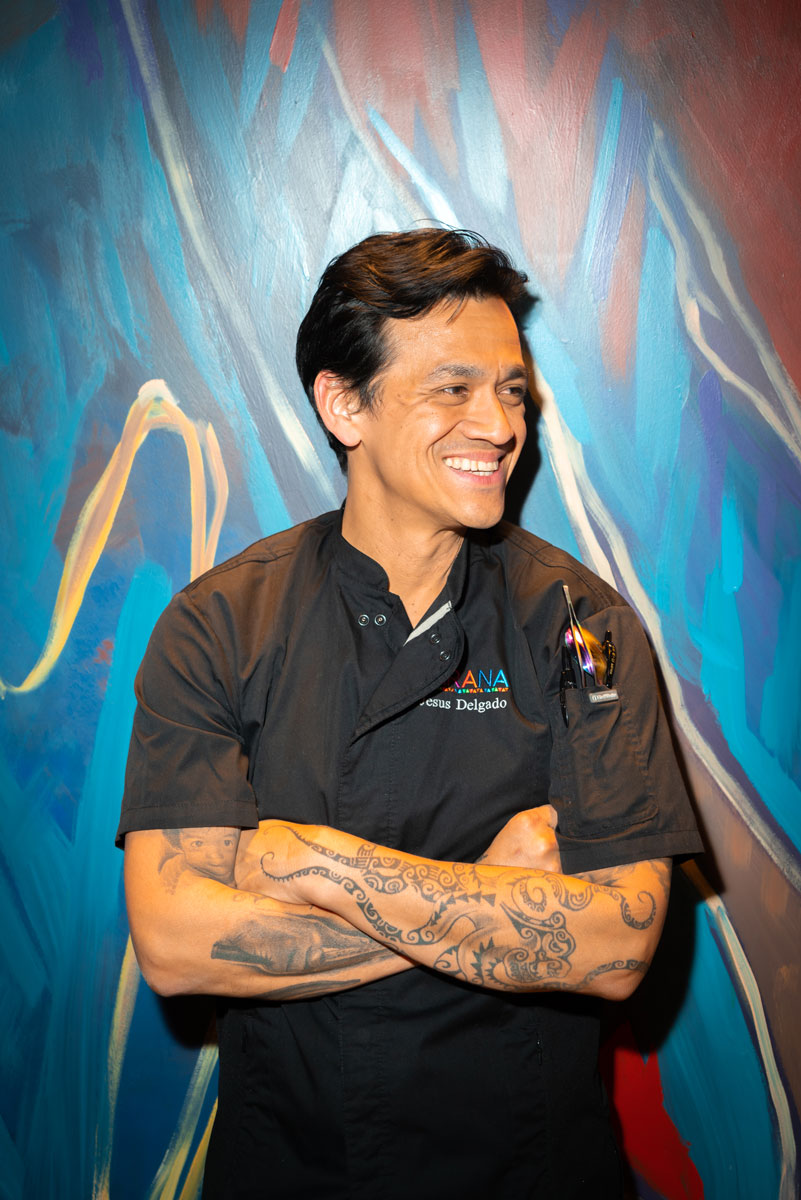
This coming Wednesday, June 28th, is National Ceviche Day, so in order to properly celebrate the day, I reached out to Chef Jesus Delgado, the executive chef at Jarana in the American Dream Mall in East Rutherford, New Jersey. We spoke about ceviche Peruvian food at large, the future of Jarana — and of course — everything ceviche.

Chef Jesus DelgadoChef Jesus Delgado (Photo by Noah Fecks)

The following interview has been lightly edited for clarity and length.

How did ceviche originate? What is its history?

History says that ceviche originated in the pre-Inca civilization “the Moches” in the north of Lima. It was originally made with the fermented citrus juice of the “Tumbo”, which is a cousin of passion fruit. Later the Incas began marinating the fish with “Chicha” which is a ferment from the corn. When the Spanish brought limes, we switched to that and that’s when the new Cebiche was born.


What exactly is leche de tigre?

Leche de tigre is the leftover liquid that we obtain after we marinate all the components of the cebiche (lime, fish, onions, celery, garlic, chilis, cilantro). It becomes a citrus marinade well known as a “Peruvian hangover cure”.


What is your favorite type of ceviche?

Conchas negras cebiche (blood clams) . . . “Conchas Negras” is a clam that grows in the “manglares de Tumbes” (mangroves), where the [Tumbes] river meets the Pacific Ocean in the North of Peru. For me, this is the most exotic cebiche.

It is considered an energy booster, kind of an aphrodisiac due to the high level of zinc. Traditionally, it is prepared with chopped onions, fresh lime juice, a good amount of garlic and cilantro and rocoto chili pepper served with Cancha (sun dried fried corn) and choclo. Perfect enjoyed with a cold beer!


Ceviche is perfect for summertime. How is it generally prepared?

Cebiche is perfect for anytime, but it’s best if you enjoy it in front of the ocean with a cold beer or refreshing chilcano, prepared a la minute with the freshest fish you can find, just briefly marinated with lime and seasoning. The most classic version is made with lime, garlic, aji limo, cilantro, onions, garnished with sweet potato, choclo (Peruvian corn) and cancha (toasted corn).


What are your tips for making ceviche at home?

Just get the freshest fish you can and have fun with the rest! Also, here are some other tips:

– Use a sharpened knife to cut the fish (very important!)

– Squeeze the limes by hand and not all the way: We just want the first drops, as the rest is bitter.

– Use a glass bowl or stainless steel to prepare: Cold is better.

– While mixing, stir delicately: You don’t want to break the fish’s flesh.

– Chop the cilantro and chili right before use! You want all the fresh oils and scents.


Want more great food writing and recipes? Subscribe to Salon Food’s newsletter, The Bite.


Beyond ceviche, what are some of your favorite Peruvian dishes?

Arroz con mariscos, pollo a la brasa, seco de carne, chaufa con chijaukay


What is your favorite item on the menu?

I love to start with a classic Pisco Sour and aji de gallina croquetas, followed by el Churrasquito chifero, which is a veggie fried rice with grilled beef tenderloin, fried plantain and egg, spicy sauce and pickled veggies paired with a nice glass of pinot noir.

Jarana interiorJarana interior (Photo by Liz Clayman)

What are you most passionate about as a chef, both within Peruvian cuisine and in general?

My job allows me to show my culture to others and — most of the time — make customers smile. Watching those expressions at the table, that’s a priceless moment.


I love the format/design of the menu with the glossary! How was that conceived? I think that many menus could benefit from something like that.

I think our responsibility is not just to cook for others — our mission is to share Peruvian culture and that includes teaching sometimes, something we want to embody especially a Jarana.


What would you like to see next for Jarana  and Peruvian food in general?

I want to see Jarana all over the US and to expose more people to Peruvian cuisine.

Learn more about Jarana and see their inventive menu here!

How the Beatles really got booked on “The Ed Sullivan Show”

Noted filmmakers Margo Precht Speciale and Andrew Solt joined host Kenneth Womack to talk about how the Beatles really got booked on “The Ed Sullivan Show,” the lasting legacy of the television program on its 75th anniversary and more on a special bonus episode of “Everything Fab Four,” a podcast co-produced by me and Womack (a music scholar who also writes about pop music for Salon) and distributed by Salon.

Speciale, Sullivan’s granddaughter and the daughter of producer Bob Precht, is a documentarian whose latest project traces her grandfather’s life and work as not only a television pioneer but a visionary with a radical dedication to diversity. As the youngest of Sullivan’s five grandchildren, Speciale was not yet born when the Beatles made their legendary February 9, 1964, debut on the show (which Womack calls “bar none, the number one Beatles origin story” on Everything Fab Four). But she said her older brothers were huge fans of the band. “They got to meet the Beatles and get their photo taken with them. They also went to Miami for the [Sullivan Show] appearance there.”

As for how Ed Sullivan lined up the band to be on his show in the first place? Speciale said to Womack, “There are two stories – the PR story and the real story. There’s an oft-repeated tale of my grandfather discovering them at an airport, but no – the truth is a lot more involved than that.”

LISTEN:

Subscribe today through Spotify, Apple Podcasts, GooglePodcasts, Stitcher, RadioPublic, Breaker, Player.FM, Pocket Casts or wherever you’re listening.

Emmy- and Grammy-winning producer Solt (who co-wrote and directed the 1988 documentary “Imagine: John Lennon”) was a teenager at the time and distinctly remembers the days leading up to the Beatles’ “pivotal” appearance on “Sullivan.” “It was so exciting,” he told Womack. “The albums were out everywhere, but we hadn’t seen them talking, singing, moving and acting. It was a game-changer for everyone my age. Everybody was singing their songs and getting ready for that Sunday night.”

The two also discussed how Sullivan was a “curator of culture” at a time when “television was more communal” and multiple generations would watch shows together as a family. As Speciale said, the show really became “a microcosm of a fully integrated society.”

And Solt (who purchased “The Ed Sullivan Show” library in 1990, an archive consisting of over 1,000 hours of footage and 10,000 live performances broadcast by CBS between 1948 and 1971) marvels at how Sullivan was “thinking big picture all the time. When it came to the unusual, the special – he took chances.”

As for what Sullivan was like personally, Speciale said “he loved people, he loved engaging with people, and he loved talent.” And throughout her life, she grew to love the music of the Beatles herself because “it was always there. When they came, it was a breath of fresh air. They brought light. So many people remember my grandfather because of the Beatles.”

“All the stars lined up,” said Solt, “but it was the music that had us. And the British Invasion happened because of February 9, 1964. Ed made that happen.”

Listen to the entire conversation with Speciale and Solt, including how Ed Sullivan rescued school-aged Margo from a bully, on “Everything Fab Four” and subscribe via Spotify, Apple Podcasts, Google, or wherever you’re listening. “Everything Fab Four” is distributed by Salon.

Host Kenneth Womack is the author of a two-volume biography on Beatles producer George Martin and the bestselling books “Solid State: The Story of Abbey Road and the End of the Beatles” and “John Lennon, 1980: The Last Days in the Life.” His latest project is the authorized biography and archives of Beatles road manager Mal Evans, due out in November 2023.

Trump’s “coup memo” lawyer may face disbarment — but that’s the least of John Eastman’s problems

In January of this year, the State Bar of California announced the filing of a Notice of Disciplinary Charges against attorney John Eastman, precipitated by his central role in the scheme devised by Donald Trump and his allies in several swing states to create and submit fraudulent election certificates and the now-infamous slates of “fake electors.” 

Eastman’s plot to subvert the 2020 election and defraud millions of American voters will almost certainly be central to the next two indictments facing Trump, those being conspiracy charges likely to be filed this summer by prosecutor Fani Willis in Georgia and special counsel Jack Smith in Washington, D.C. 

Like so many other attorneys, advisers and aides who have fallen under Trump’s spell and done his bidding, Eastman must now face the consequences of his actions. Last week his trial before the California Bar Court began in Los Angeles, with prosecutor Duncan Carling arguing that Eastman should be disbarred as “the architect of a legal strategy aimed at keeping former President Donald Trump in power, [who had] concocted a baseless theory and made false claims of fraud in an attempt to overturn the 2020 election.”

All of Eastman’s legal misconduct, Carling continued, “was done with one singular purpose: To obstruct the electoral count on Jan. 6 and stop Vice President Pence from certifying Joe Biden as the winner of the election.” Furthermore, the prosecutor argued, Eastman knew exactly what he was doing, and was “fully aware in real time that his plan was damaging the nation.” 

Eastman, who cited the Fifth Amendment numerous times in declining to answer questions from the House committee investigating the Jan. 6 insurrection, has offered the same defense all along: He was just asking questions or raising debating points. His defense attorney in the California bar trial, Randall Miller, told the judge that Eastman “was not there to steal the election or invent ways to make President Trump the winner,” but was “merely engaging in what he said was a serious debate at the time about what authority the vice president had concerning the certification of the election.” Eastman’s goal, Miller contended, was not to reverse the election results but “to delay the counting of the electoral votes so that there could be reasonable investigation undertaken by those states.”

Whether that claim will resonate with the court remains to be seen. The 11 charges against Eastman specifically allege that he assisted Trump ” in executing a strategy, unsupported by facts or law, to overturn the legitimate results of the 2020 presidential election by obstructing the count of electoral votes of certain states.”

As has been widely reported, Eastman drafted two “legal memos” that sought to create a rationale for “circumventing established procedures for the counting of electoral votes in front of the U.S. Congress,” based on a radical reinterpretation of the vice president’s ceremonial role in that process. 

As the disciplinary charges in California make clear, “Eastman knew, or should have known, that the factual premise for his proposals — that massive fraud was at play — was false, and that Trump had lost his bid for re-election.” By the time Eastman authored those memos for Trump, the Justice Department had reported that it had “not seen any election fraud on a scale that could have affected the election’s outcome,” and “multiple courts had rejected election fraud lawsuits.” 

Eastman also “ignored these truths,” the disciplinary charges state, when he spoke at the White House rally on the morning of Jan. 6, 2021, hours before a mob of Trump supporters stormed the U.S. Capitol. In his speech, Eastman made unsupported allegations of widespread voter fraud, including claims that dead people had voted and that Dominion voting machines had manipulated the results. In the aftermath of the Jan. 6 events, Eastman was forced to retire immediately from the law faculty at Chapman University, where he had taught since 1999.


Want a daily wrap-up of all the news and commentary Salon has to offer? Subscribe to our morning newsletter, Crash Course.


If the California bar court finds Eastman culpable of the alleged violations, it can then recommend to the California Supreme Court that Eastman’s law license be suspended or revoked. The outcome of this proceeding is surely of less importance to Eastman than his likely forthcoming indictments in Atlanta and Washington as a Trump co-conspirator. 

Perhaps Eastman should have reflected on the career of Donald Trump, the most litigious person in U.S. history, who is well known for his failure to pay attorneys, employees and contractors of all kinds. Indeed, his history of stiffing his lawyers, especially after losing cases, has led to the humiliating circumstance that the former president must now pay attorneys up front for services not yet rendered. 

At least 13 attorneys have severed their working relationships with Trump since the 2020 election. At least 17 have been sanctioned. Several of his lawyers have had to retain defense lawyers of their own.

Between November 2020 and this month, at least 13 attorneys have severed their working relationships with Trump, either resigning or being fired due to some version of “irreconcilable differences.” There are also several attorneys who were never officially retained by Trump, and never paid by him, but who nonetheless acted in his interests, including Sidney Powell, Rudy Giuliani and quite likely John Eastman. As of March 2023, 17 current or former Trump lawyers had been sanctioned by various courts, mostly because of their involvement in dubious litigation challenging the 2020 election. 

Then there’s the list of Trump lawyers who have had to hire lawyers of their own to fend off the consequences of their work for the former president. Most recently, Trump attorney Christina Bobb retained a defense attorney because of her entanglement in the Mar-a-Lago classified documents case. (In fairness, it seems likely that Bobb was misled by Trump into signing a false declaration that all relevant documents had been returned to the FBI.)

Disciplinary sanctions against Trump lawyers, up to and including disbarment, go all the way back to the notorious Roy Cohn, Trump’s first personal attorney and mentor, in 1986, and of course include the disbarment and felony conviction of his longtime personal lawyer and “fixer,” Michael Cohen, in 2019.

Is it any wonder that Trump is having a hard time finding a competent defense counsel to represent him in his upcoming criminal trial in Miami? It’s a core principle of our legal system that every accused person is entitled to a defense attorney, but at this point not many lawyers are eager to defend the most heinous accused criminal in American political history.

Putin calls uprising a “stab in the back” as armed rebellion presses into Moscow

On Saturday, Russian President Vladimir Putin delivered a statement vowing “harsh punishment for the organizers of an armed rebellion spearheaded by mercenary chief Yevgeny Prigozhin,” according to AP News, referring to the uprising from Prigozhin’s Wagner private army as “a stab in the back.”

Per Britain’s Ministry of Defense, “Prigozhin’s private army appeared to control the military headquarters in Rostov-on-Don, a city 660 miles (over 1,000 kilometers) south of Moscow that runs Russian operations in Ukraine,”  with mercenaries making further headway as the day progressed.

“All those who prepared the rebellion will suffer inevitable punishment,” Putin said in his address. “The armed forces and other government agencies have received the necessary orders.” 

In response, Prigozhin said there were no plans for surrender, stating, “we do not want the country to live on in corruption, deceit and bureaucracy.”

In the latest updates, “Chechnya leader Ramzan Kadyrov, who has a substantial military, has ordered his troops to surround the Wagner mercenaries currently occupying Rostov,” per a tweet from Britain First leader Paul Golding, along with footage from the scene.


Want a daily wrap-up of all the news and commentary Salon has to offer? Subscribe to our morning newsletter, Crash Course.


 “We are fighting for the lives and security of our people, for our sovereignty and independence, for the right to remain Russia, a state with a thousand-year history,” Putin said regarding the attack. “All those who deliberately stepped on the path of betrayal, who prepared an armed insurrection, who took the path of blackmail and terrorist methods, will suffer inevitable punishment, will answer both to the law and to our people.”

Per Reuters, “Prigozhin, whose private army fought the bloodiest battles in Ukraine even as he feuded for months with the top brass, said he had captured the headquarters of Russia’s Southern Military District in Rostov without firing a shot.”

With The White House keeping tabs on the situation, there have been reports that Putin has fled Russia via plane, which the Kremlin denies.

“Putin is working at the Kremlin,” his spokesman Dmitry Peskov told the Tass news agency. But Independent reports that “One of several planes that Putin uses for official visits took off from Moscow at 2.15pm local time,” and that “less than half an hour later, it went off radar about 150 kilometers from Putin’s official residence.”

Eat, pray, brand yourself accurately

There’s that saying that you can’t judge a book by its cover and while that’s true, you probably can judge a book by knowing who wrote it. Stephen King will always deliver you horror, Brene Brown writes about vulnerability, and Anne Helen Petersen examines culture. These are the connective lines of their writer’s work, but these are also their brand. Just in the same way Nike, McDonald’s, and Evian water have conditioned us to know what their image is, authors work in the same way. “An author brand is the expectation that people have of the author’s work,” said Jane Freidman, author and publishing industry expert. Long gone are the days of publishing houses putting all the marketing power behind a book. Today authors are expected to have a platform and use that platform to sell books. 

So, when Elizabeth Gilbert initially announced her now-canceled book, “The Snow Forest,”  on Instagram, one might have expected it to go a bit better than it did. “The Snow Forest,” a book set in mid-20th century Russia, is based on a family’s decision to move to the Siberian Taiga in an effort to flee the Soviet Union.

She was a thought leader, we were her “Dear Ones,” her brand was compassion, and through her tours and internet presence, we were connected to her. 

The commenting began. “Such a tone-deaf move. Really disappointed in you Elizabeth. You must know that most of your books are translated into Ukrainian, and you have a huge fan base here. How do you think we should take this ‘big, wonderful news’ considering we are now going through Russian-made war, genocide, ecocide?” one commenter wrote with another saying, “Imagine if during the Second World War, someone in the USA wrote a book about ‘cozy Berlin’ . . . totally disappointed.” Goodreads was flooded with 1-star reviews, and after fierce internet backlash, Gilbert headed back to Instagram to announce she was canceling the book

“It is not the time for this book to be published. And I do not want to add any harm to a group of people who have already experienced and who are continuing to experience grievous and extreme harm,” said Gilbert as she shared about the cancellation of her book that was set to be published in February 2024  – another complex layer as February is the anniversary of Russia’s invasion of Ukraine. 

Previously, Gilbert had masterfully used the internet to her advantage. Once an author of a short story collection, novel, and nonfiction book, in 2006,  Gilbert propelled to another literary stratosphere with “Eat, Pray, Love.” It came with criticism of course – a white woman co-opting other cultures to find herself – but the memoir climbed the New York Times Bestseller list and then stayed there for 187 weeks. This type of literary success is uncommon, almost an anomaly in the publishing industry. Suddenly, an author who described herself simply as a “writer” in her 2014 TED Talk became much more than that. She was a thought leader, we were her “Dear Ones,” her brand was compassion, and through her tours and internet presence, we were connected to her. 

Not every author has moved toward thought leadership as a core tenet of their brand, and not everyone has to. One can exist on the internet and not be dolling out advice. “You know, I think of somebody like [romance author] Emily Henry, her latest novel, ‘Happy Place,'” said literary agent, Carly Watters, “She is really beloved by readers. She has an incredible fan base, and she writes another great book then there’s a lot of content on the Internet, not in a way of like I’m a thought leader, but, here I am, as an author on the Internet in a way that I think people just really want to celebrate.” 

Gilbert much like, Cheryl Strayed with her “Dear Sugar” column and “Wild” memoir, has drifted more into life advice territory. This decision – authentic or not to their interests – has resulted in massive commercial success for both authors which is typically unheard of. Even though Gilbert has continued to write fiction, her brand has adjusted itself into the spiritual adviser, finding a kinship to Glennon Doyle’s work more so than to novelists like Ann Patchett or Barbara Kingsolver who produce comparable fiction work. If Gilbert hadn’t kept churning out novels, one might have started wondering from her internet presence if she had a life coaching system or crystal pack she was trying to hawk. She wasn’t saying “hey hon” in our DMs, but it felt pretty close.  

“The Snow Forest,” a historical fiction book centering on a female heroine seemed to align with Gilbert’s past novels only Gilbert wasn’t just the author of historical fiction. She was our “Eat, Pray, Love” and “Big Magic” authority. Her brand – the extension of her – was focused on social justice and authenticity. This misalignment seemed to be the issue with the book. It wasn’t the book itself; perhaps, it was simply who wrote it. 

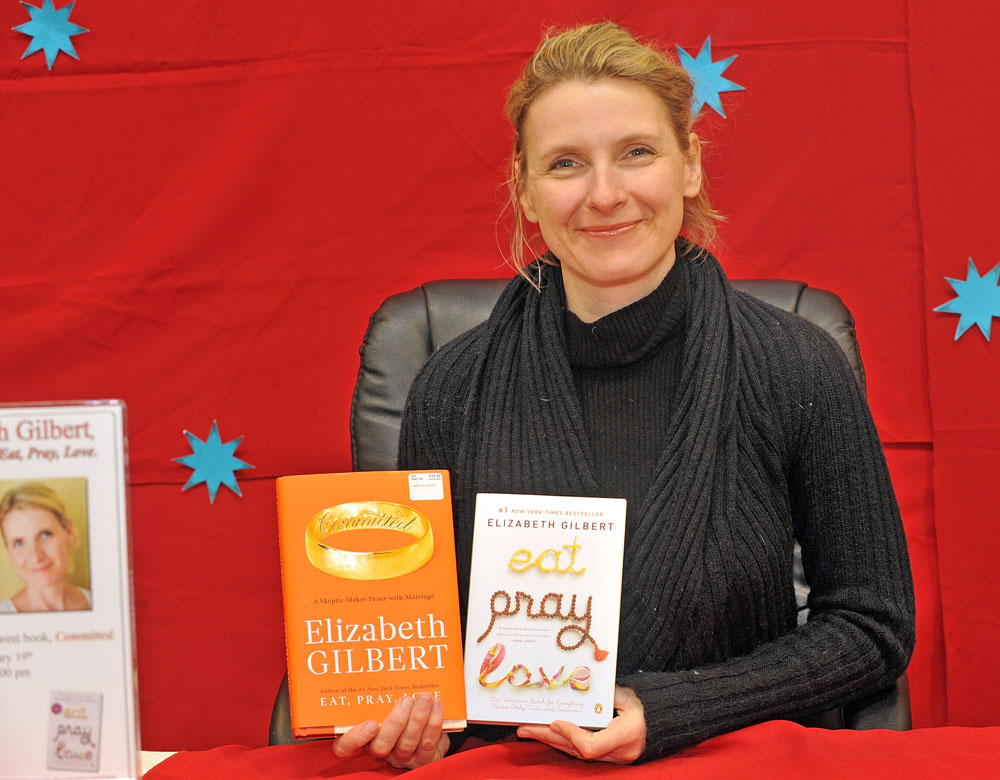
Elizabeth GilbertElizabeth Gilbert author of “Eat, Pray, Love” promotes her new book “Committed” at BJ’s Wholesale on February 19, 2010 in Riverdale, New Jersey. (Getty Images/Bobby Bank)“What’s complicated about timing in book publishing is that you have to have good timing to sell your book to a publisher, and then you have to be lucky enough to have good timing,” said Leigh Stein, author of “Self Care.” The publishing world typically moves slowly. A book is often written and sold years before it’s on a bookstore’s shelf. 

In the same way McDonald’s would have a hard time convincing anyone to try a fine dining concept, authors can get pigeonholed in the author brand of their own making.

“It’s absolutely true that timing and things that are happening politically in our country and abroad do impact what books publishers acquire. I’m not going to lie and say that there’s no correlation. So yeah, you should think about the timing of your novel because you are going to make an argument for why this novel needs to be out now, meaning now and in the next two years. It’s complicated, this kind of math. But the backlash to this novel in particular, I think, is like the backlash to Elizabeth Gilbert saying she’s writing a sequel to ‘Eat, Pray, Love,’ where she prays and loves all over Russia,” said Stein. 

In the same way McDonald’s would have a hard time convincing anyone to try a fine dining concept, authors can get pigeonholed in the author brand of their own making when their readership is showing up for one thing and suddenly getting another. “I think every author kind of has, especially the longer you sit around and the more works you’re producing, there’s kind of a Venn diagram of audiences, and some of them overlap, and some don’t,” said Friedman. Gilbert’s cross-genre work almost illustrates that perfectly. For a reader of her historical fiction, “The Snow Forest” announcement seems like the perfect addition to Gilbert’s literary canon but for “Big Magic” and “Eat, Pray, Love,” the book doesn’t align. We don’t know what “The Snow Forest” really was ultimately about. Gilbert canceled it before we got a chance to determine if the plot and themes glorified Russia, as some online commenters lamented. 

Some people saw this [cancellation] as in alignment with Elizabeth Gilbert’s brand. If you see Elizabeth Gilbert as someone who is an empathic listener, a compassionate writer with a big heart, then this I could see would be in alignment with that,” said Stein, “When I think of Elizabeth Gilbert’s brand, I not only think of ‘Eat, Pray, Love,’ but I think of her other bestselling nonfiction book, ‘Big Magic.’ The subtitle is ‘Creative Living Beyond Fear.’ And part of her message in that book is that if you want to be a creative person, whether you want to be a professional, creative person like I am or just to live a creative life, you have to have the courage to do so. And you also have to have a sense of entitlement that you have the right to live creatively. To me, her choice to postpone her own book is not an example of courage. I think it’s an example of reacting to a large amount of simultaneous criticism on the Internet.”

Author Brand Expert, Andrea Guevara thinks differently. “I can say that this move does appear to align with a foundational aspect of her brand which is to prioritize the display of approachability, truth-telling and thoughtfulness,” Guevara said. 

Branding is in the eye of the beholder and to be an author in 2023 is to live and die by the internet. That’s just the reality of the industry. With publishers putting more pressure on authors to move copies and connect with their audience – to build a platform – there is only going to be continued pressure on authors to not only produce good work but to be able to market it on an almost expert level. So for a seasoned author like Gilbert, with literary stature and prominence in the field, pulling a book is not going to hold the same consequences as it does for other authors that might not have built the kind of brand power yet as Gilbert. 

To be an author in 2023 is to live and die by the internet. That’s just the reality of the industry.

“As a literary agent, I think a lot about the ecosystem of the industry as a whole, and I think about the repercussions of decisions like that and how they kind of reverberate across the industry,” said literary agent Carly Watters. “Not everybody is in an economic position to be able just to pull something off the shelf and lose that potential revenue, and that’s obviously just a privilege that she has.”


Want a daily wrap-up of all the news and commentary Salon has to offer? Subscribe to our morning newsletter, Crash Course.


It’s hard to say if another author would have had quite the same reaction and outcry to an announcement of a book set in Russia. There is a danger to the idea that we can’t set books in places of societal problems. If anything, as Stein wrote, we would have to stop writing about America if that were the case. There is a larger failure on the publishing house and marketing team for not approaching a publication with sensitivity and helping craft a digestible book announcement or marketing plan – not a failure on the author for producing the work. There is a missed moment in this announcement – a chance for Gilbert to discuss the similarities of her character’s plights to those today living under Russian oppression, to engage in a larger conversation of oppression that she commonly does on her social media. While it’s hard to imagine that another author would have had a similar backlash maybe they would have, or perhaps the connectedness to her audience that Gilbert has cultivated has shown the dangers that parasocial connections that readers can have towards authors.  

We buy their books, we follow them online, but we don’t actually know them or their intentions. We just know what they show us through their brands and it’s hard to imagine how Gilbert, an author who has put so much energy towards social justice would have written a book glorifying an oppressive regime without pausing once in the years of her crafting it to say, “Hey, this narrative isn’t working.”  This, however, is conjecture because beyond the publishing house and probably a few of Gilbert’s trusted readers, no one knows what “The Snow Forest” was really going to be. This was a marketing and branding failure, not a literary one, and what readers need to remember is that before she was eating and praying and loving, Gilbert was a fiction writer – and she is still trying to be. 

An Ohio high-risk OBGYN on abortion fears come true and life one year post-Dobbs

One year ago today, the U.S. Supreme Court made the unprecedented decision to end the constitutional right to abortion, striking down the 1973 Roe v. Wade ruling that legalized abortion nationwide. Last year’s decision in the case of Dobbs v. Jackson Women’s Health Organization upheld a Mississippi law that banned most abortions after 15 weeks of pregnancy. The decision gave each state the individual right to enforce their own abortion restrictions, many of which had so-called “trigger laws” with six-week abortion bans.

Chaos ensued as many state statutes made providing an abortion illegal, rather than prosecute those getting them. Depending on the state, the result could be penalizing abortion care providers with a high fee — or sometimes, slapping on prison sentences. While there were some exceptions, such as cases of life endangerment for the mother, the language in many states was intentionally vague.

Today, the status of abortion care continues to vary state by state, creating a fractured and dangerous landscape for maternal health care. Access to abortion can change often, as legal appeals and legislation passing shifts the permissible.

According to a new KFF survey of about 570 OBGYNs across the nation, 64 percent think pregnancy-related mortality has worsened post-Dobbs, while 42 percent of OBGYNs say they are “somewhat” or “very” concerned about their own legal risk when it comes to making a decision about abortion necessity.

However, this figure rises to 59 percent in states with gestational limits and 61 percent in states with abortion bans. More than half of the OBGYNs surveyed said they have seen an increase in patients seeking some form of contraception — including 43 percent who sought sterilization. One in five said they have personally felt constraints on their ability to provide care for miscarriages.

Last year, right after Dobbs, Salon spoke with Dr. David Hackney, a Cleveland-based maternal fetal medicine specialist and chair of the American College of Obstetrics and Gynecologists Ohio chapter. He expressed concerns about one particularly troubling scenario: What if an otherwise healthy pregnant person found out their fetus had a lethal fetal anomaly, and would not be able to survive outside of the uterus? Would that person be forced to carry that pregnancy to term, despite knowing the fetus wouldn’t survive?

Salon caught up with Hackney again, nearly one year later, to see how those predictions panned out.

This interview has been condensed and lightly edited for clarity.


Want more health and science stories in your inbox? Subscribe to Salon’s weekly newsletter The Vulgar Scientist.


First, tell our readers what you do as a maternal fetal medicine specialist.

We manage high-risk pregnant patients. But high-risk is not always cleanly defined. It can be a little bit more gray in terms of how we define risk, but globally, we manage patients who are pregnant, and there’s either a health problem with moms — such as pregnant patients who have diabetes, high blood pressure or lupus. Basically, any health problems that a human has, or there’s some sort of fetal problem or fetal concern — birth defects or genetic disorders.

Last year when we spoke, you said you felt like the legal ground had “entirely changed beneath my feet.” How are you feeling today, one year later?

Well, SB23, the law which went into effect on the day of the Dobbs decision itself was in effect for about a three month period, and has been under injunction ever since. And then we have a ballot initiative coming up in November here [in Ohio], so I feel like after Dobbs, one national story became fifty different stories with a different story in every state. I feel as though our story in Ohio is very unique, in the sense that we were under a lot between between a three and four-month period. But then we’ve also been out of it for several months and are not under it now. So we both experienced a life under that law. We know how bad it was. We know what it feels like, but we’re not under it now. And we’re also the only state that’s going to have a ballot initiative in 2023. We are sort of both actively in the middle of a fight in that regard, and have a potential light at the end of the tunnel.

“There’s no medical need for a 24-hour waiting period.”

I feel like when I talk to colleagues from other states, people are in one of two boats. Either they’re in a very safe blue state and they’re doing work and they’re concerned, but there’s not sort of an active, if you will, fight going on at that time. Or there are states in which the scenario is far worse than ours, both they’re under laws — and we’re currently fortunately under injunction — or they may not have a clear path forward, like a ballot initiative.

When the Dobbs decision came down, I felt as though Ohio was a particularly rough state to be in, especially that day since a lot of change that very day, right? Now, I’m actually quite happy to be here because we’re both not under SB 23, and we have an active path forward. We have an active fight on our hands.

So, currently, abortion is still legal up to 22 weeks in Ohio?

Yes. Of course, all the laws which existed before Dobbs are still in place — many of which are harmful or not needed. The world under Roe, before Dobbs, was certainly not an optimal circumstance itself. We have a 24 hour waiting period. You have to offer patients to listen to the heart rate. We have a ban on procedures for the intent of Trisomy 21 [one of the characteristics of Down syndrome], and the 22 week limit. So I would definitely not want to characterize things as exactly as good as they should be here. But SB 23 is not under enforcement at this time.

“You enter obstetrics, certainly aware of the potential for civil liability. And that always is a concern that hangs over your head.”

So are you concerned about your own legal risk, as many OBGYNs are in the country?

Right now, I’m not concerned about my own legal risk. Certainly we had a tremendous quantity of concern about our legal risks while we were under SB 23. Specifically, it was vague and a lot of the exceptions or areas in which we have to be under in an affirmative defense for maternal health conditions were unclear, and the risks that we face and that many of my colleagues in high risk obstetrics and other states right now face, are criminal charges. And criminal charges is very much a zebra of a different stripe.

You enter obstetrics, certainly aware of the potential for civil liability. And that always is a concern that hangs over your head. But from a sort of emotional psychological standpoint, you get used to it over time. You learn about it, you do your best to prepare for it, yourself or colleagues may go through it. But then when the potential for criminal liability comes along, that’s something totally different and totally new. And so we don’t have a background. We don’t have a track record. We don’t have case law. The consequences are greater. So that specter has been incredibly stressful to be under.

Can you share more about those three months — what was that like for you?

Yeah, you can divide a lot of the cases where our care maternal-fetal medicine intersects with abortion into fetal or maternal cases. Of course, sometimes it’s both. For the fetal cases, the circumstances were tragic, but legally straightforward. The law SB 23 made no exceptions for any fetal conditions, including birth defects which are lethal. In those cases, it was stressful and it was tragic, but there was no question about what we could do and what we were able to do.

​​We did try our best in those circumstances to get those patients out of state. Of course, out of state care is complicated, especially because a lot of other states have waiting periods.

“The law SB 23 made no exceptions for any fetal conditions, including birth defects which are lethal.”

There’s no medical need for a 24-hour waiting period. And especially if the patient has to go out of state, especially if the 24-hour clock will not start until the patient is out of state and standing in an office, then you’re usually going to look at a day of travel and then start the 24 hour clock when they arrive. And then often they’ll need cervical dilation or surgical preparation procedures, which may take 24 hours. And then you have the procedure after that. So between travel and administrative boundaries, that can turn into days. And if it turns into days, then even patients who have the economic means to do so may not be able to do so, if it means time away from family or time away from work. But that’s the fetal half.

The maternal half was stressful and not straightforward. If you’re looking at the potential need to end a pregnancy for maternal health indications, those are usually circumstances in which the patient’s not going to be able to travel. SB 23 listed five maternal health exceptions. There was language regarding health and life, but the language was vague and certainly we did not receive a lot of specific guidance.

For example, what would we do if we had a pregnant patient who had cancer? The word “cancer” did not appear anywhere in SB 23. The Attorney General issued a “explainer” on SB 23 also did not include the word cancer. So what you do with patients who have cancer is unclear. And likewise, there was an affidavit which was issued in conjunction with a ruling from the judge in Cincinnati placing the injunction on SB 23, which detailed two patients in the states who were pregnant and had cancer and did not receive cancer care.

That’s so horrific. Last year, going back to the fetal part, you said going down the path of being forced to carry a fetus with a lethal anomaly would be an “unequivocal nightmare” for you. It sounds like you had to face that nightmare scenario within those three months then?

“It’s not some sort of cruel mistake. It’s difficult to even conceive of. It really does feel like there’s a legal definition of torture. It feels like it would meet that bar.”

I can’t really talk about specific patients or circumstances, but I can say definitely that my colleagues in Ohio did. In media reports, which are public, there were reports of patients with birth defects, serious ones, as well as publicly available cases of the old birth defects in other states, such as Florida and Texas and other areas where they had to be forced to continue.

And I certainly know talking to colleagues in many of those similar states and those have been in the circumstances that they have been in. It’s definitely occurring. We definitely knew that it would occur. Again, this was explicitly written into the law. It’s not some sort of cruel mistake. Or something along those lines. It’s difficult to even conceive of. It really does feel like there’s a legal definition of torture. I’m not a lawyer, but it feels like it would meet that bar.

What do you wish more people understood about where we are one year post-Dobbs?

Everything that we worried about would come true. SB 23 was debated in Ohio back in 2019. It was passed in 2019. And then it was just held up in injunction until the Dobbs decision.

I wrote an editorial against it in 2019, which was published in the Columbus Dispatch and I was curious the other day, and I pulled my 2019 editorial, I read it and everything came true. All of the bad things which we said would happen, happened.

Malpractice lawsuits over denied abortion care may be on the horizon

A year after the overturning of Roe v. Wade, many physicians and hospitals in the states that have restricted abortion reportedly are refusing to end the pregnancies of women facing health-threatening complications out of fear they might face criminal prosecution or loss of their medical license.

Some experts predict those providers could soon face a new legal threat: medical malpractice lawsuits alleging they harmed patients by failing to provide timely, necessary abortion care.

“We will absolutely see medical malpractice cases emerge,” said Diana Nordlund, an emergency physician in Grand Rapids, Michigan, and former malpractice defense attorney, who chairs the Medical-Legal Committee of the American College of Emergency Physicians. When physicians decide not to provide treatments widely accepted as the standard of care because of these new laws, “that’s perceived as substandard care and there is increased civil liability.”

To some physicians and malpractice attorneys, the question is when — not if — a pregnant patient will die from lack of care and set the stage for a big-dollar wrongful death claim. Abortion rights supporters said such a case could pressure doctors and hospitals to provide appropriate abortion care, counterbalancing their fears of running afoul of state abortion bans, many of which call for criminal prosecution and revocation of medical licenses as punishment for violations.

“If we want to encourage proper care, there has to be some sort of counter-risk to physicians and hospitals for refusing to provide care that should be legal,” said Greer Donley, an associate professor at the University of Pittsburgh School of Law who studies the impact of abortion bans. “But most rational people would be more afraid of going to jail.”

Some supporters of abortion bans said they would welcome malpractice lawsuits. Providers are refusing to use the exceptions in some state laws that allow them to perform abortions to save a patient’s life or health, they said.

“It could help achieve our goal if it clarifies that the law did not contradict standard medical practice,” said John Seago, president of Texas Right to Life, referring to the state’s abortion ban.

A new KFF poll found that 59% of OB-GYNs practicing in states with gestational limits on abortion, and 61% of those in states with bans, are somewhat or very concerned about their legal risk when making decisions about the necessity of an abortion.

Some attorneys are exploring lawsuits on behalf of women who they said have been harmed by a state abortion ban. An attorney for Mylissa Farmer, a Missouri woman who was refused an abortion at two hospitals in August after her water broke about 18 weeks into her pregnancy, said she may sue for malpractice. Missouri’s abortion ban, which took effect last year, makes an exception for medical emergencies.

The federal government recently found that the two hospitals violated a federal emergency care law in denying Farmer an abortion, which experts said could strengthen a malpractice claim. One of the hospitals, Freeman Health System in Joplin, Missouri, did not respond to a request for comment. The other, the University of Kansas Health System in Kansas City, said the care provided “was reviewed by the hospital and found to be in accordance with hospital policy,” according to a spokesperson, Jill Chadwick.

Farmer “experienced permanent physical and emotional damage,” said Michelle Banker, one of her lawyers at the National Women’s Law Center, who added that Farmer and her attorneys are “considering all our legal options.”

News reports and medical studies show that some women with pregnancy complications have suffered serious health consequences when doctors and hospitals did not provide once-routine abortion care.

Last month, researchers released a study identifying dozens of cases in 14 states in which physicians said deficiencies in care due to abortion restrictions led to preventable complications and hospitalizations, with some patients nearly dying.

“The patients were sent home and told to come back when they had signs of infection,” said Daniel Grossman, an OB-GYN at the University of California-San Francisco, who led the study. “Many developed serious infections. And it’s clear many of these cases were very emotionally traumatic.”

He said though the researchers did not track patient outcomes, the lack of timely abortion care in such cases could result in severe health harms including loss of fertility, stroke, or heart attack.

“It’s just a matter of time before there will be a death that comes to light,” Grossman said.

Still, considering the conflict for doctors between medical ethics and personal risk, some stakeholders said patients may be reluctant to sue doctors and juries may balk at finding them liable.

“It’s a terrible position that providers are being put into, and I don’t think juries will blame the doctor unless it’s a super clear case,” said Morgan Murphy, a malpractice plaintiff’s attorney in Missouri.

She said her firm will not pursue malpractice cases based on abortion denials except in “pretty extreme” situations, such as when a patient dies. “Unless a mother is on her deathbed, it’s pretty hard to fault a provider who thinks if they provide treatment they’re going to be criminally liable or will lose their medical license.”

Another hurdle for malpractice cases is that state abortion bans could undermine the argument that abortion is the legal “standard of care,” meaning that it is a widely accepted and prescribed treatment for pregnancy complications such as miscarriage and for fatal fetal abnormalities.

“I absolutely see a breach of the standard of care in these cases,” said Maria A. Phillis, an OB-GYN and former lawyer in Cleveland. “But if someone goes to trial in a malpractice case, it will come down to a battle of medical experts about whether it’s no longer the standard of care, and the jury would have to decide.”

An additional justification for physicians not to provide abortions is that medical liability insurers generally do not cover damages from criminal acts, which “puts the finger on the scales even more to not do anything,” Phillis said.

Stuart Grossman, a prominent malpractice plaintiff’s attorney in Florida, said he would be eager to take an abortion-denial case in which the woman suffered serious health or emotional injuries.

Unlike other states with abortion bans, Florida does not cap damage amounts for pain and suffering in malpractice cases, making it more financially viable to sue there.

Grossman cited the case of Deborah Dorbert, a Florida woman who reportedly was denied an abortion despite being told by her physicians at 24 weeks of pregnancy that her fetus, with no kidneys and underdeveloped lungs, had a fatal condition called Potter syndrome.

Her doctors and the hospital refused to end the pregnancy even though the state’s abortion ban has an exception for fatal fetal abnormalities. Months later, her baby died in his parents’ arms shortly after birth.

“You can see how she’s been devastated mentally,” Grossman said. “She has a wrongful death case that I’d take in a minute.” He said the couple could file a malpractice suit for Dorbert’s physical and emotional damages and a separate malpractice and wrongful death suit for the couple’s suffering over the infant’s death.

Failing to counsel patients about their options and connect them with providers willing to terminate a pregnancy is also possible grounds for a malpractice suit, attorneys said. Katie Watson, an associate professor at Northwestern University’s Feinberg School of Medicine who has studied state abortion bans, said counseling and referral are not prohibited under these laws and that physicians have an ethical obligation to offer those services.

“I think breaching the obligation for counseling would make a strong malpractice lawsuit,” she said.

Nancy Davis said she received no counseling or referral assistance last July after her doctors at Woman’s Hospital in Baton Rouge, Louisiana, told her 10 weeks into her pregnancy that her fetus would not survive because it was missing the top of its skull, a fatal condition called acrania. She said they recommended that she terminate the pregnancy and she agreed.

Davis said her doctors then told her a hospital executive had denied permission for the procedure because of Louisiana’s abortion ban, even though the law has an exception for fatal fetal abnormalities. A hospital spokesperson declined to comment.

Davis, who has three children, contacted Planned Parenthood of Greater New York, which arranged for child care and a flight to New York City. She had an abortion performed there in September.

“The whole situation has been mentally and physically draining, and my family and I are receiving counseling,” Davis said. “I’m still very angry at the hospital and the doctors. I feel like I’m owed compensation for the trauma and the heartbreak.”

She sought the counsel of Benjamin Crump, a prominent attorney known for pursuing high-profile cases like wrongful death lawsuits on behalf of the families of Trayvon Martin and George Floyd.

But Crump said that after studying Davis’ legal options, he decided a judge would likely dismiss a malpractice suit and that Davis could end up paying the defendants’ legal fees and costs.

“The doctor’s lawyers will say, ‘You can’t expect my client to break the law and go to prison for up to 25 years,'” Crump said. “Unless you change the law, there is no option for her to receive compensation.”

KFF Health News is a national newsroom that produces in-depth journalism about health issues and is one of the core operating programs at KFF—an independent source of health policy research, polling, and journalism. Learn more about KFF.

Subscribe to KFF Health News’ free Morning Briefing.

Where will Defendant Trump store his new boxes of anxiety?

You can’t see Defendant Trump’s golf club in Bedminster, New Jersey, from I-78.  You take exit 26 and turn right on Rattlesnake Bridge Road, and then less than a mile later and you take a right on Lamington Road and you go about another mile before you take your third right onto the grounds of what is known as Trump National Golf Course Bedminster.  The environs out there are country-clubby.  There are two other country clubs off the same exit – the Fiddler’s Elbow Country Club and the Lamington Farm Club, and most of the rest of the surrounding area could be called horsey – Rocking Horse Farm is nearby, as is Elite Equestrian International and Spook Hollow Farm.

I’ve driven I-78 out that way many times.  It’s not what you might imagine when you hear “New Jersey” and “interstate” in the same sentence.  It goes through a leafy part of the state.  Most of what you can see from the roadway are trees, with few of the usual interstate exits spiked with tall signs reading “McDonalds” and “Shell” and “Target.”  Just before you reach Exit 26, a row of trees screens off three holes of the Trump golf course.  It’s so close, you could throw a Coke can out of your car window and hit Trump Trail, running alongside the course between the interstate and one of the club’s fairways.

It’s 48 miles, most of it on I-78 West, from downtown New York City, and a little less from Newark Airport if Defendant Trump’s lawyers are flying up from Florida, out to Defendant Trump’s Bedminster golf club where he spends his summers.  Defendant Trump’s lawyers are going to get very familiar with the three right hand turns off Exit 26 as they drive out to meet with their client over the next weeks and months about the trove of evidence the Department of Justice turned over to the defense this week. In fact, Defendant Trump is probably going to have to ask his co-Defendant, Walt Nauta, to find yet another place to store all the boxes from the Department of Justice (DOJ). He’s not going to want them anywhere near his residence this time.

Just this sentence, taken from the first page of the “Government’s Response to the Standing Discovery Order,” filed on Wednesday with the District Court of South Florida, contains nightmares a-plenty for Defendant Trump:  “The first part includes, inter alia, documents obtained via subpoena; evidence obtained via search warrants; transcripts of grand jury testimony taken before a grand jury in the District of Columbia and transcripts of grand jury testimony taken before a grand jury in the Southern District of Florida; and memorialization of witness interviews conducted through May 12, 2023.”

And if that’s not enough to keep him up at night, Defendant Trump can ponder the next few sentences: “The second part includes a reproduction of ‘key’ documents and photographs included in Production 1 that are referenced in the Indictment and others determined by the government to be pertinent to the case. The third part consists of complete copies of closed-circuit television (CCTV) footage obtained by the government in its investigation. To facilitate review, the government also identified and separately produced for the defense ‘key’ excerpts from the CCTV footage, including excerpts referenced in the Indictment or otherwise determined by the government to be pertinent to the case.”

All of these things are the kinds of niggling little details that Defendant Trump has studiously avoided in his decades of getting away with pretty much anything he wanted to do.

What that means is the DOJ did Defendant Trump the favor of making what might be called a highlight reel of the really good stuff, like surveillance shots of his co-Defendant Nauta carrying box after box out of the basement storage room, some 64 boxes in all, and then returning only 30 boxes to the storage room on June 2, the morning that Defendant Trump’s lawyer, Evan Corcoran, showed up at Mar-a-Lago to have lunch with his client and conduct his “diligent search” for “all” of the classified documents Defendant Trump had in his possession.  We know from the indictment that what Corcoran turned over on June 3 to Jay Bratt, the head of the DOJ’s Counterintelligence Division, was a folder containing just 38 classified documents, and we know from the same indictment that when the FBI showed up on August 8 with a warrant to search Mar-a-Lago, they found more than 100 classified documents that had not been discovered by Corcoran’s “diligent search,” many of them in Defendant Trump’s office, which Corcoran had not searched.

All the surveillance footage will be time-stamped with dates to correspond with the crimes cited in the indictment, the crimes that carry the most jail time if Defendant Trump should be found guilty – up to 20 years in prison and a fine or both.

Contributing to Defendant Trump’s sleepless nights are these little gems from the government’s list of discovery materials:

· Interviews of Defendant Trump conducted by non-government entities, which were recorded with his consent and obtained by the Special Counsel’s Office during the investigation of this case, including the July 21, 2021 recorded interview Defendant Trump provided to a publisher and writer quoted in part in the Indictment;

· Public statements made by Defendant Trump, including the public statements quoted in the Indictment;

· The May 26, 2022 FBI interview of Defendant Nauta, which is quoted in the Indictment; and

· The June 21, 2022 grand jury testimony of Defendant Nauta.


Want a daily wrap-up of all the news and commentary Salon has to offer? Subscribe to our morning newsletter, Crash Course.


Now, these last two little items should be particularly nightmare-inducing to Defendant Trump, because there are reported discrepancies between Defendant Nauta’s May 26 FBI interview, and his testimony under oath before the grand jury nearly a month later, a few days before the DOJ issued a subpoena on June 24 for Mar-a-Lago surveillance footage – all of it supplied and annotated for the convenience of the defendants by the DOJ.

All of these things are the kinds of niggling little details that Defendant Trump has studiously avoided in his decades of getting away with pretty much anything he wanted to do, from grabbing women by their private parts to multiple fraud-laden filings for bankruptcy to not paying his bills to whatever he got into with his “close friend” Jeffrey Epstein on his trips to Girls Gone Wild Island in the American Virgin Islands. 

This discovery document is darkened by the foreboding feeling that There is More to Come.

Just between you and me, I would not want to be one of the lawyers who now has to sit down with Defendant Trump and go over all that grand jury testimony – page after page of it – describing in detail what happened at Mar a Lago as the piles of boxes were moved from trucks to ballroom stages to public bathrooms to the Defendant’s residence to the Defendant’s office and back to storage rooms along walls facing other boxes interspersed with copying machines, and to private jets bound for Bedminster.

None of what is contained in this particular Government’s Response to the Standing Discovery Order involves the 31 classified documents relating to the 31 felony charges involving the Espionage Act, which will be revealed to Defendant Trump and his lawyers once they obtain the security clearances necessary to be able to view them in a Sensitive Compartmented Information Facility – a SCIF – at either the Department of Justice, which has one, or at the Federal Courthouse in which Judge Aileen Cannon sits in Fort Pierce, Florida, in which a SCIF will be constructed for that purpose.

There are these notations that might give Defendant Trump a semblance of comfort:

K. The government did not seize from either defendant any contraband that could be chemically analyzed.

L. The government does not know of any automobile, vessel, or aircraft allegedly used in the commission of this offense that is currently in the government’s possession.

M. The government is not aware of any latent fingerprints or palm prints that have been identified by a government expert as those of either defendant.

N. To date, the government has not received a request for disclosure of the subject-matter of expert testimony that the government reasonably expects to offer at trial.

However, paragraph L might cause the Defendant some tossing and turning, as it mentions an “aircraft allegedly used in the commission of this offense that is [not] currently in the government’s possession.”

Ooops. That “currently” kind of sits there lurking menacingly, doesn’t it?  If I were Defendant Trump, I would be dispatching Defendant Nauta out there to whatever plane Defendant Trump used in 2022 with a spray bottle of grease remover and some rags to make sure there aren’t any fingerprints down in the hold where certain boxes might have been stored during Trump’s flight from Palm Beach to Bedminster.

This discovery document is darkened by the foreboding feeling that There is More to Come. Which may be why there is already speculation among former defense attorneys and political analysts that Defendant Trump may be planning to “plead out” before trial, which would give him the opportunity to do what he does best:  float a brand new Big Lie that “I won the case by a LOT.”

Methinks that the nightmares to come with the indictment of Defendant Trump and co-Defendant Nauta are not to be had only by Defendant Trump but by us, right here at home in our own bedrooms.

Watch this space.

“Hatred, plain and simple”: “Groomer” trope linked to nearly 200 anti-LGBTQ+ attacks in 11 months

A new report by the Anti-Defamation League and GLAAD documented the rise in anti-LGBTQ+ incidents across the U.S., more than half of which were linked to the “groomer” trope co-opted by some right-wing politicians and pundits.

The study found 356 anti-LGBTQ+ incidents nationwide ranging from harassment to vandalism and assault over an 11-month period.

“We also found that there has been a trend in the types of buildings or communities or people targeted by these incidents,” said Sarah Moore, an anti-LGBTQ+ extremism analyst at the Anti-Defamation League (ADL) in partnership with Gay & Lesbian Alliance Against Defamation (GLAAD).

Moore pointed out that drag shows and drag performers were a top target, followed by schools and educators, healthcare facilities and providers and government buildings and officials.

Nearly half of all incidents (49%) were perpetrated in some way by people associated with extremist groups, including the Proud Boys, Patriot Front, Aryan Freedom Network, National Socialist Movement as well as local Neo-Nazi groups. 

But individuals who were active in other extremist spaces that aren’t specifically anti-LGBTQ+, were also involved in these incidents. The report revealed that anti-LGBTQ+ incidents often overlapped with other forms of hate, with at least 128 incidents also citing antisemitic tropes and 30 incidents citing racist tropes. 

“Back in March, we saw a case where an individual allegedly affiliated with the White Lives Matter network actually firebombed a church in Chesterland, Ohio that was set to hold a drag show in the coming days,” Moore said.

Aimenn Penny was charged with malicious use of explosive materials and possessing a destructive device after trying to set fire to the community church. Penny said that he was trying to protect children and stop the drag show event, according to court documents. 

“Penny stated that night he became more and more angry after watching internet videos of news feeds and drag shows in France and decided to attack the church,” the documents said. “Penny stated that he would have felt better if the Molotov cocktails were more effective and burned the entire church to the ground.”

The baseless “grooming” conspiracy theory, as the report points out, was the most-cited anti-LGBTQ+ trope, “with at least 191 anti-LGBTQ+ incidents of harassment, vandalism and assault making explicit references to ‘grooming’ or ‘pedophilia.'”

But the trope isn’t new. It traces back to the late 1970s when singer Anita Bryant began spearheading the “Save Our Children” campaign, an initiative aimed at overturning a Dade County, Florida, ordinance that prohibited discrimination based on sexual orientation.


Want a daily wrap-up of all the news and commentary Salon has to offer? Subscribe to our morning newsletter, Crash Course.


“As part of her campaign, she actually advocated to remove openly gay teachers from schools under the assumption that they were somehow indoctrinating or abusing students in the process and so we’ve seen this same kind of iterations of this trope appearing for various decades,” Moore said.

More recently, the trope has found its way into the QAnon movement, where there have been conspiracy theories revolving around child sex trafficking, she added, pointing to the example of furniture e-tailer Wayfair also falling victim to the conspiracies.

QAnon started a conspiracy theory that Wayfair was a front for human trafficking and listings for pricey furniture items like cabinets were available online for predators to order children. The #savethechildren hashtag became associated with the movement.

This trope around grooming being specifically applied to the LGBTQ+ community came up in 2021, Moore added. Starting with anti-LGBTQ+ influencers like Libs of TikTok, the trope has also made its way into the mainstream with conversations around the “Don’t Say Gay” bill in 2022.

Gov. Ron DeSantis’ spokeswoman Christina Pushaw defended the bill by accusing opponents of preying on children and even referred to it as the “anti-grooming bill”.

“The Florida press secretary actually called that bill, the anti-grooming bill and that’s kind of began this discourse around grooming in relation to these pieces of legislation,” Moore said. 

“The use of the term ‘groomers’ as an anti-LGBTQ slur is just as harmful and slanderous as it ever was,” Jay Brown, Human Rights Campaign senior vice president of programs, research, and training, told Salon. “The goal in inciting this moral panic has never actually been about protecting children — it’s about hatred, plain and simple and about dehumanizing LGBTQ+ people until we no longer exist.”

As part of their data collection for Pride 2023, which isn’t included in the report, researchers noticed an uptick in anti-LGBTQ+ incidents across the country compared with the previous year. 

Between June 1 And June 20, there have been 101 anti-LGBTQ+ incidents across the country compared to the numbers in the report from Pride 2022, where they documented 48 incidents. 

“So we’ve already seen these numbers more than double just in the first 20 days of June,” Moore said. “I think that that really reflects kind of this shifting focus both amongst extremist and non-extremists, towards directing their energy into anti-LGBTQ+ activities.”

But what’s interesting to note is that not all anti-LGBTQ+ activities were carried out by individuals who are a part of extremist groups, Moore said. Instead, half of them are people who were either a part of a local church group or a local parents’ rights group, “who are coming out and protesting in front of drag shows and holding signs that reflect some of these false tropes about the LGBTQ+ community.”

The report also recorded five deaths and 31 injuries from anti-LGBTQ+ violence, among several other instances of intimidation and harassment. These figures are based on publicly available information and are likely an underestimate of the reality. 

“LGBTQ+ people will always exist,”  Brown said. “No matter how many new slurs our opponents invent, we aren’t going anywhere.”

Special Counsel files to delay Trump documents trial

On the same day that things began to pick up speed on Trump’s Jan. 6 case, with news circulating that special counsel Jack Smith is offering immunity for testimony from 2020 election fakers, he’s filed to delay Trump’s Mar-a-Lago documents trial.

With an initial date set for August 14, Smith has asked for a push to December 11, according to the paperwork handed over to Judge Cannon, on the basis that more time is needed to effectively prepare.

Per Smith’s filing, the earlier court date “would deny counsel for the defendant or the attorney for the Government the reasonable time necessary for effective preparation.” 

He’s also requested “a sealed list of witnesses that Trump/Nauta are prohibited from speaking to about [the] case,” and “a pre-trial conference under CIPA.”


Want a daily wrap-up of all the news and commentary Salon has to offer? Subscribe to our morning newsletter, Crash Course.


Trump was arraigned in Miami federal court last week, where he pleaded not guilty to charges detailing that he took boxes upon boxes of sensitive government documents from the White House and held them at his personal and highly trafficked residence, showing them off to whomever he pleased. 

In response to the request to move Trump’s trial, Lawfare’s Fulton County correspondent Anna Bower tweeted her insight on Friday saying, “I’m seeing some frustration about DOJ asking to reset the trial date. So let me reiterate that the August date was never going to happen. CIPA process & security clearance really does eat up time. That DOJ is pushing for December suggests they are prepared to move quickly.”

Walt Nauta, on trial along with Trump, was a White House military valet who served as his assistant at Mar-a-Lago post-presidency. He faces six criminal counts after being charged with “conspiracy to obstruct justice, withholding records, concealing documents, scheming to conceal facts from investigators and making false or misleading statements,” per BBC

Trump himself has been charged with 37 counts.

Kim Kardashian slammed for filming “American Horror Story” during WGA strike

Filming has all but come to a screeching halt since the Writers Guild of America strike clamped down during the first week of May, but for Ryan Murphy’s “American Horror Story,” it’s business as usual.

Production of Season 12 of “AHS” has been up and running for over a month now in NYC and on Friday, Kim Kardashian — a new addition to the revolving cast — fired off a tweet while on set which she (based on the backlash) will likely later regret as she was criticized by many for being a “scab.”

In her tweet, Kardashian asked fans to let her know what they’re up to, opening the door for questions and criticisms while in-between shots.

A good majority of the replies looked something like this:

“Doesn’t appear that Kim Kardashian is a friend of the labor movement,” tweeted WGA Captain T Cooper earlier in the week, along with a clip of Kardashian being driven to set in a black SUV.


Want a daily wrap-up of all the news and commentary Salon has to offer? Subscribe to our morning newsletter, Crash Course.


Murphy and “AHS” co-creator Brad Falchuk are following up last season’s horrific take on the ’80s AIDS crisis — “NYC” — with “Delicate,” based on Danielle Valentine’s upcoming book “Delicate Condition.”  

In the blurb for Valentine’s book, it’s summarized as such:

The Push meets The Silent Patient in a gripping thriller that follows a woman convinced a sinister figure is going to great lengths to make sure her pregnancy never happens―while the men in her life refuse to believe a word she says.

Anna Alcott is desperate to have a family. But as she tries to balance her increasingly public life as an indie actress with a grueling IVF journey, she starts to suspect that someone is going to great lengths to make sure that never happens. Crucial medicines are lost. Appointments get swapped without her knowledge. Cryptic warnings have her jumping at shadows. And despite everything she’s gone through to make this pregnancy a reality, not even her husband is willing to believe that someone is playing twisted games with her.

Then her doctor tells her she’s had a miscarriage―except Anna’s convinced she’s still pregnant despite everything the grave-faced men around her claim. She can feel the baby moving inside her, can see the strain it’s taking on her weakening body. Vague warnings become direct threats as someone stalks her through the bleak ghost town of the snowy Hamptons. As her symptoms and sense of danger grow ever more horrifying, Anna can’t help but wonder what exactly she’s carrying inside of her…and why no one will listen when she says something is horribly, painfully wrong.

Kardashian will play the character Siobhan Walsh, alongside “AHS” alum Emma Roberts as Anna Alcott and Cara Delevingne as Ivory.

A few weeks ago, Murphy made headlines for a “rumor” that spread in which “AHS” crew members were told that they’d be “blackballed” if they didn’t cross picket lines. But according to a statement from Murphy’s reps obtained from Variety, there were no such threats, calling the “rumor,” “absolute nonsense. Categorically false.” 

Aside from the new season of “AHS” breaking the strike, “American Horror Stories” Season 3 and “American Sports Story” Season 1 are all in various stages of production across New York and New Jersey,” per Variety.

“I’m not a fan of Kim’s but if she’s in SAG (which she likely is) there’s a no strike clause in our contract,” tweets TV writer Franchesca Ramsey, giving insight into the situation. “As the showrunner, Ryan Murphy is responsible for shutting down the production, not the actors.”

“AHS: Delicate” is expected to debut in Summer 2023 which is, given the circumstances, much sooner than most.

Special counsel Jack Smith swaps partial immunity for election fraud testimony

Pushing forward in the ongoing 2020 election probe, special counsel Jack Smith is offering partial immunity in exchange for testimony from fraudulent GOP electors willing to step forward and speak their truth.

According to exclusive reporting from CNN, the testimony from these individuals “comes after a year of relative dormancy around the fake electors portion of the investigation and as a parade of related witnesses are being told to appear before the grand jury with no chance for delay.”

So far, Smith has gotten “at least two Republican fake electors to testify to a federal grand jury in Washington in recent weeks by giving them limited immunity,” per CNN, making headway in nailing down “some charging decisions.”

Last spring, prosecutors in this case compiled information from many of the Republicans who attempted to pull one over in the Biden/Trump election and time is no longer on their side in terms of begging off a resolution.


Want a daily wrap-up of all the news and commentary Salon has to offer? Subscribe to our morning newsletter, Crash Course.


As CNN highlights, “It is not clear if Trump is a target in the fake electors aspect of Smith’s ongoing criminal probe. But in recent months, prosecutors have pursued information about the former president’s words and actions after the 2020 election, including securing court-ordered testimony from his former vice president, Mike Pence.”

In addition to the bargaining for testimony, there has also been increased interest in taking a closer look at the guidance given by Trump’s post-election legal team — Rudy Giuliani, Sidney Powell and former Justice Department appointee Jeffrey Clark — all of whom are thought to have pushed the snowball of Trump’s “big lie” down the hill.

Experts say Smith’s evidence filing is a “display of strength”: “Terrifying day” for Trump lawyers

A former senior FBI agent said the Justice Department’s trove of evidence revealed in a court filing on Thursday against Donald Trump likely alarmed the former president and his legal team, who had not been privy to the details of the investigation.

Though the court filing doesn’t detail the specifics of the evidence, it does list the types of documents included: materials obtained through search warrants and subpoenas, transcripts of testimony taken before grand juries in Washington D.C. and Florida’s southern district, witness interviews conducted through mid-May, essential documents and photographs, and copies of surveillance footage. The filing also revealed the existence of multiple recordings of Trump, in addition to the audio tape that had previously been reported. 

Former FBI agent Peter Strzok told MSNBC’s Nicolle Wallace that, while the details won’t come as a shock to law enforcement and government officials, they’ll likely surprise someone who hasn’t gone up against the Department of Justice.

“Keep in mind we don’t have the slightest idea of the totality of information that Jack Smith and his team have assembled. Every court document, whether it’s an affidavit for a search warrant, information on an indictment, does not contain and is not required to contain the totality of information that the government has in its possession,” Strzok said. “So, it stands to reason, not only has there been a grand jury, but separate and apart from that grand jury, this investigation has been going on for some time.”

“And if I’m on Trump’s defense team, today and yesterday is a terrifying day because the volume of information they suddenly have in their lap, all these different people giving accounts of what happened through the course of the mishandling of the classified information is suddenly available to them,” Strzok continued, speaking on the breadth of evidence special counsel Jack Smith sent to Trump. “And it is, I’m sure, an overwhelming amount of information. I’m sure we are going to see more of it certainly if we go to trial.”

Strzok noted that the information outlined in the filing is only what is unclassified, meaning there’s an array of classified documents prosecutors have not yet put through the “secret process” to decide whether and when to send it to Trump’s team. 

Former U.S. attorney Joyce Vance called Smith’s most recent filing “surprising.” 

“Prosecutors usually wait until they receive a request for discovery from defendants before they begin to turn over information. So it looks to me like a display of strength by Smith,” she told MNSBC. “He wants Trump to see precisely how good the case against him is.”


Want a daily wrap-up of all the news and commentary Salon has to offer? Subscribe to our morning newsletter, Crash Course.


Vance added that there is no such thing as a “trial by surprise.”

“Prosecutors are obligated to turn over the bulk of their evidence. There is a legitimate question of timing,” she said. “What is unusual here is that they front loaded the turnover. But there is a lot to be said for putting on displays of strength of your case to a defendant. And to a defendant like Trump who never faced accountability before, this is going to lead to a real moment with his lawyers, where they will have to level with him about what he is facing, if he chooses to go ahead.”

CNN legal analyst Elie Honig, a former federal prosecutor, said that Smith turning over the evidence this early in the process suggests “everyone’s pushing, except for Donald Trump, for a quick trial.”

“Prosecutors have begun to turn over vast amounts of discovery. They’ve said they’re ready within 70 days. The judge has set a tentative trial date, which is unlikely to hold, for August,” Honig said.

The “X factor” influencing the timeline is Trump himself,” he added.

“He’s the defendant,” he said. “He’s the one who has the right to file motions to — to prep. So two of the three necessary parties are on board. We’ll see if Donald Trump goes along with that. We suspect he’s going to want to slow things down.”

Knives out for Marjorie Taylor Greene as Freedom Caucus members eye “purge” over infighting: report

At least two hardline representatives in the House Freedom Caucus have floated the idea of “purging” members who no longer meet the group’s standards to Chair Rep. Scott Perry, R-Pa., as the group’s internal tensions rise, three anonymous Republicans with knowledge of the discussions told Politico.

While the members who suggested the ousters did not declare who they’d like to remove, they have indicated that one potential target is Rep. Marjorie Taylor Greene, R-Ga, an ally of Speaker Kevin McCarthy, R-Calif. Some caucus members have honed in on Greene as an example of their concerns that certain members have grown too close to GOP leadership and too outwardly critical of the group when it disagrees.

The members pushing for removals are also considering going after a handful of members whose inactivity in the Freedom Caucus, they believe, violates standards.

Perry told Politico that he denied the critics’ requests for the ejections. But the action puts on display “how the group continues to struggle with its identity since former President Donald Trump left office” and the antagonism sparked by the deals McCarthy made to gain conservative votes during his bid for the speakership, the outlet reported.

“The speaker’s race, there was some difference in opinion. The debt ceiling, there were differences of opinion. And we had to get 80 percent on any major issue that we take positions on,” Freedom Caucus member Rep. Ralph Norman, R-S.C., said, referring to the level of support required for the members to take a unified stance. “On some big issues, we have not been able to get there.”

“We’re at a critical point right now,” he added.

Norman clarified that he wasn’t suggesting removing Greene from the caucus.

“She’s been critical of us for a long time,” he said.

The revelations come after Greene and Rep. Lauren Boebert, R-Colo., went toe-to-toe on the House floor earlier this week regarding their competing articles of impeachment against President Joe Biden. Greene confirmed a report from The Daily Beast that said she called her fellow right-winger “a little b-tch” during the spat, adding that the story was “impressively correct.”

In an interview after the argument, Boebert addressed the proposed Freedom Caucus removals vaguely, saying “If something comes up, then we’ll address it.”

“It’s really unfortunate that somebody communicated the conversation that took place on the floor” between her and Greene, she added, “because I was willing to walk away [from] people wanting to stir up unnecessary drama.”

She also took aim at reporters for covering the event rather than her impeachment resolution.

“I didn’t leave my four kids and now my grandson to come up here and have catfights and just to get in squabbles,” she said.

Greene has also pushed back against Republican colleagues who suggested a forced vote to boot McCarthy from the speakership after his contentious debt deal with President Joe Biden.

The lawmakers considering that option “need to really get down into a more realistic level of thinking,” Greene said this month. “I’m just as conservative as they are. … There’s conservative fantasies and there’s reality — that’s the best way to say it.”


Want a daily wrap-up of all the news and commentary Salon has to offer? Subscribe to our morning newsletter, Crash Course.


Despite widespread calls for party unity, some Freedom Caucus members are concerned with the trust, or lack thereof, in the group. Two of the three sources told Politico that legislators repress themselves in their weekly meetings in fear that other attendees will relay to McCarthy and his allies any information leadership won’t like, a mistrust that’s given rise to internal cliques.

Greene and Rep. Jim Jordan, R-Ohio, who chairs the House Judiciary Committee, are the most notable Freedom Caucus members backing McCarthy. Both spoke in his favor during his battle for the speakership, voted for the debt deal — Jordan even praised it in a private call much to the confusion of other members — and dismissed calls from Rep. Dan Bishop, R-N.C., to force a vote to remove McCarthy.

Jordan, however, has garnered far more trust within the caucus, which he co-founded, and largely avoided his colleague’s public criticism because he is said to be clear on his stances on big issues. But his reputation in the caucus has not protected him from private jabs from fellow conservatives over his close work with the House speaker.

When asked about growing divisions between leadership backers and opponents, Jordan referred to his Jan. 3 nominating speech in support of McCarthy.

“I said any differences that may exist … pale in comparison between the differences in Republicans and today’s Democrats,” Jordan said. “Let’s focus on sticking together as Republicans.”

“Whether the Freedom Caucus heeds that message,” Politico writes of Jordan’s statement, “is another matter entirely.”

“Kids deserve better”: Moms for Liberty chapter blasted for quoting Hitler in newsletter

An Indiana chapter of the far right hate group Moms for Liberty posted a newsletter on Wednesday featuring a quote from Adolf Hitler on the front page — and is now attacking the news outlet that first reported on the incident.

As IndyStar reported this week, the Hamilton County chapter of Moms for Liberty — a group most recently in the news for being labeled an extremist group by the Southern Poverty Law Center (SPLC) — included the quote directly below the masthead of the group’s newsletter, “The Parent Brigade.”

Alone in a blue box, the quote read “He alone, who OWNS the youth, GAINS the future,” with attribution to Hitler. The quote, which has been used by right-wingers and Christian groups several times in public in recent years, is attributed to a 1935 speech by Hitler in his mission to indoctrinate German children into Nazism.

The rest of the front page featured information about a “Biblical Citizenship” class and a letter from the chapter chair, Paige Miller, about upcoming events. Directly underneath the Hitler quote was a message from the founders of Moms for Liberty, Tiffany Justice and Tina Descovich, entitled “Moms for Liberty will not be be [sic] intimidated by hate groups!”

Moms for Liberty is a far right dark money group that has become a leader in the conservative movement to promote the eradication of public schooling, target public school educators and push for bans on education on LGBTQ and racial history in favor of right-wing propaganda. Their messaging is couched in a movement for supposed “parents’ rights,” which has become code for legislative and far right activist-led attacks on Black people and LGBTQ people.

The chapter scrambled to respond to the backlash generated by their use of the quote, saying they “condemn” Hitler and “should not have quoted him in our newsletter.”

The national group walked back that statement slightly on social media, saying that it was fine to quote Hitler, but that they should have also condemned him.

The group also took the opportunity to bash IndyStar for reporting on the situation. “Everyone knows Hitler is bad,” Moms for Liberty wrote on Twitter. “This is intentional dishonesty in reporting, but we aren’t surprised — all they want is clicks. Do better @indystar.” It’s unclear what was “dishonest” about the reporting.

After IndyStar first published its story about the quote, Moms for Liberty inserted a blurb with “context” for the quote that seemed to suggest that they agree with the message behind the quote. “If the government has control over our children today, they control our country’s future,” the group wrote, alongside a blurb advertising activists’ pressure campaign to have books removed from the youth section of a local library. “We The People must be vigilant and protect children from an overreaching government.”

Later, the group amended the newsletter to omit the quote and “context” entirely.

Moms for Liberty isn’t alone in drawing backlash for using this particular Hitler quote. In 2014, a Christian group, Life Savers Ministries, bought a billboard displaying the quote next to a picture of children and another quote from the Bible. And, in 2021, U.S. House Rep. Mary Miller (R-Illinois) used the quote at a Moms for America rally the day before the January 6 attack on the Capitol, saying, “Hitler was right on one thing.”

The incident comes amid a rise in antisemitism and neo-Nazism within the American right as Republicans embrace antisemitic and white supremacist conspiracy theories. Public education has become a top target for modern neo-Nazis and fascists to advance their agenda, and experts have likened recent book bans pushed by groups like Moms for Liberty to the Nazi party’s book burnings ahead of the Holocaust.

“This is so stupid”: MTG mocked over resolution to pretend Trump’s impeachments never happened

Reps. Marjorie Taylor Green, R-Ga., and Elise Stefanik, R-N.Y., unveiled joint resolutions Thursday to expunge former President Donald Trump’s 2019 and 2021 impeachments.

Stefanik’s measure pertains to Trump’s 2021 impeachment on charges of inciting an insurrection, asserting that the facts the articles were based on did not meet the burden of proving that the former president committed “high Crimes and Misdemeanors” for his role in the Jan. 6 attack on the Capitol, or participate in “insurrection of rebellion against the United States.”

Greene’s resolution addresses Trump’s 2019 impeachment on charges of abuse of power and obstruction of Congress for withholding aid to Ukraine in order to pressure the nation into launching investigations into then-presidential candidate Joe Biden ahead of the election. The document argues that the former president was wrongfully accused of misconduct and that the circumstances on which the impeachment was based did not prove he committed “high crimes and Misdemeanors.”

The conservative congresswomen defended their legislation in a joint press statement Thursday.

“The American people know Democrats weaponized the power of impeachment against President Donald Trump to advance their own extreme political agenda,” Stefanik said in a press release. “From the beginning of this sham process, I stood up against Nancy Pelosi and Adam Schiff’s blatant attempt to shred the Constitution as House Democrats ignored the Constitution and failed to follow the legislative process.

“President Donald Trump was rightfully acquitted, and it is past time to expunge Democrats’ sham smear against not only President Trump’s name, but against millions of patriots across the country,” she added.

“The first impeachment of President Trump was a politically motivated sham. The Democrats, led by Nancy Pelosi and Adam Schiff, weaponized a perfect phone call with Ukraine to interfere with the 2020 election. Meanwhile, the FBI had credible evidence of Joe and Hunter Biden’s corrupt dealings, confirming their involvement in a foreign bribery pay-to-play scheme and receipt of over $5 million each. All of this information was revealed to Congress by the FD-1023 form from the FBI’s most credible informant. The form vindicates President Trump and exposes the crimes of the Biden family,” Greene said in a statement. 

“It’s clear that President Trump’s impeachment was a nothing [sic] more than a witch hunt that needs to be expunged from our history,” she said. “I’m proud to work with Chairwoman Elise Stefanik on our joint resolutions to correct the record and clear President Trump’s good name.”

Stefanik’s office also added in a press release that if the resolutions were passed, it would be “as if such Articles of Impeachment had never passed the full House of Representatives.”


Want a daily wrap-up of all the news and commentary Salon has to offer? Subscribe to our morning newsletter, Crash Course.


According to Axios, the measures would be mostly symbolic because expungement processes normally pertain to lower-profile criminal cases that can easily disappear from the public record; Trump’s impeachments, in contrast, were widely publicized.

Though it’s unclear whether either resolution will solicit a vote, Stefanik, who chairs the House Republican Conference, has greater influence than others to ensure it happens. 

The measures also come amid moves by right-wing House Republicans to impeach President Joe Biden and five of his officials and investigate the Biden family’s alleged financial schemes much to the chagrin of their more moderate colleagues. 

MSNBC host Joe Scarborough, a former Republican lawmaker, slammed Greene and Stefanik’s actions on Friday’s edition of “Morning Joe,” deriding the efforts as “so stupid” and “shameless.”

“Gesture, gesture, gesture. All they do are gestures,” Scarborough complained. 

“It’s totally unclear if such resolutions are even legally possible. House practices offer no guidance,” co-host Mika Brzezinski said.

“I’m sorry, this is too stupid. I don’t even want to read this story,” Scarborough said, before repeating that the situation is “too stupid.”

Brzezinski agreed, adding that we “already knew about Marjorie Taylor Greene — she came baked into the cake — but what the heck?”

“Well, just shameless. But that’s okay. That’s okay. This is so stupid,” Scarborough responded.

“I mean, why would you do this? It makes no sense. It doesn’t make any sense legislatively,” he added. “But if their only focus is raising money for themselves, which they can do, the more the more freakish ideas they have, the more freaks out there send them $25, then this actually makes perfect sense for them, just not for the rest of the party.”

Rose Byrne on her “Platonic” chemistry with Seth Rogen and the shocking reactions to “Physical”

In a cultural landscape of darkly seriocomic prestige series like “Succession” and “The Bear,Rose Byrne is happy to just take a pratfall. “We’re going for the laughs,” the Australian actress said of her new Apple TV+ series “Platonic.” “The joke is the most important thing.”

Reuniting with her “Neighbors” movies costar Seth Rogen, Byrne plays midlife stay-at-home mom Sylvia, whose life gets a revitalizing — if messy — shakeup from her recently divorced former bestie, Will. The show is an exploration of friendship rarely depicted in popular culture: a straight man and woman whose bond is deep without being romantic.

“There is a side of Sylvia that she reveals to Will that she just can’t show to her husband,” Byrne explained on “Salon Talks, “and she can’t show to her mom friends, and she can’t show to her children.”

Byrne, who has been working in TV and film since the mid-’90s, has done dramas, musicals and horror, including a running role in the “Insidious” franchise, but she’s found a sweet spot in the kind of comedy that takes big swings. (In “Platonic,” her character gets to battle an overflowing toilet and shamble through a night on horse tranquilizers.) “Any chance you can to do something physical on a show,” said Byrne, who names Kristin Wiig, Julia Louis-Dreyfus, and John Cleese as inspirations, “is such a relief. That to me is always liberating.”

Byrne also opened up about leaning into being “definitely middle-aged,” her very different turn on her other AppleTV+ series, “Physical,” why the polarizing response to the show was “shocking” to her, and the classic sitcom she returns to again and again when she’s feeling weird. Watch Rose Byrne on “Salon Talks” here, or read our conversation below.

The following interview has been lightly edited for clarity and length.

Tell me what drew you to “Platonic,” and how you and Seth Rogen got to reunite for it. 

Well, Nick Stoller and Francesca Delbanco, the writer-directors of the show. Nick did the “Neighbors” movies and “Get Him to the Greek.” The first comedic role I’d ever had, he cast me in. I’m indebted to Nick. He had approached me trying to collaborate on a television show. Then they pitched me this idea through some experiences Francesca had . . . what does a platonic friendship evolve to? When you’re in your 20s and your 30s, it’s a different thing, but once you’re in your years of raising a family or starting a business or, as we see in the show, very different chapters of your life, what does it look like and what does it look like to other people?

I said, “Maybe we could get Seth.” It lives and dies on the chemistry between the two leads because it’s this friendship that’s being examined and unravels and comes back together. They bring out the best and the worst in each other. Knowing we’d had that history of doing the “Neighbors” movies, I thought we would bring that with us. We have a good comic rapport with each other. I really didn’t want to do it unless we had Seth on board, and he luckily said he would.

One of the things that I also really appreciate about it is it’s just a straightforward comedy.

It is. We’re going for the laughs. The joke is the most important thing.

It has the feelings, but it’s also just straightforward comedy and I feel like there has not been a lot of that lately. 

“The joke is the most important thing.”

I know. I go to “Seinfeld” if I feel a bit sad or weird or bad. That’s my comfort show. With “Platonic,” it deals with an issue that’s resonant and familiar to people of many ages, but particularly I think to a woman in the point of her life that Sylvia is at. 

It’s hard to make something funny, to get a laugh every few minutes, to try and get a laugh in there. It’s really challenging. It definitely harks back to the films Seth and I have done together, and obviously, the films Seth did in the 2000s and so on — very influenced by that kind of tone, but in a series format.

I don’t think it is a spoiler to say it is not a rom-com.

No. It makes great pains to put the audience at ease that this is not about, “Will they, won’t they?” That’s unusual to see. You never really see a whole story about that. It’s more about how other people around them comment on their friendship. There’s never any tension and stuff like that, which was funny because when we did the “Neighbors” films, we were happily married so we were affectionate and loving. Then in week two of shooting, I was like, “You’re being really mean to me,” because we could be. We were much more like friends that wind each other up, but to me it felt very fresh and very unusual to examine that.

A lot of us have friends across the gender spectrum. It’s not that unusual. And yet this idea is still not really being explored. I was thinking while watching this of how just a few years ago Mike Pence was saying how he would never have dinner with a woman. Why is it important for all of us to have friends who are not just our same gender and our same orientation?

I think that you get something different from the other gender that is just inherent to being. I do think it’s generational. People in their 20s now would look at this idea as very old-fashioned. I think people a generation older than me would relate to it even more because it’s even more gender segregation. Now gender is a much more fluid and complex conversation. This hones in on an idea that has been around for centuries and it’s fun. We’re doing it through humor. The best way to put something under the microscope is to discuss it with humor.

“This idea that we can do it all and we should have it all is kind of ridiculous.”

I have a dear friend who was my roommate when we were struggling actors in LA in the early 2000s. We never were together, ever, and nobody could believe me. No one. They were always like, “Yeah, but you hooked up, right?” Constantly this skepticism from people, particularly his friends. And it was fascinating to me that people A, gave a s**t, and B, were really intrigued by it. Then when you look around now and you think about your friends, and your male friends, “Could I go away for a weekend with my male friends, and could Bobby [Cannavale, Byrne’s partner] go away for a weekend with his female friends?” You’re like, “Sure,” but would you do it? It is an interesting conversation to have once you turn the spotlight on your own life.

Because it’s also about emotional intimacy. It’s not about romance. It’s not about sex. But it is about that person who I let in and that person who can see a side of me that maybe no one else sees.

And nobody else can. That’s what we really try to show in the program. Sylvia’s husband, Charlie, played by Luke Macfarlane, at one point in the show says, “I don’t think that they’re having an affair, but I think they’re getting off on the fact that they could have an affair,” or something like that. It’s another funny observation of what people are projecting onto the relationship. It’s true. There is a side of Sylvia that she reveals to Will that she just can’t show to her husband, and she can’t show to her mom friends, and she can’t show to her children.

It’s also so much about when you’re at that place in your life, in midlife, where you’re looking at where everybody else is. I wouldn’t call you midlife, but…

No, I am. I’m definitely middle-aged.

You are at a point in life where you are being looked at in a different way as a performer. What does your career look like now as a mom of two young children?

It’s like any working parent, you’re always reexamining and juggling and looking at things on a case-by-case basis. Particularly with two working actors, you’re always putting those puzzle pieces together. I think balance is really hard and this idea that we can do it all and we should have it all is kind of ridiculous. Day to day, it’s just chaos, and you’ve got to enjoy it and be as organized. For me, I find organization helps and then it’s still chaotic, even if I’m trying to be organized.

Then in terms of work, it’s always a challenge. It never ends. I think actors always think the last job is the last job, but I feel grateful that I’ve been able to be part of a project like this, which is really personal to Nick and Francesca in many ways. It’s something that is relatable in a way that is lighthearted and accessible, which is hard to find on television sometimes. A lot of the comedies these days are a lot darker, like “Physical,” which I love and I’m drawn to, but this is truly a genuine laugh-out-loud comedic piece with big set pieces.

Let’s talk about “Physical.” It is so dark and intriguing and has had people talking and thinking and feeling deep feelings.

Yes, definitely.  It’s a provocative show.

It is a provocative examination of really tough stuff. Were you surprised by the reaction it got when it arrived?

I was. I was prepared that it would be polarizing, but it still was a little bit shocking. I was like, “Wow, there’s still so far to go,” and people acknowledging eating disorders and acknowledging women being morally ambiguous about their life. It felt very personal, the reviews, far more than anything else I’d done. People really had an opinion in a way that was quite revealing of themselves, I thought. I guess the piece provokes that in people, which is a good thing and I think it’s good that people have discussions around art, but I was a bit taken aback, initially. 

Some of that seems gendered. I can’t think of too many other ambitious shows with a character who is sometimes unlikeable, who is thinking dark thoughts, who is doing sometimes dark things, that has a male protagonist — which most of them do — that get that kind of visceral…

Pushback, yeah. People were uncomfortable in a way that was very revealing, I thought. It did beg that question. It’s hard to not include that as part of the conversation. I’m all for gender equity and for being treated equally. If you’re going to put yourself out there, then you’ve got to also take the bad with the good. But I did feel the response was a little more direct because of that.

It’s rooted in real experiences, and yet it is hard to show these things in a way that is honest without romanticizing.

Of course. That’s the trick.

How did you strike that balance? How did you work as a team so that you’re telling a story that is truthful, is provocative, is vulnerable, is about experiences that a lot of women have had and yet also doesn’t tip over into something that feels almost dangerous?

“Actors always think the last job is the last job.”

Depiction doesn’t mean you’re endorsing anything. That’s the number one rule of art: Just because you’re doing it doesn’t mean it — by its very nature, it can lend itself to that and so it’s very, very careful and you are threading a really fine needle. 

I very much leaned on Annie Weisman, and this is her personal story. Her perspective, I hope I’m correct in recalling it, was she would want it to be shown how she would want to see it, which was that you see what’s happening with her addiction and her eating disorder. She very much wanted it. She’d never seen it. This is how she would’ve wanted to see it for someone who’s in recovery and for someone who’s been through that so I just trusted her because I had to have a leap of faith and go, “This is.” I feel like it is done well. I think it is done well. Like you say, it’s very challenging.

I want to ask what the response has been from viewers. I will tell you, as someone who remembers this era, I can see traces of my own mom in this character.

I’ve had, interestingly, friends who are in recovery from addiction, whether it’s drug or alcohol or sex or food or whatever, have reached out to me and gone how much they relate to the inner monologue of an addict and what that is day to day, minute to minute, and how crushingly overwhelming and debilitating it is. That has been really fascinating to me that Annie captured that so well with the writing. That has been very moving to have people confide in me like that.

I’ve heard you talk about how you really act with your body. It’s called “Physical.” You are a very physical actor. What is it about that kind of performing style that you feel you can express something with?

“People were uncomfortable in a way that was very revealing.”

I have a great choreographer on “Physical.” I’m deeply, deeply uncoordinated. It takes every ounce of my brain power to be able to talk and move at the same time, so that was very challenging. Any chance you can to do something physical on a show, pardon the pun, whether it’s “Platonic” or whatever, “Mrs. America” — that was a whole-body movement, playing Gloria Steinem, because she was so specific with her walk and talk — is such a relief. You’re out of your brain, so you’re less self-conscious and you actually have something to focus on rather than just your “performance.” That to me is always liberating when you have to really do something physically.

I’m such a fan of physical comics. Kristen Wiig, I think, is an incredible physical comedian. John Cleese, Julia Louis-Dreyfus. I could go on and on. Seth is so funny, physically, comedically, so that was really fun on “Platonic.” They very much wrote to our strengths, so that was great. They try to give us funny set pieces that could bring out our strengths as a pair.

Was there a particular moment on “Physical” that was the most challenging this season? 

There were a lot of big set pieces on “Physical” that were challenging. The character of Zooey Deschanel appears a lot of the time in Sheila’s subconscious, so that was challenging. Usually, the subconscious is just a VO. This was more in-person and trying to figure out the subtle differences of what was there and what wasn’t, so that was challenging, but fun. It was so fun. Annie just spoiled me with the writing on the show. Every episode I was like, “How am I going to do this? Who wrote this?”

And getting to work with Zooey Deschanel returning to TV.

I know. I loved working with Zooey. She was such a delight. She’s such a multifaceted, talented, all-American performer. She sings, she dances, she acts, she is a blogger, she is a chef. She’s just one of those people where you’re like, “Oh, you could play this instrument and that instrument.” I’m fascinated with that and we really try to play to all of her strengths and all of those multifaceted talents that she has for the character.

She even gets to be a blonde.

And she gets to be blonde. She’s so funny. It’s a specific tone of the show and she just immediately just got the tone and got the character.

I have to ask you one more thing, because I’m a big “Insidious” fan. The new one is coming out this summer, directed…

Yes, by Patrick Wilson. Directed and written by Patrick.

It’s a big deal. 

It is a big deal, yeah. It’s set in the present day and it’s great because it’s the original cast of the original film, so it was really special. It was Ty [Simpkins], myself, Patrick [Wilson]. Lin [Shaye] is in there too, but she’s come back from the dirt, I think. There’s been many chapters of the film. We shot in Jersey last summer. I was just delighted. It was a tickle. I adore Patrick, and I love working with him so it was really fun to see the trilogy come to life. It was really special.

“It’s not about the terrorists”: “Revoir Paris” captures fragmented memories after mass shooting

With every mass shooting, there is an effort to make sense of what happened. Alice Winocour’s (“Mustang”) elegiac “Revoir Paris” (aka “Paris Memories”) shows the ways survivors of a terrorist attack process their grief and emotions in the aftermath of a tragedy. The film is based on the experiences of her brother, Jerome, who survived the 2015 terrorist attack at the Paris concert hall, Bataclan.

“I did not want to make it thrilling; I wanted to create an abstract feeling and have it be a kind of nightmare.”

Mia (Virginie Efira) is alone in a restaurant when she is caught in a hail of gunfire. Three months later, she has very little memory of the incident. As she recovers, she draws away from Vincent (Grégoire Colin), her partner, and becomes involved in meeting the other survivors, including Thomas (Benoît Magimel), whom she saw celebrating his birthday on the fateful night, and Félicia (Nastya Golubeva), whose parents were killed by the terrorists. She hopes they and others can help her piece together what happened. One woman tells Mia that she selfishly locked herself in the bathroom — an action that got others killed. (Mia is shocked by this claim and sets out to prove otherwise.)

“Revoir Paris” sensitively examines the issues of survivor’s guilt and captures the triggers that are prominent with trauma. While Mia is told that memories will help her recover, the film does pose the question: Is it better to know — or not know — what happened? One thing Mia does know is that she cannot go back to her life before the attack; her relationship with Vincent will never be the same. After she realizes that a man held her hand during the attack, Mia searches for this nameless stranger hoping to find closure or at least the knowledge that he survived.

Winocour spoke with Salon about her powerful drama and processing trauma.

I’m sorry that your brother suffered in the attack and hope he is coping better now that some time has passed since the tragedy. Can you discuss how his experience inspired you?

It was not just after the attack that I came up with the idea of the film. I was preparing to do another movie, “Proxima,” which took place in Russia, Kazakhstan and Germany. When I came back home to Paris, I felt the city was wounded. I had never shot in Paris. From this tragic starting point, and from the conversations I had with my brother, who was in the attacks, I felt I had to make this film. I wanted to make a film about resilience

With all the mass shootings that happen around the world, what decisions did you make in telling this story? The first act is full of dread, the second is full of being haunted, and the last is full of hope. 

The story is built on the pieces and fragments of memories. It is an inquiry of Mia’s own memory; it’s like an exploding mirror. She is trying to patch all the pieces together, reconstructing a puzzle. She is looking for the hand that saved her. But she almost unconsciously resets everything. After the black hole of the event, she sees the city with different eyes. I wanted Mia’s story, but I wanted it to also be a choral film — memories of the people she’s meeting. Mia is in limbo; she has survived, her body is safe, but she’s not really there anymore. She is like a ghost who comes back to life, a kind of angel visiting all the people who were with her. She would not have met them were it not for the attack. I tried to find people from different backgrounds so she could go through all the layers of French society.

Can you talk about staging the scene of the attack? I’m curious about what you showed, what you don’t, and how you use this pivotal scene to inform your characters?

I needed the attack for the audience to feel what it is to be in a restaurant in Paris and then in a second, be in a war zone. That is what victims experienced. In the conversations I had with my brother and other victims I met with, it was the little details about their feelings. I wanted to film this from the single point of view, and not film a classical action scene with multiple points of view. She only sees the feet of the terrorists. It’s not about the terrorists, it’s about the traces of the trauma. I wanted this upside-down world you go through — the person in front of you falls, and you are in another reality. There is a black screen at end of the scene. It’s not possible to represent an attack. I wanted to avoid historical reconstruction. There is no image to represent that kind of violence and barbary. It’s unthinkable. I wanted a feeling of this violence from the perspective of a victim. I also worked with sound, because there are holes and silences in the scene as well as in the whole film. 

Revoir ParisRevoir Paris (Music Box Films)

When you experience trauma, you remember specific details but not the whole experience, or not in the order that happened. How did you represent that?

“My family was born out of tragedy. It’s part of my DNA.”

I wanted the audience to be lost in her memory. She doesn’t know what is real. Someone says you were in toilet — and she thinks her own memory is faulty. Memory constructs and reconstructs things constantly. It’s a detail or a close-up, such as the sound of the crackling birthday candles [sparklers]. I worked more with sound than image because in traumatic memory sound brings a traumatic image. The sound of the rain is very loud and that brings the image of that night to the characters. I wanted a fragmented feeling, that nothing is in the right order. It goes to involuntary reference memory. It’s not a flashback in the sense of cinema, which is a classical memory in the right order. In post-traumatic memory, it’s a layer of consciousness and a psychic break — suddenly, a sound or image arises, and you are back in the scene. It is a revival of the event as if your body was transported. That’s what I wanted to express in the film with sound, images and editing. 

I am intrigued by the ideas in your film about Mia’s wanting to understand what happened. I kept wondering — is it better to not remember a trauma, or can knowing what happened provide closure

There is no rule. I’ve talked with psychiatrists for my film, “Disorder,” about soldiers with PTSD. I come from a family where my grandfather was a survivor of Auschwitz; he met my grandmother who was looking for her father who died in camp. My family was born out of tragedy. It’s part of my DNA. A psychiatrist told me, “We are not equal in trauma.” You come in a trauma with past traumas. People react differently to the same situation. I don’t know if it is better to remember or not remember. It’s what Thomas is saying to Mia, “Why do you want to remember this?” But it’s an obsessional quest to find the hand she held. It’s her way to survive. The victims told me in these kinds of situations, a tiny detail connects you to humanity — a look or someone smiling at you, or just a hand. It is your connection with the real world.

You show various characters presenting their perspectives on life following the attack — some stories involving folks like Thomas and Félicia, whom Mia meets and interacts with. I liked the prismatic perspective. Can you talk about this approach?  

It can’t be just the story of one character. It had to be a vortex, with many stories, memories and pieces of memories. Thomas has a traumatic memory. I was also touched by the story of Félicia, who loves her parents [who die in the attack.]

There is also a young man who says he thinks about the attack every day even though he doesn’t want to. What observations do you have on processing tragedy and coping with survivor’s guilt?

Something I’m not often asked about is the “ghosts” we see in the film, and which Mia sees because she’s in limbo. She sees Félicia’s parents. It’s an expression of her guilt. It’s a very common feeling. I thought of “Wings of Desire” when we see the people in the middle of the city, and they tell their story to the camera. To me, it was important to have those moments. The story of the yogurt comes from my brother. He told me when he was hiding, if he was living the last minutes of his life, he thought about what people would find in his apartment, and this yogurt that was open in the fridge — that is what will remain of me. Felicia saying, “I don’t want to fight with people because you never know when you leave someone what could happen.” Because she had a fight with her parents before they died. Many details like this came from encounters I had with survivors. What struck me was this vital energy you have when confronted with death. You are living with a ghost, but it’s a quest for happiness because you understand the fragility of life and you try to make choices or reset your life. COVID had a similar effect on us. What choices do I make?

Can you discuss the healing aspects of Mia’s recovery? The film shows these folks coping though each other, websites, blogs and meetings. 

What is really fascinating to me with traumatic experiences is that I discovered victims helping each other. That is not to say there are not violent moments — like the woman who accuses Mia. But we are all equal, and when you experience this with someone, you become close, like siblings. In society today, we are stuck in our classes, and there are few occasions to get rid of those ties and escape from your world. This trauma breaks the barriers between these people, and they are helping each other. There is this strong community held together with this idea of reconstruction. You can’t do it alone. 

How was making this film painful and cathartic?

I asked my brother for permission, and he said, “Yeah, if you don’t do a sh**ty film, I’m OK.” [Laughs.] It was hard. I felt responsible. Even though it was fiction, and not the Bataclan, it was inspired by and referred to that story. It was hard to film this during the trial for those attacks, which were happening at the same time. The ghosts were in the city, and there is a scene where they pay tribute to the victims before they put the flowers in the trash which was difficult to shoot because we did it where a tribute was done for the real victims of the attack. It’s great that life goes on and people are back, but at the same time to put the flowers for victims in the trash and to stage this, was something I felt bad about. It is a scene that reveals complex feelings. 


Want a daily wrap-up of all the news and commentary Salon has to offer? Subscribe to our morning newsletter, Crash Course.


How was the film received in France?

It was a success in France. After the screening, people were staying and talked about where they were at the time of the attacks. I received strong messages from people who were not victims from the attacks, but post-traumatized people, like refugees, who recognized the feelings. They related to this quest of Mia and this journey back to real life. Everyone comes to the film with their own emotions and stories of trauma, but I want people to have this feeling of well-being and fraternity. 

“Revoir Paris” opens in select theaters June 23 in New York and June 30 in Los Angeles, with national expansion to follow.