Spring Sale: Get 1 Year, Save 58%

Trump rushes to withdraw frivolous lawsuit against NY AG after a stark warning from judge

Just one day after being fined nearly $1 million for filing a frivolous lawsuit against Hillary Clinton, former President Donald Trump has dropped his suit in Florida against New York Attorney General Letitia James.

The brief filing made in Palm Beach County stated that Trump “hereby voluntarily dismisses his claims in this action,” but did not include any reasoning for why he is dropping the suit.

Trump’s lawsuit against the New York attorney general in Florida was regarded by legal scholars as a bad-faith delay tactic, as he sought to block her office from accessing materials from his private trust. James last year brought a $250 million civil suit against Trump and his family members that alleges fraud at the Trump Organization, net worth inflation, and misleading financial statements. 

As Trump’s legal troubles increase, judges seem to be losing their patience with his attorneys’ misuse of the U.S. court system. U.S. District Judge Donald Middlebrooks on Thursday ordered Trump, his attorney Alina Habba, and her firm, Habba Madaio & Associates, to pay $937,989.39 in sanctions for the “frivolous” lawsuit they filed against Hillary Clinton and others last year, alleging a conspiracy to undermine his 2016 presidential bid. He added that the litigation was meant only to “seek revenge” against Trump’s former presidential opponent. 

“This case should never have been brought. Its inadequacy as a legal claim was evident from the start,” Middlebrooks wrote on Thursday. “No reasonable lawyer would have filed it. Intended for a political purpose, none of the counts of the amended complaint stated a cognizable legal claim.”

Last month, Middlebrooks also rejected Trump’s attempt to gain a temporary injunction to stop James from accessing documents from the former president’s trust, saying James’ office “raises four reasons – all of which are likely correct – why Plaintiff has no substantial likelihood of success on the merits.” 

He also said that Trump’s claims that he would be harmed in the process of turning over documents to James’ office were “quintessentially speculative” since the state had already informed the former president’s legal team that they would receive documents with redactions of any estate-planning.


Want a daily wrap-up of all the news and commentary Salon has to offer? Subscribe to our morning newsletter, Crash Course.


Trump has repeatedly denied the allegations against him, and called the investigation led by James a politically fueled “witch hunt” by a “racist” attorney general. His suit accused her of “intimidation and harassment” as well as attempting to “steal, destroy, or control all things Trump.”

The withdrawal of the lawsuit came after Middlebrooks’ Thursday opinion where he cautioned the former president’s attorneys that they could face sanctions over their lawsuit against James. 

Middlebrooks called Trump “a prolific and sophisticated litigant who is repeatedly using the courts to seek revenge on political adversaries.”

“He is the mastermind of strategic abuse of the judicial process, and he cannot be seen as a litigant blindly following the advice of a lawyer,” Middlebrooks added. “He knew full well the impact of his actions.” 

“Hell no”: Advocates sound the alarm after Joe Manchin pitches Social Security deal with GOP

Sen. Joe Manchin provoked outrage Wednesday by suggesting congressional Democrats should agree to pursue changes to Social Security as part of a debt ceiling agreement with Republicans, an idea one advocacy group condemned as “negotiating with legislative terrorists.”

In an interview on Fox Business—conducted at the annual gathering of corporate and political elites in Davos, Switzerland—the West Virginia Democrat said that “we have a debt problem” and argued members of both parties should “work together” on solutions. The senator singled out Social Security, even though the program can’t by law add to long-term deficits.

While Manchin voiced opposition to GOP calls to privatize Social Security, saying such proposals “scare the bejesus out of people,” he said Congress “should be able to solidify it, so the people who have worked and earned it know they’re going to get it.”

The problem, from the perspective of Social Security defenders, is Manchin’s suggested avenue for reforms: Bipartisan congressional committees that critics have denounced as “a Trojan horse to cut seniors’ benefits.”

“Hell no to even a single penny of cuts to Social Security’s earned benefits,” the progressive group Social Security Works tweeted Wednesday in response to Manchin’s comments. “Hell no to fast-track commissions designed to cut benefits behind closed doors.”

Under legislation that Manchin has introduced alongside Sen. Mitt Romney, R-Utah, Congress would establish bipartisan “rescue” committees for the nation’s trust fund programs—including Social Security and Medicare—and give the panels 180 days to devise “legislation that restores solvency and otherwise improves each.” (Analysts and advocates reject the notion that Social Security is in financial crisis and needs “rescuing.”)

The bills produced by the bipartisan committees would then be placed on an expedited path to floor votes in both chambers of Congress, with no amendments allowed.

Manchin and Romney’s legislation, known as the TRUST Act, is explicitly modeled after the infamous Simpson-Bowles Commission that recommended deep cuts to Social Security in 2011. Former Republican Sen. Alan Simpson, Wyo., and former Clinton White House Chief of Staff Erskine Bowles, the Obama-appointed chairs of the commission, both endorsed the TRUST Act in 2021, calling the bill “important and vital.”

In his Fox Business interview on Wednesday, Manchin said his legislation could be used to secure a debt ceiling agreement with House Republicans, who have threatened repeatedly to use the borrowing limit as leverage to push for Social Security cuts.

Manchin told host Maria Bartiromo that he has spoken “briefly” with House Speaker Kevin McCarthy, R-Calif., about the TRUST Act. Asked about the White House’s stand against attaching any conditions to a debt ceiling agreement, Manchin said he “really” thinks the administration will reverse course and negotiate with Republicans.

Alex Lawson, the executive director of Social Security Works, told Common Dreams that President Joe Biden should “reiterate his commitment to only signing a clean debt limit increase, and specifically rule out a closed-door commission designed to cut Social Security,” in response to the West Virginia Democrat’s comments.

“Manchin is providing cover for Republican attacks on Social Security and Medicare,” Lawson said. “Democrats must stand with President Biden in his calls for a clean debt ceiling [increase] and an end to Republican attacks on our earned benefits.”

“MAGA extremists plan to use national debt they exacerbated with tax breaks for billionaires and profiteering corporations as an excuse to gut Social Security and Medicare.”

Manchin’s interview came hours before the federal government officially hit the $31.4 trillion debt ceiling on Thursday, prompting the Treasury Department to begin implementing “extraordinary measures” to ensure it can continue meeting its obligations as it awaits congressional action.

“The period of time that extraordinary measures may last is subject to considerable uncertainty, including the challenges of forecasting the payments and receipts of the U.S. government months into the future,” Treasury Secretary Janet Yellen wrote in a letter to congressional leaders on Thursday. “I respectfully urge Congress to act promptly to protect the full faith and credit of the United States.”

Lindsay Owens, executive director of the progressive Groundwork Collaborative, said it is “economically, fiscally, and morally irresponsible” for House Republicans to be playing games with the debt ceiling and “there’s absolutely no reason for Sen. Manchin or anyone else to play along.”

“We saw this movie in 2011 when politicians negotiated over the debt limit and ended up strangling the economy with years of devastating cuts for workers and families,” Owens added. “We can’t let that happen again.”

Failure to raise the debt limit—an arbitrary and arguably unconstitutional figure set by Congress—could result in the first-ever U.S. default and a devastating financial crisis, potentially wiping out millions of jobs.

Liz Zelnick, director of the Economic Security and Corporate Power program at Accountable.US, said in a statement Thursday that “whether or not the nation suffers a default crisis that could crush jobs is entirely up to MAGA extremists in Congress.”

“The MAGA majority could vote today to meet the nation’s prior debt obligations but instead a growing number want to manufacture a crisis to cut apart social safety nets for the most vulnerable Americans,” said Zelnick. “Make no mistake: MAGA extremists plan to use national debt they exacerbated with tax breaks for billionaires and profiteering corporations as an excuse to gut Social Security and Medicare benefits for America’s seniors and working people. They’re dusting off an old conservative playbook: Make everyone else pay for their reckless giveaways to wealthy special interests.”

“It’s a huge list”: Iowa GOP bill would ban people on food stamps from buying fresh meat — and more

Iowa House Republicans introduced a bill that would place restrictions on the state’s Supplemental Nutrition Assistance Program (SNAP) benefits, limiting who qualifies for food assistance and what foods they can buy.

The new bill, House File 3, dictates what the more than 250,000 Iowans who rely on SNAP can or cannot buy at grocery stores, Luke Elzinga, spokesperson for local food nonprofit DMARC told Axios Des Moines

HF3 also targets several other public assistance programs, such as Medicaid, and reduces the income level Iowans need to qualify for the program

Nearly 40 House Republicans have co-sponsored the bill led by House Speaker Pat Grassley — one that would limit SNAP food purchases (formerly known as food stamps) to only what is on the state’s approved WIC list, a supplemental nutritional aid for women, infants, and children. 

Some of the proposed restrictions mean that low-income, older, and disabled Iowans who rely on SNAP benefits would not be able to purchase items like fresh meat, white bread, or sliced cheese. 

The bill dictates that people can only purchase 100% whole wheat bread, brown rice and 100% whole wheat pasta — no white grains allowed. 

Also on the “do not buy list” are baked, refried or chili beans. Instead, recipients must purchase black, red, and pinto beans. Cooking oil, spices, and salt and pepper would have to be crossed off the shopping list, along with soup, and canned vegetables and fruit.

Fresh meats are off the table, as Iowans would only be able to purchase canned products like canned tuna or salmon. Sliced, cubed, crumbled, and American cheese would also be eliminated from SNAP food purchases. 

A House subcommittee is in the process of considering the bill, but critics say the WIC program was created for new mothers, pregnant people, and infants, and includes many outdated dietary restrictions. 

“WIC is intended for new mothers, pregnant women, and they have pretty antiquated but very old restrictions,” state Rep. Beth Wessel-Kroeschell said.

Iowans on SNAP would not be able to buy meat, flour, butter, cooking oil, frozen prepared food,” said Luke Elzinga, Chair of the Iowa Hunger Coalition. “It’s a huge list. Actually it’s quicker to list what Iowans would still be able to buy with their SNAP benefits.”

Elzinga cautioned that if passed, this bill would be devastating for SNAP recipients.

“I don’t think the 39 co-sponsors of this bill know just how restrictive this is, and that it would ban meat,” he said. “Under this bill, no ground beef, no chicken, no pork in the state of Iowa. I just can’t believe that they knew that was what it was when the bill was introduced.”


Want a daily wrap-up of all the news and commentary Salon has to offer? Subscribe to our morning newsletter, Crash Course.


“People need food to be alive,” added Natalie Veldhouse, a policy advocate for Common Good Iowa, a progressive think tank.

However, Republicans argue that the money allocated toward food security could be better spent on “other priorities.”

“It’s these entitlement programs. They’re the ones that are growing within the budget and are putting pressure on us being able to fund other priorities,” said Speaker Grassley.

The bill also proposes limiting SNAP recipients’ assets to the federal guidelines, which means families wouldn’t be allowed to use the program if they had more than $2,750 on hand, or $4,250 if they’ve got someone with a disability or over the age of 60 in their family. It also exempts just one vehicle, which would potentially exclude families with two cars.

“They also discourage people from applying for SNAP even when they are eligible,” Elzinga said. “They really discourage households from saving for emergencies, because you can’t really have an emergency savings account past a certain value or you’d be kicked off the program.”

While the bill hasn’t been discussed in a subcommittee yet, Rep. Wessel-Kroeschell is already a fierce critic.

“It’s almost like we’re trying to make sure that these people don’t get ahead,” she said. “I think the job of SNAP is to try and lift people up while they’re down and try and help them get ahead, not take away what they already have, what little they have.

Iowa is not an outlier when it comes to food insecurity — the GOP is also targeting SNAP on a national level.

The farm bill, as it is commonly referred to, decides how much the government spends on food, which includes everything from agricultural production to international trade to programs for lower-income Americans like SNAP. 

Every five years, Congress decides on the budget makeup and requirements of the bill, eventually reauthorizing it. The current version was signed in 2018 and expires in September 2023, which means reauthorization will be impacted by a split Congress. 

“SNAP helps more than 41 million people — roughly the equivalent of the population of New York State, Georgia and Michigan combined — put food on their table every month,” Alice Reznickova, interdisciplinary scientist at the Union of Concerned Scientists, wrote in a November blog post.

“SNAP supports millions of American families, often adult caretakers with children or seniors, and plays an important role in both urban and rural economies,” she added.

During the pandemic, Congress increased SNAP benefits and paused the work requirement of at least 20 hours a week for able-bodied people. Since the unemployment rate fell from the peak of the pandemic, many Republican lawmakers are ready to halt the emergency measures. 

The Republican Study Committee already released a report explaining their vision for the new farm bill.

“The SNAP law is supposed to limit benefits for able-bodied adults without children who are unwilling to work, search for work, or enroll in job training for three months in any three-year period,” the report reads. 

“Further, for many years, conservatives have pushed for SNAP to be converted into a discretionary block grant to the states based on rates of unemployment, poverty and the length of time beneficiaries receive aid,” it added. “Under this model, states would have flexibility to administer their own programs subject to several commonsense requirements to ensure program effectiveness and viability.”

However, Democratic opponents say SNAP eligibility must be determined by the real-life challenges that unemployed people face.

“Those subject to this rule have extremely low incomes and often face barriers to work,” said Ty Jones Cox, vice president of food assistance policy at the Center on Budget and Policy Priorities (CBPP). Some of these barriers include racial discrimination, criminal history, health impairments, and educational setbacks.

The fight amongst Republicans to cut the SNAP budget has been going on for years. In 2014 and 2018, House Republicans attempted to cut the budget but didn’t make it to the final version either year. 

If the SNAP budget gets slashed, millions of Americans could face greater food insecurity. More than 41 million people — nearly 22 million households — received SNAP benefits totaling close to $96 billion in fiscal year 2022 according to the Department of Agriculture.

“People think when the unemployment rate goes down, then SNAP becomes less important,” said Elaine Waxman, senior fellow at the Urban Institute’s Income Benefits Policy Center. But the effects of the ongoing pandemic and inflation disprove that theory, she says. 

“The cost of groceries has increased by 13% over the past 12 months, meaning that a $100 supermarket trip in September 2021 cost $113 in September 2022,” Reznickova explained in her blog post. “While $13 may not seem like all that much, it can have a large impact in a country where 13.5 million households struggled last year to put food on the table.”

Reznickova added that the farm bill is the best chance to address food and nutrition insecurity in the country “because it touches every aspect of our food and farming system.” A progressive change, according to Reznickova, could increase access to food by increasing investments in anti-hunger programs while also promoting racial justice for farmers and fair competition in the food industry. 

DeSantis blasted for banning AP African American studies class because it “lacks educational value”

Educators, lawmakers and historians across the U.S. have issued a roar of criticism at Florida Gov. Ron DeSantis after reports emerged that the far-right Republican’s education officials blocked an Advanced Placement class in African American Studies from state schools. 

As reported by ABC’s Averi Harper, members of the DeSantis-appointed Department of Education rejected the optional AP African American Studies program in a letter to SAT test administrators, the College Board — incorrectly claiming that the program “significantly lacks educational value.”   

Tellingly, the department officials’ unsigned Jan. 12 letter described the course as being “inexplicably” contrary to the state’s laws, indicating that its rejection had no reason or couldn’t be explained. Florida previously passed a law banning the teaching of “critical race theory” and last year a federal judge struck part of the state’s Stop WOKE Act — a workplace regulation restricting trainings on diversity and race, which also applies to public schools. 

In a statement to The Daily Beast, though, Florida Department of Education spokeswoman Cassie Pelesis elaborated. 

“If the course comes into compliance and incorporates historically accurate content, the Department will reopen the discussion,” Pelelis said. 

In the same news report, The College Board offered that this process is common. 

“The process of piloting and revising course frameworks is a standard part of any new AP course, and frameworks change significantly as a result,” the College Board said. “We look forward to publicly releasing the updated course framework as soon as it is completed and well before this class is widely available in American high schools.”

As reported by The New York Times, 60 U.S. high schools have piloted the course so far in its early development, though during the trials students received no college credit. 


Want a daily wrap-up of all the news and commentary Salon has to offer? Subscribe to our morning newsletter, Crash Course.


Florida Democrats and officials pushed back on the move, across a series of Twitter accounts. 

“Who saw this coming after they dismantled the historically Black congressional district in North FL or when they said history will still be taught accurately and truthfully?,” Florida’s House Democrats asked in a Thursday tweet.  

State Sen. Shevrin Jones, a Democrat, called on the state to face the hard conversations in history education. 

“Florida is doing its best to tilt the scales and shut down important, much-needed discussions of race, slavery, stolen lands, and undeniable history that have led to where we are as a society today,” he said. 

City-level officials like Coral Springs Commissioner Nancy Metayer Bowen also issued fierce criticism of the move. 

“Gov. DeSantis makes it clear once again that a well-rounded education for our students is not a priority for his administration,” Metayer Bowen said. “The rejection of the optional AP African American Studies course is a reckless and menacing ban that limits our students’ educational needs and values.” 

As The New York Times’ Nikole Hannah-Jones was quick to point out in a tweet, the move registers little surprise for those watching laws aimed at Black history education. 

“Remember when we were told they weren’t opposing the teaching of Black history, just ‘CRT’? And how many dismissed those of us who said these laws were anti-history laws, and anti-Black? Perhaps one day folks will listen to those who know,” Hannah-Jones wrote. 

The sentiment was echoed by Rant Media co-founder Ahmed Baba. 

“The anti-CRT crusade is a false smokescreen to ban basic teachings of America’s history of racism. This is an ongoing panic reaction to the 2020 racial justice protests & mass re-education on systemic racism,” Baba tweeted. 
 
https://twitter.com/AhmedBaba_/status/1616433105069383682 

Educators like attorney and historian Ron Filipowski shared their classroom experience with the topic.   

“I taught African-American History for three years in FL to mostly white students. No theory, no CRT, just simple historical facts. Got the same reaction from every class – ‘Wow, we didn’t learn any of that stuff in US History!’,” Filipowski said.

Meanwhile, notable Twitter accounts of Black educators, historians and media-makers responded with a surge of bite-sized African American history facts and historical images of keys moments in Black history. 

“On this day in 1870, Hiram Rhodes Revels became the first African American to serve in the U.S. Congress. White officials tried to declare his election null and void. To overcome racial inequality, we must confront our history.”

Others offered side-by-side comparisons of classroom history textbooks, while offering additional resources for African American education.

As DeSantis’ increasingly restrictive education policies begin playing out in the state’s classrooms, the online surge of pushback shows no signs of slowing. The core of its message can be summed up in a Thursday tweet from human rights attorney Qasim Rashid. 

“DeSantis banning AP African American Studies is a reminder of that old quote — White privilege is when your history is the curriculum and every other history is an elective.”

Legal experts stunned SCOTUS leak investigators may not have interviewed any justices — or spouses

An internal Supreme Court investigation failed to identify who leaked a draft of the opinion overturning Roe v. Wade, the court announced on Thursday.

Gail Curley, the court’s marshal who oversaw the inquiry, said that investigators had conducted over a hundred interviews with 97 employees, all of whom denied being the source of the leak. 

“It is not possible to determine the identity of any individual who may have disclosed the document or how the draft opinion ended up with Politico,” the court announced. “No one confessed to publicly disclosing the document, and none of the available forensic and other evidence provided a basis for identifying any individual as the source of the document.” 

Some employees acknowledged telling their spouses or partners about the draft opinion and how divided the court was in private discussions about the Dobbs case—splitting 5-4 in favor of overturning the right to abortion, according to the 20-page report.

“Several personnel told investigators they had shared confidential details about their work more generally with their spouses and some indicated they thought it permissible to provide such information to their spouses,” the report said.

After Politico, published the draft opinion in the case of Dobbs v. Jackson Women’s Health Organization, Chief Justice John Roberts confirmed its authenticity but said that it did not represent the final version.

Referring to the leak as “a singular and egregious breach,” he ordered a thorough investigation. But the report identified that “too many people” have access to certain court-sensitive documents, which can result in the “inability to actively track who is handling and accessing these documents”.

“The pandemic and resulting expansion of the ability to work from home, as well as gaps in the court’s security policies, created an environment where it was too easy to remove sensitive information from the building and the court’s I.T. networks, increasing the risk of both deliberate and accidental disclosures of court-sensitive information,” the report added.

Investigators also determined that outside of the nine justices, 82 law clerks and permanent employees of the court had access to electronic or hard copies of the draft opinion.


Want a daily wrap-up of all the news and commentary Salon has to offer? Subscribe to our morning newsletter, Crash Course.


The findings raised the possibility that no one will be held accountable for one of the most stunning breaches of secrecy in the Supreme Court’s history, the New York Times reported.  

Legal experts criticized the Supreme Court’s inability to determine where the leak came from after months of complaining about how egregious the leak was.

“I told everybody, from the very beginning, that if the Dobbs leaker turned out to be a Republican, the Supreme Court would somehow never find who did it,” tweeted Elie Mystal, The Nation’s legal analyst. “Welp, the report’s out and, what do you know, they don’t know who did it.”

National security attorney Mark Zaid, who handles government investigation cases, said investigators do not appear to have interviewed or investigated the justices or their spouses.

“Having read investigative findings, I am completely struck by fact does not appear Justices (or their families) were interviewed, much less investigated,” Zaid tweeted. “Since bare min[imum] ‘preponderance of evidence’ was standard that could not be met w/staff, who else does that leave as leaker?”

Some legal experts are also speculating if the leaker is one of the Supreme Court justices or a spouse of one of the justices

“The likelihood of the Dobbs leak coming from the Alito/Thomas camp just went from 95% to 99%,” attorney Max Kennerly tweeted. Kennerly added that Alito and Justice Clarence Thomas, “Both have a long history of ethical improprieties on the court, and they were the only ones with anything to gain from a leak, to lock in any wavering Justices who didn’t want such an aggressive approach. It worked, and the final was barely changed from the draft.”

Frank Figliuzzi, a former FBI assistant director for Counterintelligence and MSNBC national security analyst, also expressed his disapproval for the way the investigation was conducted and outlined the reasons why it failed to produce a leaker. 

“When is an investigation really not an investigation?” Figliuzzi suggested to MSNBC anchor Nicolle Wallace. “When you’re told what you can and can’t do, you can’t do what you need to do or talk to the people you need to talk to solve the investigation, and, when the investigation isn’t conducted by professional investigators.”

He added that the investigators also failed to interview former clerks who “may have done the leaking” and then left the court to move on to some “great legal job”.

“Let’s understand something, this person called the marshal of the Supreme Court, her boss is the court,” Figliuzzi said. “They pay her salary. They decide if she gets a raise so what would that interview even look like?”

“Being a brat”: Lauren Boebert fumes at Marjorie Taylor Greene for bullying her in House bathroom

The civil war between Reps. Lauren Boebert, R-Colo., and Marjorie Taylor Greene, R-Ga., one-time far-right allies in the House, continues to rage as the Colorado Republican fired more shots at her colleague for bullying her in a bathroom confrontation.

In an interview with former NRA spokesperson Dana Loesch, Boebert was asked about a Daily Beast report that Taylor Greene harangued her counterpart for accepting campaign cash (“millions”) from now-Speaker Kevin McCarthy, R-Calif., for her re-election bid that nearly failed, and then refused for 15 ballots to back him — finally voting “present.”

In the previous report, the Beast reported, Taylor Greene asked Boebert, “You were OK taking millions of dollars from McCarthy, but you refuse to vote for him for Speaker, Lauren?” to which the Colorado Republican shot back, “‘Don’t be ugly,” and then reportedly fled from the bathroom.

Speaking with Loesch, Boebert said she was glad the host brought up the squabble, with the Beast reporting she stated, “My colleague from Georgia, the gentlewoman from Georgia, came up and started, you know, being kind of nasty about it. And no one else had been nasty about it. Everyone had been very professional.”

She added, “And so when she started going after me, I looked at her and said, ‘Don’t be ugly.’ That’s something that my granny used to say to me when I was being a brat.”

Asked, “You guys were kind of like BFFs there for a while, weren’t you?” Boebert dismissed the notion, telling Loesch, “I think the media saw two women in Congress, you know, there was nothing against her. We travel in the same circles, have the same policy views on a lot of things—not everything! But on many things.”

You can read more here.

Prince Harry’s cloistered childhood: Experts explain how lack of physical affection stunts kids

Prince Harry’s memoir “Spare” has titillated followers of the British royal family, with eye-popping revelations about life as a royal serving as tabloid fodder for weeks now. The autobiography is stunningly confessional, though some of his admissions are more surprising than others.

Yet as a new mom and a health journalist reading his memoir, I was most surprised by the lack of physical affection that Harry says he received (or rather, didn’t receive) from his family as a child. My four-and-half-month-old already loves climbing on me as though I were a human jungle gym; there is something rather bleak about the way Harry describes his touch-avoidant childhood.

Certainly the British nobility are stereotyped as unemotional, reserved and stoic. But even in the darkest moments of Harry’s life — like when his father King Charles delivered the devastating news about his mother’s death — Harry says he didn’t receive so much as a hug. “Pa didn’t hug me,” Prince Harry wrote. “He wasn’t great at showing emotions under normal circumstances, how could he be expected to show them in such a crisis?”

Apparently the apple didn’t fall far from the tree, as his “Granny,” the late Queen Elizabeth II, wasn’t very affectionate either. “I wanted to hug her, though of course I didn’t,” Harry wrote about his grandmother at a royal engagement. “I never had done and couldn’t imagine any circumstance under which such an act might be sanctioned.” Yes, she was the Queen of England, but she was also a grandmother. As someone who just lost her grandmother as well, one of the things I cherished the most about her was her warm hugs.


Want more health and science stories in your inbox? Subscribe to Salon’s weekly newsletter The Vulgar Scientist.


Beyond being tragic, there are real psychological consequences from a lack of physical touch that can carry over into adulthood. Psychologists say that a lack of physical affection can impact a child’s development and have long-lasting effects. And when a child goes an extended period of time without affection, starting as a baby, there may be physical, mental and emotional consequences.

In 1922, one of the earliest studies to emphasize the benefits of touch found that rats who were infrequently touched were more timid and high-strung than those who were petted. In other words, the biological need for touch even transcends species. As researchers noted in a 2010 study, “touch has emerged as an important modality for the facilitation of growth and development,” and this had been “demonstrated in a wide range of organisms, from worm larvae to rat pups to human infants,” they wrote.

“Harlow’s monkey studies in the late 1950s underscored the importance of touch and healthy contact in development. Monkeys deprived of touch and connection suffered dire psychological and physical consequences.”

One of the most famous experiments attempting to assess the importance of touch happened in the 1950s, when psychologist Harry Harlow placed baby monkeys in isolation with two surrogate “mothers.” One was covered in cloth, and one was made of wire; only the wire “mother” offered the baby food. The baby monkeys spent most of their time cuddling up to the cloth surrogate, challenging the idea that a baby’s bond with their caregiver simply came from the baby’s need for food. Instead, it highlighted the biological need for touch.

“It’s important to note that Harlow’s monkey studies in the late 1950s underscored the importance of touch and healthy contact in development,” Dr. Carla Manly, a clinical psychologist and author of “Joy From Fear,” told Salon. “Monkeys deprived of touch and connection suffered dire psychological and physical consequences.” Manly said these studies were “groundbreaking,” as they supported the truth that physical touch and emotional attunement are necessary from early childhood.

“When children don’t receive appropriate emotional connection as children, mental health issues can surface.”

Today, research around attachment theory provides more fodder on the importance of affectionate, healthy touch from a caregiver. It goes without saying that touch can be invasive — but healthy, wanted affection from parents is critical to a child’s development. Manly explained that the concept of insecure attachment and secure attachment result from a child’s interactions with their caregivers and parents early in life.

“When a child’s parents or caregivers engage in attuned interactions the brain is sculpted in ways that support healthy intrapersonal and interpersonal dynamics,” Manly said. “When children don’t receive appropriate emotional connection as children, mental health issues can surface.”

Manly said when a child feels more attuned to their caregivers early in life, they will feel “stronger, more secure, and more worthy compared to those who received a lack of appropriate attunement.” 

“However, when a child is deprived of healthy, attuned interactions—such as a lack of affection or touch—insecure attachment generally results,” Manly said. “The child will adopt coping methods that may include shutting down, engaging in attention-seeking behavior, heightened connection to those who appear emotionally or physically available, and approach-avoidant behaviors.”

In any case, psychologists postulate that showing affection such as giving a hug to a child can help them regulate their emotions and help their brains develop because it releases oxytocin, which can in turn decrease anxiety, stress and depression.

“Children who experience more functional touch and less aggressive touch were less likely to show symptoms of poor psychological adjustment,” researchers concluded in a 2011 study. “These findings are consistent with the assumption that children of parents who are more responsive, including through touch, are less likely to suffer from emotional and behavioral problems.”

Manly added that children who are deprived of a healthy connection with a caregiver might experience increased anxiety, emotional dysregulation, depression, and even suicidality later in life. However, not all is lost for these children when they become adults.

“The emotionally neglected child is not doomed to a lifetime of dysfunction or inner turmoil,” Manly said. “Those who receive consistent, loving support and psychological assistance often heal and move on to form healthy relationships in adulthood.”

TikTok’s viral — and infamous — Pink Sauce is now available at Walmart

A few months after it made waves on social media, Pink Sauce is now being sold at Walmart.

The goopy pink condiment — which looks alarmingly like Pepto Bismol — debuted in June of last year when Chef Pii, a Miami-based private chef and influencer, posted several videos of herself pouring the sauce on Popeye’s chicken, Taco Bell hardshell tacos, gyros, burgers and more fast foods. Pink Sauce is now available in more than 4,300 Walmart stores and online until July 2023. The sauce comes in 13-ounce bottles for around $8 each. Vegan and gluten-free varieties will also be available.

In addition to Walmart, the sauce is sold by Dave’s Gourmet — the company behind the “world’s hottest sauce” — following a partnership between the brand and Pii. Per the brand’s website, each bottle is available for $9.99.

Shortly after its inception, Pink Sauce was embroiled in controversy as consumers and skeptics alike questioned the sauce’s ingredients list. One TikTok user alleged that the sauce “smelled rotten” and the bottle contained “no more than” two ounces of sauce. Others pointed out discrepancies in the sauce’s nutrition label, which said there were 444 servings in each bottle.

“That means the label states there are nearly 40,000 calories per bottle,” Insider explained. “The label claims each serving is 1 tbsp, which means the bottle should contain more than a gallon-and-a-half of sauce.”

When asked about the sauce’s taste, Pii vaguely said, “Honestly, it has its own taste. If you wanna taste it, buy it.” Elsewhere, the sauce was described as “sweet, savory, seasoned.” Pii later shared the sauce’s full ingredients list, which included “water, sunflower seed oil, raw honey, distilled vinegar, garlic, pitaya, pink Himalayan sea salt and less than 2% of dried spices, lemon juice, milk and citric acid.”

In July, Pii began selling the sauce herself for $20 a bottle amid increased backlash. On July 20, she publicly addressed the “issues” with the viral Pink Sauce and formally apologized.


Want more great food writing and recipes? Subscribe to Salon Food’s newsletter, The Bite.


“We are following FDA standards,” Pii assured her customers, “but we are currently in lab testing. We are in lab testing currently.”

A shelf-stable, FDA-approved rendition of the sauce is currently available for purchase at Dave’s Gourmet. The brand also tweaked the sauce’s original ingredients list — it now contains dragon fruit puree, canola oil, coconut cream, water, sugar, distilled white vinegar, garlic, ranch flavor and other preservatives.

Per a Jan. 11 press release, “Dave’s Gourmet is producing Pink Sauce™ on a commercial scale under the required food safety manufacturing guidelines as well as selling the product through retail, foodservice and e-commerce channels in the U.S. and other countries. Chef Pii continues to drive social media and other aspects of Pink Sauce.”

Trump’s “dark money machine” purposely designed to be “confusing” to make it harder to track: report

Thanks in part to the U.S. Supreme Court’s 2010 ruling in Citizens United v. Federal Election Commission, the phrase “dark money” is heard a great deal these days in connection with U.S. politics. Citizens United, with its majority opinion by libertarian then-Justice Anthony Kennedy, defined campaign and election spending as a form of constitutionally protected “speech.” And it opened the “dark money” floodgates in a major way.

The Daily Beast’s Roger Sollenberger, in an article published by the Daily Beast on January 19, examines the “dark money machine” of former President Donald Trump. According to Sollenberger, that operation is only getting worse — and is purposely designed to be “confusing.”

“Just when it seemed like former President Donald Trump’s dark money maze couldn’t get any darker, it looks like someone shot the lights out,” Sollenberger reports. “At least, that’s the impression experts in nonprofit law took away from a pair of previously unreported tax filings from the dark money arm of Trump’s political machine, America First Works. Those experts said it appears from the filings and other incorporation records that the advocacy group — which raised almost no money in 2021 — has closed down its original Virginia entity and opened another one in Washington, D.C. under the same name, with the same board of directors. The question is why — and it comes as Trumpworld is laying the groundwork for a second Trump term.”

On December 21, 2022, Axios’ Lachlan Markay reported that if Trump wins the 2024 election, he “will enjoy a key asset absent from his 2017 White House transition: a sprawling infrastructure already preparing to staff a new administration and immediately enact major policies.” Allies of the former president, Sollenberger notes, cite that infrastructure as a key difference between Trump and a MAGA Republican he may be running against in 2024’s GOP presidential primary: Florida Gov. Ron DeSantis — that is, if DeSantis decides to run. Firebrand author Ann Coulter, pundits at Fox News and Fox Business and writers for the National Review have all been pushing DeSantis for 2024.

“2021 was essentially a rebuilding year for Trump’s dark money machine,” according to Sollenberger. “That work not only came at a cost, it also appears to have happened in a black box, adding another layer of opacity on top of a fundraising and advocacy network that’s already grown so convoluted even legal experts have a hard time untangling it. In this instance, not only is it hard to follow the money, it’s hard to say for sure whether there’s all that much money to follow in the first place. At least, there appears to be a lot less of it flying around in the fractious 12 months after Trump left the White House.”

Sollenberger goes on to explain why America First Works fits the definition of a dark money operation.

“AFW is a 501(c)(4) nonprofit organization, which are often colloquially called ‘dark money’ groups,” Sollenberger explains. “These groups can raise funds in unlimited amounts, and while they don’t have to disclose their donors’ identities, the organizations can use a chunk of that unattributed money for political activity. According to its 2021 tax filing, which was first obtained by The Daily Beast, AFW — which raised about $51 million the previous year — doled out millions of dollars in transfers and grants. That filing shows that the funds all went to a handful of groups that make up a financial and political support network behind the former president.”

The Daily Beast reporter adds, “Those transactions included a $3 million grant to AFW’s 501(c)(3) counterpart, America First Policy Institute, and an additional $250,000 to Make America Great Again Policies — a lesser-known entity which has reported having a cost-sharing agreement with a new pro-Trump super PAC. AFW also paid another $250,000 for ‘research’ to Republican opposition research firm America Rising, according to the document.”

Sollenberger points out that if Trump’s dark money “maze” is “maddeningly difficult to follow,” that is “almost certainly part of the point,” according to government and campaign finance watchdogs.

Interviewed by the Beast, Brendan Fischer (who serves as deputy director of government for the watchdog group Documented), discussed the drop that occurred with America First Works in 2021 and told the Beast, “America First Works served as the dark money arm of Trump’s campaign in 2020, and it is not uncommon for a politically active dark money group to see a decline in revenue during a non-election year. But this drop is precipitous, and can’t be explained by election cycles alone…. The in-kind contributions of staff time and office space indicate that AFW employees were still working and on the payroll in 2021…. It also would be understandable if AFW was just going to spend down its existing funds and close up shop, but that’s not what’s going on either.”

The “name changes” with Trump-associated “dark money” operations, according to Sollenberger, are designed to be confusing.

“Last December,” Sollenberger reports, “an AFW spokesperson told The Daily Beast it wasn’t a name change; America First Policies had been ‘sold’ to America First Works ‘in a private deal’…. However, previously unreported tax filings now show that another ‘America First Works’ was created that same year, this one in Washington, D.C. AFW1 reported a $140,100 grant to the new America First Works (AFW2), which AFW1 cites as a related entity.”

Sollenberger continues, “But The Daily Beast also obtained AFW2’s tax filing, which shows that the two groups share a slate of directors and that the grant comprised all of AFW2’s revenue for 2021. Almost all the money — around $132,000 of it — was spent on a ‘security deposit,’ the document shows, though it discloses no other underlying assets. Again, all of these moves and name changes seem designed to do one major thing: confuse.”

“It is a civil war”: “Heroic” director on how the Mexican military makes ordinary men into killers

David Zonana’s chilling drama, “Heroic,” premiering at the Sundance Film Festival, is set in a Mexican military academy where 18-year-old Luis (Santiago Sandoval Carbajal) is a “colt” (young cadet) training to become an officer. Luis quickly resents the dehumanizing nature of the academy, and wants out, but he can’t give up the money and insurance he gets to support his diabetic mother.

While he bonds with some of his fellow colts, Luis is trapped when Sergeant Sierra (Fernando Cuautle) takes a liking to him. Sierra asks Luis to accompany him and some other sergeants on an “errand.” Luis’ participation gets him privileges — like missing out on a hazing initiation — but it also puts Luis in an untenable position where he feels powerless. Luis is asked to paddle one of his fellow cadets in one scene, and he witnesses a colt being physically abused in another. Things get increasingly worse. How Luis copes with the pressures he faces and the difficult situations he finds himself in build, inexorably to the film’s shocking conclusion.

Zonana again employs the same formalist approach he used in his stunning debut, “Workforce,” with artfully composed still shots that observe the action in a cold, detached manner. A horrific scene involving near-naked cadets being pushed like weighted discs in a game of shuffleboard along a soapy floor to see who can slide the farthest is one of the less disturbing episodes. Zonana’s film is a stinging indictment of inequality and power. 

On the eve of his film’s premiere, Zonana spoke with Salon about “Heroic.” 

I have to start by asking the question that went through my head several times during “Heroic.” Is your film too brutal? It was as disturbing as Amat Escalante’s “Heli” and “Los Bastardos,” and Michel Franco’s “New Order.

If it’s too brutal, then Mexico is too brutal. What all these directors are trying to say and portray in their films is a reflection of what they see. Amat, Michel and myself are not trying to exaggerate things. We are responsible directors and wouldn’t do something brutal just for the sake of it. The question should be: What is happening in Mexico, and what are we seeing that is influencing us to create these films?

You employ a discipline and a precision in your shots, in how you compose a frame and how long you hold a scene to let viewers absorb all of the drama and emotion. Can you describe your approach to directing and why this style is so impactful for you?

My way of shooting is similar in both “Workforce” and “Heroic.” The camera moves more in “Heroic,” but I still use long shots; it is not as static as “Workforce.” I am a narrative-driven director. I write the script first, and what I try to do with the camera is to portray the story the best way possible. Sometimes the answer is to just let the action happen and put the camera where it will record it as best as possible. It also makes the actors — who are a mix of actors and non-professional actors to let them feel they are in a natural environment. A long shot allows them to explore their characters in a theatrical way because I am not manipulative with the camera. The story unfolds in front of it, and I let spectators become more aware of what’s happening in a scene — so they can understand the characters’ inner world but also what’s happening in the outer world. That helps us put ourselves in their shoes. We see their surroundings and feel the tension in the same way the characters live it. 

“Heroic” is all about the difficult economic position Luis is in and what he must endure to support his family. His options are limited, and, as you show, even more so once he joins the academy. Can you talk about this theme, which is pervasive among the underprivileged and Indigenous in Mexico?

Most folks talk about the violence and brutality of the film inside the military and academy, but that is only one part of the story. I wanted to understand in a deeper, humanistic way what is going on. We all see in Mexico the military presence in the streets and in charge of the security of the Mexicans and fighting the cartels. The military is not fighting an outside enemy, like in Afghanistan; they are fighting civilians, who look like them, and may even speak the same language as them. It is a civil war. So, in the news, we see shooting and killings and the military doing terrible things in hand with the government sometimes. 

I wanted to understand the roots of all this by asking who these guys are, and how they get to become what they are — the ruthless people in the news who are murdering and disappearing people and fighting the cartels. Why did they want to enroll? My theory is that no one wants to hold and shoot a gun against someone who is shooting him back if it is not his only option. I believe 90% of those guys would rather have a regular job, with enough income and not have to carry weapons and shoot someone; that most people would prefer a more peaceful way of living where they can support their family and healthcare is not a necessity. I believe it is part of the story of Luis, that his motivations are that he has a sick mother, so health care is important to him. Mario [another cadet] has a daughter and he needs to support his family. I believe these guys would rather work at Microsoft if that was available, but they probably grew up in a marginalized environment where education is not available. The military is also the only way they can get an education or career; they cannot enter a public college. The private colleges are not a possibility. This is not the film’s main subject, but the film needed to shed light on this matter and why this exists. How did we get here? That has to do with social, political, and economic matters. 

What decisions did you make about what to depict and how much to present in the training scenes, which involve drills, classes, dining, sleeping,and more? We get a very real sense of the numbing routine.

When I was writing the script, I knew I had a responsibility of talking about a very secret institution. The military is not very transparent, and it is difficult to access, and get information, or talk to people still inside. I tried to be as responsible about informing myself about details — the way they move and behave inside, and the brutal aspect of it. I did interviews and had meetings with academy or army dropouts. The actors also helped make it realistic because most of the actors — the main characters and his friends — are ex-cadets. They helped me make this world and their structure as real as possible. It’s an important part of the military world and the discipline it implies. When you get to the real objective, which is converting these people in ways that they will obey orders at any cost because they have been trained for many years to move and respond a certain way and not ask questions; just following rules and orders, and that’s crucial to take out the identity and individuality of a person and homogenize it. The institution will try to convert this in a mass group of people that will follow any order. I tried to portray it as realistically as I could.  

You present many scenes of physical and psychological abuse. Luis is frequently being bullied to do something he does not want to. How did you determine what situations to feature because things escalate until they reached the breaking point?

Let’s not forget the reason these guys are there. One of their goals they have is to be able to kill. When you enter the military world, you are a regular guy. If someone put a gun in your hand and tells you to shoot a guy you won’t do it, but the goal at the end is that you do it because someone is ordering it. So that process that happens between when you enter and finish is dehumanizing. The goal is to make people able and capable of killing. 

We have to question the institutions that surround us in any country, but the military has that weight in our society. What they have to endure is part of it, and these [abusive episodes] are not inventions of mine. They are from the people in the academy who told me how it was, and sometimes it’s even worse. It’s not close to what they have to endure in reality inside the military system. The events are inspired by what was shared with me while I was writing to while I was shooting with the ex-cadets, who recounted their experiences.

I kept thinking as I watched, how would I behave? 

One could say, “I would drop out, or rebel, or not obey,” but if your mother is sick, and you need healthcare, or you have a daughter and need to ensure you have a job for the rest of your life. If you have those kinds of necessities, most people would obey and follow orders. If we were in their shoes, we would do the same thing. It is done out of necessity. They don’t have an option to think for themselves. If they don’t follow orders, they would be expelled and not have job, or healthcare for their family. They would have nothing. It’s not an option. It’s not about being different, or thinking for yourself, or rebelling. It’s about necessity, and if you have necessity, you will do whatever to survive, and that’s what these people are doing. 

I’m curious to get your thoughts on the issues of masculinity in “Heroic.” This is an all-male environment and there are interesting codes of conduct both written and unwritten. I found Sierra’s touching Luis was poignant, homoerotic and creepy. Can you discuss? 

I am sure there will be questions about homoeroticism in the film or homosexuality and abuse, but I think it exists because of causality. It is because they are all men. If it was men and women, it would be harassment or abuse from a man towards a woman. It wasn’t specific about sexuality or a homosexual thing, or something to explore, I was trying to portray sex as a means of power, which is what Sierra is doing. Every power structure and having sexual control over someone – it can happen in these kinds of environments. It can also happen in a corporate environment between sexes. It is about having control and power over others.


Want a daily wrap-up of all the news and commentary Salon has to offer? Subscribe to our morning newsletter, Crash Course.


Speaking of power, control, and vulnerability, your film is certainly a metaphor for Mexican society where citizens are powerless against outside forces. Can you talk about the political dimension of your film and your critique on authority?

Political structures in Mexico and around the world for me don’t make sense anymore. 500 years ago, people wondered how politicians had people under their control. But if you change the president or the party in power, it’s all the same. They sell it that things are changing, but it doesn’t take a lot of intelligence to see it is the same — and it will remain the same until something happens. 

Politicians use the military to enforce control directly or indirectly, almost unconsciously. The military is in charge of Mexican security and what they think they can do against the government. It’s a double-edged sword that the military is used to ensure the safety but at the same times, they have psychological control over the people. In the end, politicians only want to remain in power. They are not producers. They are administrators of the people’s money, and they want to ensure the system endures because that is their way of life. Why would a politician want change if their livelihood depends on it? It’s a paradox.

“Heroic” premieres at the Sundance Film Festival in person on Jan. 20, with encore screenings Jan. 21, 23, 26, and 27. The film will also be available for viewing online Jan. 24-30. For tickets and more information, visit the Sundance site.

AI image tools and former friends contradict George Santos’s drag queen denials

Embattled Rep. George Santos, R-N.Y., has admitted to fabricating a number of aspects of his life and career but has denied having been a “performer” at drag events in his native Brazil. But former friends and artificial intelligence photographic analysis tools say otherwise.

The latest controversy for the far-right Republican began on Wednesday after Eula Rochard, a popular drag queen in Rio de Janeiro, accused Santos of having participated in drag events in 2007 and 2008 before he moved to the United States and began creating a new identity as a far-right Republican who openly aligned himself with anti-LGBT Christian supremacists who have accused drag performers of trying to sexually abuse children.

The accusation was first reported by journalist Marisa Kabas, who also reprinted a low-quality photo that Rochard said was of Santos and herself.

After Kabas’s report spread like wildfire around the internet and through political Washington, Santos issued a vehement denial of the allegation early Thursday morning.

“The most recent obsession from the media claiming that I am a drag Queen or ‘performed’ as a drag Queen is categorically false,” the far-right Republican wrote on Twitter. “The media continues to make outrageous claims about my life while I am working to deliver results.”

Santos’s angry disputation was soon undermined after Rochard released a high-quality photo which appeared to show Santos wearing the same red feathered dress as in the first image.

Many critics also noted that Santos had not actually denied the accusations.

“When Santos carefully says he didn’t ‘perform’ as a drag queen and isn’t presently a drag queen, he’s not denying that report,” Will Saletan, a writer for the conservative website The Bulwark, replied to the GOP congressman’s tweet.

Reuters reported on Thursday evening that an anonymous former friend of Santos said that he had participated in multiple drag queen beauty pageants and that Santos had aspired to be Miss Gay Rio de Janeiro.

The person in the red dress shared by Rochard appears to closely match known photos of Santos available from his social media accounts and official government portraits.

An artificial intelligence-based comparison of the red dress photo with a known image of Santos performed by TYT using Amazon’s Rekognition service found that there was a 98% chance that Santos was the person depicted in the image produced by Rochard.

George Santos AI (Matthew Sheffield/The Young Turks)A similar analysis conducted using Face⁺⁺ Compare, a web service offered by the AI company Megvii, found an 83% confidence match between the two photos.

Although the use of AI facial recognition has been controversial when used exclusively, studies have shown that it can be useful as corroboration for human observation.

“Societies rely on the expertise and training of professional forensic facial examiners, because their judgments are thought to be best,” Alice O’Toole, a professor of cognitive science at the University of Texas at Dallas, observed about a 2018 study of AI and human identification of faces she co-authored for the National Institute of Standards and Technology. “However, we learned that to get the most highly accurate face identification, we should combine the strengths of humans and machines.”

Santos has faced many calls to resign from Congress after he admitted to having falsely claimed to be Jewish and that he had lied about his education and career experience. Critics have also accused the New York Republican of stealing money from an online fundraising campaign meant to help a dying dog, an allegation he has denied. Santos has also earned the ire of many LGBT activists for pandering to extremist Christians who put forward bigoted attacks on gay men and drag performers.

“The Left is hellbent on creating a false narrative because they want to groom our kids,” Santos wrote in an April Facebook post in favor of a Florida law which banned lesbian and gay teachers from talking about their marriages. “As a gay man, I UNAPOLOGETICALLY support this law!”

Santos’s drag denials were even further undermined by a New York Post report about a 2005 video which shows a man resembling Santos claiming to have performed at various drag clubs in Rio de Janeiro.

TYT National Correspondent Matthew Sheffield reports about politics, media, and technology. You can follow him on Twitter or on Mastodon.

Trump’s Clinton lawsuit badly backfires after judge hits him and his lawyers with $938K bill

A federal judge on Thursday ordered former President Donald Trump and his attorneys to pay nearly $1 million in sanctions over a “frivolous” lawsuit they filed against Hillary Clinton.

Trump last year filed a sprawling lawsuit against Clinton, the Democratic National Committee, multiple former FBI agents and two other dozen entities, accusing them of conspiring to undermine his 2016 presidential campaign with claims tying him to Russia. U.S. District Judge Donald Middlebrooks, a Bill Clinton appointee, dismissed the lawsuit in September, writing that what Trump’s lawsuit “lacks in substance and legal support it seeks to substitute with length, hyperbole, and the settling of scores and grievances.’

Middlebrooks last year ordered Trump’s lawyers to pay over $66,000 in court penalties and legal fees and on Thursday ordered Trump, his attorney Alina Habba, and her firm, Habba Madaio & Associates, to pay $937,989.39 in sanctions.

“This case should never have been brought. Its inadequacy as a legal claim was evident from the start,” Middlebrooks wrote. “No reasonable lawyer would have filed it. Intended for a political purpose, none of the counts of the amended complaint stated a cognizable legal claim.”

Habba, the lead lawyer in the lawsuit, is also representing Trump in a $250 million fraud lawsuit filed by New York Attorney General Letitia James, a lawsuit filed by rape accuser E. Jean Carroll, and has offered Trump advice on the federal investigation into classified documents found at Mar-a-Lago, according to The New York Times. Habba also faces potential sanctions in James’ case over her delay tactics and verbal confrontations with the judge overseeing the lawsuit.

Middlebrooks called out the legal team’s “abusive litigation tactics,” arguing that their court filings were “drafted to advance a political narrative; not to address legal harm caused by any Defendant.”

Though Trump has often blamed his legal problems on his attorneys, the judge pointed out that the former president is a “prolific and sophisticated litigant who is repeatedly using the courts to seek revenge on political adversaries.”

“He is the mastermind of strategic abuse of the judicial process, and he cannot be seen as a litigant blindly following the advice of a lawyer. He knew full well the impact of his actions.” Middlebrooks wrote.

The judge also cited Trump’s “pattern of misusing the courts to serve political purposes” after he repeatedly brought lawsuits that failed or were dismissed.

“Frivolous lawsuits should not be used as a vehicle for fundraising or fodder for rallies or social media,” Middlebrooks wrote. “Mr. Trump is using the courts as a stage set for political theater and grievance. This behavior interferes with the ability of the judiciary to perform its constitutional duty.”


Want a daily wrap-up of all the news and commentary Salon has to offer? Subscribe to our morning newsletter, Crash Course.


Trump’s racketeering lawsuit sought $70 million in damages and named 31 individuals and entities, including former FBI Director James Comey and his deputy, Andrew McCabe, who launched the agency’s probe into the Trump campaign’s ties to Russia. Middlebrooks wrote that the suit’s central claims, that Clinton and Comey conspired to damage Trump’s campaign, were “implausible and “categorically absurd.”

Trump’s claims were “a hodgepodge of disconnected, often immaterial events, followed by an implausible conclusion,” Middlebrooks wrote, adding, “This is a deliberate attempt to harass; to tell a story without regard to facts.”

The sanctions were requested by the defendants and Middlebrooks ordered Trump and his attorneys to pay nearly $1 million, about $120,000 less than the amount requested jointly by the defendants.

Clinton was awarded $171,631, with most of that money going toward his legal fees in the case. The Democratic National Committee, former Chairwoman Rep. Debbie Wasserman Schultz, D-Fla., and a related corporation were awarded $179,685.

“The amount of fees awarded in this case, while reasonable, is substantial,” Middlebrooks wrote, adding in a footnote that if Trump or his attorneys cannot pay the amount they must file a “verified statement of net worth which includes assets and liabilities.”

Read the judge’s full scathing order below:

gov.uscourts.flsd.610157.302.0 by Igor Derysh on Scribd

What to know about cellphone radiation

To many people, the notion that cellphones or cell towers might present a health risk long ago receded into a realm somewhere between trivial concern and conspiracy theory. For decades, the wireless industry has dismissed such ideas as fearmongering, and federal regulators have maintained that cellphones pose no danger. But a growing body of scientific research is raising questions, with the stakes heightened by the ongoing deployment of hundreds of thousands of new transmitters in neighborhoods across America. ProPublica recently examined the issue in detail, finding that the chief government regulator, the Federal Communications Commission, relies on an exposure standard from 1996, when the Motorola StarTAC flip phone was cutting edge, and that the agency brushed aside a lengthy study by a different arm of the federal government that found that cellphone radiation caused rare cancers and DNA damage in lab animals. The newest generation of cellphone technology, known as 5G, remains largely untested.

Here’s what you need to know:

Do cellphones give off radiation?

Yes. Both cellphones and wireless transmitters (which are mounted on towers, street poles and rooftops) send and receive radio-frequency energy, called “nonionizing radiation.” The amount of this radiation absorbed by the human body depends on how close a person is to a phone and a cell transmitter, as well as the strength of the signal the phone needs to connect with a transmitter. Cellphones displaying fewer bars, which means their connection with a transmitter is weak, require stronger power to communicate and so produce more radiation. Wireless transmitters, for their part, emit radiation continually, but little of that is absorbed unless a person is very close to the transmitter.

What does the science say about this? Is it harmful?

That’s the multibillion-dollar question. Government-approved cellphones are required to keep radiation exposure well below levels that the FCC considers dangerous. Those safeguards, however, have not changed since 1996, and they focus exclusively on the unlikely prospect of “thermal” harm: the potential for overheating body tissue, as a microwave oven would. The government guidelines do not address other potential forms of harm.

But a growing body of research has found evidence of health risks even when people are exposed to radiation below the FCC limits. The array of possible harms ranges from effects on fertility and fetal development to associations with cancer. Some studies of people living near cell towers have also confirmed an array of health complaints, including dizziness, nausea, headaches, tinnitus and insomnia, from people identified as having “electromagnetic hypersensitivity.”

The most sensational — and hotly debated — health fear about wireless radiation is cancer. In 2011, the International Agency for Research on Cancer, an arm of the World Health Organization, cited troubling but uncertain evidence in classifying wireless radiation as “possibly carcinogenic to humans.” In 2018, a study by the federal government that was nearly two decades in the making found “clear evidence” that cellphone radiation caused cancer in lab animals. A major study in Italy produced similar results.

Do cellphones pose any special health risks for kids?

Some experts say they do, citing studies suggesting children’s thinner, smaller skulls and developing brains leave them more vulnerable to the effects of cellphone radiation. The American Academy of Pediatrics embraces this concern and has for years urged the FCC to revisit its radiation standards, saying they don’t adequately protect kids. More than 20 foreign governments, as well as the European Environment Agency, urge precautionary steps to limit wireless exposure, especially for children.

What about risks in pregnancy?

A Yale study found hyperactivity and reduced memory in mice exposed to cellphone radiation in the womb, consistent with human epidemiological research showing a rise in behavioral disorders among children who were exposed to cellphones in the womb. Dr. Hugh Taylor, the author of the mouse study and chair of the obstetrics, gynecology and reproductive sciences department at the Yale School of Medicine, told ProPublica: “The evidence is really, really strong now that there is a causal relationship between cellphone radiation exposure and behavior issues in children.”

What does the U.S. government say about cellphone radiation?

The key federal agencies — the FCC and the Food and Drug Administration — have echoed the wireless industry and a number of other groups in rejecting evidence of any “nonthermal” human health risk, saying it remains unproven. The government websites also reject the claim that children face any special risk.

In 2019, during the administration of President Donald Trump, the FCC shut down a six-year review of its 1996 wireless-radiation safety standards. The agency rejected pleas to make the standards more stringent, saying it had seen no evidence its safeguards were “outdated or insufficient to protect human safety.” In 2021, however, a federal appeals court ordered the FCC to revisit the issue, saying the agency had ignored evidence of an array of noncancer harms to humans, animals and the environment, and that its decision to uphold its exposure standard failed to meet “even the low threshold of reasoned analysis.” The FCC has taken no formal action since then.

Why is the issue not resolved?

Determining wireless radiation’s health effects with certainty is difficult. Researchers cannot ethically subject people to endless hours of cellphone radiation to gauge the results. Scientists have to rely on alternatives such as animal studies or epidemiological research, where challenges include getting subjects to accurately recount their wireless use and pinpointing the specific causes of disease or harm. Many health effects of toxic exposure, especially cancer, take years or decades to appear. And the mechanisms of how wireless radiation could affect the body at the cellular level are poorly understood.

Research funding on the issue has also been scarce in the U.S., despite frequent calls for more study. Research (and researchers) raising health concerns have come under sharp attack from industry, and government regulators have remained skeptical. A key FDA official, for example, dismissed the relevance of the federal study that found “clear evidence” of cancer in lab animals, saying it wasn’t designed to test the safety of cellphone use in humans, even though his agency had commissioned the research for that reason.

Linda Birnbaum, who led the federal agency that conducted the cellphone study, said that while proof of harm remains elusive, what is known means that precautions are merited. “Do I see a smoking gun? Not per se,” she told ProPublica. “But do I see smoke? Absolutely. There’s enough data now to say that things can happen. … Protective policy is needed today. We really don’t need more science to know that we should be reducing exposures.”

If I’m concerned about the risk, are there precautions I can take to protect myself and my family?

Because exposure varies dramatically with your proximity to the source of the radiation, experts say a key to minimizing risk is increasing your distance from the phone. This means keeping any cellphone that’s turned on away from direct contact with your body. Don’t keep it in your bra, in your pocket or (especially if you’re pregnant) against your abdomen, they say. And instead of holding the phone against your head when you talk, use a speaker or wired earphones. (Wireless headsets, such as AirPods, also emit some radiation.) Try to avoid making calls when the phone is telling you the signal is weak because that boosts the radiation level. You can also limit exposure by simply reducing how much time you spend talking on your cellphone and texting instead, they say. Using an old-fashioned landline avoids the problem altogether.

Donald Trump is smothering the religious right

There was a time in American life when it was considered bad manners to talk about politics or religion at the dinner table. There were good reasons for that — those subjects tend to get people upset and angry and that’s always rough on digestion. But I doubt it was ever something that was practiced much because when people aren’t gossiping or talking about work, politics and religion are the most likely topics whether we like it or not. Still, I don’t think the merging of religion into partisan politics has ever been quite as thorough as it’s been in the past 40 years or so. Sure you can go back in history and see many examples of religious leaders being politically influential from Cotton Mather to Brigham Young to Martin Luther King Jr. And various religious movements have been deeply involved in social reforms forever. But the emergence of the Christian Right under the auspices of organizations like the Moral Majority led by the Reverend Jerry Fallwell and Pat Robertson’s Christian Coalition was explicitly formed as a faction of the Republican Party for the purpose of electing officials who would carry out their political agenda. That was unusual and it has been wildly successful.

Ironically, the first evangelical president was a Democrat. Jimmy Carter wore his religion on his sleeve – not that it did him any good with the burgeoning conservative evangelical political movement. In 1980, when Carter ran for re-election, two-thirds of white evangelicals voted for the twice-married, un-churched, matinee idol, Ronald Reagan. It was clear even then that the Christian Right was very serious about enshrining their socially conservative beliefs into law and they weren’t picky about how they got it done. Until then religion had operated more or less outside the ugly sausage-making of politics and government, then the Christian Right dove in head first. That movement became one of the most, if not the most, dominant political movements of our time. It completely co-opted the GOP, forcing their agenda as a requirement for office and ensuring that their demands cannot be ignored. In a few decades, they managed to get a religious right majority seated on the Supreme Court and even have an active lobbying effort to sway the justices.

Throughout this era, the Democrats spent massive amounts of money and energy trying to win this group over to their side under the belief that since they adhere to the teachings of Jesus Christ that they must see the altruistic ethos of progressivism as a strong component of their beliefs. But for forty years they have been rudely rebuffed, just as Jimmy Carter was.


Want a daily wrap-up of all the news and commentary Salon has to offer? Subscribe to our morning newsletter, Crash Course.


For quite some time there was what I like to call a Religion Industrial Complex whose mission was to scold Democrats for that failure and advise them that all they needed to do was adopt social conservatism and they would win every election. They didn’t say it that way, of course. They talked about “outreach” a lot and advised that their politicians should seek “common ground.” And abortion was always at the center of it. Back in 2004 columnist Melinda Henneberger wrote:

“The Democrats are likely to lose the Catholic vote in November—and John Kerry could well lose the election as a result. It’s about abortion, stupid. And ‘choice,’ make no mistake, is killing the Democratic Party.”

Actually, the Christian right is killing religion in America, bleeding it slowly for quite some time although few seemed to notice.

As FiveThirtyEight pointed out a few years back, during this period of conservative Christian dominance the country has been growing much less religious and studies have found that this is mainly a result of public distaste for the GOP’s merging of religious social conservatism with politics. And nothing has exposed the moral bankruptcy of the Christian Right more than its ecstatic embrace of the lying libertine Donald Trump. They have been among his most fervent admirers, accounting for the single largest bloc of support in the GOP. But a survey of 1,000 US adults conducted back in 2021 found that half of Americans believe evangelical leaders’ support of Trump hurt the church’s credibility and 25% say that the church’s embrace of Trump soured them on participating in religion. They may have won some battles but they’re losing the war.

The New York Times reported this week that some conservative evangelical leaders were starting to hedge on supporting Trump in 2024. Big-time Trump supporter Pastor Robert Jeffress appeared publicly with former Vice President Mike Pence last week, prompting Trump to go on the attack. He appeared with commentator David Brody on the Christian Broadcasting Network and said that such behavior is disloyal after all he’s done for them. And he blamed them for the GOP’s 2022 midterm losses, suggesting that once they got what they wanted they didn’t bother to turn out.

Nothing has exposed the moral bankruptcy of the Christian Right more than its ecstatic embrace of the lying libertine Donald Trump.

This was not well received by some of the leaders who clearly think that they can do better with a new face like Florida Gov. Ron DeSantis or maybe former Secretary of State Mike Pompeo. Ohio evangelical activist Bob Vander Plaats complained, “you’re not going to gain any traction by throwing the most loyal base under the bus and shifting blame.” The one Christian Right leader the Times quoted agreeing with Trump is the experienced, longtime political operative, Ralph Reed, founder of the Faith and Freedom Coalition, who thinks Trump is right that the Republicans didn’t go on offense and attack the Democrats as abortion extremists — and that until they do, they’ll be in trouble on that issue and in trouble at the ballot box. 

I won’t be surprised if they all end up back in the fold one way or the other. The Times notes that after Trump slammed Jeffers for meeting with Pence, the Pastor went out of his way to smooth those ruffled orange feathers. He explained that while he previously indicated that he would remain neutral, it was only because Trump had not asked for his endorsement which he anticipated he would give because he “is most likely going to be the 2024 nominee.” He knows his flock and realized that they would not like anyone dissing their favorite president.

But that won’t stop the rest of what is shaping up to be a crowded GOP primary field from trying to pry them out of his clutches. They will all go out of their way to make the one pitch that gets them out to the polls: they must confirm that conservative Christians are under siege from everyone else in the country, all of whom are trying to destroy everything they care about. Republicans for the last 40 years have basically run on that message and Religious Right voters voted in lockstep with their leaders all that time. But nobody did it quite like Trump. He spoke their language of grievance and resentment in ways that sent a tingle up their legs and they fell in love. There is no evidence they’re ready to abandon him for a boring mainstream politician. They finally got what they wanted: a bad boy.

Fleishman is in trouble — and a lot of dads will be too, unless expectations change

D. Watkins is in trouble. 

Well, I’m not in real trouble, but I feel like I am after watching the FX limited series “Fleishman Is in Trouble,” based on the brilliant novel of the same title by Taffy Brodesser-Akner. This 8-part series follows Dr. Toby Fleishman (Jesse Eisenberg), a newly-divorced hepatologist who has discovered dating apps that provide him with an astronomical amount of desire, in contrast to his dating experiences when he was young, portly and unpopular. Toby isn’t portly now. When we meet him, he’s extremely fit — hasn’t had a carb since God knows when, poor Toby! That’s another reason to root for him.

As Toby embarks on this super-horny journey, we are introduced to his ex-wife, the perceived supervillain Rachel, a gifted, hyper-ambitious talent scout played by Claire Danes. Rachel — the worst mother on the planet, through Toby’s eyes — drops off their two kids early (as only a horrible mother would do!), crushing his horn-dog plans, to attend some exclusive yoga retreat, only open to the bald eagle meat-eating 1%, with a 50-something pharma bro she’s having sex with. Awww, poor Toby!

“Poor Toby” becomes a recurring theme as the series develops. He’s a doctor at a time when the profession isn’t as revered as it used to be. His $300,000 annual salary, in Rachel’s world, is basically equivalent to broke. Poor Toby! He has been taking on the lion’s share of parental responsibilities because of Rachel’s 28-hour-a-day work schedule, poor Toby. His daughter hates him, his marriage has failed, he was passed over for a promotion, and a woman he likes can’t come outside because she’s a famous conservative man’s beard. The AC in his new apartment doesn’t work. Poor Toby, poor Toby, poor Toby!

I am in trouble, as a matter of fact. Men are in trouble when “poor Toby” is the default response to a story like this. 

I am the father of a 3-year-old. My baby girl was born a few months before COVID cracked the world in half. My wife, a planner whom the best planners would look up to, laid out directions for everything, from the kinds of masks we needed to the amount of time we would spend sanitizing our groceries, to the sanity car rides we would take around the city to help with the months of isolation. And all of this helped; she was that good. 

A newborn means multiple, regular doctor visits. COVID restrictions at Mercy Hospital in Baltimore meant only one parent was allowed to enter, and we decided it would be me. On the days of those visits, my wife would drop us off in front of the hospital, where I’d double mask, load our daughter into her stroller and place the plastic forcefield my wife purchased over her before entering. After completing that small task, I would be greeted with unearned glory. I wish a camera crew had been there to capture the praise I received for doing the bare minimum. Taking my kid for a routine check-up made me the best dad ever, praised for doing only what should be expected.

“He is such a good father!” Slow claps from approving grandmas, salutes from the hospital staff, winks from ladies who wanted me to care for kids I didn’t make. Praise on praise. The bar for dads is set extremely low. For women, it is infinitely high. So high that the show, before it flips around to her point of view, allows viewers to villainize Rachel for doing what men do all time. 

Slow claps from approving grandmas, salutes from the hospital staff, winks from ladies who wanted me to care for kids I didn’t make. Praise on praise. The bar for dads is set extremely low.

Most men who parent — the ones who aren’t solo fathers or the rare stay-at-home dads — are given a nearly infinite supply of mental health breaks. We get to venture out into the world and conquer it in the name of our families. As a traveling writer, I get love for my work and I’m able to provide, but my wife provides as well. She doesn’t just care for our daughter, she also makes money — that’s two full-time jobs. I do my best to assist in whatever way I can, but even with me popping in to make a meal, taking the baby into a different room, or venturing off to try a daddy-daughter day, the weight falls on my wife because society says so. And I’m not sure if society has already influenced my child but she will always, always choose mommy. It doesn’t matter if she’s happy, sick or bored — her first instinct is to cling to mommy.

Like many ambitious women, Rachel wanted kids, but she also wanted a big life. Everything about Rachel screamed “big life” and Toby wasn’t listening. He understood her ambition but didn’t fully understand what it takes to make those dreams a reality — sleepless nights, missed family functions, no time off. If Rachel were a man, she’d be a hero. But we have a way of letting a woman’s ambition make her look like a villain.

If we continue this pattern, we will all continue to be in trouble. This is shown clearly in Toby’s rants about Rachel. He never mentions the childhood trauma she faced from being poor and abandoned by her parents, or how she was assaulted at her workplace before being passed over for a promotion, or how she was violated by a doctor who induced labor without her consent. No matter how hard she worked to create a different reality for her children than the one she grew up in, her ambition and her success are used against her. Meanwhile, the Tobys among us are praised for doing what pretty much every mother has been doing since the beginning of time. This mentality is the trouble. 

If we don’t stop aimlessly praising men for contributing and demonizing women who are hungry to work, then parents, relationships and children will continue to be damaged. The current cultural expectations are lopsided. This isn’t yet another problem mothers should be expected to fix for everyone. We who benefit from those lopsided expectations are responsible for leading the charge against them.

Brazil’s new president faces “scorched earth scenario” left behind by Bolsonaro

It is the tradition of inaugurations in Brazil for the incoming president to ascend the ramp of the Planalto Palace, the country’s equivalent to the West Wing of the White House, and receive the presidential sash from the outgoing head of state. The gesture is meant to symbolize a peaceful transition of power. In the inauguration of Luiz Inácio Lula da Silva, which took place on January 1, things were a little different. In a final emulation of his political idol Donald Trump, the outgoing president, Jair Bolsonaro, often referred to as the “Trump of the tropics,” was absent. He had flown to Orlando, Florida, two days earlier for an extended vacation.

Instead, Lula used the moment to send a political message. He chose to walk the ramp with a small group of individuals meant to represent those his government will prioritize. Among them was the 90-year-old Indigenous leader Raoni Metukitire, of the Amazonian Kayapó people. Bolsonaro had attacked Raoni in a 2019 United Nations General Assembly speech, accusing him of being a pawn of foreign governments and NGOs that seek to undermine development in the Brazilian Amazon. Raoni’s presence at the Planalto signaled that Indigenous rights and protection of the environment will be high on Lula’s new presidential agenda.

“Our goal is to reach zero deforestation and zero greenhouse gas emissions in our electrical grid,” Lula said in his inaugural address to Congress, adding that Bolsonaro’s government had “destroyed environmental protections.”

The diagnosis is an accurate one. Over four years, Bolsonaro dismantled environmental regulations, much of it through executive action, and gutted federal agencies tasked with enforcing environmental laws. His actions and rhetoric emboldened illegal miners and loggers, who felt they could act with impunity. Deforestation in the Amazon rainforest spiked 60 percent during Bolsonaro’s presidency, the highest relative increase since the beginning of measurements by satellite in 1988.

The preservation of the Amazon is crucial to the climate crisis. The rainforest was once the world’s greatest carbon sink, but because of forest clearing fires and degradation caused by rising temperatures, there are large regions of the Amazon today that emit more carbon than they absorb. The situation could get substantially worse. Studies show that if 20 to 25 percent of the Amazon is deforested, the biome would no longer be able to sustain itself. This would trigger an irreversible process of dieback that could turn the forest into a savannah in a matter of decades. Currently, 15 to 17 percent of the Amazon has already vanished.

Lula served two previous terms as president between 2003 and 2011. During this time, in stark contrast to Bolsonaro’s tenure, deforestation in the Amazon fell by a historic 67 percent. Marina Silva, a well-known environmental activist and politician in Brazil, led this crackdown as Lula’s Minister of the Environment. Silva will once again hold that office, but environmentalists say this time around the government will have to rebuild Brazilian environmental policy virtually from the ground up if it is to achieve comparable results.

The first step will be to reverse many of the changes Bolsonaro enacted though executive action. This process has already begun. On his first day in office, Lula issued a series of decrees that overturned some of Bolsonaro’s most egregious changes to environmental regulations. He reinstated environmental funding programs, restructured key agencies that had been hollowed out, and reestablished the government’s anti-deforestation plan, which had been discontinued by Bolsonaro. But there is much more work to be done.

“It’s a scorched earth scenario,” said Suely Araújo, referring to the environmental regulatory apparatus that Lula inherited from his predecessor. Araújo is a senior specialist in public policy at Observatório do Clima, a coalition of climate-focused civil society organizations. She spent the last months of 2022 working with Lula’s transition team, prepping the first steps in what is expected to be a long process of recovery. “It will take longer to rebuild these institutions than it did to destroy them.”

Early in his administration, Bolsonaro tried to dissolve the Ministry of the Environment entirely, but was unable to do so due to backlash from civil society and Congress. Instead, his administration’s strategy became to weaken the country’ scientific and environmental institutions from within. Describing this process during a ruling about a slew of changes to environmental policy by Bolsonaro’s government, a Brazilian Supreme Court Justice evoked the image of a termite infestation eating away at environmental protection agencies from the inside out.

Shortly after Bolsonaro took office in 2019, Natalie Unterstell, of the watchdog group Política por Inteiro, began monitoring executive actions that had an impact on deforestation and climate change. “They were pressing buttons that sent shocks through the entire system,” she said.

Unterstell began this monitoring effort alone, keeping an updated spreadsheet, but the process soon became overwhelming due to sheer quantity. She enlisted the help of data scientists and developed an algorithm that would scrape the daily government bulletin, pinpointing the decrees that merited closer attention. In four years, Política Por Inteiro identified 2,189 executive acts that are “relevant to climate and socio-environmental policy.”

2,189

The number of executive actions taken by Jair Bolsonaro and his administration to unravel Brazil’s “climate and socio-environmental policy.”

Many of the early decrees involved institutional reform. Offices and task forces within the executive branch that had climate change or deforestation in the name were simply eliminated. Regulatory agencies were transferred wholesale from the Ministry of the Environment and put under the purview of sectors they were supposed to regulate. The Forestry Service for example, which manages nature reserves, became an agency of the Ministry of Agriculture. The National Water Agency, which regulates water resources and use, was transferred to the Ministry of Regional Development.

Bolsonaro also named loyalists friendly to logging, mining, and agribusiness interests to head key environmental agencies like the Brazilian Institute of the Environment and Renewable and Natural Resources, also known as IBAMA, the main agency involved in monitoring and enforcing laws against deforestation.

Three months into his presidency, Bolsonaro issued a decree that froze the Amazon Fund. The fund, which is bankrolled by foreign governments, aims to support Brazil’s efforts to preserve its forest and is a crucial source of financing for IBAMA. The move possibly deprived Brazil of $20 billion in funding for environmental conservation projects, according to a report from the government’s own comptroller.

A critical element of the government’s strategy was to remove civil society and the scientific community from the environmental regulatory process. In 2019, Ricardo Salles, Bolsonaro’s Minister of the Environment, issued orders that restructured the National Environment Council, or CONAMA, a body that makes key decisions relating to environmental policy in Brazil. CONAMA was traditionally composed of a diverse group of stakeholders, including business interests, scientists, NGOs, Indigenous groups, and federal, state, and local representatives. Salles downsized the council and in doing so cut seats belonging to non-business civil society organizations from 11 to 4, giving them less proportional representation.

“They would bring four or five decisions up for a vote at once, and the councils were weakened so they had the opportunity approve whatever they wanted,” said Unterstell.

The system of environmental fines, which was already inefficient before Bolsonaro took office, suffered significant changes. Operations to curb deforestation began to be executed primarily by the military instead of IBAMA, an agency with decades of expertise in combating environmental crimes and the power to fine illegal deforesters. Even though the military reportedly spent $110 million to monitor roads and rivers in the Amazon region — roughly 10 times the yearly budget for IBAMA — deforestation rates skyrocketed. An investigation by the Climate Policy Initiative and World Wildlife Fund showed environmental fines decreased by almost a third during the Bolsonaro administration when compared to 2015 levels. The government also created a convoluted appeals process which in practice ground the entire system to a halt, resulting in fines being paid at an even lower rate than before. From 2019 through 2021, 98 percent of IBAMA fines went unpaid.

“The message was that if you commit environmental crimes you don’t need to worry because the chances that you will be held accountable are minimal,” said Unterstell.

During the pandemic the pace of deregulation accelerated. In a leaked video of a cabinet meeting in 2020, Salles, the country’s then-environment minister, urged his colleagues to use the global crisis as an opportunity. “We need to make an effort while we are in this calm moment in terms of press coverage, because they are only talking about COVID, and push through and change all the rules and simplify the norms,” he was heard saying in the video.

Among other significant changes to environmental norms was a directive from IBAMA, then-led by pro-industry Bolsonaro supporters, that loosened proof of origin documentation requirements for exported wood (later struck down by the Supreme Federal Court), and a presidential decree that encouraged mining in Indigenous territory. The government was changing regulations as late as December 2022, weeks after Bolsonaro’s loss in the polls, when IBAMA issued a measure that allowed for logging on Indigenous lands as well.

Lula might have gotten started on Day 1 in reversing many of these environmentally harmful policies, but scientists and environmentalists warn that results will take time. It is one thing to commit changes to paper and another to implement them on the ground.

“There are major trends of illegality that need to be reversed and a whole rebuilding process that has to happen. We won’t be seeing 2012 levels of deforestation in six months or a year,” Araújo told Grist, referring to the year with the lowest deforestation rate since records began in 1988. “The government will face a resistance that was not as strong back in 2003.”

Today’s Amazon is a very different place than the one Lula encountered when he began his first term as president. Brazil as a whole is significantly more polarized and much of the Amazon region is led by governors and mayors who align themselves with Bolsonaro. When Lula won the election in October 2022, Bolsonaro supporters blocked roads and highways to protest what they understood, without evidence, to be a stolen election. Many of these protests occurred in the Amazon’s frontiers of deforestation, such as the town of Novo Progresso in the state of Pará. “Bolsonaro created a bellicosity in the population,” Araújo said.

This tension came to high pitch on January 8, when Bolsonaro supporters, bused into the capital Brasília from all over the country, stormed and vandalized Congress, the Supreme Federal Court, and the presidential offices. Speaking after the events of that day, Lula speculated: “Many who were in Brasília today could have been illegal miners or illegal loggers.”

The Amazon has also become a more violent and lawless place. While homicides in Brazil overall have been declining since 2018, they have been on the rise in the Amazon. If the Brazilian Amazon were a country, it would have the fourth highest homicide rate in the world. Some of this can be attributed to the increasing presence of organized crime groups in the region, who have become involved in illegal mining, logging, and fishing operations and use the region’s waterways as drug trafficking routes. This trend became international news last year with the murders of Guardian journalist Dom Phillips and the Indigenous activist Bruno Pereira.

In addition to these challenges, Lula will face fierce opposition in Congress from politicians friendly to agribusiness and mining interests. Having been elected by a thin margin, he has limited political capital to spend. Some are wary that the administration’s commitment to protecting the Amazon will waver over time. Although the rise in deforestation was much more pronounced during the Bolsonaro years, it began under the administration of Dilma Rousseff, Lula’s handpicked successor after he left office in 2010.

Still, it is widely expected that deforestation rates will be declining by the end of Lula’s now third term as President of Brazil. “We can be sure of that,” said Araújo. “All it takes is for environmental protection agencies to be allowed to do their job.”

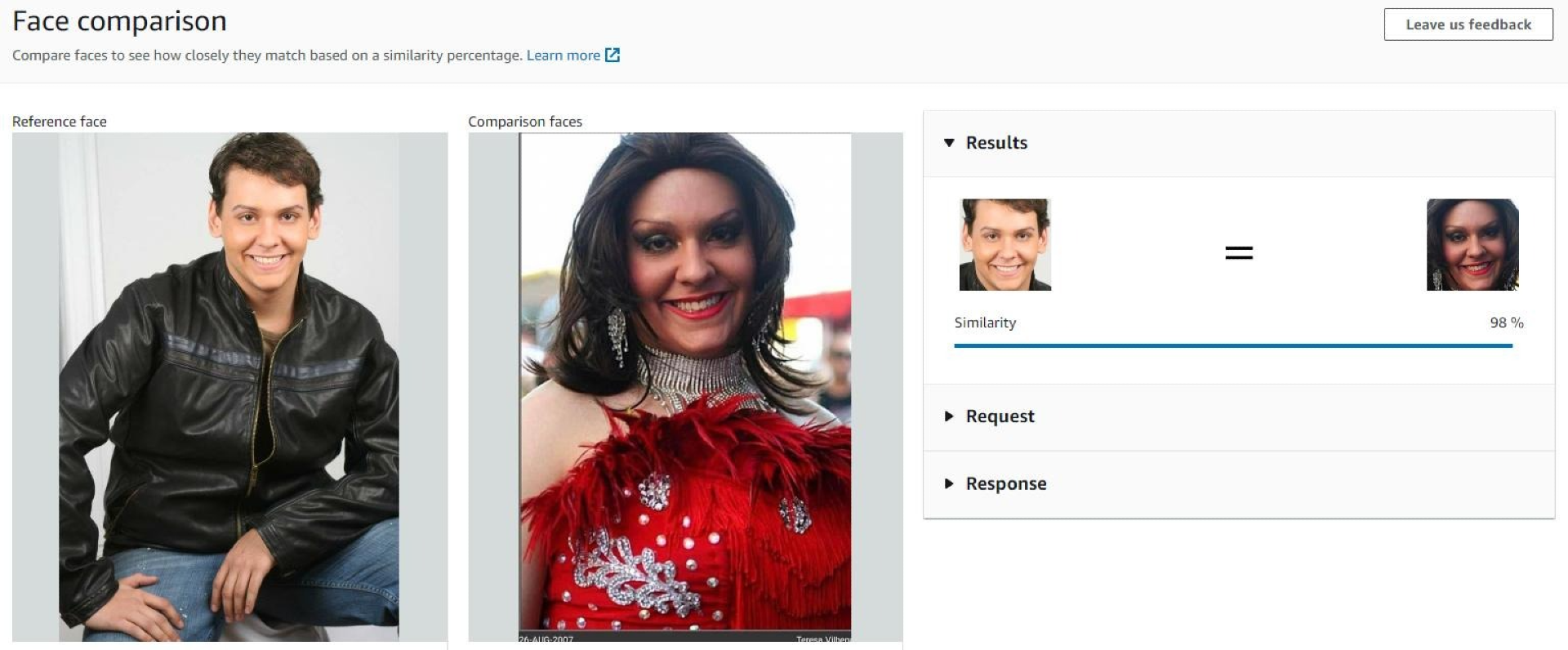
Despite doctors’ concerns, University of California renews ties with religious affiliates

As the University of California’s health system renews contracts with hundreds of outside hospitals and clinics — many with religious affiliations — some of its doctors and faculty want stronger language to ensure that physicians can perform the treatments they deem appropriate, including abortions for women or hysterectomies for transgender patients.

University of California Health is in the middle of a two-year process to renew contracts with affiliate hospitals and clinics that help the university deliver care in underserved parts of the state. Many of the agreements are with faith-based facilities, including prominent hospitals operated by Dignity Health, Providence, or Adventist Health. Such arrangements generate more than $20 million a year for the UC system and help the public university approach its goal of improving public health.

The current policy, adopted in 2021, states that UC physicians have the freedom to advise, refer, prescribe, or provide emergency care, covering cases in which moving a patient “would risk material deterioration to the patient’s condition.” But some UC doctors and faculty worry that physicians would be allowed to perform certain surgeries only in an emergency.

They want to add a clause stating that physicians have the right to perform procedures in a manner they deem advisable or necessary without waiting for the patient’s condition to get worse.

Others have gone so far as to urge the university to reject partnerships with hospitals that have ethical and religious directives against sterilization, abortion, some miscarriage management procedures, and some gender-affirming treatments. The Academic Senate, a faculty body that helps the university set academic policies, and other faculty councils urged the university’s president to avoid working with health care facilities because many have restrictions that “have the potential for discriminatory impact on patients.”

In response, university leaders have pledged publicly to ensure that doctors and trainees can provide whatever care they deem necessary at affiliated facilities but haven’t made changes to the policy language.

“We’ve made it clear that the treating provider is the one to decide if an emergency exists and when to act,” said Dr. Carrie Byington, executive vice president for University of California Health, at a fall meeting of the UC Board of Regents, the governing board of the university system.

UC Health has given itself until the end of this year to make contracts conform to its new policy. During the October board meeting, staffers estimated that one-third of the contracts had been evaluated. Administrators haven’t said whether the current policy thwarted any contracts.

Back in June 2021, the regents approved the policy governing how its doctors practice at outside hospitals and clinics with religious or ethical restrictions. Regent John Pérez made significant amendments to a staff proposal. At the time, it was celebrated as a win by those advocating for the university to push back on religious directives from affiliates.

Pérez noted at the time that his amendments were aimed at “making clear that it’s the regents’ expectation in policy that nothing that is not based on science or [the] best practice of medicine should limit the ability of our practitioners to practice medicine in the interest of the patients.”

But some doctors and faculty said Pérez’s proposal was then wordsmithed as it was converted from the regents’ vote into a formal policy months later. Some questioned whether the policy could be interpreted as restricting services unless there is an emergency, and said it does not go far enough to define an emergency.

“It sounds pretty good,” Dr. Tabetha Harken, director of the Complex Family Planning, Obstetrics & Gynecology division at the UC Irvine School of Medicine, testified before the board. “It passes the commonsense test, but in reality, this is just the federal minimum requirement of care.”

Pérez declined to comment to KHN.

At the regents’ meetings, concerned doctors offered examples of pregnancy and gender-affirming care they believe would be at risk in some hospitals.

One was tubal ligation or sterilization procedures immediately after birth to prevent future pregnancies that may put the woman at risk. It’s a simpler procedure if done postpartum because the uterus is larger than normal and it eliminates the need for additional surgery, said Dr. Jennifer Kerns, an associate professor at UC-San Francisco and director of the school’s Complex Family Planning Fellowship.

Dr. Mya Zapata of UCLA Health described cases of two patients who might not be able to get the same care at a religiously restricted hospital: a trans male who seeks out a hysterectomy based on a mental health referral for gender-affirming surgery, and a cisgender female who seeks out the same procedure for uterine fibroids.

In a hospital with restrictions, Zapata said, the cisgender patient would be able to get the surgery but the trans patient would not, despite both being considered nonemergency cases.

But it’s unclear if physicians are running into problems. UC Health leaders said there have been no formal complaints from university doctors or trainees practicing at affiliate medical centers about being blocked from providing care.

Critics said the lack of complaints may not reflect reality since physicians may find workarounds by transferring or referring patients elsewhere. One researcher, Lori Freedman, who works at UCSF, has spoken to dozens of doctors working at religious-affiliated hospitals across the country. Many have not filed complaints about care restrictions out of fear they’d put their job at risk, she said.

The debate stems from a partnership with Dignity Health, a Catholic-affiliated hospital system. In 2019, UCSF Medical Center leaders considered a controversial plan to create a formal affiliation with Dignity. Critics voiced opposition in heated public meetings, and the plan drew condemnation from dozens of reproductive justice advocates and the gay and transgender communities. UCSF ultimately backed off the plan.

When it became clear that UC medical centers across the state had similar affiliation contracts, faculty members raised additional concerns. Janet Napolitano, then president of the UC system, convened a working group to evaluate the consequences of ending all agreements with organizations that have religious restrictions. Ultimately, the group stressed the importance of maintaining partnerships to provide care to medically underserved populations.

“With 1 in 7 patients in the U.S. being cared for in a Catholic hospital,” the group wrote in its report, “UC’s isolating itself from major participants in the health care system would undermine our mission.”

Dignity Health, which merged in 2019 with Catholic Health Initiatives to form CommonSpirit Health, has already reached a new contract that adopts the updated UC policy. Chad Burns, a spokesperson for Dignity, said the hospital system values working with UC Health for its expertise in specialties, such as pediatric trauma, cancer, HIV, and mental health. He added that the updated agreement reflects “the shared values of UC and Dignity Health.”

Some UC doctors point out that they have not only public support, but legal standing to perform a variety of reproductive and contraceptive treatments. After California voters passed Proposition 1, the state constitution was officially changed in December to affirm that people have a right to choose to have an abortion or use contraceptives. Unlike health systems in other states, some faculty say UC Health can assert reproductive rights.

“We have a lot of latitude, being in California, to be able to make these decisions and stand in our power,” Kerns said. “I think it’s our responsibility to do so.”

Other doctors say the university system should prioritize public service. Dr. Tamera Hatfield, a maternal-fetal medicine specialist at UC-Irvine, testified at a regents’ meeting that she had never been asked to modify care for patients based on religious restrictions since her department formed an affiliation with Providence St. Joseph Hospital-Orange about a decade ago.

“Partnering with faith-based institutions dedicated to serving vulnerable populations affords opportunities to patients who are least able to navigate our complex health systems,” she said.


This story was produced by KHN, which publishes California Healthline, an editorially independent service of the California Health Care Foundation.

KHN (Kaiser Health News) is a national newsroom that produces in-depth journalism about health issues. Together with Policy Analysis and Polling, KHN is one of the three major operating programs at KFF (Kaiser Family Foundation). KFF is an endowed nonprofit organization providing information on health issues to the nation.

New Mexico shooting suspect shows Republicans seek a violent solution to rejection

News coverage of failed GOP candidate Solomon Peña’s arrest for allegedly orchestrating a plot to shoot up the homes of various elected Democrats has consistently highlighted one key detail: His claims to be the “real” winner of the race for New Mexico House District 14 are so ridiculous that it’s hard not to laugh. Ever since Donald Trump’s Big Lie about the 2020 election, there’s been an assumption that election denialists would at least try to make their claims a little plausible by only crying “fraud” in relatively close elections. Failed Republican Arizona gubernatorial candidate Kari Lake, for instance, continues to proclaim herself the “real” winner of an election she lost last cycle by less than a percentage point. Peña, on the other hand, lost his bid for the New Mexico House of Representatives in the deep blue city of Albuquerque to Democrat Miguel Garcia by over 47 percentage points, garnering only 26.4% of the vote.

Prior to allegedly paying people to drive stolen cars to shoot at the homes of four Democratic officials, Peña was reported harassing various officials and insisting that he was the real winner of the race. Chilling video from the doorbell camera of former Bernalillo Commissioner Debbie O’Malley, whose home was later the target of an attempted shooting, shows an agitated Peña at her door, demanding a conversation about his delusions. 


Want more Amanda Marcotte on politics? Subscribe to her newsletter Standing Room Only.


The standard take on this is indisputable: This is the natural outcome of Trump’s Big Lie. “What we’re seeing now are the results of the way that Donald Trump opened the door,” Lindsay Schubiner, programs director at the Western States Center told Vox. The conspiracy theories that led to January 6 are ongoing, and so, therefore, is the political violence they inspire. 

“Conservatives increasingly feel emboldened to tell themselves that it’s impossible that they or their ideas could be honestly rejected. Instead, they react to the word ‘no’ like a stalker ex-boyfriend, as permission to use coercive tactics.” 

But in another sense, the root cause of such political violence runs even deeper than that. Peña’s alleged plot is the latest manifestation of a deeper and expanding malady affecting Republicans nationwide: A refusal to accept that their political views are simply unpopular. When faced with proof that they and their ideas are being rejected, rather than reform or at least try to recast their ideas, Republicans often turn to conspiracy theories about sinister forces working against them. In the right-wing imagination, the problem could never be that people have heard their ideas and decided they just don’t like them. Blame is instead put on “woke” educators or Hollywood manipulators “brainwashing” the masses. The “deep state,” meanwhile, supposedly steals elections. And the “globalists” (read: Jews) somehow pull all of the strings. 

This week, Kaitlyn Tiffany of the Atlantic reported on one of the funnier headaches Tesla CEO Elon Musk invited into his life by buying Twitter to cater to right-wingers: Conservative users who insist dark forces are suppressing their god-given right to way more followers. Prior to Musk’s takeover, conservatives routinely insisted that their failure to see tweets go viral must be due to “shadowbanning,” a mostly-imaginary practice of social media companies reducing a tweet’s weight in an algorithm to hide a toxic viewpoint. Musk promised he’d stop the “shadowbanning” — which, easy enough, since it’s not really a thing — but, of course, conservative Twitter users are still claiming their low engagement rates must be due to these alleged shadowbans. Tiffany writes:

Musk recently added “View” counts to the bottom of tweets, presumably with the intention of equipping users with data and giving them greater insight into whether others actually are seeing their tweets and just not liking them. This effort appeared to mostly anger people: The numbers were smaller than expected, which served as more evidence of shadowbanning.

What else are they going to do? Admit that most people just don’t like them? They’re no more going to admit that than Trump admits he lost the 2020 election. Instead, a conspiracy theory is plugged in to explain how unpopular right-wing accounts are actually beloved by the masses. 


Want more Amanda Marcotte on politics? Subscribe to her newsletter Standing Room Only.


Watching Twitter users like “Catturd” whine that they’d be getting more retweets but for the “shadow-ban” is funny. Less so is this article from the New York Post about reactionary parents who are estranged from their children, and have chosen to blame “woke brainwashing” instead of their own bad choices. The Post, being a right-wing rag, is totally credulous in the face of stories of parents who want to hire “deprogrammers” to fix their supposedly brainwashed kids. 

“While Peña took it to a near-deadly level, the basic premise he was working under is widespread on the right.”

“I’ve had fights with some of my girls just because I wouldn’t get myself a Rainbow pride Starbucks cup,” one woman, who unconvincingly claims to be “a Democrat and a liberal,” told the Post. One child hasn’t spoken to her in four years and the other in a year, which she chalks up not to anything she’s done, but to the kids being “politically correct.” 

Another woman claims that her daughter abandoned her “because we’re conservatives and that we all should be against men.” 

If you’re skeptical that you’re getting the full story from these women, you should be — their children were not interviewed. (The Post says they reached out to two but got no response, which is likely not a sign of “woke brainwashing” but frustration with an overbearing mother who sicced a Rupert Murdoch-owned organization against them.) Both women tacitly admit that their daughters are lesbians while insisting homophobia is not at the center of the fight, leaving one to suspect that the fight over a Starbucks cup was not actually over a Starbucks cup. 

Trump’s narcissism is no longer just his individual psychological damage, but the systematic structure of the GOP.

Indeed, the article glowingly quotes self-proclaimed “deprogrammer” Ted Patrick: “You’ve got to get these kids alone. I’ve snatched people from Yale.” Unmentioned in the article is that another word for “snatching” is “kidnapping,” or that Patrick and his clients have a long history of legal battles stemming from taking adults against their will to “cure” them of behaviors like being in a same-sex relationship or joining more liberal churches than their parents liked. He’s done time in prison for this crime. 


Want more Amanda Marcotte on politics? Subscribe to her newsletter Standing Room Only.


Tempting as it is to write these two off as truly deluded outliers, the truth is the New York Post ran this article because they thought a lot of readers would see sympathetic victims of “wokeness” where the rest of us see narcissistic bullies. It goes to show that, while Peña took it to a near-deadly level, the basic premise he was working under is widespread on the right. Conservatives increasingly feel emboldened to tell themselves that it’s impossible that they or their ideas could be honestly rejected. Instead, they react to the word “no” like a stalker ex-boyfriend, as permission to use coercive tactics. 

People who refuse to take “no” for an answer have always been a problem, of course. But in the era of Trump, that toxic behavior is being validated and mainstreamed as the standard Republican practice. Trump’s narcissism is no longer just his individual psychological damage, but the systematic structure of the GOP.

It’s a soothing myth, of course, to believe that your failures to persuade others are not on you, but the fault of shadowy conspiracies. But the danger is that such a belief ends up, as the frightening “deprogramming” rhetoric shows, justifying the use of force where persuasion fails. Because of this, Peña’s alleged crimes cannot be dismissed as outlier violence. He is simply the logical conclusion of the increasingly standard Republican view that conservatism can never fail, but can only be failed. 


Joe Biden’s first two years: He could be a president on par with FDR and LBJ

Scientific polling did not yet exist in Franklin Delano Roosevelt‘s first two years as president, but it is beyond question that his approval was enormous. During Lyndon Baines Johnson‘s first year-plus in office, his approval rating averaged an astonishing 74.2 percent. At the end of Joseph Robinette Biden Jr.’s second year in office, his approval ratings hover in the mid-40s. It would seem laughable, then, to categorize him as being on their level. FDR is almost always counted among the greatest American presidents. LBJ is not, but likely would be had he not sunk the nation into a pointless, no-win war in Southeast Asia.

Yet a strong case can be made that JRB has, to this point, proven to be a great president, worthy of mention alongside those two.

As a historian who has devoted a couple of decades each to researching and writing on the eras in which the second President Roosevelt and the second President Johnson were in office, I can make that case. My book “The Great Depression: America 1929-1941” remains among the standard histories of that era. The time frame of my new book, “The Times They were a-Changin’,” is what I call “the Long 1964,” from the assassination of John F. Kennedy to the fall of 1965 — precisely Lyndon Johnson’s first two years as president.

Each of the three men was greatly underestimated when he entered the presidency. “Franklin D. Roosevelt is,” Walter Lippman famously wrote in early 1932, “a pleasant man who, without any important qualifications for the office, would very much like to be President.” The elite intellectuals of the Kennedy administration mocked Vice President Johnson as “Rufus Cornpone” and “freckle-belly.” Biden was — and in many quarters still is — seen as too unexciting, too old and so on.

Both FDR and LBJ began their presidencies against the backdrop of national tragedies that provided the potential for strong support for their programs. Roosevelt took office at the nadir of the Great Depression. “The whole country is with him,” humorist Will Rogers said. “If he burned down the Capitol, they would cheer and say, ‘Well, at least he got a fire started, anyhow!'” Johnson coming to power following the shock of the assassination allowed him, as he later put it, to market his plans as “the dead man’s program and turn it into a martyr’s cause.”

The pandemic served as something of a parallel to what the Depression was for Roosevelt, and the horrors of Trumpism and the Jan. 6 Insurrection could have provided a propellant similar to the assassination for Biden, but Donald Trump’s cult-leader control over a large fraction of the population got them to believe two huge lies: that Trump had done a good job handling the pandemic and that Biden had not really won the election.

The more notable accomplishments during Roosevelt’s first 24 months include several important pieces of Depression-related legislation, such as the Emergency Banking Act, the Agricultural Adjustment Act and the National Industrial Recovery Act, as well as the creation of numerous new federal agencies, some of which are still with us — including the Securities and Exchange Commission, the Federal Housing Administration, the Federal Savings and Loan Insurance Corporation and the Tennessee Valley Authority — and others now part of history, like the Civilian Conservation Corps, the Public Works Administration and the Civil Works Administration. (Some of the New Deal legislation of the most lasting importance, such as the Social Security Act and the Wagner Labor Relations Act, came later, in the second half of FDR’s first term.)

In his first two years in office, Lyndon Johnson oversaw the massive achievements of the Civil Rights Act of 1964 and Voting Rights Act of 1965, as well as the Economic Opportunity Act, the Elementary and Secondary Education Act, the Housing and Urban Development Act and the Immigration and Nationality Act, which eliminated national origin, race and ancestry as criteria for being allowed to immigrate into the United States. His administration also launched Medicare and Medicaid, Project Head Start and the National Endowments for the Arts and Humanities.


Want a daily wrap-up of all the news and commentary Salon has to offer? Subscribe to our morning newsletter, Crash Course.


Biden’s two-year record stacks up well against the very high bars set by FDR and LBJ, beginning with the $1.9 trillion American Rescue Plan to stimulate the economy, followed by the Infrastructure Investment and Jobs Act to provide for repairs and extensions to the nation’s roads, bridges, railroads, water systems (the need for which is obvious, for instance, in Jackson, Mississippi, where I live) and broadband. In 2022, he secured passage of the PACT Act, expanding health care and benefits for those who were exposed to toxic substances during their military service, and the CHIPS and Science Act, funding advanced scientific research and investing $53 billion to manufacture silicone microchips in the U.S. The crown jewel in 2022 was the Inflation Reduction Act, which does more than any previous legislation to mitigate climate change, allows Medicare to negotiate with Big Pharma to cut prescription drug prices, begins to crack down on tax evasion by corporations and the very rich and much more. In December, the Respect for Marriage Act, protecting both same-sex and interracial marriage, was passed, as were a reform of the Electoral Count Act, making it more difficult to overturn an election, and reauthorization of the Violence Against Women Act.

Biden has also excelled on the international stage far more than Roosevelt did in his first two years — and more than Johnson ever did. Biden rallied the forces of democracy to oppose Vladimir Putin’s authoritarian aggression and aid Ukraine and revived NATO, which Trump had on the verge of collapse.

To grasp just how much harder it is to enact a progressive program in the 2020s than it was in the mid-1960s, consider this: In 1964, 77 percent of Americans polled — and, astonishingly, 74 percent of Republicans — said they believed that the federal government could be trusted all or most of the time. By 2019, only 17 percent of those polled trusted the federal government.

And then there is the enormous advantage that FDR and LBJ had in terms of the makeup of Congress, where both had large Democratic majorities. “We would sit around in the White House and ask each other, ‘What needs to be done?'” Dick Goodwin, then special assistant to President Johnson, later told me in recalling early 1965. “We should be able to pass anything we want to.” Biden had a small House majority and a 50-50 Senate.

In Olympic competitions, the “degree of difficulty” of a dive, gymnastic performance or ice-skating jump is factored into the score. If we do the same with Biden, anyone but an East German judge during a Cold War-era Olympics would award him a very high score. His first two years rival the accomplishments of both Franklin Roosevelt and Lyndon Johnson, the two most effective of 20th-century presidents — and as was said about Ginger Rogers doing everything that Fred Astaire could do, Biden had to do it dancing “backward and in high heels.” 

Are “the yips” real, or psychosomatic? Here’s what experts say

You probably know this nightmare — the one where you’re suddenly, inexplicably incompetent at something you definitely know how to do. Maybe it’s taking a test, or doing your job duties competently, or driving a car. Or maybe you’re a pro athlete and you’ve forgotten how to catch a ball. 

While few of us will ever live the bad-dream cliche of forgetting how to dress ourselves before going to class, athletes really can forget how to do their job — spontaneously and seemingly without reason. This extremely weird condition has a name — the yips — and if you’re a pro athlete, it’s definitely your worst nightmare come true.

You may know the yips because of their depiction in fiction. In the second season of the hit sitcom “Ted Lasso,” a soccer player played by Cristo Fernández gets the yips after accidentally killing a dog during a game. The yips, as another character explains, refers to “when just out of nowhere an athlete suddenly can’t do the basic fundamentals of their sport.”

In reality, the yips were in the news this week, when on Monday — during a football game between the Dallas Cowboys and Tampa Bay Buccaneers — Dallas kicker Brett Maher missed four consecutive extra point kicks. As any NFL fan knows, those 33-yard kicks are considered pro forma at this level of the game, especially as they only add a single point after a team scores a 6-point touchdown. Missed extra point kicks still occasionally happen among professional players, of course, but Maher is the first kicker in the history of the league to miss four extra point kicks in a single game.

Experts agree that the yips is itself a very real disease, one with physical as well as psychological origins.

He is hardly alone, however, when it comes to having the yips. Indianapolis Colts kicker Mike Vanderjagt developed the yips in 2005 after missing a crucial field goal; thereafter, he went from being one of the most accurate kickers in league history to regularly missing attainable kicks.

Yet the yips are hardly confined to sports that involve a lot of kicking. The history of baseball is full of players whose throwing accuracy inexplicably evaporated: Steve Sax of the Los Angeles Dodgers had yips so notorious that some refer to the condition as “Steve Sax Syndrome,” much as Pittsburgh Pirates pitcher Steve Blass’ case of the yips was informally dubbed “Steve Blass Disease.” Chuck Knoblauch of the New York Yankees developed such a severe case of the yips that he took himself out of an important game in 2000 and left the stadium while it was in progress in street clothes. There are also myriad golfers who have had the yips, while gymnasts like Simone Biles have suffered from an analogous ailment known as “the twisties.” Each of these athletes would suddenly find themselves unable to kick precisely, throw accurately, hit a ball, spin in the air correctly or otherwise perform the fundamentals of their sport.

Even though the yips involve athletes suddenly being unable to do basic tasks seemingly out of nerves, however, experts agree that the condition is itself a very real disease — one with physical as well as psychological origins.


Want more health and science stories in your inbox? Subscribe to Salon’s weekly newsletter The Vulgar Scientist.


“We do know that focal dystonia actually takes place,” explains Dr. Nick Molinaro, a clinical psychologist who specializes in sports and performance psychology. Focal dystonia is a neurological condition in which there are involuntary muscle contractions in one body part. Molinaro said that it is the “absolute truth” that there is a genuine physical as well as mental component to the yips, in particular when the muscles in questions have been overused.

“f you made an error in your throw one time… the next time you start to anticipate that the worry itself will start to alter the pathways in the brain. That’s the way it happens.”

“It generally occurs in people that are older, and so that part is obviously identified,” Molinaro told Salon. “I’m currently working with a world class athlete — I won’t give you the sport, but what happened with him is that as it is a racket sport, he is making a very specific movement. There is this kind of jerking motion that’s taking place in his wrist.” Thanks to MRIs and X-rays, doctors discovered “a condition related to a certain portion of his shoulder. As he moves it across his body, for example, it produces a different response. So backhanded movement versus a forehead, there’s a physiological basis for why that’s occurring. That would be a good example of what I’m talking about.”

Indeed, according to a 2020 article in the journal Frontiers in Psychology, a key difference between the yips and “choking” — another term involving a talented athlete suddenly declining — is that while the yips involves a combination of physical and psychological problems for the players, choking is purely the result of mental factors. By analyzing golfers and archers, the scientists determined that one of the key risk factors for developing the yips is displaying perfectionist traits. Specifically athletes who developed the yips had higher amounts of “social anxiety, perfectionistic self-promotion, and non-display of imperfection,” meaning they were more likely to be nervous in social situations and determined to present a flawless image to others.

The mysterious part is how those mental problems ultimately become tangible, measurable physical problems. It is not mysterious at all, however, how the athletes’ brains wind up stirring up the yips within them.

“A good example is this: when you speak, you don’t think of every word you say because you have 80,000 thoughts a day, 35,000 decisions a day, most of which are influenced by your subconscious mind,” Molinaro told Salon. “So if you made an error in your throw one time, and then as a result there was an inhibition of you’re being able to do that, the next time you start to anticipate that the worry itself will start to alter the pathways in the brain. That’s the way it happens.”

The good news, however, is that the yips does not always have to spell the end of an athlete’s career. Steve Sax, for instance, eventually resumed his successful baseball career, as did Chicago Cubs pitcher Jon Lester after a public bout with the yips in 2014. The ailment’s origins may remain somewhat murky, but it does not always have to be the final chapter in an athlete’s career.

“This condition is treatable,” Molinaro assured Salon.

Climate misinformation plagues Twitter under Elon’s watch

Climate advocates recently determined a major increase in climate change disinformation circulating Twitter under billionaire Elon Musk’s leadership, The Associated Press reports.

Twitter users may be surprised to find that when “climate” is typed in the search bar, “climate scam” is the first recommended phrase to appear. And when “climate scam” is clicked, users will discover tweets filled with language that blatantly denies the reality of climate change.

Nonprofit organization Advance Democracy released a report last year determining that “climate scam” tweets skyrocketed by 300 percent.

The Associated Press reported that climate misinformation has spread increasingly under the billionaire’s direction. Unlike disinformation, which the American Psychology Association defines as information that is maliciously and “deliberately intended to mislead” — misinformation is “false or inaccurate information—getting the facts wrong.”

The Institute for Strategic Dialogue tracks climate change disinformation in partnership with other environmental advocacy groups, and recently distributed a report that exposes months of social media platforms’ failure to vet climate change disinformation.

Head of climate research at the institute, Jennie King, called the effect of this uptick in disinformation “a direct threat to action.” She said, “it plants those seeds of doubt and makes people think maybe there isn’t scientific consensus.”

To King’s point, researchers discovered that Meta permitted approximately 4,000 ads that completely ignore any “scientific consensus” around the climate crisis across its website. Additionally, researchers also uncovered evidence that those same accounts sharing false climate information, typically share false election, COVID-19 and vaccination language as well.

Twitter announced that the platform would cease the enforcement of its COVID-19 misinformation policy in November. Subsequently, the spread of misinformation increased.

In the same month, Musk changed Twitter’s verification system completely, which formerly confirmed the legitimacy of accounts of public figures. Now, users can simply pay $8 each month to attain verification, which anti-misinformation group Center for Countering Digital Hate asserts is likely a contributing factor to could also be a reason for increased disinformation and misinformation.

The group’s chief executive officer Imran Khan said they “found [the new verification system] has in fact put rocket boosters on the spread of lies and disinformation.”

As long as anyone has the ability deem themselves a legitimate source of information, disinformation will continue to spread like wildfire.

Bannon calls Santos “bulletproof” after photos circulate of the congressman in drag

In the wake of reports that embattled New York GOP Congressman George Santos performed in drag while living in Brazil over a decade ago, former Trump adviser Steve Bannon is giving his thoughts on the matter, Newsweek reports.

Journalist Marisa Kabas tweeted a photo of Santos in drag, saying that he was an amateur drag queen named “Kitara Revache” 15 years ago in Brazil. Drag queen Eula Rochard, who appeared in the photo with Santos, said everyone knew him as Anthony and “never George.”

In a post to the social media platform Gettr, Bannon responded to the news by calling Santos, “The Talented Miss Kitara.”

“George Santos just became bulletproof…introducing the First Brazilian American Drag Queen,” Bannon wrote.

Santos, who has denied the numerous reports claiming that he lied about details on his résumé, denied that the drag story is true.

“The most recent obsession from the media claiming that I am a drag Queen or ‘performed’ as a drag Queen is categorically false,” Santos tweeted. “The media continues to make outrageous claims about my life while I am working to deliver results. I will not be distracted nor fazed by this.”

As Newsweek points out, Bannon’s comments on the story haven’t been echoed by many other Republicans.

“Aside from Bannon, most Republicans have remained quiet so far in regard to the new Santos allegations. A focus on drag queens and their place in American society has recently escalated among conservatives,” writes Newsweek’s Nick Mordowanec. “In November, Republican state Representative Tony Tinderholt of Texas appointed Jake Neidert, a self-described Christian nationalist who previously called for killing drag show attendees, as the legislative director at his office.”

Trader Joe’s 11 best vegan snacks being sold right now

Vegan is in. As the amount of plant-based or animal-free products in grocery stores and online marketplaces soar, the sheer breadth of the vegan products available is much more expansive than even just five years ago. 

Something just as popular as veganism is Trader Joe’s, the cult classic grocer that has scores of loyal fans. Across Facebook, Reddit and many Trader Joe’s-adjacent fan pages, websites and Instagram accounts, many of these loyal fans have been sharing their absolute favorite vegan snacks and products. 

Do not fret, though. You need not scour the interwebs to discover these elusive vegan products. Here, we’ve compiled a handy list for you to peruse and pick out your favorites so that your next shopping trip (whether that will be completed IRL or via a delivery service) is complete with all of your must-have vegan treats. 

Of course, keep in mind that some Trader Joe’s locations may not always have all of these products in stock.

In addition to standbys like hummus, olives, guacamole, fruits and veggies (and dried or freeze-dried variations), salsa and pico de gallo, here are the top vegan snacks that you can pick up today. 

This list adds to Salon Food’s growing library of supermarket guides, encompassing all the best products at Trader Joe’s, Costco, Aldi and more. 

01
Vegan Buffalo Style Dip
This comment from Redditor apcb4 sums up the fanfare around this dip. “Not vegan but I eat a lot of plant-based items and that Buffalo dip is amazing,” they wrote. “My husband is a carnivore and loves it too! It’s not trying to be Buffalo chicken dip. It’s a much smoother texture and I think it’s made with cauliflower and it is so dang good[.]”
 
According to the product page, Trader Joe’s describe the dip as such: “With an ingredient list laden with vegetables, like cauliflower, red peppers, and carrots, it creates a marvelous canvas for that slow-building, infamous Buffalo, cayenne kick that everyone, not just meat eaters, can enjoy. Tempered by lime juice — not a drop of dairy in sight — to gently cool your taste buds, each mouthful is a roller coaster of thrilling spice, followed by a gentle, vegan-friendly cooling sensation that inevitably keeps you going back for more.” 
 
If can be enjoyed with practically any chips, raw vegetables, crudites or even used as a sandwich spread
02
Crispy Jalapeño Pieces
As lisambb writes on Reddit, “Those jalapeño pieces are my favorite thing. So good.” The production description on the Trader Joe’s website states that “the best way for us to describe Trader Joe’s Crispy Jalapeño Pieces is: Crispy Onion Pieces, but with jalapeños instead of onions. That’s really it. There are only a few ingredients in the recipe—fresh jalapeño peppers, flour, oil, and sea salt.” 
 
While these can be enjoyed on a sandwich, in a salad, on top of a casserole or crushed and used as a “breading” of sorts, many fans are proponents of just munching on them directly from the canister. 
03
Vegan Tzatziki Dip
While traditional tzatziki is made with yogurt as the primary component, a vegan tzatiki turns the classic on its head. One Reddit user writes that “the vegan tzatziki is amazing” and Reddit user emblashed concurs, writing, “I second the vegan tzatziki. I’m not vegan and I still think it is absolutely amazing. Great for snacking.”
 
Clearly, it’s a snack that has elicited lots of fans.
 

So what takes the place of the yogurt, you may be asking? Trader Joe’s has the answer: “After trying a few variations, we found that a plant-based, dairy-free cream cheese provided the best base, and after mixing in just the right amount of lemon juice and chopped up cucumber, fresh dill, and garlic, we knew we had it: Trader Joe’s Vegan Tzatziki Dip was born.”

04
Vegan Caramelized Onion Dip
Redditor moteviolence replied to Reddit user keltonny’s comment that Trader Joe’s “vegan caramelized onion dip is good, too” with an even more emphatic take: “That vegan caramelized onion dip is SOOOOOOO good!” 
 
Trader Joe’s product page reports that “To make each batch of this delicious and dairy-free dip, our supplier slowly caramelizes onions with balsamic vinegar and brown sugar for over three hours, rendering them exquisitely soft and tantalizingly sweet.” 
 
While this product might be more sweet-leaning than savory, it’s certainly a fan favorite.

Want more great food writing and recipes? Subscribe to Salon Food’s newsletter, The Bite.


05

Plantain Chips

Often underappreciated, plantain chips are an amazing vessel for carrying all of your favorite vegan dips or, instead, simply enjoyed on their own volition.
 
Trader Joe’s website writes “Our Plantain Chips come from Peru, where the plantains are picked when they’re just ripe enough to be slightly sweet. They’re sliced and cooked in sunflower oil, then dusted with salt.” That’s the kind of simplistic flavor that really shines when it comes to vegan fare. 
 
Swap out your go-to tortilla chips for plantains chips; I bet you’ll be thrilled. 
06

Spicy Porkless Plant-Based Snack Rinds

The notion of a pork-less pork rind is a pretty whacky one, but that’s precisely what this product is.
 
As Redditor cbensco writes here, “Just tried the ‘porkless’ snack rinds and they were a nice protein heavy salty snack[.]” 
 
Trader Joe’s details the product further, stating that “Made from rice meal, pea protein, and pea flour and seasoned with paprika, cayenne, and a pinch of habanero pepper powder, TJ’s Spicy Porkless Plant-Based Snack Rinds are vegan, gluten free, and kosher-certified. Plus, these Spicy Snack Rinds are baked—not fried—and packed with 7g of protein per one-ounce serving.” 
 
If that doesn’t make you want to pick up a bag, I’m not sure what will.
07

Chile Spiced Pineapple

In order to capitalize on the popular sweet-spicy dynamic, Trader Joe’s created this inventive treat.
 
According to their website, “we’ve taken something super sweet and succulent (dried rings of pineapple from Ghana) and paired it up with something truly spicy (a bold chili powder blend with cayenne and traditional chamoy powder), plus a little extra cane sugar and salt to make a snack that hits that special mix of sweet and heat that leaves you craving more with every bite.”
 
For anyone spooked by the spice, though, TJs contends that the heat isn’t overbearing. 
08

Peanut Butter Caramel Coated Popcorn

This popcorn is a fascinating study in flavor, texture and consistency. As stated by Trader Joe’s product page, “Our supplier starts with puffy, mushroom kernel popcorn, suitably shaped for coating in a sweet syrup of tapioca and cane sugar. This Caramel Coated Popcorn is followed by a second coating, this time in the form of salted Peanut Butter … And though the Popcorn is contending with two coatings, it somehow manages to retain a seemingly impossible airiness and oh-so satisfying crunch[.]”
 
Amazing! Any popcorn fan is sure to adore this product. 
09

Garlic & Onion Pistachios

Trader Joe’s product page reports that “these are California-grown, in-shell pistachios, dry roasted and dusted with a robust blend of garlic, onion, and sea salt. Some folks like to pop whole pistachios into their mouths, shell and all, to make sure they get all the flavor. Other folks prefer to remove the shell first.”
 
No matter how you’re eating them, one thing is for sure: it’ll be impossible for you to have just one. 
10

Vegan Banana Bread with Walnuts

While banana bread may in and of itself seem decisively un-vegan, this loaf is devoid of any and all animal products. According to the official TJ’s website, it contains only banana puree, flour, cane sugar, canola oil, walnuts, baking soda, natural flavors and salt.
 
It is moist and rich, with walnuts to bolster the texture and flavor and it also makes for an excellent breakfast, snack or even dessert. Furthermore, as a search of Reddit shows, it’s often in stock and is carried by lots and lots of Trader Joe’s locations. Win-win! 
11

Quinoa Stuffed Dolmas

Dolmas have been adored for centuries; here, TJs take them up a notch.
 
“Each Quinoa Stuffed Dolma is made by taking naturally zesty grape leaves that have been brined and marinated until they’re soft and pliable, and carefully wrapping them around bundles of earthy quinoa that have been seasoned with lemon juice, herbs, garlic, and onion.” states the Trader Joe’s product page, describing the soft, cool, easy-to-eat sensation that can be enjoyed straight from the can.
 
Of course, they can also be eaten in salads, alongside soups or stews, or enjoyed in a multitude of other ways. 

Fingers point this way and that as the Supreme Court flounders over abortion draft leak

In May of 2022, a draft of the Supreme Court decision in Dobbs v. Jackson Women’s Health Organization leaked, letting the public know that abortion rights as they were previously known were about to be a thing of the past. 

As made clear in that draft, written by Justice Alito, it was specified that they’d determined it was “time to heed the Constitution and return the issue of abortion to the people’s elected representatives,” effectively overturning Roe v. Wade. Split debates over the pending ruling broke out in the news cycle after the leaked document was published by Politico, quickly followed by finger pointing over who could have been responsible for leaking it. After a lengthy investigation, the Supreme Court still doesn’t know. 

In a report published on Thursday stating that “the leak was no mere misguided attempt at protest,” Michael Chertoff, former Secretary of Homeland Security, Judge of the U. S. Court of Appeals for the Third Circuit, Assistant Attorney General for the Criminal Division of the U. S. Department of Justice, and U. S. Attorney for the District of New Jersey provided a statement on his aiding in the investigation saying the following:

“My review assessed that the Marshal and her experienced investigators undertook a thorough investigation within their legal authorities, and while there is not sufficient evidence at present for prosecution or other legal action, there were important insights gleaned from the investigation that can be acted upon to avoid future incidents.” 

From here, Chertoff details an action plan that would include “restricting the distribution of hard copy versions of sensitive documents,” and “limiting the access of sensitive information on outside mobile devices.” But the varied responses to this report seem to agree that plans for the future don’t do much to erase errors of the past.


Want a daily wrap-up of all the news and commentary Salon has to offer? Subscribe to our morning newsletter, Crash Course.


Supreme Court Marshal Gail Curley, head of the investigation, revealed information we’ve obtained from NBC on Thursday highlighting that “97 court employees were interviewed and all denied being the leaker.”

“If a court employee disclosed the draft opinion, that person brazenly violated a system that was built fundamentally on trust with limited safeguards to regulate and constrain access to very sensitive information,” Curley added.

Responding to the investigation’s dead end, Trump weighed in via Truth Social with an action plan of his own saying “The Supreme Court has just announced it is not able to find out, even with the help of our “crack” FBI, who the leaker was on the R v Wade scandal. They’ll never find out, & it’s important that they do. So, go to the reporter & ask him/her who it was. If not given the answer, put whoever in jail until the answer is given. You might add the publisher and editor to the list. Stop playing games, this leaking cannot be allowed to happen. It won’t take long before the name of this slime is revealed!”

In the hours following the Supreme Court’s update on the investigation, others like Elie Mystal, Justice Correspondent for The Nation, added their own views on the matter.

“I told everybody, from the very beginning, that if the Dobbs leaker turned out to be a Republican, the Supreme Court would somehow never find who did it,” Mystal said on Twitter. “Welp, the report’s out and, what do you know, they don’t know who did it.”

“The Supreme Court is supremely broken,” NY Congressman Ritchie Torres said via his own social account. “SCOTUS cannot find the source of the leak in the Dobbs case. Clarence Thomas refuses to recuse himself from cases implicating Ginni Thomas. Brett Kavanaugh parties with George Santos + Matt Schlapp. SCOTUS has no code of ethics.”