Spring Sale: Get 1 Year, Save 58%

It’s time to nationalize the fossil fuel industries: That’ll trigger the right!

If you want to trigger a conservative, just suggest nationalizing the U.S. gas and oil industry. “Venezuela!” they’ll scream hysterically, perhaps adding a few, “Iran!” squeals. (Somehow, they always forget to yell about Norway…)

Within minutes they’ll be croaking about that time back in 2008 when Maxine Waters — a Black woman with power and therefore the most terrifying thing Republicans can imagine — threatened oil industry CEOs who were giving Congress deliberately deceptive and incomplete answers with “socializing… taking over and the government running all your companies.”

Immediately, Fox News was all over it, as were dozens of right-wing sites.  

They completely ignored (or never knew) the long American history of taking over industries during a time of national crisis.

As we re-enter a cold war with Russia and face unprecedented human death and property damage from climate change, it’s hard to claim we’re not in the midst of a national crisis that has fossil fuels at its foundation.

We’re at least 40 years behind where we should be in dealing with the fossil fuel/global warming crisis because giant oil companies have run massive disinformation campaigns while funding the political careers of hacks in Congress willing to lie to the public for them.

RELATED: Panic over spike in energy prices reveals how unprepared Americans are for a gas-free future

Jimmy Carter, for example, declared a national crisis in 1979 and proposed legislation to create “this nation’s first solar bank, which will help us achieve the crucial goal of 20 percent of our energy coming from solar power by the year 2000.”

Franklin D. Roosevelt had sold bonds to the public to fund a government corporation that would develop synthetic rubber for fighter jet tires back in the day, and Carter wanted to do the same to end our dependence on fossil fuels: “Just as a similar synthetic rubber corporation helped us win World War II,” Carter said, “so will we mobilize American determination and ability to win the energy war.

In that same July 15, 1979 speech, he proposed the government issue bonds that would fund:

[T]he creation of an energy security corporation to lead this effort to replace 2-1/2 million barrels of imported oil per day by 1990. The corporation will issue up to $5 billion in energy bonds, and I especially want them to be in small denominations so that average Americans can invest directly in America’s energy security.

It all came crashing down 42 years ago this coming January when the fossil fuel industry’s candidate, Ronald Reagan, replaced Carter, killed the solar bank and the bond program, and even took Carter’s solar panels off the roof of the White House.

If ever there was an industry that merited nationalization, the fossil fuel industry is it. They manipulate prices to both enhance profits and swing elections, bribe their way through the halls of Congress, and pump out a steady stream of lies about climate change. All while pouring hundreds of billions into the money bins of their morbidly rich CEOs, shareholders and senior executives.

America has a long, proud history of taking on companies that put profit before the public good — and we could take over the Big Three oil companies for less than $500 billion.

America has a long and proud history of taking on companies that put profits over the public good during a time of crisis. And we could acquire controlling interest of the nation’s three largest fossil fuel players — ExxonMobil, Chevron and ConocoPhillips — for, according to Robert Pollin, writing at the American Prospect, fewer than a half-trillion dollars.

For less than a quarter of the cost of Trump’s billionaire tax cuts we could rapidly move a long way toward saving our nation and the world from climate destruction. But is it even possible? Turns out that history says an emphatic yes.

During the crisis of World War I, President Woodrow Wilson nationalized the country’s railroads, phone companies and telegraph operators. He did the same with the nation’s radio networks and radio stations. All were returned to private ownership after the war, but that temporary nationalization helped get America through the crisis.

Roosevelt did the same during World War II, nationalizing airplane manufacturers, gun manufacturers, more than 3,300 mines, the nation’s railroads, dozens of oil companies, Western Electric Co., Hughes Tool Co., Goodyear Tire and Rubber, and even one of the nation’s largest retail outlets, Montgomery Ward. He also nationalized 17 foreign companies doing business in the U.S.

After FDR died, Harry Truman continued seizing companies that were using the war as an excuse to jack up profits to the detriment of the nation. He nationalized meatpacking facilities across the country, the Monongahela Railroad Company, the nation’s steel mills and hundreds of railroad companies.

As with Wilson’s nationalizations, nearly all were returned to the private sector after the war was over, although it took until 1965 before all were privatized. Many had had their boards of directors and senior management replaced with people who’d put the interests of the nation ahead of their greed for profits.


Want a daily wrap-up of all the news and commentary Salon has to offer? Subscribe to our morning newsletter, Crash Course.


In the 1970s, in the wake of the collapse of the Penn Central Railroad, Richard Nixon oversaw the voluntary nationalization and transfer of 20 railroads into the newly created National Rail Passenger Corporation, now known as Amtrak.

In 1974 Congress created another nationalized entity to deal with freight rail, the Consolidated Rail Corporation (Conrail), which absorbed dozens of failing rail companies. Conrail was government held until 1987, when it was privatized in what was then the largest IPO in American history.

In 1984, when the Continental Illinois National Bank and Trust Company was in a crisis, Ronald Reagan’s administration oversaw the FDIC nationalizing it by acquiring an 80 percent ownership share in the company; it wasn’t re-privatized until 1991, and was bought by Bank of America in 1994.

Also in the 1980s, after Reagan recklessly deregulated the savings & loan industry, bankers made off with billions, leaving the wreckage of crushed S&Ls all across the nation.

When the government agency that insured them, FSLIC, went bankrupt itself in 1987, Reagan and Congress created an umbrella agency — the Resolution Trust Corporation (RTC) — to nationalize 747 of America’s S&Ls with assets of more than $400 billion. Their assets were sold back into the private market in 1995 as the RTC shut itself down, having averted a 1929-style banking crisis through temporary nationalization.

When George W. Bush was handed the White House by five Republican appointees on the Supreme Court, the nation’s airline security system was entirely in private hands.  

They failed miserably on 9/11, so Bush didn’t even bother with the normal acquisition process that would protect the hundreds of small contractors running security at airports across the nation: he simply nationalized the entire system and created a government agency, the Transportation Security Administration (TSA), to take over airport and airline security.

Bush also partially nationalized the nation’s airlines, creating the Air Transportation Stabilization Board, which traded around $10 billion in loans to airlines in crisis (air traffic had collapsed after the 9/11 attacks) in exchange for company stock. We (through our government) ended up holding 7.64 million shares in US Airways, 18.7 million shares of America West Airlines, 3.45 million shares in Frontier Airlines, 1.47 million shares in American TransAir and 2.38 million shares in World Airways.

Congress had deregulated the nation’s banks in 1999 when Republicans pushed through an end to the Glass-Steagall Act and Bill Clinton signed it into law. The resulting banking system crash in 2008 forced the Bush administration to nationalize the country’s two largest mortgage lenders (which held about 40% of all U.S. mortgages), Freddie Mac and Fannie Mae.

The Bush administration then additionally nationalized a 77.9% share in AIG, a 36% share of Citigroup and a 73.5% share of GMAC, forcing out GM CEO Rick Wagoner, who’d been a particularly terrible manager of that company and was actively lobbying against what Bush thought were America’s interests.

As Barack Obama came into office in 2009, General Motors and Chrysler were on the brink of collapse. His administration created a new company, NGMCO, Inc., which nationalized the assets of GM and was 60.8% owned by the federal government. 

GM was finally fully re-privatized by the Obama administration in 2013. Chrysler went through a similar process, although both the UAW and the Canadian government were part owners when it was temporarily nationalized.

Thomas M. Hanna, Director of Research at the Democracy Collaborative and author of “Our Common Wealth: The Return of Public Ownership in the United States,” compiled most of the data above in a brilliant paper titled “A History of Nationalization in the United States 1917-2009.”

Toward its end, he summarizes brilliantly the case for nationalizing — perhaps only temporarily — America’s largest oil and gas companies:

In such times of political and economic crisis, policymakers of all ideological persuasions in the United States have never been hesitant to use one of the most powerful tools at their disposal: nationalization of private enterprises and assets.

This included the Democrat Woodrow Wilson, who nationalized railroads, and the telephone, telegraph, and radio industries (among others), and the Republican Ronald Reagan, who nationalized a major national bank; the Democrat Franklin D. Roosevelt, who nationalized dozens of mining and manufacturing facilities, and the Republican George W. Bush, who nationalized airport security and various major financial institutions; the Democrat Barack Obama, who nationalized auto manufacturers, and the Republican Richard Nixon, who nationalized all passenger rail service.

Today’s climate crisis dwarfs the threat of Nazism in the 1940s, Bin Laden’s 9/11 attack or the massive bank robberies that took place during the Reagan and Bush administrations. It literally threatens all life on Earth.

Yet the fossil fuel industry continues to fund climate denial and lobby against any meaningful solutions, as we saw when every Republican in the Senate, along with Joe Manchin, killed the $500 billion investment in clean energy the Biden administration proposed in its Build Back Better legislation.

Squeals of “socialism!” and “Venezuela!” aside, we know how to nationalize industries that are working against our nation’s interests and have done it before, repeatedly. 

This time it’s not just about saving our banks or fighting a war. This time, it’s about saving the world.

Read more on the fight for green energy:
Ukraine sank Russia’s naval flagship

The Russian Black Sea Fleet’s flagship, the Moskva (Moscow), sank on Thursday hours after Ukrainian resistance fighters bombarded it with multiple anti-ship missiles.

“Ukrainian military officials said they struck the Moskva with Ukrainian-made Neptune missiles – a weapon designed after Russia’s annexation of Crimea in 2014, and the naval threat to Ukraine in the Black Sea grew,” according to the British Broadcasting Corporation.

The Ukrainian government also published a tweet in celebration of its victory.

“Russian warship, what are you sinking?” it wrote.

The 11,500-ton, 510-crewed Moskva incurred significant damage when stored ammunition exploded during the attack. It then fell onto its starboard side and flooded. While the Moskva was being escorted back to port, it took on additional water during a storm and now lies at the bottom of the Black Sea.

“While being towed … towards the destined port, the vessel lost its balance due to damage sustained in the hull as fire broke out after ammunition exploded. Given the choppy seas, the vessel sank,” Russian state news agency TASS said in a statement.

Moscow also claimed that the crew had successfully abandoned ship.

This is a massive blow to Vladimir Putin’s campaign in Ukraine and to his military’s dominance of the Black Sea. It is also the most significant naval defeat in Europe since World War II.

Study suggests e-cigarettes can cause brain inflammation — with flavors affecting severity

Opponents of e-cigarettes have long argued for a ban on flavored vape products — which experts say played a critical role in a startling resurgence of underage nicotine addiction. New research just revealed chronic usage of these tantalizing flavors may have also caused a hidden epidemic

On Tuesday, scientific journal eLife published a study on mice that indicated brain, lung, heart, and colon inflammation resulting from daily e-cigarette use. The authors state their findings suggest that “daily use of pod-based e-cigarettes or e-cigarettes containing high levels of nicotinic salts over months to years, may cause inflammation in various organs, increasing the risk of disease and poor health.

Taking a novel approach, the co-authors investigated not only long-term impacts, but also differences across vape flavors. Once-popular mango and mint products made by JUUL Labs Inc., which were used in the study, induced uneven responses among organs. 

“This was a real surprise to us,” stated Laura Crotty Alexander, MD.  “This shows us that the flavor chemicals themselves are also causing pathological changes.”

For example, mint elicited heart inflammation and greater susceptibility to severe outcomes from bacterial pneumonia. 

“If someone who frequently uses menthol-flavored JUUL e-cigarettes was infected with COVID-19, it’s possible their body would respond differently to the infection,” Crotty Alexander noted.

RELATED: The FDA doesn’t know if flavored vaping chemicals are safe to breathe

Subsequent tissue damage remains a hypothetical but highly concerning possibility, the study notes.

These findings came as JUUL reached a $22.5 million settlement with the state of Washington. Alleging that the e-cigarette giant engaged in deceptive marketing practices intended to hook underage consumers, Washington filed a lawsuit.

Although the consent judgment of the settlement does not constitute an admission of wrongdoing, JUUL has repeatedly found itself at the center of controversy. 

Following an FDA crackdown in 2018, the e-cigarette giant pulled many of its flavored products and halted expansion overseas. Now limited to mint and tobacco flavors in the United States, JUUL pods still contain high levels of potent nicotinic salts. Exposing mice to aerosols of these salts over the course of 3 months, the scientists simulated chronic usage.

“It’s clear that every e-cigarette device and flavor has to be studied to determine how it affects health across the body,” Crotty Alexander added.

Focusing on the acute impacts of short-term use as well as older types of vaping devices delivering far less nicotine, previous investigation into the relative safety of these substances is limited. One JUUL pod delivers more nicotine than a pack of cigarettes at higher concentrations than newer pod-based e-cigarettes.

“These pod-based e-cigarettes have only become popular in the last five or so years, so we don’t know much about their long-term effects on health,” Crotty Alexander elaborated.

Strikingly, inflammation most profoundly impacted the brain of mice in the study. Of particular interest, the authors observed neuroinflammation in areas critical for motivation and reward-seeking behavior linked to anxiety, depression, and addiction.

“Many JUUL users are adolescents or young adults whose brains are still developing, so it’s pretty terrifying to learn what may be happening in their brains considering how this could affect their mental health and behavior down the line,” said Crotty Alexander.


Want more health and science stories in your inbox? Subscribe to Salon’s weekly newsletter The Vulgar Scientist.


Despite supposed benefits to e-cigarettes for people quitting smoking, evidence within the industry sometimes points to the contrary.

“We don’t think a lot about addiction here because we’re not trying to design a cessation product at all,” an early JUUL engineer told the Verge in 2015. “Anything about health is not on our mind.”

JUUL seems aware of the popularity of underage e-cigarette and vape use. On their website, the company issues a promise “to reverse this trend [of underage use] by focusing on restricting access to our products and limiting appeal of our products.”

Referring to the Washington settlement, JUUL said in a statement that the settlement was “another step in our ongoing effort to reset our company and resolve issues from the past,” adding, “we support the Washington State Attorney General’s plan to deploy resources to address underage use, such as future monitoring and enforcement.”

Yet according to the state of Washington, the addictive potential for underage consumers was by design.

“JUUL put profits before people,” Attorney General Bob Ferguson stated. “The company fueled a staggering rise in vaping among teens. JUUL’s conduct reversed decades of progress fighting nicotine addiction.”

Indeed, in a 2019 hearing, the US House Economic and Consumer Policy Subcommittee found that JUUL deliberately targeted children in schools.

Caleb Mintz and Phillip Fuhrman, two high school students from Nevada, testified that a JUUL official came to their school to speak to their 9th-grade class for an addiction seminar. They reported that while teachers were out of the room the representative repeatedly called JUULs “totally safe.”

“For my classmates who were already vaping, it was a sign of relief because now they were able to vape without any concern,” Mintz said. “I believe that after this meeting, kids were more inclined to vape because now they thought it was just a flavor device that didn’t have any harmful substances in it.”

Further, the representative showed them how to use it and told one student with a pre-existing addiction to nicotine to use it.

Strikingly, Rae O’Leary of the Cheyenne River Sioux, testified that JUUL used Native Americans as “guinea pigs.”

According to O’Leary, JUUL bribed tribal medical officials with $600,000 intended to pay for new medical equipment. In exchange, the medical officials had to give free e-cigarettes to members of the tribe and collect information.

The settlement with Washington is only the latest in a string of similar litigations and settlements against JUUL. In the past year, Juul entered a $14.5 million settlement with Arizona and a $40 million settlement with North Carolina. 

“[The] order compels JUUL to surrender tens of millions of dollars in profit and clean up its act by implementing a slate of corporate reforms,” Ferguson continued.

Read more on e-cigarettes and health

“The View” hosts tickled by “Trump minions” at Fox News who are split over Dr. Oz Senate endorsement

Donald Trump’s recent endorsement of Dr. Mehmet Oz in the Pennsylvania Senate race has divided local Republicans and his loyalists, including the folks at Fox News. Specifically, the tension is between hosts Sean Hannity, who supports the endorsement, and Laura Ingraham, who blatantly opposes it.

“Hannity, I think, I believe endorsed Oz and I think that’s, you know, that’s probably not inconsequential for President Trump,” she said on Tuesday’s episode of her show “Ingraham Angle.” “I think it was a mistake to endorse Oz. I’ll say it. I’m not afraid to say it. It was a mistake to endorse Oz.”

Now, a day later, “The View” panel takes a look at the ongoing hullabaloo, and Joy Behar can’t hide her glee. She notes how the endorsement is “not going over that well with the MAGA crowd” and says how “even the Trump minions over at Fox News were split on it.”

After indulging in a bit of schadenfreude, the panel turns to discussing whether being a celebrity is beneficial or detrimental for a candidate’s chances.

Co-host Joy Behar points out that fame has always come in handy for men in politics, like former-actors-turned-politicians Ronald Reagan and Arnold Schwarzenegger. But women, on the other hand, haven’t received the same luck. Behar cites “Sex and the City” star Cynthia Nixon, Roseanne Barr and even, Shirley Temple as examples.

RELATED: “The View” sounds the alarm on Trump: “Wake up, America, because our national nightmare is not over”

Sunny Hostin questions Oz’s credibility as a reputable physician after Oz fabricated the effectiveness of his Labrada brand weight loss pills. In 2018, Oz finally settled the $5.25 million class action lawsuit over his diet supplements. But despite the scandal, he still had his show — “The Dr. Oz Show” — and his fans.

Hostin also compares Oz’s situation to that of former football running back Herschel Walker, who came out as the front-runner in recent polls amid his campaign to acquire a Senate seat in Georgia. Walker was also exposed for lying about graduating in the top 1% of his class from the University of Georgia — he actually never graduated at all — and running multiple “minority-owned” companies and other miscellaneous businesses. Nevertheless, Walker continues to lead in the race.  

“I don’t necessarily think it’s all about their credentials,” says guest co-host Deborah Roberts. “I think it’s about their charisma. And sadly, people do buy into that in our society. And right now, we’re in the world where it seems like anything goes.”


Want a daily wrap-up of all the news and commentary Salon has to offer? Subscribe to our morning newsletter, Crash Course.


“What happened to the old-school politician that started on the city council and then ran for president of the city council and then became the mayor and then became the congressperson and the governor?” Hostin asks afterwards.

The panel agrees that Trump’s election and presidency have changed people’s attitudes about who is running for office by making sensationalized candidates more appealing.

“People are rejecting politicians,” Roberts says, even though she acknowledges that Trump’s second run for president was unsuccessful because voters saw through his overblown lies.  

Later, Behar urges Democrats to “talk more” and “brag about themselves” like their Republican counterparts.

“What does it say about a physician, Oz, who is now in a party that denies science, that vilifies Dr. Fauci?” Behar asks. “What does it say about you Dr. Oz?”

Watch the full discussion below, via YouTube:

More stories you might like:

In new memoir, Biden’s sister says she had essence of Trump “exorcised” from White House

Valerie Biden Owens, sister of President Biden, released a new memoir on Tuesday called “Growing Up Biden” and in it she describes “exorcising” the essence of former President Donald Trump from the White House prior to Biden moving in.

Biden Owens reveals in her book that she was part of the team tasked with re-decorating the Oval Office and first on her list was getting “everything Trump had touched out of there,” according to a break down by Vanity Fair.

Related: Trump’s action committee spent $375,000 on an unused office

Among the items Biden Owens saw removed was Trump’s portrait of Andrew Jackson, which he chose himself; and she made an effort to swap out the desk that Trump used for one that belonged to President Franklin D. Roosevelt, but wasn’t able to because it’s currently housed at his family home in Hyde Park.


Want a daily wrap-up of all the news and commentary Salon has to offer? Subscribe to our morning newsletter, Crash Course.


Although Trump’s desk remained, Biden Owens said the fact that it had also been used by JFK and Obama made the matter a little more tolerable.

“So that was certainly good enough, and went a long way toward exorcising from my mind the repugnant image of its previous occupant,” Biden Owens writes in her book via a quote pulled from Vanity Fair’s report.

Biden Owens makes no attempt to conceal her true feelings towards Trump in her writing, referring to the former president as a “bully” and a “narcissistic, incompetent, and incomplete man.”

“If ever there was a force of anti-empathy in the world, it is Donald Trump. He is a bully, pure and simple—a narcissistic, incompetent, and incomplete man. He is the embodiment of resentment. His power comes from tapping into our baser instincts. Biden Owens says in “Growing Up Biden.”

“President Trump brought out the worst of our human tendencies, and the nation’s very soul had been battered by hatred, intolerance, and bigotry,” she writes.

Read more:

A new “Jeopardy!” poll asks who should be host. Why are there only two options?

“Jeopardy!” still hasn’t chosen a full-time host following the departure of Alex Trebek, but a new poll makes it seem that it’s pretty much a foregone conclusion.

According to a poll conducted by TV Insider, our two possible candidates are Ken Jennings and Mayim Bialik, which isn’t terribly surprising since they’re currently sharing co-hosting duties after the Mike Richards debacle.

According to the findings, Jennings is the popular pick amongst viewers. Out of a total of 29,683 votes, Jennings led with a majority of 70% with 20,885 votes while Bialik earned just 30% with 8,798 votes.

While Sony has made no decision at this time, speculation — and hope — quickly arose after fans noted that Jennings recently ditched his gig on the trivia game show “The Chase.” Perhaps the sudden move was an effort to clear out his schedule for a bigger gig on “Jeopardy!”? Only time will tell.

Although the recent findings are exciting, we can’t help but wonder why only two candidates made it to this poll, especially since it’s not official. Any names could have been added. Yes, these are the two most likely candidates, but we’ll admit we’re still bitter from being yanked around with the promise of someone fresh and new behind the podium.

RELATED: “Jeopardy!” officially selects Mike Richards and Mayim Bialik as new joint hosts

Naturally “Star Trek” alum and “Reading Rainbow” icon LeVar Burton became a fan-favorite to possibly take up Trebek’s mantle when the roster of guest hosts started rotating in last season. Sure, his “Jeopardy!” debut wasn’t stellar, but as Salon’s Melanie McFarland wrote, it only served “to emphasize Burton’s humanity” and showed “how badly Burton wants this job.”

Burton is in a better place now and has officially moved on

And while we’re happy for him, it still does feel like settling. Must the choices be so limiting?

Jennings, who became the show’s highest-earning contestant of all time, clearly has the smarts worthy of being Trebek’s successor. But what he lacks is integrity. Shortly after he acquired his co-hosting gig, Jennings’ old tweets mocking the disabled resurfaced online. Jennings later issued an apology, stating, “Sometimes I said dumb things in a dumb way and I want to apologize to people who were (rightfully!) offended. It wasn’t my intention to hurt anyone, but that doesn’t matter: I screwed up, and I’m truly sorry.”

But shortly afterwards, Jennings was once again at the center of controversy after he defended his pal and fellow podcast host John Roderick, aka “Bean Dad.” Roderick was slammed online for his questionable parenting methods and further condemned for his previous racist, antisemitic and ableist tweets. Has Jennings learned his lesson though?

Yes, it’s difficult to meet the very high standards that Trebek established, but after having some very qualified names bandied about, Jennings feels like a consolation prize. He’s fine. But a “Jeopardy!” host shouldn’t just feel fine. They should inspire.


Want a daily wrap-up of all the news and commentary Salon has to offer? Subscribe to our morning newsletter, Crash Course.


Bialik, on the other hand, has never been the first choice with “Jeopardy!” fans. Despite that, she’s continuously voiced her desire to host the show full-time. “The Big Bang Theory” star has been an avid watcher of “Jeopardy!” since childhood and on top of that, she also received support from Trebek’s family to continue his legacy.

“I got to meet them when we dedicated the stage and just feel so humbled around them,” she said during a red carpet interview with Entertainment Tonight. “I want to only honor. You can’t match him, so there’s no need to try, but do it continuously, and have their blessing and feel what they are doing is supporting that legacy.”

But Bialik’s own history is troubling. This is a show that showcases knowledge, learning and facts. For a woman with a PhD in neuroscience, however, Bialik has had a very disturbing track record of holding anti-science views. Plus, she’s decidedly not even a fan-favorite and seems more of a fan of the show than a host.

Are these seriously our best candidates to embody a game show that encourages a curious and worldly mind? Has the show just given up the search altogether? These are questions we wish “Jeopardy!” never prompted.


More stories you might like:

Alabama schools says Republican candidate for governor put target on students’ back with campaign ad

An LGBTQ-affirming charter school in Alabama increased campus security after a gubernatorial candidate accused the school of “exploitation.”

The moves came in direct response to a television advertisement released last week by Tim James, a Republican candidate for Alabama governor, who in the video makes reference to Magic City Acceptance Academy, the only LGBTQ-affirming charter school in the Southeast, according to Alabama.com.

“Now here in Alabama, we charted the first transgender school in the South using millions of your tax dollars. The faculty put on a drag show for children,” James says in the 30-second spot. “That’s not education. That’s exploitation.”

Michael Wilson, principal of the Magic City Acceptance Academy, told Alabama.com that James’ ad is “scaring the hell out of our kids.”

RELATED: At one Texas school, LGBTQ teens call onslaught of hostile laws “matter of life and death”

“The Tim James ad is nothing short of an adult bullying children,” said Wilson, who heads the school of about 240 students. “It’s causing more anxiety. You are talking about kids who are four times more likely than their straight counterparts with suicide ideation.”


Want a daily wrap-up of all the news and commentary Salon has to offer? Subscribe to our morning newsletter, Crash Course.


During the first week of the ad’s release, Wilson told a CBS affiliate, a motorist yelled slurs at a group of students while driving by the school. In another instance, a woman attempted to film students while on campus until she was escorted off the premises. 

Wilson also said that the drag show James mentioned was an idea initially floated by students themselves.

“We’re an educational space for all students,” he explained. “We’re built on pillars of trauma-informed care because most of our kids have faced marginalization of some kind — because they’re LGBTQ, because of color, because of the level of poverty.

This week, Alabama Democratic Party Vice Chair Patricia Todd has come forward to condemn James’ ad, calling it “extremely dangerous to youth.”

“If anything happens,” she said, “such as a hate crime to those kids, that will be on his hands.” 

In response, James’ campaign said they “find it unconscionable to use the concept of protecting kids as an opportunity to expose them to drag queen shows and normalize perversion,” calling on the school to be shut down entirely.

RELATED: The “parental rights” movement is harming our children

James is running against Gov. Kay Ivey, who has been serving the state since 2018. According to a New Gray TV/Alabama Daily News Poll, Ivey is the preferred pick for 46.1% of Republican primary voters in Alabama, 3.9% less than the required threshold to avert a runoff.

Gilbert Gottfried, defender of transgressive comedy and a throwback to the great joke-tellers

Gilbert Gottfried, who died on Tuesday at age 67 after a long battle with a genetic muscle disease, was a true comic’s comic. A throwback to setup-and-punchline humor in an era dominated by storytellers and observational comedians, he relied on impeccable timing and a peculiar style — part whiny voice, part squinted eyes — to pummel his audiences with joke after joke. HIs delivery made him unique and unforgettable, and his mastery of an audience left his fellow comedians in awe.

“If Gilbert wanted to kill, forget about it,” stand-up comic Ritch Shydner told Salon. Shydner often had the unenviable task of following Gottfried at New York comedy clubs.

He relied on impeccable timing and a peculiar style . . . to pummel his audiences with joke after joke.

Born in Coney Island, Gottfried grew up in a small apartment above the hardware store his father and uncle ran. He was an awkward child who earned his fellow students’ acceptance by becoming the class clown . . . at least on the days he attended school, which were few and far between. Whenever he could, he played hooky, spending his days in the library reading books. At home, he lived in front of the television.

Gottfried decided early on that show business was his calling. “I couldn’t sing. I couldn’t dance. I wasn’t particularly good-looking,” he wrote in his autobiography, “Rubber Balls and Liquor.” “I had no discernible talent or admirable qualities, although I did like to do voices.”

When he was still in high school, Gottfried developed a string of impressions that amused his family so much his sister decided he was ready for a real audience. She took her 15-year-old brother to “Hootenanny Night” at the Bitter End in Greenwich Village. His first gig went well enough that Gottfried continued to perform there weekly, building his act and eventually performing anywhere he could in the nascent 1970s Manhattan comedy scene.

In the early days of cable, MTV gave Gottfried his big break, hiring him to record ad-libbed bits to be aired between music videos. His MTV presence led to a brief stint on “Saturday Night Live,” which in turn earned him a series of movie roles. After appearing as an accountant in “Beverly Hills Cop II” alongside his former “SNL” castmate Eddie Murphy, Gottfried became a regular performer, often creating memorable characters with his unmistakable voice. His most notable role: Iago the parrot in “Aladdin.”

RELATED: Bob Saget, a dirty daddy: Appreciating the darker elements of the talented comedian’s work

“Our hearts are shattered at the loss of our beloved friend, collaborator, behind-the-scenes mischief maker, and most irreverent spirit, full of light and magic,” wrote Linda Larkin, Scott Weinger, and Jonathan Freeman, his co-stars in “Aladdin,” on Instagram. “Gilbert Gottfried, you were one of a kind.” 

Gottfried the comic

Throughout his career, Gottfried’s acerbic joke-telling remained his calling card. From his regular work in comedy clubs to his appearances on “The Howard Stern Show” and on Comedy Central, he worked as blue as he could, often tackling material too edgy for most comedians.

“Gilbert was a marvelous mimic and impressionist,” Shydner told Salon, “but it was his daring assaults on forbidden subjects that caused the other comics to bow at his feet.”

“It was his daring assaults on forbidden subjects that caused the other comics to bow at his feet.”

Sometimes, his willingness to take comedic risks cost him. In 2011, hours after a devastating tsunami hit the coast of Japan, Gottfried tweeted jokes that seemed to minimize the resulting human suffering. Although they were tamer than some of his regular material, the insurance company AFLAC — which had cast Gottfried as the voice of its commercial duck — fired him from the gig.

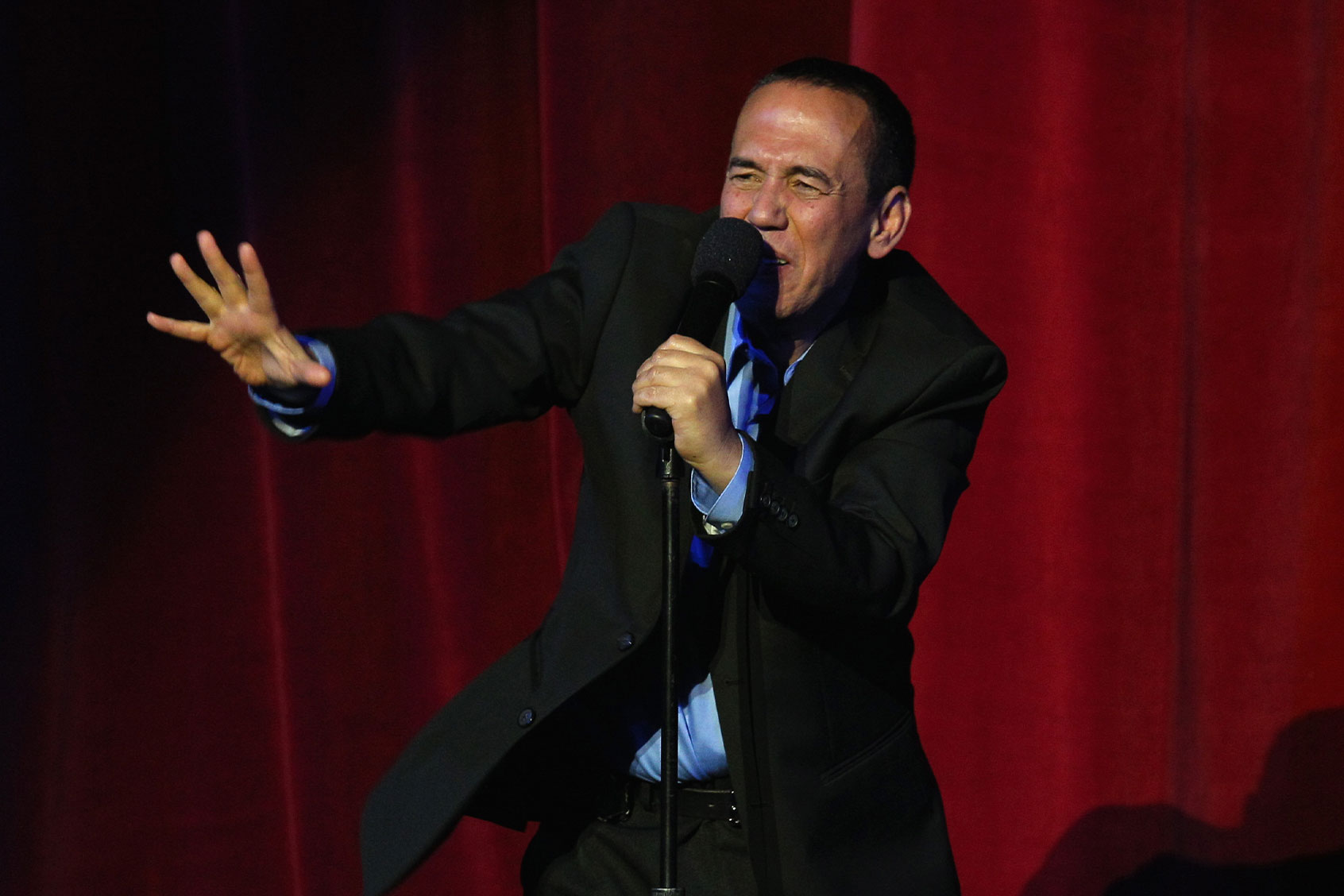
Gilbert GottfriedActor/comedian Gilbert Gottfried performs at the International Myeloma Foundation’s 6th Annual Comedy Celebration hosted by Ray Romano benefiting The Peter Boyle Research Fund at The Wilshire Ebell Theatre on October 27, 2012 in Los Angeles, California. (Joe Scarnici/Getty Images for IMF)One particular Gottfried joke went far past edginess, however, into a transcendent stratosphere, enshrining him in American comic history: “The Aristocrats.”
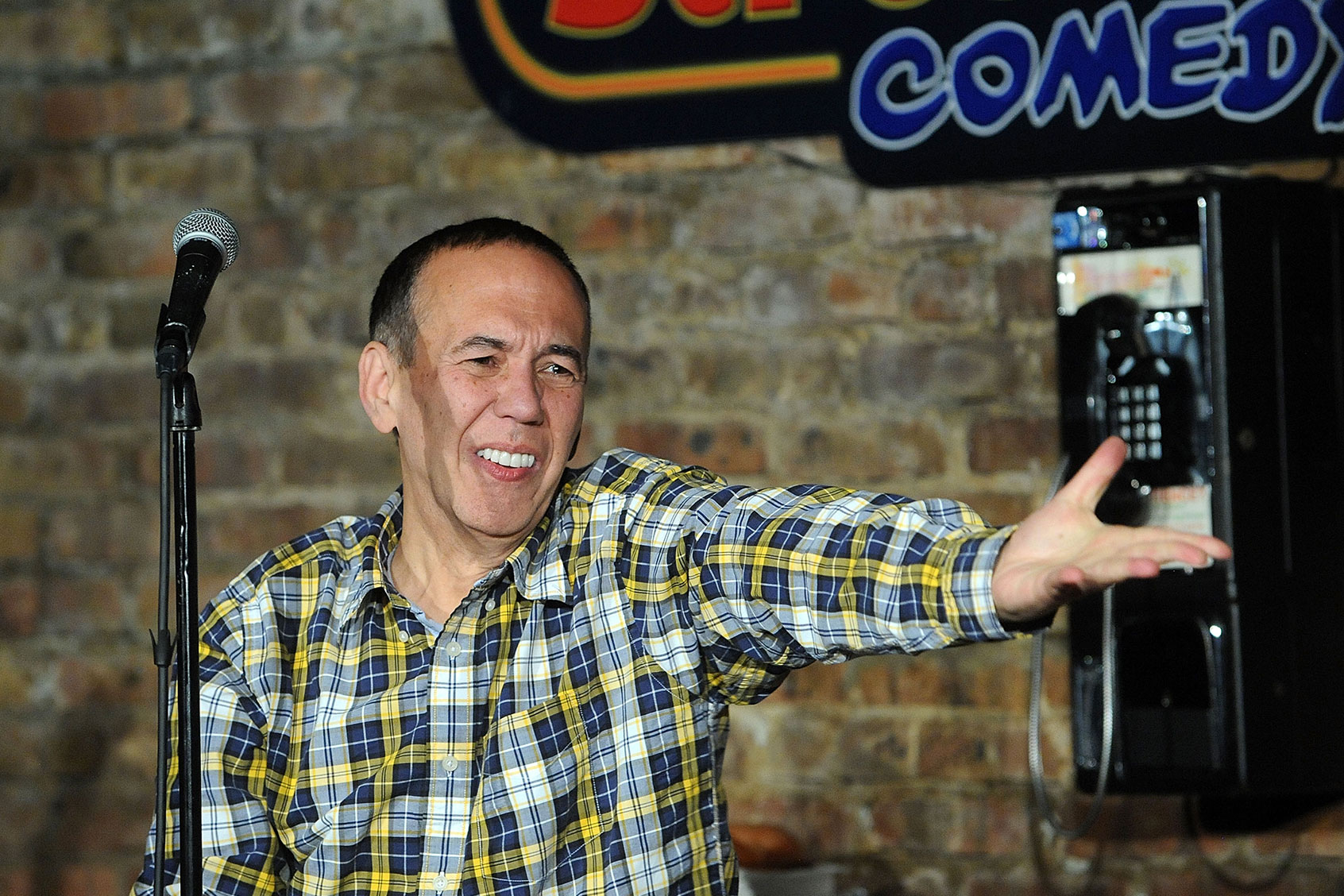
For a short while after Sept. 11, comedy felt both inappropriate and impossible. The networks pulled their late night talk shows off the air, and the media declared that the age of sarcasm was over. Laughter seemed like collateral damage in the War on Terror. After two somber weeks, however, Comedy Central decided to go forward with a roast of Playboy founder Hugh Hefner. Gottfried decided that leaving comedy moribund would mean the terrorists had won, and he wasn’t about to let that happen on his watch.

“I just wanted to be the first person to make a really-poor-taste joke about September 11,” he wrote for Vulture.

And did he ever. Gottfried opened with a joke about not being able to get a direct flight from New York to California because they needed to stop at the Empire State Building first. Then he told a self-deprecating, defamatory joke about the Muslim version of his name: “Hasn’t Been Laid.”

“I just wanted to be the first person to make a really-poor-taste joke about September 11.”

Vinnie Favale, producer of “The Howard Stern Show,” was there in the room when it happened. He told Salon that after that opening, “There was a shift in the room.” The audience wasn’t ready to laugh at recent events. No matter. ” . . . Then he went right into the Aristocrats joke and stole the show.”

The beauty of “The Aristocrats” – the legendary, long-winded joke about a family that performs a lewd vaudeville act for a talent scout – is all in the telling. As Gottfried’s description of the family’s deviant act stretched on, his whiny voice turning staccato and getting louder, audience members slowly surrendered to the bit, some literally falling on the floor. By the time he ended the gag with its classic punchline — the agent asks the family what they call their act, and the family says “The Aristocrats” — Gottfried had jump-started comedy, sending a clear signal that it was not “too soon” but rather it was OK to laugh again.

Gilbert GottfriedGilbert Gottfried performs at The Stress Factory Comedy Club on November 25, 2015 in New Brunswick, New Jersey. (Getty Images/Bobby Bank/WireImage)

In recent years, he started “Gilbert Gottfried’s Amazing Colossal Podcast,” which revealed a new side of his comedic mind. Each episode offered penetrating insights into popular culture built on Gottfried’s encyclopedic knowledge of comedy, movies, commercials, and cartoons. 

RELATED: Interview: So, Gilbert Gottfried, about those tsunami jokes . . . 

One particular target of his podcast criticism was one much-beloved 1986 Matthew Broderick movie. On Broderick’s birthday, Gottfried took to Twitter to wish the actor well, but opened with a savage assessment: “I still f**kin hate ‘Ferris Bueller’s Day Off.'”

Although the film might have seemed innocent when it came out, Gottfried argued, a story in which Bueller’s nihilistic hedonism triumphs over characters who were just trying to do their jobs and care about others landed differently during the Trump era.

“His podcast is a comedy treasure,” Judd Apatow noted on Twitter. “What a terrible loss.”

Gottfried the man

Gottfried was known for his gentle, almost shy, offstage presence, a significant contrast to his bombastic stand-up persona. “He was the sweetest guy in real life,” Favale recalled. As widely beloved as he was by comedians, however, his family treasured him the most.

“In addition to being the most iconic voice in comedy, Gilbert was a wonderful husband, friend and father to his two young children,” they shared on social media. “Although today is a sad day for all of us, please keep laughing as loud as possible in Gilbert’s honor.


Want a daily wrap-up of all the news and commentary Salon has to offer? Subscribe to our morning newsletter, Crash Course.


Although a secular Jew, Gottfried did reflect on the possibility of an afterlife in his autobiography: “If there is a hell,” he wrote, “and if that’s where I’m going, there’ll probably be an endless gag reel being played on some big-screen television of me trying to talk to women.”

Fittingly, in his final social media post, Gottfried defended the right of comedians to work the bleeding edge in their material, just as he’d done himself throughout his career:

“Which is the worst crime? Chris Rock being physically assaulted or Chris Rock telling a joke?”

To the very end, he devoted himself to the art of the joke — setup, punchline, and laughter — and everything jokes can engender: great offense, deep insights and relief from great tragedy.

More stories to read: 


Posing a hefty problem for physicists, a fundamental particle weighs in heavier than expected

The model we have for understanding the universe’s fundamental particles is a bit like a gearbox: one tiny change to any one single particles’ properties throws off the mechanics of the other particles, too. 

So when a paper comes out that finds that the mass of one fundamental particle is off by a tiny bit from what was previously accepted, it does more than merely raise eyebrows in the physics world. If true, such a finding would mean that fundamental physics is “wrong” in some as-yet-undetermined way, and would shake up particle physics for decades to come.

Our understanding of the fundamental particles, something known as the Standard Model of particle physics, is one of the most towering human achievements of the past 150 years. It took thousands of physicists and engineers working over a century to put together all the pieces, starting with the discovery of the electron in 1897 and culminating with the discovery of the long-theorized Higgs Boson in 2012.

Earlier this month, after 20 years of analysis, scientists at the Collider Detector at Fermilab ( CDF) announced that they have made the most precise measurement of the mass of the W boson. After millions of trials and observations, their mass measurement came out to 1.43385738 × 10⁻²² grams. (That sounds light, but it’s heavier than it should be.)

The precision in the measurement of one of nature’s force-carrying particles is remarkable: scientists say the particle’s revised mass has a precision of 0.01%—twice as precise as the previous best measurement. Results were published in the journal Science.

RELATED: Why some physicists are skeptical about the muon experiment that hints at “new physics”

But there’s one big problem: this measurement conflicts with the value scientists use in theoretical inputs for the Standard Model. In other words, if true, the mass measurement suggest the Standard Model of physics — which is a gold standard theory that explains the four known forces in the universe and all fundamental particles — is on shaky ground. 

Unlike other fundamental particles like quarks, electrons and photons, the W boson isn’t a particle one typically learns about in grade school science. Yet just as those particles, it is fundamental to the makeup of matter in the universe. The W boson is a messenger particle in what is known as the “weak nuclear force,” which forms part of the four known fundamental interactions in particle physics; the others are electromagnetism, the strong interaction, and gravitation. While the electromagnetic force and gravity are quotidian to human interactions and everyday life, and the strong force is what binds atomic nuclei together, the weak interaction is not as overtly visible. Yet the weak force is implicated in the radioactive decay of atoms, and is just as indispensable as the other forces to the way that our universe looks today as any of the other three forces. And the weak interaction can’t occur without help from a W boson.

In order to make the new measurement of the W boson’s mass, researchers used collision data from the Fermi National Accelerator Laboratory, a now out-of-service particle accelerator in Illinois. Fermilab’s particle accelerator fires protons and anti-protons into each other at near-light speed and closely observes the explosion of energetic particles resulting in the aftermath, then extrapolates their characteristics. 

During its run, the accelerator managed to synthesize four million W boson candidates, whose properties were measured again and again. Through extensive calculations, scientists landed on their measurement, which is precise to seven standard deviations — far above the five standard deviations that yields a statistical gold-standard finding. 

“We took into account our improved understanding of our particle detector as well as advances in the theoretical and experimental understanding of the W boson’s interactions with other particles. When we finally unveiled the result, we found that it differed from the Standard Model prediction.”

“The number of improvements and extra checking that went into our result is enormous,” Ashutosh V. Kotwal of Duke University, who led the analysis and is one of the 400 scientists in the CDF collaboration, saidin a press release. “We took into account our improved understanding of our particle detector as well as advances in the theoretical and experimental understanding of the W boson’s interactions with other particles. When we finally unveiled the result, we found that it differed from the Standard Model prediction.”

The difference? The new measurements put the W boson at about one-tenth of one percent more massive than previously predicted and accepted. That seems small, but it’s enough to cause a big problem for particle physics — if true.

Schumm said the new measurement of the W boson mass was “missing a smoking gun.”

“The fact that the measured mass of the W boson doesn’t match the predicted mass within the Standard Model could mean three things. Either the math is wrong, the measurement is wrong or there is something missing from the Standard Model,” writes high-energy particle physicist John Conway in The Conversation.

In other words, making any changes to the Standard Model wouldn’t merely affect the Standard Model —  it could shake up all of physics and our understanding of the universe. 

“It’s now up to the theoretical physics community and other experiments to follow up on this and shed light on this mystery,” CDF co-spokesperson David Toback said in a press statement. “If the difference between the experimental and expected value is due to some kind of new particle or subatomic interaction, which is one of the possibilities, there’s a good chance it’s something that could be discovered in future experiments.”

The Standard Model has proven incredibly successful at predicting the properties of its constituent particles, and even the properties of previously unseen particles. Because of its remarkable prophetic nature, physicists are eager to try to poke holes, which could yield new discoveries and new physics. Indeed, as Salon reported in 2021, Fermilab’s Muon g-2 experiment produced bizarre results that were slightly different from what the Standard Model projected — though those results did not quite surpass the 5-standard-deviation “gold standard” that would make them definitive. 


Want more health and science stories in your inbox? Subscribe to Salon’s weekly newsletter The Vulgar Scientist.


But when it comes to making measurements so precise and with such a small margin of error, some physicists say that it is equally likely that the experiment has flaws, rather than the Standard Model.

“Precision is the size of the uncertainty and accuracy is the size of potential mistake,” Schumm said. “You can have something that’s very, very precise, but way wrong.” 

“You can ask, ‘Could that be an experimental effect, experimental mistake, and could the calibration be the source of that? Well, it’s one of a couple of possibilities,” Bruce Schumm, a professor of physics at the University of California–Santa Cruz, and the author of a popular book on particle physics, told Salon. “If the difference [in mass] is a mistake, perhaps yes, the calibration of the detector is a very likely source of that error, of that mistake.”

Schumm said that it is important to distinguish between accuracy and precision, noting that one might make an inaccurate measurement very precisely. 

“Precision is the size of the uncertainty and accuracy is the size of potential mistake,” Schumm said. “You can have something that’s very, very precise, but way wrong.”

Schumm said the new measurement of the W boson mass from the CDF was “missing a smoking gun” — specifically, a clearly identified reason that other measurements from different experiments disagree with the CDF’s result for the W boson mass.

“It’s conceivable that all the other measurements are missing something and the CDF measurement has done it more carefully and is getting the right answer,” Schumm said. “But I think in all likelihood, either the CDF result is wrong, or the body of other results is wrong.” 

Previously, Schumm told Salon it’s “an over-dramatization” to say that the Standard Model would ever be completely rewritten or undone.

“The Standard Model has always, since the day it was invented, been known to be what’s called an ‘effective theory,'” Schumm said. He likened the Standard Model to the “tip of an iceberg,” in which the tip is observed and well-understood even if we do not know entirely what lies beneath the water. “I would bet any amount of money [the Standard Model] will never be toppled, as a representation of that tip of the iceberg,” he mused.

Read more on particle physics:

Political donor Ed Buck gets 30 years for fatally injecting two men with meth

Ed Buck, a wealthy political donor and former male model, has been sentenced to 30 years in prison for injecting two men with lethal doses of methamphetamine, and nearly doing the same with several others.

The first of Buck’s victims, 26-year-old Gemmel Moore, was found dead in Buck’s Los Angeles apartment on July 27, 2017. Just over a year later a second victim, 55-year-old Timothy Dean, died in a similar fashion. In September 2019 Buck was arrested for their deaths, and several other near misses, and in late July 2021 he was found guilty on nine felony counts.

“Today is bittersweet,” LaTisha Nixon, Moore’s mother, said after the verdict in a quote used by NPR. “We got victory today.”

Related: Alleged Portland protest shooter identified and charged with murder

Dane Brown, second from left, a surviving victim and LaTisha Nixon, Gemmel Moores mother (middle) and friends and family of the victims rejoice in the guilty verdict for Ed Buck on Tuesday, July 27, 2021 in Los Angeles, CA. (Myung J. Chun / Los Angeles Times via Getty Images)On April 14, 2022 Buck was sentenced to 30-years, brought down from a life sentence request made by prosecutors due to Buck’s defense bringing to light that “he was sexually abused as a child and health problems led to his drug addiction,” according to CBS News.


Want a daily wrap-up of all the news and commentary Salon has to offer? Subscribe to our morning newsletter, Crash Course.


“Buck’s lack of remorse is aptly captured in one image: As he was hiding out in a hotel, evading arrest for Gemmel Moore’s death, he was injecting Dane Brown, another young Black man, with back-to-back slams of methamphetamine,” Assistant U.S. Attorney Chelsea Norell said.

“All I can think about is how my son died naked on a mattress with no love around him,” Moore’s mother, LaTisha Nixon, said in a letter to the court. “No one to hold his hand or tell him good things.”

Buck, 67-years-old at the time of sentencing, is said to have acquired his wealth by “selling an Arizona company he rescued from bankruptcy,” according to the CBS News report. In addition to aiding in a 1987 campaign that led to Arizona Gov. Evan Mecham getting kicked out of office, Buck was a heavy and frequent donator to LGBTQ and animal rights causes.

Read more:

This sweet yeasted bread is perfect for Easter brunch

The Perfect Loaf is a column from software engineer turned bread expert (and Food52’s Resident Bread Baker), Maurizio Leo. Maurizio is here to show us all things naturally leavened, enriched, yeast-risen, you name it—basically, anything you can slather a lot of butter on. Today, he tells us about naturally leavened mazanec, a Czech sweet bread.

Many years ago I had the pleasure of traveling through Europe for work, with a multiweek stop in the Czech Republic. My hosts, knowing my appreciation for good food, took me to restaurants that catered to the locals and that were so small it felt like we were eating in their cousin’s kitchen. In these quaint eateries, I had some of the tastiest food of my entire trip. The highlight was probably eating a whole pork knuckle, but I also ordered plenty of dumplings and many a light beer. As I was traveling during the dead of winter, many spring and summer Czech specialties eluded me, including the Eastertime sweet bread called mazanec. This treat is not widely known here in the U.S., so I figured what better way to remember my trip through the beautiful Czech Republic than to fill the mazanec void and make it in my home kitchen—using my sourdough starter, of course.

Mazanec is a traditional Czech sweetened bread made around Easter. The dough gets enriched with egg, milk, and butter, and it’s traditionally filled with lemon zest, rum-soaked raisins, and sometimes other dried fruit (though untraditional, I think dried apricots or even cherries would be delicious, too). The whole thing gets topped off with sliced or slivered almonds and, occasionally, a dusting of confectioners’ sugar. If not completely covered with confectioners’ sugar, you’ll typically see it with a small cross on top representing the time of the year. Cultures around the world have their Easter-specific sweets, from the hot cross bun to colomba pasquale, each an enriched bread of some kind with added fruit and as many flourishes as can reasonably fit. They are each meant to commemorate a time of joyous celebration for many. For me, a fanatical baker, having a delicious baked treat is most assuredly the best way to celebrate.

Is mazanec a bread or cake?

The debate between whether something is cake or bread can get heated. While an ornately decorated mazanec can have the appearance of a single-layer cake, for me, it falls in the bread camp thanks to its typical use of instant yeast for leavening. There are always exceptions, of course, as there are some cakes made with yeast, such as the famous German beesting cake. I still tend to see cakes as those baked goods that rely on chemical leaveners, such as baking powder or baking soda. As it’s made with natural yeast from sourdough, mazanec requires the better part of a day to ferment enough to give the best flavor, texture, and sufficient rise in the oven. Another apt example of this debate is the Italian panettone, made with yeast: While it sure eats like a cake, it’s most assuredly not.

What flour should I use to make this mazanec?

For most breads, cookies, cakes, pies, and other pastry, I always turn to a low-protein flour such as all-purpose flour, versus a high-protein flour like bread flour. Why? I find the lower protein content makes for bread that’s less gummy, chewy, and overall contributes to a better texture. However, with enriched doughs like this mazanec, using higher protein flour can actually benefit the texture and structure.

When working in high percentages of egg, butter, and sugar, the increased protein content of the flour will lead to bread with greater volume and a lighter texture. Because egg (fat) and butter (fat) both hinder gluten formation in some way, they help keep the bread’s texture supple and “shreddy.” In a way, these enrichments help prevent that gummy texture I often find with too much high-protein flour.

Can I use whole-wheat flour?

I’m an avid freshly milled flour and whole-grain baker, but with sweets like this, and especially when using natural fermentation, adding whole grains will almost certainly bring about more sourness than desired. Through a complex process, increased whole grains help spur lactic acid bacteria activity, pushing them to produce more organic acids as a by-product of fermentation. While these acids bring significant flavor, with a delicate and sweet bread such as mazanec, it doesn’t contribute in a meaningful way.

Is there such a thing as too much butter? (Yes.)

Usually, when I start working on a recipe I keep enrichments (butter, sugar, egg) at the lower end and work my way up through subsequent tests until the flavor and texture are right where they should be. For this mazanec recipe, I started the butter at 30 percent butter to total flour weight to bring ample richness and softness to the bread, but after tasting the result, I couldn’t have been more wrong.

In baking the first few trials, the overall flavor was good, but the bread was almost too rich, too soft, and a little too overpowering. I realized that this bread isn’t about loading it with copious amounts of butter, à la brioche; it’s more subtle, and the beauty of this bread is the delicate interplay between all of the ingredients, rather than having one overpower all the others.

For my third trial, I dropped the butter dramatically down to 20 percent of the total flour weight (here that means I went from over one stick of butter down to about one-third of a stick). When I pulled that mazanec from the oven, I knew I was on to something. The bread was soft, supple, and had a beautiful buttery aroma, yet tasted lighter and less overpowering than prior tests. Finding the right level of butter meant bringing this delicate bread into greater balance, allowing the lemon, rum, raisins, and almonds to have their place in the spotlight, too.

Should I top it with confectioners’ sugar?

In my sourdough version of this bread I would highly recommend using confectioners’ sugar as the final topping. Why? I keep the sugar percentage in the dough relatively low: 8 percent sugar to total flour weight, to be exact. I keep the sugar low because it interferes with natural leavening, and compared to extremely powerful instant yeast found in many enriched bread recipes, sourdough recipes with high sugar content require extremely long fermentation times. To keep this recipe on a shorter timeline, I keep the sugar low, knowing the mazanec will have a final dusting of at the end. The confectioners’ sugar on top adds just enough sweetness to complement the sugar in the dough, making the entire thing just sweet enough that you’ll be eager to go back for slice after slice.

***

Recipe: Sourdough Mazanec

Yields
One 8-inch loaf
Prep Time
32 hours
Cook Time
50 minutes

Ingredients

Levain

  • 51 grams bread flour
  • 51 grams water
  • 20 grams ripe sourdough starter
  • 10 grams superfine or granulated sugar

Main dough

  • 65 grams raisins
  • 1/4 cup dark rum, plus more as needed
  • 79 grams unsalted butter
  • 343 grams bread flour, plus more as needed
  • 165 grams whole milk, divided
  • 2 large eggs
  • 21 grams superfine or granulated sugar
  • 8 grams fine sea salt
  • 1/2 teaspoon vanilla extract
  • 1/4 teaspoon almond extract (optional)
  • 1 tablespoon lemon zest (from about 1/2 large lemon)
  • Sliced almonds, for topping (optional)
  • Confectioners’ sugar, for topping (optional)


Directions

  1. Make the levain and soak the raisins (night before at 9:00 p.m.)

    In the evening, when your sourdough starter is ripe (when you’d typically give it a refreshment), make the levain. In a large jar, combine 51 grams bread flour, 51 grams water, 20 grams ripe sourdough starter, and 10 grams sugar. Cover the jar loosely and let the levain ripen overnight at warm room temperature (I keep mine around 74°F to 76°F/23°C to 24°C). In a small bowl, combine the raisins and rum (use enough rum so they’re just covered). Cover the bowl.

  2. Mix the dough (9:00 a.m.)

    In the morning, your starter should be bubbly on top and at the sides, have risen in the jar, have a sour aroma, and have a loose consistency. If it was cold in your kitchen overnight or it isn’t displaying these signs, give it one more hour to rise and check again.

    Cut 79 grams of butter into small pieces, place them on a plate, and set them aside to soften to room temperature. To the bowl of a stand mixer fitted with the dough hook attachment, add the 343 grams flour, 150 grams milk, 1 egg, 21 grams sugar, 8 grams salt, ½ teaspoon vanilla extract, ¼ teaspoon almond extract (if using), 1 tablespoon lemon zest, and the ripe levain. Set the mixer to low speed and mix until all the ingredients are combined and no dry bits of flour remain. Turn up the mixer to medium-low and mix for 3 to 5 minutes, until the dough starts to clump around the dough hook. This is a small amount of dough in the mixer, so if at any time the dough fails to effectively move around with the dough hook, you can switch to the paddle attachment. This is a moderately strong dough at this point, and should mostly pull away from the bottom of the mixing bowl.

    Let the dough rest 10 minutes in the mixing bowl, uncovered.

    The butter should be at room temperature by this time (meaning a finger should easily push into a piece with little resistance). If you used the paddle to mix, switch back to the dough hook, and with the mixer turned on to low speed, add the butter, one piece at a time, waiting to add the next until the previous is incorporated, 4 to 6 minutes total. Once all of the butter is added, turn the mixer up to medium-low and continue to mix until the dough smooths and once again begins clinging to the dough hook, 2 to 3 minutes. The dough will be cohesive, smooth, and elastic at the end of mixing.

    Transfer the dough to another large container (or leave it in the mixing bowl) for bulk fermentation. 

  3. Bulk ferment the dough (9:30 a.m. to 1:30 p.m.)

    Cover the dough with a reusable airtight cover and let it rise at warm room temperature (76°F/24°C) for a total of 4 hours. During this time, you’ll give the dough one set of “stretches and folds” (see next instruction for explanation) to give it additional strength.

    To stretch and fold: 1 hour after the start of bulk fermentation, drain the raisins of any excess rum (discard the rum), then spread one-quarter (16 to 20 grams) of the raisins over the dough, pressing them gently into the dough to ensure they stick. Wet your hands, grab the north side (the side farthest from you) of the dough, and stretch it up and over to the south side. Spread another 16 grams of raisins over the top, then stretch the south side up to the north. Then, perform two more folds, one from east to west and one from west to east, adding the remaining 16 grams of raisins to the top of the dough before each. Finally, let the dough rest, covered, for the remaining 3 hours of bulk fermentation.

  4. Shape the dough (1:30 p.m.)

    Check your dough; after 4 hours, it should have risen about 30 percent in the bulk fermentation container, have a few scattered bubbles, be smoother with a slightly domed top, and be moderately light and fluffy to the touch. If the dough still looks sluggish or feels dense after 4 hours, give it another 30 minutes to rise in a warm spot, like your oven turned off with the light on inside (74 to 76°F/23 to 24°C).

    Line the inside of an 8-inch round banneton or kitchen bowl with a clean kitchen towel and lightly dust with bread flour. Lightly flour the top of the dough and gently scrape it out to your work surface flour side down. Using a bench scraper and floured hand, flip the dough over and shape it into a very tight round by pushing and pulling the dough with the scraper against the work surface. Pushing and pulling will create tension on the top of the dough, creating a uniformly smooth surface.

    Using your scraper, scoop up the dough, flip it over, and place it in the prepared banneton, seam side up. The seam on the bottom should be completely sealed. If it’s not, pinch the bottom closed with your fingers. Cover the banneton with a large plastic bag (or another bowl cover) and seal.

  5. Proof the dough (1:45 p.m. to 4:45 p.m.)

    Proof the dough at a warm temperature (74°F to 76°F/23°C to 24°C is ideal) for about 3 hours. If your kitchen is on the cool side, expect the dough to take longer to proof. Extend the proof time as necessary until the dough is puffy and a poke slowly springs back.

  6. Bake and finish (4:45 p.m.)

    Heat the oven to 400°F (200°C) with a rack in the middle and a baking stone on top (if you don’t have a baking stone, you can bake directly on a 13×18-inch half sheet pan). In a small bowl, whisk together the remaining egg and 15 grams milk for the egg wash.

    Place a piece of parchment paper on top of a pizza peel or upside-down sheet pan. Tip the proofed dough out to the center of the parchment paper so the seam is facing down.

    Lightly brush the entire surface of the dough with the egg wash. Using a razor blade, baker’s lame, or sharp knife, make a cross shape with two shallow straight lines that intersect right at the top-center of the dough. Sprinkle on the sliced almonds (if using), slide the parchment paper onto the baking stone or sheet pan, and bake for 20 minutes. After 20 minutes, rotate the parchment paper halfway and reduce the oven to 350°F (175°C). Bake the mazanec for another 25 to 30 minutes, until it’s golden brown and the internal temperature is around 200°F (93°C). Remove from the oven and let cool completely on a wire rack.

    If desired, fill a fine-meshed strainer with confectioners’ sugar and liberally dust the top of the mazanec. This is best the day it’s baked, but can be stored on the counter for 3 days, covered.

You don’t have to be an “Arrested Development” fan to appreciate the genius of frozen bananas

Nearly 20 years after the debut of “Arrested Development,” I discovered that the banana stand thing is real.

On a brilliant Orange County afternoon, I recently found myself wandering around Balboa Island, which is the home of a robust and fiercely competitive frozen banana economy. I had neither expected to find myself in town nor discover such a wealth of frozen banana options. 

RELATED: Ice cream loaf is your new favorite kitchen sink frozen treat

I only wish I’d been able to stay in California longer to determine a favorite. What I can do, however, is recreate a Bluth family delicacy in my New York home in relatively little time.

Dipped in dark chocolate and coated in sprinkles, a frozen banana just feels like the kind of thing you should have in your hand while strolling toward a ferris wheel (even when reality brings you April showers on the East Coast). It’s an easy slice of sunshine, any time.

***

Recipe: Balboa Island Frozen Bananas
Inspired by CucinaByElena

Yields
6 servings
Prep Time
1 hour
Cook Time
10  minutes

Ingredients

  • 3 ripe bananas, peeled and cut in half
  • 6 popsicle sticks
  • 8 ounces chopped dark chocolate or chocolate chips
  • 2 tablespoons butter
  • Toppings of choice: sprinkles; crushed nuts; cookie, pretzel or graham cracker crumbs


Directions

  1. Line a sheet pan with parchment paper.

  2. Cut each banana in half. Insert a popsicle stick into the cut end.

  3. Place all of the bananas on wax paper and freeze for 1 hour, or until firm.

  4. Place the chocolate in a microwave-safe bowl with the butter. Melt in the microwave for about 30 seconds and stir. (You may need to microwave the mixture some more; do it in 10-second intervals until everything is melted.)

  5. Meanwhile, lay the toppings on separate plates, or in different piles on a large sheet pan. 

  6. Remove the bananas from the freezer. Dip one banana at a time in the chocolate, coating it well. (You’ll need to spoon some around to get it covered.)

  7. Roll each banana in your toppings of choice to coat well. 

  8. Return to the freezer to firm up further, or eat right away, Bluth style.


Want more great food writing and recipes? Subscribe to Salon Food’s newsletter.


More simple desserts we love: 

Salon Food writes about stuff we think you’ll like. Salon has affiliate partnerships, so we may get a share of the revenue from your purchase.

Titanic on screen – why “A Night to Remember” is the definitive film on the ship

It has been 110 years since the sinking of the Titanic. Over 1,500 passengers and crew perished in one of the deadliest maritime disasters during peacetime. The story of the ship and its passengers has long since taken on mythic proportions and has been committed to film many times. James Cameron’s clunky offering from 1997 might come to mind first, but I recommend going straight to Roy Ward Baker’s highly regarded “A Night to Remember” from 1958 for a more measured appraisal of the disaster.

The Titanic fascinates filmmakers because it has everything a dramatist could ever want: heroism, sacrifice, decency and grace under pressure. Cowardice and self-preservation are there, too.

The ship offers up a microcosm of society in which class divisions are given greater urgency when life and death hang in the balance. The luxuriously appointed liner symbolized a new age of prosperity keenly anticipated by passengers heading for the New World. Both Baker and Cameron capture this optimistic atmosphere in the early scenes of their films: Irish jigs below deck and fine dining with the stuffed shirts above.

“A Night to Remember” was adapted by Eric Ambler from Walter Lord’s probing 1955 non-fiction account of events. This is still considered one of the definitive accounts of the disaster.

Ambler, better known as a writer of spy fiction, crafted an incisive screenplay lacking in sentimentality. He achieves a balance between the fictional characters and the real people caught up in the disaster.

The plight of the fictional Lucas family and the devoted newlyweds who refuse to be separated are finely judged and allow the legendary tales of real-life characters to breathe. Well-known, real-life figures, such as the “Unsinkable” Molly Brown and Benjamin Guggenheim (who elects to go down with the ship in white tie as a gentleman), are given just the right amount of screen time. The miraculous true story of drunken baker Charles Joughin who survived against all odds is mined for unexpectedly comedic potential.

Cameron’s screenplay, which he wrote himself, covers much of the same material but it fails to achieve the same sense of balance. Everything is thrown off kilter by the preoccupation with the romance between Jack (played by Leonard DiCaprio) and Rose (Kate Winslet), and her jilted fiance Cal (Billy Zane). Although Cameron uses the romantic triangle to expose the iniquities facing steerage passengers in the impending disaster – many of whom were trapped below deck in their quarters – the trajectory of the love story takes a preposterous turn when Cal pursues the lovers through the ship firing his pistol indiscriminately. Floodwater is gushing through the decks, people are fleeing in all directions, and yet Cal still finds it necessary to thwart Jack and Rose.

Less is More

While Cameron builds his story around the huge draw of “king of the world” Leonardo DiCaprio, one of the chief virtues of Baker’s film is the casting of Kenneth More in the key role of Second Officer Charles Lightoller. Lightoller’s real-life role in the evacuation of the ship has been widely documented and is a source of much controversy due to his strict adherence to the “women and children first” code.

Baker’s focus on Lightoller gives the film a moral center and is based on eyewitness accounts as documented by Walter Lord. Lightoller takes charge of the evacuation on the port side. He admonishes people to “get a hold of yourselves, remember yourselves” when the situation gets out of hand. Once the ship sinks, he is shown taking charge of an overturned lifeboat and he instructs the men to shift their weight to avoid swells. However, Lightoller comes off badly in Cameron’s epic. In the late 1950s, he is portrayed as gallant, but by the late 1990s, he is portrayed as less than competent.

Cameron’s focus shifts to First Officer William Murdoch (Ewan Stewart), another real-life character who was responsible for launching many lifeboats and saving hundreds of lives. But he embellishes unnecessarily – at one point Murdoch is shown taking a bribe from Cal for a place on a boat. This is a complete fabrication which smears the good name of a heroic man. Cameron later acknowledged that he should have taken more care in the writing of this important historical figure.

“Lump in the throat” moments

The Titanic story moves us – that’s why we keep returning to it in popular culture.

Cameron’s film has one stand-out emotional sequence revolving around the famous story of the musicians who continued playing stoically to the end. Cameron shows them performing the hymn “Nearer, My God, To Thee.” The camera then moves effortlessly from the Captain in an apparent state of shock entering the wheelhouse, to designer Thomas Andrews fixing the clock in the smoking room, to an old couple embracing in bed, and finally an Irish mother from steerage soothing her children with a bedtime story.

The sequence heralds the ship’s final plunge into the icy waters. This is deeply affecting stuff. From there, Cameron ratchets up the horror of the situation with desperate scenes of passengers and crew succumbing in the rapidly rising water. Cameron acknowledged that his inspiration for the sequence was a similar section from “A Night to Remember.”

“A Night to Remember” was shot entirely at Pinewood Studios in the UK – and it would fail to recoup its budget. “Titanic” (1997), on the other hand, was an enormous commercial success, grossing over US $2.2 billion (£1.7 billion) at the box office. It would also cement Di Caprio and Winslet as major stars and win a slew of awards. But for those seeking the definitive account of the disaster, it is Baker’s film that captures the scope and scale of the tragedy with the most tact and sincerity.

This article is republished from The Conversation under a Creative Commons license. Read the original article.

The sweet and chunky condiment every seder needs

Every year, in the days leading up to Passover, Ziggy Gruber makes up to 1,500 pounds of charoset. For comparison, my mom will make no more than a pound of the chopped fruit and nut mix, and there will be some left over. But when has Gruber ever done anything on a small scale?

David, who goes by Ziggy, is a third-generation deli man. His grandfather, Max, arrived in New York via Budapest at the turn of the century. He found work in delis across the city until 1927 when he opened his own, the Rialto Deli, with his brothers-in-law. The Rialto, they claim, was the first deli to open its doors on Broadway, just two years before the start of the Great Depression. Amidst the anguish of the era, the Rialto thrived, serving the likes of Ethel Merman and the Marx brothers. All three of them. Decades later, Ziggy’s father opened his own deli, on Madison Avenue and called it Genard’s. Once Ziggy came around, the family had moved, shuttered its prospects in the city, and opened a deli in decidedly quieter Spring Valley, New York.

Ziggy never really stood a chance: By the age of eight, his grandfather was pawning him off to uncles and friends, sending him to caterings, scheduling him behind the counter. As Ziggy would say, he was born to be a deli man. Fast forward a stint at Le Cordon Bleu in London and a few years spent cooking in some of the city’s premiere kitchens and Ziggy returned to the U.S. to open a deli of his own. This time on the opposite coast.

He opened Ziggy G’s in Los Angeles on Sunset Boulevard in 1990, but what started out a success soon soured after a dispute with a landlord that forced Gruber to close the place and return to his native New York. It wasn’t until 1999 that a family friend, fellow deli owner, and restaurant broker called Gruber with a proposition. Come meet this guy. His name’s Kenny and he’s got a dream to open a Jewish deli in the heart of — of all places — Texas. Kenny & Ziggy’s opened in Houston later that year. Since, they’ve been featured on Guy Fieri’s exploration of all things epic, “Diners, Drive-Ins and Dives,” and been at the center of a 2015 documentary, aptly titled “Deli Man.”

To enter Kenny & Ziggy’s is to enter pandemonium manifest. It’s 7,500 square feet and vivacious, the walls are shellacked with photo frames — some are filled with sketched caricatures of celebrities, others with photos of celebrities, posing jovially with the deli’s staff and owners. The tables are always, always full. A rotating case of cakes and pies greets you at the front door. For Jews in Houston, it’s an institution. For everyone else, it’s an institution as well.

Most things in Houston are big and heavily air conditioned. Kenny & Ziggy’s is no exception. The menu, like any good Jewish place of eating, is a small novel and the portions are the kind that parents warn kids to split: mile-high Reubens and knishes for days, mounds of whitefish bigger than the friendliest of ice cream scoops.

In the days leading up to Passover, the kitchen fields an overwhelming swell of orders. Particularly for their charoset. The sweet and fruity chutney is peak Passover food, and like everything else on the seder plate, is imbued with meaning. It represents the mortar that the Jews, enslaved in Egypt, used to build and layer bricks. At its most basic, charoset is but fruit and nuts, chopped into a semi cohesive paste. At its most flourished, it offers a myriad of interpretations. It can be softened with Manischewitz or brightened with dates, made crunchier with bits of pistachio or silkened with jam. Like Judaism, charoset bends to the whims of local traditions. In Egypt, they might forgo apples and opt instead for dates and raisins as a fruity base; in Italy, some add chestnuts. It’s a malleable formula that we eat on Passover, with a bit of horseradish, to remember that what is sweet must always come accompanied by that which is bitter.

Ziggy’s recipe for charoset was given to him by his Hungarian grandfather, the original deli man. It’s an Ashkenazi recipe — with apples and cinnamons, bound by apricot jam and blackberry wine — that Ziggy and his kitchen staff will spend the next few days preparing by the truckload, literally. Each year the deli sends out two refrigerated semitrucks worth of the sticky spread to families across Houston. If you’re in their orbit, why not order from the Ziggy himself? For those a bit further away from the delivery zone, feel free to make some yourself.

***

Recipe: Ziggy’s Charoset

Yields
2 quarts

Ingredients

  • 4 cups Golden Delicious apples, hand chopped
  • 1 cup golden raisins
  • 3/4 cup chopped dried apricots
  • 1 tablespoon cinnamon
  • 3/4 cup Manischewitz Blackberry Wine
  • 3/4 cup smooth apricot jam
  • 2 cups chopped walnuts
  • 1 pinch sugar, plus more to taste

Directions

  1. Mix everything together and refrigerate.


Now that you’ve got your charoset recipe, here are 10 additional Passover menu ideas from our editors:

1. Martha’s Potato Kugel

Since noodles are off the table during Passover, opt for the often-overlooked potato kugel. This version is Passover-friendly, made with matzo meal, eggs, and lots of shredded potatoes and onions. If you’ve never tried potato kugel, think of it like the casserole version of a potato latke — crunchy edges, with a creamy, tender center.

2. Ruth’s Brisket

This is a pretty classic brisket recipe for Jewish holidays with one not-so-classic ingredient: pickle brine. Reviewer FoodieYogi writes, “I think the pickle juice is the secret ingredient, plus the obvious love from the creator’s recipe!” While adding love is non-negotiable, pickle brine is really just a smart substitute for vinegar that reduces waste and adds a little sweetness. (But feel free to use vinegar if you don’t have any pickles in the fridge!)

3. Sweet and Smoky Brisket

Bring a little Texas flavor to your Seder table with this recipe that takes inspiration from barbecued brisket. The best part about this recipe? It tastes even better the next day, so you can avoid getting stuck in the kitchen last-minute. Author Leah Koenig adds, “make it the day before, then reheat the sliced meat, onions, and braising liquid in the oven until warm and bubbling; the flavors really blossom after hanging out in the fridge for a night or two.”

4. The Big Tzimmes for Passover

Tzimmes is a traditional Ashkenazi Jewish side dish that’s especially common during holidays like Rosh Hashanah and Passover. Root vegetables like sweet potato, yam, and carrot, are stewed with dried fruits until sticky, sweet and delicious. It’s the perfect way to round out your Seder table and a welcome complement to fatty brisket, starchy kugel, and of course, sweet, nutty charoset.

5. Alice Medrich’s New Classic Coconut Macaroons

Coconut macaroons are perhaps the most ubiquitous Passover dessert. But these macaroons are not the ones I remember from my childhood Seder tables (slightly stale, plucked from a plastic grocery package). These cookies, from baking expert Alice Medrich, are also known by the name “Chewy Gooey Crispy Crunchy Melt-in-Your-Mouth Cookies”, which should tell you all you need to know.

6. Brown Butter Matzo Brei

If you have any charoset left over the next day, my favorite way to enjoy it is to lean into its sweet side by serving it atop matzo brei with maple syrup. This brown butter brei is a welcome update to the standard recipe and adds a nutty, toasty flavor. And yes, I have yet to find a recipe not improved by brown butter.

7. Vegan Matzo Ball Soup

This is by no means a traditional matzo ball soup (considering that it’s not made with chicken broth or egg-based dumplings), but it is a delicious comfort food to eat during Passover. The matzo balls are made with chickpea flour and aquafaba (the starchy liquid from a can of chickpeas), which creates the necessary texture — the balls are fluffy, but still have enough body that they don’t completely fall apart in the hot vegetable broth. Oh, and about that broth. It is made from scratch using a delicious combination of root vegetables, whole black peppercorns, parsley, and more chickpeas.

8. Garlicky Sautéed Asparagus with Toasted Sesame

The beauty of Passover is that it always falls during the height of spring, which means you’ll have your pick of seasonal vegetables like asparagus, artichokes, beans, radishes, ramps, and rhubarb. This preparation of asparagus is a little bit more interesting than a simple steam-and-serve, but it’s just as easy to cook and pair with brisket or roast chicken.

9. Barbara Kafka’s Simplest Roast Chicken

If you want a break from the usual brisket, try serving roast chicken for seder this year. This recipe couldn’t be easier to follow and it comes together in less than an hour, making it a breezy, far from intimidating option for first-time hosts.

10. Roasted Spring Root Vegetables with Horseradish-Thyme Butter

Brimming with a bevy of in-season vegetables, this crowd-ready recipe is the perfect Passover side dish.

Tired of boring lunches? Try this genius formula for flavor-packed meals

Working from home has radically changed my relationship with lunch. Through college and my first few newsroom jobs, I didn’t make it a priority to take time out of the middle of my day to eat. I was “too busy,” a statement which I wore like a badge of honor while downing my third iced coffee of the day (but in retrospect was steeped in ill-conceived Girl Boss aspirations and the vestiges of an eating disorder). The caffeine sometimes kept me from dragging, but by the late afternoon, I would inevitably hit a wall and have to scrounge around the office for dusty purse candy or a stale granola bar. 

If the past few years of living through a pandemic has taught me anything, however, it’s that taking a little extra time for the benefit of your body is invaluable. Of course, this looks different for different people. It could mean going on — as Vogue put it in 2021 — a “silly little walk” for your mental health. It could mean taking a glorious afternoon nap, silencing the voices telling you that you should be up doing something “productive” instead. 

In my case, it means actually making myself lunch. 

Read more: A lunch for when there’s no time for lunch

I’m not fussy about what I make. While I tend to plot out a weekly menu for dinners, lunches are a little more loose. I do, however, have two non-negotiables. First, the lunches I prepare are vegetarian or vegan. Second, to borrow a phrase from comedian Tim Robinson, “You can’t skip lunch — you just can’t.” Put another way, I just have to make something. 

My lunches tend to follow a formula: There’s a quick-cooking carbohydrate, a simple protein and some fat.

It’s an act of self-care, but flexing my culinary muscles within my newly forged routine has actually been a lot of fun. Along the way, I’ve ended up making some really delicious meals with bibs and bobs from my pantry and kitchen. They tend to follow a formula: There’s a quick-cooking carbohydrate, like canned beans, instant rice or toast; a simple protein, such as chickpeas, edamame, eggs or tofu​​​; and some fat, which is most often avocado, nut butter or a drizzle of olive oil. 

There’s room for some mild intrigue in the formula, though, depending on what ingredients I have on hand. This week, for instance, I had some stunning early-season radishes, sweet potatoes and scallions, as well as some errant cans of black beans and coconut milk. I used them to make the following meals:

Lunch 1

Black beans and eggs (Ashlie Stevens )Canned black beans (which I honestly stewed down with a pinch or two of leftover taco seasoning), topped with a fried egg, sliced radish, avocado, scallions and pumpkin seeds. 

Lunch 2

Sweet potatoes and eggs (Ashlie Stevens )Scrambled eggs with air-fried sweet potato slices (they only took 10 minutes in the air fryer!) and avocado topped with this yuzu furikake, which I’m putting on everything these days. 

Lunch 3

Avocado and eggs (Ashlie Stevens )Instant rice cooked in coconut milk with a splash of sesame oil, topped with a steamed egg yolk, avocado, housemade chili crisp (which was given to me by my favorite Vietnamese restaurant owner), peanuts and scallions. 

While these three dishes have some definite overlap, they’re distinct enough that I won’t get bored. I enter the afternoon feeling nourished, and instead of taking pride in the fact that I’m “too busy,” I feel a small surge of accomplishment because I actually took care of myself.

As more and more folks head back to the office, lunch has been on my mind a bunch. What does a return to eating in the office look like? How have restaurants in business districts fared during the pandemic? How do you break out of a sad desk salad rut — whether you’re returning to the office or not? 


Want more great food writing and recipes? Subscribe to “The Bite,” Salon Food’s newsletter.


We’ll be tackling these questions (and more!) at the end of this month through an entire week of stories, recipes and how-tos centered around lunch. In the meantime, subscribe to The Bite, Salon’s weekly food newsletter, where this essay was first published.

Got any questions about lunch food you’d like to see answered? Give us a shout at food@salon.com

Skipping PB&J’s for now? Try one of our other favorite lunch recipes: 

Salon Food writes about stuff we think you’ll like. Salon has affiliate partnerships, so we may get a share of the revenue from your purchase. 

How to hard-boil eggs to dye for Easter

Every year on the Saturday before Easter, my family gathers around our kitchen table and dyes eggs together. We fill my parents’ set of Corelle Shadow Iris mugs with hot water, a splash of white vinegar, and a few drops of every shade of dye in our box of McCormick food coloring. We grab spoons and toothpicks, rubber bands and Q-Tips, and begin to discuss décor ideas: pink ombré, a warm sunrise, stripes and polka dots, or a cross crafted out of the aforementioned rubber bands.

But before dyeing said Easter eggs, my dad spends part of the morning carefully cooking eggs for our favorite holiday craft. Turns out, there’s no real difference between cooking perfect hard-boiled eggs for a quick breakfast or eggs for Easter. If anything, it’s slightly easier to boil eggs for coloring because you don’t need to worry about any “easy-peel methods” — such as adding baking soda to the boiling water or letting the eggs cool off in an ice bath for five minutes post-cook, pre-peel. Here’s how you do it.

Hard-boiled egg how-to

To cook hard-boiled eggs for Easter, fill a medium saucepan with water and gently place the eggs in a single layer in the pot, giving them a little bit of breathing room. If you crowd them together, they’re more likely to crack. Bring the water to a boil and as soon as a fury of bubbles break the surface, cover the pot and turn off the heat. Let the eggs sit for 12 minutes; then, gently remove them from the pot and transfer them to an egg cradle or a bowl of cold water (we remove using silicone-tipped tongs for this part, as they’ll be gentler and less likely to cause the eggs to crack).

If you’re not going to color eggs right away, it’s important to keep them cold to avoid the growth of salmonella or other foodborne pathogens. “Refrigerate hard-cooked eggs before dyeing them and keep them refrigerated when you are not using them. Do not leave eggs out of the refrigerator for more than two hours,” advises the University of Minnesota Extension.

FAQ about Easter eggs

Can you eat colored eggs?

Yes, but exercise caution. There’s no harm in eating colored Easter eggs, so long as they have been refrigerated. Speaking from personal experience, you should know that once you crack the colored eggshell, you’ll find that some of the dye will have seeped into the egg white, turning it slightly grey. Sounds unappealing, I know, but it’s perfectly safe to eat.

However, most people who dye Easter eggs tend to display them throughout the entire day or weekend for decoration. If you plan to do this, do not (I repeat, do not!) eat them. once eggs have been sitting out of the refrigerator for about two hours, they’ll begin to develop bacteria like salmonella.

How long do colored Easter eggs last?

Hard-boiled eggs — colored or not — will last for about a week in the refrigerator. The same goes for pastel-hued eyes dyed for Easter.

Can I soft-boil Easter eggs?

Sure, why not? If you prefer softer whites and a runny, jammy egg yolk, you can absolutely cook soft-boiled eggs for Easter dying. Just know that undercooked eggs (like undercooked meat) are more at risk for developing bacteria, so it’s extra important to keep them cold.

“Her memory is rapidly deteriorating”: Colleagues raise fears about 88-year-old Dianne Feinstein

Sen. Dianne Feinstein has been a fixture in California politics, serving as mayor of San Francisco during the late 1970s and 1980s and as a U.S. senator since the early 1990s. Feinstein, now 88, has chaired the Senate Rules Committee and the Senate Intelligence Committee, and she has been a ranking member of the Senate Judiciary Committee. But some of her colleagues, according to San Francisco Chronicle reporters Tal Kopan and Joe Garofoli, now fear that the veteran senator has become mentally unfit for her job.

“When a California Democrat in Congress recently engaged in an extended conversation with Sen. Dianne Feinstein,” Kopan and Garofoli explain, “they prepared for a rigorous policy discussion like those they’d had with her many times over the last 15 years. Instead, the lawmaker said, they had to reintroduce themselves to Feinstein multiple times during an interaction that lasted several hours.”

The Chronicle reporters add, “Rather than delve into policy, Feinstein, 88, repeated the same small-talk questions, like asking the lawmaker what mattered to voters in their district, they said, with no apparent recognition the two had already had a similar conversation.”

According to Kopan and Garofoli, that lawmaker — who spoke to the Chronicle on condition of anonymity — “began raising concerns with colleagues to see if some kind of intervention to persuade Feinstein to retire was possible.”

That member of Congress told the Chronicle, “I have worked with her for a long time and long enough to know what she was like just a few years ago: always in command, always in charge, on top of the details, basically couldn’t resist a conversation where she was driving some bill or some idea. All of that is gone. She was an intellectual and political force not that long ago, and that’s why my encounter with her was so jarring: because there was just no trace of that.”

Kopan and Garofoli report that in recent interviews, “four U.S. senators, including three Democrats” and “three former Feinstein staffers” told the Chronicle that Feinstein’s “memory is rapidly deteriorating.”

“They said that the memory lapses do not appear to be constant and that some days, she is nearly as sharp as she used to be,” according to Kopan and Garofoli. “During the March confirmation hearing for soon-to-be-Supreme Court Justice Ketanji Brown Jackson, Feinstein appeared composed as she read pertinent questions, though she repeated comments to Jackson about the judge’s composure in the face of tough questioning. But some close to her said that on her most difficult days, she does not seem to fully recognize even longtime colleagues.”

However, another veteran of California politics, House Speaker Nancy Pelosi, told the Chronicle that she has not noticed any decline in Feinstein’s memory.

Pelosi told the Chronicle, “Sen. Feinstein is a workhorse for the people of California and a respected leader among her colleagues in the Senate. She is constantly traveling between California and the Capitol, working relentlessly to ensure Californians’ needs are met and voices are heard.”

Trump brags about his relationship with Putin as Fox News airs images of body bags in Ukraine

Former President Donald Trump continued his charade of publicly supporting Russian President Vladamir Putin during his recent Fox news appearance.

On Wednesday, April 14, Trump appeared on Fox News with conservative host Sean Hannity. As the network shared images of body bags sprawled on the ground in Ukraine following Russia’s invasion, the former president said, “I knew Putin very well. Almost as well as I know you, Sean.”

He continued, “I will tell you, we talked about it, we talked about it a lot, he did want Ukraine, but I said, ‘You’re not going into Ukraine.’ He would never, ever have gone into Ukraine.”

Later in the segment, Hannity asked the former president if he would denounce Putin and if he believes the Russian authoritarian’s actions are “evil.”

“I asked you the last time you were on, whether you think that this is evil in our time,” Hannity said. “Do you believe this is evil in our time?”

Instead of offering a direct answer to Hannity’s question, Trump simply pivoted into a distorted rant about the North Atlantic Treaty Organization (NATO). “Don’t forget, I rebuilt NATO,” Trump falsely claimed.

However, Trump did manage to echo President Joe Biden’s remarks as he described the unrest as “genocide.” The former president’s latest interview with Hannity comes just one month after he faced backlash for his last appearance on the Fox News broadcast. At the time, Hannity asked a similar question about Trump’s stance on Russia’s invasion of Ukraine.

The former president faced backlash for his response after describing Putin’s strategy as “genius.” However, according to HuffPost, Hannity and Trump’s oldest sons, Donald Jr., and Eric, have made attempts to downplay the context of the remarks.

Per HuffPost:

“Hannity said Trump’s praise of the Russian president was ‘taken out of context.’ Donald Trump Jr. claimed his dad’s affection for dictators was an act in order to ‘play these guys.’ And Eric Trump lauded his father’s “great relationship” with Putin and claimed that if he was still running the country, he would have simply called Putin and said, ‘Vladimir, don’t even think about’ invading Ukraine.”

Elon Musk’s threat to take over Twitter: Trolls — not “cancel culture” — are ruining discourse

There’s still a war going on between trollish billionaire Elon Musk and his favorite trolling platform, Twitter.

Even though little has been done to stop Musk’s childish antics on the site, he quite clearly feels that, overall, Twitter is not friendly enough to COVID-19 denialists, neo-Nazis, and other assorted scum, even as such communities thrive on Twitter. (Though the company did finally ban Donald Trump.) Unfortunately, Musk has nearly unlimited funds to accomplish his dream of making the already insufferable social media network even more unbearably thick with right-wing trolls.   

Musk first bought a large enough share of Twitter stock to get himself a spot on the Twitter board. But that didn’t work out as he’d hoped. Reading between the lines of the public communications, Musk quickly felt hamstrung by the responsibility of considering the best interests of the company. After all, he bought 9.2% of the company to serve the trolls, not the company’s other shareholders, much less the network’s non-troll users. So, on Thursday morning, Musk announced what is very much looking like a hostile takeover of Twitter, offering to buy all its shares at a significant mark-up over the current stock price, for an amount that would total over $40 billion. He also threatened to unload his stock and tank the company’s valuation if his offer isn’t accepted. 

RELATED: Elon Musk ignites Twitter with controversial meme mocking Ukraine 

As tech journalist Kara Swisher pointed out on Twitter, even the buyout number Musk put on the table was a troll. He offered $54.20 a share, unsubtly embedding a marijuana joke into the number. The whole thing is a reminder that it’s not “cancel culture” that is ruining American discourse, but the unholy marriage of unregulated capitalism to the culture of right-wing trolling.

More and more, social media dominates the political conversations in this country. So, unfortunately, there’s a huge financial incentivize for social media companies to let some of the most dominant voices in their space be obnoxious right-wing trolls. Trolls drive up engagement and interaction. And that may improve the bottom line for the company, but it comes at the cost of destroying the quality of American discourse and, frankly, making everyone much stupider in the process. 


Want more Amanda Marcotte on politics? Subscribe to her newsletter Standing Room Only.


The way this works is well-documented.

Trolls drive up engagement and interaction.

Right wing trolls say bigoted, anti-science, or just plain stupid things. This attracts reshares from liberals who want to express their outrage or gloat about how, unlike Sen. Marsha Blackburn, R-Tenn., they know the difference between the Constitution and the Declaration of Independence. Seeing liberals all worked up over the troll delights the right-wingers, who take any reaction as evidence that the liberals were “owned.” It also attracts attention from right wing-curious young men, who may not be fully on board with GOP ideology, but who also hate that Becky the cheerleader didn’t date them in high school and so are happy to see her (or women like her) getting annoyed over the latest provocation. People fight about it in mentions. They then reshare it to either denounce it or celebrate how others are denouncing it. The clicks and engagement — and therefore profits — go up and up. 

RELATED: Republicans take trolling to “trigger the libs” to the next level

This is why the top ten Facebook posts on any given day are dominated by right-wing trolls who compete with each other to say the vilest things. It’s why famous trolls like Musk himself — and Trump before he got banned — have eye-poppingly huge follower numbers. It’s why Joe Rogan attracts so many listeners. Yes, just the hope of “triggering the liberals” is enough to make millions put themselves through Rogan’s boring and lengthy podcast. 

You need some amount of what is disparagingly called “cancel culture” for free speech to thrive. 

It also incentivizes a race to the bottom, because, in the trolling economy, the prize goes to those who say the most outrageous things. That’s how we’ve reached a point where Republicans routinely accuse anyone who disagrees with them of being a pedophile. It’s the social media equivalent of spitting in someone’s face: So gross it’s bound to get a reaction. And a reaction is all that matters. One doesn’t need to be clever or interesting to get reactions, just shameless and mean. 


Want more Amanda Marcotte on politics? Subscribe to her newsletter Standing Room Only.


Musk’s own Twitter account, where he pulls stunts like shaming people for supporting the Ukrainian resistance, is proof enough that trolls already have too much power on social media. But clearly, he thinks it’s not enough, putting out a statement declaring “free speech is a societal imperative for a functioning democracy.” This, itself, was a troll because everyone understands that when people like Musk talk about “free speech,” they mean “let the trolls run wild.”

In reality, however, you need some amount of what is disparagingly called “cancel culture” for free speech to thrive. 

It’s a delicate balancing act, as the current social media behemoths have learned. Trolling is profitable, but only to a point. If trolling gets so out of control that normal people start to feel there’s no value in using the service, they’ll give up on it. It’s already hurting Facebook’s ability to maintain younger users who see the service as mainly existing for right-wing grandpa. And without liberals to troll, the trolls themselves often move onto greener pastures. 

RELATED: Right-wing Twitter imitations don’t work — and Trump desperately wants back on real social media  

It’s why all the Twitter knock-offs catering to people banned from Twitter, from Donald Trump’s Truth Social to Gab and Parler, barely attract any users. No one wants to be on a service that’s utterly dominated by trolls — not even the trolls. The hope of having interactions with smart and decent people is what keeps a social media network alive, even if users end up spending more time than they intended dunking on some dumb thing Sen. Ted Cruz, R-Tex. said or yelling about Trump tweeting “covfefe.” 

And therein lies a potential silver lining in Musk’s efforts to buy Twitter out. 

If he succeeds and unleashes the trolls (who are already on way too long a leash!), Musk may end up destroying the service by disrupting the troll-to-normal-people balance. Right now, Twitter survives because it’s not entirely a garbage dump. Indeed, Democrats tend to use the service more than Republicans, even if much of their engagement is reacting to right-wing provocations. But if that changes and the amount of sewage people have to swim through in order to talk to other decent human beings gets unmanageable, they’ll probably start leaving. Considering how much Twitter already flattens discourse and rewards dumb or bad behavior, it may not be a bad thing if the non-troll users give up on it entirely. 

“Dehumanizing and cynical”: Abbott’s migrant bus stunt may have been “coordinated” with Fox News

Appalled human rights defenders condemned Republican Texas Gov. Greg Abbott on Wednesday after the first bus of migrants he sent from the U.S.-Mexico border to the nation’s capital arrived outside an office building that houses Fox News, which quickly provided glowing coverage of the far-right official’s latest effort to demonize immigrants.

“Of course Greg Abbott ordered the bus with migrants on it to show up in front of Fox News headquarters here in D.C.,” Aaron Reichlin-Melnick, senior policy counsel at the American Immigration Council, wrote on social media. “It’s an incredibly dehumanizing and cynical stunt.”

“This was all coordinated closely with Fox News, which had an article up immediately,” Reichlin-Melnick continued. “One man said he was heading to Florida—[a] sign that Abbott’s ‘voluntary’ bus trips were probably not.”

Last week, Abbott’s vow to transport migrants to Washington, D.C. as a show of opposition to President Joe Biden’s phase-out of Title 42—a pubic health order used by the Trump and Biden administrations to swiftly expel asylum-seekers from the U.S. more than 1.7 million times during a two-year period—was widely denounced.

“Neither Fox News nor Greg Abbott think migrants qua migrants are people,” Reichlin-Melnick wrote Wednesday. “Individual migrants may be elevated to the status of a person if useful as a political tool—the small children who die in the desert, the suffering of unnamed women—but that’s the exception.”

Texas’ governor and the right-wing media outlet are engaging in “deliberate cruelty that treats human beings like pawns,” said Reichlin-Melnick. “Disgusting.”

“As a long-time D.C. resident, I hate seeing our town used again as a political prop,” he added. “Guess what, Greg Abbott. We’re not afraid of migrants. We are a vibrant immigrant community that has already welcomed tens of thousands of migrants in the last few years. We have heart—unlike you.”

According to The Dallas Morning News, a charter bus carrying roughly two dozen Nicaraguans and Venezuelans departed Del Rio on Saturday and arrived a few blocks away from the U.S. Capitol just after 8:00 a.m. ET on Wednesday.

Given that they were dropped off near Union Station, Reichlin-Melnick predicted that the migrants are “presumably now at the station waiting for another bus.”

“There is something deeply wrong with Greg Abbott,” he added. “He’s trying to weaponize migrants, ignoring their humanity and using them as pawns for his political ambitions. But he underestimates the people of D.C. We are happy to help.”

Tennessee Republican holds up Hitler’s life story as a positive example

A Tennessee Republican who voted to cut down homeless encampments on Wednesday referenced the life story of Adolf Hitler in an attempt to demonstrate how people experiencing homeless can lead “a productive life.”

The outlandish comment came during a state Senate debate this week when Republican state Sen. Frank Niceley threw his support behind a measure that would heighten penalties for unauthorized camping on state-owned property. To make his case, Niceley provided his colleagues with what he called a “little history lesson.”

“In 1910, Hitler decided to live on the streets for a while,” Niceley said. “So for two years Hitler lived on the streets and practiced his oratory and his body language and how to connect with the masses. And then went on to lead a life that got him in the history books.”

RELATED: Jailed for being homeless

“So [for] a lot of these people, it’s not a dead end,” he prattled on. “They can come out of these homeless camps and have a productive life, or in Hitler’s case a very unproductive life.”

Hitler did go through a period of homelessness as a struggling artist in his early twenties, living out of a hostel in Vienna from 1910 to 1913. Later, the German dictator attempted to destroy all evidence of his time unhoused, calling it the “harshest and saddest” period of his life.


Want a daily wrap-up of all the news and commentary Salon has to offer? Subscribe to our morning newsletter, Crash Course.


The Tennessee bill, passed on a 22-10 vote, makes it a Class “C” misdemeanor to camp along highways and exit ramps. The first offense results in a fine, and any following offenses are punishable by a sentence of 20 to 40 hours of community service. 

It isn’t the first time that Niceley has made headlines, as Insider noted. Back in 2009, the Tennessee Republican signed a petition to compel then-President Obama to produce his birth certificate to prove he was not born in Kenya. And in 2018, Niceley claimed that carbon dioxide is “not a pollutant, it’s just as natural as oxygen.”

Read more on Tennessee Republicans: 

Tennessee Republicans push to abolish age limit on heterosexual marriages amidst “groomer” outrage

Marsha Blackburn mocked on Twitter for claiming “Tennesseans want a wall on our southern border”


Tennessee’s child marriage bill pushes another purpose: Gutting same-sex marriage

Trump PAC drops $500K to stoke Georgia GOP civil war in attempt to avoid “embarrassing” primary loss

Almost 15 months into Joe Biden’s presidency, former President Donald Trump continues to be obsessed with revenge — not only revenge against Democrats, but also, revenge against so-called “RINOs” (Republicans In Name Only) he considers disloyal. In Georgia, one of the conservative Republicans Trump is hoping to get even with is Gov. Brian Kemp, and the Associated Press is reporting that Trump’s political action committee, Trump PAC, has donated $500,000 to a group that is running anti-Kemp attack ads and is seemingly trying to help Kemp’s GOP primary opponent, former Sen. David Perdue.

In Trump’s mind, Kemp and Georgia Secretary of State Brad Raffensperger committed a cardinal sin when they refused to go along with the Big Lie and acknowledged Biden as the legitimate winner of the 2020 presidential election. Perdue, in contrast, has shamelessly promoted the Big Lie, making the false and totally debunked claim that the election was stolen from Trump through widespread voter fraud.

The $500,000 donation from Trump PAC, according to AP, went to a group called the Get Georgia Right PAC.

AP’s Jeff Amy reports, “The spending appears aimed at boosting former U.S. Sen. David Perdue, whom Trump has endorsed in the GOP gubernatorial primary. But the ad never mentions Perdue by name. It’s the first major outlay from Trump’s Save America PAC, underlining Trump’s continuing obsession with beating Kemp. Trump views Kemp as disloyal for refusing to help overturn his defeat in the state’s 2020 presidential election.”

An anti-Kemp ad from Get Georgia Right, Amy notes, “criticizes Kemp for not doing enough to combat voter fraud, citing discredited claims that a Georgia law enforcement agency examined and dismissed.”

If Kemp wins the 2022 GOP gubernatorial nomination in Georgia, the Peach State will likely see a Kemp/Stacey Abrams rematch. Kemp narrowly defeated Abrams in Georgia’s 2018 gubernatorial race, and the fact that a liberal Democrat like Abrams performed as well as she did in what had been a deep red state made her a major figure in her party. Now, Abrams is running for governor again, and she is running a lot of ads in her state.

So far, Kemp has been leading Perdue in the polls. A Hill/Emerson College poll released in early April found Kemp ahead of Perdue by 11%, which is also the lead that Kemp had in a Fox News poll released in March. An InsiderAdvantage poll, also released in March, found Perdue trailing Kemp by 9%.

Amy explains, “A Perdue loss in Georgia in the state’s May 24 primary could be particularly embarrassing for Trump, who recruited Perdue to challenge Kemp and pressed another Republican — Vernon Jones — to exit the governor’s race and run for Congress instead. Trump has also endorsed an extensive slate of other Republicans in Georgia running for statewide and congressional offices.”

The fact that Trump continues to hold a grudge against Kemp was painfully obvious during a March 26 rally in Commerce, Georgia, where the one-term president described Georgia’s governor as a “turncoat,” a “coward” and a “complete and total disaster.” Perdue also spoke at that rally, falsely claiming, “Our elections in 2020 were absolutely stolen.”

Furious Fox LGBTQ employees protest Fox News’ hateful “messaging and rhetoric” on gay rights

Efforts to gin up a moral panic over schools is alienating the Fox Corporation from some of its own employees.

“Fox News’ overtly anti-LGBTQ rhetoric and coverage of Florida’s ‘Don’t Say Gay’ bill has generated outrage from elsewhere within the Murdoch media empire,” The Daily Beast reported Wednesday. “An employee networking and resource group for Fox Corporation’s LGBTQ staffers and allies earlier this month condemned the conservative cable giant’s “hateful” coverage of the new Florida law and issues surrounding sexual orientation and gender identity. The denunciation was in response to the Human Rights Campaign (HRC) removing Fox Corp’s status as a preferred LGBTQ employer over its recent on-air rhetoric.”

The coverage by Fox News has extended into the White House briefing room.

The Beast obtained a “lengthy message posted on April 5” from LGBTQ employees denouncing the network’s coverage.

“Fox Pride denounces statements made regarding sexual orientation and gender identity on FOX News in the past week. While the internal support and resources Fox Corp. offers to LGBTQ+ employees are amazing and supportive, the public facing messaging and rhetoric is the opposite. We find it disheartening and a step backward in the acceptance of the LGBTQ+ community,” the group wrote. “FOX News is one of the most watched cable networks in the nation and we must be mindful that the impact these words have on the LGBTQ+ community—especially youth. LGBTQ+ youth have the highest rate of suicide and words matter. Hateful words and generalizations about sexual orientation and gender identity have a direct impact on people’s lives.”

“We are fully committed to freedom of speech and freedom of the press because we know these precious rights as well as diversity of thought and opinion benefit us all,” a Fox Corp spokesperson said in response to The Daily Beast’s story.

Read the full report.

Video shows Grand Rapids cop shoot unarmed Black man in the head, family calls it an “execution”

Civil rights groups on Wednesday responded to the release of video footage showing a Grand Rapids, Michigan police officer fatally shooting unarmed 26-year-old Black motorist Patrick Lyoya earlier this month by condemning what they called excessive use of force and demanding the killer be identified and brought to justice.

“This is horrifying, heartbreaking, and deeply frustrating because we had meaningful legislation designed to avoid exactly what we are all witnessing in this video,” NAACP President and CEO Derrick Johnson said in a statement. “The law enforcement officer involved has blood on his hands, and so do the partisan senators who killed the George Floyd Justice in Policing Act, a bill aimed at reducing police brutality and holding law enforcement accountable for egregious abuses of power.”

Loren Khogali, executive director of the ACLU of Michigan, said that “the brutal and senseless death of Patrick Lyoya is the result of a police interaction that unnecessarily escalated to violence, the reflection of a policing culture that relies on enforcement and tolerates violent responses to nonviolent situations.”

“The community waited nine days for the release of this horrific video showing the death of Patrick Lyoya at the hands of a GRPD officer,” she added. “The video evidence raises more questions, and the city must be absolutely transparent throughout this investigation. For years, the community has been calling for an end to racist policing practices and for a public safety model based on community reinvestment.”

Civil rights attorney Benjamin Crump, who is representing Lyoya’s family, tweeted, “We demand that the officer who killed Patrick not only be terminated for his excessive and fatal force, but be arrested and prosecuted for his violent, reckless, and unjustified killing of this Black man during a misdemeanor traffic stop!”

The deadly encounter occurred when Lyoya was pulled over by an unnamed Grand Rapids police officer on the morning of April 4 because the license plate on the car he was driving allegedly did not match the vehicle. 

According to The New York Times:

Mr. Lyoya steps out of his car, the videos show, and appears confused as the officer tells him to get back in the car. The officer asks Mr. Lyoya whether he speaks English. Mr. Lyoya responds that he does speak English, and asks, “What did I do wrong?”

After a brief exchange about whether Mr. Lyoya has a driver’s license, the officer grabs Mr. Lyoya, who pulls away and starts to run. The officer tackles Mr. Lyoya in a nearby lawn, yelling “Stop!” as Mr. Lyoya appears to try to regain his footing.

At one point, body camera footage shows Mr. Lyoya grasping for the Taser that is in the officer’s hand… Midway through the struggle, the officer’s body camera stops filming.

Separate video recordings from the officer’s vehicle, a nearby doorbell security camera, and a witness’ cellphone show the officer on the back of Lyoya, who was face-down on the ground, before he was shot in the back of the head.

Lyoya’s relatives and Kent County Commissioner Robert Womack have called the shooting “an execution.”

“An unregistered license plate should not be a death sentence,” said the NAACP’s Johnson. “Another Black man has died at the hands of police, and the officer in this video has got to be held accountable. President [Joe] Biden, sign the police reform executive order now. While we fully understand an executive order is not a substitute for meaningful legislation, we must do everything in our power to protect our community. This executive order is not sufficient, but it is necessary.”

According to a Times investigation published last October, U.S. police officers over the previous five years killed more than 400 motorists who had no guns or knives and who were not under pursuit for suspected violent criminal offenses. The paper noted that “many stops began with common traffic violations like broken taillights or running a red light; relative to the population, Black drivers were overrepresented among those killed.”

Figures from a Washington Post tracker show that so far in 2022, more than 250 people have been killed by police in the United States, with more than 1,000 shot dead over the past 12 months. The tracker notes that while half of the people shot and killed by police are white, Black people are slain at more than twice the rate of whites.

Research published in 2020 in the Journal of Epidemiology & Community Health revealed that Black people were more than three times more likely than whites to be killed by police, the highest figure after Native Americans, who were nearly four times more likely to be shot dead by officers.