Spring Sale: Get 1 Year, Save 58%

“Yellowjackets” takes a page from “Flatliners”

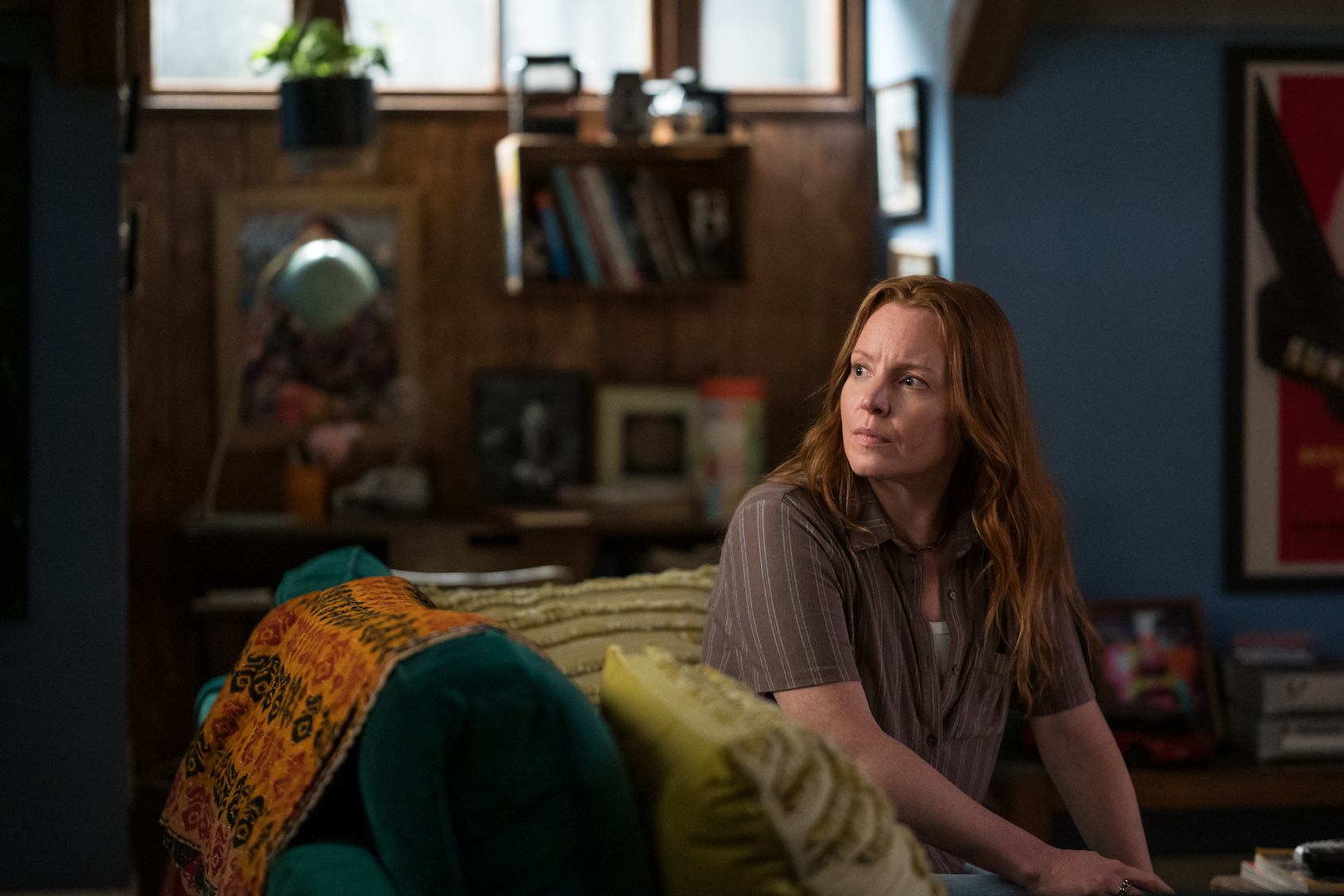
Van Palmer — the teflon goalie and outspoken movie lover played by Liv Hewson as a teen and Lauren Ambrose as an adult on “Yellowjackets” — has an affinity for rom-coms, but how does she feel about thrillers?

At the top of “Two Truths and a Lie,” we get a proper introduction to adult Van and spend our first few moments with the character witnessing her dole out movie recommendations. There’s a hat-tip to “Party Girl,” the 1995 cult classic starring Parker Posey (directed and written by Daisy von Scherler Mayer, who also wrote this season’s first episode, “Friends, Romans, Countrymen.”) And there’s also mention of “The Watermelon Woman,” the 1996 queer must-watch by Cheryl Dunye. But one ’90s title goes unmentioned, though it barely needs to be said for how strongly its influence is felt.

Wasn’t it Nietzsche who said, “If you stare into the abyss, the abyss stares back at you?” Yeah. It’s like that.

As clearly as you can read the movie titles on the letterboard behind Van’s register at the ’90s ephemera store she owns and lives above — While You Were Streaming — “Flatliners” jumps to mind when we later see Lottie (Simone Kessell) guide Natalie (Juliette Lewis) through a hypnosis session held at her “intentional community,” stirring up a darkness they have both, in their own individual ways, called upon and alternately fought to suppress since crashing into the Canadian wilderness 25 years ago. 

Both hoping that the session will reach back into the past and surface a better understanding of what Travis (Andres Soto) meant when he wrote a note just prior to his death reading “Tell Nat she was right,” they get more than they bargained for — similar to the characters in “Flatliners,” who cheat death for answers and live to regret it. 

If you’ve never seen it, or need some help sinking back into your own memory, the movie stars Kiefer Sutherland, Julia Roberts, William Baldwin, Oliver Platt and Kevin Bacon as a group of medical students who use their training to intentionally stop each other’s hearts just long enough to briefly experience death before quickly being resuscitated. As this is a thriller, and one directed by Joel Schumacher no less, things are not as easy as all that. After being resuscitated, their lives are not how they left them and their worst memories are made new having brought a little of death back with them.  

In a dark room, with only a small light shining into her face, Natalie has this very experience when she taps into the memory of a past overdose that stopped her heart and comes back with an ominous realization that has been teased in each previous episode. 

“We weren’t alone out there,” she says. “The whole time there was something. A darkness out there with us, or in us. It still is. That’s what I was right about.”

She describes seeing the crash site that left her and her teammates stranded, but the vision in her mind is not as it actually happened.


Want a daily wrap-up of all the news and commentary Salon has to offer? Subscribe to our morning newsletter, Crash Course.


“It’s us, but we didn’t make it,” she says, giving viewers a flash to the wreckage, and the charred bodies of everyone inside.

Both in Natalie’s vision, as well as in the present-day setting she and Lottie currently share, the shadow of The Antler Queen looms — not a visage of Lottie’s “powers” in this instance, but of the oppressive force and manifestation of trauma that has plagued her for more than half of her life, just as “The Bad One” has plagued Taissa’s (Tawny Cypress and Jasmin Savoy Brown). Wasn’t it Nietzsche who said, “If you stare into the abyss, the abyss stares back at you?” Yeah. It’s like that. And Natalie, Lottie and Tai aren’t the only ones getting a good look. 

Lauren Ambrose as Van (Kailey Schwerman/SHOWTIME)

Go back to your family, Tai, and leave this poor woman alone!

Having moved all the hell the way to Ohio in an effort to run from her past, Van is ripped back into it when Tai inserts herself back into her life. Taking refuge in Van’s home, leaving her son, comatose wife and newly purchased shelter dog to worry about themselves, Tai gives Van a glimpse of what the adult version of her “bad one” looks like, delivering a chilling message in the process.

After falling asleep on the couch, fugue Tai walks up to Van and roughly kisses her.

“You’re the other one, aren’t you?” Van asks. “What do you want?”

“This isn’t where we’re supposed to be,” she replies after a chilling pause, walking away to, what, take an inventory of Van’s VHS collection? Go back to your family, Tai, and leave this poor woman alone!

As much as these women want to forget the darkness they’ve encountered, they need it to a certain degree. When Misty (Christina Ricci) and Walter (Elijah Wood) finally make it to Lottie’s compound, with Misty fully intending on “rescuing” the woman she believes to be her best friend, she’s sent away. And in a flashback to the ’90s timeline, we see what happens to “best friends” when they turn on Misty. RIP, Crystal (Nuha Jes Izman).

“She’s helping me reflect, or whatever,” Natalie says, explaining why she won’t leave Lottie’s commune. “I’m doing a thing here and I don’t need you getting in my way.”

It’s true what they say about the only way out being through, and now that Natalie has tapped into death again, and gotten some answers from it, that could mean a lot of things. 

Since this show comes with a fan community that loves to pose theories on what we’ve seen so far, and what can be expected down the road, this episode gives an opportunity for a big one. What if they didn’t survive that crash and everything we’re seeing now is what could have been, or should have been, had darkness never intervened? Or, even wilder, what if the versions of them that returned from the wilderness aren’t actually them at all? I have never, until this episode, entertained anything other than practicality when it comes to what we’ve been shown, choosing to believe that trauma and inner strife is causing all of this upheaval. But now, I guess I’m down the rabbit hole as well. 

QUICK BITES:

  • The needle drop of Danzig’s “Mother” right as Shauna (Sophie Nélisse) goes into labor is almost as perfect as Season 1’s “Rumpshaker” right as Lottie killed that bear. 
  • It’s arguable that, out of every other generation, Gen-X is the most “stuck in the trauma of our teens.” As illustrated by Van’s store and my own Mad Balls and Garbage Pail Kids strewn home office. 
  • What’s with this show and strawberries? Shauna ate a strawberry during the banquet hallucination when they were actually eating Jackie (Ella Purnell), Jeff (Warren Kole) bemoaned not taking up the offer to use that strawberry lube, and now Randy (Jeff Holman) uses strawberry lotion as fake jizz. 
  • Detective Matt Saracusa (John Reynolds) is so gross. Never say “take a leak” in front of a woman. Rude.
  • “I do not like monkeys.” – Misty
  • “Maybe he did die, and that’s his ghost,” – Melissa (Jenna Burgess) . . . See, her saying this about Javi (Luciano Leroux) makes me wonder even more if they ARE all dead. 
  • Why does adult Natalie seem visibly turned on every time adult Lottie is near? Aside from the obvious answer, which I’m totally on board with, it makes me wonder if she’s being slipped something in her smoothies. Libido-enhancing supplements perhaps? 
  • “You’re gonna change everything,” – teen Lottie to Shauna’s unborn child, who is 100% going to die.

We salute you Bo-Katan Kryze, but the third season of “The Mandalorian” took on too much

The Mandalorian” is not much of a quote generator aside from “This is the way,” the spartan refrain of Din Djarin (Pedro Pascal) and his warrior Tribe. But one arrogant line from the third season finale, “The Return,” stands out enough to mean something: “Mandalorians are weak once they lose their trinkets.”

The re-emerged Moff Gideon (Giancarlo Esposito) pompously declares this once he’s battered his foe Bo-Katan Kryze (Katee Sackhoff) into what he assumes is submission.

To him, this is the moral of their story, evoked by crushing the legendary Darksaber in her hand. From what he knows of Mandalorian tradition, only a person who possesses the weapon has the right to rule. Without it, he thinks she’s nothing. But the Imperial warlord isn’t privy to the road that brought her to this showdown.

Most of Bo-Katan’s third-season victories were claimed without Darksaber in her hand. She earns the respect of The Tribe, people she once wrote off as zealots, by leading a party to save one of their children and commanding successful missions against dishonorable enemies.

The MandalorianBo-Katan Kryze (Katee Sackhoff) with Covert Mandalorians in “The Mandalorian” (Disney+/Lucasfilm Ltd.)

Then Bo-Katan earns back the leadership of the mercenaries who once followed her by taking on her former ally Axe Woves (Simon Kassianides) in single combat. While partly powered by jet packs, it’s primarily hand-to-hand, and she proves to be a better fighter.

Moff Gideon only overcomes Bo-Katan, and Din Djarin before she shows up, because he’s wearing supercharged armor made of Beskar alloy. But our Mando joins Bo-Katan without his weapons – as does Grogu, without the robot walker made from the remains of IG-11. Together, and with a huge helping of the Force, thanks to Grogu, they take on Moff Gideon and survive. They aren’t the ones who deal the death blow, though.

That honor goes to Axe, who stays behind in the Imperial cruiser the mercenaries jacked at one time long enough to crash it into the base Moff Gideon built on their home planet, abandoning ship before impact. He sacrifices his biggest trinket to win the battle, concluding this season’s Mandalore storyline.

Factions reunited and the Great Forge re-lit, Mandalore once again belongs to Mandalorians. But the third season sure did drag us through a whole lot of trinkets to get us to this point, the effect of which was to shortchange the live-action development of Bo-Katan’s mythology, and that’s a shame.

The character fans got to know in “The Clone Wars” and “Star Wars: Rebels” deserves better. Sackhoff, who voiced Bo-Katan in those animated series before playing her in this one, does a compelling job with what she’s given, which only makes us want more of her.

A common and perhaps main gripe about these eight 2023 episodes is that “The Mandalorian” has strayed too far afield from what drew people to the series in the first place: the winning combination of Pascal’s Mando and Grogu.

In a season where TV’s reluctant if protective daddy seems to be everywhere, placing him in a supporting role in service of developing an entire planetary culture’s mythos seems unwise.

The MandalorianDin Djarin (Pedro Pascal), a Bartender Droid (Seth Gabel) and Bo-Katan Kryze (Katee Sackhoff) in “The Mandalorian” (Disney+/Lucasfilm Ltd.)

Series creator Jon Favreau couldn’t have known the extent to which “The Last of Us” would further blow up the popularity of his star when he and his co-producers plotted this season. Also, nobody ever specified that “The Mandalorian” had to only be about his bounty hunter or that it’s obligated to remain the same weekly adventure show that it used to be.

But it’s one thing to explore and broaden a character’s biography by making a season’s arc more serialized and another to use half of a short season’s episodes as a highly trafficked jump point for other concepts and shows.

Moff Gideon’s line gets it backward, figuratively speaking – it’s the Mandalorians that make the trinkets, not the other way around.  As this site and others have pointed out, the success of “The Mandalorian” inspired Disney to place it in service of multiple agendas.  It’s a spinoff machine, although the best episode of the first of those, “The Book of Boba Fett,” was actually a “Mandalorian” chapter.

In a season where Pascal seems to be everywhere, placing him in a supporting role [to] an entire planetary culture’s mythos seems unwise.

That tactic didn’t quite work as well when Favreau pulled away from the main action in the third season for a lengthy side trip to Coruscant to check in on ex-Imperial geneticist Dr. Pershing (Omid Abtahi) and have him cross paths with Elia Kane (Katy O’Brian). The narrative reasons for this are left unclear until the second to last episode when Moff Gideon returns – with clones, packed in water, that are easily drained to death by Din Djarin shattering their tanks. Pershing, for his part, doesn’t re-emerge.

From a franchise strategy angle, this is an effort to fortify the links between the fall of the Empire and the surge of The First Order era. That makes it explainable, but not satisfying.

In such a short TV season, “The Mandalorian” could have trained its focus on Bo-Katan’s revival from losing everything to regaining her homeworld and reuniting her people. Many would still complain about the Din Djarin and Baby Yoda having to share that spotlight with a lesser-known Mandalorian.

Still, one stable, ongoing subplot is better than throwing dissonance into that storyline’s flow by interrupting it with subplots that don’t apparently relate to the main mission.

The MandalorianThe Armorer (Emily Swallow) in “The Mandalorian” (Disney+/Lucasfilm Ltd.)
Sackhoff ably handled the expansion of a challenging role, walking a particularly treacherous way between canon-devoted wonks scrutinizing her character’s evolution and audiences meeting her afresh in this series. Helpfully she already has the hearts of the “Battlestar Galactica” faithful who loved her as Starbuck and may perhaps appreciate the way her physicality wasn’t wasted here. Her aptitude and charisma also made her under usage more prominent.

Mandalorian culture, we’re told in brief reminiscences from Bo-Katan and The Armorer (Emily Swallow), is a rich and proud culture weakened by infighting and scattered across the stars. Season 3 ends with a small portion of its people reunited in a grandly staged gathering that holds the spiritual punch of bolting one more slat into place along that franchise bridge. The lesson voiced by Bo-Katan is one of cohesion: “Mandalorians are stronger together.”

Lady Kryze, we salute your greatness and hope future seasons apply that wisdom. 

In the meantime, many must have been pleased to see how Mando and Grogu wound up.  Din Djarin adopted The Kid, who is now officially an apprentice known as Din Grogu, and will never stop being Baby Yoda in our hearts

With Mandalore resettled, the pair zip over to the Alliance outpost to rendezvous with their X-Wing pilot buddy Carson Teva (Paul Sun-Hyung Lee), who agrees to work with Din Djarin as an unofficial contractor to track down rogue Imperials. In exchange, the bounty hunter claims an IG assassin droid head that’s in the base’s bar.

Cut to Nevarro, where Greef Karga (Carl Weathers) presents bounty hunter father and Force-wielding son with a cabin and land where they can lay low when they aren’t saving the galaxy. In turn, Mando gifts the people of Nevarro City a newly reprogrammed IG-11 as its marshal. 

“The Return” closes with Din Djarin watching Din Grogu levitate a frog from the pond in front of their cabin, ending with a hint that the tale is circling back to the simpler way it used to be. That’s all many people asked of “The Mandalorian,” and shouldn’t be too much.

“He’s an a**hole”: DeSantis roasted by former Republican colleagues as Trump snags FL endorsements

It’s been a tough week for Florida’s right-wing Republican Gov. Ron DeSantis.

On Wednesday, his current party peers in the Florida GOP handed their 2024 presidential endorsement to Donald Trump — currently caught up in litigation over a rape allegation — and then his former Republican colleagues in the US House dished out some scorching burns about him to Politico on Thursday. Ouch. 

Here’s how it all went down. 

Though his political gearing-up is evident to most watching, DeSantis hasn’t formally announced that he’s running for president. His forbearance seems to have cost him, however. Trump’s priority has been to secure as many of Florida’s congressional endorsements as possible before DeSantis openly declares a run, CNN reported. And while DeSantis was busy with a grip-and-grin stop on Capitol Hill Tuesday, Trump was courting the Florida delegation of Republicans over a Mar-a-Lago dinner party.  

The kicker? Multiple Florida Republicans — Reps. Greg Steube, John Rutherford and Brian Mast — announced their endorsement of Trump just 24 hours before DeSantis’ Tuesday event to win over GOP hearts in D.C. 

By week’s end, several other Florida state lawmakers were beginning to echo those endorsements. 

On Friday, voices online took to theorizing how DeSantis could lose the endorsements of his own state delegation. That’s when National Democratic Committee member Thomas Kennedy chimed in. 

“DeSantis passed gerrymandered congressional maps that cut Black districts in Florida by half last year. These maps were crucial in giving the GOP their current House majority. In response, nearly all of Florida GOP House members have endorsed Trump. Another L for meatball,” Kennedy tweeted Friday. 

Those stings were followed by another when Michigan’s Republican ex-Rep. Dave Trott dished on what he thought of DeSantis after the two sat beside each other for two years on the House Foreign Affairs Committee. In all that time, Trott said, “he didn’t even introduce himself or say hello.”

“I think he’s an a**hole,” Trott told Politico on Friday. “I don’t think he cares about people.”  

“He’s just a very arrogant guy, very focused on Ron DeSantis,” added Trott. 

Ouch. 

DeSantis’ seeming likability problem, as pointed out by Vice News, isn’t something that’s likely to go away. Rather, it’s quickly becoming a core pillar of his primary opponents’ campaign — which gave the world an undeniably awkward ad last week, hinged on accusations (denied by DeSantis) that he eats chocolate pudding with his fingers. 

No, seriously. That’s the ad. 

Cringey as it is, the ad is just playing on DeSantis’ already pronounced reputation for alienating his allies in socially unfortunate ways. As Florida’s Republican ex-Rep. David Jolly told CNN, the delegation’s strategy meetings became a place where DeSantis was known to sit in the back of the chamber and talk on his phone. 

“I don’t remember a single Florida delegation meeting he attended,” Jolly said. “We had lunch once a month, just casually to just catch up. I’m not sure he ever attended a single one. He was not a team player. It doesn’t surprise me that he doesn’t have much loyalty in the delegation.”

A new Wall Street Journal poll released on Friday finds DeSantis’ 14-point advantage over Trump from December has plummeted to a 13-point deficit, even as the former president faces mounting legal challenges, both criminal and civil.  

What could $1 billion do for Puerto Rico’s energy resilience? Residents have ideas.

When the electricity goes out in Puerto Rico, food and medicines spoil. Dialysis machines stop running. Water doesn’t flow, businesses shutter, and schools close. And while the energy grid’s fragility attracts national attention when a hurricane causes a blackout, Puerto Ricans constantly confront outages.

“In the mountains, it only takes a little wind and we are out of power,” said Crystal Díaz, who lives in Cayey, a town about 80 minutes south of San Juan. “We are an 800-family community, and we are without power at least once a week.” The cost of operating her produce-delivery business triples when the electricity fails because she must buy expensive diesel for generators, and sales come to a halt because customers can’t refrigerate food. 

Such frustrations are common throughout Puerto Rico, an archipelago of 3.26 million people where residents have grown tired of an energy system they can’t rely on and a utility that has shown little ability to address the problem. Energy Secretary Jennifer Granholm visited last month — her fourth time since October — to hear firsthand from residents like Díaz. They told stories of neighbors having to choose between paying for electricity or buying food, and of mothers scrambling to find fuel to power generators for their children’s medical equipment. 

“No other place in the country has this kind of horrible electric system. It’s just not right,” Granholm told Grist during her recent visit. “This island needs to have a full-on effort to be able to repair the grid.”

President Biden agrees. Two weeks after Hurricane Fiona left the entire archipelago without power last September, he directed Granholm to lead “a supercharged effort across the federal government” to repair the failing grid and accelerate its transition to clean energy. Granholm’s Puerto Rico Grid Recovery and Modernization Team is working with federal and local agencies and six national laboratories to provide resources and technical assistance. It’s also conducting a two-year study, called PR100, on the best path to renewable energy. “We’re doing everything, everywhere, all at once to be able to make this happen,” said Granholm.

Such a transformation will take years, something Puerto Ricans living with the economic and health consequences of unreliable and unaffordable electricity can’t spare. As part of the undertaking, Biden got Congress to approve the $1 billion Puerto Rico Energy Resilience Fund to deliver reliable, affordable power to the most vulnerable residents as quickly as possible.

The department wants to start disbursing the resilience fund by the end of this year. But first it must determine which communities to begin with, how to serve people with the greatest need, and what strategies will have the widest reach. For that, it has turned to those in the best position to know: Puerto Ricans themselves. 

“Getting into these communities where we haven’t been before and hearing the wisdom of those who live there is so important,” Granholm told Grist after a town hall in the city of Mayagüez. “It’s not going to be done right unless we consult with the people who are here.” 

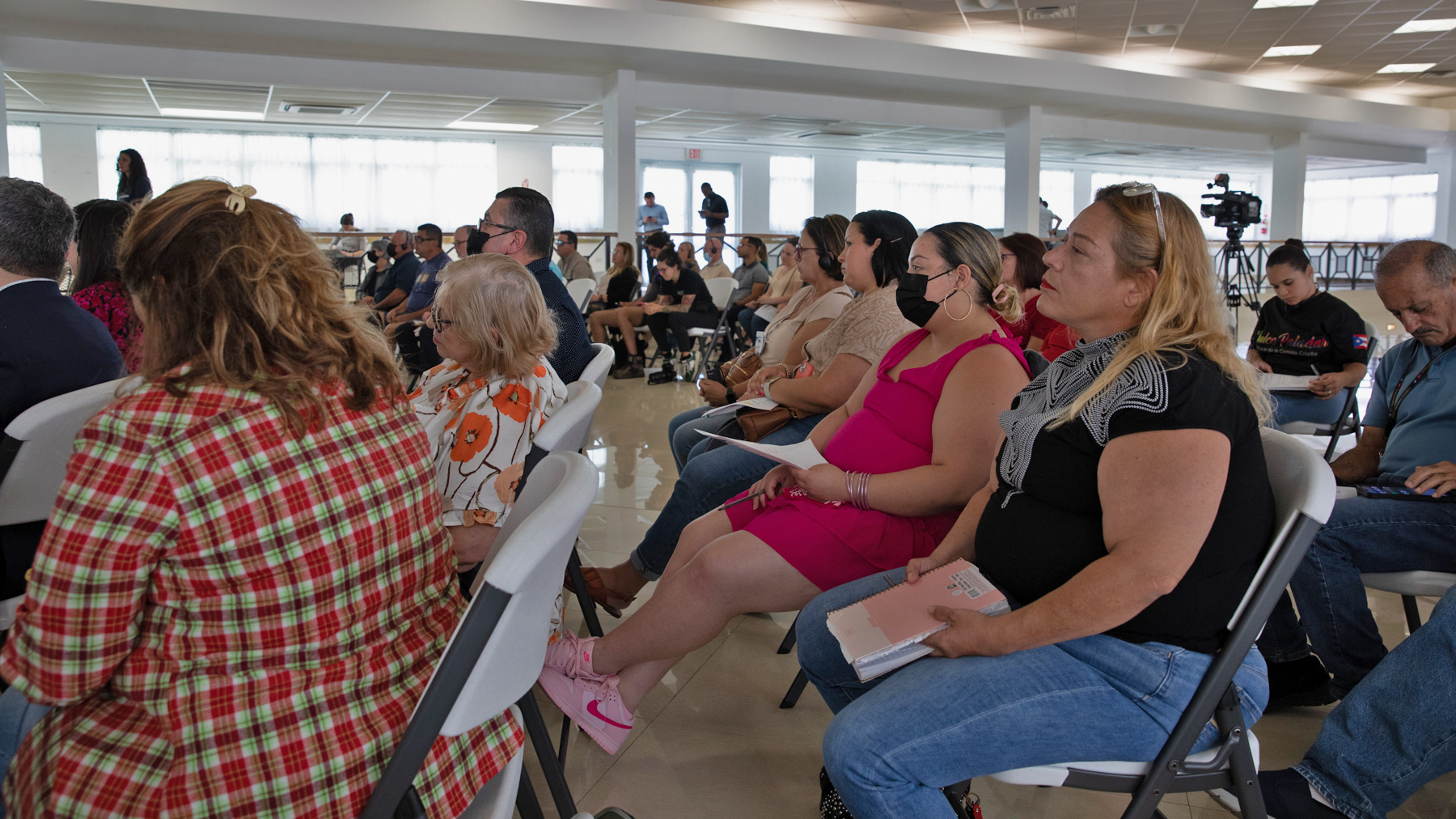
A town hall on energy resilience in Orocovis, Puerto Rico.

Residents across the archipelago attended town halls to share their experiences with Puerto Rico’s fickle energy grid. Gabriela Aoun Angueira / Grist

The people of Puerto Rico are already harnessing effective solutions. In packed town halls, intimate home visits, and lively industry round tables, one person after another told Granholm and her Puerto Rico Grid Modernization Team about their visions of decentralized, community-centric energy systems. What they need most, they said, is support to amplify those solutions, and to make sure they reach the people who need them most. 


Puerto Rico’s energy system was already in trouble before the devastation of Hurricane Maria in 2017. Its infrastructure was aging and ill-maintained, and both the U.S. territory and its public utility declared bankruptcy months before the storm. That kicked off a privatization process in which the utility transferred management of its transmission and distribution to the Canadian-American company Luma Energy in 2021. Its energy generation, which depends almost completely on fossil fuels, will transfer to another U.S. company in July.

Luma promised to fix the failing lines, towers, and substations, but Puerto Ricans say conditions haven’t improved. Thousands protested in frustration last fall, going so far as to leave refrigerators damaged by power outages at the gates of the governor’s mansion in Old San Juan. Even as energy remains unreliable, its cost rises: Puerto Rico’s electricity rates are more than twice the average rate in the U.S. because of fuel imports, and could rise more due to the debt restructuring

The first task in strengthening energy resilience is identifying the residents who need it most. While there are a handful of regions that tend to experience the worst outages, vulnerable households — those in which losing power threatens the health of the elderly or those who rely upon medical equipment — dot the entire archipelago.

A study from the University of Puerto Rico, Mayagüez, found that 200,000 households went more than five months without power after Maria. Most were in the mountainous interior of the main island. Roughly 62,000 of them waited 11 months for power. As many as 4,400 people died in the months after the Category 5 hurricane, a staggering number that is linked to the loss of basic services that require power. 

“We need to reimagine what critical infrastructure means,” Marcel Castro, a professor of electrical engineering at the university and an author of the study, said. “If one person would die because of a lack of power, that house is critical energy infrastructure, and it needs to be equipped with alternatives to save that one life.”

Rooftop solar and backup battery systems are a rapid and direct way to answer these needs.  Installation of photovoltaic, or PV, systems across the archipelago has increased tenfold since Maria. But in a place where the median annual income is $21,967, the technology remains beyond reach for many.

A complete system can cost $30,000 to $35,000, but Castro said not everyone needs that. Installing a solar system capable of providing enough power to keep the lights on, the fridge and essential medical gear running, and the phone charged could cost as little as $7,000 to $10,000. 

Microgrids are another attractive solution, and something the town of Castañer has adopted. It is one of many communities nestled in the mountain ranges in the core of the main island, where dense vegetation conflicts with power lines, causing frequent outages. Some of them are only accessible by narrow, winding roads that are impassable after a bad storm. Residents told Granholm they feel forgotten by the government. “When the power goes out, it can be a week to get it back,” said a man at a town hall in the town of Adjuntas. “We have not been a priority.” 

The two grids in Castañer power seven businesses, including a bakery and a grocery store, and two neighboring homes. Business owners benefit from lower electricity bills and the comfort of knowing the backup batteries will keep them open for eight to 10 hours after an outage. Under the microgrid contract, businesses agree to let residents plug in phones and refrigerate medicines during an outage. After Hurricane Fiona cut power to the community last September, a woman powered her lung therapy equipment at the local ice cream shop. 

“We focus on stabilizing communities,” C.P. Smith, president of Cooperativa Hidroeléctrica de la Montaña, which operates the microgrids, told Granholm as they stood in the town plaza. “We energize the businesses, because the people can come and get chilled milk and fresh food.” Smith said the cooperative wants to build six to eight more microgrids in neighboring towns within the next 18 months. 

Models like this provide a most basic line of resilience, but Puerto Rico also needs residential solutions that provide reliable power to those who can’t leave their homes to find it, and to alleviate the burden of outsized electricity bills.

About 40 miles northwest of Castañer in the coastal town of Isabela, the nonprofit Barrio Eléctrico offers residential PV and battery-storage systems as a service. Residents can have one installed for a $25 initiation fee and a $120 deposit. Their monthly electricity bills are reduced by about half. Since they don’t own the infrastructure, if a panel fails or the battery needs to be replaced, they don’t face a repair they can’t afford. The nonprofit has done 36 installations so far. It hopes to do 1,500 by the middle of 2024.

Barrio Eléctrico is able to offer such reduced rates by attracting U.S. investors who can take advantage of federal solar tax credits, which are unavailable to Puerto Ricans. The credits lower the overall cost of financing the systems, and Barrio Eléctrico passes the savings on to residents like Arlyn Pagán, whose system was installed in March. 

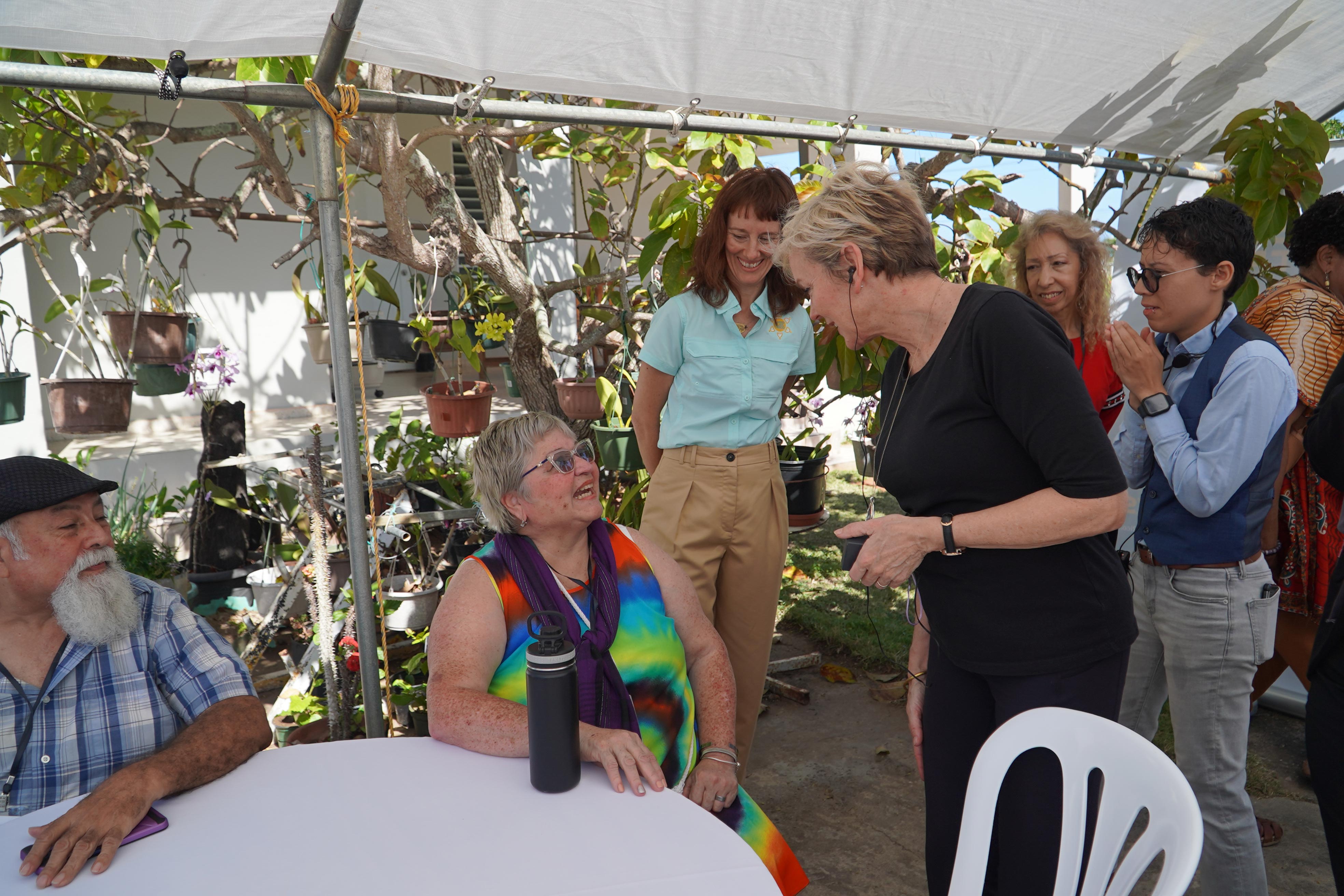
Energy Secretary Jennifer Granholm in Isabela, Puerto Rico

Arlyn Pagán tells Energy Secretary Jennifer Granholm about the benefits of her new PV system in Isabela, Puerto Rico. Anthony Martinez / Department of Energy

“I am diabetic and asthmatic, and I need power for my breathing machine and refrigeration for my medicines,” she told Granholm in the shade of the yard of a neighbor who had also installed a system. “We are telling everyone it’s the best thing we can do, for our health and our pockets.”


If the Biden administration spent the Puerto Rico Energy Resilience Fund only on single-family residential rooftop systems, which typically cost $30,000 to $35,000, the billion dollars would only cover about 30,000 homes. Local frustration over the Puerto Rico housing department’s recent chaotic rollout of a voucher program for $30,000 PV systems showed the pitfalls of simply giving away systems piecemeal.

“Lotteries and giveaways are not sustainable, and they are not just,” said Jorge Gaskins, board president of Barrio Eléctrico. “In the event of another Hurricane Maria blackout – some of us will live and some of us will die?”

Advocates of projects like those in Castañer and Isabela say federal money can go much further by funding community-driven models that can use the financing to boost their reach. “We need to lever the money from the federal government, so that every dollar that comes in, we can do $3 worth of projects,” said Jose Monllor, financial advisor for the Cooperativa Hidroeléctrica de la Montaña.  

Nor will the money have much effect if it is used only for hardware. More than half the homes that Barrio Eléctrico visits need repairs or other improvements. Thousands of homes throughout Puerto Rico still bear the damage of hurricanes. Another University of Puerto Rico, Mayagüez study found that 75 percent of the homes in a neighborhood near campus had roofs too storm-wrecked to support panels or were missing altogether. 

“If you only give money for PV but not roofs, you exclude three-quarters of the people here,” Agustín Irizarry, a professor who was part of the study, told Granholm during a visit to the university’s Microgrid Laboratory. He also said there will need to be a robust workforce-training effort, something that has been hampered by education cuts imposed by the bankruptcy debt restructuring.

There’s another challenge that implementing a program like this will face: A 125-year colonial relationship with the United States and chronic inaction by local and federal governments have fostered hesitation, if not outright mistrust, of government assistance. In every town hall, people raised those concerns. “How do you measure that this was really for the people?” a woman asked Granholm in Adjuntas. “Because in my experience, other interests enter that don’t care about people.”

“We need to earn your trust,” Granholm responded. “The proof will be in the pudding.”

The department plans to start seeking proposals by summer, and begin funding them by the end of the year. If the resilience fund fulfills its promise, it will help bring energy sovereignty to people across the archipelago. That would save lives. It would also relieve people of the anxiety of wondering when the next interruption will come.  

A woman in Castañer told Granholm just how life changing that can be. Norma Medina had lived in her house for 48 years. It was now connected to one of the microgrids. “During Hurricane Maria, we suffered a lot,” she said. “Now I can sleep in peace.” 


This article originally appeared in Grist at https://grist.org/article/puerto-rico-energy-resilience-fund/.

Grist is a nonprofit, independent media organization dedicated to telling stories of climate solutions and a just future. Learn more at Grist.org

GOP leader, who voted to expel Tennessee Three, resigns after past sexual harassment revealed

Republican Rep. Scotty Campbell of Tennessee, was recently found guilty of sexually harassing at least one legislative intern by a Tennessee House ethics subcommittee, according to a report from NewsChannel5 Nashville. The GOP leader resigned from the Tennessee General Assembly on Thursday around 6 hours after the local news organization questioned him about the sexual harassment allegations.

“I had consensual, adult conversations with two adults off-property,” Campbell said, referencing a previously unknown second intern who filed a complaint against the representative. “I think conversations are consensual once that is verbally agreed to. If I choose to talk to any intern in the future, it will be recorded,” he added.

The subcommitee, comprised of two Democrats and two Republicans, however, found that “Representative Campbell violated the Policy” against workplace harassment and discrimination, according to a March 29 memorandum sent to House Speaker Cameron Sexton. 

The memo continued, stating that “discrimination and harassment in any form will not be tolerated.”

The Tennessee General Assembly’s rules restrict the subcommittee’s actions, however, allowing it to only place the memorandum in Campbell’s file and preventing them from publicly discussing their proceedings.

Thousands of dollars were also reportedly spent on protections for one of the interns, including relocating her form the apartment building that she and Campbell both lived in, placing her in a hotel for the remainder of her internship and shipping her furniture home to a different part of the state.

The exact number is confidential, legistlative officials said.

Though the interns did not provide public comments on the matter, NewsChannel5 Nashville received an email one of the women sent to university officials detailing her experiences with the East Tennessee representative from her family member.

In the email, she described the comments Campbell made about her and another intern after seeing them enter the apartment building: “[He] made comments about how … he was in his apartment imagining that we were performing sexual acts on one another and how it drove him crazy knowing that was happening so close to him.”

“I uncomfortably explained that that was not happening, and he insisted that he knew it was and asked me to tell him about it,” she wrote, adding that she explained the other intern, who is believed to be the second person to complain, is just her friend.

The former vice chair of the House Republican Caucus made several other disturbing comments to the intern on another occasion, according to the email, saying that he wished “he had someone with whom he could just cuddle,” asking how many men she’d slept with, offering her cannabis gummies to see her tattoos and piercings, and repeatedly asking for hugs.

“I told him zero, and he insisted that I was lying and told me not to lie. He then proceeded to ask how many women I’ve slept with and said he bets girls go crazy over me,” the intern wrote. “I was getting progressively more afraid and uncomfortable. He then reached out his hand towards me and grabbed me around my neck,” she continued, explaining what happened after she denied the hugs. “I recoiled and said I felt sick and immediately left. That was the last night I ever spoke with or saw him. I blocked his number after that.”

The intern reported the incident to the legislative officials days afterward and was “informed that Rep. Campbell admitted fully to his guilt,” according to the email.

When questioned by the investigative news team, Campbell denied all of the claims.

“Again, I had consensual conversations that were agreed to, and I’m really surprised that we are here this morning,” he said.

Campbell, who recently voted to expel three Democrats protesting gun violence on the House floor, garnered national media attention earlier this year during a debate over a bill banning public drag shows. The GOP leader reportedly asked if the legislation would also ban a “bra-and-panties match” by wrestlers at a county fair.

This news breaks weeks after a viral clip of Rep. Justin Jones, a member of the Tennessee Three, calling out fellow House members who were involved in crimes and investigations did not face expulsion during a speech given prior to his own.

“One member sits in this chamber who was found guilty of domestic violence — no expulsion. We had a former speaker sit in this chamber who is now under federal investigation — no expulsion,” Jones said in the clip.

Spoon bread blends the down-home familiarity of cornbread with the simple sophistication of soufflé

Spoon bread is not a bread, despite its name, but rather a classic Southern side dish. With cornmeal as its base, it is in the same family as cornbread, but it is baked into a soufflé, which makes it light, airy and custard-like in texture.  

I associate Spoon Bread (and soufflés in general) with a bygone era when food wasn’t as fast and casual as it is today. That’s not to say that this recipe is overly time-consuming, but it does require some thoughtfulness to go through the steps and do it right.

The first French settlement in America was in 1682 and these new colonists brought their distinctly French cooking techniques with them, forever changing the culinary landscape of the American South. They prepared the ingredients available in their new homeland using their own style. It was this confluence — French culture merging with
Native American and African cultures — that created Creole food, as well as this cornmeal soufflé!

Nowadays, it is more common for us to eat in shifts as family members file in at different times, reheating leftovers or standing at the kitchen counter rushing through a “meal” in order to get to the next thing. Sit-downs with all the family can be pretty rare, unless it’s a holiday and someone is serving a dish like Spoon Bread, which makes you want a moment with your people.

There is a ta-da factor when you pull this out of the oven; you will hear the oooh’s and ahhh’s of mouth-watering amazement when everyone sees it, so make sure to serve it on an occasion when you can have folks at the table: ready, plates served, just waiting for it to come out. You might have to resist the urge to take a little bow as you walk it to the table, not only because of how it looks, but also because it is ridiculously delicious.

When made properly, Spoon Bread bakes to about double its size. The egg yolks add richness to the base of cornmeal and milk while the egg whites provide the height. Luckily, even the “ugly” ones (the ones that don’t get a good rise) still taste amazing, so fear not! You’re going to love everything about this ultimate comfort food


Want more great food writing and recipes? Subscribe to Salon Food’s newsletter, The Bite.


Spoon Bread can be a little tricky and requires time and patience to really get right, but it is worth the extra effort. The saving grace is that regardless of whether you create a stunning work of art, you and your family are still going to love it. With a little practice, you’ll get the hang of what goes in to making the egg whites do their job and you will easily turn out one gorgeous Spoon Bread after another.

It’s nice that I got to watch people make Spoon Bread long before trying to do it myself because there are some things a recipe just can’t convey. For instance, I was taught to whip the egg whites by hand to ensure they don’t get over whipped, which would prevent them from continuing to rise during the baking, which would make your grand presentation a lot less grand. Specifically, I was told to move my whisk around the egg whites a few times in a figure-eight motion, then GO! GO! GO!, whipping as fast as I can for about 4-5 minutes. You want your egg whites stiff, but not dry. You can use an electric mixer on high setting for about 2-3 minutes for the same result. 

Sadly, even if you make the grandest, tallest, most beautiful Spoon Bread ever, it will still fall shortly after you take it out of the oven and definitely once you stick a serving spoon into it. So be sure to cherish that initial moment when it first comes out of the oven, gleaming, tall and proud. 

Spoon Bread
Yields
4 servings
Prep Time
 20 minutes
Cook Time
45 minutes

Ingredients

2 cups milk

1/2 cup corn meal

1/2 teaspoon baking powder

1 teaspoon salt

3 large eggs, separated

3 tablespoons butter


Directions

  1. Preheat oven to 350 degrees Fahrenheit. Butter a 2-quart casserole or soufflé dish. 

  2. In a saucepan over medium-high heat, scald milk (bring it to just before boiling — about 180 degrees)

  3. Slowly add the cornmeal, stirring constantly.

  4. Bring to a simmer and add salt, baking powder and butter.

  5. Continue to stir or whisk until thickened, about 5 minutes.

  6. Remove from heat. Allow to cool a bit.

  7. Add a tablespoon or two of the cornmeal mixture to well beaten egg yolks, then add all to the cornmeal mixture.

  8. Place egg whites in a small stainless steel bowl (or glass) with a tiny pinch of salt.

  9. Beat egg whites until stiff.

  10. Fold the beaten egg whites into the cornmeal mixture until almost smooth.

  11. Pour into prepared dish and bake 45 minutes or until golden on top and puffed up. Serve immediately. 


Cook’s Notes

-Full disclosure: soufflés can definitely be fussy. But don’t be scared of messing this up! It is delicious and easy once you get the hang of folding in your egg whites.

There are many variations to Spoon Bread, such as recipes adding zucchini, diced ham, cheese and lots of other things, but we keep ours simple. My husband likes having a savory helping with butter and black pepper with dinner, then a second serving with a heavy drizzle of honey for dessert. Some people use sugar and a bit of nutmeg in their recipes, but again, we don’t. Our recipe is plain and simple — but we think it’s the best.

-There is disagreement about whether baking powder should be used in Spoon Bread. The purists will tell you if you beat and fold in your egg whites properly, you do not need baking powder because the whites provide all the lift you need. I would say that of all the people I know, it is just as common to use baking powder as it is to eschew it. The recipe we use is my husband’s family recipe — and it calls for baking powder.

-Take your time. Choose a day to make this when you aren’t feeling rushed or stressed. After you make it a few times, there’s nothing to it.

The woeful history of ADHD, the condition that once got you branded as “defective”

Speaking from experience, having ADHD is a bit like reading a book outside during a windy day. Despite your best attempts to concentrate, an elemental force beyond your control keeps flipping the pages. Instead of focusing on what you want to read, you struggle just to get back to the “right” page — and stay there long enough to absorb it. In this way, those with ADHD are forever distracted by the impulses of their own minds.

“ADHD has always been an under-diagnosed and under-treated condition. Children were considered lazy, misbehaved, spoiled or simply bad.”

ADHD can be life-ruining. Unless they have the resources of a one percenter, some people with ADHD may struggle to hold down jobs, succeed in school, maintain relationships and in general function on par with people who do not deal with the same unpredictable tempests inside their skulls. Thankfully, today scientists at least recognize ADHD as a disability, one that can be diagnosed and treated. Yet that hasn’t always been true. For a long chunk of history, people with ADHD were treated as if they were just bad human beings.

“Medical doctors first began documenting/writing about what we today call ADHD [two] centuries ago — not coincidentally, around the time that compulsory education was becoming policy in the UK and then the US,” explained Dr. Stephen P. Hinshaw, a Distinguished Professor of Psychology at the University of California, Berkeley, in an email to Salon. 

As children struggled to keep up with the strict requirements of Western education systems, British physicians like George Still in the early 20th century lamented the supposed “‘moral defect’ in some children — mostly boys (as has been the stereotype ‘forever’ of normal intelligence) who somehow lacked the ability to concentrate and act according to classroom and ‘moral’ standards’ (hence, his designation),” Hinshaw told Salon.

Still, incidentally, is nicknamed “the father of British pediatrics,” and is widely recognized as one of the first doctors to identify ADHD as a condition. After the World War I-era influenza epidemic led to a number of survivors claiming to demonstrate ADHD-like traits, more diagnoses followed, with patients complaining of problems like impulsivity and poor concentration. Yet this increase in recognition came with an unfortunate catch: The erroneous belief, as Hinshaw put it, that there was “a biological ’cause’ — which then became overstated to the claim that any child with such symptoms had brain damage, later softened to minimal brain damage or minimal brain dysfunction (MBD).”

It was not until the mid-20th century that specialists began focusing on patients who displayed overactivity and impulsivity, and coined the term “hyperactivity” (or its synonym, hyperkinesis). But even then the “scales developed hardly included any items related to executive dysfunction, inattention, etc.” Additionally, they were “biased toward boys often with aggressive behavior patterns.” Only in the 1980s were Attention Deficit Disorder (ADD) and Attention Deficit Hyperactivity Disorder (ADHD) coined; and in that decade outdated assumptions like disregarding girls or assuming ADHD ends with childhood began to fade.


Want more health and science stories in your inbox? Subscribe to Salon’s weekly newsletter The Vulgar Scientist.


“At long last, we’re beginning to move from ‘either/or’ to ‘both/and’ conceptualizations.”

Yet even though ADHD has only been formally recognized for the last few decades, it has always existed. Dr. Jose Martinez Raga of the University of València, who co-authored a 2015 paper about the early history of ADHD, elaborated on this for Salon.

“We can find some vague clinical descriptions done by the ancient Greeks, and in modern times we can find clear clinical descriptions of individuals with what we nowadays name ADHD in textbooks since the mid-1700s,” Raga told Salon by email. Yet even though ADHD patients in classical Athens or Georgian England were observed, this did not mean they were understood.

“ADHD has always been an under-diagnosed and under-treated condition,” Raga explained. “Children were considered lazy, misbehaved, spoiled or simply bad.” Even today Raga argued that the situation “is far from ideal, especially with regards to adult individuals with ADHD, but certainly things have improved.”

Hinshaw echoed Raga in recalling how people with ADHD used to regarded as “lazy, not well motivated, truly ‘immoral’ or ‘defective’ (like people with learning disorders) — and as burdens on classrooms and social order more generally.” Nor were the ADHD patients alone in being blamed for their medical conditions. “As were nearly all psychological/psychiatric conditions in the 20th century, the automatic attribution was to ‘faulty parenting’ (lasting legacy of psychodynamic theories),” Hinshaw told Salon.

Today, of course, scientists understand that “genetic vulnerability to ADHD is extremely strong — but at the same time that parenting, school climate, etc., also have a large amount to do with ultimate outcome. At long last, we’re beginning to move from ‘either/or’ to ‘both/and’ conceptualizations.” Hinshaw is also encouraged by a shift away from treating ADHD solely with medication and instead seeing medication merely as a way to alleviate short-term symptoms.

“Unless combined with family behavioral therapy, school consultation, organizational skills, etc. etc. it’s typically not sufficient,” Hinshaw told Salon.

At the very least, though, the stigma surrounding ADHD is not as bad as it once was.

“Public conceptions now getting better — despite the anti-ADHDers out there who claim that it’s solely a social construction, or lousy public education, or permissive parenting, etc,” Hinshaw mused.

Smartmatic wants “an apology” and “full retraction” from Fox News — and more than $787M

Smartmatic, the second voting software and hardware company to sue Fox News for defamation, is aiming for more than the $787.5 million that Dominion Voting Systems received in a settlement with the right-wing network, according to its lead trial attorney, Erik Connolly.

Dominion’s defamation suit against Fox News initially demanded $1.6 billion, alleging that Fox’s airing of false claims linking the company to a “stolen” 2020 election had done irreparable harm to Dominion’s business. That trial came to an abrupt end just after jury selection was completed, when the parties agreed to a settlement on Tuesday afternoon.

The historic sum Fox agreed to pay was a “tremendous outcome for Dominion, and from our perspective that set down a marker — and it’s a marker that we think we should be exceeding,” Connolly told CNN’s Jake Tapper on Thursday, Mediaite reports

Smartmatic is seeking $2.7 billion in damages, claiming that the network harmed its global business and reputation by airing lies about the 2020 election that implicated it. The larger demand is based on the global scale of Smartmatic’s operations, whereas Dominion’s suit, Connolly told Tapper, was limited to the company’s damages within the U.S.

When Tapper asked whether Smartmatic would pursue an apology and correction from the network, Connolly said that he wanted everyone to “think of the long haul” as Smartmatic is “looking to take this case through trial.”

“They are looking through the vindication of a jury verdict in their favor … that was their intention when they filed this lawsuit. That is their intention today,” he explained.

The family-owned company has “spent over 20 years building a global reputation as being one of the very best election technology companies in the world,” Connolly continued, adding that its reputation is “critical to them.”

“And in order for them to get back to where they were before this all started, where they can win the contracts that they’re now losing, they need to get an apology, they need to get a full retraction, because they’re in that business for the long haul,” Connolly said.


Want a daily wrap-up of all the news and commentary Salon has to offer? Subscribe to our morning newsletter, Crash Course.


Connolly also released a statement on Tuesday reiterating Smartmatic’s commitment to “holding Fox accountable for undermining democracy” and to “clearing its name,” citing the evidence of Fox’s “misconduct and damage” that Dominion provided in its litigation. Connolly said Smartmatic will use much of the evidence introduced in Dominion’s case, including texts and emails between Fox execs and hosts, admitting that they knew former President Trump’s claims about the election were false. 

Fox News also released its own statement on Wednesday, continuing to defending its coverage of the 2020 election in the face of further legal jeopardy.

“We will be ready to defend this case surrounding extremely newsworthy events when it goes to trial, likely in 2025,” the statement read. “As a report prepared by our financial expert shows, Smartmatic’s damages claims are implausible, disconnected from reality, and on its face [sic] intended to chill First Amendment freedoms.”

In closing the interview, Tapper urged Connolly against settling the case prematurely: “Don’t forget about the American people,” he said. “Don’t forget about the people who care about democracy. Don’t forget about the people who care about truth, because we don’t have an ability to sue for those lies. You do, but we don’t, so please don’t forget about us when you’re coming up with the end of this case.”

The 2-ingredient espresso tonic is the drink of spring. Here’s how to make the best one

The weather is officially hovering over 50 degrees here in Chicago, which means that almost every cafe within a 15-block radius of my apartment has ceremoniously reopened their patios and added some kind of sparkling coffee drink back to their menus. The desire for caffeine, bitterness and bubbles, however, is seemingly a national phenomenon. 

“Welcome to espresso tonic summer,” declared Food & Wine earlier this week, while in my Instagram and TikTok feed, foamy pistachio lattes and the vestiges of Dalgona coffee mania are being steadily replaced by crisp images of ice-packed glasses filled with fizzy, deep mahogany-colored coffee sodas. 

Now, there are multiple ways to combine coffee and sparkling drinks — all of which have their own unique perks. In preparation for patio-season brunches and mid-afternoon caffeine breaks, here is a breakdown of three of my favorites versions to make at home. 

Espresso tonic 

As Merlyn Miller wrote for Food & Wine, the espresso tonic first gained traction in Sweden in the mid-2000s, as it was allegedly created by a barista at Koppi Roasters in 2007. “It grew in popularity throughout Scandavia, and eventually made its way abroad through barista competitions, like the World Barista Championship,” she wrote. 

As she points out, its popularity is not incredibly widespread in the States, but the refreshing drink can be found on menus at Nashville’s Barista Parlor, Brooklyn’s Konditori and Chicago’s F.R.O.T.H

Now, I say it’s refreshing because I personally love the taste of tonic water, which is a little different from club soda or sparkling water; tonic water is made with dissolved quinine and a hint of added sugar, resulting in a bitter, slightly citrusy flavor. As such, it actually enhances both some of the more bracing and floral notes in a shot of espresso. 

You only really need two ingredients to make an espresso tonic so, as basic as it sounds, the key to making a great one is to choose good ingredients. While for a long time tonic water was a pretty limited category on American shelves, in recent years, a ton of craft makers have hit the market. One of my favorites is the grapefruit and lime-flavored Indian Tonic Water from Milwaukee’s Top Note. The addition of the citrus flavor is really stellar. For a more classic “gin and tonic” tonic flavor, you really can’t go wrong with Fentiman’s Tonic Water

In terms of espresso, you don’t need a machine to get a good shot at home. You just need pressure — which can come from an AeroPress, a Moka Pot or even a French press. I found the brew guides from Intelligentsia to be incredibly helpful when learning how to do this myself.  You can also use a bottled espresso or espresso concentrate, from brands like High Brew and Chameleon, which have become even more popular thanks to the espresso martini renaissance

I’ve found a good ratio to be four ounces of tonic to two shots of espresso — ideally served over a single, outrageously large ice cube in a stout little glass. People argue about which goes in the glass first, but I’m partial to topping the tonic with the espresso simply because it looks cooler in the glass. See below: 

By the way, if you are willing to add a third ingredient, a little squeeze of orange juice would take this drink over the top (though if you want to go all in on the orange juice/coffee mash-up, check out Mary Elizabeth Williams’ recipe for orange coffee soda, inspired by Nashville’s Steadfast Coffee). Also, if you don’t tend to take your coffee black or find straight espresso to be too bitter, consider adding a swirl of flavored simple syrup to the mix. 

Sparkling Americano 

The Sparkling Americano is a little less astringent version of the espresso tonic. You may remember in 2017 when Starbucks announced the development of a new patent-pending cold extraction process that produced a shot of cold-pressed espresso. With that cold-pressed espresso, they introduced several new beverages, including a Sparkling Cold-Pressed Americano. 

Again, you don’t need a fancy coffee machine to make this drink. Simply make or buy a shot or two of espresso using one of the techniques or brands above, pour it over ice and then top it with a splash of sparkling water. Topo Chico is my personal favorite, but definitely have fun with all the delicious lightly-flavored sparkling waters on the shelves now. For example, Sound has a sparkling water infused with grapefruit, lavender and ginger, all flavors that play really well with bitter espresso. 

Cold brew spritz

Finally, the cold brew spritz — or the sparkling cold brew — is another variation on this theme. For this, you just need a few ounces of cold brew concentrate. However, instead of adding plain tap water when it comes time to make your morning beverage, replace it with your favorite sparkling water. Most brands of concentrate will have recommended ratios for cold brew to water, so use this as a guide when mixing your drink. La Colombe’s Cold Brew Concentrate is my go-to, but Starbucks Signature Black Cold Brew Concentrate is readily available and honestly really good. 

You can find the brand’s recipe for a Sparkling Cold Brew here. 

It’s perfect over pellet (a.k.a. “the good ice“), served with a cute, reusable straw.

Salon Food writes about stuff we think you’ll like. While our editorial team independently selected these products, Salon has affiliate partnerships, so making a purchase through our links may earn us a commission. 

“We have to do it in Spanish”: Melissa Barrera on dance-filled “Carmen” reimagining set in Mexico

Melissa Barrera appears to be everywhere these days. She had a lead role in “Scream VI” last month, appeared in the gritty indie “All the World Is Sleeping,” released the other week, and now stars as the title character in Benjamin Millepied‘s inventive reimagining of the Bizet opera, “Carmen.”

“Benjamin wanted Carmen to not be tragic … That was hard for me.”

This hypnotic film features more dance than song — Millepied is, after all, a choreographer — as well as moments of magical realism. This version of the story opens in the Mexican desert, where Carmen’s (Barrera) flamenco dancing mother is killed. Carmen sets the house on fire and hits the road to find Masilda (Almodóvar stalwart Rossy de Palma). After illegally crossing the border, Carmen is saved by Aidan (Paul Mescal), a soldier assisting with border patrol; he kills a man who endangered her life. The couple go on the lam, eventually ending up in Masilda’s nightclub, where Carmen dances while Aidan seeks out a fight (bareknuckled, not against a bull) to earn money. Tragedy, of course, ensues. 

Millepied’s film keeps the dialogue to a minimum, mostly, allowing the actors to express their emotions through dance and song, smoldering looks and even a love scene. Barrera, who broke out in the TV series “Vida,” and sang and danced in “In the Heights,” gives a fiery performance in the title role. She spoke with Salon about playing “Carmen” and her career.

What are your impressions of “Carmen”? Why is this opera/story so popular and what about it resonates with you? 

I think people are obsessed with femme fatales, and she was one of the OGs. The music is beautiful. What’s funny, in Mexico, growing up, there was a soap commercial that used a song from “Carmen” with the lyrics for the soap. It’s that popular! 

Why did you get involved with the film?

I love that Benjamin wanted to make her Mexican and that it was going to be a story told through movement, dance and music. The story may be something we have been seen so many times — someone crossing the border and what that difficult journey is like, and them wanting a better, safer life. I moved to LA in 2017 and I told my team, “I’m not going to go for immigrant stories, and for narco stories. Don’t send me that. I’m not going to do it.” They missed the logline on this: Benjamin Millepied. Musical. Mexican. Here you go. I was like, “Interesting . . . Maybe this is a way of telling a story we’ve seen so many times before but in a different way.” It’s all about emotions and romance. I’m looking for unique ways to tell stories and directors who have a true vision. 

CarmenCarmen (Sony Pictures Classics)What observations do you have about Carmen’s relationship with Aidan? There is very little dialogue between them, yet their glances and body language convey their attraction. Can you talk about that and developing your on-screen relationship with Paul Mescal? 

“Who doesn’t have chemistry with Paul Mescal?”

That was a thing with me. I’m a very cerebral person. Reading the script, I was like, “Why aren’t they talking?” I would tell Benjamin, and he said, “That’s not my language.” He knows how to convey things with movement. That’s what he has done all his life. I have to trust his vision and tell this story in that way. As for Paul — who doesn’t have chemistry with Paul Mescal? We spent a lot of time together before filming doing dance rehearsals in the studio trusting each other and learning each other’s body language and how to move and carry each other. That helped up a lot in creating that relationship.

What gives Carmen her strength? There is very little backstory. She is searching for herself and mostly expresses her emotions through song and dance. What decisions did you make about the character? 

It’s a complete reimagining of “Carmen.” Benjamin wanted Carmen to not be tragic. He didn’t want her to die. He wanted to remake this character and have her survive and have a hopeful ending. That was hard for me. This is a completely different story. The only thing that is similar is Carmen and her energy. I had to be specific about what is that fire? She doesn’t give a f**k. Her story leads to her doom. How do I translate that into this journey of young woman who just lost her mother and is leaving everything behind and going on journey with so much strength and carrying her mother’s strength? To me, she’s a survivor, a fighter. There’s softness inside of her, but she has had to build this hard shell because of the life that she’s lived. She needs to be that strong person who makes decisions and is proactive. It is nice to play women who are not victims. She finds beauty in everything. There is an innocence and maturity that I was playing with. That’s what makes her so magnetic and compelling. She is like, “I can do anything.”

Can you talk about performing the dance scenes and musical numbers? “Carmen” is quite different than your last musical, the exuberant “In the Heights.” How did you and Benjamin Millepied envision the performance scenes?

I was terrified the entire time. In 2018, when we first met, Ben and I started working on some choreography. The brilliance of Ben is as a choreographer, he choreographs for you. He studies you and how you move and makes choreography that is organic to your body so you always look good. I went to musical theater school, but I don’t have the technique of trained dancers. I am really good at faking it. I can make you believe I can do everything. I had just done “In the Heights.” I felt like I still had some of that mobility and agility. But then Ben goes off to Australia and hires Sydney National dancers to choreograph. I was freaking out. I was shooting “Scream” and they lent me an empty soundstage to practice the choreography on Zoom for hours. I thought I’d get to set, and he’ll change everything for me so I can do it. I can’t do what he’s doing with professionals. He said, “You’re going to do it.” I was like, “Are you kidding me?” He shoots oners [long, uninterrupted takes] so the camera dances with you. I had a great assistant who grilled me and was patient with me. Finally, there was some magic that happened in front of the camera. It happened with the desert dance and the trio dance in the club. Ben would cut and then come and ask, “How did you do that?” I had no idea. I was just letting it all out. I’m grateful and happy it’s on camera and immortalized forever because I didn’t think it would ever happen again.

CarmenCarmen (Sony Pictures Classics)What can you say about performing in Spanish and the importance of a bilingual film? How important is it for you to make Spanish-language work?

There is so much magic in Mexico. I assumed that’s why Ben wanted Carmen to be Mexican. The whole film is magical and driven by something spiritual. Originally the script was in English, but one of my pet peeves is when you’re in a country where they don’t speak English and the characters speak English with an accent. It makes no sense. We have to be talking in Spanish, otherwise, it’s not authentic. He was like 100% on board with that; we have to do it in Spanish. There was a lot of improv in the film and in Spanish, because no one spoke Spanish except me and Rossy de Palma. We do our whole scene on the dance floor, and it was all improvised. He trusted us to do it and know the purpose of the scene and the journey of it and he let us feel our way through it. 


Want a daily wrap-up of all the news and commentary Salon has to offer? Subscribe to our morning newsletter, Crash Course.


This is a very different project for you after your breakthrough with “Vida,” your “Scream” roles, the series “Keep Breathing” and even “All the World Is Sleeping.” What decisions are you making with your career and what opportunities are you chasing? 

I don’t have anything set. I go with what I’m feeling in the moment, and I trust my gut when I get a script and get excited, I know that I should pursue that. The same on the other side. If others are excited and I am not, I [pass]. I feel I’m in the sweetest spot in the industry. I am doing exciting things, but I am not uber-famous. I still have to fight for things I want to do. I get some offers, but I am still looking and auditioning for things. I want to keep doing this very badly. I am a workaholic so I would love to jump from one set to another with no days off, but I realize I need to be more specific and purposeful about the projects I take and the messages I’m putting out in universe. I also do not want to ever be put in a box. Which is why I’m doing extremely different things. I don’t want to be known as the girl who only does this. You can’t put baby in the corner. That keeps it exciting for me and for people who are following my career. I can keep surprising people.

“Carmen” opens in select theaters April 21 then in a few more markets on April 28, a bunch more on May 5 and 12, and widest on May 19.

“Top Chef: World All Stars” soars with “food rebel” and guest judge Gaggan Anand at the helm

Right off the bat, it’s odd that this episode essentially nullifies the entire point of last week’s cliffhanger.

It’s very anticlimactic to show the result via the “previously on Top Chef” package and not in the first minutes of the episode, but alas . . . we see Sylwia lose her cook-off at Highclere Castle and scoot off to “Last Chance Kitchen,” while Tom rejoins the competition.

Au revoir (for now), Potato Girl! 

Emoji-inspired food

Top Chef World All StarsGaggan Anand and Padma Lakshmi in “Top Chef World All Stars’ (David Moir/Bravo)

The episode itself kicks off with the introduction of an absolutely terrific guest judge in the form of the iconic Gaggan Anand, who clearly elicits lots of praise and respect from the cheftestants, primarily Buddha and Tom. 

The enormous, emoji-lined sign between Padma and Gaggan indicates the theme for the Quickfire, which entails choosing an emoji and then cooking a dish inspired by it. The backstory: Gaggan reveals how he was once nonchalantly menu planning on his iPad and was struck when he saw the suggested emojis that popped up after he typed certain words. 

Victoire gets last pick and in a seemingly defeatist manner, grabs the sushi emoji, which she then struggles to conceptualize a dish around.  I agree with Buddha’s sentiment in that I would’ve opted for a generic or emotion-based emoji over an actual food emoji, which obviously would allow you more leeway. Buddha whips out his molds again (he had bought $1,000 worth of molds!), crafting a skull for his frozen coconut dish he calls “freezing to death.” 

We’re also treated to a return of Shady!Padma with her “. . . is zucchini really a nightshade?” barb to Sara.

In an unusual twist, Ali stumbles a bit, mistaking his four leaf clover emoji for a generic herb and producing a dish that’s not especially noteworthy. Dale, in his first odd decision of the episode, opts for a 30-minute chicken soup, which Padma even notes is a strange idea. Buddha takes the win with his frozen dish. We’re also treated to a return of Shady!Padma with her “. . . is zucchini really a nightshade?” barb to Sara. Ha! 

Top Chef World All StarsTom Goetter and Buddha Lo in “Top Chef World All Stars” (David Moir/Bravo)

“Licking” the competition

The setup for the elimination challenge features a cool behind-the-scenes shot of Gaggan’s preparing his artful, rainbow-colored dish (with a stencil!) indicative of the plight that the LGTBQI+ community faces worldwide. Our cheftestants “eat” the dish . . . and by that, I mean lick. 

This is the segue into our elimination challenge: Produce a meaningful dish that sends a message, but it must be visually stunning and able to be eaten without utensils. 

Dale (confusingly?) opts for a mole which he hasn’t made many times. Amar’s inspired by papaya salad, but goes in a high-concept direction with a stunning arrangement of varying colors and shades consisting of tiny dots of purees and jellies.

Gabri aims for al pastor on a multi-color tortilla, while Charbel is inspired by za’atar manoushe and speaks about the struggles facing the Lebanese people and how he wants to bring attention to that, with a beautiful Lebanese flag-inspired array of sauces and flavors, accompanied by an edible “tree” with which to mop up all of the components. 

Nicole’s dish consists of jianbing pancakes and chicken, which she says is “like a Chinese burrito,” while Tom opts for a vegetarian pumpkin, ginger and carrot dish in the form of a frozen mousse. Ali aims for a vegetarian kubbeh with mushroom wrapped and decorated in leaves, and Buddha picks a super-elevated “chips-and-dip” with Brillat savarin and a crumble. Victoire goes for a potato-heavy dish with akara and cassava. Sara makes a “pecan pie pork” rib with cocoa and buttermilk

I lol when I realize that Victorie tells Gabri to “shut up!” IRL and not in a confessional, while I’m also enjoying his impassioned speeches about transgenic foods and frozen corn.

Because of the challenges required for plating this elimination, the judges are seated in the kitchen, to make timing and service that much easier. We are treated to a scene of Tom’s taking his mousse out and saying it looks good but needs to defrost for 30 minutes. And we immediately know that he’ll run into trouble.

Top Chef World All StarsTom Colicchio, Amar Santana and Ali Al Ghzawi in “Top Chef World All Stars” (David Moir/Bravo)

Service!

Ali gets high marks for his mushroom kebbeh, while Amar also gets compliments for his artsy dish. Buddha’s dish is called “on the hands of mother nature” and is applauded but “could have used more of mother nature’s bounty.” Tom’s mousse is falling apart but has great flavor, but the dish is super hard to eat. Gaggan says Sara could start a fast food chain around her dish, while Dale’s chicken is called out for being flabby and under seasoned — but his mole is good. Victoire’s dish is confusing and is under-seasoned, Gabri’s and Nicole’s dish fare well and Charbel’s gets rave reviews, but Tom Collichio “wishes there two trees.”

Judges’ table

The top marks go to Amar, Ali and Charbel. In a slight surprise, Ali takes yet another win, making a third notch in his bed post — and possibly beginning to run away with the competition.

Top Chef World All StarsGaggan Anand, Padma Lakshmi, Tom Colicchio and Gail Simmons in “Top Chef World All Stars” (David Moir/Bravo)

In a slight surprise, Ali takes yet another win, making a third notch in his bed post — and possibly beginning to run away with the competition.

In preparing to speak to the “bottom,” Tom C. notes “that the losing dish was the least favorite in a day when we had 10 extraordinary dishes.” Gaggan comments on Victoire’s socks, helping to break the mood a bit. We already know the issues: Tom is upset that he bungled a challenge he could’ve excelled on but his mousse was too soft, Dale’s decision to make mole was peculiar, his chicken wasn’t cooked well, and Victoire’s tuber-centric dish was confusing. 


Want a daily wrap-up of all the news and commentary Salon has to offer? Subscribe to our morning newsletter, Crash Course.


In the end, Dale goes home (again) for his bland chicken and good-but-not-great mole. Padma says “sorry your return was this short,” and Dale calls himself a two-time loser. Gaggan gives him a hug and Dale is off into the sunset, nothing that he hopes to “slide into finale and ride off with a win.” 

I’m relieved that Victoire isn’t told to leave, but it’s always a bummer when there’s a “revolving door elimination,” we’ll call it.

I’m relieved that Victoire isn’t told to leave, but it’s always a bummer when there’s a “revolving door elimination,” as we’ll call it. We see this with Dale’s journey of elimination, comeback and first week without immunity, in which he goes kaput. 

Also, I will note that while I really like Ali, I feel like Charbel deserves this win. I wonder if he may have won if had paired his multitude of sauces with more “dippers”? This is the second week in a row in which Ali receives rave reviews for a dish that doesn’t look or sound especially great to me. I also think Sara should get some points for her rib.

Next week features the iconic mise en place relay as well as the “fastest elimination challenge in “Top Chef” history! I’ll see you then.

The crowd is definitely thinning; it’s always fun to experience the momentum as the numbers dwindle and now we’re in single digits (sans the LCK returnee).

After-dinner mints

I always love “stew room” scenes, and they’re so far-and-few between in the current era of “Top Chef,” so it’s a surprise to see it for a few fleeting seconds in this episode

New outfits in the confessionals are always fun, signaling a new batch of episodes and ushering in the second half of the season. I love Dale’s shirt!

The cheftestants usually drive themselves to food shopping or challenges; I wonder why that changes this episode?

Gaggan is labeled a “food rebel” by the on-screen chyron and by Padma. 

The crowd is definitely thinning; it’s always fun to experience the momentum as the numbers dwindle and now we’re in single digits (sans the “Last Chance Kitchen” returnee).

Why were there gooseberries in so many of the Quickfire dishes?

“Top Chef: World All Stars” airs Thursdays at 9 p.m. on Bravo and streams next day on Peacock.

Ron DeSantis moves more radically to the right in race with Donald Trump

There’s a lot of chatter right now about Florida Governor Ron Desantis’ presumed presidential campaign sputtering before it’s even started. Donors are going public with complaints and he’s sinking in the polls while Donald Trump is rising after his indictment in the porn star hush money case. I’m old enough to remember primaries when Bill Clinton was political roadkill, John Kerry was dead in the water and Donald Trump couldn’t possibly win so I wouldn’t count anyone out just yet. But if there’s one thing we do know already, it’s that if DeSantis doesn’t decide to take his ball and go home, the battle will be ferocious.

Even more dismaying is the race to the bottom they’ve already started when it comes to the culture war. DeSantis got off to a strong start with his war against “woke” which consists of attacking everyone from school teachers to teenagers to Disney for failing to be properly cruel to immigrants, transgender kids and Black people. His latest red meat offering to the MAGA base was to sign a bill lowering his previous abortion ban from 15 weeks to 6 weeks and censoring all discussions of LGBTQ issues in Florida public schools through the 12th grade. (This was an expansion of his earlier ban on all such discussions through the 3rd grade.)

Trump has actually been lagging behind on the hatefest but he’s now making some bold moves on that front. Not to be outdone by DeSantis’ all-out assault on trans people, he has promised to “protect children from left-wing gender insanity,” with a series of extreme policy pronouncements including the proposal of a federal law that recognizes only two genders, bars trans women from competing on all women’s sports teams and prohibits all federal money from being spent on gender-affirming health care (which he will ban for minors under all circumstances.)

If you think DeSantis is out on the extreme with his campaign to bring “woke” Disney to heel, Trump pledged to order the Department of Justice to investigate pharmaceutical companies and hospitals to determine if they are “deliberately covering up horrific long-term side effects of sex transitions in order to get rich.”

He also has an innovative plan for the homeless — concentration camps:

Those are just a few highlights of what we can already see are the “issues” that Republicans have decided are at the forefront of Americans’ minds. We have a long year and a half ahead of us as the new generation of authoritarian bigots, DeSantis, demonstrates how he will use the power of the state to attack anyone with whom he disagrees and Trump has finally started to trade in his tiresome Big Lie rant for a forward-looking spiel.


Want a daily wrap-up of all the news and commentary Salon has to offer? Subscribe to our morning newsletter, Crash Course.


After hearing about Republican donors getting cold feet about DeSantis, Politico reported on a recent RNC donor retreat at which Trump declared that he “single-handedly ‘saved’ the Republican Party from ‘the establishment class’ when he won in 2016” promising that if he were given another term it would make the Republican Party an “unstoppable juggernaut that will dominate American politics for generations to come.” He said the “old Republican Party is gone, and it is never coming back.”

Echelon Insights set out to prove or disprove that last point. Taking a look at some of the underlying trend lines, one of which is whether people consider themselves Trump first or party first, they found that “52% said they are party-first Republicans, while 38% considered themselves primarily Trump supporters.” I don’t know about you but I don’t find that reassuring. 38% of Republicans translates into tens of millions of people, most of whom are clearly radical and extreme if they support a man who wants to put homeless people in concentration camps.

Any hope that there exists a winning “sane lane” by which some white (of course) knight swoops in and saves the party from the ugly Trump-DeSantis cage match is an illusion.

There is some good news. The vast majority of both the Trumpers and Party Firsters don’t want to see Social Security and Medicare cut. Although, according to a newly released Wall Street Journal poll, in which DeSantis’s 14-point advantage over Trump in December has plummeted to a 13-point deficit, “55% of Republicans say that fighting ‘woke ideology in our schools and businesses’ is more important than protecting entitlements from cuts.” 

Trump’s America First foreign policy doesn’t have majority support in the party as a whole and even the Trumpers are almost evenly split. We can, of course, see this divide in Congress on the issue of support for Ukraine.

They all pretty much agree that foreign workers are very bad for America, which means that the GOP’s horrific xenophobia will go uncontested within the party. This does not surprise me. Anti-immigrant fervor has always been a big part of the Republican brand even when the leadership, usually at the behest of some big business libertarian donor types, were pushing their “compassionate conservatism” on the subject. More interesting is where the party is dividing on traditional business issues. More from Echelon:

We asked two questions about the intersection of politics and business and found the party has relatively close divides. When it comes to the topic of “woke capital”, Republicans favor businesses running as they see fit by a 9-point margin. Nor are Republicans necessarily against businesses addressing climate change and taking environmental action on their own…Overall, Republicans say they don’t mind private companies wanting to be environmentally friendly, 54-34.

There remains a lingering muscle memory among Republicans about government interference in private businesses. In this instance, it’s probably a good thing since businesses are responding to their customers’ desires that they be socially responsible. On the other hand, it’s also the sort of ideology that supports the new push among red states to reintroduce child labor into the work force.

As for the culture war issues over which Trump and DeSantis are currently wrestling, the party is actually pretty united:

The social and cultural issues that once defined the GOP in the 2000s and into the 2010s were often ones such as religious liberty and abortion. While both remain live issues today, we wanted to see how those two issues compared to more recent concerns among Republicans today. When we pressed respondents to choose which social challenges concern them most, “radical gender and racial ideologies” are narrowly more concerning to Republicans, whether Trump-first (by a 14-point margin) or party-first (by 10 points.)

What this means, unfortunately, is that any hope that there exists a winning “sane lane” by which some white (of course) knight swoops in and saves the party from the ugly Trump-DeSantis cage match is an illusion. This is the heart of the GOP. They may not agree with Trump on foreign policy or DeSantis on the righteousness of taking on “woke capitalism” but they all agree that teaching kids about racism and allowing transgender people to live their lives in peace is the greatest threat this nation faces. Contrary to popular myth, this bigotry isn’t something they have to push in order to please “the MAGA base.” It’s what binds the whole coalition together. And there’s nothing new about that.

The GOP war on youth: Spate of innocent stranger shootings shows perils of paranoid rhetoric

Andrew Lester may have presented himself as a frail, cane-clutching old man in court, but it didn’t take long before people who knew him well were painting a different image in the press. The 84-year-old white Kansas City, Missouri resident has been accused of shooting Ralph Yarl, a Black high school junior, who reportedly rang Lester’s door after mistaking it for a house where he was to pick up his siblings. While some family members have loyally claimed Lester is a kind person, others are less generous. His grandson, Klint Ludwig, told the Kansas City Star that Lester is not just “staunchly right wing,” but addicted to “a 24-hour news cycle of fear and paranoia,” including “election-denying conspiracy stuff and COVID conspiracies.” Lester’s ex-wife told the New York Times, “I was always scared of him,” because he was would go into rage fits and smash her things. 

Ludwig is getting trashed by the right on social media, but for many who have helplessly watched older relatives fall down this rabbit hole of right-wing paranoia, his story felt all too familiar.

Lester’s story also kicked off a news cycle of similarly terrifying stories about other innocent young people getting shot for no good reason. 


Want more Amanda Marcotte on politics? Subscribe to her newsletter Standing Room Only.


On Saturday, 65-year-old Kevin Monahan allegedly killed 20-year-old Kaylin Gillis, after a car the young woman was traveling in pulled into Monahan’s driveway in Hebron, New York by mistake. In Elgin, Texas on Tuesday, 18-year-old Payton Washington was shot while wearing her uniform, after her fellow cheerleader got in the wrong car for a moment by mistake. The alleged shooter, 25-year-old Pedro Tello Rodriguez Jr., reportedly chased the girls down before firing on them. In North Carolina, 24-year-old Robert Singletary allegedly shot four people, including a 6-year-old girl, in retaliation after the child’s basketball rolled into his yard on Tuesday. 

As these recent shootings demonstrate, young people are more threatened than a threat in 21st-century America.

The shooters range in age and race, and the victims are racially mixed, as well. But in every case, we have angry, paranoid men with guns harming — or killing — innocent young people who are just trying to live their lives. 

Right now, it’s safe to say that we’re in the midst of a broad but baseless moral panic about the youth, driven by the political ambitions of the Republican Party and the profit motives of the expansive right-wing propaganda machine. The alleged threats are pervasive: “Woke mobs” of young people will “cancel” conservatives. “Antifa” and “BLM” are coming to burn down cities. Young people’s acceptance of LGBTQ identities will somehow destroy American culture. Cities are crime-ridden hellscapes controlled by teenage gangs. Tactics like book banning are increasingly embraced by Republicans as the only alleged way to restrain these out-of-control youth. 

But, as these recent shootings demonstrate, young people are more threatened than a threat in 21st-century America. They are threatened in a very literal way. The leading cause of death to people under 18 years old in America is guns. Kids are more likely to die by a bullet than to be killed in a car accident or by a disease like cancer. The Republican war on youth isn’t just an abstract one of elderly Fox News junkies whining about “cancel culture” or “Black Lives Matter.” The war has a literal death count, due to the GOP embrace of lax gun laws, toxic masculinity and paranoia. 

In every case, we have angry, paranoid men with guns harming — or killing — innocent young people who are just trying to live their lives. 

“We are moving backwards,” lamented Anand Giridharadas, author of “The Persuaders: At the Front Lines of the Fight for Hearts, Minds, and Democracy,” on MSNBC Thursday morning. Pointing to Fox News, Giridharadas described the “millions of people, their brains now addled” on “this propagandistic feeling that you’re in danger, that everyone’s a threat.”

He added: “A lot of our fellow citizens feel like they live in a castle. There is a moat. And anyone who crosses your moat, they need to be murdered.” 


Want more Amanda Marcotte on politics? Subscribe to her newsletter Standing Room Only.


The right stokes paranoia relentlessly, and not just about crime. Kids are painted as a sexualized threat, due to non-stop hysteria about LGBTQ identities and themes of sexual liberation in books and popular music. And they’re painted as a cultural threat in starkly racist terms, with hosts on Fox News openly hyping the “great replacement” conspiracy theory that white people are being deliberately wiped out by the increasingly diverse younger generations. 

The panacea offered for these imaginary threats isn’t just “vote Republican,” but also “buy a gun.” Or really, buy lots of guns. The handsomely funded marketing campaigns for guns get a huge assist from the GOP and gun lobbies like the NRA in pushing the message that the way for people, especially men, to assuage their fears is to arm themselves to the teeth. Afraid of not being a “real” man? Afraid of teenagers laughing on the corner? Afraid of being “canceled” by activists on Twitter? Afraid of queer people in the classroom? All these paranoias would be better addressed in therapy, but that too, is seen as emasculating. So far too many men — most white, but certainely not all — go out and buy some more guns instead. 

We’ve been reminded of the intertwining tendrils of gun violence and anti-youth resentment repeatedly over the years. Sometimes it’s just plain terrifying, as in the shooting of Ralph Yarl. In some cases, there’s a comic pathos to it, as with the 2020 viral video of Mark and Patricia McCloskey, two rich Republican lawyers, threatening gun violence against peaceful Black Lives Matter protesters who just happened to be walking by their house. 

Gun industry profits depend on insecure customers like McCloskeys. Unfortunately, as these recent shooting stories show, guns remain incredibly dangerous. Gun nuts are overcompensating for their own flaws, but the bullet tears through the flesh either way. Indeed, guns are even more dangerous in the hands of the losers that gun marketers see as their target demographic. Paranoid or jealous people who want to believe the rest of the world is out to get them tend to be trigger-happy. And a favorite target will be young people, who “threaten” them by just being free and rambunctious. The war on young people isn’t just a war of words. In a culture awash in guns, there’s all too often real bloodshed. 

Fox and friends: Dominion settlement will only draw fans in closer

Imagine that you belong to a very close group of friends. You talk with each other every day and spend hours of time together each week. When you aren’t in each other’s physical presence you share emails and texts and have your own inside jokes and special language. Because you are so close with these friends you have, more or less, the same values and beliefs and generally see the world through the same lens. In short, you are each other’s people.

What would you do if you discovered that these very special friends who are so dear to you actually thought that you were stupid, a fool, and generally had great contempt for you? In private, they make fun of you and are using you for money and to get attention. Would you stay? Would you confront them? Would you just deny reality? Or would you attack the person who told you the truth about these “good friends?”

This is the situation that Fox “News” has with its viewers, what they call the “Fox and Friends family.”

As is now widely known, the Dominion defamation lawsuit has revealed that in private emails, texts, other communications the network’s hosts and personalities knowingly lied to the audience about “voter fraud” and the 2020 Election. In those same communications, Fox hosts and management said disparaging and insulting things about the viewers, describing them basically as being stupid and crazy. They also shared their disdain and disgust for Donald Trump, with Tucker Carlson describing him as “a demonic force.”

On Tuesday, Fox “News” settled with Dominion for $787.5 million as a way of avoiding what would have been a lengthy trial where even more (and potentially even worse) damaging information could have been revealed to the public.

“The settlement has set in motion a new wave of problems for the network that could prove devastating.”

Has this information about how Fox “News” really feels about its audience had any substantive impact on their relationship? Public opinion polls and other evidence suggest that the answer, at least to this point, is no. Moreover, viewership has been steady or actually increased during the last few months since the “revelations” were revealed by the Dominion lawsuit.

Those who hoped, very naively, that the Dominion lawsuit would weaken or perhaps even break Fox’s power and influence over its right-wing universe did not account for the sophistication of its propaganda model.

Fox “News” is a type of “political technology” that uses what is known as “the firehose of falsehood” propaganda tactic of disinformation and misinformation where the very idea of objective truth and reality are disrupted and overturned by malign actors in the mass media and across the public sphere. The Big Lie about the 2020 Election and Fox “News” role in amplifying and circulating that narrative is a textbook example of political technology and psychological warfare applied here in the United States. A 2016 report by the Rand Corporation explains the firehose of falsehood model as follows:

We characterize the contemporary Russian model for propaganda as “the firehose of falsehood” because of two of its distinctive features: high numbers of channels and messages and a shameless willingness to disseminate partial truths or outright fictions. In the words of one observer, “[N]ew Russian propaganda entertains, confuses and overwhelms the audience.”

Contemporary Russian propaganda has at least two other distinctive features. It is also rapid, continuous, and repetitive, and it lacks commitment to consistency…..

Why might this disinformation be effective? First, people are often cognitively lazy. Due to information overload (especially on the Internet), they use a number of different heuristics and shortcuts to determine whether new information is trustworthy.20 Second, people are often poor at discriminating true information from false information—or remembering that they have done so previously. ..

Familiar themes or messages can be appealing even if these themes and messages are false. Information that connects with group identities or familiar narratives—or that arouses emotion—can be particularly persuasive….

False statements are more likely to be accepted if backed by evidence, even if that evidence is false…

Finally, source credibility is often assessed based on “peripheral cues,” which may or may not conform to the reality of the situation.24 A broadcast that looks like a news broadcast, even if it is actually a propaganda broadcast, may be accorded the same degree of credibility as an actual news broadcast.

The Rand Corporation report could have (assuming it was not) been entered into evidence by Dominion against Fox.

In keeping with the firehose of falsehood model, Fox “News” and the larger right-wing echo chamber tell its people who to love, hate, and fear and how to make sense of their lives. In total, the right-wing echo chamber episteme is a type of neofascist lifeworld that is ruled by an Orwellian paradox: Truth and reality do not matter, but simultaneously the only truth and reality that matters and exists are provided by Fox “News” and the other parts of the right-wing experience machine.

“The settlement comes at the worst possible time for Fox, which hopes to juice its profits this year as it renegotiates contracts with several major cable carriers.”

Fox’s statement about the Dominion lawsuit settlement even channels the logic of an abuser who has been confronted, refuses to apologize properly, and actually believes that somehow both parties are equally wrong and to blame. It reads: “We are pleased to have reached a settlement of our dispute with Dominion Voting Systems. We acknowledge the court’s rulings finding certain claims about Dominion to be false. This settlement reflects Fox’s continued commitment to the highest journalistic standards. We are hopeful that our decision to resolve this dispute with Dominion amicably, instead of the acrimony of a divisive trial, allows the country to move forward from these issues.”

The $787.5 million that Fox will pay to Dominion is objectively a huge sum of money – but much less than the $1.7 billion that owner Rupert Murdoch reportedly paid to divorce his second wife in 1999. That almost 800-million-dollar settlement will, in reality, cause little to no real pain to Fox “News” and its owner. Those monies will be massaged by creative accounting practices (all of which are “legal”) and declared a business expense or some type of tax write-off, as the Lever reports:

Thanks to an arcane line in the tax code, Fox can deduct that settlement payment from its income taxes, according to a company spokesperson and tax experts consulted by The Lever. That’s because federal law allows taxpayers to write off many legal costs, providing that they are “ordinary and necessary” business expenses. The IRS has repeatedly affirmed that for major corporations, paying out settlements is just part of the cost of doing business.

However in the case of settlements between private entities, the entity making the payment can deduct the cost entirely — while the recipient pays corporate income taxes on it.

Fox Corporation reported $1.2 billion in net income in 2022, so the $787 million Dominion settlement is equivalent to about two-thirds of the company’s profits last year.

However, Fox could save hundreds of millions of dollars in taxes on the settlement payment. The firm reported paying an effective income tax rate of 27 percent in 2022 — a combination of federal and New York corporate taxes. If Fox can write off the full settlement payment to Dominion, it could amount to an estimated $213 million in tax savings for the company.

If any of Fox’s settlement payment is covered by insurance, Fox could not write off that portion of the payment. However, the company would then be able to deduct any subsequent higher premiums triggered by an insurance payout.

The settlement will also likely be more than recouped by the mandatory fees that cable customers pay on every bill for the “privilege” of watching Fox “News” and other networks that are included in their service and which they cannot opt out of.

At Politico, Jack Shafer explains how ultimately, the Dominion defamation settlement is just another cost of doing business for Fox “News” and Murdoch:

If it seems fairly daft to congratulate Rupert Murdoch on settling the Dominion Voting Systems defamation case at a cost of $787.5 million, you probably need to be brought up to speed on how the tycoon excises malignancies when they threaten his core businesses.

Murdoch’s company paid $100 million to celebrities and crime victims in his tabloid phone-hacking scandal in Britain, according to the Washington Post. Another $50 million went one year to women at Fox News who alleged sexual harassment at the conservative network. In another case, $15 million went to a former host who complained about wage discrimination. A “seven-figure payment” went to the parents of Seth Rich, who sued Fox for trafficking a false conspiracy theory about his death.

And in 2010, Fox dropped a mammoth $500 million to settle a supermarket-coupon trade secret lawsuit.

In 2011, Murdoch completely shuttered his News of the World tabloid to limit exposure in the phone-hacking scandal. A hundred million here, a hundred million there, might crimp your finances. But in the Murdoch universe, paying such settlements is just the cost of doing business Murdoch-style. …

Via email, I asked Media Matters senior fellow Matt Gertz for his thoughts and predictions about Fox “News” and how it (re)orients itself after the Dominion lawsuit and settlement. He explains:

The Dominion filings show that Fox prioritizes serving up red meat to its loyal viewers to keep them from straying over telling them the truth, and in the short term, its stars may feel emboldened to give the audience what it wants by becoming even more unhinged and destructive. But the settlement has set in motion a new wave of problems for the network that could prove devastating, from additional defamation suits to shareholder lawsuits to potential problems securing defamation insurance. And it comes at the worst possible time for Fox, which hopes to juice its profits this year as it renegotiates contracts with several major cable carriers. Those all present additional opportunities to hold Fox accountable for its lies.

As the 2024 election gets closer, Fox “News” will increase its lies, disinformation, and support of Trump, neofascism, white supremacy, misogyny, violence, conspiracy theories, and anti-LGBTQ hatred and other bigotry. This is exactly the opposite of what “small d” democrats and other defenders of normal politics and civil society had convinced themselves would happen after the Dominion lawsuit.

With that settlement and the lessons learned from Dominion’s lawsuit, Fox “News” now has a blueprint for exactly how far to push the boundaries of its anti-democracy alternate reality propaganda machine and the literal cost-benefit analysis such malign acts require.

In the end, Fox “News” and its public will be more tightly bonded together where, like in many abusive relationships, it will be them against the world. Will the collective weight of reality and additional outside pressure finally break the “Fox and Friends family” coupling apart? For the sake of American democracy and society, we can only hope that it does.

COVID-19 is just the beginning: Climate change is bringing a lot more diseases with it

In the hit HBO series “The Last of Us,” humanity must battle a malevolent fungus that arises due to climate change and turns people into zombies. While “The Last of Us” is a science fiction thriller and its fungus could actually save the world rather than destroy it, the notion that climate change might cause pandemics or epidemics is hardly limited to fiction. Last month, it was discovered that a flesh-eating bacteria known as vibrio vulnificus is infecting eight times as many people now as it did 30 years ago (from 10 patients annually to 80), a fact made alarming because the disease is fatal to as many as 1 in 5 of the infected. The likely culprit of the jump in infections? The warming ocean due to climate change.

“Tick-borne diseases are less straightforwardly climate-driven… but that is all on the move with climate change too, and is reflected in studies of climate and tick borne diseases.”

As it turns out, the COVID-19 pandemic may be just the beginning of our species reckoning with waves of deadly diseases. Yet while there is no evidence that COVID-19 was linked to humanity’s ongoing problem of excessive greenhouse gas emissions, the same cannot be said of some of these other nasty pathogens that may be lurking in our collective future if global warming continues to run amok. These are but a few of the most notable known pathogens, diseases and conditions that will become more common as the Earth warms. There may well be others that are yet unknown to science, such as SARS-CoV-2 was — a virus that also may have jumped from animals to humans for reasons related to climate change. 

01
Malaria

When Salon reached out to Dr. Jeff Harvey about climate change and pandemics, the special professor of biological conservation and advocacy at the Free University in Amsterdam warned of “various insect-transmitted pathogens found on tropical ecosystems such as malaria, dengue fever, leishmaniasis etc.” The reason is simple: Many of the climate change conditions that will kill humans in droves are positively heavenly for mosquitoes, such as the increased heat and constant movements of large animal populations.


The first of the mosquito-diseases listed by Harvey, malaria, is described by the Centers for Disease Control and Prevention (CDC) as causing “high fevers, shaking chills, and flu-like illness.” This mosquito-borne ailment is carried by parasites like Plasmodium falciparum, P. vivax, P. ovaleP. malariae, P. knowlesi and the especially fatal P. falciparum. The World Health Organization (WHO) estimates that 627,000 people died of malaria infections in 2020 out of 241 million clinically confirmed infections.

02
Dengue fever
Like malaria, dengue fever is transmitted by mosquitoes and can be be quite harmful to human beings. To be clear, the WHO reassures the public that dengue fever usually is asymptomatic, and when it does lead to symptoms these are often mild such as rashes, headaches, body aches, nausea and fevers. Yet when dengue fever is severe, patients may suffer symptoms like persistent vomiting, severe abdominal pain, bloody vomit and stools, persistent thirst and overall bodily weakness. The CDC estimates that currently there are roughly 400 million people each year who are infected with dengue, although only around 100 million will become sick and approximately 21,000 each year will die.
03
Leishmaniasis
Leishmaniasis is not transmitted by mosquitoes, but rather by sand flies that are on average about one-fourth the size of a mosquito. Between 900,000 and 1.6 million people are infected with this disease every year according to the Pan American Health Organization, and of that number 20,000 to 30,000 will die. The most common form of the disease, as well as the least dangerous, is cutaneous leishmaniasis, which causes sores that if untreated can turn into ulcers, which are often in turn covered by scabs or crusts. These are occasionally painful, but usually not. By contrast, visceral leishmaniasis infects several internal organs (bone marrow, liver and spleen being most common among them) and can be fatal.

“Climate change will exacerbate the ecological risk of human exposure to leishmaniasis in areas north of the present range of the disease in the United States (particularly the east-central part of the country) and possibly even in parts of south-central Canada,” researchers wrote in a 2010 peer-reviewed study on the disease.


Want more health and science stories in your inbox? Subscribe to Salon’s weekly newsletter The Vulgar Scientist.


04
Zika

Dr. Sadie Jane Ryan is an associate professor of medical geography at the University of Florida, with a joint appointment in Geography and the Emerging Pathogens Institute (EPI). Speaking to Salon by email, Ryan also listed malaria and dengue as diseases that will become more common due to climate change because of mosquitoes. She also mentioned the zika virus, which is similarly mosquito-borne. Thankfully the zika virus is usually very mild, with symptoms like fever, headaches, muscle pain, joint pain and rashes. Yet the zika virus is associated with problems during and after pregnancies; according to the New England Journal of Medicine, “the mortality rate was 52.6 deaths per 1000 person-years among live-born children with congenital Zika syndrome, as compared with 5.6 deaths per 1000 person-years among those without the syndrome.”

05
Tick-borne diseases
“Tick-borne diseases are less straightforwardly climate-driven, as a lot of their ecology is mediated by landscape factors and their hosts,” Ryan told Salon, “but that is all on the move with climate change too, and is reflected in studies of climate and tick borne diseases.”
 
Whether we’re talking about ugly diseases like babesiosis and anaplasmosis or the most notorious tick-borne disease, Lyme disease, ticks are not going to hesitate to move as the climate gets warmer, and to carry their assorted pathogens with them. Ticks prefer air temperatures greater than 6°C but less than 7°C, a humidity rate is above 85%, and — like mosquitoes — to be in close proximity to large number of blood-delivering hosts. As an article from the scientific journal eLife explained at the time, this is part of a larger trend of pests flourishing as the Earth warms. “While climate adaptation has typically been studied in the context of conservation biology, population genetics theory suggests that evolutionary adaptation is most likely for short-lived species with high population growth rates — properties of many pest, pathogen, and vector species,” the authors explained.
06
Cholera… and other vibrio infections
The cholera epidemic of 1817 to 1824 is one of the most infamous in world history, claiming millions of lives throughout Asia and scarring many with this disease’s terrible symptoms. Cholera sufferers will experience severe diarrhea with very watery stools, as well as vomiting and leg cramps. According to UNICEF, roughly 4 million cholera cases exist globally from year to year with as many as 143,000 deaths — a disproportionately large number of them being children under the age of 5.
 
“Waterborne or contaminant-associated diseases such as cholera are also quite well-studied and projected to shift distribution (spread) with climate change – mostly due to ocean warming, but also with the impending increases in flooding events and surface water shifts,” Ryan wrote to Salon. Even worse, cholera has many horrible relatives. “I think that people should be aware of the potential for climate to shift the risk of vibrio infections,” Ryan explained. “We tend to think of cholera when we talk about vibrio species, but several related species cause a range of human diseases with symptoms from GI upset, to ‘flesh eating’ – necrotizing tissues – to rapid onset mortality with cholera, when it is the toxin positive form.”
07
Mental illness
Even when literal pathogens do not afflict humans, that hardly means there won’t be climate change-related pandemics. A wealth of studies already show that people are experiencing mental health issues related to climate change: Anxiety, insomnia and depression. Given that the vast majority of climate change is being caused by the super-rich (despite their claims to the contrary), it makes sense that people would feel frustrated, powerless and hopeless as a result of the Earth’s controllable — yet stubbornly uncontrolled — warming.
 
Of course, this mental stress will also impact our bodies.
 
“Less immediately obvious to some people are the non-ID diseases, the mental health burdens that increase with global heating, with displacement due to climate, and increased stress, which exacerbates vulnerability to a suite of diseases, via immune suppression,” Ryan wrote to Salon.

Tennessee and Jan. 6: Behind Republicans’ brazen hypocrisy, an important lesson

Earlier this month, in a brazen assault on democracy and blatant display of racism, the Tennessee state legislature expelled two Black members, Rep. Justin Pearson and Rep. Justin Jones, for halting legislative proceedings in a nonviolent protest for gun control legislation. Cameron Sexton, the Republican speaker of the Tennessee House, who led this farce, called the peaceful protest “an insurrection in the State Capitol” that was “at least equivalent, maybe worse” than the Jan. 6, 2021, insurrection. The comparison is comically false while also highlighting a cruel irony: In the two years since the violent attack on the Capitol, not a single state legislator involved in that actual attempt to upend our democracy has been expelled or barred from office. Reversing that trend should begin with state legislators who participated on Jan. 6 and continue with other officials, including Donald Trump.

Contrary to Sexton’s claims, the expelled Tennessee representatives did not engage in an “insurrection.” After another horrific school shooting in Nashville, the representatives joined thousands of students and parents in a peaceful protest calling for gun reforms. Unlike on Jan. 6, the representatives did not aid protesters in violently attacking law enforcement in order to break into the Capitol and delay the peaceful transfer of power. Reps. Jones and Pearson spoke on the House floor using bullhorns while they were not recognized to speak, which violated the chamber’s “rules of order.” Both members were selected to return to the chamber by their communities. Before last week, only two Tennessee House members had been expelled since Reconstruction, one based on sexual misconduct allegations and another for accepting bribes. Unlike the bipartisan majorities that voted in Donald Trump’s House impeachment and Senate trial that he had incited an insurrection, the Tennessee representatives’ “unprecedented” expulsions were along strictly partisan lines.

My organization, Citizens for Responsibility and Ethics in Washington (CREW), has identified several newly elected or sitting state legislators who should be investigated for their roles in the attack on the Capitol and potentially disqualified from office. A CREW report released this week documents how Pennsylvania State Sen. Doug Mastriano helped mobilize and incite the mob ahead of Jan. 6, including by using campaign funds to charter buses transporting Trump supporters to Washington to “Stop the Steal.” He also played a pivotal role in the fake elector scheme, which the House Jan. 6 committee concluded “led directly to the violence” that day, and joined the mob within the restricted area of the Capitol grounds before ultimately leaving. To date, none of these legislators have been blocked or expelled. The Tennessee legislature’s expulsions of Reps. Pearson and Jones and cries of “insurrection” confirm what we already know: Bad-faith actors will abuse the rules to undermine democratic institutions and make false equivalencies to defend their actions. That reality cannot deter lawfully pursuing accountability for the Jan. 6 insurrection in courtrooms and legislatures across the country. 

We know bad-faith actors will abuse the rules to undermine democratic institutions and make false equivalencies. That can’t deter lawfully pursuing accountability for the Jan. 6 insurrection.

Last year, three New Mexico residents, represented by CREW, won the first case in more than 150 years removing an elected official from office based on their participation in an insurrection. The court ruled that a New Mexico County Commissioner, Couy Griffin, violated Section Three of the 14th Amendment to the Constitution, which bars any government officer who takes an oath to defend the Constitution and who then engages in an insurrection or aids one against the United States from ever holding office again. The court found that Griffin recruited rioters to attend Trump’s “wild” effort to overturn the election, normalized violence and breached police barriers as part of a weaponized mob that allowed other insurrectionists to overwhelm law enforcement and breach the Capitol. Griffin’s removal marked the first successful litigation at the federal or state level concluding that Jan. 6 was an insurrection.


Want a daily wrap-up of all the news and commentary Salon has to offer? Subscribe to our morning newsletter, Crash Course.


In Griffin’s case, the court explicitly rejected attempts to conflate the attack on the Capitol with the rights to assembly and speech protected by the First Amendment. The court cited amicus briefs from legal scholars noting that disqualifying officials under Section Three of the 14th Amendment does not conflict with the First Amendment right to protest, and from the NAACP, outlining how federal judges have repeatedly rebuffed attempts by Jan. 6 defendants to compare their conduct to Black Lives Matter protests. The court also cited expert testimony explaining that while violence may be an unintended consequence in some protest movements, it is a key tactic in insurrection. While it’s clear that such guardrails will not prevent anti-democratic efforts to punish legitimate protest, as occurred in Tennessee, pursuing accountability for those who engaged in or facilitated the insurrection on Jan. 6, 2021, by enforcing the 14th Amendment’s “Disqualification Clause” — a recommendation endorsed by the bipartisan House select committee — is essential to restoring our democracy. As such, we must examine whether current and former government officials like Griffin, Mastriano, Trump and others are unfit to serve in the government they sought to overthrow. 

As Tennessee Rep. Justin Pearson said upon being expelled from office, “We can never normalize the ending of democracy.” Enforcing the Constitution against insurrectionists is necessary to prevent the end of our democracy. Though some may wonder whether pursuing disqualification will lead to disingenuous efforts to turn the tables, we’re clearly already there. Actual insurrectionists — like those who incited and supported the Jan. 6 attack — must be investigated and held accountable, including by being expelled from state legislatures and removed from ballots. 

“Plan 75”: Dystopian film about euthanasia for elders fueled by “anger towards intolerant society”

“Plan 75,” which won a top prize at Cannes, and was Japan’s Oscar submission last year, sensitively addresses the topic of euthanasia. In her feature film debut, writer/director Chie Hayakawa expanded her short film about a future government policy that encourages folks over the age of 75 to choose the date of their own death — with cash payments provided as incentives.

“People often talk about the value of life based on one’s productivity … The real trigger was my anger towards intolerant society.”

Hayakawa’s film is, of course, critical of Plan 75 in that the 78-year-old Michi (Chieko Baisho) does not want to die. This former hotel employee considers the option only because she has a lack of job opportunities, an inability to secure housing and no family to care for her. In contrast, Yukio (Taka Takao) willingly enlists. However, the man processing his application is Hiromu (Hayato Isomura), his nephew, and a salesman for Plan 75. Hiromu is reluctant to have his uncle participate. Rounding out the cast is Maria (Stefanie Arianne), a Filipino woman who is working in Japan to raise money for her 5-year-old daughter who has a heart condition. Maria gets a job working for Plan 75 because she hears it pays good money.

“Plan 75” uses these characters and their storylines to consider how we care for and value the elderly. There are many touching scenes of Michi trying to find a connection to ease her loneliness, or Hiromu making peace with his uncle after years apart. 

Hayakawa spoke with Salon about her new film and the issue of euthanasia. 

You open the film with a character dying by suicide hoping, “his courageous act triggers a discussion and a future that is brighter.” Is that the purpose of your film — to create discussion or debate on this issue? Japan has no official laws about euthanasia. 

I used that opening segment because the character’s statement was not to open discussion; it shows what he does and what Plan 75 does, are the basically the same thing. In Plan 75, [suicide] looks nice and friendly and easy to use, and the [opening character’s] suicide is so brutal and bloody and cruel.

The way you depict death in the film is not bloody, but it has a violence to it. I understand you were inspired to make this film after hearing a 2016 news report of a man who killed 19 disabled people and injured more than two dozen others to “relieve society of the burden.” What prompted you to approach this topic the way you did? In America, we would have made a film about that attack. 

I was so shocked by that incident. But it’s not an incident caused by just one crazy person, but it happened because of social factors — an extreme rationalism that we have in society. People often talk about the value of life based on one’s productivity. I have heard many discriminatory comments by celebrity influencers and politicians on the elderly, disabled and the poor. I sense a more intolerant atmosphere is society. Although that incident triggered me to make this film, I wanted a broader meaning. The real trigger was my anger towards intolerant society. I wasn’t interested in depicting that massacre, but I thought a lot of people may have the same feeling as that killer if they think the value of life is productivity.

Plan 75Plan 75 (KimStim)

How did you conceive of the three main characters, Michi, Hiromu, and Maria, and tell their individual stories?  

I decided not to show the faces of people who created the system. I wanted to depict the people who use the system and who work for the system. I wanted to depict the system itself instead of what kind of people who make this plan or the thoughts of the people who conceived of this plan.

The reason I created Maria was to have a point of view of a foreigner who looks at Japanese society from the outside. Filipino people have a very strong bond with family and community, which I think Japan is losing. I wanted to show that contrast between Japanese and Filipino characteristics. For Filipinos, it is common if they find someone struggling, they go and help them. But Japanese people tend to keep a distance and are hesitant to ask for help. 

Your film is positioned to endorse Plan 75 for folks, like Yukio, who want to die, but also force people like Michi to consider it because she has no other options. Can you talk about this? 

“We don’t have Plan 75 in our society, but the government’s attitudes towards the socially weak is happening. “

As you can tell, the film is not about pro or con for euthanasia. It was not my intention to judge how people should die or how people think about dying. I try not to show judgment when I depict Plan 75. I feel very critical towards empathy and indifference for socially weak people. [e.g., the poor and disabled] If you are rich and have an option to live or die it will be OK, because Plan 75 is not mandatory, or a forced choice. But there are people who have no choice but Plan 75. The reason why the government created this system was to get rid of people they have to spend money on to take care of them. It’s clear, but it is covered up by a commercial campaign which looks nice and friendly, but is very eerie. We don’t have Plan 75 in our society, but the government’s attitudes towards the socially weak is happening.  

“Plan 75” considers the value of the elderly as disposable. What observations do you have on the surplus of seniors in Japan and their “burden” on society. How should the government handle this? You mentioned the socially weak. 

In Japan, the government tends to be more supportive of the elderly. The group of senior citizens is the biggest source of the vote in an election. That’s why politicians try to make friendly policies towards senior citizens. And it is one of the reasons why other generations’ hostility to the elderly is growing. What I say about the government’s carelessness to the socially weak is more to the poor and disabled people who are on social welfare. They will try not to help them and say, “You should take care of yourself because we’re not going to be able to help you anymore.” The government tries to shift the attitude and put all the responsibility to each citizen. 

The film’s imagery conveys a sense of the isolation and loneliness of the characters. Can you discuss your visual approach to telling the story?

I like to depict the detail of Michi’s life, especially when she is alone in her apartment. She is lonely, but she is not crying. She is a strong woman who lives alone and supports herself. We gradually learn what she is missing after she loses her job and her close friends, is a human connection. That’s why she wants to keep living. She doesn’t look so lonely when she is enjoying her life by herself, but as she starts losing a place to live and work, we find her loneliness in that small apartment. I try to capture her in a medium frame but towards the end, I made her smaller and smaller in the frame to create isolation visually.

Maria is shot with a handheld. She is a symbol of life. She is the character who acts on her own thought and belief. All the Japanese characters act and behave on social pressures and what others think. They try to read atmosphere. What they do is not based on their instinct or beliefs.


Want a daily wrap-up of all the news and commentary Salon has to offer? Subscribe to our morning newsletter, Crash Course.


Your film, which is based on short you made, won a top prize at Cannes and was Japan’s Oscar submission last year. What can you say about developing the features and the visibility this has given you as a filmmaker?

It’s amazing. A year ago, I had not completed the film. I couldn’t imagine what has happened with it. This success makes it easier for me to make the film, which is great. It will be easier for me to get financing and find actors. Back then I was a first-time director, and no one knew me. People thought it was risky to invest in a first-time director with an original story. It took so many years to get it done. 

“Other generations’ hostility to the elderly is growing.”

I had the concept of “Plan 75” as a feature in 2017, but I didn’t know any producers I could work with. I had only made independent student short films. I got a call from a producer I met in Cannes, and she asked me to work on “10 Years Japan,” a project executive produced by Kore-eda. It asked directors to submit a project about any social issue-related topic in Japan after 10 years, I decided to make the short first. It was my first opportunity to work with professional staff. I was selected for the project. The producer and I decided to make the feature version together because we believed in the story and thought it should be a feature. Making the short film first was a good experience for me. I could see what worked and what was not working. The shorter version was good to have to pitch my feature to investors and partner countries to do the co-production. 

Can you express your personal opinion on euthanasia? Even if you may not choose this for yourself or a loved one, shouldn’t people have the right to end their own lives if they want to?

That’s a very difficult question. I am not sure I should discuss it. I feel compassion for people who choose death with dignity, but at the same time, I have concerns and doubts about the government controlling the life and death of people. I can’t say yes or no. I’m in the very gray area. But I am hesitant about it and against making it the law.

“Plan 75” opens April 21 in New York (with filmmaker Q&As April 21-23) and May 5 in Los Angeles with a N. America release to follow.


Feds’ Colorado River choice: California’s rights or Arizona’s future?

Almost half of all the water that flows through the Colorado River each year is consumed by just two states: Arizona and California. Over the past year, as the Biden administration has scrambled to respond to a decades-long drought that has sapped the river, these two states have known a reckoning is coming. In order to stabilize the river, both of them will have to use less water.

At a press conference overlooking the Hoover Dam on Tuesday, the administration unveiled two plans to achieve those cuts, promising to reach a final conclusion by August. One plan would divide future cuts equally between Arizona and California, a potential violation of California’s stronger legal rights to the river. The other plan would recognize the Golden State’s seniority and reduce Arizona’s water allocation by more than half its current size during the driest years.

Both scenarios would be unprecedented in scale and severity, requiring at least some big reductions from both states as well as neighboring Nevada. The mandatory cuts would force farmers in these states to take land out of service and would raise water prices in cities and suburbs. They might also hinder industries such as mining and semiconductor fabrication. 

In Arizona’s case, the risks are existential. The pro-California plan would all but dry up the federal canal that moves water to Phoenix and Tucson, eliminating a primary water supply for millions of people in those areas. Under that plan, Arizona’s labor market would lose around half a billion dollars in wages thanks to job loss in agriculture and other industries, and the state would also lose millions in tax revenue. Meanwhile, in the plan that spreads cuts evenly between the states, California’s economy would lose around $170 million as major vegetable and alfalfa farmers in the state’s Imperial Valley planted fewer crops.

Tommy Beaudreau, the deputy secretary of the U.S. Department of the Interior, hinted during the press conference that the pro-California plan — the plan that most fully complies with legal precedent for dividing up the river — was not likely to prevail.

“I don’t know that I’ve ever heard anyone advocate straight priority,” he said. “But it’s important for everyone to see what that would look like.” The administration can still consider options beyond the two plans it published Tuesday.

The government’s aim in drafting these new cuts is to prevent the collapse of the river’s two main reservoirs, Lake Powell and Lake Mead, which have shriveled during the recent climate-change-fueled drought. If the water level in these man-made lakes falls much lower, their dams will stop producing electricity. In the worst-case scenarios, water would no longer be able to move through the dams at all, causing a humanitarian crisis across the Southwest.

The river states began planning for severe drought more than 15 years ago, agreeing to trim water usage little by little as Powell and Mead emptied. But the two reservoirs have fallen much farther and faster than anticipated, making previous cut agreements obsolete and forcing states into emergency negotiations.

The negotiations began last June when a senior administration official ordered the seven states to cut their water consumption by between 2 and 4 million acre-feet, or as much as a third of total usage. After the states failed to reach an agreement on new cuts, the administration threatened to impose its own cuts.

That threat led six states to endorse a plan that would see California, Nevada, and Arizona all lose more than a quarter of their Colorado River water during the driest years. California alone objected to that plan, arguing that the law requires Arizona to shoulder the burden of the shortage, and proposed a set of cuts that was more forgiving to the Golden State. The two plans that federal officials unveiled on Tuesday largely reflect those two blueprints.

In the months since the states drafted those plans, a massive amount of snow has fallen in the mountains that feed the river, brightening the outlook for Lakes Powell and Mead. Once that snow melts, water levels in the two reservoirs will likely rise, taking the worst-case scenarios off the table. But even after a wet winter, the structural deficit remains.

“We’re thankful for this winter snow and rain,” Beaudreau said. “But everyone who lives and works in the basin knows that one good year will not save us from more than two decades of drought.”

Responding to that drought will require the federal government to make a painful choice between two plans that would both inflict serious economic harm on the Southwest. Beaudreau tried to strike a positive note, though, saying the crisis had brought about unprecedented collaboration between the states.

“Some of the commentary has depicted an us-versus-them dynamic in the basin,” he said. “I don’t see that at all. I see commitment, collaboration, and problem solving.”

Whether or not that spirit of collaboration can survive the implementation of historic water cuts remains to be seen.


This article originally appeared in Grist at https://grist.org/drought/colorado-river-cuts-arizona-california-lower-basin/.

Grist is a nonprofit, independent media organization dedicated to telling stories of climate solutions and a just future. Learn more at Grist.org

Joe Manchin slams Biden for “deficiency of leadership,” praises McCarthy debt plan

Sen. Joe Manchin, the West Virginia Democrat who has significantly impeded President Biden’s legislative agenda, criticized the president for showing a “deficiency of leadership” by declining to meet with House Speaker Kevin McCarthy about a potential deal to avert default on the national debt. Manchin’s statement came in a Twitter post Thursday morning

“Our elected leaders must stop with the political games, work together and negotiate a compromise. Instead, it has been more than 78 days since President Biden last met with Speaker McCarthy. This signals a deficiency of leadership, and it must change,” Manchin, who previously feuded with the Biden administration over the Inflation Reduction Act passed last year, wrote. 

“The fact is we are long past time for our elected leaders to sit down and discuss how to solve this impending debt ceiling crisis,” he added.

Manchin also applauded McCarthy’s proposed plan, rolled out on Wednesday, as “the only bill actually moving through Congress that would prevent default.” McCarthy has offered to raise the debt limit by $1.5 trillion, which would allow the federal government to pay its obligations through next March, in exchange for capping discretionary spending at fiscal 2022 levels to reduce the deficit by an estimated $4.5 trillion over a decade, The Hill reports. The bill also seeks to undo several of the Biden administration’s achievements, including canceling planned student-debt relief, recovering unspent COVID-19 relief funds and rolling back parts of the Inflation Reduction Act.

“I applaud Speaker McCarthy for putting forward a proposal that would prevent default and rein in federal spending. While I do not agree with everything proposed, the fact of the matter is that it is the only bill actually moving through Congress that would prevent default,” Manchin said, while urging Biden to respond with a proposal of his own.

“For the sake of the country, I urge President Biden to come to the table, propose a plan for real and substantive spending cuts and deficit reduction, and negotiate now,” he said.  


Want a daily wrap-up of all the news and commentary Salon has to offer? Subscribe to our morning newsletter, Crash Course.


Manchin appears to be alone among Senate Democrats in expressing openness to McCarthy’s proposal. Senate Majority Leader Chuck Schumer called the plan a “MAGA wish list” with no chance of moving forward. 

Other Democrats looked toward Manchin’s 2024 race, when he’ll be up for re-election in a state now dominated by Republicans.

“WV still isn’t going to re-elect you, no matter how much you slam the president. It’s crazy you still haven’t figured this out,” Former Democratic party chairman Chris D. Jackson tweeted in response to the statement.

One West Virginia user suggested a sense of exhaustion with Manchin’s behavior. also weighed in in the replies, describing their disappointment with Manchin.

Another Twitter user indulged in indirect mockery, responding to Manchin with a screenshot of an unrelated tweet from NPR about the annual convention of the World Clown Association.

Others suggested that Manchin was eager to seek corporate donations for his re-election campaign.

Ted Lasso: great coach, bad ex-husband

Thousands of people in the audience — and later, many more people watching the video on the internet — were shocked in April 2022 when Olivia Wilde was served legal papers on stage as she presented at the CinemaCon convention. The manilla envelope slid across the stage to the actor and “Don’t Worry Darling” director in the middle of her speech contained papers pertaining to the custody arrangements of her children with actor Jason Sudeikis. Flustered and derailed, she opened it, believing the envelope contained a script. It did not.

The owner of a process service told NPR that the way these custody papers were served was “more public than anything he has ever seen.” 

You will like Ted, or you will be painted as the villain.

Reached for comment, representatives for Sudeikis said in a statement at the time, “Mr. Sudeikis had no prior knowledge of the time or place that the envelope would have been delivered as this would solely be up to the process service company involved and he would never condone her being served in such an inappropriate manner.” Later, in legal documents, Wilde said that with the very public serving, ex Sudeikis “clearly intended to threaten me and catch me off guard. He could have served me discreetly, but instead he chose to serve me in the most aggressive manner possible.”

At least Ted Lasso, the character Sudeikis is most famous for playing, would never. Or, would he? Ted, the fish-out-of-water American football coach across the pond in England, won audiences, soccer players and his bosses over with his self-deprecating charm. But as Season 3 of the Apple TV hit plays on, that charm is starting to crack, to show the darkness beneath the surface of the character, especially when it comes to women. Ted may be a good coach — though that too is called nervously into question this season — but as an ex-husband? He’s terrible and narcissistic, bordering on dangerous. 

From the beginning, Ted has been a kind of an aw-shucks white knight when it comes to women, defender of young Keeley’s honor. He covers up the naked pictures of her in the locker room, a moralizing stance she didn’t ask him to take. 

Kill them with kindness is the Ted Lasso way. Wear them down is his way with women.

Several of the older, wiser women characters smartly resist his charms at first. He will win them over! Or, exhaust them until they submit. He bakes homemade biscuits for his boss Rebecca (Hannah Waddingham) every morning — certainly delicious but just assuming someone would want your baked goods every single day is quite presumptuous, and blazingly ignores things like allergies and food issues. He pressures therapist Dr. Sharon Fieldstone (Sarah Niles) to talk about her personal life and tries to get her to break down her professional barriers, which are there for a reason. But he will charm, bribe, or worm his way in. You will like Ted, or you will be painted as the villain. 

As Whitney Friedlander writes in Salon, “Ted is the type of guy who both believes himself to be the face of chivalry and who doesn’t appear to respect women who seem immune to his charms.” Kill them with kindness is the Ted Lasso way. Wear them down is his way with women. In recent episode “Sunflowers,” Ted has texted Rebecca 12 times (plus sent three gifs) in one night with no response, like an angry ex-boyfriend. And he looks at her accusingly, jaw tense, when he reminds her about his unanswered messages. Her phone fell into a canal in Amsterdam, but she takes the barrage of texts from Ted in stride and apologizes for it. He must do this a lot.  

Ted LassoEllie Taylor and Jason Sudeikis in “Ted Lasso” (Apple TV+)Ted is at his worst when it comes to his ex-wife, Michelle (Andrea Anders). The couple’s marriage broke up in the first season, ostensibly because Ted couldn’t open up emotionally to her. Michelle is a nervous character. She always looks to be on the verge of tears. She’s also a quiet one. Ted’s side is the side that will be taken in this breakup. He struggles with opening up because he’s so traumatized by his childhood.

But it’s hard for this not to feel manipulative. Ted’s flaws are not his fault and he takes no responsibility for them. He’s the blameless narcissist who is always the victim. He’s just trying to be nice. We’re supposed to feel sorry for him and we’re supposed to stay with him. When Michelle doesn’t, she’s got to be the bad guy in his mind. And so the show has her do a very bad guy thing: date the marriage therapist she and Ted saw together. See, that’s why Ted doesn’t trust therapy! It’s not his fault, you know (nothing is). 

You don’t get to talk back to Ted Lasso. You don’t get to counter the narrative in his and the show’s mind that he’s a really good guy.

Dating a former patient is a huge ethical issue, of course, yet the therapist is the one who should share most of the blame here. But Ted puts women on pedestals and tears them down. Whatever happens or has happened, it will be Michelle’s fault. He confronts her, saying the relationship “really ticks him off,” and his anger arises from the fact that he didn’t get to talk to his ex-wife before she started her new relationship, didn’t get veto power over his ex’s new life. 

The show has her simply sit there and take it, listen tearily as usual to his grandstanding speech. You don’t get to talk back to Ted Lasso. You don’t get to counter the narrative in his and the show’s mind that he’s a really good guy. But is he? Ted and Michelle are divorced. He has no say in who she dates after him. She doesn’t need permission from him to start over, to have a new relationship.

But her only response? “Of course.” Michelle is the least-developed character on the show, and now she’s become voiceless, deflated (wasting’s Anders’ talent). She exists only to confirm his white knight narrative about himself. Ted tells her he loves her then, and he has repeatedly and recently, which is also way out of line. Perhaps worse of all, he uses their young son Henry (Gus Turner) as a go-between, a huge no-no for divorced parents. He tells Henry to pass on his love for Michelle, to give her a big hug from him, still controlling his ex from afar. 


Want a daily wrap-up of all the news and commentary Salon has to offer? Subscribe to our morning newsletter, Crash Course.


Is this all wish fulfillment for Sudeikis, in the midst of his own custody battle and his ex’s very public relationship? Is the beloved show turning into a vanity project? What has this character become except a giant red flag? So-called nice guys can finish you, and this season of “Ted Lasso” has, perhaps unknowingly, become a playbook on how not to be divorced.  

Netflix accused of “Blackwashing” docudrama “Queen Cleopatra”

Netflix’s upcoming docudrama “Queen Cleopatra” – the second in the “African Queens” series of historical projects – has sparked outrage across Egypt over its casting of a biracial actor to play the titular role of Cleopatra.

British actor Adele James, who is dark-skinned and of mixed heritage, plays the first-century Egyptian ruler as a queen with African heritage, much to the dismay of archaeologists, academics, legal experts and online critics.

This isn’t the first time debates have arisen over how Cleopatra should be represented on screen. When Israeli actor Gal Gadot was announced to be playing Cleopatra in a historical drama feature now being directed by Kari Skogland, many naysayers claimed the role should go to an Arab or African actor instead. The Guardian’s Hanna Flint called the casting decision “a backwards step for Hollywood representation,” while director Lexi Alexander said a Black actor should be cast, per a 2020 BBC report.

As for James’ casting, the recent debate is showing people’s anti-Black sentiments, although they hide behind cries of historical accuracy. For the record, there has been no conclusive evidence as to the queen’s race or skin color. “Queen Cleopatra,” executive produced by Jada Pinkett Smith, who told Tudum that the creative choice to cast a biracial actor “is a nod to the centuries-long conversation about the ruler’s race.”

“We don’t often get to see or hear stories about Black queens, and that was really important for me, as well as for my daughter, and just for my community to be able to know those stories because there are tons of them!” she said. “The sad part is that we don’t have ready access to these historical women who were so powerful and were the backbones of African nations.”

Here’s a closer look at the Cleopatra race controversy along with the outrage surrounding James’ casting and one lawyer’s call to get Netflix blocked in Egypt.

The divisive discourse on Cleopatra’s race

Cleopatra was born in the Egyptian city of Alexandria in 69 BC and served as the last active ruler of the Ptolemaic dynasty, which was founded by a Macedonian Greek general named Ptolemy I Soter. Her father, Ptolemy XII Auletes, was a king of the Ptolemaic Kingdom of Egypt and undoubtedly of European descent. However, the identity of her mother still remains a great mystery to this day. That’s why many historians have speculated that Cleopatra is mixed race based on reconstructions of her face from images on ancient artifacts.

“Given that Cleopatra represents herself as an Egyptian, it seems strange to insist on depicting her as wholly European,” Sally Ann Ashton, an expert who was interviewed in the docudrama, told Tudum. “Cleopatra ruled in Egypt long before the Arab settlement in North Africa. If the maternal side of her family were indigenous women, they would’ve been African, and this should be reflected in contemporary representations of Cleopatra.”

A 2009 BBC documentary that highlighted the remains of the queen’s sister Princess Arsinoe suggested that her mother had an “African” skeleton.

“That Arsinoe had an African mother is a real sensation which leads to a new insight on Cleopatra’s family and the relationship of the sisters Cleopatra and Arsinoe,” said Austrian Academy of Sciences archaeologist Hilke Thuer, who made the discovery.

The outrage surrounding James’ casting

Not all academics, however, are convinced that Cleopatra is mixed race. 

Following last week’s trailer release for “Queen Cleopatra,” Zahi Hawass, a renowned Egyptian archaeologist and Egyptologist, told Egyptian newspaper Al Masry Al-Youm that Cleopatra being Black “is completely fake.”

“Cleopatra was Greek, meaning that she was light-skinned, not Black,” he said, per the BBC’s translation. “Netflix is trying to provoke confusion by spreading false and deceptive facts that the origin of the Egyptian civilization is Black.”

On Twitter, critical Netizens voiced similar sentiments, albeit more harshly, and targeted James:

“But Cleopatra was a queen and not a slave, so why is the actress black when she was originally a white Greek Cleopatra?” asked one anonymous user. “Why are you stealing the identity and civilizations of other countries? I pity you.” Another commenter used a racial slur and also claimed Black people were “tryna black wash everything just to steal our history! that’s so pathetic . . . And Cleopatra?? Seriously?? She wasn’t even Egyptian she was Ptolemaic lol.”

James later addressed the comments, saying: “Just FYI, this kind of behaviour won’t be tolerated on my account. You will be blocked without hesitation!!! If you don’t like the casting don’t watch the show. Or do & engage in (expert) opinion different to yours. Either way, I’M GASSED and will continue to be!”

Also jumping on the hate train was conservative commentator Ben Shapiro, who said, “If we’re just going to do race neutral casting on everything I’m here for it. Fine, alright, that’s cool. But that also means that Ryan Gosling needs to be up for Martin Luther King.”

Netflix faces lawsuit over “Queen Cleopatra”

Egyptian lawyer Mahmoud Al-Sedary reportedly filed a complaint alleging that the docudrama violates the country’s media laws. According to the BBC, Al-Sedary said Netflix “promotes Afrocentric thinking . . . which includes slogans and writings aimed at distorting and erasing the Egyptian identity” and asked that the streaming giant be blocked across the country.

“Queen Cleopatra” is premieres May 10 on Netflix. Watch a trailer for it below, via YouTube:

“Quite significant”: Longtime Trump legal adviser Boris Epshteyn interviewed by DOJ

Boris Epshteyn, a longtime legal adviser and confidant of Donald Trump, was scheduled to be interviewed on Thursday by prosecutors from special counsel Jack Smith’s office as they investigate the former president’s role in the Jan. 6 Capitol attack, according to ABC News.

It’s not clear what prosecutors wanted to discuss with Epshteyn, but ​​as one of Trump’s closest advisers in recent years, he is potentially in position to offer insight into both of the investigations that Smith is overseeing. Those include Trump’s efforts to remain in power after losing the 2020 election, including the apparent coup attempt of Jan. 6, as well as the ex-president’s handling of classified documents at his Mar-a-Lago resort.

Epshteyn has remained a member of Trump’s inner circle, serving as a special assistant when he was in the White House and frequently appearing on conservative media as a Trump spokesman. He now serves as a senior adviser on Trump’s 2024 campaign and has apparently become something of an in-house counsel, working with lawyers defending Trump in separate investigations. 

“As a close adviser, he may have had direct personal conversations with Mr. Trump about these topics and personally witnessed actions taken by the former president, which could be either exculpatory or incriminating,” said John Kaley, a former assistant U.S. attorney in the Southern District of New York.

Epshteyn has apparently received criticism about both his legal advice and workplace demeanor from other lawyers representing Trump, and may be taking a more limited role in dealing with the Smith investigations, according to The Washington Post

He testified last year before a Georgia grand jury investigating Trump’s efforts to subvert the election results in the state, including Epshteyn’s alleged role in helping to organize “alternative” slates of Trump electors in battleground states won by Biden.

Epshteyn was also one of the two advisers present in the courtroom with Trump at his criminal arraignment in Manhattan earlier this month, even though he is not officially a member of Trump’s defense team. According to Kaley, Epshteyn’s various shifting roles may well have offered him insight into key decisions taken by Trump and others in his orbit.

“Epshteyn’s knowledge of Mr. Trump’s activities could be quite significant and advance both investigations toward a conclusion of either guilt or innocence,” Kaley said. 


Want a daily wrap-up of all the news and commentary Salon has to offer? Subscribe to our morning newsletter, Crash Course.


For instance, Epshteyn was involved in Trump’s legal team’s botched response to a grand jury subpoena last year, when two of the former president’s lawyers drafted a sworn statement saying that a “diligent search” had been conducted at Mar-a-Lago and that no classified materials remained there.  

Two months later, FBI investigators executed a search warrant at Mar-a-Lago and found 100 additional classified documents.

Hugo Lowell of the Guardian reports that Epshteyn now becomes at least “the fifth Trump lawyer to have formally spoken with [DOJ] officials or testified before the grand jury in Washington hearing evidence about the former president’s potential mishandling of classified documents and obstruction of justice.”

One important earlier example was Evan Corcoran, a lawyer who worked for Trump on the documents case and apparently believed that attorney-client privilege would shield him from disclosing information about his communications with Trump. That didn’t work.

“Before a lawyer can be forced to give up his client’s attorney-client privilege, a court needs to find that there is a likelihood that a crime was committed and that lawyer was used, either wittingly or unwittingly in furtherance of that crime,” William Devaney, a former assistant U.S. attorney in New Jersey, told Salon earlier this month. 

Smith, the DOJ special counsel, has also summoned other Trump attorneys to appear before the grand jury, including Alina Habba and Christina Bobb.

CORRECTION: This story has been revised since its initial publication to clarify citation from another source.

Coronation Quiche is outrageously expensive to make. Here are cheaper and healthier options

If you are a monarchist or just enjoy the tradition of the royal family, you may have heard about the Coronation Quiche — made with spinach, broad beans and tarragon.

The idea is for us to make it and share it with friends and family during the coronation celebrations in May. King Charles and Queen Consort Camilla have just shared a recipe.

As dietitians, we’re interested in the quiche’s nutritional value. So we analyzed its contents and found that although it’s quite a healthy dish, we could make a healthier version. Spoiler alert: the original recipe contains lard (pork fat).

We’ve also found we could make the quiche using cheaper or more easily available ingredients.


What exactly is a quiche?

Today, most people consider quiche a French dish that’s essentially a savory pie. It typically consists of a pastry crust filled with a mixture of eggs, cream and cheese, plus various other ingredients such as veggies, meat and herbs.

Quiche can be served hot or cold. You can have it for breakfast, lunch or dinner with salad or veggies.


How much does it cost?

Quiches are usually quite economical to make. Most of the basic ingredients are cheap and you can adapt the fillings depending on what’s in the fridge or left over from recent meals.

Let’s see if this applies to the Coronation Quiche. We split the costs into typical quantities you can buy at the shops (for instance, six eggs) and the costs to make the quiche (which only needs two eggs).

If you make the quiche from scratch and have to buy the ingredients in quantities sold in the shops, this will cost you almost A$38. Although this may seem a lot, you’ll have some ingredients left over for another meal.

So how much do the ingredients cost for one quiche? We worked it out at $12 for the entire quiche or $2 a serving. Quite reasonable!


Can you make it even cheaper?

Busy lives and the rising cost of living are front of mind right now. So here are a few things you can do to save time and money when making a Coronation Quiche:

  • buy pre-made pastry. Keep any sheets you don’t use for the quiche in the freezer

  • use home-brand products where possible

  • consider vegetable shortening as it is a little cheaper than lard

  • buy vegetables in season and from a farmers’ market

  • can’t find tarragon? Try seasonal and cheap herbs such as parsley, basil or rosemary

  • can’t find broad beans? Try cheaper pulses such as edamame or cannellini beans.


How nutritious is the Coronation Quiche?

We also looked at the Coronation Quiche’s nutritional profile. We expressed quantities for the whole quiche and per serve.


The healthy . . .  and the not so healthy

This quiche has high amounts of healthy protein and fiber that come from the broad beans and eggs.

One serving of this quiche gives you about 18-25% of your daily protein and about 10% of your daily fiber requirements, which is great.

But the quiche has high levels of saturated fat, mostly from its high amounts of lard, butter and cream.

Saturated fat has been linked to an increased risk of cardiovascular events, such as heart attacks and stroke, because it raises levels of LDL cholesterol (the bad kind of cholesterol).

This LDL cholesterol can build up in the walls of arteries and form plaques, leading to arteries hardening over time and increasing the risk of heart attack and stroke. So, high amounts of saturated fats is something we want to avoid eating too much of, especially if we have cardiovascular disease. It’s also something we want to avoid if we’re trying to lose weight.

For an average Aussie consuming roughly 9,000 kilojoules per day, the recommended maximum intake of saturated fat is about 24 grams.

Just one serve of this quiche has about 17g of saturated fat, which means there’s not much wriggle room for other foods after you have a slice.

You may be better off trying this quiche instead, as it has half the amount of saturated fat as the Coronation Quiche. You could even try a crustless quiche.


4 ways to make a healthier quiche

Here are a few swaps to help make this recipe healthier:

1. Use low-fat options. If you’re watching your weight and looking to reduce the kilojoules of the quiche, swap the full-fat cheddar cheese, milk and double cream to low-fat products. This will reduce the total fat content per serve from 29.6g to 15g and save 112.2 kilojoules per serve

2. Ditch the lard. Swap the lard for butter to save 15g of total fat per serve. This may change the texture of the quiche slightly but it will reduce the kilojoules

3. Use feta. Swap the cheddar cheese for feta cheese, which has fewer kilojoules per gram

4. Add extra veggies. This increases the fiber content of the quiche and adds loads of extra nutrients.

Lauren Ball, Professor of Community Health and Wellbeing, The University of Queensland and Emily Burch, Dietitian, Researcher & Lecturer, Southern Cross University

This article is republished from The Conversation under a Creative Commons license. Read the original article.

“Oh, Britta’s in this?”: Gillian Jacobs on playing a WWII hero and never leaving “Community” behind

When we first meet Gillian Jacobs in the Netflix limited series “Transatlantic,” she looks like the kind of madcap Hollywood leading lady who should be trading barbs with Cary Grant, from her flamboyant hat to her tiny dog. But as the real-life heiress Mary Jayne Gold, she’s something else  — the real-life World War II heroine who helped some of the 20th century’s greatest artists and intellectuals escape from Vichy France. 

“It’s a woman who, up until this point, has lived an incredibly charmed life and in this moment, could have chosen to leave,” Jacobs noted during a recent “Salon Talks” conversation, “and chose to stay and use her wealth to help out.” It’s a role as far removed from Jacobs’ “messy” characters on “Community” and “Love” as one can imagine. “She’s flawed as a person, but in her appearance and her way of presenting through the world, she’s not,” Jacobs noted. “I could not fall back on any of my familiar tricks as an actress.” 

Jacobs shared with us the experience of playing the influential — yet largely unknown — Gold, how being an actor lets her “misbehave” safely and the moments from “Community” she thinks will be following her around the rest of her life.

This conversation has been edited and condensed for clarity. 

Tell me about who you are in “Transatlantic” and who the real inspiration for her was.

I play a character named Mary Jayne Gold, inspired by a real woman named Mary Jayne Gold. She was a very wealthy American heiress who was having an incredible life on the European continent in the 1930s, living in Paris, dressing in haute couture. She did own and could fly her own plane in real life. When the Nazis invaded Paris, she, along with a lot of people, made their way eventually down to Marseille, which is the second largest city in France, a very large port city, which was kind of the last free port point of exit in Europe.

She became involved with this group called the Emergency Rescue Committee, which was led by an American journalist named Varian Fry. He had a list of approved names that he could get visas to bring to the United States. There were some incredibly famous names among them, like Hannah Arendt, Marc Chagall, Max Ernst — some of the most important artists, writers, thinkers of the 20th century. They were all hiding out in Marseille waiting to get out. 

“I feel like the line, ‘Oh, Britta’s in this,’ is going to follow me until the day I die.”

The woman I play took her wealth and helped fund this rescue operation. At one point she rented a villa outside of Marseille. There were all of these artists living together in this villa. In real life and on our show, they created collaborative works together, collages, exquisite corpse pieces. They designed a tarot deck. It is the story of one year of this rescue operation. It has this incredible mixture of art, music, love, romance and harrowing life-and-death stakes.

Anna Winger, the show’s creator, describes it as a screwball melodrama. It is funny, it is glamorous, it’s romantic, it’s sexy, it’s creative. It also takes place during one of the darkest moments in modern history. How did you come together to create that tension?

I think Anna was really inspired by a lot of the films that were being made concurrently during the war by European refugees who had made their way to Hollywood. That was a real touchpoint for her. I happened to be a person who’s watched a lot of screwball 1930s comedies, so it’s something that I’ve known and loved since childhood. When she said that, I knew what that meant. [I’m a] Carole Lombard fan, and Claudette Colbert, and Rosalind Russell, all of these actresses. Katharine Hepburn was my idol as a child. 

It’s really interesting to bring some of the shades of, say, “Bringing Up Baby” or “Holiday,” where you have a spoiled, sheltered heiress-type character. But on our show, she’s placed in these incredibly serious life-and-death circumstances. It’s a woman who, up until this point, has lived an incredibly charmed life and in this moment, could have chosen to leave because the U.S. was not in the war yet. She had the ability as an American to openly leave, and chose to stay and use her wealth to help out. 

From what I’ve read about the real woman, she had a very torrid love affair, not with the character that’s portrayed on the show, but an equally doomed, passionate love affair. Because she had all the trappings of wealth and privilege, the Emergency Rescue Committee would use her, actually have her put on her best, most expensive clothing and go in and try and negotiate things for them. In real life and on the show, she was serving this purpose, but really being pushed so far out of her comfort zone with her work with the committee. It was important to Anna that the whole range of human experience – the drama, the love and the humor at times all exist within this show.

It also illuminates, in a very honest way, the role of women, the role of queer people, the role of Black and brown people, the role of immigrants in the earliest days of the resistance.

“I’m drawn time and time again to stories of women who are achieving things in industries that you would not think that they would be participating in.”

Yes, absolutely. This is a story I was totally unfamiliar with as well. I did not really know anything about Varian Fry, the Emergency Rescue Committee. I’d obviously heard of the city of Marseille. I knew it was a legendary port with a very famous history. But I didn’t understand how Marseille has existed throughout time as a place where people from all over the world seem to meet and how that really came to be during this period of time between 1940 and 1941. I love that about Anna’s vision of the show, that it includes all of that.

You wrote that famous Lenny Letter about Juilliard, a moment in your life where you realized you could push back against authority. This is a story about ordinary people, very different people, saying, “Actually, no.”

Yes. For a lot of the people involved in this effort in real life, they did not come from a governmental, military, any kind of background that would have prepared them for this moment. Varian Fry was a journalist. There are people from all walks of life. Albert Hirschman went on to become one of the most famed economists and a professor of the history of economics. But in this moment in time, they had the opportunity to help and they rose to the occasion.

I find the story inspiring in that way as well. I don’t know too many Hollywood stories that are about World War II before the U.S. has entered the war. As an American too, to be thinking about this moment, what does 1940 mean? I don’t recall too many projects that I’ve seen about this period of time.

It’s also so much a story about, what does this moment mean? What does it mean in 2023 to be looking at the world and saying, “What can I do? What should I do?” One thing I love about this character that you don’t see a lot now is how she uses her wealth to fix problems instead of creating them. 

I don’t know that much about her life leading up to this point would lead you to believe that she would’ve responded to this moment in this way. She went to a boarding school in Italy. She came from incredible wealth. She clearly wanted to live outside of the United States. She had a drive to go live on the continent and have a different life than 99% of women of her era. She was never married, never had children. She was already making some choices that were unusual for the time. But I think that her wealth afforded her the opportunity, the ability to do a lot of the things that she was doing with her life. 

It seems like you have an interest in women from history who have done interesting things, as a director and a podcaster. Is this something that you’re always looking for in your career, ways of telling these women’s stories that we haven’t heard before? 

“I think acting is a very safe way for me to misbehave without consequence.”

It probably stems from childhood. I always liked history. I was the kid watching Katharine Hepburn movies as a young child. I’m always interested in those stories. Probably my mom pushed me in that direction a lot when I was a kid. I had a lot of Greta Garbo biographies. It’s kind of odd.

Now, as an adult, I have this interesting ability – because of just being broadly documentarian, actress, sometimes writer, amateur reporter – to continue telling stories. I’m drawn time and time again to stories of women who are achieving things in industries that you would not think that they would be participating in, in eras long before people remember women were actually involved in these industries, whether it’s silent film era Hollywood with female writers and directors and producers, or the computing industry. I’m drawn to it over and over again.

You’re also drawn to characters who are a little messy. Yet in your real life, you’re famously very sedate. You don’t drink, never drank, never did drugs. Is acting for you an outlet for that side that maybe you get to play out this?

I think acting is a very safe way for me to misbehave without consequence. It’s safe. It’s probably in the ways in which kids with make-believe play, test out boundaries, because as you said, I’m very sedate in real life. I’ve been fortunate enough to get to play some messy women. That also makes the part of Mary Jayne Gold appealing to me as well, because she’s not messy. She’s making mistakes and she’s flawed as a person, but in her appearance and her way of presenting through the world, she’s not. I could not fall back on any of my familiar tricks as an actress. I had to be a beautifully put-together, coiffed lady, which was a fun challenge.

Who still likes to party.

Who still likes to party, still having fun, but it’s a very far away from Britta or Mickey from “Love.”

You gave a quote that really stuck with me, where you said you’ve been told that even though you don’t drink, you have a relationship with alcohol.

Oh, yeah.

That is incredibly insightful. It’s informing choices you’re making as an actor. It’s informing parts that you want to take on. Tell me how that came about. 

Well, therapy. There’s addiction in my family. I’ve chosen to not drink. That’s something that therapists have talked to me about because I made a hard and fast rule for myself as a child that I’ve stuck to in reaction to other people’s drinking. Alcohol has still played a large part in my life, even though I’ve never drank myself.

Working on “Love” in particular, made me really think about all of that more in-depth because the character was attending 12-step meetings. It made me think much more deeply about that. Any time you’re in a family dynamic and there’s addiction involved, it has an impact on everyone, regardless of the choices that the children make as adults.

You were also really deeply haunted by “Go Ask Alice.”

Oh my God, yeah. Did you read that New Yorker piece about how it was all made-up and it was this very straight-laced? It’s a total scare tactic book written by this woman, basically to frighten people out of doing drugs. It worked on me. I was already primed. It’s an absurd book now that I think about it as an adult, but it deeply scared me as a child. Yes, I owned a copy of “Go Ask Alice,” but like I said, other circumstances had basically led me to where the book was. It was more affirming my paranoia.

Generations don’t even know how scary this book was for so many.

I feel like kids today would not be scared. They’d be too savvy to be scared by it. But yeah, it worked on me.

“Alcohol has still played a large part in my life, even though I’ve never drank myself.”

I have to ask you about “Community” because it’s happening.

It’s happening.

You’re going to start shooting this summer. We’ve talked to Alison Brie before. You’ve all stayed close over the years. When did you all decide this is the moment to bring it back?

It’s never our decision as the cast. It’s never been our decision. Yes, we’ve all stayed in touch continuously. The decision to make a movie that comes from people in fancy offices. They’re not asking us “Now do you feel like making the movie?” There’s so many factors involved. I think that we are bonded to each other for life. It was a very singular experience and one that has led us. It’s the closest I have to siblings, I think.

People have very strong feelings about Britta. I want to know what your relationship with her is as an actor, going in and playing someone who is one of the less sympathetic characters. 

I just don’t judge her as a character. I feel like you can’t be commenting on what the character’s doing as you’re doing it. Whatever they presented me with, I just tried to do it to the best of my ability and not really concern myself with how sympathetic I was going to be. I felt like that would be a disservice to the writing and the show itself if I was shying away from the way they were writing the character.

Is there a moment or a scene that you feel particularly proud of in Britta’s run?

“We would have that experience all the time as the cast of ‘Community,’ walking around the Paramount lot all dressed in whatever the theme was of the week.”

I think of the moments that people always now reference to me, which is the pizza dance. It’s just funny, these small moments that you do one day for 20 minutes on set that live on forever. 

I can’t think of a moment in particular. I loved her because she just kept trying. She just kept trying. She was undeterred by how much they made fun of her, which takes a really special personality type. She wanted to be a therapist. She was completely unqualified for it.

I have an overall fondness for her. I liked my Halloween costumes a lot. Dan would basically let me pick my Halloween costumes. The squirrel was my idea. It was supposed to be a T-Rex, but it kind of looked more like Yoshi Dragon Turtle. I enjoyed all of those a lot.

It was really fun because it’s what you think Hollywood is like — walking around the back lot, dressed in a crazy costume, going to lunch. We would have that experience all the time as the cast of “Community,” walking around the Paramount lot all dressed in whatever the theme was of the week and going to get a coffee at the Coffee Bean on the lot and suddenly we’re all zombies.  

I feel like the line, “Oh, Britta’s in this,” is going to follow me until the day I die. Anything I’m in, no matter what it is, tonally, how different it is, like Mary Jayne Gold, “Transatlantic,” it’ll be “Oh, Britta’s in this?” Jim Rash has given me the gift that will go on forever.

“Transatlantic” is a closed loop. There was an end, but have you thought, what if you got to explore Mary Jayne’s story going on?

Yeah. An amazing part about this show for me was I love art. I’m not an art historian. I’m not studied in art, but I have some very good friends who are artists. Through them, I feel like I have a cursory understanding of art. I went to college in Lincoln Center. There are those Marc Chagall huge paintings at the Met Opera. To realize that this woman I’m playing is part of how Marc Chagall came to be in the United States, how those paintings came to be in New York, gave me goosebumps. Some of them wound up in Mexico. People wound up all over. But I would love to continue to follow that. She later in life did move back to France and died in France. What an incredible life. Varian Fry’s life post this moment was very hard and tragic. There’s more story there. Or we just get the whole team back together and we play different people this time.

“Transatlantic” is streaming on Netflix.