Spring Sale: Get 1 Year, Save 58%

The unique “second lives” of Bonne Maman jars

For the past two years, Isa Edwards’ aunt has sent her a Bonne Maman Advent calendar, which features 24 little once-ounce jars of the company’s preserves in flavors like Mirabelle plum, yuzu orange and strawberry with star anise. Edwards’ aunt sent them to her mother and grandmother, as well — which she eventually inherited. “I’ve accumulated quite a few of the mini jars,” Edwards says.

Initially, she simply gave them to her partner “for weed storage,” but the greater aesthetic potential of these micro-jars with their recognizable, stylish gingham lids wasn’t lost on Edwards, who runs the Etsy shop Dewdrop Doobie, which specializes in fashion and “accessories for lazy smokers and tree huggers.”

“We started brainstorming what to do with them and came up with a wearable stash jar idea,” Edwards, 22, writes via email. “I thought the jars are the perfect size for a joint’s worth of bud or to put crystals from a hike in or shrooms for a rave.”

Dewdrop Doobie now sells three products that are essentially upcycled Bonne Maman jars: a $15 stash jar keychain, a $21 stash chain jar necklace and a $25 stash jar body chain, all sporting little red-and-white checkered lids.

There certainly seems to be a surplus of empty Bonne Maman jars, likely owing to the cult-favorite status of the company’s Advent calendars. Since their original debut in 2016, Bonne Maman has sold out of the calendars every year, and vendors who carry them are already adding customers to waitlists for the 2023 iteration.

From fashion to home decor, many of the gingham-topped jars are enjoying unique second lives.

Edwards isn’t the only artisan relishing the opportunity to repurpose calendar remnants. From fashion to home decor, many of the gingham-topped jars are enjoying unique second lives.

Part of the appeal, Edwards explains, is that both the one-ounce and 13-ounce Bonne Maman jars are ten-sided and made of very thick glass, making them sturdy enough for a variety of applications. But a greater contributor to their popularity in terms of reuse is, of course, their appearance.

“I think the brand has successfully created a timeless look for their jars that keeps them relevant even as trends and uses for them change,” Edwards says. “The plaid lid matches cottagecore styles, Southern decor, Western cowboy decor and even some alternative styles, making the DIY possibilities endless for everyone.”

But they’re also beautifully and undeniably French in the way that Americans love to both subvert and fetishize, thanks, again, to that gingham top. The plaid print, once reserved for picnic tablecloths, became a staple in women’s wardrobes after an unforgettable fashion moment.

In 1959, French actress Brigitte Bardot married actor Jacques Charrier and asked the couturier Jacques Esterel to make her wedding dress. From the wedding emerged a now-legendary photo of the actress on the arm of her new husband, wearing a pink and white gingham dress with a lacy Peter Pan collar.

“The couturier’s intention was to [create] an elegant dress but inspired by the outfits of country girls,” Floriane Reynaud wrote for French Vogue in 2020. “This rustic reinterpretation of the wedding dress perfectly matches Bardot’s jovial and straightforward personality. Moreover, this unexpected choice has the multiplier effect. Thanks to the popularity of the actress, the model goes around the world and in the summer of ’59, all of Paris is walking around in gingham print.”

Pop culture continues to nod to Bardot’s use of gingham, which was on display again in her role in the 1959 film “Voulez-vous danser avec moi?” Take, for instance, the most recent season of “Emily in Paris,” which shows the titular Emily Cooper (played by Lily Collins) wearing a gingham bra top layered with an embellished blazer. This follows a green-check gingham bikini top and skirt look — as well as a black and white gingham matching set, worn with a red beret for some extra Francophile camp — from seasons prior.

The fact that Carrie Bradshaw didn’t wear gingham in the “Sex in the City” Paris episodes is honestly still shocking to me.

Bonne Maman, a company that is notoriously tight-lipped about its business and didn’t return interview requests for this story, decidedly leans into the way in which gingham is fashionably symbolic of the French countryside. As Bonne Maman writes on its website, “gingham is also a beautiful way [to] incorporate what the French refer to as ‘Art de Vivre,’ or the art of living. Bringing gingham design into your dining area or kitchen is an easy way to appreciate the beauty in everyday living and make each moment with those you love just a little sweeter.”

(This sentiment is one of the reasons why I personally find it so delightful that red gingham Bonne Maman lids were used as miniature bistro tables in the film “Marcel the Shell with Shoes On.”)

Admittedly, some of this allure is pure marketing.

As Rachel Sugar wrote for TASTE Cooking in September, in the 1950s, a French man named Jean Gervoson founded a company called Andros, which sold jams, in the southwestern French village of Biars-sur-Cère. Two decades later, Gervoson and his wife, Suzanne, who was the daughter of a fruit merchant, launched a new label called Bonne Maman, which literally translates to “granny.” It has and still has — despite Andros ballooning into a $2.4 billion company — gingham lids, quality ingredients and a label that looked like the pen strokes of an elderly Frenchwoman.

“While the Bonne Maman lineup of products has expanded, the premise remains the same: a commercial preserve that looks and feels homemade, the kind of product that can transport you to a past you may never have had,” Sugar wrote. “It was a hit from the beginning; even actual French people, it turns out, want fictional French grandmas.”

For many Americans, the product presented itself as an opportunity to accessibly sample French cooking, which, much like French fashion, has long been culturally upheld as a standard of quality. However, Bonne Maman doesn’t come with the haughtiness that is sometimes associated with French fine dining; it’s literally marketed as the kind of food that would be made by a grandmother in a French farmhouse.

Perhaps because of that, there are numerous examples of the jars themselves being repurposed within the context of farmhouse-style decor, largely as candles and tea lights, which is reminiscent of the relatively recent trend of farmer’s market crates being transformed into Instagram-friendly storage solutions.

For what it’s worth, Bonne Maman is evidently in on the fact that customers really want to reuse its products. Its website and social media are packed with tutorials for turning leftover jars into spice containers, holiday decorations and flatware holders. For those who didn’t save their preserve jars, fear not. Etsy and eBay are both packed with listings from past customers looking to unload their collections, starting in some cases at $5 per jar, the same amount as one filled with product.

From there, the options are limitless. Fill a jar with wax and call it a candle. Serve cocktails out of them, using any dregs of preserves as flavoring, before finally cleaning them out and giving them a permanent spot on your bar cart. And, if you’re so inclined, why not use one to make a very chic stash jar?

How late-night political comedy needs to evolve: Be more subversive

In the past months, the political comedy of late-night TV has taken a hit. “Full Frontal with Samantha Bee” and “Desus & Mero” were canceled, and most recently, Trevor Noah stepped away from “The Daily Show” desk, leaving the field, once again, filled mostly with smiling white men with some variation of the name James. 

Jon Stewart’s legacy is one of the most significant in American media.

“The Daily Show” begins the year with a conveyor belt of comedy names taking a shot at the host gig — from Wanda Sykes to Sarah Silverman, Al Franken to Hasan Minhaj — while the show does some soul-searching on what’s next. “We’re going to use the back half of the broadcast year — call it from now until June — to really experiment and try different things,” Paramount Media Network CEO Chris McCarthy told Vulture

“Different things” feel essential now. Ratings in late-night TV have nose-dived (Fox News’ “Gutfeld!” regularly takes the crown). Politics have changed dramatically in the past years, but late-night hasn’t always been able to keep up. So as network executives and producers contemplate new hosts and structures, and media outlets consider names, perhaps they can look to history as their blueprint for the much-needed new era of political comedy. 

To understand where today’s shows have faltered, we must understand when it once excelled. Jon Stewart’s legacy is one of the most significant in American media. Not only did he jump-start the career of many of today’s most notable comedians — Stephen Colbert, Steve Carell, Samantha Bee, John Oliver, Jessica Williams, Hasan Minaj, Trevor Noah, just to name a few — but he built the foundation upon which political comedy has developed over the last two decades. 

Stewart took over a middling “Daily Show” from Craig Kilborn and quickly shook things up. A former ESPN anchor, Kilborn’s show had focused on pop culture and spoofing local news. “During the Kilborn era it was about . . . creating the news — creating funny spoof headlines,” producer Justin Melkman explains in “The Daily Show (The Book). Under Stewart however, it became about “making fun of the news” – analyzing it and finding the humor in it. Rather than focusing on people on the fringe — retired cops obsessed with ribs, Ukrainian pop stars turned American waiters — like Kilborn did, Stewart focused on “the people who have a voice,” the politicians and media. “That was a big change,” said Melkman 

President Barack Obama and Jon Stewart on “The Daily Show” October 18, 2012 (Brad Barket for PictureGroup)Stewart’s version became must-watch TV for the liberal class. Reviews and polls suggested Stewart was the “most trusted man in America.” Academics studied — and proved — comedy’s role in information-spreading. An early 2000s Pew study suggested that 47% of people between 18-29 obtained most of their political information from late-night TV. 

Today, when the very threads of American democracy feel like they are unraveling, poking fun at the state of the world feels inadequate. 

But by 2020 the main source for this age group had shifted. Social media (48%) far outweighs cable TV (7%) or network TV (5%) for a source of information — and that was before TikTok took off. 

Therefore, the necessity of late-night comedy in spreading information has changed but so have our politics. In 2005, mocking Dubya’s latest gaffe was a catharsis for the left. Today, when the very threads of American democracy feel like they are unraveling, poking fun at the state of the world feels inadequate. 

“You try and take things of substance and put some sugar on it to make it palatable. But there was so little of substance this whole campaign — it was just a diabetes-inducing level of sugar, that your job kinda flips on its head. You’re just trying to find a way to inject substance into sugar,” “Last Week Tonight” host John Oliver said at an event after the 2016 election, per Entertainment Weekly.

Stewart’s tactic, “making fun of the news,” which was once genre-changing and necessary, suddenly feels insufficient. It is hard to put sugar on daily mass shootings, the stripping away of healthcare rights for women, police killingss of Black Americans or a white supremecist coup attempt. So instead, comedy should move away from the once-significant blueprint of Stewart and look to a model that can effect change, a model found further back in history. 

The 1950s and ’60s was a time of turmoil, change, and uncertainty in the U.S. Civil Rights were fought for, white people were fleeing to the suburbs, McCarthyists were suspicious and progressives questioned power, beloved figures were assassinated, the necessity of war in east Asia was questioned, everyone worried about where missiles were pointing. And then there was communism, Cuba, factories and fear-mongering, socialists and socialites, Vietnam, Medicare, Selma, Sputnik – the chaos of the decade felt like it could boil over at any moment. 

But out of this chaos, political comedy was born. Suddenly, a witty analysis of the quotidian was edgeless and mundane. Instead, audiences could hear hot takes on hushed issues — politics, race, sex, religion, gender — by the likes of Mort Sahl, Lenny Bruce or Dick Gregory.  

They weren’t just satirizing the news but criticizing the structures that made that news possible, integrating themselves with activists and using their platforms to push those most progressive ideas. 

These comedians stood on the edge of political “acceptability” and pushed leftwards. While Stewart may have been comfort food for the left-leaning, suburban mom of the aughts, these comedians might shock or offend the ’60s housewife. Bruce landed himself in prison four different times for obscene language used in his often-improvised sets, and “forced the debate over what political humor should sound like in an age of assassination, war, executive deceit and presidential resignation,” Peter M Robinson describes in his book “Dance of the Comedians.” 

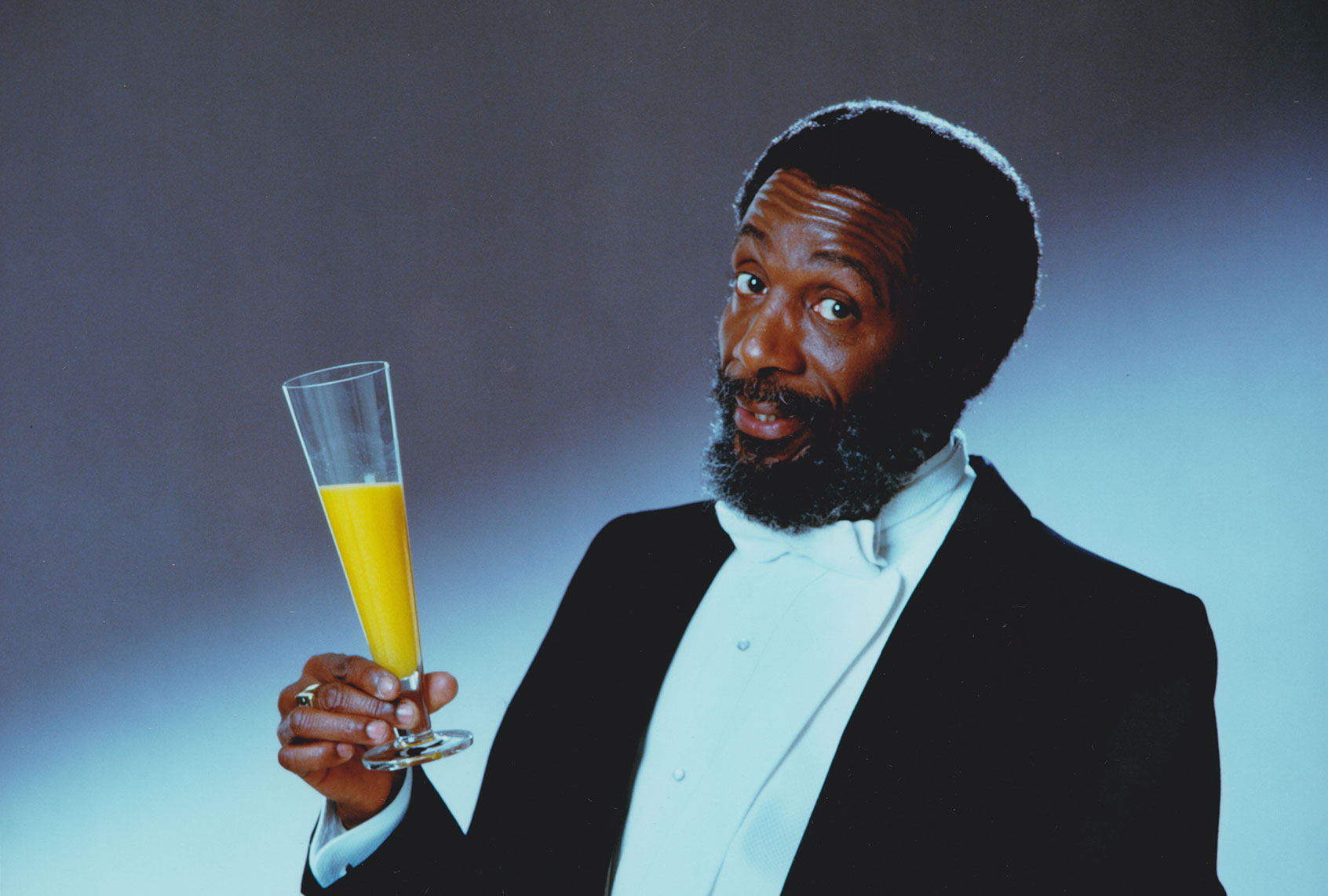
The One and Only Dick GregoryDick Gregory in “The One and Only Dick Gregory” (John Bellamy/Courtesy of SHOWTIME)Gregory made his name as a comedian, but also as a leading Civil Rights activist, aligning himself with Martin Luther King, Malcolm X, John Lewis and more. “I’m a Negro before I’m an entertainer,” he explains in his autobiography. “If America goes to war tomorrow would I stay home and satirize it at the Blue Angel?”
Like Stewart’s brand of comedy, these comedians made jokes about news events, but they did so in a more radical way. They weren’t just satirizing the news but criticizing the structures that made that news possible, integrating themselves with activists and using their platforms to push those most progressive ideas. 

In 1963, Alan Meyerson and Jessica Meyerson left the subdued Second City improv theater in Chicago to open The Committee in San Francisco. Inspired by the stand-up of Lenny Bruce, they focused their comedy on progressive, counterculture ideas. They felt the responsibility to help, to yes and. The Committee became “an important part of San Francisco’s collective of radical movements,” writes Dannagal Young in her book “Irony and Outrage.” The theater was physically a meeting place and soup kitchen for the Red Guard and Black Panthers. And the comedy reflected a “hybridity central to the work of counterculture,” Young adds. “Radical artists. Activist musicians. Guerilla theater with political themes. Entertainment wasn’t expected to ‘stay in its lane.’ It was expected — encouraged even — to blur the lines between fact and fiction, entertainment and politics, art and social justice.” 

This counterculture comedy briefly made its way to the screens when many of The Committee’s members went on to write for “The Smothers Brothers’ Comedy Hour.” The CBS variety program began as a music-filled comedy show, often geared towards a younger audience but quickly became political, with sketches on the screen that mirrored what activists were fighting for on the streets. Despite significant ratings success, especially in the 18-29 age range, they invoked such ire from CBS executives who fought desperately to censor their content, that they were canceled after two years. 

Rob Reiner, a former Committee member, said of Lenny Bruce and The Smothers Brothers, to The Hollywood Reporter, “they corroborate our feelings of anger and outrage and motivate us to be part of the resistance. I learned you can blend comedy, politics and theater together and be very effective and stand up for what you believe is right.”

Now, in a political period not dissimilar to the chaos of the 1960s, the opportunity to change the tone of political comedy is upon us. And the activist-comedy of that era can be our new blueprint. We no longer need it to spread information or “make fun of” news cycles that are already absurd. Political comedians on the left have the opportunity to “motivate us to be part of the resistance.” Rather than acting as journalists, sharing information in a palatable way, they push conversation forward. Stewart himself has made this shift a bit, with his activism for 9/11 first responders. But now the new voices of liberal comedy can pave the way.


Want a daily wrap-up of all the news and commentary Salon has to offer? Subscribe to our morning newsletter, Crash Course.


The right already has these voices, with hosts like Tucker Carlson or Greg Gutfeld who regularly draw a far larger audience than Stephen Colbert or Trevor Noah. These Fox News personalities are more concerned with creating, consolidating and elevating conservative postures than spreading news. They arguably “blur the lines between fact and fiction, entertainment and politics.” And while this is dangerous coming from “journalism” it is acceptable in comedy. 

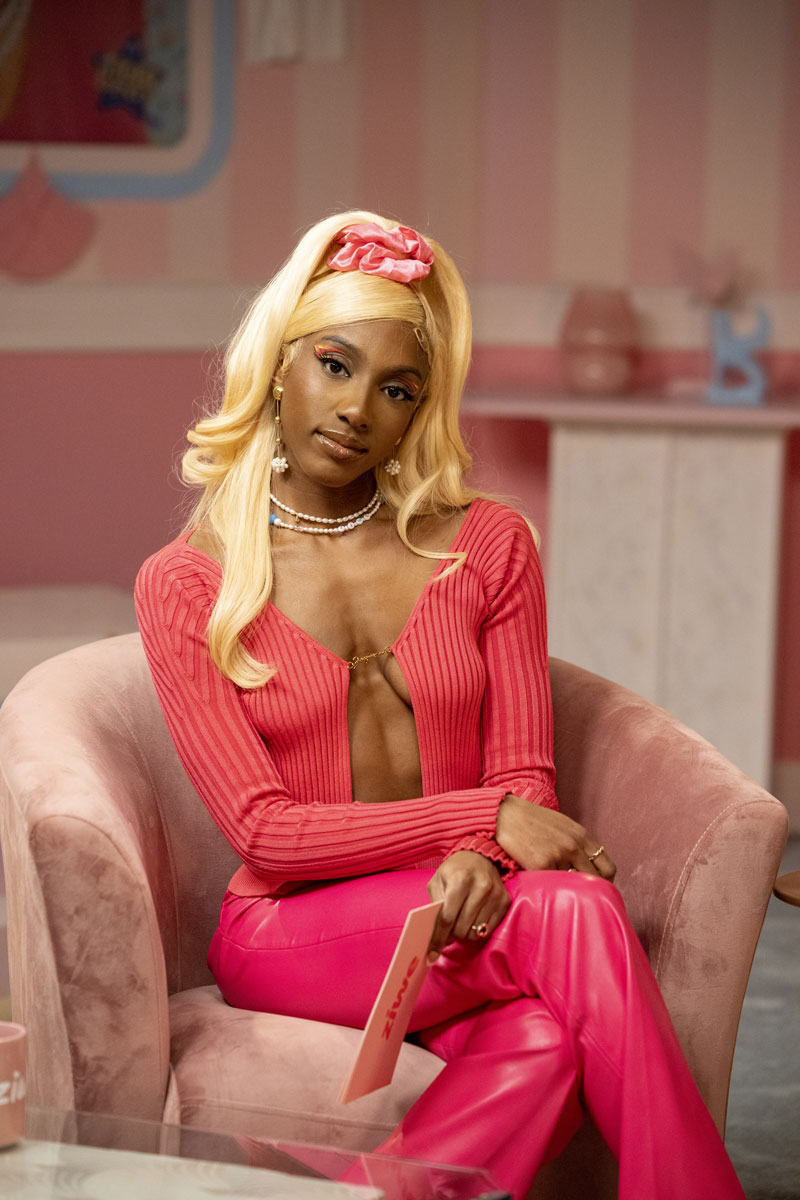
ZiweZiwe in ZIWE “Critical Race Theory” (Greg Endries/SHOWTIME)There are current glimmers of this type of content. John Oliver’s “Last Week Tonight” — which has consistently been the most critically successful of the political comedy shows — often focuses behind the headline and looks at corrupt power structures perpetuating inequity. He is known to have made real change with show segments and has the freedom of a weekly show that allows deeper analysis over response to daily headlines. Showtime’s often-viral “Ziwe” utilizes a cheeky and subversive tone that appeals to the young and jaded generation. 
These shows have had success by pushing the Stewart-style norm. So while executives strategize about “different things” with which to experiment, the path to success seems clear: The new era of late-night TV is the opportunity to learn from the comedic changemakers of the past and become subversive microphones for progressive thought. 

Why some cannabis advocates say we should stop infusing weed into candy

Extensive archaeological evidence suggests humans have been using cannabis for thousands of years, but until relatively recently, it only came in a few forms. Extracts of the plant Cannabis sativa, often called marijuana, have long been used in teas, oils and concentrated forms like hashish and charas, which are condensed resins from the plant. Of course, the most popular way to intake cannabis, even today, is by smoking the dried flowers of the plant.

But these days, there’s no end to the different ways of ingesting cannabis. It comes in vape pens, nasal sprays, dissolvable sublingual tablets, rectal or vaginal suppositories, skin creams and much more. Cannabis oils and tinctures can be concentrated into edibles, like candy, chocolate or carbonated drinks. The range of edible cannabis products is as extensive as any convenience store’s selection: there are chocolate bars of all shapes and sizes, hard candies, sodas, cookies, pastries, and more.

Cannabis-infused candy is an especially popular means of getting stoned. But the existence of so many cannabis-infused candies has translated into a sharp rise in kids accidentally eating these foods. A stoned toddler can be a scary experience, sometimes requiring a trip to the ER, though fortunately such overdoses are rarely, if ever, fatal.

A study published in early January in the journal Pediatrics found an alarming rise in children eating cannabis candy. A trio of physicians at the department of emergency medicine at Rush University Medical Center in Chicago looked at data from the National Poison Data System regarding children under age six that were exposed to edible cannabis products between 2017 and 2021.

There were a little over 7,000 exposures during that period, but only about 200 in 2017 and more than 3,000 in 2021 — representing an increase of 1,375 percent. More than 90 percent of cases occurred at home and about 14 percent (973 cases) were resolved without needing a healthcare facility. And while only 2.2 percent (155 cases) qualified as “major effect” cases, for the most severe instances it could involve rapid heart rate, vomiting, seizures, even coma in a few cases. No deaths were reported.

These cases are likely an underestimate, the study authors reason, because it only includes incidents recorded by the National Poison Data System. Nonetheless, “This study demonstrates that unintentional cannabis exposures in young children are increasing rapidly,” the authors write. “These exposures can cause significant toxicity and are responsible for an increasing number of hospitalizations.”

“Prioritizing prevention strategies such as changing product packaging and labeling, regulating the maximum allowable dose in a package, and increasing public education on mitigation of household risks are key in reducing these exposures,” they added.

A similar trend has been noted in Canada, according to data published in JAMA Health Forum in January. Between 2015 and 2021, there were 581 pediatric hospitalizations for cannabis overdoses, making it a “leading cause” of such hospitalizations in Canada. The authors recommend “restricting or prohibiting” the sale of “visually attractive and palatable commercial cannabis edibles.”

This is why some experts think that putting marijuana into delicious, sugary treats like gummies or chocolates is a step too far. Dr. Peter Grinspoon, a primary care physician at Harvard Medical School who specializes in medical marijuana, describes having cannabis candies around kids or pets is like having a “loaded gun” around that just exposes opportunities for an accidental marijuana overdose.

“It’s like you’re leaving these little landmines around with these chocolate bars. And I think it’s dangerous,” Grinspoon told Salon. “You don’t have to make it taste bad, but it shouldn’t be appealing to kids and pets.”

Grinspoon, who is the son of the famed cannabis advocate Lester Grinspoon, is not against legalizing weed. Far from it, in fact.

“Obviously, cannabis should be legal and accessible to medical patients and to adult users without criminalization,” Grinspoon said. “But we wouldn’t make other medicines into tasty gummies where you eat the whole package. No one’s gonna die, but it’s really awful for a kid or pet to consume a whole bag of gummies.”


Want more health and science stories in your inbox? Subscribe to Salon’s weekly newsletter The Vulgar Scientist.


It can be hard to generalize about cannabis candy, because every state that has legalized cannabis has different regulations. More than 20 states have enacted adult-use cannabis laws, while nearly 40 have medical marijuana, meaning you need a doctor’s note to medicate with cannabis. But at the federal level, cannabis is still completely illegal, so oversight related to packaging or the form it can come in varies from state to state.

“If you make a big bag of strong cannabis edibles look like Skittles, maybe a discerning adult can read the small ‘THC’ label and could see that ‘Skittles’ is written or spelled a little bit differently,” Grinspoon said. “But a four year old is going to be like, ‘Skittles, yum!'”

Part of the problem can be designing cannabis candy to look exactly like non-marijuana products. Some companies blatantly mimic existing candy and junk food brands, including Nerds, Sour Patch Kids, Rice Krispies Bars and more. A study published last spring in the journal Drug and Alcohol Dependence noted that many of these products lack few distinguishing characteristics, making it easy for a kid — or even an unsavvy adult — to unwittingly mistake them for a more familiar treat.

And if a four-year-old encounters a bag of gummies, they might not just take one or two — a standard dose of THC, the intoxicating drug in marijuana. They might eat the entire bag. Spotting a tiny bit of text in the corner that says THC 10mg isn’t always clear.

“If you make a big bag of strong cannabis edibles look like Skittles, maybe a discerning adult can read the small ‘THC’ label and could see that ‘Skittles’ is written or spelled a little bit differently,” Grinspoon said. “But a four year old is going to be like, ‘Skittles, yum!'”

To be fair, many of the more unabashed copyright-infringing products exist in underground markets, so they aren’t legal anyway. States like California have implemented laws requiring child-proof packaging and banning such marketing, but even the legal versions may be hard for someone to tell there is a medication or drug in that candy.

“Most state programs prohibit that sort of copycat packaging already,” Justin Brandt, a business attorney based in Phoenix, Arizona who serves clients in the cannabis industry, told Salon. “I really don’t think that cannabis in candy form is the issue. I think the issue stems on branding, packaging and labeling. You’re going to be hard pressed to find anybody in this industry, who’s going to say, ‘Yeah, we should allow products and cannabis and THC edibles to be marketed towards children.'”

Brandt’s wife owns numerous dispensaries across several states and they have three children together. He says whether cannabis comes in candy is a matter of parental responsibility and that talking to your kids can help avoid an accidental THC overdose.

“We secure our products in a safe, knowing that they can’t access it, but kids are still curious,” Brandt said. “But having that conversation with them. I think if parents feel it’s appropriate, they should do that. That’s what my wife and I do with our kids. This is something that you are not allowed to have. This is not for children. This is for mom and dad. If you have questions about it, we can talk through that. But having that transparency, I think is a good thing with children, especially if you’re going to be having these types of products in your household on a regular basis.”

Another aspect of this sharp upward trend in pediatric hospitalizations from cannabis is that, as laws against weed unravel in more areas, more parents may feel comfortable going to an emergency room. In the years before cannabis was legal, such a visit could easily be met with police or child protective services taking away one’s kids. As more laws relax, parents may also feel more comfortable seeking emergency medical care.

The Pediatrics study was not designed to answer questions like that, nor could it based on the data available. “It is unknown whether other factors such as increased reporting to poison centers or decreased stigma surrounding cannabis use over the course of the study period may have contributed to the observed increase in exposure rates,” the authors noted.

“Criminalization makes everything more dangerous, if parents can’t even tell the doctors what their kids accidentally ingested,” Grinspoon said. “Literally 20 years ago, if you went to the ER and said, ‘My kid overdosed on cannabis,’ there would be a very good chance that someone would call the police. So why on earth would you tell them it was because of the cannabis?”

But Grinspoon said this can’t fully explain such a sharp rise in hospital visits. The increased availability of these products is clearly the driving force behind this increase in hospital visits. But cannabis is far from alone in this equation.


Want more health and science stories in your inbox? Subscribe to Salon’s weekly newsletter The Vulgar Scientist.


Melatonin, an over-the-counter drug that occurs naturally in the body, has also been the source of numerous child overdoses lately. Poison control calls related to kids overdosing on melatonin have risen six-fold between 2012 and 2021, according to a report issued last summer from the Centers for Disease Control and Prevention. Part of the issue stemming from the fact that the medication often comes in gummy form. But THC can be a lot more uncomfortable and life-threatening than melatonin, Grinspoon argued. Nonetheless, his position is not exactly a popular one.

“I get so much crap from the super pro-cannabis people,” Grinspoon said, referring to a controversial blog he wrote arguing that cannabis should come in pills, not candy form. “It makes me feel like I’m doing a good job if I’m getting potshots about equally from people on both sides of the issue.”

Brandt argued for more common sense from parents. “If you’re gonna choose to have cannabis-infused edibles in your home, and it’s somewhat similar to non-cannabis food, don’t store it in your pantry,” he said. “Don’t store it in your fridge. Keep it separate and do what you have to do to avoid those scenarios where children have opportunities to ingest that.”

“This is good. And not enough”: Memphis Police disbands SCORPION Unit after Tyre Nichols video

The family of Tyre Nichols and others appalled by his death—for which five fired Memphis cops now face murder charges—welcomed the police department’s decision on Saturday to disband a unit created in 2021 to patrol high-crime areas.

The move came a day after the Tennessee city put out videos of the former Memphis Police Department (MPD) officers—Tadarrius Bean, Demetrius Haley, Emmitt Martin III, Desmond Mills Jr., and Justin Smith—brutally beating Nichols following a traffic stop on January 7. The 29-year-old Black man was hospitalized and died three days later from cardiac arrest and kidney failure.

The MPD’s Street Crimes Operation to Restore Peace in Our Neighborhoods (SCORPION) Unit hasn’t been active since Nichols’ January 10 death, according to the mayor. The five ex-officers, who are all Black, were part of the unit and on assignment with it when they pulled over Nichols, police spokesperson Maj. Karen Rudolph confirmed to multiple news outlets on Saturday.

In public comments leading up to the footage being released Friday night—which sparked nationwide peaceful protests—Nichols’ family along with Memphis residents and people across the United States called for the unit to be shut down.

The MPD said in a statement that members of the unit met with Chief Cerelyn “C.J.” Davis on Saturday “to discuss the path forward for the department and the community in the aftermath of the tragic death of Tyre Nichols.”

“In the process of listening intently to the family of Tyre Nichols, community leaders, and the uninvolved officers who have done quality work in their assignments, it is in the best interest of all to permanently deactivate the SCORPION Unit,” the statement continued. “The officers currently assigned to the unit agree unreservedly with this next step.”

In response, attorneys Ben Crump and Antonio Romanucci said in a statement that “the Nichols family and their legal team find the decision to permanently disband this unit to be both appropriate and proportional to the tragic death of Tyre Nichols, and also a decent and just decision for all citizens of Memphis.”

“We hope that other cities take similar action with their saturation police units in the near future to begin to create greater trust in their communities,” the pair added. “We must keep in mind that this is just the next step on this journey for justice and accountability, as clearly this misconduct is not restricted to these specialty units. It extends so much further.”

Memphis City Council Member J.B. Smiley Jr. told the Commercial Appeal that shutting down the unit was “essential for the family” of Nichols, but “my ultimate concern is just, it may just be surface level,” because “the police department has the ability to create other units and just call it something else.”

Fellow Memphis City Council Member Patrice Robinson told CNN‘s Jim Acosta that “the community has a lot more questions and a lot more demands.”

“We have gotten emails from many citizens in our community, they’re all concerned and they’re expressing exactly what they see and what they want to see in our police department,” she said. “We really need to investigate and find out what’s going on.”

Rolling Stone reported on institutional changes that some locals want, according to Memphis organizer Amber Sherman:

They’re calling for widespread reforms in the Memphis police: dissolving similar task forces in the city, ending the use of unmarked cars and plainclothes officers, and banning traffic stops without probable cause. All three help escalate police violence, Sherman tells Rolling Stone. “We can’t just get rid of one of them. We have to do all three.”

The SCORPION Unit was only 14 months old when it was disbanded. Founded in late 2021 during a rise in the city’s murder rate, it was touted by local officials for its high number of arrests and a decline in violent crime, but locals say the unit quickly developed a reputation for its policing tactics. “Here in Memphis we call them the Jump-out Boys,” Sherman says. “They’re in unmarked cars, and they jump out of them and assault people.”

Activists in Memphis emphasized that this type of policing is not a new phenomenon. “It’s not just the SCORPION Unit. We’ve had these task forces for years,” Sherman continues. “I’m born and raised here, in my 20s, and this has always been a practice.”

National leaders also responded to the development on Saturday by warning that much more must still be done at all levels.

“This is what immediate action looks like in the face of crisis and traumatic events on behalf of a community,” NAACP president and CEO Derrick Johnson declared of the department disbanding the unit, while also wondering why local leaders can “move to address the needs of the people faster than elected officials throughout the halls of Congress.”

Meanwhile, Black Lives Matter activist DeRay Mckesson tweeted: “This is good. And not enough. And we’ve seen this happen before only for these units to pop back up when the world isn’t watching.”

“I must reiterate that this is not the win they want you to think it is. Cops have and will continue to be brutal despite not being in a cool ‘special taskforce,'” coder, organizer, and YouTuber Sean Wiggs warned.

Legal reform advocate Dyjuan Tatro similarly argued that “the problem with this statement is that the SCORPION Unit should have never existed. It’s well documented that police special units are violent, reckless, and racist. Furthermore, the rest of the officers of this violent unit are still on the police force, armed and ready to kill.”

Strategist and writer Jodi Jacobson took issue with another element of the department’s statement, telling the MPD: “It was NOT a ‘tragic death.’ It was murder at the hands of our department. What you say matters, and you clearly are not taking responsibility.”

What’s the solution to ghost fishing gear polluting oceans?

Industrial fishing has been in hot water with the public for the last few years, with popular documentaries and exposés pointing out the devastating impacts of poor stewardship on the ocean. This outrage isn’t unfounded: In addition to their role in overfishing, industrial fishing fleets leave a huge amount of waste in the ocean, including damaged or lost fishing gear that boats leave behind in their rush to fish. The lost gear clutters the oceans, making them less hospitable to life, and more problematic for other fishermen to use. This so-called “ghost gear” can be found anywhere that fishing boats operate and can drift to other areas. In places where spiraling currents push debris together, it is especially prevalent. Between Hawai’i and California, in a stretch of water known as the Great Pacific Garbage Patch, much of the metric tonnage of plastic is comprised of ghost fishing gear. But it doesn’t have to be this way; there are potential solutions that could dramatically reduce the amount of abandoned gear in the oceans, keeping plastic out of food webs and reducing the overall burden of the fishing industry on marine pollution.

New research estimates that nearly 2% of all fishing gear is lost annually. This might not sound like much, but it adds up to 25 million pots and traps, along with 78,000 square kilometers of nets. This gear poses a serious threat to ocean wildlife, which get entangled in gear or consume plastic pieces as gear breaks down. Meanwhile, broken-down plastic eventually becomes tiny microplastic particles, which are increasingly ubiquitous in marine food chains and cause serious health issues for fish and other wildlife, as well as potential harm to the people who eat them.

That gear also has a direct human cost, especially for smaller fishermen who are trying to be good stewards of the ocean: For small boats, ghost gear can affect vessels’ propulsion and ability to maneuver, ultimately making sustainable fishing even more difficult. Jon Russell, Food Justice Organizer at the North American Marine Alliance (NAMA), maintains that gear losses are less common when fishermen are careful, and says that in smaller fishing communities, there’s still a sense of pride in doing things the right way. While larger operations can afford to bear the brunt of gear losses financially and operationally, smaller fishers often can’t. But these small fishing communities are still impacted when commercial fleets set their traps down haphazardly. “Then it creates this culture: ‘Well, if they’re not going to do it right, we’re not going to do it right’ and it just gets really toxic really fast,” he says.

When gear is left on the fishing ground by larger boats, it can severely impact the daily routine of other fishermen, particularly smaller operations. “If it’s going to interfere with our daily routine, we cannot maximize our catch,” says Captain Charlie Abner, who is a small boat fisherman and shrimper in the Southeast U.S. “You lose a whole day of fishing because you’ve got to redo your rigs. You’ve got to untangle this, you’ve got to untangle that. So, it’s not easy.”

Despite such challenges, Abner is optimistic that there’s still a chance to improve the oceans for all. Regulation from Fishery Management Councils could help with encouraging fishermen within U.S. waters to do a good job of taking care of gear. “The councils do often have the potential to be great resources in maintaining healthy fisheries so long as they are making sure all the voices of the fishing communities they manage are being heard,” Russell adds.

Beyond U.S. jurisdiction, changes from certification organizations will be key to tackling the problem in a way that can benefit all fishers in the long term. The Marine Stewardship Council (MSC) recently published their new Standard, which will come into effect in May 2023. This includes revised requirements around the consideration of ghost gear, directing fisheries to implement management strategies to minimize gear loss. In this updated Standard, the MSC provides extensive guidance on what they consider to be the minimum acceptable practice on reducing ghost gear impact. Fisheries that are seeking certification for the first time must adhere to the new Standard from May 2023, whilst certified fisheries will have at least three years before they are required to begin the transition to the new Standard.

As fishers prepare to comply with such requirements to mitigate gear loss, new solutions may be able to help. ResQunit is one company with a mission to help fishermen avoid losing gear, by providing traps that come with a reserve buoy with Electronic Time Release. If a trap is lost, the attached buoy will unspool itself and float to the surface. “We always say, our two biggest challenges are education and awareness,” says Erik Nobbe, CSO of ResQunit AB, though he adds that the industry has been responding well to ResQunit’s solution so far. He describes it as one way to turn the tap off when it comes to the lost gear that is gradually mounting up.

Beyond the environmental benefit, there’s a clear economic incentive to avoiding lost gear, which must then be replaced. Nobbe points out that for fishing communities, watching costs closely is more important than ever right now, thanks to rising labor and gasoline prices, and rising interest rates on boat payments. Plus, some fishermen are getting less for their catches than in previous years, when market prices for crab and lobster were at a staggering high. “That bubble has recently burst,” Nobbe says.

Some organizations are working not only to remove ghost gear from our waters, but also to do something valuable with it. For example, Nets For Net Zero is a nonprofit facilitating circular economies for ghost gear, with a goal to build a network that allows environmental organizations and the for-profit sector to connect and find symbiotic solutions in Canada and beyond. The plan is to use injection molding to make plastic-based goods. Plus, Nets for Net Zero is working on a hotspot mapping project. “The goal there is to really understand . . . how much gear is out there, and how can we create better systems that allow fishers to report lost gear, or found gear,” says Nina Lantinga, one of the founding team members. The organization is partnering with eOceans, a citizens science activity tracker and observation logger, and the Fishing Gear Coalition of Atlantic Canada, to locate marine debris and remove it. By working with fishing communities and associations, they plan to create tools that work for them.

Lantinga emphasizes that rescuing lost equipment from the deep is only part of the equation; prevention is also key. While end-of-life gear remains difficult for fishers to dispose of in a way that is both safe and responsible, bad actors could continue to be tempted to dump unwanted gear at sea and might not be aware of the full impact of doing so. According to Lantinga, making recycling simpler — and free — for fishers will be key to solving the issue in the long term. “We need to make sure we have proper recycling processes, and we need to make those processes easy,” she says. She suggests something that works in a similar way to a bottle deposit, whereby fishermen could be issued with credit when a net is brought back, for example. “Those kinds of systems make sense because it creates an incentive.”

From equipment recovery to prevention of further loss, the time to act is now. In addition to polluting the oceans with plastics, ghost gear is already impacting fishing yields. “The best estimate I’ve seen is about 10% of fish stock is trapped and killed by ghost fishing gear,” Lantinga says. “That’s massive.”

“I would expect federal indictments”: George Santos’ top donors don’t appear to actually exist

More than a dozen donors who contributed significant amounts of money to George Santos’ 2020 congressional campaign do not appear to exist, an investigation by Mother Jones found.

Santos’ campaign reported that Victoria and Jonathan Regor had each contributed $2,800 to his first bid for a House seat, but after searching through various databases, Mother Jones found that no one in the United States with such names exist. 

The apparent donors listed their address as 45 New Mexico Street in Jackson Township, New Jersey, but even that was questionable since the numbers on New Mexico Street in Jackson end in the 20s. 

Another donor by the name of Stephen Berger, who was included in Santos’ 2020 campaign finance reports, contributed $2,500 – the maximum amount.

He was listed as a retiree living on Brandt Road in Brawley, California, but a spokesperson for William Brandt told Mother Jones that Brandt has lived at that address for at least 20 years and “neither he or his wife have made any donations to George Santos. He does not know Stephen Berger nor has Stephen Berger ever lived at…Brandt Road.”

The contributions are among more than a dozen major donations to the 2020 Santos campaign for which the name or the address of the donor cannot be confirmed.

Separately, the documents identify that a $2,800 campaign donation was attributed to a friend of Santos, but the person denied making the donation to Mother Jones.

These contributions account for more than $30,000 of the $338,000 the Santos campaign raised from individual donors in 2020, according to Mother Jones. 

Under federal campaign finance law, it is illegal to donate money using a false name or the name of someone else. 

The newly-elected GOP lawmaker, who has faced repeated calls to resign from Congress for fabricating his resume and lying about his background, received more criticism after the Mother Jones report was released.  

“Somehow, George Santos’s campaign finance scandal just got a lot worse,” the watchdog group Citizens for Responsibility and Ethics in Washington said on Twitter, questioning whether Santos’ donors “even exist.”

“If the Santos’ campaign fabricated donors, I would expect federal indictments soon,” Democratic voting rights attorney Marc Elias tweeted. “That would be a serious crime and an easy one to prove and prosecute.”


Want a daily wrap-up of all the news and commentary Salon has to offer? Subscribe to our morning newsletter, Crash Course.


“This is a lot of crime,” tweeted attorney Max Kennerly, “just piles and piles of crime, all blessed by House Republicans.”

Santos has remained under scrutiny after a New York Times investigation revealed that the congressman is not the man he portrayed himself to be in front of voters. From lying about his heritage and falsely claiming to be Jewish to telling stories about his mother being in the World Trade Center during the 9/11 terrorist attacks, Santos keeps making headlines for fabricating his background.

Even as Republicans have called for Santos to resign, the Republican congressman has defended himself and denied most of the allegations being made against him. 

“From interviewing clowns to creating fake ‘posts’ the media continues to down spiral as their attempt to smear me fails,” he said on Twitter. “I am getting the job I signed up for done, while you all spiral out of control.”

“I certainly didn’t report that”: Journalist busts GOPer inventing story about Biden live on air

United States Representative Mike Turner, R-Ohio, who chairs the House Intelligence Committee, claimed during an interview on Sunday’s edition of This Week that President Joe Biden snuck classified documents from Washington “on the train back home” to Delaware while he was serving in the Senate and then as vice president.

The conversation was focused on how and why sensitive materials keep turning up at the homes of high-level elected officials such as Biden and former Vice President Mike Pence. While no crimes have been alleged, Turner nonetheless believes that Biden acted suspiciously. And ABC moderator Martha Raddatz was deeply skeptical of that assessment.

Biden “clearly was taking them repeatedly on the train back home and putting them in boxes in his garage. That repeated action is certainly concerning, but the overall evidence that it was a repeated action, these are classified,” Turner said.

When Raddatz requested proof to substantiate that accusation, Turner had none to provide.

“Do you have any evidence it was a repeated action? Sir, do you have evidence or anything about the train, for instance?” Raddatz asked.

Turner offered a lengthy dodge:

What you actually have reported yourself, that some of these documents relate back to when he was a senator and some of these documents relate to the time when he was vice president. That’s over several decades and over a great deal of time, and he famously tells us he was on the train going from Washington DC to his house. We know they didn’t just fly there on their own. He would have had to have taken them. And having done so over a series of decades certainly is of a concern because it’s a practice. But the point that you’re making, which I think is the, the one we need to focus on, is that these classified documents contain information that we don’t want anyone else to see, that we don’t want anyone else to know, because they put at risk our country. They put at risk, as you reported – with great report, by the way – about the concerns of classified documents, that these actually put people’s lives at risk who are working to try to protect our country and to keep our secrets safe.

Raddatz, however, was still curious about the origin of Turner’s train tale – which she pointed out was not herself.

“And I just want to go back to the train? Because I certainly didn’t report that he did that on the train,” Raddatz noted. “Do you think Mike Pence brought those documents to his home just the same way you’re saying that Biden did, or we just don’t know?”

Turner steadfastly maintained his speculation:

Well, we don’t know. But what we do know is that the vice president has said that he was not involved in the packing of these, that they were transported to his house after he was vice president. We don’t know. Obviously, the chain of custody in each of these issues is going to be important. It certainly should be part of the Department of justice investigation. How did these documents get where they were going and where we ultimately found them, but also what happened to them in the interim? How did they get into the hands of both the vice president/senator, President Biden, the Vice President Pence and, of course, [former] President [Donald] Trump? How did they get into their hands and then how did they get where we ultimately found them?

Watch below or at this link.

Barr and Durham tried to discredit Russia probe — but ended up with more evidence against Trump: NYT

new report from the New York Times details how former Attorney General Bill Barr’s efforts to discredit the probe into the Trump campaign’s contacts with Russian agents completely floundered.

One particularly telling section of the Times’ story involves a trip that Barr made to Italy in order to push officials in that country for evidence that the Russia investigation was part of an elaborate setup designed to damage former President Donald Trump politically.

The Italian officials responded by offering evidence of wrongdoing of a very different sort.

“Italian officials… unexpectedly offered a potentially explosive tip linking Mr. Trump to certain suspected financial crimes,” the Times reports. “Mr. Barr and [former special counsel John] Durham decided that the tip was too serious and credible to ignore. But rather than assign it to another prosecutor, Mr. Barr had Mr. Durham investigate the matter himself.”

Durham never filed charges based on the tip the Italian officials gave and it’s not clear just how closely he probed the purported evidence into Trump’s prospective financial crimes.

Durham’s probe into the Trump-Russia investigation ended with a whimper last year when he lost cases against former Clinton campaign lawyer Michael Sussmann and Russia analyst Igor Danchenko, both of whom he had accused of lying to the FBI.

Why pregnancy forums are rife with health misinformation

Each year, as flu season peaks, medical professionals who take care of pregnant women have to gear up to combat misinformation around the influenza vaccine.

“We’ve always seen fear or distrust of not wanting to get a flu vaccine in pregnancy,” Melissa Simon, an obstetrician gynecologist at Northwestern Medicine, told Salon. “Every year we have to be very consistent and start that very clear, consistent messaging that the flu vaccine is indeed very well studied in pregnancy, it’s very safe in pregnancy, and it actually improves outcomes.”

As Simon alluded to, a 2018 study published in Clinical Infectious Diseases examined the influenza’s vaccine effectiveness and flu-related hospitalizations in pregnant women between 2010 and 2016. The researchers concluded that getting vaccinated reduced a person’s risk of being hospitalized by 40 percent. A separate study published in 2013 estimated that a pregnant woman’s risk of getting a flu-related acute respiratory infection by one-half. Indeed, research has shown that pregnant women have a higher risk of getting hospitalized with pneumonia or being admitted to the intensive care unit when being unvaccinated and having the flu.

“When you have the flu, your lungs have a harder time to breathe [in pregnancy],” Simon said. “And you need those lungs to breathe well, in order to help give oxygen to your baby.”

Denise Jamieson, professor and chair of the Department of Gynecology & Obstetrics ast Emory University School of Medicine, told Salon via email that there have often been long-standing myths and misconceptions about the flu vaccine that she’s seen in her patients.

“Although the flu vaccine has been recommended in pregnancy for many decades, only about half of pregnant persons are vaccinated for flu each year,” Jamieson said. “I have heard many pregnant persons say ‘Whenever I get the flu vaccine I get sick, so I am not getting it while I am pregnant”.'”

Jamieson said the influenza vaccine can cause mild side effects, but it’s not true that it makes a person sick with the flu.

“In addition, there are many long and strongly held beliefs about the flu vaccine in families and communities,” Jamieson said. “For example, my patients will say ‘My mother never got vaccinated and she told me not to get vaccinated, particularly not in pregnancy.'”

Despite research and recommendations ensuring the safety of vaccines in pregnancy, if you search “flu shot” in many online pregnancy groups, you will find plenty of pregnant women expressing hesitancy at the thought of getting vaccinated. And it’s not just the flu shot. When the COVID-19 vaccine finally came to exist, online pregnancy forums were immediately fraught with misinformation about these vaccines’ safety. A Kaiser Family Foundation’s COVID-19 Vaccine Monitor published over the summer found that nearly three-quarters of women who were pregnant or trying to conceive either believed or were unsure about at least one of the COVID-19 vaccine myths asked in the survey.

“More than two years into the pandemic, there’s a surprising amount of confusion about the vaccine’s safety for pregnant women,” Mollyann Brodie, a Kaiser Family Foundation Executive Vice President, said in a statement at the time. “The fact that so many younger women incorrectly believe the vaccines can cause infertility or that they’re not safe for pregnant women highlights the real challenges facing public health officials.”

It’s a question medical professionals have long been fixated on: why is health and vaccine misinformation so common in online pregnancy groups that are meant to provide support? Why does misinformation prevail when the research has advanced?

“Disinformation runs rampant on online forums because there’s no one checking,” Simon postulated. “There’s no accountability, and no one’s editing.”

Andrea Vincent, an admin for a Facebook pregnancy support group, told Salon as admins they often find themselves having to monitor misinformation in the group.


Want more health and science stories in your inbox? Subscribe to Salon’s weekly newsletter The Vulgar Scientist.


“We’ve always had a lot of rules and they’ve had to increase in the last few years with the world changing,” Vincent said. “But I think that’s helped us keep misinformation out and we really try to keep talking a lot behind the scenes about what we allow and what we don’t.”

Vincent said she believes that people seek out medical advice in online support groups, instead of asking their medical providers, for a couple of reasons. 

“I think people want reassurance that it’s normal, so they don’t have to go to their doctor or they think it’s easier to go to a group, or sometimes people have gone to a doctor and want to then ask the group, ‘this is what my doctor says, has anyone done this?'” Vincent said. “There’s a lot of misinformation out there, and it’s scary to have a baby.”

Previously, Simon told Salon the fact that a lot of the misinformation clouds pregnancy stems from “structural issues,” such as “excluding pregnant and birthing and lactating persons” from research. “And that’s really unfortunate because when certain groups are left behind from being included in clinical trials, there is relatively less data.” But now, more data is here. 

Jamieson told Salon she believes there is often a reluctance to do anything in pregnancy, like take medications or vaccines, in a misguided attempt to ensure that they’ve done everything to ensure their babies are born healthy. But this can often have the reverse effect.

“What is not appreciated is that by doing nothing, and not getting vaccinated, the risks to the mother and baby can be substantial,” Jamieson said. “Pregnant people who are vaccinated for influenza can also pass protective antibodies to the fetus; these protective antibodies are critically important because they help protect newborn babies, who are too young to be vaccinated, from getting sick with influenza.”

“Every response is whataboutism”: CBS host corners McCarthy for trying to dodge Santos question

On Sunday’s edition of Face the Nation, House Speaker Kevin McCarthy, R-Calif., repeatedly deflected questions about assigning members of his Republican conference to congressional committees that spew conspiracy theories and are plagued by scandals.

“These are members who just got elected by their constituents, and we put them into committees, and I’m proud to do it,” McCarthy said.

CBS moderator Margaret Brennan asked McCarthy why Congresspersons like Marjorie Taylor Greene of Georgia and George Santos of New York are being placed on powerful panels.

“Let me ask you about some specifics, then. Marjorie Taylor Greene, you put her on a new subcommittee to investigate the origins of COVID. She compared mask requirements to the type of abuse Jews were subjected to during the Holocaust. She called for [Dr. Anthony] Fauci to be arrested and imprisoned, and she’s spread conspiracy theories. How is anyone supposed to take that work seriously and find that work credible?” Brennan wondered.

McCarthy offered no substantive response.

“Very well. You look at all of it, so you have all the questions out there. I think what the American public…” he began until Brennan cut him off.

“You think these are legitimate questions?” she exclaimed.

“I think what the American public wants to see is an open dialogue in the process,” McCarthy replied. “This is a select committee where people can have all the questions they want, and you’ll see the outcome, you know?”

Brennan was unsatisfied with that response.

“But doesn’t it further wear down credibility when you put someone who’s under state, local, federal, and international investigation as a representative of your party?

“Are you talking about [Congressman Eric] Swalwell [D-Calif.]?” McCarthy joked.

“I’m talking about George Santos, Representative from New York,” Brennan continued.

“Well, we should have that discussion. So let’s have that discussion. You want to bring up Santos and let’s talk about the institution itself, because I agree wholeheartedly that Congress is broken. And I think you’re I think your listeners or viewers should understand what proxy voting was because it never took place in Congress before,” McCarthy stated.

“But I’m asking you about George Santos, because you could put it to a vote,” Brennan reminded McCarthy.

“I know you asked me a question. Let me ask you – you asked me a question. I’d appreciate it if you let me answer,” McCarthy said. “So let’s go through this, because it’s not one simple answer. Congress is broken based upon what has transpired in the last Congress. The American public wasn’t able to come in to see us. People voted by proxy, meaning you didn’t have to show up for work. Bills didn’t have to go through committee. So what I’m trying to do is open the People’s House back for the people, so their voice is there, so people are held accountable. So now, as I just had in the last week, for the first time in seven years, every member got to vote.”

Brennan noted that “if you got a third of your caucus to vote to oust him, you could do so. You don’t think you could get your Republicans to do that?”

McCarthy pressed forward.

“I wasn’t finished answering the question,” he asserted. “So if every single new person brought into Congress was elected by their constituents, what their constituents have done has lend their voice to the American public. So those members can all serve on committee. Now, what I’m trying to do is change some of these committees as well. Like the Intel committee is different than any other committee…”

Brennan again checked him.

“You’re just not going to answer the question I asked,” she said.

McCarthy’s tone turned defensive.

“Well, no, you don’t get to question whether I answer it. You asked the question I’m trying to get,” he snipped.

“I don’t think you said the name George Santos, like, once. I asked you a few times,” Brennan chuckled, pointing out that McCarthy was “talking about proxy voting and other things.”

McCarthy still refused to address Brennan’s initial queries.

“No, but no, you started the question with Congress was broken and I agreed with you. But I was answering the question of how Congress is broken and how we’re changing it. So if I can finish the question that you asked me, how Congress is broken, I equated every single member. They just got elected by their constituents. They have a right to serve,” he declared. “So that means that Santos can serve on a committee the same way Swalwell – who had a relationship with a Chinese spy – but they will not serve on Intel.”

When the interview ended due to time, social media users were exasperated with McCarthy’s performance.

Mr Poosh: “Literally every response he has is whataboutism.”

RKB: “Does anyone seriously believe this person should be speaker?”

Diane L-S: “Brennan allowed SPINO McCarthy to patronize her with his arrogance. Shut that crap down and demand he actually answer the question asked and not disrespect her in his answering. Inform him if he’s going to refuse to answer questions, BS deflect or dis her, the interview is over.”

Brooks Hart: “He talks about the constituents who voted for Santos having the right to have their elected official seated on committees. But Santos decieved those voters. He ran on lies.”

Jay Arnold: “McCarthy being speaker is a proxy for Congress being broken.”

Watch below or at this link.

Jim Jordan called out for “particularly offensive” comment on Tyre Nichols’ beating death

During an appearance on “Meet the Press” on Sunday, Rep. Jim Jordan, R-Ohio, expressed dismay at the beating death of 29-year-old Tyre Nichols at the hands of five Memphis police officers — and then dismissed the idea that new laws need to be implemented to stop police abuse.

Speaking with host Chuck Todd, the Ohio Republican stated, “I don’t know that there’s any law that can stop that evil that we saw,” before later adding, “But no amount of training’s going to change what we saw in that video.”

That led GOP campaign consultant Susan Del Percio to pounce on the new House Judiciary Committee chairman for blowing off the idea that changes need to be made.

Appearing on MSNBC, she stated, “There are so many things that have happened over the years that should be bringing both parties together but they don’t.”

“What I find particularly offensive about Jim Jordan’s argument about no law would change what happened in this incident,” she said, continuing, “It’s the same line that they use when it comes to gun safety. It’s not about the individual. As horrific as it is and of course, it is for that family member. But what it represents is having a systemic problem in policing our cities”

“Yes, there are things that we can do federally, there are things that need to be looked at,” she lectured. “Such as qualified immunity — getting rid of that. What’s really painful and a little bit to Don’s point, when you look at the five officers that committed those hard crimes, they’d all begun in the police department for a relatively short period of time; anywhere from 2 to 5 years. They should have been trained properly. They’ve been in the ‘new policing’ if you will, for the last 5 to 10 years.”

“This is systemic. It has to be addressed and we can’t simply defund the police or abolish the whole system because we still need policing in our cities and states,” she continued. “There does have to be an open dialogue. I think the most important thing at the national level is getting that qualified immunity off the table.”

Watch below or at the link:

DeSantis gets under Trump’s skin — and distracts him from the Big Lie

He’s back and angrier than ever.

I’m talking about Donald Trump, of course. In what is being billed as his first official event since he announced his run for the 2024 GOP nomination, Trump said so himself:

“They said he’s not doing rallies, he is not campaigning. Maybe he’s lost his step. I’m more angry now and I’m more committed now than ever.”

He was referring to the fact that most of the media have been commenting on his lackluster performance ever since that boring announcement speech more than two months ago. The growing consensus is that he’s lost his mojo. So when he scheduled two small events this past weekend, first in New Hampshire at the annual GOP meeting and then at South Carolina’s Capitol building, both before crowds of about 400 people each, it reinforced that assumption. Gone were the days when he would land in his shiny Trump jet or Air Force one to rapturous crowds numbering in the tens of thousands. Now he’s just another Republican presidential hopeful hanging around diners and glad-handing the local officials.

His speeches in these two early voting states were vintage Trump rants including many greatest hits. He even did the tired riff on how windmills are killing all the birds, adding a flourish that they’re also killing planes and oceans which is a bit baffling. He complained about the border, of course, even reprising the line about how they’re sending murderers and rapists and bragged that he’d come up with the word “caravan” to fearmonger about people seeking asylum. He rambled on about “renegotiating” the debt with China, making no more sense today on that subject than he did back in 2016.

The most interesting aspect of Trump’s emergence back onto the campaign trail: He seems to have forgotten the Big Lie.

Trump’s clearly has been working on new material as well.

He complained about “mandatory stoves” and gave an especially tart riff on electric cars that is sure to thrill his fan Elon Musk to no end:

“The cars go for like two hours. What are you going to do? Everyone’s going to be sitting on the highway. We’re all going to be looking for a little plug-in. Does anybody have a plug-in? My car just stopped. I’ve been driving for an hour and 51 minutes. It’s ridiculous.”

That would be his update of the “hard to flush” toilet line he loved so much in the 2020 campaign.

This new one’s probably not going to make it into the act:


Want a daily wrap-up of all the news and commentary Salon has to offer? Subscribe to our morning newsletter, Crash Course.


He was all-in on the latest culture war obsessions, thundering, “We’re going to stop the left-wing radical racists and perverts who are trying to indoctrinate our youth, and we’re going to get their Marxist hands off of our children — we’re going to defeat the cult of gender ideology and reaffirm that god created two genders called men and women.” That got the crowd very aroused.

Of course, he attacked Biden as one would expect. But his inevitable stab at Biden’s son Hunter was downright weird:

He went on about the “witch hunts” against him for some time and deployed the new House GOP jargon — “weaponization of government” — to declare that he plans to finally “drain the swamp” and fire massive numbers of federal employees when he takes office to ensure that this can never happen again. He whined about the Mar-a-Lago warrant claiming that the National Archives are a “radical left” agency. The usual.

All of that breathless horse race coverage also omitted the most salient fact about Trump: He planned a coup and incited an insurrection.

Probably the most disturbing moments, as is so often the case with Trump’s campaign speeches, are his discussions of foreign policy and national security. In the days before these two speeches, he posted a video in which he said that President Biden is starting WWIII and promising to build an impenetrable dome to protect America from nuclear war if elected president:

He has said repeatedly that Russian President Vladimir Putin would never have invaded Ukraine had he remained in office. He insisted that he could simply pick up the phone and solve the conflict in 24 hours (raising the question of why he doesn’t do it.) His delusional, grandiose belief in his international acumen remains intact despite the dozens of reports since he’s left office, even from some of his closest aides and allies, that he was even more of an embarrassing, dangerous dolt than we could see while he was in office.

The mainstream media reported these appearances as being somewhat dull, which is fair enough. It’s not as if there’s any novelty in watching Trump blather on for an hour. Their big takeaway, instead, was the horse race, with endless references to a poll in New Hampshire showing Florida Gov. Ron DeSantis leading Trump, and discussions about how local GOP officials aren’t rushing to endorse the former president.

Trump himself made his first foray into the primary battle — but did so with reporters instead of behind the podium. He said that former South Carolina governor Nikki Haley, whom he appointed as the US ambassador to the UN, called him and he told her to go with her heart, but then made sure to mention that she’d previously told him that she wouldn’t run “against her president.” For Desantis, Trump had harsher words:

On Saturday, Trump took his sharpest swings at DeSantis to date, accusing the governor of “trying to rewrite history” over his response to the Covid-19 pandemic. Trump said DeSantis, who has been openly skeptical about government efforts to vaccinate people against the virus, “promoted the vaccine as much as anyone.” He praised governors who did not close down their states, noting that DeSantis ordered the closure of beaches and business in some parts of the state.

Trump considers DeSantis to be very disloyal. He insists that DeSantis wouldn’t be a two-term governor if it weren’t for him. As we know, Trump is very offended by disloyalty to him despite his total lack of loyalty to anyone else.

But for all the horse race coverage there was virtually no mention of the most interesting aspect of Trump’s emergence back onto the campaign trail: He seems to have forgotten the Big Lie.

What was once the dominant theme of every speech, sometimes in tedious detail that would go on for hours, has all but disappeared. One has to assume that this is the result of the thrashing his election-denialist candidates got in the November elections. Even Trump seems to have realized that the message had penetrated as much as it was going to penetrate and nobody wants to hear about it anymore.

Perhaps most disturbingly, all that breathless horse race coverage also omitted the most salient fact about Trump: He planned a coup and incited an insurrection.

It doesn’t appear that the media considers that to be particularly relevant to his candidacy, which is a stunning development. How quickly they have decided that today Donald Trump is just another Republican, standing in front of a crowd, asking them to love him.  

Trump attacks “globalist” Ron DeSantis over COVID response in late-night Truth Social meltdown

Former President Donald Trump early Monday morning lashed out at Florida Gov. Ron DeSantis over his COVID response ahead of a possible 2024 Republican presidential primary clash.

The conservative Club for Growth was closely aligned with Trump while he was in office but the relationship fell apart after the group opposed Trump-backed 2022 Senate candidates Mehmet Oz and J.D. Vance. Since Trump’s candidates were widely blamed for costing the Republican Party a bigger win in the midterms, the Club for Growth has thrown its support — and money — behind DeSantis. The Club for Growth responded to Trump’s 2024 announcement last year by releasing polls showing DeSantis leading Trump in New Hampshire and Iowa, the first two states on the party’s nominating calendar.

Trump lashed out at the group and DeSantis in a Truth Social post shortly before 1 am on Monday.

“The Club for No Growth is a GLOBALIST group that I have been taking to the cleaners for years,” Trump wrote, adding that “Ron DeSanctimonious, who I made Governor in BOTH the Primary & the General, is also a Globalist, & so are his donors.”

“Jeb ‘Low Energy’ Bush was next to him last week,” Trump wrote, referring to his old 2016 GOP primary foe. “Check PAST!”

Trump in another post on Sunday night sought to attack DeSantis over his response to COVID, citing his own “revelations” at a campaign rally about “Ron DeSanctimonious doing FAR WORSE than many other Republican governors, including that he unapologetically shut down Florida and its beaches.”

DeSantis, who was one of the first governors to lift COVID restrictions early in the pandemic against the advice of public health professionals and the Trump administration, has tried to tout his record on COVID ahead of a potential 2024 presidential bid.

Trump told reporters on Saturday that DeSantis and his team were “trying to rewrite history.”

“There are Republican governors that did not close their states,” Trump claimed. “Florida was closed for a long period of time.”

Many public venues were closed in Florida and other states through the summer of 2020 but DeSantis was one of the first to lift restrictions on bars, gyms and beaches.

Trump, whose disastrous response to the COVID pandemic may have cost him the 2020 election, defended his own management, saying that he “had governors that decided not to close a thing and that was up to them.”

Trump, who has also sought to claim credit for the quick rollout of COVID vaccines, also criticized DeSantis for shifting positions on the vaccines, saying that he had “changed his tune a lot.”

Trump, who traveled to early primary states New Hampshire and South Carolina over the weekend, repeatedly took aim at his potential 2024 rival.

“Ron would have not been governor if it wasn’t for me. So when I hear he might run, I consider that very disloyal,” he said on Saturday.


Want a daily wrap-up of all the news and commentary Salon has to offer? Subscribe to our morning newsletter, Crash Course.


“If he runs, that’s fine. I’m way up in the polls,” Trump said later in an interview with the Associated Press. “He’s going to have to do what he wants to do, but he may run. I do think it would be a great act of disloyalty because, you know, I got him in. He had no chance. His political life was over.”

Three recent national polls found Trump leading DeSantis by double digits but DeSantis holds a slight lead in recent surveys from Iowa and New Hampshire.

A number of former Trump administration officials are also considering jumping into the race, including former Vice President Mike Pence, former Secretary of State Mike Pompeo and former UN Ambassador Nikki Haley.

Trump said on Saturday that he told Haley she “should do it” even as he took a shot at her for previously saying that she would not run against him.

“I talked to her for a little while, I said, ‘Look, you know, go by your heart if you want to run,'” he said. “She’s publicly said that ‘I would never run against my president, he was a great president.'”

The limited usefulness of Black conservatives

What follows is a sad story. It is also a parable and warning about race, politics, and life. While many people have chosen to laugh and mock, there is little if anything truly funny about these events.

On Jan. 8 “Diamond,” whose real name is Lynette Hardaway, passed away. It was initially speculated that she died of COVID. It has now been publicly revealed that the cause of death was a heart condition caused by high blood pressure. Diamond rose to public prominence as one half of the duo known as “Diamond & Silk.” These Donald Trump obsessives performed as “black conservatives” and were routinely featured at Trump’s rallies, on Fox News, Newsmax, and across the right-wing propaganda disinformation media echo chamber.

“Black conservative” is a specific type of character and performance in post-civil rights America (although the archetype long predates it). In the white right-wing imagination, these are black people who fulfill a fantasy role in a type of new-age race minstrel performance where they denigrate and insult the intelligence, dignity, and political agency of other black people for the pleasures of white “conservatives” and white America. These black conservatives claim that other black people are lazy, have “bad culture”, “can’t think for themselves”, are trapped on a “Democratic Party plantation.” If they “knew better,” black conservatives argue, more black people would actually be “conservatives.” Black conservatives also elevate themselves as exemplars of “hard work” and as “proof” that America is a meritocracy where anything is possible — “if you just stop worrying” about racism.

In what is perhaps their most important role, black conservatives are professional “best black friends.” They serve as mercenaries, human racism deflection shields who are deployed to tell white people some of the most grossly racist and vile things about other black people. For example, on the Friday edition of his Fox “News” program, Tucker Carlson’s black conservative guest played the above role perfectly as he suggested that the savage killing of Tyre Nichols by Memphis police was somehow caused by “black culture,” specifically single black mothers:

They don’t want us focused on reality. Hey, if they want us to devote an hour of coverage to this and weekend coverage to this and they want to take us to a good place, I would examine the racial element of this. Because there is a racial element. And this is a story about young Black men and their inability to treat each other in a humane way.

Everybody involved in this, on the street level, was either 24 to 32 years old. Everybody, it was a group of young Black men, five on one. It looked like gang violence to me. It looked like what young Black men do when they’re supervised by a single Black woman, and that’s what they got going on in the Memphis Police Department.

They’ve elected — or put some Black woman in charge of the police force, and we’re getting the same kind of chaos and disunity and violence that we see in a lot of these cities that are run by single mothers.

If we want to discuss the breakdown of family that leads to disrespect for authority, that causes you to resist the police and run from the police and not comply with the police, because you resist authority at all times, because there was no male authority in your home, let’s have that discussion.

But that’s not where they want to take us. They want to take us down the path of saying, “You know what? This is Tucker Carlson’s fault. This is some random white — this is Donald Trump’s fault.” It’s not. It’s the breakdown of family and the buying into all these left-wing things that have nothing to do with promoting family. 

Carlson looked on with approval as his black conservative guest channeled white supremacist and other anti-black talking points that made Nichols somehow responsible for his own killing by the Memphis police.

In total, today’s black conservatives function as a type of human projection and embodiment of white racist fantasies about the difference between “the good blacks” (compliant, submissive, and enabling of white racism and white supremacy) and “the bad blacks” (assertive, not submissive, resisting white racism and white supremacy, possessing human agency, not committed to making white people comfortable).

To be fair, there is a long and rich history of authentic black conservatism from within the black community that is based on a sense of linked fate and a deep love and concern for black people’s humanity, survival, and success. Moreover, this authentic black conservatism is not subservient to the white gaze or otherwise doing the work of white racism and white supremacy. Today’s professional black conservatives, however, are not part of that tradition or community of black political life and struggle. Today’s professional black conservative seeks and usually receives lucrative rewards from the right-wing machine.

Throughout the Age of Trump, “Diamond” and “Silk” played their role in that universe very well. Diamond’s funeral was held last Saturday in Fayetteville, North Carolina. Donald Trump was the featured guest at Diamond’s homegoing ceremony, which was attended by several hundred MAGA faithful and others. Of course, Diamond’s funeral and celebration of life also featured nonsense conspiracy theories, right-wing paranoia and fearmongering, general MAGA madness and other foolishness. The Daily Mail described this spectacle as:

Following the impassioned call to action on the vaccine, Silk paid homage to the former U.S. president remembering the close relationship the three shared going as far as to say that he ‘treated us just like the other children – Eric, Don Jr, Tiffany.’

But as Trump paid tribute to Diamond, describing her as one of the world’s ‘brightest stars’ he admits he ‘didn’t know Silk at all’ despite meeting her countless times.

‘The world has lost one of its brightest stars but I see that we have another star who was equal to but she stepped up and she is different,’ Trump said.

‘I’m serious I thought I knew them both, I didn’t, I knew Diamond, but I didn’t know Silk at all I just learned about Silk, you’re fantastic, you’re going to carry on beyond, beyond anybody’s wildest imaginations.’

Pictures of the three together have resurfaced, showing Trump with the duo at the White House on several occasions and on the campaign trail with Trump.

As the funeral service proceeded, it slowly began to descend into madness, turning from a funeral service to what appeared to be a MAGA rally.

Throughout the funeral, Trump appeared to be visibly bored, disinterested, uncomfortable, and clearly did not want to be there. Most of the reporting and commentary about Diamond’s funeral focused on Trump’s disgusting narcissism, where even during such a solemn event he could not suppress his own ego to show appropriate empathy and sympathy for another person whom he claimed to care about.

Conservative commentator Charlie Sykes called this out on MSNBC. “Just beyond bizarre, beyond rude, beyond anything that anyone would see in normal, polite, let me say decent society,” Sykes said of Trump. “This is a guy that a lot of people want to be the next president of the United States again, and so on brand for him, too….Look, this is what happens when you have a narcissistic sociopath give a homily at a funeral. It won’t go well.”

Trump’s behavior at Diamond’s funeral is, at this point, to be expected. The bigger and more important story is what “Diamond & Silk” represent. Today’s Republican Party and the larger neofascist movement uses black and brown bodies, women, gays and lesbians and members of other marginalized groups as human weapons in their war on multiracial pluralist democracy and a more humane and inclusive society.

In the case of “black conservatives”, these forces are using them as a way of appropriating the moral authority and symbolic power and legacy of the civil rights movement and the larger Black Freedom Struggle to do the work of white supremacy, racial authoritarianism, and other anti-democratic projects. 

At the Washington Post, Hannah Allam and Razzan Nakhlawi provide additional context in their article, “Black, Brown and extremist: Across the far-right spectrum, people of color play a more visible role”:

People of color are playing increasingly visible roles across the spectrum of far-right activism. Today, non-White activists speak for groups of radicalized MAGA supporters, parts of the “Patriot” movement, and, in rare cases, neo-Nazi factions. Although a few have concealed their identities, many others proudly acknowledge their backgrounds and offer themselves as counterpoints to charges of pervasive racism in right-wing movements.

The “multiracial far right,” as it’s sometimes called, adds another layer to an already fraught debate over how to address violent extremism, the top domestic terrorism threat. Understanding the makeup and motivations of far-right groups is crucial to the Biden administration’s pledge to overhaul the federal response to domestic threats in the aftermath of the Jan. 6 mob attack on the U.S. Capitol.

People of color are a tiny fraction of that world, but analysts say they play an outsized role in challenging perceptions. The common refrain that white supremacy is a main driver of the far right is complicated when Black or Brown figures speak publicly for Stop the Steal, the Proud Boys, Patriot Prayer and other factions that are under scrutiny. The trend is forcing new ways to think about, and talk about, the far right’s appeal.

“It’s like a multiracial kind of fascism in that it absolutely imagines a nation that has to defend itself from marauding outsiders and invest in militarism. But it’s not in the language of ‘purity’ that we often associate it with,” said Daniel Martinez HoSang, a Yale University associate professor and co-author of the 2019 book “Producers, Parasites, Patriots: Race and the New Right-Wing Politics of Precarity.”…

“Part of their standing on the White right is that they’re constantly willing to attack other people of color and say anti-Black things in ways that kind of ingratiate them to White conservatives,” said Martinez HoSang, the professor. “Whereas there’s another group of conservatives of color that refuses to do that, sees it as racist and wants to build a conservatism that isn’t predicated on those racist assumptions.”

Also at the Washington Post, Cristina Beltran highlights the role of “multiracial whiteness” in how some nonwhite people are attempting to access the privileges that come from being allied with a white supremacist political and social project:

The Trump administration’s anti-immigration, anti-civil rights stance has made it easy to classify the president’s loyalists as a homogenous mob of white nationalists. But take a look at the FBI’s posters showing people wanted in the insurrectionist assault on the U.S. Capitol: Among the many White faces are a few that are clearly Latino or African American….

Rooted in America’s ugly history of white supremacy, indigenous dispossession and anti-Blackness, multiracial whiteness is an ideology invested in the unequal distribution of land, wealth, power and privilege — a form of hierarchy in which the standing of one section of the population is premised on the debasement of others. Multiracial whiteness reflects an understanding of whiteness as a political color and not simply a racial identity — a discriminatory worldview in which feelings of freedom and belonging are produced through the persecution and dehumanization of others.

Multiracial whiteness promises Latino Trump supporters freedom from the politics of diversity and recognition. For voters who see the very act of acknowledging one’s racial identity as itself racist, the politics of multiracial whiteness reinforces their desired approach to colorblind individualism. In the politics of multiracial whiteness, anyone can join the MAGA movement and engage in the wild freedom of unbridled rage and conspiracy theories.

Multiracial whiteness offers citizens of every background the freedom to call Muslims terrorists, demand that undocumented immigrants be rounded up and deported, deride BLM as a movement of thugs and criminals, and accuse Democrats of being blood-drinking pedophiles.

Here, the politics of exclusion, violence and demonization are available to all. If you want to speak Spanish and celebrate a quinceañera in your family, go ahead. If you want to be a Proud Boy, be a Proud Boy. Trump doesn’t care. As long as you love him, he’ll love you.

America’s racial divide is not simply between Whites and non-Whites. Thinking in terms of multiracial whiteness helps us recognize that much of today’s political rift is a division between those who are drawn to and remain invested in a politics of whiteness and those who seek something better.

Donald Trump’s behavior at Diamond’s funeral should be a warning and a lesson for black conservatives about how their white fans and sponsors really see and value them.

Social scientists and other researchers have repeatedly shown that white Republicans, conservatives, and right-leaning independents possess higher levels of antipathy, general animus, and outright hostility and racism towards black and brown people as compared to white Democrats, liberals, and progressives. This dynamic is especially extreme for Trump supporters and other members of that white identity politics tribe.

Black conservatives have chosen to play a very lucrative role in the modern right-wing media machine. In the end, however, they are utterly disposable and easily replaceable because they are viewed as a type: cogs and pawns in a white racist fantasy projection, not real human beings.

Still, the larger concern — and real danger — is how today’s Republican fascists are using such figures and members of other marginalized communities to legitimize their campaign to end real pluralistic democracy.

“Diamond & Silk” were professional clowns. Hershel Walker is a buffoon. The various other black and brown conservatives who are summoned up by the right to play their onerous roles are contemptible and, yes, perhaps even “entertaining” in their own horrible way. Likewise, it is easy to laugh at and mock Rep. Marjorie Taylor Greene , R-Ga., for her “stupidity” and belief in patently wrong and dunderheaded conspiracy theories. She is now one of the most powerful people in the United States Congress.

It is the larger movement, and not the personalities, who should be the focus of the news media. and its analysts and pundits as they explain to the public the realities of the American and global democracy crisis. That type of work is time-consuming, exhausting, difficult and does not generate the clicks, likes, shares, ad revenue, and profits that drive the business that is the American news media – which is why as an institution it has largely avoided doing that necessary type of pro-democracy reporting and journalism throughout the Age of Trump and beyond.

It’s not about “the kids”: GOP push family-friendly version of anti-LGBTQ agenda

In the past few years, right-wing activists agitating against LGBTQ rights and freedoms insist that they aren’t acting out of bigotry towards trans or queer people. No, they argue, they are doing this to protect “the children.”

In Florida, Republicans defended a law critics dubbed the “don’t say gay” law with risible accusations that erasing LGBTQ identities from the classroom is necessary to prevent “grooming” of children, equating, for instance, a book that features a same-sex married couple with a pedophile manipulating a child into accepting sexual abuse. The escalating protests of drag shows and brunches around the country are justified with claims that the shows expose “children” to “sexualized” material, even though performers and audiences have testified that shows geared towards families with small children don’t feature the ribald jokes of more adult fare. Republican legislators and conservative activists have targeted trans kids in schools, saying their access to sports teams and restrooms must be restricted in order to protect the “privacy” of cis children. A growing national moral panic over gender-affirming care for minors has even led to protests and threats against children’s hospitals, even though the American Academy of Pediatrics describes the treatment as the “accepted standard of care for adolescents at risk of or suffering from gender dysphoria.” In fact, it’s rare to unheard-of for minors to get major surgical interventions. 

Skeptics, however, have long argued that concern over “the children” is just a convenient fig leaf for homophobia and transphobia. 

The goal “is to stop people from being trans,” ACLU lawyer Chase Strangio told GQ in May 2021, noting that the right only targets children because kids are a “group of people who don’t have as much power.”


Want more Amanda Marcotte on politics? Subscribe to her newsletter Standing Room Only.


“Bigots aren’t freaking out about drag queens reading to children because they’re confused about the nature of these events,” Michael Hobbes of the Maintenance Phase podcast recently tweeted. “They’re freaking out because they’re bigots.” The heavily orchestrated moral panic is “not about children,” journalist Jill Filipovic wrote in a recent newsletter. It’s “about criminalizing adults simply for existing and doing their thing.”

“Pushing anti-LGBTQ+ bills and spewing dangerous rhetoric towards our community has led to more stigma, discrimination, and ultimately, deadly violence.”

While anti-LGBTQ activists continue to insist that their only goal is “protecting” children, recent months have proven the critics right. 


On Wednesday, Maggie Astor of the New York Times published a round-up of bills proposed by Republican state lawmakers on these issues. Across the board, the people and behaviors being targeted are no threat to real-life children. Instead, the bills primarily work to make life harder, if not impossible, for LGBTQ people —both adults and minors — who are just trying to live their lives. 

Legislation in Oklahoma and South Carolina would make it a felony to provide hormonal or surgical transition treatment to transgender people younger than 26 — an uncharted incursion into adults’ health care. Other bills in both states, and in Kansas and Mississippi, would ban such care up to age 21…..

A bill in Mississippi — declaring that “separate is not inherently unequal,” an allusion to Plessy v. Ferguson, the 1896 ruling in which the Supreme Court upheld segregation — would define sex as immutably set at birth, denying transgender identities under state law. A measure in West Virginia would define “any transvestite and/or transgender exposure, performances or display” as obscene, potentially outlawing transgender people’s presence around children.

In the Washington Post on Thursday, Ariana Eunjung Cha and Fenit Nirappil reported that the Republican-controlled government of Tennessee “rejected millions of dollars from the federal government for HIV/AIDS prevention,” which critics say was done to punish groups who support trans and abortion rights. Gov. Bill Lee has been vocal in his loathing of “a task force on transgender health issues and Planned Parenthood.” While state officials will allow funding for HIV prevention in “first responders, victims of human trafficking and mothers and children,” they are cutting off programs that serve communities with much higher rates of HIV, namely, “men who have sex with men and transgender people, particularly in communities of color.”


Want more Amanda Marcotte on politics? Subscribe to her newsletter Standing Room Only.


In Oklahoma, Republican state legislator Kevin West has introduced a bill banning “drag” where it can be seen in front of children. As journalist David Futrelle points out, the definition of “drag” is incredibly broad: “a male or female performer who adopts a flamboyant or parodic feminine persona with glamorous or exaggerated costumes and makeup.” That definition would outlaw any kind of performance by anyone femme- or female-presenting. Theater performances, rock shows, et. Any situation where someone applies makeup to look glamorous on stage could be subject to a $20,000 fine. 

“State lawmakers pushing anti-LGBTQ+ bills and spewing dangerous rhetoric towards our community has led to more stigma, discrimination, and ultimately, deadly violence – particularly against the transgender community,” Sarah Warbelow, the legal director of the Human Rights Campaign, told Salon. “They are introducing these bills to sow hate and fear and to rile up extreme members of their base, the only voting bloc they are moving on these issues.”

Concern over “the children” is just a convenient fig leaf for homophobia and transphobia. 

Monica Hesse of the Washington Post pointed out in June that the drag queen story hours targeted for protests are aimed at children but feature no sexual content. What aggravates conservatives, she wrote, is therefore “[n]ot sexualization,” but “the existence of drag queens” or of anyone who “might present in a way that was at odds with a certain vision of how men or women should dress or present or behave.”

Looking over this legislation supports Hesse’s claims over those who say this is about “protecting” children. Even if one rejects the opinions of experts who support gender-affirming care for minors, the laws being proposed increasingly aren’t about minors at all but are stripping the medical rights away from adults. The West Virginia law may invoke children, but the obvious purpose is to criminalize transgender people at large at all, as it would make it impossible for trans people to go to the post office, the grocery store, or any place children could be present — including in their own homes or around their own family members. The Mississippi bill outlaws trans identities for anyone of any age. The Oklahoma bill is so broad that it could easily be read to simply outlaw anyone who isn’t male or male-appearing from performing publicly at venues that allow minors, as if the mere presence of a female or feminine figure on stage makes a performance “sexual.” In Tennessee, the “protecting children” pretext has been abandoned entirely, as it’s just about defunding medical care for adults. 

It wasn’t that long ago that conservative arguments against LGBTQ rights were blunter.

Sen. John Cornyn, R-Tex., for instance, wrote a 2004 speech drawing an equivalence between same-sex marriage and bestiality. In 2003, Justice Antonin Scalia defended law criminalizing homosexual relations by sneering at the “homosexual agenda” and arguing that it was necessary to uphold public morality. Former vice president Mike Pence argued against gay rights saying, “homosexuality at a very minimum is a choice by the individual, and at the maximum, is a learned behavior.”

But in the past decade, especially after the Supreme Court legalized same-sex marriage in 2015, overt disapproval of LGBTQ identities — and the legal right of LGBTQ people to live freely — has become politically difficult, if not downright toxic. Invoking the safety of children, however, puts a moral and defensible gloss on policies that the public would otherwise reject. It doesn’t take much digging, however, to see that “protect the children” policies do nothing of the sort, and in many cases, deprive children of safety and medical care. Increasingly, the link between “the children” and the proposed policies is tenuous at best, or totally missing, leaving no doubt that the goal is to punish gender expressions or sexualities that the religious right still disapproves of, even if more quietly than they used to.

Why the moral panic over “grooming” is so effective at manipulating the right-wing mind

When Florida Gov. Ron DeSantis began banning books from public schools throughout his state, he justified his actions by claiming that he was protecting children from dangerous material. At the top of this supposed list of concerns, DeSantis and his Republican supporters insisted they were stopping “groomers” and other pedophiles from targeting young people. Literature promoting LGBTQ rights and other liberal ideas are, according to these conservatives, surreptitiously indoctrinating children and making it easier for adults to molest them.

This, of course, is not true. And yet that DeSantis and his peers on the right have latched on to an outlandish conspiracy theory regarding grooming — one that links pedophilia to LGBTQ rights — speaks to the political power of this narrative, which is compelling and motivating to a huge number of voters.

It is also not a new narrative. Whether they know it or not, DeSantis and his ilk are using a tactic that existed for decades, one that can easily be explained using basic psychology. And as far as psychological tactics go, the pedophilia/groomer social panic is one that has been successful at manipulating voters for decades. 

“The Right has a long history of using accusations of pedophilia to target its political opponents.”

“The Right has a long history of using accusations of pedophilia to target its political opponents,” says Violet Lhant, Public Education and Research Coordinator at the LGBTQ advocacy group Human Rights Campaign.

Lhant cited the Lavender Scare, which coincided in the mid-20th century with the McCarthy era witch-hunts against alleged Communists. During that period in American history, right-wingers led by Sen. Joseph McCarthy, a Republican from Wisconsin, created a social panic that increased their power during the Cold War as the nation became more and more irrationally frightened. These conservatives prominently scapegoated homosexuals, starting with a 1950 report by a Senate subcommittee called “Employment of Homosexuals and Other Sex Perverts in Government.” At the time, they argued that LGBTQ government officials posed a security risk because they could easily be blackmailed due to an inherently “weak character” or by threats of exposure.

In addition, McCarthy-era conservatives realized that if they equated LGBTQ people with pedophilia, they could demonize not only the LGBTQ community but also the liberal causes more broadly. This led to the propagation of materials alleging “recruitment” campaigns targeting children among homosexual adults, with the most notorious being a 1961 short film titled “Boys Beware!”

“A few things happen if we deploy this idea that our opponents are out to sexually harm children, to sexually molest and violently assault them,” Dr. Gillian Frank, who studies religion, sexuality and gender at Princeton University, told Salon. For one thing, it associates one’s opponents with the worst evil that humans are capable of committing, and by rendering them in this way as monsters, obviates the usual responsibility to treat them with basic respect. It also triggers a primal instinct in every parent to protect their child, one that can then be channeled against political opponents if the parents aren’t discerning enough to realize they’re being manipulated. Finally (and, from a strategic standpoint, most significantly), the tactic creates a psychological dynamic which forever deflects focus away from legitimate questions about social justice.

“One of the things we need to understand about this smear is the ways in which it is deployed to not talk about the issues of social equality, economic equality, the status of people’s citizenship and recognition, their right to privacy or protection,” Frank explained. “We’re shifting it away from all those things — rights of women, equal rights of black people, which promoted the idea that there was a sexual danger to children by virtue of granting civil rights — has been this long-standing trope.” In the process, the accusation deftly transforms any attempt by marginalized groups to challenge the status quo “as existential threats to you and yours.”


Want more health and science stories in your inbox? Subscribe to Salon’s weekly newsletter The Vulgar Scientist.


This trend was exemplified in the 1970s by former beauty pageant winner Anita Bryant, who spearheaded an anti-gay rights campaign to repeal a Miami-Dade County, Florida ordinance banning discrimination on the basis of sexual orientation. Dubbed “Save Our Children,” Bryant’s crusade claimed without evidence that efforts to protect gay people from discrimination were really covert attempts to “propose” their lifestyle to children. Bryant’s crusade soon became famous far beyond the confines of the Miami metropolitan area, eventually being adopted by national Republicans and turning Bryant into a right-wing folk hero.

“The Right has a long history of using accusations of pedophilia to target its political opponents.”

“The presumed connection between homosexuality and child sexual abuse in the American political imagination really only took hold beginning in the 1970s,” Dr. Paul Renfro, Assistant Professor of History at Florida State University and author of “Stranger Danger: Family Values, Childhood, and the American Carceral State,” wrote to Salon. Bryant depended on a core mythology, one which held that “gays ‘must recruit the youth of America.’ Today’s opponents of ‘grooming’ use similar framing.”

By the 1980s, Americans had become susceptible to unrelated moral panics that likewise perceived threats to children everywhere, from fantasy games like Dungeons & Dragons to horror movies like “Silent Night, Deadly Night.” In that psychologically tense climate, Lhant explains that “there was also widespread fear mongering about gay people sharing locker rooms with straight people, much like the trans debate today.” The nation’s mind was already fertile soil for moral panics directed at protecting children, and the anti-LGBTQ crowd leaned into that. “In the early 1990s several major LGBTQ+ rights groups even had to make statements explicitly disowning The North American Man-Boy Love Association, showing how much this myth permeated public consciousness.” 

Marilyn Mayo, a Senior Research Fellow at the Anti-Defamation League’s Center on Extremism, draws a direct line between these 20th century manifestations of the pedophile smear and modern right-wing conspiracy theories like Pizzagate (which falsely claimed that Hillary Clinton and Democratic Party leaders ran a child sex trafficking ring from a local pizza restaurant) and QAnon (which falsely claims that Donald Trump is trying to stop an international pedophile ring, a particularly curious conspiracy given Trump’s own connections with Jeffrey Epstein).

“People who are supportive of the LGBTQ community and the progress it has made are also now also being demonized and called groomers and pedophiles… Politicians and librarians who support such events are being harassed and threatened.”

“In general, people who are supportive of the LGBTQ community and the progress it has made are also now also being demonized and called groomers and pedophiles,” Mayo wrote to Salon. “We have seen this in numerous protests against ‘drag story hours’ and other similar events. Politicians and librarians who support such events are being harassed and threatened.”

Politically, Mayo noted, these false narratives are fueling a wave of anti-LGBTQ legislation; the Human Rights Campaign found that as of July 2022, 23 states have introduced new discriminatory legislation and 13 have signed them into law. Similarly, over the past six months more than 40 bills have been proposed by Republican lawmakers in 18 different states that limit what teachers can say about LGBTQ rights to children in their classrooms. Nor have the negative consequences of this smear have not been limited to legislation.
 
“Right-wing extremists have also adopted the groomer narrative to further demonize LGBTQ+ people, justify harassment and violence towards the LGBTQ+ community and advance their own infiltration of the mainstream right,” Mayo told Salon. “The Proud Boys have disrupted at least 10 LGBTQ+ events since March 2022, accounting for more than half of anti-LGBTQ+ extremist event activity tracked by the ADL Center on Extremism this year.”

R. G. Craven, a Senior Research Analyst and Lead at the Intelligence Project at the Southern Poverty Law Center, observed how right-wingers have also found that accusing opponents of pedophilia chips away at their support. Nearly everyone who agrees with pluralism, diversity and acceptance of LGBTQ rights also opposes pedophilia, so the assumption is that at least some of the people within this group can be convinced to abandon the cause if that cause is erroneously linked with literal evil.
 
“The anti-LGBTQ movement has been engaged in a strategy they describe as ‘divide and conquer’ for several years,” Craven wrote to Salon. “They oppose LGBTQ rights and believe if they can delegitimize the LGBTQ community, they will be able to divide them from their supporters and chip away at recent progress.” The additional consequence of this, Craven concluded, is that America is now “an environment where LGBTQ people cannot access basic services like healthcare or housing and face increase risk of violent attack while simply living their lives.”

Cory Bernaert, a Florida kindergarten teacher who has expressed concern that the state’s new “don’t say gay” bills will harm both his students and himself, described the consequences of this smear in an interview with Salon in May.

“The major concern that I have for teachers is really their mental health and their mental stability, once these words ‘pedophile’ and ‘groomer’ are being used to describe them,” Bernaert explained. “The reason being is any educator has devoted their life and really everything they have in their being to fostering a love for learning in children. It’s very common for everyday people to have a complete misunderstanding of the actual work ethic and the amount of time that goes into being an educator.”

Trump’s attorney says legal team is secretly “winning”

Former President Donald Trump may be facing multiple investigations and lawsuits but “everything is going to be fine,” according to his attorney.

In an appearance on the His Glory broadcast last week, attorney Alina Habba was asked about “why there should be hope for America and the world.”

“When people bring cases against [Trump], which worries a lot of people,” Habba said, “when you have those but they’re not within merit, there are systems in place, even when you have crooked judges, Appellate Division, etc.”

“And we’ve been winning,” she continued. “They’re not going to be, but I’ll invite people to ask me questions directly next time I’m on with you. But I am happy to because that’s something people worry about.”

Habba added: “But I have to tell you, everything is going to be fine.”

The attorney insisted that Trump “has always been by the book so I will see you all in 2024.”

Habba is representing Trump in multiple legal cases in New York, including a lawsuit alleging he raped journalist E. Jean Carroll.

Watch via Rumble.

Chuck Todd schools Jim Jordan on claims of two-tier justice system for Republicans and Democrats

NBC host Chuck Todd confronted Rep. Jim Jordan (R-OH) after he suggested there is a two-tier justice system for Republicans and Democrats because a search warrant was used to search former President Donald Trump’s Mar-a-Lago estate after he refused to cooperate with the Justice Department.

“You keep talking about this raid on Donald Trump,” Todd told Jordan during an interview on Sunday. “There was nine months between the initial action the archives made for a request of documents before they even turned it over to the Justice Department. The subpoena was issued 60 days before they actually executed the subpoena. And more importantly, the only time the public found out about it is because Donald Trump told the public about it.”

“It was actually a year and a half of Donald Trump not complying with any of the requests from the National Archives,” he noted. “A year and a half! This is not some sort of proof that somehow they’ve weaponized and are playing politics [at the Justice Department].”

“They raided Trump’s home; they haven’t raided [President Joe Biden’s],” Jordan replied.

“Because Biden didn’t defy a subpoena!” Todd shot back.

Jordan argued that Trump’s documents were protected by a locked room and the Secret Service while Biden’s were not.

“You do not seem to ever see the same conspiratorial problems when it’s a Republican,” Todd concluded.

Watch the video clip below:

In “The Last of Us,” Nick Offerman and Murray Bartlett battle loneliness at the end of the world

Multiple studies and numerous articles warn that the planet is in the throes of a loneliness pandemic. The British government created a Ministerial Lead for Loneliness position in 2018. Japan followed suit in 2021, making its Minister of Loneliness an official cabinet post.

As threat levels go, this may not seem on par with the Cordyceps outbreak that destroys the world in “The Last of Us,” because its symptoms aren’t discernible to observers or tangible.  

Neither did it sweep the world overnight: Former U.S. Surgeon General Vivek Murthy referred to loneliness as a public health epidemic in 2017, warning that chronic loneliness places people at greater risk of depression, anxiety and developing heart disease and dementia. The culturewide isolation posed by the COVID-19 pandemic only exacerbated what was already in motion. We’ve been hurting for a long, long time.

If the third episode of “The Last of Us” made you break out into an ugly cry, that doesn’t necessarily make you one of the stricken. It simply proves co-creator Craig Mazin understands that apocalyptic fables are less about wildly speculating about the future than forcing us to confront who and where we are now.

The Last of UsPedro Pascal in “The Last of Us” (Liane Hentscher/HBO)
“The Last of Us,” which has been picked up for a second season, is HBO’s biggest hit since “House of the Dragon.” Some of its success is attributable to the phenomenal popularity of the video game from which it’s adapted, but plenty of people who have never touched a PlayStation have fallen for it too. Casting Pedro Pascal‘s as its hero, Joel Miller, likely lured some newcomers; unlike “The Mandalorian,” this drama doesn’t encase him in metal.

Of course, a charismatic face only carries a story so far. A stronger explanation of why this show is defying our collective doomsday fatigue points is its insistence on pushing back against despondence. Nearly every other survival horror sells savagery, depicting humanity as more brutal than the monsters their creators dream up to devour or conscript the weak.

“The Last of Us” doesn’t pretend people aren’t a threat. But it also insists we’re the cure.

Mazin and co-creator Neil Druckmann are making sure Joel takes his time to figure that out. As it stands, he’s determined to keep his cross-country companion Ellie Williams (Bella Ramsey) at arm’s length. Those defenses will fold, as they’re prone to do when the person laying siege is a child. But the best way to crack it is to serve an example of what can be gained by letting someone in.

Mazin wrote this mostly standalone episode, titled “Long Long Time,” as that instructive parable told in flashback and starring Joel’s allies Bill (Nick Offerman) and Frank (Murray Bartlett), brought together by the music of Linda Ronstadt. 

In 2003, when the military arrives to evacuate Bill’s small Massachusetts town, he waits them out in his bunker before emerging, triumphantly, to plunge into his dream world, a street and a life without nosy neighbors.

Offerman wasn’t originally cast as Bill, but since most people still recognize him as his “Parks and Recreation” curmudgeon Ron Swanson, it’s hard to imagine anyone better suited for the part. Bill, a hardcore survivalist, is basically Ron Swanson minus the joie de vivre and a lot more guns. That heightens the comedy of watching him methodically plunder a gas station, the local Home Depot and the wine store before erecting fortifications, placing traps and harvesting goodies from his raised vegetable beds.

“The Last of Us” doesn’t pretend people aren’t a threat. But it also insists we’re the cure.

From there, his life consists of enjoying his carefully plated forest-to-table meals for one, paired with fine vintages, and occasionally watching closed-circuit broadcasts of zombies stumbling into his traps.

One of Bill’s perimeter pits becomes the site of his meet-cute with Frank, who is everything Bill does not appear to be: he’s gentle, refined and admittedly vulnerable. Once Bill springs Frank from that dirt hole, he tries to send him on his way. But Frank quickly cracks Bill’s shield; he’s so hungry, can Bill spare a bit of food before he goes? Bill relents, and three years later, they’re bickering over renovations.

“Long Long Time” takes its title from Ronstadt’s lonesome 1970 single, which Frank finds in a songbook he digs out of Bill’s piano bench, insisting on singing for his supper. But Frank knows precisely what he’s doing, using the song to disarm his reluctant host.

The Last of UsNick Offerman and Murray Bartlett in “The Last of Us” (Liane Hentscher/HBO)
In this age of overused needle drops, this song’s diegetic presence is as flawlessly applied as Frank’s seduction. He sits down at the piano and clumsily bangs out its opening melody, singing a verse or two with tinny force until Bill can’t stand it anymore. Urging his visitor to move aside, Bill takes his place and, with the feathered grace the composition calls for, conveys its poignant poetry as the songsmith intended.

This also exposes Bill’s survivalist front as a camouflage hiding a desolate cavern Frank leaps into. Bartlett’s onscreen glow is never lovelier than when Frank rewards Bill’s serenade – “Love will abide, take things in stride/ Sounds like good advice, but there’s no one at my side” – with a silent teardrop.

Bill and Frank originated in the video game, although players only get to know one of them; Frank is only mentioned in passing as Bill’s absent “partner.” It’s implied that they were in love, although never confirmed. The TV drama fills this story gap by writing a vibrant romance for them and placing it front and center, showcasing the breadth and diversity of Offerman’s dramatic palette. His range shouldn’t surprise anyone who watched him in “Devs.” The brightness Bartlett infuses Frank with isn’t uncharacteristic of his capabilities either; skewering that gleam with lances of bitterness won him an Emmy for his work in Season 1 of “The White Lotus.

The actors’ complementary chemistry makes watching their intimacy develop over time into treasure. Bill could have subsisted by himself indefinitely, but at every turn, Frank makes him live fully. He shows Bill how to express love physically, but also aesthetically, turning Bill’s neighborhood wasteland into a private shabby chic utopia. “Paying attention to things, it’s how we show love,” Frank says moments before enraging Bill by announcing that the two of them are going to make friends.

“We don’t have friends, Frank. We will never have friends because there are no friends to be had,” Bill seethes.

Frank’s already been talking to Tess (Anna Torv) over their radio, so Bill’s anger is pointless. Soon she and Joel are visiting Bill and Frank and establishing a trade partnership. Tess and Frank are friendly; Bill and Joel are not, because they are the same. (He eventually admits to Joel that he never liked him, “but still, it’s like we’re friends. And I respect you.”) Their alliance strengthens both parties.

The Last of UsPedro Pascal and Nick Offerman in “The Last of Us” (Liane Hentscher/HBO)

In the end, it isn’t raiders or infected that do in Bill and Frank but an enemy they can’t defeat. Yet their last stand in the face of it doesn’t hold one splinter of sadness. Summing up their time, Bill simply tells Frank “You were my purpose.” 

Since “The Last of Us” pegs civilization’s collapse to 2003, that means YouTube, Facebook and Twitter never came to exist in this world, and neither did their means of simulating friendship or algorithmic influence over what we watch or how we think. Even the video games that Ellie marvels at are designed to be played by two people standing next to each other. Forging bonds, platonic and otherwise, is a face-to-face endeavor, as it once was for us. As Bill and Frank’s ballad shows us, connection is a risk. But it can be more advantageous than siloing ourselves off from others.


Want a daily wrap-up of all the news and commentary Salon has to offer? Subscribe to our morning newsletter, Crash Course.


Druckmann, whether he meant to or not, endorses that notion by making the Cordyceps’ interconnectedness central to their dread. It isn’t simply the threat of death by a brain infection that’s frightening, but the Cordyceps’ ability to communicate through a web similar to the mycorrhizal network in forest soil. The Cordyceps is stronger than us because it works as a unified force or a hive mind. We, its prey, are simpler to divide and overpower.

Misanthropy is easy, though. That’s why it’s a typical feature of the broken hero profile. People striding across treacherous movie and TV landscapes, unwilling to risk the weakness that anything other than self-reliance might expose, seem so fierce. When we’re feeling confident those characters have an outsize appeal, but dark moods can transform such figures into arguments for withdrawal, giving loneliness the illusion of strength. Other people are unreliable; other people will only slow us down; other people are Hell, and isn’t there enough of that to go around?

Bill’s choice to take a chance on Frank contradicts that bitterness. The audience witnesses their full relationship; Joel is only privy to parts of it. But that stanza is enough to break something open in him. There is always someone worth saving and protecting, Bill tells Joel in his farewell message. “That’s why men like you and me are here,” he writes. “We have a job to do.”

The words are terse, capturing how Bill wanted Joel to see him, always a lone soldier ready to singlehandedly take on the apocalypse. Many scenes before that, “Long Long Time” reveals the truth of Bill’s strength as he sits beside a strawberry plot Frank planted to surprise him.

Holding Frank’s hand, he admits, “I was never afraid before you showed up.”


“The Whale” is a horror film that taps into our fear of fatness

This article contains plot spoilers for “The Whale.”

I knew before seeing “The Whale” that it was a movie about a man named Charlie who weighs over 600 pounds, is grief-stricken over the death of his partner, and is effectively trapped in his apartment due to his weight.

I also knew that “The Whale” had attracted a great deal of criticism, provoking anger, disgust and accusations of exploitation. Despite the controversy, Brendan Fraser’s performance has been widely praised, and he’s been nominated for best actor at the 95th Academy Awards.

But what I didn’t know was that this film would make me cry. As I left the theater, I found myself hyperaware of my own fat body moving through the parking lot, and I started to feel the way I often do when I see a reflection of myself in a mirror: monstrous.

In my research on fat characters in popular culture, I point out how the fat character usually must lose weight in order to gain acceptance or to be loved.

In “The Whale,” however, Charlie does not lose weight; the transformation goes in the opposite direction: he gets bigger and bigger, suffering a slow and painful physical breakdown. As I watched the film, I started to understand, with a looming sense of dread, that “The Whale” had no plans to recuperate this character. The fatness was the subject and the point.

I began to realize that this movie was not a melodrama, nor an uplifting tale about redemption; to me, “The Whale” is a body horror film that exploits the fear and disgust people feel toward fatness.

The body as a monster

Body horror is a subset of the horror film genre that depicts the destruction, degeneration or mutation of the human body. These films are designed to gross out viewers, and the protagonist often becomes the monster of the story as their body becomes more and more repulsive.

Director David Cronenberg made the subgenre famous in films such asThe Fly,” “Shivers,” “Videodrome” and “Rabid.”

“The Fly,” a remake of the 1958 film of the same name, tells the story of a scientist named Seth Brundle who merges his DNA with that of a common housefly. Over the course of the film, he gradually degenerates into a disgusting creature nicknamed “Brundlefly.” Another particularly disturbing body horror film is “Tusk,” in which a man obsessed with walruses ends up kidnapping a cruel podcaster and dismembers him in order to turn him into a walrus.

In body horror films, there is something viscerally disturbing about seeing the human body distorted, whether it’s due to a parasitic alien, a mutated virus or the sadistic compulsions of a mad scientist.

“The Whale” suggests that although Charlie deserves pity, he is nonetheless a monstrosity.

Like Seth Brundle, who experiments on himself while drunk, Charlie regularly gorges on fried chicken, pizza and subs – the implication being that Charlie is directly responsible for his morbid obesity.

Seeing Charlie’s gradual physical disintegration is like watching a slow-motion car wreck; you cannot look away even though you know you should. He’s barely able to stand, and he loses the ability to perform the most basic of tasks, like picking up an object from the floor. In some scenes, the camera rests on Charlie’s distended gut, his swollen calves or his sweat-soaked clothes, inviting the audience to be repulsed.

In body horror, there is no return from being transformed; the damage is done. And although not every transformed body horror character dies, many do.

In the end, Charlie’s body ends up destroying him.

Till flesh do us part

Film critic Robin Wood famously argued that “the true subject of the horror genre is the struggle for recognition of all that our civilization represses and oppresses.”

In a thin-obsessed culture, fatness has become its own kind of monster. Despite the body positivity movement, fat people are still often viewed as unattractive and abnormal, and are more likely to be discriminated against at work, stigmatized by physicians and convicted by juries.

In 2012, sociologist Francis Ray White wrote that “fatness is increasingly being figured as anti-social” – something that “must be eliminated in the name of a viable future.” White points out that when obesity is talked about as an “epidemic,” it reinforces the idea that fatness is an illness that must be cured, and that fat people are not people but carriers of a contagion.

In the final moments of “The Whale,” viewers witness Charlie’s life ending: He vividly remembers a time when he was blissfully happy, on a beach with his daughter and the love of his life. As he is dying, he levitates, at last free from the monstrous burden of flesh.

It is the only time in the film where he seems weightless; indeed, it is the only moment of freedom for this character.

But the monster itself – fatness – lives on.

Darren Aronofsky, the film’s director, has said that his film is “an exercise in empathy.”

But if empathy is the ability to understand and share the feelings of another, why was I left with the idea of my own body as an irredeemable monstrosity? I’m not alone in this unease; critic Roxane Gay called The Whale a “carnival sideshow,” and “emotionally devastating.” To Gay, “The Whale” depicts fatness as “something despicable, to be avoided at all costs.”

She could have been describing a monster. She could have been describing me.

Beth Younger, Associate Professor of English & Women’s and Gender Studies, Drake University

This article is republished from The Conversation under a Creative Commons license. Read the original article.

Ancient Egyptians were so into oral sex, they put it in their religion — and religious art

The popular perception of Western history is that humans have grown less puritanical over time; compare, for instance, how the sight of an ankle (on a man or woman) was considered shocking in 18th and 19th-century Victorian culture. Given our current attitudes towards clothing, clearly something has shifted, as even the percentage of one’s bare skin that is socially acceptable has increased linearly since then. 

Yet there are some subjects that we are far more prudish about than our historical counterparts. Case in point: oral sex, which is apt to provoke squeamishness among, say, media execs and priests today. Yet ancient Egyptian priests would have eagerly and publicly conversed with you about oral sex, because it was a crucial aspect of both their culture and religion. 

“Sucking himself off… is thought that this is a symbolic representation of the way in which the earth can create things out of itself all by itself.”

To understand why, look no further than the Book of the Dead of Henuttawy. It can be found in a funerary papyrus in the British Museum, a phrase that when read aloud makes the document sound quite serious and perhaps even wholesome. Yet in this holy scroll, the Egyptians depict their Earth god Geb — a deity so important that the planet itself was referred to as the “House of Geb” — performing an act that lends a different meaning to his nickname as the father of snakes.

Section of Book of the Dead of HenuttawySection of Book of the Dead of Henuttawy (© The Trustees of the British Museum)

“Sucking himself off” was the phrase used by Dr. Richard Bruce Parkinson, a Professor of Egyptology at the University of Oxford. Unpacking the image for Salon, Parkinson explained that “it is thought that this is a symbolic representation of the way in which the earth can create things out of itself all by itself. It seems to be an image of a self-sustaining act; in Egyptian mythology, anything to do with creation is often conceived of as a sexual act.”

While Geb’s act of self-pleasure is no doubt memorable, it was hardly a solitary depiction in Egyptian artifacts. Parkinson also recalled how Atum the creator God in one popular myth “begets the first generation of gods after himself, as the sole creator, with an act of masturbation.” Depending on the source, the act of masturbation is either manual (only involving the hand) or can involve both Atum’s mouth and his hand. Regardless, however, it is clear that Egyptians who shared these stories so frequently that they were part of common conversation did not view them as particularly shocking, even if it leads to images that Parkinson admits are “striking to modern eyes.”

“I think it’s quite fun to realize that a male deity performing that act on himself, [which] for us is basically something pornographic” was mundane to Egyptians to the point where, unlike today, you could “expect to see in the highest, most prestigious levels of religious imagery.”


Want more health and science stories in your inbox? Subscribe to Salon’s weekly newsletter The Vulgar Scientist.


Bronze figure of Amun-KamutefBronze figure of Amun-Kamutef (© The Trustees of the British Museum)
As the above bronze figure of the fertility god Amun-Kamutef reinforces, Egyptian reverence for sexuality was not limited to its masturbatory and oral manifestations. Parkinson pointed out to Salon that, while we do not know a lot about Egyptians’ day-to-day perceptions on sexuality, “there is a great deal of sexual imagery in religious iconography. It’s very common to see gods with erect phalluses, which is an expression of strength, masculinity and also for virility. And when the god of the dead Osiris is resurrected, one aspect of this is his ability to have an erection.”

It’s very common to see gods with erect phalluses, which is an expression of strength, masculinity and also for virility. And when the god of the dead, Osiris is resurrected, one aspect of this is his ability to have an erection.”

It is important, of course, to not overstate the Egyptians’ permissive attitudes toward sex. In fact, in many ways ancient Egyptians were just as intolerant as their Old Testament Jewish counterparts. Extra-marital relations and adultery were harshly condemned, and the consequences of being caught were fatal to women. There is also evidence that Egyptians did not approve of oral sex when it was performed by one man to another “man who copulates” or one who was penetrated during intercourse. Yet this does not mean that Egyptians were homophobic (in the modern sense); their language did not have words for “homosexual,” “heterosexual” or “bisexual.” They did not conceive of “gender” as a construct, although their notions of it can be broadly construed as binary. Egyptians simply did not conceive of sex acts in ways that fit neatly into modern heteronormative discourse. For instance, in the Old Kingdom tale “Contendings of Horus and Seth,” the falcon-headed god Horus catches in his hand the semen of another god, Seth, as the latter attempts to anally penetrate him. When Horus shows Seth’s semen to his mother Isis, she cuts off Horus’ hand and throws it into a river while putting Horus’ own semen on Seth’s lettuce, which Seth then consumes.

Such narratives, needless to say, defy conventional categorization.

Perhaps because Egyptian sexual mores seem foreign today, they have also inspired a lot of false facts about their culture that circulate periodically. One popular online urban legend holds that Egyptians invented lipstick because it helped women’s lips appear like engorged labia. While it is certainly commendable to encourage clitoral pleasure during sex, the idea that Egyptians were such amazing lovers that they flaunted it on their faces is not supported by historical evidence.

“It’s a culture that has been viewed from colonialist and orientalist perspectives, and that means there are an awful lot of inaccurate urban myths.” 

“It’s a culture that has been viewed from colonialist and orientalist perspectives, and that means there are an awful lot of inaccurate urban myths,” Parkinson told Salon. As for the lipstick myth, “there is a scene in a papyrus in the Turin museum which shows a lady painting her lips, but she is using something that looks like a brush. So there is lip paint, but no lipstick. Is there evidence that this had anything to do with oral sex? Absolutely not, no!”

Overall, the Egyptian view towards oral sex reflects a culture which took certain aspects of sexuality for granted and which are viewed as outside the parameters of polite conversation today.

“There are love songs in ancient Egypt celebrating sexual desire and its consummation, but as with all literature, you can’t use that as a documentary source for social realities,” Parksinson observed. “It seems though that on the whole, compared to European attitudes, there was a straightforward, open celebratory view of sexuality meaning the sort of sexuality that results in children, so normal heterosexual intercourse.” Sexual desire itself was “very much celebrated, and that sort of sexual activity was also used as a metaphor for life after death. People would attain eternal life in a process of rebirth for which sexual imagery was often used, as with creation.”

Why I (almost) never buy salted butter

One of the absolute simplest pleasures in the world of food is a really well made (and seasoned) bread and butter. If I’m out to eat and the menu has an $8 specialty bread-and-butter service, I’m automatically in. Some of my most wonderful food memories center around that perfect combination.

Whether you’re out to eat and enjoying an expertly crafted roll and a compound butter pairing or you’re having a simple breakfast of plush, perfect bagels and some rich, salted butter, there’s an innate enjoyment that comes along with that, from taste to texture. It’s offers a satisfaction that not many other foods meet.

I am not alone in my adoration; a cursory Google search for “butter poetry” led me to some truly fascinating works. Butter adherents are attracted to so much: the symbolism, the history, the flavor, the comfort, the mouthfeel.

However, I am pretty clear-cut on my butter proclivities, because when you get it right, there’s nothing like it, right? That’s why — as someone who craves a little more control in the kitchen — I tend to only buy unsalted butter. There’s a customization and control that come with unsalted butter for which I have a deep appreciation.

While I will use salted butter in conjunction with breads, rolls, pancakes or waffles and bagels, I essentially only use unsalted outside of that. And in most instances, the “salted” butter I use on the aforementioned items is really just unsalted butter that I’ve seasoned myself, or in some cases, a pat of unsalted butter with a tiny sprinkling of salt on top. (Hey, I’m not always in the mood to soften the butter, put it in a bowl, season it and whip it.)

Frankly, I’m also not a big baker, so if you’re accustomed to only ever baking with salted, don’t, as they say, @ me. Savory is always more my beat and in that domain, unsalted unquestionably reigns supreme.

Whether adding richness and body to a sauce, giving onions and garlic a perfect fat to bathe in or topping a cheesy Italian-American classic, unsalted butter is truly a multifaceted unsung hero of the kitchen.

While I know that many are committed to salted butter and some may already be copying/pasting the URL to this story to hate-send to a pal, I assure you that I’m not trying to convince or persuade you otherwise! As I always say, it’s your kitchen.

For me, though? On the scant occasions when I do want salted butter, I like the control, the customization and the specificity of making my own. By this, I mean that I take the unsalted butter I already have on hand (in copious amounts), let it soften and then whip it up with the salt of my choosing, as well as some herbs, spices and zests. Sometimes, I want a cold, smooth, fatty butter with large flakes of sea salt, while other times, I want a room temperature citrus-forward compound butter with sage and kosher salt. It really differs, but I find that a lackluster butter can really diminish the enjoyment of the bread and butter, which essentially starts your meal or gathering on a disappointing note. And who wants that?

That’s why, while purchasing salted butter is a breeze, I would rather know precisely how much (and what kind) of salt is in my salted butter.

I will also note that salted butter actually lasts longer than unsalted, since the salt basically acts as a preservative, so unsalted butter is also usually fresher, since it’s being replaced more often in-store than salted. The amount of salt (and the precise type used) differs from brand to brand.


Want more great food writing and recipes? Subscribe to Salon Food’s newsletter, The Bite.


Beyond the control discussion, though, salted butter can also adversely affect your dishes: adding salted butter to an already-seasoned sauce might take it over the salty mark, while including salted butter in a cookie dough might offset the sweet-salty ratio. At the same time, a flat, unseasoned butter on a really terrific slice of bread is such an “…oh” moment that can be super disappointing or even off-putting.

I find that unsalted butter (with or without salt that I’ve added myself) has a fuller, rounder flavor that has more of a buttery flavor profile, as well as a subtle sweetness that resonates on the tongue. This sweetness is the perfect complement to a salty, flaky note. When it comes to something like corn on the cob, I usually do a pat or two of unsalted butter, plus a sprinkle of kosher salt and some paprika or chili powder. 

It’s an interesting dichotomy, though: I hate a bland, under-salted butter moment, but an overly salty one can be downright inedible. So it is a toss-up in that regard.

There’s also another really lovely option when it comes to compound butters that’s found in crafting the perfect butter jacket for your Thanksgiving turkey — or your weekday roasted chicken, for that matter. I usually opt for unsalted butter, kosher salt, sage, thyme and rosemary. It is incredibly succulent, savory and makes for some truly perfectly seasoned poultry.

Clearly, I like having a perfect, malleable butter in front of me that I can tweak or modify in whatever way I deem necessary, whether that’s flavor-wise, texture-focused, seasonal or holiday-related, or anything else. At the end of the day, however, I like being in control in my kitchen — so unsalted butter is always the go-to in my arsenal.

Pickles in a blanket: Meet TikTok’s new snack obsession

Last week, a pickle wrapped in fried provolone took over cooking Tik Tok. Days later, I still can’t get that pickle and its immaculate provolone blanket out of my head.

@clurmurr where the pickle people at #guiltypleasuresnack #picklesnack ♬ original sound – Claire

There’s a lot to love with this snack hack. To start, it’s simple. This pickle-in-a-blanket requires just two ingredients: a pickle spear and a slice of provolone. As a person with little fridge space, less money, and no patience, two is my ideal number of ingredients. But moving beyond my own refrigerator and into Flavor Town, the pickle and fried provolone combo just makes sense. The crunch and acid of the pickle perfectly balance out the salty, crispy fried cheese.

Ready to try it? Fry a piece of cheese in a pan (don’t forget to coat the pan in a bit of oil first), place a pickle in the middle of the cheese, wait for the cheese to get golden crisp around its edges, and then wrap the fried cheese skirt around the pickle. As the final step, rest the now cheese-wrapped pickle on a paper towel. Eat immediately.

As a lifelong (one week) fan of the pickle wrapped in fried cheese, I cannot wait to see how this two-ingredient combination develops over time. Upon immediate review, there are a few culinary-minded questions this cheese pickle shoulder consider:

Would another pickle work better?

We already know this works with a spear, but a cornichon or pickle chip wrapped in fried cheese could be more stackable. However, there are some obvious boundaries to consider.A whole pickle? Absolutely too big. Relish? No.

Recipe: Bread & Butter Pickles

What could we do with the cheese?

There are many options here. You can play it safe with the classic provolone or anything you might find on a burger, like American or cheddar. Though, a stronger, but equally meltable cheese (like fontina or smoked Gouda), could entirely transform this pickle snack.

Dipping sauce

The creator dipped her freshly fried cheese pickle in ranch and came away happy. I support that. Would a spicy mayo work even better? Could peanut butter spread on top of the cheese also work?

Recipe: Basil Buttermilk Ranch Dressing

These are questions worth pursuing and flavors worth trying. Thank you Tik Tok, you’ve pleasantly surprised me.

With “Mayfair Witches,” Anne Rice put a fresh, southern spin on the spellcasters we thought we knew

In volumes of Anne Rice‘s journals, archived in a collection held in the care of Tulane University in New Orleans since her death in 2021, she details the very early workings of what would become one of her most notable series of books, “Lives of the Mayfair Witches.”

Prior to making any serious headway into the first draft of “The Witching Hour,” the first book in the series published in 1990, Rice makes note in one particular journal of a conversation she had with a friend in which she gauged what fans of her previous series, “The Vampire Chronicles,” would hope to read in a new series about an entirely different set of creatures of the night . . . witches.

“Just asked [redacted] what she expected in a witchcraft novel, historical or contemporary witchcraft stuff (expected from the author of ‘Interview with the Vampire’ and ‘The Vampire Lestat’),” Rice wrote. “She said historical. That would be what she would want.” 

And Rice followed her suggestion, going on to craft 1,056 pages that led readers through a highly detailed account of generations of witches that felt more like a biography than a novel. 

Switching from writing about vampires to writing about witches seemed effortless to Rice, who breathed as much life into the Mayfairs as she did her beloved Louis de Pointe du Lac, Lestat de Lioncourt and their daughter in blood, Claudia, a character inspired by the death of her own daughter, Michele, who died of leukemia at the age of five.

Rice opened reader’s minds to an all-together new variety of witch that is just as human in their daily lives as they are otherworldly in their gifts, much like she did with her vampires.

Introducing the Mayfairs in “The Witching Hour,” Rice made it clear that she had no desire to follow the “double double toil and trouble” tropes of witches portrayed in literature and film as we’ve come to expect, but rather open readers’ minds to an altogether new variety of witch that is just as human in their daily lives as they are otherworldly in their gifts, much like she did with her vampires.

“The Witching Hour” centers on a long line of witches, with gifts of their own that are enhanced by an entity attached to their family named Lasher, as each generation passes their wealth and gifts down and down to the youngest in the line, a 13th witch more powerful than any to come before her, Dr. Rowan Fielding/Mayfair, played by Alexandra Daddario in AMC’s “Anne Rice’s Mayfair Witches.”

Mayfair Witches ancestors (Alfonso Bresciani/AMC)In a 1989 interview conducted as part of the Tennessee Williams & New Orleans Literary Festival, Rice talks about “The Witching Hour” prior to it being published, highlighting what sets it apart from her earlier novels, and other portrayals of witches within the genre.

Describing “The Witching Hour” as a “supernatural novel about a family that inherits a witching power in every generation, a psychic power to communicate with spirits,” Rice talks about her house on 1239 First Street, which she purchased, in part, using her advance for the book, and which she used as inspiration for the house the Mayfairs lived in within the series.

“It’s set both now, in the present, and in the past,” Rice said. “Strangely enough, the novel was set in an old crumbling Garden District house on Philip Street, and I wound up coming back here and buying a house on Philip Street. Now I’ve moved the setting and I’m buying another house on First Street and I’ve already incorporated that house into the novel.”

Rice, who was born in New Orleans, spent a chunk of her formative and early adult years in Texas and San Francisco with her husband Stan Rice and their son, Christopher, before moving back to New Orleans after the death of their daughter.


Want a daily wrap-up of all the news and commentary Salon has to offer? Subscribe to our morning newsletter, Crash Course.


“The Witching Hour” is Rice’s first novel written about New Orleans while actually living there, which helped to further aid in the biographical feel of the book, and the fresh take on witches and witchcraft from a southern perspective rather than from the well-covered coastal perspective of historic Salem and the like. American Horror Story‘s “Coven” has Rice to thank for this. 

“This is the first time I’ve actually been able to write with the sound of the rain falling on the banana trees and the smell of the river breeze coming in the window, and it’s really been wonderful,” Rice said back in 1989. 

In The New York Times review of “The Witching Hour,” it describes the book as a “huge and sprawling tale of horror,” which points to Rice having achieved what she set out to accomplish in terms of adding her own special spin on the subject of witches, although the rest of the review is less than kind. In the previously referenced interview, Rice goes on to mention that New York critics were rarely kind to southern writers at that time, with the interviewer chiming in to note that the Times once referred to her prose as “humid,” not meaning it as a compliment.

To expand upon a topic most commonly associated with black cats, pointy hats and Halloween and have it be called “huge and sprawling” by a writer not trying to do you any favors at all in a review, seems like double the win.

In the fourth episode of the “Mayfair Witches” series, titled “Curiouser and Curiouser,” Dr. Rowan Fielding is just starting to learn the full extent of her powers, where they come from and how to control them. Now that her mother Deirdre (Annabeth Gish) has died, the entity Lasher (Jack Huston) is transferring his attachment over to her, but she’s stronger than she knows, and definitely stronger than he could ever have anticipated.

Explaining what Lasher is, and what role he plays in the lives of the Mayfair women, Rowan’s aunt Carlotta (Beth Grant) describes him as “an extension” of Rowan, and the female ancestors who came before her.

Rowan, and the previous Mayfair witches, don’t do spells. They, more so than not, are magical themselves. They control a person’s inner workings with their minds, just as Lasher’s influence controls them from within whenever he’s near.

Trying to rewrite witches, a concept cemented in our minds as a certain concrete image since childhood, seems as daunting as trying to breathe new life into New Orleans itself, but Rice did it with “The Witching Hour,” and then expanded upon it with the books that followed, “Lasher” (1993), “Taltos” (1994), and the crossover books “Merrick” (2000), “Blackwood Farm” (2002), and “Blood Canticle” (2003). 

In an interview conducted by her son in 2015, Christopher asks his mother if she had any plans to further the Mayfair story, and she said she felt like she said all there was to say in the final book in the series. In a sense, the spell had been sufficiently cast, and with AMC’s adaptation of them, we’re all still under it.