Spring Sale: Get 1 Year, Save 58%

Jelani Cobb on the anti-CRT campaign’s high stakes and the deep roots of fascism in America

On Jan. 6, 2021, Donald Trump and his cabal attempted a coup to nullify the results of the 2020 presidential election and by doing so to end American democracy. Part of this plot involved a lethal assault by Trump’s followers on the Capitol. Those actions have been described by the mainstream American news media as the stuff of a “mob” or an “insurrection.”

Such language obscures both the real goals and desires of Donald Trump, the Republican fascists, their followers, and the larger white right in their attacks on American democracy – attacks which have not stopped and are escalating.  

RELATED: The distorted “freedom” of the truck convoys: “A huge number of Americans want a dictatorship

Donald Trump was America’s first white president. In that role he was a human opioid of white identity politics, white rage, white violence, white aggrieved entitlement, white male victimology and white supremacy.

Trump and his Republican party and their followers and allies want to create a new American apartheid where white people (specifically Christian fundamentalist fascist male plutocrats) maintain control over every area of American life and society. They are so committed to this goal that they are willing to embrace authoritarianism and fascism in order to achieve it — thus their collective admiration of strongmen and other political terrorists and thugs, such as Vladimir Putin.


Want a daily wrap-up of all the news and commentary Salon has to offer? Subscribe to our morning newsletter, Crash Course.


On this point, Amanda Marcotte details this revolutionary vision of destruction and misery in an essay here at Salon:

One important document that points to the answer was released this week by Florida Republican Sen. Rick Scott, a pamphlet titled, “An 11 Point Plan To Rescue America.” Needless to say, the title is misleading, as this pamphlet is very much about destroying America — by dismantling basic freedoms and democracy itself — under the guise of “saving” it.

Despite the heavy declarations of patriotism, the document presents a depressing and dystopian vision of America that is at total odds with the values of freedom, equality, and democracy that are supposed to define this country. Through rhetoric heavy on euphemism and doublespeak, Scott’s plans are not hard to suss out: Replacing fact-based education with nationalistic propaganda, destroying voting rights, ending all efforts to ameliorate racial inequalities, and forcing rigid and sexist gender roles on all Americans. Scott justifies the latter by declaring it’s “God’s design for humanity,” which of course, violates the very first amendment to the constitution that protects freedom of religion….

Like Putin, Republicans know that their views cannot win in a free, fair democratic debate. The tension between claiming to be for democracy in Ukraine while opposing democracy in the U.S. is causing way too much cognitive dissonance on the right. It’s why Trump is going with a simpler message of blatantly rooting for Putin. Trumpism has always been part of this transnational war on democracy. Bannon in particular loves to trumpet this fact. With this invasion of Ukraine, this alliance between Trumpists at home and authoritarians worldwide is only going to strengthen — and strengthen Trump’s hold on the Republican Party.

The goal here is to “Make America Great Again.”

In practice this means restoring a fictive American past and “golden age” where Black and brown people (as well as women, gays, lesbians and other marginalized groups) were silent, submissive, obedient, deferent and happily compliant with and to White America. Of course, such a country never really existed; whiteness is built on many fantasies and other lies.

The proof of how white supremacy motivated Trump’s attack force on Jan. 6 (and beyond) is easily demonstrated by the things they carried, wore, said, and their other behavior.

Trump’s attack force carried a huge white Christian cross, prayed for protection to their “god” in battle, sang out and screamed passages and various prayers from the Bible, and engaged in other acts of worship to militant white Christianity.

RELATED: How Christian nationalism drove the insurrection: A religious history of Jan. 6

Anthea Butler, who is a leading scholar of religion, American society, and race, offered this context in a recent conversation with Salon:

White Christianity is a Christianity that is based on the following: Jesus is white. Jesus privileges white culture and white supremacy, and the political aspirations of whiteness over and against everything else. White Christianity assumes that everybody should be subsumed under whiteness in terms of culture and society.

White Christianity assumes that it does not have to look at poverty. We see this in the form of the so-called prosperity gospel, and that any blessing you get from God is because God favors you. If anybody else is out of favor, let’s say some poor kid in Northwest Philadelphia who doesn’t have enough to eat, well, that’s just too bad because they’re not blessed of God.

When suffering happens, it’s blamed on anybody else but God.

Trump’s attack force also erected a gallows — imagery that cannot be separated from the Ku Klux Klan and America’s history of white on black lynchings and other acts of white supremacist terrorism — with the presumed purpose of executing “traitors” such as Vice President Pence (chants of “Hang Mike Pence” rang out during the attack) and Democratic Party leaders such as Nancy Pelosi, Alexandria Ocasio-Cortez, and others deemed to be “the enemy.”

Trump’s attack force included neo-Nazis and other declared white supremacists.

Trump’s attack force assaulted Black and brown Capitol police and other law enforcement officers with racial slurs and other hateful invective.

Trump’s attack force carried the flag of the Confederacy, a symbol of hatred, violence and white supremacy that is acknowledged as such around the world.

Trump and his coup cabal and the other Republican fascists and their followers failed in their immediate short-term mission on Jan. 6 to nullify the 2020 Election and by doing so to end American democracy.

However, they are undeterred. For example, in dozens of states across the country the Jim Crow Republicans are enacting laws and other rules (both “legal” and quasi-legal) that are specifically designed to keep black and brown Americans and other supporters of the Democratic Party from voting.

Ultimately, the battle to protect America’s multiracial democracy is fundamentally a fight for democracy itself and the basic tenet of one person, one vote in a society supposedly governed by a Constitution and the rule of law.

In all, this dire moment of existential crisis for American democracy and society, with its fascist assaults on truth and reality itself, is also an opportunity, once again, for all Americans (and people around the world) to learn from the triumphs and struggles (and tragedies) of the civil rights movement and the long Black Freedom Struggle.

Jelani Cobb is The Ira A. Lipman Professor of Journalism at Columbia University. He is the author of several books, including “The Substance of Hope: Barack Obama and the Paradox of Progress.” His essays and other writing have appeared in such leading publications as the Washington Post, The New Republic and The New Yorker. His essay “The importance of Black History Month” was recently featured at The Deseret News.

In this conversation Cobb explains how Black History Month and its emphasis on truth, facts, and real history stands against the lies and other fictions that are the heart of fascism and racial authoritarianism. He also warns that most Americans are hobbled in their ability to understand the existential danger posed by neofascism and white supremacy because they lack a real understanding of American history and how such evil forces are endemic to this country and not something foreign or abroad.

Towards the end of this conversation, Cobb highlights how lessons in hope and resistance can be learned from the Black Freedom Struggle and the ways that they can help to sustain what will be a long war against American neofascism and white supremacy.

With the assaults on America’s multiracial democracy and this tide of rising neofascism across the color line it feels as if so much is fundamentally broken and out of sorts. How are you making sense of all these events?

It is jarring and disturbing, some times more so than others. We, Black folks especially, have a certain inheritance of progress in this society. And we, at some point, could have presumed — and I think that I was guilty of this too — that whatever else might happen that we were fighting to preserve that inheritance and build upon it. We weren’t thinking so much about just how swiftly you could lose that inheritance altogether. At present we are looking at the resurrection of old regimes. We have been fighting battles over voter access, for instance and now also seeing xenophobic, nationalistic, violent white supremacist movements that are now an open part of the country’s political dialogue.

Thinking about the long Black Freedom Struggle and our history of resistance as a people, I have found myself asking what year is it really here in America.

This is just a point where we can see more clearly the cyclical nature of this struggle. We always knew that there were ebbs and flows and that progress would be met with backlash. That reality and dynamic is now just extremely apparent right in this moment.

America is a project that can be easily undone, and we’re watching it in real time. The country has only been, at least on a paper, a multiracial democracy with full and equal rights for Black and brown people for 50 or so years. How do we explain this to a more general public?

When you talk with people about full enfranchisement for Black Americans that conversation usually starts in 1965 with the Voting Rights Act. The fact that on every front at present, from voting to affirmative action to employment protections to abortion and reproductive rights, we are now looking at a vast reactionary wave that is trying to push us back to earlier eras of American life.

For me at least, it has been a reminder that when we talk about history our task is to look at history for the case studies it provides as opposed to, for example, looking at the Montgomery bus boycott as a static frozen display of what happened in one place in Alabama in 1955 and what the implications of it were.

Instead, we should look at history and such examples as a broader metaphor for how repressive forces work, how people can strategize and counter-strategize in the midst of that kind of repression and what kinds of leadership models and objectives that we can take from that.

For Black Americans, we have an intergenerational experience with American fascism. Likewise, scholars of American history and the color line also see these connections and continuities between Trumpism and neofascism in the present and the old history of such forces in this country. But there are many white folks, including those who should know better among the pundit and commentariat and larger political class, who are still treating this like something mysterious and shocking. What do we see that they are not?

I believe that many people have never really countenanced the full narrative of what America is and so they can’t really understand it collectively. For example, we have people debating about whether the Civil War was fought over slavery and if you have not ever countenanced what the true full narrative of this country is you are left with a distinct inability to understand how the country operates right now.

Moreover, you will also be left with a distinct inability to understand what the country’s weaknesses are.

There’s always been this broad anti-democratic thread in American life. There has been, for a very long time, a pro-fascist element in American life — but that many Americans have chosen to not talk about. But both things resurrect themselves from time to time, and now is a moment where you see just how significant and how prominent those forces have been.

How are you making sense of white backlash politics at present?

I think that it’s part of the zero sum formulation that people have adopted and promulgate as it relates to race in this country. From the moment that we saw Barack Obama being sworn in as president, we could have known that white backlash was imminent. The empirical evidence actually pointed to that outcome. For example, there was a growing number of white people across Obama’s presidential terms who thought that white people were the most disadvantaged population in the United States. That is absurd and at odds with any kind of empirical study of advantage and disadvantage. But for those who believe such a thing the facts do not really matter.

That white backlash and related fictions was accompanied by a furious attempt on the right to discredit even the idea of white privilege, even though, again, empirically, we can point to such a thing existing and the ways in which it operates. Having imbibed this idea of this zero-sum kind of racial reality, that anything that Black people achieve, and other non-whites groups as well, comes at the expense of white people sets in motion a cascade of other events and reactions that we have been witnessing for some years now.

How do we you locate the importance of Black History Month in this moment of rising authoritarianism, neo-fascism, and Orwellian assaults on truth and reality itself? What does Black History Month help us to better understand in this moment of democracy crisis?

I think that Black History Month helps contextualize everything we’ve just been talking about. And we also have to keep in mind that when Dr. Carter G. Woodson created what was then “Negro History Week”, he was thinking about these same things. Woodson was in the midst of a fight and attempting to use history as an evidenced claim and type of proof for Black humanity and therefore equal and full Black citizenship. What has happened is that there are forces in this country that have tried to strip away the connection between his scholarship and that narrative. They’ve tried to sever the links that people understand between those two things, which is what we are seeing in the right-wing’s attack on so-called critical race theory.

Black History Month has never been more crucial; but we’ve also never been closer to the reasons why Black History Month was founded in the first place.

When I was a child, I remember my parents, my Black elementary school teachers, and other adults giving me books about Black inventors and Black facts about history and Black civilization and the importance of Black Americans and the Black Diaspora to American and global history. I was also given all these documentaries to watch and made to go to various talks and workshops about Black history and culture. At the time, I found so much of this to be very tedious. Now, these years later, I truly appreciate all those experiences. It really was a type of armor and preparation.

Those books and scholarship and thinkers were trying to present the basis of a narrative, even if it was just starting with disembodied facts. That was literally the point of it. When (white) people said that Black people were inferior, that we had no claim to the span of human civilization, you and others were then empowered to respond with the facts about African and Black civilizations.

Those facts were meant to dispute the narrative of our non-humanity as Black people. That literature and those materials were revolutionary in their own right.

What specific lessons can we draw there from the Black Freedom Struggle in this moment of democracy crisis? Black folks have been trying to warn white American society about these vile forces for centuries.

W.E.B. Du Bois tried to warn people in his work “Black Reconstruction” about this moment of crisis. The Black Freedom Struggle has taught us about the fundamental fragility of democracy and the possibility of democratic institutions being corrupted and becoming non-democratic, authoritarian, dictatorial and the like.

We saw what fascism looks like in the post-slavery, post-Reconstruction Jim and Jane Crow South. We saw what authoritarianism looked like in America more generally. We saw the kind of racial authoritarianism that is an implicit part of the history of this nation.

When we consider these now shocked observers, aghast at how far the United States has fallen in the scale of global democracy these last few years, the question then becomes perhaps American should not have been ranked as high as it was in the first place.

It is Black History Month, and we are also having this conversation the same week as Valentine’s Day. Brother Frederick Douglass chose Valentine’s Day as his birthday. What do you think he would make of this America?

And just thinking about Black History Month, Brother Douglass, and yeah, we can’t reanimate people. We could read David Blight’s new book. We can’t summon them up like a zombie. What do you think he would make of this moment? I was thinking about Brother Douglass on January 6th.

I think that he might look around in ways that were both affirming and disturbing. He would perhaps look at the world that we now occupy and say, “Just as I expected.”

What are you most concerned about in this moment and is there anything that gives you hope?

The forward creep of authoritarianism gives me the most concern. What gives me the most hope is reacquainting myself with the long lineage of people who fought to oppose it and the victories that have been won against great odds.

More in-depth conversations about democracy under attack:
Ukraine refuses to lay down weapons while under attack

Ukrainian President Volodymyr Zelenskyy implored people in the capital of Kyiv to brace for an all-out Russian assault overnight, and as a result of intense resistance from the Ukrainian military and civilians alike, they were able to fend off the invading army, though fighting continues throughout the country on Saturday morning.

“The invaders wanted to block the center of our state and put their puppets here… We broke their plan.”

Just after midnight, Zelenskyy warned that Russian President Vladimir Putin’s forces would storm Kyiv in “vile, cruel, and inhuman” fashion, according to a translation by Max Seddon, the Moscow bureau chief at Financial Times.

“We have to persevere tonight,” said Zelenskyy. “The fate of Ukraine is being decided right now. The night will be hard, very hard, but there will be a morning.”

After another excruciating night spent in bomb shelters, basements, and subway stations, the residents of Kyiv awoke with the city still in the hands of mayor Vitali Klitschko and the Ukrainian government still under Zelenskyy’s control.

Several apartment units were destroyed by Russian missiles, and at least 35 people, including two children, had been wounded as of 6:00 a.m. local time, according to Klitschko.

The mayor added that while “there are no Russian troops in the city,” people should remain underground as additional air attacks are expected.

As the BBC reported:

According to a report by the Interfax-Ukraine news agency, Kyiv officials put out a statement asking people to stay in shelters and to stay away from windows if they were at home.

But Secretary of the National Security and Defense Council Oleksiy Danilov told Ukrainian news site Lb.ua that the army was “in control” of the situation.

“We are stopping the horde using all means available. The army servicemen and citizens are in control of Kyiv,” said Mr. Danilov.

According to BBC correspondent Paul Adams, “The Ukrainian army said it had repelled an attack along one of the main roads in the west, early [Saturday] morning. And it says it’s managed to prevent a Russian attempt to land airborne troops at an airport south of Kyiv—even saying a large plane carrying troops had been shot down.”

In a video recorded Saturday morning from the empty streets of Kyiv’s government district and shared on Twitter, Zelenskyy countered rumors that he had directed the army to surrender to Russian troops.

“I’m here. We will not lay down any weapons. We will defend our state,” he said

According to the New York Times, “Reports on Friday from the Ukrainian military and the United States and its allies indicated that Ukrainian troops were fighting fiercely, slowing the Russian advance.”

“Civilians were also volunteering to defend the country,” added the newspaper, which interviewed several residents who have taken up arms.

In an address to Ukrainians on Saturday morning, Zelenskyy said that “we are defending the country, the land of our future children.”

“Kyiv and key cities around the capital are controlled precisely by our army,” the president added. “The invaders wanted to block the center of our state and put their puppets here like in Donetsk. We broke their plan.”

Meanwhile, fighting continues throughout Ukraine, where Russia is being condemned for alleged war crimes

Western governments have vowed to increase weapons shipments to Ukraine and impose harsher sanctions on Russia—including directly targeting the assets of Putin and Foreign Minister Sergey Lavrov—but Zelenskyy continues to urge all European Union members, including current holdouts Germany and Hungary, to disconnect Russia from the SWIFT international banking system.

For the first time in history, the North Atlantic Treaty Organization (NATO) on Friday activated parts of its Response Force.

Viktor Liashko, Ukraine’s health minister, said Saturday that 198 Ukrainians, including three children, have been killed so far, and more than 1,100 people, including 33 children, have been wounded.

United Nations Deputy High Commissioner for Refugees, Kelly Clements, told CNN on Saturday morning that more than 120,000 people had fled Ukraine “to all of the neighboring countries.”

“The reception that they are receiving from local communities, from local authorities, is tremendous,” said Clements. “But it’s a dynamic situation, we’re really quite devastated obviously with what’s to come, and we would say that up to four million people could actually cross borders, if things continue to deteriorate, which they have until now.”

Trump’s White House was warned about “psycho list” prior to Jan.6

According to a new report from the Washington Post, Donald Trump’s White House was made aware that some attendees who would be speaking at the “Stop the Steal” rally that preceded the Capitol riot were causing alarm among the event’s organizers.

The Post is reporting that the House select committee is now being supplied with audiotapes of squabbles between some of the organizers bickering to the point where one of them requested a police officer be dispatched to remove one attendee.

According to the report, “At roughly 8:15 a.m. on Jan. 6, 2021, a few hours before President Donald Trump and his allies whipped up thousands of supporters with false claims of election fraud, law enforcement was summoned to the rally grounds to deal with a ‘possible disorderly.'” before adding, “The incident threatening to disrupt the event at the Ellipse wasn’t happening in the crowd. It was happening backstage.”

A review of texts and recorded audio is revealing there were concerns about some of the speakers with “Kylie Jane Kremer, executive director at Women for America First, a pro-Trump group that held the permit for the rally” battling Republican fundraiser Caroline Wren over the speakers which led to a call for police intervention.

That information has drawn the interest of the House committee investigating the Capitol riot that forced lawmakers to flee for their lives.

“Wren, who was listed on the permit for the rally as a ‘VIP ADVISOR,’ had with others organized an initial spreadsheet of potential speakers that included far-right conspiracy theorists such as Alex Jones and Ali Alexander, planning documents obtained by The Post show. The final list of Jan. 6 speakers was personally approved by Trump and did not include Jones and Alexander, according to those documents and people involved in the planning, who like others interviewed for this story, spoke on the condition of anonymity,” the Post report before adding that “Kremer grew concerned that Wren was rearranging seats and trying to move Jones and Alexander closer to the stage.”

The report goes on to add, “The Post’s reporting also shows that the White House was made aware of concerns among Trump allies that some people coming to Washington on Jan. 6 to potentially speak at the rally were too extreme, even for a president who had frequently pushed or crossed the boundaries of traditional political norms.”

“The advance warnings to the White House and the friction among Wren and Pierson and her team have become a focus for the House select committee investigating the Jan. 6 insurrection, as lawmakers try to understand the planning and financing behind the rally, according to multiple people familiar with the panel’s work,” the Post is reporting before adding, “Pierson, a former Trump campaign aide, was initially brought in to assist with the rally by Wren, according to two people involved in the event. Three days before Jan. 6, Pierson raised concerns to Meadows about Wren’s proposed speakers. She wrote in a text to Meadows: ‘Caroline Wren has decided to move forward with the original psycho list. So, I’m done. I can’t be a part of embarrassing POTUS any further.'”

As politics infects public health, private companies profit

For some counties and cities that share a public health agency with other local governments, differences over mask mandates, business restrictions, and other covid preventive measures have strained those partnerships. At least two have been pushed past the breaking point.

A county in Colorado and a small city in Southern California are splitting from their longtime public health agencies to set up their own local departments. Both Douglas County, Colorado, and West Covina, California, plan to contract some of their health services to private entities.

In Douglas County, Colorado, which is just south of Denver and has one of the nation’s highest median household incomes, many residents had opposed mask mandate guidance from the Tri-County Health Department, a partnership among Adams, Arapahoe, and Douglas counties. Tri-County issued a mask order for the counties’ school districts in September 2021 and, within days, conservative Douglas County announced its commissioners had voted unanimously to form its own health department.

Douglas County, which in 1966 joined what was then called the Tri-County District Health Department, is phasing out of the partnership, with plans to exit entirely by the end of this year. It has already taken over many of its own covid relief efforts from Tri-County.

It is contracting things like covid case investigation, contact tracing, and isolation and quarantine guidance to a private consultant, Jogan Health Solutions, founded in early 2021. The contract is reportedly worth $1.5 million.

“We believe the greatest challenges are behind us … those associated with being one of three counties with differing and competing public health demands, on a limited budget,” Douglas County spokesperson Wendy Manitta Holmes said in a statement.

Daniel Dietrich, Jogan Health’s president, declined a request for an interview. “All of the data that Jogan Health is collecting is being relayed directly to Douglas County so that public policy aligns with real-time data to keep the residents of Douglas County safe,” Jogan Health spokesperson Sam Shaheen said in a prepared statement.

A similar situation is playing out east of Los Angeles, in West Covina, California. Its City Council has voted to terminate its relationship with the Los Angeles County Department of Public Health over disagreements about covid shutdowns.

West Covina officials have criticized the county health department’s covid restrictions as a one-size-fits-all approach that may work for the second-largest city in the U.S., but not their suburb of about 109,500 people. West Covina plans to join Long Beach, Pasadena, and Berkeley as one of a small number of California cities with its own health agency. A date for the separation has not been set.

As in Douglas County, West Covina plans to contract some services to a private consultant, Transtech Engineers, that works mainly on city engineering projects and federal contracts, according to its website. Transtech officials did not respond to requests for comment.

West Covina Councilman Tony Wu and area family physician Dr. Basil Vassantachart are leading efforts to form the city’s own department. They hope L.A. County’s oversight of about 10 million people — “bigger than some states,” as Vassantachart noted — can be broken up into regional departments.

Amitabh Chandra, who directs health policy research at the Harvard Kennedy School of Government, said the private sector won’t necessarily have better answers to a public health problem. “It might be the case that they’re good at delivering on some parts of what needs to be done, but other parts still have to be done in-house,” Chandra said.

Jeffrey Levi, a professor of health policy and management at the George Washington University, suggests there are too many local health departments in the U.S. and there should be more regionalization, rather than splitting into smaller departments.

“It’s very hard to effectively spend money and build the foundational capabilities that are associated with a meaningful public health department,” Levi said. “Doing this just because of anger at something like a mask ordinance is really unfortunate.”

Levi noted that public health departments are responsible for everything from restaurant and septic system inspections to administering the Special Supplemental Nutrition Program for Women, Infants, and Children, or WIC, a federal food assistance program. If a department is not adequately resourced or prepared, residents could see lapses in food or water safety efforts in their community, Levi said.

“L.A. County Public Health Department is one of the most sophisticated, and one of the most robust health departments in the country,” Levi said. “You are losing access to just a wide, wide range of both expertise and services that will never be replicable at the local level. Never.”

“The public will be hurt in ways that are not instantly measurable,” he added.

The most recent major private-sector takeover of public health was a flop. A private nonprofit, the Institute for Population Health, took over Detroit’s public health functions in 2012 as the city was approaching bankruptcy.

The experiment failed, leaving a private entity unable to properly oversee public funding and public health concerns placed on the back burner amid the city’s economic woes. Residents also didn’t have a say in where the money went, and the staff on the city’s side was stripped down and couldn’t properly monitor the nonprofit’s use of the funds. By 2015, most services transferred back to the city as Detroit emerged from bankruptcy in 2014.

“That private institute thought it was going to issue governmental orders until it was informed it had no power,” said Denise Chrysler, who directs the Network for Public Health Law’s Mid-States Region at the University of Michigan School of Public Health.

In Colorado, Tri-County’s deputy director, Jennifer Ludwig, expressed concerns about Douglas County creating non-covid programs essential to the functioning of a public health department.

“We have programs and services that many single-county health departments are not able to do just because of the resources that we can tap into,” Ludwig said. “Building that from scratch is a huge feat and will take many, many, many years.”

There are also practical benefits. A larger health department, according to Ludwig, is more competitive in securing grant funding, can attract and retain high-quality expertise like a data team, and can buy supplies in bulk.

But West Covina’s Wu accepts that the city will not be able to build its department overnight. “You have to start small,” he said.

Douglas County and West Covina face another key snag: hiring amid a national public health worker shortage. Douglas County officials say they are conducting a national search for an executive director who will determine the new health department’s staffing needs.

Before Jan. 6, I knew violence was coming. I know how far men like Trump will go to win

On January 6, 2021, I received a message from Karla, my best friend, containing a single question: “How did you know?”

Washington, D.C., was under siege by violent insurrectionists, who were directed by then-president Donald Trump to storm the Capitol to stop the certification of the election that he’d lost to Joe Biden. Karla was shocked and confused as the attack unfolded and couldn’t understand how I had warned her of the likelihood of such violence months earlier.

“I dated a man like Trump,” I said. “I know how far they will go to win.”

I spent the entire year of my life prior to that day trying to wrestle freedom for myself and my family from the grip of my abusers: My ex and the United States of America. After allowing me to return to my homeland Trinidad and Tobago with our two kids on a quest to escape American racism, their father enlisted the U.S. court system to try to reclaim control of my life by falsely alleging I was a kidnapper.

“You want to go to jail?” he taunted and threatened during conversations.

I was horrified that he would go so far to rope me back into our abusive relationship. One that, despite my many attempts to fix it and make it work, engulfed me in constant pain, disappointment and toxicity. But I had already received a message from the universe, and it had different plans for me: During Carnival 2020 my sister Niki came bearing an unexpected message. One that promised we would be free.

RELATED: Why I won’t stop writing about “trauma” to focus on joy

As the maxi snaked through the hills of Maraval, the cool breeze was both refreshing and invigorating. It was 4 a.m. on February 24, 2020, Carnival Monday morning, and I was sitting on the bus with my sister and our friend Katrina. We were making our way to Port of Spain to partake in J’ouvert and I imagined Carnival 2020 would be the best of my life. The sound of music from the big trucks beckoned us as we neared the city’s center. As soon as we came close to a band filled with big trucks blasting soca, we jumped out of the bus, excited to be lost in the sea of revelers. The bass rattled through my body, awakening my spirit. I sipped my drink as my body twisted and swayed in appreciation of the rhythm. People chipped, wined, and rolled their waists. The cloak of respectability had been cast aside.

I turned to Niki and her face was contorted with emotion.

“The ancestors, they are here,” she said.

Tears were streaming down her face.

“They said we are going to be free this year,” Niki cried out, louder this time. “We are going to be free.”

“We are already free,” I said to Niki before breaking from our group to wine with a random man.


Want a daily wrap-up of all the news and commentary Salon has to offer? Subscribe to our morning newsletter, Crash Course.


“Tiff, it was so beautiful,” Niki said in a whisper later that day. “The message I got from the ancestors:

“We are going to be free.”

I couldn’t help but trip over the way the statement undermined my current moment of bliss. Why was our freedom a matter for the future, when we had everything I could’ve dreamed of at that moment? I pushed aside her pronouncement, not allowing the unease it had spurred to take over me.

RELATED: How are we supposed to celebrate July 4 after Juneteenth?

Then early one sunny morning months later while scrolling through Facebook, I watched the video of George Floyd taking his last breaths under the knee of a Minneapolis police officer. I scrolled through the day’s news headlines and terror came crashing in on me like a rogue wave. Suddenly I was back in America, plunged into an abyss of systemic racism captured in heart-wrenching detail by the deaths of George Floyd, Breonna Taylor, Trayvon Martin, Tamir Rice, John Crawford, Michael Brown, and the endless list of names of Black children and adults who have lost their lives to police brutality. . . . As days passed and deaths from COVID-19 and from the protests began to mount, it became even more clear to us abroad how precarious remaining in the U.S. would’ve been. If I had not returned to Trinidad with my family — my sister, our three kids and my mom who was a nurse for years before finally retiring — we could’ve been a part of those statistics.

“Mommy, look—chocolate!” My daughter’s sweet voice came tumbling in like a lifeline, lifting me out of the depths of America’s darkness.

She extended her small brown hands toward me, covered in melted, sticky gooeyness. I reached out to pull her in close, burying my face in the nape of her neck. Her tiny body comforted me. The tides turned and I noticed the sun was still shining, the breeze was still blowing, and we were safe. Not a day went by that I didn’t celebrate: we escaped.

Not too long after that, I stumbled upon a song a Trinidadian artist, Jiselle Singer, released called “Billion Dollar Dream.” The sound of the artist’s sweet voice posed questions that were the most pressing to me in that moment:

Will you stand up?
Will you stand up?
Will you stand up for rights?
Will you get up?
Will you get up?
Don’t give the fight

I listened to the song while on the beach and was overcome with gratitude and sadness for the sacrifices of those who came before us and died in bondage with only the dream and hope that the next generation could experience true freedom. For those whose lives were claimed or tormented by the evils of racism and all other forms of abuse. Through my DNA and that of every Black person in the Western Hemisphere, our African ancestors and their stories live on. It’s a story of survival. However, as I scanned the moonlit ocean and my eyes fell upon my mom, daughter, and son on its sandy shores, exchanging whispers and giggles while pointing at colorful Christmas lights strung upon a nearby tree, I realized that Black life is not defined simply by survival but by magic. All of the forces of good, both seen and unseen, had conspired to put us all together, safely, in that beautiful moment. That night, I recognized I was not alone in battle. And I would never give up the fight.

The Lord is my light and my salvation; whom shall I fear, I heard my mom whisper.

Her mantra floated away into the universe. Finally, I understood the power of living on a Black woman’s prayer.

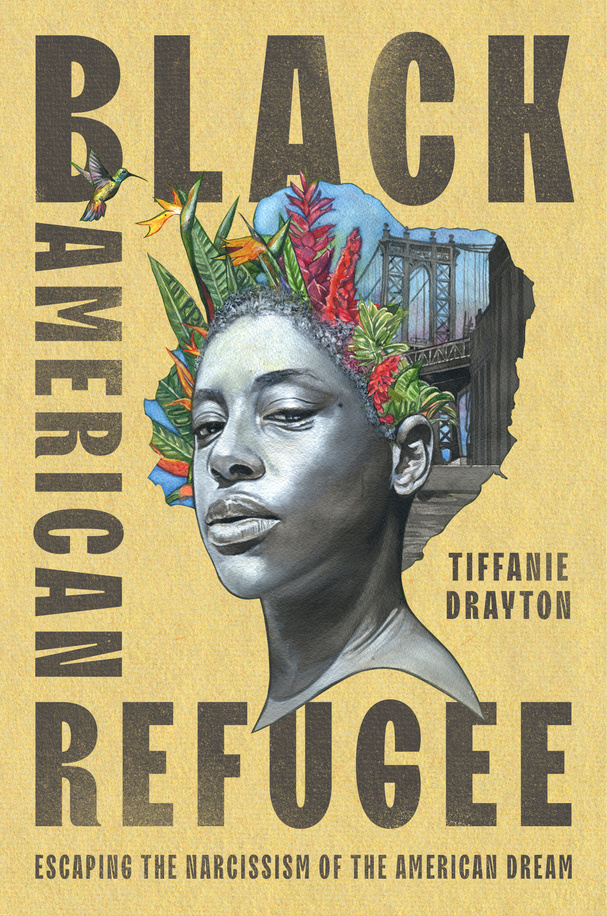
Black American Refugee


“Black American Refugee” by Tiffanie Drayton

A memoir about “escaping the narcissism of the American Dream”

After following her mother to the U.S. at a young age, one woman must come to terms with how systematic racism and trauma keep the American Dream inaccessible to Black people.

$23.92 at Bookshop

This saffron-packed chickpea and almond pasta will transport you to Spain

They say desperation is the mother of invention, right? Something like that. 

In my case, a months-long drought of Spanish chorizo at the grocery store took me down a path of recipe tinkering that resulted in a vegan pasta dish that — dare I say it — makes me feel downright smug. 

It all started at least a decade ago, when I stumbled upon this excellent 2007 recipe for spaghetti with chorizo and almonds from Epicurious. Spanish chorizo’s beguiling subtlety shines when paired with such like-minded co-stars as garlic, dry white wine and floral saffron — then tossed with pasta and the welcomed heft of creamy chickpeas and toasted almonds. 

The resulting dish is gorgeous and balanced — tinted orange from the rendered chorizo and saffron-tinged stock. It promptly joined my regular cooking rotation, where it deliciously remained until I could never seem to find Spanish chorizo at my local grocery store. 

RELATED: My pasta, myself: Forging a home in New Mexico through Hatch green chile pasta

Mexican chorizo proved too strongly seasoned to work as a replacement; nor could I nail down a satisfying dry-cured pork substitute. So I instead leaned into the dish’s other alluringly subtle components, most of which happen to be vegan. I subbed in vegetable stock for chicken broth — mainly because it’s my preferred boxed stock where flavor is concerned. I subbed in lemon juice for the wine because I always have plenty of the former on hand. But over time, I appreciated its pronounced citrus tang, particularly for how it brightens that vintagey saffron. 

The finished dish is elegantly understated and a textural delight. (See? There I go with the smugness.) I’m not entirely sure when the vegan version officially replaced the original in my monthly rotation. However, I can tell you that my self-righteousness transcends time. 

***

Recipe: Saffron and chickpea pasta 

Yields
2 servings
Prep Time
5 minutes
Cook Time
20 minutes

Ingredients

Salt, as needed

1 box spaghetti 

Olive oil, as needed

6 fat garlic cloves, thinly sliced

1 14-ounce can chickpeas, rinsed and drained

½ cup chopped flat-leaf parsley, plus a handful more for garnish

Pinch red pepper flakes

½ teaspoon crumbled saffron threads

Juice of one juicy lemon (or 1 ½ if your lemon is stingy)

⅓ cup low-sodium vegetable stock

½ cup slivered or sliced almonds, dry toasted in a skillet (save a tiny handful for garnish, please)

Handful of fresh chive blades, minced (optional)


Directions

  1. While you bring a large, generously salted pot of water to a boil for your pasta, heat a heavy-bottomed pot or skillet over medium-high. Add a generous ¼ cup of olive oil to the skillet. When it shimmers, add the garlic, chickpeas, parsley, red pepper flakes, saffron and a large pinch of salt.
  2. Sauté until the chickpeas soften a little and the garlic just turns golden. 
  3. Add the lemon juice and vegetable stock, cover the skillet, and bring to a boil. Remove the lid, reduce the heat to medium low, and simmer until the liquid reduces by half or so. Taste it at some point during the simmer stage, adjusting as needed with lemon juice and salt. 
  4. Cook your pasta  until it is al dente, then add it promptly to the skillet along with the toasted almonds and a glug of olive oil; toss until everything is yellow-tinged and glossy.
  5. Plate in warmed shallow bowls, garnished with the rest of the herbs and almonds and another shiny drizzle of olive oil. 


More by this author:

Make pasta night special with Martha Stewart’s sausage and kale stuffed shells

While spring is on the horizon, many of us are still experiencing the tail-end of some dreary winter weather. If you’re running low on dinner ideas and want something that will nourish your tummy and soul, then you might want to try these sausage and kale stuffed shells from Martha Stewart. 

This dish has got all the good stuff you’d expect in a pasta casserole dish, plus the added benefit of being freezer friendly. You can double up while prepping and get two dinners for the effort of one!

RELATED: The Italian-American casserole? How tetrazzini became the ideal mix-and-match comfort meal

First you’ll cook your jumbo pasta shells in salted water (no oil!) for about five minutes. Then you’ll take some E.V.O.O and add it to a nonstick skillet over medium high heat. You’ll then add in your spicy Italian sausage that’s been removed from the casing and break it up with a spoon while making sure it cooks evenly. This takes about five minutes. 

Transfer the sausage to a plate and add your chopped kale leaves to the pan, along with two tablespoons of water. You should only cook for around two minutes, until the kale is wilted. Season to taste, and combine the kale and sausage. Once it has cooled completely, you can roughly chop 

Now it’s stuffing time!

Combine your ricotta, Parmesan, mozzarella and sausage mixture, and season to taste. Take about two tablespoons of the mixture to fill each shell. Then, you’ll prepare the final construction for the baking. Take a 9 by 13-inch baking dish, and spread your marinara sauce of choice on the bottom. Top with your stuffed shells, and add another layer of sauce over top of them. Sprinkle your remaining cheese and cover with parchment lined foil.

Here’s where the choose your own adventure part of the dish comes in: 

If you want to freeze: put it in the freezer for one hour, then remove, wrap the entire dish in plastic wrap, and store in your freezer for up to three months.

If you want to bake: Preheat your oven to 375 degrees and remove the plastic from your dish. Bake it covered, until it is heated through and the cheese is bubbling around the edges (an hour). Then remove your cover and allow the top of the dish to reach toasty golden brownness (20 mins). Let stand 15 minutes before serving. You’ll be left with a dinner that is hearty, satisfying, and technically has vegetables! Find the full recipe here.

More super simple weeknight meals: 

Dear Hollywood: In times of international crisis, speechlessness is always preferable to stupidity

Crisis and its twin, tragedy, remind us of our frailty. One cannot fairly call them great levelers, since each of us is affected and reacts differently according to our resources. But they also engender a common feeling of not quite knowing what to do.

That was not the case for marginally famous actor AnnaLynne McCord though. Apparently the news of Russia invading Ukraine moved her read an open letter directed toward…the violent despot responsible for starting this war. Cringe-inducing as that description is by itself, the product is so much worse.

“Dear President Vladimir Putin,” McCord says, gazing into the camera, her blonde waves tousled just so, “I’m so sorry that I was not your mother.”

Come again?

You read right. McCord, best known for playing the heel on the “90210” reboot, is chalking up the Russian strongman’s impulse to take over a neighboring nation by military force to poor parenting. Then, compounding horror upon horror, we soon realize she’s not reading a letter but performing a poem.

“If I was your mother, you would have been so loved/Held in the arms of joyous light/ Never would this story’s plight /The world unfurled before our eyes/A pure demise of a nation sitting peaceful under a night sky…”

RELATED: Gal Gadot finally acknowledges her viral, pandemic cover of “Imagine” was in “poor taste”

Throughout the ages, war has moved artists to create works that speak to the moment. But this is as far from Pablo Picasso’s “Guernica” as a person can get. And sure, who among us hasn’t wondered whether the right intervention could have prevented Adolph Hitler from becoming a genocidal fascist? Still, this is also a far cry from that famous “Doctor Who” episode that played witih such a scenario. McCord’s two minute and 20 second word drool is so godawful, in fact, that one can almost picture Amanda McKittrick Ros crying out for mercy.

But the worst novelist ever did not have followers on Twitter, Instagram and TikTok feeding her ego with likes, retweets and replies. On normal days such followers and fans instill in celebrities a duty to keep their purported lines of communication open and parasocial relationship tanks topped off. So when disaster strikes they may feel obligated respond to enormity with rhyming couplets – or, like action star John Cena, a wish that the superhero he plays on TV were real.

“If I could somehow summon the powers of a real life #Peacemaker I think this would be a great time to do so,” he tweeted on Thursday – and sure, there’s nothing wrong with calling for peace.

But at best, Cena’s tweet was interpreted as using breaking news about a potentially catastrophic incursion to promote his HBO Max show. At worst, he’s wishing that a fictional vigilante who vows to kill men, women and children for peace were real at a time when Russian soldiers are actually threatening the lives of men, women and children, and have killed at least 130 of them.

McCord’s idiocy follows in the grand tradition of Gal Gadot’s tone-deaf “Imagine” video, offered in the spirit of helping the world feel better as the pandemic first peaked in 2020 and tens of thousands of people were dying, by gathering other famous folks to join her in crooning a song that opens with, “Imagine there’s no heaven.”

This was followed by the famous “I Take Responsibility” video submitted by white celebrities apologizing en masse for not doing enough to speak up against racism over the years. Two years later we can see how very helpful that was.

What we are witnessing is another chronic flare-up of celebrity foot-in-mouth disease in the social media age. Unfortunately, there is not a cream for that, nor a cure. Be it pandemic, environmental disaster, a righteous protest or the outbreak of a conflict, you can count on at least one famous person to meet the moment with utter stupidity.

This condition is not necessarily limited to stars running wild on TikTok, Twitter or Instagram, either, although slices captured in other media inevitably go viral. Take this moment from a recent episode of “The View,” in which co-host Sunny Hostin presented statistics intended to stress the ramifications of Putin’s actions.

“Estimates are 50,000 Ukrainians will be dead or wounded, and that this is going to start a humanitarian crisis, a refugee crisis, in Europe,” Hostin says. “We’re talking about 5 million people that that are going to be displaced.”

To which fellow host Joy Behar replied, “Well, I’m scared of what’s going to happen in Western Europe too. You know, you just, you plan a trip, you want to go there, I want to go to Italy for four years, I haven’t been able to make it because of the pandemic. And now this, you know?”

The singularly dire meaning of this moment is being experienced around the world, either in real time or close to the moment of occurrence, through our social media feeds. Unedited video of air strikes, bombings and ground confrontations is readily accessible via multiple online sources. Firefights and other combat footage are being uploaded to Reddit. Updates stream on Instagram live.

It was entirely possible to encounter Cena’s Peacemaker wish an entry or two removed from the video capturing the bold last words from the 13 Ukrainian soldiers killed on Snake Island for defying a Russian warship’s order to surrender. Mixing such urgent media with indulgent platitudes only sharpens the level of cognitive dissonance we’re collectively experiencing as we witness these escalating hostilities from afar. Tens of thousands of people are expected to die or be wounded. Millions will become refugees. But yes, let’s not forget that luxury vacations are likely to be further delayed.

Not all stars fall victim to their half-baked concepts. Some are acting in ways that are on brand while being of service. Sean Penn is in Kyiv to film footage of invasion for a documentary he’s producing, which is a very Sean Penn move. He’s also directly bearing witness to what Ukrainian civilians are enduring.

While Bravo reality producer Andy Cohen spelled out PEACE in Wordle tiles, took a screenshot of that image for an Instagram story and called it good, former “Real Housewives of New York” star Bethenny Frankel mobilized millions in supplies and funds to directly assist refugees crossing the border into Poland.

Does this burnish Frankel’s image? Of course. But she’s on the ground in Europe with her charity’s team members.

Then there are those who cannot help but be personally invested because they have ties there, whether distant – as singer songwriter Regina Spektor shared in a personal note coupled with a family photo on Instagram – or direct.


Want a daily wrap-up of all the news and commentary Salon has to offer? Subscribe to our morning newsletter, Crash Course.


While McCord was sharing her rainbows, “Dancing with the Stars” professional dancer Maksim Chmerkovskiy, who hails from Ukraine, has been sharing his experiences of being trapped in Kyiv as a civilian.

Chmerkovskiy was participating in the production of Ukraine’s version of “World of Dance” as a judge. In an Instagram video shared as the assault began, he is candid about being scared and confesses guilt at knowing he has the privilege of being able to escape while so many of his fellow countrymen cannot, including friends and loved ones.

He also offers an open letter, targeting a more humane constituency.

“Dear Russians, I know you know me,” he says. “…I am not at this point someone who is pleading, you know, for someone else’s safety from a far distance, from a safe distance. I’m somebody who’s about to go into a bomb shelter because sh*t’s going down, right?”

He continues, “So I think that in 2022 civilized world, this is not the way we do things. And I think that as a powerful, forward-thinking nation… I think the Russians need to get up and actually say something because no one’s opinion is being heard. This is all one man’s ambition of just … something.  However it sounds, however convenient it sounds in Moscow, however comfortable you are, where you are in Russia, I just, I just don’t think that this is this is the right thing, that these are the right steps and this is the correct action.”

Chmerkovskiy goes on to unintentionally contradict himself by saying he doesn’t know what words to use, unaware of the bravery it takes to defy the very human instinct to lapse into speechlessness in the face of terror. The clarity of his unscripted message may even move at least one Russian citizen among 890,000 Instagram followers to answer his call.

Other widely known figures might amplify that message as well, along with links to relief agencies or other resources for Ukrainians seeking escape or assistance.

And there are artists who have crafted the right sentiments for this moment, whether they were written years ago by poets like Ilya Kaminsky or created recently, like this verse Amanda Gorman shared on Thursday.

Gorman’s words are meant to comfort and inspire. They might even prompt another famous person to generate something. In these dark times of escalating conflict and literary censorship, I would never tell any well-intentioned person to shut up.

However, based on recent displays, let’s cross our fingers that the next star aspiring to show how much they care workshops said concept before posting it. If the world’s dictators have no use for terrible poetry or juvenile wishes, assume the rest of us don’t either. Silence may not be an option, but retweeting the wisdom of more adept thinkers is free.

More stories you may like:

10 inspiring facts about the Tuskegee Airmen

The first Black pilots to serve in the United States military — along with the navigators, mechanics, instructors, and other personnel who supported them — are today remembered as the Tuskegee Airmen. Established in 1941, they built an impressive combat record, helped the Allies win World War II, and put the U.S. armed forces on the road to integration.

1. The Tuskegee institute trained the country’s first black military pilots

Now called Tuskegee University, the Tuskegee Institute was founded in 1881 as a school for training Black teachers. In its first five decades, the school employed and produced leading Black scientists and thinkers, including botanist George Washington Carver and architect Robert Taylor. In 1939, the institute secured federal funding under the Civilian Pilot Training Program (CPTP) to train Black pilots in response to the outbreak of war in Europe; the program intended to create a pool of trained aviators for potential military service. The institute quickly leased an airstrip, acquired multiple planes, and hired its own instructor pilots. The Tuskegee Institute was one of six historically Black colleges and universities that participated in the CPTP.

2. The Tuskegee Airmen had roots in Illinois

Before 1941, the U.S. military — which was officially segregated — prohibited Black pilots. Civil rights organizations and Black newspapers pressured the government to open up the role to Black aviators. In 1941, the government contracted Tuskegee Institute to offer primary training for the military’s first Black airmen. On March 22, 1941, the 99th Pursuit Squadron (later the 99th Fighter Squadron) was formally constituted [PDF]. Not only was it the very first Tuskegee Airmen unit, but it was also the first Black flying unit of any kind in American military history. The inaugural members began their training at Chanute Field in central Illinois, about 16 miles north of Champaign, Illinois. But they didn’t stay there very long. By the end of the year, the 99th had relocated to Tuskegee, Alabama.

3. No one called them “Tuskegee Airmen” during World War II

The “Tuskegee Airmen” nickname was coined by author Charles E. Francis in the title of his 1955 book [PDF]. The Tuskegee Airmen encompass several different squadrons and groups with connections to the training facilities in Tuskegee: the 99th, 100th, 301st, and 302nd squadrons, which together made up the 332nd Fighter Group. The 447th Bombardment Group, a Black bomber unit, is also included under the Tuskegee Airmen umbrella, along with the instructors, mechanics, and ground crew at the Tuskegee Institute’s training facilities between 1941 and 1946.

4. Eleanor Roosevelt supported the Tuskegee Airmen when others didn’t

The first lady put a spotlight on the Tuskegee program when she visited the Tuskegee Institute in 1941. Charles A. Anderson, a pilot now known as “the father of Black aviation,” was its chief civilian flight instructor. At Roosevelt’s request, he took her on an aerial tour and the pair spent 40 minutes flying over the countryside together. The resulting news photograph of Roosevelt and Anderson helped to dispel the notion that Black Americans were unfit to fly aircraft — and encouraged many to apply to the program.

5. The Tuskegee Airmen built an exemplary record in their bomber escort missions

Members in the 332nd Fighter Group were tasked with escorting bomber planes on their missions. The escorts protected the bombers in flight and attacked enemy aircraft that might fire at the bombers. The Tuskegee Airmen flew these important missions around the Mediterranean theater and racked up an admirable number of hits. According to historian Daniel Haulman, the Tuskegee Airmen flew 312 missions, of which 179 were bomber escort missions, between June 1944 and April 1945. “They lost escorted bombers to enemy aircraft on only seven of those missions,” totaling 27 American planes, he said in an interview with the National World War II Museum. Each of the six other escort groups in the U.S. command lost an average of 46 bombers [PDF].

6. Some Tuskegee Airmen were dubbed “Red Tails” 

During World War II, individual fighter groups set themselves apart by giving the tails of their planes a distinctive paint job. This made it easier to coordinate large flight formations and helped bomber crews recognize friendly aircraft. In July 1944, members of the 332nd Fighter Group began flying P-51 Mustang planes with tails painted solid red [PDF]. Soon, the Tuskegee Airmen (as a group) were nicknamed the “red tails.” A 2012 George Lucas-produced film by the same name fictionalizes this unit’s success in shooting down German fighter planes.

7. The first three Black generals in the U.S. Air Force were Tuskegee Airmen

The life of four-star general Benjamin O. Davis, Jr. (1912-2002) is a series of firsts. Davis was the son of the Army’s first Black general, and in 1932, became the first Black cadet admitted to the U.S. Military Academy since Reconstruction. The career officer served for 33 years, fought in three wars, and commanded the 332nd Fighter Group in the Tuskegee program. Daniel “Chappie” James, Jr. (1920-1978) served as a fighter pilot in the Second World War, Korea, and Vietnam, and became the first four-star African American general in any U.S. military branch in 1975 when he was appointed the commander of NORAD (North American Aerospace Defense Command). After enlisting in the Army Air Forces in 1942, Lucius Theus (1922-2007) served as a training officer at the Tuskegee Air Field before going on to serve or command at numerous U.S. and international air bases and at the Air Force headquarters. He was the first Black combat support officer to be promoted to major general.

8. The Tuskegee Airmen faced segregation on base

A nonviolent protest at Freeman Field in Indiana in 1945 became known as the Freeman Field Mutiny. Its commander separated accommodations by race, which was against Army rules. When the 477th Bombardment Group was transferred there, its Black personnel were miscategorized as trainees so the base’s white officers wouldn’t have to share their officer’s club with them. On April 5, 1945, some of the Black airmen peacefully walked into the club anyway. All the Black officers at Freeman Field were then told to sign a document agreeing to “separate but equal” policies on military bases, and the 101 Black personnel who refused were arrested. Eventually, three were court-martialed and one was convicted of insubordination.

9. A Tuskegee Airman led a classified inquiry into UFOs

Robert Friend served as a wingman for Benjamin O. Davis, Jr. during WWII. He went on to direct Project Blue Book, a classified Air Force research initiative that investigated 12,618 alleged UFO sightings beginning in 1948. In 1969, the Air Force concluded that “there has been no evidence indicating that sightings categorized as ‘unidentified’ are extraterrestrial vehicles,” and shut down the project.

10. In 2007, the Tuskegee Airmen were awarded the Congressional Gold Medal

The airmen, including military and civilian support staff, received the highest civilian award bestowed by the United States Congress for their “unique military record that inspired revolutionary reform in the armed forces.” Other Congressional Gold Medal recipients include the crew of the U.S.S. Indianapolis, Nelson Mandela, and Martin Luther King Jr. and Coretta Scott King.

Marjorie Taylor Greene defends herself for attending white nationalist conference

On Friday night, Rep. Marjorie Taylor Greene attended a white nationalist conference in Orlando, and then came to her own defense on Saturday, saying she had been there to “talk to the audience.”

Greene doubled down on her defense, which was part of a statement given in a recorded interview to CBS News correspondent Robert Costa, saying she does not personally know Nick Fuentes, the white nationalist leader who organized the event in question, held on Friday night at the Orlando World Center Marriott.

 “I don’t know what his views are, so I’m not aligned with anything that may be controversial,” Greene said. “I went to his event last night to address his very large following because that is a young, very young, following and a generation I am extremely concerned about.”

Related: White women and fascism: Seyward Darby on how right-wing women embrace their “symbolic power”

Fuentes, host of the white nationalist conference that Greene was seen at, was subpoenaed last month by the congressional committee investigating the Jan. 6, 2021, attack on the U.S. Capitol, according to The Hill. During the conference on Friday Greene was photographed shaking the hand of Fuentes, as reported in The Hill’s coverage. 


Want a daily wrap-up of all the news and commentary Salon has to offer? Subscribe to our morning newsletter, Crash Course.


“In any other world, Greene speaking at a white supremacist conference where attendees have defended Vladimir Putin and praised Adolf Hitler would warrant expulsion from the caucus, to say nothing of her advocacy for violence and consistent anti-Semitism is disgusting,” DNC spokesman Ammar Moussa said in a statement.

Read more:

Why “greening” cities can make gentrification worse — and often doesn’t help the environment either

Running just under one and a half miles long and featuring a beautiful array of botanical gardens and art sculptures, the High Line — an elevated park in Manhattan — is a major recreational attraction to both tourists and native New Yorkers alike. Created in 2009 and inspired by the Promenade plantee in Paris, the final section of the High Line, known as “the Spur,” was completed in 2019. Since then, annual visits to the High Line jumped from 5 million to 8 million people.

But despite its immense popularity and often being touted as a success story in urban renewal, the High Line is not a boon to all. A 2020 study of the High Line found that its creation directly led to a 35% increase in home values in the area. While that might be good news for homeowners, over 75 percent of Manhattanites are renters and more apt to be evicted or suffer rent increases as a result.

Built over a formerly derelict section of the New York Central Railroad West Side Line, the walkway and area immediately surrounding the High Line prior to its construction were often characterized as “gritty.” The nearby Chelsea section of Manhattan, where two large public housing developments are located, is historically home to many Black and brown residents. However, the High Line’s cascading price impacts on surrounding real estate spurred rapid closures of local businesses and pushed many lower income renters out of the area.

The High Line isn’t an isolated cautionary tale. Many municipalities are pushing for or have implemented “green” features that have led to major rent hikes in the area — and, in turn, displacement of working class and low income families. In fact, the phenomenon is so commonplace it even has a name: eco-gentrification.

RELATED: How Harlem residents found a unique way to fight gentrification

The sad irony is the people most likely to be displaced by eco-gentrification are those most in need of its benefits. In the past few years, there has been an emergence of research confirming that low income communities  — and particularly low income communities of color  — have far fewer trees and conservation lands in their borders as compared to more affluent communities.

This scarcity of green space contributes to profound public health inequities, including greater rates of asthma and other respiratory illnesses. Lack of tree cover also translates into actual temperature disparities, with poorer neighborhoods experiencing more sweltering conditions in the summer months and higher incidences of heatstroke.

“Gentrification wouldn’t be as much of a problem if displacement didn’t follow,” says Melissa Checker, an associate professor of anthropology and environmental psychology at the CUNY Graduate Center and the author of The Sustainability Myth, a book that examines eco-gentrification in New York City.

“The problem is ‘greening’ projects get tied to property values,” says Checker.

And it isn’t only parks and greenways that can cause eco-gentrification.

In the Boston metro area, since plans for the Green Line extension of the subway for the Union Square section of the City of Somerville were finalized in 2016, property values for that neighborhood have increased approximately 40 percent. Union Square is home to a large population of Haitian, Brazilian and Latinx communities and cultures that are gradually disappearing with escalating rents.

Over in Boston proper itself, the opening of the Blue Hill Avenue station in Dorchester (a Black-majority neighborhood) as part of the Fairmount Line of the commuter rail ushered in steep rent increases that threaten the ability of long-time residents to remain in the area.  


Want more health and science stories in your inbox? Subscribe to Salon’s weekly newsletter The Vulgar Scientist.


“The lack of stops was accurately described as transit racism….the trains went through communities of color but hardly stopped there,” a spokesperson for City Life/Vida Urbana  — a Boston tenants’ rights organization that was part of the coalition that advocated for the opening of the Blue Hill Avenue station  —  wrote in an email to Salon. “At the same time…all social efforts by community activists to improve the neighborhood create value that is then privatized by real estate investors in the form of raising rents and flipping buildings.”

This real estate response is enabled by a larger pattern of local governments in urban and ex-urban communities across the country embracing free market-friendly “Yes In My Backyard” policies. Such policies usually favor new development projects that foster increased “density,” often boasting of their climate benefits, regardless of their affordability to residents.

Yet one major study from UC-Berkeley found that the carbon savings from dense cities and suburbs are usually undermined by the sprawl they cause. The study authors also indicated that densifying suburbs could in fact potentially increase carbon emissions by creating their own sprawl and offshoot suburbs, as well as concentrating affluence. Indeed, people with higher incomes have much higher carbon footprints than those with lower incomes and as such, more affluent neighborhoods and towns have higher carbon emission rates.

As rent prices increase with the growing density of a given community, lower income people are often displaced and so are less able to access the improved public transit and the other green features that often go along with density plans.

“[W]hen low income people are pushed further and further out, it increases their emissions for traveling by cars—cars that are often less efficient and emit more [greenhouse gasses],” says Jennifer Rice, an urban geographer with the University of Georgia, who has researched eco-gentrification trends in Seattle.

Further compounding this problem is a growing trend of rental buildings being built with little-to-no off-street parking spaces partially as an effort to “go green.” Some affordable housing complexes are even attempting to mandate that tenants do not own cars at all in the name of sustainability. However, car ownership among lower income demographics is strongly linked to greater job stability and economic mobility and — for chronically ill and disabled folks  — significantly better healthcare access.

“Any policy that requires major off-street parking reductions for affordable housing while maintaining exclusionary parking access [on street]…is inequitable on its face,” says Michael Spotts, a senior visiting research fellow at the Urban Land Institute’s Terwilliger Center for Housing.

Instead, Spotts suggest municipalities employ an on-street parking permitting system as a way to reduce or eliminate off-street parking spaces for new developments. This would help lower a development’s environmental footprint (not to mention, construction costs) without risking the consequence of pushing low income residents who need cars for work or healthcare needs out of the area — and upping their emissions as a result.

Spotts also recommends that policymakers “Pay more attention to buses, which lower income people use … more than trains” as improving and extending bus services tends not have the same level of influence on rent prices as rail or subway extensions do.

When asked about other ways to ensure greening efforts in communities don’t displace marginalized residents, researchers on eco-gentrification consulted for this article all had one common response: expanding investments in low income housing.

“If cities require inclusionary zoning with units affordable for households who make 80% of the Area Median Income, it is unlikely that low-income folks can afford them,” says Alessandro Rigolon, an assistant professor at the department of City & Metropolitan Planning at the University of Utah.

Rice agrees.

“Mainstream thinking that just getting out of the way for developers to build more and more — often called ‘increasing supply’ is not going to get us out of the affordability or carbon gentrification problem,” says Rice, who notes that most developers are not interested in building low income housing in hot market neighborhoods. “We really need massive investments in public green housing.”

Additionally, new developments tend to mostly contain one bedroom or studio apartments as a way to be “greener” — which can pose a major problem for low income families.

“One bedrooms and studios are cheaper units to build….[but] these are clearly too small for families, and especially multi-generational families…who might be at risk of displacement,” says Rigolon. “So unit size also needs to be considered….to help longtime residents of color remain in their neighborhood.”

Other solutions to eco-gentrification could be re-examining policies that were expected to increase equity via greening efforts but instead have had the opposite impact.

Take the Massachusetts Community Preservation Act, or CPA.

Though it is a state law, municipalities in the Commonwealth can opt to adopt the CPA by ballot vote. The Act then requires those municipalities to contribute funds from their own property taxes to subsidize their intended projects, that the state government then subsequently matches.

As any proposed projects are required to be partially funded by property taxes, it automatically privileges upper class towns and cities over financially disadvantaged ones. Some reports have suggested the CPA has enabled some white-majority communities in the state to conserve and add green spaces — and as a result, grow their affluence — while largely forsaking (or even altogether abandoning) the other major goal of the Act’s creation: funding affordable housing.

So, while greening projects in traditionally depressed communities can increase rents and push low income people out, programs like the CPA can also be used in already-affluent towns in Massachusetts to invest in “sustainable” projects at the expense of affordable housing. This has had the consequence of making these advantaged communities even more elite and exclusionary — and their green amenities even more inaccessible — to low income individuals.

These kinds of impacts are why Checker believes there should be increased investments in rental voucher programs like Section 8, as well as tighter regulations on rental prices through policies like rent control and stabilization.

The spokesperson for City Life/Vida Urbana, which is a proponent of recent legislative attempts to return rent control — which was banned in Massachusetts by ballot vote in 1994  — back to the Boston area, couldn’t agree more: “We back the [environmental] improvements, but we demand some control over the market that escalates rents.”

Read more on cities and environmentalism:

How to cook lobster tails perfectly, every single time

If you grew up playing The Sims like I did, then you know exactly what lobster thermidor is. Or at least, you know what it is in the context of the popular RPG (role playing game): It’s the final meal your simulated character learns after studying the culinary arts over the course of a few days. As in real life, in The Sims, the more you cook and the more cookbooks you read, the more recipes you learn, and the faster your simulated character can graduate from salad to spaghetti to tri-tip steak, then finally to lobster thermidor.

The goal is always lobster thermidor.

So how does this relate to perfectly cooked lobster? Lobster thermidor is, for one, a dish I’d like to eat every single day. It also calls for lobster tail meat, which must be cooked properly in order to enjoy the succulent, sweet flavor of lobster and maintain its juicy texture, wihtout chewiness. If you bear with me for a few more minutes while I spread the love for lobster thermidor, I’ll then get into how to thaw frozen lobster tails (which are much more accessible if you don’t live in Maine and want to indulge in the crustacean year-round) and how to cook lobster tails.

In order to satisfy my curiosity and save you time and money, I tested four of the best ways to cook lobster tails, including steamed, broiled, boiled, and grilled. But first, back to lobster thermidor.

What Exactly Is Lobster Thermidor?

It’s a gratin dish from the ’60s and ’70s where lobster tail meat has been folded into a creamy mélange of egg yolks, brandy, mustard, and Gruyère cheese. It’s rich and delicious and hardly anyone makes it anymore.

Why? Because lobster’s expensive as heck. If I lived on the Maine coast I’d have access to fresh lobster 24/7. But unfortunately I do not, so instead I enjoy it at home on special occasions like Valentine’s Day, my birthday, or a Wednesday night.

If you can’t get whole, live lobsters at your corner fishmonger, then I recommend heading to your local Whole Foods or Costco to buy frozen lobster tails.

But be warned: The two are vastly different. At the Whole Foods fish counter, you’ll be able to find individual, uncooked (previously frozen) lobster tails for around $10 each. These are the small, fleshy, Maine-like ones that are sweet and flavorful. The Costco lobster tails might be more affordable by the pound, but you’ll notice that they’re a different breed than the American ones, i.e. they’re large and spiny and from places like Nicaragua, Honduras, Costa Rica, etc. (I also think they’re a little less flavorful, but that’s just me.) But lobster is expensive enough and inaccessible enough that if you find a great product, stock up (that’s the beauty of the pre-frozen stuff anyway).

Whatever you end up getting, be sure to thaw them properly before cooking.

How To Thaw Frozen Lobster Tails

As you would a chicken or a turkey, just plunge your frozen lobster tails into cold water for about 30 minutes, or until fully thawed. You could also thaw them in the refrigerator, but the water method is significantly faster.

Next, decide how you’d like to cook your lobster: Steamed? Broiled? Grilled? There are many ways, and to test each one, I decided to treat my family to a lobster tail dinner. Here’s what happened:

Lobster tail, four ways.
Lobster tail, four ways. Photo by Eric Kim

How To Cook Lobster Tail

What You’ll Need

  • Lobster tails (about 4 to 5 ounces each)
  • Melted butter
  • Flaky sea salt
  • Freshly ground black pepper
  • Lemon wedges, for serving

Photo by Eric Kim

1. Steamed

Steaming lobster tails was by far the simplest method, but only because my mother (whose house I was staying at this weekend) had a fancy steamer pot. I boiled the water, topped it with the steam basket, placed one lobster tail in the center, and covered. Many steamed lobster tail recipes online called for a cook time of 8 minutes, some even as long as 10 (!), but I noticed that the shell got red and the flesh became opaque at just 4 minutes—so I took the sucker out and ran it under cold tap water to stop the cooking process. Overcooking lobster tails will result in tough, chewy meat, so be sure to keep a close eye on the tails as they cook. As soon as the shell transforms into that classic fire truck red hue and the meat is opaque, pull it from the water and don’t look back.

Verdict: This lobster tail, basted with melted butter, lemon juice, flaky sea salt, and a crack of black pepper, tasted super soft and sweet. I was surprised at how much I enjoyed it. When you need unadulterated lobster meat for something like, say, a lobster roll, then I highly recommend the steaming method. (I mean, come on: 4 minutes!)


Photo by Eric Kim

2. Broiled, Top Shell Split

So, according to the internet, the most popular lobster tail recipe uses the broiler. Which makes a lot of sense: The high-heat broiler rocks when it comes to fresh seafood (which is why I didn’t even bother to test an oven-baked version). Broiled lobster tails get caramelized on the outside and fully cooked through on the inside in a matter of minutes. I left mine in the oven for just 5 minutes (I find that it’s perfectly done at 5, but you may prefer yours more well done and could cook it for as long as 10 minutes).

The real trick here is how you choose to prepare the lobster tail. I’ve noticed a couple ways that people like to do it. The first is how you’re likely to see it in chain restaurants like Red Lobster: the top of the shell split, lobster meat bulging out. To achieve this, take a pair of kitchen shears and cut through the middle of the top shell from the fleshy end of the lobster to the tail. Then, using your fingers, gently split the shell apart to reveal the meat in the center. Brush with melted butter and season with salt and pepper before broiling (at high, or at about 550°F if your broiler specifies) for 5 minutes. This method for cooking lobster tails scores points for appearances, but like seafood chain restaurants, it’s not the best option if what you’re after are flavor and texture.

Verdict: Good. Surprisingly, the flavor was similar to that of the steamed lobster tail, maybe a little more muddied. Overall, I did feel that the steamed lobster had better texture and flavor, which makes me want to compare the preparations: The broiling method is just as easy and just as fast (helpful for those, like myself, who don’t own a steamer pot). The only benefit I see, then, of broiling is the presentation—it certainly looks nice.


Photo by Eric Kim

3. Broiled, Bottom Shell Split

Same cooking method as above (broil for 5 minutes), but to prepare this lobster tail, I exposed the meat on the underside. To do this, flip the lobster tail on its “back” (belly and little leggies facing up), and with a pair of kitchen shears, cut along the two sides where the softer under shell meets the harder outer shell, then the remaining attached side perpendicular to the tail end, essentially cutting off the bottom shell completely. Brush this exposed meat with melted butter, season with salt and pepper, place flesh-side up on a sheet pan, and broil.

Verdict: My dad was convinced that this lobster tail was superior (taste is in the tongue of the beholder). As for ease? The meat was definitely easier to pop out of its shell than the previous two. This should only be a concern to you if you don’t plan on serving the lobster in its tail—which is, I think, very beautiful to do. So at the end of the day, it really is a matter of: 1) whether you want to use your stove or your oven and 2) how you want your lobster tail to look. It’s an aesthetic thing.


Photo by Eric Kim

4. Grilled

It’s summer, so I figured I had to try this method. I split the tails in half (right down the center through the shell) to create some surface area for the flesh to hit the fire. I brushed the exposed meat with melted butter, salt, and pepper, and seared it on the grill over high heat for about 4 minutes, then flipped and cooked for another 3 to 4 minutes. Grilling expert Paula Disbrowerecommends a lower heat (medium) and a cook time of 5 minutes on the first side, then 4 to 5 minutes on the second side (with an internal temperature of 135°F). But as someone who’d much rather have undercooked lobster than overcooked, I took mine off the grill a little sooner and thought it tasted great.

Verdict: I wanted to hate this one (because not everyone has a grill), but it was by far my favorite lobster tail recipe. The others tasted fine, but this was the only one that had a flavor element that added something extra to the savory, buttery flesh of the lobster meat: smoke. The grill lends so much depth to lobster—but only if you don’t overcook it.

5. Lobster Thermidor-Ed

I’ve made this dish a few times for my mother (because she loves cream sauces). I do think it’s a great way to stretch lobster meat so it goes further—the mushrooms, cheese, and cream make everything feel so much more substantial than a plain ol’ salted and buttered tail. So if you have an occasion where a lobster thermidor (level 10 in The Sims games) would be appreciated, then I recommend following the Chef John recipe video above, or this one by Beth (whom I also enjoy watching on YouTube):

However, just know that there are other ways to round out a lobster tail dinner. For my family, I merely roasted asparagus and prepared a fresh corn salad—and everyone was stuffed. Even more, we all got to enjoy the lobster for what it was: a vehicle for butter. And who doesn’t love butter?

Summary

Obviously, I only had four lobster tails for this test (one for each family member) and had to prioritize which methods to try. If I had more time and resources, I’d cook a plain pan-seared version, maybe a boiled one, broiled with shell intact, steamed with bottom and top shells split, and so on. From this selection, I personally preferred the steamed lobster tail to either of the broiled variations—but the one that had my heart? Grilled.

How real is “Abbott Elementary”? A former Philadelphia school teacher weighs in

ABC’s mockumentary “Abbott Elementary” follows a group of dedicated teachers who work at a Philadelphia school. The show takes a comedic approach toward issues in inner city schools. Here, Lynnette Mawhinney, a former Philadelphia schoolteacher who is now an associate professor of Urban Education at Rutgers University – Newark, weighs in on whether the show accurately portrays the realities of educators in today’s schools.

Is this show realistic in showing the challenges of urban schools?

Yes, this show humorously speaks to the real-life experiences of teachers. The pilot episode begins with the main character, Ms. Janine Teagues, discussing how she is one of three teachers left from an initial group of 20 teachers hired the year before. This speaks to the issue of teacher turnover, a problem that costs schools an estimated U.S. $7.34 billion annually. These costs come from the problems that schools – and in particular, urban schools – have in keeping teachers on staff as they either move to other schools or leave the profession. Once a teacher leaves, school districts have to spend money to attract, hire and develop new teachers.

As I show in my book, “There Has to be a Better Way: Lessons from Former Urban Teachers,” urban teachers leave the profession due to exhaustion, disillusionment and conflicts with administration. In particular, teachers of color leave urban schools due to racial microaggressions.

“Abbott Elementary” also deals with themes of insufficient resources for teachers and students, as well as misappropriation of school funds. Journalist Dale Russakoff’s book, “The Prize: Who’s in Charge of America’s Schools”, details how a $100 million gift from Mark Zuckerberg to Newark Public Schools in 2010 was grossly misappropriated by upper administration to consultants and rarely did the money serve the schools themselves.

Nevertheless, as shown in episodes one and three of “Abbott Elementary,” urban teachers know how to make a way and get what they need for their classrooms – whether it’s through social media platforms, crowdfunding campaigns, or, to use street lingo, they know someone who can “get the hookup.” For example, when I taught high school in Philly through the early 2000s, I was the laptop “hookup” at my school. I had a family member who worked in corporate business where I would get their old laptops so students could use them in school. Ms. Thomas, down the hall, used to be the “hookup” for books to help stock teachers’ classroom libraries.

Another theme is how novice teachers can forget to practice self-care and burn out quickly. In episode two, Janine skips multiple meals and goes above and beyond for the school but ends up sick. Her senior colleague, Ms. Melissa Schemmenti, reminds her, “We care so much, we refuse to burn out. If we burn out, who’s here for those kids? That’s why you gotta take care of yourself.” In this instance, I think the show tackles subtle issues for novice teachers that are not often known to the general public.

What does this show mean to the teaching profession?

In my view, the show represents a rare portrayal of Black teachers. The reality is that 82% of U.S. teachers are white compared to the 18% who are teachers of color. Although white women make up a majority of elementary teachers in the United States, there are teachers of color and male educators who break this mold.

The presence of Black teachers is important for all students, especially Black students. Research shows that Black boys in the third through fifth grades are almost 40% less likely to drop out of school and less likely to be suspended if they have a Black teacher between third and fifth grade. Shows like “Abbott Elementary” will hopefully help to change media perceptions of elementary teachers and rebuild an interest for prospective teachers.

Does it have the potential to educate people on the challenges in urban education?

Yes, this show could be used as important discussion points for teacher education programs, policymakers, and the general public. The first few episodes of “Abbott Elementary” certainly portray the challenges of underfunded schools and the mismanagement of funds.

But I would argue that “Abbott Elementary” also highlights the beauty found in urban education. As Ms. Barbara Howard, one of the veteran teachers, states, “we talk about what they [the students] do have, not about what they don’t.” This advice comes after Janine keeps fixating about the classroom materials Barbara doesn’t have. Meaning, “Abbott Elementary” can be used to educate on how dedicated teachers find the beauty in urban spaces.

Episode two demonstrates the beauty of how relationships are built between parents and teachers in order to best support students. Urban education should not always be seen in a negative light. I think that the show balances its humor with a positive lens that is much needed in educating others about urban schools.

Lynnette Mawhinney, Department Chair and Associate Professor of Urban Education, Rutgers University – Newark

This article is republished from The Conversation under a Creative Commons license. Read the original article.

The Ukraine catastrophe and how we got here: Chronicle of a war foretold

I was in Eastern Europe in 1989, reporting on the revolutions that overthrew the ossified communist dictatorships that led to the collapse of the Soviet Union. It was a time of hope. NATO, with the breakup of the Soviet empire, became obsolete. President Mikhail Gorbachev reached out to Washington and Europe to build a new security pact that would include Russia. Secretary of State James Baker, along with West German Foreign Minister Hans-Dietrich Genscher, assured the Soviet leader that if Germany were unified NATO would not be extended beyond the new borders. The commitment not to expand NATO, also made by Britain and France, appeared to herald a new global order. We saw the peace dividend dangled before us, the promise that the massive expenditures on weapons that had characterized the Cold War would be converted into expenditures on social programs and infrastructures that had long been neglected to feed the insatiable appetite of the military.

There was a near universal understanding among diplomats and political leaders at the time that any attempt to expand NATO was foolish, an unwarranted provocation against Russia that would obliterate the ties and bonds that happily emerged at the end of the Cold War. 

How naive we were. The war industry did not intend to shrink its power or its profits. It set out almost immediately to recruit the former Communist bloc countries into the European Union and NATO. Countries that joined NATO, which now include Poland, Hungary, the Czech Republic, Bulgaria, Estonia, Latvia, Lithuania, Romania, Slovakia, Slovenia, Albania, Croatia, Montenegro and North Macedonia, were forced to reconfigure their militaries, often through hefty loans, to become compatible with NATO military hardware.

There would be no peace dividend. The expansion of NATO swiftly became a multi-billion-dollar bonanza for the corporations that had profited from the Cold War. (Poland, for example, just agreed to spend $6 billion on M1 Abrams tanks and other U.S. military equipment.) If Russia would not acquiesce to again being the enemy, then Russia would be pressured into becoming the enemy. And here we are: On the brink of another Cold War, one from which only the war industry will profit while, as W.H. Auden wrote, the little children die in the streets.

RELATED: NATO leaves little room for diplomacy: How the war machine upped the ante in Ukraine

The consequences of pushing NATO up to Russia’s western borders — there is now a NATO missile base in Poland, 100 miles from the Russian frontier — were well known to policy makers. Yet they did it anyway. It made no geopolitical sense. But it made commercial sense. War, after all, is a business, a very lucrative one. It is why we spent two decades in Afghanistan although there was near universal consensus after a few years of fruitless fighting that we had waded into a quagmire we could never win.

In a classified diplomatic cable obtained and released by WikiLeaks, dated Feb. 1, 2008, which was written from Moscow and addressed to the Joint Chiefs of Staff, the NATO-European Union Cooperative, the National Security Council, the Russia Moscow Political Collective, the secretary of defense and the secretary of state, there was an unequivocal understanding that expanding NATO risked an eventual conflict with Russia, especially over Ukraine:


Want a daily wrap-up of all the news and commentary Salon has to offer? Subscribe to our morning newsletter, Crash Course.


Not only does Russia perceive encirclement [by NATO], and efforts to undermine Russia’s influence in the region, but it also fears unpredictable and uncontrolled consequences which would seriously affect Russian security interests. Experts tell us that Russia is particularly worried that the strong divisions in Ukraine over NATO membership, with much of the ethnic-Russian community against membership, could lead to a major split, involving violence or at worst, civil war. In that eventuality, Russia would have to decide whether to intervene; a decision Russia does not want to have to face. … Dmitri Trenin, Deputy Director of the Carnegie Moscow Center, expressed concern that Ukraine was, in the long-term, the most potentially destabilizing factor in U.S.-Russian relations, given the level of emotion and neuralgia triggered by its quest for NATO membership. … Because membership remained divisive in Ukrainian domestic politics, it created an opening for Russian intervention. Trenin expressed concern that elements within the Russian establishment would be encouraged to meddle, stimulating U.S. overt encouragement of opposing political forces, and leaving the U.S. and Russia in a classic confrontational posture.

The Obama administration, not wanting to further inflame tensions with Russia, blocked arms sales to Kyiv. But this act of prudence was abandoned by the Trump and Biden administrations. Weapons from the U.S. and U.K. have poured into Ukraine, part of the $1.5 billion in promised military aid. The equipment includes hundreds of sophisticated Javelins and NLAW anti-tank weapons despite repeated protests by Moscow. 

The U.S. and its NATO allies have no intention of sending troops to Ukraine. Rather, they will flood the country with weapons, which is what they did in the 2008 conflict between Russia and Georgia. 

The conflict in Ukraine echoes the novel “Chronicle of a Death Foretold” by Gabriel García Márquez. In the novel it is acknowledged by the narrator that “there had never been a death more foretold” and yet no one was able or willing to stop it. All of us who reported from Eastern Europe in 1989 knew the consequences of provoking Russia, and yet few have raised their voices to halt the madness. The methodical steps toward war took on a life of their own, moving us like sleepwalkers towards disaster. 

Once NATO expanded into Eastern Europe, the Clinton administration promised Moscow that NATO combat troops would not be stationed in Eastern Europe, the defining issue of the 1997 NATO-Russia Founding Act on Mutual Relations. This promise again turned out to be a lie. Then, in 2014, the U.S. backed a coup against Ukrainian President Viktor Yanukovych, who sought to build an economic alliance with Russia rather than the European Union. Of course, once integrated into the EU, as seen in the rest of Eastern Europe, the next step is integration into NATO. Russia, spooked by the coup, alarmed at the overtures by the EU and NATO, then annexed Crimea, largely populated by Russian speakers. And the death spiral that led us to the conflict currently underway in Ukraine became unstoppable. 

The war state needs enemies to sustain itself. When an enemy can’t be found, an enemy is manufactured. Putin has become, in the words of Sen. Angus King of Maine, the new Hitler, out to grab Ukraine and the rest of Eastern Europe. The full-throated cries for war, echoed shamelessly by the press, are justified by draining the conflict of historical context, by elevating ourselves as the saviors and depicting whomever we oppose, from Saddam Hussein to Putin, as the new Nazi leader. 

I don’t know where this will end up. We must remember, as Putin reminded us, that Russia is a nuclear power. We must remember that once you open the Pandora’s box of war it unleashes dark and murderous forces no one can control. I know this from personal experience. The match has been lit. The tragedy is that there was never any dispute about how the conflagration would start. 

Read more from Salon on the Ukraine invasion:

Meta (formerly Facebook) bans Russian state media monetization

On Friday evening, Nathaniel Gleicher, head of security policy for Meta (formerly Facebook), announced on Twitter that Meta will be prohibiting ad placements from Russian state media. This is one of the latest attempts made by outlets, associations and government officials in just under a week to rally against Russia’s attack on Ukraine where some would say it hurts most, financially. 

Related: Meta and the Facebook Papers: Why Mark Zuckerberg has nothing to fear

In a statement made to Business Insider, a Meta spokesperson said:

“We are taking extensive steps to fight the spread of misinformation on our services in the region and continuing to consult with outside experts … “We’re removing content that violates our policies, and working with third-party fact-checkers in the region to debunk false claims.”


Want a daily wrap-up of all the news and commentary Salon has to offer? Subscribe to our morning newsletter, Crash Course.


Earlier Friday evening, prior to the announcement from Meta, Senator Mark Warner issued letters to Meta, Reddit, Telegram, TikTok, Twitter and Alphabet asking them to tighten up their protocols to prevent “harmful misinformation and disinformation campaigns, and a wide range of scams and frauds that opportunistically exploit confusion, desperation, and grief,” according to The Hill

In Warner’s letter to Alphabet, the parent company of Google and YouTube he furthered:

“As one of the world’s largest communications platforms, your company has a clear responsibility to ensure that your products are not used to facilitate human rights abuses, undermine humanitarian and emergency service responses, or advance harmful disinformation,”

These latest methods of preventing Russian monetization trickle down from earlier announcements made Thursday into Friday from the White House that the United States will impose sanctions on Russian President Vladimir Putin. 

“These sanctions are completely unprecedented in their strength,” said Julia Friedlander, a former Treasury Department and National Security Council official and director of the economic statecraft initiative at the Atlantic Council. “It really is taking a hatchet to Russian financial markets and the ability to move money around.”

Read more:

“Resident Alien” star Sara Tomko on otherness and relationships: “It’s so hard to be human

“Resident Alien,” the Syfy show now its second season, may have used Alan Tudyk, beloved cult character on “Firefly” and other nerdy delights like “Rogue One,” to lure in fans. But once they were there, in the fictional town of snowy Patience, Colorado, viewers fell in love with Asta Twelvetrees. 

Played by Sara Tomko, Asta is a nurse, a survivor of domestic violence, a bio mom and a woman of color in a predominantly white, small town. Matching wits with Tudyk’s character, Harry, an alien who has come to Earth and adopted a disguise with the intent of killing us all, Asta is the beating heart of a show whose star has glowing green blood — and a new obsession with pizza.

At the end of the first season, Asta discovered Harry’s secret: He’s not human. Trapped together in an ice cave, Asta has a reaction only the best of humanity might: She takes care of him. The second season finds Asta trying to balance her family, work and community responsibilities while seeing quite a lot of her newest, closest — and strangest — friend, who wants to kill everyone on Earth except her.

The fate of the world? It’s on on her shoulders.  

RELATED: Syfy’s charming “Resident Alien” lets its star(man) shine

Tomko was born into a military family on Wright-Patterson Air Force base outside of Dayton, Ohio. Classically trained, she began her career as a singer and always dreamed of Broadway. She spoke with Salon about “Resident Alien,” the intense relationship of her character and Harry, her hope for the future — and her advice for struggling artists. 

This interview has been lightly edited for clarity and condensed. 

I wanted to start with talking about “Resident Alien.” Your character Asta has emerged as such a fan favorite, which I understand because I love that character myself. What do you like about the character? What’s fun about playing Asta for you?

Asta is so complicated, layered and sensitive, and it’s one of the first things that drew me into her because I myself am an emotional being. Aren’t we all? But I know that not everybody wears their heart on their sleeve — and Asta really does. She picks up on the energy of other people. She also, when she’s not doing well, she doesn’t hide it. That’s definitely something I relate to. I’m not somebody who can stuff down my feelings. If I’m upset, you’re going to know. I’m very forward, and very honest about how I’m feeling in the moment — which I think is refreshing about her too, because I understand how she feels.

She comes right into the world, having had a really tumultuous relationship, and feels a bit lost and unsure about her relationship to herself as well as to men or to love. I think that’s just relatable for a lot of people on a lot of different levels. I myself was coming into the show after having a similar situation — not abusive, but it was definitely very toxic. So, right off the bat, I knew what she was going through. It’s been really amazing to play her on this journey of discovery of herself and finding her soul again, rediscovering what she wants in this life that has nothing to do with a relationship to a man. That is a similar journey that I went on at the same time . . . It’s been a lot of fun to play such a layered character. 

You know, when you get a role, you just hope that it will be three-dimensional, full and purposeful and meaningful. And you hope people will relate to it. Then on top of that, you hope, like you said, it will be likable or that people will want to know more about not only the show, but your character. I feel like that’s been true after season 1. I’m really grateful for that.

Related: When Harry met Asta: Syfy’s kooky “Resident Alien” is a love story

Like you said, Asta is very complex too. She has layers, and she has a past. I think that we don’t see a lot of the relationships in her life on TV very often. There’s the mother-daughter relationship that she has with her daughter, adopted as an infant. She’s back in Asta’s life, but doesn’t know at first who her bio mother is. I also love that Asta’s character is nurturing, despite everything that’s happened to her, including relationship violence. How do you play somebody who’s been through a lot of pain, but is still loving?

That’s a really great question. I think I try to take on a very core purpose of compassion, whenever I’m approaching that [issue]. And also as Sara just approaching people in the world, I’ve learned in my small time here on this planet as a human that we are all complicated beings. More often than not, we’re all going through something pretty meaningful on a day-to-day basis. So, when you bump into people and they may not be in the best mood, trying to look at them with compassion has always been helpful to me. I think it’s something that Asta does really well, to take care of others — but maybe we’re not so good about taking care of ourselves.

That’s something that I had to learn. I grew up in a big family. I always felt like I was sort of the peacekeeper. Everyone felt they could talk to me. I was always grateful to be able to help people, and Asta is the same way. She grew up in a community of people. She’s always been great about taking care of others. But what I find most interesting is this journey to take care of herself. That was definitely something that I’ve been on in my own journey in the last few years, as I’ve been playing her as well. So, the compassion that she has when she’s going through this painful process, is really just reflected back on knowing that other people are in pain as well, and operating from that thought process.

If I’m in pain, then you must be in pain.

Resident AlienAlan Tudyk as Harry Vanderspeigle, Sara Tomko as Asta Twelvetrees in “Resident Alien” (James Dittinger/SYFY)
That’s why it’s so refreshing when Harry comes along and is also so very brutally honest. He’s sort of a person who doesn’t seem like he’s in any sort of pain. That’s refreshing to her, because not everybody in her life is that forward . . . She’s sort of intrigued, because nothing bothers him, and that’s why it’s so interesting after finding out he’s an alien. 

In season 2, what we’ve seen so far is that he’s starting to feel human emotion in a way he wasn’t planning on. She’s got to start talking and teaching him about pain and heartache, and how to also still be compassionate to others, not just kill people. Not just kill the world because you’re upset. You can’t just obliterate the planet, which is a really funny on a metaphorical, big scale of anger and pain. I’m sure there were days in the last two years where we’ve all felt like, “Man, wouldn’t it just be great if we could just start over?”

Every time there’s a meteorite or something headed this way, so many people are like, “Yes, take us with you!” Or, “End it all!”

Right! In some ways, it’s weird to laugh about it because it’s so morbid, really, but it’s the truth. We are all coming from a place of pain, because it’s so hard to be human, just existing on a planet. My girlfriends and I, we always remind each other: “Hey, we’re just floating on a planet in the sky right now, okay? There’s a black hole somewhere. We’re only here because of gravity.” . . . When we’re going through some serious stuff, we have to remind ourselves: The greater purpose of what we don’t know is that we’re just sort of floating around in a galaxy that’s huge, so beyond our control. We have to come back to just what is in the present. I think that’s something that Asta has to remind herself of a lot when she’s dealing with other people — and remind herself of a lot when she’s dealing with Harry, specifically.

That leads me into a question I wanted to ask about one of my family’s favorite moments of the first season of “Resident Alien,” when Asta tells Harry that she’s always felt like an outsider, too, and maybe that’s why that she understands him. She’s different. He’s different, and she knows what it feels like. Can you talk a bit about the different ideas of outsiders on the show, and why maybe Harry isn’t the only one who feels like an alien?

I love that line, too. In fact, when I said it during the pilot, I remember I looked over at Chris Sheridan and I said, “That’s going to be on T-shirt, that line.”

Feeling human is alien to me. 

There are so many examples of “others” in the show. In fact, I feel like what is truly ironic about the show is the alien seems to be the only real normal one walking around. We all have these different quirks and personality traits. Mayor Ben with his candles, and Deputy Liv just trying to be loved and feeling kindness from coffee. Sheriff Mike having all this turmoil inside of him, but really just wanting to be accepted by his father. You start to unravel all of these characters, and you see that they also feel like they’re outsiders in either their profession or their place in life.

I think you see it in a lot of ways on the show with Asta specifically feeling like an outsider mainly because she gave up her daughter for adoption and she’s feeling like, “What is it to be a woman in this world, to be a mother, but to not be connected to your child?” There’s so much pressure for women . . . There is a lot of judgment, specifically on women in the world for the choices they make when it comes to children . . . We also showed on episode 3 of season 2, a comment on equal pay — that women in Patience are not treated equally. 

I think in the end, Harry starts to learn that he of course feels like an other, as an alien versus human — but he starts to learn that there are lots of complicated ways to be human. Even in this most recent episode, he meets Drew, played by Tommy Pico, who just says, “Have you ever felt like an other?” 

We constantly are dealing with themes of finding ourselves, and finding what really rings true to us as people in Patience. Harry’s also trying to figure out what it means to be human while he’s still an alien, and now he is really torn between the two. I think it’s beautiful that we have this theme constantly being sort of ping-ponged back and forth for all the characters, because it reminds us that we all can feel that way at any given time. 

If Asta stands for anything, and if Harry stands for anything as a unit together, they remind people that it’s OK to be an other, whatever that means for you.

Resident AlienAlan Tudyk as Harry and Sara Tomko as Asta in “Resident Alien” (James Dittiger/SYFY)Another strength of the show is obviously the chemistry and deep friendship, really the love, that develops over time between Asta and Harry. How would you describe their relationship?

You know, they feel so much like chosen family to me. They choose to stick together. There’s something about Asta that Harry doesn’t quite know how to describe and at the end of season 1, you see him sort of figure out: “It’s you. You are the reason I feel all these feelings. I don’t want you to die.” What a concept, right? Another being comes to the world, has no emotional pull towards any of us here and is meant to just kill us all — and then meets another other, and has this sense of soul-kindred spirit-ness. He doesn’t understand it. It’s a beautiful metaphor for how we are connected to people, and we don’t really know why.

It’s same thing as why you love who you love. You can’t explain it. It’s just a feeling. Harry’s really sort of trying to figure out what that means for him. All the while, Asta is so, I think, grateful to have a connection with a man, specifically that isn’t sexual in any nature whatsoever — but she can trust him . . . She tells her father, “I really do. It’s just a gut feeling. I do trust him.” . . .  I’m so curious as an audience member, watching the show as well unfold: How is this all going to turn out? How are they going to work through these feelings and not abandon one another?

I think it’s really interesting to explore that without there being sex involved or intimate relationships involved. I think it’s really beautiful to explain how two can love one another, and never have that be a factor.

It’s confusing and it’s meaningful. It just proves the point that I think we all have felt in our lives, having at least one person where you just feel drawn to them, but you don’t quite know why. They mean something to you, and you just always think of them. For all your life, you’re like, “Man, I think of that person,” and maybe they’re still in your life. For some, they kind of come and go, quickly. For Harry and Asta, they still feel like they’re sort of stuck together . . .

It’s beautiful to see their friendship blossom in this way, where it’s a little bit also like mother and son. There’s a familial thing happening. It’s like Asta gets a chance to really be a mom from the start, that she didn’t get to have with Jay, but she’s not [Harry’s] mom either. He teaches her things, too . . .  I feel like they really are chosen family, but they’re connected in this greater, grander purpose that they both don’t quite understand. 

Resident AlienSara Tomko as Asta Twelvetrees in “Resident Alien” (SYFY)Did you always know that you wanted to act? I read about your love of Jim Henson‘s movie, “Labyrinth,” which you saw when you were very young, and which also had a huge impact on me when I was about the same age — did that influence you?
I honestly feel like ‘Labyrinth” is a metaphor for life, and we can talk about it all day. That’s another phone call. It’s like a whole thesis.

It’s a whole other book, probably.

Right. It’s a metaphor for our entire life. When I talk to people about that sometimes, I’m like, “You either know, or you don’t know.” Again, it’s just a feeling. To answer your question directly, I didn’t always know I wanted to be an actor — but I did always know that I connected to others through storytelling.

I talk with my hands. When I was younger, I had older brothers who wanted to play sports, and they didn’t really want me to play with them, so I would play by playing around them. They would be playing baseball in the yard, and I would be the cheerleaders, the fans, the coach, the popcorn man. I found ways to still involve myself in play time by being visual and telling a story.

So, I don’t think I realized that was truly me taking on acting approaches at a young age, till much later. My parents were always really great about whatever you want to be, we support you. But, it always seems like, obviously there’ll be this practical part of the career you choose, right? . . . When I was looking at what I’m going to major in, in college, I remember being shocked that theater was something you could major in. I thought theater and art and entertainment was something that was an extracurricular activity. I thought it was something you go and pursue on your own, time to time. 

Sometimes our education system teaches us: You have to have a practical job to make it in this world. Art is not necessarily something people are always encouraged to pursue, because it’s such a hard way to live . . . I loved my show choir. I loved doing plays and musicals in high school. But it wasn’t until college when I really started to dive into experimental theater, and impulse work, physical comedy and drama, that I realized I didn’t ever want to do anything else.

After senior year, I played this role in a play called “Bash.” I felt entrenched by that role. It was the first time I ever sort of lost myself in a character in such an organic way. When I came out of that play, I remember thinking that is a drug. I am addicted to that point of getting totally immersed in someone else’s life, but also still connecting back to my own soul. It was so spiritual. There’s nothing else that could provide that for me. That was when I really pursued acting, specifically. I thought Broadway was where I was headed. I thought New York all the way. 

Then, I had a friend who lived in LA. I came to visit her and I fell in love. Day one, I happened to stumble on the Pride parade . . . I thought, “I’m in love with these people, this town, the energy. Everywhere I go, people are talking about film and television.” I just was entranced. I thought, “This is it. This is where I want to be.” I have never left since. It’s been 15 years, and I’m still so in love with LA.

I’m glad that you mentioned your music, and I know you write as well. Do you get many opportunities to pursue your other arts, or is that something in the future you’d like to pursue?

It’s definitely something that’s in the future . . . I remember being so obsessed with “Moulin Rouge.” I would love to work with Baz Luhrmann. I love the idea of combining the musical world with the film world. I just saw “West Side Story,” and it is breathtaking. I love how close and intimate you can get with a camera, and also how you can still bring a character to life.

You feel something so deeply, you have to sing it. There’s something beautiful about that.

I’m interested in doing that in the future, but I think for me, the reason I sort of got away from it for a while was, I find once you choose a path, you kind of just have to stick to it. Eventually, it will open other doors, come back to these other skill sets you might have. I had to focus on acting in film and television as an art form, all its own. I think now that I’m in a position where I can be a little bit more thoughtful about the things I’m working on, I’m definitely looking for that outlet, because it means a lot to me. There’s people in my childhood and my youth who only knew me as really a singer for the longest time. I was constantly singing, everywhere. 

Musicals were my first love. That’s really what got me into the industry in the first place, being a 10-year-old in the front row of “Crazy For You” on Broadway, on a Tuesday. No one else was there but me. There were other people in the audience, but you know what I mean? No one else was there but me, just me and those dancers on stage. 

I think that’s great advice for creative artists in general: Once the path has been chosen for you stick with it, and then other doors will open up along the way. That’s really excellent.

I talked about it once with another actor friend, and we sort of described it metaphorically as the lobby of a hotel.

Oh, I love that.

Everyone’s invited in. Everyone’s welcome. You kind of mingle in the lobby, but depending on which floor you’re on, and how good the room is and how much opportunity you have and oh, maybe you’ll get the penthouse and whatever, but you’re all still on the same level when you come to the lobby. You come in with these different skill sets, and maybe at one point you can go to the fifth floor and you can work on your tap dance. Then, on the sixth floor, you work on your comedy skills.

But ultimately, you come into the lobby as people with all these different skills, and you’re still equal. It’s just whether or not you’re invited to these other floors. It seems like a weird metaphor, but to me it makes sense.

We’re all here. We’re in the same building. We all have these different skill sets, but eventually we’re going to bump into each other and be like, “Oh, you do that? Okay. Maybe we could work on this together.” . . . “I’ll meet you in the lobby,” is what my friend and I would say to each other. “No matter what you’re working on, I’ll see you downstairs.”

You never know what door’s going to open, and if you can wedge the door open with your foot and try to hold it for somebody else coming up behind you.

Right. Hold the elevator.

And this is just one step on your journey as an artist. Who knows what the other floors will bring?

Exactly. This is a great hotel. I’m really looking forward to who I’m going to meet next.

More stories like this:

Five documentary shorts vying for Oscar, from bullies and the houseless to an amazing ball player

The Oscar nominees in the documentary short subject category are among some of the best films eligible for this year’s Academy Award. These five non-fiction films grapple with topical issues with sensitivity and compassion, and the short format generates immediate emotions. 

Audible” (Netflix)

This is pure Oscar bait — but that is not meant disrespectfully. Director Matthew Ogens‘ inspirational film profiles Amaree McKenstry-Hall, a deaf high school football player in his last season. Ogens shoots the gridiron scenes in slow motion, capturing the poetry of the players and the game. The film is subtitled as little dialogue is spoken. What is said is often moving. Amaree and his teammates have pep talks in the locker room. He recounts how he became deaf when he had meningitis around age two or three, and has a cochlear implant, but only uses it to listen to music. And he discusses how he can feel lonely as the only deaf person in his hearing family.

Amaree’s life is further complicated by his father walking out on him as a child, and the recent death of Teddy, a student he knew from the Maryland School for the Deaf (MSOD) who went to a hearing school; Teddy took his own life after being bullied. It is heartbreaking to hear from Jaden, Teddy’s boyfriend and cheerleader for the MSOD football team, talk about a life cut short. “Audible” shows the resilience of teens like Amaree and Jaden who have to work extra hard to prove themselves on the field and off as they face adversity. With its intersectional portrait and strong focus on social issues, “Audible” was the category’s frontrunner, but it is likely to be a runner-up. 

RELATED: Why Hollywood speaks up at the Oscars

“When We Were Bullies”

Director Jay Rosenblatt’s film looks at bullying, but may be too personal to gain much traction with voters. It is certainly a well-made film and it caters to the older members of the Academy. Rosenblatt recounts his story in a lively fashion, using animation and film clips to tell his haunting tale of the guilt he feels regarding his participation in a bullying incident from 50 years ago. And there is something compelling in his tracking down his classmates as well as their 92-year-old fifth grade teacher to see what they each recall about what happened in the schoolyard at PS 194 in Brooklyn on a Friday afternoon.

Wisely, he opts not to interview the victim. Rosenblatt makes some valid observations about guilt and shame, and “When We Were Bullies” is often poignant. It will likely prompt viewers to reflect back on their childhoods. But the problem with this short is that the audiences may not have the same emotional resonance or catharsis its filmmaker experiences, which is why this short falls short of being great. 

“Three Songs for Benazir” (Netflix)

This is an impressionistic portrait of Shaista, who lives in a camp in Kabul for Afghans displaced by war. He has a third grade education and wants to join the National Army — he would be the first in his tribe to serve — rather than harvest opium. Shaista’s father disapproves, insisting that Shaista has a new wife and responsibilities to his family.

This documentary, by directors Gulistan and Elizabeth Mirzaei, provides a strong sense of time and place and a fascinating look into a foreign culture, but the verité style can be a bit of a drawback. Viewers need to connect some of the dots — as when the story jumps ahead four years. There are touching scenes, especially between Shaista and Benazir, and some tensions between Shaista and his father, but this is one of those shorts that is too short; it leaves one wanting more. 


Want a daily wrap-up of all the news and commentary Salon has to offer? Subscribe to our morning newsletter, Crash Course.


“Lead Me Home” (Netflix)

This powerful documentary short puts a face on the unsheltered. Director Pedro Kos and Jon Shenk showcase more than a dozen men and women in Los Angeles, San Francisco, and Seattle, where officials have declared a “state of emergency regarding homelessness.” The filmmakers sit in on vulnerability assessments and discussions about needs. Subjects recount decisions about food vs. housing, which reveals some of the issues that underlie inequity. Yet “Lead Me Home” deliberately juxtaposes scenes of housing units being erected with people living in camps and shelters, or a time lapse montage of people in restaurants after a woman talks about hunger. These sequences are meant to tug at the heartstrings, but they feel slick. There are important points here, about women experiencing and escaping abuse, or a man who fears backsliding back to a tent if he does get housing. One woman worries about losing her family, while another young woman is pregnant. “Lead Me Home” offers glimpses into these lives and acknowledges the magnitude of the problem as well as the baby steps that are being taken to help. But as one character says, “You gradually get into an extreme situation. It doesn’t seem as extreme,” which may be the most affecting moment. 

“The Queen of Basketball” (on New York Times website and YouTube),

By Oscar nominee Ben Proudfoot (“A Concerto is a Conversation”), this is the rousing portrait of Luisa Harris, the greatest female basketball player in the United States, and the first woman drafted to the NBA. Talking directly to the camera — which absolutely loves her — Lucy (as she is known) recounts watching basketball and learning how to play. At 6′ 3″ she found her game, developing a shot and scoring 40 points in a single game. As Title IX was passed, Harris was able to play for Delta State, where she was the only Black player on the team.

Her spirit is infectious, especially as she recalls the games against the three-time AIAW national champions, Immaculata. Proudfoot features exciting footage from this rivalry which draws fans. But he also highlights the differences between women’s basketball and men’s, and Harris’ historic first basket by a woman at the Olympics. But after she graduated, she couldn’t keep playing because there was no WNBA. Although the New Orleans Jazz offered her a tryout, she declined without regrets. Her impressive story is uplifting, and Proudfoot jerks tears of joy. But what makes this winning story so tragic is that Harris passed away January 18, 2022. This short is the one most likely to win the Oscar, and it is truly deserving.

More stories to read: 

How the Philadelphia pandemic of 1793 foreshadowed the social problems of the COVID-19 era

The last two years of the pandemic have exposed a deep ignorance of public health among our countrymen. As evidenced by widespread, conspiracy-minded resistance to vaccination — plus the constant trickle of pandemic misinformation, from social media, pundits and podcasters alike — contemporary Americans might appear possess a weak grasp on statistics, biology, and the scientific method. 

Yet it turns out this distinct brand of medical ignorance is nothing new. Rather, it is as American as apple pie. More than 200 years ago, one of the most famous doctors from the revolutionary period committed the exact same logical fallacy as Joe Rogan, who fallaciously attributes his Covid recovery to a “kitchen sink” cocktail of snake oil drugs and supplements.

The doctor in the mold of Rogan was Founding Father Benjamin Rush, the “father of American psychiatry,” who despite his medical brilliance mistakenly believed that yellow fever could be treated by bleeding and purging. Many of Rush’s colleagues urged him to see the error of his ways, but Rush literally practiced what he preached. The experience of treating his own infection, as he described it, was harrowing. His pupil “bled me plentifully and gave me a dose of the mercurial medicine,” Rush said. Although his fever initially subsided, it later returned and Rush’s pupil “bled me again….The next day, the fever left me, but in so weak a state that I awoke two successive nights with a faintness which threatened the extinction of my life.”

Yet Rush ultimately did recover, and — like Rogan — falsely attributed this to his dangerous methods.

Rush’s ordeal occurred during one of the most important crises of America’s early years as a fledgling republic. A yellow fever outbreak struck Philadelphia in 1793 — at the very start of President George Washington’s second term — and the American public was terrified. 

Although no one knew it at the time, the yellow fever had been brought to America’s shores from Cap Français in Saint-Domingue (now Haiti). Among the French colonial refugees and their slaves who crowded the ports fleeing from a slave insurrection, there were individuals who had been bitten by mosquitos that carried the yellow fever virus. Mosquitos themselves were also among their ranks, further transmitting the deadly disease with each new bite.

It was Rush himself who recognized the pattern of illnesses and declared that there was an epidemic. Philadelphia had roughly 50,000 residents, most of them clustered in houses near the port. Between late August and early September of that year, the infection spread rapidly through the community, whose panicked residents attempted to flee in order to save their lives.


Want more health and science stories in your inbox? Subscribe to Salon’s weekly newsletter The Vulgar Scientist.


Not surprisingly, poor Philadelphians had a worse time than their wealthier counterparts. While most of the Common Council fled for their lives, Mayor Matthew Clarkson stayed behind and led efforts to create hospitals, food banks and other facilities to help infected individuals and others who were suffering and had been left behind. The federal government did not have the resources at that time to provide meaningful assistance; what’s more, even if it did, the prevailing political philosophy in America was that local governments had to assume the responsibility to help people. Within the narrow parameters allowed him, Clarkson used his political power in an active way to try to help people.

Yet the question of how to help people was not cut and dried. Scientists at this time did not understand the cause of infectious diseases. Some scientists believed that diseases were the result of miasmas, or bad smells such as those produced by dead bodies, biological waste and other disease-carrying substances. Others believed that diseases were transmitted from person to person and had been brought here by ships. Notably, neither side was entirely incorrect: The disease was linked to something people find disgusting (insects) and had been imported. Much like the respond to the COVID-19 pandemic, however, people interpreted existing scientific knowledge in politically convenient ways. The Democratic-Republicans, who deplored cities and wanted a rural America, supported the miasma theory because they could then blame the pandemic on the unhealthy physical climate in cities. Federalists, who were xenophobic, blamed ships because doing so reinforced their anti-immigrant philosophy. The parallel to today’s political parties, and who they blame (rightly or wrongly) for various aspects of the pandemic, is striking.

These differing views manifested then, as today, in different policy approaches. Rush was a Democratic-Republican and urged city officials to focus on improving sanitation to make Philadelphia cleaner. The city government rejected Rush’s ideas and instead isolated infected patients. The quarantine proved unpopular, as every ship that approached the city underwent mandatory quarantines and sick people were isolated from healthy ones. Taking the lead from Philadelphia’s leaders, other cities also imposed controversial quarantine policies. Other major port cities like New York and Baltimore imposed their own quarantines for people and goods coming from Philadelphia. While towns sent food and money to help the infected, many also refused to accept refugees. And there were roughly 20,000 refugees, as Philadelphians fled in droves to get away from the disease.

RELATED: How Washington dealt with a pandemic — in the 18th century

The pandemic also brought out ugly bigotries. Just as hate crimes against Asian Americans soared as President Donald Trump and other political leaders blamed COVID-19 on China, many Americans blamed African Americans during the yellow fever pandemic. Some doctors claimed that black people were immune to the disease because of their race (they actually died at comparable rates to white people), while others singled out black nurses who exploited sick individuals during the crisis while ignoring that many white nurses did the same thing. 

When the dust finally settled on the pandemic, 10% of Philadelphia’s population had perished from the yellow fever — roughly 5000 people. In the process, it exposed many of the same fissures in American society that have been revealed by the COVID-19 pandemic.

This is all to say that perhaps Americans haven’t changed much. Indeed, Americans in 1793 pointed to similar scapegoats for their pandemic; found similar false cures; and reveled in similarly bad medical practices as their counterparts in the 2020s. Perhaps there is more truth than we’d like to admit in Marx’s old maxim that history repeats itself — first as tragedy, then as farce. 

Read more on pandemics and history:

Limited sanctions won’t stop Putin in Ukraine: It’s time to step up the pressure on Russia

By fumbling and bumbling and hesitating and stalling and arguing and fiddling and politicking and treating the world like everything was peachy keen, Europe and the U.S. and the NATO alliance missed its chance to include Ukraine as a member, and now they are all alone against the third or fourth biggest military in the world.   

Numerous comparisons have been made by historians and experts between Putin’s invasion of Ukraine and Hitler’s taking of the Sudetenland in 1938. Hitler claimed repeatedly that ethnic Germans in the eastern part of Czechoslovakia were being mistreated and attacked and that the region had to be taken over “to protect Germany.”  “It is the last territorial claim which I have to make in Europe,” he said in September of 1938. The Sudetenland was ceded to Germany less than a month later.

Putin claimed on Monday that “Ukraine actually never had stable traditions of real statehood. … It is an inalienable part of our own history, culture and spiritual space.”  He went on raving that Russian speaking people in Eastern Ukraine were being subjected to “genocide…the killing of civilians … the abuse of people, including children, women and the elderly, continues unabated,” he said. “There is no end in sight.” He made the case that the Russian speaking people of Donetsk and Luhansk aren’t really Ukrainian, they’re Russian and they want to be part of Russia.

RELATED: Former GOP strategist Rick Wilson on Putin’s deep appeal to “dictator-friendly” Republicans

Hitler had ambitions to take over all of Europe. Within a year, he had taken Poland, and the rest, as they say, is history.  Putin has made clear his view that the breakup of the Soviet Union was “the greatest geo-political tragedy of the 20th Century.”  He hasn’t yet said he wants to restore the Soviet empire, but tell that to the Ukrainian people under bombardment in Kharkiv, the families fleeing west from Kyiv, and tell it to the citizens of the Baltics and Poland who are watching the destruction of Ukraine and its sovereignty with great trepidation that they will be next.    

Putin is holding Ukraine hostage and daring the West to intervene. He’s looking Europe in the eye and saying, let’s play chicken. Just how crazy do you think I am? 

Russia has seized most airports in Ukraine, civilian and military — and all of them in the eastern and central regions — and achieved air superiority over the entire country, completely cutting off the air-bridge by which the West could have supplied the Ukraine military with more weapons, ammunition, helmets, combat vests, all the equipment necessary to fight the Russian invaders. What Ukraine has right now is what they will have. If and when they shoot off all their Javelin anti-tank missiles and Stinger anti-aircraft missiles, that’s it. When they fire their last 105mm and 155 mm artillery rounds, that’s it.


Want a daily wrap-up of all the news and commentary Salon has to offer? Subscribe to our morning newsletter, Crash Course.


Ukraine is now in the same place Afghanistan was when Russia invaded in 1979. Any and all military resupplies the Ukrainian military or resistance receives will have to be smuggled across borders from the West. Whether Poland, Hungary and Slovakia will allow this remains to be seen. I’m sure those countries are calculating that if they allow their territory to be used as a refuge for the Ukrainian military and resistance fighters, it will piss Putin off, and they will be next.

The worst situation we could have imagined is here. Ukraine is fighting Russia all by itself. Putin is blackmailing the West by rattling his nuclear weapons with his statement that “interference” by outsiders will “lead you to such consequences as you have never before experienced in your history.” By listening to his lies that he had “no intention to invade Ukraine” and just sitting back, the West has allowed Putin to gain the advantage and put himself in the position where he can do whatever he wants in Ukraine while the world must stand back and watch it happen on CNN.

The sanctions Biden announced at a press conference on Thursday won’t do any more to change Putin’s behavior than the sanctions we and the rest of the West imposed after he seized Crimea and moved his troops into Eastern Ukraine in 2014. The sanctions cover more banks and more oligarchs but were, in a word, disappointing. Biden said his new sanctions will “limit Russia’s ability to do business in dollars, euros, pounds and yen to be part of the global economy.” That’s all well and good, but why just “limit” the banks? Why not totally and completely ban them from operation in the world’s banking system? It was announced on Friday that the EU has agreed to freeze the assets of Putin and Foreign Minister Sergey Lavrov, and the U.S. Treasury followed close on their heels by doing the same thing.

But Biden and NATO and the rest of the civilized shouldn’t stop there. We should lock Russia down within its borders. Biden and the West must immediately shut down all landings by Russian aircraft, commercial passenger flights, cargo and otherwise. Russia has seized Ukraine’s airports. Close airports everywhere in the West to flights out of Russia. The FAA announced a “no fly” zone over Ukraine and Belarus and the airspace 160 miles into Russia. Why limit our flights over their territory? Why not limit their flights over ours? Why not turn the world into a no-fly zone for all Russian aircraft?  Shut down the ability of Russian aircraft to take off by refusing them places to land. 

Ban visas to every Russian citizen, not just the billionaires “close to Putin,” as the saying goes. (We tried that. It doesn’t work.) Declare Russia a terrorist state and issue a “travel ban” to and from Russia. If what Putin’s army is doing to Ukraine right this minute isn’t terror, what is it? I’ve already seen footage of Ukrainian office buildings and apartments with their fronts blown off, streets filled with rubble, bridges damaged by airstrikes. What is the difference between buildings brought down by a “terrorist bomb” or an airplane flown by terrorists and what’s being done at this very minute by the Russian military? 

Biden and Western nations must not allow movement of people, goods, services, money or anything else from Russia to the rest of the world. They must order the seizure of the assets of Russians in the West — all of their assets: apartments, condos, beachfront properties, office buildings, bank offices. Seize all their money and other paper investments. This must not only apply to “oligarchs.” There are plenty of Russians who own property in New York, Miami, London, Paris, Monaco and elsewhere. Take what they own outside of Russia from them — not just the billionaires. 

Bar imports of any goods from Russia. Bar all exports to Russia of any technology, right down to the hammer and the common nail. Include in the ban “luxury” goods such as European and American automobiles. Bar the export of televisions, laptops, cellphones, everything Russian citizens have gotten used to owning and using. Shut down Russian access to social media sites like YouTube and Instagram and Facebook and to streaming platforms like Netflix and Hulu and Apple TV and Amazon Prime Video. Turn Moscow and the rest of the country into a social media and entertainment wasteland.  

Russians have gotten used to being a modern country like Europe and the rest of the developed world. They buy Western goods like Levis and Prada bags and Hermes scarves and Gucci shoes. Ban the lot. Ban travel from Russia to Paris and Rome and London to shop and eat at the great restaurants of the civilized world. Take from them all the privileges of wealth, all the rights of civilized citizens to travel and enjoy themselves and their money by spending it outside of Russia. I understand that it wasn’t ordinary Russians who ordered their army into Ukraine, but Putin did it in their name. These kinds of sanctions that will affect Russians who are not wealthy and corrupt will cause pain, but it’s nowhere near the kind of pain their army is causing next door in Ukraine, where people are being killed, being turned into refugees fleeing their homes and losing their businesses and incomes. What’s worse? Not being able to spend your money, or having your home and your job — your entire country — taken from you by force?

The fall of the Soviet Union allowed Russia to come out from behind the Iron Curtain and join the rest of the world. Drop a new Iron Curtain around Russia and send them back. 

Putin is waging old-fashioned warfare against Ukraine. He is rolling his tanks and his cannons and his missile launchers into a country with the aim of seizing its land and installing a “friendly” puppet government that will follow his orders and do what he says.

NATO and the West have closed off the option of responding with force to Putin’s invasion of Ukraine, but maybe that’s not such a bad thing. This is our opportunity to wage truly modern warfare by locking Russia down within its borders and denying the country and its citizens the things and privileges of modern life they have come to enjoy over the last 30 years. 

If we’re not going to put NATO troops into Ukraine to help them fight the Russians, then we should cause them to suffer an amount of pain equivalent to what they are wreaking on Ukraine. Already there are shortages of food and gas and other necessities in Ukraine. Why shouldn’t Russia be suffering the same shortages of the same goods and services? Why shouldn’t Russia feel the same pain they are causing to their neighbor? 

One of the major mistakes we made with Vladimir Putin was to assume that he and Russia would go along with post-Cold War norms that started with, but were not limited to, respecting the sovereignty and borders of other nations. Putin has broken those rules, so far without consequence. It’s time to make him pay. 

We have to learn to treat countries as what they are when they speak with bullets and bombs and missiles. Vladimir Putin has turned Russia into the world’s largest terrorist enclave, and we should treat it that way. Russia is now an outlaw country. No civilized nation should allow Russian money, Russian people, Russian businesses, or elements of the Russian government through its borders. 

The West has left Ukraine all alone to fight the invasion by Russia. Putin wants to take Ukraine and turn it effectively into part of Russia, and to one degree or another it looks like he will succeed. Well, let’s see how Putin and Russia and its people like it when they and their new “republic” are all alone, cast out by the world of civilized nations. 

More commentary on Putin’s invasion of Ukraine: 

Doctors overlook a curable cause of high blood pressure

In early 2013, after Erin Consuegra gave birth to her second child at age 28, her health nosedived. She developed worrying symptoms, including extreme fatigue, fluttery heart beats, and high blood pressure. She said her doctor prescribed blood pressure medication and chalked it up to stress.

But Consuegra, an elementary school teacher by training, didn’t buy it. “It’s like, you think staying home all day with two kids is causing these real medical issues?” she said. “It was offensive to just write it all off to stress and anxiety.”

Researching her symptoms online and through family members in the medical field, Consuegra learned of a little-known syndrome called primary aldosteronism, in which one or both adrenal glands, small structures that sit atop the kidneys, overproduce a hormone called aldosterone. Aldosterone increases blood pressure by sending sodium and water into the bloodstream, increasing blood volume. It also lowers potassium, a mineral that Consuegra was deficient in.

Her primary care physician agreed to run a blood test to screen for the condition but insisted that the result was normal and balked at Consuegra’s request to see a specialist. “She took it as me questioning her,” Consuegra said. Getting a referral, she added, “took a lot of fighting, a lot of tears, a lot of advocacy on my part.”

Consuegra’s story has a relatively happy ending. Doctors at Vanderbilt University Medical Center eventually diagnosed her with primary aldosteronism and found a small noncancerous tumor, or adenoma, in one of her adrenal glands — known to often be a cause of the condition. After doctors removed the gland in July 2014, her symptoms disappeared.

Millions of other patients are not so lucky. More than six decades after primary aldosteronism was first described in the medical literature, less than 1 percent of cases are diagnosed and treated despite evidence that it is a common cause of high blood pressure, or hypertension.

The syndrome shows up in people with mild, moderate, and severe hypertension — and even in those with normal blood pressure — according to a comprehensive 2020 study. “The prevalence of primary aldosteronism is high and largely unrecognized,” the study authors wrote in the Annals of Internal Medicine, adding that it may account for high blood pressure that has no identifiable cause and is typically attributed to genetics, poor diet, lack of exercise, and obesity.

Closing the diagnosis and treatment gap poses a series of challenges, experts say. Many physicians haven’t gotten the message that primary aldosteronism is common, so they don’t look for it. Screening tests can be tricky to interpret and miss a lot of cases. Complicating matters, primary care groups, whose members treat the bulk of hypertension, have so far declined to help develop relevant guidelines. Research on the syndrome lags behind other diseases, and only a few health systems have a cadre of knowledgeable specialists who provide coordinated care.

Clinicians may dismiss telltale symptoms, leaving patients to turn to Google, bounce from doctor to doctor, or go undiagnosed for years. “Unfortunately, I think my story is super-typical,” said Consuegra, whose frustrations led her to start a patient Facebook group. “I don’t think anyone has had an easy road to diagnosis.”

As a result, patients take standard blood pressure medications that do little or no good and miss out on effective treatments that include not only surgery but low-salt diets and targeted drugs. Missed diagnoses pose additional dangers: Excess aldosterone is toxic to the heart, blood vessels, kidneys, and other organs. Compared to patients with garden-variety hypertension, those with primary aldosteronism have greater risk of kidney disease, heart failure, coronary artery disease, and stroke.

With nearly half of U.S. adults, or 116 million people, classified as having high blood pressure, some experts have warned of a public health crisis hidden in plain sight — one that will demand widespread changes in hypertension treatment. They’ve called on clinicians to increase their vigilance and more readily prescribe drugs that block aldosterone’s effects.

“My personal frustration is seeing patients who’ve clearly had primary aldosteronism for more than a decade and now have irreversible kidney damage,” which may require dialysis, said endocrinologist William Young Jr. of the Mayo Clinic. Young treats about 250 primary aldosteronism patients a year but “compared to what’s going on out there,” he said, “that’s miniscule.”

The push for greater recognition of primary aldosteronism isn’t new. Since 2008, the Endocrine Society, a medical organization dedicated to the advancement of hormone science and public health, has recommended screening patients who have red flags such as low potassium, an adrenal mass that shows up on a scan, or drug-resistant hypertension — defined as blood pressure that is uncontrolled despite the patient taking three different kinds of antihypertensive medications at their maximally tolerated doses. A family history of early-onset hypertension or stroke before age 40 are other signs. In 2017, the American College of Cardiology and the American Heart Association incorporated the directive into a hypertension treatment guideline.

Screening usually entails a roughly $150 blood test called the aldosterone-to-renin ratio, or ARR. Renin is an enzyme produced by the kidneys that triggers a chain reaction that leads to aldosterone production. When renin is low, aldosterone should be low. But in people with primary aldosteronism, aldosterone can be elevated even when renin is low.

A positive ARR can be followed by additional tests to confirm the diagnosis and determine whether surgery is an option. If one gland is secreting excess aldosterone, removing that gland may cure or improve the disease. Usually both glands are affected, in which case surgery isn’t recommended and patients take one of two drugs that block aldosterone.

But physicians haven’t followed the guidelines. Recent U.S. studies found ARR screening rates for high-risk patients ranging from 1.3 percent in an urban health system to 3.3 percent at an academic medical center. The largest analysis, which was published in 2021 and involved 269,010 patients with drug-resistant hypertension treated in the U.S. Veterans Health Administration, revealed that just 1.6 percent were tested.

The data show primary aldosteronism is “not top of mind for gatekeepers of hypertension,” said Vivek Bhalla, a kidney specialist who directs the Stanford Hypertension Center. Bhalla said he was astounded when a 2020 analysis he led revealed that just 2.1 percent of patients with drug-resistant hypertension were screened.

Yet even those tiny percentages may downplay the problem because they don’t account for people without recognizable risk factors, who may nonetheless be on a path to developing severe disease. Some experts suggest studying the cost-effectiveness of expanding the population of patients who should be screened, a point underscored by the 2020 Annals study, which estimated that the syndrome affects one in six people with mild hypertension and one in five with moderate hypertension.

More troubling, the study showed that ARR fails to detect a large fraction of cases, yielding a positive result in people who have the condition as little as 22 percent of the time. False positive results, on the other hand, are uncommon. The authors wrote that ARR “can be a simple and useful screening method” but cautioned against overreliance, noting that arbitrarily high cutoff values and aldosterone’s tendency to fluctuate likely contribute to underdiagnosis.

Those revelations “really changed the whole landscape,” said Sandra Taler, a Mayo Clinic kidney and hypertension specialist who was not involved in the research. She added that she’s become “more meticulous” in looking for primary aldosteronism as a result. “The point of this study is there may not be any clues and it could still be present,” she said. “And if you don’t look for it you won’t find it.”

Experts have put forth various explanations for the lack of screening, including the complexity of the process and concerns over expensive follow-up procedures. Given the sheer volume of hypertension patients, physicians typically don’t focus on finding root causes. “The temptation for a physician seeing a new patient with hypertension is to say — ‘Let’s just start off with getting your blood pressure down, and then take it from there,'” Australian medical researcher John Funder, who led the Endocrine Society’s most recent guideline effort, wrote in a 2020 editorial in Hypertension.

There are also historic misperceptions that primary aldosteronism is rare and characterized by symptoms such as potassium deficiency. University of Michigan physician Jerome Conn is credited with first describing the syndrome in medical literature in 1956 based on a woman with extreme symptoms that included temporary and occasional paralysis from the hips down. Although Conn and others postulated that rogue aldosterone production is a common cause of hypertension, it took until the 1980s for diagnostic advances to confirm their hunch.

In his editorial, Funder cited “residual ignorance” from the days when medical schools taught that primary aldosteronism was a mild and rare form of hypertension affecting less than 1 percent of patients. Others cite ongoing gaps in educating physicians who think it is too complicated or don’t know they should be testing people for primary aldosteronism. Specialty societies have not paired screening recommendations with aggressive efforts to educate physicians about the disorder’s prevalence, acknowledged Robert Carey, a professor of medicine at the University of Virginia School of Medicine and Endocrine Society past president, who helped develop the guidelines.

At some institutions, that’s changing. Varun Sharma, an associate professor of general internal medicine at Georgetown University, said he wasn’t taught how or when to diagnose primary aldosteronism during his medical training. A few years ago he began testing some patients with hypertension and was surprised by frequent positive results. “That was what made me push and also made me feel comfortable telling residents that we ought to be screening more,” he said.

Similarly, Bradley Changstrom, an assistant professor of medicine at the University of Colorado School of Medicine, doesn’t recall learning about primary aldosteronism as a common cause of hypertension when he was a resident. But he said, “Once I started looking for it I started finding it all the time, practically speaking once a month or so.”

“I think if physicians realize how common this truly is,” he added, “they would start to look for it more often.”

To increase detection, experts have suggested removing a requirement that patients take a hiatus from blood pressure medications prior to screening, liberalizing cutoffs for a positive ARR result, and bypassing ARR for urine excretion tests, which are more reliable but cost more. Some have suggested wider prescribing of drugs to treat primary aldosteronism, even as a first-line hypertension therapy.

Carey said it will be critical to involve primary care societies — including the American Academy of Family Physicians and the American College of Physicians — in developing the next guideline, which he said will take at least two years. He said their endorsement would provide “the strongest message regarding the validity of the recommendations” but such collaboration can be challenging because societies “want to keep their guidelines under their control.”

Primary care groups declined to participate in a multi-society task force that developed the 2017 ACC/AHA hypertension guideline, which famously expanded the definition of hypertension to include about 30 million more U.S. adults as well as endorsing primary aldosteronism screening.

The ACP and the AAFP declined interview requests from Undark. In an email, the AAFP said it updates its members on research and “would welcome the Endocrine Society to reach out to us directly to discuss guideline opportunities.”

Greater focus on excess aldosterone could advance national progress on blood pressure control, which has stalled, according to the 2020 U.S. Surgeon General’s Call to Action to Control Hypertension. Although that 48-page document, like much public health messaging, doesn’t mention primary aldosteronism or aldosterone, it notes that only about one in four U.S. adults with hypertension has it under control. Hypertension is a leading risk factor for heart disease and contributes to half a million U.S. deaths annually. Primary aldosteronism, Taler said, “opens up a whole area of research in terms of looking for the cause of high blood pressure.”

More detection won’t be a silver bullet. No health care system is prepared for a glut of newly diagnosed primary aldosteronism patients, says Carey. Only a handful of U.S. medical centers have a cadre of relevant experts — particularly scarce are radiologists adept a procedure to determine whether surgery is feasible. Care is also often uncoordinated. Bhalla said he created Stanford’s hypertension center in 2015 because “it was clear that there was no expert that had taken these people under their wing,” referring to patients with primary aldosteronism, but his institution isn’t unique. “We practice in these silos in medicine,” he said. “And that is not healthy for patient care.”

Sweeping improvements are needed in diagnosis and treatment, said Marianne Leenaerts, co-founder of the Primary Aldosteronism Foundation, a patient group launched in 2019. The only drug approved by the U.S. Food and Drug Administration to treat primary aldosteronism, spironolactone, was developed in the late 1950s. It usually lowers blood pressure but has nasty side effects that include erectile dysfunction and painful breast growth in men, and irregular menstrual cycles in women. Another drug of the same class, eplerenone, is prescribed off-label. The Endocrine Society’s guideline notes that eplerenone has fewer side effects but is less potent than spironolactone and must be taken more often.

Two new classes of drugs are in testing. Clinical trials are underway for new scanning techniques and procedures that could spare the adrenal gland.

Yet for millions of patients, advances are slow in coming.

Leenaerts, who lives in Canada, believes she had primary aldosteronism for 25 years before it was diagnosed in 2017. Both of her adrenal glands produce excess aldosterone, which means she is not a candidate for surgery, and she does not tolerate either available drug. Instead, she tries to manage her disease with a standard blood pressure-lowering drug and a strict low-sodium, high-potassium diet. At age 58, her liver and kidney functions are declining, and she has insomnia, difficulties with memory and focus, and painful inflammation. Primary aldosteronism has cut short her productive years, she said. While new drugs might help, she added, “At the speed at which I’m declining, it may be too late for me.”

Trump campaign implicated in Jan. 6 election scheme

On Friday, CNN’s Annie Grayer reported that David Shafer, a Republican from Georgia who served on the list of “alternative” electors declaring former President Donald Trump the winner of the state, told the House January 6 Committee that the Trump campaign gave the order for the Georgia Republican Party to create the fake elector slate.

All told, 84 people allowed their names to be put forward as fake electors in the scheme, which included slates from ArizonaGeorgiaMichiganNew Mexico, NevadaPennsylvania, and Wisconsin — all states won by President Joe Biden. The fake electors included eight current officeholders and five former officer holders.

The fake electors were part of a bizarre legal strategy put forward by far-right Trump attorney John Eastman, who argued that if there were “competing” slates of electors, former Vice President Mike Pence could declare during the Electoral College counting process that there was no way of proving which set of electors was valid for these states and throw out the election results entirely, kicking the decision for president to the House of Representatives, where Republicans controlled a majority of the delegations needed to declare Trump the winner even though Democrats had a majority of representatives overall.

Most experts believe this plan would have been illegal, as did Pence himself, who refused to go through with it.

Biden tries to reverse Trump’s impact on the courts — but continues to defend parts of his agenda

During the first hundred hours of Joe Biden’s presidency, Biden issued a wave of executive actions aimed at undoing the legacy of his conservative predecessor, Donald Trump. At the time, many of those actions successfully scaled back or outright eliminated Trump’s policies on immigration, climate, and public health, leading many mainstream outlets to frame Biden’s win as the dawn of a new era. But as Biden continues to maintain, and in some cases, expand the policies and practices of the Trump-era, failing to deliver on many of his campaign promises, it’s hardly apparent that this new era will arrive at all. 

Biden’s failure to deliver on his agenda holds especially true with respect to immigration, an issue on which the president has bolstered a number of Trump-era holdovers.

Notably, the president has chosen to expand one of Trump’s most draconian border policies, “Remain in Mexico,” which mandates that all asylum-seekers stay in Mexico until the scheduled date of their immigration hearing. The policy, enacted in January 2019, forces thousands of migrants to live for months in squalid encampments and shelters along the border, which are notoriously rife with gang violence.

Back in October 2019, Biden, then a presidential candidate, blasted Trump over his use of “Remain in Mexico,” claiming during a debate that Trump was “the first president in the history of the United States of America that [said] anybody seeking asylum has to do it in another country.”

“That’s never happened before in America,” Biden said. “They’re sitting in squalor on the other side of the river.”

Upon taking office, the president seemingly kept his word on the matter, nixing the policy in January. But after a Texas judge in August ordered that the rule be reinstated, Biden did little to fight back, Vox noted, and has in some ways actually expanded the policy’s scope.

RELATED: ​​Court ordered Biden to restart Trump’s “Remain in Mexico” — but he didn’t have to make it worse

For one, Biden’s version of the policy sets out clear individual asylum cases within six months – the same period of time allotted by Trump. Biden is also now allowing border agents to determine whether a migrant has “reasonable possibility” of facing danger in Mexico. But while 85 to 90 percent of the program’s enrollees say they fear harm, The Washington Post reports, only 10 to 15 percent are found to face a “reasonable possibility” of facing any danger.

Most alarming is the fact that Biden has actually expanded the program’s eligibility requirements, as BuzzFeed News reports. Under Trump, only migrants from Spanish-speaking countries, including Brazil, qualified for the program. But under Biden, asylum-seekers from any country in the Western Hemisphere will be sent back to Mexico. This means that Haitians, for example, who primarily speak Haitian Creole, will be sent to Mexico to await the hearing, where the dominant language is Spanish.

This expansion “is going beyond good faith implementation of the court order,” one former Biden appointee told BuzzFeed News. “When you add new populations … you are intentionally implementing a program that you know is largely indistinguishable from the prior one and putting more populations in it.”

Unfortunately, the elimination of “Remain in Mexico” is hardly the only immigration promise Biden has failed to deliver on. 

RELATED: Will Biden’s Central America plan slow migration — or speed it up?

On the campaign trail, Biden vowed to raise Trump’s refugee cap of 15,000 to 125,000. But while the cap was ultimately raised to 125,000 last September following months of progressive pressure, Biden only took in a paltry 11,411 in 2021, which, according to the Post, is the lowest level of admittance since 1980.

The president has also failed to do away with Title 42, a little-known public health policy that Trump used to mass-expel immigrants from the U.S. over COVID-19 concerns. Democrats and human rights groups have widely condemned the rule because it offers migrants no legal recourse to gain entry. Furthermore, dozens of doctors and epidemiologists, including Chief Medical Advisor to the President Anthony Fauci, have casted strong doubt over the scientific basis of the policy. Just last month, the Biden administration vigorously defended Title 42 by citing COVID risks, even though the U.S. spread of the Omicron variant was already well underway. 


Want a daily wrap-up of all the news and commentary Salon has to offer? Subscribe to our morning newsletter, Crash Course.


“The Title 42 order is not and has never been about public health. Rather it represents a cynical manipulation of public health arguments to advance political policies of immigration control,” said Dr. Ron Waldman, Professor Emeritus at the Milken Institute School of Public Health, George Washington University. “Despite President Biden’s promises to end the harmful immigration practices of the previous administration, his administration, acting through the [CDC], has fully embraced, defended, and used this inhumane policy for a year now.”

RELATED: Top State Dept. official rips Biden’s “illegal” and “inhumane” deportations on his way out

When it comes to immigration, it’s also hard to discount the fact that the Biden administration has refused to right the wrongs of Trump’s most draconian border policy: family separation. 

Shortly after taking office, the president established a Family Reunification Task Force designed to reunite the approximately 5,500 migrant families that had been separated under Trump. But as of last November, the Biden administration had only reunited thirty, according to Vice News. 

Worse, the Department of Justice has withdrawn from monthslong settlement negotiations around compensating the affected families. In November, Biden shot down the idea of paying $450,000 to families who will likely carry the lifelong trauma of temporary or permanent separation.

“That’s not going to happen,” Biden said during a press conference at the time, calling a Wall Street Journal report alluding to the $450,000 payments “garbage.” 

The DOJ is specifically arguing that families aren’t entitled to payouts from the government under the Federal Tort Claims Act, a 1946 federal statute that allows individuals to sue the U.S. government for personal injuries, such as psychological and physical trauma, caused by agents of the state. To make its case, Vox notes, the White House has claimed that Trump’s separation policy – which Biden once called “a weapon against desperate mothers, fathers, and children seeking safety and a better life” – was legal. 

RELATED: Biden Administration may pay out more than $1 billion to migrant families separated under Trump

Back in 2019, a government watchdog found that separated children received little to no mental health support despite exhibiting “more fear, feelings of abandonment, and post-traumatic stress than did children who were not separated.” 

“There’s no amount of money, or anything really, that is ever going to make something like that okay,” Conchita Cruz, co-executive director of the Asylum Seeker Advocacy Project, told Vox.

While immigration is no doubt an area of particular failure when it comes to rectifying Trump-era policies, it’s far from the only one when you consider Biden’s approach to climate change.

At the COP26 global climate summit in Glasgow, Scotland, back in November, the president promised “demonstrate to the world the United States is not only back at the table but hopefully leading by the power of our example.”

But after that firm commitment, the president shortly proceeded to open more than 80 million acres in the Gulf of Mexico to auction off for oil and gas drilling – the largest kind of this sell-off in the Gulf of Mexico’s entire history. Initially, Biden claimed that the auction was court-ordered due to a June court decision that forced Biden to lift his moratorium on drilling, a pause put in place last January. But according to The Guardian, no court judgment actually compelled the government to hold an auction.

“[The Department of Interior] had a lot of discretion over whether to hold this lease sale and they chose to do it anyway,” Brettny Hardy, a senior attorney at Earthjustice, told The Guardian. “We have no good answer as to why they are doing this. It’s problematic and disappointing.” 

RELATED: The Biden administration said its drilling-lease spree in the Gulf was court-ordered. It wasn’t

As a presidential candidate, Biden also vowed to ban drilling on all federal land. But his administration has apparently done a u-turn on that promise, approving more oil and gas drilling contracts on federal land than Trump, according to a report by Public Citizen. As Post reported back in November, Biden greenlit 35% more drilling permits during the first year of his presidency than Trump did in that same period.

“Biden’s runaway drilling approvals are a spectacular failure of climate leadership,” Taylor McKinnon, Senior Public Lands Campaigner for the Center for Biological Diversity, said in a statement. “Avoiding catastrophic climate change requires ending new fossil fuel extraction, but Biden is racing in the opposite direction.”

NATO activates military response force

For the first time in its 70-year history, NATO announced Friday that it has activated parts of its 40,000-troop Response Force and laid out plans to bolster its eastern flank with soldiers as well as air and naval support as Russia continued its assault on Ukraine.

In a joint message, NATO heads of state characterized the moves as “preventive, proportionate, and non-escalatory” and vowed to “make all deployments necessary to ensure strong and credible deterrence and defense across the Alliance, now and in the future.”

NATO’s Response Force remains on standby for the moment, and it is not yet known precisely how much of the force the alliance intends to mobilize.

“We condemn in the strongest possible terms Russia’s full-scale invasion of Ukraine, enabled by Belarus,” NATO’s statement reads. “We call on Russia to immediately cease its military assault, to withdraw all its forces from Ukraine, and to turn back from the path of aggression it has chosen.”

NATO said it plans to deploy forces “to the eastern part of the Alliance,” of which Ukraine is not a member. Russian President Vladimir Putin has cited Ukraine’s ambition to join NATO as well as the presence of alliance troops near Russia’s borders as major security threats.

“NATO expansion provided the context for this crisis—a fact often ignored by our media,” The Nation‘s Katrina vanden Heuvel argued in a column Thursday. “There is rank irrationality and irresponsibility in offering future NATO membership to Ukraine—when successive U.S. presidents and our NATO allies have demonstrated that they do not have the slightest intention of fighting to defend Ukraine. Instead, Putin’s demand that Ukraine remain outside of NATO—essentially that the status quo be codified—was scorned as violating NATO’s ‘principle’ of admitting anyone it wanted.”

NATO’s announcement Friday came as Russian forces continued closing in on the Ukrainian capital, a city of three million people. While Ukraine’s military appears to have slowed Russia’s advance, Ukrainian leaders have told Kyiv residents to brace for an imminent attack.

Both Ukrainian President Volodymyr Zelenskyy and Putin signaled Friday that they are open to negotiations over Ukraine’s “neutrality”—a reference to the country’s hopes to join NATO—but it’s unclear whether a diplomatic solution is in reach as Russia’s attack moves ahead.

“Fighting is taking place across the entire territory of Ukraine,” Zelensky said early Friday as Russian forces approached Kyiv. “Let us sit down at the negotiating table in order to stop the dying.”

Putin, for his part, reportedly told Chinese President Xi Jinping that Russia is prepared to engage in high-level talks with Ukraine’s leadership.

But Russian officials gave no immediate indication that they’re prepared to halt the attack on Ukraine. Sergey Lavrov, Russia’s foreign minister, said that Russia is “ready for talks at any moment, as soon as the Ukrainian Armed Forces answer the call of our president to stop their resistance and put down their arms.”

The United Nations Security Council is scheduled to vote Friday on a U.S.-led resolution condemning Russia’s invasion of Ukraine and demanding the immediate and “unconditional” withdrawal of troops.

With Russia expected to veto the resolution, Amnesty International demanded “an emergency meeting of the U.N. General Assembly,” the organization’s main policymaking body.

“If the Security Council is paralyzed through veto, it is up to the entire membership to step up,” Amnesty wrote in a Twitter post. “We call on the UN General Assembly to meet and adopt a resolution denouncing Russia’s unlawful attack and calling for an end to all violations of humanitarian law and human rights.”

“Cyrano” director on what Peter Dinklage brings to this enchanting retelling of a classic

Joe Wright‘s “Cyrano” is an enchanting adaptation of Edmond Rostand’s oft-told story, with Peter Dinklage smartly cast in the title role. (Dinklage’s wife, Erica Schmidt wrote the film’s screenplay as well as the musical that provides the basis for this production). 

Set in the 17th century, the film has Roxanne (Haley Bennett) being courted by the Duke, De Guiche (Ben Mendelsohn), but smitten with Christian (Kelvin Harrison, Jr. of “Waves“) when she sets eyes on him at the theater one night where a hammy actor emotes. Enter Cyrano (Dinklage) who punctures the actor’s performance with his wordsmithing and then punctures Valvert (Joshua James) who insults the diminutive Cyrano. All the while, he winks at Roxanne, whom he loves from afar. Alas, he fears she does not return his desires. When she asks him to protect Christian, Cyrano sends Roxanne letters, posing as Christian, to show her how he really feels.

Wright, working in period mode again here films the musical numbers with the same precision as the fight scenes — one has Cyrano dueling with 10 men. He also infuses the story’s key balcony scene with comic and romantic tension. The film addresses issues of pride and deceit, and provides messages about daring to be one’s self, but it is Dinklage’s soulful performance that is why this musical, well, sings.

RELATED: “Atonement”: Ian McEwan’s novel comes alive in a sensitive, insightful adaptation

Wright chatted with Salon about making “Cyrano” and his penchant for period pieces.

In what ways do you identify with Cyrano? 

I think I identify with him in the sense that I sometimes have felt unworthy of love, and afraid to allow myself to be seen simply for who I am and how I am. I think that that is something a lot of us battle. 

“Cyrano” is all about manipulation; the male characters all try to get what they want by manipulating others. As a director, how did you achieve your vision of this film and create poetic empathy?

I am not sure if the film is about manipulation, really. I never conceived it to be about manipulation. I thought of it being a movie about our need for human connection and how difficult it is for us to connect as people — that kind of fear of intimacy is what I wanted to bring to the audience. They are all looking for what we are all looking for, which is love of some kind. 

CyranoBen Mendelsohn as De Guiche and Haley Bennett as Roxanne in “Cyrano” (Metro-Goldwyn-Mayer Pictures Inc. / Peter Mountain)How do you want people to see you? Are you a puppet-master?

I’m not pulling all the strings. That’s what people think directors do, but the point of what we do is to listen to people, our collaborators and the actors, and so on, and help them to realize the potential of their imaginations. I’ve always preferred, in a quite pretentious sort of way, the French title of “realizer” rather than “director,” who tells people what to do all the time. A realizer is someone who realizes the potential of their collaborators. 

When I started out [directing], I tried to control everything. And that was a fairly natural response to the fear I felt. I was terrified as I walked on to set. The way to handle fear was to try to control everything. But if you try to control everything, nothing works. People don’t want to be controlled. So, what I found as I continued my creative journey, is that the more one lets go of control, the more it kind of comes back to you. And, the more you give, the more you can mold and realize the potential of a scene, or an actor, or a costume designer, or the drama itself. 

What can say about adapting a play for the screen and staging both the elaborate action scenes and musical numbers? 

I find it interesting the division, the line between blocking of actors and dance and fighting choreography. I like blurring those lines and creating this fleet, physically expressive world. 

The balcony scene is the story’s centerpiece. Can you discuss your decisions in how you staged and filmed that scene?  

Normally, I don’t normally embark on a scene with any sense of the weight of precedents. Yet, somehow, with the balcony scene, I did. I’m normally working with literature rather than adapting plays. But when I found that specific location, it unlocked for me the intentions of the scene. Rather than have Cyrano and Christian beneath the balcony, I could have them by this wall, and contain Cyrano and Roxanne in a single shot.

During rehearsals, Haley [Bennett] said, “Is she really so stupid that she doesn’t know that it’s Cyrano speaking?” I was like well, it’s the suspension of disbelief, but when we unpacked that, we discovered, “What if she knew, but refused to allow herself to acknowledge that it is Cyrano? What if she refused to acknowledge her own feeling for Cyrano?” There’s a subtext that questions her own truth. When she says a line like, “How can you be afraid for yourself to be seen?” She admires him so greatly; how can he want to hide? There’s a possible interpretation that she knows who it is and is waiting for him to declare himself. I try to allow space for audiences to participate with their own imagination because there are as many different interpretations of a scene as there are viewers. I want the audience to engage actively, rather than have a passive experience of being told exactly what to feel at all times — to question one’s own experience because that activates their imagination. 


Want a daily wrap-up of all the news and commentary Salon has to offer? Subscribe to our morning newsletter, Crash Course.


How do you process the story’s themes of love, jealousy, betrayal, and morality?

Leaving that space for imagination, as I described, for people to project their own feelings and thoughts on it. You have conceived the themes to be about jealousy, which is great — that is what you see, or need to see. My own feeling is that it is about intimacy, fear of intimacy, human connection and acceptance of difference. Those are questions that I am asking myself on set every day. How is this scene expressive of that intention? How is this scene expressive of the difficulty in human connection? Who is trying to communicate with whom, who is connect with whom, or failing to connect? Where are they missing each other, where do they think they have found each other but in fact they haven’t — like in the bakery scene.

You seem to have an affinity for making period films and costume dramas. What is the appeal of this genre? 

For me, what I’m trying to do is create a fantasy of a period, especially with this film, where the references are wide as 1640s, 1720s and contemporary fashion, Alexander McQueen, and so on. It’s really a fantasy of the period, so actually, the music, which is always going to be modern, didn’t feel anachronistic. In the medium of a period film, I am able — through the abstraction — to express human emotions, complexities, difficulties of communication and conflict, in a way that I am too bothered by reality to do when I am trying to do a contemporary film. Expressing a temporal reality feels constricting to my imagination. To strip ourselves of that, brings us closer to human experience, which is what it is all about. 

“Cyrano” is a classic text. It’s been made, and remade, and updated. Why another “Cyrano?” What is the contemporary resonance of the story? 

It’s about difference. The casting of Peter Dinklage is central to the contemporary relevance because it is about looking for our similarities rather than our differences and trying to connect with those that appear, at first, other than ourselves. With a traditional “Cyrano,” with a big prosthetic nose, you are always aware that the actor can take his nose off and go have a drink at the bar, and you’re in on the joke. The actor is winking at you. With Peter in the role, he brings lifetime of experience and his own defensive humor to it and his own trust or lack of trust of others to the role. I think creatively, a successful movie, is the right actor in the right role at the right time.

“Cyrano” is in theaters Friday, Feb. 25. Watch a trailer for it below, via YouTube.

More stories to read: