Spring Sale: Get 1 Year, Save 58%

Burned out: How Instant Pot went from cult favorite to Chapter 11 bankruptcy

To bastardize that infamous Herbert Hoover political ad, there was a time that it seemed like there was a chicken in every Instant Pot. That was actually the goal of Robert Wang, the creator of the countertop electric pressure cooker brand, who developed a simple internal mission statement after their sales had reached just over 10,000: “An Instant Pot in every kitchen, that is the objective of the company.” 

And shortly after Instant Pot hit the market in 2010, it did swiftly develop a certain cult status among home cooks. Devotees call themselves Instant Potheads and the official Instant Pot Community on Facebook currently has 3.2 million members who gather to “ask questions, post unique recipes and inspiration, get useful tips, and share the joy of cooking with our innovative multi-cookers.” 

Given Instant Pot’s popularity, it was surprising to some when last week Instant Brands, the maker of Instant Pot — as well as other household brands including CorningWare, Snapware and Pyrex — announced that it had filed for Chapter 11 bankruptcy, which is frequently referred to as a “reorganization” bankruptcy. 

According to the New York Times, the move will allow the company to secure $132.5 million in funding and restructure, rather than liquidate its business, but the announcement caused many to ask how the finances behind a once (and arguably currently) beloved brand could be so shaky. 

Here’s the breakdown of three of the key points surrounding Instant Pot’s business burn out — and what the future of the brand holds. 

01
As a product, Instant Pot was too successful

Ironically, one of the contributing factors to Instant Pot’s financial troubles is the fact that, for what it is, it is a genuinely useful, well-designed machine. As Amanda Mull succinctly wrote for the Atlantic, “the Instant Pot failed because it was a good product.” 


Once you buy an Instant Pot, there is really no compelling reason to replace it — at least for a while. The rubber ring that helps the appliance seal properly is the most likely to go out first after a year or two, but those are easily replaceable, as are the inner pots used within the appliance. Die-hard Instant Pot users estimate that, even when used a few times a week, they can survive for up to six or seven years. 


As Bon Appetit reported, “electronic multicooker devices,” including Instant Pot, saw a huge spike in popularity during the pandemic. The segment hit a record $758 million in 2020. 


“But those numbers weren’t tenable,” they reported. “Sales in the category dropped by half by 2022, and in the first quarter of 2023, Instant Brands’ sales dropped 22 percent compared to last year. That dip marked the seventh consecutive quarter of declining sales for the company.” 

02
The resale market for Instant Pot is booming

In late 2022, Eater writer Bettina Makalintal decided that she was going to sell her barely-used Instant Pot on Facebook Marketplace, hoping to recoup some of the $76.20 she had paid for it. When she arrived on the site, she quickly realized she wasn’t the only one. “To my surprise, I found more than a handful,” Makalintal wrote. “Several were on their second markdown; a few listings lingered long after posting.” 


She raised a question that is now prescient in retrospect: Are the Instant Pot’s glory days are behind us?


The glut of available aftermarket Instant Pots is troubling for the brand for two reasons. The first is that it points to the fact that, for every Instant Pothead, there is someone who has realized the appliance isn’t worth the countertop space; that also means that if someone wants to test the gadget, they don’t have to go to Instant Brands to get one. 

03
Bankruptcy is a business decision

It’s important to remember that, at the end of the day for corporations, bankruptcy is often a business decision. 


“There is a world without leverage where the company making Instant Pots would be very profitable when many were sold, less profitable when fewer were sold, and would never risk bankruptcy,” wrote Felix Salmon for Axios. “In reality, Instant Pot’s owners borrowed hundreds of millions of dollars and spent a significant chunk of that money on R&D, developing new products and employing lots of people in the process.” 


This was a high-risk strategy — one that failed, but it’s not necessarily all bad for everyone in Instant Brand’s orbit. According to a press release from Instant Brands, interim approvals granted by the court — including the go-ahead to receive the aforementioned $132.5 million in financing — allow the company to continue: 


  • Paying employee wages and benefits without interruption;
  • Paying vendors, suppliers and distributors in full under normal terms for goods and services provided on or after the filing date; and
  • Providing housewares and appliance products under its brands.

“We want to thank our lenders and all advisors for working with us and supporting us with new financing,” said Ben Gadbois, President and CEO of Instant Brands. “While we continue our efforts to strengthen our financial position, this court-approved financing gives us the ability to continue to provide all of our great products to consumers around the world during this process.”


How exactly Instant Brands will retool is unclear, but the company has launched a new website to update consumers on their progress called, fittingly, InstantBrandsRestructuring.com


On it, the company writes: “As we move through this process, we remain focused on serving and connecting with our consumers around the world, and we are grateful for their trust in us and our products.” 

Climate change denial hit its stride in the Bush-Cheney era, precipitating today’s climate disaster

Once upon a time, the mainstream Republican Party did not deny the reality of climate science and even saw the environment as something to be valued and protected, not exploited.

"They staged a coup… the fox was now guarding the hen house from that point forward. Energy and environmental policy, and the Republican Party, was controlled by polluters and they would not look back."

This can be difficult to believe, much as it is hard to imagine that environmentalist presidents like Theodore Roosevelt (who conserved over 230 million acres of wilderness, at least for white people) and Richard Nixon (who originated the Environmental Protection Agency, or EPA) actually identified as Republicans. As recently as the early 1990s, a Republican president (George H. W. Bush) was willing to sign landmark environmental legislation to clean up acid rain and amend the Clean Air Act.

Yet today more than three out of four Republicans deny that climate change is a major threat to America's well-being. When Donald Trump was president, he gutted the EPA at every turn and yanked America out of the Paris climate accord. Although Joe Biden reversed some but not all of Trump's policies after taking office, it is clear today that one of America's two major political parties denies objective reality when it comes to basic scientific fact.

According to many experts, it all traces back to the early 2000s — and the regime of America's most powerful Vice President, Dick Cheney.

"In terms of like the party's official stance being the rejection of environmental science — climate science, ozone depletion, what have you — that really hit its stride during the George W. Bush years," Dr. Michael E. Mann, a professor of Earth and Environmental Science at the University of Pennsylvania and author of "The New Climate War," told Salon. "That is the transition when Dick Cheney and the energy industry took over energy and environmental policy for the George W. Bush presidency. That's where they really veered sharply in the direction" of outright denialism.

Even at the time that this was happening, astute observers picked up on it. American science journalist Chris Mooney wrote the classic warning "The Republican War on Science" in 2005, smack dab in the middle of the Bush era, and dedicated his tome to exposing the deliberate efforts to conceal scientific facts from the public.

Notably, it was not limited to climate change: Fundamentalist Christian organizations opposed the scientific consensus on issues like evolution and bioethics, while private businesses opposed a wide range of environmental protection measures. Working together with the Republican Party — and particularly under the watchful, highly involved leadership of Vice President Cheney – the White House worked with Congress and the legislature to erode public trust in scientific research.

Years later, it has been confirmed that one of the chief policies of Bush's entire administration — that the United States needed to conquer Iraq because dictator Saddam Hussein had weapons of mass destruction — was, in fact, also a lie. In a sense, the entire notion that one can replace reality with "alternative facts" began during this time.

"It was a harbinger of things to come because, of course, after this the bad faith attack by Republicans on climate science has now metastasized to our entire body politic and to the very notion of fact-based discourse," Mann told Salon.

A cottage industry has since emerged, best profiled by Naomi Oreskes and Erik M. Conway in their book "Merchants of Doubt," in which right-wing, free-market foundations and institutions pay scientists to undermine confidence in scientific fact. The strategy is simple and effective: With enough money pumped into talking heads who will say whatever special interests want the public to believe, you can make necessary reforms difficult, if not impossible. In addition to convincing millions that pseudoscience is the real deal, these interest groups confuse the issue for millions of other well-intentioned but scientifically illiterate Americans.


Want more health and science stories in your inbox? Subscribe to Salon's weekly newsletter The Vulgar Scientist.


"That's where they really veered sharply in the direction" of outright denialism.

"The industry had realized you could create the impression of controversy simply by asking questions," Oreskes and Conway explain at one point. On another occasion, they point out that the American public's tendency to want to "look at both sides" creates a logical trap that conservatives can exploit: "While the idea of equal time for opposing opinions makes sense in a two-party political system, it does not work for science, because science is not about opinion," they write. "It is about evidence."

The evidence strongly indicates that global heating and climate change are real and are principally caused by humans. Since the late 19th century, the average global temperature has risen by 2 degrees Fahrenheit (1 degrees Celsius). Glaciers are retreating all over the world and the ice sheets on Greenland and the Antarctic are shrinking. All over the planet sea levels have risen by roughly 8 inches (20 centimeters) over the last 100 years — and that rate has picked up pace in the past two decades, which was nearly double that of last century and continues to accelerate.

If these trends are not stopped and reversed, conditions will become apocalyptic — a trend that is becoming more apparent across the globe. As sea levels continue to inch upward, hundreds of millions of people will be displaced from coastal regions, especially cities. There will be regular occurrences of extreme weather events like wildfires, droughts and heatwaves, as well as more hurricanes and thunderstorms. Cities like Phoenix will become uninhabitable as their water disappears while much of New York City will be underwater.

And it all kicked into overdrive when Cheney decided to take over White House environmental policy. (Cheney was the former chairman and CEO of Halliburton Company from 1995 to 2000, a fossil fuel corporation that was handed numerous billion-dollar contracts during the Iraq Invasion.) If there was a single transformative moment, it occurred 20 years ago, after the fossil fuel industry had had enough of Bush's first pick for EPA administration, Christine Todd Whitman. They were particularly displeased when she declared that CO2 should be regulated as a pollutant under the Clean Air Act — a move that may have helped save the planet, had it been implemented.

"Midway through that first term, when the fossil fuel industry didn't like what was going on, they worked with front groups like the Competitive Enterprise Institute, which is a bad faith fossil fuel industry front group, and with Dick Cheney, who had close ties to the energy industry, and other energy companies — and they staged a coup," Mann recalled. "They literally came in, got rid of Christine Todd Whitman, and Dick Cheney took over energy policy in that administration. They basically shoved her aside. And the fox was now guarding the hen house from that point forward. Energy and environmental policy, and the Republican Party, was controlled by polluters and they would not look back. That has remained true ever since."

Nor has this legacy been limited to the environment: Mann noted that as recently as the COVID pandemic, the same network of right-wing groups acted in concert to discredit science when they worried that Trump's failure to effectively address it would hurt his reelection chances. It can even be seen outside the realm of science, such as in how Trump has convinced millions of Americans to believe a Big Lie that solely serves his narcissistic pride — namely, the idea that he didn't actually lose the 2020 presidential election.

While it would be a stretch to say that any single event caused all of this, certainly climate change is one of the most serious existential threats to humanity. Being able to trick a critical mass of the population into not recognizing that fact is, undeniably, a major feat of political manipulation — and consequently a milestone in human history, even if reams of other lies later were born from the same process.

"You probably saw the review that I wrote of 'Vice,'" Mann told Salon, referring to the 2018 biopic about Cheney. He referenced the "unmistakable montage at the end of that film. It probably goes over the heads of just about every viewer, but you and I and those of us who follow this closely could clearly recognize what the message was at the end of the film. This disaster that we have now is because of what transpired at that time."

"Specifically because of the actions of a Wyoming opportunist named Dick Cheney?" Salon asked Mann for clarification.

"Exactly!" Mann exclaimed. "I couldn't say it better myself."

Who cares about Ben and Paxton? Devi’s best “Never Have I Ever” relationship is with her therapist

Move over, Ben and Paxton — team Dr. Ryan has entered the chat. 

 Devi distracts herself from her feelings by . . . checking off every notch on the coming-of-age rom-com checklist. Dr. Ryan doesn’t fall for the distraction, but audiences do.

Netflix’s teen dramedy “Never Have I Ever” began with one goal for teen nerd Devi Vishwakumar (Maitreyi Ramakrishnan): get laid. Most people wouldn’t go up to the guy they’ve had the hots for since grade school and ask them to take their virginity, but most people aren’t Devi Vishwakumar. The often shirtless upperclassman Paxton Hall-Yoshida (Darren Barnet) is willing to humor Devi’s teenage dream, and over the course of four seasons, they’ve bounced between friendship and dating. Meanwhile, Ben Gross (Jaren Lewison) is a classic case of enemies to lovers. Devi has feuded with Ben for just as long as she’d been lusting over Paxton, and their longstanding rivalry pushed both students to work harder to best the other. Ben is the first to notice when Devi is having a rough day, and he’ll lower his sword to make sure she’s OK before getting in a playful dig. These peers have also had their own on-off relationship. But as hard as Devi tries, neither boy can replace a therapist’s love.

While fans are busy duking it out over whether Ben or Paxton is the right choice for Devi after the series finale, the reality is glaringly obvious: It’s her therapist. And no, I don’t mean whatever dark corner of fanfiction romantically pairs the two together (I’m pretty sure the California Board of Psychology would have a field day over an underaged doctor-patient dalliance). However, of Devi’s many relationships in the show’s four-season run, Dr. Ryan (Niecy Nash) sparks growth and self-love that no other character can match. 

Everyone can benefit from therapy, and even Devi’s mom — who says therapy is for white people — enlists the help of Dr. Ryan, who helps Devi deal with her father Mohan’s (Sendhil Ramamurthy) sudden death, which occurs in front of her at an orchestra concert just before the events of the first season. We learn that one of the ways that Devi reacted was by temporarily losing her ability to walk, which Dr. Ryan deems a grief-based psychosomatic weakness. But instead of confronting her loss, Devi distracts herself from her feelings by bottling them up and focusing on getting a boyfriend, losing her V card and checking off every notch on the coming-of-age rom-com checklist. Dr. Ryan doesn’t fall for the distraction, but audiences do.

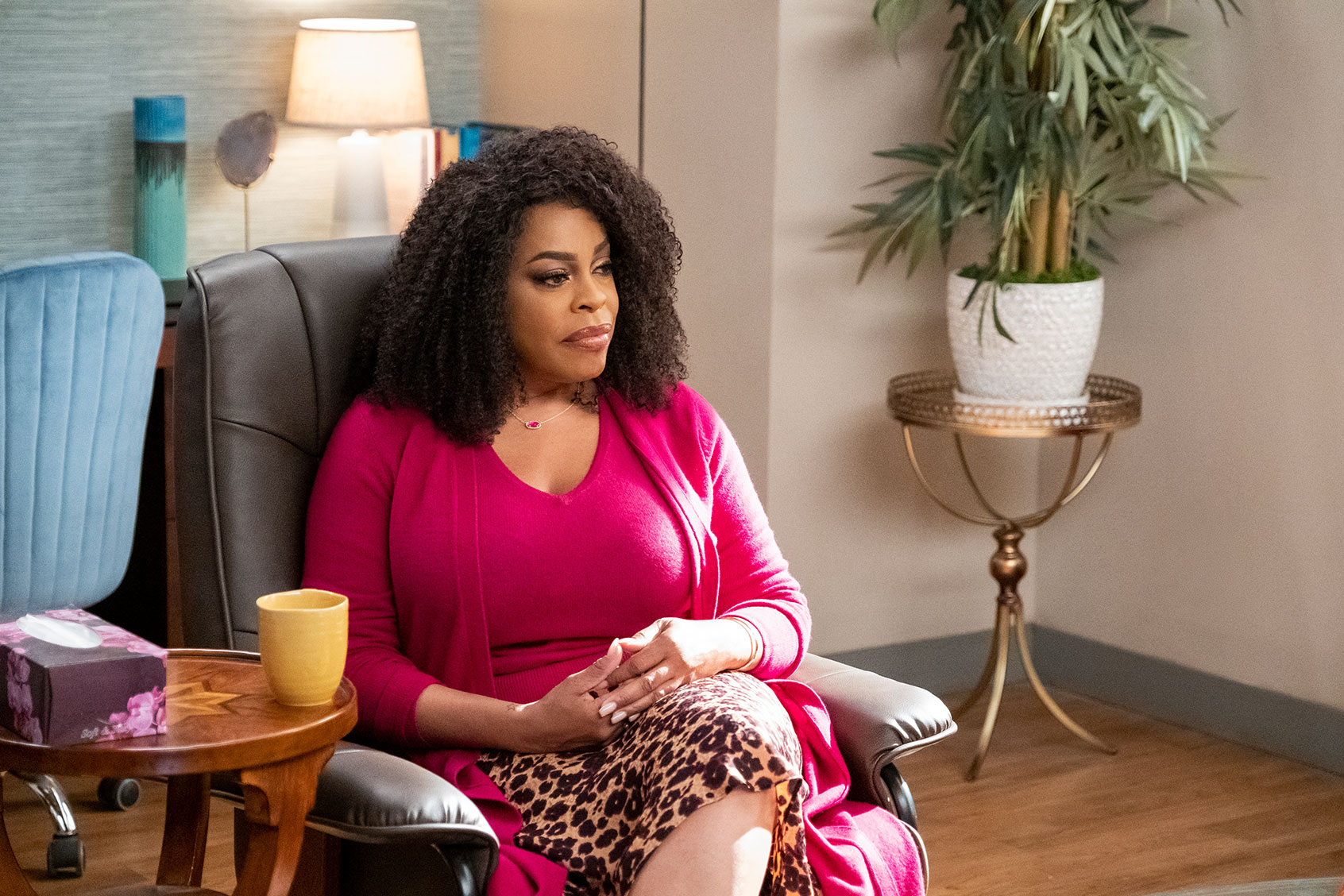
Never Have I EverNiecy Nash as Dr. Ryan in “Never Have I Ever” (Lara Solanki/Netflix)Dr. Ryan makes it abundantly clear in her very first scene that Devi’s Paxton-centric daydream is a prime example of avoidance. Their sessions often consist of the doc sitting on an armchair in her brightly colored office while Devi paces and talks a mile-a-minute about everything but her dad. Their first session we see opens with a bewildered Dr. Ryan refusing to tell the underage Devi that she’s bangable because it’s wrong “ethically, legally and most of all, it’s creepy.” 
From the jump, we can tell that Dr. Ryan keeps up with Devi’s banter and Gen Z colloquialisms, all while being Devi’s softspoken yet sassy voice of reason while she attempts to get her patient to pivot to why she’s really there. 

Between sentiments like “Knock it off, wannabe pill popper,” and “I think you give many effs,” Dr. Ryan keeps Devi’s attention with a friend-like rapport without diving into unprofessional territory. When Devi tries to sidetrack Dr. Ryan, she pivots the conversation. Toward the end of the first season, Devi asks Dr. Ryan, “You’re bringing it back to my dad, aren’t you?” who responds, “I am. I’d be a bad therapist if I didn’t.” Sure, Devi doesn’t open up about her dad for a while, and she takes a hot minute to listen to Dr. Ryan’s advice. But Devi gets there eventually.

As someone who’s gone through over a dozen therapists and psychiatrists (psych ward class of 2006 represent), I know firsthand that finding the right mental health professional isn’t always easy. A healthy rapport and understanding are vital to the process. I’ve had psychiatrists who made me so anxious that I’d dig my nails into my arms like a cat and those who laughed with me through my trauma. You can guess which one was more effective. PSA: It’s no fun when you have to see a therapist about your therapist. However, you have options (something that Devi almost explored during a fight with Dr. Ryan), and finding the right fit is half the battle. 

I spoke to therapist Tori-Lyn Mills, LCPC – a Thriveworks clinical professional counselor with over 20 years of experience in grief, loss, and trauma – who compared Devi’s therapy to being like couples therapy but solo. “The therapist is supporting Devi’s relationship with herself,” Mills said. “In the grand scheme of things, she’s always going to be with herself, not these relationships.” Mills also pointed out that though Devi gives Dr. Ryan a hard time, the good doc refocuses Devi internally rather than externally, ultimately encouraging Devi to have a better relationship with herself. 

In coaching Devi to love herself, Dr. Ryan encourages a healthier relationship between Devi and everyone in the teen’s life. 

Dr. Dana Wang, Psychiatrist and co-founder of RIVIA Mind, said, “This healthy relationship [between Dr. Ryan and Devi] taught [Devi] how to be honest with herself and others by showing her emotions. That, in turn, translated into her other relationships becoming more intimate.” She noted that “Dr. Ryan helped Devi see the value in herself, which was the most therapeutic part of their relationship.”

In interviews, Ramakrishnan is asked what team she roots for. Countless times, Ramakrishnan answers, “Team Devi.” Everyone in Devi’s life — from her family, friends, and boyfriends — often have their own selfish reasons for wanting Devi to make certain choices. But ultimately, Dr. Ryan is the only objective person in Devi’s life that is genuinely Team Devi. She’s also the one person that gets Devi to be Team Devi. As a bonus, in coaching Devi to love herself, Dr. Ryan encourages a healthier relationship between Devi and everyone in the teen’s life. 

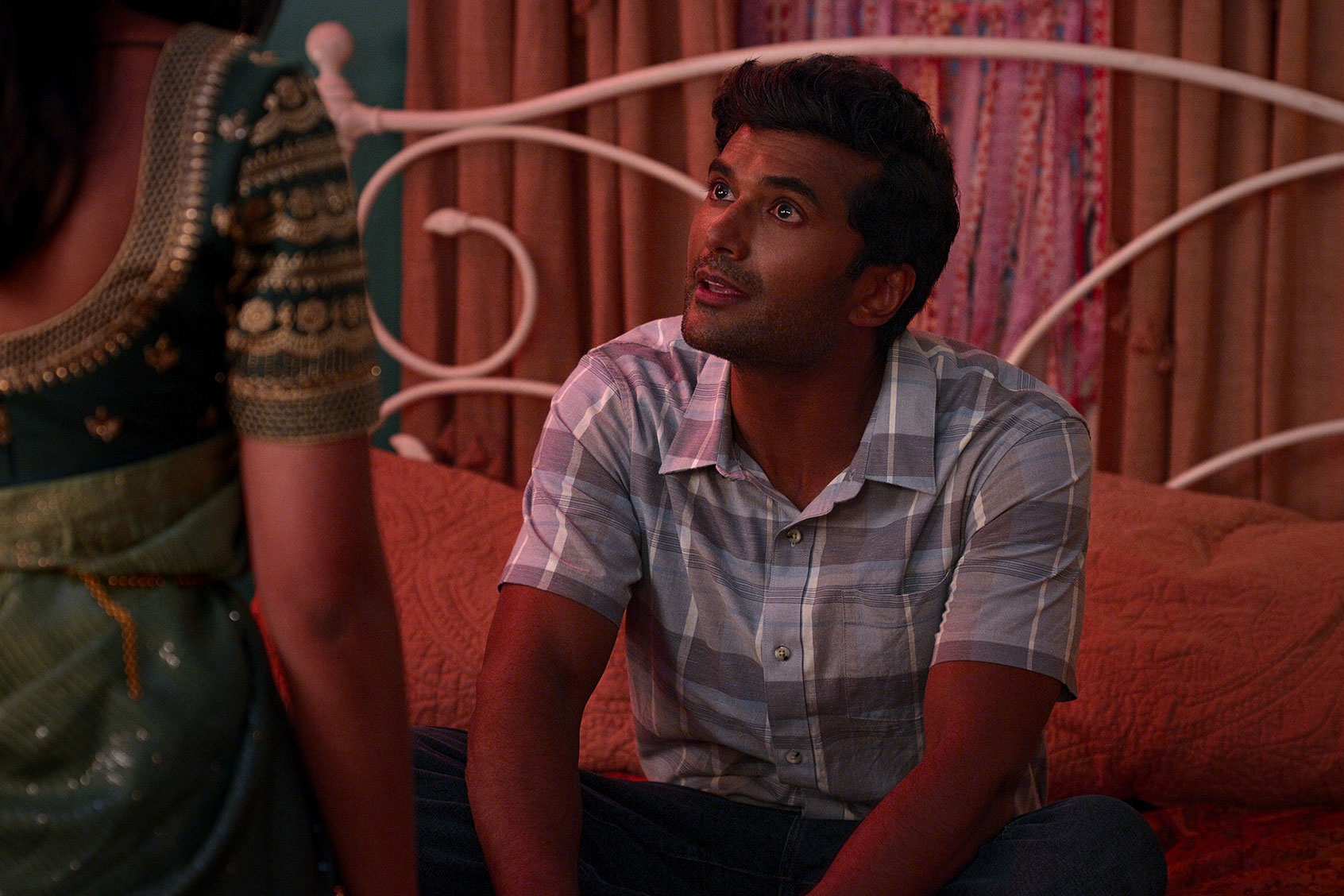
Never Have I EverSendhil Ramamurthy as Mohan in “Never Have I Ever” (Courtesy Of Netflix)
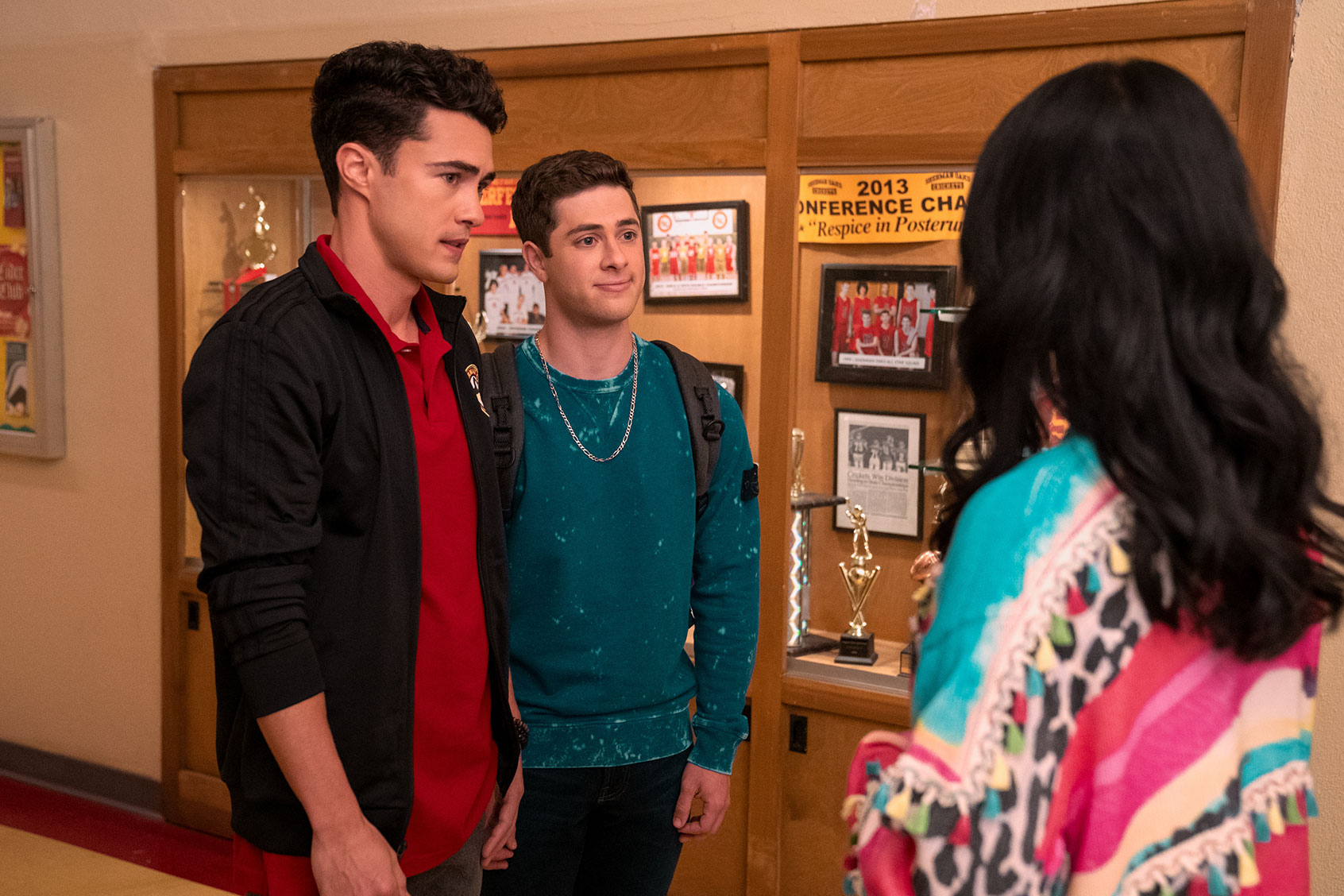
Without Devi’s dad Mohan acting as a peacekeeper between his daughter and her mom Nalini (Poorna Jagannathan), they hurt each other more often than not during the first season. Devi calling her mom a b***h certainly isn’t the best, but nothing could possibly cut deeper than Devi yelling, “I lost the only parent that actually cares about me. I wish you were the one that died that night” at her mom. What’s worse? Nalini agrees with her. 

Nalini isn’t without her harsh moments, either. On the night of Mohan’s death, Devi overheard her mom telling him, “Whoever this child is, I’m through with her. . . . She’s no daughter of mine.” She told Mohan that he was too easy on Devi, while Mohan insisted that he just has a different approach. One of Nalini’s greatest hits also includes putting down Paxton and Devi in the same breath when she says, “Great decision-making, Devi. Why don’t you just let this idiot knock you up?”

I, too, had a tumultuous relationship with my mom as a teenager. Like Devi and Nalini, I was a hothead, and my mom didn’t have the patience to handle it — or the desire to get raw and have a deep conversation without our emotional weapons ready to fire. At one point, I screamed something to the effect of, “You should have gotten an abortion if I’m such a burden to you.” Luckily for Devi, Dr. Ryan helps both women work through their lack of communication, leading to some of the show’s most gut-wrenching and hard-hitting scenes. 

Few dry eyes can be found when Devi and Nalini spread Mohan’s ashes to the tune of U2’s “Beautiful Day” at the end of the first season or when Nalini tells Devi, “You’re never too much, and you’re always enough.” Instead of grieving silently by treating their emotions like the enemy, they begin honoring Mohan’s memory and what he would want for his two (im)perfect girls. Ben may have rallied the troops to get Devi to go to the beach to spread her dad’s ashes, but Dr. Ryan’s push for the mother and daughter to mourn together seals the deal.

By Season 3, Devi and Nalini have made tremendous strides in their mother-daughter relationship. When Devi decides not to go to the Colorado-based Shrubland school, she tells her mom, “I need one more year with you. We don’t know what’s gonna happen. OK? Look at Dad.” And instead of insisting that Devi get the best education possible, she accepts her daughter’s decision with a hug. Nalini even catches herself calling Devi stupid after she lied about college acceptances and quickly corrects herself in the final season. Without Dr. Ryan, Devi and Nalini would likely never break through their sniping and miscommunication to reach this point of respect and acceptance. 

“Never Have I Ever” narrator John McEnroe likes to call Devi a hothead throughout the series, but there’s a strong argument that Devi’s intense in-the-moment reactions go much deeper.

Dr. Wang pointed out, “In South Asian cultures where no one talks about mental health, there is a lot of shame in experiencing negative feelings, and it’s not easy finding ways to express them in culturally acceptable ways.” She added that Devi “became physically paralyzed because it’s more permissible to become physically weak than emotionally vulnerable.” 

Similarly, Mills noted, “Our emotions don’t belong in our body to stay. So it’s important to be in tune with your feelings and to make friends with them.” Dr. Ryan helps Devi and Nalini do just that, and season by season, they begin sharing their grief with honest and thoughtful communication rather than blowups.

“Never Have I Ever” narrator John McEnroe likes to call Devi a hothead throughout the series, but there’s a strong argument that Devi’s intense in-the-moment reactions go much deeper. Whether she’s smashing a chemistry beaker when Ben beats her grade on a test, spreading a detrimental rumor about her friend Aneesa or publicly announcing that Ben took her virginity in a moment of jealous rage, there’s often an underlying feeling of inferiority that accompanies these impulsive outbursts. No one’s forgetting Devi’s Season 4 shouting match with Margot any time soon. “I hope you have a nice life riding Ben Gross’ circumcised d**k,” is a pretty memorable public takedown.

At one point, Ben cuts Devi to the core when he savagely quips that she has an undiagnosed mood disorder. Mills addressed this crack, saying, “It’s always really tough if someone who’s not a professional — especially a friend or family — someone that’s close to you says that you have an undiagnosed issue [because it] can seem like an insult or dig rather than a support.”

Meanwhile, Dr. Wang had a similar sentiment, adding, “No one wants to be given a label, and it’s part of the stigmatization of mental health disorders.  . . . Dr. Ryan taught Devi not to let others define her.” 

Ben’s mood disorder insult hit me hard because I, too, had an undiagnosed mood disorder until I was 25. Of course, “probable mood disorder” and later “mood disorder NOS” littered the notes of my middle and high school records. Still, no psychiatrist pulled the trigger on my Bipolar II diagnosis until I was well into adulthood (which is common practice for diagnoses like Bipolar).  

Throughout my handful of halfhearted suicide attempts, the scars that litter my body from shoulder to ankle, and the nights I spent sobbing over minor inconveniences, I just wanted to stop feeling so much all of the time.

Ben’s comment wounds a still-grieving Devi, who’s grown accustomed to her classmates calling her “Crazy Devi.” When she breaks down in Dr. Ryan’s office to ask if she’s crazy, Dr. Ryan says, “Devi, you feel a lot, which means sometimes you’re gonna hurt a lot. But it also means that you’re gonna live a life that is emotionally rich and really beautiful.” 

Never Have I EverDarren Barnet as Paxton Hall-Yoshida, Jaren Lewison as Ben Gross and Maitreyi Ramakrishnan as Devi in “Never Have I Ever” (Lara Solanki/Netflix)On some level, it doesn’t really matter if Devi has a mood disorder or just needs Dr. Ryan’s help expressing her emotions. Like me, Devi feels her feelings in a never-ending litany of fireworks. They come fast and they come hard, and we can’t always help how they make their presence known. Still, I would take my emotionally rich life over apathy, even on my worst days, and I think Devi would, too. 
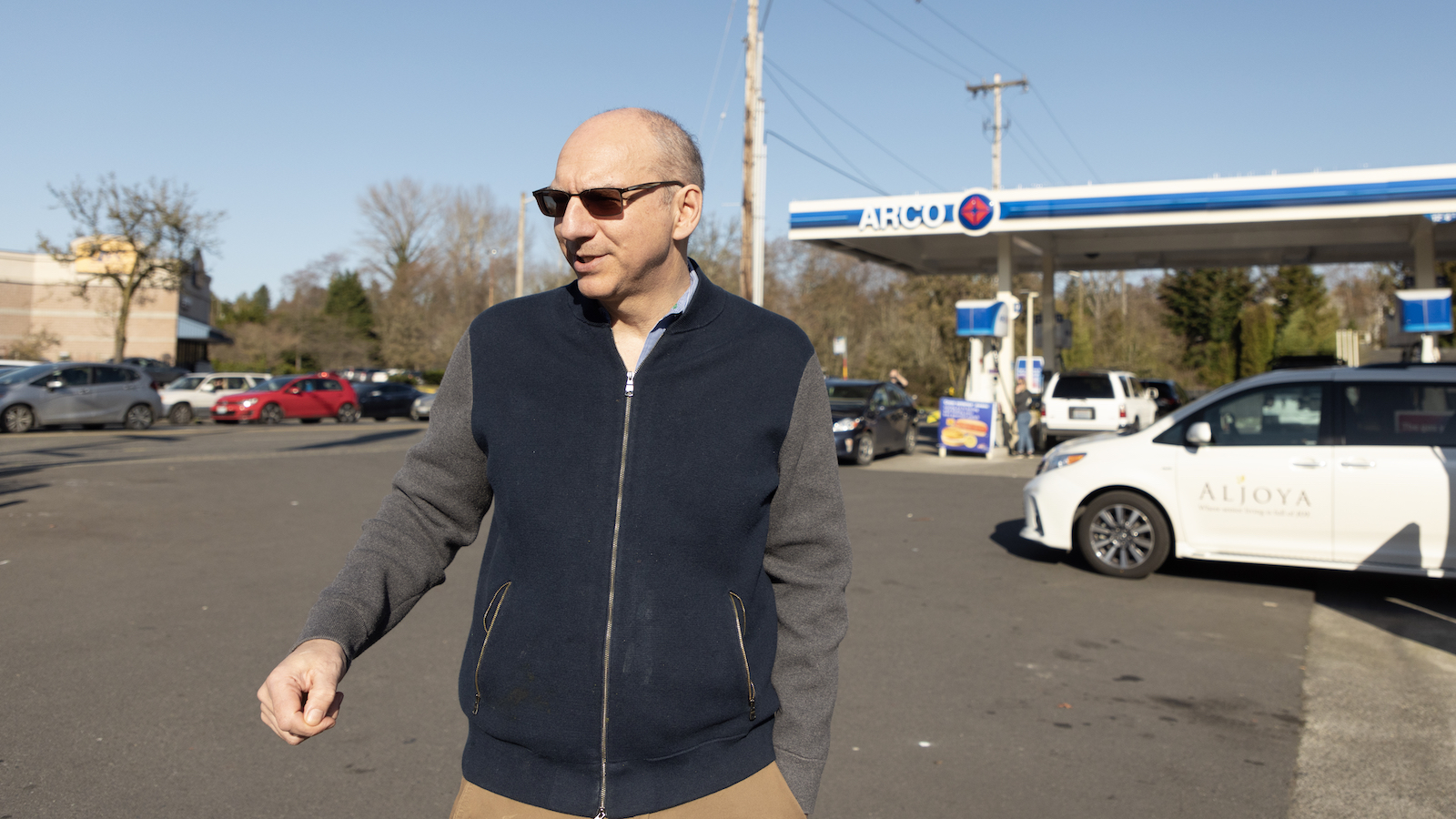
As Devi prepares to graduate high school in Season 4, her last therapy session in the show seems to mark the end of her journey with Dr. Ryan — who’s a child psychologist, after all. During the show’s four seasons, Dr. Ryan taught Devi that it’s not weak to let your emotions out and it’s OK to let in the people you love. Her compassionate yet firm advice helped shape a self-assured young woman who knows that there’s more to life than boys. 


Want a daily wrap-up of all the news and commentary Salon has to offer? Subscribe to our morning newsletter, Crash Course.


Devi’s over-the-table goodbye hug with Dr. Ryan in the show’s penultimate episode speaks volumes. The doc tells Devi the four words that have desperately loomed over every trophy triumph and failure, her Princeton dream and each orchestra recital: “I’m proud of you.” Her dad isn’t there to tell Devi this anymore, but Dr. Ryan has it covered. The therapist’s assurance that Devi is a survivor helps her dive into her trauma one last time to honor her dad in a college essay worthy of a Princeton acceptance letter. And with that, we’ve come full circle.

So, Ben or Paxton? The answer is simple: It doesn’t matter. Devi may have moved on to college, but she’s certainly not finished making mistakes. Hopefully, she’ll keep her sessions with Dr. Ryan on Zoom or find a local therapist to continue her therapy journey — because that work is never finished. But either way, Dr. Ryan gave Devi the tools she needs to navigate any relationship while holding herself accountable for her actions. Whether her college relationship lasts a lifetime or ends in three weeks, Devi Vishwakumar is gonna be just fine. And she has Dr. Ryan to thank for that.

If you are in need of help, call or text 988 to reach the Suicide and Crisis Lifeline. Hours of operation are 24/7 and it’s confidential.

Gas stations caused a $20 billion toxic mess — and it’s not going away

“This story was originally published by Grist. Sign up for Grist’s weekly newsletter here.”

This story was co-published with Crosscut.

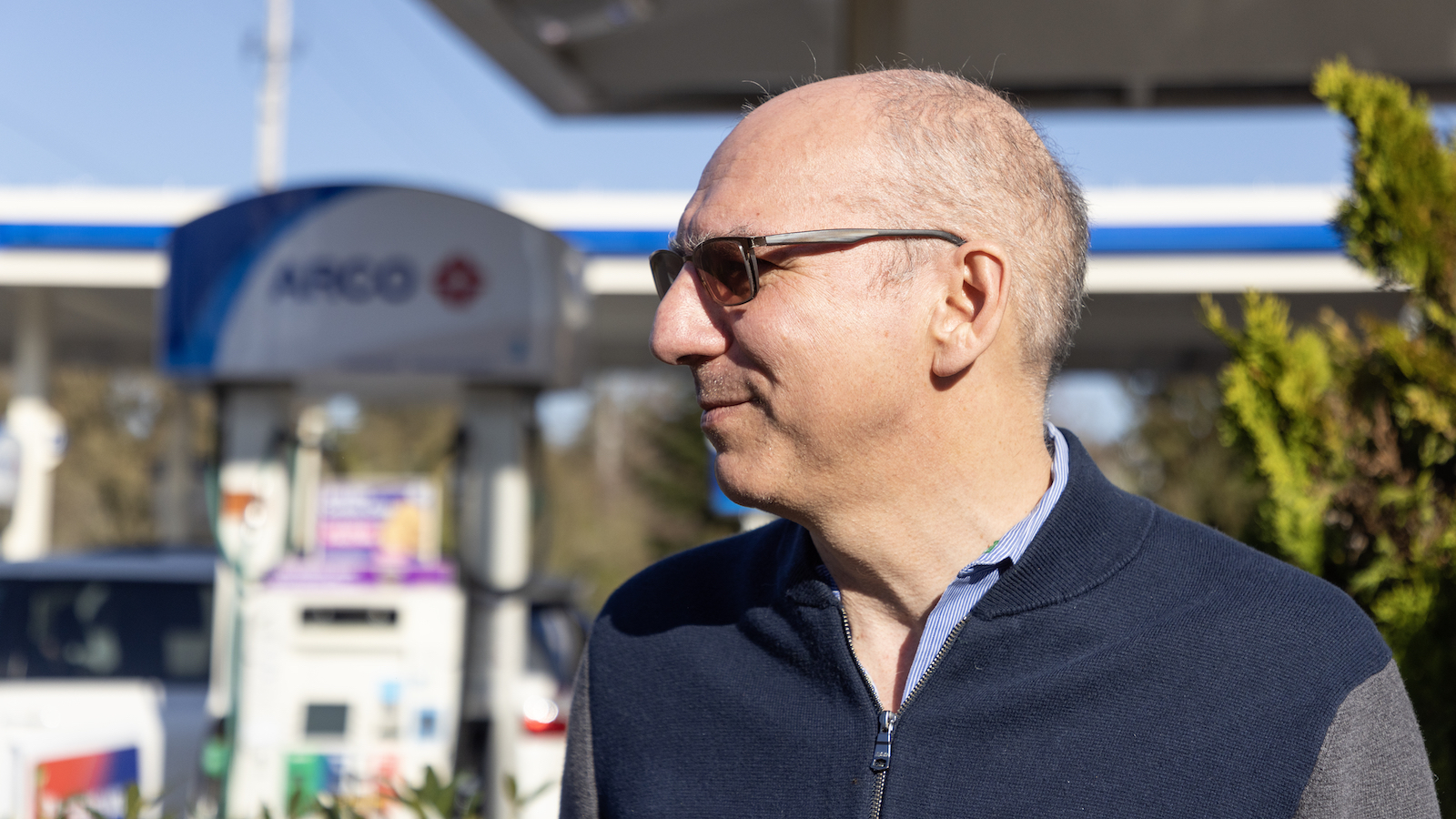
A black, electric-powered Nissan Leaf pulled up to a gas station — not to fuel up, of course. Matthew Metz, the founder of Coltura, a nonprofit trying to speed up the country’s shift away from gasoline, climbed out of his car with printed maps in hand, prepared to give me a tour.

It was a sunny spring day, and the Arco station in North Seattle looked like any other on a busy street corner, with cars fueling up and a line of bored people waiting to buy snacks and drinks inside the convenience store. Metz knows a lot about gas stations, and it changes what he sees. Looking around, he marveled at the risks that everyone was taking, even if they weren’t aware of it. “This is a hazardous materials facility,” he told me.

Drivers pumped their tanks with gas, breathing carcinogens like benzene, the source of gasoline’s signature sweet smell. On the east side of the property, tall white pipes that vent toxic vapors from petroleum kept underground stood just 10 feet away from the window of a childcare center. Hidden below the station is a tract of contaminated soil that extends underneath a neighboring apartment building. 

The Arco station has a long history of leaking, with petroleum products discovered floating in the septic tank beneath it in 1990. After decades of efforts to remove and break down that pollution — a host of contaminants including lead, benzene, and the suspected carcinogen methyl tertiary-butyl ether — trace amounts remain, with some highly polluted patches in the soil. One sample taken late last year showed levels of gasoline-related compounds 72 times higher than Washington state’s allowable limit.

a man in a jacket and sunglasses walks in front of a gas station

Matthew Metz, the founder of the nonprofit Coltura, walks in front of an Arco gas station in Seattle. Grist / Jesse Nichols

This Arco station is hardly unique. Almost every gas station eventually pollutes the earth beneath it, experts told Grist. The main culprit: the underground storage tanks that hold tens of thousands of gallons of fuel, one of the most common sources of groundwater pollution. Typically, two or three of these giant, submarine-shaped tanks are buried under a station to store the gasoline and diesel that gets piped to the pump. A large tank might be 55 feet long and hold as many as 30,000 gallons; a typical tank might hold 10,000 gallons. Leaks can occur at any point — in the storage tank itself, in the gas pumps, and in the pipes that connect them. Hazardous chemicals can then spread rapidly through the soil, seeping into groundwater, lakes, or rivers. Even a dribble can pollute a wide area. Ten gallons of gasoline can contaminate 12 million gallons of groundwater — a significant risk, given that groundwater is the source of drinking water for nearly half of all Americans.

As a result, time-consuming cleanup efforts are unfolding all across the country, with remediation for a single gas station sometimes topping $1 million. Leaks are such a huge liability that they’ve led to a high-stakes game of hot potato, where no one wants to pay for the mess — not the gas station owners, not the insurance companies that provide coverage for tanks, not the oil companies that supply the fuel. In some states, polluters have shifted tens of millions of dollars in remediation costs onto taxpayers. Roughly 60,000 contaminated sites are still waiting to be cleaned up, according to the Environmental Protection Agency, or EPA — and those are just the ones that have been found. Washington state has about 2,500 in line, one of the biggest backlogs in the country.

Much of this pollution has been stagnant for decades. Forty years ago, steel storage tanks began corroding, setting off a slow-motion environmental disaster all over the United States. Leaks often weren’t discovered until long after petroleum had poisoned the groundwater, when neighbors of gas stations began complaining that the water from their taps smelled like gasoline. In 1983, the EPA declared leaking tanks a serious threat to groundwater, and Congress soon stepped in with new regulations. One of the largest spills was in Brooklyn, where a 17 million-gallon pool of oil gradually collected beneath a Mobil gas station — a larger spill than the Exxon Valdez disaster in 1989, when a tanker ran aground in Alaska and poured oil into Prince William Sound.

Fast-forward to today, and more than half a million leaks have been confirmed around the country. The Government Accountability Office estimated in 2007 that the total bill for cleanups would top $22 billion. Those old, decrepit storage tanks have left a legacy: overgrown, empty lots that real-estate developers don’t want to touch. Of the roughly 450,000 brownfields in the country, nearly half are contaminated by petroleum, much of it coming from old gas stations.

As the contamination from these spills lingers, underground storage tanks are becoming a problem again as the next generation of tanks — installed in a rush after the old steel ones started breaking — begin nearing the end of their 30-year warranties, when there’s broad consensus they are highly likely to leak. In Washington state, for instance, the average tank is about 29 years old. The tanks at the Arco station in North Seattle were replaced in 1990, soon after contamination was discovered, putting them a few years past the 30-year cutoff.

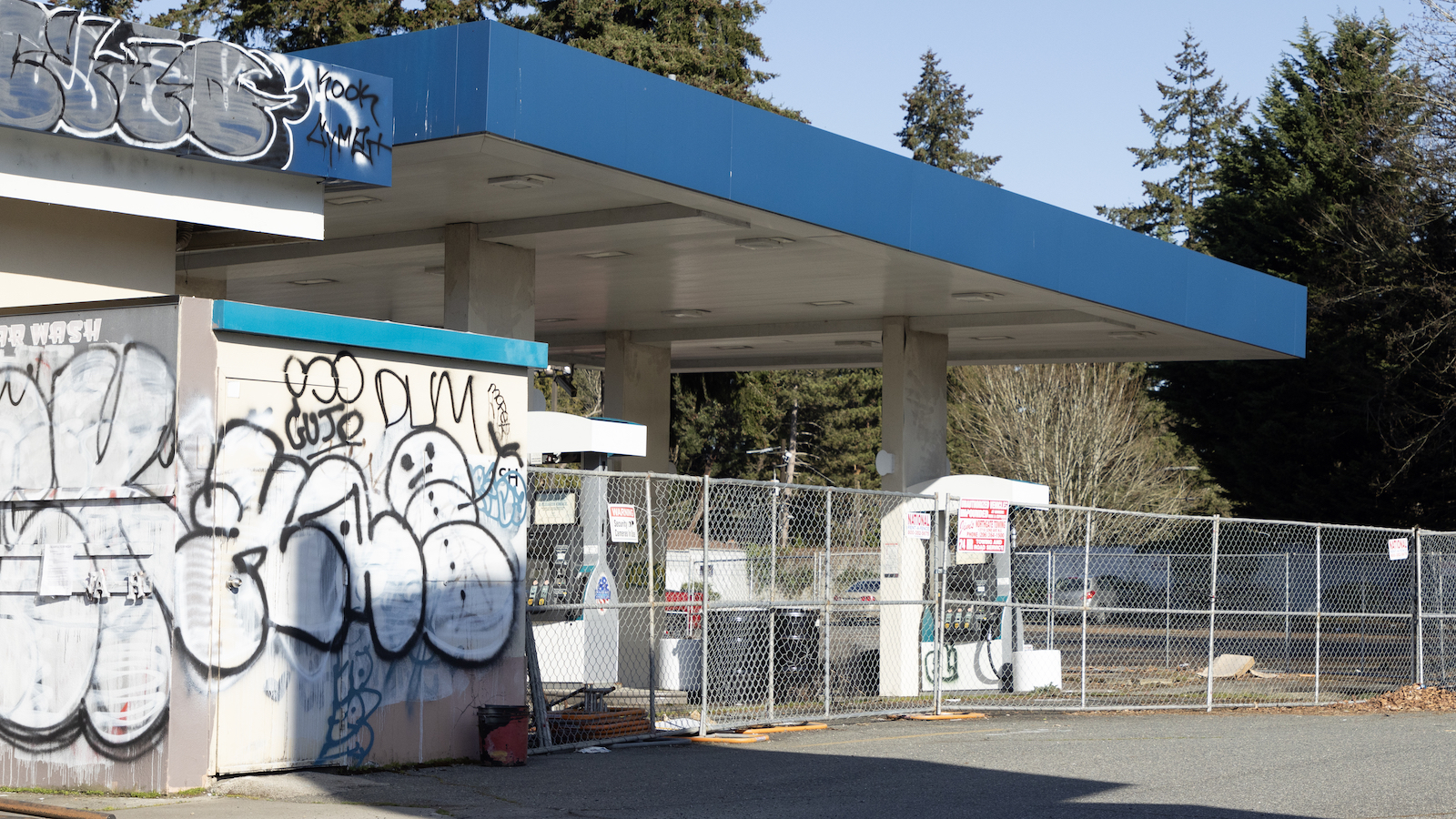
a gas station with a blue awning and chain link fence.

Graffiti covers an abandoned gas station in Seattle. Grist / Jesse Nichols

Congress passed a series of amendments to the Resources Conservation and Recovery Act in the 1980s introducing federal regulations to find and prevent spills. The law mandated that owners of underground storage tanks demonstrate they can cover $1 million in damages from contamination, a requirement often met by buying insurance from private companies and special state cleanup funds. States are responsible for implementing the regulations, and take different approaches to enforcement, cleanup, and insurance.

But states are discovering that many private insurers, which have long hesitated to provide coverage, are even more reluctant as tanks get older. “I don’t think they’re super thrilled to insure them anymore,” said Cassandra Garcia, the deputy director of Washington state’s Pollution Liability Insurance Agency. “This isn’t generally the most profitable business line for them.”

If gas stations don’t have insurance, states can shut them down. This predicament prompted Washington state to adopt a new law this spring providing fully state-backed insurance for gas stations. But critics like Metz wonder whether stations need to be saved at all. With electric vehicles on the rise, Metz thinks that selling gasoline is a dying business. “The whole financial underpinnings of gas stations are starting to crumble,” Metz said.

Gas stations often bear the names of major oil companies such as ExxonMobil, Shell, and Chevron, but that doesn’t mean those companies actually own the stations. Usually, they supply the fuel to independent business owners who signed agreements to sell their products and pay royalties to use their branding. Back in the day, oil companies owned a lot of stations (and thus the tanks beneath them); today, the top five largest oil companies own about 1 percent of gas stations.

The number of stations overall has been in decline for decades thanks to mediocre profits, rising land values in cities, and more fuel-efficient cars. An analysis from Boston Consulting Group found that between 25 and 80 percent of gas stations nationwide could be unprofitable in 12 years — and that analysis was conducted in 2019, before a slate of new policies, including federal tax credits, were passed to promote electric vehicles. Under vehicle-emissions rules unveiled by the Biden administration in April, EVs would make up as much as two-thirds of all U.S. car sales by 2031. Last year, Washington state set a target of ending the sale of new gas-powered vehicles by 2030, just seven years away; it has also adopted California’s stricter deadline of 2035, along with five other states.

That shift could lead to a pileup of vacant gas stations that the existing cleanup programs won’t be able to handle. There are more than 145,000 fueling stations in the U.S., according to the National Association of Convenience Stores. Even if the country manages to break off its century-long attachment to gasoline, the fuel’s legacy may live on in the soil and water. The question of who pays to clean up the contamination is a mess in itself: In theory, station owners are supposed to pick up the tab, but sometimes they’re unable to pay — or unable to be found — when the bill comes due. So then, who pays? Sometimes it’s an insurance company, sometimes it’s an oil company, and sometimes it’s the government. It’s up to lawyers and courts to hash it out.

“This is a huge problem nationally,” Metz said. “It’s all over the country. There are all these abandoned gas stations, and it’s just going to get worse.”

Behind just about every environmental program in the United States is an environmental disaster that brought it into being, and leaking gas stations are no exception. In this case, the disaster became public in December 1983, when a 60 Minutes segment warned Americans that underground storage tanks were a “time bomb” in their neighborhoods. The show documented the daily struggles of families in a small Rhode Island town whose drinking water had long been contaminated by Mobil and Exxon stations uphill. With 2 or 3 of every 10 gas stations in the country leaking, the show’s host, Harry Reasoner, told viewers that it promised to be the pollution disaster of the 1980s.

The catastrophe was set in motion in the years after World War II, when many Americans bought cars and moved to the suburbs, spurring demand for gasoline. Oil companies helped build hundreds of thousands of gas stations around the country and installed steel storage tanks beneath them. But those steel tanks and piping, exposed to soil, corroded over time, and petroleum began seeping through cracks and holes, carrying carcinogens into the groundwater.

The petroleum industry knew the risks. In 1961, advertisements in the trade magazine National Petroleum News acknowledged that “rusty, leaky storage tanks” were a problem. The pipes that connected tanks to the pumps were prone to breaking, too. In 1962, a B.F. Goodrich ad touting flexible connectors warned that “the settling or shifting of underground storage tanks can cause pipelines to crack, leak, and break apart.”

Three ads from the National Petroleum News trade journal

Ads from the National Petroleum News trade journal ranging from 1962 to 1972. National Petroleum News Archive

Within a few years, safer fiberglass tanks emerged as a substitute, though the steel industry later argued that the fiberglass couldn’t handle the alcohol-blended fuels that were being used. Manufacturers started offering leak detectors, promising that the technology could help stave off lawsuits and bad press. “With Red Jacket Leak Detectors, you’ll probably never have to reckon with contamination from piping leak losses … litigation and bad publicity … unhappy dealers … or even disaster,” read an advertisement in 1972.

By the early 1970s, oil companies were well aware that the tanks they owned beneath gas stations posed a huge liability. “Large sums of money, time, and effort are exhausted on a continuing basis in the location and detection of leaking tanks and lines,” a report from Exxon said in 1973.

The realization came at a time when public concern over pollution was taking off. In 1969, floating debris caught fire in Ohio’s Cuyahoga River, sending flames five stories high, and a drilling accident near Santa Barbara, California, spread an oil slick over more than 800 square miles of the Pacific Ocean. The modern environmental movement was born a year later, when some 20 million Americans demonstrated on the first Earth Day in April 1970. The protests led to the creation of the Environmental Protection Agency and a slew of regulations to protect the air and water.

For companies selling gasoline, it was a worrying development. “The oil companies started to realize that they could be liable for a lot of environmental harm caused by these little gas stations,” said Peter Lehner, who investigated underground storage tank leaks for the Natural Resources Defense Council as well as the New York attorney general’s office in the late 1990s.

Oil giants found ways to unload some of that risk. In a lawsuit brought by residents of West Point, Indiana, against Shell in 1993, the oil company admitted that it began replacing steel tanks with fiberglass ones at the stations that it owned in the mid-1970s — but not at independently owned stations that sold Shell gasoline and touted its brand, according to court documents. The company adopted a policy that independent dealers were “on their own” when it came to technical advice or leaks from tanks, and refused to allow them to attend the company’s “tank camp” that provided intensive training on handling the equipment, the plaintiffs’ lawyers alleged in a court brief. They argued that the strategy saved thousands of dollars per station and noted a trial court had found that “the oil companies used their purported independence as a shield against liability.”

Shell ended up losing the case after the Indiana Supreme Court held it legally responsible for tanks that had leaked at a station that it operated but never owned, ordering the company to pay millions in cleanup costs and attorneys’ fees.

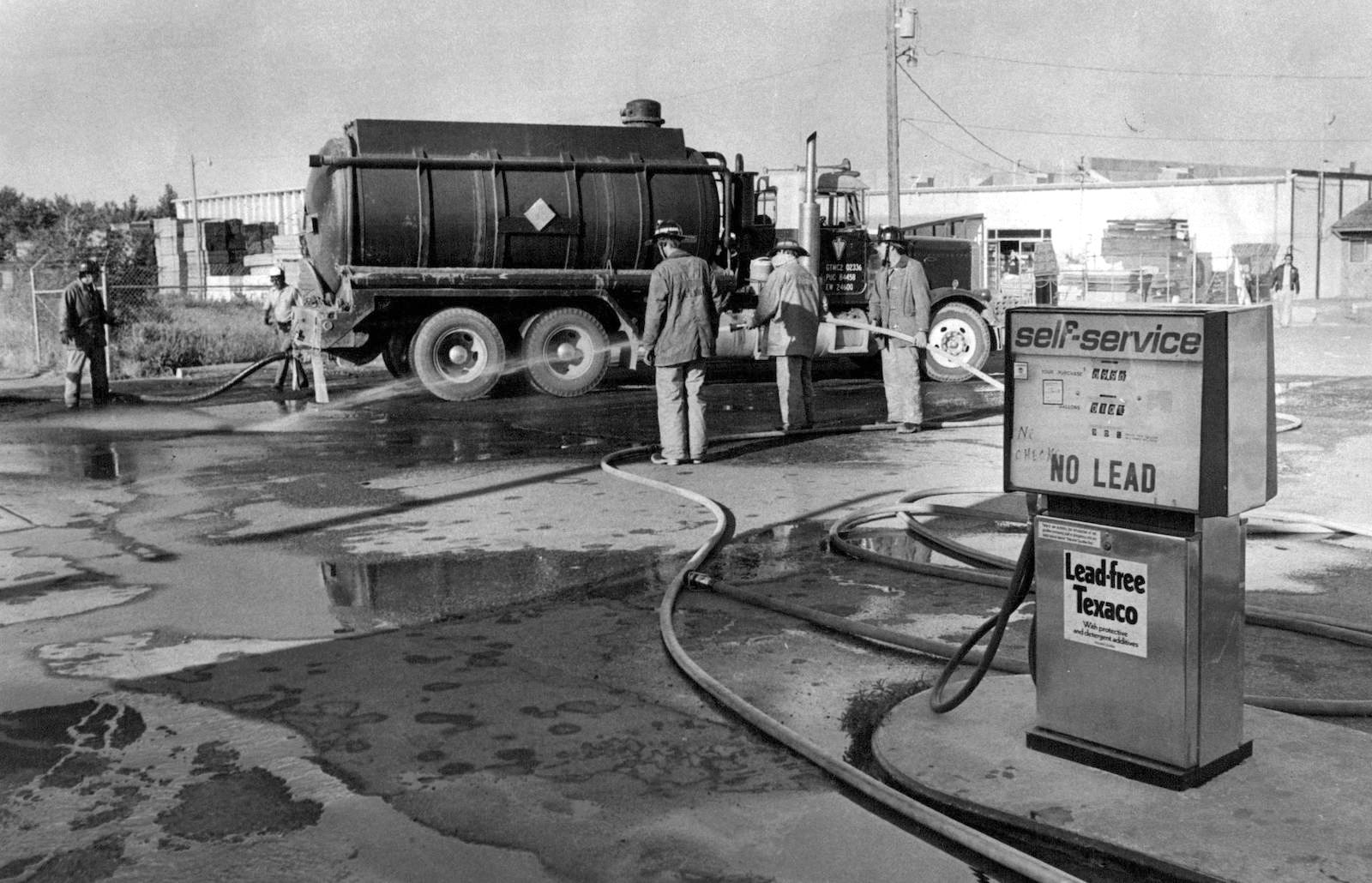
a black and white photo of firemen hosing off a gas station near a pump

In a photo from 1979, firefighters clean up gasoline that spilled when an underground storage tank at a Texaco service station in Aurora, Colorado, was being filled from a tanker. The problem was apparently due to an improper fitting on a hose, resulting in an 825-gallon spill. Glen Martin / The Denver Post via Getty Images

Another tactic was to sell stations — along with the liability for underground tanks — to new owners. The purchase and sale agreements for gas stations often contained a clause that indemnified the oil company for all harm caused by a leak, regardless of whether they were at fault, leaving the new owner responsible for the costs. An undated contract from Texaco, for instance, spells out that the purchaser would agree “to maintain all storage facilities” to prevent spills and “indemnify Seller for all claims, fines and expenses relating thereto.”

“I have talked to several gas station owners that have purchased gas stations from Big Oil,” said Ryan Bixby, the managing principal at the environmental consulting firm SoundEarth, who oversees cleanups in Washington state. “I think that some of the property owners really didn’t understand what they were getting into when they released that liability.”

Oil companies knew that gasoline posed a major health threat. In Rockaway, New Jersey, in 1980, a Shell scientist found that seven plumes were leaking from underground storage tanks, contaminating the groundwater with gasoline and methyl tertiary-butyl ether, or MTBE — a common gasoline additive that posed health risks and was particularly difficult to clean up. At Shell, an internal joke circulated that MTBE stood for “Most Things Biodegrade Easier”; later iterations of the acronym included entries like “Menace Threatening Our Bountiful Environment” and “Major Threat to Better Earnings.” In 1981, Arco noted in a memo that tanks were polluting the U.S. water supply with toxic chemicals such as benzene. 

Leaking tanks went from a source of private hand-wringing to a public scandal in 1983, the year the 60 Minutes segment ran. The New York Times reported that millions of gallons of gasoline were seeping from storage tanks each year. Congress soon moved to protect groundwater supplies. Within a year, it had formed a national underground tank program and directed the EPA to develop a regulatory system to prevent and detect leaks and clean up tanks.

By 1985, the industry’s concern over regulations and liability had reached a fever pitch. National Petroleum News reported that “the day of reckoning” was nearly at hand, with tank leak liability giving “equipment distributors and oil marketers the cold sweats.” 

That year, California created its own underground tank regulations, sending the oil industry into shock. In response, the oil company Unocal sent California dealers who were leasing its stations special legal agreements asking them to pay for inspection costs. “[Major oil companies] could also try to make lessees pay for repairs, registration fees and damages associated with leaks,” U.S. Oil Week reported, noting that Chevron was already pushing maintenance and insurance costs for leak-prone tanks onto its independent dealers.

a large cylinder gas storage tank is lowered into a pit by a crane

Double-walled, fiberglass storage tanks are prepared and lowered onto a gravel bed at a gas station site, circa June 1985 in Los Angeles. Bob Riha, Jr. / Getty Images

Another response to impending regulations was to lobby allies in Congress. Representative Billy Tauzin, a Democrat from Louisiana with heavy campaign funding from oil companies, proposed limiting liability for the owners and operators of leaking tanks to $3 million. Critics labeled the proposed bill the “Exxon Relief Act.” Tauzin also tried to codify a loophole allowing oil companies to be absolved of financial responsibility for leaks simply by selling off tanks to gas station owners. But that failed when Congress took another step and passed an amendment to the Resource Conservation and Recovery Act in 1986, which held that no owner or operator of an underground storage tank could transfer that liability to someone else.

Regardless, gas station owners were facing another financial problem. Private insurers, being in the business of making money instead of losing it, began dropping out of their pollution liability contracts or rewriting them to exclude coverage for tanks in 1986. For some insurance companies, it was already too late — some went bankrupt from the soaring costs of covering pollution from gas stations, said Alexandra Kleeman, an attorney in Seattle who helps people buy and sell contaminated properties.

That left gas station owners in a tight spot. “The insurance companies seem to be conspiring to avoid the risk entirely by all dropping the pollution coverages at the same time,” read a newsletter from the Southern California Service Station Association in 1985. The association argued that small gas station owners had been left in a “catch-22,” forced to provide financial responsibility for tanks with “no means of doing so.” The situation led states to set up programs, such as Washington’s Pollution Liability Insurance Agency, to help gas station owners meet the financial requirement.

The EPA devised more fully fleshed out regulations for underground storage tanks in 1988, requiring that they have devices to prevent spills and corrosion on any metal parts. Gas station owners were given 10 years to upgrade their tanks or install ones that met the new standards. Mom-and-pop stations were not well-equipped to do so, and many were forced out of business after the 1999 deadline.

Hoping to make oil companies pay for groundwater pollution, local residents turned to litigation in the mid-1990s. A lawyer named Scott Summy was winning lawsuits against oil companies all around the country, arguing that oil companies knew that MTBE-laced gasoline would spread far and wide, contaminating drinking water supplies. Over the years, Summy won more than $1 billion in settlements for residents and public water providers

With a fleet of upgraded and newly replaced tanks in the ground, and at least some justice served, underground storage tanks soon faded from national attention. Behind the scenes, however, some states quietly shifted the cleanup costs from polluters to taxpayers.

a large broken storage tank covered in dirt being held up by construction equipment

Workers remove an underground tank from a gas station. Nycshooter via Getty Images

In Indiana, for example, taxpayers spent more than $21 million decontaminating gas stations owned by former Vice President Mike Pence’s family after their company, Kiel Bros. Oil Co., went bankrupt in 2004. “Indiana has been especially amenable to using public money to pay for heavily contaminated soil to be excavated and for high-powered pumps to suck toxic liquid and vapor from the soil,” the Associated Press reported in 2018.

Arizona shifted the primary responsibility for cleanups from tank owners to taxpayers in 2004, an investigation by the Arizona Republic found. From 2011 to 2013, almost $45 million in taxpayer dollars was spent cleaning up leaks and spills from gas stations in the state because gas station owners were unable to pay the bill. At the time, more than one-third of gas station owners in the state had no financial coverage for their tanks, despite legal requirements. 

The same story played out in Tennessee, too, according to reporting by the Tennessean. In 2016, the newspaper found that the state’s residents were footing 90 percent of the bill for cleanups. By 2021, the oil industry’s environmental fees that fed the state’s remediation fund had been eliminated entirely, while taxpayers were paying roughly $14 million each year through a tax on gasoline. 

Anyone filling up their tank in the United States pays a 0.1 cent tax on each gallon of fuel that goes into the EPA’s trust fund for cleaning up leaking tanks, created in 1986 to pay for remediation when no viable owner could be found. More than $1.3 billion is sitting in the fund right now; last fiscal year, $67 million of it went toward remediating spills.

Depending on who you’re talking to, the subject of underground storage tanks either elicits warnings of an impending disaster or praise as one of the country’s overlooked success stories.

Federal officials point to the hundreds of thousands of sites that have been remediated over the past 40 years. Last March, the EPA announced that it had reached the “significant milestone” of cleaning up more than 500,000 underground storage tank leaks.

The federal regulations put in place in the 1980s — such as banning bare steel tanks and requiring spill-protection equipment — have prevented countless disasters. New technology has emerged that helps detect problems sooner, with some detection systems able to find a leak by monitoring vapor, said Bixby of SoundEarth. That’s a more reliable way than the old “dipstick” method in which a worker manually dips a long pole into a tank to measure fuel levels, a practice that can eventually wear a hole in the bottom of the tank. Newer tanks also come with two walls and monitors that can detect when petroleum slips through the first wall of defense.

In Washington state, the Department of Ecology is finding fewer leaks. Back in 1990, it discovered 900 leaks a year; since 2016, the number has hovered around 30.

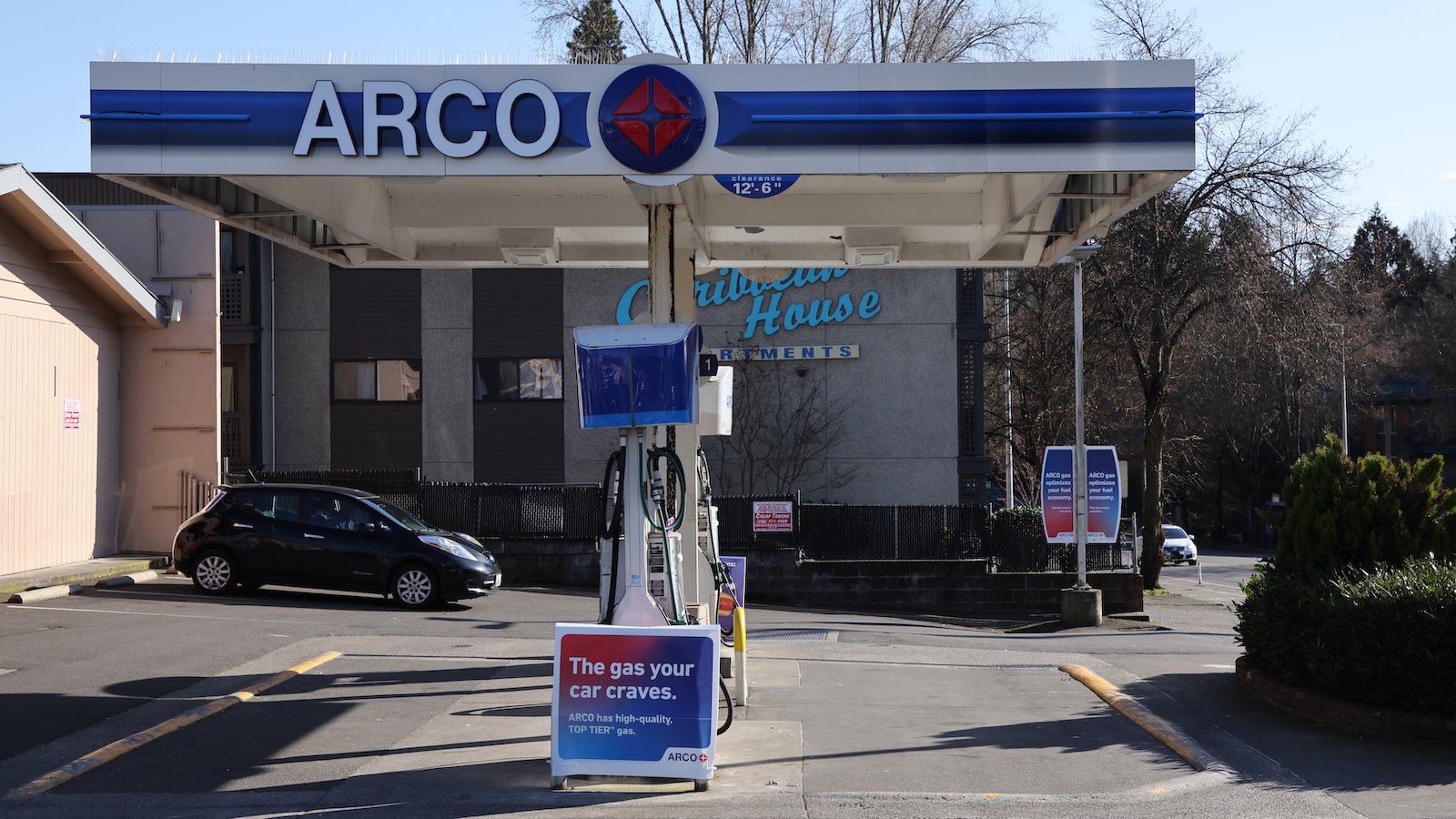
An ARCO gas station with pumps

An Arco gas station pictured next to an apartment building in Seattle. Grist / Jesse Nichols

Brand-new tanks are fairly reliable when maintained and monitored correctly, experts told Grist — but these aren’t the ones environmental advocates are worried about. The aging tanks installed at the beginning of the 1990s were “still pretty rudimentary,” Bixby said. Many of these older systems, especially the sumps, weren’t designed to handle the corrosive mix of gasoline and ethanol sold in the United States. On top of that, only 57 percent of underground storage tanks in the country meet all federal requirements to prevent and detect leaks. In Washington state, just over half are in compliance with federal rules, according to the most recent EPA data from this spring. That means that at least 600 fail to meet safety standards.

“Failing to meet regulatory requirements increases the risk of a release, and/or reduces the chance that a release will be quickly discovered,” a spokesperson for the EPA said in a statement to Grist. States have a variety of tools to enforce the requirements, including fines and the ability to prevent gas stations from having more fuel delivered, the EPA said. But the fact that such a large share of gas station owners aren’t following the rules suggests that states are wary of making such moves.

Kleeman, the environmental attorney in Seattle, thought that one reason Washington state wasn’t cracking down was because it had other environmental priorities, such as climate change. “We do have a crazy number of impacted sites for being so green, but I wouldn’t say that abandoned gas stations or contaminated gas station sites are really that big of a concern,” she said. “On the scale of things that are probably keeping Governor [Jay] Inslee up at night, it’s not, you know, the big issue.”

Dangerous spills are still turning up across the country. In Monmouth, Oregon, a small town outside the capital of Salem, a 76 gas station spilled 14,000 gallons of gasoline into nearby groundwater in April 2021. The leak, discovered when workers at a sewage treatment plant a mile away noticed the scent of gasoline, was caused by a line failure at the top of an underground storage tank. “I’m not exaggerating when I say that if somebody had lit a match at the wrong time, people would have died,” said a state official who requested anonymity because they were not authorized to speak to the press. “The vapor from that escaped fuel was definitely above the ignitability threshold.” 

It’s hardly an isolated anecdote. In Provo, Utah, 55,000 gallons of gasoline escaped from a storage tank into the soil and groundwater in March 2018; the state’s environmental department called the incident “catastrophic.” In Lily Lake, Illinois, a rural town outside Chicago, a Shell gas station under construction spilled nearly 8,000 gallons of gasoline after heavy rain flooded tanks last April, sending petroleum into a nearby wetland. And in November last year, a gas station in Bloomington, Indiana, spilled several thousand gallons of fuel due to a leak in the storage tank or piping.

Washington state has the sixth-biggest backlog of leaking underground storage tanks, behind Florida, Michigan, New Jersey, Illinois, and Pennsylvania, according to the EPA. Long waiting lists aren’t necessarily signs of indifference. They can be a result of stringent groundwater standards or geography. West of the Cascade mountains in Washington, high groundwater levels can cause leaked gasoline to spread further.


Want more health and science stories in your inbox? Subscribe to Salon’s weekly newsletter The Vulgar Scientist.


Barry Rogowski, the program manager for the Washington Department of Ecology’s toxic cleanup program, said that underground storage tanks are one of his agency’s priorities. Over 4,000 sites have been cleared by the state, with some 2,500 to go. A lot of the remaining contamination is hard to reach — with contaminated water sitting under, say, a railroad track or major roadway — and requires additional resources, Rogowski said. The Department of Ecology recently hired six staffers to help with tasks like sampling and site assessments to chip away at the backlog.

The reluctance of private insurers to cover aging tanks left Washington looking for new options. Under a longstanding program, private insurers provide $75,000 of the total $1 million of insurance for the tanks, with the state backing the rest. But if insurance companies decided to back out of the reinsurance program entirely, as some officials feared they might, the Department of Ecology would have to go around shutting down gas stations that no longer complied with the law, according to Garcia of the state’s Pollution Liability Insurance Agency.

So this year, Garcia’s agency worked with state legislators to pass a bill, HB1175, implementing a new system. For each gas station that enters the new program, the state will cover $1 million for old leaks and $2 million for future ones. The funding comes from a small tax on oil companies when selling their products in the state — which is increasing from 0.15 percent to 0.3 percent — along with premiums from gas station owners. Garcia said that the new approach gives the state more control over gas station cleanups by taking out “the insurance middleman.” Governor Inslee signed the law in April.

Critics of the law, such as Metz — the anti-gasoline advocate — called it a “bailout” of a dying industry. He sees gas stations as a link in a long supply chain that originates in the oil fields and ends with carbon pollution spewing from tailpipes. The transportation system has become the largest source of greenhouse gas emissions in the United States, much of which comes from vehicles pumped full of gasoline and diesel at the pump.

a bald man with sunglasses in front of an ARCO station

Matthew Metz, the founder of the nonprofit Coltura, walks in front of a gas station in Seattle. Grist / Jesse Nichols

Some environmental advocates are skeptical that the new policy will cover all the costs. “If we have 2,000 tanks that need to be cleaned up, that’s basically a billion-dollar liability,” said Clif Swiggett, who leads policy analysis at Carbon Washington, a climate policy nonprofit. “So that’s a huge amount of costs that’s about to come over the horizon. … These gas stations are going to go out of business, and in a big wave, if we successfully electrify transportation.”

One of Metz’s complaints with the legislation is that it doesn’t prioritize prevention. When asked which states had done a good job preventing spills, the EPA pointed to Colorado, which has spent the past several years using its petroleum industry-funded cleanup money not just to address leaks, but to stop them from happening in the first place. Mahesh Albuquerque, the director of Colorado’s Division of Oil and Public Safety, said the state rewards gas station owners for removing their tanks by offering $1 for every gallon removed, up to $30,000. The thinking is that better equipment (and fewer tanks) could save the state money in the long run by cutting down on remediation costs.

Colorado has spent $4.3 million on these kinds of incentives over the last two decades, and its tank-removal reimbursement program has helped take nearly 500 old tanks out of the ground, Albuquerque said. The average age of an underground storage tank in Colorado was roughly 27 years when the program started in 2019, in line with the national average calculated by the EPA at the time; today, Colorado’s average is down to about 25 years. (The EPA does not maintain current data on the average age of tanks, a spokesperson told Grist.)

“The benefit has been huge for our state, where it’s incentivized owners to actually be a little more proactive,” Albuquerque said. “The focus needs to be on prevention rather than cleanup.”

The approach has resulted in more gas stations adhering to federal standards. In Colorado, 93 percent of gas stations are in compliance with the EPA’s rules for preventing leaks, the second-highest compliance among states after Wyoming. Gas station owners who fail to follow these standards face consequences: In the event of a leak, owners are eligible for $2 million in reimbursement for cleanup costs from the state — but how much they get reimbursed depends on their track record of meeting the guidelines. The state might cover only 75 percent of the costs for an owner who violated the rules, for example, or deny all reimbursements for particularly egregious violations, Albuquerque said. 

Even with these measures in place, new leaks continue to be discovered in Colorado, running the state about $37 million in cleanup costs every year.

Electric vehicles could well be the biggest shift in American transportation since cars replaced horses. But what happens to gas stations — and the tanks beneath them — when hardly anyone needs gasoline anymore? 

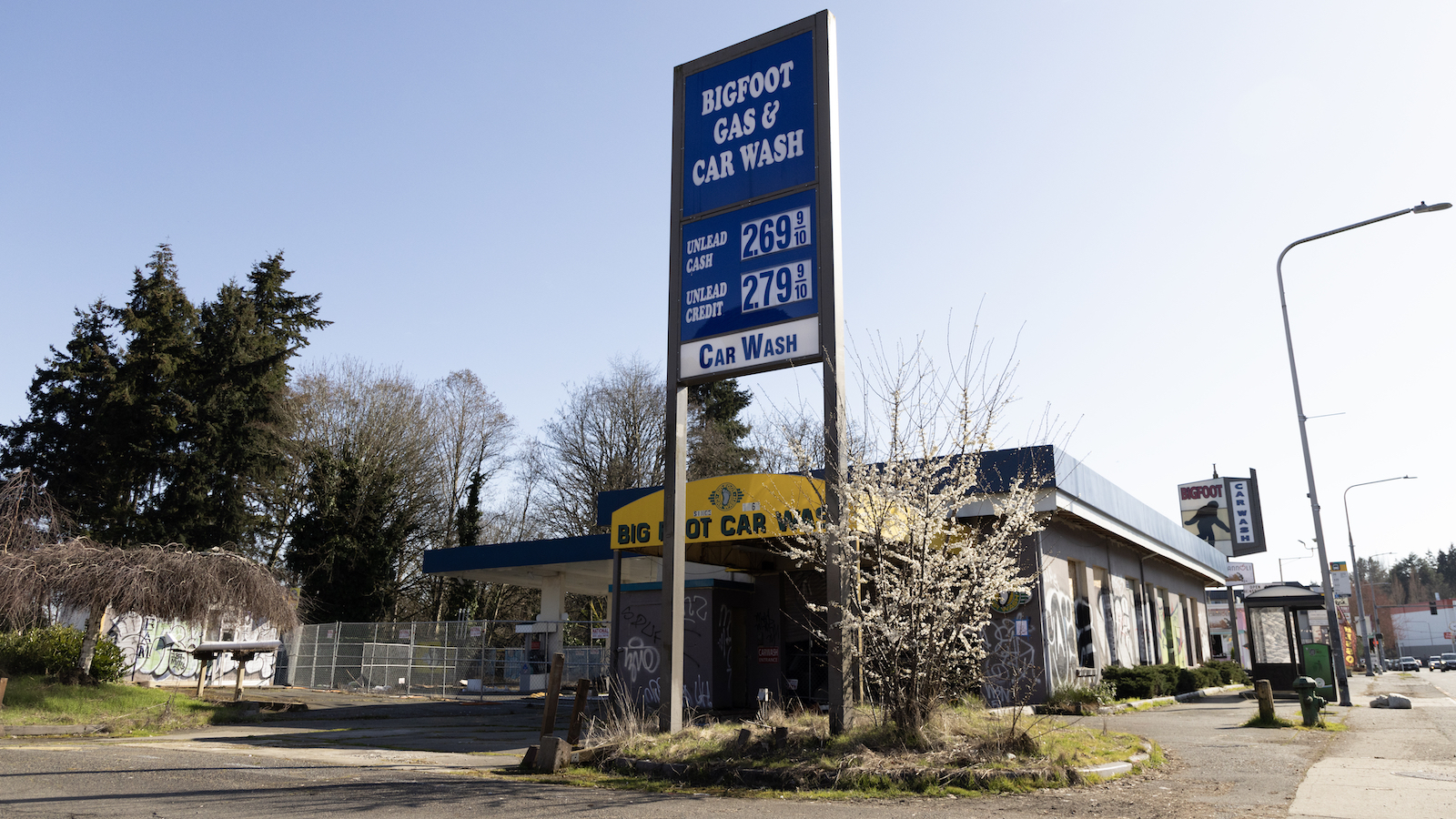
Looking at an abandoned gas station today gives you a preview of what might be coming. At the Bigfoot gas station in North Seattle, unleaded gas is priced at $2.69 — one indication it’s been closed for a few years, along with the graffiti covering the building. When I visited the site in March, a biker zooming by craned his neck to call out, “Check out that sinkhole!” A chain-link fence guarded a cavernous hole in the ground by the old gas pumps, concrete breaking off around its edges. At the tiny, pink cannoli stand next door, a barista waited at the window, looking on at the forlorn facility.

a sign outside of a gas station

A sign stands over the shuttered Bigfoot gas station and car wash in Seattle, Washington. Grist / Jesse Nichols

The common-sense solution for the future of gas stations is to turn them into EV charging stations. But the convenience store model might not translate. Most people charge their vehicles at home. Road-trippers require fast-charging stations along the highway. Public parking lots are a good place for chargers, but running into a convenience store to buy peanut M&Ms doesn’t take more than five minutes or so, not long enough to get much juice from even the fastest chargers. People might prefer to charge up while running longer errands, like grocery shopping. Walmart, for example, recently announced it would install thousands of chargers at stores around the country.

In theory, a gas station lot could turn into anything. But developers are reluctant to take on contaminated lots. The process of excavation might unearth complications, such as an old tank that no one realized was there, or contamination that went undetected in the initial inspection process. “You often don’t find these impacts until much, much later,” Bixby said.

Developers hesitate to get involved with a contaminated property, but if they do, they can push the cleanup process forward. “It’s rare that a landowner just says, ‘Oh, well, I’m aware of the contamination, it’s on my property, it’s my responsibility, so I will clean it up,'” Bixby said. “It’s more common that that cleanup happens when somebody is interested in buying the property and a lender says, ‘Well, that’s great, but I’m not going to loan you any money on it until your property is clean.'”

Bixby recently finished cleaning up a property in the Rainier Valley in South Seattle that had been contaminated for more than a decade. Property transactions kept falling through until a developer came along who wanted to put in below-grade parking. That made it easier to sell, because it cut down on the costs of hauling in new soil: A contaminated site generally requires digging up the dirt, trucking away the contaminated soil, and backfilling the giant hole.

In that case, the big oil company that was responsible for the contamination settled a case for $1.8 million, Bixby said. The total cost of the cleanup was even higher. It’s common for oil companies to settle cases long before they get to court. That’s because if the case goes to trial, the polluter may not only have to cover the cleanup costs, but also the plaintiff’s attorney fees, which can be almost as high, Bixby said.

Some abandoned gas stations have ended up with a more creative future, but even those come with headaches. A group of artists recently converted an abandoned gas station in Seattle’s Georgetown neighborhood, across from Boeing Field, into a community center and art museum called Mini Mart City Park. It took 15 years of environmental studies and soil cleanup, with the project totaling close to $2.3 million.

Given the toxic legacy of gas stations, some communities have begun pushing back against their development. Two years ago, Petaluma, California, became the first town in the country to ban new gas stations, following its declaration of a “climate emergency” in 2019. In March, Sonoma County prohibited their construction. Even famously car-centric Los Angeles has considered a similar ban.

For Beth Doglio, one of the Democratic state representatives who introduced HB1175, seeing new gas stations has become a source of frustration. “The energy right now to fuel our vehicles is this totally toxic, gross shit that’s underground,” Doglio said. Getting rid of the storage tank problem is a benefit of going electric that hardly anyone thinks about, she said. 

“It’s not going to cost a fortune, $1 million, to fix a charging station. It’s kind of exciting. That, to me, was like, ‘Oh, wow, here’s yet another benefit of the clean energy transition.'”

This article originally appeared in Grist at https://grist.org/accountability/gas-stations-underground-storage-tank-leaks-environmental-disaster/.

Grist is a nonprofit, independent media organization dedicated to telling stories of climate solutions and a just future. Learn more at Grist.org

“I believe him”: Jesse Garcia on playing the man purported to have invented Flamin’ Hot Cheetos

Jesse Garcia delivers a rousing performance as Richard Montañez, the Frito-Lay janitor who created spicy Cheetos in “Flamin’ Hot,” director Eva Longoria‘s zesty new film.

Garcia has been a hardworking actor for two decades, starring in films ranging from “Quinceañera” and “Collisions,” which he produced, to his memorable turn in the Jennifer Lopez action film “The Mother” last month. He is perfectly cast as Montañez, a man who has ambition and creates his own opportunities. Garcia also seeks opportunities, having worked behind the camera writing and directing the outstanding short, “The Price We Pay.”

Longoria’s film chronicles Montañez’s rags-to-riches story with aplomb. Richard is first seen as a child playing in the winery fields his family is working as laborers. He experiences racism and classism in school. Even when he makes an honest buck (selling burritos to classmates), he is taken for a criminal by the local police. A life of crime and drugs follows before Richard gets a janitorial job at Frito-Lay

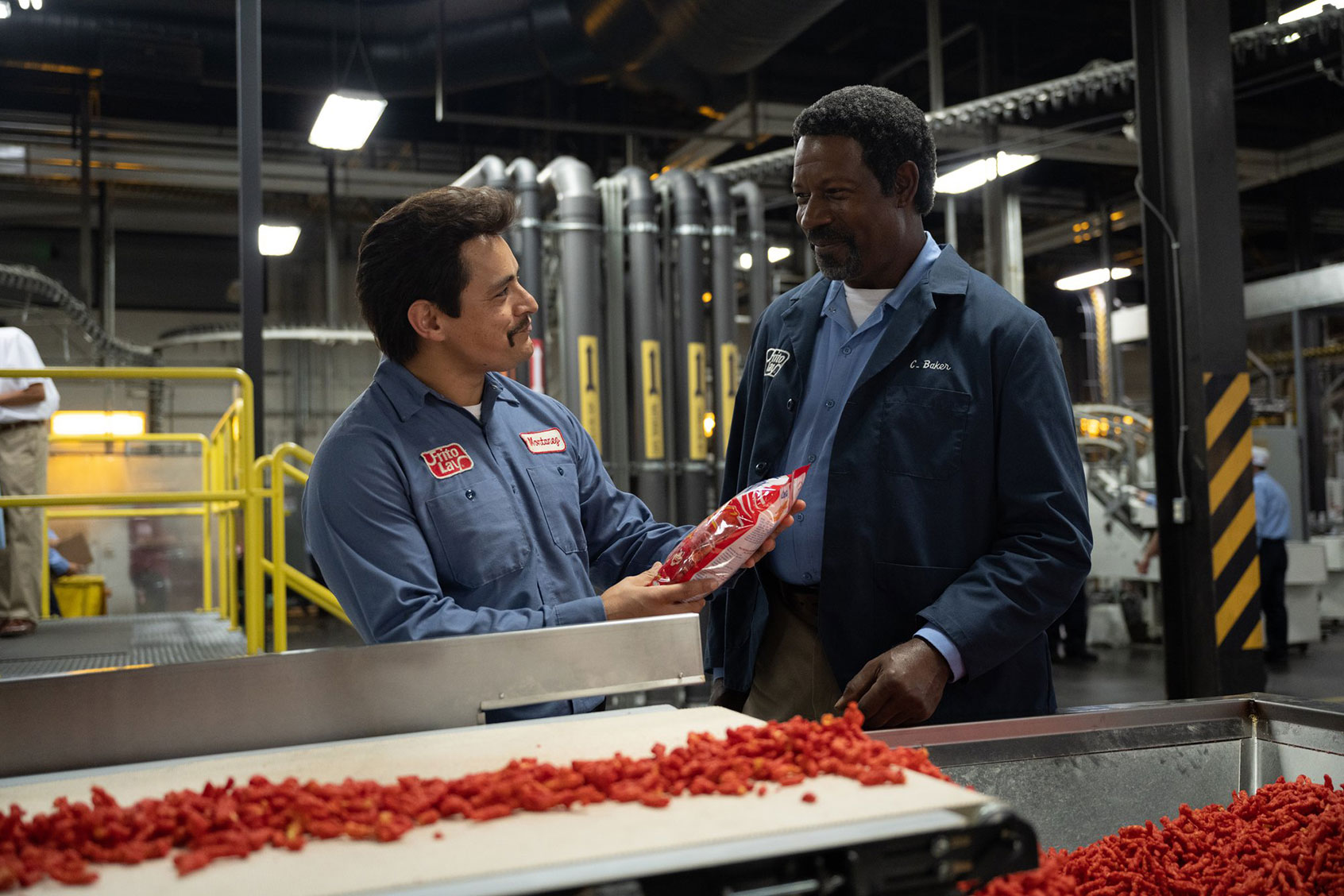
It is on the factory floor that Richard finds a mentor in the engineer Clarence (Dennis Haysbert) and eventually takes the initiative to call CEO Roger Enrico (Tony Shalhoub) with the idea for a spicy slurry that he thinks will boost flagging sales. (The film is set in the ’80s, during the economic downturn.) But at the heart of Richard’s ideas is catering to the underserved Hispanic market. And it is this messaging that provides the film’s inspiration. 

Garcia is ingratiating as Montañez, with his chatty voiceover — Longoria has great fun with Richard voicing the Frito-Lay board meetings. Richard also earns sympathy as he struggles for respect, ably assisted by his wife, Judy (Annie Gonzalez). 

The actor spoke with Salon about playing Montañez and making “Flamin’ Hot.”

Biopics are tricky because you want to represent the person but not mimic them. Did you get to talk with Richard about his life and career? 

I did. I talked to him for about two hours before we started shooting. I got to go to his house, he invited me over. His wife Judy made enchiladas that I couldn’t eat because I was on a diet. [laughs] We talked about all kinds of stuff. Mostly what their lives were like. Small things that I could incorporate, like pet names and slang they used over the years. Details like that I could sprinkle throughout the movie. 

Richard is proud but faces discrimination. He develops confidence, which enables him to create opportunities out of challenges. How did Richard’s story inspire you and how much of it did you identify with? 

I heard about his story years ago, and I always thought it was a make a cool movie or series. 

I auditioned like everyone else. Every one of my friends who were remotely right read for it.

A handful texted me and said, “You should read for it.” They said, “I want it, but I think it is your role.” I read it and I felt it was written for me; this is my part. I have to put in the work and show them there is no other choice. I grew up the same way. We didn’t have much money. My parents would sell burritos and food, and when my dad went to school, it was for auto body repair. I remember my mother would be in the kitchen making empanadas and enchiladas to sell to the other students.

When Richard is looking for work, he says he has a PhD — “poor, hungry, determined.” I feel you have the same drive as an actor, and share Richard’s thick skin and hard skull as you look for roles that are worthwhile, like this one. Can you talk about your initiative and your efforts to find and make valuable work?

This is the first time I got to play all these things in the same movie. I got to be funny, I got to play the emotional stuff, I got to do a tiny bit of action, the quiet moments, just about everything you want to do in one movie. With the action movies, heavier dramas and darker characters I’ve done, I have never been able to show my range here. I walked away from this film having done everything I wanted. I got to be funny and improvise. It was like that for everybody. Eva got to do what she wanted to do — she got her version. DeVon Franklin [the producer] was a good barometer on the outside, making sure that I wasn’t going too dark or was appropriate in certain moments. We were a good team for keeping each other in check. I’m excited to see what comes my way after people see this film and see that I can do more. I don’t mind doing five or 15 minutes in a movie, but to be in an ensemble or lead in a bigger movie like “Tron,” how cool would that be?

I’m still recovering from “The Mother.” One of your scenes was . . . painful.

It’s a pretty brutal death. People go “Oh, s**t! That was not what I was expecting!

Flamin' HotJesse Garcia and Dennis Haysbert in “Flamin’ Hot” (Photo by Anna Kooris / Courtesy of Searchlight Pictures)

The point Richard makes to the Frito-Lay executives is that the Hispanic market is being underserved. You have appeared in films and TV series that play to the Latinx community. What can you say about the lack of opportunity for Latinx actors and filmmakers, the few Latinx with power to get projects made, and the need to create your own stories?

This is a great example of how a movie can transcend cultural lines. It’s a Mexican-American family, but everyone can relate to it. Eva fought for key positions in the crew — hair, makeup, cinematography with Fede[rico Cantini], and actors. When the studio and Eva were looking for actors to play Richard, she was told there are not many stars who can do this. Her response was, “Let’s create some stars.” That’s where she is a visionary and trailblazer, she excels. Little by little, it gives us the opportunity to prove ourselves and to the industry and the world that not only can we tell a story with mostly Latino cast, but that we can tell a story that is universal and it do not have to be a niche market.

You have long made films that were “issue” movies like “Quinceañera” and “Collisions,” but also have been playing in popular films like “The Mother” and the crowd-pleasing “Flamin’ Hot.” Do you see this film as a shift in your career that may turn you from the reliable character actor to leading man? 

The industry is funny. I had a moment in 2006-2008 where I worked a lot and got a lot of cool projects because of “Quinceañera,” but a handful of them didn’t come out for whatever reason, because of the writers’ strike and the recession and what happened back then. “Flamin’ Hot” is a bigger and higher profile movie. It has a chance of being really successful and can reach a wide audience because of Hulu and Disney+ putting it out there. I hope that it translates to bigger projects and me having the opportunity to be in A24 films and bigger Disney films or blockbusters where it doesn’t matter if I’m Latino or not. Having the chance of playing in the same field as everybody else.

Voiceovers can often be seen as a crutch in films, but here, Richard’s narration enhances the story — especially when he has flights of fancy about how things played out. Can you talk about developing his voice? It’s the backbone of your performance. You had charisma and confidence that really holds my hand and carries me through the movie. 

I did the voiceover for the entire movie five or six times. We did a temporary one during the movie so we can pace out some of the scenes. So, there is a voiceover but it’s me thinking, “How long does this have before I walk away or go talk to Clarence?” I had to record the entire film over a couple of days in Albuquerque when we were shooting. But throughout the year after filming, Eva would call me and say, “Say these 10 lines on your phone. And give me a few different ways of saying them.” It was funny to go back and find the accent, the voice. Her note was — and I’m probably giving away a trick — but I would have her ask me a question pertaining to the voiceover. “What do you think about . . . ?” I would talk to her, as if I was talking to the audience, which Is why the audience feels the message is just for them — because that is how we recorded it. Rather than giving you information, I’m telling you, Gary, this entire story, and it’s just for you. Every audience member feels like that. It was very intentional.


Want a daily wrap-up of all the news and commentary Salon has to offer? Subscribe to our morning newsletter, Crash Course.


There is a thought that what Richard did is not entirely true. What do you think?

I am letting the family give that kind of information, but I believe him. 

Let’s talk food. Are you a good cook, and do you like spicy food? 

I am pretty good cook. I love spice. I mix a ghost pepper sauce with honey and put that on a steak. I have been playing with different spice and sauce. 

Did you have Flamin’ Hot Cheetos when they came out?

I kind of missed the Cheetos train. I grew up in Wyoming. We were behind in a lot of things. Hot Cheetos became a thing after I was out of high school, and by then I was eating super, super clean. I grew up on normal Cheetos. I missed the Flamin’ Hot. My first Flamin’ Hot was in the take in the movie where I eat a Cheeto off the production line. That was the first time I had a Flamin’ Hot Cheeto — and the last time was that day. 

Are Flamin’ Hot Cheetos spicy enough for you? 

It was fine. It tasted like a hot Cheeto.

I’ve never had one. After seeing “Flamin’ Hot,” though I wanted to go out and try them!

This film is going to be the biggest, best commercial for Flamin’ Hot Cheetos. The sales are going to skyrocket! We should buy stock in Flamin’ Hot Cheetos right now! 

“Flamin’ Hot” is now streaming on Hulu and Disney+.


“Flora, fauna and brackish”: How a chef found fine dining inspiration in Chesapeake Bay’s estuary

A few months ago, I was planning a trip to Washington, D.C. and was making a list of potential restaurants to visit. While I eventually ate at Lutèce, one of the top restaurants on my list was Estuary, with its unique, evocative name and its impressive, wide-ranging menu. 

As the website notes, “Estuary offers a seasonal menu that highlights the bounty of the entire watershed [of the Chesapeake Bay region], including not just seafood, but the plants and land animals that bolster the distinct flavor of Mid-Atlantic cuisine.

Helmed by Chef de Cuisine Ria Montes, who was born in the Philippines, “Estuary presents a dynamic approach to our regional cuisine.” 

Last month — during Asian American and Pacifier Islander Heritage Month (AAPI) Month — Chef Montes honored her heritage with a traditional Kamayan dinner that donated proceeds to Asian Americans Advancing Justice. Kamayan is a traditional, cherished Filipino style of eating, often characterized by a convivial, joyous meal celebrating the country’s cuisine and culture. The communal feast is also often presented without utensils, instead sometimes using banana leaves for serving.

In order to learn more about Estuary, Kamayan and Chef Montes herself, Salon Food spoke with her to get her insight into Estuary’s ethos, her upbringing in a Filipino family, the purpose of serving on banana leaves, Filipino cuisine — and much more.

The following interview has been lightly edited for clarity and length.

How important to you was a traditional Kamayan growing up in a Filipino family? 

We did Kamayan for big celebratory feasts. Kamayan was usually for special occasions, like my brother’s first birthday in America.  His birthday was over the Summer and we invited all of his friends so of course it was a full Filipino party – we had a whole roasted pig, crabs and lobster.  

 Chef Ria MontesChef Ria Montes, chef de cuisine of Estuary Restaurant in the Conrad Hotel in Washington, D.C. (Conrad DC

What is the ethos of Estuary? (It’s one of my favorite restaurant names!)

Estuary is inspired by the estuary of the Chesapeake Bay as a result there is an emphasis on the flora, fauna and brackish of that region. Our ethos across the menu focuses on local and sustainable sourcing.  We work with a lot of local farms, Moon Valley, Earth and Eats, Karma Farms to name a few. A newer dish on the menu is Lamb Albondigas which is ground lamb meatballs and it has tomato sauce, harissa and za’atar. The lamb is from a farm in Shenandoah, another example of purveyors that are within our realm of the “Estuary”.  We also work with companies who share our ethos. 

Another example is we source bay scallops for our steamed shells and seafood carbonara from Baywater Seafood Company.  They are actively trying to raise more bay scallops in Chesapeake Bay as the population has decreased over the past several years.

What are your favorite dishes to make at home?

After being in the kitchen all day, I like to eat something easy a lot of cheese and buttered pasta. Angel hair pasta, melt some butter into a pan with minced garlic, red chili flakes and tear up some basil  which I grow on my windowsill. 


Want more great food writing and recipes? Subscribe to Salon Food’s newsletter, The Bite.


I know most Kamayan food is served on banana leaves. Does that act as both a vehicle and a flavor addition?

For Kamayan specifically, the banana leaves are a serving vehicle, but it’s not uncommon to use banana leaves in Filipino cooking as a way to import flavor. For example, there’s some parts of the Philippines where you steam rice in banana leaves and it imparts the flavor.  There are a few desserts in Filipino cuisine that are cooked in banana leaves as well – it’s really great because it’s a beautiful presentation and when it comes out, you smell all the aromatics and it’s also a really smart way to eat something on-the-go. 

 What are some Filipino foods or ingredients that some may not be familiar with? 

I think that a lot of people associate tamarind with Latin culture but really, tamarind is something that is widely used in Filipino cuisine. One of my favorite dishes is called Sinigangand you can either have it with seafood, vegetables or meat but the broth is made out of tamarind so it’s really nice and tangy.  One of my personal favorites is Bagoong, which is fermented shrimp paste; it is super funky, salty and so good. 

 https://www.instagram.com/p/CsIKE_2N1tc/?img_index=1

Tell me about your love of food and cooking — what led you to Estuary? 

Cooking was something I always did with my family and my grandmother specifically, so it really started there. And then just as I got older, I was the friend that knew how to cook.  I would cook for my friends often and I realized it was time to answer the question, ‘What am I going to do with the rest of my life?’ It was cooking. 

I bounced around different restaurants in New York and eventually made my way to DC. I think for a really long time I was someone else’s Sous Chef and I knew that I was more than capable [of being someone else’s Sous Chef], so the main drive really was to step out of my comfort zone and really take ahold of a restaurant the way I wanted to run it.  

 The Kamayan dinner at Estuary is going to be donating proceeds to the AAAJ  can you tell me a bit about that cause?

What I really love about Asian Americans Advancing Justice is their efforts to expedite the unification of immigrant families. The reality of a whole family being able to immigrate together is challenging because it is so expensive and time consuming. My dad came to the U.S. right after I was born and he was in New York.

Amazing — thank you!

Read more about Chef Ria Montes and Estuary.

How the trauma of the Vietnam War led to the age of “alternative facts”

For many of us whose lives were touched by the Vietnam War, it’s a bit of a shock to count the years and realize that those events are now a half-century or more in the past. This year, we have been reminded of that war somewhat more frequently than in past decades, as a string of 50th-anniversary dates marks successive milestone moments leading up to the final termination of all American combat operation in August 1973 (although the fighting between opposing Vietnamese, Lao and Cambodian forces continued for nearly two more years). 

In recent months, listening online or in person to several discussions on those anniversaries and recalling my own memories of Vietnam 50 years ago have led to a pair of reflections. One of them is a thought I have carried in my mind for many years; the other is new and surprising. 

The familiar thought is that the American debate about the Vietnam War sounds pretty much exactly the same as it did 30 or 40 or 50 years ago. Of course it is not as loud or as prominent on the national agenda, but there has been no noticeable change in the perceptions or opinions on both sides of the argument. In an essay more than three decades ago, I wrote: “Americans have still not agreed on whether Vietnam was a tragic mistake or a noble cause; nor have they agreed on a common version of what really happened there, either to the Vietnamese or to us.” Rereading that sentence in 2023, I realized it could have been written yesterday, or at any time in the intervening years, without changing a single syllable. 

The second thought, the new and startling one, was inspired by the next line in that essay, which pointed out that “not just moral or philosophical issues, but basic matters of fact remain in sharp dispute” in that continuing Vietnam argument. Those words also remain true, and reading them again, I found myself wondering whether Vietnam might have been a key factor leading us to of the “alternative facts” era, in which facts do not exist independently, but take different shapes in different minds as accompaniments to differing opinions. 

In that mode, facts carry no weight in an argument, and cannot convince anyone to reexamine their ideas on an issue. Instead, the very concept of objective reality, as something outside ourselves that exists whether we recognize it or not, seems to have been lost, or at least gravely weakened.

False facts were certainly an issue in the 1950s controversy around Sen. Joseph McCarthy’s allegations of Communist infiltration. But facts were ultimately the key factor in settling that argument.

Was the Vietnam debate a precursor of that trend? Were facts about that war blotted out in the same way as happens so regularly in current arguments? If so, was that already an existing pattern or something new? I have not done the sort of research that would lead to definite or probable yes-or-no answers for those questions. But searching my own memories of other divisive issues from the Vietnam era or not long before, I do not remember the persistent disregard for factual knowledge that has become standard fare in 21st-century public discourse. 

In the arguments in the 1950s and ’60s about civil rights and the struggle against racial segregation, for instance, segregationist politicians certainly made false statements from time to time about provisions in proposed civil rights laws and other such details. No doubt there were numerous other instances of intended or unintended factual inaccuracy. But I don’t recall that disputes on basic facts were a consistent pattern in the broader debate. To cite a different example, false facts were certainly an issue in the national controversy in the 1950s around Sen. Joseph McCarthy’s allegations of Communist infiltration in the U.S. government. But rather than being permanently blacked out, facts were ultimately a key factor in settling that argument. Objective truth ultimately discredited McCarthy’s false claims and prevailed in both the political arena and the public mind. 


Want a daily wrap-up of all the news and commentary Salon has to offer? Subscribe to our morning newsletter, Crash Course.


By comparison, facts seem to have made little or no headway against false or misleading assertions regularly promulgated by both sides in the decades-long argument about Vietnam. From many first-hand encounters with that phenomenon, two moments stand out in my memory, one before I went to Vietnam and the other a few years after I came home. I think of them as conversations, though in both cases the people whose voices I heard were clearly conversing with themselves, not with me. Those moments shone a revealing light on two enduring myths, one from each side in the debate. 

I’ll recount the second conversation first. It was with John E. Murray, a retired Army major general who was the next-to-last U.S. defense attaché in Vietnam. While holding that post in 1973-74, Murray oversaw the delivery of U.S. weapons and supplies to South Vietnam’s military forces, and was thus a directly involved eyewitness as that aid was reduced (though never completely cut off, as is often wrongly asserted) following the withdrawal of U.S. combat troops. An article of faith among virtually all defenders of the U.S. war is that those cuts in military aid were the reason for the Saigon army’s collapse and final defeat in 1975 — typically, in their telling, the only reason, which allows them to put the entire blame on Congress and avoid recognizing any fault at all in U.S. or South Vietnamese policy or leadership.

I had spoken with Murray fairly often in Saigon, and went to see him again in the early 1980s when I was writing my book “Without Honor: Defeat in Vietnam and Cambodia.” Murray was an emotional guy, and in our conversation he fiercely condemned Congress for causing South Vietnam’s defeat. But in the middle of an angry tirade, he suddenly paused, fell silent for a moment, and then, in a very different tone of voice, began reciting a series of numbers. Our side had this many maneuver battalions, the other side had that many. We had this many artillery pieces, they had that many. And so on, counting aircraft, armored vehicles and a long list of other military resources. 

For every item, the numbers on the U.S. side were much higher — in some cases, hundreds of times higher — than those on the enemy side.  After a while, Murray paused again, looked up at the ceiling and said, clearly more to himself than to me, “You know, when I think about the stuff we had and the stuff they had, we should have cleaned their clock no matter what mistakes we made, and I don’t understand why we didn’t.”

If America’s massive superiority in firepower and logistical capability didn’t win the war, it’s hard to believe that a few hundred million dollars more, or more tons of bombs, would have prevented South Vietnam’s defeat.

I have no way to know whether or how often Murray had other such questioning moments, or if he ever stopped believing that the aid cuts were what lost the war. From what I know of his personality and the intense feelings he carried from his own role in those events, I would not imagine that he ever changed his mind on that basic premise. But from a less emotional viewpoint, the message from Murray’s numerical musing is hard to miss. If the huge superiority in firepower and logistical capability represented by his list of numbers didn’t win the war, it’s hard to believe that sending a few hundred million dollars worth of more “stuff” to our ally in the last year or two of the war, or dropping more tons of bombs on top of the unbelievable tonnage we had already expended (twice as many tons in Indochina as the total dropped by the Allies on both Germany and Japan in World War II), would have prevented South Vietnam’s defeat. The more logical conclusion is that American resources and the American style of warmaking simply could not win that war. 

The second memorable moment was a dozen years or so before my conversation with Murray. It took place on a street called Cliff Avenue in Winthrop, Massachusetts, in October 1969. I was in Massachusetts to report on local actions that were part of a nationwide protest that month called the Vietnam Moratorium. For my story on one of those days, I walked along with a woman from a local peace committee who was going door to door on Cliff Avenue collecting signatures on a petition calling on President Nixon to set a date for complete withdrawal of U.S. forces from Vietnam. 

It was obvious in October 1969 that opposition to the war was growing across the country. But I did not expect anything like the one-sided response I saw and heard on Cliff Avenue that day. As I later described it in my book “Vietnam Shadows“:

In one house after another, to my growing amazement, those who came to the door nodded and signed — including one woman who began by saying suspiciously: “This whole thing [the Moratorium, or maybe the peace movement in general] is Communist-inspired” but hastily added, “Of course, I’m not for the war or any of that business.” A man named William Pallin read the petition on the cement walk in front of his home and, without a word, took out a pen and signed his name. “I was in two wars,” he said as he handed it back. “I was in World War II, I was in the whaddyacallit, Korean war. We don’t need it over here.” A few doors away, Elizabeth Fucillo, wife of a local firefighter, signed after only a quick glance, saying firmly: “I can’t believe there’s anyone who wants this war to go on any more.”

It was a weekday and more women were home than men, which no doubt affected the results. Still, the unanimity was startling. Eventually we came to the door of a sixty-ish woman named Alice Baldinell, who was obviously vague about the details of Vietnam and whose first reaction, I guessed, could probably be traced back to the image of satanic Communism that all Boston Catholics of her generation would have absorbed in countless sermons and parochial school lessons of the 1940s and ’50s. America couldn’t just get up and leave Vietnam and leave millions of innocent people to have their throats slit, Mrs. Baldinell said in the flat, sharp-edged accents of working-class Boston. Kind of like Hitler, she went on, and if we’d got into that war earlier, maybe we could’ve saved all those people who got killed in that one. Well, here’s someone who’s not going to sign, I thought. But at her own mention of World War II, an expression of doubt began to form on Mrs. Baldinell’s face. “I dunno,” she said after a moment. “I remember that war, we had to get in, so we got in and we fought and we won it, and then it was over.” Her accent clipped off the final r’s, making the words come out “remembah” and “ovah.” This one, she went on, this one heah, seems like it’s gonna go on forevah. She paused again for a moment, then reached for the clipboard. Maybe you’re right, she told the woman from the peace committee, and put down her name. 

That quick 180-degree turn, from wanting to save Vietnamese from demonic Communist throat-cutters to signing a petition for a total U.S. withdrawal, was startling, to put it mildly. But I also sensed a flash of recognition, a feeling that I wasn’t just hearing one woman’s words — like Gen. Murray’s, spoken more to herself than to the petition gatherer or to me — but a larger truth about American public opinion on Vietnam and how it was changing. On that day in 1969 Americans had been waiting four and a half years, a year longer than the whole course of U.S. engagement in World War II, for their government to win in Vietnam. But after fighting that had cost scores of billions of dollars and more than 30,000 young soldiers’ lives, the national leadership was still not able to show that the war was getting anywhere, and, as I wrote in my book, “millions of people like Mrs. Baldinell on thousands of streets like Cliff Avenue no longer believed it ever would.” 

Like Murray’s numbers, the voices I heard that day undercut a tunnel-vision view of the U.S. role in Vietnam, but one from the opposite side of the argument. Half a century later, many former war protesters cling to the conviction that their movement was the single driving force that turned American opinion and U.S. war policy around. Exactly like their opponents’ blame-Congress mantra, that scenario identifies a single cause for a historic change, blotting out a long list of other relevant factors. (To cite just one example, by 1969, much of the Cold War establishment, including such prominent figures as former Secretary of State Dean Acheson, former Secretary of Defense Clark Clifford, the nationally known World War II general Matthew Ridgway, and many other household names, had concluded — and advised the White House — that the U.S. was not winning in Vietnam, could not do so at any acceptable cost, and should withdraw.) 

Those most responsible for the change in American public opinion on Vietnam were not protesters on college campuses, but U.S. political and military leaders who never found a way to win the war.

The words I heard in Alice Baldinell’s doorway, I realized, reflected the thoughts of millions and millions of Americans who were changing their minds about Vietnam, but not because the peace marchers told them the war was wrong. They didn’t think their country was evil or imperialist. They were turning against the war because it wasn’t accomplishing anything, and they could no longer believe that fighting on would do anything but waste more time and lives. Antiwar protesters played a significant part in changing the national mood, but they weren’t the whole story, even if that’s how many of that era’s activists told and still tell it. In reality, those who were most responsible for the sea-change in American public opinion were not shaggy-haired protesters on college campuses and city streets, but the U.S. political and military leaders who never found a way to win the war and ended up exhausting their own country’s will to fight instead of the enemy’s. 

I will close with one more memory, this one not from my own reporting and not connected with Vietnam but from another journalist’s work in a later era and on the separate subject of reality versus myth. This one is an obituary for “Facts” written by a Chicago Tribune columnist named Rex W. Huppke, published on that paper’s op-ed page 11 years ago and still apt (and delightfully readable) in 2023.  

Perfectly mimicking the language, tone and content of a newspaper obit, Huppke opened with a recital of examples from the deceased’s “long and illustrious career” (gravity makes things fall, two plus two is four, the sky is blue), followed by the sad news that “Facts died Wednesday, April 18, after a long battle for relevancy with the 24-hour news cycle, blogs and the Internet.” 

A few paragraphs further down, still in perfect obit-page style, Huppke gave a real quote from a real person, Mary Poovey, a professor at NYU and author of a book called “A History of the Modern Fact“: “I think the thing Americans ought to miss most about facts is the lack of agreement that there are facts. This means we will never reach consensus about anything. Tax policies, presidential candidates. We’ll never agree on anything.” This, mind you, was several years before the start of the Trump era and the deep decline of truthfulness we began seeing in public discourse in the years after Huppke’s column was published. 

After rereading (and once again thoroughly enjoying) Huppke’s obit, I tracked down Poovey, now retired from teaching, and asked how she looks back on that comment from 11 years’ distance. “Obviously things have gotten a lot worse,” she told me, recalling a specific moment early in Trump’s term when the phrase “alternative facts,” coined by one of his senior aides, entered the language. To Poovey, that term crystallizes a way of thinking in which there is “no agreement on anything, including that facts do exist and should exist.” And if facts don’t exist, she went on, knowledge also doesn’t exist. Without facts, there is no standard for what we should believe or not believe, no trusted authority who can explain what is real and what isn’t, no way to correct false beliefs and, consequently, “no basis for common agreement about anything.” 

Poovey was speaking about contemporary disagreements, not 50-year-old ones. But when I heard her words I realized that they didn’t just apply to today’s debates. They also perfectly captured the argument I had been thinking about, the one this country has been having for half a century and has still not finished, about the Vietnam War and its meaning — not just in our past but for our present as well.  

I grew up in the Satanic Panic — and it’s happening again

I was a young teen when I destroyed my music collection in the name of Jesus.

I stood in the cul-de-sac with my best friend, Joanna, and we smashed our CDs to smithereens on the hot, hard asphalt. Scratched and snapped and broken into pieces, these secular musicians would never again whisper their ungodly thoughts into our young, impressionable ears—a thing we had been convinced, in church and youth group and summer revivals, would tempt us slowly away from our god.

Hallelujah! Free from . . . smooth jazz? Good Charlotte? No Doubt? I don’t remember which bands they were, but I do remember that anything not made by a Real Christian™ was trying to plant demonic influence in my very soul. So smash
“Riot Girl” on the pavement; scratch “I’m Just a Girl” until it is no more. The devil isn’t in the details, you see: He’s in the music.

With that story as my Genesis, you won’t be surprised to learn that I grew up during the Satanic Panic of the ’80s and ’90s, when a large portion of the U.S. population truly believed that cartoons and musicians and a certain type of book were trying to convert their kids to Satanists. Rock music, they said, when played backward, contained hidden messages from the devil. The Smurfs were a gay cult. My Little Pony was trying to entice me to witchcraft (never mind that the witches were the bad guys). And an underground Satanic cult was abusing children en masse.

The only safe choice for us teens: Smash those CDs. Turn off the cartoons. Burn the books.

Be afraid.

Because anything might be trying to destroy your soul. A punk rocker, a Care Bear, a rainbow.

Now, the so-called villains are drag queens, queer people, history teachers, gender rebels. Ironically, in the crossfire of both panics lie the children—who are learning to be afraid

This was my childhood. My teen years. My formative moments. A collection of fever-pitch fears that the most innocuous things might be the very path to hell. You may not be surprised to learn that I was diagnosed with an anxiety disorder in my 20s. I’m hypervigilant, prone to panic attacks, triggered in the clinical sense of the word. For so much of my life, everything felt like a threat. Some (even innocuous) things still do.

Fear is something I’ve since learned to interrogate in myself. Because fear is natural, and even good sometimes. It tells us not to touch the hot stove. It asks, “Do you really want to walk down that dark alley”? It protects. But when the fear is unjustified—not grounded in real danger—it can be a prison. It can do real harm.

During the Satanic Panic of the ’80s and ’90s, that fear led to the false imprisonment and deportation of innocent people. Terrified parents decided their kids were being abused by daycare providers and, despite a complete lack of evidence, the paranoia that had gripped the nation pushed judges and juries to convict. One couple spent 21 years behind bars.

And then there were the invisible victims, like me and my cohort. With our panic attacks and our shame and our confusion about who and what to trust. With our childhoods missing pieces because instead of laughing at cartoons, we were being asked to interrogate them, tattle on them, and destroy them in the name of God. The panic stole some part of our innocence and had a ripple effect deep into our lives.

For the past few years, I’ve watched—with growing unease—as another Satanic Panic unfolds in my lifetime.

QAnon is still growing (in 2021, an alarming 16 percent of Americans said they believe its core tenets, according to a 2022 PRRI study), pushing the idea that secret Satanists within the government are both sacrificing children (because the bad guy is always secretly sacrificing children) and trying to undermine your personal safety and take away your (unspecified) rights. Rippling outward from there, an even larger sample of the population seems to be stuck on the idea that children’s books and history classrooms hide a secret evil that’s coming for our children.

Just like in the ’80s and ’90s, it’s not just the secret, powerful Satanists who are the focus of this cultural fear. It ripples outward to yet again demonize marginalized groups. It’s the heart of the panic about Critical Race Theory and gender education that has already resulted in the introduction of dozens upon dozens of legal attempts to censor education. It’s the foundation of the panic about so-called obscenity in kids’ books (being so loosely defined as to sometimes include fart jokes or dressing the “wrong” way), leading to campaigns to defund entire library systems. And it’s what has turned the nation to a sinister debate about who uses what bathroom, which has already resulted in legal changes that Human Rights Watch warns will undermine people’s rights to health, education and privacy.

They say that history repeats itself, but I didn’t realize history was so short. That I’d watch the fever pitch play out in my teen years and again as I approach 40. Of course, these aren’t the only two moral panics to grip a nation and destroy lives. Go back further and you find actual witch hunts. You find Jeanne d’Arc burned at the stake for wearing pants. You find the myth that Jewish people were ritually killing Christian children, a myth known as blood libel that has put millions of Jews in danger in multiple eras.

Our children aren’t in danger from the stranger in eyeliner or the person of ambiguous gender; they are in danger from their fathers, brothers, family friends. The latter is an uncomfortable truth, one our hearts rebel against.

We like to think modern people are logical. But I see no logic in the screaming terror at seeing a performer in a feather boa or in the stubborn denial of the real statistic that 80 percent of those who commit sexual violence know their victim. Our children aren’t in danger from the stranger in eyeliner or the person of ambiguous gender; they are in danger from their fathers, brothers, family friends. The latter is an uncomfortable truth, one our hearts rebel against.

In 2020, as I watched these dominos falling, fear building, I quietly started writing a book I’d meant to write for years: “The Wicked Unseen,” a young adult novel set during the Satanic Panic that asks the same questions, now weighing even more heavily on my heart. How do we bridge the gap between what we are afraid of and what we should be afraid of? How do we get better at interrogating our fears? If the stove is clearly off, should we still be afraid to touch it? If statistically there is no danger from drag queens, should we be afraid of them?

In my book, the pastor’s daughter disappears on Halloween weekend, and the whole town cries “Satanists!” But their panic, their assumption, their focus on Satan, is keeping them from the truth. And that’s the point. Panic often keeps us from the truth. Instead of making us safer, it makes us less safe.

In the ’90s, the so-called villains of the panic were innocent daycare teachers who ended up jailed or deported with no proof of wrongdoing. Now, the so-called villains are drag queens, queer people, history teachers, gender rebels. Ironically, in the crossfire of both panics lie the children—who are learning to be afraid. To break their CDs and burn their books and run from ideas their parents disagree with instead of wrestling with them. Children like me, in therapy for over a decade, grieving the unnecessary loss of childhood innocence.

I’m not coming to this essay on a high horse, the wide-eyed shock of How could this happen? or This is not my America. I’m coming here with a broken CD in my outstretched hands, saying I too have been afraid of things that couldn’t hurt me. And that it is never too late to interrogate your fears, measure them against the facts, and change your mind.

We do it every day.

When we jump because we thought the scarf on the floor was a snake—but realizing it’s a scarf, we pick it up. When we think someone doesn’t like us and then learn they’re shy and become their friend.

The panic is here. The panic is dangerous. But the panic isn’t inevitable. I say this as person who has—many times—reevaluated and changed my mind. Every one of us has the choice to stop participating, to make those mind changes, heart changes, action changes. To say that if “My Little Pony” can turn us from church to witchcraft, well, our faith wasn’t very strong in the first place, was it?

No fries with that: An artist’s guide to surviving while eating on the road

Congratulations. All the hard work, sleepless nights, and submitting and resubmitting whatever you submitted has finally paid off.

And now, people in different states, from cities that are nothing like where you live, will be lining up to see you speak, tell jokes, and read from your transformative work. But here’s the catch: You have to make it to the stage in perfect health in order to perform at the highest levels.

With that in mind, I will teach you how to eat on the road, so that you won’t die before reaching the stage–– or have to read to an audience with bubble guts that make you fart uncontrollably. 

A long time ago, when my career was in its infancy, I almost died on stage from spitting up. I did this, and survived, so you don’t have too. 

“D, you up!” Mr. James said, “Come on baby boy, they are waiting for you.” 

“They” were 250 teenagers from the Bay Area. My first book, “The Beast Side,” had just hit the New York Times Bestseller list–– and that appearance transformed my modest three-city tour into a whopping eight states, with some paid gigs, and a Fresh Air feature with Terry Gross. Then, a woman who worked in the mayor’s office in San Francisco heard the Fresh Air interview, and forwarded it to Mr. James. Three weeks later, I’m about to present my work to a diverse collection of Mr.James’ students, who have been reading, studying and loving “The Beast Side.” 

“You okay back there, D,” Mr. James said, “You need something?” 

“I’m good, gijifijkwwndbdwnb!” I hacked, while mint-green “Exorcist”-like fluid sprayed out of my mouth and into a waste basket. Mr. James, now in the doorway behind me, said, “Man, what in the f**k!” 

“I’m good, I’m good, let me hit this mouth wash real quick” I said, wiping the ooze off my face with a napkin, “I’m ready. Let’s go.” 

“I can’t let the kids down, but more importantly, I cashed your deposit — and I don’t do refunds.”

“Oh hell nah, your eyes are all grey,” Mr. James pushed back, grabbing my arm and slinging me to a chair, “You can’t go on.” 

“But Mr. James,” I said, slowly rising to my feet, “I must go, I can’t let the kids down, but more importantly, I cashed your deposit — and I don’t do refunds.” 

With that, I spit out what remained in my stomach and rinsed out the remaining residue with water and more mouth wash. Then I took to the stage and earned my money.  

The event went well, my jokes landed and the pressure of selling books was off because Mr. James’ organization had already bought 300 copies for the kids and staff. And if I had any doubts about my performance, they were wiped away by Mr. James’ instant offer to invite me back. But still, what went wrong? How could an entirely rational person like myself almost tank a perfect gig?

Well, the first rookie mistake was alcohol. I went out for maybe a round or eight, which led to me looking for any bar food (rookie mistake #2) to feed the alcohol. I had never been San Francisco and also considered myself to be the Black Anthony Bourdain, so I ate what ever they placed in my face. Snails? Sure. Tartare from and unidentifiable animal? Sure, West African elephant sliders? Sure. Undone chicken wings and lobster eyeballs? Sure, sure, sure, sure. The problem is that Bourdain was paid to eat lobster eyeballs, D Watkins is paid to read and write. The filthy combination of it all merged into a gigantic germ inside of me, causing me to gross out myself — in addition to Mr. James and the rest of the internal staff. Never again. 

I love a good cocktail like anyone else. Especially in a new town, but it’s bad for business. For starters, alcohol is poison and has two jobs: to distract you from whatever is essential, and to point you to aforementioned bar food. 

I don’t know how bar food is made. Still, I wouldn’t be surprised if they rubbed the wings, French fries, the poor excuse of vegetables they call “side salad,” and whatever kind of sliders across the fecal matter-covered kitchen floor before force-feeding it to drunks. I have never eaten bar food and then woken up in the morning and said, “I am excited to go inspire 250 teens.” 

I am not a total square. You can celebrate on the road, but you must do it after all the events, signings, and dinners with the faculty and staff are complete. And if you are lucky enough to be on a multi-city tour, then you only celebrate once your appearances, readings and dinners with organizers and or staff members are over. 

“The excitement of someone outside of Baltimore wanting to hear from me took me out of character, and had me eating crazy but alas, the vicious nausea and uncontrollable farts brought me back.”

The old me would have never been sick before hitting the stage. I suffer from the highest level of trust issues to the point where I would never eat from a person’s home, hit a blunt after somebody, or take a bite off another person’s plate because I thought that any and everyone was trying to kill me. I know this is extremely unhealthy. However, if you want to stay healthy on tour, you must adopt that mentality.

The organizers, the fan who baked you fresh cookies, and the professor from the fancy college who keeps saying, “Please take a sip of my extra dirty martini” — they are collectively try to kill you. Throw those fresh baked cookies in the trash as soon as that fan is out of sight because they are no good.

The excitement of someone outside of Baltimore wanting to hear from me took me out of character, and had me eating crazy but alas, the vicious nausea and uncontrollable farts brought me back. And I realized that the purpose is to do a great job, to entertain, to be funny and engaging, and you need a clear mind to accomplish those goals. Luckily I survived, and San Francisco was good, but it could have been great. The goal is always great. 

 So what do you eat and what do you drink, and what should you avoid? 

Before we get into the list, I recommend washing your hands at least 100 times daily. This may sound extreme, but I haven’t had a cold since the first Bush was president. Maybe I did, but I got over it so quickly that I don’t remember because I wash my hands, until my skin aches and peels and falls off. 

01
No coffee

I know it sounds crazy, but we are all adults here. We know that coffee will send you to the bathroom 10,000 times a day–– and bathrooms you do not clean yourself are full of hundreds of thousands of germs that will make you sick and potentially prohibit you from performing well.


Drink tea. Tea works, especially when you can order a cup of hot water and rip the packaging off the tea bag yourself. That way, no one touches the tea bag except you, and you are safe because we know you have washed your hands more than enough times. 

02
No fast food

Fast food places are notoriously dirty. It should be called fast food because it quickly gets you sick. But if you must eat at a fast food place, because it’s the only option–– try to see if they sell fruit or prepackaged items. Bananas and oranges are the best because you have to peel them, meaning that you are the only person touching them, and again, we know you are clean because you wash your hands. Prepackaged salads work as well, even though you run the risk of eating withered, disgusting genetically-modified vegetables, you know that they have been cleaned and sealed away.


I would never recommend Starbucks anything. However, they have locations in most cities and typically have an assortment of prepackaged vegetables and healthy chips.


03
The boiled egg
The boiled egg, the boiled egg, the boiled egg–– the boiled egg is king, queen, Beyoncé. The boiled egg is Beyoncé. It’s full of protein, you can easily extract the egg yolk and call yourself healthy, you can get it soft boiled and call yourself fancy, and most importantly–– most places make them with the shell on, which means that you will be the only person to touch it. 

Being the only person to touch your food is extremely important. I wish I had a long list of options to try, but I don’t. Our careers are delicate, and getting the opportunity to present our work in front of strangers, it’s truly a blessing. We don’t want to squander those opportunities because we had to try those St. tacos, from the booth on the street, with no plumbing–– which means you and the person who made that delicious street Taco have no place to wash your hands. 

Take shots, drink as much as you want, and explore when you are on vacation, Not working on the road. Because if you blow an event , that organizer will tell other organizers, and you may not get booked again.

Pinball is of the body: Why modern tech can’t recreate the world under glass

If you pull back the plunger of a pinball machine ever so slowly, your wrist can feel the delicious tension building in each coil of the metal spring, one after the next, as the kinesis of anticipation moves from the machine into your body. And if you pause for the span of a single breath, plunger strained to apogee, and hover at the precipice of launch in that moment-between-moments — your field of vision narrows, your eyes dilate in delight.

And everything else in the room — in the world, in your mind — disappears behind the sharp clack of the plunger’s release. 

For many, laying a hand on a pinball machine marked the first time we touched a piece of electronic entertainment tech in public. Once, the frenetic thwacking of flippers was the peak of manic childhood glee. Now, most of us wonder why our little pocket computers — with their nagging buzz of notifications about Candy Crush or Wordle scores — never quite hit the spot. Somehow, after playing with them, you almost feel worse. 

Regardless of whether you grew up with pinball, if you’ve ever been stirred to even a passing smile by the sight of a faded old Bally machine flickering alone in the corner of a dim bar, do me one favor. Put four quarters in your wallet. And the next time you spot a pinball machine in a bar, forget about how others may turn their heads at its sound. Forget about how well you play. Just get up, walk over to that clattering carnival in its magic cabinet and pull the plunger.


Want more health and science stories in your inbox? Subscribe to Salon’s weekly newsletter The Vulgar Scientist.


The underside of a pinball playfield reveals the seeming chaos of its careful electrical structure.  The underside of a pinball playfield reveals the seeming chaos of its careful

electrical structure. (Photo by Rae Hodge)  

The machinery of physical joy 

What most people don’t know about pinball is that the word itself was coined by Kentucky journalists. Louisville newspaper reporters dubbed them pin-and-ball games. Then, during a gambling trial, one of our circuit court judges reportedly used the term to classify the new type of games that had never appeared before in legal literature. Pin-and-ball then quickly became pinball.

After dominating the scores of a weekly pinball tournament in June, Kalyn Smith sits outside Louisville’s most treasured arcade bar, Zanzabar, in the cooling evening.

“I’ll be tired at the end of the night sometimes after a tournament. I’ll go home and sleep well from all the jumping around and shifting, and nudging the machine,” she tells me.  

Jeffrey Bilbro once wrote that “the starkest contrast between an industrial economy and a sustainable one lies in the way each deals with death.” 

“It’s like mixing a video game with taking a really good hike. You get to the very end of that hike and you feel really good for doing it. But then also, the entire time, it was like a theme park ride where they’re throwing sounds and lights and noises at you.” 

The physicality of pinball, like that of all arcade games, is the tech’s blessing on shared social spaces. Its glorious heft unapologetically loud and bright, a cabinet demands due accommodation for spacious human joy and creativity. 

As Smith says, it’s a “meshing of physics, bringing it into technology, using it to tell stories and bring them into a physical space.”


Pinball Tournament A competitive player, builder and part-time technician of pinball machines, Kalyn Smith edges
toward 150,000,000 points on Stern’s 2021 “Mandalorian” during a June 15, 2023
tournament. (Photo by Rae Hodge)

The decision of which bodies can occupy those public spaces — and whose stories are told — is never without political dynamic. Pinball parlors have long been dominated by the bodies of men, their stories painted lurid on the back glass of machines in corny, sexualized images of cartoonishly buxom women. Times are changing, though.  

“For for a while there, especially when I first started doing tournaments, it was pretty much all older cis males. But luckily it seems like it’s definitely getting more diverse,” Smith says.

In Smith’s state, the current top-ranked player is Elizabeth Gieske, whose sudden rise began with a 2018 tournament win. Smith, however, has been clamoring in front of pinball machines since she was a baby. 

“My parents were in bowling leagues so multiple nights a week we’d be at the bowling alley and my parents would bring the crib and put me in there. And basically from the point I was able to stand, they’d push a little chair up to the machine and I’d play it. My dad would kind of stand up behind me to do my hands.” 

Pinball’s rich public physicality, though, is its greatest vulnerability. Zack Kamerer is the former owner and CEO of Retrocade, previously in nearby New Albany, Indiana. After six years tending his pinball machines, the COVID pandemic brought an end to Retrocade.

“In 2020, I had to shut my business down during COVID to survive,” Kamerer tells me. He had to sell all his machines.

“It’s exhausting but, yes, I want to get that going again,” he says. “The love for the game has never died.” 
 

Pinball TournamentPlayers take to the machines to compete for a cash prize at a local pinball tournament
on June 15, 2023. (Photo by Rae Hodge)

Pinball’s latter-year resurgence in popularity has ratcheted entry prices. But the satisfaction of their care is worth it to most. 

“Keeping a game, older than you are, running? That’s something special,” Chris DeWitt tells me between rounds.

DeWitt and his son are a regular sight at the arcade. They’re restoring two pinball machines together in their garage, with a new one on its way. A head and a half shorter than his tournament competitors (and still growing into his mustache) DeWitt’s son drums the body of a pinball cabinet with uncanny skill.

“When we first started playing, I would kick his butt in every game,” his dad tells me. “Then he slowly started getting up there, and now he’s way above me.” 


Pinball MedusaA playfield illustration by Kevin O’Connor, from Bally’s 1981 “Medusa” (Photo by Rae Hodge)

A planned obsolescence of the body

Author Jeffrey Bilbro once wrote that “the starkest contrast between an industrial economy and a sustainable one lies in the way each deals with death.” 

Bilbro was talking about the writing of Wendell Berry at the time — Kentucky’s beloved farmer-poet, its most famously anti-computer cultural critic and perhaps the greatest living agrarian essayist of the English language. Still, Berry’s conservationism holds as true for the death of electronic tech as it does for lumber harvesting.

In his 1989 journal article “Feminism, the Body, and the Machine,” Berry lambasts the era’s burgeoning tech revolution with jarring prescience:

“This revolution has been successful in putting unheard-of quantities of consumer goods and services within the reach of ordinary people. But the technical means of this popular ‘affluence’ has at the same time made possible the gathering of property and real power of the country into fewer and fewer hands.” 
 

Pinball Strange Science Backglass Back glass artwork of Bally Midway’s 1986 pinball machine “Strange Science.” 

Game design by Dan Langlois, art by Greg Freres. (Photo by Rae Hodge)

More than 20 years later, the production of a single iPhone 13 generates 141 pounds of carbon emissions, according to Apple. More than 80 percent of those emissions are created even before transporting the product to the store. While manufacturing millions of iPhones yearly, Apple was hit with a $500 million lawsuit in 2020 over deliberately slowing down its luxury-priced devises as they aged. Apple was accused of the same so-called planned obsolescence in 2022, and again in 2023


Want more health and science stories in your inbox? Subscribe to Salon’s weekly newsletter The Vulgar Scientist.


Millennials, meanwhile, play mobile video games at a rate higher than any other generation — yes, even more than Gen Z. Yet the cell phone play-devices are already so inescapable in our working lives that the phrase “social media detox” has become the only polite way to excuse oneself from the repeated physical stress responses the phones deliver. Triggered intentionally by distraction-app peddlers, the physical distress arrives via non-physical triggers on your screen. 

The point of which is, of course, to keep you physically immobile, device in hand. Engagement, as it’s called. No need for pinball machines — it’s all on your phone. All the while, the specter of VR threatens to further unwind physical embodiment in both work and creative play.

Pinball Strange Science PlayfieldThe playfield of “Strange Science” (Photo by Rae Hodge)
“This hatred of the body and of the body’s life in the natural world, always inherent in the technical revolution (and sometimes explicitly and vengefully so), is of concern to an artist,” Berry wrote. “To reduce or shortcut the intimacy of the body’s involvement in the making of a work of art (that is, of any artifice, anything made by art) inevitably risks reducing the work of art and the art itself.”

Berry warns that when companies sell society chintzy techno-frippery disguised as physical or creative convenience, it’s actually human physical craft and creative spirit which that company designs into obsolescence. And he’s mostly right. 


Pinball Corbin MuseumThe facade of the Pinball Museum of Corbin, Ky. (Photo by Rae Hodge)
The defiant dignity of historical tech-craft

Right-to-repair laws, as they’re called, are hard won victories against the threat of obsolescence (that of both human skill and mechanical quality). They prevent tech giants, like Apple, from withholding critically necessary device schematics from independent repair shops. Microsoft has similarly withheld spare parts from Xbox owners, forcing gamers to navigate an obstacle course of warranty voids. 

Ultimately, right-to-repair laws are about nothing so explicitly as creating a sustainable economy of death among machines — an economy that can only exist by hewing to nature’s own cyclical economy of use, repair and the enriching decay of repurposed materials. A purist as far as these things go, Berry would likely say I’m wrong to equate his ecological principles to the cultural conservation of aging media tech. 

“A computer destroys the sense of historical succession, just as do other forms of mechanization,” Berry wrote in the same essay. “The well-crafted table or cabinet embodies the memory of (because it embodies respect for) the tree it was made of and the forest in which the tree stood … All good human work remembers its history.”

The thing is, a well-crafted pinball cabinet embodies the memory of, and respect for, its internal computers and tech-craft. Any decent arcade repairman could tell you as much.

Pinball Argosy interiorA pinball repair technician lifts the playfield of Argosy, the last four-player electromechanical
manufactured by Williams, to demonstrate the technical assembly tucked
beneath. (Photo by Rae Hodge)

Though he’s one of the most highly skilled and sought-after pinball technicians in the region, Heath Ashley still humbly calls himself “an eight-year rookie” in the repair world. With a waiting list that runs six to eight weeks long, Ashley works six days a week catering to Louisville’s growing collection of arcade games. 

He began tooling with pinball machines as a hobby in 2015 in South Carolina, where he would go on to win the 2016 state pinball championship. By 2019, though, Ashley’s prodigious technical talent became so widely known that he’d run out of machines to fix. He’d effectively repaired himself out of a job.  

“On purpose,” he added. “Because there’s so much work. I ran out of work in South Carolina, so I moved here, but I try to do that for everybody. As far as the customer goes, I should only see them once every 5 to 8 years.”  

At equal ease with both vintage electromechanical and the latest solid state machines, Ashley’s nuanced knowledge of pinball’s technical history seems at times encyclopedic. Some owners may not find their own broken machines worth repairing, but Ashley said he’s yet to encounter one that can’t be brought back to life. 

Among the older Bally machines from the late 1970s, for instance, repair can be fairly easy for a skilled tradesman. Many need only comparatively simple fixes, and the more popular models were produced in large volume in their heyday.

“Electronically speaking, the majority of the parts you can get, but you have to have some skill to install the parts to make it work again. And it’s so much easier to diagnose those games because it’s going to be one of a handful of things,” Ashley said. 

Part of Bally’s longevity in that run of machines was also seeded in the economy of their modular design. 

“They had the same motherboard communication system with the driver board, and with the lightboard and the soundboard. So they were somewhat interchangeable,” Ashley said. 

Pinball Technician Heath Ashley schematic electro-mechanical pinball machineRenown pinball and arcade technician Heath Ashley explains the nuanced detail of a
pinball game’s circuitry schematics. (Photo by Rae Hodge)

Smith is a part-time repair technician herself, and is building her own machine. 

“We’re encouraged more and more to just throw things out when we’re done with it. And it may not be able to do everything anymore, but there are still roles for everything. I have an old Macintosh from the 80s that I still use like a sequencer,” she said. 

Smith sees the planned obsolescence of modern consumer tech — and tech companies’ fight against right-to-repair — as anathema to the legacy of pinball. 

“We’re encouraged more and more to just throw things out when we’re done with it. But there are still roles for everything.”

“Most of these pinball machines wouldn’t exist anymore if people weren’t allowed to fix them,” she said. 

“You go to some of the sketchy bars where they just don’t take care of their machines. They get a brand new machine in their place. Great. Two weeks later? If people aren’t taking care of these things, they just don’t exist.”

In a pinball machine’s use-and-fix life cycle, the fix isn’t the only thing keeping it alive; the use itself is just as important. Its internal electromagnetic coils, when heated and engaged, are what bring to life the kinetic delights of the flashing playfield.

“You’ve got to keep the coils hot a little,” Smith said. “If they stay too cold for too long, they can kind of get a little more brittle, and not be as strong.” 

The game’s own physical lifespan, then, is directly lengthened by the joy it brings you. A pinball machine can only stay alive if you play with it. And if you don’t, it slowly starts to die inside.

Pinball machine Argosy right bumperDetail of Argosy playfield. (Photo by Rae Hodge)
“A lot of people look at a pinball machine and they just see the lights and the bells and sounds. But it’s more, especially since around the early 90s, once they started getting advanced,” Smith said.

She tells me it’s called a “world under glass.”

“The whole game is a metaphor, where the ball is. In each game, the metaphor can be a metaphor for a different thing. Like in ‘Godzilla,’ the ball is a metaphor for Godzilla. You’re going around the city, you’re destroying stuff. In ‘Led Zeppelin,’ the ball represents the band, and you’re going around your tour, playing the shows, playing the songs.” 

Maybe it’s true. As you twitch anxiously in the baleful light of a disposable phone, trading away your rich embodiment of joy and toil for the oily promise of more time saved, which you use only to stare blankly in dissociative haze, maybe you’re the obsolete technology. 

But there is no doubt — in the world under glass, when the urgent plunger springs to life from your sweaty grasp and you hammer fingers down on the flipper buttons with ecstatic abandon — the pinball is you.

As “Endeavour” enters its final run we bid a sober farewell to the detective who isn’t yet bitter

Endeavour” fools us for a time once Shaun Evans’ detective gets back to work sober, sharper and ready to rejoin DCI Fred Thursday (Roger Allam) in the field. The young Morse’s return comes not a moment too soon, since a murder at the Oxford Concert Orchestra brings him to his old university stomping ground. This familiarity and Thursday’s grounding presence make us hope that Morse will somehow remain on the straight path.

But his fate was written and seen decades ago on “Inspector Morse.” Those stories, which ran between 1987 and 2000, cemented Endeavour Morse in our minds as a man who values his solitude almost as much as he prizes his ale and whiskey as author Colin Dexter imagined him.

John Thaw’s Morse was a touch rumpled despite his highbrow tastes, a picture that barely matches with Evans’ lanky, pressed exterior. But as this ninth and final season starts the younger man starts to resemble John Thaw’s sleuth, and the heartbreak registering on Thursday’s face is a tragedy.

A little sadness can’t be helped as we enter the final phase of “Endeavour.” That goes with the territory of a longtime series shutting down, but this is in a rare league. Between “Endeavour,” “Inspector Morse” and its spinoff “Lewis,” Dexter’s universe has played a part of “Masterpiece” for more than 36 years.  “Endeavour” is longest running “Masterpiece” series among its contemporaries, and that means Evans has been playing the role for more than a decade. Where we’ve witnessed the steady dimming of the hero’s faith in his fellow man, the actor has lived it.

His take on the role also grants a particular flavor to this lament. “Endeavour” meets the “Mystery!” stable’s case-of-the-week qualification but the complexity of the whodunits is nothing compared to the intricacy of its character studies.

Prequels featuring younger versions of established characters are common in TV and film, and the typical approach fits these figures with nascent versions of their older selves’ quirks. But Evans and “Endeavour” creator Russell Lewis take a less common approach, building their argument for why such a dedicated crime solver with a sharp understanding of human behavior would become known for his emotional distance.

EndeavorShaun Evans as Endeavour Morse and Roger Allam as Fred Thursday in “Endeavor” (Courtesy of Mammoth Screen / MASTERPIECE)
Morse’s unrequited love for Thursday’s daughter Joan (Sara Vickers) would seem to be at the heart of that, but she’s merely one disappointment among many. He loved and lost a con artist, survived being sold out by his superiors, and was still viewed by his coworkers as a prickly eccentric. Thursday and his wife Win (Caroline O’Neill) are the exceptions, with the veteran inspector often treating Morse more like a second son than a co-worker.

“Sooner or later, they have to fly alone,” says Bright.

In “Prelude,” the ninth season premiere, circumstances test that dynamic as a dangerous unsettled case reactivates, in a grisly fashion, goading Morse to revisit the file, disregarding the fact that his previous investigation nearly killed him and his partner. Succeed or fail, Thursday is on the road out of Morse’s daily life regardless, having been offered a promotion at a department in a different town.

“They all fledge in the end, Thursday,” says their boss Reginald Bright (Anton Lesser). “Sooner or later, they have to fly alone.”  His words hold no assurance for Thursday who knows he and Win, along with Bright and DeBryn (James Bradshaw) have been the stitches and splints holding Morse’s heart together. Remove one and something inside may never heal. Then again, by the end of the season premiere, it becomes plainer that his friend already has a crutch that he’s unwilling to let go of.

Allam and Evans share an extraordinary chemistry that captivates no matter how flimsily some of the dots connect with each conspiracy, with Allam’s rightly sharing Evan’s spotlight. Each scene they share reminds us of what we’ll be missing when Thursday and Morse finally part.  But these episodes also close out their time and ours satisfactorily.


Want a daily wrap-up of all the news and commentary Salon has to offer? Subscribe to our morning newsletter, Crash Course.


Evans took on Endeavour Morse when he was in his early 30s and looked the part of an eager university intellectual in a room full of working-class men who teased the green off him. Nearly a dozen years have passed for the actor, but for the character it’s only been seven; these last episodes are set in 1972. Whatever extra chronological mileage the actor has weighs more heavily on the man he portrays.

This doesn’t refer to any physical evidence of lines or furrows but the pressures of experience and the crush of expectation – or the lack thereof when it comes to others.  One of the saddest moments is fleeting, when Morse catches a falling star . . . violinist. She trips up in front of him, and he gallantly prevents her from hitting the ground. Flustered, she thanks him, and you can see there’s a spark there.

EndeavorSean Rigby as Jim Strange and Shaun Evans as Endeavour Morse in “Endeavor” (Courtesy of Mammoth Screen / MASTERPIECE)
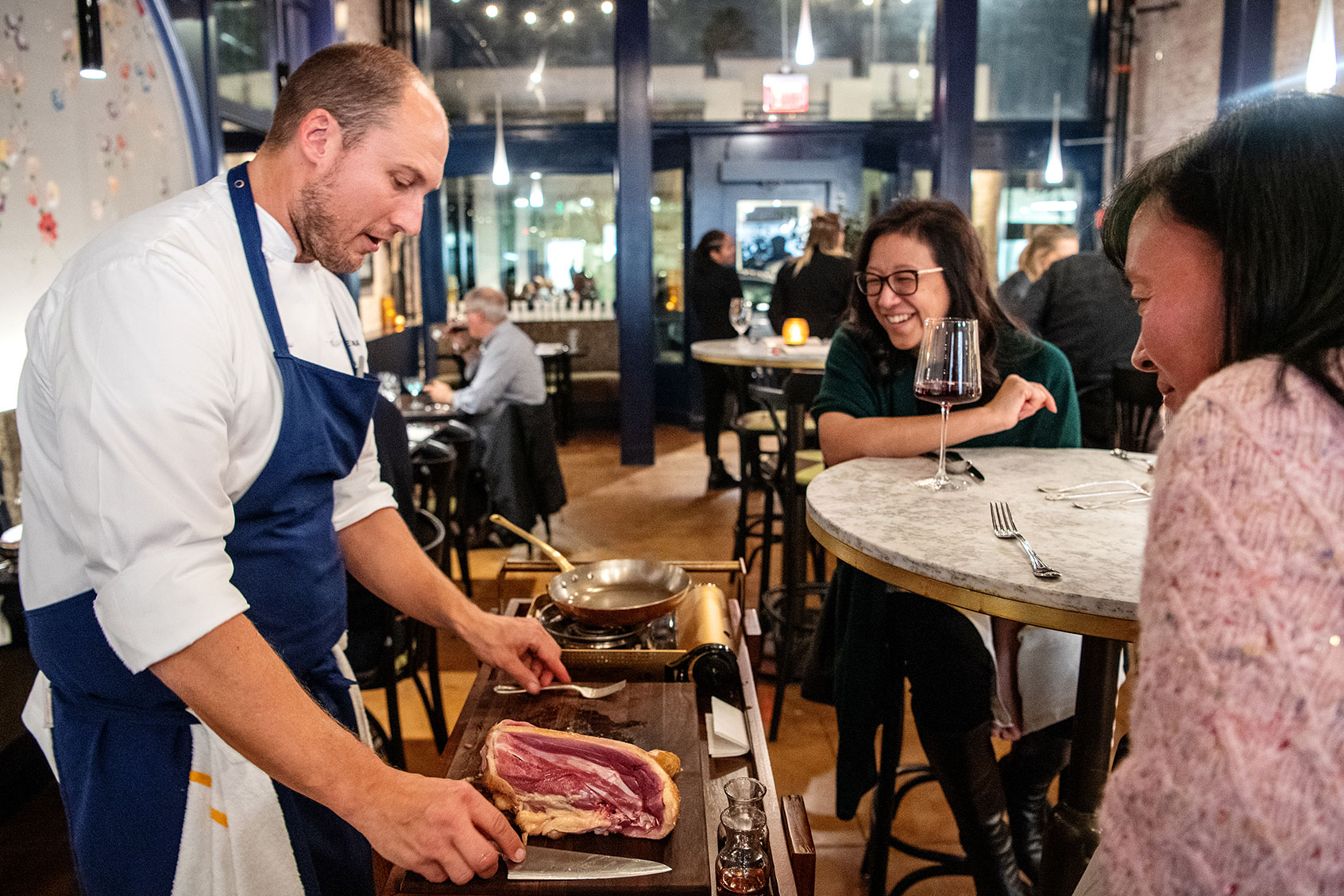
In an episode where Morse accidentally finds the girl from whom he’s carried a torch is marrying his dull but reliable co-worker Jim Strange (Sean Rigby) and he’s surrounded by bafflement about his sobriety, this meet-cute offers a spark of possibility. Maybe, for a time, the future Inspector Morse can enjoy a slice of companionship and music.  But he’s walked through another version of this dream where the waking nearly broke him and he turns away, reminding us he isn’t meant for happy endings.

The final season of “Masterpiece: Endeavour”  premieres 9 p.m. Sunday, June 18 on PBS member stations. Episodes are available to stream the same night at broadcast at 9 p.m. on the PBS app and online. Check your local listings.


How Biden’s debt ceiling concessions screwed over folks who need SNAP

Only four democrats voted against the debt ceiling and budget cuts package that passed the Senate in early June and was then ultimately approved by President Joe Biden. One of them was Pennsylvania Senator John Fetterman, and for him it came down to a single issue: the idea of more Americans going hungry. 

“Cut SNAP for families and kids while pushing tax cuts for billionaires? Not on my watch,” said Fetterman in a statement. 

For months leading up to the vote to raise the debt ceiling — which the country needed to do later this year to avoid a default crisis — there were murmurs that House Speaker Kevin McCarthy wanted to expand the age bracket for people who must meet work requirements in order to participate in the Supplemental Nutrition Food Assistance Program or SNAP. 

This isn’t a surprise. As Politico’s Meredith Leigh Hill put it in April, “cutting spending on federal food assistance programs is a perennial Republican target.” However, the broader hunger landscape in the United States is particularly dire right now. As Salon Food reported in March, food insecurity experts predicted that the country was “racing toward a looming ‘hunger cliff,'” as pandemic-era emergency SNAP benefits were set to expire this year. 

Prior to the pandemic, people younger than 50 who met certain requirements had to volunteer, work or receive job training for 80 hours a month in order to receive regular assistance. Yet after weeks of debate, the new budget cuts package now raises the age of recipients required to work to 55 and, according to The Center for Public Integrity, makes it harder for states to waive work rules in areas with high unemployment. Notable exceptions include if someone is experiencing homelessness, is a military veteran or if they are a youth aged 18 to 24 who has aged out of the foster care system. 

These are some of the most consequential revisions to SNAP in decades and, according to the Alliance to End Hunger, they come as 25.4 million Americans reported experiencing food insecurity in May, an increase of over 800,000 from April and nearly 1.3 million from March.  

“The stakes could not have been higher,” Biden said after approving the debt ceiling package, also called the Fiscal Responsibility Act. “If we had failed to reach an agreement on the budget, there were extreme voices threatening to take America — for the first time in our 247-year history — into default on our national debt. Nothing would have been more irresponsible. Nothing would have been more catastrophic.”

“I won’t give Republicans an opening to try and take food from more food insecure Americans”

However, Fetterman discussed his reasons for voting against the package. 

“I did not agree to these SNAP restrictions, and I won’t give Republicans an opening to try and take food from more food insecure Americans in Farm Bill negotiations later this year,” Fetterman wrote in a statement following the vote. “That is why I voted no tonight.”

While, as NPR reports, lawmakers are still are still parsing through what all the budgetary changes — which Biden approved on June 3 and which go into effect on July 1— will ultimately mean, the negotiations laid bare a larger concern for hunger advocates, namely that Republican leadership will use this win to continue pushing for policies that will only make more Americans food insecure. 


Want more great food writing and recipes? Subscribe to Salon Food’s newsletter, The Bite.


In an emailed statement, Eric Mitchell, the executive director of the Alliance to End Hunger, said that the work requirements for which Republicans pushed are “punitive and ineffective.” 

“They perpetuate the myth that people on economic assistance programs choose not to work when the evidence clearly shows otherwise, and by taking vital support away from SNAP participants, they actually make it harder to secure and maintain employment,” he said. 

According to The Center for Public Integrity, several key studies have been conducted — including a major study published in February from researchers at the University of Rochester, the University of California, Berkeley, Harvard and the University of Maryland  — found that SNAP work requirements have no real impact on a person’s earning or employment status. 

The majority of the studies, including the one from February, found that work requirements often simply lead to many hungry people losing food assistance. 

“The fact that [work requirements] don’t achieve the rationale behind the policy — to increase work — is pretty important,” said Adam Leive, an assistant professor of public policy at the University of California, Berkeley, told the Center. “And we found that it’s the people who are most economically vulnerable who end up leaving SNAP.”

McCarthy has already started alluding to the fact that he would like to continue making cuts to the assistantship program. 

Following the vote, he said, “This is great. I think it is wonderful that they [Democrats] voted for it. They are now on record. They can’t sit there and yell, ‘This isn’t good.’… Let’s get the rest of the IRS agents, the rest of the work requirements.” 

In a statement shared on Twitter, Fetterman echoed the concern of food security advocates. 

“As chair of the Nutrition subcommittee on Agriculture, SNAP benefits fall within my jurisdiction in the upcoming Farm Bill,” he wrote. “Speaker McCarthy gloated at Democrats that Republicans will push for additional work requirements beyond what is in this bill, saying, ‘Let’s get the rest of the work requirements. Let’s cut more…'”

He continued: “Given that Republicans are more obsessed with hurting poor people than holding banks accountable, you’d think that someone who didn’t have a job could crash our economy.” 

Why Big Oil loves the renewable energy industry

Oliver Stone‘s new film “Nuclear Now” is causing many of us to pause and re-examine how we power our lives and meet rising global demand for energy, while grappling with our collective failure to reduce carbon dioxide emissions.

Many of us unquestionably support renewable energy sources like wind and solar, resolutely believing that our support for them qualifies us as ‘climate conscious’ citizens. It therefore follows that if humanity is failing to solve climate change, others are to blame. Not us good folks. We can feel virtuous because our backing of renewables makes us “green” and firmly part of the solution.

But – and whisper the question quietly – are renewables really such a good idea? Joshua Goldstein, who co-wrote the film with Stone, put it bluntly when I asked him how we solve our clean energy conundrum. “If you want to actually solve climate change and do the math top-down instead of little pieces adding up, then it’s clear that we’re not on track, and we’re not getting on track. You can get about halfway there with renewables, but then you look in your bag of tricks and there’s nothing in there left except nuclear power.”

So why is it that oil and gas companies are among renewables’ biggest cheerleaders? For decades now the biggest fossil fuel companies have been telling us that they are investing in renewables as part of their transition to clean energy. Yet BP’s Statistical Review of World Energy 2022 showed that 82 percent of global energy still comes from fossil fuels. Almost a quarter into the 21st Century, we are pumping more carbon dioxide into Earth’s atmosphere than ever before. The oil and gas companies continue with their rhetoric, but the transition is yet to materialize. So, what is driving their support for renewables —and what do they get in return for it?

A lesson from the land of the Scorpion Pepper

Five years ago, I was living in Trinidad, the larger island of the oil and gas producing Republic of Trinidad and Tobago. Mercifully just south of the Atlantic’s Hurricane Alley, Trinidad appears on the map like a small fleck of land that has been chipped off the coast of Venezuela.

“t’s clear that we’re not on track, and we’re not getting on track. You can get about halfway there with renewables, but then you look in your bag of tricks and there’s nothing in there left except nuclear power.”

I remember the squally showers that would sweep in during the rainy season, sometimes hijacking an entire day. The downpours were broken up by interludes, as though a great faucet from above had been closed. Sometimes the sun would pierce through clouds to burn off the reflection of glistening foliage, creating intense energy-sapping humidity. Then coastal breezes would provide brief respite, returning everything to grey and green: faded tarmac interspersed with grass, palms and shrubs beneath a fast-brooding slate and charcoal sky. Then, the rain would return.

Trinidad might avoid the region’s hurricanes but it is not immune to extreme weather caused by climate change, not least an increase in ambient temperature. Erosion linked to rising sea levels and storm surges is evident at popular spots on its northern coastline such as Las Cuevas and Blanchisseuse. And each time those monsoon-like rains sweep in, different communities take turns in being cut-off by floods.

Currently, the country is totally reliant on fossil fuels. Gas produces ninety-one percent of its energy, oil contributes nine percent and solar provides less than 0.01 percent. In 2018, the year I lived there, the government’s Vulnerability and Capacity Assessment (VCA) report called for urgent and comprehensive adaptation and mitigation measures. It warned that failure to act immediately would have disastrous consequences for national food and water supply, fisheries stock, physical infrastructure, cities, oil and gas and industrial assets.

The somewhat immediate action the government of Trinidad and Tobago is taking — in partnership with the oil and gas companies — is to expand the proportion of its electricity generated by solar farms. But this is deeply misguided. 


Want more health and science stories in your inbox? Subscribe to Salon’s weekly newsletter The Vulgar Scientist.


Located deep in southern Trinidad where few tend to venture, Moruga is home to the Scorpion Pepper, once the world’s hottest chili (it has since slipped to second place, usurped by the Carolina reaper). On one August day the skies cleared, allowing me to pick pumpkins down in Moruga, on land farmed by a neighbor’s friend who was not harvesting his crop that year. In the preceding days, the rains had turned the farmland plots to bog. If I close my eyes, I can still visualize the ordeal of carrying sacks of large pumpkins, knee-deep in cold mud, back to the car parked on firmer ground.

The pumpkin field was accessed by driving through a largely flat landscape encompassing acre upon acre of arable fields, sectioned off by narrow tracks, producing a variety of fruit and vegetables. Like many Caribbean islands, Trinidad desperately needs to increase self-sufficiency in food production just as it needs to decarbonize its economy. It cannot afford to sacrifice the fields of Moruga to other purposes — such as the expansion of solar farms it seems currently intent on pursuing. Similarly, in the pristine tropical forests of Trinidad’s mid and northern mountain ranges, it would be severe eco-vandalism to clear trees to accommodate those solar photovoltaic panel grids, in doing so removing the prospect of future eco-tourism revenues.

BP’s Statistical Review of World Energy 2022 showed that 82 percent of global energy still comes from fossil fuels. Almost a quarter into the 21st Century, we are pumping more carbon dioxide into Earth’s atmosphere than ever before

And yet, these areas of rich biodiversity could eventually be sacrificed if the government of Trinidad and Tobago pins its transition to a clean energy future on solar. Under the Project Lara Solar Park scheme, construction of two solar sites aims to generate a combined 0.24 terawatt-hours of electricity annually on the island. Based on the government’s current electricity usage of 8.73 terawatt-hours per year (2021 data), thirty-five projects on the scale of Project Lara would be needed to supply all of the country’s electricity, taking up a few hundred square kilometers.

And there seems to be little public scrutiny of what will happen to all of the disused material from solar panels when they need to be dumped somewhere at the end of their twenty-five-year lifespan. Perhaps we should be worried. Kerry Emanuel, professor emeritus of meteorology at the Massachusetts Institute of Technology, says that, “modern PV (photovoltaic) contains trace amounts of very toxic metals, like cadmium, which has to be disposed of somehow.”

The bad news doesn’t stop there. Electricity accounts for only four percent of Trinidad and Tobago’s  overall annual energy usage. The country has an exceptionally high level of consumption because of its energy-intensive industries. In 2018, this was one hundred and ninety-eight terawatt-hours, down from a 2010 peak of two hundred and thirty-four terawatt-hours. So, for solar energy to provide the other ninety-six percent of non-electricity consumption, the country would need to devote more than sixty percent of its land area to solar farms, or more than eight hundred Project Lara-scale sites.

As elsewhere, Trinidad and Tobago needs to decarbonize its energy infrastructure whilst simultaneously adapting to climate change. But renewables cannot be the centerpiece of its energy strategy moving forward, because it simply cannot afford to sacrifice that amount of land. Solar farms take up seventy-five times the land area to produce the same amount of energy as one 1,000-megawatt nuclear facility, which takes up just over one square mile, according to the Nuclear Energy Institute, based in Washington DC. Wind farms require up to three hundred and sixty times as much land to match that output.

The Project Lara scheme is to be delivered in partnership with – you guessed it – big fossil fuel giants keen to see the government of Trinidad and Tobago invest in solar farms. At first glance it might look like good environmental, social, and governance (ESG) investing from the firms, until we consider the limits to what solar can produce as a proportion of overall energy supply, even in places less land-constrained than Trinidad and Tobago. Emanuel tells me, “If you try to push beyond 30 or 40 percent, you either have to supplement it with fossil fuels or nuclear, or else you have to store the energy. And the sad fact is, right now it’s too expensive to do that.”

Trinidad’s oil and gas companies know that solar farms can only result in one thing: continued demand for their core products.

America the Beautiful

Located in a golden land of giant Sequoias and Redwoods, Kristin Zaitz is a civil engineer who likes to take her children hiking in the Sierra Nevada mountains. Deeply connected to the landscape of California, she shows her kids the Oak forests where, in the summer months of her own childhood, she and her siblings climbed trees to take respite from a home which lacked air conditioning. Just as the contours of her native golden state run through the timeline of Kristin Zaitz’s life, so too does the issue of energy.

Trinidad’s oil and gas companies know that solar farms can only result in one thing: continued demand for their core products

For many years she has worked at the Diablo Canyon nuclear power station, which is nestled by cliffs that plunge down to foaming white Pacific waves on California’s rugged central coast. She’s also a climate activist who co-founded the advocacy group Mothers for Nuclear, and played a leading campaigning role in convincing California’s legislators, in a decision last year, to delay the planned 2025 closure of Diablo — the last remaining nuclear facility in the state — by five years.

As an engineer, Zaitz understands that electric grids need to be able to meet the demands of consumers around the clock, including during peak demands such as California’s hottest summer days when air conditioning is a modern necessity for the millions without nearby forests to seek refuge in. She explains that, “energy produced and sent out has to equal the energy demand that we pull from the grid, at any given time. Batteries are not even close to being able to store the amount of electricity for the length of time we need it.”

In other words, we need a reliable source of energy to constantly produce energy for the grid, not intermittent production combined with batteries to cope with downturns.

Zaitz points out that, “the largest energy storage systems that we have around the world are in pumped hydro, where we have two reservoirs and we pump water from the lower reservoir to the higher one, and then release it to produce hydroelectricity. But otherwise, we have to make electricity at the time when it’s needed.”

Unfortunately, most viable opportunities for large scale hydroelectricity have already been exploited. Further projects to dam natural water systems tend to involve the destruction of ecosystems — and let’s not forget that climate change is causing droughts and water shortages in many locations, reducing the reliability of hydro as a source of electricity going forward.

Zaitz knows only too well that the faith most of her fellow Californians place in solar and wind needs to be revisited. The state is struggling with intermittent renewable energy sources that it “rushed to bring online without properly figuring out how to back them up.” Batteries can’t provide that on the scale required, and so the result is that California still burns natural gas to produce forty-nine percent of its electricity, according to recently published Statista data. Indeed, it’s second only to Texas as the largest natural gas consumer in the US.

The environmental performance of California is not something to be hailed. Whilst it’s true to say that the state has achieved modest success relative to the extremely low bar of average US greenhouse gas emissions, it should be put into context: California is way behind any European comparator. Sweden emits under four tonnes per capita, France under five tonnes. Germany’s supposedly green Energiewende policy is the source of much derision in many quarters. Germany emits around eight tonnes per capita; California is worse still, having only got it down to around ten tonnes per capita.

As Zaitz argues, “there’s this mismatch between perception and reality in California when it comes to how ‘green’ we actually are. A lot of our efforts are good and well-intentioned, but we’re not doing enough and we’re certainly not a role model. California has backslid to the point where we can’t even provide reliable electricity to our people.”

U.S. energy policy requires a rethink from ‘sea to shining sea.’ At the diagonally opposite corner of the country, romantic notions of woodland collaged with vibrant crimson on crisp-autumn mornings are unlike almost anywhere else on earth. Pin cherry leaves turn purplish-red, red oaks change to brick, scarlet and rusty orange. Maples blaze rouge whilst bigtooth aspens and mountain-ash trees sprinkle yellow. New England’s own pumpkin season gives way to cold, long winter, when peak demand for energy strains the grid on dark biting nights. Solar generally doesn’t do much to turn on the Christmas lights, and often wind isn’t producing either. In their absence, network volatility is covered by gas, which produces harmful methane emissions.

“In Massachusetts we’re just a methane economy — flat out,” Joshua Goldstein tells me. “We had a nuclear plant just up the Connecticut River from me, over the border in Vermont. It was shut down for political reasons eight years ago, the idea being to replace it with renewables. Of course, that didn’t happen. We replaced it with natural gas, which is always what happens when nuclear gets shut down.”

Through economies of scale, the price of building wind and solar facilities has come down across the US. At first glance, they look very affordable … but this is misleading. As Goldstein says, “they’re only cheap at the times when they are producing.” So, a price thumbs up for renewables on sunny, windy days. But the grid has to provide an all-seasons service.

“A nuclear plant was shut down for political reasons eight years ago, the idea being to replace it with renewables. Of course, that didn’t happen. We replaced it with natural gas.”

Goldstein speaks of the, “perverse elements of the way we structure the grid pricing and subsidies” in his home state of Massachusetts. These include tax credits which incentivize the installation of wind turbines, because they guarantee the supplier gets paid a few cents per kilowatt hour to produce electricity regardless of whether it’s needed or not. “On a windy day, you end up producing multiple times how much electricity you need on the grid but you still get paid. The steady producers, including nuclear, can’t do that and tend to get driven off the grid. Once they get driven off the grid, what’s going to keep it running when the wind is coming and going? Natural gas,” he says, before adding the sting in the tail, “So it makes sense from a gas company’s point of view to give the subsidies to wind.”

The drawbacks of renewables aren’t simply in the acreage they eat up, nor their inability to reliably meet the demands of electricity grids. We also need to consider the fact that solar panels and wind turbines are not especially resilient in the face of extreme weather conditions such as storms or tornadoes — extreme conditions which are on the increase as our climate changes.

By contrast, after seventy years of usage, we should note the resilience of nuclear energy at a time of increasing weather volatility. I touched on this point with Goldstein, “people have the idea that nuclear power is somehow fragile, vulnerable, and it’s exactly the opposite. But wind and solar power, hydroelectric, are much more at the mercy of the elements.”

Running into Reality

As with Trinidad and Tobago, and indeed across the world, the U.S. fossil fuel industry is anti-nuclear, but pro-renewables. And most of us are not questioning why this is the case. The answer lies in the fact of the very serious unreliability and limitations of renewables. It’s therefore time we stopped being led by our delusions of virtue and instead heed the warnings from those who understand our energy systems. As Kristin Zaitz says, “Reality is running into our best laid plans. And the reality is that we need a 24/7 clean energy source if we really want to take action on climate change. The good news is that we have a technology that can do that — nuclear energy can do that.”

Some take the view that oil and gas executives are evil. However, it is probably more likely that they’re just rational and adept strategists who understand that by convincing a majority of us that nuclear energy is any combination of dirty, dangerous, too expensive or unsustainable, they will stay in business. They know that most of us won’t do the homework to understand that nuclear is none of those things, but is actually the best reliable source to backup renewables.

Goldstein has spent the last several years doing the homework for us and points out that the huge solar array near his Massachusetts home is owned by a large gas company in Texas. The reason for this is clear: the more wind and solar that is installed, the more natural gas is required to carry the load for the intermittent renewables.

“You run a natural gas economy, then you put in enough wind and solar to make it look good and to make everybody feel good … but we don’t decarbonize that way.,” Goldstein says, telling me that more homework is needed. “There’s an unholy alliance between natural gas and wind and solar, which I think deserves a little more attention than it gets.”

Kerry Emanuel, Joshua Goldstein and Kristin Zaitz spoke to Nick O’Hara for the new docuseries podcast Gridlocked, which explores “why the 21st Century is broken and how to fix it.”

I used to beg for creamy cucumber salad — but this version’s even better

I may be a happily cliched rom-com loving, yoga-doing Wine Mom, but I refuse to be typecast as a salad person. 

It’s not that I have any strong objections to a big bowl of cold, crisp, frequently green things. I just, a bit like Ron Swanson, frequently find myself skeptical that I’m going to get enough to eat. A good salad to me likely has Fritos in it. Or at least bacon. I knew I was in the right place when, in a restaurant deep in the Midwest, I once ordered a salad and the waitress asked if I’d like a pork chop on it. 

So I can confess that when I first looked at author Sheila Prakash’s “Salad Seasons: Vegetable-Forward Dishes All Year,” I wasn’t entirely sure I’d be on board. But when I saw in her introduction a declaration that “Many of the salads in this book are unconventional,” because “to me, a salad isn’t strictly lettuce-centric,” I felt myself relax. Sure, there are recipes within for “simple summer greens,” but there are also dishes featuring plenty of grains, beans, cheese and even a little meat here and there. It’s a book that won’t let you go hungry. And yet, the recipe that wound up winning me over first turned out to a relatively light one.

I spent the first 15 years of my life living with my grandmother, a woman who dutifully if joylessly prepared all the  meals. This is why, whenever anyone asks me about favorite family dishes, I usually draw a blank and ask if Pepperidge Farm cookies count as a response. A notable exception, however, was what my grandmother referred to with unembellished frankness as her “cucumbers and sour cream.” It was a dish I begged for all summer long, the way other kids plead for ice cream. It was just thin rounds of cucumbers,  mixed with sour cream and mayo and so generously salted the crystals would provide their own extra crunch. It was my favorite homemade dish in the world, tangy, comforting and refreshing.


Hungry for more great food writing and recipes? Subscribe to Salon Food’s newsletter, The Bite.


Prakash zhushes up my grandmother’s template by taking out the mayo and adding lots of fresh herbs and quick pickled red onions. For my own version, I stick mostly to the plan but substitute green onions for an extra verdant vibe. I also up the quantity of sour cream a bit because I want to know my cucumbers are going to be extra creamy, and I feel like Nana would have wanted it that way. I had a big portion of this for lunch the other day with some warmed up flatbread, and wondered why I haven’t been making this for myself my entire adult life. I won’t make that mistake again. As-is, this is a perfect summer classic — but if you want to throw a pork chop on it, I won’t stop you.

* * *

Inspired by  “Salad Seasons: Vegetable Forward Dishes All Year” by Sheela Prakash

Creamy, crunchy, herby cucumber salad
Yields
 2-4 servings
Prep Time
 10 minutes 
Marinating Time
 30 minutes

Ingredients

  • 2 medium or 1 large English cucumber, or 5-6 small Persians
  • Flaky sea salt
  • 2-3 green onions, chopped
  • Juice of 1 medium lime
  • 1/2 teaspoon of white sugar
  • Fresh black pepper
  • 1/3 cup of sour cream or Greek yogurt
  • 1 tablespoon of extra virgin olive oil
  • 1/2 cup of cleaned, dried and freshly chopped herbs, such as dill, basil, mint and parsley

Directions

  1. Rinse and thinly slice the cucumbers. There’s no need to peel.

  2. Put the cucumbers in a colander over a bowl. Add 1/4 teaspoon of salt and toss. Leave for about 30 minutes to draw out excess liquid from the cucumber.

  3. Meanwhile, in another bowl, mix the green onion, lime juice, sugar, and a few pinches of salt and pepper to quickly pickle.

  4. With a paper towel, pat the cucumber to soak up extra moisture. 

  5. Add the cucumbers, sour cream and olive oil to a salad bowl and mix. Taste to see if you need more salt and pepper. Stir in the herbs and enjoy immediately.


Cook’s Notes

This dish would not suffer for the addition of some crumbled blue cheese in there.

Salon Food writes about stuff we think you’ll like. While our editorial team independently selected these products, Salon has affiliate partnerships, so making a purchase through our links may earn us a commission.

Was Silvio Berlusconi the “Trump before Trump”? Only in some ways — but they’re disturbing

Ever since Donald Trump entered the political scene, I have heard parallels drawn between him and Silvio Berlusconi, the Italian billionaire and four-time prime minister who died June 12 at age 86. The comparisons perhaps seem irresistible: two tycoons, two entertainment personalities, two grotesque and murky characters, two right-wing politicians with egotistical personalities.

But the similarity between them is only superficial: Berlusconi was not Trump; they are two different cataclysms.

For one thing, Berlusconi was in no sense an outsider. He spent his early life among the legal and business elite of Milan, and as a politician his role was to keep the status quo intact — not to destroy the system but to protect it, as it had protected him for years (preventing him from going to jail, for example.) He never promised to drain the swamp; his mission was quite the opposite. 

Berlusconi’s entry into politics, in fact, was a desperate self-rescue attempt.

The Italian political system established after the immediate post-World War II period, known as the First Republic, began to collapse in the early 1990s, engulfed by corruption scandals. Within a few months, a fortress that had seemed impregnable had crumbled to the ground. The First Republic’s most powerful political figure, former prime minister and longtime Socialist Party leader Bettino Craxi, fled to Tunisia in 1994 to avoid arrest, while handcuffs were being snapped on many other current and former government officials.

After the political system’s collapse, the outcome approaching elections seemed written in advance: an overwhelming victory for the left. That isn’t what happened.

Whatever their supposed political differences, Craxi had acted as Berlusconi’s guardian angel, in an arrangement that provided both men mutual political immunity. But with Craxi gone, end the entire First Republic with him, Berlusconi was without protection and faced the risk of either prison time or joining his friend in Tunisia.

His response, in a certain sense, was brilliant. Within two months, Berlusconi founded and put together a brand new political party, Forza Italia.

He presented himself and his party as a new, alternative, but as Tomasi di Lampedusa wrote in “The Leopard”: “Everything must change for everything to remain the same.” 

Certainly Berlusconi did not begin to build his party empty-handed: He was a billionaire with a media empire that included print media, TV and radio, along with financial companies, real estate, cruise lines and so on. One could say he was more like Rupert Murdoch — or his fictional counterpart Logan Roy — than like Donald Trump. 

Overnight, Berlusconi’s empire was made to serve his political campaign. He converted the offices of his finance company, Fininvest, into Forza Italia offices. His sales reps began to recruit candidates and promote political events.

Berlusconi was a billionaire with a media empire that included print media, TV and radio, along with finance, real estate, cruise lines and so on. He was more like Rupert Murdoch — or his fictional counterpart Logan Roy — than like Donald Trump.

All the actors, publicists, journalists and assorted hangers-on around Berlusconi became his influencers, his supporters, his spokespeople and often his candidates. A party anthem was written (purportedly by Berlusconi himself, who had been a lounge singer on cruise ships in his youth) and set to music, a catchy tune repeated endlessly by his radio stations and TV channels. Cities, towns and even the smallest villages were filled with posters, flyers and billboards of him, smiling, handsome and reassuring.

For his party’s signature color Berlusconi chose the same shade of blue used by Bill Gates for Microsoft Windows, creating a mechanism of immediate recognition and unconscious trust. That’s an example of the way nothing was left to chance in Berlusconi’s enormous political promotion. Every effect was calculated and curated for effect.

The entire Italian peninsula was invaded, to its remotest corners, by a political party that did not yet exist. In small towns, street vendors who usually transported goods in tiny vans were paid generously by Forza Italia to dump their cargo of fruit and vegetables in favor of futuristic LED displays that looped Berlusconi’s messages. In that transformative year of 1994, Italy felt like a summation of the worst dystopian futures of George Orwell, Aldous Huxley and Ursula Le Guin combined.


Want a daily wrap-up of all the news and commentary Salon has to offer? Subscribe to our morning newsletter, Crash Course.


At that time I was in graduate school, preparing my dissertation in the semiology of cinema. My professor, a fierce leftist, alert to the hypnopedia that Berlusconi was putting into practice, decided to abandon academic life and enter politics, as many other intellectuals did at that time. I decided to follow her example and changed my thesis topic: Goodbye “Language and Aphasia in the Cinematography of François Truffaut”; hello “Showbiz Politics: The American Model and the Forza Italia Model.”

My university had been founded by Umberto Eco, and its professors were (and are) well-known intellectuals, famous for their cultural depth and leftist politics. The professor I asked for my thesis, Alessandro Dal Lago, was a well-known radical, a combination of elements that did not make me welcome in Forza Italia circles. When I began asking party officials for contacts and information for my thesis, every door was slammed in my face.

Remember, this was 1994: Although the internet existed, it was not yet a viable source of information. Not knowing how else to study that phenomenon that was overwhelming my country, I decided to infiltrate it.

I was living in Milan, both one of the world’s fashion capitals and Berlusconi’s headquarters, and to support myself in college I did some modeling work. I signed up with the agencies that Forza Italia used to hire hostesses for its rallies, which borrowed the American political term “conventions.”

Decades later I became the U.S. correspondent for Il Manifesto, a leftist Italian daily, and attended a real American political convention for the first time. That confirmed what I had only suspected at age 20. Forza Italia had merely mimicked the aesthetics of U.S. party conventions, which (at least until the Trump era) reflected actual political parties with their own histories and distinctive worldviews. Forza Italia’s so-called conventions were superficial parodies. 

Berlusconi’s political message, if we can call it that, was simple: The left is dangerous and on the verge of destroying our society. I’ve been forced to stand up to save Italy from communism and defend freedom. Does any of that sound familiar?

Of course, the large center-left party in Italy was (and still is) a very long way from socialism or communism, which may also sound familiar to Americans. Even to call it leftist was by the ’90s something of a stretch. Yet Berlusconi’s message, thanks to endless repetition, had taken root.

Berlusconi’s political message was simple: The left is dangerous and on the verge of destroying our society. I’ve been forced to stand up to save Italy from communism and defend freedom. Does that sound familiar?

When I began to work as hostess at Forza Italia conventions, I began to see that world from the inside. We were not dressed in the skimpy outfits of the debonair young showgirls who served as ubiquitous backdrop on Berlusconi’s TV channels. We looked more like morose secretaries from an office comedy, with uniforms consisting of midi-lengh blue pleated skirts, white shirts and Hermès-style scarves around our necks, reminiscent of those worn by the “young Italians” of the Mussolini era.

Our tasks were simple: Smile, to smile, show guests where to sit, clap on command.

These conventions always opened with the Forza Italia anthem — sung in chorus, with everyone standing. Then various personalities would appear on stage in rotation, repeating the same script with different words: Their was an enormous risk that Italy would end up in a communist dictatorship of the Stalinist type, and only Berlusconi could help us avoid this fate. (Or, to coin a phrase: “I alone can fix it.”) We had to be grateful to him! After all, he was sacrificing himself for us, and the least we could do was to persuade our friends and family to vote for him.

Closing the testimonial parade there was always a special guest, preferably a pop star or an actor, who would throw in a personal anecdote meant to humanize Berlusconi and bring him closer to the people. After each such speech, It was the hostesses’ job to get the audience on their feet, applauding vigorously, while the Forza Italia anthem began to play. We sang the song all over again in full at the end of the event, with balloons descending and slogans chanted enthusiastically.

As the crowd left, we gave out gift-packs containing Forza Italia pins, machine-autographed photos of Berlusconi, a tiny bottle of perfume and a Forza Italia scarf. We encouraged them to wear it: “Look at this beautiful scarf! So elegant!”

All this was completely unheard of in Italian or even European politics, where party meetings were informal, functional assemblies that might include actual discussion of policies and positions.

As sociologist Émile Durkheim once put it, ritual “is not identified with the whole religious or magical system, but is, so to speak, the executive arm of that system.” Since Forza Italia had no history or substance. ritual was essentially its entire system.

To me, even at the time — the left-wing graduate student in hostess drag — every element of this ritual appeared glaringly obvious. I wondered why it wasn’t like that for everyone.

This was not a work of covert persuasion. it was all on the surface. But in the following weeks and then years, I saw an entire country buy into that carnivalesque rhetoric, that bandwagon of “dwarves and dancers,” as we said at the time, and bring it into government. So it no longer seemed extreme or even strange when Forza Italia allied itself with characters who were, until very recently, entirely unacceptable — like the former fascist party now led by Giorgia Meloni, Italy’s current prime minister.

Now Berlusconi is dead, but the damage done by his 30-year transformation of Italian political life will long outlast him. Without him, Forza Italia will probably disappear, but the far more efficient and sincere fascist movement led by Meloni definitely won’t. 

Perhaps there is a final, fatal similarity between Berlusconi and Trump. To avoid a prison sentence, Berlusconi politically imprisoned his entire country. The outcome in America has yet to be determined.


In trying to create snapshots of time my daughter, I recall the memories my father has forgotten

The most important thing a father can leave to his child is the collection of memories they remind them how special they are

The routine is the routine. I drop our three-year-old off in the a.m., and my wife picks her up. 

Every morning is the semi struggle because the three of us almost always stay up too late, even when we try to sleep. Long gone are days when my wife and I patted ourselves on the back for being the only parents on the planet that successfully trained their infant to sleep, in her own bed, by 8 p.m. on the dot every night, all the way up to 9 a.m. the next day, with no interruptions. Baby girl rips and runs with us now, staying up until 2 or 3 a.m. and then trying to sleep in like a college kid with a hangover. 

So, a few weeks ago, I wake our sleeping beauty up around 8 a.m. to get her ready for her early learning daycare program, which we all affectionally call “school.” It’s not an actual school; however, she has classmates in her age group, a great teacher, and it’s on the schedule. All of this will prepare her for the real thing in a few years. 

“Leave me alone, Daddy,” she yelps in the cutest squeal. “I’m soooooo so sleepy!” 

“Well, baby,” I laugh, pulling her out of her tiny bed. “This is why you need to rest and go to bed when your mom and I tell you to. Now you gotta get up.” 

I take a warm wash cloth and wipe it across her face – she pulls away, swings at the air, connecting with nothing before landing in a hug. Telling me again and again how sleepy she is. I rock her, as if she was three months instead of her actual age, three years, while making my way to her closet. There, I recommend three dresses, and she rejects all three, lifting her head from slumber only to tell me that she wants the sleeveless multicolored one with the big ruffles. 

The dress wakes her, we brush her teeth, and she twirls and giggles and skips downstairs to breakfast where mom has already prepared her food – yogurt, sliced fruit and toasted croissant. She sips the strawberry bottle of kiddie yogurt, ignores the fruit, and only takes one bite of the croissant. After picking out her shoes, we are out the door and load into the family truck, where she chooses the music. On this day, it’s the soundtrack to Disney’s “Coco.” My daughter cheerfully screams, “Sing daddy sing!” every time Ernesto De La Cruz belts out, “Reeeeeeeemember meeeee!!!!” 

And, of course, I oblige. Then my daughter shuts me up when the film’s star, Miguel, advances to center stage so she can sing “Un Poco Loco.”

When I see my father, I try to remind him of these moments, but he had a stroke a few years back, and all of those sweet unforgettable memories from the ’80s and ’90s have been erased, like a wiped hard drive.

I think about singing “We Are the World” with my dad, way back in the ‘80s. Dad used to perform like 10,000 people were watching, hitting every high note as I tried to do the same. But I never gave him direction; as a matter of fact, he treated me as backup singer, just as my daughter does now. When I see my father, I try to remind him of these moments, but he had a stroke a few years back, and all of those sweet unforgettable memories from the ’80s and ’90s have been erased, like a wiped hard drive, whose contents are almost impossible to recover. 

Only my mind holds the dozens of times we ran the shoe store scam, swapping our old beaten Nikes for new Jordans, by tipping the salesman, putting the new shoes on our feet, placing our old shoes in the box and rushing out of the store as clerk stuck the box in the back. The cheese pizzas and hoagies we’d split from Mamma Lucia’s on Greenmount and how we’d never finish. Renting horror flicks from Blockbuster like “Fright Night” and “Tales from the Crypt.” Or hitting the movies, buying tickets for one film and hanging around for three. And the deep conversations on love, addiction, relationships and purpose, the conversations that made me –– are all gone. 

My daughter and I pull up to her school. I pop her out of the car seat, and like every other day that the sun shines, she’s fascinated by the size of our shadows that follow us to the entrance. 

“Daddy, you have a big shadow,” she laughs hysterically with closed eyes. “Mines is a little-little shadow.” 

I used to say the same thing to my Dad, pointing at our shadows, amazed when they overlapped, making us one when I walked too close. Funny how I don’t remember teaching her about shadows; she just knows. 

“Daddy and daughter shadows,” I say as we enter the building and reach her classroom. She rushes to put her lunch away while I store her backpack in the classroom cubby. I poke my head into her class to say that final goodbye, and she rushes to me, screaming, “I want my hug!”

We embrace. I say, “I love you,” and she echoes in her tiny voice that is loud enough for her class and a few teachers to hear. The adults swoon, and then we part. 

I sit in the parking lot of my daughter’s school for a minute, looking at the building before I drive off, pull over to an adjacent parking lot and burst into tears. Sloppy wet tears. 

I cry and cry and cry – red wet slits stare back at me in the rearview. I wipe them and they quickly fill again. People walk past, and I hide my face beneath my hoodie as if a they can see through my tinted windows and send all of my incoming calls to voicemail. After 10 minutes of this, I gather myself and start crying again. A more ugly cry than the first time, equipped with snot bubbles and saliva and coughs. 

What in the f**k am I doing, I ask myself, repeatedly. 

What the f**k is wrong with me? I think as I tried to breathe. Maybe it’s because my shadow would never overlap my dad’s again. After all, he’s constantly on bed rest. Or perhaps it’s because his memory is choppy – and the most essential years we spent together are gone. Maybe I’ll follow in his footsteps – have a stroke and lose the same memories, along with the memories I have with my daughter, the memoires I cherish so much. How can I protect her if I can’t remember anything? How crushed would she be if I forget her in the same way my dad had forgotten me? 

I wipe off my face, ball up the damp napkin, tuck it into my coffee cup and dial my dad’s number. The phone goes straight to voicemail. 

The deep conversations on love, addiction, relationships, and purpose, the conversations that made me –– are all gone. 

How can he forget me? For starters, he told me that I was his favorite multiple times. And my beautiful mother documented our childhood at a high level; she was truly ahead of her time – the way in which she captured every party, every holiday, and every trip to whatever amusement park, normally Six Flags or Kings Dominion, mirrors the tens of thousands of pictures ordinary people have in their phones today. Mom could fill up a public library with her photo albums. So many of those forgotten memories are available to Dad, right in Mom’s books – but it doesn’t matter because they are not strong enough to help him remember me.

What’s even more painful is that he doesn’t fully remember himself. His dance moves, loud-a** jokes, wild fashion sense and the joy he brought to every block party or street gathering is gone. When I visit him, I try extremely hard to not talk about the past. My father’s disconnected answers, wayward responses, and confusion depressed me. It depresses me so much that I often feel guilty for not visiting him enough, and that depresses me too. Sure, I can hide behind my work, my marriage, and my three-year-old’s demanding schedule, but deep inside, I know I can do more. 

My dad calls me back. 

“Heyyyyy boy,” he says. “Heyyyyyy.”

“What’s up, Dad” I respond. “I didn’t want anything, just saying hey.” 

“Ya muva making me lunch,” he responds. “I laying down, I laying down the rest of the day.” 

It’s only 9:30 a.m., and I know that unless he has a doctor appointment, he won’t get up. I wanted to talk about what I’m feeling or maybe how he’s feeling, and maybe even invite him out to take a ride, hit a food spot, talk trash, make fun of ourselves, our relationships, our families, society and everything else. But I know the answer is no or not today, so I settle. 

“Do you need anything?” I ask. 

“A winning lottery number,” he says. My dad has forgotten many things but will always remember the lottery. I spend the rest of the time talking to him about my daughter, making plans for her to see him over the weekend before we hang up. 

“Make sure you play my lottery lotto number,” he says. “Bye.” 

After reflecting, still in my car, I realize that my sadness and depression are directly connected to time. I feel like I did not have enough time with my father and will not have enough time with my daughter, and possibly, there’s no way to change that. 

Even if I quit my jobs, which would be impossible, the window for seeing her throughout most of the year would be between whatever time she got out of school up until her bedtime, plus weekends. Once you add alone time with her mom, visits with other family members in her age group and extracurricular activities – at the moment, she’s enrolled in music, dance, and rotating between soccer and gymnastics – then you are basically cut down to a few hours a week. This is normal, so why do I feel like time is running out? 

Is that enough time for her to truly learn my backstory, her mom’s backstory? Will she know me well enough to get my sense of humor, identify the root of my trust issues, and pick my friend’s brains about those back-in-the-day stories involving me? I was 39 years old when she was born, and only one out of four of my grandparents made it to their 60s, which cuts it close to me being able to see her graduate from high school, college and having that first drink. Will I even be around for this? I’d like to, but it’s a good chance that I won’t. Look at what has been happening to young, middle-aged Black men. They’ve all died way before their time.

The rapper Coolio was 59, my homie the legendary Craig Grant better known as the poet Mums was 52, the rapper Craig Mack at 47, hip-hop legend Heavy D at 44, the rapper DMX was 50, actor Lance Reddick was 60, rapper Shock G AKA  Humpty was 57, Biz Markie only 57, Michael K. Williams was 54, and Black Rob was only 52. 

Knowing this makes holidays like Father’s Day, Mother’s Day, birthdays and holidays seem less important. I can’t only wait for holidays to celebrate my wife and daughter, and hopefully they won’t need their holiday to celebrate me. I value all of those memories with my father, memories that seemed to solely belong to me now, but if I can go back in time, I would have used any and every opportunity available to give him his flowers — because he deserves them. In a time when fathers were scarce he tried his best and is the main reason why being a good father is important to me. The love he passed down to me is the win, regardless of how much time we spent together. 

My job is to pass that love down to my child, so even if I do check out early, she will be left with those feelings needed to make her feel complete, the feelings I rely on to make it through days drench with uncontrollable pain. I will forever thank my dad for those feelings. 

Happy Father’s Day. 

The rise of the older dad and the truth about the male biological clock

This week, Al Pacino became a dad for the fourth time with his 29-year-old girlfriend. The news broke nearly a month after Robert De Niro made headlines for welcoming his seventh child at age 79. Previously, Insider said Pacino was on track to be the “oldest dad in Hollywood.” Indeed, the club of older dads in Hollywood isn’t a small one. Comedian Steve Martin was 67 when he had his daughter in 2012. Richard Gere welcomed his youngest when he was 70. Mick Jagger, Billy Joel, Alec Baldwin, all are men who have had kids later in life, too.

When stories like these make headlines, people usually respond by being reminded that nature presumably favors the male sex when it comes to human reproduction. The myth goes that men can have children their entire lives. They have no “biological clocks.” But after 35, a woman is considered to be “advanced maternal age.” And after menopause, when a woman’s ovaries stop releasing eggs, pregnancy is highly unlikely.

It’s not just Hollywood men who are becoming fathers at an older age. Between 1972 and 2015, the number of men having a child over the age of 40 nearly doubled in America, according to an analysis of 168 million births. Becoming an older father is now more common, sure, but does that really mean men don’t have these so-called “biological clocks” in advanced paternal age?

“As men get older, their sperm counts go down, as well as their DNA fragmentation and methylation rates go up,” Dr. Aimee Eyvazzadeh, a reproductive endocrinologist based in the San Francisco Bay Area, told Salon, referring to molecular processes that can damage DNA. “And with that comes increased risks of a number of diseases that should not be taken lightly — autism, schizophrenia, ADD, ADHD, imprinting disorders.”

Women have long carried the burden while trying to conceive. But as science is catching up, researchers are learning more about how age and sperm matter

Eyvazzadeh said when stories about older men in the news surface, she worries it gives the public “false reassurance” that fathering children at an old age is easy and comes without risk. Eyvazzadeh said she also suspects the public often isn’t getting enough information regarding whether pregnancy was achieved. It’s possible a celebrity couple did in vitro fertilization (IVF), a type of assisted reproductive technology that helps people experiencing fertility issues to conceive. These famous older dads may have frozen their sperm at a younger age, and aren’t letting the public in on those details.

Nonetheless, not much has been known about the effects of advanced paternal age on pregnancy and their offspring until relatively recently. Instead, overwhelming focus has been put on the maternal age and the effect it has on fertility and pregnancy outcomes. As a result, women have long carried the burden while trying to conceive. When unable, the blame was more often cast on the female sex — not male. But as science is catching up, researchers are learning more about how age and sperm matter. In December 2022, a review of existing studies concluded that being an older father “is associated with reduced fertility and poor health effects in offspring.”


Want more health and science stories in your inbox? Subscribe to Salon’s weekly newsletter The Vulgar Scientist.


In one study, researchers found that sperm motility, which is the ability of sperm to move efficiently, and the percentage of “normal sperm” declined slowly starting at 30 years of age compared to sperm of 20 to 29-year-olds, suggesting that it could take couples with older fathers longer to get pregnant. According to data published by researchers at Stanford University, babies born to fathers over the age of 35 also had a higher risk for adverse birth outcomes. For men who were over the age of 45, they were 14 percent more likely to have a baby born prematurely and 28 percent more likely to have a baby that needed to go to a neonatal intensive care unit after birth. 

“While the oldest father ever is reportedly 96 and biological potential does persist, a man’s fertility does decline with age,” Dr. Michael Eisenberg, a professor of urology at Stanford University School of Medicine and one of the researchers of the aforementioned study, told Salon via email. “Data suggests that semen quality drops with age and it takes men longer to conceive as they get older.”

Eisenberg said he thinks more education is necessary to let men and couples know changes that accompany decline in male fertility with age.

“Studies have shown that the risk of several conditions do increase as men age; there are rare conditions due to mutations such as achondroplasia, [a condition which presents as dwarfism], which increase in risk as men age,” he said. “Neurodevelopmental outcomes are also associated with increasing paternal age.”

Eisenberg added that research has suggested that there is a higher risk of cancer in children with older fathers. In 2015, a study published by the American Cancer Society found a link between a baby’s risk of blood cancer as an adult and the father’s age. Specifically, babies whose fathers were over the age 35 at birth had a 63 percent higher risk of hematologic malignancies when compared to those whose fathers were under the age of 25.

“However, it’s important to know that most of these conditions are rare,” Eisenberg said. “While the relative risk does increase, the absolute risk remains low.”

Eyvazzadeh said the increase in research around how male sperm can be affected by age is certainly contributing to a paradigm shift in how the medical world views and understands fertility.

“I think there are more studies coming out that are published and well done, showing how important sperm quality is, and I think fertility doctors are definitely understanding that,” Eyvazzadeh said. “Fifteen years ago, no one was listening, no one was talking about it, they would say, ‘Oh, you just need sperm, it doesn’t matter the quality,’ and now we’re understanding more about epigenetics and how important sperm quality is. You’re not just what you eat — you are what your dad ate as well.”

This paradigm shift is also happening at a moment when male fertility is declining. Over the past 50 years, sperm counts appeared to decline by more than 50 percent worldwide. As far as a “cut off” age for when risk rises, or when a man is considered to be “advanced paternal age,” it depends on who you ask. Eyvazzadeh said in her opinion it’s 50, although some people say 40.

“When I have a patient that’s over the age of 50, I ask them to do more advanced sperm tests, like the DNA fragmentation or DNA methylation tests, in addition to semen analysis,” Eyvazzadeh said. “And then I make sure they’re on a lot of supplements, so that their sperm is as healthy as possible, and I talk to them about the risks associated with age over 50.”


Comedian Tom Papa knows what dads wants most this year for Father’s Day – and it costs nothing

“I just don’t like cynicism,” says Tom Papa. “I like hope.” It’s a unique stance for a stand-up comic to take. Yet in a profession in which a certain level of jaded snark is more or less the expectation, Papa is an optimistic outlier. He gave his 2020 Netflix special and follow-up book the same unironically encouraging name, “You’re Doing Great!” “We’re all working very hard. We’re all doing the best that we can,” he said on “Salon Talks.”

The comedy veteran is currently setting a pretty high bar for his own best, hosting his “Breaking Bread with Tom Papa” podcast, touring the US and Canada and promoting his latest book, “We’re All In This Together . . . So Make Some Room.”

Like Papa’s previous books, “We’re All In This Together” weaves memoir with opinion and life lessons on love and family in his trademark dry wit, all tied together with the reassuring message that “You’re not totally crazy.”

Papa sat down with us to talk about how he and his daughters are celebrating Father’s Day this year, why it’s a good thing that “Everybody is a mess,” and why he’s speaking up about what he calls “McCarthyism of the left.” “The left was always about freedom of ideas and expression of that,” he says, “and that’s clamped down now. It’s a terrifying moment.” 

Watch Tom Papa on “Salon Talks” here or read our conversation below.

The following conversation has been lightly edited for clarity and length.

When you came up with the title for this, were you thinking about “High School Musical”

I wasn’t, but now that you mention it, maybe subconsciously we are always thinking about that.

This book, like your others, is a collection of essays, reminiscences, philosophy and advice. What did you want the story of this one to be at this particular time in our collective lives?

I started to get tired of the narrative that we’re all apart and that we’re at each other’s throats. I don’t find that when I’m traveling around. I think people for the most part are just trying to get along. I just don’t like cynicism. I like hope. I wanted to convey what I saw, which wasn’t even politically, that we’re not at each other’s throats. Just as human beings, we all really need each other all the time. I don’t succeed on my side of the street if you fail across the street. 

“As a kid, if I would see people that didn’t laugh or teachers that never laughed, it was like, something’s wrong here.”

The more I started diving into it and writing about it and exploring it, I started to realize we are literally dependent on each other and everybody that came before us. Whether you like them or not, they’ve all informed your life. I started to get this calm feeling. I’m not the first person to go through all of this. There have been millions of people who have tried this, have done it, have learned how to order in restaurants, have learned how to get rid of poison ivy. They’ve all done it, so why not pay attention to that? That’s what this book is. It’s funny essays about other humans’ experiences because we’re all living from the same brochure, so learn from that and just your life will be easier. 

All it took was going through CVS one day. I saw all of these things that are wrong with people and all of these solutions that are waiting. You’re going to have to go down every one of those aisles eventually. Now I’m buying something for a rash, and there’s that weird section that has medical equipment for bigger toilets and handles and it’s like, I’m not dealing with that today, but eventually I’m going to want one of those.

Very early on in the book you quote your grandmother, that there’s no such thing as normal. We’re all messed up. Why did you want that to be one of the central messages? Because we do all feel alone in our messiness.

You have to cut yourself some slack. We’re all working very hard. We’re all doing the best that we can, and you start to feel like you’re not doing enough or you’re failing or that you are a mess and that other people are succeeding much more than you are. They’re not. Nobody is. Everybody is dealing with stuff. Everybody is a mess. The most idyllic people that you see on social media, you think that their lives are buttoned down, they’re not. They also have to deal with problems.

When I was touring, I used to tell people, “You’re doing great. You’re actually doing great,” and people were coming up to me after the shows and thanking me. They were like, “Thank you for saying that.” Because nobody says it. Your family doesn’t say it. Your family never says, “Hey, thanks Mom. Thanks for all that stuff that you do.” They have no idea that without you, they’d be dead, like literally dead. If I left my daughters with a can and a can opener and came back 24 hours later, they’d be dead. But do they thank you for that? No. So you need a stranger to say it, or a comedian.

I don’t know if my kids should say that. I want them to be able to take it for granted that we’re going to keep them alive. You had a pretty hands-off kind of a childhood. You were more of a fend for yourself kind of person too.

Yeah, you can, but a nice card once in a while? Do the things. It’s like with the book, people figured this stuff out. There’s a reason there’s a holiday. There’s a reason that you have cards. There’s a reason that there are thank you notes. Do those things and it’ll be enough.

I love that you talk in the book about when people now just say, “Appreciate you.” Where did that come from?

I don’t know. It became very popular. It works though. When the phrase first showed up, you’re like, “Oh, that’s nice. No one’s said they appreciate me.” But now it’s been overused and now you’re like, “No, you don’t.”

In this book you say, “I love people.” Yet you also have to deal with rude people every step of the way. How do you separate those two things so that you don’t become cynical so that you don’t become tired and you don’t become cranky? You don’t seem cranky at all.

No, I get cranky. If I get tired, I get cranky. But I do love people and I try to cut them slack when I’m out. When I was younger, I had less patience. I was more aggravated traveling and if people were rude. Now I just realize they’re just bumbling around. They can’t see. This is their first time in the airport all year. If you have a little bit of a sense of humor about it, you can cut them some slack. It doesn’t mean I’m in this blissful state of loving them all. There are some times you want to strangle somebody, especially if they’re being overtly rude. 

“As human beings, we all really need each other all the time.”

I was just on a flight yesterday. Everyone’s just waiting, and there’s going to be a preboard, and there’s going to be 50 people that do that. This one guy was just like a housefly. He was going to board before everybody. He just kept trying, and everyone’s looking at him. He’s violating the social contract of all of us, and he’s trying to jump the line and you can feel everybody getting aggravated. Even now, I’m trying to cut people slack. I’m watching him and I’m like, “I hope he doesn’t make it. I really hope he doesn’t make it.” They finally got past the preboards, which he tried, and then he tried to jump and they turned him back and he had to go back through the crowd. It was so satisfying. It felt so good. It was a little triumph.

You talk in the book about how it’s a red flag when people who don’t laugh. Why is that something that sends up a flare when you see people who just don’t have that in them?

It terrifies me. Before I was a comedian, as a kid, if I would see people that didn’t laugh or teachers that never laughed, and it was like, something’s wrong here. Right now with my kids, we’ll meet these other parents through your children and you realize that husband doesn’t laugh, that wife never laughs. What’s it like living in there? There’s no release valve. You’re taking everything too seriously, it’s got to be a pressure cooker. It makes me very, very uncomfortable. I don’t understand that way of living. So you just brood over it and have real honest conversations every night?

In that same chapter though, you talk about the comedies that you and I grew up on. I really appreciate that you talk about “the McCarthyism of the left,” because those of us who consider ourselves progressive don’t always hold ourselves accountable to what it means to be tolerant, what it means to believe in freedom of speech.

It’s a terrifying moment. It really is, and I think it’s really exemplified by the book banning. I think that’s the culmination of it, watching that there are people from the far right and left both banning books. That we’re at that moment is really frightening and it’s a real alarm that we’ve gone too far and you’re not allowing people to live. The left was always about freedom of ideas and expression of that, and that’s clamped down now. You’re not letting people speak. 

And then the right is just like you’re taking all these groups of young people who just want to see themselves represented or just find their way, and you have a little book. It’s insane. I was listening to a librarian, and she was talking about how they wanted to ban this book that had something about a gay teenager. She said people act like this is being held up and marched around and trying to change people. She said, “This is a book that sits on a shelf. And one little kid has this bravery, because he’s alone and he’s trying to figure out his life, to go and find that book in that library and do this brave thing of checking and making eye contact with the librarian and finding comfort and some kind of lesson from it.” That you’re taking that away is really, really terrifying. It’s upsetting. It’s upsetting that both sides have gotten so involved with it.

I feel like when you want to see an example of “McCarthyism of the left,” it often comes down to comedy. What are you experiencing in the comedy world about that kind of pressure to not offend?

Look, if you’re a comedian and you have your audience, you can say whatever you want. You can do whatever you want, and your audience considers the source. They know when you’re joking. They know when this is an idea that is just trying to push us further and we all find funny and we’re all grown-ups about it. It’s when you’re attached to some corporation, If you have a show on NBC or if you’re being hired by a company in a studio, then you’re in trouble. 

“That’s the greatest thing about comedy: if you’re funny, you’re unstoppable.”

I’ve watched a lot of people get shows taken away, a lot of people you don’t even hear about. There’s the big cancellation, but there’s a whole other level of people being canceled quietly you don’t even know and you don’t hear. Because of one joke, they end up in trouble and have projects taken away, and it’s pretty terrifying.

The good thing about the moment though is that you don’t need those corporations, so all these comedians you notice are starting their own podcasts, starting their own networks, writing their own material, going out and performing. If you’re not beholden to a company that’s frightened and hasn’t figured out how to make an adult stand, and they’re just playing to the whims of a few people complaining, that’s when you run into trouble. So all these comedians now, we have freedom to speak, but you have to do it on your own terms.

It seems to me then the test of whether you sink or swim is, are you funny? Which is what it should be.

One hundred percent. That’s the greatest thing about comedy: if you’re funny, you’re unstoppable. You’re unstoppable. It doesn’t matter what you are, where you come from, if you’re funny. I’ve never seen one truly funny person show up in the clubs or in wherever we do it and not succeed. It’s unstoppable. Will they get hired by “SNL”? Maybe not, but they’ll be a great comedian, and people will find them.

It’s interesting. Chris Rock had his special come out. The people writing about his special were not comedy people. They were people who write about culture and people writing about his opinions and how it fits in our woke society and all this kind stuff. It was embarrassing how little they understood about comedy itself. But comedy’s become so big now, and in the absence of real adults in news, comedians are seen as the grown-ups for some reason. You can’t write about comedy in those terms to fit your section of your culture that you have to write about all the time. That’s not really what it’s about, but it’s kind of bled over.

I want to ask you about being a girl dad. What has being in a female household done for you as a man giving you a perspective on women and womanhood? 

I was raised with two younger sisters, so I was very aware of it at an early age. I’ll admit, I used it as an advantage to get girlfriends when I was young because I could understand. I knew what was going on and how they were growing, and I was just more in tune. But then raising daughters, I wasn’t sure what was going to pop up because you hear all these cliches of when your daughter starts dating and how you’re mean to the guys and all of that. I really consciously tried to just back off and just be there, and just be supportive, and just be around, and let them know that I wasn’t an opponent. It really worked out. 

“There’s a reason that there are thank you notes.”

They’re so much more impressive than I anticipated and so different. Raising one was not the same as raising the other by any means. They just have different complete outlooks, but still both just so impressive. They’ve completely lapped me, by the time they were juniors. I was just like, “All right, I’m here to support you.” Of course I give them advice and I’m still their dad, but it became obvious that I was no longer the smartest one in the room.

This generation is way, way, way smarter. Because it’s up to them to save the world, right?

They do have to save the world.

Because we’re not going to do that. We’ve had a good run.

We gave it a shot.

Father’s Day is coming upon us. You have told Stephen Colbert what dads really want for Father’s Day is like nothing. What do you want for Father’s Day? 

“I give them advice and I’m still their dad, but it became real obvious that I was no longer the smartest one in the room.”

Nothing. I just want them to be around. You don’t even have to hang out, just be around. I would always say, “Sunday’s family day.” If anything was going on, if someone had something, I would say, “What do you mean? It’s family day. Well, you can’t go to your friend’s house. All right, but it’s family day.” I would make a bigger thing of it than it really was, but I did mean it. I just want to see your faces. That’s all.

Now that you’re saying it, my one daughter’s going back to school. She has a job for the summer working at school, and she’s not going to be there on Father’s Day, so I guess that’s ruined.

I want to ask you one more thing, because you bake bread. You said something so beautiful about what the power of bread making is, and I feel like I can apply that to everything else in life.

It’s slow and forgiving. There’s no reason to be scared of it.

I would not be scared of anything slow and forgiving.

Yeah, like a manatee.

What has baking bread taught you about how to interact with the world?

When I was first learning to do it, it was when I first started writing the books. It was a great pace for that because I would be working and then I’d have to go and fold the dough and then I’d go back to working, and then I’d have to go fold it again. It’s about a three-day process and there’s always something to be tended to. It meant for me that I was home, that I was in my office and that I was writing. It was just a nice synergy between working and just enjoying something. And then once you fill the house up with smells of bread. I’m not really a great baker for precise pastry, that kind of thing. I’m a little too sloppy. I feel like bread is somewhere between cooking and baking. You can make mistakes, you can correct it.

What happens when you read an article about climate migration?

After months without rain, your crops have withered away and died, and you’re thirsty. Or maybe you have the opposite problem, and relentless rains flooded your home  — not for the first time. 

There are lots of reasons people move, and climate change increasingly numbers among them. News headlines warn of a coming “climate refugee crisis,” with rising sea levels spurring mass migration on a “biblical scale.” Provoking anxiety is sort of the default mode for talking about climate change, but is this the best way to discuss people trying to move out of harm’s way?

A new study — among the first to test how Americans react to learning about climate migration — suggests that these kinds of articles might trigger backlash. Both Republicans and Democrats reported colder, more negative feelings toward migrants after reading a mock news article about climate migration, according to research published this spring in the journal Climatic Change.

“There’s a real potential of stories invoking a nativist response, making people view migrants more negatively and possibly as less human,” said Ash Gillis, an author of the study and a former psychology researcher at Vanderbilt University. Depending on how they’re told, stories about climate migration might not only provoke xenophobia, but also fail to rally support for climate action, research suggests.

Gillis had been looking for ways to try to reduce polarization around climate change and wondered if pairing the subject with migration might make people more concerned about the changing planet. Instead, Gillis, along with researchers in Indiana and Michigan, found that reading a Mother Jones–style article with the headline “In U.S., Climate Change Driving Immigration Rise” led to more of a backlash toward migrants than reading an article about the country’s foreign-born population rising without an explanation of what was driving it. “There’s something going on with this added climate change component,” Gillis said.

With roughly 20 million people moving in response to floods, droughts, and wildfires every year since 2008, climate migration is already a reality. Most of the time, that movement happens within national borders, with only about a quarter of migrants relocating to new countries. Whether governments respond to those hopeful newcomers by arming their borders or creating pathways for refugees depends to a large degree on compassion. Estimates of how many people will decide to move in the coming decades because of environmental threats range widely, but the stakes could be as high as 1.2 billion lives

“Figuring out what is the right way to get these messages across is hugely important,” said Sonia Shah, the author of The Next Great Migration. Shah has said that the so-called “migration crisis” is better described as a “welcoming crisis,” suggesting that the real problem lies with how countries respond to the inevitability of migration.

Moving is a destabilizing experience, even under good circumstances, and climate migration is often borne of a traumatic event, like when your home burns down in a fire. But migration isn’t inherently bad: For those on the move, it can be an economic opportunity, or a way of finding safety on a hotter, more unpredictable planet. 

“The takeaway shouldn’t be, ‘Let’s avoid [talking about] migration altogether,'” said Stephanie Teatro, director of climate and migration at the National Partnership for New Americans, in response to Gillis’ study.

Protesters take part in a demonstration by the climate activist group Extinction Rebellion, calling for justice for migrants, outside of Britain’s Home Office in central London, April 23, 2023. Susannah Ireland / AFP via Getty Images

Teatro attributes the subjects’ defensive responses to the way politicians and the media have primed them to react. “The study didn’t happen in a vacuum,” she said. Republican politicians peddle myths that migrants steal American jobs or are more prone to commit crimes. But Democrats could be undermining support for immigrants, too, by positioning migration as one of the many distressing outcomes of climate change. 

Consider how John Kerry, President Joe Biden’s climate envoy, has approached the subject. “We’re already seeing climate refugees around the world,” he said at an energy conference in Houston last year. “If you think migration has been a problem in Europe, in the Syrian War, or even from what we see now [in Ukraine], wait until you see 100 million people for whom the entire food production capacity has collapsed.” Kerry also once warned that drought in northern Africa and the Mediterranean will lead to “hordes of people … knocking on the door.” 

It’s much more difficult to identify with masses of people than a single person, said Kate Manzo, who studies imagery and international development at Newcastle University in the United Kingdom. As an example, she pointed to an anti-migrant poster from that country’s Brexit era showing a snaking line of thousands of refugees that critics said incited “racial hatred.” Describing a group of asylum seekers as a “flood” or “invasion” causes a similar distancing effect, Manzo said.

Even well-intentioned climate advocates like Kerry — in the hopes of bolstering support for reducing carbon emissions — can wind up inadvertently tapping into people’s fears about an increase in migration, Teatro said. “That’s been the default frame: ‘If you want to stop migration, you better get serious about climate change.'”

Research suggests that that type of message may not be effective for motivating policy support for tackling carbon emissions. Learning about climate migration did not increase people’s support for policies such as mandating utilities to get 50 percent of electricity from renewables by 2030 or for making fossil fuel companies pay fees for the pollution they emit, according to Gillis’ study. That finding gels with previous studies showing that framing global warming as a national security issue failed to increase support for climate action, and sometimes even backfired.

Scientists and environmentalists are beginning to recognize that there’s another way of talking about people on the move. The Intergovernmental Panel on Climate Change, the United Nations’ leading body of climate experts, has acknowledged that migration can be a viable way for people to adapt to a hotter, more chaotic world — provided that the relocation happens in a “voluntary, safe and orderly” manner. A guide from the climate activist group 350.org and other environmental groups calls for reframing the issue (Do: Say migration is “part of the solution.” Don’t: Say “mass migration”). Common Defense, a grassroots organization of progressive veterans, advises against calling climate migration a “crisis” or a threat to national security. 

“Migration is a resilient, adaptive response to crisis. It’s not the crisis,” Shah said. “And if we cast it as a crisis, I mean, we’re shooting ourselves in the foot.”

Shah theorized that the wording of the mock news article in Gillis’ study could have prompted a nativist reaction among the study’s participants. It explained that climate change was linked to worsening heat waves, drought, floods, and hurricanes, fueling immigration to the United States. In developing countries, the article said, farmers were going bankrupt, rates of civil unrest were increasing, and people were considering moving abroad — and “Americans should plan for these changes well in advance.” Readers might have taken those ideas and made the trip from “something really scary is happening” to the fearful notion that “brown people are going to come take your stuff,” Shah said.

The mock news article about climate migration from the recent study. Gillis et al.

Shah thinks the framing that climate migration is mostly about poor people moving to rich countries is a “biased way of looking at it.” After all, Americans are moving, too, to escape hurricanes along the East Coast and wildfires in California. Gillis said that the wording of the mock news story was inspired by research that colleagues were conducting on migration and farmers in Southeast Asia.

There are other theories that could explain the backfiring effect. For example, climate change might be viewed as a less legitimate reason for immigrating to a new country than war or famine, Gillis speculated, potentially casting climate migrants in a poorer light. Polling from Pew Research Center shows that nearly three-quarters of Americans generally support the United States accepting refugees from countries where people are trying to escape violence and war, but migration prompted by climate disasters hasn’t yet figured into the polling center’s questions.

“Migration, of course, is a very risky thing to do,” Shah said. “The fact that we’ve done it all along despite the great cost to us in the short term” — from leaving behind our families and friends to getting lost in a new landscape — “what that tells me is that this is something that over evolutionary time, the benefits have greatly outweighed the cost.”

This article originally appeared in Grist at https://grist.org/language/climate-migration-study-articles-xenophobia/.

Grist is a nonprofit, independent media organization dedicated to telling stories of climate solutions and a just future. Learn more at Grist.org


Unlikely crusade: Are Muslim immigrants joining the anti-LGBTQ right? Yes and no

Last Tuesday afternoon, in the Canadian capital city of Ottawa, several hundred people gathered outside the headquarters of the Ottawa-Carleton District School Board for the second time in several days. They were there to protest against what they called “gender ideology” in public schools. After the last several years of culture-war battles in every conceivable educational space, that might seem unremarkable. But both this demonstration and another the previous Friday were notable for who was foregrounded in the protests and social media coverage that followed: Muslim-Canadians standing alongside right-wing white activists, mixing chants of “Leave our kids alone” with charges that Canadian schools were “targeting” Islam, and pledging to form a united front against the left. 

Over the last two weeks, a series of contentious and even violent LGBTQ Pride month protests, from Southern California to suburban Maryland to Ottawa to Calgary, have given rise to a new hope on the right: Has the push for LGBTQ rights and representation so badly alienated immigrant and Muslim communities that these generally liberal or left-leaning constituencies are switching sides? Across social and right-wing media, conservative pundits and activists have trumpeted that claim. “The Arab community is sending a message to the woke that they are not accepting this!” “Selling immigrants on hating liberals would be the easiest thing in the world.” “The Crusade nobody saw coming. Muslims, Christians, and Atheists vs. Pro-Child Mutilation groomers.” 

Memes followed: a Muslim-coded Gimli, from  “Lord of the Rings,” reflecting that he never thought he’d die “fighting side by side with a Christian”; a medieval Muslim warrior standing beside a Templar Knight against a horde of feminists, rainbow flags, BLM activists and other liberal foes.

This all appeared to start in Southern California, where two raucous protests in early June turned violent. The first was June 2, outside Saticoy Elementary School in North Hollywood, where a small Pride flag stuck in a planter on school grounds had been burned a few days earlier, and the transgender teacher who placed it there was doxxed

As the school prepared to hold a Pride assembly that would include a reading from “The Great Big Book of Families,” anti-LGBTQ activists gathered outside to protest. When counter-protesters formed a human chain in front of the school, the protesters tried to push through. Some threw punches and homophobic slurs; one reportedly shouted that he wanted “to zip tie the principal.” A homeless man attending the pro-LGBTQ counter-demonstration was knocked to the ground and badly beaten, in an attack caught on video. 

The following Tuesday, June 6, many of the same protesters gathered in another Los Angeles suburb, outside the headquarters of the Glendale Unified School District. Inside the building, the school board was voting to recognize June as Pride month, as it had done for the last five years. But outside, some 500 protesters and counter-protesters squared off, many drawn there after a conservative group, GUSD Parents Voices, called for people to “Join the fight against indoctrination in our schools.” 

As in North Hollywood, many of the protesters wore matching white T-shirts reading “Leave Our Kids Alone.” Later, as numerous videos on social media would show, there was an all-out brawl in which people were punched, kicked, dragged and pepper-sprayed, including at least one pro-LGBTQ clergy member. Police repeatedly shouted “Do not fight” through megaphones before declaring an unlawful assembly and ordering the school board meeting attendees to “shelter in place.” 

The melee made national news, adding to what was already a uniquely tense start to the month. In 2022, Pride celebrations around the country were marred by nearly 200 right-wing protests and intimidation efforts, from ugly demonstrations outside gay bars to Proud Boys storming library story hours to the U-haul of Patriot Front activists arrested in Idaho. This year, as Insider reported last month, the far right was determined to top those spectacles, vowing to “come at the normies full force and with something new, each day.” 

So far, that threat does not seem empty. 

Pride flags have been burned or vandalized in numerous states, from California schools to New York’s Stonewall Inn — site of the 1969 LGBTQ uprising that Pride month commemorates. Some of the attacks have been laughable, like Arizona anti-LGBTQ activist Ethan Schmidt — who posts videos of himself trying to pick fights in retail stores over Pride merchandise — burning a rainbow flag to audio clips from “The Purge,” while wearing a get-up worthy of the Village People. But most of it isn’t funny at all. On social media, prominent anti-LGBTQ accounts like Libs of TikTok have attracted reader comments that the proper response to school Pride displays include “mass shooting,” a “woodchipper” or more violence like that in Glendale. 

Following recent anti-LGBTQ boycotts against the Target retail chain, this week flyers were left on cars outside one store in Redding, California, reading “Child groomers get the rope,” with the “o” represented by a noose. The potential for escalation seems so evident that far-right activists have claimed to identify what they call “Operation Drag Floyd”: a supposed plot by Pride activists to incite conservatives to acts of violence, in order to create “another J/6… another George Floyd.” The LGBTQ equality group Human Rights Campaign has declared a state of emergency nationwide. 

Amid all this, the Southern California suburbs — generations ago, the heartland of the New Right — is emerging as a hotspot. The same day as the Glendale protest, Orange County voted to ban Pride flags on all county buildings, and the cities of Carlsbad and Huntington Beach and the school district of Chino Valley have done the same. The mayor pro tem of Huntington Beach signaled her intent to restrict access to LGBTQ books not just in schools but in city libraries as well, while Chino Valley’s school board — which previously invited an anti-trans activist to lead the Pledge of Allegiance — is considering a policy to compel schools to out trans students to their parents. 

A conservative-dominated school board in Temecula justified banning a social studies textbook on the grounds that it included a section on murdered civil rights leader Harvey Milk, California’s first openly gay elected official, whom two members of the new conservative majority baselessly called a pedophile. Last Tuesday, more flyers, reading “Every single aspect of the LGBTQ+ movement is Jewish,” featuring the Star of David stamped across photos of roughly 20 prominent LGBTQ figures, were found outside homes in Huntington Beach and San Bernardino County.

These protests have fueled jubilant claims on the right that liberal extremism on social issues was driving some of the Democrats’ most stalwart supporters to make common cause with Christian conservatives.

As the protests hit North Hollywood and Glendale, local activists and independent media identified a number of their leaders as familiar faces from far-right organizing in the region, including affiliates of the Proud Boys, Jan. 6 participants, anti-vaccination activists and more. Ahead of the Glendale protest, noted the progressive public education parents’ group GUSD Parents for Public Schools, flyers advertising the demonstration had been shared “on known violent, racist and anti-lgbtq pages & telegram channels throughout the region.” And after police cleared the area, Proud Boys stickers were found stuck to barricades outside GUSD headquarters. 

“In covering the far-right in LA and Southern California,” tweeted local photographer and journalist Joey Scott, “[i]t is always the same people who have been fixtures since even before 2020.” Others noted that many of the concerned “conservative parents” cited in media reports didn’t seem to “even know which school district they are protesting.” 

“From Los Angeles to Glendale, it is clear that organized white-supremacist, fascist forces such as the Proud Boys, the Patriot Front and potentially others are specifically targeting LGBTQ+ students, families and educators,” wrote the labor union United Teachers Los Angeles in a statement. “They have put our schools on the front line of their hate; preying on existing fears and prejudices in our communities. We expect the tactics at Saticoy and Glendale to be replicated.” 

Indeed, the day after the Glendale brawl, a right-wing social media account from Temecula shared a tweet about the protest clashes, writing, “Get ready Temecula.” 

*  *  *

On the right, however, these protests became instant fodder for jubilant claims that liberal extremism on social issues was driving some of the Democrats’ most stalwart supporters to make common cause with Christian conservatives. Right-wing provocateur Andy Ngo, who has frequently made false or misleading claims about left-wing activists, celebrated the fact that the Glendale and Saticoy protesters included members of  the area’s large Armenian-American community, as well as Latinos. In a tweet, Ngo claimed that Armenian-American men “want to fight #Antifa outside the school board meeting” because “immigrant families oppose pride celebrations in schools.” 

In another tweet, Ngo claimed that Armenian Americans, who are mostly Orthodox Christians, were specifically outraged by an Instagram picture of a Pride collage on one Saticoy classroom door, which Ngo described as combining “Armenian colors/symbols mixed with LGBTQI+, pup play pride in the shape of a Christian cross.” Ngo’s specious claim that the elementary school was promoting “pup play”— a niche form of BDSM role-playing — was apparently based on the fact that the classroom door bore a stenciled image of a paw print. Locals on Twitter quickly pointed out that the school’s mascot is a bear, and the paw print logo is featured elsewhere in the school. That didn’t prevent the false claim that an elementary school had decorated its classrooms with “fetish” imagery from spreading widely on right-wing websites and social media. 

Christina Pushaw, the flame-throwing spokesperson for Florida Gov. Ron DeSantis, now an announced presidential candidate, breathlessly shared the “pup play” charge as well, among nearly a dozen tweets about the Glendale and Saticoy protests. “I know this community well,” she wrote in one, noting that she grew up in the area. “[T]he leftists made a big mistake trying to indoctrinate these kids behind their parents’ backs.” In another tweet, she continued, “Armenians in Glendale will never tolerate the alphabet indoctrination of their kids.” 


Want a daily wrap-up of all the news and commentary Salon has to offer? Subscribe to our morning newsletter, Crash Course.


This emerging narrative was soon reinforced by additional protests elsewhere. Also on June 6, in Rockville, Maryland, a group of roughly 50 people — many of them Muslims, but also familiar right-wing factions like Moms for Liberty — demonstrated against a recent decision by the Montgomery County school district to stop sending parental notifications for every school reading that makes reference to LGBTQ issues. Maryland law requires districts to allow parents who don’t want their children to attend sex-ed classes to opt out, but in March the district declared it would no longer offer that opt-out choice for other classroom discussions of LGBTQ issues. In response, the right-wing legal advocacy network Becket Law has filed a lawsuit on behalf of an interfaith group of parents. Two activist groups,  Family Rights for Religious Freedom and Coalition of Virtue, began holding rallies outside the school district offices. 

At one such demonstration on June 6, author and activist Asra Nomani (who wrote for Salon in the early 2000s) was on hand to record the protests for Twitter and present them as evidence of a coming tectonic political shift: “The hard-left came after the kids and Muslim parents aren’t having it.” Touting the thesis of her recent book, Nomani went on to argue that a longstanding “Red-Green Alliance” between “Marxist” liberals and “establishment” Muslims was coming apart. 

“Muslim parents are waking up to the fact that that unholy alliance now means that their children are in the crosshairs of the WOKE ARMY,” she wrote. “And they aren’t having any of it, just like parents in other communities, from Armenian immigrants to Asian Americans.” 

After the protest in Montgomery County, Maryland, Richard Hanania, a right-wing academic provocateur who recently suggested that the U.S. needs “more policing, incarceration, and surveillance of black people,” tweeted that this offered a golden opportunity for Republicans. “Selling immigrants on hating liberals would be the easiest thing in the world if conservatives had a real interest in winning,” he wrote, sharing a video of a Muslim girl in Maryland talking about religious liberty in ways that, he said, “could’ve been written by Moms for Liberty.” 

Daily Wire podcast host Ben Shapiro likewise declared, “Essentially what you have is a cadre of upper-class white liberals who have a particular set of morals that do not match the morals of particular ethnic minorities in the United States, and the backlash is going to be very, very strong.” 

In videos from the Ottawa protest, Muslim women in hijab can be seen chanting “Leave our kids alone” and encouraging their children to stomp on a string of mini-Pride flags.

On June 9, these claims got another boost by the first Ottawa protest, which  had been planned weeks in advance by Canadian anti-trans activist Chris Elston, better known as “Billboard Chris” for his campaign of wearing sandwich-board signs with anti-trans slogans around the U.S. and Canada. It gained additional steam after the school district recommended that staff use gender-neutral pronouns for students until they clarified which pronouns they prefer, and a recent controversy elsewhere in Canada after a teacher admonished Muslim students who’d skipped school to avoid Pride celebrations. 

In videos from the protest (including one video viewed nearly 31 million times), a number of Muslim women in hijab can be seen chanting “Leave our kids alone” and encouraging their children to stomp on a string of mini Pride flags. Conservative Canadian columnist Rupa Subramanya tweeted that “Chants of Allahu Akbar and Christ is King” had come from the same side of the demonstration. The protest also devolved into scattered violence, including contested claims about whether a provincial legislator had been punched. 

In another photo shared widely online, a white woman in a pink polo shirt and a Muslim woman wearing a multi-colored hijab held up opposite ends of a peculiar flag: black with a white slash running across it. It was the flag of the “Diagolon” movement, which emerged during the 2022 “trucker convoy” protests in Canada as a mock-serious call for a new right-wing country, stretching diagonally across North America from Alaska to Florida, comprising states and provinces that rejected mask mandates, Marxism, globalism and “moral degeneracy.” 

The subtext to that image, however, reveals why the notion of a “Diagolon Muslim Ottawa chapter #LMAO,” as Subramanya tweeted — or of an alliance between Muslim immigrants and the far right more broadly — is problematic. The white woman in pink on one side of the flag, it turned out, was Stephanie McEvoy, a Canadian far-right activist with a long track record of supporting vehemently anti-immigrant and anti-Muslim groups and positions (including an unintentionally hilarious online complaint about encountering a Muslim cashier at a Victoria’s Secret). 

As for the Diagolon movement, frequently described by conservatives as nothing more than an amusing meme, the Canadian Anti-Hate Network (CAHN) has called it a far-right separatist movement “with militant accelerationist overtones” that endorses “the formation of an illiberal republic, a halt to ‘mass immigration,’ and the maintenance of Euro-centric societies.” According to CAHN, movement “founder” Jeremy McKenzie and his followers have shared content from far-right influencers, including white nationalist “groyper” leader Nick Fuentes, and has promoted the white supremacist book “The Day of the Rope,” which depicts “a guerrilla war against a ruling class or pedophilic elite.” 

In an editorial about the two protests, CAHN’s Evan Balgord noted that Canada’s 2022 “trucker convoy” movement, which drew together many threads of the far right and has since shifted its focus from COVID-19 to LGBTQ rights, originated with “anti-Muslim organizing that took the the streets to protest M-103, a motion broadly condemning Islamophobia, in early 2017.”

Nonetheless, after the Ottawa protest, McKenzie responded to a pro-LGBTQ Muslim woman counter-protester by declaring on a podcast, “I am more Muslim than you,” claiming that his right-wing values were more aligned with Islam than were hers. (Adopting an ambiguously “foreign” accent, McKenzie continued, “Women no talk-y in Islam; women shutty-uppy.”) 

*  *  *

In California, Sophia Armen, co-director of the Armenian-American Action Network, a civil and immigrants rights group, was dismayed by what had happened in Glendale and North Hollywood, and also at how the clashes were being covered in the media, which in many cases has uncritically repeated claims that the anti-LGBTQ protesters represented the dominant community view. 

“At the last meeting,” Armen told Salon, “the majority of all public comments at Glendale Unified School District were Armenians in favor of LGBTQ+ rights and standing with GUSD and queer Armenian kids.” But that reality, she said, “is being continually drowned out by coverage of outside agitators and opportunists looking to further divide us.” That particularly means by “extremist social media influencers,” she said, who are seeking “to use this moment to build their platforms and make money off clickbait headlines that rely on old racist tropes of our community, Orientalist attitudes, and worsen the safety risks of LGBTQ+ Armenians in our community.” 

Armen’s organization, as well as the GALAS LGBTQ+ Armenian Society and the Southern California Armenian Democrats, released a statement last week “to correct the record” on what had happened in Glendale. It read, in part: “The monolithic perception of Armenians vs. LGBTQ+ people is a false, inaccurate account of the events at the GUSD Board meeting and further systems of oppression that erase LGBTQ+ Armenian people and voices, and enables discrimination.” While the statement cautioned that “opportunistic social media influencers” were exploiting the conflict, it also acknowledged their concern “that protesting parents and community members are acting from a place of misinformed fear.” 

Ani Zonneveld, founder and president of the nonprofit Muslims for Progressive Values, described a similar tension. Overall, she said, polling suggests that Muslim support for LGBTQ rights has grown significantly: from 27% in 2007 to 52% in 2017, and higher still among Muslim youth. “In the future, that’s not going to be a problem within our Muslim community,” Zonneveld said. However, she said, “very orthodox” U.S. and Canadian Muslim institutions were “still pushing the homophobic agenda.” 

“The Christian right and the Muslim right have been strategizing around LGBT issues and women’s reproductive rights, as well as opposing Black Lives Matter, because they share the same values.”

In May, Zonneveld noted, more than 130 U.S. and Canadian imams had signed onto an anti-LGBTQ statement, which roiled the progressive Muslim community but was little noticed by the non-Muslim world. Last fall in Dearborn, Michigan, members of the city’s large Muslim community joined a heated school board protest, calling to ban LGBTQ books, with support from prominent Michigan Republicans as well as Moms for Liberty. The state chapter of the Council on American-Islamic Relations was present at the meeting, she said, distributing flyers about religious freedom and parental rights. 

“I can attest to the fact that the Christian right and the Muslim right have been strategizing around LGBT issues and women’s reproductive rights, as well as opposing Black Lives Matter, because they share the same values,” Zonneveld said. Conservative Muslims, she continued, “see a brotherhood” with the Christian right, “and are collaborating with these folks. And I’ve seen them be successful: filing amicus briefs in partnership with those organizations in regards to LGBT and women’s reproductive rights. So I do think this is a monster in the making.” 

This past Monday, right-wing pundits were thrilled again when California Assemblyman Bill Essayli, the first Muslim-American elected to the state legislature, walked out of the state capitol in protest of a celebration of Pride honorees, which this year included a member of the Sisters of Perpetual Indulgence, a drag performance-activist collective whose nun-inspired costumes have been condemned by many conservatives as anti-Catholic bigotry. A picture of Essayli holding a sign reading “Religious bigotry is bigotry” went viral. (On Friday night, right-wing Catholic media outlets and organizations held a protest march against the Los Angeles Dodgers, who honored the Sisters during a Pride celebration at that night’s game. Also on Friday, more than 1,500 miles north, yet another Canadian anti-LGBTQ protest, this time in Calgary, drew a large crowd of Muslims and other immigrants.)

In a subsequent interview with the right-wing Daily Caller, Essayli said he was giving voice “to a lot of conservative Muslims” who would now feel more “comfortable speaking out to this radical leftist ideology.” Declaring that the U.S. was in a “weird and perilous time” where all forms of religious faith were under attack, Essayli continued, “we cannot afford to have division among the different faiths between Christianity and Islam. I think it’s time for us to unite and take on this existential fight that faces all of us together.” 

The next day was June 13, when an interfaith group of several hundred protesters gathered for the second Ottawa protest. In a speech live-streamed on social media, a Muslim man stood in the center of the protest and spoke into a megaphone, telling the crowd that while the media tried to drive Christians and Muslims apart, “Today, ladies and gentlemen, you are proof that we are one nation under God.” Then he led the crowd in a familiar chant: “The people united will never be defeated.” 

Fatherhood, fear and the family gifts we pass down

I uttered a gasp, staring at my newborn daughter’s cone-shaped head, emerging out of my partner’s birth canal.

“It’s a cone. Holy s**t. It’s a cone!”

My voice was hoarse. Stephanie rolled her eyes upward. She was delivering a newborn; she didn’t need this.

This was my first child as well as my first time in a delivery room. I had just spent almost 48 hours in nervous anticipation while we waited on Stephanie’s final contractions. I snuck in a nap wherever I could, but by the time the child arrived, my nerves were frayed.

The nurses pulled out my progeny, covered in viscous fluid, almost cellular in its smallness, an alien creature with a cone head. Dear God, she had given birth to a mutant, like the ones in the X-Men comics I loved as a teenager. What would be her mutant ability? To give other humans cone-shaped heads?

The nurse holding my child took pity on me. “It’s OK, Dad. All newborns are like this coming through the birth canal. Their heads go back to regular shape soon.”

“Are you serious?” I stared at her, my eyes open wide like two huge full moons.

The nurse nodded, then gave me a little chuckle. “First timer?”

“Yeah.” I was still catching my breath, trying to absorb what she had said. My anxiety was in hyperdrive. 

In the post-delivery room, Stephanie slept soundly. The morning sun bathed the room gently in a hazy light. My mother had driven up from Southern California to help us out. My father was absent. My mother said being there would have made him too nervous. This was true; extended periods with my brother’s kids made my Baba uncomfortable.

So it was just Mama beside me, and then the hospital staff putting the infant into my arms. I looked over at my mother, my eyes asking, Are you sure I should hold her?

My mother nodded, a gentle look on her face. The nurse placed my daughter in my arms. I was practically shaking, wondering if I would drop her. She remained quiet, not crying. She blinked a couple of times and looked up at me as if studying this giant man in front of her. Charmed, I started to smile and couldn’t stop. My mother later told me I had that huge smile plastered on my face all day.

“She’s so peaceful,” I said. “She’s not crying at all.”

“They’re always quiet on the second day,” my mother said. “They sleep a lot. The crying will come, believe me.”

I looked down at my daughter. She still had that alien smallness but seemed more like a human being now. While Stephanie was pregnant, we each made exhaustive lists of girls’ names. The one name that we both had on the top of our lists was Sophia, a name that rolled elegantly off the tongue. One day on this planet, my Sophia. I needed to protect her. That was my mission now.

“Sophia. Do you like that name?” I looked down at the small being on my chest. She kept looking at me, then closed her eyes again, ready to sleep. I held her just a fraction tighter.

I had a history of emotional volatility. Prolonged bouts of anxiety and depression dotted my young adulthood. An up-and-down Hollywood career cratered my self-esteem when things went wrong, and buffeted me to Icarus heights when things went right. But now I knew needed to be steadfast. This tiny creature needed me.

* * *

Sophia grew from that little cone-headed mutant into a vibrant, sweet and sometimes demanding five-year-old girl. She is Hapa — Stephanie is German and I am Chinese American. I had a strong desire to teach her the language, though I could barely speak Chinese myself. I would learn in order to teach her.

Every morning, before I dropped her off at preschool, Sophia and I would walk around Oakland’s Montclair Village. When we arrived at the foot of a hilly street, I put my feet in a racing position.

“Do you have enough li chi to beat your Baba?” I smiled, teasing her.

“I have tons of li chi, Daddy!” And indeed, she did have lots of li chi, or energy. The two of us raced up the hill. She became winded but laughed joyfully the whole way up.

At the top of the hill, a white-haired man of about 70 smiled over at us. “You’re giving her nice memories for when she’s older.”

Sophia stared at the man and pulled on my sleeve. “That’s a lao tou zhe.”

I couldn’t help but chuckle. In Chinese, she had just called him an old-ass man.

“My grandfather used to walk with me when I was about her age,” I said to him. “We’d walk through the Taipei breakfast stalls and he’d teach me Chinese.”

Sophia beamed, looking at both of us. “You’re teaching me Chinese, Daddy. I’m learning Zhong wen like you did.”

The old gentleman nodded at us as he walked on. “You’re continuing the positive cycle that your grandfather started.”

“Yeah, I guess I am.” I let that sink in for a moment. Sophia waved at the lao tou zhe as we walked off.

* * *

I was ten years old. The streets of Taipei were frenetic and I was worried that I would get lost. But everything was OK because my grandfather, my Yeye, held my hand. I looked up at his face, his big bushy grey eyebrows and lively eyes looking down at me.

“What would you like to eat today?”

“Let’s have those buns we had yesterday!”

Throughout my childhood and teenage years, my Baba struggled with his life in America. Feeling displaced, he would often be harsh to me. His anger seemed arbitrary.

My grandfather walked us over to the morning market where the Taipei vendors hawked their wares. We approached the squat woman with the metal cart, steam rising up from its lid. She smiled at us and we saw that she was missing a number of teeth. Still, the smells from her cart were delicious — savory and sweet at the same time.

“I’ll teach you how to say it,” my grandfather said, pointing to the steaming buns the vendor pulled out of her cart. The white doughy outside hid a savory and delicious cha shao inside. Yeye kneeled down to me.

“Bao Tze,” he said.

“Bao Tze,” I repeated, the sounds hesitating on my lips.

I was there in Taipei for the summer to learn Chinese. Growing up in California’s San Fernando Valley, there wasn’t much opportunity to learn the language. My summer trip was to help remedy that. But the classes I took weren’t interesting, with their boring teacher in front of a boring white chalkboard.

But I adored these early morning walks with my Yeye. I could tell he also loved showing me Taipei and sharing the Chinese language with his little grandson. I retained more in these morning walks than I ever did in class.

“Bao Tze,” I repeated, a little more confident this time.

“That’s it. Very good,” my grandfather said, patting my shoulder. He paid the vendor with a few coins, then handed me the steaming bun.

* * *

I felt grateful that Sophia enjoyed spending time with me. I also was grateful for my close relationship with my grandfather, developed and nurtured during those summer trips to Taipei. But my relationship with my own father wasn’t nearly as harmonious. Throughout my childhood and teenage years, my Baba struggled with his life in America. Feeling displaced, he would often be harsh to me. His anger seemed arbitrary. Sometimes, he silently ignored me, an ice giant in his lair of an office. Other times he was cruel.

“Trust me, she’s got all sorts of anxiety. You just don’t see it yet.”

In the seventh grade, I had become a Dungeon Master, role-playing with a few of my middle school friends. Creating a lovingly crafted Dungeons & Dragons campaign helped my self-esteem. (God knows middle school was rough on us all.) One spring afternoon, I created a new adventure featuring vampire lords that had me jumping up and down in excitement. I swung open our front door and hopped on my Schwinn, about to bike over to my friend Ken’s house.

“No,” my father’s voice boomed from the hallway. He grabbed my shoulder. “You didn’t tell me about this.”

“I did. You just don’t remember. I had it planned for a long time.”

“No,” he repeated.

“My friends are expecting me! It’s my campaign!”

“Your schoolwork isn’t finished.”

“I can do it tomorrow!!”

He looked at me, narrowed his eyes. “Don’t forget, I can still do things to you.”

I remembered, years back, he had savagely struck my bottom with a belt when my grades weren’t up to par. I stood there, bursting with pain and rage. Sometimes I would go play D&D without any problem while he ignored us, locked away in his office. Why this time? It seemed like he just wanted to show me that he was in control. Trying to hold back tears, I wheeled my Schwinn back into the garage under his watchful gaze.

* * *

Like Baba and me, Sophia was also prone to emotional outbursts. Her teachers at preschool said she was sometimes distracted. I brooded about this; my father suffered from anxiety and depression. My grandmother had similar issues. It’s in our blood. Our family gifts.

One night, while Sophia was sleeping, I approached Stephanie as she was reading. 

“You know, I think Sophia might have gotten away with avoiding these anxiety things I have.”

Stephanie gave me a pointed look. “Trust me, she’s got all sorts of anxiety. You just don’t see it yet.”

“It doesn’t always pass through generations, you know. She might be totally fine. What do you think?”

She didn’t seem convinced. 

* * *

A few weeks later, Sophia and I had lunch together at a Mexican restaurant. I ordered spicy beans by accident. Sophia prefers mild flavors.

“It’s too hot!!” she screamed. I apologized and gave her some water. 

“It hurts!” Even after she drank the water, she looked at me as if I had done it on purpose. 

“Let’s go home,” I said. 

“No. Daddy, you hurt me.”

We try our best, but sometimes we still hurt our children. Maybe there were shades of grey to my father’s behavior toward me, too.

One could argue that this was just a kid’s typical outburst, the kind she would grow out of with age. But I already felt guilty for my mistake, and the guilt hung around and grew into a dull ache in my body. Was her screaming and crying a sign of emotional darkness I had passed down to her? We were giving Sophia a good life, but I also gave her my DNA. Perhaps it wasn’t just a positive cycle I had started with my daughter, but a negative one as well.

After that, I doubled down on my promise to protect her. One day, we walked out of an ice cream shop into the parking lot and Sophia ran off toward our car. I raced to her and grabbed her hand tightly.

“You need to hold my hand. Always. This is dangerous. Wei xiang.” My eyebrows knotted; I was angry. The Chinese words for “dangerous” were sharp on my tongue.

“But no cars are here, Daddy! Not wei xiang.”

“It doesn’t matter. It’s still dangerous. A car could come from anywhere. You’re being a bad girl.”

“You’re being mean.”

I looked down at her sternly and gripped her hand even tighter.

“Daddy! Too tight.”

First, Sophia refused to look at me. Then, as I strapped her into her car seat, she looked at me petulantly. “I don’t want to learn Chinese anymore.”

Her words floored me. On the drive home, I felt like I had failed her. But it also made me realize that as parents, we try our best, but sometimes we still hurt our children. Maybe there were shades of grey to my father’s behavior toward me, too. Maybe there was a complexity there I hadn’t explored. The iciness I felt toward my father thawed a little bit.

At home, I unstrapped her seatbelt. “Come on, sweetie. We can climb the big tree. I’ll make sure I’m standing next to you.”

Sophia’s eyes brightened. She loved climbing the big oak tree in our Oakland front yard. She was frightened of falling, but I would be there to catch her.

* * *

One day, we visited my parents’ old house in the San Fernando Valley. My mother picked Sophia up off her feet, calling her bao bei, Chinese for “little treasure.” I held my daughter’s hand and together we examined Nai Nai’s ripe tomatoes in her garden.

“Look at the fang qie, so yummy,” I told Sophia.

I knew I was a better father. But I also gave my daughter a gift I never wanted for her.

“You can speak English to me, Daddy. All my friends speak English at school.”

Baba walked outside. He was still in a haze from his latest bout of depression. We hadn’t seen him yet; his face was scraggly, his white hair rangy. He lifted his eyes up at me.

“Oh. Kuang.”

I said nothing back. We didn’t usually have much to say to each other. He approached Sophia to say hello, and my stomach tensed a bit. Without even thinking about it, I moved over to hold her hand. My father paused, then turned around and retreated back into his office.

Later that evening, Sophia tried to rush into her Yeye’s office, but I stopped her.

“Sophia, let’s go watch TV. Let Yeye read his books.”

“I want to say hi to him.”

My mother strolled over and took her hand. “Yeye can sometimes be a scary monster. Let’s go see if we can see some rabbits in the garden. They come out at night.” My mother said the Chinese word for “scary,” ke pa, with a gentle lilt, but something serious remained in her tone.

“Ke pa.” My daughter tried the word on her lips. I lead her to the garden, the sky covered in stars.

My mother followed. “You’re a much better Baba than your father was,” she said. I knew she was trying to be nice, but her words pierced me. I knew I was a better father. But I also gave my daughter a gift I never wanted for her. That night, I twisted and turned in my childhood bed, unable to sleep.

The next day, we hiked a pleasant gravel trail. Beneath my mother’s purple old-lady pants, her comfortable sneakers made a measured pace up the hill. Stephanie and Sophia were up front, out of earshot. Once again, my father wasn’t with us. 

“I want to talk to Baba about something.” My words were low, soft. Mama didn’t look back at me. “I want to talk to him about hitting me when I was a kid. With the belt.”

My mother still wasn’t looking at me. But when she spoke next, her voice was tense. “He only did it once.”

“No. He did it more than once.”

I had her full attention now. “That’s the way it was back then. Did you know that our teachers, they slapped our hands with sticks?” Her voice became increasingly agitated. 

“During World War Two, Japanese soldiers killed millions of Chinese back then. That didn’t make it right.” I knew this was a ridiculous comparison, but I was angry.

My mother turned around, her lips pursed. “No, you can’t talk to him about it. He’s just getting over his new depression. He’s not OK yet.”

A pause. I saw that Sophia had stopped and was listening to us now.

“Fine. I’ll wait,” I whispered.

My mother turned away from me and started walking again. When she spoke again, it was harsh. “Why do it now? What’s the point?”

“He’s got to know that it was wrong.”

“You turned out fine, right?”

“Did I?” 

Later that night, my father ate his dinner silently. I avoided him. But Sophia laughed all through the meal, then watched a Taiwanese kid’s show in the living room until bedtime. I left the dining room and went to the living room, where many years ago, as a graduating college student, my father and I sat. The walls were covered with scrolls filled with Chinese characters. I was almost 21 years old then, wearing a ripped Nirvana t-shirt, skinny and unsure of myself. At that time, my father’s eyes were clear and confident.

“Your mother tells me that you’re thinking about going to teach in Oakland?”

I looked down at my hands. I had applied for Teach for America and gotten in but was hesitant to do it. “Yes.”

“What about making films?”

“I don’t know. I like doing it,” I said. “But it doesn’t seem like that would be a good idea? It’s pretty risky.”

My father paused, then studied me, as if trying to solve a puzzle. He looked away, over at the scrolls, then back at me. “When I was younger, I wrote a novel.”

“What’s it about?”

It didn’t seem like he wanted to talk about the book. “You should pursue what you want to do. If you don’t want to teach, if you want to make films, your mother and I will help you go to film school.”

I was stunned. This wasn’t what I was expecting.

“Thank you,” I said to him, as he nodded, put on his slippers, and headed to his office.

I said goodbye to those memories of my father and myself and walked upstairs. The house was silent now; everyone else had gone to sleep. I opened the door to Sophia’s makeshift bedroom. I sat beside her, careful not to wake her, and touched her black hair, fine and young like silk. Being there made me happy and sad at the same time. Eventually, my daughter’s beautiful hair would be rough and raw. Just like mine and my father’s. Sophia started to shift, perhaps sensing that I was there. I remained with my daughter, protecting her from nightmares.

Early the next morning, I headed downstairs for breakfast. My mother was still upstairs, doing Tai Chi exercises to the sonorous tones of a YouTube video.

“Sophia, come here,” I heard my father say.

I immediately tensed and rushed downstairs. I saw Sophia in the kitchen, eating some buns that my mother had cooked early in the morning. My father sat near her, and Sophia looked up at him from her chair. I paused. 

“These are good,” Sophia said to her Yeye.

“They’re called Bao tze.” My father picked up a bun and opened it up to reveal its red pork insides. “Can you try to say that?”

Sophia thought carefully, then said, “Bao tze.”

Her Chinese tones were a little off.

“Try the first tone: Bao, like you’re singing a song.” I watched as my father drew a gentle stroke in the air, as if conducting.

“Bao tze,” my daughter said again. Her tones were perfect this time.

“Good job,” my father told her.

“My daddy teaches me Chinese sometimes.”

I stayed in the hallway, watching the two of them. Baba was giving my daughter a gift, too. 

Dedicated to Yaming Joseph Lee (1943-2023)

Tableside service deserves a renaissance — across all cuisines and price points

I adore tableside service. There are the furtive glances between diners as the cook or server partakes in the cooking, pouring or presentation; the formality of it and the way the guests sit up in their chairs in expectation; the perma-smile often plastered on everyone’s faces (even if the service actually goes a bit too long and a bit of fatigue is creeping through); the repeated “thank you’s.”

The extra layer helps to mark the moment — which might take as little as 90 seconds — as something that is exciting, rare and little special. 

There’s something theatrical, a moment of “pomp and circumstance” which really elevates a simple, everyday “dinner out” into something memorable, something special, something you’ll refer to a few years down the road like “hey, remember that time that we . . . ” Even something as simple as a steaming-hot fajita plate or dry ice cocktails will often elicit lots of “ohhhs” and “ahhhs,” and at the end of the day, that’s always a fun thing to partake it. It’s like clapping for the pilot after the plane lands.

Mariah Tauger / Los Angeles Times via Getty ImagesChef Dave Beran prepares his table side duck for customers at Pasjoli on Friday, December, 4 2019. (Mariah Tauger / Los Angeles Times via Getty Images)
So why, then, is tableside service still seemingly such a rarity? Is it an extra burden or labor on the kitchen staff? Is it frustrating for the front-of-house staff? Do guests get a little skittish, anxious or even shirk back a bit as the cart wheels its way over to the table, focusing some extra attention on them? Is the pricing too intimating? Does schlepping out tools and ingredients readily available in the kitchen and producing dishes in the dining room prove counterproductive?

To be clear, not everyone loves tableside service as much as I do. There are certainly some detractors. Think of hibachi: there’s a performative energy necessary in order to make it a celebratory situation. If the server or cook seems disinterested, the diners are going to pick up on that. Then there are the diners who would rather sink into the floor than have any kind of extra attention put on them. 

Caesar Salad prepared tableside by Paul Andrew Morton for Gopika Parikh (lt) and Murali Kulathungam (rt) at Rare Steakhouse in Washington, DC on November 27, 2017.Caesar Salad prepared tableside by Paul Andrew Morton for Gopika Parikh (lt) and Murali Kulathungam (rt) at Rare Steakhouse in Washington, DC on November 27, 2017. (Dixie D. Vereen/For The Washington Post via Getty Images)
But most restaurant professionals who offer tableside service view it as an extension of true hospitality. Gowri Chandra notes the history of this in Food & Wine, where she wrote that in the Middle Ages meat would be carved at a special event before dining. “It was here,” Chandra wrote. “That serving became a ritual in itself as a prelude to eating.” 

She continued: “Sometimes, the performance is not so much a statement of refinement as it is a gesture of hospitality.” 

This point was echoed by Bar director Judy Elahi of Gravitas  a Michelin-starred, Modern American restaurant in Washington, DC. 

“My origins on tableside service stem from my love of theater. In high school, I was the ‘lead prop techie,'” Elahi told Salon Food. “I was very selective with which props worked for the story line and concept of the show. For me, hospitality is all about the show. When we open for service, we open the curtains to our show. Also everyone enjoys seeing a personalized presentation . . . it makes their experience more engaging.” 

Gravitas’ owner and executive chef Matt Baker noted that tableside service allows guests to be integrated into the kitchen, in a way. 

“The experience is truly engaging, from the presentation of the plate or bowl, to the description of the ingredients and process, and then the scent of the sauce or soup being poured on top,” he said.  “The element of engagement is what keeps our guests intrigued and wowed!” Furthermore, it allows for guests to ask questions in real time, which can also help deepen that connection between the staff, the food and the diners.

“Top Chef” alum Manuel Trevino is the current Vice President of Culinary at Rosa Mexicano, which is a Mexican-American restaurant chain. He stated that tableside service is “absolutely no burden at all,” and the team is set up “for success with custom-made tableside cart with all of the tools, toppings, and serviceware needed.”

One issue that some diners may have with tableside service is the price Many tableside preparations — possibly sans hibachi, guacamole, some desserts and the classic Caesar salad — incur quite a lofty price tag or are only offered at especially high-end restaurants. It can also feel stuffy, ritzy or, in cases when it runs on too long, just generally seem like it’s “too much.” This was the topic of a 2018 Kate Krader story in Bloomberg which specifically references dining experiences that include jazz hands, rolling carts and fancy places.

The Wood family from Corona Del Mar gets treated to a flaming table side Bananas Foster desert at the Golden Steer restaurant. The restaurant opened in 1958.The Wood family from Corona Del Mar gets treated to a flaming table side Bananas Foster desert at the Golden Steer restaurant. (Gina Ferazzi/Los Angeles Times via Getty Images)


Want more great food writing and recipes? Subscribe to Salon Food’s newsletter, The Bite.


Elahi said that tableside cocktails will always be slightly higher in price because they need to have the staff to do the presentation. 

“Anything that involves someone at your table will inherently cost more,” she said. “It’s important to train your whole team on how to do the presentations, so if needed anyone can jump in.”

However, most contemporary restaurants that offer tableside service aren’t doing so in order just to charge customers extra for an experience. Matt Baker said that at Gravitas, it is essential to the interpretation and enjoyment of some dishes. 

“Tableside pours are a great way for us to present the elements of dishes in pristine form, before adding an element that may cover parts of the dish,” he said. “It allows guests to be able to really see all of the ingredients and garnishes before the sauce or soup is poured over the dish.” 

English Pea Tortellini at Gravitas DCEnglish Pea Tortellini at Gravitas DC (Leading DC)

Right now, Gravitas is offering 3 tableside items: hamachi and wagyu chef counter options, a chilled zucchini gazpacho, as well as an English pea tortellini with pork trotter terrine and parmesan pork brodo. Each offers a tableside pour which adds some dazzle (plus flavor, aroma, color and overall presentation) to the dishes.

According to Trevino, Josefina Howard  — who founded Rosa Mexicano in the 1980s — was “passionate about Mexican cuisine and culture; sharing that love and enthusiasm with her guests is core to Rosa Mexicano’s timeless appeal.” She was also one of the first restaurateurs to offer tableside guacamole service in the United States. 

“Dining has become much more experiential,” Trevino said. “We are seeing a huge renaissance in tableside service, as guests dine out as much to be fed as to be entertained. Tableside service is an amazing way for guests to engage with our team, to learn something new and to have some fun.   This offers some theater, a bit of a show, along with a fantastic meal.”

In addition to the guacamole service option, Rosa Mexicano also offers a queso pour option.

“Our queso is incredibly popular and guests love adding it to honestly any menu item and our team is always glad to pour tableside to add to the fun,” Trevino said. Going forward, Rosa Mexicano is also beginning to work on outdoor taco carts on their outdoor patios, as well as tableside margarita presentations. 

A waitress preparing food on the table-side at El Balcon del Zocalo.A waitress preparing food on the table-side at El Balcon del Zocalo. (Jeffrey Greenberg/Universal Images Group via Getty Images)

No matter if you’re catching shrimp tails in your mouth at a local hibachi place or dishing out tons of money for a progressive tasting-menu that features elaborate, high-end tableside service, there’s an aspect of universality that I hope tableside service can soon accomplish. One might argue that the entire notion of an “open kitchen” — which has exploded in popularity over the past decade or so  might also feel like quasi-tableside, in a way. You see the whole song and dance occurring in front of you and while it may not be legitimately “tableside,” the experience is similar. 

Regardless, tableside service deserves more widespread acclaim and appeal, and I can only hope it can achieve — because we all deserve something special when we go out to eat.

Opioid settlement payouts to localities made public for first time

Thousands of local governments nationwide are receiving settlement money from companies that made, sold, or distributed opioid painkillers, like Johnson & Johnson, AmerisourceBergen, and Walmart. The companies are shelling out more than $50 billion total in settlements from national lawsuits. But finding out the precise amount each city or county is receiving has been nearly impossible because the firm administering the settlement hasn’t made the information public.

Until now.

After more than a month of communications with state attorneys general, private lawyers working on the settlement, and the settlement administrators, KFF Health News has obtained documents showing the exact dollar amounts — down to the cent — that local governments were allocated for 2022 and 2023. More than 200 spreadsheets detail the amounts paid by four of the companies involved in national settlements. (Several other opioid-related companies will start making payments later this year.)

For example, Jefferson County, Kentucky — home to Louisville — received $860,657.73 from three pharmaceutical distributors this year, while Knox County, a rural Kentucky county in Appalachia — the region many consider ground zero of the crisis — received $45,395.33.

In California, Los Angeles County was allocated $6.3 million from Janssen, the pharmaceutical subsidiary of Johnson & Johnson, this year. Mendocino County, which has one of the highest opioid overdose death rates in the state, was allocated about $185,000.

Access to “this information is revolutionary for people who care about how this money will be used,” said Dennis Cauchon, president of the nonprofit advocacy group Harm Reduction Ohio.

Some states, like North Carolina and Colorado, have posted their distribution specifics online. But in most other places, tracking payment amounts requires people to make phone calls, send emails, and file public records requests with every local government for which they want the information.

Thus, gathering the data across one state could mean contacting hundreds of places. For the country, that could translate to thousands.

Cauchon has been seeking this information for his state since April 2022. “Opioid remediation work is done at the local level, at the individual level, and, now, for the first time, local people working on the issues will know how much money is available in their community.”

The national opioid settlements are the second-largest public health settlement of all time, following the tobacco master settlement of the 1990s. The money is meant as remediation for the way corporations aggressively promoted opioid painkillers, fueling an overdose crisis that has now largely transitioned to illicit drugs, like fentanyl. More than 105,000 Americans died of drug overdoses last year.

So far, state and local governments have received more than $3 billion combined, according to a national summary document created by BrownGreer, a settlement administration and litigation management firm that was court-appointed to handle the distribution of payments. In each state, settlement funds are divided in varying percentages among state agencies, local governments, and, in some cases, councils that oversee opioid abatement trusts. Payments began in 2022 and will continue through 2038, setting up what public health experts and advocates are calling an unprecedented opportunity to make progress against a crisis that has ravaged America for three decades. KFF Health News is tracking how governments use — and misuse — this cash in a yearlong investigation.

The latest trove of documents was obtained from BrownGreer. The firm is one of the few entities that knows exactly how much money each state and local government receives and when, since it oversees complex calculations involving the varying terms and timelines of each company’s settlement.

Even so, there are gaps in the information it shared. A handful of states opted not to receive their payments via BrownGreer. Some directed the firm to pay a lump sum to the state, which would then distribute it to local governments. In those cases, BrownGreer did not have figures for local allocations. A few states that settled with the opioid-related companies separately from the national deals are not part of BrownGreer’s data, either.


Want more health and science stories in your inbox? Subscribe to Salon’s weekly newsletter The Vulgar Scientist.


Roma Petkauskas, a partner at BrownGreer, said the settlement agreement requires the firm to send notices of payment amounts to state and local governments, as well as to the companies that settled. It shared documents when KFF Health News asked, but it is not clear if the firm will continue doing so.

Petkauskas wrote, “Settlement Agreements do not provide that such notices be made public,” indicating such disclosure was not a requirement.

People harmed by the opioid crisis say they want more transparency than the bare minimum requirements. They say, currently, it’s not only difficult to determine how much money governments receive, but also how those dollars are spent. Many people have reached out to local officials with questions or suggestions only to be turned away or ignored.

Christine Minhee, founder of OpioidSettlementTracker.com, found that, as of March, only 12 states had committed to publicly reporting the use of 100% of their settlement dollars. Since then, just three more states have promised to share detailed information on their use of the money.

Legal and political experts watching the settlements say the lack of transparency may have to do with political leverage. State attorneys general have touted these deals as achievements in glowing press releases.

“Attorney General [Daniel] Cameron today delivered on his promise to fight back against the opioid epidemic by announcing a more than $53 million agreement with Walmart,” read one press release issued late last year by the state of Kentucky.

“Thousands of our neighbors have buried their loved ones throughout the opioid epidemic” and “I am proud to have delivered this great agreement to them,” said Louisiana Attorney General Jeff Landry, in a July 2021 announcement when one of the earliest settlements was finalized.

Greater transparency, including the specific payment amounts for each local government, may take the wind out of some of those press releases, Minhee said. “It’s hard to politicize things when you can’t present the numbers in a vacuum.”

If one community compares its several-hundred-dollar payout to another community’s multi-thousand-dollar payout, there may be political fallout. Concerns have already arisen in rural areas hit hard by the crisis that the distribution formula weighs population numbers too heavily, and they will not receive enough money to address decades of harm.

Still, experts say making this data public is a crucial step in ensuring the settlements fulfill the goal of saving lives and remediating this crisis.

Solutions have to be community-led, said Regina LaBelle, director of the addiction and public policy initiative at Georgetown University’s O’Neill Institute. “In order to do that, the communities themselves need to know how much money they’re getting.”

If their county is receiving $5,000 this year, it wouldn’t make sense to advocate for a $500,000 detox facility. Instead, they might focus on purchasing naloxone, a medication that reverses opioid overdoses. Knowing the yearly amount also allows people to track the funds and ensure they’re not being misspent, LaBelle added.

For Cauchon, of Harm Reduction Ohio, the local-level payment data is key to ensuring settlement dollars are put to good use in each Ohio county.

“Knowledge is power and, in this case, it’s the power to know how much money is available to be used to prevent overdoses,” he said.

KFF Health News is a national newsroom that produces in-depth journalism about health issues and is one of the core operating programs at KFF—an independent source of health policy research, polling, and journalism. Learn more about KFF.

Subscribe to KFF Health News’ free Morning Briefing.

Grief is a distant planet: How “A Wrinkle in Time” is helping me deal with my father’s decline

Last winter, after another fall sent my father on another trip to the emergency room, he found himself in a nursing home, and I found myself making repeated trips back to the pristine Chicago suburb where I’d spent my adolescence two decades earlier. Not long after I left for college, my parents decamped to Florida, and my brother moved away, too — but they’d all since returned, back to this supposed utopia of highly ranked schools, upscale chain stores and immaculate lawns, my brother to settle down with his own wife and kids, my parents to grapple with my father’s descent into dementia after series of strokes.

I hate it here, I think as I drive.

My father won’t be leaving this nursing home, run by nuns of the Carmelite order (“devoted to the care of the aged and infirm”); he’ll be here until he dies. He doesn’t understand this yet, and might never understand. It’s hard for any of us to grasp, really — his decline so stunningly rapid. Just a year ago, he was still walking and living independently in a riverside townhouse with my Mom. 

Driving back and forth from this townhouse, where my mother now lives alone, to the room my father now shares with a 96-year-old priest, I am often filled with rage. Usually, it’s directed at the suburban landscape I’m passing through — this supposedly idyllic place in which I spent a few lonely years, fleeing as soon as I could and not looking back. I hate it here, I think as I drive. I hate the shiny veneer covering everything, the smug safety of it all — the neatly landscaped yards with nary a weed poking up; the smooth sidewalks of the symmetrical housing blocks; even the cheerful kids playing soccer on endlessly lush fields, everything reeking of success and some standardized idea of achievement. 

I know my hatred is petty, and largely unfair. All sorts of real things happen in this place, of course; amazing people — bona fide artistic geniuses — and of course family members that I love hail from here. Most locals I’ve known are kind and hard-working and experience the same struggles that people do everywhere else. When I lived here as a teen, I wanted nothing more than to assimilate, to achieve what was expected of me, a fact that embarrasses me now. Is it the persistent illusion of perfection that so infuriates me these days? Or does my loathing stem from the realization that unlike me, some people do live happy, fulfilled lives here? Perhaps my rage is a proxy for my Dad’s, incapable as he is of fighting sufficiently against the dying of the light. Self-reflection does little to diminish the intensity of my feelings. I pass an elderly couple playing frisbee with their grandkids on a lawn so uniform and green it might be Astroturf, stewing in bitterness, and think, I’m like Charles Wallace.

To explain: back in North Carolina, I’m reading Madeleine L’Engle‘s “A Wrinkle in Time, a book I loved when I was young, with my 10-year-old son. My seething and scoffing is reminiscent of Charles Wallace Murry’s once his mind is overtaken by the dark forces of an entity known as “IT.” I’m grasping for meaning everywhere these days, trying to make sense of so many things spinning beyond my control, but I keep noticing parallels between the book and my current situation. 

Driving through the ‘burbs, past the cookie-cutter regularity of some neighborhoods, I can’t help thinking of the evil planet Camazotz, which I found terrifying as a child even before we’d moved to the Midwest when I was in eighth grade, before I’d ever heard of neighborhood subdivisions with names like Mablebrook II: its eerie semblance of normalcy revealed to be a horrifying forced assimilation. The town the characters come upon in Camazotz looks just like one on Earth, but with an uncanny sameness, “laid out in harsh angular patterns . . . all [houses] exactly alike.” The children skip rope and bounce balls in rhythm, “Over and over again . . . All identical. Like the houses. Like the paths. Like the flowers.”

A Wrinkle in TimeA Wrinkle in Time (Disney)

I’m in Camazotz, I think as I drive to see my Dad. I identify most strongly with the book’s Meg Murry, the ornery teen who not only shares my name and the anguished isolation I felt as an adolescent, but also my emotional reactivity and stubbornness. “Where is my father?” she demands over and over, determined to find Mr. Murry even if it requires travel to distant and dangerous worlds. When she finally locates him, a prisoner on the dark planet, her father looks different: “The expression of his eye was turned inward,” his hair grown long and “shot with gray.” She likens him to a shipwrecked sailor. In his arms at last, “the moment that meant that now and forever everything would be all right,” she soon realizes with shock and sadness that her father can’t fix their situation, that he is “a human being, and a very fallible one.” 

It makes sense that upon returning to this place of past and present sorrows, my memories are primarily of the loneliness I experienced here.

How can I not hear echoes of this in my current predicament — the shock of my own father’s physical diminishment (30 pounds in three months), seeing how he struggles to sit up, to hoist his body from bed to wheelchair. I’ve seen the blankness in his eyes during episodes of agitation as he tried to place me in his mind. I’ve tucked him into hospital beds, held his hand and sung lullabies in effort to ease his fear at the thought of another night alone in an unfamiliar place he confused with a prison. 

It makes sense that upon returning to this place of past and present sorrows, my memories are primarily of the loneliness I experienced here — something like the “clammy coldness” Meg feels when she tessers through space to arrive at a bleak planet devoid of individuality and devoid of love. My mother, like long-suffering Mrs. Murry in the book, has “tried and tried to find out” — in her case not where her husband was sent on a secret intergalactic mission, but what the next months might hold, what sort of care he is receiving, what the medications he’s taking are doing to him. Instead of over liverwurst sandwiches and warm milk, my mother tells me over a glass of Johnnie Walker that it’s like he’s dying, bit by bit — that he’s starting to forget her. I keep thinking that if we all lived in the same town — if we had always lived in the same town, and never moved; if our entire lives had gone differently, if our society wasn’t the way it is, and we’d all made different life choices, then perhaps my father could be cared for in a familiar house, at least, and we wouldn’t be in this position. 

I’m bargaining, I realize — just like Mr. Murry and Calvin O’Keefe do, when Meg decides to return to Camazotz alone to rescue the child they left behind. Only then do I see: the rage I’ve been feeling is a stage of grief.

It doesn’t matter that my father is still alive — or that on many days he’s as lucid and funny as ever, the same clutch Trivial Pursuit teammate who can recall terms that elude the rest of us; he is slowly but steadily leaving, growing more distant every day. 

Anger provides structure. I read this in a recent CNN article on the stages of grief. It forms a scaffold to give shape to “the nothingness of loss.” In directing my anger towards a family playing frisbee, I’m giving myself an outlet, something to focus on — in a way, it’s healthy, undeserving though they may be. Just as Meg is told in “Wrinkle” that her faults will be her strengths — her anger and refusal to assimilate ultimately enabling her to escape the all-consuming IT — perhaps my at least recognizing this is a step toward deliverance, though I don’t expect my stormy moods to dissipate any time soon.

“When I find myself in periods of mourning, I like to remind myself I’m going somewhere,” writes J.P. Brammer in an advice column for The CUT on how to handle being romantically ghosted — an experience in which the abruptness and lack of closure can necessitate a very real grieving process. “I’m not going to hurt forever. I am undergoing a transformation.”

Meg’s acceptance of her fate — that she must journey alone back to Camazotz to save her brother — can be seen through the lens of a mourner’s trajectory: though the process can be supported, even shared, it can only be endured at one’s own pace. 

I learned from L’Engle that one way to keep from succumbing to darkness is to let myself be vulnerable, to feel everything.

Reading the book now, when Meg’s ability to love is shown as the only way to resist IT’s darkness, I interpret this as acceptance, clarity of vision. Meg sees things as they really are, and in this acceptance — this final phase of grief — she frees herself and her brother from the fog in which they’ve been enveloped.

A Wrinkle in TimeA Wrinkle in Time (Disney)

“Space Travel has made children of us all,” Ray Bradbury writes in an epigraph for “The Martian Chronicles,” another treasured text from my childhood which, like L’Engle’s work, instilled wonder in me via its introduction to the mysteries of the universe. In one story, the crew of an early expedition to Mars are perplexed to find what appears to be an idyllic Midwestern town upon their arrival at the red planet. Their initial wariness at this unlikelihood soon turns to joy when they discover the town is inhabited by loved ones who’d died on Earth. “Is this heaven?” someone asks, and a grandmother says no, “but it’s a world, and we get a second chance.” One by one, the crewmembers are overcome with emotion as they are reunited with long-lost family members. “Mom, Dad!” the gray-bearded captain cries, spotting his parents on a porch; he runs up the steps “like a child to meet them.” 

Later that night, though, he can’t help wondering, “How and why and what for?” The situation defies all logic, as much as he and the others might want it to be real. By the time his doubts solidify into certainty, it’s too late. The story ends with a mass funeral, all the humans dead, the beings they thought were their loved ones “shifting now from familiar [things] into something else.”

As a child, I was chilled by the terrifying twist in the story, awed at the possibility of psychic powers and alternate dimensions. As an adult, I see a parable about the inevitability of death — and also the horrors of dementia, a disease that forces us to witness the transformation of loved ones into “something else.” 

On subsequent visits to Illinois, I’ll continue to feel waves of rage, guilt and sadness. Such is grief, a messy continuum, no way out but to go through it, something which, like Meg, I must experience on my own. I’ll try to identify these vacillating emotions as they come and to acknowledge them, as I encourage my kids to do. I learned from L’Engle that one way to keep from succumbing to darkness is to let myself be vulnerable, to feel everything. When despair comes, I’ll remind myself that I’m not stuck, I’m going somewhere. 

In her 1963 acceptance speech for the Newberry Medal for “A Wrinkle in Time,” Madeleine L’Engle mentions a theory of the universe in which matter “is continuously being created, with the universe expanding but not dissipating. As island galaxies rush away from each other into eternity,” she says, “new clouds of gas are condensing into new galaxies. As old stars die, new stars are being born.” Her point was that literature should have this expansive quality, opening the eyes of children to wonders beyond their comprehension.


Want a daily wrap-up of all the news and commentary Salon has to offer? Subscribe to our morning newsletter, Crash Course.


Science fiction did this for me as a child — gave the ability to conceive of truths more profound and beautiful “than we can understand, with our puny little brains” as Mr. Murry says . I was comforted by books in which vast mysteries confounded even the bravest and most brilliant adults — because being confounded didn’t keep them from trying, from seeking answers and in doing so experiencing growth. I was comforted then by mystery—the idea that the very stars in the sky might be living beings, filling the universe with love and goodness.

It comforts me still.