Spring Sale: Get 1 Year, Save 58%

9 TV shows that center on South Asian desire, from “Mismatched” to “Starstruck”

Throughout the years, Western media has incessantly reduced South Asians to unattractive and socially awkward characters, touting them only as a “clownable minority,” as actor, writer and comedian Hasan Minaj once said.

First there was “The Simpsons” and Apu Nahasapeemapetilon (Hank Azaria) — an Indian proprietor of the Kwik-E-Mart who speaks with a thick accent and whose surname sounds like an amalgamation of random phonetics poking fun at traditional South Indian last names. Then came “The Big Bang Theory” and Raj Koothrappali (Kunal Nayyar), a quirky astrophysicist who has bad luck with women, poor taste in fashion and a penchant for acting inappropriately during the wrong moments.

RELATED: Asian guys get to be sexy, too: Finally, TV gives me the romantic leads I’ve been waiting for 

Despite the setbacks, strides have been made thanks to a collection of movies celebrating South Asian pride and showcasing Desis as individuals worthy of being desired and loved. Honorable mentions include Jess Bhamra (Parminder Nagra) in “Bend It Like Beckham” along with Kumail (Kumail Nanjiani) in “The Big Sick,” Jibran (Kumail Nanjiani) in “The Lovebirds” and the all-South Asian cast in “Indian Sweets and Spices.”

Television shows are also catching up and highlighting South Asian romances in a different way, by building on each character’s storyline and elevating their chemistry with others. We saw this in the second season of “Bridgerton,” which focuses on two South Asian leads who are both being pursued by the patriarch of the Bridgerton family.

From Netflix’s “Never Have I Ever” to HBO Max’s “Starstruck,” here are nine television shows that celebrate South Asian romance and desire.

1 “Bridgerton” (Netflix)

Who’s Featured: Kathani “Kate” Sharma, played by Simone Ashley, and her younger sister Edwina Sharma, played by Charithra Chandran. Following their recent return to England from India, the siblings join the Ton alongside their mother with Kate also helping her sister find a viable suitor. 
 
The Story: In true “Bridgerton” fashion, the second season centers on a steamy love triangle between Kate, Edwina and Viscount Anthony Bridgerton (Jonathan Bailey). Edwina, who is crowned the season’s Diamond, has her sights set on marrying Anthony. But Anthony, who believes he’s down for the engagement albeit briefly, actually desires her headstrong and independent older sister, Kate. The pair’s relationship is a slow burn that finally reaches an explosive — and satisfying — climax

2 “Eternally Confused and Eager for Love” (Netflix)

Who’s Featured: The Indian comedy-drama features a full cast of South Asian actors, but the main star of the show is Vihaan Samat’s Ray, an awkward 20-something searching for sex, love and everything in between with the help of his “inner voice.” 

The Story: It’s hard not to feel secondhand embarrassment for Ray as we watch him butcher a series of first dates, struggle to navigate the twisted world of online dating and harbor an innocent yet unrequited crush on his best friend Riya. Despite his quirks and shyness, Ray is both a familiar and comforting persona who not only yearns for love but is capable of receiving it. It’s not very often that we get to see a South Asian-centric show so openly discuss and normalize casual dating, sex and, yes, even masturbation. 

3 “Four Weddings and a Funeral” (Hulu)

Who’s Featured: British actor Nikesh Patel plays leading man Kashiv “Kash” Khan, an unhappy investment banker of Pakistani heritage who wants to become an actor, in Mindy Kaling’s TV adaptation of the 1994 rom-com of the same name

The Story: Kash’s romance with Maya, played by “Game of Thrones” star Nathalie Emmanuel, is set in motion during the grand wedding of Basheer (Guz Khan) and Fatima (Rakhee Thakrar), two of Kash’s close friends. The pair’s relationship, though heartfelt, is also quite scandalous as Maya is the best friend of Kash’s ex-fiancée Ainsley, who he abandoned at the altar just a few months prior. Nevertheless, Kash gets a second chance at romantic love and also revels in the platonic love he shares with friends, family and loved ones. 

In an interview with PBS News Weekend, Patel spoke more about his character and the on-screen romance between two characters of color: 

“Mindy used this really interesting phrase, which I’m going steal, when she was promoting “A Wrinkle in Time,’ which is about the fantasy genre, and she talked about as a child she loved that genre but it didn’t really love her back. And I think there’s something about the rom-com that holds true for a lot of people as well.”

“Also, the fact that two of the leads in the show, myself and Nathalie Emmanuel’s character — normally those two shades of brown there don’t get to be in a love story together.”

4 “Master of None” (Netflix)

Who’s Featured: Aziz Ansari stars as Dev Shah, a 30-year-old commercial actor who lives in New York City — and for a brief time, Italy — and struggles to navigate his professional and personal lives, especially at a time when he’s supposed to have it all figured out.

The Story: Showcased as a hopeless romantic, Dev’s tumultuous love life is a key plot point in both the first and second seasons of the comedy series. In the first season, Dev falls in love with Rachel Silva, a media publicist who starts off as a mere hookup and on-and-off fling before becoming his girlfriend. Things don’t work out between the two in the season finale, which prompts Dev to move to Italy and study pasta-making at culinary school. There he meets Francesca, who later moves to New York, and proceeds to fall in love with her too. But aside from their mutual flirtation and palpable sexual tension, the pair’s relationship fails to progress into something more and they amicably end things on a vague note.

5 “Mismatched” (Netflix) 

Who’s Featured: Prajakta Koli, who plays Dimple Ahuja, and Rohit Saraf, who plays Rishi Singh Shekhawat. The pair become friends, and unlikely lovers, after meeting at a web developing summer camp. 

The Story: Based on Sandhya Menon’s 2017 YA novel “When Dimple Met Rishi,” the Hindi-language series tells the tale of a hopeless romantic who pursues a self-proclaimed tech enthusiast after seeing her photo on a matrimonial website. Dimple and Rishi’s relationship first starts off as something platonic before blossoming into an intimate companionship that also has its fair share of ups and downs. 

6 “Never Have I Ever” (Netflix)

Who’s Featured: Yes, this is yet another rom-com series from Mindy Kaling! Maitreyi Ramakrishnan stars as Devi Vishwakumar, a 15-year-old Indian-American Tamil girl who attempts to improve her social status in high school after a painful and embarrassing freshman year.  

The Story: During her sophomore year, Devi finds herself in a love triangle involving Paxton Hall-Yoshida (Darren Barnet), the hot jock who was once a crush and is now Devi’s love interest, and Ben Gross (Jaren Lewison), Devi’s lifelong nemesis whom she has complicated feelings for. In the end, it’s Devi who is being sought out and chased by two of her fellow peers, thus promoting the narrative that a young woman who is described as “a high-achieving, chronically unfashionable brainiac” is also both attractive and lovable.

7 “Sex Lives of College Girls” (HBO Max)

Who’s Featured: Amrit Kaur sas Bela, a sex-positive Indian American student at the fictional Essex College in Vermont, who aspires to become a comedy writer. The character gives us whiffs of Mindy Kaling, who created this series also.

The Story: Blissfully unapologetic about her own sexuality and desires, Kaur’s Bela deviates from stereotypical Indian characters — who are oftentimes portrayed as devoid of having or wanting sex — and confidently embraces her own individuality. Perhaps her most notorious on-campus act was when she performed a sexual favor for half the men on the school’s exclusive comedy magazine The Catullan in order to secure her spot on the staff.

8 “Starstruck” (HBO Max)

Who’s Featured: Nikesh Patel (him again!) stars as Tom Kapoor, a big shot movie star and the love interest of Rose Matafeo’s Jessie.  

The Story: Aside from Bollywood, where A-listers like Shah Rukh Khan and Hrithik Roshan are revered for both their acting and good looks, South Asian heartthrobs are still a rarity in Hollywood. That’s what makes Tom, who is both a renowned actor and an international sex symbol, so special on “Starstruck.” After a one-night stand on New Year’s Eve, Kiwi ex-pat Jessie learns of Tom’s famous identity and is, as one might say, starstruck after their encounter. The two eventually fall in love, but their relationship proves difficult especially with Tom’s fame and public image.  

9 “The Mindy Project” (Hulu)

Who’s Featured: Mindy Kaling as Dr. Mindy Kuhel Lahiri, a bubbly OB/GYN at Shulman & Associates, who loves love and celebrity gossip.The character is inspired by Kaling’s OB/GYN mother.

The Story: A hopeless romantic, Mindy is ready to pour her heart out to anyone she’s emotionally invested in, whether it’s a casual fling, a one-time hookup or a committed partner. Although she’s oftentimes unlucky in her love life, the ambitious doctor both loves and is loved by her fellow friends at her medical practice. Perhaps the most admirable trait about Mindy is her commitment to take charge of her own life, whether that means being incredibly determined in her professional pursuits or gleefully frivolous in her romantic endeavors.  

More stories you might like:

How to process the emotionally unthinkable when you’re too online

Depending on how you count, there have been at least 27 gun violence incidents in or near American schools in 2022; beyond those, there have been over 200 mass shootings at community events in the United States this year.

And it’s only May.

Every time a shooting occurs, all of scramble for news. We are overloaded and stressed consuming these images and videos online. And as painful as it is to process, we often feel helpless to do anything, and get stuck in a vicious cycle of doom-scrolling

While expert definitions may vary, a mass shooting event is typically defined as a gun violence incident where four or more individuals are killed due to gun violence. Some definitions count those who were injured and/or close-range witnesses to gun violence. We know gun violence incidents have increased significantly in the past half-century: 45,222 people died of gun violence in 2020, the highest number since recording began in 1968.

“Gun violence and gun mass casualty events feel more frequent, especially right now. We have been dealing with cascading traumas over the past few years,” Dr. E. Alison Holman of UC Irvine, health psychologist and professor of nursing and psychological sciences, told Salon.  “Mass casualty gun violence events are overwhelming people emotionally and making it difficult to cope,” she said.

But it’s not just the shootings that are dragging us down. It’s the particular way that they’re filtered into our consciousness through the internet and through each other that is having a profound psychological effect on all of us.

* * *

Statistically speaking, mass casualty gun tragedies are only a small percentage of gun homicides in the United States, Holman said. Combined with the pandemic; large-scale protests sparked by police shooting deaths involving African-Americans; climate change and natural disasters; overseas wars; political events like the Jan. 6 insurrection; and a variety of other factors, the past few years have translated to a high number of people feeling extreme emotional distress and discomfort. It’s natural that our anxiety and collective trauma spills over online.

“After mass violence, there are individuals and groups that want to question if these events ever happened. They frequently leave comments on news stories and blogs. They also directly contact the loved ones, the first responders and others in the community [who were there]. They will ask if the gun violence ever happened.” 

And about that online world: we’ve all experienced the unpleasantness of arguing with a stubborn or hateful troll. Yet gun violence survivors and their family members have a particularly rough go of it in online spaces, Brymer says. Often, such individuals and groups related to combatting gun violence receive frequent unwanted contact via social media.

“After mass violence, there are individuals and groups that want to question if these events ever happened. They frequently leave comments on news stories and blogs. They also directly contact the loved ones, the first responders and others in the community [who were there.] They will ask if the gun violence ever happened,” she said.

Indeed, shockingly naïve and hare-brained conspiracy theories abounded after the Sandy Hook shooting, and were infamously propagated by radio personalities like Alex Jones. Jones’ associated companies were forced to file for bankruptcy for his role in spreading lies about the Sandy Hook shootings.   

“You might have seen that from Sandy Hook or Parkland. We are seeing this happen in nearly all mass shooting events … family and others are being asked to show if they have proof that the mass shooting happened,” she said. “The distressing aspect is that the questioning is… taking place on social media, through private messages and public posts,” Brymer said.

Those directly involved in a gun violence event should adjust one’s social media privacy settings to avoid unwanted online contact, said Brymer. The same advice mental health experts give to children, also work for adults, including those who were not present. If you are overwhelmed with a recent gun violence incident, don’t watch and rewatch videos and graphic pictures. Don’t look at real-time videos where people’s lives are ending due to gun or other violence. If you are looking for news and specific information about the gun violence incident, consider reading the text of a news article online, but avoid reading the comments and clicking “play” on videos, experts say.

Secondhand trauma

Even those of us with no personal connection to a gun violence event may feel heartbroken after reading about school children dying, said Dr. Melissa Brymer, director of Terrorism and Disaster Programs at UCLA/Duke National Center for Child Traumatic Stress.

“As adults, we believe that we are going to die before our children. There is research that shows adults experience significant levels of profound shock, anger and sadness when children die, especially during mass casualty tragedies. And we are seeing many adults feeling this across the country,” said Bymer.  “Schools are supposed to be a protective shield,” she said. As adults we are feeling more vulnerable, and asking questions like, ‘Can we protect our kids?’ “

Research shows that individuals with a history of trauma may be even more compelled by both individual and collective grief to feel sadness, frustration, and anger. Using, but not overusing, social media and technological devices may be a way to connect — for some. But know your limits.

RELATED: Uvalde shooting timeline exposes an ugly truth: The police have no legal duty to protect you

Keema Waterfield, the Montana-based author of the memoir “Inside Passage,” was harmed by a gunman in her childhood. While Waterfield’s childhood trauma did not involve a mass shooting incident or any deaths, it had long-lasting repercussions: today, as an adult and parent of two young children, when she hears about these mass tragedies, it can be hard for her to process.

“I see the headlines and throw my phone down. I have to take a couple of breaths to absorb the information. At that moment, I am very frozen by it. I feel overwhelmed,” Waterfield said after seeing the news alert about the deaths of 19 school children and 2 teachers in Uvalde, Texas.

Scientific research backs up Waterfield’s strong physical and emotional response. Past trauma, including, but not limited to gun violence, may mean that sensitive individuals could become triggered and then physically and emotionally distressed by a gun tragedy they have no personal connection to.

According to the Johns Hopkins Center for Gun Violence Solutions, “gun violence can have lasting impacts on health and wellbeing.”

According to Dr. Sandra Graham-Bermann, director at the University of Michigan Child Resilience and Trauma Lab; and Professor of Psychology and Psychiatry, there are both short and long-term impact as the brain reacts to traumatic events. “It operates on three levels,” Graham-Bermann said. “At first, there is the fight, flight or freeze response.  The body goes on high alert, blood pressure rises, heart rate increases, in preparation for reacting to the threat.”  

She continued: “The second level of functioning is the limbic system — here the chemicals in the brain moderate the emotional reactions. The fear center in the brain is the amygdala. It becomes activated in threatening situations. The third, and highest level, is the neocortex. Here, thinking comes into play so we can evaluate the threat and we make reasoned decisions about the extent of threat, the best course of action, etc.” 


Want more health and science stories in your inbox? Subscribe to Salon’s weekly newsletter The Vulgar Scientist.


According to Graham-Bermann, the levels of the brain are correlated with the immediate response to stress, and take about 2-3 seconds. Then, the intermediate response to stress typically lasts 20-30 seconds. The prolonged effects of stress could extend for hours, days and weeks after the trauma, she said.

Some individuals get stuck in a loop and that translates to pent up anger and frustration. Once again, some may feel they need to express anger and frustration online, getting stuck.

Reactions differ across different demographics

Nationally, Black and Hispanic/Latinx Americans report being exposed to violence at rates twice that of White Americans, many of whom have personally witnessed gun violence. According to the The Educational Fund to Stop Gun Violence , a 2018 nationally representative poll of American adults found that 27% of Black Americans had witnessed a shooting, while 23% reported that someone they care for has been killed by a gun. Among Hispanic/Latino Americans, 22% reported that someone they cared for has been killed by a gun.

While we may have some familiarity with the in-person risks of gun violence exposure, going online and seeing upsetting images or watching and rewatching camera footage or other recordings of people’s death by gun violence can also do more harm than good, especially for those with past trauma.

“It helps to talk with and communicate with other people about how you are feeling so that you are not alone in suffering.  It also helps to track down factual information rather than relying on sensational coverage or extreme and harmful information.”

“For the general public, one of the important ways we can protect ourselves in the aftermath of such gun violence is to reduce exposure to the horrific images and stories about the violence,” said Graham-Bermann.

“We have to take into account the context of the trauma too.  If the trauma is racially motivated, like with the upstate New York murders, then the traumatic stress burden is greater,” said Graham-Bermann.

Naturally, being part of a particular ethnic, cultural or racial group, religious group may mean some people may spend more time than usual  looking at news stories, pictures, videos and social media as a way to honor the individuals whose lives were lost.

“It helps to talk with and communicate with other people about how you are feeling so that you are not alone in suffering.  It also helps to track down factual information rather than relying on sensational coverage or extreme and harmful information,” Graham-Bermann said.  She noted  that survivors of trauma, including those of color, also turn to spirituality, group organizations, and religious organizations for support.

According to UC Irvine’s Dr. Holman, if an individual finds they continue to feel extreme rage following a gun violence incident and/or are spending excessive time posting angry online rants or debating gun violence with strangers online, it’s possible to find a way out of the social media/online rabbit hole.

Holman, who teaches classes on compassion, said “One of the most important things is to reach out and connect with somebody, showing compassion for others,” she said.

This extends to connecting online and on social media, she said, but could include the offline world — meaning finding individuals and organizations, online and offline, that align with your beliefs and values.

Not only does research show the real benefits of compassion for those who have undergone a gun violence event, but also to those who are showing compassion.

“There are benefits for the community…Compassion helps provide people with a sense of purpose, of meaning, it brings people together,” Holman said. Thus, the way out of the social media rabbit hole, Holman says, is positive connection — face to face or online.

Read more on gun violence and mass shootings in America:

So where were the “good guys with guns”? Standing around doing jacks**t, as usual

Nearly 10 years have passed since the last school shooting that killed as many children as were murdered in Uvalde, Texas, on Tuesday. That shooting, at the Sandy Hook elementary school in Newtown, Connecticut, took the lives of 20 children and six adults. It was supposed to be the mass shooting that changed everything, remember? The killings were so horrific, most of the victims so young and innocent, that surely the House and the Senate could come up with some sort of “common sense” gun control measures that everyone could agree on.

Ha! Ten years have passed, and what has happened? Exactly nothing. Why? At least in part because within days of the Sandy Hook shooting, the National Rifle Association, one of the largest contributors to the political campaigns of (mostly Republican) politicians in the country, swung into action to stop any momentum for new gun laws before they could even get going.

Wayne LaPierre, CEO of the NRA, called a press conference in Washington and with a single sentence, began a refrain about guns and gun violence and gun control that is still with us today: “The only thing that stops a bad guy with a gun, is a good guy with a gun,” LaPierre said that day. What we might call the LaPierre Rule has become gospel for gun owners, gun manufacturers, and the political party that opposes any sort of gun control, the Republican Party. LaPierre’s Rule devolved into sub-rules, such as this gem: The solution to gun violence isn’t fewer guns, it’s more guns in the hands of more people.

RELATED: Uvalde shooting timeline exposes an ugly truth: Cops have no legal duty to protect you

The NRA began a campaign after Sandy Hook to put an armed police officer in every school and to push for “open carry” laws across the country. These are state laws that allow you to openly carry a gun — of any kind, handgun or rifle — on your person or in your car without a permit. At this point, 31 states have open carry laws on their books. Fifteen states require a permit to carry a handgun, and only five, including the District of Columbia, have laws that ban the carrying of handguns in public.

Last year, the state of Texas passed its own law allowing the open carrying of handguns and other firearms without a permit. That law was passed less than two years after mass shootings in El Paso and Odessa killed 30 people. The solution to bad guys having guns is more guns, see? Texans don’t want to make guns harder to buy, or to limit the times and places citizens can carry their guns. They want to make it easier. They want more guns on the street, not fewer guns. 

Figures on gun ownership in Texas vary. One study I saw, by World Population Review, says that 45.7 percent of Texas citizens over the age of 18 own a gun. Another study, by the Rand Corporation, says that 37 percent of adults in Texas live in a household with a firearm. A recent report on NBC said that Texas has the highest percentage of gun ownership in the country. After the shooting on Tuesday, a tweet by Gov. Greg Abbott from 2015 surfaced in which he said, “I’m EMBARRASSED: Texas #2 in nation for new gun purchases, behind CALIFORNIA. Let’s pick up the pace Texans.” The tweet was posted following a report in the Houston Chronicle that gun purchases in Texas had topped one million for the year.

In Uvalde, the “good guys with guns” wearing police uniforms stood around for almost an hour before storming a classroom and killing the murderer of 19 children and two teachers.

No matter which figure you use, that’s one hell of a lot of “good guys with a gun” in the state of Texas, don’t you think? If all that’s necessary to take down a bad guy with a gun is a good guy with a gun, the question after the Uvalde shooting is, where were they? Even the good guys with guns wearing police uniforms, it was revealed on Friday, waited almost an hour before they stormed the classroom where the shooter was, and 19 of them waited until they could be backed up by a SWAT team from the Border Patrol before they finally used their guns to kill the murderer of 19 children and two teachers.

The shooter, an 18-year-old resident of Uvalde, had purchased two AR-15 semiautomatic rifles and more than 1,600 rounds of ammunition and 50 — fifty — high-capacity magazines only days after his birthday on May 16. Texas laws require only that you be 18 years old to buy a rifle in the state, but at that age, you can buy any kind of rifle, including a semiautomatic AR-15 style weapon. The shooter was able to buy two of the AR-15s in the days after his birthday when he was apparently already making plans to kill children at an elementary school in Uvalde. Much has been made of the fact that he was not old enough to buy a beer, but he was old enough to buy a rifle capable of firing two to three bullets per second. He was also able to buy the seven 30-round magazines, containing at least 210 bullets.


Want a daily wrap-up of all the news and commentary Salon has to offer? Subscribe to our morning newsletter, Crash Course.


On Friday we heard reports that citizens of Uvalde, including at least one parent of a child who was killed, were outside the school yelling at armed police officers to go inside and take on the shooter. Cell phone video shot at the scene at 12:37 p.m., while the shooter was inside the school killing children, show one officer holding up his hands trying to prevent a person from filming him and shooing a crowd of people away from the doors of the school. One person can be heard calling to the others that they should enter the school and storm the shooter because the cops aren’t doing anything. Another video shot at the same time showed numerous police officers in full tactical gear restraining parents who were trying to enter the school to retrieve their children. One father was pepper-sprayed in the face and a mother was handcuffed. In the background, a police officer in armored gear is hiding behind the bed of a pickup truck aiming his AR-style police rifle at the door of the school.

So some of the good guys with guns were doing exactly what so many cops are accused of every day: menacing civilians and pushing them around and threatening to arrest them for doing nothing that was even remotely illegal.

A spokesman for the Texas Department of Public Safety said Friday that the gunman was in the school for nearly an hour before a SWAT team from the Border Patrol arrived and was able to get into the classroom where he was and kill him. By that time, all the children in the classroom were dead.

Also absent from the scene in Uvalde were any of the 13 million people who own guns in the state of Texas, all those good guys with guns that Wayne LaPierre has told us are the only thing that can stop “a bad guy with a gun.”

Watching the coverage of the aftermath of mass shootings in this country has become commonplace. The shooting at the Tops Supermarket in Buffalo happened two weeks ago, and here we are looking at images of yet another exterior of yet another building where someone carrying an AR-15 semiautomatic rifle walked in and killed people, this time children this time. The scene is always the same: Heavily armed police officers clad in camouflage uniforms, protected by bulletproof vests and wearing helmets, along with an entire panoply of military-style tactical gear, are milling around talking to each other. A few of them are dispatched to do what the army calls “set up a perimeter,” which in the case of mass shootings amounts to stringing yellow crime-scene tape around the scene and then guarding it so civilians can’t get near the scene and presumably contaminate evidence.  In Uvalde, at least one armored personnel carrier could be seen near the school after all the shooting was over and all the kids were dead.

There are always a lot of heavily armed police officers at the scene of mass shootings after they have occurred. It is beyond me why they think it’s necessary to show up looking like they’re about to be dispatched to serve on the front lines in Ukraine or some other war zone. But there they are, wearing enough body armor and carrying enough firepower to assault an infantry battalion, and what are they doing? Standing around.

Every time there’s another mass shooting, more money flows into police departments to buy military-spec rifles and military-spec shotguns and military-spec body armor. Why? To look cool as they stand around in the parking lot while people die.

It’s all of a piece. Every time there is another mass shooting, more and more money floods into the budgets of police departments and they go out and buy military-spec M-4 rifles and military-spec shotguns and military-spec body armor and military-spec helmets and military-style camouflage uniforms. Why? Because they’re cool, that’s why. If they’re going to go up against one of these mass shooters, every one of whom is outfitted in military-style tactical gear and carrying military-style AR-15 rifles, then by God, they’re not going to be one-upped! Just like Greg Abbott and his exhortation to Texans to buy more guns so they could catch up with California (!), the cops are going to buy more guns and more body armor — more of everything — so they can be ready the next time they’re called upon to stand around in a parking lot of a building after 10 or 20 people have been shot and their dead bodies are strewn around the floor somewhere inside.

There’s a weird, ironic perfection to the fact that the NRA’s convention began on Friday in Houston, offering Wayne LaPierre, who is still the CEO of that august organization of gun-lovers, the chance come up with yet another exhortation to his masses. One year they tried “my dead hands,” as in, if you want my guns you’ll have to pry them from my dead hands. Then came Wayne’s good guys with guns.

Maybe this year Wayne will explain to us that the reason we’ve had all these school shootings and mass killings is because we don’t have enough good guys with guns. More good guys! More guns! That’ll show these mass murderers! Next time one of them shoots up a school, we’ll have even more people standing around outside picking their camo-clad asses as the bodies of the dead lie there inside submitting to the ministrations of the crime scene investigators.

More guns, and more crime scene investigators! That’ll show ’em that in Texas, we’re second to nobody!

Read more on Uvalde, the NRA and gun violence:

How Mexico’s lucrative avocado industry found itself in ganglands

To the relief of avocado lovers from coast to coast, the recent drama between the United States and Mexico was fleeting.

The U.S. Department of Agriculture banned imports of the fleshy fruit from Mexico on Feb. 11, 2022, after an employee of its Animal and Plant Health Inspection Service, who was working in Mexico, received threats after refusing to certify a mislabeled shipment of avocados.

With only a two- to three- week supply stored in American warehouses, any extended disruption to the avocado pipeline would have been quickly felt.

Eight days later, the ban was lifted, and cooks could resume smashing avocados into guacamole, blending them into smoothies and smearing them onto bread without trepidation.

Yet to me, this disruption – however brief – reveals just how reliant the U.S. has become on its neighbor for a product that has seen its demand soar. When I was working on my book “Avocado: A Global History,” I was struck by the extent to which this lucrative trade has evolved over the past 25 years, making it an attractive business possibility for both legitimate and criminal enterprises.

Mexico’s cash crop

Avocados from Mexico have been fueling America’s taste for the fruit since 1997, when the U.S. Department of Agriculture lifted a 1914 import ban, which originally was implemented due to fears over pests like seed weevils infesting U.S. crops. At the time, Southern California produced about 90% of the avocados eaten by Americans.

Since then, per capita avocado consumption in the U.S. has ballooned from 2 pounds in 2001 to nearly 8 pounds in 2018.

This increase in the popularity of avocados, coupled with the limitations of domestic sources, has allowed Mexican avocados to dominate the American market. Today, Mexico – specifically, the Mexican state of Michoacán, which is the only state certified to sell the fruit to the U.S. – supplies about 80% of the 60 million pounds of avocados eaten north of the border each week.

A TV ad for Mexican avocados aired during the 2022 Super Bowl.

Avocados are sometimes referred to as “green gold” because of the price they command in international commodity markets. Exports of avocados from Mexico were valued at nearly US$3 billion in 2021, ahead of both tequila and beer, two other popular Mexican exports. The average price of an avocado is up 10% from a year ago; during the brief ban, the price of a carton of the fruit catapulted to nearly $60, up from around $30 a year ago.

Currently, less than 1% of avocados eaten in the U.S. come from places other than Mexico and the U.S. Countries like Peru and Colombia also produce the fruit.

Cartels want their piece of the pie

In Mexico, the high profit margins of the avocado trade attracted the interest of crime cartels, and those operating in Michoacán began to infiltrate the avocado business more than 20 years ago.

As various cartels have vied for control of the avocado industry, violence and extortion have escalated in the region. In the beginning, cartels were content to extort farmers, packers and exporters – in essence, taxing them for the ability to do business without interference from the cartels.

Members of a self-defense group guard an avocado plantation from drug cartels in the state of Michoacán, Mexico. Enrique Castro/AFP via Getty Images

But a bloody turf war has intensified in recent years.

In 2019, the Jalisco New Generation Cartel killed nine people in Uruapan, Michoacán’s hub of avocado distribution, hanging their corpses from a prominent overpass in the city. They dumped seven more bodies on the side of a road, leaving a banner at the scene that taunted a rival gang, the Viagras. There are even reports of cartels using drones to drop bombs as part of their efforts to control the economy of the region.

Threats directed at inspectors have happened before. While no individual cartel has been directly tied to a specific threat, U.S. officials seem to think the threats are linked to increased cartel participation in the avocado trade.

In 2019, a team of USDA inspectors working in Ziracuaretiro, a city just west of Urupan, were robbed and threatened with violence. Later that year, the USDA wrote a memo stating it would suspend inspection activities if threats of physical violence and intimidation against inspectors continued. After the most recent threat, the USDA referenced this memo when announcing the temporary import ban.

The Hass holds all the cards

Mexican president Andrés Manuel López Obrador dismissed the notion that the suspension was due to cartels associated with the avocado trade. Instead, he blamed unspecified political interests in the U.S. and pressure from other countries who want a share of the lucrative American avocado market.

One of the reasons the U.S. began allowing Mexican avocados to be imported over the objection of domestic growers was NAFTA. The U.S. wanted the ability to send corn and other agricultural goods to Mexico under the rules of the 1994 free trade agreement. But the Mexican government demanded some sort of agricultural export quid pro quo to help balance trade between the two countries, and avocados were ripe for the job.

The recent brief disruption underscores the risks of being so heavily reliant on a product that comes from one region in one country that’s rife with violence and corruption.

Yet it isn’t easy to simply open up an avocado spigot from another country. Americans really prefer just one variety of avocado: the Hass, which is the type imported from Mexico. While the U.S. allows Hass avocado imports from Peru and Colombia, wholesalers prefer not to sell them because they’re thought to be lower quality. Hass is the dominant variety grown in California, too, but American growers can’t grow nearly enough to meet the demand.

Greenskin avocados, which are grown in Florida and the Caribbean, along with many other countries, aren’t nearly as popular with consumers due to textural differences and the fact that they don’t change color to indicate when they are ripe. Greenskin avocados could ease U.S. dependence on Mexican avocados, but until they gain acceptance by avocado eaters, they won’t help wean Americans off the Hass avocados grown in Michoacán.

Avocados might be a source of political tension, but their unicorn status as a creamy, delicious food that’s considered healthy makes most people willing to put politics aside and pass the guacamole.

“Embarrassing”: Even Republicans fume at Michigan GOP for defending candidates busted for fraud

After spending years pushing former President Donald Trump’s “Big Lie,” the Michigan Republican Party is defending its own candidates who were caught up in a massive fraud scheme.

The Michigan Bureau of Elections released a report on Monday recommending that leading Republican gubernatorial candidates James Craig and Perry Johnson, as well as three others, be disqualified from the ballot after submitting too many fake petition signatures. The bureau said it had identified 36 petition circulators who submitted more than 68,000 fake signatures across 10 sets of nominating contests, including the governor’s primary. The state Board of Canvassers on Thursday deadlocked on whether to accept or reject the recommendation, effectively leaving in place the bureau’s decision to disqualify all five candidates, although Republicans have vowed to challenge the outcome in court.

Republican election attorney John Pirich told Salon that the fraud scheme uncovered by the election officials is “the largest I’ve ever seen.”

“This is of a magnitude beyond my imagination,” he said, describing it as the “most despicable abuse of the circulation process that I’ve ever witnessed.”

RELATED: “Extensive evidence of fraud and forgery”: Michigan Dems say GOP submitted fake signatures

Despite the Republican Party’s years-long campaign to stoke fears of election fraud, the Michigan GOP intervened on behalf of the disqualified candidates. Paul Cordes, chief of staff of the Michigan Republican Party, told the board that disqualifying the candidates over fraudulent petition signatures would disenfranchise voters.

“Disqualifying two of the highest polling candidates in this primary, as well as three others who have expended significant resources in their campaigns, is disenfranchising to Republican voters who ultimately should be the decision-makers,” he argued.

Michigan GOP Chairman Ron Weiser also criticized the decision, arguing in a statement that the party was “fighting against voter disenfranchisement.”

Pirich, a former assistant state attorney general, refuted the GOP argument, noting that “no one was on the ballot so you’re not disenfranchising anyone.”

“Most of the people who signed these petitions of the five candidates that were involved in this process weren’t real people,” he said. “So there’s no real legal harm to anyone, in the sense that these weren’t real voters. These were fictitious signatures of fraudulent circulators. So that’s a bogus argument.”

Other Republicans also took issue with the state party’s attempt to intervene.

“The Michigan Republican Party candidates ran garbage operations,” tweeted Stu Sandler, political director of the National Republican Senatorial Committee and former executive director of the Michigan GOP. “The fact the Michigan Republican Party is defending all this fraud is embarrassing.”


Want a daily wrap-up of all the news and commentary Salon has to offer? Subscribe to our morning newsletter, Crash Course.


Craig called Thursday’s outcome a “travesty” and vowed to file an “immediate appeal” to the courts. An attorney for Johnson said that the process that disqualified him had “fatal flaws that didn’t follow election laws.”

The candidates and their attorneys argued that they were the victims of the circulators’ fraud and that it was the Bureau of Elections’ responsibility to prove that every individual signature was fraudulent. The bureau said it has no evidence that the candidates were aware of the fraud but said in its report that it did not fully process all the signatures because it had already identified enough fake ones to put the candidates well short of the 15,000 valid signatures needed to qualify for the ballot.

Republicans on the board sided with the candidates, though it would have required three votes to overturn the Bureau of Elections’ recommendation. Republican Chairman Norman Shinkle argued that the circulators “should all go to prison” but said he was “not prepared to shift any burden to the candidates.”

Tony Daunt, the other Republican on the board, said there was no question “a widespread and disgraceful effort to defraud the voters of the state has occurred,” but insisted that Republican candidates were the real victims.

Though the board has frequently broken down party lines, Pirich said he was surprised by the Republican members’ votes because of the “amount of evidence and the detail of the evidence.”

“I don’t know how anyone in good conscience would say these candidates should be on the ballot when they couldn’t do something as fundamental as circulate properly registered voter signatures and turn them in,” he said. “I mean, to put them on the ballot would be an insult to the whole process.”

Pirich argued that the candidates are responsible for the petition signatures they turn in. “If you hire scum-buckets to do your work, you’re gonna get some scum-bucket results and you should be associated with those results,” he said.

Craig insisted that he expects to prevail in court. Pirich, however, predicted the candidate would lose his bid to get on the ballot.

“The report of the Board of Canvassers staff was incredibly detailed and legally overcomes any presumption of validity associated with each one of those candidates’ petition drives,” he said.

The Michigan Democratic Party criticized Republicans on the Board of Canvassers for voting to ignore the evidence of fraud and called on the disqualified Republicans to drop out rather than fight the decision in court.

“Fraud is fraud, and under Michigan law, candidates are required to submit a minimum of 15,000 lawfully collected signatures. They did not meet that requirement,” LaVora Barnes, chairwoman of the Michigan Democratic Party, said in a statement. “To keep the integrity of Michigan’s democratic process intact, all Republican gubernatorial candidates whose petitions were under consideration at today’s meeting should swiftly withdraw from the race. Michiganders deserve accountable leaders, and these candidates have shown they are not capable of that.”

Read more:

Texas Republicans loosened gun laws and slashed mental health funding before Uvalde shooting

On Tuesday, an 18-year-old gunman from Uvalde, a small town in South Texas, barricaded himself inside the city’s Robb Elementary School and murdered 21 people, including nineteen children, in what was the deadliest school shooting since 2012. 

Although little is known about precisely what led to this horrific massacre, news reports suggest that the suspected perpetrator, Salvador Ramos, who died on the scene, should have never been able to get his hands on a gun in the first place. Former friends of his told The Washington Post that Ramos had a predilection for egging people’s cars, cutting up his own face “for fun,” shooting random strangers with his BB gun, and sharing his firearm wishlists over social media. Ramos was also known to get into fistfights throughout middle school and would often lash out at his mother, which, according to neighbors, ended in at least one visit from the police. At one point, Ramos may have even been arrested for threatening to shoot up a school. But in Texas, where the Second Amendment is sacrosanct, none of this prevented the troubled teen from legally buying two military-style semi-automatic assault rifles and 375 rounds of ammunition on his eighteenth birthday, just a week before the shooting. 

Now, with the nation still reeling from the tragedy, Texas’ policies on gun sales and gun ownership have come into much sharper focus. That’s because over the past several decades – and particularly over the past several years – the state’s GOP-led legislature has worked tirelessly to ensure that just about anyone can get a gun.

RELATED: I haven’t gotten jaded or cynical about mass shootings – but it’s getting harder

Ari Freilich, State Policy Director at the Giffords Law Center to Prevent Gun Violence, said that Texas has “almost nothing” on its books to prevent the wrong people from getting their hands on a firearm.

“Almost no steps [have been] taken to prevent people with significant known risk factors for violence from accessing weapons designed to kill on a massive scale,” Freilich said in an interview. 

On one occasion, Freilich noted, Giffords was given the opportunity to participate in discussions and make recommendations to the Texas Safety Commission. But the end result, he said, was “essentially a delay tactic, composed largely of symbolic, completely unrelated half-measures focused on hardening school security and making investments that would not show an increased safety, like arming educators.”

Last June, Texas Gov. Greg Abbott, a Republican, rubber-stamped seven measures designed to expand gun sales, pledging that the state would be “the leader in defending the Second Amendment.” As NBC News reported, one among them was a “constitutional carry” measure, which makes it legal for anyone 21 or older to carry a handgun in public without a license. Another bars state and local governments in Texas from signing a contract with any businesses that “discriminate” against the firearm industry. By September, the state was requiring that banks like Bank of America, Citibank, and JPMorgan Chase – which underwrite Texas’ municipal and state debt – make a formal promise not to exclude the gun industry from their financial services.  

Further, the Lone Star State has declared itself “Second Amendment sanctuary,” a legally dubious status that holds that common sense gun control measures – like universal background checks; assault weapon bans; and red flag laws, which allow police to temporarily confiscate firearms from people who present a clear danger to themselves or their community – are wholly unconstitutional. 

“Politicians from the federal level to the local level have threatened to take guns from law-abiding citizens – but we will not let that happen in Texas,” Abbott said in June. “Texas will always be the leader in defending the Second Amendment, which is why we built a barrier around gun rights this session.”

Abbott, who has an “A+” rating from the National Rifle Association (NRA) and has taken at least $16,200 from both the NRA and the Texas State Rifle Association, is a longtime gun rights advocate. Back in 2015, as requests to buy firearms soared in the Lone State State, Abbott expressed deep concern over the possibility that Texans weren’t packing quite enough heat. “I’m EMBARRASSED,” he tweeted at the time. “Texas [is] #2 in [the] nation for new gun purchases, behind CALIFORNIA. Let’s pick up the pace Texans.”

RELATED: “You are doing nothing”: Republicans erupt after Beto O’Rourke interrupts Texas Gov. Greg Abbott

Two years later, shortly after the state passed a law to lower the eligibility for an open carry license, the right-wing governor tweeted a picture of himself making merry at a gun range. “Here’s how I celebrate signing a law that lowers the license to carry fee. #guns @NRA,” he wrote. 

But while the governor has giddily expanded gun rights, residents of the Lone Star State have repeatedly fallen victim to mass shootings, some of which might have been avoided if not for the state’s laissez-faire approach to gun rights.

In May 2018, a 17-year-old used an 870 shotgun and a .38-caliber pistol stolen from his father to murder eight students and two teachers at Santa Fe High School in Santa Fe, Texas. While prosecutors in the state can file a misdemeanor charge against gun-owning parents who fail to prevent anyone 17 or younger from accessing their firearms, the shooter’s parents will not be found liable for the shooting under Texas state law, as The Texas Tribune reported, in large part because the state’s safe-storage regulations are relatively weak compared to the rest of the country.

Following the massacre in 2018, Abbott uncharacteristically encouraged the legislature to consider a red flag law in order to “identify those intent on violence from firearms.” But even that proposal, which would have seen support from roughly 72% of the state’s voters, was immediately torpedoed by Texas Attorney General Ken Paxton, a Republican, and most of the state’s GOP caucus. “It seems like there’s coalescence around the notion of not supporting what’s categorized as a ‘red flag’ law,” Abbott conceded at the time. “What is important is … that we work together as a legislative body towards a solution to make our schools safer and to make our communities safer.” 


Want a daily wrap-up of all the news and commentary Salon has to offer? Subscribe to our morning newsletter, Crash Course.


Just a year later, in August 2019, Texas was rocked by another mass shooting in El Paso, where a 21-year-old far-right gunman, who was motivated by anti-Latino sentiment, slaughtered 23 people in a Walmart with a semi-automatic, military-style AK-47. According to the Texas Tribune, the firearm was legally purchased overseas and shipped to a gun store in Allen, Texas. 

In the wake of the shooting, Abbott convened a Domestic Terrorism Task Force, the second of its kind, to drum up a list of safety measures for schools going forward. Comprised of teachers, students, and law enforcement, the panel was sought to “analyze and provide advice on strategies to maximize law enforcement’s ability to protect against acts of domestic terrorism.” But after three years, it’s not apparent that the committee has done anything in the way of actual policy, putting the onus mostly on Texas Democrats to push for regulation.

RELATED: Republicans’ “solutions” to mass shootings are meant to make you feel helpless

Democratic state Sen. Nathan Johnson, who supports gun reform, called gun rights a “hopelessly partisan issue,” adding that the Republican Party is attempting to turn Texas into a “military fortress at every level.”

“Democrats have been trying to pass minimally intrusive, demonstrably effective gun safety laws, session after session over the past decade,” Johnson said in an interview with Salon. “We’re angry that what we have urged the legislature to do has not only not been done; it’s not been given a public hearing.”

He added: “It’s just an insult to the many Texans who have been harmed by gun violence, or affected by gun violence, or are troubled by the level of gun violence in our state.”

Now a newly-born Second Amendment sanctuary, Texas was recently ranked as having the 17th-weakest gun laws out of every state in the country, according to Everytown for Gun Safety. At present, the state has no high-capacity magazine restrictions, no assault weapon ban, and no firearm registration laws. Texas also allows anyone 18 or older to buy assault weapons; lets college students and professors carry concealed weapons on campus; and gives aspiring gun owners a way to circumvent background checks by purchasing firearms from a private dealer. 

Many gun rights advocates have argued that the state’s dearth of adequate gun restrictions has led to outsized gun violence. According to Everytown, roughly 3,647 Texans die by guns annually, an average of about ten people every day. In 2019, about 61% of all suicides in the state occurred by way of firearms.  

RELATED: Uvalde shooting timeline exposes an ugly truth: The police have no legal duty to protect you

But the evidence suggests that much of this violence could be diminished by virtue of sensible gun reform. Back in January, a study by Everytown ffound that states like Mississippi, Idaho, Montana, and Arkansas – which have a uniquely permissive posture on gun regulation – suffer from the highest rates of gun violence, while states like California, Hawaii, New York, and Massachusetts – which take a much stricter approach – have the some of the lowest rates throughout the country.

“The states that have really … raised expectations for who can carry guns in public see many, many fewer fistfights turn into a shootouts and many fewer road rage incidents turn to murders,” said Freilich. “And [Republicans] can point to gaps or failures … to prevent every tragedy, but in the meantime, that is not a reason, in my mind, to … do nothing.”

AOC says Biden’s student debt relief plan could be better

Rep. Alexandria Ocasio-Cortez on Friday joined economic justice advocates in rebuking President Joe Biden’s reported plan to cancel just $10,000 in federal student loan debt for a means-tested selection of borrowers, warning the proposal is too little for those who need it most while excluding many desperate for relief.

“$10,000 [of] means-tested forgiveness is just enough to anger the people against it and the people who need forgiveness the most,” the New York Democrat said. “We can do better.”

Ocasio-Cortez responded to reports about the plan, which would offer relief to individuals who earned less than $150,000 in the previous year, as advocates held a rapid response protest outside the White House to demand the Biden administration provide more ambitious relief.

The congresswoman was among the critics who noted that many student borrowers are paying off thousands of dollars in interest, which “will undo that $10,000 fast.”

“$10,000 student debt relief just isn’t enough,” said Lauren Miller, communications director for the Harvard Institute of Politics. “Especially if it’s not paired with a huge reduction on interest rates, banning federal aid from going to for-profit colleges, a massive increase in Pell Grants, and free public college.”

After the rapid response protests were announced Friday morning, the Student Borrower Protection Center announced that an “historic coalition” of 529 labor and civil rights groups called on President Joe Biden to cancel at least $50,000 of student debt per borrower, as Rep. Ayanna Pressley (D-Mass.) and Sens. Elizabeth Warren (D-Mass.) and Chuck Schumer (D-N.Y.) have proposed.

The groups include national labor unions such as the UAW and the SEIU as well as the NAACP.

The support for broad relief from labor unions counters claims from corporate Democrats, Republicans, and White House officials that large-scale student loan relief would unfairly benefit the wealthy, said one critic.

As Max Moran and Hannah Story Brown of the Revolving Door Project wrote in a Common Dreams op-ed Friday, the administration’s insistence on an “artificially limited” plan capping relief at $10,000 will “come down hardest on the most vulnerable.”

“For 83% of Black borrowers, canceling only $10,000 of debt would still leave them with a balance higher than their original amount,” Moran and Brown wrote, because over the last two decades, the median student debt balance for these borrowers quadrupled from $7,000 to $30,000.

“What should be a slam-dunk opportunity to energize voters young and old, and especially voters of color, may instead become a bureaucratic mess that offers too little relief for too much complexity—which is exactly what student debt profiteers want from a loan forgiveness policy, if we are to have one at all,” they added.

Rep. Ayanna Pressley (D-Mass.) said Biden’s reported plan does not go “as far and as deep as the hurt is” as she called for more “bold” and “meaningful” reforms.

How Republicans are making excuses for mass shootings

While most of the world is well aware of the fact that the United States’ lenient gun control laws have contributed to the number of disturbing mass shootings, Republican leaders and lawmakers are attempting to make excuses to divert attention from the firearm discussions.

As the days progress, the excuses are becoming more outlandish. According to HuffPost, Republicans have blamed everything from liberal teachers to ADHD medications for shootings that have taken place across the country. Then, there are bizarre remarks from far-right conservatives like Rep. Marjorie Taylor Greene (R-Georgia) and Texas Attorney General Ken Paxton (R). While Greene believes there’s not enough “God” in schools, Paxton and Rep. Lauren Boebert (R-Colorado) believe there aren’t enough guns in school.

“The reality is, we don’t have the resources to have law enforcement at every school,” he said. “It takes time for law enforcement, no matter how prepared, no matter how good they are to get there. So, having the right training for some of these people at the school is the best hope.”

Boebert, meanwhile, shares on Thursday night that she wants “teachers that can protect themselves and their students.”

Sen. Mike Lee (R-Utah) even attempted to blame the shootings on “fatherlessness” as he discussed the “root cause” of the shootings. “Questions involving things like, why is our culture suddenly producing so many young men who want to murder innocent people?” he said. “It raises questions like, you know, could things like fatherlessness, the breakdown of families, isolation from civil society or the glorification of violence be contributing factors?”

Like most Republican lawmakers, Lee failed to offer any suggestions to combat that would ensure troubled individuals are unable to obtain access to firearms.

Speaking to HuffPost, Sen. Tommy Tuberville (R-Alabama) believes ADHD medication is to blame. “Kids have changed over the years, the drugs they’re taking for attention deficit just to focus on what they’re doing. It’s mind-boggling to me,” Tuberville said.

There have also been instances of right-wing internet trolls having “spread photos of a random trans woman who bears a passing resemblance to the actual shooter, Salvador Ramos, whom police said they killed responding to the massacre. … The woman in the widely disseminated photos has come and out said that she’s not the shooter — and that she doesn’t even live in Texas — and asked people to stop sharing the pictures of her apparently taken without her consent from Reddit.”

Another vexing argument actually centers on gun control. However, Erich Pratt, the senior vice president of Gun Owners of America, believes gun control is actually the problem.

Killers love gun control, and that’s what enabled this killer in Texas,” he said.

Despite all of the endless arguments, the vast majority of Republicans still refuse to acknowledge the real problem.

“Stranger Things” and the frustrations of Gen X’s ’80s nostalgia habit

I love “Stranger Things” as much as any other pop-culture-obsessed Gen Xer, but it frustrates me. It hits all the nostalgia buttons, but the 1980s as represented on TV and in movies are often foreign to me. That goes for retrospective works as well as media contemporary to the decade.

When I started working on my novel, “Sinkhole,” I knew I wanted to set it in the 1980s, but not for the nostalgia factor. I wanted to talk about the social and cultural isolation teens experienced in the 1980s. I wanted to address the routine threat of violence gay teens faced at school. I wanted to show that the 1980s were not all flashy clothes and conspicuous consumption, that poverty existed in between episodes of “Dallas” and “Dynasty.” I also wanted to set it in the 1980s because my plot relied on a lack of cell phones and social media. I never thought of it as being nostalgic, but it turns out that nostalgia is a tricky thing. It creeps in at the edges when you aren’t looking.

RELATED: “Stranger Things” wants to be everybody’s memory and nobody’s parable

How we remember places and people is often tied to scents and food. I mean, JELL-O Pudding Pops had a disgusting mouthfeel, but my brain can remember that more clearly than why I walked into the kitchen 10 minutes ago. Songs can drag us back in time like the Tardis. I remember the smell of the tea roses outside of my first grade elementary school more clearly than where we lived. Those memories are often free of the larger cultural and social issues of the time and can provide a moment’s respite.

That’s the appeal of nostalgia. It doesn’t have to be learned or understood, it simply has to be felt. It’s a lot easier to look back and, possibly falsely, remember how good something was than it is to constantly keep pace at work and with younger generations. The fact of the matter is, Gen X is tired. We’re now a sandwich generation, which sounds a lot better than it actually is, caught between being the parents of teenagers and the children of older adults. It makes sense that we want to remember, or even just imagine, a past that involves carefree June nights and baseball cards in bike spokes. Nostalgia has become a necessary form of escapism.

It is any wonder Gen X is the way it is?

Yet, for all the bright colors and safe cul-de-sacs filled with unsupervised kids, the 1980s saw Reagan cut funding for mental healthcare, creating an ongoing epidemic of homelessness. The erosion of the middle class started in earnest. The war on Black people, marketed under a false flag as a war on drugs, destroyed families. We watched as the gay men in our lives became sad and scared, many fading out of existence from AIDS. Coming of age in the 1980s meant sex was no longer a moral, cultural or interpersonal issue — it was something that could kill you. Millions of kids around the world watched as astronauts were blown to smithereens. If you grew up in South Florida, the horror of what happened to Adam Walsh engendered an early mistrust of adults. 

RELATED: “Firestarter” taught me the mighty power and powerlessness of childhood

How many kids in the 1980s watched “The Day After” and spent their junior high years waiting for bombs to drop? It is any wonder Gen X is the way it is? A few months ago, I tried to get my son to watch “The Twilight Zone” reboot from the mid-’80s. He loves “The Walking Dead” and the “Halloween” franchise, but couldn’t deal with the bleakness in these episodes. In particular, “A Little Peace and Quiet,” directed by Wes Craven, which ends with a woman having to choose between isolation and annihilating the whole planet, was too depressing. It was jarring to think that was what we grew up with, and now his generation is growing up with terrors all their own.

People say they long for “better, simpler times.” They weren’t simpler; we were. We were too young to fully understand what was going on, and that’s the case for every generation. Also, the idea that the era one grew up in is the “right” one is egocentric. In some ways, we can’t help it. Our brains are wired to remember adolescence stronger than other periods in our lives.

Hollywood is cashing in, as it does with each generation, and just as “Happy Days” was meant to appeal to those nostalgic for the 1950s, “Ghostbusters,” “MacGyver,” “Full House,” “The Karate Kid,” “Mad Max” and “21 Jump Street” have all had reboots to capture the hearts and wallets of those longing for their ’80s childhoods. It’s an endless summer of pop culture consumption. In some ways, I think “Cobra Kai” succeeds best in feeding the nostalgia beast, while still recognizing that the 1980s weren’t all that great. The original “Karate Kid” was a simplistic movie that positioned Daniel as the hero. “Cobra Kai” revisits the same characters over 30 years later and we’re forced to reconsider that Daniel was a bit of an asshole and that Johnny was going through some shit. To the show’s credit, they don’t just rehash the source material and there are some surprisingly deep moments.

RELATED: Ralph Macchio is still Daniel LaRusso in “Cobra Kai,” but he’s no longer a “Karate Kid

At the start of the pandemic, people began re-watching and -reading comfort shows and books. An article in National Geographic noted that “many are turning to nostalgia, even if they do not consciously realize it, as a stabilizing force and a way to keep in mind what they cherish most.” We want to remember the good things, and nostalgic memories are often social memories. For the last two years, we’ve been isolated and often the only faces we regularly see are in a rectangle on our computer monitor. Is it any wonder we’re drawn to nostalgia, especially now?

People say they long for “better, simpler times.” They weren’t simpler; we were.

Still, time marches on. The end of the 1980s brought a few good things. The Berlin Wall came down and the Cold War ended at the beginning of the 1990s. More importantly, caller ID was invented in 1988. For all of my curmudgeonliness and desire to avoid mythologizing a time period with its share of flaws, I appreciate where my own nostalgia slipped into my novel. I miss the old underground feel of gay bars while simultaneously appreciating that cultural shifts mean those isolated safe spaces aren’t quite as necessary. I forced my characters to listen to songs I enjoyed. I even reminisced fondly about my old, unreliable cars while being grateful that my current car actually starts. One thing I don’t miss is manipulating a crappy TV antenna and forgetting to program the VCR. I’m relieved to know that “Stranger Things” will available at the press of a button when I need to escape to a past that never existed.


Want a daily wrap-up of all the news and commentary Salon has to offer? Subscribe to our morning newsletter, Crash Course.


Read more about “Stranger Things”: 

“The Flight Attendant” recap: Dapper death

The second season of “The Flight Attendant” has come in for a landing, and while the experience of riding out these eight episodes felt a bit bumpy, the snacks were great and the view from the window seat was nice and clear. So clear, in fact, that I could see the outcome of the finale upon initial take off. But, despite the predictability of the murder mystery plot line, and the unnecessary goofiness of Cassie’s other selves popping up like little blond devils on her shoulders, the heart of this season that dealt with a woman’s struggle with sobriety and her difficulty with loving herself enough to not self-sabotage everything healthy in her life was impactful. 

In last week’s episode, after the person mirroring Cassie in an effort to frame her for multiple murders turned out to be Grace (Mae Martin), we were given some rather rushed exposition that tipped us off to the fact that Grace wasn’t acting alone in this espionage. Shortly into the finale, as suspected, we come to find that Dot (Cheryl Hines), the CIA director overseeing Cassie (Kaley Cuoco) and her handler, Benjamin (Mo McRae), was the Big Bad all along. But, similar to most other attempted twists and turns in this “mystery,” that revelation is more of a “yeah, we knew that,” rather than the “holy s**t” that was probably intended.

RELATED: “The Flight Attendant” recap: But what about Carol?

To have the main villain of a season shoved to the side in favor of frequent and, I’ll say it again, unnecessary artsy montages visually spoon-feeding Cassie fighting with different aspects of herself feels like a gamble that didn’t pay off.

Even though we could see her coming, Cheryl Hines was fantastic in the role of Dot. The actress has had a tough year, being dragged through the mud as a result of her husband Robert F. Kennedy, Jr.‘s anti-vaccine tirades and bizarrely insensitive Anne Frank comments, but she has made it publicly known that she does not share her husband’s beliefs, and therefore deserves to bask in the huge win of this role which, in my opinion, should have been given way more screen time. To have the main villain of a season shoved to the side in favor of frequent and, I’ll say it again, unnecessary artsy montages visually spoon-feeding Cassie fighting with different aspects of herself feels like a gamble that didn’t pay off.

Kaley Cuoco as Cassie and Cheryl Hines as Dot in “The Flight Attendant” (Jennifer Rose Clasen/HBO Max)In addition to us being given the confirmation that Dot was the one orchestrating Cassie’s takedown, we see a lot of other loose ends get tied together in rapid-fire succession. Grace, who got pulled from the military into a new, possibly even more dangerous vocation as a spy/assassin was recruited by Dot, who she met while in the service. Were they lovers? I feel like this was hinted at, but the showrunners were too afraid to solidify it. Another missed opportunity.

Want a daily wrap-up of all the news and commentary Salon has to offer? Subscribe to our morning newsletter, Crash Course.


Megan (Rosie Perez) gets the happy ending she deserves when Cassie connects her with Shane (Griffin Matthews) while he’s recovering in the hospital after being stabbed by Grace. Unable to escape the forced interaction, Shane is receptive to Megan’s offer to give him her laptop containing information about the North Koreans trying to kill her, in exchange for the safety of her and her family. We later see her reunited with them as they’re moving into a pretty, but safely bland home as part of the witness protection program.

Zosia Mamet is fantastic in everything she’s in, and I’m not just saying that because I’m still obsessed with “Girls” and make a point to re-watch the series once a year.

Cassie’s best friend Annie (Zosia Mamet) marries Max (Deniz Akdeniz) in a kitschy Vegas ceremony, complete with Elvis impersonator, and the two have plans to start their own business as private investigators. This is a spin-off I would happily watch. Zosia Mamet is fantastic in everything she’s in, and I’m not just saying that because I’m still obsessed with “Girls” and make a point to rewatch the series once a year. 

As the episode clicks to an end, putting a bow on the season with each main character receiving their proper send-off, we watch Cassie put her drama to bed, issue by issue. She’s got 30 (real) days sober, she’s back working for Imperial Atlantic, she even has a healing phone call with her mom Lisa, allowing us some very pleasurable final moments with Sharon Stone. But where’s Davey (T. R. Knight), her brother? 

After receiving a few frantic text messages from him, which Cassie fails to answer, and then a worried call from Davey’s partner, Cassie learns that her brother had some manner of fit and needs to be picked up from Jenny’s (Jessie Ennis) house, the weirdo she knows from AA meetings. 

When Cassie arrives at Jenny’s house she’s confused, and we’re confused as well, momentarily. But then! A twist! Turns out Jenny is also a murderer, but a true psycho kind, and not of the CIA/spy variety. 

Falling in love with Buckley/Feliks (Colin Woodell), a bad guy from Season 1 who Jenny became pen pals with after learning about him on something called Dapper Death, she was manipulated into stalking Cassie, who Buckley/Feliks wanted revenge against for landing him in prison. A fun little messy surprise at the end, but it felt too rushed to really amount to much. 

As of the time of this post “The Flight Attendant” has not been renewed for a third season. Based on Season 2 I’d give it a 50/50 chance of moving forward, but if this is the last we see of Cassie and her friends, they’ve definitely done enough to earn their wings.

Read more:

New movies to stream over the long weekend, from “Ambulance” to “Norm Macdonald: Nothing Special”

A few weeks ago, I was reading the forthcoming thriller novel “Number One Fan” by Meg Elison. Elison is one of my favorite writers, and her voice is so captivating, I would follow her anywhere, including to the book’s rich setting of sci-fi conventions and fandom. I finished the book in record time. And I wish now I could go back there, back to the world of the book, which is not our world.

It’s a difficult time to write a list of movies to stream. It’s a difficult time to do anything, any of the tasks that daily living requires, including working our jobs, making and eating food, sending kids off to school

To pretend that nothing has happened in the wake of yet another school shooting is disingenuous. Something happened. It’s awful. When I tried to comfort my child who loves to paint and draw, I told him that the world really needs art right now, maybe more than ever. And not only to reflect the world or make a statement about it, but sometimes to escape from it — and that’s OK. 

RELATED: New movies to stream this week, from “The Valet” to “Chip ‘n Dale: Rescue Rangers”

We read books for comfort. And we watch movies for that reason too, to be able to leave our lives for a little awhile, to dream about other lives, to get inspired and also, to be transported. It’s all right to be transported. It’s all right to take care of yourself by briefly zoning out. Check out so you can check back in later. Rest up so you can survive.  

A bunch of new movies were released to streaming services last week and this weekend marks the return of beloved series “Stranger Things.” But after you’ve binged that, from a heart-warming documentary to mind-occupying thrillers to some major Lifetime, here are new movies streaming this long weekend to take your mind off the world: to distract, encourage or comfort.

Now streaming

1 “Ambulance” (Peacock)

Director-producer Michael Bay brings you “Speed” but in an ambulance. Jake Gyllenhaal plays a man (and relative) whom veteran Will Sharp (Yahya Abdul-Mateen II) knows he shouldn’t ask for money help, but does. To deal with insurmountable medical bills, the two attempt to pull off a heist that inevitably goes wrong, hijacking an ambulance with a patient and EMT aboard. Bay and his team go a little drone-happy through the streets of Los Angeles, so have your dramamine handy.

May 27

2 “We Feed People” (Disney Plus)

From National Geographic Documentary Films, Ron Howard directs this portrait of chef José Andrés whose nonprofit World Central Kitchen is devoted to providing meals to those in need during emergencies. First started by Andrés in 2010, World Central Kitchen fed people in Haiti after the massive earthquake there, and has since been on the ground everywhere from Puerto Rico after Hurricane Maria to Kentucky in the wake of tornados. As Fred Rogers said: Look for the helpers. This documentary might be a place to look. 

3 “Emergency” (Amazon Prime)

If you’re in the mood for a sharp, dark comedy that skewers the campus setting, perhaps enroll in “Emergency,” a film directed by Carey Williams and written by KD Dávila, adapted from their short film of the same name, which won the Special Jury Prize at Sundance in 2018. When a white girl nobody knows is discovered unconscious due to alcohol poisoning, a group of college students of color work to keep her –  and themselves – safe. A lot of misunderstandings, confusion and tensions ensue in this smart and timely piece. 

4 “Elizabeth: A Portraits in Part(s)” (Showtime)

Before he died in 2021, director Roger Mitchell filmed this documentary on Queen Elizabeth, the longest reigning British monarch and the longest serving female head of state in history. Though it doesn’t have the madcap romantic comedy of the film you may best know Mitchell from, “Notting Hill,” this documentary presents a behind the scenes look at Elizabeth, with tons of archival, often candid footage and interviews with Brits.

Saturday, May 28

5 “Sister With a Secret” (Lifetime)

Lifetime has several movies premiering this holiday weekend. This kidnapping thriller is the first. A young woman mysteriously disappears, and in the investigation and the rush to find her, more secrets are uncovered than anyone could have bargained for.

Sunday, May 29

6 “Lies My Sister Told Me” (Lifetime)

Continuing the sister theme, this unrelated film features everyone’s favorite trope: twins. Specifically, a woman, Tracy, institutionalized for mental health reasons who drugs her identical twin sister when the sister visits. Then Tracy assumes her identity in a kind of “The Parent Trap” gone wrong. But her sister’s life as a famous romance novelist isn’t as easy or drama-free as it seems. Neither is Tracy’s life. And she can only keep up the charade for so long. 


Want a daily wrap-up of all the news and commentary Salon has to offer? Subscribe to our morning newsletter, Crash Course.


Monday, May 30

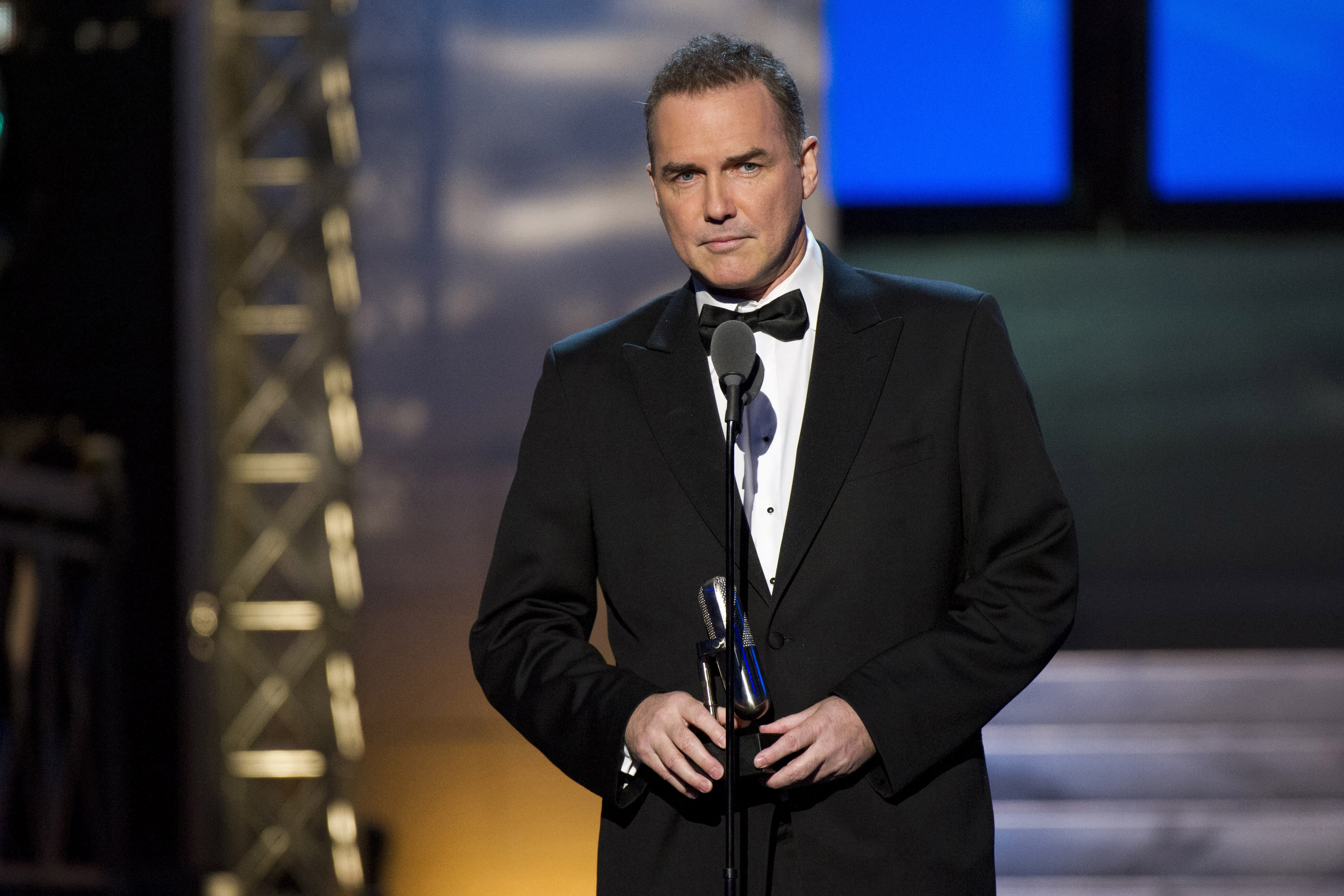
Norm MacdonaldNorm Macdonald appears onstage at The 2012 Comedy Awards in New York, Saturday, April 28, 2012. (AP)
7 “Norm Macdonald: Nothing Special” (Netflix)

The former “Saturday Night Live” comic died in September 2021 of leukemia. It shocked fans, as Macdonald had not been public with his illness, but he had been battling leukemia for 9 years. Before his death — and in the beginning of the pandemic, while at home — he recorded his own last comedy special. As his longtime producing partner said: “He left this gift for us all.” Expect to laugh and probably, because we need to, to cry.  

8 “Fantastic Beasts: The Secrets of Dumbledore” (HBO Max)

The curse continues. After COVID production delays, a major recasting subbing Mads Mikkelsen in for Johnny Depp, and the ongoing adventures of scofflaw Ezra Miller, the movie’s debut buzz mainly focused on its scandals than the movie itself. That unfortunately played out at the box office. It’s the least successful of all the Wizarding World films, and is only the sixth high-grossing film of 2022. It’s perhaps telling that Warner Bros. slipped it onto its streaming platform with little fanfare on the last day of the long weekend.

Anyhow, that means now is the time to check out the film since it’s been delivered to you via streaming. In the film Albus Dumbledore (Jude Law) enlists the help of Newt Scamander (Eddie Redmayne) and a bunch of other magical types to oppose Gellert Grinewald (Mikkelsen), who has not only killed a magical creature in order to take its powers but is scheming to attain the office of Supreme Mugwump. Magical politicking and even an assassination attempt ensue. 

More stories like this 


A giant planet may have “escaped” from our solar system, study finds

Although Pluto lost its status as “Planet Nine” when it was downgraded to dwarf planet, there is ample evidence that our solar system either had or currently has a large planet far beyond Pluto that may one day claim Pluto’s former mantle and become the rightful ninth planet. Unusually regular orbital patterns observed in the Kuiper belt hint that some celestial body more massive than Pluto lurks beyond the distant band of icy debris at the edge of the solar system where Pluto, Eris and other dwarf planets live.

The hypothetical existence of a distant Planet Nine or “Planet X” remains contentious, but evidence continues to mount in its favor. Certainly, it would not be the first time a hypothetical planet was found. Neptune was the first planet found through studying orbits of other bodies in the solar system; intriguingly, its location was discovered with predictions derived from pen-and-paper calculations about telescope observations.

Inadvertently, a recent astronomy paper in Nature found a high likelihood that a gas giant, akin to those in the outer solar system, may have been rapidly ejected from its orbit around the sun early in the evolution of a solar system. The existence of a “lost” Planet Nine early in the formation of the solar system’s history would go far in explaining a lot of how and why the solar system looks as it does today. 

RELATED: What scientists know so far about Planet Nine

Modeling the birth and evolution of feasible star systems, the team of scientists collaborating from China, France, and the United States, ran approximately 14,000 simulations of the early solar system to figure out how it got to looking as it does today, with four terrestrial planets and an asteroid belt orbiting near the sun, four gaseous planets orbiting further out, and a scattering of cold rocky bodies beyond the gas giants.

“What’s really cool is exoplanet astronomers have already confirmed that a very high percentage of both gas giant systems as well as super-earth systems have gone through planetary system instabilities, and we think the solar system is similar,” Jacobson continued.

Intriguingly, simulations strongly suggest that there was an early instability in the orbits of the giant planets — Jupiter, Saturn, Uranus, Neptune, and possibly Planet Nine. Such bodies would have been much closer to the proto-Sun at one point, before gas coalesced into the sun and it really triggered strong fusion reactions that expelled gas and dust outwards, including said planets. This, scientists think, triggered a rapid and chaotic displacement to their current orbits.

The simulations suggest that in the early days, the gas giants had very circular and regular orbits at regular intervals from the sun; after the nascent star began pressuring them outwards, they experienced an unstable transition from compacted, even orbits in line with the plane of the disk to current orbits.

Professor Seth Jacobson of Michigan State University, who was involved in the study, called this a “universal source of planetary instability in the galaxy.” 


Want more health and science stories in your inbox? Subscribe to Salon’s weekly newsletter The Vulgar Scientist.


“We think all disks go through this, what astronomers call a transition disk phase, where the disk is being photo-evaporated from the inside out,” Jacobson told Salon, referring to the proto-planetary disk of gas and dust that prefigured our (and all) solar systems. We can see nascent solar systems forming around the galaxy in the similar way, which suggests there’s a similar pattern to how all solar systems form. 

“What’s really cool is exoplanet astronomers have already confirmed that a very high percentage of both gas giant systems as well as super-earth systems have gone through planetary system instabilities, and we think the solar system is similar,” Jacobson continued.

Within a collapsed cloud of stellar debris — a gaseous solar nebula and likely the remnants of a dead supernova —our proto-sun started to turn on the heat. Heating and ionizing gaseous elements in the disk, energetic photons emissions from our young sun eventually expelled the gas from the protoplanetary disk via evaporation.

The inner edge of this gaseous disk would theoretically “drag” the planets with it as it expanded outward. The initial position of the gas giants in the inner solar system would have been “a very robust trigger for instability,” Jacobson said. That could have swung a Planet Nine-type world out of the solar system — forever.

Indeed, in 90% of simulated scenarios, this instability was triggered. Planetary orbits have been stable for billions of years in our solar system. The mystery of our solar system’s early evolution, however, is still unclear. Location of the Trojan asteroids of Jupiter and the irregular satellites of the giant planets point to a chaotic reshuffling as does the varied composition of the Earth and its moon, which would require a great deal of mixing of different bodies. (It is widely believed that a Mars-size body called Theia collided with the early Earth, and the sloughed-off material formed the Moon.) 

Experts now realize timing in the migration of giant planets was a problem. Geological evidence has also radically outdated the timescale of this model, known as the “Nice” model (as in Nice, France): specifically, a series of three papers appeared in a single issue of Nature laid out a solution, originally suggesting the giant planet instability event occurred roughly half a billion years after the solar system formed, and would have relied on a gravitational encounter between two planets to set off a chain of destabilizing reactions. 

propervideotag.push(function(){
propervideo_display(“salon_instream_1”, “salon”)
})

“Instability would always occur very early in solar system history a few million years after the start,” Jacobson added. “The sun would still be in its stellar cluster at that time. If there was an ejected ice giant, then that ejected ice giant might not have truly been ejected. It might have been caught on this elliptical orbit.”

If the ejection was too late, it likely would become a rogue planet. In this scenario of movement, starting within 10 million years of formation rather than 500 million years into the life of the solar system, the nursery stellar cluster the system is born in can intercept the runaway planet. The result is an extended elliptical orbit.

“During the lifetime of a nebular protoplanetary disk, the amount of gas in the disk is decreasing with time,” Jacobson emphasized. “It’s only when the disk has already gotten the amount of gas in the disk has already gotten quite low that the photoevaporation effect can take place. The photoevaporation effect then moves pretty rapidly. The transition disk phase actually is quite short and it clears out the disk from the inside out.” The effect is similar to that of a puddle of water around a fireplace, where the water closest to the fire evaporates quickly and that further out takes a bit longer.

Jacobson said the moving-around of planets was a surprise result of the simulation. “What I think even we didn’t completely appreciate until after we had started these simulations is that there’s still enough gas in the disk and this process still takes enough time that it can significantly affect the orbits of the planet as the process takes place,” he noted. 

Why the solar system looks like it does:

With the Depp-Heard trial, courtroom television’s exploitative tricks reached new misogynist heights

If the trial of Johnny Depp vs. Amber Heard had its own IMDb page – listing everyone involved in a TV or movie production – it would certainly be a star-studded one. Considering the way in which the trial has been treated by television coverage of the court process – as a juicy, highly sellable narrative affixed to a supposed pursuit of justice – it’s a shock that it doesn’t. 

An increasingly popular genre of television, courtroom broadcasting seems to have seized its place in the broader media marketplace overnight with its wildly popular coverage of the Depp vs. Heard trial. Judging by its impact on the public and pop culture in the last couple months, the trial serves as a prime example of the way in which court-centric media needs to pathologize its subjects by design and maintains a fiduciary love of hating women. Court television has unabashedly cashed in on a survivor’s trauma because it promises to yield high returns and large numbers of new subscribers. As an employee of one such station, I can attest to the fact that these networks have just as much to gain from this trial as Heard has to lose. 

Court-centric media needs to pathologize its subjects by design and maintains a fiduciary love of hating women.

The very minute the trial aired, the network began cheering its newfound success. As a company that is relatively new on the media landscape, we had finally attained big viewership numbers to match those at major broadcast news outlets such as ABC, NBC and CNN. A flurry of emails went out between executives on how to leverage our sudden blowup in numbers into future production deals with other networks, distribution companies and streaming services, which then translated into these new projects going from unpitched ideas to the throes of the development stage seemingly overnight. 

RELATED: From “the greatest podcast ever made” to “shamelessly exploitative”: A guide to the “Serial” backlash

On a more tangible level, viewership numbers manifested as financial figures equally quickly. A slew of raises were distributed to the upper echelon of our productions for reaching new milestones, as were accolades from such platforms as YouTube, Spotify and SiriusXM for our high-performing content. 

Official YouTube creator awards, known in the industry as “Play Buttons,” now adorn our office walls to celebrate the high number of subscribers that Amber Heard’s personal testimony brought in, as if her words were somehow our creative achievement. Likewise, the fact that our newly launched podcast overtook “Serial” on the Apple Podcast charts has been publicly lauded as “a testament to our incredible followers,” with no mention of the trauma that informs the narrative we are simply repackaging. 

From a business standpoint, this trial has been an excellent investment. If we want to feature criticism of Heard’s failure to donate her prior $3.5 million settlement towards domestic violence causes, though, it only seems fair for us to also consider donating part of the sizable profit we’ve made in a few short weeks to similar organizations. Unfortunately, that is unlikely to happen, as the profit gained has already been wholly subsumed by executive bonuses, new equipment purchases and the launch of a brand-new podcast to exclusively cover the trial for those less interested in our unfiltered daytime television broadcast. 

Over the span of this trial, the same combination of influence and celebrity appeal that once fueled the onset of the #MeToo movement has flipped its allegiances to now actively counter the provision of safe spaces for survivor testimony. Heard’s op-ed was once a part of the #MeToo movement, whereas now it is figured as central to the movement’s demolition. 

As high-profile as the “Aquaman” star was before the trial opened, Heard is currently known by way of the mocking memes and clickbait takes that now flood every corner of the internet. They pick apart her overreactions, her underreactions and her choices of words. Outlets such as The Daily Wire have used her anguished face as a platform for ads discrediting her words and even makeup companies have tossed their opinions into the ring via TikTok smear videos. 

RELATED: Lance Bass mocks Amber Heard’s testimony in now-deleted post, jumping on a nasty TikTok trend

Even respected individuals in our network’s newsroom – which likes to think of itself as one of journalistic integrity – were circulating the falsified account of Heard’s opening statements amongst themselves. Several of them fully bought “The Talented Mr. Ripley” line-by-line comparison that has since been discredited as if they had not themselves reported on that day in court. 

The only reason that Heard’s demure side-part and puritanical blouses are so easily recognizable – and meme-able – is because our network filmed them and then made a point to re-air them again and again. Because the network had the foresight to know that her anguished face would make for a great foundation for internet jokes, we spoon-fed it to the public to do with whatever they wanted.  

Amber Heard and Johnny Depp watch as the jury leave the courtroom for a lunch break at the Fairfax County Circuit Courthouse in Fairfax, Virginia, on May 16, 2022 (STEVE HELBER/POOL/AFP via Getty Images)
The only reason that Heard’s demure side-part and puritanical blouses are so easily recognizable – and meme-able – is because our network filmed them and then made a point to re-air them again and again.

Court television, both as a genre of entertainment and as a rapidly growing business venture, understands this proliferation of mockery to be nothing more than a great opportunity to capture the ever-growing attention of tormentors eager to launch hate toward an imperfect woman. Its editorial approach and production strategies have matched this bloodthirsty attitude every step of the way. 

If Amber Heard’s crime was articulating in detail what she believes to be the narrative of her own body, court television’s crime is taking that narrative and retooling it to fit an image of salaciousness more in line with a made-for-TV movie than a trauma unfolding in real life. None of this should come as a surprise, however, as this move is exactly what court television as a genre of entertainment was always designed to do – infuse traditional reporting with extreme yet scintillating exploitation that is tough to turn off and uncomfortable to think critically about. 

In a subscriber-based news economy, the more spite-driven viewers who can be drawn in, the better for business.

Court television’s whole premise is to invite viewers into the courtroom process not to respectfully observe or even to righteously whistleblow but rather to jeer, to poke fun at and to feel morally superior to those on the stand. It takes our right to engage with the American judicial system authentically and productively as invested onlookers and warps it into a parade of crime on display for misinformed judgment and misplaced aggression.

In a subscriber-based news economy, the more spite-driven viewers who can be drawn in, the better for business. Already, there have been discussions amongst executives at the network about how to keep our number up, since we’ve already become accustomed to the extra cash flow this recent boom has brought upon our office. The generally accepted solution is to keep selling Heard’s story in different, but still relatable, genres – a reflective miniseries, a made-for-tv movie and even a reality show. The pipeline between real courtroom events and their soapy spinoffs is a direct one. 

The case of Depp vs. Heard, in particular, has everything off of which court television thrives, plus a handful of bonus celebrity sightings. The video footage of Heard cuddling with James Franco in an elevator added an intriguing air of adultery to Heard’s image, while “WandaVision” star Paul Bettany’s texts to Depp referencing her “burned corpse” came off as more absurdist body horror than authentic dialogue. The goal of court television has always been entertainment, not realistic or investigative coverage. 

Johnny DeppActor Johnny Depp testifies in the courtroom at the Fairfax County Circuit Courthouse in Fairfax, Virginia, April 25, 2022. (STEVE HELBER/POOL/AFP via Getty Images)
During his first time on the stand, Depp characterized Heard as the “perfect partner” … as though he is describing a fairy tale rather than an authentic account of an in fact very real relationship.

Meanwhile, the drugs and alcohol at the center of many of the fights between Depp and Heard during their marriage should make both of them unreliable narrators, yet in the public eye that characterization seems always to stick more to Heard than it does to Depp. Graphic pictures of Heard’s bruises have been reduced to nothing more than a conversation about iPhone camera metadata, while Depp’s fans stand outside the courthouse yelling “Justice for Johnny” and point to how kind he was in prior relationships 20 years ago. 

During his first time on the stand, Depp characterized Heard as the “perfect partner” for the first few months of their marriage, before transforming into someone else entirely. In hearing him say as much, it’s as though he is describing a fairy tale rather than an authentic account of an in fact very real relationship. In his testimony, he is leaning on the same formula so often used in fiction, where there must be a perfect good guy and a very imperfect villain. No partner is perfect, though. Still, court television’s coverage of the trial has used the same playbook and clung to all the imperfections as they arose with the intensity of a sports match. 

Sexual and physical trauma, already too often used as a storytelling device by both fictional and non-fictional media alike, has been distilled into its purest form in this trial through firsthand accounts, contradicting testimonies and scathing character witnesses. If the classic court procedural dramas (á la “Law & Order”) tend to hinge their plotlines on the unveiling of trauma, court television does the same only with even less control over the presentation due to its live-streamed format. 

Slices of Heard looking angry or upset are favorites, as are anything where either her graphic sexual abuse or the holes in her narrative are discussed.

Whatever control there is to be had by producers, editors, camera operators, etc., is wielded to amplify the faults of the defendant and pathologize their position rather than to approach them with compassion as real human beings forced to navigate a hellish experience. We have a several-seconds camera and audio lag time, meant to provide a quick buffer during which we can choose not to air certain graphic descriptions or images, yet rarely do we ever seem to utilize it. 

Instead, it becomes fodder for B-roll or high-performing tweets. Slices of Heard looking angry or upset are favorites, as are anything where either her graphic sexual abuse or the holes in her narrative are discussed. Kate Moss‘ testimony that Heard was wrong to bring up rumors of violence circulating her and Depp’s relationship in the ’90s was played on repeat all afternoon and the following morning. 

Model Kate Moss is sworn in via video link at the Fairfax County Circuit Courthouse in Fairfax, Virginia, on May 25, 2022 (EVELYN HOCKSTEIN/POOL/AFP via Getty Images)

Sadly, this format fits all too well into a broader pattern of adjudicating the bodies of vulnerable individuals in our court system today. The fact that the takedown of Heard’s survivor story happens to be playing out simultaneously to the imminent Supreme Court overthrow of Roe v. Wade adds an eerie realness to its outcome. If a beautiful, white, cis hollywood celebrity doesn’t even have control over the way her body is discussed in court, what chance does any other women have of their bodies being treated with dignity in such a space? 

Court television prides itself on spinning “justice” into watchable media. The depiction of justice should be at the forefront of producers’ and editors’ minds as they go about booking guests and writing anchor scripts. It is, after all, the No. 1 commodity that the network purports to sell. 

Yet, it’s still nothing more than a commodity when aired on TV. How can justice ever really be prioritized in a system that functions off of the currency of ratings and where the content needs to follow public opinion enough to capture its attention? Justice and entertainment rarely, if ever, coincide, seeing as the former is supposed to be truth-based and the latter necessitates significant editorializing.  

RELATED: Why Fox News is obsessed with Johnny Depp, its Manliness Under Siege mascot

Justice and entertainment rarely, if ever, coincide, seeing as the former is supposed to be truth-based and the latter necessitates significant editorializing.  

Moreover, the question of whether or not one can ever really ascertain justice when it comes to situations of trauma is an important one that gets intentionally ignored by those in charge of production and executive decisions within the court television industry. A conclusive truth is not easy to determine, as the reality of trauma relies on a number of factors including the survivor’s upbringing, past history of relationships, ability to consent and positioning within various power structures. But good stories need satisfying endings. 

Additionally, what kind of witnesses are really appropriate to call to the stand when attempting to adjudicate trauma? Typically, trial lawyers call who they see fit to carry out justice for their clients, however questionable they might be. The network, on the other hand, invites innumerable other unvetted voices to weigh in, purely as a means to build up sensationalism and continue the dialogue in such a way that will make for engaging TV. In the case of the trial of Depp vs. Heard, where witnesses include a slew of other celebrities and fellow media executives from TMZ and Warner Brothers, both lineups seem to have converged. 

Morgan Tremainne, a former journalist from TMZ, testified in the past week about exclusive photos and video footage that had been obtained by the publication depicting Depp and Heard’s explosive fighting at the height of their marriage turmoil. At the point when courtroom television leans on the investigative findings of tabloid culture to draw its conclusions, the distinction between trauma-peddling and justice-seeking has officially folded. 


Want a daily wrap-up of all the news and commentary Salon has to offer? Subscribe to our morning newsletter, Crash Course.


A lot of my coworkers are waiting anxiously for the verdict, due by the end of next week. Really, though, the verdict doesn’t matter. Depp has already won in the eyes of the media, which is an outcome pushed forth by courtroom coverage that was sympathetic to what he had to say because it made for high ratings. He was good at telling a story that the public was primed to believe, and court television couldn’t have been happier to provide him a platform with which to do so.    

More stories to read: 

“It makes no sense”: 18-year-olds in Texas can buy AR-15s but not handguns

The fact that the gunman responsible for this week’s massacre in Uvalde, Texas, was able to buy two AR-15s days after his 18th birthday highlights how much easier it is for Americans to purchase rifles than handguns.

Under federal law, Americans buying handguns from licensed dealers must be at least 21, which would have precluded Salvador Ramos from buying that type of weapon. That trumps Texas law, which only requires buyers of any type of firearm to be 18 or older.

Following Tuesday’s massacre at Robb Elementary School, which killed 19 children and two adults, a growing number of lawmakers in Texas and beyond are calling for the minimum age to purchase assault rifles to be raised to 21 from 18. Doing so would require undoing nearly two centuries of more permissive regulations on so-called long guns.

“It’s something that could happen at either the state or federal level, but I don’t see movement on either front,” said Sandra Guerra Thompson, a criminal law professor at the University of Houston Law Center.

Only six states — Florida, Washington, Vermont, California, Illinois and Hawaii — have increased the minimum purchase age for long guns to 21, according to the Giffords Law Center to Prevent Gun Violence. The majority did so following the 2018 massacre in Parkland, Florida, where a then-19-year-old assailant killed 17 people at a high school.

Several states have since faced legal challenges.

The National Rifle Association sought to repeal the Florida law.

“The ban infringes the right of all 18-to-20-year-olds to purchase firearms for the exercise of their Second Amendment rights, even for self-defense in the home,” the NRA argued in a court filing, according to the South Florida Sun Sentinel. “The ban does not just limit the right, it obliterates it.”

Government attorneys, however, argued that because “18-to-20-year-olds are uniquely likely to engage in impulsive, emotional, and risky behaviors that offer immediate or short-term rewards, drawing the line for legal purchase of firearms at 21 is a reasonable method of addressing the Legislature’s public safety concerns.”

A federal judge upheld the law last year; the NRA is appealing.

A U.S. Court of Appeals recently ruled that California’s version of the law was unconstitutional, though it did uphold a provision that requires adults under 21 to obtain a hunting license before buying a rifle or shotgun.

After the shooting in Uvalde this week, lawmakers in New York and Utah also called on their states to raise the age limit for long gun purchases to 21. U.S. Sen. Dianne Feinstein introduced federal legislation earlier this month — less than a week before the Uvalde shooting — that would raise the minimum age to purchase assault weapons to 21 from 18; the California Democrat said in a statement that it was in response to a shooting that killed 10 people at a Buffalo supermarket. That gunman also was 18 years old.

“It makes no sense that it’s illegal for someone under 21 to buy a handgun or even a beer, yet can legally buy an assault weapon,” she said.

Lindsay Nichols, federal policy director at the Giffords Law Center to Prevent Gun Violence, said that increasing the age requirement at the federal level may be more effective because federal authorities can inspect and discipline licensed firearm sellers.

“State authorities often don’t have a system in place for enforcing the laws governing” licensed dealers, Nichols said.

In the hours after the shooting in Uvalde, there was some confusion about what types of firearms Ramos had used. Texas Gov. Greg Abbott initially said that Ramos had a handgun and possibly a rifle. That prompted some to speculate that Ramos had been able to get hold of the weapons more easily because of recent changes to the gun laws in Texas, including a bill passed last year that allows Texans to carry handguns without a permit or training. But those early reports turned out to be inaccurate.

After it became clear that the weapon used was a rifle, Texas Democrats questioned why Ramos was able to purchase one at the age of 18.

“Why do we accept a government that allows an 18 year old to buy an assault rifle, but not tobacco products?” state Rep. Nicole Collier, a Fort Worth Democrat who chairs the Texas Legislative Black Caucus, said in a statement. “The hypocrisy of government is deafening. We can develop gun policy that does not infringe upon one’s constitutional right, while preserving and protecting life; that’s called multitasking and we can do that.”

State Rep. Jarvis Johnson, a Houston Democrat, called on Abbott to convene a special session of the Legislature so lawmakers could “pass real gun reforms,” including raising the minimum age to purchase long guns.

“Enough is enough,” he said.

Such a move would reverse a decades-old Texas system that treats handguns differently from long guns, which have long been exempted from state rules on open carry.

The disparate rules date back to the post-Civil War era, when the state — counter to its modern-day reputation — adopted some of the strictest gun control laws in the nation.

“Despite its stereotype of being a state where cowboys promiscuously tote six-shooters, Texas is one of the few states that absolutely prohibits the bearing of pistols by private individuals,” wrote firearms attorney Stephen Halbrook in a 1989 Baylor Law Review article, six years before former Texas Gov. George W. Bush relaxed rules on handguns considerably.

Following spasms of violence that were then plaguing the young state in the 19th century, lawmakers “started specifically targeting weapons that they equated with crime,” said Texas historian Brennan Rivas, who is writing a book about the state’s early gun laws. “They equated bowie knives, daggers and pistols with interpersonal violence and crime.”

Muskets, rifles and shotguns, by comparison, were excluded because they were used for hunting or participating in a militia.

“They didn’t consider long guns to be deadly weapons,” Rivas said. “Those had valuable uses. Whereas these other weapons were kind of like a plague on polite society.”

Lawmakers of that time could not have envisioned that long guns would evolve from lumbering hunting rifles into AR-15s capable of firing dozens of rounds per minute, Rivas added.

But any tighter requirements appear unlikely to pass in Texas.

Just last year, following high-profile massacres in El Paso and in Midland and Odessa in 2019, lawmakers approved a variety of measures that loosened gun regulations. In addition to authorizing the carrying of handguns in public without a permit or training, the laws ban the governor from limiting gun sales during an emergency and allow gun owners to bring their weapons into hotel rooms.

During a Wednesday press conference at Uvalde High School, Abbott repeated a claim he and other Republican state leaders have often made, that mental health issues are to blame for the streak of mass shootings, not lax gun regulations. Officials conceded that they were not aware that the gunman had any criminal or mental health issues.

“The ability of an 18-year-old to buy a long gun has been in place in the state of Texas for more than 60 years,” Abbott said. “And why is it that for the majority of those 60 years we did not have school shootings? And why is it that we do now?”

Despite Republican rhetoric, Texas already “hardened” schools. It didn’t save Uvalde

Four years after an armed 17-year-old opened fire inside a Texas high school, killing 10, Gov. Greg Abbott tried to tell another shell-shocked community that lost 19 children and two teachers to a teen gunman about his wins in what is now an ongoing effort against mass shootings.

“We consider what we did in 2019 to be one of the most profound legislative sessions not just in Texas but in any state to address school shootings,” Abbott said inside a Uvalde auditorium Wednesday as he sat flanked by state and local officials. “But to be clear, we understand our work is not done, our work must continue.”

Throughout the 60-minute news conference, he and other Republican leaders said a 2019 law allowed districts to “harden” schools from external threats after a deadly shooting inside an art classroom at Santa Fe High School near Houston the year before. After the Uvalde gunman was reportedly able to enter Robb Elementary School through a back door this week, their calls to secure buildings resurfaced yet again.

But a deeper dive into the 2019 law revealed many of its “hardening” elements have fallen short.

Schools didn’t receive enough state money to make the types of physical improvements lawmakers are touting publicly. Few school employees signed up to bring guns to work. And many school districts either don’t have an active shooting plan or produced insufficient ones.

In January 2020, the Uvalde Consolidated Independent School District received $69,000 from a one-time, $100 million state grant to enhance physical security in Texas public schools, according to a dataset detailing the Texas Education Agency grants. The funds were comparable to what similarly sized districts received.

Even with more funds and better enforcement of policies, experts have said there is no indication that beefing up security in schools has prevented any violence. Plus, they said, it can be detrimental to children, especially children of color.

“This concept of hardening, the more it has been done, it’s not shown the results,” said Jagdish Khubchandani, a public health professor at New Mexico State University who studies school security practices and their effectiveness.

Khubchandani said the majority of public schools in the United States already implement the security measures most often promoted by public officials, including locked doors to the outside and in classrooms, active-shooter plans and security cameras.

After a review of 18 years of school security measures, Khubchandani and James Price from the University of Toledo did not find any evidence that such tactics or more armed teachers reduced gun violence in schools.

“It’s not just guns. It’s not just security,” Khubchandani said. “It’s a combination of issues, and if you have a piecemeal approach, then you’ll never succeed. You need a comprehensive approach.”

Insufficient active-shooter plans

Since the shooting, GOP lawmakers have repeatedly suggested limiting access to schools to one door.

“We’ve got to, in our smaller schools where we can, get down to one entrance,” Lt. Gov. Dan Patrick offered at the press conference Wednesday. “One entrance might be one of those solutions. If he had taken three more minutes to find that open door … the police were there pretty quickly.”

There are still questions about the timing and details of the tragedy, however, including whether the shooter busted a lock to get into the school or if a door was unlocked. A state police official reported Thursday that the door appeared to be unlocked but that it was still under investigation.

Khubchandani and education advocates said locking doors and routing everyone through one entrance is already standard practice in most districts. And safety leaders said locking exterior doors is a best practice, but it’s one strategy that needs to be strictly enforced.

“Sometimes convenience can take priority over safety and you can have a plan in place, you can have policies in place,” said Kathy Martinez Prather, director of the Texas School Safety Center at Texas State University. “They’re only as effective as they’re being implemented.”

At Wednesday’s press conference, Abbott emphasized that the package of school safety laws passed in 2019 required school districts to submit emergency operations plans to the Texas School Safety Center and make sure they have adequate active-shooter strategies to employ in an emergency.

State law dictates that districts must be able to show how they will prepare for, respond to and recover from disasters like active threats, but also extreme weather and communicable disease. These plans must include training mechanisms, communication plans and mandatory drills. Schools must create safety committees and establish a way to assess threats. These are known as emergency operations plans. As part of those, schools need active-shooter plans.

But a three-year audit by the center in 2020 found that out of the 1,022 school districts in the state, just 200 districts had active-shooter policies as part of their plans, even though most districts had reported having them.

That same audit revealed 626 districts did not have active-shooter policies. Another 196 had active-shooter policies, but auditors found those plans were insufficient.

In addition, only 67 school districts had viable emergency operations plans overall, the report found.

Martinez Prather wouldn’t say if Uvalde’s emergency plan was considered adequate because of ongoing investigations into the shooting. But said the center’s review did not find any areas of noncompliance.

The audit reviewed school districts’ emergency plans in June 2020, and Martinez Prather said she was “absolutely” surprised that so many schools did not have clear-cut plans, especially after the Santa Fe shooting and others around the country.

“Our attention to this issue should not be as close to the nearest and latest school shooting,” she said. “We need to keep sending that message that this can happen at any point in time and to anybody.”

She said the center has spent the last year and a half following up with schools to get their plans up to standard.

Arming teachers and staff with guns

Texas leaders have already shunned the idea of restricting gun access in the aftermath of the Uvalde shooting. In fact, in recent years, Texas lawmakers have loosened gun laws after mass shootings.

Instead, lawmakers point to the nearly decade-old school marshal program in Texas as another measure to deter and prevent mass shootings. That program was created in response to the deadly shooting at an elementary school in Newtown, Connecticut, that left 26 people dead, including 20 first-graders.

Designated school employees who take an 80-hour training course and pass a psychological exam are allowed to keep a firearm in a lockbox on school grounds, an idea most attractive to rural schools in areas where law enforcement response can take longer.

After the school shooting in Santa Fe, state lawmakers removed the cap that limited schools to one marshal per 200 students. Today, according to the Texas Commission on Law Enforcement, which oversees the training for the program, there are 256 marshals across the state.

While lawmakers tout it as a potential tool to prevent mass shootings, just 6% of school districts use it, according to a report from the Texas School Safety Center. Martinez Prather at the Texas School Safety Center said many school districts say it’s expensive and the training is time-consuming for educators.

Meanwhile, 280 school districts are utilizing an unregulated option known as the Guardian Program, which allows local school boards to approve individuals in schools to carry concealed weapons. Each “guardian” must have a handgun license and take 15 to 20 hours of specialized training by the Texas Department of Public Safety.

Nicole Golden, executive director of Texas Gun Sense, said she’s concerned by the “minimal” level of training school staff go through before they are approved to have a weapon in the classroom.

“These aren’t law enforcement officers,” she said. “These are school staff who have some training, and there’s really not a lot of data to support that that’s the safe direction to go in.”

Plus, Golden said, placing more guns on school grounds can be problematic when data shows students of color are disproportionately disciplined.

When lawmakers decided to expand the number of marshals in Texas schools in 2019, Black students and parents said the idea made them feel less safe in school, knowing they are disciplined more than other students.

The study from Khubchandani and Price pointed to a 2018 shooting at a high school in Kentucky where the shooter killed two and injured 14 students in 10 seconds.

“Armed school personnel would have needed to be in the exact same spot in the school as the shooter to significantly reduce this level of trauma,” the researchers wrote. “Ten seconds is too fast to stop a school shooter with a semiautomatic firearm when the armed school guard is in another place in the school.”

$10 per student for safety

Big changes often take big money, and officials have noted that the 2019 school safety bill gives about $100 million per biennium to the Texas Education Agency. The agency then distributes the money to school districts to use on equipment, programs and training related to school safety and security, a little less than $10 per student based on average daily attendance. The money can be used broadly, ranging from physical security enhancements to suicide prevention programs.

According to a self-reported survey of districts by the Texas School Safety Center, more than two thirds of school districts have used this money for security cameras. 20% used it for active-shooter response training. Nearly 40% of districts installed physical barriers with the allotment.

But Zeph Capo, president of the Texas chapter of the American Federation of Teachers, said that money wasn’t enough to pay for the more expensive projects lawmakers were suggesting.

“Districts ended up spending money on some programs, some electronic AV equipment, but I don’t think it was nearly enough to do what needs to be done in most of the schools, which is really change the structures of the buildings so there’s better control over entrance and egress,” he said, noting that AFT believes more gun restrictions is a better solution.

The TEA also received a separate one-time $100 million pool of money to provide grants to districts specifically for physical security enhancements, like metal detectors, door-locking systems or bullet-resistant glass.

It’s unclear how Uvalde CISD spent the $69,000 it received from the state to enhance its physical security. School officials did not respond to questions Wednesday. As of the May 2 report, the district had spent about $48,000 of the grant, which is set to end at the end of the month.

Other remote town school districts received comparable grants per their student population, according to an analysis by The Texas Tribune. For example, the Sulphur Springs Independent School District in East Texas has only a slightly larger student population and received about $71,000 in grant funds.

According to a district document, Uvalde CISD, which enrolls around 4,100 students, had a variety of so-called hardening measures in place that lawmakers and school safety leaders recommend.

The district employed four district police officers, installed perimeter fencing meant to limit access around schools, including Robb, and instituted a policy that all classroom doors remain locked during the day.

There are campus teams that identify and address potential threats, and schools hold emergency drills for students “regularly.” The district employed a threat reporting system for community members to raise concerns. Some schools had security vestibules at their entrances and buzz-in systems to get inside from the outdoors.

But a security vestibule, which is basically a secure lobby to the school, can be a huge expense for school districts already tight on money. In 2019, the Waller Independent School District estimated that the addition of two of these entrances to the junior high school would cost $345,000. Security cameras at a small elementary school can cost more than $20,000, according to industry experts.

In recent years — even before the Santa Fe shooting — school districts have begun to rely on bond proposals to find the money to implement some of these changes.

But Texas voters have expressed hesitancy at the ballot box to approve such bonds in recent years, which the Texas Association of School Boards attributed to the lingering pandemic and political polarization. Recent changes by the Texas Legislature have also complicated bond requests for schools after it started to require districts to write, “This is a property tax increase,” on bond project signs, even when the proposals wouldn’t affect the tax rate.

Overall, Monty Exter, a senior lobbyist with the Association of Texas Professional Educators, said the per-student allotment and one-time grants set aside for school security could never pay for the types of construction projects lawmakers have touted publicly in the wake of the shooting.

“Thinking about making significant changes to 8,000-plus campuses, $100 million doesn’t necessarily go that far,” he said.

Disclosure: The Association of Texas Professional Educators, Texas AFT and the Texas Association of School Boards have been financial supporters of The Texas Tribune, a nonprofit, nonpartisan news organization that is funded in part by donations from members, foundations and corporate sponsors. Financial supporters play no role in the Tribune’s journalism. Find a complete list of them here.

Correction, May 27, 2022: A previous version of this story erroneously reported that 280 schools have participated in the Guardian Program allowing school employees to carry concealed weapons. There are 280 school districts participating in this program.

This article originally appeared in The Texas Tribune at https://www.texastribune.org/2022/05/26/texas-uvalde-shooting-harden-schools/.

The Texas Tribune is a member-supported, nonpartisan newsroom informing and engaging Texans on state politics and policy. Learn more at texastribune.org.

Texas Lt. Gov. Dan Patrick backs out of NRA convention as Trump defends his speech

Texas Lt. Gov. Dan Patrick, a Republican, has pulled out of his Friday appearance at the National Rifle Association’s (NRA) convention in Houston over the school shooting in Uvalde, saying that he doesn’t want to “bring any additional pain or grief to the families and all those suffering in Uvalde.”

“After prayerful consideration and discussion with NRA officials, I have decided not to speak at the NRA breakfast this morning,” Patrick said in a statement. “While a strong supporter of the Second Amendment and an NRA member, I would not want my appearance today to bring any additional pain or grief to the families and all those suffering in Uvalde.”

“This is a time to focus on the families, first and foremost,” he added. 

Patrick was among several state Republicans, including Texas Gov. Greg Abbott, to come under fire for his impending presence at the event. On Friday, Abbott joined Patrick in dropping out of his in-person appearance. He will instead appear via and host a press conference at Uvalde to address the shooting. Abbott’s withdrawal followed similar moves by numerous musical artists – like Don McLean, Larry Gatlin and Larry Stewart – who were slated to put on a performance at the gathering.

Despite the exodus, the convention is still poised to have appearances from Sen. Ted Cruz, R-Tex., South Dakota Gov. Kristi Noem, and Donald Trump, who has vowed to offer “real solutions and real leadership” in his address.

“Friday night, I will be in Houston, and I will be making a speech and discussing a lot of the things you would agree to,” Trump said to preview his speech on Friday. “It will be very interesting, interesting time to be making such a speech, frankly.”

“You have to give that Second Amendment great protection because, without it, we would be a very dangerous country,” Trump concluded.

RELATED: After Buffalo and Uvalde, America feels broken: Where do we go from here?

Over the years, the NRA has proven a reliable source of campaign cash for Republican politicians. Cruz, an ardent gun rights advocate, has taken in $176,284 from the group since 2012, according to a CBS affiliate. Sen. John Cornyn, R-Tex., who also canceled his appearance this week at the convention, has reportedly reaped $583,816 over two decades. Meanwhile, Abbott has accepted $16,200 from both the NRA and the Texas State Rifle Association, a nonprofit that strives to protect the 2nd Amendment. 


Want a daily wrap-up of all the news and commentary Salon has to offer? Subscribe to our morning newsletter, Crash Course.


The NRA officially kicked off its annual conference on Friday, with an expected turnout of 80,000 attendees, an ABC affiliate reported. Leaders of the group said that they wanted to “reflect on” the Uvalde massacre, claiming they would “pray for the victims, recognize our patriotic members and pledge to redouble our commitment to making our schools secure.”

Houston Mayor Sylvester Turner said that while the event has been on the books for two years, he hoped its organizers would put it off for the time being. Protesters in Houston are already leading demonstrations outside the event, leading chants like “all children matter.” One protest was reportedly led by Texas gubernatorial candidate Beto O’Rourke, who this week interrupted Abbott’s press conference after the shooting to call out the governor’s lack of action on gun reform. 

RELATED: “You are doing nothing”: Republicans erupt after Beto O’Rourke interrupts Texas Gov. Greg Abbot

“Only in America”: Frustrated teachers fume over GOP calls to arm them with guns to stop shootings

The heads of the two largest U.S. teachers’ unions on Thursday roundly rejected renewed calls by Republican politicians—some of them funded by the firearms industry lobby—to arm educators following the massacre of more than 20 children and staff at a Texas elementary school.

“Teachers should be teaching, not acting as armed security guards,” National Education Association (NEA) president Becky Pringle asserted in a statement.

“Our public schools should be the safest places for students and educators, yet the gunshots from a lone shooter armed with a military-grade weapon shattered the physical safety of the school community in Uvalde, Texas,” she added. “The powerful gun lobby and their allies did not waste a second after the horrific killing of 19 students and two teachers at Robb Elementary School to call for arming teachers.”

“Bringing more guns into schools makes schools more dangerous and does nothing to shield our students and educators from gun violence,” Pringle said. “We need fewer guns in schools, not more.”

Pringle continued:

“We need common-sense solutions now. Schools need more mental health professionals, not pistols; teachers need more resources, not revolvers. Arming teachers makes schools more dangerous and does nothing to protect students and their families when they go off to school, shop at the grocery store, attend church services, ride the subway, or simply walk down the streets of their neighborhoods. Those lawmakers pushing to arm teachers and fortify school buildings are simply trying to distract us from their failure to prevent another mass shooting.”

“Educators and parents overwhelmingly reject the idea of arming school staff. Rather than arming educators with guns, we need to be giving them the tools needed to inspire their students,” she said. “Rather than putting the responsibility on individual teachers, our elected leaders need to pass laws that protect children from gun violence and bring an end to senseless and preventable killings.”

“Americans want the carnage to stop,” Pringle added. “My message to Congress: What are you going to do?”

Polling has shown that teachers are overwhelmingly opposed to being armed in the classroom.

“I think that arming a bunch of people without the training or desire to shoot guns is a disaster in the making,” explained one respondent to a 2019 survey of U.S. educators by California State University professor Lauren Willner that found 88% of teachers were opposed to being armed. “I worry about students getting their hands on guns, and I worry far more about gun accidents than about school shootings.”

Echoing Pringle’s stance, American Federation of Teachers president Randi Weingarten said in a statement that “only in America do people go grocery shopping and get mowed down by a shooter with hate in his heart; only in this country are parents not assured that their kids will be safe at school.”

“Gun violence is a cancer, and it’s one that none of us should tolerate for one single moment longer,” she added. “We have made a choice to let this continue, and we can make a choice to finally do something—do anything—to put a stop to this madness.”

“Wrong decision”: Top cop stalled response as student begged 911 to “please send the police”

Texas’ top law enforcement official admitted Friday that police officers made key errors when responding to a shooting that left 19 children and two teachers dead at Robb Elementary School in Uvalde.

Police officers did not act sooner to stop the 18-year-old gunman because a supervising officer at the scene wanted to wait for backup and equipment, said Steven McCraw, director of the Texas Department of Public Safety. By the time a specialized team of federal officers arrived and entered the school — they had to get keys from a janitor to open locked classroom doors — more than an hour had passed since the shooter arrived at the school, McCraw said.

That was a mistake, McCraw said at a Friday press conference.

“Of course it was not the right decision,” McCraw said. “It was the wrong decision.”

“When it comes to an active shooter, you don’t have to wait on tactical gear, plain and simple,” he said.

McCraw gave more details about the shooting Friday, revealing that the gunman entered the school through a back door that minutes before had been propped open by a teacher. He said a police officer employed by the school district responded to an initial 911 call about an armed man near the school but drove past the gunman and mistook a teacher for the shooter.

[Texas already “hardened” schools. It didn’t save Uvalde.]

McCraw also detailed harrowing 911 calls by teachers and students trapped inside with the gunman, including one at 12:47 p.m. — more than an hour after the shooter entered the school — when a student begged the 911 operator: “Please send the police now.”

Weeks before the shooting, the gunman discussed his plans to buy a gun with others on Instagram, McCraw said.

Law enforcement officials have faced increasing questions in the days since the shooting about whether officers on the scene could have acted more quickly to stop the gunman. Videos circulated on social media show desperate parents begging officers to enter the school, and parents have reported being handcuffed and Tased by law enforcement officers when they implored officers to act or tried to retrieve their children.

At the same time, DPS officials — who are leading the shooting investigation along with local police — have often given conflicting details about how the police response played out.

For example, DPS officials initially said the 18-year-old gunman encountered a school district police officer when he arrived on school grounds — and gave conflicting accounts about whether the officer fired at the gunman.

On Thursday, the agency reversed course, saying that no campus police officer confronted the gunman when he stepped onto the premises.

Uvalde police received the first call around 11:20 a.m. Tuesday, when the gunman’s grandmother called 911 to report that he had shot her in the face at her home about two minutes from Robb Elementary. The shooter fled in his grandmother’s pickup truck and crashed it in a ditch near the school at 11:28 a.m.

McCraw said the gunman fired at two passersby on the street, then went to the school, where he fired shots at the building from outside before entering the building at 11:33 a.m. through the back door that a teacher had left propped open.

Once inside, the gunman entered a pair of connected classrooms — Rooms 111 and 112 — where he killed 19 children and two teachers and wounded 17 others. McCraw said the gunman fired more than 100 rounds at that point.

Local police officers arrived at the school and entered at 11:35 a.m., McCraw said, but fell back after two officers were shot and wounded by the gunman. Officers tried to negotiate with the shooter, officials have said, but the man “did not respond.”

McCraw said the commander on site at that point treated the situation as a “barricaded suspect” and thought children were no longer at risk, which he also called a mistake.

“There was plenty of officers [at the scene] to do what needed to be done,” McCraw said.


This article originally appeared in The Texas Tribune at https://www.texastribune.org/2022/05/27/uvalde-school-shooting-police-errors/.

The Texas Tribune is a member-supported, nonpartisan newsroom informing and engaging Texans on state politics and policy. Learn more at texastribune.org.

Uvalde shooting timeline exposes an ugly truth: The police have no legal duty to protect you

In the aftermath of the murder of 19 kids and two teachers at a Uvalde, Texas elementary school, the reports about what, exactly, the cops did that day are conflicting, to say the least. Initial reports claimed the police engaged in a firefight with the shooter before he entered the school, but now reports are that the gunman actually wandered around outside without challenge for 12 whole minutes. The story may very well change again by the time you’re reading this, but one detail does seem to be coming into clear view: The shooter had about an hour inside the school with his victims before police finally shot him. Video and testimony show that parents were not only begging cops to do something but that when parents themselves tried to charge in, the cops held them back. At least one parent was handcuffed to keep him from charging into the school. On Friday afternoon, the Texas Department of Public Safety (DPS) confirmed that at least 19 law enforcement officers stood in the hallway outside of the classroom at Robb Elementary for over 45 minutes as the gunman slaughtered students inside. 

Police, it appears, were not keen on confronting a teenager armed with an AR-15. That’s understandable from a human perspective but in direct conflict with the image that law enforcement likes to portray of themselves as brave public servants who put their life on the line for ordinary citizens. This image has been bandied about even harder in recent years, in response to the ongoing debate over how much public money is spent on policing in lieu of other social services. It’s safe to say that the widespread support for robust police funding is entirely due to the assumption that cops have a duty to rush in and protect people, especially children, in such situations. 

RELATED: Texas cops’ claims unravel: Police didn’t “engage” Uvalde shooter — but they cuffed scared parents

On social media, people were understandably recommending that the parents sue the police for their failure to act swiftly. It seems like common sense: We hire police to protect us, and if they don’t, we can sue them, right?

Well, one certainly can try to sue! But here’s the sad, dark truth: Such a lawsuit is almost certainly doomed from the get-go. In 2005, the Supreme Court settled whether or not citizens are entitled to protection from violence from the police with a resounding “nope, see you later.” This case also involves the murder of three small children, so readers be forewarned. In 1999, Colorado resident Jessica Lenahan (then Gonzales) obtained a restraining order against her ex-husband, Simon Gonzales, who was stalking her and her four children. A few days later, he showed up at her house and kidnapped her three daughters. She frantically called the police for hours, over and over, and they did nothing. It was only when Simon Gonzales showed up at the police station, gun in hand, that they reacted, by killing him. They found the three little girls murdered at their father’s hand in the car. 


Want more Amanda Marcotte on politics? Subscribe to her newsletter Standing Room Only.


Lenahan sued the police, arguing that by ignoring her pleas for help, they had violated her 14th amendment rights to equal protection. The case went all the way to the Supreme Court, where she lost in a 7-2 decision in 2005. The opinion’s author, Antonin Scalia, argued that the police’s right to discretion prevailed, and there is no “‘entitlement’ to receive protective services.” That the cops were bad at their job didn’t change the fact that the right to discretion over the right call lay with them, not Lenahan. 

RELATED: The NRA celebrates in Texas before Uvalde victims are buried

There is a “traditional belief that police are there to proactively prevent and deescalate dangerous situations,” as Ramenda Cyrus wrote for the American Prospect just last month, but, in reality, “the cops do not have a duty to protect you, or anyone.”

Since Scalia’s 2005 Supreme Court decision, another case that reiterated this legal reality came to the public’s attention, initially because of, believe it or not, the comedy website Cracked.com. In 2011, Joseph Lozito was on his way to work in New York City when he got attacked, right in front of two police officers, by a serial killer the cops were already on the lookout for. The killer, Maksim Gelman, had already murdered four people when he pulled out a knife on the train and just started stabbing Lozito at random. Lozito fought back, while the two police watched but did not intervene. Lozito, even though he had been stabbed in the head multiple times, managed to disarm Gelman. It was only then that the cops swooped in and arrested the killer. Lozito sued the police and lost, because, you guessed it, the cops had no “special duty” to act


Want more Amanda Marcotte on politics? Subscribe to her newsletter Standing Room Only.


To be clear there are real legal issues with trying to create an affirmative duty to act for the police, starting with the danger of mass arrests for every petty crime. The 2020 episode of Radiolab that covers both of these cases digs into some of the complications and is well worth listening to. Still, the false assumption that police do have a legal obligation to protect the public is the source of much of the support for not just basic funding, but often sprawling police budgets that detract from a community’s ability to pay for other services, such as the kinds of mental health services that might prevent some of these shootings. 

As NBC News reported, the “Uvalde Consolidated Independent School District had doubled its security budget in recent years,” militarizing the safety plan in ways that are all too familiar in our modern era. The money went to “its own police force, threat assessment teams at each school, a threat reporting system, social media monitoring software,” among other things. Uvalde police are also equipped with expensive firepower, body armor, and other militarized equipment that the public buys cops, under the assumption that they are obliged to use it to protect us. But this reliance on the fancy bells and whistles appears to have contributed to the delay in response. Authorities said on Friday that the commanding officer on the scene decided to wait for his officers to be fully equipped while children were being executed steps away from them. 

RELATED: Did we defund the police? No, but “big changes are happening” even after protests die down

“They don’t make entry initially because of the gunfire they’re receiving,” Victor Escalon, the South Texas regional director for DPS, told the press. “But we have officers calling for additional resources, everybody that’s in the area, tactical teams: We need equipment, we need specialty equipment, we need body armor, we need precision riflemen, negotiators.” 

As political commentator Julian Sanchez noted on Twitter, “I suspect this is an underappreciated harm of police militarization: Now cops think it’s not their job to protect people if it involves some risk & they don’t have a tank and a SWAT team.”

The debate over police funding is a frustrating one because it demands nuance, and we do not live in nuanced times. So it gets reduced to this childish pissing match over whether we “fund” or “defund” the police — as if the question is whether or not there should be any police force at all. In truth, there will always be some need for law enforcement, since it’s childish to believe everyone will just obey the law out of communal duty without it. But it is also and equally true that the cops are overfunded and all too often ineffective, often due to being spoiled rotten by both the public and politicians who are caught up in the myth of the hero cop. We need to de-romanticize law enforcement, bring police budgets to heel, and hold cops accountable for doing their jobs, like everyone else is expected to do.

RELATED: 4 shocking examples of police militarization in America’s small towns

Ironically, if we start treating cops like the public servants they actually are, instead of like they’re untouchable superheroes, it might incentivize more courage under fire. Consider the two adult victims of the Uvalde shooting: Eva Mireles and Irma Garcia. These two women were schoolteachers, one of those underpaid and under-appreciated public service jobs that never gets the glory the cops routinely receive. A child survivor of the shooting reports that they “went in front of my classmates to help. To save them.” Garcia’s nephew told the New York Times the cops “found her body there, embracing children in her arms pretty much until her last breath.”

If our cops can’t be as brave as our 4th-grade teachers, why are we giving the cops so much more money? 

Lauren Boebert’s “BS” argument against gun control: “When 9/11 happened, we didn’t ban planes”

As America debates gun safety following another mass shooting, GOP Rep. Lauren Boebert of Colorado was ridiculed for her public policy solutions to the problem.

During an interview with Fox News personality Sean Hannity, Boebert called former Rep. Beto O’Rourke, D-Texas, a “jerk” for confronting GOP Gov. Greg Abbott over Republicans’ gun policies.

“When 9/11 happened, we didn’t ban planes, we secured the cockpits,” Boebert said.

Boebert, owner of “Shooters Grill” in Rifle, Colorado was quickly ridiculed for her policy perspective.

Mark Medici, the publisher of the “Express-News” in San Antonio, began his reaction with an “actually” and noted, “the tragic events of 9/11 created an entire branch of government called homeland security and swiftly revolutionized air travel safety (TSA) in the United States in the course of 30-days that the rest of the world adopted.”

“There are so many things wrong with this, but I’ll key in on this: airport security has gotten so much tighter since 9/11. I can’t even wear shoes going through security anymore. When a few planes killed a bunch of people we made air travel safer. Why can’t we do that with guns?” asked “CBS Sports” NBA reporter Sam Quinn.

“I say this with all the disrespect,” began “Atlantic” contributing writer and podcast host Jemele Hill. Boebert “is the dumbest person in Congress. She makes [Margie Taylor Greene] and Tommy Tuberville look like Rhodes Scholars.”

Sports reporter Fallon Marie Christopher replied to Hill.

“The sad part is, she really believes in the BS she’s saying. You can’t fix stupid,” she wrote.

“Dumbness is a feature, not a bug,” argued “Golf Digest” writer Matthew Rudy.

Writer Tom Nichols, a colleague of Hill’s at the Atlantic, disagreed with her declaration that Boebert is the dumbest member of Congress.

“The competition for the stupidest member of Congress is always tight, and [Boebert] has made a bold move here, but [Margie Taylor Greene] is still kookier,” he argued.

Justin Baragona, media reporter for “The Daily Beast”, marveled at the conversation Boerbert had inspired.

“She truly owned the libs this time,” he joked.


23 simple dessert recipes for Memorial Day (or all summer long)

After all the barbecues, burgers, beach trips, and backyard hangouts, what’s the best way to end Memorial Day weekend? With a sweet treat, of course. But not just any sweet treat — one that’s easy enough to put together in the hubbub of the big weekend; one that’s tasty and carefree enough to help you ease back into the most dreaded of Tuesdays.

These 23 simple dessert recipes fit the bill, for Memorial Day and, frankly, all summer long. Check ’em out and let us know if you give any a try.

Best Memorial Day dessert recipes

1. Maialino’s Olive Oil Cake

You know that old saying, “When there’s a will — plus a nine-inch cake pan, a whisk, and two rental house mixing bowls — there’s a way?” Yeah, that’s about this olive oil cake. True story: I once made it in a particularly sparse rental kitchen without any cup measurers, and it was still gone in 15 minutes.

2. Berries with Rosé

Just when you needed another excuse to open more rosé, this sophisticated — yet wildly simple — dessert blows into town, and steals the show. It’s excellent topped with whipped cream, or you can swap in your favorite ice cream flavors. Oh, and save any leftover rosé syrup for cocktails.

3. One-Step, No-Churn Coffee Ice Cream

This brilliant Nigella Lawson recipe is basically magic: It yields creamy, airy ice cream with zero cooking, zero churning, and zero fussing. Your wand to wave? A whisk. Serve the ice cream as-is, straight from the freezer, or make like a three-day weekender and crumble cookies over the top.

4. Berry Summer Pudding

For a juicy, berry-filled bread pudding that tastes like it took all day to make, look no further than a loaf of sandwich bread. In this recipe from Food52’s Merrill Stubbs, you’ll use it to line a bowl, which you’ll then layer with barely cooked fresh berries, and more bread. Weigh the whole thing down to chill overnight, and as Merrill writes, “The result is the essence of summer: The bread absorbs the juices and melts into a sweet, fragrant sponge, and when you cut into the pudding, the berries tumble out like so many rubies and sapphires.”

5. Chocolate Chip Cookies with Maple and Olive Oil

These caramel-ly, rich cookies are studded with pools of chocolate, and just so happen to require little more than a whisk, bowls, and some baking sheets to whip up. Oh, and did we mention they’re vegan? They’re vegan.

6. Classic Icebox Cake

Whipped cream and chocolate wafer cookies to the rescue! If you can stack, you can make this festive chocolate icebox cake. It’s equal parts summery and simple.

7. Swedish Gooey Chocolate Cake

This deeply decadent, fudgy chocolate cake takes just five ingredients and 20 minutes; no sifter, stand mixer, or double boiler in sight.

8. Homemade Vanilla Pudding

If there’s a more straightforward vanilla pudding recipe around, we haven’t met it! This one — which asks only for a whisk, a saucepan, gentle heat, and something to stir — is the perfect blank canvas for toppings.

9. Totally Homemade, Ridiculously Easy Hot Fudge Sundae

These stunning ice cream sundaes with hot fudge require merely a whisk, plus a pan and spoon for the fudge. Psst: Don’t skip the cherry on top.

10. Blueberry Pecan Oat Thumbprint Cookies

Slightly fruity, slightly nutty, all easy-as-heck. Sohla shows us how to make nut butter from scratchto fashion these cookies with, but no pressure — use your favorite store-bought brand (may we recommend the selections from Big Spoon Roasters?).

11. Salty-Tangy Preserved Lemon Bars

Upgrade your classic lemon bars by using funky, pleasantly salty preserved lemons. Though the ingredient is typically used as a savory condiment, it plays very nicely with the buttery-sweet shortbread crust that acts as the base of this dessert.

12. Chocolate Cake with Peanut Butter Frosting and Salty Peanuts

The definition of “looks hard; actually isn’t.” Want a layer cake, but don’t want to wait for baking and cooling and cutting of a thicker circular cake? Use two sheet pans to create them instead.

13. No-Churn Chocolate Soft-Serve

And if you haven’t gotten your chocolate fix yet (us either!), try your hand at this no-churn soft-serve. It’s got enough of a boozy kick to wake up your taste buds, so choose a liqueur whose flavor you love (we’re partial to Kahlua or amaretto).

14. Miso Peanut Butter Cookies with Sesame and Chocolate

Stuffed with what feels like all things savory and sweet, these cookies have a ton going on, but that’s why we love ’em. The recipe makes a big batch, so freeze half the dough for a rainy day and thank yourself later.

15. Sohla’s Go-To Vanilla Pound Cake

And for the epitome of simple, streamlined, and so-good, look no further than Sohla’s A+ pound cake. Her recipe also happens to be chock-full of secrets for pound-cake success, so go on, take a peek, won’t you?

16. Erin McDowell’s Strawberry Not-So-Short Cake

Instead of making a bunch of little strawberry shortcakes, make one giant one! An entire pound of butter and a pint of buttermilk are used to make the biscuit dough, so it’s flaky and moist (unlike the dried-out dough of your nightmares). It’s the ultimate crowd-friendly dessert for a Memorial Day picnic.

17. Valencia Orange and Aperol Ice Pops

The zest and juice of California Valencia oranges, plus a little bit of orange flower honey, bring a bright, citrusy flavor to these refreshing ice pops.

18. Saltine Cracker Brownie Ice Cream Sandwich

This icebox treat lands somewhere in between brownie a la mode and traditional ice cream sandwiches. The recipe serves 25, which should be more than enough to go around at your Memorial Day fête.

19. Strawberry Coconut Ice Pops

These totally vegan ice pops require only four ingredients — fresh sliced strawberries, full-fat coconut milk, sugar, and vanilla extract.

20. Rose Levy Beranbaum’s Fresh Open-Faced Blueberry Pie

Hear us out — we know it’s a little controversial to serve a blueberry pie without a double crust, but this recipe allows you to appreciate the full bounty of juicy summer blueberries waiting for you on the inside . . . err, outside, I guess.

21. Chocolate Coffee Ice Cream Cake

There’s no question that this caffeinated ice cream cake is destined to be served for dessert on Memorial Day. It will keep everyone awake (even after they’ve eaten a few too many burgers or sticky barbecue ribs) and cool off as the summer rays kick in.

22. Effortless Angel’s Food Cake

Bake this light-as-the-air angel’s food cake and dress it up any which way. Might I suggest a berry compote with freshly whipped cream and a teeny-tiny bit of lemon zest?

23. Strawberry Buttermilk Gelato

Even if the ice cream truck makes the rounds on Memorial Day, how fun will it be to set up your own DIY ice cream bar with this extra-creamy, extra-silky gelato at the center of it all? The sweet berries are a delicious contrast to the slight tang you get from the buttermilk — and the pinkish-red color is festive as can be for the holiday.

“This is an attempt at gun control”: Ted Cruz fought Russian sanctions over ammo “shortage” concerns

On Friday, The Washington Post reported that Sen. Ted Cruz, R-Texas, was one of several lawmakers who wrote to the Biden administration in September demanding an end to the embargo on Russian ammunition imports.

“The group sent a letter dated Sept. 3 to Secretary of State Antony Blinken and Treasury Secretary Janet L. Yellen accusing the administration of using the sanctions as a means to enact gun control measures and arguing that it would exacerbate a shortage of ammunition,” said the report. “‘Wholesalers, retailers, small businesses, gun owners, and shooting sportsmen rely on ammunition imported from Russia and are rightfully concerned that this is an attempt at gun control,’ the lawmakers wrote in the letter.”

The sanctions were first imposed in response to the 2020 poisoning of Russian opposition leader Alexei Navalny with the nerve agent Novichok. He survived this attempt but was imprisoned on dubious charges upon returning to Russia.

‘Two weeks before the letter was sent, the lobbying arm of the NRA wrote about the sanctions, calling it an ‘overreach’ and ‘crusade against law-abiding gun owners’ by the Biden administration,” said the report. “The letter mirrors the same points the NRA made in its article. The organization wrote that it is exploring all of its legislative, legal and policy options to block the policy.”

Other Republican lawmakers who signed the letter include Caucus Chair Elise Stefanik, R-N.Y., and far-right Reps. Marjorie Taylor Greene, R-Ga., and Lauren Boebert, R-Colo.

This comes despite the fact that Cruz has publicly demanded that the Biden administration sanction Russia more harshly as the Ukraine invasion has unfolded. He spearheaded a legislative effort to sanction the Nord Stream 2 gas pipeline, which the administration held off on to maintain good relations with Germany. This became moot after Germany canceled the project itself.

Ron Johnson deletes tweet showing he used taxpayer money to travel to his Florida vacation home

Sen. Ron Johnson, R-Wisc., tweeted then deleted a report that he has been dipping into taxpayer money in order to bankroll personal flights between Washington, D.C. and his Florida vacation home, which he visited nine times over the last year.

According to The Milwaukee Journal Sentinel investigation, federal records indicate that the Wisconsin Republican has gone on taxpayer-funded jaunts from Washington to Fort Myers, Florida at least 19 times between 2013 and 2021. Each of Johnson’s flights apparently cost anywhere from $227 to $1,152. Taken together, they cost anywhere from $5,418 to $18,781. 

On one occasion, the conservative senator – who is reportedly worth at least $16.55 million – billed taxpayers $565 to cover travel expenses for a trip to Washington just before he voted to certify the 2020 election against Donald Trump’s wishes. Johnson shortly returned to the Sunshine State in early January, just after the Capitol riot.

RELATED: Sen. Ron Johnson, worth millions, paid almost nothing in 2017 state income tax–and won’t explain why

Philip Shulman, a spokesman for the Democratic Party, told the Journal Sentinel that Johnson’s reimbursements are inappropriate and fall in line with his “self-serving agenda.”

“Whether it’s helping pass legislation that enriched himself and his biggest donors or spending thousands in taxpayer dollars to fly to and from his family vacation home in Florida, Ron Johnson’s priority is his self-serving agenda, not Wisconsinites,” Shulman said. 

However, Johnson spokeswoman Alexa Henning, told the outlet that “the senator has always gone above and beyond to abide by Senate rules.”


Want a daily wrap-up of all the news and commentary Salon has to offer? Subscribe to our morning newsletter, Crash Course.


“He has never been reimbursed for travel to visit family in Florida but is reimbursed for returning for official business to Washington, D.C,” she said. “Any attempt to portray this travel as something other than completely abiding by Senate rules is another coordinated political smear by the media and the Democrat Party.”

RELATED: Sen. Ron Johnson, worth $40 million, derided as “face of the opposition” to COVID relief

Henning also claimed that senators are able to get reimbursed for traveling to their “duty station” from their official residence, so long as their departure flight is equal in cost to their return flight. 

Still, Jacquelyn Lopez, a lawyer for the Democratic Party, disputed Henning’s statement, saying that “the rules are clear.”

“A senator may not use taxpayer dollars to fund personal travel to or from a family vacation home,” she told the Journal Sentinel. “As a matter of federal law and Senate ethics rules, senators may only use official funds for travel that is essential to the transaction of official business.”  

Johnson, for his part, has called the Journal Sentinel’s story “a coordinated attack by the Dem Party and their allies in the media.”

“When the truth isn’t on their side, Dems and MSM media lie, distort, and engage in the politics of personal destruction,” he tweeted on Thursday. “Wisconsin and America deserve better.”

Johnson, an ardent Trump backer, is still pushing the former president’s election fraud conspiracy, which the Wisconsin legislature is currently investigating with a GOP-led recount. This week, the Journal Sentinel reported that Johnson told Dean Knudson, a Republican member of the Wisconsin Elections Commission, to step down for his “refusal to embrace false claims about the 2020 election.” Knudson resigned on Thursday, claiming that GOP leaders at the “highest levels” called on him to resign.

RELATED: Republican Sen. Ron Johnson’s desperate COVID relief bill stunt just blew up in his face

Buffalo shooter may have shared plans with racist retired federal agent before massacre: report

Law enforcement officials are investigating whether a retired federal agent may have known in advance of indicted white supremacist shooter Payton Gendron’s plans to massacre a supermarket in a predominantly Black neighborhood in Buffalo.

Local news station WIVB reports that law enforcement officials say that the agent being investigated “was among a small group of people to have regular interactions online with the gunman” and that the official’s relationship with the gunman is part of their ongoing investigation.

According to the Buffalo News, the retired agent frequently spoke with Gendron in an online chatroom where the topic of discussion was “racist hatred.”

“Two law enforcement sources with direct knowledge of the investigation stated these individuals were invited by Gendron to read about his mass shooting plans and the target location about 30 minutes before Gendron killed 10 people at Tops Markets on Jefferson Avenue on May 14,” writes the Buffalo News. “The News could not determine if the retired agent accepted the invitation.”

The paper’s sources also say that the retired agent and Gendron would talk with other “like-minded” individuals about their “shared interests in racial hatred, replacement theory and hatred of anyone who is Jewish, a person of color or not of European ancestry.”