Spring Sale: Get 1 Year, Save 58%

Francis Fukuyama on Putin, Trump and why Ukraine is key to saving liberal democracy

The world is experiencing multiple crises at the same time.

Despite the availability of vaccines, the COVID pandemic continues to disrupt daily life around the world. Public health experts estimate that the pandemic has infected at least 500 million people and killed 6 million of them. The total human, economic, social and political costs of the pandemic are incalculably large and will continue long into the future.

Democracy is in crisis around the world as fascists, demagogues and authoritarians maintain or expand their power and influence. The global right is ascendant; pro-democracy forces in the United States and elsewhere are, in most cases, trying to hold the line or even retreating.

Vladimir Putin has become the symbolic and literal leader of the global right in its war against democracy, pluralism, and a more cosmopolitan and inclusive future. He has launched a war of aggression against Ukraine with the goal of expanding Russia’s power and rebuilding its empire. 

Meanwhile, the global climate emergency continues to worsen, and almost nothing is being done to address it. Civilization will be eviscerated, if not destroyed, unless drastic efforts are made to reduce carbon emissions. To this point, the world’s leaders and the global public lack a unity of vision and a common desire to save the planet — and themselves.  

RELATED: Is America the “world’s greatest democracy”? In 2022, we don’t even crack the top 50

The sum effect of these accumulated crises is an understandable focus on the here and the now. Many people — if not a majority — around the world are in a type of survival mode. We see this in the collective emotional valence in the United States and across the West: There is a shared sense that things are broken and wrong but little public will or leadership to do something about it.

To overcome these simultaneous crises will require some form of belief in a future that is better than the present, and a belief that the human race can actually get there. To discuss this enormous challenge, I recently spoke with political scientist and political economist Francis Fukuyama. He is currently the Olivier Nomellini Senior Fellow at Stanford University’s Freeman Spogli Institute for International Studies and a faculty member at its Center on Democracy, Development, and the Rule of Law.

Fukuyama is best known for his widely influential (and highly controversial) 1992 bestseller “The End of History and the Last Man.” His new book, to be published May 10, is “Liberalism and Its Discontents.”

In this conversation, Fukuyama argues for the central importance of the war in Ukraine in terms of the larger struggle to defend global democracy. He also warns that the forces of illiberalism and authoritarianism have gained an important foothold in the U.S. thanks to Donald Trump and the Republican Party, and suggests that the events of Jan. 6, 2021, should be understood as a preview of the much longer struggle to preserve democratic norms and institutions in America.

Fukuyama also presents the case for more social democracy as a way to address America’s extreme wealth and income inequality, and argues that doing so is crucial to ensuring the legitimacy of the entire liberal democratic system. He also offers thoughts on why so many Republicans and other “conservatives” have embraced Trumpism and other forms of anti-democratic and authoritarian thinking. In the end, Fukuyama argues that despite its flaws liberal democracy still offers the best hope for human progress, and insists we should remain hopeful about the future.

This conversation has been edited for clarity and length.

How are you making sense of the world, as it faces all these simultaneous crises?

Since Feb. 24, we’ve been in emergency mode because of Ukraine. The Freeman Spogli Institute for International Studies here at Stanford has supported many Ukrainians over the years. In fact, I just spoke with 200 Ukrainians who are associated with the institute. It’s very hard to figure out how to help them concretely given that we are here in California, but certainly through advocacy and in the realm of public policy, we are trying.

I think that our Ukrainian colleagues just like to know that they’re not forgotten. Just having that contact with people I’ve known and worked with in the past is very important.

How did that feel, to talk with your friends and colleagues in Ukraine but to also be so far away from what is happening to them?

It’s complicated. Many of them had to send their children and parents out of the country. The men are not allowed to leave. Some of them have quit their jobs and signed up for the territorial militia, so they’re learning how to shoot AK-47s and RPGs and so forth. I feel a little bit abashed talking to my Ukrainian colleagues, because we Americans have been supportive of the Ukrainian people but we’ve not taken any of the kinds of personal risks that they’re taking at the moment. Certainly our lives are not remotely as disrupted as theirs are right now. I always feel like I’m in the presence of people that I have got a lot of respect for. I wish them the best, but I’m not in their situation.

Do they have a sense of being on the frontline of history?

My Ukrainian contacts have this sense that they are involved in a larger narrative. Many of the questions they were asking me focused on how the outside world perceives the war: Do we perceive it as just something that is happening between Russians and Ukrainians, or do we perceive the war as something that involves us too? I keep trying to assure my Ukrainian colleagues that the war and all that is happening there definitely does apply to the rest of us. They’re fighting on our behalf in many respects. That gives them some comfort, but then the question becomes what kinds of concrete help we are going to give them. That is the more difficult question.

How do we explain to the average American why Ukraine should matter to them? When people in Ukraine shared with you that they are fighting on our behalf, what does that mean?

What we are as Americans is built around our democracy. That’s always been part of American national identity. It’s been particularly important since the end of the civil rights era, when we stopped thinking of identity here in America in racial or gender terms and began to base identity around a certain set of democratic ideas. The survival of democracy in the United States depends on the survival of democracy abroad — and right now there is a very strong network of anti-democratic forces at work in the world.

If Vladimir Putin succeeds in Ukraine, then anti-democratic forces will succeed here as well and we could be facing a serious constitutional crisis in 2024. It is all connected.

Much of that centers on Vladimir Putin. But that network of anti-democratic forces reaches into the United States, because Donald Trump is a good friend of his. Many of Trump’s supporters are on the wrong side of the war in Ukraine. They are on the Russian side. People like Tucker Carlson are on the wrong side of the war as well. The war in Ukraine impacts the American people in the sense that, if Vladimir Putin succeeds, then such people here — those anti-democratic forces — will succeed as well. I believe they actually pose a real and present danger to American democracy, and if they’re not beaten back we could be facing a serious constitutional crisis in this country in 2024. It is all connected.

What is so seductive about Putin’s ideology. What is the allure of the global right?

That has a great deal to do with the perception that he is a type of political strongman. A liberal democracy is built around many constraints on executive power. That’s why we’ve got courts and an independent media and three branches of government and so forth. Donald Trump was certainly frustrated by the fact that these institutions wouldn’t let him do all the things that he wanted to do.


Want a daily wrap-up of all the news and commentary Salon has to offer? Subscribe to our morning newsletter, Crash Course.


On his part, there’s certainly this hankering after the ability to act like a strongman. Donald Trump has repeatedly said that he gets along really well with authoritarian leaders such as Kim Jong-un and Xi Jinping and Vladimir Putin. He doesn’t like people like Angela Merkel and other Western leaders who are willing to operate within the constraints imposed by liberal democracy. Unrestrained power is what is attractive for Trump and his followers. That is why they like Putin.

How do we explain to people who are attracted to right-wing authoritarianism that their lives will be worse in almost every demonstrable way under that type of regime?

That’s why I believe that what has happened in Ukraine is actually a valuable lesson. When you live in a liberal democracy that is peaceful and prosperous, many people take that for granted and think there are no real threats to it.

I keep thinking about one of these incidents where, at a school board meeting during the pandemic, people showed up wearing the Star of David. Somehow, in their minds, a mask mandate or a vaccine mandate is equivalent to what Hitler did to the Jews. A person can believe something like that only if they are very ignorant of history, and moreover, if they do not really understand that there has been real authoritarian evil in the world. Such people just have no context in which to see reality, and what they know about the world is very limited.

What did you see in the events of Jan. 6, 2021?

I had been anticipating violence because I had been monitoring the chatter on right wing websites. I was not completely surprised when the violence took place. I thought to myself, yes, this is an insurrection right from the beginning and there is no question about it.

More than a year later, there are people who — contrary to all the public evidence — still claim that Trump and his allies were not attempting a coup, or that the people who attacked the Capitol were some type of uncoordinated mob, or that the events of that day were not an insurrection.

That depends on who’s doing the talking. One of the things that has come out over the past year and as a result of the work being done by the Jan. 6 House committee is that the attack was much less spontaneous than people might have thought at the time. Anybody who has followed these events and what we know now realizes that it actually was a conspiracy to overthrow the government. The people that you are referring to are just partisans.

But what’s probably more disturbing than the fact that Trump tried to stage an insurrection is the fact that he’s gotten so much of the Republican Party to go along with it, and to try to normalize it. For them, it’s just a matter of power. Many Republicans probably see that this really was an insurrection, but they don’t want to admit it because they want to get re-elected. They’re afraid of their own voters and believe that if they act like Liz Cheney and tell the truth about Jan. 6, they are going to get primaried and voted out of office and exiled from the party. That is the kind of cowardice that is taking place.

Something is very broken in America right now, and that has been true for some time. What do we do with these feelings of broken time and in-between-ness?

Many American institutions that used to work pretty well have become dysfunctional: Combine the checks and balances with the degree of polarization we have, and you get a government that can’t do anything.

In the United States we have been undergoing a process of political decay. I’ve been writing about this for some time. We don’t just make progress in history; we can also go backward. To that point, many American institutions that seemed to work pretty well in the 20th century have become very dysfunctional. For example, there is the Electoral College. And when you combine the checks and balances in the American system of government with the degree of polarization we have now, the result is a government that basically can’t do anything. It can’t make basic decisions about the budget from year to year. It’s captured by lobbyists and moneyed interests. Many people recognize that there are these problems, but the system is so paralyzed that we can’t actually fix them.

Yes, we are in the midst of a crisis. But the crisis is not one of those urgent things where if you don’t fix it in the next six months there is going to be chaos in the streets. It’s a much more long-term deterioration. People perceive that the system isn’t able to right itself and that, in my opinion, is worrisome.

The problems with the government and American society — with “the system” — that people are looking at depends completely on which side of the polarization they are sitting on. So if you’re on the right, a lot of people think that what made America great is being destroyed by liberals and that America’s not going to survive in any form as they knew it.

If you are on the left, people believe, I think more accurately, that it’s actually the right wing that is the big threat. It is the right wing that is going to upset the whole American constitutional system. The two sides then feed off each other, and in a way each confirms the fears of the other side.

To clarify, I do not want to make that all sound too balanced because I think that at present it is the right wing that is the much more critical threat. But I do believe there is a kind of interplay between the two sides of political polarization.

How do we reconcile the democratic project with extreme wealth and income inequality, both in this country and globally?

I believe that is actually a solvable problem. We solve the problem through social democracy. Democracy in the liberal tradition, in order to survive, must do a certain amount of redistribution because if there is not a de facto degree of equality in terms of outcomes, the system is not going to be stable. The mass public is not going to accept it. The people that lose out are going to want to overturn the system as a whole. In the American case, for example, that system worked relatively well into the 1960s and 1970s. There was a prolonged period of growth in Western democracy because, although everyone in society was not necessarily rising equally, everybody was doing better.

But since then, that has not been happening. Part of the explanation is because of the neoliberal turn where social protections were cut back, where property rights were more strongly enforced. Part of that agenda is actually reversible: If one can pass universal health care, it is possible to restore protections that have been lost. More redistribution is possible. Getting the balance correct is complicated, but conceptually it is not that hard to imagine a return to a more progressive economic policy that would try to equalize outcomes more across democratic society.

Of course, with a globalized economy that is harder to do. Capital is very mobile and such changes will require international cooperation to close down tax havens and money laundering and tax avoidance, for example, as well as all the other ways that the richest people in the world have shielded themselves from democratic accountability. That is a big challenge, but I do not believe that it is unsolvable.

How did such basic principles of social democracy become verboten among Republicans and American conservatives more generally?

Conservatism has changed a lot in the last few years. For example, the role of the state used to be anathema to Reaganite conservatives, and now they actually want to use the state to ban literature in schools. There’s an even more authoritarian version of that behavior many of those conservatives are happy to live with, in terms of regulating companies that don’t do what they want. Those changes took place under the influence of Trump and his form of populism.

There was a problem with the old welfare state: It had gotten big and sclerotic and there was a necessary correction needed. But those corrections became a kind of religion for some people and was carried to the extreme. In my opinion, that generated a reaction in the other direction as well. All of that contributed to the problem.

What about our big dreams? What about the future? What about progress?

“The End of History” was really about the existence of a progressive universal history and the idea that if you take a sufficiently long view of things, there has been historical progress. I believe that remains the case. If you don’t believe that, you should probably go to Myanmar or a country that is living in a prior age where you don’t have economic development, you don’t have rule of law, you don’t have basic justice. Compare that country to America with all of its warts, or Europe, or any other contemporary liberal democracy.

If you take a sufficiently long view, there has been historical progress. If you don’t believe that, you should go to Myanmar — where there’s no economic development, no rule of law, no basic justice — and compare that country to America, with all its warts.

There’s definitely been progress, and I would say that probably the biggest empirical evidence of this is how people migrate around the world. Every year, many thousands of people try to get out of poor, disorganized countries where they don’t have any opportunity. There’s too much violence, there’s bad governance and so forth. Where do those people go? They go to liberal societies where their children will have a chance at getting an education, where they’re not going to be stifled for their political views and the like. To me, that is testimony to the fact that there has been progress over the years as we’ve evolved modern liberal democracies. We shouldn’t let our current discouragements lead us to think that progress doesn’t exist or that it’s not possible.

In the United States, the Republican Party is anti-democratic and actually working within the democratic system to destroy it from within. We are seeing such a dynamic in Poland, Hungary and other countries as well. How does a pluralistic democracy manage that type of internal threat?

You mobilize. You use the democratic process to push back. You need leadership, and that includes grassroots organization. Political parties play a role. That’s the way you fight back. That will be hard. A lot of the pushback hasn’t been very successful, for example, as in Hungary. But in the long run I am of the opinion that is the only way you’re going to push these people back, because I think violence or more radical forms of action will, in the end, be self-defeating.

Is Vladimir Putin a great man of history?

He looks like a great incompetent fool at the moment. His invasion of Ukraine has led to exactly the opposite result that he was intending. Putin has unified the Ukrainians. He’s cemented their idea that they are a separate nation with a strong national identity apart from Russia. Putin has wrecked the huge army that he’s built. Those are not the characteristics of a great man or a great leader.

Does that historical framework have explanatory power in this day and age?

I do not believe that the Great Man theory of history was ever a particularly useful way of thinking about history. Historical change is always a combination of structure and agents, and there are big historical forces at play that limit or channel what individual leaders can do. Yes, individual leaders are important. But if one just emphasizes the “great man” then you are going to miss a great deal about what is happening in the broader society, because people who are working from the bottom up are powerful as well.

What do you think happens next with Putin?

I do not know that I can predict the future. I can tell you what I hope could be a possible outcome, which is that Putin will be defeated pretty decisively. In turn, that will take the wind out of the sails of the global authoritarian populist movement that he is the leader of, and there will be a rebirth around the world of belief in liberal democracy.

Read more on the global crisis of democracy:
Madison Cawthorn busted for blowing taxpayer dollars at a luxury resort

Writing for the conservative Washington Examiner, investigative reporter Andrew Kerr claimed that Rep. Madison Cawthorn dropped close to $3000 in taxpayer money at a lavish resort in his hometown of Hendersonville, North Carolina.

Adding insult to injury, the same week the controversial lawmaker was living it up at the resort, he was tweeting that “Democratic politicians certainly love wasting your hard-earned tax dollars.”

According to Kerr, “Cawthorn spent $2,950 from his taxpayer-funded members representational allowance at Skylaranna, a resort based in his hometown of Hendersonville, North Carolina, that boasts luxury accommodations for romantic dinners, weddings, and corporate events. The freshman Republican lawmaker categorized his Aug. 9 payment to the luxury resort as a ‘legislative planning food and beverage’ expense.”

The report states a review of Cawthorn’s expenses also showed “$491 for a trip to Papa’s and Beer Mexican Restaurant, two visits to Chick-fil-A totaling $382,” with Cawthorn labeling the expenditures as “legislative planning food and beverage” expenses once again.

The journalist then called attention to Cawthorn’s complaints on Twitter the same week of the Skylaranna visit.

“Also between Aug. 6 and 10, the firebrand conservative issued multiple tweets railing against Democrats in Congress for wasting taxpayer funds,” he wrote, quoting Cawthorn tweeting, “Democratic politicians certainly love wasting your hard-earned tax dollars while forcing your businesses to shut down,” and then adding, “NC-11 is sick and tired of our hard-earned tax dollars being spent on these trillion-dollar socialist monstrosities. They’re OUR dollars, not the socialists.”

A spokesperson for the embattled lawmaker issued a statement claiming, “Our district retreat occurred on those dates; those expenses were for the district and D.C. staff on the retreat. Nearly every office on Capitol Hill has a district retreat and a budget specifically designated for one.”

A spokesperson for Skylaranna declined to reveal specifically what the taxpayers were paying for during the 26-year-old lawmaker’s visit.

How “Euphoria” challenges viewers’ expectations of what a television show should be

The series “Euphoria,” whose second season was broadcast on HBO in the winter of 2022, continues to be a hit. The series tackles the status quo head-on with an aesthetic of transgression that works by shocking the expectations of viewers accustomed to certain narratives and themes. “Euphoria” surprises them with unconventional filmmaking and in the way it addresses several social issues.

As a doctoral student in literature and film studies, my research is situated at the intersection of audiovisual and gender studies.

Narrative infallibility

The character of Rue, an anxious and cynical teenager with a substance abuse problem, dominates the narrative of “Euphoria.” Her view of the world is sensitive, frank and intersectional, an inclusive concept that refers to breaking down different systems of oppression.

Rue is conscious of delivering a television narrative. She frequently addresses the audience directly, even amusing herself by manipulating the order and tone of events. More than just an off-camera voice, she freezes some scenes to provide context, or presents alternative scenes of what she wished had happened. Her narration is one of the few spaces she can control.

But Rue also appears to suffer from bipolar disorder. Or at least that’s what the therapist she consulted as a child suggested, echoed by the extreme emotional swings she experiences. Coupled with her drug addiction, the teenager’s breakdowns sometimes lead to intense moments where she skids out of control. This is particularly evident in the Season 1 finale, where Rue starts using again after a several weeks of abstinence.

The scene unexpectedly turns into a musical number where Rue leads as a soloist with a haggard look and disjointed body. She is joined by a gospel choir performing an erratic choreography of the song “All for Us” by Labrinth. The performance symbolizes repressed suffering.

The first few notes of the melody were heard several times during the season, though not for more than 30 seconds. Rue is usually able to suppress her distress, but she is overwhelmed by it in the season finale, which includes grief after her father’s death and a romantic breakup. Rue’s grief explodes and comes out as the entire song unfolds for the first time and she becomes part of the music.

Even when she knows she’s at fault, Rue relates her misdeeds with a biting humor that makes her endearing. When she confesses her relapse, she intersperses the story with a monologue and slideshow addressed directly to the audience (Season 2). She admits that as the main character she may be letting her audience down, yet she sets straight anyone who might have forgotten the many times she said she had no desire to stop using. Rue finds creative ways to connect with the audience, and let them know she cares about their perspective.

Even though “Euphoria” is built on the narrative of a flawed and irreverent protagonist, Rue elicits empathy because she doesn’t try to hide her fallibility. The series offers access to her subjectivity, for better or worse. The creator of the series strives for emotional realism. Two special episodes were released between the two seasons providing a slight break from suspense, a sign that the artists behind “Euphoria” also use staging variations to give the audience some respite.

From opioids to love addiction

At the heart of “Euphoria” is the passionate relationship between Rue and Jules. In contrast to the other relationships in the series, which are heterosexual and steeped in violence, this love story appears to be based on affection and consent. But Rue doesn’t know the meaning of moderation, more so when it comes to love. The intoxicating feeling of falling in love becomes a substitute for her drug use — and an unsustainable responsibility for Jules. A break-up seems inevitable until Rue goes to detox, giving new meaning to the expression “toxic relationship.”

Love addiction also arises with two other characters, Nate and Cassie, who have a secret relationship in Season 2. When Nate loses interest in her, Cassie enters an obsessive spiral: her days are punctuated by compulsive beauty rituals, with their harmful nature emphasized in the repetitive montage. Cassie’s looks become more and more burlesque as her mental state deteriorates, to the point where her friends ask her one morning if she is dressed up for the school play. Even the other characters realize that Cassie is undergoing a transformation and that there is something off about her: At the climax of Season 2 she no longer seems to belong.

The right tone

Like the British series “Sex Education” (Netflix), but in a different style, “Euphoria” manages to denounce and educate without adopting a moralizing tone. For example, the series contributes to normalizing certain situations of intersectionality for the public.

The series doesn’t feature storylines on Jules’ gender identity or any coming out, because its natural for Rue to be in love with a woman. Rather it denounces discrimination by contrasting the ease with which the protagonists embrace their gender fluidity with the stereotypical reactions of the men around them.

The series also excels in denouncing a culture of toxic masculinity that takes its toll on women. Their sexual violence, slutshaming and catcalls, make it painful for the teenage girls in “Euphoria” to meet the standards of femininity while developing their own identity and sexuality. In Season 1, the female protagonists are even denied orgasms. Kat, another main character in the show, develops a strategy to avoid letting others bargain for her sexuality: she creates her own web account where people pay her for erotic video chats.

To protect herself from the brutality of the boys around her, Kat vigorously pushes Ethan away in Season 1 even though he seems to have sincere feelings for her. When he confronts her about this and reiterates his romantic interest, she reveals her disbelief that he would want anything more than sexual favours from her. When he attempts to prove her wrong by offering her cunnilingus, it is the first time in the show that a man offers to give a woman something without taking anything in return.

It is also the first time in the series that an unfeigned female orgasm is shown on screen. Even more, to Kat’s embarrassment, it is revealed that Ethan has ejaculated in his pants. Kat’s experience with Ethan shatters an important glass ceiling in “Euphoria” by showing a non-penetrative sexual encounter where a boy derives pleasure from satisfying his partner.

However, when Kat later realizes that her relationship with Ethan is not working for her, she expresses her dissatisfaction by drawing on the aesthetics of slasher and pornographic films. She fantasizes that Ethan is being put to death by a Dothraki warrior with whom she then has sex in front of Ethan’s bloody corpse. Far from sticking to its own narrative style, “Euphoria” has fun drawing on different fictional styles to personify the inner worlds of its protagonists.

From tears to glitter: materializing paradoxes

The series attracted early attention for its ethereal yet alienating soundtrack, as well as for its unique make-up looks, which were widely reproduced on social networks. Glitter under the eyes, multicoloured eyeliner, diamonds in their hair: the teenagers of “Euphoria” display daily looks worthy of great fashion magazines.

Given the pessimistic nature of the show, this extravagant aesthetic is surprising, especially since the characters display it so casually. The reason for it is that “Euphoria,” despite its jovial-sounding title, proposes a dysphoric rather than euphoric experience. Tears and glitter are mixed on Rue’s face, who struggles to find balance between ecstasy and depression.

This ability of the series to make such paradoxes coexist is the cornerstone of its originality. The audience is witness to both the waves of happiness and the abysmal suffering of the characters. Nor does the show try to sugarcoat the pain to make viewing more enjoyable. The embodiment of such variation in emotions illustrates the complexity of the issues the protagonists are going through.

Getting the audience used to the unexpected

Human experience is full of contradictions. In using both realism and surrealism to show difficult realities, through both its narrative and audiovisual styles, “Euphoria” does not heed any thematic or artistic constraints.

In order to become engaged, viewers must be ready not to take anything for granted. A charismatic family man can be repressing a deviant sex life in which he abuses minors, just as the town’s drug dealer can be one of the show’s most empathetic and complex characters.

“Euphoria” is an unpredictable series that deliberately flouts convention in order to challenge several stubborn taboos in an uncompromising way.

This article is republished from The Conversation under a Creative Commons license. Read the original article.

Donald Trump Jr. mocked after posting gun-toting Easter bunnies

Donald Trump Jr. is being mocked for an Easter meme he posted of people dressed as bunnies and holding guns and wearing grenades. The eldest Trump son used the image on Instagram while wishing people “Happy Easter.” Easter is generally the holiest of days, and when Christians celebrate the leader of their church. The faith believes that the death of Christ ensured all sin was eradicated from those who believe. It is often characterized as the greatest act of love, earning Christ the title of the Savior.

Don Jr. took a different approach. Easter coincides with the pagan spring fertility festival, in which people come out of the darkness of winter and celebrate. Rabbits and eggs symbolize that fertility. So, Trump Jr. embraced the pagan tradition with the added twist of death and destruction.

Some online observed that those dressed in the costumes are also emblematic of the furry community, those who enjoy dressing up in cartoonish costumes. Some enjoy it as part of a sexual fetish. The younger Trump has never indicated he enjoys dressing up in costumes.

See the mockery below:


A bolder than “Bridgerton” reading list: Regency books with a twist Eloise would love

In “The Force of Such Beauty,” a new novel publishing in July, writer Barbara Bourland critiques the happily ever after in the form of a modern fairy tale: a former Olympian is swept off her feet by a young, European royal and becomes a princess, literally. Though things are not as charming as they seem for the main character, and she soon ends up a “prisoner princess.”

Marrying money is the dream (at least, on paper) for most of the characters in “Bridgerton,” Netflix’s hit show now in its second season. For the young women, it’s really the only way to improve their circumstances and that of their families. The sole future they can hope for is a good marriage. 

On the romance front, the first season of “Bridgerton” featured a near-miss with a prince and a tidy ending with a duke. But love in the second season is more unrequited, and fans are clamoring for a direction the show seemed to be hinting at with likable Benedict but then abruptly changed course: a queer romance.

Enter the Regency romance book. 

Related: Secrets of a gossip writer: The unchecked power of Lady Whistledown on “Bridgerton”

Regency romances are a huge category, so much so that it shocked my sister and me when I set out to explore it. As my sister said, “Wasn’t that a period of only a few years?” Fleetingness aside, its historic presence resonates in thousands of popular books (thanks to Jane Austen and Georgette Heyer). “Bridgerton” itself was adapted from a book series by Julia Quinn, but unlike those novels, some of the most popular Regency romances today are queer. 

Here are some new or forthcoming Regency romance books with an important and much-needed difference: they feature queer characters. And unlike the common and derided “bury your gays” TV trope, here love is allowed to bloom and live.

1. “Her Duchess to Desire” by Jane Walsh (Bold Strokes Books)

Published in March 2022, “Her Duchess to Desire” is the latest from Walsh, a queer writer whose historical romances also include the charming “Her Countess to Cherish” and “Her Lady to Love.” The most recent novel concerns the Duchess of Hawthorne, nicknamed the “Ice Queen” of London society, who, in an attempt to forget her cheating duke husband, decides to renovate her Mayfair estate, in the process falling for her interior designer, who happens to be an unmarried mother. 

2. “A Lady for a Duke” by Alexis Hall (May 24, Forever)

The highly anticipated new novel by Hall – author of the “Regency romp” “Something Fabulous” and the contemporary “Boyfriend Material” – deals with finding yourself, finding love after grief, and dealing with alcohol and opium addiction. It’s also a Regency romance with a trans heroine, a main character who discovers she may have a second chance for love with a longtime friend. As one reader wrote on Goodreads, “Despite its tough topics, ‘A Lady for a Duke’ is a comfort read.”

https://www.instagram.com/p/CcVVfzCqRUl/?utm_source=ig_web_copy_link

3. “The Perfect Crimes of Marian Hayes” by Cat Sebastian (June 7, HarperCollins)

“The Perfect Crimes of Marian Hayes” is a follow-up to the novel “The Queer Principles of Kit Webb,” by Sebastain, who’s written over a dozen queer historical romances. A bonus for lovers of Regency romance? Many books, like this one, are part of a linked series, which continue the adventures of familiar characters in beloved settings. In this installment, Marian Hayes, the Duchess of Clare, has just shot her husband and fallen for her blackmailer, as one does on the road while on the lam during the Regency.

4. “Mirror Monster On My Wall” by Tam Nicnevin (2021, Den of Shadows Publishing)

A heroine described as “half-Black, autistic, and wholly uninterested in the romantic company of men” can handle her difficult stepmother, until the young woman learns she’s been betrothed to the cruel Lord Matthew Hillborough, Earl of Pennwood. Her only real friends? Four creatures in her mirror who may be more real (and helpful) than she realized. Set in the Regency, this novella blends fairy tales and historical romance (and sex) in its wholly original tale.


Want a daily wrap-up of all the news and commentary Salon has to offer? Subscribe to our morning newsletter, Crash Course.


5. “The Perks of Loving a Wallflower” by Erica Ridley (2021, Forever)

A Regency romance with a master of a disguise and a Bluestocking? What could be more swoon-worthy? How about the fact that the smitten pair on the cover of Ridley’s “The Perks of Loving a Wallflower” is a real-life couple, so chosen “so they could nuzzle for the camera without violating COVID safety protocols,” according to The New York Times, which covered Ridley’s delightful latest in an article about bestselling queer romances. “The Perks of Loving a Wallflower” is so popular, it was sold “not only in bookstores but also in pharmacies, grocery stores and Walmart.”

Even notoriously discerning Eloise Bridgerton would be impressed. 

More stories like this:

How millennials are parenting differently than their Baby Boomer parents

Jamie Miller, 35, has a 4-year-old daughter. As a parent, there are a few phrases she’ll never utter that she used to hear from her parents as a kid, and that’s because she’s actively trying to parent on a more “emotional level” than how her parents did for her.

Miller rattles off the list of phrases she wouldn’t say: “‘Stop crying,’ ‘Quit your whining,’ ‘Don’t be so sensitive,’ ‘It’s not that big of a deal.’

“I feel like I wasn’t allowed to express my emotions and we didn’t talk about them which I think took me a long time to know how to process emotions — especially the tough ones,” she says. Now, Miller says she takes a lot of time to talk about feelings and emotions with her daughter, and gives her the space to feel “even the unpleasant ones.”

“I try to understand what the root of her emotions is,” Miller says. “It’s something nobody ever did for me.”

Miller is part of the millennial generation, the majority of whom were raised by parents from the Baby Boomer generation. While it is normal for parents of one generation to strive to parent differently than their own parents, common themes are emerging around millennial parenting — and it has to do with encouraging their kids to feel their feelings, something many millennial parents felt their parents missed when they were kids.

RELATED: How to divvy up childcare equally

Miller said that when she “lets her kid’s emotions rule” — say, by standing back in silence while her child throws a tantrum before bedtime — she sees it as an important moment in her “parenting journey,” whereas Boomers would see this as an inconvenience that would result in a screaming match. 

“Forty years ago, more parents were still being verbally tough with their kids, saying ‘Don’t be a baby,’ ‘You shouldn’t be scared,’ and denying their feelings,” Karp said. “And that’s something we’ve learned not to do.”

“She’s still going to bed — her tantrum doesn’t change that — but I give her the space to feel that frustration, and I let her know I see her and understand that right now she’s upset because she’s having fun playing and doesn’t want to go to bed,” Miller says. 

Dr. Harvey Karp (a Baby Boomer himself), pediatrician and Founder & CEO of Happiest Baby, tells Salon the focus on emotions among millennial parents is one difference he’s noticed between how the two generations parent.

“Forty years ago, more parents were still being verbally tough with their kids, saying ‘Don’t be a baby,’ ‘You shouldn’t be scared,’ and denying their feelings,” Karp said. “And that’s something we’ve learned not to do.”

Crystal King, a 40-year-old parent of two toddlers and founder of Amazing Baby, tells Salon she also focuses on acknowledging “big feelings” with her kids.

“Many millennial parents have heard the phrase, ‘little people, big feelings,’ feelings that children have haven’t changed across generations, but the way that parents acknowledge them, has,” King said. “Millennial parents will take the time to understand why a child feels angry, sad, disappointed, happy, scared, etcetera, even if the child isn’t equipped with the vocabulary to provide a thorough explanation.”

Why the change? Indeed, compared to previous generations, millennials have faced more anxiety and depression diagnoses. According to 2018 statistics, an estimated 35 percent of millennials have received help from mental health professionals, compared to an estimated 22 percent of Baby Boomers. It’s not hard to make the connection to this generation’s focus on mental health and how that might translate to teaching their own children about emotions.

Karp says this difference in how the generations parent also speaks more broadly to the environment in which parents today have to parent today, which creates a need that parents have to be “everything” to their children. This “myth,” Karp says, is new to parenting.


Want more health and science stories in your inbox? Subscribe to Salon’s weekly newsletter The Vulgar Scientist.


“Of course, it is their responsibility in a small family when you don’t have other children or other caregivers, and it’s been especially hard during the pandemic where people are cut off from caregivers,” Karp said. “But the reality is that throughout the history of humanity, parents were not always the main caregivers.”

​Karp added that ​parents today face parenting with not only less help, but with less sleep.

“There are a lot more demands on people’s time now, in terms of entertainment, Instagram, computers, 5,000 channels on your television, et cetera, and I think that’s all kind of calling out for parents,” Karp said. “And so people feel exhausted trying to juggle all the balls that they think are necessary, and that’s led to less sleep for parents.”

​Karp said the shift, with millennials parents focusing on acknowledging feelings, can be a productive way to manage tantrums. In his book, “The Happiest Toddler on the Block: How to Eliminate Tantrums and Raise a Patient, Respectful, and Cooperative One- to Four-Year-Old,” he recommends speaking “Toddler-ese” to toddlers, which includes ​​short phrases, repetition and mirroring a bit of a child’s feelings. However, Karp warns that too much of a focus on discussing feelings can be inadvertently ineffective.

“I don’t care if my kids’ clothes match or if their ‘new’ bike is actually second-hand, but I will gladly spend my money on making memories and learning lessons.”

“The concept that parents have today about acknowledging feelings is to get down on their child’s level and calmly and lovingly acknowledge what their child is upset about, such as, ‘Sweetheart, I know you want more cookies, but we can’t have more cookies — we talked about this yesterday, you have to wait until after dinner then you can have more cookies.'” As Karp explained, this tactic won’t necessarily resonate with toddlers because they aren’t good with their “left brains” yet. “They’re very good with their right brain however, which is the fight or flight reflex, emotionality, recognizing a place and a face, musicality, bouncing to the music, and nonverbal communication.”

Karp recommends instead of saying ‘I know you feel mad about it,” to be more direct in validating a child’s feelings, and simply saying “you’re mad,” to validate their feelings.

Of course, a focus on feelings isn’t the only difference between how the generations are parenting differently. Leif Kristjansen is a millennial father of two kids. He tells Salon the biggest difference between how he parents his children, and how his parents raised him, is that he focuses on “experiences” rather than “things.”

“That means that I’d rather give a gift of a trip to the science center, or something we can build and create together, than yet another toy,” Kristjansen said. “I don’t care if my kids’ clothes match or if their ‘new’ bike is actually second-hand, but I will gladly spend my money on making memories and learning lessons.”

So, are these differences causing conflicts in families? Not necessarily.

“While we don’t clash on parenting styles, I do feel like my parents are still focused on my kids having ‘the right things’ which is fine by me as long as I balance it with why things are not important,” Kristjansen said.

Karp added it’s important for both Boomer parents and millennial parents to respect each other as the world of parenting continuously changes.

“You want children to feel respected and you want your parents to feel respected, too, and you want to feel respected by them,” Karp said. “So it’s a two way street, we don’t want to make grandparents personas non grata — we want to understand that they’re trying to just be helpful, too.”

Read more on parenting:

A primer on cooking with cactus

While many see versatile maiz as the foremost plant in Mexican cookery, cactus occupies a more symbolic role for many Mexicans. 

You can literally see this by examining the Mexican flag, which depicts a prickly pear cactus atop which an eagle perches as it devours a serpent. The image commemorates how the Aztecs founded Tenochtitlan (now Mexico City) in the 1300s. According to legend, the wandering Aztecs would know where to build their new city when they saw an eagle perched on a cactus. 

Related: These 6 Mexican-inspired recipes will satisfy your restaurant cravings at home

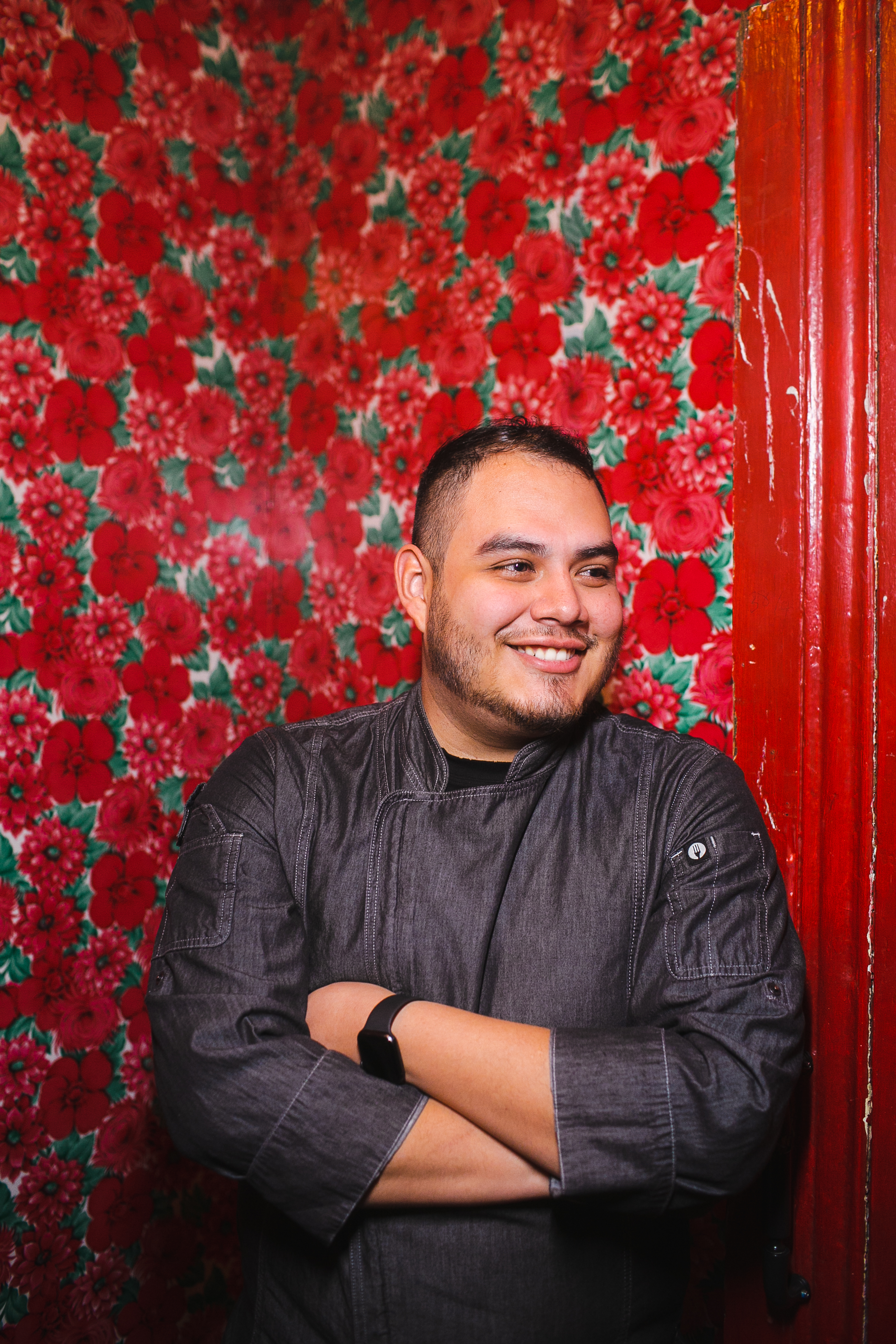
“The cactus is our biggest food representation in Mexico and a history you grow up learning since you’re a kid,” said Alex Tellez, executive chef of Sor Ynez, a traditional Mexican restaurant in Philadelphia. 

“The cactus is our biggest food representation in Mexico and a history you grow up learning since you’re a kid.”

Nopales were a staple of Tellez’s childhood kitchen, though he didn’t see many cactus plants around his native Mexico City. Yet every time he visited extended family in nearby towns like Tlaxcala, Tellez got to witness firsthand the formidable task of harvesting these prickly succulents. 

“It was very intimidating,” he said. “I remember my grandfather and uncles would take these super-sharp machetes, slice [the cactus] pretty fast and catch it with a basket. Then my grandma would actually hold the cactus and clean and slice it herself.” 

Chef Alex Tellez (Neal Santos)

From these ferocious origins, Tellez’s grandma, aunts and grand-aunts would manipulate the fiber- and antioxidant-rich nopales into every edible form imaginable. Blitzed into smoothies with celery, parsley, cucumber and fresh orange juice for all-day hydration; sliced raw to lend sour, crunchy freshness to salads; sautéed and stirred into soup or scrambled eggs; quick pickled (en escabeche); or braised or grilled then nestled into tacos — ¡lo que quieras, por supuesto! 

Un trabajo de amor

You don’t need to wield a machete while mining the supermarket produce aisles for nopales; (thankfully) you’ll usually find tongs near the display. When selecting cacti, Tellez recommends looking for medium or large flat paddles, which are easier to trim. However, you do “need to feel comfortable and confident touching the cactus to clean it,” Tellez said. (I’d also recommend a clean pair of gardening gloves.) To remove the spines, hold the end of the paddle and scrape them off opposite their growth direction using a sharp knife or vegetable peeler.  

You don’t need to wield a machete while mining the supermarket produce aisles for nopales.

Cactus bears likeness to moisture-rich okra — not least of all for a characteristically slimy texture, which some find off-putting. (Cacti produce this gooey liquid, known as mucilage, to seal water inside, which helps them survive desert-dry conditions.) To remove this, Tellez suggests sautéing the nopales for a good five minutes over medium-high heat, then rinsing them thoroughly in the sink. From there, your imagination is the limit. 

At Tellez’s year-old Philly restaurant, seared nopales top tlayacos (boat-shaped masa cakes) with black beans and queso fresco. He loves adding pickled cactus (recipe below) to carnitas, birria or barbacoa tacos to cut through the fattiness of the meat. He also steams chopped nopales in banana leaves with eggplant, squash and celery root for a vegan mixiote; adds raw slices to a bright radish salad with crumbled feta, lime juice and olive oil; and purées raw cactus along with cilantro leaves to mix into Sor Ynez’s chewy, green-hued tortillas. It’s all part of a larger commitment to educating diners about the traditional, vegetable-rich cooking of Tellez’s Mexico. 

“We make traditional Mexican dishes, which have a lot of vegetables, and people were so confused at the beginning, like ‘I thought you were a Mexican restaurant!'” he said. “I’m taking this experience as a chance to educate people and share knowledge with all these different ingredients. We keep getting busier, so I think it’s working.” 

A family recipe

Perhaps Tellez’s favorite use for nopales — and the way he converts the cactus-averse — is through his grand-aunt’s nopales en escabeche, a sharp, salty quick pickle that’s seasoned with Mexican oregano, garlic and black peppercorns. For best results, allow it to sit for three days in the fridge.

***

Recipe: Nopales en Escabeche (Pickled Cactus)
By Alex Tellez, executive chef of Sor Ynez, Philadelphia

Yields
4 cups diced cactus
Prep Time
30 minutes, plus ideally 3 days of pickling time 
Cook Time
15 minutes

Ingredients

  • 2-3 large cactus paddles (4 cups diced)
  • Olive oil, as needed
  • 1 large carrot, sliced into 1/8 inch coins (see Cook’s Notes)
  • 1 yellow onion, thinly sliced
  • 1 cup distilled white vinegar
  • 2 cups water
  • 1/4 cup salt
  • 4-5 whole peppercorns
  • 1/4 teaspoon crushed red pepper or 1 sliced serrano chile (optional, for heat)
  • 2 cloves garlic, peeled
  • 1 tablespoon Mexican oregano (see Cook’s Notes)
  • 1 bay leaf


Directions

  1. Place the cactus paddle flat on a large cutting board lined with paper towels. Wearing clean gardening gloves, hold one end and scrape off the spines with a vegetable peeler (my preferred weapon) or a sharp knife held at an angle. Scoop up the trimmings in the paper towel and discard. Dice the cactus into bite-size pieces or slice it into strips if you plan to use the pickles for tacos. Taste one; it’s kind of like sour bell pepper, right?
  2. Heat a large skillet over medium high. Add a few teaspoons of olive oil and sauté the cactus for 5 minutes, stirring frequently, until it has lost its bright green color and released a good amount of gooey liquid. Remove from the heat, then tip the cactus into a colander and rinse it for a good 30 seconds under cold water. Add the rinsed cactus to a large heat-proof bowl and set aside.
  3. Return the skillet to medium and add a bit more olive oil along with the sliced carrots and onion. Sauté until the vegetables just start to soften, 2-3 minutes, then add them to the bowl with the cactus. 
  4. In a medium saucepan with a lid, add the vinegar, water, salt, peppercorns, garlic, oregano and bay leaf. Stir to begin dissolving the salt, cover with a lid and bring to a boil. Remove from the heat. Pour the hot brine over and let the vegetables cool to room temperature with the liquid. You can eat them right away or transfer the cooled pickles to deli containers or mason jars, filling them to about 1 inch from the top and taking care to fully submerge the vegetables. Seal, then place them in the fridge. (For more flavorful results, Tellez suggests letting the pickles sit at least overnight — or ideally three days.)

Cook’s Notes
“It has to be Mexican,” Tellez says of the oregano

I like to cut the carrot on a slight bias for prettiness.

My local Mexican grocery store not only sells cactus paddles but also bags of blessedly pre-trimmed and pre-diced cactus (in case you’re not feeling up to the task of cleaning these prickly buggers).


Want more great food writing and recipes? Subscribe to Salon Food’s newsletter.


More by this author:

Salon Food writes about stuff we think you’ll like. Salon has affiliate partnerships, so we may get a share of the revenue from your purchase.

A spicy taste of Mexican street corn, ready in 15 minutes

Among the many wonders of Sedona are the spectacular red rocks and vortexes. There’s also the Elote Cafe, an award-winning local restaurant that draws devoted fans from around the world for its fresh and modern takes on traditional Mexican cuisine.

I didn’t actually get to savor the joy of Elote Cafe and its namesake street corn when I was recently in Sedona. In fact, I couldn’t get near it, because reservations were booked a solid six weeks out.

RELATED:  “Stroganachos” are a sheet pan twist on two classics — and an easy dinner that’s ready in 30 minutes

I did, however, spend my evenings downstairs at my own hotel drinking spicy margaritas as I ate their kitchen’s zippy version of elote. It was perfection, as only a meal made of corn, scooped up by more corn can be. 

At home, I can pull together a weeknight knockoff version of this dish, thanks to Elote chef Jeff Smedstad’s own recipe and Food52’s brilliant tip of roasting a bag of ordinary supermarket frozen corn. It’s not the same as a night under the Arizona stars, but it absolutely livens up a dreary spring evening. While it’s technically an appetizer, I serve this elote with a big, simple salad and call it dinner. A shot of tequila in some grapefruit soda makes a zero effort prelude.

***

Recipe: Weeknight Elote
Inspired by Elote Cafe and Food52

Yields
4-6 servings
Prep Time
 10 minutes
Cook Time
 15 minutes

Ingredients

  • 1 12-ounce bag frozen corn, thawed
  • 1 cup mayonnaise
  • 1 tablespoon (or more!) hot sauce
  • 2 tablespoons fresh lime juice
  • 1 teaspoon sea salt
  • Black pepper, to taste
  • 1 teaspoon sugar
  • 1/4 cup chicken broth 
  • 1⁄4 cup Cotija cheese 
  • Chopped cilantro for garnish
  • Corn chips

Directions

  1. Preheat the broiler. Spread the corn out on a sheet pan. Broil, stirring once or twice, for 8 to 10 minutes. The corn should be just browned.
  2. Meanwhile, warm the broth in a skillet over medium heat. Add the mayonnaise, lime juice, sugar and hot sauce. Season with salt and pepper to taste. 
  3. Add the corn, stirring until evenly combined and warmed. 
  4. Serve topped with the Cotija and cilantro, plus loads of chips for scooping.


Cook’s Notes

No Cotija? Try crumbled feta or ricotta salata.

If you don’t have any limes on hand, fresh lemon juice works just fine.


Want more great food writing and recipes? Subscribe to Salon Food’s newsletter.


More appetizers that double as dinner: 

Salon Food writes about stuff we think you’ll like. Salon has affiliate partnerships, so we may get a share of the revenue from your purchase.

Impossible Foods sausage links are the plant-based meat I didn’t know I wanted

I’m not really a breakfast person. I’m a croissant-on-Fridays person. I’m definitely a coffee person. I’m a have-a-bowl-of-oatmeal-at-11:30-and-call-it-brunch person. But I’m not someone who, by any means, diligently eats half a grapefruit every morning or devours a plate of bacon and eggshash browns, and buttered toast sliced kitty-corner before work. The latest launch from Impossible Foods is daring me to change my ways.

The multibillion-dollar plant-based food company has once again expanded its offerings with Impossible Sausage Links. Available in three varieties — Bratwurst, Italian, and Spicy — the sausage links join their Impossible relatives, which include ground sausage, breakfast sausage patties, and frozen sausage patties. The links are made to taste like pork sausage and offer the same satisfying crack you get when biting into a meaty sausage link, thanks to the plant-based casing.

“We didn’t compromise when it came to making sure Impossible Sausage Links deliver all the satisfying snap and sizzle that consumers love about pork sausage,” said Laura Kliman, director of new product development at Impossible Foods. “Our innovative technology platform and consumer-focused design approach allowed us to finesse everything from the spice mix to the casing and stuffing process, and we really perfected it to give consumers the opportunity to enjoy what they love most about pork sausage from pigs without sacrificing on taste, versatility, or environmental impact.”

Impossible Sausage Links can be prepared just like regular sausage — grill it and stuff it in a hoagie with sautéed peppers and onions, make a plant-based version of our favorite sausage ragu with rigatoni, or quickly prep this cozy 20-minute soup with sausage and beans. In the meantime, I’ll take a stab at Ella Quittner’s Breakfast Casserole and see if maybe I transform into someone who eats breakfast at a reasonable morning hour.

“The First Lady” tells the story of three revolutionary presidents’ wives in an inconsequential way

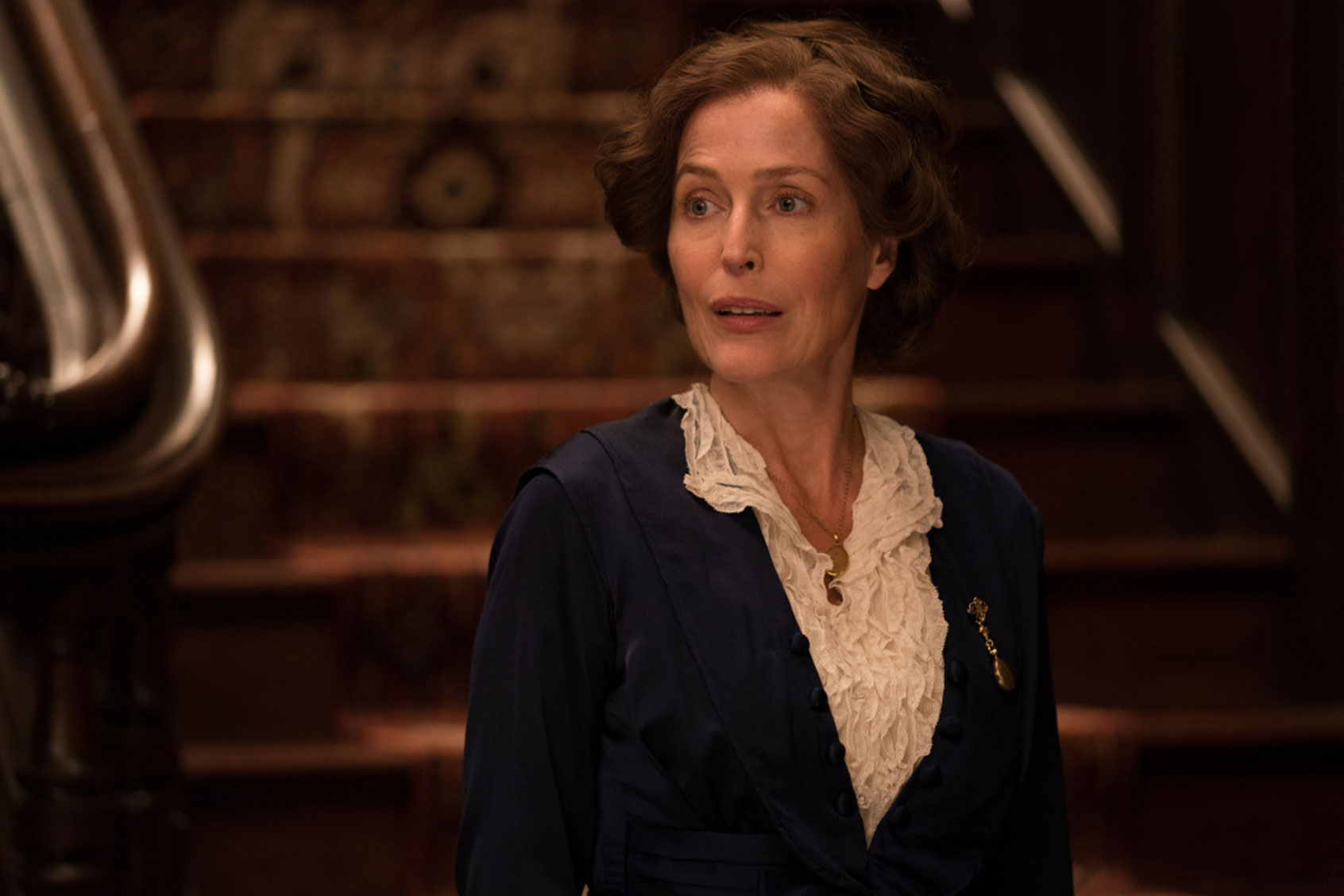
“The First Lady” opens by asking us to consider the broader meaning of portraiture. I doubt the writers intended that in depicting Eleanor Roosevelt (Gillian Anderson), Betty Ford (Michelle Pfeiffer) and Michelle Obama (Viola Davis) sitting for their official paintings, each in their era. Taken as they are, they’re entryways into what should be revelatory examinations of their lives, told in a 10-episode pass.

Still, that short sequence invites us to consider what a sanctioned portrait, chosen and informed by the subject’s wishes, tells us about the person sitting for it – which is, nothing that they don’t want us to see. Regardless of what Michelle Obama’s portraitist Amy Sherald (Tiffany Hobbs) intends when she states, “I am interested in the real,” as she photographs her, it’s impossible to fully render a genuine take on a person in two dimensions.  

We’ve seen better examples of what “The First Lady” endeavors to do in “Mrs. America.”

Television is a better medium for that, even when a series doesn’t nail everything about someone’s truth. “The First Lady” is an unauthorized biographical drama, clearly. I cannot imagine a couple as connected to the media world as the Obamas seeing it as the definitive telling of Michelle’s story. Her Netflix documentary “Becoming,” based on her memoir, continues to serve that purpose for the time being.  

We’ve seen better examples of what “The First Lady” endeavors to do in “Mrs. America” and, yes, even this year’s “Julia,” regardless of the liberties taken in portraying private moments or other unknowable parts of their subjects’ lives. Their colorful means of fictionalizing history’s sea changes help us to better appreciate the people who made it.  

RELATED: “Mrs. America” & the birth of trolling

Also consider how “The Crown” takes advantage of its subjects’ reputational opacity to construct its own version of the life as a British royal, making Queen Elizabeth II and her family vulnerable souls worthy of empathy or scorn, or understanding in either case. Whether the real Windsors are truly like their Netflix counterparts matters less than whether we believe in their TV versions’ humanity.

Each episode wastes the firepower in front of the camera.

“The First Lady” never achieves such roundedness, despite the passionate performances by its enormously talented leads. If you hoped Davis, Anderson and Pfeiffer would be free to plumb the complex interiority of these iconic presidential wives, this is very far from the case.

Instead, each episode wastes the firepower in front of the camera by plugging its actors into flashpoints and watershed moments as opposed to filling in the open canvas with cues and hints about who they are during the quieter moments. Seeing these women meeting history as the person life shaped them to be is more interesting than simply seeing how they react when insults and disasters land on their doorstep; we already know that part.

Yet for whatever reason showrunner Cathy Schulman and the writers think we want to see Davis recreate that time Michelle drove Fox News nuts by saying, “For the first time in my adult life, I am really proud of my country, because it feels like hope is making a comeback,” without  pondering the life experiences that may have informed that very honest, relatable statement.

The First LadyGillian Anderson as Eleanor Roosevelt in “The First Lady” (Daniel McFadden/SHOWTIME)We’re shown the beginning of Eleanor’s political marriage to Franklin D. Roosevelt (Kiefer Sutherland) without much indication of how his lack of affection hits her day to day, until she conveniently stumbles across letters from his mistress Lucy Mercer.
Their stories just kind of . . . hang together.

We’re introduced to Betty by watching Pfeiffer shake it to Harry Nilsson’s “Coconut” as a way of foreshadowing her substance abuse problem early on. Eventually the Republican First Lady becomes a feminist working to pass the Equal Rights Amendment and a public face for breast cancer survivors. But she’s introduced as the personification of a Very Special Episode subject.

Their stories just kind of . . . hang together rather than serving as points of ingress enabling access to the true personalities behind the women we see in archival footage, photos and film. And each actor following that unoriginal lead. Anderson regally embodies Eleanor Roosevelt’s determination to champion human rights, the working class and her anti-racist efforts. We see much of her stubbornness and private sadness but little expression of Eleanor’s joy aside from what she gleans from her relationship with journalist Lorena Hickok (Lily Rabe) written here as Eleanor’s lover.

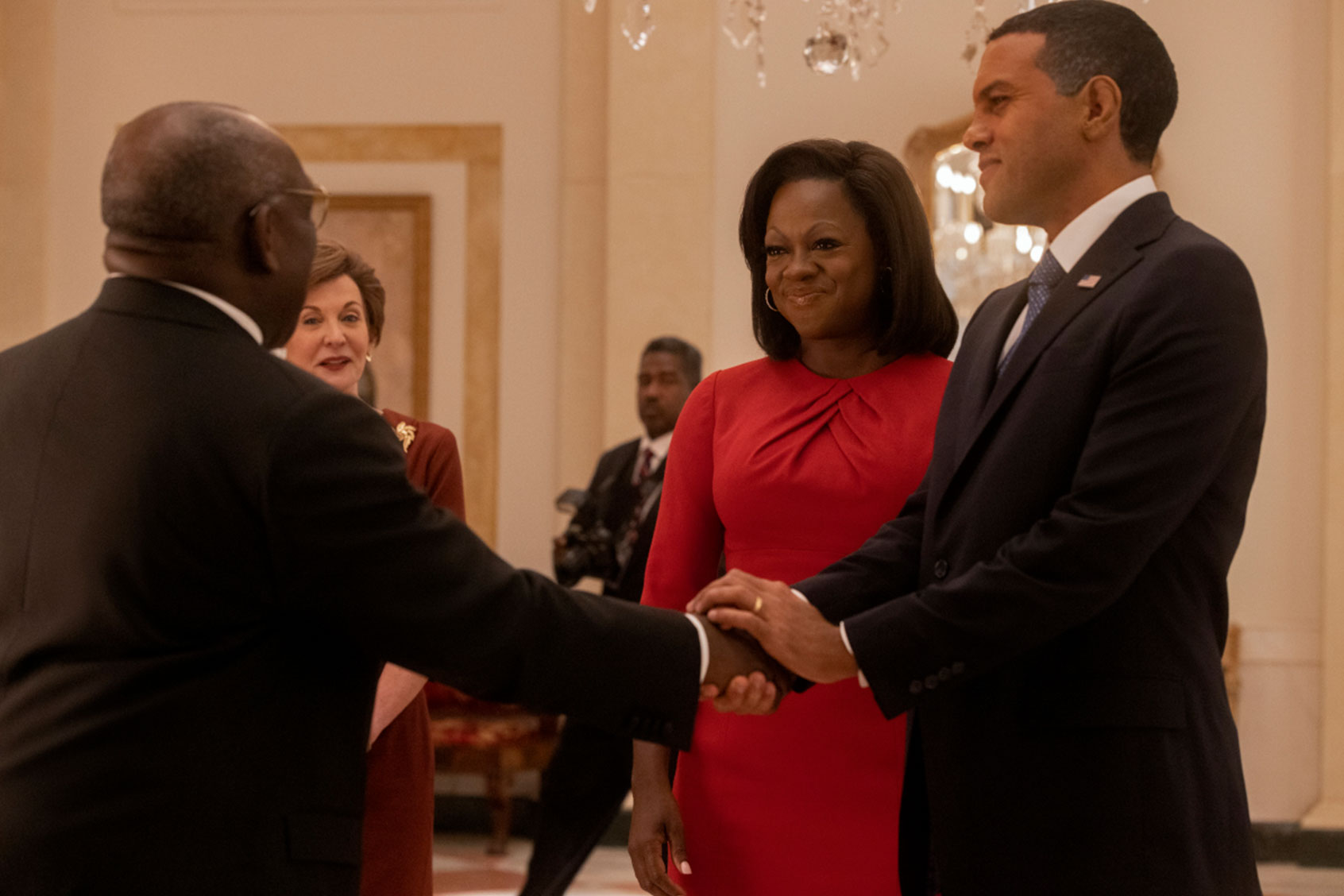
Private moments shared by Michelle and Barack Obama (O. T. Fagbenle) allow for more humanity, probably because we see them in being affectionate and loving as a couple on a regular basis. And yet, it’s Malia (Lexi Underwood) who has to explain the importance of publicly supporting LGBTQIA rights to her father as if somehow the importance of him throwing his voice behind the cause was lost on him before that.

The First LadyKathleen Garrett as Laura Bush, Viola Davis as Michelle Obama and O-T Fagbenle as Barack Obama in “The First Lady” (Jackson Lee Davis/SHOWTIME)None of the actors can be faulted for skimping on passion in their portrayals – we expect nothing less. But the scripts are not suitable vessels to hold it. Hour after hour, characters talk their way through attacks or a rupture instead of leaning on the actors’ emoting abilities to carry the action.
As a result, several of them are left floating somewhere between celebrity impersonation and interpretation – mainly Davis, Anderson and Fagbenle. Sutherland too, although his FDR impression never approaches the grating irritation of the others.

Playing a real person with signature mannerisms is a challenge regardless of who is tasked to carry it off.

Davis recently admitted to being terrified of what Michelle Obama would think about her performance, and the unfortunate effect of that nervousness cracks through in the way she contorts her lips to talk Michelle, or awkwardly clips her sentences.

Playing a real person with signature mannerisms is a challenge regardless of who is tasked to carry it off; it is so easy to overemphasize ways that someone speaks or purses their lips to the point of pushing a close study into parody. Davis’ Michelle portrayal takes up a longterm lease in that transitional neighborhood, vacillating between genuine relatability and distractions.

Her impression isn’t anywhere nearly as overpowering as Fagbenle’s tightly tailored imitation of Barack Obama’s quirky speech patterns, which is both dead on and over the top. Meanwhile the actors playing the younger versions of the Obamas, Jayme Lawson and Julian De Niro, largely forego impersonation. It doesn’t take away from the scenes they share.

Lawson, in fact, beautifully captures the future first lady’s grace as she comes of age while batting aside the doubts and slights of others. She’s stunning in her work with Regina Taylor, playing Michelle’s mother Marian Robinson, and Michael Potts, who portrays her father Fraser.

In many respects, Anderson has the more formidable task of bringing a singular take to a First Lady who has played by, among others, Greer Garson, Jane Alexander and Cynthia Nixon, and in better productions. This production fails her to the point that at times, her performance struggles to wrest attention away from her dental prosthetics.


Want a daily wrap-up of all the news and commentary Salon has to offer? Subscribe to our morning newsletter, Crash Course.


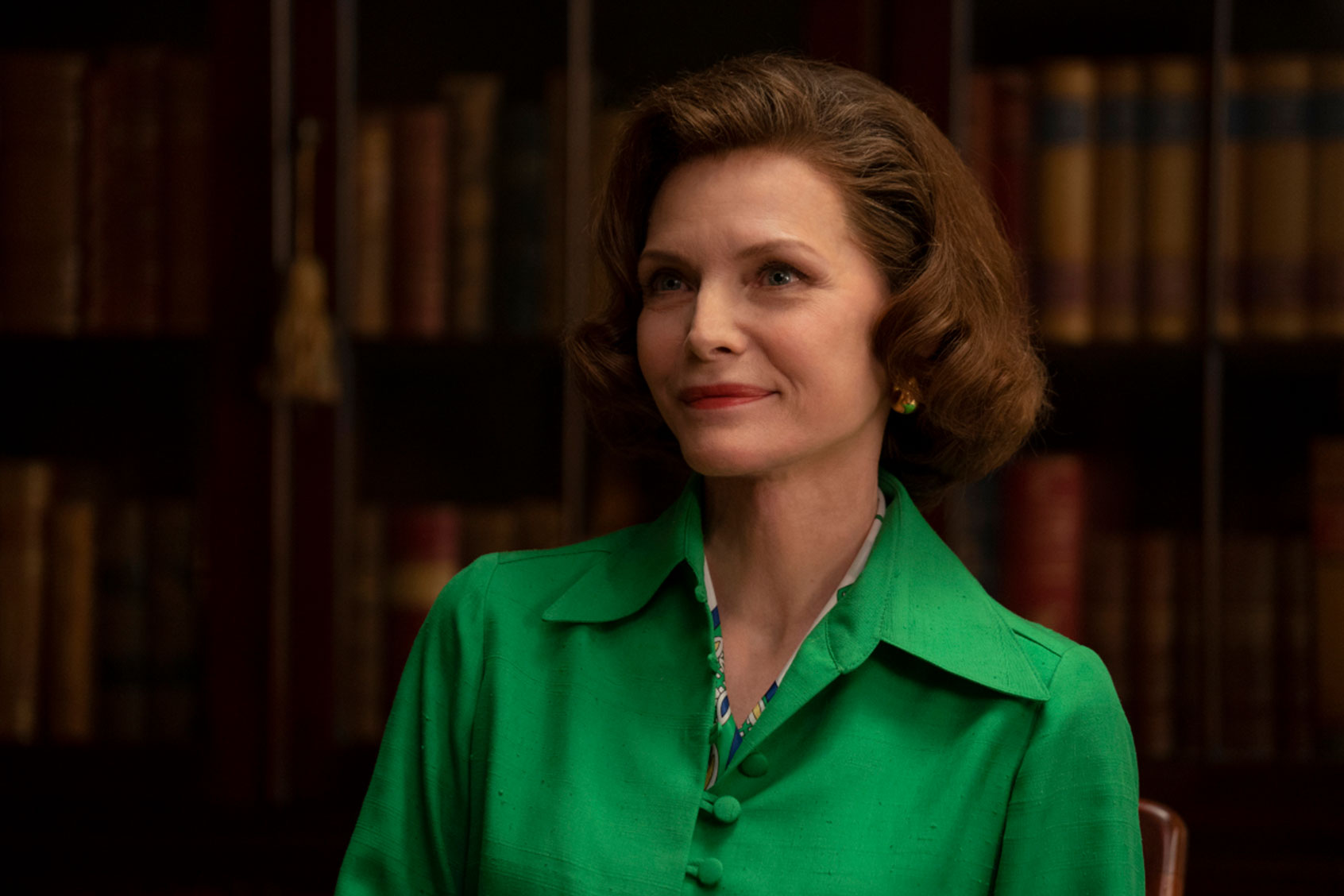
Of the three leads, Pfeiffer’s performance feels the freshest. Her portrayal also has enough fortitude to shoulder the task of realizing Betty, pairing well with the actor playing her younger version, Kristine Froseth.

The First LadyMichelle Pfeiffer as Betty Ford in “The First Lady” (Murray Close/SHOWTIME)
Of the three leads, Pfeiffer’s performance feels the freshest.

Pfeiffer captures Ford’s lithe personality, but she also presents the side of Betty that resents her husband Gerald (Aaron Eckhart) for putting his political aspirations ahead of his marriage and family, and laments the death of her dancing career. Pfeiffer’s Betty holds a softness in her strength while also sublimating a rage that magnificently roars to the surface the more Gerald’s colleagues try to silence her. Froseth reminds us of the dancer Betty was and provides a basis for her insistence on finding and using her voice as a president’s wife.

Points where actions undertaken by previous First Ladies echo through the tenures of those who come after are presented as connective devices as opposed to poignant bridges. Only once does this touch work as it should, when the Obamas watching a clip of Marian Anderson’s performance on the National Mall is presented as a culmination of Eleanor Roosevelt’s intervention in 1939 after the Daughters of the American Revolution barred her from performing at Constitution Hall.

Some of the responsibility for the show’s wan jumble of narrative choices falls to Schulman; other distractions, like those resulting from the performances, could have been mitigated by Susanne Biers’ directing. Either way, the result is a braiding of biographies that comes off as messy and slight.

Even this is educational, in the way it animates the difference between capturing a person’s likeness and unearthing the essentials of an individual’s life. One concentrates on line, the other is meticulous about pointing out distinct gradations of shades and shadows.  

In biographical drama terms, it’s the difference between granting a sense of knowing the people behind history, and presenting a TV version of a harmless commemorative magazine profile you may roll past on your way to the grocery store checkout line. “The First Lady” is the latter: glossy and celebratory yet, it pains me to say, inconsequential –  a word that should never be associated with the women that inspired this show.

“The First Lady” premieres at 9 p.m. Sunday, April 17 on Showtime. Watch a trailer for it below, via YouTube.

More stories like this:

The pandemic has complicated the “Paramedic Paradox’”

Even after she’s clocked out, Sarah Lewin keeps a Ford Explorer outfitted with medical gear parked outside her house. As one of just four paramedics covering five counties across vast, sprawling eastern Montana, she knows a call that someone had a heart attack, was in a serious car crash, or needs life support and is 100-plus miles away from the nearest hospital can come at any time.

“I’ve had as much as 100 hours of overtime in a two-week period,” said Lewin, the battalion chief for the Miles City Fire and Rescue department. “Other people have had more.”

Paramedics are often the most highly skilled medical providers on emergency response crews, and their presence can make a lifesaving difference in rural areas where health services are scarce. Paramedics are trained to administer specialized care from the field, such as placing a breathing tube in a blocked airway or decompressing a collapsed lung. Such procedures are beyond the training of emergency medical technicians.

But paramedics are hard to come by, and a long-standing workforce shortage has been exacerbated by turnover and resignations related to pandemic burnout.

Larger departments are trying to attract paramedics by boosting pay and offering hefty signing bonuses. But small teams in underserved counties across the U.S. don’t have the budgets to compete. Instead, some rural crews are trying to train existing emergency responders for the roles, with mixed results.

Miles City is among the few communities in rural eastern Montana to have paramedic-level services, but the department doesn’t have enough paramedics to offer that care 24/7, which is why medics like Lewin take calls on their time off. The team received a federal grant so four staffers could become paramedics, but it could fill only two slots. Some prospects turned down the training because they couldn’t balance the intense program with their day jobs. Others didn’t want the added workload that comes with being a paramedic.

“If you’re the only paramedic on, you end up taking more calls,” Lewin said.

What’s happening in Miles City is also happening nationwide. People who work in emergency medical care have long had a name for the problem: the paramedic paradox.

“The patients who need the paramedics the most are in the more rural areas,” said Dia Gainor, executive director of the National Association of State EMS Officials. But paramedics tend to gravitate to dense urban areas where response times are faster, the drives to hospitals are shorter, and the health systems are more advanced.

“Nationally, throw a dart at the map, the odds are that any rural area is struggling with staffing, with revenue, with access to training and education,” Gainor said. “The list goes on.”

The Michigan Association of Ambulance Services has dubbed the paramedic and EMT shortage “a full-blown emergency” and called on the state legislature this year to spend $20 million to cover the costs of recruiting and training 1,000 new paramedics and EMTs.

At the beginning of this year, Colorado reactivated its crisis standard of care for short-staffed emergency medical service crews experiencing mounting demand for ambulances during a surge in covid cases. The shortage is such a problem that in Denver a medical center and high school teamed up to offer courses through a paramedic school to pique students’ interest.

In Montana, 691 licensed paramedics treat patients in emergency settings, said Jon Ebelt, a spokesperson for the Montana Department of Public Health and Human Services. More than half are in the state’s five most-populous counties — Yellowstone, Gallatin, Missoula, Flathead, and Cascade — covering a combined 11% of the state’s 147,000 square miles. Meanwhile, 21 of Montana’s 56 counties don’t have a single licensed EMS paramedic.

Andy Gienapp, deputy executive director of the National Association of State EMS Officials, said a major problem is funding. The federal Medicaid and Medicare reimbursements for emergency care often fall short of the cost of operating an ambulance service. Most local teams rely on a patchwork of volunteers and staffers, and the most isolated places often survive on volunteers alone, without the funding to hire a highly skilled paramedic.

If those rural groups do find or train paramedics in-house, they’re often poached by larger stations. “Paramedics get siphoned off because as soon as they have those skills, they’re marketable,” Gienapp said.

Gienapp wants to see more states deem emergency care an essential service so its existence is guaranteed and tax dollars chip in. So far, only about a dozen states have done so.

But action at the state level doesn’t always guarantee the budgets EMS workers say they need. Last year, Utah lawmakers passed a law requiring municipalities and counties to ensure at least a “minimum level” of ambulance services. But legislators didn’t appropriate any money to go with the law, leaving the added cost — estimated to be up to $41 per resident each year — for local governments to figure out.

Andy Smith, a paramedic and executive director of the Grand County Emergency Medical Services in Moab, Utah, said at least one town that his crew serves doesn’t contribute to the department’s costs. The team’s territory includes 6,000 miles of roads and trails, and Smith said it’s a constant struggle to find and retain the staffers to cover that ground.

Smith said his team is lucky — it has several paramedics, in part because the nearby national park draws interest and the ambulance service has helped staffers pay for paramedic certification. But even those perks haven’t attracted enough candidates, and he knows some of those who do come will be lured away. He recently saw a paramedic job in nearby Colorado starting at $70,000, a salary he said he can’t match.

“The public has this expectation that if something happens, we always have an ambulance available, we’re there in a couple of minutes, and we have the highest-trained people,” Smith said. “The reality is that’s not always the case when the money is rare and it’s hard to find and retain people.”

Despite the staffing and budget crunches, state leaders often believe emergency crews can fill gaps in basic health care in rural areas. Montana is among the states trying to expand EMS work to nonemergency and preventive care, such as having medical technicians meet patients in their homes for wound treatment.

A private ambulance provider in Montana’s Powder River County agreed to provide those community services in 2019. But the owner has since retired, and the company closed. The county picked up emergency services last year, and County Commissioner Lee Randall said that providing basic health care is on the back burner. The top priority is hiring a paramedic.

Advancing the care that EMT crews can do without paramedics is possible. Montana’s EMS system manager, Shari Graham, said the state has created certifications for basic EMTs to provide some higher levels of care, such as starting an IV line. The state has also increased training in rural communities so volunteers can avoid traveling for it. But those steps still leave gaps in advanced life support.

“Realistically, you’re just not going to have paramedics in those rural areas where there’s no income available,” Graham said.

Back in Miles City, Lewin said her department may get an extension to train additional paramedics next year. But she’s not sure she’ll be able to fill the spots. She has a few new EMT hires, but they won’t be ready for paramedic certification by then.

“I don’t have any people interested,” Lewin said. For now, she’ll keep that emergency care rig in her driveway, ready to go.

How shame became cultural currency

Once in a while, a thinker comes up with a singular lens through which to understand the world that makes disparate things make sense. For Douglas Hofstadter, it was the concept of a “strange loop,” which unified incongruous intellectuals like Gödel and Escher; for Malcolm Gladwell, it was the statistical “tipping point” that intrudes in all kinds of unrelated social, biological and business schema. And for Cathy O’Neil, author of the just-released “The Shame Machine,” it is the concept of shame itself. 

Though not something that we often articulate publicly, shame permeates all realms of the human experience. It can be motivating, as O’Neil writes: individuals in a society who are violating social norms can be pushed towards righting their behavior vis-a-vis shame. Yet shame also takes on the dimension of currency, particularly in the online world — where profit-minded social media giants quietly push us to obsessively shame strangers to the extent that it increases time spent on their sites, and therefore their profits. This manipulation of our emotional culture should alarm us, inasmuch as it sows division among the body politic and only aggravates our bitter culture war

Yet O’Neil’s notion of a shame economy has resonance beyond the online world. Much of her book is about a type of shame that pre-dates the internet: body shame. Writing from her own experience, O’Neil digs into the ways in which shame conditions and traumatizes those whose bodies don’t adhere to beauty industry norms. 

O’Neil, a mathematician, previously penned “Weapons of Math Destruction,” an incisive look at the ways in which Big Data often exacerbates social and political inequality, despite claims to the contrary. Now, she turns her lens on the larger cultural idea of shame itself — a globe- and time-spanning tale that encompasses Native American tribal rituals, contemporary fat shaming, the decolonization of British India, and Facebook’s propensity to push its users towards extreme positions. I interviewed O’Neil about how shame can be used as a weapon — for good, evil or profit.

This interview has been condensed and edited for print.  

In this book, I thought you really did an amazing job of reconstituting the way that we think about shame, as a unit that shapes the human world. What brought you to think about the world in terms of shame? 

Once I became obsessed with the notion of shame as a source of power, it made me really search for principles. When is shame appropriate? When does shame work?  I’m a trained mathematician, and that’s my nature, is to try to understand what are the rules here from an outside perspective.

At the same time, once I came up with rules that I thought were pretty good, like rules of thumb really, because I don’t want to say they’re axioms at all. They’re not mathematics of course, but once I came up with things, I though, “this is useful.” At that point it became a kind of an explicit goal.


Want more health and science stories in your inbox? Subscribe to Salon’s weekly newsletter The Vulgar Scientist.


How would you sum up the rules, or axioms, of shame? Would it be basically that, “shame is useful and good when you’re punching up with it, rather than punching down?” Is that a good bite-size summary?

My bite size summary would be: it’s inappropriate in bullying when you’re punching down; and when you’re punching up, shame might be useful, but it also may not work. So it’s not enough just to be punching up, you also have to make sure it’s set up to succeed — which requires more than simply punching up, and requires a longer term relationship.

If you’re punching up in a way that you’re sort of holding power to account, then that’s a larger question. When do civil rights movements succeed? It’s a big question. It’s not at all, I can’t really answer that question, but I can say what sort of observations that tend to make it work or fail.

But in interpersonal relationships, punching-up shame also doesn’t always work. 

It has to be careful, it has to be like, I trust you, and I know you and I both care about our community and this is why our community needs you to stop doing this. It really tends almost to become more like a threat of shame than actual shame.

I think a great example of it is the way Zelenskyy, the president of Ukraine, shames other Western leaders. Sometimes he’s just overt about it as a shaming tactic, but often he appeals to their notion of democratic and Western ideals. That’s the really important element of it, like an ideal that he knows they care about and that they want to maintain.

So you have to do all those things in order for shame to actually succeed. So it’s not enough to punch up.

Sorry, that’s not really a sound bite anymore. I apologize. But this stuff is actually not that simple. The soundbite is this: punching down is bullying. That’s the soundbite, and then punching up is more complicated.

RELATED: Shame by a thousand looks: The microaggressions of poverty

Speaking of bullying, I’m wondering now, are bullying and shame inextricable? Is there bullying without shame, or is all bullying shaming?

It’s a good question, and I don’t think I say it enough in the book. When it gets to the point of actual physical force — when it’s like, abuse — that’s not shame anymore, that’s physical punishment and violence and assault. That’s beyond shame. When I say shame, I really just mean making someone feel like they’re like unworthy of love, like they’re unworthy somehow. If you’re actually, like, dunking their head in the toilet, that’s not shame anymore, that’s just plain physical violence.

Right. You do give examples in the book of how shame often comes later, after the bullying or the violence, for instance in the case of that women you describe who was sexually abused by a priest. Somebody could do violence to you and then, but shame is something you feel later, obviously — not while you’re getting punched or whatever’s happening to you.

Yeah. That’s a great point. I mean, of course physical violence can lead to shame, and often does — and I certainly experienced that myself. So certainly we can…  after an act of physical violence against us, we can sort of internalize it as shame. But I think it’s especially the case when you’re being told by your abuser that it’s your fault. That’s the part of it that is so toxic.

“I’m not saying that people were never hostile before on social media, but it’s just that it has become completely outrageous.”


The book made me think about shame’s effect on different professions. After the Occupy Wall Street protests and the recession, Wall Street had more trouble attracting talent. It became a more shameful profession. Likewise, in Portland, after the Black Lives Matter protests and a lot of negative press, the police department had trouble recruiting and getting people to stay. It made me think that there is the element of shame at play — that if a profession is doing what is perceived of as evil, people will become ashamed and not want to be associated with it. 

Yes. That’s good, right? When I worked in finance in 2007, like early 2007, it was incredible how smug my colleagues were — just incredible. They really thought that they were making markets more efficient and that they deserved to be billionaires. Putting a little question mark around that is a good thing, and for that matter, I go to some length in the book to try to very carefully describe why I think, like, retweeting Karen videos is aiming too low, and we should be holding police accountable. If we make people stop blindly trusting police and make them more worried about their own accountability, that’s a good thing.

It’s not a good thing, of course, in the short term, if everybody who’s actually feeling ashamed of that stuff leaves, and only people who have no shame remain. That’s not good, but in a longer term way, it is a good sign.

So there’s an idea here of systemic punching up happening — because like you wrote in the book, making fun of, say, Amy Cooper, the Central Park Karen, was perhaps aiming too low.

I mean, I don’t want to dismiss [shaming] entirely, because I do think there’s a kind of example-setting, positive lesson. I will say, though, if that is where we are, that’s bar way too low. I think [Amy Cooper’s target] Christian Cooper said it best — I think I quoted him saying it in the book.

So I didn’t have to say that people who shame Amy Cooper online feel like they’ve passed the racism test. It’s not enough. And I want to make it clear that videos of police brutality and police violence on social media are probably the best thing about social media — it draws attention to a problem. By the way, police usually aren’t even identified by name in those situations. But what it does is it opens up the world to see what’s actually happening, and that’s really, really important when you’re talking about people with power abusing power.

By the way, just to be clear, I’m not trying to say Amy Cooper didn’t do something wrong — she did something wrong. I’m just saying that we need to think through how do we stop this? And the answer is, we make it so that the next Amy Cooper, in 10 years or 20 years, doesn’t call the police because she’s just as worried about being arrested for misidentifying an actual threat as she is about getting an innocent black man arrested. The asymmetry is in the response, the typical response, and that is the thing that we need to address.

“The editorializing that the Facebook newsfeed algorithm does, to send us the exact content that will outrage us and will get us into these shame spirals — that is exactly what they intend to do.” 

I want to ask you about going in the other direction, and talk about when shame is used not for positive social outcomes but negative ones. As a journalist I think a lot about all the unearned shame that is directed towards us — random cruelty from trolls or conspiracy theorists or whatnot. It makes me feel less positive about the profession, even when I know the shame is disconnected from reality. 

Recently I was skeptical of some outrageous UFO conspiracy theory, and I got all this blowback after I tweeted about it. A big community of angry people who believe in UFOs came for me. Even though I knew that they were clearly out of their minds, I felt some shame — like, there’s a community of random strangers who are angry at me and hate me, and I thought, why do I even bother doing this? Even though I don’t care about that group’s approval, it made me feel bad. You know what I mean? I thought about  what you wrote, about shame as a weapon for silencing people.

Absolutely. It is absolutely a way to manipulate people. It is a very unpleasant thing. I was on the Slate Money Podcast for three years, and I just couldn’t believe the comments. I stopped reading them pretty quickly. Just totally misogynistic … Some of them were violent, but many of them were attacking me as a person. It was an unbelievable look into a small part of what it is like to be a journalist. Of course, this [kind of hate] falls more heavily on women and especially women of color — but it is so unpleasant. And I would really suggest that this is an almost direct product from social media, like the Facebook news feed algorithm, sort of conditioning people to do that kind of thing.

They’ve trained us. They’ve changed the norm. They’ve changed the norm of what you do when you disagree: now, you attack the person whom you disagree with in a performative way, so that your friends will retweet and repost and whatever it is, your overtly hostile reaction. I’m not saying that people were never hostile before on social media, but it’s just that it has become completely outrageous.

That’s a good takeaway from it. I guess essentially that’s why this mechanism that the social media behemoth of unleashed can be used against people used against good people, quite easily like yourself, or the comment section or whatever. They’re sort of ripening us, opening up new ways to shame these people, to make money for them. 

It’s not just that there’s new ways of doing it. I really want I emphasize that I think that it is a training system for doing so, because number one, we are surrounded by our friends who every time we retweet, we get like endorphins, we get our pleasure center activated. 

Number two, we just naturally — as humans get our pleasure center lit up when we are outraged and when we punch back, that is just something we love doing.

I interviewed Molly Crockett, the psychologist who does lab experiments on this. She found that we just love that feeling.

So those two things alone, which are already just putting us in little tiny in-groups, are bad; but then on top of that, the editorializing that the Facebook newsfeed algorithm does to send us the exact content that will outrage us and will get us into these shame spirals will keep us on Facebook longer to click more ads — that is exactly what they intend to do. I mean, that’s how they’ve optimized their algorithm. 

So overall, [social media] is designed for this behavior. I’m not saying that people shouldn’t take personal responsibility for the way they interact [online] —  but I’m just saying at a systemic level, Facebook is getting us to do this. It is creating these new norms and these new norms are shame-driven blood baths.

Franklin Graham hit with furious backlash for Easter weekend plea to “pray” for Putin

Evangelist Franklin Graham is being deluged with criticism over an appearance on Fox News Digital, where he suggested to host Maureen Mackey that prayer might influence Russian President Vladimir Putin and “change his heart.”

Making his appeal on Good Friday, the Christian leader praised the people of Ukraine, whose country Putin has invaded, and told the host, “I admire them, and we want to do all that we can to help them. It’s a mess. It’s going to get worse, I’m afraid. And what President Putin’s end game is, I don’t know. But I think we just need to pray that God can change his heart.”

Taking to Twitter, he wrote, “From Good Friday through Orthodox Easter on April 24, I’m asking Christians to join me in 10 days of prayer for the people of Ukraine and an end to the conflict.”

RELATED: Outrage for Franklin Graham’s “Pray for President Putin” plea

However, asking Christians to pray for Putin — and calling the unprovoked Russian invasion a “conflict” — was a bridge too far for some of his critics who piled on him as you can see below:


How can I tell if my chicken’s gone bad?

“When did we have this chicken?” you shout to your roommate or partner as you crouch in a deep squat in front of the refrigerator. You look over your shoulder, tilt your head, wait for an answer, and hear nothing. You hold the container of cooked chicken up in the light, peering around all four corners, before bringing it back to your heart’s center, opening the lid, and giving it a sniff. It doesn’t necessarily smell bad, but something is a little off.

“Is it safe to eat this for lunch?” you wonder to yourself, hoping to avoid having to cook something new on an already busy workday. “What if I shred it and toss it with mayo and celery for a quick chicken salad? Is that OK? What if I shred it and cook it in chicken broth with veggies and egg noodles for a speedy soup?”

As you ponder life’s most pressing question — how long does cooked chicken actually last in the fridge? — let’s take a deeper look at the facts.

According to the Food and Drug Administration (FDA), cooked chicken, whether in its whole form (like a rotisserie chicken) or pieces, like chicken breast or thighs, will last for three to four days in the refrigerator, or four to six months in the freezer; the longer end is if you’re freezing a chicken dish like chicken soup or coq au vin, rather than chicken pieces. After that period, it’s safe to say that the chicken has probably gone bad and bacteria may start to grow.

Other than time, here are some obvious signs that it’s no longer safe to eat cooked chicken: if it has a slimy texture, obvious pungent odor, or you remember that the chicken has been stored in the fridge for more than a week.

It’s a question our own community has spent time discussing at length:

Community member LeBec F. recommends “keeping meats and fish and poultry in the rear left corner of your fridge. [It] has a remarkable impact on lengthening their lives, both pre- and post-cooking.” The back of your refrigerator is always the coldest and safest place for meat, dairy, and produce; this way, the products will be located farther away from the air flow caused by the refrigerator door opening and closing. Community member Chef Ono says, “Every time you take a dish up to pasteurization temperature, the clock is reset,” which means that if you make a new batch of chicken stock three days after you pre-cooked chicken, you gain a few extra days of consumption.

And to avoid ever again having to ask the question of, “when did we have this for dinner? Tuesday? Wednesday?” get in the habit of labeling all of your food containers. Just write the item and date it was cooked on a strip of painter’s tape or masking tape and stick it to the container like an industry pro to keep yourself and your loved ones safe from food poisoning.

The cost of “defending freedom” in Ukraine

Americans may be tempted to view the war in Ukraine as an unfortunate, but far away, crisis. As an economist, I know the world is too connected for the U.S. to go unaffected.

On Feb. 22, 2022, President Joe Biden warned Americans that a Russian invasion of Ukraine – and U.S. efforts to thwart or punish it – would come with a price tag.

“Defending freedom will have costs, for us as well and here at home,” Biden said. “We need to be honest about that.” His statement came one day before Russian President Vladimir Putin ordered an attack on targets throughout Ukraine, including western parts of the country.

Now that war has broken out, the biggest costs for the U.S. will likely be in higher prices – on top of what is already the fastest pace of inflation in 40 years.

How much worse inflation could get will depend on how far Putin goes, the severity of the sanctions placed on Russia and how long the crisis lasts. Will Putin cut off oil or gas to Europe? Will the invasion thoroughly disrupt Ukraine’s ability to export food and other products to the rest of the world?

We do know that Russia is one of the world’s biggest energy exporters and Ukraine’s nickname is the “breadbasket of Europe.” And beyond that, the crisis has been rattling markets for months, sending the price of oil and other commodities soaring.

These higher prices will ripple through Europe, of course, but many other countries as well, including the U.S. – which will make the Federal Reserve’s job of fighting inflation a lot harder and pose a bigger threat to the economy.

Pain at the pump

The most obvious costs to Americans will be at the gas pump.

Russia produces approximately 12% of the world’s oil and 17% of its natural gas. That makes it the world’s third-biggest producer of oil and second-largest for gas. It’s also the biggest supplier of natural gas to Europe, which gets nearly half of its supply from Russia.

The risk is that Russia might cut off gas or oil supplies to Europe or other countries that issue sanctions or otherwise condemn its actions in Ukraine.

Europe may face the most immediate effects if some of Russia’s energy supplies are removed from the world market – which is why the U.S. has been trying to assure its allies it can supply them with liquid natural gas to make up for any shortfall. But world petroleum markets tend to be highly integrated, so the U.S. won’t be immune.

The crisis has already driven up the price of oil to the highest level since 2014, when Russia annexed Crimea from Ukraine, pushing up average gasoline prices in the U.S. to over US$3.50 a gallon.

The most serious sanction implemented against Russia so far is Germany’s freeze on the Nord Stream 2 pipeline, which would have carried liquid natural gas from Russia to Western Europe while by-passing Ukraine.

A disruption in one regional market will eventually affect the world market. Since the invasion, crude prices have spiked above $100 and are likely to go even higher.

Higher prices at the supermarket

While Russia is a major producer of fuels, Ukraine is a big exporter of food.

Ukraine produces 16% of the world’s corn and 12% of its wheat, as well as being a significant exporter of barley and rye.

While many of Ukraine’s exports go to countries in Europe and Asia, agricultural products, much like oil, tend to trade on increasingly integrated global markets. Again, the implication for U.S. consumers is that while Europe might be affected more immediately in terms of shortages, prices will likely rise everywhere.

U.S. grocery prices were up 7.4% in January from a year earlier. Because demand for food is typically not very sensitive to changes in price – people need to eat no matter the expense – an increase in the cost of food production typically gets passed along to consumers.

The bigger risk to the US economy

That brings us to the Federal Reserve.

The U.S. central bank is very worried about the pace of inflation in the U.S. and plans to raise interest rates to fight it. What’s happening in Ukraine could complicate its plans. If the crisis in Ukraine adds to the upward pressure on prices, that can feed inflation and it could force the Fed to take more drastic measures.

Some economists believe the U.S. could soon see 10% inflation – up from 7.5% now – in the case of a full-scale invasion, as we’re witnessing now. The U.S. hasn’t seen inflation that high since October 1981.

Ukrainians themselves will of course pay the steepest costs of the Russian invasion.

If the Fed decides it has to act more forcefully to tame inflation, that would not only raise borrowing costs for companies and consumers – affecting everything from business loans to mortgages and student debt – but could put the economy at risk of a recession.

At the same time, the crisis could have a moderating effect on interest rates. During times of crisis and uncertainty, investors often move their money into the safest assets they can find – in a so-called flight to quality. U.S. government bonds and other dollar-denominated assets are often considered the safest around, and increased demand for these assets could result in lower interest rates.

Ukrainians themselves will of course pay the steepest costs of the Russian invasion, in terms of loss of life, economic costs and potentially the loss of their government. But the conflict, though it may seem far away, will have an impact on people everywhere. And the hit to Americans’ pocketbooks may be nearer than you think.

This article is republished from The Conversation under a Creative Commons license. Read the original article.

Do Christians believe God resurrected Jesus from the dead? Well, it’s complicated

Every year, Christians from around the world gather for worship on Easter Sunday. Also known as Pascha or Resurrection Sunday, Easter is the final day of a weeklong commemoration of the story of Jesus’ final days in the city of Jerusalem leading up to his crucifixion and resurrection.

Most Christians refer to the week before Easter as Holy Week. In Western Christianity, Holy Week begins with Palm Sunday, which commemorates Jesus’ triumphal entry into Jerusalem. Easter is the third day of the larger three-day festival known as Holy Triduum, which begins on the evening of Maundy Thursday, marking the night of Jesus’ Last Supper with his disciples. Good Friday marks Jesus’ suffering, crucifixion and death. Holy Saturday marks Jesus’ burial in a tomb owned by Joseph of Arimathea. The festival reaches its climax on early Sunday morning with the Easter Vigil and ends on the evening of Easter Sunday.

As a Baptist minister and theologian myself, I believe it is important to understand how Christians more generally, and Baptists in particular, hold differing views on the meaning of the resurrection.

The resurrection

According to the Christian faith, resurrection is the pivotal event when “God raised Jesus from the dead” after he was crucified by the Roman governor Pontius Pilate.

While none of the four canonical Gospels of Matthew, Mark, Luke and John describe the actual event of the resurrection in detail, they nonetheless give varying reports about the empty tomb and Christ’s post-resurrection appearances among his followers both in Galilee and Jerusalem.

RELATED: Russia’s holy war: Vladimir Putin, Pope Francis, the Virgin Mary and the fate of Ukraine

They also report that it was women who discovered the empty tomb and received and proclaimed the first message that Christ was risen from the dead. These narratives were passed down orally among the earliest Christian communities and then codified in the Gospel writings beginning some 30 years after Jesus’ death.

The earliest Christians believed that by raising Jesus of Nazareth from the dead, God cleared Jesus from any wrongdoing for which he was tried and unjustly condemned to death by Pilate.

By affirming the resurrection, Christians do not mean that Jesus’ body was merely resuscitated. Rather, as New Testament scholar Luke Timothy Johnson writes, resurrection means that Jesus “entered into an entirely new form of existence.”

As the risen Christ, Jesus is believed to share God’s power to transform all life and also to share this same power with his followers. So the resurrection is believed to be something that happened not only to Jesus, but also an experience that happens to his followers.

Opposing views

Over the years, Christians have engaged in passionate debates over this central doctrine of Christian faith.

Two major approaches emerged: the “liberal” view and the “conservative” or “traditional” view. Current perspectives on the resurrection have been predominated by two questions: “Was Jesus’ body literally raised from the dead?” and “What relevance does the resurrection have for those struggling for justice?”

These questions emerged in the wake of theological modernism, a European and North American movement dating back to the mid-19th century that sought to reinterpret Christianity to accommodate the emergence of modern science, history and ethics.


Want a daily wrap-up of all the news and commentary Salon has to offer? Subscribe to our morning newsletter, Crash Course.


Theological modernism led liberal Christian theologians to create an alternative path between the rigid orthodoxies of Christian churches and the rationalism of atheists and others.

This meant that liberal Christians were willing to revise or jettison cherished Christian beliefs, such as the bodily resurrection of Jesus, if such beliefs could not be explained against the bar of human reason.

Baptist views on the resurrection

Just like all other Christian denominations, Baptists are divided on the issue of the bodily resurrection of Jesus. Arguably, what may be unique about the group is that Baptists believe that no external religious authority can force an individual member to adhere to the tenets of Christian faith in any prescribed way. One must be free to accept or reject any teaching of the church.

In the early 20th century, Baptists in the United States found themselves on both sides of a schism within American Christianity over doctrinal issues, known as the fundamentalist-modernist controversy.

The Rev. Harry Emerson Fosdick, a liberal Baptist pastor who served First Presbyterian Church and later Riverside Church in Manhattan, rejected the bodily resurrection of Jesus. Rather, Fosdick viewed the resurrection as a “persistence in [Christ’s] personality.”

In 1922, Fosdick delivered his famous sermon “Shall the Fundamentalists Win?” rebuking fundamentalists for their failure to tolerate difference on doctrinal matters such as the infallibility of the Bible, the virgin birth and bodily resurrection, among others, and for downplaying the weightier matter of addressing the societal needs of the day.

In his autobiography, civil rights leader and Baptist minister the Rev. Martin Luther King Jr. explained that in his early adolescence he denied the bodily resurrection of Jesus.

While attending Crozer Seminary in 1949, King wrote a paper trying to make sense of what led to the development of the Christian doctrine of Jesus’ bodily resurrection. For King, the experience of the early followers of Jesus was at the root of their belief in his resurrection.

Martin Luther King Jr. denied the doctrine of bodily resurrection, writing that Jesus’ followers were “captivated by the magnetic power of his personality.”

“They had been captivated by the magnetic power of his personality,” King argued. “This basic experience led to the faith that he could never die.” In other words, the bodily resurrection of Jesus simply is the outward expression of early Christian experience, not an actual or, at least, a verifiable event in human history.

It is not clear from his later writings that King changed his views on the bodily resurrection. In one of his notable Easter sermons, King argued that the meaning behind the resurrection signaled a future where God will put an end to racial segregation.

Others within the Baptist movement disagreed. Like his fundamentalist forebears, conservative evangelical Baptist theologian Carl F.H. Henry argued in 1976 that all Christian doctrine can be rationally explained and can persuade any nonbeliever. Henry rigorously defended the bodily resurrection of Christ as a historical occurrence by appealing to the Gospels’ telling of the empty tomb and Christ’s appearances among his disciples after his resurrection.

In his six-volume magnum opus, “God, Revelation, and Authority,” Henry read these two elements of the Gospels as historical records that can be verified through modern historical methods.

Alternative views

Despite their predominance, the liberal and conservative arguments on the resurrection of Jesus are not the only approaches held among Baptists.

In his book “Resurrection and Discipleship,” Baptist theologian Thorwald Lorenzen also outlines what he calls the “evangelical” approach, which seeks to transcend the distinctions of “liberal” and “conservative” approaches. He affirms, with the conservatives, the historical reality of the resurrection, but agrees with the liberals that such an event cannot be verified in the modern historical sense.

Other than these, there is a “liberation” approach, which stresses the social and political implications of the resurrection. Baptists who hold this view primarily interpret the resurrection as God’s response and commitment to liberating those who, like Jesus, experience poverty and oppression.

Given this diversity of perspectives on the resurrection, Baptists are not unique among Christians in engaging matters of faith practice. However, I argue that Baptists may be distinct in that they believe that such matters must be freely believed by one’s own conscience and not enforced by any external religious authority.

This is an updated version of a piece first published on April 15, 2021.

Read more on Christianity and fundamentalism:

The Daniels on the ADHD theory of “Everything Everywhere All at Once,” paper cuts and butts

Plato. Hegel. Hawking. And now . . . Daniels?

It takes someone rather bold or foolish – or both – to not only try to create a Theory of Everything, but also state that is their intention. But that’s precisely what directing duo Dan Kwan and Daniel Scheinert – collectively known as Daniels – have done with their genre-busting, indie adventure family film featuring bagels and martial arts, “Everything Everywhere All at Once.”

The wild, profane and wholly heartrending film is about a middle-aged woman, Evelyn Wang (Michelle Yeoh), who runs a struggling laundromat with her sweet husband Waymond (Ke Huy Quan). It’s also about immigrant disappointment. And multiverse jumping to show Evelyn what her life could’ve been as a badass martial artist or opera singer. And placating Gong Gong (James Hong) or the scary tax lady (Jamie Lee Curtis). And alienating her grown daughter Joy (Stephanie Hsu). And becoming so overwhelmed with what’s happening in the world that nothing matters. And rocks. And love.

In short, it’s a lot. Or indeed, everything.

On the day their movie released wide, the Daniels tweeted out a lengthy statement about their process, giving thanks to all who helped their multiverse action comedy come to life. Take a look:

Writing “Everything Everywhere All at Once” was a foolish prayer to a cold, indifferent universe. It was a dream about reconciling all of the contradictions, making sense of the largest questions, and imbuing meaning onto the dumbest, most profane parts of humanity. We wanted to stretch ourselves in every direction to bridge the generational gap that often crumbles into generational trauma. It was an attempt to create the narrative equivalent of the Theory of Everything. A Big Data approach to myth-making. A post-genre deconstruction of traditional narrative. A maximalist’s manifesto for surviving in the noise of modern life. And holy shit, these two clowns named Daniel were not up for the challenge.

Against all odds, including “creating a film that tried to touch infinity but with the budget of a rom-com,” that’s exactly what they’ve achieved. The film has earned rave reviews and strong word of mouth. It’s touched the Asian American community in addition to the wider moviegoing audience who cannot deny its artistic mastery, goofy humor and emotional appeal. It’s inspired GIFs, memes, movie poster spoofs and no doubt many, many upcoming Halloween costumes featuring floppy hot dog fingers and googly eyes.

RELATED: Daniel Radcliffe on “Swiss Army Man’s” absurd bromance, prosthetic butt effects and his desert island albums

“Everything Everywhere All at Once” is a follow-up to the Daniels’ 2016 film “Swiss Army Man,” which is a two-hander of sorts starring Paul Dano as a man stranded on a desert island who befriends a flatulent corpse played by Daniel Radcliffe. It was a rather dark cult fave, to say the least. More broadly popular was their raucous music video for DJ Snake and Lil Jon’s “Turn Down for What,” which became a viral sensation for starring Kwan and his destructive penis.

While irreverence and the unexpected seem to be the Daniels’ trademarks, the biggest hint of their interest in tackling life, the universe and everything can be found in their 2016 short film, “Interesting Ball.” Amid the many bizarre scenes in the film – such as Scheinert getting absorbed into Kwan’s butt and adultery with a red rubber ball – is this line: “If the universe is as infinite as they say that it is, then these weird things that are happening aren’t just possible, they’re inevitable.”

Inevitable, just like Evelyn being fated to save the universe because she’s the least successful of all the multiverse Evelyns. She is the least likely, and therefore the one that is perfect. The least likely actions are also what allows her to access the skills from the other Evelyns. 


Want a daily wrap-up of all the news and commentary Salon has to offer? Subscribe to our morning newsletter, Crash Course.


Knowing that I only had 20 minutes to chat with the Daniels, I decided to also go with the least likely questions. Everyone’s already written about the big topics; why not go small and personal instead? And naturally, the Daniels made the most of the questions about moms, fanny packs and butts.

The following interview is edited for length and clarity.

“Everything Everywhere All at Once” is one of those films where I really felt seen – and it wasn’t just because it features an Asian American immigrant woman – but the concept of feeling overwhelmed really hit home for me. I’ve suspected for a while, and a lot of my friends have been encouraging me to get diagnosed for ADHD. And so watching it, I wondered, “How is this film exactly what I feel?” Was there any of that influence in the film?

Dan Kwan: That’s amazing. When we first started writing this movie, we knew we wanted to make a movie about chaos and about this overwhelming feeling that everyone’s been feeling the past six years. Or 34 years. Or all throughout history of mankind. But when we started writing, we were like, “Oh, we should probably do a little bit of research about ADHD. Maybe the main character is undiagnosed and they don’t know it.”

Daniel Scheinert: Yeah, we were like, “Maybe she’s so distractible, she can go to other universes with her brain.” But then we’re like, “That might be offensive. We should Google it.”

“This movie, obviously, when you look at it now, was made by someone with ADHD.”

Kwan: So I started doing some research. And then I stayed up until like, four in the morning, just reading everything I could find about it, just crying, just realizing that, “Oh, my God, I think I have ADHD.” So this movie is the reason why I got diagnosed. I got diagnosed, I went to therapy for a year and then went to a psychiatrist. And I’m now on meds, and it’s such a beautiful, cathartic experience to realize why your life has been so hard.

This movie, obviously, when you look at it now, was made by someone with ADHD. And it’s just funny how many people have come up to me after screenings and said, “This feels like you’re in my brain.” And some of them are people like yourself who suspect that they have ADHD and then other people who recently got diagnosed because I think during the pandemic, a lot of people have been struggling in this new version of life, where there is less structure because ADHD people need structure, otherwise we fall apart. And so, I love the fact that this movie can become a cathartic expression of me realizing this but then also can be a way for people to talk about it in their own lives.

RELATED: Parents were stuck inside with their kids. A rise in ADHD diagnoses soon followed

And it makes sense if you do have ADHD and weren’t diagnosed because Asian immigrants don’t care about that stuff. And then also, women historically have been way underdiagnosed because they weren’t expressing their ADHD in the same way that men were or boys were. I have a lot of female friends who have within the past three or four years got diagnosed. And it’s life-changing.

Michelle Yeoh and Jing Li in “Everything Everywhere All at Once” (Allyson Riggs/A24)
My friends and I joke that the production company A24, the A stands for friend to Asians or Allies 24, whichever we want to call it because of them producing “The Farewell,” “Minari,” “Moonlight,” etc. You’ve done such a range of projects in the past, so why did you feel that now is the time to make this film, one that is centered on an Asian American family? And featuring Asian film nods (Wong Kar-wai, martial arts tropes)?

Kwan: It was completely an accident. We just started writing this movie almost six years ago. And at that time, I was like, “I think I’m ready to start putting myself in this movie, my cultural heritage in this movie in a more overt way.” It’s very funny, actually. I was at an Asian American mixer many years ago. And I was with a bunch of Asian American men in a circle. We were just talking and one of them kind of turned to me and was like, “This might sound weird, but I look at ‘Swiss Army Man,’ and I know it’s two white guys in the woods, but I look at that movie and I’d see an Asian American storyteller because that’s what the Asian American male experience has been up until this point. It’s been one of isolation and an inability to love yourself.’ So anyways, he said this out loud, and all the other Asian American dudes were like nodding. They were like, “Yeah, I totally see that.” Conversations like that made me realize, “Oh, I really need to just be way more overt about this.” I am so lucky to have this platform that we have to be filmmakers to get to do whatever we want, in some ways. And it just happened that we took so long to make the movie that by the time the movie was done, the world was ready for Asian American-led sci-fi movies. So it was totally chance.

Scheinert: Yeah, I don’t know if this is like a punchy story to tell. In some ways, a lot of our ideas start off kind of low brow and intuitive, and so this started off as just an action movie concept of like “verse jumping” and fighting. And then we talked about our favorite action movies and a lot of them were like, Hong Kong-style kung fu movies. And then we were like, “Oh, who could we cast in our movie?” So it started off not about the Asian American experience, but “What if we could get Jackie Chan or Michelle Yeoh or Stephen Chow to be in our movie? Wouldn’t that be cool?”

“A lot of our ideas start off kind of low brow and intuitive.”

And then it was almost like, as we wrote it, it was like, “Oops, this is getting more and more personal, the further we go.” Which is like how a lot of our process is. We start with an image or a joke, and then we start digging in, and then both of us will be like, “Oh, no, this is getting personal. That joke resonated for this personal reason. I think now this movie is becoming about this thing I’ve been working through.” So it was a miracle, because like, it’s been so beautiful to watch it resonate with people and yeah, therapeutic to work on.

Stephanie Hsu, Ke Huy Quan, Michelle Yeoh & James Hong in “Everything Everywhere All at Once” (Allyson Riggs/A24)You talked about the Asian American man’s experience, the gendered socialization that is the loneliness with “Swiss Army Man.” Since you were thinking of having a man – Jackie Chan or Stephen Chow – as the lead, when you eventually flipped the genders to have Michelle Yeoh be a lead, how did that open up or change the story for you when it came to her relationships and how you expressed Evelyn?

Kwan: Yeah, honestly, what it became was a movie about our moms. And suddenly, there is so much to say about that, specifically when it comes to – this is a story about family trying to reach out to each other and see each other in the chaos, in the noise of modern life. Once I put my mom in that position, everything made so much more sense because I know my mom has a deep well of love for all her children. But she has a funny way of showing it. And so to watch someone like that go through this journey felt so much more powerful and so much more nuanced in a way that was harder to imagine with a male character.

Scheinert: Yeah. Was it your wife that said that our first movie was about the self? And this was about family? 

Kwan: Yeah, this is our conversation after. The first movie was about reconciling with the self. This was about reconciling the family and the community. 

Scheinert: We just started thinking about our families and having so many interesting conversations. And so like, I think Joy, Waymond, Evelyn and Gong Gong are all these amalgamations of so many stories of cousins, aunts, uncles, brothers, sisters, grandparents. It was like a really fun you know, canvas.

Kwan: The last thing I’ll say is Asian American or Asian immigrant mothers, they’re such a unique glue or gravity to a family unit, because they’re the ones who are holding it all together in this very invisible way. They have to have their fingers on everything. The multiple jobs they’re working on, all the children that they’re working with, they have to feed the husband, they have to clean the house. Basically we took someone who was already living in chaos and then put them into the multiverse chaos, which I think was a really elegant fun thing to throw that character into. So yeah, it just all started to click and make sense, it was way easier to write.

“Asian immigrant mothers, they’re such a unique glue or gravity to a family unit, because they’re the ones who are holding it all together in this very invisible way.”

Michelle Yeoh in “Everything Everywhere All at Once” (Allyson Riggs/A24)Michelle Yeoh, of course this is the perfect vehicle for because she can do it all: action, comedy, drama. But at the same time, once you got her, was it the sky’s the limit of what you decided you could throw at her? Or was there something that you were like, “No, we can’t ask her to do that,” or just ended up getting scratched off a list?
Scheinert: When we when we approached her, we had a full screenplay, which is pretty scary, because we’d already spent a long time on it. And a lot changed, but a lot of the beats were the same. And so we thought it was gonna be a lot harder to convince her to do a lot of the weird stuff in the movie. But I remember when we met her, we asked her if she’d seen anything lately that she liked, so that we could kind of be like, “oh, yeah, I like that movie, too.” And she was like, “I really liked ‘Deadpool 2.'” And we were like, “Oh, my God, this is gonna be an easier sell. If you like that movie, then our movie’s not that weird.”

Kwan: And I think she went into that meeting thinking that she would convince us to cut the hot dog fingers out because she didn’t understand it. But then she asked us about the hot dog fingers, and I don’t remember what we said but I guess we convinced her of it.

Scheinert: She at least was like, “Maybe I’ll bring it up later,” and then she forgot. Then once Jamie [Lee Curtis] came on board – mostly because Jamie wanted to work with Michelle – then it was almost like a competitive thing where both of them would be like, “Alright, I’m going to do something pretty weird.” And then be like, “OK, your turn, you have to do that thing that those little boys came up with.” And they’d make fun of us, but they trusted us and took such risks.

Jamie Lee Curtis in “Everything Everywhere All at Once” (Allyson Riggs/A24)But they’re both rocking the vests I gotta say. One of my favorite things are the looks in this film and probably not the glam ones.
Scheinert: Yeah, Shirley Kurata was our costume designer. And she does a lot of glam and does a lot of like, really off-the-wall styling for pop artists. But she also has such a deep love for authentic, everyday people. She got really excited to explore Chinatown for shoes and vests and necklaces that you could only find there.

Kwan: I don’t know if you remember, it was the red “Punk”-[embroidered] sweater that she wore from the Chinese New Year party. 

Scheinert: She was like, “This is a one of a kind. I found it somewhere, I don’t know where to find another one ever again.”
 
Kwan: It’s so funny. I love that. It’s exactly the kind of thing my mom would wear, not knowing what it says.

Ke Huy Quan and Michelle Yeoh in “Everything Everywhere All at Once” (Allyson Riggs/A24)Exactly. I remember thinking that. Also, was there a discussion about what kind of fanny pack that Waymond would be wearing?
Scheinert: Yeah, we went through a lot of talks. And we wanted something that had impact, like leather was like, “Ooh, that could slap.”

Kwan: Also like traditionally, when you go to Disneyland, you see all the Asian American tourist dads, my dad included – a lot of leather fanny packs. Usually black leather, for my dad, but we knew visually black leather would get lost in the fight scenes. So we went with brown leather, and we added a cute little keychain to help.

Scheinert: Whereas if it had been about my family, it would have been more of like a nylon fanny pack. My dad was more into like neon-colored hats and fanny packs.

Kwan: Very ’80s.

So, what I thought was interesting, was that basically Evelyn’s superpower – why she’s chosen – is that she failed at everything. And Waymond’s is he’s very kind, he’s very loving. These are very accessible. What do you think your superpowers would be?

“I’m a Machiavellian string-puller. You’ll never feel the strings getting pulled because I’m so gentle.”

Scheinert: I think, full circle, Kwan, his ADD is his superpower as well. Like, I’m in awe sometimes of the hyper-focus on a thing and to be able to just sit and work on a scene editorially or in the screenwriting phase and forget to eat dinner because you’re like cracking a real puzzle, you know?

Kwan: And then Scheinert’s superpower is he’s a very good collaborator or he understands how to produce and edit and kind of move around things without crushing it or overhandling it. Like, if you overhandle sushi, it’s not good. Some ideas you shouldn’t overhandle. And so Scheinert is a serial collaborator. He’s very good at that.

Scheinert: I’m a Machiavellian string-puller. You’ll never feel the strings getting pulled because I’m so gentle.

Ke Huy Quan in “Everything Everywhere All at Once” (Allyson Riggs/A24)

You’re Racaccoonie! One of the most fascinating things for me was all the creative actions that were needed to open up the powers [from the different universes]. The most visceral one was when Waymond had to inflict on himself the four paper cuts between his fingers. What was that list like of all the actions you brainstormed? And how did you settle on four paper cuts? Because oh my god!

Scheinert: For the longest time, there was one that was gonna be a really dusty windowsill or an AC unit, where there’s like visible dust. And we were gonna have her snort it like a line of coke. We just thought that would be pretty visceral.

Kwan: A lot of the ones that we put on the list ended up getting used in that sequence with all the Alpha jumpers, you know the person pulling the hair or like putting their finger in a socket, that kind of stuff. But with the four paper cuts, specifically, every single time that they’re supposed to be doing something absurd to jump to another universe, we were trying to come up with an analogy to a regular action movie. Like OK, what is the scene in another movie that would be doing this dramatic moment?

“We were gonna have her snort it like a line of coke.”

Scheinert: Is there one for the Chapstick? You know, there’s usually the person who just pulls out the weapon and very patiently being like, “I’ve got my plan.” That tension, 

Kwan: It kind of feels like “Kingsman,” when he’s at the bar and he pulls out the umbrella. But you turn it on its head because it’s so stupid. But the paper cuts, it goes back to, there’s a scene in “No Country for Old Men” where Josh Brolin is in the river. His gun is wet, and an attack dog is about to run down the river to kill him. And so he has to take his gun apart, dry each piece out. I don’t know if you remember this, but he blows in it to try and dry it out, reassembles it. And right when the dog gets there, he shoots the dog midair. And it’s like, oh so thrilling. And so I was like, “Is there something like that. . . but dumb?” And so the papercut thing, it’s almost like loading a gun. Instead of sticking six bullets in a revolver, we’re trying to get a cut between each finger. And it’s so fun to watch an audience watch that scene. It’s so funny.

Scheinert: I have to say I was inspired to become a filmmaker by the show “Jackass,” which is so embarrassing but it looked fun to do, but also like the magic of the fact that they made feature films, I wasn’t sure if it would work. But it’s like a theater-going experience unlike any other to go see “Bad Grandpa” or a “Jackass” movie because you’re allowed to shout at the screen. In fact, you can’t help but shout at the screen. And that’s one of my favorite things about going to the theater is when you kind of embarrass yourself in front of strangers, and then you’re kind of bonded, because you cried together or laughed or screamed. That paper cut scene really is like a scene out of a “Jackass” movie. 

Daniel “Dan” Kwan and Daniel Scheibert on the set of “Everything Everywhere All at Once” (Allyson Riggs/A24)Last question. While I was watching, I was like, “Where’s the butts?” because I’m familiar with your older work. And we got it with the butt plug trophies and then the unexpected “verse jumping” action. Besides it just being a funny thing, what do you think it is about butts? What is it about them that’s compelling? We’re gonna do the deep dive into the rectums right here.

Scheinert: Yeah, I think we’re still working on it. Our next movie, we’re just gonna, we’re just gonna lean 100% in. It’s not going to be a side part of the movie. We’ll finally figure out.

Kwan: I do think people focus on the butts – but it’s all orifices. It’s everywhere, it’s the nose, it’s the eyes, it’s the mouth, it’s the ears. It is the butts, but like the butts stand out because no one else is willing to go there. 

Scheinert: It’s the human experience that kind of fascinates us, like just whose quote is it, “How embarrassing to be human”? We’re all just like, “Oh, what are these weird things?” And we’re alll trying to hide it from each other and pretend like we don’t fart or pee a little when we laugh. And yet, it’s actually the thing we have in common.

Kwan: People think that the eyes are the portals to the soul but I think the butt is actually way more –

Scheinert: – vulnerable.

Kwan: Well, it’s way more vulnerable. It’s way more intimate. It’s like, there’s something about that that feels way more taboo and plays intimate. Also when you pair it with the fact that people are realizing how important like, microbial gut bacteria is to your mood and to your intelligence – it’s like, your brain and your shit are actually talking to each other. 

“People think that the eyes are the portals to the soul but I think the butt is actually way more . . . intimate.”

Scheinert: There’s still so much to explore in our next movie. Our friend Felicia, her mom, when she calls her, she’s Chinese American, her mom will be like, “how are your poops?” She’s like, “Oh, I think you’re gonna be very constipated this year.” And she’s always checking in about, like, her stress levels and her poops because that’s like a very Chinese medicine thing.

I mean, Dan Kwan, you’re actually a dad now. So you’re interested in poops, right?

Scheinert: You had to get over it. 

Kwan: I wouldn’t say interested, but poop is very much a part of my everyday life, yes.

“Everything Everywhere All at Once” is currently in theaters nationwide.

More stories to read:

Why are some bird eggs so colorful? Blame an evolutionary arms race

It was nature’s version of an Easter egg hunt. Dr. Claire Spottiswoode, a professor at the University of Cape Town who studies avian (bird) brood parasites, was working in Zambia to learn more about how cuckoo finches change the appearance of their eggs. Unlike the orchestrators of an Easter egg hunt, though, the cuckoo finches are not altering their eggs for art or frolicking, but so they can trick other birds into raising their young.

It is a practice known as “brood parasitism,” in which an animal furtively leaves its eggs to be raised by another species. While brood parasites occur among birds, fish and insects, the mechanics of this vary; typically, with birds, the brood parasite will lay its eggs in another bird’s nest when that bird isn’t looking. (Cuckoos are the most famous example of a brood parasite, and are the origin of the word “cuckold.”) Brood parasitism often spurs what are called evolutionary arms races, in which competing species continually develop new adaptations to combat each other. In the case of the brood parasite, this often means its eggs will evolve to look more like its host’s eggs; whereas in the case of the parasitized bird, it means its eggs will evolve to look less like its brood parasite’s eggs. 

“It just remains a thrill,” Spottiswoode explained. “Every single time you see a parasitized nest with a beautifully colored parasitic egg in it, among the host eggs — that’s something I never tire of.

Brood parasitism is not uncommon in the animal kingdom, and Spottiswoode is one of the world’s foremost experts. Yet being an expert does not diminish the challenges of any egg hunt. As Spottiswoode told Salon, “One of the hardest challenges for someone researching brood parasites is simply to find enough parasitic eggs and chicks. You have to put in a lot of effort to find a lot of host nests in order to find the subset of those that are parasitized that you’re studying.”

Fortunately, there were a lot of talented local nest-finders who were happy to help.

“For us, it just remains a thrill,” Spottiswoode explained. “Every single time you see a parasitized nest with a beautifully colored parasitic egg in it among the host eggs — that’s something I never tire of. it’s just a total joy to see the beautiful adaptations that natural selection has forged over hundreds of thousands of years.”

RELATED: Meet the brood parasites, the deadbeat mothers of the animal kingdom

Spottiswoode has a good reason for poking around avian domiciles. Along with Professor Michael Sorenson at Boston University, Spottiswoode leads an international genetic research team studying how a single brood-parasitic bird species masks its eggs to resemble those of multiple other bird species. For more than a century, scientists were bedeviled by this mystery, but the researchers have managed to identify an evolutionary arms race as being the culprit.


Want more health and science stories in your inbox? Subscribe to Salon’s weekly newsletter The Vulgar Scientist.


“The chromosome that we think is the genetic control is present in all female birds,” Spottiswoode explained. “It’s not a chromosome that’s specifically for this function. In birds females have a female specific Z chromosome just as in humans males have a male specific Y chromosome. So in humans, of course, males are XY and females are XX. In birds, males are ZZ and females are ZW, so there is a chromosome that is transmitted as a more or less intact copy from mother to daughter, without any gene flow from a father.”

She added, “The broader problem that we’re trying to resolve here is how different individuals of a single inter-breeding species can evolve specialize adaptations to parasitize different host species despite the fact that they’re mating, randomly with one another, regardless of what host species the male or female was raised by.”

In the study published by the journal Proceedings of the National Academy of Sciences, the scientists explain that the maternal inheritance factor allows cuckoo finches to avoid accidentally inheriting the wrong mimicry genes from fathers who were raised by different hosts. This may seem like an evolutionary advantage — and to an extent it is — but the authors note that it also makes it more difficult for these species to counter-evolve once their hosts pick up on what they are doing. One reason why is the fact that many bird species are adapting to have a wide range of colors and patterns in their eggs, providing the birds with “signatures” that distinguish those eggs from the intruders.

Yet how do birds develop such amazing multi-colored eggs in the first place? And is stopping brood parasites the only reason?

“How do you find your own egg? Well, you lay your egg with, essentially, a signature that says, ‘This is my egg.'”

“It’s an Easter-appropriate question, for sure,” Spottiswoode told Salon. “We have some good answers, but we don’t have a complete explanation and there are still quite a lot of mysteries that remain. Often, camouflage is the reason why eggs vary in color. Camouflage is super important. Nest predation, visually-oriented predators, is really common and particularly in species that breed out in the open, like species that breed on the ground, but also other ones as well. Some species have really fantastic eggs and have very interesting adaptations to particular environments.”

That does not explain every egg hue, though. Spottiswoode noted that some scientists hypothesize that birds who evolved to lay blue eggs did so to protect their embryos from ultraviolet radiation. In addition, birds may want signatures on their eggs for reasons unrelated to brood parasitism.

“In cases where there is huge diversity within species, just like Easter eggs — where you’re painting for your chicken eggs, and they’ve been painted different colors — the sort of driving pressure that’s generated that diversity seems to be recognition of self,” Spottiswoode mused. “We see it in birds that breed in colonies, like cliff-nesting birds… They have a lot of diversity among individuals, for example, and in that case, it’s to know your own egg, when you’re on a cliff face breeding with hundreds of thousands of other individuals with the same species. So how do you find your own egg? Well, you lay your egg with, essentially, a signature that says, ‘This is my egg.'”

If ever there were a more fitting proclamation to sum up the Easter spirit, I can’t think of one.

For more Salon articles about birds:

Why high gas prices aren’t necessarily good for the climate

In the past few months, fossil fuel prices have done exactly what someone who cares about climate change might want: They went up. And up. And up. Since January, the average retail price for gasoline nationwide has jumped by almost a dollar per gallon; across the country, drivers are spending at least $12 more every time they fill up their tanks. One Mobil station in Beverly Hills, California, made headlines when its “super” gasoline hit nearly $8 per gallon

These price increases — brought about by the Russian invasion of Ukraine (Russia provides roughly 10 percent of the global supply of oil) and a continuing rebound in demand from the COVID-19 pandemic — have had deleterious effects on American consumers, who are already struggling with sky-high inflation. But some have suggested that the rising cost of oil could have a silver lining. Transportation is the largest source of U.S. greenhouse gas emissions, accounting for almost 30 percent of the country’s carbon footprint. Could rising gas prices change American driving enough to help curb global warming?

The answer, unfortunately, is complicated. It’s not enough for gas prices to just go up — American consumers also have to reduce their gasoline use, either by electing to use alternative methods of transportation (buses, bikes, trains) or switching over to electric vehicles. (The cost of filling the “tank” of an electric vehicle via home charging is only around $16, compared to about $50 a tank at current gas prices.) 

There are a few promising signs of such a shift. Online searches for electric vehicles more than doubled during the most recent gas price hike, and the surging cost of fuel may make some Americans think twice before purchasing a new gas-guzzling SUV. But historically, when faced with high gas prices, U.S. drivers complain and blame the sitting president — and don’t fundamentally change how much time they spend on the road. In other words, gasoline is a relatively “inelastic” commodity in economic terms. According to data from the U.S.Energy Information Agency, for example, while gas prices in early 2015 increased by 30 percent compared to the previous year, vehicle miles traveled dipped by just 3 percent. 

Gernot Wagner, a climate economist at the Columbia Business School who is currently on leave from New York University, says that in the long run, increasing oil prices could cut driving emissions — but only if prices are rising in a predictable way over the long term. One way to do that is by increasing gas taxes, or state and federal fees levied on each gallon of gas that fund highway maintenance, public transit, and other infrastructure projects. “If the government sets a price then you can expect that it’s doing it for a reason, and that it’ll stick around,” he explained. And there is evidence to back this up: According to an analysis that tracked consumer behavior from 1966 to 2008, Americans reduced their gasoline consumption three times more when facing gas tax increases compared to simple price fluctuations.

But at the moment, state and federal governments are doing the opposite: signaling to consumers that they will bail them out if prices get too high. Last month, President Joe Biden announced that he would release 1 million barrels of oil a day from the Strategic Petroleum Reserve for six months, boosting supply and putting downward pressure on price. Earlier this week, the president also authorized the sale of gasoline blended with 15 percent ethanol. Some Congresspeople have suggested creating a federal gas tax “holiday,” to quickly cut prices by 18.4 cents. Connecticut, Georgia, and Maryland have already suspended their state gas taxes, while New York, New Jersey, and West Virginia are considering similar moves. 

Gas analysts say these holidays are digging the U.S. deeper into a hole of fossil-fuel dependence. Patrick de Haan, head of petroleum analysis at the tech firm GasBuddy, argues that tax holidays increase demand, putting even more pressure on a limited supply of fuel. After Maryland instituted its gas tax holiday, de Haan calculated that gasoline demand in the state spiked by 28 percent, compared to a nationwide increase of about 9 percent. Georgia similarly saw a 13 percent increase. “Giving out gas cards and tax holidays is akin to handing a bottle of Jack Daniels to someone that’s already drunk,” de Haan tweeted. “It enables high prices and high demand.” 

There are other proposals as well. Governor Gavin Newsom of California, for example, has suggested sending a $400 rebate to all Californians who have a vehicle registered in the state. Wagner says that rebate may be better than a gas tax holiday — since it doesn’t directly encourage driving — but it still has flaws. Car-owners are generally higher income, and so the rebate will be putting money into the pockets of state residents who already have more cash. The best option, Wagner argues, is actually raising the gas tax so that driving is more in line with its environmental costs, and then returning the profits of the tax directly to low-income citizens. 

And there is ample evidence that current gas taxes — whether at the state or federal level — are not high enough to account for the damages of driving to human health and the planet. The federal gas tax hasn’t been increased since 1993. Since then, the value of that 18.4 cents has declined by almost two-thirds, thanks to inflation and improved fuel economy in cars. “The right gas tax would be about a dollar a gallon,” said Gilbert Metcalf, a professor of economics at Tufts University. “I suspect maybe higher than that because of climate change.” 

Politicians, however, are stuck between a rock and a hard place. When gas prices are high, political approval ratings tend to drop, endangering re-election campaigns and putting lawmakers on edge. Some Democrats — including President Biden — may see lowering gas prices as a necessary political tool to increase the chances of stronger climate action later on.

Still, Wagner sees subsidizing fossil fuels in any form as a dangerous game. Lowering the price of gasoline, he warns, will almost certainly result in increased demand and increased emissions. “It’s very rare in the real world that the Econ 101 answer is the right answer,” he said. “But this is one of those times.” 

The magical magnetism of Mads Mikkelsen, explained… in fantasy party guest terms

Way back in my 20s, my friends and I played a game that involved casting actors as certain Guy at the Party types. This fantasy’s purpose wasn’t to make these fetes more desirable by studding them with stars, but to accurately suss out the source of a performer’s charisma.

Straightforward troublemakers like Johnny Depp are easy to profile. He’s the guy whose arrival makes everyone softly groan, and he revels in that. To his credit, he brought a bottle to share, but it’s the cheapest rum he could find; also, you know he’s going through your cabinets and closets to find where you hid the good stuff, with which he will then disappear along with your favorite shoes . . . just because.

He loves living up to his self-image as a “scamp,” which is much nicer than the names other people call him – like, say, The Sun, which described Depp as a “wife beater.” Depp sued the newspaper for libel and lost, leading Warner Brothers to oust him from the “Fantastic Beasts” franchise.

RELATED: Johnny Depp and Amber Heard’s ongoing defamation trial: Here’s everything you need to know

Then the studio called in a more refined option to replace Depp as Gellert Grindelwald in “Fantastic Beasts: The Secrets of Dumbledore”: Mads Mikkelsen.

Ding-dong. Look who’s arrived.

No actor is consistent in their film choices or possesses a persona appealing enough to lure me to a theater simply because their name is on the marquee. But if I had to choose such a performer, Mikkelsen might be that guy. My husband and I have casually seen more of his movies than we’d realized simply because we like him. You probably have too. He’s the modern jazz equivalent of Hollywood actors: a vision of silver-haired refinement and maturity, with a face that has earned its lines, yet rarely seems haggard.

Mads MikkelsenMads Mikkelsen arrives at the “Fantastic Beasts: The Secret of Dumbledore” World Premiere at The Royal Festival Hall on March 29, 2022 in London, England. (Stuart C. Wilson/Getty Images)

My husband and I have casually seen more of his movies than we’d realized simply because we like him.

“Fantastic Beasts” is a franchise I’ve been fine with experiencing on cable, mainly because it best answered the question, “What else is on?” But the thought of seeing the great Dane take on Grindelwald, playing him as the scorned, vindictive ex-lover to Jude Law’s Albus Dumbledore, is tempting enough to consider breaking that streak.

That is Mikkelsen’s superpower: his tractor beam magnetism. In fantasy party terms, he’s Guy Who Quietly Lurks in Your Kitchen. His type chooses to show up because he genuinely likes people. Still, he’d rather not mingle. He know you’ll come to him. People like that can be inscrutable, intimidating. But if you engage him in light conversation, you might find out that he’s merely afflicted with a handsome version of “resting bitch face.”

A recent GQ article backs up this characterization: “I was always one of those actors who instead of going to the back row, with my voice or my energy, I would try to invite them up to me, make them curious: ‘Come up to me, and see what I have to say,'” he revealed.

He probably enjoys a hard cheese.

In the same article, he deemed method acting to be “bulls**t,” and openly fantasized about driving Daniel Day-Lewis nuts by breaking down whatever part he’d slipped inside of. “‘I’m having a cigarette? This is from 2020, it’s not from 1870 – can you live with it?’ It’s just pretentious!”

Anyway, now that we’ve spoken to him, maybe we feel much better about him lingering near your kitchen knives; he probably enjoys a hard cheese, and the implement you’ve provided on your charcuterie board isn’t going to cut it. Then again, maybe he’s judging the fact that you bought your knives at Target. He’s too polite confirm that, but can’t you see it in his eyes?

Onscreen, Mikkelsen favors silence and unknowability the way other artists work with clay or oil paint, using it to contour his speech with negative space or highlight its sharpness. His means of combining a slightly smoked delivery with quietude creates an irresistible attraction, the basis his chilly, polished portrayal of Hannibal Lecter.

HannibalMads Mikkelsen in “Hannibal” (NBC/Brooke Palmer)

But he brings that mystery to all the major roles he’s played in the top film franchises, starting with 2006’s “Casino Royale,” where we met him as Le Chiffre, the elegant villain who wept tears of blood.

Mikkelsen gets a lot of mileage over people puzzling over him.

In 2016 he ticked off parts in the Marvel Universe, as the ruthless sorcerer in “Doctor Strange,” and as Galen Erso, the tragic scientist forced to design the Death Star in “Rogue One.” Homicidal fiend in on galaxy and distant, regret-filled father in another. Just for kicks – the year before he signed up to play Rihanna’s titular “bitch” in her video for “Bitch Better Have My Money,” which ends with him duct taped to a chair and on the verge of being tortured by her.

“Who is this guy?” Mikkelsen gets a lot of mileage over people puzzling over him, the way we would at a houseguest choosing to socialize only when it becomes necessary. He’s quiet, and may not be much of a small talker. Still if you ask, he’ll tell you he used to study dance, which explains why his acting style favors showing more than speaking.

And that stillness makes him bizarrely sexy, even in doleful parts like his history teacher Martin in 2020’s “Another Round,” a man who regains his passion by remaining ever-so-slightly inebriated throughout the day. The Oscar winner for Best International Feature Film is being remade for American moviegoers with Leonardo DiCaprio, but please. Leo doesn’t have the soul to match what Mads did for that part; imagine him pulling off a Sazerac-fueled drunk-guy groove to The Meters’ “Cissy Strut.” Impossible.


Want a daily wrap-up of all the news and commentary Salon has to offer? Subscribe to our morning newsletter, Crash Course.


That stillness makes him bizarrely sexy.

Mikkelsen can, because he wears an assurance that telegraphs his contentedness with filling space without sucking the air out of the room. That could win back anyone who wasn’t a fan of his predecessor’s carnival sideshow version of Grindelwald and prefers their monsters to resemble the ones in the real world. In that vein, Mikkelsen has declined to definitively weigh in on J.K. Rowling‘s virulent transphobia, which is . . . a choice.

He told GQ that he wasn’t familiar with her views, declaring, “I have a habit of not commenting on things that I don’t know anything about, and I actually think that that would suit the entire world.” Disappointing, yes, and a convenient stance for a man who sells himself as not quite being anything aside from a devoted husband and father who reportedly downplays his outsized fame in his home country, where he has George Clooney levels of pull.

Without having seen “Fantastic Beasts” I’d wager it’s superior to past movies simply because Mikkelsen showed up.

And we probably shouldn’t expect much more from a guy we’d envision subtlety refilling the ice buckets and empty chip bowls, but who will never let you know whether he hates the red you’re serving to everyone.

It’s not as if you can do anything about it in this dream scenario; Depp already ghosted and took the premium spirits. Then again, Mikkelsen’s relative sobriety is precisely what the wizardly world may need. It’s usually enough to make mediocre flicks palatable, and passable fancies outright enjoyable. Without having seen “Fantastic Beasts” I’d wager it’s superior to past movies simply because Mikkelsen showed up. He’s a reliably entertaining companion because he’s mastered the magic art of saying less.

“Fantastic Beasts: The Secrets of Dumbledore” is currently playing in theaters. This time we might even watch it there.

More like this:


Lessons of the Radical Republicans: Race, revolution and Reconstruction

Once upon a time in a country somewhat resembling this one, the Republican Party had a radical faction — and not because it believed in bizarre theories about election fraud or wanted to undermine democracy. By modern standards, the Radical Republicans of the 1860s would clearly be regarded as leftists: They fiercely supported racial equality, had no tolerance for insurrectionists and believed government should help the most vulnerable people in society. Their story is important for many reasons: They helped shape modern-day America, and they may even provide clues about how it can be saved.

As with so many great stories in American history, this one begins with Abraham Lincoln.

After Lincoln won the contentious presidential election of 1860 — in several states, his name wasn’t even on the ballot — slave-owners across the South convinced that this meant the end of their “peculiar institution” decided to secede from the Union. That provoked the Civil War, of course, but as you probably know, it didn’t immediately lead to the end of slavery. Indeed, for almost two years, many Republicans harshly criticized their own party’s president for moving too slowly on that issue. Even after Lincoln issued the Emancipation Proclamation, the so-called Radical Republican wing noticed his loophole: It only applied to enslaved peoples in the rebellious states; those in states that had not seceded, such as Kentucky, Maryland and Missouri, were still in shackles. 

RELATED: Are Democrats the “real racists”? Well, they used to be: Here’s the history

Lincoln was unambiguous, however, in his contempt for rebels. Whether or not it’s fair to compare the attempted coup of 2021 to the insurrection that began in 1860, Lincoln viewed the latter as straightforward treason. If citizens in a democratic society are permitted to rebel simply because they dislike the results of an election, he reasoned, then democracy itself cannot endure. One law passed with Lincoln’s support banned former Confederate leaders from holding political office of any kind — and even there, many of the Radical Republicans felt he was being too lenient.


Want a daily wrap-up of all the news and commentary Salon has to offer? Subscribe to our morning newsletter, Crash Course.


With the surrender of the Confederacy and Lincolin’s assassination in 1865, everything changed. The new president was Andrew Johnson, a former Tennessee senator and an avowed white supremacist, although he had remained loyal to the Union. Although passage of the 13th Amendment had ended slavery for good, Johnson gave the formerly rebellious states so much leeway that the plight of newly emancipated Black people was not much better than it had been before. The Radical Republican cause was clearly on the back foot — until they struck back.

After Johnson vetoed the Civil Rights Act of 1866 — which made it illegal to deny someone equal citizenship based on color — Republicans overrode his veto, the first time that had ever happened with a major piece of legislation. Radical Republican commentators and orators toured the land, presenting Lincoln as a martyred hero (despite their tepid attitude toward him in life) and insisting that Johnson was disgracing his memory. By the time the 1866 midterm elections rolled around, they had created conditions for what we would now call a “wave election.”

Once in control of Congress, the Radical Republicans made what must be regarded as a grave error: They impeached Johnson for purely political reasons. Frustrated at the president’s intransigence and bigotry, leading Republicans like Sen. Benjamin Wade of Ohio and Rep. Thaddeus Stevens of Pennsylvania set a trap for Johnson. They passed a blatantly unconstitutional law that restricted the president’s power to remove certain officeholders without the Senate’s approval. Then they waited until Secretary of War Edwin Stanton (a Lincoln holdover and Radical Republican ally) disobeyed Johnson’s orders and was dismissed, using that as the pretext to begin impeachment proceedings. Johnson was impeached in the House but avoided Senate conviction by one vote. Today, the legal consensus holds that this was nearly a dreadful miscarriage of justice: Johnson was a bad president, but the Republicans had no legitimate reason to remove him from office. 

The Andrew Johnson impeachment was a major blunder, but the Radical Republicans were on the right side of history a hell of a lot — and it would take almost 100 years for America to catch up.

Aside from that, and their later willingness to turn a blind eye to the various scandals of President Ulysses S. Grant’s administration, the Radical Republicans were on the right side of history a hell of a lot. In 1871, they pushed for a new Civil Rights Act that allowed Grant to suspend the writ of habeas corpus to fight the Ku Klux Klan and other white supremacist groups. With Grant’s support, they pushed through a series of laws in 1870 and 1871 that tried to undo racial discrimination as much as possible. These Enforcement Acts were meant to guaranteed that Black men could vote, serve on juries and hold office, and were entitled to equal protection under the law. (Women of any race had few political rights, and that didn’t begin to change until the end of the century.)

This was of course the period of progressive reforms and potential racial reconciliation known as Reconstruction. But then came the Depression of 1873. As usually happens during economic downturns, the incumbent party was blamed, but the 1874 midterm elections were no ordinary contest. In addition to the usual economic resentments, many Americans in the North wanted to put the Civil War in the past and end the de facto military occupation of the Southern states. Instead of blaming racial terrorists like the KKK for the continuing conflict, some blamed the Radical Republicans. The result was a massive swing to the Democrats, who defined themselves as a populist party representing the interests of working people both North and South — as long as they were white. In that election, Democrats picked up 94 House seats (out of just 293 at the time) and held a majority for 12 of the next 14 years.

One more shoe needed to fall, and that was the tortuous presidential election of 1876, in many ways an eerie precursor to the 2020 contest. As I observed two years ago, the 1876 election had the highest voter turnout rate in American history, at 81.8%, while the 2020 election had the highest turnout (about 66%) in 120 years. At least in 2020 only one side tried to cheat, whereas in 1876 both sides did.

Republicans hoped their candidate, Rutherford B. Hayes, could keep them in power another four years despite the apparent turning of the tide. It’s still not clear whether Hayes or Democrat Samuel J. Tilden would have won a free and fair contest, but that tainted and deadlocked contest ended in the Compromise of 1877, in which Hayes won the White House at the cost of ending Reconstruction and effectively allowing the South to launch the Jim Crow regime of racist oppression and legal segregation

What are the lessons of the Radical Republican experiment? That depends on your point of view, of course, but we might conclude that sacrificing one’s core political principles in the interest of winning elections never ends well. It would take nearly 100 years for America’s political reality to catch up to the Radical Republicans’ policies, but they set an important example that has fascinated historians and progressive activists ever since. A second and perhaps more difficult lesson is that in politics you have to expect the unexpected, such as economic downturns and currents of domestic unrest. We are not quite halfway through Joe Biden’s first term as president, and after the Afghanistan withdrawal, two new waves of COVID and the war in Ukraine, that lesson seems to be harshly reinforced every single day.

For more Salon articles on American political history:

Zelenskyy says we should be ready for nuclear war

Ukrainian President Volodymyr Zelenskyy on Friday warned that the world should prepare for Russia to use nuclear weapons as part of its ongoing assault.

When asked if he is worried that Russian President Vladimir Putin might use a so-called tactical nuclear weapon on Ukraine, Zelenskyy told CNN‘s Jake Tapper: “Not only me—I think all of the world, all the countries, have to be worried because… it can be not real information, but it can be truth.”

The Kremlin could use nuclear or chemical weapons, argued Zelenskyy, because it doesn’t value the lives of would-be victims. “We should… not be afraid but be ready,” the besieged president said in English from his office in Kyiv. “But that is not a question for Ukraine, not only for Ukraine but for all the world, I think.”

Zelenskyy’s comments came one day after CIA Director Bill Burns said that U.S. officials are closely monitoring the possibility of a cornered Putin launching nuclear weapons.

“Given the potential desperation of President Putin and the Russian leadership, given the setbacks that they’ve faced so far militarily, none of us can take lightly the threat posed by a potential resort to tactical nuclear weapons or low-yield nuclear weapons,” Burns said in a public address at Georgia Tech, though he emphasized that the U.S. has not yet seen evidence of Moscow preparing to take such a step.

Zelenskyy’s Friday message stands in sharp contrast to remarks he made in early March when he called Putin’s threat to use nuclear force in response to Western military intervention a “bluff.” At the time, Putin had recently put Russia’s nuclear forces on “special alert” after Zelenskyy asked the North Atlantic Treaty Organization (NATO) to impose a no-fly zone over Ukraine—an escalatory move that peace advocates have vehemently rejected.

Meanwhile, Finnish Minister of European Affairs Tytti Tuppurainen told Sky News on Friday that Finland, which shares an 810-mile border with Russia, is “highly likely” to join NATO, though “a decision has not yet been made.”

Finnish Prime Minister Sanna Marin and Swedish Prime Minister Magdalena Andersson participated in a joint press conference in Stockholm on Wednesday, during which Marin said that Finland will make a formal decision on NATO membership “within weeks.” Sweden, which has not fought in a war for more than 200 years, is also reviewing its security arrangements in the wake of Russia’s invasion of Ukraine.

Moscow responded by threatening to deploy nuclear weapons to the Baltic region if Sweden and Finland join the U.S.-led military alliance.

Dmitry Medvedev, deputy chairman of Russia’s Security Council and close ally of Putin, said Thursday that “there can be no more talk of any nuclear-free status for the Baltic—the balance must be restored.”

“Until today, Russia has not taken such measures and was not going to,” said Medvedev, who served as the country’s president from 2008 to 2012 and its prime minister from 2012 to 2020.

Medvedev added that Russia’s land borders “will have to be strengthened,” and he vowed to “seriously strengthen the grouping of ground forces and air defense [and] deploy significant naval forces in the Gulf of Finland.”

In response, Lithuanian Defense Minister Arvydas Anušauskas pointed out that Moscow already has nuclear weapons in the Baltic region. Russia has been storing missiles in its Kaliningrad enclave—located on the Baltic Sea between NATO members Lithuania and Poland and just over 300 miles from Berlin—since before Putin launched his war on February 24, the minister told the Baltic News Service.

“The current Russian threats look quite strange when we know that, even without the present security situation, they keep the weapon 100 km from Lithuania’s border,” said Anušauskas. “Nuclear weapons have always been kept in Kaliningrad. The international community, the countries in the region, are perfectly aware of this. They use it as a threat.”

Lithuanian Prime Minister Ingrida Šimonytė added that Russian threats of nuclear escalation are “nothing new.”

According to Sky News, polls in Sweden and Finland have shown significant public support for joining NATO. 

However, Agnes Hellström, president of the Swedish Peace and Arbitration Society, told Democracy Now! on Thursday that “the recent debate in Sweden has been very narrow and pro-NATO.”

“The polls… still don’t show support from a majority of the people of Sweden,” said Hellström. “So, I think that it has been growing, the support, but at the same time, it’s been the only option presented to us by the media, more or less.”

She continued:

I think, in Sweden, as in many countries right now, it’s been a big amount of fear after the invasion of Ukraine. And therefore, it’s like the easiest—it’s the easiest solution to join a military alliance that would protect you in case of war. But at the same time, war is always devastating, so we have to do everything we can to prevent war, the war spreading or just war starting in other parts of our surroundings. So, I think it’s a reflex that you choose that because it’s the easiest way. But at the same time, we have to use this really wide pallet of choices right now or to solutions to try to get a ceasefire and try to deescalate this conflict. And that’s why I think this analysis that Sweden is going to make, it has to take a lot of time. It’s been being discussed for years in Sweden. And it’s been a majority of the parties of the government—the parliament have been opposed to NATO membership—well, until recently.

Hellström stressed that peace activists “don’t think it would make us safer or the world more secure. It would make us part of a nuclear doctrine, and our possibility to be a voice for democracy, prevention, and disarmament would decrease.” 

Marjorie Taylor Greene is blasting through campaign funds

According to a report from the Daily Beast’s Roger Sollenberger, Rep. Marjorie Taylor Greene (R-GA) is spending campaign cash faster than she is bringing it in as her campaign has reported it overstated contributions to the controversial lawmaker.

Based upon campaign finance reports released on Friday, the report states that Taylor Greene’s fundraising efforts reported its “first net loss on Friday, posting a $314,000 deficit over the first three months of 2022 while additionally revising previous contribution totals down by more than $100,000.”

As the report notes, the lawmaker is re-investing an extraordinarily high percentage of money coming in to raise even more cash as well as paying an increasing amount in security costs.

The Beast’s Sollenberger wrote, “While Greene has always traded steep fees for slightly higher returns, she’s always managed to come out on top—until now,” adding, “Last quarter she sprung a hole in the bucket, as her campaign committee, Greene for Congress, spent about $1.38 million while taking in only $1.06 million in donations. Fundraising costs alone wiped out three-quarters of those receipts. Greene has deployed expensive digital fundraising operations in the past, and reports have dinged her for it, pointing out that the fees give the lie to an inflated small-dollar contribution stream.”

Reporting Greene for Congress spent $735,000 on fundraising efforts during the period, Sollenberger wrote, “To make matters worse, the same day the campaign filed its new report, it also filed three amended versions of previous reports from last year, admitting that the committee had overstated contributions by more than $100,000. The campaign currently holds about $3 million in cash on hand, which represents a net gain of about $900,000 over the last 12 months.”

An urgent plea for mental health care reform

In the mid-1980s, as he was launching his academic career, psychiatrist Thomas Insel decided to research the neural pathways for social attachment. His work ended up documenting the important roles that the hormones oxytocin and vasopressin play in both parental care and monogamy. But despite his pioneering findings, he was fired in the early 1990s from his post at the National Institute of Mental Health. His alleged offense, Insel says, was focusing on the “soft science” of attachment rather than the “hard science” of motor control or visual processing.

By the time Insel was appointed director of the NIMH in 2002, his research interests no longer fell outside the scientific mainstream. By then, he had morphed into a fierce advocate of the dominant paradigm that has been driving psychiatric research for the past generation. During his 13-year stint as “America’s psychiatrist,” he devoted the bulk of his $20 billion budget to neuroscience and genomics. While he has no regrets about any of his funding decisions, he seems disappointed that he never achieved his overriding goal, which was to develop a biomarker for depression or a molecular target for schizophrenia.

As Insel acknowledges in his new book on the state of our nation’s psychiatric care, “Healing: Our Path From Mental Illness to Mental Health,” this failure to make a major difference in the lives of people suffering from serious mental illness — say, chronic major depression or schizophrenia — haunts him. “Our science was looking for causes and mechanisms,” he writes, “while the effects of these disorders were playing out in increasing death and disability, increasing incarceration and homelessness, and increasing frustration and despair for both patients and families.” He argues that while research should continue to play the long game, mental health policy urgently needs major reforms now.

Putting on the hat of a journalist, Insel tries both to diagnose the reasons why so many psychiatric patients fare so poorly and to figure out what exactly can be done to improve their lot. To his credit, he does a thorough job of reporting and interviews a wide range of sources, including numerous patients, affected family members, mental health advocates, clinicians, and policy makers.

As Insel notes, according to a 2006 report from the Substance Abuse and Mental Health Services Administration, Americans with serious mental illness typically die 15 to 30 years earlier than the rest of the population. He places the blame largely on political and economic factors. He notes how former President Ronald Reagan dramatically cut federal spending on community mental health centers and other psychiatric services for low-income patients, who have also been squeezed by the gradual erosion of the social safety net in the past few decades.

In our profit-driven society, Insel laments, the mental health care system isn’t just broken but has completely vanished: “At best, we have a mental sick-care system, designed to respond to a crisis but not developed with a vision of mental health that is focused on prevention and recovery.” This sick-care system, he stresses, was built by insurance companies and drug companies. And tragically, Americans without private insurance often have difficulty accessing needed services — say, a hospital bed — even in times of crisis. In most developed countries there is an average of 71 public psychiatric beds per 100,000 people; in America, the corresponding figure in 2014 was just 12.6, according to the National Association of State Mental Health Program Directors.

Moreover, even insured patients who receive inpatient treatment tend to face the formidable challenge of what he calls a “service cliff” upon discharge. Given that the primary objective of pricey short-term hospital stays is to stabilize patients on a cocktail of psychotropic medications, little thought is given to setting up a viable long-term care plan. “Hospitalization in such a scenario,” writes Insel, “is a railway stop on a journey with no evident connection to the stops before or after.” As a result, the so-called revolving door syndrome — in which desperate patients end up returning to the hospital on numerous occasions — is not uncommon.

But despite these formidable socio-economic obstacles, Insel insists that effective mental health care is available. He maintains that today’s standard treatments — namely medications including antipsychotics and antidepressants, along with psychotherapy — can work relatively well when they are properly administered. The problem is that patients are rarely matched with the appropriate specialists. As he notes, nearly 80 percent of antidepressant and anti-anxiety medications are prescribed by primary-care physicians, rather than by psychiatrists.

Insel also argues that only a small percentage of the nation’s 700,000 mental health providers offer state-of-the-art psychotherapy. Rather than relying on scientifically proven treatments such as cognitive behavioral therapy, clinicians often turn to the faddish approaches championed by a few charismatic practitioners. In his view, psychotherapy should be carefully monitored by a regulatory body so that more patients would receive evidence-based care rather than “eminence-based care” (to use his neologism, which attempts to account for why patients are often ill-served by their therapists).

In the most moving section of the book, Insel emphasizes that addressing the scourge of serious mental illness requires more than just doling out the right medical solutions. During a visit to Skid Row in Los Angeles, he interviewed a clinician who told him that recovery revolved around “the three Ps, man.” As Insel admits, he initially thought that this cryptic phrase was a veiled reference to three popular drugs: Prozac, Paxil, and Prolixin. But when the clinician explained that he was referring to “people, place, and purpose,” Insel had an aha moment.

As he now realizes, people suffering from serious mental illness have the same aspirations as everyone else. To lead a fulfilling life, they also need to forge deep human connections, find a safe place to live, and find meaning in this far from perfect world. And Insel highlights how a series of innovative programs are already helping countless patients do just that. For example, over the last seven decades, mental health advocates have created 330 clubhouses in 33 countries around the world. These “intentional communities,” he writes, provide recovering patients with social support, a place to meet and eat meals together, and to access job placement services.

Insel’s foray into journalism has convinced him that science and technology alone — including new drugs or smartphone apps — will never be able to cure any form of mental illness. That’s because in contrast to cancer treatment, mental health treatment inevitably requires more than just rooting out the disease in the body. But his newfound sensitivity to the daily struggles of psychiatric patients raises a host of compelling questions about the future of the NIMH, which he glosses over.

The NIMH was established in 1949 to fund not just research, but also efforts to treat and prevent mental illness. However, since the late 1980s, all its leaders, including Insel, have reinterpreted its mission, choosing instead to focus almost exclusively on basic science. So if, as Insel concedes in his book, decades of brain research have led to few tangible results, should the federal government continue to spend billions of dollars on purely theoretical studies? Or, should, as critics argue, many of these scarce dollars instead be allocated to social programs that can either help prevent or treat mental illness? For example, as Allen Frances, the former chair of the psychiatry department at Duke University, recently put it at Aeon: “The NIMH is entitled to keep an eye on the future, but not at the expense of the desperate needs of the present. Brain research should remain an important part of a balanced NIMH agenda, not its sole preoccupation.”

Insel’s reflective and heartfelt book is an important contribution to the ongoing debate about how to address the current crisis that prevents so many Americans saddled with a serious mental illness from rebuilding their lives. “Recovery,” he stresses, “is both a goal for an individual and a necessity for healing the soul of our nation. Our house is on fire, but we can put the fire out.”

This article was originally published on Undark. Read the original article.