Spring Sale: Get 1 Year, Save 58%

Are viruses alive? Why a seemingly simple biology question prompts heated debate among scientists

While the ongoing COVID-19 pandemic may make it difficult to perceive viruses as anything other than agents of destruction, the mundane truth is that viruses are barely even living things. In fact, some biologists — most, even — do not believe that they actually count as living things.

How can this be so? After all, viruses like SARS-CoV-2, the virus that causes COVID-19, seem to have a horrifically efficient mechanism for reproducing themselves, suggesting they have a will to live. How could something with such a will to live not be — well — alive? 

As it turns out, the question of whether a virus should be considered “alive” is one of the most fundamental in modern biology. Even today, scientists do not have a concrete answer — though they all have opinions.

“There is no single, consensus definition of life, and I doubt it is possible to develop a fully satisfactory one,” Dr. Eugene V. Koonin, the Evolutionary Genomics Group Leader and Distinguished Investigator at the National Institutes of Health, told Salon by email. Koonin said that while many scientists consider this question to be a “pointless, pseudo-philosophical exercise,” Koonin does not personally perceive the question that way. Rather, it is “both interesting and useful for understanding the foundations of biology, and in a purely operational sense, to recognize life forms if and when candidates are discovered outside Earth,” Koonin said.

“By some accounts, viruses make up the most biomass on the planet. So, I think they are alive.”

Scientists do agree on these points: viruses are biological entities with a protein coat on their outside and nucleic acid molecules (like DNA or RNA) on their inside. In order to function and reproduce, viruses need to infect living cells and co-opt their genetic material. Viruses have played a huge role in the evolution of life, even of humans: sometimes, after infecting someone, they leave behind pieces of their genetic material in our DNA. It is estimated that 8 percent of the human genome consists of genetic material from viruses that infected us at one point; their remnants in our DNA are believed to have a protective effect.

In considering whether these tiny agglomerations of proteins and either RNA or DNA are technically alive, Koonin cited NASA’s definition for life: “Life is a self-sustaining chemical system capable of Darwinian evolution.” 

Koonin argued for a somewhat more expansive definition, suggesting: “A life form is a self-reproducing system of chemical reactions endowed with a dedicated, replicating memory storage device that directs the formation of the system’s components.”

The essential characteristic of this definition, Koonin put forward to Salon, is that it holds all life forms to include memory storage (genome, replicator) and a metabolic network (cell, reproducer). If his definition is correct, then that would mean viruses don’t count as living.

“Viruses are pure replicators that fully depend on the host (cells) for metabolism and so, under this definition, do not qualify as life forms,” Koonin told Salon.


Want more health and science stories in your inbox? Subscribe to Salon’s weekly newsletter The Vulgar Scientist.


Dr. Jason Shepherd, an associate professor of neurobiology at the University of Utah Medical School, does not share Koonin’s assessment about whether viruses qualify as alive.

“This is a classic question in biology, with the classic definition that something is alive if it reproduces, grows, and responds to external stimuli,” Shepherd wrote to Salon. “The reason why people don’t think viruses are alive is that they are parasites that need host cells to replicate.”

Yet the genetic material at the center of each virus’s protein shell is either DNA or RNA, the same molecules that create human beings.

“Some are very sophisticated machines that are extremely successful at propagating themselves,” Shepherd added. “Indeed, by some accounts, viruses make up the most biomass on the planet. So, I think they are alive.”

“The fact that they can live in cells and replicate in cells, in my opinion, that makes them alive.”

Dr. Tracey Goldstein also thinks viruses are alive. Goldstein — who works for USAID, is currently an adjunct professor at the University of Illinois and is formerly a professor at the Department of Pathology, Immunology and Microbiology and Associate Director of the One Health Institute at the University of California, Davis — describes viruses to Salon as “internal parasites,” adding that although she thinks they should be considered alive, there is the qualifier that “they don’t have the ability to live independently.” Yet Goldstein does not consider that caveat to be insurmountable in terms of the question of viral life.

“Most viruses can survive outside of cells for short amounts of time, and some viruses such as herpes or influenza can survive on surfaces, but the fact that they can live in cells and replicate in cells, in my opinion, that makes them alive,” Goldstein told Salon. It is helpful, because viruses are fundamentally parasitical, to understand their day-to-day existence through a framework similar to that used for comprehending other parasites.

“We see parasites in many different ways,” Goldstein observed, citing as examples fleas that need to stay on dogs to survive, “but it’s still alive.” Similarly, in the plant world, we see species like orchids or moss “that live on other plants in order to get nutrients, but they’re still considered alive.” In the end, “there are different definitions of level of functionality or how they might relate to the world,” but these plants are still ultimately deemed to be alive.

By contrast, Dr. Stanley Perlman, a professor of microbiology and immunology, as well as of pediatrics, at the University of Iowa, is decisively against the idea that viruses are alive.

“Viruses cannot grow outside of an infected cell so I do not think that they are alive,” Perlman told Salon by email. “The problem comes with some pathogens that require mammalian cells to replicate, but are considered alive.”

Reviewing the evidence and prevailing theories, it seems that Perlman’s view may become less popular. As scientists learn more and more about viruses, the case for classifying them as living becomes increasingly strong. Shepherd, for his part, expressed excitement over the discovery of so-called “giant viruses” that can be bigger than bacteria and argued that the question could be put to rest “if your definition of life is that they should be able to replicate on their own” since that is “testable.” At the same time, “no known virus has been shown to do this,” meaning that for now the question remains at best unresolved.

Koonin, for his part, does not seem entirely sure that that is a bad thing.

“I do not believe that a demonstrably accurate definition of life and accordingly a fully objective, defendable answer to the question ‘Are viruses alive?’ are attainable,” Koonin wrote to Salon. “There can be no experiment or rigorous theory to address these questions. We only seek most useful and consistent solutions.”

Best of 2022 | “My face looked wrong”: What it’s like living with body dysmorphic disorder

The problem started with the mirror. 

As I was doing my hair one morning before work, I studied my face in the mirror. Something just looked… wrong. I moved my head closer, swiveled from side to side, and was immediately flooded with alarm. The face that stared back at me  looked crooked and malformed in a way I’d never noticed. I ran to another mirror in the house, hoping for a different result, but to no avail: no matter where I looked, the same thing. Overwhelmed with anxiety, I checked and re-checked my face  for six hours. Engulfed in a desperate need to fix the problem, I started making calls to plastic surgeons.

Six months later, emerging from surgery for a chin implant and rhinoplasty, I was more devastated than ever. I hated the results, and immediately wanted the implant removed. I was having debilitating panic attacks accompanied by around-the-clock obsessing. I struggled to go to work and take care of my young daughter. I was in deep psychological pain, but had no insight into what was happening. 

The plastic surgeon told me I needed to give it more time — that it could take months to see the actual results, but I didn’t know how I’d make it through the day, much less the unforeseeable future. Neither of us had any insight into the real issue. 

I desperately wanted to ask my parents for help, but I’d kept the surgery a secret from everyone, including them.  I didn’t want them to worry or to question me about the loan I’d taken out for the surgery — which we both knew I couldn’t afford to pay back.  I was ashamed and didn’t want to draw additional attention to my new appearance.

Then came the night of my parents’ anniversary, where our family gathered at their favorite restaurant for a celebration. Halfway through the evening, as the table was bursting with laughter and conversation, I struggled to share in the revelry; rather, I felt anxious and terrified. My mother noticed and shot me a concerned look. “I need to go to the hospital,” I whispered.

Soon, I found myself in the emergency room, and then, a day later, in the office of a psychiatrist. I listened as he diagnosed me with a mental illness I had never heard of: body dysmorphic disorder.

“He constantly peers in the mirror, feels his forehead, measures the length of his nose, examines the tiniest defects in his skin, or measures the proportions of his trunk and the straightness of his limbs.”

As defined in the DSM-V, the so-called bible of psychiatric diagnosis, body dysmorphic disorder (BDD) is classified as an obsessive-compulsive disorder involving a preoccupation with one or more perceived defects or flaws in physical appearance that are not observable to others; or, if they are, they appear inconsequential. The preoccupation causes significant distress or impairment in social, occupational, or other areas of functioning. Untreated, BDD can lead to devasting effects, including major depression and suicidal ideation.

The condition was first coined by Italian psychiatrist Enrico Morselli in 1891, when he described his patient’s excessive worry over imagined defects as “dysmorphophobia” — a Greek word meaning misshapenness. In a paper published by Morselli, he wrote, “The condition consists of the sudden appearance and fixation in the consciousness of the idea of one’s own deformity.” He reported the typical behavior of one of his patients: “He constantly peers in the mirror, feels his forehead, measures the length of his nose, examines the tiniest defects in his skin, or measures the proportions of his trunk and the straightness of his limbs.”

Later, Sigmund Freud and American psychologist Ruth Mack Brunswick treated patient Sergei Pankejeff, also known as the “Wolf Man” after a childhood dream he had in which he was confronted by wolves. Pankejeff was obsessed with his nose, which he believed was deformed. According to Brunswick, Pankejeff “neglected his daily life and work because he was so engrossed, to the exclusion of all else, in the state of his nose.”

Now, we live in a world in which images of strangers’ and celebrities’ bodies flicker constantly across our social media feeds, inviting critique and mockery, self-absorption and obsession over minutiae. Social media’s celebration of the self has spawned an industry around body- and face-altering filter,  some with algorithms so subtle that they appear real and thus leave viewers feeling inadequate in comparison. 

An estimated 3.6 billion people use social media, meaning that it has a concomitant social effect on about half of the human population — including how we view ourselves. Continuous exposure to unrealistic images through various interfaces has a significant effect on body image. Cosmetic surgeons often see the results of this in their practices, such as when  patient bring in highly-edited images of themselves and ask for surgery to make them look more like the photos. 

Plastic surgeons are trained to change appearance, but for the BDD patient, that change might not match what they see when they look in the mirror.

Patrick Byrne, the Director of Facial Plastic and Reconstructive Surgery at John Hopkins University School of Medicine told USA Today his patients are requesting “absurd and unrealistic” body alterations based on images altered by Snapchat filters.

Plastic surgeons are trained to change appearance, but for the BDD patient, that change might not match what they see when they look in the mirror.  As a result, plastic surgeons and other cosmetic professionals should be aware of  body image issues and take special care to talk with their patients prior to performing any body altering procedures. 

Mathew Schulman, a plastic surgeon in New York, says that filters are having a trickle-down effect on the plastic surgery industry. “Patients have been coming in with Snapchat filtered selfies to show what they want done to their body,” he told me. Studies have found that continuous exposure to unrealistic images creates pressure to change the body which can contribute to body dysmorphia. (How Social Media Contributes to Body Dysmorphic Behavior, Alyce Adkins).

According to Katherine Miller, MD., BDD expert and author of “The Broken Mirror, Understanding and Treating Body Dysmorphic Disorder,5 to 10 million people are diagnosed with BDD every year in the United States.  Yet the numbers are believed to be much higher due to a lack of reporting. Though the exact cause of BDD is unclear, several factors are thought to have an impact, including a family history of BDD or a similar mental disorder, abnormal levels of brain chemicals, personality type, and life experiences.

Celebrities are not exempt from BDD, and many have come forward to talk about their struggles with body dysmorphic disorder. Singer Billie Eilish opened up about her diagnosis in an interview with Rolling Stone. She described the point when her preoccupation with her appearance reached a breaking point. “I couldn’t look in the mirror at all,” she said. “That was the peak of my body dysmorphia.”

Actor Reid Ewing, who played Dylan on the popular TV show “Modern Family,” penned an article for the Huffington Post chronicling his struggles with BDD. “My looks were the only thing that mattered to me,” he wrote. Unhappy with his appearance, he underwent his first cosmetic surgery in 2008 after a plastic surgeon recommended he get cheek implants. When Ewing, then 19, saw the results of the procedure, he was horrified and wanted another surgery to fix it. When the doctor refused to operate, he found another doctor who would. Several surgeries later, Ewing wrote, “all the isolation, secrecy, depression, and self-hate became too much to bear. I vowed I would never get cosmetic surgery again even though I was still deeply insecure about my looks.” 

Those who have BDD often labor under the misconception that surgery or another cosmetic procedure will cure BDD. In an interview, two BDD experts from Harvard and Massachusetts General Hospital — Dr. Sabine Wilhelm, the Director of OCD and Related Disorders Program, and Hilary Weingarten, a Clinical Fellow in Psychology —  stated that “76.4% of individuals with BDD seek cosmetic treatment, and 66% of adults with BDD obtain cosmetic treatments.”  (Phillips, Grant, Siniscalchi, & Albertini, 2001).  But for those with BDD, “cosmetic treatments rarely (i.e., in only 2.3% of cosmetic surgeries or procedures) improve BDD symptoms in the long term.” Hence, they advise against cosmetic surgeries or procedures as a BDD treatment.

Understanding that BDD is a mental illness and not simply a desire to be more attractive is critical in recovery. A young Korean-American man who suffered for years with what he believed was his “hideous” appearance wrote of his personal struggle for the Massachusetts General Hospital: “To understand BDD as a psychological disorder was essential for me to finally shed the blinders that the illness had put on me that kept me from knowing what my values were, what activities made me happy, and putting myself out there to love and be loved,” he wrote.

Though there is no cure for BDD, cognitive behavioral therapy (CBT) and medication have been shown to decrease symptoms, helping individuals to live fuller, happier lives. CBT is a type of talk therapy (psychotherapy) where negative patterns of thought are challenged by the therapist. It is based on the premise that psychological problems arise from faulty thoughts that lead to unhealthy  behavior and psychological suffering. Therefore, CBT focuses on changing thought patterns. 

After his BDD crisis that ultimately brought him to therapy, the aforementioned pseudonymous young man said that this type of therapy was what really helped him recover. “It was through CBT that I discovered how far-reaching of an influence my BDD had, and it was through CBT that I was able to radically alter my life. Undergoing CBT, I learned very tangible skills to properly address my anxiety and my BDD.”

Cognitive Behavioral Therapy was part of my treatment as well. After my trip to the emergency room and subsequent visit with a psychiatrist, I started therapy sessions twice a week along with taking a prescribed low-dose SSRI (selective serotonin re-uptake inhibitor) — a medication shown to be effective in helping control negative thoughts and repetitive behaviors in BDD patients. Two months later, my panic attacks and obsessing had decreased, but it would be another two years before I stabilized.

Over those two years, as I inched towards recovery, I did extensive self-work. I read dozens of self-help and mental health books seeking out information and practices that might be helpful. One technique I found particularly helpful was known as the Circle of Influence and Control, as described in Stephen Covey’s “The 7 Habits of Highly Effective People.It is also  a technique also used in psychotherapy. The practice involves focusing our energy on what we can control as a means to increase our ability to affect those areas outside our control. With BDD my life felt out of my control, but when I worked on my circles of influence and control I was able to shift my mindset from, “I am a victim of mental illness” to “I am an active participant in my recovery.” The simple practice was invaluable in my recovery.

I started meditation after reading the work of mindfulness experts like Jon Kabat-Zinn and Richard Davidson, whose research clearly demonstrated the benefits of meditation on mental health. Though meditation has been used for centuries, we now have science to back up what has long been suspected: meditation decreases anxiety, rumination, and depression, and increases feelings of calm, self-worth, and emotional well-being. 

Specific to treating BDD, which is classified as an obsessive-compulsive disorder (OCD), meditation helps by placing our attention in the present moment and interrupting the obsessive cycle. Most exciting is the newest research that demonstrates how mindfulness meditation can physically change our brains by reprogramming them and creating new patterns of thinking. 

Though meditation didn’t initially come easy to me, it got better with time. More importantly, I started to see the benefits. Disciplining my mind to stay present helped me remain calm throughout the day when intrusive thoughts threatened to send me spiraling.

Over two decades of living with body dysmorphic disorder, I’ve encountered many setbacks, but none as debilitating as the onset. Though my anxiety and obsessive thoughts occasionally resurface, they are manageable. Most of the time, I live from a place of peace and acceptance. Through therapy, medication, and self-work, I have learned that healing can only be found in addressing my emotional well-being, and not in fixing my face.

The best breakout TV performances of the year, from twins and vamps to werewolves and superheroes

Despite the prevailing narrative, 2022 was not the year that COVID went away; rather, more diseases joined it in keeping many of us home, either being sick or trying to avoid being sick.

While some people had moved on from the early pandemic hobbies like making sourdough, by this year many of us weren’t so ambitious and fit ourselves back into the familiar butt grooves in our couches. Thus, that made the wealth of TV and streaming more important than ever.

Returning shows like “Stranger Things” and “The White Lotus” offered a few familiar faces to revisit, but it was the new blood that got us excited. Whether they were true newcomers or perhaps overseas talent that broke through to our shores, there’s nothing like finding a new actor to stan.

In a year when so much was discouraging, Salon is here to celebrate the breakthrough actors who brightened our TVs:

01
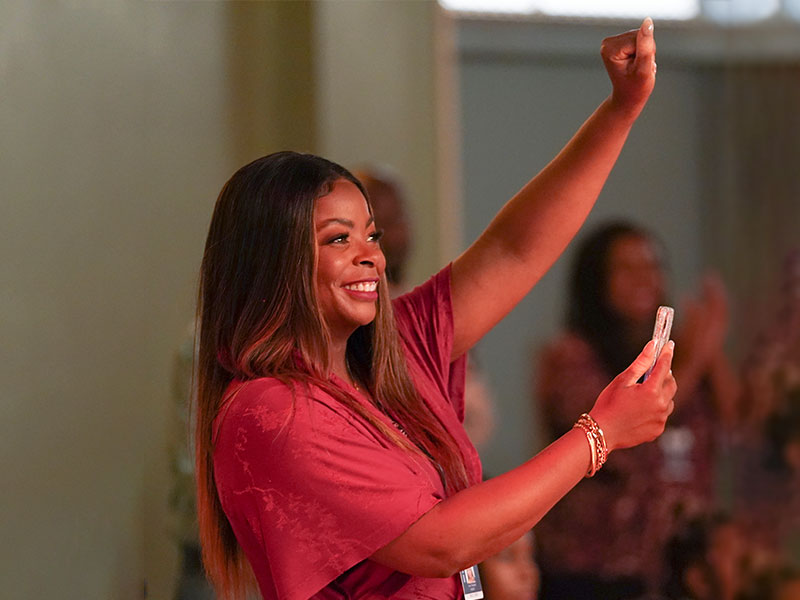
Janelle James on “Abbot Elementary” (ABC)
Abbot ElementaryJanelle James on “Abbot Elementary” (ABC/Gilles Mingasson)

Role: Principal Ava Coleman

Why they’re a standout: It should be so easy to despise this woman. Think about it – Ava got her job through blackmail, misappropriates funds meant for school supplies to score self-care items she uses during school hours (“How does having a principal with muscle tension serve them?”) and is more concerned about her social media following than how well her kids’ level of academic achievement. But James’ high-wattage smile and confident strut down Abbott’s hallways sell every goofy moment she’s onscreen before she says a word, and her flawless, chuckle-salted delivery flavors every myopic line that comes out of her mouth. James’ sparkling expressiveness makes the case for Ava as someone who’s willfully feckless, not harmful, and ultimately can be persuaded to do the right thing – as long as the person who’s asking is hot. And while we wouldn’t want to work for Ava, a person can’t be blamed for wanting to borrow her confidence: “I would ask what I would bring,” she declares as the staff discusses one of the many team efforts they pull off to keep the school going, “but I already know that I’m enough.”  – Melanie McFarland

02
Amira Ghazalla on “The Baby” (HBO)
The BabyAmira Ghazalla on “The Baby” (HBO)

Role: Mrs. Eaves/Nour

Why they’re a standout: In a show like HBO’s sleeper hit, “The Baby,” which centers on a murderous infant searching for a mother that will love them unconditionally, despite the body count piling up around them, the inevitability of there being at least one character who’s of the “f**k this baby” mindset has to be handled delicately. Mrs. Eaves, played by Amira Ghazalla, could easily have come across as a villain in that she spends the majority of her screen time literally attempting to hunt and kill a baby, but her chain-smoking reasonableness anchors this show and keeps it from going off the rails into ridiculousness. Although Ghazalla has had quite a few smaller roles in some impressively large-scale projects such as “Star Wars: Episode VII – The Last Jedi,” “Game of Thrones,” and “Sense8,” HBO’s “The Baby” gave her a breakout role in her seven-episode arc as “Mrs. Eaves.” In an interview with Premiere Scene, Ghazalla said that as a mother of two she approached the scene-stealing role with the understanding that “motherhood is not for everyone,” and appreciated how “The Baby” handled those difficult dynamics in a way that questions the norm. Murderous babies with magically manipulative abilities are certainly out of the norm, but Ghazalla’s depth and range as Mrs. Eaves cemented “The Baby” as a standout for the year. -– Kelly McClure

03
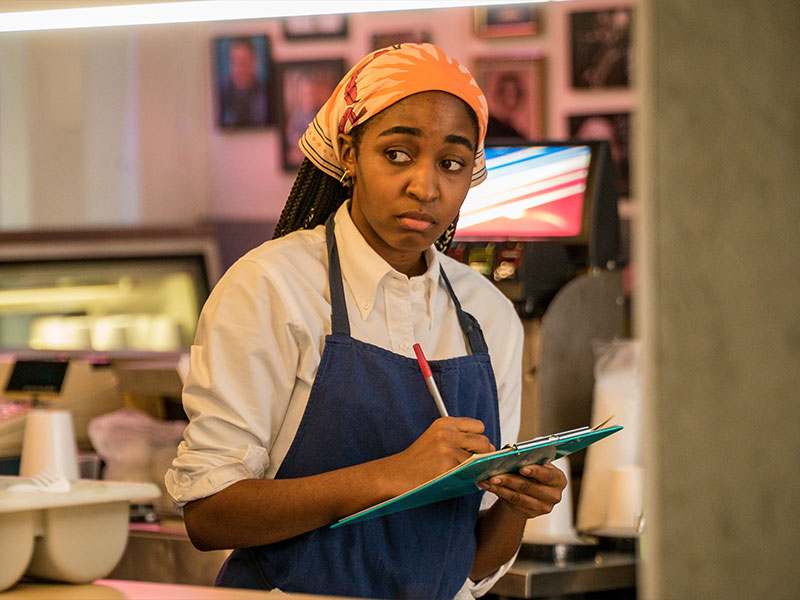
Ayo Edebiri on  “The Bear” (FX)
The BearAyo Edebiri on “The Bear” (Matt Dinerstein/FX)

Role: Sydney Adamu

Why they’re a standout: We’ve all

been there – the youngest person on the work team on the lowest rung with a surfeit of creativity and wonderful ideas, maybe a little headstrong, but justifiably agitating at receiving no respect from your co-workers. Sydney Adamu represents that part of us while also serving as an audience stand-in. As the newly minted sous chef at The Original Beef, she’s innovative, organized and an able problem solver. As a young woman in a kitchen full of veterans, most of them men, she’s often left on the outside of her boss‘s mess-making, then left to clean it up. Edebiri broke through via “Big Mouth” and “Dickinson,” both titles that play to her comedy skills. But as Sydney she plays it absolutely straight, vibrating with rage when her ideas are disrespected but just as often swallowing the chaos and soldiering on. The secret sauce that tips her performance over from great to tremendous is her ability to convey rage exploding in slow-motion, a skill that builds through the season before erupting, fabulously, in the second-to-last episode – right before she calmly delivers a chef’s kiss of an exit speech designed to surgically rip out her hero’s heart at his lowest moment. – Melanie McFarland

04
Simone Ashley on “Bridgerton” (Netflix)
BridgertonSimone Ashley and Jonathan Bailey on “Bridgerton” (Liam Daniel/Netflix)
Role: Kathani “Kate” Sharma/Lady Bridgerton

Why they’re a standout: This year’s diamond is Simone Ashley, whose portrayal of Kate Sharma in the second season of Shondaland’s sexy Regency-era scripted series won both hearts and accolades. From the get-go, Ashley had big shoes to fill following Phoebe Dynevor’s success as Daphne Bridgerton in the first season. But despite the skeptics and outcry over the series’ decision to stray away from the books, Ashley persevered and delivered a performance that exceeded expectations. 

Kate, our headstrong leading lady, takes on a multitude of responsibilities, the biggest of which is being the older half-sister of Edwina Sharma (Charithra Chandran). Alas, in true “Bridgerton” fashion, conflict arises when Kate is enamored with her sister’s soon-to-be husband, Viscount Anthony Bridgerton (Jonathan Bailey), who reciprocates her feelings (with all the heavy-breathing chemistry that entails). Slowly but surely, we see Kate abandon her aloof front as she teeter-totters between what’s expected of her and what she desires. Watching Ashley perfect this balance is both satisfying and touching. Not to mention, it’s made all the more better by her emotive eyebrow scrunch — a simple gesture that holds so much meaning and power. In the wise words of Queen Charlotte, “Flawless, my dear.” – Joy Saha

05
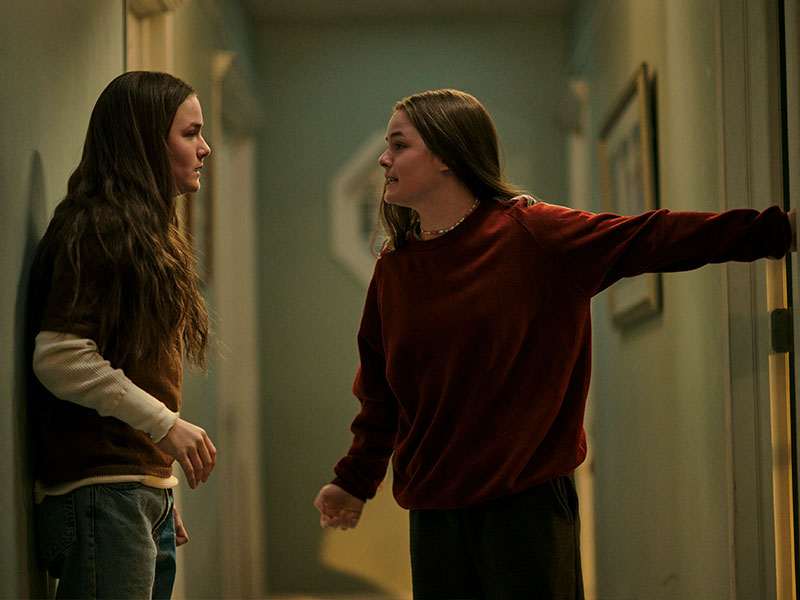
Railey and Seazynn Gilliland on “High School” (Amazon Freevee)
High SchoolRailey and Seazynn Gilliland on “High School” (Michelle Faye/Amazon Freevee)

Role:  Tegan and Sara Quin

Why they’re standouts: When it came time to cast who would play pop duo Tegan and Sara Quin in Amazon/Freevee’s adaptation of their memoir, “High School,” the performers, along with show creator Clea DuVall, faced the seemingly impossible task of not only finding identical twins to take on the roles, but identical twins who could sing, play guitar and act. Railey and Seazynn Gilliland had zero experience in the latter requirements, but when Tegan chanced upon the twins’ TikTok videos she could so easily relate to them, and after sharing her find with Sara they both agreed that they’d be a perfect fit. In an interview with Variety, Railey, who plays Tegan in the series, admits that she’d heard of Tegan and Sara before but hadn’t previously listened to their music. When Tegan DM’d her on TikTok to ask if she and her sister would be interested in auditioning, she was flattered, but confused, and also a little bit terrified. Agreeing to an audition over Zoom, it was clear to all parties involved that Tegan and Sara had met their Tegan and Sara, and watching the Gilliland twins fully nail the general vibe of being queer teens exploring the world as a pair learning to know their own hearts and interests as sisters – as well as individuals unique unto themselve – has the bittersweet bite of nostalgia mixed with a reassurance that being true to yourself is difficult but so worth the angst that can often go along with it. – Kelly McClure

06
William Gao and Yasmine Finney on “Heartstopper” (Netflix)

HeartstopperWilliam Gao and Yasmine Finney on “Heartstopper” (Netflix)

Role: Tao and Elle

Why they’re standouts: They may play the second leads in “Heartstopper,” based on Alice Oseman’s webcomics, but they hold their own in portraying a challenging, evolving relationship between two British teenagers. Gao lends Tao a loose-limbed insouciance that belies the simmering anger and frustrations underneath. While his passionate nature can come out in sulks or a fit of interpretive dance/twerking, Finney counters that energy with a calm sweetness, portraying Elle as a teenager who has an unshakeable sense of self. She also knows Tao well and finds his dramatic ways amusing, especially when she can get a rise out of him with a dry, pointed remark about his love of “Donnie Darko.” Their well-crafted chemistry is made all the more challenging as their characters also try to navigate the potential for more than friendship. As relative newcomers to the screen, the two are mesmerizing, and it’s easy to see why Finney has already landed a role in the upcoming season of “Doctor Who.” – Hanh Nguyen

07
Milly Alcock on “House of the Dragon” (HBO)
House of the DragonMilly Alcock on “House of the Dragon” (Ollie Upton / HBO)

Role: Young Princess Rhaenyra Targaryen

Why they’re a standout: The standout of “House of the Dragon,” HBO’s prequel to “Game Of Thrones” is Australian actor Milly Alcock, who appears in just five out of the 10 episodes of the first season. As the young Targaryen who would be queen, Alcock stole every scene she was in with her impeccable execution of High Valyrian and her chemistry with both Matt Smith, who plays uncle Daemon Targaryen, and Fabien Frankel, who plays Ser Criston Cole. She also masterfully perfects Rhaenyra’s proud and arrogant demeanor, which is only fitting for King Viserys I Targaryen’s (Paddy Considine) heir and the rightful Queen of Westeros.
 

Alcock is not slated to return to the second season of “House of Dragon” nor is she keen on playing more fantasy roles. In a recent interview with Herald Sun, she said she’d “rather work not a lot and do work that I am really proud of and passionate about.” Nevertheless, we’re excited to see what roles Alcock will pursue in the near future. – Joy Saha

08
Bailey Bass on “Interview With the Vampire” (AMC)
Interview with the VampireBailey Bass on “Interview with the Vampire” (Alfonso Bresciani/AMC)
Role: Claudia

Why they’re a standout: Sure, Kirsten Dunst played the scene-stealing child vamp in the big-screen version of Anne Rice’s novel, but Bass makes this Claudia her own. At 19, she’s able to embody the complexities of Louis’ (Jacob Anderson) undead teenage offspring – both her youthful exuberance at a luxurious new existence (“It’s so soft!” she squeals upon test-driving a new coffin) and later the sensuous thirst of wielding unchecked power. And while it’s chilling to watch such a cherubic-faced young woman with fangs bared and blood staining her clothes, the physical incongruity is only part of her performance prowess. It’s also in her Southern-inflected voiceovers where we can hear notes of pitch-black humor as she recounts her blood-curdling experiences in her diary – or the nonchalant thread of malice that comes through as she speaks telepathically to Louis while playing chess with Lestat (Sam Reid). Bass gives dimension to the usual portrayal of a teenager, transforming mere petulance into a chilling premeditation. – Hanh Nguyen

09
Kate Berlant on “A League of Their Own” (Prime Video)
A League of Their OwnKate Berlant on “A League of Their Own” (Anne Marie Fox/Prime Video)

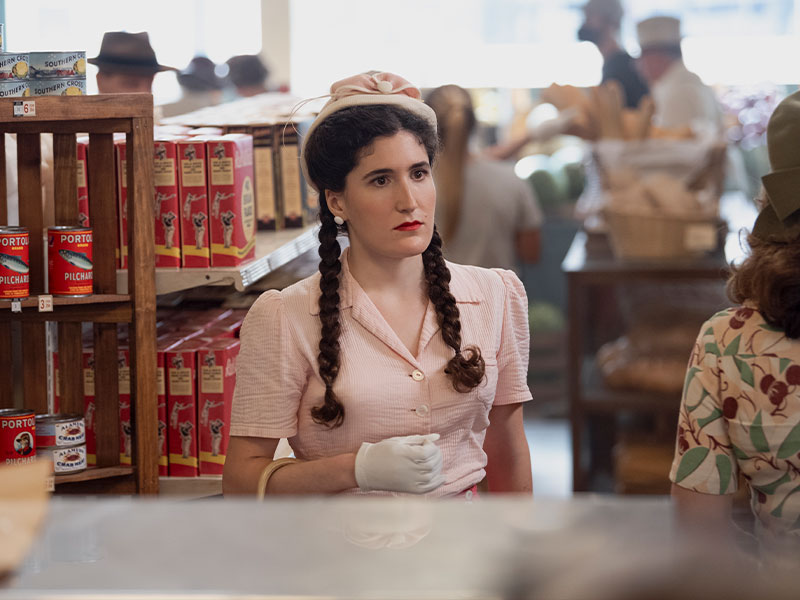
Role: Shirley

Why they’re a standout: My favorite kind of performance is the one that wins me over. I was initially suspicious of Shirley. She’s very, well, a lot and her obsessive compulsive tendencies and hypochondria are played at first in “A League of Their Own” as over the top, for cheap-feeling laughs. Who brings a humidifier on the road in 1943, as Shirley does? (Were there even home humidifiers in 1943?) But to watch the Rockford Peaches athlete with her long Amaryllis braids slowly learn about her teammates, people not like her, and realize more about the world, is to watch the wheels turning, to witness a young, sheltered woman grow up. And despite the often exaggerated actions of Shirley, Berlant is strongest in subtle asides. Lines that other actors might throw away, she makes shine. 


Berlant is also a comic. Her first, solo standup special “Cinnamon in the Wind” was filmed in 2019 and is currently streaming on Hulu. Berlant also stood out in the maligned “Don’t Worry Darling” as perpetually pregnant Peg. In a surreal world, she makes it suburb. Nobody puts Berlant in a corner. – Alison Stine

10
Iman Vellani on “Ms. Marvel” (Disney+)
Ms. MarvelIman Vellani on “Ms. Marvel” (Photo courtesy of Marvel Studios)

Role: Kamala Khan/Ms. Marvel

Why they’re a standout: Playing Marvel’s first female, teen, Muslim superhero is a challenging role to tackle as a young actress. But Iman Vellani, the 20-year-old Pakistani-Canadian star who plays protagonist Kamala Khan in Ms. Marvel, does so flawlessly. In the same vein as Spider-Man, Kamala is a high school student by day and a young hero by night, fighting crime and rescuing innocent civilians on the streets of Jersey City. Her current alias also pays homage to her main idol, former Ms. Marvel, Carol Danvers, whom she embodies in her heroic endeavors.


Vellani perfectly captures the giddiness of a young girl who’s following in the footsteps of her idol and tapping into her newfound super powers. And even though she’s a descendant of a Djinn, she’s still a regular teenager at heart who does everyday teenager things. We see Kamala taking her driver’s exam (albeit unsuccessfully), butting heads with her strict mother Muneeba (Zenobia Shroff) and later, developing a crush on a fellow human hybrid named Kamran (Rish Shah). Vellani’s toothy smiles paired with her adolescent quirks ultimately makes Kamala feel familiar — simply put, it feels like we’re watching a close friend of ours kick butt on screen. – Joy Saha

11
Minha Kim on “Pachinko” (Apple TV+)
PachinkoMinha Kim on “Pachinko” (Apple TV+)

Role: Sunja

Why they’re a standout: Many of the

year’s best performances rely on skilled delivery of dialogue and revealing undiscovered tones within the writing. In contrast, Kim commands many of her most indelible scenes by saying little to nothing, knocking us sideways with a tear drawing a ribbon down her otherwise placid face. Sunja is based on a character in Min Jin Lee’s

novel about Koreans living under Japanese occupation in the early 20th century. Her choice to move to Japan changes her family’s fate, and her own. Sunja could have been realized as a tragic figure. Instead, Kim fortifies her with a profound resolve and tenderness, speaking volumes through the cast of her gaze or her low, soft voice. It’s shocking to know that this is one of the actor’s first major roles, especially given that the mature version of Sunja is played by Academy Award winner Yuh-Jung Youn (“Minari”). Kim doesn’t merely hold her own, she meets Youn’s energy with her quiet determination. Together, they pour a soul into this underappreciated drama. – Melanie McFarland

12
Daniel Weyman on “The Rings of Power” (Prime Video)
The Lord of the Rings: The Rings of PowerDaniel Weyman on “The Lord of the Rings: The Rings of Power” (Ben Rothstein/Prime Video)

Role: The Stranger

Why they’re a standout: Weyman had probably one of the greatest challenges an actor could face for much of the first season of “The Rings of Power.” His role was silent. Then, he had to do a lot of angry roaring. Then, as if those difficulties weren’t thorny enough, he had to be the character that everybody hated, that viewers thought might be, just might be, a really bad guy, the baddest guy in the vast Orc and Snow-troll laden universe of the “Lord of the Rings” prequel. 


I always believed in The Stranger, and in Weyman, because the eyes don’t lie. His eyes radiated kindness always, and confusion and desperation. Towering over the Hobbit ancestors Harfoots, he’s had a rudimentary costume of a tattered robe/blanket he has to swirl around, after starting the story naked and in a flaming meteor, and his dialogue has been limited. But Weyman does so much with so little. His Stranger is a performance brimming with empathy and the heartbreaking pain of wanting to belong, wanting to do good. Most importantly, you want to see more of him, and see his Stranger succeed in his quest for redemption. In a show with a lot of standouts, sometimes the quiet ones are the most powerful. Watch “The Rings of Power,” you cowards. – Alison Stine

13
Patty Guggenheim on “She-Hulk: Attorney at Law” (Disney+)
She-Hulk: Attorney at LawPatty Guggenheim on “She-Hulk: Attorney at Law” (Photo by Chuck Zlotnick/Disney/Marvel Studios)

Role: Madisynn King

Why they’re a standout: Drunk club girls

are an easy punchline. That’s why they’ve made so many appearances on the Weekend Update segment of “Saturday Night Live,” played by an array of actors. Guggenheim’s Madisynn King is not your average Girl You Wish You Hadn’t Started a Conversation With at a Party.  She’s not empty-headed, she’s unfiltered; she’s not insufferable, she’s just frequently and extremely wasted. She’s also a plucky, as one would expect of a woman who can barely totter across the room in heels but can musically let you know her name is spelled “with two Ns, one Y, but it’s not where you th-i-i-i-i-i-iink!”


Madisynn drops into our lives by way of a “diff dimensh” otherwise known as a hellscape, which she navigates like any other rad party, or her hometown of Fort Lauderdale. But Guggenheim’s off-kilter, perpetually swaying performance makes us want to stay with her for a little while. She elevates Madisynn from a basic bump-in-the-road cameo to potential sidekick material for Wong, ultra-serious Master of the Mystic Arts, mainly by forcing him to lighten up and finding common ground in a shared love of prestige TV. Which she consistently spoils. Guggenheim’s unabashed, inebriated joie de vivre in the role makes us hope that we’ll get another date with Ms. King and Wongers in the future. – Melanie McFarland

14
Jeff Hiller on “Somebody Somewhere” (HBO)
Somebody SomewhereJeff Hiller on “Somebody Somewhere” (HBO)

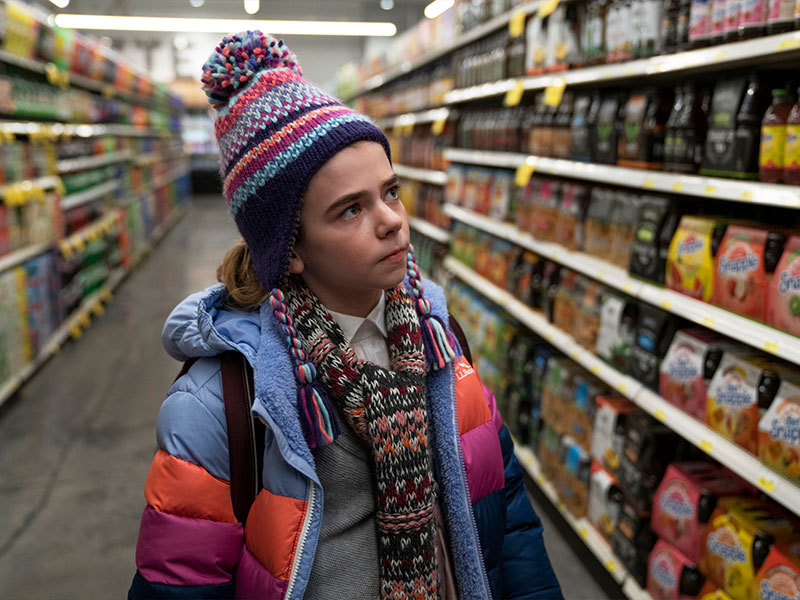
Role: Joel

Why they’re a standout: Joel could have been just another best friend, a sidekick to the main character in HBO’s bittersweet “Somebody Somewhere.” And when the lead is the always magnificent Bridget Everett, as a woman in her 40s who never really made what she wanted to out of her life returning to her Kansas hometown, that’s a tall shadow to stand in.


But Jeff Hiller stands out. And, rather than dwell in Joel’s long suffering, he stands up for himself. He enacts change in his own life. He’s the small town guy you never really thought of back in high school — and you should have because now, entering Year Four in a global pandemic, you realize the people who matter most are the ones who love unconditionally, dream wildly and encourage you to do the same. He’s not looking back, he’s not giving up and neither should you. Anxious and unapologetic, Joel does it all. He sings. He plays the piano. He Zumbas. He vision boards. Hiller’s portrayal is a quiet masterpiece of forgiveness, strength and above all else, authenticity. Unassuming, that’s how the big love gets you. – Alison Stine

15
Matilda Lawler on “Station Eleven” (HBO Max)

Station ElevenMatilda Lawler on “Station Eleven” (HBO Max)

Role: Kirsten Raymonde

Why they’re a standout: In this atypical and uplifting version of the apocalypse we’re introduced to two versions of Kirsten Raymonde. Mackenzie Davis plays her as the adult co-leader of a traveling band of actors and musicians. Lawler, however, plays her eight-year-old version, a kid forced to transform overnight from a child actor to a survivor of a virus that wipes out most of humanity overnight. What does that do to a young girl? Lawler shows us through a performance that steadily loses its innocence, hardening through fear of abandonment into disappointment and, ultimately, turning into something feral before returning to a different version of girlhood. With most child actors sharing a role with an adult, you can see the quirks and traits of the older actor coached into their youthful version. Lawler’s performance, however, is stalwart enough for one to imagine it challenging her counterpart to step up her game, and makes us look forward to seeing more from her in the (hopefully much better) future. – Melanie McFarland

16
Lola Tung on “The Summer I Turned Pretty” (Prime Video)
The Summer I Turned PrettyLola Tung on “The Summer I Turned Pretty” (Dana Hawley/Prime VIdeo)

Role: Isabel “Belly” Conklin

Why they’re a standout: We’re going to be honest here: Belly is the worst. And to be fair, she’s written that way in Jenny Han’s books, about a teenage girl who finally starts getting some attention from boys while summer vacationing at a family friend’s beach house. But even though Belly is whiny, somewhat selfish and definitely stringing along various guys as she tries to figure out her own feelings, Tung’s winning portrayal is what affords Belly a heaping helping of grace. Tung landed the role while still attending Carnegie Mellon, and it’s clear why she won out against other more established actors. She allows Belly to be a teenager in all of her messy glory, but never skimps on the enthusiastic charisma and vulnerability that lends authenticity. We may not all relate to Belly’s exact circumstances or identity, but we don’t need to when Tung creates such a vivid, sympathetic character that even has us forgive her many missteps. – Hanh Nguyen


17
Emma Myers on “Wednesday” (Netflix)
WednesdayEmma Myers on “Wednesday” (Netflix)

Role: Enid Sinclair

Why they’re a standout: While the allure of the vampire in books, television and film is undeniable, I’ve made it a point of pride for myself to enthusiastically remain team wolfie, if presented with a choice between the two. When the “Twilight” saga films started hitting the theaters in the mid-2000s, I was the only one in my group of friends on Team Jacob. Oz was always my favorite out of the male characters on “Buffy the Vampire Slayer.” And I take up every opportunity to suggest to fans of Anne Rice’s “Vampire Chronicles” that they shouldn’t overlook her wolfie series, “The Wolf Gift Chronicles.” Even Dracula, the most famous vampire there is, will tell you “There’s much to be learned from beasts.” While I agree with Salon’s Culture editor, Hanh Nguyen, that Netflix’s take on “The Addams Family,” “Wednesday,” can be more style than substance at times, Emma Myers’ role as teenage werewolf Enid Sinclair made the series worth watching. Well, her and Christina Ricci as Mrs. Thornhill of course. I would never dream of disparaging the OG Addams. Prior to her role as Enid in “Wednesday,” Sinclair has been a relative unknown as far as big budget productions go, but not for long. – Kelly McClure

18
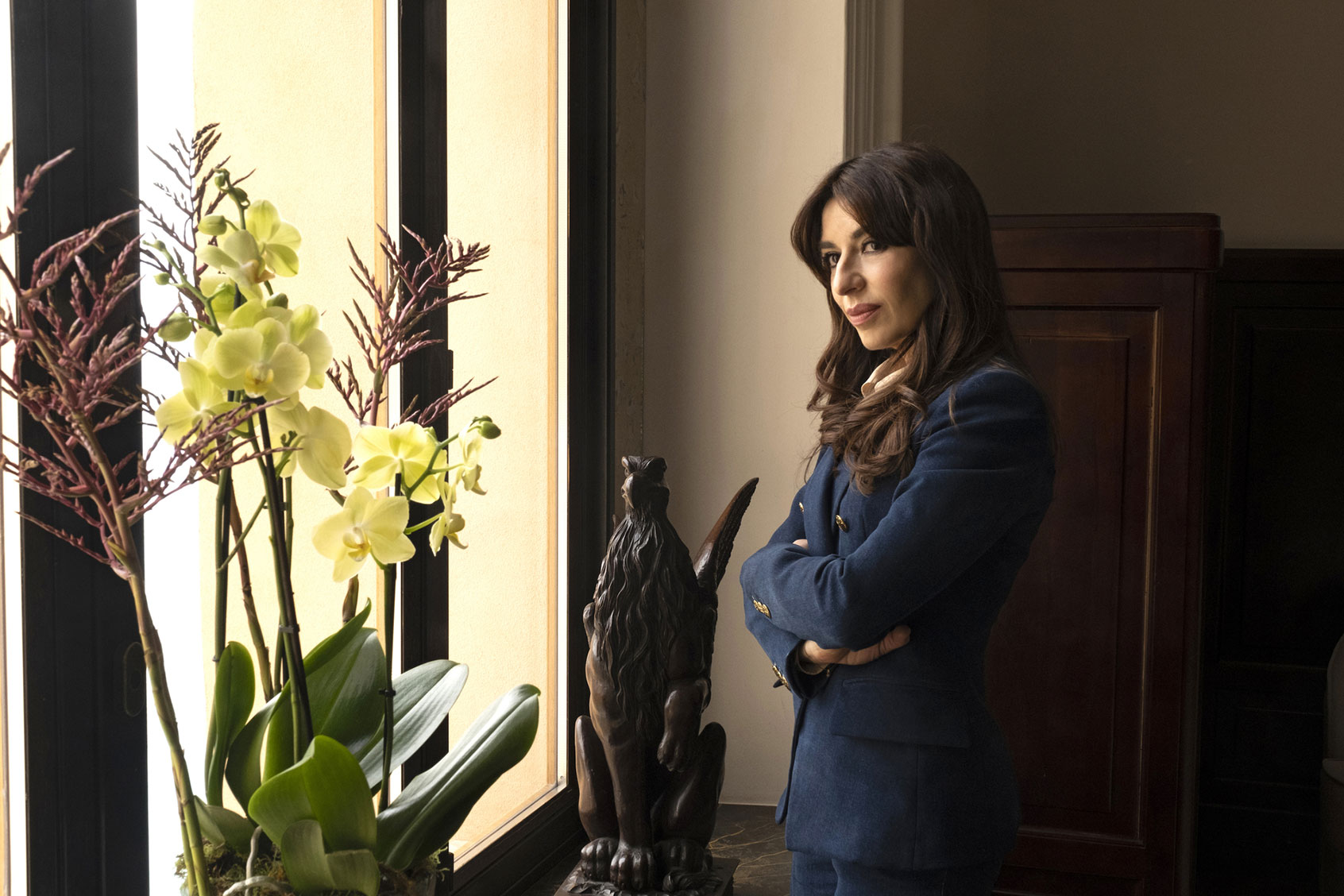
Sabrina Impacciatore on “The White Lotus” (HBO)
The White LotusSabrina Impacciatore in “The White Lotus” (Photograph by Courtesy of HBO)
Role: Valentina

Why they’re a standout: The unsung hero of “The White Lotus” Season 2 is undoubtedly Valentina. Serving as the resort’s rigid manager, Valentina is not a self-proclaimed misandrist, but she certainly makes it clear that she’s not a fan of her male subordinates, particularly Rocco (Federico Ferrante). It’s these small moments of comical disgust where Sabrina Impacciatore’s performance really shines through. Her broad smile, which appears without fail when she converses with her co-worker and crush Isabella (Eleonora Romandini), is gone in an instant once a man steps into the picture.
 

Impacciatore also excels in showcasing Valentina’s more vulnerable side, like when she purchases a starfish brooch for Isabella or has her first sexual encounter with a woman in the comfort of the hotel she manages. However, her most iconic showcase is when she tells Tanya McQuoid (Jennifer Coolidge), who is attempting to channel Monica Vitti in an all-pink getup, that she looks more like Peppa Pig. Even better, the line was completely improvised by Impacciatore. – Joy Saha

TKTK

19 hearty winter salads we call comfort food

Temperatures are dropping, jackets and scarves are out, and all we’re craving are casseroles, sizzling cheesy sandwiches, and hot soups — foods that are best eaten curled up on the sofa while searching for the next TV show to binge-watch. When envisioning these types of cozy comfort meals, salads may not immediately come to mind, but we’re here to prove they should.

All it takes is a few tricks to turn these sides into stars. Jazz up your salads with eye-popping colors and textures: Add cooked grains such as quinoa or farro, and throw in oven-roasted squash, beets, or Brussels sprouts. Toppings are also key: Additions like toasted pine nuts, dried cranberries, and tangy feta can transform a humble side salad into the main event.

Here are 19 cold-weather salads that will reinvigorate your dinner menus this winter.

1. Roasted Butternut and Red Quinoa Salad with Spicy Lime Vinaigrette

Red quinoa, roasted butternut squash, white beans, cilantro, and toasted pumpkin seeds happily mingle with a spicy, lemony vinaigrette in this showstopper salad. Simply add a protein to make it a main dish.

2. Crispy Kale Chaat

Inspired by the Palak Chaat served at the iconic Washington DC restaurant Rasika, this salad consists of oven-roasted crispy kale, diced red onions, and tomatoes — all drizzled with cool yogurt and a sweet-and-sour tamarind chutney.

3. Sri Lankan Kale Mallung

Mallung, a Sri Lankan salad of shredded, cooked vegetables, can be adapted to make winter greens shine. Here, finely chopped kale is cooked with mustard seeds and diced jalapeño, then seasoned with lime juice and coconut flakes.

4. Spiced Beet Salad with Citrus-Ginger Dressing

Roasted beets seasoned with ginger and fragrant spices are the highlight of this bright, citrusy salad. Fresh mint leaves and dollop of Greek yogurt help create a cooling effect, while chopped pistachios offer crunch.

5. Shaved Fennel Feta Salad

This salad comes together in minutes — all you have to do is shave the fennel and slice the zucchini. A handful of toasted pine nuts adds richness to the final dish, while feta cheese brings brightness and tang.

6. Yogurt and Beet Salad in the Persian Manner

In this simple salad, earthy, roasted beets are contrasted with a refreshing bed of Greek yogurt or labneh. Salt, fresh mint, and a drizzle of olive oil on top complete this Persian side dish.

7. Butternut Squash with Chile Yogurt and Cilantro Sauce from Yotam Ottolenghi

Yotam Ottolenghi’s recipes are a riot of colors, textures, and flavors. This one is no exception, bringing together sweet butternut squash, herby cilantro sauce, Sriracha-spiked yogurt, and toasted pumpkin seeds.

8. Favorite Winter Orzo Salad

Combine roasted butternut squash with orzo pasta, any winter greens, and blue or goat cheese for a salad that’s so flavorful, you don’t even need a dressing; the oil leftover from roasting the squash is enough to do the trick.

9. Spiced Peanut Sweet Potato Salad from Deliciously Ella

In this hearty, sweet-and-savory salad, sweet potatoes get seasoned with ground cumin, cinnamon, and ginger, tossed with a spicy peanut butter dressing, and finished with dates and parsley.

10. Warm Orzo Salad with Beets and Greens

This delightfully pink-hued salad features both beets and their greens. Sauté the beet greens with thinly sliced red onions before mixing them with cooked beets, skillet-toasted pine nuts, and al dente orzo.

11. Sweet Potato, Zucchini, and Chickpea Salad

Caramelized, oven-roasted sweet potatoes and zucchini meet garlicky, sautéed chickpeas in this simple salad, which gets finished with a quick tahini and lemon dressing.

12. Warm, Cheesy Brussels Sprouts Salad

In this comforting, cozy salad, grated Grana Padano cheese gets melted over a bed of shaved and pan-roasted Brussels sprouts, artichoke hearts, Castelvetrano olives, and roasted red bell peppers. Top with homemade bread crumbs for a gratin-like feel.

13. Winter Panzanella

Panzanella might just be the perfect winter salad. Hefty, crusty sourdough, velvety, oven-roasted butternut squash, and caramelized beets pair with tart Granny Smith apples, pungent red onions, and just enough bitter kale balance the whole thing out.

14. Shaved Brussels Sprouts Salad with Red Onion, Lemon, and Pecorino

This Brussels sprouts salad comes together in just 30 minutes — yet it’s bursting with flavor. A no-fuss honey mustard dressing, sliced red onions (soaked in cold water to soften their bite), and grated pecorino cheese are key to nailing this punchy side dish.

15. Green Kitchen Stories’ Winter Millet Salad

Thanks to the addition of cooked millet, this warm salad is a complete meal. Roasted butternut squash and hazelnuts offer textural interest, while the lemony dressing keeps things fresh.

16. Shredded Raw Brussels Sprouts Salad with Red Peppercorns and Honey Mustard Vinaigrette

Hand-crushed red peppercorns are the secret star of this winter salad. Marinating sliced Brussels sprouts in a mixture of olive oil and lemon juice helps tenderize them, while a topping of pan-roasted pine nuts and honey mustard dressing complete the dish.

17. Roasted Butternut Squash and Toasted Farro Salad with Curried Brown Butter

Nutty brown butter spiked with curry powder ties together this salad of roasted butternut squash, toasted farro, shallots, and winter greens. Another obvious advantage, aside from the taste? No dressing needed.

18. Hearty Kale Salad with Kabocha Squash, Pomegranate Seeds, and Toasted Hazelnuts

Olive oil-massaged kale meets caramelized kabocha squash in this wintry salad. Coupled with a trouble-free dressing of olive oil, mustard, lemon, and maple syrup — and a sprinkling of pomegranate seeds! — this is a dish you’ll return to all season long.

19. Roasted Sweet Potato and Black Bean Salad with Chile Dressing

Roasted sweet potatoes, red onions, and black beans get a boost from a fiery dressing of olive oil and chile. Serve this salad warm, at room temperature, or refrigerate to enjoy the next day.

How to end gridlock and ensure Democratic power — with a bold progressive agenda

Conventional wisdom was wrong about the midterms, but in a deeper way than most observers have yet realized. It’s not just that Democrats did better than expected, and the Dobbs decision and Trump-backed election-deniers weren’t the only reasons. A lot of things went into those results, which were more complicated than most narratives allow. Through the haze of conflicting post-election narratives, the possibility for a long-term progressive realignment can be seen, combining the government activism of Joe Biden’s major legislation (the American Rescue Plan, the Infrastructure Investment and Jobs Act, the Inflation Reduction Act, the CHIPS and Science Act) with the growing power of diverse social movements advancing racial, gender and climate justice, gun safety and more. As the younger voters who overwhelmingly support Democrats grow in strength, there’s a path out of current gridlock and polarization based on a progressive agenda. But conventional wisdom can’t even see it.  

As I’ve noted previously — here, here, here, here and here, among others — as far back as 1967, Hadley Cantril and Lloyd Free’s landmark book “The Political Beliefs of Americans identified a “schizoid” asymmetry in American politics: On the one hand, there’s a plurality preference for conservatism, on an ideological or symbolic level, while on the other hand there’s supermajority support for what the authors called “operational liberalism,” meaning big government spending to solve specific problems. That’s essentially what the Biden administration has delivered, as White House press secretary Karine Jean-Pierre recently summarized: “The most significant economic recovery package since Roosevelt … the largest infrastructure plan since Eisenhower … the most sweeping gun reform bill since Clinton … Landmark China competitiveness legislation that’s already bringing manufacturing jobs back from overseas … the largest climate change bill in history.”  

The internal division that hobbled Democrats over the past two years was often presented as progressives versus centrists, but was really about good-faith actors (whatever their supposed ideology) versus bad-faith ones, most notably Joe Manchin and Kyrsten Sinema. As a result, many “Dems in disarray” articles clouded the public’s understanding, making it difficult to see how much got done despite that obstructionism. As Way to Win reported in its Battleground State Poll Readout, 78% of all voters couldn;t name anything Biden had done that directly helped them. All those people had received $1,400 stimulus checks, so the problem was much less that Biden and the Democrats hadn’t done enough than how little voters knew about what they’d done. 

Democrats are in a good place politically, if they can get past that problem. Progressive economics are popular — including Social Security and Medicare, family leave, the expanded child tax credit and student loan debt forgiveness — as are progressive positions in the culture wars, where the Dobbs decision in particular exposed Republican weakness. On criminal justice reform, the phrase “defund the police” became a liability, but the actual policy it describes — reallocating funding to social workers, mental health and other social services — is highly popular. In one survey of Los Angeles voters, 75% of people in households with a police officer supported that policy.

So it’s not extremism that threatens Democrats’ prospects, but the opposite: lacking the boldness to secure the allegiance of young voters. My argument stands in direct conflict with New York Times columnist Thomas Edsall’s “What Really Saved the Democrats This Year?” which ludicrously ignores the Dobbs effecty, quotes only male commentators and frames everything in terms of a battle between “moderates” and “progressives.” 

An overlooked popular foundation

My argument is founded on three key facts: First, Biden’s agenda — most notably the trifecta of the American Rescue Plan, the Infrastructure Investment and Jobs Act, and the Inflation Reduction Act — was grounded in the Biden-Sanders Joint Task Force Recommendations, which NPR described as the “Blueprint for a Progressive Presidency” and enjoyed almost universal Democratic support. Second, that the Dobbs decision and Trump-backed attacks on democracy fueled a backlash that reflects a historical turning of the tides in America’s culture wars. Third, that voters under 30 — whose  share of the electorate will only grow with each election cycle — favored Democrats by almost 30 points. Those are the voters who most clearly see the failures of neoliberal politics-as-usual over the past 40-plus years, particularly on issues like gun violence, climate change, mass incarceration, reproductive freedom and economic inequality. 

While Republican control of the House will certainly stall things in the short run, the next two years could be crucial in laying the groundwork for a generation or more of progressive Democratic dominance on a scale not seen since the New Deal or the Great Society. The potential pieces are there — they just need to be put together, and the process of doing so has already begun.

“This cycle and election made clear that milquetoast, centrist approaches are ineffective and losing strategies — they just don’t excite new base voters and hold the middle,” Way to Win president Tory Gavito told Salon:

Candidates that ran on persuasive progressive platforms won up and down the ballot across the country from the Senate to state legislatures. The way to win is through offering voters — especially our Democratic base — bold agendas, ideas and solutions that will make tangible impacts to improve their lives and communities, and making an argument for these solutions to independents. We must remind voters that MAGA has nothing to offer but trumped-up culture wars, through the vision we promote on air to the talking points we share on the doors.

Gavito reiterated that Way to Win polling showed that a large majority of voters couldn’t name a single accomplishment that Biden or the Democratic Congress had achieved. That was a “wake-up call,” she said, but “also a massive opportunity heading into 2023 and 2024. … Democrats have a unique opportunity to tell and show voters how their actions and policies are making real-world impacts that are improving our economy.” 

The best economic policy in 40 years

The main headwind Democrats faced this year was the inflation issue, which, as I wrote earlier this month, was both a worldwide problem for which that Biden and Democrats were not responsible and also part of a complicated story that showed lower-income workers doing much better overall, with more jobs, faster wage growth, rising home ownership and refinancing of existing homes. In other words, the U.S. economy was recovering well from the COVID shock and generally doing so in a healthier, more equitable manner. 

This was a shared objective of the Biden-Sanders Task Force, reflected first in the American Rescue Plan, which economist Claudia Sahm called “the best economic policy in 40 years.” She wrote: “Yes, inflation’s been higher and for longer than expected by proponents of more relief like myself,” then adding further context: “If you look broadly at what’s happening in the U.S. economy — inflation-adjusted consumer spending, jobs, business investment and household balance sheets — it’s clear that Americans are winning,” which was not the case after the Great Recession. 

When the ARP was passed, the U.S. economy was “still in a bad place,” Sahm told Salon. “We were just coming out of the omicron wave, the winter had been bad. There was no guarantee we were going to have the recovery or that it was going to be strong.” But in fact, she said, “we’ve had the first job-full recovery in decades,” in stark contrast to the “crushingly slow” comeback from the Great Recession of 2008. 

After the Obama administration’s inadequate response, Sahm said, “Republicans came in and did austerity” which suited their donors just fine. “Wealthy people came back quickly. The stock market came back quickly. House prices, for those who did not lose their homes, came back. But the jobs did not come back, and long-term unemployment has disastrous effects on people’s careers — not just bad while you’re out of work, but bad for years.” If Biden’s plan accomplished nothing else, she said, the “job-full recovery” was the best policy used to fight a recession in decades. 

Slashing child poverty

Unfortunately, the expanded Child Tax Credit in Biden’s plan — which cut child poverty by 30% — was only temporary, and later allowed to lapse thanks to Joe Manchin’s opposition, As I wrote in 2015, based on papers from the LIS Data Center, America has a terrible record in fighting child poverty, but it could easily afford to cut child poverty almost in half by enacting a $4,000-a-year child allowance. That would cost about $160 billion every year, but would  produce a net benefit of about $90 billion, since childhood poverty costs the country even more, with “lost productivity and increased crime and health care costs as primary factors.” 


Want a daily wrap-up of all the news and commentary Salon has to offer? Subscribe to our morning newsletter, Crash Course.


The extended CTC would have made us somewhat competitive with other rich nations, at a net annual savings of more than $50 billion. That’s what Joe Manchin blocked, based on shifting rationales that didn’t hold up to scrutiny in terms of either the experiences of other countries our America’s trial run under the ARP. Sahm told Congress in October 2021 that the CTC “would be the ‘biggest bang for the buck,’ supporting families now and investing in our next generation.” 

The Child Tax Credit was allowed to lapse, Sahm said, because “Larry Summers convinced Joe Manchin that the child tax credit was inflationary,” a view she calls “absolutely absurd.” In an analysis last July, she explained: “Unlike stimulus checks that came out in a burst, accounting for 16% of disposable personal income in March 2021, the new Child Tax Credit was monthly to families and was 0.5% of income from July through December.” In short, it wasn’t a contributor to inflation, and was a crucial investment in the next generation. 

The question here is not whether this example of “operational liberalism” works. The evidence is clear enough. The only real question is whether, or when, we can gather the political will to get it done.

Taking Trumpers seriously 

But there’s another, more immediate barrier: The often ill-informed Republican base, which despite its affection for Donald Trump is nonetheless right about something. That’s the argument Dean Baker, co-founder of the Center for Economic and Policy Research, makes in “The Case for the Trumpers’ Anger.”

“There is no justification for the racism, anti-Semitism, homophobia and other forms of bigotry that Trump has cultivated since he entered politics,” Baker wrote. “But there is a reason why it suddenly has so much appeal,” that being the basic reality of how badly the non-college-educated majority of Americans have fared over the last 50 years or so.  

If the national minimum wage had kept pace with productivity growthas it did for three decades prior to 1968, it would be $23 an hour. Instead, it’s still $7.25.

Consider this: If the minimum wage had kept pace with inflation since its peak real value in 1968, the national minimum wage would be over $12 an hour today, rather than $7.25. But if it had kept pace with productivity growth, as it did for three decades prior to 1968, it would be almost twice that, or $23 an hour. That would mean a couple working full-time minimum-wage jobs would earn about $92,000 a year — a very different world than the one we live in today.  

Since only about 40% of adults have college degrees, Baker writes, “A large majority of the population has grounds to be unhappy about their economic circumstances in recent decades. Given this reality, suppose that the poor prospects for non-college-educated workers was the result of deliberate policies pushed by the people who control debates on economic policy, as in people with college and advanced degrees.”

In fact, that’s exactly what has happened, he argues. “The winners really did screw them and they have concocted nonsense stories to conceal that fact. … Of course, that doesn’t mean that every university professor or librarian was in on the scheme, but as a class these people have in fact put in place economic structures that redistribute from the less educated to those with college and advanced degrees.”

That analysis may be skewed, in that the prime movers weren’t upper-middle-class professionals but a handful of extremely wealthy elites, and the neoliberal worldview they promoted was surrounded by so much propaganda that it was difficult to see what absolute nonsense it was. But still, as a class educated professionals did go along with it, accepting much of that nonsensical propaganda along the way. So what can be done to remedy that now?

“Taxing financial transactions, starting with crypto, would raise lots of money that could be used for things like child care, and might also eliminate many of the big fortunes earned in the sector.” 

“Democrats need to actively push policies that will reverse the upward redistribution of the last four decades,” Baker told Salon via email. “For example, cracking down on the bloated financial sector is a great place to start. Taxing financial transactions, starting with crypto, would both raise lots of money, which could be used for things like child care and might also eliminate many of the big fortunes earned in the sector.” He also suggests reducing prescription-drug costs “by publicly funding the research and making the resulting drugs and inventions available as cheap generics sold in a free market.” 

In short, there are relatively straightforward things we can do, which in Democratic politics today are generally coded as “progressive.” That’s somewhat misleading, since their appeal would reach far across party lines. Baker certainly wouldn’t guarantee that such measures could bring white working-class voters back to the Democrats, but it could be crucial for securing the allegiance of younger voters, the potential foundation for decades of Democratic dominance. 

The end of Roe and court reform

But economics — although certainly crucial — is only part of the story. For decades Republicans have relied on culture-war issues, abortion foremost among them. More precisely, conservatives have devoted immense energy and resources to controlling the courts, thereby enforcing minority views they could never democratically enact into law. But having finally realized their goal of overturning Roe in 2022, everything has changed. These culture-war issues have always relied on some degree of subterfuge, and the Dobbs blew a hole in all that, exposing the messy reality obscured by facile “pro-life” rhetoric. Voters in MichiganVermont and California overwhelmingly approved initiatives enshrining abortion rights in their state constitutions, while voters in Kansas, Kentucky and Montana (three solidly Republican states) said no to bans or restrictions. But this is clearly just the beginning of years of further struggle that will be about much more than abortion rights. 

The extremist, anti-democratic Supreme Court is a massive problem, but most discussions about how to solve it have been overly abstract and hobbled by a limited sense of history. One exception is a new paper by David Gans, director of the Human Rights, Civil Rights, and Citizenship Program at the Constitutional Accountability Center, which proposes concrete potential remedies by drawing on the most compelling historical example we have. That was during Reconstruction, when Congress both expanded and contracted the size of the Supreme Court, limited its jurisdiction and expanded the power of federal courts to protect citizens’ rights. The most lasting and consequential impacts came from the last option, which he believes could guide us this time around. “When six Justices insist on rolling back fundamental rights and putting accountability further out of reach,” Gans writes, “Congress should do what it did during Reconstruction: employ its enforcement powers to pass landmark civil rights legislation that opens the courthouse doors and ensure the promise of justice for all Americans.”

To contest the radical extremism of the Supreme Court, says David Gans, “Congress should do what it did during Reconstruction … pass landmark civil rights legislation that ensures the promise of justice for all Americans.”

Gans told Salon that reforming the courts ws “about more than the composition of the Supreme Court.” While it’s unlikely that reform legislation can be enacted in the next two years, he said, “progressives in and out of Congress should use this time to develop a multi-pronged approach. The Constitution gives Congress powerful tools to reform our federal judicial system and to ensure that our federal courts — including the Supreme Court — uphold the rights and ideals that lie at the core of our Constitution, including liberty and equal justice under law.

“In this moment, progressives should think boldly about how to deploy these tools to fix a Supreme Court whose conservatives seem bent on decimating fundamental rights and equality. To build popular support, progressives should use every chance they get to make the case that the conservative super-majority of the Supreme Court is getting the Constitution dead wrong and that far-reaching changes are necessary to honor the whole Constitution’s safeguards and promises.” 

Criminal justice reform

In contrast to abortion, an issue that has shone harsh light on the arbitrary or outright lawless actions of the Supreme Court, things are much more muddled on another crucial front: criminal justice reform. As I wrote earlier this month, crime and inflation were “two Dems-in-charge/situation-out-of-control narratives … custom crafted in the Fox News ecosystem” which the New York Times took a lead role in spreading farther across the political spectrum during the recent midterm campaign, “crowding out other contrasting narratives in the process.”

New York was clearly the epicenter of this issue, and bail reform was a key focus. Early in December, civil rights attorney Scott Hechinger, who heads Zealous, a criminal justice reform initiative, co-authored a commentary on the bail reform question, specifically calling out Democrats who blamed it for midterm losses. “Research has established no connection between bail reform and any increase in crime,” he wrote, and “New York City has remained secure even though headlines could make one think otherwise.” Three of New York’s five boroughs “are among the safest 15 counties in the U.S.” he noted, while Nassau County, just east of the city on Long Island — where 64 mayors recently called for the repeal of bail reform — has twice since the law’s implementation been ranked the safest place to live in the country.

In short, the panic over a supposed crime wave and bail reform in New York was pure political bullshit. “Democrats lost because they ran from the truth about bail reform,” Hechinger writes, “amplifying lies instead of championing what should have been their policy win. In short, they made themselves indistinguishable from Republicans on this topic.”

That’s exactly what some misguided pundits and strategists consistently tell Democrats to do. But all evidence suggests the opposite is true. “Other candidates who told the truth about bail reform’s success and stood strong against fear-mongering won,” Hechinger notes, and that shouldn’t be surprising. As I noted above, the actual policy behind the notion of defunding police — meaning the reallocation of funding to social workers, mental health and other social services — is overwhelmingly popular.

The logic behind policies of mass incarceration is at least as bad or worse, as Hechinger noted in an email to Salon:

We invest more than any other society in the history of the world on policing, prosecutions and punishment. So if the current massive investments into these approaches actually worked, you’d expect we’d be the safest and healthiest society in the word. We’re obviously far from it, by police and politicians’ own admission. We need to follow facts and reasoned solutions, not fear: Why we need to abandon our current approaches that only further drive violence by creating environments of isolation, shame, economic deprivation, and violence — the very characteristics of overpolicing and prisons parallel the very drivers of violence itself.

The alternative already exists, he continued:

People don’t have to “imagine” what non-carceral, non-punitive, non-police responses to public health and safety look like. The safest and healthiest communities are those with greater community investments, not more police. One need look no further than wealthy white suburbs to see how substance use, mental health issues, interpersonal violence and conflict between and among young people are dealt with largely without police.

Even where conditions are bleak, proactive progressive alternatives have proven remarkably effective in reducing crime. Perhaps most important is restorative justice, a concept described at length in Lois Forer’s 1994 book “A Rage to Punish“:

Restorative justice programs recognize that punishment and prison neither heals trauma nor holds actors accountable. This is extraordinarily difficult and intentional work, with both the harmed party and the person who harmed and then ultimately with the support of community bringing both sides together to communicate, to see each other, connect, make agreements, set forth community based consequences, and focus forward. In Brooklyn, when survivors of violence are informed that the restorative justice program Common Justice is an option, they choose it over the normal process over 90% of the time. And recidivism rates among those who complete the program are near zero. 

The second approach is violence interruption:

The “Interrupters Model” pays and trains trusted insiders of a community to anticipate where violence will occur and intervene before it erupts, work in neighborhoods and hospitals, meet with survivors to help and prevent retaliation, and work with people at highest risk for causing harm. Violence interruption works: There was a 31% drop in homicides and 19% in shootings in two Chicago districts where interrupters worked. And it’s significantly more cost-effective, especially when measured against outsized policing that has been proven by their own statistics not to work at all. 

In short, the hot-button issue of crime, which Democrats have spent decades running away from, could actually be a winning issue for progressives if they can successfully cut through the hysteria. Hechinger concluded by saying we need to “understand things police enforce as ‘crime’ as public health issues — and that includes violence — that we, as a society, have failed to properly address, and can address.” 

The public health framework

Seeing crime through that kind of public health lens fits with a broader argument I made last year and can apply to liberal or progressive policies more broadly: “[E]nvironmental health, racism, gun violence, injury and violence prevention, healthy housing, and reproductive and sexual health” are all recognized by the American Public Health Association as major areas of concern, and their list “also intersects with human rights in the field of global health, and deals with issues of income inequality, education, housing, incarceration, nutritional equity, literacy, health care coverage and access.” 

The public health framework can also provide a coherent overarching narrative: 

The challenge for Democrats and progressives is to do what Republicans and conservatives have been doing for decades: Craft a coherent ideological narrative that makes sense of what people already feel. But for Democrats, it’s not just about vague free-market fantasies, or romantic longings for a past that never was. It’s about concrete things people can do to empower themselves through government action, creating a future with more possibilities for all.

In the conclusion to Cantril and Free’s “The Political Beliefs of Americans,” the authors called for “a restatement of American ideology to bring it in line with what the great majority of people want and approve” which “would focus people’s wants, hopes, and beliefs, and provide a guide and platform to enable the American people to implement their political desires in a more intelligent, direct, and consistent manner.”

A public health narrative can make sense of the “operational liberalism” identified in that book and can address diverse social movements that energize Democratic base, as well as the multi-pronged project of court reform. It also speaks to the failures that led to such extreme economic inequality in America, as well as the disastrous failures of neoliberal policy that both enabled and sought to justify it. Adopting a public health framework to make sense of our politics and bring us together to solve our most difficult problems might well help Democrats win elections, but that’s not the point. Far more important, it could restore a common framework for overcoming the partisan polarization and political gridlock that seems inescapable today, but doesn’t have to be.

“Broker” is the absorbing slow-burn chase film with a baby, a cop and a makeshift family of liars

Japanese writer/director Hirokazu Kore-eda‘s films — “Shoplifters,” and “Still Walking” among them — are gentle dramas that sneak up on viewers, becoming achingly poignant and unexpectedly moving. His films often reconsider what makes a family, and Kore-eda’s latest, the outstanding “Broker,” set in South Korea, is no exception. 

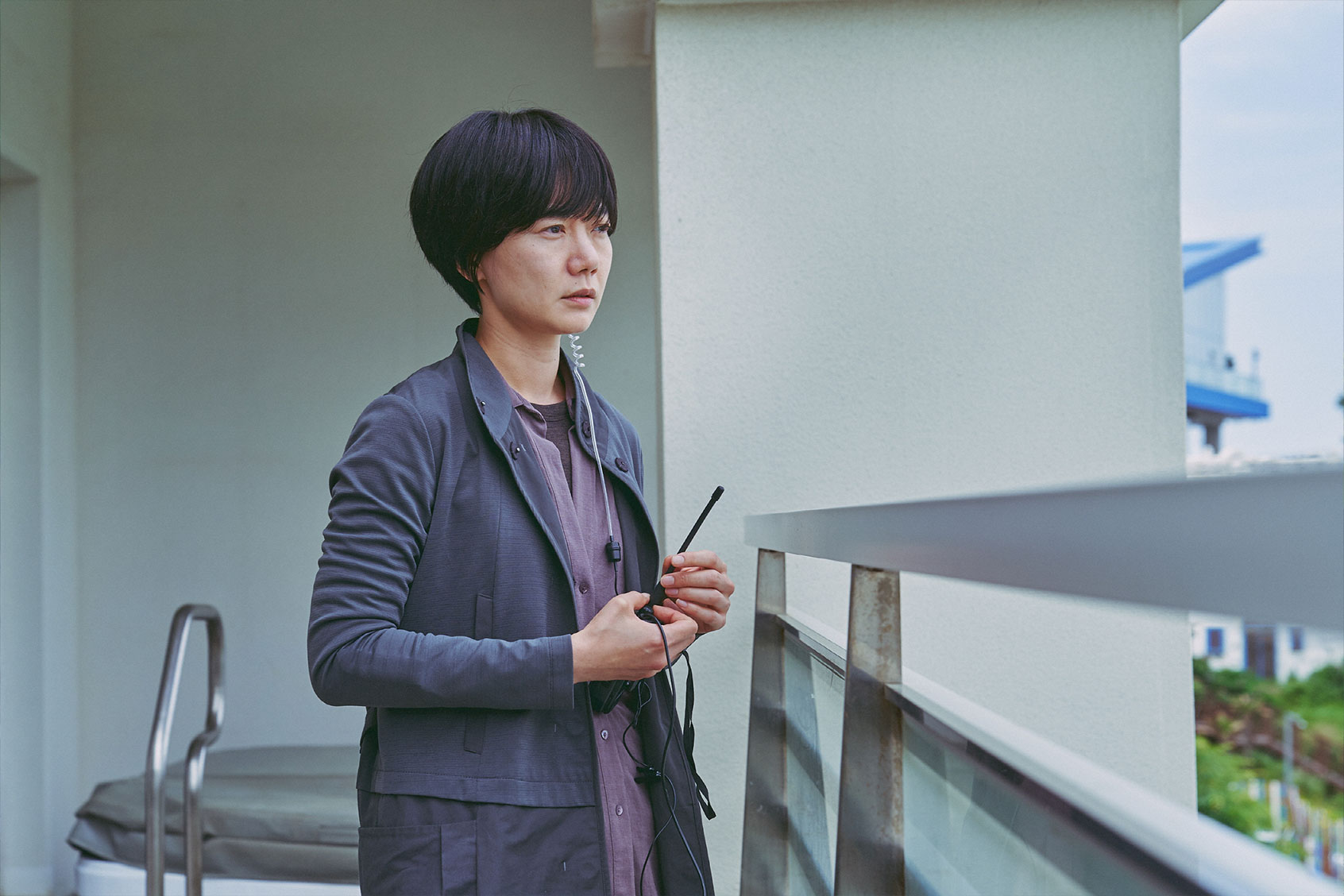
The full story slowly comes into focus, but the absorbing “Broker” never feels slow. A young woman, So-young (Lee Ji-eun, “My Mister”) drops her baby, Woo-sung (Park Ji-yonh ) off at the Busan Family Church in front of a box designed for such anonymous deliveries. Lee (Lee Joo-young, “Itaewon Class”) who along with Su-jin (Doona Bae, “Cloud Atlas“), witnesses this act, puts the baby in the hatch where Woo-sung is received by church volunteer, Dong-soo (Gang Dong-won). Dong-soo, however, takes the infant to his friend Sang-hyun (Song Kang-ho, “Parasite”), as they plan to sell the child to couples who cannot go through the traditional adoption route. 

Dong-soo and Sang-hyun are committing a crime. And Su-jin is a sergeant in the police force — Lee is her colleague — hoping to catch the men in the act of selling the child. They have been staking out Sang-hyun. But what no one expects is for So-young to return for her son. That development has several implications, one being So-young hoping to get a portion of the cash that Dong-soo and Sang-hyun collect. However, as Su-jin later learns, there is a backstory regarding the identity of Woo-sung’s father, and that introduces additional subplots, characters and storylines. 

“Broker” shifts back and forth between the cops and the criminals as this slow-burn extended, low-key chase film unfolds. But Kore-eda keeps generating surprises that shift viewers’ emotions and allegiances as more information is revealed about the characters. 

The discussions about child welfare are also compelling. When So-young talks about how hard it is to raise a baby alone, Dong-soo counters, “How do you justify throwing him away?” To which she replies, “How do you justify selling him?” Likewise, a later debate about abortion vs. abandonment cuts to the quick for the characters — as when someone asks: which is less of a sin? Are the “brokers” kidnapping children or are they offering them protection? So-young calls their scheme theft, but the brokers say they are being benevolent, helping both the children and couples that cannot conceive. 

BrokerBroker (Neon)

While the film poses these ethical dilemmas, Kore-eda is not preaching from a soapbox. His film tugs at viewers’ thoughts and emotions — as when Dong-soo, visits the orphanage where he grew up. He recites a statistic that only 1 in 40 mothers return for their abandoned children. It is a poignant moment that at first divides Dong-soo and So-young, but then eventually draws them closer together as they are from opposite sides of the same equation. 

What is more, one of the children at the orphanage, Hae-jin (Im Seung-soo), sneaks a ride in the van Sang-hyun is driving, and is quickly folded into the makeshift family. “Broker” becomes a kind of adventure for this ragtag crew, and the film injects moments of comedy, as when a cop pulls them over for the broken back door, or when they visit a car wash and Hae-jin rolls down his window. This playfulness allows the characters to loosen up and get to know and care about one another. And they all experience concern for Woo-sung when he develops a fever and needs to go to the hospital — another unexpected setback that may jeopardize their operation. 

But scenes like these are why Kore-eda’s film is so involving. Viewers will want Sang-hyun, Dong-soo and So-young to prevail, despite their illicit activity. As the brokers search for potential buyers, they field increasingly higher bids for Woo-sung. One encounter is a setup planted by Su-jin, who hopes to catch them, but a snag leads her to take another tactic.

Viewers will be rooting for Su-jin, too, and the formidable Doona Bae plays her character as no-nonsense cop laser-focused on her end game. A running joke has her almost always eating, but Kore-eda reveals her real humanity in an elegiac scene of her sitting in a car, talking on the phone to her husband, while her windshield wipers clear the rain. As she overhears Aimee Mann‘s “Wise Up,” her tough exterior cracks and Su-jin releases all of her suppressed emotions. It is cathartic moment both for her and viewers. 


Want a daily wrap-up of all the news and commentary Salon has to offer? Subscribe to our morning newsletter, Crash Course.


Song Kang-ho who won Best Actor at Cannes for his performance, also gets his share of memorable scenes, such as a tender episode on a Ferris wheel with Hae-jin, and later a heartbreaking meal he shares with his biological daughter. 

“Broker” periodically raises the issue of whether So-young will have such an attachment to her baby that she will not be able to give Woo-sung up at the appointed time. The magic of Kore-eda’s film is that viewers will experience considerable affection for his film’s characters and Woo-sung’s well-being. 

This is a highly satisfying drama about love, families and forgiveness, starting over and creating a better life.

“Broker” opens Dec. 26 in New York and Dec. 28 in Los Angeles. 

In defense of the holiday coffee blend (and the argument for taking it into the new year)

This was the year that I fell hard for seasonal coffee. I don’t necessarily mean seasonal coffee drinks like pumpkin spice lattes and peppermint mochas — though I’ve definitely had more than one La Colombe peppermint mocha draft latte since Thanksgiving. 

No, I’m talking about the criminally underrated holiday coffee blend. 

As the name would suggest, holiday coffee blends are a special type of coffee that are made specifically for the winter holiday season. Where many all-year coffees boast lighter fruity and floral notes, holiday blends lean deep into flavor profiles rich with cinnamon, ginger, dried stone fruit, sweet molasses and vanilla

I’m big into seasonality when it comes to much of what I eat and drink. I have warm-weather and cold-weather bourbons on my home bar, and we all know that an Aperol spritz hits differently in June than it does in January. But for the longest time, my coffee didn’t really change from season to season. 


Want more great food writing and recipes? Subscribe to Salon Food’s newsletter, The Bite.


In fact, for most of the year, I do still tend to drink the bulk of my coffee one particular way: cold-brewed and black. I think it’s partially a holdover from my local newsroom days when the barista at the neighborhood coffee shop would see me walk in and ask, “Going to be a long news day?” Even if I just nodded, she would wordlessly begin to make another cold brew and send me on my way with two. 

But something about the pandemic and how time began to feel — to paraphrase Nietschze by way of “True Detective” protagonist Rustin Cohle (Matthew McConaughey) — more and more like an endless flat circle, I started seeking out small ways to mark seasonality. I bought my first sets of holiday decorations, lit candles that smelled of their respective seasons and decided it was time to change up my coffee game, too. 

One of the most iconic holiday blends is Starbucks Christmas Blend, which was introduced in 1984, long before the introduction of the Peppermint Mocha or red holiday cups. And while, as Heidi Piper wrote for the company in 2020, the Starbucks “holiday coffee family has grown to include new varieties like Starbucks Holiday Blend and Christmas Blend Espresso Roast,” the original Christmas blend is still on offer, featuring “sweet, velvety notes of spiced chocolate and spruce tips.” 

Holiday blend by the Christmas tree (Ashlie Stevens )Like Starbucks, national coffee chain Dunkin’ Donuts has dipped into the holiday blend category, debuting a new holiday blend in 2021. 

Per the company, it is a “bright medium roast blend made using quality Colombian and Ethiopian coffee beans. It makes a special cup of coffee inspired by classic holiday desserts from different cultures around the world like gingerbread, fruitcake, and warm molasses pie with its flavor notes of sweet molasses and dried fruit that’s made to spark your spirit.” 

Over the last decade or so, there’s also been an influx of roasteries releasing Hanukkah blends, including Roasting Rabbi’s Hanukkah Blend. The blue packaging is decorated with dreidels and the quip: “Enough to last 8 days!*Ok, not an actual guarantee. Oye! Now call your mother.” 

Relatedly, one of the hallmarks of a holiday blend, according to some coffee pros, is that it is approachable to everyone whom you’re hosting for the holidays. As Claire Wampler, barista at Joe Coffee, told Food52 in 2015, “it’s often a sweet, approachable coffee that [your] mom or dad or grandma, who drink zesty coffees, will drink.” 

Another key component of the holiday blend is, of course, its festive packaging. Classic brown coffee bags are traded in for sparkles, stars, winter greenery and pops of red, green, silver and gold. One of my personal favorite examples is from Chicago roaster Dark Matter. Their Old Dank Nic Holidank blend (I know, I know — the name is a whole thing) is stashed in a bag that features a watercolor-style illustration of a very…toasty-looking Santa smoking a pipe and decorating a wispy, green Christmas tree. 

But don’t let the packaging dissuade you from taking holiday blends into the new year. The forecast is calling for more snow on my side of the country — I believe the weatherman called it a “nightmare before and after Christmas” when I tuned in this morning — so why wouldn’t I want to curl up under an electric blanket with a sweet, approachable coffee that tastes of gingerbread and toasted vanilla until the snow melts sometime in March? 

“Will she never learn?” Lauren Boebert blasted by “embarrassed” constituent in Christmas Day letter

Republican Rep. Lauren Boebert narrowly won her reelection bid against Democrat Adam Frisch this year in an unexpectedly tight race in a Colorado district that was believed to be solidly Republican.

Now, one of her constituents has penned a letter to the editor, published December 25 in the Durango Herald, in which the controversial congresswoman is harshly criticized for her behavior surrounding Ukrainian President Volodymyr Zelensky’s visit to the United States.

Boebert, along with fellow GOP congressman Matt Gaetz of Florida, refused to stand or applaud during Zelensky’s address to Congress, according to multiple reports.

The Colorado congresswoman has also been critical of U.S. aid to Ukraine as it battles against a Russian invasion.

“Mitch McConnell said that sending funds to Ukraine ‘is the number one priority for the United States right now.’ Funny, I thought he was a Senator from the great state of Kentucky. Last I checked, Kentucky was in America,” Boebert wrote on Twitter.

According to her constituent, Boebert’s behavior has “once again embarrassed her 3rd Congressional District constituents and the entire country.”

“They are among a small group of far-right House members opposed to any future aid to Ukraine and are demanding a ‘full investigation’ into the aid already sent to help the war-torn country survive,” the constituent, Carol, continued.

“It’s clear that Boebert does not understand the importance of defending democracy in our world and does not care about the wishes of her constituents. She is clearly on the wrong side of history. Will she never learn?”

Marjorie Taylor Greene, supreme hobgoblin of 2022: Her year of culture-war lowlights

I was hired as Salon’s nights and weekends editor in February of 2022. Before that, the little I knew of Marjorie Taylor Greene led me to lump her into the same category as Kanye West or Elon Musk, to cite two other humans very much in the news this past year. I knew little about her politics, but Greene registered as another public figure who had been afforded every opportunity and resource in the world to make a positive impact but who had opted instead to make as loud of a fuss and as big of a mess as possible.

After nearly a full calendar year following Greene’s career as an especially aggressive Republican member of Congress from Georgia — and the conservative movement’s biggest star, other than a guy named Donald Something-or-Other — I can’t say that my initial opinion of her has changed much. But I believe I’ve acquired some keener insight into where she’s coming from and where she’s likely headed.

Donald Trump loves Greene and has often referred to her as his “warrior.” That may be how she sees herself, but true  warriors aren’t as needy as Greene seems to be and don’t need as much as Greene does. Judging by her appearances over the past year, it’s clear that saying whatever bonkers thing comes to mind, with the goal of ensuring that she’ll land at the top of news coverage the following morning, takes precedence over any legitimate action plan. Growing up, I was taught not to talk about doing things but just to do them. That’s how a strong woman should be, and how a warrior should act. I’m not a warrior by any means — but neither is she. 

My background is in writing about culture and celebrities, and I viewed Greene through that lens as I watched her spend 2022 nuzzling up to the twice-impeached ex-president, attacking vulnerable people, encouraging violence and dehumanizing the LGBTQ community at every opportunity. In other words, I know her as a villain, and as a lover of film, television and literature, I also know that villains are often the most compelling, even irresistible characters. 


Want a daily wrap-up of all the news and commentary Salon has to offer? Subscribe to our morning newsletter, Crash Course.


In every nightmare I’ve had since I was a child, if there’s a monster or some such thing coming after me I don’t attempt to run away from it, I try to join with it, intuiting, even in a dream, that fighting from the inside rather than from the outside is the better move. You get close to a villain so you can keep track of where they are and what they’re doing. You get close to a villain so you’re ready to bring them down when an opportunity presents itself. How nice would it be if this ended up being Marjorie Taylor Greene’s fate? (Admittedly, it won’t be me who pulls this off.) 

Oscar Wilde once said, “Always forgive your enemies – nothing annoys them so much.” It’s no problem for me personally to forgive the blonde hellion from Georgia for making a platform out of kickin’ and stompin’ and screaming into the ignorant abyss to the enormous detriment of this country and its people. But it’s much harder to get past all the chaos she created this year. Herewith, just a few of her most poorly chosen “warrior” moments. 

1
That time she kicked an 18-year-old activist in D.C.
Marjorie Taylor GreeneU.S. Rep. Marjorie Taylor Greene (R-GA) speaks at a news conference with the House Freedom Caucus on Capitol Hill September 15, 2022 in Washington, DC. (Drew Angerer/Getty Images)

Nothing provides proof that an adult does not, in fact, have their s**t together than resorting to physical violence. In September, when asked by a group of young activists to explain how the Second Amendment can prevent gun violence, Greene chose to kick one of them in the back of the leg rather than offer a rational response. To make matters worse, the person she kicked was 18-year-old Marianna Pecora, deputy communications director for Voters of Tomorrow, who was in D.C. at the time to lobby for youth rights. When Pecora and her colleague Santiago Mayer, the group’s executive director, shared video of the exchange on Twitter, clearly showing the kick, Greene actually retweeted it, calling the young activists “foolish cowards.” 
2
That time she told Joe Biden to go to hell
Marjorie Taylor GreeneRep. Marjorie Taylor Greene (R-GA) as U.S. President Joe Biden delivers the State of the Union address in the U.S. Capitol’s House Chamber, March 01, 2022 in Washington, DC. (Win McNamee/Getty Images)

Greene is obviously not a big fan of President Biden, so when he made the announcement in August that he planned to clear up to $10,000 in PPP loans for students struggling with financial debt, she seized opportunity to let it all hang out. But as is often the case with Greene and her ilk, these efforts to shame the president backfired and it was revealed that Greene had herself received $183,504 in PPP loans. In a tweet from late August, Greene deflected, saying to Biden: “I don’t respect you for leaving our border wide open allowing an invasion & deadly drugs in daily, arming the Taliban, wrecking our economy, killing our energy independence, & supporting killing the unborn & genital mutilation of children. Go to hell Joe.” That’s what an onlooker like me would refer to as being “butt-hurt.” 
3
That time she fought against gender-affirming care for trans youth
Marjorie Taylor GreeneRep. Marjorie Taylor Greene (R-GA) discussed her legislation the Protect Children’s Innocence Act on Capitol Hill September 20, 2022 in Washington, DC. (Drew Angerer/Getty Images)
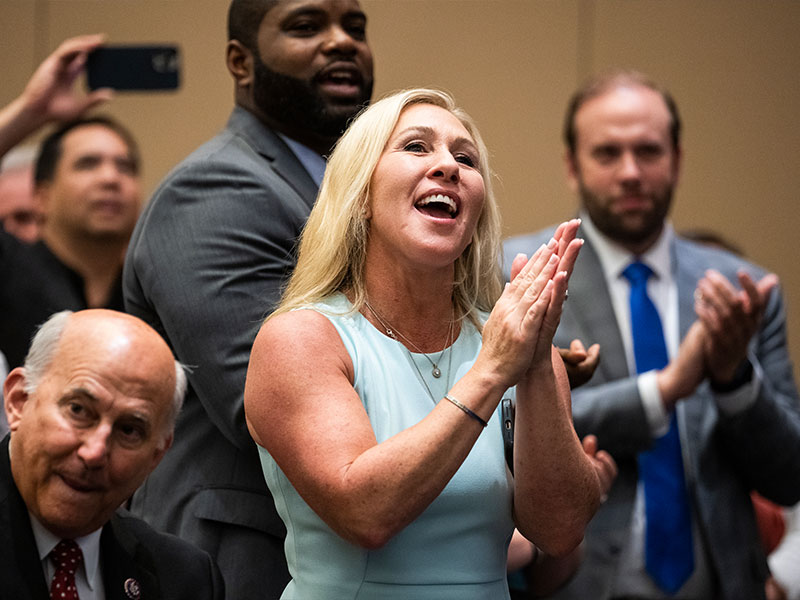
August was a big month for Greene. On Aug. 18, during an appearance on Tucker Carlson’s primetime Fox News show, Greene gave viewers a sneak peek at the big endeavor she unveiled the following day, the Protect Children’s Innocence Act. Master of “saying the quiet part out loud,” Greene used her reputation for emphatic opposition to gender-affirming care for trans youth to springboard this bill that, in her words, “would immediately make it a felony to subject children to puberty blockers or horrific sex change genital surgeries.” Children, of course, are not eligible for the “horrific” genital surgeries that Greene mentions — the standard minimum age requirement for such surgery is 17 — but that hasn’t slowed her down. She told Carlson she viewed gender-affirming care as “disgusting and appalling,” describing it as “child abuse.” As a 2022 information sheet from the Department of Health and Human Services puts it, “gender-affirming care improves the mental health and overall well-being of gender diverse children and adolescents.” But sure, “protect the children,” I guess. 
4
That time she championed Christian nationalism in public
Marjorie Taylor GreeneRep. Marjorie Taylor Greene, R-Ga., cheers during the America First Policy Institute’s America First Agenda Summit on Tuesday, July 26, 2022. (Tom Williams/CQ-Roll Call, Inc via Getty Images)

During a July 23 interview at the Turning Point USA Student Action Summit in Florida, Greene let her religious-bigot flag fly. During an interview with Taylor Hanson of the right-wing Next News Network, Greene said “We need to be the party of nationalism, and I’m a Christian. And I say it proudly: We should be Christian nationalists.” A few weeks later, Greene gave another interview, elaborating on her Turning Point views. In this later interview, which Forbes noted in a YouTube clip, she smirkingly defined Christian nationalism as nothing more than a matter of “Christianity and loving our country.” When the reporter in the clip politely pushes back, reminding Greene that the definition of the term carries other connotations, Greene said her interpretation was the only one she was familiar with, telling the Black female reporter that she didn’t know what she was talking about.
5
That time she called abortion bans a “blessing”
Marjorie Taylor GreeneRep. Marjorie Taylor Greene (R-GA) speaks to the media outside the Supreme Court after the overturning of Roe v. Wade on June 24, 2022 in Washington, DC. (Anna Moneymaker/Getty Images)
In June, Greene gave a statement outside the Supreme Court building shortly after the Dobbs decision was handed down, overturning Roe v. Wade and women’s constitutional right to choose abortion. She was psyched. “I am so happy. It’s a blessing. It’s a miracle,” Greene said, while swarms of gathered protesters screamed at her, calling her a traitor. Months later, during a news segment in October, a woman called in to speak against Greene’s views saying “My body is my body and I don’t want the government telling me what I can do with my body.” According to Vanity Fair, Greene insulted the woman saying, “I don’t think you’re having children any time soon.” The implication was that, based on the woman’s voice alone, she was too old to have an opinion on abortion rights. 
6
That time she called Catholics Satanic
Marjorie Taylor GreeneU.S. Rep. Marjorie Taylor Greene speaks during a court hearing on April 22, 2022 in Atlanta, Georgia. (John Bazemore-Pool/Getty Images)

Like other Republicans who use religion as a blunt instrument, Greene bends her definition of what real religion is to suit her current talking points. In April, she gave an interview to the far-right Catholic news organization Church Militant in which she suggested that Satan was controlling the Catholic Church. After Catholic League president Bill Donohue took issue with her comments, Greene released a 700-word statement clapping back at some length. Donohue had accused her of “slandering Catholics and Catholicism in an interview I gave to Michael Voris at Church Militant,” Greene wrote. “Nothing could be further from the truth, and he must apologize promptly and publicly for these words… It’s the church leadership I was referring to when I invoked the Devil. The bishops know that, but had their loyal lapdog pretend I was being disrespectful about the faith.” A bit further on, Greene does a bit more revising, saying, “Just so we’re clear, bishops, when I said ‘controlled by Satan,’ I wasn’t talking about the Catholic Church. I was talking about you.”
7
That time she fought against LGBTQ rights
Marjorie Taylor GreeneRep. Marjorie Taylor Greene (R-GA) speaks to supporters of former U.S. President Donald Trump on March 26, 2022 in Commerce, Georgia. (Megan Varner/Getty Images)

In the earlier months of 2022, Greene gave full support to Florida Gov. Ron DeSantis‘ infamous “Don’t Say Gay” bill and turned her focus toward crafting a similar bill for Georgia. In an appearance on Alex Jones’ Infowars, Greene said “I will meet with my team right after this interview and we will work on it, Alex, because I will do anything I can to protect kids.” As you might expect, in December Greene voted against the Marriage Protection Act, which at the very least ensured continuing nationwide marriage rights for same-sex couples.

The IRS hasn’t released nearly half a million nonprofit tax records

ProPublica is a Pulitzer Prize-winning investigative newsroom. Sign up for The Big Story newsletter to receive stories like this one in your inbox.

As Americans scramble to make their year-end charitable contributions, they may have to do so without a key tool for understanding how those charities spend their money: their most recent tax forms.

According to a ProPublica review of public IRS data, which powers our Nonprofit Explorer database, the agency is behind on releasing nearly half a million tax records, known as Form 990s, for tax-exempt organizations. The delays, which began two years ago, are stymying access to key financial information that governments, the public and grantmakers use to evaluate the nation’s tax-exempt companies.

The gap in reporting has become so profound that state charitable enforcement officers are sounding the alarm. In November, the National Association of State Charity Officials sent a letter urging the IRS to address backlogged 990 data releases.

“For charity regulators, the Form 990 series not only helps ensure transparency and accountability, but also provides vital information for state investigations into potential fraud and misuse of charitable resources,” the organization wrote. “It is critical that the availability of that data be timely.”

The filings, which tax-exempt organizations must submit annually, detail how organizations have carried out their public-interest mission and disclose executive pay, as well as grantmaking and fundraising activities.

These documents provide insight into a key sector of the U.S. economy, one that employs more than 12 million Americans.

“It’s a big aspect of our economy,” said Carl Malamud, a technologist whose organization, Public.Resource.Org, brought a lawsuit in 2015 that originally prompted the IRS to release the 990 data. “It’s one of the major sectors, and without those Form 990s, you can’t have an efficient market.”

Nonprofit organizations perform many core social service roles in the U.S., including medical institutions like St. Jude Children’s Research Hospital, disaster relief organizations like the Red Cross, aid networks like Feeding America and the National Alliance to End Homelessness, as well as advocacy organizations like the National Rifle Association or the American Civil Liberties Union.

The filings can help people assess the operations of an organization before making a financial donation. And they can help regulators and journalists to uncover wrongdoing like misuse of funds at the Trump Foundation or a bribery and kickback scheme at a major operator of New York City homeless shelters.

“This is having an impact on nonprofits, fundraising, donors … and charity regulators,” said Cinthia Schuman Ottinger of the Aspen Institute, who coordinates a group of practitioners who work with nonprofit tax data (ProPublica is a part of this group). “The whole ecosystem suffers when there are delays of this kind.”

Michael Thatcher, the CEO of Charity Navigator, said the end of the year is a crucial time for charitable giving.

“Now’s when people really need it and want it,” said Thatcher of the information disclosed in 990 filings. His company uses the data to provide ratings that help potential donors vet organizations.

And, he said, “it’s not just the donors that are upset by this.” Many organizations want their latest information out there as well, especially if their finances have improved or they’ve done significant work in recent years. “They want to show that to the world, and guess what, when you go to Charity Navigator, you’re seeing two-year-old information.”

Many of the missing filings could help shed light on how organizations — and the nonprofit sector as a whole — have fared during tumultuous years marked by a pandemic, economic upheaval and large infusions of federal relief dollars.

Courtney Aladro, a charity regulator for the Massachusetts attorney general and NASCO board member, said that regulators across the country use the IRS repository of documents to confirm or corroborate the information that charities submit to their states. Recent holdups make it harder to access that information, and the delays ramped up just as the agency would typically be releasing filings that shed light on how organizations operated in 2020 and 2021.

“Those are some pretty important years because of some of the difficulties over the last few years,” Aladro said. “The use and expenditure of COVID relief funds, for example. It’s pretty important for charity regulators and law enforcement to monitor that, and not having that information will make it more difficult.”

In a statement, the IRS said it is “making progress” and aims to resume posting the information soon. “This is an important tool, and the IRS is committed to keeping information up to date on the site to help taxpayers and others who use the data,” a spokesperson said. The agency noted that its organization search does show up-to-date information on whether a charity is currently eligible to receive tax deductible donations.

The agency began releasing machine-readable data files for Form 990s in 2015, after the lawsuit won by Malamud. In the years since, an ecosystem of tools and documentation has grown up around the 990 data sets, powering more advanced tools and resources for the public to inspect the finances and other operations of nonprofits.

The IRS posted the information on a monthly basis to a public Amazon storage account for years, but amid COVID-19-era staffing struggles, updates began to lag. Then, in November 2021, the IRS announced it would begin publishing the information on its own website. Since then, the agency has not just fallen further behind but even uploaded several hundred thousand nonpublic forms by accident not just once, but twice. Three months after the agency notified Congress of the first mistake, downloads for some 2021 and 2022 files reappeared on the IRS’ download page on Nov. 30. After this reporter notified the agency that the page still contained nonpublic documents, the files were removed once again. The agency blamed this second release on a contractor, Accenture Federal Services, which it said is responsible for posting the documents to the IRS website.

Neither Accenture Federal Services nor its parent company, Accenture, responded to a request for comment.

The IRS has not only taken heat for the disclosure of those forms, but also from Republicans who have attacked the agency over ProPublica’s use of tax information for a series of stories that showed how the wealthy avoid taxes.

The IRS has faced repeated budget cuts over the past decade, and it has struggled with backlogs in all types of tax returns since 2020. In a letter to Congress in June, the Treasury Department pointed to historic staffing shortages: “The IRS has been stretched thin at a time when its workforce, already depleted to 1970s levels, has been battling personal and familial health challenges posed by the pandemic.”

This year’s Inflation Reduction Act allocates $80 billion to the IRS over the next decade to boost enforcement, operations, taxpayer services and modernization of technical systems.

“We understand that there have been staffing shortages, the pandemic has caused problems, but we do have to wonder if the posting of 990 data to the public are being given the priority they deserve,” Schuman Ottinger said.

The delays have prompted private companies to try to collect this information on their own, doing an end run around the IRS’ unreliable systems. Both Charity Navigator and Candid, another platform that provides 990 information, have built systems for nonprofits to send their forms directly to the companies. So far the organizations that have done that are “in the hundreds, not the thousands,” Thatcher said.

The prolonged delays even drove one company to shut down. In September, Open990.org, which offered a nonprofit organization search tool and downloadable data sets for things like executive compensation and hospital finances, announced it was closing its doors. In its farewell message, the organization cited prolonged delays and inaccuracies in data released by the IRS.

David Borenstein, who was Open990’s chief technology officer, said as data releases and updates slowed, the small organization was receiving large volumes of complaints and requests to update or correct information, beyond what it could keep up with.

“The lack of data undercuts a critical accountability mechanism for organizations seeking tax exemption,” he wrote.

Borenstein said he doesn’t fault the IRS, though. “Their budget has been cut to the bone, and they are unable to perform many responsibilities that are vital to the national interest.”

Greg Abbott blasted for ‘cruel stunt’ as migrants bussed to Kamala Harris’ home on Christmas Eve

Human rights defenders condemned Texas Gov. Greg Abbott and “extremist Republicans’ cruel values” after several busloads of migrants were dropped off outside U.S. Vice President Kamala Harris’ Washington, D.C. home in subfreezing temperatures on Christmas Eve.

For the second time since September, Central and South American migrants were bussed from Texas to the vice president’s residence at the U.S. Naval Observatory in the nation’s capital. According to reports, some of the asylum-seekers were wearing only t-shirts and shorts as the mercury dropped to 18°F (-8°C) on Saturday.

While it is not known who ordered the migrants bussed to the capital, advocates pointed fingers at Abbott. The Republican Texas governor—along with GOP Govs. Ron DeSantis of Florida and Doug Ducey of Arizona—have bussed more than 10,000 migrants to Democratic-led cities since April to protest what they falsely call the Biden administration’s “open border” immigration policies.

“What we’re seeing are Greg Abbott and extremist Republicans’ cruel values,” tweeted the youth-led Sunrise Movement. “This is who they are. Don’t forget that.”

Amy Fischer, a volunteer with the Migrant Solidarity Mutual Aid Network, toldCNN that her group was prepared for the migrants’ arrival.

“The D.C. community has been welcoming buses from Texas anytime they’ve come since April. Christmas Eve and freezing cold weather is no different,” she said. “We are always here welcoming folks with open arms.”

In a separate interview with The Guardian, Fischer said that “it really does show the cruelty behind Gov. Abbott and his insistence on continuing to bus people here without care about people arriving late at night on Christmas Eve when the weather is so cold.”

Progressive activist Jenn Kauffman tweeted that “the only reason these families were outside so briefly is because of the work of the D.C. Migrant Solidarity Mutual Aid Network.”

“This was intended to be a cruel stunt by Greg Abbott, but people are working around the clock to treat these families with the dignity they deserve,” she added.

In a letter to President Joe Biden last week, Abbott said that “you and your administration must stop the lie that the border is secure and instead immediately deploy federal assets to address the dire problems you have caused.”

Earlier this week, Abbott deployed hundreds of National Guard troops and state police to the Mexican border in service of what the advocacy group Border Network for Human Rights called a “racist, anti-refugee, xenophobic agenda.”

On Saturday, the U.S. Department of Homeland Security warned migrants that the Biden administration is still enforcing Title 42, a section of the Public Health Safety Act first invoked by the Trump administration as the coronavirus pandemic began in March 2020.

On December 19, U.S. Supreme Court Chief Justice John Roberts granted a request from 19 Republican-led states to temporarily block the Biden administration from ending Title 42 expulsions.

Over the holidays, try talking to your relatives like an anthropologist

How is it possible to spend so much time with your parents and grandparents and not really know them?

This question has puzzled me as an anthropologist. It’s especially relevant for the holiday season, when millions of people travel to spend time with their families.

When my parents were alive, I traveled long distances to be with them. We had the usual conversations: what the kids were doing, how the job was going, aches and pains. It wasn’t until after my parents died, though, that I wondered whether I really knew them in a deep, rich and nuanced way. And I realized that I’d never asked them about the formative periods of their lives, their childhoods and teenage years.

What had I missed? How had this happened?

In fact, I had interviewed my mother a few years before her death. But I only asked her about other relatives – people I was curious about because my father’s job had taken us to places away from the rest of the family. I based my questions for my mother on the bit of information I already had, to build a family tree. You might say I didn’t know what I didn’t know.

I decided to research the kinds of questions that would have elicited from my mother things about her life that I had no clue about and that now remain hidden and lost forever. I interviewed older people to develop questions that would paint a vivid picture of a person’s life as a child and teenager. I wanted details that would help me see the world that had influenced the person they became.

So I used my training as an anthropologist to ask the type of questions an anthropologist would ask when trying to understand a way of life or culture they know little about. Anthropologists want to see the world from another person’s point of view, through a new lens. The answers I got from older people opened whole new worlds for me.

Probing the mundane

One secret to having a deep conversation with your elders when you’re together over the holidays is to set aside your customary role. Forget, for the space of the interview, about your role as their grandchild or child, niece or nephew, and think like an anthropologist.

Most genealogical inquiries concentrate on the big life events like births, deaths and marriages, or building a family tree.

But anthropologists want to know about ordinary life: interactions with neighbors, how the passage of time was experienced, objects that were important to them, what children were afraid of, what courtship practices were like, parenting styles and more.

When you ask about social life, you’ll get descriptions that paint a picture of what it was like to be a child figuring things out back then – when, for instance, as one relative explained, “Unless you were told to go and say hello to Grandma, you never just, as a child, spoke to adults.”

On the other hand, when you ask about important objects, you’ll hear about those tangible things that pass from generation to generation in your family that are vessels of value. These ordinary things can convey stories about family life, just as this person who grew up in the U.K. describes:

“Mum used to say to me that the best part of the day was me coming home from school, coming in the back door and sitting on the stool in the kitchen and just talking, a mother-daughter thing. I’ve still got that stool from the kitchen. My father built it in evening classes. My children remember sitting on the stool in the kitchen, too, while Grandma was baking, passing time, drinking cups of tea and eating shortbread.”

My interview subject, now a grandparent herself, had a hard time understanding the fascination young people have with the social worlds contained in their phones.

But on the topic of phones, I found there can also be unexpected points of connection across generations. When I asked one grandparent about the home she grew up in, as she was visualizing her home in rural South Dakota, she suddenly remembered the telephone they had, a “party line” phone, which was common in the U.S. back then.

All the families in the area shared one phone line, and you were supposed to only pick up the phone when you heard your family’s special ring – a certain number of rings. But as she told it, her mother’s connection to the community was greatly expanded even then by telephone technology:

“We had a phone, and it was on a party line. And you know, we would have our ring, and of course, you’d hear the other rings too. And then sometimes, my mom would sneak it and lift up the receiver to see what was going on.”

“All you have to do is ask”

I enjoyed the interviews with older people so much that I gave my students at the University of Texas at Austin the assignment to interview their grandparents. They ended up having exhilarating, interesting and generation-bridging conversations.

Their experiences, along with mine, led me to write a guide for people wanting to learn more about their parents’ and grandparents’ early lives, to protect a part of family history that is precious and easily lost.

Grandparents are often lonely and feel no one listens or takes what they have to say seriously. I found out that this can be because many of us don’t know how to start a conversation that gives them a chance to talk about the vast knowledge and experience they have.

By taking the position of an anthropologist, my students were able to step out of their familiar frame of reference and see the world as older generations did. One student even told the class that after interviewing her grandmother, she wished she could have been a young person in her grandmother’s time.

Often, the tales of “ordinary” life relayed to my students by their older relatives seemed anything but ordinary. They included going to schools segregated by race, women needing a man to accompany them in order to be allowed into a pub or restaurant, and leaving school in the sixth grade to work on the family farm.

Time and again, grandparents said some version of “no one’s asked me these questions before.”

When I was first developing the right questions to ask older family members, I asked one of my research participants to interview her elderly mother about daily life when she was a child. Toward the end of that interview, she said to her mother, “I never knew this stuff before.”

In response, her 92-year-old mother said, “All you have to do is just ask.”

Elizabeth Keating, Professor of Anthropology, The University of Texas at Austin College of Liberal Arts

This article is republished from The Conversation under a Creative Commons license. Read the original article.

From Vienna to Mexico City, the best of “A Fatty’s Guide to Traveling and Eating the World”

Earlier this year, food and travel writer Chaya Milchtein launched a new column for Salon Food called “A Fatty’s Guide to Traveling and Eating the World,” which is dedicated to helping travelers of all sizes find adventure. 

“Like most fat people, traveling and adventuring comes with its own unique challenges and considerations (and a whole heck of a lot of planning),” Milchtein wrote in her inaugural column. “Like digging for weight limits and having to call when aren’t listed on typical and nontraditional vacation activities, like helicopter rides, scuba diving, Segways tours and even ATV rentals.” 

But adventure she did this year, making stops across the globe from Lisbon to Las Vegas. It’s been a delight reading her dispatches, especially as the various waves of the pandemic have kept many, including me, a little closer to home. I’ve pulled together some of Milchtein’s most popular posts from 2022. 

I’m looking forward to another year of traveling and eating vicariously through her writing. 

Mexico City 

Milchtein first visited Mexico City after becoming engaged to her now-wife. 

“We had such an amazing time that it has permanently stayed on our list of future cities to visit. When a trip to Peru fell through the day before we were leaving, we bought tickets to Mexico City without hesitation,” she wrote. “We had no plan, hotel, or reservations, but we were excited and thrilled to be back.” 

Churros (Jodyann Morgan )While there, Milchtein enrolled in a churro masterclass — which is exactly the type of class that would tempt me to go back to school. They made circles, spirals and hearts and other designs, resulting in a truly enviable pile of cinnamon-dusted deliciousness. 
“Then, we made cafe de olla with cinnamon sticks, dark brown cane sugar, and orange peels,” Milchtein wrote. 

New Orleans 

New Orleans is one of my favorite cities to visit in the American South, so I was selfishly delighted to see that Milchtein provided suggestions for places I hadn’t eaten (more places for me to add to the lineup for my next trip!). 

The restaurant that I’m most interested in visiting, based on Milchtein’s description, is SABA, a Middle Eastern-inspired restaurant with Jewish roots

“The Louisiana blue crab-topped hummus was a fascinating combination that worked really well, and you absolutely must get a floral soda which is a refreshing addition to any meal — add a shot of vodka if you’re partial to a cocktail,” Milchtein wrote. “While I don’t usually order chicken, the harissa-roasted chicken with charred scallions and caramelized lemon was perfectly balanced. There is only one thing on the menu that I wouldn’t order: the duck matzah ball soup. But that might be because I grew up on the stuff and have a very specific idea of how it should taste.” 

Housemade soda (Jodyann Morgan )(You can count on me to order the duck matzah ball soup next time I’m in town, however!)

Vienna 

As Milchtein wrote of Vienna, “come for the currywurst, stay for the organic bonbons.” 

While visiting Austria’s capital city, Milchtein visited Bitzinger Wurstelstand. While it’s definitely a touristy spot — buzzing with action, underscored by the soundtrack of various languages being spoken in line — it’s worth a visit for a solid, simple selection of Bratwurst, Currywurst, Käsekrainer and Burenwurst. 

If you’re looking for something more sweet than savory, head to Bluhendes Konfekt, a tiny shop from chocolatier Michael Diewald who is creating a world of bonbons made from organic fruits and foraged herbs, leaves and flowers, many from the Viennese Woods. 

“Each fruit, herb or flower is carefully processed, then made into a powder to coat the confections, made into a dough that becomes the center of the bonbon or sugared in order to preserve its beauty,” Milchtein wrote. “While some are topped with a small dollop of chocolate, the chocolate is far from the star of the show, but rather an accompaniment. Stopping by this little shop is a must when visiting Vienna. The bonbons make excellent gifts to bring home that don’t take up much space, but make a massive impact. Each is dressed with a sugared flower of herbs like little works of art.” 

Toronto 

Milchtein’s wife is from Jamaica, but they live in a smaller city in the Midwest where there isn’t much of a selection of authentic Jamaican food. 

“When we travel, especially to major metropolitans, we constantly gravitate to Jamaican restaurants, especially the ones that serve ackee and saltfish, which is my wife’s favorite and is hard to find, even when there is a Jamaican restaurant in town,” Milchtein wrote in her column. 

So when they visited Toronto earlier this year, they naturally found themselves at Chubby’s Jamaican Kitchen, a rustic-feeling restaurant with exposed beams and lots of natural light. 

“You’re going to want to order the ackee and saltfish bites,” Milchtein advised. “The ackee and saltfish are piled onto a fried dumpling, which has been cut down the middle. Ripe plantains were deep fried, producing a wicked crispy exterior and a super ripe, super sweet interior. While the mac and cheese was not reminiscent of a Jamaican macaroni pie,it was out of this world. It featured  little bits of saltfish that acted as a flavor-booster like anchovies do in Caesar dressing. Creamy and delicious.” 


Want more great food writing and recipes? Subscribe to Salon Food’s newsletter, The Bite.


Follow Milchtein’s advice and round out your meal with an Everything Nice cocktail —featuring rum, Aperol, mango, lemon, tamarind and scotch bonnet. 

“The rum punch wasn’t super strong, so if you want a stronger drink, add a shot,” she wrote. 

New York City 

“I practically grew up in New York,” Milchtein wrote. “Summers in Crown Heights at a Chassidic day camp, followed by years living in a room infested with cockroaches, and then a cramped basement apartment while attending high school.”

By the time she moved to Brooklyn just after her 19th birthday, she knew the city like the back of her hand, which is why I was eager to see where she chose to explore after revisiting the city this year after several years away. A few culinary stand-outs included the creamy family-style macaroni and cheese from Benjamin Steakhouse Prime (run by former 20-year Peter Luger veteran chef Arturo McLeod), the chocolate tart with passionfruit and cacao nibs from Vestry, and Yoon Haeundae Galbi’s banchan.

The 7 most spectacular images from the James Webb Space Telescope’s first year

Little more than a week had passed since Independence Day celebrations, but the crowd that had gathered at NASA’S Goddard Space Flight Center in Greenbelt, Maryland was as excited as any audience at a fireworks display. They were there because the James Webb Space Telescope (JWST), a technological marvel that had been launched in the previous December, had finally sent back remarkably beautiful and detailed images of the universe. Now, the crowd was about to see them for the first time — and literally witness history in the making.

Since that historic day in 2022, more and more images have been released by NASA from the JWST, and both astronomers and laypeople have been repeatedly astonished. Considering that it cost $10 billion in total by the time construction was completed in 2016, it is a relief that the telescope ultimately lived up to its hype.

To celebrate this milestone for astronomy, we’ve put together seven of the most memorable JWST images from 2022 —  its first year in operation. They range from images of the most distant galaxies ever seen to shots of our own solar system in unprecedented depth.

1. SMACS 0723

SMACS 0723NASA’s James Webb Space Telescope has produced the deepest and sharpest infrared image of the distant universe to date. Known as Webb’s First Deep Field, this image of galaxy cluster SMACS 0723 is overflowing with detail. (NASA, ESA, CSA, and STScI)To start this list properly, let’s begin with SMACS 0723, since that was the first image produced by the JWST in full color. More importantly, though, SMACS 0723 is the most clear and full infrared image of the universe that has ever been captured by a telescope.

“This image covers a patch of sky approximately the size of a grain of sand held at arm’s length. It’s just a tiny sliver of the vast universe,” NASA Administrator Bill Nelson explained in a statement.

Historically, infrared light has been the most difficult part of the electromagnetic spectrum for astronomers to observe — at least, from the ground. Earth’s heat generates infrared light on its own, which is then scattered throughout the atmosphere, making it virtually impossible for astronomers to see using infrared from ground-based telescopes. The JWST, however, is freed from the confines of Earth and, as such, the need to peer through Earth’s infrared light.

2. Carina Nebula

Carina NebulaStar-forming region NGC 3324 in the Carina Nebula (NASA, ESA, CSA, and STScI)

Technically known as NGC 3324, this section of the Carina Nebula at first glance could be mistaken for a modified image of a drone shot looking down at where the beach meets the ocean. Yet the red-brown “sand” in this image, and the blue “water,” are actually individual stars mixed in to an emerging stellar nursery. The Carina Nebula is not so far off (especially compared to the previous image): it is part of our Milky Way galaxy, specifically in its Carina-Sagittarius arm. This particular vantage point is also known as the Cosmic Cliffs.

“These observations of NGC 3324 will shed light on the process of star formation. Star birth propagates over time, triggered by the expansion of the eroding cavity,” NASA writes. “As the bright, ionized rim moves into the nebula, it slowly pushes into the gas and dust. If the rim encounters any unstable material, the increased pressure will trigger the material to collapse and form new stars.”

3.  Stephan’s Quintet

Stephan's QuintetGalaxy group “Stephan’s Quintet” (NASA, ESA, CSA, and STScI)

Located in the constellation Pegasus — named after the famous winged horse from Greek mythology — Stephan’s Quintet is more or less what it sounds like: a group of five galaxies, with four of them constituting the first compact group of galaxies ever discovered. Thanks to the JWST, however, scientists can see both these galaxies and the surrounding celestial bodies in unprecedented detail. The images reveal that two of the galaxies are currently merging with each other, and give us insights into how galactic interactions can result in star formation.

“The image also shows outflows driven by a black hole in Stephan’s Quintet in a level of detail never seen before,” NASA’s communications team said of the image.

4. The Tarantula Nebula

Tarantula Nebula star-forming regionTarantula Nebula star-forming region (NASA, ESA, CSA, STScI, Webb ERO)

This is an image of the Tarantula Nebula, also known as 30 Doradus, though many have likened it to an abstract portrait of a man sitting cross-legged. In actuality, this is another interstellar nursery, one captured in unprecedented detail due to the JWST’s infrared cameras. The Tarantula Nebula can be found roughly 161,000 light-years away from Earth in the Large Magellanic Cloud. It is best-known for hosting black hole VFTS 243, the first one discovered outside of the Milky Way galaxy that does not radiate strongly. The hottest and most massive stars known to humankind can also be found in the Tarantula Nebula.

“The nebula’s cavity centered in the NIRCam image has been hollowed out by blistering radiation from a cluster of massive young stars, which sparkle pale blue in the image,” NASA explained on its website. “Only the densest surrounding areas of the nebula resist erosion by these stars’ powerful stellar winds, forming pillars that appear to point back toward the cluster. These pillars contain forming protostars, which will eventually emerge from their dusty cocoons and take their turn shaping the nebula.”

5. The Southern Ring Nebula

Southern Ring NebulaTwo cameras aboard Webb captured the latest image of this planetary nebula, cataloged as NGC 3132, and known informally as the Southern Ring Nebula. It is approximately 2,500 light-years away. (NASA, ESA, CSA, and STScI)The Southern Ring Nebula could easily be mistaken for a tentacle-less jellyfish. The only features that might ruin such an illusion are the waves that emanate from its central core, Is this a space monster or some throbbing new type of celestial body?

In fact, this is a nebula — the Southern Ring Nebula, to be exact.

Officially dubbed NGC 3132, a planetary nebula is created when a dying star expels large amounts of mass over a period of successive waves, such as those we see in these pictures. This image is notable because of its interesting backstory: After it was released, astronomers homed in on a narrow filament near the top of the nebula that is radially aligned and appears to be blue in the near-infrared image. While some scientists do not believe it is anything remarkable, others speculate that it could be an edge-on galaxy. Upon further investigation it was revealed that this filament was, indeed, an edge-on galaxy.

Thanks to more recent research from JWST, scientists also now know that “there were at least two, and possibly three, more unseen stars that shaped the oblong, curvy Southern Ring Nebula. Plus, for the first time, by pairing Webb’s infrared images with existing data from ESA’s (European Space Agency’s) Gaia observatory, researchers were able to precisely pinpoint the mass of the central star before it created the nebula.”

6. “Stirred up” Southern Ring Nebula

Stirred Up Southern Ring NebulaWebb’s image traces the Southern Ring Nebula stars’ scattered molecular outflows that have reached farther into the cosmos (NASA, ESA, CSA, STScI, Webb ERO)

The JWST took another photo of the aforementioned nebula with a different wavelength camera, and in the process, found something astronomers previously did not know about the astronomical object — namely, that there are at least two or three unseen stars which helped to craft the nebula as we know it today.

Regarding this image, NASA’s website explains that “Webb’s image traces the star’s scattered molecular outflows that have reached farther into the cosmos” and that “blue and green were assigned to Webb’s near-infrared data taken in 2.12 and 4.7 microns (F212N and F470N), and red was assigned to Webb’s mid-infrared data taken in 7.7 microns (F770W).” In addition, the astronomers combined JWST data with information from the European Space Agency’s (ESA) Gaia observatory to learn the exact mass of the central star before it created the nebula.

7. A new look at Jupiter

Webb NIRCam composite image of JupiterWebb NIRCam composite image of Jupiter from three filters – F360M (red), F212N (yellow-green), and F150W2 (cyan) – and alignment due to the planet’s rotation. (NASA, ESA, CSA, Jupiter ERS Team)

Jupiter is the largest planet in our solar system and the fifth planet from the Sun. When you visualize it, your mind likely imagines a giant ball with red, orange, white and yellow swirling bands. You also most certainly think of the iconic Great Red Spot south of its equator.

Using three specialized infrared filters, however, the JWST gave us new data about Jupiter in 2022, and measured different wavelengths of light which emanated from the atmosphere. After translating that data into images — using false-color hues, as humans cannot see in the infrared — NASA scientists created an unprecedented and detailed view of Jupiter. This one allows viewers to perceive the auroras, or beautiful light shows that appear in the sky, as they exist in Jupiter’s atmosphere. It also shows winds, storms, and both heights and lows in temperature.

A very Scandinavian al fresco holiday happy hour

More than likely you have a few cocktail parties and semi-formal family gatherings to attend before this year is over. If you live in a colder climate, these events will probably take place indoors near a roaring fire, or at least a soothing video of one on the TV. 

But might I suggest an al fresco addendum to any of the above — even if only for a short time? All you need is your warmest winter coat, thick socks, and a pair of snow pants — the latter of which you can easily roll up and shove in a bag alongside the hors d’oeuvres and wine you’ve already been charged with bringing.   

My family began an unofficial tradition of al fresco winter happy hours about five years ago on New Year’s Eve. We’d rented an A-frame cabin in the woods during a brutal Midwestern cold snap and decided that rather than spend the entire long weekend holed up inside, we’d embrace the cold. We rustled up a spread of Scandinavian smorrebrod (open-faced sandwiches on dense rye bread), thick cubes of tortilla española, and crabmeat delights (recipe below). We climbed into our snow pants and zipped up our winter coats, poured a round of aquavit shots for courage, and headed out onto the snow-crusted deck just as the sun dipped below the treetops. 

Crab delights (Maggie Hennessy )There’s nothing more invigorating than feeling the prickling winter air on your face while you snack on dainty noshes in your bulky coat and gloves. We took turns rushing back inside for warm reprieves to refill platters (I’d suggest paper or plastic) or top off mugs with hot mulled wine. The steam from our breath and mugs swirled dramatically into the subfreezing air as the first winking stars appeared above. Our laughter pierced the thickset quiet, as seemingly the whole neighborhood had opted for the comfort of the indoors that evening. 

Scandinavia has long embraced the notion of getting outside year-round; Norway has a concept called friluftsliv, which translates roughly to “open-air life.” Everyone is brought up with this cultural tradition, and with it the implied importance of properly bundling to maximize outdoor enjoyment in wintertime. And indeed, studies have shown spending even short amounts of time outside can improve our mental and physical health

After a few years of al fresco happy hours, I’ve found that, aside from warm socks, snow pants — particularly the bib variety, which also make you feel as carefree as a seven-year-old — do a lot of the heavy lifting in keeping you toasty long enough to thoroughly enjoy an hour or so outside. 

Our al fresco happy hour (Maggie Hennessy )Plus, you’ll never appreciate the warmth of the indoors, or your company, more than when you all return from al fresco happy hour — faces flushed from cold and laughter, and dress pants and skirts wrinkled and sticky with static cling beneath your snow pants. Just like being seven again. 

Crabmeat delights
Yields
8 servings
Prep Time
35 minutes (including freezing)
Cook Time
5 minutes

Ingredients

1 stick butter, room temperature

1 jar Kraft Old English cheese spread

½ tsp garlic powder

½ tsp seasoned salt

Cracked black pepper

1 Tbsp each finely chopped chives and parsley, plus more for garnish

7 ounces crab meat

6 English muffins split (12 halves)

Lemon wedges, for garnish


Directions

  1. In a medium bowl, combine butter, cheese spread, garlic powder, salt, pepper, and herbs with a spatula. Carefully fold in the crab meat.

  2. Spread the mixture evenly over the muffin halves, and place in the freezer for at least 30 minutes. (Note: You can freeze them for up to a few weeks at this stage; stack in airtight containers with parchment between each layer so they don’t stick.) 

  3. Set the broiler to high, and fit a rack on the top. Remove the English muffins from the freezer and cut each muffin half in quarters.

  4. Broil for about 5 minutes, or until the tops are sizzling and going brown at the edges. Sprinkle generously with parsley and chives, and serve with lemon wedges on the side.


Cook’s Notes

This decadent retro appetizer is best served sizzling, particularly if you’re standing outside in below-freezing weather. The good news is, you can prep crab delights ahead and store them in the freezer, then simply broil them to order.  

Salon Food writes about stuff we think you’ll like. While our editorial team independently selected these products, Salon has affiliate partnerships, so making a purchase through our links may earn us a commission. 

You should be making Andrew Zimmern’s Hanukkah donuts all year long

Chief among the things that even the most practiced home cooks get skittish about: projects involving yeast and projects involving frying. This is unfortunate, because those are your two primary paths to donuts. Hot, fresh, donuts. The kind that make your family go bonkers. And Hanukkah offers the perfect incentive.


Want more great food writing and recipes? Subscribe to Salon Food’s newsletter, The Bite.


“Hebrew for donuts, sufganiyot are without question the most popular Hanukkah food in Israel,” chef and “Family Dinner” host Andrew Zimmern tells Salon.

“These iconic fried treats are simply prepared yeasted gems, filled with chocolate, creams, curds or jellies. You will find bakeries and markets throughout the country filling their shelves and windows with these little darlings starting weeks before the actual holiday and petering out in the week after.” And he adds encouragingly, “You, however, can now make them any time of year.”

Despite the fact that I once started a grease fire substantial enough to bring an entire siren-wailing brigade to my door, I love to fry. But I do get impatient and antsy around things that expect me to wait for them to double in size and punch them down and rise again. There just seem to be too many places along the way for things to go wrong. This is why I am telling you, I get it. Join me on this adventure anyway. There are donuts on the other side of your angst.

I have taken very few liberties with Zimmern’s recipe here. He uses superfine sugar in his dough, but because not all home cooks have it on hand, I’ve used granulated. It makes for a slightly less sweet donut, so if you prefer superfine sugar, go for it. He recommends Armagnac or apple brandy, but if that’s not something you typically keep around, I suggest rum rather than buying a bottle of something you won’t otherwise enjoy. A few other notes: Zimmern rolls his sufganiyot in granulated sugar; others prefer confectioners sugar or superfine sugar. And while the typical filling is strawberry jam, you can improvise with your own favorites here. 

The process of making donuts is long but leisurely, a job for a day you’ll be hanging around the house anyway. Your task is mostly just to mix the ingredients, wait for them to do their thing, and then enjoy the heady aroma of sweet dough and the effusive praise of your guests. And once you realize you how easily you can create this kind of straight up magic in your own kitchen, you’ll want to keep doing it all year long. As Zimmern says, “There is NOTHING to compare with a warm homemade jam-filled doughnut.” 

* * *

Inspired by Andrew Zimmern

Year-round Hanukkah Donuts (Sufganiyot)
Yields
 24 donuts
Prep Time
 3 1/2 hours, mostly hands-off
Cook Time
 10 minutes

Ingredients

  • 3/4 cup of whole milk
  • 1 tablespoon of active dry yeast
  • 3 cups of all-purpose flour 
  • 1 1/3 cup of granulated sugar
  • 6 tablespoons of softened butter 
  • 1 egg 
  • 4 teaspoons of dark rum
  • 1 teaspoon of vanilla extract
  • 1/2 teaspoon flaky salt
  • 5 cups vegetable oil (plus more for brushing)
  • 1 tablespoon ground cinnamon
  • Optional: 3 cups of strawberry jam (or your favorite flavor)


Directions

  1. In a small microwave safe bowl, gently warm the milk, about 15 seconds. It should not be too hot.
  2. Sprinkle the yeast into the milk and let stand about 10 minutes, until it begins to get foamy.
  3. In a big bowl or stand mixer, combine the flour and 1/3 cup of the sugar. Add the milk and yeast mixture, the butter, egg, rum, vanilla and salt. With a hand mixer or dough hook, knead at low speed, periodically scraping down the sides of the bowl, about 4 minutes. Increase the speed to medium and knead until the dough is soft, about 10 minutes.
  4. Rub a little oil in your clean hands and roll the dough into a ball. Cover the bowl with plastic wrap and let rise about 2 hours, until the dough is about doubled. Nothing terrible will happen if you leave it out a little longer.
  5. Line 2 baking sheets with parchment and brush them with oil. Punch down the dough and divide it in half. Roll each half into a 12-inch log. Pinch each log into 12  pieces, then roll them into balls and arrange evenly apart on the prepared baking sheets. Cover with plastic wrap and let rest again until doubled in size, about 1 1/2 hours.
  6. In a medium bowl, mix the rest of the sugar and the cinnamon. Prepare a large sheet pan by lining it with paper bags or parchment. Put a cooling rack on top.
  7. In a large pan, heat the oil over medium heat to 325 degrees or just crackling. Working in small batches, fry the doughnuts, turning once, until golden, 1 -2 minutes per side.
  8. Remove the donuts using a slotted spoon or kitchen spider. Roll them in the cinnamon sugar, then transfer to the cooling rack.
  9. Put a piping nozzle in a pastry bag and spoon in the jam. Gently squeeze about 2 tablespoons of jam in each donut. No pastry bag? No problem. Fill a Ziploc bag with the jam and snip off a corner. With the end of a spoon, work a small hole into your donuts and then squeeze in the jam. 

Cook’s Notes

 These are obviously best eaten fresh and warm. I would not discourage you, however, from turning leftovers into some absolutely mindblowing French toast.

Salon Food writes about stuff we think you’ll like. While our editorial team independently selected these products, Salon has affiliate partnerships, so making a purchase through our links may earn us a commission.

Rep. Alexandria Ocasio-Cortez casts house Dems’ sole vote against omnibus spending bill

Citing the increased immigration enforcement and military funding it contains, U.S. Rep. Alexandria Ocasio-Cortez on Friday cast the sole Democratic House vote against a $1.7 trillion omnibus spending package.

In the final vote of the 117th Congress, House lawmakers passed the sweeping spending bill 225-201-1, with Rep. Rashida Tlaib (D-Mich) voting “present” and nine Republican lawmakers crossing party lines to support the measure. The bill now goes to President Joe Biden’s desk for signing.

Ocasio-Cortez explained in a statement that she voted against the bill because she campaigned on a promise “to oppose additional expansion and funding” for the Department of Homeland Security (DHS) and Immigration and Customs Enforcement (ICE), “particularly in the absence of long-overdue immigration reform.”

“The dramatic increase in DHS and ICE spending… cuts against the promises our party has made to immigrant communities across the country,” she added.

Numerous progressive and immigrant groups applauded Ocasio-Cortez’s “no” vote.

The Communities United for Status and Protection (CUSP) coalition said in a statement that Democratic control of both houses of Congress and the White House “should have meant that Democrats lead with dignity [and] respect and uphold the inherent value of all immigrants. Unfortunately to date, that has seldom been the case.”

CUSP continued:

The 117th Congress is being asked to support a funding bill that gives billions of dollars of funding for Immigration and Customs Enforcement (ICE) and Customs and Border Patrol to hire more agents and surveil our communities, maintain the status quo of the anti-Black immigration detention system, target people with visa overstays, failure to pass the Afghan Adjustment Act, and a deliberate omission of lifesaving immigration provisions.
CUSP firmly supports and thanks Congressmember Alexandria Ocasio-Cortez for boldly standing with immigrant communities with a no vote against the omnibus. Despite any good that may be in this bill, we reject the selfish choice that the Democrats have presented us because we know that even in the difficult world of politics—compromise is possible.

Civil Rights Corps founder and executive director Alec Karakatsanis tweeted that “what Democrats did today is shameful.”

“They negotiated a massive federal spending bill in secret and did not give anyone time to read the 4,000 pages,” he continued. “A small group of them inserted, behind closed doors and without public debate, big increases in cops, prisons, and surveillance.”

“At a time of rising authoritarianism, ecological collapse, criminalization of abortion, etc., Democratic leadership continues to strengthen the very institutions that will bring about overt fascism,” Karakatsanis added. “Only one Democrat (AOC) in either the House or the Senate voted against it.”

Brussels sprouts have as much vitamin C as oranges — and plenty of other health benefits

For many people, Christmas dinner is not complete without a side helping of Brussels sprouts. Indeed, they are Britain’s favorite Christmas dinner vegetable. But if you’re not a convert, perhaps these health benefits will convince you to give them a second chance.

Sprouts belong to the wholesome family of cruciferous or brassica vegetables, including cabbage, kale and broccoli. As with all brassica, Brussels sprouts are packed with fiber, which is good for keeping the beneficial bacteria in your gut happy.

They also provide essential minerals, such as potassium and calcium, to keep your muscle and bones healthy. They are rich in vitamins K and C, supporting a healthy immune system and bones.

Pound for pound, you’ll get more vitamin C from them when eaten raw than from oranges. Cooked Brussels sprouts still contain vitamin C, though – about the same pound for pound as you’d get from orange juice and raw oranges.

The bitter, the better

Most importantly, Brussels sprouts are rich in a wide range of natural chemicals, such as carotenoids and polyphenols, that have been linked to good health. They are particularly abundant in sulfur-containing compounds called glucosinolates.

Think back to when you last cooked Brussels sprouts, cabbage or cauliflower. Have you stopped and wondered what that pungent smell is? That is the sulfur compounds in the sprouts being broken down. They are also what gives Brussels sprouts that characteristic bitter taste. So to get your fill of these beneficial chemicals, the bitter, the better.

So you may wonder why these chemicals are so special. Several scientific studies have shown that these sulfurous compounds are potent antioxidants that can promote health by preventing cell damage.

Several studies have also shown that consuming more of these glucosinolates from cruciferous vegetables, including Brussels sprouts, broccoli, kale and cabbage, are associated with a reduced risk of developing a wide range of cancers. Research continues collecting more evidence of their benefits, but the best advice to keep in mind is to try to consume roughly five portions of brassica vegetables weekly and to vary the options.

The bitter sulfurous compounds are part of a Brussels sprouts’ sophisticated defense system, known as the mustard oil bomb, that repels insects from biting them but attracts those insects that allow pollination.

And because plants are clever, about 200 different glucosinolates exist in brassica vegetables, and each of these vegetables has different combinations, giving them their characteristic flavor. This is why the following vegetables, which belong to the brassica family, have different tastes: broccoli, cabbage, kale, swede, wasabi, horseradish, turnip, rocket, watercress, cauliflower and mustard.

How to cook them

For convenience, Brussels sprouts are often boiled. But if you boil them for too long, not only will they lose their nutritional value (some of the glucosinolates will be destroyed by heat and lost into the water), but it will also give sprouts an unpleasant smell and taste.

So what are the other options?

You could simply fry sprouts in a pan with some olive oil or butter and a smidgen of garlic and herbs. An alternative would be to steam them or microwave them. But make sure they keep their crunch.

Or why not try being adventurous and trying something new by having them raw, cut into small pieces, and adding sprouts to a salad?

Next time you pass along the supermarket’s fruit and vegetable section, don’t forget to give Brussels sprouts, broccoli, cauliflower and cabbage a try. Brassicas like Brussels sprouts are for life — not just for Christmas.

Federico Bernuzzi, Research Scientist, Quadram Institute and Maria Traka, Research Leader, Personalised Nutrition and Gut Microbiome, Quadram Institute

This article is republished from The Conversation under a Creative Commons license.

At long last, “The Long Kiss Goodnight” is getting the holiday affection it deserves

When I wrote about my abiding love for "The Long Kiss Goodnight" in 2016, it wasn't widely known or easy to find. Unless you owned or wanted to buy the DVD, you were out of luck. A viewing wasn't even obtainable on a streaming service, whether for the price of a subscription or rental fee.

Charly Baltimore was an unexpected direction for an Academy Award-winning performer best known for her blazing turn in "Thelma & Louise."

Sometime after that, a miracle manifested. One of its stars, Samuel L. Jackson, started bumping it on social media on the rare occasions that it would show up as a rerun. Jackson is eternally popular and remains Hollywood's most bankable actors, but this wasn't a favor as much as it was a flex. In a 2018 episode of GQ's video series "Actually Me" he declared without prompting that "The Long Kiss Goodnight" is his favorite movie to watch that he also stars in.

To that his character Mitch Hennessey would likely reply, "No s**t." Mitch receives most of the love expressed for this movie, but Geena Davis' performance is the main course in its action chow-down. Jackson probably wouldn't disagree with that, since Mitch, a former cop turned low-rent private investigator, exists firmly within Jackson's wheelhouse of bad muthaf*****s. He's a little shabby and misogynistic, but also a loyal, determined friend, and casually hilarious without having to work at it.

The Long Kiss GoodnightGeena Davis and Samuel L. Jackson in "The Long Kiss Goodnight" 1996 (Hulton Archive/Getty Images)

"There's an element of 'It's A Wonderful Life,' where she's living out this life, and she had to forget that she's a killer in order to do it."

In contrast, Davis' Charly Baltimore was an unexpected direction for an Academy Award-winning performer best known for her blazing turn in "Thelma & Louise." Charlene Baltimore, a counter-assassination specialist and deep-cover operative for the CIA before she blacks out for the better part of a decade, gave Davis an interesting profile to play with, especially since she doesn't fully emerge until midway through the movie. Beforehand she's an amnesiac schoolteacher named Samantha Caine, a woman with an eight-year-old daughter named Caitlin (Yvonne Zima) and a closet full of frumpy fashion crimes.

A lot can change in a few years. For instance, Jackson's star is as bright as ever, as is that of another "Long Kiss" co-star, Brian Cox, beloved by many for embodying Logan "Go F**k Yourself" Roy on "Succession."

And perhaps entirely by coincidence, but more likely because something changed with its licensing deal, "The Long Kiss Goodnight" became more widely available, and in the nick of time to play a role in the increasingly more frequent conversations about superior Christmas movies that aren't Christmas movies.

The starring titles in those conversations tend to be "Die Hard" and "Lethal Weapon." But "The Long Kiss Goodnight," written by "Lethal Weapon" screenwriter Shane Black, is the most holly-and-ivy forward of these. Black implies as much in a recent interview with Empire Magazine.  

"There's an element of 'It's A Wonderful Life,' where she's living out this life, and she had to forget that she's a killer in order to do it," he tells Empire. "Christmas is the perfect time for that suburban housewife, it's the perfect fantasy to pursue. 'What if I was just someone making Christmas cookies? What if I was buying gifts instead of knives and guns?'"

"Life is pain. You just get used to it!"

That's how Charly spends her days when we meet her, not as herself: Samantha is the type of woman who plays Mrs. Claus in the Christmas parade, wears twinkly earrings and shapeless sweaters, and bakes cookies for the PTA. And she would have been content living her Hallmark life in small-town Pennsylvania with her super-nice partner Hal (Tom Amandes) if she had never hit her head in a car wreck.

The Long Kiss GoodnightGeena Davis struggling to pull away from Craig Bierko, who has a grab on her in a scene from the film 'Long Kiss Goodnight', 1996. (New Line Cinema/Getty Images)

She crashes her car into a deer that happened to be in the middle of the icy road, but the true cause is the old drunk man who tries to cop a feel while Samantha's driving. That makes the deer collateral damage, which a momentarily emerged Charly puts out of its misery with her bare hands. The lecher, being precisely the type of guy who would have lost a hand if he'd pulled anything with her, is left in the burning wreck and never spoken of again.

The mission just happened to be set not merely around Christmastime, but on Christmas day.

Christmas is mainly a visually dissonant, cheery backdrop to the bullets and adrenaline spurring all of Roger Murtaugh's, Martin Riggs' and John McClane's running and gunning. But the action in "The Long Kiss Goodnight" begins at home and during the holidays. A homicidal heavy shows up on the heroine's doorstep, hiding among carolers with a shotgun in hand. Sam's in her pajamas and robe; he's ready to blow her head off. He doesn't fathom that she'll knock him out with a baked Alaska before she snaps his neck.

Charly was going to resurface in any case, any time. The mission just happened to be set not merely around Christmastime, but on Christmas day: the climax involves Charly interrupting a Christmas parade to save a small town on the Canadian border (that Black envisioned as a double for Whoville) from being blown off the map.

This plot is ridiculous, no question, and not any more than many action stories from that era. "The Long Kiss Goodnight" came out in October of the same year as "Independence Day," "Broken Arrow" and "Mission: Impossible," elbowing its way into a blockbuster space dominated at that time by Nicolas Cage, John Travolta and Tom Cruise. Jackson wasn't exactly slouching in the marquee actor crowd either, having co-starred with Bruce Willis in "Die Hard: With a Vengeance" a year earlier.

Paired with Davis, he gets to work with funnier lines and flaunt an impressive level of chemistry. 

One might surmise that if Davis weren't married to "Die Hard 2" and "Cliffhanger" director Renny Harlin, who directed "Long Kiss," Davis might have steered clear of the action genre entirely. But you can tell she poured herself into becoming her hard-hitting heroine emotionally and physically, doing many of her own stunts and diving into her character's emotional dexterity.

The Long Kiss GoodnightGeena Davis in "The Long Kiss Goodnight" 1996 (Hulton Archive/Getty Images)Charly reasserts her inner steel and her worth by saving herself – and America! – but it also sprouts from her inner conflict over being a mother, a role the spy never intended to take on. Charly is a manifestation of every woman's secret or sublimated wild side, which is what makes her Atlantic City D.I.Y. makeover so thrilling.

And yet, who is Christmas for if not children, actual and the ones at heart? Charly's choice to embrace Samantha as a part of her rescues her and Caitlin in a crucial moment where their lives depend on Charly's ability to make a baby doll into a weapon, and Caitlin's faith that her mom would come back to her. In the same way, the holiday survivor in Sam – Charly – instills in her daughter what becomes one of the movie's signature hero lines: "Life is pain. You just get used to it!"

If equality reigned, Charlene Baltimore would have made Davis an action star. This forgets that all things are not equal, which Davis never did. Eight years after "The Long Kiss Goodnight" came out, she founded the Geena Davis Institute on Gender in Media, whose mission statement describes a dedication to "working collaboratively within the entertainment industry to create gender balance, foster inclusion and reduce negative stereotyping in family entertainment media." She also released a new memoir titled, appropriately "Dying of Politeness."

That means Davis is a woman of action in real life, creating her own lasting and impactful gift to popular culture. Hopefully her accomplishments and those of her co-stars keep Charly Baltimore's  legacy alive and elevate her effort to where it deserves to be in the Favorite Christmas Movies pantheon. If that happens, it'll be an unexpected holiday present worth celebrating year round. 

"The Long Kiss Goodnight" airs at 11:30 p.m. Tuesday, Dec. 27, and 11:30 am Saturday, Dec. 31 on Showtime. It's also available to stream on Showtime's streaming service and can be rented or purchased through Amazon Prime.

‘Caged … for no fault of your own’: Detainees dread COVID while awaiting immigration hearings

LUMPKIN, Ga. — In October, Yibran Ramirez-Cecena didn’t alert the staff at Stewart Detention Center to his cough and runny nose. Ramirez-Cecena, who had been detained at the immigration detention facility in southwestern Georgia since May, hid his symptoms, afraid he would be put in solitary confinement if he tested positive for covid-19.

“Honestly, I didn’t want to go spend 10 days by myself in a room — they call it the hole,” Ramirez-Cecena said. He is being held at the center as he waits to learn whether he will be deported to Mexico or can remain in the United States, where he has lived for more than two decades.

Shortly before Ramirez-Cecena got sick, officials from U.S. Immigration and Customs Enforcement at the facility denied his request for a medical release. He is HIV-positive, which is on the Centers for Disease Control and Prevention’s list of conditions that make a person more likely to get seriously ill from covid.

Now, heading into the third pandemic winter, he’s praying he doesn’t get covid while detained. “It is still scary,” he said.

Across the country, the chance of developing severe illness or dying from covid has fallen, a result of updated booster shots, at-home tests, and therapeutics. Most people can weigh the risks of attending gatherings or traveling. But for the roughly 30,000 people living in close quarters in the country’s network of immigration facilities, covid remains an ever-present threat.

ICE updated its pandemic guidance in November. But facilities have flouted past recommendations to use masks and protective equipment, to make testing and vaccines available, and to avoid the use of solitary confinement for quarantining, according to detainees, advocacy groups, and internal federal government reports.

Under ICE’s pandemic protocols, covid isolation, used to keep other detainees from falling ill, must be separate from disciplinary segregation. The agency didn’t address claims that facilities have used solitary confinement areas to isolate detainees who have tested positive for covid but said in a statement to KHN that detainees are placed in a “single, medical housing room” or a “medical airborne infection isolation room” when available.

Medical care in immigration detention facilities was deficient even before the pandemic. Then, in September, medically vulnerable people in ICE detention facilities lost a source of protection, with the expiration of a court order that had required federal immigration officials to consider releasing detainees with covid risks.

The agency has “completely given up on protecting people in detention from covid,” said Zoe Bowman, supervising attorney at Las Americas Immigrant Advocacy Center in El Paso, Texas.

The country’s use of immigration detention exploded in the late 1990s and rose even more after the creation of ICE in 2003. Detention facilities — made up of about 200 privately run complexes, ICE-run facilities, local jails, and prisons scattered across the country — hold adults who are not U.S. citizens while they contest or await deportation. The average length of stay in the 2022 federal fiscal year was about 22 days, according to the agency. Advocates for immigrants have long argued that people shouldn’t be detained and instead should be allowed to live in communities.

Stewart Detention Center, a vast complex surrounded by rows of barbed wire in Lumpkin’s forests, has one of the largest populations of detainees in the country. Four people in the center’s custody have died from covid since the start of the pandemic — the highest number of recorded covid deaths among detention centers.

When immigration officials transferred Cipriano Alvarez-Chavez to the Stewart center in August 2020, he was still relying on the mask he had after being released from federal prison in July, according to his daughter, Martha Chavez.

Ten days later, the 63-year-old lymphoma survivor was taken to a hospital in Columbus, 40 miles away, where he tested positive for covid, according to his death report. He died after spending more than a month on a ventilator.

“It was pure neglect,” his daughter said. His death “shattered our world.”

Two years after Alvarez-Chavez’s death, advocacy groups and detainees said ICE has not done enough to protect detainees from covid, a situation consistent with the facilities’ history of poor medical care and lack of hygiene. “It’s disheartening to see that no matter how bad things get, they don’t change,” said Dr. Amy Zeidan, an assistant professor at Emory University School of Medicine, who reviews detainee health records and performs medical evaluations for people seeking asylum.

A bipartisan Senate investigation revealed in November that women at Georgia’s Irwin County Detention Center “appear to have been subjected to excessive, invasive, and often unnecessary gynecological procedures.” At the Folkston Processing Center, also in Georgia, ICE did not respond to medical requests in a timely manner, had inadequate mental health care, and failed to meet basic hygiene standards, including working toilets, according to a June report from the Department of Homeland Security’s Office of Inspector General. And a July complaint filed by a group of advocacy organizations alleged that a nurse at the Stewart center sexually assaulted four women.

ICE defended its medical care in an emailed statement, saying that it spends more than $315 million on health care annually and ensures the provision of necessary and comprehensive medical services.

Still, many facilities are understaffed and ill-equipped to handle the long-term medical needs of the large detainee population, Zeidan said. Delayed care is common, specialty care is almost nonexistent, and access to therapeutics is limited, she said. Covid care is no different.

In its covid protocols, ICE recommends the use of monoclonal antibodies, which help the immune system respond more effectively to covid, for treatment. But it recognizes none of the other CDC-recommended treatments, including antivirals such as Paxlovid, which can reduce hospitalizations and deaths among covid patients.

“For decades, ICE has proven itself incapable and unwilling to ensure the health and safety of people in its custody,” said Sofia Casini, director of monitoring and community advocacy at Freedom for Immigrants, an advocacy group. “Covid-19 has only worsened this horrifying reality.”

Eleven people have died from covid in ICE custody. But that number may be an underestimate; advocates for detainees have accused the agency of releasing people or deporting them when they are seriously ill as a way to suppress the death statistics.

Before the pandemic, Johana Medina Leon was released from ICE custody four days before her death, according to a May article in the Los Angeles Times. She saw a doctor about six weeks after her first request, the article said, but ICE expedited her release only hours after her condition grew dire.

This fall, detainees being held at facilities across the country called Freedom for Immigrants’ detention hotline to complain about covid conditions, which vary facility to facility, Casini said. “Even in the same facility, it can change week to week,” she said.

Many people who had tested positive for covid were being held in the same cells as people who had tested negative, including people who were medically vulnerable, according to Casini. The group surveyed 89 people through its hotline this summer and found that about 30% of respondents had trouble accessing vaccines in detention.

Ramirez-Cecena said he was told that he’s eligible for a second covid booster shot but had yet to receive it as of December. A detainee at Moshannon Valley Processing Center in Pennsylvania said a guard was allowed to interact with detainees while visibly sick, said Brittney Bringuez, asylum program coordinator at Physicians for Human Rights, who visited the facility this fall.

The court order that required ICE to consider releasing people with covid risks has helped detainees with serious medical conditions, advocates said. Under the order, ICE released about 60,000 medically vulnerable detainees in two years, said Susan Meyers, senior staff attorney at the Southern Poverty Law Center, one of the advocacy groups that helped bring the lawsuit that resulted in the court order.

ICE said in a statement it will still consider covid risk factors as a reason for release. But lawyers said ICE facilities often failed to comply with the court order when it was in place.

Last year, ICE denied Ricardo Chambers’ request for release from Stewart Detention Center. Chambers, who is 40, has serious psychiatric illnesses, considered a risk factor under the court order. He also has trouble breathing and chokes in his sleep — the result of a nasal injury he sustained in an attack before he was detained. It has yet to be repaired during the two years he has been at the detention facility.

He has filed complaints about Stewart’s covid protocols, including crowded conditions and failures by staffers to wear masks or other protective equipment. In its denial of his release, ICE said Chambers was a threat to public safety because of his criminal history, according to his lawyer Erin Argueta, lead attorney for the Southern Poverty Law Center’s Southeast Immigrant Freedom Initiative office in Lumpkin. Chambers has served prison time for his criminal convictions, she said, and there’s a family in New York that would take him in.

Earlier this year, he was sent to solitary confinement for about 10 days after testing positive for covid, he said. But Chambers, who is fighting a deportation order to Jamaica, said his covid experience was no different from the other times he had been in solitary.

“You’ll be treated like an animal, caged, and for no fault of your own,” Chambers said.


KHN (Kaiser Health News) is a national newsroom that produces in-depth journalism about health issues. Together with Policy Analysis and Polling, KHN is one of the three major operating programs at KFF (Kaiser Family Foundation). KFF is an endowed nonprofit organization providing information on health issues to the nation.

Subscribe to KHN’s free Morning Briefing.

Why aliens were in the news so much in 2022

It is unusual enough for a theoretical physicist to be a celebrity, but Dr. Avi Loeb’s situation takes the strange factor one step further. Speaking to Salon about the seismic shift in public opinion about the search for extraterrestrial life, Loeb offhandedly mentioned that he has a considerable fan base in Iran. Given that Loeb is Israeli, I could not help but comment on the beauty of seeing potential geopolitical and religious hostility surmounted in the name of scientific curiosity. Loeb enthusiastically agreed.

“It underlines the fact that this is a subject that unites,” Loeb told Salon.

“There is this third dimension of space which offers so much more exciting information and perspective that we tend to ignore.”

It also emphasizes the fact that 2022 was an interesting year overall for the search for extraterrestrial life. Once considered the realm of cranks and fringe conspiracy theorists, respectable institutions and scientists — including the Pentagon and physicists like Loeb, a Harvard University professor who specializes in astrophysics and cosmology — took a sober and serious look at stray bits of evidence that might point to extraterrestrial intelligence at work in the universe. 

Dr. Scott Hubbard, a physicist who engaged in space-related research for more than 45 years, including 20 years with NASA, used a scene from the 1977 film “Close Encounters of the Third Kind” to illustrate how this is happening. In that movie, a commercial airline pilot spots mysterious lights but with comical awkwardness admits he would not be comfortable reporting his legitimate UFO sighting.

“For a long time, it could be career limiting for people who are trained pilots or in a position of some authority to give a report that looked like that,” Hubbard explained.

That is why he regards it as a very big deal that the Director of National Intelligence and NASA announced in June that they are convening a panel to publicly report on what humanity knows for sure about UFOs. Experts in aeronautics, data analysis and a range of other disciplines are convening to examine declassified information about all manner of unidentified flying objects. The panel is reacting in part to video recordings made by Pentagon pilots, some of which have been released to the public, and all of which seem to show UFOs in the sky. They are not by any stretch arguing that these in themselves prove that extraterrestrial life exists; they are rather setting out to make practical suggestions about matters like national security and protecting aircraft.

“Given the paucity of observations, our first task is simply to gather the most robust set of data that we can,” astrophysicist David Spergel, who is leading the independent study team, said in the official NASA statement at the time. “We will be identifying what data – from civilians, government, non-profits, companies – exists, what else we should try to collect, and how to best analyze it.”


Want more health and science stories in your inbox? Subscribe to Salon’s weekly newsletter The Vulgar Scientist.


Loeb, who told Salon that he had suggested a panel along these lines to NASA in June 2021, was informed by NASA that he will not be invited to participate because of a conflict of interest involving his own organization The Galileo Project, which is also studying UAPs (a term for “unidentified aerial phenomena”). Like the NASA panel, The Galileo Project hopes to release its findings in the middle of next year. Unlike the NASA panel, The Galileo Project is also planning a sea expedition to CNEOS 2014-01-08, a two-foot long space object that crashed in the ocean in 2014. In 2022, the US government confirmed for the first time that the meteor — which landed a hundred miles off the coast of Papua New Guinea and exploded — came from outside the solar system.

“The release of the light curve of the fireball there indicated that this object was tougher than all other space rocks that were cataloged by the US government,” Loeb told Salon. “So that means that whatever its origin is, it must be different than the solar system, because all of these other space rocks are likely to have originated from the solar system.” Loeb has hired “world class experts” from past ocean expeditions to reserve a boat and hopes to collect fragments from the meteor by May 2023. His expedition has been gathering steam as 2022 comes to a close.

Yet despite the promise of CNEOS 2014-01-08, 2022 was also a year for pointing out more mundane explanations for UFO sightings. In Loeb’s case, this happened when he debunked the notion that UAPs spotted over Ukraine after it was invaded by Russia might be otherworldly in origin. 

The search for extraterrestrial life was not limited to anonymous interstellar objects that made their way to Earth. One of the prime candidates for extraterrestrial life in our solar system is Europa, an icy moon of Jupiter that in photographs resembles a cue ball covered in scratches. Reviewing data from NASA’s Galileo orbiter, whose mission ended in 2003, scientists learned that the briny oceans beneath Europa’s icy crust are not alone. The moon is likely also home to innumerable saltwater lakes, raising even further the possibility that life exists on the Jupiter-adjacent body. The lakes and oceans alike are teeming with vital ingredients that could lead to the creation of biological entities.

“The Perseverance mission on Mars is well along in collecting the samples that will ultimately be returned to Earth and… it looks as though these are loaded with organic materials which could be what I call the fingerprints of life.”

“Since those early indications that under the thick ice crust there was briny, salty water, and the detection of what appeared to be organic materials seeping out through fissures and cracks, Europa has been an object of intense interest in what is called the astrobiology community,” Hubbard told Salon.

It is not only Europa that gives humanity hope for life beyond the limits of our atmosphere. Mars may have harbored life at some point, and more intense study of the planet might eventually reveal that secret history. 

“I would like to add that the Perseverance mission on Mars is well along in collecting the samples that will ultimately be returned to Earth, and from the instruments on the Perseverance rover, it looks as though these are loaded with organic materials which could be what I call the fingerprints of life,” Hubbard told Salon.

In similar Mars-related news, 2022 was the year in which a scientific paper raised the possibility that the red planet was once teeming with life — but that climate change caused by archaic life forms put a stop to that. Specifically the scientists argued that life may have flourished in Martian regoliths by being suffused with salt water and protected from ultraviolet and cosmic radiation. The subsequent microbes would have consumed hydrogen and carbon dioxide and then belched out methane, eventually changing the atmosphere of their planet.

“The predicted atmospheric composition shift caused by methanogenesis would have triggered a global cooling event, ending potential early warm conditions, compromising surface habitability and forcing the biosphere deep into the Earth crust,” wrote the authors of the paper for the journal Nature Astronomy.

As the astronomy world enters 2023, the prospect of historic announcements about UFOs and extraterrestrial life means there is reason to have hope for the future as well as apprehension.

“What I often say is that we tend to focus on this two dimensional surface of the rock that we were born on, that’s the Earth,” Loeb told Salon. “There is this third dimension of space which offers so much more exciting information and perspective that we tend to ignore. We don’t look up. And of course, if we do discover a gadget from another civilization that is far more advanced than we are, then it’ll bring a better perspective to our life as well as educate us about science and technology in ways that we don’t possess.”

6 tips for the perfect French onion soup

As is true of “French toast” and “French fries,” “French onion soup” is not known as such in France.

Referred to most often as soupe à l’oignon, this hearty dish is a staple at weddings, when it’s served at the end of the night — with the questionable goal of lining the stomach after all that Champagne. It’s also a frequent offering at the restaurants dotting the 1st arrondissement near the former food market of Les Halles (dubbed the “Belly of Paris” by nineteenth-century novelist Emile Zola).

At Au Père Tranquille or the 24-hour Au Pied de Cochon, you’ll find bubbling bowls of the stuff served at all hours — a holdover from when these brasseries catered to the forts des Halles. Following an early morning of hefting boxes and crates, these “strong men” of Les Halles needed something to sustain them for the rest of the day, and a soup of cheap caramelized onions, nourishing beef broth, and a bit of gooey melted cheese was just the ticket.

Chef Ed Delling-Willliams, an English expat who moved first to Paris, then to the Normandy countryside, intends to serve French onion soup to revelers in the early hours of New Year’s Day at his Coutances restaurant, The Presbytère.

“I wanted to do something for New Year’s Eve that really was quite traditional and typical of France, and that we can serve at around 1 in the morning,” he explains. “Nothing really fit until I landed on French onion soup.”

Want your home to feel like his Normandy pub? Keep these chefs’ six tips in mind as you pursue French onion soup perfection.

1. Low and slow onions

Golden-brown onions are the heart and soul of a good French onion soup. The type used varies from chef to chef. Some like sweet Vidalias, while others prefer classic yellow onions slowly caramelized until their natural sugars render them rich and succulent.

Either way, you’re going to need a lot of them — “way more than you think,” according to Delling-Williams.

If using large Vidalias, use four or five onions for six to eight people. If using smaller ones, go for a bit more than a half-pound per person.

Sounds like a tearful affair? Break out the onion goggles, and take advantage of a few other modern conveniences.

“You’ve got to cut up about 25 kilos [55 pounds] of onions to make a gallon of soup,” he says. “But if you’ve got a Robotcoupe, it’ll slice the onions in about a minute.” Just be sure to use the slicing disc, he warns. “Otherwise, you get mush.”

Most recipes call for cooking the onions low and slow in a heavy-bottomed pot greased with a mix of butter and olive oil, butter and duck fat, or all three. After far longer than you’d think of cooking them, stirring occasionally, the onions will finally take on a deeply caramelized, golden-brown color. While purists recommend seasoning them simply with just salt and pepper, others lean on the caramelization powers of a pinch of sugar to help them along.

2. Or fry ’em!

Chef Delling-Williams also has a “trick” to ensure his onions develop an even richer, caramelized aroma.

“A lot of people like to sweat their onions down in a little bit of oil,” he says. “I put in an enormous amount of oil. Like a liter of oil. Like loads and loads of oil. And I kind of fry them in that.”

A one-to-one onion-to-oil ratio, he says, results in deep-fried onions with tons of color and flavor. All that oil doesn’t make it into the final soup, of course. Once you combine the mixture with the beef stock, Delling-Williams says, you can chill the entire soup down and skim any remaining fat off the top before reheating and serving.

Chef Thomas Graham of Le Mermoz in Paris’ 8th arrondissement also deviates a bit from tradition by adding a touch of flour right to the fat and onions. This de facto roux will help to slightly thicken the soup, giving it more body.

3. Pick the right cheese

The most traditional cheese choice — hot off its win at the World Cheese Awards, naturally — is nutty Swiss Gruyère. It melts beautifully, resulting in loads of luscious cheese pull and heaps of flavor.

But you can, of course, toy with tradition. The team at Bichettes in Paris’ 10th arrondissement opt for Comté for similar flavor and a made-in-France appeal, and at Bouillon République in Paris’ 3rd arrondissement, they use Cantal, one of France’s oldest cheeses, with a texture and flavor profile more similar to cheddar.

Grate the cheese of your choice, and pile it atop a slice of stale baguette floating on the soup; the bread will form a barrier between the two, so that when you broil it (in an oven-proof bowl, bien sûr), the cheese can melt into the soup’s crowning glory.

4. Mind your broth

Traditionalists agree that French onion soup has one base and one base only.

“It should be made with beef stock,” says chef Chris Edwards of Paris’s Le Saint-Sébastien. Indeed, beef broth is by far the most common base for French onion soup, lending a lusty richness and umami character that play oh-so-well with the sweet caramelized onions.

But there are other possible approaches. At Bichettes, the team makes a vegetarian version of the soup with house-made vegetable broth, a boon that does double-duty in helping the kitchen cut down on food waste.

“When we prep our vegetables for our beef pot au feu, we keep all the trimmings,” explains co-owner Agathe Fondeville. Those go into a pot with thyme, bay, and a few other odds and ends, and boom: veggie broth.

5. Be willing to deviate

“French onion soup is super-good, but it’s not always super-sexy,” Fondeville says, citing cooks’ penchant for placing a bit of bread in the bottom of each bowl.

“It’s kind of a pity,” she says. “The texture isn’t great.” So at Bichettes, chefs top their iteration with golden puff pastry rather than baguette, and add a double dose of Comté: some atop the pastry, and even more grated right into the soup.

At Le Mermoz across town, Graham pushes the soup even further out of its comfort zone, turning the onions into a purée and topping them with a cheese foam.

He and his team “changed pretty much everything about the recipe but retained the most important part — the flavor of caramelized onions.”

“Onions are my hands-down favorite vegetable,” he says. What better way to show them off?

6. The power of “à la minute”

Yes, you can make the bulk of this soup in advance, but a few touches do work better at the very last minute.

Edwards, for instance, recommends finishing the soup with white wine at the last minute– “‘Raw,’ for lack of a better word.” This, he says, helps the wine retain its brightness.

At Au Pied de Cochon, the onions and broth are held separately until service, something Delling-Williams says likely helps the restaurant avoid unbalanced portions. Otherwise, “you’ve got soups that have got loads of onions in them, and then near [the end], you’ve got soup with loads of onions and no broth,” he says.

It’s a smart approach if you’re hosting a crowd. Otherwise, “for someone at home,” he muses, “you’re just gonna make the soup and eat the soup.”

Wise words. Here are some of our favorite French onion soup recipes.

Let there be soup

French Onion Soup

This traditional French onion soup begins with a full three pounds of onions, slowly caramelizing in a combo of butter and olive oil. Veal stock, thyme, and bay leaves create a rich stock that can be livened up with wine or beer. A four-cheese combo of gouda, Gruyère, Parmesan, and Pecorino add both nuttiness and funk to the finished bowl.

Best French Onion Soup

The best French onion soup, according to Nicholas Day, begins with chef Chad Robertson’s “brilliant” recipe in Tartine Bread. A mélange of duck fat and butter conveys richness to the onions, which you finish with chicken stock and heavy cream.

Vegetarian French Onion Soup with Asparagus and Cheesy Croutons

A vegetarian version of French onion soup employs vegan Worcestershire sauce to add depth to a base of caramelized onions, vermouth, and water. Asparagus spears lend a vegetal note; cheddar croutons a salty one.

French Onion Soup-Fflé

Sohla El-Waylly’s French Onion Soup-fflé is a delightful portmanteau of two French stalwarts: French onion soup and cheese soufflé. Start by flambéeing deeply caramelized onions in bourbon, then marry them to rich bone broth, nutty Gruyère, and crunchy panko bread crumbs.

Texas power grid holds amid record winter demand, but test isn’t over

HOUSTON — As freezing temperatures enveloped Texas, demand for electricity Friday morning shattered the grid operator’s peak expectations for the maximum amount of power people would use to stay warm this winter.

Luckily, the state’s grid held, but the resiliency test isn’t over: High demand is forecast to continue into Saturday while power supplied from wind, which has been offering a significant boost during the blustery Arctic blast, will likely drop off.

Electricity demand hovered around 74,000 megawatts Friday morning. That far surpassed the previous winter record of 69,871 megawatts during the 2021 storm. But that previous record demand didn’t account for how much power Texans might have used if blackouts hadn’t hit much of the state.

By late Friday, demand for the rest of the night wasn’t expected to exceed 69,000 megawatts and supply wasn’t forecast to dip below 71,000 megawatts. Still, some power companies were experiencing issues and asking customers to conserve energy.

Officials Thursday had predicted Friday morning demand would be closer to 70,000 megawatts. The difference between reality and expectation was even starker overnight, with electricity use at some points more than 10,000 megawatts higher than officials predicted.

“That’s been the big surprise so far,” said Daniel Cohan, an atmospheric scientist at Rice University. “The demand forecast wildly underestimated how much electricity Texans used last night.”

With such a miss in projections, experts were focusing their concern on how the grid would hold up Friday night. Officials with the Electric Reliability Council of Texas, which manages the grid that powers most of the state, still expected enough power to be generated to keep the lights on and electric heaters running. But if forecasts are off again, or if problems occur with any natural gas suppliers or plants, it could bring a triggering call from grid operators for residents to conserve power. By Friday evening, individual power companies were already requesting conservation.

Atmos Energy was working to address low gas pressure issues in the Dallas-Fort Worth area, according to the Texas Railroad Commission, which regulates the oil and gas industry. Low natural gas pressure can cause heaters to go out and stoves not to light. Atmos provides gas to people in eight states, including Texas. The company posted a conservation alert on its website Friday asking customers not to use natural gas fireplaces, to lower thermostats and to refrain from using washers, dryers and ovens throughout the Christmas weekend.

A company representative did not answer email questions from The Texas Tribune about whether that conservation request applied to Texas customers and how many may be affected, but instead said that it was experiencing high call volumes and customers may experience long wait times to speak to someone.

In a tweet Friday afternoon, Reliant Energy, which serves more than 1.5 million people across Texas, asked its customers to conserve energy by limiting the use of large appliances.

Temperatures dropped to single digits across the state Thursday, with lows hitting 1 degree in parts of the Panhandle Thursday night, according to the National Weather Service. The winter weather brought wind gusts up to 40 mph in parts of North Texas. Some parts of the state saw light flurries, but the precipitation did not stick to the ground.

At least one person, who was found unresponsive outside a Fort Worth McDonald’s, died, according to news reports.

The grid operator’s performance so far highlighted the uncertainty in forecasting power demand in such rare, freezing conditions, Cohan said. No one knows how high demand for power would have gone during the winter storm in February 2021, when grid operators called for power cuts to many because demand was dangerously on pace to far outstrip supply.

ERCOT’s seasonal assessment for this winter predicted a peak demand of 67,398 megawatts; the 2021 storm required more than that. The state’s population has meanwhile grown, topping 30 million this year.

Looking back in time to forecast for volatile weather ahead does not work, said Ed Hirs, an energy economist at the University of Houston.

“They have done a poor job here of estimating peak demand,” Hirs said. “So why? Why are they short? This is an indication of, number one, rewarding incompetency.”

The Texas electric grid is designed primarily to be reliable during the summer, said Michael Webber, professor of energy resources at the University of Texas at Austin. Power plants aren’t housed in buildings to keep in heat but rather left exposed so heat can escape in the summer. This, of course, becomes a problem in the winter.

Power producers after the 2021 storm took steps to better protect against extreme cold. Natural gas producers didn’t face the same pressure, Webber said. If gas production freezes up, that can create a problem, as happened in 2021. Gas power is normally dominant in Texas winter.

“We built the whole system around the notion that we’re all going to crank our air conditioners at 5 p.m. in August, and now we need to do that and operate the system when we’re all cranking our heaters at 10 p.m. in December,” Webber said. “It’s notable and surprising and relevant that peak demand in winter might happen today. Holy cow. We didn’t design our system like that.”

ERCOT and the Public Utility Commission, which regulates the grid operator, made improvements after 2021, such as ensuring natural gas-fired plants have additional sources of fuel on site and improving communications among electricity regulators, oil and gas regulators and the Texas Division of Emergency Management.

But soaring electricity use further showed that ERCOT has done little to encourage reducing demand at the individual level, helping people improve energy efficiency of their homes, for example, or paying them to turn the thermostat down, said Luke Metzger, executive director of Environment Texas.

Reducing demand would also help reduce the pollution that is fueling climate change that drives extreme weather, Metzger noted.

“Clean energy again clearly has to be the answer because we need to avoid the climate change that’s causing the extreme weather that’s fueling the grid instability,” Metzger said.

Even with the grid running smoothly so far, some Texans still saw outages. In the greater Houston area, around 16,000 CenterPoint Energy customers were without power at 9 a.m. because of the strong winds, and 189,000 had lost power but had it restored within the past 24 hours.

Thousands of households in Bandera and Medina counties, near San Antonio, were also experiencing power outages Friday morning because of surging demand and equipment failures. An official with Bandera Electric Cooperative, a local utility company, said they were having to shift the load around, causing isolated rolling outages.

MedStar EMS, the regional emergency medical service for over a dozen North Texas cities including Fort Worth, responded to 27 calls for cold-related illnesses between 9 a.m. on Thursday and 6 a.m. Friday. Twenty three patients were transported to area hospitals, two in serious condition. One of those patients was found unresponsive and later died, according to a report from KDFW-TV.

Texans can expect the cold temperatures to continue through Friday and into Saturday morning, remaining below freezing for most of the state until Christmas Day.


Roxanna Asgarian, Pooja Salhotra and Lucy Tompkins contributed reporting.

Disclosure: CenterPoint Energy, Rice University, University of Texas at Austin and University of Houston have been financial supporters of The Texas Tribune, a nonprofit, nonpartisan news organization that is funded in part by donations from members, foundations and corporate sponsors. Financial supporters play no role in the Tribune’s journalism. Find a complete list of them here.

This article originally appeared in The Texas Tribune at https://www.texastribune.org/2022/12/23/ercot-power-winter-weather/.

The Texas Tribune is a member-supported, nonpartisan newsroom informing and engaging Texans on state politics and policy. Learn more at texastribune.org.

Best of 2022 | Holy bodies, holy hungers: Pumping during the Pope’s pizza party for Mother Teresa

A contraption sucked milk from my breasts while my newborn slept next to my hospital bed and the Pope canonized Mother Teresa on TV.

He must have bussed in people without housing from Milan, Bologna, Florence and Naples while my nipples filled with colostrum thick as mozzarella. In St. Peter’s Square, he blessed the chefs who cooked pizzas over ovens set up in the streets.

The hungry were fed. My child, too, would be fed.

And so, earlier that day, nurses wheeled in a pump and told me to how to use it. I remember the wheeze of the machine, the relief of extraction, the way I lined up those little bottles with the yellow lids like an Aesop animal storing food for the winter.

One morning, I nearly slipped in the shower in shock when milk sprayed as if from a double-barreled squirt gun.

Weeks before labor, I would wake to cream beading on my nipples. One morning, I nearly slipped in the shower in shock when milk sprayed as if from a double-barreled squirt gun. Despite my readying body, I was surprised when my water broke the second day of a fall semester when I was supposed to be teaching college students how to form thesis statements.

In high school, I’d written a paper on Mother Teresa the year before she died, the year before I learned to give myself an orgasm. I was striving to be selfless, to feed the hungry, to French kiss and grope for ardency without baring my breasts.

Mother Teresa believed that every life mattered, and, as a teenager, I wanted to believe it too. Put me on a plane to India, I prayed. Let me never wish against pregnancy.

Mother Teresa hated birth control. My mother placed me on it when I was 14. She said it was to regulate my periods. I think it was in case I slipped, in case sex struck me dumb and hungry.

The doctors called me “geriatric” for getting pregnant in my late thirties. Mother Teresa might’ve been glad if I’d become a teen mother instead. At least then, ecstasy would have been for a purpose. I wouldn’t have thrusted and trembled and clung for the sake of ended possibilities. 

On the hospital TV a cadre of chefs fired up wood stoves on the cobblestones, and I gave my partner a withering look. He saw the brash machine slurping my skin and cringed. We made a pact then: He would change diapers — as many as possible over the baby and toddler years — and I would stretch and strain my body for this child.

We had been in love for over a decade, and for most of that time had decided not to have children. I’d take meandering train trips to Southern Virginia or Quebec City to visit friends and write to the lull of the rails. He’d jet set to photograph destination weddings and current events. We’d meet in between the bustle for crossword puzzles and long, naked mornings.

When the Pope came to Philadelphia a year before our son was born, my partner found himself with a press badge and a spot on the tarmac. Always amiable, he chatted with the local high school band director, who had decided at the last minute to bring along his entire family to catch a glimpse of the Pope, including his son Michael, who lived with severe cerebral palsy.

The Pope greeted the crowd from afar, then boarded his Fiat and began to speed away. Most of the press stayed behind, but my husband followed on foot. Suddenly, the Fiat stopped. The Pope emerged, a hair’s breadth from my partner, where he reached out to Michael and touched his forehead, holding his palm there, skin to skin.

My husband captured the photograph of that blessing, and it went viral.

Three months later, we’d stand in the hallway of our home, gazing unbelievingly at the stick, and we’d weep, anticipating what we hadn’t even known we’d wanted.

But before all that — before news outlets called and friends sent us clippings, before we had dinner with Michael’s family and learned that they’d adopted all three of their children, Michael being the twin that the agency said they “didn’t have to take if they didn’t want to” — my husband climbed into the press bus and wept. And then called me and wept, telling me the story, telling me how close he’d gotten to holy.

Three months later, we’d stand in the hallway of our home, gazing unbelievingly at the stick, and we’d weep, anticipating what we hadn’t even known we’d wanted.

Now, as the nurses changed shifts, dazzling pizza ovens packed the piazza. I could almost taste the dough, yeasty and full like afterbirth.

Pope Francis Invited 1500 Homeless People to a Pizza Party to Celebrate Mother TeresaPope Francis Invited 1500 Homeless People to a Pizza Party to Celebrate Mother Teresa at the Vatican on September 5, 2016. (MAURIX/Gamma-Rapho via Getty Images)

Our son was born five weeks early. The nurses said maybe it was Hurricane Hermine, creeping up the Eastern seaboard with its drop in barometric pressure. Maybe it was the soft orgasm I’d given myself the night before to relax my strained body that had tensed into sciatica. Maybe it was the breast milk, already eager to nourish.

But born our child was, ahead of schedule, and we were left to accept our new reality far sooner than expected. Friends put together our crib. Others installed a car seat. Someone brought home the baby blanket to the family dogs so that they could get used to the infant’s scent. And, of course, people delivered food.

Maybe this is why Mother Teresa was canonized — not for a chaste space of absence but for the places of satiation she created where famished people gather around pizza ovens, crib assembly instructions and ragged nipples.

Benedizioni a Lei, the Pope whispered, reminding us how close our bodies came, and came, and came again, to holy. 


Want a daily wrap-up of all the news and commentary Salon has to offer? Subscribe to our morning newsletter, Crash Course.