Spring Sale: Get 1 Year, Save 58%

Twitter should have died long ago — let Elon Musk take it out back and shoot it

There’s a scene in the first of the “Matrix” movies — the only decent one, IMHO — where one of the resistance fighters, Cypher (Joe Pantoliano), betrays the cause in order to get reinstated in the simulated reality of the Matrix. His reasoning is sympathetic enough: Life in the “real world” is a miserable slog, with crap food, bad clothes and uncomfortable lodgings. Inside the Matrix, however, life is far more comfortable — even if it’s all an illusion. “I know this steak doesn’t exist,” Cypher explains, but he is willing to give up his compatriots in order to experience it. 

It’s a compelling scene that helps explain that kind of existential tradeoff. Viewers are meant to ask themselves if they would really give up freedom — which, let’s face it, can sometimes seem like an abstract ideal — in exchange for a really good steak. Most of us, no doubt, believe we wouldn’t take that trade. But if you spend even 15 minutes on Twitter, you realize how many people are willing to be sucked into an evil alternate reality created by computer algorithms that appear to hate the human beings they feed upon — even without offering a delicious cut of meat steak as bait. All it takes is endless, asinine conversation, driven and dictated by the worst people in our society. 

RELATED: Elon Musk’s threat to take over Twitter: Trolls — not “cancel culture” — are ruining discourse

Elon Musk is buying Twitter for a sum of money so large as to be meaningless to all normal people. That’s enraging many or most Twitter users, but it also feels appropriate. After all, that platform is largely controlled by trolls. So why shouldn’t one of the biggest trolls on the platform own it outright? It’s a little like Snoop Dogg buying Death Row Records. Of course, trolls never wrote “Gin and Juice.” They are just draining the life out of our democracy. 

As I argued a couple weeks ago, when Musk first started making sounds about buying Twitter, his plan to let the already obnoxious troll problem spiral out of control will likely sound the death knell for the social media behemoth. Trolls are good for business on social media, up to a point. But if they take over too much, they run all the normal people off. Then the trolls leave too, because they’re hapless and forlorn without non-trolls to troll. Soon it’s just a ghost town, like Donald Trump’s utterly pointless platform Truth Social


Want more Amanda Marcotte on politics? Subscribe to her newsletter Standing Room Only.


Would it actually be such a bad thing if people abandon Twitter in droves? That platform and its user base are starting to remind me of those couples who stay in a relationship long after it stopped working, afraid to break up because they lack the ability to imagine what they’d do with their newfound freedom. All day, every day, people are on Twitter talking about utter bullshit or getting sucked into bad-faith arguments. It’s a colossal waste of time, but they keep at it, mostly because they’re imprisoned by the fear that somehow they’ll miss out on what “everyone” is talking about if they walk away. Journalists and media people in particular feel trapped by Twitter. It’s legitimately important for such folks to be “in the know,” and Twitter’s greatest and most diabolical trick is convincing us that knowing what’s happening is the same thing as knowing what’s happening on Twitter. 

The problem, however, is that Twitter offers incentives that distract people away from genuinely important stories and redirect them toward stuff that, in a marginally sane world, just wouldn’t matter much. (Or, often, wouldn’t matter at all.) When journalists are addicted to Twitter, they start letting those warped priorities shape their coverage, often for the worse.

RELATED: Right-wing Twitter imitations don’t work — and Trump desperately wants back on real social media

For instance, as Heather Digby Parton wrote for Salon on Monday, it’s an absolute travesty that one of the biggest political scandals in American history is unfolding right now, but it’s barely making a ripple in media coverage. Trump’s son-in-law, Jared Kushner, exploited his shadow staff position in the White House to aid Crown Prince Mohammed bin Salman, the corrupt murderous de facto ruler of Saudi Arabia, and was rewarded with $2 billion. Kushner even appears to have helped MbS cover up the gruesome murder of Washington Post columnist Jamal Khashoggi. In a pre-Twitter era, this story would have been an all-consuming media scandal. It’s got everything: Murder, intrigue, huge sums of money and an international villain so sinister he could have come from a Bond film. 

But the story of Kushner and the prince has barely surfaced in the current media environment. I blame Twitter. Twitter favors stories that allow users to engage self-righteous preening, or at least cheap dunks on easy targets. As I write this, for instance, a top trending topic is “Marshall Law.” That refers to Rep. Marjorie Taylor Greene’s efforts, after the 2020 election, to pressure Donald Trump into staging a military coup. Of course that’s an important story — in theory. But in practice, the substance of the story is being ignored in favor of a morbid fascination with Greene’s apparent ignorance. (Just in case you’re not on Twitter and have been living in a hermitage, she misspelled “martial law” as “Marshall.”)

This isn’t about the danger that folks like Greene and Trump pose to democracy. It’s about extremely online liberals who can’t resist a chance to show off their superior command of grammar and spelling, compared to the right-wingers they hate, and it’s about the fact that mockery matters more to the Twitter algorithm than the potential end of democracy does. Something like Kushner’s Saudi scandal — which is fascinating to read about, but doesn’t drive “engagement” or angry debate on social media — doesn’t even stand a chance in such an environment. 


Want more Amanda Marcotte on politics? Subscribe to her newsletter Standing Room Only.


What would life look like after Twitter? Maybe it would actually be the inverse of Cypher’s experience in “The Matrix.” I’ve been spending much less time than I used to on Twitter lately, and honestly it’s been great. I read articles all the way to the end. I talk to people I love. I work out. I take walks. I read books. I even, as they say online, touch grass. Although that’s usually meant as an insult when it’s flung at someone on Twitter, I think it’s actually great advice. Grass smells nice and is soft. You never have to block it for saying “OK groomer” at you. 

On an individual basis, getting off Twitter is bound to benefit people’s mental health. I believed in the promise of community when I first joined up in 2007, but I’ve found that it’s mostly a bunch of people talking past each other, at least when they’re not actively fighting each other. When I’m online, I can sometimes surrender to the ugly notion that I hate other people. Then I go out and talk to actual human beings offline. Mostly, they’re great, when they’re not sucked into the competitive bad faith of Twitter. I highly recommend turning off social media, and that goes double for journalists, who really need to step away from the reality-distorting machine of Twitter and breathe the air of the real world once in awhile. So maybe Elon Musk is doing us a favor right when we most need it, by forcing us off a platform that we otherwise find just too hard to quit. 

Read more on Twitter, Elon Musk and the allure of social media:

The long complex history of oil price shocks

The world is in the grip of an oil price shock. In just a few months, prices have risen from US $65 a barrel to over $130, causing fuel costs to surge, inflationary pressure to rise and consumer tempers to flare. Even before Russia’s invasion of Ukraine, prices were climbing rapidly because of roaring demand and limited supply growth.

Price shocks aren’t new. Viewed historically, they are an integral part of oil market dynamics, not anomalies. They have occurred since the birth of the industry.

Many factors can trigger oil price shocks. They include large shifts in either demand or supply anywhere in the world, since oil is a global commodity. Shocks can also result from war and revolution; periods of rapid economic growth in major importing nations; and domestic problems in supplier countries, such as political conflict or lack of investment in the oil industry. Overall, the worst spikes have combined two or more of these factors – and that’s the situation today.

50 years of ups and downs

Global oil production began in the mid-1800s and grew rapidly in the first half of the 20th century. For much of that time, oil majors – companies like Chevron, Amoco and Mobil that were created after the Supreme Court ordered the breakup of Standard Oil in 1911 – operated effectively as a cartel, maintaining production at levels that kept oil abundant and cheap to encourage its consumption.

This ended when Iran, Iraq, Kuwait, Saudi Arabia and Venezuela formed the Organization of Petroleum Exporting Countries in 1960, nationalizing their oil reserves and gaining real supply power. Over the following decades, other nations in the Middle East, Asia, Africa and Latin America joined – some temporarily, others permanently.

In 1973, Arab members of OPEC cut their oil production when Western countries supported Israel in the Yom Kippur War with Egypt and Syria. World oil prices shot up fourfold, from an average of $2.90 per barrel to $11.65.

In response, government leaders in wealthy countries introduced policies to stabilize oil supplies. These included finding more oil, investing in energy research and development, and creating strategic oil reserves that governments could use to mitigate future price shocks.

But six years later, oil prices more than doubled again when Iran’s revolution halted that country’s output. Between mid-1979 and mid-1980, oil rose from $13 per barrel to $34. Over the next several years, a combination of economic recession, replacing oil with natural gas for heating and industry, and shifting to smaller vehicles helped to mitigate oil demand and prices.

The next major shock came in 1990 when Iraq invaded Kuwait. The United Nations imposed an embargo on trade with Iraq and Kuwait, which raised oil prices from $15 per barrel in July 1990 to $42 in October. U.S. and coalition troops moved into Kuwait and defeated the Iraqi army in just a few months. During the campaign, Saudi Arabia increased oil production by more than 3 million barrels per day, roughly the amount previously supplied by Iraq, to help dampen the increase and shorten the period of higher prices.

More disruptive price shocks occurred in 2005-2008 and 2010-2014. The first resulted from increased demand generated by economic growth in China and India. At that time, OPEC was unable to expand production due to long-term lack of investment.

The second shock reflected the impacts of Arab Spring pro-democracy protests in the Middle East and North Africa, combined with conflict in Iraq and international sanctions that Western nations placed on Iran to slow its nuclear weapons program. Together, these events pushed oil prices above $100 per barrel for a four-year stretch – the longest such period on record. Relief finally came via a flood of new oil from shale production in the U.S..

A pefect storm in 2022

Today, multiple factors are raising oil prices. There are three key elements:

  • Oil demand has grown more rapidly than expected in recent months as countries emerged from pandemic lockdowns.
  • OPEC+, a loose partnership between OPEC and Russia, has not raised production at a commensurate level, and neither have U.S. shale oil companies.

  • Countries have drawn on stocks of oil and fuel to fill the supply gap, reducing this emergency cushion to low levels.

These developments have made oil traders worry about looming scarcity. In response, they have bid oil prices up. It’s worth noting that while consumers often blame oil companies (and politicians) for high oil prices, these prices are set by commodity traders in venues such as the New York, London and Singapore stock exchanges.

Against this backdrop, Russia attacked Ukraine on Feb. 24, 2022. Traders saw the potential for sanctions on Russian oil and gas exports and bid energy prices even higher.

Unexpected factors also have emerged. Major oil companies including Shell, BP and ExxonMobil are ending their operations in Russia. Spot market buyers have rejected seaborne Russian crude, probably for fear of sanctions.

And on March 8, the U.S. and U.K. governments announced bans on imports of Russian oil. Neither country is a major Russian buyer, but their actions set a precedent that some analysts and traders fear could lead to escalation, with Russia reducing or eliminating exports to U.S. allies.

In my view, this set of conditions is unprecedented. It reflects not just increased complexity in the global market, but also an imperative for energy firms – which already are under pressure from shareholder climate activists – to avoid further reputational damage and leave one of the most oil-rich countries in the world. Some companies, such as BP, are abandoning assets worth tens of billions of dollars.

What could ease this shock?

As I see it, the key players that can help curtail this price shock are OPEC – mainly, Saudi Arabia – and the U.S. For these entities, holding back oil supply is a choice. However, there’s no evidence yet that they are likely to change their positions.

Restoring the Iran nuclear deal and lifting sanctions on Iranian oil would add oil to the market, though not enough to greatly reduce prices. More output from smaller producers, such as Guyana, Norway, Brazil and Venezuela, would also help. But even combined, these countries can’t match what the Saudis or the U.S. could do to increase supply.

All of these uncertainties make history only a partial guide to this oil shock. Currently there is no way to know how long the factors driving it will last, or whether prices will go higher. This isn’t much comfort to consumers facing higher fuel costs around the world.

Crime novelist Don Winslow: Trump belongs behind bars — but that won’t happen in this America

Donald Trump is essentially a political crime boss. He controls the Republican Party from his palace at Mar-a-Lago where he dispenses favors and collects money and displays of subservience in exchange for his blessing and protection. Like other authoritarian leaders, Trump viewed the presidency — which he is still plotting to regain — as an opportunity to enrich himself, his family and others in his inner circle at the literal expense of the public. As documented by investigative journalists and public watchdog groups, Trump was remarkably successful in that regard.

Trump has no conception of public service or of any obligation to anyone or anything outside his own self-interest. Like other political thugs, Trump is compelled toward violence and causing harm to those he deems the enemy, largely because they refuse to show deference and comply with his wishes. As demonstrated by his regime’s callous and negligent response to the COVID pandemic, Trump has shown that he has no regard for human life.

Throughout his decades in the public eye, Trump has demonstrated gross disdain for the rule of law and basic standards of human decency, compassion, care and concern. He has been credibly accused of sexual assault by numerous women. Like other such leaders, Trump corrupts the people around him. This is true of his inner circle as well as the Republican Party and the followers of his fascist movement. 

Although Joe Biden is now president, America’s democracy crisis shows no signs of ending anytime soon. Too many Americans are still in denial about the existential threat that Donald Trump, his movement and the broader white right pose to the future of the United States.

Don Winslow, the bestselling crime fiction author, activist and truth-teller, is not one of those people. Winslow has used his unique combination of skills, experiences, background, resources and public platform throughout the Age of Trump to sound the alarm about America’s escalating societal and political disaster. His videos about the dangers to democracy embodied by Donald Trump and the Republican Party have been viewed online more than 250 million times.

RELATED: Author Don Winslow: Trump’s administration has “manifested itself” as the coronavirus

Winslow is the author of many bestselling novels, including “Savages” (2010), “The Cartel” (2015), “The Force” (2017), and “The Border” (2019). His work has also been adapted for major Hollywood movies and TV series. His new book, the first in a trilogy, is “City on Fire.”

Winslow recently announced that he is so committed to protecting American democracy from the threat posed by the Trump movement and American fascism that he is retiring from writing — at least for now — and will devote most of his time and energy to that struggle.

In this wide-ranging conversation, Winslow warns that the American people cannot afford fatigue or exhaustion in what will likely be an extended battle for the future of the country. He calls out those public voices he says remain in denial about the harsh reality that Donald Trump and his inner circle will in all likelihood never be prosecuted or punished for their crimes. Winslow also argues that the twin crises posed by the pandemic and Trump’s authoritarian regime have harmed the American people on both a collective and individual level, and that real healing and serious accountability will be necessary if the country is to be made whole and move forward.

Throughout this conversation, Winslow also reflects on his journey as a writer, on how his working-class New England origins have shaped his new novel, and on the importance of family and friends in keeping him grounded amid the trappings of success. At the end of this conversation, he stresses the importance of hope in dark times, arguing that surrender to despair is not an option.

This conversation has been edited for clarity and length.

You and I have spoken on several previous occasions and I’m always struck by your humility. For example, when you say that you have an office you sound genuinely appreciative of that fact. When you’re a writer, or following some other creative path, to say, “I have an office” is really an accomplishment. That’s a little thing for some people but a big thing for the rest of us.

It is a big deal. I was either six or seven published books into my career before I could quit my day jobs. Writing my first six or seven books, I never had an office. I was writing in hotel rooms and on trains and planes, wherever I could sit down. When I first got an office, it was a really heady experience. It was like, wow! I have kind of arrived. I can get up in the morning and walk over here and work and then leave it and go home.

Guess what? Now I have two offices. I have an office in my house where I do a lot of my work. But we rented this old gas station that’s literally a minute walk up the dirt road that sits out on a little highway, the two-lane blacktop in this little town. My wife has the bigger part of it for a studio, and I have the smaller part of it for an office. I put industrial furniture and a heavy punching bag in it. I like it a lot. Then I get to walk a minute back to my house. That physical separation is significant. I can separate work from home.

You don’t come from money. You are a working-class man at heart. For you to be able to say, “I’m a writer with an office,” what would your parents think about that?

I wonder that too. But it’s funny, because in Rhode Island, where I wrote most of the new book, I don’t have an office. I could if I wanted to. I started to write outside on the old front porch, sitting on a futon in front of a coffee table. I was back in Rhode Island to help take care of my mother, who was in her declining years. I start work at 5:30 in the morning and I didn’t want to wake anybody up by banging around the actual house.

I would wake up and go downstairs and make a quiet cup of coffee in the kitchen. I would then sneak out onto the front porch and sit down on this damn futon. At some points during the year, I was literally doing the Bob Cratchit thing, wearing gloves with the tips of the fingers cut out and a scarf. It was cold, and there was no heat out there. When the time came that I could have put an office anywhere in that house, I didn’t. I liked my porch: I was just so used to writing out there. I wrote some pretty good stuff out there and I thought to myself, why change it?

You have your creative voice as a writer and also your political voice as a truth-teller about the Age of Trump and America’s worsening disaster. How do you keep this all together and keep the momentum going?

I work with a colleague on the political matters. I’m not carrying that load myself. In terms of staying grounded, I’ve been married to the same woman for 37 years. If ever I got to the point of just being “the author” and all that comes with that stereotype, it wouldn’t play well at home.

My son is an adult now. Being a parent grounds you, because I don’t care what great literary thoughts you might be having, when your child is a baby, the diaper still needs to be changed. I never shut my door when our child was growing up, ever. If he wanted to come in and go play ball or chat or whatever, I just stopped what I was doing and did that, because that was more important both to me and to him. It’s not hard to stay grounded when you come from blue-collar people. I was an overnight success at 55, so I have far more experience of failure than I do of success. Staying grounded has never been an issue for me.

The Trump regime committed crimes against the United States and the American people on a grand scale. It was really just Grand Theft USA. There is a plague that will kill more than a million people. Fascism is ascendant. There are so many challenges and simultaneous crises. This is a litmus test of our national character, and it’s also a test on a personal level. What have these last few years done to our relationships with each other?

I lost my mom during the pandemic. We couldn’t be with her. We were on the opposite coast and there were no planes, and we would not have been allowed in to see her anyway. There was no funeral. I’ll be 68 in October. I have less time for people in general, but I have more time for the people who really matter to me. It’s a funny thing. The close friends that I’ve had for 50 years are still the same friends. What I’ve taken out of this experience is that I didn’t lose touch with them, but I didn’t spend as much time with them as I wanted because I’ve been so busy.


Want a daily wrap-up of all the news and commentary Salon has to offer? Subscribe to our morning newsletter, Crash Course.


The value of those friends is incalculable to me. The time that you spend with people who you care about is the one thing you can’t make any more of. I can always make more money if that became an issue. I know how to do that now. But you can’t make any more time. Once it’s gone, it’s gone. We also don’t know how much time we have. It’s not like you can look at the bank account and know what you have. The very essence of life, which is time, you do not know.

There’s been no closure to this era yet. There have been no consequences for Trump’s crimes.

We have not had any closure or other reckoning, because there have been no consequences. If you look at what Nixon did in Watergate, it’s a misdemeanor compared to what Trump did in and around Jan. 6. 

Clearly, we have not had any closure or other reckoning as a society, because there have been no consequences. If you look at what Nixon did in Watergate, it’s a misdemeanor compared to what Trump did in and around Jan. 6 and at other points throughout his administration. What happened with Nixon? We had nationally televised hearings with people who were sworn in under oath and subpoena. The whole country could watch it. The whole country could see what was being exposed about Nixon’s crimes. You might have different opinions and different feelings about it, but the American people got to watch the hearings.

Nothing like that has happened with Trump. We need an open investigation that reveals to everybody what happened on Jan. 6 and the related events — as if it’s not obvious enough anyway.

These past few years, I think I’ve aged more than at any other time in my life. Part of this is because of the stress of Trumpism and COVID and the losses and the challenges and having to fight this fight for the country’s democracy. What have I learned? I’m probably stronger than I think. I’ve also really learned the value of time and the value of close relationships.

Donald Trump and his inner circle made decisions that led to the preventable deaths of hundreds of thousands of people. Trump and his cabal also tried to overthrow democracy on Jan. 6, 2021. He was prepared to institute martial law, using the Insurrection Act. How do you explain the collective lack of outrage by the American people? I’m disgusted and tired from their apparent lack of care and concern. Should I just lower my expectations?

Lowering your expectations is dangerous and ultimately self-defeating. Please don’t do that. I believe that there are two major elements at work here. One, there are a significant number of people in this country who at the end of the day don’t really believe in democracy. They believe in authoritarianism. They’re comfortable with authoritarianism because it provides easy answers. It also plays into their racial prejudices.

Second, the country is tired. There is mental and emotional fatigue because of the Trump years and COVID. People are just worn out and they don’t want to hear about what Trump did. Many people just want to say, “Oh God, that was in the past. Let’s put it in the past.” People like me and you and some others are saying, “That would be great, but it’s not in the past.” The reason that we need consequences is not so much for retribution. It’s to prevent another Jan. 6 and what Trump did more generally from happening again, which it easily could in 2024.

There is a cadre of vocal people on Twitter and elsewhere, who continue to proclaim that Donald Trump is going to jail, or to insist that there’s more going on with the DOJ and Merrick Garland than the public sees. “Just be patient,” they tell us. You have been very vocal in rebutting such claims. What do you see that those people do not?

People would love to believe that Donald Trump is going to spend time behind bars. I would love to think that. I haven’t seen evidence that we are moving in that direction.

You have to look at the evidence. What has happened? Nothing. People want to believe what they want to believe, and people would love to believe that Trump is going to spend time behind bars. I would love to think that Donald Trump would spend time behind bars. I haven’t seen evidence that we are moving in that direction.

Is it just childish thinking? Do some people ultimately just want to live a life of denial?

It’s wishful thinking. The alternatives are painful. It’s part of our nature as human beings, really as animals, to avoid pain and seek pleasure. Some of these truths are really painful. It’s painful to me. I would love to see Trump behind bars. I wake up every morning hoping to see that headline. But on a rational level, I don’t see it happening.

So many people still believe in these fantasies about American justice, that in the end the good guys always win. What do you think it will do to the American people when they finally understand that Trump and his cabal are walking free, with few if any serious consequences for their crimes?

It would confirm what many people have thought for a long time, and not without reason. You could tell this story about Trump in Hebrew, Latin or Aramaic. If you look at history, there are not very many examples of the rich being held to consequences.

As a crime writer, when you look at this moment with Trump, how do you make sense of this? Could you write it?

It is not interesting to me to write. As the saying goes, organized crime only wished it were as organized as Congress. These are very old stories. Should we be surprised that white-collar crime is far more profitable and effective than other types of crime? It shouldn’t come as a shock.

In a recent interview you observed that John Gotti, the legendary New York crime boss, was the only one in his family who didn’t flip. He was on top, and you can’t snitch down. Donald Trump is a political crime boss. Who does he snitch on?

Trump has nobody to trade. He’ll try, if it comes to that, and the only person he wouldn’t sell out would be Ivanka. Trump would sell out everybody else when it came to it.

What have you learned about human nature from writing about crime? How has that informed your understanding of the Age of Trump and this moment more generally?

We have a capacity for both good and evil that’s unlimited. I’ve seen the best of people and the worst of people. In my 23 years of writing about the Mexican drug cartels, I’ve seen hideous psychopathic sadists and mass slaughter. I’ve also seen the incredible nobility and courage of Mexican women in opposing the cartels, for example. I have no way to explain the courage of Mexican journalists either, 200 of whom were killed in covering the cartels and the drug war.

Human beings have an enormous capacity for nobility and for tremendous evil. Donald Trump is legitimately a deeply evil human being. But I think we have to have some hope that there are more people who will listen to the better angels of their natures and defeat this thing.

We as human beings have this enormous capacity for nobility on the one hand and for tremendous evil on the other. How has that informed this moment in America with Trump and these crises? Donald Trump is legitimately a deeply evil human being. I think he’s a narcissistic sociopath. Trump has gathered around him a group of accomplices who will do just about anything and say just about anything. On the other hand, I think we have to have at least some hope that there are more people who are going to listen to the better angels of their natures and defeat this thing.

What does it mean to be working class and from Providence?

That is what the new book is all about that. I had to go back and learn that language and dialect again. That kind of way of being. For the most part I’ve been out here in California for 30 years. This is an area that almost could not be any more different than working-class New England. Those are our people. Those are my people. My paternal grandfather went to work in a Providence factory when he was 14 and retired as the top salesman at Rhode Island Tool, the same company. My dad took a different path and went off into the Navy. But at the root I come from a New England working-class environment. It completely dominates the writing of “City on Fire.”

I can speak to the Irish and Italian and what we would call “swamp Yankee” working-class experience. It means that you’re gritty. You’re generally pessimistic. I often joke about being Irish and looking forward to our next defeat. I grew up in an era when the fishing industry was on the decline. The factories had gone south. That identity also means having a tremendous sense of loyalty to your peers, family, neighbors, and friends. There is a certain type of hardcore toughness and resilience that I still find there. The outer shell of the New England working class — and the patrician class for that matter — is very tough and hard to penetrate. But once you do there is an incredible soulfulness and sweetness in it.

How are the organized crime families, the Mafia, that you write about in “City on Fire” and the new trilogy similar or different from organized crime in other regions of the country?

If you’re in the New York Mafia, you may or may not know somebody in one of the other families. In New England, everybody knows everybody. So the guys in Providence are going to know the guys in New Haven, who are going to know the guys in Hartford, who are going to know the guys in New Bedford. So it’s a much smaller, much more intimate community than you would find maybe in Chicago or in New York.

What is the role of that type of familiarity in the new book? And why did you have the compulsion to “come back home,” so to speak? 

The intimacy is critical because at the beginning of the book they’re all friends, they’re allies. There is an incident that drives them apart. As for the impulse to come home, I believe that eventually we all do that in one form or another. I physically went home to help take care of my mother, and then I started to fall in love with the place again.

I had reached a point where I was ready and capable of confronting the past and looking at where I grew up and how I grew up in a more objective, maybe mature way. I now am in a space where I have the ability to write about it. The other element is that the history of crime in New England matched pretty nicely with the stories I was reading in the Iliad and the Aeneid, and as a practical matter that worked out really well too.

The new book has been described as the Iliad meets organized crime. How does it feel to hear that comparison? How are you managing the expectations that come with writing an epic?

It’s a commitment, of course. You’re spending years of your working life on a book, and you hope it’s worth it. For me, it was really worth it. I hope it’s worth it to the readers as well who will be spending time with these three books.

Maybe that discipline can stand as a lesson for the American people in this moment of crisis. This disaster is not over. So many Americans are tired and ready to quit, and the fight hasn’t even really started. What message do you have for them?

This is going to sound so simplistic, but the truth is that it is just right, left, right, left — putting one foot in front of the other and then getting up the next day and doing it again. It’s as simple and as boring as that. I wish I had a more inspiring or romantic take on it. I don’t. It is just a matter of saying, maybe today I don’t feel like it, but I’m going to do it anyway.

Is hope a dangerous thing?

No. Perhaps hope can be dangerous in the sense that you can get hurt. That disappointed hope is maybe the most hurtful thing. But what are we supposed to do without hope? Consider a state of hopelessness. What does that mean in a practical way? What do you do? What would we do with all that hopelessness in this country and this world? Do you just lie down? Do you curl up into a fetal ball? Do you kill yourself? What do you do? We have to have hope, even though it’s risky in an emotional sense, because we have to carry on. Otherwise, we just give up. I don’t think that’s a choice.

Read more on our 45th president and the aftermath of Jan. 6:

Betsy DeVos and Ron DeSantis: GOP dynamic duo team up to defund public schools

Donald Trump may not pay his debts, but the man vying to replace him as standard-bearer for Republican grievance politics apparently does. 

Last week, Florida Gov. Ron DeSantis, who has received close to $500,000 in campaign contributions from the family of Betsy DeVos over the last four years, returned the favor, appearing on a “tele-townhall” with Trump’s former education secretary to promote her campaign to privatize Michigan’s public schools. 

Just days after DeSantis made national headlines by seeking to punish the Walt Disney Company for opposing his “Don’t Say Gay” law and rejecting dozens of K-12 textbooks on fictitious ideological grounds, DeVos opened their conversation by telling viewers, “With your signature on the Let Michigan Kids Learn petition, we can bring some of that Florida success here to Michigan.” 

RELATED: Betsy DeVos is back — and her family is flooding Florida Gov. Ron DeSantis with cash

Since late last year, DeVos has been pushing a petition drive for a ballot initiative, “Let MI Kids Learn,” which critics have described as a thinly-veiled effort to enact a school voucher system in Michigan through “an end-run around the normal legislative process,” as State Sen. Erika Geiss, chair of the Senate Democratic Caucus, told Salon earlier this month. According to campaign finance reports filed this week by Let MI Kids Learn, the group has paid more than $1 million for professional petition circulating services alone since the start of the year.

Technically speaking, Let MI Kids Learn would establish hefty tax credits for companies and individuals who donate to a pass-through organization that provides scholarships for children to support “school choice,” thus circumventing Michigan’s strict constitutional prohibition on state funding of private schools. Also technically speaking, the Let MI Kids Learn campaign is gathering signatures to place the proposal on the ballot in Michigan this November. In fact, it’s unlikely that will ever happen.

Democrats say that this petition is just the latest in a series of school voucher proposals that Michigan voters have overwhelmingly rejected — including a failed 2000 voucher push funded with about $5 million from the DeVos family — and point out that if enough signatures are gathered, neither the voters nor Gov. Gretchen Whitmer will even get the chance to weigh in. 

That’s because Let MI Kids Learn is being advanced by Republicans specifically to exploit a peculiar loophole in Michigan law that allows citizen petitions that meet a certain threshold of signatures to go directly before the state legislature, which can then pass them with a simple majority that is not subject to the governor’s veto. As Salon reported this April, Michigan Republicans are currently at work on signature drives for four such “ballot initiatives” — including two related to DeVos’ voucher scheme, another to restrict the state’s public health powers and one more to curtail voting rights — that they hope to pass through this unusual process. 

This spring, a reported shortfall in signatures for the initiatives led DeVos’ Let MI Kids Learn team to make an unusual alliance with far-right activists to try to meet the petition quota. Now it appears that DeVos is hoping that DeSantis’ star power might help boost her campaign. 

At the Wednesday night tele-townhall event, DeSantis and DeVos spoke alongside Amy Hawkins, a staffer at Let MI Kids Learn and also a publicist whose consulting firm, Generation Strategies, has worked with numerous right-wing groups, from advocacy organizations like Citizens for Traditional Values to the influential conservative Hillsdale College to charismatic Christian right leaders like Lance Wallnau and Lou Engle. In 2020, Hawkins launched a now-defunct website, VictimsofWhitmer.com, to support the Unlock Michigan campaign, which sought to strip the governor of her ability to issue emergency public health rules. This year, a follow-up campaign, Unlock Michigan 2, is also using the petition process in hopes of limiting the ability of other state bodies to address public health crises as well. 


Want a daily wrap-up of all the news and commentary Salon has to offer? Subscribe to our morning newsletter, Crash Course.


On the call, DeSantis and DeVos suggested that conservatives have a unique window to radically alter public education in America. 

“I think there’s never been a better time to raise these issues with the general public because what you saw over the last two years is millions and millions of students throughout the United States denied opportunity to even go to school in person at all,” DeSantis said. “And that was almost entirely because of the power wielded by these entrenched special interest groups like the teachers union.” 

The Sunshine State governor went on to say that these “special interests” “should not be in charge of our kids’ education,” and that parents should “[make] sure that power is taken away from those who have proven that they cannot be trusted to wield it.” 

DeVos agreed, calling this moment “an absolutely prime and perfect time” to push for changes in education. “I’ve often cited Florida as a really prime example of continuing to push forward to give families more and more power and more and more choices over their kids’ education and futures,” she said. “And we can emulate what Florida has done to a large extent and go even further by making sure the Let Michigan Kids Learn initiative is successful.” 

Betsy DeVos has worked for decades to find ways to redirect taxpayer money to private and religious schools. This time, she may have struck gold.

DeVos has sought for years to find ways to redirect taxpayer money from public schools to private and religious institutions. In 2001, she famously called on fellow wealthy Christian activists to embrace “school choice” as a more efficient means of advancing “God’s kingdom” than simply funding private Christian schools. In Michigan, she used her influence to advocate for the expansion of for-profit charter schools in Detroit, which resulted in increased segregation and massive corruption, as millions of dollars were channeled to charters that never opened. 

In early 2020, as Trump’s secretary of education, DeVos directed COVID-19 relief funding toward private schools. After a 2020 Supreme Court decision, Espinoza v. Montana Department of Revenue, which mandated that states that allow public funding of private schools must also include religious schools in those programs, she urged other states to quickly pass more “school choice” to allow more students “the freedom to pursue faith-based education.” 

Although DeVos and her supporters claim that Let MI Kids Learn would give parents $8,000 per child to spend on education as they see fit — from buying laptops to paying for tutoring or school tuition — in reality, only families with kids in private schools would see anything close to that level of support. While private school families might be eligible for $7,800 in funding, those with children in public schools could only receive a maximum benefit of $500. Democrats also estimate that, over five years, Let MI Kids Learn would drain $1 billion from the state’s pools of public school funding. 

Sam Inglot, deputy director of the liberal advocacy group Progress Michigan, part of a counter-campaign called “For MI Kids, For Our Schools,” described the townhall conversation as whitewashing the catastrophic effect DeVos’ plan would have on both public school and general public services budgets in the state. 

“This has been DeVos’ MO for decades,” said Inglot. “And now it’s happening alongside a lot of anti-LGBTQ rhetoric and attacks on honesty in education and accurately teaching the history of America.” 

Not only is this “backdoor voucher scheme” insidious, Inglot continued, but so is the process by which DeVos, and the Michigan legislators she has funded for years, are pushing the initiative. “This is legislation that went through the normal checks and balances of government and was vetoed,” he said. “Essentially what they’re trying to do is buy a piece of legislation.” They are also, he said, trying to circumvent the will of the public. “If the organizers [of Let MI Kids Learn] have their way, the people of Michigan will never have a chance to vote on this.”

Florida’s education commissioner wants to lure so many kids out of public school that the system collapses. Chris Rufo, the man who weaponized “critical race theory,” wants to cultivate “universal public school distrust.”

Over the last year, many Republican politicians and advocates have grown surprisingly forthcoming about the long-term goals of the educational culture wars they promote. In 2021, Florida Commissioner of Education Richard Corcoran declared that Republicans would win the political “war” in education, while sketching out a plan to lure so many students out of public schools that the damage to the system would be permanent. This month, Chris Rufo, the Manhattan Institute fellow who turned “critical race theory” into an amazingly effective political scapegoat, bluntly explained that “to get universal school choice you really need to operate from a premise of universal public school distrust.” 

State Sen. Dayna Polehanki, the Democratic minority vice-chair of Michigan’s Senate Education and Career Readiness Committee, said that after the difficult time many parents had during the pandemic, “DeVos sees an opportunity here… She smells blood in the water.” 

Polehanki also warned that the Let MI Kids Learn initiative is being pushed by paid petition circulators who aren’t legally required to accurately describe the measures they’re promoting. Some have lied, claiming the measure would “help special-ed kids in Michigan.” 

“That’s absolutely legal and it’s absolutely what they might do,” she continued. “But what you’re really signing is one of a long line of attempts by Betsy DeVos and her GOP mega-donors to flout the Michigan Constitution.” 

Read more on the right-wing assault on education:

Human rights lawyer who took on Chevron is finally free — after 993 days

Human rights lawyer Steven Donziger walked free Monday after 993 days of detention stemming from his decades-long legal fight with Chevron, which deployed its vast resources in a campaign to destroy Donziger after he won a $9.5 billion settlement against the fossil fuel giant over its pollution of the Amazon rainforest.

“It’s over. Just left with release papers in hand,” Donziger wrote on Twitter. “Completely unjust that I spent even one day in this Kafkaesque situation. Not looking back. Onward.”

Donziger’s case has attracted global attention and outrage, with the UN high commissioner on human rights calling his prolonged detention a violation of international law. Lawmakers in the United States have also decried Donziger’s prosecution as an “unprecedented and unjust legal assault.”

RELATED: The corporate state came for human rights lawyer Steven Donziger — and we’re next

“We are relieved that Steven Donziger will finally recover his freedom after almost 1,000 days of arbitrary detention, which included 45 days in prison and over 900 days under house arrest,” Daniel Joloy, senior policy advisor at Amnesty International, said in a statement Monday. “He should have never been detained for even one day, as it has been clear the whole process against him has been in retaliation for his human rights work that exposed corporate wrongdoings.”

“Corporations must not be allowed to continue abusing the U.S. justice system to silence and intimidate human rights defenders or anyone else exposing their wrongdoing,” Joloy added.

The legal battle began in 1993 when Donziger and other attorneys — on behalf of tens of thousands of farmers and Indigenous people who lived near the Ecuadorian Amazon — filed a class-action lawsuit against Texaco alleging that the company contaminated the rainforest with its oil drilling operations.

Chevron, which purchased Texaco in 2001, denied the allegations, but an Ecuadorian court in 2011 ordered the U.S.-based oil and gas corporation to pay a $9.5 billion settlement — a ruling that Ecuador’s Supreme Court later upheld.

Claiming the settlement was fraudulently obtained, Chevron withdrew its assets from Ecuador, refused to pay the settlement and launched a massive legal attack on Donziger, suing him in New York.

In 2014, a federal judge with ties to Chevron ruled that Donziger was guilty of a “pattern of racketeering activity,” a charge he has denied. U.S. District Judge Lewis Kaplan’s decision was based on testimony from a witness who later admitted to lying.


Want a daily wrap-up of all the news and commentary Salon has to offer? Subscribe to our morning newsletter, Crash Course.


When Donziger refused to comply with Kaplan’s order to hand his cell phone and computer over to Chevron, arguing that the devices contained sensitive client information, Kaplan charged Donziger in 2019 with six counts of criminal contempt and the attorney was placed under house arrest while awaiting trial.

After the Southern District of New York declined to take up the case against Donziger, Kaplan appointed a Chevron-connected private law firm to pursue the prosecution. Kaplan then chose U.S. District Judge Loretta Preska — previously a member of the Chevron-funded Federalist Society — to preside over the case.

“So my prosecutor has financial links to Chevron, my judge has financial links to Chevron, the charging judge, Judge Kaplan, has investments in Chevron, and they’re denying me a jury,” Donziger said in an interview last year.

“My prosecutor has financial links to Chevron, my judge has financial links to Chevron, the charging judge has investments in Chevron, and they’re denying me a jury.”

Last July, Preska found Donziger guilty on all six counts of criminal contempt of court, a decision he slammed as an “obvious travesty of justice.” Donziger was sentenced in October to six months in federal prison, where he remained until December, when he was transferred back to house arrest under a coronavirus-related early release program.

Given that Donziger spent more than two years in detention before even receiving a trial, his sentence has been deemed the longest “ever recorded for a misdemeanor charge.”

Human rights and environmental organizations have urged President Biden to pardon Donziger, slamming his prosecution as “retaliation for his work in defense of the rights of Indigenous peoples in Ecuador who were victims of Chevron Corporation’s oil dumping.”

Donziger emphasized in a video posted to Twitter Sunday that Chevron is still pursuing a civil case against him:

Joloy of Amnesty International said Monday that while Donziger is finally free from detention, “the end of this sentence does not mean the end of the injustices Steven has faced.”

“The U.S. government,” said Joloy, “must fully implement the decision of the UN Working Group on Arbitrary Detention, including launching an impartial and independent investigation into the circumstances that led to Steven’s arbitrary detention, to prevent something like this from happening again.”

Read more on Steven Donziger and Big Oil:

Rollout of new effective COVID pill mirrors the “injustice of vaccine apartheid” in poor countries

While strongly recommending the use of Paxlovid for high-risk Covid-19 patients who develop mild or moderate symptoms, the World Health Organization on Friday warned that without increasing testing access and the reach of generic production and consumption, the lifesaving medicine is likely to remain inaccessible in much of the Global South—replicating the injustice of vaccine apartheid.

Pfizer’s oral antiviral drug is “the best therapeutic choice for high-risk patients to date,” the United Nations health agency said in a statement. However, it added, “WHO is extremely concerned that—as occurred with Covid-19 vaccines—low- and middle-income countries will again be pushed to the end of the queue when it comes to accessing this treatment.”

“One obstacle for low- and middle-income countries is that the medicine can only be administered while the disease is at its early stages; prompt and accurate testing is therefore essential for a successful outcome with this therapy,” said WHO. “Data collected by FIND show that the average daily testing rate in low-income countries is as low as one-eightieth the rate in high-income countries.”

Although new data from a pair of randomized controlled trials shows that Paxlovid—a combination of nirmatrelvir and ritonavir, a U.S. taxpayer-funded antiretroviral drug—reduces the risk of hospitalization by 85%, WHO stressed that improving early diagnosis in primary healthcare settings is crucial to an equitable worldwide rollout of the treatment.

In addition, WHO noted that Pfizer’s lack of transparency “is making it difficult for public health organizations to obtain an accurate picture of the availability of the medicine, which countries are involved in bilateral deals, and what they are paying.”

According to the “Financial Times”:

Pfizer, responding to the statement, said it had established a strategy in partnership with governments, global health leaders, and manufacturers to “optimize overall supply and access of a safe and effective treatment to the most vulnerable parts of the world.”

This, it said, included “deploying a tiered pricing approach based on the income level of each country [and] offering a not-for-profit price to [low- and middle- income countries].” The company said it was in “continued conversations” with a number of private partners and international organizations to provide Paxlovid to lower-income countries.

Pfizer has entered into Paxlovid supply agreements mostly with wealthy nations, according to a tracker compiled by Knowledge Ecology International, and the drug is expected to bring in $22 billion for shareholders this year.

The People’s Vaccine Alliance (PVA), a progressive coalition fighting to transform lifesaving medicines into global public goods, told “Forbes” on Friday that “rich countries have already reserved most of the [Paxlovid] doses that will be available this year.”

“Do not let history repeat itself,” the group said on social media, lamenting how wealthy governments gobbled up far more Covid-19 vaccines than they needed while teaming up with Big Pharma to stonewall popular proposals for sharing knowledge and technology to facilitate the production of billions of additional doses, which epidemiologists say is an urgent necessity. Just 15.2% of people in poor countries have received at least one shot to date.

WHO, for its part, “strongly recommends that Pfizer make its pricing and deals more transparent and that it enlarge the geographical scope of its license with the Medicines Patent Pool so that more generic manufacturers may start to produce the medicine and make it available faster at affordable prices.”

Pfizer’s licensing agreement with the U.N.-backed Medicines Patent Pool enables other drugmakers to produce its pill for generic consumption in just 95 countries representing 53% of the global population. As a result, nearly half the world’s people—including billions in developing countries that have been devastated by the coronavirus crisis—are excluded from the deal’s potential benefits.

“Pfizer is abusing equity measures like the Medicines Patent Pool to gatekeep who can and can’t produce this lifesaving therapeutic,” PVA policy adviser Julia Kosgei told “Forbes”. “Many countries are excluded from the pool’s license, including most of Latin America. Yet Pfizer is claiming that issuing a compulsory license to produce the medicine in the Dominican Republic would be a breach of its human rights. It’s utterly shameless.”

Last month, the Drugs for Neglected Diseases initiative (DNDi), on behalf of a consortium of 26 African and global research organizations, expressed concerns about Pfizer’s licensing agreement, including that the company is blocking efforts by low- and middle-income countries to conduct studies on whether combining Paxlovid with other drugs could widen the treatment window from three to five days to a week.

“Pfizer must expand the license with the Medicines Patent Pool to include all developing countries,” said Kosgei. “And world leaders must agree on an intellectual property waiver so that the Global South can affordably produce Covid-19 vaccines, tests, and treatments.”

More than 6.2 million people and counting have died from Covid-19, including over five million since India and South Africa first introduced their widely supported motion at the World Trade Organization to suspend coronavirus-related patents for the duration of the pandemic—a move that experts say would lead to a greater global supply and more equitable distribution of Covid-19 diagnostics, jabs, and pills.

Trump’s Georgia election revenge plot backfires: Every poll shows his candidate losing “bitter” race

When Georgia Gov. Brian Kemp and former Sen. David Perdue held a gubernatorial primary debate on Sunday, April 24, Perdue attacked Kemp for refusing to go along with the Big Lie and acknowledging that now-President Joe Biden legitimately won the 2020 presidential election. Journalist Sam Brodey analyzes that debate and Perdue’s campaign in an article published by the Daily Beast on April 25, arguing that former President Donald Trump’s efforts to get back at Kemp aren’t working.

The Perdue campaign, Brodey stresses, underscores Trump’s thirst for revenge against Kemp.

“In December, Perdue launched a campaign to primary (Kemp) — backed by the full might of Donald Trump — based almost entirely on the governor’s refusal to illegally overturn Joe Biden’s 2020 win in Georgia,” Brodey explains. “With the MAGA grassroots still fired up about election fraud conspiracies, Georgia Republicans braced for a brutal cage match between two of their most high-profile politicians. A Kemp loss was seen as possible. A bruised GOP nominee heading into the general election against Democrat Stacey Abrams was seen as a certainty. Now, as the May 24 primary draws near, this Republican battle royale has turned out to be as bitterly personal as expected.”

But so far, Brodey observes, Republican Georgia voters haven’t warmed up to Perdue’s gubernatorial campaign in a big way.

“Not a single public poll of the primary has found Perdue leading Kemp,” Brodey notes. “One recent survey even showed the governor ahead by 24 points. Meanwhile, the Georgia GOP establishment has largely rallied around Kemp, as have legions of rank-and-file types. Kemp has badly outraised Perdue, and his ads attacking the ex-senator are omnipresent on TV screens across the state. Trump, already seeking to manage expectations, has publicly suggested Perdue — a former senator and Fortune 500 CEO — is a ‘long shot.'”

How soon the general election in Georgia’s 2022 gubernatorial race will begin depends on how well Kemp and Perdue perform on May 24. Unless one of them wins more than 50% of the vote, the GOP primary will go to a runoff in June. Kemp’s supporters have argued that Perdue needs to get out of the race so that Kemp can focus all of his energy on running against Abrams, a Democratic rock star who Kemp narrowly defeated in the 2018 midterms.

Jason Shepherd, former chairman of the Cobb County GOP in Georgia, believes that Perdue’s campaign is floundering. Shepherd told the Beast, “David Perdue seems to be caught in the past, without a plan. His campaign is trying to run to the right of the most conservative Republican governor that Georgia has ever had.”

Sarah Palin wrote the Marjorie Taylor Greene playbook but in today’s GOP she’s a “relic of the past”

Before there was Rep. Marjorie Taylor Greene or Rep. Lauren Boebert — before former President Donald Trump launched the MAGA movement with his 2016 campaign — there was former Alaska Gov. Sarah Palin, who is competing in a race to fill the U.S. House of Representatives seat once held by the late Rep. Don Young. A Palin victory in that congressional election is far from a done deal; she is facing a lot of competition. But Palin was certainly an influential figure in her party, and journalist Joanna Weiss examines that influence in an article published by Politico on April 24.

Palin hasn’t run for office since the presidential election of 2008, when she was chosen as Sen. John McCain’s running mate. The then-Alaska governor wasn’t McCain’s first choice; truth be told, McCain would have much preferred former Pennsylvania Gov. Tom Ridge — a moderate conservative who was popular in the Philadelphia suburbs. But the late Arizona Republican went along with putting Palin on the ticket, and the far right loved her even though McCain lost the election to Barack Obama.

Palin’s congressional campaign of 2022, Weiss notes, is “generating a media buzz that may be out of proportion to her ability to win.”

“Her return to politics doesn’t necessarily mean Palin has discovered a new love for the minutiae of legislating or the grunt work of constituent services,” Weiss explains. “Instead, it suggests that national political office has changed to better suit her real ambitions. Since Palin first seized national attention in 2008, there are even more TV channels, more social media platforms, a million different ways to burnish viral stardom. And there are plenty of politicians who have used Palin’s playbook to build fame out of political office, rather than the other way around. Republican House members like Marjorie Taylor Greene, Madison Cawthorn and Lauren Boebert have learned that freshmen members of Congress can command outsized attention — and that outrageous statements are a ticket, if not to policy success, then at least to the kind of attention and fundraising prowess that keeps a career alive.”

Weiss notes that along the way, Palin became somewhat overshadowed by other Republicans who also favored a performative and theatrical approach to politics.

“As Trump was rising, though, Palin felt less bold, and less necessary,” Weiss recalls. “In 2015, she lost her Fox News slot — which had already been renegotiated for a lower payout — when the network declined to renew her contract. She remained a big enough right-wing celebrity to keep getting speaking assignments at CPAC through the twenty-teens, spinning plain-spoken language into broad policy statements.”

According to Weiss, Palin’s antics receive less attention now because there are so many other Republicans saying and doing outrageous things.

“Palin isn’t the kind of right-wing figure who gets the most attention today,” Weiss observes. “The surprise is gone, and so is the envelope-pushing. She’s a gentle reality TV star, a retro act on the lecture circuit, a relic of the past.”

“Better Call Saul” star on playing “the only character breaking good when everybody’s breaking bad”

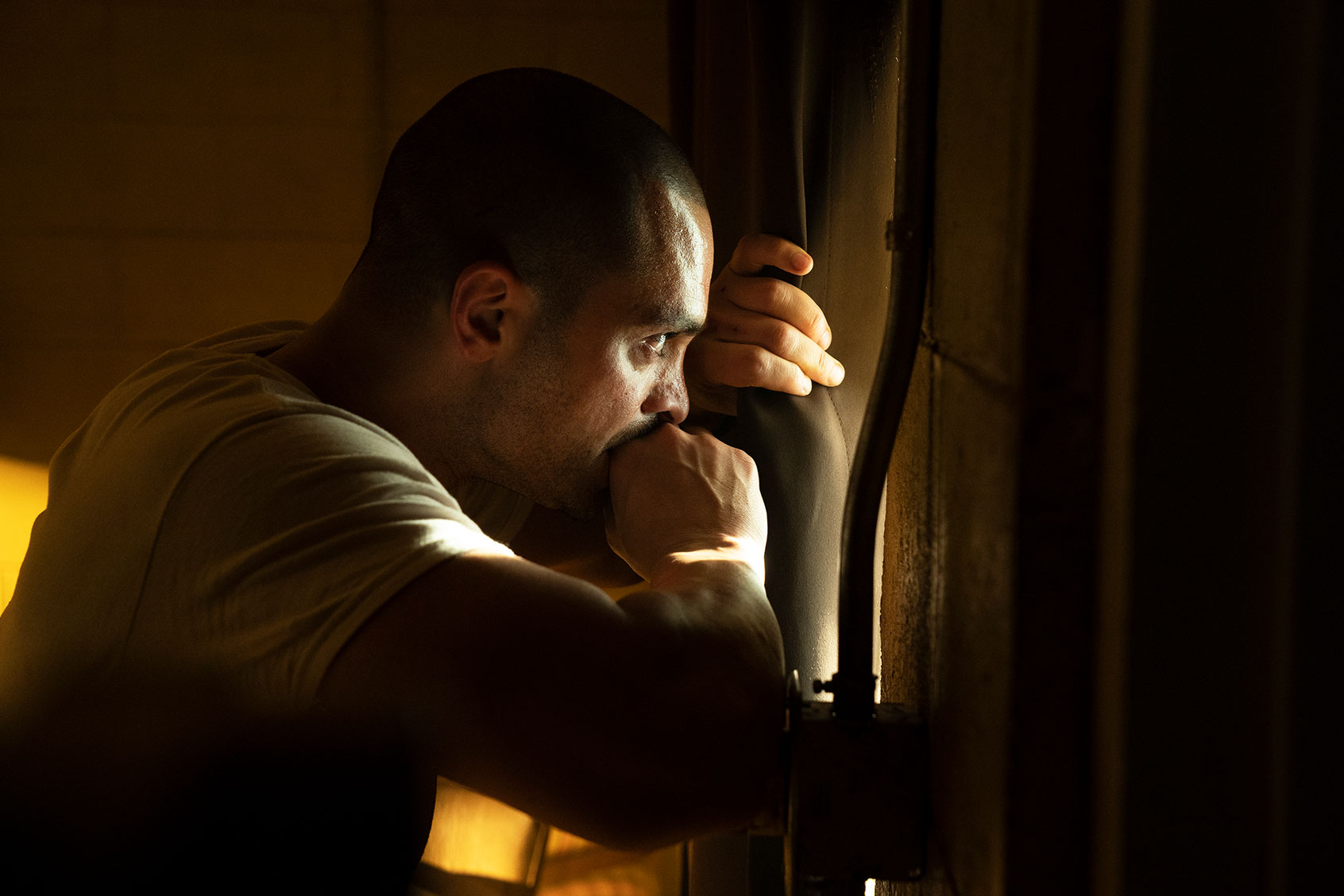
Better Call Saul” returned with a slew of physical challenges for its reluctant cartel lieutenant Ignacio “Nacho” Varga and the thoughtful man who plays him, Michael Mando. The recently debuted sixth season picks up in the aftermath of a botched assassination attempt at Lalo Salamanca’s (Tony Dalton) Mexican compound, a place remote enough to defy easy extraction in the midst of a landscape with few places to hide. Lalo survived, and the first head he wants is Nacho’s.

Catching the younger man should be easy, since he’s on foot. But Nacho is smart and a survivor. He hides anywhere he can, including ditches, a slimy sewer pipe and a motel that might as well be held together by tape. This required Mando to slog through filth and sweating through tetanus traps, taking on nearly all the stunts seen in Nacho’s flight.

All that was behind the actor when Salon caught up with him a few days prior to the debut of “Rock and Hard Place,” the third season episode that culminates Nacho’s saga in the “Breaking Bad” universe. Nacho’s and Lalo’s names were first mentioned in Season 2, Episode 8 of  “Breaking Bad,” which also marks the first appearance of Bob Odenkirk’s Saul Goodman.

RELATED: “Better Call Saul” is in no hurry to end

As he talks to me via Zoom about wrapping up his time with Nacho, a farewell gift – from his co-stars Odenkirk, Rhea Seehorn (who plays Kim Wexler) and Patrick Fabian (playing Howard Hamlin) – sits in a place of honor on a shelf behind him: a striking painting of a single blue eye, wide and piercing, and yet serene. It resembles the symbol of protection often connected to Mediterranean and Middle Eastern cultures, I tell him.

“They told me it’s from a Mexican artist and that it represented vision,” Mando said, although he was not averse to the painting offering some spiritual protection: “I hope it works!”

Nacho could have used a ward like that, although it’s doubtful it would have done him much good. From the moment he switched Don Hector Salamanca’s heart medication, leaving him disabled instead of dead, Nacho was living on borrowed time. Still, his lease on life was generous as such things go, enabling Nacho to forge a trusting relationship with Mike Ehrmantraut (Jonathan Banks), trusted fixer to Gus Fring (Giancarlo Esposito), who dangled Nacho’s duplicity over him like a guillotine blade to coerce the young man to serve as a mole instead of letting him leave the narcotics game as he wanted.

“Everybody in that world is leaning towards the bad. And you got this one guy breaking good.”

But the blade dropped at last in this third episode, with Gus arranging for Nacho’s extradition, only to serve him up to the Salamancas in exchange for his innocent father’s guaranteed safety.

In the hours leading up to his death, Mike, who has developed a paternal affection for Nacho, serves the young man his final meal, only to beat him afterward on Gus’ orders. And though Mike assures Nacho that his death will be quick, the sacrificial soldier makes his own plans. After falsely accepting responsibility for Gus’ sins -– and honestly, proudly taking responsibility for leaving Don Hector mute and immobilized -– he frees his bound hands, grabs a gun off the nearest man, and sees himself out.

As one expects of an actor playing a pivotal role in one of modern TV’s greatest series, Mando has no regrets. “I’ve learned a tremendous amount with this experience, in front of and behind the camera,” he said. “This show has given me everything I need . . . to continue telling stories that I feel passionate about. And I will forever take that with me and be grateful for it.”

Before heading into his next act, the Canadian star graciously answered our questions about what it was like for him to say goodbye to a role that has such significance to the larger “Breaking Bad” universe and discuss the symbols woven throughout Nacho’s harrowing final run.

This interview has been edited for length and clarity.

When did you know?

I got the famous call the winter before we started shooting. Vince [Gilligan], Peter [Gould], and Melissa [Bernstein, the drama’s executive producers] got on the phone and said, ‘Wait ’til you hear this larger than life, epic ending we have planned for Nacho. It’s going to solidify the iconography of the character. And we believe that it’s going to break the Internet.’ So I was immediately, obviously excited, and I couldn’t wait to take on that challenge.

So then you get down there to the location and you’re running through sludge, doing all these taxing physical things. Was there ever a point where you said to yourself, “This is what ‘epic’ takes?!”  It looks very challenging.

You know, they had called upon me to play the full spectrum of acting. We had action scenes, physical scenes, emotional scenes, psychological scenes. And then to top it all with a spiritual underlying of a man basically volunteering his own death, was a tall order. And it was a challenge that I relished in. And it’s exactly the position I want to be in as an actor. And to be given that opportunity on the biggest stage is something that I will always be grateful for.

There was a lot of Christ-like imagery within that episode.  You had your version of Last Supper, the scourging and so on. Did you discuss that aspect with Vince and everyone else? Or did they always have that planned?

Gordon Smith, who wrote and directed, and I had a real camaraderie in this episode. We really worked very closely together. My hat’s off to him, I thought he did a fantastic job. We were very aware of the symbols . . . that we were shooting. It felt like Vince and Peter gave us the keys to the Lamborghini, and said, “Take it for a ride for an episode, and just bring it back in one piece.” And to really feel the whole engine of the show underneath the character of Nacho was just an exhilarating ride.

Better Call SaulBetter Call Saul (Greg Lewis/AMC/Sony Pictures Television)I just finished watching the second season episode where Nacho and Mike have their first conversation at Nacho’s father’s upholstery business.  He’s so much an example of what both “Breaking Bad” and “Better Call Saul” explore about father-son relationships, particularly in terms of the effects that fathers have on sons. And there was a kind of father-son connection between Mike and Nacho. How did you plug into that?

Well, Nacho’s iconography at the end is solidified in someone who stands up for true love, who is brave and sacrifices, but also who transcends his environment. You know, he’s the youngest guy on the show. And he’s looking at these fatherly figures. Towards the end of the show, he takes matters into his own hands, and is able to feel whole, and becomes the only character breaking good when everybody’s breaking bad, including Mike. So he becomes, basically, a man apart in that sense.


Want a daily wrap-up of all the news and commentary Salon has to offer? Subscribe to our morning newsletter, Crash Course.


I’ve seen you use that phrase before, “breaking good,” and it makes a lot of sense.

When I had my scene with Don EIadio in Season 5, we always have choices as actors to play the scene in a specific way. And to me, I was very clear in my interpretation of the scene, that Nacho was not seduced by the position that he was being offered, which was essentially the highest position in the cartel. He would not be seduced by the money, or any of the flashy things, that he was a man who truly was doubling down on his values of doing the right thing, and living a life of virtue in the way in the very same way that his father was.

“To really feel the whole engine of the show underneath … Nacho was just an exhilarating ride.”

And I knew in that moment that was going to . . . put my character in a very difficult situation on the show. But it was, to me also the most rewarding situation because I felt we need more characters like that, especially of that demographic -–  that stands up for good, that is full of integrity, that is heroic, and that is willing to pay the price of going against the current.

Nacho is mentioned in “Breaking Bad,” but not seen.  We knew going into this show that certain characters would survive. We’ve seen Gus, we know he makes it through. We know Mike makes it through and obviously, we know that Saul Goodman makes it through. Was there ever a part of you that wondered, since this person is part of this larger legend that somehow, he might make it?

I was really interested in the iconography of a character, I really wanted to take a brown man and make sure that I protected his integrity. When his father was introduced, I felt that symbolism between first generation immigrant fathers, single parents, and their children coming up from a single parent raised by my father and myself, who was a first immigrant in Canada, that meant so much to me. It was more important to me that that was protected than whether or not he was in every episode or whether or not he lived until  the end. That meant way more to me than surviving more episodes.

And for him to really solidify that iconography and have his father be essentially the most moral and virtuous character in all the “Breaking Bad” universe, and then to have a son who is brown-skinned and be the only character breaking good and to do it in a in a heroic fashion and to do it on his own terms on a show of that scale, I give my hat’s off to the writers completely.

It’s an important moment in television where you can look at these sort of Hispanic cartel characters and see a three-dimensional human being who not only believes in doing the right thing, but is so serious about it that he will sacrifice himself for it, in a heroic fashion. That to me was the essence of it and the thing that I’m most proud of.

I’m glad that you mentioned the fact that it is a brown-skinned man in this role, and playing this part, and the importance that aspect of Nacho’s portrait. Often he’s been likened to Jesse Pinkman, although they’re two completely different characters. But I can imagine there will be people who point out that Jesse got to live. There were moments where we thought that he was going to die, but he got to live, whereas Nacho did not. What would you say to anybody who might point that out?

I would say: we all go. You know, if anybody survives, it’s temporarily because we all end up going. And more importantly, than when we go, it’s why we go. Nacho has a tremendous responsibility here, where his father’s life is in jeopardy, which is very different than Jesse’s situation. So Nacho stands up for his community, essentially, and says, “This is who we are, this is what I will back up. And this is what I will give my life to.”

“It is important that we, as a community, have people that we can look up and say, ‘We’re not the bad guys.'”

To me that’s more meaningful for Nacho’s situation than whether or not he survives. And I would add to that: Nacho can escape he actually wins. When he’s in the gas station, he’s free. He can go live his happily ever after. But he calls his father and he says -– and I’m staring into the subtext -– he essentially says, “Come with me.” And his father says, “No.” So Nacho willingly walks back into hell, and says, “Then I will give my life for you.” And to me, especially in terms of iconography, given the fact that these aren’t real people, they’re symbols,  I couldn’t think of a more solid symbol.

You’ve used that word a lot –

Which one?

Iconography.

Yeah.

Can you explain what that term means to you in the context of this role?

So, I was raised by a single father. And, God bless his soul, my father, he raised three boys. And my father worked a lot. So I grew up on television, and on music.

And I remember when I was in high school, and I was attracted to a girl, and I wanted to approach her, I would get my cues from these icons on TV. I would live my life according to these figures.

As I got older, I realized that the morality and the virtue of the figures that represented me in society were very, very corrupt, and didn’t stand for things that were virtuous. Now, by no means of the imagination do I consider Nacho the role model that anybody should follow. That’s not at all what I’m saying. But I think it is important that we, as a community, have people that we can look up and say, “We’re not the bad guys,” you know. “We’re not the thugs and the criminals.”

In a world of thugs and criminals, you could have a Latin American father be the most virtuous person. In a world of criminals who are all interested by money, greed and power, you could have a brown-skinned man who is heroic, who is brave, and who is willing to live and die for his community in the right in the right way, knowing that he himself is flawed and has made many mistakes.

So this is what I mean by iconography. They all represent something. And to have that in the zeitgeist of popular culture, I think, is important. Again, Nacho is not a role model by any means of the imagination. But in that world it means a lot, because everybody in that world is leaning towards the bad. And you got this one guy breaking good.

I’m glad that you explained that, especially in terms of iconography and roles, and how people look at certain television characters and maybe draw some influence from them. In the past, I’ve spoken to a lot of people who have left shows for various reasons, and a question that they get quite a bit is, “Are you gonna carry your character with you?” Famously, when “The Sopranos” ended, James Gandolfini said, “No, I can’t wait to let him go.” How do you feel about that? Will you carry any part of Nacho with you?

I don’t think you can play outside of yourself. And I think we’re all each other. I think like you, Melanie, and me, Michael, I think we’re part of each other, That’s what empathy and compassion is. And the greater empathy that an actor has, I think, the more understanding he can have for his character. So I think our job as actors is to be as empathetic as possible.

I will always carry Nacho with me. And I think I will always be a part of him as well.

New episodes of “Better Call Saul” air at 9 p.m. Mondays on AMC.

More stories like this:

A new study unspools the dingo’s mysterious origins

Australia’s weird animal and plant life exists because of the continent’s isolation from the rest of the world — meaning, for millions of years, odd creatures like kangaroos, koalas and platypuses came to inhabit their niches on the world’s smallest continent or biggest island. Yet the dingo was a weird exception: it’s very closely related to dogs and wolves, and thus clearly didn’t evolve alone on Australia for millions of years, as the aforementioned animals did. How the dingo got to Australia, and under what circumstances, is still an open question. 

Now, a new study brings us closer to understanding where the dingo fits in with other canines. In the recent study, which appears in the journal Science, the authors use genetic evidence to show that it is unlikely the dingo was ever domesticated after arriving in Australia. (Notably, it is unclear if it had been domesticated before.)

The scientists also revealed that the dingo occupies an odd niche: “Dingoes are truly an early offshoot of all modern dog breeds, between the wolf and today’s domesticated dogs,” they write. Indeed, while most domesticated dogs are descended from animals that lived 14,000 to 29,000 years ago, scientists now know that dingos are believed to have arrived in Australia from 5,000 to 8,000 years ago.

That means that scientists have learned exactly where dingos fall on the canine family tree.

RELATED: New Guinea singing dogs, renowned for their ethereal howls, are no longer believed to be extinct

Unlike domesticated dogs, which evolved through artificial selection (by humans), the scientists’ findings “suggest that distinct demographic and environmental conditions have shaped the dingo genome.” Indeed, there are two types of dingos, desert and alpine, but they are still more closely related to each other than either dingo is to any type of domesticated dog. To determine the dingo’s lineage, researchers compared its genome to those of basenjis, boxers, Great Danes, German shepherds and Labrador retrievers.

“The dingo genome’s assembly, annotation, and comparative analyses show that it has diverged from domestic dog breeds,” the authors concluded. They form a “monophyletic group,” or a collection of animals with a common evolutionary ancestor that is believed to not be widely shared by other groups. In this sense, dingos are similar to Greenland wolves.


Want more health and science stories in your inbox? Subscribe to Salon’s weekly newsletter The Vulgar Scientist.


There are a number of reasons why this happened to dingos. For one thing, dingos were isolated from humans who practices selective breeding, allowing them to retain genetic similarities until the colonization of Australia resulted in a “recovery of genetic variation.” Dingos also evolved to feed off of animals like the marsupials which are ubiquitous in Australia. Domesticated dogs, by contrast, evolved to eat the starch-rich diets that were common for canines who lived alongside humans during the Neolithic era. The agricultural revolution brought about high-fat diets, which again caused them to diverge in their evolution from dogs like dingos as they adapted to these diets.

Not all questions about the dingo have been answered, though.

“We can’t say for certain whether the dingo has ever been domesticated, but we do know it’s unlikely it was domesticated after its arrival in Australia,” two of the researchers wrote in a separate article for The Conversation. “Future work on more dingo genomes will address whether the dingo has ever been domesticated at all, and also measure the level and impact of pure dingo crossbreeding with domestic dogs.”

This is not the first time that geneticists have transformed our understanding of humanity’s best friend. In 2020, a different study published in Science revealed that sled dogs like Alaskan Malamutes, Greenland sledge dogs and Siberian Huskies are actually closer to 9,500 years old rather than 2,000 to 3,000 years old as previously thought. The genetics study also revealed that these dogs evolved to eat high-fat diets rather than the starchy and sugary diets of other domesticated dog breeds. These findings almost certainly reflect how important these dogs were to humans in those areas.

Another 2020 study, this one in Proceedings of the National Academy of Sciences, revealed that wild New Guinea Singing Dogs, which scientists had believed were extinct, still survive. Specifically, the scientists discovered that they were direct relatives of highland wild dogs. As it turned out, highland wild dogs possess a 72 percent genetic similarity with New Guinea Singing Dogs that are held in captivity.

“These dogs form a group with Dingos that appear to have separated from the ancestors of the average breed dog long before breeds were created,” Dr. Heidi G. Parker, a co-author of the study who works at the Dog Genome Project for the National Human Genome Research Institute at the National Institutes of Health, told Salon by email at the time. “They may represent one of the earliest forms of dogs.”

Read more Salon stories on science and canines:

Trump bonds with Piers Morgan over hatred of Meghan Markle, claims Prince Harry is “whipped”

With all the bad press that he’s been getting lately, you’d think that former President Donald Trump could use the opportunity in an interview to address something of substance. But nope, as usual if he’s not praising himself, he’s trying to trash someone else who has no connection to anything remotely relevant to him. 

This time around, he uses his recent appearance on “Piers Morgan Uncensored” Monday night to trash Prince Harry and Meghan Markle, the Duke and Duchess of Sussex. Perhaps it’s Trump’s way of showing loyalty since Morgan has a nasty history with trashing Markle.

“I won’t use the full expression, but Harry is whipped like no person I think I’ve ever seen,” Trump says in a sneak peek Rupert Murdoch’s newly launched TalkTV tweeted. “I’m not a fan of Meghan, I’m not a fan, and I wasn’t, right from the beginning. I think poor Harry is being led around by his nose.”

When asked if he thinks the relationship will eventually come to an end, Trump of course decides he’s Nostradamus.

“I’ve been a very good predictor, as you know, I’ve predicted almost everything. It’ll end, and it’ll end bad,” Trump asserts. “I wonder if Harry’s going to go back on his hands and knees and say please. You know, I think Harry’s been led down a path.”

RELATED: Trump incensed over dossier of Piers Morgan’s disparaging comments read prior to interview

For the most part, both Trump and Morgan bond over their shared dislike for the couple, who stepped back as senior members of the royal family in 2020 and settled in California. Morgan, who was once friends with Markle before she met Prince Harry, has since become one of her biggest critics. In 2021, Morgan made headlines for his callous remarks about Markle following her March 2021 interview with Oprah Winfrey, in which she said a member of the royal family made racist comments about her son Archie.  

“Effectively I was censored at my previous job and told to apologise to Meghan Markle for an honestly held opinion, which obviously I wasn’t going to do,” Morgan later said, per The Wrap. “Pushy little Princess Pinocchio tried her utmost to cancel me, and she will be in for a very unpleasant surprise when I emerge, like Lazarus, from my den.”

The former president previously said he’s “not a fan” of Markle after both the Duchess and the Prince encouraged Americans to register to vote ahead of the 2020 presidential election and allegedly, advocated for Democratic nominee Joe Biden.

“I’m not a fan of hers, and I would say this — and she probably has heard that — but, I wish a lot of luck to Harry, because he’s going to need it,” Trump said during a Sept. 2020 White House briefing.

During his conversation with Morgan, Trump adds that if he was in the queen’s position, he would have stripped both Markle and Prince Harry of their royal titles.

“[T]he only thing I disagree with the queen on, probably one of the only things ever, is that I think she should have said, ‘If that’s your choice fine, but you no longer have titles and frankly don’t come around,'” Trump says. “He [Harry] has been so disrespectful to the country and I think he’s an embarrassment.”

Trump’s two-part interview on “Piers Morgan Uncensored” airs on Monday and Tuesday in the UK and Australia on TalkTV, which also features another show from a Piers Morgan pal, Sharon Osbourne’s “The Talk” (after she left a show of the same name after her meltdown over racism). Since TalkTV is owned by Rupert Murdoch, “Uncensored” will also be available to stream for Fox Nation subscribers. 

In the show’s brief teaser, Morgan calls Trump “pathological” for believing the 2020 election was stolen, which then prompts Trump to storm off mid-interview. Trump later said he was poorly showcased and claimed the clip was badly edited.   

Watch the official teaser for “Piers Morgan Uncensored,” via YouTube:

More stories you might like:

You deserve a fancy PB&J: How to turn a lunchbox staple into a truly craveable treat

There’s a meme that has floated around online for about five years in which a photograph of a plain peanut butter and jelly sandwich is captioned with the following sentence: “Well chef, I made a puréed nut spread with a grape relish reduction paired with a brioche bun.” 

It is, of course, a play on the now-cliché way in which contestants on programs like “Chopped” and “Top Chef” present their creations (especially ones built with everyday ingredients) to the judges. But the truth is there are few things I like more than a gourmet PB&J

I mean it. While I’ll never turn down the Jif, Smucker’s and white bread combination that was a cornerstone of my childhood, there’s something both inherently nostalgic and indulgent about a “grown-up” version of this iconic sandwich.

Related: Let’s griddle every sandwich, from ham and cheese to peanut butter and honey

Why is this excellent news for everyone? A PB&J is one of the easiest dishes to dress up or down based on your personal preferences. 

You’re vegan? Great — the PB&J is a classic vegan treat. Allergic to peanuts? No biggie, just grab some cashew or sunflower butter. Can’t get enough cheese in your day-to-day diet? Then add some melted brie, raclette or ricotta (cashew milk or otherwise) to the mix. 

To help get you started, here are a few simple tips to transform your PB&J from ho-hum to a truly craveable treat:

Better bread 

Don’t get me wrong, I’ll always have a place in my heart for the sleeves of supermarket white bread that are so soft you could probably compress the entire loaf into a ball the size of a toddler’s fist. However, better bread is probably the thing that’s going to make the biggest difference in pulling together a better PB&J (especially once we get to the griddling part). 


Want more great food writing and recipes? Subscribe to “The Bite, Salon Food’s newsletter.


Have fun with it! Hearty sourdough is a beautiful complement to sweet berry jams. Grain-packed loaves mimic the nuttiness of the PB. Pillowy potato bread and sturdy pretzel buns are ingenious choices. 

Get the good nut butter and jelly (or jam!) 

In Cincinnati, there’s a gigantic specialty grocery store called Jungle Jim’s that has an absolutely kaleidoscopic array of jams and jellies, ranging from delicate citrus marmalades to nearly-onyx plum preserves. Each one brings something different to a sandwich, so think beyond grape and strawberry the next time you hit the supermarket. Bonus if the jam you choose still has gorgeous hunks of preserved fruit in it.

Similarly, there are a ton of choices in specialty nut butters on the shelves these days. Fix and Fogg has a Smoke and Fire peanut butter made with sweet-smoked paprika, New Mexico Hatch chiles, cayenne pepper, natural manuka smoke and sea salt. Italian brand Arachidella has a crunchy peanut spread made with good-quality extra-virgin olive oil. There’s something for everyone!

Extras and add-ons 

Here’s another opportunity to flex your culinary creativity. Fresh fruit — especially crisp pear or apple wedges, berries and sweet banana slices — makes a great addition to your sandwich. Go old-school and add a layer of salty potato chips or crushed pretzels. Cheeses like manchego, raclette, brie or cashew-milk ricotta are unexpectedly stunning with both the peanut butter and jam. Bacon (or vegan bacon) is maybe a little over-the-top, but this is the opportunity for it. 

Griddle it 

Alright, in my quest to make the supreme fancy peanut butter and jelly sandwich, I’ve come across only one non-negotiable step: You have to griddle the sandwich. To borrow a line from Salon Food contributor Maggie Hennessy, “griddled sandwiches have punctuated my life like crunchy applause.” Slightly warming the peanut butter and jam and crisping up the bread elevates your sandwich from a lunchbox staple to something truly special.

More sandwich recipes we love: 

Jon Bernthal embedded with Baltimore police to play city’s dirtiest cop in HBO’s “We Own This City”

The countless online videos of police brutality and African Americans dying at the hands of police officers have led to deep conversations about America’s policing problem and TV portrayals. One side of the argument is committed to the idea that all cops are inherently good — brave men and women who dedicate their lives to keeping us safe. The other side of the argument believes that all police officers are oppressive, terrible people who are dedicated to ruining the lives of Black people. Both sides are right, which makes the argument even more confusing. 

Yes, a cop can be good and bad. Both of these things can be true. We see that clearly documented in the new HBO six-part miniseries, “We Own This City,” which centers on Baltimore cop Wayne Jenkins, played by Jon Bernthal. I first met Bernthal when he started reading my writing covering these issues in my home city. We connected later when he signed onto play the lead actor and I joined the writers’ room. Bernthal and I sat down on “Salon Talks” in New York last week to talk about his lengthy preparation process and the personal effect the role has had on him.

These cops stole from civilians, sold all kinds of drugs, committed massive overtime fraud and sent a large number of innocent people to prison

Most people are only able to critique police officers through the lens of their own experiences. If you grew up in a neighborhood where cops show up two minutes after you call them, and even stick around to make sure you feel extra safe, then you probably think police officers are heroes. And if you grew up like me, in a neighborhood where police officers were hungry to grind their boots into your gumline, steal your money and harass you for no reason other than the color of your skin, then you probably think all cops are a**holes. The problem is that both sides struggle with the ability to be able to accept the other side’s experiences — good or bad. People only believing in their own experiences is childish, extremely dangerous, unfair and will never lead to any real understanding. If police haters or apologists were open to different arguments, they will learn that their limited critiques lack the way in which some police departments reward police officers who appear to be good in certain communities for doing all of the wrong things – making those cops both good and bad. 
 
“We Own This City,” created by David Simon and George Pelecanos (“The Wire”) is based on the book “We Own This City” by journalist Justin Fenton, which tells the story of Sergeant Wayne Jenkins and The Gun Trace Task Force (GTTF), a group of elite cops in Baltimore who had special privileges because of their abilities to get guns off of the street. What their bosses didn’t know is that one of the reasons they were so good at getting guns was because they were planting them on people. These cops stole from civilians, sold all kinds of drugs, committed massive overtime fraud and sent a large number of innocent people to prison. 
 
Cop lovers saw these guys as heroes because they were always touted as the best at getting weapons and dangerous criminals off of the streets – cop haters knew they were frauds, because of the way these guys terrorized Black communities for generations. It’s all perspective solely based on your color and zip code. Jon Bernthal star of “The Walking Dead,” “King Richard,” and “The Punisher” plays Wayne Jenkins, the golden boy of the Baltimore City Police Department. 
 
Jenkins had sappy dreams of being a square police officer at the beginning of his career but realized stealing from Black people in oppressed areas was a lot more lucrative than what he brought home after two weeks of work. He also realized that if he made cases, he could quickly move up in rank, stash a whole lot of cash, still be considered a hero to cop lovers and have a pretty good life. Jenkins did this for years, collecting constant praise and privilege. He even received a bronze star from then-commissioner Kevin Davis for his efforts in helping out injured officers during the Freddie Gray unrest. The funny part is that the department was so proud of the way Jenkins brought encouragement, water and food to cops, aiding them during the protest – while during those same protests – he ran up inside of looted pharmacies and stole opioids to sell. One side saw him going above and beyond to help his fellow officers, as the other side saw him stealing. Both things can be true and we can’t have a real conversation until we fully acknowledge that. 

Jenkins was sentenced to 25 years, back in 2018. However, there are still some people who believe that he is innocent, even though some of his crimes are caught on tape, even though a bunch of officers testified against him, even though he confessed to his crimes.

Watch my “Salon Talks” episode with Jon Bernthal here, or read a Q&A of our conversation below, to hear more about playing Jenkins, how he addresses “The Wire” comparisons and what he learned working side-by-side with Baltimore City Police officers, many who knew Jenkins, to prepare for this complex role.
 

The following conversation has been lightly edited for clarity and length.

My great friend, my brother, Jon Bernthal. How you doing, man?
Man, it’s great to be here with you guys.

First I want to tell all our viewers that I worked on “We Own This City” too, as a writer. I covered the story for a long time and I wasn’t even thinking about who would play these characters and who can pull it off. Then when Jon and I met, I was like, “That’s the guy.” How do you decide what role is for you?

There literally is not a day that goes by that I don’t feel deep, deep gratitude and feel how blessed I am to be doing something that I love and being able to support my family from it. The way things were starting in my life, it did not really look like things were really working out, and I found this, I fell in love with it and I put everything towards it. I never, in a million years, thought I’d be in a place where I actually get to make choices. And that’s the blessing of all blessings in this business.

For me, there’s really nothing strategic as far as career stuff. I’m never saying, “Well, I’ve done some action stuff, so I need to do a rom-com, I need to be in this market or that.” I just never have thought in those terms. For me, it really comes down to a few criteria. And that is if I read the words and something happens to me, if my heart is affected by it, I want to get in there. If it scares me, if it’s something that I feel like I can’t do, I want to run towards it. If I get to work with people that I really respect and admire, and I’m just chomping at the bit to get in the box with them, then I run towards it.

“It’s just a bunch of flag-waving and agenda-driven sort of spoon-fed information.”

To be honest with you, with this project in particular, this checked every single box. It was working with heroes, working with people I deeply respect and wanted to get in the box with. And it also covers issues that are enormously important to me, near and dear to my heart, things that I’m fascinated by, troubled by, has caused enormous amounts of pain in my life. And I felt like this was an opportunity to explore these issues and dive into the gray, dive into the wound, explore them with all the nuance that these issues deserve because so much of the discourse around these issues in this country right now is just being led by the polls. 

It’s just a bunch of flag-waving and agenda-driven sort of spoon-fed information. I knew that this piece was going to be driven by journalistic integrity and trying to tell the truth and to not shy away from how complicated these issues are so this was a no-brainer.

I imagine it’s difficult in these times to take a role as a police officer because you have one side that’s pro-cop, you have another side that’s anti-cop, and you have to be able to walk that line and find that balance and do something that’s complex and nuanced.

I think if you’re going to do it this is the group of people to do it with. This is the city to do it in, with these people. I really believe that we told this story with the city of Baltimore, for the city of Baltimore and by the city of Baltimore. I feel like there was such reverence and respect to the folks that this story was about, to the victims, but also to the BPD and the good folks that still are on that job. And I got to, it’s my job.

This was one of the things you and I first connected to, with your writing. I feel like you write with empathy. I feel like your description and your dive into Danny in your piece, you went above and beyond and out of your way to get to know who he was, to get to know his pain, to look at him as a human being, not just as this archetype or this, you looked at his flaws, but you didn’t judge him. You question your own judgment. I have so much respect for that as an artist. That’s what I had to do.

RELATED: Thanksgiving and “The Wire”: My true Baltimore story about the streets, writing and TV

You play Wayne Jenkins, an ambitious supercop. He was the cop’s cop, right? He was the guy they looked up to and then he goes on this dark spiral. Let’s start at you trying to figure out how to portray that. Walk us through your research process, because I heard you mention Donny Step, who was his best friend.

My first conversation with David Simon, he said, “We can’t just make him a monster,” and everybody, from Donny Step, who he used to sell drugs with, to other officers from GTTF, to the gentleman he used to coach youth football with, I got to know everybody in his life, as many people as I could, and to a person, every single person said he was a committed father.

He put his kids above everything else. And for me, that’s something I can really relate to. I’m a father before I’m anything else. I needed a hook into this character, to something that I could relate to and kind of believe in, and I feel like there is this crux, this conflict that I believe exists in all of us. How could you be that committed your children, but yet engage in this kind of activity that is going to eventually, and ultimately separate you from them for most likely the rest of your life? That pressure and that conflict was something that was with Wayne at all times. And through all the stories and all the footage and everything I saw, I always saw that conflict present in him.

He coached football too, right?

He coached youth football. He coached his sons and he was extraordinarily passionate with it. He fought MMA. Look, I think there’s nobody better than David and George in terms of their track record, being able to explore systematic, systemic issues and how they affect the individual.

Absolutely.

“We can’t just make him a monster.”

Policies go down and they tear up people’s lives. To do it on both this sort of macro level, but then to get down to the nitty-gritty and how lives are destroyed because of these policy decisions. So I think it examines kind of the culture of policing, what’s so present, especially in that department. I think to find, to track his journey through, I think it’s really important to dig in to his life as much as possible.

You were everywhere.

Everywhere around that city, Middle River and then I was doing three months of ride-alongs in really every district. A lot of those plain-clothed flex unit squads have been disbanded, but a lot of the guys from the Gun Trace Task Force, they’re still working. A lot of their careers have been completely upended because of their proximity to Wayne. There’s a few guys in particular – Tony Maggio and Sergeant Nagavich and Keith Galliano – guys that I got to know really, really well, who still police in that sort of similar way. 

They’re all guys that are from the community. They grew up in the community. I believe they’re policing for the right reasons, but they still police. They still, in their terms, police aggressively. I really wanted to understand what that meant. I think when you police aggressively, you lead to a lot of fourth amendment violations, period. It’s like, if you’re out there, you’re not waiting for the crime to happen. You’re going there and you’re trying to take the fight to the criminals. Just the idea of that, it’s an us versus them mentality, which oftentimes is a fertile field for tragedy and trauma. And unfortunately, in Wayne’s case, it was a fertile field for corruption.

That’s the most difficult part of the conversation is everybody wants one thing. You just talked about how good of a father this guy was. You can be a great father and you can do all those other things, too. Both things are true. We have to tell the whole story.

Absolutely. You can try to police in a certain way. Your intentions could be good, but what you do in that process could be f**ked up for somebody else. Right?

Destroy people’s lives.

You brought up George Pelecanos and David Simon, the creators of the show. They are the two people who have the power and the patience and the love and the research ability to tell this story. You worked with them before on “Show Me A Hero. “

Yes, sir.

RELATED: “Democracy is never perfected”: David Simon on his new HBO series and the 2020 “s**tshow” election

What makes a David and George project special?

Look, George Pelecanos, his relationship to the city of Baltimore, to that Baltimore-based crew that he’s been with now for over 20 years, it’s the same crew from “The Wire.” Kids that grew up on that show were coming back and playing young men. He knows people’s family members. He knows intimate details. It’s clear people eat together. They stayed in contact. 

This entire piece, again, was made with reverence for the sensitivity and the vitality of the story. As you know, man, Wayne Jenkins, that’s a household name in Baltimore. That first night you and me hung out, we were just asking people, saying, “Hey, man. You know Wayne Jenkins?” People know who he was. That story is alive on the streets. You walk around on those streets with that name tag, that W. Jenkins, you meet people who were victims of his. People have stories about him, everyone. 

Because it’s those guys [Pelecanos and Simon] and because there’s so much resonance of “The Wire” in that city, the only way I really know how to work or want to work was I needed to go into the BPD and I needed to be able to dive in. I needed to be able to get to know them. I needed to be able to, and honestly, if you’re telling a story about one of the ugliest chapters of the Baltimore Police Department, it’s really hard for them. You’re playing one of the most vilified and vile characters that have ever been in that department and say, “Hey, I’m here for research.” Why should they open up their arms to me? Why should they welcome me in?

Why did they do it?

Because of David and George and because of the respect that they had for telling the truth. I think you only get one go-round. Your reputation as a human being is just as important as your reputation as an artist. if what you do is you tell the truth, that’s what you’re trying to do, that’s all you’re trying to dig, I think that has real resonance with people. Keith Galliano, who was a protege of Wayne’s and is an unbelievably wonderful cop, he’s policing for the right reasons. He’s enormously successful within the department. He watches “The Wire.” He says he re-watches it every single year to remember you cannot take things personally on the street. You got to divorce that. When someone’s running from you, they’re not running from you, they’re running from the badge.

The lessons that were imparted in that story have deep resonance within that department. The police officers that I really responded to were the ones that really looked at the police’s responsibility to look at the mistakes they’ve made and accepting them and call them mistakes because there’s so much pressure to just deny culpability at all costs. And you’re never going to move on from that. And I think, it’s what I say to my kids all the time. When you have a problem, if you want to fix it, the first and most vital step is realizing you have a problem. And I think one of the most, one of the best things that we can do as artists is show a mirror to society and show society, “Hey, this is a problem. We’re showing it for all its nuance and all its detail.” And I think once you see it, and you can understand it, you can start really trying to figure out ways to fix it and understand its complexities.

“Keith Galliano …  re-watches ‘The Wire’ every single year to remember you cannot take things personally on the street.”


Some of those police officers you mentioned got a chance to participate in the show. A lot of people who were victims of the Gun Trace Task Force also got a chance to participate in the show, in front of the camera and behind the camera, for both sides.

Yes, sir.

That is something that should be talked about because you’re telling the story and trying to honor the victims. It’s that kind of truth that scares people and it is a beautiful thing. This show is a vehicle and a mechanism that can unite.

It’s cathartic, it’s therapeutic. I do really believe in the power of art in that way. It’s something that I hold near and dear to my life. I feel like my life was saved by art and finding this. And the fact that people could sit down and make this piece of art when it was so unbelievably personal to them, it changes the air that we breathed on set. The vitality — it’s exactly how I like to work. I’m so grateful for that. I’m so grateful, when somebody opens up and somebody’s willing to tell you their story, let alone come and then participate in the telling of it, that’s sacred.

I feel 100% confident that we honored that and that we treated the city of Baltimore and the folks that this story’s about, and the people that came in to come participate with us, we treated it with the right reverence, and that’s really the culture of how George and David and that team, that’s how they work. And so I’m grateful for that.

This year alone there have been several television shows where actors were tasked with playing living people who have done some terrible things. Do you feel like your position as an actor changes after playing something like this? Do you see it in a different way?

“My heart has been completely broken as we have more and more examples of people who have suffered at the hands of corrupt police.”

I don’t really think about position as an actor, that hasn’t really crossed my mind. Look, more than anything else it’s, I’m not trying to be political with it, but it’s gratitude. As you know, these are issues that have deeply affected my life and I really care about, and I feel like I was able to have kind of a front row ticket to so much of this and to really understand and get into the city of Baltimore, to meet so many wonderful people, to have people share their stories with me. Look, Wayne, I talked to Wayne and we communicated from prison. I got to know and ride out with so many of the people whose lives he affected.

My heart has been completely broken as we have more and more examples of people who have suffered at the hands of corrupt police and weak police and cowardly police who have engaged in brutality, and people’s fourth amendment rights that have been violated. My heart breaks for those folks. The one thing I really learned on this project, in spending so much time with this department itself was this whole other set of victims that I really didn’t have any access to, and that is good police, people who are policing for the right reasons. They are less safe. Their careers are upended. Their daily lives are affected by, also by the actions of these corrupt police. And that’s a whole other group of victims that I didn’t really know about.

Are you worrying about the 20 million “Wire” comparisons?

I did “The Sopranos” movie and now this. I don’t think about those terms. For me, I felt about it in the day to day, tactical, being there every day. I was walking onto a set with you and with George and with David and Nina and Miss Debbie and these folks that have that created, in my opinion, the greatest show of all time. That’s a family, and they opened their arms to me and they welcomed me in. I knew I was in someone else’s house the entire time and I just wanted to come in there with respect.

The Wayne that I think that I portrayed, he kind of does his own thing, but I knew to commit to that fully, that was my way of honoring the city and honestly honoring the victims, to go full out.

And I just want to say, Ray Green, Reinaldo Marcus Green we had come off “King Richard” together. He’s my brother. He doesn’t get nearly the credit he deserves for that film and what he was able to accomplish there. I would walk anywhere with that man. For me, to take on something like this, knowing we were going into it together, it filled me with so much confidence just knowing I had this support system. I think he’s one of the best filmmakers in the world, and honestly of all times, so to know that I had him there with, getting my back and by my side, that filled me with gratitude and confidence.

“We Own This City” premieres Monday, April 25 at 9 p.m. on HBO and streams on HBO Max. Watch a trailer for it below, via YouTube.

Watch more “Salon Talks” episodes with D. Watkins :

11 sour cream substitutes for the creamiest, dreamiest vibes

When you were getting ready to start baking this signature pound cake recipe or looking for a little something extra to dollop on top of steaming baked potatoes or nachos, you realize you’re fresh out of sour cream. Before you fret and make a run for the closest store, remedy the situation at hand by making a quick sour cream substitute with ingredients you likely already have at home.

From a plant-based substitute for sour cream such as coconut milk or white beans to dairy alternatives, finding a substitute for sour cream is much easier than you may have initially thought. Using ingredients like mayonnaise, cottage cheese, or yogurt and a little acid from lemon juice or apple cider vinegar, you’ll be able to wow your guests with a non-dairy or dairy alternative to sour cream and your taste buds with something very close to the real deal.

What makes sour cream sour?

In order to understand what ingredients can replace sour cream, you have to know what it is. Sour cream is the combination of high-fat dairy cream and lactic acid bacteria that, when mixed, forms a thick, sour, and creamy product. As the mixture ferments, the bacterial culture produces lactic acid, which gives sour cream its distinct tart flavor. Some commercial-grade sour cream has added stabilizers, like gelatin or guar gum, to enrich its texture and consistency.

When baking, sour cream helps add fat and moisture to batters or doughs, yielding a richer final product. When it comes to savory recipes, it can make for a creamy sauce or luxurious dip (think: nachos and quesadillas). However, if you’re looking for a non-dairy alternative or simply ran out of this ingredient at home, here are 11 of the best sour cream substitutes to get you through the day!

Best non-dairy substitutes

Cashews

Soak a cup of raw cashews in a bowl of room temperature water for at least three hours. Once complete, drain and rinse the cashews under cold water. Combine the cashews, the juice of one lemon, two teaspoons of apple cider vinegar, ⅓ cup of water (add more as needed), and one teaspoon of salt in a blender. Puree on high speed until completely smooth and creamy. If the mixture is not tangy enough, add more apple cider vinegar or lemon juice to taste. Make this dairy-free sour cream alternative to garnish a serving of this Autumn Chili Bowl with Roasted Sweet Potatoes and Quinoa from Haile Thomas.

Coconut cream

Place a can of full-fat coconut cream in the refrigerator for at least six hours. Once chilled, spoon out the creamy, condensed layer of the coconut fat, leaving behind the liquid oil. Gently combine the coconut cream with one to two teaspoons of lemon juice, ¼ teaspoon of apple cider vinegar, and season with salt to taste. Stir until smooth and blended. If needed, add more acid to mimic the tangy, sour cream flavor. If the mixture is too dense, add a splash of your favorite non-dairy milk, like coconut milk, to liquefy the cream.

Full-fat coconut milk

When shopping for any sort of canned coconut product, you’ll come across a few different options: light coconut milk, full-fat coconut milk, and coconut cream. We’ve already gone over the merits of coconut cream, but let’s chat about full-fat coconut milk too. (If the coconut milk doesn’t have any demarcation it’s likely the full fat kind.) This product is the happy medium between light coconut milk (which has a viscosity that resembles half-and-half) and coconut cream (which is about as thick as sour cream or mascarpone cheese). Mix the coconut milk with 1 to 2 teaspoons of lemon juice or apple cider vinegar to give it the tangy edge that sour cream is known for. If a recipe calls for one cup of sour cream, use one cup of coconut milk plus the acid.

White beans

Blend any cooked white beans, like cannellini, with apple cider vinegar, oil, a dash of Dijon mustard, and salt to create a creamy substitute for sour cream. This protein-rich mixture adds moisture to batters and is the ideal vegan-friendly ingredient to use when baking. You can also use this sauce as a mayonnaise replacement to spread over sandwiches, bread, or even veggie burgers.

Mayonnaise

This rich and fatty substitute works for adding hydration to baked goods and can be used at a one-to-one ratio in place of sour cream. However, be mindful that this ingredient lacks the acidity and tanginess of traditional sour cream. You may want to add a splash of cider vinegar to your batter to create a similar result as the original.

Vegan sour cream

This might sound a little obvious, but yes, vegan sour cream exists and it is delicious! Our favorite versions come from Forager Project, which is made with coconut and cashew milk, tapioca starch, distilled vinegar, and live active cultures; Kite Hill, a sour cream alternative made with almond milk, coconut, and chickpea; and Tofutti, which is a soy-based vegan sour cream.

Best dairy substitutes

Yogurt

Plain yogurt is likely your best bet when looking for a quick solution to make up for your missing ingredient. It conveniently replaces the sour cream in a recipe at a one-to-one ratio, making conversions a breeze. For added moisture and richness, stick to a full-fat or greek, plain yogurt to mimic the tangy, creamy flavors of traditional sour cream for recipes like this Sour Cream Cardamom Pear Cake.

Buttermilk

Buttermilk, another excellent alternative, is tangy, acidic, and adds moisture when baking. However, keep in mind that it is much looser in consistency and liquid than sour cream. To balance out the wet ingredient ratios, use a three-fourths cup of buttermilk for every cup of sour cream the recipe calls for.

Crème fraîche

Though very similar to sour cream, crème fraîche is higher in fat and calories but does not boast the signature tangy flavor to the extent of its counterpart. However, the two are incredibly similar in texture and consistency, making them interchangeable at a one-to-one ratio. Use this ingredient to replace sour cream in a baked good batter or use it to garnish baked potatoes or any creamy soupyou please.

Cream cheese

If you’ve scoured your refrigerator and found no yogurt or crème fraîche, then whip out a block of cream to get the job done. Mix this denser ingredient with a bit of milk or buttermilk to loosen the consistency. For every cup of sour cream you need, use six ounces of cream cheese with two tablespoons of milk or buttermilk.

Cottage cheese

Though this may seem surprising, another alternative for sour cream is cottage cheese. To create a similar consistency, blend the cottage cheese with a bit of lemon juice or apple cider vinegar to achieve similarly tangy results.

The best way to make kimchi, according to my Korean mom

“Did you try popping your ears?” my mom asks me over the phone, as I’m standing in the home goods aisle of H Mart.

That’s her answer for everything, including my bad week. Not to say that she takes my dips lightly. But unlike my friends or my cousins or even my brother, Jean often tries to link my lows with something physiological. Oh, you’re depressed? There must be something wrong with your chemisms. (Her sister is a nurse, so she knows.)

And yet, even though I know a mere popping of my ears won’t resolve how I’m feeling on the inside, there’s something in the simple imperative (“Just pop your ears”) that comforts me. I laugh, and shake it off. One call to my mother in Atlanta and instantly I feel a little better. When I’m at my worst, I often forget that there’s a person out there who knows exactly what to say when I’m in a pickle — someone much wiser, much older, and much more empathetic.

I realize I’ve been standing in the home goods section staring at a wall of sake glasses, grocery basket still empty. So I steer the conversation toward her kimchi recipe, the reason I called her originally. I already hear her straightening up (it’s late, which means she’s in bed or on the couch watching TV). “OK, so,” she starts, “you’ll need . . .”

Jean’s kimchi recipe

  • 1 head napa cabbage (“You’re only making one head, right? That’ll be plenty for you.”)
  • 1 small daikon radish (“This gets cut up into little matchsticks and goes into the sauce. Makes the kimchi taste fresh.”)
  • 5 scallions, cut into 1-inch pieces (“Scallions make a world of difference.”)
  • 1 potato (“You know that rice flour paste most kimchi recipes call for? I’ve actually started using a potato instead. Works better.”)
  • 6 to 7 garlic cloves (“That should be enough for one head of cabbage.”)
  • 1-inch piece ginger (“I don’t know, a pinky’s worth?”)
  • 1/4 onion (“A quarter of one should be enough for the sauce.”)
  • 1/4 Asian pear (“You don’t have to add this, but I always do. It’s my secret.”)
  • 1/4 cup fish sauce (“Usually it’s anchovy sauce, but you have fish sauce at home right? Just use that.”)
  • 1/4 cup salted shrimp (“You know what that is, right?”)
  • 1/2 cup gochugaru aka Korean red pepper powder (“Your kimchi is only as good as the gochugaru you use. I bring mine over from Korea every year — high-quality, expensive stuff.”)
  • Salt and sugar (“Salt is the main ingredient! Sugar makes it taste better.”)
  • Optional add-ins (“Sometimes I like to add tomatoes, apples, bell peppers — the more things you add to the cabbage, the better everything will taste, really.”)

Salted, fermented shrimp is an essential ingredient in kimchi.Salted, fermented shrimp is an essential ingredient in kimchi. (Photo by Eric Kim)

I’m laugh-crying in H Mart right now — because what else would one do in an H Mart? I’m laughing because my mother is cackling over the phone at her poor excuse of a recipe (the measurements above are my translations, English and culinary).

“I don’t know, one or two fistfuls of this?” she chuckles again. “Three or four mugfuls of that? I’m terrible.”

It’s funny to me, too. OK, I tell myself, that’s like three cups. A coffee mug is usually eight ounces. And two tablespoons is what she means by “two rice spoonfuls.” I’m also crying because I’m overwhelmed at how much better I feel just hearing her voice and her booming cackle.

How to make kimchi

Jean has a few rules about kimchi — and they’re not strict, mind you, but they’re hers. Which is to say that this kimchi is her kimchi and no one else’s. But in my highly subjective opinion, this is the absolute best way to make it. I’ll do my best to walk you through our notes from the phone call, but please, feel free to add your own flourishes here and there as you see fit. So much of this is to taste, anyway.

After I sent my mom pictures of the kimchi I made according to her verbal notes, she decided to make it too, this time writing down the measurements. These are her scribbles for a double recipe.After I sent my mom pictures of the kimchi I made according to her verbal notes, she decided to make it too, this time writing down the measurements. These are her scribbles for a double recipe. PHOTO BY JEAN

1. Brine the cabbage.

This first step is essential for a couple of reasons: 1) It kills off any harmful bacteria that may be in the vegetable, leaving room for the good bacteria, aka Lactobacillus, to grow during the lacto-fermentation process that gives kimchi its distinct, pleasurable tang. 2) It also removes water from the cell walls, which aids in preservation later and, more importantly, in flavor. I’ve always thought of it as: less water means more concentrated cabbage taste (plus, the sauce will penetrate better).

My phone call with Mom was revealing, to say the least. I thought I had remembered her dry-brining the cabbage all those years, which is to say: placing huge buckets of napa, each cut in half or into quarters lengthwise from the root-end to about halfway up to the greener leafier part (but not all the way through). Yes, she still cuts them this way, claiming that the kimchi, when left intact like this, ripens slower but ends up tasting crunchier and yummier. But tonight she mentioned a salt bath, or wet brine, which does sound like a more uniform way to draw out water from the cabbage.

I go home and try to fit the cabbage into the biggest bucket I’ve got: my salad spinner. Of course, it doesn’t fit. So I cut it up into bite-size pieces (it fits!), cover with tap water, and sprinkle over a non-iodized table sea salt I accidentally bought the other day, thinking the grains would be much bigger (but guess what small-grained salt is perfect for?). I remember what my mom said about brining smaller pieces like this: You’ll only need to do it for 2 to 3 hours, versus the 6 to 8–hour brine of those whole heads. (I added the scallions here too, with the idea in mind that I’m also “kimchi-ing” them.)

One important tip my mom mentioned is to smoosh the cabbage around, making sure the salt and water and all of the vegetables get properly, evenly, salted.

Drain, then let sit while you prepare the sauce.

2. Make the sauce.

This next part is the easiest. Well, kind of. First, you have to make the paste, which will become the base of the kimchi sauce. This paste is really just a vehicle for all of the seasonings, to stretch the sauce so it covers more cabbage. I was shocked to learn that my mom now makes hers with…a potato! For years I watched her do it the classic way with glutinous rice flour, water, bubbled away until thick, then cooled. But I just tried her new method (which she picked up from her sister in Seoul) and it worked great.

For Jean’s paste: Peel a potato, then grate it directly into a cup or so of boiling water until you’ve got a thick puree.

Food52

Food52

Full disclosure: I did this wrong; I thought she had told me to cook the potato first. But it actually turned out fine! There doesn’t seem to be much of a difference between grating a cooked potato and mixing it into water versus grating a raw potato and cooking it in water.

I ended up only needing about half of the potato to create a loose mashed potato situation. Don’t worry too much about whether it’s too thick or too thin; you’ll only need about 1/2 cup of this stuff for this kimchi recipe. But if you’re like my mom, you’ll make more.

Here’s why: Jean likes to make a big batch of kimchi sauce and keep some back in the freezer so she can “kimchi” anything at a moment’s notice. So if you end up with extra potato paste, don’t throw it out.

Confession: I forgot the daikon. Still tasted great, though!Confession: I forgot the daikon. Still tasted great, though! (Photo by Eric Kim)

Now we’re at the easy part. In a small food processor, blitz the garlic, ginger, onion, pear, fish sauce, salted shrimp, gochugaru, and (to taste) salt and sugar. Stir this gorgeous red paste into the potato paste. At this point I actually don’t even bother to taste (neither does my mom). What matters is how your seasonings taste with the cabbage. So onto the next step…

3. Smoosh it all around.

Just get in there! (With clean hands.)

The Korean-mom move would've been to wear kitchen gloves here, but I haven't graduated to those yet.The Korean-mom move would’ve been to wear kitchen gloves here, but I haven’t graduated to those yet. (Photo by Eric Kim)

4. Taste, taste, taste.

Growing up, this is the point at which my mom would hold a container of salt in one hand and mix with the other, crouched down over a huge plastic bowl filled with crimson kimchi. She’d taste as she went, adjusting the salt, sugar, and red pepper powder until it was just right. I’d be watching from a couple feet away, her little taster; she’d call me over and pick out one perfect piece, wiping off any excess sauce, folding it up, holding it out (“Open!”), and placing it in my mouth.

“More salt? More sugar?” she’d ask.

Unfermented kimchi tastes great — different, but great. Which is why it’s important to adjust at this stage according to your own tastes. Ask yourself: Does it need more salt? More sweetness? When I made this kimchi recently, I felt that it needed more savoriness, so I added another tablespoon of the salted shrimp.

My breath is pretty garlicky at this point from all the tasting. (Photo by Eric Kim)5. Jar the kimchi and wait.

Large mason jars are great for storing and fermenting kimchi (but I just reuse old 3-pound H Mart kimchi buckets). Sometimes my mom sets aside a small portion of the unfermented kimchi so she and my dad can enjoy it throughout the week. But if you’re in it for the funky stuff, then leave on the counter at room temperature for about 24 hours, then place in the fridge for a week or so. I like to taste as I go, i.e. 3 days later, 7 days later, 14 days later, because each version will taste different and funkier the longer it sits in the fridge.

Or if you’re like my mom, you’ll buy two (two!) separate kimchi fridges — one in the basement and one in the garage — to store your sta$h. And you’ll forget about it completely until it’s nice and ripe and rank, perfect for Korean dishes like kimchi jjigae and kimchi fried rice.

The absolute best kimchi is homemade.The absolute best kimchi is homemade. (Photo by Eric Kim)

Kimchi videos

If you’re looking for even more instruction, I find that it helps to watch a video of the kimchi-making process. Maangchi is always a great resource, of course, as is this very relaxing video.

Here’s one my mom sent me, claiming this is pretty close to how she does it herself (but the lady here makes three heads of napa cabbage and keeps them whole):

More Jean-approved kimchi recipes

Jean’s Spam Kimchi Fried Rice

This isn’t exactly like Jean’s kimchi (or like her kimchi fried rice, for that matter), but it’s my best attempt. The flavor of this dish will largely depend on how potent the kimchi you’re working with is, and the savory, salty edge of toasted sesame oil and Spam round out the flavor.

Kimchijeon (Kimchi Pancakes)

Rather than getting rid of a partial jar of too-sour kimchi (the audacity!), Catherine Yoo developed this savory pancake recipe that makes use of the leftovers. They’re not traditional, but they’re super delicious, especially thanks to the extra-potent kimchi flavor.

Creamy Kimchi Gratin

“Spicy, tangy, and impossibly juicy napa cabbage kimchi canoodles in a pool of savory, garlicky, cream sauce (and the whole thing is topped with bubbling stringy cheeses). The natural tanginess of the kimchi and the addition of yogurt in the sauce cuts through the gratin’s richness, with bursts of heat from chunks of pickled chiles,” writes recipe developer Mandy @ Lady and Pups.

Kimchi Stew with Pork Belly

This cozy stew is so easy. It’s hard to believe how easy it is to make, and yet how delicious. No cooking experience is necessary, which makes this the perfect recipe for a beginner cook to make when they want to impress someone. All you need is a jar of kimchi (including the brine), onion, sugar, sliced scallions, and sesame oil. Let that simmer for a while, then add pork belly and tofu and cook for about five more minutes. The end!

Kimchi Carbonara

An unlikely pairing — well-fermented kimchi and pasta carbonara — comes together for this fresh take on ramen. The funky, savory flavor of Jean’s homemade kimchi is delicious alongside the salty, fatty nature of bacon and Parmesan cheese.

“Massive Talent” filmmakers on Nicolas Cage’s weird authenticity and the hilarious line he ad-libbed

“The Unbearable Weight of Massive Talent” provides Oscar-winning actor Nicolas Cage with “the role of a lifetime,” playing a version of himself who agrees to spend some time with Javi (Pedro Pascal), in Mallorca. However, as the guys start to bond, Cage has to secretly execute missions the CIA is asking him to do to determine if Javi is hiding the kidnapped teenage daughter of a Spanish presidential candidate in his lair. 

Director Tom Gormican and cowriter Kevin Etten load this bromantic action comedy with copious references to Cage’s films while also creating both a fun character study of the actor and an action film that Cage might have made 20 years ago when he was starring in films like “Face/Off” and “The Rock.”

RELATED: Give in to Nic Cage’s “Massive Talent,” a clever caper with the power to make anyone a fan

Gormican and Etten chatted with Salon about working with Cage and making “The Unbearable Weight of Massive Talent.”

Why did you decide to build a film around Nicolas Cage? Though I guess the real question, I think is, Why not build a film around Nicolas Cage? What do you see as his appeal?

Tom Gormican: I think Nic has just transcended the idea of an actor who is in or out of favor. He has become this cultural icon and I think of a lot of that has to do with the meme-fication of Nicolas Cage in the last 10 years or so. He has become this person who brings a smile to people’s faces or makes them laugh, the supercuts of him going nuts that people watch over and over again. There is something about him, an authenticity to a guy who does whatever he wants and follows his own muse. For us, there is something special about that.
Kevin Etten: What I love about Nic is he just doesn’t give a s**t what anyone else thinks. He’s doing what he finds interesting. He’s not afraid to be an original person. As Tom says, it is getting rarer and rare to find movie stars who feel weird, and authentic, and different.


Want a daily wrap-up of all the news and commentary Salon has to offer? Subscribe to our morning newsletter, Crash Course.


How many Nic Cage film references did you have in the movie, and what films are your favorite(s)? And any thoughts on the films he had made that are terrible?

Gormican: We have a ton of references, some of them are visual, and less overt. His walking into a pool is from “Leaving Las Vegas.” Instead of Elisabeth Shue, we have Pedro Pascal diving in to pull him up. There are a ton of overt references to “National Treasure.” I don’t know the exact number of visual and verbal references in the film, however.
Etten: As we got more comfortable with Nic, and he got more comfortable with us, he started adding his own references to films he wanted to shout-out or have fun with. In the final scene of the film, he ad-libs a story about belt he has on, and talking about the dresser Jeff, and says, “Not the bees! Not the bees!” which is from “Wicker Man,” which he knows is a huge internet meme. In terms of favorite films, I think No. 3, “Leaving Las Vegas,” No. 2, “Moonstruck,” and No. 1, “The Rock.”

Gormican: My favorites are: “Raising Arizona,” then “Face/Off” and my all-time favorite is “Adaptation.” There are so many great Nicolas Cage performances. And I will say, as far as his other films that he’s made, I’m sure some of them didn’t turn out the way he or the filmmakers intended them to. But Nic is always really, really solid in all of the ones that I’ve seen. He does tend to prepare the same amount and just dive in and nail these things, despite what the filmmaking might warrant.

The Unbearable Weight of Massive TalentThe Unbearable Weight of Massive Talent (Lionsgate)This is a meta-movie/buddy comedy/spy flick/action film that plays with fantasy and alternate reality. How did you develop the story and string them all together, using Nic Cage as an anchor point? I love the whole movie-star sleepover bromance so much!
Gormican: That is what we were thinking when we were writing it. The only one who doesn’t realize they are in a love story is Nicolas Cage, who is doing Charles Bronson. We thought there are bad versions of this movie, and the worst versions make it a parody or a sketch comedy. If you can make people emotionally attached to Nic and his problems, and add a grounded wife and daughter that can make you like Nic more, you root for him to improve his relationships. If we can emotionally attach you at all — through the end of the film, when the family is sitting there and they are watching “Paddington 2” and Nic is crying — if we can move you in that moment, then the film is a film, and not a tacky parody. We tried hard to do that, and I hope that is effective. 

I did care, and I go very hot and cold with Cage. In fact, I took my friend Caren with me to the screening, and she was reluctant — “I don’t like Nic Cage” — but she ended up liking your film more than I did!

Gormican: One of the biggest compliments in script phase was, “You had no right to make me care about Nic Cage that much!” That’s part of the trick of the movie — to get you to buy into that.
Etten: I love the whole section with Pedro as well, but what I enjoyed writing the most was Nic’s conversation with the young Nic character. We all feel like we have this voice in our head who at times is trying to shape us into something else or point out all our flaws — who in some way is not an ally. We explored that with Nic and what that meant for him. One discussion we had early on was, “Who do we want this young Nic character to be?” Is he the guy from “Con Air” or “Face/Off,” and Nic said, “No.” Because by the time he was that age and making those movies, he was a family man and trying to figure stuff out. He wanted to do the character from “Wild at Heart,” this guy who is a real a**hole.

How did you work with Cage to contribute to a scene? Were there any limitations or restriction regarding what Cage would or would not do? 

Gormican: When you sit down to write a scene about someone talking about their financial problems or not getting roles, it’s funny to you, and then Nic reads it and has some anxiety about that, but agrees to do it. But when you’re there on the day, and he has to do and say these things that are incredibly self-aware and potentially hurtful to him, we had to get into discussions, and his anxiety about doing them was coming through. He would say “I’m uncomfortable talking about this.” But I think these are the most interesting moments — the intersection of the Nic Cage character we created and the real Nic Cage start to come out. In the spa scene, with Neil Patrick Harris, where he’s talking about the next role, Cage says, “Never s**t on yourself.” He is ad-libbing those lines thinking: Is doing this movie s**tting on myself? and that was real and difficult for him.
Etten: The most sensitive part of script for Nic was in Act 1, where he has to portray this bad, narcissistic father. In our original draft, we pushed even further in that direction. He was an absentee father and disconnected from his daughter. And Nic said, “This is tough for me. I’m so not this guy. I see my kids all the time. I’m in their lives.” So, we rewrote that section, so it was more a father trying to mold his daughter into a little version of himself. Obviously, to Nic’s credit he knew the film would live or die with how far he’d be willing to go there and have a perspective of where he is in the entertainment ecosystem.

The Unbearable Weight of Massive TalentThe Unbearable Weight of Massive Talent (Lionsgate)The best moments for me where the physical comedy, him accidentally dosed himself, or Cage and Javi trying to scale a wall on the run. Can you talk about creating some of the set pieces? Did they have particular Cage film references?

Gormican: If the concept is that Nic Cage has to become the action hero that he was in the late ’90s/early 2000s to save his family, we wanted to run through some of the beats and tropes of those kinds of stories. But he is not an action hero. What would a guy, who is an actor and doesn’t get to take a time out or call “Cut!” do in these situations? For us, that was the basis of comedy. The project was an exercise in managing the tone. We did those scenes — of him dosing himself and going out on a ledge, and the wall scene, without knowing how broad we could make it and still suck you back in and make you emotionally drawn to the characters. It was a bit of trial and error. Those scenes helped audiences stay on the ride.

Cage is not as manic here as he has been in other films. Was that deliberate? 

Gormican: It is. I said I’m interested in a natural performance and to keep it as grounded as possible because the story is shifting tone so many times. We need a somewhat “real” performance. He would say to me. “It’s all real, Tom.” So, I said, “Can you make it natural and not expressionist?” That would actually anchor us and let us play around with the tone and the broadness of the film throughout.

Kevin, do you think this is Nic Cage’s “role of a lifetime?”
Etten: I think it’s one of them, certainly. What I love about Nic as a performer is that even as we pushed him into this more naturalist performance — and I do enjoy him in that mode — he would still find ways to put his weird, expressionistic thing on things. When he and Pedro are overlooking the cliff, Nic says, “What are you doing? You brought me out here on a wild goooose chase?!,” he had it all worked out. He figured out that beat and this primal scream that comes out of him. As much as we pushed him, he could still find ways to be his expressionistic self.

More stories to check out:

A supernova in miniature: Bizarre “micronovas” are exploding in small stars, astronomers say

For centuries, human beings have been fascinated by supernovas, the violent explosion of a massive star at the end of its life. A supernova in our galaxy lit up the sky for 8 months in 185 A.D., marking humanity’s first recorded observation. Since then, songs, ballads, novels and movies have been written about supernovas, emphasizing both their power and mystery.

Twentieth-century astronomers were finally able to understand the phenomenon, cataloguing them into three types. The first type of supernova occurs when a heavy star’s core has become saturated with iron created through the nuclear fusion of lighter elements. Once iron fusion begins, the star’s core quickly grows dense beyond the point at which atoms can stably exist. At that point, the pressure pushes atoms’ electron shells too close to their nuclei, causing them to spontaneously merge. This causes an uncontrolled reaction that compresses the core of the star into either a neutron star or a black hole, while the outer shell blows off at incredible speed. This type of supernova is known as iron-core collapse.

RELATED: Astronomers see behind a black hole

The second type of supernova happens in binary star systems, in which a “dead” white dwarf star — which has ceased fusion, and is slowly cooling — steals gas from its active companion star as they orbit close. After accreting its neighbors’ matter for years, the dead white dwarf star may spontaneously start fusion up again, which often triggers a supernova. And then there’s the rarely-seen third type, the so-called electron collapse supernova, which was widely theorized for a long time, but observations were only confirmed in 2021.

Now, astronomers believe they’ve discovered a new type of stellar explosion, similar to a supernova, that occurs when a star dies. It’s called a “micronova,” a reference to that it occurs in much smaller stars. The details of this new discovery were published in a study in Nature last week.


Want more health and science stories in your inbox? Subscribe to Salon’s weekly newsletter The Vulgar Scientist.


“We have discovered and identified for the first time what we are calling a micronova,” said Simone Scaringi, an astronomer at Durham University in the United Kingdom, who led the study, in a press statement. “The phenomenon challenges our understanding of how thermonuclear explosions in stars occur. We thought we knew this, but this discovery proposes a totally new way to achieve them.”

As its name implies, a micronova is believed to occur on the surface of small, dense stars known as white dwarf stars. While the explosion is far less energetic than a supernovas, micronovas still produce a lot of energy. Scientists believe one of these outbursts can burn through about 20,000,000 trillion kg— or “about 3.5 billion Great Pyramids of Giza,” as the researchers of the study noted.

Another key similarity between a supernova and micronova is how long they last. In a supernova, the explosion takes seconds or minutes, but it will leave remnants in the sky for days, weeks, or years. However, in a micronova, the aftermath is short-lived and easy to miss, despite its power.

Researchers first observed a white dwarf star emitting a micronova in data from the TESS exoplanet-hunting telescope, which was designed to identify very small dimming variations in stars. In sifting through this data, the researchers discovered a brief flash of light from a white dwarf star.

“For the first time, we have now seen that hydrogen fusion can also happen in a localized way,” said astronomer Paul Groot of Radboud University in the Netherlands. “The hydrogen fuel can be contained at the base of the magnetic poles of some white dwarfs, so that fusion only happens at these magnetic poles.”

Groot compared micronovas to “micro-fusion bombs going off, which have about one millionth of the strength of a nova explosion, hence the name micronova.”

While researchers believe the bursts might be pretty common, astronomers are going to have to make more observations to better understand this phenomenon.

“It just goes to show how dynamic the universe is,” Scaringi said. “These events may actually be quite common, but because they are so fast they are difficult to catch in action.”

For more Salon articles on astronomy:

Will Big Oil face another reckoning from investors this year?

Last week, executives from Citibank and JPMorgan sat on a panel at a New York City business conference hosted by the news agency Reuters to discuss “the decarbonization pathway for finance.” But as they were expounding on what their banks were doing concerning climate change, an activist got up and interrupted them.

“Citibank and JPMorgan are two of the world’s — THE TOP TWO financiers of fossil fuels in the world,” she told the room. “You’re telling me that you people are going to lead the way to sustainable finance?”

It’s no longer just activists confronting executives with these kinds of questions. This week kicks off a new season of shareholder activism at the annual general meetings of banks, oil companies, and other publicly traded corporations. These meetings are typically a time for companies to convince investors that their money is in good hands. But increasingly, shareholders are using these meetings to demand more information on how climate change and the transition to clean energy could affect their investments, and what companies are doing to manage climate-related financial risks. 

“Investors are saying we can’t conduct business in a world that is on fire, that has heatwaves and insufficient water,” said Danielle Fugere, president of the shareholder advocacy group As You Sow. “And I do think companies are beginning to understand that it’s in their interest to take action and that shareholders support that action.”

JPMorgan already faced a reckoning in 2020 when shareholders pressured the company to oust Lee Raymond, the former CEO of Exxon Mobil, from its board. The bank demoted Raymond from the position of lead independent director, and he eventually resigned from the board entirely at the end of 2020. Last year, in one watershed week, investors voted to replace three directors on Exxon’s board on the grounds that the company had refused to accept that fossil fuel demand would decline and to make transition plans — and was underperforming financially. At Chevron, 61 percent of shareholders voted in favor of a resolution asking the oil giant to set a target to lower the emissions that come from the use of its products, also known as “scope 3” emissions.

This year, shareholders are coming armed with more proposals. 

On Tuesday, bank directors at Citibank, Bank of America, and Wells Fargo will face votes on shareholder resolutions that demand they adopt financing practices that align with limiting global warming to 1.5 degrees Celsius (2.7 degrees Fahrenheit). Goldman Sachs will face the same resolution on Wednesday, and JPMorgan’s judgment day will come in May.

More specifically, shareholders are asking for plans aligned with the International Energy Agency’s net-zero pathway, which states in no uncertain terms that there should be “no investment in new fossil fuel supply projects” beginning immediately in order to achieve the 1.5 degree goal. Analysis from the international organization, which monitors the world’s oil supply, shows that the world can complete the transition to clean energy without tapping new oil and gas reserves, but financial industry watchdogs have found that almost no banks have passed policies prohibiting lending for fossil fuel expansion. A recent report by the corporate watchdog InfluenceMap found that the top 30 financial institutions provided $739 billion in fossil fuel financingin 2020 and 2021, about 20 percent of which went to oil companies that are expanding their reserves. 

Shareholder resolutions are nonbinding, but if enough investors vote in favor of them, it’s in the bank or company’s interest to respond. After facing immense pressure from shareholders at last year’s meeting, both Exxon and Chevron updated their emission reduction targets — but just barely. 

Exxon, whose CEO previously dismissed the idea of setting a long term net-zero goal as a “beauty match,” finally did just that in January. However, the plan only applies to emissions that come from its operations, not from the oil and gas it produces. Chevron also announced an “aspiration” to reduce its operational emissions to net-zero by 2050 last fall. The pledge included a goal of reducing the emissions intensity of its products by 5 percent, meaning it would try to lower emissions that occur in the extraction and processing of oil and gas, rather than reduce its oil and gas output in any absolute sense.

“They’re setting net-zero goals and ignoring the vast majority of the emissions associated with their products,” said Fugere. “Both companies are unwilling to say, ‘Yes, we will transition.'”

Exxon and Chevron are facing several new demands at their annual meetings on May 25. A Dutch shareholder action group called Follow This has filed resolutions requesting that the companies set medium- and long-term targets to reduce emissions across every aspect of their business, including from the oil and gas they sell, that are consistent with achieving the goals of the Paris Agreement. A separate resolution asks the companies to report on how their business would be affected if the rest of the world decided to follow the International Energy Agency’s pathway to net-zero.

“What happens if the world actually does achieve net-zero goals?” Fugere said. “What’s the impact to your financial statements? Your retirement obligations?” If a proposed Securities and Exchange Commission rule on climate-related risk is finalized, all companies will be required to disclose the answers to these questions.

Though resolutions are nonbinding, shareholders have another, more forceful lever they can pull if they feel their concerns are being ignored — board director election votes. A nonprofit called Majority Action is organizing campaigns for shareholders to oust board members at several banks, oil companies, electric utilities, and insurance companies this year on grounds of failing to respond to shareholder requests. Chevron is a primary target.

“When you have companies like Chevron that have already faced the majority vote from shareholders and then actually refused to do the thing that that majority vote on that proposal called on them to do,” said Eli Kasargod-Staub, the co-founder and executive director of the group, “we have a shareholder rights issue. If companies are refusing to see these majority votes, well, then that’s a breakdown in this essential communication mechanism between shareholders and the governance of the corporation.”

The success of any resolution or board election campaign will rest almost entirely on the support of major asset managers like Blackrock, Vanguard, and State Street Advisors. These fund managers control a vast number of shares, and Kasargod-Staub said they have the “swing votes.” 

It’s unclear how they will vote this year. Blackrock’s 2022 voting guidelines say the firm does not consider scope 3 emissions commitments “essential to our support for directors.” Vanguard’s guidelines are more vague, mentioning support for “comprehensive and effective emissions disclosures and climate-related metrics and mitigation targets, such as those aligned with the goals of the Paris Agreement.” State Street’s guidelines simply require “targets for reducing” greenhouse gas emissions.

None of those asset managers have implemented policies to curb their support for fossil fuel expansion. The nonprofit Reclaim Finance recently published a report finding that the top 30 asset managers have at least $550 billion invested in oil, gas, and coal companies with plans to expand production.

But another powerful force is becoming more active in rallying shareholders to vote for climate action — pension funds, which are major institutional shareholders at banks. New York Comptroller Tom DiNapoli, who manages his state’s pension plan for government employees, filed a notice with the Securities and Exchange Commission earlier this month urging other pension funds and institutional investors to vote in favor of climate resolutions at the major banks.

“All of these financial institutions have made net-zero commitments,” it said, “but to ensure that those commitments are credible, they need to adopt policies that eliminate financing of new fossil fuel exploration and development.”

How to cultivate creativity as an adult, according to an expert

Creativity is an essential element of the human condition. Yet unlike other elements of our humanity, there’s a perception that creativity seems to leave us as we age. Children, wrapped up in their imaginary play worlds and projects, are notoriously unhindered in their creativity. But adults are far less adept at conjuring the fantastical and bizarre imagination that their childhood selves had easy access to. Many adults long for those playful youthful days, when conjuring up a grand scene, on paper or on the playground, was as natural as breathing. 

To write his new book on creativity, author Matt Richtel turned to a diverse group of individuals who exemplify the essence of the word — director Judd Apatow, entrepreneur Mike Lee, musician Rhiannon Giddens, Nobel prize laureate Dr. James Allison. He listened to their stories about what sparks them and how they’ve attained their achievements. And the good news is, you and I don’t have to be like any of them. 

Indeed, if your creativity is something that you fear you have lost, know that it is undoubtedly still in there, inside all of us, even if it takes other forms. It’s in the silly songs we make up for our children and the secret ingredient in our chili. In “Inspired: Understanding Creativity: A Journey Through Art, Science, and the Soul,” the Pulitzer-winning author unpacks the myths and mysteries of the creative process, and shows the research that proves why it’s not just the “Big C” geniuses who can tap into it.

Salon talked to Richtel via Zoom recently those “Big C” and “Little C” moments we all have, and why he believes “Creativity and optimism can go hand in hand.” He also had some advice for those of us who wish to rekindle that youthful creative spirit. 

This conversation has been edited and condensed for clarity.


Want more health and science stories in your inbox? Subscribe to Salon’s weekly newsletter The Vulgar Scientist.


One of the first myths that you dispel is that creativity equals intelligence — that if you’re creative, you’re smart, and if you’re smart, you’re creative.

I love that because it makes me feel I’ve got a shot. It’s also heartening because there’s a mythology that Hollywood propagates and writers propagate about the creative genius. It has been reinforced by so many different sources and angles and narratives. It’s just fundamentally not true.

One of the biggest principles that sticks with me from the reporting is that the best, most revered creators — if you look at their work — they succeeded because of quantity, not quality.

I wonder why as writers and creators, we reinforce that narrative. I don’t know what it is that we want to be true about that. Maybe we like to think that creativity is the province of a lucky few and we’re trying to somehow guard it or put ourselves inside of a special country club of the innovative. In reality, it’s much more democratic than that.

You say, “Perfectionism is public enemy number one.” I think that’s a big part of it. If we believe creativity means genius, then being just good is for losers. But as you’ve said, having an outside the box thought in your day is creative.

One of the biggest principles that sticks with me from the reporting is that the best, most revered creators — if you look at their work — they succeeded because of quantity, not quality. There’s that story of Einstein that I heard. He says, “I’ve got a unified field theory.” His colleague says, “That’s a really good theory, Albert. But under that theory, the universe can’t exist.”

RELATED: 5 podcasts to spark your creativity

People spit out ideas and spit out ideas and spit out ideas. What’s interesting to me about the process, as someone who has a trillion ideas, is that when you give in to that part of yourself, they all feel great in the moment. They all feel they have the power to thrive. They all for an instant, at least and sometimes longer, feel they should thrive in the world. I want to ask you, when you’re in the grip of that, how do you describe it?

The challenge for any of us who care about what we’re doing or who want to feel creative is accepting, “I don’t know, maybe this is the dumbest idea. But maybe then the next one will be a little better. Or maybe there’s something good in this. It’ll be okay. I don’t have to be a genius.”

I want to just touch on that, the power of that feeling you have, where, “This is the one idea. This idea must live.”

I can explain it in a perspective through a lens of evolutionary biology. That feeling is an overpowering feeling. It’s like standing in church and hearing the voice. You’re just going to dance and say, “Please, I have it. I hear it.”

There’s a reason for that. You’re going up against the status quo. You’re creating something from whole cloth. It’s not easy to create against what’s already there. You have to break what’s already there. That takes immense energy.

My understanding of the spirit that overtakes is that it’s actually a core piece of evolutionary biology pushing us through the brick wall of the status quo. When I come up with an idea for a song or a book, I’m essentially saying, “I’m going to take this blank piece of paper and will something onto it.” If you didn’t believe in that moment, you’re much better off staying on the couch.

We certainly live in a society, in a culture, in a country, that rewards and encourages sitting on the couch.

We reward for good reason. We reward participating in a rule system. We reward it for a couple of reasons. One, it’s less resource intensive in the moment. It’s less resource intensive for the individual. It’s less resource and intensive for someone selling us an idea or a product who’s already come up with the thing that produces a stream of revenue.

I’m not trying to reduce everything to economics, but you can make a pretty good case that it is a major force in the conversation of creation and destruction. Let’s just take the simple example of Elon Musk. I want to be very clear, these are not partisan discussions, they are not judgment discussions. So let’s think of Elon Musk. Battery powered car, probably a name that will transcend the era. Not very easy to do. There are GM plants that had to be retrofitted. There are, in a distant way, fossil fuel workers who need another job. There are gas stations that are in trouble, not all tied to Musk per se, but there’s a huge economic infrastructure that has been disrupted, if not even on its way to destruction. And so there’s a reason why we like the couch. It’s a safer place. 

The way we raise children makes a lot of sense in that we are often creating rules that keep them from dying or hurting themselves. “Don’t run on the street. Don’t pick your nose and eat it. Don’t eat that off the floor.” Go down the list. We are imbued for good reason with “no” and with rule. The thing about creativity is, creativity is fundamentally an act of permission to look at the world in ways that are less ruled, less rigid.

You’re going against a very fundamental way in which we are taught to see the world. That’s among the reasons why creativity can so elude us, because it goes against a fundamental way we’re taught from the very beginning.

And we need rules, we need structure. But then there’s this idea that it’s very binary, and either you’re the person who sits in rows in a Pink Floyd song or you are a genius who is creative. That’s why, when you talk about levels of creativity, it’s so important. Explain to me what a “Little C” creativity means for the average person who doesn’t feel like an artist in their day.

If you walk in the kitchen and start to throw a meal together, you’ve created a Little C [creativity]. It’s actually a reasonable metaphor for how the mind works. You’re taking ingredients and mixing them in an interesting way.

I don’t know about you, but I’ve got an occasional friend who’s come up with a recipe and you say, “I have got to have that.” And you’ve moved, you’ve added something to the world. You’ve certainly added something to your table. Those moments occur all the time. Those moments may lend themselves to something larger. I don’t think that we should conflate the idea of world changing with satisfying.

“On the grandest sense, creativity generally happens at a population scale. The more people you have in close congregation, the more creativity gets developed.”

In fact, I’m going to go even much further than that, because what you learn as you have some success as a creator, you win a prize, you get named a certain something, you get a radio song, none of those things matter as much as the excitement you had doing it. I’ve talked to some people who’ve done amazing Big C’s. They don’t really dwell on or think about where they sit in the Pantheon of the world. They just want to move on to the next creative project. So don’t confuse wealth, fame and creative satisfaction, not the same thing.

You also talk about collaborative creativity and what that looks like when we come together to create. What is the magic there, because that feels like it can go so many different ways?

On the grandest sense, creativity generally happens at a population scale. The more people you have in close congregation, the more creativity gets developed because you have collaboration, you have competition, you have cooperation, you have ideas being honed and shared.

Jerusalem was an industry town and the industry was religion. Florence, Rome, Harlem, Silicon Valley, go down the list. I just want to point out that the population level data shows, more people, more creativity. How that plays out among individual groups is really interesting and requires an even bigger commitment to vulnerability. You have to trust that you’re not going to be smacked to the ground.

I really liked what Judd Apatow had to say about the writer’s room as a proxy for what happens inside our brains. There you are in a comedy writer room, which to me has to be one of the most exposed group efforts in the world, because the vulnerability involved in those places knows almost no boundary. The subjects know almost no boundary. And they need to know no boundary because your probing the areas of discomfort in our world.

Everyone’s shouting out ideas. What’s funny to them. What’s uncomfortable to them. That is a collective unconscious or subconscious, just throwing stuff out. Imagine that is the subconscious part of your brain generating ideas. Then there’s the analytical part of your brain that is batting them down saying, “What have you done? Go back!” That is the other writers saying, “That’s the stupidest idea I’ve ever heard.”

That’s a really extreme version of a collaborative model, where there’s a group of people trained to go deep and let it go and to criticize the heck out of each other. Apatow says that when it goes well and it’s tacitly supportive within that environment, if not overtly supportive, the ideas are incredible. But if people really feel that the judgment is too harsh, where they can’t get the words out in the first place, then you’ve essentially wrecked the creative process.

David Milch tells me this story before his dementia really kicked in. I asked him what creativity’s like. He tells me about drinking when he was 16 years old or 12 or 14. He drank with a guy. He said, “At first we drank because we were uncomfortable. Then at some point we drank and just sat there and drank and said whatever we wanted.”

He said that it was a true friendship. He said what happened then is, he started to say whatever came to mind without thinking about judgment. He said, that’s creativity. When you say something without thinking about it or thinking about whatever impact it might have. You were just letting it out.

Creativity is something that we all have. It is not the province of the elite. It’s just a question of recognizing it and respecting it in ourselves, and being able to have that space of collaboration with each other. What has changed for you now in the way that you approach your own work after having done this book, do you feel differently about your own process?

First of all, I just want to reinforce what you said. Creativity is not the province of a few. I will go so far as to say everyone has it. I think it is as essential to the human condition as any other trait.

“I mentioned in the book the phrase, ‘Necessity is the mother of intervention.’ I came even closer to recognizing that it’s authenticity that is the grandparent of invention, and not necessity that drives the whole thing.”

What’s changed for me in some ways is very little. But it is a reminder to me about how to choose the ideas that most inspire me and not the ones that are the most likely to make money or that inspire an agent or a publisher, or that sound good to someone else.

The reason for that is because I ultimately realized that almost all of our creations for many of us are just for us and our era. Or maybe endure a tiny bit, but who are we kidding? No matter how “successful,” they’re not world changing ideas for the most part. That is okay. That reinforces the idea that it should be for us. The incredible thing about creativity is, it’s one of those activities where you can have personal satisfaction and you just might change the world.

I mentioned in the book the phrase, “Necessity is the mother of intervention.” I came even closer to recognizing that it’s authenticity that is the grandparent of invention, and not necessity that drives the whole thing. The idea that hits us first is much more visceral than, “I’m going to solve this problem.” In fact, if you are thinking that way, sometimes you solve an entirely different problem than the one you set out to fix. It is akin to a genetic mutation when you come up with an idea. It’s a series of fragments collecting together in your brain, creating that sense of euphoria, and prompting you to go forth.

If I could share anything with anyone, I would want them to feel optimism. I do think that optimism and creativity often go hand in hand, but also that the status quo or ruminating on the status quo can often lead to a type of pessimism. Creativity and optimism can go hand in hand and should. And I would love if people could feel that, because I think it’s appropriate to feel. There’s a lot of wonderfulness inside of us, and this is a way to get at it. You’re allowed to feel good about that.

More on the creative process: 

Newly revealed Mark Meadows texts appear to contradict denials by Marjorie Taylor Greene, Rick Perry

Rep. Marjorie Taylor Greene, R-Ga., urged former White House Chief of Staff Mark Meadows to have former President Donald Trump declare martial law after his 2020 election loss in order to keep the former president in office. 

Her plea, first reported by CNN, came January 17, weeks after the Capitol riot, when Greene texted Meadows that she and a number of Republicans felt that declaring a police state was “the only way to save our Republic.”

“In our private chat with only Members, several are saying the only way to save our Republic is for Trump to call for Marshall [sic] law,” she wrote to him. “I don’t know on those things. I just wanted you to tell him. They stole this election. We all know. They will destroy our country next. Please tell him to declassify as much as possible so we can go after Biden and anyone else!”

Meadows reportedly did not respond to the message.

The shocking revelation comes just days after Greene was forced to testify in trial about her actions and rhetoric leading up to the Capitol riot. In one exchange during the proceeding last week, Greene was asked whether she called on Meadows to have Trump declare martial law. 

“I don’t recall,” she responded. “I don’t remember.”

RELATED: Marjorie Taylor Greene denies calling for Pelosi’s execution during trial, then backtracks 

That response was, more or less, carried through the entire proceeding, with Greene claiming that she doesn’t remember saying things for which there is documented proof. 


Want a daily wrap-up of all the news and commentary Salon has to offer? Subscribe to our morning newsletter, Crash Course.


In another exchange during the trial, Greene suggested that the January 6 insurrection was orchestrated by Black Lives Matter and Antifa. But according to Monday’s newly unearthed texts, Greene privately pleaded with Meadows to have Trump ask the rioters to stand down, indicating that she knew the riot was led by Trump supporters. 

“Mark I was just told there is an active shooter on the first floor of the Capitol Please tell the President to calm people This isn’t the way to solve anything,” Greene wrote at the time.

Greene’s texts to Meadows reportedly came just weeks after a “heated” December meeting in the Oval Office, wherein numerous Trump aides clashed with some of the former president’s most ardent election deniers, including ex-Trump lawyer Sydney Powell and Michael Flynn, Trump’s national security advisor. 

During the meeting, CNN reported, Flynn also suggested that Trump invoke martial law in order to overturn the 2020 election. But numerous Trump aides reportedly pushed back on the idea, deeming it too extreme. 

RELATED: Marjorie Taylor Greene is blasting through campaign funds

Hours before the election was called, former Trump Cabinet member and Texas Republican governor Rick Perry texted Meadows: “We have the data driven program that can clearly show where the fraud was committed. This is the silver bullet.” Perry has previously denied such participation, but according to CNN, Meadows’ trove included “one text message signed by Rick Perry, sent from Rick Perry’s cell phone, with Rick Perry’s phone number, saying ‘This sort of thing is my bag.'”

Texas residents sue over “censorship campaign” after officials banned library books they didn’t like

Seven Llano County residents filed a federal lawsuit Monday against the county judge, commissioners, library board members and library systems director for restricting and banning books from its three-branch public library system.

The lawsuit states that the county judge, commissioners and library director removed several books off shelves, suspended access to digital library books, replaced the Llano County library board with community members in favor of book bans, halted new library book orders and allowed the library board to close its meetings to the public in a coordinated censorship campaign that violates the First Amendment and Fourteenth Amendment.

The plaintiffs – Leila Green Little, Jeanne Puryear, Kathy Kennedy, Rebecca Jones, Richard Day, Cynthia Waring and Diane Moster – insist their constitutional rights were violated when public officials censored books based on content and failed to provide proper notice or an avenue for community comment.

When the plaintiffs attempted to check out several removed books, they said, they were denied access.

“Public libraries are not places of government indoctrination. They are not places where the people in power can dictate what their citizens are permitted to read about and learn,” the lawsuit states. “When government actors target public library books because they disagree with and intend to suppress the ideas contained within them, it jeopardizes the freedoms of everyone.”

Plaintiffs’ lawyer Ellen Leonida said she plans to file a preliminary injunction this week to get books back on shelves and access to the digital library distributor, OverDrive, reinstated while the lawsuit is pending. Leonida also wants the lawsuit to serve as a warning that small groups like the one in this case cannot control available books without legal resistance.

“They can’t censor books, unequivocally, based on viewpoints that they disagree with,” Leonida said.

According to the suit, the defendants worked together to remove several children’s books from library shelves that they found inappropriate in early fall of last year. Then, after state Rep. Matt Krause, R-Fort Worth notified the Texas Education Agency of a list of 850 books he found objectionable that were found in school libraries, some of the same titles were removed from the Llano libraries.

Books removed from the library include Maurice Sendak’s “In the Night Kitchen,” Susan Campbell Bartoletti’s “They Called Themselves the K.K.K.: The Birth of an American Terrorist Group” and Jazz Jennings’ “Being Jazz: My Life as a (Transgender) Teen.”

In November, Bonnie Wallace, who eventually became the vice chair of the new Llano County library board, emailed Llano County Judge Ron Cunningham with a list of sixty books on Krause’s list that resided in Llano libraries, according to emails referenced in the lawsuit and obtained by The Texas Tribune. Later that day, Cunningham directed library system director Amber Milum to remove “all books that depict any type of sexual activity or questionable nudity.”

In addition to library books being removed, Cunningham told librarians to stop ordering new publications in November, according to the lawsuit.

Cunningham, together with Llano County Commissioners Jerry Don Moss, Peter Jones, Mike Sandoval, Linda Raschke, Milum, the library director, and four library board members: Wallace, Rochelle Wells, Rhonda Schneider and Gay Baskin were listed as the lawsuit’s defendants.

A call seeking comment from the Llano County attorney, commissioners and the library director was not immediately returned.

The plaintiffs claim that the defendants’ censorship efforts have nothing to do with protecting children from obscene material because several books that reference sex and nudity are still on the library system’s shelves. Instead, “Defendants’ censorship campaign targeted books that conflicted with Defendants’ political and religious views.”

The library system’s material selection policy, which outlines how librarians choose books, states the library cannot order pornographic titles. Even if books emphasize sex or contain profanity, libraries can still stock them if they are realistic or hold literary value, according to the lawsuit.

This article originally appeared in The Texas Tribune at https://www.texastribune.org/2022/04/25/texas-public-library-bookbans-lawsuit-llano/.

The Texas Tribune is a member-supported, nonpartisan newsroom informing and engaging Texans on state politics and policy. Learn more at texastribune.org.

Bernie Sanders, AOC rally Amazon workers against union busting: “Time to stand up to our oligarchy”

On a day billed as “Solidarity Sunday,” Sen. Bernie Sanders and Rep. Alexandria Ocasio-Cortez visited Amazon workers in New York City less than 24 hours before they start casting ballots on whether to form a union, after which Sanders departed to Richmond, Virginia to talk with Starbucks workers who have been organizing coffee shops around the nation.

Voting at Amazon’s 1,500-employee LDJ5 facility—located across the street from the JFK8 warehouse that made history just three weeks ago by becoming the first of the e-commerce giant’s U.S. workplaces to unionize—is set to begin on April 25.

“If [Jeff] Bezos can afford a $500 million yacht,” Sanders, I-Vt., said, referring to the company’s billionaire founder in a video promoting Sunday’s event, “he can afford to pay his workers at Amazon decent wages, decent benefits, and provide good working conditions.”

Speaking from a stage in Staten Island, Sanders told Amazon workers that they are “sending a message to every worker in America that the time is now to stand up to our oligarchy, to stand up to this excessive corporate greed, and create an economy that works for all, not just a few.”

Taking the mic from “Tío Bernie,” Ocasio-Cortez, D-N.Y., congratulated the organizing committee of the Amazon Labor Union (ALU) on its groundbreaking victory earlier this month, saying that it “reminded the world that you don’t need millions of dollars to stand up to multibillion-dollar corporations, you just gotta do the work. You just need solidarity, you need to show people that you give a damn about them, and they will come together and organize and demand better for their lives.”

ALU’s successful union drive at JFK8 “was the first domino to fall,” said Ocasio-Cortez, who called on Amazon to drop the dubious objections that it filed with the National Labor Relations Board (NLRB) in a bid to overturn the results.

Derrick Palmer, ALU’s vice president of organizing, said: “I’m glad that everyone is finally waking up and realizing the power that we have as an organization, as people… I think that’s been lost throughout these years, and I’m glad that it’s finally back.”

“We’ve woken the country up, and I want us to continue on this journey,” said Palmer. “I want us to win LDJ5.”

Amazon—which is notorious for mistreating its workers and spent $4.3 million on anti-union consultants in 2021 alone—has intensified its union-busting tactics in the lead-up to the election that starts Monday.

But “LDJ5 has been busting their ass, organizing day-in and day-out,” said Palmer. “We need to support them. And also we need to support all the Amazon facilities around the world who want to organize as well.”

ALU president Christian Smalls—terminated by Amazon in March 2020 after he organized a walkout at JFK8 to protest management’s refusal to adequately protect workers during the early weeks of the Covid-19 pandemic—admitted that he has a vendetta against the company that fired him.

“From that moment forward we never looked back,” said Smalls. “We said… we’re gonna go anywhere it’s necessary to advocate for worker’s rights,” and after Amazon defeated the Retail, Wholesale, and Department Store Union last year in an Alabama election the NLRB invalidated due to corporate interference, he and his comrades decided to “bring it back home to New York.”

“We beat them, right here,” said Smalls, pointing to the JFK8 warehouse. “I’m so proud that our team expanded, the workers that are organizing expanded, and now we got to a point where the workers are now organizing themselves.”

Earlier this month, Sanders argued that ALU’s victory at JFK8 has the potential to spur “a national, sweeping movement.” A recent poll found that 75% of U.S. adults support unionization efforts at Amazon, and organizing is also underway at other powerful companies that have enjoyed record-breaking profits while workers get hammered by the pandemic and price gouging, including Starbucks and Apple.

According to Smalls, workers from more than 100 Amazon facilities reached out to ALU about organizing their workplaces in the first week after their stunning win on April 1.

“And it’s not just here at Amazon,” he said Sunday, adding that ALU has received emails from employees at Walmart, Target, Dollar General, Apple, and Starbucks. “The workers are gonna fight back and take over the country.”

Later on Sunday, ALU is planning to hold a rally to hear from its LDJ5 workers’ committee and national labor leaders, including Sara Nelson, president of the Association of Flight Attendants-CWA, and Mark Dimondstein, president of the American Postal Workers Union.

When asked if the Biden administration needs to do more to support organized labor, Sanders said, “Yes.”

President Joe Biden has “talked more about unions than any other president in my lifetime,” said Sanders. “But talk is not enough. What he’s gotta do is start inviting these guys to the White House, he’s gotta invite the Starbucks workers to the White House, the other unions that are organizing all over this country, and make it clear that he is on their side and that he is going to do what he can” to support the labor movement.

Sanders, who has not ruled out a third presidential bid if Biden doesn’t run in 2024, traveled directly from Staten Island to Virginia. There, he spoke with members of Starbucks Workers United, the union that has successfully organized hundreds of baristas nationwide in a matter of months, including those at five of the chain’s stores in Richmond.

“Like their Amazon brothers and sisters,” Sanders said in a promotional video, Starbucks workers “are also demanding decent wages, working conditions, and benefits. They are also taking on a billionaire who owns that company.”

Howard Schulz, an experienced union-buster who returned as Starbucks CEO this month amid an organizing wave in dozens of states—recently declared that the hugely profitable coffee chain is “being assaulted in many ways by the threat of unionization.”

Since the initial triumph of Starbucks workers in Buffalo, New York in December, employees at more than 200 of the corporation’s stores across the U.S. have filed petitions to unionize. Organizers have won more than 20 union elections so far, including at a flagship location in the company’s hometown of Seattle, and have lost just a handful of times.

Starbucks workers have defied what leaked video footage reveals is a concerted union-busting campaign. Last week, a group of 24 of the coffee giant’s employees urged the U.S. House of Representatives’ labor committee to compel Schultz to testify about what they called an incessant and unlawful effort to thwart a nationwide unionization push.

NLRB prosecutors on Friday formally accused Starbucks of illegally firing baristas seeking to unionize their workplace in Memphis, Tennessee, and Phoenix, Arizona.

“What we are seeing now, in this very unusual moment in American history,” Sanders said, “are working people from coast to coast standing up and saying… something is wrong here. The billionaire class during this pandemic have made out like bandits. Their wealth is increasing exponentially while working people are falling further and further behind.”

“People are saying, enough is enough,” he added. “We’re gonna organize, we’re gonna form unions, we’re gonna collectively bargain. And I think that is enormously important for our economy and for our entire country.”

Trump held in contempt: Trump Org. must pay $10,000 in daily fines until documents turned over

A New York judge is holding Donald Trump in contempt over his failure to produce documents as part of the state’s civil investigation into the Trump Organization’s finances, a move that could cost the former president $10,000 for every day until he complies.

Judge Arthur Engoron ruled on Monday that Trump has rebuffed the court’s order to turn over the documents and will be fined until James’ subpoena is observed. 

“Mr. Trump: I know you take your business seriously, and I take mine seriously,” said Engoron, before issuing the ruling, citing the former president’s “repeated failures” to go along with the probe. 

New York Attorney General Letitia James said on Monday that “justice prevailed” in light of the ruling.

RELATED: Trump under investigation: Your guide to who’s probing what, and how it’s going 

“Our investigation into Donald Trump and the Trump Organization’s financial dealings will continue undeterred because no one is above the law,” she added. 

Trump’s legal team has reportedly failed to produce “even a single responsive document” for the investigation, according to CNN. “We are being hampered in our efforts to have a complete understanding because we don’t have evidence from the person who sits at the top of the organization,” said attorney Andrew Stuart Amer, who works for James’ office.


Want a daily wrap-up of all the news and commentary Salon has to offer? Subscribe to our morning newsletter, Crash Course.


Trump’s team has said they will appeal the ruling. “It is truly a fishing expedition,” said Trump lawyer Alina Habba, who alleged that her team is “right on schedule” with the inquiry.

Still, the contempt charge marks a notable loss for the former president, who has aggressively sought to stamp out the investigation at every turn, accusing the probe of being “politically motivated.”

The probe, launched over two years ago, centers on possible fraud within the Trump Organization. James is specifically assessing whether the former president overvalued and undervalued certain assets for tax, insurance, and lending reasons.

In January, James filed a motion to compel Trump and his children, Ivanka and Don Jr., to provide private testimony to her office. Around that time, the attorney general said her office had found “significant evidence indicating that the Trump Organization used fraudulent and misleading asset valuations.”

And in March, Engoron formally approved that motion, allowing James’ office to depose all three, though none have been questioned thus far. 

RELATED: ​​Trump lawyer interrupts hearing on company’s finances to demand Hillary Clinton probe

James’ inquiry is being undertaken in parallel with that of newly-elected Manhattan District Attorney Alvin Bragg, who insisted this week that his criminal probe is moving forward despite the recent resignations of two top prosecutors on the case.

“Constitutional invasion”: Texas GOP plots legally dubious border scheme to take over deportations

As Gov. Greg Abbott takes extraordinary measures in the name of border security, some on the right are pushing him to go one unprecedented and legally questionable step further: declare an “invasion” under the U.S. Constitution and begin using state personnel to deport migrants.

It’s an incendiary idea that would spark immediate court challenges given that immigration law enforcement is a federal responsibility. But it has been gaining steam as Texas confronts the lifting of Title 42, the pandemic health rule that immigration authorities have used to rapidly expel migrants, including asylum-seekers. A group of former Trump administration officials has been pressuring Abbott to enact the plan, as has the National Border Patrol Council, the union that represents agents and support staff of the U.S. Border Patrol. A group of state lawmakers is pressing the attorney general to weigh in on the legality of the proposal, and Abbott acknowledged Thursday he has been studying it.

Abbott has already responded to the Biden administration’s decision to rescind Title 42 by introducing a commercial vehicle inspection policy at the border that upended international trade and prompted frantic negotiations with border Mexican governors to bring the inspection to an end. It was a high-stakes gambit that dented the economy, but Abbott has been unapologetic about the fiasco, raising the question of what he could do next.

“As long as the Biden administration does not address it rightly — proper immigration controls, proper manpower and equipment — Gov. Abbott is gonna continue pushing the envelope and keep focusing on this issue to get the attention of Washington,” said state Sen. Juan “Chuy” Hinojosa, a Democrat from the Rio Grande Valley who serves on the Senate Border Security Committee.

The constitutional “invasion” idea has long simmered on the fringes of the right, but its growing prominence shows the lengths to which Republicans are willing to go to try to secure the border on their own under President Joe Biden. Under the plan, Texas would invoke Article IV, Section 4, and Article I, Section 10, of the U.S. Constitution to exercise extraordinary wartime powers and use state law enforcement— Department of Public Safety officers and state National Guard troops — to immediately turn back migrants at the border.

The Center for Renewing America, a conservative think tank led by Ken Cuccinelli, a former Homeland Security official under Trump, has been leading the charge to get Abbott to declare an invasion, criticizing his border-security efforts as inadequate so far. And Brandon Judd, the head of the National Border Patrol Council — one of Abbott’s most visible endorsers for reelection — recently said Abbott should “absolutely” declare an invasion.

Speaking with reporters after a law enforcement roundtable Thursday in San Antonio, Abbott said that the issue of a constitutional “invasion” at the border is one he has been studying since he was attorney general over eight years ago. But, he said, “​​there are some issues that we’re looking at that we’ve been provided no answer on.”

“These are people who already have papers to roam freely into the United States,” Abbott said. “As soon as we drop them off across the border, they would just come right back across the border. And so all we would be doing is creating a revolving door.”

Abbott also expressed concern that such a move could expose state law enforcement to federal prosecution. He said the former head of Border Patrol — he did not name which one — has sent a memorandum to his general counsel that acknowledges that risk. “And so no one has talked about that,” Abbott said.

Among others, skepticism runs much deeper. David J. Bier, the associate director of immigration studies at the libertarian Cato Institute, wrote last year that the push to classify illegal immigration as an invasion under the Constitution was an “overheated political analogy,” noting that the Constitution “requires the federal government to protect against an ‘invasion’—what every court that has reviewed the question has interpreted to mean an “armed hostility from another political entity.”

“An ‘invasion’ isn’t just an overstatement,” Bier wrote. “It’s a completely unserious attempt to demand extraordinary, military-​style measures to stop completely mundane actions like walking around a closed port of entry to file asylum paperwork or violating international labor market regulations in order to fill one of the 10 million job openings in this country.”

The idea of a border “invasion” under the U.S. Constitution has already taken off in Arizona, where the Republican attorney general, Mark Brnovich, issued a legal opinion in February that said the “violence and lawlessness at the border caused by transnational cartels and gangs satisfies the definition of an ‘invasion’ under the U.S. Constitution, and Arizona therefore has the power to defend itself” via its own executive branch. However, there have been no signs so far that Arizona’s governor, fellow Republican Doug Ducey, plans to go along with the opinion and use state police to remove migrants.

Ducey and Abbott have been closely allied on border security. Last year, they teamed up to ask other states to send their law enforcement officers to the border, and they are leading an American Governors Border Strike Force that was announced Tuesday. The group includes 24 other GOP governors.

State Rep. Matt Krause, R-Fort Worth, asked Attorney General Ken Paxton late last month to issue a legal opinion on the matter, asking if Texas “has the sovereign power to defend itself from invasion.” Krause said in his opinion request that he found the Arizona opinion’s “analysis and conclusions compelling.”

Krause, who is running for Tarrant County district attorney, noted in an interview that he filed the opinion request before Abbott instituted the vehicle inspection policy. Krause said he believes “everything should be on the table” with the end of Title 42.

“I’m thrilled to see the governor taking proactive action,” Krause said. “Maybe this AG opinion request allows him … to have the authority to do more.”

On Friday, the House Freedom Caucus, which Krause is a member of, sent a letter to Paxton backing up Krause’s opinion request, asking the attorney general to expedite it.

Some Texas Republicans have long used the word “invasion” to describe illegal immigration along the Texas border, drawing outrage from those who note the word was used by the shooter who killed 23 people at an El Paso Walmart and said in a manifesto that he was targeting Hispanic people.

Abbott does not regularly use that word. One day before the El Paso shooting, he sent out a campaign fundraising letter saying conservatives must defend Texas from liberals wanting to transform the state through illegal immigration. After the shooting, he said “mistakes were made” with the letter.

Land Commissioner George P. Bush, who is running against Paxton in a May primary runoff, spoke favorably of Brnovich’s opinion in a recent interview — and used it to ding Paxton. Brnovich “was the first on the ball, and Texas used to lead on these issues,” Bush said.

Bush emphasized that Brnovich argued that cartels — not migrants themselves — are leading the invasion, noting that courts have already rejected the concept of a migrant-led invasion under the Constitution.

“It’s untested legal theory on whether or not cartels are the invaders for purposes of the state establishing its own sovereignty,” Bush said. “Legally, that is an important principle.”

The growing focus on the “invasion” idea comes after a March primary that Abbott easily won, but only after weathering months of noisy criticism from his right. One of his primary challengers, Don Huffines, had been especially vocal about bypassing the federal government and using state law enforcement to deport migrants. After Brnovich issued his opinion, Huffines said Texas “can do the same.”

Huffines had also proposed shutting down all inbound commercial traffic from Mexico as a way to force Mexico to improve border security, an idea similar to Abbott’s gambit earlier this month.

Hinojosa, the Democratic state senator, had thought Abbott would announce a plan for the state to deport migrants when he called the news conference earlier this month where he instead introduced the vehicle inspection policy. Hinojosa told a local news outlet as much, and when a reporter asked Abbott about it, the governor ribbed the reporter over the quality of their sources but did not rule out such a move.

​​”Texas is evaluating every tool that we can possibly use to make sure that we are doing everything we can to secure the border,” Abbott said. “Period.”

This article originally appeared in The Texas Tribune at https://www.texastribune.org/2022/04/22/greg-abbott-immigration-invasion-declaration/.