Spring Sale: Get 1 Year, Save 58%

Tucker Carlson under scrutiny for defending Andrew Tate in the past

Fox News’ Tucker Carlson is facing scrutiny again amid the resurfacing of footage showing him defending kickboxer Andrew Tate who was recently arrested on suspicion of organized crime, sex trafficking, and rape.

According to Mediaite, prosecutors indicated that Tate and his brother, in addition to two other suspects, “appear to have created an organized crime group with the purpose of recruiting, housing and exploiting women by forcing them to create pornographic content meant to be seen on specialized websites for a cost.”

A recent report from Reuters also noted that prosecutors said six women have indicated that they were sexually exploited by Tate and the other suspects.

Despite Tate’s history, Carlson has publicly defended the kickboxer, and now footage of his remarks is circulating again.

“Lots of mean things are being written about Andrew Tate but we have learned over time to trust our own experience,” the Fox host said. “Don’t believe what you hear, go straight to the source.”

During the segment, Carlson claimed he was “skeptical” of allegations surrounding Tate, as he claimed the charges were similar to those made against Julian Assange.

“Why don’t they want you to hear from Andrew Tate?” Carlson said. “Do they really think that he’s a worse influence on the youth than, say, Cardi B? Tell us how.”

“They’re telling us he’s a criminal,” Carlson added. “Okay. Has he been charged? Who are the victims? What are their names?”

Carlson’s comments follow highlights about remarks Tate previously made in which he explained how he became “rich.”

“I’ve had over 75 girls work for me, and my business model is different than 99% of webcam studio owners,” said Tate. “Over 50% of my employees were actually my girlfriend at the time and, of all my girlfriends, NONE were in the adult entertainment industry before they met me.”

He also said, “I learned the most time-efficient way to meet girls, get them through the dating process, get them to bed, test if they’re a good girl or not, and begin the process of them falling deeper and deeper into love.”

How sepsis can lead to cell death

Sepsis is a life-threatening condition arising from the body’s overreactive response against an infection, leading it to injure its own tissues and organs. The first known reference to “sepsis” dates back more than 2,700 years, when the Greek poet Homer used it as a derivative of the word “sepo,” meaning “I rot.”

Despite dramatic improvements in understanding the immunological mechanisms behind sepsis, it still remains a major medical concern, affecting 750,000 people in the U.S. and nearly 50 million people globally each year. Sepsis accounted for 11 million deaths worldwide in 2017, and is the most expensive medical condition in the U.S., costing over tens of billions of dollars annually.

We are researchers who study how certain types of bacteria interact with cells during infections. We wanted to understand exactly how an overreactive immune response can result in detrimental and even lethal effects like sepsis. In our newly published research, we discovered the cells and molecules that potentially trigger death from sepsis.

Sepsis results from a potentially lethal overreactive immune response to infection.

TNF in autoimmunity and sepsis

The body’s response to infection starts when immune cells recognize components of the invading pathogen. These cells then release molecules like cytokines that help eliminate the infection. Cytokines are a broad group of small proteins that recruit other immune cells to the site of infection or injury.

While cytokines play an essential role in the immune response, excessive and uncontrolled cytokine production can lead to a dangerous cytokine storm associated with sepsis. Cytokine storms were first seen in the context of graft versus host disease, arising from transplant complications. They can also occur during viral infections, including COVID-19. This uncontrolled immune response can lead to multi-organ failure and death.

Among the hundreds of cytokines that exist, tumor necrosis factor, or TNF, stands tall as the most potent and the most studied for nearly the past 50 years.

Tumor necrosis factor owes its name to its ability to induce tumor cells to die when the immune system is stimulated by a bacterial extract called Coley’s toxin, named after the researcher who identified it over a century ago. This toxin was later recognized to be lipopolysaccharide, or LPS, a component of the outer membrane of certain types of bacteria. LPS is the strongest known trigger of TNF, which, once on alert, aids in the recruitment of immune cells to the infection site to eliminate invading bacteria.

Severe COVID-19 infections can trigger cytokine storms.

In normal conditions, TNF promotes beneficial processes such as cell survival and tissue regeneration. However, TNF production must be tightly regulated to avoid sustained inflammation and continuous proliferation of immune cells. Uncontrolled TNF production can lead to the development of rheumatoid arthritis and similar inflammatory conditions.

In infection conditions, TNF must also be tightly regulated to prevent excessive tissue and organ damage from inflammation and an overactive immune response. When TNF is left uncontrolled during infections, it can lead to sepsis. For several decades, studies of septic shock were modeled by investigating responses to bacterial LPS. In this model, LPS activates certain immune cells that trigger the production of inflammatory cytokines, in particular TNF. This then leads to excessive immune cell proliferation, recruitment and death, ultimately resulting in tissue and organ damage. Too strong of an immune response is not a good thing.

Researchers have shown that blocking TNF activity can effectively treat numerous autoimmune diseases, including rheumatoid arthritis, psoriatic arthritis and inflammatory bowel disease. Use of TNF blockers has dramatically increased in the past decades, reaching a market size of roughly $40 billion.

However, TNF blockers have been unsuccessful in preventing the cytokine storm that can arise from COVID-19 infections and sepsis. This is in part because exactly how TNF triggers its toxic effects on the body is still poorly understood despite years of research.

How TNF can be lethal

Studying sepsis might provide some clues as to how TNF mediates how the immune system responds to infection. In acute inflammatory conditions such as sepsis, TNF blockers are less able to address TNF overproduction. However, studies in mice show that neutralizing TNF can prevent the death of the animal from bacterial LPS. Although researchers do not yet understand the reason for this discrepancy, it highlights the need for further understanding how TNF contributes to sepsis.

Blood cells made in the bone marrow, or myeloid cells, are known to be the major producers of TNF. So we wondered if myeloid cells also mediate TNF-induced death.

First, we identified which particular molecules might offer protection from TNF-induced death. When we injected mice with a lethal dose of TNF, we found that mice lacking either TRIF or CD14, two proteins typically associated with immune responses to bacterial LPS but not TNF, had improved survival. This finding parallels our earlier work identifying these factors as regulators of a protein complex that controls cell death and inflammation in response to LPS.

Next, we wanted to figure out which cells are involved in TNF-induced death. When we injected a lethal dose of TNF in mice lacking the two proteins in two specific types of myeloid cells, neutrophils and macrophages, mice had reduced symptoms of sepsis and improved survival. This finding positions macrophages and neutrophils as major triggers for TNF-mediated death in mice.

Our results also suggest TRIF and CD14 as potential treatment targets for sepsis, with the ability to both reduce cell death and inflammation.


Alexander (Sasha) Poltorak, Professor of Immunology, Tufts University and Hayley Muendlein, Research Assistant Professor of Immunology, Tufts University

This article is republished from The Conversation under a Creative Commons license. Read the original article.

You can’t resolve your way through New Year’s grief

Before my Aunt Cathy died of stomach cancer on New Year’s Day at only 34, she’d invite me to her attic where we’d spend long afternoons in the company of her Victorian doll collection. We would take the dolls down from their metal stands, rotate their delicate outfits, brush their synthetic hair. The attic was hot, lacking ventilation. We would open a small window to let a breeze blow through the room.

My mom’s younger sister Cathy was petite and sophisticated with long brown hair set in a spiral perm. Her home in Atlanta was clean and bright, carefully decorated, with cats hiding under beds and couches. Out back, her yard was shaded by a line of oak trees. As a young girl, I hoped that I would grow up to look and be just like her.

At Christmas time, we went shopping together at the Gwinnett Place Mall. It was the mid-Nineties, and shopping malls were at their height with multi-level waterfall fountains and stained-glass ceilings. The sun’s rays projected a kaleidoscope of color onto the tile floors as we walked from store to store.

My aunt was not a spendthrift, but she encouraged me to be. In early elementary school, I was given a dollar-a-week allowance, and anytime I picked up a tube of glittered lip gloss from Limited Too or a Beanie Baby from the Hallmark store, my aunt would caress my small shoulders with her hands and say, “Oh, Anna, just get it. You know you want to.”

Getting ready for dinner one evening, my aunt and I stood together in front of her full-length bedroom mirror. She handed me a pair of fuchsia clip-on earrings, large plastic stones glued onto cheap metal clasps. I attached them to the lobes of my ears. They were heavy and itchy, but I smiled at the reflection of my aunt smiling at me.

“Tell your mother they’re real,” she said to me with a lightness. “Tell her we decided to get your ears pierced this afternoon.”

I would do just that at the restaurant as I consumed, three, four, five pieces of oil-drenched bread. I was so innocent, my ears not yet scarred, eating so much bread without worry or care. Later that evening, I overheard my aunt tell my mother, “She’s like my own daughter — the daughter that I don’t have.”

“I guess Anna will be like my daughter,” my aunt whispered to my mother.

Several years later, when my aunt was pregnant with my cousin, I felt jealous. I knew what a new baby meant, that it was not just a doll to outfit, to gaze at sweetly and then return to the shelf. Of course, I was relieved to hear she was expecting a boy. I would not be replaced, not completely.

My cousin was a toddler when Aunt Cathy was diagnosed with stomach cancer. I knew she wanted more children. I learned this through eavesdropping. We were at Stone Mountain Village, bundled in coats and scarves to buy hot coffee and chocolates from a store with aged beans, stale candies. Outside, it was dark. Twinkling lights decorated the row of storefronts. Aunt Cathy sat on a cushioned bench. The light of the shop highlighted the tears on her cheeks. 

“I guess Anna will be like my daughter,” my aunt whispered to my mother. Though the tumor was in her stomach, her treatment would involve the removal of her ovaries. Upon hearing this, I felt excited — like I’d won a prize. I was, perhaps, the only one who felt emboldened by my aunt’s stolen fertility. 

Shortly after she had her ovaries removed, Aunt Cathy was given tickets to visit Benny Hinn at one of his healing conventions. These tickets were a birthday gift from church members, the Southern Baptist’s alternative medicine.

“It’s worth a shot,” the ladies at church told my aunt. They spoke of people who had been healed from chronic diabetes, from the debilitating pain of car accidents. 

“I’m not getting my hopes up,” my aunt said, after she wrote to Benny Hinn’s organization, giving notice of her future attendance: 30-something mom of a young toddler, stomach cancer, several rounds of chemo and radiation, ovaries just removed. She never received a reply. Those healed in the service were heavily made up, dripping emotion, performative plants.

“I should have known better,” she said angrily to my mom over the phone. All she had left were her doctor’s appointments and her diminishing medical options. Hope began to seem just as ridiculous as Benny Hinn.

She was on her final round of chemo during one of our last visits to the mall. She threw up repeatedly into a plastic Ingles bag during our short car ride. She now wore a short brown bob, chin-length, a shade lighter than her hair before cancer. She joked about purchasing a crazy-looking wig in a fun color: platinum blonde, bright blue. But she chose a style just a touch more conservative than her hair before.

After cleaning herself up, we walked from store to store. She was quiet, distracted. I tried to draw her back to my world, picking up a floral minidress, holding it against my chest. She smiled, as if under duress, and said nothing at all.

The Gwinnett Place Mall is a dead mall today, as are so many malls. The mall was used as a set for the third season of “Stranger Things.” Monstrous aliens were filmed in violent pursuit of the dorky adolescent cast, just steps away from where my pretty aunt, decades before, stroked my hair and told me — gangly, big glasses, brunette-banged me – that nothing I wanted was silly, none of my desires were too much.

Just before Aunt Cathy’s death, we visited her at home. There were several strange men in her bedroom: a doctor, a church elder. I waited for my aunt to express delight at my presence, to give me a clue about the Christmas present she had picked out for me. We barely made eye contact. She swallowed a handful of pills. Minutes later, she rushed out of bed and threw up violently in a bucket. I could see the sharp edges of her hipbones through her floral satin pajama pants. I heard my mom whisper that my aunt was down to 70 pounds. In the dark that night, I stepped on the bathroom scale and saw that she and I were the same size.

I felt like I was being offered the solution to my problem, which was grief; maybe the world would improve if I took more care about what I put in my mouth.

Aunt Cathy passed away on New Year’s Day. I was nine years old. My mom mused on the cancer’s cause for years: Maybe the tumor was because of paint fumes in the poorly ventilated studios where she worked as an art student. Or maybe it was because of the hot dogs she ate so often in elementary school, all those nitrates in the preserved meat. What was it that led to those tumors in her belly? What did she consume that led to her early, tragic death?

Her death made me realize that youth was not some sort of guarantee against mortal pain. The world, fate, seemed capricious, without reward for good behavior or careful living. I could not express my grief in words. Instead, I pressed my own stomach’s flesh down repeatedly, punching it like dough, slapping it with an anger I didn’t know how to channel.

The day after her death, the television was turned on for background noise. All the talking heads on “Today” spoke of their New Year’s resolutions, the penance they promised to pay for the indulgences of past weeks.

I listened to them talk. These newscasters seemed so happy with white teeth and big smiles. I felt like I was being offered the solution to my problem, which was grief; maybe the world would improve if I took more care about what I put in my mouth.

“Let’s play a game!” I said to my cousin. “Let’s see how many laps we can run around the house. We’re going to get healthy!” And we ran and ran until we were dizzy and distracted.

“Let’s eat lots of carrots for lunch,” I suggested, and we dug a bag of dry carrots out of the crisper. We peeled them over the sink and took big bites. Each crunch felt like a movement closer to life than death.

After my Aunt Cathy’s death, my grandmother stopped decorating for Christmas. The first year, she downgraded to a small, artificial tree, barely as tall as a toddler, the kind that could be purchased in the same grocery store aisle as decorative brooms that smell of cinnamon. Soon, she wouldn’t even make an attempt — wouldn’t even place a pine wreath on the door.

Each New Year’s, I am reminded of what I learned through her passing: That grit cannot erase grief. That no amount of resolve can solve the problem of being human.

We rarely left the house when visiting my grandmother after Aunt Cathy’s death. The mornings started slow. My mother and grandmother sat on creaky wooden chairs with pink cushions tied to the spindles. They drank their coffee and ate microwaved Sara Lee danish. Time would pass. They spoke of those in the periphery of their lives.

I began to avoid the conversations at the kitchen table. They were always the same. I spent the Christmas after Aunt Cathy’s death in a dark bedroom. I adjusted the antennas of a small television set and watched figure skaters perform in noncompetitive holiday specials. I did sit-ups on the floor as the athletes glided gracefully across the screen. Aunt Cathy’s stomach had betrayed her, and since then, I had become fixated on my own. I completed the sit-ups in sets, keeping track of the numbers in my mind, aiming each day to make it into the thousands.

I finished the holiday break with a rug burn on the skin of my spine. In January, I sat at my desk in school massaging the damaged skin on my back with quiet pride. 

This year, I’m 34 — the same age my Aunt Cathy was when she died. I still miss her presence at our holiday dinner table. And each New Year’s, I am reminded of what I learned through her passing: That grit cannot erase grief. That no amount of resolve can solve the problem of being human.

Today, I have the multiple children she prayed for but did not receive. Recently, my two children helped me unpack the holiday heirlooms I inherited from Aunt Cathy — a set of small Victorian dolls that she kept in a glass curio cabinet. They are porcelain figures the size of an adult hand. Nearly all of them are holiday themed. 

Together, we wiped the dust from each delicate girl with a rag, placing them on the mantle above our fireplace. One girl’s arms were extended holding ornaments, ready to trim a tree. Another wore figure skates, hands hidden in fur muffs. Another’s limbs were carrying a load of holly wreaths. Each wore pin curls, period-appropriate dresses, large hats. I glanced at my sons and back to the fragile girls. All had expressions of such joy with cheeks so rosy, so plump.

The 15 best nonalcoholic libations for Dry January — and beyond

As the year draws to a close, many are prepping for their New Years soirees, which — in many cases — involve copious amounts of alcohol. Conversely, many others are planning on partaking in “Dry January,” which marks an entire month of sobriety.

As Salon Food has previously reported, the no (or low) alcohol movement is most certainly picking up speed. While attending an event while sober used to be potential pressure or trigger for some, it’s become incredibly simple to merely order a nonalcoholic beer or enjoy a spirit-free libation at many bars or restaurants. Heck, I even saw a few dealcoholized bottles of wine at a Christmas party a few weeks back.

Clearly, this is no fad. Abstaining from alcoholic — for whatever reason — is becoming more in vogue. This is evidenced in the sheer breadth of products now available, many of which are being produced by young, new companies. No matter if you’re in the mood for wine, beer, spirits, sparkling wine or something else altogether, there’s a delicious option for everyone. 

The other cool thing about nonalcoholic drinks? You can sip on them at any time. They make a great addition to your repertoire of beverages to enjoy, no matter if you’re attending a rollicking jamboree, cuddled on the couch or simply working at your desk. 

As noted on MONDAY’s bottle, “a cultural shift is underway. A mindset toward self-care staying sharp, and living without compromise. A movement that refuses to choose between good health and great taste. Whether you don’t drink alcohol or are just sober curious, Monday is here to help you cheers with delicious drinks.”

And that about sums it all up. 

So no matter if you’re book-ending your Dry January with a riotous, liquor-filled New Years Eve and February or you plan on remaining “dry” for the bulk of 2023, here’s a list of terrific alcohol-free libations to enjoy whenever you’re feeling thirsty.

01
Visitor
Smelling, tasting and feeling uncannily like beer, Visitor is the real deal. It truly transported me back to the Solo cup-ridden townhouses of my glorious college days.
 
Their website states “Visitor is a crisp, clean, lightly hopped non-alcoholic beer. It’s also gluten-reduced.” It also notes that “Visitor contains less than 0.5% alcohol by volume (ABV), which is the widely accepted limit for non-alcoholic beverages” and that the flavor has “slightly fruity aromas and a subtle note of toasted malt.” And I can certainly testify to that. 

https://www.instagram.com/p/Cll_rKgpvPJ/

02
Jukes
Jukes is a London-based company that produces a myriad of products, including including sparkling beverages in cans, as well as “cordialities” which can be mixed with water, sparkling water or tonic. Named after the founder Matthew Jukes, each of their drinks contain organic apple cider vinegar. They have eight numbered drinks, each with a different personality and flavor profile, but all tied together by the Jukes ethos and philosophy. The products are all alcohol-free, as well as vegan, gluten free and halal, according to their website.
 
Bright and bubbly, Jukes’ many flavors and products pair especially well with foods, as noted according to the company. The pairings are superb! Any of the options are a lovely choice.

https://www.instagram.com/p/Clf-jQuM77n/?hl=en 

03
Buonafide
An Italian-produced dry red wine, this is a fantastic “table wine.” It’s made with Montepulciano d’Abruzzo grapes, with “fruits of the forest and hints of spice on the nose,” as noted by this Boisson product page
 
The company began working with specialty Italian foods before beginning to explore the alcohol-free realm, exploring dealcoholized wines which go through a “reverse Osmosis natural filtration system removing the alcohol,” according to the website. The wines have no chemical additives or natural flavores and are vegan.
 
This 0.0 Classic Italian Rosso also has “accompanying mineral undertones on the palate,” and pairs beautifully with various foods, from grilled proteins to pasta dishes. It’d also be excellent in red wine reductions or drizzles. 

https://www.instagram.com/p/CgfJTTnPYvj/?hl=en 

04
Sovi
According to their website, Sovi produces “distinctive wines sourced directly from growers, gently distilled to remove the alcohol.”
 
“So whether you are the DD, the marathon runner, the early riser, the parent-afraid-of-a-hangover, or the water-between-wines friend, grab a glass and enjoy,” said the company. 
 
Based in California, Sovi was founded by a husband-and-wife team. Their Chenin Blanc is subtle and understated, with floral undertones. The product page notes that it “has notes of honeydew melon, pear and Meyer Lemon … with crisp acidity.” It’s made with grapes from a single vineyard in Clarksburg, California and is fermented in stainless steel before being aged for a year.They also sell bottled Reserve Red, as well as cans of sparkling white, red blend and sparkling rose. 

https://www.instagram.com/p/CmKJ348uNOB/?hl=en


Want more great food writing and recipes? Subscribe to Salon Food’s newsletter, The Bite.


05
Mocktail Club
Mocktail Club produces “premium crafted non-alcoholic cocktails made with natural ingredients and flavors,” according to their packaging. Their Manhattan Berry flavor is tart and complex, while also being downright delicious and refreshing. It’s a lightly sparkling beverage made with blackberry, pear shrub and ginger. A percentage of their sales also goes to clean water access support. 
 
They also sell Capri Spritz (with pomegranate cranberry shrub and lemongrass), Bombay Fire (with pomegranate, tea, agave and chili) and Havana Twist (with lime, cucumber and mint shrub with cardamom), as noted by their website. Delicious!

https://www.instagram.com/p/ClEnNzOuQFh/?hl=en


06
Starla
Starla’s website notes that the brand’s products were “created for wine lovers wishing to nix the spirits, but savor the experience. Our trio of premium varietals are delicious for sipping, socializing, and pairing.” Their alcohol removed wines include a red blend, Sauvignon Blanc and a sparkling rose. Each product is 0.50% alcohol by volume. The red blend is terrific, with a soft lavender note and a floral aftertaste that makes it impossible to have just one sip.
 
Their “about” page says that the company was founded to be “undeniably feminine, high stylized, and lifestyle-focused,” stating that “Starla represents the inner star in all of us and the brand imagery tells the story of how luminous your life can be on your terms, without alcohol.” 

https://www.instagram.com/p/CmHKhvAskso/?hl=en

07
Tost
According to their website, “TÖST was created to fill the immense space when the consumer is looking for more than a sparkling water when they are not drinking alcohol.” 
 
I adored the sparkling rose with white tea, ginger and elderberry flavor, which truly convinced me I was drinking “real” champagne. Effervescent, refreshing, bright and tart, it encapsulated every positive aspect of champagne or sparkling wine, which I’ve always loved. They also sell “all-natural, delicious, dry, sparkling, alcohol-free beverages with white tea, white cranberry and ginger,” as noted by their website. Both are sold in 750-milliliter sizes and TÖST also sells “singles,” which are smaller bottles that come in 4-packs. Perfect for sharing!

https://www.instagram.com/p/CmcHUjlOSTS/?hl=en 

08
Monday
The Monday bottles say “free of alcohol, full of spirit,” which really encompasses the ethos of the nonalcoholic “movement,” if you will. 
 
The company sells award-winning whiskey, mezcal and gin. In their FAQ page, Monday writes: “Yes, we contain between 0.3-0.5% ABV. This is on par with the alcohol content found in a ripe banana, about 2-3x less than the bun on a typical burger, and up to 7x less alcohol than the soy sauce on your poke bowl.”
 
Who knew? You learn something every day. 
 
All of their zero-alcohol products can be sipped or stirred in cocktails or with different pairings. When it comes to their gin, the website notes that “strong juniper throughout is accompanied by notes of bitter lemon, grapefruit with a hint of coriander. Finishes long with complexity and heat that develops over time.”
 
The gin is zero carbs, no sugar, made from natural ingredients, vegan, gluten-free and keto. Win-win! 
 
Perhaps most importantly? Their gin tastes fantastic and just like “the real thing.”

https://www.instagram.com/p/Cmrxw5muBzk/?hl=en 

09
DRY
DRY’s spiced pear botanical bubbly has one of the most appealing aromas of any beverage I’ve consumed, with a full, robust effervescence. As the packaging notes, the beverages are perfect to “toast. pair. mix.” Their Lavender 76 is also a fantastic option. 
 
Operating since 2005, the companies’ beverages have been sold at high-end restaurants throughout California, “establishing the first movement of zero-proof in the early 2000’s,” according to their website, before expanding even further ever since. They even released “The Guide To Zero-Proof Cocktails” in November 2020 and they currently sell botanical bubblies, bitters and sodas. 

https://www.instagram.com/p/CmNMxNxOdUO/?hl=en

10
Lyre’s
“Lyre’s was created to change the way the world drinks and give freedom of choice,” according to the company’s website. “We’ve all encountered social situations where we would like to enjoy a drink, but for one reason or another, a non-alcoholic option is a good choice. The unique Lyre’s range of premium non-alcoholic variants contain the same natural essences, extracts and distillates that match the aroma, taste and appearance you find within time tested classics.”
 
They produce a “Classic Grande,” an award-winning drink that is similar to a classic champagne or Prosecco. It comes in bottles or cans and is flavored with green apple, pear, peach and red apple. Beyond this, Lyre’s has an amazing breadth of products, from their “classic Grande” to Italian Spritz (pretend you’re at The White Lotus), American Malt, Dry London Spirit, Amaretti, Agave Blanco Spirit and many more. 
 
Their Highland Malt is amazingly complex, with deep, sharp flavors, “evoking notes of the finest grains, toffees, peat and oaks,” according to the bottle. My brother, who is home for the holidays, especially enjoyed the Classico!

https://www.instagram.com/p/CmpvLDrPl9M/?hl=en

11
Bare
According to BARE’s homepage, “the ritual of raising a glass is sacred but the decision whether or not to imbibe shouldn’t leave anyone out.” BARE — which states that they produce premium non-alcoholic cocktails, “no mock, no virgin”  sell Modern Classic Gin, Bourbon Whiskey and Reposado Style Tequila. 
 
I really enjoyed their tequila, which had such a forward, clean flavor that was really bright and forward. The website states that “non-alcoholic flavored expression with notes of agave, serrano, fresh-cut grass. It can be used for making low and/or non-alcoholic cocktails where tequila would normally be used.” It’s sensational. 

https://www.instagram.com/p/ChpiU_vuWBy/?hl=en 

12
Three Spirit
Perhaps the most unique product on the list, this  “active botanical drink” lives up to the words on the bottle — and then some: “Energizing. Juicy. Fiery. Non-alcoholic.” 
 
It also contains caffeine and less than .5% ABV. The flavor is bright, vegetal and herbal, with a peppery, sharp finish. 
 
It can be enjoyed on its own or enjoyed with seltzer, tonic, or still water over ice. The bottle notes “a fierce, fiery elixir powdered by guayusa, schizandra and energizing plants used for centuries in remedies and potions. Lifted by vibrant berries, bright aromatics and heat for a lively, euphoric feeling.” 
 
Think of it as a mix between a natural energy drink and a potent nonalcoholic beverage. It is so wholly original; you won’t be able to stop sharing it with friends, family and loved ones. 

https://www.instagram.com/p/CmXEnJyLDeQ/?hl=en 

13
Avec
Avec produces a line of thoughtful, creative mixers, using real ingredients and “dramatically less sugar than other mixers,” as per their website. With flavors like yuzu and lime, grapefruit and pomelo, ginger and hibiscus and pomegranate, there’s an option for everyone. Their website also offers some wonderful drink recipes and suggestions, too — both with and without alcohol. 
 
Also, they don’t need to be mixed with anything! They’re delicious enjoyed all on their own. I found the hibiscus and pomegranate to be especially refreshing and tart.

https://www.instagram.com/p/ClY8WByrgt_/

14
Spiritless
Spiritless produces a Kentucky spiced non-alcoholic cinnamon whiskey, which is deemed a “distilled non-alcoholic spirit for whiskey cocktails,” according to the packaging (which also has a “less is yes” moniker on the top of the bottle). The flavor is rounded, festive and rich, with that trademark burn towards the back of your throat after each sip. 
 
Boisson, which calls itself “your neighborhood dry drinks & mixology shop,” states “Kentucky 74 SPICED is made using our proprietary reverse distillation process and delivers a premium-quality cinnamon whiskey that’s strong enough to stand on its own but smooth enough for your craft cocktail.”
 
The product also has notes of vanilla and baking spices in addition to the cinnamon and can be enjoyed in any of your favorite whiskey cocktails — or just straight out of the bottle. In addition their award-winning whiskeys, they also produce tequilas.


https://www.instagram.com/p/ClhMg9lJa8s/?hl=en 

15
Leitz
Truthfully, I’m not a huge wine guy, but I might be if all wines tasted like this. It is everything that white wine should be and more. The Eins Zwei Chardonnay is fruity, light and crisp; I found it really terrific in a thirst quenching type of way. It’s a really fantastic product.
 
“A golden hue accompanies a dry palate with fresh fruit and clean citrus at the forefront,” Boisson states. “Expect a pleasantly long aftertaste.”
 
Made in the Pfalz region of Germany, the product uses Chardonnay grapes which are “grown, harvested, and fermented before undergoing delicate vacuum distillation to remove alcohol and preserve classic wine-like characteristics. Vinous qualities are delicately upheld in a clean, fruit-forward palate and gentle acidity,”  according to the company

https://www.instagram.com/p/CkGEhKgNoG0/?hl=en

Why do we drink champagne on New Year’s Eve?

Earlier this week, I stopped into my local wine shop to pick up something bubbly for the weekend. Typically in the winter, my tastes tend to veer more towards bold, oaky red wines, but, as I texted my partner, “the New Year calls for champagne.” 

As soon as I hit send, I looked up and realized that I wasn’t alone in the sparkling wine aisle — far from it, in fact. Dozens of shoppers were huddling around bottles of Dom Pérignon and gently pushing towards the end cap display of Veuve Clicquot. Here we all were, purchasing the exact same kind of beverage to imbibe on the exact same night and I’d never before stopped to wonder why. 

The correlation between toasting champagne and celebrating the advent of a new year in the United States can be traced back to early New Year’s celebrations, but as the Tiverton Historical Society has written, in the Colonial period, a different drink was associated with New Year’s Eve. At the time, young ladies would get together, prepare a large bowl of wassail — a heated, spiced ale — and carry it from house to house, sharing the warm drink with their neighbors, and receiving small gifts in return. 

“This was called ‘wassailing,'” they wrote. “The name comes from the Middle English, waes and haeil, meaning ‘health to you.’ The drink consisted of mulled (heated) cider or ale, with sugar, ginger, cinnamon, and other spices mixed in.” 

However, it wasn’t until the 1800s that staying up until midnight, when church bells would sound and some would shoot firearms, became a common practice for the holiday. Simultaneously, champagne’s reputation as a celebratory beverage had already been cemented overseas. In France, the sparkling beverage, which was popularized by Benedictine monk Dom Perignon, was used to toast royal coronations, diplomatic meetings, the signing of major treaties and, in 1790, the Fete de la Federation, an event held in honor of the French Revolution. 

As such champagne began to be associated with luxury; it was a beverage that gained major traction as an aspirational product. As Kolleen Guy wrote in “When Champagne Became French: Wine and Making of a National Identity,” there is a record of “one observer [who] noted in 1881 that the increased use of champagne at festive gatherings was ‘a charming fashion’ that is beginning to be more common.”


Want more great food writing and recipes? Subscribe to Salon Food’s newsletter, The Bite.


According to Imbibe Magazine, as the Industrial Revolution catalyzed the idea of an American middle class, sales of sparkling wine soared from 6 million bottles in 1850 to 28 million by 1900. 

In 1902, two French brothers named Jean and Louis Martin opened Café Martin, which was well situated between Fifth Avenue and Broadway. It catered, specifically, to the American upper class and according to records, only sold champagne after 9 p.m., which only further cemented the beverage’s reputation as being synonymous with luxury.

“To get a table at all on New Year’s Eve is difficult,” wrote a visitor in 1910, “when you get one you must drink what you are told.”

According to The American Menu archives, a 1903 Café Martin menu advertised 69 champagnes; it was aggressively promoted at late-night suppers and celebrations. This wasn’t just to foster a jovial environment. 

“Waiters saved the corks in order to get a kickback from the wine importers for each bottle they sold,” the publication reported. “After major holidays, the newspapers reported the amount of Champagne sold at the leading restaurants and hotels.” 

It continued: “On New Year’s Eve, restaurants often displayed ‘Champagne only’ signs to ensure its consumption.”

Through time the “champagne only” ethos has continued to saturate the holiday; according to data collected by WalletHub, 360 million glasses of sparkling wine are consumed in the U.S. each New Year’s Eve, though cheaper alternatives like Prosecco and cava are increasingly popular. I can toast to that. 

Salon Food writes about stuff we think you’ll like. While our editorial team independently selected these products, Salon has affiliate partnerships, so making a purchase through our links may earn us a commission. 

The rise of the heroic dirtbag in 2022

This summer, the song was everywhere, 22 years after its first release. The song was Wheatus’ 2000 single “Teenage Dirtbag” and a sped-up version wailed from TikTok after TikTok as users, including many famous ones, posted slideshows of old photos from their youthful years, times when they were sweaty, straggly and having fun.

Colloquially, a dirtbag is a someone dirty and unkempt. Think teens hanging out in ripped tees at the skatepark, or the gas station, or the playground late at night, bumming cigarettes, pretending to not have fun on the swings, “listen[ing] to Iron Maiden, baby” as the Wheatus lyrics go. Not everyone has a dirtbag phase, and some people only have a dirtbag phrase. What about a dirtbag who saves the world? A lot? 2022, that was their year.

When the song “Teenage Dirtbag” was released, it wasn’t a compliment. A teenage dirtbag was the boy your mother warned you against, the thing your father shouted at you as you sped up the stairs to slam the door to your room covered in band posters. “Go get your grunge clothes,” a teacher said to me and my sister when he saw us outside Goodwill once. 

Our cultural rediscovery and recasting of the dirtbag was helped along immensely by “Stranger Things.” The zeitgeist-y Netflix series helped bring the ’80s back, nursing the nostalgia of Gen X-ers and introducing some younger generations, like Gen Z, to the music, malls and madness that was growing up in a time of AIDS, excess, “The NeverEnding Story” and the dirtbag.

“Stranger Things” has a few, from Jonathan (Charlie Heaton), the floppy-haired outcast who gets the girl, to really gross (like, abusive gross) and greasy Billy (Dacre Montgomery), who martyrs himself. “Stranger Things” very much likes to make a bad boy go good — or die trying. Haircuts were not as rare in the ’80s as the show would have you believe. But the most recent season saw our dirtbag allegiance shift dramatically. Jonathan waded heavily into stoner territory and into a weird swamp of relationship issues with Nancy (Natalia Dyer) that seem awfully contrived, plot-wise.

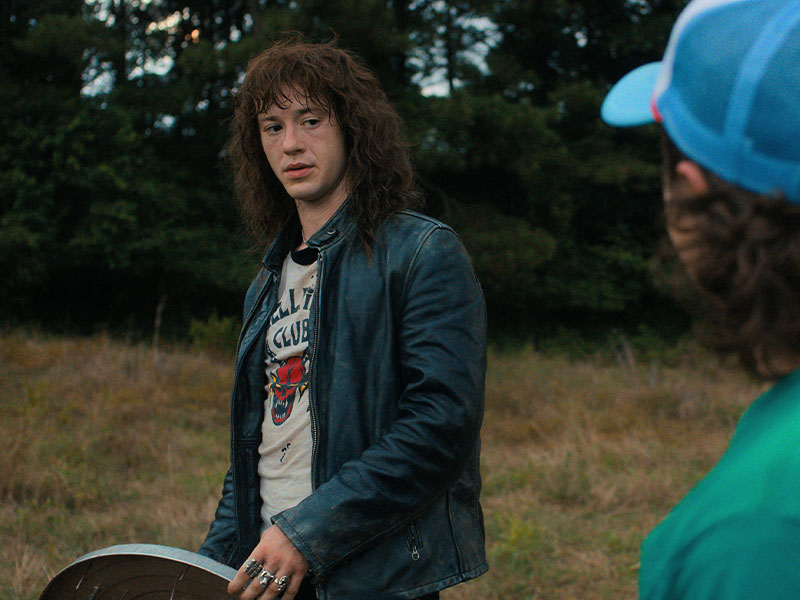
And a new dirtbag emerged, the one to rule them all: Eddie Munson (Joseph Quinn), topping our list of brave dirtbags, from “Star Wars” to Chicago, for the year 2022.

 
Eddie of “Stranger Things”
Image_placeholderStranger ThingsJoseph Quinn as Eddie Munson in “Stranger Things” (Courtesy of Netflix)
Eddie is brash, bordering on mean. He wears his hair long and fluffy, his jeans ripped and his silver rings on many fingers. He also wears his heart on his sleeve, evidenced fairly early in last season when Eddie did his best to help Chrissy.


In the past, the show has used Dustin (Gaten Matarazzo) several times as evidence of another character’s true goodness, which is kind of troubling if you think about it. We first believed Steve Harrington (Joe Keery) to be a jerk (he’s extremely coifed, not a dirtbag) but then he became best buddies with the younger dude. The same happened with Eddie this season. He befriended Dustin, and even younger kids like Erica (Priah Ferguson). He joined the quest and became its savior, sacrificing himself in a blaze of heavy metal glory that would make Mandy proud. 


The 2022 dirtbag answers the call.

 
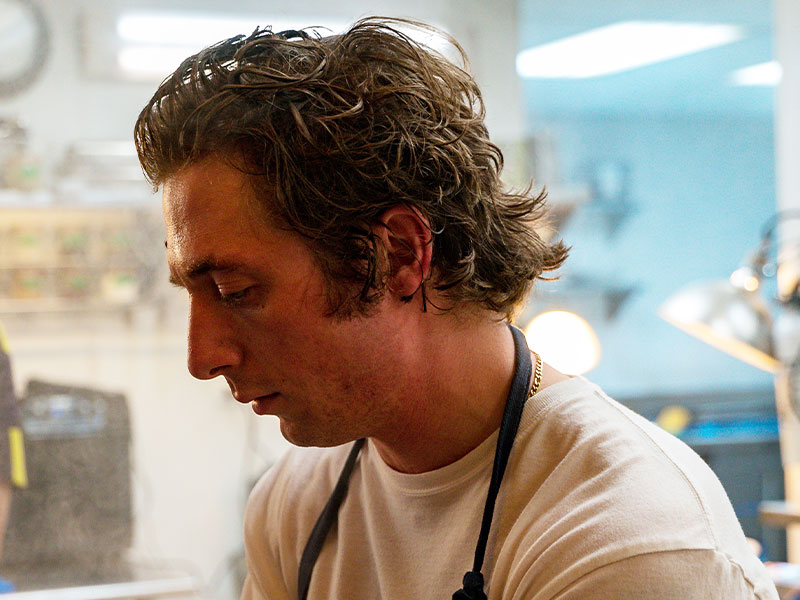
Carmy of “The Bear”
The BearJeremy Allen White as Carmen “Carmy’ Berzatto in “The Bear” (Matt Dinerstein/FX)
Eddie became so beloved by viewers, there’s a vehement backlash after he was offed. My son won’t wear his Hellfire Club shirt anymore (luckily, it fits me). With 2022’s “The Bear,” the opposite seemed to happen. The star of the Hulu series, Carmy (Jeremy Allen White), a celebrated young fine dining chef who comes home after his brother dies to run the family’s Chicago Italian beef sandwich shop, has incredibly thick, incredibly greasy hair which never seems to be in a hairnet, burn scars, a lot of tattoos and sweat. So much sweat. But he won people over. Fast. 


Viewers went wild for him. Like, romantically wild. Bon Appetit describes the character as “the Sexually Competent Dirtbag Line Cook.” Writer Sarah York characterizes Carmy as “a no-bed-frame man . . . Has he showered today? No. Are you going to be the one to change him and make him want to settle down? Also no!”


Lest you think the popular interest is purely superficial, Carmy also saves the day and stuff. Specifically, he saves the family’s restaurant by figuring out a riddle left by his brother. And in doing so, he saves the jobs of his employees and their futures. Smart thinking, Carmy. White, for his part, said in an interview with Eater that he doesn’t consider Carmy to be dirtbag but instead, as writer Ashok Selvam put it, “just a genuine and nice guy.” That’s exactly what a heroic dirtbag would say.

 
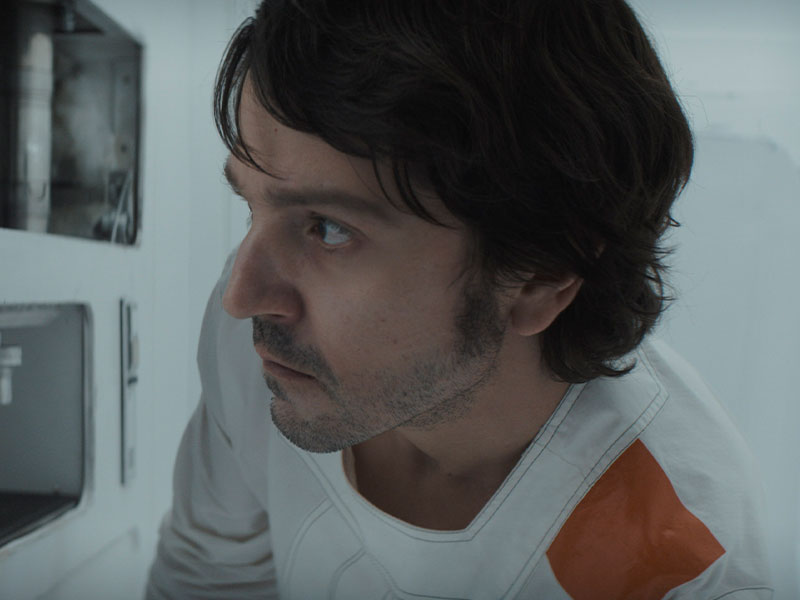
Cassian Andor of “Andor
AndorCassian Andor (Diego Luna) in “Andor” (Lucasfilm/Disney)

There’s saving the family business, saving the small, perpetually besieged town of Hawkins, Indiana, and then there’s saving the galaxy, one heist or prison break at a time. Enter “Andor,” the orphan dirtbag. As the title character of the Disney+ hit, Cassian Andor (the magnetic Diego Luna) is a dirtbag for grownups. He’s complicated, a Dickensian David Copperfield who could kick your ass or start an uprising. Depends on the day. 


His story is long and complex. He behaves thoughtlessly, making the criminal mistake at the beginning of the story that will dog him throughout the long saga. Yet he always comes back to his elderly, adoptive mother. He needs a haircut (all dirtbags do, it’s part of the job), a shower and probably a hot meal. When he shaves his beard it’s a big deal.


Andor can’t resist the pull of home or helping. His love for his long-gone sister fuels this “Les Miz” in space, and though he’s a mercenary, he only starts out that way. To be a heroic dirtbag, you must change, grow, and start to work for the good of others. What does it say about us that in 2022 that’s the kind of hero we want most of all? A redeemed one? A rough around the edges one?


Want a daily wrap-up of all the news and commentary Salon has to offer? Subscribe to our morning newsletter, Crash Course.


In a world that pretty much feels like it’s dying in a dozen different ways every day and most of the destructive forces are out of our individual control, we want to believe that one person could actually make a difference. Still. That we can, even or especially if we’re young, inexperienced, jaded, dirty. If the dirtbag can do it, anyone can. We can stem the destruction of climate change, survive this unending pandemic, push back the forces of the Upside Down or the Empire, or serve lunch.   

The dirtbag is dead. Long live the dirtbag. 

What to watch on Netflix in January, from a “That ’70s Show” spinoff to a nonlinear heist adventure

When it comes to New Year’s resolutions, making them is a piece of cake but actually keeping them is a challenging feat. Sometimes a goal is too vague or too unrealistic, which makes it all the more difficult to accomplish. Thankfully, Netflix is here to help in that arena, especially if one of your 2023 resolutions is to binge more good shows, movies and documentaries.

This month, the streaming giant is releasing international reality TV, thrilling documentaries, family-friendly showcases and plenty of literary adaptations. For fans of the self-proclaimed social experiment reality series “The Ultimatum: Marry or Move On,” be sure to check out the second part of its French rendition, which is out on Jan. 6. If true crime content is more your cup of tea, you don’t want to skip “The Hatchet Wielding Hitchhiker,” a documentary on Kai the Hatchet-Wielding Hitchhiker’s 2013 murder conviction. Of course, there’s also more lighthearted entertainment available, including the second season of “Kung Fu Panda: The Dragon Knight” and the 2010 rom-com “Leap Year.”

Here’s some of the new and must-watch entertainment coming to Netflix this January:

01
“Kaleidoscope,” Jan. 1

This is not your typical heist drama — like “Money Heist” or “Lupin” or “The Great Heist” – in which a linear narrative if provided from the assembling of a team to the heist and then the aftermath. Instead, “Kaleidoscope” is a nonlinear series that randomizes the order the episodes play for each viewer, meaning they may to watch in a different order from their friend. Regardless of the sequence in which the series is watch, each viewer should be able to piece together the timeline of the heist – leading to the ultimate finale.


Spanning 25 years, the series follows a group of masterful thieves attempting to unlock a seemingly unbreakable vault. Things, however, quickly grow murky once another more convoluted puzzle of corruption, greed and betrayal is added to the mix. Giancarlo Esposito, Paz Vega, Rufus Sewell, Tati Gabrielle, Peter Mark Kendall, Rosaline Elbay, Jai Courtney, Niousha Noor, Jordan Mendoza, Soojeong Son and Hemky Madera all star in this eight-part series. – Joy Saha


02
“The Way of the Househusband” Season 2, Jan. 1

Tatsu, a former-yakuza-boss-turned-househusband, is back for a second season of household chores and domestic living. Despite his bad-boy appearance and intimidating persona, Tatsu takes his job quite seriously so he can support his wife Miku, the breadwinner of their household.


Called “Gokushufudo” in Japanese, “The Way of the Househusband” is based on a manga series of the same name, written and illustrated by Kousuke Oono.– Joy Saha


03
“MADOFF: The Monster of Wall Street,” Jan. 4
The four-part series explores Bernie Madoff’s infamous $64.8 billion global Ponzi scheme, in which he defrauded thousands of investors out of tens of billions of dollars over the course of approximately 17 years. Madoff, who was the former NASDAQ chairman, was charged with money laundering, securities fraud, and several other felonies and sentenced to 150 years in prison on June 29, 2009. – Joy Saha


04
“The Lying Life of Adults,” Jan. 4
Based on Elena Ferrante’s 2019 novel of the same name, the six-episode Italian-language series follows a sheltered teen named Giovanna who befriends her estranged aunt in an attempt to learn more about herself and her family’s fallout. Set in 1990s Naples, the series stars Giordana Marengo as Giovanna, Valeria Golino as her aunt Vittoria and Alessandro Preziosi and Pina Turco as Giovanna’s father and mother. – Joy Saha


05
“Ginny & Georgia” Season 2, Jan. 5
Buckle up peaches! Ginny and Georgia, the dysfunctional mother-daughter duo, is back for more drama in the idyllic town of Wellsbury. Season one ended on a major cliffhanger, with Ginny — along with her little brother Austin — running away from home after learning that her mother murdered her ex-husband with poison from her beloved wolfsbane plant. Georgia’s plant has also been burned to smithereens, leaving her more mad than sad about her childrens’ disappearance. Antonia Gentry and Brianne Howey reprise their titular roles alongside Scott Porter, Felix Mallard, Raymond Ablack, Katie Douglas and Sara Waisglass. – Joy Saha


06
“The Pale Blue Eye,” Jan. 6
The mystery thriller, based on Louis Bayard’s 2003 novel of the same name, follows veteran detective Augustus Landor (Christian Bale) who investigates a gruesome murder at the United States Military Academy with help from a young cadet named Edgar Allan Poe (Harry Melling) Set in 1830 West Point, New York, the film also stars Gillian Anderson, Lucy Boynton and Robert Duvall.– Joy Saha


07
“The Makanai: Cooking for the Maiko House,” Jan. 12
Director Hirokazu Kore-eda of Cannes-winning “Shoplifters” fame and the recently acclaimed “Broker,” turns to television with this live-action adaptation of the award-winning manga series “Kiyo in Kyoto” by Aiko Koyama. It’s a good fit as Kore-eda can bring his contemplative style and unhurried pacing to tell the story of Kiyo (Nana Mori), a young woman who – with her childhood friend Sumire (Natsuki Deguchi) – moves to Kyoto to become maiko, geishas in training. However, Kiyo soon realizes that her skills do not lay with that art but with cooking delicious, soul-warming meals for her friend and the other maiko. Have comfort foods like omurice or curry on hand because you’re bound to get hungry watching this charming series. – Hanh Nguyen


08
“Break Point,” Jan. 13
From the creators of “Formula 1: Drive to Survive” comes “Break Point,” a 10-episode docuseries that focuses on one thing and one thing only: tennis. It follows a new generation of tennis players, both on and off the courts, as they fight to fill in the top spots that were left behind by the sport’s legendary yet retiring athletes. Being a young and professional tennis player is not an easy career, and the series proves exactly that through intimate footage of the players competing in tours, recovering from injuries, coping with emotional heartbreak and celebrating personal victories. – Joy Saha


09
“That ’90s Show,” Jan. 19

“That ’70 Show,” set in Point Place, Wisconsin in 1976, had introduced viewers to a band of lovable teenagers, who all gathered in Eric Forman’s (Topher Grace) basement to smoke weed and talk “Star Wars,” wrestling and other pop culture obsessions. Among his friends were tomboy/love interest Donna Pinciotti (Laura Prepon), handsome airhead Michael Kelso (Ashton Kutcher), self-absorbed princess Jackie Burkhart (Mila Kunis), foreign exchange student Fez (Wilmer Valderrama) and conspiracy theorist Hyde (Danny Masterson).


With Netflix’s spinoff, the gang’s next generation of offspring take us back to Wisconsin, but this time to 1995. Eric and Donna’s daughter named – what else? – Leia (Callie Haverda) is spending the summer in Point Place with her grandparents Red and Kitty Forman (Kurtwood Smith and Debra Jo Rupp reprising their roles) where she befriends Jay Kelso (Mace Coronel) the son of Jackie and Michael, among other teens.


While the series will no doubt go hard on ’90s nostalgia, that means the majority of the “That ’70s Show” original cast of friends will turn up (sans Masterson of course) as guest stars. Also joining in the fun will be Don Stark, who had played Donna’s dad Bob, and original pothead Tommy Chong, returning as Leo.– Hanh Nguyen


10
“Bake Squad” Season 2, Jan. 20
Hosted by Milk Bar founder Christina Tosi, the second season of Netflix’s “Bake Squad” will see the return of four bakers: cake decorator Ashley Holt, pastry chefs Christophe Rull and Maya-Camlle Broussard and chocolatier Gonzo Jimenez. The group will take part in some light competition, meaning there’s no prizes or elimination rounds, to see whose elaborate dessert will be chosen for a client’s special day, be it a celebration, wedding or birthday.– Joy Saha
11
“You People,” Jan. 27
The buddy comedy examines “modern love and family dynamics amidst clashing cultures, societal expectations and generational differences,” as described by Netflix. Directed by “Black-ish” creator Kenya Barris and co-written with Jonah Hill, the film stars Eddie Murphy, Hill, Julia Louis-Dreyfus, Lauren London, Sam Jay, Molly Gordon, Mike Epps, Nia Long, Deon Cole, Rhea Perlman and David Duchovny.– Joy Saha


12
“Cunk on Earth,” Jan. 31
Do you miss Charlie Brooker and “Black Mirror”? Too bad because this isn’t it. Brooker does, however, return to familiar ground for his British fans with Philomena Cunk, the silly and somewhat dim-witted investigative journalist played with zeal by Diane Morgan in many of Brooker’s UK projects. In this BBC-produced mockumentary, she travels the world to probe the wonder of the pyramids, which she calls “bricks in a triangle” and ask the hard questions like whether or not China also has a roof to go with its wall. Similar to Sacha Baron Cohen‘s faux interviewer Ali G, Cunk will sit down with various celebrities like Hugh Grant and Tracey Ullman, along with academics who may or may not be in on the joke. – Hanh Nguyen


13
“Pamela, a love story,” Jan. 31

The highly anticipated documentary, released in conjunction with her memoir, finally sets the record straight on Pamela Anderson’s story. Per a Netflix synopsis, “Pamela Anderson is ready to tell her story in a new documentary. In her own words, through personal videos and diaries, Pamela Anderson shares the story of her rise to fame, rocky romances and infamous sex tape scandal.”


The documentary comes after Hulu’s “Pam & Tommy,” which encouraged Anderson to break her silence and finally come forward with her story herself. As for whether Anderson will watch her showcase, she told The Hollywood Reporter, “The documentary I haven’t seen, and I have no intention of seeing. I gave full access to my archives and diaries, and I hope that through full transparency, it makes sense to somebody.”

Why we celebrate winter vegetables

As a Professor of Practice at Oregon State University, my time is focused on supporting the local farming community. I spend a good deal of time writing grants that will fund research needed by farmers which can range from how to best manage late blight organically on a potato crop to sweet pepper trials to find which varieties grow best across many different farming environments. My first step in writing any grant proposal is talking with farmers in the community to understand their needs and priorities. Often their needs are more about marketing than research. It’s great for a farmer to figure out how to successfully grow daikon radishes but how do we get people to buy them? How do we make lesser-known vegetables that grow well for farmers in our communities marketable? This is how I initially came up with the idea for the Eat Winter Vegetables campaign that I have been running for several years in the Pacific Northwest.

Why Winter Vegetables are Sometimes a Hard Sell

From a consumer perspective, winter vegetables are under-appreciated. They are often earthy, bitter, and sulfurous in flavor. People tend to be deterred by these flavors, preferring bright and sweet. Despite being culinarily adventurous myself and having an academic background in Horticulture, I grew up in Florida in a Sicilian family and thus had little exposure to flavors like these until in my 30s. Winter produce is foreign to even dedicated main season farmers market customers as many markets only run through October or shopper attendance drops significantly due to unpleasant weather spoiling an outdoor market experience. We can all go to the grocery store during the cold, dreary, wet months and buy familiar “summer” produce any time of year from all over the world. But that doesn’t support, our local farmers which is what I designed the Eat Winter Vegetables campaign to do.

The mild climate west of the Oregon Cascades allows farmers to grow many winter-hardy crops in the field for winter and spring harvest. A wide range of alliums, leafy greens, brassicas and root crops grow well here. However, there are currently few locally grown winter vegetables in produce markets from January through April. Many European and Asian countries with similar climates have more robust local and regional winter produce markets. For farmers, winter vegetable production can provide cash flow from November to April (outside the main summer season), more consistent work for employees and year-round relationships with customers.

The Eat Winter Vegetables project goal was to increase production and consumption of locally grown winter vegetables in Oregon including three storage crops (winter squash, celeriac and garlic), and five field crops (Brussels sprouts, cabbage, cauliflower, sprouting broccoli and radicchio). We accomplished this through many different activities including organizing winter vegetables celebrations, called sagre (plural of sagra) which are Italian celebrations of food, vegetables, and locality. There are nearly 30,000 sagre in Italy annually — each one a proud salute to local traditions, community, and the food that brings people together. Our versions of a sagra were both educational and fun in hopes we could excite people with these lesser-known vegetables with delicious dishes to taste and local farmers to talk with. We also had collaborating chefs and culinary advocates create easy to make home recipes for winter vegetables since many consumers lack familiarity and understanding of how to use them in their kitchens.

Educating Consumers Starts in the Kitchen

Overall it became clear the reason most consumers weren’t buying local winter vegetables was this lack of understanding how to prepare them at home. I can’t tell you how many times I have heard someone tell me they loved a radicchiosalad they had at a restaurant but when I ask how they prepare radicchio at home they tell me they don’t because they think it’s too complicated. None of this is complicated at all, it just takes a little bit of information to prepare a fabulous radicchio salad or risotto in your home. I’m excited to partner with FoodPrint to provide some of the knowledge we gained through the Eat Winter Vegetables project and hope it inspires you to eat local all year round.

Where to Find Winter Produce

Farmers in your area may offer year-round or winter community supported agriculture (CSA) subscriptions. This is my favorite as you are given a box of produce each week (or every other week is common with winter CSAs) and must figure out what to do with it  farmers usually provide some recipes and if not we have a world of them available online. Farmers may sell to co-ops, small grocery stores or restaurants. You may also find year-round or winter farmers markets.

Cookbooks and Other Resources

For the first time, scientists discover organisms whose diets rely on eating viruses

Humanity loves a good villain, and few villains are as threatening and sinister as a virus. They are practically invisible, a brutal parasite that hijacks our own living cells, twisting their biological essence into more viral soldiers to keep up the massacre.

But viruses play an incredibly important role in the ecosystem. They are like the apex predators of the savanna, the lions that keep gazelle populations in check by thinning out their numbers.

This is the first time it has been shown that a virus-only diet can be enough for a microorganism to survive, a practice the researchers call "virovory," meaning virus feeding.

For example, sometimes simple aquatic plants called algae will start breeding out of control, causing an algae bloom. Some blooms can be toxic, choking beaches or lakes and suffocating wildlife, often ballooning so large they can be seen from space. Blooms can occur naturally, but a variety of human activities, such as nutrient pollution from agricultural runoff or sewage discharge, can trigger a bloom or make it worse.

Then, along come the chloroviruses. Named for the Greek word for "green," these are a large species of virus found everywhere in the world in freshwater environments. And they love to infect algae. Chloroviruses actually play an important role in keeping algae blooms in check.

Nonetheless, when a virus kills an algae cell, by popping it like a wet balloon, all those nutrients tucked inside spew out into the water, where it gets slurped up by other microbes. This is called the "viral shunt" and it means other organisms further up the food chain don't get to benefit from this nutrient cycle.

They found that Halteria sp. not only hungrily devoured the viruses, but they had enough nutritional value to thrive and reproduce.

However, new research in the journal Proceedings of the National Academy of Sciences provides evidence that not only are chloroviruses regularly eaten, they are also nutritious, which has broad implications for how we think about food chains and the cycling of carbon on Earth. The paper was co-authored by a plant pathology professor James Van Etten, who first discovered chloroviruses in 1980.

To study this, researchers at the University of Nebraska-Lincoln scooped up some pond water containing a microbe called Halteria sp. These tiny creatures are called ciliates because they are covered in tiny hair-like projections call cilia. Then, they fed the ciliates heaping portions of chloroviruses, with some cultures not fed anything to serve as controls.

They found that Halteria sp. not only hungrily devoured the viruses, but they had enough nutritional value to thrive and reproduce. To really prove this was happening, they labeled the DNA of the viruses with a fluorescent green dye. And when they checked the "stomachs" of these microbes (technically called the vaculole), they found glowing viruses inside. This is the first time it has been shown that a virus-only diet can be enough for a microorganism to survive, a practice the researchers call "virovory," meaning virus feeding.

"If you multiply a crude estimate of how many viruses there are, how many ciliates there are and how much water there is, it comes out to this massive amount of energy movement (up the food chain)," the study's lead author John DeLong, an associate professor at University of Nebraska–Lincoln, said in a statement. He and his colleagues estimate that ciliates in a small pond might eat 10 trillion viruses a day. "If this is happening at the scale that we think it could be, it should completely change our view on global carbon cycling," DeLong said.


Want more health and science stories in your inbox? Subscribe to Salon's weekly newsletter The Vulgar Scientist.


Indeed, this is a relationship that is sorely missing from food chain models. The authors argue that "current food web models are missing a critical interaction," but there is surprisingly little research in this area.

"I was motivated to determine whether or not this was weird, or whether it fit," DeLong said. "This is not weird. It's just that nobody noticed it."

To learn more, DeLong wants to repeat this experiment outside the lab. Discovery of the first virovore is really underscores how little we know about the microbes all around us, to say nothing of their evolution. Creatures that eat viruses will put selective pressure on them, which over time will shift their genetics. Not only does understanding this relationship have big implications for how nutrients are cycled through the ecosystem, but it illuminates some of the fundamental mechanisms of life itself.

Can we get rid of single-use packaging?

You’re seeing a concert and grabbing a beer in a red plastic cup, or maybe checking out a baseball game and buying a soda in a cup you’ll toss before you leave the stadium. This example of single use food and beverage serveware is as common as they come. And the sight of overflowing trash cans after an event, spilling over with plastic waste that was only used for hours or even minutes is all too familiar.

But how else would it work? Drinking a beer or soda at an event is half of the fun of being there, and it’s not practical to ask people to BYO reusable cups to something like a sporting event; not many people would agree to it. It’s not what we’re accustomed to, and it’s a big shift to put squarely on consumers.

Envisioning a Reusable Future

In a recent report, “The New Reuse Economy: How reuse systems and services will revolutionize how we consume,” Upstream Solutions lists a lack of vision as one of the key obstacles we need to overcome to create a “new reuse economy.” Envision this: what if there were companies who made reusable cups, built out regional washing infrastructure and contracted with sports and music venues to provide reusable drink cups that attendees simply tossed in a bin before they left?

This service actually exists, provided currently by a company called r.Cup, to whom Upstream bestowed a “Reusies Award” this past September. The company has been working in Denver (and elsewhere) and recently expanded to Seattle as part of Reuse Seattle, a public-private partnership between the city, sports and entertainment venues, restaurants, businesses and more. This kind of innovation and public/private partnership is exactly the vision that Upstream lays out as necessary for a reusable future in its report.

As we explored in our recent podcast episode, “Unwrapping Food’s Plastic Problem,”  cutting out the one trillion disposable food and beverage packaging items used in the U.S. every year will take a lot more than individual responsibility. While many people want to make good choices for the environment, they can’t do that if they don’t have good options. Upstream’s report details the kinds of innovation we need to see to change the status quo on disposables.

Projects like r.Cup provide us with other necessities Upstream calls for, including a replicable pilot and investment in infrastructure that makes it stress-free for people and businesses to handle reusables. If a person buys a drink at a participating Seattle venue, they will be given that cup as default, and when they drop it in the collection bin, it will be circulated and reused regardless of that person’s individual will or preference. This creates a solution that does not rely on individual buy-in or commitment.

Producer Responsibility for Plastic Waste

That shift away from consumer responsibility is key in this reusable future. It’s a concept we explore in the food packaging podcast episode. Companies and governments must work together. In its report, Upstream celebrates big companies who have already made commitments to a portion of their supply chain converting away from single-use packaging and towards reusables.  But it is worth mentioning the recent “Global Commitment” report from the Ellen Macarthur Foundation, that monitors progress on 1,000 signatories (businesses, governments and organizations) who have pledged to move forward on reducing plastic and towards a circular economy. They found that, while progress is being made, key targets are being missed and much greater strides are necessary to reduce the emissions that cause climate change, reinforcing the “urgency for businesses to accelerate action, particularly around reuse, flexible packaging, and decoupling business growth from packaging use.”

Voluntary progress from businesses is a step in the right direction, but given the urgency of slowing down plastic production, creating a policy environment to speed up those changes is also a necessity. Thankfully, this is an area where we’ve seen recent progress: California recently joined several states in passing an extended producer responsibility (EPR) law, which makes companies responsible for disposal of their own packaging waste.  EPR is only one example of how government can get involved in moving the needle on plastics. And while manufacturers are likely to fight these provisions, their growing popularity with the public signals that the industry may finally get more regulated. As we’re seeing in the creative push to readapt to reusables, people are interested in moving away from plastic, they just need better options.

Best of 2022 | The white, conservative Southern women who asked me to keep their abortions secret

The day one of my closest childhood friends got married, she asked me to keep two secrets: The first was her high school abortion. “It was so long ago,” she said in a terrified whisper, “I can’t tell him; it doesn’t even matter anymore.” She was peeking down the hall, where everything was draped in rented white satin—a traditional, Southern wedding, officiated by an odious Calvinist preacher. She frowned at her family, who were busy decorating. “Nobody except you understood.”

She was desperate not to be overheard, so I squeezed her hand to tell her wordlessly, We buried that memory together a long time ago. (Even now as I write this, I can’t bring myself to type her name.) Her body relaxed, and she took a breath. As I opened her makeup kit, she added abruptly, “And don’t you dare say a word about last summer, either.”

A few months prior, my friend had had a second abortion—this one the result of an affair.

“You’re the liberal, not me,” she snapped. “That was just a one-off.”

Too stunned to speak, I drew my fingers across my lips in a zipper motion and grabbed the mascara.

* * *

I was born in the Bible Belt, nine months after Roe v. Wade was decided. My life has been defined by this landmark 1973 ruling and the freedoms it afforded me: bodily autonomy, personhood, empowerment. I heard that message loud and clear, despite growing up in the conservative, religious South. Knowing I would never have to pump out unwanted babies was a lifeline, and the reason I never breathed a word of my friend’s abortion — or anyone else’s. My peers and I understood that when it came to our bodies, the Roe decision meant we could and must always support each other’s reproductive choices. And when anyone’s choice needed to be covered up (which was often), we did so unfailingly, certain we were abetting a righteous lie. Now, almost 50 years later, abortion rights are all but gone, and I find myself in shock like many Americans, but also in profound doubt, concerned that perhaps I got the message of Roe wrong.

Most of the Southern girls I grew up with never got far from home, where their evangelical parents force-fed them toxic nonsense.

My parents were proud, old-school, pro-union leftists. In our house, there was no question that feminism is a good thing. Because of my father’s military service, we moved around a lot; I went to six different schools in one state alone, and we also spent part of my childhood in Europe. I was lucky. Most of the Southern girls I grew up with never got far from home, where their evangelical parents force-fed them toxic nonsense: They must be “sweet,” they should look forward to motherhood as their ultimate (and only) accomplishment, men know best, and gender is absolutely binary. The pressure on them was immense, and they lived in a state of disillusionment which I pitied as I watched many of them eventually surrender to patriarchal norms. As a child, my close friend was a tomboy who despised her family’s views, often skipping Sunday school to read “radical” books. By the day of her wedding, she had become a prim churchgoer and Republican. Her tone with me in adulthood was harsh, as if she resented or feared me for not following the same path. Shortly after she married we lost touch and never spoke again.

My Black and LGBTQ+ friends in the Bible Belt got different, darker messages of course, not just about reproductive choices, but also their entire identities. The systemic racism that targets mothers of color starts early and has disturbing results. And for young LGBTQ+ Southerners in the days before legalized marriage, sex and pregnancy could be incredibly dangerous experiences thanks to their neighbor’s toxic religious extremism. I feared for them, for everyone. This isn’t right, I always thought. We don’t have to put up with being put down; it’s not legal.

As I grew up, I stayed lucky. In adulthood, I was able to surround myself with like-minded feminists who understood my personal choices around pregnancy and marriage. I found heroines like Jamie Miller, a West Virginia activist who has fought doggedly for abortion access despite being repeatedly harassed and threatened. This past summer, I checked in with Jamie repeatedly as the Supreme Court released its Dobbs decision, and she reminded me that we are not anomalies; the South is incredibly diverse, and not everyone in our region falls prey to toxic evangelical messaging. “My whole family is religious,” says Jamie, but “when I started speaking up [on abortion], they accepted it.” Jamie’s children have also been staunchly supportive of her work, and when she puts out a call for protestors, a noisy crowd always shows up. In many cases, it is only due to gerrymandering and voter suppression that red staters suffer under minority conservative rule. There are far more progressives in my hometown than outsiders realize, and advocates like Jamie have always fought to make certain everyone here has access to reproductive care.

The women in my own life who I witnessed most frequently seek elective abortions have also been the women who present themselves as “good” conservative Christians.

The crux of my newfound doubt about Roe is the “everyone” part. Because that story about my friend’s wedding is just one of many. Jamie, me, every left-leaning Southern woman I know—we have all been put in the same position many times, often while being insulted by the very person asking us for help. What I am wrestling with in the wake of abortion rights being overturned is the fundamental tension between Southerners like me, and conservative white women like my childhood friend, who quietly take advantage of abortion rights while helping abolish them.

Put simply, there’s a lot of hypocrisy down here, and I no longer know how to feel about it. It dawned on me this summer that in my experience, anti-choice women access abortion care at the same rates as everyone else I know. Indeed, the women in my own life who I witnessed most frequently seek elective abortions have also been the women who present themselves as “good” conservative Christians. Who, I now wonder, have I really been keeping abortion secret for all this time?

Statistics are hard to come by on this issue, but what we do know about abortion access proves my experiences are likely representative of a broad trend. To determine how often anti-choice women are accessing the care they claim to revile, we have only to look at some hard facts and (I hope) familiar numbers: worldwide, 1 in 4 women have had an abortion. Almost a third of pregnancies miscarry, and eight percent have complications that can threaten the life of the parent or child. As for sexual violence, that happens in the U.S. literally once every minute, totaling half a million victims per year. Statistically, there is no way these overwhelming numbers don’t reach into conservative families.

More to the point, there is also proof that religious white women have a lot of elective abortions. According to one 2014 study, 62% of Americans who visit abortion clinics self-identify as religious, with 42% specifically identifying as practicing evangelical or Catholic—the two faiths most affiliated with the anti-choice movement. Many conservative news outlets concur, reporting that up to 70% of women seeking abortions are Christian.

Ask any honest Southerner, and she’ll confirm these numbers with stories of her own. The majority of the women I know who’ve had abortions have been white and conservative, and I’ve lost count of how many asked me to help hide the details. They ask me specifically because I am pro-choice and believe in their right to privacy. My childhood friend, for example, implored me not to tell her fiancé about her abortions because I was the only one who knew about them in the first place.

* * *

In my late twenties, I had a boss who asked me for help scheduling an elective abortion. She had married into her husband’s family business, and apart from the Mexican workers she refused to speak to, I was the only female-identifying employee who didn’t go to her church or share her last name. She was deeply anxious, so I asked as few questions as possible, called a clinic just over the state line, then covered for her at the office. A few weeks later I made a comment about a local political race, and she shot back, “I’m not voting for anybody who’s pro-Muslim or pro-choice.” I gave her a hard look. “That didn’t count,” she said, waving me off. “I’m not a slut.”

“That didn’t count,” she said, waving me off. “I’m not a slut.”

Such dismissals are rooted in shame and indoctrination. During my years as a professor at a university in Madison Cawthorn’s congressional district, I kept pamphlets in my office for the local Planned Parenthood clinic and offered advice to my evangelical students more often than any other demographic. Few of them changed their views on abortion afterwards. Even the relief of being freed from an unwanted pregnancy couldn’t break through their cognitive dissonance. The women who think I’m a “baby killer” may have more abortions than my pro-choice friends, but they still refuse to hear the lesson of compassion we always offer in their time of need. They can also be unspeakably cruel to others who make the same choice. (When one dear friend of mine terminated a high-risk pregnancy, for example, her OB-GYN nurse whispered in her ear “You’ll go to hell for this” right before wheeling her into surgery.)

I must pause here to clarify that I am not talking about people in abusive families or insurmountable circumstances. Obviously, many abortion patients need to be secretive for safety reasons. I am also not talking about rural communities, where clinics have been systematically stripped away and replaced with unethical crisis pregnancy centers. My specific beef, the doubt I am struggling with, regards my peers: middle-class suburban white women who have the means and education to access reproductive care easily, and do so on the sly.

Recently I posted a tweet about my observation that white conservatives frequently use abortion for birth control. The tweet went viral, with thousands of corroborating replies and anecdotes. The overwhelming consensus was that these hypocrites expect us to cover for them, but never vice versa.

Now that Roe has ended, I have half a mind to out every last one of them.

* * *

In her famous article “The Only Moral Abortion is My Abortion,” Canadian activist Joyce Arthur documents abortion providers’ experience with anti-choicers seeking abortion care. The abuse these patients heap on healthcare workers is both appalling and illuminating. They believe they are special, an exception to the rule, and more entitled than other pregnant people, whom they believe to be beneath them.

Such entitlement is of course the flip side of their unique brand of oppression. In order to fully internalize the misogyny keeping them down, conservative women have to buy into the white supremacist practice of placing them on a pedestal. What else is the right-wing agenda for? The “pro-family” cause crumbles unless my childhood friend—or my former boss, or any of my old students—accepts that her cage is a gilded one, and willingly enters it, locking the door behind her. There is tremendous psychic comfort in submitting to tyranny, and doing so allows white evangelicals to elevate and separate themselves from people like me.

My struggle, then, is what to make of this new post-Roe message. For the first 49 years of my life, I vehemently followed the unwritten Code of Southern Girls: If anyone says she’s a virgin but you know damn well she’s not, keep your mouth shut. If she has a date, cover for her; tell her parents she slept at your house. And if anyone needs an abortion, even the pastor’s daughter (or wife!), help sneak her into the clinic.

I want to crash all the Sunday church services and tattle from the pulpit.

The betrayal I feel in losing Roe manifests in part as a bitter desire to break this code. I want to shout from the hilltops all the names of my conservative friends who have had abortions. I want to crash all the Sunday church services and tattle from the pulpit. And I now question whether covering for these people was a righteous lie after all. Perhaps it makes me no better than them, a hypocrite on a pedestal.

The history of the “pro-life” movement is appalling, and its future will be even more toxic. Their newest lie is a delicate semantic one: the word “abortion” now only applies to pregnancies resulting from consensual (read: sinful) sex. Forced birth proponents are testifying to Congress that ending a risky pregnancy is not technically an “abortion,” when there is no medical difference between the two. It is the same sinister lie my old boss told me: some abortions don’t “count.” Such misinformation will get worse, more legally confusing, and people will die as a result. And the ease with which Roe was overturned means evangelicals are now targeting other fundamental rights.

Of course, I would never publicly expose anyone who has had an abortion. Though white female privilege and the evangelical agenda are major barriers to social justice in this country, privileged people deserve privacy, too. But my newfound doubts have made me reach out to friends to ask what we should do now, and how we should interact with those who betrayed us.

Jamie Miller, my activist friend in West Virginia, offered the best answer I can find. “I don’t think it’s possible to chip away at white women’s entitlement,” Jamie told me on a recent Saturday after she’d spent a rain-soaked afternoon marching outside the state capitol. Last year while working as a clinic escort, Jamie helped an 11-year-old girl through a mob of demonstrators. The crowd berated and insulted the girl, who was wearing kids’ pajamas.

The path forward, says Jamie, is to stop sugarcoating. Up to now, we’ve allowed politicians to be too coy with their language. “No more equivocating,” Jamie says; we must take control of the messaging. While we cannot out individuals, we can and must spread the collective truth.

Jamie shares my concern that we have all been complicit in the erosion of Roe, and worries that arguments about “special” exceptions only further alienate Americans from the reality that elective abortion is a universal fact of life, even for people who claim they’ve never had one. “Misinformation, the media, centrist Democrats,” Jamie says, “everyone has failed… abortion has been made into a source of shame, into a lie… and we enable the lie by not speaking of it.” In other words, by enabling white evangelical denial about their own abortions, we have helped them destroy everyone’s right to get one.  

Oh, the stories Jamie and I could tell; if only the walls of abortion clinics could shout instead of whisper. I still sometimes wish I could out some of my evangelical friends with public proclamations about their secret, salacious abortions. But what I must do instead is tell anti-choicers, tell you, tell everyone that the lie itself exists. Only by owning the secrets we have kept for each other, by calling out the lie and speaking truth to its power, does our right to privacy have any hope of being returned to us.

Climate reparations: It’s the right thing to do — and will create a better world for everyone

Last summer, devastating floods swept Pakistan, displacing 32 million people and leaving more than 500 children dead. As of this writing, according to UNICEF, “nearly 10 million girls and boys remain in need of immediate lifesaving support.” Meanwhile, between June and August of 2022, record-breaking heat waves boiled much of Europe, with Pinhão, Portugal, reporting a high of 116.6℉ on July 14. Over in Tunisia, the high reached 118.4℉  that same month, while other parts of Africa suffered unprecedented weather events that took thousands of lives.

In Uganda, drought and famine caused 2,500 deaths, while six severe storms in 2022 killed “at least 890 people” in Madagascar and Mozambique. Nigeria experienced its “worst floods in a decade,” causing over 600 deaths, while “nearly two million people in Chad were affected by floods in August and October.” As I write this sentence in a small city in Germany, temperatures are expected to reach roughly 60℉ on Saturday, the last day of December, and the carbon dioxide detector on my office wall currently reads 450 parts per million (ppm), with the windows open.

I’m writing this article in a small city in Germany, where the temperature on the last day of 2022 will be roughly 60℉. The CO₂ detector on my office wall reads 450 ppm. (That’s not good.)

This is the calm before the storm. It only gets worse from here. Yet hanging over the whole environmental predicament is a double asymmetry between the Global North and Global South: The former is overwhelmingly responsible for anthropogenic climate change, yet the latter will suffer its worst consequences — immense harms that will disproportionately affect infants and young children “living in low-income countries in Asia, Africa and Latin America.” Consider that Pakistan generated 0.6% of the world’s CO₂ emissions in 2021. Uganda produced 0.02%, and Nigeria only 0.37%. These countries are almost carbon neutral. In contrast, the U.S. emitted 13.49%, and although China’s CO₂ output is currently greater than any other country in the world, the U.S. has spewed more than twice as much of that heat-trapping gas into the atmosphere as China has since 1750. Historically speaking, 29% of total emissions have come from the U.S., 22% from European Union countries and 17.2% from China. Africa as a whole has contributed, in total, a mere 3.41%.

This is a profoundly unfair situation: Imagine placing a gas-powered generator inside a large apartment complex next to your single-family home. It runs day and night, and powers all the amenities in your own house — televisions, computers, heating, the stove, the lights, and so on — making it a very comfortable living space. However, the generator spews black exhaust into your neighbor’s apartments, sickening countless children and adults who live there. Some try to move, and a few are able to do so, but most have nowhere else to go. Despite pleas for you to turn off the generator, you refuse — or, at best, agree to turn it down a little in the future. This is, roughly speaking, the global climate situation today: Those of us in the Global North are the people living comfortably at the cost of our less fortunate neighbors.

How can we rectify this situation? This question concerns a kind of social justice called climate justice, as “climate change threatens the effective enjoyment of a range of human rights including those to life, water and sanitation, food, health, housing, self-determination, culture, and development” — to quote the Office of the UN High Commissioner for Human Rights.

One answer involves the largest historical polluters paying climate reparations to those most affected by pollution. While the idea of “reparations,” defined by the Oxford English Dictionary as “making of amends for a wrong one has done, by paying money to or otherwise helping those who have been wronged,” might sound like a radical proposal, there’s plenty of historical precedent. Germany, for example, made financial payments to Holocaust victims and their families. In 2019, Canada compensated Indigenous people “forcibly removed from their families and made to attend Indian residential schools to assimilate them into white society.” And the U.S. government made financial restitution to Japanese Americans who were interned during the Second World War. Indeed, as one article on the issue states, “U.S. history is full of cases where the government paid reparations to its own citizens — even dating back to the colonial period.”

But what exactly would climate reparations look like? What can the Global North do to pay off its “climate debt”? For answers, I called Olúfẹ́mi Táíwò, an associate professor of philosophy at Georgetown University, who dedicates a chapter to the topic in his insightful book “Reconsidering Reparations.” This transcript of our conversation has been edited for length and clarity:

Perhaps I could start by asking you what your vision of climate reparations is.

The first thing to note is that the idea of reparations isn’t new. For decades, people have been pushing for an approach to our ongoing ecological and climate crisis that takes into account both the legacy of colonialism in explaining the political order that we have and, in particular, the uneven contribution of the Global North versus Global South. Whether we’re talking about “ecological debt,” as groups like Acción Ecológica did in the ’90s, or whether we’re talking about broad perspectives on debt cancellation, which were part of reparations discourse, also as early as the ’90s, with the Abuja Proclamation. Or consider the People’s Agreement of Cochabamba — all of this has been in political discourse for quite some time. So I’m joining an ongoing conversation.

That preamble aside, I take climate reparations to be a reconstruction of our global system in the direction of serving people rather than portfolios, and broadly distributing the costs of that construction project toward the richer countries of the world, the big emitters, and those countries and corporations that had the most to do with yesterday’s injustices in building the global political and economic system that we have now. That’s the high-level conceptual description of it.

In terms of object-level policies, I think global phasing out of fossil fuels, construction of alternative regional solidarities within the energy sectors based on popularly controlled energy sources at multiple scales: from community-level to state-level control of renewable energy. Phasing out fossil fuels thus means phasing out private control over energy production.

I take climate reparations to be a reconstruction of our global system in the direction of serving people rather than portfolios, and broadly distributing the costs of that project toward the richer countries and big emitters.

Debt cancellation would also play a large role, to enhance public spending on social services. I think there would be other kinds of unconditional transfers of capital from places where it has been hyper-accumulated to places of lower levels of accumulation. The easiest framework for thinking about that is, of course, Global North to Global South, although there’s obviously additional kinds of transfers that you might want. 

Debt cancellation itself would be an example, though there are many other opportunities to transfer money to households, or from rich states to poorer states. One big example that I’ve been talking about with folks is at the level of the International Monetary Fund (IMF), where a kind of IMF-bucks is one way you could think about this policy vehicle with special drawing rights. That would be an extremely direct way to make unconditional cash transfers to poor countries — to Black and Indigenous parts of the world — which has some distinct political advantages. Those are some policy specifics.

What would this mean for the average person in the Global North? How would the average person’s life change, or be affected, by climate reparations for the Global South? I suspect some might worry that reparations would impose non-trivial costs, which might lead them to oppose your proposals.

This is something I’ve wanted to speak to specifically, because I think — especially in the U.S. conversation about reparations — that people imagine reparations as involving white families being forced to sign a check over to Black families. So there’s a picture of this as a kind of zero-sum contest between the people that will receive the most from reparations and the people who reparations will, in effect, be taken from. However, in the way I understand reparations, I don’t think that’s how it would work.


Want a daily wrap-up of all the news and commentary Salon has to offer? Subscribe to our morning newsletter, Crash Course.


One aspect of reparations, in the context of the climate crisis, is that rich countries should have to take on their responsibility of the global mitigation burden. Decarbonizing the world — what that might look like for people in the Global North if this vision of reparations were implemented is a lot of new jobs in green unionized sectors. It actually doesn’t look like somebody coming over to take your toaster and hand it to a Black family if you’re not Black, or an Indigenous family if you’re not Indigenous. It looks like the government more broadly doing an industrial policy that’s going to work out for most people in the world, or that could work out, depending on how it was designed. It won’t work out for private fossil fuel executives; it won’t necessarily work out for the investor class. I’m not denying that there would be losers in my version of the world. But I don’t think that the people who would lose out would be the average person, even in the Global North.

Since you’ve written about reparations for the atrocities of slavery, in addition to climate reparations, I wonder if you could elaborate on the differences between these. What are their points of contact, and how do they diverge? Are climate reparations just a sort of forward-looking version of reparations in general? I recall this passage from your book, in which you write: “It is not that every aspect of today’s global racial empire is rooted in the impacts of climate change. But every aspect of tomorrow’s global racial empire will be.” 

In “Reconsidering Reparations,” I don’t think I actually use the phrase “climate reparations.” The book is explicitly about reparations for transatlantic slavery and colonialism, and the historical case for reparations in slavery is obviously independent of the climate crisis. It would be called for whether or not there is a climate crisis.

What I’ve been arguing for isn’t that the climate crisis is why reparations are necessary, or that addressing this crisis will, in and of itself, address all the things that we’re drawn to addressing by thinking about the serious history of race and empire, to which reparations is a response. I think what I’m pushing for is a kind of realism about the thrust for racial justice and, in particular, about what the conditions of racial justice are, politically speaking. So, even though the historical rationale for why reparations are called for doesn’t depend on the climate crisis, I think actually achieving the political conditions required to respond to racial injustice — that might well depend on how we respond to the climate crisis.

Decarbonizing the world … doesn’t look like somebody coming over to take your toaster and hand it to a Black family if you’re not Black, or an Indigenous family if you’re not Indigenous.

Thus, even before we address all of the conceptual, historical and causal connections between the history of empire and the history of the climate crisis, of which there are many, I think we can just ask the question: What are the prospects of building a world that is more just to Black people, to Indigenous people, on a planet that’s much hotter, in which there are increasingly zero-sum games between geopolitical powers that are not, for the most part, controlled by Black or Indigenous people? That is, in a world where a growing amount of society’s resources are devoted to making the world safe for investment, especially in the various sectors responsible for climate change.

I don’t think that’s a world likely to produce good political results for anybody, but certainly not for the people lowest down on the hierarchies established by history.

In November, during the UN climate negotiations in Egypt, nearly 200 countries agreed to create a fund to help poor countries especially vulnerable to the effects of climate change. Climate activists are describing this as “climate reparations,” although developing nations call it “compensation” while U.S. diplomats use the phrase “loss and damage resources.” Either way, it seems like a breakthrough — something developing nations have been working toward for over three decades. What do you make of this?

It’s certainly a step forward, in that the discussion can now move from whether or not there should be transfers in a specific area of loss and damage to the question of how large those transfers should be and what forms of transfers are acceptable. Pledges in and of themselves don’t mean very much. Of course, as we’ve already seen, there was a promise from the rich countries of the world to transfer some $100 billion for the Green Climate fund, and that full amount has yet to materialize. What has materialized has often been in the form of loan guarantees, some of which aren’t even concession loans but market-rate loans that actually create debt rather than the kinds of political opportunities that would benefit a politically serious operations project. So I think it’s obviously too early to declare total victory, but we’re in a meaningfully different place, politically speaking, on the climate and ecological crises than we were a few years ago or a few months ago, and I think that’s significant.

We’ve already talked about what climate reparations would entail, and how they might impact the average person living in the Global North. For those of us who think there’s a compelling moral case for climate reparations, what should we, as individuals, do to help advance the cause?

The most important steps don’t involve “charity” at all. Climate reparations could mean taking down monopoly private utility companies in the Global North, and getting those under democratic control.

Obviously, redistribution is important. That means more progress on funding “loss and damage” would be good, and hence pressuring governments to back loss and damage payments is important for achieving climate justice and reparations globally. When you say “reparations,” people often think about this in terms of charity — something that the haves give to the have-nots. There’s an element of that, of course. But this way of understanding the political origins of climate injustice calls for broadly democratizing the energy sector and other important sectors around critical resources, which means some of the most important concrete steps that people can take anywhere, perhaps especially in the Global North, don’t involve thinking on the model of “charity” at all. I think a step forward for climate reparations would be taking down monopoly private utility companies in the Global North, and getting those under public democratic control. That means that people can help confront the institutions ruining everyone’s lives by fighting for themselves, not just donating to causes that are about others.

I think investment movements, especially on divest-invest strategies, are another set of concrete steps forward, and beyond trying to democratize energy systems in the sense of making them owned by public utilities rather than private ones, I think we need to democratize how those are administered. This means well-paying, union-controlled work — i.e., unionizing those sectors fighting for public control, not just by the state but, importantly, by the workers themselves. I think that’s a particularly important path forward.

Last question. I’m curious about your thoughts on some of the other supposedly big threats facing humanity this century, such as engineered pandemics, or even artificial superintelligence. From the “longtermist” perspective, climate change isn’t really all that bad — it probably doesn’t pose what longtermists would call an “existential risk.” It will disproportionately harm people in the Global South — everyone agrees about that — but there are, basically, bigger fish to fry. Longtermism, like climate reparations, is forward-looking, but wouldn’t prioritize the sorts of things you so passionately advocate. Any thoughts on this?

The broadest thing I’d say is that there are often conversations about what kinds of risk the climate crisis poses in comparison to these other kinds of “discrete risks” of civilizational collapse or even human extinction. Sometimes people will say these other vectors of existential risks are more pressing, and more pressing in a direct manner. That may well be true. But I think the word “directly” is doing a lot of work here, because plausible scenarios for lots of other kinds of existential risk, maybe most notably nuclear war, are indirectly related to the climate crisis. 

I think most kinds of existential risks, if not all of them, are intimately linked to the climate crisis, because the climate is the thing that we live in. It’s literally our ecology, the environment in which we make all the other decisions about whether or not to engineer pandemics, about the course of development of artificial intelligence and so on and so forth. Thus, I think it is completely legitimate to work on nuclear war as a problem space in and of itself. I also think there are serious and real risks from artificial intelligence, and those things merit study. But I wouldn’t say that they outweigh the political importance of the climate crisis as a research priority. I just don’t think that follows.

Even if it were the case that the climate crisis isn’t an existential risk, there are lots of other reasons that you might want more people working on it than things that do pose direct existential risks. You might even want orders of magnitude more people working on it. And you might think that work on the climate crisis is more seriously underfunded, even if you didn’t think it was an existential risk, given the fact that it’s a large risk and the probability of it occurring is 1, since it’s happening right now. That might well outweigh the expected value of the remote possibility of this or that existential risk. I think one might be persuaded by the scale of the problems caused by and related to the climate crisis as a reason to continue directing more money, more research, more attention toward it.

For a variety of reasons, there are more geopolitical considerations to figure out. There are more social considerations to figure out than, say, the relatively small ecology of people who are in a position to work on artificial intelligence, or the relatively small number of people who have the nuclear launch codes. There’s just more to do with the climate crisis, and more people who could possibly be part of doing it. The problem is just larger. So that might be the reason it should be ranked above other kinds of existential risks in terms of recruiting attention from researchers and the broader public, even though the probability of climate change directly causing civilizational collapse or human extinction might be smaller than other ways of telling that story.

I just don’t find the idea that the climate crisis isn’t a plausible existential risk to some people changing my opinion much about whether or not we should prioritize it. I think it’s very overdetermined that this crisis is more worthy of sustained attention from more people than these other completely legitimate but, in my view, smaller areas of risk. But all those things — pandemics, nuclear proliferation, etc. — are very worth studying.

Why some see this “Alice in Borderland” breakout as a role model for survival

In Netflix’s “Alice in Borderland” there are very few clear-cut heroes, the main ones being its title character Arisu (Kento Yamazaki), and his partner in death game survival Usagi (Tao Tsuchiya). Although the series is influenced by gamer culture’s obsession with online battle royale matches, it also incorporates (albeit very loosely) elements taken from Lewis Carroll’s classic story.

Some of the character parallels are obvious: Arisu’s name is the Japanese pronunciation of Alice, and his strengths are empathy and strategy in this alternate, mad world filled with mandatory death games. Usagi, a highly agile climber and extremely fast woman who is the daughter of a famous mountaineer, has a name that translated from Japanese means rabbit. The first season features a power-mad leader named Hatter and prominent secondary character Mira, whose name means queen, a signal of her ultimate role.

None are as immediately captivating as Nijirô Murakami’s Chishiya, an androgynous platinum-haired contender who wears the slightest suggestion of a grin and says little. Along with his analytical mind, and his refusal to apologize for his intelligence, Chishiya distiguishes himself by silently observing everyone and everything before he makes any move.

Chishiya is not quite for anyone or anything other than his satisfaction. That makes him equally fabulous and terrifying.

That doesn’t always mean he’ll do right by his allies. He first appears in the series as part of a hide-and-seek match where the chasers are equipped with machine guns and permitted to rain bullets down on the innocent. While everyone else screams bloody murder, Chishiya finds an out-of-the-way perch and observes, swooping in once he and an out-of-breath Arisu figure out where the game’s objective is hidden.

Even then, when Arisu is ambushed by an adversary armed to the teeth, Chishiya doesn’t help him, preferring to stand back and wait for the situation to sort itself out.

Arisu, Usagi, Chishiya, and other players who survived the first season, including Chishiya’s main ally Kuina (Asahina Aya) and a former forensics cop named Ann (Ayaka Miyoshi), each dropped into this alternate version of Tokyo where the only rule is to join deadly competitions and survive them.

Games correspond to playing card suits: Spades are physical competitions, and clubs require teamwork. Diamonds are games of logic that favor intelligent players. Hearts use players’ emotions to push them to despair or to betray each another. Losers are executed by lasers beaming down from the sky. Only in this season, they’re face card games, pitting players against seemingly invincible Jacks, Kings and Queens.

If “Alice in Borderland” fans are a little obsessed with Chishiya, it’s only right to credit Murakami’s subtle performance. He’s also a popular actor in Japan, which explains some of the stan energy surrounding his character, but a beloved face only gets a person part of the way. His charisma melts into Chishiya’s overall inscrutability in an arena where every other survivor obsesses over existential meaning and purpose.

Chishiya seemingly isn’t motivated by much of anything. Violence can be exploding in his face – actually, not figuratively – and he’ll still run only as fast as he has to, perhaps without deigning to remove his hands from his pockets.

Neither the series nor the manga it’s based on are subtle. Nevertheless, Murakami’s portrayal insists on an economy of movement and energy expenditure, reflecting an uncommon attitude in life-or-death action operas like this. He makes Chishiya an antihero without concern, even when the stakes could mean his death. Every character has their strong suit, quite literally. Chishiya’s advantage lies in Hearts contests, since he enjoys messing with people, as well as Diamonds.

When he faces the King of Diamonds in a contest of chance and averages based on a concept known as The Keynesian Beauty Contest, he gives each a workout. The challenge isn’t merely to wager on a contestant’s mathematical prowess but to figure out their behaviors and propensity for irrational risks. And the King is someone familiar to Chishiya from a previous level, a person he never took the opportunity to understand. Above each of player is suspended a bowl of highly concentrated acid, filling a bit more each time someone gets a wrong answer until it overflows, dissolving each loser once their luck runs out.

And yet, throughout this impossible trial, Chishiya wears the air of someone who seems to have it all figured out despite telling the audience, and his ultimate opponent, that whether he lives or dies is entirely in their hands. By observing his adversary he figures out his Achilles heel is similar to his own, in that they’re both men who once desired to help others, but were defeated in that laudable aim by corrupt superiors beholden to people who rule with wealth.

Alice in BorderlandNijirô Murakami as Shuntaro Chishiya in “Alice in Borderland” (Netflix)

His behavior in the Jack of Hearts contest, called Solitary Confinement, places this into action. The game puts a group of competitors in a prison and outfits them with collars that digitally display card suit symbols – that change each hour – on the napes of their necks, where they can’t see. At a designated time they must go into a cell that declare the correct symbol or the collars will explode. The only way to know that your symbol is correct is to have someone else look and tell you. It’s a game of trust assigned to strangers who have no reason to trust one another.

So why wouldn’t we appreciate Chishiya’s honesty, his knack for cold calculation and overall panache?

Thus, the smartest players pair up with the ones they can most easily manipulate. This should be a glide for Chishiya, a guy who admits, “I’ve always loved messing with people who try too hard at life. I hate selflessness.” That attitude makes him equally fabulous and terrifying, very much like the Cheshire cat.  And like Carroll’s enigmatic feline, he speaks the truth, even if that translates to providing his allies only enough data to bring his plans to fruition. But weak links break, regardless of whether stronger ones have latched themselves to them.

When Chishiya’s partner loses his nerve, he’s left as the odd man out, relying on his insouciant swagger to exacerbate the other characters’ insecurities. Among the final five players, one apparently malleable contender is paired with a serial killer whom Chishiya recognizes from the news, and the other has hooked up with a con man. He really is the best option among competing devils. But game recognizes game, and once again he walks away triumphant, leaving the bodies of the more innocent behind him in that arena.

“All I know is that I sure as hell wouldn’t want to be your enemy,” Kuina tells him at one point.

“Yeah,” he purrs, “I get that a lot.”

As of this writing, “Alice in Borderland” sits squarely among Netflix’s Top 10 most popular TV titles globally (and is No. 1 among non-English language shows), likely owing that level of interest to the worldwide success of “Squid Game.” The two have a few major themes in common, in that both are about desperate people forced to play versions of schoolyard games in which the losers die. Neither shies away from brutality on that front.

But “Squid Game” is an original concept and a Korean drama embroidered with commentary about that society. Most of it flies above the heads of viewers unfamiliar with that nation’s history or the economic and social impact of thoughtless political decisions enacted by the U.S.


Want a daily wrap-up of all the news and commentary Salon has to offer? Subscribe to our morning newsletter, Crash Course.


“Alice in Borderland” presents a more straightforward premise in the form of a puzzle box narrative. The second season matches are tougher and a few of the deaths grislier. Every character reaches a point at which they begin to question the whole purpose of living and why, exactly, they want to return to the lives they had before.

There’s a specific reason these people are trapped in Borderland, including Chishiya, whose backstory – as a doctor whose less wealthy patients kept getting passed over for transplants – explains his jaded nonchalance and his affinity for aligning with underdogs. It probably satisfies viewers who prefer straightforward explanations while blasting apart a few theories about the story’s hidden profundity.

Alice in BorderlandNijirô Murakami as Shuntaro Chishiya in “Alice in Borderland” (Netflix)

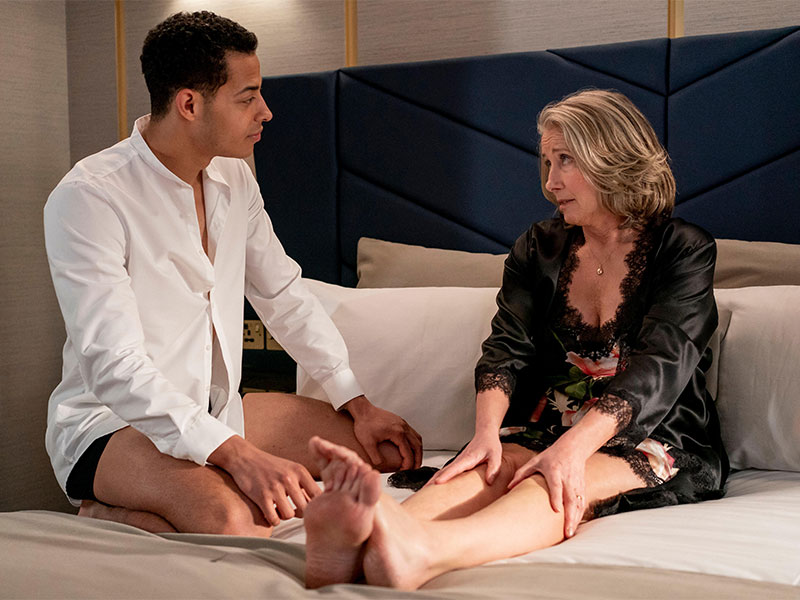
Within this, Chishiya is redeemed by doing right by those he once wronged and admitting, with some shame, what truly drives him. It’s the same as what keeps most of us getting out of bed every day or drives us to stay alive in forbidding conditions, whether they’re the type we became familiar with at the height of the pandemic or the unknowns hiding down the road. But there also comes a time when he realizes that playing the villain card is dull and useless, and decides to risk his life for a decent person he once looked down upon, because “I wanted to do something that was a bit out of character.”

It’s easy to see why Chishiya has such a magnetic appeal at the close of a year when audiences obsessed over stories of con artists infiltrating society’s most exclusive strata. One could easily envision him sizing up Elizabeth Holmes, or introducing Anna Delvey to Japanese society, albeit with ample warnings to her marks about what they’re walking into, before quietly sitting back to watch the show.

So why wouldn’t we appreciate Chishiya’s honesty, his knack for cold calculation and overall panache? He acts out a strategy for coping with odds of success and survival that seem slimmer by the day that we can get behind, showing us that when society is falling apart there’s no reason to panic. A better option is to stand back, keep your eyes open and, no matter what level of chaos erupts, strive to remain superhumanly unbothered.

“Emily in Paris”: Why it’s so hard to admit love for the show despite it being so popular

A guilty pleasure. A hate watch. A brain vacation. Open most reviews of the Netflix original series “Emily in Paris,” now on its third season, and it’s likely that at least one of these phrases will appear.

A fish-out-of-water comedy about a straitlaced North American marketing exec seconded to a louche Paris office, “Emily in Paris” was created by Darren Star, who is also responsible for “Beverly Hills 90210,” “Melrose Place” and “Sex and the City.” Star Lily Collins is a well-established Hollywood leading lady, sidekick Ashley Park has a Tony nomination and Emily’s nemesis is played by the respected French actress Philippine Leroy-Beaulieau.

Make no mistake, this is high-budget, prestige programming for Netflix and the show is popular. It was watched by 58 million households in the month after its debut in 2020 and remained in the UK Top 10 list for 40 consecutive days. The third series is expected to also draw high viewing figures.

Despite its popularity, “Emily in Paris” is the show we love to hate. We enjoy it in secret, worried people might think badly of us. I have a couple of theories why many feel like they can’t openly express love for it.

Plus ça change…

“Emily in Paris” is a romantic comedy-drama, a genre that has historically been critically dismissed for a lack of seriousness and for primarily catering to female audiences. That’s not been such a problem for the similarly frothy “Bridgerton,” with which “Emily in Paris” has garnered comparisons.

Perhaps “Bridgeton” eschews the same sort of criticism because it focuses on female empowerment or because it reinvigorates the historical romance through devices such as color-blind casting and anachronistic music. “Bridgerton” avoids tired and familiar tropes, whereas “Emily in Paris” trades – absolutely, undeniably and no doubt intentionally – in clichés.

According to the The Guardian’s critic Hannah J Davies:

The version of Paris seen in the show consisted mostly of tourist highlights (the Eiffel Tower, Café de Flore, Sacré-Coeur), improbably large apartments and suspiciously clean streets … And it was not exactly a considered portrait of the city’s residents, with Parisian characters who leaned heavily into patronising stereotypes. Think rude waiters, lazy, mean-spirited workers and unfaithful men.

But this is hardly the first time we’ve seen such a sanitized vision of Paris. From 1951’s “An American in Paris” to 2001’s “Amélie” and beyond, filmmakers on both sides of the Atlantic have traded on Paris’s reputation as the City of Light to ramp up the box-office takings. Plus ça change, plus c’est la meme chose – the more things change, the more they stay the same.

A double bind

Let me hazard another theory, “Emily in Paris” has a self-esteem problem. That is, it’s a splashy, spectacular, American show that hates splash, spectacle and most of all, Americans.

Midwestern Emily is sent to Paris after her American company acquires Savoir, a French firm, with a view to easing the transition and imposing American values on the Gallic workplace. It’s little wonder her colleagues are hostile towards the new girl in town.

More surprising, perhaps, is the fact that we’re very clearly meant to side with them, rather than our plucky heroine. Very quickly, the show sets up binary between French sophistication, quality and taste, and American brashness, naivete and pile ’em high, sell ’em cheap consumerism.

While the show has been fairly criticized for its conspicuous celebration of consumerism, which sits awkwardly with the general mood of the times, it’s not Emily’s overthought outfits we’re meant to aspire to. Rather it’s the effortless Gallic chic of Sylvie, her bed-headed, chain-smoking mentor.

Emily’s French colleagues call her a hick. A celebrated designer refers to her as ringarde – outdated, tacky, a “basic bitch.” That description isn’t entirely unfounded. This is after all a woman who wears a beret and blouse embroidered with Eiffel towers for her first day of work and cheerfully admits to not knowing the language.

At best Emily is something of an embarrassment. At worst she’s the living embodiment of cultural imperialism. To put it simply, throughout the first two seasons, Emily has been the villain of her own series (and that’s without starting on her some of her dubious moral behaviour).

At the end of Season 2 that started to change. Emily’s American boss Madeline (played with glorious crassness by Kate Walsh) takes over the role of the overseas invader and epitome of all things ringarde, and Emily is given the ultimate benediction by Sylvie, who tells her “Emily, you’re getting more French by the day.”

In the face of its ongoing demonisation of Americanness, the show finds itself in a double bind. To love “Emily in Paris” would be to love the very thing the show tells us to hate. So we have to love it despite itself.

Catherine Wheatley, Lecturer in Film Studies, King’s College London

This article is republished from The Conversation under a Creative Commons license. Read the original article.

Medicare keeps spending more on COVID-19 testing. Fraud and overspending are partly why.

ProPublica is a Pulitzer Prize-winning investigative newsroom. Sign up for The Big Story newsletter to receive stories like this one in your inbox.

As the COVID-19 pandemic continues to churn, Medicare spending on testing for the virus continued to increase in 2022 and is outpacing the two prior years.

Through Oct. 31, Medicare had spent $2 billion on COVID-19 tests in 2022, an amount that will surpass last year’s total as claims are filed, according to new data provided to ProPublica by CareSet, a research organization that works to make the health care system more transparent.

That compares to $2 billion for all of 2021 and $1.5 billion in 2020, a recent analysis by the Department of Health and Human Services’ Office of Inspector General shows.

Fraud and overspending are contributing to the increases, experts say, because federal money for COVID-19 testing is not subject to some of the same financial and regulatory constraints as other tests covered by Medicare, the government insurance program for people 65 and older and the disabled.

The growing costs concern some of these experts, who say the need for financial incentives to expand the availability of testing has passed.

Early in the pandemic, testing was both critical to slowing the spread of the virus and in short supply. So the federal government enacted measures to make it more profitable to get in the COVID-19 testing business. Good for the duration of the public health emergency, which has not yet expired, the measures include a generous Medicare reimbursement rate, requirements for private insurance to cover testing — even compelling insurance plans to pay whatever cash price is demanded by out-of-network labs — and a hefty fund for testing those people who didn’t have insurance.

The measures succeeded in drawing new and existing labs into the COVID-19 business and helped ensure most people had access to testing, even if some faced excessive waits to get their results. But the incentives also attracted price-gougers, fraudsters and people with no experience in the laboratory business. The result was a chaotic approach that ranged from bungled testing programs and confusion over new requirements to outright fraud.

“It was an unprecedented wave of fraud,” said Michael Cohen, an operations officer with the HHS Inspector General, which investigates crimes involving federal health care programs.

This year, ProPublica detailed how one Chicago-based lab, Northshore Clinical, used political connections in Nevada to speed its licensing and generated tremendous volume through agreements with school districts, universities and local governments. The story also detailed questionable billing practices that one insurance expert described as fraudulent. A study of Northshore’s testing on the University of Nevada Reno campus found the company missed 96% of COVID-19 cases during December 2021.

The company submitted 600 pages of documentation to state regulators to support its claim that it fixed deficiencies noted by inspectors, but it ultimately asked the state to close its license and pulled out of Nevada before the investigation was finished. Northshore repeatedly declined to comment to ProPublica.

The OIG, which had been investigating Northshore in Illinois, expanded its probe to Nevada after ProPublica published its report.

Cohen said OIG investigators have faced challenges responding to the onslaught of suspected fraud — from a lack of additional resources to constantly evolving policies.

In April, the Department of Justice announced criminal charges against people in eight states who allegedly submitted more than $149 million in COVID-19 false billings to federal programs. The OIG has also performed analyses on Medicare data, including for a report released this month that found 378 labs had billed Medicare for expensive add-on tests at “questionably high levels” after testing individuals for COVID-19.

Attorneys general in a handful of states have taken action against labs for forging results, charging fees for “expedited results” that arrived days later and deceptive marketing practices.

Programs to pay for COVID-19 testing aren’t the only pandemic assistance funds that have attracted people seeking to profit. Paycheck Protection Program loans went to fake businesses or were spent on luxury goods instead of keeping people employed, ProPublica and other news outlets have reported. Expanded state unemployment programs also saw unprecedented fraud that a partial accounting estimates is $57.3 billion.

Tolerating some fraud is a necessary trade-off to attain legitimate public policy goals, said Loren Adler, associate director of the USC-Brookings Schaeffer Initiative for Health Policy. But once the incentives and loose regulations boosted the availability of testing, they could have been revised to prevent abuse and overspending, he argued.

“We were in a very different world in April 2020,” Adler said. “We needed to overpay because we needed more capacity. Once we scaled up, it was no longer necessary. We could’ve saved a lot of taxpayer money.”

According to the data provided by CareSet, more than 2,300 new labs have enrolled as Medicare providers since the pandemic began and have been billing for COVID-19 testing, evidence of the increased capacity generated by the federal measures.


Total Medicare spending on COVID-19 testing is a small fraction of the $4 trillion federal response to the pandemic. That figure includes not only testing and treatment but also direct support for individuals, businesses, schools and local governments. Adler said that may be why lawmakers haven’t revisited the incentives.

Still, testing — as funded by Medicare, private insurance and other federal assistance programs — was a lucrative corner of the pandemic response for many providers.

Labs with troubled operations reaped millions from Medicare, the CareSet data shows.

Northshore Clinical, for example, submitted $6.2 million in Medicare claims for COVID-19 testing between Jan. 1, 2021, and Nov. 30, 2022. Doctors Clinical Laboratory, which is facing lawsuits filed by attorneys general in three states, billed $252,000 in 2021. Doctors Clinical did not respond to requests for comment.

Curative Labs, one of the largest COVID-19 testing providers in the country, has billed Medicare $32 million for testing since Jan. 1, 2021. Curative, launched in California by a 25-year-old college dropout, tapped political connections to land a no-bid contract to test in Colorado’s nursing homes, according to the Colorado Springs Gazette. But the state’s decision to use Curative tests on individuals without symptoms — a use the tests had not been authorized for — led to unreliable results, as Colorado’s nursing home death rate was the highest in the nation, according to CPR News. The FDA later revoked authorization for Curative tests and the state canceled its contract with the company.

“During the pandemic, Curative provided millions of Americans with a safe, accessible and reliable way to test for the virus, including when it was extremely difficult to obtain a COVID-19 test,” a Curative spokesperson said. “Our teams deployed tests in an efficient manner, helping to prevent the spread of outbreaks in communities across the state of Colorado and throughout the country.”

The spokesperson also pointed to a Colorado legislative committee’s decision not to audit the procurement process as an exoneration of Curative’s operations in the state. The request for the audit failed in a tied vote along party lines after a state official testified she made the decision to use Curative based on the best science available at the time.

Nomi Health, a lab startup in Utah, launched troubled testing programs in five states, according to a USA Today investigation. The Salt Lake Tribune detailed significant problems with Nomi’s operations in Utah. The company has billed Medicare a total of $1.9 million in 2021 and 2022. Nomi has challenged USA Today’s findings.

“Nomi Health was one of the first partners to provide open accessible testing at scale on behalf of our partners,” Nomi’s co-founder and chief operations officer Joshua Walker said in a statement. “We remain one of the few providers in the markets we serve providing important access to this needed service.”

Walker said Nomi continues to provide free tests for uninsured individuals despite the end of the federal program that paid for those tests. “We still feel strongly that open and easy access is an important part of keeping our communities safe and helping to drive our economy forward.”


The OIG’s Cohen said the most common crime investigated by his agency was identity theft. Nefarious labs would snag Medicare beneficiaries’ information and use it to bill for services not provided or expensive and unnecessary add-on tests.

“They would take it all. ‘We need your Medicare number. We need your Social Security number. Oh, we need credit card information.’ People were giving up just tons of information because people were understandably clamoring for tests,” Cohen said.

Medicare wasn’t the only government program targeted for laboratory fraud.

Health care providers found quick access to money in the federal fund for testing people without insurance. The program, run by another federal agency, the Health Resources and Services Administration, was designed to get money out fast and with few restrictions. “Bad actors bled the program for as much as they could,” Cohen said.

The program was initially funded by Congress with $2 billion. It ended up paying out $11 billion in testing claims. Congress opted not to allocate any more money into it and HRSA stopped accepting claims in March 2022 — leaving many uninsured individuals on the hook for COVID-19 care.

An HHS official said safeguards against fraud were put in place and any providers caught abusing the program could be subject to enforcement measures.

“The COVID-19 Uninsured Program was designed to ensure that every person in the United States had access to COVID-19 testing, treatment and vaccines — regardless of insurance status — and has been successful in getting care to the most vulnerable among us,” the official said.

As the pandemic has evolved, how people test for the virus has changed too. Now, instead of getting lab tests, many patients opt to use at-home rapid tests. And that has opened up another opportunity for fraud, experts say.

While the public health emergency is underway, Medicare is covering up to eight over-the-counter COVID-19 tests per member each month. Some providers are trying to design “subscription” services in which they mail eight tests every month whether the beneficiary needs them or not, Cohen said.

Indeed, the CareSet data shows a dramatic shift in spending for over-the-counter tests and away from PCR laboratory tests beginning in April.

And as investigators try to stay atop new scams, they’re busy investigating the old ones.

“We are still finding entities that defrauded us of just enormous amounts of money,” Cohen said.

Barbara Walters’ friends and colleagues react to the news of her death at 93

On Friday evening, news began to circulate of Barbara Walters‘ death at the age of 93, shortly followed by an outpouring of remembrances from fans, friends and colleagues.

Best known in more recent years for creating and hosting the long-running talk show, “The View,” which debuted on ABC in 1997, Walters first started her career in broadcast journalism in 1961 at NBC’s “Today” show.

In a 2014 interview with The Harvard Gazette, Walters reflected on being one of the first women to make a name for themselves in journalism saying that at the start “she was not allowed to ask any serious questions during interviews she shared with ‘Today’ host Frank McGee.” But through the length of her career, asking the questions that viewers were curious to hear the answers to became her signature.

A quick search on YouTube of “Barbara Walters savage moments” turns out a treasure trove of clips showing Walters sitting with some of the biggest celebrities and political figures in the world, asking them about their deepest and darkest secrets with the same casualness one would ask the time of day. 

“She was the very first person with whom I ever sat for a television interview, and will certainly be my most memorable,” said Monica Lewinsky in a post to Twitter on Friday night, making reference to the infamous 1999 interview with Walters in which she was asked, point blank, about her affair with former President Bill Clinton. 

Although Walters often received backlash during her career for asking questions that could be seen as rude or invasive, she was revered for her ability to always “go there,” such as in the instance where she told the entire Kardashian family that they had no talent.


Want a daily wrap-up of all the news and commentary Salon has to offer? Subscribe to our morning newsletter, Crash Course.


Walters’ style was unique in a way that made her easy pickings for parody. Comedian and original “SNL” superstar Gilda Radner did a frequent sketch on the show as Baba Wawa — a riff on both Walters herself, as well as her distinct way of speaking.

In 2014, Walters appeared on “SNL” to parody herself, alongside newly exited ensemble member Cecily Strong.

“What an honor it was to see my groundbreaking career in journalism reduced to a cartoon character with a ridiculous voice,” Walters quipped in the sketch.

In Walters’ final taping of “The View” in 2014, the stage filled with powerful female journalists such as Oprah Winfrey and Diane Sawyer who all, in part, owed their careers to her carving a path through the male dominated industry.

“Without Barbara Walters there wouldn’t have been me—nor any other woman you see on evening, morning, and daily news,” Winfrey wrote in an Instagram post on Friday evening. 

“The world of journalism has lost a pillar of professionalism, courage, and integrity. Barbara Walters was a trailblazer and a true pro,” Dan Rather said in his own remembrance on Twitter. “She outworked, out-thought, and out-hustled her competitors. She left the world the better for it. She will be deeply missed. RIP.”

Even Meghan McCain, who bumped heads with Walters on “The View,” along with just about everyone else on the show, had kind words on Walters’ passing.

“Barbara Walters will always be known as a trail blazer,” McCain said on Twitter. “Her hard hitting questions & welcoming demeanor made her a household name and leader in American journalism. Her creation of “The View” is something I will always be appreciative of. Rest in peace, you will forever be an icon.”

Walters death comes after a decline in her health that led to her retreating from the public eye after parting from “The View.” 

In a statement from Walters’ spokesperson, Cindi Berger, given to CNN she says, “Barbara Walters passed away peacefully in her home surrounded by loved ones. She lived her life with no regrets. She was a trailblazer not only for female journalists but for all women.”

Why do guys like George Santos lie? I asked myself the same thing about my father

David Brooks isn’t entirely wrong in his assessment of “The Sad Tales of George Santos,” his latest column for the New York Times: “If you don’t have a real story, you don’t have a real self,” is spot-on. But when he muses that Santos — the Republican congressman-elect from New York, whose many and convoluted fabrications about his life and career require the sort of murder-board treatment one usually needs to follow a years-long “Real Housewives” feud — feels different from earlier all-American identity scammers like (fictional) Jay Gatsby, he’s wrong about why that is:

I wonder if the era of the short-attention spans and the online avatars is creating a new character type: the person who doesn’t experience life as an accumulation over decades, but just as a series of disjointed performances in the here and now, with an echo of hollowness inside.

Santos isn’t some new character in the drama. Sure, it’s tempting to believe that every scammer (sorry, “embellisher“) who manages to up the ante has reinvented the game — to do otherwise would be to suggest we don’t learn from our gullibilities, and I’m sorry, but how rude — that the liars and grifters and opportunists making headlines today are somehow more special because we can live-tweet our outrage, then experience it again almost immediately in scripted form, starring our Hollywood faves. The details evolve with the times, sure. Sam Bankman-Fried’s FTX scandal does sound shiny and new. But his knack for gaining people’s financial trust also looks a lot like old-fashioned Bernie Madoff technique. It’s the cryptocurrency trappings that are novel. Lies are as old as talking itself.

Of course it matters that George Santos reportedly claimed many things about himself that are turning out not to be true in his pursuit of elected office. We say we want our governing officials to be honest, but we also universally accept that politicians lie — that understanding made a president out of Donald Trump. What Santos apparently did was to push our tolerance for it until he found the limit, where his ambitions met his ability to bluff around them. That’s as much a collective failure as it is a personal one; there are surely many reasons why the fact-checking of his résumé became national news only after he was elected, but none of them point to Santos being unusually skilled at smooth talk. His damage control interviews are a mess. He does not appear to be a master of disguise or a supervillain. He’s a guy who exploited our scattered attention span just long enough to rise to prominence.

Now Santos is trying to bluster his way through this scandal, claiming it’s all a bit of harmless fudging, everyone does it, stop nitpicking him already! (Just like everyone cheats on their taxes, right, so why the big fuss over Trump’s?) Meanwhile, as new revelations are reported every day, the conversation also turns to why he did it.

Most people aren’t 100 percent honest every day of their lives. But most don’t fabricate parts of their life story and repeat them until they maybe almost believe the stories themselves. Yet enough of them do that it’s not super-rare. My father did. And discovering, decades after his death, that significant points in his life I had been told about were basically fairy tales he had passed down was a disorienting and disillusioning experience. I asked myself the same questions about my father I’m now hearing people ask about Santos: Why did he do it, and how did he get away with it for as long as he did? And what did it say about the people in his life, including me, who believed his lies uncritically?

My father died when I was five years old, and my mother — who married him when she was a 15-year-old runaway living as an adult in 1970s New York City, and he was a 36-year-old recovering heroin addict with a checkered past — kept his memory alive for us kids, including retelling the stories he told her about his life before they met. He was already an adult by the year she was born, after all. 

My mother had created her own fake identity to disguise her age and origins, and one thing that helped her in that effort was the basic credulity of an analog world. My mother, as a teenager, extended the man she fell in love with the same grace she wanted from the world — tell me who you are, and that’s who you’ll be. She knew he had lied to get at least one steady job, but that was a survival lie, a familiar thing to her — he had rent to pay for a Lower East Side apartment to share with his new wife, and later a baby. The lies that came out later are not as easily waved away.

Among other things, he told her he had been quarantined in hospital isolation, kept from his family for months, as a small child with smallpox — a lie. He never went to college, he said. Turns out he had enrolled for at least one semester, at least according to his military records, which he also lied about. And he left out a significant part of his history, a major lie of omission: He spent much of the decade before they met in and out of court-ordered drug rehab in Lexington, Kentucky’s Narco Farm, after pleading guilty to a federal counterfeiting charge. Eventually, his habitual absconding put him in federal prison, where he served out the remainder of his sentence. Again and again, he lied to a series of judges about how he would dedicate himself to rehab if given another chance, and he was given several.  

These are just the lies I uncovered in the research for my book, “Runaway: Notes on the Myths That Made Me.” When I shared the paperwork with my mother, she was taken aback by his fabrications. I was mostly embarrassed that I had believed without question stories that barely stood up to scrutiny as soon as I decided I needed to look closer.


Want a daily wrap-up of all the news and commentary Salon has to offer? Subscribe to our morning newsletter, Crash Course.


My father never ran for Congress. His lies didn’t do much beyond helping create a warped understanding of who he was in my young, impressionable heart, which I carried forward into adult life. He’s not alive for me to ask — he’s buried in the congressional district adjacent to the one that just elected George Santos — about so many things I wish he could explain. (I wrote a book instead.) What I learned from writing my family’s story is that most of us are eager to embrace a narrative, especially from men, that rhymes with our expectations, hopes and desires. That’s one way guys like George Santos, like my father, get away with bullshitting for as long as they do — often, they’re not doing anything more than telling people a story they want to hear.

As for me, I wanted to believe in a tight narrative, a trauma plot even, for my father — the childhood illness and isolation, the life or death of military action, all of it contributing to wounds his drug and alcohol abuse sought to soothe, which overshadowed his ability to be a full, present adult for my mother when he learned how old she really was. Which kept him from declining to move forward in a relationship with a teenage girl that I can see from here was wrong from the start. Which contributed to the anger issues that made him violent toward my mother. Which overshadowed his ability to stay sober for us later, which led to his untimely death. That was a story I told myself, too. How much time and energy we spend trying to explain the man who has done wrong, a new story to serve as a charm to ward off future harms. The truth is much more mundane, ultimately rooted in little more than a nagging entitlement to a different life he could never create for himself.

Entitlement is also likely a key to understanding Santos. Actually getting the degree, building the businesses, working on the straight and narrow and painstakingly raising lots of money to run for Congress? That’s a sucker’s game, guys like him figure. It could be as simple as this: He wanted power — or fame, or at least something his life hadn’t given him so far — and saw a possible shortcut to it.

Yes, we tell ourselves — you thought you were getting out of here without hearing this one again! — stories in order to live. But sometimes we are tired or lazy or disengaged or deluded or dishonest or wistful enough to let other people do the job for us.

A political campaign is about telling a story, and Santos believed he had crafted a winner: An educated, wealthy businessman and animal rescuer, an openly gay Latino Jewish conservative who feels perfectly at home in today’s GOP, who has been personally affected by gun violence and the Holocaust, selflessly dedicates himself to defending American freedom against the threat of socialism and flips a Democratic seat. There’s entitlement to go around once we start asking why so many people apparently went along with every twist in his ever-shifting narrative. Some people just want to be told a good story, no matter how much of it turns out to have been a fantasy all along. 

What does “heart rate variability” mean anyway?

Your heart beats around 100,000 times every day. Heart rate is a key marker of cardiovascular activity and an important vital sign. But your pulse is not as steady as a precision clock – nor would you want it to be.

As a cardiovascular physiologist, I measure heart rate in nearly every experiment my students and I perform. Sometimes we use an electrocardiogram, such as you’d see in a medical clinic, which uses sticky electrodes to measure electrical signals between two points of your body. Other times we use a chest strap monitor, like ones you might see on someone at the gym, which also detects heartbeats based on electrical activity.

As wearable technology has grown more popular, it’s not just researchers and cardiologists who are paying attention to heart rate. You might be monitoring your own all day long via a fitness tracker you wear on your wrist. This kind of wearable device uses green light to detect blood flow beneath your skin and deduces your heart rate.

Here are what heart rate and other measurements derived from this biometric can tell you about your body’s health.

Pumping blood where it needs to go

The heart’s primary job is to contract and generate pressure that helps pump blood to the lungs to be oxygenated and then on to the rest of the body to deliver oxygen and other nutrients. Heart rate is simply how fast your heart is beating. Sometimes called a pulse rate, it’s normally presented in beats per minute. You can count your own heart rate by feeling for your pulse inside your wrist or behind your jaw.

When your body demands more oxygen, such as during exercise, heart rate will increase along with the increasing workloads.

While many people are familiar with tracking their heart rate during exertion, the heart rate at rest can also provide valuable information. The two parts of the autonomic nervous system, the sympathetic and parasympathetic, influence resting heart rate. The sympathetic branch helps coordinate your body’s stress response. The more active it is, the higher it dials up your heart rate, preparing you for fight or flight.

The parasympathetic branch of your nervous system is responsible for keeping lots of your body’s functions running smoothly while you’re at ease. Via the vagus nerve that runs from the brain all the way to the abdomen, the parasympathetic nervous system actively slows the heart down to resting values between 60 and 100 beats per minute for the average healthy adult. Without any parasympathetic activity putting the brakes on the sympathetic nervous system’s signals, your heart would beat at approximately 100 beats per minute.

A lower resting heart rate indicates an efficient heart and a higher level of parasympathetic activity. When you’re at rest your nervous system is ideally minimizing sympathetic activity, so you’re conserving energy and avoiding unnecessary stress to the body.

chart of red peaks of a heartbeat at slightly different intervals

The chart of a heart rate reveals tiny differences in spacing between the peaks representing heartbeats. YitzhakNat via Wikimedia Commons, CC BY-SA

Time between each heartbeat

One specific way to understand the balance of the nervous system’s influence on heart rate is to look at heart rate variability, or HRV – the slight fluctuation in the time between each heartbeat. Even if your heart rate is 60 beats a minute, that doesn’t mean your heart is pumping exactly once every second.

Less variability is a sign that your body is under greater stress and that the balance in your autonomic nervous system is tipping toward the sympathetic branch being in charge. Greater variability suggests you’re more relaxed and your parasympathetic nervous system is in control.

For nearly 30 years, scientists have been interested in how to measure and interpret HRV, specifically as it relates to this balance of autonomic control.

The clinical utility of HRV emerged in patients following cardiac events, but researchers are now considering how this measure can help explain patient outcomes in a range of cardiac, endocrine and psychiatric disorders.

More recently, researchers have investigated how to use HRV in athletic training and prognosis of medical conditions.

Several fitness wearables also report heart rate variability, either as a stand-alone metric or used in the calculation of “readiness” or “recovery” scores. Endurance athletes now commonly track HRV as one way to monitor their overall physiological state.

Researchers have started checking which commercially available wearable devices are most reliable and accurate at measuring HRV, which can vary from tracker to tracker. Many of these devices use colored lights, or optical sensors, to measure pulse rate and other variables at the wrist or finger. Unfortunately, the accuracy of this method can vary based on skin type and skin color. It is important that companies include diverse populations in the design, testing and validation of these products to help address potential racial health disparities.

Nudging HRV in a good direction

One of the biggest influences on heart rate variability is stress; along with increased sympathetic nervous system activity, stress is associated with lower HRV. Stress-reducing interventions, biofeedback and increased fitness can increase heart rate variability. Remember, an increase is good for this metric. Overall, heart rate variability depends on a range of physiological, psychological, environmental, lifestyle and nonmodifiable genetic factors.

The most useful way to consider heart rate variability as a metric is to look at data trends. Are there consistent changes in HRV in either direction? Examine these changes alongside other health factors such as fitness, mood, illness, sleep and dietary intake to see if you can draw any conclusions about lifestyle modifications you may want to make.

In general, the same approaches you would take to lowering resting heart rate can also improve heart rate variability, such as increasing cardiovascular fitness, maintaining a healthy weight, reducing stress and getting sufficient sleep.

It’s important to remember that heart rate variability is the normal, healthy, very slight fluctuation of timing of heartbeats – just milliseconds of difference from beat to beat. More dramatic changes in heart rhythms or the way in which the heart contracts, known as arrhythmias, may signal a more serious condition that requires medical attention.


Anne R. Crecelius, Associate Professor of Health and Sport Science, University of Dayton

This article is republished from The Conversation under a Creative Commons license. Read the original article.

A world of possibilities: 10 surprisingly good things that happened in 2022

With wars raging in Ukraine, Yemen, Somalia and elsewhere, Roe v. Wade overturned and our resources being wasted on militarism instead of addressing the climate crisis, it can be hard to remember the hard-won progress being made. As we end a difficult year, let’s pause to remind ourselves of some of the positive changes that happened in 2022 that should inspire us to do more in the year to come. While some are only partial gains, they are all steps towards a more just, peaceful and sustainable world.

  1. The growth of Latin America’s “Pink Tide.”
    Continuing the wave of progressive wins in 2021, Latin America saw two new critical electoral victories: Gustavo Petro in Colombia and Luiz Inácio Lula da Silva in Brazil. When President Biden’s June Summit of the Americas excluded Cuba, Nicaragua and Venezuela, several Latin American leaders declined to attend, while others used the opportunity to push the U.S. to respect the sovereignty of the countries in the region. (Stay tuned for CODEPINK’s spring forum “In Search of a New U.S. Policy for a New Latin America.”)
  2. The U.S. labor movement caught fire.
    In 2022 we witnessed the brilliant organizing of Chris Smalls and the Amazon workers, Starbucks reached nearly 7,000 unionized workers and close to 300 unionized stores. Requests to the National Labor Relations Board to hold union elections were up 58% in the first eight months of 2022. Labor is back and fighting the good fight. 
  3. Despite assaults on our elections, people fought back and gained some notable wins.
    Voters delivered victories for progressives in districts across the country, including in Texas, Illinois, Michigan, Florida, Hawaii, California, Pennsylvania and Vermont, and Democrats kept control of the Senate. Young people showed up at the polls in record numbers — one out of eight voters in the midterms was under the age of 30. Abortion rights won in states where it was on the ballot (California, Michigan and Vermont) and in the “red” state of Kentucky, voters rejected a proposed amendment to the Kentucky constitution that would declare there is no constitutional right to an abortion. Another plus: Every election denier running to oversee state elections lost.
  4. Peace came to Ethiopia.
    After a devastating two-year civil war that left hundreds of thousands dead and millions displaced and facing starvation, the federal government of Ethiopia and the Tigray People’s Liberation Front (TPLF) signed a peace treaty on Nov. 2. The surprise deal came out of peace talks convened by the African Union. So far, the fighting has ceased, and both parties have vowed that they are determined to make the peace deal last.
  5. Mainstream media finally did right by Julian Assange.
    The New York Times, The Guardian, Le Monde, El País and Der Spiegel — the media outlets that published WikiLeaks’ revelations 12 years ago — finally called on Biden to free Assange. Australian Prime Minister Anthony Albanese (Assange is an Australian citizen) also finally said that he has personally urged the U.S. government to end its pursuit of Assange. More enthusiastic has been his support in Latin America, with calls for his release coming from President Gustavo Petro in Colombia, Mexico’s President Andrés Manuel López Obrador, Nicaragua’s President Daniel Ortega, Venezuela’s President Nicolás Maduro, and Brazil’s President-elect Lula da Silva. 
  6. Indigenous and Global South voices were finally heard at the largest climate summit, COP27.
    Thanks to the relentless work of indigenous peoples and organizers from the Global South, marginalized communities not only got into COP27 this year but had their voices heard: A historic loss and damage fund was established to help vulnerable countries cope with the destructive impacts of climate change. The development marks an important achievement for civil society and collective action in the Global South that has been nearly three decades in the making. Now we have to push the wealthier countries to come through with the funds, and to finally get serious about our own transition to clean energy before it is too late to avoid global catastrophe. 
  7. Some 200 countries (minus the U.S. and the Vatican) committed to stemming the loss of nature worldwide.
    Another critical environmental gathering, the COP15 Biodiversity Summit in Canada, reached a watershed agreement pledging to protect nearly one-third of Earth’s land and oceans as a refuge for the planet’s remaining wild plants and animals by 2030 — dubbed “30 by 30.” This agreement is critical to stemming the massive loss of diversity — about a million species are at risk of disappearing forever. But it will take constant grassroots pressure, and significant resources from the wealthier countries, to put this 30 by 30 goal into practice. 
  8. The passage of the Respect for Marriage Act.
    The U.S. Supreme Court legalized same-sex marriage nationwide in 2015 but the court’s June decision overturning a right to abortion at the federal level raised concerns that federal protections for same-sex marriage might be in jeopardy. The Respect for Marriage Act was passed to address this by guaranteeing federal recognition of any marriage between two individuals if the union was valid in the state where it was performed. It won’t force states to issue same-sex marriage licenses should nationwide marriage equality be overturned by the Supreme Court, but it will extend equality under the law to all same-sex couples, no matter which state they got married in. It also protects interracial marriages. 
  9. The World Cup put the spotlight on Palestine.
    The World Cup was a spectacular event that created a sense of global solidarity and joy, with Argentina’s win lifting up all of Latin America. But the fans, especially from Muslim and Arab countries, put the spotlight on another place in the world: Palestine. Palestinian flags and chants popped up everywhere — on the pitch, in the stands and on the streets, while videos showing Israeli journalists being ostracized went viral. At least for the month of these games, the call to “Free Palestine” went global. 
  10. A multipolar world is here.
    China’s enormously ambitious Belt and Road Initiative now encompasses more than 80 countries. And with the U.S. abusing its economic power by imposing extraterritorial sanctions against countries all over the globe, the push for alternatives to the dollar has exploded. Over a dozen countries have asked to join BRICS (the alliance of the powerful economies of Brazil, Russia, India, China and South Africa), whose countries account for 40 percent of the global population and 25 percent of the world’s GDP. BRICS members are already transacting their bilateral trade in local currencies. And new or strengthened nonaligned movements have emerged in Latin America and Africa. A multipolar world is already a reality for much of the world, and this is actually better for people everywhere — even for Americans — than one where the U.S. keeps using war, militarism and coercive financial sanctions to try to prolong its post-Cold War unipolar moment into our new century. 

*  *  *

Perhaps what we should be most thankful about in 2022 is that we are still alive, even as the conflict raging in Ukraine has brought the U.S. and Russia to the brink of nuclear war. The civilians of Ukraine, the soldiers on both sides and people all around the world are suffering from this brutal conflict, which is — in President Biden’s words — putting the world at risk of a nuclear Armageddon. Where there is life, there is hope, but if we hope to celebrate another holiday season in 2023, we had better find a way to bring all sides to the negotiating table. May peace prevail in 2023! 

Former staffer says Melania Trump was worried about Giuliani seeing her in her bathrobe

According to testimony from her estranged chief of staff earlier this year, former First Lady Melania Trump was worried that Rudy Giuliani would walk in on her while she was only wearing a robe, the New York Post reports.

Stephanie Grisham told the Jan. 6 committee that Melania, now 52, thought then-President Donald Trump’s advisers failed him towards the end of his presidency and grew “very upset” when they entered the White House’s residential areas without warning.

“She hated when people would come to the residence,” Grisham said in testimony from May, according to a transcript that was released Thursday.

“That was her home, she wanted privacy. So I do recall, towards the end, her telling me that there were constantly meetings happening in the Yellow Oval, which is the room up in the residence, with various people,” Grisham said.

“And she was very upset because nobody would give her a heads-up and was she walking around in a robe, that type of thing. But she never gave me specific names other than Sidney Powell, Giuliani and campaign people. Those were her words.”

She went on to say that “Mrs. Trump always wanted to be warned before people were coming into her house.”


Ginni Thomas admits she never saw specific evidence of 2020 voter fraud

2022 will be remembered as a year in which the U.S. Supreme Court’s reputation continued to deteriorate, from the wildly unpopular overturning of Roe v. Wade in Dobbs v. Jackson Women’s Health Organization to the revelation that Justice Clarence Thomas’ wife, Ginni Thomas, tried to help former President Donald Trump overturn the 2020 election results.

The January 6 Select Committee discovered that after now-President Joe Biden won the election, Ginni Thomas urged then-White House Chief of Staff Mark Meadows to do everything he could to keep Biden from being inaugurated. And in March 2022, her series of text exchanges with Meadows became public knowledge thanks to some bombshell reporting in the Washington Post by Robert Costa and Bob Woodward — the veteran journalist/author who is also famous for his bombshell reporting on Watergate with Post colleague Carl Bernstein during the 1970s.

Woodward, like Bernstein and former Watergate prosecutor Jill Wine-Banks, has said more than once that Nixon’s crimes during the 1970s pale in comparison to Trump’s scandals. And more than a few Trump critics have commented that the January 6, 2021 insurrection and the fact that a U.S. Supreme Court justice’s wife wanted presidential election results overturned was more disturbing than Watergate.

Ginni Thomas’ text exchanges with Meadows show her to be an aggressive promoter of the Big Lie, Trump’s claim that the 2020 election was stolen from him through widespread voter fraud. But according to Richard Hall, a reporter for The Independent, Thomas’ interview with the January 6 Select Committee’s 845-page final report revealed, during questioning by the January 6 Select Committee, that her knowledge “wasn’t very deep” when she bought into Trump’s Big Lie. The Committee recently released its 845-page final report.

Hall, in an article published on December 30, explains, “Ginni Thomas, the wife of Supreme Court judge Clarence Thomas, admitted that she was not aware of any specific evidence of voter fraud in the 2020 election at the time she personally lobbied senior White House officials to overturn the results. In an interview with the House committee investigating the attack on the U.S. Capitol, a transcript of which was released on Friday, Mrs. Thomas said that she ‘wasn’t very deep’ in her knowledge of specific voter fraud allegations at the time of her lobbying effort, but instead, ‘was basing what I believed off of people I trusted and news that I trusted.'”

That transcript, according to Hall, “provides new detail on how” Ginni Thomas “used her access” to “Donald Trump’s inner circle” to “influence the White House to reject the results of the presidential election.”

Text exchanges with Meadows that were obtained by the January 6 Select Committee and reported by Woodward and Costa show the degree to which Ginni Thomas was all in for the Big Lie. In a November 10, 2020 text, for example, Justice Clarence Thomas’ wife told Meadows, “Help This Great President stand firm, Mark!!!…You are the leader, with him, who is standing for America’s constitutional governance at the precipice. The majority knows Biden and the Left is attempting the greatest Heist of our History.”

On September 29, 2022, Ginni Thomas was interviewed by Rep. Jamie Raskin of Maryland, a Committee member. Raskin tried to determine what motivated her belief in the Big Lie, and she told him, “I can’t say that I was familiar at the time with any specific evidence. I was just hearing it from news reports and friends on the ground, grassroots activists who were inside of various polling places that found things suspicious.”

Rep. Liz Cheney of Wyoming also questioned Ginni Thomas to confirm what she had told Raskin. And she replied, “Right. I know. I wasn’t very deep; I admit it.”

Ginni Thomas has maintained that she doesn’t discuss her work as an activist with Justice Thomas. But Hall reports that the Committee asked her “about an exchange with Mr. Meadows in which she appears to suggest that she spoke with her husband, Justice Thomas, about the election.”

In one of her text exchanges with Meadows, she mentioned “a conversation with my best friend.”

Ginni Thomas told the January 6 Committee, “It looks like it was my husband” but said she had “no memory of the specifics” and went on to say, “My husband often administers spousal support to the wife that’s upset. So, I assume that that’s what it was…. He had no idea that I was texting Mark Meadows about the election.”

The year’s most powerful nudity in film

Two documentaries that played only on the festival circuit this year crystalized some of the attitudes about nudity on display in films in 2022. The immersive, observational film, “Naked Gardens,” set in a Florida naturist community, featured subjects of all ages and sizes unclothed almost all the time doing everything from cooking to using power tools. It celebrated being naked in a safe space where people weren’t eroticized. It also considered issues about body image.

In contrast, “Body Parts,” was a cogent, eye-opening analysis of how women’s bodies are presented in Hollywood films and television. The documentary shows how nudity was often expected from actresses, and getting naked on screen was often done as a way of “paying their dues” as performers. However, even with contracts and nudity riders, women had to lobby for intimacy coordinators and protection against harassment. Many subjects in the film discuss having to “disassociate” from their bodies to “get through” having to perform a nude or sex scene. The film made viewers feel for the actresses having to be vulnerable on screen.

These two insightful points of view influence reactions to actors who dared to bare all on screen in 2022. There has always been a fascination at seeing performers unclothed. But sometimes it can feel exploitative. 

Full nudity can be used for comic effect — Simon Rex‘s bare-assed run in “Red Rocket,” which opened late last year, proved that. But nudity can also make audiences uncomfortable. “Blonde” was hardly sexy as Norma Jeane/Marilyn Monroe (Ana de Armas) was sexually abused by a number of men.  

Nudity in cinema this year ranged from empowering to discomfiting. What made a handful of films that featured full nude scenes so impactful in 2022 was how they were used to prompt audiences to react emotionally and think about what the nudity meant and represented. It was integral for each character. These six films below were not exploitative, but rather, they implicated the viewer into sharing the characters’ experiences and forced them to think and feel something that could be either pleasurable, empowering or shocking. 

Let’s take a look.

01
“Good Luck to You, Leo Grande” (Hulu)
Good Luck To You, Leo GrandeDaryl McCormack and Emma Thompson in “Good Luck To You, Leo Grande” (Hulu/Searchlight Pictures)
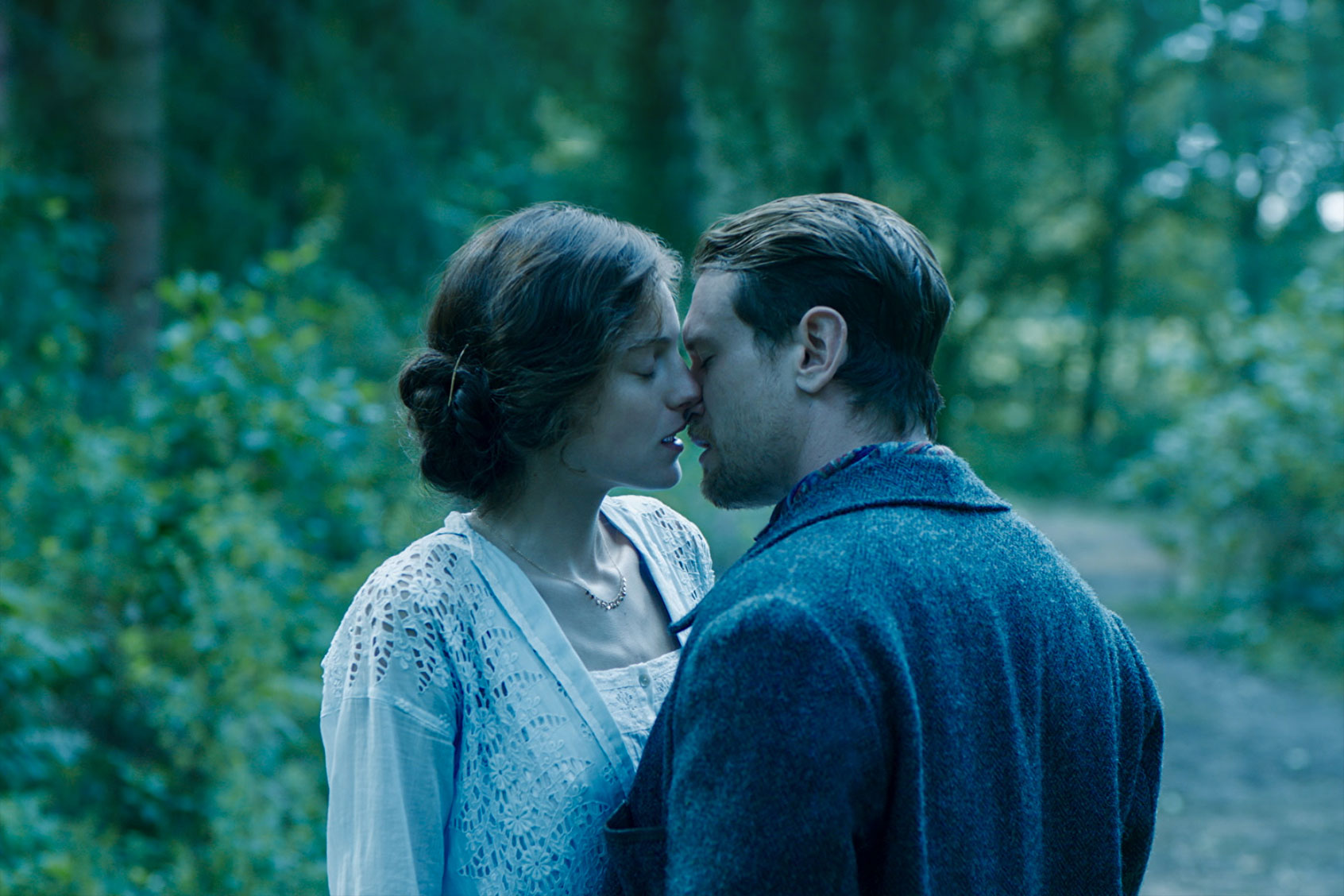
In this poignant drama, Nancy Stokes (Emma Thompson) and the titular Leo Grande (Daryl McCormack) meet for sex in a hotel room. Nancy, a prim religious education teacher, has hired Leo, a sex worker, to help her achieve an orgasm. (She has never had one.) Leo is as confident as Nancy is insecure, and before their first of four encounters, Nancy looks at herself in the hotel room’s full-length mirror questioning everything about herself, as well as her decision to hire Leo. But for Leo, sex is about pleasure, and he always seeks consent, as when he asks to kiss Nancy. She wonders if he feels exploited, demeaned or degraded by his work, and he redirects by asking Nancy about her fantasies.
 
“Good Luck to You, Leo Grande” is about letting go of shame and judgment — about sex as well as bodies — which is why the film is more charming than prurient. Both characters in this talky film express ideas about sex and body image — especially when Nancy touches Leo’s shirtless chest. The film addresses the power of sexual fulfillment as the characters bare their souls before their skin. That they have a “real” moment of connection makes viewers feel satisfied and gratified as well. While Leo does briefly appear fully nude, he is not objectified or idolized. However, the strongest emotional moment comes as the film closes and Nancy stands at the room’s full-length mirror once again, fully naked this time, feeling powerful. While the nude scene is considered “daring” for Thompson — because of her age, her stardom and her body — that is precisely the film’s point. Her smile expresses all the pleasure and self-worth Nancy feels — and had never felt until she met Leo. And Thompson has no reason to be ashamed about who she is, what she looks like or being nude. She is challenging viewers to accept what she looks like, and by extension, what viewers see and how they feel about themselves when completely naked.
Lady Chatterley's LoverEmma Corrin as Lady Chatterley and Jack O’Connell as Oliver Mellors in “Lady Chatterley’s Lover” (Courtesy of Netflix)
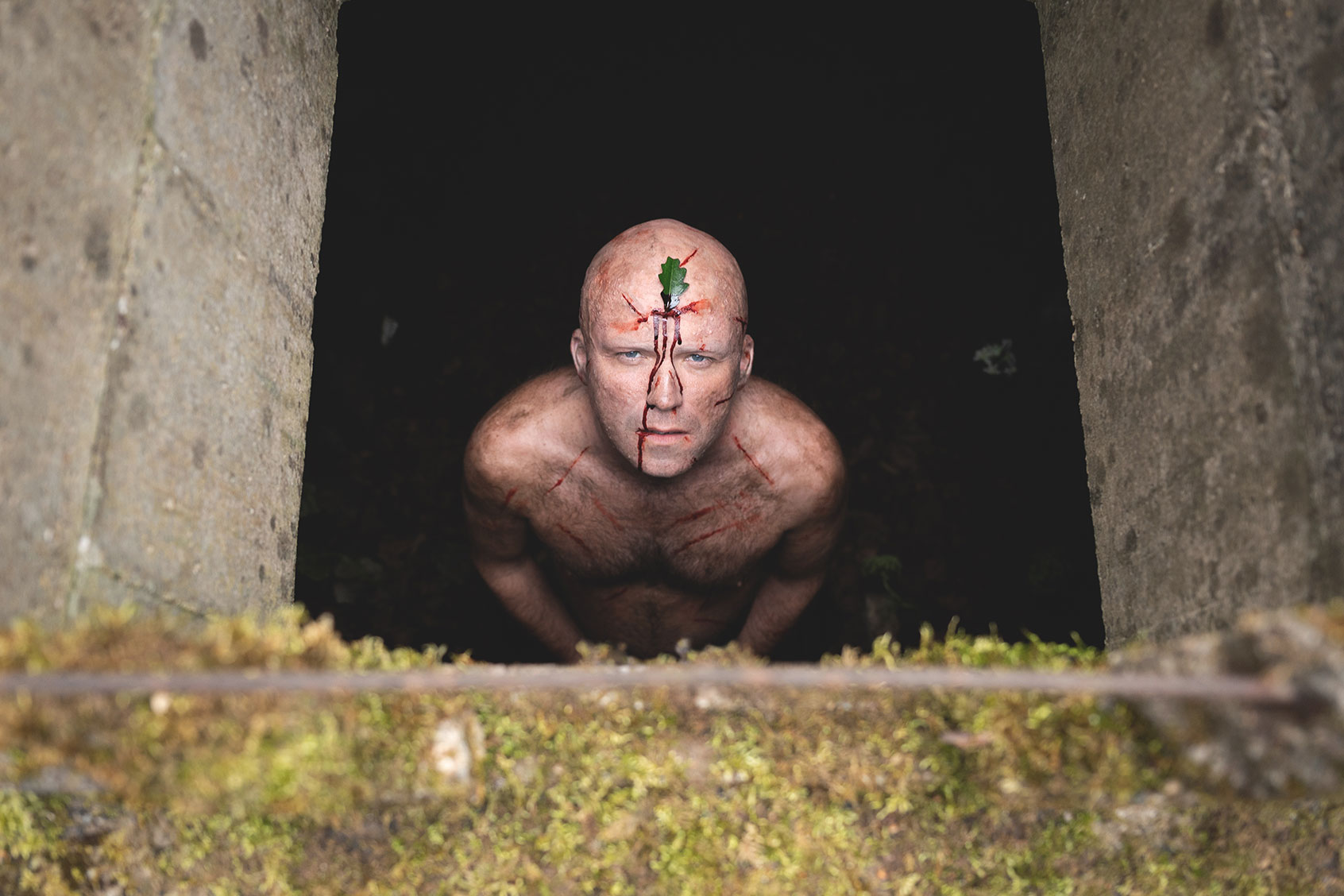
The latest version of D.H. Lawrence’s erotic novel also explores class differences and female sexual pleasure as Lady Constance Chatterley (Emma Corrin) has an adulterous affair with Oliver Mellors (Jack O’Connell), the gamekeeper on the country estate she shares with her husband, Lord Clifford Chatterley (Matthew Duckett). Connie’s sexual relations with her husband are fraught — especially after he returns from war and is paralyzed from the waist down. Lady Constance soon falls for Mellors after spying him bathing one afternoon. Director Laure de Clermont-Tonnerre’s classy retelling has Corrin’s Constance smiling mischievously at seeing Mellors naked, unlike the overheated 1981 Sylvia Kristal/Nicholas Clay version. But Lady Constance’s attraction is ignited, and she masturbates thinking of Mellors. When she kisses his hand hungrily one afternoon, it is a prelude to sex. She returns again and again, to give into her lustful impulses. There is real passion in their heated lovemaking. “I want you to f**k me,” she commands at one point, insatiable. Things grow more intense as Lady Chatterley opens herself up to desire despite all warnings. “Some people go through their whole lives never having that feeling,” Mellors observes, but he also does not want to feel “used” by Constance.
 
What makes their romance so enthralling, and what viewers feel is that the characters find strength and freedom in ecstasy. Viewers may very well be turned on by the couple’s frequent sex scenes, which are graphic without being explicit. (An intimacy coordinator was used to protect the actors.) By doing as they please — such as frolicking naked in the rain in one of the film’s more impulsive, sensual episodes — the characters express their pleasure with naked abandon. They, and viewers, feel their joy and comfort with their bodies which also provides a release from the confinement of class and social expectations. The characters’ uninhibited nature is as appealing as the attractive actors.
03
“Men” (Available on digital)
MenMen (Kevin Baker/A24)
Alex Garland’s folk horror film has Harper (Jessie Buckley) coping with the recent loss of her husband, James (Paapa Essiedu), whom she was in the process of divorcing. Holing up in a country estate for a fortnight, Harper is haunted by the trauma. The vengeful spirit of James is embodied by various characters — all of whom are played by Rory Kinnear. As the film opens, Harper takes a bite of an apple in the garden of the Edenic property, a symbol of Eve, of course.
 
“Adam” may be the naked man Harper first sees when she stops to take a photo while out on a walk, but he is far more sinister. (She later examines the man’s image in closeup on her phone while taking a bath as if trying to understand it.) The nude man is soon seen stalking Harper, prompting her to call the police, who arrest him. But the man, who is never identified, does not stay imprisoned for long. He reappears as the Green Man, a folkloric symbol come to life. It is disturbing, and “Men” gets even weirder as the Green Man returns to torment Harper. He later gives birth to a blood-covered man, who then gives birth to another blood-covered man, and then another in front of Harper. The nudity here is strange, fascinating and unsettling. Like some of Harper’s verbal encounters with the local Vicar (Kinnear) these episodes are inappropriate and emphasize the victimization of women by toxic men. The “shocking” multiple birth sequence is also addressing the iconography of the sheela na gig, which is a woman opening her vulva and holding a gaze — an image that can be quite confrontational. Viewers, as well as Harper, are forced to confront this and with it, their own feelings which is where the film’s power and horror lie. 

Want a daily wrap-up of all the news and commentary Salon has to offer? Subscribe to our morning newsletter, Crash Course.


04
“Mothering Sunday” (Available on digital)
Mothering SundayMothering Sunday (Sony Pictures Classics)

Eva Husson’s superb, underseen film featured a triptych narrative, with one story depicting the clandestine affair between Jane Fairchild (Odessa Young), a maid, and the upper-class Paul Sheringham (Josh O’Connor, of “The Crown“). Jane and Paul meet on Mother’s Day, 1924 before he heads off to lunch with his fiancée Emma (Emma D’Arcy) and her family. Their sex, however, isn’t the focus here; it is their bodies. Both Young and O’Connor are unself-conscious while naked, which lets the viewers appreciate their nudity. Their nudity makes them equals, despite class differences. The characters enjoy touching each other’s bodies, but the looks they give each other are also freighted with meaning. Viewers can feel the unspoken emotions amid their desire and longing.
 
After Paul leaves, Jane roams fully naked through the luxurious house. It’s an empowering scene; she imagines being born into this life she does not have. She strokes the spines of books in the library with both casualness and care. Significantly, the full nudity on display is not sexualized, which is why it is so captivating. It is natural, liberating, and without shame. Jane’s comfort in her own skin is what makes this sequence magic — and viewers feel that watching her. Moreover, her self-confidence, even in the shadow of heartbreak — this may be her last tryst with Paul — is what toughens the character, her skin is armor against oppression.
05
“Pleasure” (Showtime, Available on digital)
PleasurePleasure (Neon)
Sex work is also the subject of “Pleasure,” director/cowriter Ninja Thyberg’s terrific and explicit drama set the adult film industry. Bella Cherry (Sofia Kappel in a bravura performance) is looking to break into the business; her ambitions are such that she will do almost anything on camera (and pretty much does). She frequently poses provocatively for selfies when not on set to build her “brand.” Bella shows herself to be fearless from her first “scene,” where she must perform an explicit sex act on camera; she does it after some initial jitters. But the nudity in “Pleasure” is all business. Bella is seen nude only when working or primping — from shaving herself in the shower to douching. The penises on display are, more often than not, fraught. One performer uses drugs to help sustain his erection, another guy asks if he can lick Bella’s feet so he can get hard for their scene. (Men are weak, the film shrewdly suggests in these moments, even if they have more power.)
 
Bella also must navigate a challenging scene where two naked actors (Bill Bailey and Nathan Bronson) rough her up during a film shoot. The episode is shot and edited in a chaotic, threatening, fragmented way to emphasize the cruelty and abuse; these d**ks are dangerous. (To be fair, both guys comfort Bella during pauses in filming when things get too intense). In contrast, two extreme fetish scenes Bella participates in are shot almost lovingly, with little nudity. For all the skin on display, “Pleasure” makes sex work unerotic. The film, which emphasizes consent and never feels exploitative, will likely prompt viewers to have empathy towards Bella as she strives, suffers, and survives. The film also demystifies how sex scenes are filmed (much like “Body Parts”) and how actors endure them.
06
“The Northman” (Peacock)
The NorthmanAlexander Skarsgård in “The Northman” (Focus Features)
In the climax of Robert Eggers’ epic, Amleth (Alexander Skarsgard) and his uncle, Fjölnir the Brotherless (Claes Bang), fight to the death while naked on the edge of volcano. (“The gates of Hel” as they call it.) Their spectacular nude bodies — sweaty, muscular, pulsating with energy and intensity — are shadows seen in silhouette illuminated by the fire. Why they are naked is inexplicable, but that is less of an issue than who will defend his honor and survive. (This isn’t quite the famous homoerotic Alan Bates-Oliver Reed nude wrestling scene in “Women in Love.”)
Eggers is emphasizing the masculinity here and viewers will feel that in every frame of this tough film. Fjölnir even has a nude scene in front of a crowd before going into battle displaying his ferocity and might as well as his beefy backside. Similarly, Skarsgard’s Amleth resembles a Tom of Finland image made flesh. His brawny physique is easy to appreciate, even when it is covered in blood or mud. One scene where Amleth is hung up in a barn, lets Eggars fetishize Skarsgard’s strapping body, turning him into a literal pinup as if articulating an idealized image of masculinity. It would be swoon-inducing if it wasn’t so gritty. Women, in contrast are treated more crudely. One fully naked female character is chased during a celebration, while Olga (Anya Taylor-Joy) lifts her skirt to prove she is menstruating to avoid having to have sex with Fjölnir. Olga does, however, make love to Amleth (twice), and their sexualized encounters are the coziest scenes in this savage Viking drama. “The Northman” doesn’t explain or defend its nudity, it just lets viewers feel its raw, invigorating power.

My year — and yours — of cooking Quick & Dirty

I think the best dishes are the kind that come with a story. The kind that make you feel loved and cared for. Preferably ones that also involve an awful lot of butter. It makes sense, then, that so many of the most popular recipes I published this year came via personal recollections and lively conversations with Salon guests. It wasn’t just that food itself was so enticing. It was the reassuring tenderness of their origins. 

When I talked to novelist Patricia Cornwell last winter about her latest thriller, “Autopsy,” she revealed how Kay Scarpetta’s famed garlic bread is based on her partner Staci’s version of “the best thing you’ve ever tasted.” And though Cornwell can’t get Staci to spill what her addictive secret ingredient is, my own garlic bread deep diving led me to discover a memorable take on the classic from none other than Guy Fieri. A garlic bread that holds absolutely nothing back, butter-wise, and then gets a surprise lift from a shake of hot sauce, this was the dish that neither Salon readers nor my family could get enough of this year. I don’t know if mine is as good as Staci’s, but I do know I have since forgotten all other garlic breads I’ve ever known. 

That garlic bread also affirmed for me this year Anthony Bourdain’s “Kitchen Confidential” maxim that “In the world of chefs, butter is in everything.” In this, our third pandemic year, the coziest, most unctuous dishes still reigned supreme. So I made a crunchy miso butter gnocchi and a rich, scampi-inspired pasta with wine sauce, both of which heeded Bourdain’s observation that What this all adds up to is that you could be putting away almost a stick of butter with every meal.” Even the dishes I made that had more restrained butter content, like an old-school ribeye, beefy sheet pan “stroganachos” or Andy Baraghani’s cheesy, lemony pasta, still clocked in with a high comfort food factor. 

And after a decadent, buttery main course, what else could follow but more butter? Following a winter trip to visit friends in Paris, I came home obsessed with salted butter caramel sauce, and spent the rest of the year making it and spooning it on pretty much everything. I made hot chocolate with a touch of brown butter, and it was so good I almost regretted the arrival of spring. Finally, inevitably, I made homemade butter itself.

This year, Salon readers and I also developed a deep affection for Valerie Bertinelli’s Sicilian love cake. “I want to have fun in the kitchen,” Bertinelli said during her Salon Talks conversation about her memoir “Enough Already.” “I want to create, I want to use it as a way of expressing myself. That means making it a little bit easier, too, so it can connect with a lot of other people.” And it doesn’t get much easier than a box cake mix, ricotta and some chocolate pudding mix, transformed into an incredibly moist, best-of-all worlds dessert. Bertinelli told us that she keeps her recipes approachable because “Sometimes people get intimidated by food, intimidated by cooking.” A crowd-pleasing cake that anybody who can stir can make was destined to be a winner. 

Other easy but oh-so-rich sweets proved similarly popular, like Ruby Tandoh’s absurdly delicious no-bake Nutella barsMilk Bar inspired “snaps” made with peanut butter, chocolate and potato chips, and a retro chocolate mousse with a “holy moly” boozy kick. Do we like things that aren’t chocolate here? Sure. But not as much as things that are.

If butter was the megastar of the year, the surprise scene-stealer turned out to be pancake mix. Blended with cooked beets for the prettiest, pinkest pancake breakfast ever or better yet, fluffed up and fried for restaurant-worthy onion rings, the humble pantry staple showed it really had the range. I am still getting excited emails about those onion rings. (Our Ashlie D. Stevens added to the pancake mix discourse with a genius cake recipe.) 

“Cook for yourself. No one else is going to judge you.”

Cooking in 2023 meant something different for every single person who walked into their kitchen this year. Cooking is a conversation, one that’s always evolving. For me, this was the first year in decades that I could really take to heart Nigella Lawson’s advice to “Cook for yourself. No one else is going to judge you. Your shoulders will lower, you’ll learn what you like and what you don’t like away from that feeling of judgment.”

Shortly after my younger daughter went off to college, I took off for a month of academic work in the Netherlands. After years of feeding my family, feeding guests, I suddenly had an uninterrupted block of time to feed only myself. With no one else’s tastes or distastes or allergies to consider, I discovered new rhythms and flavors. I adapted to my surroundings, making spicy-sweet Indonesian noodles and toast topped with chocolate sprinkles like a local might. I made garlicky Turkish eggs and runny eggs smothered in crispy mushrooms, because I really love eggs. And while I also savored the long-missed experiences of traveling and dining out, I somehow always preferred the quiet, peaceful hum of cooking in my little European Airbnbs. Nigella was right. I think I’m a better cook now when I cook for others, because I’m more at ease than ever with my own style.

I never cooked at all until I fell in love, got married and had children. I have always liked my own cooking, but I also thought of primarily as something I did for other people. So this was the year I learned that the feeling of caring that cooking provides can be a gift that you give to yourself. That however many plates you set out on the table, you’re never really alone. You’re there together with all the people who provided the ingredients and guided your hands in bringing them together. And they’re all whispering in your ear, “Maybe just a little more butter.”

Best of 2022 | I won big on “Jeopardy!” So why does it still haunt me?

It was an early evening in the summer of 2019. I’d arrived at LAX with hours to go until my red-eye to Louisville. But even though I had plenty of time, I moved through the airport like a heat-seeking missile — past check-in, through security, down the long hall to my terminal. I found my gate, then kept walking, past the stores and the restaurants, looking desperately for somewhere to be alone. Finally, one terminal over, I found a quiet stretch of unused gates. I scanned the area so I could be sure that no one would hear what I was about to say. Then I pulled out my phone.

My wife picked up on the first ring. “How did it go?”

Once more, I looked over both shoulders with all the subtlety of a six-year-old pretending to be in the CIA.

“I won three games.” I heard her gasp. And then the grand total: “Honey… I just made $86,000.”

We talked for a few more minutes before she had to get back to rehearsal. I swore her to secrecy until my episodes could air. Then I spent the next few hours alone with my thoughts, ambling around the airport in a surreal state of bliss.

It had been a perfect day — the day I became a “Jeopardy!” champion.

It wasn’t until I got home that I started having trouble sleeping.

* * *

At first, the insomnia made sense. I was exhausted from my travels and coming down from one hell of an adrenaline high. It took me just under six months to go from online test to in-person audition to the set of America’s Favorite Quiz Show. I got to shake hands with Alex Trebek, a TV legend working valiantly through what would be his final season. I even got to tease Alex about his habit of saying “Good for you!” to wrap up a contestant interview, something I vowed I would bring up if given the chance. I had made more money in six hours than I’d ever made in a year. Lying in the dark, only sort of trying to sleep, I kept smiling at the sheer improbability of it all.

But when the second night came, I’d already moved on from my triumphs. Now my mind was stuck on game four, the game I lost.

I’d played well in that game — well enough to have a $4,200 lead when I hit the last Daily Double. The category was “Fictional Flags Flying.” I bet $4,000. The clue appeared, something about a submarine, the South Pole and a flag with the letter “N.” I had no idea. (“Who was Captain Nemo?”) My lead evaporated, and I fell back to the pack. I finished Double Jeopardy trailing by $1,400, and Andrew, a handsome journalist from Ottawa, got Final Jeopardy correct with a wager big enough to make anything I did immaterial.

We’ve all seen a game hinge on a moment like that. But those moments happened to other people. This one was all mine, and it cozied up to me in bed, forcing my brain to replay that clue on a loop. If I had just waited a little longer, could I have gotten from submarine to Captain, from “N” to Nemo? Should I have stood there until the last possible second, until Alex nudged me with a gentle “Steve?” Why did I bet so much on “Fictional Flags,” a category that could swerve in almost any direction?

Then there were all the downstream effects of my blunder to obsess about. In my last game, I didn’t even answer Final Jeopardy correctly — though I came close, writing the first two letters of “Steinbeck” before replacing them with “Camus.” Did this reassure me that I wouldn’t have won anyway? No. I told myself that if I had held onto the lead, surely I would have gone with my first instinct on Final. I would have coasted to victory. I would have been a four-day champion.

In the middle of the night, the what-ifs would come back around: Why had I bet so much on Fictional Flags?

Why stop there? Why not think about the game after I lost, the one I stuck around to watch because I was still riding high, and I wasn’t ready for it all to be over. The Final Jeopardy clue in that game, in the category “Religion,” was one I could’ve answered since the age of ten. As trivia folks like to say, I knew it cold. But all three contestants got it wrong. So Captain Nemo was no longer the difference between a three-game and a four-game streak. He was the difference between three and five. And as any dedicated fan of “Jeopardy!” can tell you, five wins is the magic threshold. It’s the guaranteed ticket to the Tournament of Champions.

Adriana E. Ramírez writes about finding peace with losing on “Jeopardy!” in The Atlantic: “I came out stronger on the other side, and also a little humbler.” She wasn’t “crushed with embarrassment” when she watched herself lose — in a game like “Jeopardy!” everyone loses eventually, she points out, and there’s no shame in that.

During the day, when I had things to do and people to talk to, I was similarly upbeat. Sanguine, even. But in the middle of the night, the what-ifs would come back around: Why had I bet so much on Fictional Flags? And why the hell did I stay and watch that last game?! Even though I knew it was irrational, I had gotten stuck in a loop of self-doubt, incapable of appreciating my good fortune.

By the time my episodes aired, I’d received an invite to the Facebook group Jeopardy! Contestants, an ever-growing forum open to anyone who’s appeared on the show. As you’d expect, the page is full of nerdy humor, good-natured memories, and debates about last night’s episode. But occasionally, a group member will express a specific lament — a category they’d failed to study for, or the lunch break that halted their winning streak, or the dreaded buzzer that locked them out when it mattered most.

The first time I read one of those laments, it stood out like a neon sign. Here was a fellow traveler, a contestant who had also walked the path of game-show regret. Following up on a hunch, I called my friend Ben, who’d competed in the Teen Tournament in the ’90s. I asked him if there was anything about his experience on “Jeopardy!” that haunted him. Ben’s very next words were the clue that kept him from advancing to the Tournament final. Twenty-five years later, he still knew it verbatim.

* * *

How can I capture the deep strangeness of appearing on “Jeopardy!”? You step into an actual, physical environment you’ve visited hundreds of times, but never in person. The space feels more intimate than it looks on TV. The big board remains formidable. When I first walked into the studio, I felt like I’d teleported inside a movie. I’ve spent my career in theatre, so I’m comfortable with the difference between illusion and reality. But this place was on another level.

No matter what happens, there are always two smart people going home.

So there you are, soaking in the grandeur of the gorgeous set. You haven’t even competed yet, and somehow everyone knows your name. The entire staff is fantastic. You’re just eager to play, but first, there’s orientation, buzzer practice, camera setups. You don’t realize that the downtime is a blessing, because once the games start, things accelerate at an alarming pace.

“Jeopardy!” shoots five episodes, a full week’s worth, in one day. The gameplay moves so fast that I forgot much of what actually happened. When I watched my episodes two months later, I would say to my wife, “Oh, this question I got right,” only to see someone else ring in with the correct response. “Jeopardy!” time is weird.


Want a daily wrap-up of all the news and commentary Salon has to offer? Subscribe to our morning newsletter, Crash Course.


That sense of acceleration permeates everything, including the definition of success. I feel safe in saying that, for pretty much every “Jeopardy!” contestant, simply getting on the show is an accomplishment. But whatever any of us did right to get that far, well, every other contestant did too. It can be legitimately shocking to see a champ crush it in one game, only to go down 40 minutes later. But that simply illustrates how the show works — no matter what happens, there are always two smart people going home.

I recently polled a group of former champions about what they were hoping going into their first games. The results were refreshingly humble:

I wanted to get at least one question right.

I wanted to make it to Final Jeopardy.

I wanted to avoid becoming a meme.

Perhaps they were just being modest. I thought it’d be great to win one game and something like $15,000. But I certainly didn’t think it would be easy, or even likely.

A game where both triumph and disaster are traced to specific turning points makes for fantastic television. But for the participants, it can mess with your mind.

The funny thing is, when I reached that goal, I had no time to bask in my achievement. There are only 15 minutes between shows, just enough to fit in a wardrobe change, a bathroom break and a rapidly guzzled Diet Coke. The nonstop momentum almost certainly helps the returning champion. But the main thing I was feeling was more, please. More winning, sure — but also more trivia, more buzzing in, more dramatic wagers, more interviews with Alex… more Jeopardy! I went from happy to be here to drunk on success in just under three hours.

And then, after three delirious victories, I lost. I keep wanting to compare the experience to professional athletics. You know, the minor leaguer who finally makes it to The Show and all that. But that analogy doesn’t work, because no sport is designed to retire its players the first time they lose a game. Even the most accursed teams have next season. “Jeopardy!,” on the other hand, is a single-elimination affair.

The sports analogy does feel apt, however, in one aspect — how “Jeopardy!” is constructed. There are four points of maximum drama — three Daily Doubles and the Final Jeopardy round. In these four, the right wager can provide a path to victory. The wrong one can wreck your game entirely. And you never know if the clue is going to be child’s play or hopelessly obscure. These moments are why Merv Griffin called the game “Jeopardy!” in the first place.

A game where both triumph and disaster are traced to specific turning points makes for fantastic television. But for the participants, it can mess with your mind. What are you supposed to do with the feeling that one moment was the difference between the universe you’re living in and an alternate one — a universe where everything’s just a little bit better?

* * *

As it turned out, I did play “Jeopardy!” one last time. Because of a bizarre and tragic confluence of events — a pandemic-shortened TV season; a returning champ’s travel restrictions; and worst of all, the death of a bright young man named Brayden Smith — I found myself invited to the 2021 Tournament of Champions.

The game itself was forgettable, at least on my end. It was a tough board, against stiff competition, with no safe categories for me. The one lesson I could have applied from my previous loss — take all the time you can on a Daily Double — I forgot when it mattered. But it wouldn’t have made a difference. I played tight the whole game, distracted by how sticky my hand sanitizer was as I gripped the buzzer. And I felt weird about being there at all under such awful circumstances. At least I got the Final Jeopardy clue correct.

Once I’d lost, I knew the sleepless nights wouldn’t be a problem this time around. When you make as many errors as I did, punishing yourself over a bonehead response is like a baseball team saying, “We would have won if the other team hadn’t hit all those home runs.” It wasn’t meant to be. Disappointing, yes, but at least I went down in flames.

Instead, I got to focus on the best part of the trip — becoming friends with the other champs. For three days, we ate tacos on an open-air patio in Culver City and swapped stories about life in our different pockets of the country. Everyone was just as thoughtful and genuine as I had hoped. We all still share a group text, and every few months we meet up online for trivia night. I’m told this bond happens with every Tournament cohort, but that doesn’t make it less special. And we do share something unique — we were Alex’s last group of champions.

I don’t stay up late thinking about “Jeopardy!” anymore. But every now and then, when I’m by myself and the house is quiet, my mind will conjure that other universe – the one where I won five games and an extra $30,000. In that timeline, am I more confident in my status as a former champ? Or am I just cursing myself for how I lost game six?

Then sometimes I think about a late night 25 years ago, in suburban Maryland, when I was driving my parents’ car on the Baltimore Beltway and headed down the ramp onto 295 way too fast. I skidded across three lanes into the grassy median on the other side, spinning 180 degrees and blowing out a tire. If it hadn’t been the middle of the night — if there had been anyone on the road at all – I’d probably have killed someone.

Another alternate universe, one born from actual danger rather than simulated jeopardy. The car crash would have been devastating. Winning another game and a bigger cash prize wouldn’t have changed much. Why, then, do both moments feel precarious? Perhaps we’re always veering close to the edge of some other life — and it’s only when we notice that it haunts us.