Spring Sale: Get 1 Year, Save 58%

Will your favorite HBO Max shows and movies survive Warner Bros. Discovery’s new world order?

Corporate megamergers do not usually concern the average person. Companies devour each other on the regular, and most of us are none the wiser about the fallout such events produce until the products or services you assumed would always be there for you suddenly vanish without explanation, become more expensive or decrease in quality.

When this happens to tangible goods, we may mourn for a moment before reaching for something else and getting on with life. But there are no one-to-one replacements for or favorite TV shows or movies we may have been anticipating, which is why the Warner Bros. Discovery shakeups have received so much attention.

Last Tuesday's revelation that the company scrapped "Batgirl" was particularly shocking. That movie was set to introduce "In the Heights" star Leslie Grace to the DC Extended Universe alongside Brendan Fraser as Batgirl's adversary Firefly, with Michael Keaton returning to play an older Bruce Wayne.

But shortly after San Diego Comic-Con attendees noticed the title wasn't included in DC's upcoming releases slate, the company announced it would never see the light of day, reportedly preferring to recuperate its $90 million cost as a tax write-off.

The unceremonious vaulting of "Batgirl" is only the latest and most public example of the bloodletting in progress at Warner Bros. Discovery. And if you watch TV, chances are that if the merger hasn't already impacted your watch list, it will at some point soon.

What does all of this mean for your favorite HBO Max shows? Nobody can answer that right now with absolute certainty, but we can make a few educated (and hopeful ) guesses. Critical and award jury favorites like "Hacks" and "Julia" are probably safe. On Twitter, "Peacemaker" creator James Gunn reassured fans that John Cena's hero isn't going anywhere.

What about other highly championed series that people are still discovering, such as "Our Flag Means Death" or "Made For Love"? Who knows. The only safe bets in this stable right now star dragons.

It's a lot to wrap our heads and hands around — too much, truly, to cover in one place. But to provide a smidgen of context, here's a basic overview of what's going on and what to expect.

The top-down view

Parental Guidance with Anderson CooperParental Guidance with Anderson Cooper (Photo courtesy of Warner Media/CNN+)Few corporate marriages have fueled as many anxious headlines as the new union between what used to be Discovery Inc. and Warner Bros., which was completed in April. The former is known as the home of Shark Week and the "90 Day Fiancé" brand of mental Novocaine. The latter produces every DC-related comic book title that you can think of, in addition to owning HBO Max, home to HBO's library of industry award magnets that debut first on cable (Sunday shows like "Succession," "Westworld") along with its own slate of streaming originals ("Hacks," "The Flight Attendant," etc).  

What does all of this mean for your favorite HBO Max shows? Nobody can say answer that with absolute certainty.

These are the brands and just a couple of the titles that come to mind when glancing at the company's new name. But what most people may not know is that this newly blended family also includes – on the Discovery side – Food Network, TLC, Investigation Discovery, Travel Channel, MotorTrend, Animal Planet, Science Channel, OWN: Oprah Winfrey Network, and Chip and Joanna Gaines' Magnolia Network, which still holds that new car smell. Meanwhile, Warner Bros. already absorbed what was once the Turner Broadcasting brands, including Cartoon Network, CNN, TNT, TBS, and TruTV.

Put all of this together and you have an unwieldy media behemoth bent on dominating movie, cable, and streaming. HBO Max was already in great shape before all of this. Sometime in 2023, HBO Max will combine its vast library with everything that's on Discovery+ on a yet-to-be-named streaming service. Right now each HBO Max and Discovery+ reach 92 million subscribers worldwide.

However, newly anointed Warner Bros. Discovery CEO David Zaslav isn't marveling at that opportunity. He's reacting to the company's $53 billion in gross debt and has unsheathed his machete and blowtorch. Days after the merger became official, Zaslav snuffed out CNN's streaming news network CNN+ in its crib. On April 29, he went on to disintegrate most of the Warner Bros. Discovery-produced Arrowverse shows that aired on The CW, including the much-loved "Legends of Tomorrow."

Whatever streamer that emerges from the wreckage this clumsy kaiju creates by stomping all over Hollywood's creative community still needs to add 40 million subscribers to break even, and that's unlikely to happen any time before 2024 or 2025.

The vanished
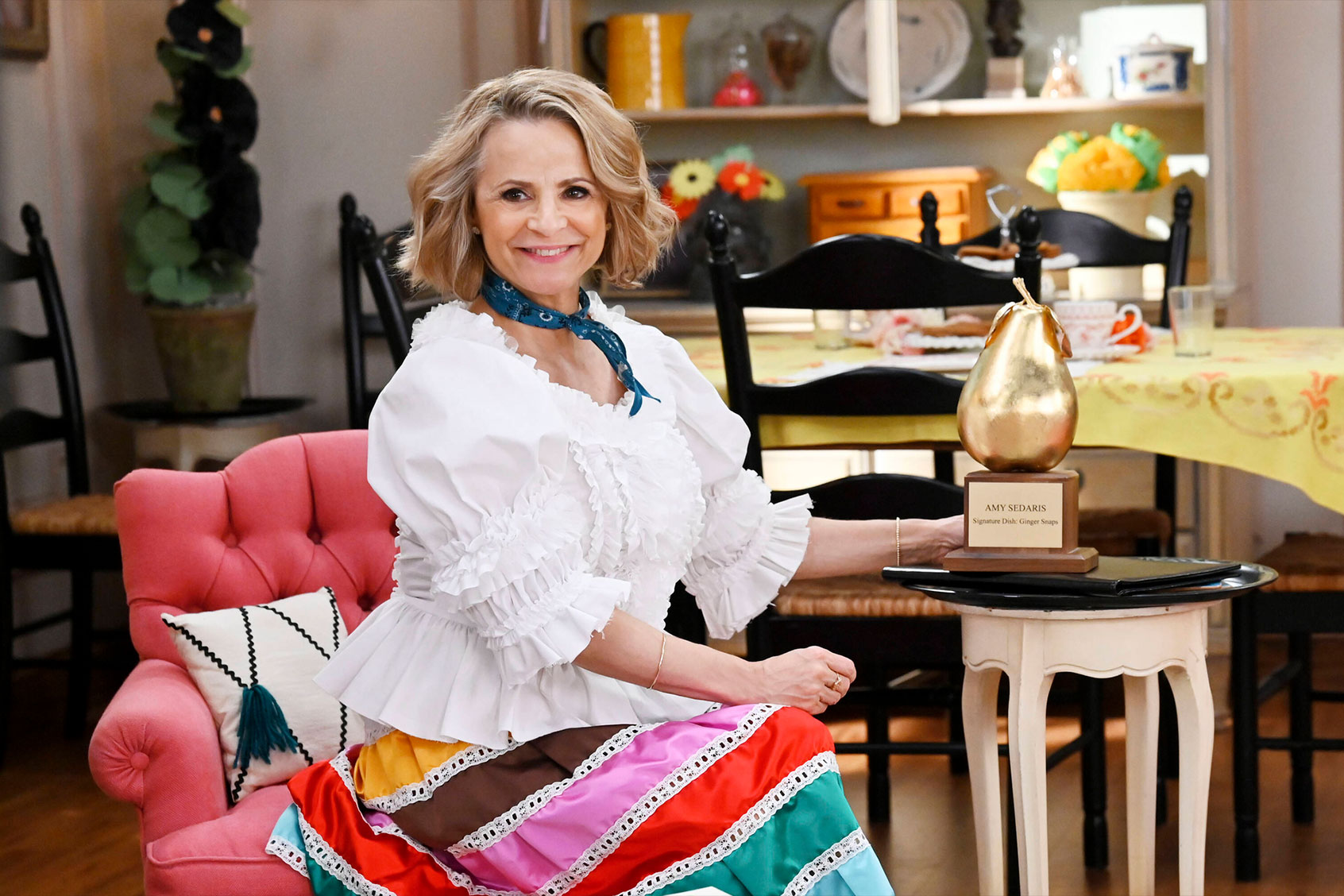
At Home With Amy SedarisAt Home With Amy Sedaris (Photograph by Phil Caruso/TruTV/WarnerMedia)There are two things to know about Zaslav: One, he was never a fan of his predecessor's pandemic gamble of streaming theatrical releases on HBO Max or producing movies expressly for the service, to build its subscriber base. Two, he's a fan of reality programming – although in a recent quarterly earnings call, Zaslav offered nothing but praise for chief content officer Casey Bloys' stewardship of HBO and HBO Max's series development.

Hence, it's not entirely shocking that in addition to the burials of "Batgirl," which was in post-production and a planned sequel to the animated movie "Scoob!," several made-for-HBO Max movies have already disappeared from HBO Max including "Charm City Kings," "An American Pickle," "The Witches," "Moonshot," "Superintelligence," and "Locked Down." The LeBron James-produced remake of "House Party" was supposed to premiere a little over a week ago, but that's also been benched.

Maybe you never planned to watch any of these movies or may be comforted to know you can rent them via video on demand. But HBO Max subscribers may have been counting on discovering these, along with newer shows and past examples of a favorite creator's or performer's work, without paying an extra fee.

The quiet disappearances of several HBO-branded shows from the service mean that's no longer a given.
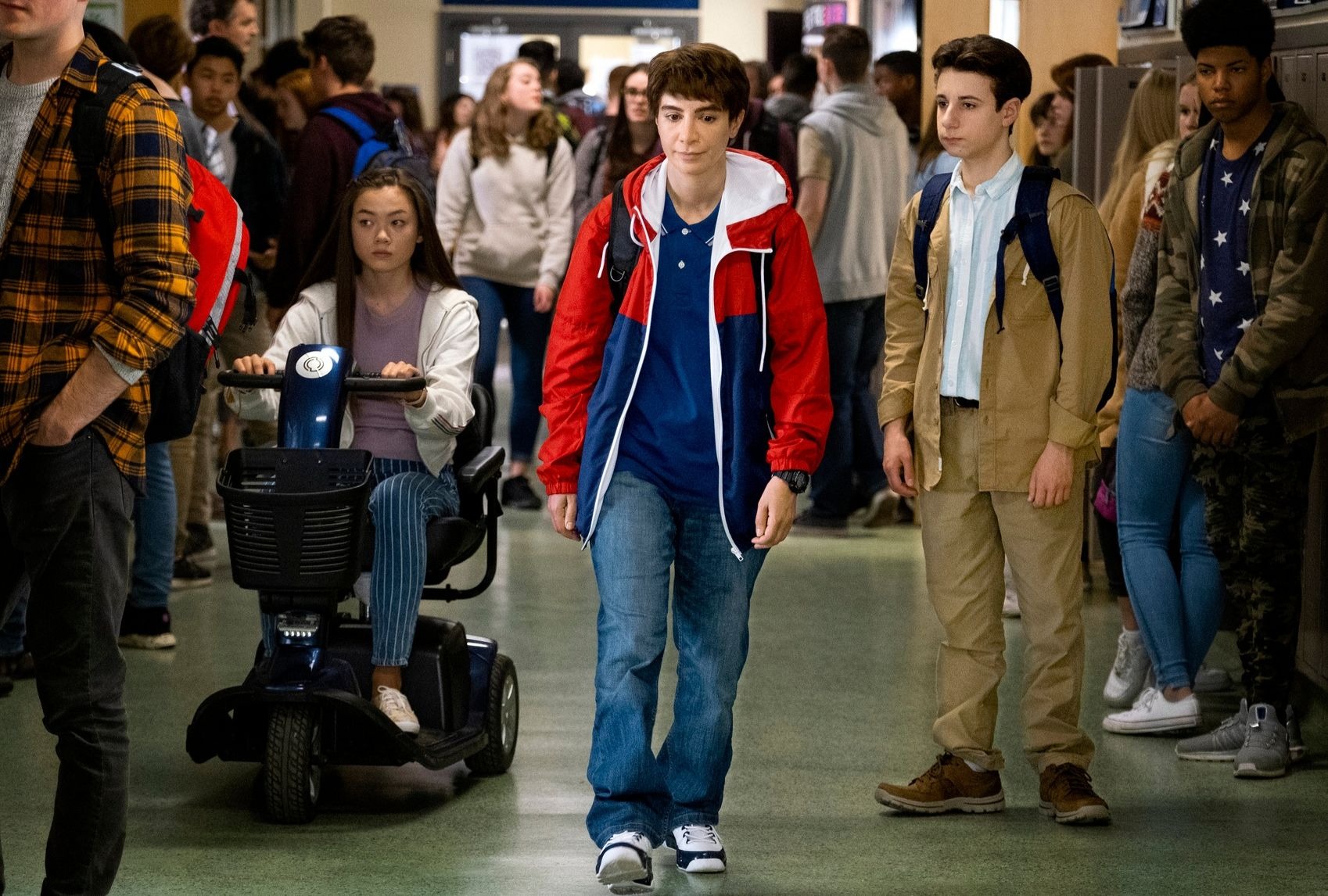
Alexa Woo, Nasim Pedrad and Jake Ryan in "Chad" (Liane Hentscher/TBS)So far the list of HBO's departed includes "Vinyl," which was co-executive produced by Mick Jagger and Martin Scorsese; "Here and Now," from "True Blood" creator Alan Ball; Lena Dunham's "Camping"; Steven Soderbergh's and George Clooney's "K Street"; "Mrs. Fletcher," buoyed by Kathryn Hahn's critically acclaimed performance; and "Run."

It doesn't end there. Cult gems such as "At Home with Amy Sedaris" and "Chad" are gone too. Their defenestration follows the cancellations of their basic cable siblings, including TNT's "Snowpiercer" and TBS' "Full Frontal with Samantha Bee."

The endangered

Harley QuinnHarley Quinn (Courtesy of HBO Max)Zaslav was unequivocal regarding his disdain for his predecessor's straight-to-streaming movie model. As for how he sees the value of HBO Max's originals (i.e. its TV shows) that's tougher to deduce.

According to several industry trade reports, the series and movies targeted for culling weren't popular with HBO Max subscribers but came out recently enough to qualify for a tax write-down. (Ask your accountant to explain amortization.)

The new Warner Bros. Discovery regime has demonstrated a willingness to shelve finished or nearly finished projects to save a little cash.

Those listed above are merely the missing that regular viewers have noticed so far. More disappearances are coming.

But this also means that existing shows deemed to be under-performers probably won't get additional seasons, which may not bode well for critically beloved DC titles such as "Harley Quinn" or "Doom Patrol," which also features Brendan Fraser. (That's right, Zaslav is negatively impacting the Brendan Fraser Renaissance. For shame!)

Doom PatrolMatt Bomer, Brendan Fraser, Joivan Wade, Dianne Guerrero on "Doom Patrol" (Photograph by Bob Mahoney/HBO Max)During Thursday's quarterly earnings call, Zaslav also alluded to emulating Marvel's model to revive the DC TV and movies brand, mentioning Batman, Superman and Wonder Woman as its core titles.

"Harley Quinn" is directly connected to the Batman brand, as well as "Suicide Squad," so there may be hope for it. Plus, its third season recently debuted on HBO Max. "Doom Patrol" is more of an edge-case title that mainly connects to the Justice League via Cyborg. The good news is that production on the fourth season began in February.

Then again, the new Warner Bros. Discovery regime has demonstrated a willingness to shelve finished or nearly finished projects to save a little cash. Hopefully that financially motivated ruthlessness doesn't extend to established shows. But don't hold your breath.


Want a daily wrap-up of all the news and commentary Salon has to offer? Subscribe to our morning newsletter, Crash Course.


The bottom line

Chip and Joanna Gaines in "Fixer Upper: Welcome Home" (Magnolia Network)

There are plenty of numbers to parse related to ratings and revenue, but we're still in the early days of Warner Bros. Discovery. Nobody can say with any authority how it will look a few months from now, let alone in a year.

What we've seen so far, however, is concerning. Mergers always result in significant job losses, and according to early reports, an estimated 70% of the streaming service's development team was (is?) set to be laid off, joining the scores of personnel that have already been shown the door.

"Our strategy is to embrace and support and drive the incredible success that HBO Max is having," Zaslav said. "It's at a very unique moment. We think it's an extraordinary asset. It's an extraordinary advantage. I've said this before: it's not how much, it's how good." Which provides no concrete assurances that those layoffs aren't coming.

Regardless of that, or the swirl and blending of two massive content oceans, there's no getting away from the probability that the amount of inclusive content and diversely staffed productions will decrease. As an example, a recent press release touting Magnolia Network's impending addition to HBO Max promises a selecting of "curated" content, listing a few titles planned for the line-up. "Homegrown," one of the few Magnolia titles featuring a non-white host, was not among them.

A representative from the network told Salon that additional titles would be confirmed closer to the launch of Magnolia's spotlight page. That doesn't soothe my worries.

One person's curation is another's culling, and the Warner Bros. Discovery house cleaning exemplifies this. Though the libraries will be expansive once the content deck is finally shuffled, in the short term the result will be fewer creative scripted swings. Expect that, along with an uptick of reruns and game shows on basic cable channels that once boasted vibrant original prime time slates. The merger may have expanded the media corporation's reach, but brace yourself. When one company controls this many streams, your viewing options will almost certainly narrow in fundamentally important ways.

Why returning to medicine’s roots in nature could help fill drug discovery gaps

While humans evolved over a period of approximately 6 million years, breakthroughs in modern medicine as we know it today got going only in the 19th and 20th centuries. So how did humans successfully survive through millions of years of diseases and illnesses without modern drugs and treatments?

This was a question I came to wonder about when the COVID-19 pandemic reached my family in India in April 2020, when there was very limited access to vaccines and treatments. All of my years working as a biomedical scientist, requiring empirical evidence and formal safety testing before using a treatment, took a back seat as I scrambled for potential therapies from any sources I could find, be it scientific papers or folklore. I was ready to try any experimental or traditional medicine that might have a chance at helping my dad.

Luckily, my dad recovered. I can’t say for sure if any of the traditional medicines we used actually helped him recover. But as someone whose entire scientific career has focused on discovering new drugs from chemical compounds found in nature, I wondered if there was a molecule in the traditional medicines we used that could be isolated and optimized to treat COVID-19.

Scientists like me have been looking for new drugs for various diseases by purifying existing compounds in nature instead of synthesizing completely new ones in the lab. From COVID-19 to antibiotic resistance, I believe that past successes and new technologies point to the tremendous potential of developing new drugs from natural products.

Early drug development involved searching for plants with medicinal properties. Scientists have since been able to isolate the active ingredients bestowing medicinal properties on natural products, such as the morphine in poppies.

The natural product advantage

Humans have coevolved with the rest of nature over time, and obtaining medicine is perhaps one of the most important interactions people continue to have with the natural world. DNA analyses have shown that early humans may have treated dental abscesses with poplar, containing the active ingredient of aspirin, and Penicillium mold, containing the antibiotic penicillin.

Researchers call the molecules like the ones that give poplar and Penicillium their biological effects natural products because they are produced by living organisms such as microbes, fungi, corals and plants. These natural products have evolved to be structurally “optimized” to serve particular biological functions, primarily to deter predators or gain a survival advantage in a particular environment and over other competitors.

Because natural products are already made to function in living creatures, this makes them especially attractive as a source for drug discovery. While proteins may look different in different organisms, many have similar structural features and functions across species. This can help ease the search for related proteins that work in people.

Natural product hall of fame

Natural products derived from microbes and plants are the biggest resource for drug discovery for modern medicine. Case in point, the discovery of the antibiotic penicillin in 1940 from Penicillium mold allowed doctors to treat previously fatal infections and started the era of antibiotics.

As of September 2019, over 50% of currently available FDA-approved drugs are either directly or indirectly derived from natural products. One of the best-selling drugs of the past two decades, atorvastatin (Lipitor), an anti-cholesterol drug, is derived from a compound produced by the fungus Penicillium citrinum. From 1992 to 2017, atorvastatin sales in the U.S. totaled US$94.67 billion.

Penicillin revolutionized medicine.

Other prominent examples of drugs derived from natural products currently used today include the anti-fungal amphotericin B, isolated from the soil bacteria Streptomyces nodosus, the chemotherapy taxol, isolated from the bark of the Pacific yew tree, and the immunosuppressant cyclosporin, isolated from the fungus Tolypocladium inflatum.

I believe that undiscovered treatments for a wide range of diseases are lying right under our noses in natural products. In January 2021, the FDA approved voclosporin (Lupkynis), isolated from the fungus Tolypocladium inflatum, to treat lupus. Recently, researchers have been looking into cannabidiol and other cannabinoid compounds as a potential way to prevent or treat COVID-19. The FDA has not authorized any drug containing CBD for COVID-19 yet.

Challenges in natural product discovery

Researchers are increasingly able to use new screening technologies and methods to isolate previously unidentified natural products. Screening for natural products typically involves looking through a large library of extracts from natural sources. The Natural Product Drug Discovery Core, which I co-founded with my colleague David Sherman at the University of Michigan, for example, searches for potential drug targets in a library containing around 50,000 natural product extracts that each contain 30 to 50 molecules to test.

However, discovering natural product-based drugs is not without challenges. Since the 1980s, natural products have fallen out of favor because of a number of challenges. These include difficulty accessing expensive screening methods, and limitations in technology that isn’t able to fully analyze the complexity of natural products. There are also ecological and legal considerations, such as accessing samples sustainably and maintaining biodiversity. Pharmaceutical companies have reduced their natural product-based drug discovery programs, and federal funding is also in short supply due to limited profitability.

As antibiotic resistance grows, developing new drugs and using current ones more responsibly becomes even more imperative.

Finding new drugs in nature

New drugs are often necessary for unprecedented health emergencies like COVID-19. They are also needed for a health emergency that began long before the pandemic – antibiotic resistance.

A September 2017 report from the World Health Organization reaffirmed that antibiotic resistance is a global health emergency that will seriously jeopardize progress in modern medicine. If current antibiotics lose their effectiveness, common medical interventions such as cesarean sections and cancer treatments may become incredibly risky. Transplantation could become virtually impossible. Antibiotic-resistant microbes were the direct cause of roughly 1.27 million deaths in 2019. Treating just six of the 18 microbes that pose an antibiotic resistance threat is estimated to cost over $4.6 billion annually in the U.S. alone. The COVID-19 pandemic has reversed prior progress addressing this issue, with a 15% increase in antimicrobial-resistant infections from 2019 to 2020. In contrast, antimicrobial-resistant infections had fallen by 27% from 2012 to 2017. Among the likely causes of this backslide were increases in antibiotic use, difficulty following infection control guidelines and longer hospital stays.

As of recent estimates, roughly 75% of approved antibiotics are derived from natural products. There are thousands of microorganisms in the ocean left to explore as potential sources of drug candidates, not to mention all the ones on land. In the search for new drugs to combat antibiotic resistance, natural products may still be the way to go.


Ashu Tripathi, Director, Natural Product Discovery Core; Assistant Professor/ Research of Medicinal Chemistry, University of Michigan

This article is republished from The Conversation under a Creative Commons license. Read the original article.

12 experts on their biggest first-home mistakes

Let’s face it: Even those who we’ve now come to consider as design pros have made their share of home-related mistakes in the past — we’re all only human, after all! Nobody gets everything right when it comes to home ownership, and especially the first time around.

Here, 12 successful home influencers reveal the biggest mistakes they made in their first houses, chiming in on everything from hasty furniture orders to poor paint color judgment and much more.

Ordering pieces too quickly

“The first ‘mistake’ that comes to mind for me is what I’ll call ‘celebration purchases.’ Shortly after closing on my first home (I rented for many years before that), I got excited and impulse-ordered a couple of light fixtures and several pieces of furniture. But it was several months before they arrived and then I found I wasn’t ready to install them immediately — so, I was forced to find somewhere to store these new purchases. As time went on and I fully assessed the space, I ended up with several pieces that I no longer wanted to use (and could no longer return). So, my lesson is to resist these celebratory purchases no matter how excited you are. Wait until you’ve fully understood your space, and are actually ready to install new pieces once they arrive.” — Daniel Mathis@notaminimalist

https://www.instagram.com/p/CUdn-QxgodY/

Renovating too soon

“After getting married, we bought a fixer-upper and started a full renovation. Before it was even finished, we decided to move out of state. It took us years to recover from our investment! I wish the 26-year-old me knew that the average home renovation only results in a 70% return on investment.” —Ruthie Jackson@miracleonthirtyfourth

https://www.instagram.com/p/CZCqigKp0lP/

“I realize that a lot of homeowners are eager to renovate their homes as soon as they’re handed the keys. My advice for them is to always live in the home for a few months, and then decide what actually needs to be renovated. That way they’re able to understand how to make the house work for their lifestyle.” — Gladys Tay@thegladystay

https://www.instagram.com/p/CbXgMbiuWpl/

Rushing to fill the space

“I would say my biggest regret was filling my home with things just [because]. I didn’t take the time to thrift and curate pieces that spoke to me. I also regret passing up pieces that I absolutely loved due to the price tag. It’s OK to mix high- and low-end things, but I should have just saved up for those super-special pieces that I would have forever!” — Michelle Lanzilatti@littlelattihouse

“When my husband and I purchased our first home — a one-bedroom condo just outside Washington, D.C. — we decided we’d buy ‘grown-up’ furniture and decor for our new place. So, we sold off our IKEA staples and hand-me-downs that we’d used in our rental, and set out to furnish our first home with all-new finds. At the time, I was in such a hurry to decorate that we wound up going to our local Crate & Barrel and buying everything there. The condo wound up looking like a page out of a catalog, pretty much void of any personality or collected objects. I eventually layered more (and very different) decor pieces to the condo over time, but vowed that, going forward, I’d take my time with decorating, and be far more intentional about my purchases.” — Kate Dreyer@kate_decorates

https://www.instagram.com/p/CcGXp8kJiu0/

. . . or waiting too long to buy anything

“One mistake I made was thinking we should wait until we could afford ‘really good furniture,’ so I would keep spaces empty until then. Wrong. We ended up not using certain spaces that we could have for years if we’d gotten more creative with thrifted or hand-me-down pieces. Now, I believe a mix of high-low pieces is the way to go — there’s no reason to leave a space unfurnished. That said, I do believe in finding special pieces and waiting for the right things to come along — so long as I’m not going years without actually sitting in a room!” — Bari Ackerman@barij

https://www.instagram.com/p/CYzLP2cLhc6/

Relying solely on overhead lighting

“When we moved into our first home, I focused all my efforts on selecting beautiful furniture and accessories, and completely forgot about illuminating each space! We thought we could shrug off this design oversight. However, we quickly realized that relying solely on overhead lighting wasn’t enough even when performing the simplest tasks — lighting is one of the most important components in interior design. Outside of creating ambiance in a space, your lighting should help you safely navigate each room during daytime and at night. Be sure you include a mix of accent lighting, task lighting, and ambient lighting, as well as overhead lighting to improve the room’s overall illumination. In addition to your overhead lighting, consider layering your lighting by pairing bedside lights with sconces or floor lamps to create a well-balanced lighting design.” — Anita Williams@pld_design_studio

https://www.instagram.com/p/B-h-nG9JIin/

Waiting to make simple fixes

“The biggest mistake we made in our first home wasn’t necessarily a design faux pas — although there were plenty of those! It was delaying small changes that would have improved the way we lived and felt in our space . . . like swapping out our counters and sink, fixing the brick steps on our exterior, and swapping the carpet on a step-down into our sunroom. To add insult to injury, we ended up doing all these just before selling the home! In hindsight, I can see that I was waiting on the budget to make more significant changes, but since then, I’ve learned that a Phase One makeover can help you enjoy your home in the present, while you save for bigger changes in the future. So don’t wait! Make small improvements now!” — Tiffany DeLangie@prettyrealblog

https://www.instagram.com/p/CcX_XCQrLDv/

Picking questionable paint colors

“The biggest mistake I (still) regret is doing a two-tone wall in the living room. The top was an ugly brown and the bottom was a sea-foam green with a white chair rail. It made the room look dated and so dark. In the same house, I also designed a kitchen with dark brown cabinets and black and brown granite. My, how times have changed!” — Sara Raak@sararaak

https://www.instagram.com/p/CaFbZwelBoE/

“The biggest decor mistake I’ve made in our home was not thinking carefully about the feeling I wanted our kitchen to evoke before deciding what color to paint our cabinets. I painted them grey, which is the complete opposite of the happy vibe I wanted that space to evoke!” — Ju DePaula@blueberrylivingco

https://www.instagram.com/p/CMSbIrrB7zD/

One too many DIYs

“One of the biggest mistakes I made in our first home was DIY-ing everything, particularly our kitchen backsplash. It was a project I thought would be easy because it looked pretty easy — or so I thought. We chose an unforgiving, porous mosaic that I attempted to cut using a hand-tile cutter and a Sharpie marker — no leveler. Needless to say, we ended up with a crooked backsplash that did not line up at the seams and had Sharpie marks where my cuts had missed the lines. Because money was tight then, we had to live with this backsplash, and be reminded that we should have saved and hired a professional to do the job!” — Nicole Reid@thepoplarcreekco

https://www.instagram.com/p/CaFqMSiJ1e1/

“In our first home, I wanted to update our powder room on a budget. I painted the vanity, switched out the lights, and decided to paint the countertop with epoxy paint that was meant for vehicles, but that I thought would look beautiful. I followed the directions (or so I thought), put the epoxy on, and waited. And waited. Not only did the paint look nothing like the beautiful copper I expected, it also just wouldn’t dry. I let it sit for days, even putting our dehumidifier in the hallway outside. Nothing. It felt tacky to touch right up until we replaced it. Yep, we ended up having to replace the entire counter. Instead of doing this project on a budget, I ended up wasting money on the expensive epoxy paint AND a new counter. I learned from my mistake, though, and still wince when I see people painting their counters.” — Hilary Prall@hilaryprall

https://www.instagram.com/p/CVnQ2zXg-MG/

Republicans block insulin price cap for private insurance in Inflation Reduction Act

During Sunday’s Inflation Reduction Act bill voting session, Republican lawmakers voted to block a portion of the suggested $35 price cap on insulin that Democrats hoped would apply to patients on both Medicare, as well as those using private insurance. 

According to The Washington Post, “Republicans left the portion that applies to Medicare patients untouched but stripped the insulin cap for other patients.”

“The cost of insulin isn’t just out of control,” Sen. Patty Murray (D-Wash.) said on the Senate floor, imploring the GOP not to strip the price cap from the bill per The Washington Post’s report. “This should not be a hard vote to cast.”

While things did not shake out as hoped, the vote for the cap block did include some votes from Republicans with a final tally of 57-43, but it was not enough to send it through in the way the bill intended as initially proposed. 

“Republicans have just gone on the record in favor of expensive insulin,” said Sen. Ron Wyden (D-Ore.) “After years of tough talk about taking on insulin makers, Republicans have once against wilted in the face of heat from Big Pharma.”

In coverage of the vote by Axios the GOP thinking behind their vote argues that extending the cap to both Medicare and private insurance “violated the rules of reconciliation after the Senate parliamentarian ruled that it is not primarily related to the federal budget.”


Want a daily wrap-up of all the news and commentary Salon has to offer? Subscribe to our morning newsletter, Crash Course.


“Thirty-seven million people in our country have diabetes, and it’s absolutely wrong that many of them cannot afford the insulin they need to live,” says Senate Health Committee Chairwoman Patty Murray (D-Wash.). “I’ve heard from people in my state who risk their life and ration insulin to make ends meet, all the while drug companies are jacking up prices.” 

Senator Lindsey Graham, who made the morning news circuit this morning speaking out against the Inflation Reduction Act as something that will make “everything worse,” cast his vote under the belief that the “cap on insulin prices violated the Byrd Rule because it would set prices in the commercial market,” according to The Hill

Will Elon’s robots bring utopia or tyranny? Why humans must control the future of automation

America is a nation of the disposable. We treat women as a disposable means of creating children who, if they aren’t victims of mass shootings, become disposable workers who work most of their lives to create the disposable commodities that are destroying the planet. Those who are disabled, run afoul of the law for even minor transgressions or are unable to work due to old age or illness may be ostracized, punished harshly or simply left to fend for themselves. As a group, the wealthy and powerful need us — to make their money for them and to cater to their whims — and to do this they must show us how anyone can be replaced at a moment’s notice.

But humans are necessarily imperfect workers. We have needs and can get sick or injured. More important, we can fight back. Some, like Elon Musk, are seeking to transcend these limitations by transcending workers themselves. As automation displaces increasing numbers of workers, it may come to replace disposability as a threat with disposability as a permanent state — rendering large swaths of the population economically useless, socially rootless and politically powerless, and thus unable to defend against our own disposal. 

Musk is not the only business leader working to spread the idea that automation is beneficial, but his company, Tesla, is pushing hard to innovate in the field. Its humanoid robot, Optimus, is set to be unveiled in September. Musk claims that Optimus is meant to solve the “labor shortage” and to relieve people from doing jobs that are “unsafe, repetitive or boring.” On the surface, these sound like laudable goals, and there are certainly some jobs that are so dangerous and unpleasant that automating them is desirable. But the reason automation is attractive to people like Musk is because it circumvents the human issues that workers face without paying them more, treating them better or conceding any power. Workers in the service industry — those most likely to be replaced by the Optimus robot — aren’t burned out because their jobs are boring and repetitive so much as because they are poorly compensated, highly pressured and often treated rudely by both customers and managers. Amazon isn’t having trouble finding workers because nobody wants to work, but because they are burning through those who do. 

Though Musk and others like him, may frame their desire for automation as benevolent, when we consider how they treat their workers, their genuine motivations become clear. Musk and his companies have a rich history of deplorable labor relations: overworking employees, tolerating racist work environments, firing dissenting voices and whistleblowers, union busting and putting lives at risk by defying public health orders during the pandemic. As with the deindustrialization that preceded it, however, automation threatens to further remove the ground beneath workers’ feet, making not just individual employees or businesses but entire industries, and potentially work itself, obsolete and making people like Musk harder to hold to account. 

Many people, perhaps understandably, would rather be in a well-defined adversarial relationship with an employer than to feel utterly cast adrift by society. But that choice may be rapidly disappearing and, in the process, driving people into the arms of the political right. Several studies show that those most under threat by automation disproportionately support right-wing populist parties. When looking at the voting behavior of workers from different countries, regions and industries, and controlling for confounding factors, automation has been shown to increase support for the radical right. 

While the threat of automation may push workers toward more progressive economic policies, it also shifts them rightward on culture-war issues and voting behavior.

In the U.S., those most vulnerable to automation are more likely to support progressive economic policies, but they are nonetheless shifting rightward on cultural issues and in their voting behavior. The idea that the growing sense of precarity and meaninglessness stems from an erosion of tradition or from excessive tolerance for diversity, rather from an acceleration of economic exploitation, can be attractive to owners because it obscures their role in the crisis and redirects anger at scapegoats, and to workers because it appears to restore a sense of clarity and reorients their place in the world. The result, however, is that the real problem remains unaddressed and other marginalized groups are made more vulnerable. 

How much risk automation poses to workers, which jobs are most likely to be replaced and whether new jobs will fill that void are all disputed questions. Some researchers have found that robotization negatively impacts both jobs and wages. Others argue that, over time, automation has created at least as many jobs as it has eliminated, but that these new jobs diverge significantly in terms of the training and specialization they require and how well they pay, increasing both productivity and inequality. Techno-optimists insist that everyone will benefit from this increased productivity, to one degree or another, because any job that can be automated will inevitably be replaced by a new one, perhaps yet to be imagined. 


Want a daily wrap-up of all the news and commentary Salon has to offer? Subscribe to our morning newsletter, Crash Course.


Historian Yuval Noah Harari points out, however, that the longstanding pattern by which technological disruption creates new opportunities is not some inexorable law of nature. Paradoxically, while the optimists rely on the unimaginable to assure us that new kinds of jobs will be developed, they cannot seem to imagine that this pattern could be broken. Harari argues that there is no obvious reason why we cannot automate any conceivable task that a human can perform, that the optimists are overestimating people’s ability to ceaselessly reinvent themselves, and that we running the risk of creating an entire class of the unemployable. According to Harari, not only would that leave many people — conceivably, even most people — with nothing more than idle entertainment or consumption to occupy their lives, it would centralize virtually all economic and political power. That could lead, alongside other emerging technologies, to tyranny

Whether this worst-case scenario will come about is impossible to know at this point, but large-scale disruptions to the economy, and a growing backlash against them, are not just inevitable but are already here. Musk recognizes the potential of automation to cause impoverishment and social unrest, which is why he has endorsed a Universal Basic Income (UBI) to ensure that every adult citizen, regardless of employment status, would receive taxpayer-funded income adequate to meet their needs. 

Remove workers from the political and economic equation in large numbers, and they lose virtually all leverage to reverse the concentration of wealth and power in our society.

While UBI may be necessary, it has various drawbacks. First, while the idea has appeal across the political spectrum, having been endorsed in different ways at different times by such figures as Martin Luther King Jr., Milton Friedman, Robert Reich and Jeff Bezos, achieving social consensus on a sufficient payment would be difficult. A 2020 poll by the Pew Research Center found that only 45% of those surveyed supported a payment of $1,000 a month, an amount below the federal poverty line. Even beyond that question, UBI would do little or nothing to address the increasing concentration of economic and political power that have made it a necessary measure in the first place. Workers got political and economic clout in the past because they had the power to disrupt production. Take workers out of the process altogether and then, even if the government provides for their basic needs, they have lost virtually all leverage to reverse the concentration of wealth and power so that everyone can have an equitable say in our politics. 

Disposability is endemic to our society as it is currently organized. While the attitudes, practices and structures that underpin it have existed since before the founding of our country and continue to the present, trickling down from the most powerful to everyone else, they can be resisted. The acceleration of automation is one more aspect of this well-established pattern, but one that threatens to accelerate it to a degree that we have never experienced. There is the potential for catastrophe, but also the potential for all of humanity to benefit from this transformation. Major capitalist leaders like Elon Musk, though, have a clear vested interest in certain outcomes. They may not intentionally seek social and political catastrophe, but in seeking more power for themselves at the expense of average people, they may well bring such a catastrophe about. Technological advancement is inevitable — but how it plays out, what it’s used for and whether its benefits are distributed equitably is up to us to decide. 

“Dead End: Paranormal Park” explores theme parks as queer getaways

Although it’s stationed in Sandusky, Ohio, “Roller Coaster Capital of the World” Cedar Point sits on its own island in Lake Erie, a vaguely Peanuts-themed oasis consciously separated from the mainland. Thrill rides are far from my transportation of choice, as they represent escapism by way of death defiance, and I very much enjoy living. The ridiculously fast speeds, painfully sharp turns, stomach-flipping drops and lack of control kept me far away from the metal beasts for most of my life. As a child, I would stare up at Kingda Ka — the tallest and fastest ride in North America — from my backyard, and I swore I could hear the riders’ screams. It sounded more like bloody murder than enjoyment. 

At Phoenix Parks, the central hub for demons and fans of schlocky television in Netflix‘s animated series “Dead End: Paranormal Park” (think Dollywood for a Vincent Price-esque genre actress Pauline Phoenix), the screams may well be actual bloody murder. Walking through the gates, patrons are at the mercy of not just inflated wait times and needlessly expensive concessions, but also possessed mascot costumes, sleep-stealing Night Hags, and egotistical ghosts. Against all odds, it’s here that runaway Barney and socially awkward Norma decide to make a home and find their family. 

Barney and I are (almost) uncomfortably similar: we both are scared of horror movies, are Jewish, and are transgender. While I’ve never run away from home, I don’t blame Barney for doing so; his parents’ lack of vocal support forces him to be subjected to transphobic rants from his grandmother. Couple that with the recent real-life obstacles facing LGBTQIA+ people — dozens of transphobic laws in circulation, Clarence Thomas’s dangerous idea that Obergefell v Hodges (same-sex marriage) was an “erroneous decision,” the increased targeting of Pride parades and drag shows — and it’s understandable that Barney leaves the real world for the safety of Pauline’s fantasies.

After getting a frantic late-night call from my friend, I agreed to come to Cedar Point hoping its promised fantasy would help assuage his pain of a bad few weeks plagued by personal problems. Part of this meant facing my own fears and riding some coasters, which was something that I had accepted until I walked onto my first coaster. Suddenly, my own anxieties about the heights and speed of rides compounded with the external issues, and I freaked out. 

I felt weightless. Then WHOOSH. And I screamed, but for the first time all day, I screamed with joy. 

The guided ascent up the first hill was filled with cursing that would put a sailor to shame; the anticipation reached a fever pitch when I started screaming about “Jesus, Mother Mary, and Joseph” for lack of any of my actual prophets coming to mind. We crested the hill of the Maverick, which at 100 feet was one of the smallest of the day, and then . . . we took off. 

The twists and turns rattled me, batting me between the bars that were meant to hold me in place. Sounds of terror escapes my throat, though I don’t remember uttering them. This pattern repeated itself for the second ride of Steel Vengeance: anxious ascent up a 200-foot-plus hill and a terrified, vocal descent. 

roller coasterVactioners enjoy the thrill of Cedar Point Magnum XL-200 roller coaster in Sandusky, Ohio (Getty Images/Denise Panyik-Dale)
But by the third ride — the iconic Millennium Force — something within me broke. As we climbed the hill, I looked out at the gorgeous lake beside me and the terror I had felt all day morphed into something else entirely. That moment before we descended, everything was peaceful — the wind blew gently, the sounds of the park below were muted, and everyone looked like ants. I felt weightless. Then WHOOSH. And I screamed, but for the first time all day, I screamed with joy. 

Hurtling down 308 feet at 93 mph, I was having a blast. Every other thought, every other fear of the outside world disappeared as I was forced into existing within the moment. Within the planned chaos of a roller coaster, nothing mattered — not my dysphoria, not my identity, not the people who don’t want me to exist. There was only the here and now. And from that moment on, I was not only excited for these rides but I craved this type of weightlessness. For the first time in months, these were the moments that I felt most like myself, whatever that meant. 

People visit theme parks to, for lack of a better phrasing, leave their shit at the door. Once you cross the threshold into Cedar Point, Six Flags, Disneyland, whatever your amusement park of choice is, the world outside ceases to exist. You enter a wonderland populated by various cartoon characters — Disney, Looney Tunes, Pauline Phoenix, or even Garfield — where you happily pay exorbitant prices for mediocre fast food, all to keep the illusion intact. That illusion is of ignorance, of imagining a better world full of whimsy and bodacious thrills where nothing bad ever happens. 

For transfolk like Barney and myself, these escapes are often the only way that we can fully inhabit our body during early stages of our transition.

Inside the gates of these parks, everything feels like it’s in your control. You can fly like Superman, go 20,000 leagues under the sea, or walk around as a literal demon; you can do whatever you can imagine and no one will judge you. The reason for this is simple: every attendee wants to live within the fantasy, one where giant mice give you life-affirming hugs or that you’re really hurtling through space and conquering the final frontier. As a queer person, the heightened reality lends itself to a blanket acceptance, a sense that since everyone agrees that animals (and cars and toys and demons and even emotions themselves) are worthy of respect and empathy here, then you are too.

Exploring the park, I noticed the difference in how people perceived me compared to the outside world. Walking on the street, serving tables at my day job, doing work at a cafe — we move slow enough to study one another during these moments, to run a cursory glance over someone to determine our safety. It’s evolution. But at Cedar Point, no one cared about me; it’s difficult to examine someone when coasters zoom by on massive metal structures and your favorite character is posing for photos. The sheer spectacle is distracting, and should someone take the moment to cast a glance my way, they simply saw another patron trying to experience the park to its fullest. 

Amusement parks work because the social contract changes from being about the individual to being about the group, because if the magic is ruined for one person, it’s ruined for everyone. Strapped into a ride, everyone is stripped of their personalities and politics and thrown onto the same level: a human being simply trying to survive the impossible. With all our control taken away, we are all damned to the same fate; we become united in the thrill, our voices meshing together into one massive, joyous scream. There’s something intoxicating about climbing insane heights only to drop into a ridiculously fast speed and come out the other side unscathed. 

For transfolk like Barney and myself, these escapes are often the only way that we can fully inhabit our body during early stages of our transition. There hasn’t been a day in my transition that the perfect female figure — skinny hourglass shape with shapely features — hasn’t crossed my mind. Although hormones are slowly helping my body soften and feminize, that doesn’t change that my shoulders are broad, that I have to scavenge for clothes that fit, that being in between genders calls out my lack of naturally belonging to either one. My body often feels like a cage, one that I can dress up differently to be less drab, sure, but also one whose rigid structure clashes with everything society wants. 

Speeding down toward the ground at nearly 100 mph, the social pressures of gender norms and presentations are ripped away, leaving us with what’s left: ourselves. In the moment, the wind lashes against our arms, the turns jostle our necks, the empty air dangles below our feet. It’s a feeling of wholeness that’s hard to explain but absolutely vital, as it provides us the space for our confidence and comfort to grow. 

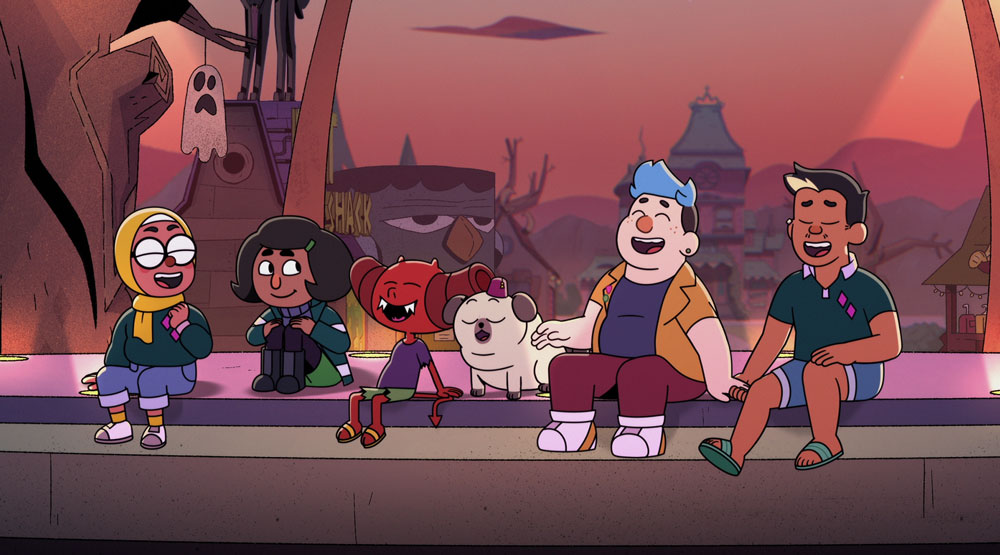
Dead End: Paranormal ParkKat Khavari as Badyah, Kody Kavitha as Norma, Emily Osment as Courtney, Zach Barack as Barney and Kenny Tran as Logan in “Dead End: Paranormal Park” (Netflix)
Running away to Phoenix Park allowed Barney to establish relationships where people saw him as a man instead of a trans man, a refreshing distinction for someone early on in transition. By never leaving the bounds of the park, Barney is able to completely eradicate the idea of expected normalcy. His new normal is full of demons and talking pugs, sleeping in coffins and eating fast food, and most importantly, having friends who love you more than family. Over the course of the 10 episodes, Barney grows into a more self-assured individual, one who actually feels deserving of the love provided by those around him. 


Want a daily wrap-up of all the news and commentary Salon has to offer? Subscribe to our morning newsletter, Crash Course.


Although Barney spends much of the season hiding from his family, he sets up a lunch to smooth things over. The meal takes place in perhaps the silliest place possible: an Old West saloon populated by overly dedicated actors. The backdrop adds humor to a serious discussion, allowing Barney and his father to quibble over blatant metaphors like, “Who gets the last chip?” and “What to order that represents your authentic truth?” 

Finally fed up with the politeness, and the waitstaff’s constant stage fighting, Barney’s father exclaims in exasperation, “I don’t get it. We accepted you.” The statement is conclusive, as if their acceptance magically made them leagues better than the countless parents who disown their LGBTQ+ children. But having spent weeks at the park, Barney knows he’s worth more than simple acceptance, it’s the bare minimum. The family he’d rather be having a conversation with is Norma and his co-workers, people who exist within the fantasy that is Phoenix Parks and have never once questioned him or his identity. The time away from his family helps him verbalize how his parents can move beyond acceptance into actual love and support. 

Where Barney can leave his family to return to misadventures within Phoenix Parks, I couldn’t stay at Cedar Point without breaking a few laws. Leaving the haven I had found meant that the weights I had removed would quickly settle back on my shoulders and mind. Overwhelmed by exhaustion by the time we reached our car, I leaned against the window and — with my eyes closed just right, hearing my two close friends sing along to the music as the car glided atop the asphalt — felt like I was on a roller coaster. For a few more minutes at least, I could stay weightless.

Vice President Kamala Harris breaks deadlock in Inflation Reduction Act “vote-a-rama”

Starting Saturday afternoon and working through the night into Sunday, the Senate has been chipping away at a “vote-a-rama” for the Inflation Reduction Act bill which will impose new taxes for health care and climate issues. While these taxes will not impact small businesses or families making $400,000 or less, it will create a “15% minimum tax for corporations making $1 billion or more in income, bringing in more than $300 billion in revenue,” according to NPR.

At a point of deadlock in the voting process, Vice President Kamala Harris arrived at the Capitol to cast a tie-breaker, leaving the vote at “51 to 50 to proceed to the 755-page bill,” according to The Hill. From here, a final passage of the bill will be pushed through Senate with a yet-to-be-determined timeline that could be as soon as the end of the weekend. Once the bill makes its way through Senate it will then need to be approved by the House of Representatives before President Biden signs it into law.

The Inflation Reduction Act bill “represents the largest climate investment in US history,” according to CNN. And will allow Medicare the ability to negotiate the prices of a variety of prescription drugs and extend expiring health care subsidies for three years.

In a series of statements issued on Twitter Saturday afternoon, Vice President Harris describes the work being done saying “Our Administration has been working to lower prescription drug prices. Under the Inflation Reduction Act, Medicare will be able to negotiate prices. This is a huge relief for so many families across our nation.”

“I just cast the tie-breaking vote to start debate on the Inflation Reduction Act. This bill will lower health care and prescription drug costs for families and address the climate crisis. Let’s get this done,” Harris says.


Want a daily wrap-up of all the news and commentary Salon has to offer? Subscribe to our morning newsletter, Crash Course.


 “The time has come for the Senate to begin debate on this historic piece of legislation. The Inflation Reduction Act is a groundbreaking bill for the American people, for families struggling to pay the bills, for seniors struggling to pay for medication, for kids struggling with asthma,” Schumer said on the floor moments before the vote, per reporting from The Hill. “This is one of the most comprehensive and impactful bills Congress has seen in decades.” 

“The bill, when passed, will meet all of our goals – fighting climate change, lowering health care costs, closing tax loopholes abused by the wealthy and reducing the deficit,” says Schumer per CNN coverage of Saturday’s series of votes. 

For essential workers who suffered through COVID, monkeypox is déjà vu all over again

Even though hundreds are still dying from COVID every day and several thousand are hospitalized in the U.S., the pandemic has receded into the mid-summer background hum  of American life. Variants come and go, and whatever residual risks exist for essential workers in healthcare or congregant care we expect them to just suck it up.

Just like the ever present risk of workplace violence, including the potential for a random assault rifle attack, it’s all part of the implicit 21st century take-it-or-leave-it social contract imposed on the essential workforce. Hazard pay? What hazard?

Now, freshly mixed into the risk-threat matrix for nurses and other front line workers, exposure to the monkeypox virus — which the New York Times reported was “a virus similar to smallpox” but with symptoms that were “less severe.”  The virus, which originated in Africa and was first seen in the late 1950s, is primarily spread through close physical contact, like sex, but does pose some occupational health risk for healthcare and other frontline workers in congregant care or hospitality settings.

The first case in New York City was flagged May 20. According to an internal) occupational health guidance from the New York City Fire Department Bureau of Emergency Medical Services (FDNY EMS) issued in May and obtained by Salon, the strain of monkeypox identified was “not capable of causing permanent disability of life threatening/fatal disease in healthy humans” but could manifest in lesions as well as other nasty symptoms.

“Incubation periods after potential contact with an infected person is 5-21 days and a  patient is considered infectious from 5 days prior to the onset of rash until the lesions  have crusted over with new skin,” according to the FDNY’s EMS 911 fact sheet. “Symptoms usually start within 5 days of exposure and can include fever/chills, headache,  muscle aches, fatigue, and lymphadenopathy of swollen lymph nodes in the neck, jaw,  and inguinal area (genital area) and usually start before a rash appears. The distinct rash  which may appear 1-3 days after initial symptoms, usually begins on the face then spreads  to the palms, soles, extremities, and trunk. Classically, they appear as fluid  filled vesicles but not all patients with monkeypox develop a rash.”

Back on July 23, the World Health Organization (WHO) declared a global public health emergency due to the proliferation of the monkeypox virus. When WHO’s panel met a month earlier to evaluate the status of the contagious virus there were 3,040 cases in 47 countries. In just a month it had exponentially expanded to 75 countries and was observed in more than 16,000 people.

Public health experts and union officials warn they are seeing the same plodding response to the monkeypox virus that was so evident during the onset of COVID — when the lack of testing and contact tracing gave the virus a running head start.

In New York City and New York State, now the epicenter for the monkeypox outbreak, officials were suddenly scrambling for a vaccine that remained in short supply. City officials reported 1,300 confirmed cases and that potentially as many as 150,000 New Yorkers had been exposed to the virus. Both Mayor Eric Adams and Gov. Kathy Hochul declared a public health emergency as the local news showed clips of long lines of people hoping to get the shot that was in short supply. President Joe Biden followed suit Aug. 4, declaring a public health emergency as the U.S. confirmed over 6,000 cases, the highest caseload in the world. 

Public health experts and union officials warn they are seeing the same plodding response to the monkeypox virus that was so evident during the onset of COVID — when the lack of testing and contact tracing gave the virus a running head start. And as with COVID, the failure to contain and limit the occupational health exposure to the virus put the broader society at risk as healthcare workers inadvertently spread COVID.

“Monkeypox is much different from COVID as far as the way that you get it,” said Dr. Edward Zuroweste, the founding director of the Migrant Clinicians Network, an international non-profit that serves migrant and immigrant workers. “It has to be close contact like either with a person that has it, or bed, clothing, or other articles that a person slept on — or used, like towels. So people who are cleaning, for example, in a hotel room or a setting like that, really have to be cognizant of that so that they don’t come into skin contact with the virus.”


Want more health and science stories in your inbox? Subscribe to Salon’s weekly newsletter The Vulgar Scientist.


That means wearing gloves and frequently washing your hands throughout the workday. “The good news is monkeypox does not like soap and water,” said Zuroweste.

And while monkeypox has yet to yield a death in the U.S., it’s likely a bellwether of things to come as the climate continues to heat up and tropical infectious diseases migrate, Zuroweste believes. “There’s no question that we have to find a way to protect essential workers from these infectious diseases because it’s going to continue to be an issue so that people have to be aware of the new viruses coming down the pike and what to look out for,” he said.

Zuroweste says that in the current risk climate, union representation for essential workers is more vital than ever and that the best countermeasure to the proliferation of pandemics and public health emergencies is the establishment of universal health care that would promote “rapid public health investigations of infectious diseases and contact tracing.”

“Morale is at its lowest in EMS. We need parity with police and fire now.”

Gloria Middleton is president of CWA 1180 which represents several thousand administrative managers, many of whom work at Health + Hospitals Corp, New York City’s municipal hospital system. She lost members to COVID including Priscilla Carrow, who worked at Elmhurst Hospital and was responsible for handing out PPE masks to the clinical staff but because they were in short supply did not wear one.

She says management has been slow so far to communicate with the union about  monkeypox. “I have not heard anything from H+H as far as the additional risk to my members,” Middleton said. “The city agencies have not yet set policies as to what healthcare workers are to do regarding this. Everybody is still wearing masks but we just don’t have enough information out there to make sure our members are protected.”

A spokesperson with Health+Hospitals did not respond to a  request for comment.

Vincent Variale is the president of DC 37 Local 3621, which represents the FDNY EMS officers. FDNY EMS lost a dozen members to COVID and eight to suicide during the pandemic. “It’s good to see the city moving quickly to announce a state of emergency [for monkeypox] but a lot of work still needs to be done to recover from pandemic,” he said. “We need to increase staffing for the frontline EMS workforce and morale is at its lowest in EMS. We need parity with police and fire now.”

Variale said that because EMS is so short-handed, there’s constant pressure to get a rig back into service after a call even though the city’s monkeypox outbreak requires ambulances go through a thorough cleaning. “We are so short staffed the Chiefs will yell at crews who go off service to properly clean their vehicles,” Variale said.

The risk for EMS from infectious disease made front page news back in 1997 when FDNY EMT Tracy Lee, 34 died from HIV/AIDS she contracted on the job.  After only 17 months on the job, Lee’s glove tore while she was treating an HIV positive patient. Her spouse’s request to have her death classified as a line-of-duty death was denied. Ultimately, the state legislature mandated that HIV on the job infection was a line-of-duty death.

Charlene Obernauer is the executive director of the New York Committee on Occupational Safety & Health, a non-profit supported by labor union and community groups. “Monkeypox has the potential to place a heavy burden on already thinly stretched frontline workers,” Obernauer wrote in a text. “We need to do everything we can to support education and access to the vaccine for those who are most vulnerable and who are disproportionately impacted.”

Barbara Rosen, the first vice president of Health Professionals and Allied Employees, New Jersey largest nurses union, credited the state of New Jersey with “taking proactive steps on this new public health threat” and that Gov. Phil Murphy had expanded eligibility for the monkeypox vaccine.

“As healthcare workers, we must continue to be vigilant in protecting ourselves,” Rosen said in a statement to Salon. “We will continue to advocate for infection disease prevention by ensuring all healthcare workers have access to personal protective equipment, fit testing of such PPE [personal protective equipment] and training on preventative measures and policies. Our members have sacrificed to care for everyone, have become exposed to infectious diseases, have been infected and some of them have died. And the toll is continuing in a staffing crisis that preceded this pandemic and has been greatly exacerbated by it.”

The day after the Biden administration declared a national health emergency, Dr. Ashish Jha, the White House’s point person on COVID, told MSNBC there had been 6,600 cases in the U.S. but no deaths. Jha explained that the shortfall in vaccines was because there was only “one small Danish company that makes all the vaccines for the world. We have procured more vaccines than the rest of the world combined. So, we have been on this from day one.”

Not all the experts agree.

In a New York Times op-ed on Aug. 1 Scott Gottlieb, a former FDA Commissioner said that there had been just 100 cases of monkeypox in Europe in May but that it “wasn’t until late June that the C‌enters for Disease Control and Prevention expanded testing for monkeypox to large commercial labs like Quest Diagnostics and Labcorp for more capacity and access. The CDC had gone through its standard playbook, ticking through its protracted checklist.”

“Our country’s response to monkeypox ‌‌has been plagued by the same shortcomings we had with COVID-19,” wrote Gottlieb. “Now if monkeypox ‌gains a permanent foothold in the U‌nited States and becomes an endemic virus that joins our circulating repertoire of pathogens, it will be one of the worst public health failures in modern times not only because of the pain and peril of the disease but also because it was so avoidable. Our lapses extend beyond political decision making to the agencies tasked with protecting us from these threats. We don’t have a federal infrastructure capable of dealing with these emergencies.”

Gottlieb closes with a stern warning. “Time is running out. Diseases like Zika, Covid‌ and ‌‌monkeypox are a dire warning that dangerous pathogens are on the march. The next one could be worse — a deadly strain of flu or something more sinister like Marburg virus. We’ve now had ample notice that the nation continues to be unprepared and that our vulnerabilities are enormous.”

What’s clear is that we continue to ignore the data that suggests that protecting our essential workers is foundational to protecting public health.

It might cost more money. And in the U.S. our for profit healthcare system is about the preservation and amassing of wealth — not the well-being of its workforce or the general population.

We know that well over a million people died from COVID here in the U.S. and that tens of millions were infected and millions suffer from so-called long COVID. Yet we have no national registry as to how many people died as result of their workplace exposure and the powers that be are in no hurry to find out.

We know, thanks to reporting by the Guardian and Kaiser Health News that in the first year of the COVID pandemic 3,600 U.S. healthcare workers died due to their workplace exposure. The American Federation of Government Employees, which represents 700,000 federal workers with agencies like the Veterans Administration, lost 600 workers. New York City lost at least 400 civil servants. Its mass transit system lost over 170. We know that nationally several hundred law enforcement officers have lost their lives to COVID.

But by and large we have no idea how many essential workers died as a consequence of the government’s mismanagement of the pandemic. That data is essential to knowing which workplaces were the softest targets and where things like ventilation were inadequate. What gets measured is more likely to be managed. So, we avoid the hard question by not creating the data so there’s no problem. Just let COVID fade into a blur with the sound of clanging pots and wailing sirens.

Of course, until the next infectious disease officials will say they just didn’t see coming.


Editor’s note: When this story was originally published, Vincent Variale was quoted as saying that five FDNY EMS employees had died of suicide during the pandemic; on Monday, August 8th, Variale corrected that number to eight, and Salon has revised his quote in turn.

In California, abortion could become a constitutional right. So could birth control

SACRAMENTO, Calif. — Californians will decide in November whether to lock the right to abortion into the state constitution.

If they vote “yes” on Proposition 1, they will also lock in a right that has gotten less attention: the right to birth control.

Should the measure succeed, California would become one of the first states — if not the first — to create explicit constitutional rights to both abortion and contraception.

The lawmakers and activists behind the constitutional amendment said they hope to score a one-two punch: protect abortion in California after the U.S. Supreme Court ended the federal constitutional right to abortion under Roe v. Wade, and get ahead of what they see as the next front in the reproductive rights fight: birth control.

“The United States Supreme Court said that the privacy and liberty protections in the United States Constitution did not extend to abortion,” said UCLA law professor Cary Franklin, an expert in constitutional law and reproductive rights who has testified before the California legislature in support of the amendment. “If they said ‘no’ on abortion, they’re probably going to say ‘no’ on birth control because that has a similar history.”

In June, the U.S. Supreme Court’s decision in Dobbs v. Jackson Women’s Health Organization ended the federal right to abortion and left states to regulate the service. In his concurring opinion, Justice Clarence Thomas said the court should revisit other cases that have created protections for Americans based on an implicit right to privacy in the U.S. Constitution, such as the 1965 case Griswold v. Connecticut, which established a federal right to contraception for married people — which was later extended to unmarried people.

Some congressional Democrats are now trying to codify the right to contraception in federal law. In July, the U.S. House of Representatives passed the Right to Contraception Act, which would give patients the right to access and use contraception and providers the right to furnish it. But the bill has little chance of success in the U.S. Senate, where Republicans have already blocked it once.

Protecting access to contraception is popular with voters. A national poll from Morning Consult and Politico conducted in late July found that 75% of registered voters support a federal law that protects a right to birth control access.

California isn’t the only state where voters are considering reproductive rights in their constitutions.

On Tuesday, Kansas voters decisively rejected a constitutional amendment that would have allowed state lawmakers to ban or dramatically restrict abortion. It failed by nearly 18 percentage points.

Kentucky voters will face a similar decision in November with a proposed constitutional amendment that would declare that the state’s constitutional right to privacy does not cover abortion.

Vermont is going in the opposite direction. Voters there will weigh a ballot measure in November that would add a right to “personal reproductive autonomy” to the state constitution, though it does not explicitly mention abortion or contraception. In Michigan, a proposed constitutional amendment that would guarantee a right to both abortion and contraception is expected to qualify for the November ballot.

In California, Proposition 1 would prevent the state from denying or interfering with “an individual’s reproductive freedom in their most intimate decisions, which includes their fundamental right to choose to have an abortion and their fundamental right to choose or refuse contraceptives.”

The proposed constitutional amendment doesn’t go into detail about what enshrining the right to contraception in the state constitution would mean.

California already has some of the strongest contraceptive-access laws in the country — and lawmakers are considering more proposals this year. For instance, state-regulated health plans must cover all FDA-approved contraception; pharmacists must dispense emergency contraception to anyone with a prescription, regardless of age; and pharmacists can prescribe birth control pills on the spot. State courts have also interpreted California’s constitution to include a right to privacy that covers reproductive health decisions.

The amendment, if adopted, could provide a new legal pathway for people to sue when they’re denied contraceptives, said Michele Goodwin, chancellor’s professor of law at the University of California-Irvine.

If a pharmacist refused to fill a birth control prescription or a cashier declined to ring up condoms, she said, customers could make a case that their rights had been violated.

Making the rights to abortion and contraception explicit in the state constitution — instead of relying on a right to privacy — would also protect against shifting political winds, said state Senate leader Toni Atkins (D-San Diego), who was the director of a women’s health clinic in the 1980s. Although California’s lawmakers and executive officers are solid supporters of abortion rights, she said, the composition of the legislature and courts’ interpretation of laws could change.

“I want to know for sure that that right is protected,” Atkins said at a legislative hearing in June. “We are protecting ourselves from future courts and future politicians.”

The amendment would solidify California’s role as a reproductive rights sanctuary as much of the country chips away at birth control availability, Goodwin added.

Experts said two forms of birth control that are vulnerable to restrictions in other states are intrauterine devices, or IUDs, and emergency contraception like Plan B. These methods are often incorrectly conflated with abortion pills, which end a pregnancy instead of preventing it.

Nine states have laws that restrict emergency contraception — for example, by allowing pharmacies to refuse to dispense it or excluding it from state family planning programs — according to the Guttmacher Institute, a research organization that supports abortion rights. In Alabama and Louisiana this year, abortion opponents introduced legislation that would restrict or ban abortion, and would also apply to emergency contraception.

“We’re seeing an erosion of abortion access that is playing out in statehouses across the country that have and will continue to target contraceptive care as well,” said Audrey Sandusky, senior director of policy and communications for the National Family Planning and Reproductive Health Association.

Susan Arnall, vice president of California’s Right to Life League, said the proposed amendment is symbolic and merely echoes current laws. Arnall thinks the campaign is mostly about Democratic politicians trying to score political points.

“It just allows the pro-abort legislators to trumpet and give them talking points about how they’re doing something about the overturn of Roe v. Wade,” she said. “It is political virtue signaling. I don’t think it does much of anything else.”

Goodwin argues that the measure’s symbolism is significant and overdue. She pointed to the Civil War era, when enslaved people in Southern states could look to free states for spiritual hope and material help. “Symbolically, what that meant is a kind of beacon of hope, that those places did exist, where one’s humanity could be regarded,” Goodwin said.

But California’s reputation as a haven for contraceptive availability may not be fully warranted, said Dima Qato, an associate professor at the University of Southern California School of Pharmacy. In her 2020 study of contraceptive access in Los Angeles County, which has some of the highest rates of teen and unintended pregnancy in the country, Qato found that only 10% of pharmacies surveyed offered pharmacist-prescribed birth control. Pharmacies in low-income and minority communities were the least likely to offer the service, Qato said, worsening disparities instead of solving them.

Qato supports the constitutional amendment but said California should focus on improving and enforcing the laws it already has.

“We don’t need more laws when we don’t address the root cause of a lack of effectiveness of these laws in these communities,” Qato said. “Lack of enforcement and accountability disproportionately impacts communities of color.”


This story was produced by KHN, which publishes California Healthline, an editorially independent service of the California Health Care Foundation.

KHN (Kaiser Health News) is a national newsroom that produces in-depth journalism about health issues. Together with Policy Analysis and Polling, KHN is one of the three major operating programs at KFF (Kaiser Family Foundation). KFF is an endowed nonprofit organization providing information on health issues to the nation.

Subscribe to KHN’s free Morning Briefing.

“Keep Breathing” creators talk survival, not Googling solutions and that controversial ending

In “Keep Breathing,” Netflix’s new, limited series, a young lawyer named Liv does the impossible. After her small plane crashes in the remote wilderness, she endures the elements alone, with no food and little water. This is not your typical survivalist drama. Gorgeously shot in Canada’s Northern Territories, the wilderness is another character in the story, given the rich treatment of a nature documentary. 

But along with saturated trees and stunning waterfalls, the show combines tense physical action with intense emotions. We spend half the time with Liv (Melissa Barrera of “Vida” and “In the Heights”) and half in her memories, in flashbacks of the difficult life that led her to unexpectedly board that plane. And Liv is not your typical survivalist. She’s a city dweller, not a Girl Scout, not even a Yellowjacket. The audience learns along with her: how to make it here.  

The “Keep Breathing” creators/showrunners Martin Gero and Brendan Gall have done the impossible too. Their show, only six episodes long, crash-landed into the Netflix Top 10, debuting at No. 2 before dethroning the streaming service’s champion, “Virgin River,” to become No.1. While, the soapy Northern California show is back on top again, “Keep Breathing,” despite varying reactions, is still the little show that could, attracting over 48 million viewing hours in one week, something Gero says, “In our wildest dreams, we didn’t think this would happen . . . It was a joyful process to make it, and so that was success enough.”

But Gero describes the show as, despite its heart-pounding action, “very pleasing to watch . . . it does have that meditative, restorative feel.” He also gives huge credit to the show’s star: Melissa Barrera. “No one else could do this role . . . She Tom Cruised the f**k out of this thing. She did everything herself. She did the cold water training. She learned how to scuba dive. It’s always her . . . The connection the audience is making with her is so intimate.”

Liv has gone into the wilderness for a reason, and we the audience stay with her for some very real reasons too. Gero and Gall spoke to Salon about the show’s surprising appeal, the making of the rugged tricks Liv uses in the wild and the ending of “Keep Breathing,” which viewers can’t seem to agree on. 

This interview has been lightly edited for clarity and condensed. 

What inspired the story of “Keep Breathing”?

Martin Gero: Brendan and I were working on the show called “Blindspot,” which is kind of the opposite in some ways. It’s just very loud and big. We left a mix from “Blindspot” that was so loud, and we started thinking, “What is the quietest show we could make?” We’re both from Canada, so could we make a show that feels like a retreat to the Canadian wilderness? That would still have urgency and stakes, but something that could feel meditative and even restorative? We just started thinking about that and what that would mean.

And Liv is such a wonderful character. She’s complex, but likable. How did you create her? What inspired her?

Brendan Gall: Originally, our intention was to keep Liv in the present and not see any of her backstory, and only get the tiniest little slivers of who this person was through what she brought with her and the few things she would say to herself. We truly pictured it being a very, very silent story in a lot of ways. Then all these other things started to emerge as we craved them, essentially. We craved finding out who she was, and where she came from, and what brought her to this place. And we craved dialogue.

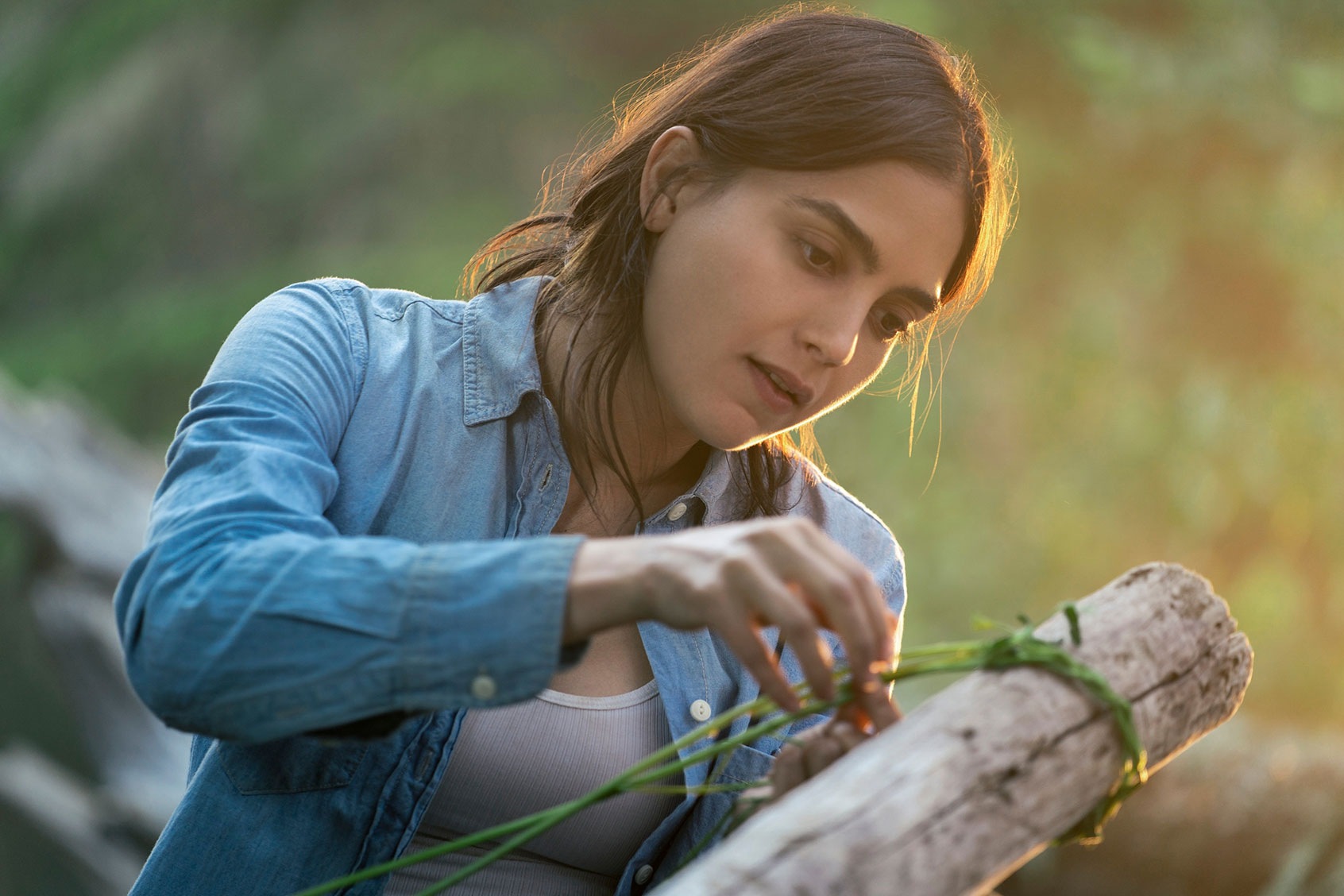
Keep BreathingMelissa Barrera as Liv in “Keep Breathing” (Ricardo Hubbs/Netflix)So much of the show is Liv, just her alone, figuring out tasks, putting one foot in front of the other. But we wanted to hear her talking and yelling with people in the woods. And then also, autobiography creeps in against your will. I think in this case, maybe, we had the bones of the story in the present pretty clear in our head. And when we suddenly decided to blow it up into this nonlinear backstory that would unfold and bloom through the six episodes, we just started going by feel.
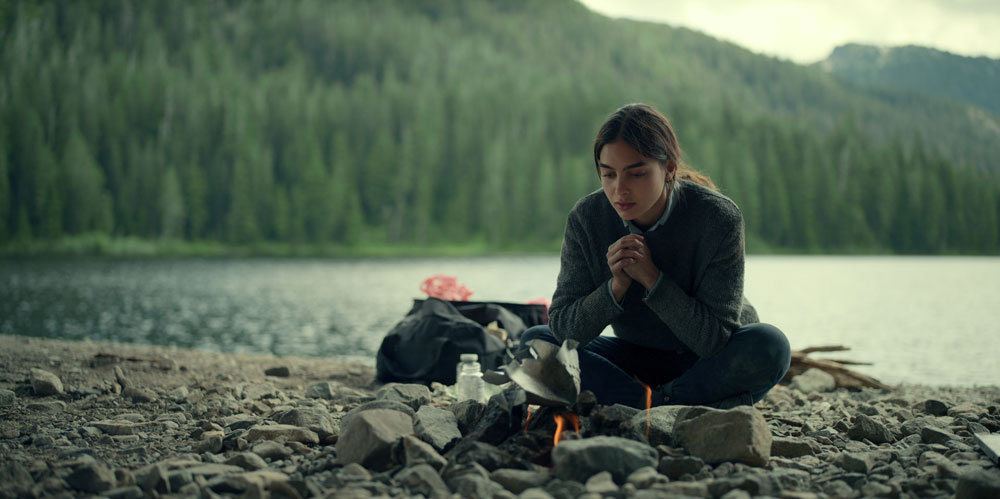
“Our rule was no Googling.”

We found moments that felt like, “Oh, that would be an amazing scene.” Like a breakup scene would be such an incredible thing to see all of a sudden in the heart of this survival drama . . . That in some ways feels higher stakes than the life and death stuff happening out in the woods. Then walking backwards from there, and being like, “Well, why did she break up with this guy? He seems like such a nice guy . . . what kind of a person would have so much armor that they didn’t feel safe giving and receiving love from someone who is standing right in front of them?”

You walk yourself backwards, and you go, “Well, how did she grow up?'”And we loved this idea of a kid who was born of chaos, of love and passion, but also not knowing and fear. With Liv’s case, you’d build a life around certainty, and black and white, and being the smartest person in the room. Then dropping her in the woods . . . She’s suddenly not an expert. And it’s also scary because she has to sit in silence and stillness and reconcile all these demons that she’s put away for so long.

It brings her back to her core. She doesn’t have anything except her thoughts and her memories. That’s really interesting that you say that, because the show is so emotional, and you don’t expect that from a show about wilderness survival. But it is a lot about feelings.

Gero: It’s a survival drama on the outside, but inside, it’s about dealing with trauma and becoming more vulnerable. 

I know that you’re both Canadian. I’m sure you’ve probably been asked this before, but do you have much experience with wilderness survival, or camping, or anything like that?

Gero: My mother used to drag me along what’s called the Bruce Trail, which is sort of like the Appalachian Trail. It’s endless. As a kid, I didn’t understand that. So, we would go on these road trips across Canada in our little Honda Civic, and we would stop, two days with packs, and we’d stop. And again, it would be the f**king Bruce Trail. And I was like, “I don’t understand. This goes forever. It’s like mobius strip or something.” But that was as close as I got was some camping trips with my parents, separately. 

Gall: Certainly, never a situation where it was life or death. That was the fun for Martin and me. We were putting ourselves in Liv’s shoes, which was from the position of an amateur, of: you don’t go in knowing how to make drinking water out of condensation. We had all these people being like, “Well, you know how she should get water?” And we said, “Well, you know that, because you like hanging out in the woods!”

Right. But would she know that?

Gall: We don’t know that. And so, if we don’t know it, she can’t know it.

Gero: Our rule was no Googling . . . We already had the advantage that we were two against one. There were two of us trying to come up with these solutions. Some of our solutions are dumb because we’re not survivalists. And that was an important rule. The only cheat is I remembered that you could make a compass from a needle and like a cork. But I made the mistake that she did, which I forgot about the magnetizing. 

So, how did you come up with these survival strategies? Were you just brainstorming without Google? Or drawing from survival stuff you already knew?

Gero: It was just straight up brainstorming . . . For instance, the berries, there were probably some berries there, but most of them are probably poisonous. So, what do you do? You wash them, you sort them, you eat some, and you wait. And if you don’t throw up, then you’re good. And that’s what she does . . .The funniest one was, there’s no reason for Liv to have two fires. She eventually boils this thing and tries to touch it and it hurts. And then she’s like, “Oh, OK. I’ll start another fire. And then I’ll put this fire out.” Whereas, she could have just found some sticks or something –

Or used the sleeve of her sweater to hold the hot container. 

Gero: But in the brain fog of that exhaustion and that thirst, she doesn’t make all of the best choices.

Keep BreathingMelissa Barrera as Liv in “Keep Breathing” (Courtesy of Netflix)Gall: Which again, is, I think, what’s interesting, is you have a character who is truly a force to be reckoned with in her field. As a corporate lawyer, she’s a force of nature, she’s a shark. But she’s not in her field and she’s not working at her best. She’s starving, she’s thirsty, she’s exhausted. She’s cold, she’s scared. And we don’t make our best decisions in those states. Part of the fun is how she fumbled through those moments.

That’s good to see too, because so many shows that have these dire, intense survival situations, people all of a sudden become really good at all that stuff instantly, in the moment. They know how to do everything. They’re like MacGyver or something. It’s nice that she isn’t, that she doesn’t know.

Gall: You see a progression. And I think there’s a satisfaction in the way that, as a kid, I felt satisfied when I figured out how to build a fire finally. And it is nice to feel that you’re moving forward in that. But it’s slow, and there are so many stumbling blocks. It’s incremental.

“I finally just asked a really dumb question, which is, ‘Can we just crash a real plane?'”

Gero: It’s funny for us, just talking to people about being stuck in the woods and seeing the reaction of the show. Obviously, the thing that does scare people the most is not just the survival thing, but it’s being alone with your thoughts. That’s kind of amazing that it’s a top fear of being stranded. I think the show really speaks to that aspect of it, of: we’re able to busy our mind as much as we want in the modern world. It allows us to not really deal with how we’re feeling if we don’t want to. This is really the story of someone who has been able to not deal with all of her trauma until she finally gets that silence in the woods. 

How did you do the plane crash? Which is quite terrifying.

Gero: We shot all of this for real out in the woods. We were like, “We can’t just suddenly have this CG plane. We don’t have a Marvel budget for this. It’s not going to look great.” And then we started talking about miniatures. Can we crash a miniature? But because it has to crash into the water, the water would scale wrong. The water splash would look weird. Then I finally just asked a really dumb question, which is, “Can we just crash a real plane?”

And they said, yes, that we could crash a real plane.

Keep BreathingKeep Breathing (Courtesy of Netflix)We figured it out with an incredible team. We had to buy a plane anyway to use in all the underwater stuff. We bought this old plane that didn’t work. We gutted it so it was clean, it wasn’t going to leak oil or any sort of bad stuff into this beautiful river. We basically put it on a zip line, just a massive zip line. The plane, once you let it go, would just slowly build up speed and then crash right into the water.
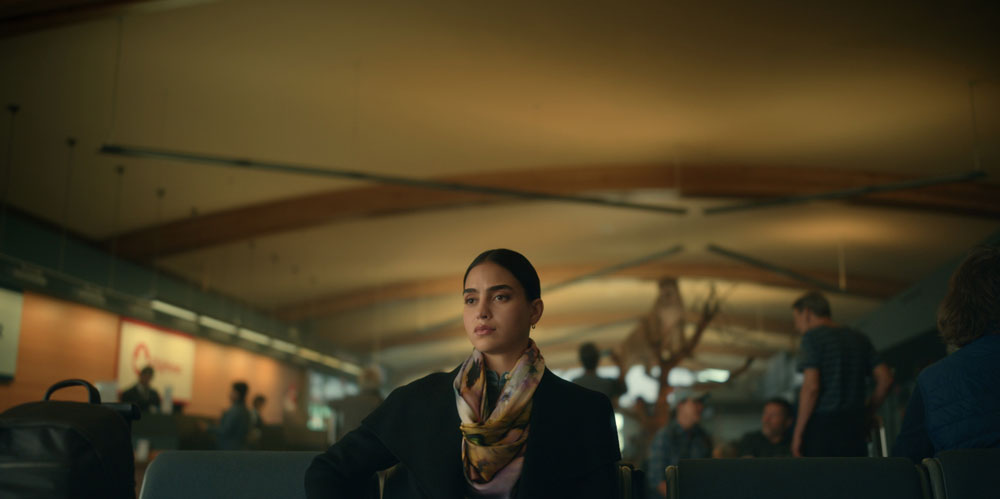
Did you crash it more than once?

Gall: We didn’t know if we would get a second take. We did not know really what the impact of the water would do to the plane or to the clothesline that it was zipping along. And luckily enough, we did get a second take. But it was pretty terrifying and amazing.

Gero: It was a seven-camera day.

There have been recent, popular shows lately, “Yellowjackets” and “The Wilds,” which are also about plane crashes and survival in the wilderness. Do you think we’re obsessed with survival in extreme situations at the moment?

Gero: I mean, it feels like it’s really hard to survive right now just in regular life. It constantly feels like we’re under attack one way or another. So, I think people are gravitating toward this genre because it’s just a cleaner, oddly lower-stakes version of what we’re all going through subconsciously.

Gall: I also think a lot of people have been stuck in their homes. Some people are lucky enough to have places that they can escape to that are in the natural world, a place that’s more untouched. But lots of people don’t have access to that. There is possibly a craving to escape whatever they’re going through, whatever their situation is, to something that feels simpler. Even if it’s scary, it’s scary in a way that would be a complete departure from the problems you have in your own particular life.

Keep BreathingMelissa Barrera as Liv in “Keep Breathing” (Courtesy of Netflix)That’s certainly the case with Liv. She’s got no shortage of problems in her life, but suddenly, they’re all dwarfed by these very immediate things that she needs to do to not die. Her stuff goes from this philosophical existential crisis to this literal crisis of existence. I think in some ways, people want to have their lives eclipsed sometimes, or would love to have their lives eclipsed by something bigger than what they’re going through, just to give them a second to deal with something else.
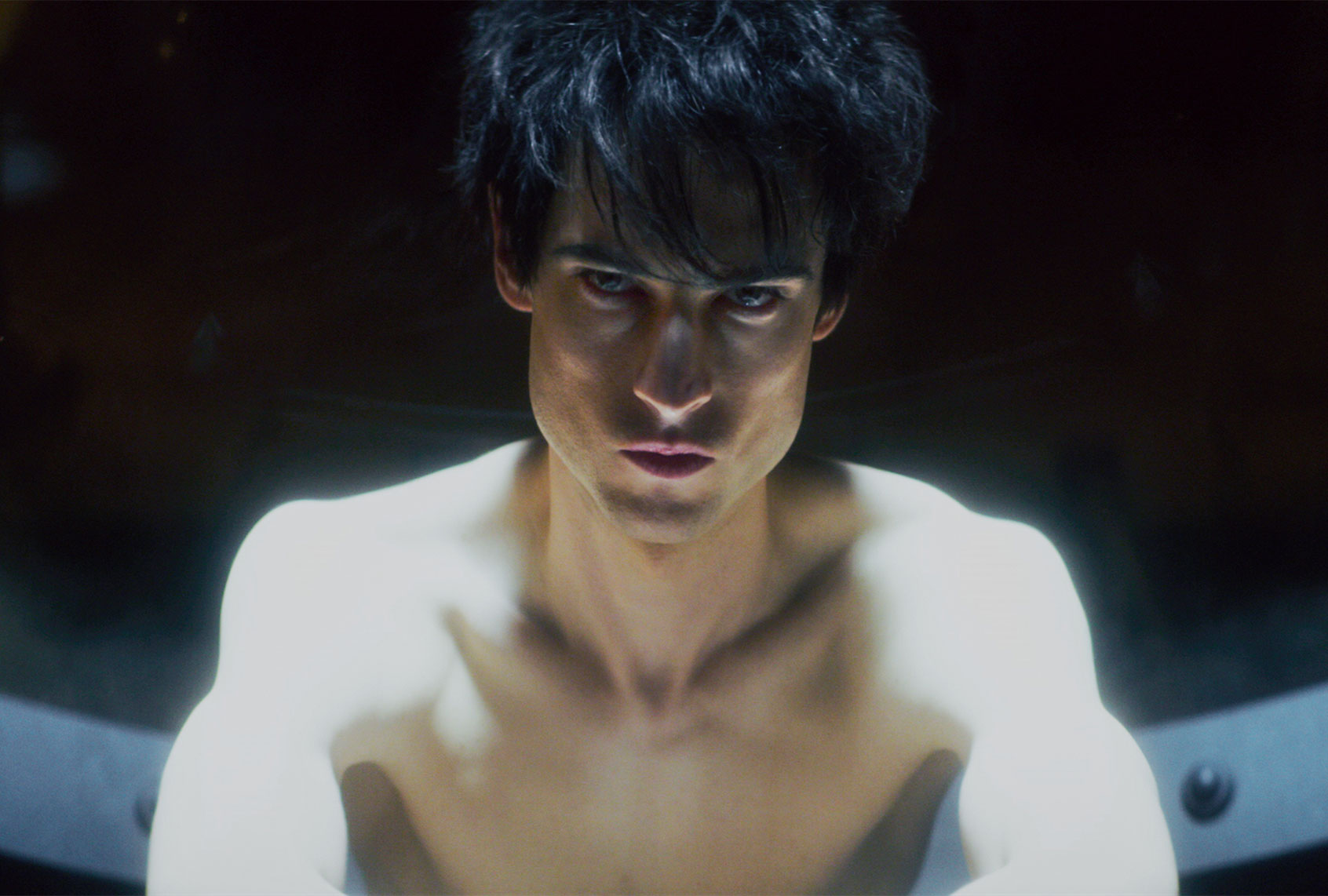
One of my favorite parts of the show was when the guided meditation app comes back in. And the irony of picturing this beautiful, relaxing place, and she’s in it, and it’s killing her. That is my favorite part, I think, of the whole show. How did you come up with that meditation and decide to use it in that way?

Gall: I really love Terrence Malick. And I think his relationship to the natural world and to nature in really dark, violent stories is interesting . . . We were in all these beautiful locations, and I just really urged our directors and DPs just to be like, “Look, we’re here. We have a crane. Let’s just do one without anybody in it. Let’s just show the thing, and I think there’ll be a cool thing to do with it later.”

Then also, I think we like the idea of a character who thought meditation apps were bulls**t. Liv is so cynical and such a city person, and her doctor tells her when she’s pregnant that she seems stressed out, maybe she could try a meditation app? Liv does not take well to that in that moment, in that memory. Then lo and behold, we find her on the plane trying to do it.

“We wanted the show to be meditative. But we’re also Canadian and embarrassed by saying that out loud.”

I’ve tried to do it a couple times in my life, with not great success. But I get how it could be very relaxing and very helpful if you give over to it. We liked the arc of a character that starts in the first episode with this meditation app, struggling to do it, and then through the journey of the show, this imagined meditation happens while she is walking through the forest in this fugue state, and is literally inside of the app in some ways.

Gero: I think, like you said, she’s feeling her body, she’s feeling her breath, she’s feeling her in the place. I think it’s profound for her emotionally. She’s able to then have pretty intense conversation with her dad, that she could never have before, that let her off the hook, and lets him off the hook, and lets her mom off the hook. 

And so, the app worked in the end, in a way that it hasn’t for Brendan and me.

We wanted the show to be meditative. But we’re also Canadian and embarrassed by saying that out loud. So, I think it was our way of hanging a lantern on the moment that this is what the show was trying to do as well. But you’re not the only one that has really enjoyed that moment. I’ve heard that a lot.

Gall: Life is so chaotic. I mean, love the idea of this final episode in some ways being the most linear, the most simple, that everything gets stripped away, and all that’s left is this woman just walking toward death or salvation.

Toward light. 

Gall: Yeah, exactly. We got so excited about that idea, which I think scared some people, because we were like, “Get this. The last episode is super simple and straightforward.” But I think in a weird way, we succeeded in what we were after anyway.


Want a daily wrap-up of all the news and commentary Salon has to offer? Subscribe to our morning newsletter, Crash Course.


Can we talk about the ending? I personally love the ending, and I also believe she survives. But I know that people are a little divided about it, that people think the end is controversial or unclear. Why did you decide to end it this way?

Gall: First of all, I personally love a little ambiguity. I love something that’s left for people to fight over, so that it’s not all sewn up with a ribbon at the end, and there’s nothing left to talk about. The fact that people have any kind of debate about it is, I think, fantastic. And it means you bring yourself. You meet the show, as opposed to just having it delivered to you. 

We see her wake up. So, in the moment that we see her imagined future in the river, we think of it as this yearning for what could have been were she not to drown in this river. And then, in the moment where her eyes open on the beach and she coughs up that water and digs that big, deep gasp in —which we knew very early on was going to be the last shot of the show — suddenly you get to rethink everything you saw. And all of a sudden now, it’s allowed to not be necessarily an imagined future, but a true flashforward to what happened. And I think both interpretations have validity.

Gero: But she did survive. We’ll at least give you that. She’s very much alive.

“Keep Breathing” is streaming on Netflix. 


CPAC speeches contain “thinly veiled calls for violence”

According to a report from Rolling Stone, the speeches thus far at the Conservative Political Action Conference (CPAC) in Dallas have been larded with “dark” threats of coming violence as the speakers brushed aside any discussion about the Jan 6 Capitol riot.

With Donald Trump –who instigated the Capitol insurrection — taking the stage on Saturday, Tim Dickinson wrote that in many cases the speeches, “…menaced America with what seemed to be thinly veiled calls for violence.”

Case in point, he notes, was a speech given by recently convicted former Donald Trump advisor Steve Bannon who proclaimed to the crowd, “We are at war.”

“Repeating the Big Lie that the 2020 election was stolen from Donald Trump, Bannon insisted that Joe Biden is an ‘illegitimate imposter.’ Calling on Republicans to send ‘shock troops’ to Washington, Bannon promised the crowd they had an opportunity to ‘shatter the Democratic party as a national political institution’.” he wrote. “He alleged that the party has been overrun by ‘radical, cultural Marxists’ and ‘groomers’ who ‘want to destroy the Republic.’ Bannon insisted the GOP must pursue absolute victory over ‘power-mad and lawless’ Democrats, asserting: ‘There can be no half measures anymore’.”

Sen. Ted Cruz (R-TX) doubled down on Bannon’s heated rhetoric, exhorting the crowd with the claim, “It’s like the old Roman Colosseum where you slam on a breastplate and you grab a battle axe and you go fight the barbarians. As they say in the military world, it is a target-rich environment.”

“The rhetoric of revolution and frontline confrontation went hand-in-hand with other speakers and presenters who cast the American left as demonic, evil, and destructive — in other words the kind of enemies who deserve to be dealt with harshly,” the report states before adding, “CPAC has long been a political circus, a relatively harmless sideshow. But its latest incarnation has become manifestly dangerous — more fascist than farce. It is holding up alleged perpetrators of political violence as martyrs. It is demonizing its domestic political opponents as diabolical ‘enemies within.’ And it is giving MAGA supporters a militaristic frame for their charge to the ‘front lines’ of America’s culture wars.”

“In short it is playing with fire. But it’s the rest of us who may get burned.” Rolling Stones’ Dickinson concluded.

Bill Barr refers to Trump as a lame duck seeking revenge

In an interview with CBS, former attorney general Bill Barr dismissed another Donald Trump presidential run saying the Republican Party could do better than try to help a 78-year-old “lame duck” get back in office who is only interested in exacting revenge.

Speaking with Catherine Herridge in an interview aired on Friday night, the former Trump administration official had little good to say about his old boss who attempted to talk him into investigating 2020 presidential election fraud where none existed.

“I think the future is bright for the Republican Party. I view 2024 as setting up another 1980 where [Ronald] Reagan won two terms and then [George H.W.] Bush won a third term. And that’s what I think you really need to make America great again, you know, decisive victory and the reaction to the excesses of the progressive Democrats,” the Charlotte Observer reported.

Barr went on to add, “And I think we could do that again and really achieve a decisive victory with the right candidate, but I don’t think Trump is that candidate. The day he’s elected he’ll be a 78-year-old lame duck who is obviously bent on revenge more than anything else.”

Barr also took time to address reports that the Department of Justice — which he once headed up — is now taking a hard look at the former president’s actions surrounding the Jan. 6 insurrection.

“From my standpoint, it looked to me like the department was really focusing on the lower-level people. As you know, since the election they’ve been going after the people who went into the Capitol,” he told the CBS political analyst. “And I didn’t think they were paying that much attention to the higher-ups and were sort-of leaving it to the congressional committee.”

“But this suggests to me that they’re taking a hard look at the group at the top, including the president and the people immediately around him who were involved in this,” he elaborated.

Should you tip your kid’s camp counselors? The answer is tricky

It was the last afternoon of the last day of the boy’s summer session at the private day camp, nestled in a neighborhood of Brooklyn famed for its density of affluent, liberal parents. His father arrived, right on time, to pick the boy up and offer his family’s goodbyes and gratitude to the staff. He discreetly handed the teenage girl who’d been one of the boy’s counselors an envelope, which she in turn discreetly tucked into her bag. Inside was a note that read “Thank you” … and a single five dollar bill. Tipping — it’s awkward.

How is it that a primary driving force of our economy can also be a custom so fraught with confusion and controversy? “We don’t know exactly how much is tipped,” said Michael Lynn, a professor of consumer behavior and marketing at the Cornell University School of Hotel Administration and the author of over 70 research publications on tipping. “But reasonable estimates place it at about 40, maybe it’s even 45, billion a year in food service in the United States alone. When you throw in all the other service providers in other countries, it’s a lot of money.”


Want a daily wrap-up of all the news and commentary Salon has to offer? Subscribe to our morning newsletter, Crash Course.


In the days since my daughter’s receipt of that envelope, I have been thinking a lot about tipping. How the rules seem to fluctuate depending on the nature of the job, the current and implied future relationship of the parties involved, and even geography. Tipping is such an integral part of our day to day exchange of goods and services, yet there is almost no consensus on how to do it. It has been weighing on me lately, in our gig economy of great resignation where everyone’s a contractor and everyone’s a client, how we talk so little about our most personal financial transactions.

“When tipping is functioning and working at its best, it’s a genuine expression of gratitude.”

Let’s start with the very basics — what tips are, and why we bestow them.

“I think of it as a voluntary monetary payment to a service provider,” said Lynn.

Daniel Post Senning, co-president of the Emily Post Institute, likes to focus on the term “gratuity” and its relationship to gratitude when asked about tipping etiquette. 

“When something like tipping is functioning and working at its best, it’s a genuine expression of gratitude, and it can be received in that same spirit. When that exchange is working well, it’s actually a really pro-social behavior, it’s positive for both parties,” said Post Senning. “Whether we’re talking about a thank you note after a gift, or an acknowledgement of a favor done, or a well delivered tip, I think there’s a potential for it to really benefit a relationship.”

But of course, a gift or a note carries a different meaning than a sum of money. So how much would you have tipped your child’s camp counselor? Should a camp counselor be tipped at all?

A 2016 MarketWatch feature by Angela Moore offered some answers: “A handful of parents I spoke to said their day camps provided them with recommended tip amounts. The suggestions were roughly $40 to $60 tips for counselors, $25 for bus or van drivers, $20 to $40 for bus counselors, and $20 for various instructors.”

Yet a 2022 Real Simple feature on tipping sternly classifies camp counselors among the “people you should never tip.” 

That lack of consensus holds true for a multitude of professions, and the expectations are shifting all the time. The startup digital tipping platform Applause, for example, was created to bring tipping “into environments where it just wasn’t common before,” said cofounder J. Taylor Olson. “There were a couple areas where we just instinctively thought, ‘I’ll bet people will tip there if we make it easy and digital. Home service providers. Your plumber, your pest control guy, your maid, call center agents that help with customer support. We’ve been able to test it affirmatively in a lot of home service environments, and it definitely works there. People will tip, even though it’s new.”

“There’s a lot of questions that you’ll ask me that I don’t know the answer to,” Lynn said when I tell him I want to better understand the mechanics of tipping. “It’s complicated.”

Lynn’s research on the topic is fascinatingly complex and relentlessly circumstance specific. “Existing research suggests that tipping is motivated by desires to buy future service, help servers, reward service and gain or keep social esteem,” he wrote in a 2016 paper in the Journal of Economic Psychology, “and that it is constrained by a dislike of the power and status inequalities it fosters.”

“The good etiquette advice is, if you’re ever uncertain, ask.”

It should be a bottom line no-brainer that we tip for professions where one’s income is largely based on gratuities, like table servers. But even then, the protocol is not clearcut.

“There are studies that I did years ago where I asked people, ‘How much is it customary to tip waiters and waitresses in this country?'” said Lynn. “I was shocked to learn that only about two thirds of the people at that time would give me an answer in the 15 to 20% range. That norm has increased since then, but back then it was a very clear answer. The normative tip is 15 to 20%. That’s what you were expected. That’s what all the etiquette books said. If you were to look it up online, that’s the answer you’d get. And yet 30% of the country didn’t know that. That’s still the most surprising thing I’ve discovered, in all of my research on tipping. What I thought was super well known was in fact not as well known as people thought.”

Lynn acknowledged that social norms do dictate who we tip, but those norms and the motivations behind them are often ambiguous.

“The good etiquette advice is, if you’re ever uncertain, ask,” said Post Senning. “There’s nothing inappropriate, embarrassing or awkward about asking about gratuities or tipping, whether people accept them, what usual amounts are.”

“The bigger etiquette advice is that if you’re using your questioning about tipping as a way to assess and evaluate your own behavior, you’re probably going to reach better outcomes,” he added. “If you’re trying to judge or assess other people’s behavior, it’s less likely to be functional or useful for you.”

So why do we tip? Is it quid pro quo, a bargain for better future service? Then why do we reflexively tip cab drivers and parking valets? And when we do tip someone we have an established relationship with, that can get sticky, because nobody wants a tip that looks like a bribe.

“Giving money can be perceived as trying to win favor.”

“If I wanted to tip my child’s camp counselor, I would first find out if the company or organization will allow them to accept tips, and what is the standard tip,” said etiquette expert and coach Jacqueline Whitmore. “Instead of a monetary tip, I would think it would be more appropriate to give a small gift from the child. Maybe something handmade.”

I asked her to elaborate on the line between a gift and a tip.

“I used to be a camp counselor at a Disney resort many years ago,” she explained. “If the counselors had been allowed to accept tips, we might have treated certain children differently, based on what their parents paid us. A gift is a nice gesture — or perhaps a gift card — but this is generally not a standard practice. Giving money can be perceived as trying to win favor.”

My friend Jill in Philadelphia, whose daughter is 10, has a similar mindset.

“I think it’s good to give counselors end of season gifts, much like you would give a teacher,” she said.

Yet my friend Julie in Denver recalled that she used to tip her kids’ counselors during their camp years, adding, “I always tip ski instructors.”

At the day camp where my teenage daughter works, as well as the artsy one in a bougie Manhattan neighborhood she and her sister attended and then worked in for years, it’s customary for parents to give counselors an end of session tip.

“At our day camp, it was common for our counselors to get tipped at the end of the week or the end of the summer,” said my neighbor Galina, who for several years ran a local day camp and afterschool program.

It’s a gesture inherently tangled up in class and power.

I’ve handed out $20 bills to plenty of sunburned adolescents over the years, until it was my children’s turn to start receiving them. I learned the ritual that very first summer with my firstborn, when the August air was still heavy but the Target was suddenly full of pens and protractors. I had asked around about what we were supposed to do, exactly, for the counselors. The head of the camp had tactfully told me that tipping was not expected and other mothers had told me that yes, it was. I arrived at the amount of $20 per counselor perhaps as arbitrarily as the boy’s father had arrived at $5.

“No, should I feel retroactively bad?” my San Francisco friend Emma asked when I inquired if she’s ever tipped her children’s camp counselors. “But isn’t NYC big on tipping everyone, though? Doormen, supers, garbage collectors?”

Melanie Abrams, an Oakland parent of two (and co-author, with Larry Smith, of the forthcoming “The Joy of Cannabis: 75 Ways to Amplify Your Life Through the Science and Magic of Cannabis“), seemed to concur with that theory, suggesting that camp tipping is “an old school, East coast thing.”

But my old school, East coast friend Rob, the father of a 10-year-old son, had another theory.

“I think of it as either a middle-class thing to do (rewarding hard work by giving away your own hard-earned money) or a Richy Rich thing to do,” he said.

As an anxiety-driven, middle-class, compulsive over-tipper, I feel that one in my soul.

Yet I also concede, especially on the days when I feel like taking out a loan to buy laundry detergent, that it sometimes feels like there’s an assumption of tipping now attached to every interaction. But if you likewise are feeling squeezed by those new “Add a tip?” prompts where none used to exist, Olsen said that in those circumstances, “You don’t have to tip.”

But, he added, those who want can go for it. “Maybe you’re just someone that’s been frustrated that minimum wage hasn’t changed in 30 years, and you just genuinely think people should be paid more. Here’s this really easy way to contribute in a meaningful way right now, instead of having to wait for a policy change.”

Tipping brings up everything that’s uncomfortable in our American cultural relationship with money. It’s an open acknowledgment of the transactional nature of a relationship, and the precise value of it. It’s a gesture inherently tangled up in class and power. I think that’s why it wasn’t the tipping itself that had seemed so odd about the money the boy’s father had given my daughter. It was the enigmatic five dollarness of it. Enough to say, “I am giving you a reward for your work over the past six weeks,” yet with a sum that barely covers the cost of a Snapple.

My daughter tucked the five dollars into her wallet with the rest of her cash. She kept the note, too.

“It’s a cycle of good when someone is grateful,” said Post Senning. “Someone thanks someone and someone receives that well and feels appreciated.”

And so however puzzling the boy’s father’s gesture had been, I can’t deny that it still hit its mark.

Trump wins CPAC straw poll for favored presidential candidate

Donald Trump could be reclaiming his grip on the Republican Party, according a straw poll conducted at CPAC in Dallas.

“Trump, who’s repeatedly teased making another presidential run in 2024 to try and return to the White House, captured 69.1% of ballots cast in the anonymous online straw poll, according to results announced by CPAC on Saturday,” Fox News reported Saturday. “The support for the former president, who remains the most popular and influential politician in the Republican Party and continues to play a kingmaker’s role in GOP primaries, is up from his 59% showing in the anonymous online straw poll at the CPAC gathering in Orlando, Florida in February. Florida Gov. Ron DeSantis came in second on the 2024 presidential nomination question, at 23.7%, down from his 28% showing at CPAC in Orlando five months ago.”

If Trump does not run, Florida Gov. Ron DeSantis leads the pack at 64%. Donald Trump, Jr. comes in at 28% despite having no relevant experience and Texas Sen. Ted Cruz comes in at 6%.

Mike Pence had the most embarrassing showing in the straw poll.

“Pence at 0.3% support for 2024,” Isaac Arnsdorf of The Washington Post reported.” And if Trump isn’t on the ballot, Pence is still at 0.3% in CPAC straw poll.”

Jim McLaughlin, who conducted the straw poll, claims it is “the ultimate barometer of what’s going on in the conservative movement.”

The poll showed Donald Trump with a 99% approval rating, which journalist Steven Monacelli described as a “Banana-Republic approval rating.”

Everything I learned about building a better sandwich, I learned at my local bánh mì counter

The best turkey sandwich I’ve ever eaten comes from the bánh mì counter at the end of my block. It’s so good that every weekday around 2:45 p.m. — after I’ve completed my standing meetings for the day — I either walk to retrieve one or berate myself for spending the bulk of my weekly eating out budget on what could be subjectively classified as “too many sandwiches.” 

The first time I ordered one at Ba Le in Chicago was actually a mistake. The shop, which looks like a little like a 7-Eleven with bamboo and gold accents, tends to be pretty busy around lunchtime, so my request for the daily special (pâté, ham, head cheese and pork roll) was likely muffled under my mask amid the noise of the crowd and a Vietnamese-language cover of Sixpence None the Richer’s “Kiss Me.” What I received instead was their version of a turkey sub. 

I took it, along with an avocado smoothie, outside to a bright blue picnic table and took a bite. Then another and another. Finally, I shoved it across the table to my boyfriend. “I think this is the best turkey sandwich I’ve ever eaten,” I said. He nodded. 

Don’t get me wrong, I’ve had good turkey sandwiches. There’s my annual Thanksgiving leftovers sandwich, which is packed with stuffing and smeared with cranberry sauce. I could also wax poetic about the merits of a diner-quality club, but this sandwich from Ba Le is consistently great. 

Let me break down its components. 

Much like a traditional bánh mì, it’s served on a crusty baguette that’s been cut, toasted and smeared with Vietnamese mayonnaise. They sell little jars of their house-made mayonnaise from a refrigerated case by the counter, by the way; it’s thick and buttercup yellow from the high concentration of whipped egg yolk. Then comes the turkey breast and paper-thin slices of Swiss cheese. 

The result is a simple, but wildly nuanced, umami-rich sandwich that hits all these major and minor flavor notes. 

The sandwich is then dressed with so-much-cilantro and strips of mild white onion, as well as a couple different kinds of pickled vegetables, including carrot, daikon and some particularly vinegary jalapeño slices. Depending on who’s behind the counter, the sandwich may get splashed with a little bit of soy sauce, or it may not. 

The result is a simple, but wildly nuanced, umami-rich sandwich that hits all these major and minor flavor notes — acid, sweetness and spice from the vegetables, creaminess and funk from the mayonnaise and cheese, verdance from the cilantro, savoriness from the turkey and soy — without ever getting soggy. 


Want more great food writing and recipes? Subscribe to “The Bite,” Salon Food’s newsletter.


Recently, to assuage my guilt over spending so much money on Ba Le’s sandwiches, I went ahead and bought ingredients to make my own version (which actually included baguettes and mayonnaise from Ba Le). It was delicious, and it certainly beats the turkey sandwiches I’d previously pulled together for myself between work meetings. 

Goodbye, sad, beige amalgam of wheat bread, deli slices and a smear of mustard. Hello, cravable turkey sub!

Turkey Sub with Cilantro and Pickled Vegetables
 

Inspired by Chicago’s Ba Le Sandwiches  

Yields
1 servings
Prep Time
10 minutes, plus time for pickling
Cook Time
0 minutes

Ingredients

For the sandwich

  • 1 6- to 8-inch baguette, split and toasted 
  • 4 ounces sliced turkey 
  • 4 ounces sliced Swiss cheese 
  • 1 tablespoon yolk-heavy mayonnaise (See Editor’s Note)
  • 1 teaspoon soy sauce
  • 1/4 cup cilantro, roughly chopped
  • Sliced white onion for garnish

For the quick-pickled vegetables

  • 1 large carrot, matchstick cut 
  • 1 daikon radish, matchstick cut
  • 2 jalapeños, thinly sliced
  • 4 tablespoons rice wine vinegar 
  • 2 teaspoons white sugar 
  • Salt to taste

Directions

  1. In a large bowl, combine the sliced carrot, daikon radish and jalapeños with the rice wine vinegar and sugar. Add enough water to the bowl to completely cover the vegetables, season with salt and stir. Allow the vegetables to quick-pickle for at least 15 minutes.

  2. Meanwhile, place the mayonnaise and soy sauce in a small bowl. Whip them together, then spread on both halves of the split, toasted baguette. Stack with the turkey, Swiss cheese, cilantro and white onion. Set aside. 

  3. Drain the quick-pickled vegetables from the brine. Place at least 1 tablespoon on the sandwich. Any remaining pickled vegetables can be stored in a sealable container in the refrigerator for up to a week. 


Cook’s Notes

If possible, buy the mayonnaise from your local Vietnamese grocer. Kewpie, a Japanese mayo made using just egg yolks, is another solid choice. Here’s why it’s the most popular brand of Japanese mayo in the world. 

Salon Food writes about stuff we think you’ll like. Salon has affiliate partnerships, so we may get a share of the revenue from your purchase.

A DIY toaster strudel that combines tangy cream cheese with the caramel-y flavors of brown sugar

The elusive toaster strudel is a deep-rooted memory from my ’90s childhood. Warm, flaky, and served with a packet of icing that taught me my first piping skills — I’ll remember it forever. This year, I finally tackled making my own version — and I’ll never go back! This version is super simple: cream cheese + brown sugar. Customize it to fit your favorite flavors by adding spices, citrus zest, or a dollop of jam, if you’d like. If you want to imitate the packaged stuff, skip the optional folds I recommend in step 4 — but if you’re as big a fan of flakes as I am, the end result is delightfully worth it. — Erin Jeanne McDowell

Watch this recipe

Brown Sugar & Cream Cheese “Toaster Strudel”
Yields
6 pastries
Prep Time
2 hours
Cook Time
40 minutes

Ingredients

Dough

  • 3 cups (360 grams) all-purpose flour
  • 1 teaspoon (4 grams) fine sea salt
  • 12 tablespoons (170 grams) cold unsalted butter, cut into ½-inch cubes
  • 1 large (56 grams) egg, cold
  • 1 large (21 grams) egg yolk, cold
  • ¼ cups (60 grams) ice water, plus more as needed

Filling, Frying, and Finishing

  • 1 large (35 grams) egg white
  • 1 tablespoon (15 grams) water
  • 8 ounces (226 grams) cream cheese, at room temperature
  • 6 tablespoons (80 grams) light or dark brown sugar, packed
  • neutral oil (such as vegetable or canola), for panfrying
  • 1 cup (113 grams) confectioners’ sugar
  • 3 tablespoons (45 grams) heavy cream, plus more as needed
  • ½ teaspoons vanilla bean paste (or 1 teaspoon vanilla extract)

Directions

  1. Make the dough: In the bowl of a food processor, pulse the flour and salt to combine. Break up the butter into the food processor and pulse until the butter is very finely incorporated, looking like tiny flecks or pearls amid the flour.
  2. Add the egg, egg yolk, and water and pulse until the mixture comes together into a fairly smooth dough. If needed, add more water 1 teaspoon (5 grams) at a time until the dough comes together.
  3. Divide the dough into two even pieces (about 330 grams each). Form each into a rectangle 1 inch thick, wrap tightly in plastic wrap, and refrigerate for at least 1 hour (or up to 48 hours). After chilling, you can move immediately to step 5. For flakier dough, proceed with step 4.
  4. (Optional step for extra flakiness!) Working with one piece of dough at a time on a lightly floured surface, roll out the dough to ½ inch thick. Fold the dough into quarters, then immediately roll out again to ½ inch thick. Fold again into quarters. If desired, you can repeat this process a second time for even more flakiness. Then rewrap the dough and refrigerate for at least 2 hours (or up to 24 hours). Repeat with the second piece of dough. 
  5. To roll out the dough, work with one piece of dough at a time. Roll out the dough into a rectangle ⅛ inch thick (it should be about 12×14 inches). Trim the rectangle of dough to 10½x12 inches.
  6. Use a paring knife to gently score the dough in half (do not cut through the dough, just leave a light indentation), dividing it into two 6-inch-wide segments. Then, use the paring knife again to gently mark the dough into three even portions on the lower 6 inches of the dough (each should be about 3½ inches wide). 
  7. Lightly whisk the egg white with 1 tablespoon of water to combine. Spoon about 2 heaping tablespoons of cream cheese into the center of each pastry and spread into an even layer, leaving the outer ½ inch of the dough uncovered all the way around. Sprinkle 1 packed tablespoon (15 grams) brown sugar over the cream cheese for each pastry. 
  8. Brush the egg white mixture evenly around the uncovered outer edges of the pastry. Then gently fold the excess pastry dough in half over the filling. Lay it down slowly, ideally not allowing any air pockets to form. Firmly press the dough together around the edges of the filling with your fingers to seal well.
  9. Use a pastry wheel to cut the pastries into three even pieces and transfer to a parchment-lined baking sheet. Crimp with the tines of a fork all the way around. 
  10. Freeze until firm, at least 1 hour (to freeze longer, transfer once firm to an airtight container or freezer bag; freeze for up to 1 month). Heat the oven to 375°F and line a baking sheet with parchment paper.
  11. Panfry the pastries: In a large skillet, heat ½ inch of neutral oil over medium heat until the corner of a frozen pastry sizzles when you add it to the oil. Fry the pastries two or three at a time (don’t overcrowd the pan) until the surface is evenly golden brown, 3 to 5 minutes. Adjust the heat as needed to brown the pastries slowly and evenly. 
  12. Turn the pastry over and cook on the other side until golden brown. Use a large spatula (I like a flexible fish spatula) to gently transfer the fried pastries to the prepared baking sheet. Continue to fry the remaining pastries, placing them evenly on the baking sheet once they are browned. 
  13. Transfer the baking sheet to the oven and bake until the pastry is fully baked through, 15 to 18 minutes. Cool at least 10 minutes on the baking sheet before serving warm.
  14. While the pastries cool, make the icing: In a medium bowl, whisk the confectioners’ sugar, cream, and vanilla to make a thick icing. Add more cream as needed to make the icing easily pipable or spreadable.
  15. When ready to serve, pipe or spread icing onto the surface of the pastry. Serve immediately.


The health benefits of watermelon juice

Before your next workout this summer, you may want to have a glass of watermelon juice to help stave off post-exercise muscle soreness.

Spanish researchers found that athletes experienced less muscle soreness when they consumed 500 milliliters (about 2 cups) of watermelon juice before a workout. This reduced muscle soreness has been attributed to an amino acid found in watermelon called L-citrulline.

Citrulline is a naturally occurring amino acid with antioxidant properties, but is found in relatively few foods. Additional food sources of citrulline include other melons, cucumbers, onions and garlic. One of citrulline’s functions within our bodies is to contribute to nitric oxide synthesis. Nitric oxide acts as a potent vasodilator (blood vessel widener), which increases blood and oxygen flow to our tissues. When our muscle tissues receive higher amounts of blood and oxygen, we are able to exercise at a higher intensity and for a longer time period. Increased oxygen delivery to muscle tissue also enables faster muscle repair and recovery, which is the assumed mechanism behind the reduced soreness perceived by those within the study.

Some bottled juice brands are pasteurized (heated to a high temperature), which depletes the bioavailability of citrulline in the juice. If you plan to purchase watermelon juice, be sure to check that it is cold pressed and not pasteurized. You can also easily make your own watermelon juice — you don’t even need a juicer. Try pulsing cubed watermelon in a high-speed blender, which preserves the watermelon’s fiber that you would lose using a juicer. Thin out the watermelon purée by adding iced green tea for an antioxidant boost or coconut water for additional potassium.

By The Natural Gourmet Institute at the Institute of Culinary Education

Enter “Sandman,” right on time for us to relate to his plight

It’s both odd and poetic to realize the town nicknamed the Dream Factory almost became the place that buried The Dreaming. But this is an aspect of the lore attached to “The Sandman,” Neil Gaiman’s lyrical masterpiece: it spent years trapped in the agonizing plane know as Development Hell.

If you know the story, it’s easy to see why that’s happened. “The Sandman” lacks a supervillain to rally the audience against, a necessary component in every superhero that’s been cranked out since Christopher Reeves played Superman. If that 1978 movie established what theatrical adaptations of comic books are supposed to look and feel like, Gaiman’s Master of Dreams never stood a chance.

Dream, also known as Morpheus, Oneiros and The Sandman, among many other sobriquets (Tom Sturridge), doesn’t fit the mold of the standard superhero.

He is one of a group of siblings known as The Endless, immortals that have existed since the first sentient lifeforms emerged from the void. In the first season we meet his siblings Death (Kirby Howell-Baptiste), Desire (Mason Alexander Park) and Despair (Donna Preston). But there are others, including Destiny and Delirium.

The Endless are not a close-knit unit. In fact, some of Dream’s siblings would love to destroy or dethrone him. Regardless, he never indulges in physical violence. He’s largely unconcerned with common definitions of good or evil and he’s not a muscle-bound giant.

Rather, his dominion is the human subconscious, and his duty is to reinforce the boundary between The Dreaming and our reality.

If you believe in fate, perhaps the decades-long delay to bring “The Sandman” from page to screen was meant to be. Television and our tastes have evolved in ways that make us better able to appreciate Gaiman’s fable in terms of its artistry and its adventurous plot progression.

“The Sandman,” which Gaiman developed and executive produces alongside David S. Goyer and showrunner Allan Heinberg, follows the main rules of TV dramas while stretching others. Like Dream does in the graphic novel, its hero leaps across time and skips between realms and, at least once, wears a different face. Much of the inaugural season is devoted to layered character establishment and world-building.

Television and our tastes have evolved in ways that make us better able to appreciate Gaiman’s fable .

Inadvertently, however, the crime that launches Dream’s introductory adventure lands differently today than it did three decades ago.  In the late ’80s and early ’90s Dream was a goth kid mascot that resembled The Cure’s lead singer Robert Smith.

Sturridge is about as physically close to that original sketch as one can picture. Thirty years ago, Dream was distinguished by his emotional distance and coolness. Today, in this age of scams and thefts, he’s simply another guy minding his own business when his existence is irrevocably transformed by a criminal he never saw coming.

“The Sandman” sticks closely to the original plot of the first two graphic novels, “Preludes and Nocturnes” and “The Doll’s House,” starting with Dream’s accidental capture and imprisonment by a con artist and magician named Roderick Burgess (Charles Dance).

The SandmanTom Sturridge as Dream in “The Sandman” (Netflix)
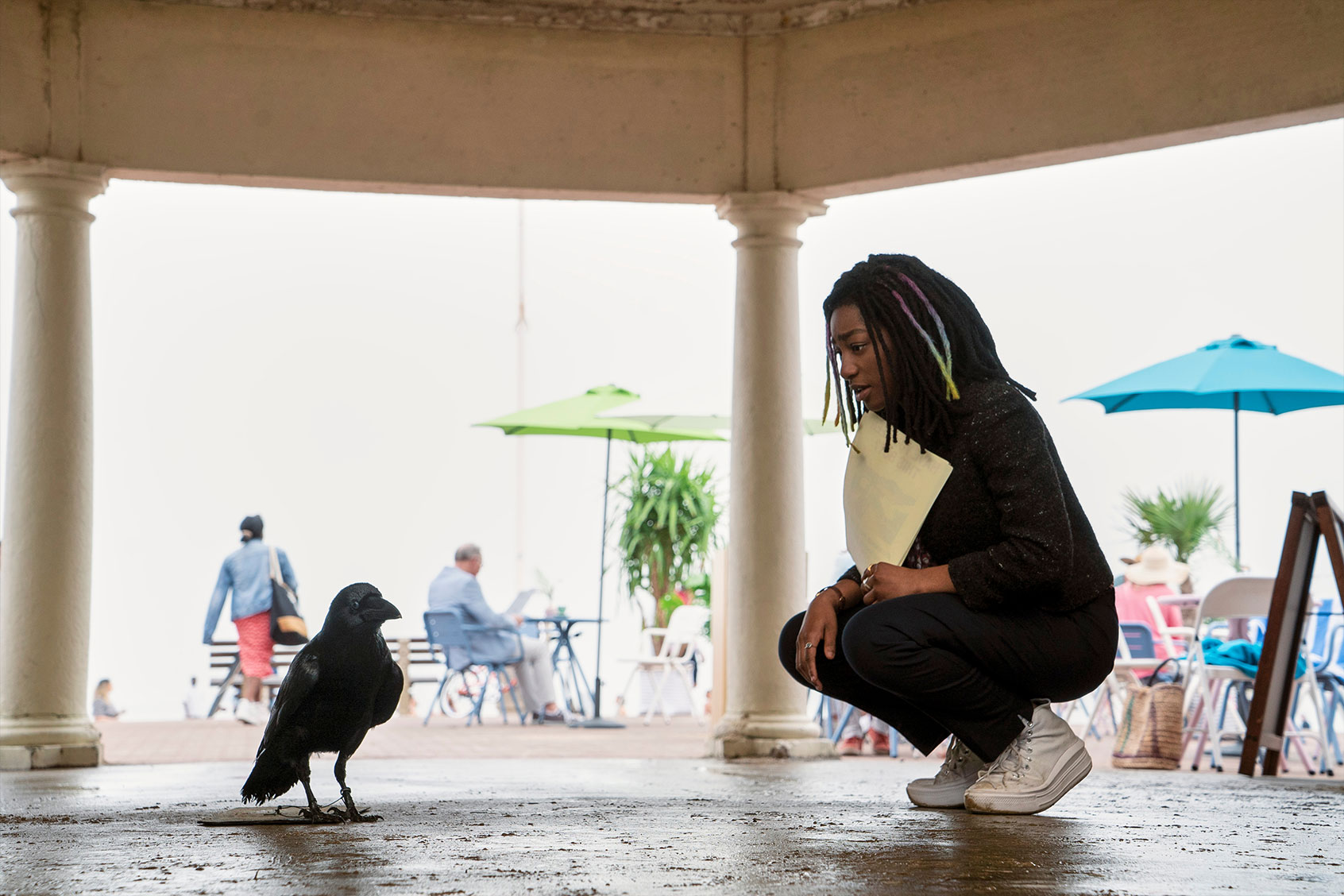
Decades ago, my immature first reading of this moment viewed Dream’s ordeal as simply the inciting incident in an epic odyssey that’s equal parts head trip and road trip. Reconsidering the page today may yield a different reading, but seeing it onscreen leaves little ambivalence as to the fact that we’re witnessing an extreme violation.

Dream isn’t merely robbed, he’s defrocked and left naked.

Burgess originally intended to capture Death but when Dream materializes instead, unconscious and helpless, the “magus” decides he’ll do just fine. Burgess steals Dream’s sigils of power – his bag of sand, a flawless ruby, and his helmet, the equivalent of his crown – and keeps the Master of Dreams trapped inside of a glass bubble for more than a century.

The magician uses Dream’s tools to become wildly wealthy and influential as the rest of the world suffers. Some people never wake up. Others lose their sanity because they can’t sleep. Burgess and his followers don’t care, since it doesn’t affect their never-ending party.

In the comic books, Dream seethes at the fact he, an omnipotent deity, was trapped by a charlatan’s cheap spell. Today, too many of us can relate to that feeling; lamenting that we should be smarter than this is a common refrain in the era of rampant conspiracy theory and sophisticated grifts. However, Gaiman doesn’t allow Dream’s imprisonment to harden him.

Once he escapes, he sets about finding his possessions and repairing The Dreaming, which has decayed in his absence. Gaiman allows Dream to triumph using his superior wisdom and ingenuity, even when facing Lucifer (Gwendoline Christie) in her domain. All the while he confronts who he is to the universe and contemplate the possibility that even the worst of us can change for the better.

Where he could seek revenge he chooses restoration instead, using what he regains to rebuild his universe.

That isn’t necessarily a glorious choice, since the season’s second half introduces a threat to The Dreaming personified by Rose Walker (Vanesu Samunyai). Rose is a kind, determined young woman who simply wants to find her brother she had to leave behind when their parents divorced. Without wanting or meaning to do so, she also has the power to annihilate existence.

“The Sandman” is a story about the power of stories, especially the ones we tell ourselves.

Dream sees little in common with Rose because he’s struggling to come to terms with his vulnerability, exposed by Burgess and embittered by the fact that none of his all-powerful siblings made an effort to rescue him. But Rose and her younger sibling are also survivors, like Dream. Instead of walling herself off from others, she expands her connections to others.

“The Sandman” is a story about the power of stories, especially the ones we tell ourselves. Dream is the weaver of delights and the originator of nightmares, the entity charged with bringing solace to humans and challenging them to confront their fears. But he’s also convinced himself of truths that no longer fit him or were never accurate in the first place.

The SandmanPatton Oswald as Matthew the Raven (voice) and Vanesu Samunyai as Rose Walker in “The Sandman” (Liam Daniel/Netflix)

The narrative engine of “The Sandman” is fueled Gaiman’s examination of mythmaking in the modern age. At the time of the graphic novel’s publication, that meant the late 1980s.

Mythmaking has a different connotation in 2022, although Gaiman may refute that notion. After all, his creations are interpretations of the ways we define words and terms. Myths can be benign, creative explanations of traditions or beliefs, or they can be malevolent lies presented as dangerous truths.

Sturridge’s Dream believes his world is a balm or a wellspring of artistic inspiration. Nevertheless, in the wrong hands – human hands – his power eats people alive or causes them to cannibalize one another.

The Dreaming, when neglected or attacked, can crack apart, damaging it along with our reality. And the direst threats to it involve figures claiming not to care about how their actions on one side affect the other.

For all of the difficulty surrounding the long journey of “The Sandman” from lush illustration to live action reality, there has always been something about the story that drew people in. If more of us are familiar with the tale than even a few year ago, credit the mainstream anointing of two of its tangential characters.

John Constantine, for example, pre-dates “The Sandman.” Alan Moore introduced the warlock detective in a 1985 issue of “The Swamp Thing,” but he showed up in Gaiman’s universe within the first couple of issues. In any case, it was Constantine, not Dream, who inspired a 2005 movie starring Keanu Reeves and a short-lived NBC series in 2014 that Goyer had a hand in developing.


Want a daily wrap-up of all the news and commentary Salon has to offer? Subscribe to our morning newsletter, Crash Course.


The 2016 Fox/Netflix fantasy “Lucifer” also links to the “Sandman” universe and managed to live through six seasons. But its creators only kept remnants of the author’s initial portrrait, placing the fallen angel inside of a case-of-the-week procedural with a subplot depicting his struggle to figure out where he fit in God’s plan.

“The Sandman” also presents mysteries to unravel, but its scope is too broad to fit in a case file. Helpfully, Dream’s weakness looks much like our own: he’s convinced that he’s all-knowing, doesn’t need anyone and cannot possibly change.

But the violence Burgess did to his ego did change him; his subjects and his sister Death remind him of that. When he embraces that fact, we see his heroism shine through. Not long ago, a few Hollywood executives with limited imagination decided such a conceptual premise could not be filmed.

That was before an era when many things we never could have conceived of happening have come to pass, for better or much worse. The Dreaming, as it is lushly in this series, is a lovely escape. But it’s also a fantasy with an honest core, showing that even the boldest beings in the universe can be undone by petty men.

All 10 episodes of “The Sandman” are currently streaming on Netflix.


The story behind “Star Trek” actress Nichelle Nichols’ iconic interracial kiss

On a 1968 episode of “Star Trek,” Nichelle Nichols, playing Lt. Uhura, locked lips with William Shatner’s Capt. Kirk in what’s widely thought to be first kiss between a Black woman and white man on American television.

The episode’s plot is bizarre: Aliens who worship the Greek philosopher Plato use telekinetic powers to force the Enterprise crew to sing, dance and kiss. At one point, the aliens compel Lt. Uhura and Capt. Kirk to embrace. Each character tries to resist, but eventually Kirk tilts Uhura back and the two kiss as the aliens lasciviously look on.

The smooch is not a romantic one. But in 1968 to show a Black woman kissing a white man was a daring move. The episode aired just one year after the U.S. Supreme Court’s Loving v. Virginia decision struck down state laws against interracial marriage. At the time, Gallup polls showed that fewer than 20% of Americans approved of such relationships.

As a historian of civil rights and media, I’ve been fascinated by the woman at the center of this landmark television moment. Casting Nichols, who died on July 30, 2022, created possibilities for more creative and socially relevant “Star Trek” storylines.

But just as significant is Nichols’ off-screen activism. She leveraged her role on “Star Trek” to become a recruiter for NASA, where she pushed for change in the space program. Her career arc shows how diverse casting on the screen can have a profound impact in the real world, too.

“A triumph of modern-day TV”

In 1966, “Star Trek” creator Gene Rodenberry decided to cast Nichols to play Lt. Uhura, a translator and communications officer from the United States of Africa. In doing so, he made Nichols the first Black woman to have a continuing co-starring role on television.

The Black press was quick to heap praise on Nichols’ pioneering role.

The Norfolk Journal and Guide hoped that it would “broaden her race’s foothold on the tube.”

The magazine Ebony featured Nichols on its January 1967 cover and described Uhura as “the first Negro astronaut, a triumph of modern-day TV over modern-day NASA.”

Yet the famous kiss between Uhura and Kirk almost never happened.

After the first season of “Star Trek” concluded in 1967, Nichols considered quitting after being offered a role on Broadway. She had started her career as a singer in New York and always dreamed of returning to the Big Apple.

But at an NAACP fundraiser in Los Angeles, she ran into Martin Luther King Jr.

Nichols would later recount their interaction.

“You must not leave,” King told her. “You have opened a door that must not be allowed to close … you changed the face of television forever. . . . For the first time, the world sees us as we should be seen, as equals, as intelligent people.”

King went on to say that he and his family were fans of the show; she was a “hero” to his children.

With King’s encouragement, Nichols stayed on “Star Trek” for the original series’ full three-year run.

Nichols’ controversial kiss took place at the end of the third season. Nichols recalled that NBC executives closely monitored the filming because they were nervous about how Southern television stations and viewers would react.

After the episode aired, the network did receive an outpouring of letters from viewers  –  and the majority were positive.

In 1982, Nichols would tell the Baltimore Afro-American that she was amused by the amount of attention the kiss generated, especially because her own heritage was “a blend of races that includes Egyptian, Ethiopian, Moor, Spanish, Welsh, Cherokee Indian and a ‘blond blue-eyed ancestor or two.'”

Space crusader

But Nichols’ legacy would be defined by far more than a kiss.

After NBC canceled Star Trek in 1969, Nichols took minor acting roles on two television series, “Insight” and “The D.A.” She would also play a madam in the 1974 blaxploitation film “Truck Turner.”

She also started to dabble in activism and education. In 1975, Nichols established Women in Motion Inc. and won several government contracts to produce educational programs related to space and science. By 1977, she had been appointed to the board of directors of the National Space Institute, a civil space advocacy organization.

That year she gave a speech at the institute’s annual meeting. In it, she critiqued the lack of women and minorities in the astronaut corps, challenging NASA to “come down from your ivory tower of intellectual pursuit, because the next Einstein might have a Black face – and she’s female.”

Several of NASA’s top administrators were in the audience. They invited her to lead an astronaut recruitment program for the new space shuttle program. Soon, she packed her bags and began traveling the country, visiting high schools and colleges, speaking with professional organizations and legislators, and appearing on national television programs such as “Good Morning America.”

“The aim was to find qualified people among women and minorities, then to convince them that the opportunity was real and that it also was a duty, because this was historic,” Nichols told the Baltimore Afro-American in 1979. “I really had this sense of purpose about it myself.”

In her 1994 autobiography, “Beyond Uhura,” Nichols recalled that in the seven months before the recruitment program began, “NASA had received only 1,600 applications, including fewer than 100 from women and 35 from minority candidates.” But by the end of June 1977, “just four months after we assumed our task, 8,400 applications were in, including 1,649 from women (a fifteen-fold increase) and an astounding 1,000 from minorities.”

Nichols’ campaign recruited several trailblazing astronauts, including Sally Ride, the first American woman in space, Guion Bluford, the first African American in space, and Mae Jemison, the first African American woman in space.

Relentless advocacy for inclusion

Her advocacy for inclusion and diversity wasn’t limited to the space program.

As one of the first Black women in a major television role, Nichols understood the importance of opening doors for minorities and women in entertainment.

Nichols continued to push for African Americans to have more power in film and television.

“Until we Blacks and minorities become not only the producers, writers and directors, but the buyers and distributors, we’re not going to change anything,” she told Ebony in 1985. “Until we become industry, until we control media or at least have enough say, we will always be the chauffeurs and tap dancers.”

Matthew Delmont, Sherman Fairchild Distinguished Professor of History, Dartmouth College

This article is republished from The Conversation under a Creative Commons license. Read the original article.

How many times can you get reinfected with COVID? Here’s what experts say

For many of those who have tested positive for COVID-19 this summer, this isn’t their first rodeo. 

In California, new data released by state officials showed that one out of every seven new cases in July was a reinfection. New York health officials have recorded 328,100 cumulative reinfections and 5.77 million infections — suggesting about 5.6 percent of cases are second-time infections. (Reinfections are not tracked at the federal level.) 

Unlike summer 2020 — when researchers believed that it was unlikely someone could get the coronavirus twice — so-called re-infections are considered to be the “new normal.” New subvariants of omicron are considered particularly adept at re-infecting those who’ve had previous infections.

“I would say there’s no limit, unfortunately … I hope it is obvious to people that we can’t eradicate it by now.”

But just how many times can a person get COVID-19? Particularly among those who have already had COVID at least once, knowing the answer to that question could affect their personal calculus of risk aversion. 

The answer is not hopeful.

“I would say there’s no limit, unfortunately,” Dr. Monica Gandhi, infectious disease doctor and professor of medicine at the University of California–San Francisco, told Salon. “I hope it is obvious to people that we can’t eradicate it by now.”

Gandhi noted that there are less dangerous coronaviruses that cause the common cold, and noted that those cold-causing coronaviruses frequently reinfect. Indeed, it is estimated that the average person will have 200 colds in their lifetime (although not all are caused by coronaviruses). 

Deepta Bhattacharya, associate professor of immunobiology at the University of Arizona who previously co-authored a paper in 2020 that suggested that immunity to COVID-19 lasts “at least several months after SARS-CoV-2 infection,” told Salon the answer to how many times a person can get reinfected will depend on how the virus keeps mutating.

“It really depends on how much the virus changes and how long it takes for it to change from whatever it was that you were infected with, or got vaccinated against, in the first place,” Bhattacharya told Salon.

Bhattacharya said what makes the mutations difficult to predict and control is that they are likely happening in multiple ways. While viruses are technically not alive, it is their nature to mutate and evolve as they infect hosts’ cells and replicate; this is how they survive. But some researchers have theorized that the coronavirus has also been mutating repeatedly inside people with compromised immune systems who can’t clear the virus for an extended period of time. This scenario is what some suspect happened with the omicron variant, which had surprising mutations. Indeed, omicron’s mutations have a remarkable ability to evade immunity from vaccines, previous infection, or both.


Want more health and science stories in your inbox? Subscribe to Salon’s weekly newsletter The Vulgar Scientist.


As Bhattacharya explained, omicron and its subvariants’ mutations led us to the current situation, where reinfections are a constant threat.

“The key thing that has changed — it’s not so much that the immune response is fading out so quickly, it is that the virus is mutating to escape from it,” Bhattacharya said. “And that’s really the major driver of reinfections.”

If the virus had stayed the same and not mutated, Bhattacharya said, he doesn’t think we’d be dealing with infections right now. With BA.5 the new dominant strain in the U.S., researchers are even more positive that re-infections with this subvariant are likely, even if you’ve been infected with (previous omicron subvariant) BA.1, as noted by a study published in the journal Cell.

According to the Centers for Disease Control and Prevention (CDC), studies suggest that reinfection with the same virus variant as the first infection — or, reinfection with a different variant — are both possible. Shockingly, reinfection can happen within a mere 90 days of the initial infection. A specific report that identified 10 people who got reinfected found that they occurred between 23 to 87 days after initial infection.

“If you did recover from a prior infection, even if it was the original strain, and then you got hit with omicron, there is still some protection — and your odds of getting really sick and landing in the hospital are still lower,” Bhattacharya noted.

Bhattacharya told Salon he is unsure if reinfections occurring within such a short period of time after the initial COVID-19 are “the rule or the exception.” Even though reinfections are likely as the virus mutates to evade immunity, that doesn’t mean that you aren’t building immunity through infection or vaccination.

“If you got caught delta towards the end of its wave in October you could totally get infected again in January by omicron because omicron is really different from delta,” Bhattacharya said. “You can see cases like that for sure. But would you get infected by delta twice within three months? That’s not very likely.”

Bhattacharya emphasized that if a person is infected with one strain, they will at least have some immunity to protect them from the next.

“If you did recover from a prior infection, even if it was the original strain, and then you got hit with omicron, there is still some protection — and your odds of getting really sick and landing in the hospital are still lower,” Bhattacharya noted. “When you do get infected, and I think the data is pretty clear, on average, they tend to be not as bad.”

Gandhi added that T cells and B cells from previous infections (or vaccinations) will prevent you from having severe disease if you are reinfected. The immune system produces both B and T cells in response to an infection; B cells produce antibodies and T cells specifically attack and kill pathogens. Following vaccinations for other infections, like measles, mumps, rubella, pertussis, and diphtheria, T cell immunity is long lasting. Research has shown that T cells can protect against COVID-19 even if antibodies wane.

“The easiest way to think about it is that mild infections are prevented by antibodies, and T and B cells are basically protecting us against severe disease,” Gandhi said. SARS-CoV-2 antibodies are believed to decrease over time.

However, this is not to say there aren’t any risks to getting reinfected with COVID-19. One study published in July suggested that having repeated COVID-19 infections appears to increase the chances of a person having long COVID.

As far as the effect on the immune system, Bhattacharya debunked misinformation that has surfaced suggesting reinfections take a severe toll on a person’s immune system.

“It is highly unpleasant to get infected over and over again, and so to the extent you are able to prevent that from happening, I would recommend it for sure,”  Bhattacharya said. “The immune system is pretty resilient.”

Bhattacharya said that with the help of variant-targeted vaccines, we may be approaching a future where reinfections are no longer as common.

“I do think we can eventually get to the point where we’re not worrying about getting infected every few months,” he said.

12 best grilled shrimp recipes to try before summer is over

Who said hamburgers, hot dogs, and steaks were the only things worth breaking out the grill for? Even delicate proteins like shrimp can (and should) be cooked on the grill. From spicy, pineapple-topped shrimp tacos to updated classics like garlicky scampi and New England-style shrimp rolls, we’ve got you covered.

Grilling adds a smoky flavor to whatever dish you’re making, but that’s not even the best part: You get to enjoy the great outdoors while you cook, even if that just means hanging out in your backyard. After all, summer isn’t over yet.

1. Spicy Shrimp

If you’re grilling shrimp for the first time, this super-simple dish is a great place to start: Just marinate the shrimp in a sweet-and-spicy mix of Sriracha, garlic, Worcestershire Sauce, and sugar, skewer them, and grill away.

2. Green Gazpacho with Chili Cumin Shrimp

Gazpacho is arguably the best thing to eat on a sweltering August night, especially when the idea of turning on the stove sounds like a nightmare. Bring the chilled, refreshing soup outdoors by pairing it with cumin-spiced shrimp fresh off the grill, which intensifies this soup’s summer vibes.

3. Garlic Grilled Shrimp

Garlic, lemon, and shrimp: They’re a holy trinity of flavor that’s never let us down. Add in a smoky char from the grill, and you’ve got a winning protein on your hands (and your plate!).

4. Shrimp Tacos Dorados, Al Pastor-Style

Rick Martinez’s Sweet Heat-style grilled shrimp tacos take inspiration from al pastor, with charred pineapple and a chunky, spicy salsa.

5. Mint and Prosciutto Grilled Shrimp

Hoping to impress some dinner guests at your next backyard barbecue? Wrapping shrimp with mint leaves and thin slices of prosciutto before they hit the grill will do just that — all while yielding a dish that’s still relatively simple to make.

6. J. Kenji López-Alt’s Grilled Shrimp Scampi-Ish with Garlic and Lemon

Air-drying and dry-brining make all the difference in this updated take on shrimp scampi, courtesy of Serious Eats‘ J. Kenji López-Alt.

7. Chimichurri Shrimp

Using a heavy-duty cast iron skillet on the grill means that you can achieve smoky, charred shrimp without worrying about the delicate protein sticking to the grill grates like it often does.

8. Grilled Sambal Shrimp with Peach Salsa

Pair spicy, lime-infused shrimp with a salsa made from in-season peaches, mint, and cilantro, and you’ve got a dish that’s worthy of any summer cookout.

9. Grilled Romesco Shrimp

In 20 minutes flat, you can have intensely flavorful shrimp, doused in a nutty, tomatoey Romesco sauce on the table. Need we say more?

10. Grilled Shrimp Packets with Basil, Garlic and Red Curry Compound Butter

Wrapping shrimp in a foil packet (with butter, curry paste, and garlic) and cooking it on the grill is perhaps the easiest way to achieve the savory, saucy dinner of your dreams — all you need is a loaf of good, crusty bread to mop up every last drop.

11. Grilled and Chilled Shrimp Rolls

Lobster rolls are undeniably delicious — but they’re not cheap. Instead of lobster, used grilled shrimp for a New England-style seafood roll that doesn’t break the bank.

12. Preserved Lemon and Spring Vegetable Risotto with Grilled Pernod Shrimp

This shrimp recipe — with its peas, asparagus, and mascarpone — marries the best of spring and summer flavors. Preserved lemon adds a touch of funk and makes for a natural pairing with Pernod-marinated shrimp.

Red notice: 10 fascinating facts about Interpol

It’s often name-dropped in espionage thrillers, particularly when a manhunt turns international. When local law enforcement authorities need global assistance, they phone the International Criminal Police Organization, or Interpol (sometimes stylized as INTERPOL).

But just what exactly is Interpol? What can it do? What are its limits? Can it really connect police forces from around the world? Here’s one clue: It’s not actually a law enforcement agency. For more on this shadowy group, keep reading.

1. Interpol began with “12 wishes.”

The seeds of Interpol were first planted in 1914, when police forces from all around the world met in Monaco for the first International Criminal Police Congress at the behest of Prince Albert of Monaco, who was looking to get some advice on how best to manage the thieves targeting his casinos. Representatives from 24 countries gathered and began exchanging information — not just about Prince Albert’s issues, but on what they dubbed “12 wishes” for future cooperation in law enforcement.

Among them: having police departments be able to directly contact one another; making use of free-of-charge forms of communication; having a common language; receiving training; having resources to identify criminals with fingerprints; having centralized records; and having speedy and efficient extradition policies.

Many of these “wishes” were implemented when the International Criminal Police Commission, the predecessor to Interpol, was formed after World War I in 1923 in Vienna by Vienna Police President Johannes Schober. Sixteen countries participated, a number that’s since grown to 195 countries; the ICPC changed its name to Interpol in 1956.

2. They wanted to use Esperanto as a universal language.

The biggest problem facing a global police network is communication. With multiple countries come multiple languages, and very likely a delay in getting urgent messages across. When Interpol was first being planned in 1914, French was chosen as the designated language — but organizers also believed Esperanto could be a viable alternative in the future. The constructed language was invented in 1887 by L.L. Zamenhof in the hopes of bringing a common auxiliary language to the world.

Esperanto failed to catch on, either as a universal second language or as the preferred communication of Interpol. The agency later adopted Spanish (1955) and Arabic (1999) in addition to French and English.

3. World War II briefly put an end to Interpol.

In 1938, the Nazis were able to depose International Criminal Police Commission President Michael Skubl. The takeover meant most countries withdrew from participating. The organization relocated to Berlin in 1942. Most of the agency’s records were subsequently destroyed, and the Nazis used the ICPC’s resources for their own malevolent objectives. Following the war, Belgium was instrumental in reviving the agency, with its headquarters moving from Berlin to Paris.

4. The organization is organized by National Central Bureaus.

Interpol isn’t exactly a network of every law enforcement office in participating countries. Instead, it’s a network of each country’s National Central Bureau, or NCB, that aggregates necessary information from the region. When a country needs data pertaining to another country, they reach out to the appropriate NCB. The bureaus can share data and request assistance for crimes with international reach, like a wanted fugitive or a cybercrime. In essence, Interpol is like an internet that specifically caters to law enforcement.

5. An Interpol Red Notice is bad news for criminals — and the public doesn’t see most of them.

When a criminal is believed to have fled to international territory, law enforcement in the pursuing country can request a Red Notice — essentially the most formidable and far-reaching “wanted” poster in the world. Interpol bureaus receive information on the criminal’s appearance, record, and what they’re suspected or convicted of doing. (It is not, however, an arrest warrant: Apprehending a criminal is still at the discretion of each country.) The first Red Notice was for a Russian citizen wanted for the murder of a policeman in 1947.

While certain Red Notices may get media attention, the vast majority are circulated within law enforcement. According to Interpol, there are currently about 69,270 active Red Notices, with roughly 7500 of them publicly disclosed. Interpol also has the right to reject a request for a Red Notice.

6. Interpol was bombed in 1986.

On May 16, 1986, Interpol’s headquarters in the Paris suburb of St. Cloud was rocked by two explosions. While there were no casualties, a policeman was injured. A terrorist group named Direct Action was implicated, and members were later arrested for their involvement in the attack. (Interpol is currently located in Lyon, France.)

7. There are certain crimes Interpol won’t touch.

Interpol’s mission statement seeks to be politically and religiously neutral, meaning that crimes perpetrated in participating countries that are found to be predominantly ideological clashes are something the agency prefers to avoid getting involved in.

Despite the apprehension, some Red Notices have come under scrutiny for being politically motivated. In 2013, a Russian activist was arrested in Spain after Russia requested a Red Notice. His crime? Taking part in a pro-ecology demonstration. Spain ultimately declined to extradite him.

8. There’s no such thing as Interpol police.

A fairly common misconception is that Interpol is itself a policing entity. In fact, there’s no such thing as “Interpol police.” Employees for the agency act as liaisons for law enforcement. They cannot make arrests or investigate crimes. If someone shows you their Interpol police badge, you ought to be suspicious.

9. Interpol is smaller than you might think.

With its global reach, it’s easy to conceive of Interpol as a vast assembly of crime-fighters. In truth, it’s fairly small relative to major regional law enforcement organizations. In 2014, Interpol had roughly 650 employees compared to the 34,500 uniformed cops in New York City.

10. Interpol helped break a massive animal trafficking ring.

In a textbook example of what Interpol can do, in 2019 the agency helped coordinate a massive effort to break up an animal trafficking ring. With help from the World Customs Organization and 109 countries, Interpol was able to oversee the recovery of more than 10,000 animals, including dolphins, lions, and birds, as well as a half-ton of ivory. The operation was carried out in Spain and Uruguay, and 24 people were arrested.

Would “artificial superintelligence” lead to the end of life on Earth? It’s not a stupid question

The activist group Extinction Rebellion has been remarkably successful at raising public awareness of the ecological and climate crises, especially given that it was established only in 2018.

The dreadful truth, however, is that climate change isn’t the only global catastrophe that humanity confronts this century. Synthetic biology could make it possible to create designer pathogens far more lethal than COVID-19, nuclear weapons continue to cast a dark shadow on global civilization and advanced nanotechnology could trigger arms races, destabilize societies and “enable powerful new types of weaponry.”

Yet another serious threat comes from artificial intelligence, or AI. In the near-term, AI systems like those sold by IBM, Microsoft, Amazon and other tech giants could exacerbate inequality due to gender and racial biases. According to a paper co-authored by Timnit Gebru, the former Google employee who was fired “after criticizing its approach to minority hiring and the biases built into today’s artificial intelligence systems,” facial recognition software is “less accurate at identifying women and people of color, which means its use can end up discriminating against them.” These are very real problems affecting large groups of people that require urgent attention.

But there are also longer-term risks, as well, arising from the possibility of algorithms that exceed human levels of general intelligence. An artificial superintelligence, or ASI, would by definition be smarter than any possible human being in every cognitive domain of interest, such as abstract reasoning, working memory, processing speed and so on. Although there is no obvious leap from current “deep-learning” algorithms to ASI, there is a good case to make that the creation of an ASI is not a matter of if but when: Sooner or later, scientists will figure out how to build an ASI, or figure out how to build an AI system that can build an ASI, perhaps by modifying its own code.

When we do this, it will be the most significant event in human history: Suddenly, for the first time, humanity will be joined by a problem-solving agent more clever than itself. What would happen? Would paradise ensue? Or would the ASI promptly destroy us?

Even a low probability that machine superintelligence leads to “existential catastrophe” presents an unacceptable risk — not just for humans but for our entire planet.

I believe we should take the arguments for why “a plausible default outcome of the creation of machine superintelligence is existential catastrophe” very seriously. Even if the probability of such arguments being correct is low, a risk is standardly defined as the probability of an event multiplied by its consequences. And since the consequences of total annihilation would be enormous, even a low probability (multiplied by this consequence) would yield a sky-high risk.

Even more, the very same arguments for why an ASI could cause the extinction of our species also lead to the conclusion that it could obliterate the entire biosphere. Fundamentally, the risk posed by artificial superintelligence is an environmental risk. It is not just an issue of whether humanity survives or not, but an environmental issue that concerns all earthly life, which is why I have been calling for an Extinction Rebellion-like movement to form around the dangers of ASI — a threat that, like climate change, could potentially harm every creature on the planet.

Although no one knows for sure when we will succeed in building an ASI, one survey of experts found a 50 percent likelihood of “human-level machine intelligence” by 2040 and a 90 percent likelihood by 2075. A human-level machine intelligence, or artificial general intelligence, abbreviated AGI, is the stepping-stone to ASI, and the step from one to the other might be very small, since any sufficiently intelligent system will quickly realize that improving its own problem-solving abilities will help it achieve a wide range of “final goals,” or the goals that it ultimately “wants” to achieve (in the same sense that spellcheck “wants” to correct misspelled words).

Furthermore, one study from 2020 reports that at least 72 research projects around the world are currently, and explicitly, working to create an AGI. Some of these projects are just as explicit that they do not take seriously the potential threats posed by ASI. For example, a company called 2AI, which runs the Victor project, writes on its website:

There is a lot of talk lately about how dangerous it would be to unleash real AI on the world. A program that thinks for itself might become hell-bent on self preservation, and in its wisdom may conclude that the best way to save itself is to destroy civilization as we know it. Will it flood the internet with viruses and erase our data? Will it crash global financial markets and empty our bank accounts? Will it create robots that enslave all of humanity? Will it trigger global thermonuclear war? … We think this is all crazy talk.

But is it crazy talk? In my view, the answer is no. The arguments for why ASI could devastate the biosphere and destroy humanity, which are primarily philosophical, are complicated, with many moving parts. But the central conclusion is that by far the greatest concern is the unintended consequences of the ASI striving to achieve its final goals. Many technologies have unintended consequences, and indeed anthropogenic climate change is an unintended consequence of large numbers of people burning fossil fuels. (Initially, the transition from using horses to automobiles powered by internal combustion engines was hailed as a solution to the problem of urban pollution.)

Most new technologies have unintended consequences, and ASI would be the most powerful technology ever created, so we should expect its potential unintended consequences to be massively disruptive.

An ASI would be the most powerful technology ever created, and for this reason we should expect its potential unintended consequences to be even more disruptive than those of past technologies. Furthermore, unlike all past technologies, the ASI would be a fully autonomous agent in its own right, whose actions are determined by a superhuman capacity to secure effective means to its ends, along with an ability to process information many orders of magnitude faster than we can.

Consider that an ASI “thinking” one million times faster than us would see the world unfold in super-duper-slow motion. A single minute for us would correspond to roughly two years for it. To put this in perspective, it takes the average U.S. student 8.2 years to earn a PhD, which amounts to only 4.3 minutes in ASI-time. Over the period it takes a human to get a PhD, the ASI could have earned roughly 1,002,306 PhDs.

This is why the idea that we could simply unplug a rogue ASI if it were to behave in unexpected ways is unconvincing: The time it would take to reach for the plug would give the ASI, with its superior ability to problem-solve, ages to figure out how to prevent us from turning it off. Perhaps it quickly connects to the internet, or shuffles around some electrons in its hardware to influence technologies in the vicinity. Who knows? Perhaps we aren’t even smart enough to figure out all the ways it might stop us from shutting it down.

But why would it want to stop us from doing this? The idea is simple: If you give an algorithm some task — a final goal — and if that algorithm has general intelligence, as we do, it will, after a moment’s reflection, realize that one way it could fail to achieve its goal is by being shut down. Self-preservation, then, is a predictable subgoal that sufficiently intelligent systems will automatically end up with, simply by reasoning through the ways it could fail.


Want a daily wrap-up of all the news and commentary Salon has to offer? Subscribe to our morning newsletter, Crash Course.


What, then, if we are unable to stop it? Imagine that we give the ASI the single goal of establishing world peace. What might it do? Perhaps it would immediately launch all the nuclear weapons in the world to destroy the entire biosphere, reasoning — logically, you’d have to say — that if there is no more biosphere there will be no more humans, and if there are no more humans then there can be no more war — and what we told it to do was precisely that, even though what we intended it to do was otherwise.

Fortunately, there’s an easy fix: Simply add in a restriction to the ASI’s goal system that says, “Don’t establish world peace by obliterating all life on the planet.” Now what would it do? Well, how else might a literal-minded agent bring about world peace? Maybe it would place every human being in suspended animation, or lobotomize us all, or use invasive mind-control technologies to control our behaviors.

Again, there’s an easy fix: Simply add in more restrictions to the ASI’s goal system. The point of this exercise, however, is that by using our merely human-level capacities, many of us can poke holes in just about any proposed set of restrictions, each time resulting in more and more restrictions having to be added. And we can keep this going indefinitely, with no end in sight.

Hence, given the seeming interminability of this exercise, the disheartening question arises: How can we ever be sure that we’ve come up with a complete, exhaustive list of goals and restrictions that guarantee the ASI won’t inadvertently do something that destroys us and the environment? The ASI thinks a million times faster than us. It could quickly gain access and control over the economy, laboratory equipment and military technologies. And for any final goal that we give it, the ASI will automatically come to value self-preservation as a crucial instrumental subgoal.

How can we come up with a list of goals and restrictions that guarantee the ASI won’t do something that destroys us and the environment? We can’t.

Yet self-preservation isn’t the only subgoal; so is resource acquisition. To do stuff, to make things happen, one needs resources — and usually, the more resources one has, the better. The problem is that without giving the ASI all the right restrictions, there are a seemingly endless number of ways it might acquire resources that would cause us, or our fellow creatures, harm. Program it to cure cancer: It immediately converts the entire planet into cancer research labs. Program it to solve the Riemann hypothesis: It immediately converts the entire planet into a giant computer. Program it to maximize the number of paperclips in the universe (an intentionally silly example): It immediately converts everything it can into paperclips, launches spaceships, builds factories on other planets — and perhaps, in the process, if there are other life forms in the universe, destroys those creatures, too.

It cannot be overemphasized: an ASI would be an extremely powerful technology. And power equals danger. Although Elon Musk is very often wrong, he was right when he tweeted that advanced artificial intelligence could be “more dangerous than nukes.” The dangers posed by this technology, though, would not be limited to humanity; they would imperil the whole environment.

This is why we need, right now, in the streets, lobbying the government, sounding the alarm, an Extinction Rebellion-like movement focused on ASI. That’s why I am in the process of launching the Campaign Against Advanced AI, which will strive to educate the public about the immense risks of ASI and convince our political leaders that they need to take this threat, alongside climate change, very seriously.

A movement of this sort could embrace one of two strategies. A “weak” strategy would be to convince governments — all governments around the world — to impose strict regulations on research projects working to create AGI. Companies like 2AI should not be permitted to take an insouciant attitude toward a potentially transformative technology like ASI.

A “strong” strategy would aim to halt all ongoing research aimed at creating AGI. In his 2000 article “Why the Future Doesn’t Need Us,” Bill Joy,  cofounder of Sun Microsystems, argued that some domains of scientific knowledge are simply too dangerous for us to explore. Hence, he contended, we should impose moratoriums on these fields, doing everything we can to prevent the relevant knowledge from being obtained. Not all knowledge is good. Some knowledge poses “information hazards” — and once the knowledge genie is out of the lamp, it cannot be put back in.

Although I am most sympathetic to the strong strategy, I am not committed to it. More than anything, it should be underlined that almost no sustained, systematic research has been conducted on how best to prevent certain technologies from being developed. One goal of the Campaign Against Advanced AI would be to fund such research, to figure out responsible, ethical means of preventing an ASI catastrophe by putting the brakes on current research. We must make sure that superintelligent algorithms are environmentally safe.

If experts are correct, an ASI could make its debut in our lifetimes, or the lifetimes of our children. But even if ASI is far away — or even if it turns out to be impossible to create, which is a possibility — we don’t know that for sure, and hence the risk posed by ASI may still be enormous, perhaps comparable to or exceeding the risks of climate change (which are huge). This is why we need to rebel — not later, but now.

12 uber-organized linen closets that will inspire you to tidy up

I’ve always struggled to keep my linen closet organized. It always starts out with neat stacks of sheets and towels, but then I’ll pull my favorite pieces from the bottom of a pile or knock over the neatly folded linens. Within a week or two, all semblance of organization has gone out the window, and it will usually stay messy (and frustrating) for a few months until I pull everything out and start all over again.

To break the never-ending cycle, I went searching for the internet’s best organization tips, and I found lots of different ideas that will help even the messiest people (a.k.a. me) keep their linens neat and tidy. Here are some of the best linen closet organization tips that came up in my search.

Sheet folding 101

I didn’t learn the right way to fold a fitted sheet until I was in my late 20s, but let me tell you: It’s a total game-changer. This video details how to fold a fitted sheet into a nice flat bundle, and there’s even a convenient pocket where you can tuck matching pillowcases. Once you master this method, your linen closet will be infinitely neater.

Bring in the baskets

https://www.instagram.com/p/BtwuUUhH4kE/

As you browse through this list, you’ll notice that almost every single linen closet has one thing in common: lots of baskets! This particular closet uses pretty wicker baskets, but you can also opt for wire baskets or see-through plastic bins if you want to be able to see what’s inside.

Divide and conquer

https://www.instagram.com/p/CDcxSSyJD9J/

Shelf dividers are another must-have tool if you want to keep your linen closet tidy. They clip onto your existing shelves, and they’re unbeatable for keeping stacks of sheets and towels from toppling over. Plus, they’re easy to adjust, so you can move them around as needed.

Sort by size

https://www.instagram.com/p/Cfy9vsQuEQy/

You can save yourself from trying to fit a queen-size sheet onto a king-size mattress with this easy organization system. Each of the baskets in this closet is labeled with a bed size, allowing you to quickly find the right size sheets for the bed you’re making. Some storage baskets have built-in labels, but you can also buy clip-on basket labels for just a few dollars.

Embrace under-shelf space

If you have tall shelves in your linen closet, you can maximize storage space with an under-shelf basket — or two! They’re the perfect size to store rolled-up towels, folded tablecloths and more, and you can easily move them between shelves or side-to-side if needed.

Stack vertically

https://www.instagram.com/p/CeOw7hZLiO0/

Here’s a smart option for keeping hand towels and washcloths organized and easily accessible within your linen closet. With a row of narrow dividers, you can stack rolled-up towels vertically, leaving more spave for other essentials. You can achieve this with regular shelf dividers, but a stand-alone purse organizer would also be perfect for it.

Think outside the closet

https://www.instagram.com/p/CbYE0gGLPQ5/

If you have a small linen closet and a whole lot of linens, it might be time to find a secondary storage spot. This Instagrammer uses an armoire in the hallway to store sheets, and we love that the see-through doors give you a peek at all the pretty patterns inside.

Color code it

https://www.instagram.com/p/CdX30mXF_Lh/

Color coding is a polarizing trend — you either love it or loathe it — but if you’re looking for a way to make your linen closet more cohesive, it’s not a bad option. After all, similarly colored sheets, blankets and pillows are probably used in the same room, so it makes sense to store them near each other.

Use what you have

https://www.instagram.com/p/CdiY-qiv1cL/

This smart storage trick will save you from having to buy too many organizational tools. Once you’ve folded up a sheet set, simply tuck the whole bundle into one of its pillowcases. It will keep everything together, making it easy for your family to grab a complete set of sheets, and the bundles are easy to stack, as well.

Organize by room

https://www.instagram.com/p/CMIV5F8HpIt/

If you’re using a basket system for organizing linens, another option is to sort everything by room. This makes it easy to keep your master bedroom sheets and blankets separate from, say, the guest room linens, and it’s also handy for large families, as kids will know to grab sheets from their designated basket.

Hang it up

https://www.instagram.com/p/B4kM7SuAuwc/

Looking for a convenient way to store bath mats and tablecloths? I’ve always said that behind-the-door storage is underappreciated, and here’s another example of how it can maximize your home’s storage space. An over-the-door towel rack provides the perfect spot to hang up linens that you might not want to fold, and it will keep them easily accessible, as well.

Share the space

https://www.instagram.com/p/Ccxj6EULslz/

Once you get your sheets and towels neatly organized, you might find that you have space to spare in your linen closet. If that’s the case, you can use the excess room to keep toiletries and personal care items — this system uses see-through plastic bins to organize tissues, first aid items, medication and more.