Spring Sale: Get 1 Year, Save 58%

The TikTok famous “healthy Coke” is pretty bad. Try this drink instead

Last weekend, TikTok was packed with videos of sunshine-y influencers pouring balsamic vinegar into glasses of fruit-flavored sparkling water until the concoction began to look vaguely inky. This, they said, was a “healthy Coke.” 

I tend to be skeptical about the way in which society at large — and a certain ilk of women’s magazines, in particular — attempt to rebrand totally normal ingredients as substitutes for dishes deemed too decadent i.e. calling raw, crispy pieces of lettuce “lettuce chips” or claiming that an apple topped with almond butter and miniature chocolate chips is a “fruit cupcake.” 

Related: Have we hit peak canned cocktail? A ready-to-drink Jack & Coke is here to usher in Low-Effort Summer

The number of folks smiling with their glasses of sparkling balsamic vinegar, however, appeared to be an indication that the concoction was good, refreshing even. That is not the case. 

Now, to be clear, I love cocktails with a vinegary twist. I actually have two shrubs — a peach-rosemary and a mixed berry blend — prepping in my kitchen right now. I can’t wait to pour them over ice with a little bourbon or gin, respectively. Heck, I even like a splash of apple cider vinegar in my morning glass of ice water just to wake up the ol’ taste buds. 

But in order to get this “healthy Coke” to look remotely like the videos on TikTok, you can’t just spike your sparkling water with a dash or two of vinegar. It took more like 6 tablespoons, which left me thinking, “I’m drinking vinegar, and wish that I was drinking a soda.” 


Want more great food writing and recipes? Subscribe to Salon Food’s newsletter, The Bite.


That wasn’t satisfying. 

What is satisfying, however, is a cocktail or mocktail that takes the idea of a fresher, cooler Coke and executes it in a way that is actually drinkable. In this case, that’s a gin spritz with a balsamic-cherry shrub.

A shrub is essentially a drinking vinegar, made by combining fruit, sweetener and vinegar to create a “syrup” that can be used to flavor cocktails. It has a really appealing sweet-sour, almost candy-like (you know, expensive fruit candy) flavor to it that’s perfect when mixed with effervescent soda water and a refreshing gin. 

***

Recipe: Gin Spritz with Balsamic-Cherry Shrub

Yields
1 serving
Prep Time
45 minutes, plus chilling 
Cook Time
minutes

Ingredients

For the shrub:

For the cocktail: 

  • 4 ounces gin (See Cook’s Notes)
  • 2 ounces cherry shrub
  • Splash soda water
  • Cherries for garnish 

Directions

  1. In a small saucepan, add the cherries, balsamic vinegar and white sugar — as well as enough water to cover the entire mixture. Bring the mixture to a boil, then reduce to a steady simmer for 10 minutes. Remove the mixture from the heat, place it in a sealable jar or container and allow it to sit in the refrigerator for at least 30 minutes. 
  2. Strain the cherries from the mixture and reserve the resulting shrub in a sealable jar. It will keep for about 2 weeks. 
  3. To make the cocktail itself, mix 4 ounces of gin and the cherry shrub over ice — use crushed pellet ice if you’d like more of a slushie effect — before splashing with soda water. Garnish with an extra cherry or two. 

Cook’s Notes

For a non-alcoholic version, use a brand like Seedlip


Not a cocktail person? Check out these stories about beer:

Salon Food writes about stuff we think you’ll like. Salon has affiliate partnerships, so we may get a share of the revenue from your purchase.

Recreating a TWA first-class meal, 20 years later

“Do you want to carve or plate?” Matt asks me as we roll the service cart into the aisle.

We set up the cart earlier the way we learned in TWA flight attendant training: We rolled silverware into white napkins and placed warmed dinner plates beside them on the second rack; the serving bowls of chateau potatoes and white asparagus sat next to the silver gravy boats of Bearnaise sauce; and in the center, the showpiece that a TWA first class dinner was famous for, a double chateaubriand. “Said to be created by Montmireil, personal chef to Viscomte Chateaubriand, the Great Writer and Statesman of the Napoleonic Era,” the menu boasted.

Matt and I have been on either side of TWA first-class dinners since 1978. The only difference tonight is that we are serving this meal to friends in my loft in Providence, Rhode Island. And neither of us has worked for TWA since 1986 when a labor strike ended our careers. Since then, Matt has gone on to a career as a flight attendant with American Airlines and I have written over a dozen books. And now, 25 years later, we are reliving relive the Golden Age of Flying by recreating those long-ago dinners for our loved ones. We fall into our roles easily, as if no time has passed.

“I’ll carve,” I say, and just like that, time vanishes. Instead of two middle-aged people dressed in black, me with my original name tag pinned to my dress, serving eight friends, we feel like two twenty-somethings again, in our snappy Ralph Lauren uniforms on a glamorous 747 flying somewhere over the Atlantic. Funny how a perfectly cooked chateaubriand can send us back to a time when the world was at our feet and possibilities seemed endless.

I wanted to work a TWA first-class dinner one more time, an idea born while I wrote my memoir Fly Girl about my years 35,000 feet above sea level. As I reconnected with that naïve 22-year-old I used to be and relived all the mistakes and victories of my 8 years as a flight attendant, memories came back in technicolor (mostly TWA red, which was the color of our blankets, amenities kits, and carpeting that led to the gates at Terminal 5).

Before the term “flight attendants” came into usage in 1976, TWA called us “air hostesses,” because they wanted their passengers to be treated like they were our guests. It was a time when passengers still dressed up to fly — no joggers or slip-on sneakers in sight. I remembered tying my striped scarf around my neck, swiping my magenta lipstick (to match the stripe on my uniform jacket sleeve) across my lips, buttoning my blazer and standing at the boarding door of a jumbo jet welcoming passengers aboard, nervous and excited. I remembered walking past Diana Ross, who was asleep under a gigantic fur coat, and making a hot fudge sundae for Richard Gere. And the time on one of my first flights when a tomato sailed off my tongs as I tossed a salad and landed in the gray flannel lap of a businessman seated in 2D. I reminisced about walking through the aisles, passing out magazines and playing cards and stationery sets with the TWA logo to a plane full of passengers.

A small part of me wanted those years back. I didn’t strive to be that young, naive woman again, the one who once asked a family of five dressed all in black if they were a folk singing group — they weren’t; they were on their way to their mother’s funeral — or the one got screamed at for accidentally threw away the caviar ice mold. I liked my life now, as a poised and confident middle-aged woman.

Matt flew from LAX to work first class with me one more time. My daughter, Annabelle, printed menus and boarding passes exactly like the ones back then. The guests — who included an Oscar winner, a Sopranos actress, a chef-restauranteur, a business executive, and two magazine editors — dressed as they would have back then: blazers and ties, designer dresses and high heels. As soon as they arrived, we poured champagne and showed them to their seats. Warmed nuts were served in TWA ramekins, which I purchased on Ebay, were served with cocktails. Wine flowed. Jumbo shrimp cocktail with cocktail sauce was eaten. And then that chateaubriand, wheeled out by Matt and me.

At one point during the service, Matt’s eyes met mine and we paused, smiling at each other. We understood that we couldn’t really go back. But for one night, with all the miles — literal and metaphorical — we’d traveled between that job and tonight, we still had it, it being that elusive thing TWA saw in us when we were fresh out of college and ready to leap into the world.

Medium rare,” Matt said, back to work plating again.

I carved two pieces of perfectly pink meat, placed them on the plate, and we moved forward.

Joel Kim Booster on his radically transparent comedy, critiques and “the Bechdel test of it all”

Joel Kim Booster only has to hang on for a few more days, until the end of Pride Month. Once July comes around, he’s unplugging for a much needed vacation. You can probably guess where.

Until then, he’s riding a wave of exposure thanks to his work on three projects that have premiered across the month of June. First came the hilarious and genuinely touching “Fire Island,” which Booster wrote and stars in beside his close friend (and the best reason to watch “Saturday Night Live”) Bowen Yang. The “Pride & Prejudice”-inspired romantic comedy was an instant talker, beloved by most and memorably misunderstood by at least one writer.

Last week tossed two more coals on his hotness, with his Netflix comedy special “Joel Kim Booster: Psychosexual” arriving within days of the premiere of “Loot” on Apple TV+, in which Booster co-stars with Maya Rudolph and Mj Rodriguez. All of which is to say that if you didn’t know who Joel Kim Booster was before this summer, several major streaming services are giving you wonderful ways to remedy that.

RELATED: Move over, Colin Firth – our favorite new Darcy is on “Fire Island”

Booster was kind enough to fit Salon in to his harried schedule, sitting down with us directly after a Writers Guild of America panel but right before performing two stand-up shows. If he was exhausted, you couldn’t tell from his bright demeanor, thoughtful candor regarding representation and his work, and his perspective on the viral tweet that temporarily made him “the closest I’ve ever been to being the main character on Twitter.”

The following interview has been edited for length and clarity.

Within a very short span of time you’ve already gone from promoting “Fire Island” to your stand-up special, and I’m guessing you’re probably to be doing some press for “Loot” if you haven’t already. How are you doing with all this attention?

I’m tired. And then Pride sort of on top of all of that, too. So it’s a lot, it’s a lot. But it’s all good things, you know? I’ll know I’ve really made it when they let me release something outside of Pride Month; that will be a big turning point in my career. But I’m happy to do it. I can’t talk enough about how much fun and how grateful I am for all these projects. So it’s alright.

“At the end of the day, representation was a byproduct of the story I wanted to tell.”

I shouldn’t be surprised by this, but were these networks consciously saying, “We’re going to release all these projects during Pride Month?” Or did it just happen to be that way?

I think there was a little bit of calculation going on . . . well, not so much with “Loot.” But I definitely think with the special and with the movie, they definitely wanted to capitalize on the general feeling in the air of Pride.

How is that feeling for you? I ask because it seems as if every single year, there are one or two people who are selected to represent their community. Last year, Bowen [Yang] was called on a lot for stories about the surge in violence against Asian Americans. So what it is like for you to be, for lack of a better way of putting it, this year’s representative?

It’s really scary. I mean, it’s definitely not something that I really signed up to do. I’m so happy when gay Asian men come up to me at various Pride events, and they say how happy they are with the movie and how they love to feel represented. But it is a double-edged sword. It really is.  Because as many gay Asian men feel seen by my movie, there are plenty more that don’t and are frustrated by being told by the media that they should feel represented by my movie.
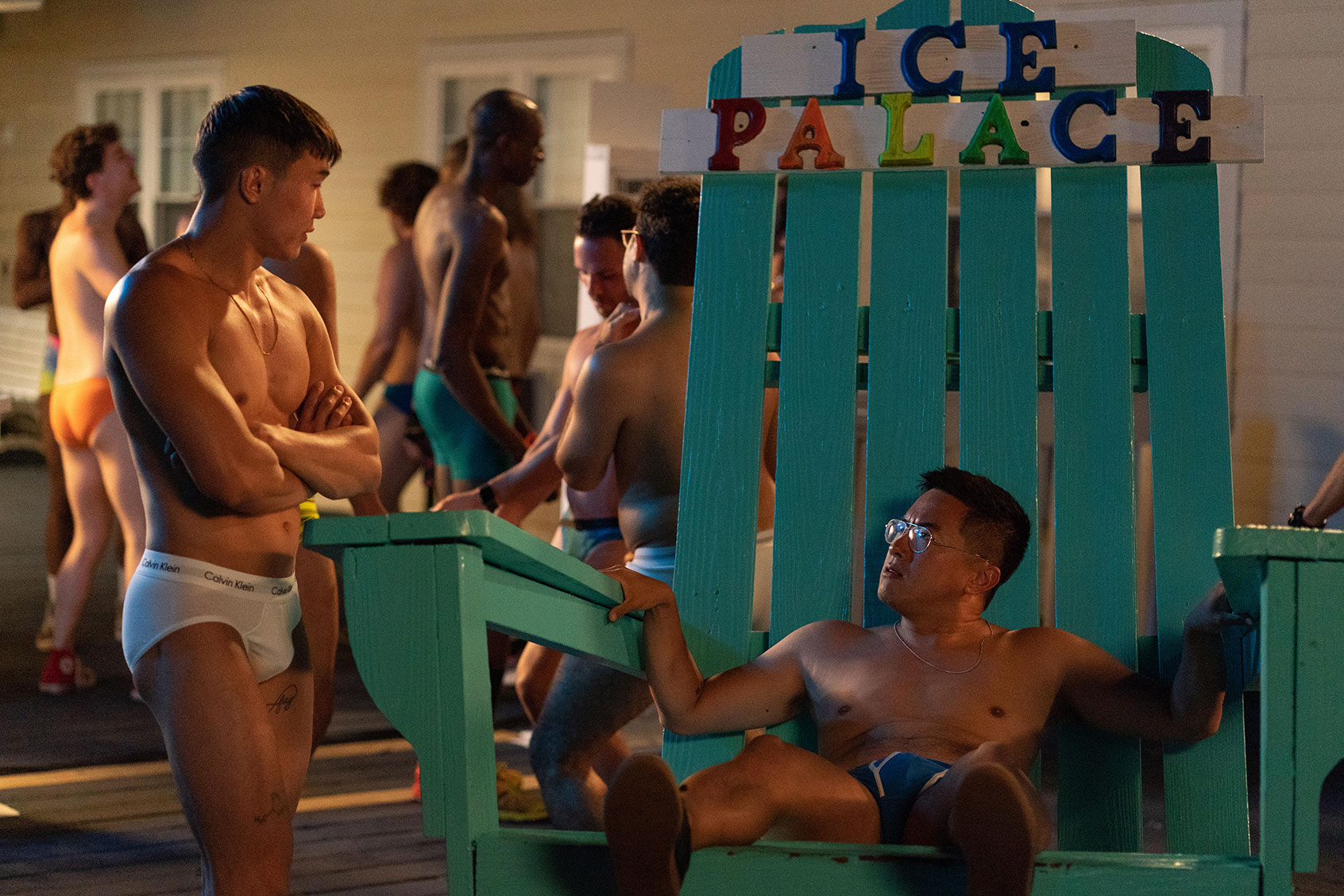
Fire IslandNoah (Joel Kim Booster) and Howie (Bowen Yang) in “Fire Island” (Jeong Park/Searchlight)At the end of the day, representation was a byproduct of the story I wanted to tell. I really just set out to sell a very specific story about Bowen and our friendship. And in that specificity, I think a lot of people have found a lot of takeaways. And that’s great. But you know, it is a big scary thing to be asked to speak for a group. I try and shy away from it as much as possible, honestly. Seeing Bowen going through all of that for the last couple of years because of “SNL” really made me wary, I think, going into this project in a lot of ways.

You get at that notion at the end of “Psychosexual” when you say “Hey, you know, I’m here, I’m up on stage, and I’ve talked about X, Y, and Z. But that’s not why I got up here. I got up here so I could goof off and tell jokes.” And you also referenced this when you spoke about representation as a double-edged sword. I always wonder for non-white performers whether that’s one of those things you accept as a part of getting out there and achieving fame. You shouldn’t have to, you know what I mean?

At the same time, this is what you’ve been striving to achieve for years.

Yeah. I think it’s frustrating.

The most frustrating part about it is that for a lot of people, it calls into question why you were chosen and why you were you reached the level of success that you did. It invalidates my hard work for a lot of people. It does. People think I’m a diversity hire, and it’s hard to get away from that.

I had to really fight against and overcome a lot of bulls**t to get my s**t made. And now that I’ve gotten it made, everyone thinks that it was a cakewalk because of who I am. What they don’t see is all of this stuff that goes on behind the scenes that makes it incredibly difficult still, despite all these conversations about diversity and representation that we’re having to make the kind of work that you want to make.

Do you feel like at this point you’re able to get the stuff made that you want to get made?

I think it’s a little too soon to tell. I haven’t even begun to think about what my next writing project is going to be. I think I need a little distance from the last one before I can really focus on what that is.  And you know, I am experiencing a lot of anxiety about what that next thing is, because I don’t want to flop.

It’s so funny, before the movie came out, I was so convinced no one would watch it, or no one would like it. And now that it has been out and people seem to enjoy it. my biggest concern is like, “Well, I’ll never write something that good again.” There’s no rest in my brain.

I’m just trying to really sit in and enjoy this specific moment and not go into this next phase of my career with any set expectations on, you know, how it may or may not affect my work moving forward.

The road leading to “Psychosexual” must have included a lot of different shows. And having been to a few of shows that ended up becoming comedy specials, I know that there’s some distance between the taping and the actual rollout on, in this case, Netflix.

I’m sure you’ve performed the set a million times, but have you watched the final edit of the special?

I watched it once. And that is all I think I can do. It’s really difficult for me in all of my work, but especially stand-up, because my stand-up is constantly evolving. I never see it as complete. So it’s really difficult for me to see it now as, like, the definitive version. It’s out there now, and those jokes are retired, they’re out of my brain. As of last weekend I stopped doing that material.

I don’t really like watching my stand-up in any sort of recorded form, because it just feels very different. I like the immediacy of telling those jokes with a very specific audience, and that audience that night is so important to me.  

I understand this is going to make it easier for me moving forward. And I’m so honored to have an hour-long special on Netflix. But it is also not what I love about stand-up.

So how does that impact your creation of your next stand-up routine? Are you taking a little a little break before you go back out?

“Part of how I approach stand-up is trying to project this idea of radical transparency.”

I have two shows tonight actually. Yeah, I’m doing a lot of smaller shows around LA to build up that material I have. I’m almost at a new hour now. And I begin touring again in September.

It does feel like I accomplished what I wanted to accomplish with the special, which was talk about a lot of these ideas around like representation and rejecting it in some senses and sort of establish my mission, which is to just tell jokes, and not necessarily be some role model for the community.

Now I feel a lot freer moving into this new section of what I’m talking about, and how I’m talking about it. And hopefully, you know, people will come to this new material with that in mind seeing me as an individual more so than a representative of a group.

One of the things that I enjoy so much about your comedy is the way you talk about sexuality. There’s no shame involved in the way you joke about it – it’s more like you’re celebrating the experience and laughing at the humanity of it. Was that conscious determination on your part, or is that something that just kind of naturally comes to you as you’re formulating your material?

Part of how I approach stand-up is trying to project this idea of radical transparency. Part of the magic trick of stand-up for me is getting the audience to believe that they’re seeing all of me, all sides of me, and they’re getting a complete version of who I am. The magic trick is getting them to think that, when they’re only seeing about, like, 25%, of who I am, as a person.

And part of that for me is not running from those moments when we are most human, when we are most vulnerable, which is oftentimes sex.  This is probably a direct response to the way I was raised. But all that stuff was kept behind closed doors, and it was locked and away from me for so long. And now that I have the freedom and a platform, all I want to do is talk about it and explore it and really understand it from as many perspectives as I can.


Want a daily wrap-up of all the news and commentary Salon has to offer? Subscribe to our morning newsletter, Crash Course.


We’ve talked a lot about race and representation, and I’m wondering whether there’s ever going to be a time someone’s going to talk to Joel Kim Booster and not expect him to talk about these issues.

Yeah. You know, it’s so hard to conceptualize what that would look like for me, because as long as people have been aware of my work, it has been a part of the conversation. It’s hard for me to conceptualize what it would what, what conversations would look like without it.

It would be an interesting perspective to have an interview that is just solely about the work. But I also have an understanding that right now, the work is very much tied to my identity. So a little bit of the onus is on me, you know.

“I would love to just be like Judd Apatow, who doesn’t have to answer for anything except for the work.”

A big part of what I’ve learned, and what I’m interested in, and what’s informing the direction I want to go in both as a comic and as a screenwriter is about incidental representation – like, telling a story that is populated with people of color and gay people that maybe doesn’t necessarily have to do with the intricacies of those identities.

Bridgerton,” for instance, is very incidental in its casting and even though race has pretty much no effect on any of the stories in production, it’s still brought up because part of it is unusual.

I wonder if even if I do manage to make a movie that is, like, a murder mystery on a cruise ship that I’m starring in – so the detective is gay and the characters are diverse – will I ever be able to escape it, or will the media always want to attach it some meaning onto that sort of frivolous work? I would love to just be like Judd Apatow, who doesn’t have to answer for anything except for the work. But I don’t know if I’ll see that in my lifetime. And I’m happy to take it so that for all of the wonderful queer Asian creators that I know who are coming up right behind me, it will be less of an issue.

And you’re getting a lot of feedback on your recent work now. Has your relationship that feedback changed? I ask that because I interviewed somebody recently who said they don’t ever read criticism, because if you take the good stuff seriously, you have to take the bad stuff seriously too.

I’m kind of the opposite, honestly. Like, there is a plenty of legitimate critique of the film that I have read and agreed with, and that I’m learning from. The challenge is delineating between the legitimate critiques that are helpful, and the Bechtel test of it all.

I’m definitely picking and choosing the sources from which I take the criticism. But you know, there are a lot of critics that I really admire and respect and read regularly and whose opinions I think are valuable. And so why wouldn’t I take some of that to heart and make myself a better writer because of it?

Now I have to ask you fully open that door. Where were you when you saw the Hanna Rosin tweet?

It’s funny. I had specifically removed myself from Twitter for a few days, when the movie premiered, because I wanted to miss the initial wave of discourse around it. I was not interested in everyone’s opinion of the movie and what it meant and what it didn’t mean, etc, etc. But unfortunately I think that was the closest I’ve ever been to being the main character on Twitter.

I got so many text messages about it. Not even telling me that it happened but, like, referencing it. And I had to look at it, just to understand what these text messages were saying. I was alone in my hotel room in New York. My boyfriend had left back to LA. And it was truly one of the most bizarre experiences of my life – not only seeing that critique, but then seeing the response to that critique. It was definitely not a framework through which I thought the movie would be judged.

And you know, I think her apology was great. If nothing else, I got the Alison Bechdel tweet out of it. I admire Alison so much, and to see them respond in that way and know that they watched my movie . . . I mean, thank you, Hanna Rosin. Without you, I would never have gotten that satisfaction.

Is that better than, say, a champagne gift basket from a network?

Absolutely. Much better.

“Joel Kim Booster: Psychosexual” is currently streaming on Netflix. “Fire Island” is on Hulu, and “Loot” is streaming on Apple TV+. Watch a trailer via YouTube.

More stories like this:


Was there anything real about Elvis Presley?

In Baz Luhrmann’s “Elvis,” there’s a scene based on actual conversations that took place between Elvis Presley and Steve Binder, the director of a 1968 NBC television special that signaled the singer’s return to live performing.

Binder, an iconoclast unimpressed by Presley’s recent work, had pushed Elvis to reach back into his past to revitalize a career stalled by years of mediocre movies and soundtrack albums. According to the director, their exchanges left the performer engrossed in deep soul-searching.

In the trailer to Luhrmann’s biopic, a version of this back-and-forth plays out: Elvis, portrayed by Austin Butler, says to the camera, “I’ve got to get back to who I really am.” Two frames later, Dacre Montgomery, playing Binder, asks, “And who are you, Elvis?”

As a scholar of southern history who has written a book about Elvis, I still find myself wondering the same thing.

Presley never wrote a memoir. Nor did he keep a diary. Once, when informed of a potential biography in the works, he expressed doubt that there was even a story to tell. Over the years, he had submitted to numerous interviews and press conferences, but the quality of these exchanges was erratic, frequently characterized by superficial answers to even shallower questions.

His music could have been a window into his inner life, but since he wasn’t a songwriter, his material depended on the words of others. Even the rare revelatory gems – songs like “If I Can Dream,” “Separate Ways” or “My Way” – didn’t fully penetrate the veil shrouding the man.

Binder’s philosophical inquiry, then, was not merely philosophical. Countless fans and scholars have long wanted to know: Who was Elvis, really?

A barometer for the nation

Pinpointing Presley can depend on when and whom you ask. At the dawn of his career, admirers and critics alike branded him the “Hillbilly Cat.” Then he became the “King of Rock ‘n’ Roll,” a musical monarch that promoters placed on a mythical throne.

But for many, he was always the “King of White Trash Culture” – a working-class white southern rags-to-riches story that never quite convinced the national establishment of his legitimacy.

These overlapping identities capture the provocative fusion of class, race, gender, region and commerce that Elvis embodied.

Perhaps the most contentious aspect of his identity was the singer’s relationship to race. As a white artist who profited greatly from the popularization of a style associated with African Americans, Presley, throughout his career, worked under the shadow and suspicion of racial appropriation.

The connection was complicated and fluid, to be sure.

Quincy Jones met and worked with Presley in early 1956 as the musical director of CBS-TV’s “Stage Show.” In his 2002 autobiography, Jones noted that Elvis should be listed with Frank Sinatra, the Beatles, Stevie Wonder, and Michael Jackson as pop music’s greatest innovators. However, by 2021, in the midst of a changing racial climate, Jones was dismissing Presley as an unabashed racist.

Elvis seems to serve as a barometer measuring America’s various tensions, with the gauge less about Presley and more about the nation’s pulse at any given moment.

You are what you consume

But I think there’s another way to think about Elvis – one that might put into context many of the questions surrounding him.

Historian William Leuchtenburg once characterized Presley as a “consumer culture hero,” a manufactured commodity more image than substance.

The assessment was negative; it also was incomplete. It didn’t consider how a consumerist disposition may have shaped Elvis prior to his becoming an entertainer.

Presley reached adolescence as a post-World War II consumer economy was hitting its stride. A product of unprecedented affluence and pent-up demand caused by depression and wartime sacrifice, it provided almost unlimited opportunities for those seeking to entertain and define themselves.

The teenager from Memphis, Tennessee, took advantage of these opportunities. Riffing off the idiom “you are what you eat,” Elvis became what he consumed.

During his formative years, he shopped at Lansky Brothers, a clothier on Beale Street that outfitted African American performers and provided him with secondhand pink-and-black ensembles.

He tuned into the radio station WDIA, where he soaked up gospel and rhythm and blues tunes, along with the vernacular of black disk jockeys. He turned the dial to WHBQ’s “Red, Hot, and Blue,” a program that had Dewey Phillips spinning an eclectic mix of R&B, pop and country. He visited Poplar Tunes and Home of the Blues record stores, where he purchased the music dancing in his head. And at the Loew’s State and Suzore #2 movie theaters, he took in the latest Marlon Brando or Tony Curtis movies, imagining in the dark how to emulate their demeanor, sideburns, and ducktails.

In short, he gleaned from the nation’s burgeoning consumer culture the persona that the world would come to know. Elvis alluded to this in 1971 when he provided a rare glimpse into his psyche upon receiving a Jaycees Award as one of the nation’s Ten Outstanding Young Men:

“When I was a child, ladies and gentlemen, I was a dreamer. I read comic books, and I was the hero of the comic book. I saw movies, and I was the hero in the movie. So every dream I ever dreamed has come true a hundred times … I’d like to say that I learned very early in life that ‘without a song, the day would never end. Without a song, a man ain’t got a friend. Without a song, the road would never bend. Without a song.’ So, I’ll keep singing a song.”

In that acceptance speech, he quoted “Without a Song,” a standard tune performed by artists including Bing Crosby, Frank Sinatra, and Roy Hamilton – seamlessly presenting the lyrics as if they were words directly applicable to his own life experiences.

A loaded question

Does this make the Jaycees recipient some sort of “odd, lonely child reaching for eternity,” as Tom Parker, played by Tom Hanks, tells an adult Presley in the new “Elvis” film?

I don’t think so. Instead, I see him as someone who simply devoted his life to consumption, a not uncommon late 20th-century behavior. Scholars have noted that whereas Americans once defined themselves through their genealogy, jobs, or faith, they increasingly started to identify themselves through their tastes – and, by proxy, what they consumed. As Elvis crafted his identity and pursued his craft, he did the same.

It also was evident in how he spent most of his downtime. A tireless worker on stage and in the recording studio, those settings nevertheless demanded relatively little of his time. For most of the 1960s, he made three movies annually, each taking no more than a month to complete. That was the extent of his professional obligations.

From 1969 to his death in 1977, only 797 out of 2,936 days were devoted to performing concerts or recording in the studio. Most of his time was dedicated to vacationing, playing sports, riding motorcycles, zipping around on go-karts, horseback riding, watching TV and eating.

By the time he died, Elvis was a shell of his former self. Overweight, bored, and chemically dependent, he appeared spent. A few weeks before his demise, a Soviet publication described him as “wrecked” – a “pitilessly” dumped product victimized by the American consumerist system.

Elvis Presley proved that consumerism, when channeled productively, could be creative and liberating. He likewise demonstrated that left unrestrained, it could be empty and destructive.

Luhrmann’s movie promises to reveal a great deal about one of the most captivating and enigmatic figures of our time. But I have a hunch it will also tell Americans a lot about themselves.

“Who are you, Elvis?” the trailer hauntingly probes.

Maybe the answer is easier than we think. He’s all of us.

Michael T. Bertrand, Professor of History, Tennessee State University

This article is republished from The Conversation under a Creative Commons license. Read the original article.

State legislatures are effectively helping rogue doctors spread misinformation

In the winter of 1965, a 30-year-old former medical student at the University of Amsterdam named Bart Huges squatted in front of a mirror and drilled a hole in his head using an electric drill. He had performed a trepanation – a procedure involving the removal of a piece of bone from the skull dating back thousands of years and practiced by cultures around the world. A craniotomy, the modern version of trepanation, can in fact be lifesaving when conducted for the right reasons. Yet Huges never obtained a medical diploma and, according to writings published before and after the self-surgery, had come to believe that trepanation could enhance brain function and help one obtain a higher state of consciousness.

Despite any reliable medical or scientific evidence supporting this theory, Huges and his subsequent followers gained notoriety, helping popularize the concept among those experimenting with drugs during the counterculture movement of the 1960s and 1970s. According to Paul McCartney, even John Lennon at one point considered it. Yet the purported benefits of trepanation proclaimed by Huges and others was not only unfounded — its promotion was also dangerous.

How did such an idea lacking reliable and reproducible scientific evidence, the currency used among professionals to support or refute a hypothesis, come to enjoy such wide popularity? Huges had been a medical student, and later a librarian, presumably with access to information and expertise that would have refuted — or at least called into question — his theory on trepanation. Huges’ writings on the subject included technical medical terms and weaved together concepts involving blood vessels, carbon dioxide, adrenaline, cerebrospinal fluid, osmosis, and more. Is it possible that his brief connection with the medical profession helped him obtain greater validation among supporters and admirers who had hoped his ideas were true?

As it turns out, Huges was a harbinger of a new era of health misinformation. Misinformation has been tenacious during the COVID-19 pandemic, and characterizes much political discourse nowadays. Acknowledging the deleterious effects misinformation can have on the public’s health, Vivek Murthy, the current US Surgeon General, published an advisory to readers repeatedly urging them to seek the advice of health professionals.

Having one’s medical certification rescinded isn’t as big of a barrier as one might think. Indeed, though a medical certificate is a frequent requisite for employment by many institutions, a certificate is not actually a legal requirement for an individual to be able to practice medicine.

Unfortunately, a minority of doctors seem to have recently obtained an outsized voice through the use of social media, internet forums, radio, and television appearances. Together, this fringe contingent has played a critical role in propagating misinformation about COVID-19 to the public. This arguably small number of individuals appear to be using their professional credentials and the image of the white coat — ironically the symbol which doctors began using in the 19th century to separate themselves from what they deemed as quackery — to advance ideas with no solid evidence and shaky scientific foundations.

RELATED: Medical boards pressured to let it slide when doctors spread COVID misinformation

A New England Journal of Medicine article published last month discusses this problem in depth, reporting that certifying boards, which issue additional credentials for specialists, and state or territorial licensing boards, which issue medical licenses, are attempting to discourage the spread of misinformation that appears to be promulgated by doctors across the country. But despite their best intentions, their powers remain limited. First, certifying boards can revoke credentials from a doctor after having received a complaint of unprofessional or unethical conduct and following a robust process of investigation and hearings, including the opportunity for the doctor in question to share their perspective. Only after this can a medical certificate be temporarily or permanently rescinded.

Yet having one’s medical certification rescinded isn’t as big of a barrier as one might think. Indeed, though a medical certificate is a frequent requisite for employment by many institutions, a certificate is not actually a legal requirement for an individual to be able to practice medicine.

Second, licensing boards historically had the authority to take disciplinary action against doctors who might be crossing the professional boundaries of what is considered acceptable — with the possibility of a doctor having their medical license suspended or revoked, which indeed is a legal requirement and a prerequisite to practicing medicine in the US.

But this is changing.

In September of 2021, the Tennessee Board of Medical Examiners, which is responsible for medical licensing in that state, issued a warning to doctors notifying them that spreading misinformation regarding COVID-19 could lead to their medical licenses being revoked. Just a few weeks later, Tennessee Governor Bill Lee signed into law legislation that prevents licensing boards from taking disciplinary action against doctors found to be spreading COVID-19 misinformation. Perhaps more concerning, that legislation also protects doctors who prescribe unproven and potentially dangerous medication. As of this writing, both North Dakota and Missouri have also passed similar legislation. More than half of all US states have introduced bills like it.

To make matters worse, there is evidence that the number of doctors spreading COVID-19 misinformation might be on the rise. In all, this means that despite ongoing efforts from licensing boards and other groups, doctors are increasingly being legally protected from spreading misinformation and prescribing unproven therapies, going directly against professional medical guidelines and recommendations.

Collectively, the war against misinformation amounts to a herculean task. This is a result of not only political and legal roadblocks, but also linguistic ones. Indeed, the definition of misinformation itself is sometimes a thorny question, as it has become difficult sometimes  to discern falsehood from truth. In fact, doctors disseminating misinformation often falsely declare that they are the true truth-tellers, and avowing that health care providers in disagreement are actually the misleading or ignorant bunch.

But it is possible to know who is right in the end.

Certainly, it is true that a spectrum of opinion exists, and that healthcare professionals disagree on a large array of things; but this is generally within the boundaries set for by the results of available research studies. Hence, the US Department of Health and Human Services states misinformation is “information that is false, inaccurate, or misleading according to the best available evidence at the time.” It is also true that research studies can themselves be wrong — due to flawed methodology, misinterpretation of findings, or plain old fabrication of data (a classic example being the retracted study claiming a link between autism and vaccines). However, a lauded foundation has been built within the medical and scientific communities to minimize such errors as much as is possible while continuing to look for ways of improving. We are only human, and sometimes mistakes slip through the cracks. Moreover, truths may and indeed do sometimes change over time as more information is discovered or we obtain greater understanding about a particular subject.

Nevertheless, an agreement can be reached on what is reasonable and supported by current evidence — thus the contemporary formulation of a medical or scientific truth. This is how medical professionals and scientists consider what “truth” is: a delicate balance that includes thoughtful and intelligent conclusions based on what we know and healthy skepticism of what we do not, falling within a set of sensible parameters.

But who or what sets those parameters? Theoretically, good research studies and the experts most apt to discern them. Yet these are areas often hijacked by those hoping to propagate misinformation, whether conscious of it or not, by questioning the validity of a publication, citing unreliable sources, misinterpreting findings — or, as in the case of Bart Huges, using medical or scientific jargon to add further validity to an idea. Hence, misinformation persists.

Sometimes it is medical professionals who keep alive the torch of misinformation. Simone Gold, who holds both a medical and a law degree, has spoken in support of using ivermectin and hydroxychloroquine as treatments for COVID-19 despite numerous trials showing that they have no clinical benefit. The US FDA at one point tweeted, “You are not a horse. You are not a cow. Seriously, y’all. Stop it,” linking an article explaining that one of the drugs, ivermectin, is used to treat or prevent parasites in animals with no evidence that it is useful in the treatment or management of COVID-19 in humans. Gold has also told people to avoid getting vaccinated and that masks have no use, contrary to clear evidence saying otherwise. To this day, she maintains an active medical license. (Curiously, Gold was also involved in the 2021 US Capitol attack.)

Before the internet was invented and came to be a major aspect of our lives, Bart Huges managed to spread his message regarding the unfounded theory of trepanation as a method of enhancing our brains and reaching a higher state of consciousness far and wide, his ideas going so far as to reach pop culture icons. Today, with the facilitated spread of ideas through our digital screens, we are constantly inundated with a wealth of information where doctors can reach multitudes in a matter of minutes. Sometimes, in ways that are harmful.

One might look at this problem of doctors spreading medical misinformation and conclude the most logical solution to this is to train doctors to understand scientific studies better. Certainly, if these doctors knew to how read studies disproving the efficacy of drugs like hyrdoxychloroquine for treating COVID-19, they would relent in their recommending it, wouldn’t they? This would mean training doctors to think like scientists — to properly analyze and evaluate the rigor of scientific studies. However, many schools already have this training embedded in their curriculum, with additional assessments during examinations. 

In other words, this is a social problem. Even if an institution could implement measures that are known to be effective in reducing medical misinformation, the reality is that doctors are motivated and influenced by so many factors, just like any other individual, that certain strong personal beliefs or significant external influences might trump proper medical judgment in some circumstances despite having had more than adequate training. Thus, making it particularly challenging, if not impossible, to prevent misinformation among medical professionals altogether.

Nevertheless, whether medical misinformation or any other possible wrongdoing has been in error or whether it has been a purposeful act intended to deceive or harm, a system, although not without its faults, has traditionally been in place to assess the situation and take disciplinary action when needed for the benefit of patients.

Thus, such a system plays a critical role in ensuring that medical professionals are practicing medicine according to the most up to date standards for the benefit of their patients and the public. But even the power of the current system in place across states is being actively taken away by legislation leaving the medical profession in an unsettling position.

One of the foundational pillars of medicine is the doctor-patient relationship, which is held up by the trust bestowed to doctors that the information being transmitted by them is accurate and reliable. Unbeknownst to patients, what is ultimately conveyed by some doctors might be influenced, at least in part, by a body of politicians rather than by a group of experienced medical professionals. This should be concerning, not only because of the effects that it may have on patients and the relevance to COVID-19, but because it could set a dangerous precedent for additional legislation with broader scope further limiting the authority of licensing boards. In turn, this makes it even more difficult for state licensing boards to stop medical professionals whose behaviors may be harming patients or have the potential to do so resulting in a breach of trust between doctors and their patients that is so critically important.

Read more on COVID and misinformation:

QAnon’s ‘Q’ delivers first new messages since 2020

On Friday, amidst the chaos of the news of the Supreme Court’s ruling to overturn Roe v. Wade, QAnon’s ‘Q’ left the first new series of messages since 2020. 

The first message — “Shall we play a game once more?” — was left using ‘Q’s credentials on what Daily Beast refers to as an “anarchic internet community” called 8kun, and was later followed up with “Are you ready to serve your country again?” and then a third reading “Remember your oath.”

When a member of the board replied to one of the messages saying “Throw us a bone Q, we’ve all been waiting for what seemed like an eternity. What’s going on?” Q replied “It had to be done this way.”

QAnon first made its presence known in 2017 as a conspiracy theory driven pro-Trump antagonist shrouded in anonymity and although their allegiance to Trump is clear, the former president is carefully dodgy when it comes to reciprocation.

RELATED: Trump is backing a full-fledged QAnon extremist in Ohio

“Rally organizers make a valiant effort to dispel Q merchandise such as t-shirts, flags, and signs at the rallies,” said a Trump spokesperson in a quote to Politico. Having said that, QAnon members Jeffrey Pedersen and his podcast co-host Shady Grooove were granted press credentials to a Trump rally in Florida the same month Trump’s spokesperson provided the previously mentioned quote. 

“We are the news now,” Pedersen wrote on his Telegram channel, according to Vice.

In 2021, Ashli Babbitt, a big name within the QAnon community, was killed during the January 6 Capitol riots and Trump himself spoke on the event, offering what seemed to be condolences.

“The person that shot Ashli Babbitt … there was no reason for that. And why isn’t that person being opened up, and why isn’t that being studied? They’ve already written it off. They said that case is closed. If that were the opposite, that case would be going on for years and years, and it would not be pretty,” Trump said.


Want a daily wrap-up of all the news and commentary Salon has to offer? Subscribe to our morning newsletter, Crash Course.


The basis of QAnon’s belief system is that the Democratic world is run by Satan-worshipping pedophiles and that an event called “The Storm,” will one day take place where their enemies will be executed via orders from a military tribunal. According to The Guardian, support of QAnon has increased since Trump left the White House.

Read more:

Republicans don’t care about kids — just imaginary children  

Social workers say the far right’s adoption of “pedophile” as an insult is hurting real victims 

Fetus-powered street lamps? Republicans ramp up outrageous anti-abortion lies ahead of Roe’s demise

The very best way to sharpen your knives

Even the sharpest knife gets dull over time — the more you cook, the duller your most important tool becomes. It’s only through regular maintenance that chefs and home cooks keep their blades sharp.

So how often should sharpen your knives? Well, the short answer is whenever they start to feel dull — which can vary depending on the quality of your knives and how often you use them. For most home cooks, this will likely be two to three times a year. Can your knife cut a tomato cleanly? If not, it’s time to sharpen it. You can also use the paper test: Hold a sheet of printer paper up in one hand and try to slice it vertically. If you have trouble hacking through the paper, your knife could stand to be sharper. 

To sharpen your knives at home, you can use an electric sharpener or a whetstone (also called a sharpening stone). Electric sharpeners require little effort on your end, but stones are generally the preferred choice since they’re gentler on blades, relatively inexpensive, and easy to use. Stuck between the two? Here’s how to sharpen your knives with electric sharpener and a whetstone.

How to sharpen a knife with a whetstone 

If you have a very nice knife, sharpen it with a whetstone like this. It’s relatively inexpensive for a kitchen tool and you’ll get years of use out of it, too.  

Sharpening stones come in different sizes and grits (the stone’s level of coarseness), which are often indicated by color. Some stones have two sides: a coarser side for removing dents and sharpening very dull blades, and a more refined side for polishing and edge refinement. The rule of thumb is to always start sharpening your knife on the coarse side and then  moving to the refined side to finish. 

  • If your countertop is slippery, place a rubber mat or towel underneath the stone before doing literally anything at all — you really don’t want to hurtself here!
  • Some stones need to be oiled or soaked in water first, so check the manual that comes with yours to be sure.
  • Once you’re ready to start sharpening, flip over to the coarser side of the stone.  
  • Hold your knife with the edge of the blade facing toward your body at a 15 to 20 degree angle against the surface — this can vary slightly from knife to knife, so again, double-check the info that came with yours.  
  • Rest the fingers on the other hand on the flat side of the knife and push it away from you in one stroke, repeat about 10 times. Flip the knife over and do 10 strokes on the other side.
  • Test with a tomato or paper and,if it’s still not sharp enough, repeat until your knife is back to its former glory. That’s it!

How to sharpen a knife with an electric sharpener 

An electric knife sharpener is similar to a pencil sharpener — it simply obliterates the old edge and creates a new one. It’s the fastest way to restore your blade to “health,” but it’s also the most brutal. The edge of a knife is a carefully tapered compression of metal layers, so the thwacking sends the atomically aligned edge into disarray, or worse — it can chip tiny divots into the metal.

For the average knife, there are worse fates. But, if you happen to own a Japanese cold-forged sabatier, it’ll be a sad (and expensive) day.

When to use a honing steel 

Once your knife is sharpened, you’ll want to keep it that way for as long as possible. Try to get into the habit of using a honing steel every time you take out your knife. It kind of looks like a metal lightsaber and is basically like a short cardio excercise for your blade, aligning all of the metallic ions in the knife’s edge so you can cut with ease and precision.

Hold the honing steel vertically against your kitchen counter and with your non-dominant hand. Then hold the knife nearly flat against the steel at about 22 degrees (think about it as half of 45 degrees), then draw it across the steel 10 times on each side. The steel won’t restore the edge to a dull knife, but it will help you keep an edge longer on a well-maintained knife.

8 facts about transgender activist Marsha P. Johnson

Marsha P. Johnson was a relentless advocate for gay rights, best known for her involvement in the Stonewall Uprising and tireless efforts to protect those in her community. Though she dealt with homelessness, mental health issues, and police brutality throughout her life, she managed to leave behind a legacy of positivity by establishing one of the first LGBTQ+ youth shelters and providing basic needs for anyone struggling around her. Here are eight facts about Marsha P. Johnson.

1. Marsha P. Johnson grew up in a conservative New Jersey family.

Born on August 24, 1945, Marsha P. Johnson was the fifth of seven children in a large Christian family from Elizabeth, New Jersey. Assigned male at birth, Johnson soon found a love for wearing girl’s clothes, though her parents often reprimanded her for doing so. Still, she remained close with her family, and when she’d return home for holidays, she oftentimes brought displaced friends with her so they could enjoy the company of her loved ones. 

2. Johnson had a stint in the Navy.

After graduating from Thomas A. Edison High School in 1963, Johnson enrolled in the U.S. Navy. Though not much is known about her time in the military, we do know she relocated to Greenwich Village afterward. As the creative queer hub of Manhattan at the time, this was where she could discover herself freely and started dressing almost exclusively in women’s clothing.

3. The P stands for something important.

As part of her reinvention in New York City, Johnson renamed herself, selecting the middle initial of P for “Pay It No Mind.” For Johnson, this was a life motto and a common response to relentlessly prying questions about her gender and sexuality. Before settling on the P, she identified herself as “Black Marsha.” Now, a nonprofit bearing her name, The Marsha P. Johnson Institute, works to protect and defend the rights of Black transgender people.

4.  She was a key figure in the Stonewall Uprising.

On June 28, 1969, several members of the gay and trans community decided they would no longer stand for the regular and unjust police raids of The Stonewall Inn, a popular gay bar on Christopher Street in New York City, resulting in days of violence and rioting.

Johnson, who had a history of rough encounters with the police, was identified as one of the participants during the uprising, and it led her to become an important figure in the gay liberation movement in the United States moving forward. (While many people claim she threw the first brick that started the riot, she later insisted that she showed up after it began.)

Following Stonewall, she joined the Gay Liberation Front and worked with trans leader Sylvia Rivera to establish the Street Transvestite Action Revolutionaries (STAR).

5. She became a well-known activist for LGBTQ+ causes.

Early in its existence, STAR staged a sit-in to protest New York University canceling a dance led by a gay student group, causing the school to reverse its decision. Johnson and Rivera also established the first STAR House, a trailer that provided shelter for displaced members of the community. To fund the project, both Johnson and Rivera worked at night as sex workers. Johnson struggled with employment discrimination her entire life, and this was her most reliable source of income.

In the 1980s, Johnson became a member of the AIDS Coalition to Unleash Power (ACT UP), a grassroots organization dedicated to ending the disease and providing medical care for those in need.

6. She modeled for Andy Warhol.

A fixture of the downtown art scene, Johnson was well known in her time, particularly for her elaborate floral hairstyles and clunky red heels. Naturally, she caught the eye of Studio 54 aficionado and artist Andy Warhol. She modeled in a portrait series for the artist in 1975, which sold for $6250 at a Christie’s auction in 2014. 

7. Questions still exist about her death.

Johnson’s body was found in the Hudson River on July 6, 1992, near the Christopher Street pier, which was a popular gathering place for gay and trans folks at the time. The NYPD originally ruled her death a suicide, but it was changed in 2012 to be classified as “undetermined.” The NYPD has since closed the case.

Still, many of the questions surrounding her death have been left unanswered and uninvestigated by police. Various theories exist about what really happened to Johnson, with some believing it was a tragic accident and others saying she was murdered or fell into the river while being pursued. Through it all, those closest to her insist that Johnson was never suicidal. In 2017, journalist David France released the documentary The Life and Death of Marsha P. Johnson, which tackles many of these lingering questions. It’s currently streaming on Netflix.

8. A waterfront park in Brooklyn is named after her.

Brooklyn’s Marsha P. Johnson State Park was established in February 2020 to celebrate the local hero, making it one of the few state parks named for an LGBTQ+ trailblazer. Spanning seven acres along the East River in Williamsburg, the public space touts gorgeous views of the city and hosts free community events, like a family-friendly drag queen story hour and a game library.

What the anti-abortion movement wants next — and how we can respond

The anti-abortion movement is not resting on its laurels. Twenty minutes after the Supreme Court posted its decision overturning Roe v. Wade and eviscerating the federal right to an abortion, the Idaho-based Stanton Healthcare, an organization that “seeks to replace abortion businesses around the world,” sent out an email celebrating the decision, but also noting that “overturning Roe is not a finish line, but rather a starting line.”

Consider this moment as the warmup. Of course, people in certain quarters are popping champagne corks and dancing before the Supreme Court, but the same movement that brought us Donald Trump never intended to stop the abortion fight at dismantling Roe. It has much bigger ambitions.

Getting rid of Roe is insufficient to their grand vision because abortion is now regulated at the state level, which means it will probably remain legal in about half the states. So if you have the money, means and time, you can still get a legal abortion in the U.S., even if you live in a state that prohibits the medical procedure.

RELATED: Amid all the gloating, anti-abortion right dreams of bigger wins — and possible violence

The finish line, for the anti-abortion movement, is a country where no one, at any time, in any place or under any circumstances, will be able to get an abortion.  

Here is a preview of what we can expect in the coming months. The Heritage Foundation notes that it has been working on “an extensive post-Dobbs game plan,” and that “now is the time to put it into action at both the state and federal levels.” 

At the federal level, there is talk of enacting a 15-week national abortion ban, but that will not satisfy the base, nor does it have much chance of passing in the Democrat-led House. A more realistic longer-term plan was laid out yesterday by former Vice President Mike Pence. In an interview with Breitbart, Pence, a likely contender in the 2024 presidential election, emphasized that, “we must not rest and must not relent,” until there was a national ban on all abortions.  

Model legislation drafted last week proposes not just a total abortion ban but also a more “robust enforcement regime.” Simply put, they want to put people in prison.


At the state level, where the fight now goes, anti-abortion activists can look to model legislation drafted last week by James Bopp, general counsel for the National Right to Life Committee. This legislation is chilling because its focus is not just on a complete abortion prohibition, but also on enabling and empowering a more “robust enforcement regime than just reliance on criminal penalties.” Simply put, they want to put people in prison.

We can also anticipate the men’s rights and fathers’ rights movements coalescing more forcefully around abortion. Life Issues Institute, which was founded by John Willke — often considered the grandfather of the U.S. anti-abortion movement — also celebrated the fall of Roe, while lamenting that abortion is now in the hands of the states. Still, it sees a new opportunity to legally enshrine the decision-making power of men, as “states are now free to establish rights for fathers concerning the life-or-death decision of their children.”


Want a daily wrap-up of all the news and commentary Salon has to offer? Subscribe to our morning newsletter, Crash Course.


Bopp’s model legislation has that covered. Under his draft bill, the “father of the unborn child” would have the right to bring an action for wrongful death against a person having an abortion, and that same father could also get their court costs covered, as well as obtain compensatory damages. 

The anti-abortion movement is also looking to fill the vacuum that will surely be created by the closing of abortion clinics in many parts of the country. Crisis pregnancy centers (CPCs) are organizations that claim to provide pregnancy-related counseling but in fact engage in deceptive and unethical practices to dissuade women from knowing about or getting an abortion. Today, these CPCs already outnumber abortion clinics; there are an estimated 2,500 CPCs, compared to only 800 abortion clinics.

With Roe gone, groups like Stanton Healthcare are pivoting from talking women out of having abortions to actively trying to track down women who have self-managed an abortion using medication abortion. Stanton Healthcare is launching a major campaign to offer “medical care” to women who have taken abortion pills by providing them with so-called “Abortion Pill Reversal.” This is a medically unsound and unproved procedure that has been thoroughly rejected by the American College of Obstetricians and Gynecologists.

This feels like the nadir. It isn’t. We have the anti-abortion movement’s roadmap, and we need to use that for empowerment, not despair.


We can also expect these same CPCs and anti-feminist organizations to advance the narrative that a deranged pro-choice mob is out to physically harm anti-abortion activists. Penny Nance, the president and CEO of Concerned Women for America, recently appeared on Fox News to claim that the organization’s Washington headquarters had been vandalized by a “leftist activist.” The group has reportedly filed a report with the FBI alleging this was a hate crime against “people of faith.” While providing no concrete evidence of any political motivation behind the alleged vandalism, Fox reported that Nance suspects that the actions taken by the so-called activist were in “connection with the leaked [Supreme Court] opinion.” Heartbeat International, which runs one of the largest CPC networks in the U.S., is making similar claims about disgruntled abortion activists who have supposedly channeled their anger by attacking their clinics.

Roe is more than just a legal framework.  For 49 years it has stood as an emblem of hard-won progress: a struggle for freedom and bodily autonomy that stretches back decades. 

The fall of Roe may only directly impact people in the United States, but the decision is reverberating globally. The anti-abortion movement understands that these wins are fluid, and its leaders are preparing not only to defend their territory, but to expand further.  This week we got gut-punched, and it feels like we’ve reached the nadir, but we haven’t. Still, we have a way out. The way to defeat future attacks on our already limited human, political and civil rights is to pay close attention to the signals the anti-abortion movement is sending. We have their roadmap and we need to use this information for empowerment, not despair. They know the most important battles lie ahead, and so do we. 

Read more on the Supreme Court and the fall of Roe v Wade:

What we can learn from “Drag Race All Stars 7” and the magic of anxiety-free reality competition

Shantay, you all stay.

For the past six seasons of “RuPaul’s Drag Race All Stars,” it seemed as if producers were conducting experiments. As fan favorites returned to the drag queen competition to once again compete for a crown, the show came up with more and more elaborate ways to send them home and then bring them back again via lip sync competitions . . . to varying degrees of success. 

Beginning in Season 2, the top two queens would lip sync, and then the winner would have the power to choose which of the bottom two would sashay away. A few seasons later, the show switched it up, having the episode’s winning queen lip sync against a former contestant known to be a Lip Sync Assassin with the power of elimination at stake. If the queen won, she picked who went home; if the assassin won, it was a group decision.

In Season 7 … nobody goes home before they should. Most importantly, everybody has a full season to prove themselves.

The problem? No one ever quite figured out how to decide who to eliminate. Should it be the queen who had done the worst in all challenges? The one who had done the worst in this particular challenge? Should it be the shadiest queen? Or strategically should it be the best queen, to take out the competition? The decision was so stressful that in “All Stars” Season 3, frontrunner BenDeLaCreme, who had been in the Top 2 for five out of six challenges, shockingly eliminated herself instead of another undeserving queen. And the result of it all was a lot of eliminations (and therefore a few winners) that did not feel legitimate. 

RELATED: Between “The Bachelor” finale and “The Talk,” reality TV shows us the toll of ignoring racism

That all changed for the current, and dare we say best, incarnation of “All Stars.”

In Season 7, RuPaul decided no one would be doing any sashaying at all. For the first time in “Drag Race” herstory, eight competitors, all of whom have won past seasons in the “Drag Race” televisual universe get to stick around for the whole season. Instead of competing for the power to send somebody home, they vie for star badges and the power to block someone else from getting a star the next week. At the end of the season, the four queens with the most stars will lip sync for the crown. Nobody gets punished for a mediocre Dolly Parton impression or misshapen hip pads. Nobody gets eliminated based on one weakness, like live singing or giving somebody else a drag makeover. Nobody goes home before they should. Most importantly, everybody has a full season to prove themselves.

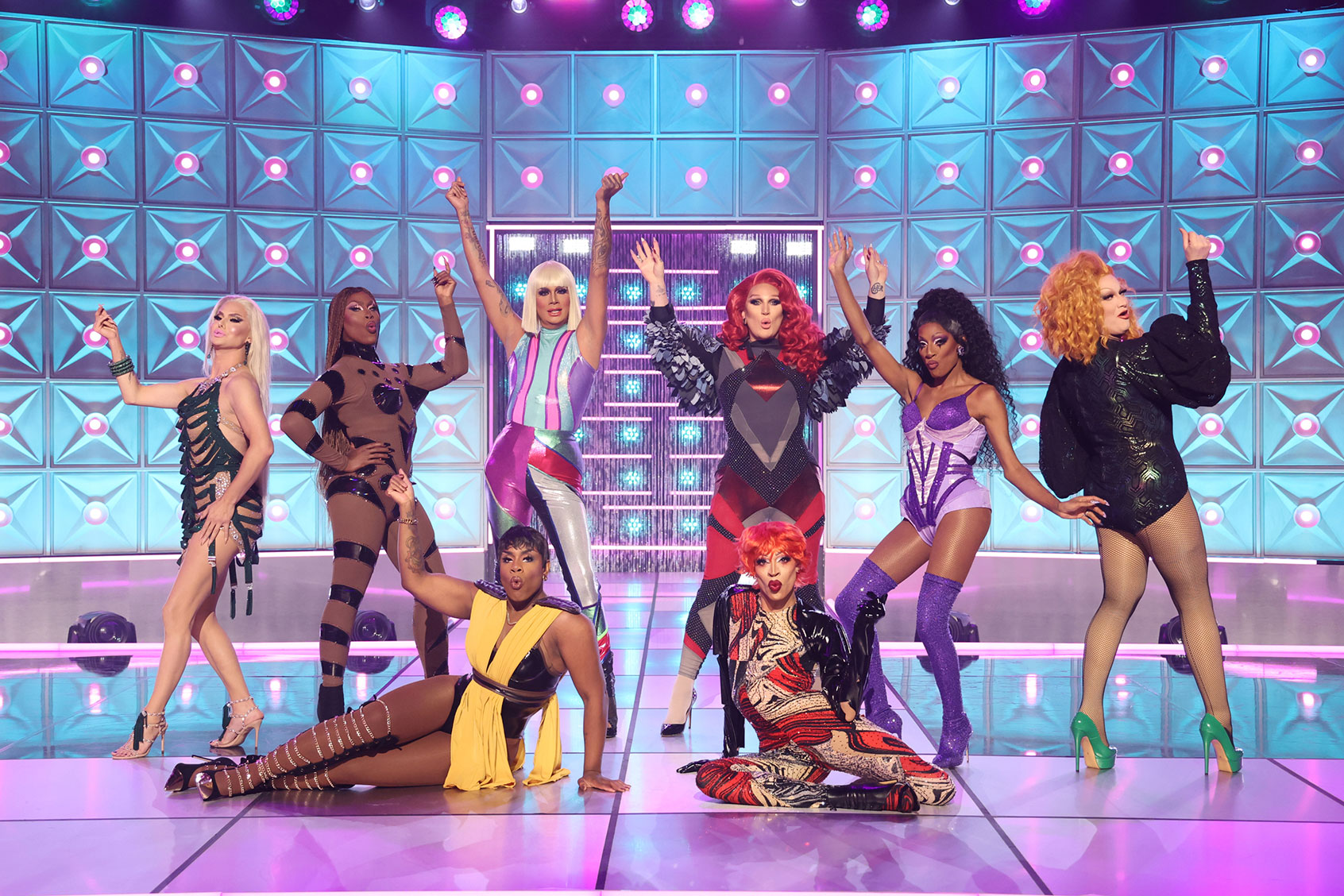
RuPaul's Drag Race All StarsTrinity the Tuck, Shea Couleé, Raja, The Vivienne, Jaida Essence Hall, Jinkx Monsoon, Monét X Change and Yvie Oddly in Season 7 of “RuPaul’s Drag Race All Stars” (Jordin Althaus/World of Wonder/Paramount+)
It’s “Drag Race” mixed with “The Real Drag Queens of the Werk Room” — a whole new world of reality competition TV.  

It may have lowered the stakes in terms of weekly TV excitement, but boy does it make for pleasant viewing, especially for longtime fans. In a regular season, every Jinkx Monsoon fan would have to dread the inevitable design challenge, because she famously cannot sew. Now, we simply get to enjoy all of the good designs without stressing, and watch these seasoned queens interact with each other in a way we never have before. It’s “Drag Race” mixed with “The Real Drag Queens of the Werk Room” — a whole new world of reality competition TV.  

It’s a world we’d love to see other shows venture into as well. 

Keeping your competitors around … and busy

Yes, the point of CBS’ long-running “Survivor” is to be the Sole Survivor, but there are other ways of surviving besides getting voted off the island, and there are also other ways to eliminate people besides one per episode. Season 40, aka “Winners at War,” is still a matter of contention for “Survivor” diehards because old school “Survivor” faves like “Boston” Rob and Amber Mariano, Ethan Zohn, Parvati Shallow and Sandra Diaz-Twine were quickly picked off. That left behind newer, less compelling castaways whom the audience had less interest tuning in for.

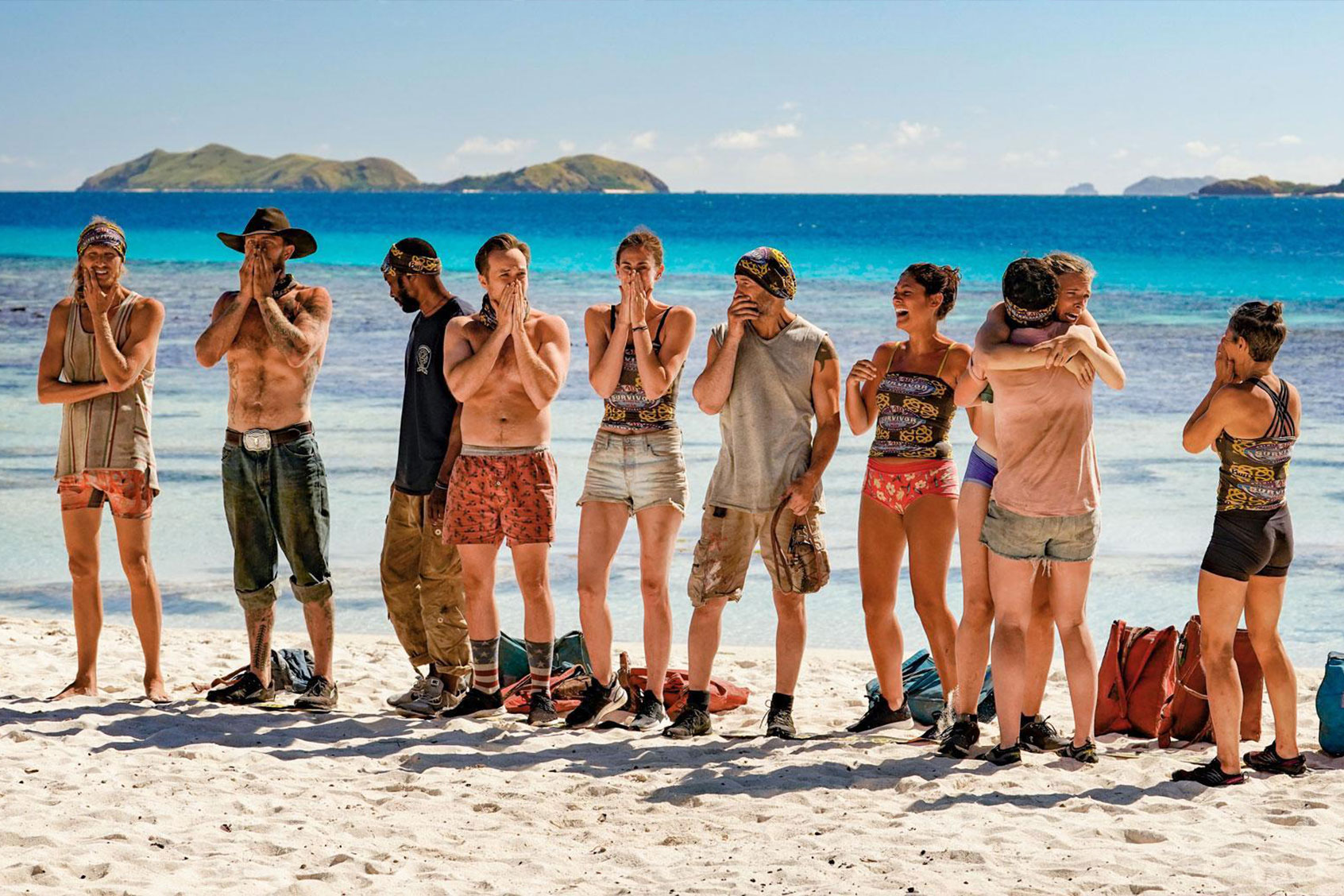
Survivor: Winners at WarSurvivor: Winners at War (CBS Entertainment)

And sure, instead of going home, the castaways went to a weird island where they had to walk up a hill (a lot) for a slim chance of getting back in the game. But that is simply not the same as watching them actually play the game they’re known for. As with “Drag Race All Stars,” the point is to keep your competitors active and engaging the audience.

Instead of sending them to Weird Island, “Survivor” should have kept them in the game and then eliminated contenders later, in more interesting ways. Maybe a midseason checkpoint could have been more satisfying? Or set up a mass elimination right before the annual merge, perhaps? Or a tribe division based on cumulative performance?

Keeping people around doesn’t have to solely apply to all star season either. Can you imagine if “The Great British Baking Show” was able to keep its funniest or most charming contestants throughout? Then we wouldn’t need to say goodbye to our favorite grandma or wacky architect-turned-baker until much later, and maybe we can see them shine beyond that one Bread or Pastry challenge. 

And that goes for “Top Chef” also, where many a talented chef has met their downfall with a dessert or pot of rice. Does every contestant need to know how to prepare every single style of cuisine or dish, or is there something more to be said for proven growth and adaptability? That’s the exact lesson we can glean from “Last Chance Kitchen.”

For many seasons now “Top Chef” has offered a second chance for those who’ve been ejected from the competition. “Last Chance Kitchen” is an online series that runs concurrently with the main show and allows the eliminated chefs battle each other in brief, nerve-wracking cook-offs for the opportunity to reenter the “Top Chef” contest anew. While this initially seemed like a sad consolation prize (many winners of “Last Chance Kitchen” just lost again on the show proper), in Season 10 the eliminated Kristen Kish fought her way through several episodes of “Last Chance Kitchen,” back to “Top Chef” and eventually won it all, taking the title. 

As with “All Stars 7,” it’s a lesson in allowing a person to demonstrate their value despite an earlier mistake, and Kish has proven over and over again that she’s a winning talent and personality. Not only has she returned to subsequent “Top Chef” seasons as a guest judge, but she also co-stars in the TBS series “Fast Foodies” and joins Alton Brown as co-host of Netflix’s “Iron Chef: Quest for an Iron Legend.” Imagine what a loss it would’ve been for the culinary and media worlds if Kish had become forever an obscure footnote, thanks to messing up Restaurant Wars. What a shame.

Top Chef: HoustonKristen Kish as a judge on “Top Chef: Houston” (David Moir/Bravo)
From reality TV to the real world

While the world at large has become a harsher place over the past few years and mental health has become more talked about than ever, attitudes towards TV have changed. There’s more of it than ever, making the choice of what to watch harder than ever, but there’s also a higher demand for shows that take away some of that stress of real life. ABC’s “Abbott Elementary” became one of the biggest shows on TV, and Netflix’s “Selling Sunset” just got renewed through season seven, because people are ready to gobble up anything low on stakes and high on personality. I don’t watch “Drag Race” or “Survivor” to find out who goes home. I watch them to see a bunch of different personalities show off what they’re made of (and throw a little shade while they’re at it). 


Want a daily wrap-up of all the news and commentary Salon has to offer? Subscribe to our morning newsletter, Crash Course.


Enjoying these programs aren’t just about shutting out the real world either.

There are lessons here we can all absorb into the lives we live when we’re not parked on the couch shouting at drag queens, including the fact that we are not our mistakes. We are not our ugly dresses or our botched lyrics or our deflated soufflés or that giant wooden puzzle that always trips people up on “Survivor.” Reality show contestants are whole people who, no matter who they are, don’t deserve to be followed around by whatever failure got them voted off of a TV show. (Ok, unless they’re Jeff Varner trying to gain favor during “Survivor” tribal council by outing a fellow cast member as transgender. He deserved that vote.)

We are not our mistakes. We are not our ugly dresses or our botched lyrics or our deflated soufflés or that giant wooden puzzle that always trips people up on “Survivor.”

Like Yvie Oddly said in her Draguation speech just a couple of “All Stars” episodes ago, it’s through failure that we “become the people we are meant to be.” And like Yvie Oddly also said, misquoting RuPaul’s regular pre-challenge warning, “Good luck, f**k it up.” What a gift to know that **king it up doesn’t always just get you kicked out the door. 

Now, I’m not saying every show or even every season of “Drag Race” should adopt “All Stars 7’s” rules entirely. I’m just saying maybe there’s something to be said for giving all the contestants a real chance to prove why they’re there in the first place, and to teach us all the valuable lesson that you actually can occasionally be a drag and still be considered a queen.

More stories you might like:

Why gas prices are so high, according to history (and no, it’s not Biden’s fault)

When Jimmy Carter was president in the late 1970s, America faced a crippling energy crisis, and inevitably Carter was blamed for it by the American people. Given that he later lost to Ronald Reagan in the 1980 election, commentators have held ever since that presidents who preside over gas price hikes face political doom — regardless of whether it is their fault.

Yet it turns out that, much as is the case with climate change, the best way to understand gas price fluctuations is as a global phenomenon — one in which the inherently unsustainable way that people continue to live inflicts unnecessary pain on everyone.

RELATED: Joe Biden wants to jump-start solar energy — a great idea, in theory. But will it work?

Let’s go back half a century and start with perhaps the most infamous energy crisis, the one prompted by the Yom Kippur War in 1973. Although there had been a series of energy crises starting in the late 1960s due to production peaks and geopolitical tensions, the first significant catastrophe happened after a coalition of Arab states led by Egypt and Syria launched a surprise attack on Israel during the Jewish holy day of Yom Kippur. A number of nations expressed solidarity with Israel, including the United States (under notoriously anti-Semitic president Richard Nixon), and as a result the Organization of Arab Petroleum Exporting Countries (OAPEC) proclaimed an oil embargo against pro-Israel countries.

In addition to causing skyrocketing gas prices during a period of high inflation, the embargo that began in 1973 had a profound policy legacy that continues to provide a rhetorical framework for American energy policy.


Want more health and science stories in your inbox? Subscribe to Salon’s weekly newsletter The Vulgar Scientist.


“On a policy basis, the embargo — and the oil price/disruption shocks following the Iranian Revolution and the Iran-Iraq War in the late 1970s — created an energy policy framework for the United States built on the dual notions of resource scarcity and growing demand (as well as increased concern about undue import reliance) that has been memorialized in legislation and regulation over the past 40 years,” writes Frank A. Verrastro and Guy Caruso of the Center for Strategic and International Studies. “Every U.S. president since Richard Nixon has committed the nation, at least rhetorically, to energy independence.”

Much as is the case with climate change, the best way to understand gas price fluctuations is as a global phenomenon.

Sometimes internal affairs in one Middle Eastern nation could send shockwaves throughout the petroleum-consuming world. After strikes broke out in Iran’s oil fields as part of a larger revolution in 1978 and 1979, crude oil production plummeted by an amount equal to roughly 7% of world production at that time. Gas prices surged and Americans, scarred by interminable lines at the gas station pumps, turned out Carter and replaced him with Reagan. Shortly thereafter the Iranian revolution calmed down and Americans were treated to roughly two decades of comparatively stable gas prices.

By the time the 21st century rolled around, there were an entirely different set of variables leading to gas price increases. Economic growth in China and India was fueling demand for gasoline in those nations and for a while gas prices seemed poised to reach Carter-era heights, but gas prices cratered in late 2008 as part of the larger trend of economic collapses accompanying the onset of the Great Recession.

If all of this seems arbitrary, there is one key common theme: Gas prices in the United States are inextricably tied to international events entirely outside the purview of any president, whether Carter or Joe Biden. And this brings us to the causes of the current gas price increases: You can start with the COVID-19 pandemic, which caused crude oil prices to drop as demand fizzled and is now causing a surge as production strains to keep apace of consumption (and particularly demand in nations like China, which is ending its lockdown). Russia’s oil exports have been significantly reduced due to that nation’s invasion of Ukraine, and the subsequent blowback from the international community. Finally, while demand for gas has increased, it is still not back to the levels that existed before the pandemic.

Much like the climate, gas prices exist in a complex and planet-wide system in which it is virtually impossible for any single American official to significantly alter what happens. Even as Biden calls on Congress to suspend the federal gas tax, it does little more than nibble at the edges of the problem.

“He has no real effect on world oil prices,” Christopher Knittel, an energy economist at the Massachusetts Institute of Technology, told USA Today. He later added, “Even the things he has already done and has suggested are short-term, marginal impacts on the price of gasoline. It’s hard for Americans to see this, but the world market is so big and so vast, it’s hard for even a big country and an economic powerhouse like ourselves to have a large impact” on gas prices.

For more Salon articles on energy issues:

Rachel Maddow warns what “fetal personhood” case could lead to

On Friday’s episode of MSNBC‘s “Rachel Maddow Show,” Maddow warned against the ramifications of a “fetal personhood” case reaching the Supreme Court, legally defining a fetus as a human being, and an abortion as murder. 

Speaking on the topic shortly after the Supreme Court’s 6-3 vote in the case of Dobbs v. Jackson Women’s Health Organization, which upheld a Mississippi law banning abortions after 15 weeks of pregnancy; a ruling in which five of the six conservative justices concluded that decision required overturning Roe, although Chief Justice John Roberts wrote a concurring opinion in which he disagreed, Maddow put into perspective just what that could lead to.

“There’s nothing in the reasoning of Friday’s opinion from these six justices that would stop them from accepting something like a fetal personhood case,” Maddow said on-air. “A fetal personhood case would give this court a path to not just let individual states ban abortion, which is what they did today … A fetal personhood case could be their vehicle to impose a nationwide ban on abortion, on the order of the United States Supreme Court.”

RELATED: “Life won,” says Pence, doubling down on Roe reversal with call for a national ban

Former Vice President Mike Pence has already called for such a national ban, giving a statement to Breitbart News on Friday saying “Having been given this second chance for life, we must not rest and must not relent until the sanctity of life is restored to the center of American law in every state in the land.”


Want a daily wrap-up of all the news and commentary Salon has to offer? Subscribe to our morning newsletter, Crash Course.


“The anti-abortion political project of the Republican Party and the political right has been the central organizing principle for the right’s entire effort around the judiciary, one for which there is still no match or mirror on the left. It’s a big deal,” Maddow said on her show Friday. “The conservatives have the power on this court, and they will now wield it however they want, to achieve whatever outcomes they want, to change the country however they want without restriction — and you must do what they say . . . For them, the dam has burst.”

Watch below:

Read more:

Supreme Court’s legal terrorism: Appealing to “tradition” on abortion is obscene

With its Siamese-twin decisions on Thursday and Friday, the Supreme Court didn’t just turn back the clock or flip through the pages of the calendar looking for a new decade — or century — to love. Calling themselves textualists and originalists, they simply put the Constitution through a search engine and told it to look for some key words: Abortion? Uh-huh, not there. Gay sex? Not in 1791 or 1868! Same-sex marriage? Are you kidding? 

But guns? Well, the founders spelled it “arms,” but we know exactly what they had in mind! The right to walk around with your guns on your hip or slung over your shoulder because you need ’em for self-defense!

It’s tempting to say that the justices handed down these two decisions because they could, but what they did and how they did it is even worse: Just a month after 19 elementary school children and their two teachers were shot dead with a semiautomatic military weapon of war, they mumbled about life and provided for the mechanics of death and. over a 24-hour period, set forth the new outlines of an obscene legal regimen.

RELATED: Amid all the gloating, anti-abortion right dreams of bigger wins — and possible violence

They threw out 50 years of precedent and two of their previous decisions and concluded that since “the Constitution makes no express reference to a right to obtain an abortion,” such a right does not exist. But the right to “keep and bear arms” is spelled out clear as a bell by the musket-owning founders in the wonderful Second Amendment.

For a constitutional right to be enjoyed by all citizens, according to the Roberts court, it must be old. Really old. If it didn’t exist in, say, 1816, then it doesn’t exist at all.


What the six so-called conservatives are relying on these days are two words not found in the Constitution: history and tradition. Both are suddenly seen as absolutely necessary in determining whether certain rights deserve to be preserved. The decisions are rife with phrases like, “We then canvassed the historical record, and found yet further confirmation,” and you know what the “historical record” confirmed, don’t you? Exactly what the majority wanted it to. It turns out that in order for a constitutional right to be enjoyed by American citizens, it must be old, and the older the better. If a right existed in the 18th and 19th centuries, well, this court is fine with it. But if that right wasn’t enjoyed by the citizens of, say, 1816 — like the right to privacy, under which various other so-called modern rights exist, such as the right to purchase and use contraceptives, the right to have sex in the manner you choose, and the right to marry a person of your own sex — then those rights simply don’t exist.

The majority leaves out the inconvenient truth that abortions, legal or otherwise, have been performed since the beginning of history as we know it, and the ownership of guns and other weapons of death and destruction have been restricted by class, income, social standing and political power for just as long.

The Thomas opinion on guns, along with concurrences, is 83 pages long. The Alito opinion on abortion, with concurrences, is 147 pages long. I would encourage you to read both decisions, if only to experience the blissful tsunami of their references to the way things were back in the 1700s and 1800s, but it’s actually necessary only to take a look at a very few lines from the appendix to the Alito decision, which lists excerpts of the laws on the books forbidding abortion in the 37 states and 13 territories (!) that eventually became states from the 19th and 20th centuries. They are listed in chronological order by date, and just check out the first few: 

  • Missouri (1825)
  • Illinois (1827)
  • New York (1828)
  • Ohio (1834)
  • Indiana (1835)
  • Maine (1840)
  • Alabama (1841)

Citing laws from the 19th and early 20th centuries to justify what the majority is doing in the 21st century isn’t just corrupt, it’s disgusting, it’s insulting, it’s condescending, and it amounts to madness. The purpose of this list of horrific and antiquated laws and punishments for women who have abortions and people who perform them is to make the point that ending Roe in some sense returning to normal, because abortion has been illegal for a very long time practically everywhere. But the subtext is just as clear: You should be glad we’re not turning the clock back to this. 


Want a daily wrap-up of all the news and commentary Salon has to offer? Subscribe to our morning newsletter, Crash Course.


The language of the statutes is as brutal as the prison terms, running from six months to 10 years, that were prescribed for women who have abortions and anyone assisting them. I’ll give you one excerpt just so you get a flavor of the “history and tradition” of abortion laws that the majority cites with obvious glee. This is from the Virginia statute of 1848:

Any free person who shall administer to any pregnant woman, any medicine, drug or substance whatever, or use or employ any instrument or other means with intent thereby to destroy the child with which such woman may be pregnant, or to produce abortion or miscarriage, and shall thereby destroy such child, or produce such abortion or miscarriage, unless the same shall have been done to preserve the life of such woman, shall be punished, if the death of a quick child be thereby produced, by confinement in the penitentiary, for not less than one nor more than five years, or if the death of a child, not quick, be thereby produced, by confinement in the jail for not less than one nor more than twelve months.

That the Virginia law, which applies to “any free person,” is racist on its face causes the Supreme Court majority no shame whatsoever. The entire opinion, along with its concurrences, is practically giddy with delight.  Comparing their reversal of Roe v. Wade with the Warren court’s reversal of Plessy v. Ferguson in its 1954 decision ending segregation in schools, the Republicans on the court tell us that up is down with smiles on their faces. Their reasoning doesn’t even amount to intellectual dishonesty. It’s legal terrorism. 

It makes you wonder, doesn’t it, how long we’ll have to wait until a decision comes down from this court with an appendix approvingly listing Jim Crow laws in support of throwing out, oh, let’s take a wild guess and say Brown v. Board of Education. After all, why start with boring stuff like affirmative action when we can go back and take care of this whole race thing at its source, huh?

It took the Civil War to end slavery. All it took to return to enslaving women by forcing them to bear an unwanted child and go through the pain and sometimes life-threatening act of giving birth was the six signatures of the Republican majority. For the likes of Thomas and Alito and the rest of them, if it was good enough for the founders, it’s good enough for us. 

Oh, by the way: here’s another word that’s not in the wonderful founding document we call the Constitution: Woman.

Read more from the Supreme Court and the fall of Roe v Wade:

Trump initially said ending Roe v. Wade would be bad for Republicans

Despite the fact that he helped facilitate today’s ruling by the U.S. Supreme Court that overturned Roe v. Wade, former President Donald Trump has said privately reversing the landmark ruling wouldn’t be a good thing for the Republican Party, The New York Times reports.

After a draft of the coming decision was leaked in May, Trump reportedly told people repeatedly that he believes it will be “bad for Republicans.”

“The decision, Mr. Trump has told friends and advisers, will anger suburban women, a group who helped tilt the 2020 presidential race to Joseph R. Biden Jr., and will lead to a backlash against Republicans in the November midterm elections,” The Times reports. “In other conversations, Mr. Trump has told people that measures like the six-week abortion ban in Texas, which allows people to file lawsuits against those who enable abortions beyond that time-frame, are ‘so stupid,’ according to a person with direct knowledge of the discussions. The Supreme Court let the measure stand in December 2021.”

In an interview with Fox News about the ruling, Trump dodged a question about the role he played and instead said “God made the decision.”

“I think, in the end, this is something that will work out for everybody,” Trump told Fox News.

The court’s shift to the right under Trump, who appointed three new conservative justices, has Democrats, activists and progressive groups fearing its future rulings.

“Justice Thomas explicitly called to reconsider the right of marriage equality, the right of couples to make their choices on contraception,” Biden said Friday.

“This is an extreme and dangerous path that the court has now taken us on.”

In a sign of concern within the court itself, the three left-leaning justices who dissented from the majority also said the abortion decision “places in jeopardy other rights, from contraception to same-sex intimacy and marriage.”

The court’s ruling specifically addressed the fears, saying “we have stated unequivocally that ‘[n]othing in this opinion should be understood to cast doubt on precedents that do not concern abortion.'”

Justice Brett Kavanaugh also addressed the concerns in his concurring opinion, writing: “I emphasize what the Court today states: Overruling Roe does not mean the overruling of those precedents, and does not threaten or cast doubt on those precedents.”

But that will do little to dissuade those who point to statements by some of the justices when they appointed — including Kavanaugh — suggesting that they would not vote to overturn Roe.

Brett Kavanaugh voted to reverse Roe v. Wade, but is fine with people traveling for abortions

When the U.S. Supreme Court announced its ruling in Dobbs v. Jackson Women’s Health Organization on Friday, June 24, one of the six GOP-appointed justices who had voted to overturn Roe v. Wade was Donald Trump appointee Justice Brett Kavanaugh — who, contrary to the claims of Sen. Susan Collins in 2018, clearly did not consider Roe “settled law.” Individual states, under the Dobbs ruling, are now free to outlaw abortion.

Some far-right Christian nationalists believe that interstate travel to seek abortions should be forbidden, but Kavanaugh has indicated that he doesn’t believe that individual states can restrict interstate travel where abortion is concerned.

Kavanaugh wrote, “As I see it, some of the other abortion-related legal questions raised by today’s decision are not especially difficult as a constitutional matter. For example, may a State bar a resident of that State from traveling to another State to obtain an abortion? In my view, the answer is no based on the constitutional right to interstate travel.”

Kavanaugh’s comments indicate that while he would favor, for example, Texas’ right to prohibit abortion statewide, he doesn’t believe that Texas lawmakers can forbid a Texas woman from traveling to New Mexico or Colorado for an abortion. Or, if abortion becomes illegal in Indiana, he doesn’t believe that Indiana’s state government has a right to forbid a pregnant woman from obtaining an abortion legally in neighboring Illinois.

Slate’s Mark Joseph Stern, in a Twitter thread posted on June 24, said of Kavanaugh:

Marjorie Taylor Greene calls overturning of Roe v. Wade a “blessing”

Marjorie Taylor Greene gave statements outside of the Supreme Court minutes after the ruling to overturn Roe v. Wade was handed down. Amidst shouts of “You are a traitor,” and “Lock her up,” from a steadily gathering mass of protestors, Greene fired back that she viewed the ruling to ban abortion as “a blessing,” according to The Hill.

Using members of her staff as a shield between herself and the crowd, Greene said “I am so happy. It’s a blessing. It’s a miracle.”

Addressing specific groups of protestors directly, Greene furthered “We’ve got to protect women. Ruth Sent Us is a domestic terrorist group, and so is Jane’s Revenge. Anyone who is supporting abortion is supporting them.”

RELATED: Amid all the gloating, anti-abortion right dreams of bigger wins — and possible violence

When Alexandria Ocasio-Cortez gathered with pro-choice protestors in front of the Supreme Court, Greene posted a video of her to Twitter accusing her of trying to start an insurrection.

“AOC just launched an insurrection. Any violence and rioting is a direct result of Democrat marching orders,” Greene said.


Want a daily wrap-up of all the news and commentary Salon has to offer? Subscribe to our morning newsletter, Crash Course.


Calling the Supreme Court’s decision “courageous,” Greene said “It’s just taking it back to the states, giving the right back to the states to make their own laws regarding abortion, which is extremely important.”

Read more:

Young women were the “foot soldiers” of the anti-abortion movement and “morally bankrupt” Trump

In order to understand how we got here with the stripping of reproductive health care, we need to understand the people who made it happen. It’s a journey through a pivotal year in the anti-abortion movement, seen through the eyes of three of its youthful female leaders. There’s never been a documentary quite like “Battleground,” which premiered recently at the Tribeca Film Festival.

Its Emmy-nominated director and producer, Cynthia Lowen, spoke to me on “Salon Talks” shortly before the overturning of Roe v. Wade about the women at the forefront of the anti-choice crusade, and where we go from here. Watch our episode here, or read a Q&A of our conversation below.

The following conversation has been lightly edited for clarity and length.

There is a moment early in the film that defines it. A bunch of young women from Students For Life are in a room. One of them says, “People think that it’s all just old white men telling us what we can do with our bodies. It’s not. This is about young people in the movement. This is about women.” This is about even Democrats. What are we getting wrong when we think about the face of the anti-choice movement, Cynthia?

Going into making this film, I had a lot of those notions that the anti-abortion movement was – as the girls in the hotel room say – old white men. I was really surprised to learn in making this film that the anti-abortion movement, they’re young women by and large. The movement has its eye very much on the next generation of anti-abortion activists. They’re really cultivating young people to be at the vanguard of the next stage of the movement. You hear these young people saying a lot, “We are the post-Roe generation,” and they’re taking on this identity of coming of age in a post-Roe America.

“The anti-abortion movement, they’re young women by and large”

Kristen Hawkins, one of the women in the film who’s the president of Students for Life, says, “People used to say I was crazy when I was trying to tell people that I’m building a post-Roe organization.” Here we are. We’re on the absolute precipice of Roe being overturned. What we have is that the movement is building. 

It’s building its foot soldiers. It’s building that next generation of people, because I think the movement tends to be forward-looking. They’re very much trying to build up single issue voters. Something else that they say is, “Look, you don’t have to be a conservative. You don’t have to be a Republican. You just have to be a single issue voter for this.”

RELATED: Supreme Court strikes down Roe v. Wade with Dobbs decision

One of the chilling shots of the film is where there’s a sign from a Students for Life of America advocate who’s saying, “I’m so pro-life that I’m going to vote for a candidate I don’t like.” Because I’m putting that anti-choice position ahead of actually what I think of a candidate.

That’s what they’re doing. They’re really trying to build up this single issue voter block, as well as positioning themselves and appropriating a lot of the language from left-leaning social justice movements to appeal to young people.

Let’s start with that single issue voter idea, because I think those of us on the more progressive side have really been bitten by that idea of, “If a candidate is not my perfect unicorn, if I don’t like Hillary, then I’m not going to vote.”

We see where that leads. Some of us on the progressive side have this idea the movement is old white men or guys in red caps who are storming the Capitol. It’s not people who say, “You know what? I don’t like Donald Trump. I didn’t like him.” And a lot of these people are saying that. How did that relationship evolve? Trump and the anti-choice movement made some kind of relationship happen that surprises everyone.

The film brings you behind the scenes into that actual transaction happening. The film opens with this meeting of leaders of the Christian right. Many of the people in that room have been featured in recent articles about how there’s a real white evangelical nationalist movement that is under a lot of the dynamics that we’re having come out now.

“I was honestly surprised at the candor and the willingness of these anti-choice leaders to say, ‘We don’t like [Trump]. We know he’s morally bankrupt. We know that, but this is our issue. This is our single issue.'”

You see in this meeting that was secretly recorded between Trump and leaders of the Christian right in the lead-up to the 2016 election. They are fully aware that he is not a conservative. He’s not a Christian, he’s not an anti-choice person. They say, “Look, if you come down hard on this, if you do what we want you to do, which is advance anti-choice policy and nominate anti-choice judges, we will get our people to the polls.”

On the flip side, you have Steve Bannon saying, “Get your people to the polls and we will do your bidding.” At the end of the film, it comes full circle where you have Marjorie Dannenfelser, the leader of the Susan B. Anthony List, one of the most powerful anti-choice lobbying organizations in the country saying, “Pence and I joke that Donald Trump fulfilled even more promises than he made.”

He went so above and beyond what the anti-abortion movement expected of him. It was a very transactional relationship. As Marjorie says, “We didn’t like him.” I was honestly surprised at the candor and the willingness of these anti-choice leaders to say, “We don’t like him. We know he’s morally bankrupt. We know that, but this is our issue. This is our single issue. He’s going to do what we want him to do. And it’s a purely transactional kind of relationship.”

It’s important for those of us on any side of a conversation to understand what our opponents look like, what they think like, how they are strategizing. It is easy to turn on the news and think that it’s just a guy in a Viking hat, storming the Capitol. That it’s a cult. It’s subtler and requires more thought to show a group of young women who look like they could be your neighbors, your friends, who are soft-spoken, who are polite, who are articulate, who are educated.

Do you think in that kind of space of understanding each other, is there room for us to have productive conversations? Is there a possibility of any kind of compromise in this, around this issue? When we look at the post-Roe generation and the progressive side, is there a space for us to come together?

What’s interesting about the film is that it’s kind of one of the only spaces that I think I’ve seen those two divergent perspectives kind of coexisting. In the majority of the pro-choice advocates that we filmed within the film, most of them come from communities and backgrounds that they were raised anti-abortion. They were raised by “pro-life communities.”

They were in pro-life churches. Their families are very much anti-choice. I think they have a lot of understanding for how one would come to that position if you are a young person and your family’s very involved in your church community. Your whole church community is anti-abortion. That’s your social outlet. That’s where you go after school. It’s where you go on weekends.

It’s how they organize. It’s such a big part of so many Americans lives. [Rape survivor and advocate] Samantha Blakely, who was in the film, really came out of a community that was very conservative; the cost of speaking up was huge. The alienation you are likely to experience if you are the one person to raise your hand and say, “Hey, isn’t that wrong to make women who don’t want to be pregnant carry a child to term? Isn’t that wrong?” can’t be underestimated. That’s why sharing stories and sharing life experience is so important. For many of the young women that you hear in that hotel room, they have come to their beliefs for a whole series of reasons, but not because I think they want to harm others.

It’s part of just the worldview in which they were raised. They haven’t had that life experience yet to understand why abortion access is so fundamental. Having people who come from those communities who say, “I get it. I get the world and the context you were raised in. But when life and pregnancy and unanticipated pregnancy and pregnancy complications come your way, it changes how you feel about this issue.”

The opportunity with this film is to respect that people may come to an anti-abortion perspective for many reasons, but to be able to say, “Look, there are so, so, so many reasons why this just needs to be the choice of the pregnant person. Period. Let’s talk about that.”

I want to talk about something else also though. What is going on is that there are young people like you see in that hotel room who have come to their anti-choice perspectives for whatever reason. Then you have the politicians.

“Passing anti-abortion legislation … in America is not leadership. It is betrayal of your constituents.”

What you have here is politicians who are just using those people and using those perspectives and using those beliefs for their own political power and for their own political gain. I really separate out the people who have come to that personal perspective and those politicians who are just using those single issue voters to advance the will of the minority to consolidate minority rule and to deny their responsibility for governing on all the other elements that their citizens need good leadership on.

Passing anti-abortion legislation, being in the race to pass the most extreme anti-abortion legislation, in America is not leadership. It is betrayal of your constituents.


Want a daily wrap-up of all the news and commentary Salon has to offer? Subscribe to our morning newsletter, Crash Course.


A vast majority of Americans support choice. How did we get to this place where such a tiny group on one issue is wielding so much power over the bodily autonomy of half of the citizens right now?

That was the question that really drove me to make this film. I was genuinely really curious to understand, how are they doing this? The vast majority of Americans support access to abortion. How is this minority of people imposing their will over the entire country at the Supreme Court?

What you see is this combination between using gerrymandering to undermine our democracy, then using these voters to tip the balance in certain places where it’s very narrow to begin with, and then having so much stigma in these places that are passing these anti-abortion bills. The lawmakers in Texas, in Alabama, they’re not paying the price politically locally because the stigma locally to come out and march against that and speak against is so high.

I think that’s changing. Samantha Blakely, a pro-choice advocate who lives in Alabama, has  been saying that since the Alito leak and the ramping up of the anti-abortion, she’s been seeing more actions, more marches, more people speaking out.

That’s what it’s going to take, because the policy makers are taking advantage of the enormous stigma to escape any kind of accountability for passing laws that are just horrifyingly harmful to their constituents.

“There’s a scene in the film where Students for Life does a ‘Black Pre-Born Lives Matter’ rally … It’s grotesque because the anti-abortion movement targets and harms women of color so disproportionately.”

This movement has also been able to co-opt  the rhetoric of progressive movements — Black Lives Matter, feminism.  What does that strategy look like? How are you seeing that then play out in these populations, and particularly in these young people’s groups?

It’s really part of this attempt to mainstream what is a minority rule movement. To mainstream this anti-choice perspective, which is certainly not what the majority of people believe, and to co-opt the language of left-leaning progressive social justice movements. There’s a scene in the film where Students for Life does a “Black Pre-Born Lives Matter” rally. It’s grotesque. It’s grotesque because the anti-abortion movement targets and harms women of color so disproportionately.

It’s this shameless co-opting of other progressive social justice movements. The theme at the 2020 March for Life that we filmed was “Pro-Life is Pro-Woman,” trying to parse being pro-life as being feminist.

What’s happening is normalizing and mainstreaming what is and has been an extremist position and appealing to young people who see themselves as fighting for the right thing. There’s a scene with a young man canvassing in Arizona with a young woman for the Susan B. Anthony List. They’re going door to door and they’re trying to get people to vote anti-choice.

He says, “There was World War I, World War II, and this is the fight of my generation.” When you get people who have a mindset like that, who have absorbed this false narrative that they’re fighting for justice and they’re fighting for the right thing and the equality of all life — equality meaning fetal equality —  they see themselves as doing the right thing.

The hope for this film is to educate people that think they’re doing the right thing and to expose them to the ramifications of these actions and that this is not justice. This is not equality. It’s the opposite.

These are hard things for me as a viewer to witness, to hear. I can’t even imagine what it must have been like for you as a filmmaker to be in those spaces, and yet have them clearly feel that they were safe with you and that you were going to be fair to them. I want to know how you were able to create that trust and to create a film that really is honorable in its execution in that way.

My impetus to make this film was just really, I’m genuinely curious. How is this happening and who are you? And what do you believe? What’s going on here? What I said to the anti-choice subjects was that I felt like the influence of the anti-abortion movement on American policy, legislation, and culture was a fact. It is what it is.

Putting aside one’s personal perspectives on abortion, the influence of the anti-abortion movement on American politics is something that’s worth understanding and I would depict their perspectives and their work and their goals accurately, and as completely as I could. That was the pledge that I made in filming with these subjects. That’s the film that has emerged from that approach.

Since the completion of the film, a lot has changed in our country. It’s hard to feel hopeful. It’s hard to continue to feel motivated. You end the film with an invitation for us to get involved. It feels like a juggernaut at this point that everything is going to get taken away. What would you recommend we do next?

“It impacts every single American if Roe is overturned. All of us need to understand that no one is safe.”

We had our world premiere at the Tribeca Film Festival and were joined by Alexis McGill Johnson, president and CEO of Planned Parenthood Federation of America. She was saying that they were up against the believability gap, that so many people just didn’t believe that it was possible that Roe would be overturned. I still hear that. I still hear from people all the time and this decision’s coming down any day.

Really? You really think that’s going to happen? Really? It’s happening. The other thing that I hear after that often is, “Oh, well we live in New York. It’s not going to affect us here.”

We live in the United States of America. It impacts every single American if Roe is overturned. All of us need to understand that no one is safe. No one is safe from Roe being overturned. It’s not only about Roe being overturned, but it’s about anti-abortion, extremist and dangerous anti-abortion policy being used and leveraged to consolidate minority rule.

We need to get out and vote on issues of abortion, issues of women’s rights. We need to get involved. What you see here is a level of involvement. There’s many levels of involvement. There’s involvement in protests. There’s involvement in legislation. There’s involvement in school boards, sex education, who is advertising.

I get emails from Students for Life saying, “This college campus lists Planned Parenthood as one of their resources. We need to go out there and shame them and get them to remove it.” We need to be out there saying that we support abortion, and particularly supporting those voices who are seeing it in places where the stigma is so high.

We need to acknowledge that you know or love or are somebody who has had an abortion, and many people who had life-threatening complications during pregnancy wouldn’t be here had they not been able to access abortion care. Those stories are being shared and the stigma is being broken in places where politicians have used the fear and silence of populations around this issue to pass these extremist policies. We need to talk about it.

More on the war on reproductive rights

Amid all the gloating, anti-abortion right dreams of bigger wins — and possible violence

The news that the Supreme Court has overturned Roe v. Wade, allowing for immediate abortion bans in at least nine new states across the country by Friday afternoon, with the near certainty of many more to come, has led to an onslaught of celebratory statements from the right, ranging from the tepid and quasi-responsible to the gleeful and ghoulish to ominous warnings from extremists itching for violence. A warning: Some of this is really foul. 

The bad

Starting from the head of the snake, Donald Trump sent an email blast claiming credit for the ruling. “Today’s decision, which is the biggest WIN for LIFE in a generation, along with other decisions that have been announced recently, were only made possible because I delivered everything as promised.” 

Across Twitter, many leading conservatives enthusiastically agreed, with right-wing talk show host Michael Knowles tweeting that “Trump’s victory in 2016 ended the constitutional ‘right’ to abortion. He has secured his place as one of the greatest and most consequential presidents in American history.” 

Ned Ryun, the CEO of American Majority, a right-wing activist training organization, concurred, writing that “not even Reagan could accomplish this. In my mind, Trump is easily one of the greatest, if not the greatest, Republican President ever. Lincoln ended slavery. Trump ended Roe.” 

Others used the moment to settle political scores, with multiple right-wing figures following the model of Federalist CEO Sean Davis, who tweeted at never-Trump Republican lawyer David French, “If you had gotten your way, today never would have happened.” 

RELATED: The end of Roe v. Wade: American democracy is collapsing

Shortly after the decision was announced, Mike Pence undermined years of claims by the anti-abortion movement that it merely wanted to return the issue to the states. The former veep, treated as a hero by the Jan. 6 committee earlier this week, called for a nationwide ban on abortion: “Having been given this second chance for Life, we must not rest and must not relent until the sanctity of life is restored to the center of American law in every state in the land.” 

In Texas, Zach Despart reported at the Texas Tribune, 14 Republican members of the state House signed onto a letter to the ride-sharing company Lyft, vowing to introduce legislation that would ban companies whose health insurance policies cover abortions from operating in Texas, as well as opening company executives up to criminal prosecution under laws that predate Roe but were never repealed. Rep. Briscoe Cain, who led the group of lawmakers, warned Lyft’s CEO that Texas would “take swift and decisive action” unless the company rescinded a pledge to pay for the travel expenses of employees who have to go out of state to seek an abortion, as well as to cover any legal costs for Lyft drivers targeted under Texas’ “bounty-hunter” bill, which allows private citizens to sue anyone they believe was involved in procuring an abortion. 

Also in Texas, Attorney General Ken Paxton announced he was closing his office for the day “and making it an annual holiday — as a memorial to the 70 million lives lost bc of abortion.” 

Some Republican politicians, including Florida Sen. Marco Rubio, announced plans to “introduce a proposal to support mothers and their babies so that every child has a real opportunity to pursue the promise of America.” Among some professional anti-abortion organizations, there was similar talk. 

But the predominant mood was the celebration of victory after decades of activism. Some, like Sidewalk Advocates for Life, declared that the fight wasn’t fully won, and that activists who have protested outside abortion provider clinics for years would still be needed to intercept patients outside providers like Planned Parenthood that might refer women to abortion providers out of state. 

Many, following Pence, vowed to go further. Catherine Glenn Foster, CEO of Americans United for Life, called for enshrining anti-abortion laws in all states and at the federal level, saying, “We must clarify, as a constitutional matter as much as a matter of fundamental justice, that abortion shall not exist in the United States of America.” The Rev. Patrick Mahoney, of the crisis pregnancy center-affiliated Stanton Public Policy Center, likewise said, “The pro-life/human rights community will never rest or be silent until abortion is unthinkable and ends up on the scrapheap of history like chattel slavery and segregation.” 

The ugly 

Beyond the official responses, right-wing social media personalities reveled in the anguish of millions of Americans outraged by the decision — and counseled their fellow-travelers to join in the gloating. 

“Don’t be shy about delighting in the leftist tears today,” tweeted right-wing podcaster Matt Walsh. “You deserve to feel this joy and they deserve to feel this despair. So rub it in their faces, by all means. Have fun with it.” 


Want a daily wrap-up of all the news and commentary Salon has to offer? Subscribe to our morning newsletter, Crash Course.


Walsh certainly took his own advice, tweeting, “I could not think of a better way to end Pride Month.” (In response, the prominent right-wing Twitter account Libs of TikTok, which observed Pride Month by directing far-right rage at LGBTQ events around the country, responded with a “100% emoji” and the “ok” hand gesture associated with white supremacists and the extremist right.) 

On his father’s struggling social media app, Truth Social, Donald Trump, Jr. posted a meme showing a man tipping the first of a series of oversize dominoes — labeled “Obama making fun of Trump at a dinner in 2011” — on the path to the final, largest domino to fall, labeled, “Roe v. Wade overruled.” Junior captioned the meme, “Fuck around and find out!!!” 

There were all flavors of slavery and civil rights analogies, reflecting, in their combined incoherence, the far right’s unhinged desire to be both the “Party of Lincoln” and the party of white grievance. Dinesh D’Souza tweeted, “Democratic segregationists went berserk after the Brown decision and we can expect Democratic pro-abortion types to go berserk now. It’s ok. Civil rights progress never comes without some reactionary resistance.” 

The Claremont Institute shared a picture of a Klansman and an abortion provider, standing side by side below a tree festooned with nooses. Former Trump administration and Turning Point USA staffer Collin Pruett responded to a tweet by Democratic Sen. Amy Klobuchar, warning that the SCOTUS ruling “brings us back to the 1850s,” by writing “Lol is this a threat?” 

On Telegram, as NBC reporter Ben Collins noted, the largest Proud Boys channel competed to come up with the most ghoulish response. A sampling: “Whores are BIG mad.” “Who wants to dig up RBG so we can tell her the good news?” “When leftists were putting coal miners out of work, they told them to ‘Learn to Code.’ When they complain that they can’t get abortions, tell them ‘LEARN TO SUCK DICK.'” And on incel forums, Collins added, posters were jubilant about the idea of women being raped. 

Jeff Tischauser, a senior researcher at the Southern Poverty Law Center, similarly noted that on Telegram, far-right activists were discussing “how to use Dobbs to ‘make life suck’ for their left-leaning neighbors” — including by “stalking pregnant women to make sure they follow through” with their pregnancies, brandishing guns or burning crosses — as well as whether the decision merited declaring Justice Clarence Thomas “an ‘honorary aryan.'” 

Elsewhere on social media, accounts posted memes of frat boys throwing up “victory” signs in front of a grave marked Roe v. Wade, declared that “A thousand year White Boy Summer” — a term associated with the white nationalist groyper movement — “starts today” and proclaimed that the late Justice Ruth Bader Ginsburg had “lived, and died, for nothing.” 

The ominous 

Alongside the general ugliness, another theme emerged clearly on Friday afternoon: that the pro-choice left would imminently respond with violent riots. That narrative had been building from before the decision was announced. 

On Thursday, far-right Rep. Paul Gosar, R-Ariz., wrote on Gab, “Upon hearing the news that the Supreme Court will release additional rulings tomorrow, I would like to ask all patriots to please consider watching your local churches and pregnancy centers. If you see vandals and arsonists, call the authorities and record what you can.” On Fox News, one host predicted “a summer of historic violence,” while former Acting Attorney General Matthew Whitaker expressed certainty that “Dems will use political violence.” 

One Catholic right media outlet, LifeSiteNews, warned that Friday would witness a “radical pro-abortion extremist” “Night of Rage.” Another such outlet, Church Militant — which, as Salon has reported before, has significant ties to far-right extremists involved in aggressive protests against both abortion and LGBTQ rights — asked during its livestream coverage, “Now are Catholics supposed to be afraid of going to churches? Buckle up, because this is going to be a summer of rage and you are going to see violence out there.” 

But as Mollie O’Reilly of the liberal Catholic magazine Commonweal reported, the same suggestions came from more official sources: The New York Archdiocese Respect Life Office issued a press release speculating about “the loud, angry, potentially violent response of the pro-abortion movement.” 

Jared Holt, a researcher on domestic extremism and the internet at the Atlantic Council’s Digital Forensic Research Lab, warned that all of this amounts to a familiar pattern. “I’m watching the far-right this morning lay down the same kind of prep work they did before violence in 2020 and the Capitol riot,” Holt tweeted. “Claims that there are antifa infiltrators ready to make them look bad, that riots are a given, cops standing down, etc.” 

From the preemptive responses across right-wing Twitter to the supposed threat of a night, or summer, of rage, it wasn’t hard to imagine how that might play out, as one high-profile conservative figure after another repeated the same joking threat: The Supreme Court had wisely ruled in favor of dramatically loosening gun restrictions just before its Roe decision. 

Others, like Colton Duncan, a former Turning Point USA staffer turned political consultant for far-right Arizona gubernatorial candidate Kari Lake, skipped the subtlety. He wrote in a long post that pro-choice protesters are “Nasty, ugly gender-confused animals” intent on “torch[ing] American cities” and doing “everything they can to tear down the fabric of America.” Consequently, he continued, “They should be shot. …If you live in a big city, arm yourselves, Get ready to defend your homeland. Because the enemy is at the gate. If they threaten you or your livlihood [sic]…shoot to Kill.” 

John Doyle, the self-described Christian fascist and America First/groyper affiliate who, as Salon recently reported, helped lead a vicious attack on an LGBTQ bar in Dallas earlier this month, followed the example set by Gosar, one of the groypers’ staunchest allies. In posts on Instagram, reported journalist and researcher Nick Martin, Doyle called on his followers to defend churches and crisis pregnancy centers with “rifles” and “men,” speculating about the situation “popping off.”

In another post, a Proud Boys account issued a broader threat: “We will not tolerate political violence in our town. There are more of us than there are of you. We will be watching. And we are everywhere.”

Read more from the Supreme Court and the fall of Roe v Wade:

Pregnant people are scrambling to reschedule abortions cancelled in trigger law states

In a 5-4 decision, the Supreme Court on Friday overturned the landmark 1973 Roe v. Wade ruling, eliminating the constitutional right to an abortion and sweeping nearly five decades of legal precedent aside in the process. 

“The Constitution does not confer a right to abortion,” Justice Samuel Alito wrote. “It is time to heed the Constitution and return the issue of abortion to the people’s elected representatives.”

The court’s 6-3 decision in the case of Dobbs v. Jackson Women’s Health Organization upheld a Mississippi law that banned most abortions after 15 weeks of pregnancy. Technically, the vote to overturn Roe was 5-4, with Chief Justice John Roberts attempting to split the difference: In a separate concurring opinion, he agreed with the majority opinion on Dobbs but argued for “a more measured course,” saying he would have upheld the 1973 precedent.

RELATED: Roe is dead, democracy is collapsing

With Roe v. Wade overturned, laws regulating abortion access are in the hands of the states. In 13 states — Idaho, Kentucky, Louisiana, Mississippi, Missouri, North Dakota, Oklahoma, South Dakota, Tennessee, Texas, Utah and Wyoming — “trigger laws” making abortion illegal will go into effect over the next 30 days. In three of those states — Kentucky, Louisiana, and South Dakota — the trigger laws were set to go into effect immediately.  

While the details of these trigger bans vary from state to state — i.e. exceptions in the case of rape or incest, or preventing the injury or death of a pregnant person — access to abortions will be significantly curtailed.

As Salon has previously reported, many experts doubt these so-called exceptions will actually work as intended. Notably, many state trigger laws technically make providing an abortion illegal — penalizing the physicians who provide them — rather than prosecuting those getting them. Despite SCOTUS deliberations, the positive pregnancy tests haven’t stopped and now many pregnant people are being forced to scramble to find abortion care elsewhere, putting many pregnant people’s health at risk.


Want more health and science stories in your inbox? Subscribe to Salon’s weekly newsletter The Vulgar Scientist.


“We’re getting absolutely inundated today with callers who are saying ‘I just got a call from my facility, or I just called them to check in and I’ve learned that I’m no longer able to access care in my state,'” Rachel Lachenauer, the Director of Patient Experience at the National Abortion Federation (NAF), told Salon. “And so now we’re working with them to say OK, what are the next options? We are trying to work very much on the fly today, to figure out where their next best place may be and what resources they’re going to need from us to make that care possible.”

The NAF operates the largest nationwide hotline for abortion referrals that can help provide financial assistance in the country. Lachenauer said previous smaller bans, like in Texas, have helped NAF set up an infrastructure to handle this moment.

Lachenauer said for weeks, the NAF hotline has seen an influx in patients calling to make alternative arrangements in states with trigger laws. Indeed, since the opinion didn’t come as a surprise due to the May SCOTUS leak, abortion clinics in many states had time to prepare in anticipation for today’s ruling. For some, that meant pressing pause on reservations earlier this month to allow people to make alternative plans in advance. Last week in South Dakota, the state’s only clinic in Sioux Falls stopped scheduling abortion.

“Abortion care in Planned Parenthood’s Sioux Falls health center is paused,” Planned Parenthood’s South Dakota advocate Twitter account explained on June 16. “If #SCOTUS overturns the federal right to abortion, abortion procedures must stop in South Dakota immediately. They can’t in good faith schedule appointments later this month, because there is a good chance patients would have to go out of state for their abortions by this time.”

Following the SCOTUS decision on Friday, the clinic announced on Twitter that their “legal team is reviewing the decision” and would share an update as soon as they’ve confirmed what the decision means for South Dakota.

Planned Parenthood of Wisconsin announced prior to Friday’s decision that it stopped scheduling abortion procedures in the state beyond June 25, too.

“To suspend care on the same day for patients who have traveled great distance and at great cost is inconvenient in the least; traumatizing for those who are caught by surprise after a highly anticipated appointment under difficult circumstances; and dangerous for those who are in the midst of an abortion procedure,” Allison Linton, PPWI’s associate medical director, said in a statement.

On Twitter, Planned Parenthood clinics in Louisiana and Kentucky now are directing people who need to schedule abortions as soon as possible to AbortionFinder.org, emphasizing that it is still legal to travel to states where abortions are allowed.

Dr. Jennifer Lincoln, a board-certified OB GYN based in Portland, Oregon, told Salon via email the decision to pause abortions in states like South Dakota and Wisconsin prior to official ruling was a reflection of “the reality that we are all in and planning for what is likely to happen.”

“I don’t think this country is quite ready to see just how bad it is going to be; this includes the work of cancelling abortions and trying to get patients scheduled in states where they still have access,” Lincoln said. “It is an utter waste of medical resources and a completely barbaric way to treat pregnant people who are no longer fully-protected citizens in this country once their bodily autonomy is stripped from them.”

Lincoln emphasized that people who need to schedule an abortion in any of the trigger law states shouldn’t wait to do so.

“The truth is that even if trigger laws go into effect, the options to travel (though it’s definitely more work and truly isn’t an option for all) and to have a medication abortion via mail-order abortion pills (if less than 10 weeks) are still on the table,” Lincoln said. “If they are leaning towards medication abortion, they can also proceed with getting pills mailed to them now – in fact, anyone can get these even if they aren’t pregnant in anticipation of a possible need or a friend needing it, and I actually recommend that given the impending restrictions.”

Indeed, the website Aid Access offers women in the U.S. the option to obtain an abortion in the privacy of their own homes.

Lachenauer from the NAF told Salon that pregnant people in trigger law states who need abortion care and resources to access it should call their hotline as soon as possible, especially if they need help rescheduling an abortion out of state.

“What happened today is certainly unprecedented in terms of scale, but the circumstances of facilities needing to open and close due to shifting state laws is actually not new for us,” Lachenauer said. “Fortunately, we already have the infrastructure to be able to really meet the moment when patients call us with a quick-shifting itinerary of where they’re going to ultimately seek care.”

Read more on the Supreme Court leak and the end of Roe v. Wade:


How a flood from 100 years ago tested the government’s ability to respond to climate change

As climate change worsens, scientists agree that humanity will be plagued by record flooding all over the planet. It’s important to note that 40% of all living people occupy a coastal area, and will therefore be directly impacted as sea level rise and increased extreme precipitation flood out the world’s largest cities. Even people who live inland will not be spared; the recent historic flooding in Yellowstone National Park, for instance, is being cited by scientists as yet one more red flag about how no one is safe from climate change-related flooding.

While the upcoming floods will affect all of us, that does not mean people lack the resources with which to protect themselves. Indeed, the basic knowledge has existed before humanity even knew that climate change was a thing. It was perhaps best exemplified nearly a century ago — during America’s Great Mississippi Flood — both in terms of what to do, and in terms of what not to do.

RELATED: Scientists say Yellowstone flood is a climate change red flag

The year was 1927. Jazz music was sweeping the nation; Prohibition had made any activity related to alcohol go underground; the movie “The Jazz Singer” would change history by being the first feature to include sound; and President Calvin Coolidge was running the most conservative government that Americans had seen since the William McKinley administration. That last detail became unexpectedly critical to residents of the Mississippi River Valley starting in April, when levees began to burst all over the Mississippi River. For nearly a year — since heavy rainfall in the summer of 1926 led to swelling all along the river’s central basin — the infrastructure around the river had been straining, with levee breaks and periodic floods becoming more and more common. Yet the Army Corps. Chief of Engineers had also reported in 1926 that the area’s levees were “now in condition to prevent the destructive effects of floods.”


Want more health and science stories in your inbox? Subscribe to Salon’s weekly newsletter The Vulgar Scientist.


“Precipitiation,” was the word that historian John Barry, who wrote a book (“Rising Tide”) about the Great Mississippi River flood, told Salon by email when asked about the factors behind this uniquely disastrous flood. “There was probably more water in the river system than any other time in known history.” He later added that “the levees were not built for those flood heights.”

On April 16, 1927, a levee in the Missouri town of Dorena was the first to confirm that the Army Corps. Chief of Engineers had been wrong; 1,200 feet of the levee burst under the pressure of the surging waters. Additional levees in Missouri, Mississippi, Arkansas and Louisiana soon followed, and the subsequent flood was unprecedented. Roughly 930,000 people lived in the land that got flooded during this period, and at least 246 died. The Red Cross estimated the total economic damage — which included homes, business, farmland and livestock, and countless other forms of property — to be at $246 million, or more than $4.1 billion in 2022. The U.S. Weather Bureau put the estimate at an even higher amount, $355.147 million — or almost $6 billion in 2022.

“This was arguably the US environmental disaster that received the most and lengthiest media coverage in the twentieth century while it was occurring,”

“As a [percentage] of GDP, 1927 was by far the most damaging event in U.S. history, significantly larger than [Hurricane] Katrina and triple the cost of [Hurricane] Sandy,” Barry explained.

The flood also transformed Americans’ awareness of environmental disasters — and for that, we can thank the media.

“This was arguably the U.S. environmental disaster that received the most and lengthiest media coverage in the 20th century while it was occurring,” Susan Scott Parrish, a professor at the University of Michigan and author of “The Flood Year 1927,” wrote to Salon. “It lasted so long though that the top-down story of federal heroism got severely challenged by southern newspapers who blamed the U.S. government for poor levee design and northern timber and agribusiness for poor environmental mismanagement, and by Black newspapers around the country, who witnessed violently forced Black labor and restricted Black movement as a lingering form of slavery.”

African Americans were particularly victimized during the disaster. Among those who lost their homes, it is estimated that more than half a million were African American. (American blues singer Bessie Smith famously described this in her 1927 song “Backwater Blues,” which described a Christmas Day 1926 flood in Nashville that was part of the larger flooding cycle.) They were also intentionally abandoned by relief authorities, who cooperated with railroad and plantation owners to make it practically impossible for African Americans to escape from their communities.

The reason was straightforward and cruel: Because their families had lost everything in the flood, employers believed that they might decide to move elsewhere and start new lives for themselves. That would not do for their company bottom lines; as such, large numbers of African Americans were left stranded on intact sections of levees or steered into substandard refugee camps in partnership with the American Red Cross. The only goal was to make sure that powerful companies would still have their horrendously exploited workforce as soon as matters could return, literally, to business as usual.

It was Coolidge’s firm conviction that private philanthropy and individual self-reliance should lift people out of their present circumstances.

Yet just as the flood included lessons about what not to do, it also offers instructions on what to do. If ever a president was disinclined to use federal government powers to help the economically suffering, it was Calvin “The business of America is business!” Coolidge. Convinced that even modest relief would drain the budget surplus he had so carefully accumulated, and ultimately set financial precedents that would raise taxes on businesses, Coolidge delegated the task of leading flood relief to Secretary of Commerce Herbert Hoover, yet refused to give him enough funds to get the job done, or even make public appearances on behalf of relief efforts. It was Coolidge’s firm conviction that private philanthropy and individual self-reliance should lift people out of their present circumstances.

Yet widespread public outcry placed so much pressure on Coolidge that the collective justified anger ultimately forced his hand. On May 15, 1928, he was forced to sign a federal bill that enshrined the national government’s responsibility to help state and local authorities deal with catastrophes that they are unable to handle themselves. While Coolidge was as stingy as possible with the funds doled out to the deserving recipients, it was at least a step in the right direction. Ordinary citizens showed that they could exert collective pressure to force even the most intransigent public officials to do the right thing.

The Great Mississippi Flood also revealed that, above all else, government officials need to be prepared for the worst in terms of natural disasters — because whether they like it or not, the worst is going to come.

“Scholars who study disasters, and how they will be intensified by climate change, stress the need for disaster managers to formulate planning by understanding the perspective of those most at risk, assessing evacuation and mobility challenges, faulty information channels, and the like,” Parrish told Salon.

For more Salon articles about flooding:

Jenny Slate on voicing the melancholy “Marcel the Shell” and creating a laugh “that’s not creepy”

The titular hero of the magical animated fable, “Marcel the Shell with Shoes On” is a 1-inch tall mollusk voiced by Jenny Slate who sleeps in a “bread-room” (e.g, on slices of bread.) Marcel lives in an Airbnb that has been rented by director Dean Fleischer-Camp. (He is also Slate’s ex-husband, and writer/director of the shorts the feature is based on.) 

Dean is making a documentary about Marcel who has lost his community when the previous human residents (Thomas Mann and Rosa Salazar) left. With only his grandmother, Connie (Isabella Rossellini) remaining, Marcel deals with his fears — a dog, a squirrel — but also combats loneliness as he has lost his friends and family. As Dean films Marcel, he becomes an internet sensation, and even attracts the attention of a producer at “60 Minutes.” 

But what makes this minimalist film so precious is Marcel’s childlike qualities. He expresses joy at playing taps on a piece of macaroni or admires the lovely smell of dryer sheets. He learns how to make popcorn with a magnifying glass. He also gets carsick during an outdoor excursion with Dean. Slate, who worked on the screenplay and produced, captures Marcel’s voice in a way that alternately funny — “Documentary? . . . You lost me,” or simple yet profound, “Have you ever eaten a raspberry? What did it taste like?”

RELATED: Jenny Slate is fearlessly silly in first Netflix standup special

“Marcel the Shell with Shoes On” also features poignant observations on change as well as grief and rebirth. 

Slate spoke with Salon about Marcel and its tiny hero’s big messages. 

What do you think is Marcel’s appeal? Why is he so inspiring? Is it his optimistic outlook?

” I think it would be bad if Marcel had a giggle. When he does have a laugh, it can sound a little scary to me.”

What I detect, and for me, what I think people find inspiring about him, is that he holds a lot of emotions at once. He is not one thing. Marcel is really determined, but he has a lot of sorrow and is working through grief. It’s seeing somebody trying to move through that while not asking life to stop. He’s still trying to have a good life. That’s one of the first things he says. You can say that’s his optimism, but he’s not a blind optimist. He is pretty real, and still chooses to be moving forward.

Marcel the Shell with Shoes OnMarcel the Shell with Shoes On (A24)

You’ve voiced several animated characters in your career. How did you find Marcel’s “voice”? It’s childlike and it’s curious. How did you give his voice personality?

You give an improviser a weird hat and they decide what person is wearing that hat — who that character is. When I started doing the voice, a lot just seemed to fall into place. I can only say that the more I talked, and the more Dean asked me things, the more I knew how to answer him. Things started to make us laugh, so we pressed on that note again. It is one of those moments that is actually how inspiration happens. You are inspired to be this thing. I wish I had a better answer. It was not a calculation on my end. It was just being open and wanting to have fun and genuinely liking the way the voice sounded. The way I want to hear the xylophone more. I just happen to be the human instrument.

His laugh is really distinctive. Can you talk about developing that?

His laugh is a really good example. I think it would be bad if Marcel had a giggle. When he does have a laugh, it can sound a little scary to me. I liked that for the most part his laugh is kind of breathy. [Slate demonstrates.] It’s gentle and sounds like little slips of sound coming out. Sometimes you are hearing a new, instantly created element of who he is with something that already exists. How do you give a laugh that doesn’t sound creepy and make his situation feel creepy? How do you add something into an existing environment without disturbing it? 

What about collaborating on the screenplay? How much of your dialogue was scripted to a plot point, given the mockumentary style, and how much was improvised in the moment? 

“All the options that can occur in life often happen simultaneously. Sometimes that is heartbreaking, like when Marcel is looking out window and saying, ‘If I was somebody else, I would be enjoying this right now.'”


Dean and I wrote out a very extensive treatment — like 40 pages or maybe 70 — it said what we thought the whole movie would be. We improvised off of that treatment, and brought Isabella into that initial process. Then Dean and our cowriter, Nick Paley went through hours of audio and reduced it down to a streamlined audio play. We thought this was going to be the plot, but then we thought, “This moment doesn’t really work . . .” Listening to it, we eliminated one storyline and brought this other one into the center of it. Dean and Nick would write new outlines and scenes, and Isabella and I would record them word for word and improvise off of those scenes and leave room to see what came up. Dean and Nick would go through the process quite a few times until we locked the audio.

The film is full of simple, profound messages about kindness and compassion, such as “I smile a lot because it is worth it.” But there are also messages about change, grief, and rebirth as well as divorce and the separation of/from family. Can you talk balancing the emotions? The film is light but deep.

It feels light because of the tone of the documentary itself. I feel that’s Dean’s power. He’s able to let a lot exist at once. I remember being at my grandfather’s funeral and someone ate a huge strawberry an inch away from my face while telling me that my grandfather was a great person. I just remember thinking this is so absurd and inappropriate to be eating this fruit so close to my face. Why didn’t you wait to eat it until after you talked to me? It was a funny moment, and my sisters and I were laughing rather than thinking it is so inappropriate to laugh after our grandfather died. We are allowed to still be alive. [My grandfather] would also think that’s funny.

“Marcel, who is innocent and ignorant of the internet … says, ‘It’s kind of nothing.'”

We wanted to say [with “Marcel”] that life and all the options that can occur in life often happen simultaneously. Sometimes that is heartbreaking, like when Marcel is looking out window and saying, “If I was somebody else, I would be enjoying this right now.” Sometimes we are put in a painful juxtaposition of what we would like to be included in, and sometimes we are so miraculously included in everything that is occurring. It was what we felt was natural to show. Marcel is a combination of who I am as a person and an artist and who Dean is. We just offered what we had.

Marcel the Shell with Shoes OnMarcel the Shell with Shoes On (A24)

I really liked the pointed comment Marcel makes when he discovers he is an online sensation. He describes social media as an audience, not a community. What are your thoughts about social media and connection? Surely social media success helped “Marcel” develop from the short to the feature and will help it gain an audience, so it is a double-edged sword. 

There are many advantages and disadvantages, many rewards and many disappointments. I’ve come to accept that. Personally, I don’t want to rely on the internet anymore to give me my sense of being important, or powerful, or special. I can’t hold on to that. I like taking a character like Marcel, who is innocent and ignorant of the internet, and showing him how it works, and he says, “It’s kind of nothing.” He never asked to be famous or knew there was a possibility of getting something out of internet. He does not feel ashamed or ungrateful to say, “There is kind of a lot of nothing on here.” We make a really unadorned comment that a lot of the behavior does not make sense. If someone is asking for help, how do you not see that? He is pointedly asking for assistance, and they say, “You’re cute.” It’s such a weird thing. If someone is pounding on your door saying “I need help. I can’t find my mom,” you don’t respond, “Cute outfit!” The disconnection is so profound, and it is occurring, and it is real. We are not trying to shame anybody. We are just trying to gently call out this weird thing that is happening to all of us. Sometimes we are the people doing it, and sometimes it is being done to us. It is worth being aware of. When you are aware of it, you can decide what to do with it. 


Want a daily wrap-up of all the news and commentary Salon has to offer? Subscribe to our morning newsletter, Crash Course.


I loved the scenes of Marcel “screaming it out.” Do you do that to release your anger — not that I can imagine you ever getting angry.

[Laughs] I do get angry. At this point, I am usually only angry at someone I expect a lot from. I like to have long, long, long conversations where I can say, “I am angry, but I don’t want to be disrespectful, but I am very, very angry right now.” I understand having to make a noise to burn off a feeling. I’ve done my fair share of screaming in a car with the windows up.

The documentary is meant to show the “truth about Marcel.” What for you is Marcel’s truth?

He’s a really, really cool person. [Laughs.] I think everything about him, even when he fails and has attitude, the truth is he is who is he and it feel so, so, so good.

“Marcel the Shell with Shoes On” hits theaters Friday, June 24. Watch a trailer via YouTube.

More stories to check out:

“Life won,” says Pence, doubling down on Roe reversal with call for a national ban

In a statement to Breitbart News following Friday’s Supreme Court reversal of Roe v. Wade, former Vice President Mike Pence made statements to the effect that he’d like to see the banning of abortions nationwide. 

“Life won,” Pence said in response to the Supreme Court’s 6-3 vote in the case of Dobbs v. Jackson Women’s Health Organization, which upheld a Mississippi law banning abortions after 15 weeks of pregnancy. Five of the six conservative justices concluded that decision required overturning Roe, although Chief Justice John Roberts wrote a concurring opinion in which he disagreed.

The Roe v. Wade reversal “has given the American people a new beginning for life, and I commend the justices in the majority for having the courage of their convictions,” Pence said to Breitbart News.

“The Constitution does not confer a right to abortion,” Justice Samuel Alito wrote in the leaked majority opinion draft that has now become a present-tense reality. “It is time to heed the Constitution and return the issue of abortion to the people’s elected representatives.” Pence hopes the end result will go much further than that: 

RELATED: The end of Roe v. Wade: American democracy is collapsing

By returning the question of abortion to the states and to the people, this Supreme Court has righted an historic wrong and reaffirmed the right of the American people to govern themselves at the state level in a manner consistent with their values and aspirations. Now that Roe v. Wade has been consigned to the ash heap of history, a new arena in the cause of life has emerged, and it is incumbent on all who cherish the sanctity of life to resolve that we will take the defense of the unborn and the support for women in crisis pregnancy centers to every state in America. Having been given this second chance for Life, we must not rest and must not relent until the sanctity of life is restored to the center of American law in every state in the land.


Want a daily wrap-up of all the news and commentary Salon has to offer? Subscribe to our morning newsletter, Crash Course.


Pence’s daughter, Charlotte Pence Bond, echoed her father’s views, taking to Twitter to say: “Now, the pro-life movement must continue to be gentle. As the culture turns away from abortion towards life, women who had an abortion should never doubt that the pro-life movement and pregnancy care centers are places where they will find healing and open arms.” 

Pence shared his daughter’s tweet, saying, “So proud of our daughter.”

Read more:

How to access abortion in a post-Roe world

The Supreme Court on Friday overturned the landmark 1973 Roe v. Wade ruling, eliminating the constitutional right to an abortion and sweeping nearly five decades of legal precedent aside in the process. 

“The Constitution does not confer a right to abortion,” Justice Samuel Alito wrote. “It is time to heed the Constitution and return the issue of abortion to the people’s elected representatives.”

The court’s 6-3 decision in the case of Dobbs v. Jackson Women’s Health Organization upheld a Mississippi law that banned most abortions after 15 weeks of pregnancy. Technically, the vote to overturn Roe was 5-4, with Chief Justice John Roberts attempting to split the difference: In a separate concurring opinion, he agreed with the majority opinion on Dobbs but argued for “a more measured course,” saying he would have upheld the 1973 precedent.

RELATED: The end of Roe v. Wade: American democracy is collapsing

With Roe v. Wade overturned, laws regulating abortion access are in the hands of the states. In 13 states — Idaho, Kentucky, Louisiana, Mississippi, Missouri, North Dakota, Oklahoma, South Dakota, Tennessee, Texas, Utah and Wyoming — “trigger laws” making abortion illegal will go into effect over the next 30 daysIn three of those states — Kentucky, Louisiana, and South Dakota — the trigger laws were set to go into effect immediately.  

While the details of these trigger bans vary from state to state — i.e. exceptions in the case of rape or incest, or preventing the injury or death of a pregnant person — access to abortions will be significantly curtailed.

While abortion access in the post-Roe era will be similar to the pre-Roe (meaning pre-1973) era, one key difference is that there are safer options to conduct self-managed abortions today. After a draft of the ruling leaked last month, Dr. Carole Joffe, a professor in Advancing New Standards in Reproductive Health (ANSIRH) at the University of California–San Francisco, told Salon that she expected there to be “fewer injuries” but “more surveillance.”

“Because people will make use of much safer methods like the pills,” Joffe said, referencing medication abortion. “However, I think given the strength of the anti-abortion movement, I think we will have a lot more legal surveillance,” she added.

Medication abortion, also known as the abortion pill, involves two different drugs delivered through a pill: mifepristone and misoprostol. Mifepristone (also known as RU-486), which was approved for abortion in the United States by the FDA in September 2000 can be used safely and effectively to terminate a pregnancy up to 70 days after a person’s last menstrual cycle. Misoprostol is taken after mifepristone. The abortion pill is just one example of what pre-Roe women didn’t have access to fifty years ago.

Joffe said that one similarity post-Roe America will have to pre-Roe America is that “as always, in America, people with resources will do better than people without resources.”

Here’s how experts say women can still access abortion and emergency contraception in states with abortion bans.

How to get Plan B

Plan B, colloquially known as the morning-after pill, is a form of birth control. Not to be confused with the aforementioned abortion pill, Plan B, which is the hormone levonorgestrel, is an emergency contraceptive, and helps prevent pregnancy within 72 hours of having unprotected sex. It does not induce abortion, and doesn’t guarantee that pregnancy won’t occur. Since 2006, women and men over the age of 18 have been allowed to buy Plan B, over-the-counter at local pharmacies, in all 50 states.

“The [morning after] pill is not an abortion, so no states’ abortion laws apply to the morning after pill . . . but we might see states try to start banning things like the morning after pill.”

While Plan B won’t become immediately illegal in the states that ban abortions, the right to access said contraception could end up on shaky ground and be challenged in some states. In a concurring opinion, Justice Clarence Thomas wrote that the court “should reconsider” past rulings that established contraception rights. As of now, the Plan B pill is still legal in the U.S.

“The [morning after] pill is not an abortion, so no states’ abortion laws apply to the morning after pill,”  David S. Cohen, a professor of law at Drexel Kline’s School of Law, told Salon. “We might see someone try to make the argument, we have not seen that yet, but we might see states try to start banning things like the morning after pill but that could not be an immediate effect of overturning Roe.”

Indeed, anti-abortion activists have incorrectly argued that Plan B causes abortions — which is not true, because they do not terminate pregnancies as pregnancy does not occur if implantation has not happened. Despite that, if any state did legally define Plan B as causing an abortion, stores that sell Plan B could be in violation of state laws. If that’s the case, some people would be forced to leave their states in order to obtain the drug — but that’s a worst case scenario, and won’t be an immediate effect of the overturning of Roe v. Wade.

Anti-abortion activists have incorrectly argued that Plan B causes abortions — which is not true, because the drug does not terminate pregnancies, as pregnancy does not occur if implantation has not happened.

Even with abortion bans in states and potential over-the-counter barriers, anyone should be able to access over-the-counter levonorgestrel morning-after pills at hospitals, Planned Parenthood clinics, and doctor’s offices in every state regardless of abortion bans. You can also order morning-pills online, including retailers like cvs.com, Walmart, and Amazon. If affordability is a barrier (expect to pay $40-$50 for a one-time use pack), afterpill.com has an option that costs $25 including shipping and handling. Websites kwikmed.com, ellanow.com, and prjktruby.com also provide online options for people who can’t get the pill in a nearby store.

How to get the abortion pill

Medication abortions are very safe and effective. The process first requires taking a mifepristone pill, then a second pill containing misoprostol 24 to 48 hours later. Medication abortion works up to 70 days after the first day of a person’s last period — usually when a person is 10 weeks pregnant. The two-pill regimen, sold under the brand name Mifeprex, has been approved by the FDA for use for more than 20 years and can be prescribed via telemedicine, as the drug can only be prescribed by a certified health provider. According to data from the Centers for Disease Control and Prevention, medication abortions account for an estimated 42 percent of all abortions in the United States.

Unfortunately, access to medicated abortions will be restricted in states that ban abortions if Roe v. Wade is overturned.

“State restrictions on abortion and those specific to mifepristone would remain in place in a post-Roe world, and access would remain in states that don’t restrict abortion,” Kate Connors, spokesperson for the American College of Obstetricians and Gynecologists, told Bloomberg Law before the ruling.


Want more health and science stories in your inbox? Subscribe to Salon’s weekly newsletter The Vulgar Scientist.


However, mail orders and telehealth will likely see an uptick in demand. While 19 states have laws that require a clinician to be physically present when abortion-inducing drugs are administered — which makes telehealth appointments effectively illegal — there will likely be an underground market of selling abortion pills in such states, meaning many people are conducting self-managed medication abortions.

“What people will do going forward — which is what is already happening — is that people will self-manage their abortions, and that is extralegal, [and] will not involve providers in the United States,” Joffe told Salon.

As Cohen explained to Salon, many state statutes technically make providing an abortion illegal, rather than prosecute those getting them. However, in states that do ban abortions, medication abortions would be harder to access because it would be illegal for providers across state lines to provide telehealth.

“So if a doctor is practicing medicine, say in New York — currently New York law only allows them to practice their license, via telehealth, if the patient is also in New York,” Cohen said, noting there is a movement trying to push blue states to allow practice of medicine based on where the physician is based, not where the patient is located.

As it stands, it would be illegal for telemedicine abortion consultations to happen in states that ban abortions— even if the doctor were located in a state where abortion was legal.

However, as it stands, it would be illegal for telemedicine abortion consultations to happen in states that ban abortions— even if the doctor were located in a state where abortion was legal. Hence, Joffe’s prediction that there will be more self-managed abortions, though that, too, could come with a risk. A woman in Texas was thrown in jail on a murder charge for allegedly having caused the “death of an individual by self-induced abortion,” though the case was later dropped.

The website Aid Access offers women in the U.S. the option to obtain an abortion in the privacy of their own homes. If you live in Maryland, Minnesota, New Mexico, Illinois, or Virginia — or can travel to those states — Whole Woman’s Health provides medication abortion care by mail.

How to plan to get a procedural abortions when they’re no longer legal in your state

Now that Roe v. Wade has been overturned, it will be illegal for clinics to provide procedural abortions in states that ban abortions. That means pregnant people in those states will have to travel to states where abortions are legal in order to obtain one. For assistance with finding a verified provider in states where abortion remains legal, Planned Parenthood providers are directing individuals to AbortionFinder.org.

Of course, not everyone will have the means to do so. Travel can be expensive and time-consuming, and requires resources that many don’t have, whether that means a plane ticket, a car, gas money or the flexibility to take time off work.

Hence, various states where abortions are legal are gearing up to protect the rights of people who seek abortions in their states. For example, California passed a law protecting the privacy of women wanting abortions. The state of Washington passed a law prohibiting legal action against those who seek abortion and those who aid them.

Abortion-banning states may end up trying to retaliate for the privacy protections afforded by states like California and Washington. Cohen pointed to a new Oklahoma law that states that anyone convicted of performing an abortion could face up to 10 years in prison and a $100,000 fine.

But abortion-banning states may end up trying to retaliate for the privacy protections afforded by states like California and Washington. Cohen said he fears that in states that ban abortions, people who provide them could face extreme penalties. Cohen pointed to a new Oklahoma law that states that anyone convicted of performing an abortion could face up to 10 years in prison and a $100,000 fine.

“That’s pretty extreme,” Cohen said. “But I think that if we’re going to see laws like that, and if a state really wants to be consistent — and certainly this is not my view of how things should be — but if they want to be consistent, they could say that a fertilized egg is a human being, which some state laws have tried to do, and now you’re talking murder.

“I wouldn’t be surprised to see some prosecutors, if there were someone performing procedural abortions in that state, go after the person for murder,” Cohen said.

Individuals who want to travel out of state for procedural abortions but can’t afford to do so may seek assistance from abortion funds. One resource is The National Network of Abortion Funds.

Read more:

Joe Manchin “alarmed” that right-wing Justices Kavanaugh and Gorsuch broke his trust on abortion

Sen. Joe Manchin, D-W.Va., a conservative Democrat known for siding with the GOP, on Friday said he was “alarmed” that conservative Supreme Court Justices Neil Gorsuch and Brett Kavanaugh broke his trust with their Friday reversal of Roe v. Wade, the landmark decision establishing America’s constitutional right to abortion. 

“I trusted Justice Gorsuch and Justice Kavanaugh when they testified under oath that they also believed Roe v. Wade was settled legal precedent and I am alarmed they chose to reject the stability the ruling has provided for two generations of Americans,” he told NBC News. 

During Gorsuch’s confirmation hearings in 2017, the then-nomineee called Roe “a precedent of the United States Supreme Court.” 

“A good judge will consider it as precedent of the U.S. Supreme Court worthy as treatment of precedent like any other,” Gorsuch said at the time. 

Kavanaugh largely echoed that sentiment in his own confirmation hearings the following year, saying that Roe “is settled as a precedent of the Supreme Court, entitled the respect under principles of stare decisis.”

RELATED: Manchin stays firm in face of abortion leak: “We’ve protected women’s rights with the filibuster”

Manchin’s comments come on the heels of Friday’s much-awaited Supreme Court decision giving states the green light to prohibit abortion. Back in May, Politico reported that the judiciary was all but poised to overturn Roe, turning back the clock of abortion rights by half a century. 

Following that report, Manchin faced calls to enshrine abortion into federal law, which would have required him to nuke the filibuster. However, the West Virginia senator refused, arguing, “We’ve protected women’s rights with the filibuster.” 

Earlier in the year, Manchin was the only Democrat to vote against Senate bill that would have officially codify abortion access into U.S. law, claiming that the measure would have “expanded abortion” rather than protect it. 

“It’s just disappointing that we’re going to be voting on a piece of legislation which I would not vote for today,” he said at the time.

Historically, Manchin has positioned himself as “pro-life,” with mixed ratings from pro-choice and anti-abortion advocates. 

In 2018, during the Trump administration, he voted in support of a bill to ban abortion after twenty weeks into pregnancy. Later that year, shortly after former Justice Anthony Kennedy’s stepped down, Manchin seemingly reversed course, encouraging then-President Donald Trump to choose a “centrist” justice who would not challenge the right to abortion. In 2019, he also threw his weight behind the “Born-Alive Abortion Survivors Protection Act,” a Republican-backed bill granting legal protections to infants born alive after failed abortions. 

RELATED: Supreme Court strikes down Roe v. Wade with Dobbs decision