Spring Sale: Get 1 Year, Save 58%

The weird reason symmetry abounds in nature may have to do with our genes striving for efficiency

From mesmerizing symmetry of spiraling sunflower seeds to mirror-like sides of the human body, patterns dominate nature. Aesthetic appeal aside, what advantage does repetition afford

The question baffles experts, but a group of scientists have a controversial answer: It’s the wrong question. A young professor at the University of Bergen, Dr. Iain Johnston, asked a different one: Can something inherent about evolution explain the prevalence of symmetry? 

According to Johnston, the answer lies in probability. Evolution favors simple genetic codes over complex ones — a principle called “simplicity bias” drawn from theoretical computer science — before natural selection even comes into play. Patterns in organisms are just a symptom of that preference.

“The beautiful symmetry that we see everywhere is primed to appear,” Johnston told Salon. “Simplicity bias in biology exists, and it’s favored without needing to invoke any specific mechanism.” 

In other words, the Fibonacci spiral evidence in a nautilus shell or a head of Romanesco broccoli is a byproduct of nature being efficient in its genetic code.

RELATED: What makes Romanesco broccoli so mathematically perfect?

Given the diversity of organisms that do so across every branch in the tree of life and every scale down to the molecular level, evolutionary biologists have generally hypothesized that symmetrical forms emerge frequently as a result of natural selection. Long-standing debate has surrounded the precise mechanism, but with the understanding that life must prefer patterns for some competitive edge. 

“It’s too much to be JUST natural selection,” tweeted Dr. Chico Camargo. “This simplicity appears in vertebrates and invertebrates, in plants and bacteria, in RNA secondary structures and in the cell cycle, in the shape of the goddamn COVID-19 virus. There’s no selective pressure that can explain all that.”

The research team published a paper last Friday in Proceedings of the National Academy of Sciences that could topple that assumption. What they found was that the presentation of phenotypes, displayed traits, from genetic code, resembled the selectivity of a computer algorithm.

“We don’t need to look at a flower and say, ‘That was selected because it was symmetric,'” Johnston said. “There’s some preference just from the way evolution works as an algorithm.”

Using computational modeling the team demonstrated how their hypothesis, based on algorithm information theory, functions at the genetic level.

“Nature is exponentially biased towards these simple outputs, and in the RNA, you see this very nicely,” asserted corresponding author, Dr. Ard Louis. “Rather than it being a bias toward symmetry, it’s a bias towards these low outputs with low descriptional complexity.”

With a twist on the “infinite monkey theorem” — given enough time, paper, and ink a monkey could hypothetically replicate a work of Shakespeare — Louis explained that genetics could be vastly more complex and disordered than they are. The odds are not likely though. He compared the greater number of genetic materials they found in the model to files one might zip on a computer.

“Symmetry emerges from what evolution is — not necessarily through a specific selective pressure in a given circumstance, and at the same time it has the corollary advantage of making things more robust in biology,” concluded Johnston.

From an engineering standpoint, repetition breeds stability. Compare a pile of randomly stacked rocks of various shapes and sizes to a stone building. Congruent, organized stones give the latter construction structural integrity. Patterns in nature can be similar. The approach taken in this study does not imply that natural selection has no role, but evolution can not account for all of these.

“Evolution has literally trillions of shapes to pick from, and yet, biological structures often show symmetry and simplicity,” Camargo wrote.

Natural selection is a process — not an engineer. It is unable to anticipate what traits may or may not be advantageous, Camargo added.

“Elsewhere, there’s evidence of this simplicity bias in models of neuron development, in studies of plant morphology, in teeth shapes and leaf shapes, and cell differentiation,” Camargo elaborated.

The census undercounted people of color. Here’s what that means for environmental justice

It’s hard to overstate the significance of the U.S. census in guiding how the country is governed. A granular enumeration of the national population that’s undertaken once per decade, the census count is intended to apportion political representation and guide the fair distribution of trillions of dollars in government funding to cities, states, and tribes. The 2020 census results, which were announced last year, are also poised to play a key role in the Biden administration’s signature environmental justice program, which promises that at least 40 percent of the benefits of government spending on infrastructure, clean energy, and other climate-related programs will be directed to disadvantaged census tracts.

Given the high stakes involved, even minor deviations between the census count and the country’s actual demographics can have substantial knock-on effects. On Thursday, the U.S. Census Bureau released a statistical analysis that illuminated a persistent trend in the undertaking: the undercounting of people of color. Black Americans, Latinos, and Indigenous people living on reservations were undercounted by roughly 3, 5, and 6 percent, respectively. Those undercounts are consistent with 2010 results, though Latinos experienced a far greater undercount than in 2010, when it was just 1.5 percent. White Americans and Asian Americans, on the other hand, were overcounted in the most recent census.

Census undercounts happen for several reasons: language barriers, variable literacy rates, lack of internet access, and distrust of the federal government, which may have played an outsize role in 2020. The Census Bureau was able to pinpoint miscounts with a post-census survey asking a sample of people where they were living on the day of the census and matching their responses to information collected during the initial effort.  

Given the persistence of extreme residential segregation in the U.S., low population tallies in communities of color can drive divestment and divert much-needed dollars for things like affordable housingtransportationhealth care, and environmental remediation. Environmental justice projects like replacing lead pipescleaning up contaminated soilupdating failing sewage systems, and fortifying housing stocks against heat waves, storms, and floods could also suffer. Finally, undercounts can lead to communities of color having diluted political representation if districts are drawn based on incomplete data.

Fawn Sharp, president of the National Congress of American Indians, issued a statement last week saying the results “confirm our worst fears.”

“Despite the challenges of the 2020 Census, [American Indians and Alaska Natives] living on reservation lands deserve to be counted and to receive their fair share of federal resources,” she added.

Even beyond the undercounts, population trends underscored by the most recent census could have destabilizing effects on environmental policymaking. For example, nine out of the ten U.S. cities with the largest Black populations have experienced substantial drops in Black residents since 2000. Topping that list, Detroit and Chicago lost over 250,000 Black residents each during that time period. Across the country, Black residents are moving out of big cities because of worries around violence, access to safe and affordable housing, and the health and economic issues stemming from their disproportionate exposure to the most toxic and polluted urban areas.  

In one census tract in Chicago’s Englewood community, which was 97 percent Black in 2010, the exodus is particularly apparent. Just a decade ago, the corner of 57th Street and Normal Boulevard was adorned by greenery and homes. Since then, however, 400 homes have been demolished to make way for the expansion of a freight yard. In that time, the area’s census tract lost 1,600 Black residents, though its total population only declined by 1,400 overall because of increases in white and Latino residents. 

The railyard’s expansion exacerbated pollution in the community, which already suffered from proximity to hazardous waste and experienced more diesel pollution than roughly 95 percent of the country, according to Environmental Protection Agency data. Longtime Englewood resident Deborah Payne told Grist that she was forced to move out after the community around her disappeared to make way for the railway. In many ways, she added, the pollution helped drive the exodus around her. 

“We were always affected by dust and pollution,” she said. “It was noisy and dusty, they didn’t do anything to keep up greenery, and it affected the community because a lot of people around there would go up on most freight trains and open them up to take things.” 

While environmental issues might be driving some of the migration of Black people out of cities, the suburbs to which they’re moving don’t reliably offer refuge. In Chicago’s case, thousands of Black residents are choosing to move to neighboring areas facing their own acute environmental challenges: Joliet, Illinois, a warehouse and logistics hub where industry has left the city in dire need of new water sources, has grown by just 3,000 residents since 2010, but its Black population has grown by 2,200.

In other words, while census undercounts jeopardize the tool’s effectiveness, the count has nevertheless illuminated patterns and challenges that policymakers will want to take into account.

“How could anyone not be concerned?” Census Bureau Director Robert Santos said of the shortcomings when announcing the Bureau’s analysis last week. “These findings will put some of those concerns to rest and leave others for further exploration.”

Evan Rachel Wood’s “Phoenix Rising” and the art of trauma

“Surviving R. Kelly.” “We Need to Talk About Cosby.” “Audrie & Daisy.” Now “Phoenix Rising” is the latest in the category of abuse documentary. The two-part film, streaming on HBO Max, brings to startling light the abusive relationship that actor Evan Rachel Wood claims she endured at the hands of rocker Marilyn Manson, including severe physical abuse, psychological abuse and rape. 

The sexual violence occurred at least one time on camera, Wood alleges, filmed for Manson’s music video “Heart-Shaped Glasses” when Wood was too drugged by him to consent. What was promised to her to be only “simulated sex” for the video she says was not that once the cameras started rolling.

How many documentaries about abuse do we need? The answer, of course, is all of them. Every experience of survival is unique and every survivor deserves to be heard. But alongside that? “Phoenix Rising” is astonishingly and painfully beautiful.

Related: HBO’s enraging Evan Rachel Wood doc

Manson began a relationship with Wood when she was just 18. He was 37, an age difference that recalls that of Marlee Matlin and William Hurt. Manson was also married at the time. And while Wood thought they were just going to be friends, he allegedly went after her romantically, fresh from her critically acclaimed star turn in the film “Thirteen.”

Very quickly, Wood says Manson isolated her from her family and friends, and began a reign of physical and emotional torment that would last for the nearly five years they were together. Wood tried to leave multiple times, and as this documentary shows, she was far from the only young woman to accuse Manson of abuse.

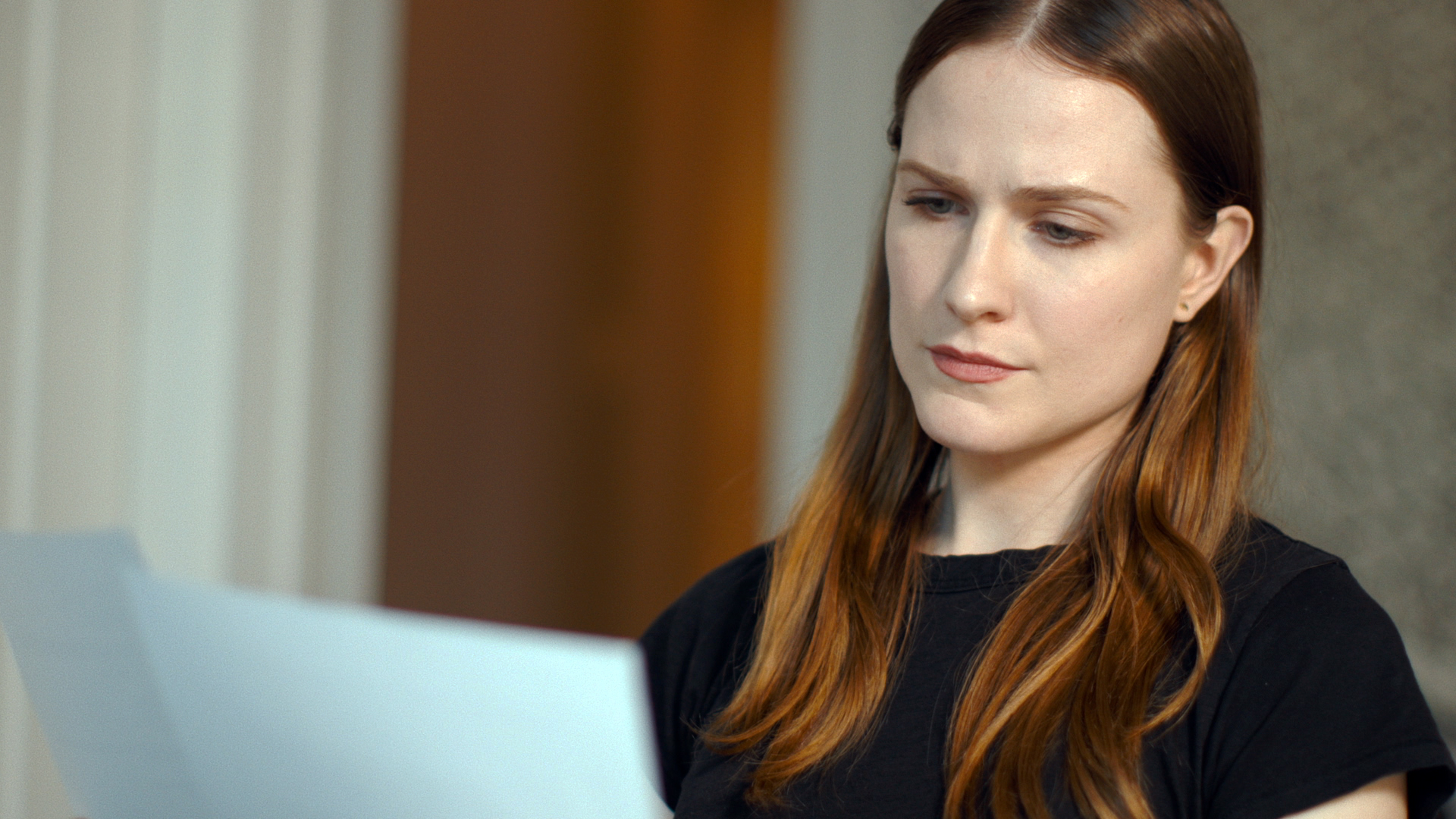
It can be hard to gear oneself up to watch a documentary about abuse. I put off watching the episode of Netflix’s “Cheer” that dealt with child sexual abuse for a long time for that reason. But not only does “Phoenix Rising” start off slowly, it starts with tenderness. “Just some of my journals” are the first words Wood speaks in the first episode of the documentary, going through papers at home. 

Actress and activist Evan Rachel Wood in HBO’s “Phoenix Rising,” a two-part documentary about her experience as a survivor of domestic violence. (Courtesy HBO)We see the journals, some typewritten in ’90s-looking font, some handwritten in Wood’s bubbly childhood handwriting. “Phoenix Rising” takes the typical documentary tactic of using vintage photographs and home videos. But because its two main subjects, Wood and Manson, are famous, the documentary has a lot of professional film and video clips to choose from, along with cover stories, victim-blaming tabloids and magazine headlines. Wood also came from a family of actors, and home movies of her as a child reveal a star, bubbling with imagination and light, light that was taken from her. 

“Phoenix Rising” takes the documentary form a step further with original art illustrated by visionary artist Nicoletta Ceccoli and animated by Angelique Georges and Andrea Schmitz. When Wood talks in a voiceover about being home schooled, lacking sexual education and as a result, perhaps being more naïve and sheltered than some children, the animation shows a young child walking barefoot in long grass studded with flowers, red spotted mushrooms and leaping frogs. 

The animated young, blond girl looks both like a stand-in for Wood and for Alice of “Alice in Wonderland,” a storybook character who has prominent role in the film and in Wood’s life.

It’s like a children’s book. Hazily colorful, dreamlike and — perhaps like the best children’s books — with a dark lesson. When Wood speaks of being confused as a child by the sight of her own body, the girl sees octopus-like tentacles emerge and grow from beneath her plaid skirt.

This is gorgeous and upsetting, like much of the documentary. When Manson kisses Wood for the first time, a kiss she did not know was coming and did not consent to, it’s illustrated by a ribbon of darkness, a black tentacle pushing its way into the animated girl’s mouth.

Phoenix RisingEvan Rachel Wood in “Phoenix Rising” (HBO)These animations are so effective, not only because of their haunting style, both beautiful and grotesque at the same time, a sweetness that sugarcoats darkness, but because Wood says the abuse took place beginning when she was just 18. Still, really, a child, especially when dealing with a grown, married man more than twice her age. When Manson first approaches her, she writes in her diary, “I made a new friend” with the simple, awful innocence of youth.

Ceccoli’s mesmerizing illustrations and Wood’s teenage journal entries aren’t the only nod to childhood. The documentary illustrates titles with scrolling flourishes, like the doodles you might do on your notebook in high school, and very effectively, the film animates important terms with dictionary-style entries. There is an animated chapter on the abuser practice of grooming, for example (with a corresponding page illustrated by Ceccoli of a girl praying, her bottom half a gas lamp with a flickering flame). 

For years I’ve wished that I had been given a book as a child that explained abuse, spelling out tactics like gaslighting and love bombing, terms that only recently have entered popular conversations and understanding. It might have changed the lives of countless women and girls to have read a book like the children’s book animated here. 

As a counterpart to Ceccoli’s art, “Phoenix Rising” also includes artwork by Manson himself, self-portraits, portraits of Wood — looking gaunter and more bloody as the years go on — and paintings incorporating Nazi symbols (Wood is Jewish). Manson’s direct words are used here with quotations from his memoir, but using his paintings also gives clues into the person accused of doing such damage to so many people while so many others just turned away.


Want a daily wrap-up of all the news and commentary Salon has to offer? Subscribe to our morning newsletter, Crash Course.


Some horrors can’t be represented directly. Part of the reason you can’t look away from “Phoenix Rising” is that you don’t have to look away. There is horrific abuse here but animating it as metaphor perhaps makes it more accessible, especially for those who still resist believing a survivor.

When the girl character sits on a throne next to a shadowy man who looks a little like Manson, an ink droplet changes her pale dress to black. In a rush, black watercolor overwhelms the screen. Darkness is everywhere. It may be the most powerful, visual representation of abuse I’ve ever seen. 

We get it, right away — which is a hard thing for a documentary like this to do. Wood has spent a good part of her life since meeting Manson trying to both survive him and getting people to believe her, which detracts from her extraordinary talent and work. How can you convince people to listen is so much a part of a survivor’s life and legacy. Maybe this is another, incredibly powerful way. 

More stories like this:

Africa and the Ukraine war: Cold War hangover is keeping many African nations neutral

Last week, during a State Department webinar with African journalists to discuss the Russian invasion of Ukraine, Assistant Secretary for African Affairs Molly Phee assured the group that “African voices matter in the international community, that your voices matter in the global conversation.” But most of the journalists’ questions were not sympathetic, and one journalist from Madagascar declared, “This is not our war.”

A week earlier, at the UN General Assembly, where the African nations wield significant influence with 54 countries (28 percent of all votes), they were almost equally divided on the vote to condemn the Russian invasion. While 28 African nations voted for the resolution and only one (Eritrea) voted against, 17 others abstained and eight were absent.

Among those absent was powerful South Africa, and among those who abstained from the vote was South Sudan, a country that was essentially created by the U.S. in 2011 after seceding from Sudan, which was ruled by Islamists at that time.

RELATED: Why doesn’t the Arab world break with Putin? Consider Sudan’s example

During the webinar with the African journalists, understandably enough, there were many questions about reports of racist treatment of Black people who were in Ukraine when the invasion started. Many were reportedly prevented from taking trains or other public transportation to leave Kyiv and other major cities.

When Phee was asked by a journalist from South Africa about why the Biden administration had not “publicly condemned racism against Africans in Ukraine and Poland,” she avoided a direct answer. “I want you to know that we’re proud of Ukraine,” she said. “The foreign minister has made clear that all individuals caught up in the chaos of this war must receive equal treatment.”

Phee, who is Black, also defended herself and the Biden administration from charges of racism: “if you live in Washington, you will see that the Biden administration, Secretary Blinken, me personally, none of us support racism, and we call it out wherever we see it.”

Phee also avoided this question, asked by a journalist from Botswana: “Why should African countries support the position of the U.S. to condemn Russia’s invasion of Ukraine when the U.S. supports the aggression in Israel against Palestinians?”

Another journalist wondered about the U.S. position on “censoring social media and the complete wipeout of the other party,” a likely reference to the shutdown of RT America and other Russian-owned media outlets. “Free speech and free press is the cornerstone of not only democracy, but a tool that can create a counterculture or counternarrative,” that reporter observed. Phee mentioned the Russian interference in the U.S. 2016 presidential elections and added, “I think it’s very clear that Russian behaviors in this space do not promote freedom of speech, and so it’s appropriate for us to respond.”

Here are a few noteworthy background factors that influence current relations between the U.S. and the African countries:

First, almost all the present-day African nations obtained their independence during the second half of the 20th century; before that, the U.S. dealt directly with only Liberia, which had been colonized by freed African-American slaves, and Ethiopia, which had remained historically independent. Even Egypt was functionally controlled by the British Empire until 1952.

During that period, the Soviet Union invested heavily in African “wars of liberation” against Western colonial powers, supplying arms, military training and other forms of aid and support. After the African nations gained independence, they were soon asked by the Americans to choose between them or the Russians.


Want a daily wrap-up of all the news and commentary Salon has to offer? Subscribe to our morning newsletter, Crash Course.


Secretary of State John Foster Dulles declared in 1956 that the neutrality most of those newly-born African countries aspired to, in hopes of staying out of the superpower competition, “has increasingly become an obsolete conception … it is an immoral and shortsighted conception.”

In that same year, Dulles’ withdrawal from a tentative agreement with Egypt to help fund what would become the Aswan Dam on the Nile River led Egypt to seek and obtain aid from the Soviets. 

In sub-Saharan Africa, when Sekou Touré, a devout Muslim and a socialist, became president of newly-independent Guinea in 1958 and sought economic help from the U.S., he was rejected. He too was obliged to turn to Moscow.

More than 60 years later, faced with the UN resolution to condemn Russia, Guinea chose not to vote at all, while Algeria, Mali, Tanzania, Mozambique and Angola abstained. All those countries sided with the Soviet Union during the Cold War, largely because the Soviets and their Cuban allies had supported their “wars of liberation” against Western colonialism.

To this day, many African countries and organizations annually mourn the 1960 assassination of Patrice Lumumba, a pan-African nationalist supported by the Soviets who became the first prime minister of the Democratic Republic of the Congo. In 1982, Madeleine Kalb’s book “The Congo Cables: The Cold War in Africa – From Eisenhower to Kennedy” detailed the role of the CIA in Lumumba’s assassination.

CIA chemist Sidney Gottlieb devised a poison resembling toothpaste, and took it to the Congo to place it on Lumumba’s toothbrush. The plot was abandoned because CIA station chief Larry Devlin thought of a better way to get rid of Lumumba. He planned Lumumba’s capture and helped carry it out, before handing him over to his Congolese enemies in the southern state of Katanga, where Lumumba was executed by firing squad. A CIA officer is said to have met the killers the night before, and later helped carry Lumumba’s body to an undisclosed location so it would not be recognized by his supporters.

In Thomas Tieku’s 2019 book “United States-Africa Relations in the Age of Obama,” readers were reminded that during the Cold War years, “Whether an African leader was on our side was all that mattered, explaining continued U.S. support for the likes of Mobutu Sese Seko (Congo) Samuel Doe (Liberia), Daniel Arap Moi (Kenya), etc., even when it was palpably obvious that such autocrats were little more than criminals.”

During Ronald Reagan’s presidency, the U.S. refused to pressure the white minority government of South Africa to end its apartheid policies. For decades, the U.S. had maintained strong ties with that overtly racist regime, and had many times blocked UN sanctions against South Africa. Reagan’s policy of “constructive engagement” was largely an excuse for ignoring or deflecting the growing international pressure against apartheid.

In 1984, South African Archbishop Desmond Tutu, after he was awarded the Nobel Peace Prize, came to the United States and denounced Reagan’s policy as inherently immoral, telling a subcommittee in Congress: “Apartheid is an evil, as immoral and un-Christian, in my view, as Nazism.”

During last week’s webinar with Assistant Secretary Phee, a journalist from South Africa asked whether the U.S. intended to punish South Africa for its abstention from the General Assembly vote to condemn Russia. She replied, “We are not going to parse the individual votes.”

As South Africans debated their government’s decision not to take sides on this global question, the Nelson Mandela Foundation called for a “cessation of hostilities,” without specifically condemning the Russians.

The foundation’s statement referred to an “angry” 2003 speech by Mandela himself, opposing the U.S. invasion of Iraq that year. The statement pointedly asked, “Indeed, at what point is a country justified in invading another?”

Read more on the global response to the Ukraine conflict:

Lindsey Graham calls for assassination of Putin

Sen. Lindsey Graham (R-SC) is continuing to come under withering criticism for repeatedly calling for the assassination of Russian President Vladimir Putin and international relations experts claim his statements are putting the U.S. at risk.

According to a report from USA Today, the South Carolina Republican’s comments on Fox News combined with his tweets, including one where he wrote “The only way this ends is for somebody in Russia to take this guy out. You would be doing your country – and the world – a great service,” has Russia experts warning him to walk back his assassination threat which even Sen Ted Cruz (R-TX) has called, “an exceptionally bad idea.”

Graham has been on the receiving end of pushback from the White House, with press secretary Jen Psaki stating, “No, we are not advocating for killing the leader of a foreign country or a regime change. That is not the position of the United States government and certainly not a statement you’d hear come from the mouth of anybody working in this administration.”

According to Anthony Arend, co-founder of the Institute for International Law & Politics at Georgetown University, “There are so many dangerous aspects to his [Graham’s] comments.”

Arend continued, “It sets the possible precedent that others will be able to look at the United States and say, ‘Well, they’re advocating it. Why don’t we simply move to a foreign policy that more broadly incorporates assassinations or targeting regime leaders?'”

According to Nika Aleksejeva, a researcher with the Digital Forensic Research Lab at the Atlantic Council, Graham’s comments assist the Russians in portraying the U.S. as a rogue nation.

“It gives Russia a particular case to point at. These comments are qualified as calls to terror attacks,” she explained before adding, “It opens opportunity for disinformation to be later created based on this particular event.”

Georgetown’s Arend agreed.

“It becomes complicated when we deal with someone like Putin. At present, the United States and Russia are not at war,” Arend explained. “There is no way that the United States in its relationship to Russia could conceptualize that Putin is a combatant. He is a civilian leader of another country.”

According to Harvard Kennedy School’s Kathryn Sikkink, Putin needs to be put on trial by a replacement government in Russia.

“If you’ve had leaders who’ve committed crimes, you want the new government to be able to put those leaders on trial and hold them criminally accountable using due process for crimes they’ve committed,” she explained. “And if you find them guilty, to sentence them and imprison them.”

10 million Ukrainians now displaced

Russia’s devastating and deadly assault over the past three weeks has forced nearly 10 million people in Ukraine to flee their homes, according to figures released Friday by United Nations organizations.

In addition to the more than 3.1 refugees who have fled Ukraine, the Global Protection Cluster (GPC)—a network NGOs, international groups, and U.N. agencies—said Friday that nearly 6.5 million internally displaced persons (IDPs) are now seeking safety within the country’s borders.

With a population of 44 million, that means nearly a quarter of all Ukrainians are now displaced either inside or out of the country.

A new paper from the GPC states that figures provided by the International Organization for Migration, a U.N. agency, “are a good representation of the scale of internal displacement in Ukraine—calculated to stand at 6.48 million” IDPs as of Wednesday.

“It is important to note that IDP figures are only one side of the humanitarian impact of the military offensive against Ukraine,” the paper continues. “Over 12 million people are estimated to be stranded in affected areas or unable to leave due to heightened security risks, destruction of bridges and roads, as well as lack of resources or information on where to find safety and accommodation.”

“Humanitarian corridors with satisfactory security guarantees for the safe evacuation of civilians have still not been secured by both parties, and continue to be the most pressing and urgent need inside Ukraine,” the document adds.

Despite the dangers and difficulties of traveling within Ukraine, more than 3.1 million people have left for neighboring countries in recent weeks, about 90% of them women and children, according to the United Nations Refugee Agency (UNHCR).

In response to what has been called Europe’s worst refugee crisis since World War II, the UNHCR and United Nations Children’s Fund (UNICEF) are rolling out “Blue Dots” in six nearby nations: the Czech Republic, Hungary, Moldova, Poland, Romania, and Slovakia.

Blue Dots, as UNHCR explained, “are one-stop-shops, and safe spaces which provide a minimum set of protection services for children, families, and others with specific needs, in support of existing services and government efforts.”

“As UNHCR has warned from the outset, the pace and magnitude of the internal displacement and refugee exodus from Ukraine, as well as resulting humanitarian needs, will only increase if the situation deteriorates,” the agency said Friday.

Within Ukraine, at least $100 billion worth of infrastructure has been destroyed by Russia’s attacks, which have also severely impacted the country’s internal food chain—as well as the global supplies of wheat and other grains, because of disruptions to production and exports.

“The humanitarian situation in cities such as Mariupol and Sumy is extremely dire, with residents facing critical and potentially fatal shortages of food, water, and medicines,” the UNHCR said. “Targeted attacks on civilians and civilian infrastructure and lack of safe passage are increasing protection risks and posing serious threats to the lives of thousands of civilians.”

As Ukrainians battled Russian invaders, took cover in bomb shelters, and continued to flee on Thursday, Rosemary DiCarlo, the U.N. political chief, demanded accountability for civilian casualties and the destruction of infrastructure as well as “intensified” diplomacy.

“There must be a meaningful sustained political process to enable a peaceful settlement,” DiCarlo told the U.N. Security Council. “The lives of millions of Ukrainians and the peace and security of the entire region, and possibly beyond, depend on it.”

A doctor’s impassioned critique of Big Pharma

Compared to other high-income countries, the fitness of Americans is in dismal shape — and has been declining for decades. Even before the Covid-19 pandemic accelerated health disparities, crisis on top of crisis has compounded to create even more devastating conditions for a growing number of people, especially marginalized groups. There is the diabetes crisis, the obesity crisis, and, of course, the despair crisis, which includes the rising tide of suicides, alcohol poisoning, and drug overdoses — claiming an average of 70,000 lives annually from 2005 to 2019. Meanwhile, life expectancy in the U.S. trails behind the average for 28 other countries.

According to John Abramson, a health care policy lecturer at Harvard Medical School, the sap of this poisoned tree is so-called Big Pharma, the coalition of drug companies that have structured American health care into a money-generating machine. In “Sickening: How Big Pharma Broke American Health Care and How We Can Repair It,” Abramson sets out to answer the “paradox of American health care,” building his case using the testimony of patients and former drug executives.

In the book, Abramson reveals how doctors are regularly duped into prescribing expensive drugs with extreme side effects while major pharmaceutical companies rake in record profits. Yet recent research suggests that 46 million Americans can’t afford health care. According to a 2020 survey, two-thirds of consumers live in fear of medical bills.

The book is a crash course in the profit-driven systems built by Big Pharma that dominate the U.S. health care industry and how they can cause undue suffering, starting with several recent pharmaceutical scandals that have cost the lives of thousands of Americans while enriching major corporations.

Abramson, who has also worked as a family physician for years, has served as a legal expert in about 15 civil trials involving drugmakers, in which he highlighted the drug industry’s flawed research and shrewd marketing tactics. The first few chapters are sprinkled with dramatic courtroom sequences, demonstrating his long-standing reputation, as writer William Heisel described him in 2009, as an “outspoken critic of the pharmaceutical industry.”

“As an expert in litigation, I have had access to manufacturers’ scientific data as well as their business and marketing plans,” Abramson writes. “These are the pieces of the puzzle that, when put together, show how drug companies convince doctors to prescribe their expensive new drugs even when they offer little or no added value (and sometimes harm) compared to less expensive alternatives.”

In one illuminating scene, Abramson explained to a jury how Pfizer persuaded doctors to overprescribe the epilepsy drug Neurontin (gabapentin) off-label for bipolar disorder. In the late 1990s, Pfizer sponsored numerous swanky dinners and held meetings where the pharmaceutical company presented misleading data showing remarkable improvement. But they withheld data “which had shown the drug was significantly worse than placebo,” Abramson writes.

Pfizer later pleaded guilty to illegally marketing their drug, but the company’s profits from Neurontin only increased. This example — far from an anomaly in the biotechnology sector — demonstrates how deeply corporate interests have infected nearly every aspect of the American medical system, and why it will be so difficult to fix.

At the core of this issue, which the book repeatedly emphasizes, is a corrupted scientific process that drastically needs reform. The peer review process is inherently broken, Abramson writes, at least regarding drug development, chiefly because the raw clinical trial data is kept secret from reviewers and medical journals.

And as an increasing amount of medical research is funded by drug companies, it creates a perverse incentive to develop treatments that are profitable, rather than to “determine optimal care,” he explains. “Without this commitment, the results of clinical research, which are received by physicians and other health care professionals as valid scientific evidence, function as little more than marketing tools.”

It’s little wonder then that drug costs are out of control: The federal government is unable to negotiate lower prices, so drug companies can basically write themselves a blank check. “The United States does not regulate drug prices, and it does not have a national program to determine whether new drugs provide added value that justifies their higher cost,” Abramson writes. A recent report by the RAND Corporation, a nonprofit think tank, found that Americans pay 256 percent more for pharmaceuticals than those in 32 other countries. And clearly, based on the overall decay of our health, he argues, we aren’t getting much in return for these costs.

This equation can be deadly. One example Abramson uses is Vioxx (rofecoxib) a pain-relieving drug similar to ibuprofen that in 2004 became the center of the biggest drug recall in U.S. history. Its manufacturer, Merck & Company, claimed Vioxx could relieve arthritic pain without causing gastric ulcers — a potential side effect of non-steroidal anti-inflammatory drugs like ibuprofen and naproxen.

But Merck obscured the fact that Vioxx doubled the risk of heart attacks in patients without providing better pain relief. Abramson claims they did this with the help of The New England Journal of Medicine, which profited mightily from publishing Merck’s data, reprinting nearly a million copies of a misleading article alleging the drug was safe, which brought “between $697,000 and $836,000 into the journal’s coffers.” The drug was later linked to an estimated 39,000 to 61,000 deaths.

Merck was well aware of this risk, internal emails later revealed, but designed its study in a way that excluded people with certain medical histories, which “minimized the chance that the potential cardiovascular risk of Vioxx would be revealed,” Abramson writes.

Merck also continued to pump cash into Vioxx, “spending more money to market a drug than any company in history,” he notes. In 2011, Merck pleaded guilty to illegally marketing and making “false statements about the drug’s cardiovascular safety.” But Abramson maintains that others were complicit, including the medical journals that stood by while misleading information was used to increase sales.

“Many of those injuries and deaths could have been prevented if the NEJM had corrected its erroneous article as soon as it knew of the problem,” he writes. “Instead, it left the article uncorrected, allowing Merck to profit from the drug’s blockbuster status for another three and a half years and the journal itself to profit from selling reprints of the misleading article to Merck.”

The NEJM did, however “partially set the record straight,” Abramson notes, by issuing a statement about the article, but “even then, editors acted only because the journal’s reputation was at risk.”

Regulators are not blameless, either. Abramson writes that the FDA “failed” the family of one patient who took Vioxx by “not intervening in the unfolding public health emergency after its officers’ reports, based on Merck’s data, clearly identified the risks.”

Examples like Vioxx are common in the industry, as Abramson repeatedly lays out. If we’re ever going to get out of this mess, he argues, we need a “tripartite coalition” that “could merge into an effective force for reform.” This coalition includes health care professionals, those who foot the bill for health care, such as insurers, and health care consumers — you and me. “These constituencies can pool their influence to create a formidable force,” according to Abramson, “capable of controlling costs, providing universal coverage, and improving the health of Americans to at least the level enjoyed by citizens of other wealthy countries.”

But while reducing drug prices is a bipartisan issue, supported by 77 percent of voters, Congress has been unable to pass meaningful reform. Abramson questions this, writing, “Why haven’t Pharma’s scientific distortion and extortionate pricing, especially in the context of such strong negative public opinion, triggered effective policy to bring commercial and public interests into balance?” Change repeatedly stalls: A recent attempt by Sen. Bernie Sanders of Vermont to force a vote on legislation that would lower drug costs was blocked by Sen. Mike Crapo of Idaho.

Nonetheless, the U.S. may at least be inching closer to better drug testing and regulation. The recent appointment of Robert Califf as head of the FDA was praised in an opinion piece in STAT News, emphasizing his support to “make the data submitted to the FDA during the drug development process publicly available.” This would hopefully make it a little easier for scientific accountability when it comes to medical research.

“Sickening” is written in tempered language backed up by hard data and historical examples to illustrate Big Pharma’s enrichment strategies. But “don’t hold your breath waiting for the big drug companies to have an epiphany of social conscience, leading them to voluntarily cede their power and profitability to serve the greater good,” Abramson concludes. “It’s not their job.”


This article was originally published on Undark. Read the original article.

Don’t fear the gatekeeper — or become one yourself

The art world can be as dirty as a gas station bathroom. Like any business, it has its cutthroat sides, and at times it can seem impossible to break into. Don’t let this uninspiring reality keep you from trying, though. You can make it through. Here’s one part of my story.

About ten years ago, back when I was an inexperienced writer, I paid attention to what writers with slightly more experience had to say about publishing and the business. One day, one writer who I won’t name says about another, more successful writer (who I also won’t name) that the more successful writer never shows love, never shows up, never looks out. “Never, ever puts on!” 

“For real?” I said. “Never? Not even a little?” 

“Nope, never.” 

Putting on is as important to Black culture as satin bonnets, knotless braids, raisin-free potato salad and wave caps. It’s Malcolm X, Oprah, JFK, Dr. Martin Luther King Jr., don’t play in church because God don’t like that and take a bath because you smell like outside important. And this isn’t new; Harriet Tubman was free as hand sanitizer in a clinic and still risked enslavement multiple times because she couldn’t live without other captured people experiencing liberation as well. The same goes for Fredrick Douglass, a man who could have just ridden the wave of his writing success like many so-called activists turned authors do now; he dove into the fire as an abolitionist instead. They both fought for us. That spirit of sharing, of delivering, has been passed down from generation to generation.

RELATED: Raekwon opens up about life before and with the Wu-Tang Clan

At the time I was listening to that writer rant, I was the least successful writer ever to exist. I had no articles, no MFA classes, no agent, no speaking gigs, no books. Not even a book proposal. Not even a query letter. I had a laptop that was busted on the side and holding on for dear life, that eventually only worked when it was plugged into the wall. That laptop that could have died any minute held hundreds of incomplete ideas, thoughts and outlines that would eventually become my body of work. I didn’t really know what my future held at the time, but I always found comfort in the company of other aspiring writers — especially ones who were super broke like me. 

“If I had it like them,” the more experienced than me but less successful than the other writer said, while munching on pita chips, “I would proudly put everybody on, with book deals, college visits, and all of that!” 

“That’s love.” I said. “You gonna make it, too.”  

“Of course!”  

We applauded each other while toasting with red plastic cups, or clanking the wine and vodka bottles some of us drank straight out of. But does it really work like that? I wondered. Is the industry that simple? Can other writers anoint people? 

RELATED: What do mentors and protégés owe each other?

The crowd of fledgling writers and artists around when one of those tirades broke out would always agree, shaking their heads in unison at the pulpit, affirming everything the other writer was saying. If they said they were doling out work, we listened — even when the work never came. And when those artists who were concerned about who didn’t put them on didn’t get certain opportunities, it had to be due to someone or some organization hating on them. We always agreed. Every conversation about any type of rejection or lack of success always went back to the agenda of some gatekeeper not wanting them to succeed. I imagine this gatekeeper had to be at least seven feet tall with a chin as wide as Texas. His shoulders, even wider. Three undone buttons on his silk shirt paired with frumpy denims and a box fade. The big-jawed gatekeeper’s thigh-sized arms would be forever folded in front of his chest, and he would respond to any query with, “I’m going to play devil’s advocate …” 

I didn’t want to let this excessive gatekeeper talk deter me, but I also had no intentions of sitting around and waiting for another writer to put me on. Don’t get me wrong — in any business, connections do matter. But they don’t just fall in your lap. And opportunity doesn’t always come from who you think it is supposed to come from. So I stayed active. I kept meeting people, kept submitting essays to different publications. I grabbed drinks with other artists, with writing professors, and even with people some called gatekeepers. I hit up every writers event I could. And most importantly, I kept cranking out work on my busted computer.

RELATED: That waitress who thinks she can write: Waiting tables and crafting a novel in the infamous MFA town

Eventually I was invited to give some readings and share some of that work, and to contribute to some journals. I was even asked to judge a few small, local writing competitions. In a year or so, I went from the least successful writer ever to a writer who was able to earn a couple dollars — literally — and make some small waves in my own gate-less, keeper-less writing community. 

Even when the writer who complained about the gatekeepers grew into a mildly successful author themselves, they could still be heard around town, in the bars or at mixers or in other artist’s homes, saying things like the Poetry Foundation is hating on me, the New York Times doesn’t want to see me win, f**k Kirkus Reviews, these publishing companies wouldn’t know a seven-figure proposal if it slapped them across the face.

“Nobody wants to see me win,” they claimed. 

And because this moderately successful writer was published, had an agent, was invited places to lecture, and had even been profiled by a publication or two, we listened. They hated from 8 a.m. to midnight and we took it all in, trying to figure out who then was hating on us and how we could overcome it. I didn’t respond much, but not because I had any big insights; I just finally started to gain some mild success of my own. I still didn’t know the art world or how publishing worked. I didn’t have a mentor. I didn’t grow up around professional artists, with examples of what a thriving art community looks like. What I did know is that looking out for your friends is natural to me. It’s all I’ve ever done.  

As an elementary school student I gave away half my lunch everyday — except when we had nuggets — to friends who didn’t always have food at home. I gave sneakers I didn’t want to teammates with holey shoes and bags of clothes to friends who couldn’t afford to get fresh. I gave my mom cash along with headaches when she hit hard times after I moved out. Gave to the hungry and homeless with the legendary Bea Gaddy on Thanksgiving, gave to anyone in need when I had extra money from hustling, and continued to do so until I became a broke writer. Then I gave other writers, like that now-moderately successful author, what I could — edits, feedback, even ideas I didn’t get credit for. And when that author’s success peaked and people were checking for them, one person they forgot to thank, to give back to, to pull up, was me.

* * *

You ever watch the NBA draft on TNT, hear the name of some lanky Black kid in an awkward suit get called, see him in that awkward suit make his way through the crowd and onto the stage to shake the commissioner’s hand? And before he reaches his destination, he pauses to give the crowd a wave, which gives the cameraman enough time to cut to the section where his whole neighborhood is screaming, cheering and crying, because they know he is going to dribble them farther away from poverty than anyone could imagine?

The commentator may even say something like, “Their lives will never be the same.” 

You watch the same NBA draft and see an equally lanky white kid take the same walk in the same kind of terrible suit, with the cameraman cutting to his proud mom and dad­­, without having the same expectations. Even though I’m sure plenty of white NBA players created generational wealth for their extended families, from the outside, it doesn’t seem like a requirement. I couldn’t imagine a person saying, “That white boy ain’t s**t if he doesn’t come back and save the whole entire trailer park.” If you are Black and you like going back to where you come from — which may be a Black thing, too — you better be bringing some opportunity with you. 

Five years after that gatekeeper talk, I was a successful writer with two bestsellers and a new book on the way, with some small awards, speaking gigs, and positions as a professor and an editor at large here at Salon too. The other author had fallen off of my radar. Not intentionally. They just stopped reaching out to me after I published my first New York Times story.  

“The Times will publish anyone nowadays,” I heard they said. 

At the time, I hadn’t been praised by the literary world. I hadn’t sat on Oprah’s couch or been invited on any of the big daytime or late-night talk shows. But I did not attribute any of this to hate. Don’t get me wrong, I did want these things; those appearances are necessary for selling books. However, I just chalked it up to it not being my time. It would have been easy for me to dream up some false reality that involved Oprah having lunch every week with Ellen, Gayle, the big gatekeeper, the staff of “The View” and every major producer on TV, just to come up with brand new ideas for how to permanently keep D Watkins off their shows. A blown-up image of my mugshot would hang in front of their round table. “He’s so good, we need him!” Whoopi Goldberg would yell, spreading her arms toward the image. “But if we allowed him on, he may take all our jobs!” Ellen would counter. Oprah would slam a diamond encrusted gavel, adjourning the meeting. And I would remain forever locked out. How arrogant do you have to be to think that everyone is collectively hating on you, a person they’ve probably never even heard of? 

At the end of the day, I was just happy to have a job and a body of work that my peers respected. And I’m not talking about other authors and my contemporaries — I’m talking about people from my neighborhood, the thousands of incarcerated folks in the jails I had visited, the tens of thousands of students I’d met, given free books to, taught workshops to, and had fun debates with since my career had taken off. I had also started to have opportunities to change the narrative a little by throwing the names of other up-and-comers around, helping a few other writers get published, negotiate their deals, and find other opportunities. I was putting on; I wasn’t being a hater. I had grown into everything that other author seemed like they had wanted to be: the anti-gatekeeper.  

Using your reputation to help others is rewarding, but it’s not always a smooth experience. 

About a year later, I picked up the phone one day to hear an amped-up promoter screeching in my ear. 

“D, where’s your guy? Everyone is waiting!”  

I had gotten a young writer I was trying to put on, in the great tradition of putting on, a speaking gig at a school that paid $500. He was kind of new and told me he really needed the money. It was a perfect fit. But now the event planner was calling me because the person I had put on didn’t show.

I dialed his number.

“Yo, what’s up,” I said, hearing slight cries — or were they giggles? — in the background. “Yo!”  

The phone disconnected. I called again. 

“Yo, my bad bro,” the young writer apologized. He said the pressure he felt over the amount of energy it takes to make it in this industry had made him depressed. “I put my clothes on to go, and just the weight of dealing with so many people was heavy on my spine.”

He said it felt so heavy he couldn’t move.

“And if I can’t move myself, Watkins, how can I move the people?”

“Man, shut the f**k up,” I told him. “Making money, large or small, is how you make it in the industry. The people are waiting. How far are you away from the venue?” 

“I’m going to do the next event you have, bro, I promise,” he said. “Just book me something else. I’m going to be able to get into the space, emotionally, how I need to be to move the people.” 

“Yo, where are you!” 

This guy was in Texas. He was supposed to be in Baltimore.

That wasn’t the only disappointment. I plugged one writer into a freelance writing gig and she never submitted. Around the same time I hooked an old friend up with a TV producer and he snaked me by belittling my show idea to promote his own, as if we both couldn’t succeed. I gave sample book proposals to other writers only for them to say I didn’t really help them — because I didn’t take the time to craft the proposals for them? “Nobody ever helped me!” I once heard one super ambitious guy claim, even though I introduced him to his agent and wrote half his proposal. Go figure. Is putting on really worth it?

The simple answer is yes. It is our responsibility help our fellow artists. It can even be considered part of our body of work. Artists who achieve success and don’t create opportunities for others are terrible people. It doesn’t matter if the reason stems from insecurity, the fear that there can only be one, or aloofness. Those excuses are equally terrible. There are too many talented and creative people in the world who simply don’t have the connections to the industries they are capable of excelling in. And then there’s always the golden rule: treat others the way you would like to be treated. If you would like your name to be mentioned in a room full of opportunities, then mention someone else’s name in a room full of opportunities.

With that being said, when a person stumbles, or doesn’t benefit from a connection, or fumbles the bag, or — as in the case of the young writer who felt too heavy to move the people — ghosts an entire event, it doesn’t exempt us from helping others, or even that person, again. It also doesn’t make you or that person a failure. It just means it wasn’t meant to be. It wasn’t their time. That’s why I swallowed my pride and helped the kid who missed the speaking event again and again. Because even though the author who was more successful than me ten years ago didn’t keep his promise to put on, a host of other writers did.

Wes Moore gave me great career advice when I started out and blurbed my books. Dr. Koko Zauditu Selassie taught me how to navigate academia. Sarah Hepola published my first Salon essay, launching my career. David Daley, also here at Salon, gave me my first column. Latoya Smith gave me my first book deal, and David Talbot gave me my second. Baynard Woods helped me publish in the New York Times. Chuck Todd welcomed me on “Meet the Press” right after Melissa Harris Perry bought me on her show. Sonja Sohn and Tamron Hall put my story and commentary on television. Linda Duggins makes sure I sell books. Wil Hylton helped me further my career in media and television. David Simon, George Pelecanos and Nina Noble made my dream of screenwriting a reality. The list goes on and on and on. I clearly did not do it alone. Nobody can. We have to show love, because our community would not exist without it. 

More essays about the writing life: 

The diary of a pastry cook with Covid-19 taste and smell loss

Anna Li knew something was wrong when she took a sip of her morning coffee back in December and all she tasted was hot, slightly bitter water. 

“My roommate and I have a coffee subscription, and it’s not uncommon to get a dud,” said the 24-year-old chef de partie at Smyth, a Michelin-starred tasting menu restaurant in Chicago. “But then it hit me, and I went on this rampage in my apartment, sniffing all the candles I know are obnoxious and eating peanut M&Ms and olives at the same time.”

It was a few days into a weeklong closure at Smyth and downstairs bar/lounge sibling The Loyalist by chef/owners John and Karen Shields after several staff members tested positive for Covid-19. Li, who was vaccinated and boosted, figured she had Covid even before getting tested, as smell and accompanying taste loss have become telltale symptoms of the virus. 

Affecting between 30 and 80% of patients, per the McGill University in Quebec, smell loss is frightening and isolating for anyone — let alone someone whose livelihood relies on these deeply intertwined senses. During Li’s surreal week without smell and taste — which coincided with New Years Eve and the busiest week of service she’d ever seen at Smyth — she leaned on her team (and their collective penchant for gallows humor), unearthed an unfound trust in her own abilities and learned to never again take her senses for granted. 

Related: My pasta, myself: Forging a home in New Mexico through Hatch green chile pasta

As chef de partie (essentially a pastry line cook), Li is part of a small team of chefs charged with all baking and pastry for both restaurants — which encompasses everything from buns and baguettes to cakes, macarons, custards, syrups and sorbets. Menu development affords them access to an enviable toolkit of superlative ingredients expressed in every imaginable form — peak-season white truffles and citrus spanning sour, citrony bergamot; bittersweet seville oranges; and piney sweet limes. Black malt oil made from wheat berries is sprouted in house, blackened and mixed with beeswax to co-star in a rich foie gras macaron. A fig leaf creme brulee will undergo dozens of iterations just to settle on how to best steep the bitter leaves in the liquid. 

Li relies on her nose to determine when things are baked; she tastes dishes at every development stage — tweaking within the microscopic realm of 10 more grams of lemon juice.

“Something I realized — which, when I think about it now, is pretty common sense to me — was just how much brain power I’m able to offset by relying on smell cues when I’m cooking or baking something,” she said. 

Suddenly lacking these crucial sensory pillars, she headed back into work following a 10-day quarantine, knowing she had to execute a special New Year’s Eve menu. Oh, and did I mention her sous chef Brian — with whom she was supposed to spend six hours workshopping a chocolate hazelnut opera cake — had tested positive on a rapid Covid test that same day?

“I was like, cool cool cool. I’ll just do this cake by myself without the ability to taste and smell,” Li said. 

Certain desserts reappear in different versions and so will benefit from template formulas, like the opera cake. But iterative development is still crucial to every station in a fine-dining kitchen throughout service, not just to create the most delicious item, but also to achieve consistency. Li leaned even more on her team to ensure things passed muster to cap off a $265 tasting menu.

“Jenna, my station partner, and I have each other taste things a lot — just another taster, pair of eyes, and check and balance on everything,” she said. “But I had so much self-doubt, and it also made me feel so useless. What am I here for if I am not able to taste things?”

Fortunately, her coworkers found a little humor in the absurdity of the situation, buoyed by the strong likelihood that this would be temporary, since Li was boosted.

“People were so mean!” Li said with a laugh. “We had this new dessert on the New Year’s menu, a mushroom custard with royale sauce. And people were dipping slices of shaved white truffle into this gorgeous royale sauce my chef had made, like, ‘Oh my god, this might be the best white truffle I’ve ever had. You should try it — oh shit, I forgot you can’t taste anything.'” 

What does musky, garlicky rare Piedmontese white truffle taste like if you can’t taste anything? “Leathery pieces of nothing.” And how about that pricey spoonful of briney, savory, refreshing caviar that was leftover after service? “Cold, tiny little bland tapioca pearls.” 

“Aside from setting timers, using temperature gauges and relying on color as doneness cues, Li began looking to other tools in her arsenal as indicators that dessert components were on the right track: Does this feel right in the mouth the way it did when it tasted right before? How are the salivary glands reacting? Does this coat the tongue in the same way? Is there enough sugar in this salty component so it feels round and spreads out over the palate? She even found slivers of carnal joy, which also gave her hope.”

“There was a moment when we were closing down the restaurant after New Year’s — it was probably 1:30 am,” she recalled. “We have apple nectar we make — cold, made with honeycrisp apple juice we spice and cook in house. Because we were closing for a week, almost all mise en place had to be otherwise preserved or tossed, so I got to chug half a course’s worth of this nectar, and it was so fucking delightful — I think partly because it was chilled. It was the first thing I had consumed since losing my taste that had sparked a kind of delight or visceral joy. I remember thinking, this is so bright and sweet and refreshing and I could have so much of this.”

Over the following week, Li’s taste and smell returned gradually, starting with savory things. It was only recently she finally reclaimed the ability to discern subtlety in sweet things—floral, fruity and so on. 


Want more great food writing and recipes? Subscribe to Salon Food’s newsletter.


But is she a different cook now? 

“I’m almost reluctant to say I don’t think so,” she said. “I think perhaps I take less for granted in the sense of the carnal, visceral pleasures of flavor that make the experience of eating so delightful. And to me personally, someone who’s grown up with the ability to taste, having it back is incredible.”

Maybe it’s not such a bad thing to quickly forget, even unlearn, some of what we relied on to endure a traumatic time. Scientists recently discovered that neurons in the brain, in addition to containing nanomachines designed to construct new memories, are endowed a different set that’s dedicated to carefully disassembling — and thus forgetting — certain components of our stored memories. In an opinion piece for the New York Times, Scott A. Small, director of the Alzheimer’s Disease Research Center at Columbia University, wrote that while it’s vital to remember the toll of the pandemic and carry its lessons with us, forgetting is also normal and crucial for mental health:

“Memory and forgetting work in unison,” Dr. Scott wrote. “We depend on our memory to record, to learn and to recall, and we depend on forgetting to countervail, to sculpt and to squelch our memories. This balancing act is, as it turns out, vital for our cognitive functioning, creativity and mental health.”

For Li, what endures in tangent with her deep sense of gratitude is a reinvigorated confidence in her abilities and instincts as a chef. She relishes in her practice  — religiously tasting each component of her mise en place to discern whether the essential oils express weaker today than yesterday, to decide if the warmly spiced rum syrup needs the nutty vanilla hit of tonka bean, to determine how to achieve the perfect balance in that tiny foie macaron packing such powerful flavors as foie gras ganache, blackened finger lime, pine syrup, black malt wax and pickled golden enoki mushroom.

“A lot of things we plate require a sense of balance and delicacy,” Li said. “You have this tiny foie gras macaron that is an inch-and-a-half in diameter. Should I put one piece of pickled mushroom or two? What size? How strong is that pickle? If I put too much will it overpower the ganache? 

“Part of that is getting comfortable in my role, being like, we should be better about executing at every stage. But I’m also taking more ownership. I do have confidence in my adjudication of balance and what I’m experiencing. And that is such an empowering tool.”

More from this author: 

This 5-ingredient marinade for sheet pan fish tastes like spring on a plate

I have a real problem with those little tubs of Inglehoffer creamy dill mustard with lemon and capers. As soon as spring arrives, I immediately start incorporating this dill-icious ingredient into, well, everything. I smear it on burgers and wraps, use it as the base of chickpea salad and whip it into deviled eggs.

Inglehoffer’s mustard is my great love, my vice and — at least in my mind — the ideal condiment. It’s briny, creamy and tangy — plus it has a little bit of that citrusy-grassy undertone associated with dill.

Because this combination of flavors is so craveable, I’ve started leveraging it in all types of dishes. I now make a pasta dish that’s loaded with — you guessed it — fresh dill, lemon and capers (plus a little bit of parm and pasta water to get a creamy sauce). 

RELATED: It’s time to spring clean your condiment collection — and refresh your stash with these seasonal picks

And guess what? 

All of the flavors in that gorgeous little tub of mustard make for an easy, quick and seasonal fish marinade. When marinating fish, you don’t want to let it sit for too long. Thirty minutes to two hours is enough to ensure the fish has flavor but doesn’t get a mealy texture from the interior proteins breaking down. 

I really like using salmon with this marinade (salmon and dill are, truly, a match made in heaven), but I’ve also used it on other heartier white fish like cod, flounder and halibut. Bonus: Simply shift the fish from the marinade to the sheet pan — and it’s ready in about 15 minutes. 

***

Recipe: Dill and Citrus Sheet Pan Fish 

Yields
4 servings
Prep Time
120 minutes
Cook Time
15 minutes

Ingredients

Marinade 

  • 4 tablespoons dill, roughly chopped 
  • 2 tablespoons capers
  • 1 lemon, zested, plus 1 tablespoon juice
  • 1 tablespoon Dijon mustard 
  • 1/2 cup of Greek yogurt

Fish

Directions

  1. In a large bowl, combine the marinade ingredients. Transfer to a container with a lid or sealable bag.
  2. Salt and pepper the fish to taste. Place the fish in the marinade, ensuring the entire surface is covered. 
  3. Place the fish and marinade in the refrigerator for at least 30 minutes or up to 2 hours. 
  4. When ready to bake, heat the oven to 400 degrees. Prepare the sheet pan by greasing it with neutral oil. Bake the fish until firm and a little flaky, about 15 to 20 minutes. 


Want more great food writing and recipes? Subscribe to Salon Food’s newsletter.


Try these simple 3-ingredient recipes: 

Salon Food writes about stuff we think you’ll like. Salon has affiliate partnerships, so we may get a share of the revenue from your purchase.

Why you’ll find marzipan goldfish on my Nowruz table

Walk into an Iranian home during Nowruz, the Persian New Year that begins with the spring equinox, and you’ll be greeted by what may be an unusual sight: an altar laid with ritual objects, including a shock of green wheatgrass, a mirror and candles, and seven dishes. Each dish holds a different food that starts with the letter “S”. But the most eye-catching item of all may be a bowl of live goldfish darting to and fro. In recent decades, the millions of goldfish bought for Nowruz have churned up controversy: After the holiday, they’re released into rivers and ponds where, for the most part, they die. To avoid this while still paying homage to tradition, I have a solution. Enter: marzipan goldfish, a harmless stand-in that’s edible to boot.

It’s unclear when the goldfish wiggled their way onto the Sofreh Haft Seen, the table of seven “S”s, the setting of which has been performed in Iran since at least Zoroastrian times. The table is a blueprint for the year ahead, with each item representing a desired quality like health, wealth, and love. Goldfish, signifying life, add a dramatic splash of color to the New Year table and are traditionally released into the wild after the celebration; however, they’re unlikely to survive the transition. Lately, many are coming up with creative ways to replace the live goldfish, whether with a plastic toy, a drawing, or even an orange in a bowl.

Being a chef, my solution to the goldfish conundrum is, of course, edible — though it’s still not fish. On my Nowruz table, you’ll find a marzipan goldfish, bedazzled with a touch of gold food coloring, nestled between the bowl of sumac (symbolizing sunrise) and a book of poetry by Iran’s beloved 14th-century Sufi poet Hafez. The idea for the marzipan came from my time living near an Italian bakery in Brooklyn, whose glass case held a shining array of miniature fruits, vegetables, and (conveniently!) goldfish, all fashioned from almond paste and fastidiously painted down to the last leaf, stem, or scale. I bought one for the appearance alone, but after tasting the chewy candy flavored with almond and vanilla, I was hooked.

The art of making marzipan fruit, or frutta martorana, remains popular in southern Italy and Sicily, and in the U.S. in specialty Italian bakeries. While it might seem out of place on an Iranian table, marzipan is actually eaten throughout the Middle East — Iranians even have our own tradition of fashioning mulberries, or toot, out of marzipan flavored with saffron and rose water, and tinting them in different colors. These shirini, little sweets served to guests, come complete with a tiny green pistachio stem. What’s more, almonds are native to Iran, so it seems fitting that they have a place on the New Year table that is, in many ways, a living panorama of Persian history.

The advantages to making marzipan goldfish are many. They’re a fun project to do with kids and adults alike, they taste delicious, and they can be preserved for years to come — though I wouldn’t recommend eating any older than three to four weeks, as they’ll go stale. There is no release into the wild (and no fish food required) — just a sweet way to honor tradition and welcome spring.

How to make marzipan goldfish

Step 1: Gather supplies and tools

Here’s what you’ll need to make marzipan goldfish:

  • Fresh or store-bought marzipan
  • A goldfish or koi mold (I like this one)
  • Plastic wrap or cornstarch
  • Rolling pin
  • Small paring knife
  • Parchment paper
  • 1 sheet pan
  • Food coloring (a complete set of food colors, or just yellow and red)
  • Small bowls
  • 1 or 2 small paintbrushes
  • Gold and silver luster dust (optional)
  • Edible ink pens (optional)
  • Food-grade glaze (optional)

Step 2: Make the marzipan

Check the volume of your fish mold and consider how many fish you’d like to make, then make as many batches of marzipan as needed for that amount. You can always use store-bought marzipan, especially if you’re making these purely for decoration, but homemade tastes much better.

Step 3: Shape the goldfish

Line the fish mold with a piece of plastic wrap, or dust with a little cornstarch (this prevents the marzipan from sticking). Take a piece of marzipan and rub it between your hands until it’s soft and pliable. If the marzipan is too dry to mold without cracking, lightly wet your hands with water as you work the dough with your hands.

Press a chunk of marzipan into the mold, and gently roll over the marzipan with the rolling pin so all the nooks and crannies of the mold are filled.

Carefully unmold the fish out onto your work surface so the detailed side is facing up. Cut away any extra marzipan around the outside of the fish outline, and place the fish on a parchment-lined sheet pan. Repeat with the remaining marzipan. Allow the goldfish to dry out for two to three days before coloring. They should feel firm to the touch, and hold their shape when handled.

Step 4: Paint the goldfish

Squeeze food coloring into small bowls — if you want to make orange, use drops of yellow and red until you’ve achieved your desired hue; alternatively, use whichever colors you want. If you want to ensure the color is what you’re looking for, test a small area on the bottom of one of the fish, and then get to painting.

If you’d like, draw in features like eyes and fins with edible ink pens, and add shimmer with luster dust.

Finish each fish with a spritz of the glaze (this adds shine and helps the color to hold up longer, but it isn’t necessary if you plan to eat the marzipan within one to two weeks).

Store the goldfish in an airtight container in a cool, dry place for up to one month, or up to three months in the refrigerator. If you want to save them as decoration for future celebrations, they will last for years stored in a cool, dry place and handled gently — but those should only be for looks, not for eating.

Elon Musk’s Jet: The Twitter account that uses a bot to track Musk in flight

Elon Musk, the 50-year-old billionaire who has made a name for himself by wheeling and dealing in technology offered a Florida teenager $5,000 to shut down a Twitter account in 2020. Why? Because the account uses public ADS-B data to track the comings and goings of Musk’s private jet for the now viral account, Elon Musk’s Jet, and Musk didn’t like it.

The owner of the account, Jack Sweeney, turned down Musk’s offer, and continues to track Musk’s air-traffic to this day. In fact, he’s expanded to create accounts to track the private jets of Bill Gates, Jeff Bezos, and most recently, Russian oligarchs associated with Putin. 

When Musk reached out to Sweeney in an attempt to get him to shut down Elon Musk’s Jet the account had 150,000 followers. At the time of this post it’s grown to just under 400,000. 

Related: “Disturbing milestone”: Just 12 U.S. billionaires now own more than $1 trillion in combined wealth

Musk reached out to Sweeney via Twitter DM saying “Can you take this down? It is a security risk.” According to Protocol Sweeney, who was a college freshman at the time, replied seven hours later with “Yes I can but it’ll cost you a Model 3 only joking unless?” From there Musk offered $5,000, which Sweeney countered saying “Any chance to up that to $50k? It would be great support in college and would possibly allow me to get a car maybe even a Model 3.” The conversation fizzled shortly after when things didn’t seem to be going anywhere.


Want a daily wrap-up of all the news and commentary Salon has to offer? Subscribe to our morning newsletter, Crash Course.


“I’m not going to take it down for just $5,000,” Sweeney said in an interview with CBS, noting that he made a counter-offer of $50,000 or a Tesla. “He [Musk] said it doesn’t feel right — then all the news got out and he blocked me.” 

Sweeney’s latest accounts Russian Oligarch Jets and Russian VIP & Putin Jets were both started in February of this year and have amassed over 500,000 followers combined.

“Even before this war started, people were saying to me, ‘Oh, you should track Putin,'” Sweeney said in a recent interview with The Wall Street Journal

Read more:

The true story behind the Midge Maisel-Sophie Lennon rivalry

By now, everyone knows that the indomitable “Mrs. Maisel” — marvelous doesn’t seem strong enough — was inspired by the life and career of the equally formidable Joan Rivers. The show also features sometimes-oblique references to a variety of real-world figures, from Lenny Bruce to Moms Mabley to Harry Belafonte. Spotting those references is one hefty part of the show’s charm. For a few fusspots, critiquing what the show gets wrong is another.

Like Midge Maisel, Joan Rivers was a Jewish divorcee from a well-heeled family who took up comedy in her 30s to give voice to the experiences of women through edgy, stream-of-consciousness stand-up. Rivers also dressed impeccably and challenged gender norms with routines that included blue material — again, just like Maisel.

“She was filthy-mouthed and dignified-looking,” Rivers’ life-long friend, former roommate, and “Laugh-In” comedian Ruth Buzzi told Salon. The dichotomy, Buzzi recalled, “was met with insane approval.”

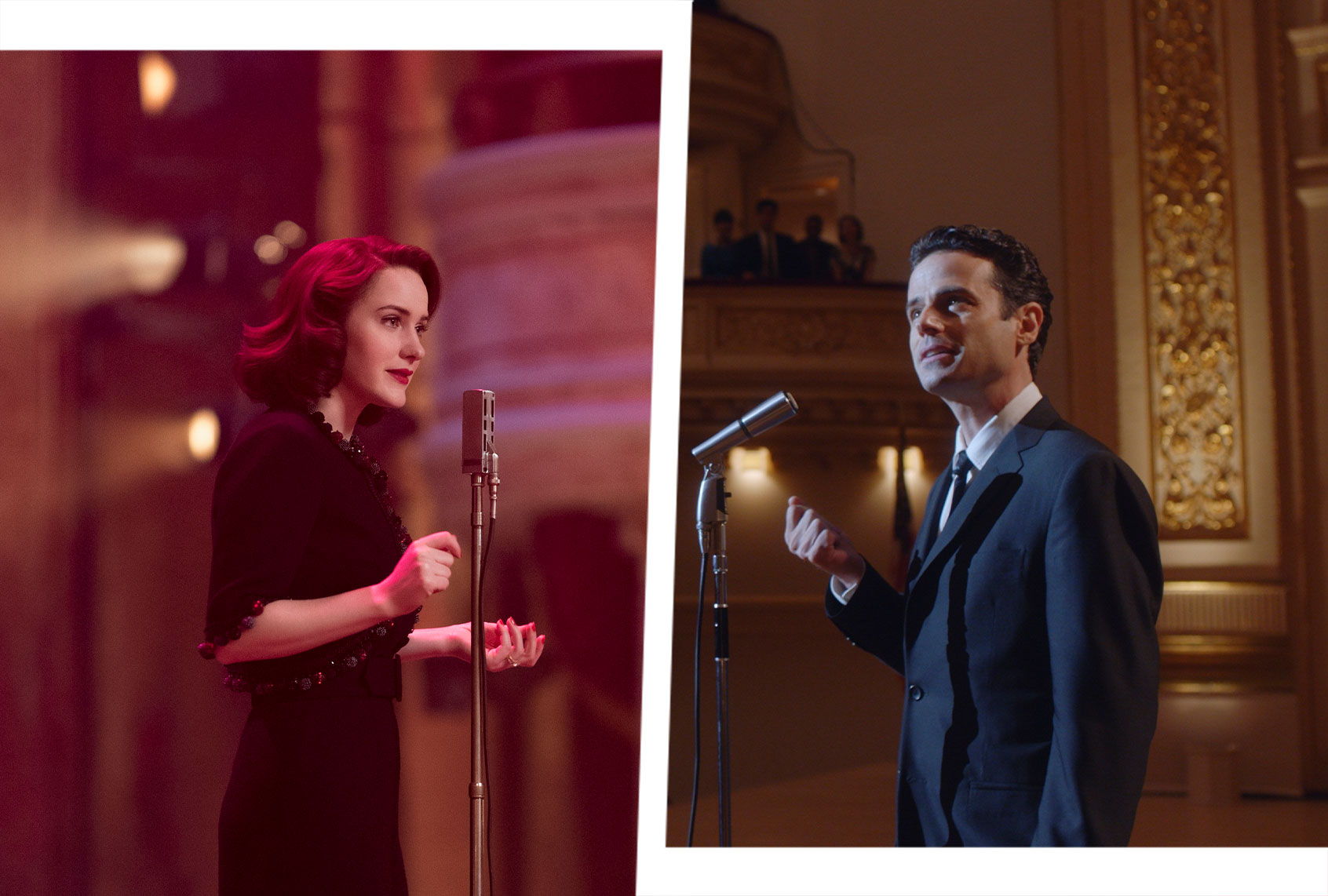
The Marvelous Mrs. MaiselRachel Brosnahan (Miriam ‘Midge’ Maisel) and Luke Kirby (Lenny Bruce) in “The Marvelous Mrs. Maisel” (Photo illustration by Salon/Prime Video/Christopher Saunders)In Lenny Bruce, Rivers had a secret champion. One evening, after she bombed inexplicably during a set in a small Greenwich Village club, he sent a note backstage: “You’re right, and they’re wrong.” Rivers kept the note for years and read it for inspiration whenever things got hard. On the show, Bruce goes a lot further to support Maisel’s career, and the two characters become much more intimate than Rivers and Bruce ever did, as far as we know, in real life.
RELATED: The dark side of Joel on “The Marvelous Mrs. Maisel”

There are other differences between Maisel and Rivers, of course. Maisel’s on-screen father is a mathematician; Rivers’ real father was a doctor. Early in season 1, Maisel worked on the floor of a department store. Rivers, by contrast, was a successful purchaser for Lord & Taylor before becoming the youngest-ever buyer for a nationwide chain called the Bond Stores. Perhaps most importantly, while Maisel relies on her family for support during the early part of her career, maintaining her bourgeois lifestyle, things were much harder for Rivers.

“She was good with her money and knew how to make a buck go quite a long way,” said Buzzi, who remembers Rivers concocting tasty meals in her tiny New York apartment out of ketchup-and-water soup with beans or noodles.

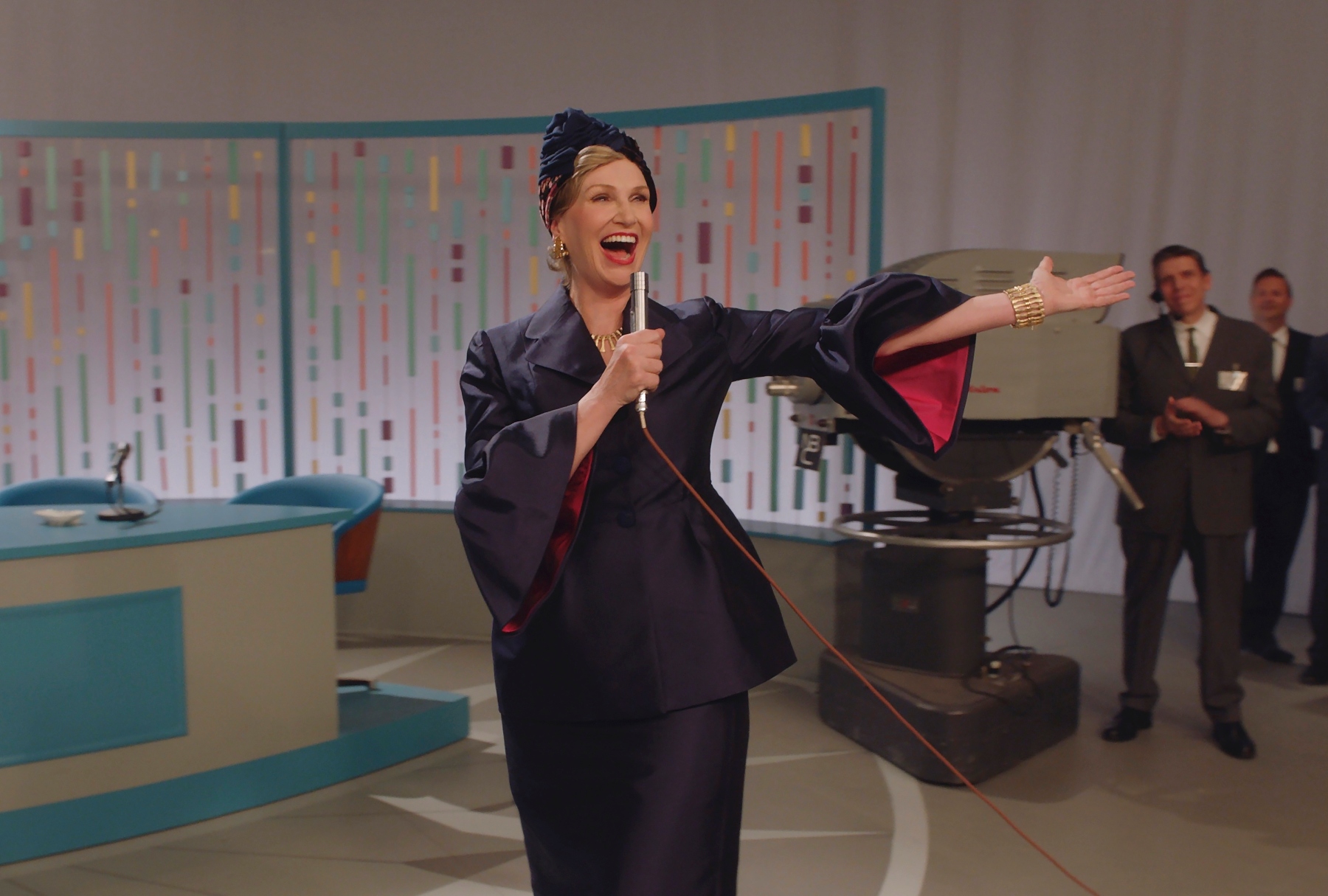
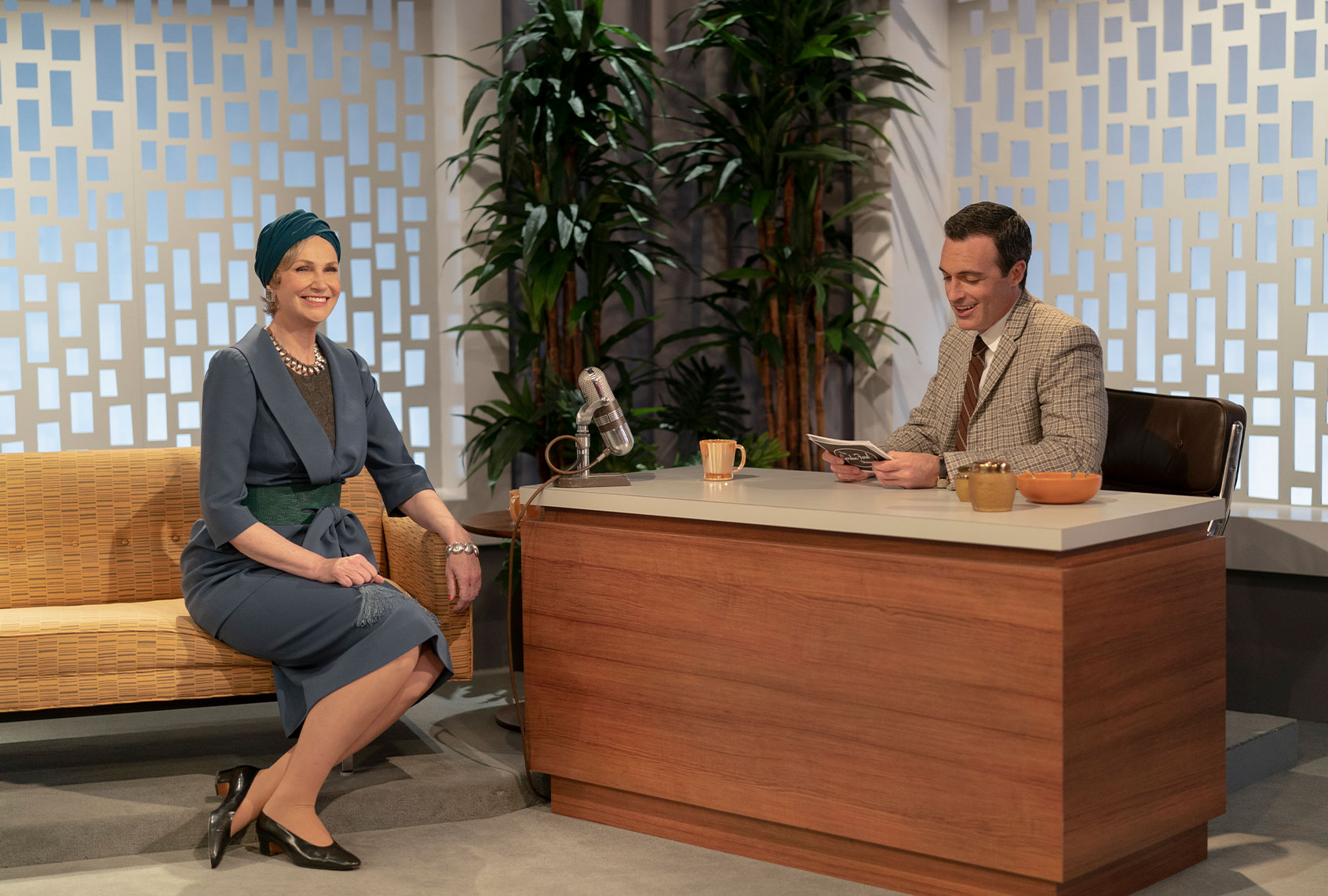
One of Midge Maisel’s primary foils on the show — Sophie Lennon, played with over-the-top bravura by the great Jane Lynch —seems to have been inspired by two real-world figures, rather than just one. In her appearance and comedic style, she’s an amalgamation of the two biggest female comedians of the 1950s, Phyllis Diller and Totie Fields.

The Marvelous Mrs. MaiselJane Lynch as Sophie Lennon and Reid Scott as Gordon Ford in “The Marvelous Mrs. Maisel” (Prime Video)Lynch plays Lennon as a stylish, haughty performer. Lennon, meanwhile, pads her disheveled costume with a fat suit to create the “Sophie from Queens” character that made her famous. Diller, an attractive comedian, used makeup to create a more homely character. Fields, who began her career as a child singer, carried 190 pounds on her 4-foot-11 adult frame. If you combine Diller and Fields, you get the plump, frumpy Sophie.
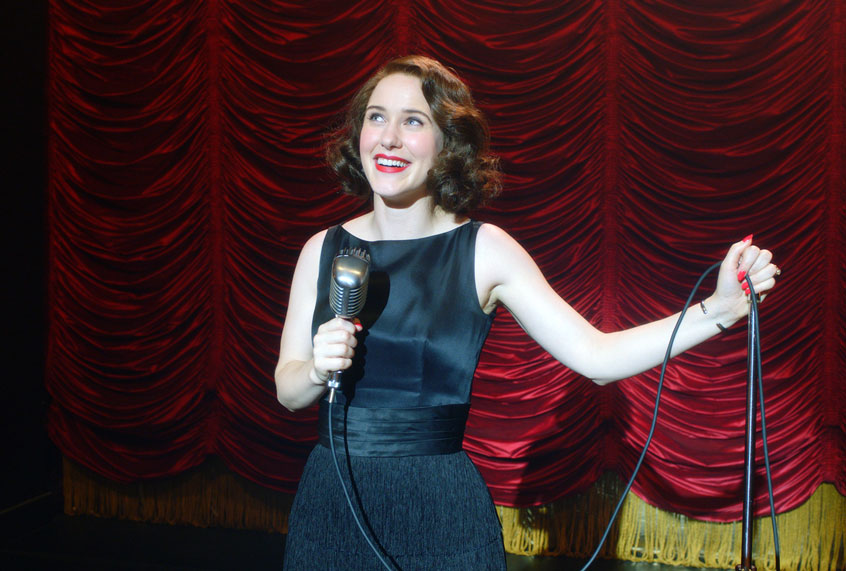
Lennon’s comedic delivery and material are very Diller- and Fields-esque, too. She relies on self-deprecating one-liners about cooking, cleaning, fashion, and marriage that play into, rather than challenging, 1950s patriarchy. Similarly, while Diller and Fields certainly achieved trailblazer status by succeeding in an era dominated by men, their comedy was considered comfortable, rather than provocative, because it presumed a subservient place for women.

By contrast, neither Maisel nor Rivers — divorced, modern women — would ever be described as subservient. Maisel’s willingness to speak truth to power in unvarnished terms propels her career, even while threatening to derail it. Rivers’ insistence on using dirty language rubbed some audiences the wrong way, but also helped make her who she was.

“You’ll go a lot further in the mainstream if you aren’t stamped as a ‘blue act’,” Buzzi remembered telling her friend. “But she carried on anyway and it never seemed to affect her in any negative way.”

The Marvelous Mrs. MaiselThe Marvelous Mrs. Maisel (Amazon)Not everyone supported Rivers like Buzzi and Bruce, however. After her first appearance on “The Tonight Show,” during which Johnny Carson said “You will be a star,” Rivers’ career got a boost, but she still couldn’t break into the top venues.

“I could not understand why certain major clubs around the country refused to book me,” she wrote in her memoir, “Enter Talking.” “I learned later that Totie Fields was spreading the word that I was dirty and vicious, not funny.”

Fields’ attempt to sabotage Rivers’ career — just like Lennon tries to do to Maisel — marks the beginning of a true (and bittersweet) story of resentment and redemption.

Oppression has an unfortunate way of turning oppressed people into rivals. As women working in comedy, a field dominated by men, Rivers and Fields ought to have been allies. Instead, Fields acted as if she owned the “Jewish female comic” niche. Any gig that went to Rivers, she believed, rightfully belonged to her, so Fields did whatever she could to undermine her rival.

Her animosity wasn’t only inspired by jealousy, however. In the mid-1950s, some Jewish women in America began exploring new middle-class identities, a trend Fields disparaged. She grew up in working-class New England, fighting her way to the top. In Rivers, she saw the daughter of a rich doctor living comfortably in an impeccably furnished suburban home: essentially, a Jewish American Princess, a pejorative stereotype that Rivers spent her career lampooning.


Want a daily wrap-up of all the news and commentary Salon has to offer? Subscribe to our morning newsletter, Crash Course.


“Totie was a gutter fighter,” Rivers wrote in her memoir, “who must have been contemptuous of this earnest college graduate with a circle pin and a small delivery. This comedy parvenue who she thought had never paid any real dues in comedy, never done three shows a night in Sheboygan — and was coming into her territory.”

By the mid-1960s, Rivers’ career started to skyrocket. She played Broadway and Carnegie Hall, and when the Fox network launched, she became the first woman to host her own late-night talk show. Over the subsequent decade, meanwhile, Fields’ health deteriorated. Diabetes led to the amputation of her left leg in 1976, and the next year she was diagnosed with breast cancer, undergoing a mastectomy.

Jane Lynch as Sophie Lennon in “The Marvelous Mrs. Maisel” (Prime Video)Ever gritty, Fields’ kept going, taping an HBO stand-up special in 1978 called “Totie Returns!” Her illness made her unnervingly thin, but while Fields lost weight, she never lost her timing. Her tenacity in the face of her life-threatening illnesses led to her being named “Entertainer of Year” by the American Guild of Variety Artists.

That same year, Rivers was invited to play the newly opened MGM Grand in Las Vegas, where she slayed the packed crowd. In her dressing room after the show, she heard a knock on the door.

“It was Totie, alone, a hundred pounds lighter, limping badly, going blind, and brave, brave, brave.” Rivers recalled in her autobiography. “She climbed two flights of steep metal steps with her wooden leg to tell me she was in the audience and loved the show.”

RELATED: Jackie Mason’s thorny career: Once a beacon of Jewish pride, the comedian later turned to bigotry

The two Jewish comedians talked shop, gossiped, and shared thoughts about the future of comedy, quietly ending their feud and establishing a sisterhood mere months before Fields died.

“I adored Totie in that hour,” Rivers wrote. “We were just two women alone together; we both knew she was dying and I would never see her again.”

The antagonistic relationship between Midge Maisel and Sophie Lennon has to have been inspired by the Rivers-Fields rivalry. After a brief truce in the series’ just-concluded fourth season, they ended up at odds with each other again. Perhaps the series’ fifth and final season will give them a chance to overcome their differences. A reconciliation, after all, might be a fitting tribute to the comedians who inspired them.

More stories to read:

11 things you should know about Audre Lorde

Through poems like “Coal,” essays like “The Master’s Tools Will Never Dismantle the Master’s House,” and memoirs like “Zami: A New Spelling of My Name,” Audre Lorde became one of the mid-20th century’s most radically honest voices and important activists. Here are some fascinating facts about the woman behind the work.

1. Audre Lorde was born in New York City’s Harlem neighborhood

Audrey Geraldine Lorde was born in Harlem on February 18, 1934, to parents who had emigrated from Grenada a decade earlier. Her mother, Linda Belmar Lorde, had Grenadian and Portuguese ancestry; and her father, Frederick Byron Lorde, had been born in Barbados. She had two older sisters, Phyllis and Helen.

2. She dropped the y from Audrey

When Lorde learned to write her name at 4 years old, she had a tendency to forget the Y in Audrey, in part because she “did not like the tail of the Y hanging down below the line,” as she wrote in “Zami: A New Spelling of My Name.” “I used to love the evenness of AUDRELORDE,” she explained. She included the Y to abide by her mother, but eventually dropped it when she got older.

It wasn’t the only time Lorde chose a name for herself. The title “Zami,” “a Carriacou name for women who work together as friends and lovers,” paid homage to the “bridge and field of women” that made up Lorde’s life. Carriacou is a small Grenadine island where her mother was born. Shortly before Lorde’s death in 1992, she adopted another moniker in an African naming ceremony: Gambda Adisa, for “Warrior: She Who Makes Her Meaning Known.”

3. Lorde once spoke in poetry — literally

Before Lorde even started writing poetry, she was already using it to express herself. She memorized poems as a child, and when asked a question, she’d often respond with one of them. “Somewhere in that poem would be a line or a feeling I would be sharing. In other words, I literally communicated through poetry,” she said in a conversation with Claudia Tate that was published in “Black Women Writers at Work.” “And when I couldn’t find the poems to express the things I was feeling, that’s when I started writing poetry.”

4. Her first published poem appeared in Seventeen magazine.

While attending New York’s Hunter High School, Lorde got involved with the school’s literary magazine, “Argus.” When a poem of hers, “Spring,” was rejected — the editor found its style too “sensualist,” à la Romantic poetry — she decided to send it to Seventeen magazine instead. It was published in the April 1951 issue. Lorde was 17 years old at the time, and she wrote in her journal that the event was the most fame she ever expected to achieve.

5. Lorde was a librarian

Lorde’s passion for reading began at the New York Public Library’s 135th Street Branch —since relocated and renamed the Countee Cullen Branch — where children’s librarian Augusta Baker read her stories and then taught her how to read, with the help of Lorde’s mother.

Lorde eventually became a librarian herself, earning a master’s degree in library science from Columbia University in 1961. She was the young adult librarian at New York’s Mount Vernon Library throughout the early 1960s; and she became the head librarian at Manhattan’s Town School later that decade.

“I became a librarian because I really believed I would gain tools for ordering and analyzing information,” Lorde told Adrienne Rich in 1979. “I couldn’t know everything in the world, but I thought I would gain tools for learning it.” She came to realize that those research skills were only one part of the learning process: “I can document the road to Abomey for you, and true, you might not get there without that information. … But once you get there, only you know why, what you came for, as you search for it and perhaps find it.”

6. Her Staten Island home is an official New York City Landmark

After separating from her husband, Edwin Rollins, Lorde moved with their two children and her new partner, Frances Clayton, to 207 St. Paul’s Avenue on Staten Island. They lived there from 1972 until 1987. During that time, Lorde published some of her most renowned works, including her poetry collections “From a Land Where Other People Live” and “The Black Unicorn,” and her “biomythography” “Zami: A New Spelling of my Name.”

In June 2019 — on the 50th anniversary of the Stonewall Riots — the New York City Landmarks Preservation Commission recognized Lorde’s contributions to the LGBTQ+ community by naming the house an official historic landmark.

7. Lorde wanted people to embrace their differences

Lorde didn’t balk at labels. She was known for introducing herself with a string of her own: “Black, lesbian, mother, warrior, poet.” To Lorde, pretending our differences didn’t exist — or considering them “causes for separation and suspicion” — was preventing us from moving forward into a society that welcomed diverse identities without hierarchy.

“Those of us who stand outside the circle of this society’s definition of acceptable women; those of us who have been forged in the crucibles of difference — those of us who are poor, who are lesbians, who are Black, who are older — know that survival is … learning how to take our differences and make them strengths,” she wrote in “The Master’s Tools Will Never Dismantle the Master’s House.”

8. She co-founded a publishing company for women of color

In October 1980, Lorde mentioned on the phone to fellow activist and author Barbara Smith that they “really need to do something about publishing.” That same month, Smith organized a meeting with Lorde and other women who might be interested in starting a publishing company specifically for women writers of color. By late 1981, they’d officially established Kitchen Table: Women of Color Press.

“We chose our name because the kitchen is the center of the home, the place where women in particular work and communicate with each other,” Smith wrote in 1989. The kitchen table also symbolized the grassroots nature of the press.

Between 1981 and 1989, Kitchen Table released eight books, including the second edition of “This Bridge Called My Back: Writings by Radical Women of Color,” edited by Cherríe Moraga and Gloria Anzaldúa, and “Home Girls: A Black Feminist Anthology,” edited by Smith. The press also published five pamphlets, including Angela Davis’s “Violence Against Women and the Ongoing Challenge to Racism,” and distributed more than 100 works from other indie publishers.

Though Kitchen Table stopped publishing new works soon after Lorde passed away in 1992, it paved the way for future generations of publishers. Alexis Pauline Gumbs credits Kitchen Table as an inspiration for BrokenBeautiful Press, the digital distribution initiative she founded in 2002.

9. She helped launch the Afro-German movement

In 1984, at the invitation of German feminist Dagmar Schultz, Lorde taught a poetry course on Black American women poets at West Berlin’s Free University. While there, she forged friendships with May Ayim, Ika Hügel-Marshall, Helga Emde, and other Black German feminists that would last until her death. With Lorde’s influence, the group published “Farbe Bekennen” (known in English as “Showing Our Colors: Afro-German Women Speak Out”), a trailblazing compilation of writings that shed light on what it meant to be a Black German woman — a historically overlooked and underrepresented demographic. Lorde is also often credited with helping coin the term “Afro-German,” which Black German communities embraced as an inclusive form of self-definition and also as a way to connect them to the global African diaspora.

10. Lorde encouraged the “Educate yourself” mindset

Lorde criticized privileged people’s habit of burdening the oppressed with the “responsibility . . .  to teach the oppressors their mistakes,” which she considered “a constant drain of energy.”

“I am responsible for educating teachers who dismiss my children’s culture in school. Black and Third World people are expected to educate white people as to our humanity. Women are expected to educate men. Lesbians and gay men are expected to educate the heterosexual world. The oppressors maintain their position and evade responsibility for their own actions,” she wrote in her 1980 paper “Age, Race, Class, and Sex: Women Redefining Difference,” explaining that if the oppressors would educate themselves, the oppressed could divert their focus toward actionable solutions for bettering society.

11. Lorde was a breast cancer survivor

In 1978, Lorde was diagnosed with breast cancer and underwent a mastectomy of her right breast. She declined reconstructive surgery, and for the rest of her life refused to conceal that she was missing one breast. In 1980, she published “The Cancer Journals,” a collection of contemporaneous diary entries and other writing that detailed her experience with the disease. She decided to share such a deeply personal story partly out of a sense of duty to break the silence surrounding breast cancer.

As she explained in the introduction, the book was both for herself and “for other women of all ages, colors, and sexual identities who recognize that imposed silence about any area of our lives is a tool for separation and powerlessness.” She wrote that “I do not wish my anger and pain and fear about cancer to fossilize into yet another silence, nor to rob me of whatever strength can lie at the core of this experience, openly acknowledged and examined.”

Lorde’s cancer never fully disappeared, and in 1985, she learned it had metastasized to her liver. Not long after, she and her partner, Gloria Joseph — another leading feminist author and activist — moved to St. Croix, the Caribbean island where Joseph was from. Lorde lived with liver cancer for the next several years, and died from the disease on November 17, 1992, at age 58.

Did you lose touch with a pre-pandemic acquaintance? You’re not alone

Before the pandemic, I started a friendship with a woman named Erin.

We met on an organized women’s group camping trip in Northern California, late summer in 2019. After the trip, Erin and I started a text conversation, and soon went out on a hike together. But shortly after, COVID-19 came to the San Francisco Bay Area, and I knew for certain that I probably wouldn’t see Erin again until this all blew over. Though I felt that we had become casual acquaintances, we weren’t close enough to stay in touch indefinitely, and the group hikes— our main connection — ended indefinitely.

We probably all have an Erin or two in our lives, meaning an acquaintance from pre-pandemic that we lost touch with. According to a May 2021 American Perspectives Survey, roughly half of Americans reported having lost touch with at least one friend during the pandemic. I certainly felt that I had multiple “Erins” in my life — casual acquaintances that I would run into or see occasionally, but who disappeared from my life as the pandemic went on and my social circle shrank.

Ty Gibson, a Texas-based attorney, told me he went from hanging out with work colleagues and friends every week to not seeing them for months. Yet he felt like his inner circle remained the same — and he believes he gets along better with his close friends now.

“But I have found that I have lost contact with quite a few of my acquaintances which I used to consider friends,” Gibson said. “As soon as that face-to-face contact was gone, we didn’t really have a reason to talk or interact.”

Melendy Britt, a public relations consultant and president of the LA chapter of the Public Relations Society of America, told me her social circle “shrunk to unknown levels” during the pandemic. Until she got vaccinated, the only people she saw were her immediate family.

“Even though my mom, dad and sister were relatively close by at some stage of the pandemic, just the fact they lived in a different house meant there was a level of insecurity we all felt, even when vaccines were available,” Britt said. “A simple lunch was never so simple — could we take off our masks in comfort?”

Britt added one of the most challenging parts of the pandemic was making ” tough choices about friends.”

RELATED: How the pandemic is straining our friendships

“Even if I could gather, would I want to with a person who holds such diametrically different approaches to their pandemic life choices,” Britt said. “I had to end a friendship – or at least press pause – with a friend from over 40 years just because we had very different viewpoints on social responsibility.”

It turns out that the loss of such connections, even of mere acquaintances, have an impact on one’s mental health—especially if that person is an extrovert.

Carla Marie Manly, a clinical psychologist and author of “Joy From Fear,” told me it’s important to think of our social circles like a web, in which various circles intersect and overlap. Within that web, a person has acquaintances, people who are more than acquaintances (but not that close), closer friendships and intimate relationships. During the pandemic, many people lost part of their web.


Want more health and science stories in your inbox? Subscribe to Salon’s weekly newsletter The Vulgar Scientist.


“And that can be hard on the psyche, because although we rely on those more intimate friendships, even weaker or looser ties are still part of our social fabric,” Manly said. “It’s nice for us to know that we have these other degrees of friendships and acquaintances because they are a part of our network, and it does feel good to us psychologically, especially people who are more more extroverted, tend to like knowing they have a broader band of acquaintances to reach out and socialize with.”

Manly added that people who rely on others for a sense of joy and fulfillment have experienced more of a sense of loss throughout the pandemic due to losing these weaker connections. In sociology, there is a term known as “weak ties,” which was introduced by sociologist Mark Granovetter. In 1973, Granovetter published a paper entitled  “The Strength of Weak Ties“; in it, Granovetter showed that a person’s well-being doesn’t only depend on the quality of relationship with close friends and family, but that quantity matters, too. For example, Granovetter surveyed 282 Boston-based workers and found that most of them got their jobs through someone they knew, but only a small percentage of those job recommendations came from close friends. Instead, 84 percent of those surveyed got their jobs from people they saw occasionally — casual friends, or acquaintances. The paper caused his colleagues to rethink the importance of the quality versus quantity of human relationships.

More recent research by psychologist Gillian Sandstrom found that weak ties are connected to a person’s emotional well-being. In one study, she found that people are happier on days when they say “hi” to a coworker or have a brief conversation with a neighbor at the grocery store.

Psychologist Cynthia Halow believes that initially adjusting to pandemic life left little time for socialization with those with whom we weren’t very close to before the coronavirus took hold.

“It has hampered the intention to connect with others, outside of our homes,” Halow said. “As we avoided contracting the virus, we also set aside time spent with friends.”

And of course, there were the health risks.

For some people, these pre-pandemic connections might be better left off in the past. For others, Dr. Manly said, as the world opens for now, it might be worth reaching out to former acquaintances again.

“If you’re feeling a thirst to renew connections, absolutely, reach out to people where ties have loosened, bring them back into your fold in warm connective ways,” Manly said, adding that the same thought has possibly crossed their minds. “If a person declines to do that, because they’re content with a more pared back social network, don’t take it personally, and realize that the pandemic has given most of us, if not all of us, the opportunity to look at what works for us and what doesn’t work for us.”

Read more on pandemic sociology:

Why this classic Romanian-Jewish dish is nearly impossible to find

When said aloud, the word sounds almost like music: Mamaliga. An almost-facsimile of polenta, the cornmeal-based dish mamaliga is native to Romania and neighboring Moldova, as well as parts of Ukraine. Written as mamelige in Yiddish, and mămăligă in Romanian, the dish inspires an almost romantic yearning, particularly among Ashkenazi and Romanian Jews. In his famous song “Rumania, Rumania” originally recorded in 1925, Yiddish theater actor and singer Aaron Lebedeff extols the delights of the eponymous land through its comestibles: “Vos dos harts glust kenstu krign: A mamaligele, a pastramele, a karnatsele, Un a glezele vayn, aha…!” (In English: “What your heart desires you can get; a mamalige, a pastrami, a karnatzl, and a glass of wine, aha…!”)

Mamaliga is, in its most basic form, quite simple: coarsely-ground yellow cornmeal — the same kind used for polenta — cooked with water and salt over a low heat. It takes about half an hour to cook, stirring constantly, says Roza Jaffe, a home cook and Holocaust survivor from the region of Bessarabia, which today straddles Moldova and Ukraine. (I personally spent upwards of an hour standing over my Dutch oven in both of my attempts to make it, though I am a notoriously slow cook).

Corn was brought to numerous European countries by 15th century traders from modern-day Mexico. In her 1994 cookbook, “Jewish Cooking in America,” Joan Nathan writes “it only took hold in Romania and parts of Italy.” However, Ashkenazi Jewish foodways scholar Eve Jochnowitz noted that mamaliga technically originated in the region of Bukovina which, while a part of pre-World War II Romania, is now in Ukraine. And yet, the dish remains firmly rooted in Jewish foodways. In her recipe headnote, Nathan quotes Florence Naumoff, a home cook with whom she exchanged a number of letters: “‘My mother used to use the expression, ‘Es [m]amaliga licht in punem,’ literally “when you eat Mamaliga it shows in your face,’ when she met someone who looked Jewish.'” The dish is also commonly served during the Jewish holiday of Shavuot, as Nathan notes in a 2020 Tablet article.

Served simply, mamaliga may be adorned with butter, sour cream, and even a bit of salty Romanian bryndza cheese (often swapped out for feta in the U.S.). Or, it can be turned into something show stopping and rich, like the Romanian dish mămăligă în pături: a lasagna-like concoction layered with butter, cheeses, eggs, and sometimes — in a treyf, or unkosher, rendition — meat. Mamaliga can even be sliced and pan-fried, much like polenta.

Still, it started out as a peasant food, author and food scholar Darra Goldstein explained over email. When corn eventually arrived in Romania from Mesoamerica (now Mexico, Guatemala, and other nearby countries) by way of Spain, it was swapped in for the millet historially eaten as a staple grain. So associated with poverty was mamaliga that, Goldstein said, Lithuanian Jews looked down on Romanian Jews for eating it, calling them “mamaliges,” which Goldstein clarified as an insult: “Calling someone a ‘mamaliga’ is like calling them spineless, a milksop.”

A dish once firmly rooted in the realm of home cooking, mamaliga became a restaurant staple in the 20th century, when dairy restaurants — mainly kosher spots that eschewed meat for dairy-based treats — burst onto the scene. Opened in large part by Jewish immigrants from countries like Romania and Poland, as Ben Katchor describes in the book “The Dairy Restaurant,” these affordable restaurants flourished in the early 20th century. Dairy restaurants were frequented by hordes of Jewish customers hoping to quash their perennial yen for blintzes and gefilte fish. One of the earliest known dairy restaurants was opened by Romanian immigrant Jacob J. Kampus. (Kampus, described in a quote from a 1900 Yiddish newspaper, included in Katchor’s book, was a “world famous” maker of blintzes, kreplach, and mamaliga.)

One of the most prominent of these establishments, Ratner’s Delicatessen, was opened by Galician immigrants, brothers Jacob and Harry L. Harmatz. Ratner’s was a Jewish culinary bastion of the Lower East Side, and mamaliga (spelled marmaliga) was indeed on their menu, served with cheese and butter. Theo Peck, great-grandson of Jacob Harmatz, remembers eating the mamaliga at Ratner’s counter growing up, served without any particular ceremony: “My aunt would just go into the kitchen and plop it in a bowl and give it to me, like ‘here ya go!'” Peck said over the phone. The dish, Peck recalled, was served there until the restaurant closed in 2004. (However, it appears that the dish was not kept around for its popularity, nor for sentimental reasons — Peck added that his cousins, who owned Ratner’s toward the end, didn’t take much interest in the food and therefore didn’t bother to update the menu.) Mamaliga appeared on the menu at a number of these spots, but simply didn’t seem to leave a lasting impression on clientele. As Katchor said over the phone, one such place, Gefen’s, stopped serving the dish early on. Simply, “because no one wanted it.”

Try to find mamaliga on the menu at a kosher deli or restaurant specializing in Jewish food today, and you’re more or less out of luck. The vast majority of New York’s dairy restaurants closed by the late 20th century — and yet, the city is still (relatively) rich with options for milkhik favorites like blintzes and pierogi, but mamaliga options are few and far between. Even B&H Dairy, perhaps the last remaining holdover of the dairy restaurant’s halcyon days, doesn’t serve it today — though it’s also no longer under Jewish ownership. (Fawzy Abdelwahed, who is Egyptian and Muslim, took over B&H Dairy in 2003 with his wife Ola, who is Polish and Catholic, had in fact never heard the word ‘mamaliga’ before I asked them about it.)

One could, however, find mamaliga today at a few Eastern-European — not specifically Jewish — establishments. Order it as a side dish or appetizer at Romanian Garden in Sunnyside, Queens; or at the Midwood, Brooklyn restaurant Moldova, (which specializes in the food of the eponymous country) as part of the house special Mamaliga Trapeza, which comes with sides of pork stew, cheese, sour cream, and scrambled eggs.

Jochnowitz offered a theory on why mamaliga didn’t last in Jewish restaurants: “Some Yiddish foods totally cross over, and some don’t,” she said over the phone. “I was speaking about bagels somewhere, and someone said: ‘the bagel sort of is a template; you can project anything you want onto it.’ People make chocolate bagels and blueberry bagels. It’s like the zero: It’s the blank slate. The bagel is the tabula rasa.” Mamaliga, on the other hand, is comparatively exactly what it is. It can be dressed up, but not necessarily played with: “It’s sort of the opposite of the bagel.” Explaining further, Jochnowitz said, “You can’t make a mamaliga emoji.” (We certainly haven’t seen one yet.)

Perhaps the closest you’ll get to finding mamaliga in a kosher New York restaurant is at Knish Nosh, a tiny eatery in Rego Park, Queens. But it’s not on the menu there, either. If you’re lucky, the cook, Ana Vasilescu (who is Romanian, but not Jewish), will offer to make it for you, as she sometimes does for interested customers. While the everyday version of mamaliga is made mainly of cornmeal, and served with bryndza and sour cream, Vasilescu will sometimes make a more decadent baked version, layered with cheese and meats like sausage and bacon (or mushrooms for those who keep kosher). Vasilescu’s decked-out mamaliga seems to point to the best way to keep people interested in the dish. To make a really good mamaliga, explained Nathan over the phone, “you’ve got to put a lot of things together.”

Of course, as people like Jaffe, who left behind a life of scarcity for one of relative abundance in countries like the U.S., access to myriad ingredients and foods grows and formerly everyday staples become less common. If I were to offer my own guess, I’d say that the shift from eating mamaliga every single day to cooking it up a few times a year, on special occasions, stems not from availability; perhaps cooking mamaliga has become less about sustaining oneself, and more about sustaining a tradition.

Comedies in serious clothing: An introduction to the films of Paul Thomas Anderson

After successfully shooting the opening sequence of “Boogie Nights” – an elaborate steadicam shot in which the camera tracks into and around a night club, introducing the title, setting and all of the main characters of the film  –  young writer-director Paul Thomas Anderson enthusiastically showed it to the ageing star of the film, Burt Reynolds.

Burt Reynolds was reportedly immediately dismissive, noting five other times he’d seen the same thing.

Both appear as caricatures of Hollywood types. Anderson, directing his first major feature film comes off as a cocky MTV-generation director at loggerheads with one of the megastars of the 1970s, now ancient history.

Paul Thomas Anderson would go on to become one of the most critically acclaimed directors of the 21st century. His films frequently fare well during the awards season, with works like “There Will Be Blood,” “The Master” and “Phantom Thread” further cementing the credentials of names like Phillip Seymour Hoffman, Joaquin Phoenix and Daniel Day-Lewis.

But are his films all they’re cracked up to be – are they, as New York Times critic Manohla Dargis describes “There Will Be Blood,” “consummate works of art”? Or are they overblown, pompous, and needlessly concerned with style?

The serious and the farcical

There’s something about the combination of tragedy and comedy in the Reynolds anecdote which seems to epitomize the work of Paul Thomas Anderson at large. His films seem to elicit both serious and farcical readings.

Taken seriously, his films can be a little annoying. They are profoundly heavy-handed (though he’s an interesting enough filmmaker that this isn’t always a negative thing), and at times seem self-important in a trite, arty kind of way.

But they also offer rollicking good times, as funny as the novels of Thomas Pynchon (who Anderson adores), and, viewed from afar, this image of grey-toupeed Burt Reynolds trying to cut down Valley Boy is simply funny.

Despite their evident humor, his films are usually received by critics as straight dramatic studies of larger-than-life characters rather than as black comedies. But this does Anderson’s ingenuity as a filmmaker a disservice. It’s the comedic core of his films that makes them so affective.

And, given Anderson’s skill at bringing funny sequences to life in more obviously comedic films like “Boogie Nights,” “Punch-Drunk Love” and, now, the sweet-natured “Licorice Pizza,” it’s perhaps unsurprising his films work as comedies in serious clothing.

Absurdity and melodrama

His latest Oscar-nominated film, “Licorice Pizza,” seems to take a 180⁰ turn in terms of his previous work – it’s a nostalgic teen comedy-romance set in the San Fernando Valley in the 1970s – but, if we look beyond the genre, we see the same kinds of tropes emerging.

There’s the batshit egotistical and immature male lead (in this case totally forgivable because he’s a teenager) brilliantly realized by Cooper Hoffman. There’s the careworn, eccentric female lead, equally brilliantly realized by newcomer to the screen, Alana Haim.

There’s the oddly sprawling narrative, wildly uneven in the picaresque tradition, beginning in media res before pulling back, taking tonally unexpected turns. The very setting of “Licorice Pizza” and “Boogie Nights,” the streets of the San Fernando Valley, where Thomas Anderson grew up, seems to determine the logic of the narratives of all his films – winding, flat at times, with one often ending up in the same position from which one began.

Whether a Paul Thomas Anderson film is taken as serious or farcical is, perhaps, just a matter of one’s perspective. Viewed morally, characters do nasty things to each other and we feel outrage, compassion, sadness.

But suspend our morality and things start to take on a deliriously entertaining and madcap sparkle, with films like “The Master” and “Phantom Thread” playing like nihilistic screwball, cracked comedies. Daniel Day-Lewis’ marquee scenes in “There Will Be Blood” (delivered in actorly brogue) are fundamentally ridiculous, which is what makes them so eminently easy to parody.

Big-scale dramatic actors like Day-Lewis and Joaquin Phoenix – the kind of actors who are frequently nominated for Oscars, and who have been endlessly praised for their chops – suddenly appear delusionally serious.

Vision and voice

Not that his films are inconsistent in style – Thomas Anderson is very much an auteur in the classical mold, and there are multiple consonances between his films in both style and theme.

He writes his own scripts, and there is an idiosyncratic rhythm and focus to these. They are inconsistent, and don’t (appear to) follow any of the screenwriting rules that make so many film school graduates’ three-act structure scripts dull.

There’s the feeling of haphazard potential about his stories that makes them more thrilling than conventional Hollywood narratives, even as failure seems to be a usual outcome for his outlandish, blinkered and egotistical characters.

But this never seems to be failure for failure’s sake, or failure at the service of some kind of moral message – everything in Paul Thomas Anderson’s films is in the service of the film as a work, as a coherent whole, and it is this relentless adherence to his own ego/vision as writer-director that makes his films so compelling – and, at times, so pat.

In a period in Hollywood in which auteur cinema seems to have been superseded by either self-conscious, clever genre cinema, or didactic, moralizing works that attempt to explicitly shape the viewer’s mind according to assumed social norms, there’s something refreshing about films that don’t claim to be anything other than the vision of one person.

This article is republished from The Conversation under a Creative Commons license. Read the original article.

America is united on the Ukraine war, right? Still, let’s follow the money

Walk a few blocks in Manhattan, where I live, and you’ll find many reminders of Russia’s invasion of Ukraine. People in West Village cafes talking about Vladimir Putin’s “madness.” A poster tacked to a deli window advertising a solidarity march in Times Square. A hashtag on the local barista’s iPad, right below the option to add a tip, that reads: #WeStandWithUkraine. And that’s on top of the condemnations online and on television, the boycotts and the declamatory emails from universities, banks and corporations. 

Americans, in short, are angry. The public mood is more galvanized by political injustice than at any time since … well, since the last tweetable furor gripped the nation.

Still, this time around, the White House, Congress, the Pentagon, the CIA, the State Department and major think tanks on both sides are in near-unanimous accord with the national temper. Perhaps that’s a clue that we ought to step outside the heat of the moment and ask three critical questions that any “alert and knowledgeable citizenry,” to quote Dwight Eisenhower, should ask itself when public outrage and government interests coalesce: Why are we so angry about this particular issue? What is missing from the prevailing narratives? Who is about to profit? 

RELATED: Endless war is back — as the merchants of death waltz us toward Armageddon

The answer to the first question seems straightforward. We’re angry because Russia invaded Ukraine and the news is everywhere. Yet, it is perhaps noteworthy that no such uniform agitation was stirred by many of the last decade’s atrocities with equivalent or exponentially higher death tolls. (Citizens of Israel, Ethiopia, Saudi Arabia and Sudan, for example, were not denied Olympic participation, Hollywood movies, McDonald’s and Coca-Cola as punishment for their governments’ war crimes.) For the sake of clarity, we may wish to guard ourselves against emotional manipulation, but more on this in a moment. 

A responsible answer to the second question — what is being omitted? — warrants its own essay, and some excellent analyses on the matter have been published in the last weeks. For one thing, official narratives largely skate over the history of NATO’s advance toward Russia’s western borders, adding military bases, missiles and nuclear mission partners along the way. These narratives frame NATO as a “defensive organization” rather than as the “military arm of US hegemony,” as political commentator Niccolo Soldo has put it, and ignore 30 years of warnings by Russian (and American) officials that NATO’s eastward expansion would cause trouble. They also brush aside the compulsory hypothetical of how the U.S. would respond if Russia or China were building missile silos in Tijuana, while arming regional allies like Venezuela, Cuba and Nicaragua. Cornel West recently summed it up to the New Yorker this way: “The American empire has little or no moral authority when it comes to violation of international law and the overthrow of national sovereignty, as in Latin America, the Middle East, and Asia.”

This brings us to the third question, which is the easiest to answer. Public anger toward Russia will boost military spending and bring new windfalls to defense contractors and weapons manufacturers. We can already quantify some of this profitability. Almost as soon as the last American helicopter left Kabul, the Pentagon debuted fresh warnings about “Russian aggression.” President Biden began authorizing hundreds of millions of dollars in emergency military assistance for Ukraine. From the day we withdrew from Afghanistan to the day before Russia invaded, the Pentagon assigned at least $1.3 billion for work either partially or fully intended for Eastern Europe (Latvia, Estonia, Poland, Romania, Lithuania, Slovakia, Slovenia and Ukraine). 


Want a daily wrap-up of all the news and commentary Salon has to offer? Subscribe to our morning newsletter, Crash Course.


Thousands of American troops have already been deployed to Poland, Romania, Lithuania and Germany, sent there, as the president told us, to defend “every single inch” of NATO territory. And according to a new investigative report, a secret CIA program has been training Ukrainian special-ops forces since 2015. 

The real gold rush, however, began last Friday, when President Biden approved a $1.5 trillion spending bill, after it cleared the House and Senate, that promises nearly $14 billion in emergency funding for Ukraine. Of this, $3.5 billion will go toward military equipment, while another $3 billion will permit the Pentagon to “re-position” its forces in the region. 

Virtually all the guns, tanks, jets, helicopters and anti-missile defense systems heading eastward in the coming weeks will be purchased from private manufacturers like Raytheon Technologies, Northrop Grumman Systems Corp., Oshkosh Defense LLC and Lockheed Martin. As will the tools, uniforms and logistical services necessary to amass and reorient U.S. troops. 

More significant, or at least stealthier and less visible, are the years of spending to come. Today’s energetically indignant Instagram posts, op-eds and demonstrations will leave defense contractors with a fountainhead of cash long after we’ve moved on to the next crisis du jour. One only has to turn to U.S.-backed factions in recently destabilized countries like Syria and Libya to see how lastingly (and inconspicuously) our aid continues to flow.

Sometimes, of course, public outrage can hasten political solutions and humanitarian relief. It sounds almost patronizing to say that Russia’s invasion has been tragic and bloody for Ukrainian civilians: Of course they face ghastly injustice. But Congress doesn’t send weapons, issue blistering sanctions or rile up the general public when it comes to bloodier conflicts, and this brings us back to the question of our selective anger and its alignment with our government’s financial stakes. 

In the last decade, violent wars, crackdowns and protests in places like Nigeria, Myanmar, the Philippines, Colombia, Kashmir and Catalonia have collectively earned only a tiny fraction of the rhetoric and action we’ve seen from our government in the last three weeks. And that’s without even mentioning U.S. invasions and occupations — or its  arms sales and active military support to Saudi Arabia and the United Arab Emirates in their singularly gruesome war in Yemen, which has created the world’s worst ongoing humanitarian crisis. Between 2015 and 2019, the U.S. supplied the Middle East and North Africa with nearly half of all its major weapons deliveries — that’s three times Russia’s arms shipments to the region, and 16 times China’s.

The death toll in Yemen could soon pass a million, according to UN projections, and millions of children have already been killed, maimed, starved or displaced. One would be hard-pressed to find hashtags, marches, or emotional denouncements by celebrities and news anchors about that brutal conflict, despite the fact that American taxpayers are funding it. The point here, it ought to be said, is less to engage in moral whataboutism than to observe that public furors are frequently neither consistent nor coincidental. 

“Enough talk. People are dying,” Sen. Mitt Romney said last week about Ukraine. Those are fine words, but can we imagine the gentleman from Utah saying them about events in South Sudan, Yemen or the Central African Republic? Why not? Is the answer racism, or Eurocentrism? 

Such answers may contain grains of truth, but all we have to do is follow the money to find the clearest explanation. The Ukraine invasion has produced a lucrative and exploitable crisis, prompting the military-industrial complex to metamorphose geopolitical advantage into a crusade of moral necessity. As The Nation’s Katrina vanden Heuvel observed in September: “Media outlets regularly invite former military and public officials to comment on U.S. defense policies — without disclosing their financial interests in these policies.” 

Our outrage, in other words, all too often seems tailored to crises that reinforce the biggest industrial beneficiaries of public funds. In this case, a rich network of proliferating alliances and bases across central and eastern Europe will be fertile ground for the biggest military budget since World War II. Stocco has argued that our government’s proactive response is less about aiding Ukrainian civilians than capitalizing on two strategic benefits of Russia’s occupation: “It kills the NordStream 2 pipeline, and opens up new business for American LNG companies, as well as bigger business for US arms exporters.”

Today, more than half of Americans believe the conflict in Ukraine is a threat to U.S. interests. Whether that consensus is accurate or not, it has been carefully cultivated. 

Similarly, whether Pentagon officials, congressional staffers, and leading journalists and pundits are consciously aiding the business of war or genuinely believe that an apocalyptic struggle is upon us is a thorny puzzle for another time. For now, it’s worth noting that solemn incantations that Hitler is back from the dead, that Putin’s eyes reveal “somebody who has gone completely mad,” that the U.S. should leapfrog into a new world war, and that this month’s events were without precedent or provocation, all suggest the tragic consequences of free people choosing not to think and not to remember. Aldous Huxley called it “herd-poisoning” and George Orwell said it was rendered through “Newspeak.” 

House Speaker Nancy Pelosi, as it happens, felt compelled to cut $15.6 billion of domestic pandemic aid from the same spending bill that armed Ukraine with American tax dollars. Which brings us to a fourth and final question: Can we have our money back? 

Read more on the Ukraine war and its consequences:

Growing up in “Another Appalachia” is more relatable than you think: “I keep finding myself here “

As Neema Avashia tells it, “Put simply, my father needed a job.” 

The daughter of a doctor who immigrated from India in 1969, her parents first lived in Queens, New York, where her father did his residency, then they moved to West Virginia when her father was hired by the Union Carbide plant in the town of Institute. Avashia was born and raised in West Virginia. 

Along with the promise of work, her parents, upon visiting Appalachia for the first time, “found the lush greenery and mountains of the Mountain State, so different from dry and dusty Gujarat, deeply alluring.”

Avashia and her family lived on a street called Pamela Circle, in a predominantly white neighborhood where the streets were named after the developer’s daughters. She celebrated festivals with other Indian families in basements, went over to a beloved neighbors’ house for meals (mostly side dishes, as she and her family were vegetarians), played basketball and dreamed of being a writer.

As she says, “People have a lot to say about where I was from.”

Related: Why is Joe Burrow so great? Because he’s from Appalachia

It was the lead-up to the 2016 election that prompted Avashia, who teaches middle school, to write about her own experiences growing up in West Virginia. “The volume just went way up on the way people were talking about Appalachia, the narrative that existed around who Appalachians were, what they believed. And not seeing myself reflected in that narrative, thinking about my experiences growing up and how they didn’t align, pushed me into a place where I was like, OK, I want to write about this and I’m ready.”

Her book “Another Appalachia: Coming Up Queer and Indian in a Mountain Place” was published this month by West Virginia University Press. She spoke with Salon about the book, being a queer desi Appalachian woman in a complicated part of the country people think of as only white, found family and home.

This interview has been edited for length and clarity.

There are so many lines in this book that I underlined and so many quotes that I’m going to take away from it, but I think one of my favorites is the line: “Be family in the way that people need you to be.” Could you talk about what found family means to you?

Found family is at the core of who I am. It’s such an interesting thing because found family is something we associate so deeply with queerness in this country, but it also, for me, is so present as someone who grew up in Appalachia. 

Because my biological family, by and large, was 8,000 miles away in India. We had a couple of family members who were scattered in other parts of the United States, but we didn’t see them often . . . But I am so lucky to have grown up on this amazing street called Pamela Circle with these neighbors who, while on the surface, had absolutely nothing in common with our family, just completely opened their homes and their arms to us and were like, we got you. We’re here.

Another Appalachia by Neema Avashia“Another Appalachia: Coming Up Queer and Indian in a Mountain Place” by Neema Avashia (Than Saffel / West Virginia University Press)That idea of showing up for people based on what they need, not based on what you think they need, but based on what they’re telling you, is something I saw modeled from so early in my life. And it was mutual. It was my parents showing up for neighbors in the ways that they could and knew how to, whether it was their cooking or medical skills. One of my neighbors, he knew my dad loved figs — and figs were pretty much impossible to get in West Virginia in the ’80s. They were this marker of my dad’s Indian growing up that he couldn’t get anymore. My neighbor planted a fig tree for him.
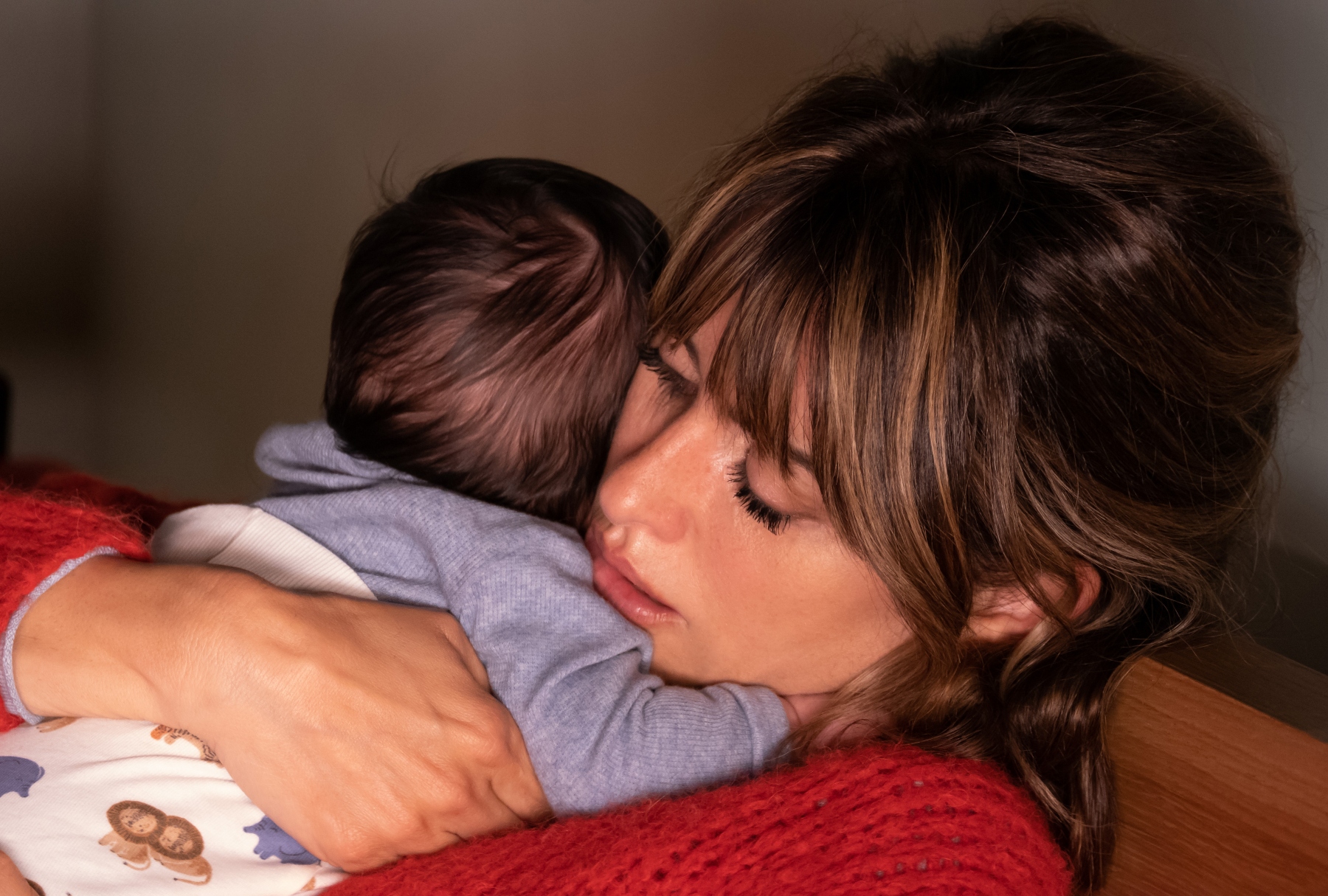
He knew my dad was missing figs from home. And so, he planted that tree . . . My dad tried to teach me how to drive. That same neighbor was like, I’ll do it. He would pick me up and he would take me on driving lessons every week . . . It was: I see a gap, I’m going to fill it. You have a need, I’m going to meet it. That just is so core to how I was brought up, and I think it’s become an integral part of who I am and how I think about how we’re supposed to be in relationship with each other or what it means to be in community.

That is something that struck me as well, because it’s been a big part of my life living in Appalachia and raising my son there. It’s something that I feel people don’t always understand about the region: that the community helps people, helps strangers. There is mutual aid going on that’s been going on for generations, that people may not know about.

I just saw it all the time: people giving so freely even when they might not have had that much themselves. It wasn’t transactional. It was: There’s a gap, we’ve got to fill it. That’s how you take care of people. You fill the gaps. I think there’s something about rurality and isolation that also supports that because you’re not going to get it from somewhere else. There’s not anyone else to give it to you, so if you don’t rely on each other, it’s just not going to happen. 

That is so different from my life now living in a city, where everything is theoretically at your fingertips. I think it makes people a lot less able to ask for help because it’s so available. You can get it. And so, you feel like, I shouldn’t ask for it. I shouldn’t have to ask anybody to cook for me when I’m having a hard time or a health issue because I can just order something really quickly. It’s just different. There’s a difference in the decision making. There’s a difference in that whole experience than when your neighbor knows that you’re not feeling well and they just bring food over to you because they know what’s going on.

I wonder, living in a city myself now too, which has been a shock for me, I wonder if people are less likely to help here because there are so many people there’s just the assumption that somebody else will help? Somebody else will step in. Versus like you said, in a more rural place, you may be the person who has to step in. There’s nobody else.

Responsibility doesn’t get diffused in the same way. Living in a city during a pandemic, it’s been revealing to see the ways in which people struggle here with how their life has changed. In some ways, I think rural people and people in Appalachia were just more prepared for this. When you’re not seeking external stimulation in the form of going out all the time as the way that you entertain yourself, and when you have to slow down your pace — I think a lot of people in the city didn’t know how to do that.

We’re just going to stay home? I don’t know how to do that. Meanwhile, growing up, all we did was stay home or go to someone else’s house. That’s what there was to do. It just made me think a lot about how much there is for the rest of the country to learn from Appalachia about ways of being in community with each other and just ways of being — yet, that’s not the paradigm ever. I don’t think New England thinks it has anything to learn from Appalachia. And yet, I think New England has so much to learn from Appalachia.

When you were growing up, how you did stay connected to your identity as a person of color, your history and your traditions, while you were living in a place where, as you write, the total non-white population has never exceeded 5%? How do you hang on to who you are?

It wasn’t easy. I write a lot in the book about the messages, the kind of critique that was present all the time: the critique of difference. But I was super lucky to have a small Indian community to fall back on. And that’s not a thing that everybody has. I think there are a lot of folks of color living in rural areas who don’t have that group. 

In school, I was often the only person of color in my classes. On the weekends, I would get to go to spend time at the houses of my aunties and uncles, and I’d be with their kids, and I would be in spaces where everyone did look like me and did speak the language that I spoke and did practice the faith that I practiced.

Having that space, I think, did allow me to feel like: Okay, this is a part of myself that I don’t know how to bring into school or that I don’t feel like is welcome in school, but I also feel like this part of myself is affirmed in these other spaces. It does get affirmed on the weekend. It does get affirmed when we get together and have these rituals and celebrate together. And so, I think those messages of affirmation — I don’t know that they were always enough. I’m not going to make it seem like it was easy or seamless, but I think in the long run, there was enough of that happening that it did mitigate a lot of the harm that was happening in spaces where my identity wasn’t reflected.

One part of the book that I really enjoyed is the chapter about Mr. and Mrs. B and how they first connected with your family because they invited you over for food. That hadn’t really happened before because people in your West Virginia community didn’t know how to cook for vegetarians at that time. I wonder if you could talk a bit about food and how it has a role in your life as someone who’s Indian and Appalachian?

Food is one of those places where there’s such overlap. It’s 100% at the core of Indian culture and it’s 100% of the core of Appalachian culture. It was a way that my family was able to build relationships across lines. My parents had lots of friends who were white West Virginians, and what we did is we shared meals. They weren’t just inviting Indian people to our house; they were inviting white people to our house, and we were going to white people’s houses and we were cooking and sharing together. 

This was the ’80s. There wasn’t the internet. There weren’t tons of recipe books about vegetarian cooking. People were having to stretch or to think in different ways. But I do think some of those early relationships ended up being with people who just loved cooking and loved sharing meals and wanted to be in that conversation . . . My mom would make Indian food for a lot of my friends growing up. Their first introduction to Indian food was in my mom’s kitchen. There wasn’t an Indian restaurant in Charleston until the mid-’90s, but a lot of people had Indian food before then because they were eating it at our house. 

It was this interesting back and forth where I ended up becoming a connoisseur of both kinds of food. What vegetarian foods can I find in Appalachia that I really love and I’m excited about? And then also, what are the ways in which I’m bringing people into my house to explore this other cuisine? 

Aa an adult, it means that when I cook I’m always pulling from both of those places. Both of those traditions have formed me. I will just as quickly make biscuits as I will make khichdi, which is a lentil and rice dish that my mom loves to make. Those things just happen at the same time for me. They’re both part of my way of thinking about what I do in the kitchen.

Do you still think of West Virginia as home?

I do. I’ve lived in Boston for almost 20 years and I can’t get myself to call it home. I feel like it’s a failing. I should be able to say this. I’ve lived here for a really long time, but I can’t do it. It doesn’t feel like that. A lot of people who are expats from Appalachia, the thing that’s interesting is we all know that feeling of home that we had — but that doesn’t mean it exists anymore, either. It is a very weird thing to feel like you’re looking for a sensation that you’re not sure actually exists anywhere anymore.

Because you can’t go home again. Even though I know you wrote in the book about how you visit West Virginia a lot, it’s still not the same.

It’s not the same and it can’t ever be the same. The people aren’t the same. The whole context has changed. The community where I grew up, the brain drain that’s happened, the loss of jobs — it is not the same place. In a lot of ways, it’s hard to recognize. It gets harder to recognize every time I go home. And so, West Virginia is home, but I think it’s a West Virginia that is a construct in my head, and not necessarily the reality, if that makes sense. 

It’s the past. The memory is home.

Yeah. That’s right. The memory is the closest to home I ever feel.

What has the reaction to your book been? Have you talked to people from home about it? 

Some of the best reactions have been from my peers who I grew up with in West Virginia who were also Indian. One of them emailed me a couple weeks ago and he was just like, I thought we had this strange niche experience of growing up in West Virginia that no one would ever understand or believe; I just can’t get my head around the fact that not only are people going to believe it now, they’re going to read a whole book about it. 

There’s an affirmation of that experience that I think is powerful for other folks who had that experience growing up. And so, that’s been really lovely. But also, my book debut was a couple of nights ago and there was a young woman from West Virginia in the crowd. There was this moment where she was just surfacing tension she feels within herself about whether to stay here or go home. Then, I have a colleague who’s from Puerto Rico, who after the reading was like: I never would’ve thought I would have something in common with someone from West Virginia.


Want a daily wrap-up of all the news and commentary Salon has to offer? Subscribe to our morning newsletter, Crash Course.


What I’m starting to hear from people is: I’m not Indian or queer, or maybe even West Virginian, but there’s something that I’m seeing in this book that resonates for me. I keep finding myself here when I didn’t expect to. 

That reaction feels really, really lovely because that was the goal. It wasn’t just trying to write a book that was: Here’s this thing. I grew up Indian in West Virginia and you should just be shocked by that fact. I wrote a book because that experience of being queer and being Indian in West Virginia made me have a lot of questions that I think are questions that so many of us are grappling with all the time. Questions about identity, questions about community, questions about what it means to love places that are enacting policies that want to erase us. 

There are about 30 states in the United States where that question is coming up for people right now. These aren’t just personal questions. I think they’re pretty universal. I think this is a good book for people to be reading in this moment. It felt good to see people recognizing those questions as ones they also have.

I do feel like that we are moved the most and we learn the most from specific stories, and that we can take those universal questions and longing and truths from the very specific lens that you’ve placed on your life.

People might think I’m cheesy, but I actually think it’s the only way forward. We are in such a polarized moment. I don’t know what else we have besides stories right now. People are so unable to see each other face to face, or see each other on social media, or see each other in these contexts, so it’s like, can you see someone if you just will read a book? Can you see outside of yourself and see this other person and find empathy for them? 

Is story the only way that we’re going to surface that empathy in people and find a way that is not this intensely polarized space? I could be totally wrong, but it’s the only thing I feel like I’m hanging onto right now: that maybe narrative is our way through.

More stories like this

“I decide with my heart”: Penélope Cruz on her marriage, career and working with Pedro Almodóvar

Penélope Cruz gives arguably the best Oscar-nominated performance this year in director Pedro Almodóvar‘s “Parallel Mothers.” She delivers a remarkably layered turn as Janis, a single photographer who becomes pregnant and shares a room in the maternity ward with Ana (Milena Smit), a teenager. As happy as Janis is to be a mother, Ana is unhappy. And yet a switched-at-birth plot complicates the strong bond that develops between these two very different women. Moreover, a subplot has Janis seeking the assistance of Arturo (Israel Elejalde), the father of her child, to help disinter a mass grave in her hometown that dates back to the Spanish Civi War.

What makes Cruz’s work in “Parallel Mothers” so nuanced is how she shows Janis processing themes of guilt as secrets and lies threaten to upend each woman’s life. The actress, who won a Best Supporting Actress Oscar in 2009 for “Vicki Cristina Barcelona,” and was previously nominated for “Volver” (2007) and “Nine” (2010), chatted with Salon about her work with Almodóvar, motherhood, and “Parallel Mothers.”

RELATED: “Vicky Cristina Barcelona”: a competent, entertaining blend of sweetness and misanthropy

What can you say about your collaboration with Almodóvar in general, and “Parallel Mothers” in particular?

We have known each other for almost 30 years, and we are very close friends. When we are on set, is not very different. When we first met, we felt we were meeting someone we already knew. Our working relationship was very fluid, very easy, very dynamic. We connected in a way that I think was kind of shocking for us. To my fortune, we decided to keep working together. It was more his decision, because he was the one who was writing these characters. I always feel so lucky to work with him. It is such a privilege to have him as a friend.

The character of Janis is really complex in that her actions may appear self-serving, but what moved me about your work is how Janis is always thinking about what is appropriate for others, while making certain that she can live with herself. Can you talk about her character?

I never saw her as selfish. She was an orphan; we have to remember that. She has been dreaming about having her own family. She lost her mother to an overdose when she was a baby. She had no father. That’s why she wants to honor her grandmother who raised her and great grandfather. She’s a fighter, and she is trying to create a family of her own, and once she has it, another huge threat comes in.

We have to put ourselves in her shoes. What would you do in a situation like that? You are happier than ever, and you have this relationship with a baby you didn’t give birth to. She had her child from day one. I feel like I cannot judge her. Janis takes a few months to tell [Ana] the truth, but she is risking everything. Ana could decide to leave and take her daughter, and maybe Janis would never see her again, and the law would protect Ana, not Janis. It’s a tricky thing. I never saw her as doing something bad, or unethical. I had to understand her too. It was hard to shoot the scene of confession because she is risking what she loves the most.

Penelope Cruz in “Parallel Mothers” (Sony Pictures Classics)The film calls attention to the Spanish Civil War but also tackles themes of motherhood, sexuality and identity. What appealed to you and what resonated with you about this role/film?

About motherhood, Pedro always offers me characters that are mothers or pregnant or, in “Live Flesh,” I was giving birth. There was only one movie, “Broken Embraces,” where I was not a mother. He sees my strong maternal instinct. I have had this since I was a little girl. I always knew I wanted to have a family. He saw that in me. I was with him in my 20s, and we were traveling, and if I saw a baby, it was like a magnet for me. I would go and talk to strangers and pick up their babies.

What is really interesting is how he puts the two stories together. It represents the moral dilemma of my character. Janis is pushing Ana and an entire generation to look back on the past and learn from the mistakes of the past. But at the same time, she is lying about her family and her daughter. This moral dilemma was the most interesting and difficult to play. It was like two fish swimming in opposite directions in every single scene — until she confesses the truth.

I felt a huge relief personally after shooting the confession, because I worked on the character for so many months. I was really terrified of shooting those scenes because I know how important they were. Pedro shot it in an incredible way. You feel so unsafe in that house. It almost changes genre and becomes like a thriller or film noir; you think things could go really wrong. People told me they felt Janis might kill Ana to get her out of the way. I was shocked by that comment, but I can see how Pedro created such a strong atmosphere of uncertainty and insecurity. Janis was a lioness at that point. She was ready for anything, so they wouldn’t take her baby from her. 


Want a daily wrap-up of all the news and commentary Salon has to offer? Subscribe to our morning newsletter, Crash Course.


What does it mean to be nominated again, especially having won an Oscar? 

I feel so grateful for everything the Academy has given me since the beginning. I can’t believe this is my fourth nomination. I didn’t expect any of this. I’m blown away by generosity of my peers and the support and at this point I want to enjoy the ceremony and celebrate the work of the amazing people and these films that were so hard to make because of COVID. So many films had to stop shooting and release dates were pushed. So, it’s a special year for that reason.

To be nominated for a movie that is in Spanish and by Pedro, who is such a special man in my life, it shows that the Academy is more open and inclusive to movies in different languages and from different territories. To be nominated at the same time as my husband is also kind of crazy. I don’t expect to win, but I want to enjoy it and celebrate all of my colleagues, especially the two other Spanish nominations: Alberto Iglesias [nominated for Best Achievement in Music Written for Motion Pictures (Original Score) for “Parallel Mothers,”] and Albert Mielgo for his incredible short film [Best Animated Short Film, for “The Windshield Wiper“]

Has being nominated with your husband, Javier Bardem, made you competitive in any way, or does it add to the fun of the awards season?

No, we really don’t compete. We are so happy for each other. 

Can you talk about performing in both American and Spanish films? You have made films with an international roster of filmmakers.

I’ve also worked in Italy in Italian, and in France, in French. I Iove learning languages. I have been able to do that throughout my career. I see it all as one career, I do not separate America from my work in Europe. The bigger the territory, the more material you have to choose from, the more possibilities you have to find challenges, and things that are different from what you have done, or from yourself. You seek characters who are difficult, because they are more exciting. I see it all as part of one path and one career. I don’t plan, “I’m going to make two American films this year,” I decide with my heart, and push and challenge myself. But I am very lucky and grateful that I get those opportunities from directors who put their trust in me.

More stories to read: 

Riz Ahmed rapping and a dark comedy about prison: A look at the Oscar-nominated live action shorts

The five nominees in the Oscar live action shorts category are all compelling (if depressing) tales. This international collection of shorts, which range from 12-38 minutes in length address topical issues that resonate.

Along with the documentary and animated shorts nominated this year, you can now check out the live action nominees in theaters and selectively streaming. 

Here is a rundown of this year’s contenders and where you might find them streaming:

“On My Mind” (YouTube)

In the Danish short, , Henrik (Rasmus Hammerich) walks into a bar, orders a drink, and wants to sing karaoke. While the bartender, Louise (Camilla Bendix) is amenable — he slips her money — her husband Preben (Ole Boisen) is not. But Henrik will not leave until he sings (and Louise) records, his rendition of “Always on My Mind” for his wife.

While there is conflict between Henrik and Preben, once Henrik explains why he is so adamant, “On My Mind” shifts into something more poignant. A scene, set outside the bar, where Henrik is holding his wife’s hand, is deeply moving. This beautifully made and well-acted short conveys real, immediate emotion in under 20 minutes — which is what all the best shorts do — and as a motif about souls is expressed, it achieves a level of grace. If there was any justice at the Oscars, this film could easily steal a victory. You can watch it below:

www.youtube.com/watch?v=4aebKJ0vxU0

“Please Hold”

Set in the not-to-distant future, this short tackles wrongful imprisonment as Mateo (Erick Lopez) is arrested by a drone and confined to a cell without even understanding the reason he is being accused. The nightmarish scenario gets even worse as he is managed by a series of automated screens that offer him draconian options. As Mateo grapples with his situation, which includes a lack of money, the film reveals the inhumanity and repercussions of the corporate-run prison industrial complex.

Director and co-writer KD Davila is clever with his use of technology, and there is much to appreciate visually in a film that is mostly set in a single location. The graffiti, which includes, “Don’t eat the chicken,” is pretty amusing, but even the film’s climax makes a pointed commentary. Lopez gives a strong performance that carries this short. It is worth seeing, but it is unlikely to win.

“The Dress”

This Polish short is as tough and as hopeful as its protagonist, Julka (Anna Dzieduszycka), a little person who cleans a motel that is frequented by truckers. Incredibly lonely and craving some tenderness, she eyes Bogdan (Szymon Piotr Warzawski) in a bar one night and to her delight, he eyes her back. Their chat is just flirtatious enough that Julka has hope that she might finally get to lose her virginity. So, she decides to get a sexy new dress for the occasion. But will Bogdan fulfill her romantic fantasies?

“The Dress” builds its tension as the would-be lovers reconnect after several days. Writer/director Tadeusz Lysiak gives Dzieduszycka plum part, and she is empathetic sprawled out naked in her bed imagining being with Bogdan or having a self-pitying moment wanting to “be normal.” “The Dress” ends on a curious note, but the story is likely to continue in most viewer’s heads because Julka is someone to care about and Dzieduszycka gives such a strong performance.

“The Long Goodbye” (YouTube)

This is the most political film of the nominees, and, at 12 minutes, also the shortest. Riz Ahmed stars as himself, hanging out with his extended family in their home in the UK. While it appears something sinister is going on outside, that comes to light when the police forcibly enter the house and take everyone prisoner.

As the situation escalates, Riz has a rap monologue in direct address (while handcuffed) about the violence of racism, and the dignity of immigrants. It’s a powerful mic-dropping sequence, and it will likely secure Ahmed, who was nominated along with director/co-writer Aneil Karia, the Oscar he was denied for “Sound of Metal.”  


Want a daily wrap-up of all the news and commentary Salon has to offer? Subscribe to our morning newsletter, Crash Course.


“Ala Kachuu — Take and Run” (on demand on Vimeo)

This short is set in Kyrgyzstan, where 19-year-old Sezim (Alina Turdumamatova) dreams of going to college. However, her mother (Taalaykan Abazova) insists she gets married, as is tradition. Running away to take an exam that will hopefully secure her a scholarship, she connects with her friend, Aksana (Madina Talipbek), another young woman from her village. (Aksana, however, brought shame upon her family by not marrying). As Sezim adjusts to life in the city, she is kidnapped by Dayrbek (Nurbek Esengazy Uulu) and forced into marriage. She is told happiness will come when she has children, but Sezim wants to escape. When her parents arrive, after the wedding, they insist she accept the situation and stay in the village.

Writer/director Maria Brendle’s honorable film shows how the women in this culture, and even Dayrbek to a degree, are caught in this cycle of oppression. Yet although “Ala Kachuu—Take and Run” explores this culture with both authenticity, the film’s contrivances ultimately make it more important than good.

All the Oscar-nominated shorts are available to watch in theaters

More stories to read: 

Feeling hotter than it should be where you live? You’re not alone

If it’s feeling unseasonably warm where you live, there’s a scientifically alarming reason for it. 

According to recent updates from Extreme Temperatures Around The World, a weather specific Twitter account run by extreme weather record tracker Maximiliano Herrera, Earth’s poles are currently exhibiting unusually extreme heat with areas of Antarctica more than 70 degrees warmer than average, and parts of the Arctic over 50 degrees warmer than usual.

Related: Climate change is intensifying Earth’s water cycle 

“They are opposite seasons. You don’t see the north and the south (poles) both melting at the same time,” Walt Meier, a scientist at the National Snow and Ice Data Center in Boulder, Colorado told The Associated Press Friday night. “It’s definitely an unusual occurrence.”

As a whole, The Antarctic continent was about 8.6 degrees warmer on Friday than a baseline temperature for this season established between the years 1979 and 2000, according to the University of Maine’s Climate Reanalyzer, based on U.S. National Oceanic Atmospheric Administration weather models reported on by Associated Press. 

“Not a good sign when you see that sort of thing happen,” said University of Wisconsin meteorologist Matthew Lazzara.


Want a daily wrap-up of all the news and commentary Salon has to offer? Subscribe to our morning newsletter, Crash Course.


The poles aren’t the only areas undergoing heat anomalies. According to the National Oceanic and Atmospheric Association‘s spring 2022 outlook, above-average temperatures are predicted for the majority the U.S. from April to June. 

“NOAA’s Spring Outlook helps build a more weather and climate ready nation by informing local decision makers and emergency managers of this spring’s hazardous weather, such as extreme drought,” said NOAA Administrator Rick Spinrad, Ph.D. “NOAA’s seasonal outlooks provide advanced warning of the conditions to come, enabling communities to make preparations that boost their resilience to these hazards.”

“Dry conditions will bring an elevated risk of wildfires across the Southwest and southern Plains and north to the Central Plains, especially when high winds are present,” according to the NOAA. “Drought conditions in the Southwest are unlikely to improve until the late summer monsoon rainfall begins.”

This unusual heat is something that will be happening globally this spring and summer. The Meteorological Department also predicts severe heat in India between March and May, according to News18. The UK weather forecast is also already warning of significantly higher temps beginning as soon as April. 

Read more:

How nuclear weapon safeguards work — or fail

During the nadir of the Watergate scandal in the 1970s, President Richard Nixon hit the bottle hard — to the point that the American security establishment was scared that he might drunkenly cause an international incident. Given that Nixon had control over the American nuclear arsenal, this was, to say the least, a sobering prospect. Yet thankfully for humanity (if not as much for the integrity of American democracy), the military figured out a way to circumvent the elected commander in chief.

“If you go back to the Nixon era, right toward the end during the Watergate period, when Nixon was drinking heavily and had become erratic, the secretary of defense at that time was Jim Schlesinger, an extraordinarily bright man and very principled,” David Gergen, a veteran political operative whose career traces back to Nixon’s administration, told Salon in 2017. “And he told the joint chiefs, if you get an order from the president to fire a nuclear missile, you do not do that. Don’t take an order from the commander in chief until you call me and I give you personal approval, or you get the personal approval of the secretary of state.”

The Nixon incident seems particularly relevant in 2022, as Russian President Vladimir Putin’s botched invasion of Ukraine is again raising the prospect that one world leader’s personality quirks will result in a nuclear war. Yet there are mechanisms in place, figuratively and literally, to protect the human species from the capriciousness of the handful of people who get to control nuclear weapons. Some of those controls are human — people, often military brass, that provide some friction in-between a politician and the big red button. In other cases, the controls are technologic — electrical controls designed to stop an accident or a rogue incident.

Bombs are designed to be idiot-proof (though idiots are unpredictable)

According to the nonprofit global security organization The Nuclear Threat Initiative, the way to assess if a nuclear weapon is “safe” is to determine if it will “produce yield,” which is the scientific term for a nuclear explosion. They also differentiate between an accidental detonation of that nature, and a lesser accident that merely spreads nuclear material around. While the latter event is still terrible (the Chernobyl nuclear incident in 1986, though involving a plant and not a weapon, is a good example of why), it is the former that most frightens both experts and the public — and has prompted a number of key design decisions in the devices themselves.

The gold standard is something known as the Walske Criteria, named after nuclear expert Carl Walske. He determined that every weapon must be designed so that, from a strictly mathematical perspective, there is only a one-in-a-billion chance that it could produce yield in a routine situation (such as while it is sitting in a silo) and only a one-in-a-million chance of it doing so during a freak occurrence like being dropped or an explosion going off near it. Every weapon contains layered components and numerous systems that have to all be activated in a precise order before it can detonate. 

One crucial concept, attributable to Los Alamos physicist Harold Agnew, is known as “one-point safety.” Agnew recognized that human beings who interact with weapons every day will eventually develop a casual approach toward handling them, making small accidents inevitable. Each weapon would need to be able to withstand the impact of, say, being fumbled onto a tarmac; this principle was eventually broader to cover being mistakenly dropped from a large height. According to a 1987 report by Los Alamos weapons designers Robert Thorn and Donald Westervelt, “it thus became a major design objective to assure that even when fissile and high-explosive components were fully assembled, there would be no nuclear yield if an accident resulted in detonation of the high explosive. Since such a detonation might start at any single point on or in the explosive components, this design objective came to be known as ‘one-point safety.'”

Of course, this does not account for Russia’s nuclear arsenal, nor those of other nuclear countries like China, France, India, Israel, North Korea, Pakistan and the United Kingdom. It does not account for how America’s nuclear arsenal is aging, and as such is in constant risk of experiencing potentially dangerous mechanical failures due to simple neglect. In addition, it does not consider the situation with Nixon — where the “mistake” is not mechanical or human error, but rather a human bad actor.

It takes a village (of bureaucrats and politicians) to set off a nuclear bomb

In theory, no rational person would intentionally implement a policy that would result in the end of the world — and, by extension, their own death. This hypothesis has informed foreign policy since America dropped nuclear weapons on Japan in 1945 to end World War II. As Dr. Jasen Castillo from the George H.W. Bush School of Government at Texas A&M University told Salon earlier this month, “there are very few cases where people pursue goals other than self-preservation — or in other words, where self-preservation is not the primary goal.”

Yet he also acknowledged exceptions such as Adolf Hitler vowing to “fight to the death” near the end of World War II. Fortunately for humanity, Hitler did not have nuclear weapons — but what of the Nixons?


Want more health and science stories in your inbox? Subscribe to Salon’s weekly newsletter The Vulgar Scientist.


The unsettling answer is that, to the extent that countries are transparent about their procedures for using nuclear weapons, it seems that the power is concentrated in the hands of the executive. This means that, for Russia, Putin alone has discretion over whether to use those weapons. That power is held in the Cheget, a small briefcase that Putin keeps close to himself at all times. It provides him with complete and undisputed command over Russia’s entire strategic nuclear arsenal, and allows Putin to immediately transmit orders to the appropriate military personnel. Putin is also keeping himself physically remote from all but a handful of people, rarely meeting with people face-to-face and when doing so almost always maintaining significant distance. It remains unclear how these details impact the processes for his use of nuclear weapons.

In the United States, however, things are not necessarily much better. During Trump’s presidency, Gergen told Salon in 2017, “I’ve asked people in the Defense Department, ‘Do you think there’s a similar arrangement today between [Secretary of Defense Jim] Mattis and the four-star generals?’ And the answer they’ve given me back — I don’t think there’s any reason to believe he’s giving such an order … [is] that if they’re given an order that they think comes from an erratic personality, they will double-check it with the secretary before they carry it out.” In both the Nixon and Trump situations — as well as those for any other hypothetical presidents who may be unfit to control America’s nuclear arsenal — it seems that unelected military officials adopted a “fly by the seat of their pants” approach to contain potentially volatile situations.

Things got hairy a few times

A “Broken Arrow,” in this context, does not refer to a damaged street sign, but one of the dozens of occasions since 1950 when there was a dangerous nuclear weapon accident. One of the most infamous is the so-called Damascus Incident, which occurred in 1980 in an Arkansas town of the same name. While performing routine maintenance, an Air Force repairman accidentally dropped a heavy wrench socket, which landed at the bottom of the silo after bouncing off a nuclear missile and striking a pressurized fuel tank. The entire area was evacuated and, more than eight hours later, an explosion killed one person and injured 21 others. 

Sometimes the incidents drag in innocent countries. In 1966, a B-52 bomber carrying four hydrogen bombs was flying over Spain as part of America’s policy to always have a first strike capability over the Soviet Union in the event of a “hot” war. During a routine refueling, the bomber accidentally crashed into a KC-135 tanker. The entire unarmed nuclear payload was released; three of the hydrogen bombs landed on the ground while the fourth was dropped into the Mediterranean Sea. (Seven military personnel were also killed in the incident.)

Then there are other types of close calls. Many are false alarms — some official being incorrectly told that a major nuclear retaliation might be warranted based on faulty information usually due to human or technical errors. But sometimes things get even hairier. In 1961, a B-52 bomber experienced a mechanical failure and in the process accidentally dropped and almost detonated a hydrogen bomb in North Carolina. As journalist Eric Schlosser told NPR in 2014, “One of those hydrogen bombs went through all of its proper arming steps except for one, and when it hit the ground in North Carolina, there was a firing signal sent. And if that one switch in the bomb had been switched, it would’ve detonated a full-scale — an enormous, enormous thermonuclear explosion — in North Carolina.”

Read more on nuclear weapons:

Bombed out: Why we keep on making war, and tolerating it

The hardest thing I do as a writer is trying to find words to describe the indescribable. It doesn’t matter what it is — beauty or bliss or sadness or tragedy or dullness or despair or horror or ecstasy or the ordinary — it’s the writer’s job. I remember as a young man having a dream that someday I might come up with one great idea. Just one would do it, but that was my goal. Now I realize what I’ve been doing for more than 50 years is excavating old ideas and finding new ways to express them. 

We are witnessing one of man’s very oldest ideas in Ukraine. Call it the will to power or the urge to take what is not yours or the wrath of ignorance and pride, every time war is waged it is the same. War is man’s inhumanity to man on a mass scale. 

Perhaps that is why we become so readily inured to images of war. We have seen them all before — the anguished, bleeding faces of the wounded, the bleakly inert limbs of the dead, the angry fire of explosions, the darkness and sameness of destruction — to borrow Hannah Arendt’s term, the sheer banality of it all.

RELATED: Ukraine and the dark lessons of war: What does it mean to “take” a country or a city?

War is brand new when it first happens, yet after only a day it is already old to us because it has been headlined on the front pages of newspapers, featured on the covers of magazines, flickered across our televisions, splashed on the big screen of movies in Technicolor, engraved in the text of great novels and first-person reports from the front. The most extraordinary scene in the 1970 movie “Patton,” the one that I believe gives it staying power, comes when Gen. George S. Patton is on a bluff in North Africa or Sicily seeming to reminisce about having been at that exact spot before during ancient battles. He ends his oration by saying this about war: “I love it. God help me, I do love it so. I love it more than my life.” 

I don’t know if Patton ever said the lines from the movie in real life, but I do know that after I took my grandmother, Sara Randolph Truscott, to see “Patton” the week it came out, I asked her what she thought, and she turned to me and answered with a little smile, “Why, it was just like being in the room with Georgie,” calling him by a nickname only his family and close friends used. 

Her late husband and my grandfather, Gen. Lucian K. Truscott Jr., knew Patton and served on the same cavalry posts with him between the wars. It’s safe to assume she would have known what the man was like, so that’s probably as good an assessment we’ll ever get of the movie’s essence. In Patton’s rumination on war, he is saying the unsayable out loud. It makes him seem like a monster, but we are all monsters, we humans who love war, or at least tolerate it such that we keep waging it over and over and over again. 

It chills the soul to think that he might be right, but here we are again, 52 years after “Patton” was released, bearing witness to yet another war being fought over the same ground, in the same cities, for largely the same reasons as the war against the Nazis that Ukraine (and Russia) fought 81 years ago. It’s tempting to ask why nothing is ever new, but I’m afraid we know the answer all too well. 


Want a daily wrap-up of all the news and commentary Salon has to offer? Subscribe to our morning newsletter, Crash Course.


There is one image of war we haven’t yet seen in the coverage of Russia’s war against Ukraine. We’ve seen people sheltering in subway stations and basements and people traveling by train or by car to get to western Ukraine or Poland to escape the bombing and shelling. But we haven’t seen the people left behind who don’t have the wherewithal or money or even the energy to escape the cities and towns being bombed, and who end up stuck trying to survive in the ruins. I saw an interview with an expert on Ukraine this week who said that 10 percent of the population already lived below the poverty line of about $5 or $6 a day, even before the war began. It won’t take long for as many as 90 percent of Ukrainians to be in the same position, he said.

I am certain that there are already people in Ukraine living in the bombed-out ruins of rural homes and urban apartment buildings with no electricity, heat, source of food or water — just existing on nothing. Because I haven’t traveled to Ukraine to cover this war, and because all wars are essentially the same, I’ll tell you what I saw in Afghanistan in March of 2004 in the ruins of some old apartment complexes and office buildings on the edge of Kabul.

It was like a landscape out of a near-future movie about the world after the Big Bomb, but it was real: Families had fashioned shelters out of the rubble of the buildings, using scrap wood and metal for roofs and more wood scraps and piles of rubble and cheap carpets and blankets for walls, and they were living in the midst of this horrific destruction without electricity or water and only small cooking fires for heat. Here and there, I could see pits that had been dug out of the dirt and sealed with mud walls to make bread ovens, where they could bake flatbread by slapping dough on the curved walls of the pits. But none of the ovens had fires going, because the families didn’t have any flour and water to make dough.

I had stopped at a small bakery next door to the Mustafa Hotel, where I was staying in Kabul, and picked up a bag of sugar cookies that I planned on eating as snacks later in my room. I had the bag stashed in a kilim shoulder bag I was carrying, but almost immediately upon entering the ruins, I was surrounded by a crowd of starving children. Their faces were dirty from having not been washed in weeks, and many of them had open infections oozing pus on their legs and arms. They were pawing at me and chattering in Dari and my translator told me they were asking for food and water, so I took out the bag of cookies and began handing them out. It was like being set upon by a pack of wolves, their fingers were tugging and scratching at my pant legs and arms as I tried to spread the cookies evenly between the children. Within a minute or two, they were all gone and the children disappeared into gaps in the rubble and behind the thin rugs where their mothers huddled in the cold. 

With my translator, I tried to talk to a few of the women to get their stories: How they had ended up in these ruins in Kabul, how long they had been there, the usual questions a reporter asks in a war. Their husbands, the fathers of the children, had all been killed in fighting between Afghan factions or by the Taliban or by U.S. soldiers, so there were no men in the ruins. My translator explained that widowed women with children were undesirable and were shunned in their villages, which was why they had traveled from distant areas looking for shelter and work and aid from NGOs in Kabul. They had noplace else to go; that’s why they were living in the ruins among the detritus of war.

I went back to the ruins once more before I left Afghanistan and handed out flatbread and some bottled water this time. The scene was the same. The children clawed at me desperately. It was all I could do not to throw down the bag of bread and the water bottles and run. 

When I returned to L.A. a week or so later, there was a sore on my left forefinger that wouldn’t heal. I went to my GP. He examined my finger and took a swab and asked me to wait while he had it tested. A couple of hours later the test came back. It was an MRSA infection. He asked me what I had come in contact with in Afghanistan that might have caused it, and I thought immediately of the children in Kabul with their open sores and cracked lips and desperate eyes. I had touched them repeatedly while handing out cookies and bread in the ruins. 

The doctor gave me a big shot of antibiotics and put me on the only pill known to knock down MRSA infections. The sore got worse for a couple of days and then began to heal. The doctor told me that if I had waited to get it treated for even a day longer, I would probably have lost my finger. If I had neglected the infection longer, I could have lost my hand.

This is one of the very old ideas about war I have excavated: After the bombs have fallen and the artillery shells have exploded and the missiles have found their targets, what is left are women and children with no money, no food, no water, living in bombed-out ruins with no place else to go. That was what happened in Afghanistan, and it happened in Sicily and Vietnam and Korea and Iraq and Aleppo and Rome and Jerusalem and Cairo and Mogadishu, and now it is happening in Ukraine. History becomes present becomes future and nothing changes. The thing that is forever is war. 

Read more on the Ukraine war and its consequences: