Spring Sale: Get 1 Year, Save 58%

“Flowers in the Attic” writer on “The Origin” ending, whose story needs telling and that swan bed

From Gregory Maguire’s “Wicked” to “Moriarty” of Sherlock Holmes, villains are increasingly having their day. And having their stories explored: full of complications and messy past trauma that, while not always excusing their evil deeds, maybe shed some light upon the circumstances that led to their dastardly behavior.    

Perhaps nowhere is this more recently evident than in A+E and Lifetime’s new limited series “Flowers in the Attic: The Origin.” The show teems with the emotion, cliffhangers and Gothic lore we’ve come to love from the rich mind of V.C. Andrews, the bestselling novelist whose first novel “Flowers in the Attic” introduced the world to the doomed Dollanganger children, forced to grow up in secret in the attic of a stately Southern manor. 

But how did they get there?

Flowers in the Attic: The Origin” rewinds the story, focusing on the woman who locked them inside (she locked her heart, hopes and dreams away long before): their grandmother, Olivia Winfield (Jemima Rooper). Based upon the novel “Garden of Shadows,” the prequel to “Flowers in the Attic” and the first book prolific ghostwriter Andrew Neiderman wrote after Andrews’ untimely death, the series zooms in on Olivia’s life and history. 

In the finale we see the culmination of Olivia’s experiences at Foxworth Hall, the ancestral home of her wealthy and abusive husband Malcolm Foxworth (Max Irons) and where she’s been forced to cover up multiple murders and rapes. Olivia’s remaining child – one son died and another turned out for being gay – Corrine (Hannah Dodd) has left home, choosing to forego her inheritance in order to marry her true love Christopher (Callum Kerr), despite learning that they’re half-siblings.

Over the course of the next 15 years, Olivia’s life is once again transformed. She becomes Malcolm’s carer – but only after she botches murdering him, leaving him without speech and using a wheelchair. Her cousin John Amos (Paul Wesley) comes to live with her, which is when Olivia finds religion, but eventually is forced to kill John Amos in self-defense when he assaults her. In the meantime, Corrine and Christopher have been living a great life in Pittsburgh with their four kids, but after an accident kills Christopher, Corrine is destitute and forced to return with her children to Foxworth Hall . . . and their fate in the attic.

Bringing Olivia to life brought “Flowers in the Attic: The Origin” executive producer and co-writer Paul Sciarrotta back to childhood. Longtime friends with Neiderman, Sciarrotta centered V.C. Andrews’ style — and fans’ hopes and expectations into the series. Andrews “focused a lot on pace and she wanted the reader to keep turning the page. Things happened quickly in her books,” Sciarrotta says. “And I kept that in mind.”

Salon spoke with Sciarrotta about adapting Andrews, why her stories still resonate, the shocking ending of the series, and yes, that swan bed. 

This interview has been lightly edited for clarity and condensed. 

What was your history with V.C. Andrews, and how did you come to be a part of this project? Had you read the books before as a kid?

I had read just the main book “Flowers in the Attic,” the famous book, when I was probably in middle school, and that was it. It had been passed around through a bunch of people at school and people were whispering about it. Then, many years later, I was working on “Jane the Virgin,” and Jennie Snyder Urman who created the show came to me and said, “Look, I have the rights to ‘Flowers in the Attic.’ Are you interested?” I was so excited. It brought me back to that place when I was younger. I remember that day I ran out to Skylight Books over in Los Feliz. I bought a copy, reread it that night, and was just in for the ride.

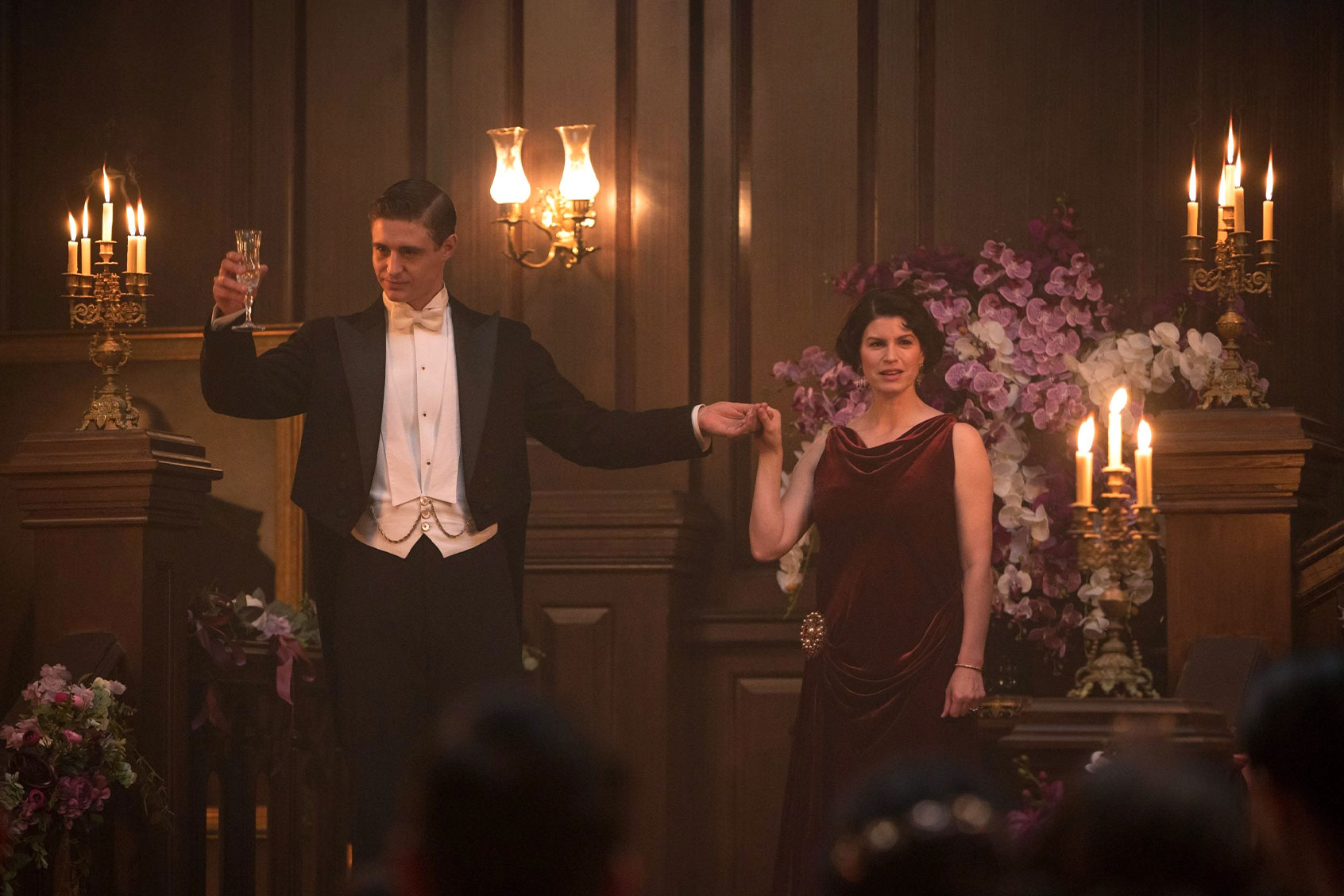
Flowers in the Attic: The OriginMax Irons as Malcolm Foxworth and Jemima Rooper as Olivia Winfield Foxworth in “Flowers in the Attic: The Origin” (A+E/Lifetime)[The show] was supposed to be about the original book with the kids in the attic that everyone knows. Then when I started doing research, I realized there was this prequel book called “Garden of Shadows,” which got me so excited to learn that there was an origin story for the grandmother character. And when I brought that over to the folks at Lifetime, they were equally excited. That’s how we got on this path.
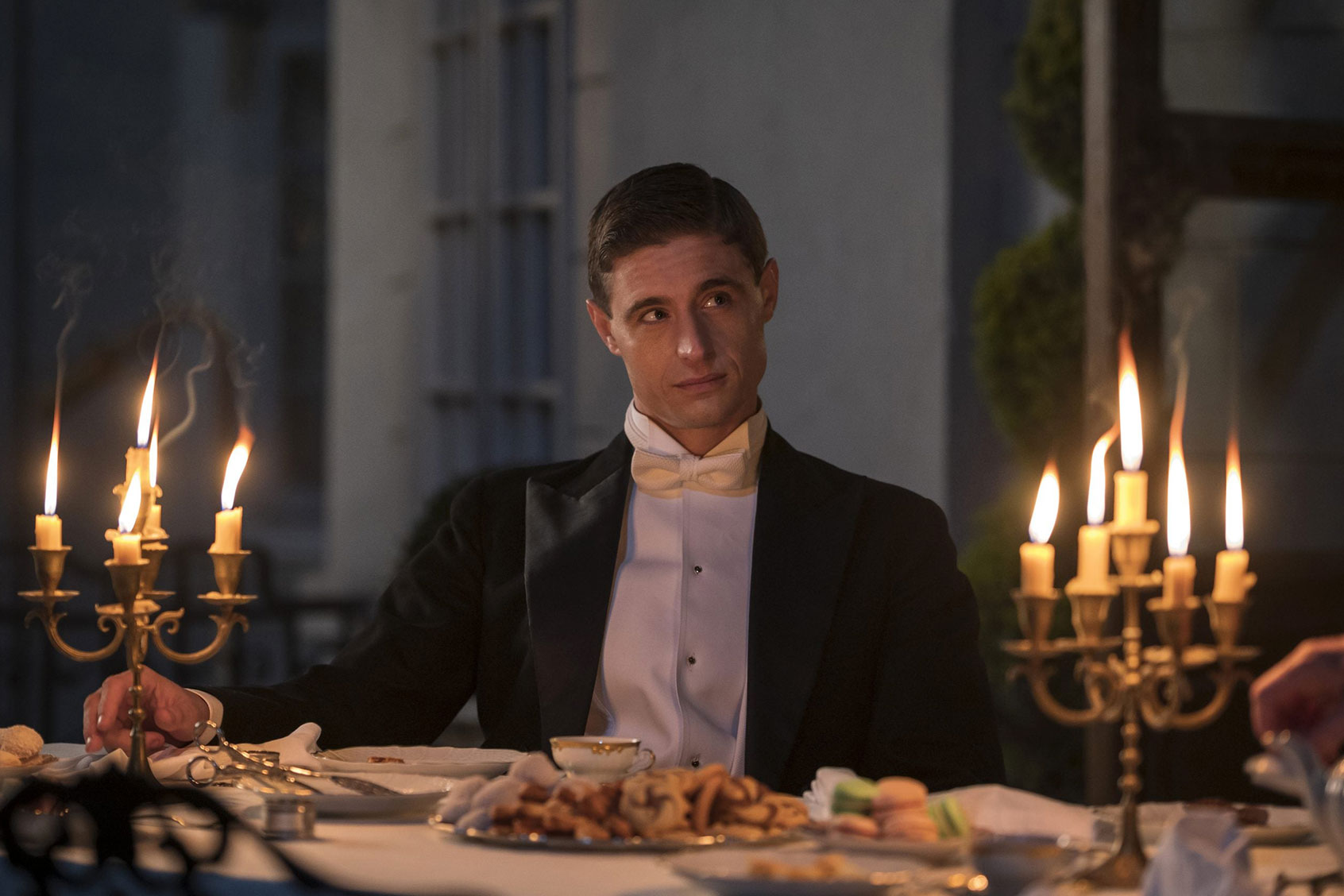
What were the challenges and joys of that? Because, on one hand, this is a very well-known and beloved story. But on the other hand, I think the prequel isn’t quite as known, right?

There’s a certain responsibility I felt to the fans of “Flowers” and just the fans of V.C. Andrews in general. And I had a few things on my side I was very fortunate to have. One of them was Andrew Neiderman. He’s the ghostwriter for V.C. Andrews, and “Garden of Shadows” is actually the first book that he wrote under her name. And since then, over the past 40 years, I think he’s written over a hundred books under V.C. Andrews. I think he’s the most prolific ghostwriter ever, from what I understand. We’ve become really great friends over the years. And so, I had this resource, the mind who actually wrote the book and the mind that was living in the V.C. world for the past four decades.

I started sketching it. I wanted the wings to come out. I wanted it to be an enveloping bed, in a way.”

I was able to bounce a lot of ideas off of [Neiderman] to sort of test: Is this too far? Is it not far enough? Is this within the language and vocabulary of the V.C. world? So that part was great, but more than that, the book gave me somewhat of a structure. But there was so much more that we got to do because we had a full eight hours to explore just this one book. I was able to bring in a lot of new characters, a lot of new relationships in the house, outside of the house, that I think sort of hopefully enrich the world of Foxworth Hall.

Flowers in the Attic: The OriginFlowers in the Attic: The Origin (A+E/Lifetime)And so many elements of the stories in the world of V.C. Andrews loom large in readers’ and viewers’ minds. You know that one of my favorite elements was the swan bed.

Oh yeah.

How was the swan bed created? I know it’s in the story, but how did you decide how to make it your own for “Flowers in the Attic: The Origin”?

I’d seen the movie from the ’80s, “Flowers in the Attic,” and all the theatrical versions of it. Foxworth Hall didn’t quite look the way I had pictured it. The swan bed didn’t quite look the way I had pictured it. This was my chance to get what was in my head out there.

I think that the ridiculous does happen in real life, and it could happen to any of us, and the horrifying could happen to any of us.”

We were in pre-production in sort of the peak of the pandemic. It was the winter of December of 2020, January 2021. I was here in Los Angeles, and our art director was, I think, in South Africa at the time, about to go to Romania where we were shooting. We were on Zoom pretty much every day. And I was trying to describe what I wanted for the bed. I don’t think it was translating. So, I started sketching it. 

I wanted the wings to come out. I wanted it to be an enveloping bed, in a way. And that’s how it started. And then we actually had it hand-carved out of wood in Romania. It took many months.

It’s both beautiful and terrifying at the same time.

That’s the goal. And Foxworth Hall, too, I wanted it to be big and imposing and scary but also achingly beautiful. And we were able to build a few of the biggest rooms on stages and the rest we found locations for.

It really does feel that way. I mean, it feels like a character in the show in a way that I’ve not felt about the Hall before.

That’s good to hear. And I wish you could see the actual building because the actual location, the house, is about one-quarter the size of what you see on TV. So, most of the exterior that you’re looking at on television is VFX.

Flowers in the Attic: The OriginFlowers in the Attic: The Origin (A+E/Lifetime)How do you balance the melodrama of things like the swan bed and the stories we know so well from the V.C. Andrews world — how do you balance that kind of Gothic, over-the-topness with just really simple emotions of love and the kind of universal theme of family secrets?
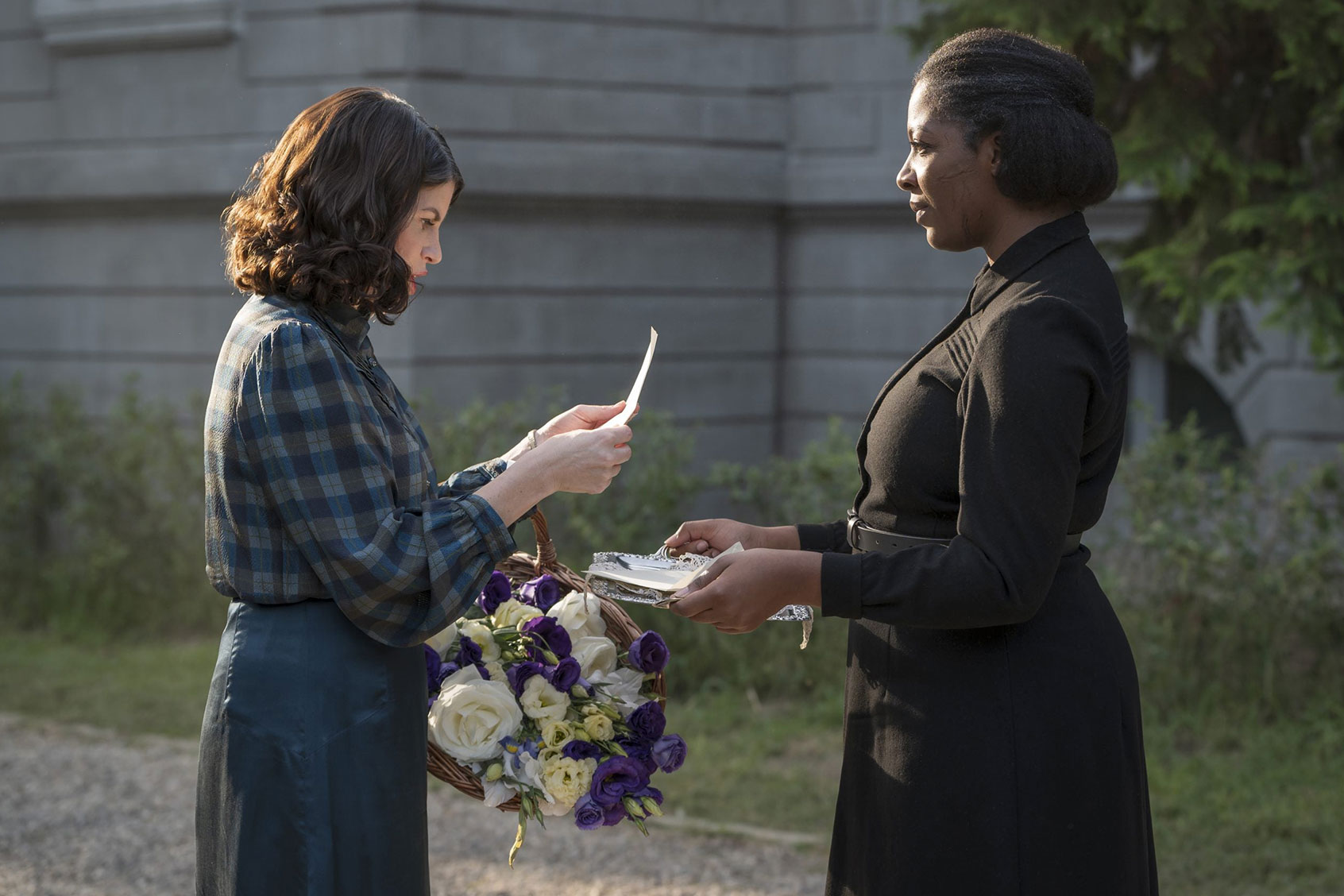
I go back to the same set of rules for whatever I’m working on, which is: How would someone actually react? I think that the ridiculous does happen in real life, and it could happen to any of us, and the horrifying could happen to any of us. I think it feels real to an audience if people around that event are reacting to it in a way that we might react to it as well.

There are reasons why people become bad people, but they don’t start out that way.”

In this particular show, it was all about Olivia. It is very much her journey. All the characters have their own arc, but the story is really about: how does this woman become the grandmother who locks these children in an attic? And whenever I felt like we were straying either in story or in tone or whatever it was, whenever I was doubting our direction, I would just go back to Olivia. Where is she headed? Where are we on that journey right now? And how does this particular moment, be it a piece of wardrobe, a prop, story point, whatever— how does that serve her journey?

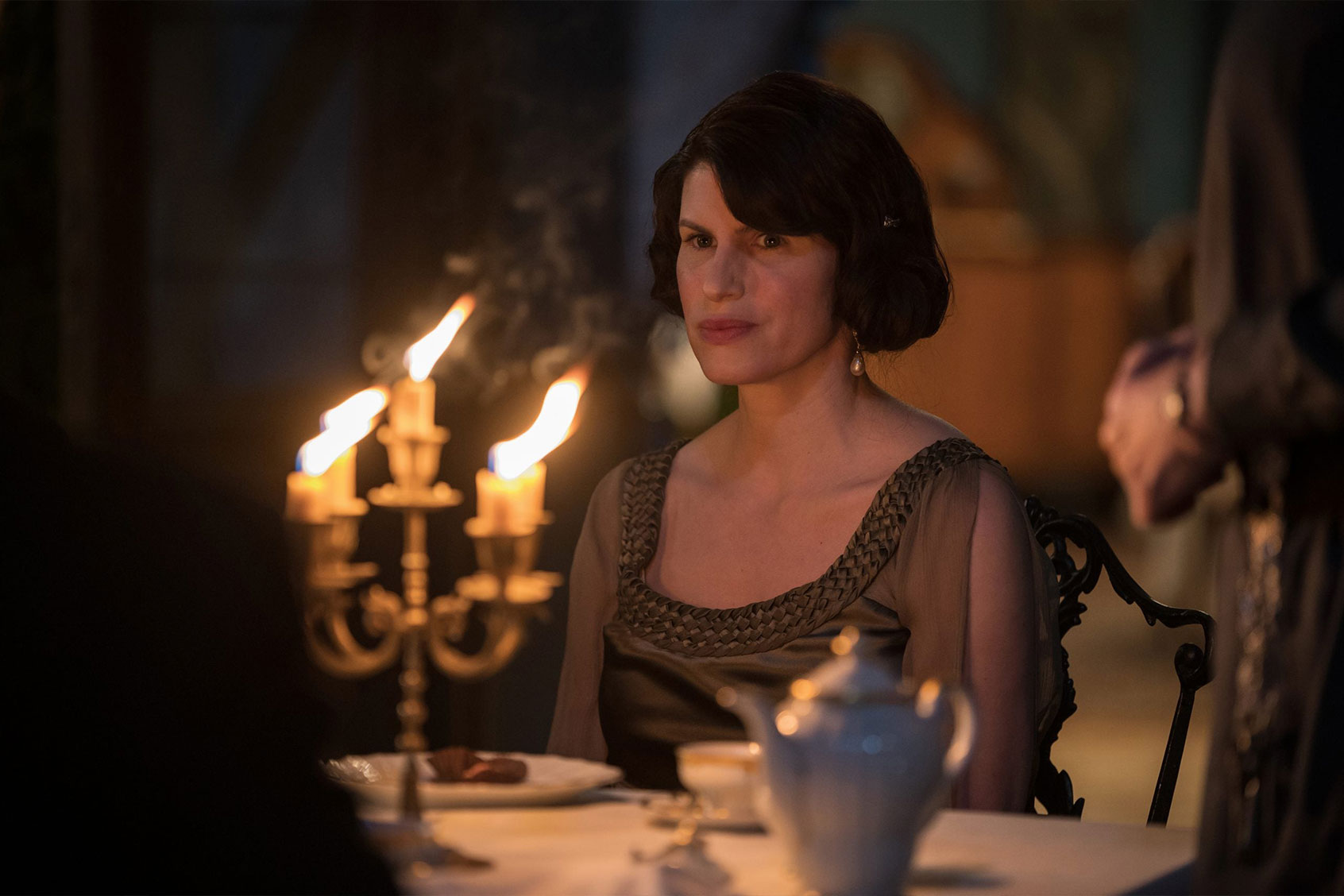
Flowers in the Attic: The OriginFlowers in the Attic: The Origin (A+E/Lifetime)I’m glad you brought Olivia up because I think it’s remarkable what you’ve done with her here. She’s so hated in the later stories. But in this story, her motives do become a little more clear, or at least we know the trauma that happened to her. What was the process of making her into a real person and not just the villain?

I don’t think people are born monsters. I think that there are reasons why people do things and there are reasons why people do bad things. And there are reasons why people become bad people, but they don’t start out that way. I was trying to figure out what that was for her, and the seeds of it were in “Garden of Shadows.” The Olivia that we met in that book was a very strong minded, independent woman ahead of her time. So I took that and ran with it.

It’s really easy to point to Olivia as the villain, but Corrine, I think, has a lot of secrets and motivations that are questionable.”

And to be honest, so much of Olivia is — you can put it on the page. You can hope, you can wish that it works out, but casting was such a big part of the character. And thank goodness Jemima Rooper came into my life. She was incredible. For five months in Romania, she was in almost every scene. She never had a day off. All credit to her for what Olivia became.

How did you decide the ending of the show?

I knew that I wanted for the last image the audience sees to be the grandmother locking the kids in the attic, because that was the arc. How did she get to that place? And that is about, I don’t know, 80 to 100 pages into “Flowers in the Attic,” the famous book . . . so we went beyond “Garden of Shadows.”

“The entire book takes place through the lens of the kids in the attic. You don’t know what’s happening downstairs.”

Robin Sheppard was our incredible director and we ended up shooting the last scene on the last day of production, which rarely happens. It was an emotional moment for all of us; we shot multiple versions of it. And in the edit, we sort of combined all of them into one.

It is emotional now that you mention it because it’s scary. It sets up what we know is coming, but Olivia has been on such a journey.

I really do hope that there’s a lot of blurred lines. Who’s wrong? Is it Olivia? And why? And also, what about Corrine? I think that it’s really easy to point to Olivia as the villain, but Corrine, I think, has a lot of secrets and motivations that are questionable . . . there’s a lot we don’t know about Corrine still. And I think that would be a really interesting place to explore in the future.

Flowers in the Attic: The OriginFlowers in the Attic: The Origin (A+E/Lifetime)That leads into a question I have, which is that V.C. Andrews has such a rich, deep canon, are more of her stories is going to be finding their way to the small screen soon?
“She took that longing for a safe, secure, loving family and did the extreme.” 

Gosh, I don’t know. I do know that Lifetime purchased the entire catalog, so they have all of them. I don’t know what their plans are. I hope so. And I hope that we get to keep exploring our world that we started out with this mini-series, because I think there are a lot of questions like: What happened to Joel and Harry? What happened to Nella and her family? And there’s a lot of questions that exist in “Flowers in the Attic” because the entire book takes place through the lens of the kids in the attic. You don’t know what’s happening downstairs.

Flowers in the Attic: The OriginFlowers in the Attic: The Origin (A+E/Lifetime)You have no idea what’s happening with Olivia, with Corrine, with Malcolm. You don’t even know how Malcolm actually died. There’s a lot of room for stories there to be explored hopefully in the future.
Want a daily wrap-up of all the news and commentary Salon has to offer? Subscribe to our morning newsletter, Crash Course.


Do you think the V.C. Andrews stories still appeal to young adults today who are maybe discovering this universe for the first time?

I hope so. I think that there’s a universal appeal to them, and I think that our first glance is [this is] kind of odd and why is that? Because the stories are kind of creepy and the characters are doing things that are not necessarily good. I thought a lot about why they’re so intriguing and why people continue to read the books and watch the movies to this day. I think it all comes down to this thing that V.C. Andrews understood, which is that families are where we’re supposed to be able to go for safety and for assurance and for love — and for so many of us, that is not the case.

I think she took that longing for a safe, secure, loving family and did the extreme. She’s putting out there a really heightened version of the bad version of what a family might be. But I think what most of us can relate to is the desire to fix our families and to make them better . . . And I think that, at the end of the day, is what’s bringing people back because we all, most of us, know that our families are imperfect, and most of us would like to make them better. And there is something comforting in watching a family that is extremely imperfect on television.

6 ideas that changed how I decorate my home

I like my apartment, but the longer I spend in it, the more I notice its middling little flaws. I’m not about to tear the place down to the studs (I doubt my security deposit would cover that, anyway), but I’m always in search of easy ideas that don’t require a year-long renovation or all my money to complete.

This is where browsing Reddit’s delightfully named subreddit, Amateur Room Porn, has come in handy. As its name might suggest, this page (and its discussions) are for non-design experts with a passion for interior decorating, eager to swap tips and show off what they’ve done with their everyday living situations — primary bedroom facelifts, DIY book nooks, and wall-art attempts. Where the other popular decor subreddit, Room Porn, features more professional-looking homes and larger (like way larger) spaces, Amateur Room Porn is more focused on modest spaces like one-family households or city studios. It’s a reminder that, regardless of means, location, or design knowhow, everyone wants to live somewhere that suits their situation, personality, and just feels like home.

While scrolling through bedrooms in Baltimore and dining rooms in Düsseldorf (I can dream!), I realized that it’s actually much easier to upgrade my space than I initially thought. If the community of DIYers on Amateur Room Porn are to be believed, it’s all in the small changes: a dash of color here, some cozy seating there, and a little sleight of hand when it comes to natural light. It’s a testament to its name that someone as renovation-averse as I am can come away from ARP with a whole slew of ideas to make my home feel more like, well, mine.

Here are the six biggest takeaways I’ve gained from looking through my new favorite subreddit.

Your outdoor space can feel like a living room

If you have a porch, deck, or patio at your disposal, don’t dismiss it as a dumping ground for muddy shoes and lawn equipment. Instead, think of it as another sitting area and furnish it as such with comfy seating and string lights, or lots of cushions and a fun area rug. Your outdoor space should feel cozy and comfortable to get some fresh air, chilled drinks, and lots of laughter. For me, that means finding the comfiest folding chairs and carting them out to the gated area in front of my apartment (when the neighbors’ kids aren’t playing out there, that is).

Color is your friend

As much as I love a monochromatic space (and there’s plenty of that to be had on ARP), a well-placed pop of color can undeniably add some much-needed life and energy into an otherwise run-of-the-mill room. Take, for example, this dining room that incorporates glimpses of color in the archway, seating, and decor. Meanwhile, if you’re all-in on color, an aqua couch serves as both the focal point in this California living room as well as a point of contrast against the pinks and yellows. Although I’m much more accustomed to sticking to neutrals, I’ve learned I shouldn’t fear an emerald green or Prussian blue.

Unlock thrifting’s potential

If you’re willing to play the long game (and potentially spring for a steam cleaning), delving into the sprawling world of thrift, antique, and consignment shops can make all the difference in feathering your nest. Where it’s a corner and an entire room, any space can come together with some savvy thrift shopping. I should stress, however, that taking this route over shopping at a big-box storeroom will require patience, as my fruitless hours of poring over online second-hand stores has more than proven. That said, I keep looking at this charming living room in Rochester, NY, and am reassured that spending time to accumulate pieces that fit my style will be well worth it.

Create the illusion of light (if you’re low on the real stuff)

I could spend all day drooling over the rooms drenched in natural sunlight that pepper ARP, but I’d rather celebrate the posters who have found some downright genius ways to optimize whatever amount of light their home can get (as a single-window studio-dweller, I’m floored). The key, it seems, is to stick as closely to a light color palate as possible, as these Redditors in Nashville did. Their ample use of plants and mirrors shouldn’t be overlooked, either — these elements further enhance the sense of light and life in the room. If all else fails, I’ll have to try rearranging the furniture to free up space around my windows and, in turn, allow in more light.

Vertical space is usable space

For too long I’ve confined myself to eye-level and under-the-bed storage options. Shelves can, indeed, go all the way up to the ceiling, as this kitchen can attest to. And making use of the entire wall needn’t be boring or utilitarian — a media console with shelves that seem to go on forever provides stylish storage and an opportunity to showcase plants, photos, and other decorative touches.

Studios don’t have to be sterile

When I moved into my studio, my first instinct was to drastically pare down my belongings, for fear of making the place look crowded and cluttered. While there’s nothing wrong with a little decluttering, you don’t have to shed your quirky knick knacks if you don’t want to. Well-stocked (and equally well-placed — see our tip on vertical space above) shelves and gallery walls can work in small spaces, provided you set them up with intention. That means some kind of sorting system on the shelves and frames around the wall art. And don’t forget the impact of houseplants, either — greenery can make even smallest spaces feel homey.

How grand juries work — and why Jan. 6 prosecutors are relying on them

Grand juries play a major role in the U.S. criminal justice system. And they’re very much in the news these days.

A grand jury in Fulton County, Georgia, is looking into former President Donald Trump’s efforts to overturn the 2020 presidential election results in that state. Among the latest witnesses to give testimony to the grand jury was Georgia Gov. Brian Kemp.

In Washington, D.C., the U.S. Justice Department is in the middle of an investigation into efforts to overturn the 2020 election, and it is questioning witnesses before a grand jury as well. Most recently, two top aides to former Vice President Mike Pence were questioned in that probe.

A grand jury does not mean that the investigation will lead to any formal criminal charges, which are known as indictments. There was a grand jury that issued subpoenas during the investigation into Hillary Clinton’s email server, for example, but no one was charged with any crimes.

In order to understand grand juries and their work, I offer the following explanation of how federal and state grand juries are used in the U.S.

Legal basis: Federal and state

The Fifth Amendment to the U.S. Constitution provides the legal basis for grand juries. In federal criminal cases, federal grand juries are made up of 16 to 23 members. They decide whether to indict someone who is being investigated, and at least 12 grand jurors need to agree to issue an indictment.

In addition to considering whether individuals may have committed a crime, a grand jury can also be used by a prosecutor as an investigative tool to compel witnesses to testify or turn over documents. Reports indicate that special counsel Robert Mueller used a grand jury for the latter when he investigated whether there was collusion between former President Donald Trump’s election campaign and Russia to influence the 2016 election.

Makeup of a grand jury

Grand jurors are usually chosen from the same jury pool as trial jurors. For a federal grand jury, all U.S. citizens over the age of 18 living in the federal district court’s geographic jurisdiction are in the pool.

Court clerks first identify members of the grand jury pool from public records, including records of licensed drivers and registered voters.


Want a daily wrap-up of all the news and commentary Salon has to offer? Subscribe to our morning newsletter, Crash Course.


Next, prospective grand jurors are screened, usually through questionnaires.

To be a member of a federal grand jury, a person has to be adequately proficient in English, have no disqualifying mental or physical condition, not be currently subject to felony charges punishable by imprisonment for more than one year and never have been convicted of a felony (unless civil rights have been legally restored). The court then randomly chooses candidates for the grand jury from this pool.

Work of the grand jury

In all felony cases, there must be a “probable cause determination” that a crime has been committed in order for a case to move forward to a trial or a plea. “Probable cause” means that there must be some evidence of each element of the offense.

In the federal system, a grand jury is the body that makes the probable cause determination. In many states, like Missouri, the probable cause determination can be made either by a grand jury or at a preliminary hearing before a judge.

When there is an option for either a grand jury or preliminary hearing to determine probable cause, the prosecutor decides which one to use. For example, in the shooting death of Michael Brown by police officer Darren Wilson in 2014, the St. Louis County prosecuting attorney brought the evidence to a grand jury rather than choosing to present evidence to a judge through a preliminary hearing. In serious cases like murder, most prosecutors use the grand jury because it is usually quicker than a preliminary hearing.

Most people whose cases go to the grand jury have already been arrested. These include all of the cases in which a person is arrested while committing a crime or shortly after the crime has been committed.

In some cases, like Mueller’s Russia investigation, prosecutors do not have all the evidence they need to make a good case. In these investigations, a grand jury is used to help with the investigation. Once the grand jury is impaneled, the prosecutor has the ability to subpoena records and witnesses.

Subpoena power means the prosecutor can compel witnesses to turn over documents and to testify. If the prosecutor obtains sufficient evidence of a crime, the same grand jury has the power to indict whomever it believes has committed a crime.

The work of a grand jury is required by law to be done in secret, so the public has no right to know who is subpoenaed or what documents the grand jury is reviewing. Even though the grand jury work is secret, federal rules and a majority of states permit grand jury witnesses to discuss what occurred when they testified.

In some high-profile cases, witnesses subpoenaed to appear before the grand jury will talk to the press if they think it will be helpful to them. For example, when former President Bill Clinton testified before a grand jury during the investigation into Whitewater real estate investment and the affair with Monica Lewinsky, he went on national television and announced that he had testified.

Potential dangers

The secrecy of a grand jury presents some dangers. The defendant does not know the evidence being considered, does not have a right to be present and cannot question the evidence early in the criminal justice process.

As a result of the secrecy, the grand jury can also end up being a tool of the prosecution, and the prosecutor can choose to withhold evidence that is favorable to the accused. That is why a former chief judge of the New York Court of Appeals, the highest court in New York, famously said that a prosecutor could get a grand jury “to indict a ham sandwich.”

These types of dangers are always present during any grand jury, and getting a grand jury to issue an indictment may be easy. But in high-profile cases, like the Russia connection to the Trump presidency and possibly the current investigation into Trump’s efforts to overturn the election results in Georgia, proving wrongdoing beyond a reasonable doubt through a trial or a negotiated guilty plea usually proves much more difficult.

This is an updated version of a story originally published on Aug. 7, 2017.The Conversation

Peter A. Joy, Henry Hitchcock Professor of Law, School of Law, Washington University in St Louis

This article is republished from The Conversation under a Creative Commons license. Read the original article.

Jan.6 witness included on “death list” kept by Oath Keeper

The retired FBI section chief that prosecutors allege held a leadership role in the Oath Keepers revealed the names listed on what prosecutors allege was a “death list.”

“On January 19, law enforcement searched Caldwell’s residence pursuant to a search warrant issued in the Western District of Virginia. One record law enforcement recovered was a document entitled, ‘Death List,'” said the indictment from the Justice Department.

In a superseding indictment, Caldwell was charged with seditious conspiracy.

In a new court filing, Caldwell revealed the names were Ruby Freeman and Shaye Moss, two election workers who were so terrorized by Trump supporters they went into hiding.

In June, Moss teared up while testifying before the House Select Committee Investigating the Jan. 6 Attack on the U.S. Capitol.

“It’s turned my life upside down. I no longer give out my business card. I don’t transfer calls. I don’t want anyone knowing my name,” said Moss. “I don’t want to go anywhere with my mom because she might yell my name out over the grocery aisle or something. I don’t go to the grocery store at all. I haven’t been anywhere at all. I’ve gained about 60 pounds. I just don’t do anything anymore. I don’t want to go anywhere. I second guess everything that I do. It has affected my life in a major way. In every way, all because of lies. Me doing my job. Same thing I’ve been doing forever.”

She testified about the night she received a panicked call from her grandmother.

“I received a call from my grandmother. This woman is my everything. I’ve never even heard her or seen her cry ever in my life,” said Moss. “And she called me screaming at the top of her lungs like, ‘Shaye! Oh, my God, Shaye!’ Just freaking me out, saying that people were at her home and they — you know, they knocked on the door and of course, she opened it and saw who was there, who it was. And they just started pushing their way through claiming that they were coming in to make a citizens arrest, they needed to find me and my mom, they knew we were there. And she was just screaming and didn’t know what do. And I wasn’t there, so, you know, I just felt so helpless and so horrible for her. And she was just screaming. I told her to close the door, don’t open the door for anyone.”

Matt Gaetz caught on tape promising pardons to Roger Stone

According to a bombshell report from the Washington Post, Rep. Matt Gaetz (R-FL) was filmed promising Donald Trump advisor Roger Stone clemency from the “boss” as he prepared to stand trial in 2019.

In a video clip taken by a documentary filmmaker following Stone, Gaetz spoke with him in Florida after he complained that federal prosecutors were pressing him to turn on the now-former president.

According to the report, “At an event at a Trump property that October, Rep. Matt Gaetz (R-Fla.) predicted that Stone would be found guilty at his trial in Washington the following month but would not ‘do a day’ in prison.”

In the video, which can be seen here or below, Gaetz told Stone, “The boss still has a very favorable view of you,” adding he “said it directly,” before claiming, “I don’t think the big guy can let you go down for this.”

The Washington Post report adds, “Gaetz at one point told Stone he was working on getting him a pardon but was hesitant to say more backstage at the event, in which speakers were being filmed for online broadcast. ‘Since there are many, many recording devices around right now, I do not feel in a position to speak freely about the work I’ve already done on that subject,’ Gaetz said.”

Gaetz also added, “They’re going to do you, because you’re not gonna have a defense,” Gaetz told Stone.

The recording, the Post reports, was picked up by a lapel microphone Stone was wearing as part of the documentary filming.

Doctors lost an organ inside of me (and I feel fine)

We’re missing a specimen bag. 

That’s what my doctor’s fellow told me when I woke up the day after excision surgery for my endometriosis. Apparently, they also discovered my appendix had been pulled into my pelvis, so while they were in there, they took my appendix out too. And now it was … missing? Was it still inside me somewhere? 

We don’t know. Probably not. 

Probably not?

We think it accidentally got thrown away, but the bag won’t show up on X-ray or CT, so the only way to know for sure is to open you up again. 

Open me up again? One would think I responded with anger about the need for a second surgery, fear of potential complications, or general shock at their carelessness. 

As they rolled me back to the OR for the second time in 24 hours, the anesthesiologist told me I was officially a “VIP.”

But when the surgeon perched on the edge of my bed and asked me to sign more consent forms, the only thing I remember saying to him is, “This is the kind of thing that happens on ‘Grey’s Anatomy.'” Then I pulled out my phone to change my flight and text my husband that we’d need a babysitter for a few more days. As they rolled me back to the OR for the second time in 24 hours, the anesthesiologist told me I was officially a “VIP.” I heard Nora Ephron whispering, “Everything is copy.” 

And it was a good story, made even better when I woke up in recovery and was informed that the plastic bag with my appendix had indeed been found inside me. It was sitting on top of your intestines; right where we left it. How could I be mad? The hospital’s checks and balances had worked well enough for them to realize their error. And, so far, I wasn’t experiencing any complications. Not to mention the fact that they gave me the kind of story that will forever make me a good dinner party guest, which is what my high school theater teacher had assured us was really the purpose of education (and life). 

This story has livened up my conversations over the last four weeks. In fact, the only person it hasn’t amused is someone who had recently had an appendectomy themselves and became worried about the whereabouts of his own appendix. It’s hard for some people to embody what my mom used to call a “go with the flow” attitude about internal body parts, even ones that aren’t biologically necessary. 

That wasn’t always easy for me, either. As a kid, when plans changed, I’d throw tantrums or refuse to participate. As I got older, I seized control at every opportunity, determined to create the “flow” I wanted in every area in my life. I was an eight-year-old with a closet organized meticulously by color. Every Sunday night in middle school, I’d call one of my best friends to make plans for the following weekend. In high school and college, I divided every assignment into smaller, scheduled deadlines. After graduation, I taught seventh grade and reveled in the orderly universe of my classroom with its weekly lesson plans and class routines and homework keys. 

For 25 years, I believed I could backwards-plan my life in the same way that teachers scaffold instruction. I applied this method personally and professionally. If I wanted to get married, we needed to get engaged. Before that, we needed somewhere to live. If we were going to move in together, we needed to save money. If we needed to save money, we both needed to get jobs. And what would my job look like? I wanted it to look like someone who made a living with their writing. If I wanted to make a living as a writer, I decided I needed to get my MFA. To get my MFA, I needed to apply to graduate programs. To apply to schools, I needed to do research. Back then, my thinking was the reverse of “If You Give a Mouse a Cookie.” I knew everything I wanted after the cookie, so I prepared obsessively to ensure those things would happen. 

I have finally become the kind of child my mom always wanted me to be. The irony is that she is no longer around to see it.

Now, my approach to life is more “Bird by Bird. I have become the type of person who expects that there will always be a metaphorical specimen bag left somewhere, and I can deal with it. I have finally become the kind of child my mom always wanted me to be. The irony is that she is no longer around to see it. Now, as a mom myself, I understand this irony is a common theme of parenting—you rarely reap the rewards of the seeds you attempt to sow.

After college, I moved back in with my mom millennial-style to save money for the aforementioned house that I planned to buy and the graduate school I wanted to attend. In the morning, I’d drink my coffee perched on the edge of her bathtub, chatting with her as she dressed for work. Even after I moved out, I still dropped by most mornings for our ritual. But one November morning, exactly a month after my 25th birthday, I never made it to my spot. She was sitting on her bed with her legs crossed and her face squished. Tears rolled down her cheeks. She’d had an early-morning ultrasound to check for gallstones. They didn’t find them. Instead, they found a large mass in her liver. 

A week later, my mom was diagnosed with Stage IV cholangiocarcinoma, bile duct cancer. The five-year survival rate was only 2%. When my brother told me he’d Googled the question I couldn’t bear to ask, my first thought was that my mom wouldn’t be here when I turned 30. Suddenly, the idea of making plans became gut-wrenching. To support my mom in the time she had left, I had to learn how to stop living life by a checklist. I had to be present for the hours we spent sitting next to each other in waiting rooms, baking her oncologist’s office chocolate chip cookies, and venturing out of the house to get our nails done when her blood counts were high enough.

She died in December 2018, two years after she was diagnosed and four months after my daughter was born. Between grieving my mom and the logistical challenges of being a new mother, I found myself living in survival mode, responding to my unexpected meltdowns in inconvenient places like Target and cleaning up terribly timed poop explosions. Somehow time passed even though I didn’t make any plans for how I’d spend it. 

By the time I gave birth to my son on March 27, 2020, as COVID lockdowns spread across the world, I was already an expert at taking things a day at a time, which, looking back, probably made isolating with a newborn baby, 19-month-old and a husband trying to work from home manageable. We rocked our son and fed our daughter and ran load after load of dishes until suddenly a year had passed, and still no one had held my son except for me and my husband. And despite the ungodly amount of stamina it required, my family found a way to be happy. While everyone else lamented their canceled plans, I focused on the daily moments we could control — mornings digging for worms in the backyard, afternoons sipping coffee on the couch, nights making pizza and watching my daughter watch her first movies. COVID became the ultimate test of what it means to be flexible. 

So of course I didn’t freak out in the hospital. My missing appendix was simply that day’s spilt milk, and my mom’s cancer and a global pandemic had taught me to take life as it comes–organ by missing organ.

A simple and savory southern tomato pie that is nothing short of divine

We take homegrown produce for granted during the summer months where I live in Baldwin County, Ala. From small, self-serve produce stands on private homesteads, to co-ops with several growers under one roof, to 200+ acre family-farm businesses, this is farmer’s market season — and fresh, local fruits and vegetables abound. 

While the crisp honeydew and watermelons, mouth-watering sweet corn and tender little beans and peas are all so good, the tomatoes are simply incredible. These plentiful, vine-ripened treasures put their store-bought counterparts to shame. But seriously, how could they not? 

Supermarket tomatoes are picked completely unripe, then artificially forced to ripen virtually overnight using ethylene gas. As a kid, my grandmother taught me in her garden that sunlight is everything for a tomato. That’s because sunlight is what gives a tomato its incredible flavor. 

If you think you don’t care for tomatoes, I challenge you to search for ones that are homegrown or even try growing some yourself. Tomatoes come in more than 10,000 varieties — red, green, pink, purple, yellow, white and even black — and each one is distinctly different. Until you’ve eaten a fresh-picked, perfectly ripe tomato off the vine, you have no idea what a tomato really tastes like or what you have been missing.

There are lots of recipes for tomato pie floating around, every one of which should make it abundantly clear that having excellent tomatoes is paramount. Of course, I believe one recipe truly is superior to the rest. It comes from Robin Shedd, a good friend of my sister’s, who is a friend of mine, too. It’s the standard we use to measure other tomato pies. 

Everyone who tries this tomato pie inevitably asks for the recipe after they fall in love with it, and it’s not only easy to make but also divine. Despite its simplicity, there are three rules for making this pie, which Robin has been making for a long, long time. First, you must have truly outstanding tomatoes. Second, don’t use mayo with sugar or sweetener in it. (Robin only uses Duke’s, which I’ll discuss more below.) Third, sogginess kills tomato pie.


Want more great food writing and recipes? Subscribe to “The Bite,” Salon Food’s newsletter.


I can only pray that you’re able to get your hands on some perfect tomatoes, and I’ll also keep my fingers crossed that you can successfully procure some Duke’s at your local supermarket. As for rule number three, I’d love to take credit for what I do to keep pie-killing sogginess away. However, the Italians have been doing it for centuries for culinary and health reasons. 

Peel and de-seed the tomatoes. By doing so, you drastically reduce the water content of the tomatoes, which is a very good thing for this pie. The skins and seeds are also thought to be tough to digest and damaging to the stomach lining, so getting rid of both is apparently good for your health.

Though not specified in Robin’s recipe, I strongly encourage you to peel the tomatoes (even if you choose not to de-seed them). To release as much moisture as possible, lay the peeled and sliced tomatoes out on paper towels for a bit, then pat them dry before layering them in the pie. Whatever journey you choose, you won’t be able to stop making tomato pie this summer. 

Ingredients:

Tomatoes

As long as they’re vine-ripened and delicious, any variety of tomatoes works beautifully in this recipe.

Fresh Basil

If possible, use fresh basil in this pie. The freshness really stands out, whereas dried basil falls a little flat. Hopefully, fresh basil is as abundant where you live as it is here this time of year.

Mayonnaise and Cheeses

While Robin only uses Duke’s mayo, any full-fat/regular mayo with no sugar or sweetener works fine. 

Robin also uses white Irish cheddar, but you can choose any sharp cheddar you like — white or yellow. 

Robin’s Southern Tomato Pie
Yields
8 servings
Prep Time
30-45 minutes
Cook Time
30-40 minutes

Ingredients

  • 1 basic pie crust of your choice (ready-made is fine)
  • 4-5 large tomatoes, peeled and sliced in 1/4-inch rounds (and de-seeded if desired)
  • 1 cup mayonnaise 
  • 1 cup extra sharp cheddar cheese, shredded 
  • 1/2 cup grated Parmesan cheese, plus 1-2 tablespoons more for bottom of baked pie crust
  • 2-3 green onions, chopped (white and green parts)
  • 10+ large fresh basil leaves, cut chiffonade, plus more for garnish if desired
  • Salt and pepper


Directions

  1. Preheat the oven to 375 degrees.

  2. Blind bake the pie crust for about 10 minutes, then set it aside to cool.

  3. Lower the oven to 350 degrees. 

  4. Prepare the tomatoes by peeling, slicing and de-seeding them. Next, lay them on paper towels to absorb any additional moisture.

  5. In a small bowl, mix the mayo, cheeses and green onions together.

  6. In the cooled, baked pie crust, sprinkle a little Parmesan cheese on the bottom, then layer the tomatoes on top.

  7. As you layer the tomatoes, sprinkle most of the chopped basil throughout.

  8. Fill the pie crust almost to the top with sliced tomatoes. 

  9. Spread the cheese, green onion and mayo mixture on top along with a bit more basil.

  10. Bake at 350 degrees for 30-40 minutes until bubbly and just beginning to turn slightly golden.

  11. Allow time to cool before slicing; the pie will firm up as it cools.

  12. The pie may be served warm, room temperature or cold (after refrigerating).


Cook’s Notes

De-seeding tomatoes is quite easy. Though you’ll lose a bit of beauty (as the slices will have negative space where the seeds once were), it doesn’t change the appearance of the pie at all.

There are several methods, but for this recipe, I recommend slicing the tomatoes first. After you peel the tomatoes and cut away the stems, slice them into 1/4-inch thick rounds. Pick up each slice and press out, or cut out, the locules, which are the chambers that hold the seeds.

Keep in mind that if, like me, you de-seed the tomatoes in other recipes, you’ll need more than the recipe calls for (as you’re discarding some of the mass). Once you get in the habit of peeling and de-seeding, it becomes second nature.

Salon Food writes about stuff we think you’ll like. Salon has affiliate partnerships, so we may get a share of the revenue from your purchase.

Tinned fish and tomatoes are a match made in heaven in this refreshing gazpacho

It’s always been a little easier for me to ideate “cold-weather meals” when it comes time to use up pantry staples. Pasta and chickpeas can be whipped into a cozy pasta e ceci. Coconut milk and rice are the building blocks for a decadent, cinnamon-doused rice pudding. And I’ve never met a stack of shelf-stable ingredients that I couldn’t use to at least start a hearty stew.

Until this week, I had found myself increasingly stumped when I wanted to “shop my cabinets” for dinner, but nothing sounded delicious amid a series of little heatwaves. Over the past week, the Salon Food team has been celebrating summer tomato season by publishing a variety of recipes, how-to’s and guides

While reading Joy Saha’s comprehensive guide to summer tomatoes, which included a recipe for Spanish salmorejo, I realized that gazpacho was the answer to my summer pantry woes. Like salmorejo, gazpacho is a cool, summer soup made by blending up a variety of vegetables with oil until the mixture becomes smooth and decadent. Where salmorejo keeps it simple by just using tomato and garlic, there’s more flexibility with gazpacho. 

Traditionally, gazpacho includes tomato, peppers, onion, cucumber and garlic — spiked with just a little bit of sherry vinegar and lots of good olive oil. When I consulted my pantry, I was pleased to find a large can of diced tomatoes, a tub of roasted red peppers and plenty of oil and vinegar. 

As I was about to close the cabinets, a pretty tin of anchovies also caught my eye. 

Earlier this summer, I was prompted by Dan Waber of Rainbow Tomatoes Garden in Pennsylvania to give tinned fish and tomatoes a try. Waber’s Rainbow Tomatoes Garden is a farmstand that sells 80 different kinds of tomatoes, as well as the largest selection of tinned fish in the world. 


Want more great food writing and recipes? Subscribe to “The Bite,” Salon Food’s newsletter.


Waber and I were emailing about a project when I asked how he’d become known for that combination. He said it sprang out of his personal tastes: “I thought, ‘I don’t know if anyone will want to buy tinned fish from a farm stand, but ventresca (the belly of the tuna) is traditionally served with tomatoes — and a mackerel, lettuce and tomato sandwich is wicked good — so, let’s see.'” 

If you’ve never cooked with anchovies before, they’re something of a secret ingredient.

He began with one order for a case each of a few different kinds of ventresca and mackerel, and they sold out on the first day. It was, of course, a proof of concept for Waber’s business, but it’s also proof of how well tinned fish and tomatoes work together. As such, why not try gazpacho with a little anchovy infusion? 

If you’ve never cooked with anchovies before, they’re something of a secret ingredient. When they hit hot oil, they sizzle until they completely dissolve, imbuing the oil with a salty, savory kick that doesn’t taste at all fishy. You can use this oil to amp up braised meatspasta sauces and roasted vegetables. Basically, anywhere you’d use oil but also want a boost of flavor. 

Such is the case with this gazpacho. The anchovy oil — in combination with the juicy tomatoes, refreshing cucumber and sharp onion and garlic — adds an understated savoriness to the cold soup, making it all the better to sop up with crusty bread.

Tinned Fish and Tomatoes Gazpacho
Yields
4-6 servings
Prep Time
20 minutes
Cook Time
10  minutes, plus chill time

Ingredients

  • 28 ounces canned, diced tomatoes 
  • 4 ounces roasted red peppers 
  • 1/2 white onion, roughly chopped 
  • 1/2 English cucumber, roughly chopped
  • 1 garlic clove
  • 1 teaspoon sherry vinegar 
  • 1/2 cup olive oil, plus more for drizzling 
  • 1-3 anchovies 
  • Crusty bread

Directions

  1. In a large blender or food processor, combine the tomatoes, roasted red peppers, onion, cucumber and garlic. Blend until incredibly smooth, about 90 seconds. Set aside. 
  2. In a small saucepan, heat the olive oil until it begins to simmer and quickly add anchovies to taste. (The anchovies will lose their “fishiness,” so it’s really a matter of how punchy you want the umami-salt flavor they give the oil.) Once the anchovies have dissolved, remove the oil from the heat and let it cool to room temperature. 
  3. With the motor running, add the oil to the vegetable mixture in a steady stream. It should take on a creamy consistency and vibrant color. Once it’s thick and completely smooth, add the sherry vinegar and give it a final blitz to combine. 
  4. Next, remove the mixture from the blender and pour it in a sealable container. (I like these large glass jars.)
  5. Allow the gazpacho to cool for at least 4 hours (though it will keep in the refrigerator for about a week). Serve with an extra drizzle of olive oil and plenty of crusty bread. 

Want more great food writing and recipes? Subscribe to “The Bite,” Salon Food’s newsletter.


Salon Food writes about stuff we think you’ll like. Salon has affiliate partnerships, so we may get a share of the revenue from your purchase. 

New Orleans’ cult favorite sandwich shop finally has a cookbook

One of the first photos you’ll find inside Mason Hereford’s debut cookbook, “Turkey and the Wolf,” is a portrait where he’s surrounded not by his own dishes, but by a box of Cheez-Its, a crumbled bag of Doritos and a scattering of mixed Hershey’s miniatures.

What follows is a dive into what Hereford’s brother calls his “psychedelically objective imagination,” a guidebook to creating the whimsical stoner food you’ll find inside his New Orleans restaurants, Molly’s Rise and Shine and Turkey and the Wolf.

“The recipes are light-hearted, and they ditch the long route of getting things done,” Hereford said. “I’m not gonna teach you to brine and smoke a ham, but I’ll teach you to make a sandwich with ham . . . It’s about having a good time.”

It should be noted, however, that the cookbook itself did take the long route: Originally slated for a late spring release, the books were en route from printing when the container ship that carried them suffered a collapse at sea. The books’ fate is still unclear as the container ship undergoes an extensive dismantling process at port — but a second printing was immediately ordered, and the book is now out.

Inside, you’ll find recipes that blend both ready-made ingredients you can find at almost any corner store in America with a fearlessness at smashing them together with the care and creativity of a fine dining chef. In one, Hereford combines a box of Jiffy cornbread mix with anchovy creme fraiche and “your favorite fish eggs.”

“We didn’t make (any) dish with any less intention,” Hereford said. “We don’t change the process. We just change the tools and come up with something just as balanced or clever tasting.”

Hereford was raised in rural Virginia. When he moved to New Orleans after college, it wasn’t with any plan to become a chef. Instead, he landed a doorman gig working at a St. Charles Avenue college bar with a small kitchen in the back. He soon found himself in that kitchen, and eventually worked his way up to serving as chef de cuisine at Coquette, a repeat James Beard Award nominee.

By the time Hereford was thinking of breaking out on his own, he’d fallen in love with the industry but saw its weaknesses, too: The long hours, the bad habits and even the infatuation with getting to say something is “house-made.”

“I can’t do everything from scratch, but I can experiment, and I realized you can expand your pantry when you discover a new vegetable purveyor who’s growing something new, and if you expand that to Doritos and Pringles and Cheez-Its, that’s hilarious, and it doesn’t take less creativity,” Hereford said.

The result has given Hereford his national reputation as an unconventional kitchen wizard who displays as much energy for perfecting a bologna sandwich as he does admitting when he takes a store-bought shortcut. And that reputation is only growing, thanks to the cookbook and TV appearances on shows like Netflix’s “Iron Chef” reboot, but Hereford maintains a fraught relationship with the spotlight.

If he can admit when, say, Ocean Spray can make a better cranberry sauce than he can, why should that make him any more deserving of an accolade than the geniuses who cooked up the sauce in the first place?

“His interest in giving credit where credit is due extends from the smallest member of his team, who he may speak to a couple times a year, to a major company like Doritos,” said Will Hereford, Mason’s brother, who shot the photography for the cookbook. “Mason doesn’t really try to hide where his success comes from . . . He sees himself standing on the shoulders of the people in his kitchen and in the community who have taught him and inspired him.”

Two of those people are Will’s and Mason’s parents — Robert, to whom the book is dedicated, and Amy Hereford. The Herefords raised their family in Virginia, even after the pair split, in what Will called “the world’s most loving, non-linear home.” From the very beginning, Amy could see Mason was going to figure things out his own way, and he always had strong opinions about food. Soon after the divorce, Robert took their four kids to New York on a work trip, giving each some cash for souvenirs. Mason ended up at Dean and Deluca and spent all his money on cheese.

“When he was a baby, he had two speeds: Full-steam ahead, or a dead stop,” Amy said. “He’s sort of still like that.”

There’s an intentionality and dignity to how Hereford approaches what comes out of his kitchen as much as who he lets in it, and though it filters through his own innate, absurdist humor, you can start to see where he got that when you talk to Amy.

There’s a recipe in the cookbook called Mom’s Famous Burnt Tomatoes, a version of a dish Amy still makes at every family gathering and holiday. The tomatoes were served at Robert’s mother’s home, where the family always had help in the kitchen.

“I don’t think anybody (in the family) ever learned how to cook it except for me,” Amy said. To learn it, “I hung out in the kitchen with the cooks.”

Hereford is the first to admit he didn’t come up with every recipe in his cookbook, let alone every recipe cooked up at Turkey and the Wolf or Molly’s Rise and Shine. And to him, there’s no point in ever pretending otherwise.

“Once you get past one restaurant, neither of those restaurants need me anymore. I get in where I fit in,” he said. “The people I work with are my closest friends, and it’s not weird to include your friends in something you got lucky to create.”

Justice for Cameron, the good doctor who recognizes trouble, on “Virgin River”

It’s hard being the new kid. Just ask Mel Monroe. When she shows up for her new job as nurse practitioner in the small, Northern California town of Virgin River, she’s greeted with a shotgun. Her greeter, Dr. Vernon Mullins (Tim Matheson) is her boss, though he doesn’t know it or want it yet, but as the fourth season of “Virgin River” has arrived on Netflix, Mel (Alexandra Breckenridge) and Doc have made peace with working together and have been friends for a long time.

Maybe that’s why the next new kid on the medical block has an easier time of it. Dr. Cameron Hayek (Mark Ghanimé) has been hired by Doc to give him and Mel a bit of a break. Doc is getting older and his beloved wife Hope (Annette O’Toole) needs care after a brain injury. Meanwhile, Mel is quietly dealing with issues of her own. This wouldn’t be “Virgin River” if we didn’t have an ocean’s worth of secrets. 

But even though his reception is warm, Cameron’s ending may not be. Steadfast, supportive and in the unenviable position of being the possible new angle in a lopsided romantic triangle, Cameron Hayek deserves better.  

The latest season of the comforting and vaguely traumatizing Netflix soap finds Mel secretly pregnant, either by embryos conceived with her dead husband or via her longtime boyfriend, Jack. I’m a Luke Dane apologist (and before that, a Mr. Rochester one) so of course I have a soft spot for a manly bar and grill owner like Jack (Martin Henderson), an ex-Marine steadfast with his love and struggling with his feelings. 

Behind such kindness you know lurks a history of being hurt.

Jack and Mel have had a typically long road to being together, more winding even than the way out of Virgin River’s logging camps (nothing good happens at these logging camps — trust me). They’re together. They’re broken up. Various people get pregnant. Some, with twins.  

Virgin River

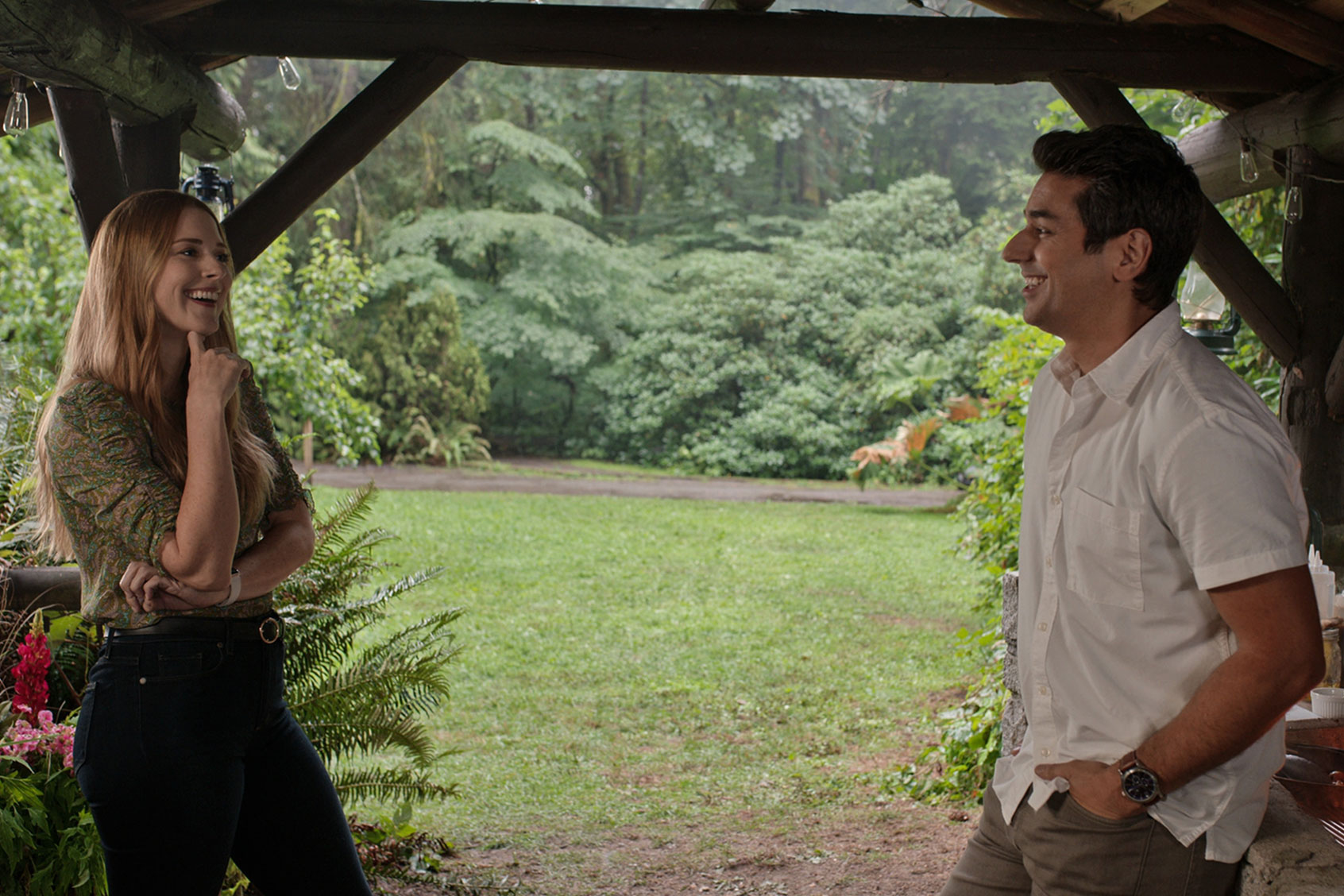
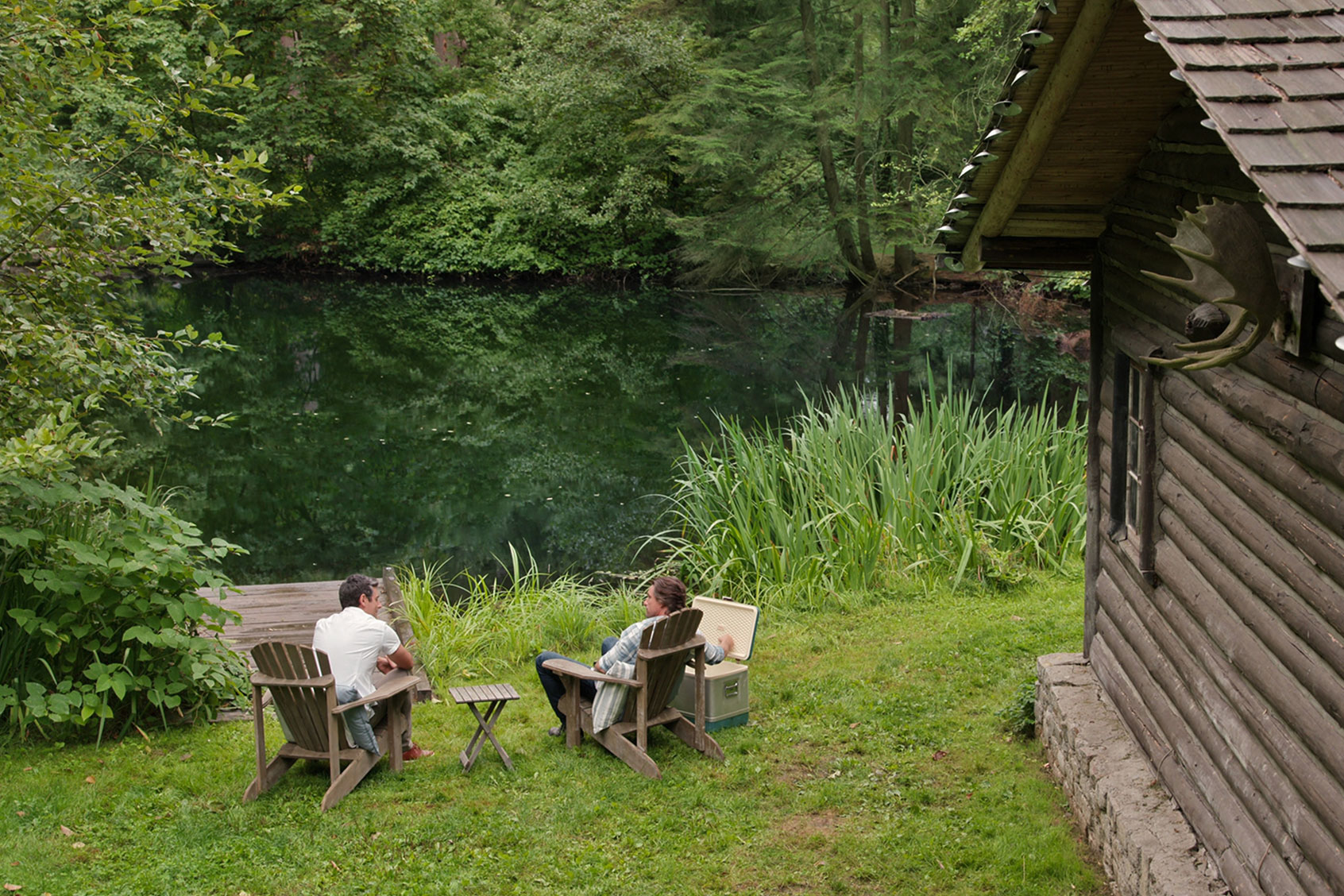
Alexandra Breckenridge as Mel Monroe and Mark Ghanimé as Cameron in “Virgin River” (Courtesy Of Netflix)

Enter the new guy. As Decider writes: “The entire purpose of his character is to be an openly hot, single doctor.” But in Ghanimé’s portrayal, Cameron is more than just a thorn in Jack’s rugged side. Cameron is earnest and hopeful. Despite coming from the city, he adapts to the slow pace of small Virgin River, quicker than Mel did to her rustic cabin. When he asks about computer software for scheduling medical appointments, and Mel tells him: “You’re gonna need a pen,” he simply smiles and says, “Right.” No city boy protests here and no slicker pretensions. 

Ghanimé’s face reveals a bittersweet openness that borders on pain: behind such kindness in Cameron you know lurks a history of being hurt (we’ll get into that). Cameron is easygoing and immediately friendly with Mel. Too friendly, according to some fans.

Ever positive, almost sickeningly so, Cameron says, “At the end of every shift, I like to ask whomever I’m with what the high point of their day was.” After Mel relates a story about psoriasis, Cameron says his high point was when Mel said he was attractive. (This made my partner, who I had roped into a cold watch of this season’s premiere, having never seen the show before, gasp.) Mel backpedals: she was simply pointing out why the waiting room was full of the women of Virgin River, hoping to get a glimpse of the new, eligible doctor.

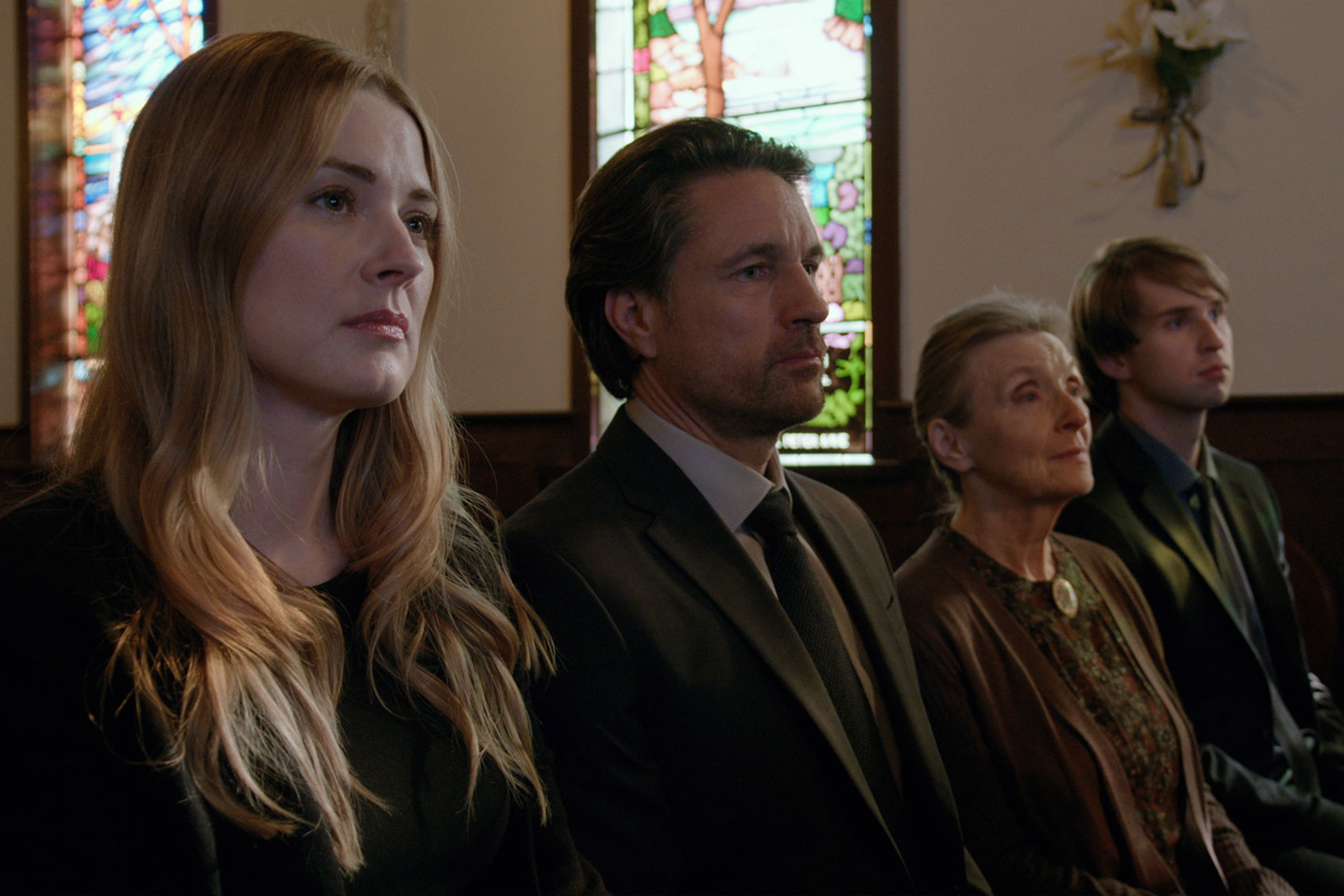
Virgin RiverMark Ghanimé as Cameron and Martin Henderson as Jack Sheridan in “Virgin River” (Courtesy Of Netflix)
Cameron, where were you when I was pregnant?

In Cameron’s defense, he doesn’t know Mel is partnered at the time. Once he knows, he does back off his pursuit of her but he doesn’t back down from being a good friend. He has dinner with Mel and Jack, spending a long time alone with Jack when Mel is late; Jack is not the most sparkling of conversationalists under the best of circumstances, so that can’t have been easy. But Cameron handles it all in stride. A people pleaser, he wants to be helpful. 

That thoughtfulness continues when Cameron accidentally overhears that Mel is pregnant (she and Jack are not telling anybody yet due to a past stillbirth and the whole uncertain paternity thing). Cameron says nothing to Mel; he simply quietly and obsessively stocks the fridge at the medical practice with fruit, vegetables, juice, and easy, healthy snacks, and lines the cupboards with tea. He also purchases a pricy air purifier. Once Mel learns he knows, he offers to cover her shifts at work or drive her to appointments. Cameron, where were you when I was pregnant?

Virgin River” is all about hard subjects presented in a sweet, fantasy land where the river is wide and the townspeople forgiving.

Cameron respects Mel’s decision to be with Jack, but he does say his piece: telling Mel he thinks she (and her baby) deserve better than Jack. This brought out the ire in fans, but he has his own reasons for doing so, not entirely selfish ones: Cameron has experience loving someone with addiction issues.

Virgin RiverAlexandra Breckenridge as Mel Monroe, Martin Henderson as Jack Sheridan, Christina Jastrzembska as Lydie and Grayson Maxwell Gurnsey as Ricky in “Virgin River” (Courtesy Of Netflix)And this season, more than in others, Jack hasn’t really been making his own case: never showing up to an important family wedding because he was sleeping off a bender in his car — the day he promises Mel he’ll quit drinking. “Virgin River” is all about hard subjects presented in a sweet, fantasy land where the river is wide and the townspeople forgiving, but the sight of Jack leaving pregnant Mel in bed as he goes outside with a bottle of whisky is rough. He constantly pushes down his emotions, does not let anyone in and then acts out in destructive ways.

Nice guys tend to finish last in “Virgin River.” Look at Ricky, who lost out on his first love, and Preacher, who is the hot glue holding the town together.

The story has given Jack a whole boatload of trauma to carry — and they keep piling on more, as this season reveals a mystery brother somehow everyone forgot to mention? – but while Jack’s PTSD-tinged behavior rings true, would Mel continually stay with a guy so unstable the whole town has to go out looking for him? So unreliable, that Cameron quietly calls the morgue? Jack’s also resistant to getting help, finally agreeing to therapy at the end of the season after repeated urging from Mel and others who love him. 

Virgin RiverMartin Henderson as Jack Sheridan and Alexandra Breckenridge as Mel Monroe in “Virgin River” (Courtesy Of Netflix)

Showy displays of romance mean little without day-to-day dependability.

Nice guys tend to finish last in “Virgin River.” Look at Ricky, who lost out on his first love, and Preacher, who is the hot glue holding the town together (not to mention Jack’s Bar) while never having romantic or personal fulfillment of his own. Will Cameron be another casualty, the steady voice of reason on an unreasonable show? Cameron’s sensible words to Mel (“You’re going to need someone you can count on . . . You have to think of your future”) have mostly been drowned out by Jack’s big gestures. But showy displays of romance mean little without day-to-day dependability. Personally, I would trade every fairy-lit Airstream in the world for someone who shows up when they say they will.

One last vote in favor of Cameron? He’s emotionally mature enough to know when to stop talking, and when to bow out. He’s honest about his feelings for Mel: “I care about you. Maybe a little bit more than I should.” But he knows he can’t work professionally alongside her feeling how he does (about her, about Jack), and agrees to leave. Like most best-laid plans in the town of Virgin River, that doesn’t quite work out.


Want a daily wrap-up of all the news and commentary Salon has to offer? Subscribe to our morning newsletter, Crash Course.


It can’t be easy to come into orbit of an established and beloved (if problematic) pair, to possibly try to come between them. But Cameron reminds Mel she has options. It doesn’t have to be Jack. It doesn’t have to be anyone. Mel can choose herself. And as for Cameron? One viewer has an idea:

15 facts you didn’t know about the Helen Keller movie, “The Miracle Worker”

The story of Anne Sullivan’s efforts to teach Helen Keller, a young Victorian-era blind and deaf girl, how to communicate is so well-known, it’s taken on an almost legendary quality.

Helen had grown up in a family that had no clue how to communicate with her, much less raise her to be self-sufficient and a part of society. Signing was limited to a few gestures the Kellers developed for Helen at home, and at dinner she notoriously walked from family member to family member, using her bare hands to grab food  from each plate.

This early childhood and the pivotal mentorship by Anne Sullivan are dramatized in the 1962 film “The Miracle Worker,” starring Anne Bancroft as the tenacious teacher and Patty Duke as her initially combative student. The most memorable scenes are the physical confrontations as Annie would force Helen to conform to certain behaviors (like staying seated during dinner and using utensils to eat) and the epiphany when Helen – who had lost her sense of hearing and sight at 19 months – finally connects that the signed word “water” is the liquid being pumped into her hands. That moment opens up the world to her. The film was critically acclaimed, earned two Oscars for its leads and more importantly became staple viewing for elementary school children across the country. 

Sixty years after the movie’s debut on July 28, 1962, this classroom practice seems to have been discontinued, judging from more recent (and ableist) conspiracy theories that deny Helen Keller was able to achieve many of her accomplishments or that she existed at all. While Keller was a real person, her story certainly has been embellished and twisted to become almost mythical. “The Miracle Worker” no doubt contributed to that. 


Want a daily wrap-up of all the news and commentary Salon has to offer? Subscribe to our morning newsletter, Crash Course.


Here are 15 things you might not know about the 1962 version of “The Miracle Worker”:

01
The title “The Miracle Worker” was inspired by Mark Twain
The “Huckleberry Finn” author  was the first person to refer to Sullivan as “the miracle worker. He once inscribed on a photograph, “To Mrs. John Sullivan Macy with warm regard & with limitless admiration of the wonders she has performed as a miracle worker.” Twain admired Sullivan’s and Keller’s efforts, and urged  his friend, financier and industrialist Henry Huttleston Rogers, to fund Keller’s education at Radcliffe.
02
The movie’s leads Anne Bancroft and Patty Duke shared the same given name
The two “Miracle Worker” stars have widely used their stage names throughout their career. However, it appears that their given names are actually the same. Duke was born Anna Marie Duke, and Bancroft was originally Anna Marie Louise Italiano. Coincidence? Yes, but maybe also a sign of a fated relationship.
03
The cast had previously starred in a stage version of “The Miracle Worker”
William Gibson first wrote “The Miracle Worker,” based on Keller’s autobiography, for CBS’ 1957 episode of “Playhouse 90,” starring Teresa Wright (“Shadow of a Doubt”) and Patricia McCormack (“The Bad Seed”). In turn, that was adapted into a 1959 Broadway production starring Bancroft and Duke, which is the beginning of their collaboration.
04
The studio pushed to hire Elizabeth Taylor for the role of Anne Sullivan
Despite the fact that Anne Bancroft gave an impressive performance as Annie Sullivan on stage, she wasn’t the first choice to play the role. Arthur Penn, the director of both the play and the movie, revealed in his book “Arthur Penn: Interview” that “United Artists [was] very anxious that Elizabeth Talyor play the lead in ‘The Miracle Worker’ because she had expressed considerable interest in the role.” However, Penn insisted on sticking with Bancroft, negotiating  for months until he prevailed.
05
Patty Duke almost missed out on playing Helen Keller
Similar to Bancroft, Duke wasn’t the preferred actress to play Helen Keller for the film, despite playing the character for more than a year on stage. The studio thought that at 15, she was too old to convincingly play the role of a 7-year-old Helen Keller.
06
Before filming, Patty Duke met Helen Keller herself
Duke met Helen Keller, who was 80 at the time, about a year before the movie came out and found her very much like a grandmother. Duke was “in awe” of the activist, and the two took a photo together, along with Keller’s dachshund, Sunshine.
07
François Truffaut wanted to direct “Miracle Worker” but was too late
According to the 1970 New York Times article “So Truffaut Decided to Work His Own Miracle,” the acclaimed French film director  expressed his desire to helm “The Miracle Worker”: “He was so fired up by the intensity and beauty of Annie Sullivan’s struggle to bring light and understanding into the dark world of the young Helen Keller.” He instantly communicated with his representative in New York, wishing her to start negotiating the film rights. However, “her cold water reply was that Arthur Penn was smack in the middle of making the movie.”
08
Anne Bancroft put on an Irish accent to play Anne Sullivan (who didn’t have an accent)
Of Bancroft’s portrayal, novelist Edwin O’Connor said:  “This is the most astonishingly accurate Irish accent I’ve ever heard.” That’s high praise . . . except Anne Sullivan did not speak with an Irish accent, even though she was of Irish descent. So how did this happen?  According to Bancroft’s biography, “Anne Bancroft: A Life,” she had played  someone with an Italian accent in her  previous role in “Two for the Seesaw,” which was also directed by Penn and written by Gibson.  Penn, who had also directed that play, designed the Irish accent to allow Bancroft to distance herself from that. “He gave her an Irish accent, a brogue, which Annie Sullivan did not have,” pointed out Gibson, who had also written that play.
09
The actors used Method Acting to perform, including that combative meal scene
Enforced Method Acting requires actors to react unplanned and unscripted, or to help them create feelings or thoughts inherent in the characters they are playing. This approach also appears in “The Miracle Worker,” most typically the nearly nine-minute meal scene in which Sullivan tries to get Keller to sit down and eat with a spoon. They wore padding because the scene was so physical. Duke also recalled in a 1988 interview, “On a daily basis, I was put through exercises pretending to be blind, and stumbled around the house with my eyes closed.”
10
During that harrowing fight scene, the eggs that were thrown had a strange filler
In the dining room fight scene, to protect the cast from getting hurt in the heat of the confrontation, the eggs Duke threw at Bancroft’s face were mixed with popcorn. Meanwhile, in Bancroft’s biography “Anne Bancroft: The Life and Work,” it is mentioned that neither actor had ever filmed a fight scene like this before, so both Bancroft and Duke wore padding beneath their costumes.
11
A sweeter, manufactured ending to the movie was used
The film ends on a touching note, with teacher Annie Sullivan holding her student and telling her, “I love Helen” late at night.  It’s a sweeter ending than was conceived for the original play, which didn’t tack on that particular coda. Duke revealed in an interview, “The end was at the pump. The teacher said ‘I love Helen,’ but in the movie the pump scene happens and then they go to the scene at night . . . I think they didn’t need to do that.”
12
Patty Duke had a tearful last day of filming
Movie scenes aren’t necessarily shot in order, and for Patty Duke, that meant the final shooting day wasn’t that sweet hug with Anne Bancroft. Instead, the teenager was inconsolable on the day in 1961 when she filmed her final scene because to her, “The Miracle Worker” – both the play and the movie back-to-back – was almost all she knew. She was afraid that she’d never see this Hollywood family again.  “I was heartbroken, absolutely heartbroken,” says Duke, 50 years later. “In fact, I’ll tell you a little secret. There is a shot of my face when a chick is being born in my hand. My face and eyes are puffy and red because I had been sobbing for hours.”
13
Critics heaped on praise for the film, but were also rocked by the “violence”

Overall, Penn’s film was critically acclaimed with raves for both Bancroft and Dukes’ commitment to their roles. Many film critics, however, were simultaneously admiring and yet startled by the physicality of that extended dinner table fight scene. Time Out London cited how the actors “spark off each other with a violence.” 

Bosley Crowther of the New York Times wrote: “Because the physical encounters between the two … seem to be more frequent and prolonged than they were in the play and are shown in close-ups, which dump the passion and violence right into your lap, the sheer rough-and-tumble of the drama becomes more dominant than it was on the stage . . .  The bruising encounters between the two . . . are intensely significant of the drama and do excite strong emotional response.”

14
“The Miracle Worker” raked in awards, with Patty Duke making history at the Oscars
Patty Duke won a Best Supporting Actress Academy Award for her performance as Helen Keller, which was an accomplishment twice over. She was the first child star to win a competitive Oscar, whereas before, young stars such as were only awarded honorary Juvenile Oscars. In addition, at 15 years old, she was the youngest actor at the time to have won an Oscar, until Tatum O’Neal won for “Paper Moon” at age 10 in 1973.  When talking about this achievement during the interview, Duke said, ‘The role won the award.”
15
In 1979, Patty Duke returned to”The Miracle Worker,” but this time as Anne Sullivan

While Patty Duke had been associated with “The Miracle Worker” throughout her life, she cut her teeth on the role of Helen Keller. The 1979 made-for-television movie allowed her to return to the beloved story, but this time as the honored teacher. 

“I did not want to do an imitation of Anne Bancroft, I wanted it to have its own signature,” Duke said during her interview with the Commonwealth club. “So I finally got the courage enough and called her [Anne Bancroft], she said, ‘Oh, honey, that’s wonderful!” Duke received  a Primetime Emmy for her work.

How to rescue a cult victim: An interview with Rick Ross, professional deprogammer

For a year and a half, Elizabeth G. had been living with a high-control, dangerous cult founded by a convicted rapist. But it was in a hospital bed, laying under her mother’s watchful eye, that was her greatest torture. At 5’10” and just under 110 pounds, Elizabeth’s weight loss and daily panic attacks had become so acute that even her housemates — members of the notorious Providence cult, a Christian religious group founded in Korea in 1978 — couldn’t spiritualize it anymore. They reluctantly allowed her mother to take her to the emergency room, where the attending physician found her at risk of heart failure if she didn’t get medical help.

Elizabeth — who prefers to keep her surname anonymous for safety reasons — was at her parent’s home for several weeks recovering when she got a visit from her uncle. Walking in right behind him in a suit and carrying a briefcase was a man she didn’t recognize, a man her mother had secretly paid and flown in from the United States: Rick Ross, a cult deprogrammer.

Ross is the preeminent cult deprogrammer in the United States and the head of the Cult Education Institute, a nonprofit library with archived information about cults. For the last 40 years, he’s made a career out of assisting family members and friends who hire him to help loved ones leave a cult. He’s written multiple books about deprogramming, has testified as an expert in dozens of court cases, has been sued and tracked by Keith Raniere, the founder of NXIVM, and was on David Koresh‘s “enemy list.” With over 500 interventions throughout the world under his belt and a 70% success rate, he is considered an expert in his field as cults continue to increase in numbers. (The International Cultic Studies Association estimates there are 10,000 cultic groups in North America, up from 5,000 in 2003.)

There was nothing about Ross’ early years that foreshadowed a latent interest in cult deprogramming. He grew up in Phoenix; his father was a Jewish plumber, his mother worked at the Jewish Community Center, and as a child he was a bright but restless truant. He skipped school so often that his father sent him to a military academy. 


Want more psychology and health stories in your inbox? Subscribe to Salon’s weekly newsletter The Vulgar Scientist.


After high school, during a stretch of unemployment, Ross fell into a brief criminal career. First, there was an attempted burglary of a model home with a friend, which was pled down to trespassing. Then, an elaborate jewelry heist that involved a fake bomb threat to get $50,000 worth of jewelry. Ross was sentenced to four years probation. While in jail waiting for a sentence, Ross remembers a rabbi encouraging him to get back in touch with his Jewish faith and to give his grandmother something to be proud of. 

A fringe religious group was targeting the residents in his grandmother’s nursing home. Messianic Jewish missionaries became employed and started threatening Jewish residents, many of whom had survived persecution in Europe, that they’d “burn in hell if they didn’t convert.” 

The message struck a chord at a moment Ross describes as his “rock bottom,” and after getting out of jail, he started visiting his grandmother in her nursing home every week. It was on those visits in 1982 that Ross felt the nudge towards pursuing what would become his life work—work his “bubbie” could be proud of. 

A fringe religious group was targeting the residents in his grandmother’s nursing home. Messianic Jewish missionaries became employed and started threatening Jewish residents, many of whom had survived persecution in Europe, that they’d “burn in hell if they didn’t convert.” 

Outraged, Ross campaigned to have the group’s activities stopped, bringing the attention of the group to the home director and the local Jewish community. He wrote up a brochure on the cult phenomenon in Arizona. A year later, Ross started working for the Jewish Family and Children’s Services in Phoenix in the prison system creating social services for Jewish inmates. Here, too, Ross discovered that prisoners were a “prime target for cult groups.” He started designing a curriculum and teaching about destructive cults through the Phoenix Bureau of Jewish Education. In 1986, Ross left to become a full-time private consultant and cult deprogrammer. 

Providence

The Providence cult that Elizabeth was a part of was one Ross was well-acquainted with and had been following for some time. In essence, Providence is a quasi-Christian sect founded by former “Moonie” Jung Myung-seok that grooms followers to be his “spiritual brides.” Members sever ties with their families and follow a strict doctrine that enforces sleep deprivation, restricted diets, a rigorous work schedule, and disciplines members to keep painfully slim and dress well. It boasts over 100,000 followers worldwide and has been operating in Australia, where Elizabeth was recruited, since 1997. Ex-members have reported that female recruits were encouraged to have sex with Jeong for “purification.” 

Elizabeth was first approached when she was 18 at a bookstore by a young woman who told her about a Christian painting group she was a part of. She emailed Elizabeth photos of the paintings and encouraged her to come to the group which was a front for the cult. She attended the painting group and was ingratiated by the members. She became fast friends with them, joining them for meals and coffee, and attending their Bible study — which, she recalls, was where she was “slowly conditioned on their particular brand of religion.” 

Eventually, she became convinced that the cult was the “ultimate truth” and that she needed to dedicate her life to it. She moved into a 3-bedroom home in Sydney where nine of the members lived and was steeped in the lifestyle of Providence. 

“The cult worked its members extremely hard—restricted our food intake, drastically reduced our allowed sleeping hours to about 4 per night, and in between working jobs to pay for our rent and food and studying in my case, we had to pray for hours, evangelize on the street, hold multiple church services and run extra-curricular programs the cult used as front groups to try to recruit more people,” Elizabeth says. 

Elizabeth recruited members by managing a sham modeling business. “I was supposed to be one of the women who belonged to the leader when he eventually came out of prison,” she remembers. Followers had been told he was in prison because of “persecution from Satan,” and Elizabeth says she was once flown overseas to visit Myung-seok in prison. 

The intervention

Before arriving for the intervention, Ross coached the family not to discuss Providence or its beliefs until he arrived. 

“Elizabeth’s mother had argued with her in the past about her involvement in Providence,” explains Ross, “I had to approach the subject carefully and indirectly at first.” When Ross first walked into Elizabeth’s home, her alarm bells went off. 

“He was very polite. He introduced himself and said he was here to have a conversation about the group I was involved in. I freaked out straight away realizing it was an ambush,” Elizabeth says. She left the house immediately, “I remember just before I left, my mum hugged me tightly and I could hear her voice tremble as she said ‘please don’t run away.'” 

Over the years Ross had developed a formula to his interventions, with four basic blocks of discussion: defining a destructive cult, discussing coercive persuasion and influence techniques, disclosing and discussing specific research about the group and leader, and talking about family concerns. The process typically takes 3 to 4 days, with 6 to 8 hours of discussion a day.

Elizabeth meant to run, but she didn’t know where to go. “I was so convinced of the cult being the truth and so terrified to leave, that I came to the conclusion I would need to go back and would probably die. But even so, leaving the cult was never an option,” Elizabeth recalls, “I was scared to call the cult and go back right away, and thought maybe I could just endure the conversation.” Elizabeth couldn’t have predicted how long she would have to endure. 

“Rick talked all day. For hours. Non-stop.” Like a filibuster, he knew he couldn’t cede the floor. 

Over the years Ross had developed a formula to his interventions, with four basic blocks of discussion: defining a destructive cult, discussing coercive persuasion and influence techniques, disclosing and discussing specific research about the group and leader, and talking about family concerns. The process typically takes 3 to 4 days, with 6 to 8 hours of discussion a day. During the time the family is present and can contribute their observations and concerns. 

“We began by discussing cults generally and then delving into coercive persuasion and influence techniques,” explains Ross, “The objective was to stimulate Elizabeth’s critical thinking.” 

“I was scared of going back to the cult, and I was scared to stay… I finally said, ‘Okay, I can see that the group I’ve been in is actually a cult. Please just give me all the information you can about them. I’m ready to hear it.'”

“He first started talking about similar cults, not the one I was involved in. I didn’t realize that through that he was opening up my mind to realize that my group wasn’t unique in its methods and beliefs.” Elizabeth tried to block out what he was saying by dissociating and praying inside her head. But the information found cracks in the logic of her group. And it was starting to show. She thought she was going insane. She drove to a parking lot away from her house and screamed in the car. She texted the group leader who immediately tried to book a redeye flight to another city to hide. 

“Hours of information was starting to crack open my psychological barriers. At this stage, I was scared of going back to the cult, and I was scared to stay. It was an incredibly confusing, hard time and my body was very weak. Again, I stayed. By the end of the second day of Rick providing information and expertly guiding the conversation to help disarm the psychological traps that had been set up in my mind, I finally said, ‘Okay, I can see that the group I’ve been in is actually a cult. Please just give me all the information you can about them. I’m ready to hear it.'” Ross came well prepared.

“She learned about his history of sexual abuse that he was being imprisoned for, something that the group had previously dismissed as an attack by the devil, and how he was charged with eight counts of rape and imprisoned in South Korea for 15 years,” said Ross. 

Elizabeth turned a corner after that. 

“I learned all I could, things I was never allowed to know the truth about when I was on the inside, and then began the long journey towards healing. Rick stayed one extra day to talk and help support me as I started to understand what had happened to me,” she continues. Finally, Elizabeth was on the road to healing. 

The evolution of cults

For the first time after forty years — in an industry that Ross grandfathered — he’s encountering his limitations. Early in his career — when he was rescuing people from the Moonies, the Branch Davidians, and more — recognizing cults, cult leaders, how they recruit, and what they expected from their members was more clear. The Charles Mansons, Jim Joneses, and David Koreshes of that time were hauntingly psychopathic, inarguably deranged, and patently abusive to their followers. Recruitment was done in open, public spaces like college unions and music festivals. Rescuing a loved one from their grasp meant kidnapping — physically extricating them.

But cults are evolving. Today, recruitment happens online. The targets are difficult to protect — bullied 13-year-olds unknowingly getting sucked into Reddit feeds, Iraq-war veterans with PTSD stumbling across Twitter screeds, or people who have been battling mental illness for years. The leaders, like “Q,” are sometimes unknown, perhaps not even individuals but groups, and may never meet their followers. How they exploit people, or what their objective is, is often murkier.

“Online cults are a new and increasing phenomenon,” reflects Ross, “They recruit online, they sustain their membership online through social media platforms like Facebook, Twitter, Instagram, and they even have YouTube videos and podcasts. They Zoom with people and they can get money through PayPal and they just basically run everything online.”

This is where Ross has hit a brick wall. While countless family members have called him for advice, no one has retained him for intervention for QAnon or other ideologies and conspiracy theories, because Ross tells them for many of these cases, there is nothing he can do. 

“You cannot deprogram mental illness, and you cannot deprogram deeply and sincerely held beliefs that a person has had for many, many years. And so this is a new phenomenon, QAnon is much more nuanced than a typical destructive cult in that many of the people that became involved have a history of psychological and emotional problems,” he explains. 

A study of the January 6 uprising found that a third of those arrested had been previously diagnosed with either bipolar, paranoid schizophrenia, depression, or PTSD. 

“So they were not well,” Ross says. “They were already deeply troubled, and so they became involved in QAnon. And there’s also a significant piece of Q-anon that are people that have a long history of having deeply held beliefs that feed into the argument on conspiracy theories, whether it would be religious beliefs, anti-government beliefs, conspiracy theories — and those folks, I don’t think that I can help.”

Waiting for a window

For these loved ones and family members, he doesn’t believe hope is lost. However, the advice he has may be too difficult to manage for most.

 “I think the main thing is to maintain communication,” explains Ross, “Do not cut them off! Keep in touch to communicate with them, avoid arguments, avoid getting into fights, and instead just be present. Be there for them and make sure that they understand that you are there and that you’re not going anywhere, that you care about them and want to be in touch with them.” 

After that, Ross says, you have to ” wait for a window — and that would be when that person starts to express doubts, misgivings about what they’re involved in. And then you can in a very calm, careful way, present reading material, or they could go online or go to the college education site and read about similar groups.” 

“And that might help unravel what has happened and help them to see it in a different perspective,” he adds. “But until they express openness to, you know, alternative perspectives, you’re really going to be banging your head against a brick wall,” particularly if they are completely captivated by the group.” 

For those bearing relationships that have turned toxic in the new age of cults, this advice may be unwelcome. Breaking ties with someone for their distressing beliefs is an emotionally fraught proposition — and you may not be ready to fight that battle. After all, not all of us have the time and patience that Rick Ross does.

Ivana Trump buried near first tee at Trump National Golf Club

Ivana Trump, the first wife of former President Donald Trump, has been buried at Trump National Golf Club in Bedminster, New Jersey, where Trump himself plans to be buried one day.

On the day of Ivana’s funeral, held last Wednesday at St. Vincent Ferrer Church in New York, the plot for her burial site was “consecrated so that she could have a traditional Catholic burial,” according to the New York Times. The simple plaque laid over her grave lists only her name, and her date of birth and date of death, which was July 14, 2022. Her grave is not visible from the main clubhouse, according to New York Post, but is nearby “at the back side of the first tee.”

In 2017, former President Trump “conveyed plans to build a 10-plot graveyard that overlooked the first hole of the golf course for family members,” the Washington Post reports. 

“It’s never something you like to think about, but it makes sense,” Trump said in the early stages of his cemetery plans. “This is such beautiful land, and Bedminster is one of the richest places in the country.” 

As several people on Twitter were quick to point out, New Jersey land used for cemetery purposes comes with a significant tax break.

“New Jersey law exempts land used for cemetery purposes from income, sales and use taxes. The Ivana Trump burial site at Trump National Golf Club in Bedminster likely delivers a huge tax break,” says Phoebe Wall Howard, a writer for Detroit Free Press and USA Today.


Want a daily wrap-up of all the news and commentary Salon has to offer? Subscribe to our morning newsletter, Crash Course.


 “Business and inheritance taxes are exempt, too,” Howard said in a later Tweet. “Also, cemetery property is exempt from sale for collection of judgments.”

“Trump actually turned Ivana into a sand trap,” quipped Playboy writer Alex Thomas.

Use your garden bounty to make green tomato crumb cake

When the pandemic started, I started combing through U.S. newspaper archives from the 1890s to the 1990s for recipes. At first, it was simply a way to pass the time, but I started to notice a recurring theme and dove in deeper.

Throughout the 20th century, home cooks, nearly all women, were particularly eager to come up with ways to use up a surplus of fresh or preserved fruit in no-fuss, quick-to-make desserts. They often shared their own recipes or wrote into the newspapers to crowdsource for one that fit their needs. The conversations around these recipes were so lively, they immediately drew me in. Much like these women, my personal kitchen goals have always been to use seasonal produce, reduce food waste, and fulfill my desire to spend as little time baking but as much time possible eating delicious, freshly baked goods.

I started researching in earnest what I began calling “forgotten fruit desserts.” These were the old-fashioned, thrifty, and often regional baked goods that seem to have fallen out of popularity over the years but were plentiful in the archives. Despite my years as a recipe developer and avid cookbook collector, I found myriad varieties of fruit-spiked coffee cakes, squares, brickles, slumps, pandowdies, and buckles that were new to me.

Many recipes I came across used expected favorites like apples, plums, dates, and peaches; but a few mentions of a green tomato cake caught my eye. Unfortunately, it was nearly always part of an article about what to do with gardening surpluses or a list of recipe contest winners and not accompanied by a recipe. I was intrigued but since there were no recipes or even a good description to go on, I made a note of it on my ongoing list and kept scrolling.

Then I came across an October 1973 write-up in The Evening Review of East Liverpool, Ohio, with the results of a recent newspaper-sponsored recipe contest. This contest cemented the idea that green tomato cake was something I absolutely had to make as soon as possible. The headline was “Cold Oven Cake Takes Top Prize,” but when I read on I saw that Mrs. Mildred Willis’s recipe for green tomato cake had narrowly lost to Mrs. Pamela Diamond’s cold-oven cake after “a half hour or longer” of deliberation. Only Diamond’s winning recipe appeared in the paper and disappointingly, there was no description given of the green tomato cake at all. Willis shared that she had made the cake for friends and family for special occasions over the years but that she had only decided to enter the contest at the urging of at least five of her neighbors. How good must this cake be if she had been making it all these years, had neighbors clambering for the recipe and the judges deliberated a full 30 minutes before deciding to award her second place?

The appeal of a green tomato cake is obvious. First off, who doesn’t love cake? Secondly, every gardener (or eater) knows that once fall hits, your tomato days are numbered. After the first frost, tomatoes stop ripening, and farmers and gardeners need to harvest them before the vine starts to rot. You can do what my mother did and wrap the picked tomatoes in newspaper to hopefully ripen over the next few weeks on the counter. But you can also use them as-is in their crisp, unripened state.

Over the years I’ve defaulted to making fried green tomatoes to use them up but once I made this cake, I didn’t have any green tomatoes left to fry. I’ve made a massive amount of these old-fashioned fruit desserts the last few months, yet this is the one that people asked for again and again. It’s so moist and flavorful; similar to an apple spice cake but with a brighter, crisper, almost citrusy flavor, and a lighter texture. I’m not sure if my cake has any similarities to the ones referenced in the newspaper articles, but I feel confident they would agree it was a winner.

Recipe: Green Tomato Crumb Cake

3 Costco items with heftier price tags amid inflation

As inflation and sizzling temperatures drive up food prices, even price tags at supermarkets known for their bargains and deals are getting heftier.

Costco, the low-price warehouse chain, is no different.

Two menu items at Costco’s food courts have gone up in price, increases which ranged in price from 10 cents to $1, media outlets confirmed this month. The changes are part of “a national update,” according to Insider.

The warehouse’s recent updates spurred conversation among shoppers on social media, who discussed the increases in the Costco subreddit.

Here are two food court items at Costco that recently went up in price, as well as one pantry staple on store aisles:

01

The Chicken Bake

ICostco Food CourtClose-up of signs listing prices at Costco food court. (Smith Collection/Gado/Getty Images)

The chicken bake — Costco’s breaded delicacy stuffed with strips of chicken breast, bacon, cheese, green onions and Caesar dressing — is ringing up for $1 more at the food court. Now, the individual bakes, which previously cost $2.99, are priced at $3.99.

User u/mbz321, who doesn’t appear to be a fan of the item, said: “The ‘new’ chicken bake was barely worth it at $2.99.” Added user u/PM_MeYourAvocados, “I’m surprised they waited that long on the chicken bakes given the cost per unit on our end.”

02

20-Ounce Soft Drinks

IPepsi bottlesPepsi bottles (Igor Golovniov/SOPA Images/LightRocket via Getty Images)

Also at the food court, the price of a 20-ounce fountain drink (with refill) has increased by 10 cents — or about 17% — from $0.59 to $0.69.

Compared to other fast-food chains, Costco’s soft drinks are still the cheapest option. A medium-sized drink, which is about 21 or 22 ounces, runs north of $1.75 at Burger King and Taco Bell, according to Fast Food Menu Prices. (Prices, of course, vary by location.)

Meanwhile, some McDonald’s restaurants have pulled the brand’s popular “Dollar Drinks” promotion from menus. For years, customers could order any cold soft drink for $1. “McDonald’s has promoted $1 cold drinks year-round since 2017, after the offering began as a summertime promotion around 2008,” Restaurant Dive’s Aneurin Canham-Clyne reported earlier this month.

03

Kirkland Bottled Water

ICostco Kirkland purified bottled waterCostco Kirkland purified bottled water cases on display, Queens, New York. (Lindsey Nicholson/UCG/Universal Images Group via Getty Images)
Elsewhere, on store aisles, 40-packs of Kirkland-branded water bottles have gone up in price. One Redditor reported that the bulk buy, which cost $1.89 as recently as a year ago, now costs $4.

“Yeah that used to be the case at the beginning of the year, just checked yesterday and $4.29, ridiculous,” user u/ghx16 wrote. “I can get them at a lower price at other stores now, same water since it’s all Niagara.”

. . . but one long-standing deal appears to be inflation proof.

Costco still hasn’t raised the price of its iconic hot dog and soda combo, despite certain online rumors claiming the store had plans to do so. In fact, the price tag on the cult-favorite combo hasn’t changed since its debut in 1985.

“If you raise the [price of the] effing hot dog, I will kill you. Figure it out,” Costco co-founder Jim Singal infamously told Costco CEO Craig Jelinek in what would go on to become a viral exchange.

Why does tomato juice taste so much better on an airplane?

There are two occasions on which I’ll reliably order tomato juice: if I’m hungover, or if I’m flying. With regards to the latter, I’m not the only one. 

In May 2018, United Airlines announced that it would be “streamlining” its onboard food service on flights shorter than four hours. Excluding transcontinental flights from coast to coast, the move reportedly encapsulated “almost every flight” the airline operated domestically.

According to CNBC, hot breakfasts would be replaced with fruit plates and muffins, while “more substantial lunches” were “being switched out for wraps and chocolate slabs.” There were changes to the drinks menu, as well. While some of the moves were pretty insubstantial (I don’t think anyone was really mourning the loss of Sprite Zero from the beverage cart), one loss seemed to hit travelers particularly hard. 

The announcement that United would be pulling tomato juice from its menu launched an uproar among customers and staff alike. At the time, an unnamed flight attendant told CNBC, “We are once again in full apology mode now onboard our flights, although the issue is a more minor one compared to the forced removal of customers or suffocating dogs.”

Within a month, United Airlines announced that it had made a mistake. 

“We want our customers to know that we value and appreciate them and that we’re listening,” United said in a statement to USA Today. “Our customers told us that they were not happy about the removal of tomato juice so we’re bringing it back on board as part of our complimentary beverage offering.”

But what gives with tomato juice’s in-flight popularity? According to researchers from Fraunhofer Society, a German research institute, it has to do with the way that altitude and air travel enhance or diminish our relative senses. A study was prompted by leadership at the German airline Lufthansa, who realized that they served about 53,000 gallons of tomato juice annually versus 59,000 gallons of beer.

Researchers set up an experiment in which they divided taste-testers into two groups. One group tasted samples of tomato juice in a sterile test environment, while the other was placed in a flight simulator. Those in the flight simulator consistently rated the tomato juice as tasting better than those in the control group. 


Want more great food writing and recipes? Subscribe to “The Bite,” Salon Food’s newsletter.


“We learned that tomato juice being on ground level is rather — I’m not saying moldy, but it tastes earthy, it tastes not overly fresh,” Lufthansa catering executive Ernst Derenthal told Philadelphia’s NBC affiliate. “However, as soon as you have it at 30,000 feet, tomato juice shows, let’s say, its better side. It shows more acidity, it has some mineralic taste with it and it’s very refreshing.”

Why is this the case? Researchers identified a few reasons. First, cabin pressure is low when you’re flying at altitude. Your blood gets less oxygen as a result, which means that the receptors in charge of detecting taste and smell are less sensitive. The low humidity in the cabins — most airlines keep it to 10 to 15% humidity — only exacerbates those changes to your senses. 

The result is kind of like having a cold or sinus infection. You can only taste the big notes of certain foods, such as the acidity and saltiness of tomato juice. Additional research, which was laid out in Flavour Journal, suggests that umami, the “savory” or “meaty” taste present in foods like tomatoes and soy, may actually be augmented by cabin conditions, which would further explain why tomato juice is particularly cravable mid-air. 

Thus, it’s perhaps no surprise that there was enough outrage over United’s decision to pull the beverage that the airline eventually tweeted this apology: “You say tomato. We say, we hear you. Tomato juice is here to stay.” 

What the Bible actually says about abortion may surprise you

In the days since the Supreme Court overturned Roe v. Wade, which had established the constitutional right to an abortion, some Christians have cited the Bible to argue why this decision should either be celebrated or lamented. But here’s the problem: This 2,000-year-old text says nothing about abortion.

As a university professor of biblical studies, I am familiar with faith-based arguments Christians use to back up views of abortion, whether for or against. Many people seem to assume the Bible discusses the topic head-on, which is not the case.

Ancient context

Abortions were known and practiced in biblical times, although the methods differed significantly from modern ones. The second-century Greek physician Soranus, for example, recommended fasting, bloodletting, vigorous jumping and carrying heavy loads as ways to end a pregnancy.

Soranus’ treatise on gynecology acknowledged different schools of thought on the topic. Some medical practitioners forbade the use of any abortive methods. Others permitted them, but not in cases in which they were intended to cover up an adulterous liaison or simply to preserve the mother’s good looks.

In other words, the Bible was written in a world in which abortion was practiced and viewed with nuance. Yet the Hebrew and Greek equivalents of the word “abortion” do not appear in either the Old or New Testament of the Bible. That is, the topic simply is not directly mentioned.

What the Bible says

The absence of an explicit reference to abortion, however, has not stopped its opponents or proponents from looking to the Bible for support of their positions.

Abortion opponents turn to several biblical texts that, taken together, seem to suggest that human life has value before birth. For example, the Bible opens by describing the creation of humans “in the image of God“: a way to explain the value of human life, presumably even before people are born. Likewise, the Bible describes several important figures, including the prophets Jeremiah and Isaiah and the Christian Apostle Paul, as having being called to their sacred tasks since their time in the womb. Psalm 139 asserts that God “knit me together in my mother’s womb.”

However, abortion opponents are not the only ones who can appeal to the Bible for support. Supporters can point to other biblical texts that would seem to count as evidence in their favor.

Exodus 21, for example, suggests that a pregnant woman’s life is more valuable than the fetus’s. This text describes a scenario in which men who are fighting strike a pregnant woman and cause her to miscarry. A monetary fine is imposed if the woman suffers no other harm beyond the miscarriage. However, if the woman suffers additional harm, the perpetrator’s punishment is to suffer reciprocal harm, up to life for life.

There are other biblical texts that seem to celebrate the choices that women make for their bodies, even in contexts in which such choices would have been socially shunned. The fifth chapter of the Gospel of Mark, for example, describes a woman with a gynecological ailment that has made her bleed continuously taking a great risk: She reaches out to touch Jesus’ cloak in hopes that it will heal her, even though the touch of a menstruating woman was believed to cause ritual contamination. However, Jesus commends her choice and praises her faith.

Similarly, in the Gospel of John, Jesus’ follower Mary seemingly wastes resources by pouring an entire container of costly ointment on his feet and using her own hair to wipe them – but he defends her decision to break the social taboo around touching an unrelated man so intimately.

Beyond the Bible

In the response to the Supreme Court’s decision, Christians on both sides of the partisan divide have appealed to any number of texts to assert that their particular brand of politics is biblically backed. However, if they claim the Bible specifically condemns or approves of abortion, they are skewing the textual evidence to fit their position.

Of course, Christians can develop their own faith-based arguments about modern political issues, whether or not the Bible speaks directly to them. But it is important to recognize that although the Bible was written at a time when abortion was practiced, it never directly addresses the issue.

Melanie A. Howard, Associate Professor of Biblical & Theological Studies, Fresno Pacific University

This article is republished from The Conversation under a Creative Commons license. Read the original article.

Resisting fascism and winning the education wars: How we can meet the challenge

Across the globe, democratic institutions such as the independent media, schools, the legal system, certain financial institutions and higher education are under siege. The promise and ideals of democracy are receding as right-wing extremists breathe new life into a fascist past and undermine the social imagination. Reinventing a sordid fascist legacy with its obsession with racial purity, white nationalism and the denial of civil liberties, white supremacists are once more on the move — subverting language, values, courage, vision and a critical consciousness.

Education has increasingly become a tool of domination as right-wing pedagogical apparatuses controlled by the entrepreneurs of hate attack workers, the poor, people of color, refugees, undocumented immigrants, LGBTQ people and others considered disposable. In the midst of an era when an older social order is crumbling and a new one is struggling to define itself, there emerges a time of confusion, danger and moments of great restlessness. The present moment is once again at a historical juncture in which the structures of liberation and authoritarianism, fascism and democracy, are vying to shape a future that appears to be either an unthinkable nightmare or a realizable dream.  

We now live in a world that resembles a dystopian novel. Since the late 1970s, a form of predatory capitalism, or what can be called neoliberalism, has waged war on the welfare state, public goods and the social contract. Neoliberalism believes that the market should govern not just the economy but all aspects of society. It concentrates wealth in the hands of a financial elite and elevates unchecked self-interest, self-help, deregulation and privatization to the governing principles of society. 

Under neoliberalism, everything is for sale and the only obligation of citizenship is consumerism. At the same time, it ignores basic human needs such as health care, food security, decent wages and quality education. Neoliberalism views government as the enemy of the market, limits society to the realm of the family and individuals, embraces a fixed hedonism and challenges the very idea of the public good. Under neoliberalism, all problems are personal and individual, making it almost impossible to translate private troubles into wider systemic considerations. In its recent incarnation, neoliberalism works to depoliticize and demobilize the majority of the population that opposes its agenda. At the same time, it supports gerrymandering, voter suppression and the power of big money to drive politics, while undermining all viable forms of civic and public education.   

We live in an age when economic activity is divorced from social costs, while policies that produce racial cleansing, environmental destruction, militarism and staggering inequality have become defining features of everyday life and established modes of governance. Clearly, there is a need to raise fundamental questions about the role of education in a time of impending tyranny. Or to put it another way: What are the obligations of education to democracy itself? That is, how can education work to reclaim a notion of democracy in which matters of social justice, freedom and equality become fundamental features of learning to live with dignity in a democracy?

The growing authoritarianism in the United States, led largely by a far-right Republican Party, has revealed in all its ugliness the death-producing mechanisms of white supremacy: systemic inequality, censorship, a culture of cruelty and an increasingly dangerous assault on public and higher education. We now live in an age in which the threat of authoritarianism has become more dangerous than ever. This is evident as a number of red states have put in place a range of reactionary educational policies that range from banning books and the teaching of “critical race theory” to forcing educators to sign loyalty oaths, post their syllabuses online, give up tenure, allow students to film their classes and much more. 

Not only are these laws aimed at critical educators and minorities of class and color, this far-right attack on education is also part of a larger war on the very ability to think, question and engage in politics from the vantage point of critical thinking, informed citizenship and a willingness to address social injustice. More generally, it is part of a concerted effort to destroy public and higher education and the very foundations of political agency.  Under the rule of this emerging authoritarianism, political extremists are attempting to turn public education into a space for killing the social imagination, a place where provocative ideas are banished and where faculty and students are punished through the threat of force or harsh disciplinary measures for speaking out, engaging in dissent and advancing democratic values. In this case, the attempt to undermine schooling as a public good and democratic public sphere is accompanied by a systemic attempt to destroy the capacity for critical thinking, compassion for others, critical literacy, moral witnessing, support for the social compact and the civic imagination. Schools that view themselves as democratic public spheres are now disparaged by Republican politicians and their allies, who sneeringly define public and higher education as “socialism factories.”

The growing threat of authoritarianism is also visible in the emergence of an anti-intellectual culture that derides any notion of critical education. What was once unthinkable regarding attacks on public education has become normalized. Under attack by Republican legislators are teachers, students, parents and librarians who oppose book bans and support critical pedagogy. As such, they are increasingly harassed, threatened and smeared as pedophiles by far-right extremists. Furthermore, calls for social justice, racial equality and a critical rendering of history are disparaged as unpatriotic. Ignorance is now literally praised as a virtue. 

This right-wing assault on democracy is a crisis. It cannot be allowed to turn into a catastrophe in which all hope is lost. It is hard to imagine a more urgent moment for taking seriously the necessity to make education central to politics. This suggests viewing education as a social concept rooted in the goal of empowerment and emancipation for all people, especially if we do not want to default on education’s role as a democratic public sphere. This is a form of education that encourages human agency by creating the conditions that enable students not only to be critical thinkers, but also critically engaged social agents.  This is a pedagogical practice that calls students beyond themselves and embraces the ethical imperative to care for others, dismantle structures of domination and be subjects rather than objects of history, politics and power. If educators are going to develop a politics capable of awakening our critical, imaginative and historical sensibilities, it is crucial for us to remember education as a project of individual and collective empowerment — a project based on the search for truth, an enlarging of the imagination and the practice of freedom. 


Want a daily wrap-up of all the news and commentary Salon has to offer? Subscribe to our morning newsletter, Crash Course.


This is a political project in which civic literacy infused with a language of critique and possibility addresses the notion that there is no democracy without knowledgeable and civically literate citizens. Such a language is necessary to enable the conditions to forge a collective resistance among educators, youth, artists and other cultural workers in defense of public goods. An international movement for the defense of civic literacy, historical memory and critical pedagogy is crucial at a time when the right wing is flooding the media with falsehoods and conspiracy theories, further undermining the public’s ability to distinguish between truth and lies, good and evil. Critical education — on multiple levels and in diverse spheres — is especially important in a society in which the democratization of the flow of information has been subverted into the democratization of the flow of misinformationMoreover, since critical pedagogy connects knowledge to the power of identity and self-determination, it is deeply attentive to a language that is historical and contextual while keeping students aware of the questions that need to be asked in order for them to speak and act from a position of agency and empowerment.  

It is important for us as educators to note that the current era is marked by the rise of “disimagination machines” that produce manufactured ignorance on an unprecedented level, and in doing so give authoritarianism a new life. Even worse, we live at a time when the unthinkable has become normalized, in which anything can be said and everything that matters is left unsaid. Consequently, the American public is rapidly losing both the language and the ethical grammar to challenge the political and racist machineries of cruelty, state violence and targeted exclusions.

An international movement in defense of civic literacy and historical memory is crucial at a moment when the right is flooding the media with falsehoods and conspiracy theories. Democracy cannot be defended without literate and engaged individuals.

In an age of social isolation, information overflow, a culture of immediacy, consumer glut and spectacularized violence, it is even more crucial to take seriously the notion that democracy cannot exist or be defended without critically literate and engaged individuals. Education, both in its symbolic and institutional forms, has a central role to play in fighting the resurgence of false renderings of history, white supremacy, religious fundamentalism, militarism and ultra-nationalism. As far-right movements across the globe disseminate toxic racist and ultra-nationalist images of the past, it is essential to reclaim education as a form of historical consciousness and moral witnessing.  

This is especially true at a time when historical and social amnesia have become a national pastime, further normalizing an authoritarian politics that thrives on ignorance, fear, hate and the suppression of dissent. The merging of power, new digital technologies and everyday life have not only altered time and space, they have expanded the reach of culture as an educational force. A culture of immediacy, coupled with a fear of history and a 24/7 flow of information, now wages war on historical consciousness, attention spans, and the conditions necessary to think, contemplate and arrive at sound judgments.

Under such circumstances, it is important to acknowledge that education as a form of cultural work extends far beyond the classroom and that its pedagogical influence, though often imperceptible, is crucial to challenge and resist. We must remember that education and schooling are not the same, and that schooling must be viewed as a sphere distinctive from the educative forces at work in the larger culture. Education is more than schooling, and that reinforces the notion of how important it has become as a tool to shape consciousness, the public imagination and agency itself.

One important pedagogical lesson to be learned at a time when language is under assault and stripped of any viable meaning is that fascism begins with hateful words, the demonization of others considered disposable, and then moves on to attack ideas, burn books, arrest dissident intellectuals, attack gender minorities, and expand the reach of the carceral state while intensifying the horrors of jails and prisons. 

This is especially important to remember now, since education in the last four decades has diminished rapidly in its capacities to educate young people and others to be reflective, critical and socially engaged agents. Increasingly, the utopian possibilities formerly associated with public and higher education as a public good capable of promoting social equality and supporting democracy have become too dangerous for the apostles of authoritarianism. Public schools more than ever are subject to the toxic forces of privatization and mindless standardized curricula, while teachers are deskilled and subject to intolerable labor conditions. Unfortunately, public and higher education now mimic a business culture run by a managerial army of bureaucrats. At the same time, all levels of education are under attack by right-wing Republicans who seek to censor history, forbid discussions about racism, ban books, eliminate tenure and impose restrictions on teacher autonomy. 

The current forces of white supremacy are not the only threat to public and higher education. Since the 1980s, conservatives and liberals have increasingly sought to model public education after business culture, standardize curriculum, teach for the test and flood teachers with one-size-fits-all models of teaching. This model was reinforced during the pandemic with its heavy emphasis on a crude instrumentalization of pedagogy. This continues to be seen in an endless emphasis on training exercises to familiarize teachers and students with Zoom, Teams and other methods of online teaching. The commanding visions of democracy are in exile at all levels of education. 

Since the 1980s, public education has been increasingly modeled after business culture, with standardized curricula, teaching to tests and one-size-fits-all instructional models.

Critical thought and the imaginings of a better world present a direct threat not only to white supremacists but also to ideologues who embrace a narrow, corporate vision of the world in which the future must always replicate the present in an endless circle, in which capital and the identities that it legitimates merge into what might be called a dead zone of the imagination and pedagogies of repression. One consequence is that the distinction between education and training has collapsed, and the most valued educational experiences are geared to job preparation. Corporate models of education attempt to mold students in the market-driven mantras of self-interest, harsh competition, unchecked individualism and the ethos of consumerism.

Young people are now told to “invest” in their careers, reduce education to job training, and achieve success at any cost. It is precisely this replacement of educated hope with an aggressive dystopian neoliberal project and cultural politics that also represents another dangerous assault on public and higher education. Under this corporate and market-based notion of schooling, the mantras of privatization, deregulation and the destruction of the public good are matched by a toxic merging of inequality, social sorting, racial cleansing and the nativist language of borders, walls and camps. 

In the shadow of this impending nightmare, the lesson we cannot forget is that critical pedagogy provides the promise of a protected space within which to think against the grain of received opinion, a space to question and challenge, to imagine the world from different standpoints and perspectives, to reflect upon ourselves in relation to others and, in so doing, to understand what it means to “assume a sense of political and social responsibility.”  

If the emerging authoritarianism and rebranded fascism in the United States is to be defeated, critical education needs to become an organizing principle of politics. In part, this can be done with a language that exposes and unravels falsehoods, systems of oppression and corrupt relations of power while making clear that an alternative future is possible. Hannah Arendt was right to argue that language is crucial in highlighting the often hidden “crystalized elements” that make authoritarianism more likely.

The language of critical pedagogy and literacy are powerful tools in the search for truth and the condemnation of falsehoods and injustices. Moreover, it is through language that the history of fascism can be remembered and the lessons of the conditions that created the plague of genocide can inform the understanding that fascism does not reside solely in the past and that its traces are always dormant, even in the strongest democracies. Paul Gilroy argues correctly that it is crucial in the current historical moment to re-engage with fascism, to address how it has crystalized in different forms and in doing so to “work toward redeeming the term from its trivialization and restoring it to a proper place in discussions of the moral and political limits of what is acceptable.”

Ignorance now rules America: Not the innocent ignorance of the absence of knowledge, but a malicious ignorance forged from a refusal to think hard about issues or engage language in the pursuit of justice.

The ongoing threat of fascist politics and its assault on the foundations of critical consciousness is one more reason for educators to make the political more pedagogical and the pedagogical more political. Pedagogy is always political in that it is first and foremost a struggle over agency, identities, desires and values while it also has a crucial role to play in addressing important social issues, defining the future and defending public and higher education as democratic public spheres. Critical pedagogy makes clear that education is not neutral and that matters of agency, knowledge, consciousness, and desire are the grounds of politics. Making the political pedagogical, in this instance, suggests producing modes of knowledge and social practices that not only affirm oppositional ideas and pedagogical practices but also offer opportunities to mobilize instances of collective outrage, coupled with direct mass action, against a ruthless casino capitalism and an emerging fascist politics. Such a mobilization must oppose the glaring material inequities of our society as well as the growing cynical belief that democracy and gangster capitalism are synonymous. At the very least, critical pedagogy proposes that education is a form of political intervention in the world, one that can create the possibilities for individual and social transformation.

Ignorance now rules America. Not the simple, allegedly innocent ignorance that comes from an absence of knowledge, but a malicious ignorance, forged in the arrogance of refusing to think hard about an issue or to engage language in the pursuit of justice. James Baldwin was correct in issuing this stern warning in “No Name in the Street”: “Ignorance, allied with power, is the most ferocious enemy justice can have.” 

In the far-right fascist playbook, thinking is now viewed as a threat — and thoughtlessness is considered a virtue. All traces of critical thought appear only at the margins of the culture, as ignorance becomes the primary organizing principle of American society. As is well known, Donald Trump’s prideful ignorance is still on display daily and lives on through a Republican Party thoroughly taken over by far-right extremists. 

A culture of lies and thoughtlessness now serves to prevent power from being held accountable. Ignorance is the enemy of critical thinking, engaged intellectuals and emancipatory forms of education. Ignorance is now increasingly dangerous, especially when it defines itself as common sense while exhibiting a disdain for truth, scientific evidence and rational judgment. There is more at stake here, however, than the production of a toxic form of illiteracy celebrated as common sense, the normalization of fake news and the emerging discourse of white supremacy. There is also the closing of the horizons of the political, coupled with explicit expressions of cruelty and a “widely sanctioned ruthlessness.” Such ruthlessness is evident in the attack on women’s right to abortion, an expansion of gun rights fueling mass violence in the United States, staggering levels of inequality, voter suppression laws and ongoing incidents of state violence against minorities of color and class. 

The very conditions that enable people to be knowledgeable and socially responsible are under siege as schools are defunded, media becomes increasingly corporatized, opposition journalists are labeled as “enemies of the people” and so-called reality TV becomes the model for mass entertainment. We now live in a new age in which we are told that the central mark of our agency is to be at war with others, unleash our most ruthless and competitive side and learn how to survive in what Naomi Klein calls the “cutthroat jungle of late capitalism.”

Words like love, trust, freedom, responsibility and choice have been deformed by market logic, narrowed to commodity relationships or reductive self-interest.

Under such circumstances, there is a full-scale attack on thoughtful reasoning, empathy, collective resistance and the compassionate imagination. Words such as love, trust, freedom, responsibility and choice have been deformed by a market logic that commercializes and commodifies all relations of exchange. Freedom now means removing oneself from any sense of social responsibility in order to retreat into privatized orbits of self-indulgence. And so it goes. The new forms of illiteracy do not simply constitute an absence of learning, ideas or knowledge. Nor can they be solely attributed to what has been called the “smartphone society.” On the contrary, ignorance is a willful practice and goal used by the Republican Party and its allies to actively depoliticize people and make them complicit with the forces that impose misery and suffering upon their lives.

Given the current crisis of politics, agency, history and memory, educators need a new political and pedagogical language to address the changing contexts and issues facing a world in which anti-democratic forces draw upon an unprecedented convergence of resources — financial, cultural, political, economic, scientific, military and technological — to exercise powerful and diverse forms of control. If educators and others are to counter the forces of market fundamentalism and white supremacy, it is crucial to develop educational approaches that reject a collapse of the distinction between market liberties and civil liberties, a market economy and a market society. It is also crucial to make visible and attack all attempts to turn public education into white supremacy factories that erase history, degrade LGBTQ and students of color, and define any talk about racism, equality and social justice as un-American or unpatriotic.

In this instance, critical pedagogy becomes a political and moral practice in the fight to revive civic literacy, civic culture and a notion of shared and engaged citizenship. Politics loses its emancipatory possibilities if it cannot provide the educational conditions for enabling students and others to think against the grain, and to realize themselves as informed, critical and engaged individuals. There is no radical politics without a pedagogy capable of awakening consciousness, challenging common sense and creating modes of analysis in which people discover a moment of recognition that enables them to rethink the conditions that shape their lives.  

As a rule, educators should do more than create the conditions for critical thinking and nourishing a sense of hope for their students. They also need to responsibly assume the role of public intellectuals and border-crossers within broader social contexts, and to be willing to share their ideas with other educators and the wider public by making use of new media technologies and a range of other cultural apparatuses, especially those outlets willing to address critically a range of social problems. Educators can speak to more general audiences in a language that is clear, accessible and rigorous. More importantly, as teachers organize to assert both the importance of their role as citizen-educators in a democracy, they can forge new alliances and connections with broader social movements that include and expand beyond working with unions. We see evidence of this movement among teachers and students currently organizing against gun violence and systemic racism or aligning with parents, unions and others in order to fight the gun lobbies and politicians bought and sold by the violence industries.

Education operates as a crucial site of power in the modern world. If teachers are deeply concerned about safeguarding education, they will have to take seriously how pedagogy functions on local and global levels. Cultural apparatuses are no longer bound to national boundaries. Critical pedagogy has a key role to play in both understanding and challenging how power, knowledge and values are deployed, affirmed and resisted within and outside traditional discourses and cultural spheres. In a local context, critical pedagogy becomes an important theoretical tool for understanding the institutional conditions that place constraints on the production of knowledge, learning, academic labor, social relations and democracy itself. Critical pedagogy also provides a discourse for engaging and challenging the construction of social hierarchies, identities and ideologies as they traverse local and national borders. In addition, pedagogy as a form of production and critique offers a discourse of possibility — a way to provide students with the opportunity to link understanding to commitment, and social transformation to seeking the greatest possible justice. 

This suggests that one of the most serious challenges facing teachers, artists, journalists, writers and other cultural workers is the task of developing discourses and pedagogical practices that connect a critical reading of the word and the world in ways that enhance the creative capacities of young people and provide the conditions for them to become critically engaged agents. In taking up this project, educators and others should work to create the conditions that give students the opportunity to acquire the knowledge, values and civic courage  that will enable them to struggle toward make desolation and cynicism unconvincing — and hope practical. Hope, in this instance, is educational, removed from the fantasy of an idealism that is unaware of the constraints facing the struggle for a radical democratic society. Educated hope is not a call to overlook the difficult conditions that shape both schools and the larger social order, nor is it a blueprint removed from specific contexts and struggles. On the contrary, it is the precondition for imagining a future that does not replicate the nightmares of the present, the precondition for not making the present into the future. 

The fight against emerging authoritarianism and white nationalism is not just about political or economic power. It is a struggle over visions, ideas, consciousness and the power to shift the culture.

Educated hope provides the basis for dignifying the labor of teachers. It offers up critical knowledge linked to democratic social change, affirms shared responsibilities and encourages teachers and students to recognize ambivalence and uncertainty as fundamental dimensions of learning. Educated hope is tempered by the complex reality of the times and is understood as a project and condition for providing a sense of collective agency, opposition, political imagination and engaged participation. Without hope, even in the direst times, there is no possibility for resistance, dissent and struggle. Agency is the condition of struggle, and hope is the condition of agency. Hope expands the space of the possible and becomes a way of recognizing and naming the incomplete nature of the present. Such hope offers the possibility of thinking beyond the given and learning to act otherwise. As difficult as this task may seem to educators, if not to a larger public, it is a struggle worth waging.

The current fight against an emerging authoritarianism and white nationalism across the globe is not only a struggle over economic structures or the commanding heights of corporate power. It is also a struggle over visions, ideas, consciousness and the power to shift the culture itself. It is also, as Arendt points out, a struggle against “a widespread fear of judging.” Without the ability to judge, it becomes impossible to recover words that have meaning, to imagine a future that does not mimic the dark times in which we live, and to create a language that changes how we think about ourselves and our relationship to others. Any struggle for a radical democratic order will not take place if “the lessons from our dark past [cannot] be learned and transformed into constructive resolutions” and solutions for struggling for and creating a post-capitalist society. 

In the end, there is no democracy without informed citizens and no justice without a language critical of injustice. Democracy begins to fail and political life becomes impoverished in the absence of those vital public spheres such as public and higher education in which civic values, public scholarship and social engagement allow for a more imaginative grasp of a future that takes seriously the demands of justice, equity and civic courage. Without financially robust schools, critical forms of education, and knowledgeable and civically courageous teachers, young people are denied the habits of citizenship, the critical modes of agency and the grammar of ethical responsibility. Democracy should be a way of thinking about education, one that thrives on connecting pedagogy to the practice of freedom, social responsibility and the public good. I want to conclude by making some suggestions, however incomplete, regarding what we can do as educators to save public education and connect it to the broader struggle over democracy itself.   

  • Amid the current assault on public and higher education, educators can reclaim and expand its democratic vocation and in doing so align itself with a vision that embraces its mission as a public good.
  • They can also acknowledge and make good on the claim that there is no democracy without informed and knowledgeable citizens.
  • Education should be defended as a crucial public good and funded through federal funds that guarantee a free, quality education for everyone. The larger issue here is that education cannot serve the public good in a society marked by staggering forms of inequality. Inequality is a curse and must be overcome if public and higher education are to thrive as a public good. 
  • In order to keep alive the critical function of education, educators should teach students to engage in multiple literacies, extending from print and visual culture to digital culture. Students need to learn how to become border-crossers who can think dialectically. Moreover, they should learn not only how to consume culture but also how to produce it; they should learn how to be both cultural critics and cultural producers.
  • Educators must defend critical education both as the search for truth and also the practice of freedom. Such a task suggests that critical pedagogy should shift not only the way people think but also encourage them to shape for the better the world in which they find themselves. As the practice of freedom, critical pedagogy arises from the conviction that educators and other cultural workers have a responsibility to unsettle power, trouble consensus and challenge common sense. This is a view of pedagogy that should disturb, inspire and energize a vast array of individuals and publics. Such pedagogical practices should enable students to interrogate common-sense understandings of the world, take risks in their thinking, however difficult, and be willing to take a stand for free inquiry in the pursuit of truth, multiple ways of knowing, mutual respect and civic values. Students need to learn how to think dangerously, push at the frontiers of knowledge and support the notion that the search for justice is never finished and no society is ever just enough. These are not merely methodical considerations but also moral and political practices, because they presuppose the creation of students who can imagine a future in which justice, equality, freedom and democracy matter and are attainable. 
  • Educators need to argue for a notion of education that is inherently political — one that relentlessly questions the kinds of labor, practices and forms of teaching, research and modes of evaluation that are enacted in higher education. While such a pedagogy does not offer guarantees, it defines itself as a moral and political practice that is always implicated in power relations because it offers particular versions and visions of civic life and how we might construct representations of ourselves, others, our physical and social environment and the future itself.

Finally, I want to suggest that in a society in which democracy is under siege, it is crucial for educators to remember that alternative futures are possible and that acting on these beliefs is a precondition for making radical change possible. At stake here is the courage to take on the challenge of what kind of world we want to build for our children. The philosopher Ernst Bloch insisted that hope taps into our deepest experiences, and that without it reason and justice cannot blossom. Now more than ever, educators must live up to the challenge of keeping the fires of resistance burning with a feverish intensity. Only then will we be able to keep the future open.

The fascist plague is upon us, making it all the more urgent for educators and others to think differently in order to act differently, especially if we want to imagine and fight collectively for a future grounded in the principles, values and institutions of a socialist democracy.

When was the last time you washed your washing machine?

Though it might sound absurd that a washing machine designed to clean everything from clothes to baby bottles needs cleaning itself, it makes complete sense. If you think about it, a multitude of undesirable leftovers can — and will — build up inside your machine. The first culprits that come to mind are the dirt and grime from your soiled clothes, which can accumulate over time. But there are others like leftover detergent, hard water mineral deposits, mold, and mildew — none of which should really be in there. You know that funky odor that sometimes follows your laundry as you transfer it to the dryer? That’s what not cleaning your machine can lead to.

Here’s exactly how to clean your washing machine.

1. Run an empty cycle (or three)

There are two schools of cleaning methods when it comes cleaning your washing machine: bleach and vinegar. If you’re a fan of bleach in the laundry sphere, you’re in luck because it might just be the hardest-working product for sanitizing. If you want to avoid bleach and its harsh chemicals, though, white vinegar is a good alternative with powerful deodorizing and bacteria-killing properties.

Whichever one you pick, the instructions remain the same. Add two cups of liquid bleach or white vinegar to the detergent dispenser and run an empty cycle with hot water. For those who want a double-duty clean, complete one empty cycle with bleach and a second empty cycle with vinegar. Follow this up with a third empty cycle using a cup of baking soda, which can help neutralize any remaining bleach or vinegar and eliminate any persistent buildup. If you use your washing machine frequently, you should go through this routine monthly.

2. Scrub the gasket

For front-loading washing machines, cleaning the gasket or rubber seal around the door is pivotal. Moisture gets trapped in this area, which means mold and mildew love to live there. Be sure to wipe it down after each load to keep it dry. If your gasket is as icky as we imagine (we’ve been there), dampen a rag, microfiber towel, or even a nylon brush with diluted bleach or white vinegar and scrub, scrub, scrub. Also, leave the door open for an hour or two after cleaning and each laundry cycle so the gasket dries out.

3. Remove and clean trays

Any removable trays or wells, like those for fabric softener and bleach, should be taken out and cleaned in the sink because buildup can occur in these spots, too. Before returning the trays, clean their slots as well. Aim to do this once each season.

4. Wipe down the exterior

Using your favorite all-purpose cleaner, give the exterior of your washing machine a good once-over. Dust and detergent spills that gather on the outside of the machine have a sneaky way of making their way inside during laundry day, so it’s better to keep the surface spotless.

5. Dry the interior

Once your cleaning endeavor is complete, wipe down the interior of the machine with a dry cloth to make sure all the moisture and scum is completely gone. If it remains damp and dirty in there, all your work was for naught.

The cozy “Maltese Falcon”: How “Murder, She Wrote” reinvented mysteries forever

It was 1983, and Tom Sawyer, that’s his real name, had just stepped out of a screening room in the producer’s building at Universal Studios.

He walked into Peter Fischer’s office, past the cocktail table to the desk, and sat down to discuss what he’d just watched: the first 20 minutes of the pilot of “Murder, She Wrote,” a new mystery series starring Angela Lansbury, a 59-year-old film and stage star making her TV series debut. She hadn’t been the first choice for the show, but CBS approached her after Jean Stapleton of “All In the Family” fame turned the part down. TV hadn’t been Lansbury’s first choice either. As she put it in a 1984 TV interview promoting the first season of the show, “I love the musical theater and to leave that was very hard for me, very hard. But I did have to face the fact that it wasn’t happening there for me.”

Both the show’s creators and its star went in with some reservations, but the magic was clear from the beginning: 20 minutes was all the network had needed to order 22 episodes, and 20 was all Sawyer needed to see to know he wanted to write for it.

It was a big opportunity for Sawyer, a former commercial illustrator who had landed in Hollywood a few years prior, lying about his age and dyeing his hair to get himself under the magic age of 30, above which there were no opportunities for screenwriters at the time.

And now he was in a meeting with Fischer, a former writer for “Columbo,” who had teamed with that show’s creators for “Murder, She Wrote.”

Sawyer looked at the man he hoped would be his new boss.

“So what kind of mysteries are these?” Sawyer asked.

“I don’t know,” said Fischer. “Like, Agatha Christie puzzle mysteries.”

“I’ll be honest with you,” Sawyer said, speaking in the blunt mode he says was typical of Hollywood types of the era. “I read a few of those when I was younger and they bored the shit out of me and I won’t write them for you.”

“Then what will you write?” Fischer said.

“I want to write ‘The Maltese Falcon,'” he said, thinking of the 1930 Dashiell Hammett novel that became one of Humphrey Bogart’s most iconic films. 

Fischer thought about it. “That’ll be just fine.”

“‘The Maltese Falcon’ was and continues to this day to be the seminal modern detective story.”

The Maltese FalconFrom left to right, actors Humphrey Bogart (1899 – 1957), Peter Lorre (1904 – 1964), Mary Astor (1906 – 1987) and Sidney Greenstreet (1879 – 1954) in a still from the film ‘The Maltese Falcon.’ (Warner Bros./Archive Photos/Getty Images

Sawyer began work on the show immediately, and was with the show, with the exception of a short break in the middle, from its inception through its 1996 series finale after 12 seasons and 264 episodes. He worked as a producer on the show, wrote 23 episodes, and was the showrunner for the last few seasons, working closely with Lansbury. And the whole time, “The Maltese Falcon” remained his north star for the show.

Speaking from his home in Malibu, Sawyer told me, “‘The Maltese Falcon’ was and continues to this day to be the seminal modern detective story.” He explains what made it so different from the traditional mysteries that preceded it: “There was a murder and you got your closure at the end but you almost didn’t care who did it because of the fascinating characters — a drama where a murder happens to take place.” 

In a memoir about his career, Sawyer writes that each episode of “Murder, She Wrote” was “a play about a bunch of really colorful, interesting characters in conflict with each other, and someone would be murdered. That was “Murder, She Wrote.” Characters, rather than puzzles, would drive things.

Because of its massive reach — 40 million weekly viewers in its prime — “Murder, She Wrote” laid down many of the tropes of what would become the cozy mystery genre.

I was struck by Sawyer’s description of the show because one the show’s main creators describes a vision for the show that is so at odds with how most fans of the show would think of it today. The idea that “Murder, She Wrote” was more inspired by Dashiell Hammett than by Agatha Christie is like finding out the Backstreet Boys were trying to emulate The Beatles. But Sawyer makes the case compellingly: “Murder, She Wrote” never used the “suspects-gathered-in-the-ballroom gag,” as Sawyer puts it, nor did most episodes feature Mrs. Fletcher interviewing suspect after suspect. There’s very little of Jessica Fletcher doing traditional detective procedural work. Rather, interpersonal conflict ensues while Fletcher observes and mediates, and clues are mostly revealed to her and to the viewer in the course of other events. Hardboiled in a dowager disguise, Mrs. Fletcher is independent-minded and free of sentimentality, always ready to take a dispassionate stand for truth.

Because of its massive reach — 40 million weekly viewers in its prime — “Murder, She Wrote” laid down many of the tropes of what would become the cozy mystery genre, a turn toward the soft-boiled and drama-driven, away from the procedural, genius detective mode of Agatha Christie.

While Fletcher was often visiting friends in episodes, the writers avoided giving her too much of a personal connection to the cases—and Fletcher never comes across as emotional, or anything other than empathic but stoic.

That directive came from Lansbury herself, much to Sawyer’s chagrin.

“My first thought when I got the gig was, Holy shit, I’m gonna be writing for Angela Lansbury,” he told me. “But it drove me crazy to be writing for someone with her range as an actress and using so little of it. She didn’t want to seem emotionally involved in any of the murders — that was basically her call. When I tried to violate it, she didn’t do it.” 

Angela LansburyAngela Lansbury holds a book in publicity portrait for the television series ‘Murder, She Wrote’, Circa 1984. (CBS/Getty Images

The time Sawyer tried hardest to get Lansbury to play a more emotionally involved role was in “The Return of Preston Giles,” from 1990’s seventh season.

Few writers in the cozy format — a genre now dominated by cartoon-style covers and amateur sleuths running folksy crafts businesses or working in libraries — escape the tracks laid down by “Murder, She Wrote.”

“In the original script, I had him dying with his head in her arms.” But when they got to the set, it didn’t happen. “She didn’t play it that way. She played it as she was standing several feet away when it happened.”

“I don’t know why that was, I think it was just her take on the role as an actress, and she wasn’t going to mess with it. We never argued about it. We got along handsomely. I adored working with her, she was so cooperative, never gave me any trouble at all.”

Sawyer, like most viewers, credits Lansbury as the major reason for the show’s long-running success.

Few writers in the cozy format — a genre now dominated by cartoon-style covers and amateur sleuths running folksy crafts businesses or working in libraries — escape the tracks laid down by “Murder, She Wrote.” In my case, the connection is literal. The premise for my debut cozy, “A Killing in Costumes,” which stars two Hollywood memorabilia dealers in Palm Springs battling for a 90-year-old former film vixen’s costume collection, came to me after I bought, at a Hollywood memorabilia auction, a portrait of Jessica Fletcher painted as a prop for the show.

In other cases the inspiration is less direct, but it’s always there. 

Indeed, to paraphrase what the novelist Harlan Coben once told me about Robert B. Parker’s influence on private eye novels, it seems 90% of cozy writers cite “Murder, She Wrote” as a major influence, while the other 10% lie about it. Today, cozy mysteries are their own section at Barnes and Noble, with top-selling series includes Jenn McKinlay’s “Library Lovers Mysteries,” Laura Childs’ “Teashop Mysteries,” and Kate Carlisle’s “Fixer-Upper” series.

Mia Manansala, whose millennial cozy “Arsenic and Adobo,” which features queer characters in a Filipino-American community and an exploration of body shaming, was the genre’s breakout debut of 2021, cites “Murder, She Wrote” as a “heavy influence.”

“I grew up in a multigenerational household,” she remembers. “My love for mystery came from being with my grandparents every day — no wonder I have old lady tastes! We watched ‘Murder, She Wrote,’ ‘Matlock,’ and ‘Perry Mason.'”

But it was “Murder, She Wrote” that made a lasting impression.

“The human aspect of it,” she says. “This older widow stumbles into these random situations and they are dramas. For me, what I love about cozy and amateur sleuth is that it’s an average person whose life is upset and it’s the connections they have and the people they know, the relationships, not just a procedural investigation. If you watch ‘Murder, She Wrote,’ it’s almost like a tawdry drama with a smart woman trying to solve a murder. That’s what I like and it’s what I want my books to be.”


Want a daily wrap-up of all the news and commentary Salon has to offer? Subscribe to our morning newsletter, Crash Course.


Jon Land, a former board member of the International Thriller Writers and the author of several of the recent “Murder, She Wrote” novelizations, credits the show with the emergence of cozy mysteries as a genre.

“You have to remember,” he tells me, “the cozy mystery as a genre didn’t even exist when the show went on the air. ‘Murder, She Wrote’ proved that a female amateur sleuth top-lining a TV show could be Top 10 [by] solving crimes, so why not do that in books?”

While “Murder, She Wrote” remains a huge inspiration for a subgenre of books that continues to grow in popularity, the show did not herald the arrival of traditional mystery shows as a television format. Indeed, few people could mention another cozy mystery TV series.

 “You would’ve thought there would be some kind of spinoff or copycat or something,” Sawyer says. “It’s partly lost to distraction,” referring to the intricate plotting that requires careful attention from the viewer. “The marketplace has changed and because everybody has their phone in their hands all the time, it is a different world.”

But its influence on books aside, “Murder, She Wrote” is probably still the most watched traditional mystery show, 25 years after it went off the air, thanks to streaming and reruns on networks like Cozi TV and Hallmark — where Sawyer still records each episode.

“Each week we check to see which three we’ve got, and if any of them were favorites of mine.”


Why sensitivity readers matter – and should be paid properly

Last month, controversy was reignited in the UK around teacher Kate Clanchy’s memoir “Some Kids I Taught and What They Taught Me,” about her time teaching kids from diverse backgrounds to write poetry.

Although Clanchy’s book was initially lauded (even winning the Orwell Prize), criticism soon eclipsed praise. Readers, prominent writers of colour and autistic author Dara McNulty protested the language Clanchy used to describe her pupils (“Somali height,” “Ashkenazi nose,” autistic children as “jarring company”). Her publisher Picador agreed the objections were “instructive and clear-sighted”; eventually, it withdrew the book from publication.

Clanchy apologised for any offence caused, but maintained that her book was intended to be anti-racist. “I’m horrified that people found prejudice and cruelty in my book,” she wrote in an article on UnHerd.

But before author-publisher relations broke down entirely, Picador (belatedly) employed sensitivity readers, who advised revisions to the text.

Thanks to increasing awareness of cultural representation – and to avoid damaging fiascos like this – sensitivity readers are now routinely employed before a book is published, if the author is writing about cultures outside their lived experience.

What is a sensitivity read?

A sensitivity read is a review of a book, script or game before it is published to help avoid portraying marginalized people and cultures inaccurately, including unintentionally using stereotypes or causing upset.

When an author or other creator is not from the group being represented in their work, they might decide to engage a member of that particular community to read it and offer feedback. A novel featuring a transgender Indigenous character would ideally be read by a transgender Indigenous person, and so on.

Opponents of sensitivity reads often suggest they are a kind of censorship. In 2017, novelist Lionel Shriver claimed the practice “chills creativity.” But thinking about sensitivity readers as experts, like the editors with whom authors routinely work, shows something quite different.

Aristotle wrote that representing “probable” characters and events is key to aesthetic success. Sensitivity readers contribute to the artistic quality of a work by spotting details that don’t ring true, and identifying scenarios and storylines that, for whatever reason, would be unlikely to happen to someone from their community. This makes the book more authentic.

“I’m not the diversity police officer, policing non-marginalised people,” Black sensitivity reader (and novelist) Dhonielle Clayton told Vulture in 2018. “No. Really, what we’re doing is helping the author write a better book.”

Sensitivity readers have expert knowledge

Sensitivity readers have expertise from their lived experience. This means that they have a greater capacity to identify inaccuracies and stereotypes about their community than people who are not part of it. They are also in better positions to suggest changes.

Reading, whether it’s fiction or non-fiction, is one of the ways we learn about the world beyond our experience. Errors can give us false impressions and beliefs, so avoiding them is ethically and morally important, as well as aesthetically. Stereotypes can be harmful even if they seem to be positive. Based on assumptions, they don’t reflect people’s individuality and full humanity.

Writer and editor Jinghua Qian wrote for ArtsHub in 2019 about being a (sometimes unofficial, and sometimes unpaid) sensitivity reader as “a queer migrant of colour, a gender-fluid journo in China, or an Australian”:

“For example, I might explain that putting a space in ‘Chinese Australian’ and ‘trans man’ helps affirm those identities as part, not whole, of someone’s character, compared to ‘Chinese-Australian’ and ‘transman.’ I might notice that the portrayal of a cultural activity is off: Australians talk about going ‘to the footy’ but not ‘to the ball game.’ Or it could be a bigger conversation about whether something that’s supposed to be satirical succeeds in its intentions.”

A sensitivity reader is a bit like a historical consultant. They are more important, however: having 13th-century armour in a movie set in the 15th century can’t cause harm, but stereotypical or otherwise innacurate representation of marginalized people can.

Trans author Juno Dawson has been an informal sensitivity reader. When she wrote a mixed-race character, Leonie, in her adult debut, “Her Majesty’s Royal Coven” (after publishing several YA books), she asked her publisher to employ a sensitivity reader to ensure she got it right. “If I was to include Leonie in my book, I wanted to know I had done her, and myself, justice,” she said earlier this year.

Sensitivity reading should be taken seriously

Sensitivity readers have become part of the publishing landscape, as authors and companies recognize that even a well-intentioned writer might get things wrong.

This only works when their expertise and insights are taken seriously. Some authors and publishers engage sensitivity readers as a box-ticking exercise and ignore the issues they raise. As queer writer Will Kostakis recently tweeted:

“Often, sensitivity readers are used as shields against criticism, and worse, they’re erased from the process. The author is genius, no help.”

Sensitivity readers from marginalized groups can also become the targets for abuse and harassment if they speak publicly about their experiences.

A recent example from academic publishing shows how this happens. Mary Rambaran-Olm was asked to read a chapter on Early Medieval England of a history book written for the general public. Rambaran-Olm has expertise in relevant academic fields, and also through her personal experience as a scholar of Afro/Indo Caribbean origin.

The white male authors overwhelmingly did not accept her advice about problems with the manuscript’s representation of the past and how it feeds into contemporary racism. They thanked her in the acknowledgements, however. This created the false impression she had actively shaped the contents of the book.

When she went public with critiques and talked about her experience on Twitter, Rambaran-Olm was subject to a wave of abuse and harassment, including people scrutinizing photographs of her online to question her identity and challenging her professional credentials.

Rambaran-Olm said:

“This situation is something most BIPOC [Black, Indigenous and People of Colour] are familiar with. It’s disheartening to see that we are only useful to those we would consider ‘allies’ if we never criticize them, even if our critiques are borne out of love. Rather than have a conversation, they default to whiteness which makes it very difficult to have honest conversations.”

Valuing sensitivity readers’ expertise

Sensitivity readers’ expertise is valuable, just like the skills and knowledge of editors, historical consultants, and other professionals. That deserves recognition in how they are paid.

A recent discussion among Australian writers on Twitter showed that this often doesn’t happen. Kostakis wrote that a flat rate of $200 “appears to be the standard” and that he had been paid that amount to do a sensitivity read. He added he would not do another for the same rate of pay.

Nonbinary YA author Alison Evans wrote recently that they’re paid between $350 and $400 for sensitivity reads. “I wouldn’t do them for less (unless it was for a friend or some kind of exception I wanted to do). They take up a lot of time and the thing to remember is that when you’re asked to do a sensitivity read, you’re being asked to read potentially damaging content.”

For comparison, the Institute of Professional Editors Limited, a professional organization in Australia and New Zealand, says rates for a freelance “editor with extensive or specialised experience” start at $120 per hour. Even at the junior rate of $60-80 per hour, the “standard” payment is far below the time needed to read and comment on a full book manuscript.

Sensitivity readers cannot guarantee that a book, film or game will not include poor representation or be critiqued. They can still be an important part of improving diversity and inclusion – but only if authors and publishers value their insights, time and well-being.

Helen Young, Lecturer, Deakin University

This article is republished from The Conversation under a Creative Commons license. Read the original article.

Ex-CNN anchor Chris Cuomo tells Bill Maher he “lost his sense of purpose” when canned last year

During a special one-on-one interview in Friday’s return of “Real Time With Bill Maher,” former CNN-anchor, Chris Cuomo, discussed the aftermath of being fired in 2021 for violating his journalistic integrity after it was found that he’d been unofficially advising his brother, former New York Gov. Andrew Cuomo, during sexual harassment allegations.

At the top of the segment, Maher begins by congratulating Cuomo on his new podcast, “The Chris Cuomo Project,” and asks “Are you happy being back in the saddle, doing what you do?” 

“Happy?” Cuomo starts to answer, pausing to reflect. “Probably not the right word.”

When Maher gets right to the point, asking if he misses CNN, Cuomo says “I feel like I lost a sense of purpose, for awhile, because of how things ended.”

“I wanna help. I wanna get back into a way of doing a form of what you do. Breaking through the toxic two-some of partisan politics, and speaking to the vast body of people in this country who are just regular and want things to make sense.”

In May of 2021, when news of Gov. Andrew Cuomo’s sexual harassment allegations broke, CNN made the decision to keep brother Chris on-air, but when an investigation revealed that the anchor had taken part in strategy calls on the matter, CNN chose to let him go; a decision compounded by the New York attorney general concluding that Andrew Cuomo had sexually harassed 11 women, according to NPR. In his own defense, Chris said he’s been acting not as an “adviser” but as a brother.

“I never attacked nor encouraged anyone to attack any woman who came forward,” Chris Cuomo told CNN viewers in August of last year, as reported by NPR. “I never made calls to the press about my brother’s situation.” 


Want a daily wrap-up of all the news and commentary Salon has to offer? Subscribe to our morning newsletter, Crash Course.


 Maher, attempting to lighten the mood of the conversation regarding Cuomo’s CNN ousting, mentions that the ratings for Cuomo’s former time-slot have dove 53% joking “That’s gotta feel good?”

“No,” Cuomo quickly responds. “I want good things for people there. I don’t like how it ended. I had a great team I didn’t get to say goodbye to. I just want to move on.”

When Maher asks how disgraced brother Andrew is doing in the face of his own ousting where he now faces state criminal charges and possible civil lawsuits, Chris says “I’m supposed to say ‘great,’ but that would be bulls**t.”

Watch a clip from further on in the interview here:

How the worst heat wave in US history prophesies our climate change–ravaged future

As climate change continues to worsen, experts agree that heat waves and wildfires will become much more common. Eventually vast regions of the planet will become uninhabitable, at least during heat waves, because the wet bulb temperature (a measurement of when the weather becomes deadly) will reach 95 °F (35 °C), which kills healthy humans within a few hours. Even recently Europeans have been fighting historic wildfires while Americans grapple with a massive heat wave, including unprecedented temperatures in the Northwest.

This raises an obvious question: What kind of future lies in store for ordinary people as the heat waves get worse and worse? For an answer, it is instructive to look to one of the worst heat waves in modern history: the North American heat wave of 1936.

Even by the scorched and sweaty standards of 2022, the heat wave of 1936 produced eye-popping numbers throughout the southeast, central and western regions of the United States. On June 20th alone, four states achieved all-time temperature highs: Arkansas (113°F at Corning on June 20th), Louisiana (110°F at Dodson on June 20th), Mississippi (111°F at Greenwood on June 20th), Missouri (112°F at Doniphan on June 20th). By the end of the month, they had been joined by four more states: Nebraska (114°F at Franklin on June 26), Indiana (111°F at Seymore on June 29), Kentucky (110°F at St. John on June 29) and Tennessee (110°F at Etowah on June 29).

It was also bad luck, then as now, to be poor during a heat wave… Local newspapers urged them to buck up, stating that doctors’ main advice was that “[the] cardinal rule on combating the heat is to forget it, remain detached.”

Then things got worse in July. By the middle of that month, heat waves had covered virtually the entire contiguous 48 states. On July 6th, North Dakota and Minnesota achieved all-time highs of 121°F (in Steele) and 114°F (in Moorhead). By July 10th the heat wave had moved its focus on making historic numbers to the northeastern United States: New Jersey at 110°F (in Runyon), Maryland at 109°F (in both Cumberland and Frederick), Pennsylvania at 111°F (in Phoenixville) and West Virginia at 112°F (in Martinsburg). Before the end of the month historic highs had also been achieved in Wisconsin, Michigan, Indiana, Missouri, Nebraska, Iowa, Kansas and Oklahoma.

Beneath the jaw-dropping statistics, of course, there was tremendous human suffering. More than 5,000 Americans died as a direct result of the heat wave, and there was immeasurable damage to agriculture and infrastructure. Exacerbating matters, the heat wave coincided with both the Great Depression and the Dust Bowl, a natural disaster in which clouds of dust covered large sections of the American midwest. If there is any lesson to be learned from the 1936 heat wave, it is that much of it could have been avoided. While the series of droughts that precipitated the heat wave was no one’s fault, American farmers in the Plains regions used poor land management techniques that allowed wheat fields to become barren. As a result of the lack of vegetation and soil moisture, the Plains region wound up acting like a desert and producing more heat. From there, it was just a matter of bad luck with the weather to move the heat wave to the north.

It was also bad luck, then as now, to be poor during a heat wave. In Kansas City during the heat wave, authorities did not have adequate ice for people who couldn’t afford it, and low-income Americans would often wander the streets, hang out at movie theaters (which were air conditioned) and spend nights in various shaded parks. Local newspapers urged them to buck up, stating that doctors’ main advice was that “[the] cardinal rule on combating the heat is to forget it, remain detached.” Yet even former Mayor Ilus Davis later admitted this was easier said than done. He recalled 50 years later that he had used wet rags to cool off his car’s steering wheel, and sometimes would even need to apply them to his bed. It was “sort of unreal,” he explained, and people “just sat around and talked about the heat.”

As the planet continues to uncontrollably warm, it is more likely than not that people will be having many more conversations about the heat. To understand why, one need only look at a recent observation by Michael E. Mann, an American climatologist and geophysicist and currently director of the Earth System Science Center at Pennsylvania State University, about the recent round of European heat waves.

“Climate change has made the planet hotter and drier,” Mann told Salon by email, describing this as “a combination that leads to more widespread, destructive and deadly wildfires. Our own research suggests that human-caused warming has also altered the jet stream in a way that leads to more frequent persistent summer weather extremes like the ones we’re seeing play out in Europe at this very moment.”

GOP officials refuse to certify primaries: “This is how Republicans are planning to steal elections”

Republican election officials in at least three states have refused to certify primary votes, in a sign of things to come amid the party’s baseless election fraud crusade.

Numerous allies of former President Donald Trump have echoed his lies about voter fraud on the campaign trail. Trump-backed Arizona gubernatorial candidate Kari Lake and Nevada U.S. Senate candidate Adam Laxalt both claimed evidence of “election stealing” before any votes were cast. Colorado secretary of state candidate Tina Peters has twice demanded recounts of her Republican primary race after losing by double digits. Nevada gubernatorial candidate Joey Gilbert filed a lawsuit alleging that his GOP primary loss was a “mathematical impossibility,” even after a recount he requested confirmed the results.

While candidates are free to challenge the results of their elections under various state guidelines, Trump-allied election officials pose a more insidious threat. Echoing the same false narratives as Trump and his endorsed candidates, county officials in New Mexico, Nevada and Pennsylvania have tried to circumvent state laws and refused to sign off on primary results.

Republican commissioners in Otero County, New Mexico last month refused to certify primary results in their GOP-dominated jurisdiction, citing unspecified concerns about Dominion voting machines. These apparently stem from TrumpWorld’s crusade to stoke baseless allegations that the machines had “flipped” votes from Trump to Joe Biden. The Otero County commissioners ultimately relented and certified the votes amid concerns that they could go to jail after state officials took them to court.

Republican commissioners in rural Esmeralda County, Nevada, likewise refused to certify the 317 votes cast in the county last month, citing unspecified concerns about the election from residents. County officials ultimately relented after spending more than seven hours counting the 317 ballots by hand.

Three Republican-led counties in Pennsylvania — Berks, Fayette and Lancaster — have refused to count all valid votes from the May 17 primary election for Senate, Congress, governor and the state legislature for weeks over opposition to the state’s rules regarding undated mail-in ballots.

Officials in all three counties informed the state last month that they would not count mail-in votes that had not been properly dated, according to the Associated Press.

Pennsylvania mail ballots instruct voters to write a date next to their signature on the outside of mail-in return envelopes, although these dates do not determine whether voters are eligible or if votes were cast on time. A federal appeals court ruled in May that undated mail-in ballots must be counted, ruling that the dates are “immaterial.” The U.S. Supreme Court, even with three Trump-appointed justices, allowed the ruling to stand last month. A state court similarly ruled in the Republican Senate primary that undated ballots should be counted.

The Pennsylvania Department of State earlier this month sued the three counties, asking a state court to order them to include all valid ballots “even if the voter failed to write a date on the declaration printed on the ballot’s return envelope.”

The department said in the lawsuit that the handwritten date “is not necessary for any purpose, does not remedy any mischief and does not advance any other objective,” and that “allowing just three county boards to exclude votes that all other county boards have included in their returns creates impermissible discrepancies in the administration of Pennsylvania’s 2022 primary election.”

“Interpreting Pennsylvania law to allow a county board of election to exclude a ballot from its final certified results because of a minor and meaningless irregularity, such as a voter omitting a date from the declaration on a timely received ballot, would fail to fulfill the purpose of the Pennsylvania Election Code and would risk a conflict with both the Pennsylvania Constitution and federal law,” the lawsuit said.

“It is imperative that every legal vote cast by a qualified voter is counted,” Molly Stieber, a spokeswoman for state Attorney General Josh Shapiro, told the New York Times. “The 64 other counties in Pennsylvania have complied and accurately certified their election results. Counties cannot abuse their responsibility for running elections as an excuse to unlawfully disenfranchise voters.”


Want a daily wrap-up of all the news and commentary Salon has to offer? Subscribe to our morning newsletter, Crash Course.


Berks County Commissioner Christian Leinbach said during an appearance in court on Thursday that he does not have “discretion to determine whether a date is material or immaterial.”

“I simply am obligated to look at the clear language of the law that says undated and/or unsigned ballots will not be counted,” he said during a hearing, claiming that rulings on the ballots have been “anything but clear.”

Leinbach said he “could not in good conscience vote to certify undated ballots,” adding that “this type of issue is what is causing a lack of trust in the system.”

Lancaster County officials told the Philadelphia Inquirer the county had “properly certified” its results in accordance with state law and court orders.

“The Commonwealth’s demand is contrary to the law or any existing court order,” the county said. “The County will vigorously defend its position to follow the law to ensure the integrity of elections in Lancaster County.”

Fayette County officials argued in a court filing that the state did not have the authority to force it to count the undated ballots, according to the AP, adding that the state had missed a deadline to appeal a county board decision. The county also cited ongoing litigation before the Supreme Court, which has yet to rule on the merits of the appellate court ruling.

It’s unclear which way the Supreme Court may rule. Only Justices Samuel Alito, Clarence Thomas and Neil Gorsuch dissented in the earlier emergency order, arguing that the lower court ruling was “very likely wrong.”

The American Civil Liberties Union defended the appellate court ruling after Alito’s dissent.

“Every vote matters, and every valid vote should be counted. Voters may not be disenfranchised for a minor paperwork error like this one,” ACLU attorney Ari Savitzky said in a statement. “The Third Circuit was correct in unanimously reaching that conclusion. We are thrilled for these voters that their ballots can finally now be counted, consistent with the requirements of federal law.”

The dates on the absentee ballot envelopes neither help determine whether a voter is eligible nor whether the ballot was cast by the deadline, Matthew Weil, the director of the Elections Project at the Bipartisan Policy Center, said in a statement.

“Exploiting inconsequential errors or omissions to invalidate otherwise eligible ballots received by the deadline is poor policy and bad for democracy,” he said. “The fact that the state already accepts ballots with incorrect or invalid dates only demonstrates how inconsequential this requirement is to determine the voter’s and the ballot’s eligibility.”

Democratic election lawyer Marc Elias warned that the situation in Pennsylvania is “far more disturbing than those we have seen elsewhere.”

The three counties have a combined population of over 1 million people, he noted, and the issue causing the counties to contest the results has “been fully litigated in both federal and state courts.”

“Most importantly, these counties did not refuse to submit any election results at all. Worse, they submitted results that intentionally exclude lawful votes,” he said, adding that “this is how Republicans are planning to steal elections in the future.”

Nonpartisan election law experts agreed that the trend could cause chaos on a larger scale.

“Had this unfolded on this kind of timeline in 2020, it really could have created problems, because there would have been questions about whether the state could have actually named a slate of electors,” Robert Yablon, a law professor at the University of Wisconsin Law School, told the Times. “You could imagine there being disputed slates of electors that were sent to Congress, and it could have been a big mess.”