Spring Sale: Get 1 Year, Save 58%

Kanye West’s death threats against Pete Davidson take a disturbing turn in new music video

Kanye West’s feud with “Saturday Night Live” star Pete Davidson, who’s been dating Ye’s ex-wife Kim Kardashian, has taken a disturbing turn.

On Wednesday, the rapper released a new music video for his single “Eazy,” in which an animated version of Ye is seen kidnapping and decapitating a person who bears a resemblance to Davidson. In a separate scene, the Davidson lookalike is buried alive and sprinkled with rose seeds, which grow out of his head by the end of the macabre video.  

“God saved me from that crash, just so I can beat Pete Davidson’s ass (who?),” Ye raps.

RELATED: Kanye West publicist attempted to pry bogus fraud confession out of Georgia election worker: report 

The video then closes out with a foreboding message directed at “Skete,” which is a nickname Ye has used to address Davidson: “EVERYONE LIVED HAPPILY EVER AFTER / EXCEPT SKETE YOU KNOW WHO / JK HE’S FINE.”

Ye’s black-and-white music video, which also features rapper The Game, was released just a few hours after Kardashian was declared legally single during a bifurcation hearing on Tuesday. According to People, Kardashian first filed for divorce in 2021 while the couple endured struggles with their marriage and family life. At the time, the divorce was “amicable” and both Kardashian and Ye were “in agreement over joint legal and physical custody” and “nearing a settlement,” a close source told the outlet.  


Want a daily wrap-up of all the news and commentary Salon has to offer? Subscribe to our morning newsletter, Crash Course.


But the resulting legal battle quickly grew difficult. The rapper frequently attacked Kardashian and claimed she was preventing him from seeing their children. Ye also threw jabs at Kardashian’s family members on social media. The online tirades grew in intensity, both on Twitter and Instagram, when photos of Kardashian and Davidson circulated across social media.

Ye alludes to the divorce and Kardashian in the fourth verse of his song, rapping, “If we go to court, we’ll go to court together/ Matter of fact, pick up your sis, we’ll go to Kourt’s together.”

While many fans support West’s video, seeing the graphic content as merely an artist working out disgruntled emotions much like Taylor Swift does with her lyrics, others are not so sure. Shortly after its release, the “Eazy” music video garnered backlash from those who saw the images as indicative of a dangerous mind and intent.

“Kanye West decapitating Pete Davidson in his new music video is absolutely disgusting and pathetic,” one user tweeted. “The man’s 44 and having a completely one-sided feud with this guy to this extreme, it’s vile and so uncomfortable to witness unfold. He needs to be de-platformed like Trump.”

Check out the music video below, via Kanye West’s YouTube.

More stories you might like:

“The View” hosts offended by humorous marriage book: “You don’t need to call people funny names”

Author Heather Havrilesky has famously referred to her husband as “a smelly heap of laundry,” among other choice and derogatory descriptors in her latest book – causing the hosts of “The View” to collectively clutch their pearls.

During a segment on Wednesday, the hosts express outrage and quite a bit of confusion toward Havrilesky’s new bookForeverland: On the Divine Tedium of Marriage” and its humorous gripes on marriage. 

“There’s a new book by a journalist, wife and mom who reflects on her 16 years of marriage, writing about how she hates her husband . . . and claims anyone considering getting married is a masochist,” introduces Whoopi Goldberg, adding with bafflement. “Yet she also calls it divine!”

The whole conversation kicks off then, and it seems their main grievances are Havrilensky’s word choices.

“She called him a ‘smelly heap of laundry’ and a ‘snoring heap of meat,'” Joy Behar laments. “The worst part is ‘smelly.'” 

Sunny Hostin is particularly shook by this perceived depiction of marital betrayal, explaining, “This world is really crappy sometimes and it’s really hard out there, and I think when you come home to your intimate partner . . . ” 

“When you come home to your heap of meat,” Behar interjects. 

“. . . that’s the person that should hold you up,” Hostin says, adding, “I hate this.”

When guest host Michele Tafoya tries to point out that Havrilesky’s husband is on record with being OK with the humor, Hostin declares, “I think he lied.”

RELATED: Have we forgotten how to read critically?

While no one matches how visibly offended Hostin is by the book, Goldberg also takes issue with Havrilesky’s writing.

“You don’t need to call people funny names . . . he may not appreciate getting ribbed at work by being called the names that are in the book,” she says, referencing Havrilesky’s husband Bill Sandoval. “I think you always have to measure what funny is.” 

“Funny” is a key word here . . . and what the hosts seem to be missing. 

Tafoya readily admits that they’ve only read snippets of the book. If “The View” hosts took the time to read Havrilesky’s writing, they might discover a more nuanced commentary on marriage, one that is equal parts critical and facetious. Though Havrilesky compares her husband to “a cross between a lonely nerd” and “a haunted ice cream man” she also describes him as “a very handsome professor, a leader among men” and “my favorite person.” Two things can be true at once. Havrilesky can love her husband deeply while occasionally hating his guts. 

Only Sarah Haines seems to catch on.

“It’s so layered, and we only feel it’s appropriate to talk about the good parts,” Haines says of marriage. “I think she used that extreme language to get your attention and then as you read in you start to relate a little too much to some of it.”

Despite this acknowledgement of less offensive intent, never throughout the entire segment, does anyone deign to mention the author by name. Havrilesky, incidentally, is a former TV critic for Salon.

Sadly, Havrilesky is used to people not getting the joke. She faced similar criticism when an excerpt of her book was published in The New York Times in December. 

“Thinking about Heather Havrilesky’s piece in the NYT and her just writing about how much she hates her husband and is roasting him to ashes and this being literature or something published and sent out to the world,” one user tweeted. “What a lady.”


Want a daily wrap-up of all the news and commentary Salon has to offer? Subscribe to our morning newsletter, Crash Course.


And while she might have taken the trolling in stride last year, her patience is wearing thin. 

“I wrote a funny, romantic book that underscores the challenges of marriage and paints my husband as the hero of the story, and from the NY Times review to the tabloid coverage to ‘The View,’ it’s been warped to ‘Wife Is Total Bitch,'” she tweeted Thursday. 

Yet while the hosts of “The View” might disagree, many readers of the book found solace in Havrilesky’s unflinching take on marriage.

“Heather Havrilesky is one of the few writers out there who makes me feel like I’m not totally f**king alone in my own head,” a reader tweeted. “I ordered this book because the idea that imperfect women and imperfect relationships still have value is one I need, desperately.”

Watch the full clip of the discussion below, via YouTube:

More stories to read: 

The biggest nuclear plant in Europe is on fire

Reported Russian shelling of Europe’s largest nuclear plant has led to fear of a possible radiation leak in the area. Andriy Tuz, a spokesperson for the Zaporizhzhia plant in the city of Enerhodar in southeastern Ukraine sent word to Ukrainian television reporters that shells were falling directly on the plant, setting fire to one of the facility’s six reactors, according to AP News

According to a government official contributing to the AP News report, “elevated levels of radiation were detected near the plant, which provides about 25% of Ukraine’s power generation.”

Related: Why scientists still can’t figure out how to intercept nuclear missiles

Plant spokesman Tuz is stating that firefighters are unable to get near the flames as they’re being shot at, which makes the situation even more precarious. 

“We demand that they stop the heavy weapons fire,” Tuz said in a video statement. “There is a real threat of nuclear danger in the biggest atomic energy station in Europe.”

Prior to the shelling which resulted in the nuclear plant fire, Dmytro Orlov, the mayor of Enerhodar gave word that “Ukrainian forces were battling Russian troops on the city’s outskirts,” according to AP News. It was further reported by The Ukrainian state atomic energy company that Russian military forces had been spotted heading toward the nuclear plant, and that the sounds of warfare could be heard.

“A threat to world security!!! As a result of relentless shelling by the enemy of the buildings and blocks of the largest nuclear power plant in Europe, the Zaporizhzhia nuclear power plant is on fire!!!” Orlov posted to Facebook in the early hours of Friday morning local time, as reported by CNN


Want a daily wrap-up of all the news and commentary Salon has to offer? Subscribe to our morning newsletter, Crash Course.


 “Many young men in athletic clothes and armed with Kalashnikovs have come into the city. They are breaking down doors and trying to get into the apartments of local residents,” the statement from Energoatom quoted by AP News said.

“Russians must IMMEDIATELY cease the fire, allow firefighters, establish a security zone!” Ukraine’s Foreign Minister Dmytro Kuleba said in a tweet late Thursday.

To put this event into geographic perspective, The Zaporizhzhia plant is about 325 miles (520 kilometers) southeast of Chernobyl. 

Read more:

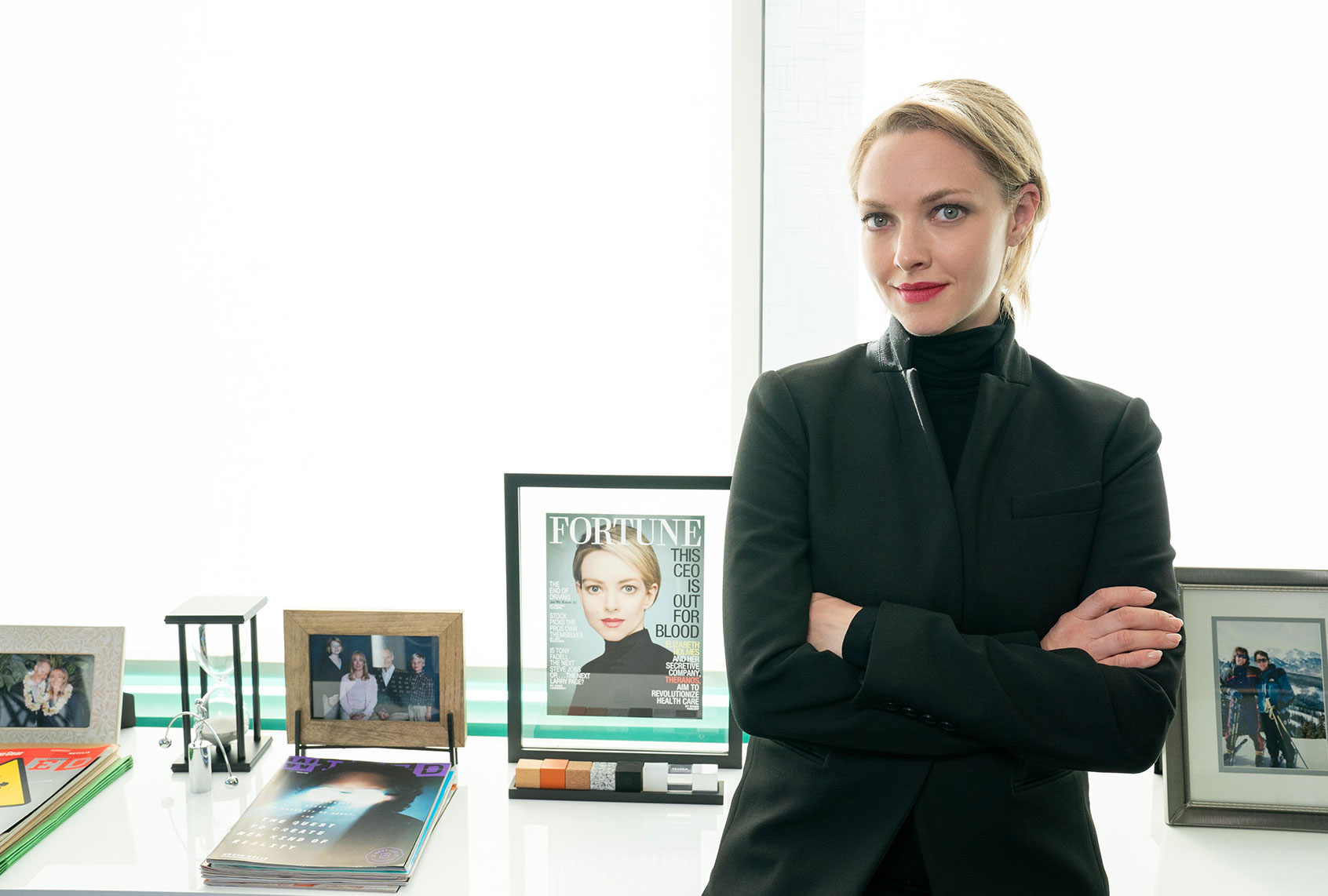
Hulu’s “The Dropout” brings its A-game with Amanda Seyfried’s powerful take on Elizabeth Holmes

Evaluating a woman’s appearance parallel to her accomplishments is sexist and therefore discouraged in good faith conversations about her skill. But if there were ever an exception to this rule, Elizabeth Holmes is it, as “The Dropout” reminds us.

In the space of three episodes we watch Amanda Seyfried, best known for bright performances in films such as “Mamma Mia” and “Les Miserables,” exact Holmes’ transformation from a shaggy young woman sleeping in her office to a black-clad, buttoned-down tech CEO by passing her through a series of filters. First, she capitalizes on her youthful pluck to persuade rich old men to stake her venture. Then she lures a maverick brain away from Apple who advises the sloppy entrepreneur to step up her style game, explaining that fashion is her armor.

Wardrobe and hair are only one side of the makeover. The width of her gaze, her restricted facial expressions and, famously, the timbre of her voice, Holmes changed all of it to fit the picture of a 21st century disruptor. Seyfried follows this model, adding in her own sense of human frailty.

RELATED: Elizabeth Holmes’ all-American scam: HBO’s “The Inventor” reveals the science of the con

This makes one of the saddest moments in “The Dropout” its creepiest, as Seyfried’s Elizabeth weeps following a violent encounter with her business partner and lover Sunny Balwani (Naveen Andrews, who is a full glass of iced chill in this part). Through her tears Seyfried’s Holmes discovers her new way of speaking. She stares in a mirror and rehearses a prepared pitch in ever-deepening tones until she has calibrated the delivery she desires, repeating the same word with escalating force and decreasing humanity: “Forward. Forward. Forward.”

None of it sound or feels organic or fully human, which is how Seyfried distills the disconcerting essence of Holmes. The actor’s low voice doesn’t match her face; her electrified eyes seem to operate on a separate current from her mouth. She embodies the self-described innovator who radiates enough of a granite-hard faith in her vision to distract from the fact that she hasn’t made anything.

“The Dropout,” adapted from a popular podcast by “New Girl” creator Elizabeth Meriwether, is part of an expanding buffet of scam artist tales that includes Netflix’s “Inventing Anna” and Showtime’s “Super Pumped,” taking on the rise and fall of Uber founder Travis Kalanick, played by Joseph Gordon-Levitt..

On March 18 Apple TV+ enters this game with “WeCrashed,” starring Jared Leto and Anna Hathaway as WeWork co-founder Adam Neumann and his wife Rebekah.

It’s natural to contrast this series with “Inventing Anna” given the story’s rudimentary similarities. Each is about a young blonde woman who talked their way into influential circles and parted vastly powerful people from more cash most of us will see in our lifetimes.  

Holmes’ grift, though, places her in another league entirely. Unlike Anna Delvey, Elizabeth Holmes had a pedigree from which to launch. She dropped out of Stanford at 19 and she charged into the field of biotech, imitating the work philosophy and style of Steve Jobs and Thomas Edison.

The DropoutAmanda Seyfried as Elizabeth Holmes in “The Dropout” (Beth Dubber/Hulu)Through her company Theranos, which drew its name from combining the words “therapy” and “diagnosis,” Holmes took a potentially game-changing proposal – the invention of a device that could provide low-cost, early detection of diseases and infections with a drop of blood – and released it to the public before it worked. At the height of its fortune, Theranos was valued at $9 billion, making her the world’s youngest self-made billionaire.

She’s also the daughter of a failed Enron executive, and a young woman whose focused determination made her a pariah among her peers. All told, Holmes provides a riveting, multilayered psychological profile to explore.

This is why the Hulu series is one of several looks at her, preceded by Alex Gibney’s damning “The Inventor: Out for Blood in Silicon Valley” and to eventually be joined by Adam McKay’s treatment for Apple TV+, “Bad Blood,” with Jennifer Lawrence translating Holmes for audiences. It isn’t merely the magnitude of her crime that’s fascinates. It’s also the enigmatic personality of criminal.

“The Dropout” will be tough to top, or even match, because of the way Seyfried, along with Meriwether and her writers, marry the visible facets of Holmes’ put-on with her skewed ethical paradigm. She’s a study in toxic ambition, a woman willing to punish herself and crush others in her grueling quest to succeed.  Early scenes from her school days depict a noble version of will, but fame and pressure mutate it into something more sinister.

Precisely capturing a subject’s physical quirks is the heart of impersonation, but Seyfried takes her depiction several steps beyond this by realistically depicting the calculations that resulted in Elizabeth Holmes that was convicted on four counts of fraud in January. The actor steadily evolves her portrayal from that of an enthusiastic teenager to the 30-something executive who refuses to accept that she’s conning everyone, despite the lies and deceptions she deploys to prevent the world from finding her out.

She and Meriwether also plausibly find humor, even joy, in this story without asking us to excuse Holmes or feel sorry for her. Rather, through resourceful musical cues and scenes of Seyfried’s manic awkward dancing, it constructs a picture of someone who searches manufactured sources and images for meaning and direction. A scene where she’s jerking rhythmically before a poster of Steve Jobs as if in worship could be an entire chapter of a book.

RELATED: From extreme catfishing to wine fraud, here are 13 documentaries about con artists

Another, when she gets brushed off by a respected professor (Laurie Metcalf) at Stanford who tells her that her billion-dollar idea could never work, stands out as a sinister turning point. The professor was right, but Holmes is 19 when this happens – an age where Yoda’s wisdom and Mark Zuckerberg’s example makes more sense than the hard truth offered by science.

Throughout the show the producers make effective use of pop songs in the narrative, with some selections intentionally hitting the nail on the head with foreshadowing, like Holmes’ adoration of Alabama’s “I’m in a Hurry (And Don’t Know Why)” and others like Missy Elliott’s “We Run This” lighting the chasm between who Holmes is and how the world sees her.

Every story like this that’s worth its salt tells us something about the conditions that create someone like Holmes, which “The Dropout” does by populating Holmes’ story with the extensive stable of players who embody those who helped construct and maintain the lie, whether intentionally or inadvertently.

And it’s not shy about naming names, from former heads of state, including George Shultz (Sam Waterston), who were too proud to admit they’d invested in and vouched for a fraud to the likes of Richard Fuisz (William H. Macy), her next door neighbor who made a fortune off of patenting medical inventions who claimed that she stole his idea.

Stephen Fry is heartbreaking as the chief scientist who sets the moral bar for his team and strived to make Theranos’ machine, The Edison, a reality. Eventually he and everyone around him are cast aside in favor of go-along-to-get-along newcomers, although one of them ends up being the person to blow the whistle.

The show’s larger ensemble is stacked with stalwart performances from the likes of Utkarsh Ambudkar, Alan Ruck, Dylan Minnette and Michaela Watkins.


Want a daily wrap-up of all the news and commentary Salon has to offer? Subscribe to our morning newsletter, Crash Course.


But it is Seyfried who lays out the very human reasons Holmes is who she is and does what she does without drilling it down to one particularly thing. Maybe she was a unique thinker who unwisely leaped over the years of failed experimentation inventors pour into every success. Perhaps she was simply a brilliant study, the way all con artists are, knowing what to say to the right people and knowing enough to make them to do the work required to leap to the next layer of influence.

It could be that she’s an ambitious person who knew her failure as a woman would be penalized more harshly than a man with an equivalent urge to make a mark on history. It could be that she didn’t care a bit about how her actions would make it even harder for female entrepreneurs, scientists and engineers to get a foot in the door.

The genius of “The Dropout” is its comfortable way of holding all of those views at the same time, and in ways that make a person appreciate the scope of crime – and, better still, the extraordinary pleasure of watching Seyfried and the rest of the actors recreate this case with genuine confidence.

The first three episodes of “The Dropout” are streaming on Hulu. New episodes premiere weekly on Thursdays. 

More stories like this:


Marilyn Manson’s defamation suit against Evan Rachel Wood is a troubling legal move for #MeToo

Marilyn Mansion is denying allegations of sexual abuse made by his former partner Evan Rachel Wood and instead, is placing the blame on her.

On Wednesday, Manson, whose legal name is Brian Hugh Warner, filed a defamation suit against Wood in the Los Angeles County Superior Court, alleging that she “publicly cast” him as a “rapist and abuser — a malicious falsehood that has derailed Warner’s successful music, TV and film career.” 

Variety reported that Manson is also suing Ashley Gore, Wood’s “on-and-off” romantic partner. Manson claims that the pair impersonated an FBI agent “by forging and distributing a fictitious letter from the agent” in an attempt to slander Manson’s name. The court documents also state that Wood and Gore “made knowingly false statements” against Manson and allegedly “provided checklists and scripts” to Manson’s accusers.

RELATED: The 2010s in feminism: Two steps forward and a big shove back

Manson has also requested a jury trial and is “alleging intentional infliction of emotional distress, violation of the Comprehensive Computer Data and Access Fraud Act and impersonation over the internet.”      

The recent filing arrived just a few weeks before the March 15 premiere of Wood’s HBO documentary “Phoenix Rising” that initially made headlines out of Sundance in January. In the first part of her documentary, Wood claims that she was “essentially raped on camera” during the filming of Manson’s 2007 music video “Heart-Shaped Glasses.” Wood also says that she was fed absinthe on set and forced to have sex with Manson.

The lawsuit is unusual since many high-profile #MeToo accusers do not face legal retaliation like this. There have been a few exceptions, however. In 2021, Johnny Depp filed a defamation lawsuit against his ex-wife Amber Heard over a 2018 Washington Post op-ed, in which Heard wrote about sexual violence but didn’t explicitly reveal Depp’s name. People reported that Depp previously lost his libel lawsuit against a British tabloid that called him a “wife beater.” A Virginia judge allowed Depp to continue with his suit but denied Heard’s request to dismiss it. 


Want a daily wrap-up of all the news and commentary Salon has to offer? Subscribe to our morning newsletter, Crash Course.


Additionally, U.S. Senate candidate Roy Moore sued his accuser, Leigh Corfman, after she accused him of sexually molesting her when she was a teenager. According to NPR, Moore claimed he didn’t know Corfman and stated that she “injured his reputation with false allegations meant to hurt him politically.”

This isn’t the first time Manson has denied abuse allegations made against him. In 2021, Wood officially named Manson as her abuser and revealed in an Instagram post that she had been groomed, manipulated and brainwashed by him. Manson responded to the claims, asserting that they were “horrible distortions of reality.”

“The allegations made to the police were and are categorically denied by Mr. Warner and are either completely delusional or part of a calculated attempt to generate publicity . . . Any claim of sexual impropriety or imprisonment at that, or any other, time is false,” Manson’s attorney, Howard E. King, further clarified.

More stories you might like:

Capitol Riot man faces own son as witness in federal court

Guy Reffitt, a 49-year-old man from Texas, was the first to stand trial for felony charges stemming from his participation in the January 6, 2021 Capitol riot. Reffitt is charged with obstruction, civil disorder, and carrying a firearm while on Capitol property.

One of the witnesses to take the stand to testify against Reffitt was his own teenage son, Jackson Reffitt, who spoke about Googling an FBI tip line to report his father’s actions during the Capitol riots. 

Scott MacFarlane, a CBS News Congressional Correspondent, live-tweeted from the court room during Jackson’s testimony, and you can read that thread in full here:

Related: “Merrick Garland, are you listening?”: Jan. 6 committee says Trump may have violated multiple laws 

Jackson stated that his relationship with his father began to go downhill after the 2020 election, according to Huffington Post,  and that he felt “paranoid” that his father’s rhetoric would one day lead to violence.


Want a daily wrap-up of all the news and commentary Salon has to offer? Subscribe to our morning newsletter, Crash Course.


The teenager’s tip to the FBI regarding the fears he had surrounding his father was sent on Christmas Eve 2020, but nothing ever came of it until after the January 6 riot. This information is from Ryan J. Reilly, a Justice reporter for NBC News, who was also live-tweeting from the trial today. 

Guy Reffitt pled not guilty to the charges put against him in trial today, and faces a sentence of 60 years in prison, according to CBS

Since reporting his father, and sharing a recording of him with the FBI, Jackson moved out of the home he shared with his parents. He’s since accumulated a nest egg for himself in the amount of $150,000 via a GoFundMe drive, according to Huffington Post, which he plans to use for college and car expenses. 

Read more:

“Single Drunk Female” star Ally Sheedy: “My most multidimensional roles come from women”

Ally Sheedy’s career spans classics like “The Breakfast Club” and “War Games” to indie hits like “High Art.” Now, the busy actor is costarring on the new Freeform series “Single Drunk Female” as Carol, the wine-loving mom of a newly sober adult daughter.

Sheedy appeared on “Salon Talks” recently about what she looks for in her creative projects these days, and the legacy of her iconic teen roles. 

Watch her “Salon Talks” interview here or read a transcript of it below.

The following interview has been edited for length and clarity.

We see your character, Carol, first through the eyes of her daughter Sam. Her life gets pretty disrupted by Sam’s meltdown. Tell me where she’s coming from when we meet her.

She’s a teacher. You don’t really get to see a lot of that in the season, but she is. Her husband, Samantha’s father, had a very long illness and two and a half years ago he passed on. Carol has been getting her life together and figuring out her life. She’s in her mid- to late 50s. I am 59 so I understand this — recreating, transitioning into her new life. Then everything gets blown up because her absent daughter becomes a disaster, causes a crisis with drinking and has to move back home. Getting my world together as Carol and figuring out my life has suddenly become all about her again. That’s what happening.

And she doesn’t have the necessarily perfect, TV mom expected reactions to everything.

No.

RELATED: Anthony Michael Hall on why he was “destined” to work with John Hughes

There are ways that character could have been written and played very one-dimensionally. But as we see her throughout the season, we understand where she is coming from as a fully formed adult woman in her own life.

The writing in the show is wonderful. She’s written in a multidimensional way. The dynamic I have with Sofia Black-D’Elia, who plays Samantha, is alive and it’s complicated. What I appreciate about the show is that the writers and the creative team have let that dynamic really define, for Carol, what’s going on. Where things are going with Samantha and within myself because of Samantha are coming from that place, rather than being just thrown in. They give you a framework, and this feels like it’s coming from an authentic place. It’s coming from my dynamic with Sofia. I really appreciate that about the writing.

How did you develop the character?

Carol was just immediately there and alive in the writing. She made sense to me. I respond to her. I could feel her. Then I started working with Sofia on the pilot, and we were doing rehearsals. What is happening with Sofia is powerful and wonderful and juicy and complicated, because she’s a wonderful actor. The way that we meshed together, what was happening between Sam and Carol, gave me more and more of an understanding of who Carol is. There was a depth and dimension, and that has so much to do with Sofia.

When you approached this character, were you thinking about what her history was, what her relationship with drinking was? There’s that scene where she’s just holding a glass of wine and saying, “It’s hard to be a person.”

She’s been through a lot. She’s still in the middle of grieving my husband who died and my own feelings about how Samantha did or did not show up for that. Making my life, doing my whole thing. I think for Carol having a drink, having wine, has always been something. It just softens the edges and it’s something that she does at night. She doesn’t drink like Samantha did.

This thing about Samantha suddenly coming into the house, this is not said in the script, but it’s going on with me in my head as Carol. I feel like, “She’s coming in with her problem, but I am not changing what works for me because of her.” There’s the friction right away. “She’s got to do her own thing and get herself together. I don’t even know if I believe in the alcohol thing with her. I don’t even want to go there, but don’t come in here and tell me I can’t have my wine at night, period. End of story.” That’s where we start from.


Want a daily wrap-up of all the news and commentary Salon has to offer? Subscribe to our morning newsletter, Crash Course.


It all feels so true because of course the show is grounded in creator Simone Finch’s real life experiences.

For a long time, there was a lot of celebration of female drunkenness as kind of a shorthand for empowerment. The show starts where you think that might be what this is about. What do you think it is about this moment we’re all living through, where a lot of us really are reassessing our choices?

Simone’s own experience is what mostly informs the storytelling. There is something that’s resonating in the show. The show is not about a pandemic, but everybody in the show, every character, there’s a transition happening. There’s what life was and now where life is, and where are we going to go? That’s happening with every character in the show each in their own way. I think something resonates about that.

We’re all trying to get our feet under us again. Things look different, and things are not the way they used to be. There’s been huge changes, so there’s a little bit of a disoriented feeling. Somehow the writing captures that in the episodes. Nobody seems to be on firm ground. Everyone’s going through some kind of life change, without it becoming soap opera-y at all. It’s actually gritty and funny. All the characters are moving through something in their lives, and they’re not really sure where they’re going or what’s going to happen.

One of the other things that makes this show unique is just how female driven it is. Driven in its voice, in its storytelling. In not just the main character, but also so many of the supporting characters.

Ally, I found a quote from you from an interview that you did 30 years ago. You completed the beginning of a poem, “I think that I shall never see.…” Do you know how you ended it? “A good woman’s role in a film that makes money.”

Did I say that?

You said that.

Oh, that’s funny. Wow.

What does it feel like now looking around, not just at the success of a show like this, but the culture in which there is space for other kinds of successes like it?

There are so many options of stories that one can watch. It isn’t the way it used to be where you had to watch what was on one of the main networks and that was all there was. Now there are so many different platforms that there are so many stories that are being able to be told. Brilliant stuff like “I May Destroy You.” Things that are not going to come out there and be some big movie that has to make a certain amount of money, but it’s going to have its own audience and the audience will easily find it. You don’t have to go to an art house to see an indie film. You can find this stuff on your laptop or your TV or computer.

There’s just so many more stories being told. That means that there are so many more stories being told that are about women, because there are more options and there’s a broader playing field and there’s an audience for it. It’s completely different then it used to be, but there’s brilliant stuff out there. I love watching female-driven shows. That’s always the stuff I look for.

And you are a very picky actor. You take time off. You seem to be drawn to stories that are told by women or have a strong woman’s hand in it. Is that something that you were very intentional about later in your career, because that’s not necessarily where you had the option of starting?

I think that the most multidimensional roles that have come to me, come from writers that are women. Writers that are women, producers that are women. Not always directors that are women. That can be different. But there’s just a different kind of character that’s going to get written if somebody’s writing from their own life experience. With a lot of these roles, it was coming from something real that showed up from a woman into the writing.

There’s a different flavor to that than reading a script that’s very often written by a man where the woman is a secondary supporting character. That’s another ballgame. There are a lot more women writers. There’s a huge playing field now. The writers’ room on our show does not look like the way writers’ rooms used to look at all. At all. I think that’s the reason that the characters are so full of life, and there’s so many of them and they all fit together. There’s voices in the room that didn’t use to be in the room.

That also seems to be reflected in the chemistry of the cast. I saw an interview where you said that you see this as a show about a mother and a daughter.

I do. As far as I’m concerned, the whole show is about the mother and daughter. That’s it, because that’s my storyline. There are other things going on, but all that my focus is just on what’s going on with Sam and what’s happening to my life right now. As far as I’m concerned, that’s what the show is about.

Most of the people who you’re acting with are of a different generation. Millennials love and respond to your earlier films and the films of that era — those John Hughes movies, movies like “War Games.” What do you think it is about that period, that time in cinema, that part that you played in it, that still affects people so deeply?

I don’t know with all the different movies, but I do know that there’s this continued appreciation for “Breakfast Club.” They’ll look and say, “Oh, that was my high school experience,” or something. I don’t really know. I actually don’t have an answer to that question. I don’t know why those films resonate. I would think that for somebody my age or somebody in my age bracket they would resonate just because you remember. I remember being my 20s. I remember the ’80s. There’s a nostalgic feeling. But why those movies speak to young people I have absolutely no idea. I really don’t.

At the time, you couldn’t possibly have imagined that you would’ve been creating something.

No, we had no idea. We had no idea that it was going to have such a life.

Are you hoping that maybe in 30 years, this show is a time capsule of a post COVID moment in the new sobriety?

I don’t know. I loved doing this season and I just would love us to be able to do another season of it. I’m not really thinking beyond that. I guess in 30 years, not just this show, but a whole bunch of the things that are on right now, are going to be seen as the shows that got made during the COVID time, which nobody will ever forget,. It’s going to have repercussions for a very long time. There is a bunch of work right now being done. Some of the shows actually incorporate COVID into them, like “And Just Like That” did. Some of them are just what’s in the air, what’s the zeitgeist right now? What are we doing? What kind of stories are we telling? It’ll be interesting to see.

Do you feel making this show in that moment for you as a cast gave it something different, a sense of closeness or intimacy that you might not have otherwise had? 

I got to have my scenes with Sofia, and we’re living in a time where I was in the hotel by myself. The only person I would see would be my brother who’s vaccinated. Finally being able to be in a room, actually relating with somebody, having some kind of interaction, was joyous. It was work and it was Sofia, but add onto that, also, it was finally talking to somebody in person. 

“Single Drunk Female” airs Thursdays on Freeform and streams next day on Hulu. Watch a trailer for it below, via YouTube.

More Salon Talks: 

Put down the soap — here’s the right way to clean a pizza stone

A pizza stone is a circular (or rectangular!) stone that emulates the heat distribution of a brick oven, giving you the ability to bake Napoli-level pizzas at home in your oven. The porous stone also draws moisture out of the dough as it bakes, giving your pizza a much crispier crust than a baking sheet would allow for.

Cleaning a pizza stone, though, is not the same as cleaning any other piece of cookware in your arsenal. Since the stone is porous, it tends to hold onto water and any kind of cleaning agent, and similar to glass, it requires cool-down periods after use to avoid temperature shock and cracking.

However, according to Giordano’s, Chicago-style pizzeria, cleaning a pizza stone is actually quite easy, and you likely have the materials on hand already.

First, what not to use:

  • Soap: Yep, just like your mom’s cast-iron skillet she warned you not to go near with soap, a pizza stone builds up a seasoning over time, making it a nonstick surface. Soap can strip the stone of its natural nonstick properties, as well as leave behind a soapy residue that could transfer to your pizzas.
  • Oils: Even though a pizza stone does end up absorbing oil as it crisps up your pies, adding extra oil to it in order to lift away grime is not the solution.
  • Excess water: You’ll want to keep water use to a minimum when cleaning your pizza stone, as they take a good chunk of time to dry completely, and if you put it in the oven before it’s completely dry, you run the risk of cracking it.

Next, what you’ll need:

  • Bench scraper or metal spatula
  • Stone brush, scouring pads, or sandpaper

You’ll want something flat (but strong) to slide under crusted-on bits and lift them away. A bench scraper or metal spatula (like a fish turner) are the perfect options for dislodging particularly stubborn crud. The other thing you’ll need is something abrasive, ideally a stone brush meant for this exact purpose, but you could also turn to a scouring pad (without soap), unused toothbrush, or even a fine-grit sandpaper to scour away any remaining debris.

What you’ll do:

  1. Before introducing any water to the stone, try scraping away any debris with your bench scraper or spatula. Sometimes this is all it takes, and water isn’t necessary at all.
  2. If there are more stubborn bits that need loosening, introduce a quick stream of water to the stone, just enough to get the surface lightly damp.
  3. Use the stone brush or one of the above alternatives to scrub all remaining debris off, then wipe clean with a damp cloth.
  4. The final, and possibly most important, step: Let the stone dry completely before putting it back in use or in the oven. Any leftover moisture can cause the stone to crack when reheated, so it’s best to let it dry for at least 24 hours.

For stubborn stains:

Similar to a sheet pan, pizza stones will acquire stains and signs of use over the course of their life. While this is totally normal, you might find yourself wanting to rid the stone of these pesky stains. In this case, a trusty paste of one part baking soda to one part water is your ally. Once you’ve completed the initial cleaning outlined above, you can scrub the paste into any lingering stains to lift as much oil as possible. Wipe clean with a damp rag and allow to dry completely.

This post contains products independently chosen (and loved) by our editors and writers. Food52 earns an affiliate commission on qualifying purchases of the products we link to.

What is mushroom coffee, and why is it having a moment?

In 2020, several months into the pandemic, the “cottagecore” aesthetic was in full swing. It was an online movement that attempted to paint the quarantine as “romantic instead of terrifying,” Rebecca Jennings explained for Vox. Folks posted curated images of delicate pastries, nap dresses and fresh-cut wildflowers. 

As the pandemic persists, however, the vibe has shifted — and the “bog witch” aesthetic has prevailed. Calico kittens and chunky knit sweaters have been replaced by frogs and blankets of moss. Creeping into the collective spotlight, as well, are mushrooms. They can be found everywhere recently, from Netflix documentaries, to the racks at Forever 21, to your morning cup of joe. 

Related: How to make better coffee at home, simply and without expensive gear

Coffee shops and supermarket shelves across the country have started to stock mushroom coffee, often promoting it as a veritable superdrink. But what is mushroom coffee exactly, and is it really a better option than straight-up coffee beans? Come, sit in the fungi-covered dirt with me for a moment and let’s dig into these questions together. 

What is mushroom coffee? 

Mushroom coffee is actually what it sounds like: a beverage made from a mixture of coffee beans and powdered mushrooms that can be served hot or iced. Don’t worry, you won’t find whole white button mushrooms from the supermarket floating in your coffee cup! Both the coffee and mushrooms are ground, and the mushrooms that are used to make mushroom coffee are ones that have been prized for centuries, typically in Asian medicine, for their health benefits. These include the reishi, lion’s mane, chaga and cordyceps varieties. 

What does mushroom coffee take like? 

Much like coffee can differ from cup to cup, the flavors found in mushroom coffee are diverse, though they typically come in different shades of “earthy.” Sometimes there’s a nuttiness, sometimes a kind of grassy verdance, and occasionally, there are hints of dirt. However, all of those those things can be masked by — or actually round out — the flavor of the coffee beans being used. 

Why is mushroom coffee having a moment? 

Aside from the aforementioned shift to the bog witch aesthetic, mushroom coffee is largely being touted as a healthful drink packed with adaptogens — a catch-all term used by wellness professionals, purveyors and marketers to refer to certain ingredients thought to have health benefits. It’s like a different shade of the term “superfoods.” 

While some of those claims haven’t been proven in a lab setting, the founders of Four Sigmatic, one of the most popular mushroom coffee brands, uses lion’s mane and chaga extract in their brew. The lion’s mane, they write, is the “brain’s best friend when you want to get stuff done,” while chaga has “also been used to support immune function for centuries.” 

Many adaptogens are also marketed as helping consumers manage stress. In an article for the journal “Pharmaceuticals,” researchers wrote that “adaptogens increase the state of non-specific resistance in stress and decrease sensitivity to stressors, which results in stress protection.” 

After the stress of the past several years, who wouldn’t want that in their morning brew? 

More stories about coffee: 

Why scientists still can’t figure out how to intercept nuclear missiles

Amid the Russian invasion of Ukraine, the specter of nuclear war looms in the mind of the public in a manner unseen since the Cold War. 

Indeed, as the international community slaps Russia with an array of restrictions and sanctions, it’s hard to not jump to a worst-case nuclear scenario — particularly given that Russia commands the largest stockpile of nuclear weapons in the world. More alarmingly, Russian President Vladimir Putin recently put Russia’s deterrence forces on high alert, which includes nuclear arms.

Many experts agree that this level of threat is unprecedented in the post-Cold War era. But given how far computers, drones, and laser technologies have come since the Cold War era, one might think that advanced technology could deter a nuclear weapon threat. Indeed, back in 1983, President Ronald Reagan announced the initiation of a program — derisively called “Star Wars” by critics — by which America could protect itself from ballistic strategic nuclear weapons from space.

Yet it’s been 39 years since that announcement. So, are we there yet? In other words: if a foreign nation’s military did, say, launch an intercontinental ballistic missile (ICBM) — meaning a missile with a minimum range of 5,500 kilometers — could the U.S. or another country block or intercept it?

Engineers have been grappling with this question for decades. Yet curiously, and despite monumental advances in physics, computing and A.I. in the past four decades, the engineering problem of missile interception has yet to be solved.

“There’s no law of physics against the prospect of intercepting them, but the laws of physics make it extremely challenging — and create all of these constraints on how difficult it is to intercept it,” James Wells, a professor of physics at the University of Michigan, told Salon.

But Wells noted that such a thing is certainly physically possible. “There’s no theorem that says ‘one cannot accomplish missile defense,'” he added. 


Want more health and science stories in your inbox? Subscribe to Salon’s weekly newsletter The Vulgar Scientist.


Technically, the U.S. does have a defense ICBM missile system. It’s called the Ground-based Midcourse Defense (GMD), and it’s the only system currently deployed to defend the continental U.S., with 44 interceptors based in Alaska and California. Unfortunately, it probably doesn’t work.

recent study sponsored by the American Physical Society concluded the the GMD cannot be relied on to counter even a limited nuclear strike. The study specifically focused on ICBMs from North Korea, and determined the U.S. defense systems in place are unlikely to be reliable enough to guarantee the mission would be a success within the next 15 years.

Experts tell Salon that despite technological advances, as Wells noted, there are a few reasons why this is such a hard problem to solve, scientifically speaking. The primary reason is that it is simply extremely hard to intercept something so small (about a meter long) that is moving so fast (15,000 miles per hour) in such a short span of time. Not to mention that part of these warheads’ trajectory occurs in space.

“It’s a really very challenging task,” Dr. Laura Grego, a Stanton Nuclear Security Fellow at MIT’s Laboratory for Nuclear Security and Policy, told Salon. “One reason it’s so hard is that the timescales of a nuclear armed ICBM attack are very short from launch until they land — it’s going to be 30 or 40 minutes — your defense has to be ready and effective on those timescales.” Likewise, as Grego noted, “because the stakes are so high, it really needs to work almost perfectly the first time.”

Indeed, an ICBM’s trajectory has three different phases: boost phase, midcourse phase, and terminal phase, all of which typically occur in less than an hour from launch to strike. Grego explained that engineers have long targeted the midcourse phase, when the ICBM is coasting after launch towards its destination, as an optimal time to intercept. 

RELATED: This is what would happen to Earth if a nuclear war broke out between the West and Russia

Grego said that ICBMs are, by design, hard to intercept. The warheads, of which there are multiples and which emerge from the cone of the missile, are “relative small,” which makes it hard to attack. Some of these warheads might be decoys, and contain nothing. Likewise, the journey of the ICBM takes it through the vacuum of space — where, as Grego says, “you don’t have air resistance or very little air resistance, so a light decoy isn’t slowed down compared to a heavy warhead.”

This makes it difficult to decipher which one is the actual warhead, and which one or ones are fake. Grego explained this is known as the “discrimination problem.”

“You’d have to figure out what’s the real warhead, what’s the real threat and what are decoys,” Grego said, noting that there are about 30 minutes allotted to figure that out. Another option would be to intercept all the decoys, but Grego said that may not be feasible in such a short time span.

But what about trying to intercept the ICBM during the boost phase, before the warhead and the decoys are deployed?

“That portion of the journey really only lasts three to five minutes, depending on the type of launching missile,” Grego said. “It’s only an active power flight for three to five minutes.”

That window is extremely short, and therefore incredibly challenging to figure out how to intercept, Grego noted. In order to intercept the missile during this phase, the defender would have to be really close to the launch site to make it in time.

Wells added there is a concern that intercepting during the boost phase could detonate the warhead in a friendly territory.

“This is a famous ‘shortfall problem,’ as they call it — where you’ve intercepted it, but the warhead keeps going,” Wells said. “There are significant problems and you really must make sure that you have neutralized the ICBM’s capability to do damage, and that is an additional problem in the scenario.”

Experts say it is not impossible to create a robust, reliable ICBM-stopping system — but it’s certainly very challenging.

“The stakes are so high that you want to count on a system to be almost foolproof,” Grego said. “You would want a system that you can rely on that would eliminate the death and destruction that a nuclear attack would have, and that’s very difficult to do reliably.”

Read more on nuclear weapons:

Director on “Huda’s Salon” recruiting Palestinian women for Secret Service: This is still happening

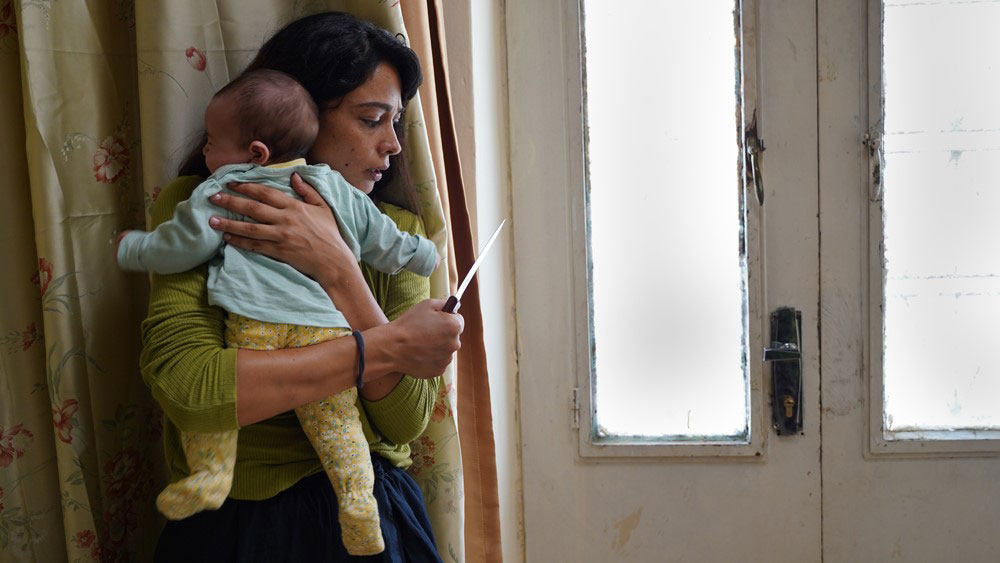
Hany Abu-Assad’s gripping thriller, “Huda’s Salon” is based on true events. In Bethlehem, Reem (Maisa Abd Elhadi), a Palestinian, is getting her hair done by Huda (Manal Awad). But after she sips some coffee, she starts to feel unwell. Reem has been drugged by Huda, who photographs her naked with a man (Samer Bishara) who is not her husband, Yousef (Jalal Masarwa). The images are being used to blackmail Reem. Huda asks her client to inform Musa, her contact at the Secret Service, about weapons and political activities. 

Reem is devastated by what has happened to her and cannot tell Yousef, as she will be seen as a traitor and bring shame upon her family. However, the resistance, led by Hassan (Ali Suliman) captures Huda and interrogates her. Meanwhile, his men try to find Reem. 

“Huda’s Salon” uses this plot to articulate ideas about the oppression of Palestinian women in Israel. But it also addresses themes of guilt, betrayal, and sacrifice. The film is full of knotty moral conflicts as Reem and Huda are both seen as victims faced with difficult decisions.

RELATED: Building a Palestinian “Idol”: A subtle fable of cultural survival and pop culture triumph

Abu-Assad, who explored similar topics in his Oscar-nominated films, “Paradise Now” and “Omar,” chatted with Salon about his new film.

How did you learn about this story and what decisions did you make in how you told it?

I read an article 20 years ago. Surprisingly, this is still happening. Three weeks ago, there was another article about the same topic — using hair salons to recruit girls for the Secret Service. 

My wife wanted to write something about Palestinian women, and she asked me if I knew dramatic stories about women in Palestine, and I told her the story of the salons. She wanted to know, “What’s the story? It’s just an idea.” The next day, I said, “You should do this and this and this,” And this is how it became a film! It was by accident. If my wife had not asked me about it, I wouldn’t have made it!

You establish Huda and Reem as women who are trapped by circumstance. One of the reasons Huda gives for drugging the women she does is because they had terrible husbands. I appreciated her feminist streak. Can you talk about representing these women who face so much oppression?

This is the main issue. The Secret Service could recruit these women because they have terrible husbands. They can’t recruit every woman. If it happened to my wife, she would come to me, and I would be supportive. But some of our society would consider this a shame, which is why some women are vulnerable to blackmail. 

The Israeli oppression is obvious, I don’t need to make a film about it. I want to make a film about how our society is oppressing itself. It is easy to be oppressed by Israel. In order to contribute positively to my society, I need to [show] the responsibility of Palestinian society, rather than provide an accusation of the occupation. I don’t need to condemn the occupation in a movie. I need to criticize us to support these women in the future, so they are less vulnerable to being blackmailed.

It’s part of our culture. Most women will have support from their family. There are about 20% who don’t, and they are crucial. If one woman is recruited for the Secret Service, she can do more damage than you think, so it’s important to open the discussion of these women being oppressed by their own husbands. They are not the majority, but the damage they can do is huge.


Want a daily wrap-up of all the news and commentary Salon has to offer? Subscribe to our morning newsletter, Crash Course.


One character in the film says, “Society needs a wake-up call.” Is this film in particular, and your films in general, meant to foment change and call attention to these very harmful situations? One could argue that you are a political filmmaker, but I see your films as being more personal stories that happen to be set in a political backdrop. 

We are living now under extreme circumstances, but I am sure we will be free like everybody else. There is no oppression forever. With revolution and resistance, injustice will comply. This is, historically, always the case. I make personal films because we are always more interested in the personal than the actual. All great movies are about personal journeys rather than about the time and place. They can be both, but if it is not a personal story it will be outdated. I want to make films that stand the test of time, because they are the films that I like the most: “Citizen Kane,”The Godfather,” and “One Flew Over the Cuckoo’s Nest.” They are 50, 60, 70 years ago, and they still resonate now. I want the same level of personal honesty.

I found Hassan’s speech about an episode from his childhood very revealing. However, I also wondered if it was even true. He admits to lying about something he tells Huda during his interrogation, so I wondered if he was an unreliable narrator. Can you talk about the ambiguity in your film? I liked that I reconsidered what he said. 

The theme of the film is ambiguity — between true and false, loyalty and betrayal. I believe that contradiction can’t exist without [opposites]. If there is no evil, good means nothing. Good will be defined by its opposite. If there is no betrayal, loyalty has no meaning. I love these themes because they allow you to maneuver at the touchpoint between these contradictions.  That touchpoint, where they seem identical, is cinematically mind-blowing. You are entertained, but also forced to use your moral compass. This is why ambiguity is a major theme in all my films. I want to make people think rather than just feel. 

Huda's SalonMaisa Abd Elhadi in “Huda’s Salon” (IFC Films)

I love the line, “When bad things happen, people ask, ‘Why me?’ But they don’t ask this when good things happen.” The film plays with these kinds of dualities. Yousef teases Reem about seeing a boyfriend [she’s not], but he also says, “I have a right to know everything you do.” Can you talk about the paradoxes in your film? All the characters have these dualities.

All humans are in paradox. I believe that circumstances will force them to become who they are, but then they have free will. There is a never-ending struggle between the things you cannot choose and your desire to make your own decisions. Do we make our own choice, or do things happen by accident? And there is no bigger meaning? Even this movie was made by accident, if my wife hadn’t asked me for stories. It was my choice. This is why I make jokes about it. When something good happens, I don’t ask, “God, why me?” 

Each character is confronted with a moral choice, and one of the decision points in the film is the question of if it is a question of your life or someone else’s, what do you choose? What are your thoughts on this idea of sacrifice and self-preservation? This is a theme in many of your films, “Omar,” and “Paradise Now.”

My wife asked me this question when I gave her the script to read. “Do you realize all your films are about the same thing?” It’s the traumatic experience of my life, the struggle between yourself and what you want and the greater good and the betrayal of that. She wondered, “You must have a big trauma from the past.” I realized my biggest trauma is about a betrayal of trust. I don’t want to go into detail about what happened, but two stories from my youth that defined my traumatic experience and probably my vision. I didn’t consider that when I wrote “Huda’s Salon.”  

The film is shot with a real urgency and immediacy. You use space very well, from Huda’s salon to the underground lair and Reem’s claustrophobic apartment. Can you talk about your visual approach to the story? 

It was very simple. I wanted to do something different from what I did before. Usually I don’t use handheld, but this time I thought I might. I also thought about duality in light — red and blue usually don’t go together, but I tried to make a combination between blue and red in the scenes. The camera was handheld and one shot in every scene. Mostly that shows an objective point of view, but I tried to draw a subjective point of view and emphasize the duality of looking at the story. If you do one shot handheld, you feel like one of the characters is standing there because there is no escape from the time and the place. But this is objective. But I also wanted to make you feel you are the mirror of the character, or that you become the character. This is an experiment I did. I’m not sure I always succeeded, but I feel most of the shots are well-designed in this handheld, one-shot struggle between blue and red.

My last question also stems from something someone says in the film: “Tell me what lies inside you?” Maybe this gets back to your childhood trauma, but your films are very distinctive. I want to get a sense of who you are and what drives you to make the films you do?  

When I was very, very young and I realized that my family and I are oppressed by occupation. My mother’s sister fled to Syria, but my mother can’t see her anymore. She wasn’t allowed to go back. But if you are Jewish, you can come from Australia and live on the land of my family. There are also checkpoints, and in the night, the police can come to search for weapons. I remember as an 8-year-old, waking up with the light of police in my face to check under my mattress for weapons. You become very scared and feel something wrong. Why are we Palestinians treated differently? You see as a child, and as a teen, you live that injustice of the occupier daily. 

When I was young, I couldn’t stand injustice. My father had a company and when he treated his workers unjustly. I would stand with them, and not my father. When you see injustice as a child, you want to do something about it. I actually wanted to be a freedom fighter when I was 18. A wise man I met made me realize that violence would bring more violence, so I would do more to fight injustice by being morally superior if I studied. He convinced me to explore more non-violent resistance. My main motivation with cinema was to fight injustice through art. Cinema played a major role in my life as a child. My only escape from social and Israeli oppression as a child was through cinema. So, when I saw “One Flew Over the Cuckoo’s Nest,” I was so inspired, I wanted to be inspiring like that to others. I entered cinema to do something against injustice. This is me; this is who I am, and I am still doing that. The negative energy in me made me feel incompetent in changing the situation, but I can make beauty in art and a nice film. Art is able to change negativity to positivity. I can make something ugly into something beautiful to watch. Like Picasso with civil war. Civil war is very ugly, but his painting is beautiful to look at, at least emotionally. This is what I do. The frustration inside me, I am trying to express that in an art form. It’s good that I didn’t become a freedom fighter! [Laughs.]

“Huda’s Salon” opens March 4 in theaters and available on VOD. Watch a trailer for it below, via YouTube.

More stories to read:

Trucker tantrum fizzles out: How the Supreme Court’s anti-vaccine overreach backfired on the GOP

Fox News and Donald Trump desperately wanted to import Canada’s tantrum of truckers to the U.S. The Ottawa occupation — which purported to be a protest against COVID-19 mitigation policies, but was mostly just a fascist shindig — didn’t just receive endless, breathless coverage praise from the GOP’s main propaganda outlet. Nor were conservative media voices intent on importing the “protest” to the U.S. Trump and Sean Hannity were openly fantasizing on-air about anti-vaccine protests turning violent in the U.S. It was going to finally be the national MAGA uprising the right has been unsubtly longing for since the January 6 insurrection failed. 

Well, the anti-vaccine truckers have finally come to the U.S. and the whole display has been underwhelming, to say the least. On Tuesday, a “Stage of Freedom” event that was supposed to draw 3,000 anti-vaccine protesters only saw 12 show up. Another, larger protest may happen on Saturday, as groups of truckers from around the country drive to D.C. under the alternately named “Freedom Convoy” or “People’s Convoy.” These convoys are certainly drawing out some supporters as they drive through red state America. But notably, Fox News is mostly ignoring the truckers winding their way to D.C. now. And the reason is not mysterious: No one can explain what the hell they’re supposed to be protesting.

RELATED: Trump’s anti-vaccine hysteria has a mission: violence

The press release for the “People’s Convoy” declares “it is now time to re-open the country” and “Americans need to get back to work in a free and unrestricted manner.” Very high-minded rhetoric! But they can’t explain who, exactly, is stopping them. 

Despite the popularity of “Let’s Go Brandon” signs at the protests, it certainly isn’t President Joe Biden. In his State of the Union address Tuesday, Biden declared “We have the tools we need” to “end the shutdown of schools and businesses.” And frankly, even his rhetoric is outdated, as most businesses and schools have been open, but for a few temporary and sporadic snow day-style closures in January. Last week, the CDC revised its mask guidelines so that 70% of the country is not asked to mask up any longer. On Wednesday, the White House released its formal plan that codified Biden’s remarks, creating a blueprint for the end of most of the lingering restrictions. The mask mandate for planes and trains is likely going to end on March 18. Even the biggest and bluest cities in the country are following Biden’s lead and winding down most mask mandates. 


Want more Amanda Marcotte on politics? Subscribe to her newsletter Standing Room Only.


What is most ridiculous is all the whining about vaccine mandates, which, in a saner society, would be the restriction that lingers long after the mask rules and school closures have ended. But most Americans simply aren’t beholden to anything resembling a vaccine mandate. Only 36% of Americans work for an employer that requires vaccination. Having your shots isn’t required to get on a plane or a train or to enter public buildings in most of the country. Even cities like Philadelphia and New York City, which had vaccine mandates for some public spaces, are dropping them. 

The petering out of vaccine requirements can, in turn, be laid at the feet of the Supreme Court. Biden had signed an executive order requiring large employers to implement vaccine mandates, but the conservatives who dominate the court overruled the order in January, even though it clearly adhered to the letter of the law regarding federal authority. All, mind you, in service of a supposedly sacred “right” not to be vaccinated that Republicans only discovered around the time that Biden became president. 

RELATED: The radical right’s takeover of the Supreme Court is complete

Here’s the irony: In their mad dash to stick it to Biden, the Supreme Court may have deprived Republicans of their most potent political weapon going into the 2022 midterms — frustration with pandemic restrictions. 

For the past year, once vaccines started to become more widely available, the GOP’s strategy to undermine Biden became clear: Convince their followers to refuse vaccination, needlessly prolong the pandemic, and then campaign in the fall of 2022 by appealing to the public’s weariness of mask mandates, school closures and other COVID-19 restrictions. This is a classic GOP strategy of undermining a Democratic president and then blaming him for the problems they cause.


Want more Amanda Marcotte on politics? Subscribe to her newsletter Standing Room Only.


In theory, the Supreme Court throwing out vaccine requirements would support this strategy by keeping vaccination rates low and therefore keeping transmission rates high. What the conservatives justices didn’t count on, however, was that this decision would be the beginning of the end of pandemic politics. It’s not just that the omicron variant tore through the population so fast that it led to the rapid decline in cases. It also signaled the end of much of the political interest among Democratic voters to keep fighting the right on this front, since the court is clearly just going to vacate any further efforts.

It helps that vaccines don’t just reduce the chances of catching COVID-19 — they dramatically reduce the chance of getting much more than a standard cold from it. The research shows that vaccinated people are 14 times less likely to die of COVID-19 and boosted people are 97 times less likely to die. Most people are fairly well protected, and have lost interest in protecting those who refuse vaccines. 

The anti-vaccine movement in the U.S. is a victim of its own success. The whole point of propping up the bad faith arguments against vaccine mandates was to put a gloss of “freedom” and “liberty” on what was clearly an effort to keep the country hamstrung by cumbersome pandemic protocols. The hope was that voters who were sick of masks and school closures would take it out on Democrats in November.

Unfortunately for Republicans, those restrictions are disappearing, in no small part thanks to the Supreme Court. It’s hard to have a backlash when the thing you’re supposed to be outraged about isn’t happening. To sum up how a lot of Democrats, if not most, are feeling these days: If Republicans want so badly to get COVID-19, let them. Everyone else, to use the standard trucker lingo, is moving on. 

More Salon coverage of the “freedom convoy”: 

Marjorie Taylor Greene claims Biden is “compromised” by Russia over Hunter Biden’s laptop

Following President Biden’s State of the Union address on Tuesday night, Rep. Marjorie Taylor Greene, R-Ga., who heckled the president midway through his speech, baselessly claimed that Biden has been “compromised” by Russia because the Kremlin allegedly has access to the laptop of the president’s son, Hunter Biden.

“The president of the United States is totally compromised because every world leader has contents of Hunter Biden’s laptop and much more to blackmail him,” Greene said in her long-winded response to the president’s speech on behalf of the so-called America First right-wing movement.

Greene also called Biden a “globalist” who is protecting “anyone, anywhere that has blackmail evidence on his sexually deviant, drug-addled, deadbeat-dad, pathetic, sorry, embarrassing excuse of a son.”

RELATED: Experts dismiss “garbage fire” Hunter Biden exposé in NY Post: “Seems like a complete fabrication”

Greene added that all the president “cares about is protecting Hunter Biden and he will not protect any of us. This is why I have introduced four articles of impeachment on Joe Biden.” (Those articles have been almost completely ignored, including by her fellow House Republicans.)

Greene’s conspiracy theory is part of a much broader Republican smear campaign against Biden over his son’s former position on the board of the Ukrainian gas company Burisma. Conservatives have alleged that during the Obama administration, then-Vice President Biden withheld loan guarantees from Ukraine in order to shut edown a corporate corruption probe that might have implicated Hunter Biden. 


Want a daily wrap-up of all the news and commentary Salon has to offer? Subscribe to our morning newsletter, Crash Course.


In October 2020, The New York Post published a story that included documents supposedly sourced from Hunter Biden’s former laptop computer, suggesting that its files included evidence of a meeting between Joe Biden and a Burisma adviser in 2015. That claim has been refuted by President Biden and no further evidence has emerged to support it. An FBI intelligence probe reportedly remains underway to determine whether the story was part of a Russian disinformation campaign. 

But Greene has nonetheless spread the theory far and wide, claiming that Biden’s foreign policy is being undermined by the possibility of Russian (or perhaps Ukrainian) blackmail — in an intriguing parallel to similar but unproven theories about Donald Trump.  

“I am blown away with what we’re seeing. The president of the United States, Joe Biden, is willing to take our military to war … against nuclear Russia because of Ukraine,” Greene said in a podcast interview with former Trump adviser Steve Bannon. “You cannot deny this, it’s because Ukraine has the dirt on Hunter Biden. Ukraine has the dirt on Joe Biden, our president.”

“This is why we can have many of our troops get killed in this war that Joe Biden wants to have happened,” she added. 

RELATED: Fox News rejected Hunter Biden exposé; New York Post writer refused to put his name on it: reports

In fact, Biden has repeatedly made clear that U.S. troops will not intervene in the Ukrainian conflict, and would only engage with Russian forces if they invade a NATO nation. Biden and the leaders of other NATO nations have instead imposed stiff economic sanctions on Russia and are providing Ukraine with both humanitarian and military aid.

Read more on the exploits of the notorious MTG:

“Merrick Garland, are you listening?”: Jan. 6 committee says Trump may have violated multiple laws

The House committee investigating the Jan. 6, 2021, Capitol riot said in a court filing Wednesday that evidence suggests that former President Donald Trump and his allies may have “engaged in a criminal conspiracy” in their effort to overturn his election loss.

The committee told a California federal court that Trump “may have engaged in criminal acts” in his effort to prevent Congress from certifying the results of the election.

“The Select Committee also has a good-faith basis for concluding that the President and members of his Campaign engaged in a criminal conspiracy to defraud the United States,” the committee said in a filing as it seeks to force John Eastman, an attorney who helped Trump try to overturn his loss, to turn over documents in the investigation.

The panel claimed that evidence it collected could lead to potential criminal charges against Trump, Eastman and others, including “obstructing an official proceeding of Congress and conspiracy to defraud the American people.”

RELATED: Jan. 6 committee seizes on Trump’s “admission”: He wanted Pence to “overturn” election

The filing came after Eastman, who reportedly sought to convince former Vice President Mike Pence that he had the authority to overturn the election by rejecting Electoral College votes, refused to turn over documents related to the post-election scheme, citing attorney-client privilege.

“We believe evidence in our possession justifies review of these documents,” Committee Chairman Bennie Thompson, D-Miss., and Vice-Chair Liz Cheney, R-Wyo., said in a joint statement. “The facts we’ve gathered strongly suggest that Dr. Eastman’s emails may show that he helped Donald Trump advance a corrupt scheme to obstruct the counting of electoral college ballots and a conspiracy to impede the transfer of power.”

Eastman’s attorney Charles Burnham told Politico that his client has a “responsibility to protect client confidences, even at great personal risk and expense.”

“The Select Committee has responded to Dr. Eastman’s efforts to discharge this responsibility by accusing him of criminal activity,” he said. “Because this is a civil matter, Dr. Eastman will not have the benefit of the Constitutional protections normally afforded to those accused by their government of criminal conduct. Nonetheless, we look forward to responding in due course.”

The committee’s filing, which included depositions from multiple aides to Trump and Pence and from Eastman, who invoked his Fifth Amendment rights nearly 150 times, suggested that Trump and his allies may have obstructed an official proceeding by pushing to interfere with the counting of electoral votes, defrauded the U.S. by interfering in the election certification, and violated common fraud laws in the District of Columbia.

The panel cited former Trump aide Jason Miller’s testimony about a discussion in which Trump’s aides explained to him that he was going to lose the election, “but the President nevertheless sought to use the Vice President to manipulate the results in his favor,” the filing said.


Want a daily wrap-up of all the news and commentary Salon has to offer? Subscribe to our morning newsletter, Crash Course.


Eastman assisted Trump’s efforts, insisting to Pence that he had the authority to block the certification of President Joe Biden’s win. At one point, Pence counsel Greg Jacob sent a lengthy email refuting Eastman’s claims. “Thanks to your bullshit, we are now under siege,” Jacob wrote, according to court documents.

“The ‘siege’ is because YOU and your boss did not do what was necessary to allow this to be aired in a public way so the American people can see for themselves what happened,” Eastman replied.

In another email, Eastman insisted to Pence’s team that the vice president blocking the certification would only amount to a “relatively minor” violation of the Electoral Count Act, which governs the certification process.

“Plaintiff knew what he was proposing would violate the law, but he nonetheless urged the Vice President to take those actions,” the committee said in the filing.

The committee has no power to charge anyone with a crime but the filing could put pressure on the Justice Department to pursue charges against Trump and his allies. The DOJ has charged hundreds of individuals who participated in the riot but has not targeted anyone in Trump’s inner circle.

“Knock, knock, Merrick Garland, are you listening? This is clearly, to me, directed from the Jan. 6 committee over to the Justice Department,” former federal prosecutor Elie Honig told CNN. “If you look at this document, it almost reads like what an internal DOJ prosecution memo would read as. You see all the facts laid out, you see the legal arguments … they lay it out with citations to case law.”

Conservative attorney George Conway, a frequent Trump critic, told MSNBC that he doesn’t see “how the Justice Department can pass on this.”

“The problem for them is that the evidence is piling up and mounting and it fits these statutes like a glove,” he said. “He knew he lost, which means he knew he was engaging in a fraud and knew he was engaging in a deceit,” he added.

Former Solicitor General Neal Katyal said the committee’s filing was effectively an “informal referral” to the Justice Department.

“I cannot remember the last time a Congressional Committee accused a President — in a court filing — of committing felonies,” he tweeted. “This isn’t loose talk, it is a solemn court document, subject to all sorts of sanctions for misrepresentations, and backed by evidence they have uncovered.”

Read more:

Tucker Carlson attacked for mocking Ketanji Brown Jackson’s name, asking for her LSAT scores

Fox News host Tucker Carlson is facing accusations of racism after attacking both the name and the academic credentials of Judge Ketanji Brown Jackson, President Biden’s Supreme Court nominee, who would become the first Black woman to ever serve on the nation’s highest court. 

“So is Kentanji Brown Jackson ― a name that even Joe Biden has trouble pronouncing ― one of the top legal minds in the entire country?” Carlson said during a Fox News broadcast, perhaps deliberately mispronouncing Jackson’s first name. 

“We certainly hope so. It’s Biden’s right. Appointing her is one of his gravest constitutional duties,” he continued. 

“So it might be time for Joe Biden to let us know what Ketanji Brown Jackson’s LSAT score was,” the host added. “Wonder how she did on the LSATs? Why won’t he tell us that? That would settle the question conclusively as to whether she is a once-in-a-generational legal talent, the next Learned Hand.” (For the record, the LSAT, a standardized test used as an admissions criterion by most law schools, is not seen as highly predictive of a lawyer’s future career.)

Jackson, currently a judge on the U.S. Court of Appeals for the D.C. Circuit, was nominated by Biden last month, and is set to replace Justice Stephen Breyer, a member of the Supreme Court’s liberal minority, who announced his resignation in January. Previously, Jackson worked as a federal public defender in Washington, D.C., and served as vice chair of the U.S. Sentencing Commission. She would be not just the first Black woman to serve on the Supreme Court, but also the first former public defender.

RELATED: With his Supreme Court pick, Ketanji Brown Jackson, Biden takes the culture war fight to Republicans

On Thursday, Carlson faced considerable blowback for his remarks, with some observers suggesting that the top-rated Fox News firebrand was holding Jackson to a standard that he had not applied for previous nominees. 

“Judge Brown Jackson graduated Magna Cum Laude from Harvard, Cum Laude from Harvard Law, & was the editor of the Harvard Law review,” tweeted Democratic National Committee chair Jaime Harrison. “She is the real deal. I’ve never heard ‘Tie Too Tight’ ask about lsat scores for other nominees, but typical of those who feel a bit ‘inadequate.'”


Want a daily wrap-up of all the news and commentary Salon has to offer? Subscribe to our morning newsletter, Crash Course.


“I don’t remember Tucker wanting to know [Justice] Amy Coney Barrett’s test scores. Or anyone else’s,” echoed former federal prosecutor Ron Filipkowski. “For some reason, he is questioning Brown Jackson’s intelligence. Or is he ‘just asking questions.'” 

Congressional Democrats, for their part, have widely touted Jackson’s pedigree, and Biden has called the judge one of America’s “top legal minds.” Even some conservative legal experts have praised the judge’s credentials, as the Washington Post reported this week, noting that her judicial philosophy falls within the mainstream. 

Still, Jackson is likely to encounter significant opposition from Senate Republicans, in part because of Biden’s advance commitment to nominate a Black woman.

In January, Sen. Roger Wicker, R-Miss., said in a radio interview that Biden’s nominee “will probably not get a single Republican vote.” Any Black female nominee, he added, would be a “beneficiary” of “affirmative racial discrimination.”

RELATED: Lindsey Graham rages after Biden passes up rumored SCOTUS pick from South Carolina

Last month, Sen. Ted Cruz of Texas called Biden’s pledge “offensive,” arguing that “Black women are what, 6% of the U.S. population?”

“He’s saying to 94% of Americans, I don’t give a damn about you,” said during his podcast. “You are ineligible. And it’s actually an insult to black women.”

Jackson’s confirmation hearings have been set for March 21, according to the Senate Judiciary Committee, with Democrats aiming for a final vote by April 8. Although the current Senate is divided 50-50, Democrats could confirm Jackson with the tie-breaking vote of Vice President Kamala Harris, even if the nominee receives no Republican votes. Thanks to a precedent set by a previous Republican majority, Supreme Court nominations are not subject to the filibuster.

Read more on Judge Jackson and the Supreme Court:

Mikhail Gorbachev changed history — and then the West paved the way for Putin

As Ukraine continues to spit defiance at the sons of Red Army veterans, I wonder what Mikhail Gorbachev is thinking.

Half a lifetime ago, in 1985, Gorbachev was installed as the Soviet Union’s eighth and final leader, and set in in motion the perestroika reconstruction measures that ushered in the end of the Cold War, and ultimately the rise of Vladimir Putin.

Meantime, 1985 was a pretty big year for me, too. As a British undergraduate Russian major spending six months learning the language in Moscow, I found myself enjoying a ringside seat to history. Housed and taught in a 20-story dormitory block that was home to 30 or 40 nationalities from all over the world, I shared the ninth floor with Poles, Cubans, Angolans, Nicaraguans and even a couple of mature Vietnamese students who had fought the Americans in their youth.

For the first time in my life, I found myself rubbing shoulders with people my own age who had a completely different worldview to mine — one born not of indoctrination or brainwashing, but the kind of problems and priorities that I could barely imagine. A fair few of them had grown up against the backdrop of some dirty little U.S.- or Soviet-sponsored proxy conflict. Others spoke of a daily struggle to find something to eat, and tucked into our cafeteria’s greasy cabbage soup without complaint.

RELATED: The Ukraine catastrophe and how we got here: Chronicle of a war foretold

I recall in particular a conversation at a party in someone’s dorm room with one of my younger Russian instructors, a steelworker’s daughter barely older than myself and just out of teacher training school. “In the West, you are free — free to starve,” she told me. “I hope Comrade Gorbachev will proceed carefully.”

I remembered those words with a sinking feeling a decade later, when as a precondition of Western political support and investment, global development agencies and lending institutions prescribed Russia a course of economic “shock therapy” — a one-size-fits-all program for planned or developing economies aimed at magically jump-starting a free market via sudden neoliberal reform: widespread privatization, budgetary “austerity,” slashing of social services and so on.


Want a daily wrap-up of all the news and commentary Salon has to offer? Subscribe to our morning newsletter, Crash Course.


It all sounds rather bracing, doesn’t it? A brisk speed-walk through the silver birch forests before breakfast, perhaps ending with an ice bath in the Moscow River by way of boosting the immune system.

But for plenty of Russians it meant death by pneumonia. Overnight inflation rendered state pensions worthless. Proud veterans of the sieges of Stalingrad and Leningrad, chests sagging with medals and despair, sat begging at bus stops in temperatures of below zero Fahrenheit. A year later, Vladimir Putin was anointed Russian prime minister.

You know the rest: What the West foisted on Russia was the same feral brand of 19th-century capitalism that spawned Andrew Carnegie, Cornelius Vanderbilt and the rest of America’s “robber barons.” What we should have been touting was a 21st-century Marshall Plan, the post-World War II U.S.-led program of aid and cheap loans designed to rehabilitate the industrial bases of western and southern Europe and create the kind of stability in which democratic structures could flourish.

The Marshall Plan paid off handsomely. West of Czechoslovakia, no fresh dictator crawled out of a bombsite to fill the vacant boots of Hitler or Mussolini. Yes, it all cost a pretty penny, but it surely delivered a bigger bang for our buck than the trillions that America has spent in the last 30 years in failing to impose its will on the likes of Russia — or Afghanistan and Iraq, for that matter.

It’s too late now for a new Marshall Plan to ease Russia’s growing pains. As any psychologist will tell you, adolescent trauma is best treated not with quick fixes, but with patience and properly funded, individually tailored solutions. Left unaddressed, destructive patterns of behavior become ever more difficult to alter. Eventually, the only way of handling the delinquent adult that the child has become is to take him out of circulation.

Quite how we are going to take Putin out of circulation, though, is anybody’s guess. Invade Russia? Look how that panned out for the Third Reich. (Not to mention Napoleon.)

So by all means cry for poor, gallant Ukraine. But spare a thought as well for Russia. With the world lining up to impose all manner of sanctions and embargoes, there is no end in sight to her agony either. Sooner or later, you can bet that some of the Russian boys fighting around Kyiv and Kharkiv will be panhandling on Moscow’s freezing sidewalks, soaked by side spray from the passing limousines of the Putin cronies who have hoovered up their nation’s assets, and whose loot is underwriting this war.

If you do have tears to shed, let them be tears of guilt and regret. For we long since blew our chance to head off Vladimir Putin and his gangsters at the pass. Clichés about stable doors and bolting horses are no good to us today. What we need is leadership.

Maybe we should ask Mikhail Gorbachev if he has any bright ideas.

Read more on Ukraine, Putin, Biden and the war:

Are microbes the future of recycling? It’s complicated

Since the first factories began manufacturing polyester from petroleum in the 1950s, humans have produced an estimated 9.1 billion tons of plastic. Of the waste generated from that plastic, less than a tenth of that has been recycled, researchers estimate. About 12% has been incinerated, releasing dioxins and other carcinogens into the air. Most of the rest, a mass equivalent to about 35 million blue whales, has accumulated in landfills and in the natural environment. Plastic inhabits the oceans, building up in the guts of seagulls and great white sharks. It rains down, in tiny flecks, on cities and national parks. According to some research, from production to disposal, it is responsible for more greenhouse gas emissions than the aviation industry.

This pollution problem is made worse, experts say, by the fact that even the small share of plastic that does get recycled is destined to end up, sooner or later, in the trash heap. Conventional, thermomechanical recycling — in which old containers are ground into flakes, washed, melted down, and then reformed into new products — inevitably yields products that are more brittle, and less durable, than the starting material. At best, material from a plastic bottle might be recycled this way about three times before it becomes unusable. More likely, it will be “downcycled” into lower value materials like clothing and carpeting—materials that will eventually be disposed of in landfills.

“Thermomechanical recycling is not recycling,” said Alain Marty, chief science officer at Carbios, a French company that is developing alternatives to conventional recycling.

“At the end,” he added, “you have exactly the same quantity of plastic waste.”

Carbios is among a contingent of startups that are attempting to commercialize a type of chemical recycling known as depolymerization, which breaks down polymers — the chain-like molecules that make up a plastic — into their fundamental molecular building blocks, called monomers. Those monomers can then be reassembled into polymers that are, in terms of their physical properties, as good as new. In theory, proponents say, a single plastic bottle could be recycled this way until the end of time.

But some experts caution that depolymerization and other forms of chemical recycling may face many of the same issues that already plague the recycling industry, including competition from cheap virgin plastics made from petroleum feedstocks. They say that to curb the tide of plastic flooding landfills and the oceans, what’s most needed is not new recycling technologies but stronger regulations on plastic producers — and stronger incentives to make use of the recycling technologies that already exist.

Buoyed by potentially lucrative corporate partnerships and tightening European restrictions on plastic producers, however, Carbios is pressing forward with its vision of a circular plastic economy — one that does not require the extraction of petroleum to make new plastics. Underlying the company’s approach is a technology that remains unconventional in the realm of recycling: genetically modified enzymes.


Enzymes catalyze chemical reactions inside organisms. In the human body, for example, enzymes can convert starches into sugars and proteins into amino acids. For the past several years, Carbios has been refining a method that uses an enzyme found in a microorganism to convert polyethylene terephthalate (PET), a common ingredient in textiles and plastic bottles, into its constituent monomers, terephthalic acid, and mono ethylene glycol.

Although scientists have known about the existence of plastic-eating enzymes for years — and Marty says Carbios has been working on enzymatic recycling technology since its founding in 2011 — a discovery made six years ago outside a bottle-recycling factory in Sakai, Japan helped to energize the field. There, a group led by researchers at the Kyoto Institute of Technology and Keio University found a single bacterial species, Ideonella sakaiensis, that could both break down PET and use it for food. The microbe harbored a pair of enzymes that, together, could cleave the molecular bonds that hold together PET. In the wake of the discovery, other research groups identified other enzymes capable of performing the same feat.

Enzymatic recycling’s promise isn’t limited to PET; the approach can potentially be applied to other plastics, including polyurethane, used in in foam, insulation, and paint. But PET offers perhaps the most expansive commercial opportunity: It is one of the largest categories of plastics produced, widely used in food packaging and fabrics. PET-based beverage bottles are among the easiest plastics to collect and recycle into a marketable product.

Traditional depolymerization technologies rely on inorganic catalysts rather than enzymes. But some chemical recycling companies have struggled in efforts to turn PET recycling into a viable business model — with some even facing legal scrutiny.

Despite this, Marty says that Carbios’ enzyme-based approach offers advantages over traditional depolymerization methods: The enzymes are more chemically selective than synthetic catalysts — they can more precisely target specific sites on specific molecules — and could therefore yield purer product. Plus they work at relatively low reactor temperatures and do not require expensive, hazardous solvents.

Traditionally, however, the problem with enzymes has been that they work slowly and can destabilize under heat. In early experiments, it sometimes took weeks to process just a fraction of a batch of PET. In 2020, Marty and colleagues at Carbios, along with researchers in France, announced that they had engineered an enzyme — a so-called cutinase, naturally found in microbes that decompose leaves — that could withstand warmer temperatures and convert nearly an entire batch of PET into monomers in a matter of hours. The discovery dramatically boosted enzymatic recycling’s commercial prospects; In the 10 months that followed, Carbios’ stock price on the Euronext Paris exchange grew about eightfold.

Last September, Carbios began testing its technology at a demonstration facility near its headquarters in Clermont-Ferrand, France, about a two-hour drive west of Lyon. Used PET arrives here as thin, pre-processed flakes about one-fifth of an inch across. In a 16-foot-tall reactor, the flakes are mixed with the patented cutinase enzymes —produced by Denmark-based biotechnology company Novozymes — and warmed to a little above 140 degrees Fahrenheit. Within 10 hours, Marty says, 95% of the plastic fed to the reactor, the equivalent of 100,000 plastic bottles, can be converted into monomers, which are then filtered, purified, and prepared for use in plastic manufacturing. (The remaining 5%, made up of unreacted plastic and impurities, is incinerated.) As Marty describes it, the end product is physically indistinguishable from the petrochemical-based substances used to manufacture virgin PET.


Carbios’ recycling technology has grabbed the attention of some of the world’s largest consumer goods companies. L’Oréal, Nestlé, and PepsiCo have collaborated with the startup to produce proof-of-concept bottles, and all seem intent on eventually putting enzyme-recycled plastic on shelves.

But Kate Bailey, the policy and research director at Eco-Cycle, a nonprofit recycler based in Colorado, says that over her 20 years in the recycling industry, she has grown skeptical of biotechnology fixes like the one being touted by Carbios. While she acknowledges that new solutions are needed, given the urgency of the plastic problem, she says “we don’t have more years to figure this out and wait for new technology.” Bailey points to lingering questions about how enzymatic recycling will be scaled up to handle commercial volumes, including questions about its energy footprint and its handling of toxic chemical additives found in many consumer plastics.

Marty concedes that Carbios’ process is, indeed, more energy-intensive than conventional recycling — he declined to specify by how much — but added that it’s not fair to compare enzymatic recycling with thermomechanical processes, which don’t produce as high quality of a recycled product and eventually result in the same quantity of waste. Still, he said, it requires less energy, and releases less greenhouse gas, than producing virgin PET from petroleum — claims that are supported by an independent analysis published last year by the U.S. National Renewable Energy Laboratory. As for additives, he says they are filtered out during post-reaction processing and incinerated.

But the most stubborn hurdle for Carbios and other enzymatic recycling hopefuls may be an economic one. “It’s super cheap to make virgin plastic, especially with the low price of oil,” said Bailey.

“You have to be able to sell your recycled PET against to some company that also has the option of buying virgin PET,” she added, “and when virgin is just cheaper, then that’s what companies buy.”

In its analysis, the National Renewable Energy Laboratory estimated that PET monomers produced through enzymatic recycling would carry a price of at least $1.93 per kilogram; virgin, petroleum-based monomers have ranged between $0.90 and $1.50 per kilogram since 2010. And now that many fossil fuel companies are pivoting their business models toward plastic production, the market competition for plastic recyclers could grow even stiffer.

Marty, however, is optimistic about his company’s prospects. He points out that the price of oil is rising and that tightening regulations on the use of fossil fuels in Europe is making recycled plastic more competitive there. Several consumer goods giants have publicly committed to sourcing more of their products from recycled materials: Coca-Cola pledged to use recycled material for half of its packaging by 2030, and Unilever aims to cut its reliance on virgin plastic in half by 2025.

“At the beginning, sure, it will be a little more costly,” Marty said. “But we will reduce, with experience, the cost of this recycled PET.”


Wolfgang Streit, a microbiologist at the University of Hamburg, says that even if companies achieve commercial success with PET, some polymers may never be amenable to the enzymatic recycling. Polymers like polyvinylchloride, used in PVC pipes, and polystyrene, used in Styrofoam, are held together by powerful carbon-carbon bonds, which might be too sturdy for enzymes to overcome, he explains.

That’s one reason Bailey believes new policies need to be considered alongside new technologies in addressing the global plastic waste problem. She advocates for measures that limit the production of hard-to-recycle plastics and improve collection rates for materials like PET, which can be recycled, albeit imperfectly, with existing technologies. Bailey notes that currently only about three in 10 PET bottles gets collected for recycling. She describes that as low-hanging fruit “that we could solve today with proven technology and policies.”

Most PET produced globally is used not for bottles but for textile fibers, which, because they often contain blended materials, are rarely recycled at all. Mats Linder, the head of the consulting arm of Stena Recycling in Sweden, said he’d like to see chemical recycling technologies focus on these and other parts of the recycling industry where conventional recycling is coming up short.

As it happens, Carbios is working to do just that, Marty says. The French company Michelin has validated the company’s technology, which could allow it to recycle used textiles and bottles into tire fibers. It aims to launch a textile recycling operation in 2023, and Marty says the company is on track to launch a 44,000-ton-capacity industrial scale facility in 2025.

Gregg Beckham, a senior research fellow at the National Renewable Energy Laboratory, believes the global plastic problem will call for a diverse mix of technological and policy solutions, but he says enzymatic recycling and other chemical recycling technologies are advancing rapidly, and he’s optimistic that they will have a role to play. “I think chemical recycling is useful in the contexts where other solutions don’t work,” he said. “And there are many places where other solutions don’t work.”


Ula Chrobak is a freelance science writer based in Nevada. You can find more of her work at her website.

This article was originally published on Undark. Read the original article.

Girl Scouts are facing more harassment than ever, say parents and scouts

Although many door-to-door sales techniques have been left in the past,  the long-running tradition of Girl Scouts serving their communities has remained strong, even as we enter another year of the pandemic. The iconic extracurricular for young girls has long been viewed as an opportunity for learning leadership, organization and teamwork as different troops work to sell cookies in order to fund their own activities. 

In tandem with the Way Things Have Been Going however, parents, group organizers and scouts themselves are reporting record levels of harassment during their sales, according to a piece published by Insider last week.

Parents say that scouts, who can range between the ages of five and 16 years old, have been subject to a litany of grievances from customers: the supposed poor nutritional content of the cookies being sold, controversy over certain ingredients like palm oil, the price, and even a long-debunked conspiracy that links the girl scout organization to Planned Parenthood.

RELATED: The right still hates the Girl Scouts

“In 2004, the leader of an anti-abortion group in Waco, Texas, took out ads on Christian radio to protest a ‘cozy relationship’ between the Girl Scouts and Planned Parenthood,” the piece explains. “The cause for consternation: The Bluebonnet Council, a group that included Waco-area Girl Scout troops, had put its name and logo on brochures distributed at a Planned Parenthood sex-education program for tweens and young teenagers.” 

According to the Social Issues FAQ on the Girl Scouts’ website: “Girl Scouts of the USA does not have a relationship or partnership with Planned Parenthood.” Additionally, the organization states that it “does not take a position or develop materials” on the topics of human sexuality, birth control, and abortion.

Yet, as Salon’s Mary Elizabeth Williams wrote in 2011, “certain memes are too stupid to die” as conservative politicians, like then-Indiana State Rep. Bob Morris, made headlines for declaring that the Girl Scouts were “quickly becoming a tactical arm of Planned Parenthood” and have been “subverted in the name of liberal progressive politics and the destruction of traditional American family values” by “liberal progressives” promoting “feminists, lesbians or Communists.” 

It doesn’t seem like a lot has changed in the last decade on that front as the Insider piece reports that a Facebook post in a parenting group complaining about this harassment yielded dozens of replies, with parents and volunteers sharing what their own troops had witnessed while out on the job.

Representatives for the company are quoted in the piece saying that scouts are always supervised by adults, in addition to receiving training on how to deal with difficult customers. 

No amount of preparedness seems to prevent the fact that in many of these situations, scouts and volunteers are led to feel unsafe, even reporting sexual harassment in some cases.

In our day and age, even young girls selling something as innocuous as cookies have become targets of misinformation and misplaced politicization. Time to crack open a box of Samoas to cope with the stress.

Trump unleashed the poison of racism — and new research suggests it will linger for years

New research by a pair of social psychologists suggests that Donald Trump’s presidency unleashed racial animus and white supremacist ideology in ways that will shape American society for years or decades to come.

The study by Benjamin C. Ruisch of the University of Kent in England and Melissa J. Ferguson of Yale, published last week in the peer-reviewed journal Nature Human Behaviour, is entitled “Changes in Americans’ prejudices during the presidency of Donald Trump.” The authors summarize their findings this way:

In 13 studies including over 10,000 participants, we tested how Americans’ prejudice changed following the political ascension of Donald Trump. We found that explicit racial and religious prejudice significantly increased amongst Trump’s supporters, whereas individuals opposed to Trump exhibited decreases in prejudice.

Ferguson and Ruisch explain this by referencing the power of “social norms,” which, they say,

do not exert a uniform effect on people’s attitudes. Rather, adherence to social norms occurs largely along group boundaries: People primarily assimilate to norms that are held by ‘social reference groups’, that is, individuals and groups that they personally respect and admire. In the highly polarized political landscape of the United States, this translates into the prediction that Trump’s counter-normative behaviour should not have uniformly affected the attitudes of all Americans. Rather, it should have increased expressions of prejudice primarily amongst those who view him positively, that is, his supporters.

RELATED: From “crack pipes” to “critical race theory”: GOP’s 2022 midterm strategy is overt racism

The authors offer additional details about how prejudice against Muslims, Black people and other minority groups changed during Trump’s term in office, and on the impact of support for him on those dynamics: 

The previous nine studies demonstrate that prejudice in the United States changed during the presidency of Donald Trump. Critically, however, the direction of this change differed dramatically as a function of support for Donald Trump. We find that Trump supporters not only deviated from the widely documented societal trend towards decreasing expressions of prejudice but also showed significant increases in prejudice towards a range of minoritized groups. Those who were opposed to Trump, conversely, showed significant decreases in expressed prejudice over this same time period. We next turned to examining the mechanism behind these effects. Our interpretation of the correlational changes in prejudice that we observed is that Trump’s political ascent may have changed the social norms (that is, standards) for expressing prejudice, leading his supporters to feel that prejudice against minoritized groups had become more acceptable. [Emphasis added.]

Ferguson and Ruisch advance the ominous conclusion that “the presidency of Donald Trump may have substantially reshaped the topography of prejudice in the United States.”


Want a daily wrap-up of all the news and commentary Salon has to offer? Subscribe to our morning newsletter, Crash Course.


What else do we also know about the role of race and racism in the rise of Trumpism and the American neofascist movement that he symbolizes or leads?

It was never accurate to describe Trump’s voters as predominantly belonging to the “white working class,” with which mainstream news media became so obsessed. In reality, the average Trump voter in the 2016 Republican primaries had a household income of $72,000, substantially above the national median at the time. Moreover, researchers have shown that Trump’s followers who attacked the Capitol on Jan. 6, 2021, were more likely to be from suburban communities experiencing “demographic change” than from economically disadvantaged working-class communities.

We also know that white Americans who believe that white people are “victims” of racism — and, even more fantastically, that white people are more “oppressed” than Black and brown people — are significantly more likely to support Trump and his movement. Social scientists and other experts have demonstrated that a large percentage of white Trump supporters are willing to give up democracy for authoritarianism in order to avoid sharing political or social power on an equal basis with Black and brown people.

Trumpism, like other forms of fascism, is largely driven by social dominance behavior, hostile sexism, a yearning for “tradition” and the “good old days” when the in-group had supposedly uncontested power over society, an attraction to violence and what psychologists describe as the “dark triad” of human behavior (sociopathy, narcissism and Machiavellianism).  

Ultimately, Ferguson and Ruisch’s research serves as further confirmation of the damage that Trumpism and the American fascist movement has done — and is still doing — to American society. How much worse the damage will get, and how or whether it can be repaired, remains to be seen.

The American news media and the larger political class, along with the public as a whole, need to accept the frightening reality that the fascist movement energized by Trump will be a fixture on America’s social and political landscape for years to come. Those who support real democracy need to develop and then enact a plan to defeat them. 

America does not need another “national conversation” about race and racism. That “conversation” has continued for centuries, with no just conclusion in sight. What America — and specifically white America — really needs is a degree of clarity, sobriety and introspection regarding the destructive forces of racial authoritarianism it has birthed, nurtured and unleashed, which not only inflict harm on Black and brown people but white people and the entire society. 

White Americans must confront a final and terrible question: Do you love white privilege and white supremacy more than you love democracy? I suspect I know the answer, yet I still maintain the perhaps-naive hope that a different answer may emerge in the 21st century than ever has in previous centuries. The future of America rests on that question.

Read more on the toxic effects of racism:

Is Pennsylvania losing it? Hate groups proliferate as state GOP descends into MAGA paranoia

Pennsylvania Republican gubernatorial candidates have campaigned with an extreme anti-government group whose members attended the “Stop the Steal” rally ahead of the deadly Jan. 6 Capitol riot.

Pennsylvania has “emerged as a hotbed for hate groups,” local news outlets reported last year, ranking it as one of the top five states with the highest concentration of hate groups. The Southern Poverty Law Center tracked 36 different hate groups in the Keystone State and the Anti-Defamation League reported a record-high increase in hate incidents in Pennsylvania last year. Some of these groups helped storm the Capitol and Pennsylvania had the third-highest number of federal cases against individuals involved in the Capitol riot, behind only Florida and Texas, according to the George Washington Program on Extremism.

One of these groups was the Berks County Patriots, an “extreme anti-government group,” according to the Southern Poverty Law Center, that has attracted an unusual amount of attention from the crowded Republican gubernatorial primary field. The group, which says it is “committed to restoring and promoting the conservative values and ideals espoused in America’s founding documents,” called on supporters to travel to Washington last Jan. 6 to “fight” for former President Donald Trump. The group planned to sponsor numerous bus trips to D.C. but ultimately “disassociated” itself from the event over concerns of violence, according to Patriots chairman Sam Brancadora. The trip was taken over by “private individuals” and proceeded as planned. Some members of the group also traveled to the rally separately, including one of the group’s board members, who claims he had left the Capitol area before violence broke out, according to The Morning Call.

RELATED: After the insurrection, America’s far-right groups get more extreme

The Berks County Patriots did not respond to questions from Salon, but Brancadora pushed back on criticism of the group in an interview with the Morning Call.

“We’re white supremacists as far as our opponents are concerned,” he told the outlet. “I know we’re not, but that’s what they think. There’s nothing we can do about it. We just do the best we can.”

The Berks County Patriots also have ties to the Berks County chapter of the Oath Keepers, one of the largest anti-government extremist groups and militias in the country. Oath Keepers leader Stewart Rhodes and other members were indicted on seditious conspiracy charges over their role in the storming of the Capitol.

The Berks Oathkeepers last month sponsored a Berks County Patriots event that featured Republican gubernatorial candidates Dave White and Guy Ciarrocchi, who ultimately dropped out of the race shortly afterward. The group is holding another event this month that is expected to feature Republican gubernatorial hopeful Bill McSwain, who served as a U.S. attorney in the Trump administration. Last year, McSwain sent a letter to Trump claiming that his office had “received various allegations of voter fraud and election irregularities” but then-Attorney General Bill Barr prevented him from publicly announcing the allegations. Barr rejected McSwain’s claims, saying his “cutely written” letter was an attempt to curry favor with Trump.

The Berks County Patriots in January hosted gubernatorial candidate Jason Richey and last November hosted Dr. Nche Zama, another GOP gubernatorial hopeful. In October, the group invited yet another candidate, Charlie Gerow, a longtime Republican strategist who was one of the fake electors who signed fraudulent documents naming Trump the winner of Pennsylvania’s 2020 election. The fake elector scheme has since come under scrutiny by the House committee investigating the Capitol riot.


Want a daily wrap-up of all the news and commentary Salon has to offer? Subscribe to our morning newsletter, Crash Course.


The Berks County Patriots last year also hosted the two frontrunners in the crowded Republican governor’s race: state Sen. Doug Mastriano and former Rep. Lou Barletta, both of whom have ties to Trump supporters charged in the Capitol riot.

Barletta’s PAC in 2019 backed GOP candidate Frank Scavo for a seat in the state legislature. In November, Scavo was sentenced to 60 days in prison, more than prosecutors requested, after illegally entering the Capitol on Jan. 6 and organizing a bus trip for 200 people to attend the protest.

Samuel Lazar, another Trump supporter charged in the riot, attended a fundraiser for Mastriano last year that was headlined by former Trump lawyer Rudy Giuliani. Lazar found himself on the FBI’s Most Wanted List last year after he was seen in videos pepper-spraying police and trying to pull down a metal bike rack that officers were using as a barrier.

Mastriano himself was seen in photos on the Capitol grounds ahead of the breach but has said he left after it became “apparent that this was no longer a peaceful protest.” Mastriano was subpoenaed by the Jan. 6 committee last month after publicly calling for the Pennsylvania legislature to overturn President Biden’s win in the state and award its electors to Trump. Mastriano was in frequent touch with Trump during the latter’s campaign to overturn his election loss, and bragged that he spoke with the then-president at least 15 times.

Pennsylvania Democrats said Mastriano’s entrance into the primary field was “sure to supercharge the race to the bottom,” accusing him of spreading misinformation and peddling “absurd conspiracy theories.”

Barletta was also one of the 20 Republicans to sign on as a fake Trump elector, though he has not yet been summoned before the House Jan. 6 panel. Barletta fully embraced Trump’s election lies, refusing to admit that Biden won the race and calling for an “audit” of the state’s results.

Neither Mastriano nor Barletta responded to questions from Salon.

State Democrats called Barletta a “Trump sycophant, alleging that he cared “more about Mar-a-Lago than Pennsylvania’s working families.” 

“From parroting Donald Trump’s lies about the election to embracing his far-right agenda,” Pennsylvania Democratic Party spokesman Brendan Welch said in a statement, “Lou Barletta is running a campaign defined by Trumpian litmus tests and dangerous conspiracy theories.”

Read more on Jan. 6 and the far right:

Biden sounds the warning, and the fog of war descends: How bad will it get?

On more than one occasion, as a child going grocery shopping with my parents in the suburbs of Louisville, I saw a group of nuns together buying groceries at the local Krogers. 

My parents, being devout Catholics, would always stop and offer greetings and otherwise show their respect. On more than one occasion I witnessed a group of redneck hecklers who would taunt the nuns about getting dates and wearing shorter skirts, or offered a variety of similar insults.

“What kind of idiot heckles a nun?” my dad would ask my mom. Mom would just shake her head. 

On Tuesday night, the nation got an answer to my dad’s question. As Joe Biden addressed a joint session of Congress in his first State of the Union address, Reps. Marjorie Taylor Greene and Lauren Boebert began heckling as the president spoke about his son Beau, an Army officer who served in Iraq and died of cancer in 2015.

It was a disrespectful show of stupidity and a low point in a speech that Biden used to highlight his administration’s first year of accomplishments, as required by the Constitution. It was also  a speech Biden used to reiterate the international resolve against Russia and Vladimir Putin for the illegal invasion of Ukraine that has horrified the world.

RELATED: Trumpers play fascist peekaboo: Are MTG and Tucker Carlson backpedaling on Putin?

Biden called it a “premeditated and unprovoked war,” and vowed to defend all NATO countries with American troops, should the conflict widen. (Four member nations — Poland, Slovakia, Hungary and Romania — border Ukraine to the west and south.) In the meantime, Belarus, effectively a puppet state of Russia, has apparently committed troops to the war while nearly the entire rest of the world has sided with Ukraine. As the first week of this conflict ends, some pundits predict the beginning of World War III. Some, in fact, suggest it really began with cyber warfare more than two years ago, and as recently as this week, a Ukrainian journalist confronted British Prime Minister Boris Johnson by saying, “NATO is afraid of World War III, but it has already started.”

In this chilling atmosphere, Biden, according to even some of his staunchest critics, including former Tea Party congressman Joe Walsh, delivered one of his best speeches. “I think he did a very good job,” Walsh told me. “But not everybody got it.”

Some pundits have criticized Biden for being foggy, befuddled, obtuse or obsequious in his first televised address before the nation. That criticism is more about style than substance. NBC’s Chuck Todd was particularly harsh, saying, “I fear this is going to feel like a speech that didn’t age well,” without really explaining why. 

The Wall Street Journal criticized Biden for failing to “rally the world to face new dangers after Russia invaded Ukraine.” 


Want a daily wrap-up of all the news and commentary Salon has to offer? Subscribe to our morning newsletter, Crash Course.


Perhaps they heard a different speech than I did. Biden tried to reach a variety of different audiences, including our allies and the world community, along with American voters, Democrats and Republicans in Congress, the pundits and his many critics.

That’s why he talked about funding police departments (not “defunding” them) and the need for coherent border and immigration legislation — a move that provided an opportunity for a bipartisan standing ovation.

That’s also why he talked about unity and said, “Let’s stop seeing each other as enemies and see each other for who we are — fellow Americans.”

He was bluntest in speaking of the war in Ukraine. “We are inflicting pain on Russia and supporting the people of Ukraine,” the president told the nation. “Putin is now isolated from the world more than ever.” Then he cited a list of new sanctions, including closing off American airspace to Russian commercial flights and noting that the ruble had lost 30 percent of its value.

Then Biden spelled out exactly when and where American troops would engage Russia, if that becomes necessary. “And as I’ve made crystal clear, the United States and our allies will defend every inch of territory that is NATO territory with the full force of our collective power — every single inch.”

That is no empty gesture. The world has vowed to reinforce the people of Ukraine, with military and humanitarian aid, in their fight against Russia. While airlifts are part of that supply effort, the straight supply link to Ukraine runs through Poland, a NATO and EU nation directly to the west. Putin is as aware of that as anyone else. If shots are fired in Poland, which seems an increasing possibility, then the U.S. will be in a ground war with Russia.

RELATED: Lt. Col. Alex Vindman: How Trump’s coup attempt encouraged Putin’s Ukraine invasion

Make no mistake: This is the largest war in Europe since the end of World War II. Biden has surprised Russia by solidifying opposition to Putin’s chosen war — which the Russian leader likely believed he could win within a few days — and apparently surprised the pundits as well, since to this point he’s been highly effective in rallying America’s allies to the cause.

When Putin threatened an escalation of the possibility of a nuclear war, Biden didn’t take the bait. Jen Psaki, in one of her better performances in the White House briefing room, put down the combative rhetoric as swiftly as she has eviscerated Fox News reporters, for the moment allowing us all to take a breath.

Biden spoke to that as well on Tuesday night. The situation is as troubling as any in my lifetime, but despite the rising global tensions, the president sought to calm the world. “I want you to know that we are going to be OK,” he said. “When the history of this era is written, Putin’s war on Ukraine will have left Russia weaker and the rest of the world stronger.”  

As reassuring as Biden strived to be, and as blunt as he has been about Russian intentions for the last month, the fog of war is upon us. It will become increasingly difficult not to get sucked into it. Some are predicting a long-term struggle in Ukraine, similar to the U.S. involvement in  Afghanistan, that could go on for years or decades. 

Taking that possibility into consideration, when Biden said, “From President Zelensky to every Ukrainian; their fearlessness, their courage, their determination inspires the world,” those words take on a more nuanced meaning. 

The president dramatically spelled out exactly where we are in history, and the criticisms levied against him make little sense. So many reporters increasingly seem out of touch and misinformed. 

To paraphrase former Trump press secretary Sean Spicer, what did you want: Unicorns and rainbows?

Biden is grappling with serious issues, and our media are awash in pontificating, pompous peacocks of pallor, cackling like hens and more interested in the sound of their own voices than the gravity of the matters at hand.

Some in the press have said that Biden has lost the support of a majority of Americans, and they may be correct. Again, that remains the greatest problem with this administration. Biden has been, as he was Tuesday, very good at speaking to the public, when he chooses to do so. He doesn’t do that nearly enough, and his surrogates, for the most part, are horrible at it. They become immersed in playing games with the networks while also being roasted by them or having their actions misinterpreted, because too many network reporters and anchors lack the experience to understand nuance in politics, even though they cover it.

But therein lies the bigger problem. No matter how much the Biden administration talks or doesn’t talk, many of us in the press just don’t get it. Donald Trump didn’t care what we thought, and blasted out his venom with the ease of a meth-addled preacher on steroids — calling the entire media the “enemy of the people” while also relying on it to spread his larcenous lies.

Today the stakes have never been higher and the potential outcome never more severe — and, unfortunately, we don’t get it.

Biden told us that we stand on the precipice. He told us in that calming, mellifluous voice that everything would be OK. I only hope he’s right.

That was the point of that part of his speech, anyway. That was the issue and the moment that mattered. The focus of the United States is on containing the naked aggression of a Russian madman who is so intent on a power grab that even normally neutral Switzerland jumped in and said “No.”

Ultimately, history will decide whether the strangulation tactics the world has employed are enough to choke the energy out of the Russian war machine, whether the sanctions will force an internal change that leads to new leadership in Russia, or whether Putin drags the world into a fiery hole from which we never emerge.

That was the subtext many didn’t see on Tuesday night as they spoke out against the puerile and salacious antics of Boebert and Greene. It was the theme unseen by the pundits. It was the point missed publicly, and privately feared by many politicians.

And ultimately, that is the point the American people must understand for themselves.

Biden, with his experience on the international stage, understands far more than others what is at stake. Whether he communicated it effectively is the question. Where the world is at the end of this calendar year may render a judgment on how well he delivered his urgent message during his first State of the Union Address.

Read more on Ukraine, Putin, Biden and the war:

Nuclear threat prompts mad dash for iodine

The fallout from Russian President Vladimir Putin’s invasion of Ukraine and the announcement that he’s put Russia’s nuclear deterrent system on “high alert” continues to reverberate across central Europe.

The most recent indication: people living in former Soviet-era states have been rushing to pharmacies buy iodine, on the belief it will protect them from radiation poisoning.

In addition to withdrawing cash from banks and topping off their gas tanks, scores of people trying to stock up on iodine in case Putin goes nuclear.

“In the past six days Bulgarian pharmacies have sold as much [iodine] as they sell for a year,” said Nikolay Kostov, chair of the Pharmacies Union, tells Reuters. “Some pharmacies are already out of stock. We have ordered new quantities but I am afraid they will not last very long.”

Miroslava Stenkova, a representative of Dr. Max pharmacies in the Czech Republic, where some stores had run out of iodine after demand soared, said, “It’s been a bit mad.”

Iodine – taken as pills or syrup – is considered a way of protecting the body against conditions such as thyroid cancer in case of radioactive exposure. Japanese authorities in 2011 recommended that people around the site of the Fukushima nuclear power plant take iodine.

But some officials in the region have cautioned that iodine would not help in case of nuclear war. Dana Drabova, head of the Czech State office for Nuclear Safety, wrote on Twitter: “You ask a lot about iodine tablets… as radiation protection when (God forbid) nuclear weapons are used, they are basically useless.”

Nonetheless, in Poland the number of pharmacies selling iodine more than doubled, according to gdziepolek.pl, a Polish website that helps patients find the nearest pharmacy with a drug they are seeking.

“Internal data on our website shows that interest in iodine increased around 50 times since last Thursday,” said Bartlomiej Owczarek, the website’s co-founder.

Home is where the money is

When Giorgio Angelini was in architecture school, he discovered it wasn’t the construction of houses that caught his attention so much as the shaky foundation on which the housing industry was built. So he decided to investigate. What he found was an industry with a history of systemic racism and greed. A trip to Central California inspired Angelini to spend the next five years and his own money making a feature documentary. The result is Owned: A Tale of Two Americas (premiering on PBS’ Independent Lens on Feb. 7), a filmic fever dream that combines the follow doc genre, found footage, commercials and clips from TV shows to expose the structural flaws of an industry responsible for so much social turmoil. Capital & Main spoke to the architect/filmmaker about where his investigations led him — and how, in America, home is where the money is.

Note: This interview has been edited for length and clarity.

Capital & Main: So how did studying architecture play into making a film about the housing industry?

Giorgio Angelini: I went to grad school for architecture amid the housing crisis, a particularly good time to think about the relationship between architecture and its role in both the creation of the crisis and how it might help ameliorate the problems. There was a lot of talk about there being a recovery, and it struck me as a rather weird thing, because I wasn’t sure that it was a system worth recovering in the first place.

Then I had read an article in Bloomberg News about an abandoned McMansion development in the Inland Empire, which is an area of massive suburban sprawl in the desert in Southern California. It’s like a perpetual housing development without a city center. And when I got there, I found this half-built McMansion development sitting up alongside burnt down orange groves.

The global financial crisis had brought everything to a halt. And in that moment, I just felt a deep sense of alienation, like an Excel spreadsheet was printing out homes across the landscape without any kind of human intentionality. That’s when I felt like there was a film here about our relationship to housing. Is this system actually delivering [to] us what we want?

The film considers systemic racism and gentrification as well as the housing collapse. How did your focus change over time? 

Admittedly my first intention was maybe more of a navel-gazy, poetic film about design and what happens when you commoditize air-conditioned square feet. And then as time went on, history evolves around you, and you have to kind of react to it. And so the uprisings, with Michael Brown in Ferguson, and Freddie Gray in Baltimore, made me feel like I couldn’t tell this critique of suburbia without really telling the bigger story.

When I was trying to get grants to make the film, people were like, “What does inner city America have to do with suburbia?” And it wasn’t until Ta-Nehisi Coates wrote “The Case for Reparations” [the influential essay appeared in the Atlantic in 2014] that I think the zeitgeist started shifting and the concept of redlining became more prevalent in the public consciousness. And people were like, “Oh, all this stuff didn’t happen by accident.”

It seems like even though the housing industry has long been used to separate the races, it wasn’t until white people started to suffer that they began to question the system?

Yeah. What I hope people get out of watching the film is a real self-interrogation of what home means to them and what home means to society. When homeownership just means accumulating as much wealth as possible, it’s going to necessarily tease out the worst aspects in us.

If you think that people of color moving into your neighborhoods are going to affect your property values, you’re going to do everything you can do to prevent that from happening. If you see your home essentially as a wealth creator, that’s what you’re going to do. And then on the financial side, predatory elements are trying to feed off your wealth through a compendium of complex financial instruments that are designed to steal money from you, basically.

After making this film, do you feel there is a better way of doing things?

I think I went into the film being fairly skeptical of homeownership. But experiencing stories of people like Greg Butler in Baltimore [a young African American man featured in the film], I realized that homeownership is actually incredibly important. It’s just that the way that we’ve structured it, homeownership becomes a kind of predatory experience. Is a home a piggy bank or is it a globally traded commodity? Is it there to build community and give you security and comfort in your life, or is it there to gain 20% in value year after year? We’ve created this game, and we can change it, account for its overtly racist past while recognizing that the system isn’t working for most Americans. It’s really working for an investor class.

So how do you fix the industry? And does architecture play a role?

There’s a dearth of imagination. The banks really control everything. And so to change the system, we have to come up with new bankable ideas.

I included the story of the Mar Vista housing tract and its designer Gregory Ain as a  reminder that architecture used to play a significant political role. And we have to get back to those roots. We were the ones with the dynamism and inventing the visions of the future, and we’ve kind of lost that. We’ve relegated ourselves to this system that we think is like the end all and be all, but we should be inventing new systems.

The system just exists to make money?

Exactly. This might be a little too esoteric, but there was an excitement around postwar housing and the cheapness of manufacturing. It was really the first time in human history that housing could be democratized because the cost of construction was so low. Manufactured homes were a new, revelatory concept. But that cheapness, rather than being passed along to the consumer, the developer captured all that cheapness.

So I just hope that moving forward with these emerging technologies like 3D printing, that that cheapness is an opportunity for us to actually democratize housing and make it more affordable and not just have the system capture all that savings as profit.

So are you optimistic or do you feel greed will win out yet again?

I don’t know. I think there’s a lot of people fighting the good fight. Younger generations have an awareness that older generations don’t. I’m generally optimistic, but I do think it’s going to take some time before the systems of power reintegrate with this new reality.

Think tofu is tasteless? You probably haven’t tried the small-batch stuff

Jenny Yang presses a quarter-sized chunk of tofu, still hot from the production line, into my gloved hand. Around us, workers in hair nets and slip-on booties navigate the steamy industrial kitchen — a stark contrast to the dry Chicago winter wind whipping outside — as they grind and boil soybeans, eventually turning the resulting milk into thick, pristine slabs of ivory tofu.

She motions for me to pop the cube in my mouth. I do, expecting it to taste of . . . well, nothingness and maybe a whisper of edamame. Instead, it’s silky, clean, subtly earthy, sweet and a little nutty. This, I realize, is what tofu is supposed to taste like. 

“Different, right?” Yang says with a wry smile.

RELATED: A 4-ingredient marinade for sheet pan tofu that gets dinner on the table in no time

The first time I purchased tofu was in high school. At the time, I was going through a pretty dedicated vegetarian stretch. Armed with a ratty copy of “Vegetarian Epicure” and scanned pages from “Living Vegetarian for Dummies,” I asked my mom to take me to the local health food store to stock up. She gamely wandered the aisles — which smelled, in a turn towards caricature, like patchouli incense — and packed a basket of overpriced ingredients that we could have gotten at the Kroger down the block. 

We turned a corner and were faced with a refrigerated wall of tofu. “You’re going to need protein,” she said, tossing a block into the basket. Neither of us had any idea what to do with it. Once we got home, I stripped the film off the plastic tofu container and turned it over onto the countertop. It was off-white, gelatinous and tasted a bit like wet cardboard when I sliced off a strip.

Soy BeansSoy beans (Stephen Pate)

My dad joked that it would probably taste better grilled (and little did I know that he was right!). After a few days of watching the tofu jiggle every time I opened the refrigerator, I mixed it into an ill-conceived smoothie. I didn’t realize there was a difference between firm and soft tofu.

I wouldn’t try tofu again for a few years, when I finally had it properly prepared in a vibrant lemongrass curry at a Vietnamese restaurant. My opinion then was that it was something that took flavor beautifully — but had little flavor itself. 

Yang’s tofu — which is sold under the brand names Jenny’s Tofu and Phoenix Bean — is different because it’s small-batch, which enables her and her team to take extra care with their product. The soybeans Yang uses come from regional farms, the majority of which are in Illinois. Her tofu is free from both additives and preservatives. 

It’s also made from the rich, creamy soy milk that her company produces and sells. In fact, it’s the same soy milk that Yang bought before she purchased the small Phoenix Bean factory back in 2007, becoming the company’s third owner. 

“I lived two blocks away and would bring my daughter to the park down the block,” Yang recalls. “I walked by and saw a sign in the window that said there was something about ‘soybeans’ inside. So, I poke my head in, and it smells really good. I remember the screen door was wide open, and the minute I walked in, I saw that the staff were packaging the tofu right there.” 

Yang walked in and immediately placed an order. It became a weekly ritual for her and her daughter, who are both lactose intolerant. That ritual continued for five years. 

“It was just so fresh,” she adds. “It was like I hit the jackpot.” 

One day, she walked by and noticed that production had halted; the owner was thinking about closing up shop. She joked with the staff about how they couldn’t close because she relied on them for her weekly fresh soy products.

Blocks of crispy tofuBlocks of crispy tofu (Stephen Pate)“They then start joking, ‘So, you want to take it over?'” she says. 

That joke very quickly turned into reality. By that time, Yang had spent decades working in corporate positions for a major airline, the Chicago Chinatown Chamber of Commerce and Sara Lee. The grind of frequent travel and daily three-hour commutes to and from an office park in the Illinois suburbs were wearing on her. She spoke with her family, and soon she became the proud owner of a miniature tofu plant in a Vietnamese enclave in the city’s Edgewater neighborhood. 

After a few years of continuing to process and sell out of that space, however, Yang was faced with a big decision. 

“Do we stay as a mom and pop store for the Asian community?” she recalls. “Or do we step out?” 

Deciding to expand their market reach, Yang and her staff began toting their products to farmers’ markets. At that point, they had 18 different varieties of tofu — ranging from extra-soft to turmeric-laced — which they would spread out on a large foldable table. Initially, there were growing pains. 

“I felt like sometimes people would walk away from our table,” Yang says with a laugh. “Sometimes they would ask, ‘Oh, what kind of cheese are you selling?'” 

Owner Jenny Yang in her new, under-construction factoryOwner Jenny Yang in her new, under-construction factory (Stephen Pate)

But they persevered. 

In a particularly Chicago move, Yang teamed up with a local pizzeria and would set out sample slices of pizza topped with tofu. It was enough to get people to line up. Eventually, those lines would round the block. 

Yang is now in the process of expanding her tofu micro-empire to an even wider audience. She has purchased two additional buildings on the same block as the original Phoenix Bean factory. One will operate as a storefront for the company’s prepared tofu salads, packaged items and soy milks, while the other will serve as an updated processing facility. 

It’s necessary as Jenny’s Tofu expands into regional vendors like Mariano’s and Whole Foods — a welcome, though challenging development. Many supermarkets want tofu that is shelf-stable for up to 90 days, which flies in the face of Yang’s fresh ethos.

RELATED: The best deep dish pizza is not from Chicago

She doesn’t like her products to be frozen for shipment, as doing so would change the texture of the fresh tofu. This limits where her products can be made available.

“That was a tough process to navigate,” she says. 

It’s a sacrifice she’s willing to make to uphold the quality of the product, especially since there are a multitude of fresh tofu makers across the U.S. Heiwa Tofu is a small family business in Rockport, Maine; Meiji is made in Gardena, Calif.; Ota Tofu is a favorite in Portland; and Roots produces fresh tofu in Louisville, Ky. 

So, the next time you’re planning to buy a pack of tofu, consider checking out who makes it fresh in your area. The higher quality is worth it, whether you plan to enjoy it raw topped with a scallion-ginger sauce or whipped into mapo tofu. And if you ever find yourself in Chicago, poke your head into one of Yang’s shops. The screen door will be open, and they’re still selling fresh tofu to passersby — just like the old days.

Read more: