Spring Sale: Get 1 Year, Save 58%

“Ozark” recap: Too little, too late

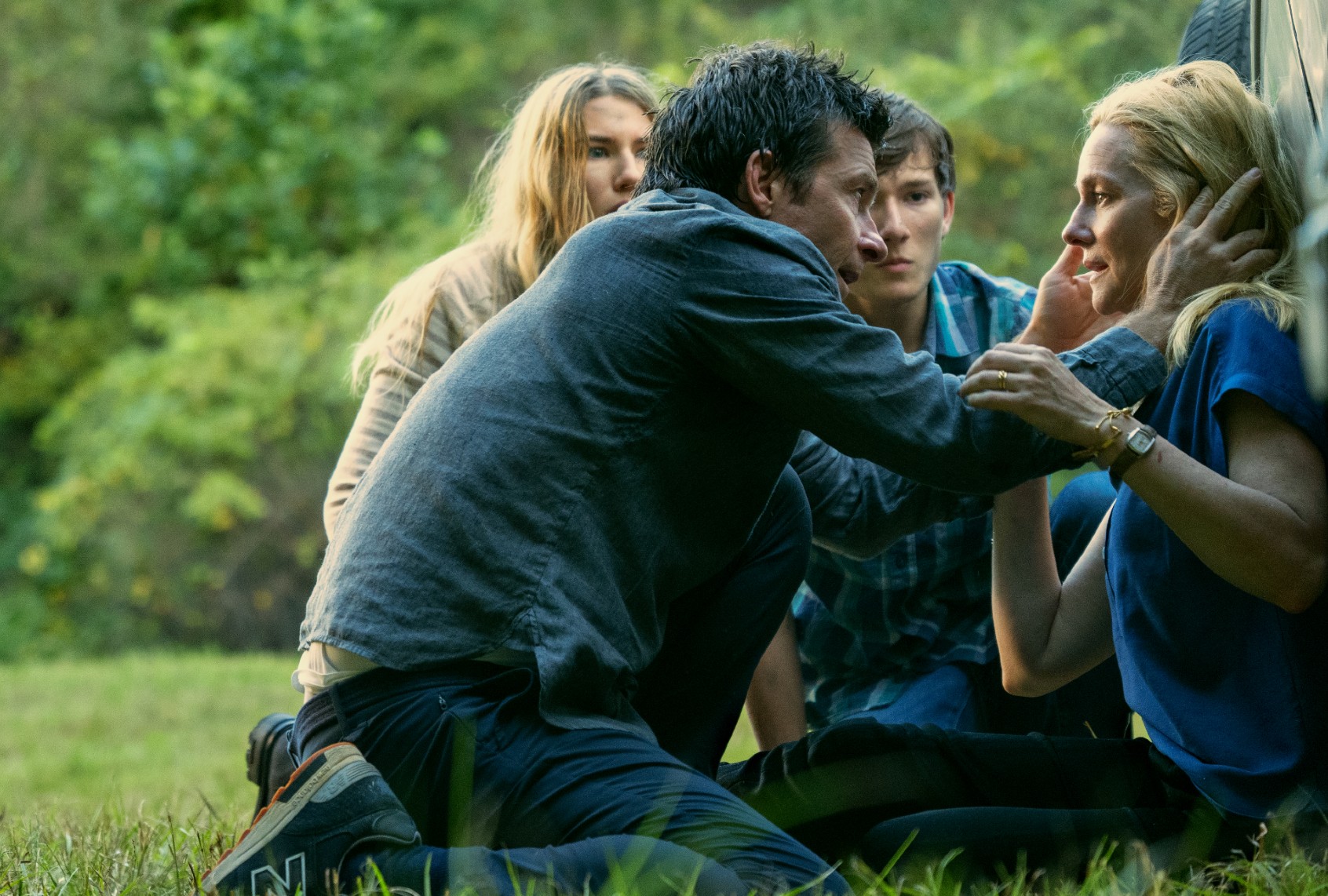
The beauty of television is its ability to create worlds in which anything is possible. Free from the burdensome confines of reality, which ceaselessly moves forward in its campaign to keep people in what society would deem as “their place;” writers, directors, and producers of television have the ability to let us see what it would look like if the under-privileged were allowed to rise to the top, and actually live long enough to enjoy it once they got there. But they rarely, if ever, do. And the “Ozark” series finale is a prime example of how, every time that opportunity is missed, it feels like a little heartbreak. Or, in Ruth Langmore’s (Julia Garner) case, a bullet through the chest.

In the penultimate episode of the series we saw Ruth dodge death when Nelson (Nelson Bonilla) gets killed before he has a chance to kill her or her friend and business partner, Rachel (Jordana Spiro). This isn’t the first time Ruth has outsmarted herself from being on the pointy side of a bullet, but it will be the last. 

At the beginning of the finale we see her flashing back and forth between two versions of reality; the one she’s currently in, burying Nelson’s body at the bottom of what would have been her swimming pool; and the one she had with her family, and would still have if she’d never gotten mixed up with Marty (Jason Bateman) and Wendy (Laura Linney) Byrde.

RELATED: “Ozark”: Go ahead and rain

Ruth is closer than she’s ever been to happiness, but desperately sad because she can sense that it will be ripped away from her when the money and influence she’s fought like hell for turns out to be too little, too late.

Throughout the episode Ruth communes with the essence of her dead cousin, Wyatt, who she wishes she could share this all with while also knowing, deep down, that he’s better off where he is, and she’ll be there to meet him soon. With each layer of concrete poured, and each foundation plotted for her new lakeside home, a look of melancholy washes over Ruth’s eyes like clouds going over the face of the sun. She’s smiling at what she has, while knowing that she doesn’t really have a thing. She’s closer than she’s ever been to happiness, but desperately sad because she can sense that it will be ripped away from her when the money and influence she’s fought like hell for turns out to be too little, too late.


Want a daily wrap-up of all the news and commentary Salon has to offer? Subscribe to our morning newsletter, Crash Course.


Ruth has spent her whole life catering to people like the Byrdes, happy to make do with whatever crumbs they drop that she’s felt lucky to be able to pick up and squirrel away, just by being in their proximity. She got into this mess by doing favors for Marty and Wendy, and she spends the last full day of her life on earth doing even more of them.

The Byrde family in “Ozark” (Courtesy of Netflix)After cleaning up one problem by disposing of Nelson’s body, Ruth’s immediately given another one when Marty shows up and threatens her with an ultimatum. If Ruth doesn’t help convince Charlotte (Sofia Hublitz) and Jonah (Skylar Gaertner) to stay, Marty will tell Camila (Verónica Falcón) that she’s responsible for her son Javi’s (Alfonso Herrera) death.

“Is this you, or Wendy?” Ruth asks, somewhat surprised that the man she can’t help but trust would put her life on the line like this.

In response Marty wordlessly points to himself before getting in the car and driving away. Almost as if he can’t bear to fully vocalize his betrayal, or that he’s still going so far out on a line to protect his wife, even after all she’s done.

Ruth does what she’s asked, taking a gun and a bottle of booze over to Wendy’s dad’s motel room, and suffers his tactless monologue about his own daughter being a slut before getting down to the matter at hand. 

“How about f**k her?” Nathan (Richard Thomas) says about his daughter when Ruth presses him on why he wants to take her kids from her so badly. Once the truth is out, she has him say it again in front of Charlotte and Jonah, which is effective in getting them to decide not to leave, for now.

With the kids back, the Byrde family takes to the mental hospital to spring momma Byrde and she tears up at the sight of her brood, although she was, bags in hand, about to leave them all in the dirt just days prior.

“I want you to stay so much it makes my teeth hurt,” Wendy says to Charlotte and Jonah. 

Laura Linney is a fantastic actress so her portrayal of Wendy makes it nearly impossible to tell if there’s ever any real truth behind the words she says. In this moment, reunited with her kids, I found myself feeling for her, but while maintaining a stink eye. Like how my dog sizes up other dogs who come her way at the park.

“I’m not saying I love you unconditionally, but we’ve been through a s**tload of conditions and I’m still here,” Marty says to Wendy in their minivan on the way home. What a cuck.

In what feels to be a rather unnecessary twist first shown at the beginning of this season, Marty swerves to avoid an oncoming semi, and their family vehicle flips in what would seem to be a fatal accident, but everyone comes away with a barely a scratch. 

Father Benitez (Bruno Bichir), waiting in their driveway when they get home to tell them that Navarro wants to talk to them, hears about the accident from Wendy and says, “How many times does God have to point at you before you take notice?” 

Wendy laughs this off saying her takeaway from the accident is that God is telling her family they’re gonna make it out alive. In the world of “Ozark,” it seems that even God favors the affluent. Wait, that’s the case in real life too, or so it would often seem.

The Byrdes meet with Navarro in prison and he tells them he thinks that Camila is the one who put a hit out on him, and that she’s probably responsible for Nelson going missing as well. Marty and Wendy no longer need Navarro’s help or protection at this point, so as long as he’s not breathing down their neck about anything, they don’t really care. When we later see him gunned down by a guard in a staged “escape,” it’s hard for the viewer to care either. That plot point has been run to death and, at this point, with only a short amount of time left on the episode, most people are occupied with thoughts of Ruth, and what, if anything, the Byrdes will do to help her.

At the bigwig donor function on the Belle, Marty, Wendy, Charlotte, Jonah and Ruth are all dressed in their finest which, in this context, looks like they’re dressed for a funeral.

At the bigwig donor function on the Belle, Marty, Wendy, Charlotte, Jonah and Ruth are all dressed in their finest which, in this context, looks like they’re dressed for a funeral. 

The booze is flowing, the money is exchanging hands, and everyone is almost in the free and clear. But then Camila presses Wendy, Marty and Clare (Katrina Lenk) for more info on the day Javi died, and Clare chokes and gives up Ruth’s name.

Her death is dignified, at least we’re given that.

“I’m not sorry. Your son was a murderous b***h. And now I know where he got it from,” Ruth says to Camila, who emerges from the darkness in front of her house to do the job herself.

“I’m not sorry. Your son was a murderous b***h. And now I know where he got it from,” Ruth says to Camila, who emerges from the darkness in front of her house to do the job herself.

There’s a long pause as Camila cruelly holds Ruth in anticipation. 

“Well, are you f**king gonna do this s**t or what?!?” Ruth yells, and those are her last words ever spoken.

As Ruth bleeds out in the dirt the Byrdes are about to give speeches on the Belle to squeeze as much money as possible out of their foundation donors. At the end of the night they return home and pour themselves drinks that they enjoy in silence from opposite sides of the kitchen. Wendy notices broken glass in their sliding door, and we see Mel Sattem (Adam Rothenberg) outside holding the cookie jar containing Ben’s ashes. 

An exchange takes place. More threats are made. And then Jonah appears with a rifle, the screen goes blank, and there’s a bang.

We’re supposed to wonder, at this point, if Jonah shot Mel, or turned that gun on his parents so he can finally, honestly, be free. But for me, I couldn’t have cared less one way or the other. For me, this finale ended the minute Ruth hit the ground.

Read more:

We’re not safe from Big Wellness: “They’ll get you with a crystal or a pouf”

Annabelle Gurwich remembers the moment that she felt like she’d lost control. She was looking in her purse, and found a crystal. She’d bought it somehow, somewhere, in an effort to feel better — fully knowing that the idea that a crystal would ward off evil was pseudoscience

“How did that piece of jasper get there?” Gurwich recalls asking herself as she rifled through her handbag. “I must have picked it up. Was I in a fugue state? I don’t know.” 

You may know Annabelle Gurwich from the TBS show “Dinner And a Movie,” and the books “I See You Made an Effort” and “Wherever You Go, There They Are.” Now, the New York Times best-selling author, activist and actress has a new book, “You’re Leaving When? Adventures in Downward Mobility,” which is out now in paperback — which, true to its title, explores the actress’ life as she moved down the socioeconomic ladder after a series of struggles.

In our conversation about the book, Gurwich talks about how “Big Wellness” took over her friends’ lives, and came for hers, too — resulting in that crystal in her purse. But she also has a few words to say about cancer, divorce and why life isn’t like a Nancy Meyers movie.

This conversation has been edited and condensed for clarity.

COVID had a unique effect on you, Annabelle. Tell me about how COVID may have saved your life.

I went in for a COVID test and came out with lung cancer. It was completely unexpected. I got this diagnosis at an urgent care. When they suggested that I have a scan because I had a tiny little cough, I was like, “This is like an upsell at a cosmetic counter. Were you just like trying to sell me something here?”

Unbelievably, this random suggestion led to a diagnosis of Stage 4 lung cancer. I’m so grateful that I went in for that test, because the earlier you can detect something, the better or longer your chances are for survival. I’ve been doing this very high tech gene treatment for a year now and I’m very stable. I’m super, super lucky, but I urge everyone to continue to get their healthcare during these times because there’s a cognitive dissonance to how we look and feel. Who knew?

I got this diagnosis while I was in the last stages of editing this book. It was too soon to write about it. I always need a certain amount of detachment when I’m writing about experiences because I’ve been doing, and I hate this word, “life chapters.” I want to punch someone when they say, “It’s this journey of blah, blah.” But it’s true. I had enough detachment to write this book, which is also about adapting to new normals and enormous changes. I couldn’t write about this new experience, but it is funny. It does fit into the sort of milieu of things I’m writing about in this book, which takes place in my life after divorce, loss of parents, a domino effect of immutable changes.

I make this distinction in the book of adaptability. Resilience has its limits. You really have to think about changing things entirely when you are no longer a daughter or a son or a child of someone and you are the adult in your life. I write about the book of, “I’m on my way to becoming a family elder. What does that mean?” And then divorce, my kid going off to college. I’m also the mother of someone five years in recovery from drugs and alcohol. I’m also the mother of a non-binary person.


Want a daily wrap-up of all the news and commentary Salon has to offer? Subscribe to our morning newsletter, Crash Course.


These are really big changes. This was the perspective of where this book starts. Each of the essays is about some form of downward mobility, emotional or financial. I write about the roller coaster ride that you can find yourself on. I had no idea, of course, with COVID coming that so many people would find themselves wondering about their financial futures and how they were going to adapt to that. The book became more pertinent to our times than I had ever imagined when I started writing.

Shifting fortunes is something that a lot of women find themselves in, where it’s, “The parents are dying and the kids are going off to school and we are getting sick.” You put a pandemic on top of it and it feels like a little too much.

It can just feel like too much, but it’s a funny thing how norms can change so quickly. When I was handed the artwork for this book, I loved it. What says downward mobility more than a couch in a yard? Having your indoor furniture outdoors says, This is not the upswing. By the time this book comes out, with COVID, to be able to have furniture in your yard is like, “I have outdoor space.” That’s actually the good thing. I love that because even the book cover has multiple meanings.

My challenge for myself as a writer was to say, “Can I write about these things and have it not be a weeper?” I hope, and the response has been that, yes, you can find a way to, I don’t want to say laugh at these experiences, but to find humor in the situations. 

One of the things that I, as a fellow traveler in the land of metastatic cancer, really appreciated was when you talk about the fact that if you don’t look sick, people don’t necessarily understand how to talk to you or how to deal with you. What did you discover along the way, whether it was cancer or divorce or anything else, about what maybe we need to be thinking about when we look at others?

I have learned much through the course of the experience of this cancer diagnosis. What we think we know about people, and how we look at people, and even how we look at our own lives, really does speak to our expectations and our misconceptions about reality versus the way things really are. My very dear friend, Bill Maher, had me on his show. Right before I went on, we hadn’t seen each other, but we had been talking, and knew about this diagnosis. When I did the appearance, we focused on the story about my opening my home to youth experiencing homelessness. But as we greeted each other, Bill said, “You look so great. I didn’t know if it was going to be, ‘Here comes Baldy.'”

I hadn’t actually seen anyone since this had happened, because we were so isolated with Covid. It was so shocking. I laughed so hard, because he said the thing that you don’t say out loud, and I appreciated that. This to me is actually the theme of the book, the cognitive dissonance between the thing we don’t say out loud, the thing we think is true, and what’s actually true.

RELATED: Author Annabelle Gurwitch on the inescapable bonds of family

We have in our society now, because of these new, amazing drugs, people living in a chronic disease management with really difficult things. That means we’re seeing people, we’re walking past people in and out of our lives who we don’t know what they’re going through, in terms of disease. But it’s the truth about so many things in life.

“I’m really writing about life in the middle. As we know, the rich have gotten richer in this country. The poor have gotten poorer, and the people in the middle were like, ‘What is my future?'”

The centerpiece of this book is about expectations and reality, and our assumptions. Several stories are about what happened after my divorce, which is sudden financial changes. This book is written from a certain amount of privilege, and I think all of us who are living through this time know and are so much more keenly aware of this now. Particularly with what’s happening in Ukraine, every single day I feel so happy to be clothed, and have a roof over my head, and have food to eat. I’m really writing about life in the middle. As we know, the rich have gotten richer in this country. The poor have gotten poorer, and the people in the middle were like, “What is my future?”

This is the perspective right after divorce, which also meant the loss of my healthcare coverage through my union, all these sudden things. Doing the numbers, selling my house didn’t seem to be a good option, but how was I going to afford my mortgage? And this opened me up to this home sharing, which is a very old world tradition, or multi-generational living, or “Golden Girls” living, or even thinking of like a roommate. In my fifties, I thought, “This is going to kill me. Also, what does this mean?” I had an idea of, “Am I going to be renting out rooms like a landlady in the Depression era, with the blousy house dress, and the cigarette and slippers? Is this going to ruin my life?” I really felt like this was potentially this terrible thing.

In reality, it changed my life, and just added so much more love to my life. Everyone in Los Angeles has the key to my house now, I think. A slew of itinerant writers, and young people, and students come and live with me, and it’s actually been this wonderful infusion of love and cash that helped me to bridge this time in my life.

In particular, one of the stories in this book is about when a last minute tenant canceled, and I heard about something on the radio where you could open your home to young people who were unhoused. I thought that meant exchange students. I didn’t know it meant people experiencing homelessness. There was a small stipend, so I did it for the money, because of this last minute cancellation. I had so many ideas of who was unhoused in this country. I consider myself far left liberal. I think I know these things, but in fact, I didn’t.

When I met the young people who ended up being my house guests, first of all, they had face tats, and I thought, “Gang members. They’re going to kill me. Anyone but them.” That didn’t turn out to be true. And the first thing they did when they moved into my home was call their mothers. That blew my mind. It’s the same thing of, “You have Stage 4 cancer? But you don’t look that way.” 

What I realized is that all day long, if you are being served by someone in a restaurant, when you accept a home delivery of food, or any kind of good you are ordering, if you get into an Uber or a Lyft, you are encountering people every day, very likely, who are experiencing homelessness in this country. We don’t know what we’re looking at. It has become this big theme in my life, and in this writing right now that I’ve done about this, looking at what we know and what we think we know.

I always say when I went into the arts, my goal wasn’t to become rich. That was a mistake. I didn’t realize what was coming was the disappearance of the middle class. My goal was to do really interesting work, and earn a good living doing it. In the arts, as in every profession, this middle has become so tenuous to hold onto.

“When people are stressed, people spend money because you feel like, ‘Well, I’m never going to buy a house. I can’t afford the really big savings, so why not buy this homeopathic fakey-fake cure?’ There is a difference between actual things that we know have scientific value.”

I somehow had internalized this idea of the Diane Keaton in “Something’s Gotta Give.” She’s in the most beautiful home in the Hamptons, on a stretch of beach that human feet have never trod, and she’s got both Jack Nicholson and Keanu Reeves vying for her attention. Obviously these are aspirational comedies, but somehow I thought there would be just a little bit of coasting. For most of us, there is no coasting.

You use a phrase, “Big Wellness.” We are all in this world of big wellness. A lot of us have been seduced by, “I’m going to get that life-changing pillow, and then I will be okay. It will fix the dead parent hole in my life. It will fix the cancer part and make me feel good for a little bit.” Talk to me about why we fall for that, why you fell for that, why I fall for that.

These things creep up on you. I mean, we’re smart people. We all know better, but it becomes internalized. You see things long enough, and it just starts to become something that becomes part of our lives.

All of these things, getting your chart done, crystals … The crazy thing is many of us don’t have so much disposable income. But we know when people are stressed, people spend money because you feel like, “Well, I’m never going to buy a house. I can’t afford the really big savings, so why not buy this homeopathic fakey-fake cure?” There is a difference between actual things that we know have scientific value.

We don’t think of Big Wellness as something, because it’s not like Big Pharma or Big Tobacco. Big Wellness is not organized in that way, but it’s a billion-dollar industry. The name of the chapter that I wrote about this in is “The ___ That Will Change Everything.” We are targeted this idea that there’s the bra, the brow, the bag, that will change everything. And who amongst us doesn’t need something like that?

The tipping point for me of realizing how much this had, like a virus, infected our psychology was that I was invited to a housewarming of a very good friend who is an intellectual, a critical thinker. She had invited a friend who was formerly an investigative journalist who has left her career behind to pursue a career doing astrology and reading charts and offering these goddess parties.

My friend and all of our friends gathered, thought it’d be really fun. She does your chart and gives you a reading. And the thing was, it was really fun. But this is how the big wellness goes. It’s not so much money that you feel it’s going to break you, but then you buy the crystal.

The market for crystals has exploded. What is it really tapping into? It’s tapping into this feeling that we are given in media, in Instagrams, that things will help. These crystal things just kill me. There’s no science to this. Then again, they’re pretty, and it makes you feel a little bit better. Somehow or another, as I’m railing against this, I notice that I had a crystal in the bottom of one of my handbags. How did that piece of jasper get there? I must have picked it up. Was I in a fugue state? I don’t know.  

When my home emptied and after the divorce, I’m feeling very vulnerable, I saw this beautiful a pouf. It’s like an ottoman, but it’s fuzzy. I saw it in the window of a Roche Bobois store. I never found out how much it is because you know they don’t have prices. That’s the store that has those very low pieces of furniture that look like every crayon in the world has been melted. They’re so low to the ground you know that people who have those in their homes, they don’t have to get up to go to work. It can take an hour to stand up from one of those chairs.

This pouf must have been so expensive, but okay, I’ll get the cheaper one. So I ended up with so many of these fake fur pillows, it’s like a herd of alpaca are grazing in my living room. It just seemed so comforting to me. It’s a little crazy now. There’s no end to it. Resistance is futile. Somehow they will get you with a juice or a cleanse or a crystal or a fuzzy blanket or a pillow. There is no escape for a minute. We are not safe from Big Wellness.

When you talk about comfort, I think back to when I used to watch you on “Dinner and a Movie,” and the comfort of watching regular people make regular food. You talk a lot in the book about how are not a fancy cook. Here we are, a generation later, watching people on TikTok, or these shows where it’s just regular people, making regular food. What do you think that says about what we’re looking for in terms of maybe comfort food for our eyes?

People have followed me from “Dinner and a Movie” to my writing. The feedback has told me what I think is the appeal. We weren’t chefs. We had a chef with us, but we were ordinary people, comedians bumbling in the kitchen making food, making mistakes at times and learning how to cook. Sometimes we’d make a BLT. This was not Julia Child. We’ve seen a resurgence in that. I think the popularity is the approachability, and it’s also just having company, people who feel like they’re talking to you. People have said was, “We watched you on Friday night. This was our tradition,” because we’re using our own names and it was so direct to the camera and personable. It’s very comforting. I think that’s why we seek out things that we feel comfortable with and why we get attached to certain people’s personalities; we get used to seeing them appear on our screens in our home.

At the beginning of the pandemic, and this went on for six months, I did a daily Zoom where I invited not only writers that I knew, but I put it out on the internet on Facebook and Twitter. I said, it’s a writing room. We don’t talk. We just sit there and we write. Te idea was to create something that would be comforting in a very particular way, not in a way that we’re talking together as friends or intimates, but like a coffee shop with strangers, strangers that you see and you sort of feel become your neighborhood.

That’s a kind of intimacy that I think we all missed so much when we were isolated. I missed not only the comfort of friends, but the comfort of strangers, just seeing strangers’ faces. It was such a funny, unexpected thing. I didn’t ask people what they were writing or what level writers they were. If you said you were a writer, you came. And the thing I didn’t expect was that with people writing on their computer, everyone’s faces were revealed. Everyone’s writer’s face. It was absolutely fascinating, and unexpected. What is more intimate than watching someone think?

More Salon Talks: 

Johnny Depp “hated, hated” James Franco, claims Amber Heard

On her second day in a row of testimony in court, Amber Heard claimed that her ex-husband Johnny Depp “hated” fellow actor James Franco. Heard and Depp are in Virginia’s Fairfax County Circuit Court in the midst of a contentious lawsuit.

In a 2018 op-ed in The Washington Post, Heard discussed being a survivor of domestic abuse. Though Heard did not name Depp in her op-ed, where she also wrote about surviving sexual violence, Depp accused Heard of defamation, suing her for $50 million. Heard then counter-sued Depp for $100 million, claiming Depp has ruined her career. 

In the time since the allegations of abuse and the suing and counter-suing began, Depp was dropped from the lucrative “Fantastic Beasts” and “Pirates of the Caribbean” franchises, and Heard’s role in the blockbuster sequel to “Aquaman” was diminished, with an online petition circling for her firing.  

RELATED: Why Fox News is obsessed with Johnny Depp, its Manliness Under Siege mascot

Franco, who most recently appeared in “The Deuce,” has known Heard since the two worked together on the 2008 stoner comedy “The Pineapple Express.” Heard had a supporting role in the film, which co-starred Franco and Seth Rogen. Franco came up in Heard’s testimony after she was asked by her lawyer if she and Depp had had any arguments about the actor, alongside whom Heard took another job, a role in the film “The Adderall Diaries” in 2014, the year Heard and Depp became engaged. 

According to Insider, on the stand, “Heard paused for a long moment, sighed, and described the period of time as a ‘nightmare.‘” She said that Depp had accused her of having an affair with Franco. She said he then slapped her, threw objects at her and kicked her down to the floor of the private plane the couple had boarded, en route to celebrate Depp’s daughter’s birthday. According to Heard, Depp was angry that Heard had not disclosed to him the “intimate and romantic scenes” her character would have to perform with Franco’s character in “The Adderall Diaries.” 

Heard testified, “I was accused of having withheld information and hiding it from him . . . Eventually it went from, ‘Do you have something to tell me?’ to ‘Do you wanna tell me how much you liked it? Tell me did he slip a tongue?’ It got worse.” Heard alleged that Depp smelled of alcohol at the time, and as People reported, “He started straight up taunting me. ‘I know you liked it,'” and allegedly called her a “slut” and other names in front of personnel on the plane. Heard alleged that none of the crew or employees had helped her.


Want a daily wrap-up of all the news and commentary Salon has to offer? Subscribe to our morning newsletter, Crash Course.


Earlier in his own, days-long testimony on the stand, Depp had referenced the private plane incident by confirming he and Heard had argued the previous night, alleging Heard was “actively searching” for a reason to pick another argument with him. Acknowledging he suspected Heard of having an affair with Franco, he denied being drunk at the time while admitting he was on opiates for pain relief. Depp said to end their fight, he went to the bathroom of the private plane where, according to People, “He locked himself inside and fell asleep.”

“He hated, hated James Franco and was already accusing me of having a secret thing with him in my past,” Heard said on the stand.

In 2016, Heard filed for divorce from Depp after 15 months of marriage. 

More stories like this:

Republicans are lying to you about Roe

Despite the fact that forced childbirth has been a major goal and central organizing strategy of the GOP for approximately four decades, Republican political strategists don’t exactly seem stoked about a leaked draft opinion indicating that the GOP-controlled Supreme Court plans to overturn Roe v. Wade outright. Turns out that abortion rights are very popular, likely due to people’s well-documented enthusiasm for fornication without procreation. With the midterms just a few months away and Democrats signaling that they intend to make this a major issue, Republicans are scrambling for a political strategy to make their mandatory childbirth policy seem not as bad of an idea as it obviously is. 

On Tuesday, Axios leaked a three-page talking points memo from the National Republican Senatorial Committee (NRSC). The strategy that the Republican campaign strategy group suggests is to lie. A lot. Lie every chance you get. Lie about everything, all the time. Lie so often that the media stops bothering to fact-check you and your opponents grow exhausted trying to disprove your lies. It’s a tried-and-true trick for the GOP.

RELATED: Samuel Alito’s leaked anti-abortion decision: Supreme Court doesn’t plan to stop at Roe

The document is remarkable as a snapshot into not just the ease with which Republicans lie, but also their total dependence on keeping voters in the dark about their true beliefs and intentions. Most of the claims on this document are flat-out lies, and even when they aren’t — such as the fact that Democrats oppose “even limiting abortion to the first trimester” — they are attempts to distract voters from the true view of Republicans, which is a ban on all abortions in any trimester. The entire GOP political strategy is geared around pulling the wool over voters’ eyes. 

The document is remarkable as a snapshot into not just the ease with which Republicans lie, but also their total dependence on keeping voters in the dark about their true beliefs and intentions.

True to form, this short document is so packed full of lies that it’s impossible to debunk all of them. But just the section titled “FORCEFULLY REFUTE DEMOCRAT LIES REGARDING GOP POSITIONS ON ABORTION AND WOMEN’S HEALTH CARE” is a marvel in protesting-too-much. Nearly everything they label as a “lie” would, in the common parlance, be better described as the truth. 


Want more Amanda Marcotte on politics? Subscribe to her newsletter Standing Room Only.


“Republicans DO NOT want to throw doctors and women in jail. Mothers should be held harmless under the law,” reads the document.

Of course, this is a lie.

Lousiana is already drafting a bill that would imprison both doctors and patients for abortion under homicide laws. Twenty-six states have or are expected to pass abortion bans, and nearly all come with criminal penalties. In Texas, a woman was already arrested for abortion, and the charges were only dropped when negative national attention fell on the state. But sustained media outrage will fade when such arrests are common, which is what Republicans are clearly counting on. 

“Republicans DO NOT want to take away contraception,” reads another bullet point.

Of course, this is the Republican Party that, under President Barack Obama, repeatedly threatened to shut down the government in an attempt to take away contraception services. This is the party that has waged an all-out war on public clinics that provide contraception services. This is the party that had a total meltdown when the Obama administration passed a rule requiring insurance plans to cover birth control. Their most popular pundit at the time accused women who use birth control of being sex workers. Republicans took the anti-insurance fight to the Supreme Court, where the anti-abortion justices signed onto a plan to cut off birth control coverage that women had already paid for. This is the party that, under Donald Trump, cut off funding for birth control services and appointed an HHS secretary who believed employers should be able to fire women for using birth control. This is the party that, under George W. Bush, backed a massive program to teach every public school student that condoms don’t work and birth control pills make you unlovable. Sen. Rick Scott of Florida, who is the head of NRSC, personally signed a bill as Florida governor to take birth control services away. Plus, more Republicans all the time are admitting they want to overturn Griswold v. Connecticut, the decision that legalized contraception. 

The problem is that conflict-averse Democrats avoid calling Republicans out for this nonsense.

If they don’t want to take away birth control, why do they keep trying to take away birth control? 

RELATED: Adoption means abortion just isn’t necessary, SCOTUS claims: That’s even worse than it sounds

The document goes on to lie about the science, which is standard operating for the party of vaccine and climate denialists. It repeatedly calls Democrats “extremists,” even though Democratic views are in line with the strong majority of Americans that want Roe upheld. It recommends that Republicans talk about “late-term” abortions, eliding the fact that red states define “late” as two weeks after the first missed period, before most pregnant people experience symptoms. 


Want more Amanda Marcotte on politics? Subscribe to her newsletter Standing Room Only.


It’s hard to flag what is the most egregious lie in this, but the most telling may be the insistence that “If Roe v. Wade is overturned, state and local officials closest to the people will make laws that reflect the will of their states.” That may be true in the short term, but only because Joe Biden is president and will veto any abortion ban that Congress passes. But should Donald Trump, as planned, steals — or heaven forbid, actually wins — the 2024 election, Republicans will almost certainly pass a national ban on abortion. 

This isn’t just speculation. Congressional Republicans are already drafting the bill, likely with an eye toward passing it on January 21, 2025. In the meantime, however, the plan is to make sure that blue states are not, in fact, free to keep abortion safe and legal. As Mark Joseph Stern of Slate reports, Republicans are exploring “new laws that prevent people from crossing state lines to terminate a pregnancy.” They are also building out a legal framework where red states can legally persecute abortion providers in blue states. For instance, a red state court could rule in favor of the family of a rapist who sues a blue state provider for aborting the victim’s pregnancy. The anti-Roe Supreme Court is likely to rule that such judgments must be upheld. As battles ranging from those over slavery in the 19th century to those over same-sex marriage in the 21st show, systems where human rights exist in some states but not others tend to collapse under the contradictions. 

RELATED: Supreme Court puts Democrats on notice: Stand up for abortion rights or risk losing everything

Republican lies are laughably easy to punch through, but it’s not surprising that Scott and the NRSC think they can get away with this. The problem is that conflict-averse Democrats avoid calling Republicans out for this nonsense. As Rebecca Traister wrote in New York this week, Democratic leadership reacted to the Roe leak with “words that ultimately felt bloodless.” Most leaders won’t even say the word “abortion,” much less explain why Republicans are lying about their intentions.

The NRSC document paints a hysterical picture of Republicans under siege from “angry” and “strident” Democrats. If only! Then perhaps the voters Democrats are trying to woo over would actually start to understand that things are serious and human rights are very much in peril. But, as it is, Republicans have an opportunity to lie their heads off about their radical forced childbirth plans, and they have every intention of exploiting it. 

Right-wing media is now blaming Ketanji Brown Jackson for the Supreme Court leak

If you thought the right-wing attacks on incoming Supreme Court Justice Ketanji Brown Jackson would end with her confirmation to the nation’s highest court, you were wrong. 

Months after her confirmation, Newsmax host Grant Stinchfield is back to baselessly targeting Jackson. On Tuesday, he suggested that Jackson was responsible for the recent leak of the court’s decision on Roe v. Wade.

RELATED: Republicans turn Ketanji Brown Jackson’s Supreme Court confirmation hearings into a QAnon circus

“I find it suspect that the first leak coming out of the Supreme Court in history comes shortly after Judge Jackson is confirmed,” he said. “I want to know if her law clerks, who I am sure have already been hired, possibly even working at the high court already before her swearing in, have access to these draft decisions.” 

Jackson, he insisted, is “capable of undermining the court” and should be the “first suspect.” 


Want a daily wrap-up of all the news and commentary Salon has to offer? Subscribe to our morning newsletter, Crash Course.


Stinchfield, by his own admission, has no evidence of such a claim. And how could he? Jackson will not be sworn in until Justice Stephen G. Breyer’s retirement this summer. She has no access to the Supreme Court computer network. And the leaked draft ruling for Dobbs v. Jackson Women’s Health Organization was circulated on February 10 — before Jackson was even nominated to the court. 

Stinchfield’s accusation is merely the latest in a series of Republican attempts to shift focus from the ruling’s destructive impact on abortion access to the identity of the leaker. 

Senate Minority Leader Mitch McConnell stated that the leak was “yet another escalation in the radical left’s ongoing campaign to bully and intimidate federal judges and substitute mob rule for the rule of law,” The Washington Post reported.

And Ted Cruz asserted to reporters that the leaker had to be a liberal because, in his words, “I’m not a moron, because I live on planet Earth.”

“This is the most egregious breach of trust at the Supreme Court that has ever happened,” he said. “Presumably, some left-wing law clerk angry at the direction the court is going decided to betray his or her obligation, the trust that clerk owed to the justice and to the court.”

According to the right-wing website Daily Caller, Tennessee Sen. Marsha Blackburn predicted that “the left starts pushing Justice Roberts to seat Judge Jackson because they are trying to push the balance of the court. They’re trying to pack the court. They’re trying to expand the court.”

The morning after Politico’s release of the Supreme Court document, Chief Justice John G. Roberts Jr. requested an investigation into the leak. Legal experts say that disclosing the document may not be a criminal offense. It could, however, warrant a charge of theft of government information. 

RELATED: “Little maggot-infested man”: Tom Cotton slammed for saying Ketanji Brown Jackson would defend Nazis

In February, Republicans lobbed a series of baseless accusations against Jackson during her confirmation hearings. Senator Tom Cotton said Jackson was “sympathetic” to a “drug fentanyl kingpin.” Senator Lindsey Graham questioned Jackson’s ability to fairly judge a Catholic and railed on her supposed leniency toward sex offenders. And Ted Cruz made a bizarre attempt to critique Jackson and critical race theory. Pointing to a children’s book called “Antiracist Baby,” he proclaimed, “Do you agree with this book that is being taught with kids that babies are racist?” 

What exactly is tahini?

You know tahini as the lead actor in hummustahini dressing, and our favorite dairy-free chocolate chip cookies. But with its nutty flavor, smooth and creamy texture, and vegan-friendly ingredients list, you might wonder, “what exactly is tahini anyway?” Well, it’s made from sesame seeds . . . and more sesame seeds . . . and more sesame seeds . . . and that’s really it! The seeds are ground until they form a thin paste-like sauce — it’s the same process for making any type of nut butter, except that instead of cashews or almonds, you’re using sesame seeds! Tahini is vegan, gluten-free, and nut-free; unless you have a sesame allergy, it’s totally safe to eat.

How to store tahini

Tahini lasts forever. OK . . . not quite, but close! According to Seed & Mill, a jar of unopened tahini will last for up to 18 months if stored in a cool, dry place. Once opened, tahini will last for 12 months. “We recommend storing your tahini in the fridge to slow the natural separation of oil, which may start to occur after a few months,” says the brand. But just like natural nut butters, oil separation is pretty standard and not a sign that your product is spoiled; it just means that you need to give it a good stir to reincorporate the oil and ground sesame seeds.

Tahini substitutes

If you want to make hummus, or the aforementioned super popular chocolate chip cookies, you can substitute any other type of nut butter in its place. In general, cashew butter is considered the best substitute, as its flavor and texture most closely resemble tahini. As for peanut butter: We love you, but this isn’t your time to shine. Your flavor is too bold, and your texture is too thick. You simply won’t work.

How to cook with tahini

We can’t talk about cooking with tahini without talking about hummus. Here, you’ll find a few of our favorite recipes, plus some that go beyond pita’s best friend.

Yotam Ottolenghi and Sami Tamimi’s Basic Hummus

This time-saving hummus recipe calls for soaking dried chickpeas overnight and puréeing them with tahini, lemon juice, garlic, salt, and a little bit of ice water. If you plan ahead a little bit, making the hummus will only take a few minutes.

Zahav’s Hummus Tehina

Chef Michael Solomonov swears that the secret to really good hummus is a lot of tahini. Use the best one you can get your hands on for the most flavor.

Tahini Roasted Broccoli

Now that we’ve gotten the necessary dips out of the way, let’s have a little bit of fun with tahini, shall we? Make roasted broccoli more exciting by tossing the florets with a deconstructed hummus — tahini, lemon juice, garlic, olive oil, salt, and pepper — and bake for 10 minutes.

Lemon Tahini Dressing

“This lemon tahini dressing recipe is one of our favorite ways to use up any extra tahini you may have on hand,” writes recipe developer Gena Hamshaw. It only takes a couple of other basic pantry staples to make this super creamy, totally vegan salad dressing.

New-Fashioned Chocolate Chip Cookies with All Tahini and No Butter

These chocolate chip cookies are super classic, with the exception of one ingredient swap: tahini in place of butter. It works brilliantly and lends just a hint of nuttiness that cuts back some of the usual sweetness in most chocolate chip cookie recipes.

Tahini-Rubbed Chicken with Chickpeas and Dates

“Even if you’ve roasted chicken every which way to Sunday, this ridiculously easy, boldly flavored one-skillet dinner deserves your attention. As it roasts, the tahini marinade cooks down into a sticky, savory, rich pan sauce,” writes recipe developer EmilyC.

Mustardy, Mapley Tahini Sauce

This dipping sauce slash salad dressing is made up of four ingredients that each pack a punch on their own: soy sauce, tahini, maple syrup, and soy sauce. But when mixed together, they’re unstoppable.

“Fox & Friends” co-host slaps down Brian Kilmeade after he says pregnant woman shouldn’t be hired

Fox News host Ainsley Earhardt disagreed with co-host Brian Kilmeade on Thursday after he suggested that pregnant women should not be hired for jobs.

Kilmeade seemed alarmed by a Department of Homeland Security effort to combat disinformation.

“This woman that’s in charge of it, Nina Jankowicz, who’s about eight and a half months pregnant so I’m not sure how you get a job and then you just can do a job for three months,” Kilmeade said. “I’m not faulting her but I don’t know why you would give someone a job that you think is so important.”

“How long has she had this job?” Earhardt asked.

“About two months it looks like,” Kilmeade replied.

“Yeah, well, I’ll defend her on that one, Brian,” Earhardt said. “She has the right to have a baby and have maternity leave.”

“No, I know but if you really want to have someone head up and organization, this is the face of the organization,” Kilmeade argued.

Watch the video below from Fox News.

Supreme Court puts Democrats on notice: Stand up for abortion rights or risk losing everything

Anyone who has been reading my writing here at Salon over the past few months knows that I am a big proponent of using negative partisanship to win the midterm election. The Republicans are so outside the mainstream that the midterm elections may not be the rout everyone expects if Democrats get out of their defensive crouch and make the case.

My view is that the country is suffering from a mass case of PTSD, still reeling from four years of non-stop Trump-induced chaos. The natural way to register their dismay that things have not yet returned to a sense of normality is to “throw the bums out,” which usually means the party in power. But the Republicans are so radical right now that people may just understand that they are not a viable alternative. But Democrats must spell it out. 

Even before this week, I believed there was ample material for going on the offensive against Republican extremism. From Trump’s obsession with the Big Lie to the January 6th insurrection to the ongoing assault on democracy in the states to four years of Republican anarchy starting with Muslim bans, family separations and building that stupid wall, culminating in the tragically inept handling of the global pandemic and consequential economic fallout. That’s the mess Democrats are having to clean up. I think if people are reminded of these things instead of a bunch of defensive arguments telling them they should be feeling better than they do, the people might just aim their discontent where it belongs.

If Roe is overturned next month as expected, the Democratic Party will no longer be able to have it both ways.

Right now, the question is whether or not voters fully understand how dangerous the situation really is. They feel it but it’s unclear if they can see it.

There is some hope that the January 6th hearings next month will bring the assault on democracy into focus although even that is a little abstract for a lot of people. What happened this week may shake up the dynamic. The leaked Supreme Court draft of the decision in Dobbs v. Jackson Women’s Health is not abstract in the least. It will directly affect the lives of millions of women and their families and the political ramifications could be profound.

RELATED: Samuel Alito’s leaked anti-abortion decision: Supreme Court doesn’t plan to stop at Roe 

Polling has shown for decades that Roe v. Wade is supported by a huge majority of Americans and despite relentless activism, even terrorism, the anti-abortion activists have never managed to budge that large majority. Most people in this country believe that such a complex, intimate, personal decision can only be justly and compassionately made by the individual, not politicians and judges declaring a sweeping one-size-fits-all edict. And even though the anti-abortion zealots lie through their teeth by saying that abortion rights advocates demand an “unlimited right to abortion up until the moment of birth,” the vast majority accept Roe’s balancing test which tied the state regulation of abortion to the three trimesters of pregnancy. It balanced the interests of the pregnant woman with the state by saying that during the first trimester governments could not prohibit abortions at all; during the second they could require reasonable health regulations and during the third, abortions could be prohibited except in cases where it was required to save the life of the mother. Most people think this was a reasonable compromise and support the decision.

Democrats have never run on this, apparently because they felt this was a settled issue which meant they could play around with it on the edges to possibly attract a few anti-choice votes without really putting much of anything on the line. They acted skittish about it and it carried over into policy. From the Hyde Amendment banning government assistance for abortion to the egregious political malpractice that led to the showdowns over abortion coverage in the Affordable Care Act, they have never put any muscle into defending this right that majorities clearly support. If anything they have used abortion as a bargaining chip, giving the impression that it is an expendable issue they can give to the other side without consequence.


Want a daily wrap-up of all the news and commentary Salon has to offer? Subscribe to our morning newsletter, Crash Course.


Those days are over. This is now a vital and potent political issue for the Democrats and they cannot shirk their duty. The Republicans are clearly spooked by this decision and are not at all confident that it’s not going to seriously hurt their chances in the fall. Their clumsy attempts to misdirect the revelation to the leak shows how much they are off their game. They quickly released a set of talking points in which they attempted to soften the rhetoric and pretend that Republicans all over the country are not working night and day to force pregnant women to give birth against their will regardless of the circumstances. They advise their members to outright lie about everything. Axios featured these excerpts from their memo:

“Be the compassionate, consensus-builder on abortion policy. … While people have many different views on abortion policy, Americans are compassionate people who want to welcome every new baby into the world,” it says.

“Expose the Democrats for the extreme views they hold,” the document says, arguing, “Joe Biden and the Democrats have extreme and radical views on abortion that are outside of the mainstream of most Americans.”

“Forcefully refute Democrat lies regarding GOP positions on abortion and women’s health care,” it adds, saying Republicans do not want to take away contraception, mammograms and female health care or throw doctors and women in jail.

RELATED: Life after Roe: Republicans are already targeting the right to a public education

They even suggest that candidates say:

I am pro-life, but this isn’t about political labels. I believe all Americans want us to welcome every child into the world with open arms. But if you disagree with me, my door’s always open. I’m always willing to listen.

Their door has certainly been open for the anti-abortion terrorists who perpetrated violence against abortion clinics and doctors over the past four decades. And they’ve been all ears for the activists who are demanding they remove rape and incest exceptions from their platforms and pass draconian laws that treat abortion as felony homicide for both the providers and the patients. They’ve been very compassionate toward the prosecutors who have jailed women for having miscarriages and attempting suicide while pregnant. And yes, they do welcome every child with open arms until the moment it is born — at which point they completely lose interest.

This is now a vital and potent political issue for the Democrats and they cannot shirk their duty.

That people who have endorsed all that can, in the same breath, accuse Democrats of extremism is one of their most audacious moves. They literally have no shame.

If Roe is overturned next month as expected, the Democratic Party will no longer be able to have it both ways. One hopes that Democratic candidates everywhere will see that this is no longer a debatable issue and seize upon the opportunity to illustrate to the American people just how radical these Republicans have become. They simply have to wage the fight now whether they want to or not. 

Apple just launched its first self-repair program. Other tech companies are about to follow

On Friday, Microsoft released the results of an independent studyit commissioned exploring the environmental benefits of making its devices easier to repair. Its conclusions affirm what right-to-repair advocates have been saying for years: Fixing devices instead of replacing them reduces both waste and the emissions associated with manufacturing new ones.

Based on these findings, Microsoft will be taking actions to enable greater repairability of its devices by the end of the year, as stipulated in an agreement the tech company reached with investor advocacy nonprofit As You Sow last fall.

Microsoft’s study release came just two days after Apple launched “Self Service Repair,” a first-of-its-kind program that allows owners of recent iPhone models to order genuine Apple parts and tools to conduct basic smartphone repairs, like screen and battery replacements, at home. More such programs are coming: In late March and early April, Samsung and Google announced plans to sell genuine parts for smartphone repairs via partnerships with the repair guide site iFixit. Both of those programs appear on track to launch in the next few months.

From a consumer perspective, these actions are small steps toward a world in which tech titans actively facilitate repair of their products rather than standing in the way of it. Companies like Apple, Microsoft, and Google have not only historically designed products that are hard to fix, but also have a well-documented history of fighting bills that would support consumers’ right to repair them. For these corporations, repair audits and programs represent a major shift in policy that would not have come about without a mix of public and shareholder pressure, as well as the specter of looming laws and regulations aimed at curbing Big Tech’s anti-repair practices.

Companies are also changing their tune on repair because restricting it is increasingly at odds with their climate and sustainability goals, something shareholders have been keen to point out. 

Microsoft’s new repair study affirms that independent repair has tangible environmental benefits. 

Conducted by technical consultancy Oakdene Hollins, the study looked at how facilitating repair through design changes and an increase in repair options would affect the waste and carbon emissions associated with Microsoft Surface Pro, Surface Book, and Surface Laptop Studio devices. According to a summary Microsoft published today, repairing Microsoft products instead of replacing them can reduce waste and carbon emissions associated with manufacturing new devices by up to 92 percent. 

The study found greater greenhouse gas emissions reductions when consumers had access to local repair options, underscoring the importance of supporting independent repair businesses and allowing capable fixers to repair their devices at home.

Tech companies aren’t waking up to the environmental benefits of repair all on their own. As As You Sow investor advocate Kelly McBee previously told Grist, when she first reached out to Microsoft about its restrictive repair policies last spring, the company told her it saw no connection between repairability and sustainability. When she met with Microsoft earlier this month to review the results of its study — which came about through a shareholder agreement As You Sow and Microsoft reached in October — Microsoft’s attitude had changed.

“They actually thanked us for bringing this to their attention,” McBee told Grist. “Which was a really different vibe from the first meeting — and they acknowledged that as well.”

McBee is optimistic that Microsoft will follow through with the second part of its shareholder pledge, to act on the results of its study by the end of 2022. She noted that the company has already taken a few steps toward enabling independent repair, including releasing a video showing how to disassemble its Surface Laptop SE in January, and launching a program in December that allows independent repair professionals to purchase Microsoft service tools from iFixit. 

“By the end of 2022, we will have expanded options in place for customers to have their devices repaired,” a Microsoft spokesperson told Grist in an emailed statement. “Independent repair is one piece of this portfolio of repair options and, by the end of 2022, we will undertake a limited pilot program to enable repair of certain devices by qualified independent repair shops.”

As Microsoft was negotiating a shareholder agreement with As You Sow last fall, Apple was facing a similar shareholder resolution introduced by the mutual fund company Green Century — one that asked the iPhone maker to “reverse” its anti-repair practices in order to bolster its climate commitments. While Apple initially tried to block the resolution, it instead wound up announcing its plan to launch the Self Service Repair program just in time to prevent the resolution from moving forward with the Securities and Exchange Commision, the federal investor protection agency. 

Apple has been tight-lipped about Self Service Repair since announcing it last fall, and before this week, Apple fans were starting to wonder if the company had forgotten about it. Now that it’s live, the repair community will be scrutinizing the program closely. Already, iFixit has raised concerns about how Apple parts are paired with individual devices based on their serial number — something that could allow Apple to restrict the use of those same parts to fix other phones in the future. Apple didn’t respond to Grist’s request for comment on this concern.

The Self Service Repair program is also limited in scope, offering spare parts, repair tools and manuals only for Apple’s iPhone 12 and 13 lineups as well as the third generation iPhone SE — and only for U.S. customers. But Apple says it will be expanding the program to additional countries, as well as adding manuals and tools to repair M1 Mac computers, later this year.

Despite the limitations of Apple’s program, its existence is symbolically a big deal. “For good and for ill, Apple has a huge influence on the behavior of competitors,” Nathan Proctor, who heads the right-to-repair campaign at the nonprofit U.S. Public Research Interest Group, told Grist. Apple’s effective capitulation to the right-to-repair movement last year by agreeing to launch a self-repair store very likely “turned up the heat on other companies,” Proctor says.

That includes Google and Samsung, both of which now have self-repair programs in the works. The Samsung program, which the company says is slated to launch this summer, will allow owners of a Samsung Galaxy S20 or S21 smartphone or a Galaxy Tab S7+ tablet to purchase genuine display assemblies (screens with a glued-on battery), backglass, and charging ports via iFixit. The Google program, which will make genuine screens, batteries, and other parts needed for Pixel smartphone repairs available through iFixit, is also on track for the summer, iFixit CEO Kyle Wiens told Grist. The companies, Wiens says, have been enthusiastic partners on these programs, offering feedback on iFixit’s latest Samsung and Google repair guides in addition to developing the replacement parts pipeline.

Green Century shareholder advocate Annalisa Tarizzo, whose firm also filed a proposal with Google asking the company to increase access to repair, told Grist that Google has agreed to meet with shareholders twice over the next year to “talk through more details” of the program, something she sees as a “good-faith effort” to follow through with it.  

All of these programs — if and when they come to fruition — are baby steps toward a world in which consumers are able to repair and maintain their devices indefinitely rather than being forced to upgrade every few years. Advocates say there is more each of these companies could be doing to bring about such a future. For instance, they could make parts and repair documentation available for more of their products: Tarizzo said she’d love to see Google expand its new iFixit partnership to include Nest thermostats. Tech companies could also come out vocally in favor of the right to repair at Congressional hearings and when submitting public comments to agencies, and distance themselves from anti-repair lobbying efforts. 

Even industry leaders like Dell, which designs some of the most fixable devices out there in addition to regularly publishing repair manuals for, is still a member of trade groups that lobby against repair-friendly legislation, like TechNet and the Consumer Technology Association. If companies that lead on repairability within their own product lines took a more public stand by calling out their own trade groups or industry peers for retrograde positions on repair, Proctor told Grist, that could be game-changing for the industry.

“If we actually want to make a huge change in the sustainability of our electronics, we need leadership,” Proctor said. “We need companies pushing the boundaries of what can be done.”

You laughed at Trump for screwing up J.D. Vance’s name. Did that save Roe v. Wade?

The Trump train keeps on rolling. The fascist tide is rising unabated. Donald Trump’s odds of winning the White House in 2024 are increasing. During Tuesday’s Republican primaries in Ohio and Indiana, all of Trump’s endorsed candidates — all 22 of them — won.

The Republican Party remains firmly under Trump’s control and the MAGA cult remains intact. Trump’s war chest is huge. The Republicans will in all likelihood win control of the House in November, and perhaps the Senate. This is not “doom porn,” as some naïve optimists and hope-peddlers might claim: It is the raw truth. The Democrats and America’s other pro-democracy forces should prepare for the worst and plan accordingly. Unfortunately, it appears that the Democratic leadership have largely forgotten the 6-P principle: Proper Preparation Prevents Piss-Poor Performance.

In all, Donald Trump remains the most dangerous person in the United States. Instead of consistently sounding the alarm, America’s mainstream news media and the larger political class insist on depicting him as a buffoon, a dotard or a harmless curiosity. In the long battle to save American democracy from the neofascist movement, underestimating the enemy is a grave miscalculation. 

RELATED: Trump’s latest hate rally: A master class in cult mind control

Last Sunday, Donald Trump held another of his political rallies (or freak shows, or cult gatherings depending on one’s preferred language), this time in Greenwood, Nebraska. He largely stuck with his greatest hits: Lying about the results of the 2020 election, endlessly repeating the Big Lie, and claiming that the Democrats are enemies of the country — with all the implied or actual threats of violence that come with such assertions. And of course, Trump sucked up as much narcissistic fuel as possible from his adoring fans.

At this point, there can be no lingering doubt about whether Donald Trump is a white supremacist. Indeed, those values and behavior are central to his appeal. During his speech in Nebraska, Trump joked about the “N-word,” titillating his followers by alluding to the familiar racial slur used against Black people:

The N-word. I’ve used the word, I used the term the N-word. They went crazy. He said the N-word. I said, “Yeah, the nuclear word.” You don’t talk about the nuclear word. You just don’t talk about it. It’s too devastating to talk about it. He’s throwing it around all the time because he doesn’t respect our leadership.

During his speech Donald Trump would also appear to forget Senate Republican candidate J.D. Vance’s name, instead referring to him as “J.D. Mandel.” [Josh Mandel was another Republican in that race, whom Trump did not endorse.]

While the mainstream American news media has largely decided to ignore these rallies, Trump’s mishandling of Vance’s name captured their attention. That became the schadenfreude distraction or shiny Trump object of the day for the 24/7 news cycle. There was much speculation about Trump’s mental health and “obvious” decline. Does he have dementia? Is he senile? Will he use his health as an excuse to not run for president in 2024? 

As it has consistently done for at least the last seven years, the mainstream news media refuses to understand the real power and appeal of Trump and Trumpism, which is far greater than any one person.

Trump’s befuddled mishandling of J.D. Vance’s name became the shiny object of the day — but Trumpism is bigger than any one person, and besides that, his cult members and followers do not care.

Throughout his presidency, and well before that, Donald Trump has repeatedly made those kinds of errors — forgetting people’s names or basic facts, and frequently appearing incoherent or confused. As such, Trump’s admittedly ambiguous mental health has been the subject of public discussion for some time.

It’s important to grasp that his cult members and followers simply do not care. The Republican Party and the larger white right mostly does not care. The right-wing disinformation machine and echo chamber does not care.

MAGA is a movement and an idea; it is power in action. As with other cult movements, Donald Trump the human being is secondary to the idea of Trump as a virile, masculine, immortal, all-knowing, all-powerful and godlike leader for the MAGA faithful. At this point, if Donald Trump literally disappeared tomorrow the MAGA neofascist movement would continue on without him.

Instead of engaging in obsessive, infantile and distracting discussions about Donald Trump’s inability to get an acolyte’s name right, the mainstream news media and the high priests of the commentariat should focus on Donald Trump the political criminal. He committed multiple offenses against American democracy, including a coup attempt, and is continuing to plot his return to office through any means necessary, including political violence and terrorism. But that, of course, is a more difficult and troubling story than Donald Trump’s all-too-human failures of speech and memory.

There is another basic fact largely ignored by the news media and the chattering classes: Donald Trump is such a narcissist that he does not care about J.D. Vance or anyone else he has endorsed (or inveighed against). They are a means to an end: In this case, ego gratification, fundraising and Trump’s project to retake the White House and consolidate the MAGA movement’s power over America. 

Let’s talk about the laughter. On Twitter and elsewhere, Trump was endlessly mocked for apparently forgetting J.D. Vance’s name. Such behavior continues a larger pattern of defensive contempt where for many people it is easier to laugh at Donald Trump, his followers and the larger fascist movement than to confront all of the harm they have done — and will do in the future — to American democracy and society.

Such laughter may feel good in the moment. But as we found out the very next day, the hilarity turned sour and empty, like the shrill laughter of a condemned man looking up at the gallows. 


Want a daily wrap-up of all the news and commentary Salon has to offer? Subscribe to our morning newsletter, Crash Course.


During his speech in Nebraska, Trump endorsed Republican gubernatorial candidate Charles Herbster. The two men would seem to have a natural affinity: Herbster has been credibly accused of groping eight women, which admittedly makes him only a journeyman compared to Donald Trump, who has been accused of sexual assault by dozens of women. Six women told the Nebraska Examiner that Herbster had “touched them inappropriately when they were saying hello or goodbye to him, or when they were posing for a photograph by his side,” while another woman said Herbster had forcibly kissed her in private. At Vanity Fair, Bess Levin writes:

[I]n a turn of events that should shock literally no one, the former president has not only stood by the guy, but doubled down in his support of him.

Politico reports that after being informed of the allegations, Trump insisted Herbster needed to fight back harder and “back[ed] plans for [the candidate] to hold a press conference aggressively denying the allegations and pushing back at his adversaries.” Herbster’s campaign manager claimed the accusations are the work of a “political establishment” that is “smearing and trying to destroy” him with lies, and were supposedly coordinated in part by current Nebraska governor Pete Ricketts, whom Herbster’s campaign has suggested wants to take him down. (In response, Ricketts told Politico that it was “ridiculous to think that somebody could coordinate eight different people to talk to a reporter about this.”) Herbster also reportedly retained the services of a law firm Trump has used to defend himself, and has filed a lawsuit against state senator Julie Slama, who alleged Herbster put his hand up her skirt without her consent, for defamation. (Slama filed a countersuit Monday.) …

Herbster sang Trump’s praises in an interview with Politico, calling him “a man of his word” for not ditching the Nebraskan even in light of the many sexual assault allegations. “It’s easy to be someone’s friend and be around someone when something’s perfect,” Herbster said. “But when something is imperfect, many people … flee, and he’s not that type of person.”

In his speech, Trump had this to say about Herbster:

Good man. He’s been maligned. He’s been maligned. He’s been badly maligned, and it’s a shame. That’s why I came out here. It would have been easier if I would have said I’m not going to come. I come out, I defend people when I know they’re good. He’s a good man. I get nothing…. I have to defend my friends. I have to defend people that are good. He was with us from the beginning. I just spent, so many people backstage, “Thank you, sir, for being here.” He’s been my friend for 30 years. He’s the most innocent human being. He’s the last person to do any of this stuff. And even the stuff they’re accusing him of. What’d they say? He talked to somebody? He talked. It’s a disgrace what they’ve done. It’s a disgrace. And that’s why I’m with you.

In keeping with the larger pattern I have already referenced, the mainstream news media declined to help the American people understand the meaning and context behind Trump’s endorsement of Herbster. That failure would loom large 24 hours later with the revelation that a Supreme Court majority — including the three justices appointed by Trump — was prepared to overturn the 1973 Roe v. Wade decision..

Trump’s endorsement of Charles Herbster, who has been accused of groping several women, is more than a punchline: It speaks to the psychological dynamic of fascism.

Fascism is an anti-human philosophy. It channels death. It is “masculine” in the most crude, negative, regressive, destructive and dangerous sense of that word. It embraces, encourages and endorses violence and views compromise, intellect and reason as “feminine” weakness. In all fascism draws it power from the loins and the fists, the irrational heart and the deep subconscious; it is primal, if not primordial.

For the fascist, care, concern and empathy are signs of weakness and vulnerability, to be erased or denied. At the core of the authoritarian impulse is a need to control the bodies of women, and those of other groups deemed to be inferior. Such bodies, people and groups are to be “disciplined,” and used for the pleasure and at the whims of the in-group, the powerful, the MAGA-elect and other “real Americans.”

Fascism thrives on oppressing others. The power to hurt or subjugate other people — what social psychologists describe as “social dominance behavior” — is a principal reason why certain people are attracted to fascism and other anti-human and antisocial political movements and beliefs.

In the Republican-fascist-conservative-authoritarian imaginary, women are deemed to be a type of chattel and the property of men. The yearning for “tradition,” a return to a “golden age” and the “traditional family” translates in a quotidian way into women (along with LGBTQ people, nonwhites and other marginalized groups) “knowing their place.”

In this cosmology, women’s bodies are viewed as walking wombs and human pleasure robots. The basic premise of a humane and truly democratic and pluralistic society — that women should be equal to men in all political, social and economic realms of life and society — is anathema to the fascist project, and to many “conservatives” and “traditionalists” more broadly.

To that end, political scientists and other experts have repeatedly shown that what is known as “hostile sexism” and a desire to return to “traditional values” plays a critical role in support for Donald Trump, the American neofascists and the larger global right.

One day after Trump’s rally in Nebraska, Politico reported that the Supreme Court has already decided to reverse Roe v. Wade, ending women’s right to reproductive freedom and bodily autonomy. In essence, the Republican-controlled Supreme Court is now willing to endorse forced pregnancy and childbirth. Women by the hundreds of thousands, likely the millions, will see their lives changed and their futures reshaped because they will be denied access to legal and safe abortions and other reproductive health services.

In just one area of his life, the profoundly untrustworthy Donald Trump has been true to his word: He kept his bargain with the Christian fascists, giving them right-wing judges in exchange for votes.

When Roe v. Wade is overturned, Trump’s Supreme Court appointees will have fulfilled their primary mission as emissaries of the Christian fascist movement and door-kickers for American theocracy. In that one area of his life, Donald Trump, a profoundly untrustworthy man, was true to his word: He kept his bargain with the Christian fascists, giving them right-wing judges in exchange for votes. That is the single biggest reason why white Christian evangelicals remain loyal to such a profane and unholy man. Whatever they make of his personal morality, Trump is a tool of their God.

The historic reversal of Roe v. Wade is one more step in the neofascist anti-democratic revolutionary project, in which the rights of women, Black and brown people, gays and lesbians, immigrants, people with disabilities and others deemed to not be “real Americans” will be severely curtailed if not eliminated. The decision to take away the rights previously guaranteed by Roe V. Wade is not the end of an American nightmare but just an opening chapter in it.

Too many people laughed at Donald Trump — and then he won the 2016 presidential election. During his term in office, too many people continued to laugh at Trump as he and his Republican-fascist movement began to demolish American democracy in earnest. Too many Americans continued to laugh at Trump as he plotted and carried out a coup attempt in January of 2021, which came perilously close to succeeding. 

Too many people laughed at Trump for fumbling J.D. Vance’s name. Does that seem funny now?  What good did it do you in the struggle to protect American democracy from final collapse?

Read more on our 45th president and his enduring “movement”:

How to make cold brew coffee — no equipment needed!

Maybe you wait for the summer months to enjoy your coffee over ice. Or maybe you’re someone who has iced coffee all year round. Either way, for coffee fans, there’s no denying how refreshing an iced coffee can be when the weather warms up. But buying a cup of cold brew from the local coffee shop every day adds up, which is why we like to make cold brew coffee at home — and it couldn’t be easier. There are so many different methods for making cold brew — you can purchase pre-portioned packets of cold brew coffee from brands like Grady’sChamberlain Coffee, or Stone Street Coffee, which are blindingly easy to use. Just place one steep packet in a large mason jar, fill it with water, and let it sit at room temperature for 12 to 24 hours. While these are by far the most convenient method for making cold brew coffee at home, there are even more cost-efficient ways to do it.

For the least expensive way to enjoy cold brew, turn to other methods like making cold brew coffee concentrate in a French press, which requires nothing more than your favorite coffee grounds and cold water. There are a lot of pricy coffee makers that promise to make delicious cold brew coffee at home, but I promise that you don’t need them, coffee lover.

What is cold brew coffee?

But first, what’s the difference between iced coffee and cold brew? Cold-brewed coffee (or just cold brew) is like iced coffee’s cooler sibling. They’re made of the same stuff, but one’s a little more “in” — and one’s well-known and loved, but a bit passé. Dare we say it: Cold brew is the summer beverage — caffeinated and cold, two adjectives you and your money can get behind.

The main difference between cold brew and iced coffee involves temperature and how you make it. That is, cold brew is brewed cold and never heated, while iced coffee is normal coffee that’s brewed with hot water and then cooled down. For more detail on how this affects taste, concentration, and all that coffee jazz, see below.

Here are a few things that transformed cold brew from alternative iced coffee to ubiquitous coffee shop darling (and why we’re all about it):

  • Lower acidity level: The coffee grounds aren’t subjected to the intense heat of boiling water, making the chemical profile of the final brew different than that of conventionally brewed or drip coffee. Lower acidity creates a smoother cup that’s mellower on the stomach. Similarly, rapidly cooling hot coffee yields a slightly bitter taste. Cold brew’s lower acidity means it naturally tastes sweeter, so you don’t need to add as much sugar or syrup if that’s your usual preference. 
  • Watery problems, no more: Ever poured hot coffee over ice? Then you’re familiar with diluted coffee. And watery coffee is sad. Cold brew puts the dilution in your hands. Since it’s already cold or at room temperature, the addition of ice or added water is entirely optional. Take your glass of cold brew coffee one step further with iced coffee cubes, so that as they melt, your coffee gets even coffee-ier. 
  • A more caffeinated cup: While caffeine is more soluble and extracts more easily at higher temperatures, cold brew’s high bean-to-water ratio and longer brew time give it more buzz. Add milk or cream to temper the intensity (and the subsequent jitters), if you like.

While iced coffee is expensive, cold brew coffee is even pricier, especially when you’re buying it at coffee shops. It’s an issue, though, with an easy solution: Make cold brew at home — in 3 steps. It can be done in any sort of large container, French press, or even a Mason jar (there’s also specific cold-brewing contraptions, if this is going to be your new morning drink). Really, if it holds coffee and water, you can cold brew in it. We’re focusing on the container and French press methods because those are the contraptions we (and likely you) use most and will readily have around. Here’s why cold-brewing might just be the easiest coffee method out there:

Grind

The ratio of coffee grounds to water is subjective and depends on personal taste. A good place to start is to grind 3/4 cup beans for 4 cups of cold water — the size of a 32-ounce French press. You can double — with 1.5 cups beans for 8 cups water — or even triple the quantities depending on the size of your container. Next, grind the beans very coarsely. We mean it. A smaller grind will result in cloudy coffee. If you rub the grinds between your fingers, there should be a coarse, slightly scratchy texture to them.

Soak and wait (and wait, and wait . . .)

Put the coffee grounds in your container, which can be plastic, glass, or ceramic and doesn’t need to have a lid. The container should be deep enough to hold the coffee and water and light enough you can pick the whole thing up to strain. For a French press, pour the coffee into the bottom of the canister. For both a container or a French press, gradually add the water. Stir gently, making sure all the coffee grounds are moistened.

If you’re using a large container, cover the top with cheesecloth. For a French press, place the top on (but don’t press down on the plunger). Let stand at room temperature for at least 12 hours.Don’t rush this. The long steep time is important for proper extraction and good flavor.

Press

If you’re using a container such as a mason jar, take the cheesecloth from the top of the container and use it to line a fine mesh sieve. Pour the coffee through the sieve, waiting a minute or two until the coffee’s filtered out, and discard solids and cheesecloth.

For the French press, simply press down on the plunger to move the grounds to the bottom. Pour.

That’s it! You have cold brew. The concentrate will keep for up to 2 weeks covered and chilled in the fridge. Add ice, milk, or your other favorite coffee things such as vanilla or caramel syrup and enjoy.

Written by Amelia Vottero, Riddley Gemperlein-Schirm, and Kelly Vaughan.

Ruth Bader Ginsburg saw this coming: There’s a fatal flaw in Roe v. Wade

After affirming and reaffirming the right to have an abortion over nearly a half-century — not just in Roe v. Wade,  but also Akron v. Akron Center for Reproductive Health, Thornburgh v. American College of Obstetricians & Gynecologists and Planned Parenthood v. Casey — the Supreme Court should have found Dobbs v. Jackson Women’s Health Organization, the Mississippi case now before it, an easy call. After all, the right to abortion is considered settled law, as Justices Neil Gorsuch and Brett Kavanaugh said in their confirmation hearings. According to those precedents, the Due Process Clause of the 14th Amendment provides a right to privacy that protects the right to choose whether to have an abortion prior to viability, and the government cannot pose an undue burden on that right. 

But a crucial argument was missing from Roe in the first place which may ultimately have doomed it, given the leaked majority opinion written by Justice Samuel Alito signaling that the court is about to overturn that landmark ruling. What advocates should have done, and must do going forward, is to incorporate sex equality arguments into their analysis of abortion rights. Although people identifying with different genders can have abortions, the right to an abortion undoubtedly involves women’s position in society in relation to men. 

RELATED: Alito’s leaked anti-abortion decision: Supreme Court doesn’t plan to stop at Roe

The Supreme Court incompletely justified abortion rights by critically missing that point in Roe, as Justice Ruth Bader Ginsburg wrote before she sat on the court. She elaborated on this in her dissent in Gonzales v. Carhart: “[L]egal challenges to undue restrictions on abortion procedures do not seek to vindicate some generalized notion of privacy; rather, they center on a woman’s autonomy to determine her life’s course, and thus to enjoy equal citizenship stature.” Advocates must argue that the government has a legitimate interest in protecting already-existing human lives subjected to oppression that stems from state action based on impermissible sex stereotyping in an unequal society. To put that in plain language, abortion is necessary so long as sex inequality in society persists. 

When the government interferes with abortion access, it is effectively coercing pregnancy — stripping women of their bodily autonomy and subjecting them to potential pregnancy risks, and in most cases many years of parenting. If the Supreme Court has determined that judicial enforcement of private, racially-restrictive covenants violated the 14th Amendment’s Equal Protection Clause, on the premise that judicial action was state action, per Shelley v. Kraemer, the court should also find that judicial enforcement of public laws violating the 14th Amendment’s Due Process Clause, per Roe v. Wade, would constitute state action. “When abortion-restrictive regulation is analyzed as state action compelling motherhood, it presents equal protection concerns that Roe‘s physiological reasoning obscures,” according to constitutional law scholar Reva Siegel. Equal protection should preclude state coercion of motherhood. 


Want a daily wrap-up of all the news and commentary Salon has to offer? Subscribe to our morning newsletter, Crash Course.


Abortion-restrictive regulations disproportionately disadvantage women because of their sex, as states with their own versions of the Equal Rights Amendment have found, such as Connecticut and New Mexico. Furthermore, legislatures that pass anti-abortion measures are acting with the “statutory objective [that] reflects archaic and stereotypic notions” about women. The so-called traditional role of women is to serve as child-bearers and child-rearers, confined to the home to perform the uncompensated labor of childcare and positioned toward economic dependency and limited involvement in public sphere activities, as described in Betty Friedan’s landmark book, “The Feminine Mystique.”

Abortion-restrictive legislation seeks to force women into that role. As Siegel writes, “the fact that state actors believe they are justified in forcing women to bear children by no means precludes the possibility that they are acting from invidious attitudes of women.” These stereotypes are just as impermissible as sex stereotypes in other contexts, such as employment, education, social security benefits, military benefits, estate administration and various administrative classifications. The stereotypes reinforcing the idea that women must bear children are harmful. Pregnancy and childbirth are taxing on the body; surrendering a child for adoption often results in depression, persistent guilt and shame, post-traumatic stress disorder and more; and child-rearing is a decades-long time commitment that can foreclose full and equal participation in the workplace — at least, until this country provides paid parental leave, guarantees equal pay for equal work, and adopts a culture in which gender parity exists within the home. 

Abortion access is necessary in unequal societies. If there were no rape or sexual coercion and contraception was a social priority, as Adrienne Rich writes, “there would be no ‘abortion issue.'”

Ultimately, abortion access is necessary in unequal societies. “In a society where women entered heterosexual intercourse willingly” and “where adequate contraception was a genuine social priority,” Adrienne Rich writes, “there would be no ‘abortion issue.'” In other words, if women fully controlled the terms of sexual access to their bodies, they would not need abortion. 

During slavery in the United States, Angela Davis writes, “[a]bortions and infanticides were acts of desperation, motivated not by the biological birth process but by the oppressive conditions of slavery.” Even today, Black women still experience substantial and disproportionate inequalities — especially in terms of economic status and health care access — and need access to abortion as a result of that history of oppression. Contrary to what the Supreme Court held over 40 years ago in Harris v. McRae — “although government may not place obstacles in the path of a woman’s exercise of her freedom of choice, it need not remove those not of its own creation” — the oppression of women is systemic. 

As Justice Sandra Day O’Connor noted in Casey about the state’s influence in determining women’s social roles, “[The mother’s] suffering is too intimate and personal for the State to insist, without more, upon its own vision of the woman’s role, however dominant that vision has been in the course of our history and our culture.” Each abortion-restrictive regulation “invade[s] a substantive constitutional right or freedom… to the detriment of a suspect class.” Each regulation that hinders access to abortion makes abortion less obtainable for women without means, which disproportionately means women of color, effectively rendering abortion a privilege rather than a right. State governments continue to create obstacles to sex equality with each new abortion-restrictive law they enact, and the Supreme Court will open the floodgates for many more such laws if Justice Alito’s draft of the Dobbs opinion is finalized. 

Read more on Alito’s leaked opinion and the end of Roe v. Wade:

Quitting Twitter is easy — changing ourselves is harder

Elon Musk is buying Twitter! Oh no!” the united front of the Moral Army virtually screamed in all-caps. “I’m leaving!”

Before we start, I should probably define the Moral Army: people who spend more time interacting online than in real life, and who are always — always — on the right side of history. They are so woke and so perfect they’ve never said anything racist, homophobic, sexist, classist, ageist, or anything with an –ist in the back. They are so good they knew your pronouns before pronouns were a part of the conversation. They are beyond perfect, and if you are not, they advocate for your reputational destruction, your online death. No, you can’t learn; no, you can’t apologize; no, you can’t evolve. The Moral Army doesn’t forgive.

The entire Moral Army, plus everyone they convince, plans to teach Elon the Billionaire a much-deserved lesson by walking away from the platform. Well, Elon can’t run me off, and I don’t even use Twitter as much I did a decade ago, during what I like to call Twitter’s Golden Age. 

RELATED: Elon Musk, Twitter and the future: His long-term vision is even weirder than you think

I moved to Twitter Town back in 2009, looking for an alternative to Facebook. My mom and all of her sisters had joined Facebook and sucked all the fun out of that app with their Bible quotes, harassing me in the comments of all my photos: “You lookin just like your daddy.” To make matters worse, Facebook — a place where I once loved to fellowship and trade ideas — was becoming a lie factory. Every day, I witnessed good friends from high school and the neighborhood project inflated versions of their reality in gross attempts to outdo one another. It was kind of like what Instagram is now. Everyone was living out their wildest dreams, traveling the world, swimming with dolphins, marching with Dr. King, staying at 90-star resorts and munching on rare, unpronounceable cheeses while flaunting their limitless wealth. I figured Twitter, a social media platform designed more around thoughts than images, could be a better way for me to kill time in the digital world.

So I logged on and created a profile, only to delete it a few weeks later. I didn’t understand how to build a community for myself on Twitter while my real friends were all still lying to each other on Facebook. From what I could see on that first attempt, Twitter was a place for regular people to try to talk to celebrities who almost never responded. 

RELATED: Don’t blame the trolls: Here’s why I quit Twitter and what happened after

“Wait, are you on Facebook?” a bartender named Nikki, who worked at my favorite watering hole across the street from the college I attended, asked a year later. “That’s an elderly site.” 

“I tried Twitter, but didn’t get it,” I said. “So I packed up my house phone and rode my dinosaur back to Facebook.” 

Laughing, Nikki snatched my phone and downloaded an app — not the official Twitter app, but one another developer created that made my tweets look cool. I chose a user name that directly spoke to me — something like @SupremeBlackGods or @OriginalChildofAfricanRoyalty or some variation on that theme. OK, feel free to laugh, but this was a transformative time in my life — I was connecting for the first time to the work of artists like Amiri Baraka, scholars like Mumia Abu Jamal and Assata Shakur, geniuses like Nikki Giovanni, along with books that told powerful Black stories that made simple me feel special. No longer did I see myself or my people the way society often portrayed us; I was a new man and ready to declare my new thoughts and ideology on Twitter, if I could find someone to listen. 


Want a daily wrap-up of all the news and commentary Salon has to offer? Subscribe to our morning newsletter, Crash Course.


Nikki followed a bunch of our mutual friends for me, friends from the bar that I didn’t know had been on Twitter long enough to gain substantial followings­­, and many of them followed me back. We had hilarious conversations at all hours of the day. Twitter swiftly went from an app I could write off to one I couldn’t live without. The jokes and mindless banter also helped me to ignore some of my real problems. Through retweets of the jokes I made and other jokes I shared, along with random conversations I fell into with friends of friends that I didn’t know in real life, on top of articles I read and responded to in what now we call threads, I developed a nice following of about 400 people.

That following hand-delivered me to Black Twitter, a collection of radical thinkers, creators, aspiring leaders and funny-ass people who mastered commenting on the Black experience in 140 characters or less. These people were brilliant. I never made the cut to be Black Twitter Famous, but I loved their commentary. Many of the OG Black Twitter personalities from that Golden Era are now bestselling authors, world-renowned speakers or holding their own in Hollywood writers’ rooms. Unfortunately, some of them also went out sad, by dipping themselves in impossible wokeness before enlisting into the Moral Army. But Black Twitter, combined with the people I followed from the bar, my homeboys from around the way I convinced to join, and Eastside-Westside Baltimore Twitta, made my experience complete­. I was golden in the Golden Age.

RELATED: Not everyone has the luxury to leave Twitter

The Golden Age was golden for a number of reasons, starting with nuance, which has vanished. Now you have to pick a side and stand on it; presenting the counter will get you labeled unhinged or problematic. The idea that two things can be true at once is completely lost in a sea of victims wrapped in victimhood armor. As a social media grandpa, I am not ashamed of slamming down my bottle of Ensure and yelling, “When Twitta was good, you could disagree with somebody without attacking them as a person or their character! You could learn from strangers and trade ideas powerful enough to not only connect, but move culture forward!” to a group of 8-year-old TikTok celebrities who are straight ignoring me and could not care less about my opinion. 

I know more than those 8-year-olds. I know I’m biased, but I’m right: Some of the best arguments during my own personal age of enlightenment came from Twitter. The bird app introduced me to perspectives from people of all walks of life, ultimately helping me understand different variations of the Black experience, distinctions between feminism and womanism, what men should be doing to better aid women, the LGBTQIA movement, and the history of problematic artists and scholars profiting off Black pain while helping to deliver some of that pain. I learned the problem with capitalism, the power of unions, what systemic racism is and how it affects me. I consumed thousands of articles and hundreds of books recommended by brilliant people, watched countless documentaries and accepted invites to events that allowed me to connect with and expand those perspectives even further.

Twitter was also diverse. My Facebook and Instagram feeds are almost all Black. That’s not intentional — I challenge you to look at your Instagram feed and see how close it hews to your own demographic. I don’t really know the science behind it; I guess you just connect with people you know. But on Twitter, many of us step outside our own boxes. It made me a more complete person and challenged me to treat the people around me better, regardless of their background, race, sex, gender, religion, political ideologies or profession (except cops).

But somewhere along the line, Twitter also turned into kind of a cesspool. I’m not sure if I should blame the bots, the endless circulation of false information, the closed-minded people who rushed in as the app grew in popularity, or our divided society reflected in our feeds. Either way, the result is insufferable. I only log on to read articles from the respected journalists I follow and to share my own. But for the most part, I don’t participate.

At one point I remember scrolling through my timeline, seeing nothing but posts from people making every problem, every issue, every event and movement in the world all about their comfort and how they feel, as if no one else matters, as if they were in this world alone. I didn’t see healthy debating or educating — just complaints. I’ve now muted more people than I actually follow. And I’ve shut down — I keep my ideas to myself. The last thing I want is to get caught up in an exchange with a member of the Moral Army. The way Twitter rewards and amplifies a combination of hyper-victimhood and the sick desire to always be right has produced a delusional user base of the most unpleasant personas on the planet. Twitter is a place for the super-entitled, roaming wild and free, to feel validated. That’s probably why Trump was so addicted to it — and why Elon Musk wants to buy it.

And why wouldn’t he? Musk is just doing what rich white men have been doing since the beginning of time: buying what they like. Here’s the bottom line: My absence or presence — or the Moral Army’s — is not likely to affect his. After all, how much damage have our collective bursts of Twitter outrage done to the oppressive systems that allow people like him to accumulate that level of wealth to begin with? 

RELATED: The cult of Elon Musk: Why do some of us worship billionaires?

If Elon’s deal goes through and the Moral Army leaves Twitter, where will they go? To another app run by another tyrant? How much did we care about Jack’s political views before? What does Mark Zuckerberg believe in — is he even a real person? Leaving a social media app on principle, just like boycotting a company that does something racist, only to shift your support to another company that is probably just as oppressive, sexist or racist, doesn’t really solve those problems. 

But don’t let my corner store logic derail those on a mission from their oppressor-crushing journeys. By all means, rock out. I’m just acknowledging that America is made up of institutions, individuals and corporations that built wealth at some point through exploitation — namely, slavery or unfair wages. Supporting one is just as bad as supporting another; the only way to really make a difference is to change ourselves.

We change ourselves by calling these systems we are addicted to what they really are, by not basing our activism and human connections solely on apps, by not expecting corporations to care about us, by owning our support of these problematic corporations, by acknowledging that we know they were flawed yet still give them our money. But most importantly, we change ourselves by not holding our fellow citizens to impossible standards, by not itching to see them mess up, because like Elon Musk, like Wells Fargo, like Georgetown University, we are all dirty to some extent; we have all supported something that has led to someone’s pain. 

This isn’t a social media or business problem; this is an American problem. Even companies run by the most ethical people in the world are attached, somehow, to something toxic and or racist or exploitative. Quitting Twitter’s easy. What then? 

Read more Salon stories about our lives online: 

How Catholic Biden has become a defender of abortion

When Joe Biden won the 2020 Democratic presidential nomination, some liberals and progressives had reservations about the former vice president’s overall record on abortion rights — which could be characterized as pro-choice but anti-abortion. But with the U.S. Supreme Court almost certain to overturn Roe v. Wade, New York Times reporter Peter Baker writes in an article published on May 5, the 79-year-old Biden is being an unlikely defender of abortion rights.

“For President Biden, the threat to the landmark Roe decision represents a singular challenge as he attempts to put aside a long history of evident discomfort with the issue of abortion to transform himself into a champion of the constitutional right that may soon be erased from the law books,” Baker explains. “Over the course of a half-century in national politics, Mr. Biden has rarely been the full-throated backer of abortion rights that activists have sought, evolving from an outright critic of Roe early in his career to a seemingly reluctant and largely quiet supporter.”

Biden is known for being a devout Catholic, but whatever his own personal views on abortion, he has said, in recent years, that overturning Roe would be bad policy. And when he spoke on May 4, Biden tied abortion rights into other rights — essentially saying that if Roe is overturned, right-to-privacy rulings on contraception or gay rights will be in danger as well.

The president told reporters, “This is about a lot more than abortion. What are the next things that are going to be attacked? Because this MAGA crowd is really the most extreme political organization that’s existed in American history — in recent American history.”

Baker notes that Biden, at 29, was first sworn into the U.S. Senate in January 1973, the month in which the Burger Court handed down its Roe v. Wade ruling — and at the time, he said the decision went “too far.” Biden, for many years, supported the Hyde Amendment, which prohibited the use of federal Medicaid funds for abortion.

“Mr. Biden, a practicing Roman Catholic, has struggled with the issue over the years,” Baker observes. “A former aide said Mr. Biden would personally never have considered abortion if it came up in his own family but always made women’s rights a priority, citing his success in enacting the Violence Against Women Act.”

Sen. Amy Klobuchar of Minnesota, a centrist Democrat, believes that Biden and Vice President Kamala Harris will be playing an important role on the abortion issue in the months to come.

Klobuchar told the Times, “I think that they will be leading on it. Of course, their voices will be really important.”

Climate groups put a monetary number to inaction

A coalition of advocacy organizations demanding bold steps by the U.S. government to combat the climate emergency launched an online ticker Thursday that shows “the cost of inaction.”

The ticker, currently set at $50.5 billion and constantly climbing, comes as legislation to deliver on some of President Joe Biden’s climate pledges was passed last year by Democrats in the U.S. House of Representatives but has since stalled in the evenly split Senate.

The Climate Action Campaign (CAC) and other groups behind the project rely on data from the National Oceanic and Atmospheric Administration detailing recent weather and climate disasters for which the overall damage costs hit or surpassed $1 billion.

As the CAC’s ticker webpage explains:

Using the average cost of billion-dollar events to the United States in the last five years, it is estimated that we will continue to see nearly $150 billion worth of damage every year on average due to extreme weather unless Congress acts to pass $555 billion climate investments included in the Build Back Better framework to help communities better manage growing climate risks. These investments will provide much-needed action that helps communities reduce impacts of extreme weather events and delivers jobs, justice, and clean energy for Americans.

While it is impossible to predict the precise toll extreme weather fueled by climate change will exact on Americans in the coming year, $148.4 billion represents our best estimation based on current trends. Billion-dollar weather events occur sporadically throughout the year, many Americans are experiencing environmental trauma daily as they continue to recover from past damage while preparing for impending climate disasters. To represent this omnipresent threat of climate or weather disaster, we will represent the estimated annual cost on a per second basis—$4,705.73/second.

In addition to the national estimate for 2022, the groups have made an interactive state map.

“In 2021, the United States experienced 20 billion-dollar plus disasters, the second-highest of all time,” CAC campaign director Margie Alt noted Thursday. “Every second the Senate delays action on bold climate investments, the cost of inaction only increases.”

Highlighting the House vote last year, Alt added that “climate can’t wait, our families’ health can’t wait, our communities can’t, and Congress must work with President Biden to deliver on urgent climate action.”

While CAC is made up of a dozen national groups as well as several other allies and partners, the cost of inaction effort is led by the Alliance of Nurses for Healthy Environments, Change the Chamber*Lobby for Climate, Dream Corps Green for All, Earthjustice, Environment America, Michigan Clinicians for Climate Action, National Wildlife Federation, Poder Latinx, Sierra Club, Southern Alliance for Clean Energy, and United Women in Faith.

According to Abigail Waldron, youth climate fellow at Change the Chamber*Lobby for Climate, “CAC’s Cost of Inaction Ticker is an effective way to show people and quickly make the case about the need to urgently act on climate.”

Bolstered by scientists’ warnings—including those from the latest Intergovernmental Panel on Climate Change report—other campaigners from involved groups captured that urgency in statements Thursday.

“As our leaders fail to act with the urgency science requires, the climate crisis is endangering families and communities across the country,” warned Liz Perera, Sierra Club’s senior director of climate policy and federal relationships.

“With bold investments in climate action and clean energy,” she said, “we can build a better future for every single one of us, cutting dangerous pollution and costs while creating good-paying jobs for millions.”

Noting that the climate emergency disproportionately impacts communities of color, Yadira Sanchez, executive director of Poder Latinx, declared that “with the cost of inaction continuing to climb, we need bold solutions and investments in climate, clean energy, and environmental justice. Our leaders must work together to get climate done now.”

Karine Jean-Pierre first Black LGBTQ White House press secretary

Karine Jean-Pierre, current principal deputy press secretary for the White House, will become the first Black queer woman to hold the position of White House press secretary when she takes over for Jen Psaki next week. 

“Karine not only brings the experience, talent and integrity needed for this difficult job, but she will continue to lead the way in communicating about the work of the Biden-Harris Administration on behalf of the American people,” Biden said in a statement made Thursday obtained from CNN

RELATED: Karine Jean-Pierre of MSNBC: If we get another four years of Trump, “then it’s on us”

Jean-Pierre will take over the role of press secretary immediately following Psaki’s departure on May 13 to turn over a new leaf at MSNBC. On April 1, when news first began to circulate about Psaki’s decision to leave her role, no mention of her replacement had been made, but Jean-Pierre’s name was the first one mentioned as an obvious contender. 


Want a daily wrap-up of all the news and commentary Salon has to offer? Subscribe to our morning newsletter, Crash Course.


Jean-Pierre has worked on the White House’s senior communications team since the start of the Biden administration, and has a long history with both Biden and Vice President Kamala Harris as an advisor to Biden, and a member of Harris’ chief of staff prior to her becoming Vice President. 

“I am still processing it … this is a historic moment and it’s not lost on me,” Jean-Pierre said in a quote pulled from CNN. “I understand how important it is for so many people out there. So many different communities that I stand on their shoulders … It is an honor and a privilege to be behind this podium.”

Read more:

Watch the new “House of the Dragon” teaser trailer!

HBO just dropped a new teaser trailer for “House of the Dragon,” its follow up to “Game of Thrones“! And this time, it brought the dragons.

“House of the Dragon” takes place some 200 years before “Game of Thrones.” The Targaryens are at the height of their power, and King Viserys I Targaryen sits the Iron Throne. Controversially, he names his daughter Rhaenyra Targaryen as his heir, which goes against precedent that only a son can inherit. That goes okay for a while, but when Viserys dies and there’s a split of opinion over whether Rhaenyra or her younger half-brother Aegon should be the new ruler, all hell breaks loose.

Watch the trailer for HBO’s Game of Thrones prequel show

We see a lot of that drama hinted at in the trailer. We see several great lords of Westeros swear fealty to a young Rhaenyra, played in her youth by Milly Alcock and as an adult by Emma D’Arcy. We meet the king’s second wife Alicent Hightower (Olivia Cooke), who would prefer her son take the throne over Rhaenyra, leading to a bloody rivalry. We also see plenty of King Viserys’ violent brother Daemon Targaryen (Matt Smith) and the famed mariner Corlys Velaryon (Steve Toussaint), one of the most powerful lords the day.

And we see dragons. That was nice. There are a ton of them flying around Westeros at this time, so expect the show to be full of the beasts.

Technically, obviously the show looks good, although I note that the photography is very dark; they’re picking up where “Game of Thrones” left off. “Game of Thrones” composer Ramin Djawadi is back for more with a pumped-up version of his Targaryen theme from the original show.

“House of the Dragon” premieres on HBO and HBO Max on August 21. Expect the marketing push to get more fierce from here on out.

Howie Mandel says he’s “just really afraid” to perform onstage following attack on Dave Chappelle

Following two incidents of comedians being attacked while performing onstage, Howie Mandel expressed his growing fear of taking the stand during live shows.

On Wednesday, the “Bullsh*t” host shared his concerns with “Extra’s” Billy Bush in response to the recent attack on Dave Chappelle. During his comedy show at Hollywood Bowl, the controversial comedian was tackled by an audience member who was armed with a replica gun that could also discharge a knife blade. Chappelle did not suffer from any injuries.

“Watching what happened to Dave last night confirmed my fear,” Mandel said. “I was watching it kind of live on Twitter and I turned to my wife and I said, ‘I don’t want to. I don’t want to go on stage. I’m just really afraid.'”

He continued: “My biggest fear 40 years ago was not getting a laugh, was somebody not liking what I said, was maybe somebody being offended and confronting me outside going, ‘You know that joke was really offensive.’

RELATED: Will Smith and the function of a slap – what it means for comedy and comedians

“Then cancel culture came along, and it was like, oh my God, if somebody doesn’t like your joke or you overstepped the line, you could lose your career,” he added.

Mandel also referenced a similar incident that took place at the Academy Awards back in March, when Will Smith slapped Chris Rock after the comedian made a joke about the “King Richard” actor’s wife, Jada Pinkett Smith.

“And then, after the Academy Awards, I said violence triggers violence,” Mandel said of the infamous Slap. “And this is one step that kind of opens the door and triggers somebody, that if they don’t like what you’re saying or are offended by what you’re saying . . .now it’s kind of OK because it’s been done to be violent.”

“And that’s what my fear was.”


Want a daily wrap-up of all the news and commentary Salon has to offer? Subscribe to our morning newsletter, Crash Course.


The “America’s Got Talent” judge said he wasn’t able to sleep for two nights after the Oscars showdown. He also described himself as a “guy who lives with worry anyway” and disclosed his own mental health struggles with obsessive compulsive disorder and depression.

“We’re trying to make people laugh,” Mandel said of comedians. “This is the opposite of violence.

“Anybody who is jumping onstage hitting somebody, anybody who is pulling a gun out in public, anyone who is violent in public,” he stated, “I promise you there are red flags before that moment, and those red flags are not being taken care of.”

Amid an ongoing investigation into the Chappelle attack, Netflix also expressed their support for creators and condemned violence.  

“We care deeply about the safety of creators and we strongly defend the right of stand-up comedians to perform on stage without fear of violence,” a spokesperson for the streaming giant told Variety.

More stories you might like:

Senate Democrats join with Republicans to vote down Bernie Sanders’ effort to stop outsourcing

As part of a series of votes on Wednesday, a majority of Senate Democrats joined with Republicans to block an effort by Bernie Sanders to stop corporations from outsourcing U.S. jobs and preventing workers from forming labor unions.

Wednesday’s vote was one of 28 addressing non-binding motions to instruct conferees on a science and research bill, dubbed the “United States Innovation and Competition Act” (H.R.4521), which was introduced in the House of Representatives last year. The bill would, among other things, provide future funding for semiconductor manufacturing but also attempts to address the COVID-19 pandemic by hitting main areas of a longtime complaint by Republicans, like the prohibition of federal funding for the Wuhan Institute of Virology and addressing China’s “influence on institutions of higher education.” It also imposes sanctions on China over cybersecurity concerns as well as human rights abuses while upping foreign aid for countries in the Indo-Pacific region. While debating the bill in the Senate, twenty motions were bought by Republicans, while just eight were filed by Democrats.


Want a daily wrap-up of all the news and commentary Salon has to offer? Subscribe to our morning newsletter, Crash Course.


One motion, filed by independent Vermont Sen. Bernie Sanders, was blocked in an overwhelming fashion. The rejected motion would have blocked semiconductor manufacturers that would receive funding from H.R.4521 from outsourcing jobs located in the U.S. and preventing staffers from unionizing. Every single Democrat in the Senate objected to Sanders’ motion, with the exception of Sens. Elizabeth Warren, D-Mass., Tammy Baldwin, D-Wis., Cory Booker, D-N.J., Ed Markey, D-Mass., Jeff Merkley, D-Ore.

Sanders’ motion comes as the U.S. faces an unprecedented semiconductor shortage as a result of COVID-19 lockdowns.

Democrats in Congress are also currently pushing the PRO Act, a federal effort to expand labor protections. On Thursday, labor organizers from Amazon went to the White House to meet with President Biden after their successful drive to form a workers’ union in New York.

https://twitter.com/SenSanders

Trump wanted to launch missiles into Mexico to rid of drug labs: Esper memoir

In a new memoir written by Trump’s former defense secretary, Mark T. Esper, it’s revealed that the former president would often suggest shocking weapons-based forms of problem solving such as blowing up Mexican drug labs with missiles and shooting anti-police brutality demonstrators.

A Sacred Oath: Memoirs of a Secretary of Defense During Extraordinary Times,” which comes out on May 10, goes into detail on Esper’s tenure with Trump from June of 2019 up until he was fired by Trump after the November 2020 election.

RELATED“Can’t you just shoot them?”: Trump’s defense secretary reveals disturbing reaction to protesters

Trump’s suggestion to launch missiles into Mexico in an effort to thwart drug cartels was only the top layer of an already shocking proposal. Trump’s plan, according to Esper, was then followed up with the expectation for such an action to be kept secret, so America would essentially be free from blame for it.

“We could just shoot some Patriot missiles and take out the labs, quietly … no one would know it was us,” Trump is quoted as saying in Esper’s book.

“I felt like I was writing for history and for the American people,” said Esper in a quote pulled from The New York Times  about his reason for writing the memoir, which tells of even further questionable planning tactics posed by Trump.


Want a daily wrap-up of all the news and commentary Salon has to offer? Subscribe to our morning newsletter, Crash Course.


Esper paints a picture of the White House during the time of Trump as a chaotic place consumed with only thoughts of re-election, with the man at the center of such an event seemingly dead set on doing and saying things, on a regular basis, that would only prove to ensure that re-election would not be probable. 

When protests broke out in June 2020 after George Floyd’s murder by police in Minneapolis, Minnesota, Trump asked for 10,000 active-duty troops to line the streets of Washington, according to The New York Times coverage of Esper’s memoir. Fearing retaliation by demonstrators, Esper recalls Trump asking “Can’t you just shoot them?”

Esper, who seems to have written a fair but firm account of the former president, sums him up saying “He is an unprincipled person who, given his self-interest, should not be in the position of public service.”

Read more:

5 unsung whistleblowers on screen, from “Gaslit” to “The Office”

In the saga of the leaked Supreme Court draft judgment that repeals abortion rights, there is an unspoken major character: the whistleblower. Someone leaked the document to the media in which conservative Justice Samuel Alito authored an opinion to reverse Roe V. Wade, the landmark 1973 abortion judgement. 

This is considered to be the first leak of its kind to crack the façade of the Supreme Court. As ABC News reported, “Currently, the leaker has not been identified and the motive remains unknown,” with arguments being both made for the whistleblower potentially having conservative reasons — to lock the judges into their radical reversal — or liberal: to sound the alarm.

RELATED: Don’t abandon your red state

Some people still view whistleblowers as traitors, betraying institutions or groups.

We seem to be at a time when popular fiction glorifies tricksters, fraudsters who pretend to be something or someone they’re not in order to achieve personal gain or fame. From Anna Sorokin to “The Tinder Swindler” to Elizabeth Holmes, we love to hate those who refuse to follow the rules. But whistleblowers, those who break or bend the law for the greater good? We seem to forget them. 

Perhaps it’s not as daring as fraud or perhaps whistleblowers would prefer to remain anonymous for their own safety, taking the risks they do usually (but not always) for altruistic reasons. Some people still view whistleblowers as traitors, betraying institutions or groups.

As various media outlets theorize who leaked the Supreme Court document, and another outlet, Politico, who broke the story, allegedly warns employees to scrub work details from social media and be careful who enters elevators with them, here are some whistleblowers from the big and small screen. They raised a warning, made a difference, and in some cases, faced tragic consequences.

 1 “Gaslit”

When we think of whistleblowers, we often think of politics, an informant like Deep Throat in a shadowy parking garage. The newest entry into the whistleblower category falls along these lines, Starz’s Watergate series “Gaslit” which features Julia Roberts as Martha Mitchell, wife of the United States Attorney General. Martha, already considered outspoken and inflammatory for her candid interviews with the press, her glamorous outfits, and her later addiction issues, was the first to sound the alarm on Nixon and the Watergate break-in. In the series, she does so possibly motivated more than a little by her own desire to stop being Washington’s joke. Roberts is no stranger to the whistleblower role, having stepped confidently into Erin Brockovich’s (platform) shoes.

Sean Penn and Julia Roberts in “Gaslit” (Starz)
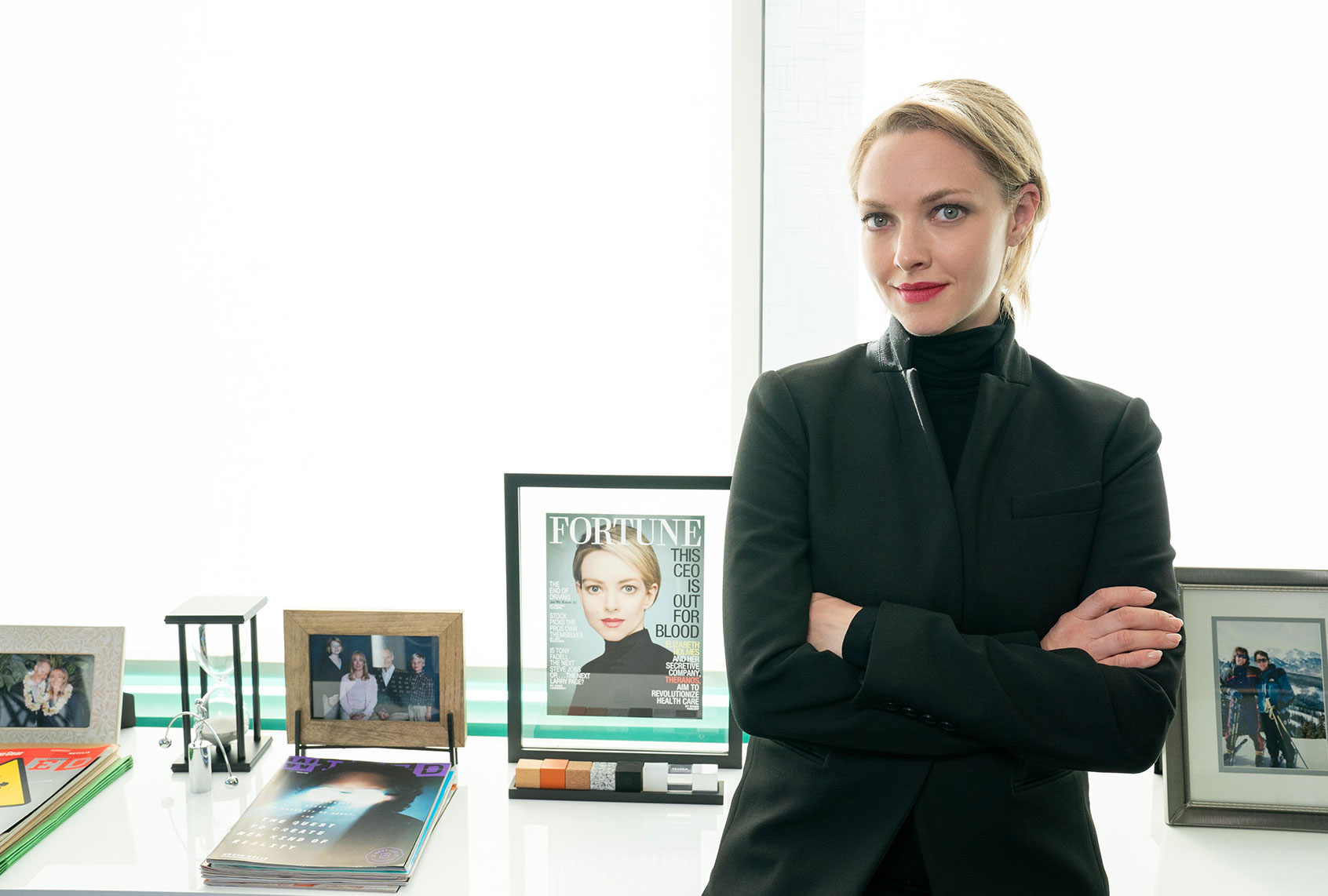
2 “Dark Waters”

Like “Erin Brockovich,” whistleblowers are also often linked with environmental dangers and disasters. 1983’s “Silkwood” was one of the first and best of these films, dramatizing the life and tragic death of union activist and nuclear power whistleblower Karen Silkwood, played by Meryl Streep. “Dark Waters” is a more recent example with Mark Ruffalo (in his real life, no stranger to environmental activism) as an Ohio corporate defense attorney who ends up risking his career and his marriage to fight for the rights and lives of West Virginia farmers and their families who were poisoned by PFOA, the chemical used to manufacture Teflon for DuPont. 

3 “The Constant Gardner”

In “The Constant Gardner,” the 2005 film directed by Fernando Meirelles, Rachel Weisz pays the ultimate price for her whistleblowing. Weisz’s character Tessa, married to Ralph Fiennes as a British Diplomat, works for Amnesty International in Kenya and begins to realize that a new drug treatment for tuberculosis is not what it seems. Tessa is wealthy, unfaithful to her husband, and the gradual realization of the depths of the drug company’s corruption parallels her own deepening sense of justice, purpose and service. 

4 “The Office”

While films tend to corner the market on whistleblowers — perhaps the unfolding nature of scandals lend themselves better to sweeping, epic movies, particularly when long court cases are involved — whistleblowers continue to appear on the small screen. One long-running example is Andy (Ed Helms) in “The Office” who realizes, as other employees do as well, that Sabre printers are defective, catching on fire. The information is leaked to the news. This episode details the potential ramifications of whistleblowing: computers are scoured; employees interviewed, pointing fingers at each other; and the press circles.  

For a story to be told, somebody has to tell it, a risky undertaking.

The DropoutAmanda Seyfried as Elizabeth Holmes in “The Dropout” (Beth Dubber/Hulu)
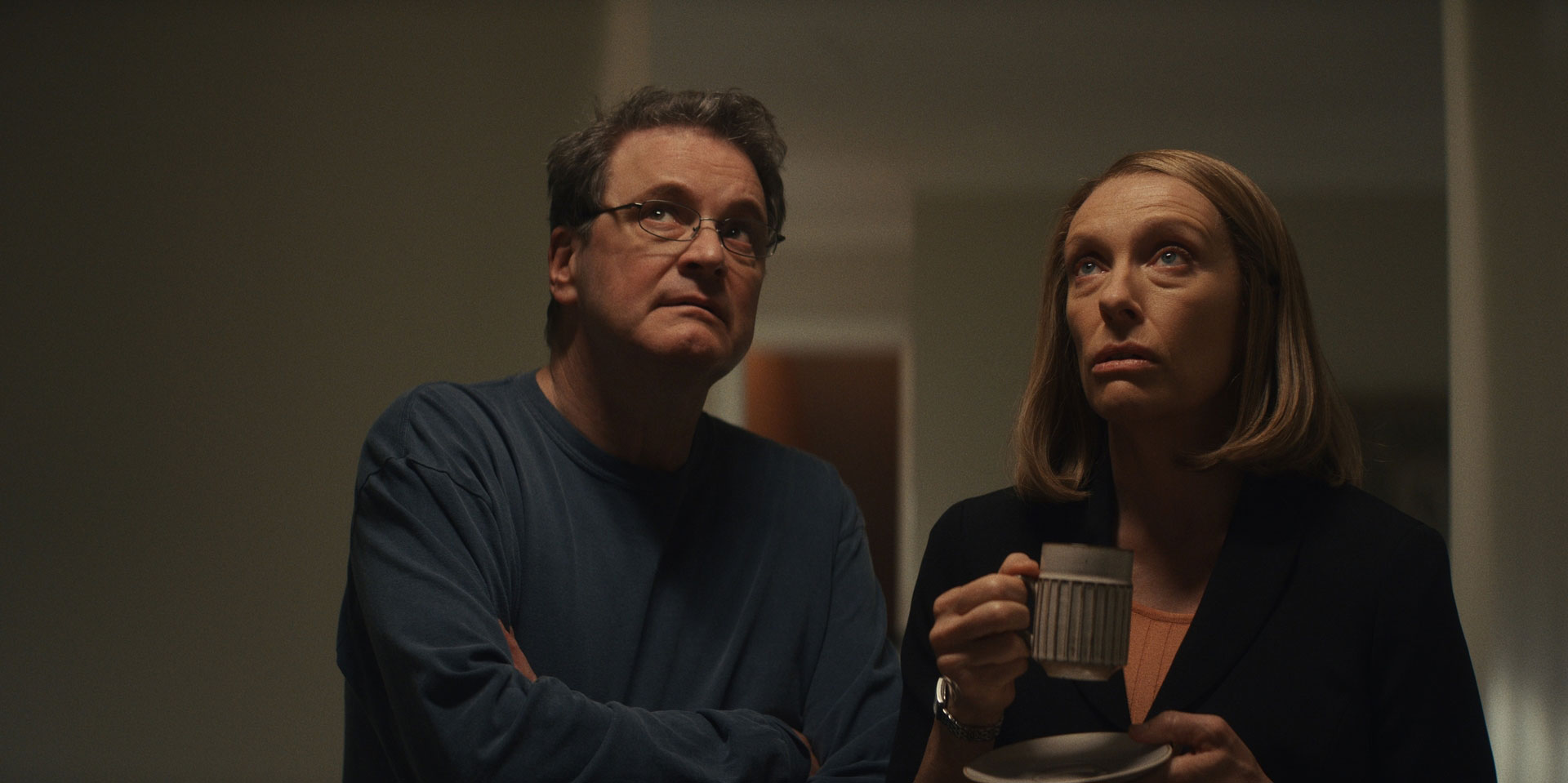
5 “The Dropout”

Shady business practices also make up the deceit in “The Dropout.” Elizabeth Holmes (Amanda Seyfried) is the star of Hulu’s limited series, which exposes the fraud of the real-life Holmes, who duped investors and the public into believing her company Theranos and her invention, called the Edison, could diagnose a variety of diseases with a single drop of blood. Spoiler alert: it could not.

As in “The Office,” multiple people tried to sound the alert, including Tyler Shultz (Dylan Minnette) and Erika Cheung (Camryn Mi-young Kim). As the real Cheung testified, “It was concerning to see this degree of failure. This was not typical for a normal lab . . . I was attempting to tell as many people as I could, but it was just not getting through to people.” Cheung ended up leaving, later talking to an investigative journalist at The Wall Street Journal, which ran a whistleblowing story on Theranos.


Want a daily wrap-up of all the news and commentary Salon has to offer? Subscribe to our morning newsletter, Crash Course.


For a story to be told, somebody has to tell it, a risky undertaking which can have serious personal consequences. Witness the threats people even perceived to be the Supreme Court whistleblower are receiving. At best, whistleblowers may be forgotten by history. At worst, they’re hounded. But they bring us the truth.  

More stories like this:

Before stepping into “The Staircase,” let’s take a swoop through The Owl Theory

Every popular modern docuseries owes a huge debt to the international success of “The Staircase,” Jean-Xavier de Lestrade’s Peabody award-winning sensation that fascinated millions with the strange case of Michael Peterson, a successful novelist accused of murdering his second wife Kathleen. The case has all the ingredients necessary to lure and capture true crime fans – a victim who died under unclear circumstances, a wealthy, somewhat famous suspect leading a double life, and a fallout that painfully divides a formerly close-knit family.

Today, viewers can avail themselves of two boons Lestrade did not have working in his favor when the series first premiered. The first is obvious. In 2005, when the first 10 episodes premiered domestically on the Sundance Channel, there were no major streaming services.

The second may change the way you watch you watch “The Staircase,” whether in the form of the original documentary series or the new dramatized version on HBO Max, starring Colin Firth as Peterson and Toni Collette as Kathleen. This refers to the famous Owl Theory.

RELATED: What tips someone into Murderville?

The Owl Theory is one of the weirdest hypotheses in all true crime fandom that sounds ripe for having been deaded, breaded and fried from the moment it was first set aloft. It’s not included in the original “Staircase” episodes because it did not come to be until 2009. Lestrade left it out of the three later episodes covering the reopening of Peterson’s case because it never made it into the court proceedings.

But the creator of the dramatized version of “The Staircase,” Antonio Campos, will indeed present it to the HBO Max audience in later episodes of his show.

“We took it as seriously as any other theory,” he confirmed to reporters at the Television Critics Association press conference earlier this year. 

Why wouldn’t he? It’s been determined by ornithological experts to have merit, for one thing. For another that’s of higher import to the TV viewer, it sounds absolutely cuckoo. Until you dig deeper.

Here is where we reassure you that knowing about The Owl Theory isn’t going to spoil your enjoyment of “The Staircase,” whether you choose the unscripted version or the new Collette-and-Firth trap. The most it may do is lay a filter over what you see; at any rate, if you don’t want to know about it, fly away now.

The Owl Theory, a unique hoo-dunnit twist

The StaircaseColin Firth, Toni Collette in “The Staircase” (HBO Max)In the early morning of December 2001, Michael Peterson called 911 and reported finding his wife Kathleen unconscious and bleeding at the bottom of a staircase. Paramedics were unable to revive her, and once police arrived they began treating her death as a homicide, eventually charging Peterson with murder. A jury found him guilty in 2003, and he spent eight years in prison before his case was retried in 2016.

The Owl Theory first took flight in 2009 when T. Lawrence Pollard, an attorney and neighbor of the Peterson’s in Durham, North Carolina, examined files related to the case. He noticed that forensics specialists had examined a clump of hair pulled out by the roots in Kathleen’s hand that contained microscopic owl feathers along with a wooden sliver. Pollard noted that barred owls are native to their area, and although it’s rare, they have been known to attack humans.

He theorizes that Kathleen may have been outside when one such owl swooped down and attacked Kathleen to the point of ripping deep lacerations into her skull. She ran inside to escape the attack. However, given the amount of intoxicants that were already in her blood stream including, according to the toxicology report, muscle relaxants, anti-anxiety medication and alcohol, she may have been more prone to falling. Pollard posits that she attempted to climb the stairs and fell, bleeding out where she landed.

This also somewhat explains parts of the prosecution’s case that didn’t entirely fit. The medical examiner determined that Kathleen bled out from seven lacerations to the scalp surmised to be the result of an attack with a light, rigid weapon, but the defense pointed out that Kathleen’s skull showed no evidence of fracture, nor was there any sign of brain damage.

Despite how off-the-wall “death by owl” sounds, proponents of the theory point out that the hypothetical bird of prey isn’t technically a murderer but, rather, a contributor to a death they believe to be accidental. And while owl attacks are unusual, they do happen. In fact, in 2010 three owl aficionados submitted affidavits declaring that Kathleen’s wounds were consistent with such an assault. The birding world took the theory seriously enough for the Audubon Society to publish an article about it in 2016.

“I think we’ve entered a time in society where we feel that things are black and white, that there’s only one way to see something, and if you don’t see it my way, then you’re wrong,” said “Staircase” co-showrunner Maggie Cohn at the press event. “And I think what’s interesting about this is it’s an opportunity to show multiple perspectives of the same incident and to make people comfortable, ultimately, with the gray, with saying that, ‘I might not know what happened, but now I have a better idea of how something like this could happen.'”

Bizarre-but-possible scenarios are television’s lifeblood, which is the reason The Owl Theory was prominently parodied in the first season of the short-lived NBC true crime spoof “Trial & Error.” 

Although Peterson entered an Alford plea to the lesser charge of manslaughter in 2017 in exchange for a sentence of time served, he has always insisted that he is innocent. Among people familiar with the case, there’s plenty of reason to suspect that Peterson’s queerness and the discovery of his adultery factored more heavily in the jury’s decision to convict him in 2003 than anything else. Not even the lack of a forensically confirmed murder weapon was enough to shift reasonable doubt in his favor.

So it probably goes without saying that the owl theory never landed in court. That hasn’t stopped it from feathering a mystery that’s still hooked us all these years and crime-tale binges later.

The first three episodes of “The Staircase” are available to stream May 5 on HBO Max and new episodes drop Thursdays. The 13-part original documentary can be streamed on Netflix.

More stories like this:

These 4-ingredient dulce de leche lava cakes are a showstopper — and they bake in under 15 minutes

I clearly never got over the ’90s, because I still love Portishead, chunky shoes and especially lava cakes. While the magic trick of a dessert that oozes like a 7th-grade science project no longer carries the novelty it did in the Clinton era, I forever find it irresistible. Add a side of ice cream or whipped cream — and you’ve got the perfect combination of flavors, textures and temperatures.

Though lava cakes usually evoke restaurants and something served on a big white plate with a mint leaf, I regularly make my own takes on the theme at home. Maybe it’s an old-fashioned hot chocolate cake, or maybe it’s a single serving mug cake. The idea remains: If you make it cakey on the outside and gooey on the inside, you won’t be disappointed.

For a more spiffed-up variation, I love Florencia Courreges’ easy molten dulce de leche cakes. They’re a clever change from the traditional chocolate, come together in a snap and really deliver on the ta-da factor. In fact, they seem so posh that you might feel a tiny bit gauche when you inevitably lick the plate.

RELATED: This swoon-worthy chocolate dessert begins with a box of cake mix — the rest is culinary magic

Because these need to be served immediately, you can make the batter and fill the ramekins ahead of time to keep in the fridge until you’re ready to bake. Either bring them to room temperature while you’re enjoying dinner or allow an extra minute or two in the oven if baking straight from the fridge. (This also means you can make these for a romantic dinner for two, three times over.)

I’m giving you options here for baking these in a muffin pan because I think you deserve lava cakes — even if you don’t happen to own a set of ramekins.

***

Recipe: Dulce de Leche Lave Cakes
Inspired by Florencia Courreges for Bon Appétit

Yields
6 servings
Prep Time
 10 minutes
Cook Time
 12 minutes

Ingredients

  • Softened butter
  • 2 1/2 tablespoons flour, plus more flour for the tins
  • 2 egg yolks
  • 1 egg
  • 1 13-oz. can dulce de leche 
  • Optional: ice cream or whipped cream


Directions

  1. Preheat the oven to 425 degrees.
  2. Generously butter and flour either a 6-cup muffin tin or 6 ramekins. Place on a baking sheet.
  3. In a blender, or using a bowl and electric mixer, beat the egg yolks and egg until doubled in volume, about 3 minutes. (I’m not kidding here! Don’t get impatient.)
  4. Add the dulce de leche and beat until blended, then gradually add the flour until well blended.
  5. Pour the batter evenly into the tins or ramekins.
  6. Bake until the cakes are browned but still jiggly, about 12 minutes. Remove from the oven.
  7. Let cool just a minute, then run a knife along the edges of each cake to loosen. If using ramekins, gently unmold onto individual plates or bowls. If using a muffin tin, have a sheet pan ready. Place the pan over the tin and gently flip over to unmold the cakes, then use a wide spatula to plate them.
  8. Serve immediately with whipped cream or ice cream.

Cook’s Notes

Use the leftover egg whites to make my three-ingredient meringues!


Want more great food writing and recipes? Subscribe to Salon Food’s newsletter.


More of our favorite desserts: 

Salon Food writes about stuff we think you’ll like. Salon has affiliate partnerships, so we may get a share of the revenue from your purchase.

UN environment group passes a resolution on plastic pollution. Scientists fear it’s too late

While the world’s attention was fixated on the conflict in Ukraine, a landmark United Nations achievement flew under the radar in early March. At the fifth session of the UN Environment Programme in Nairobi, the global environmental authority turned its attention to plastic. Recognizing that plastic pollution has, simply put, spiraled out of control, the assembly passed a resolution to end plastic waste.

The resolution is certainly timely, given shocking recent discoveries about the extent of plastic pollution on Earth — which has penetrated into the human bloodsteam, resulted in humans consuming a credit card’s worth of the stuff each week, and whose microparticles in the ocean now outnumber zooplankton. 

While the UN’s recognition of the extent of the problem might seem a cause to celebrate, it seems rather to have struck a nerve for scientists.


Want more health and science stories in your inbox? Subscribe to Salon’s weekly newsletter The Vulgar Scientist.


In a resounding show of support, delegations from 175 of 193 member states endorsed the resolution, a crowning achievement of the session. Treaty negotiations will begin May 30 to establish a legally binding international treaty limiting plastic waste by the end of 2024.

“The immense quantity and diversity of both plastics and plastic chemicals, the total weight of which exceeds the overall mass of all land and marine animals, already poses enormous challenges.”

Regarded widely as a historic victory for environmental and global health, the resolution prompted dire warnings from scientists. Appearing in the journal Science, a letter from experts in a variety of related fields called for resolute caps on plastic pollution.

“Despite interventions by the industry and objections from the United States and other delegations, reducing plastics at the source by curbing production is critical,” the letter asserted with its citations taking up almost as much space as its content. “The immense quantity and diversity of both plastics and plastic chemicals, the total weight of which exceeds the overall mass of all land and marine animals, already poses enormous challenges.”

Though succinct, the message was clear: Preventing plastic pollution means no more plastic.

Their fears are not without substance. In the resolution, heavy emphasis was placed on downstream solutions, those that target pollution rather than its source, “to promote sustainable production and consumption of plastics through, among other things, product design and environmentally sound waste management, including through resource efficiency and circular economy approaches.”

RELATED: What is microplastic anyway? Inside the insidious pollution that is absolutely everywhere

The latter essentially describes the platonic ideal of green economics, a closed-loop system in which everything can be recycled or reused and nothing leaks into the environment — a commendable and lofty goal indeed. As noted by the UNEP assembly, that would also necessitate putting an end to illegal exportation of plastics and other waste from wealthier nations to those in the Global South.

“Relying on those approaches alone is not going to reduce the production of plastic enough for us to not have an impact on the environment,” Dr. Susanne Brander told Salon. 

An expert in environmental toxicology studying the impacts of microplastics on gene expression at Oregon State University, Brander was among nine experts that wrote the letter to the journal Science.

“Even when applying all political and technological solutions available today, including substitution, improved recycling, waste management, and circularity, annual plastic emissions to the environment can only be cut by 79% over 20 years,” the letter read. “To fully prevent plastic pollution, the path forward must include a phaseout of virgin plastic production by 2040.”

Luckily a 2021 study also published in Science by a whopping 30 authors did the heavy lifting to break down current solutions, challenges, and paths forward. Put briefly, they found “no silver bullet exists” to keep the 450 million tonnes of plastic currently produced a year out of the environment. Meanwhile, carbon emissions from the entire life cycle of plastics are predicted to rise from 4.5% to between 10 and 13% of the total carbon budget by 2050.

“Substantial commitments to improving the global plastic system are required from businesses, governments, and the international community to solve the ecological, social, and economic problems of plastic pollution and achieve near-zero input of plastics into the environment,” the concluding paragraph of the study read.

The study found existing solutions including recycling, recovery, and replacing plastics with alternatives could only cut annual plastic pollution to 17.3 million tons by 2040, hence the urgency in the letter from scientists from Canada, Germany, India, Norway, Sweden, Turkey, the UK and the U.S. 

Plastics and their chemical constituents may well threaten human fertility and development as they accumulate.

“It’s not dissimilar to other pollutant types like pesticides in runoff or industrial chemicals in runoff,” Brander explained. “They’re all contributing to some of the same problems, but plastics are unique in that they continue to break down.”

“Further innovation in resource-efficient and low-emission business models, reuse and refill systems, sustainable substitute materials, waste management technologies, and effective government policies are needed,” the report recommended. “Such innovation could be financed by redirecting existing and future investments in virgin plastic infrastructure,”

Much about the impact of heavy metal accumulation and health impacts on humans remains unknown, but what is known is enough to incite drastic action. Brander’s own research investigates various effects this pollution has on the endocrine systems of aquatic life. While she hesitated to link plastic pollution to human growth and reproduction, endocrine disrupters including phthalates and bisphenols, chemical additives commonly found in plastics, have demonstrated comparable sub-lethal impacts on aquatic life, according to her research. Plastics and their chemical constituents may well threaten human fertility and development as they accumulate.

“It’s not dissimilar to other pollutant types like pesticides in runoff or industrial chemicals in runoff,” Brander explained. “They’re all contributing to some of the same problems, but plastics are unique in that they continue to break down.”

That makes microplastics particularly challenging to study. Concentrations in the environment can be difficult to measure because rather than dissipating, they disintegrate, yet still persist in the environment as they do so. Hence, microplastics are now in the food we eat, the water we drink, and accumulating inside humans just as in other organisms.

“We already know microplastics and plastics are inside our food, at least three thousand different species known to ingest or be entangled in plastics and microplastics, and now microplastics have been found in human placenta, in human lungs, and as of a couple of months ago, there was a peer-reviewed study done where microplastics were found in human blood,” Dr. Tony Walker emphasized when speaking to Salon.

If their impact on other organisms are any indication, the consequences will be dire for human health. Specializing in remediation and impacts of environmental pollution at Dalhousie University in Nova Scotia, Walker emphasized that only about 9% of recyclable waste is actually recycled worldwide currently.

“The only way we’re going to improve impacts is by reducing how much we’re making,” Dr. Tony Walker told Salon. “There’s no other way around it even with the proposition of a circular economy. That still relies on having so much infrastructure to make sure you’re actually recapturing those plastics and you’re not having leakage back out into the environment like we see with recycling.”

Perpetuation of plastic production and protecting environmental and human health are mutually exclusive. Finding which plastics are toxic after they are in the environment and in our bodies later does not ensure the safety of the public, and is in fact impossible according to the team of scientists.

It is the pervasive nature of microscopic particles that led to the current sense of urgency on plastic pollution control. A decade ago, international cooperation would have been nearly impossible. How they will actually achieve such a task remains to be seen, but scientists are worried negotiations are doomed to repeat the failures of the Paris Agreement, which has not effectively moved member states of the UN to decisive carbon emissions reductions recommended by scientists and the UN’s own reports from the IPCC.

“There’s no reason not to act even if the cessation of the use of Virgin plastic has to be, of course, gradual,” Brander stated frankly. “It’s hard for me to see an argument for using a wait-and-see approach like we’ve done with so many other chemicals.”

Read more Salon articles on plastic pollution: