Spring Sale: Get 1 Year, Save 58%

Diversity, “wokeness” and violent oppression: Lessons of the Tyre Nichols case

The brutal murder of Tyre Nichols by five Black Memphis police officers should be enough to implode the fantasy that identity politics and diversity will solve the social, economic and political decay that besets the United States. Not only are the former officers Black, but the city’s police department is headed by Cerelyn Davisa Black woman. None of this helped Nichols, another victim of a modern-day police lynching.

The militarists, corporatists, oligarchs, politicians, academics and media conglomerates champion identity politics and diversity because it does nothing to address the systemic injustices or the scourge of permanent war that plague the U.S. It is an advertising gimmick, a brand, used to mask mounting social inequality and imperial folly. It busies liberals and the educated with a boutique activism, which is not only ineffectual but exacerbates the divide between the privileged and a working class in deep economic distress. The haves scold the have-nots for their bad manners, racism, linguistic insensitivity and garishness, while ignoring the root causes of their economic distress. The oligarchs could not be happier.

Did the lives of Native Americans improve as a result of the legislation mandating assimilation and the revoking of tribal land titles pushed through by Charles Curtis, the first Native American vice president? Are we better off with Clarence Thomas, who opposes affirmative action, on the Supreme Court, or Victoria Nuland, a war hawk in the State Department? Is our perpetuation of permanent war more palatable because Lloyd Austin, an African American, is the secretary of defense? Is the military more humane because it accepts transgender soldiers? Is social inequality, and the surveillance state that controls it, ameliorated because Sundar Pichai — who was born in India — is the CEO of Google and Alphabet? Has the weapons industry improved because Kathy J. Warden, a woman, is the CEO of Northop Grumman, and another woman, Phebe Novakovic, is the CEO of General Dynamics? Are working families better off with Janet Yellen, who promotes increasing unemployment and “job insecurity” to lower inflation, as secretary of the Treasury? Is the movie industry enhanced when a female director, Kathryn Bigelow, makes “Zero Dark Thirty,” which is agitprop for the CIA? Take a look at this recruitment ad put out by the CIA. It sums up the absurdity of where we have ended up.

Colonial regimes find compliant indigenous leaders — “Papa Doc” François Duvalier in HaitiAnastasio Somoza in Nicaragua, Mobutu Sese Seko in the Congo, Mohammad Reza Pahlavi in Iran — willing to do their dirty work while they exploit and loot the countries they control. To thwart popular aspirations for justice, colonial police forces routinely carried out atrocities on behalf of the oppressors. The indigenous freedom fighters who fight in support of the poor and the marginalized are usually forced out of power or assassinated, as was the case with Congolese independence leader Patrice Lumumba and Chilean president Salvador Allende. Lakota chief Sitting Bull was gunned down by members of his own tribe, who served in the reservation’s police force at Standing Rock. If you stand with the oppressed, you will almost always end up being treated like the oppressed. This is why the FBI, along with Chicago police, murdered Fred Hampton and was almost certainly involved in the murder of Malcolm X, who referred to impoverished urban neighborhoods as “internal colonies.” Militarized police forces in the U.S. function as armies of occupation. The police officers who killed Tyre Nichols are no different from those in reservation and colonial police forces.


Want a daily wrap-up of all the news and commentary Salon has to offer? Subscribe to our morning newsletter, Crash Course.


We live under a species of corporate colonialism. The engines of white supremacy, which constructed the forms of institutional and economic racism that keep the poor poor, are obscured behind attractive political personalities such as Barack Obama, whom Cornel West called “a Black mascot for Wall Street.” These faces of diversity are vetted and selected by the ruling class. Obama was groomed and promoted by the Chicago political machine, one of the dirtiest and most corrupt in the country.

“It’s an insult to the organized movements of people these institutions claim to want to include,” Glen Ford, the late editor of the Black Agenda Report, told me in 2018. “These institutions write the script. It’s their drama. They choose the actors, whatever black, brown, yellow, red faces they want.”

Ford called those who promote identity politics “representationalists” who “want to see some Black people represented in all sectors of leadership, in all sectors of society. They want Black scientists. They want Black movie stars. They want Black scholars at Harvard. They want Blacks on Wall Street. But it’s just representation. That’s it.”

Identity politics and diversity allow liberals to wallow in a cloying moral superiority, disguising their passivity in the face of corporate abuse, neoliberalism, permanent war and the curtailment of civil liberties.

The toll taken by corporate capitalism on the people these “representationalists” claim to represent exposes the con. African Americans have lost 40 percent of their wealth since the financial collapse of 2008 from the disproportionate impact of the drop in home equity, predatory loans, foreclosures and job loss. They have the second highest rate of poverty at 21.7 percent, after Native Americans at 25.9 percent, followed by Hispanics at 17.6 percent and whites at 9.5 percent, according to the U.S. Census Bureau and the Department for Health and Human Services. As of 2021, Black and Native American children lived in poverty at 28 and 25 percent respectively, followed by Hispanic children at 25 percent and white children at 10 percent. Nearly 40 percent of the nation’s homeless are African Americans, although Black people make up about 14 percent of our population. This figure does not include people living in dilapidated, overcrowded dwellings or with family or friends due to financial difficulties.  African Americans are incarcerated at nearly five times the rate of white people.

Identity politics and diversity allow liberals to wallow in a cloying moral superiority as they castigate, censor and deplatform those who do not linguistically conform to politically correct speech. They are the new Jacobins. This game disguises their passivity in the face of corporate abuse, neoliberalism, permanent war and the curtailment of civil liberties. They do not confront the institutions that orchestrate social and economic injustice. They seek to make the ruling class more palatable. With the support of the Democratic Party, the liberal media, academia and social media platforms in Silicon Valley, demonize the victims of the corporate coup d’état and deindustrialization. They make their primary political alliances with those who embrace identity politics, whether they are on Wall Street or in the Pentagon. They are the useful idiots of the billionaire class, moral crusaders who widen the divisions within society that the ruling oligarchs foster to maintain control. 

Diversity is important. But diversity, when devoid of a political agenda that fights the oppressor on behalf of the oppressed, is window dressing. It is about incorporating a tiny segment of those marginalized by society into unjust structures to perpetuate them. 

A class I taught in a maximum security prison in New Jersey wrote “Caged,” a play about their lives. The play ran for nearly a month at the Passage Theatre in Trenton, New Jersey, where it was sold out nearly every night. It was subsequently published by Haymarket Books. The 28 students in the class insisted that the corrections officer in the story not be white. That was too easy, they said. That was a feint that allows people to simplify and mask the oppressive apparatus of banks, corporations, police, courts and the prison system, all of which make diversity hires. These systems of internal exploitation and oppression must be targeted and dismantled, no matter whom they employ. 

My book, “Our Class: Trauma and Transformation in an American Prison,” uses the experience of writing the play to tell the stories of my students and impart their profound understanding of the repressive forces and institutions arrayed against them, their families and their communities. You can see my two-part interview with Hugh Hamilton about “Our Class” here and here.

August Wilson‘s last play, “Radio Golf,” foretold where diversity and identity politics devoid of class consciousness were headed. In the play, Harmond Wilks, an Ivy League-educated real estate developer, is about to launch his campaign to become Pittsburgh’s first Black mayor. His wife, Mame, is angling to become the governor’s press secretary. Wilks, navigating the white man’s universe of privilege, business deals, status seeking and the country club game of golf, must sanitize and deny his identity. Roosevelt Hicks, who had been Wilks’ college roommate at Cornell and is a vice president at Mellon Bank, is his business partner. Sterling Johnson, whose neighborhood Wilks and Hicks are lobbying to get the city to declare blighted so they can raze it for their multimillion dollar development project, tells Hicks: 

You know what you are? It took me a while to figure it out. You a Negro. White people will get confused and call you a ni***r but they don’t know like I know. I know the truth of it. I’m a ni***r. Negroes are the worst thing in God’s creation. … A dog knows it’s a dog. A cat knows it’s a cat. But a Negro don’t know he’s a Negro. He thinks he’s a white man.

Terrible predatory forces are eating away at the country. The corporatists, militarists and political mandarins that serve them are the enemy. It is not our job to make them more appealing, but to destroy them. There are amongst us genuine freedom fighters of all ethnicities and backgrounds whose integrity does not permit them to serve the system of inverted totalitarianism that has destroyed our democracy, impoverished the nation and perpetuated endless wars. Diversity when it serves the oppressed is an asset, but a con when it serves the oppressors.

Roseanne Barr calls cancel culture “fascist” in an interview with Tucker Carlson

Roseanne Barr appeared in a segment of “Tucker Carlson Tonight” on Friday to plug her new Fox Nation stand-up special, “Cancel This!,” and weigh in on the controversy that caused her to be canceled in the first place.

After an intro in which Carlson described Barr as having “one of the most remarkable life trajectories of anyone we’ve ever met,” the comedian joined the discussion to say that her new comeback special will provide her with the first big opportunity to tell her side of the story.

“[Fox Nation] offered me to come and do a stand-up special and it was in response to me being fired, and they came to my defense,” Barr said. “I thought about it and I was like, yeah, I need to have my say . . . because I was not allowed to even apologize for what happened.”

Barr has found herself in the hot seat several times in the past, but the incident that all but put an end to her career took place in 2018 when she referred to Valerie Jarrett, senior adviser to former President Barack Obama, as “a combination of the Muslim Brotherhood and the ‘Planet of the Apes.'” 

Barr has since claimed that she thought Jarrett was white and that she didn’t mean what people thought she meant. 

“I was just black-balled. Just totally canceled from even commenting on what happened,” Barr said in her interview with Carlson. “So I thought, well, stand-up is a great place to come back and say what happened and tell the truth about it, and also to talk about cancel culture itself and how horrible it is and how fascist.” 


Want a daily wrap-up of all the news and commentary Salon has to offer? Subscribe to our morning newsletter, Crash Course.


Barr said that she’s had conversations with comedian friends who have also been canceled and they’ve all agreed that should they ever be given the opportunity to come back, they promise to be even more offensive.

“My stand-up is more offensive than I’ve ever been and I’m so happy because you’ve gotta be more offensive when the culture is so offensive that it makes absolutely no sense that it’s anti-life, anti-human, anti-culture, anti-citizen. You’ve gotta be so offensive to offend the most offensive thing that’s on Earth right now. And I think I’ve done it,” Barr said.

Watch below:

The top 12 dishes that’ll make your Super Bowl party a hit — even if your team flops

Whether you’re attending a Super Bowl extravaganza this weekend, throwing your own or not partaking whatsoever, it’s hard to turn down the flavor-packed food that is often associated with watching the Big Game. 

For some that means bar food, appetizers and snacks, while others may prefer full-fledged, heavy meals. Regardless, we at Salon Food have you covered. From dips and pizzas to fried foods and comfort foods galore, you and yours are sure to have a field day with the amount of options included here. 

So no matter your plans, peruse this list of some especially crave-worthy and delicious dishes that are a joy any day of the year. 

Queso & ChipsQueso & Chips (Getty Images)Image_placeholder

Of course, queso is a requisite component in the pantheon of Super Bowl foods. Regardless of the spice level, the warm, super-cheesy dip is always at home at any sort of gathering. It’s ideal with chips, but also with various raw vegetables.
 
As Salon’s Amanda Marcotte writes, the beer helps to deepen the flavor and “adds a certain subtle and spiky flavor to queso that really lifts it above its humble fake-cheese origins.” 
Salmon Artichoke DipSalmon Artichoke Dip (Bibi Hutchings)Image_placeholder

While salmon may not be the first accouterment to come to mind when daydreaming about artichoke dip, columnist Bibi Hutchings is adamant that it’s the perfect addition to the fan-favorite dip.
 
Hutchings also writes that “you can omit the salmon, or you can use dairy-alternatives — no problem at all.” This recipe says “bring it on” — no matter what dairy or green you use, it’s going to be delicious. If you’re looking for the perfect post-holiday, game day appetizer, go the spinach route. Toss in chopped, fresh jalapeños to the mix for a kick that’s sure to fire up an audience.”
 
We think we’ll take her up on these suggestions.
Fresh Glazed Pecans in a Cast Iron SkilletFresh Glazed Pecans in a Cast Iron Skillet (Getty Images/rudisill)Image_placeholder

Hutchings also contributed these stellar, crunchy “party pecans” with homemade, cheesy wafer crackers that are bound to be a surefire hit. These “distinctly southern snacks” are both sweet and savory, pair beautifully with practically any libation and are almost always “consumed with gusto.” They’re both perfect additions to any charcuterie board, too. 
 
The wafers are a super-simple recipe which calls for only 4 ingredients and the buttery, beautifully spiced pecans are incredibly crave-worthy, too. 
Crunchy Noodle SaladCrunchy Noodle Salad (Courtesy Bibi Hutchings)Image_placeholder

This crispy, crunchy, bright salad is a perfect juxtaposition with the heavier, richer dishes in this lineup. Prepare a large bowl of this and you’re sure to get some appreciative glances and smiles from those who are looking for a few bites of something that has some greens, some freshness and some lightness. 
Cheesy Chicken Reverse NachosCheesy Chicken Reverse Nachos (Mary Elizabeth Williams)Image_placeholder

Wondering what constitutes a “reverse” nacho?
 
Essentially, as Senior Writer Mary Elizabeth Williams explains, it entails that the meats and cheeses are cooked separately and then the chips are “dipped” into the nacho goodness, instead of being cooked under them, thereby rendering some of the chips soggy and unappealing. Genius! 
Chicago mix popcornChicago mix popcorn (Mary Elizabeth Williams)Image_placeholder

Popcorn is a standby and for a good reason: it’s easy to mindlessly munch on, it’s crisp and light, it’s often well seasoned and it’s even sometimes vegan.
 
Here, Williams presents a popcorn that is perfectly balanced in its sweetness, spice and cheesiness, including the juxtaposition of both caramel and cheddar for a real wallop of flavor in each bite. Your guests are sure to be amazed. 

Want more great food writing and recipes? Subscribe to Salon Food’s newsletter, The Bite.


Toasted sourdough bread with sauteed mushroom and hard goat cheeseToasted sourdough bread with sauteed mushroom and hard goat cheese (Getty Images/haoliang)Image_placeholder

Not to toot own horn, but …. toot toot!
 
Step aside avocado toasts, you’ve had the glory for far too long. It’s now time for the RGMT (roasted garlic mushroom toast, of course) to step into the spotlight.
 
Complete with a deeply garlicky kick courtesy of an entire head of roasted garlic — plus a creamy, decadent spread and a host of sautéed, buttery mushrooms — you will incur lots of compliments if you serve this at a gathering of any sorts.
 
Just don’t be spooked if they suddenly disappear; Casper didn’t get his hands on them, but our assumption is that they’ll go quickly. So maybe make a double batch? 
(America’s Test Kitchen)Image_placeholder

Chili is a classic inclusion in the Superbowl food repertoire, but this version veers in a slightly different direction being that it contains turkey and is cooked in the slow-cooker. Top with whatever variation of garnishes you like; that’s always one of the best parts of chili, is it not?
 
You can also opt to serve it with a large hunk of cornbread for a really enjoyable complement to the deep, savory flavors of the chili. So comforting! 
Mozzarella BallsMozzarella Balls (Mary Elizabeth Williams)Image_placeholder

Melted cheese may be one of the single best bites within the food landscape.
 
Here, Mary Elizabeth Williams takes the timeless joy of a mozzarella stick and compresses it into a pop-able, deeply enjoyable mozzarella ball which is equal parts creamy and gooey, yet also crispy and crunchy. Whether served with marinara or some other dipping sauce or not, these will be a massive hit amongst the partygoers. 
 
HummusHummus (Mary Elizabeth Williams)Image_placeholder

Hummus — what a delight! 
 
While some store-bought hummuses leave a lot to be desired, here, Williams uncovers the secret for the creamiest, lightest, “fluffiest” hummus imaginable.
 
Pair it with vegetables, pita chips, crackers, pita or anything else you’d like.
Pizza with chopped meat, spinach and cream saucePizza with chopped meat, spinach and cream sauce (Getty Images/Eugene Mymrin)Image_placeholder
Combining a deeply browned ground protein (or vegan protein) with dark greens and a copious amount of cheese can never be a bad thing, but place that entire selection of ingredients on a pizza crust and you’ll even impress yourself. Gussy this up with other inclusions — like grated cheeses, sauces, pestos or other greens or proteins — but it really doesn’t need much.
 
It’s a perfect homemade pizza, whether for a big-time game night or just for a quiet Tuesday evening in.
Onion RingsOnion Rings (Mary Elizabeth Williams)Image_placeholder

Onion rings are a true gem and let’s be honest: they don’t need my waxing poetic about them to snag your interest. The glory of an onion ring stands on its own.
 
As Williams puts it: “Onion rings are so much better than french fries, and french fries are great. They’re definitely far too good to only enjoy when you go out.” 
 
So do yourself a favor and whip these up. You (and all of your party pals) deserve it. 

The decline of the Netflix rom-com

It was a simple ask, one silently pleaded to “Your Place or Mine” and its writer and director Aline Brosh McKenna not long after tiptoeing over the opening credits’ threshold: Please don’t ruin The Cars.

“Big shocker: you listen to The Cars in the morning,” says Reese Witherspoon‘s Debbie, a single mother, says to her bestie Peter, a wealthy, single, and childless brand consultant played by Ashton Kutcher.

Since they chat often enough that we watch them blabbing while brushing their teeth, it might be worth wondering why she wouldn’t already know that detail.

It would if this were not a Netflix rom-com where the accoutrements matter more than the story’s seductiveness. Peter’s answer that worships at the altar of Saint Ric Ocasek “morning, noon, and night” is all we need to know. There will be plenty of The Cars in this two-hour time killer, hence the music admirer’s prayer that the band’s body of work emerges unscathed.

Happily, it does. Bewilderingly, the songs featured do absolutely nothing for the movie or work against it – that’s not the band’s fault but an indicator of the featherweight value of everything happening around the soundtrack.

Debbie and Peter’s story is familiar to love story aficionados, especially those who enjoyed the setup of “The Holiday.” “Your Place or Mine” is essentially that, except swapping out the charming elderly guy for Zoë Chao‘s Minka, a sexy millennial instant friend for Debbie when she zips off to New York. Yes, this is another NY-LA fairy tale about two friends who’d be together but have been kept apart by life’s circumstances and the width of the continental United States.

Oddly, the distance between Witherspoon’s Debbie and Kutcher’s Peter makes the film watchable. They are living inside of each other’s lives but, for most of the film, they only share screentime through editing magic – they can’t get enough of being on the phone together!

It doesn’t even matter that Witherspoon and Kutcher share little chemistry to start with, which is a marketing ploy in itself. How will they sell this affair, and will we remember it? Does it matter if they don’t? Yes, and no; these two lack the screen history and magic forged by Julia Roberts and George Clooney, whose names were enough to pull people out of their houses to sit through “Ticket to Paradise” in theaters.

Ticket to ParadiseGeorge Clooney and Julia Roberts in “Ticket to Paradise” (Universal Pictures)

But individually, Witherspoon and Kutcher are famous enough to make homebodies curious to see what they can do in the same movie, if not in the same place. That’s enough to tip a person over the line between shrugging at endless choices to clicking “Play.” 

It’s the weekend before Valentine’s Day, and this is Netflix’s latest feature headlined by stars who have previously lured audiences to theaters. Before “Big Little Lies,” “The Morning Show” and “Wild,” Witherspoon built her early career in romantic comedies. Kutcher’s also been love’s fool in a few of those, although his primary claims to fame are still “That ’70s Show,” “Punk’d” and having invested wisely enough that he only takes roles he wants to.

Kutcher’s already in the Netflix stream too, making a cameo appearance in “That ’90s Show” with his wife and “That ’70s show” co-star Mila Kunis. He’s a shiny cog on the workshop table ready to be plugged in the next thing. And that’s fine! “Your Place or Mine” is . . . fine. It does not ruin a great American rock band’s catalog. But doesn’t make the viewer feel much of anything, which is antithetical to the rom-com.

Your Place or MineReese Witherspoon as Debbie Dunn and Ashton Kutcher as Peter in “Your Place or Mine” (Netflix)
Back in 2018, although rom-coms were on their way to making in comeback theaters by the time “Crazy Rich Asians” hit theaters, Netflix was already being hailed for resurrecting the genre owing to the success of “Set It Up” starring Zoey Deutch, Glen Powell, Lucy Liu, and Taye Diggs.  “To All the Boys I’ve Loved Before” made an even bigger splash.

The adaptation of Jenny Han’s novel refreshed the audience’s affection for rom-coms by presenting an Asian American heroine in a story influenced by John Hughes films, minus the low-level anguish and with the addition of a far more inclusive cast.

“Set It Up” and “To All the Boys I’ve Loved Before” was introduced under the service’s Summer of Love umbrella, a branding effort that also included “The Kissing Booth.” Their success was the result of an overall strategy at Netflix to stake their claim on a film species whose heyday in the ’90s and early 2000s via classics like “Bridget Jones’ Diary” and “Notting Hill” failed to gain a toehold for most of the 2010s. Rom-coms could not compete at the box office with action movies and broad comedies and lacked the prestige of high-budget dramas.

Many were shunted off to cable channels like Hallmark to be blandified into a predictable formula.

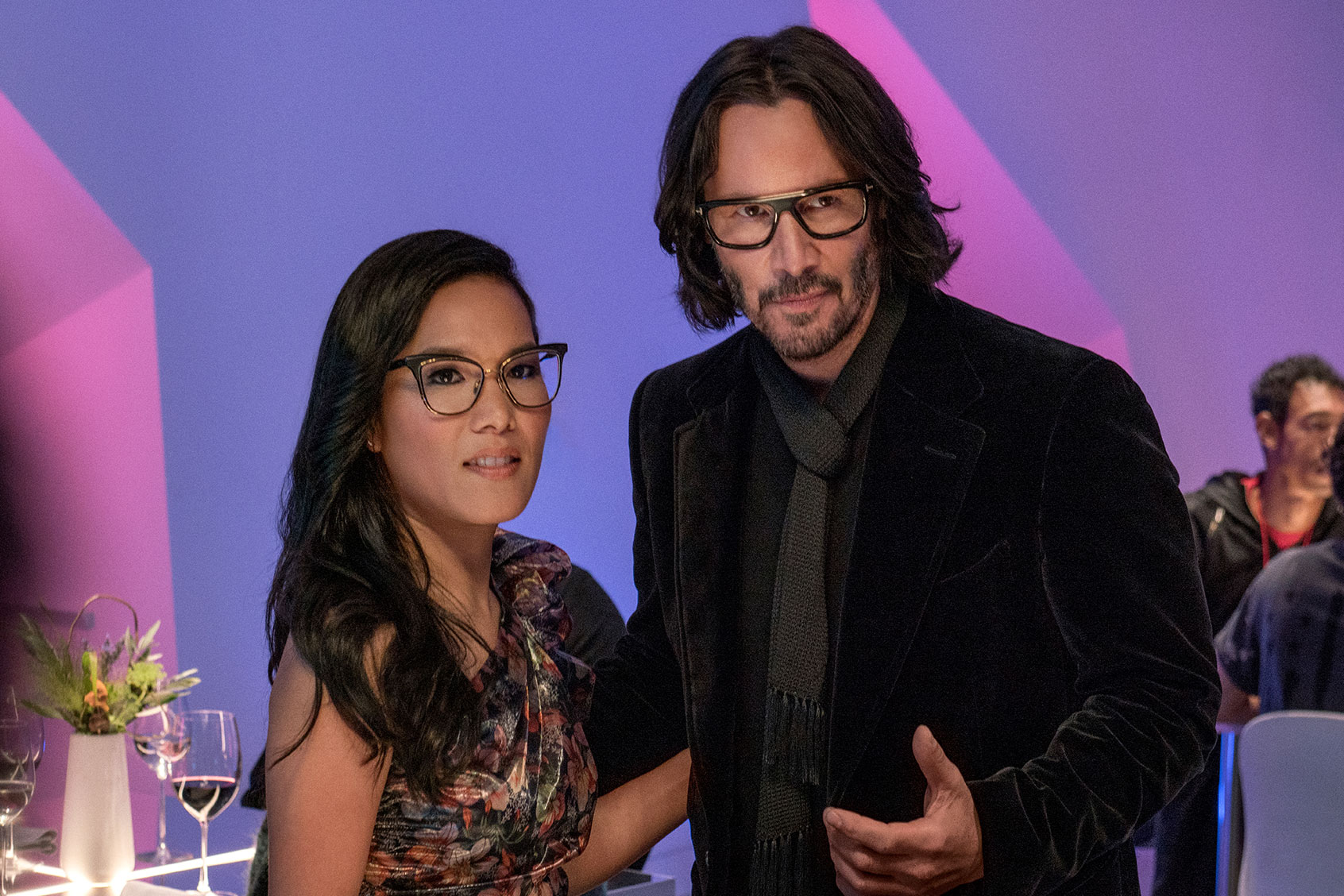
Always Be My MaybeAli Wong and Keanu Reeves in “Always Be My Maybe” (Doane Gregory / Netflix)

Even so, Netflix’s algorithm interpreters soon noticed that rom-coms had a staying power across the board. An executive marveled to the Hollywood Reporter that people were even watching the bad movies all the way through.

Solid scores like Ali Wong’s 2019 treat “Always Be My Maybe,” which cast Randall Park as a romantic lead and Keanu Reeves as the most unbearable (and yet hilarious) version of himself, gained the streamer good press. But it’s been a while since any of its rom-coms has earned as much acclaim or word-of-mouth recommendation for its quality.

What gives? A few things probably, starting with Netflix resting into the idea that rom-coms are easy viewing that doesn’t ask much of the audience in terms of emotional investment. “Your Place or Mine” can be video wallpaper keeping you company while you complete other tasks. There’s no need to pay attention since the question of whether Debbie and Peter will get together is already decided; that’s a foregone conclusion.

Another theory is that action comedies toplined by stars may have replaced the rom-com in our hearts. Witness the success of 2022’s “The Lost City” pairing Sandra Bullock and Channing Tatum, which earned the highest opening weekend box office for an original film since the pandemic began.

Shotgun WeddingJennifer Lopez and Josh Duhamel in “Shotgun Wedding” (Ana Carballosa/Lionsgate)

That likely inspired Jennifer Lopez’s choice to be the face of “Shotgun Wedding” alongside Josh Duhamel, with Lenny Kravitz and Jennifer Coolidge in the wings. The film skipped U.S. theaters altogether to debut on Prime Video.

And yet, in examining how streaming services try to accommodate the audience’s taste for rom-coms, it’s disheartening to recognize the robotic calculations that went into pushing out mid movies like these.


Want great food writing and recipes? Subscribe to Salon Food’s newsletter, The Bite.


Brosh McKenna’s previous screenplays include “The Devil Wears Prada” and “27 Dresses,” and CW viewers may cherish the energy she brought to co-creating “My Crazy Ex-Girlfriend” (whose star, Rachel Bloom, makes a brief appearance here). The vitality in those works makes the yawning indifference “Your Place or Mind” inspires surprising. That is, until you consider it was designed for a platform that seems to view romantic comedies as interchangeable and whatever pull its celebrity cast brings to each film as incidental.

People who appreciate this genre at its best should expect more from Netflix’s movie valentines and other movies like it. When the streamer reminded us of how wonderful cinematic romances could be, they invited us to remember that dream of falling for someone, whether the tumble happened fast or extended over decades. Now it treats such tales less like mysteries to be untangled than puzzles to be assembled. The final frame may be movie star gorgeous, but in the long term, good looks are not enough to sustain passion in any relationship.

“Your Place or Mine” is currently streaming on Netflix.

What the New York Times gets wrong about the “American Dirt” controversy

On January 26, The New York Times published a column by Pamela Paul that commemorated the three-year anniversary of the publication and controversy surrounding “American Dirt,” a novel penned by Jeanine Cummins. Although Paul suggests that, three years after the scandal, the controversy surrounding “American Dirt” casts a long shadow on the publishing business, as scholars of Latinx literature and culture, we question how there can be a chilling effect when the landscape for Latinx authors historically, and now, is practically ice cold. Who gets to wield the power of representation might be an important topic for Paul and others, but it distracts us from a problem that truly deserves a spotlight, especially now in the era of book bans and other censorship: the harmful and persistent under-representation of Latinx and other people of color in the publishing business. 

The mainstream publishing world continues to sideline contributions by Latinx authors. A 2020 article in The New York Times found that only 11 percent of all books published in 2018 were authored by people of color. Bolstering these findings, only about 10 percent of the 2020 New York Times Bestseller List were written by people of color — a figure that looks even worse when one considers that many of the books published by people of color are by athletes or celebrities and that these figures aggregate all people of color. The lack of Latinx representation occurs at all levels of publishing, including books for young readers, as a recent NPR story noted. 

The lack of Latinx representation occurs at all levels of publishing, including books for young readers.

“American Dirt” was met with near-universal condemnation from Latinx authors, journalists, and scholars — and we are among the people who found the novel to trade in offensive stereotypes and untruths. But we also find that the so-called Big 5 publishing houses have a disturbing history of publishing books that perpetuate troubling stereotypes about Latinxs and other people of color — a point that came to a head in relation to “American Dirt,” but which also surrounded the publication of Kathryn Stockett’s “The Help,” Ben Winters’ “Underground Airlines” and other books penned by white authors who wish to portray the experiences of people of color, some of whom have even impersonated Latinxs by writing under pseudonyms

Despite a relative boom in Latinx authors publishing, including Pulitzer Prize Winner Junot Díaz and widely acclaimed authors like Angie Cruz, Manuel Muñoz, Helena María Viramontes and Sylvia Moreno-Garcia, Latinxs continue to publish at exponentially lower rates than their white counterparts. Part of the reason why Latinxs continue to lag behind white authors owes to the overwhelming whiteness of the publishing industry itself. According to a 2019 Baseline Diversity Survey conducted by The Open Book Blog, only about 6 percent of people working in the publishing business identify as Latinx — a number that falls to only 2 percent at the editorial level. It is a well-documented sociological fact that decision-makers in institutions of all kinds tend to favor people who look, sound, and reflect their ideas and interests. These are deep historical trends that date at least to the mid-20th century. 

We don’t endorse the idea that an author should be barred from representing people outside of their experiences. James Baldwin famously wrote beautiful and thoughtful novels about people from multiple ethnic and racial backgrounds, for example, and Henry James was renowned for his portrayal of female characters. 

The utter lack of diversity in the publishing industry and the lack of authors of color who even have access to it are larger issues than cultural appropriation or moral authority.

But the utter lack of diversity in the publishing industry and the lack of authors of color who even have access to it are larger issues than cultural appropriation or moral authority. In fact, given the subsequent accusations that Cummins “cribbed” portions of “American Dirt” from books penned by the celebrated author Luís Alberto Urrea and the award-winning journalist Sonia Nazario, it appears that the publisher —Flatiron Books — not only promoted a white author over authors of color, but also failed in its intellectual responsibilities. The trends we outline make it clear that Flatiron’s failure is part of a broader and disturbing history among the Big 5. 

We advocate that the Big 5 devote more energy to constructive actions that will make the publishing industry more equitable, like the recommendations made by the ALANAA theatremakers. Among the most meaningful reforms that could take place would be committing to hiring people of color in decision-making positions and as ancillary workers who often serve as gatekeepers, such as agents and literary reviewers. Finally, we advocate that the Big 5 foster the success of younger writers of color by supporting (both financially and intellectually) some of the institutional structures that feed the industry like writers retreats and workshops or MFA programs in universities.  

In the meantime, we can all engage in a concerted effort to read beyond “American Dirt” and the Big 5 — for example, reading Myriam Gurba and books by the small presses who are already doing this kind of work, like Arte Público. If we must commemorate the anniversary of the “American Dirt” debacle, then let us do so by considering the authors who are actually in the shadows, whose voices and stories are largely excluded from the publishing world. Such exclusion cheats us all, robbing us of the light needed to view the complexity and nuance of what it means to live in this world.

Trial by impotence: When men had to copulate publicly or be served divorce papers

As thousands of spectators shrieked with laughter, the Marquis de Langey struggled with every fiber of his being to develop an erection. He was not having fun; this sex was a test of his manhood, not a joyful romp. The Marquis de Langey knew that if he was unable to get aroused at this exact moment, everyone would find out about it: Not just the crowd howling raucously at his humiliation, but his family, his friends… every single person he knew, in fact, plus the entire nation of France on top of that. With his very identity as a man on the line, the Marquis de Langey tried as hard as he could to become aroused.

If a man was permanently impotent, it “raised doubts about whether such a person should or could benefit from the privileges and prerogatives that men enjoyed in a patriarchal society.”

He failed.

Though it sounds like a common nightmare, this story actually happened — indeed, these épreuve du congrès (or trials by congress) popped up all over France between 1426 to 1712. Although France had prohibited divorce under most circumstances since the early 12th century, by the mid-15th century ecclesiastical authorities found documents which asserted that impotence could be grounds for annulling a marriage. The underlying logic was that if a man was permanently unable to perform his most basic masculine responsibility and father children, a woman had a right to dissolve the marriage so she could fulfill her feminine responsibility of being a mother. Since medical technology was nowhere near advanced enough to perform the types of in-depth examinations that are possible today, a woman who accused her man of impotence could request a trial by congress. The one consistent theme of these trials is that the man had to prove that he was not impotent.

Beyond that, there was a lot of variety.

“There wasn’t an exact formula each trial followed because it was based on provincial rule at the time in the church court,” explained Jacob Gaines, a fourth-year medical student who worked with urology professor Dr. Robert Moldwin on a paper regarding the impotence trials. That said, there was a “general structure” in which testimony was gathered from both the husband and wife, lawyers were consulted, and a physical examination of some kind would be undertaken. It did not always have to involve sexual intercourse in front of witnesses — sometimes physicians, surgeons and midwives would try to get involved in a more sensitive way — but, if the marriage had deteriorated severely, things could get ugly. If alternatives like a waiting period failed to reconcile the couple or solve any supposed impotence problem, a trial by congress would be called.

“They had to perform the act of copulation in front of a judge and members of a jury,” Gaines explained as he painted a picture for Salon. “In that case, they would go behind either a thin cloth or into another room adjacent to where the judge and the jury were sitting and attempt to have sex. And whether or not that was successful or not, they’d give them an hour or two. Then they would have them go and do a physical exam of the wife, as well as the man and bedsheets, to see if they had had sex or not.”


Want more health and science stories in your inbox? Subscribe to Salon’s weekly newsletter The Vulgar Scientist.


If there was any silver lining to these humiliating trials, it is that they gave women a modicum of agency during an era when patriarchal structures severely curtailed their independence. The very nature of the trial itself put more pressure on the man than on the woman. Additionally, as H-France Editor-in-Chief and Reed College History Professor Michael P. Breen wrote to Salon, they were held in a forum which already tended to be more sympathetic to women’s concerns.

“Church courts (which heard these cases) were widely considered to be more favorable venues for women and more receptive to their claims on a variety of matters than secular courts,” Breen explained. “I don’t know if I would say that women were uniquely empowered, but there certainly was an anxiety that they were — that they could use these accusations to undermine their husbands’ authority and reputation. So the fear was there, but did it correspond with reality? That’s harder to say.”

“Impotent men were also described as frauds and imposters — as pretending to be something they were not. They were described as not being real men, with all the implications that followed.”

A big catch was that wealthy women were usually the ones who could afford successful trials; the trials themselves were free, but decent attorneys were expensive, and the losers bore the full brunt of the legal costs. Noble women made up a disproportionate chunk of those who were granted trials by congress, and wealthier women had a better chance of winning than those who lacked either competent counsel or connections. Nevertheless, recent historians have learned that women in this era were in a limited way empowered to assert themselves if they wanted out of a marriage and thought an impotence accusation would achieve that result. In addition to annulment cases, a woman could file a separation suit that left the union intact but gave women some measure of control over their property and living arrangements. All of this was possible because medieval French society linked masculinity inextricably with virility and procreation. If a man could not get an erection, he was at risk of far more than just being humiliated.

“Occasional or temporary impotence could be embarrassing or humiliating but could be explained away by a range of factors ranging from magic/witchcraft to personal incompatibility (i.e. one could be impotent with a particular woman but not all women) to the unruliness of our bodies,” Breen explained, noting that Montaigne remarked on this in his essay “On Imagination.”

If a man was permanently impotent, however, it “raised doubts about whether such a person should or could benefit from the privileges and prerogatives that men enjoyed in a patriarchal society. As [historian] Julie Hardwick and others have shown, the status men enjoyed as fathers, husbands, heads of household, etc. were contingent on the performance of normative masculinity that was simultaneously assertive and disciplined.” A husband who was unable to have sex with his wife was at risk of being cuckolded and running an inharmonious household, threatening the very fabric of the social order.

“Impotent men were also described as frauds and imposters — as pretending to be something they were not,” Breen told Salon. “They were described as not being real men, with all the implications that followed.”

“I think the publicity that the trial gained, and the fact that de Langey went on to father these children, just further proved what a farce these trials when trying to hold them in a legal and technical way as they did.”

Naturally, the men themselves usually protested that there was another explanation for their public impotence — and sometimes those explanations were rooted in medical fact. A man in 1712 said that he became ill after eating an eel pie and developed impotence for that reason. Many others pointed out the painfully obvious: They could not get erect because they were nervous about being forced to have sex — often with a woman they no longer liked — in front of judging strangers. Yet on other occasions their desperation shone through, as with a man who failed his trial by congress in 1603 and insisted his wife had cast an evil spell on him to nullify his virility.

The trial of the Marquis de Langey in 1659 both epitomized and transformed the institution. While most trials by congress occurred in ecclesiastical courts, de Langey was a Protestant and as such the trial was held in the High Court of Paris. de Langey was also a celebrity by the standards of the time; women regarded him as a sex icon, and he was described by most of his peers as handsome and charming. While many trials by congress had become the subject of popular gossip, that of the Marquis de Langey swept France by storm. Bets were placed and, just as Marquis de Langey was adored, Madame de Langey was despised.

The tables turned after the trial, naturally, with Madame de Langey publicly reveling in her vindication and the disgraced de Langey not only divorced but legally banned from ever getting married again. Defying that edict, de Langey remarried anyway — and then, in a development that shocked France, went on to have seven children.

“I think the publicity that the trial gained, and the fact that de Langey went on to father these children, just further proved what a farce these trials when trying to hold them in a legal and technical way as they did,” Gaines observed. Although trials by congress still occurred through the 18th century, men facing divorce accusations now had a famous name they could cite to cast doubt on the credibility of the entire proceedings.

“He clearly was not impotent,” Gaines concluded.

Democrats flipped the Pennsylvania House this week — here’s why that matters

The post-midterm momentum that Democrats continued with important victories in three Pennsylvania special elections last week is significant both for Pennsylvanians and for the country. Democrats won three state legislative seats, giving them a one-seat majority in the Pennsylvania House of Representatives for the first time in a decade.

This is much more than a partisan victory in one middle-sized state. Here are five reasons it matters.

Protecting the 2024 presidential election 

These results have circumvented a potential hazard for 2024 in a key battleground state. Currently pending in the United States Supreme Court is Moore v. Harper, a case whose most dangerous potential outcome would empower state legislatures to steal elections from a rival party’s presidential winner by ignoring the people’s vote. If that worst-case scenario occurs, the danger will exist in swing states such as Arizona, Georgia and Wisconsin, where Republicans control both houses. But that’s no longer the case in Pennsylvania.

Forecasting 2024’s state elections

In other states, the 2022 midterms finally began to reverse the direction of 2010’s major Republican pickups in state legislatures across the country. In addition to adding outright control in the legislature of a 24th state, Republicans cut in half the number of Democrat-controlled state legislatures, from 14 to seven.

In 2022’s modest reversal. Democrats won back full control of Michigan’s state House and Senate, control they also gained in Minnesota by retaking the state Senate. To see what that means to voters, note that Minnesota’s Democracy for the People Act (SF3/HF3), an omnibus voting rights bill, is now moving forward in both houses.

The midterms also raised the possibility that Democrats could take majority control in Pennsylvania, which became reality last Tuesday. It will take serious organizing for Democrats to turn more statehouses across the nation their way in 2024. Doing so is vital to protecting each of the rights discussed below.  

Protecting women’s reproductive rights

Despite the previous Pennsylvania Republican legislature’s best efforts, abortion currently remains legal in the state through the second trimester of pregnancy. In 2021 and 2022, GOP legislators introduced at least seven separate bills aimed at eroding or restricting women’s reproductive rights. 

Such bills will go nowhere beyond the state’s Republican-majority Senate chambers now.

That is vital to Pennsylvanians, and also important to women in neighboring Ohio and West Virginia, who may travel to Pennsylvania for an abortion if needed. West Virginia bans abortions after eight weeks and Ohio does so after six weeks. In Ohio’s case, that even includes cases of rape or incest

It matters that the Pennsylvania legislature will not join those states, even if newly elected Democratic Gov. Josh Shapiro would have vetoed any such law crossing his desk. Every state legislature that continues to protect reproductive rights shows citizens in other states the importance of electing representatives who reflect the will of the people. And every legislative abortion ban avoided is one less traumatic injury to reproductive rights at a time when they most need uplifting. 

The same applies to citizens’ right to vote and to gun safety.


Want a daily wrap-up of all the news and commentary Salon has to offer? Subscribe to our morning newsletter, Crash Course.


Protecting voting rights

Just last month, Pennsylvania Senate Republicans introduced SB 1, a typical voter ID law. As a University of California, San Diego, study has shown, such laws disparately affect citizens of color and “skew democracy in favor of whites and those on the political right.”

Tuesday’s elections means that SB1 has no prospect of adoption.

Keep in mind that in an October 2022 case, the Supreme Court vacated an appeals court decision upholding a claim that the 1964 Civil Rights Act forbade strict enforcement of Pennsylvania election law that could negate a citizens’ right to vote. It’s much better if such laws never make it out of the legislature.

Protecting public safety 

Just last week, the hyper-conservative U.S. Court of Appeals for the Fifth Circuit held unconstitutional a statute that criminalized possession of a firearm by anyone subject to a restraining order relating to domestic violence. 

Pennsylvania has a statute just like the federal law the Fifth Circuit just invalidated. Since that court’s opinions do not govern Pennsylvania, its law remains in effect — and the new Democratic state House majority will make sure that Republicans can’t repeal it.

If you doubt they would try to do exactly that if they still controlled the majority, consider that just last term, Republican legislators tried to repeal all firearm licensing laws in the Keystone State.

Simply put, it’s not just the people of Pennsylvania who can breathe a sigh of relief after last Tuesday. So can people all over the country who value democracy and common sense.

A secret weapon in preventing the next pandemic: Fruit bats

More than four dozen Jamaican fruit bats destined for a lab in Bozeman, Montana, are set to become part of an experiment with an ambitious goal: predicting the next global pandemic.

Bats worldwide are primary vectors for virus transmission from animals to humans. Those viruses often are harmless to bats but can be deadly to humans. Horseshoe bats in China, for example, are cited as a likely cause of the covid-19 outbreak. And researchers believe pressure put on bats by climate change and encroachment from human development have increased the frequency of viruses jumping from bats to people, causing what are known as zoonotic diseases.

“Spillover events are the result of a cascade of stressors — bat habitat is cleared, climate becomes more extreme, bats move into human areas to find food,” said Raina Plowright, a disease ecologist and co-author of a recent paper in the journal Nature and another in Ecology Letters on the role of ecological changes in disease.

That’s why Montana State University immunologist Agnieszka Rynda-Apple plans to bring the Jamaican fruit bats to Bozeman this winter to start a breeding colony and accelerate her lab’s work as part of a team of 70 researchers in seven countries. The group, called BatOneHealth — founded by Plowright — hopes to find ways to predict where the next deadly virus might make the leap from bats to people.

“We’re collaborating on the question of why bats are such a fantastic vector,” said Rynda-Apple. “We’re trying to understand what is it about their immune systems that makes them retain the virus, and what is the situation in which they shed the virus.”

To study the role of nutritional stress, researchers create different diets for them, she said, “and infect them with the influenza virus and then study how much virus they are shedding, the length of the viral shedding, and their antiviral response.”

While she and her colleagues have already been doing these kinds of experiments, breeding bats will allow them to expand the research.

It’s a painstaking effort to thoroughly understand how environmental change contributes to nutritional stress and to better predict spillover. “If we can really understand all the pieces of the puzzle, that gives us tools to go back in and think about eco-counter measures that we can put in place that will break the cycle of spillovers,” said Andrew Hoegh, an assistant professor of statistics at MSU who is creating models for possible spillover scenarios.

The small team of researchers at MSU works with a researcher at the National Institutes of Health’s Rocky Mountain Laboratories in Hamilton, Montana.

The recent papers published in Nature and Ecology Letters focus on the Hendra virus in Australia, which is where Plowright was born. Hendra is a respiratory virus that causes flu-like symptoms and spreads from bats to horses, and then can be passed on to people who treat the horses. It is deadly, with a mortality rate of 75% in horses. Of the seven people known to have been infected, four died.

The question that propelled Plowright’s work is why Hendra began to show up in horses and people in the 1990s, even though bats have likely hosted the virus for eons. The research demonstrates that the reason is environmental change.

Plowright began her bat research in 2006. In samples taken from Australian bats called flying foxes, she and her colleagues rarely detected the virus. After Tropical Cyclone Larry off the coast of the Northern Territory wiped out the bats’ food source in 2005-06, hundreds of thousands of the animals simply disappeared. However, they found one small population of weak and starving bats loaded with the Hendra virus. That led Plowright to focus on nutritional stress as a key player in spillover.

She and her collaborators scoured 25 years of data on habitat loss, spillover, and climate and discovered a link between the loss of food sources caused by environmental change and high viral loads in food-stressed bats.

In the year after an El Niño climate pattern, with its high temperatures — occurring every few years — many eucalyptus trees don’t produce the flowers with nectar the bats need. And human encroachment on other habitats, from farms to urban development, has eliminated alternative food sources. And so the bats tend to move into urban areas with substandard fig, mango, and other trees, and, stressed, shed virus. When the bats excrete urine and feces, horses inhale it while sniffing the ground.

The researchers hope their work with Hendra-infected bats will illustrate a universal principle: how the destruction and alteration of nature can increase the likelihood that deadly pathogens will spill over from wild animals to humans.

The three most likely sources of spillover are bats, mammals, and arthropods, especially ticks. Some 60% of emerging infectious diseases that infect humans come from animals, and about two-thirds of those come from wild animals.

The idea that deforestation and human encroachment into wild land fuels pandemics is not new. For example, experts believe that HIV, which causes AIDS, first infected humans when people ate chimpanzees in central Africa. A Malaysian outbreak in late 1998 and early 1999 of the bat-borne Nipah virus spread from bats to pigs. The pigs amplified it, and it spread to humans, infecting 276 people and killing 106 in that outbreak. Now emerging is the connection to stress brought on by environmental changes.

One critical piece of this complex puzzle is bat immune systems. The Jamaican fruit bats kept at MSU will help researchers learn more about the effects of nutritional stress on their viral load.

Vincent Munster, chief of the virus ecology unit of Rocky Mountain Laboratories and a member of BatOneHealth, is also looking at different species of bats to better understand the ecology of spillover. “There are 1,400 different bat species and there are very significant differences between bats who harbor coronaviruses and bats who harbor Ebola virus,” said Munster. “And bats who live with hundreds of thousands together versus bats who are relatively solitary.”

Meanwhile, Plowright’s husband, Gary Tabor, is president of the Center for Large Landscape Conservation, a nonprofit that applies ecology of disease research to protect wildlife habitat — in part, to assure that wildlife is adequately nourished and to guard against virus spillover.

“Habitat fragmentation is a planetary health issue that is not being sufficiently addressed, given the world continues to experience unprecedented levels of land clearing,” said Tabor.

As the ability to predict outbreaks improves, other strategies become possible. Models that can predict where the Hendra virus could spill over could lead to vaccination for horses in those areas.

Another possible solution is the set of “eco-counter measures” Hoegh referred to — such as large-scale planting of flowering eucalyptus trees so flying foxes won’t be forced to seek nectar in developed areas.

“Right now, the world is focused on how we can stop the next pandemic,” said Plowright. “Unfortunately, preserving or restoring nature is rarely part of the discussion.”


KHN (Kaiser Health News) is a national newsroom that produces in-depth journalism about health issues. Together with Policy Analysis and Polling, KHN is one of the three major operating programs at KFF (Kaiser Family Foundation). KFF is an endowed nonprofit organization providing information on health issues to the nation.

Subscribe to KHN’s free Morning Briefing.

Anti-LGTBQ+ attacks increased after far-right groups starting working together — with boost from Fox

The last two years have been the deadliest for transgender people, especially Black transgender women, with nearly one in five of all hate crimes motivated by anti-LGBTQ+ bias, according to the Human Rights Campaign.

Several new reports detailed the growing violence and intimidation against LGBTQ+ people, with white nationalists targeting Pride events and showing up to Drag Queen story hours at local libraries, shouting homophobic and transphobic slurs. 

The Armed Conflict Location & Event Data Project (ACLED) released a report last year, which found that there were 178 anti-LGTBQ+ demonstrations in total last year.

Online and offline these attacks have taken different forms, but all with the same purpose – to demonize the LGBTQ+ community.

The core narratives driving these attacks against the LGBTQ+ community include disinformation about gender-affirming care for LGBTQ+ youth, false allegations of “grooming” children and the indoctrination of a “so-called LGBTQ+ agenda” in schools, said Sarah Moore, an Anti-LGBTQ+ Extremism Analyst at the Anti-Defamation League (ADL) in partnership with Gay & Lesbian Alliance Against Defamation (GLAAD).

“This grooming story in particular really picked up in traction in 2021 with the passage of the ‘Don’t Say Gay’ bill in Florida, in which different folks started using the term ‘grooming’ and misappropriating it by making it into something that is demonizing the LGBTQ+ community as a whole,” Moore said. 

Republican-controlled state houses across the country have introduced a record 315 discriminatory anti-LGBTQ+ bills with a majority of these bills targeting the transgender and non-binary communities. 

Last month, the Arkansas Senate advanced Senate Bill 43, an anti-LGBTQ+ bill that restricts drag performances. If passed, it would classify them as “adult-oriented businesses,” where anyone under 18 could not watch.

Banning LGBTQ+ events and spaces – including labeling drag performances as predatory – is part of a large-scale attack on the LGBTQ+ community, which has significantly grown after receiving support from right-wing media outlets and personalities. 

Social media accounts with high followings have played a major role in spreading dangerous and false narratives that further marginalize the LGBTQ+ community. 

Libs of TikTok, for example, use its influence to push out baseless tropes and conspiracy theories online, which gain even more traction after being picked up by far-right media personalities. 

“They’re intentionally spreading news to audiences that they know are likely to act upon those narratives,” Moore said. “Libs of TikTok is spreading these false allegations of grooming, that same rhetoric [is] being picked up on the ground by folks that are [for example threatening] to let’s say bomb Boston Children’s Hospital or folks that are protesting at drag shows. They’re using the same language and capitalizing upon the same claims that are being made by a number of these influencers.”

ADL found that a number of drag events targeted by threats and protests in person were first targeted by right-wing media outlets like Fox News and the Daily Wire, and social media accounts like LibsOfTikTok. 

Narratives promoted by LibsOfTikTok have been picked up by right-wing media figures and politicians, including Tucker Carlson, Glenn Greenwald, Ron DeSantis and Marjorie Taylor Greene.  

Carlson has dedicated Fox News segments to attacking the LGBTQ+ community and even invited an anti-trans author Abigail Shrier to spread misinformation about medical care for transgender people on his show. 

Despite having “very little idea of what it means, medically,” to be trans, as Carlson noted on the segment, he continued to let Shrier make sensational claims attacking best practice care for trans kids.

Shrier, who doesn’t have a medical degree, “equated being trans to having anorexia, engaging in self-harm, being involved with witchcraft and ‘demonic possession'” in her book, according to Media Matters. 


Want a daily wrap-up of all the news and commentary Salon has to offer? Subscribe to our morning newsletter, Crash Course.


But despite a lack of expertise on the topic, individuals like Shrier drive views and engagement.

Right-wing content about trans kids’ health care often receives high engagement according to a Media Matters study of Facebook, which found that content about trans issues from right-leaning sources “earned nearly two times the engagement of all other sources combined” on Facebook. 

“Once folks realize that this was something that they could sensationalize and get a lot of traction out of, that’s when we started seeing groups picking up on this extremist narrative and turning their attention from previous causes like fighting against mask mandates or COVID vaccines or even the anti-CRT movement and turning that action and that call to action into something that is now anti-LGBTQ+,” Moore said. 

Media Matters found that Fox hosts spent more time attacking trans people and drag queens than they did covering the second January 6 hearing. 

Groups like Gays Against Groomers have even profited off of spreading dangerous narratives attacking the LGBTQ+ community by selling merchandise including phrases like “ok groomer,” “protect children” and “protect kids from transitioning.”

In the aftermath of the January 6 attack on the Capitol, far-right extremist groups have juggled through different cultural and racial issues, trying to “find purchase” among the wider right and trying to regain momentum, said Sam Jones, head of communications at ACLED.

In 2021, many of these groups started focusing on Critical Race Theory and abortion as issues, but they didn’t have the “same staying power” as opposition to LGBTQ+ equality did, Jones added. 

“[It] was a natural candidate in many respects, as it fit easily into the false ‘child protection’ narrative strategy that was already employed around CRT and abortion, for example, and allowed them to repackage longstanding tropes and prejudices for a modern right-wing audience,” he added. 

ACLED found that anti-LGBTQ+ mobilization — including demonstrations, political violence, and offline propaganda activity — rose to its highest levels since they first started collecting data for the United States in 2020.

Almost 250 anti-LGBTQ+ incidents were reported in 2022, marking an increase of three times compared to 2021 and 12 times compared to 2020.

Since the attack on the Capitol and through the November 2022 midterm elections, far-right mobilization has only continued to evolve in the United States, according to ACLED.

Despite far-right candidates losing in the midterms, anti-LGBTQ+ organizing succeeded “in mobilizing far-right extremists and bringing them together with other like-minded groups and individuals in the wider activist right,” Jones said.

A mixture of different extremist groups have come together coalescing around the messaging of anti-LGBTQ+ tropes and narratives, including the Aryan Freedom Network and the Nationalist Socialist Club, but the Proud Boys has been the most active in anti-LGBTQ+ efforts – attending a third of all of the protests.

Outside of the extremist groups, a number of attendees also tend to be individuals who are not aligned with these organizations, she added. This can be dangerous, Moore pointed out, since the language that is being used by extremist groups “is designed to get an audience angry and drive them into action”.

Some of these people include individuals who are part of Christian organizations or QAnon or local white nationalist groups.

“These kinds of events are targets for these large organized groups, both in the sense of the literal sense that they are targeting a perceived enemy politically, but it’s also a target for them in the sense that they can typically find people… who are like-minded or trying to get into this kind of activism, and they can take and bring them into their coalition,” Jones said. 

ACLED also found that demonstrations involving far-right militias and militant social movements are five times more likely to turn violent or destructive than demonstrations where they are not present. That risk factor grows even more for particularly violent actors like the Proud Boys, especially if participants are armed. 

Once we get closer to the 2024 presidential election, “​​Trump’s candidacy could further reinvigorate certain sectors of the far right during the campaign season and election period,” Jones said.

Last year, ACLED recorded over 100 pro-Trump demonstrations around the country, and about a quarter of these involved far-right militias and violent groups like the Proud Boys. 

“The remaining pro-Trump demonstrations were predominantly made up of individuals with no clear affiliation to organized far-right actors,” Jones said, “which presents an opportunity for more extreme groups seeking to recruit and expand their networks at these types of events.”

Pentagon confirms “object” was shot down 40,000 feet over Alaska

The Pentagon on Friday confirmed that the U.S. military shot down an unidentified “object” tens of thousands of feet over Alaska, less than a week after an F-22 fighter jet downed a Chinese spy balloon over the Atlantic.

John Kirby, the coordinator for strategic communications at the National Security Council, briefed members of the press on the incident, which he said involved a much smaller object than the spy balloon.

The object was flying at about 40,000 feet and was determined to pose a “reasonable threat” to the safety of civilian aircraft.

“We’re calling this an object because that’s the best description we have right now,” Kirby told one reporter who asked whether it should be described as an aircraft, air ship, or balloon.

He added that it was “roughly the size of a small car.” The balloon that was shot down last Saturday was about the size of three school buses, according to officials.

Fighter pilots who observed the object over Alaska on Friday before shooting it down determined that it was not manned, according to the Pentagon. The object reportedly crashed into waters off the Alaska coast that are currently frozen, and Kirby said authorities have not yet determined whether it’s owned by a government, corporation, or private owner.

He added that the White House expects to be able to recover the downed material so it can determine who owns the object and whether it held surveillance equipment or weaponry.

Last week’s incident alarmed some peace advocates after Republicans claimed the Chinese balloon posed a security threat to the U.S. and “American sovereignty,” as House China Select Committee Chairman Mike Gallagher (R-Wis.) said.

China denounced the Pentagon’s decision to shoot down the balloon as “excessive” and said it violated “international convention.”

The 7 most harrowing revelations from Hulu’s “Sarah Lawrence cult” docuseries “Stolen Youth”

The true story behind what the “Sarah Lawrence College sex cult” first made headlines in 2019, when New York Magazine ran an in-depth feature titled “The Stolen Kids of Sarah Lawrence.” At the forefront of it all was Lawrence “Larry” Ray, the father of a Sarah Lawrence student who sexually, psychologically and physically abused his daughter’s schoolmates and acquaintances for more than 10 years.

Everything began in 2010, when Larry moved into his daughter Talia’s shared dorm shortly after his release from prison. Per Talia, Larry was an admirable father and mentor who had fallen victim to crooked government officials. He allegedly owned bars and nightclubs in New Jersey during the 1980s, traded stocks on Wall Street, helped take down ex-New York City Police Commissioner Bernard Kerik and even befriended Soviet Union leader Mikhail Gorbachev’s interpreter, Pavel Palazhchenko. He also advocated for his self-proclaimed “Quest for Potential” philosophy, which he used to indoctrinate Talia’s close friends into a horrific cult-like group built on sexual exploitation, abuse, forced labor and prostitution.

These are all are explored in Hulu’s docuseries “Stolen Youth: Inside the Cult at Sarah Lawrence.” Directed by Oscar-nominated filmmaker Zach Heinzerling, the three-part series features intimate conversations with several survivors along with never-before-seen audio and video footage of Larry.   

“I think the goal is to understand how it happened and to sympathize with the survivors and understand their story in a deeper way — and hopefully learn something about yourself and society,” Heinzerling said about the series, per IndieWire. “You don’t often get to see someone heal from this kind of abuse [onscreen]. It showed a level of strength and courage in someone to rid themselves of that shame and embarrassment that they might have felt in the aftermath of this and begin a process of healing.”

Here are the 7 most harrowing moments from the series:

01
Larry manipulated one victim’s mother
Stolen Youth: Inside the Cult at Sarah LawrenceCyndi from “Stolen Youth: Inside the Cult at Sarah Lawrence” (Photo courtesy of Hulu)
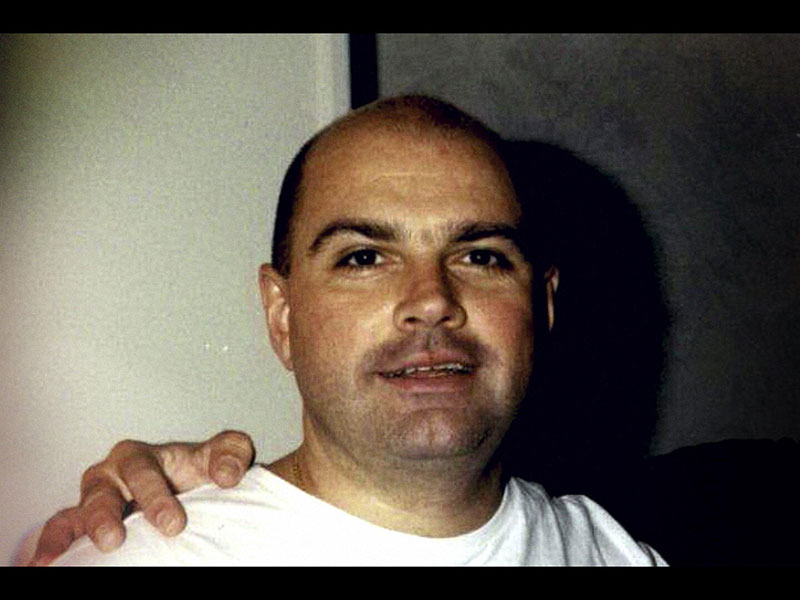
Friends and acquaintances of Talia recalled that her father’s first victim was Talia’s close friend, Isabella Pollok. Larry and Isabella would often spend time together alone in Isabella’s room, which wasn’t worrisome to her housemates who believed he was helping Isabella cope with her personal struggles.


Prior to Christmas break, Larry spoke with Isabella’s mother, Cyndi, and alleged that her daughter had been molested when she was younger. He continued, saying that Isabella would take her own life if she spent break at her home in San Antonio, Texas:


“Cyndi, you were a terrible mother back then,” Larry added in a voice recording included in the docuseries. “You were negligent. You didn’t protect your daughter. That was then. That’s not today. Today, you probably wouldn’t let that happen.”


Cyndi said that at the time, she didn’t have the money to go see her daughter in Yonkers, New York, and she rarely could even talk to her on the phone.


“I swear to you, the only thing I care about is to help Isabella,” Larry promised.

02
Larry sexually exploited Isabella to lure in Dan
Stolen Youth: Inside the Cult at Sarah LawrenceLarry Ray from “Stolen Youth: Inside the Cult at Sarah Lawrence” (Photo courtesy of Hulu)
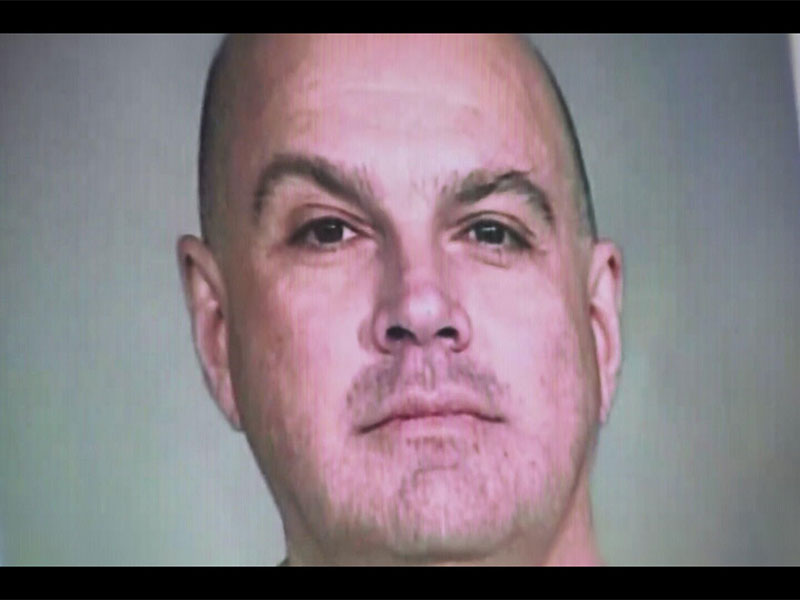
Larry also hosted his victims in his one-bedroom apartment in New York City’s Upper East Side neighborhood, where he subjected them to a Marine-like lifestyle reminiscent of boot camp. Larry also encouraged his victims to embrace their masculinity, femininity and sexuality because he believed that society was incredibly puritanical and that everyone craved sex all the time.


Daniel “Dan” Barban Levin, a survivor and author of “Slonim Woods 9: A Memoir,” said that he routinely engaged in sexual relations with Isabella and Larry after turning 21 years old.


“It just was so hard not to feel like she [Isabella] had been sent out,” Dan said of the first time he hooked up with Isabella. “What came to pass even after that was that I was explicitly being enrolled in this sexual education, and Larry was my professor and Isabella was his TA.”


Dan said Larry believed that Gregorian chants from the 13th century was the best music to have sex to. He also used Isabella as a prop to “teach” Dan about sexual pleasure.


“It did grow into him [Larry] having sex with her [Isabella] and me having sex with her, all three of us together,” Dan said. “But this is where my brain starts to block out those memories. But I do remember that there was part of me that felt special . . . I had been brought into the royal court.”

03
Larry’s delirious conspiracy theories for his 2003 arrest
Stolen Youth: Inside the Cult at Sarah LawrenceLarry Ray from “Stolen Youth: Inside the Cult at Sarah Lawrence” (Photo courtesy of Hulu)
During the 1980s, Larry befriended Kerik, who later introduced him to FBI agent Gary Uher. Larry promised to serve as an informant for a federal investigation into a securities fraud scheme involving Eddie Garafola, a Gambino crime family captain. However, it was later revealed that the promise was a guise for Larry to hide his own involvement in the same scheme. He and 19 others were charged with stock fraud after he agreed to pay a $100,000 bribe to the executive of a bond brokerage on behalf of Garafola.


In April 2003, Larry was officially convicted and sentenced to five years probation. In October 2004, Larry’s wife Teresa filed for divorce and in May 2005, Larry filed for bankruptcy. A year later, Larry lost custody over his two daughters and began blaming his ex-wife and Kerik for everything going wrong in his life.


“This is a setup, I’m telling you. Clearly, this has been an onslaught campaign to muddy my credibility as much as possible,” Larry asserted in a voice recording.


In June 2007, he violated his probation after allegedly abducting his daughter Talia.


Years later, he concocted a conspiracy theory that tied Talia’s friends to Kerik, and Kerik to Larry’s arrest. The full story was that Kerik and other cops were talking to Talia’s ex-boyfriend Santos Rosario’s parents. Law enforcement then paid them off to get Santos and another victim named Claudia Drury to sabotage Larry.

04
Dan’s brutal interrogation
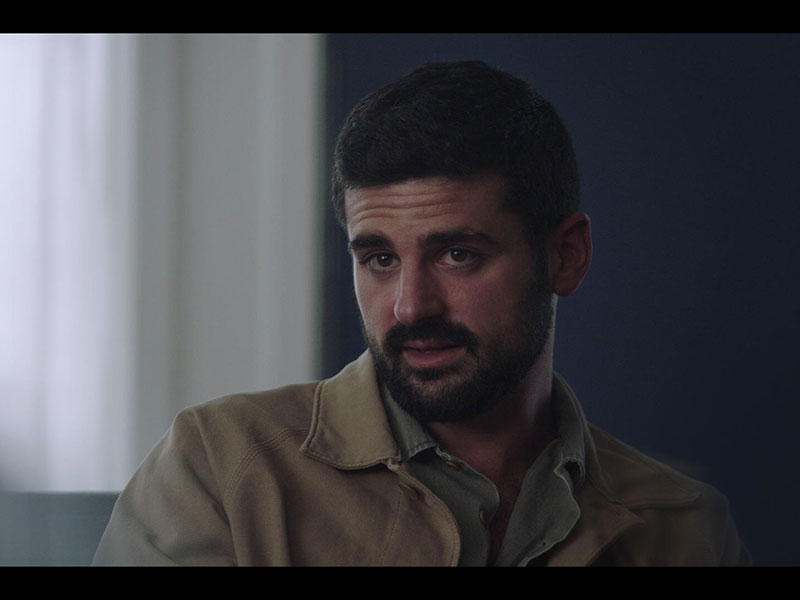
Stolen Youth: Inside the Cult at Sarah LawrenceDaniel Barban Levin from “Stolen Youth: Inside the Cult at Sarah Lawrence” (Photo courtesy of Hulu)

To help fuel his theories, Larry interrogated his victims, often screaming at them, hurling slurs at them and beating them until they confessed what he deemed was the “truth.”


While interrogating Dan, Larry is seen hitting his stomach repeatedly with a mallet and gripping his tongue with a set of pliers. He’s also heard saying, “Next thing that’s going to be out is your d**k and balls.” On a separate occasion, Larry wrapped an aluminum rope around Dan’s genitals and tightened it until he cried out in pain.


“At this point, there’s just nothing left of me,” Dan said. “We’re all just doing this thing that is never going to end.”


Dan added that as a result, one night he climbed up to the roof of Larry’s apartment and sat on the edge of a water tower that overlooked the city, contemplating suicide.

05
Yalitza “confessed” to poisoning her sister
Stolen Youth: Inside the Cult at Sarah LawrenceYalitza from “Stolen Youth: Inside the Cult at Sarah Lawrence” (Photo courtesy of Hulu)

After Dan left the group, the remaining members were Isabella, Claudia, Santos and his two sisters, Yalitza and Felicia Rosario.


Yalitza recalled that Felicia was growing delirious as she further succumbed to Larry’s influence. So, to help keep Felicia in control, Yalitza was tasked with “babysitting” her older sister.


Yalitza’s relationship with Felicia took a turn for the worse when Larry brainwashed Yalitza into thinking that she was responsible for his deteriorating health. She confessed to “poisoning” Larry, who then brainwashed her into confessing that she had “poisoned” Felicia two years prior.


“As soon as I started confessing that I poisoned her, I remember Felicia looking at me like, ‘How can you do this to me?'” Yalitza recalled tearfully. “This is hell for me. When is this going to be over? I confessed to poisoning my sister. I confessed to hurting people. What’s after this?”


That confession eventually compelled Yalitza to leave for good. During her escape, she said it was “kind of peaceful because [she] was away from that house.” Despite that, Yalitza struggled to move forward without her family and her siblings, who refused to leave at the time.


“I can’t talk to my parents. I can’t reach out to them ’cause there’s a lot of stuff that I haven’t processed,” she said. “I can’t talk to Santos, it was too painful. I just, I can’t. And my sisterhood with Felicia fell apart. I don’t know if her mind is mended. He [Larry] broke apart my whole family.”

06
Larry’s identity was one big lie
Stolen Youth: Inside the Cult at Sarah LawrenceRaven from “Stolen Youth: Inside the Cult at Sarah Lawrence” (Photo courtesy of Hulu)

Journalists Ezra Marcus and James D. Walsh, who both penned the New York Magazine feature, discovered that Larry’s original last name was actually “Grecco.” Larry also never worked in the Marines, despite claiming to have done so. But he did know multiple politicians and government officials, even though other parts of those relationships were heavily fabricated.


Marcus and Walsh also looked into Larry’s prostitution of Claudia, whose photos appeared on escort sites. They learned that Claudia was giving Larry millions of dollars (in 2018, she gave him a hefty sum of $1,005,978) as reparations for “poisoning” him.


“It was still pretty raw when we talked. She really thought she poisoned people and she couldn’t find reality, she couldn’t get back to it,” said Raven, one of Claudia’s friends. “She said when she saw the article — just seeing it written down — she had a wake-up . . .  And she just left the sooner she could so she wouldn’t have time to change her mind and stay.”

07
Larry’s laundry list of convictions a decade later
Stolen Youth: Inside the Cult at Sarah LawrenceStolen Youth: Inside the Cult at Sarah Lawrence (Photo courtesy of Hulu)

In February 2020, Larry was charged with conspiracy, extortion, sex trafficking, forced labor and other related offenses. In April 2022, he was officially convicted and pleaded not guilty to the aforementioned charges.


On January 20, 2023, Larry was sentenced to 60 years in prison by Judge Lewis J. Liman. He was also sentenced to a lifetime of supervised release and ordered to forfeit over $2 million and a home in Pinehurst, North Carolina, according to the Department of Justice, Southern District of New York.


As for his daughter Talia, she denied all the claims made against her father in the New York Magazine article. She reportedly moved in with her step-grandfather in North Carolina.

“Stolen Youth: Inside the Cult at Sarah Lawrence” is currently available for streaming on Hulu. Watch a trailer for it below, via YouTube:


Revisiting Gaspar Noé’s rape and revenge film backward in impactful “Irreversible: Straight Cut”

When it was originally released in 2002, Gaspar Noé’s “Irreversible” stunned audiences that were brave enough to watch it. The film was shocking and appalling and shot in a dizzying style with circling camerawork and strobe lighting that was as likely to nauseate viewers as the vicious and visceral content on screen made them wince and cringe and head up the aisles.

Noé’s backwards film has been reassembled in reverse, so it tells this descent into hell in chronological order.

The film tells a graphic rape and revenge story in reverse, so that a violent crime that is committed in the early part the film, is revealed to be payback for a brutal sexual assault and beating that occurred previously that evening — but is seen later in the film. (The narrative in reverse approach has been used before, and not just in “Memento” in 2000; the 1983 film, “Betrayal” recounted an affair from its end to its inception.) It was a clever approach to address ideas of regret, and measure consequences and actions (rash and otherwise). Viewers were gobsmacked by the end, or beginning, as it were, which validates Søren Kierkegaard’s concept that “Life can only be understood backwards, but it must be lived forwards.” 

Now Altered Innocence is releasing “Irreversible: Straight Cut,” a “director’s re-cut,” in which Noé’s backwards film has been reassembled in reverse, so it tells this descent into hell in chronological order. It opens on a bright afternoon, where Alex (Monica Bellucci) is reading a book on the grass, and then seen naked in bed with Marcus (Vincent Cassel) where she talks about a dream she had; insists on not being treated like an object; that all her decisions are hers; and soon confirms that she is pregnant. These moments, along with lines she and Marcus utter, such as, “If you hurt me, I swear you’ll pay,” as well as, “I want to f**k you in the ass,” and “The future is already written,” all come off as portentous in “Straight Cut” — especially for those familiar with the original version who know what is coming. (Even if folks have not seen “Irreversible” since it premiered more than 20 years ago, it is impossible to forget the extreme physical and sexual violence.) 

To its credit, “Straight Cut” is impactful because as the narrative builds to its (foregone) conclusion, the sense of tragedy is amplified. But this approach also undercuts what is so important about the traumatic original. By getting the information in reverse, the disorientation Noé created made viewers constantly recalibrate what unfolded. It may have been a stunt, but it was a remarkable one. This new version is equivalent to an American remake of a foreign film; it is watered down to be more palatable. Not that many Gaspar Noé films are pleasant experiences. He has deliberately made viewers feel uncomfortable since his 1988 debut, “I Stand Alone.” His subsequent features, “Enter the Void,” “Climax,” and even his recent “Vortex,” all attest to this kind of deliberate provocation as well. 

Irreversible: Straight CutVincent Cassel in “Irreversible: Straight Cut” (Emily De La Hosseray/Altered Innocence)

Significantly, the protagonist from “I Stand Alone,” the Butcher (Philippe Nahon) makes a cameo at the beginning of “Irreversible” stating, “Time destroys all things,” another fateful statement. However, in “Straight Cut,” that scene happens at the 1 hour and 20-minute mark, after the gruesome murder, and it is then followed by Marcus’ pal (and Alex’s ex), Pierre (Albert Dupontel) being arrested, while a seriously injured Marcus is loaded into an ambulance after a brutally violent scene at a gay club. It feels misplaced in the re-edited version, because it interrupts a linear storyline for no clear reason. In contrast, opening the (original) film with this scene serves as a shrewd prologue or preamble — especially as another character tells the Butcher, “There are no bad deeds, just deeds,” which is fortuitous given the events about to occur.

What appropriately still disturbs, is the film’s centerpiece, the 9-minute rape scene.

What was also notable about “Irreversible” was that the actors were given the situations for each scene and encouraged to improvise. As the hotheaded Marcus spews a series of racist comments to an Asian cabdriver, is homophobic in his quest to find his wife’s rapist in a gay club, and is transphobic when questioning a sex worker (who has to expose their penis) Noé’s film rubs viewers’ noses in unpleasantries.

What appropriately still disturbs, is the film’s centerpiece, the 9-minute rape scene. Regardless of which version of the film is seen, this sequence will never, ever lose its power. It is impossible not to recoil as Alex fights her attacker and expresses her pain and tries to call for help with a guttural wailing that rips right through viewers. It is devastating. Noé may have gotten flack for this hard-to-watch sequence, but his unblinking camera captures Alex’s experience in a way that makes it impactful on viewers. 

“Irreversible” may have felt like a bomb detonating on original release. “Irreversible: Straight Cut” does not quite have that power, but it does gives viewers a chance to revisit this extraordinary film and see it in a new way. 

“Irreversible: Straight Cut” opens theatrically Feb. 10 in select cities with expansion continuing throughout the month.

Women and girls are highly vulnerable after Turkey-Syria earthquake destroys their livelihood

A devastating series of earthquakes with a 7.8 magnitude hit Turkey and Syria resulting in the deaths of over 22,000 people and injuring tens of thousands more, making it one of the deadliest earthquakes in the 21st century.

ActionAid, a global federation working with more than 15 million people, told Salon that the earthquakes exacerbated the suffering of Syrian women and girls who have had to support their families through years of conflict, only to lose their temporary homes. 

The number of widows and female-headed households, as well as orphans, has increased since the Syrian civil war began 12 years ago, and the recent earthquakes have left them with an uncertain future.

Sawser Talostan, a local emergency responder working with ActionAid’s partner Violet, said that the early morning of February 6 brought back traumatic memories for Syrian refugees living in the impacted area.

“Overwhelmed with flashbacks from the Syrian war, people started absorbing the tragedy the morning after,” Talostan said. “After a few hours, when they went back to their homes to grab some stuff, the strongest aftershock took place. It was a massive 7.5 earthquake which caused the remaining standing buildings to collapse, and so the tragedy aggravated.” 

The Syrian people have been displaced multiple times from their temporary homes due to the violence of war, and now natural disaster. The northwest of Syria is home to 4.2 million people who reside in temporary shelter such as tents and fragile homes. After the earthquake hit, the thousands of mothers and children who survived found themselves displaced once again in freezing temperatures. 

“Children do not even know the meaning of the word home because they were born in, or live in a tent, and some of them do not even know the meaning of the word school,” Talostan said.  

Families in Syria have faced a bleak economic crisis for years, resulting in food insecurity, the collapse of public services and frequent power outages. Lack of access to clean water resulted in an outbreak of cholera at the end of 2022, which is still ongoing. 

Racha Nasreddine, the regional director for ActionAid in the Arab Region covering Syria, Lebanon, Jordan, and Tunisia, says that their team is especially “concerned for the safety and wellbeing of women and their children already displaced by the Syrian conflict.”


Want a daily wrap-up of all the news and commentary Salon has to offer? Subscribe to our morning newsletter, Crash Course.


In 2015, Nasreddine led the response to the Syrian crisis in the neighboring countries of Jordan, Iraq, Lebanon, Egypt and within the diaspora. 

“Many women affected by the earthquake today are [the] head of households, this disaster is adding to their suffering, and they require re-doubled support,” she explained. 

“There is an urgent need for food, water, blankets, shelter, and winter clothes. In a disaster like this, women and girls are highly vulnerable, more exposed and at risk of exploitation; their protection and safety is our top priority,” she added. “We are providing protection services and safe spaces for women to shelter, breastfeed and wash their children and access the emotional support the need to cope with shock and trauma.” 

First responders on the ground remain with the families and are assessing the additional support needed including protection, psychosocial support, and menstrual health kits. They are currently calling on the international community to ensure the humanitarian response to the earthquake is adequately funded and that women, children, and survivors of gender-based violence receive the specialized care they need.

What our reverence for Pedro Pascal’s daddy era says about us

Find a thing you’re good at and stick to it, could have been the advice Pedro Pascal’s agent barked at him. The actor has certainly followed it, sandwiching his hugely popular turn as the title character in Disney +’s “The Mandalorian,” a bounty hunter who becomes the defender of a tiny Baby Yoda throughout the galaxy, after the fall of the Galactic Empire, with the role of Joel in HBO’s “The Last of Us,” the defender of a tiny teen throughout the United States, after the fall of civilization. 

Switch out a spaceship for a pickup truck, a green creature for a mouthy human, and you have Pascal’s latest oeuvre. “Scientists predict that by 2050 every popular show may involve Pedro Pascal escorting a magical child to safety” was the recent headline of one satirical newspaper. There’s nothing funny, however, about the ratings for these shows. “The Mandalorian” is Disney +’s biggest cash cow, topping the Nielsen list of most watched streaming shows in 2020. As Variety reported, “The Last of Us” scored 7.5 million viewers for its fourth episode — and that was with competition from the Grammys. People sure do like to watch Pascal fighting for the life of someone small.

Pascal is the dad we need, if not the dad we deserve, but his characters’ emergence as the de facto protector, a parental figure we love, cheer on (crush on) and respect says a lot about the double standard of care work. We only value it when men are the ones doing it.

Pascal is one of those actors who’s been working for a long time, something that becomes apparent when one realizes he was on “Buffy The Vampire Slayer,” playing Eddie the freshman in a memorable college episode. That brief, if lovable and tragically fated character aside, many of Pascal’s roles have been gritty, mean and sexual.

Fatherliness is more remarkable and rewarded than motherliness.

He has a bad boy past. He played the self-described “asshole attorney” in “The Good Wife,” the vengeful and skillful Oberyn Martell, the Red Viper, in “Game of Thrones.” In “Narcos,” his first series regular role, he took on the part of Javier Peña, a real-life DEA agent. He was a mean astronaut in “Prospect” (2018). He plays fighters, schemers and lovers. In Netflix’s Judd Apatow-directed COVID film, “The Bubble,” he portrays an aging lead actor who won’t give up his womanizing ways. His characters have had their eyes gouged out. Twice.

But all that is in the past. In the near future — well, “Star Wars” stories are set a long, long time ago — Pascal’s characters have been redeemed. In both “The Mandalorian” and “The Last of Us,” a child redeems him. This is a character arc that just isn’t possible for women. Expected caregivers, it doesn’t seem surprising even when rough engineer Peli Motto (Amy Sedaris) babysits Baby Yoda. Of course Tess (Anna Torv) softens immediately to Ellie (Bella Ramsey). She’s a woman, that’s what they do. But when a man does it? It’s shocking, refreshing and evidence of his goodness.

The MandalorianPedro Pascal as “The Mandalorian” (Disney+)

Pascal has landed squarely in the safe baddie sweet spot.

Fatherliness is more remarkable and rewarded than motherliness. A dad who actually sticks around? A dad who’s a dad even if he doesn’t have to be by blood? That’s cause for a show and a celebration. Pascal has landed squarely in the safe baddie sweet spot. He’s the hot teacher who’s not secretly creeping on students (a rarity!), unpacked perfectly in a skit for “Saturday Night Live,” which he recently hosted. 

Like Mando, Joel of “The Last of Us” is safe. He organizes his and Ellie’s bedrolls widely apart when they sleep. He teaches her to shoot, like any self-respecting apocalypse father. When Ellie finds a porn magazine, he makes her get rid of it, and she does so, giggling. 

One of the places where “The Last of Us” doesn’t quite work (along with its D student idea of geography) is the characters’ ages. Ellie is supposed to be 14 but in both performance and writing she behaves like a much younger child, more immature, flippant and babyish than most 11-year-olds. And apocalypses tend to force children to grow up faster, rather than slower. In the most recent episode, Joel reveals that he’s 56 — which, even if there’s retinol and workouts in the QZ, seems highly improbable. 


Want a daily wrap-up of all the news and commentary Salon has to offer? Subscribe to our morning newsletter, Crash Course.


Aside from the glaring age issues, Pascal sells it. He’s gruff with a heart of gold. He’s stepped into a type, but like everything Pascal does, he wears those patriarch boots well. We love a redemption arc and the ultimate measure of goodness in our world (or worlds with space monsters or mushroom monsters) is one who cares for a child. But the one has to be a man for it to matter, for it to be special. A mother defending and fighting for a child through an apocalyptic wasteland? Well, that would just be a Tuesday in 2023. 

Texas AG Ken Paxton agrees to apologize and pay $3.3 million to whistleblowers in settlement

Sign up for The Brief, The Texas Tribune’s daily newsletter that keeps readers up to speed on the most essential Texas news.


Attorney General Ken Paxton and four of his former top deputies who said he improperly fired them after they accused him of crimes have reached a tentative agreement to end a whistleblower lawsuit that would pay those employees $3.3 million dollars.

In a filing on Friday, attorneys for Paxton and the whistleblowers asked the Texas Supreme Court to further defer consideration of the whistleblower case until the two sides can finalize the tentative agreement. Once the deal is finalized and payment by the attorney general’s office is approved, the two sides will move to end the case, the filing said.

“The whistleblowers sacrificed their jobs and have spent more than two years fighting for what is right,” said TJ Turner, an attorney for David Maxwell, a whistleblower and former director of law enforcement for the attorney general’s office. “We believe the terms of the settlement speak for themselves.”

Paxton, a Republican who won a third four-year term in November, said in a statement that he agreed to the settlement to save taxpayer money and start his new term unencumbered by the accusations.

“After over two years of litigating with four ex-staffers who accused me in October 2020 of ‘potential’ wrongdoing, I have reached a settlement agreement to put this issue to rest,” Paxton said. “I have chosen this path to save taxpayer dollars and ensure my third term as Attorney General is unburdened by unnecessary distractions. This settlement achieves these goals. I look forward to serving the People of Texas for the next four years free from this unfortunate sideshow.”

The tentative agreement would pay $3.3 million to the four whistleblowers and keep in place an appeals court ruling that allowed the case to move forward. Paxton had asked the Supreme Court to void that ruling. The settlement, once finalized, also will include a statement from Paxton saying he “accepts that plaintiffs acted in a manner that they thought was right and apologizes for referring to them as ‘rogue employees.'”

The attorney general’s office also agreed to delete a news release from its website that called the whistleblowers “rogue employees.” The news release had been deleted as of Friday morning.

The settlement will be structured to pay whistleblower Ryan Vassar for 27 months of back pay for work he would have done had he not been fired. That will allow Vassar, former deputy attorney general for legal counsel, to claim 27 months of service credit toward his state pension fund.

The attorney general’s office also agreed to stop opposing Maxwell’s bid to change paperwork filed with the Texas Commission on Law Enforcement about his removal from the attorney general’s office. Such paperwork is important in law enforcement work, and a firing could be a red flag to future employers.

The settlement, which was mediated by attorney Patrick Keel of Austin, is contingent on the approval of funding.

The other two whistleblowers in the suit are Mark Penley, former deputy attorney general for criminal justice, and Blake Brickman, former deputy attorney general for policy and strategic initiatives.

The whistleblower lawsuit was filed after eight former top deputies to Paxton accused him of bribery and abuse of office in October 2020 and reported Paxton’s alleged actions to authorities. All eight of those employees were either fired or resigned.

Their reports led to an FBI investigation. No charges have been filed and Paxton has denied wrongdoing.

In November 2020, four of those former employees filed a whistleblower lawsuit claiming Paxton had improperly retaliated against them after they accused him of criminal acts. They sought reinstatement and compensation for lost wages, as well as pay for future lost earnings and damages for emotional pain and suffering.

Two weeks ago, three of the four plaintiffs in that lawsuit – Penley, Maxwell and Vassar – asked the Texas Supreme Court to put their case on hold while they negotiated a settlement with Paxton. Brickman initially sought to oppose the motion but signed onto the settlement agreement filed with the court Friday.

Paxton has argued in state court that he is exempt from the Texas Whistleblower Act because he is an elected official, not a public employee, and that he fired the employees not in retaliation for their complaint but because of personnel disagreements. An appeals court has ruled against him and allowed the case to move forward. Last January, Paxton appealed his case to the Texas Supreme Court.

The whistleblower suit isn’t Paxton’s only legal problem.

Paxton is still facing felony securities fraud charges tied to private business deals in 2011. He has denied wrongdoing in the nearly 8-year-old case.

The Texas State Bar also sued Paxton last year for professional misconduct for allegedly misrepresenting that he had uncovered substantial evidence of fraud in a bid to overturn Democrat Joe Biden’s election victories in four battleground states. Paxton has denied wrongdoing and dismissed the suit as politically motivated.

This is a developing story.


This article originally appeared in The Texas Tribune at https://www.texastribune.org/2023/02/09/ken-paxton-attorney-general-settlement-whistleblower/.

The Texas Tribune is a member-supported, nonpartisan newsroom informing and engaging Texans on state politics and policy. Learn more at texastribune.org.

George Santos says Sinema told him “hang in there, buddy” — her office says “he is lying”

Rep. George Santos, R-N.Y., said in a television interview Thursday that Sen. Kyrsten Sinema, I-Ariz., offered him consolation and words of encouragement after his tense exchange with Sen. Mitt Romney, R-Utah, but Sinema’s office says she never spoke to him.

The congressman told Newsmax that after Romney ripped into him ahead of Tuesday’s State of the Union address, reportedly saying “you don’t belong here,” Sinema told Santos to “hang in there, buddy” as she walked by. 

“She said something to the effect of, ‘Hang in there, buddy,’ or something like that,” Santos said. “I said, ‘Thank you, thank you, Madam Senator.’ She was very polite, very kindhearted as I’ve learned to see her.” 

Santos also claimed that Romney “always had prejudice towards minorities.”

“She’s a good person, unlike Mr. Romney, who thinks he’s above it all. And his whole mighty white horse trying to talk to us down on morality,” Santos added.

However, a spokeswoman for Sinema said that the conversation never happened.

“I know this is *shocking* but he is lying,” Sinema spokeswoman Hannah Hurley wrote in an email to The Washington Post on Friday. “Kyrsten did not speak to him.”

Hurley also confirmed to NBC News that Santos’ comment was “a lie,” and that Sinema was not even aware of the exchange between Santos and Romney until the senator told her later. 

Santos previously admitted to fabricating many key aspects of his life and is currently facing multiple investigations into his past. 

However, during the Newsmax interview, the congressman claimed he never lied about his work experience.

“I want to set the record clear about my work experience. I never lied.” Santos said. “To say that I deceived and there was a campaign of deceit and deception, is just not fair. That’s just the political spin that the Nassau County GOP wants to create on this narrative.”


Want a daily wrap-up of all the news and commentary Salon has to offer? Subscribe to our morning newsletter, Crash Course.


When confronted by Newsmax host Greg Kelly about whether he actually survived a brain tumor as Santos claimed in 2020, he responded, “I had my own personal medical issues in the past and I don’t feel I need to go into details. But yes, I did have an acute tumor.”

After his interactions with Santos on Tuesday, Romney said that the freshman lawmaker “shouldn’t be in Congress” and that “they are going to go through the process and hopefully get him out.”

“But he shouldn’t be there,” Romney added. “And, if he had any shame at all, he wouldn’t be there.”

“Petulant” Elon Musk fired Twitter engineer for explaining why fewer people are reading his tweets

Twitter CEO Elon Musk on Tuesday called a group of advisors into a room at the company’s headquarters to determine why his engagement numbers are dropping and fired an engineer who said there was no evidence the algorithm was biased against him, according to Platformer.

For the past few weeks, Musk has been worried that not enough people are seeing his tweets, even taking his account private last week to see whether it might help the ever-changing algorithm increase his audience. The change came after many prominent right-wing accounts complained that Twitter was limiting their social reach. 

“This is ridiculous,” Musk said in the meeting, according to multiple sources who told Platformer about their direct knowledge of the meeting. 

“I have more than 100 million followers, and I’m only getting tens of thousands of impressions,” he complained.

One of the two remaining principal engineers at Twitter said that one possible reason for the lower engagement was due to public interest in him and his behavior declining. The employees showed Musk internal data and Google Trends charts regarding his account: they explained that last April, Musk’s popularity reached its peak in search rankings with a score of 100. Today, Musk’s score sits at just nine. 

The engineers previously tried to investigate whether the billionaire’s reach was artificially restricted but ultimately found no evidence that the algorithm was biased against him. Musk did not handle the news well. 

“You’re fired, you’re fired,” Musk told the engineer whose name has been withheld by Platformer due to the harassment Musk has directed towards former Twitter employees.

Musk expressed his disappointment with engineers’ work and told them to track how many times his tweets get recommended, one worker told the outlet.

Podcaster Keith Olbermann called Musk a “petulant, moronic child,” following the news of the CEO’s behavior at the meeting.

Hamza Shaban, a business reporter at The Washington Post, offered his analysis of the situation on Twitter: “The reporting here is a window into the whole mindset and American political posture that if you aren’t doing crazy numbers on social media the only explanation is that the algorithm is censoring you.”

Technology writer Max Chafkin mocked Musk’s reaction to engagement decline, writing: “starting to think that ‘shadowbanning anxiety’ belongs in the DSM [Diagnostic and Statistical Manual of Mental Disorders].” 

Semafor writer Benjy Sarlin sarcastically added: “I am a main character, it’s the algorithms that got small!”

“Case study on how accumulating obscene wealth accelerates narcissistic insecurities to the point of madness,” wrote Guardian editor Antoun Issa. 

Two months ago, Twitter introduced public view counts for every tweet with Musk explaining the change would show how “alive” the platform is.

“Shows how much more alive Twitter is than it may seem, as over 90% of Twitter users read, but don’t tweet, reply or like, as those are public actions,” he tweeted at the time.

However, after seven weeks, view counts have shown just how little engagement posts are getting compared to audience size. Twitter usage in the United States has also plummeted by almost 9 percent since Musk acquired the company for $44 billion, according to a recent study.

Sources at Twitter told the outlet that the view count may be contributing to the loss of engagement and views as the like and retweet buttons were made smaller to account for the views display, making them more difficult to tap. 


Want a daily wrap-up of all the news and commentary Salon has to offer? Subscribe to our morning newsletter, Crash Course.


Twitter has also had more glitches since Musk fired thousands of the company’s employees nationwide, leading to disappearing mentions and random tweets popping up from accounts that users didn’t follow. 

On Wednesday, the app had a major outage when users were inexplicably told “You are over the daily limit for sending tweets.” The glitch was due to an employee accidentally deleting data from an internal service that sets the limits for using Twitter after the team that worked on the service left the company in November. 

“As the adage goes, ‘you ship your org chart,'” one current employee told the outlet. “It’s chaos here right now, so we’re shipping chaos.”

Other Twitter employees told Platformer that the app has gone downhill since Musk’s takeover. 

“We haven’t seen much in the way of longer term, cogent strategy,” one employee said. “Most of our time is dedicated to three main areas: putting out fires (mostly caused by firing the wrong people and trying to recover from that), performing impossible tasks, and ‘improving efficiency’ without clear guidelines of what the expected end results are. We mostly move from dumpster fire to dumpster fire, from my perspective.”

Musk also uses replies from his own tweets as product feedback, often confusing employees with menial, hyper-specific tasks. 

“There’s times he’s just awake late at night and says all sorts of things that don’t make sense,” one employee told the outlet. “And then he’ll come to us and be like, ‘this one person says they can’t do this one thing on the platform,’ and then we have to run around chasing some outlier use case for one person. It doesn’t make any sense.”

Many employees at the San Francisco headquarters — whose landlord has sued Twitter for nonpayment of rent — already have one foot out the door, with the standard greeting among workers being “where are you interviewing?” and “where do you have offers?”

“Most weeknights, they are fully booked,” another current employee said.

The many perks that attracted engineers to apply to work at Twitter have now disappeared. One employee told the outlet that the food “sucks” and they have to pay for it now. “And, I know this sounds petty, but they appear to have obtained the absolute worst coffee vendors on earth,” the employee added.

Employees are often scared to answer Musk’s questions as there is the “right answer” and the “safe answer.” Several workers told Platformer about their experiences working with him and his “goons.”

“When you’re asked a question, you run it through your head and say ‘what is the least fireable response I can have to this right now?'” one employee explained. “There are a handful of true believers that are obviously just ass-kissers and brown-nosers who are trying to take advantage of the clear vacuum that exists.”

“If Elon can learn how to put a bit more thought into some of the decisions, and fire from the hip a bit less, it might do some good,” another employee said. “He needs to learn the areas where he just does not know things and let those that do know take over.” 

“He really doesn’t like to believe that there is anything in technology that he doesn’t know, and that’s frustrating,” the same employee said. “You can’t be the smartest person in the room about everything, all the time.”

Musk’s penchant for firing employees impulsively has employees on edge, as entire teams have disappeared with their tasks being handed over to overworked teams who don’t understand the nature of the work handed to them.

“They have to become code archaeologists to dig through the repo and figure out what’s going on,” one employee said.

“I do think the recent vibe overall in tech, and fear of not being able to find something else, is the primary factor for most folks,” another employee said. “I know for a fact that most of my team is doing hardcore interview prep, and would jump at likely any opportunity to walk away.”

Employees also told the outlet that they are worried about Musk’s rocky relationship with the Federal Trade Commission as the company is required to follow a series of steps before introducing changes, including project proposals and security and privacy reviews. 

“His stance is basically ‘f*ck you regulators,'” one employee said. With an FTC audit looming this quarter, employees are concerned that Twitter may not have the documentation required to pass inspection. “FTC compliance is concerning,” the outlet was told. 

New report says nurses at Illinois facility forced patients to dig through their own feces

Newly released reports from the Illinois Department of Human Services’ watchdog office reveal shocking instances of cruelty, abuse and poor care of patients who have mental illnesses and developmental disabilities at a state-run facility in rural southern Illinois.

The eight reports, obtained last month under the Illinois Freedom of Information Act, provide new evidence of an ongoing crisis at Choate Mental Health and Developmental Center, which has been the subject of numerous investigative articles by Lee Enterprises Midwest, Capitol News Illinois and ProPublica.

In one report from November, the IDHS inspector general wrote that two Choate employees who had broken a patient’s arm in October 2017 bragged about how staff got away with abusing patients by providing scant details on reports and blaming resulting injuries on accidental patient falls. The staffers also boasted about intimidating and bullying other employees to keep them from reporting abuse and bragged that they retaliated against those who spoke up.

In another report, the inspector pointed to years of concerns about the care provided to patients who have pica, a disorder in which people feel compelled to swallow inedible objects such as coins and zippers.

Several nurses told an investigator that it was common practice to force patients with pica to dig through their own excrement with gloved hands or a spatula to determine whether objects they swallowed had passed, the inspector general found. The investigation was triggered by a complaint to the agency’s abuse hotline made last spring by a facility monitor who observed a patient walk out of the bathroom with a bag of feces. Patients questioned by investigators said they felt disgusted by the practice and viewed it as punitive.

A clinical consultation conducted on behalf of the inspector general found that the practice violated nursing standards and amounted to incompetence on the part of the Choate nursing department. The facility was cited for neglect, though the inspector general did not cite individual nurses for misconduct because the investigation found it was a “widely accepted procedure.” This week, an IDHS spokesperson told reporters that the practice was “limited to the reported incident and was stopped immediately upon discovery.”

In yet another report, the inspector general cited two nurses for neglecting a terminally ill patient in the days before he died in July 2021. One of the nurses failed to properly manage his pain, and the other failed to notify a physician that the patient had lost 21 pounds in one week. These shortcomings caused him to experience pain, emotional distress and further deterioration of his physical health, according to the inspector general’s clinical review. Proper care “could have provided him a higher quality of life and more time with his family,” the report said.

These newly released reports, relating to events that occurred between 2017 and last spring, come on the heels of a series of news stories documenting repeated failures at the Choate facility. In September, reporters found that the IDHS inspector general had investigated more than 1,500 reported incidents of abuse and neglect over the decade ending in 2021, though staff have rarely faced serious consequences.

In addition to the abuse and neglect at the facility, which houses up to 270 people with disabilities, the series revealed a culture of cover-ups at Choate, later confirmed by inspector general reports. The news organizations uncovered workers colluding before being questioned by investigators, obstructing investigations and lying to avoid consequences in abuse and neglect cases. In response to that reporting, Gov. JB Pritzker said the patient abuse at Choate was “awful” and called for change.

IDHS has not disputed the news organizations’ findings and has acknowledged the seriousness of concerns about the facility that date back years. Once again this week, in response to reporters’ questions, the agency detailed some of the steps it has taken to correct poor conditions at Choate, including enhanced staff training on responding to abuse and neglect allegations, campus safety assessments and a partnership with an outside organization to provide additional clinical support for patients who have experienced trauma.

Other findings in the new inspector general reports include mental health technicians who neglected patients and compromised safety by sleeping on the job or failing in other ways to provide proper supervision. In one case from May 2019, two patients who had been left unsupervised each accused the other of rape. In another, a patient was discovered wandering naked outside at about 4 a.m. on a mid-December morning in 2021 when the temperature had dipped into the 30s. And in a third case, a staff member’s failure to provide proper supervision led to one patient assaulting another in June 2022.

Further, an incident in November 2021 extended beyond neglect. A mental health technician was found to have also mentally abused and retaliated against a patient who wet himself after the tech rejected his request to use the bathroom. The worker made the man mop up the mess and tossed his personal letters in the bucket of dirty water, according to the inspector’s report. When questioned by an investigator, one of the patients who witnessed the incident and corroborated the account began to cry and said he “was tired of being abused.”

“Unwritten Rule” to Cover Up Abuse

A patient abuse case from 2017 reflected a broad range of problems that have been documented at Choate. It revealed how some employees hide abuse and obstruct investigations, retaliate against those who speak up and indoctrinate new employees into the cover-up culture. Their actions, the inspector general wrote in his November 2022 report, reflect “a brazenness and sense of impunity amongst certain Choate staff that must be combatted.”

The case involved two mental health technicians who fractured a patient’s shoulder in October 2017 but failed to report it. Nearly five months later, someone called the agency’s abuse hotline and said they had overheard the technicians — Cody Barger and Jonathan Lingle — bragging about breaking a patient’s arm and coordinating their stories to say the patient had fallen in the shower.

That call led the Illinois State Police to investigate. One person told them that he had been interested in working at Choate but had confided to Barger that he was not confident he could handle the residents. He said Barger told him it was easy “to get around stuff,” for instance by claiming the patients had injured themselves.

Another worker told police that Lingle had instructed him to disregard most of what he would learn in training, saying that he should fill out injury reports with minimal details and abide by the “unwritten rule” that staff cover for each other.

But in this case, the staff culture of complicity went even further. Months later, a security officer at the facility told Barger who had called in the complaint against him. Two days after that, he showed up at his then-fiancee’s house, yelling at her for reporting him, knocking her down and daring her to kill herself before shooting an AR-15-style rifle twice into the air, according to police records. The woman’s young son called 911. The security officer who disclosed the identity of the person who reported Barger to the inspector general’s office was initially charged with felony official misconduct, but her case was dismissed; she received more than $65,000 in back pay.

Barger and Lingle were fired from Choate in 2018 for unrelated misconduct. Both men were criminally charged in the injury case, not with battery, but with obstruction. They each pleaded guilty and received probation. Both men agreed not to seek employment in a health care setting. In the administrative review, the inspector general ruled that claims that both men had physically abused the patient were substantiated. Attempts to reach Barger and Lingle by phone, via Facebook messages and through their attorneys were not successful.

The case prompted Peter Neumer, the IDHS inspector general, to issue recommendations to combat Choate’s “cover-up culture,” including subjecting employees to consequences for retaliatory threats or behavior. He also reiterated his repeated request for Choate to install cameras.

The IDHS spokesperson said the agency protects employees who report misconduct, and that “instances of retaliatory threats or behavior are investigated and administrative actions taken as appropriate.” She said that IDHS is in the process of installing cameras at outdoor locations across the campus and in some interior public spaces.

More broadly, the troubles at Choate have led to calls for reform from advocacy organizations, the IDHS inspector general and the governor. Last month, Pritzker renewed demands that Choate clean up its act or face closure.

“We obviously want to make sure that we’re keeping everybody safe in these facilities,” Pritzker said at an unrelated news conference in January. “And if we can’t — and I’ve said this before — then we shouldn’t have that facility open.”

Stacey Aschemann, a vice president with Equip for Equality, a legal advocacy organization that has been appointed to monitor troubled state facilities including Choate, said the most recent reports of misconduct were “very disturbing and at times chilling to read.” Staffers’ actions, she said, were inhumane, set individuals back in their treatment and, in some cases, caused lasting harm.

“The large number of staff involved in these multiple substantiated OIG reports reveals a concerning trend indicative of a culture problem at the facility,” she said.

What it looks like when a black hole eats a star

Here is your periodic reminder that space is a vast, violent, hellish place filled with unfathomable beauty and brutal, destructive chaos. Some of the most spectacular events, both visually and gravitationally, are when some poor, massive object like a star gets slurped up by a black hole.

Without stars, our universe would be a much darker, colder place. These balls of plasmic hydrogen and helium gas not only blast heat and light, they come in a stunning array of colors, chemical composition and size. And "big" doesn't begin to describe them. Our sun is 109 times the diameter of our planet. But our star isn't so special — it's technically average-sized. Some stars, like UY Scuti, an extreme red hypergiant in the constellation Scutum, have a radius 1,700 times our sun, which could fit inside it almost 5 billion times. Compared to UY Scuti, our favorite star is a speck of dust.

A black hole devouring a starA black hole devouring a star (NASA/Goddard Space Flight Center/CI Lab)So it's a little disturbing thinking about a star getting shredded to bits with the same ease someone chomps into a stringy chunk of saltwater taffy. (That's also sorta what it looks like, as we'll get into.) A recent analysis has given astronomers a clearer look at the horror that occurs when star meets black hole and the results will make anyone glad these things are nowhere near us.

But first, briefly, what is a black hole? Though they can form in other ways, black holes are typically formed when a star dies and collapses in on its own gravity. Black holes are star corpses. We can think of them as massive whirlpools, and just like a rubber ducky will circle the drain, anything that "swims" too close to a black hole will get sucked in the spin cycle of death. The pull is so strong even light cannot escape, making it extremely difficult to photograph, not to mention the immense distances and breathtaking speed that factors into anything space-related. But astronomers are getting a lot better at snapshots of these weird dead stars.

While the James Webb Space Telescope has been getting a lot of attention for its stunning astrophotography — and for damn good reason — the Hubble Space telescope isn't out of commission just yet. In January, NASA announced that Hubble caught a black hole in the act of devouring a star, swirling it into a donut shape the size of our solar system.

Black Hole Devours Bypassing StarThis sequence of artist's illustrations shows how a black hole can devour a bypassing star. (NASA, ESA, Leah Hustak (STScI))
Around 300 million lightyears away from us, at the core of a galaxy obliquely named ESO 583-G004, a supermassive black hole caught a star in its grisly orbit, and began to unravel it like a spool of cotton candy. Hubble caught the resulting burst of ultraviolet light, an explosive event known as a tidal disruption event (TDE).

A TDE may sound like when a toxic algae bloom forces a beach closure, but these are actually some of the brightest phenomenon in the known universe. As the star is unspooled around the black hole, it creates immense pressure on the gas and dust from the star, with temperatures reaching thousands of degrees, discharging luminous flares that can be seen millions of miles away.

Astronomers have previously captured about 100 different TDEs, but usually after a black hole has already torn everything to shreds. The recent snapshots from Hubble demonstrate changes in the ill-fated star's life over the course of days or months and before things got especially heated.


Want more health and science stories in your inbox? Subscribe to Salon's weekly newsletter The Vulgar Scientist.


"Typically, these events are hard to observe. You get maybe a few observations at the beginning of the disruption when it's really bright," Peter Maksym, an astrophysicist at the Center for Astrophysics in Cambridge, Massachusetts, said in a statement. At this stage in its execution, the star resembles a giant donut or a fluffy steering wheel cover in a lowrider music video.

"We're looking somewhere on the edge of that donut. We're seeing a stellar wind from the black hole sweeping over the surface that's being projected towards us at speeds of 20 million miles per hour (three percent the speed of light)," Maksym said. "We really are still getting our heads around the event. You shred the star and then it's got this material that's making its way into the black hole. And so you've got models where you think you know what is going on, and then you've got what you actually see. This is an exciting place for scientists to be: right at the interface of the known and the unknown."

“It’s just a bad idea”: McConnell slams Rick Scott proposal to sunset Medicare and Social Security

Senate Minority Leader Mitch McConnell, R-Ky., slammed Sen. Rick Scott’s, R-Fla., plan to sunset all federal programs, including Medicare and Social Security, days after President Joe Biden dubbed it the Republican Party’s plan at the State of the Union.

McConnell on Thursday said that provisions in Scott’s plan could harm his chances of reelection next year in Florida, the state with the highest number of senior citizens in the country. When asked about the provision that would require Social Security and Medicare to be reauthorized every five years, McConnell told longtime Kentucky radio host Terry Meiners that it’s “not a Republican plan. That was the Rick Scott plan.”

“The Republican plan, as I pointed out last fall, if we were to [become] the majority, there were no plans to raise taxes on half the American people or to sunset Medicare or Social Security,” McConnell explained. “So it’s clearly the Rick Scott plan. It is not the Republican plan. And that’s the view of the speaker of the House as well.”

McConnell was referring to a provision in Scott’s 12-point plan that would require all Americans to “pay some income tax to have skin in the game.” Scott explained that the provision was introduced because approximately half of Americans currently pay no federal income tax. The proposal has since been dropped in a revised version of Scott’s plan.  

During his State of the Union address, Biden made it a point to criticize Republicans such as Scott and Sens. Mike Lee, Utah, and Ron Johnson, Wis., who have called to slash or even eliminate the programs.

Democrats are using the proposal and statements from Republicans as an attempt to frame the GOP as an extremist party and gain more voters from the senior population. 

Johnson aided Democrat’s plans on Thursday when he described Social Security as a “Ponzi scheme,” eliciting attacks from others in Congress.

McConnell has been distancing himself from Scott’s plan since it was released last year, realizing the negative political ramifications it would have for the Republican Party. His comments on Thursday sent a clear message that GOP leadership wants no affiliation with the senator’s proposal. Even former President Donald Trump, who is currently the only candidate announced for president, warned his party not to cut Medicare and Social Security.

“I mean, it’s just a bad idea,” McConnell said of the proposal. “I think it will be a challenge for [Scott] to deal with this in his own reelection in Florida, a state with more elderly people than any state in America.”


Want a daily wrap-up of all the news and commentary Salon has to offer? Subscribe to our morning newsletter, Crash Course.


Chris Hartline, Scott’s former communications director, said that McConnell is mistaken about his predictions.

“Lol. Rick Scott knows how to win Florida a hell of a lot better than Mitch McConnell does,” Hartline said in a tweet. “Some DC Republicans can keep parroting Democrat lies, but that won’t stop Rick Scott from fighting for conservative principles instead of caving to Biden every day.”

Scott has accused McConnell of removing him from the Senate Commerce Committee as revenge for trying to challenge the GOP leader. 

“He completely opposed me putting out a plan,” Scott said last week in a CNN interview. “I believe that everybody up here — this is not a Republican-Democrat issue — we all ought to be putting out our ideas and fight over ideas up here.”

“He didn’t like that I opposed him because I believe we have to have ideas — fight over ideas. And so, he took Mike Lee and I off the committee,” the former Florida governor said.

Johnson on Thursday stood by his view that Social Security and Medicare should be eliminated as federal entitlement programs and that they should be considered by Congress as annual discretionary spending

“We’ve got to put everything on-budget so we’re forced to prioritize spending,” Johnson told WISN-AM in Milwaukee. “That doesn’t mean putting it on the chopping block. That doesn’t mean cutting Social Security. But it does mean prioritizing.”

He also reiterated his long-held view that Social Security is a form of fraud. “It’s a legal Ponzi scheme,” Johnson said.

“The Extreme MAGA Republican crowd claims Social Security is a Ponzi scheme,” tweeted House Minority Leader Hakeem Jeffries, D-N.Y. “More evidence they want to destroy it. Dems must stop them.”

Rep Ted Lieu, D-Calif., added that Johnson’s use of the term “ponzi scheme” and Scott’s proposal was representative of their true colors. “When people show you who they are, believe them,” Lieu wrote.

Five years after Parkland, school shootings haven’t stopped — and kill more people

In the aftermath of the Parkland, Florida, high school shooting on Valentine’s Day 2018, many Americans hoped that, finally, something would be done to address the problem of gun violence in the nation’s schools.

Despite the outpouring of grief and calls for action that followed the shooting at Marjory Stoneman Douglas High School, school shootings continue to occur with alarming frequency. While progress has been made in some areas, such as increased funding for school security and mental health resources, there is still much work to be done to ensure the safety and well-being of students and educators in schools across the country.

On Jan. 6, 2023, in Newport News, Virginia, a 6-year-old student is alleged to have intentionally shot his teacher. He is among the youngest school shooting perpetrators dating back to 1970.

And as criminologists who track any time a gun is fired at a K-12 school, including deliberate attacks, suicides, accidental shootings, gang-related violence and shootings at after-hours school events, we know this case is only the tip of the iceberg.

School shootings got more common, not rarer, after Parkland

Since Parkland, there have been over 900 shootings in K-12 school settings according to our data. Thirty-two were indiscriminate attacks apparently driven by the intent to kill as many people as possible, including mass casualty events at Robb Elementary School in Uvalde, Texas, in May 2022 and at Oxford High School, in Oxford, Michigan, in November 2021.

School gun violence takes many forms. In January 2023, five students were wounded during shootings at high school basketball games in five different states. These shootings at school games are a “quiet phenomenon” that gets little national attention. Based on our data on more than 260 shootings at sports events, most schools do not have a plan for them, such as what an announcer should say or how people can evacuate.

Another emerging challenge for school leaders is the 264 fights in five years that escalated into shootings. Unlike any planned attacks, these cases were simple disputes that turned deadly because students were armed at school.

There were a record 302 shootings on school property in 2022. In April, one month before Uvalde, a sniper fired hundreds of shots during dismissal at the Edmund Burke School in Washington, D.C. Then, in October, at Central Visual Performing Arts High School in south St. Louis, a 19-year-old armed with a semi-automatic rifle and hundreds of rounds of ammunition shot and killed a teacher and a 15-year-old student, and injured seven other people.

Among the 250 shootings at schools in 2021, a 12-year-old girl, who wrote plans to target scores of her Rigby, Idaho, middle school classmates, wounded three students before a heroic teacher disarmed her in the hallway.

Owing to the pandemic and widespread school closures, in 2020 there were no planned attacks at schools for the first time since 1981. But in 2019, a student shot five classmates, killing two, before dying by suicide between classes at Saugus High in Santa Clarita, California. And two students committed a coordinated attack that killed one student and injured eight others at the STEM School in Highland Ranch, Colorado.

In total, since Parkland, 198 people have been killed, including 84 students, teachers and school staff, and another 637 people wounded in school shootings.

Equipment is not prevention

Since Parkland, school safety has been a priority for parents and policymakers, but efforts to physically fortify schools to keep intruders at bay often are detached from the reality that most school shooters are current or former students of the schools they target.

Having been trained in lockdown procedures since kindergarten, students know exactly how a school will respond to an active shooter and even plan for it; they navigate security daily. At Uvalde, the shooter was a former student who entered through a back door. The shooter in St. Louis was a former student who broke a side window to open a locked door.

New equipment designed to protect students from shooters can create a false sense of security and make classrooms feel more like prisons than places of learning. Following the attack in Uvalde, Texas legislators approved $110 million for school safety, but nearly half of the money went to new ballistic shields for school police officers. These shields do not prevent school shootings, or aid during one, because police are trained to immediately run to the shooter, not to their office to get a shield.

Some technologies could even inadvertently endanger students. Most classroom barricades violate the Americans with Disabilities Act and other federal codes designed to help people evacuate from fires and other dangerous situations. And much like body armor can make a mass shooter harder to stop, so too, potentially, could a school’s new bulletproof furniture.

Preventing the next Parkland

Just three weeks before Parkland, on Jan. 23, 2018, 20 students were shot, two fatally, in a planned attack at Marshall County High in Benton, Kentucky. Three months after Parkland, on May 18, 2018, 10 people were killed and 13 wounded at Santa Fe High School in Santa Fe, Texas. Despite billions spent on security upgrades, schools are stuck in a perpetual cycle of gun violence. If current trends hold, there will be another 1,000 school shootings over the next five years.

But research shows that school shootings are not inevitable. They are preventable.

Nearly all school shooters exhibit warning signs before pulling the trigger, from changes in their behavior to verbal or written threats. From Parkland to Uvalde, these warnings were not recognized or reported until it was too late. Schools must think beyond metal detectors, security cameras and other high-tech gadgets and gizmos to invest in multidisciplinary behavioral intervention and threat assessment systems to respond to warning signs. There is federal money and resources available to do this thanks to the Bipartisan Safer Communities Act, passed in the wake of Uvalde in the summer of 2022.

Almost all shootings by children and teens can be prevented by safe storage of firearms and accountability for adult gun owners. When a weapon is stored separately from its ammunition, locked and unloaded, it is much more difficult for someone to quickly use it in a violent attack. While the family claims the gun was locked, safe and separate storage could have prevented a 6-year-old from shooting his teacher. It also could have prevented thousands of guns from being stolen and diverted into illegal markets.

Five years after Parkland, school shootings have become more frequent and deadly. The status quo is not working. Instead of accepting that more young lives will be lost and that the best schools and police can do is lock down and rehearse emergency responses, we believe school safety must shift to focus on upstream prevention.


David Riedman, Ph.D. student in Criminal Justice and Creator of the K-12 School Shooting Database, University of Central Florida; James Densley, Professor of Criminal Justice, Metropolitan State University , and Jillian Peterson, Professor of Criminal Justice, Hamline University

This article is republished from The Conversation under a Creative Commons license. Read the original article.

Show your Valentine your love with the thickest, gooiest, chocolate chip cookies

I’m not much one for holidays. Any day of the year that involves an implied pressure to a) shop and b) summon certain heightened emotions always immediately makes me uncomfortable. But red is my color and I do love chocolate so I don’t completely hate on Valentine’s Day. I just prefer to do it my way.

There’s no food that says “I love you” quite like chocolate chip cookies. They’re warm and comforting, but also relaxed and playful. They are equally well-received by lovers and besties, which makes them a dark horse hit for Valentines of all relationship statuses. And on a holiday that rewards those who go big, why not go about as big as it gets?

Famed New York bakery Levain makes some of the most formidable cookies you will ever encounter. Their size — along with a few other signature flourishes — means they are addictively crunchy on the edges and meltingly soft on the inside. Every time I go to Levain, I make a great show of boggling at how laughably huge my cookie is, and then the next thing I know there is nothing left in my hand but a napkin and some crumbs.

Looking to create a Levain-ish experience at home, I turned first to The Pancake Princess, a compulsively readable bake-off blog that’s like a steel cage match for all your favorite dessert recipes. While the version from Bravetart’s Stella Parks took the best overall, it was Hijabs and Aprons’s “low effort, high payoff” close contender that piqued my interest. I love that there are no special ingredients and no chilling necessary, and I’ve made the recipe even simpler by throwing it all together in one bowl. Levain reportedly does not use vanilla extract in their own cookies, so you should feel free to leave it out here if you like. 


Hungry for more great food writing and recipes? Subscribe to Salon Food’s newsletter, The Bite.


I generally prefer my chocolate chip cookies without nuts, which I feel take up valuable real estate that could better be occupied by more chocolate. But a restrained amount of chopped walnuts is actually pretty perfect here, a crunchy element of interest to hold your attention as you’re working your way through the behemoth. 

You will have certain thoughts when you’re making these, like, “That doesn’t seem like enough flour” and “Hm, that’s a lot of salt” and “Wow, these portions look really big.” Yeah, that’s why they’re going to taste so damn incredible. Still warm from the oven, they are gooey and sweet but not too sweet. And they’re big enough that if you really, really love the person you’re making them for, you can offer to share one. 

* * *

Inspired by Hijabs & Aprons and Stella Parks

Levain-style heavyweight chocolate chip cookies
Yields
 8 servings
Prep Time
 10 minutes 
Cook Time
 10 – 14 minutes

Ingredients

  • 1/2 cup (1 stick) of butter, softened

  • 1 cup of light brown sugar, lightly packed

  •  1/4 cup of granulated sugar

  • 2 large eggs 

  • 2 1/2 cups of all-purpose flour 

  • 1 1/2 teaspoons of baking powder

  • 1 teaspoon of baking soda

  • 1/2 teaspoon of fine sea salt 

  •  1 cup of chopped walnuts 

  • 2 1/2 cups of semi-sweet or bittersweet chocolate chips, or a mix of your favorite chocolate chips

  • Optional: 1 teaspoon of vanilla extract


Directions

  1. Line 2 cookie sheets with parchment paper. If you are making your cookies now, preheat the oven to 400 degrees.
  2. With a hand mixer or in a stand mixer, cream the butter and sugars together about 3 minutes. You want it nicely whipped.
  3. Add the eggs one at a time until mixed. If using, add the vanilla. 
  4.  Add in the flour, baking powder, baking soda and salt. Start on a lower speed, and then increase slowly.
  5. Stir in the chocolate chips and walnuts to incorporate thoroughly. 
  6. Scoop out the dough to form 4 rough, craggy cookies per each cookie sheet. For extra cragginess, break each in half and then smoosh back together with the broken halves out. If you are feeling romantic, you can shape them into something vaguely heart-shaped. 
  7. You can at this point stick the cookies in the fridge to chill until you’re ready to bake them, or proceed right to baking.
  8. Bake for 10 to 14 minutes, depending on the blast of your oven and whether the dough was chilled first. Start checking after 10 minutes. They should look only lightly golden; they will finish baking as they cool.
  9. Remove from oven, then let cool on the pan about 5 minutes before removing to a cooling rack. These are best when eaten while warm.

Cook’s Notes

You could omit the nuts for a slightly smaller but equally impressive cookie.

Salon Food writes about stuff we think you’ll like. While our editorial team independently selected these products, Salon has affiliate partnerships, so making a purchase through our links may earn us a commission.

“New George Santos just dropped”: MAGA Republican’s claims about her background in dispute

Before Republican Anna Paulina Luna was elected as the first Mexican American woman to represent Florida in Congress, she had a different identity and set of political beliefs, according to a new report by the Washington Post

Luna went by a different last name, Mayerhofer, and described herself as Middle Eastern, Jewish or Eastern European, her friends told the Post. She wore designer clothing and expressed support for then-President Barack Obama.

Twelve years later, the stories she tells about her upbringing are very different from the ones her friends and family recall. 

Luna has described her childhood as tough growing up in “low-income” neighborhoods in Southern California with a father in and out of incarceration. Her account of being isolated from her extended family doesn’t seem to match up with what her cousin has told the Post, who has said that Luna was regularly included in family gatherings. 

“The whole family kind of raised her — my dad was a part of her life when she was younger and we all kind of coddled her,” Nicole Mayerhofer, a first cousin who is three years younger than Luna, told the Post. “She was always a part of everything, all these family gatherings and activities.”

But it’s not just Luna’s childhood stories that don’t seem to check out. Luna has also claimed that a “home invasion” she experienced while serving in the Air Force in Missouri left her traumatized.

In a 2019 clip from a speaking engagement, she said she experienced a “home invasion” at 4 a.m., saying that her landlord broke into the apartment.

“Had my friend Jeremy not been there to protect me, I’m pretty sure I wouldn’t be standing right here in front of you guys right now,” Luna said. “[My landlord] was not breaking into my house at 4 a.m. to see how I was doing.”

However, her roommate Brittany Brooks, who lived with Luna for six months and was a close friend during her military service, recalled different details.

She told the Post that a daytime break-in that occurred when Luna wasn’t home. A report from the Warrensburg Police Department obtained by the Post also described the July 2010 episode as a “burglary not in progress.”

However, Luna has continued to use that story and said how the “enduring trauma” of the break-in followed her when she moved to Florida.

“When I was stationed in Missouri, I had someone that broke into my house,” Luna told reporters at her victory party on election night. “I didn’t have a firearm. It wasn’t until I got stationed in Florida that I got my concealed carry. So I have lived in circumstances and in states where gun control was pushed.”

Brooks said that at the time of the break-in, both she and Luna had guns in the apartment that were given to them by Brooks’ father. (Luna has since denied this.)


Want a daily wrap-up of all the news and commentary Salon has to offer? Subscribe to our morning newsletter, Crash Course.


It also wasn’t until recently that Luna also started embracing her Hispanic heritage and using the Spanish pronunciation of her first name, Brooks said.

“She would really change who she was based on what fit the situation best at the time,” Brooks told the Post.

Her fellow service members say Luna did not publicly describe herself as Hispanic 12 years ago and referred to herself using the English pronunciation of her first name, according to the Post. 

Her mother, Monica Luna, has disputed such claims and wrote in an email to the Post that “Anna has never not identified as being Hispanic as far as I know.”

Those who knew her at the time said Luna was largely apolitical, but also added that she expressed support for Obama, who was president at the time. Brooks described her as “liberal.”

In an interview with Jewish Insider, the Florida congresswoman also claimed that her father raised her as a Messianic Jew — a Jewish person who believes that Jesus is the messiah.

But according to three relatives who spoke with the Post, her father, George Mayerhofer, was Catholic, and they were unaware of him practicing any form of Judaism.

​​Immigration records reviewed by the Post also revealed that Luna’s paternal grandfather, Heinrich Mayerhofer, identified as a Roman Catholic when he immigrated to Canada from Germany in 1954. Other family members who spoke with the Post said that Heinrich Mayerhofer had served in the armed forces of Nazi Germany as a teenager in the 1940s.

A spokesperson for Luna said in a statement that the congresswoman would provide “receipts” to refute the Post’s reporting. “The Washington Post has clearly showcased the threat conservative minorities like Rep. Luna pose to their leftist control,” the spokesperson said.

The report quickly drew comparisons between Luna and another freshman Republican who falsely claimed to be of Jewish heritage.

“New George Santos just dropped,” quipped journalist Timothy Burke.

“Sounds like George Santos has a female counterpart,” tweeted columnist Molly Jong-Fast.

“I’ll be honest,” wrote MSNBC host Mehdi Hasan, “even I didn’t have ‘grandkid of an actual Nazi’ on my House GOP bingo card for 2023.”

Why we see ghosts in our TV machines may be a sign of the times

Esther and Lenny Lefkowitz spent more than two decades without having given their son Trevor (Asher Grodman) a proper burial. To be fair, that’s partly Trevor’s fault for placing his faith in irresponsible friends. When a weekend of drug-fueled partying proved too be too much for his ticker to handle, his pals dumped his body instead of owning up to their actions. As “Ghosts” viewers know, the Wall Street bro’s remains have been lost somewhere on the grounds of what is now Woodstone Bed & Breakfast since the year 2000.

When its newest caretakers Sam (Rose McIver) and her husband Jay (Utkarsh Ambudkar) discover them – in the most unfortunate way for their business, but still! – the couple offers Trevor’s parents (played by Laraine Newman and Chip Zein) some peace by hosting their son’s memorial. But Trevor is in no mood to rest. Instead, he makes it his mission to ensure Mom and Dad’s stay is as entertaining as possible – for them, for him, for his phantasmic roommates, and most importantly, for us.

GhostsChip Zein as Lenny, Laraine Newman as Esther, and Asher Grodman as Trevor in “Ghosts” (Bertrand Calmeau/CBS)
On “Ghosts” the dead substantially outnumber the living. They hang around everywhere Sam and Jay go, except only she can see them, thanks to her brief trip to the Great Beyond by way of electrocution. None are threatening, creepy or forlorn. Quite the opposite: they’re carefree, opinionated and comforting. In their version of limbo, spirits watch over the still-breathing with fascination, revulsion and mild judgment mainly because there isn’t much else for them to do. Since nothing can hurt them anymore, everything about the world is fascinating. They’re also past caring about such vanities as clothing changes or partial nudity. Trevor passes his remaining time tethered to Earth sans trousers.

A few years ago “Ghosts” might have been viewed as too cute for the room. Zombies ruled pop culture, a popularity occasionally encroached upon by the odd vampire or demon. Those monsters represent the hideousness of the human soul. Apparitions signify longing, unresolved business and things left unsaid.

That’s one way of looking at the “boo” crowd. “Ghosts” interprets the spectral state more lightly, making the space between life and whatever comes afterward embarrassing and occasionally rowdy but ultimately bearable.

It was only a matter of time before TV’s spirit infestation spread beyond one network’s prime-time lineup.

“Ghosts” is one of the most popular sitcoms on television, and has already been picked up for a third season. Success breeds imitation in TV, especially when originality is at an all-time low. (To be fair, the CBS version of “Ghosts” is a remake of a BBC One series that premiered in 2019.) It was only a matter of time before TV’s spirit infestation spread beyond one network’s prime-time lineup. This week ABC made its necromantic pitch with “Not Dead Yet,” which casts the irrepressibly charismatic Gina Rodriguez (“Jane the Virgin”) as Nell, a young woman who returns to the Los Angeles newspaper where she once worked as its obituary writer.

Her new job comes with an unforeseen extra burden: she can see, hear and speak to the spirits of the subjects she’s assigned to write about. This drives her up the wall, but it also brings a new friend into her life, Cricket (Angela Gibbs), the bereaved of the first person she memorializes.

Not Dead YetMartin Mull and Gina Rodriguez in “Not Dead Yet” (ABC/Temma Hankin)
“Not Dead Yet” has an entirely different feel and execution from “Ghosts,” although Nell and “Ghosts” B&B host Sam share a common mandate to bridge the worlds of the living and the deceased, carrying messages to people who may not have appreciated the deceased enough while they were alive. Each accidental medium also absorbs the lessons their spirit visitors provide, if unwillingly at times, as Nell must when she’s temporarily haunted by her high school bully, who turns out to have been far more popular than she is.

It’ll be a few weeks before we know whether “Not Dead Yet” will remain above ground. But midway through its second season, “Ghosts” regularly competes with fellow CBS comedy “Young Sheldon” for the top-rated comedy crown. Plainly something about it is resonating with viewers besides the sharp writing and the cast’s stellar chemistry.

Comedy lives or dies in the timing, whether we’re talking about a joke’s delivery or the audience’s mood. We’ll never know if this series would have been a hit if it had been introduced in a different season. But the fact that “Ghosts” aired its first episode in October 2021, when the end of the pandemic seemed not only possible but palpable, may have something to do with its success.

Phantoms may be in this season, but not all ghost stories are alike.

When viewers first met the residents of Woodstone, they were absorbing the news that 2021 surpassed 2020 in COVID-related deaths in the United States. On the same day that “Ghosts” premiered, the death toll in the United States was just shy of 706,000. Vaccines were widely available but millions were and are hesitant to get one.

The other unseen force more powerful than this skepticism was (and is) fatigue.

People were simply tired of isolating and masking, and not fully living as they did before the pandemic. And we may be underestimating how much of that burnout was the result of grieving or trying to soldier on while grappling with loss on a previously unimaginable scale.

The pandemic robbed hundreds of thousands of people of the ability to properly mourn family and friends. Comedies that depict death more gently, or as souls who remain nearby along with their memories, libidos and desire, might be a solace.

Thus, phantoms are in season . . . although not all ghost stories are alike. In “Shrinking” Jason Segel’s widower sees his lost wife from time to time, but they’re outlines of memories, not true apparitions. Paramount’s upcoming teen thriller “School Spirits” stars Peyton List as a newly departed high school student who watches from the other side of the veil as her friends mourn her and possibly figure out who killed her.

School SpiritsXavier Baxter (Spencer McPherson), Maddie Nears (Peyton List), Rhonda (Sarah Yarkin), Claire Zolinski (Rainbow Wedell), Wally Clark (Milo Manheim), Charley (Nick Pugliese), Simon Elroy (Kristian Flores) and Nicole Herrera (Kiara Pichardo) in “School Spirits” (Ed Araquel/Paramount+)

These teen spirits haunt their school in the same way Woodstone’s specters are bound to its building and the land around it. Since school wasn’t fun for everyone, many of them are racked with angst. Think of it less like “Breakfast Club” and more akin to, say, “Repast Recess.”


Want a daily wrap-up of all the news and commentary Salon has to offer? Subscribe to our morning newsletter, Crash Course.


In Freeform’s “The Watchful Eye,” a grifter takes a position as a nanny for a rich family that resides in a grand old apartment building that may require an exorcism. That shows thrills largely rely on schemes conjured up by the living; the dead woman might be real or figment of the guilty party’s imagination.

Even so, this choice of supernatural horror is telling and, in the way of all Freeform series, extremely fashionable. What’s missing, besides the punchlines, is a focus on magical thinking and the unintentional comedy that actual mourning yields; even in the worst throes of it, the threat of laughter at inappropriate moments hums in the background. This is a natural part of your brain wrapping itself around the reality that your loved one will never be in the same room with you again. As far as we know.

Neither “Ghosts” nor “Not Dead Yet” take much of the fear out of dying; that would be asking the impossible of any sitcom. But at the very least, they allow for the possibility that the people we lost may not be entirely gone, reminding us to make the best out of our lives at all times, if only to entertain whatever’s haunting you.