Spring Sale: Get 1 Year, Save 58%

“Extraordinary level of corruption”: Legal experts shocked by Ginni Thomas’ QAnon texts

Legal experts were shocked on Thursday about revelations that the Select Committee to Investigate the Jan. 6 Attack on the U.S. Capitol obtained text messages sent between Ginny Thomas, wife of Supreme Court Justice Clarence Thomas, and then-White House chief of staff Mark Meadows.

Watergate reporter Bob Woodward reported on Thursday, “Virginia Thomas, a conservative activist married to Supreme Court Justice Clarence Thomas, repeatedly pressed White House Chief of Staff Mark Meadows to pursue unrelenting efforts to overturn the 2020 presidential election in a series of urgent text exchanges in the critical weeks after the vote, according to copies of the messages obtained by The Washington Post and CBS News.”

The story was matched by CNN.

RELATED: ‘The King of Kings triumphs!’ New texts show Mark Meadows linked Trump’s election fight to God

“The messages – 29 in all – reveal an extraordinary pipeline between Virginia Thomas, who goes by Ginni, and President Donald Trump’s top aide during a period when Trump and his allies were vowing to go to the Supreme Court in an effort to negate the election results,” The Post reported. “The messages, which do not directly reference Justice Thomas or the Supreme Court, show for the first time how Ginni Thomas used her access to Trump’s inner circle to promote and seek to guide the president’s strategy to overturn the election results – and how receptive and grateful Meadows said he was to receive her advice.”

Robert Costa, who co-wrote The Post story with Woodward, wrote. “Woodward and I both see this as an unprecedented entanglement between a top official in the Exec Branch and the spouse of a Justice. They are privately discussing strategy, lawyers, managing WH staff, and conspiracy theories.”

Legal experts quickly weighed in on the bombshell reporting, which came as Clarence Thomas may or may not still be hospitalized.

Adam Blickstein, who worked in public affairs for the Department of Justice, alluded to the situation when he noted, “We now have more information about Ginny Thomas’ illegal attempt to overturn the 2020 election than we do about Clarence Thomas’ current medical condition.”

“One of the most important questions in politics right now: what did Clarence Thomas know, and when did he know it?” he asked.

Election law lawyer Rick Hasen described it as “astounding” and political scientist Norman Ornstein responded, “Clarence Thomas should resign.”


Attorney and Daily Beast columnist Wajahat Ali did not think Speaker Nancy Pelosi (D-CA) should wait for Thomas to resign, counseling that “Democrats should impeach Clarence Thomas.” Former public defender Kumar Roa agreed, saying “Impeach Clarence Thomas.”

The watchdog group Citizens for Responsibility and Ethics in Washington (CREW) said, “this seems like a big deal.”

“The Supreme Court voted 8-1 that Trump couldn’t block the Jan 6th committee from getting docs. The one vote against was Clarence Thomas. Mark Meadows turned over texts from Thomas’s wife Ginni Thomas urging efforts to overturn the election. What else was afraid would come out?” CREW wondered.

Former Southern District of New York prosecutor Richard Signorelli wondered if Ginni Thomas referenced her husband in the text messages.

“She is nuts. I would bet that the ‘best friend’ reference in her texts is her husband,” he said.

Jane Mayer, who profiled Ginni Thomas in January for The New Yorker, agreed.

“After talking with her ‘best friend,’ which is how the Thomases refer to one another, Justice Thomas’s wife militates relentlessly for the president’s chief of staff to overturn a presidential election,” Mayer wrote.

Slate legal correspondent Mark Joseph Stern was shocked when he went through the text messages.

“Ginni Thomas urged Mark Meadows to overturn the 2020 election by any means necessary—while her husband was ruling on cases attempting to overturn the election. A truly extraordinary level of corruption,” he wrote. “Look at the absolutely deranged conspiracy theories Ginni Thomas pushed. Fringe doesn’t begin to cover it. She promoted conspiracy theories from a Sandy Hook truther plus QAnon stuff.”


What classic literature says about refugees fleeing war

The United Nations has warned that the war in Ukraine could create “the biggest refugee crisis this century.” Two and a half million people have already fled.

Meanwhile, the rest of the world sits watching the war on screens, which can promote empathy but also can lead to helplessness and distress.

There’s another way to try to understand refugees’ experience. Alongside the reality of desperate people fleeing danger is a rich history of classic texts about characters seeking protection or new lives.

As a professor of humanities and law, I have spent the past few years delving deeply into what classic literature has to say about the challenges of fleeing persecution. From Odysseus and Dante the Pilgrim to Frankenstein’s monster, many familiar characters encounter obstacles well known to contemporary refugees.

These stories can’t replicate what it’s like to experience bombs and shells raining down on Syria, Ukraine or Yemen. But they may help readers identify with characters they already know, which may in turn create empathy and compassion for refugees.

Sharing the story

One text worth recalling in this regard is the Book of Exodus, and in particular the scene in which God appears to Moses at the burning bush.

God has been watching the Israelites’ suffering as slaves in Egypt, he reveals to Moses. The Almighty wishes to intervene – and calls upon Moses to act as his emissary.

“I will send you to Pharaoh, and you shall free My people, the Israelites, from Egypt,” God commands.

Moses’ initial reaction is not to obey, but to question. “Who am I that I should go to Pharaoh and free the Israelites from Egypt?” he asks. He fears that his poor speaking skills render him ill equipped to fulfill God’s will. “I have never been a man of words,” he protests; “I am slow of speech and slow of tongue.”

His hesitation is a reminder that vulnerable migrants often have nothing with them other than their own story – a story they may have to tell in a language that is not their own. Ukrainians who are currently in flight, for example, will have to explain themselves adequately. Being able to tell their story in the right way, to the right people, will be crucial to their very survival.

Moses is also unsure whether God really is who he says he is. Can this great power be trusted? Moses wonders. As refugees flee their home countries, they too may wrestle with whether to trust people and officials from powerful institutions offering aid, like host country officials, or representatives from United Nations agencies or nongovernmental organizations.

The land of milk and honey

To persuade Moses to lead the Israelites out of Egypt, God promises the Israelites not just protection, but a better life: “I will take you out of the misery of Egypt . . . to a land flowing with milk and honey.”

Historically, many people fleeing home are escaping not war or persecution, but poverty – though the lines between refugees and so-called economic migrants are getting blurrier. Those who wish to deny entry to refugees or undocumented migrants often describe them as “parasites” or “illegals” who are leaving their homes to reap the milk and honey of others’ lands.

John Steinbeck’s novel “The Grapes of Wrath” tells the story of desperate American families during the Great Depression fleeing the Dust Bowl droughts that devastated their crops. They are “people in flight, refugees from dust and shrinking land, from the thunder of tractors and invasion, from the twisting winds that howl up out of Texas, from floods that bring no richness to the land and steal what little richness is there.”

They dream of a new paradise, and of plenty. Tom Joad, one of the book’s key characters, provides a vision of the life that he imagines in California: “Gonna get me a whole big bunch of grapes off a bush, or whatever, an’ I’m gonna squash ’em on my face an’ let ’em run offen my chin.”

It may be a pipe dream, but what option do these vulnerable migrants have? Like millions of people in places like India, the Philippines or Bangladesh, they have been internally displaced because of natural disasters and climate change. The only way to safety is forward.

“How can we live without our lives? How will we know it’s us without our past?” Steinbeck writes. “No. Leave it. Burn it.”

Leaving paradise

No matter how great the persecution, not everyone will flee in search of protection. Home still provides us with a sense of rootedness; home is where we speak the language; home is where we have friends and family; home is filled with familiar landmarks.

And for people fleeing Ukraine, the decision to leave means enduring huge lines, freezing cold and administrative barriers – particularly for non-Europeans who resided in Ukraine, such as Indians and Africans, who have faced discrimination.

John Milton’s “Paradise Lost” is one of the great stories about massive displacement and the effort to survive in an inhospitable environment. This 17th-century epic poem describes two acts of exile: rebel angels’ expulsion from heaven, and Adam and Eve’s expulsion from the Garden of Eden.

After the war in heaven, when Satan attempts to lead one-third of the angels in rebellion, God’s retribution is swift and horrible. Satan’s followers are “hurld headlong flaming from th’ Ethereal Skie / With hideous ruine and combustion down / To bottomless perdition, there to dwell,” in Milton’s description.

Even Satan, who actively led the uprising, was filled with the despair at all he’d lost: “Now the thought / both of lost happiness and lasting pain / torments him.”

These terrifying lines hold one of Milton’s masterpiece’s most important insights for migration crises today. Through expulsion, these fallen angels have lost everything they hold dear, and now they are condemned to hell. Their pain is mixed with “obdurate pride” and “stedfast hate.”

If contemporary refugees are unable to find a new sense of belonging and opportunity, then their frustration and trauma sometimes turn to resentment and radicalization. From Ukraine and Yemen to Afghanistan and elsewhere, many desperate people are in need not just of assistance, but long-term solutions that provide a chance for them to rebuild their lives.

These examples from classic texts intimately depict refugees’ challenges through characters who have peopled our imagination. Perhaps this same process of creative association with well-known stories of displacement can help inspire ways to help vulnerable migrants in our midst.

Robert F. Barsky, Professor of Humanities, and Professor of Law, Vanderbilt University

This article is republished from The Conversation under a Creative Commons license. Read the original article.

12 under-the-radar Trader Joe’s products you need to try immediately

Shopping at Trader Joe’s can feel less like a necessity and more like a never-ending hunt to find your new favorite product. There are hundreds of items to choose from, making it easy to overlook some real gems that haven’t received the same fanfare as a block of Unexpected Cheddar or Everything But the Bagel Seasoning.

But consider us Trader Joe’s investigators because we’ve uncovered 12 sleeper hits that are more than deserving of a spot in your future cart or basket. Check out our list below, which we’re almost reluctant to share because we selfishly prefer that these remain in stock and don’t develop cult followings.

Cauliflower Jalapeño Dip

Cauliflower isn’t the first ingredient we’re likely to gravitate towards if seeking a decadent dip. Bring on the cheese, bring on the ranch, bring on anything dairy-based, but, by all means, please don’t bring us vegetables. Until now. This cheesy concoction with subtle spice is a wonderful departure from the quesos and creams of days past, especially if tossed in the oven for a few minutes and served with crackers (or even cauliflower if you need to double down).

Crispy Onion Chips

Avoid these on a first or second date for onion breath reasons, but finish an entire bag if you’re not planning to be in public anytime soon. They are, perhaps, the most addictive snack on this list with a soft crunch and harmonious balance between sweet and sharp flavors. Add them to salads in place of croutons or even on top of burgers for a clever way to bring in notes of onion without having to serve them raw.

Dukkah Nut and Spice Blend

This Middle Eastern nut and spice blend is so much more than a bread and olive oil topper — it’s a lifestyle. You’ll soon find yourself using it as a rub for meats or a seasoning for roasted vegetables to create an effortless crust with flavors enhanced by the warmth of the oven. It is very licorice-forward with anise and fennel seeds, so be forewarned if you classify yourself a picky eater.

Mochi Cake Mix

The only reason why you may not have heard about this cake mix is because it flies off the shelves almost instantaneously when restocked. True Trader Joe’s fans know just how scrumptious the delightfully chewy treat tastes and feels, so they go a bit hog-wild and buy two or three boxes whenever it makes its triumphant return. Trust us when we say to follow suit — it’s one of our all-time favorite desserts from the store and one of the easiest to make in a pinch.

Steamed Chicken Soup Dumplings

“Chicken noodle soup, chicken noodle soup, chicken noodle soup with a soda on the side,” except swap the noodle for dumpling skin and the soda for a Trader Joe’s Pineapple Sparkling Water and you’ve got yourself an exceptional feast. This is also a wonderful dinner option if you’re feeling under the weather and that boring can of Campbell’s just isn’t hitting the spot.

Cherry Icelandic-Style Skyr

Your Greek yogurt is quivering. This thick, ultra-high protein breakfast product with an unrivaled creaminess and tartness is an upgrade from anything else that may be accumulating mold in your refrigerator. Eat it straight from the container or toss it in a bowl with granola, nuts, or fruit slices for a gourmet morning dining experience.

Vegan Pasta Bolognese

Proud carnivores and Italian food purists may be tempted to scoff at a vegan bolognese, but hear us out when we say that this frozen entree is one of Trader Joe’s finest. Its silky pasta is made from red lentils for extra protein, but it’s the aromatic, slightly sweet tomato, carrot, onion, garlic, mushroom, and wheat protein sauce that really makes this nonna-approved.

Kalua Pork Spring Rolls

You don’t need to fly to Maui to experience a taste of Hawaii with Trader Joe’s newest app on the block: Kalua Pork Spring Rolls. Smoked shredded pork is wrapped with cellophane noodles, cabbage, onions, carrots, and scallions to create a crispy spring roll that will only be enhanced by the presence of a sweet and sour sauce. Serve this on game day and you’ll find your guests snacking instead of yelling at the television.

Chocolate Whole Milk Fair Trade Cocoa

Kids aren’t the only ones drinking chocolate milk. And if they are in your household, they better appreciate the fact that this decadent bev’s special (and fair trade!) cocoa is sourced from small family farms in Northern Peru. Pour yourself a glass to satisfy any sweet tooth at any time of the day or use it as a post-workout pick-me-up to feed those aching muscles.

Buffalo-Style Chicken Poppers

Has your air fryer seen anything better? We think not, at least when it comes to these Buffalo-Style Chicken Poppers that boast grilled and diced white meat with cream cheese, fontina, cheddar, and Monterey Jack. The filling, spiced with a hot cayenne pepper sauce, is folded into layers of filo dough, battered, and then fried to create a bite that will give any standard Buffalo wing a run for its money.

Cinnamon Bun Spread

My anaconda don’t want none unless you got cinnamon buns, hun. The spread, that is. Speculoos Cookie Butter may get all of the love and publicity, but this Cinnamon Bun Spread is an absolute star. Put it on toast, dab it on apple slices, or sneak it straight from the jar (we won’t tell). There is no wrong way to eat it and it will surely become a pantry staple.

Lavender and Chamomile Hand Soap

Consider this a friendly reminder that Trader Joe’s offers so much more than just food and beverages. They have an entire beauty section with plant-derived products that not only nourish and clean the skin, but also leave it feeling smooth and smelling fantastic. This herbaceous Lavender and Chamomile Hand Soap is no exception and will actually make you want to sing “Happy Birthday” twice as you wash up (per the CDC’s recommendations).

No baking is required to make this 5-ingredient chocolate truffle pie

When you’re lowering the bar, I say, just keep on lowering it.

Several years ago, I made a big batch of fancy-looking, cocoa-dusted chocolate truffles to share with loved ones on Valentine’s Day. I marveled at how easy and delicious they were — and then I never made them again.

RELATED: A chocolate sandwich tastes exactly as comforting as it sounds

When an intense craving for those exact truffles recently hit me, I walked into the kitchen with every intention of recreating the same magic. Then I recalled the bother of waiting for the chocolate to get firm, but not too firm. I remembered how messy my chocolate- and cocoa-covered hands had gotten. And I said, nah.

Maybe, instead, I could make the truffle recipe, put it in a pan and cut the final product into squares. On second thought, I could just pour everything into a graham cracker crust and call it a day — which is exactly what I give you now.


Want more great food writing and recipes? Subscribe to Salon Food’s newsletter.


I usually have a pre-made graham cracker crust lurking somewhere in my kitchen for last-minute desserts — it’s a life-saver. Thankfully, the Keebler elves came though on this one.

To make my decadent chocolate truffle pie, simply melt some butter, cream and dark chocolate together; pour the mixture into the shell; pop it in the fridge for an hour or so; and you’re done. Seriously, it’s that easy

A luxurious pie with only 5 ingredients, no baking and no mess (impeccably clean hands)? This just may be the new can’t miss weeknight dessert.  

***

Recipe: Easy Chocolate Truffle Pie
Inspired by Ghirardelli 

Yields
8 servings
Prep Time
5 minutes
Cook Time
10 minutes

Ingredients


Directions

  1. Melt the butter in a small saucepan over medium heat.
  2. Add the cream and bring to a low simmer. Add the chocolate chips and stir until everything is completely melted and smooth.
  3. Remove the mixture from the heat and pour into the pie crust.
  4. Refrigerate and chill at least 1 hour.
  5. Before serving, dust generously with cocoa though a sieve or tea strainer. Serve with whipped cream, if you like.

Cook’s Notes

When picking bittersweet chocolate chips, I love to reach for Ghirardelli 60% Cacao.

More of our favorite chocolate recipes: 

Salon Food writes about stuff we think you’ll like. Salon has affiliate partnerships, so we may get a share of the revenue from your purchase.

Nicolas Cage defends Marvel movies, defying Coppola’s and Scorsese’s cinema snobbery

Nicolas Cage, like his idol Superman, is fighting for truth, justice and the American way . . . to celebrate superhero movies as cinema, no matter who dismisses them.

In particular, the Oscar winner is agreeing to disagree with his uncle, Francis Ford Coppola, and director Martin Scorsese when it comes to Marvel movies not being regarded as “real cinema.”

In a recent interview with GQ, the actor questioned the filmmakers’ criticisms, asserting that he doesn’t “agree with them on that perception or opinion.”

“I think that the movies that I make, like ‘Pig‘ or ‘Joe,’ are not in any kind of conflict with Marvel movies,” he added. “I mean, I don’t think the Marvel movie had anything to do with the end of the tweener. By tweener, I mean the $30 to $50 million budget movie. I think movies are in good shape.”

RELATED: Tom Holland pushes back against “Marvel movies aren’t cinema” argument

The debate on whether Marvel movies — and other comic book films — actually hurt the film industry and diminish the art form continues to be an ongoing topic among acclaimed directors and ardent fans alike. In 2019, Coppola stirred the pot during a press conference in France, when he sided with Scorsese’s comments.

“Martin was being kind when he said it wasn’t cinema,” Coppola said, per Variety. “He didn’t say it was despicable, which is what I say.”

A month later, Scorsese penned an op-ed, titled “I Said Marvel Movies Aren’t Cinema. Let Me Explain,” to The New York Times. In it he claimed Marvel movies aren’t “true” movies but rather entertainment spectacles.

“I don’t think they’re cinema,” the director wrote. “I was asked a question about Marvel movies. I answered it. I said that I’ve tried to watch a few of them and that they’re not for me, that they seem to me to be closer to theme parks than they are to movies as I’ve known and loved them throughout my life.”


Want a daily wrap-up of all the news and commentary Salon has to offer? Subscribe to our morning newsletter, Crash Course.


The directors’ chief argument against MCU and other superhero movies is how they supposedly discourage movie studios from pursuing experimental, more out-of-the-box creative films and instead, force films to follow a recurring format that appeals to a large audience. In short, the industry prioritizes commerce over art. 

“There used to be studio films,” Coppola told GQ in February. “Now there are Marvel pictures. And what is a Marvel picture? A Marvel picture is one prototype movie that is made over and over and over and over and over again to look different.”

While there is some merit to arguing that the film industry doesn’t take enough risks when it comes to mainstream content, that hasn’t really stopped indie films or even the tweeners, as Cage calls them, from being made. Could more of them be made if the MCU weren’t sucking the finances up? Possibly. But these tentpole-type crowd pleasers also keep the industry alive, and therefore serve a purpose even beyond, well, entertainment.

During his interview, Cage took the opportunity to also praise Marvel for creating a four quadrant film.

“Marvel has done a really excellent job of entertaining the whole family. They put a lot of thought into it,” Cage said. “I mean, it’s definitely had a big progression from when I was doing the first two ‘Ghost Rider’ movies. Kevin Feige, or whoever is behind that machine, has found a masterful way of weaving the stories together and interconnecting all the characters.”

Cage of course is a longtime fan of graphic novels and their stories. He starred in Marvel’s 2007 film “Ghost Rider” and 2011’s “Ghost Rider: Spirit of Vengeance.” And he’s been vocal about his love for the Man of Steel, even naming one of his sons Kal-El, the native Kryptonian name of the boy who would be Superman. Cage was also once in talks to play Superman in Tim Burton’s adaptation called “Superman Lives,” but the project was ultimately canceled.   

“What could be wrong with wholesome entertainment that is appealing to the parents and the children, and gives people something to look forward to?” Cage asked. “I just, I don’t see what the issue is.”

More stories you might like:

The unfailing way to make any onion last forever

While I enjoy a nice, cathartic cry every now and then, onion tears are not that; they’re painful. They sting and burn, and to make matters worse, you’re holding a sharp knife, so don’t you dare rub your eyes. It doesn’t matter if you’re slicing, dicing, or mincing, it all hurts. When fresh onions are cut, they release a sulfuric gas that causes tears to stream down your face; the older the onion is, the stronger the gas is and therefore, the more heartbreak you’ll experience. There are numerous old wives tales about how to stop yourself from crying while cutting onions and only some of them work.

No one wants to drag out time when chopping onions, which is why it pains me to tell you that you need to chop the whole dang onion. Seriously. Chopping and freezing whole onions will extend the life of fresh onions, rather than only cutting and using what you need. Plus, you’ll get a head start on meal prep and will ultimately save yourself time and money (eliminating food waste is always a win).

If you’re caramelizing a panful, frying up some rings, or trying out one of your other favorite onion-forward recipes, that makes sense. But even if you just need a handful to season your frittata, or add a snap to your salad, you should still power through. Because those of us who have thrown the unused onion half in the crisper drawer knows it’s just in purgatory before it moves to the trash.

But you should cut the whole onion, use what you need, and freeze the rest in a Ziploc bag. Yes, you heard that right. You can freeze chopped onions!

You don’t need to do anything special to freeze onions: Just dump the leftovers into an airtight freezer-friendly bag, flatten it into a single layer, and squeeze every last molecule of air out of there. If you’re really concerned about your onions sticking together, you can freeze them for two hours or so in a single layer on a shallow baking sheet before transferring them in a container. This will prevent the chopped onion from forming clumps, making it easier to cook with and re-incorporate into whatever you’re cooking next. Like most frozen vegetables, the raw onions will last 6 months or more in the freezer — just make sure to label and date them so you don’t forget!

I first started freezing onions years ago when I over-estimated how quickly I could go through an extra-large bag of Vidalias. I complained to my mom about how the sharp, sweet smell was perfuming my kitchen and living room, and she suggested slicing and saving them in the freezer. It blew my mind and since then, I’ve always had a stash on hand for stir-frys, soups and stews, or chili.

Now, if you want to enjoy onions raw (like in a salad or guacamole), freezing is a no-go. Also, defrosted onions can get a little watery, so it’s best not to rely on them for caramelizing. The extra moisture content will prevent them from ever getting super sweet and golden brown. Frozen onions are better suited to cooked dishes that are stewy, like braises or sauces, or recipes that require them to be processed, like veggie burgers.

Here, we’ve gathered a few of our tear-free favorite ways to cook with frozen onions. You’ll find recipes for homemade falafels, meatloaf, ragu sauce, home fries, Martha Stewart’s always-popular one-pan pasta, and cheese-stuffed burgers.

Male contraceptive pill could be ready for humans in five years

On October 16, 1916, a nurse named Margaret Sanger opened the first birth control clinic in America. Nine days later, police raided it and shut it down.

The quick crackdown on Sanger’s clinic is a testament to how contraceptives for females have been historically controversial, scrutinized — even inaccessible — for over a century. Given how little controversy has arisen over male condoms, one wonders how the narrative around birth control for the female reproductive system, which popularly comes in hormonal pill form, would be different if males were the ones to consume them.

Now, the history of birth control could soon enter a new era, as a team of scientists announced this week that they’ve developed an oral contraceptive for people with male reproductive organs which has shown remarkable results in tests on mice.

The research, which was presented at a meeting of the American Chemical Society, showed that a non-hormonal male contraceptive was effective at preventing pregnancy in male mice —and, crucially, without any obvious adverse side effects. Specifically, the contraceptive called YCT529 (which is the name of the compound) made male mice temporarily impotent. During the trial, the male mice were given the pill everyday. Within four weeks it was observed to be 99 percent effective at preventing pregnancy in the female mice. Four weeks after the male mice stopped receiving YCT529, they were able to impregnate the female mice again.

RELATED: Birth control side effects elude science

Of course, this trial was conducted in mice and not humans. But the scientists are cautiously optimistic about how this might translate into a real male contraceptive pill in the not-so-distant future.

“These are mice, and they’re not humans, but nevertheless the effect was very, very promising,” said one of the scientists working on the project, Gunda Georg, an associate director at the University of Minnesota’s College of Pharmacy, in a media briefing. “[And] no side effects whatsoever, which is very very good news.”

This isn’t the first time a male contraceptive has been touted and tested. However, previous trials have failed to proceed further because of side effects. For example, a study for a promising hormonal male contraceptive in 2016 had to stop because of side effects like extreme acne and mood disorder; notably, these are side effects that are often experienced with female hormonal contraceptives.


Want more health and science stories in your inbox? Subscribe to Salon’s weekly newsletter The Vulgar Scientist.


The key with YCT529 is that it’s not a hormonal contraceptive, meaning it doesn’t target testosterone, which is the male sex hormone made in the testes. Female birth control works by using hormones to stop ovulation.

Scientists Georg and Md Abdullah Al Noman, a graduate student at the University of Minnesota, instead targeted a protein called “retinoic acid receptor alpha.” By targeting this protein, the researchers created compound YCT529 to keep it from interacting with different receptors that would produce Vitamin A. Previous research has shown that mice deprived of Vitamin A are infertile. 

“Mice that [no] longer have this particular receptor become infertile, and otherwise they’re healthy,” Georg said. “And so that’s very important, that you knock out the target, you see the desired effect, but the mice are also viable and healthy, and that’s the reason why they selected this particular target.”

Human trials of the drug are expected to take place later in 2022, after receiving FDA approval. If all goes well, Georg said after several phases of clinical trials such a drug could hit the market in five years.

“Usually it takes a lot longer but if everything works out well, perhaps we can be faster.” Georg said.

Georg added it’s important to know that this initiative is about “reproductive choice for all.”

“I think that is really, really important,” Georg said. “The female has, of course, many opportunities to control their fertility, but for males it’s so limited, and so if we can expand the choices for men and for couples, I think that would be really wonderful.”

More of Salon’s contraceptive coverage: 

“Mothering Sunday” director on challenging politics through intimacy: “Nudity levels out classes”

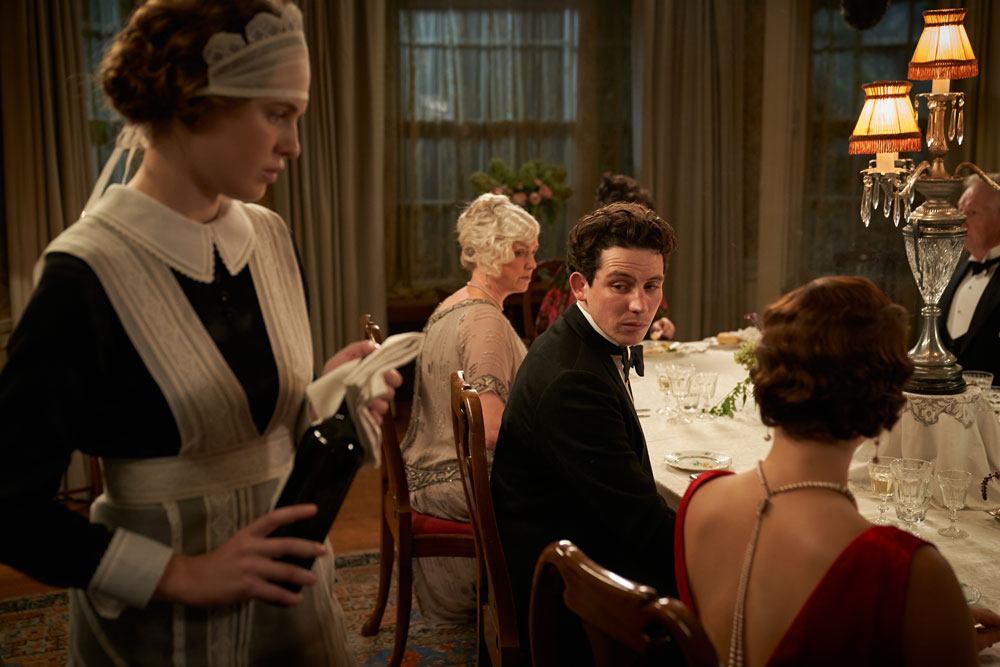
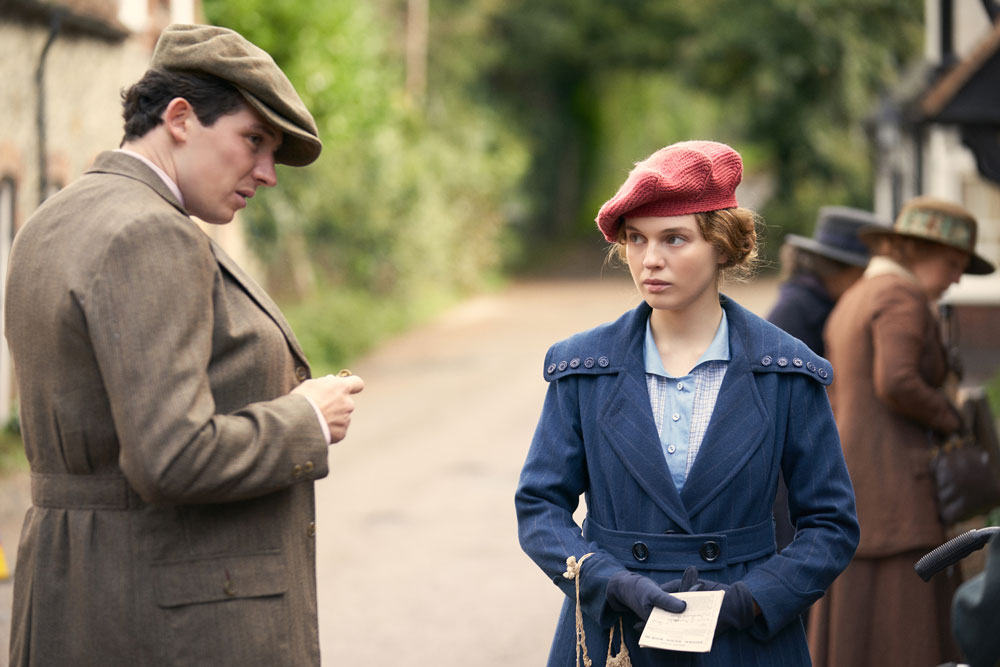
The superb, heartbreaking drama, “Mothering Sunday,” depicts the clandestine affair between Jane Fairchild (Odessa Young), a maid, and the upper-class Paul Sheringham (Josh O’Connor, of “The Crown“). Director Eva Husson maintains a firm grasp on the repressed emotions in a time — England after the Great War — as the characters are all filled with optimism and sadness in this adaptation of the Graham Swift novel.

The story features several narrative strands, which Husson effectively uses to create a prism to observe Jane at critical times in her life. The main thread has Jane and Paul meeting, discreetly, on a Sunday morning, (Mother’s Day, 1924), for a tryst. It may be the couple’s last encounter as he is engaged to wed Emma (Emma D’Arcy). A second plotline takes places a few decades later as Jane (Young again) is romantically involved with Donald (Sope Dirisu), a Black man in 1950s England. The last storyline jumps ahead a few more decades. Jane is now an old woman (Glenda Jackson). 

Jane’s experiences shape her into a writer, and Husson captures how her protagonist picks up on cues about a woman’s place in society, the differences between classes, and issues of race and gender. A marvelous scene features Jane, nude, walking around the Sheringham estate taking in the paintings, eating a piece of pie, or examining books in the vast library.  

RELATED: New “Upstairs Downstairs” serves class-system melodrama as comfort food

Husson spoke with Salon about her intimate, intelligent drama, “Mothering Sunday.”

Donald asks Jane when she knew she would be a writer. When did you know you would be a filmmaker? “Mothering Sunday” is very different from your previous features, “The Bang Gang” and “Girls of the Sun.”

Pretty early on. I wanted to be a writer when I was 10. I kept diaries and numbered the notebooks at that age. I was scouted in the street at 14 to be an actress. I went to drama school, and I kept thinking, they don’t know what the f**k they are talking about. I could do better than this. When I was 18, I didn’t want to be an actress anymore, I wanted to be a director. So very early on.

There is also an observation that Jane’s work as a maid, allows her to be a keen observer of life. What can you say about how you filmed the details and creating such a powerful drama?

That was something that was very present in the script, and something I felt extremely comfortable with. It’s how I live my life. I am aware of things, and I knew how to convey it. I saw it in [screenwriter Alice Birch]’s writing. I added only a few things, like signifiers of time to make clear distinctions and the associations to go from one stimulus to another — that was very much in the editing process. For example, the sound of an ambulance in 1948 to Jane typing, and how you go from one sound relative to another, like in a dream. 

Yes, you use flashbacks and flashforwards astutely as well as cutting to words on a page to depict fragmented memories or emotional triggers. You use slow motion to present the idle rich, and often shoot characters in reflection. What decisions did you make in telling this story visually?

I used very simple things to show how people feel trapped in their condition. The first time you see Emma she is caught in a reflection of her own image; you see her through the mirror. A lot of the characters are caught up in the representation of themselves. When Jane first appears on screen, you think you see her directly, and you see she is trapped behind glass. She scrubs, and that’s her job as a writer — she polishes and cleans until she gets to the truth. I love that we have this image of her completely lost in her thoughts, you can see her concentration and focus, and she blinks and snaps out of it. That is such a telling image of what being a writer is, the ability to get lost in your own trance. That’s the entry door. The connections between the Janes in the different eras are her looking outside.

Mothering SundayMothering Sunday (Sony Pictures Classics)The film addresses themes of class — I loved Emma’s encounter with a waiter (Deano Mitchison) who puts her in her place, by showing his experiences are not unlike hers. What can you say about the appeal of and our collective fascination with British class period drama?

It’s just this heightened version of the class struggles. It makes things more obvious which is why we find them more interesting. We are drawn to separation of classes. It’s good ground for fiction. The whole film is really a great exploration of gender, class, and race struggles and conflict. I agree with you about the scene with the waiter. There was talk of getting rid of that scene, saying it was long and pointless, and I said, “No way, It’s gold!” It gives us such an incredible window to Emma’s character. She was an ice-cold lady before that, and it shows in another time or another era she would have been so much freer and in touch with her emotions.

What do you think Paul sees in Jane? Their relationship could very well have been a flirtation, but we feel it is something deeper. He tells her, “You’re my true future.”

I think it’s a capacity to live his emotions vicariously. He knows, without her he doesn’t have access to his emotions because he bottles them up. That’s just what you do when you live that life. He is also aware of her intellectual capacities. He’s aware she’s more intelligent and articulate than he is, and he is fine with it. He has some modernity. She’s great with books. The 1920s are really refreshing on that level. You didn’t know what cynicism was. We have a very unhealthy relationship with cynicism. People were very trapped in their circumstances and at the same time open to the potential of something. People were fluid sexually, then. Why put words on things? You just were something. You were attracted to a person it could be a man or a woman. You could dream of things in a much simpler way. 


Want a daily wrap-up of all the news and commentary Salon has to offer? Subscribe to our morning newsletter, Crash Course.


It was the era of the Bright Young Things . . .

Exactly.  The Bloomsbury group — everyone was in love with everybody. They were trying to be very sincere. There was a vital, metaphysical need for sincerity. Some people had access to that, because they were more middle class like Virginia Woolf and Jane. Others were so constrained that they couldn’t allow themselves to feel it.

Jane is told she has “nothing to lose” and that is a gift. It empowers her. But she also suffers. What are your thoughts on her character? She is kind of fearless and headstrong. 

The point of that was to show she was not wasting time. She did what she wanted to do. She just walks naked in a house when there is nothing about her gender or her class that allows her to do it. She thinks why not? Why would I not stand proud and naked in this context? She stands proud and naked in front of this wall of names of white male writers who have written the history of patriarchy. Her mere presence is political. Her relationship with Donald is political, but she does not verbalize it, but I think it is beautiful to see people live by the standards of their ethics without creating a discourse around it.

Mothering SundayMothering Sunday (Sony Pictures Classics)I also want to talk about how you use space and depict intimacy. The film is very painterly; you use dark backgrounds to highlight the lovers’ skin at times. How did your female gaze inform your presentation of the film’s depiction of sexuality?

The history of cinema has obviously been shaped and dominated by a male gaze where nudity is associated with lust and sex, and it has dropped the ball on the representation of nudity when it stands for different things — and it does, and one of them is the relationship to intimacy. Nudity is also how comfortable are you with someone. If you are extremely comfortable with someone, you are capable of spend hours talking to them naked without being aware of being naked. Nudity levels out classes. When Paul and Jane are naked, they are equals. That is also a strength she has.

It was important to go back to that function of nudity: What does it say about intimacy and politics? When she walks around naked in the house, it is not me showing her being a pretty sex kitten — on the contrary — I want to show the political body owning the space, making a bold political statement just by being. That scene moved me to tears in the book. I was terrified and excited to bring that to the screen because I’ve never seen that. I know women throughout history have done that. I have done that. It’s funny how such a small gesture can represent so much.

The female gaze for me was to not shy away from sex, because nudity is also sex, but in the scope of the importance in a relationship it was it give it back its due proportion. It is one minute of screen time, and the rest is intimacy around it. As a society, if we don’t represent nudity the way it really is, the only representations we are going to have is pornography which is completely biased and skewed and distorted. Cinema has had to shy away from the representation of nudity. How many films do you see in theaters that have a proper exploration of that?  It’s more on TV, and there’s not so much of the softness or tenderness.

The film is very much about our internal thoughts and what we reveal to others. There is an emphasis on manners and expectations. Several of the film’s characters have emotional moments or even outbursts. What observations do you have about how you present the characters publicly and privately, and within the rules of civility?

I think it is very important. We all have to carry on a public persona in public of what we are expected to behave like according to our social classes and our culture. We know the codes very well when it comes to the British upper class. It is less obvious in working class and proletariat, and Jane belongs to that class. That was important for me to show how much Jane had to put a wall of absence of emotion in public. It’s not that she had a stiff upper lip; she’s not allowed to emote when she learns of heartbreak in not allowed to show any emotion. She has to go into the kitchen and grunt as a dog and then gather herself and show her face. That the working classes have not had much access to showing emotion in public has not explored as much or as openly, and it is very much an issue. The middle class is the closest thing to a perfect balance — the financial comfort to aspire to minimum of a comfortable life and not have pressure of upper class. With a lot of money, everything is at stake in relationships, and it is harder to know how authentic they are. Middle class is the best of both worlds. Being sincere is a privilege of the middle class — to be aligned with your emotions — which may be why I was able to become a filmmaker.

“Mothering Sunday” is in theaters beginning March 25. Watch a trailer for it below, via YouTube.

More stories to read: 

Kenosha cop seen kneeling on 12-year-old girl’s neck complains about “mental and emotional strain”

An office-duty police officer put his knee on a 12-year-old girl’s neck to restrain her during a school lunch fight in Kenosha, Wisconsin, according to surveillance footage released by the school district. The officer has since resigned, complaining of the “mental and emotional strain” caused by the public outrage. 

The March 4 video, first reported by The Milwaukee Journal Sentinel, shows the daughter of Jerrel Perez being approached by another student before a fight ensues in the lunchroom of Lincoln Middle School. Seconds later, police officer Shawn Guetschow, 37, who was working as a school security officer, is shown breaking up the scuffle and using an illegal chokehold on Perez’s daughter to subdue her. Guetschow reportedly had his knee on Perez’s daughter’s neck for 25 seconds before handcuffing her and escorting her out of the lunchroom. 

Perez has called for criminal charges against Guetschow, arguing that the dangerous maneuver was banned by the Wisconsin legislature last year. According to Perez, his daughter is currently in therapy over the incident and is seeing a neurologist for her injuries.

Perez’s attorney, Drew Devinney, told the Journal Sentinel that he intends on filing a lawsuit against Guetschow, the school district, and the police department.


Want a daily wrap-up of all the news and commentary Salon has to offer? Subscribe to our morning newsletter, Crash Course.


“This was a cruel and heartless act of violence aimed at a child and is unacceptable in our society,” DeVinney told CNN.

Following the incident, Guetschow was reportedly placed on administrative paid leave, after which he shortly resigned. 

RELATED: What the Kenosha shooter tells us about Donald Trump’s America

“Given the events that have taken place and the escalated attention this incident at Lincoln Middle School has caused in the community, mental and emotional strain it has [brought] upon my family, and the lack of communication and or support I have received from the district, I can no longer continue my employment with the Kenosha Unified School District,” Guetschow reportedly wrote to Kenosha Superintendent Beth Ormseth.

Last Wednesday, a group of activists, including Perez and Devinney, stood outside the school and compared the incident to the murder of George Floyd, a 46-year-old Black man who was killed by the now-convicted Minneapolis police officer Derek Chuavin, who knelt on Floyd’s kneck for 8 minutes and 45 seconds. They called for the district to suspend its contract with the Kenosha Police Department. 

Mac Hardy, Director of Operations for the National Association of School Resource Officers, told CNN, that school security officers are “never trained to put our knee on the back of anyone’s neck.”

“I would’ve liked to see more teachers and more school staff in that situation than that school security officer,” he said, arguing that school altercations are “different than what you get on the streets. Not every police officer is cut out to be an SRO [School Resource Officer].”

RELATED: How George Floyd’s murder shone a light on previously invisible stories

This bagel product is being recalled from Publix, Wegman’s, Winn-Dixie and more grocery stores

Damascus Bakery company, based out of Newark, New Jersey, has submitted a voluntary recall for one production lot of their Bantam Classic Bagels due to “an incorrect item being placed in the carton with an undeclared egg allergen” according to the FDA’s website. 

Related: More than 30 fruit and veggie products are being recalled over listeria concerns

The specific item — which was recalled by the bakery itself as well as Publix, Winn Dixie and other major grocery chains — is the “Classic Mini Stuffed Bagel,” which is, as the name suggests, a mini bagel stuffed with whipped cream cheese. All of the product that falls under the recall would be labeled with a best by date of May 27, 2023, printed on the left side of the carton and the top of the bag.

The risk with this mislabeling runs for those who may have severe egg allergies, and could face a reaction if they were to mistakenly consume it. At the date of publication, no illnesses to this product recall have been reported. If you have a product from this batch, you are advised to dispose of it and contact Bantams Bagels Customer Service for a replacement. For more information, click here.

Meanwhile, if you’re curious about making your own bagels at home, check out our recent interview with cookbook author Cathy Barrow, whose new book, “Bagels, Schmears and a Nice Piece of Fish,” enables readers to make their favorite deli classics from the comfort of their own kitchen. 

Still feeling the sting of last month’s cream cheese shortage? Barrow can help you out there, too. Here are three of her recipes for making your own schmears at home

5 of our favorite quick breakfast recipes: 

With their QAnon circus as cover, Republicans covertly unveil plans to undo decades of settled law

At the beginning of the confirmation hearing for Ketanji Brown Jackson, the first Black woman nominated to the Supreme Court, Sen. Lindsey Graham of South Carolina promised that Republicans wouldn’t turn the whole thing into “a circus.”

Spoiler alert: He was lying.

It wasn’t long before the clown car doors opened and every flavor of right-wing idiocy came pouring out. The main attack line was openly stoking QAnon conspiracy theories by repeatedly floating false and truly basement-dwelling accusations that Jackson has some special sympathy for child molesters. There was a train wreck of rape apology, complete with calling an alleged attempted rape “teenage dating habits.” Graham, auditioning as usual for “Real Housewives,” threw not just one, but two storming-out-of-the-room tantrums. And there was the racism, so much endless, painful racism

The clown show worked as intended. It garnered attention from cable news and social media, earned accolades from Fox News hosts and likely drove Republican voters to seek out conspiracy theories like QAnon. Sen. Ted Cruz of Texas was even spotted checking his Twitter mentions after what he clearly thought was a dramatic performance. It’s cynical and would be laughable if it weren’t all in the service of stoking bigotry and further radicalizing the Republican base. 

RELATED: Ted Cruz turns Ketanji Brown Jackson’s Supreme Court hearing into rehabilitation of Brett Kavanaugh

Things get even uglier, however, when one looks past the clown show at some of the other, more covert signals that the Republican senators were sending, especially to the religious right that continues to be the backbone of the GOP. Several Republicans used this moment of focus on the Supreme Court to wink at plans to roll back not just abortion rights, but legal contraception, same-sex marriage, and even interracial marriage. While the QAnon clowns were honking their noses and yelling about “racist babies,” the party sent a subtler but strong message to its hardcore, Christian nationalist base: Yes, we intend to use the courts to roll back 70 years of progress. 


Want more Amanda Marcotte on politics? Subscribe to her newsletter Standing Room Only.


One Republican senator, Mike Braun of Indiana, did screw up the mission of avoiding headlines by being too blunt about his willingness to re-criminalize interracial marriage. He was giving an interview to local press about the Jackson hearings and asserting the baseless GOP faith in “states rights” when Braun argued that 1967’s Loving v. Virginia was wrongly decided. Unfortunately for him, the reporter had the wherewithal to ask clearly and concisely, “You would be okay with the Supreme Court leaving the issue of interracial marriage to the states?,” to which Braun answered, “Yes.”

Typically, Republicans know to speak about these things in code. They usually couch their arguments in dense and often fake legalese and refer to the names of court cases while evading what they were actually about. Braun’s straightforward answer, however, drew unwanted headlines. Braun did try to walk it back, by pretending he misunderstood the question. But, of course, he did not because the reporter had the wits to reframe the issue in plain English. 

In the same interview, Braun also came out for ending the legal right to use contraception, though this time, he evaded the damning headlines by burying his opinion in technical-sounding nonsense about how “we’re better off having states manifest their points of view rather than homogenizing it across the country.” This obtuse language is designed to speak to the religious right base while causing everyone else’s eyes to glaze over. 

Underneath the fake legalese is a very clear ideology, however, one that is dominant — and near-absolute — in the GOP: opposition to the equal rights of women, LGBTQ people and people of color.

RELATED: Racist babies: Republicans reduced to white wailing at first Black woman nominated to Supreme Court  

It’s not just Roe v. Wade and abortion rights they’re gunning for. All the blather about “religious rights” and “states rights” is about a fundamental opposition to the concept of human rights. Republicans were very much using this hearing as an opportunity to let their religious right base know that now that they have six members on the court, they aren’t going to just stop at overturning Roe. They’re coming for everything

Over the weekend, Sen. Marsha Blackburn of Tennessee released a video asserting, falsely, that Griswold v. Connecticut is “constitutionally unsound.” That’s the 1965 court ruling that legalized contraception and has been quietly opposed by the same Republican activists that have spent decades trying to overturn Roe. Part of the reason they hate Griswold is it established the right to privacy, which was later employed to legalize abortion, end bans on gay sex, and legalize same-sex marriage — all decisions the religious right opposes. But the religious right also just hates contraception and wants to make that harder to get. 

That may sound preposterous in a nation where over 99% of sexually active women have used birth control. But Republicans have been quietly waging war on contraception for over a decade now, and have even secured at least one decision at the Supreme Court to strip women of birth control coverage in their insurance plans. The Trump administration repeatedly tried to take away people’s birth control, by attacking both insurance coverage for birth control and terminating federal funding programs to provide it to lower-income patients. (President Joe Biden has fixed a lot of the damage.) While they mostly try to keep it out of mainstream headlines, the religious right has long argued that the “contraceptive mentality” makes women sexually loose and prone to abortion, and the only way to stop it is to end legal access to contraception. 


Want more Amanda Marcotte on politics? Subscribe to her newsletter Standing Room Only.


And, just like every other decision that flowed from Griswold, Republicans are also coming for Obergefell v. Hodges, the 2015 decision that legalized same-sex marriage.

While his fellow Texas senator Cruz was raving about “racist babies,” Sen. John Cornyn used his time during Jackson’s hearing to quietly signal the legal approach Republicans are drafting to end marriage equality. He claimed legal same-sex marriage is “a dramatic departure from previous laws” and complained that same-sex couples have “a new right” (heaven forbid!). He then compared Obergefell to Dred Scott, the infamous 1857 Supreme Court decision that affirmed legal slavery. He argued that those who “hold traditional beliefs on something as important as marriage” are being oppressed by having to live in the same communities as same-sex couples. Other Republican senators, such as Ben Sasse of Nebraska and Sen. John Kennedy of Louisiana, picked up the baton, using legalese-drenched arguments about “substantive due process” and “new rights” to covertly argue that Obergefell should be overturned. 

Cornyn felt safe enough that he was evading mainstream attention that he wasn’t even particularly coy about it. He literally told Jackson the Constitution doesn’t protect the right to marry. As legal expert Mark Joseph Stern of Slate noted, once the Supreme Court overturns Roe, as it’s expected to do in June, it  “will leave Obergefell hanging by a thread.” And not just Obergefell, either. “A number of major decisions protecting reproductive rights, including access to contraception, will be imperiled” by the legal reasoning that Cornyn was alluding to, including, Stern notes, the right to interracial marriage.

Indeed, as legal expert Jessica Mason Pieklo of Rewire News noted on Twitter, Cornyn also insisted that marriage is “religious,” hinting at a longstanding religious right dream of ending the concept of secular marriage altogether. It’s not just interracial couples and same-sex couples, but anyone who didn’t get married in a church is now the target.

Republicans speak of these plans in pseudo-legal jargon and elliptical phrases because they know their agenda is radical and unpopular, often even with a good chunk of their own voters. But the anticipated overturn of Roe in June has clearly got the GOP leadership giddy about how much more of the past 70 years of progress they can undo with their 6-3 majority at the Supreme Court. After all, banning abortion is also very unpopular, but Republicans reasonably believe they can get it done without losing power.

The same Supreme Court that they’re going to use to overturn the right to marry and control your fertility has also been chipping steadily away at voting rights, putting the Republican grip on power firmly out of the hands of voters. Since they can’t be punished for it at the ballot box, what’s to stop Republicans from not just ending abortion rights but all of those other popular human rights they’ve hated for so long? 

Idaho’s GOP governor signs near-total abortion ban into law

Idaho Governor Brad Little rubber-stamped a strict abortion law modeled after Texas’ six-week abortion ban, even while advising that the measure was “unwise.”

“While I support the pro-life policy in this legislation, I fear the novel civil enforcement mechanism will in short order be proven both unconstitutional and unwise,” Little wrote in a letter to Lt. Gov. Janice McGeachin, President of the State Senate. “Ultimately, this legislation risks retraumatizing victims by affording monetary incentives to wrongdoers and family members of rapists.”

Under the law, abortions are banned after six week’s into pregnancy, according to The New York Times, well before many people become aware that they’re pregnant. The measure is specifically designed to prevent fetuses with cardiac activity (i.e., a “fetal heartbeat”) from being aborted. 

According to the American College of Obstetricians and Gynecologists (ACOG), the term “fetal heartbeat,” upon which the bill is based, should be avoided because in general the two upper and lower chambers of the fetal heart are not fully developed until about 17-20 weeks of gestation. 

RELATED: The next phase of anti-abortion cruelty: Jail for ending your own pregnancy

What “pregnant people may hear is the ultrasound machine translating electronic impulses that signify fetal cardiac activity into the sound that we recognize as a heartbeat,” the ACOG explained. 

The bill makes an exception for medical emergencies and victims of rape an incest, but as CNN reported, victims must have reported the crime and shown their abortion provider a copy of a police report. Although he signed the measure, Little did acknowledge the “challenges and delays inherent in obtaining the requisite police report render the exception meaningless for many.”

Like Texas’ abortion bill, Idaho’s also establishes cause of action for the state’s residents to sue anyone who aids or abets in an abortion prior to after six weeks into pregnancy, a provision that Little specifically cautioned against. 


Want a daily wrap-up of all the news and commentary Salon has to offer? Subscribe to our morning newsletter, Crash Course.


“Deputizing private citizens to levy hefty monetary fines on the exercise of a disfavored but judicially recognized constitutional right for the purpose of evading court review undermines our constitutional form of government and weakens our collective liberties,” Little wrote.

Residents are also able to collect a minimum of $20,000 in damages if their suit wins in court. 

Mistie DelliCarpini-Tolman, Idaho state director of Planned Parenthood Alliance Advocates, told The Wall Street Journal that the measure is liable to restrict most abortions throughout the state. 

Little is “responsible for putting abortion out of reach for most Idahoans, and it’s a shame that he listened to the extremists instead of standing up for survivors of rape and incest,” she said.

RELATED: When human life begins is a question of politics – not biology

This past week has seen a spate of anti-abortion developments in various Republican-led states throughout the country. On Wednesday, the Oklahoma legislature approved a near-total ban on abortion, modeled after the Texas law. And in South Dakota, Gov. Kristi Noem this week signed a law that will curtail restricts residents’ access to abortions through medication.  

Jane Fonda’s new climate PAC is taking on fossil fuel-backed politicians

On Wednesday, actress and silver-haired climate icon Jane Fonda announced that she is taking her activism to the next level by forming a new political action committee, or PAC, to defeat politicians tied up with Big Oil. 

In a video released alongside the announcement, Fonda lays out the bleak realities of a Congress steered by lobbying money and reminds her audience that there are only a handful of election cycles left in the narrowing window scientists say we have to avoid climate disaster. Accordingly, the Jane Fonda Climate PAC’s self-proclaimed goal is to do “whatever it takes to defeat the political allies of the fossil fuel industry, no matter which side of the aisle they’re on.” 

If your main association with Fonda is Grace & Frankie, Vietnam War protests, or gem-toned leotards — well, you have some catching up to do. The 84-year-old has been a vociferous advocate for climate action, hosting weekly “Fire Drill Fridays” events to educate her peers and admirers on issues of climate change and environmental justice. She’s also been arrested (five times) for demanding climate action with a crowd of fellow “old ladies” at the Capitol.

But even those familiar with Fonda’s climate activism bonafides may be surprised to learn that this is not her first PAC, either. In the 1970s, Fonda and then-husband Tom Hayden — a progressive activist and later California state senator — founded the Campaign for Economic Democracy. The registered PAC was founded to fund a wide variety of progressive causes: the development of solar energy, equitable housing, and the mitigation and cleanup of pollution, among others. 

A brief overview of how PACs work: They amass funds from both businesses and individual donors big and small. They then use those funds to pay for campaigns to get elected officials that will represent their values into (or out of) office, or to pass or block ballot initiatives. In the case of the Campaign for Economic Democracy PAC, the money came predominantly from the Jane Fonda Workout empire. In fact, the exercise videotapes that shaped millions of glutes and abs over the 1980s were launched explicitly to fund the organization, Fonda told Oprah in 2016. 

All those leg lifts apparently paid off: $17 million in Fonda fitness revenue went straight into the PAC. In 1980, the magazine Reasonpublished an exposé of sorts, revealing the degree to which the Campaign for Economic Democracy was dependent on her workout video business. The article included this (rather degrading) analysis of Fonda’s customer base:

These women—upwardly mobile, ambitious young professionals—have much at stake if the beneficiaries of Jane Fonda’s Workout gold mine have their way. What if they knew that they are helping to build a political movement that may well put an end to their dreams of upward mobility? What if they knew that they are filling the coffers of the Campaign for Economic Democracy (CED)—which wants to increase government control over their and their husbands’ companies, slash executive salaries, nationalize basic industries, and keep out of America less-expensive consumer goods from foreign competitors?

Among the Campaign for Economic Democracy’s successes was Proposition 65, a ballot initiative to protect drinking water from carcinogenic contaminants. Fonda eventually stepped down from the committee, and the PAC went on to become Campaign California.

It’s unclear what (if any) role Fonda’s PAC may play in the lead up to the midterm elections or if, say, Joe Manchin should be fearing for his job. She is certainly well-connected and respected in wealthy, progressive circles, and the committee is actively soliciting donations. But she’s up against quite a formidable foe: Leading up to 2020, the oil and gas industry pumped a record $140 billion into the election cycle

Fonda has stated many times over the years that she believes that climate change is the most important cause of our time. With the launch of this PAC, she appears to be — once again — putting her money where her mouth is.

Report from Ukraine: Tension rises as Russian war crimes revealed — what’s Putin’s next move?

LVIV, Ukraine — The war in Ukraine enters its second month with the besieged city of Mariupol still unconquered, though leveled. That means Russian President Vladimir Putin still has not managed to link up his troops in the south and east.

Up north, the capital of Kyiv remains free, and the Ukrainian army has even reconquered some key neighborhoods and forced Russian troops further away from that beleaguered city.

These Russian setbacks, cheered by a majority of the world, have led to a deliberate change of tactics as Putin becomes increasingly frustrated and as International pressure against him continues to build.

RELATED: Report from Ukraine: Life goes on and spirits remain high — Putin wasn’t counting on that

On Wednesday, Secretary of State Antony Blinken formally declared that members of the Russian armed forces have committed war crimes in Ukraine. That was “based on information currently available,” Blinken said in a statement, much of it drawn from first-hand interviews with war victims and refugees, many of those assembled by reporters in the field.

Putin is deliberately targeting the civilian population, humanitarian workers, journalists and other noncombatants to strike fear and terror into the populace. Add to the psychological warfare the daily air raids and the question of whether Belarus — effectively a Russian vassal state — will join the conflict and you have a psychotropic soup of dysfunction, stirred up by an autocratic leader who may be days away from being toppled and replaced, or days away from using weapons of mass destruction, such as chemical warfare or worse. None of it bodes well for the world.

That’s the Russian strategy writ large. On a small scale, for a group of reporters getting lunch at a restaurant outside Lviv this week, it boiled down to two mysterious hipsters: A pair of skinny guys, one with dark curly hair and a beard, the other resembling a thinner Ed Sheeran.

They looked like they were out on the town having fun. They wore press passes that looked homemade, and when I spoke with them they claimed to work in a town I know well — I once worked and lived there. They couldn’t say where they lived in that town, and the media company they claimed to work for doesn’t exist.

They claimed to be Americans, but they didn’t act like it — or like reporters either. They acted more like they wanted people to think they were reporters. Their “Georgia” accents weren’t Southern drawls.

I brushed it off. The State Department and various intelligence sources have warned reporters for more than a week that Ukraine has been infiltrated by Russians or Chechens posing as Americans. As recently as last week, I asked a question in the White House briefing room about Russian hit squads targeting journalists.

RELATED: Why I’m going to Ukraine: We deserve the truth — and that’s my job

Associated Press photographer Mstyslav Chernov recounted his first-hand experience in Mariupol. “The Russians were hunting us down,” he said. “They had a list of names, including ours, and they were closing in. We were reporting inside the hospital when gunmen began stalking the corridors. Surgeons gave us white scrubs to wear as camouflage. Suddenly, at dawn, a dozen soldiers burst in: ‘Where are the journalists, for fuck’s sake?'”

Chilling, yes. But that was at the front. Not in Lviv, hundreds of miles away

We saw the same pair of guys again when we went to the train station to interview refugees. They weren’t conducting themselves as reporters that time: They were watching us. My fixer checked out their credentials. The press passes were fake. The business they worked at was fake. This was real “fake news.”

Earlier in the week we were told not to wear our press passes in public when we weren’t on duty — we might be targeted. It was obvious we were. In fact, our interpreters were supposedly on a target list. We were able to get them to a safe house in Poland early Thursday morning, along with their Jack Russell terrier and their cat.

Others have had it far worse. Trey Yingst, a good friend and a solid reporter, lost a cameraman and a fixer. His Fox News colleague Benjamin Hall sustained life-threatening injuries after a mortar struck their car at a checkpoint outside Kyiv. We met up with Trey in Lviv. By the grace of God, he was not in the car that day.

Trey was shaken, but not stirred. Although he was rotated out of the hot zone for some much needed rest and relaxation, he didn’t really want to go. No matter the danger, few of us do.


Want a daily wrap-up of all the news and commentary Salon has to offer? Subscribe to our morning newsletter, Crash Course.


On Monday we shot video at Rynok Square in Lviv, including a standup or two. After an air raid sounded we grabbed lunch nearby and then walked across the square to the Pravda Beer Theater. Outside hung a sign that said “Media Center.” It was advertised as a place where reporters could go and “hang out.” The big black-and-white sign with a red circle at its center only heightened the feeling of being a target.

Perhaps that’s why some reporters were doing live shots or standups wearing body armor in Lviv, although none is needed and you look silly doing it. You’re not under direct fire here. It is stupid and pretentious to wear armor for the sake of a television audience. I find it in poor taste, considering some of our colleagues have died, been kidnapped or been targeted as they travel to the front trying to catalogue Putin’s continuing terror campaign and war crimes.

Still, being a reporter in a conflict zone is complicated. You have to be aware of the television audience and the environment you’re in. You have to be vigilant and careful about how you conduct yourself. You want people to know you’re a noncombatant. You don’t carry a gun. You aren’t directly threatening anyone’s life. And you’re risking your life trying to get information out to the world.

When combatants, like the Russians, don’t want you to catalogue their war crimes, then carrying a camera, or a pen and a notepad, becomes existentially and exponentially more dangerous. Being a reporter anywhere in such a conflict zone therefore becomes far riskier because you are potentially more dangerous to those troops than an enemy bullet — and especially dangerous to those ordering the war crimes. Putin and his upper-level commanders have nothing to fear from the bullets on the front line since they are nowhere near them. The greatest threat those at the top of the war-crime food chain face is having their actions broadcast across the globe. Without reporters recording what’s happening, Putin can order his soldiers to kill, maim, torture and destroy with impunity. Who’s to say what is going on if no one is there to document it?

That’s the point. If Putin is really taking measures to hunt and kill journalists, as suggested by American intelligence sources, that’s why.  

On Monday in Rynok Square, I saw a guy standing outside the Pravda Beer Theater taking pictures. He stood there quietly, pretending to photograph the square, but every time someone wearing press credentials walked out of the media center, he photographed them. I approached him and as he turned toward me, I flipped him off.

I smiled, then turned away and left with my crew before he could photograph their faces. Soon we were being followed by two guys straight out of central casting — slim, muscular, Russian-looking low-level hoods in jeans and tight t-shirts. They followed us for three blocks and through two stores. We finally lost them when we got into our car and our paid driver drove us away. Our tails kept walking through the crowded streets, looking for us in vain.

Were we about to be kidnapped? Murdered? Or invited to a mixer? Who knows? I didn’t want to stick around to find out.

Reporters in Ukraine have also taken precautionary measures to hide their IP addresses and reduce their online presence by using Faraday bags — shielded containers that block electromagnetic fields. Russian hackers were apparently able to track British contractors at a base outside Lviv about a week ago, leading to loss of life and millions of dollars of destruction.

All these precautions cannot reduce the risks to a level that makes covering a war “safe.” Body armor, helmets, Faraday bags, gas masks and even hazmat suits improve your chances of survival, They do not guarantee it.

The only way to guarantee anyone’s long term survival in Ukraine is by ending this conflict. But so far, Putin seems to have little thought of ending anything. That makes everyone wonder what the endgame is, because there’s no way any of this ends well for Russia. The world is on notice. Russia has seen its international currency, both literally and metaphorically, dwindle to nothing because of Putin’s chosen war. Ukraine and Europe will come out of this stronger, and Russia will face long-term suffering.

RELATED: Putin’s endgame: Will it be stalemate, nuclear war — or regime change in Moscow?

But how can that country pay for Putin’s attacks on civilians, or the destruction of apartment buildings, schools and hospitals? We spoke with a family in Mariupol who lived across from the theater that was marked with the Russian word for “children” in letters visible from satellite photos. Putin had that building bombed. We have a first-hand account of that. How do you pay for that?

When the bill comes due, will Putin act like the cornered rat that he is? How will he lash out? As President Biden left for Brussels and Warsaw on Wednesday, he said from the South Lawn that the threat of chemical weapons from Putin is real.

Putin’s actions thus far demonstrate a man out of control, a man with no ethics, a man who has risked everything and gained nothing. He will not go gently into that good night. His actions continue to show how real the threat of nightfall is for all of us.

Those who still don’t understand the severity of this situation may be doomed to bring on the fate that Putin’s actions portend.

Read more from Brian Karem on the Biden White House:

“Throwback to Jim Crow”: New Texas voting law means Black voters’ ballots get tossed

The rate of rejected mail ballots soared in the March primary elections in Texas — and those rejections disproportionately affected Democrats, especially Black voters in the state’s biggest county.

Nearly 23,000 ballots, or about 13% of all returned mail ballots, were thrown out across 187 Texas counties in the March primaries, according to an analysis by the Associated Press. In past election years, the rejection rate was around 1% to 2%, according to the Texas Tribune.

The rejection rate hit more liberal areas of the state with more than 15% of mail ballots thrown out in Democratic-leaning counties, compared to 9.1% in Republican-leaning counties. In Tarrant County, election officials rejected 813 ballots in the Democratic primary under the new voter ID rules, but just three ballots in the Republican primary, according to the Fort Worth Star-Telegram.

One of the highest rates of rejections was in Harris County, which includes Houston and is the state’s largest population center (and the third most populous county in the nation). Election officials were forced to discard nearly 7,000 ballots there, about 19% of all returned mail ballots. They threw out just 0.3% of returned mail ballots in the 2018 primaries.

The March election data also shows a stark racial disparity, according to an analysis by The New York Times. Voters in areas of Harris County with large Black populations were 44% more likely to have their mail ballots tossed than voters in areas with large white populations.

RELATED: Voter suppression in action: Mail-in ballot rejections many times higher under new Texas law

Texas already limits mail voting to voters over 65 or those who have a verified excuse to vote absentee. The startling increase in mail ballot rejections could foreshadow an even larger wave of thrown-out ballots in the general election, which is likely to see much higher turnout. That could potentially be echoed in the 18 other states that have imposed harsh new voting restrictions after former President Donald Trump’s 2020 election loss.

Most of the rejected ballots were flagged under a provision in the new voting law that requires voters to provide their driver’s license number or a partial Social Security number. Some voters left the field blank or entered an ID number different than the one election officials had on file. The state provides a limited period of time for voters to correct problems on their ballots, but the vast majority of ballots flagged for rejection were not fixed before the deadline.

The reason for the disparities in rejection rates between Texas counties is unclear. While Harris County, which has 2.5 million registered voters, rejected about 19% of mail ballots, Dallas County, which has 1.4 million registered voters, rejected only about 9.5% of mail ballots.

Geographic and demographic differences between those counties could well play a role. Harris County spans more than 1,700 square miles, nearly twice as much as Dallas County, which made it challenging to “reach every voter with very limited resources,” Harris County Elections spokeswoman Nadia Hakim said in an email to Salon.

Hakim also said that Harris County officials “did not receive any guidance or materials from the Texas Secretary of State, nor did we receive a budget to run campaigns or advertisements to educate voters on the changes.” She added that county election officials spent three months educating voters before the election and allocating staff to focus on outreach to voters whose ballots were marked for rejection.

Hakim said that her office “is deeply troubled by the number of mail ballot rejections” during the March primary, especially considering the much lower number of rejections in 2018. “The new voting laws brought on by Senate Bill 1 are leading to the disenfranchisement of Harris County’s most vulnerable populations, including communities of color, the elderly, and voters with disabilities.”


Want a daily wrap-up of all the news and commentary Salon has to offer? Subscribe to our morning newsletter, Crash Course.


Sam Taylor, a spokesman for the Texas secretary of state’s office, told Salon that state officials have heard from county officials that the vast majority of rejected mail ballots “were due to voters who did not provide any ID information on their carrier envelope,” even though they had successfully applied for a mail-in ballot using the same ID information.

Taylor said the office is now devoting “a significant portion of our voter education campaign to enhancing awareness of the new mail-in ballot ID requirements.” He continued, “We are confident we will have all the information we need to apply any lessons learned during the primary to an even more robust voter education campaign” directed at the general election in November.

Voting rights groups are skeptical that Texas officials will do enough, and say the stark increase in ballot rejections demonstrates the need for federal intervention.       

“Texas was already the hardest state to vote in before Republicans passed these laws that made it even harder,” said Anthony Gutierrez, executive director of Common Cause Texas, in a statement to Salon. “What we’re seeing today is a small preview of what we can expect to see at a far wider scale in November unless the federal government finally takes real action to intervene.” 

Gutierrez said the Texas secretary of state’s office was repeatedly told about the potential for these problems when the voting-restriction bill was going through committee. He suggested that state officials had “ample opportunity” to address these issues but “instead chose to focus on playing politics [as] implementation was left to local officials who received little to no guidance or communication from our state’s chief election officer.” He predicted “far bigger problems in November when we have exponentially more people showing up to the polls.”

Last November, the Justice Department sued Texas over the new voting law, alleging that restrictive measures in the bill violate both the Voting Rights Act and the Civil Rights Act. The complaint specifically notes that the provision requiring the rejection of mail ballots due to “certain paperwork errors or omissions that are not material to establishing a voter’s eligibility to cast a ballot” violates the Civil Rights Act.

The bill’s restrictions on “which absentee ballots cast by eligible voters can be accepted by election officials are unlawful and indefensible,” DOJ Civil Rights Division chief Kristen Clarke said last year.

More than a dozen Texas Democrats sent a letter to Clarke earlier this month asking the federal government to expedite its lawsuit against the state due to an “unprecedented” increase in rejected mail ballots.

“Unfortunately, this wrongdoing is a direct — and intended — result of Texas Senate Bill 1 … with the sole purpose of making it more difficult for Texans to vote and, thereby, undermining the democratic process,” the letter said, calling on the Justice Department to “deploy the necessary resources to combat this injustice.”

Rep. Mark Veasey, the lead author of the letter, said in a statement that the “destructive” Republican voting law “disproportionately undermines the voice — and vote — of minority and low-income communities.”

It’s by no means clear that the federal lawsuit will succeed, especially since it is likely at some point to come before the current Supreme Court, whose conservative supermajority has already let other legally dubious election laws stand. Attorney General Merrick Garland warned last year that the DOJ’s power to protect voting rights was limited after the Supreme Court gutted part of the Voting Rights Act that required states with a history of discrimination to pre-clear any electoral changes with the department.

Democrats have repeatedly attempted to pass the John Lewis Voting Rights Advancement Act, which would restore the pre-clearance requirement (among other voting reforms) but it has been repeatedly filibustered by Republicans. Two “moderate” Democratic senators, Joe Manchin of West Virginia and Kyrsten Sinema of Arizona, have rejected their own party’s efforts to repeal the filibuster, effectively dooming the legislation (which both claim to support).

Voting rights groups say the Senate needs to renew its effort to pass the voting rights legislation ahead of the upcoming elections. The Texas law “caused heart-breaking confusion” in the March primaries that “hit older voters and voters with disabilities particularly hard,” Grace Chimene, president of the League of Women Voters of Texas, said in a statement to Salon.

“In Harris County, older Black voters were especially impacted by this anti-voter legislation,” Chimene said. “This law is a throwback to the poll taxes of the Jim Crow era. … The federal Voting Rights Act must be restored to ensure that every voter in Texas — regardless of where they live, what they look like, how old they are, if they have disabilities, or what language they speak — has equal access to the ballot box.”

Read more:

The dangerous myth of American innocence: Only our enemies commit “war crimes”

The branding of Vladimir Putin as a war criminal by Joe Biden, who lobbied for the Iraq war and staunchly supported the 20 years of carnage in the Middle East, is one more example of the hypocritical moral posturing sweeping across the United States. It is unclear how anyone would try Putin for war crimes since Russia, like the U.S., does not recognize the jurisdiction of the International Criminal Court in the Hague. But justice is not the point. Politicians like Biden, who do not accept responsibility for our well-documented war crimes, bolster their moral credentials by demonizing their adversaries. They know the chance of Putin facing justice is zero. And they know their chance of facing justice is the same.

We know who our most recent war criminals are, among others: George W. Bush, Dick Cheney, Donald Rumsfeld, Gen. Ricardo Sanchez, former CIA Director George Tenet, former Assistant Attorney General Jay Bybee, former Deputy Assistant Attorney General John Yoo, who set up the legal framework to authorize torture; the helicopter pilots who gunned down civilians, including two Reuters journalists, in the “Collateral Murder” video released by WikiLeaks. We have evidence of the crimes they committed.

But, as in Putin’s Russia, those who expose these crimes are silenced and persecuted. Julian Assange, even though he is not a U.S. citizen and his WikiLeaks site is not a U.S.-based publication, is charged under the U.S. Espionage Act for making public numerous U.S. war crimes. Assange, currently housed in a high security prison in London, is fighting a losing battle in the British courts to block his extradition to the United States, where he faces 175 years in prison. One set of rules for Russia, another set of rules for the U.S. Weeping crocodile tears for the Russian media, which is being heavily censored by Putin, while ignoring the plight of the most important publisher of our generation speaks volumes about how much the ruling class cares about press freedom and truth.

RELATED: Endless war is back — as the merchants of death waltz us toward Armageddon

If we demand justice for Ukrainians, as we should, we must also demand justice for the one million people killed — 400,000 of whom were noncombatants — by our invasions, occupations and aerial assaults in Iraq, Afghanistan, Syria, Yemen and Pakistan. We must demand justice for those who were wounded, became sick or died because we destroyed hospitals and infrastructure. We must demand justice for the thousands of soldiers and marines who were killed, and many more who were wounded and are living with lifelong disabilities, in wars launched and sustained on lies. We must demand justice for the 38 million people who have been displaced or become refugees in Afghanistan, Iraq, Pakistan, Yemen, Somalia, the Philippines, Libya and Syria, a number that exceeds the total of all those displaced in all wars since 1900, apart from World War II, according to the Watson Institute for International & Public Affairs at Brown University. Tens of millions of people, who had no connection with the attacks of 9/11, were killed, wounded, lost their homes and saw their lives and their families destroyed because of our war crimes. Who will cry out for them?

Every effort to hold our war criminals accountable has been rebuffed by Congress, by the courts, by the media and by the two ruling political parties. The Center for Constitutional Rights, blocked from bringing cases in U.S. courts against the architects of these preemptive wars, which are defined by post-Nuremberg laws as “criminal wars of aggression,” filed motions in German courts to hold U.S. leaders to account for gross violations of the Geneva Convention, including the sanctioning of torture in black sites such as Guantánamo and Abu Ghraib. 

Those who have the power to enforce the rule of law, to hold our war criminals to account, to atone for our war crimes, direct their moral outrage exclusively at Putin’s Russia. “Intentionally targeting civilians is a war crime,” Secretary of State Anthony Blinken said, condemning Russia for attacking civilian sites, including a hospital, three schools and a boarding school for visually impaired children in the Luhansk region of Ukraine. “These incidents join a long list of attacks on civilian, not military locations, across Ukraine,” he said. Beth Van Schaack, an ambassador-at-large for global criminal justice, will direct the effort at the State Department, Blinken said, to “help international efforts to investigate war crimes and hold those responsible accountable.”

This collective hypocrisy, based on the lies we tell ourselves about ourselves, is accompanied by massive arms shipments to Ukraine. Fueling proxy wars was a specialty of the Cold War. We have returned to the script. If Ukrainians are heroic resistance fighters, what about Iraqis and Afghans, who fought as valiantly and as doggedly against a foreign power that was every bit as savage as Russia? Why weren’t they lionized? Why weren’t sanctions imposed on the United States? Why weren’t those who defended their countries from foreign invasion in the Middle East, including Palestinians under Israeli occupation, also provided with thousands of anti-tank weapons, anti-armor weapons, anti-aircraft weapons, helicopters, Switchblade or “Kamikaze” drones, hundreds of Stinger anti-aircraft systems, Javelin anti-tank missiles, machine guns and millions of rounds of ammunition? Why didn’t Congress rush through a $13.6 billion package to provide military and humanitarian assistance, on top of the $1.2 billion already provided to the Ukrainian military, for them?


Want a daily wrap-up of all the news and commentary Salon has to offer? Subscribe to our morning newsletter, Crash Course.


Well, we know why. Our war crimes don’t count, and neither do the victims of our war crimes. And this hypocrisy makes a rules-based world, one that abides by international law, impossible.

This hypocrisy is not new. There is no moral difference between the saturation bombing the U.S. carried out on civilian populations since World War II, including in Vietnam and Iraq, and the targeting of urban centers by Russia in Ukraine or the 9/11 attacks on the World Trade Center. Mass death and fireballs on a city skyline are the calling cards we have left across the globe for decades. Our adversaries do the same. 

The deliberate targeting of civilians, whether in Baghdad, Kyiv, Gaza or New York City, are all war crimes. The killing of at least 112 Ukrainian children, as of March 19, is an atrocity, but so is the killing of 551 Palestinian children during Israel’s 2014 military assault on Gaza. So is the killing of 230,000 people over the past seven years in Yemen from Saudi bombing campaigns and blockades that have resulted in mass starvation and cholera epidemics. Where were the calls for a no-fly zone over Gaza and Yemen? Imagine how many lives could have been saved.

RELATED: In war, there are no “worthy” or “unworthy” victims: That’s how we justify our crimes

War crimes demand the same moral judgment and accountability. But they don’t get them. And they don’t get them because we have one set of standards for white Europeans, and another for nonwhite people around the globe. The Western media has turned European and American volunteers flocking to fight in Ukraine into heroes, while Muslims in the West who join resistance groups battling foreign occupiers in the Middle East are criminalized as terrorists. Putin has been ruthless with the press. But so has our ally, the de facto Saudi ruler Mohammed bin Salman, who ordered the murder and dismemberment of my friend and colleague Jamal Khashoggi, and who this month oversaw a mass execution of 81 people convicted of criminal offenses. The coverage of Ukraine, especially after spending seven years reporting on Israel’s murderous assaults against the Palestinians, is another example of the racist divide that defines most of the Western media. 

World War II began with an understanding, at least by the Allies, that employing industrial weapons against civilian populations was a war crime. But within 18 months of the start of the war, the Germans, Americans and British were relentlessly bombing cities. By the end of the war, one-fifth of German homes had been destroyed. One million German civilians were killed or wounded in bombing raids. Seven and a half million Germans were made homeless. The tactic of saturation bombing, or area bombing, which included the firebombing of Dresden, Hamburg and Tokyo, which killed more than 90,000 Japanese civilians in Tokyo and left a million people homeless, and the dropping of the atomic bombs on Hiroshima and Nagasaki, which took the lives of between 129,000 and 226,000 people, most of whom were civilianshad the sole purpose of breaking the morale of the population through mass death and terror. Cities such as Leningrad, Stalingrad, Warsaw, Coventry, Royan, Nanjing and Rotterdam were obliterated. 

It turned the architects of modern war, all of them, into war criminals.

Civilians in every war since have been considered legitimate targets. In the summer of 1965, then-Secretary of Defense Robert McNamara called the bombing raids north of Saigon that left hundreds of thousands of dead an effective means of communication with the government in Hanoi. McNamara, six years before he died, unlike most war criminals, had the capacity for self-reflection. Interviewed in the documentary, “The Fog of War,” he was repentant, not only about targeting Vietnamese civilians but about the aerial targeting of civilians in Japan in World War II, overseen by Air Force Gen. Curtis LeMay.

RELATED: War is the greatest evil: Russia was baited into this crime — but that’s no excuse

“LeMay said if we’d lost the war, we’d all have been prosecuted as war criminals,” McNamara said in the film. “And I think he’s right.… LeMay recognized that what he was doing would be thought immoral if his side had lost. But what makes it immoral if you lose, and not immoral if you win?”

LeMay, later head of the Strategic Air Command during the Korean War, would go on to drop tons of napalm and firebombs on civilian targets in Korea which, by his own estimate, killed 20 percent of the population over a three-year period.

Industrial killing defines modern warfare. It is impersonal mass slaughter. It is administered by vast bureaucratic structures that perpetuate the killing over months and years. It is sustained by heavy industry that produces a steady flow of weapons, munitions, tanks, planes, helicopters, battleships, submarines, missiles and mass-produced supplies, along with mechanized transports that ferry troops and armaments by rail, ship, cargo planes and trucks to the battlefield. It mobilizes industrial, governmental and organization structures for total war. It centralizes systems of information and internal control. It is rationalized for the public by specialists and experts, drawn from the military establishment, along with pliant academics and the media.

Industrial war destroys existing value systems that protect and nurture life, replacing them with fear, hatred and a dehumanization of those who we are made to believe deserve to be exterminated. It is driven by emotions, not truth or fact. It obliterates nuance, replacing it with an infantile binary universe of us and them. It drives competing narratives, ideas and values underground and vilifies all who do not speak in the national cant that replaces civil discourse and debate. It is touted as an example of the inevitable march of human progress, when in fact it brings us closer and closer to mass obliteration in a nuclear holocaust. It mocks the concept of individual heroism, despite the feverish efforts of the military and the mass media to sell this myth to naïve young recruits and a gullible public. It is the Frankenstein of industrialized societies. War, as Alfred Kazin warned, is “the ultimate purpose of technological society.” Our real enemy is within.  

Historically, those who are prosecuted for war crimes, whether the Nazi hierarchy at Nuremberg or the leaders of Liberia, Chad, Serbia and Bosnia, are prosecuted because they lost the war and because they are adversaries of the United States.

There will be no prosecution of Saudi Arabian rulers for the war crimes committed in Yemen or for the U.S. military and political leadership for the war crimes they carried out in Afghanistan, Iraq, Syria and Libya, or a generation earlier in Vietnam, Cambodia and Laos. The atrocities we commit, such as My Lai, where 500 unarmed Vietnamese civilians were gunned down by U.S. soldiers, which are made public, are dealt with by finding a scapegoat, usually a low-ranking officer who is given a symbolic sentence. Lt. William Calley served three years under house arrest for the killings at My Lai. Eleven U.S. soldiers, none of whom were officers, were convicted of torture at the Abu Ghraib prison in Iraq. But the architects and overlords of our industrial slaughter, including Franklin D. Roosevelt, Winston Churchill, Gen. Curtis LeMay, Harry S. Truman, Richard Nixon, Henry Kissinger, Lyndon Johnson, Gen. William Westmoreland, George W. Bush, Gen. David Petraeus, Barack Obama and Joe Biden are never held to account. They leave power to become venerated elder statesmen. 

RELATED: The Ukraine catastrophe and how we got here: Chronicle of a war foretold

The mass slaughter of industrial warfare, the failure to hold ourselves to account, to see our own face in the war criminals we condemn, will have ominous consequences. Author and Holocaust survivor Primo Levi understood that the annihilation of the humanity of others is prerequisite for their physical annihilation. We have become captives to our machines of industrial death. Politicians and generals wield their destructive fury as if they were toys. Those who decry the madness, who demand the rule of law, are attacked and condemned. These industrial weapons systems are our modern idols. We worship their deadly prowess. But all idols, the Bible tells us, begin by demanding the sacrifice of others and end in apocalyptic self-sacrifice.

Kremlin propaganda disrupted by anti-Putin printer attack

According to a report from the International Business Times, Russian President Vladimir Putin’s clamping down on media coverage of his unprovoked invasion of Ukraine — which is going poorly — is being undercut by the hacktivist collective known as “Anonymous.”

With the Russian strongman threatening Russian media personalities with prison for labeling the incursion a “war” and Russian state media parroting talking points and propaganda from the Kremlin, Anonymous has created a workaround by hacking into unsecured printers and sending out statements with details of military losses and encouraging resistance to the invasion and Putin.

The report from IBT’s Nica Osorio states, “The details of the latest attack against Russia were shared by Anonymous on the micro-blogging site Twitter. ‘We have been printing anti-propaganda and tor installation instructions to printers all over #Russia for 2 hours, and printed 100,000+ copies so far. 15 people working on this op as we speak.'”

In an interview with IBT, one member of the collective explained they are instructing Russians how to install an open-source software which allows unencumbered anonymous communication for future updates.

“We hacked printers all across Russia and printed this PDF explaining that Putin/Kremlin/Russian media is lying and then we instructed how to install tor and get around their censorship to access real media,” the Anonymous representative explained.

The recent newsletter urged, “Citizens of Russia, act now to stop terrorist[s]. Putin killing over thousands in Ukraine,” with IBT adding that the statement sent to printers, “also underlined that it was Putin who started the war over ‘borders and fear of the West,’ and not over Ukraine. The last paragraph noted, ‘a wad of paper and ink is a cheap price for the blood of the innocent.’ It also encourages Russians to fight for their ‘heritage and honor, overthrow Putin’s corrupt system that steals from your pocket.'”

The report adds, “Anonymous had earlier told IBT that it is working on a data dump that ‘will blow Russia away.'”

Paramount unmasks “Halo” for a perfect launch to the long-awaited video game adaptation

Fans of the game are right to greet the long-awaited TV adaptation of “Halo” with apprehension.

Producers and directors have a long history of mucking up video games’ transitions from the console to screen, often creating a non-playable cinematic instead of a show that stands on its own. There’s nothing more frustrating than a mediocre screen adaptation that robs would-be players of the agency to maneuver into more exciting territory and viewers of a story with soul.

Additionally, this “Halo” project has been in the kitchen in some form for 17 years. Originally it was envisioned as a movie (which was to be directed by Peter Jackson) before morphing into a TV show produced by Steven Spielberg’s Amblin Television, along with leaping from Showtime to Paramount + and filtering through the sensibilities of multiple showrunners. Whenever this happens the likelihood of blandness increases.

RELATED: “The Witcher” gives women their due

While the opening pair of episodes provided for review are not enough to determine whether “Halo” hits its mark, it does display a few signs of trying to appeal to everyone – gamers and non-gamers alike – while not definitively pleasing anyone. As an avid genre fan who’s familiar with the game but not particularly passionate about it, the first couple of episodes represent a decent start that, despite its best efforts, failed to stun me. But it didn’t drive me away, either.

Without question, one detail the producers got right is casting Pablo Schreiber (“American Gods,” “Orange Is the New Black“) as Master Chief.  The man has range, and that makes the possibility of what he could bring to “Halo” exciting.

However, that hope is heavily based on speculation. Whatever expressiveness Schreiber indulges in during the first two episodes is bound in large part by limitations baked into the two-dimension character of Master Chief. And showrunner Steven Kane immediately tests those long-established restrictions in ways worth contemplating.

“Halo” arrives on the heels of the game’s 20th anniversary and leans into the franchise’s expansive mythology by loading a solid arsenal of known characters and new. Those familiar with its futuristic history know this period as the insurrectionist era coinciding with first contact with an alien race of zealots known as the Covenant.

The show begins in the year 2552, when miners on the planet Madrigal are battling for independence from the Unified Earth Government, one of many colonies in conflict with Earth and the United Nations Space Command’s Marines.

But the UEG’s cybernetically and biologically enhanced super soldiers known as Spartans are beyond the average rebel’s capability. Central to the Spartans’ programming is a complete erasure of memories and identity, along with muted sensation and emotional response. They can understand what other people say, but they only follow orders from commanders who are perfectly fine with dusting civilians.

Strongest among the Spartans is Master Chief (Schreiber), whose helmeted visage is the face of UNSC propaganda. To Madrigal rebels like Kwan Ha (Yerin Ha), Master Chief is the spokesmodel for their oppression.

HaloYerin Ha as Kwan Ha in “Halo” (Adrienn Szabo/Paramount+)When Covenant soldiers land on Madrigal before the Marines, its population realizes there are more fearsome constituencies in the galaxy than other power-hungry humans. A brutal, graphically violent action scene establishes the Covenant’s mindless butchery as a prelude to Master Chief and his fellow Silver Team Spartans’ intervention.

If you’re into that type of thing, as one assumes many gamers are, this introduction plays out satisfyingly enough. Kane and the producers translate the game’s first-person shooter perspective about as well as a show like this could, with the Spartan actors gymnastically leaping and flipping around to make their gunplay more kinetic than most of what we saw on “The Book of Boba Fett.” The title’s dedicated use of firearms narrows the balletic possibilities that would otherwise be available if they had other weapons; still, it’s crisply executed.

Whiffing a confrontation like this wouldn’t necessarily doom other shows as long as the rest of the script clicks into place. But in a video game adaptation, where the target audience’s main interface with the story has been by way of such passages, rendering them correctly is essential. Of course, the main event happens after the battle, when Master Chief discovers an unidentifiable object in a cave that activates when he touches it. This opens the door to the main Halo story, but its immediate effects have a significant consequence for Schreiber’s character.

Beyond the Spartans’ first field mission, the rest of the premiere revolves around standard paint-by-numbers political machinations at the military’s headquarters on the planet Reach. On one side is Dr. Halsey (Natascha McElhone), the scientist in charge of the Spartan program who has more command over them than her colleagues know. On the other is a military council more concerned with maintaining control over the colonies than expanding the Spartan program.

Between are the soldiers and survivors like Kwan, who can be quickly swept aside as collateral damage. And there’s the matter of that artifact, whose import remains a mystery.


Want health and science stories in your inbox? Subscribe to Salon’s weekly newsletter The Vulgar Scientist.


Even if you’ve never played the game, “Halo” is simple to comprehend. Probably too simple. Absolutely nothing you’ll see here that hasn’t already played out in other very popular sci-fi series and movies, from the landscape to the skirmishes.

Madrigal could be Tatooine or Arrakis or any other desert planet other genre authors envision as the antithesis of our blue planet.

The existential conflict between humankind and an alien “other” that can’t be reasoned with is akin to the crises driving “Battlestar Galactica” and the “Starship Troopers” flicks.  We’ve also fallen in love with another version of the “Halo” savior type – as in, a taciturn, helmeted antihero created in the tradition of The Man with No Name – by way of the “Star Wars” fine family of movies, toys, products and programs.

HaloHalo (Adrienn Szabo/Paramount+)Using a known structure doesn’t necessarily damn a show like this since, again, there’s an extensive mythology to play with that guarantees its already picked-up second season will have many routes to explore.

Two episodes wasn’t enough for anyone besides McElhone to distinguish themselves – and that’s probably fine, since she’s one of the most important figures in the game next to Master Chief and her other great invention, the artificial intelligence Cortana (which, as in the game, is voiced by Jen Taylor), who we don’t even meet in these episodes. McElhone makes Halsey tough to peg, smiling at developments that strike horror in her colleagues in the way of a maternal Dr. Frankenstein.

And the visual effects are competent, particularly in the computer graphics-illustrated Covenant home world filled with alien creatures that either look like large sea bugs or crosses between bipeds and giraffes.

Schreiber’s burden is the most significant, for obvious reasons, but also due to a potentially sacrilegious decision on the producers part that “Halo” diehards with either love or rebel against immediately.

Although this detail has been widely reported, if you don’t know what this refers to, feel free to skip the next four paragraphs.

The fact that Master Chief – like the hero of “The Mandalorian” before the first season finale, and Boba Fett prior to “The Mandalorian” – never shows his face in the video games is central to his legend. There’s a practical reason for this – its makers want anybody to feel like they can be Master Chief, making him accessible to the widest possible spectrum of players.

Where a game’s mission is external, drama series require interior growth externalized through its main character. Since the show makes it Master Chief’s mission to figure out who he is along with reclaiming his moral compass, putting Schreiber’s face to the character is essential. Hence, Schreiber takes off Master Chief’s helmet in the first episode.

Certainly this also gets around the question of whether Schreiber is inside that suit or phoned in his lines from a spa someplace while a double sweated through the character’s paces. That might seem like a joke, but its one that follows Pedro Pascal each time “The Mandalorian” is on. Plus, it allows Schreiber to prove how passionate he is about playing a part to which he’s been attached for many moons.

But it also allows him to access an expressive flexibility his robotic costume doesn’t easily allow. That’s a boon to the story, because Schreiber has decent chemistry with co-stars like Bokeem Woodbine, who turns up in the second episode, and he pairs well enough with Ha in the scenes they share. Even with this leeway his ability to emote is limited. One wonders how much individuality he’ll be able to give this character.

Then again, this is not Shakespeare we’re contemplating here, nor anything from the “Star Trek” universe or other profound, complex parables about humanity rendered on the canvas of deep space. It’s a brawny tale attempting to imbue its shoot-’em-up action with brains and, if not a soul, then an intriguing level of artificial intelligence. As a show “Halo” might get there. Until it does, you can take matters into your own hands via your gaming system…or your remote.

“Halo” premieres on Thursday, March 24 on Paramount +, with new episodes dropping weekly. Watch a trailer for it below, via YouTube.

More stories like this:

Former prosecutor claims Trump is guilty of ‘numerous’ felonies

Mark F. Pomerantz, one of the senior prosecutors tasked with investigating Donald Trump, resigned last month after Manhattan district attorney, Alvin Bragg, stomped the brakes on the pursual of an indictment of the former president.

In his resignation letter, Pomerantz stated his belief that Trump was “guilty of numerous felony violations,” according to The New York Times, and that not holding Trump accountable was “a grave failure of justice.”

Related: Trump not faring well in Trump Organization civil fraud case

Pomerantz, a former federal prosecutor in the United States attorney’s office in Manhattan, entered into private practice in 1982 and made his way back to the Manhattan U.S. attorney’s office in 1997 to work securities fraud and organized crime cases, according to another report by The New York Times. One of his most notable cases put him up against John A. Gotti.

Pomerantz, now 70-years-old, came out of retirement to work on the Trump investigation, making the decision to further remove himself stating that Bragg’s decision to end the indictment was “contrary to the public interest.”


Want a daily wrap-up of all the news and commentary Salon has to offer? Subscribe to our morning newsletter, Crash Course.


“The team that has been investigating Mr. Trump harbors no doubt about whether he committed crimes — he did,” Mr. Pomerantz wrote in his resignation. 

Carey R. Dunne, another senior prosecutor in the Trump investigation, resigned on the same day as Pomerantz. Together they’d been working towards proving that Trump had been falsifying business records, specifically his annual financial statements.

Bragg’s decision may have sent Pomerantz back into retirement, but Trump was, of course, quite pleased.

“He is very, very happy with the news on what Alvin Bragg did,” a Trump source told Insider.

Bragg, who took office in January, based his decision to end the indictment on his belief that there was not sufficient evidence to move forward on. 

Read more:

Trump wants his fans to pay for new “Trump Force One” plane after emergency landing 

The Trump investigations: What happened to them?  

Trump belittles NATO during donor speech

It’s official. We’ve all been saying “GIF” wrong

Stephen Wilhite, the inventor of the GIF, passed away last week from COVID at the age of 74. In his obituary page we learn some previously unknown bits of information about the inventor such as that he liked camping, traveling, and was known to be a humble and kind man. Left out of the obituary, but made abundantly clear in the majority of the write-ups pertaining to his passing, is that we’ve all been saying GIF wrong. 

Although Wilhite has never waivered on the fact that the correct pronunciation of his most famous invention is “JIF,” and not “GIF,” as it’s most widely used, the general public continue to wake every morning and choose chaos none-the-less, trudging forth with their own preferred “GIF” realities.

Related: Why are people calling Bitcoin a religion?

In a 2013 interview with The New York Times, Wilhite went on record clarifying the pronunciation, which most of us ignored, and will probably continue to do so.

“The Oxford English Dictionary accepts both pronunciations,” Mr. Wilhite said to The New York Times. “They are wrong. It is a soft ‘G,’ pronounced ‘jif.’ End of story.”

Here’s Wilhite doubling down on the correct pronunciation while accepting his Webby Lifetime Achievement Award:


Want a daily wrap-up of all the news and commentary Salon has to offer? Subscribe to our morning newsletter, Crash Course.


The GIF or, Graphics Interchange Format in full, was invented by Wilhite in the 1980s when he worked at CompuServe, according to The Verge. While the popular use of the GIF is to add humorous punctuation to a text or tweet, their intended use was to serve as a way to share quality graphics, in color, dial-up modems of the times be damned. 

“He invented GIF all by himself — he actually did that at home and brought it into work after he perfected it,” Wilhite’s wife Kathaleen said in an interview with The Verge. “He would figure out everything privately in his head and then go to town programming it on the computer.”

While the GIF menu is now vast and varied, Wilhite revealed to the Daily Dot in a Facebook interview that the first GIF was of an airplane

Read more:

Hulu’s “The Dropout” brings its A-game with Amanda Seyfried’s powerful take on Elizabeth Holmes 

We are all the “Fraggle Rock” Trash Heap now 

I’m ashamed to love my iPhone

Psychiatry is flawed, author Sarah Fay says — and there’s “no objective reality” to many diagnoses

It means something to put a word to the feeling, to the experience. It carries weight to be able to say, “I have ____” or “I am ____.” It opens doors to treatments and medications and plans.

But what if that word is not the correct one, or even the best one? There’s no blood test for depression, no scan for anxiety. Our mental health is a slippery and often subjective thing to define.

The Diagnostic and Statistical Manual of Mental Disorders, or the DSM for short, has long been psychiatry’s gold standard for defining and identifying our conditions, a guidepost that helped create a common language and protocol for the field. It is also, as author and activist Sarah Fay writes in her new book “Pathological: The True Story of Six Misdiagnoses,” a deeply flawed tool.

Beginning with her childhood assessment of anorexia, Fay believed what she was told about herself, and those beliefs — along with the therapies and medications that went with them — affected her profoundly. “I was told,” she writes, “with certainty” what her disorders were. It’s that certainty that merits deeper investigation.

Fay is a woman who knows the power of effective mental health treatment. She is also a writer who has rigorously explored the scientific validity of the DSM, and has a few questions, as she elaborates on in both her book and in our interview. Indeed, “Pathological” is both an intimate memoir and a useful guide through our enigmatic mental health system.

Just in time for the release of the DSM-5 text revision, Salon spoke with Fay recently about the power and limitations of the DSM, and what all of us need to understand about taking charge of our mental health.

This conversation has been edited and condensed for clarity.

A lot of us recently have been taking a test where we get our nose swabbed, and then we have an answer that is definitive and decisive. What’s different about mental health, and what’s different specifically about the DSM?

There are tests for physical diagnoses. There are exceptions, like migraines. There is some ambiguity in physical medicine, but most of their diagnoses are testable. We can have an objective measure of what it looks like.

“DSM diagnoses, they’re lists of symptoms created by mental health professionals sitting around a table. That’s all they are. “

For instance, we can see cancer on an X-ray, or an MRI. Strep throat has a test that we can test positive or negative for. There isn’t a single DSM diagnosis that has an objective measure. I say that with a caveat — dementia and some rare chromosome disorders do have biological tests, and markers more so. But none of the others do, and those are the ones we’re really abiding by.

They have no objective reality, which is frightening to think about. We are being diagnosed, and accepting diagnoses, that don’t have that same [efficacy] as a Covid test, where you’re getting a marker on a plastic device that’s telling you yes or no.


Want more health and science stories in your inbox? Subscribe to Salon’s weekly newsletter The Vulgar Scientist.


Misdiagnoses happen in physical medicine, and over diagnoses and false positives happen there as well. Often that’s the result of technology error, human error. But there is some sort of objective measure that we can at least try to find what the actual diagnosis was.

DSM diagnoses, they’re lists of symptoms created by mental health professionals sitting around a table. They’re based on opinions and theories, not hard data, and published in a book. That’s all they are. The real danger is that we believe they’re something other than what they are. That’s really why I wrote the book. That’s how I thought. I believed they were medically sound, scientifically proven diagnoses.

I never really questioned, why isn’t there a test for this? Why am I not getting a test? It never came up. I would never have thought to ask that. I’m hoping that my book will change that, and will cause people to ask more questions, and interrogate more, and enter into these diagnoses with some skepticism.

RELATED: COVID-19 is linked to long-term mental health issues in recovered patients, study finds

There’s a phrase you use, that it’s a luxury to refuse a diagnosis. That’s a big part of it as well, having that agency to push back and say, “Wait a minute, I have some questions.” Tell me the beginning of your six diagnoses, with the first one.

When I wrote the book, and as I’m talking about the book, there are many people foremost in my mind. Children and teenagers are really a huge part of this. Self diagnosing on social media is becoming more rampant. The number is 20% of all adolescents and children will receive a DSM diagnosis in their lifetimes. That number’s just creeping up. I received my first diagnosis of anorexia when I was 12. Already I had the lens of diagnosis put it on me.

Already I associated the physical pain, like a stomach ache that comes from emotion, and racing thoughts, with diagnoses. I already equated life and difficulties with diagnosis. That’s something that I hope to try to prevent. I didn’t know any better, and a lot of parents are not expected to know. We aren’t told this by mental health professionals.

There hasn’t been the transparency that we really want to have. My mother was very much at a loss. I remember going to Northwestern Memorial Hospital. My weight had gotten so low, and I was so unwell. As we entered Northwestern, her face was so drawn and troubled. She just didn’t know what to do.

That’s the situation that I see a lot of parents, teenagers and children are in right now. I wonder, what if we had questioned the diagnosis? Anorexia is a tough one because it’s so visible. It’s got such concrete symptoms. But at the same time my parents were divorcing. I was going to a new school. I didn’t manage my mind. I didn’t even know what that meant. My thoughts were always racing. For me, I was just sad, upset, and had a stomach ache, and I just didn’t want to eat. It was really a refusal of food, because I didn’t feel well. So I didn’t even question that diagnosis.

The book is is not anti-mental health treatment. This is not against getting help. This is not against the reality of real emotional issues, and real psychiatric problems, and challenges. So what are you talking about when you talk about the diagnosis which comes handed down on the tablets from the DSM, and these real issues that people are facing right now?

I’m so glad you brought that up. I 100% believe mental illness is very, very real. I believe I have, or had one. I have zero shame in that. I feel very joined with other people with severe mental illnesses.

There are two types of mental illness. There’s serious mental illness, and then any mental illness. The serious mental illness is really defined by the NIMH as being when you are incapacitated to the point that you can’t live independently. [Editor’s note: NIMH is an acronym for National Institute of Mental Health, the lead federal agency for research on mental disorders.] I couldn’t live independently for five years. There’s no question something was wrong from an early age.

I very much identify with having a mental illness. The difference is the diagnoses we receive, which are invented. They are constructs. That’s not me saying this. This is Thomas Insel, former head of the NIMH, who called them “constructs.” Steven Hyman, former head of the NIMH, called them fictive diagnostic categories.

I had no idea that was the case, but they are invented, and we’re trying to get help within those diagnoses. The result of that is pathologizing somewhat normal emotions, thoughts, and behaviors. That feels problematic on many levels. Just for the public at large that the idea that 46% of Americans adults will receive a DSM diagnosis in their lifetimes is an almost absurd statistic to believe.

There is serious mental illness, and that needs to be treated. We need to be devoting our resources to that. Then there are normal, very difficult, very troubling emotions, thoughts and behaviors. My question is this, and it’s just a question: what if we talked about the symptoms instead of diagnosing people?

Instead of calling depression the diagnosis, the same term as the emotion of depression, what if we talked about, “You have depression, or you have sadness”? We could do that. That is still meeting a need. We can’t, because that’s not how insurance companies are set up.

To be very clear, I am on medication. In no way am I trying to question DSM diagnoses to the point that anyone would be prohibited from receiving services. I see a psychiatrist, and I respect him very much. You mentioned that the diagnoses come from on high. The DSM used to be called psychiatry’s Bible, because the idea was everyone follows it to the letter.

Many mental health professionals have defended themselves by saying, “Well, I don’t really do that.” Which is a little bit frightening, because that means the diagnoses are perhaps even more random. But now I think the idea of the DSM Bible is that it’s this intractable text that they will not revise, and they will not fully reform and correct the mistakes of the past. The diagnoses in there that have led to false epidemics, like ADHD, autism, et cetera. Bipolar too was a big one as well.

What does it mean if we don’t get a diagnosis? Can we learn to live with an ambiguity of managing symptoms without necessarily ever having a name for this? And what is that distinction between, I feel something, I have something, I am something, I had something? What are those distinctions for you?

I think the “had” is really important. Right now we are being told, or at least led to believe by not clarifying, that DSM diagnoses are chronic. They are not. There is no definitive proof that that’s the case. That’s such a disservice to people. “Had” should be in there.

A friend of mine went to a mental health professional who set up an exit strategy for him. He said, “You have this right now. It’s not chronic. Let’s set up when you’re feeling better.” Not “if,” but when you’re feeling better. It was a thing he had, and he could possibly come out of it. That’s a huge part of it, is the have, had. We don’t know enough right now. As I said, I believe I have a mental illness, if that’s how we want to look at it.

I have to say that because I need medication. I need treatment. I have to have something. I don’t feel any shame. I want to be an example for people. You can have a mental illness, even a serious mental illness, and not be ashamed. I was for many, many years, and hid very much, and still get treatment. You can take medication. That there’s nothing wrong with that. The withdrawal community sometimes shames. It’s called pill shaming, which I think is a really terrible direction for us to go in. 

I’m not quoting her exactly, but Paula Caplan said that diagnostic labels never reduced anyone’s suffering. I think that’s really fascinating. There is a real risk to putting a diagnosis on someone. Right now, you have the American Psychiatric Association and the authors of the DSM just widening the net, trying to get as many people diagnosed as possible. The DSM-5-TR is coming out in March.

They’ve not rectified the mistakes of the past. They’ve made very few criteria changes to correct, and they had a decade. It’s the first text revision in a decade. That I think is where the real issue is. Why don’t we step back, and use caution in accepting diagnoses, and in doling them out, or giving them out?

These diagnoses then can really be used against you. There is a real risk in that diagnosis as much as that is also an attractive thing to have, to get services, to have a word for how you feel that other people understand.

I definitely went through that, which was whether or not to let the people in my department know, to let anyone know to write about this. My family did not want me to write this book. They kept saying, “Do not write this. It’s going to ruin your life.” Now, they’re very excited about it. It’s all worked out okay so far. But I have the experience, especially with having been suicidal, and many, many times.

I wrote about that for The Rumpus, and then I decided to go on the academic job market. I asked my colleagues and my boss at the time, “What do you think I should do? Is this going to hurt me?” Depression, anxiety, those are okay, but when you get into schizophrenia and suicidality, well, then we’re talking about something else. That’s already a problem, that some diagnoses are accepted and some aren’t.

I actually ended up taking my name off it and it’s still up as “Sarah F. ” It’s in the book, so people can find it. I have so much privilege. Having worked with students with disabilities in the New York City public schools in very economically deprived or marginalized neighborhoods, they do not have any of the advantages that I had to get well, and make some of the decisions that I’ve been able to make. Or just being able to decide, okay, if those people don’t want me, then maybe that’s not my place. That’s such a luxury to be able to do.

When you talk about these kinds of options, you’re also getting at, who gets a diagnosis? You talk about the bias of diagnosis in terms of defiant disorder, or OCD, or who gets diagnosed with schizophrenia. Yet we do still think of these diagnoses as being objective. Tell me why they’re not.

They’re not objective, because they don’t have scientific validity. There’s no biological marker. There’s no objective reality to measure them against. The other big thing is that they blend into each other. One shocking statistic that I read in a Johns Hopkins study, is almost half of the patients in the study that were diagnosed with schizophrenia were reassessed, and diagnosed with either depression, another mood disorder, or anxiety. Those diagnoses should not have that kind of crossover. Diagnoses are not what they call discrete diseases. They blend so much, partly because they aren’t the result of scientific discoveries. They aren’t the result of someone seeing something on a scan. They are theorized. How could they not in some ways blend?

The other problem is with reliability. That’s something that I didn’t know. I was on my sixth diagnosis by the time I read you should always see two psychiatrists. No one ever told me that. I just trusted the first psychiatrist I saw. The other problem that doesn’t come up as much as it should when we talk about mental health is that I didn’t see a psychiatrist until I was in my forties. I did see one when I was 12, but at Northwestern. But otherwise, my diagnoses were given by primary care physicians. Several were given in hospitals by a man in a white coat with a stethoscope around his neck.

How could I not trust that these were scientifically valid and reliable? That this person, it happened to be all men in my case, was really giving me a diagnosis from on high, as you said?

It’s the validity issue, the reliability issue. The diagnoses themselves, any research that they’re based on is in a research setting, not in the real world. We’re trying to use diagnoses that were tested in a research setting in the real world, and they don’t translate, as many mental health professionals have complained. But we do need them for getting services and access to medication, and mental health professionals.

Another thing we need to really be looking at in a concerned way is medication. It’s a real “keep throwing stuff against the wall, and see where it sticks until you feel better” gambit. But in the meantime, it might make you a lot worse. When we talk about medication, what do we as patients not understand about what’s going on?

I just want to preface this by saying that a lot of the attention gets paid to big pharma being this evil monolith. I understand that, and in some cases it’s well deserved. At the same time, I’ve benefited so much from my medication. Because if the diagnosis is solid, the treatments could actually help.

The definition of a disease is if you can say how it’s caused, what the symptoms are, what treatment should be used, and the prognosis. We don’t have any of those four with mental illness.

The DSM doesn’t recommend treatments at all. We’re following their diagnoses, but we don’t have any treatments that are being recommended. So, pharma steps in and does that. Really has in some ways carte blanche to do that.

There are two things that I would say. One is the gray market — off-label prescribing. When I was prescribed an antipsychotic, I remember sitting in my psychiatrist’s office. My alarm bells are just going off. Why am I being given an antipsychotic when I’ve never experienced psychosis? I didn’t step forward and ask. I didn’t object. I didn’t question.

You can prescribe an antipsychotic now for almost anything. Just know that they are prescribing off label. The other really disturbing fact that I came across are disease awareness campaigns. I don’t know enough about the marketing business, but it feels like something we should urge for regulation.

For instance, social anxiety disorder is suddenly everywhere. There’s a reason for that. It’s not that more people have social anxiety disorder, although more people have social anxiety, obviously because of the pandemic, and being in quarantine. But even before the pandemic, it had increased.

That’s because GlaxoSmithKline got the approval for Paxil to treat social anxiety disorder, which had a percentage rate of like two percent. Then they didn’t market Paxil, they marketed social anxiety disorder. One ad said, “Imagine being allergic to people”. They were marketing the DSM diagnosis because they knew that would create an increase in the demand. I just had no idea.

I probably would’ve tried any medication. I was desperate by the time. Not at first. I was very skeptical. I was the kind of person that wouldn’t take aspirin for a headache. I just didn’t like pills. Then by the end, I was just going on and off medication so quickly, and getting really quite sick.

That’s just something to keep in mind, asking questions and saying, “Where is this coming from? What does this mean?” Just also being okay and being comfortable with ambiguity.

You mentioned conversation, and that’s what I really wanted from this book, was to open up a conversation. I know doctors are really treated in some ways as gods. We are scared to question them. That’s okay. Even if we don’t ask the questions of them, we may ask them of ourselves. Just step back and be a little more skeptical.

More of Salon’s mental health coverage: 

“Flee”: Animation is a powerful medium for documentaries about conflict and refugees

The Danish animated documentary “Flee” directed by Jonas Poher Rasmussen is a powerful feat of storytelling. So much so it has earned several awards and nominations.

“Flee” tells the story of Amin Nawabi, a gay Danish citizen and former Afghan refugee who has become a succesful academic. Audiences travel with Amin as he recalls his childhood in Kabul, Afghanistan during the rise of the Mujahideen, and his family’s escape from the country as they fear for their lives in the late 1980s.

It is the first film in the history of the Oscars to be nominated for best international film, animation and documentary. These awards and nominations speak to the importance and potential of animated documentaries to reach global audiences and illuminate key social issues.

At first glance, animated documentaries may seem like a contradiction in terms. Animation is commonly associated with comedy, children’s entertainment and fantasy. Documentaries are associated with the representation of social and political realities by means of visible evidence. The first implies escapism and subjectivity, while the latter a degree of objectivity and a form of photographic or archival evidence.

Yet, animation has a long history of being used as a tool to express political and social commentary, and was used within documentaries as early as 1918. “Flee” follows other animated films from conflict zones that have found international success, “Persepolis” (2007) and “Waltz with Bashir” (2008). These films use animation as means to mediate the realities of the trauma of war from a subjective point of view.

“Flee,” the power of animation and the personal perspective

The filmmaker, Jonas Rasmussen, has been a friend of Amin’s since they were at school together. Their relationship is key in creating an intimate portrait of the life of a refugee, as Rasmussen interviews his friend in a manner that recalls therapy. This allows Amin to tell his own story of fleeing Afghanistan as a teenager for Russia and his subsequent journey to Denmark.

In animated documentaries, the animation is usually a substitute for what live-action cannot depict. It tends to moves on an axis between realism and abstraction. In “Flee” the choice of using animation also emanated from the political circumstances of being a refugee. The form allows for the necessary anonymity that protects the protagonist’s identity (Amin is a pseudonym).

As the film relates to actual events it was important that the animation style maintain a connection to reality. The film’s aesthetic is therefore largely realist. Drawing scenes from the perspective of an imaginary live-action camera, the film follows many visual conventions of documentary films.

The film also intersperses news footage with Amin’s animated recollections. This provides the historical context and, combined with the realist animation, places Amin’s individual story within the social and historical realities shared by many asylum seekers fleeing Afghanistan in the late 1980s.

Where the liberating nature of animation takes full form is in parts of the film that engage with Amin’s traumatic memories. These are represented using more abstract and poetic imagery.

One of us (Yael) recently wrote a chapter in a book on animation in the Middle East. She argues that animation functions evocatively to visualize the “invisible” nature of trauma, allowing us a glimpse into the protagonists’ subjectivity. This, we argue, is where the animation in “Flee” holds the potential to break the stereotypical representation of refugees, homosexuality, Muslims and Afghans.

The role of film in humanizing asylum seekers

Films that present the points of view of asylum seekers challenge anti-migrant views in the media and politicians who portray them as criminals. “Flee” goes a long way to counter these harmful narratives that continue to shape the refugee experience today. While portraying an experience in the 1980s, the film transcends its historical moment through presenting pointed parallels with the geopolitics of our current moment.

In particular, the film resonates with contemporary events surrounding failures to protect Afghan refugees following the withdrawal of U.S. and international forces in 2021, which led to the Taliban’s seizing of control of the country.

The film also highlights the differences in the contemporary refugee experience. “Flee” could be seen as a public relations boost for Denmark, a country that is seen to accept and integrate asylum seekers. However, the reality that Amin would face today is very different. With nationalism increasing around the world, policies that restrict migration and asylum are on the rise. Under current Danish asylum policies, it appears less likely he would have been granted asylum.

The Danish government is seeking to prevent asylum applications with new legislation that allows refugees to be deported from third countries where their applications are to be processed. This is a move that has concerned human rights scholars and EU institutions.

Through the liberating lens of animation, “Flee” presents a heart-warming tale of a man who is given another chance to live, love and thrive. It shows us that the world has taken steps backward in recent years, showing a more welcoming Denmark of the past. Let’s hope that governments who set immigration policies heed this tale and learn the stories behind the statistics, before turning away the asylum seekers that western policies have helped to create.

This article is republished from The Conversation under a Creative Commons license. Read the original article.

Nearly 2,000 gallons of jet fuel spilled from an Amazon aircraft in Kentucky

On March 15, as a fuel pump was being changed during aircraft maintenance, nearly 2,000 gallons of jet fuel spilled onto the jetfield at Amazon’s hub at the Cincinnati/Northern Kentucky International Airport.

The e-commerce giant launched its operations at the airport in August 2021. Salon first learned about the incident via an anonymous whistleblower, who feared exposing their identity for fear of retaliation. Salon confirmed the incident directly with Cincinnati/Northern Kentucky International Airport spokesperson Mindy Kershner.

“CVG’s aircraft fire and rescue team received an alert Tuesday morning regarding an unknown amount of jet fuel spilled at Amazon’s ramp area,” Kershner said in a statement, using the airport code to refer to the airport. “The CVG team assisted with containing the spill and Amazon took over the incident.”

RELATED: A new California oil spill is a pollution nightmare

When oil or a regulated hazardous material is spilled, the responsible organization is required by law to notify the National Response Center (NRC). Once a report is made, the National Response Center notifies an on-scene coordinator in addition to local and state emergency personnel.

“The jet fuel spill at CVG was large, and could be a significant risk to public health.”

In a statement to Salon, Brandi Jenkins, Region 4 Public Affairs Director at U.S. Environmental Protection Agency (EPA), told Salon via email the spill was reported at 2,000 gallons, and that Amazon followed established procedures and reported the incident to the National Response Center, who relayed the report to EPA Region 4, per normal protocol. The Kentucky Department of Environmental Protection (KYDEP) proceeded to provide oversight to the cleanup. 

John Mura, spokesman for the Kentucky Energy and Environment Cabinet, further elaborated to the Lexington Herald-Leader that an environmental contractor pumped the fluid out after firefighters flushed the fuel into a drainage system that feeds into an oil and water separator.


Want more health and science stories in your inbox? Subscribe to Salon’s weekly newsletter The Vulgar Scientist.


“There is no indication that water ways were impacted,” Mura told the Lexington Herald-Leader via email.

Amazon spokesperson Alisa Carroll said in an emailed statement to Salon that the incident “was handled in accordance with our approved environmental containment and remediation plans and at no point did it present any safety concerns to personnel or operations at our facility.”

One-time jet fuel spills often cause horrific environmental impacts. Officials believe that a 14,000 gallon jet fuel spill on Nov. 20 at the Red Hill Bulk Fuel Storage Facility in Honolulu, Hawaii, contaminated tap water that went to Hawaii military households. Navy officials had to move more than 3,000 families to hotels due to the issue, and many were sickened from drinking the fuel-contaminated water. According to the Associated Press, weeks after the Hawaii spill was cleaned, families continued to complain about foul-smelling water. Some were hospitalized for cramps or vomiting after drinking the tap water.

Patrick Ray, PhD, an assistant professor of environmental engineering at the University of Cincinnati, told Salon via email that “the jet fuel spill at CVG was large, and could be a significant risk to public health.”

“Typically, spills of this sort at airports or manufacturing facilities seep into the ground, contaminating local soil and aquifers,” Ray said. “That type of contamination can be very difficult to remediate, and can create water quality problems for years for local communities relying on well water.”

Ray emphasized that there needs to be “a careful examination of the effectiveness with which the spill was contained, and how much of it leaked into the soil and groundwater.”

In an email to Salon, Mura told Salon “the spill was contained.” When asked if there were concerns about the spill leaking into the soil and groundwater, Mura said, “that is correct.”

“It was flushed into the drainage system that leads to an oil water separator that is valved off from the detention basin,” Mura said. “An environmental contractor pumped out the spillage and there is no indication that waterways or soil were impacted.”

While nearby industry has a history of polluting the Ohio River, Ray said it’s likely not an immediate concern.

“The only way this spill is likely to affect the Ohio River in the near term is if it is transported there by pipes. CVG uses wastewater treatment plants to process its runway storm runoff (and things like deicing fluids),” Ray said.

Read more on pollution:

I can’t stop thinking about Cosmo’s early aughts, ill-fated foray into diet yogurt

Earlier this week, I clicked play on a new series called “Welcome to Flatch,” a mockumentary-style sitcom — based on the BBC series “This Country” — about the eccentric inhabitants of a small Midwestern town. The show is fine (the British version is better), but one line in particular really stuck with me. 

Seann William Scott plays Father Scott, a minister who did a short stint in his youth as a member of A-Men, a Christian boy band which was “very popular in Germany.” Eventually, Father Scott decided to go solo in hopes of — as he put it — being bigger than Cosmopolitan yogurt

I slammed the “pause” button and immediately fell down a food history rabbit hole. “I now can’t stop thinking about Cosmo’s early aughts, ill-fated foray into yogurt,” I texted my partner. He simply responded with a question mark. Let me explain. 

RELATED: From Guy Fieri to yogurt cups with abs, how “dude food” is presented and affects what we eat

In 1999, Cosmopolitan — which was known for appealing to the “fun, fearless, female,” as storied editor Helen Gurley Brown would have put it — was at a turning point. A new millennium was fast approaching, and after serving as editor in chief for almost four decades, Brown had recently been gently let go from her post. The magazine’s publisher felt as though she had potentially fallen out of touch with what young women wanted.

What did the new guard at Cosmopolitan think women wanted? Yogurt, apparently. 

That year, the magazine partnered with MD Foods to launch a line of low-fat yogurt, as well as a low-fat soft cheese. According to Marketing Week, “the products were intended to extend the Cosmopolitan brand into the health food sector” (which is probably more accurately described as the “diet food” sector, in this case).

Dieting had long been a through line of the Cosmo ethos, pioneered by Brown herself. As she once wrote:

If my weight’s okay, dinner for me might be muesli with chopped prunes, dried apricot, six unsalted almonds, dusting of Equal, and a cup of whole milk. Delicious! If weight-fighting, it’s back to tuna salad with one slice seven-grain toast and half a tablespoon of diet margarine. Dessert every night is that whole package of sugar-free diet Jell-O in one dish just for me—one envelope couldn’t possibly serve four as directions suggest—with a dollop of peach, lemon, strawberry or whatever Dannon light yogurt on top. Fifty cals—heaven!—I’m Wild Again

Now, it’s not inconceivable for a brand unknown for its culinary endeavors to take a foray into the food industry. Patagonia, for instance, launched “Patagonia Provisions,” a line of sustainable pantry items. 

“What’s an outdoor clothing company doing selling food?” wrote Patagonia founder Yvon Chouinard in a 2020 blog post. “A similar question was asked of me in 1968, when we were blacksmithing new tools for mountain climbing, and suddenly started selling shorts, shirts and pants. Skepticism seems to rise whenever a company refuses to ‘stay in its lane,’ but as an entrepreneur, I see business opportunities everywhere.” 

For Patagonia, the venture appears to be paying off; it’s not unthinkable that you’d want to load your Patagonia backpack with Patagonia smoked venison links and cacao-goji power snacks for your next hike. In the case of Cosmopolitan, the leap was a little harder to make: You read our magazine about staying thin, so maybe you’d like to eat our low-fat yogurt, too?

That didn’t impede Cosmopolitan from attempting to inspire that leap, however. 


Want more great food writing and recipes? Subscribe to “The Bite,” Salon Food’s newsletter.


It’s worth noting that in this era, Cosmopolitan was trying to lay the groundwork for a major expansion. As Campaign, a trade publication centered on marketing and advertising, reported in 2001, “women’s glossy Cosmopolitan is to launch a series of branded ‘lifestyle centres’ that will offer advice on exercise, nutrition and emotional problems to young women.” A year prior, Cosmopolitan had unveiled plans for a chain of “branded” cafés. 

These ventures had trouble getting off the ground — just as the yogurt had trouble moving off of shelves. Despite being billed as “sophisticated” (which also meant that it ran more expensive than competitors), grocery shoppers didn’t seem interested in the branded product. 

To this day, a Google search of the phrase “Cosmopolitan yogurt” will — after you’ve scanned through a page or two of cocktail-inspired treats — turn up a bunch of business school presentations about the importance of understanding one’s target audience through extensive market research. 

With the rabbit hole fully explored, I was able to return to my show with a better appreciation of whomever on the “Welcome to Flatch” writing team had tucked that gem of a line into the script. 

***

This essay originally appeared in Salon Food’s weekly newsletter, The Bite. Subscribe here to receive early and exclusive recipes, how-to’s and quirky food history deep dives like this one. 

Interested in reading more stories from the Salon Food archives that touch on diet culture, gender and weird corporate forays into the food industry? Check out this list: 

1 Diners, Dudes and Diets

Women had Cosmopolitan yogurt, men had yogurt that *checks notes* was served in plastic tubs etched with six-pack abs. This is only one of the almost comical examples of the confluence of food and gender found in researcher and writer Dr. Emily Contois’ book, “Diners, Dudes and Diets.” In my interview with Contois, we specifically talked about yogurt. 

“If you’re getting a yogurt marketed for women, it just collapses in your hand,” she said. “But then, I wrote about the Dannon Oikos Triple Zero one. It’s such a heavier weight. Then there was Powerful Yogurt that had six-pack abs literally chiseled on every cup.” 

She continued, “So, it starts there, but you also see it in flavor names. They’re often more simple and direct when intended for a male audience. For women, they’re often standing in for desert, right? It’s key lime pie, instead of just key lime. For men, it’s a post-workout snack they recodified.” 

2 A Mother, a Daughter and a Pot of Cabbage Soup

“I don’t remember the first time we tried the diet together, but I was probably 15 or 16,” wrote Salon’s Mary Elizabeth Williams. “I remember the piece of paper clearly though; a photocopy so many generations away from its original the letters were fat and fuzzy. My mother was probably at the beginning of everything then, all the problems I still don’t understand. It was getting harder for her to maintain the whippet physique that had become part and parcel of her identity.” 

It’s a tough, touching essay about mothers and daughters and the things we share — neuroses, experiences, or in this case, a disgusting cabbage soup diet. 

3 First Taco Bell Jalapeño Noir, Now Old Bay Vodka

In terms of brands branching out, I’ve been keeping a close eye on the trend of fast-food giants and other top food companies dipping their toes into the world of what I’ve heard referred to as “stunt spirits.” Arby’s had Curly Fry Vodka, Taco Bell released a wine . . . and now Old Bay is getting into the vodka game, as well.