Spring Sale: Get 1 Year, Save 58%

Democracy vs. fascism, part 1: What do those words mean — and do they describe this moment?

There’s considerable talk about “democracy” and “fascism” these days, as the poles between which our society is supposedly suspended. But what do those words actually mean? If we admit, as I think we must, that in both cases what it says on the box is not exactly what’s inside — that those are approximations or generalizations or terms of art — do they really help us understand the reality of this dark and puzzling historical moment, or are they just getting in the way?

Joan Didion would have tried to ask those questions, and to answer them. We should all lament that she will not wage that struggle, in full awareness that we might not have enjoyed the results. Didion understood, above all, that imprecision of language reveals imprecision of thought, and that the failure to “observe the observable” — her famous dictum for journalists — leads reporters and writers away from a genuine effort to tell the truth (however conditional and uncomfortable that may be) and into the self-flattering realms of fantasy, propaganda and myth. 

RELATED: Golden State of hypocrisy: An interview with Joan Didion

Which is where we are, I’m afraid, with “democracy” versus “fascism.” The democracy that Americans have been taught to venerate, and that many of us now seek to defend, is a limited and specific historical phenomenon, which has been on a downward trajectory of slow decay and creeping paralysis for at least 30 years. One core problem that the Democratic Party and many people in the political and media castes have been unwilling to confront directly is that defending institutions that patently do not work is a position of pathetic weakness, not to mention near-certain defeat.

As for the homegrown authoritarian movement some of us designate as fascism, it is rather like an opportunistic infection. The Trumpist insurgency did not cause the crisis of democratic legitimacy, and could not have taken hold or spread so rapidly in an actually functioning democracy. While it certainly bears some hallmarks of classic 20th-century fascism — hazy notions of racial, tribal or religious purity, and a fantasy of a lost golden age — it lacks many others, and in any case Hitler and Mussolini did not invent those phenomena. This particular populist uprising is both something new in American politics — in that sense a telltale sign of a world power in terminal decline — and something very old, the residue of deeper conflicts that long predate the concepts of democracy and fascism, or for that matter America. 

It was Joan Didion who told us — decades ago, in essays so far ahead of their time they were understood as flights of literary fancy — that it was more accurate to say that politics was a subset of show business than the other way around, and that American political conventions had become scripted spectacles of pseudo-democracy, formally and structurally akin to the sham elections held in the Soviet Union. She made those observations while covering the presidential campaign — in 1988.

Didion never wrote anything about Donald Trump and his so-called movement, so I won’t presume to know what she thought. Her declining health in recent years was only part of the reason; according to her nephew, the filmmaker Griffin Dunne, who directed the 2017 Netflix documentary “Joan Didion: The Center Will Not Hold,” she simply didn’t find Trump all that interesting: 

I haven’t talked to her in great detail about this, but I think that someone like Trump is just a less interesting figure for her to weigh in on because there’s really no subtext. He’s so impulsive and everything comes out of his forehead; what she specialized in, when writing about politics, was the message that politicians were trying to send and what the message really was. There’s no there, there with Trump, and he’s not even consistent.

Every remotely honest journalist, and a great many civilians as well, can relate to that: The absence of subtext, of coded or hidden meanings, is exactly what made the Trump presidency so addictive and/or so infuriating, depending on your perspective, and why he remains the focus of media fascination nearly a year after leaving the White House. (This is hardly a trade secret, but even on Salon stories about Trump tend to attract more readers than stories about Joe Biden, and that’s clearly not based on political preferences.)

But seeking to decode the supposed binary (or perhaps the dialectic) of “democracy” versus “fascism,” in hopes of uncovering what those terms conceal or what they reveal, is unmistakably a Didion-like project. What we call “democracy,” in the context of the Trump movement’s efforts to overthrow it, is structured by antiquated representational rules, an ungainly federal system and an entrenched partisan duopoly, which in practice have led to increasingly undemocratic or anti-democratic outcomes. 

In the interests of observing the observable, I am compelled to point out that roughly half the American population — overwhelmingly among the poor and the working class — typically does not vote, and most of those people either view the political system with cynical detachment or ignore it altogether. 

RELATED: The biggest political party in America you’ve never heard of

None of the dogmas shared by liberals infuriates me quite as much as the sanctimonious tendency to blame non-voters for Democratic defeats. This is inevitably framed in terms of an imaginary cadre of white middle-class radicals who were too puritanical to vote for Hillary Clinton or Al Gore (or whomever) but ought to have known better. To the extent that group exists, it is inconsequential, whereas the set of lower-income and poor people who never vote — which crosses all possible racial and regional boundaries — is enormous, and to a large extent constitutes the defining characteristic of American “democracy.” Hand-wringing liberals are notably reluctant to discuss that latter group: It would be politically unsavory to blame those people for abstaining, but unacceptable to admit that their refusal to participate in a system that does not represent them is not irrational.

To use the Marxist term — something Joan Didion would likely never have done — our system is a “bourgeois democracy,” now facing its inevitable moment of crisis. That is a descriptive term, not an insult: A bourgeois democracy is structured around the primacy of property rights, a “free market” and individual freedoms, all concepts that effectively did not exist before the 18th-century Enlightenment. In the classic Marxist analysis, Democrats and Republicans represent the interests of competing factions within the property-owning middle and upper classes. In the larger context of American political history, that’s far too simplistic. But in terms of the last half-century or so, and how we got where we are today, it’s also not blatantly wrong. 

Another, somewhat subtler article of liberal or progressive dogma — and a far more convincing one, until very recently — is that if poor people were to vote in much greater numbers, Democrats would win every election and Republicans would be forced to face radical change or political doom. That dogma may still be correct in a larger sense; it certainly hasn’t been systematically tested. But the great surprise of the 2020 election (echoed on a smaller scale in the 2021 off-year elections in Virginia and New Jersey) was that dramatically higher turnout did not produce a Democratic landslide, but rather a far more muddled political landscape. Joe Biden’s victory was much tighter than polls suggested; Democrats expected to win seats in the House but wound up losing 13 — and only “won” a 50-50 Senate (I would argue) thanks to Donald Trump’s petulant pot-stirring in the Georgia runoff elections.

RELATED: Can the real lessons of Virginia rescue the Democrats in 2022? It’s definitely worth trying

Returning once again to the doctrine of observing the observable, this offers us important clues about two different but closely related phenomena: the current state of the Democratic Party, and the class character of the Trump insurgency. There’s a great deal of discussion about the former topic, but the latter has become virtually untouchable (at least on the liberal-progressive “left”), for much the same reason that the non-voting population is viewed as an implacable, undiscussable feature of the landscape. Both questions, if examined too closely, threaten not just to undermine the supposed stability of the supposed democratic system, but to reveal that the stories we tell ourselves about how that democracy works, and even about how it could be improved, are not true.

It is true, of course, that an exclusive or primary focus on class in American politics has sometimes been used to demote or defer the importance of racism and white supremacy. The cadre of mainstream journalists who staged anthropological interventions in heartland diners after the 2016 election, and came away with tales of “economic anxiety” among the white working class, were justly derided for both cluelessness and condescension. Race and class have never been independent variables in American history, or at least not since the early 17th century. There is no way to consider one without the other; the friction and interaction between them, to a significant extent, is the story of American history.

RELATED: Democrats and the dark road ahead: There’s hope — if we look past 2022 (and maybe 2024 too)

It does not follow that in order to correct for racism we must abandon all considerations of class, although that question has provoked a useless and destructive internal debate within the Democratic Party. It certainly doesn’t follow that the role of class conflict in history is irrelevant to understanding the (blatantly racist) MAGA movement, which cannot strictly be defined in terms of its present-tense socioeconomic status or its irrational and alarming beliefs. 

In my next article on the vexed relationship between “democracy” and “fascism,” I will approach that third-rail issue in American politics, and propose that the class character of the Trump rebellion is baked in more deeply than we can readily perceive. On one hand, we do indeed confront a predominantly white and predominantly rural subset of the working class that has abandoned what we now call “liberalism” (or been abandoned by it). On the other, we confront an entrenched pattern that goes back well beyond the invention of such terms, to the very beginnings of capitalism, when the “peasants” were likely to side with monarchs and aristocrats against the bourgeois revolutionaries who offered them a new vision of “freedom,” which they concluded (with some justice) was a trick.


“Think just a little bit”: Nikole Hannah-Jones busts Chuck Todd for assuming most parents are white

NBC host Chuck Todd was admonished by investigative reporter Nikole Hannah-Jones on Sunday for remarks that otherize parents of color.

During a Meet the Press special broadcast about schools and critical race theory, Todd wondered how old children should be before they are taught about race.

“I think this is coming through a racial lens, but there’s this, you know, parents are saying, ‘Hey, don’t make my kid feel guilty,'” Todd told Hannah-Jones. “And I know a parent of color is going, ‘What are you talking about? You know, I’ve got to teach reality.’ When do you do it and how do you do it?”


Want a daily wrap-up of all the news and commentary Salon has to offer? Subscribe to our morning newsletter, Crash Course.


“Well, I think you should think just a little bit about your framing,” Hannah-Jones replied. “You said ‘parents’ and then you said ‘parents of color.'”

“White parents and parents of color,” Todd interrupted. “No. Fair point.”

“As a matter of fact, white parents are representing fewer than half of all public school parents,” Hannah-Jones noted. “And yet, they have an outsized voice in this debate.”

Watch the video below from NBC:

Read more stories like this:

Best of 2021: I grew up in a Christian commune. Here’s what I know about America’s religious beliefs

The only time I saw Brother Sam in person, he was marching like a soldier as he preached, with sweat running like tears from his temples and the Bible a heavy brick in his right hand. 

It was 1978, I was five, and my family had traveled to Lubbock, Texas, for a Body Convention, which was what we called the semi-annual gatherings of hundreds, sometimes thousands, of members of The Body, or Body of Christ, an expansive network of charismatic communities created almost singlehandedly by Brother Sam. 

My family lived on a Body Farm, a mostly off-grid outpost on the northern shore of Lake Superior, where I grew up singing, clapping, hollering and dancing in the Tabernacle aisles as shamelessly as King David. In our insular community, Holy Spirit-led practices like speaking in tongues, visions, prophecies, laying on hands and faith healing, altar calls, mass conversions, river baptisms and even demon deliverance were as commonplace as eating or sleeping or, for us children, playing with smooth stones in the frigid stream at the edge of the woods. Back then, if you had asked me if church scared me, I would have been confused by the question, and I would have said no. In retrospect, I was scared all the time. 

RELATED: How extremist Christian theology is driving the right-wing assault on democracy

If this were a face-to-face conversation, you might stop me here, as many have. “So, you grew up in a cult,” you might say, hoping to preface any further conversation with a caveat that my religious experience had to have been uniquely harrowing, an aberration of wholesome, mainstream American Christianity. After all, unlike The Body, most denominations and church networks don’t ask parishioners to sell their possessions and tithe half, or even all of their savings. Most pastors don’t nudge their congregations as Brother Sam did into the wilderness, and demand that they pare their lives down to the most ascetic essentials — plain clothes, plain food, no TV, no holidays, no toys. Perhaps most importantly, most people in 2021 don’t believe in spiritual warfare reminiscent of the Dark Ages; they are not warned by their spiritual leaders that they are under assault by demons and the Devil at every turn. If you’re a Christian, you’d probably want to put as much distance as possible between The Body and whatever church you belong to. If not, you’d need reassurance that my experiences with religion are extraordinary — the stuff memoirs are made of

But, only a couple years ago, Franklin Graham, son of “America’s Pastor,” Billy Graham, declared any criticism of former president Donald Trump to be the work of demonic powers. The following year, one of the president’s closest evangelical advisors, Paula White, publicly commanded “all satanic pregnancies to miscarry.” Polling in recent decades indicates that around half of all Americans continue to believe that the Devil and demonic possession are very real, and though some recent numbers suggest that figure may be lower among Democrats, the percentage of Americans who believe in the Devil rose from 55 percent in 1990 to 70 percent in 2007 — as of 2018, even Catholic exorcisms appear to be on the rise. Around half of all Americans believe the Bible should influence U.S. laws, and 68 percent of white evangelical Protestants believe the Bible should take precedence over the will of the people. In other words, if you find yourself talking to an American Christian, chances are they have been reared in the fear of making a wrong move, of choosing the wrong side, and believe that doing so could have nightmarish results in this life and the next. Chances are that fear is so deeply ingrained that it no longer registers as fear. Fear is simply the lens through which they view the world.

I had a friend in college who liked to call me Jonestown after she heard my story. But she’d grown up in Kentucky like I did after my family left communal life, and the longer I knew her, the more I came to understand that the preachers of her childhood were virtually interchangeable with Brother Sam, that the only difference between her church and mine was devotion, the degree of commitment to doctrine. In my church, we were instructed to live out our beliefs one step at a time, then another, then another, but they were the same beliefs my friend had. Long after my family “left” The Body, whether we were holding home church, attending Body Conventions, or going to regular services in Pentecostal, Baptist and Methodist churches, I was 19 and in college before I encountered a single person who challenged the doctrine I was raised in, and I’ve since had similar experiences in urban Virginia, rural New Hampshire, and suburban Indiana where I now live. Classifying American Christians into the imaginary phyla of cults and not-cults, of dangerous, fringy, irregular churches and a safe, mainstream, religious majority is a terrible mistake and just as dangerous as extremism itself.    

RELATED: The Christian nationalist assault on democracy goes stealth — but the pushback is working

In fact, religious extremism has been if not the then a national norm for the duration of my lifetime. In my experience, you only need press most Christians for a few minutes before you encounter many of the “strange and sinister” beliefs that are supposed to be a marker of cults. This is why unlearning religious extremism in America is so difficult, and often takes a lifetime — akin, I imagine, trying to be sober in a brewery. If more than three quarters of all American evangelicals believe we are living in the End Times described in the Bible, then it is not only probable but inevitable that some of those believers will take action and remove themselves and their families from the corrupt, materialistic, Babylonian world. Likewise, if the Bible was written by the finger of God, as I was taught, then questioning it — in fact, questioning anything about the church and church leaders, from the authenticity of teachings by men like Brother Sam to the sincerity of whichever right-leaning politicians are being praised in the pulpit, might render a believer vulnerable to unseen “powers and principalities” that circle above us like vultures, eager for our destruction.

Samuel Drew Fife III was an ordinary man who wielded extraordinary power over his followers. His parents were blue collar Floridians, and like many veterans of the Second World War, he returned home to them from battle emotionally and spiritually cored, nursing an existential void that must have made the task of assembling an ordinary life for himself feel impossibly daunting. Understandably, only something as grand and incomprehensible as God could have matched the breadth of that void, shoring up the shaken world in fervent black-and-white certainty. Such was the experience of millions in the wake of the wars of the 20th century — this is the rock upon which Latter Rain and subsequent Charismatic churches were built.

In 1957, in a Baptist seminary in New Orleans, Sam would learn how to weaponize his own fear and cast himself as a savior of souls in the spiritual battle he imagined raging around him, and demons were an important part of this education. In 1960, he submitted a graduate thesis to Tulane University that described his personal anointing with the Gifts of the Holy Spirit, the “rain” of the Later Rain, and detailed his successful deliverance, as he saw it, of Jane Miller, a mentally ill mother of six, from her demons. Many people with mental illness, after hearing tapes of Jane’s deliverance sessions, would flock to Brother Sam for healing. I grew up listening to those and other similar tapes, and eventually, more than a decade after Brother Sam’s death, when Jane Miller tried to deliver me from my own demons at a Body Convention in Chicago, it felt like he was present throughout the ordeal. After all, he had delivered Jane, and she was delivering me. 

In 1971, just as my father was returning from Vietnam, Billy Graham delivered a message in Dallas, Texas, called “The Devil and Demons,” and in the same year, Brother Sam began preaching the End Times that were already a staple of Billy’s Crusades. Both men, and many, many other preachers like Oral Roberts, Jimmy Swaggart, Pat Robertson, and Jim Bakker, all technically outside the Body, and Buddy Cobb, John Henson, and Doug McClain, all inside The Body, saw the polluted, diseased, war-torn world as proof that a Great Tribulation was fast approaching. All taught the very biblical duality-laden concepts of demonology, of believer/nonbeliever, of us/them. And nearly all would fall from grace, charged with numerous crimes from fraud to solicitation to sexual misconduct to kidnapping, though believe me when I say that those falls never mean an end but a beginning, a new flush of pastors, rebranded, contemporized, fortified now by social media, and every bit as eager to wield fear as a weapon in the endless crusade for power. 

Maybe I grew up with the Jane Tapes, but millions of Americans cut their teeth on similar messages from countless other pastors, mainstream or not. Not every extreme form of Christianity ends with cyanide Kool-Aid in Guyana. The rapid growth and clout of QAnon is another potential outcome, proof that a legion of pastors have spent decades nudging faithful Americans in the direction of paranoia, conspiracy theories and ultimately the dismantling of a government they insist is on the wrong side. If between 15 to 20 percent of Americans believe the government is controlled by a cabal of Satan-worshipping pedophiles, and that an apocalyptic storm will soon sweep away the evil elites and restore “rightful leaders” to power, America’s pastors are why. The Body became The Move became the IMA, or International Ministerial Association: corporate, benign and dull as toast to the untrained eye, but still holding conventions in Lubbock and elsewhere, still raising up a generation, at this very moment, to believe what I believed for so long, to understand the world beyond the shelter of the church as hostile, malevolent and scary — a worldview I still wrestle with from time to time.

Even decades after my last Body Convention, when I began working as an ER nurse, every time I was assigned a patient with hallucinations of demons or The Devil, I had to exorcise myself of the belief in them. I often passed the hours of those shifts in a kind of extended adrenaline surge. I remember one patient in particular who had attacked her husband with a chainsaw and saw demons in the corners of the locked hospital room where I was caring for her. “There he is!” she kept whispering, pointing behind me, her eyes registering a presence there, her expression shifting dynamically from glare to terror and back to glare. I had to concentrate not to feel the presence, too, to slow my breathing and repeat to myself, “She’s just sick, that’s all. Just sick, like any other patient.”  

Read more of Salon’s Best of 2021 Life Stories.

Rodenticides are killing animals way up the food chain

It was a sunny Friday morning in late July of this year when Jodi Sylvester, a wildlife photographer from central Massachusetts, drove into the Boston area to check in on a pair of juvenile bald eagles that often served as her subjects. The pair had recently fledged but were still sticking by their parental nest along the Mystic River.

When Sylvester arrived, she noticed one of the eaglets was acting strangely. She was perched on a low branch of a tree with her eyes closed and one of her talons dangling off the side.

“I had never seen anything like it, and I knew it wasn’t okay,” Sylvester says.

In the afternoon, things took a turn for the worse.

The eaglet fluttered from her tree branch and fell onto the ground face first and was barely moving. Sylvester made several phone calls, until she finally reached a professional who agreed to help.

D (who asked that she be identified only by the initial of her first name) arrived on the scene shortly after. D checked the eaglet’s wristband, which identified her as C25. She reported the eaglet’s status to the state wildlife agency and with its permission, transported C25 to Tufts Wildlife Clinic in Grafton.

“The eaglet was so sick, she couldn’t lift her head, even when I picked her up,” D recalled.

D, who has been working in animal rescue for decades and has expertise in birds of prey, had a strong suspicion what was making the eaglet sick. “I was pretty sure it was rodenticide poisoning.”

D dropped the eaglet off at the clinic and hoped for the best. C25 died not even an hour after she was admitted.

A few weeks later, a necropsy performed by state wildlife officials confirmed C25 had succumbed to poisoning from exposure to second-generation anticoagulant rodenticides, or SGARs, which prevent blood from clotting in animals and humans.

Most likely, C25 had eaten rats that had consumed the poison—a phenomenon known as “secondary exposure.” The rats probably consumed the poisons out of the many bait stations that dotted the residences and businesses around C25’s main hunting territory in Arlington and that have become a ubiquitous fixture of the metro area.

C25 is the second bald eagle confirmed to die due to SGARs exposure in the state this year. The first eagle was one in Waltham, a cousin of C25 who was reportedly found dead on top of her nest with unhatched eggs beneath her. Another bald eagle exhibiting severe rodenticide poisoning was found and euthanized on Cape Cod in 2018. Only recently upgraded from “threatened” status to a “species of special concern” under the Massachusetts Endangered Species Act, bald eagles were once extinct in the state due to the effects of DDT, until the toxin was federally banned in 1972.

And bald eagles aren’t the only species susceptible to SGARs poisoning.

“We probably get between 100 and 200 animals a year,” says Zak Mertz, executive director of the Birdsey Cape Wildlife Center in Barnstable, which is part of the New England Wildlife Centers (NEWC).

Though NEWC sees SGARs exposure across species, Mertz says birds of prey seem to bear the brunt of poisonings, likely due to rodents being a primary staple of many of their diets. Occasionally, a raptor poisoning will make it into the news, either because as with C25, it’s a listed species, or as in the case of Ruby the red-tailed hawk in 2015, because that specific animal is known locally. But these isolated stories do not hint at the larger trend of wildlife poisonings due to SGARs in the state.

While Mertz asserts all of the rodenticide cases treated at NEWC affect him and his colleagues, there was one that was particularly difficult: a nest of great horned owls discovered in April on the Cape either dead or dying.

“One chick was just covered in blood, bleeding from every orifice, and we did everything we could to save it, even giving it an emergency blood transfusion from another owl at the center,” Mertz says. “Unfortunately, he didn’t make it.”

Of that owl family, only one survived—a young owlet. It took many months of aggressive treatment to get it to the point where its blood would clot on its own again, and it was finally released in early December.

For Sylvester, it’s a familiar story. Besides C25, one of her other favorite photographic subjects was a great horned owl nest in Jamaica Plain.

“But all four of them died due to rat poison,” says Sylvester. “It wiped out the entire family.”

Bait and wish

As I reported in 2018, SGARs were banned from over-the-counter sales in 2015 by the US Environmental Protection Agency due to reports that thousands of children were winding up in emergency rooms across the country annually because of accidental poisoning. The majority of children impacted by these rodenticides were young children of color residing in low-income housing.

Though SGARs usually cannot be found on shelves in retail stores anymore, they are still allowed to be deployed by licensed pest control professionals in “tamper resistant” bait stations as a way to reduce child exposure. But studies determining whether the bait stations reduce incidents of child poisonings due to SGARs seem to be limited. One 2020 EPA report noted a 46% decline in child rodenticide incident reports related to SGARs between 2011 to 2017 and 79% between 2009 and 2018. (Over these same time periods, poisonings from first-generation anticoagulant rodenticides, which are still available over the counter, have increased dramatically—between 60 and 80%, respectively.)

For those unfamiliar with them, these bait stations tend to be placed against the sides of buildings and houses. They are nondescript black boxes that often resemble tool boxes. Sometimes they bear warning labels on top of them that name the rodenticide inside and list an EPA registration code; sometimes they do not, leaving people to guess at their contents–if they notice them at all. 

While the Federal Insecticide, Fungicide, and Rodenticide Act (FIFRA) requires that a pesticide product such as SGARs must be labeled, that requirement pertains to the “immediate container” the product comes in, rather than the bait station it is often distributed in, unless they are packaged together (which they often are not). This means in many cases, only the pest control professional may be aware of what the product actually is and its hazardous potential. This can enable landlords to mislead their tenants about what is being used on their properties for rodent management and the potential threats it poses to children, pets and local wildlife. 

“Unless a landlord is distributing a product with a label that contains false or misleading claims about a product’s contents, it is not a violation under FIFRA for a landlord to make inaccurate claims about the contents of a product,” an EPA representative wrote in an email response to questions for this article. The EPA rep also wrote that it is not a violation under FIFRA for pest control professionals to make inaccurate claims about the impact of SGARs on non-target animals, as long as they are not putting a false label on a bait station.

(Disclaimer: As a former wildlife biologist and advocate, I have been vocal about wanting a statewide ban on SGARs.)

Public records requests filed with several housing authorities in municipalities where high-profile SGARs-related wildlife cases were reported—including Arlington, Waltham, Cambridge, and Boston—yielded findings that all of them use SGARs on their public housing properties.

For instance, the Cambridge Housing Authority has 358 bait stations containing SGARs spread throughout the 22 properties it manages. More than half of those bait stations were placed between 2018 and this year.

Most municipalities in the metro area, like Arlington and Waltham, also require any new construction to have bait stations on site during the predemolition phase. While there is no requirement for those bait stations to include SGARs, a public records request with the town of Arlington revealed pest control companies contracted for nearly all of the 32 sites approved in 2021 used SGARs—even those sites without any signs of rodent activity.

Despite the immense popularity of SGARs, there is virtually no peer-reviewed research to support their effectiveness on reducing rodent populations in suburban and urban ecosystems. In reality, reported sightings of rat activity in the Boston metro area have only continued to increase with the proliferation of bait stations containing SGARs. This might be because rodents have long been known to develop resistance to anticoagulant poisons such as SGARs with prolonged use.

Though tamper-resistant bait stations may reduce (but far from eliminate) SGAR poisonings of children, bait stations do not address other risks. A 2021 study found that rats that consume SGARs are more susceptible to contracting some diseases they can then spread to humans, like leptospirosis and E. coli. And as illustrated with the case of C25, the bait stations do not prevent secondary SGARs exposure to wildlife and pets.

NEWC and several other wildlife rehabilitators and animal control officers interviewed for this article all report noticing an uptick in recent years—in some cases, considerable—in the numbers of animals exhibiting symptoms of rodenticide poisoning. Several people also noted that even of those animals that survive poisoning, recovery periods seem to be taking longer and requiring more in-depth treatment.

Preying on predators

The EPA has long known about the impacts of SGARs on wildlife, with a comparative assessment conducted back in 2001 concluding that the most prominently used SGAR, brodifacaum, posed “high primary and secondary risks to birds and nontarget mammals.”

A much more recent EPA assessment of all anticoagulant rodenticides (ARs) conducted in 2020 affirmed, “The nature of risk to mammals and birds from ARs is well-established and includes mortality from primary and secondary exposure, as well as chronic growth and reproduction effects.” This same report found that of the nearly 700 confirmed SGARs-related cases in wildlife documented in the US since 2010, brodifacoum and bromadiolone were the primary culprits, making up nearly 70%.

While 700 incidents may not sound like a lot over the course of a decade, only a few states in the entire country actually attempt to track such incidents that occur within their borders—Massachusetts being one of them. The exorbitant price of definitive testing to confirm SGAR poisoning is usually too cost prohibitive for wildlife rehabbers and clinics often working on shoestring budgets.

One Massachusetts study the 2020 EPA report references found that ARs were discovered in 96% of the raptors tested, with 99% of them testing positive for brodifacoum.

“SGARs poison rat predators such as raptors (hawks, owls, eagles) and foxes,” says Heidi Ricci, director of policy and advocacy at Mass Audubon. “This ironically increases rodent populations since the rodents breed much faster than their predators.”

Ricci explains that the negative impact of SGARs on wildlife is why Mass Audubon, along with NEWC and several other animal and environmental advocacy organizations, have co-sponsored a new proposed piece of legislation that seeks to address the issue.

H.3991, introduced by State House Rep. James Hawkins (D-Attleboro), would require that pest control professionals disclose the public health and environmental risks of SGARs to prospective consumers and get signed consent forms if they still agree to use them. It would also create an online database to better track use and disclosures of SGARs (I have been on some of the coalition calls for this bill to ask questions and offer input). 

So far, the bill has 62 co-sponsors in the State House, and had its hearing with the Joint Committee for Natural Resources, the Environment and Agriculture on Dec 14. That hearing will also include consideration of two other bills that could impact SGARs regulation in Massachusetts. H. 910 would empower local governments with the ability to regulate—and potentially ban—certain pesticides, including rodenticides, on private property (currently state law does not allow municipalities to ban or restrict pesticides). H.4143 would move authority and oversight of pesticide use and application in the state from the Massachusetts Department of Agricultural Resources to the state Department of Environmental Protection. 

The pest lobby

In addition to legislative efforts in Massachusetts concerning SGARs, they were banned in California in 2020 until their risks could be further evaluated by the state, while British Columbia placed a temporary moratorium on the rodenticides. Many local, state, and federally owned parks, wildlife refuges, and conservation lands—as well as school properties—have excluded them altogether.

If SGARs pose such high environmental and public health risks, while lacking data to support their effectiveness in reducing rodents in metro areas, why do they continue to be used so prevalently? 

“As a commercial salesman, the biggest commission comes from rodenticide subscriptions,” says Jerry Darcy, a former pest control professional, who worked for a national pest company in Massachusetts. “[That’s why they] don’t care what their product does to the environment.”

Darcy—who asked his real name not be used to protect his identity—was forced to resign when his employer threatened legal action against him and delayed his pay for months after he was quoted in the news under his professional title discussing alternatives to poisons for rodent control. Darcy believes he was treated this way because rodenticides make up the biggest revenue stream for his company (which he also asked not be named), despite the fact that when he first interviewed for the job he was told he would be able to engage in poison-free work.

The pest control industry has invested hundreds of thousands of dollars contributing to federal elections in the last decade.

According to the website OpenSecrets, which tracks campaign funding, the National Pest Management Association significantly increased its contribution rates to political candidates between 2012 and 2018 as compared to the decade prior. The vast majority of contributions (between 75% and 90%) were donated to Republican candidates.

The National Pest Management Association has also taken credit for influencing state governments, noting in one article in a pest industry trade publication that the association “dominated at the state-level thanks to the cooperation, energy and execution of our state pest control associations and State Policy Affairs Representatives.”

Drew Toher, community resource and policy director of the nonprofit Beyond Pesticides, believes the influence of the pest control industry also extends to the very agency tasked with its oversight: the US EPA.

“The government pesticide program is sorely deficient to the point of failing,” Toher says. “And recent reports show a disturbing depth of corruption.”

Toher is referencing recent investigative work by the Intercept detailing the EPA’s mishandling of the cases of four scientist whistleblowers at the agency. The scientists alleged the EPA’s Office of Chemical Safety and Pollution Prevention tampered with dozens of chemical assessments in order to portray them as safer than they actually are and were retaliated against for speaking out.

Another report published by the US Government Accountability Office this year found that the EPA failed to prioritize its own program that evaluates different chemicals and that it proposed a 34% ($12.7 million) cut to the 2021 budget to the division responsible for assessing the health and environmental risks of the chemicals they evaluate.

Almost all of the public housing agencies and municipal representatives interviewed for this article explained that the pest control companies they contracted with assured them SGARs were legal, safe, posed little environmental threat, and are the most effective methods for rodent control.

None of the major pest control companies contacted responded to specific questions for this article.

Sylvester, the photographer who found a sickly C25, offered a point of view from outside of the pest control industry.

“It makes me think that I can’t do [wildlife photography] anymore,” Sylvester says. “All of the losses, it’s just too much. Just one of the many reasons why these poisons must be banned.”


This article is syndicated by the MassWire news service of the Boston Institute for Nonprofit Journalism. If you want to see more reporting like this, make a contribution at givetobinj.org. Donations will be matched by a national funder through November and December.

A Missouri gas company figured out how to keep its illegal pipeline running

Thousands of Missourians received an alarming email from their utility company last month: Unless federal regulators allowed a new natural gas pipeline in the region to keep operating, as many as 400,000 St. Louis residents could be without heat this winter.

The message came from Spire Missouri Inc., a natural gas utility serving some 1.2 million customers in Missouri. 

“The level of panic was something I had not seen,” said Dawn Chapman, a St. Louis resident and co-founder of Just Moms STL, a group that educates people about Superfund waste sites in the area. 

Missouri Representative Cori Bush called on the Federal Energy Regulatory Commission, or FERC, to investigate the nature of Spire’s claims. “I am gravely concerned that Spire Inc. may be actively weaponizing the fears of our community members,” she wrote in a November 17 letter, “many of whom are low-income individuals, families with small children, and older adults — for their own personal gain and profit.”

Spire’s warning to its customers – and the resulting panic – is the latest in a long-running saga over the controversial 65-mile-long Spire STL pipeline. 

In 2018, FERC granted Spire permission to build a new pipeline capable of carrying 400,000 dekatherms of natural gas everyday. The route would connect the Rockies Express Pipeline in southwest Illinois to the St. Louis area. Construction finished and the pipeline went online a year later. 

But in 2020, the nonprofit Environmental Defense Fund, or EDF, filed a lawsuit against FERC for authorizing the project. It argued that FERC granted permission without the legally-required proof that a new pipeline was needed and beneficial for the region. There were already five natural gas pipelines serving the St. Louis area, some of which were carrying Spire’s natural gas. 

The pipeline’s construction ultimately cost $287 million. Normally, pipelines must show market demand before construction. Evidence for market demand is usually shown through multiple contracts or agreements with utilities that are interested in utilizing the pipeline. But in the case of the STL project, their only contract was, and is, with their own affiliate, Spire Missouri. 

“This is an unprecedented situation, because it’s not a typical relationship for a gas utility to have – one hand shaking the other, with an affiliate company that builds a pipeline that solely serves that gas utility,” Murphy told Grist. 

“If a pipeline is genuinely needed to serve a market, there’s going to be broader interest in signing up for capacity on the pipeline.” 

The lawsuit also argued that FERC’s authorization of the pipeline depended on there being no negative consequences for landowners along its path. By law, Spire was required to restore land after construction and minimize disruption to the communities, which Murphy said, “has absolutely not happened.” EDF is representing several clients in court who have lost farmable land to the project.

The U.S. Court of Appeals ruled in favor of EDF in June 2021, and ordered Spire to close the pipeline. The company was granted a 90-day extension to keep operating, during which time they were supposed to come up with a backup plan. 

Instead, Spire emailed their customers in early November about potential shutoffs. Several weeks later, on November 30, the company increased gas prices for all of its customers. Those in St. Louis saw their bills jump by approximately $14 per month. Spire attributes the increase to below-market natural gas rates in 2021, not the pipeline fight. 

But environmental advocates and politicians are saying Spire is fear-mongering to gain support for its pipeline.

“They are scaring people into defending their now-illegal pipeline,” said Michael Berg, political director of the Sierra Club Missouri Chapter. 

Chapman said there’s a lot of mistrust in the community now. “They [increased gas prices] on top of a level of panic that they already had created.” 

The court had ordered the pipeline to shut down by December 13. But on December 3, FERC decided to grant a temporary extension on Spire’s operating permit to get through the winter months. 

Jason Merrill, director of communications at Spire, told Grist that if the STL pipeline had been shut down this December, the company made a contingency plan to transport its gas via other pipelines, though equal to just one-fourth of the gas transported by STL every day. “There was some capacity that did exist in the market, but it does not come close to the 350,000 dekatherms per day that the Spire STL pipeline brings into the region,” he said. 

Berg from the Sierra Club says that Spire could have easily had a contract with Enable MRT, another pipeline that services St. Louis, for half of the cost of the current one. 

According to an email sent to utility customers by the president of Spire Missouri, Scott Carter, the company is now focused on securing a new, permanent operating certificate for the pipeline. 

“This is part of a broad base campaign by the gas industry to [build] as much infrastructure as they can, as quickly as they can,” said Berg, “before the large-scale transition away from gas really takes off.”

These MVPs of television delivered greatness in a year that almost broke us

It’s no secret that 2021 could’ve gone better . . . a lot better. Our hopes, which were only tentatively raised on Jan. 1 were dashed five days later. Is it any wonder that we retreated to the relative comfort of our TVs once again? 

As the second year of quarantine raged on, escapism was still on the menu (“FBoy Island” anyone?). However, our viewing habits branched out a bit more, thanks to actors who didn’t let a pandemic slow them down. 

Never underestimate the power of a familiar face, especially on television. Just look at the undiminished popularity of soaps, not just for their addictive storytelling, but for the actors who come into our homes regularly and build a relationship and trust with us. 

RELATED: Deck the halls with films of horror

It’s why so many actors we haven’t seen in a while make a comeback in heartwarming holiday movies, all the better to reel us in with their comfortable presence. Where they go, we shall follow.

Add to that list these four actors, who’ve already had a solid resume going for them and didn’t need any breakout to win us over. And yet, they continued to deliver, surprising us with new sides we hadn’t seen before . . . and many of them delivered yet again in the same year.

Here, Salon presents to you our television MVPs for the year:

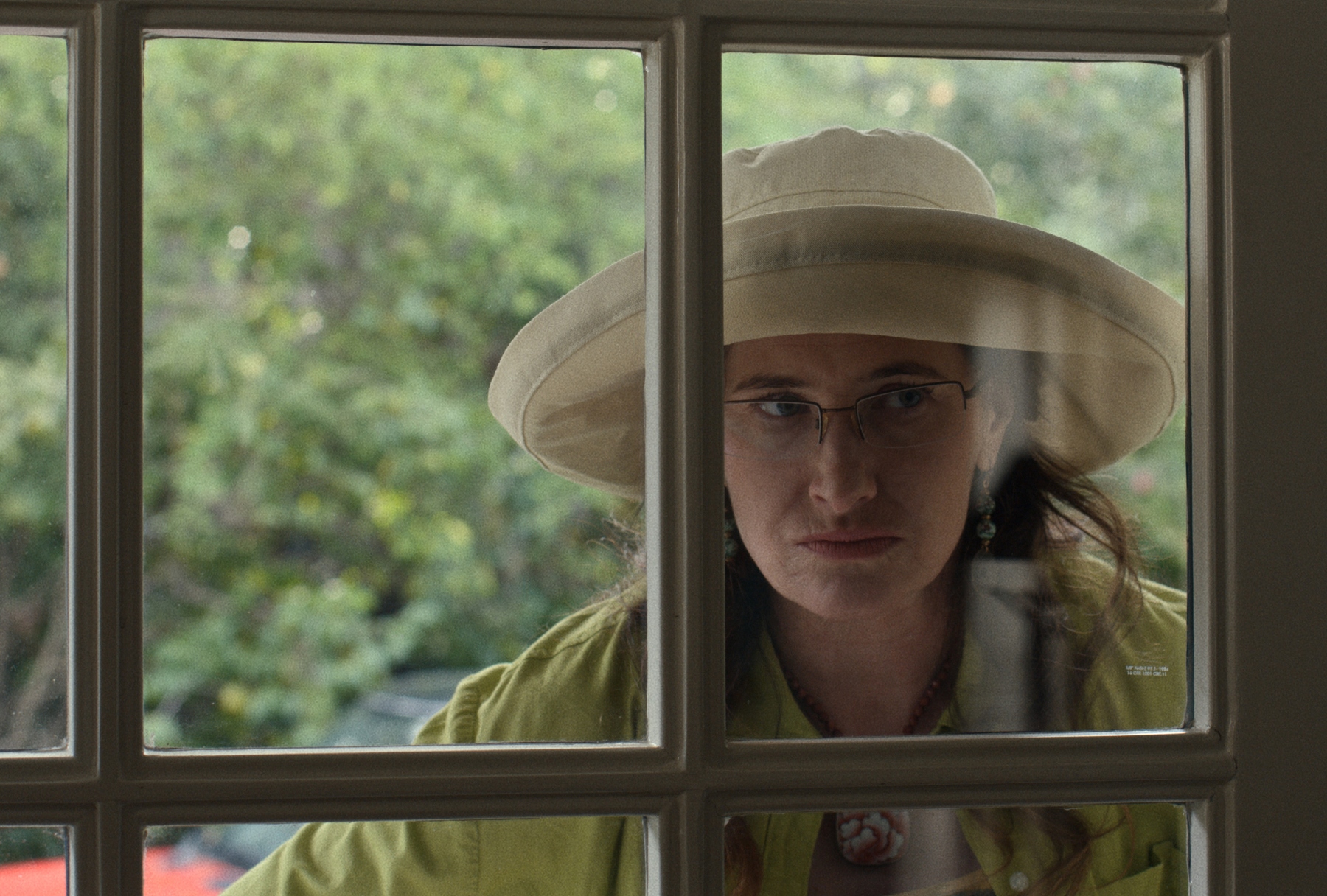
Kathryn Hahn

Kathryn Hahn in “The Shrink Next Door” (Apple)It was Kathryn Hahn’s year all along. But when isn’t that true? Hahn is an eternal scene stealer, always claiming our attention with consistently mordant, bracing performances that are impossible to ignore. Consistently Hahn marks her place as one of the best reason to watch every show she’s in, making it no surprise that she’s the reason we even remember “WandaVision” ran this year.

Her affinity for scene chewing served her well as the classic nosy sitcom neighbor Agnes, a woman with a knack for showing up at precisely the right wrong time, enough to make us wonder what her deal was. Other performers might have tipped their hand that she was actually Agatha Harkness, a sorceress fierce enough to take over the show. Not Hahn, who makes what could have been a condiment role the star of the sandwich through simple shifts in her physicality or her shiny brass delivery.

Months later she turns around and dives into the role of a protective sister in “The Shrink Next Door,” the Apple TV+ drama starring Paul Rudd as a therapist who manipulates Will Ferrell’s anxiety-crippled businessman into tossing her aside.

Hahn ignites the plot as Phyllis, who brings Rudd’s monster into her brother’s life, and disappears a few episodes. Again, we never forget her, and when she circle back at the end of the story with a vindictive hilarious fury it cleanses the palate, returning a light and mercy to a story that gets relentless dark, and quickly.

Naturally she follows this up with a turn in the ABC “Live in Front of a Studio Audience” performance of “The Fact of Life” as the wise-cracking Jo Polniaczek, another spicy mustard role that makes the meal worth consuming. On the horizon is Hahn’s return as the wonderfully wicked witch, and the big cheese, in Marvel’s “Agatha: House of Harkness.” No date’s been set, but we already trust that whatever she has stirring has got to be good. – Melanie McFarland

William Jackson Harper

Love LifeLove Life (Sarah Shatz/HBO Max)

William Jackson Harper already occupied a spot in our hearts before he knocked us head over heels again in two very projects, each casting him as a romantic hero. In “The Underground Railroad” he smolders as Royal, a free Black man who rescues an enslaved woman, Cora, from a heartless bounty hunter who never stops chasing her. Royal brings Cora to his community, and offers her his support, friendship and, eventually his heart, but only when she’s ready.

And through Barry Jenkins’ interpretation of Colson Whitehead’s novel Harper realizes Royal as a lionhearted man who exercises patience and contentedness as the golden virtues they’re meant to be while never ceding his strength.

It’s such a delicate, fierce performance that it almost feels like whiplash to see Harper follow Royal with Marcus, an “off-brand Hugh Grant” tugging us along on his romantic misadventures in HBO Max’s “Love Life.”  In Marcus, a man who ruins his marriage to chase after a “what if,” Harper resurrects the nervous uncertainty that quivered through the veins of his philosophy professor Chidi Anagonye from“The Good Place,” only with a fraction of the wisdom.

But his performance also quietly turns Marcus into a kind vanguard role making space for Black male vulnerability in a genre typically centered in the white female experience.  As disparate in tone and theme as these two projects are each underscores Harper’s unique appeal, a gentlemanly masculinity that’s sharp and soulful, a calming anchor regardless of whatever is exploding around him. Here’s to hoping he’ll receive many more dates to romance us in the near future. – MM

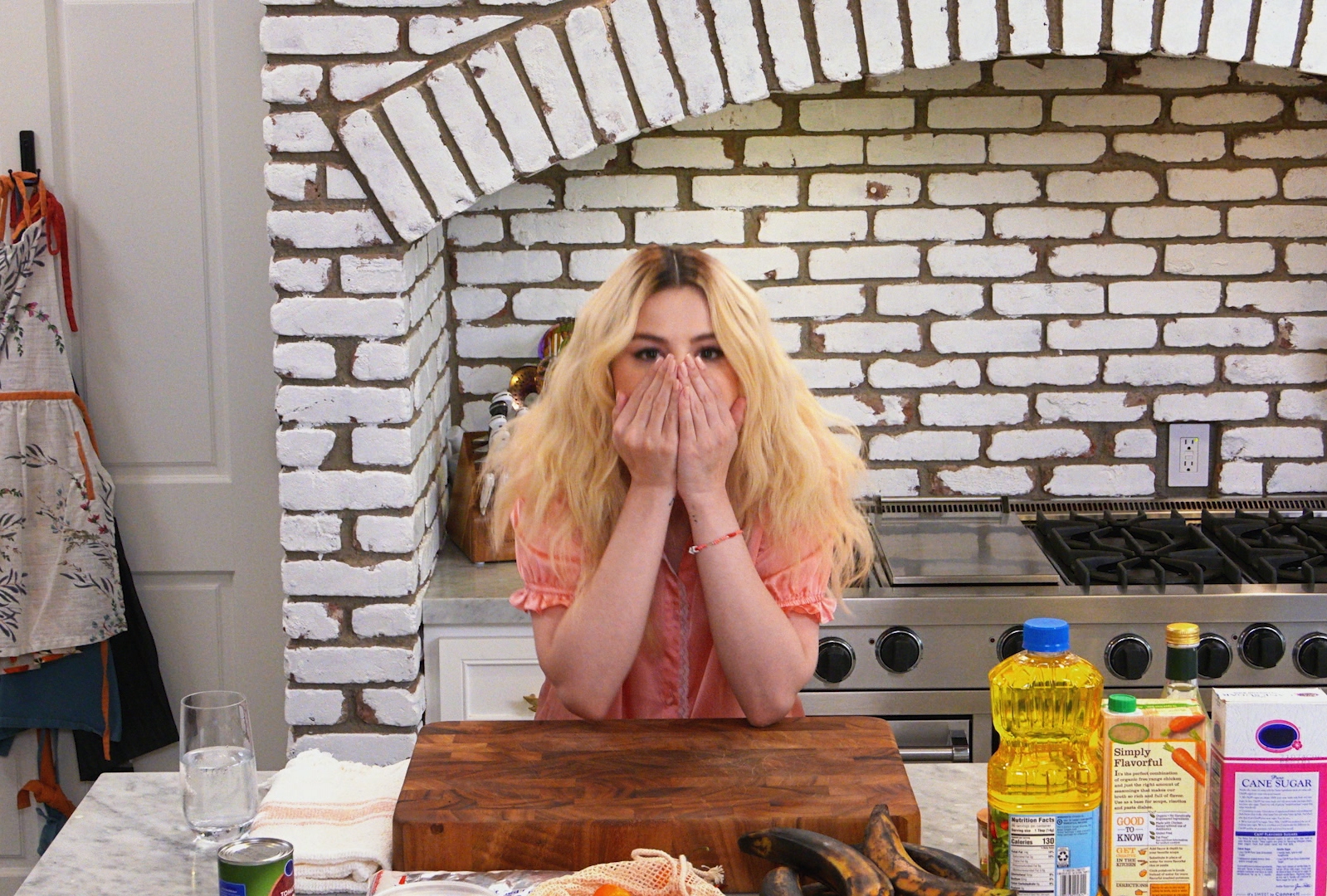
Selena Gomez
Selena Gomez in “Selena + Chef” (HBO Max)During the pandemic, the world has started to see 29-year-old Selena Gomez differently. While most of us were stuck in our homes, “The Wizards of Waverly Place” veteran decided to film an unscripted show in her kitchen about her attempts to use time in isolation to learn to cook, aided by professional chefs who coach her virtually via screens: “mak[ing] a meal together, apart.” As her two small dogs weave around her ankles, and her dark hair falls into her eyes, Gomez, who also produces the show, shocks a French chef with her love of fried Oreos, accidentally lights parchment paper on fire, and reveals herself to be genuine, good-natured company. 

Social media might allow some carefully curated insight into celebrities’ lives, but on “Selena +Chef,” airing on HBO Max, Gomez — who doesn’t use her Instagram feed herself — appears as raw as the octopus that makes her gag while chopping. She’s real, really funny (“This is what I’m burning today”), and really doing her best. “I’m tryin’, I’m tryin’ ” she sings in the theme song.

This year also saw Gomez’s star turn on “Only Murders in the Building,” the Hulu show which pairs her with Steve Martin and Martin Short as NYC apartment dwellers who end up making a true crime podcast about their attempts to solve a murder close to home. Not only does Gomez hold her own among the acting legends, her expert deadpan delivery and soulful looks recall the performances of classic film comedians. She’s “His Girl Friday” but with more agency and “cool boots.”

Gomez has been open about her disabilities — she was diagnosed with Lupus and received a kidney transplant — and mental health, and remains a strong advocate for those issues and others. More than a Disney pop princess, much more than an ex of a famous man, misogynistic labels often attached to young women who are powerhouses of talent, Gomez has always been a force, but 2021 saw her taking control. – Alison Stine

Michael Greyeyes

Jesse Leigh and Michael Greyeyes in “Rutherford Falls” (Peacock)The 54-year-old actor has been acting since the early ’90s and has been gaining steam ever since, turning in recent recurring roles on “True Detective” and “Fear the Walking Dead,” among others. He’s almost always portraying Native characters, and they’ve been steadily been getting steadily more varied and insightful.

Take 2021, which he kicked off in style in Lyle Mitchell Corbine Jr.’s feature debut “Wild Indian,” playing a man who has endured but also perpetuates trauma. As a kid, Mawka is involved in a shocking crime, and as an adult has styled himself as Michael, a successful man with a white wife. The film explores the sickness of the soul and repression, which the nuanced Greyeyes delivers with tension and a sense of moral ambiguity in every scene. It’s the sort of role in which Greyeyes shines, bringing with his performance an understanding of the many ways people either try to grapple with or reject their past.

Greyeyes didn’t stop there, appearing in the Two-Spirit film “Wildhood,” an episode of “Star Trek: Discovery” and reprising his role on Apple TV+’s “Home Before Dark.” But it’s his hilarious and riveting turn on Peacock’s comedy “Rutherford Falls” that felt like a revelation. Greyeyes, with his rich voice and imposing demeanor, tends to play grave and serious roles because he can carry their weight while also conveying emotion. Here, he does the same but with so much charm, humor and a cheeky glint in his eye that makes it clear that he’s having as much fun playing the part as it is to watch.


Want a daily wrap-up of all the news and commentary Salon has to offer? Subscribe to our morning newsletter, Crash Course.


In the comedy co-created by Mike Schur (“The Good Place”), Sierra Teller Ornelas (“Superstore”) and Ed Helms (“The Office”), Greyeyes plays Terry Thomas, the CEO of the Minishonka casino in the tiny town that bears the name of and still is the home to its colonizers’ descendant. Terry has big plans and an even bigger grin, and one cannot help get caught up in his vision to take back what belongs to his Nation, all while he calls out everyone on their bulls**t. Greyeyes makes Terry more than his ambition though, balancing the pride and intense drive with plenty of goofy humanity. He’s uncertain how to deal with his anti-capitalist daughter, has a healthy amount of vanity and seeks reassurance from his wife: “I’m cool, right?”

Of course, Greyeyes has always been funny, but we just haven’t allowed him to be on a big enough a platform till now. In a way, his blossoming as a comedic powerhouse reflects the shift that has happened in Hollywood suddenly embracing Native comedy. Following “Rutherford Falls” was FX on Hulu’s wickedly droll and insightful “Reservation Dogs” and even journalist Kliph Nesteroff’s book, “We Had a Little Real Estate Problem: The Unheralded Story of Native Americans & Comedy.” The future of Native entertainment isn’t just long overdue; it’s promising to be joyous as well. – Hanh Nguyen

More stories you might like: 

Can Democrats break the midterm curse? Maybe — consider the example of 1934

Now that Joe Manchin has sounded the death knell — at least for the moment — for Joe Biden’s Build Back Better package, Democrats are doomed in the 2022 midterm elections.

Or, wait: Are they? Sometimes the “laws” of politics (or economics) are characterized as immutable, akin to the laws of physics. They’re not, of course. Not a single ballot has been cast in the midterms. If Democrats can find a way to turn out their voters at unexpectedly high levels, while Republicans don’t, they could turn 2022 into another blue wave. Political trends do not govern us; they are the results of human behavior, which is never entirely predictable. 

Of course the apparent collapse of Build Back Better doesn’t help. But the pattern that every political analyst and historian understands may be the real problem: Since the modern era of American politics began with Franklin D. Roosevelt’s election in 1932, the party that controls the White House has lost congressional seats in 19 of the 22 midterm elections. Two of the three exceptions, in 1998 and 2002, were special cases with little relevance to the Democrats’ predicament in 2022. In 1998, Democrats benefited from a booming economy and popular backlash against the Republican effort to impeach Bill Clinton over a sex scandal. The 2002 midterm elections came just a year after the 9/11 terrorist attacks; patriotic sentiment was running high and George W. Bush had successfully defined himself (for the moment) as a “war president.” 

It’s that third exception, way back in 1934 — during the first of Roosevelt’s three-plus terms as president — that may offer an instructive example. Those midterms came after FDR and the Democrats had passed a series of ambitious and historic laws, known collectively as the New Deal. While the Great Depression certainly didn’t end immediately, the New Deal put millions of people to work and did a great deal to relieve suffering and despair. Despite Roosevelt’s reputation (then and now) as a progressive president, the underlying premise of the New Deal was more pragmatic than ideological: Economic insecurity, poverty and hunger were a threat to social stability and indeed to the capitalist system; creating a social safety net was understood as a matter of urgent importance. A few years later, Roosevelt put it this way in his 1944 State of the Union address: “We have come to a clear realization of the fact that true individual freedom cannot exist without economic security and independence. ‘Necessitous men are not free men.’ People who are hungry and out of a job are the stuff of which dictatorships are made.”

RELATED: Election guru Rachel Bitecofer: Democrats face “10-alarm fire” after Virginia debacle

Within his first 100 days, Roosevelt had done a great deal to restore confidence in government, providing emergency financial aid to those who were struggling, passing the National Industrial Recovery Act and the Securities Act, and implementing a number of other regulatory and relief measures. Indeed, his first term was among the most productive in presidential history, and resulted in a fundamental restructuring of the federal government, which from that point onward was a more direct presence in ordinary people’s lives than ever before. Conservatives characterized this as a dangerous intrusion on personal freedom (and have done so ever since); what we now call “liberalism” coalesced around the idea that government action was sometimes necessary to help the most vulnerable people in society. 


Want a daily wrap-up of all the news and commentary Salon has to offer? Subscribe to our morning newsletter, Crash Course.


Despite these legislative successes, however, political success was not guaranteed to follow. Persistent unemployment was still painfully high, and corporate America had begun to impose wage cuts. In the era before sophisticated polling, pundits could not scientifically assess a president’s popularity like they can today. For all the Democrats knew, Republican warnings about creeping socialism had led to widespread panic, and conservatives might turn out in record numbers to halt a supposed red menace. On the other end of the spectrum, some Democratic radicals and socialists were frustrated with the Roosevelt administration’s piecemeal approach to issues of social and economic justice. Sen. Huey Long, the legendary Louisiana populist who advocated a massive program of wealth redistribution and federal spending, was planning to run against Roosevelt for the Democratic nomination in 1936 (and probably would have, if he hadn’t been assassinated in 1935). 

In the event, Democrats did remarkably well in the 1934 midterms, gaining nine more seats in the House — and also an extraordinary nine seats in the Senate, giving them a supermajority in that chamber, with 69 of the 96 seats. Richard Walker, director of the Living New Deal Project and professor emeritus of geography at the University of California, Berkeley, told Salon by email that the Democrats’ big win resulted from two principal factors. Most obviously, FDR and his party were seen as taking decisive steps to address the economic crisis. 

“The Depression was still bad and the Republicans had no new ideas since 1932,” Walker wrote, “so even though FDR had not solved anything definitively yet, no one was about to bring back the utterly failed Hooverites. Does that count as missteps of the GOP? Well, they had lots of time to do badly from late 1929 to early 1933 and people hadn’t forgotten yet.”

Joe Biden is no doubt aware of that history, and very likely intended Build Back Better as his own legacy-setting achievement, substantial enough to shift the political tides. Whether that package can yet be resuscitated remains unclear, but his fundamental problem remains that the Democrats have razor-thin majorities in Congress and remain unwilling to end the Senate filibuster. Without a major legislative win, the Democrats’ last remaining hope is to run a negative campaign and convince voters that a Republican victory would be catastrophic. Pending decisions at the Supreme Court, including the possible or likely overturn of Roe v. Wade, could potentially produce a political backlash that helps the Democrats hold control of Congress.

There are again vague similarities to the 1934 midterm elections, when Democrats successfully depicted Republicans as extremists, although in a different sense than today: They were associated with the wealthy elite, with businessmen who lived in mansions and held to laissez-faire dogmas radically out of touch with the lives of ordinary people. Returning to the disastrous economic policies of Herbert Hoover’s administration, Democrats argued, would be a dreadful mistake. In 2022, the threat posed by a recently defeated Republican administration has taken a more literal and even more dangerous form, with Donald Trump and his supporters using fascist language and tactics and overtly seeking to overthrow democratic institutions.

Calling out that extremism wasn’t enough for Democrats in the recent Virginia gubernatorial election, but that doesn’t prove it wouldn’t work on a national scale, if pursued more aggressively and effectively. If there’s an applicable lesson for Democrats to be found in the 1934 midterms, it might be this: The incumbent party can win, but only if it makes an overwhelmingly persuasive and urgent case that their opponents are dangerous and the future will be truly bleak if they prevail. Given the circumstances, that’s a highly plausible argument.

Read more from Matthew Rozsa on the twists and turns of American political history:

Filth, automobiles, and our misguided obsession with traffic

Some 300 years ago, when Londoners were railing against the city’s filthy streets and proposing ways to make them cleaner, the philosopher Bernard Mandeville did the opposite. He argued that dirty streets were a welcome sign of prosperity — “a necessary evil, inseparable from the felicity of London.” Once people “come to consider, that what offends them is the result of the plenty, great traffic, and opulency of that mighty city,” he wrote, “if they have any concern in its welfare, they will hardly ever wish to see the streets of it less dirty.”

Today, can we say the same thing about the quest to rid our streets of traffic congestion?

In many ways, traffic is for today’s society what filth was to 18th century London. We grit our teeth through traffic jams, we measure and rank cities’ congestion, and we clamor for solutions. Our driving ideal is exemplified in car commercials, where a single vehicle has the city streets entirely to itself as it glides to a glamorous destination. But if the destination is so alluring, wouldn’t there be lots of other people and cars on their way? We forget that traffic is a sign of success.

Since the 1950s, efforts to do away with traffic congestion have inevitably been linked with urban decline. Decades ago, deindustrialization, urban renewal, and freeway construction cleared wide swaths of inner cities in places like Kansas City, Syracuse, and Miami — often targeting African American neighborhoods — and made it easy to drive through them. What made it even easier was the decline in commercial activity that ensued, which left the cities blighted with empty storefronts and office towers. Streets once filled with people interacting with one another were replaced by roads populated by people encased in fast-moving steel boxes. Cities made for speedy driving, it turns out, are cities made for little else.

The latest indication that congestion-free streets aren’t all they are cracked up to be came during the Covid-19 pandemic. In the spring of 2020, shutdowns and quarantines all but wiped out traffic congestion in many cities. With less traffic came faster driving and smoother commutes for the few drivers who continued to take to the roads. But the improved commutes came at a steep cost. They were part of a vicious cycle in which business closures and a pandemic-driven fear of social interaction led to empty streets, which in turn made it that much harder for moribund economies to recover.

Worse, the congestion-free streets were dangerous: Despite a decrease in driving, a preliminary estimate of 38,000 people were killed by cars in the U.S. in 2020, the highest projected death toll since 2007. Early research suggests that the empty streets invited speeding and other reckless driving behaviors, and the results were deadly.

Even if we decided that eliminating traffic congestion was a worthwhile pursuit, the usual solutions — building and widening roads — are unlikely to pay off. The well-established phenomenon of “induced traffic” means that new and wider roads usually fill up again quickly. In other words, more roads mean more driving, which is the opposite of what we desperately need in order to meet climate goals.

Yet the U.S. spends vast sums each year to build new roads and add new lanes to existing roads. The $1.2 trillion infrastructure bill recently passed by Congress will hand additional billions of dollars to state departments of transportation with few strings attached, and most of those states remain committed to funding major highway expansions, like Louisiana’s plan to build the I-49 Inner-City Connector in Shreveport, Texas’ plans to expand I-45 in Houston and I-35 in Austin, and Colorado’s plans to expand I-70 and I-270 near Denver.

Freeways and one-way thoroughfares are not destinations. Places people want to go are likely to be clogged with traffic, either because business is booming or because they are the kind of lively streets that are a pleasure to linger on. These things go together: People like to live and work near bustling streets and sidewalks, not desolate ones. While Mandeville could offer no numbers to buttress his claim that filth was a measure of success, a 2018 study found “a positive association between traffic congestion and per capita GDP as well as between traffic congestion and job growth.” Pedestrians also feel safer, and are in fact safer, where cars move slowly. To actually solve congestion, we would need to stop driving to places where people congregate. But then there would be no such places left.

Mandeville did not actually enjoy filthy streets any more than we take pleasure in traffic jams. He scandalized respectable opinion in order to make a serious point. Commerce and industry inevitably bring with them pollution of some kind, whether the manure, butchers’ blood, and raw sewage of 1714 London, or the noise, chemicals, and plastic debris we cope with today. If the price of a clean city is the complete elimination of commercial and human activity, then cleanliness has too high a price.

Just as cleanliness must be balanced against commerce, we must measure the goal of free-flowing traffic alongside other priorities. Traffic is a matter of economics and psychology, not just engineering. Instead of pouring resources into new and wider roads in the hope of speeding our commutes, we should be building places where people want to slow down and get out of their cars — places worth waiting in traffic to get to.

Some cities are embracing this vision, and working to make neighborhoods more amenable to walking and cycling. They may be aided in small part by the new infrastructure plan, which provides $5 billion to help make streets safer and another $1 billion to advance plans to remove some existing freeways that never should have been built. The plan’s unprecedented $39 billion investment in public transit will also help, but it is still a fraction of the $110 billion of new funding that will go toward highways (on top of $260 billion to continue funding current highway programs).

We could be doing much more. We could be creating spaces like the streets provisionally adapted for outdoor dining and play after Covid hit. All the people and activity made these streets a little dirtier and a little slower. Was that so bad?

Brian Ladd is a historian and author of “Autophobia: Love and Hate in the Automotive Age” and, most recently, “The Streets of Europe: The Sights, Sounds, and Smells That Shaped Its Great Cities.”

This article was originally published on Undark. Read the original article.

Best of 2021: I failed my friend Dante Barksdale. We all failed him

My friend Dante Barksdale was murdered in January. I failed him. I failed Dante. Saying anything other than that, in any other way, would be a performance. You could call it “performative,” and you’d be right. 

Performative speech and acts are everywhere; I hear them, see them, witness them every day. What does it mean? I think of leaders like Republican Sen. Mitt Romney out in the streets marching with Black Lives Matter protestors after the video of George Floyd being killed by a police officer went viral. Maybe Mitt was really moved by Floyd’s killing. He did announce a plan for police reform legislation shortly after. But that’s the kind of public stand he should have been taking, meaningful movement toward justice that these marches are meant to push him and other legislators into taking. Marching for him is a symbolic gesture, designed to catch eyes and cameras; it looks, well, a little performative. 

RELATED: Why I won’t stop writing about “trauma” to focus on joy

It’s not just Senators like Mitt. I encounter it every day. The Black Lives Matter signs posted everywhere and painted on the intersections of major streets, the mass spewing of woke rhetoric, the infinite declarations of love for Black people by non-Black people across my timelines — it all strikes me as performative.

Walking through the market the other day with my mask on, a white woman ran me down, blocked my path, pulled her mask down — during a pandemic! — and flashed her Black Lives Matter shirt at me, telling me she purchased it in multiple colors . . . from Amazon. Maybe she recognized the top half of my head from a reading or a local TV spot or something? I don’t know. Maybe she does feel that Black People Matter and she just wanted me, a Black person, to know it. But the amount of attention she demanded from me, a completely masked stranger shopping for fruit, struck me as performative. 

Sometimes I laugh at the heightened sense of awareness our society suddenly shares — maybe to keep from crying, or because a chuckle is the only positive thing I can add to this collective optimism. If it’s not the wave of “I love Black people” political speeches, it’s the constant images of everybody winning at whatever they do. All of this looks equally performative: the people who never spill juice, not even during earthquakes, never eat a bad meal, never have a stomach ache, positive vibes only please! as they drive on the beltway and never ever miss an exit. These carefully curated realities I consume online everyday frustrate me. I mean, is everybody really doing that well after we’ve lost over 450,000 citizens to COVID? Come on. How are you traveling weekly, balling at five-star resorts and standing on VIP couches — without a mask — surrounded by crowds now?

RELATED: HBO doc shows how it’s easy to make “Fake Famous” influencers

The young kids call an excessive amount of lying “cap.” And seeing the massive about of cap being spread makes me want to call BS on all of it, to put a cap on the cap. The camera isn’t rolling, I want to say, you can cut the act! 

But I have no room to talk. I can’t point a finger at Mitt, the partiers, or the lady in the market, because I’m performing too. I’m a professional at it. All cap, a mountain made of nothing but cap. 

My friend Dante Barksdale, who also went by “Fat Tata,” died recently. I go through this level of grief a lot, mainly because I choose to live in Baltimore, a small-big city with roughly 600,000 people that averages around 300 murders a year. It’s not because I was raised here, or work here, or because my family is here. I live in Baltimore because I love it here. Dante did too. He worked and lived as a violence interrupter for Safe Streets, an organization that employs respected community members who work to prevent gun violence. Barksdale was so well known, so respected, and so beloved that news of his death made it all of the way up to the New York Times:

Mr. Barksdale, 46, went by the nickname Tater and was a nephew of Nathan Barksdale, the now-deceased narcotics trafficker known as Bodie who was an inspiration for the character Avon Barksdale in the HBO crime series “The Wire.” Dante Barksdale drew upon his time in prison for selling drugs and his experience growing up in the projects for his outreach work.

Dante was loud and passionate, with an intense stare that hung off his perfectly round head. He was vocal with his views about what the city was doing and what we as a whole could do better. And people listened to him. So it wasn’t strange to me when a friend who is also a reporter, followed by an activist, and then a city council member all contacted me when he was hanging on for his life after being shot. And as I collected these phone calls — all the stories of how great Dante was — I made a conscious decision to believe that he would be OK, even though my gut feeling told me that he wasn’t. After his death was confirmed, the conversations kept raining: street dudes, reporter friends, community members, many of whom began or ended their calls with, “D, are you OK? Are you good? Are you going to be OK?” 

Easy as it is to elect a white president, graceful as an Olympic figure skater, I parted my lips and I lied.

And I don’t offer a simple lie: “Yeah, I’m OK.” That’s not enough. I lay it on thicker than grits in a Georgia diner.

“Oh, I’m am blessed, brother,” I lied. “And the clouds will part and God will shine a light on all of us, and we will feel that light, be energized by that light, anointed by the light, and left with the power from that light to guide all of our people out of the darkness that raps our community! Amen! Amen! Amen!” 

But I don’t feel light; I feel dark. And I don’t want to talk. I want to ride around alone and listen to Scarface rap about death while fighting back tears. I want those tears to fall, but I don’t let them because I must perform, even if nobody is watching.

RELATED: “We’re all carrying some level of mass grief as Black people

I take all of the calls. I imagine that the person on the other end of the phone is inspired by my soliloquy, motivated to fight the good fight as soon as we hang up. They are performing, too. They are lying, too. Our performances mix together like tonic on gin whirled around in the glass. We egg each other on with hope, our tirades pointed at the system, offering each other, “you’ll be OK,” even though we won’t. And what’s worse, our performances are appropriate responses to death and grief. We almost never ever tell people how we really feel and everybody is OK with that, even you. 

Nobody wants to hear how you’re really doing. They want to hear how great you are doing, and how your inspiring social media posts reflect your actual life: the perfect latte and gourmet doughnut drizzled with honey, the vacation house in Tulum, because that makes us smile. This is probably why Dante never asked me, “How are you?” He would ask instead, “Are you good?” 

We would talk a few times a month, on and off. I was supposed to pull up at his Christmas toy dive, but didn’t because of the pandemic, a decision I now regret because I’ll never see him again. The last time I hung with Dante was pre-pandemic. I walked into the food hall and spotted Dante in his bright orange Safe Streets polo, elbow deep in conversation with a government-looking pantsuit lady, a politician or political aide, probably. He didn’t spot me so I walked up behind him and purposely bumped his right shoulder with mine. He spun around to see me squared up and throwing punches. He blocked them, laughing, throwing punches back before pulling me in for a bear hug.

I apologized to the lady for interrupting the violence interrupter. 

“Do you know D Watk?” he said to the woman, who smiled and shook her head no.

“You gotta know D Watk!” he said. “This the brother that helped me and my coauthor while we was doing my book — this my boy! He the man!” 

I shook her hand, apologized to both of them for interrupting and told Dante I’d be in the corner working and eating. He came over about a half an hour later and told me how his book sales were going, about life, about Safe Streets, how our politicians are constantly fumbling the ball, and his plans for stopping the murders.

As we got up, he paused and asked, “Yo, are you good out here?” 

“Of course,” I responded, fixing my jacket.

Dante grabbed my arm.

“Nah bro, are you OK? You taking care of yourself?” 

I sat back down and told him that I was maintaining, adjusting to fatherhood. And that I was worried about the future of the city and my place in it, if the things I do or try to do to help Baltimore even mean anything.

“I feel lost out here,” I sad. “Man, they killed my bro Dee Dave. I’m just lost.” 

“I heard about that. Dee Dave was a good guy, but the kids love you Watk,” he said fiercely. “They see D Watk being positive and coming around the way, and some of them want to be positive too, cuz of you. Don’t ever forget that. Shit, your book made the book shit real for me! We only getting better cuz!”

“You know how it is,” I said. 

“Man, I’m out here every day,” Dante said. “You know I know. Keep doing what you doing man. You from my projects man, so I gotta look out for you.” 

“I keep telling you bro,” I laughed. “I’m not from Lafayette, I’m from Down Da hill.” 

“I know you and all ya big head-ass cousins from Lafayette,” Dante spat back with a smile. “So we claiming you, superstar. But for real, keep inspiring the kids man. It matters.” 

Dante probably had to perform at times just like the rest of us. But he was still one of the few people who would tell the truth about the things you don’t want to hear. On one of his last Instagram posts, he explained how more than 1.2 million Black men died at the hands of other Black men over the last 40 years. And he wasn’t saying it the way misinformed people try deflect arguments against police violence, or to act like White on White crime doesn’t exist. He was saying it because he was sick of us dying. He knew the issues and where they came from, but he loved us so much that he refused to perform when dealing with us because he wanted us to do better, and because it was the truth that we didn’t want to hear. And we failed him. 

Dante risked his life and died in front of those he tried to protect in a city where law enforcement lacks the imagination to understand how important his work was. They failed him, too. Many cops view Safe Streets with the same contempt they have for the people they arrest, even though that organization that Dante was so proud of actually makes their job easier. Baltimore failed Dante. We all failed him with no way of making it right. 

And yet we continue performing, every single last one of us. And I honestly don’t see an end to it. Because after the pain of his loss, after seeing all of the crying people, the hurt family members, it still remains hard for me to say, “I’m hurt, too.”

I don’t want to do anything or think about anything, because I’m hurt too. These deaths honestly break off whole chunks of me. Every week, every month, every year. 

I know enough to know that the world around me doesn’t want to see the hurt I have for Dante and the dozens of other friends I’ve lost over the past few years. The world doesn’t want to see it about as much as I don’t want to share it, so we all continue to perform instead.

I know I need to try to deal with the pain rather than sprinkling fake positivity on everything. Talking about the pain briefly or glossing over it in my writing is not dealing with the trauma.  

Until I stop performing and deal with it, I will continue to let Dante down. We’ll all continue to let Dante down. 

Read more of Salon’s Best of 2021 Life Stories.

Thin and crispy or soft and pillowy? Your how-to guide for crafting your ideal gingerbread

Fans of gingerbread tend to divide themselves into two camps. There are those who are devoted fans of crispy and crunchy cookies, and those who swear by soft and chewy gingerbread. 

And while getting your cookies to the desired consistency in your home kitchen may seem like a small Christmas miracle, there are a few science-backed tips for crafting your ideal gingerbread. Here’s how to hack your holiday baking.

High-moisture versus low-moisture ingredients 

This is the biggest tip. For denser, softer gingerbread, you’re going to want to find a recipe that calls primarily for high-moisture ingredients. Instead of choosing margarine or vegetable shortening, these recipes will include butter. In terms of sweeteners, moister cookies will include brown sugar, which is produced by adding molasses to refined white sugar, or even just straight molasses. 

RELATED: A brief history of the Christmas cookie

Some swear by adding a tablespoon or two of corn syrup for an extra-chewy cookie (though I personally couldn’t tell the difference between test batches). 

For crisper cookies, stick to vegetable shortening — or a mix of butter and vegetable shortening — and refined white sugar. 

Drop cookies versus roll-outs 

“Drop cookies,” which are placed on the baking sheet using an ice cream scoop or large spoon, tend to be more tender than roll-outs. Part of this is that they are simply thicker and bake through more slowly. However, in addition to being thinner, roll-out cookies tend to have a dough that incorporates more flour so the final cookies will hold their shape more cleanly when bakers use cookie cutters. 

Differences in cookie thickness and spread 

One of the keys to a softer-feeling cookie is giving it a little extra “lift.” To achieve that effect, you’re going to want to ensure that the cookie doesn’t spread too thin on the baking sheet. Be sure to chill your dough for at least 30 minutes before baking it on a parchment-lined baking sheet. 

This keeps the fat inside the cookie from completely melting before the cookie is done, while the parchment paper itself prevents the cookies from spreading as much and thus keeps the bottoms from crisping up. 

Meanwhile, cookies that are meant to be crisper can be placed straight on a prepared baking sheet. 

Differences in baking time

Much like other foods, the longer the bake time, the crispier or crunchier the end product. Recipes for crisper gingerbread cookies tend to have an 18 to 25-minute bake time, while softer cookies can be done as quickly as 14 minutes after sticking them in the oven. Whatever direction you choose to go with your cookies, remember to allow them to fully cool on a wire baking rack for the best results. 

More Christmas cookie stories: 


The recipe for this easy-to-make, old-fashioned coconut pie has been passed down through time

I remember coming home from school to the heavenly smells of my mother’s fresh baked cookies and pies most every day leading up to Christmas. She baked not only for us but also for friends, creating beautifully packaged, homemade treats that always looked as wonderful as they tasted. I remain in awe of how in an instant she could wrap up one of her pies in cellophane, tie a ribbon around it and magically transform it into a beautiful gift

As I grew older, I assumed that I could also turn my own fresh baked goodies into gorgeous gift creations with bows and wrap, but I realized early on that I didn’t inherit that skill. I have also learned — and come to accept — that some folks have a knack for making a present look like a work of art (my mother) and some do not (me).

When I would ask my mother why the desserts she baked turned out so much better than everyone else’s, she’d say that she just knew what tasted great. During the holidays, homemade goodies were plentiful when we visited loved ones. More often than not, I thought the majority of them looked and tasted kind of meh, except for a too-sweet smear of garish green or red frosting. (I guess my palate was already spoiled at quite a young age!)

RELATED: Unlike lots of recipes for pecan pies, this one is tried and true

Once I was older, I began to see that much of what my mother baked was actually pretty easy to make and that I could follow most of her recipes, like this coconut pie, myself. It’s now my go-to dessert during the holidays because you can whip it up in no time, and it’s a reliable crowd pleaser that turns out delicious every single time. 

This easy-to-make pie bakes to a gorgeous golden color; and it’s never runny, always divine when it comes out of the oven. In fact, it’s so pretty that you’ll be proud to gift it to even the most discriminating person on your list.

***

Though my mother first introduced this pie to our family, the recipe was originally given to her many, many, many years ago by our beloved childhood neighbor, Miss Mary Helen. Passed down through neighbors and generations, this lovely pie stands the test of time. 

***

Recipe: Old-Fashioned Coconut Pie

Ingredients:

  • 1 stick of butter
  • 1 1/2 cups sugar
  • 3 eggs
  • 1 teaspoon vanilla
  • 1 1/2 cups dried coconut 
  • 1 Tablespoon white vinegar
  • 1 unbaked, 9″ pie shell, pricked all around with a fork

Directions: 

  1. Preheat oven to 325 degrees.
  2. Blend butter, sugar, eggs, then add the coconut. Add the vanilla and vinegar. Mix well.
  3. Pour into pie shell and bake 1 hour.

Chef’s tip: If the crust begins to darken too much, lightly place aluminum foil over it.


Want more great food writing and recipes? Subscribe to Salon Food’s newsletter, The Bite.


More selections from our holiday recipe box:

Embracing my family’s quirky holiday traditions from far away

Christmas at my mom’s begins with the tree. I wouldn’t call it a tradition so much as her obsession with erecting the perfect hulking evergreen — so tall that its tippy top brushes against our living room ceiling — and decorating it just so with white lights and ornaments, some as old as her adult children, others new additions to replace the broken bulbs of years past. Like the accumulated Christmases under our belts, each ornament has its own story to tell.

Behind the tree there is a sliding glass door, and just outside, a deck that hangs over the open woods, which serves as an annual Christmas tree graveyard. There, the beloved trees will inevitably find themselves on the 27th of December, tossed out just as fast as they were dragged into our home, before their needles even have the chance to turn brown and descend on my mom’s spotless wooden floor.

Around the same time that the tree goes up, a neat row of a dozen or so Santa Claus figurines take their place on the mantelpiece. They cover a range of styles and ensembles, not unlike a fashion show lineup featuring looks inspired by various decades. Next to a slender Santa in muted, earthy tones and wispy, ragged facial hair stands a plump Santa sporting a manicured beard and cherry-red coat.

Throughout the holidays, my mom is very focused on keeping the house clean. To her, the line between festivities and chaos falls where the mess begins. My childhood memories of Christmas morning include her gathering wrapping paper directly from our excited hands as we tore it from our presents, with maybe a repurposed gift bow affixed to her hand with double-sided tape. Then, still in pajamas, she’d pull on a Nordic parka and head outside to the driveway to light a bonfire of used wrapping paper and the Gap boxes that once held toasty socks and flannel pajamas. There, in front of her glowing Christmas effigy, she was happy.

My sister, brother, and I tend to poke fun at her. We’ll call whichever one of us has yet to arrive back home and report the goings on. “Mom won’t stop talking about the tree,” I’ll tell my sister. “She keeps making me sit with her to admire it.” We’ll both laugh — she is that mom from the cult Christmas tree video. My sister might sigh, “I can’t wait to get there,” because as much as we mock the quirks of our childhood home, we love it just the same.

* * *

The first year that I missed Christmas at home, I was in Paris, under the guise of studying abroad. In reality, I spent my days chasing down pastries and (when I could) nibbling on foraged morels at very edgy neo-bistros, all the while trying to look un-American and unimpressed — in other words, my idea of French. When my then-boyfriend Marc invited me to trade gray Paris for sunny Barcelona to spend the holidays with his family, the idea of a Mediterranean Christmas was beyond tempting. I said yes right away.

I flew on a puddle jumper with no assigned seats and landed in a city that was definitely not Barcelona. I may have been duped by a budget airline, but Marc was there waiting for me, in Girona, and within a couple of hours, we were at the lofty apartment that he shared with his sister in the Gràcia neighborhood of Barcelona. It wasn’t mine, but it was comforting to arrive at a family home for the holidays.

I’d love to write about how much I ached for the sleigh riding and the icy sludge of upstate New York, but I didn’t — at least not right away. On Christmas Eve Day, I went for a jog along the Barceloneta beach in a T-shirt with the sun beating down from a cloudless blue sky. Afterward, I went to buy a bunch of presents for Marc’s family. As it turned out, cold was not a requisite for the holiday spirit.

Later that night, we grazed on canapés and floated around a glittering white Christmas tree. In Spain, for environmental reasons, it’s tricky to acquire a real tree. Don’t quote me, but someone once told me that it has to do with all the trees mowed down to create the Spanish Armada — they’ve been working on regrowing their forests ever since. Should one wish to use a real tree, there are strict replanting requirements, so most Christmas observers celebrate with fake ones instead, and understandably — holidays are stressful enough without worrying about reforestation.

Decorated with tasteful red, green, and silver balls, and blinking white lights, their tree was undeniably pretty. Still, I couldn’t help but miss the sappy pine smell of my mom’s back home; the tattered felt blanket she draped around the base to cover the clunky, decades-old stand; the elaborate train set that choo-chooed around the presents, even though her grown-up children were too old to appreciate it.

In Barcelona, somewhere along the tracks where my mom’s train would be chugging along, I discovered a log creature with a face and four stumpy legs. It smiled at me with a drawn-on mouth and plastic googly eyes.

“What the heck is that?” I asked Marc.

“Caga Tió!” he said — loosely, poop log. He explained how children are supposed to hit the smiling log with sticks, and then turrón candies magically fall out of it — that is, parents discreetly toss them underneath.

“You’re kidding,” I said, but he wasn’t.

I had to give it to the Catalans — they didn’t take themselves too seriously. Compared to the precious bûches de Noël (Yule logs) back in Paris, the Caga Tió felt somehow more familiar — the kind of tradition my mom would have completed with verve, assembling the perkiest, cleanest little poop log around.

I later learned that Caga Tió is a widely observed, sacred Catalan tradition. As Lindsay Patterson wrote for NPR, “The tradition of Caga Tió is bizarre to the rest of the world, but here [in Catalonia], imploring a log to poop candy with sticks and threats is as magical as waiting to hear the sound of sleigh bells on the roof of your house.”

The thing is, all traditions are a little bizarre. To some, cutting down a beautiful living tree, dressing it up with lights and ornaments, and tossing it on the street (or over the back deck) afterward, might seem needlessly elaborate. But then again, it’s hard to put a price on the joy I got as a kid when I went with my mom to Pier 1 Imports or the local Canal Towne Emporium and she let me pick out an ornament for the tree. I remember cradling the white square box, just big enough to hold a cupcake, until we got home and then, with the care of a surgeon, unfolding the wrapping paper and hanging my gold, glittery king (one of three — I’d have to wait until the next year to acquire another) on the tree.

I missed my mom’s perfect tree and her Burning Man of gift packaging and even the Santa mafia, with their beady eyes and wooden teeth and distinct fashionable ensembles. They had, after all, taken years to collect — from pop-up holiday boutiques and many a HomeGoods January clearance sale. Some might consider them silly, but those were our Santas, and I’d defend them just as I would anyone in my family. You know how it goes: The privilege to mock is reserved for insiders.

Sometimes it takes experiencing other people’s traditions, being an outsider, to fully appreciate your own. And so, I tried to be a good outsider that year. I cheered when the kids, armed with tiny twigs, beat the Caga Tió, and I threw turrón to the sound of their excited yelps for more candy.

* * *

Now, through marriage, I have become part of a large Mallorcan-French family. When we are in Mallorca, we munch on Mahón cheese and toasts spread thick with sobrasada while drifting around a faux tree draped in tinsel garland. The French side have their holiday traditions, too — like gathering in Normandy and feasting on fruits de mer. My mom joined us there one year. She couldn’t believe the sheer quantity of food. “There’s more?” she asked in disbelief. “Those were just the appetizers,” I whispered, as one of Guillaume’s aunts cleared plates piled with empty oyster shells. At the end of an hours-long lunch, the table littered with clementine peels, I watched my mom tell her stories in English, loud and with hand gestures, as though that might cut through the language barrier, Guillaume’s family a captive audience even if they barely understood.

Then there’s our apartment in Paris, where to date, I’ve decorated just one Christmas tree: a stout little evergreen affixed to a split log, as they sell them in Paris. (Despite its size, it was still a lot of work! I texted my mom afterward, asking how she did it every year. “It was fun,” she replied.) I have yet to begin an ornament collection, but now that I’m a mom, I feel an instinctual desire to get started — to create for our daughter some memories of a perfect childhood tree.

Denzel Washington is commanding in Joel Coen’s bloody, bold and resolute “Tragedy of Macbeth”

With its whispering witches, dense fog, and circling ravens, Joel Coen‘s “The Tragedy of Macbeth” has atmosphere aplenty. This moody film, which releases in theaters Christmas Day and on Apple TV+ January 14, is also heavy with shadows, endless stairways and hallways, and billowing curtains. Shot on a Los Angeles soundstage and lensed in luminous black and white, the film is suitably chilly and menacing. What’s more, this screen adaptation of Shakespeare is impeccably acted by the entire ensemble cast, all of whom handle the iambic pentameter with noticeable aplomb.

The story is one of vaulting ambition as Macbeth (Denzel Washington) and Banquo (Bertie Carvel) are returning from battle having saved King Duncan of Scotland (Brendan Gleeson) by fending off his enemies. Along the way, they encounter three witches (Kathryn Hunter in multiple roles) who tell Macbeth that he will be king. But when he is promoted to Thane of Cawdor, and Malcolm (Harry Melling) is named next in line to the throne, Macbeth feels snubbed. A game of thrones begins when Macbeth plans to unseat the King and fulfill the witches’ prophecy. 

Macbeth’s desire for power is, as anyone familiar with the play knows, more than shared by his wife, Lady Macbeth (Frances McDormand). She coaxes him to murder the King who will be staying with them that night. Macbeth is initially hesitant, but he “does the deed,” and Coen films the killing impactfully, in a tight close-up with a spurt of blood. 

RELATED: Walter White vs. Macbeth

Coen uses an economy of the storytelling, which is why the film is so potent. “Macbeth” is Shakespeare’s shortest tragedy, and the filmmaker makes it a fleet experience that pulls viewers along as the drama increases and the body count piles up. Yes, there are soliloquies including “Unsex me here,” and “Out, damned spot!” by Lady Macbeth, and “Sleep no more,” by Macbeth, that are given room and time to breathe, but the film never becomes bloated or pretentious. 

Once the King is dispatched, Macbeth tries to contain the situation, killing the two guards he has framed for the murder. The act gives him power, but it also causes him a crisis of conscience and he soon descends into madness. Macbeth, however, arranges for Banquo and his son Fleance (Lucas Barker) to be killed and orders the murder of Macduff’s (Corey Hawkins) wife (Moses Ingram) and children, a sequence that is quite haunting.

“The Tragedy of Macbeth” impresses because the film is so visually striking. One shot of what looks like a moon in the night sky turns into a spotlight. An overhead view of a courtyard dissolves into a frame around a broken-down shack in the countryside. Macbeth sees a ghost in a pool of water that he holds in his hands; the apparition dissolves as he comes back to his senses. Coen employs various visual effects — from leaves bursting through a window to the ravens that overtake the screen at a key moment — to create a real impact which is why this production is so dazzling. 


Want a daily wrap-up of all the news and commentary Salon has to offer? Subscribe to our morning newsletter, Crash Course.


Moreover, the cinematography by Bruno Delbonnel, and the score by Carter Burwell, both frequent Coen Brothers collaborators, contribute to the film’s power. The minimalist sets and chiaroscuro lighting highlight the themes and forces of good and evil. A fight scene set in a narrow passageway is especially intense and exciting. Oddly, while “The Tragedy of Macbeth” is stagey, that is never really a drawback. In fact, the sparse presentation — and the film is shot in a 1:33 aspect ratio to square the frame and tighten the imagery — is what makes it so urgent and compelling. 

Washington, who last performed Shakespeare on screen in 1993’s “Much Ado About Nothing,” is superb in the title role, playing up Macbeth’s fears while also making his madness credible. His speeches and body language are commanding as he internalizes all of his guilt and his tyranny surges. As the fiendish and cunning Lady Macbeth, Frances McDormand is revelatory. The actress rarely plays evil on screen, but she tackles this pivotal role with relish, emboldened by the power she desires. 

In support, Kathryn Hunter is especially memorable in her shapeshifting performances as the witches as well as an old man who hides Fleance. (Hunter should play Gollum in the next “Lord of the Rings.”) She is mesmerizing from her first scene, with her raspy voice and contorted body, but she is also captivating when she is seen doubly reflected in a body of water. 

Although they have the least amount of screen time in the film, both Moses Ingram as Lady Macduff, and Stephen Root as a porter, are ingratiating because the actors bring verve and energy to their parts. 

“The Tragedy of Macbeth” may not have the wit of a typical Coen Brothers film, but it is still quite wondrous.

“The Tragedy of Macbeth” opens in theaters on Dec. 25 and streams on Apple TV+ on Jan. 14. Watch a trailer for it below, via YouTube:

More stories you might like:

What does “Bah, humbug!” actually mean?

In Charles Dickens’s 1843 story “A Christmas Carol,” Ebenezer Scrooge exclaims “Bah! Humbug!” in reference to Christmas. As he famously hates the holiday, it’s easy to assume that “Humbug!” is just an expression used to convey dislike for something popular. In fact, thanks to the cultural impact of the Victorian Christmas classic, that’s often how humbug is used today. You might describe someone as having a bah-humbug attitude toward the Marvel Cinematic Universe if they habitually whine about how its superhero movies “aren’t real cinema,” for example.

But Scrooge didn’t originate the term humbug — and he meant something more specific than “I hate Christmas!” when he uttered it.

Humbug first appeared in writing in a 1750 issue of “The Student, or the Oxford and Cambridge Monthly Miscellany,” where it was described as “a word very much in vogue with the people of taste and fashion . . . though it has not even the penumbra of a meaning.” In short, it seemed to have been trendy slang coined by the cool kids of the era, and its etymology remains unclear. That said, humbug was used widely enough that its definition, at least, is clear. According to the Oxford English Dictionary, it referred to “a hoax; a jesting or befooling trick,” as well as any “thing which is not really what it pretends to be,” like a sham or fraud. Eventually, people started using it to mean nonsense in general.

When Scrooge repeatedly calls Christmas “humbug,” it’s because he believes the holiday fits the bill in more ways than one. He thinks Christmas tricks people into feeling cheerful and thankful when they have nothing to feel cheerful about or thankful for. “What reason have you to be merry? You’re poor enough,” he tells his nephew. Scrooge is also of the mind that society uses Christmas as an excuse to wrangle money out of wealthy people like him: He refuses to donate to a Christmas collection for the poor, asserting that they should seek help from existing institutions that house and employ the underprivileged. Shortly after, Scrooge complains about having to pay his clerk, Bob Cratchit, for an entire day off. “A poor excuse for picking a man’s pocket every twenty-fifth of December!” he says.

Basically, Dickens’s curmudgeonly antihero considers Christmas a financial and emotional scam on a global scale — a humbug any way you slice it. The only way Scrooge doesn’t use the word humbug is in reference to the striped, peppermint-flavored hard candies of the same name. (Those humbugs date at least as far back as the 1820s in the UK, so it’s possible Scrooge would’ve been familiar with them, too.)

Have you got a Big Question you’d like us to answer? If so, let us know by emailing us at bigquestions@mentalfloss.com.

The COVID vaccine patent war has an unsettling parallel in HIV drugs

In 1998 the South African Pharmaceutical Manufacturers Association teamed up with 39 pharmaceutical companies to sue Nelson Mandela’s government for suspending international trade agreements that protected the patents to HIV antiretroviral medication. 

At the time of the lawsuit, it was estimated that one in nine South Africans had contracted HIV, and the cost of providing the patent-protected medication was largely out of reach to the 4.7 million people in the country who needed it.

Defending his decision to bypass the WTO’s agreement protecting intellectual property, Nelson Mandela said in a TV interview: “I think the pharmaceuticals are exploiting the situation that exists in countries like South Africa — in the developing world — because they charge exorbitant prices which are beyond the capacity of the ordinary HIV/AIDS person. That is completely wrong and must be condemned.”

“The government is perfectly entitled, in facing that situation, to resort to generic drugs and it is a gross error for the companies, for the pharmaceuticals, to take the government to court,” Mandela continued.

In deciding to ignore patent laws, Mandela made a moral decision that saving lives was more important than protecting private property rights. The pharmaceutical companies argued back that if developing countries could effectively steal their medicines, they would have less incentive to research new drugs in the future that could also save millions of lives.


Want more health and science stories in your inbox? Subscribe to Salon’s weekly newsletter The Vulgar Scientist.


Twenty-three years later, history is repeating itself. In October of 2020, South Africa and India noticed that the overwhelming amount of pre-purchasing agreements for COVID-19 vaccines were being negotiated by rich countries, meaning those countries would get the vaccine first. The two nations went to the World Trade Organization and asked for a temporary suspension on patents for all COVID-related medicines and technologies, so that the developing world could produce vaccines on its own without having to rely on handouts from COVAX or donations from rich countries. 

It turns out they were right to worry. According to the New York Times COVID data tracker, 74% of all COVID-19 vaccines have gone to upper and middle income countries, while less than 1% have gone to low-income countries. More booster shots have been administered in rich countries than single shots given in poor ones. All the while, lower-middle income countries have suffered the highest estimated excess death rate from the virus.

The pharmaceutical lobby instantly lashed out against South Africa and India’s proposal. Among their arguments was that even if they surrendered their patents, there weren’t enough manufacturers in the developing world to make the vaccines — and, they argued that even if there were, it would take ages for the technical transfers necessary to get them up and running. That likely isn’t true: this week, Doctors Without Borders identified 120 manufacturers in Asia, Africa and Latin America with the technical requirements and quality standards needed to produce mRNA vaccines.

But putting technical arguments of who-can-do-what aside, a bigger question is not who should be allowed to produce the vaccine — but who has the moral right to own it in the first place.

The COVID vaccines used in high-income countries were developed largely — in some cases entirely — with public funding. The AstraZeneca vaccine was invented at the Jenner Institute at Oxford University with 99% of public funding. Moderna received 100% of its funding for the vaccine from Operation Warp Speed, and the Pfizer/BioNTech vaccine was funded with almost half a billion dollars from the German government. Pharmaceutical companies have also invested huge sums of their own money in vaccine development, without which they would not have been able to bring about the vaccines so quickly. 

But let’s pretend that the public invested nothing, and it was only a small handful of multinational pharmaceutical companies that took the risk and invested millions of dollars to develop the vaccines. Surely the pharma companies are entitled to a reward for their investment, and the great service they are providing humanity by supplying life-saving medicine.

But how much should that reward be? Is a couple of million enough? How about a few billion? Pfizer has said it will make $33.5 billion in revenue from sales of its vaccine this year. Even after taking out a chunk that pharma companies say will be reinvested for the development of new medicines, Pfizer’s shareholders are left with billions to line their Christmas stockings.

Western society has long enshrined the right to private property; as the old saying goes, possession is 9/10ths of the law. The pharmaceutical companies clearly have the right to sell their property – in this case, vaccines – to whomever it wants and at whatever price it sees fit. Yet Western societies are also governed by principles of The Enlightenment, among them a right to “life, liberty and the pursuit of happiness.” So what happens when these rights abut? Should somebody’s right to “life” mean they have a right to take somebody else’s private property? Representatives from the pharma lobby would likely say no, while global health advocates would probably say yes. 

Because I’m home alone with my eight-year-old daughter and desperately trying to avoid watching the first Harry Potter movie for the hundredth time I decided to divert her attention away from the TV by asking her how she would resolve this moral dilemma. She responded in typical childhood fashion: “The pharma companies are not being very very nice, and if sick people need the vaccine they should go to the police and make the pharma companies give them the vaccine.” I suppose that any daughter of a left-leaning journalist is likely to produce the same answer to this ethical quandary, but I’d be very interested to hear how the children of Pfizer’s C-Suite would respond. 

Children are usually quite good at answering black and white philosophical questions that lack nuance. Voldemort is bad, Harry Potter is good. Killing people is wrong, as is stealing Mommy’s white chocolate bar. The public invested billions of dollars. Millions of lives are at stake along with hopes and dreams of getting back to “a normal way of life.” If pharma companies are robbed of the rights to their private property for COVID-19 vaccines, who’s to say the same won’t happen for HIV or diabetes drugs.

Fortunately for policy makers, their jobs are not currently under threat by primary school–aged children. But delegates at the WTO are essentially being asked the same question, only with a lot more nuance that can easily derail the central question of how the global community should organise itself to respond to a public health emergency. It’s been well over a year since the WTO council responsible for intellectual property agreements was asked to consider South Africa and India’s proposal for an intellectual property waiver. So far nothing tangible has happened. If delegates don’t know what to do about the waiver, perhaps they can turn to their children for advice, as their moral compass is apt to be more sound.

Another fun question to ask one’s children is how much money the people should give the pharma companies in exchange for taking the vaccine and giving them to poor countries. My daughter said: “Maybe like five or ten euros.” To her that is a lot of money. 

Read more from Charlotte Kilpatrick:

Unlike lots of recipes for pecan pies, this one is tried and true

We live in a crazy world right now. With so many choices and so much confusion, it’s often difficult to make even the simplest decision — especially during the chaos of the holidays.

One of the big questions of the season is undoubtedly, “What am I going to bring to the holiday table?” Thankfully, I’m here to help you decide. Bring a pecan pie, but make it Southern style!

The perfect pecan pie (it’s pronounced “pah-KAHN,” by the way) has been a longtime tradition in my family. Though this pie shines brightest during the fall holidays, it inevitably shows up at my house for various birthdays and get-togethers throughout the year.

It’s true that this pecan pie will be loved by all and requested for years to come. I know because I grew up with this dessert. Both of my grandmothers made it, even the one that wasn’t such a great cook.

As a child, I chose cake over pie and considered this to be a dessert for grown-ups. Once I was a little older, I understood the appeal — especially once I could add a little bourbon to my coffee to enjoy with a slice.

RELATED: Nothing beats my Mom’s carrot cake, which is as simple to make as it is sublimely delicious

Unlike lots of recipes for other pecan pies these days, this one is tried and true, beloved in its simplicity for literally decades. It doesn’t have bacon or liquor in it. It doesn’t have chocolate or pumpkin swirled into it. It’s perfect exactly as it is — a never-trying-too-hard kind of sophisticated perfection.

From the texture and the sweetness, to the layers of deliciousness from the slightly chewy, slightly crunchy pecans that magically rise to the top, to the just-right gooey goodness before you get to the crust — it is pure bliss. 

***

Recipe: Southern Pecan Pie

Ingredients:

  • 3 eggs, slightly beaten
  • 1 cup sugar
  • 1 cup light Karo
  • 1 Tablespoon melted butter
  • 1 teaspoon vanilla
  • 1 cup pecans, not chopped
  • 1 unbaked, regular pie shell, pricked all around with a fork

Instructions:

  1. Preheat oven to 350 degrees.
  2. In a medium bowl, stir together eggs, sugar, Karo, butter and vanilla until well blended.
  3. Stir in pecans.
  4. Pour into pie shell and bake 50-55 minutes, or until knife inserted halfway between center and edge comes out clean.
  5. Cool on a rack.

Want more great food writing and recipes? Subscribe to Salon Food’s newsletter, The Bite.


More selections from our holiday recipe box:

Why mofongo is the perfect addition to your holiday table

My love story with mofongo began in 2019 on a family trip to Puerto Rico. After we had dropped our bags off at the hotel, we ventured out to fill our stomachs. We stumbled into a nearby restaurant, and on the menu, there were a ton of mofongo options. I distinctly remember my first bite: a mound of mashed, fried green plantain layered with garlicky, saucy, spicy chicken creole. From this point forward, mofongo became my favorite Puerto Rican dish, one of the many reasons I can’t wait to go back to the island.

Mofongo is undoubtedly the most popular Puerto Rican dish. Its primary ingredient, plantains, is one of the island’s most harvested crops, along with coffee and sugarcane. I wanted to try making mofongo for myself, so I reached out to Executive Chef Ramon Carrillo, a native Puerto Rican who helms the kitchens of Wyndham Grand Rio Mar. I first met Carrillo during my trip in 2019, where I devoured his mofongo at Iguanas Cocina Puertorriqueña and learned more about the soul-enriching dish. I learned mofongo originated from enslaved people from Angola and other parts of Africa, who brought plantains to the island in the 1500s. Not only is mofongo a favorite among locals, but it also represents the complex, often overlooked history of the island.

The hearty dish is now commonly paired with Puerto Rican classics like pernil, carne frita, and shrimp mojo. Mofongo’s core strength is its versatility. It pairs with everything, even just a simple topping of crunchy crumbled pork rinds. And that’s why this year I’m kicking potatoes off my holiday menu, and making mofongo instead.

To create the dish, Puerto Rican cooks would traditionally used a mortar and pestle to crush green plantains. These days, a food processor works just fine, but many cooks, including Chef Carrillo and his grandmother, still do things the old-fashioned way. Carrillo puts fried green plantains, olive oil, garlic, and vegetable stock together in the mortar and pounds it with the pestle until it becomes smooth.

Unlike Chef Carrillo, I use a food processor and find the consistency nearly identical, very smooth and soft. I use a half-ripe plantain instead of a green one — blasphemy, I know, to Carrillo and other mofongo traditionalists. But I like the combination of sweet-savory tastes and find half-ripe plantains easier to peel and mash than the green ones. I fry those half-ripe plantains in a good amount of oil, too — once they turn a darker golden color, they’re ready to scoop out, cool, and process. I prefer leaving my mofongo simply seasoned — some garlic and salt does the trick for me — but the beauty of this satisfying dish is that you can adapt it as you please. And it’s perfect for the holiday table, topped with ham or roast beef or roast chicken, or just eaten furtively over the sink once the party dies down.

Jennifer Aniston reveals she turned down a role on “Saturday Night Live” (and here’s why)

Jennifer Aniston is no doubt one of the most popular American actresses out there, having starred as Rachel Green in the iconic comedy “Friends,” and giving impressive performances in dramas such as “The Good Girl,” “Cake,” and more recently “The Morning Show.”

Aniston is certainly versatile, but many know her best for her roles in comedies. Over the years, she’s starred in hilarious films like “We’re the Millers,” “The Break-Up,” “Horrible Bosses,” and the list goes on. Given she’s got a knack for the genre, it’s not surprising that she’s hosted “Saturday Night Live” more than once.

But what might shock fans is the fact that Jennifer Aniston was actually approached for a role on “SNL,” and she turned it down! This revelation was confirmed by the 52-year-old star during her latest feature in The Hollywood Reporter, in which she was asked if it was true or not.

Why did Jennifer Aniston turn down Saturday Night Live?

Aniston confirmed she did meet with “SNL” creator Lorne Michaels before “Friends” started, and was pretty bold in her response to potentially joining the sketch comedy show. She recalled:

“That was right before ‘Friends,’ I remember walking in, and it was [David] Spade and [Adam] Sandler, and I knew those guys forever, and I was so young and dumb and I went into Lorne’s office and I was like, ‘I hear women are not respected on this show.’ I don’t remember exactly what I said next, but it was something like, ‘I would prefer if it were like the days of Gilda Radner and Jane Curtin.’ I mean, it was such a boys’ club back then, but who the f**k was I to be saying this to Lorne Michaels?! So yes, adorably that happened and I’ve hosted ‘Saturday Night Live’ a couple of times, and I love it so much.”

Earlier in the same interview, Aniston discussed how she felt Hollywood has perceived her over the years, noting she would like to be part of some filmmakers’ “clubs.” When asked who she was talking about specifically, the actress revealed she’d love to work with Wes Anderson.

Aniston also opened up about the judgement she’s faced in the tabloids throughout the years, especially over the fact that she doesn’t have any children.

Though Aniston likely would’ve crushed it as one of the cast members on “Saturday Night Live,” it’s important that she stood up for herself in that meeting. Everything happens for a reason, and it’s possible she might not have even starred on “Friends” if she ended up joining “SNL.”

You can stream select seasons of “Saturday Night Live” on Hulu, and all 10 seasons of Friends on HBO Max.

The war on culture: How conservatives and progressives joined forces to crush art

Reciting what was even by 1990 a familiar litany, a Princeton professor, in a book called “The Death of Literature,” accused advanced writers of the past 200 years of wanting nothing to do with bourgeois industrialized society except to attack it:

Generations of authors have lived out the poet’s role that Wordsworth created, in life and poem, withdrawing from industrialized society and rejecting its materialist values. Sometimes they took up their stance on the left, like Blake and Shelley, sometimes on the right like Yeats and Pound, but always, like Joyce’s Stephen Dedalus, they refused to bow — non serviam — to the bourgeois family, religion, nation, and language that they felt cast nets over their souls.

To the writer of those words, the apparent triumph of bourgeois (capitalist) democracy over fascist and communist rivals signaled what was soon to be called “the end of history.” By opting out, advanced writers had succeeded only in marginalizing themselves. Their marginalization had little to do with rejecting bourgeois democracy, however. Rather, bourgeois democracy had marginalized them for failing to measure up economically. The same fate has befallen classical music, absent any explicit rejection of bourgeois democracy, though other face-saving excuses have been invented. On the other hand, marginalization has not befallen the most successful visual artists (whatever their politics), whose work can garner exorbitant prices and therefore respect for the vocation. 

Donald Trump did not insist he was a billionaire just to satisfy his own ego. He knew that status would increase his authority and popularity. Despite their anti-establishment pose, the people who rallied around him align themselves with wealth, power and whiteness. They delighted in seeing Trump flaunt his wealth and use his office to increase it, emoluments clause be damned. Their view of American greatness is just a somewhat Dorian Gray-style portrait of the official view. The objects of their resentment are the people they see as threatening their position in the pecking order. That’s the way resentment (or ressentiment) often works — not upward, as Nietzsche says, but downward. 

Nor are Trump supporters against big government. They simply demand a government that will keep their inferiors where they belong. They favor giving the military, the police and the agencies that spy on us whatever they want, while starving social programs. The media adopt their labeling of this repressive agenda as “small” or “limited” government. But who was it who launched the campaign against “big government”? None other than government itself in the person of Ronald Reagan, who also launched the campaign against “government bureaucrats,” the term of art reserved for those in government who persist in taking their responsibility to the public seriously. The old Cold War slogan still holds: “Better dead than red” (communist or socialist). Sooner death than government of the people, by the people and for the people.

RELATED: Rudy Giuliani’s big reality-show reveal: The “billionaire” in the White House is broke

If government were serious about alleviating the problem Trump supporters pose, of course, it would stop its lying and secrecy, and the aggression and conspiracy theories they inevitably spawn, and pursue policies that benefit the majority.  

Bourgeois democracy divides us into winners and losers. It loves winners and despises losers. Its apologists loathe Trump for making this unseemly fact so obvious, among other reasons. Taking the wisdom of the system as a given, critics find their own reasons to fault the arts it discriminates against, just as the poor and the struggling have always been made to bear the blame for their difficulties. 

Like traditionalists such as Alvin Kernan, the Princeton professor quoted above, many cultural progressives have embraced a standard of redemptive art. It’s not the canon of Western civilization so much as works that can be seen as deriving from or on the side of the oppressed, who are untainted by history. For these commentators, the well-publicized “failure” of 20th-century modernist works to rival popular culture in terms of audience appeal exposed not a particular sterility and moral deficiency, as traditionalists claim (see, for example, Alexander Solzhenitsyn’s speech “The Relentless Cult of Novelty and How It Wrecked the Century,” published in the New York Times Book Review in 1993), but the emptiness of high art’s claim to superiority, whatever its period. (Once upon a time, the U.S., as leader of the “free world,” officially favored avant-garde experimentation to show our superiority to the communist world and its ideological straitjacketing of art.) Just another way oppression has been rationalized. In the culture wars of our day lies the promise of a brighter tomorrow. 

Progressives have made an ambitious, concerted effort to deflate the idea of artistic masterpieces and artistic genius as inherently reactionary (at least regarding the established canon) and to identify popular culture with progressive politics. By stigmatizing high art and idealizing popular taste, they claim to be striking a blow for true democracy — and not just pandering, as advertisers, politicians and the media do as a matter of course. They are the advocates of laissez-faire in culture.

The idea that to criticize popular taste is anti-democratic is the premise of Andrew Ross’ enormously influential “No Respect: Intellectuals and Popular Culture,” published in 1989. Ross’ claim that 20th-century American intellectuals had no respect for popular culture is false, but he is unconcerned with their praise of particular works or artists, perhaps seeing it as expropriation or incipient canon creation. What he actually objects to is their presumption in making judgments at all. They may not have spared “elitist” high culture, either, but then, high culture deserved it for its pretensions. Ross views popular culture as the direct expression of popular taste and thus above criticism. 

For him, the only authorities worth attending to about popular culture are French intellectuals (Michel Foucault, Jacques Derrida, Jacques Lacan and so on) and their followers. The fact that these authorities do not address the general public, unlike the intellectuals Ross pillories, does not raise his democratic hackles. Why bother engaging the public when you can just co-opt it? 

Ross cherry-picks examples to associate a critical stance toward popular culture with sexual and political conformity while celebrating rock, punk, camp, pop, porn and romance novels as liberating and transgressive. Though Ross mocks the idea of the heroic dissenter he associates with “vanguardist” critics of popular culture, he presents Andy Warhol as a culture hero, exemplary because he identified himself with popular culture.

“When others are giving up democracy, or defining [high] culture as its antithesis … there must be loyalty to both,” British social critic and novelist Raymond Williams said in the 1950s. Democracy and culture are still often seen as antithetical, but culture is now likelier to be considered the more dispensable of the two — or at least, supposedly democratic popular culture is viewed as the aesthetic equal, and the moral or political superior, of “elitist” high culture. 

Given this shift, traditionalists have been anxious to reassert the superiority of high culture to popular culture, or at least to those examples of popular culture they find morally or politically repugnant. They charge modernist art not only with fostering the spiritual climate for Hitler and Stalin but also with allowing popular culture to run amok and become debased. 

When people refer to the failure of 20th-century modernist art to reach a large audience, what they mean is that it didn’t find an audience large enough to counter the pop-culture audience. But who isn’t part of the pop audience, at least some of the time? The art of earlier centuries is spared that devastating comparison. The names of its creators can still be counted on to evoke an awe that carries with it an illusion of bygone social unity. Thus, Solzhenitsyn invoked Racine, Murillo, Raphael, Bach, Beethoven and Schubert as the “spiritual foundation” of their times, though their work was known to far fewer people in their own times than in subsequent centuries.

In the academy, high culture’s star has fallen (broadly speaking) as that of popular culture has risen. Once a good deal of popular music became identified with political protest, starting in the 1960s, popular culture was in a position to eclipse high culture in prestige. The fact that for much of the 20th century, pop culture was regarded as inferior to high culture also added to its luster — a sort innocence by disassociation. Its economic superiority clinched the matter. If a work of art is only or mainly a political document or source of moral inspiration, then the larger the audience it reaches to inspire or enlighten, the greater the work and the artist. Popularity by itself tells us nothing about how people respond to a work — and whether or not they understand it as “political” — but some cultural progressives have accepted it as the supreme standard. Down with cultural hierarchy — and up with economic hierarchy.

In his influential study “Highbrow/Lowbrow: the Emergence of Cultural Hierarchy in America,” historian Lawrence Levine argued that until the second half of the 19th century art in America was regarded — rightly, in his view — as no different from any other form of entertainment and subject to the same measures of success. Then the arbiters of culture stepped in, expropriated art from the people and sacralized it. I don’t believe Americans ever embraced art as Levine says we did, or were later cowed by the arbiters of culture. To me, those claims contradict each other. 

Pop culture has become accepted as genuine popular expression rather than as potentially exploitive. That view that offers something for everyone: the exploiters, who always said they were here to give the public what it wants; the celebrators of pop, who can cozy up to success and celebrity while feeling virtuous about it; and the elitists, who can take masochistic pleasure in having their low opinion of popular taste confirmed. In this context, it has become taboo to view the public as vulnerable to manipulation. You see, elitists fed us that patronizing line simply to mask their attempts to cow us into buying the mystique of Art. 

When I began this essay, early in my late-life awakening to economic matters (a strange admission for someone who made his living working for business publications), cultural progressives’ credulity about the market just made me uneasy. Now, it floors me: To demystify Art with a capital A, progressives embraced the mystification of the Market with a capital M.  

Popular culture is considered democratic because of its superior salability. It meets the market’s most important test: people will pay for it on a mass scale. The marketers of popular culture go all out, while promoting the idea that their efforts have little effect: We are all sovereign individuals, and far too sophisticated to fall for crude manipulation! We agree, of course — just as we tend to buy into the flattery of demagogues — and so does anyone with an interest in disparaging high culture, especially in its more vulnerable 20th-century manifestations.

RELATED: The “death of adulthood” is really just capitalism at work

How many of us, enjoying feeling part of the crowd or wanting to share something with others or simply out of curiosity, read books or watch movies and TV shows just because they’re popular? Who doesn’t? We are social, imitative animals, after all. We are only too easily led, always questioning why we should not be like the other animals instead of being “fated to wide-eyed responsibility in life,” as D.H. Lawrence put it in his poem “Man and Bat.” Herd animals who follow the crowd: That’s what the social order prefers us to be, and what pop culture conditions us to be.

Unlike pop culture, high culture has been insulated from the market, judged not by salability but by “aesthetic” qualities dreamed up by high culture’s “priests.” The “people” have had no say in the matter. Aristocratic in origin, high culture accommodated itself to the rise of the middle class while remaining elitist and complicit in inequality. Did two centuries’ worth of anti-bourgeois artists rid us of sexism, racism and inequality? QED. It must be admitted that the belief in art’s sovereign and transforming power, evident in both romanticism and modernism, encouraged millennial hopes that have now been transferred to pop culture.

Cultural progressives such as Levine view the market as the great leveler, working to democratize culture, but never to control it or to reinforce hierarchy. Only the “arbiters of culture,” the “culture guardians,” have that insidious power. However flawed our democracy may be otherwise, popular culture is understood to be perfectly democratic. So those progressives, who preach against viewing culture in isolation from its social context can celebrate the ascendancy of pop culture even as they deplore the surrounding political and economic climate. For them, high culture, despite its marginality, reinforces the power structure, whereas pop culture — by any standard, a pillar of the global economy — is vital, subversive, transgressive, even revolutionary.  

In this worldview, to venerate elite artists is idolatry, but to worship popular artists is good for the soul. To conflate artistic and human worth is wrong — except when art is sanctified by popular success. 

For some, artistic greatness is inseparable from financial success, as well as from political correctness. For example, Alex Ross has blamed classical music itself for the precarious position it has long occupied. When, with Richard Wagner, orchestral and operatic music began to consider itself superior, universal and difficult, Ross explained in a 1996 New Yorker essay, “it stumbled badly in the new democratic marketplace.” If classical music hadn’t “overstepped the mark and turned megalomaniacal,” presumably it would have prospered, as pop music has done.  

It doesn’t matter that Ross’ explanation makes no sense. Did the supposed megalomania of classical music only begin with Wagner? In what sense was he a universalist? And wasn’t classical music’s self-ascribed reputation as superior, universal and difficult aid its popularity, at one time? Don’t those descriptions and that marketing strategy apply today, to the nth degree, to the treatment of pop culture both inside and outside the academy? The aesthetic criteria that were supposedly invented to support high culture’s claim to superiority have not been scrapped. They have been repurposed and pressed into service on behalf of pop culture. 

In any case, once we accept the premise that democracy and the marketplace are equivalent, we’re sunk. We’re left with no choice but to fault classical music, for example, for failing to prosper economically. High culture is now in the same position of presumed moral inferiority that poor people have always endured within bourgeois democracy.

Cultural works that succeed in “the new democratic marketplace” — by making a ton of money — are literally understood to be good for us. They are not led astray by the artist’s delusions of grandeur, alienating a virtuous, right-thinking public. They are modest in their intentions, like the (truly Wagnerian) novels of Ayn Rand. The cultural consumer, unlike the consumer of other products — or the political consumer — exercises sound judgment and is not swayed manipulation. She is the rational actor of classical economics, as imagined for instance by Adam Smith. 

This belief in a democratic marketplace belongs with belief in a self-regulating market, as an illusion by which our economic system maintains itself. But Andrew Ross’ argument does make sense, in one specific way. It expresses the widely shared feeling that high culture had it coming for having offered itself as a substitute religion, a “royal highroad of transcendence,” in novelist Walker Percy’s phrase. In that light, the use of Wagner as example made perfect sense. The true substitute religion is popular culture.

Alvin Kernan, whose description of the adversarial literature of the last two centuries I quoted at the outset, believed that artists in bourgeois industrialized societies no longer had any business dabbling in social criticism. An artist fortunate enough to live in such a society had an obligation to support the system, or at least to refrain from questioning it, because bourgeois democracy represented the best of all possible worlds, and was to be protected and nourished at all costs. To criticize the system, in that view, was to invite the commissars and the concentration camps. Critics are dupes, fellow travelers of Hitler and Stalin, totalitarians in spirit, nihilists. (Kernan was a decorated veteran of World War II who wrote extensively about his war experiences.)  

The Marxist historian E.J. Hobsbawm, in his 1994 history of the “short” 20th century, “The Age of Extremes,” tried to have it both ways. On the one hand, he derided the idea that aesthetic quality was a myth and that sales figures were the only valid measure of a work of art. On the other hand, he treated aesthetic factors as negligible compared to political considerations. Hobsbawm’s own artistic preferences all had political underpinnings, and he was sarcastic or obtuse toward artists who lacked the right political associations. 

Many progressive critics, also in the name of democracy, similarly want to discourage artists from expressing views or attitudes contrary to their own. They believe an artist’s democratic duty is to please the virtuous, right-thinking public, for which he or she will be duly and amply rewarded. Aesthetic distinctions unsupported by box-office success are a political inconvenience, an obstacle to be gotten around. Artists and works popular in their own time are the frontrunners in the immortality sweepstakes, and the more popular they are, the better their chances. So we can never disqualify Jackie Collins or Britney Spears or the Marvel movies, for instance, on suspect aesthetic grounds. 

RELATED: Peak superhero? Not even close: How one movie genre became the guiding myth of neoliberalism

Shakespeare scholar Gary Taylor used the Jackie Collins example in his book “Cultural Selection: Why Some Achievements Survive the Test of Time — and Others Don’t” to emphasize the “obvious but embarrassing truth … that we don’t know what the future will consider important.” However, because “cultural selection,” in Taylor’s view, requires the stimulus to memory that contemporary popularity can provide, we lessen the chance of being wrong in our judgments by going along with the crowd.

Taylor discusses the popularity of the movie “Casablanca” upon first release, citing its box-office success, its three Oscars, and the 21-week run of its theme song, “As Time Goes By,” on the Hit Parade as evidence of “how people did respond before their ‘parents’ told them how they should respond,” in other words, before the movie became a “classic.” To heighten the contrast between the first response and later ones mediated by authorities (“parents”), and therefore compromised, Taylor in effect minimizes contemporary conditioning factors — publicity, advertising, reviews, word-of-mouth, sociability, World War II. The possibility that “Casablanca,” despite its continued popularity — the strength of its stimulus to memory, in Taylor’s terms—may be inferior to less popular movies is not considered.

Is judgment determined solely by enduring popularity, so that it’s futile to criticize “Gone With the Wind,” say, on the grounds that it falsifies history in a way that has proven harmful — as did its popular predecessor, D.W. Griffith’s “Birth of a Nation”? That’s not to suggest that political considerations should entirely determine our judgments about art, only that the criteria for such judgments are always dynamic and conditioned by multiple overlapping factors. 

RELATED: The Confederate mystique: White America’s toxic romance with a criminal regime

Most of the people in the original audience for “Casablanca” still understood movies as marketable commodities, disposable goods. But a great many people who have watched “Casablanca” within the last 50 years or so grew up with the idea that movies are an art form — the modern art form, in fact, and a beacon in a dark time. What Racine, Murillo, Raphael, Bach, Beethoven and Schubert were to their times, according to Solzhenitsyn — a spiritual foundation — the movies, a popular and collaborative art, have become since.  

What accounts for that change in public perception and what part has it played in the lasting reputation of “Casablanca”? Taylor doesn’t say, but although he is comfortable crediting the survival of works of art to the wisdom of the contemporary public, to the workings of godlike technology and to those who make or keep these works available to the public, he is disinclined to acknowledge the role of criticism. Critics, after all, are those who presume to make aesthetic distinctions regardless of popularity, or even in defiance of it.

Taylor, clearly thinking in terms of a mass audience, describes Stravinsky’s “Rite of Spring,” one of the composer’s best-known works and a landmark of modernism, as unpopular. He cites it as an example of art that is too complex for most people, a complexity made possible, and therefore (in his view) inevitable, by the increased capabilities of music notation and performance. According to him, “Rite of Spring” was created for — and can only be enjoyed by — a small group of connoisseurs, although Stravinsky himself wanted to reach as large an audience as did Tchaikovsky, Taylor’s example of a popular classical composer. 

Some progressives, like some traditionalists, have taken up the banner of “accessibility” in works of art, in opposition to modernist complexity or “difficulty.” Some give this standard a further ideological twist, associating it with women artists, LGBTQ artists or artists of color, and thereby associating complexity with white heterosexual males. Implicit in Taylor’s treatment of Stravinsky is the idea that although newfound freedom went to the heads of modernist artists (which was understandable), art should never be difficult to like or understand. It should seek the largest possible audience, rather than a limited one. But who is Taylor to say that “Rite of Spring,” which he seems able to enjoy without being a professional musician or musicologist, is beyond the grasp of “most people”? And how does that statement square with his professed belief in popular taste?

To Lawrence Levine, the idea that we should approach works of art as individuals instead of as part of a group is an aspect of the divide-and-rule strategy crafted to serve elite interests. Levine is not interested in individual responses to art — he cites none in “Highbrow/Lowbrow.” When he refers approvingly to the American audience’s involvement with art in the early 19th century, he refers to boisterous, often belligerent, occasionally violent and predominantly male crowd behavior, not unlike that associated with professional or college sports in our own time. That audience was quick to take offense if they thought their country or their dignity was being insulted, or they weren’t getting what they’d paid for. Some confused plays with reality and wanted to intervene in the action. Others freely hissed, booed, cheered, stamped, applauded, threw things, ate, talked and expectorated their way through performances. 

Levine interprets this conventional rowdiness as the American audience asserting its democratic fellowship with the audience for Shakespeare’s plays and Italian operas in earlier times and places, and contrasts that to the “passivity” of later audiences cowed by the culture guardians. Where the culture guardians saw an uncivilized mob, he sees unspoiled aficionados. He is benevolently condescending and professorial, inviting us to share his delight in the early American audience’s “wonderful” naiveté and truculence. His vision of virtuous solidarity among ordinary Americans may owe more to Frank Capra than to Karl Marx, and his model of audience involvement with art seems as coercive to me as the model he deplores. 

RELATED: The creation of William Shakespeare: How the Bard really became a legend

Levine equates personal, private and largely silent audience involvement with passivity because he sees it as representing defeat in the struggle against the culture guardians. In his view, the more intense the private emotion, the more complete the audience capitulation. This becomes clear when he approvingly cites settlement house pioneer Jane Addams’ criticism of the “passive” absorption of shopgirls in watching movies, though Addams criticized their taste entirely on other grounds. (Because they should have been getting more fresh air and exercise.) 

When Levine describes, as a crowning outrage, a 1914 Boston Symphony performance of Schönberg’s “Five Pieces for Orchestra,” it’s a tossup whom he views with most impatience: the polite, unprotesting audience; conductor Karl Muck, who programmed the work from a sense of cultural duty; or with Schönberg, for perpetrating such an affront in the first place.  

Levine’s distrust of individuals is something he shares with the culture guardians he criticizes. They tried to dictate how we should receive art, how we should value it and which works and artists we should admire. As educators of the people, they were disinclined to allow individuals to decide for themselves. Levine distrusts individuals because they can be seduced into admiring art as above them, and into admiring works that perhaps manifest indifference to or contempt for “the people,” or other incorrect messages. To respond to art as we have been conditioned to do divides us rather than unites us, and encourages unwarranted feelings of superiority. Levine, no less than the culture guardians, holds to an idea of the people that excludes himself. The upshot, once again, is that we cannot trust ourselves where art is concerned, but must seek expert guidance. 

Who will be our new improved culture guardians? Professional historians, for one. Levine’s democratic principles are further compromised by academic chauvinism. Despite what he says against professionalization and specialization and in favor of amateurs and lay practitioners, Levine was an academic historian asserting the claims of his discipline to the field of “expressive culture,” to which amateurs like Dwight Macdonald (whom Levine views with tremendous condescension) once laid claim. Among the cultural institutions Levine subjects to critical scrutiny — libraries, museums, concert halls, opera houses, public parks — colleges and universities are conspicuous by their absence.  

For Gary Taylor too, teacher knows best. “Cultural Selection” culminates in an attack on Richard Nixon, who Taylor believes we must learn to remember as evil for the sake of our moral and political health. What had seemed an exposition of politically correct aesthetics, uncomplicated by personal feeling, finally becomes a sermon. Because of what Taylor doesn’t allow himself to say earlier, the result is self-contradiction. A writer who can’t bring himself to breathe a word against Jackie Collins or “Casablanca,” in deference to popular taste as measured by the marketplace, thinks it essential for a twice-elected American president to be understood as the epitome of evil. But why is the judgment of the ballot box more open to question than the judgment of the box office? Shouldn’t he remind us again that we don’t know who the future will consider great, and cannot presume to judge? 

Perhaps Taylor, and other cultural progressives, imagines a kind of quid pro quo: I say nice things about Jackie Collins — or, latterly, about Spider-Man and Taylor Swift — to prove my belief in the people. They will vindicate my faith in them by repudiating the political right. It’s a special plea for a form of moral reckoning, one that worship of the marketplace has made impossible. 

The soulful revenge of “Last Christmas,” Wham!’s potent yuletide breakup song

In modern times, Mariah Carey reigns over the holiday season with her festive seasonal juggernaut “All I Want for Christmas Is You.” Her position is well-earned: The song recently reached a staggering 1 billion worldwide Spotify streams and was certified diamond, which signifies 10 million U.S. sales.

However, in recent years, the phenomenon known as Whamageddon has become a bigger part of the holiday music season. Between December 1-24, you’re supposed to actively avoid hearing the original version of Wham!’s “Last Christmas” for as long as you can. When (and if) you do hear the song, you have to post #whamageddon on your social media platforms. 

“While we can’t stop you from deliberately sending your friends to Whamhalla, the intention is that this is a survival game,” the game’s rules read. “Not a Battle Royale.”

What’s not very clear is why you’d want to avoid “Last Christmas” in the first place. Introspective and melancholy, the song flickers with a potent combination of regret, revenge and nostalgia. The main character flashes back to the holiday a year before, when they confessed their love to someone who didn’t deserve it: “Last Christmas, I gave you my heart/But the very next day, you gave it away.” Even a year later, the bitterness remains intact: “How could you love me for a day?/I thought you were someone special.”

RELATED: The solace of Joni Mitchell’s “River,” a holiday song that defies merry and bright expectations

Yet “Last Christmas” makes room for the complex and turbulent emotions that go along with a breakup. Now older and wiser, the protagonist admits the experience still stings (“Now I know what a fool I’ve been/But if you kissed me now, I know you’d fool me again”) but is determined not to fall back under the betrayer’s spell: “This year, to save me from tears/I’ll give it to someone special.” It helps, of course, that they’ve moved on: “Now I’ve found a real love, you’ll never fool me again.” 

As the last lyric implies, what makes “Last Christmas” so enduring is the way it flips power dynamics. The main character isn’t wallowing in sadness or pining for what used to be. They’re also not misty about a past that only seemed perfect. Instead, “Last Christmas” is clear-eyed about reality and exudes “living well is the best revenge” energy. The heart-stomping jerk has a “soul of ice” and is self-absorbed. The song quite happily points this out, both with sarcastic sass (“Tell me, baby, do you recognize me?/Well, it’s been a year, it doesn’t surprise me”) and a poison-tip barb (“My God, I thought you were someone to rely on/Me? I guess I was a shoulder to cry on”). 

“Last Christmas” was released on December 3, 1984 — the same day as Band Aid’s “Do They Know It’s Christmas?” — as a double-sided single with the sinewy “Everything She Wants.” The song originally peaked at No. 2 on the UK singles chart, and came at the tail-end of a breakout year for the duo of George Michael and Andrew Ridgeley, thanks to their hit LP “Make It Big.”


Want a daily wrap-up of all the news and commentary Salon has to offer? Subscribe to our morning newsletter, Crash Course.


However, “Last Christmas” may even be more popular than ever today. Now a perennial holiday favorite, the song hit No. 1 in the UK for the first time in January 2021. (As of this writing, it’s back at No. 4 on the UK charts.) Part of that popularity bump no doubt stems from a sad reason: Michael died on Christmas in 2016 at the age of 53. (On the first anniversary of his death, fans even made a concentrated push for it to top the charts.) 

As with many classics, “Last Christmas” came together in a flash of inspiration. In early 2021, Wham!’s Andrew Ridgeley recalled the song emerged during a visit to Michael’s parents’ house. Michael quietly “disappeared upstairs for an hour or so” while everyone was relaxing and returned looking happy. 

“When he came back down, such was his excitement, it was as if he had discovered gold which, in a sense, he had,” Ridgeley says. “We went to his old room, the room in which we had spent hours as kids recording pastiches of radio shows and jingles, the room where he kept a keyboard and something on which to record his sparks of inspiration, and he played me the introduction and the beguiling, wistful chorus melody to ‘Last Christmas.’ It was a moment of wonder.” 

Indeed, Michael wrote, produced and played every instrument on “Last Christmas,” a feat he repeated for nearly every tune on “Make It Big.” According to a The Guardian piece on the making of the song, “Last Christmas” had spare instrumentation — only a LinnDrum drum machine, a Roland Juno-60 synth and sleigh bells —and an equally minimalist studio setup: just Michael and engineer Chris Porter. “It was a laborious process, because he was literally playing the keyboards with two or three fingers,” Porter said. “George wasn’t a musician. He had no training on instruments at all.” 

Yet Michael’s devotion and talent is acknowledged (and appreciated) far more today. Because he is self-taught, “Last Christmas” doesn’t feel compelled to follow convention. It’s a soft-glow new wave song that’s warm and even cozy, which isn’t usually the vibe of a holiday song, and its production approach is gentle and unadorned.  “One of the really clever things about George was that he realized that he wanted the focus of the listener to be his voice and not musicianship,” Porter told The Guardian. “So the music’s often very stark. On ‘Last Christmas,’ there is a very simple foundation for the vocal and the melody to sit on.”

RELATED: George Michael’s magical fluidity

Michael’s soulful performance is indeed the song’s star. In a nod to the lyrical turbulence, his voice dips and soars with delicacy and grace, which adds gravitas and emphasis to his complicated emotions. Michael also sticks to a first-person perspective, with a few notable exceptions, including: “A face on a lover with a fire in his heart/A man under cover but you tore me apart.” In hindsight, the song’s queer subtext is right on the surface, which adds more depth and nuance to Michael’s composition and performance. In fact, on the last few words of the section (“tore me apart”) his voice rises in anguish, signifying a subtle crack in the brave façade.

Being rejected is never easy, and the path to recovery from heartbreak isn’t linear. “Last Christmas” captures how complicated this journey can be, and recognizes that even the holidays can’t bring about a happy ending or a tied-with-a-bow resolution. In the span of a compact pop song, “Last Christmas” tells a rich story that’s remarkably realistic and deeply relatable.

George had performed musical alchemy, distilling the essence of Christmas into music,” Ridgeley said. “Adding a lyric which told the tale of betrayed love was a masterstroke and, as he did so often, he touched hearts.”

Enjoy “Last Christmas” below, via YouTube:

More stories you might like:

Breakup songs owe a lot to the lovelorn lyrics of the Romantics

Taylor Swift’s recently re-recorded and released 2012 album Red is a discombobulating affair for those interested in the singer’s relationship status. “Treacherous” and “I Knew You Were Trouble” build into the earworm magnum opus “We are Never Ever Getting Back Together.” But this is pop, not tragedy, and Swift’s “never ever” starts to take on a “never-say-never” tinge. The Last Chance Saloon has revolving doors and the next track is “Stay, Stay, Stay.”

Also no stranger to breakup songs, Adele’s latest album, “30,” takes relationship disintegration to the next level. Like Fleetwood Mac’s 1977 “Rumors,” this is a full breakup album, charting the singer’s lockdown divorce, her guilt at the effect of this on her son, and the prospect of picking up the wine-stained pieces. It is raw, straight-through-your-bullet-proof-vest stuff. Songs like “To Be Loved” make you feel every hangover, every ugly cry, every vocal cord nodule to come. It’s the breakup song to break your speakers.

Breakup songs express big, universal feelings. 1. Please don’t go 2. You’ve gone and the world is broken 3. You’ve gone, thank God, and we are never ever ever . . .

We can all get on board, which is why there are so many successful breakup songs with equally or more successful cover versions. Sinead O’Connor, with unscripted tears rolling down her cheeks, turned a song from a Prince side project (“Prince and the Revolutions“) “Nothing Compares 2 U” into a breakup classic. Jacques Brel’s “Ne Me Quitte Pas” (Don’t Leave Me) has been reworked by, among many others, Nina Simone, Shirley Bassey, Sting and Barbra Streisand.

Brel is a modern representative of the French chanson tradition, a poetic style of songwriting that can trace its origins back to the medieval period. He bridged the gap, along with artists such as George Brassens and Léo Ferré, between popular music and serious literature. They were latter-day Romantics, growing up on the writers Lamartine, Vigny and Victor Hugo.

Mourning the loss of childish innocence

The Romantic poets defined, in many ways, the cultural concerns of the 19th century, and remain vitally influential to this day. They were preoccupied by lost states of innocence and the darkness we risk in trying to recover paradise. Breakup pop, whether it knows it or not, is marked by this Romantic inheritance. The serial breaker-upper is an idealist, forever searching for a heaven on Earth that is either lost or withheld.

In “I Drink Wine,” Adele recalls that:

When I was a child, every single thing could blow my mind
Soaking it all up for fun, but now I only soak up wine

Being a grownup is a permanent state of mourning for the enchanted consciousness of childhood. Repetition of the experience wears away what William Wordsworth, in his “Immortality Ode,” calls the “visionary gleam”. As a child, his world had been “apparelled in celestial light,” but no longer.

Wordsworth sought to compensate for the lost “gleam” through his lifelong enthusiasm for the natural world. Nature can still save us, if we accept the shadows that build with age: “To me the meanest flower that blows can give / Thoughts that do often lie too deep for tears”. But not everyone is in a position to make such sensible commitments. The serial monogamist seeks a lost paradise pathologically, in a series of echoes, in diminishing returns. Other Romantics took the path of chemical obliteration — Coleridge’s opium, Adele’s cases of rosé.

Byron the breakup artist

The titan of Romantic disappointment (and wine abuse) was Lord Byron, another great breakup artist.

When Byron departed England for the final time in 1816, he left behind a disastrous marriage (that lasted about as long as Adele’s), a young daughter he would never see again, and his half-sister Augusta, with whom he had an intense, and probably incestuous, relationship. His always-fragile emotional world was shattered, and he wrote about his feelings in some of the most powerful, but also complex, breakup lyrics in the English language.

Love may sink by slow decay,
But by sudden wrench, believe not,
Hearts can thus be torn away

Every “We will never ever..” has a “Stay, Stay, Stay” B-side because the wrench is never clean when sudden.

Byron’s breakup lyrics are not always what they seem. His poems to Lady Byron are canny public relations exercises with a nasty side.

Like Taylor Swift and Adele he was a major celebrity who knew the world was fascinated by his personal life. By taking control of the narrative in the public sphere, he could limit the damage to his reputation and deflect from his undoubted culpability in the affair. In the end, he realised that acceptance was the best policy. Heaven is for the young and should not bear repetition:

Could I remount the river of my years
To the first fountain of our smiles and tears
I would not trace again its stream of hours
Between its outworn banks of withered flowers.
But bid it flow as now – until it glides
Into the number of the nameless tides.

Even if he could go back to the start he wouldn’t. The flowers only bloom once, so attend to the part of the journey you still have left. If Adele ever does 35, perhaps it will be a more Zen affair.

Anthony Howe, Reader in English Literature, Birmingham City University

This article is republished from The Conversation under a Creative Commons license. Read the original article.

Like COVID-19, the Black Death had its own “truther” movement, too

While the COVID-19 pandemic has been an inflection point of modern history, it is nowhere close to being the deadliest pandemic in human history. That dubious distinction belongs to the infamous “Black Death,” a bubonic plague that swept through Europe and the Near East in the mid-14th century. Like COVID-19, the bubonic plague was a terrible way to die, but with very different symptoms. The most notorious were the dreaded buboes (hence ‘bubonic plague’), severe inflammations of the lymph nodes that oozed pus and broke out over the groin, armpits and neck. A victim’s skin and flesh would eventually turn black and rot, although long before this happened they would experience intense nausea, vomiting, fever, headaches and aching joints. Within days — or, at most, a couple weeks — the infected person would die.

One might imagine that a disease this terrible would have been burned into humanity’s collective consciousness. Indeed, the Black Death did have a profound impact on our day-to-day lives, influencing everything from the professionalization of medicine and the decline of feudalism to works of art like Giovanni Boccaccio’s book “The Decameron” and Ingmar Bergman’s movie “The Seventh Seal.” Yet the Black Death is not often mentioned in reference or in contrast to the COVID-19 pandemic — even though there are important parallels. Perhaps most tellingly, both diseases fueled scapegoating and mass hysteria because of widespread ignorance.

* * *

While the scientific illiteracy in the COVID-19 era is fueled by a mixture of motivated reasoning, political bias and historically-based concerns about institutional trustworthiness, inhabitants of the Middle Ages lacked modern humanity’s sophisticated knowledge about biology. Louis Pasteur did not develop modern germ theory until the 19th century, half a millennium after the Black Death. Today we know that the Black Death was a disease, and that the microorganisms was most likely imported from Asia through the Crimea and into Europe and the Near East by way of fleas living on black rats. People who lived in Europe, North Africa and the Middle East in the 1340s and 1350s could not have even imagined what a microorganism was, much less the complex chain of events that would have brought such a deadly one into their homes.

In the absence of knowledge, some ugly alternative theories emerged. Because Jews had been a popular scapegoat in Europe for centuries, a wave of pogroms against Jewish communities broke out during this time as they were blamed for the plague. For years Jews had been collectively blamed for the death of Jesus Christ and accused of sinister blood rituals; around the Crusades, the stereotype also emerged of Jewish wealth, one reinforced in anti-Semitic minds by how Jews were barred from owning land and therefore were disproportionately concentrated in finance. Attacks on Jewish communities were commonplace prior to the Black Death, but now occurred with renewed vigor and effectiveness because the attackers had more motive. Jews were accused of poisoning wells and of other conspiratorial actions, all somehow connected back to alleged vendettas against Christianity, desires to earn money, ominous religious practices or some combination of the three. Victims were tortured into confession and exterminated in large numbers.


Want more health and science stories in your inbox? Subscribe to Salon’s weekly newsletter The Vulgar Scientist.


There is an obvious parallel between this and the rise of anti-Chinese prejudice during the COVID-19 pandemic. While nowhere near as pervasive as anti-Semitic sentiment during the Black Death, there have been thousands of anti-Asian hate incidents in the United States since COVID-19 reached our shores. These have ranged from taunts and slurs to acts of physical violence. And the rhetoric of certain politicians, who reinforce and encourage the scapegoating of China — or even promote unfounded conspiracy theories that China somehow created the virus — hasn’t helped. 

“I’ve been saying this for a year: The rhetoric from Trump has emboldened people to openly speak in an anti-Chinese way, which — being Asian American in the United States, part of the stigma is people can’t tell Asians apart, we’re forced into a racial group and lumped together,” Rosalind Chou, an associate professor of sociology at Georgia State University, told Salon in April. “I’m Taiwanese American, but people walking down the street couldn’t differentiate, right? […] I’ve been saying for a year that people are going to get hurt if we keep placing blame and calling COVID-19 the ‘China virus,’ if we have radio talk show hosts and news reports constantly using rhetoric that is anti-Chinese.”

Scapegoating during the plague era wasn’t confined to Jews. Setting aside lepers and other unfortunate individuals from marginalized groups that were also sometimes blamed for the plague, medieval people had a wide range of theories about who was behind the Black Plague. Some turned to astrology for an explanation for the plague, as well as a possible cure. Many religious people believed it was God’s wrath or Satan’s scourge; flagellants, or religious penitents who would flog themselves in public and beseech the almighty for forgiveness, became a common sight at this time; more educated people subscribed to the idea that miasmas, or “poisoned air,” was responsible for causing disease. (This was probably the closest anyone came to the truth without knowing anything about microbiology.)

There is a lesson in humility there: It is possible that there is much we don’t know about COVID-19 in our era that could become common knowledge in a handful of generations. Likewise, there are parallels between the people who saw deities and devils behind every bubonic sore and blister, and those who insist that analogous sinister conspiracies are at work behind current events today. These ideas may seem outlandish, such as claiming that Bill Gates or George Soros is somehow behind the whole thing. On other occasions they have a measure of plausibility, albeit a grossly exaggerated one, such as the idea that the bug may have originated from a Chinese laboratory. Just as the flagellants and anti-Semites of medieval Europe drew from pre-existing religious traditions to color their interpretations of the Black Plague, so too do individuals who were conspiracy theory-minded before the pandemic turn to those types of explanations during it.

“The people who are believing in those conspiracy theories were likely believing in similar conspiracy theories before the COVID-19 pandemic, and they’re just applying that style of thinking to this new thing,” Joseph E. Uscinski, a political scientist at the University of Miami, told Salon last year. “Basically what we find is that the people who buy into these sorts of conspiracy theories do so because they have what we call underlying conspiracy thinking, meaning that they see the world through a conspiratorial lens.”

Not all of the comparisons between the Black Plague and COVID-19 are foreboding. As briefly mentioned earlier, the Black Plague drew attention to how medieval practitioners of medicine usually had no idea what they were doing. This planted seeds that eventually grew into a systematized, scientific approach to healing the human body — in short, the renaissance of modern medicine. While human beings were thankfully much farther progressed in biotechnology by the 2020s, the pandemic helped jump start the development of a new class of vaccine technology, the mRNA vaccines like those mass produced by Moderna and Pfizer/BioNTech, which could revolutionize medicine. Everything from cancer vaccines to universal influenza inoculations are all within the realm of possibility thanks to this platform, which trains cells how to produce proteins that the immune system can recognize as being associated with the SARS-CoV-2 virus.

By the time it had finished peaking (1347 to 1351) and ravaged most of the Western world, the Black Death had claimed anywhere from 75 million to 200 million lives. The COVID-19 pandemic’s death toll, though no less tragic, is at the time of this writing just shy of 5.4 million, with more than 800,000 of those in the United States. Fortunately, this is a small faction of the total human population of more than 7.7 billion today; while it is impossible to know for sure how many people were alive in the mid-14th century, most estimates place it around 300 to 400 million. Reflecting back on how far humans have come, we can at least be grateful to live at a time when science has brought us so many miracles of medicine — even if it hasn’t yet cured the miasma of misinformation.

Read more on the history of plagues and pandemics:

Why we can’t have a “meritocracy”: We have no idea how to measure worth

In 1999, NASA lost the Mars Climate Orbiter. The cause was later attributed to a measurement error. Whereas one team working on the project had used traditional U.S. measurements (inches and feet), another had used the metric system. 

This same measurement problem plagues our attempt to assess the worth of economic actors in our supposed meritocracy, the pursuit of which was best expressed in 2011 by then-presidential candidate Mitt Romney. In a “merit-based society,” Romney explained, individual gain comes from hard work and not as a birthright, whereas in an “entitlement society” the fruits of one’s labor are redistributed to others. This definition underpinned his commitment to free-market capitalism (which he considered merit-based) as opposed to the welfare state.

Apart from the obtuseness of the attributions from a candidate who also proposed eliminating the estate tax, Romney’s merit-based society contains a fundamental flaw. It requires a common measure of merit, which we lack.

Of course we are told that capitalism gives everyone what they deserve.  Money then becomes the measure of merit. Romney said as much when he claimed that the one percent was composed of the most successful and that those who complained about them simply sought to punish their success out of envy

RELATED: Why Americans hate and fear the poor: Joanne Samuel Goldblum on the price of inequality

The problem with such a measure, however, is that it becomes indistinguishable from that which is being measured. It’s the same as saying that one is worth what one is worth. So, Jeff Bezos is worth $193.5 billion. How do we know?  Because he earned it. The fact that he earned it means that he is worth it, and we know he is worth it because he earned it.

Moreover, money is not the common standard that it seems to be. This is because there are two different ways of earning it. Capitalists benefit from portfolio income, which is timeless, spaceless and potentially limitless. Other people don’t.

Owners’ income is not limited to the labor that they alone put into an enterprise, which is bound by space (a person can only be in one place at any given moment) and time. Instead, owners get the profits produced by their entire labor force. They earn when anyone in the enterprise is working. They thus earn from multiple bodies in multiple spaces. They can simultaneously earn in Tulsa, Phoenix, Richmond, Paris, and Bangkok. They can also earn round the clock. They can earn while they are eating or sleeping. They can earn while they are watching a movie or reading a book. Their earnings, then, are divorced from their person — from their labor and from their bodies in space and time. They have broken through these limits. Their earnings are spaceless and timeless.

Moreover, capitalists can pass these benefits on to heirs, who need do nothing to receive the privileges. That is the true meaning of entitlement. It refers to those who hold the titles. (Duke and count were hereditary titles that came with property. If you have the title to your car, you own it.) Obviously, the poor don’t “own” food stamps in the same way. Thus, we misapply the word entitlement when we refer to government programs for the poor, who almost by definition do not own.


Want a daily wrap-up of all the news and commentary Salon has to offer? Subscribe to our morning newsletter, Crash Course.


Though heirs to capital may choose to work, it is not a requirement for receiving the profits of inherited property. Instead, they continue to be compensated for work that has already been compensated and that was performed by a dead predecessor. These heirs can then pass the same privileges down to their progeny and on and on, continuing to compensate new generations for work that has been repeatedly compensated and that was performed by ancestors increasingly far removed from the beneficiaries. Thus, capital earnings are potentially limitless.

Workers, however, benefit from none of these privileges. Their incomes are limited to what their own bodies alone can do in space and time. Nor can they pass the rights to their paychecks down to heirs who continue to be compensated for their labor through the generations. In fact, workers may produce the fortunes of heirs who may never have worked.

Moreover, workers’ income is a function of supply and demand, which is a relationship of power (few workers = market power, while many workers = weakness) and not of merit. Think of miners during the Industrial Revolution, who worked long and hard, took tremendous risks and produced something fundamental to the economy, yet lived in poverty. Workers compete against one another in a game of economic limbo. Capital watches to see how low they can go. To win the privilege of work, they must go low. As a result, their incomes can stagnate or decline even as productivity and profits rise.

When we take money as the measure of merit, then, we compare apples to oranges (or inches to centimeters). It’s as if we were judging the merits of athletes based on high scorers; Kareem Abdul-Jabbar was a success, but Tiger Woods is a loser. When we add inheritance to the mix, of course, the money measure becomes even more distorted. At least in sports, successful athletes cannot pass their points down to progeny.

Moreover, any exogenous factor that exacerbates the difference between the earnings of capital and labor simultaneously expands the “merit” of the former and diminishes that of the latter. Globalization and mechanization have done just that. They have expanded the number of employees whose labor benefits capital and thus also the pool of potential workers (including robots), which undercuts their market power. Tiger Woods falling even farther behind, in relation to LeBron James.

If we are going to pursue a genuine merit-based society — one founded on hard work and not birthright — we must begin by developing an accurate measure of worth. Without it, we will never know if we have the society we seek.

Read more on the true costs of inequality:

The Biden administration said its drilling-lease spree in the Gulf was court-ordered. It wasn’t

Last month, the Biden administration held the largest-ever auction of oil and gas drilling leases in the Gulf of Mexico’s history, claiming it was obligated to hold the sale due to a court ruling that reversed Biden’s earlier pause on new drilling permits on public lands in the Gulf. 

But a memo filed in August, months before the auction, by the Department of Justice, or DOJ, contradicts the administration’s public claims. While the court’s order did lift Biden’s complete pause on new drilling permits, it did not force the government to issue any new ones, the DOJ found, as first noted by the Daily Poster and reported by the Guardian

The November auction was held just four days after  the world’s largest climate conference, where President Joe Biden offered a slew of new climate pledges. The administration at the time also said it would build an improved system to measure the emissions impact of oil and gas lease sales in an attempt to curb their climate impacts.

Over the next four decades, the leases from the auction may lead to more emissions than 600 million tons of greenhouse gas emissions, according to a Guardian analysis of U.S. Department of the Interior data. 

Critics and environmental groups had been sounding the alarm on the leases for weeks prior to the auction, including the environmental law firm Earthjustice. The groups have long maintained that the sale was not court-ordered and should have been delayed for a federal review of climate and environmental impacts. 

Earthjustice is now suing to halt the leases before they come into effect in February 2022. 

Even before the leases, environmental groups were charging Biden’s administration with misleading the public about its handling of oil and gas drilling. “There is just a big gap between the administration’s rhetoric and aspirations on climate and their actual actions,” Drew Caputo, vice president of litigation at Earthjustice, told Grist. “What matters now is not pledges, or desire to do the right thing, but making the right decisions.”

recent analysis by Public Citizen, a consumer advocacy lobbying group, found that the Biden administration has approved more oil and gas drilling permits on public lands per month than the Trump administration did during its first three years. In the coming months, major lease sales for oil and gas production are expected to be held by the federal government off the southern coast of Alaska.

The government made nearly $200 million from the auction, primarily from ExxonChevron, and BP, all of which have been responsible for oil spills in the gulf over the last 11 years. A total of 308 tracts of the gulf’s seabed were sold off, covering an area larger than the state of Delaware. However, it has been reported that some companies may be using their tracts for other ventures outside of oil and gas drilling. According to reporting by The Verge, Exxon may use their tracts to pump captured carbon dioxide underground as a way to minimize CO2’s climate-changing impact. 

Caputo says regardless of what the purported intentions for the land are by oil companies, the sale is a poor sign for the country’s climate goals. “This lease sale was for oil and gas development, not for carbon storage, or growing quinoa or bowling,” he said. “It was to lease land for oil and gas development, which we need to do away with.” 

Many of Biden’s congressional allies agree. Last week, Alan Lowenthal, Raúl Grijalva, and Jared Huffman, three Democratic members of Congress, filed a federal brief calling for the termination of the gulf lease sales. The three said they were “deeply concerned” and “shocked” that the government is pushing ahead with the drilling without proper environmental considerations. 

The continued leasing of federal lands for fossil fuel production is undermining Biden’s net-zero emissions by 2050 target, advocates argue. Fossil fuel infrastructure on federal lands accounts for roughly 25 percent of America’s emissions, a piece of the pie that the president has unilateral powers to limit. In the coming months, major lease sales for oil and gas production are expected to be held by the federal government off the southern coast of Alaska.

“We cannot continue in a situation where government officials promise action later,” Caputo said. “The gulf lease sale was a huge action that went in exactly the wrong direction.”

*Editor’s note: Earthjustice is an advertiser with Grist. Advertisers have no role in Grist’s editorial decisions.