Spring Sale: Get 1 Year, Save 58%

Playing George Foreman “felt like an impossibility” for actor Khris Davis — and then, transformative

What do you know about George Foreman? A brilliant South African proverb reads, “Until the lion learns how to write, every story will glorify the hunter.” Those words perfectly sum up the danger of a single story and why everything that many of us knew about Foreman came through the lens of Muhammad Ali.

“Foreman is big, slow and boring,” Ali sang in the most exciting way during interviews and press conferences, every chance he got to create a narrative around the other boxer’s identity. Ali was powerful, vocally advanced and always in our face — the opposite of Foreman — so we listened.

Actor Khris Davis, who plays Foreman in the biopic “Big George Foreman,” in theaters now, recalled how his understanding of his character was initially skewed as well — until he read the fighter’s autobiography. “This guy was the most incredible person that I had ever learned about,” Davis, known for his roles in “Judas and the Black Messiah,” “Atlanta” and Broadway’s latest run of “Death of a Salesman,” told me on “Salon Talks.” 

“Big George Foreman” details the boxer’s fascinating journey from poverty to stardom. People unfamiliar with Foreman’s story will learn that he was a family man and a genius fighter who shot to the top of his sport with little to no experience. After Foreman retired, he ran a youth program to provide a positive outlet for impoverished kids.

The combination of money troubles and a prophetic dream from his wife caused Foreman to abandon retirement and return to boxing, where he became the oldest heavyweight champion in history. Davis shared the physical transformation he endured to embody that version of Foreman, including eating 7,000 calories a day to gain 50 pounds in five weeks.

Davis said the role was transformative and put him “through the wringer.”

“This role changed me tremendously,” he said. “Doing this role felt like an impossibility for me, because how could I do the scope of this man in this short amount of time that I had to train, to then film? That felt like an impossibility.”

Watch my “Salon Talks” episode with Khris Davis here or read a Q&A of our conversation below to learn more about his intense preparation, including meeting Foreman, and how this role changed his life forever.

The following conversation has been lightly edited for length and clarity.

Are you a fighter? Because you made it look easy in the film. And on “Atlanta” you beat the s**t out of Donald Glover.

Am I a fighter? I would say I am a fighter. But am I a fighter in the sense of being a trained boxer? I wasn’t before this film, no.

What drew you to this role? 

“We’re always overlooking him, because again, he was the hurdle that Ali had to get over.”

What drew me to this role was I think the emotional context of the role. It had so many variations on growth and the deep-rooted love and self-identity that George Foreman had from the time that he was a kid, all the way up to when he won the heavyweight championship belt again. I thought that spectrum would be nice to play with all those challenges that life gives him.

Do you remember when he made that comeback in the nineties?

All I remembered was that he was the grill guy, the Meineke guy. And then when I thought about him as a fighter, all I knew was that he was the hurdle that [Muhammad] Ali had to get over. When I saw the script and I saw how in-depth his life was and I read his autobiography — and I felt like his autobiography could be 20 different limited series episodes — I thought that this guy was the most incredible person that I had ever learned about.

How did you become George?

I didn’t become George, because I’m not Mr. Foreman. I could never be Mr. Foreman. What I could do was try to give a proper representation of his experience at that time to emulate some of his essence as best as I could. If I could do that and get as close to that, then I think that I was doing the right job. 

The thing about Mr. Foreman is that he’s like a deep, deep lockbox. You open up one box and there’s another one. You open up another one, there’s another one. So you’ll never really understand who he is if he doesn’t want you to. All I had were all these interviews that he did, whether it was boxing as the heavyweight champion or the Olympic champion, or even as a pastor. I didn’t have any personal information on him. There were no interviews of him just talking to his wife or hanging out with his children. I didn’t have anything like that, so I had to go down to Texas for three days just to see how he lived, just to see how he talked to his children, how he was when he was in his personal space, to try to get an understanding of that, because we weren’t telling a movie about a series of interviews.

Now if that was the case, then I could pinpoint what the interviews were like and I could emulate that. But what I had to do was, I had to tell the story of the human being, and the human being is the person off the camera, so I had to find that essence by going down and spending some time with him and try to marry the two ideas together.

Do you find biopics to be more difficult?

“The thing about Mr. Foreman is that he’s like a deep, deep lockbox. … You’ll never really understand who he is if he doesn’t want you to.”

Now, I don’t find them to be more difficult. I think that there’s a little more pressure to it, especially when they’re somebody as well-known as Mr. Foreman. I mean, you could do a biopic about somebody who lived a hundred years ago, but they’re not around, so I’m sure you have a lot of artistic license to do whatever you want. No one’s going to question that, right?

Right.

But Mr. Foreman is still around.

And he can fight!

And he can fight for real. So then there’s that aspect. Was I ever a fighter? I had never had any boxing training. So I have to get into the ring — not only do this human emotional integrity, I got to get into the ring — and I have to fight like Mr. Foreman, and he had a very specific and unique style. That was probably one of the most challenging parts of doing this role for me.

What about physical transformation? Did that help you get into the role more?

The first half, the physical transformation felt pretty standard for my own physique. Because Mr. Foreman and I, when he was the heavyweight champion, even the Olympic champion, have about the same weight, the same height, the same build.

Really?

Yes, sir.

He always looked like he was so much bigger.

So they called him Big George Foreman because at that time he was about 225 pounds as a heavyweight. That was heavy as a heavyweight. They were coming to 205, 210. He’s coming in at 225, he’s huge. And he was, what, 6′ 3″ with some change? So that’s a big guy, especially standing next to Joe Frazier. That’s a big dude, man. So the transformation, in the beginning, felt pretty natural. It was the second transformation that I had to go through that felt insane, that I think helped me tremendously telling that second half of the film, going from 225 pounds to 275 pounds in five weeks.

So you ate and you bulked up like that? Or did you have a suit?

No, no, man, that was all me. They wanted to put a fat suit on me. At first they didn’t, so we took six weeks off filming. We filmed in the first block, younger years, heavyweight champion years, and then we took six weeks off for me to gain weight. The first week the producer’s calling me, he called me two days in and was like, “How’s your weight?” I’m like, “Man, it’s been two days. So I’m not 50 pounds heavier in two days.” 

“In five weeks I put on 50 pounds and we didn’t need the fat suit.”

A couple more days go by, he calls me again and he’s calling other people, trying to get them to check on my weight and X, Y, and Z. So I called him, I said, “Hey man, what’s going on?” And he said, “I just got out of a meeting and we’re talking about fitting you for a fat suit.” And I got upset, because here I am: I had a plan right from a nutritionist to go 4,000 calories a day on days when I wasn’t working, 5,000 on days where I was filming, 6,000 calories a day when I was training, so I was never going to make weight. So I had to readjust the program, and I bumped it up to 7,000 calories a day.

So why I was upset was because — here I am eating 7,000 calories a day. An impossibility, it felt like at that time. It’s painful. I’m putting my body through all of this stress, and you’re telling me you don’t have faith in me that I could do it. So I told him, I said, “Look, y’all coming back in five weeks, right?” He said, “Yeah, sure.” I said, “OK, well, come back in five weeks, look at my body. If you think I need a fat suit, let’s put it on.” So in five weeks, I put on 50 pounds and we didn’t need the fat suit. Cut my ‘fro and everything.

My whole life, I’ve been told George Foreman’s story through the lens of Muhammad Ali.

Yes, right, exactly.

That one fight sometimes overshadows the fact that George was the oldest heavyweight champion that we’ve had to date. How do you think his narrative is going to change after this comes out?

Well, that’s one of the most exciting things about doing this film. And that’s what excited me about telling this narrative. Because even before I saw this script, I was always asking myself, “What about George Foreman’s story?” Because we’re always overlooking him. Because again, he was the hurdle that Ali had to get over. So when I read his autobiography, I was floored. I couldn’t believe the story this dude had. I didn’t even know he was an Olympic champion. And that journey from poverty to becoming an Olympic champion in one year, from the first time he put gloves on, an impossibility. To then becoming the heavyweight champion of the world, another impossibility, right?

He’s a phenom.

“This role changed me tremendously.”

He’s a phenom. But his fighting style, what I thought would be exciting to do with this film was to show that Mr. Foreman actually could fight. People called him a zombie, they thought he was just a slugger. But he’s probably one of the most smartest fighters that ever stepped foot in the ring, and that’s why he’s George Foreman, not because he could just knock people out, but because he was a smart fighter. That’s why he could come back and he could win the heavyweight championship belt again in his forties — not because he was a slugger, but because he’s a smart fighter. What I am really hoping that people learn about him and hopefully about themselves, is that not only follow the path, your purpose — because your dream and your purpose can be two different things — but that when you’re really true to who you are, that purpose won’t falter. And you’ll get the things that you want, and you’ll get the things that you’re asking God for, if you believe in God, or whatever you call to. That the only thing stopping you really is you sometimes.

Do you feel like this role changed you?

I do feel like this role changed me tremendously. Doing this role felt like an impossibility for me because how could I do the scope of this man in this short amount of time that I had to train, to then film? That felt like an impossibility. So it challenged me in ways as an actor and as an individual that I didn’t think that I would be able to accomplish, not at this point in my life. I thought I was going to have to go through much more. But this put me through the wringer, man.

So when you were getting back in shape after the film, did you use the Foreman Grill?

They should bring it back. No, I didn’t use the Foreman Grill after filming. I didn’t even get a Foreman Grill.

We’re going to send you a Foreman Grill.

I appreciate that, man. No, I did use the Foreman Grill though in college though. I made everything on that, man. That thing is so thorough. You could make ramen noodles on a Foreman Grill.

I think your performance in “Big George Foreman” was as transformative as your performance in “Death of a Salesman.” Do you have a preference between the camera and the stage?

I thought that I did before doing “George Foreman.” Because in theater, there’s a lot of stories that have been well fleshed out, they have a strong legacy, like “Death of a Salesman.” So being a theater actor, I go to theater for the intellectual integrity of the story, and I thought that I would go to film to put pieces together and hopefully tell a full story. But after doing “George Foreman,” that idea has changed. I now have been schooled, in a way, to what is possible when it comes to telling a full-scope story, well fleshed-out story on film. They both require immense, immense work and discipline to do.

I mean, “Death of a Salesman,” one of the great American plays of all time — to play Biff on Broadway, never thought that was ever going to happen. Wanted it to, hoped that it would, but that job was extremely difficult. Not just because of the play itself, but there’s a huge responsibility to the emotional context of the story and that journey. I take the journey of the story very seriously. So for me, it doesn’t matter what modality you’re telling this story, this story is the most important part of it.

Prepare for warm weather with 11 new bubbly beverages from ALDI’s summer alcohol line-up

You know summer is just around the corner when the weather outside is getting warmer and the days are getting longer. So, what better way to revel in it all than with a fun drink (or drinks)? 

That’s why ALDI released its all-new summer alcohol beverage line-up, which is now available on store shelves.

“Just in time for summer, ALDI — one of the fastest-growing grocers in the U.S. — is introducing its NEW Summer Alcohol Beverage line-up nationwide, including 11 new products such as Zarita Cocktail Pouches, Don’t Mind If I Do Sparkling Rosé, Intermingle Buttery Chardonnay and more — all for under $14,” the supermarket chain wrote in a press email.

“Inspired by hot days and even hotter beverage trends, these poolside-worthy sips will make ALDI the go-to destination for alcoholic beverages this summer at refreshingly low prices. This year’s assortment has everything you need to take your summertime sipping up a few degrees, available beginning today.”

From bubbly rosé to hard iced teas and citrusy cocktail pouches, here are 11 new bubbly beverages you should pick up during your next ALDI’s grocery run:

01
Don’t Mind If I Do Sparkling Rosé
Don't Mind if I Do Sparkling RoseDon’t Mind if I Do Sparkling Rose (Photo courtesy of ALDI)Don't Mind if I Do Sparkling RoseDon’t Mind if I Do Sparkling Rose (Photo courtesy of ALDI)

Priced at $12.99 a bottle, the ALDI’s Don’t Mind If I Do Sparkling Rosé flaunts a bright fruit flavor and a refreshing red fruit finish.
02
Intermingle Buttery Chardonnay
Intermingle Buttery ChardonnayIntermingle Buttery Chardonnay (Photo courtesy of ALDI)

This smooth Chardonnay also includes both aromas and flavors of honeyed pineapple, tropical fruits, buttery vanilla and spices. To top it all off, each bottle is priced at just $6.99.
03
Corte Bella Dark Red
Corte Bella Dark RedCorte Bella Dark Red (Photo courtesy of ALDI)

Perfect for enjoying alongside grilled meats and BBQ (two summer staples!), this deep and rich wine features notes of blackberry, raspberry, blueberry, and black currant. Be sure to grab a bottle for only $8.95!
04
All Play Hard Iced Tea
All Play Hard Iced Tea Variety PackAll Play Hard Iced Tea Variety Pack (Photo courtesy of ALDI)

This variety pack is a must-have for summer gatherings and parties. Iced tea flavors include Original Tea, Half Tea & Half Lemonade, Peach Tea and Raspberry Tea. Each pack also comes with an impressive price tag of $13.99.
05
Zarita Cocktail Pouches
Zarita Cocktail PouchesZarita Cocktail Pouches (Photo courtesy of ALDI)
These pouches, available for $1.89 each, are perfect when you’re craving a fun summer cocktail minus all the fuss and mess. Flavors include Tropical Hurricane, Strawberry Daiquiri, Pina Colada and Lime Margarita.
06
Zarita Freeze Pops
Zarita Freeze PopsZarita Freeze Pops (Photo courtesy of ALDI)

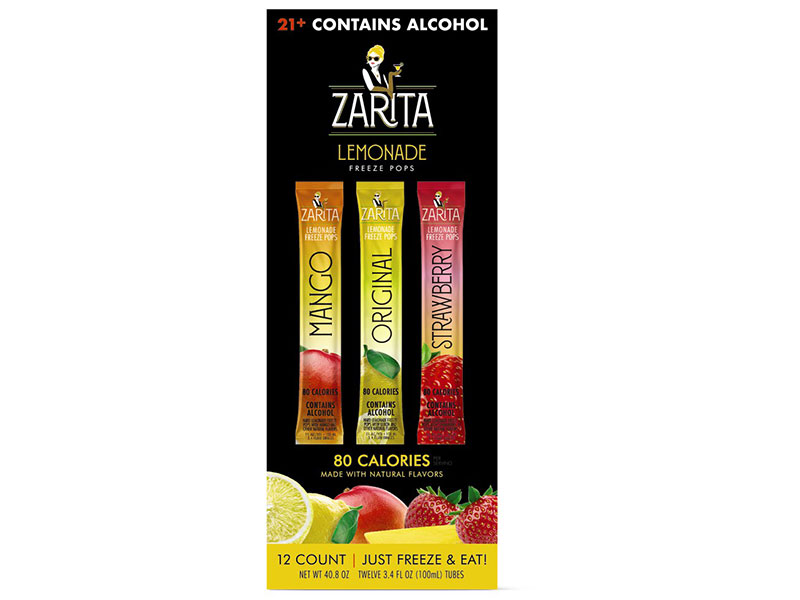
Alcohol in popsicles? Say no more! ALDI’s low-calorie Hard Seltzer Lemonade Freeze Pops come in Lemonade, Mango Lemonade and Strawberry Lemonade. Each pack of pops is available for $13.99.
07
Pacific Fruit Vineyards Bubbly Sweet Punch
Pacific Fruit Vineyards Bubbly Sweet PeachPacific Fruit Vineyards Bubbly Sweet Peach (Photo courtesy of ALDI)

If you’re a fan of fruity wines, ALDI’s Pacific Fruit Vineyards Bubbly Sweet Punch is the perfect pick for you! This light-bodied wine includes notes of fresh peaches, making it the perfect beverage to enjoy with a fresh meal — like a fresh salad or seasonal roasted veggies — and a beautiful day. It’s also priced at just $4.99.
08
Corte Bella Red
Corte Bella Red BlendCorte Bella Red Blend (Photo courtesy of ALDI)

Unlike its dark red cousin, ALDI’s Corte Bella Red features notes of rose, raspberry, forest fruit and red fruit. The only similarity it shares with the Corte Bella Dark Red is its price tag, which is also $8.95!
09
Locken’s Tropical Pineapple Kolsch
Locken's Tropical Pineapple KolshLocken’s Tropical Pineapple Kolsh (Photo courtesy of ALDI)

This refreshing and fruity style of German beer touts a juicy tropical aroma with an underlying breadiness, as described by ALDI. Available for just $7.99, the beer is the perfect beverage to enjoy with grilled meats and seafood.
10
Giambellino Watermelon Bellini
Giambellino Watermelon BelliniGiambellino Watermelon Bellini (Photo courtesy of ALDI)

Nothing screams summer like a watermelon-flavored bellini! ALDI’s Giambellino Watermelon Bellini swaps out the peach for watermelon to make a cocktail that’s perfect to enjoy during weekend brunches. Each bottle is also available for $5.99.
11
Zarita Blueberry Margarita
Zarita Blueberry MargaritaZarita Blueberry Margarita (Photo courtesy of ALDI)
If you’re looking for a cocktail that pairs well with tacos, look no further than ALDI’s Zarita Blueberry Margarita. In addition to tequila, triple sec, and lime juice, the brand’s rendition of the classic cocktail adds in a generous amount of sweet blueberry flavors. Run, don’t walk, to your nearest ALDI to pick up a bottle for just $13.99!

“She has her own strength that was so empowering”: Priya Kansara talks “Polite Society” sisterhood

Let it be known that Priya Kansara is just getting started.

The up-and-coming actor always knew she wanted to be a star since childhood. She landed her first acting gig as Miss Eaton, one Anthony Bridgerton’s eager debutantes, on the second season of Netflix’s hit series “Bridgerton.” She then appeared in the Netflix series, “The Bastard Son & The Devil Himself,” before securing her first major acting role in Nida Manzoor’s action comedy film “Polite Society.”

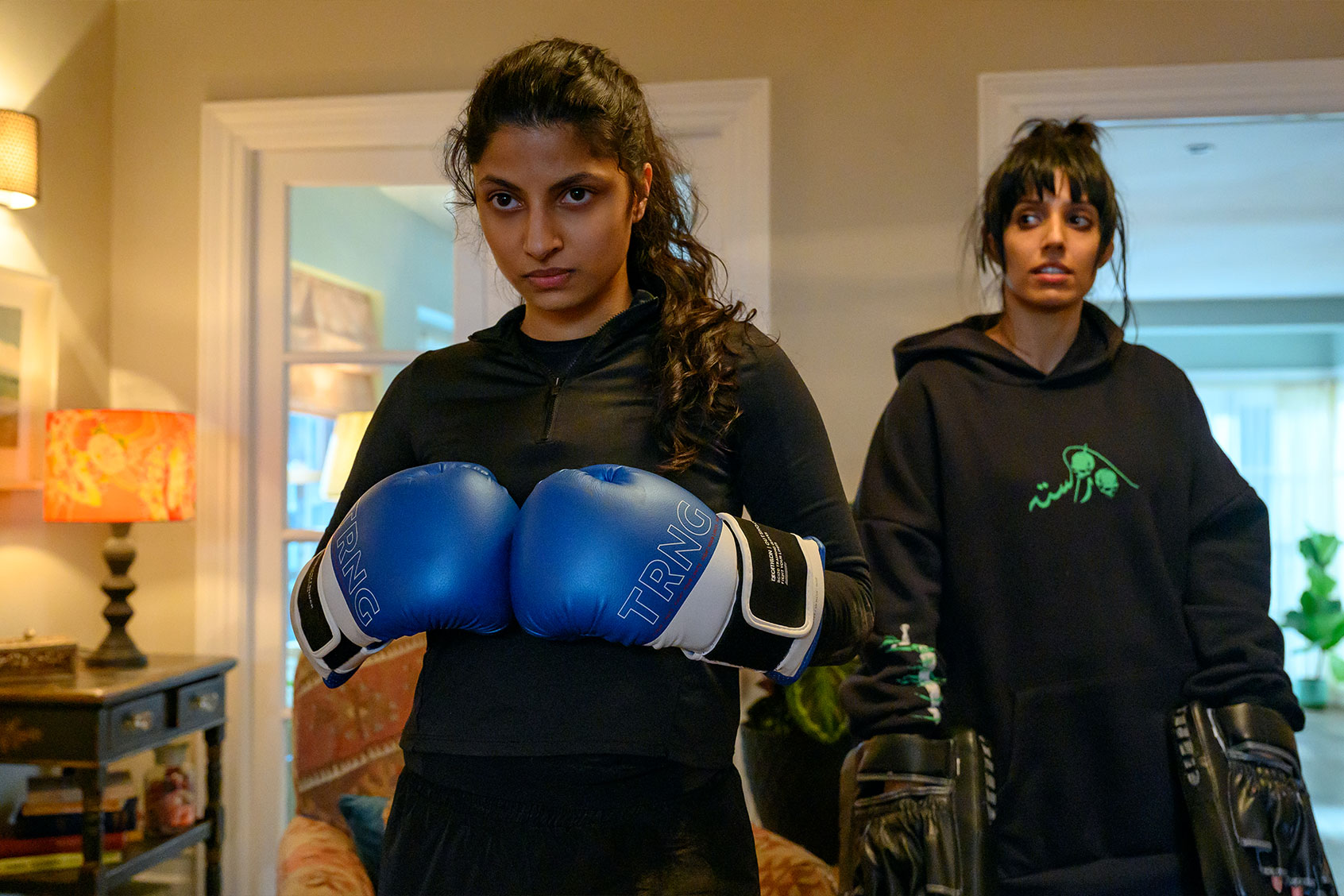
The film follows a British-Pakistani high schooler named Ria Khan (Kansara) who dreams of becoming a professional stuntwoman. Ria is big on making her dreams come true. And, she’s set on making sure her sister, Lena (Ritu Arya), goes back to art school to pursue her creative passions. But things soon take an unexpected — and horrific — turn for the worse when Lena announces her engagement to a dashing surgeon, who happens to also be a stereotypical “momma’s boy,” named Salim. Battling against parental doubts and societal norms, Ria decides she must do whatever it takes — which entails landing one of her most difficult stunts ever — to save her sister and restore their bond.

Sure, “Polite Society” has its fair share of action scenes and edge-of-your-seat fights, but the movie is less about Ria’s physical feats and more about sisterhood and her own identity, namely as a rebellious, outspoken South Asian woman who isn’t afraid to stand up for herself and her loved ones. 

“I’ve been living with this bloody psychotic character in the head for over 10 years and then a brilliant, kind, generous actor comes and just totally just gives her everything to it and is so talented,” Manzoor, who is also the creator of the acclaimed sitcom “We Are Lady Parts,” told IndieWire. “I just felt free when I cast her and I felt free every day on set.”

Indeed, Kansara plays Ria with spunk and a youthful vigor that makes it hard not to reminisce on one’s own adolescent years. In anticipation of the film’s release, Salon spoke with Kansara about her recent role, along with her experience in martial arts, off-screen relationship with her fellow co-star and favorite Bollywood films.

I really enjoyed watching “Polite Society” — I laughed, I cried and, basically, went through all the emotions. To start, I’m curious to know what your first impressions of your character were? What were your thoughts when you read the script for the very first time?

Oh, my first thoughts when I was reading the script is that this is absolutely bonkers! Like, this is crazy. I’ve never read anything like it before. There’s just so many genres. I was laughing out loud and there’s just so many twists in the story as well. So, you know, when you can’t put something down? It felt like that. I was just like, “This is so original and fresh.” I really wanted to be a part of it. And Ria . . . it’s really interesting, I remember speaking to Nida about it and she was like, “She can be quite annoying.” I just never saw her as an annoying teenager. I just always saw her as this kid that just was relentless. She knows what she wants. She loves her family and she will go to the ends of the Earth to save them. It’s really that simple for her. And, to play somebody so spirited and somebody that, in a way, really inspires me, I just kind of fell in love with her a little bit. So, I knew that there was just such a strong connection.

Have you trained in martial arts prior to starring in this film? Or did you start training once you got the role? And how did you prepare for all your stunts?

I’d never really done any kind of stunts like this before. Yeah, it was completely brand new to me. And I was cast around six or seven weeks before we started shooting. So, I worked really closely with our stunt team who are just incredible. We spent three, sometimes four, days a week training prior to the shoot to learn all the fight choreography and the form of martial art within that. We used to practice the wire stunts for the flying kick and all of this stuff. I honestly just had so much fun doing it. I felt like it was so cool to learn this new skill and I still do martial arts today because I just love it so much! So, I continued learning afterwards.

I also heard, and correct me if I’m wrong, that you scaled a building in preparation for a scene? Tell me more about that.

There’s this scene where Ria climbs into Salim’s bedroom. She scales the building and we actually did shoot me scaling that building, so that was more in reference to shooting that scene. You know, I remember walking onto set that day and we had a little practice in the morning along the building. There were these massive cranes holding us up and they put me in a harness, which definitely gave me a bit of a wedgie when I was trying to pull myself up across the wall, which was really funny. There were just so many different, fun things that we got to physically do and try. So yeah, it was really cool.

Ria is also known as ‘The Fury.’ And throughout the film, she repeats her signature mantra, “I am the Fury,” which I found to be very empowering and badass. I’m curious if that mantra also resonated with you on a personal level.

Yes, absolutely! In so many ways did it resonate with me. I feel like I can sometimes be incredibly self-deprecating to myself — sometimes we just don’t treat ourselves with enough kindness. And I think it’s particularly women, because we’re often told to do that to others and less so to think of ourselves in very many situations. And so, to play a character who has this sense of self belief and who has this mantra that they say to themselves every day and who is their own strength, that was so empowering and really inspiring to me as well.

“To play a character who has this sense of self belief and who has this mantra that they say to themselves every day and who is their own strength, that was so empowering and really inspiring to me as well.”

Sometimes when I’m in the gym, I’m like, “Ria would go for another 10 minutes. Priya, you are the fury. Priya, you are the fury!” And it’s just really nice to kind of have that. And even the fact that she’s the fury, rage and fury are things that, particularly as women, we just don’t get to express very much. And God, to have that cathartic release through this film and to remind ourselves that we are the fury we are allowed to feel fury that that is allowed is just, again, super empowering.

Speaking of womanhood and sisterhood, one thing I really loved about the film is Rhea and Lena’s sisterly bond. What’s your relationship like with Ritu off-screen? And how did you both bring that chemistry and sisterhood to life on-screen?

Oh my God, I love Ritu. She is like a sister to me. We get along so well and it was so easy. I remember the first time I met her was in rehearsal and she came to give me this lovely present. We met a couple of times before we started the shoot, you know, she made me an omelet and made me breakfast. We just hung out. I think for us as well, to have such an easy kind of chemistry and to feel so comfortable with each other so quickly made the whole process quick and it was just super simple. And we got to kind of feel like sisters. You know when you kind of develop your own language? Only you guys find these things funny or you guys are messing about or poking fun at each other for different things. Hopefully that just came through on screen. We learn a lot from each other and really support each other and care for one another. It’s just been really wonderful to work with her.

Polite SocietyPriya Kansara and Ritu Arya from “Polite Society” (Photo courtesy of Focus Features)

I was also in complete awe when Ria was kicking some major butt while wearing heavy pieces of jewelry and an anarkali (Indian wedding attire). What were some challenges that you encountered when doing your final stunts?

We worked really really closely with makeup and hair and our costume department. Something that was really important was how the costumes would have this movement so that we could have this synergy between the costumes and the fight sequences. I think the fights are really epic because Ria’s anarkali moves when she fights or when she does the backflips and all of this kind of stuff. And that was really fun to do. I remember having to practice a couple of times, particularly in wire stunts with a costume so that we could figure out how that works. But there were challenges. Ria has this really long cap that she wears within the wedding sequence. And occasionally, we’d do flips, and my cap would get caught on a piece of jewelry and it would just be hanging there really weirdly. So, we’d have to figure out these random logistical things. That was a really fun challenge and kind of a learning curve for all of us.

Ria looks up to and greatly admires stunt double Eunice Huthart. Do you have someone in Hollywood (or the entertainment industry) who you also look up to and greatly admire?

I’m kind of envious of people who have that one person. I was so lucky to have so much influence of film and TV and performance and theater when growing up because my parents tried to take us to the theater every Christmas and that kind of a thing. So for me, there were so many things. My mom loves Bollywood, my dad loves action. I was growing up watching such an array of things that there’s not one person that sticks out to me. There are so many women in the industry as well that have inspired me: Viola Davis, Michelle Yeoh, Meryl Streep, actors like them. And even people like Mindy Kaling, who have made such a huge mark for South Asian women in the industry as well. Honestly, the list is endless. I feel grateful to have loads of people to be that poster on my wall.

Polite SocietyPriya Kansara and Nimra Bucha from “Polite Society” (Photo courtesy of Focus Features)
Malala recently gave a shout out to “Polite Society” and praised your “dynamite performance.” How does it feel to receive that kind of recognition, admiration and acclaim?

It means the absolute absolute world! I’m consistently pinching myself. Every morning, I’m like, “It’s real. It’s happening.” I feel really lucky to be in this position. I admire Malala for her activism, her bravery, her intellect. She’s done so many incredible things and for her to give us a shout out is insane. What is life? You know, it’s crazy! I have no words. It’s so, so special.

You previously starred in “Bridgerton,” but “Polite Society” marks your first major role in a film. What did you learn from this experience? Were there any specific moments from the entire process that surprised you?

Everything felt new to me. Of course, there are differences between TV and film as well and the way in which they’re structured. I mean, I’m so lucky to work on shows like “Bridgerton,” where I had such an incredible kind of starting point. Those were the times I had a trainer for the first time. I got to see a call sheet for the first time and know how sets work. But on “Polite Society,” it was so different because I was there every day. And Ria’s role is so integral to this film, to work so closely with every department, and we need to develop her in the way that I could be. I felt like I was trying to be as much of a sponge as I possibly could to try and take in as much as I could learn from all of the incredible people that I’ve had the opportunity to work with. It has just been such a blessing and such an incredible opportunity.

Considering that the film has several Bollywood influences, I must know what your top three favorite Bollywood movies are.

I have so many! Can I say four?

Sure!

Oh my gosh! “Lagaan,” “Kuch Kuch Hota Hai,” “Bunty Aur Babli” and “Jab We Met.”

I also must know, what’s next for you? What are you working on in the future or in the near future?

At the moment, we’ve been so busy with the promotion for this film and being so excited to have this release to the world. I’ve been so lucky to have things come through the door and reading some super interesting projects and having those things trickle in the background. So hopefully, I’ll be able to announce cool stuff in the coming months and that would be amazing. But for now, I guess we’re just so excited to bring this to the forefront and have you all, hopefully, go out and see it and enjoy it!

“Polite Society” is currently playing in theatres. Watch a trailer for it below, via YouTube:

Political “polarization” isn’t the real problem in America: One pole is a lot worse than the other

There was a time, not all that long ago, when the idea that American political life was dangerously polarized was controversial, and often vehemently denied. In 2004, Morris Fiorina and his co-authors published “Culture War? The Myth of a Polarized America,” which argued that the electorate hadn’t fundamentally changed much since 1964, when Philip Converse argued that the vast majority of voters were “innocent of ‘ideology.'” Some scholars pushed back against this centrist, denialist consensus, but Fiorina’s book ran through a third edition in 2010 — the year of the Tea Party wave election. 

Today things look quite different — at least on the surface. Polarization research has exploded, exploring many different dimensions — social, ideological, affective — all resting on the premise that polarization is a big problem, if not the central problem, in American politics today. But this research too often tacitly yearns for a lost golden age of greater consensus, an age that was never golden for those effectively excluded: most women, people of color, LGBTQ folks and so on. 

This unspoken anti-political and even anti-democratic bias is addressed in a new paper from Daniel Kreiss and Shannon McGregor, both at the University of North Carolina. They argue that the focus on polarization as such, while ignoring the actual content of politics that produces polarization, is fundamentally mistaken: “As a concept, polarization does not provide a normative or even conceptual way of distinguishing between White supremacists and racial justice activists, despite their asymmetrical relationship to liberal democracy.”

This paper was written for other scholars in political science and communications, not for the general public, but its implications are profound, particularly as the 2024 election begins to shape up as a 2020 rerun. Repeating that exercise strikes almost everyone as exhausting and frustrating. But repeating it with a full awareness of the stakes, liberated from the supposedly even-handed frame of polarization, could instead be liberating. “Groundhog Day” had a happy ending, after all. Hoping to bring this argument to a wider audience, I reached out to Daniel Kreiss for a lengthy conversation. This transcript has been edited for clarity and length.

Your paper, “A review and provocation: On polarization and platforms,” argues that the “analysis and normative conclusions of much polarization research … are wrong.” You launch that argument by giving a brief history of the Black Lives Matter. Why is it wrong, and how does Black Lives Matter fit in? 

Starting out at the broadest level, what Shannon and I argue is that too many scholars in fields like political science and communication focus on polarization as being the foremost democratic concern, whereas in the context of movements of our own time, like Black Lives Matter, polarization is actually the byproduct of various groups struggling for political and social equality. So polarization itself might not necessarily be bad. Put it into a broader framework of understanding relations between various groups: Who gets to exercise citizenship, who gets to exercise their basic right to life. When we have groups that are protesting for equality and threatening dominant institutions such as the police, the concern should be that we have groups that are deeply unequal, but not necessarily that those groups pushing for equality cause polarization or cause other people to backlash against them.

In the abstract you argue that “polarization can only be seen as a central threat to democracy if inequality is ignored,” and in the paper itself you note that scholars’ conceptions of polarization “have overwhelmingly focused on its harmful democratic effects.” So what are they missing in terms of more positive effects, and what are the consequences? 

“In the context of movements like Black Lives Matter, polarization is the byproduct of various groups struggling for political and social equality. Polarization itself might not necessarily be bad.”

Let’s take an example of the civil rights movement. You had a post-World War II consensus between the two main parties, in essence a white-dominated consensus that the civil rights movement had to work against in the push to dismantle the Jim Crow South and various other racist structures that existed across the country. Polarization researchers — if we take the analogy to the work being done today — would say, “We’re all so polarized because these groups are threatening an existing social order.” Polarization, by considering only the distance between groups on various ideological or affective measures, would say the real concern is that we’re so fractured with so many different ideas about the way the country should live, about whether Black people should have equality, etc. 

But looked at through the lens of the civil rights movement, clearly the movement for political and social and civil equality was the movement in line with democracy. You can see this on any of a number of dimensions, whether it’s trans equality or LGBTQ equality more broadly, the push for Black equality, women’s rights, etc. The concern, I think, shouldn’t be “Oh! People are so far apart!” when it comes to whether we should accept certain people as citizens of whether we should diversify the economy. The concern should be that there are vastly unequal structures, and various groups that are looking to achieve political and social equality. 

As I read your article I was reminded of Martin Luther King Jr.’s “Letter From Birmingham Jail,” in which he takes on the flawed centering of superficial cohesion, and the charge that he was a disruptive force of polarization. His argument was basically that he was bringing things to the surface so they could be dealt with, so problems could be solved. Would you relate what you’re saying here to King’s argument? 

I think that is 100% consistent with with what we’re arguing here. And amazing scholars like Juliet Hooker, who’s at Brown, have argued this as well, that white moderates historically have held up this idea of a politics of solidarity as the thing we should always value from a democratic perspective, that idea of cohesion. The political work that that does, however, is to paper over larger differences and discrepancies when it comes to social groups that are positioned very differently in social structures and fight for change in various ways. 

Think about an example: the gay rights movement in our own time. They had to push and agitate and protest and cause backlash from people who didn’t want things to change, who didn’t want to accept equality. And that backlash is not the problem. The problem is that we had a society that didn’t accept people’s civil rights, and didn’t treat them as people deserving of equal protection under the law. That was the issue then, and that’s also the issue with Black Lives Matter now. The problem is not that people are protesting in the streets. It’s that some people just don’t have equal protection under the law.


Want a daily wrap-up of all the news and commentary Salon has to offer? Subscribe to our morning newsletter, Crash Course.


I was reading the Axios newsletter this morning and they used the language of polarization to talk about how college students are making choices on the basis of state laws around reproductive rights. Basically they bemoaned the polarization that means people aren’t going to go to school in red states if they value abortion access. But the problem there is not polarization, it’s that 18- to 24-year-olds, very logically, are like, “We want to be make sure that we have reproductive freedoms and can make autonomous choices for our own bodies when we go to school.” Polarization is beside the point.

“If young people aren’t going to school in red states because they value abortion access, the problem there is not polarization. It’s a logical decision. Polarization is beside the point.”

The broader argument we want to make is that there are many different types of groups located in various ways and social structures, and that can include differences based on gender, class, citizenship status or religion, in addition to race and ethnicity. There’s clearly a set of dominant power relations across all these dimensions. A functioning democracy is premised on equality. You certainly need political equality, but also a certain degree of social equality, in order to be a democratic society. The concern should not be that certain groups are fighting for equality. The concern should be that we live in a vastly unequal society. That’s really the critique that we want to make front and center. 

It’s not to say that polarization in all cases is not something to be concerned about. There are all sorts of ways that citizens have skewed understandings of the other side, when it comes to the beliefs that citizens of different parties hold, and those things are all potentially concerning. But when you have an assault on our nation’s capital, as we did on Jan. 6, that was designed to prevent the peaceful transfer of power after a safe and a secure election, the problem is not polarization, it’s anti-democratic extremism. It’s unfair and illegitimate power grabs by a set of dominant groups in a white-dominant political party. It’s not the fact that we’re so divided. I just think a lot of scholars have been drawing the wrong conclusions and focusing on the wrong questions when it comes to what we should be concerned about. 

Well, we have white supremacy on the right side, more or less, and multiracial democracy, multi-gender, multi-identity democracy on the left side. Can you say more about that?

This is where it gets really complicated. So what does the social science say? In general, we know that the two U.S. political parties are sorted along a number of different dimensions. Lilliana Mason has written an amazing book on this, “Uncivil Agreement,” that basically shows that partisanship has become a mega-identity, within which a number of different social groups fall. Within the right it tends to be people who are comparatively wealthier, white evangelicals, white rural residents. The Democratic Party, as you note, is more of a multi-racial coalition. It has more people on the lower end of the economic spectrum. it includes more women, more groups that historically have been outside the dominant center in U.S. society. 

Now where things get really interesting —  I would turn to W.E.B. Du Bois in “Black Reconstruction in America” and other work he did, which basically showed that white capital works in all sorts of ways to constructs white interests across the economic spectrum, what Du Bois called the “psychological wages of whiteness.” In essence, if you’re white you acquiesce to a grossly unequal economic order, because your racial and ethnic identification still put you in a higher status group than people who are not white.

There’s all sorts of ways that power works to structure relations between groups in order to keep dominant interests in charge. Other scholars, Daniel Ziblatt is one of them. have argued that conservative economic interests, in part, are able to hold on in countries around the world because they create these identitarian wedge issues in various ways.  

One way to think about that now is to ask: “Why is the contemporary right obsessed with trans issues right now?” I think this is a clear example of constructing identitarian appeals that work with white men in particular. That also came right on the heels of all the “critical race theory” bills that swept across the country, all with similar language about protecting, in essence, whites from feeling guilty from learning about racial history, from being accountable for racial histories. 

“Why is the contemporary right obsessed with trans issues right now? I think it’s a clear example of constructing identitarian appeals that work with white men in particular.”

If you think about it from that perspective, it’s doing this work shoring up in-group identity within a dominant coalition that overlaps with not only being white, but also being heterosexual and cisgender. It creates this overlapping set of group identities that can be defended along the lines of social and identity appeals. And guess what we’re not talking about? We’re not talking about economics in the context of that story. Du Bois really pointed out that if you create various status gradations among various groups that work in tandem with capital, you can maintain certain relations of economic production. That’s why he’s one of the forerunners of “racial capitalism,” to show that capital works hand-in-hand with various constructions of racial order. 

So what do people need to do to break out of this way of thinking, get a clearer vision and articulate an analysis that’s more helpful?

I’d like to frame this in two different ways. One, our paper was geared toward an academic field of study. This wasn’t a public-facing piece. This is more like, “How do we intervene in various debates?” Within the research community, I think it’s doing a few things: Any study of polarization needs to layer onto that an analysis of social groups and social structures. And then the second move would be, if you’re considering the democratic consequences of polarization, you also have to consider what the  poles that you’re comparing really are. Polarization only says what’s of concern is that distance between two groups, whereas we’re arguing that one group is antidemocratic extremists and the other group is a multiracial democratic movement. The concern is not that they’re so far apart.

So it’s about having a much clearer set of analyses when it comes to a normative set of conclusions that you’re going to draw about polarization. And then, when you’re doing research on this work itself, it’s about careful analysis: When you look at differences between groups and their attitudes and their ideologies, their perceptions of other groups, that you’re clearly accounting for power. If you don’t do that, you sort of end up in this false equivalence where you’re comparing marginalized people with people who are in dominant positions of power, who benefit from the system being kept the same way at the end of the day. 

I’d also say another thing too. On the academic side of the ledger, I teach and research at a public university in the South. Polarization looks very different from my vantage point than it does to a lot of the scholars who are driving this field, working within blue states at powerful private institutions. So if you look at where very interesting research is being done on things like inequality or things like power, it’s coming from public universities around the country, the University of Wisconsin, the University of Texas, the University of North Carolina, in part because we’re seeing these political dynamics play out in a very vivid, very real way, and one that’s often shot through with very salient racial, ethnic and other power dimensions. 

And what’s the relevance of this work beyond the academy?

From a public discourse perspective, I would say it’s about just being more precise in what we’re critiquing. I often think the polarization frame is the easy one. It’s politically neutral. It’s easy to be like, “Oh, we’re all so polarized!” Consider that Axios newsletter I mentioned: A more careful analysis is to say, “Maybe 18 to 24-year-olds are concerned about the fact that they’re going to have access to reproductive care while they’re in college.” Or to cite another issue, the problem isn’t that we’re polarized around guns, the problem is we have mass shootings once a week in this country. I think it requires having a much clearer diagnosis of what’s at issue. 

“From my point of view, the problem is guns. The problem is anti-trans laws. The problem is white supremacy. Polarization becomes a way to talk about politics without talking about politics at all.”

But that also means taking a stance. And I think a lot of journalists and a lot of social scientists, a lot of people in public life feel very uncomfortable with that. We can’t call out guns, but we can call out polarization. But from my point of view, the problem is guns. The problem is anti-trans laws. The problem is white supremacy. Those are the issues that I think we should focus on, and be clear-eyed about. Polarization becomes a way to talk about politics without talking about politics at all, without actually getting at the underlying issues. We all just need to be much sharper in our analysis and much clearer in our commitments when we talk about these issues, without the lazy way out of relying on polarization speak.

Another issue here is facts. Scientists discover reality. Everyday people in their everyday lives encounter reality all the time. On the other hand, polarization is basically a mythmaking structure, as you were talking about from Du Bois. I think it’s pretty clear that Black Lives Matter was talking about things that were undeniably real. Stop the Steal, with its this fantasy of a stolen election — they had no evidence at all. That’s my analysis. 

A fundamental way that humans work is by telling stories about the world and then living underneath those story. I think you’re right. A huge aspect here is the fact that in general the political left — that’s an imprecise term — has maintained more faith and trust in knowledge-producing institutions like science, like journalism. That’s not true in all and every case, but in general the orientation typically has been to have more trust in these things that produce knowledge. On the right what you really see is the product of a long campaign to undermine trust in knowledge-producing institutions. It’s been a concerted campaign that stretches back over decades. it relates to all the ways that elites and people in power have critiqued media and scientific institutions who were doing their job to produce reliable facts about the world. 

If you look at science historians, for instance, a lot of what we’re seeing in 2023, bends back decades to conservative groups that were fighting government regulation to cast doubt on things like tobacco research and the link between smoking and cancer. When we achieved scientific consensus loud and clear over things like climate change, there were various industry groups pushing back on scientific work. You know that great book by Naomi Oreskes, “Merchants of Doubt,” right? In essence they were saying, “We don’t know,” working hard to undermine public perceptions of scientific institutions, of the scientific process.

All that happened well before Donald Trump. What about today?

Another line is looking at election credibility. So, in essence, when it benefits you, you can say “stolen election” and you’ve already primed people to not trust elections boards, secretaries of state, all the amazing people who donate hundreds of hours of their time to ensuring the peaceful transfer of power. I think one important part of the story here is that it always aligns with power, in the sense of benefiting the elites who are doing that strategic undermining of knowledge-producing institutions. 

Are some people duped by the lie of the stolen election? Sure. But at the end of the day, the more important fact is it aligns with their partisan and racial interests to believe that the election was stolen. And certainly that narrative, as my colleague Francesca Tripodi showed, the groundwork for “Stop the Steal” was laid in 2016, in case Trump lost. They didn’t need to use it. This is a very strategic campaign, one designed to build power over time. We can focus on the epistemological elements of it, they’re important. But I think first and foremost you have to understand this as a strategic campaign to ensure power for certain groups that benefit from pushing these narratives.

“Mrs. Maisel” and the myth of the sacrificial ex-husband

Sexism is rough and rampant. Several characters are closeted, despite what would have been a popular Greenwich Village gay bar scene and growing activism. But in most regards, “The Marvelous Mrs. Maisel” is a sherbet-colored fantasy with plucky cheer. Like “Leave it to Beaver” and “I Love Lucy,” airing around the time the Prime Video show is set, everything always works out in “Mrs. Maisel.” The dresses are pretty and plentiful, childcare issues are nonexistent, and the money continually comes through. The ex-husbands do as well.

In an Amy Sherman-Palladino show, divorces don’t stick.

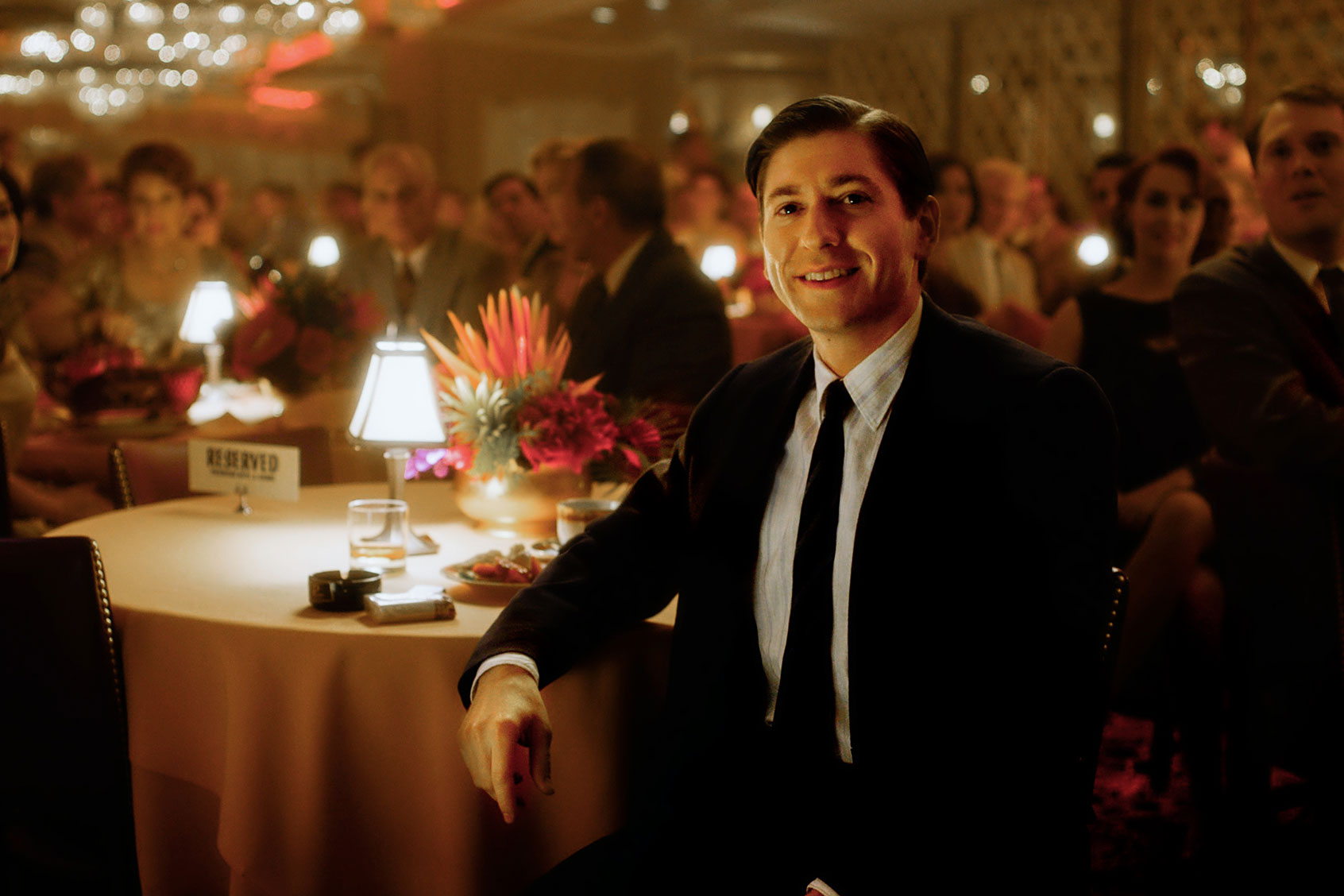
Amy Sherman-Palladino, creator of “Mrs. Maisel,” loves an ex-husband. In Midge’s world, her ex Joel (Michael Zegen) was the catalyst for the launch of Midge’s standup comedy career. He left her, with two very young children, after bombing himself onstage, and admitting to Midge he was having a months-long affair with his secretary. Midge (Rachel Brosnahan) and Joel divorced early on in the series, but few events in “Maisel” land have lasting consequences. Joel hasn’t and isn’t going anywhere. And in the ultimate fantasy of an ex, he’d give up his freedom for her as well.   

“So you think this one will stick”? Joaquin Phoenix as Johnny Cash says drunkenly (and jealously) to Reese Witherspoon’s June in “Walk the Line,” upon the news of his future wife’s third marriage. In a Sherman-Palladino show, divorces don’t stick. In “Gilmore Girls,” ex Christopher (David Sutcliffe) performs the great disappearing, reappearing act. The mother of his child is stuck firmly in Stars Hollow, raising the girl, so Christopher can come and go on his dad motorcycle whenever he likes. He drops both in and out of his daughter’s life (missing huge moments, like her high school graduation) and her mother Lorelai’s (Lauren Graham) love life.

Sherman-Palladino’s exes make out with each other a lot, accidentally sleep together again repeatedly, and even get married once or twice, impulsively and briefly, as Lorelai and Christopher do. Midge and Joel have done the whole marriage, divorce, re-marriage, re-divorce dance themselves.

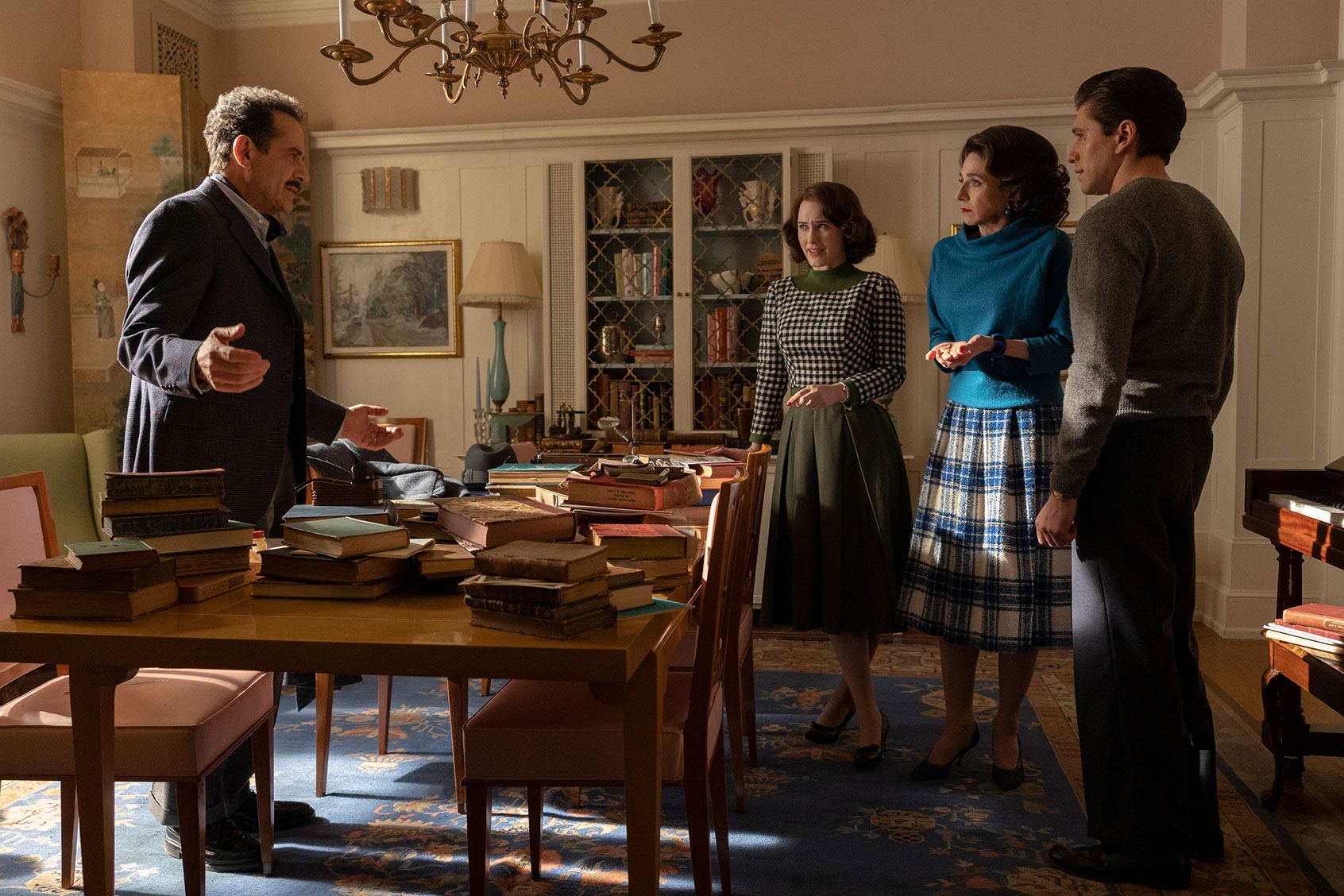
The Marvelous Mrs. MaiselThe Marvelous Mrs. Maisel (Philippe Antonello/Prime Video)Having a child with someone ties you to them, at least for 18 years, and unlike Christopher, Joel of “Maisel” is an involved dad, likely more active than a typical father of the 1950s and ’60s would be. But he’s also atypical when it comes to how he views his ex and at times, how she views him as well. Joel does not want to let go. He refers to Midge as his wife long after she’s not legally (or in any sense of the word) his wife, repeatedly in screaming matches with Susie, Midge’s manager (Alex Borstein). His rageful jealously toward Susie flares up in ways that are out of line, at best, homophobic at worst. 
They are each other’s safety school.  

Midge shares a co-dependency on Joel. She can count on him to pick up the kids — great! — or to boost her ego, flatter her and sleep with her when she’s lonely (not so great). Both exes have had multiple new relationships, even engagements, but you have to feel sorry for their partners. These two are never going to move on. Rather than present this as the sadness it is, the show views it as another part of the glittering fantasy. It’s idealized, that Joel will conceive with another woman but by the very next episode, he’s back to making out with Midge on a fire escape (which also feels like a “Gilmore Girls” move). They are each other’s safety school.   

The Marvelous Mrs. MaiselThe Marvelous Mrs. Maisel (Philippe Antonello/Prime Video)Joel began the series as a cheater, wounded by his then-wife’s success. Soon he started to claim it as his own. Then, to be proud of it, proud of her and supportive of her career, flying to Vegas to watch her perform when her own parents wouldn’t. But that support seems to have given him license to overstep, to continue to dominate the life of the woman he left. Joel is overprotective to the extent of control. 
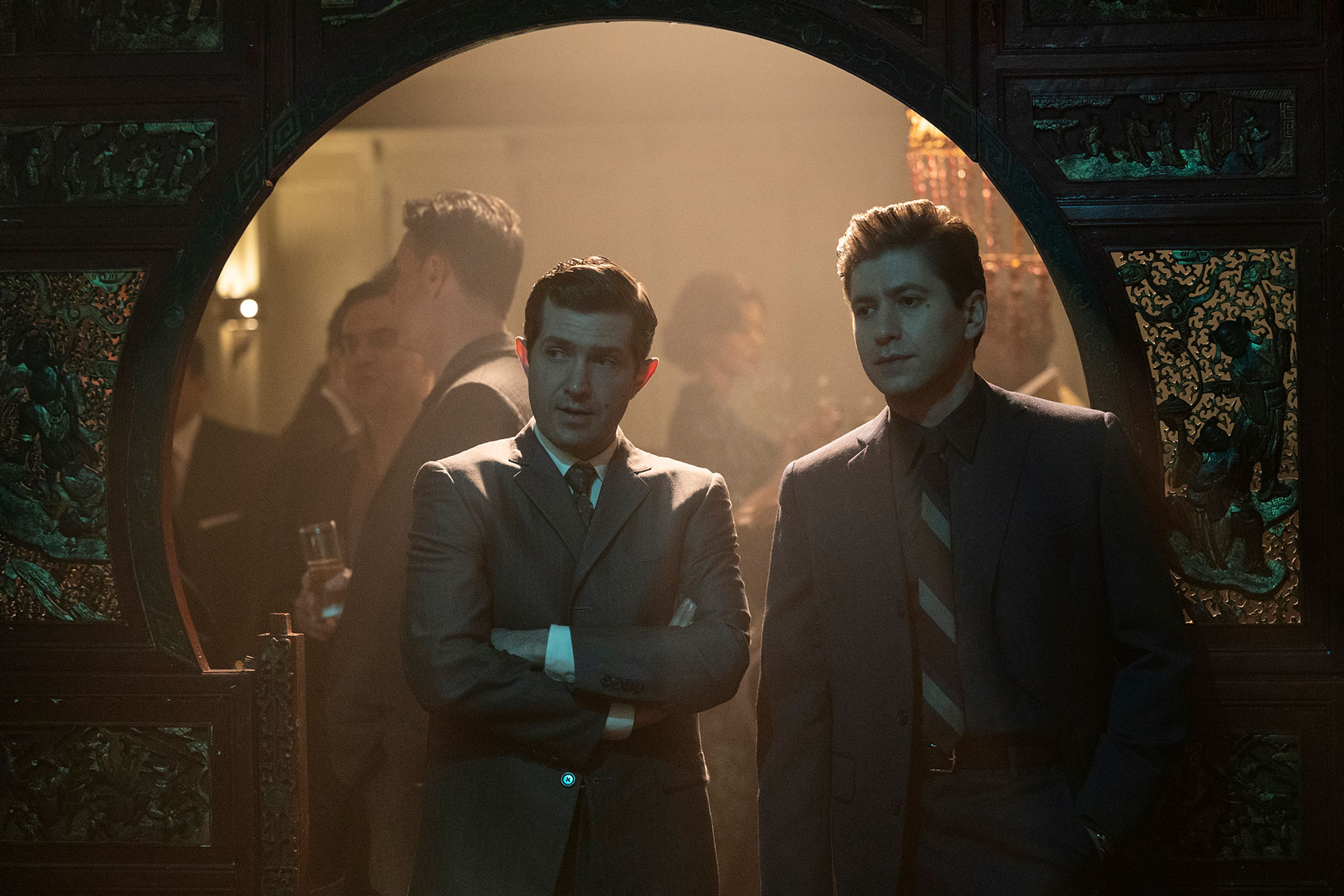
Nowhere is this more apparent than with money, that issue that causes strife between so many couples. Joel controls the puppet strings or at least, the purse strings. “Maisel” excuses this as Midge being bad with money. She’s so flighty — she’ll spend everything on hats! Susie, with longtime experience of poverty, also struggles realistically with money. These irresponsible women! They have to put their trust — and their pennies — in Joel. And Midge can never truly strike out on her own as long as she must be dependent on her ex.  

The Marvelous Mrs. MaiselThe Marvelous Mrs. Maisel (Philippe Antonello/Prime Video)The show presents this as a noble sacrifice on micromanaging Joel’s part and not what it is: more control. Joel is always looking out for Midge; she tells him, in one of the awkward flashforwards the show has gone all-in on in Season 5, he doesn’t have to keep doing that — and Midge is in old age makeup at the time so that’s been happening for a while. And Joel? He’s in prison.
His ex-husband hackles have been up about Frank and Nicky’s sketchy behavior and the degrading trash truck musical (which was actually pretty awesome) they made Midge perform in. He’s done something rash, something bigger than punching a man in the face for Midge, which he has also done. This is the ultimate ex-husband myth: the ex who won’t leave your side, until he takes a metaphorical bullet for you. 


Want a daily wrap-up of all the news and commentary Salon has to offer? Subscribe to our morning newsletter, Crash Course.


But is it a fantasy or a nightmare? Midge has started taking a patronizing tone with Joel, talking to him like another one of her kids with whom she has to be patient, placating. She’s tired. We’re tired. This is the final season of “Maisel” so the show has to pull out all the stops, and switch course on some character development, speeding it up. Joel’s changed, OK? How to show that fast? Look what he did for her. But Midge may be more in debt, more dependent on Joel than Susie is on Frank and Nicky. How can you repay someone who possibly went to prison for you? You can’t. How will you ever escape their long and looming shadow and move on? You won’t. 

Butt lifts are more popular than ever. They’re also one of the most dangerous cosmetic surgeries

On Oct. 20, 2021, 26-year-old Jaynisha Williams, a mother of two, walked into a cosmetic surgery clinic called Best U Now in Plantation, Florida. Williams, who was known as “Jayla” among friends, had two procedures scheduled: a breast augmentation and a Brazilian butt lift, or BBL. One of many patients who went through plastic surgery at the Best U Now medical facility that day, Williams tragically died on the operating table, according to news reports. The Broward County’s Office of the Medical Examiner in Florida later found “the BBL procedure was completed, but she (Williams) never awoke from the anesthesia.”

Sources estimate as many as 25 BBL deaths occurred in south Florida between 2010 and 2022 alone.

Williams is not alone. There have been many other instances of fatal BBL surgeries in Florida in recent years, including in 2022 when Tanesha Walker, a 47-year-old Indiana grandmother of 11 passed away; or, in 2016, when Heather Meadows, 29, a West Virginia woman, and mom of two, died during her surgery. In fact, the increasingly popular BBL is statistically one of the most deadly elective plastic procedures. Various sources estimate as many as 25 BBL deaths occurred in south Florida between 2010 and 2022 alone — and this number represents only the recorded gluteal deaths among licensed medical professionals practicing in south Florida. 

The popularity of different cosmetic surgeries is a reflection of what kinds of bodies are “in” at any given cultural moment. In the 1990s and 2000s, it was breast augmentation; currently, the tastemakers in the beauty and fashion world have decreed that the fixation is on women’s butts. Our cultural obsession with buttocks has resulted in an exponential rise in the number of cosmetic gluteal surgeries in the past two decades. According to the American Society of Plastic Surgeons, there were a mere 5,735 buttocks lifts and implant procedures performed in 2005; in 2021, 61,387 individuals went to a licensed medical professional for butt surgery (fat grafting and implants combined) — an increase of over 1000%. And 2021’s numbers were a 37% increase on 2020’s.

Brazilian butt lifts and other gluteal surgeries may be increasingly popular in the United States, but many American medical tourists seeking BBLs routinely travel to destinations like Mexico, the Dominican Republic, Turkey, Colombia, Brazil and elsewhere for affordable gluteal surgeries. The numbers cited by the American Society of Plastic Surgeons do not include these procedures abroad.

The rise in the popularity of the procedure is accompanied by a concomitant rise in deaths. An academic survey found as many as 1 in 3,000 of BBLs nationwide resulted in death, earning the surgery the title of the world’s “most dangerous cosmetic procedure,” according to researchers.

If the initial out-of-country surgery was botched, follow-up medical care, procedures and surgeries will typically not be covered by US health insurance companies.

Of course, the vast majority of BBLs don’t end catastrophically. Yet the risk may be greater abroad. Alarmingly, there is not accurate compiled data on the number of deaths from botched BBLs performed on Americans abroad. There are, however, numerous news stories of people who died abroad while having the procedure, including a New York mom, an Indiana daycare owner, and the death in 2020 of Californian Joselyn Cano, an Instagram influencer

Dr. David Kahn, M.D. is a plastic and cosmetic surgeon in California, and a clinical associate professor of surgery and plastic & reconstructive surgery at Stanford University. Kahn warned of a host of medical safety, ethical and aftercare concerns for gluteal surgery outside of the United States. If the initial out-of-country surgery was botched, follow-up medical care, procedures and surgeries will typically not be covered by US health insurance companies, Kahn says. And when it comes to gel butt injections, another procedure that Kahn does not perform, many out-of-country medical tourists often have no idea what was injected in them.

The evolution of BBL surgery — and why BBLs are more deadly 

The procedure that is colloquially known as a BBL is technically called a “buttock augmentation with fat grafting” or a “safe subcutaneous buttock augmentation.” The point of a BBL is to add volume and shape to one’s butt; plastic surgeons warn that it won’t affect sagging or excess skin. Surgically speaking, a BBL is basically fat grafting, in which fat is moved from one location to your body to your buttock area. 

Unlike other cosmetic procedures such as Botox, BBLs are not quick and easy, despite a host of online sources that falsely claim you can easily go back to work a day or two after a BBL. The majority of plastic surgeons state that BBL post-surgical recovery time can be four to six weeks or more.

In many BBLs, surgeons make two separate surgical incisions into the body— often the stomach and buttocks — to facilitate fat transfer. After surgery, it can be extremely challenging to comfortably do basic tasks for weeks, like sitting, going to the bathroom, exercising or showering. This is true even in the case of a “successful” BBL surgery.

Kahn has observed what he calls a “significant increase in buttock surgeries” in the past twenty years. Still, Kahn had high confidence in American plastic surgeons that were “licensed and board-certified.”

“People think what they are paying for is a three-hour surgery. They are also paying for aftercare and professional knowledge,” Kahn noted.

He notes that the conversation around BBL safety is multilayered. While Kahn concedes that surgical risk is never zero, licensed board certified plastic surgeons are rightly held to an incredibly high standard; thus, data for gluteal surgical deaths among licensed board-certified plastic surgeons performing gluteal surgeries in the United States is considerably lower than what has been reported in the media, he claims. 

“The buttock has gluteal veins that can be injured . . . [and] during the procedure, the fat that is meant to be injected to the soft tissue can be inadvertently taken into the veins,” Kim said.

When it comes to BBLs surgeries and the rash of patient deaths over the past decade, Dr. John Kim, professor of surgery and of dermatology at Northwestern University Feinberg School of Medicine, said most licensed and board certified plastic surgeons have honed their surgical procedures over the years. Now, board certified licensed plastic surgeons make sure fat is injected subcutaneously, above the muscle, in order to avoid injury to the gluteal vein. The risk is fat clots that could travel up to the heart and lungs and become a deadly embolism.

Another important innovation, Kim said, is the use of a type of ultrasound imaging, called “intraoperative ultrasound technology,” during gluteal surgeries. Such imaging is incredibly helpful for plastic surgeons to visualize what’s happening internally during gluteal and other plastic surgery operations.

“The buttock has gluteal veins that can be injured . . . [and] during the procedure, the fat that is meant to be injected to the soft tissue can be inadvertently taken into the veins,” Kim said. As a result, “you can get clots that can travel from your calves to other parts of your body. The fat can create problems with the heart and the lungs.” This is what has historically caused higher fatality rates and catastrophic consequences, he said.

“We are advocating for all of our surgeon members to utilize ultrasound technology during surgery . . .  I use a handheld ultrasound device and I can visualize where I am injecting fat. I sleep better knowing that I use ultrasound technology,” added Dr. C. Bob  Basu of Houston, Texas, who currently serves as the Board Vice President of the American Society of Plastic Surgeons. Basu, a board-certified licensed plastic surgeon, said he started using intraoperative ultrasound technology for gluteal operations in the last year and a half. 

Fly-by-night BBL surgeons

An area of shared concern among many within the plastic surgeon community, Kahn said, is when American medical professionals who are not plastic surgeons take a “weekend or short-term course” and start offering plastic surgery in their practice. Kahn said that in his opinion, an OB-GYN should not be doing a rhinoplasty, to give one example. Patients may not know that their plastic surgeons is only a part-timer — yet the demand for plastic surgery and procedures is so high that many don’t necessarily do the research.

Indeed, there is evidence to support that Williams’ doctor may have suffered from a lack of experience. (Kahn has no connection to the Jaynisha “Jayla” Williams case or any of the cases mentioned in this article.) Yahoo News reported that Dr. John Edward Nees, the designated physician at Best U Now where Williams was a patient, “claimed they allowed another inexperienced doctor (not named in that report) who was not a qualified anesthesia provider to sedate Jayla [Williams].” Meanwhile, the Florida Health Department filed an administrative complaint against the surgery center.

BBL regrets 

The story of Tiffany, a 23-year-old self-employed hair braider in New York, exemplifies the negative experiences of dissatisfied BBL surgery patients. Tiffany thought she was scheduled for a Brazilian butt lift and a tummy tuck with a licensed Bronx-based plastic surgeon last year in 2022. But on the day of the surgery, it was clear when she arrived that not only did Tiffany have a misunderstanding about the procedures happening that day, but surprisingly, was unsure whether she was even medically cleared to have both gluteal surgery, a tummy tuck and liposuction.

“I hated it when I got there [on the day of my surgery.] They weighed me and told me I was overweight and I was supposed to have lost weight before I came,” Tiffany said. “I’m pretty sure I told them I was 200 pounds [on a previous visit.] but they had it down [that] I was supposed to be 164 pounds on the day of the surgery.”

Tiffany told Salon she did not have any pre-surgical health issues, such as high blood pressure or preexisting conditions that would have made surgery a no-go.

“They only gave me lipo in my stomach and my love handles and transferred it to my butt. I had to choose between a BBL or a tummy tuck,” she recalled.

Her surgery went well, she thought: “After I woke up, I felt little to no pain at all,” Tiffany said. “At first I was happy about my results.”

But later, Tiffany was unhappy with the aftermath. Near her surgery scars, she “started getting keloids.” “I have a lot of back fat which makes it look like I didn’t get the full results I needed,” she says. “I would never go back there.” 

Still, many repeat gluteal surgery patients like Tiffany ultimately elect to become medical tourists to save money. 

“I’m planning my second surgery out of the country, and I’m planning on getting [another] BBL and a tummy tuck as well,” Tiffany said. She is in the process of saving up for surgery abroad. 

Social media’s role in the BBL’s popularity

The BBL “glow-up” is a popular video form for influencers on Tik-Tok, Instagram and Youtube; in it, users showcase their gluteal surgeries and procedures. It has its corollary in the “BBL regret” post. A celebrity example of “BBL regret” comes from model and reality star Blac Chyna. Chyna announced in 2023 announcement that she went through a series of butt reductions and other plastic surgery fixes. The previous procedures that Chyna most regretted were “butt injections” — a nebulously-defined procedure that is often performed by unlicensed operators on a medical black market. In some cases, butt injections have been deadly; in other cases, they can be disfiguring.

Rapper Cardi B has also been open about her risky butt injection procedures. In interviews, Cardi B says that before being famous she received her first illegal butt injections in her early 20s, for $800, from an unlicensed practitioner in New York, and subsequently went back for follow-up injections.

Cardi B has spoken openly about how serious medical complications were, and she states was extremely unwell in the days following these injections. Cardi B says she had virtually no aftercare following the procedure; she notes that the procedure was performed by an unlicensed woman who was not a medical professional. Later, reporters identified the unlicensed practitioner as Donna Francis, who was later indicted, arrested, extradited and arraigned for criminally negligent homicide after a television producer died from one of Francis’ botched cosmetic procedures. Francis ended up serving a year in jail.

“Surgeons want to avoid having unhappy, dissatisfied patients, which they see as bad for future business.” At the same time, their business “depends on granting patients’ requests for procedures.”

In a 2023 Instagram post, Cardi B spoke about “removing” 95% of her butt injections. (Silicone and other gluteal injectables cannot typically be fully removed.) Cardi B notes that while still supports an individual’s right to plastic surgery, she is very candid about the importance of taking care of one’s health, listening to one’s plastic surgeon and avoiding “butt shots” at all costs.

Other reality stars, influencers, and celebrities have shared their tales of so-called BBL “reversals” and revision surgeries. Yet as is the case with all gluteal surgeries or procedures, you cannot truly “reverse” a BBL surgery, but you can revise it — or have additional procedures in order to get closer to one’s desired look. Simply put, once you have a gluteal surgery (or two, three or more) you’re never going to go back 100% to your pre-surgery self.

Is the bubble butt bubble bound to burst?

Alka Menon, Ph.D. is a Yale University assistant professor in sociology, and the author of a new University of California Press book “Refashioning Race: How Global Cosmetic Surgery Crafts New Beauty Standards.” Her research focuses on the influence and role plastic surgeons have when it comes to certain procedures. 

“Generally, plastic surgeons do try to make sure they are on the same page with patients about the risks and benefits of procedures and the narrative of change possible with surgery. They fear lawsuits, and they emphasize the importance of ‘educating’ patients about procedures,” Menon said. 

But Menon noted that it is “challenging”to fully explain how risky a procedure might be. “Surgeons want to avoid having unhappy, dissatisfied patients, which they see as bad for future business.” At the same time, their business “depends on granting patients’ requests for procedures,” she noted. 

And medical jargon is not always easy to grok: “For patients, it is tough to fully absorb the list of potential complications and risks in medical lingo, especially the less frequent but more serious ones. Most people do not anticipate that the worst case scenario could happen to them,” she notes.

Social media’s role in popularizing certain practitioners — as well as BBLs themselves — cannot be understated. Many customers pick a plastic surgeon based on social media testimonies or online reviews. There are countless websites and support groups where patients can “rank” plastic surgeons and share their personal experiences. The internet has contributed to the rise of medical tourism including for gluteal procedures, said Menon, who has done extensive research on plastic surgeons and race and ethnicity in the United States, Malaysia and elsewhere. 

With viral trends like the “BBL regret” post, social media may eventually contribute to the decline of the BBL — perhaps. We won’t know for sure until the data is in for 2022 and 2023. At the least, the confluence of stories about botched surgeries and even deaths may, hopefully, introduce more risk-awareness to those considering such surgeries.

Bill Maher calls Elon Musk “a likable guy” in exclusive “Real Time” interview

Elon Musk, the world’s second-richest billionaire who has spent the last few weeks exploding rockets and morphing Twitter into an unusable hellscape, made a special appearance on Friday’s episode of “Real Time with Bill Maher.”

After an introduction by an amorous-seeming Maher, in which he was given credit for everything just short of inventing water, Musk took the stage to go over his many achievements and receive further praise for being “a likable guy.”

“I’m so thrilled you’re here because, you know, we do a show where we talk about what changes happen in the world, but we just talk,” Maher said. “There’s a very few people who actually make change happen — you are one of those people.” 

“I just wanna say, I love this audience,” was Musk’s reply. Pleased, and possibly surprised, to hear people clap after what Maher had just said. 

“You’re a likable guy,” Maher continued. “They attack you a lot, and you seem to laugh it off. Which I think is fantastic. I love it that you have a sense of humor. Because a guy as important as you, who makes changes, could use your powers for evil and not good.”

At this, Musk makes a cartoon villain face, hamming it up to the host and audience.

“I would never use them for evil. That would be crazy,” said the man who used his platform to call for the defunding of NPR just weeks ago. 


Want a daily wrap-up of all the news and commentary Salon has to offer? Subscribe to our morning newsletter, Crash Course.


After exchanging more flattering pleasantries, with Musk offering up that he’s long since been a fan of Maher’s show and Maher, in turn, calling Musk a genius, the segment moved into talk of the importance of technology as playing a heavy role in the advancement of society.

“I think technology is the thing that causes these big step changes in civilization,” Musk said, going into a monologue about the Gutenberg press, the internet, the nervous system and exchanging information via osmosis.

Getting more into the initial concern that spread after Musk purchased Twitter, making sure to say that he had every confidence in him the whole way through, Maher asked his guest to explain the “woke-mind virus” that he often speaks of in relation to social media culture.

“I think we need to be very cautious about anything that results in the suppression of free speech,” Musk said. “You can’t question things. Even the questioning is bad,” he offered in further explanation of the harms of being “woke.”

As The Atlantic pointed out in an article earlier this month, Musk’s routine cherry-picking when it comes to what he deems to be acceptable forms of free speech is, “mostly code for a high tolerance for bigotry toward particular groups, a smoke screen that obscured an obvious hostility toward any speech that threatened his ability to make money.”

“I feel like, very often, wokeness is not building on liberalism, it’s the opposite,” Maher jumped in, emphatically agreeing with everything Musk had said. 

“Free speech used to be a liberal value,” Musk furthered. “Yet we see from the left a desire to actually censor, and that seems crazy. I think we should be extremely concerned about anything that undermines the first amendment . . . Free speech is only relevant when it’s someone you don’t like saying something you don’t like . . . The thing about censorship is that, for those who would advocate it, just remember that at some point that will be turned on you.”

Watch a clip from the segment here:

A brushfire of leaked secrets sputters out on the battlefield

Top secret documents leaked by a single airman stationed at an intelligence unit on Cape Cod have rattled the Pentagon, raising questions about the security of U.S. military secrets.  How could 21-year-old Jack Teixeira, a so-called Air Force “cyber transport system specialist,” have had access to some of the most sensitive military information on the planet?  How was he able to spread it around the internet for so long without being caught?  Where were U.S. security experts at the Pentagon, the Central Intelligence Agency (CIA), and the National Security Agency (NSA) when this was going on?

All of these questions are important, and some of them have begun to be answered.  The New York Times reported recently that Teixeira began spreading important U.S. military secrets as far back as February of last year.  He posted summaries of secret documents on Discord, “a social media platform popular among gamers,” the Times reported. About 600 members of a chat group on the platform had access to the secrets.  Teixeira’s first leaks of the top secret material began only two days after Russia had launched its attack on Ukraine and included information about Ukrainian and Russian casualties, as well as details about aid provided to Ukraine from NATO countries including the U.S. Teixeira told members of the Discord chat group that he had access to secrets that came from the American intelligence community. 

It is unknown how much information Teixeira put on the Discord chat group between February 2022 and early April of this year when he was caught and arrested by an FBI swat team.  The Times reported that some of the data from the images found on Discord match the date of messages on Teixeira’s Facebook page when members of his family wished him happy birthday on December 21 of last year, so apparently he had been leaking secrets throughout that time.  Other documents found on another Discord chat group run by Teixeira called “Thug Shaker Central” had dates from January, February and March of this year.

Neither the Pentagon nor any of the U.S. intelligence agencies have released information about how Teixeira was able to get away with spreading the leaked secrets or why security agencies like the FBI were unable to detect the release of the secret data or catch Teixeira earlier, so we’ll have to wait for that information to be released if and when that ever comes to pass.  

Most of the information Teixeira leaked was about supply missions that had already occurred or battles that had already been fought. Secrets in the past tense are essentially historical documents.

Perhaps the most important question of all about the apparently massive leak of U.S. national security secrets is what effect the spread of that sensitive information has had on Ukraine’s fight against Russian aggression. In the galaxy of secrets countries keep, secrets about military capabilities and preparations or execution of war plans are the most sensitive.

Ukraine has made a point of denying that the leaks have materially affected its war against Russia’s army. 

“The leaked files ‘have no operational significance,'” Mykhailo Podolyak told the Wall Street Journal recently.  Podolyak is a top adviser to Ukrainian President Volodymyr Zelenskyy. “They have no impact on the front line or the planning of the General Staff,” he said. 


Want a daily wrap-up of all the news and commentary Salon has to offer? Subscribe to our morning newsletter, Crash Course.


Two factors may have influenced the low level of Ukrainian anxiety about the leaks. The first is that nearly all of the leaked documents that have come to light are after-the-fact assessments of the situation on the battlefield and levels of casualties suffered by both sides. Many of the documents leaked by Teixeira appeared to be photographs of slides or pages from so-called briefing books for the U.S. Joint Chiefs of Staff. In general, senior officers at the Pentagon are briefed on battlefield situations that have recently happened. When the briefing information is about planning for future operations, including plans to resupply the Ukrainian military, release of that data could seriously damage Ukraine’s efforts on the battlefield. But most of the information Teixeira leaked was about supply missions that had already occurred or battles that had already been fought.  Secrets in the past tense are essentially historical documents, in other words. 

The other factor is the nature of the information itself. Briefings for top-level military officials happen far from the front lines and deal in information way above the level of soldiers fighting on the front lines. If a leaked top secret document, for example, revealed that Russia had stepped up its artillery strikes on Bakhmut, the Ukrainian soldiers on the ground in that beleaguered city would have either already experienced the attacks, or they would probably be aware that the attacks were coming via intelligence shared with them from satellite imagery that reaches the front lines electronically, coming all the way from the NSA in Maryland, where it is gathered and analyzed.

The U.S. has been supplying Ukraine with up-to-the-minute information from CIA sources and NSA intercepts and satellite optical intelligence since before the war began. The supply of that intelligence is ongoing as we speak, as the saying goes. Information in briefing books, even top secret data intended for the eyes of generals and admirals, is older than the satellite images and location data being shared with Ukrainian soldiers on the ground. Events move so quickly when bullets, artillery rounds and rockets are flying on a battlefield that an hour on the front lines is like living through a day in real life. A day in a war is equivalent to a week back home, and surviving a week under fire is like living through an epoch.

Information grows old quickly in a war. Secrets, by their nature, have a very brief shelf life. It’s never good for military commanders to lose control of information they are using to fight a war, but for soldiers on the front lines, information from afar is less important than what they can see with their own eyes. 

Some of the best intelligence being gathered in Ukraine comes from small drones that are launched by soldiers just behind the front lines where hand-held monitors show them what the enemy is doing at that very moment.  CNN reported this week from a bunker near Bakhmut that drone imagery gathered by Ukrainian soldiers has revealed the chaos among Russian soldiers fighting against them. 

“Often they shoot at each other,” one drone operator told CNN. “They fight amongst themselves, too. They live like they do at home back in Russia.”

That kind of information cannot be stolen and leaked by the likes of an airman first class in Massachusetts.  Knowing such intelligence about your enemy is the way you win a war.

Trump doubles down on a losing hand in E. Jean Carroll’s rape case

This week, Donald Trump and Manhattan District Attorney Alvin Bragg offered us a tale of two citizens and the law. Bragg played a losing legal hand smartly. Trump? Not so much. 

Let’s start there. In a Manhattan federal courtroom, E. Jean Carroll is suing the former president for allegedly raping her in a Bergdorf Goodman dressing room in the 1990s. Defendant Trump hasn’t shown up, just as he told us he wouldn’t.

His purported excuse? Concern for the “financial and logistical burdens” his appearance would impose on New York! 

You could be pardoned for skepticism. Trump has not historically been known as someone for whom concern for others has been a guiding light.

If you’re looking for the real reason, Trump flees from being associated with anything that might tag him as a loser. Recall how he “didn’t know” 2016 campaign manager Paul Manafort” or adviser George Papadopoulos when they were convicted of crimes. 

Here, Trump has reason to fear that he will be on the short end of the verdict in Carroll’s case. This is a civil lawsuit, so she only needs the jury to believe that her charge is more likely true than not.

Carroll took the stand on Wednesday and testified that she brought the case “because Donald Trump raped me, and when I wrote about it, he said it didn’t happen. He lied and shattered my reputation, and I’m here to get my life back.”

She also testified that when the assault happened, she resisted, but “he thrust me back against the wall again, banging my head.”

Trump’s apparent defense turns on her delay in reporting the alleged assault, but it has a big problem. At the time of the alleged rape, she evidently told two friends about it, and they’ll be witnesses. So will two other women who are expected to testify that Trump sexually assaulted them.

Not only that, but the judge has ruled that her lawyers can introduce the “Access Hollywood” video in which Trump said that if you’re a celebrity, you can do anything to women, even “grab ’em by the p***y.”


Want a daily wrap-up of all the news and commentary Salon has to offer? Subscribe to our morning newsletter, Crash Course.


Move over, Harvey Weinstein. Indeed, women coming forward against the disgraced producer, Carroll testified Thursday, are what inspired her to finally come out against Trump.

It’s not hard to figure out Trump’s calculation. If there’s a significant risk that he’s going to lose, why worry about hurting his chances because jurors dislike defendants who don’t care enough to show up? He can always rerun his victimhood narrative of a “rigged jury.” 

He told us as much by posting Wednesday on social media that the case is a “made up SCAM” and a “Witch-Hunt.”

He followed up with another post on Thursday: “Does anybody believe that I would take a then almost 60 year old woman that I didn’t know, from the front door of a very crowded department store” into “a tiny dressing room?”

He obviously prefers to argue his case to his base on Truth Social, where he can’t be cross-examined, than to be part of a courthouse search for truth that he might lose. All he cares about is winning the GOP presidential nomination.  

Pounding his “witch-hunt” message works in MAGA-world, though not with federal Judge Lewis Kaplan. On Thursday, the judge issued a second warning to Trump, suggesting he was now “sailing into harm’s way” with his media posts that had a whiff of “tampering” with a sitting jury in his case. (Kaplan ominously used that word in his first warning on Wednesday.) 

But there’s something far more myopic on Trump’s part. Trump may be fine in the Republican primary, but that’s where he loses focus. Being adjudicated a rapist won’t help him with suburban moms and independents in the general.

*        *       *

Smart players take another tack – they cut their losses. Consider Alvin Bragg. On April 19, New York federal district court Judge Mary Vyscosil ruled against Bragg in his suit to stop a Jim Jordan House Judiciary Committee subpoena to former Bragg Deputy DA Mark Pomerantz. 

Judge Vyscosil ordered Pomerantz to testify, but said he could object question-by-question and litigate any disputes about whether he must answer. Bragg appealed and won a temporary stay of the order. 

With that short-term win in hand, Bragg quickly settled rather than going to the mat in a difficult appeal. His office said the stay allowed time “to coordinate with the House Judiciary Committee on an agreement that protects the District Attorney’s privileges and interests.” Bragg was not about to let pride goeth before a fall on appeal. 

By contrast, in his losing cause, rather than settle Carroll’s suit, Trump seems perfectly content playing to his pride and letting the chips fall where they may, including into President Joe Biden’s hands and Jean Carroll’s wallet.

The Met Gala: A look back at the 12 most outrageous looks from the grand event

The biggest night in fashion is just around the corner! We’re talking about the Met Gala, of course, where celebrities strut down the red carpet, donning haute couture for us to judge from the comfort of our own couch.

Formerly known as the Costume Institute Gala, the Met Gala or Met Ball is an annual fundraiser dedicated to New York City’s Metropolitan Museum of Art’s Costume Institute. The gala was officially founded by fashion publicist Eleanor Lambert in 1948. Attendees of the early galas were exclusively members of New York’s elite or the city’s fashion industry. But that changed in 1972, when Diana Vreeland became consultant to the Costume Institute and transformed the Gala into a gaudy global affair. Vreeland also introduced the concept of Gala themes — which are in line with the specific themes of that year’s Costume Institute exhibition and determine what guests will wear for the night.

A few noteworthy themes from the past include 2013’s “Punk: Chaos, which celebrated punk’s impact on high fashion amid the early 1970s and onwards; 2015’s “China: Through the Looking Glass,” which examined China’s great influence on Western fashion over the centuries; 2018’s “Heavenly Bodies: Fashion & The Catholic Imagination,” arguably the Gala’s most controversial theme yet that saw guests decked in jeweled crucifixes and angel wings; and 2022’s “Gilded Glamour and White Tie,” which basically called for floor-length gowns and black coats. 

This year’s exhibition theme, called “Karl Lagerfeld: A Line of Beauty,” honors the late fashion designer’s artistic vision and enduring legacy. As explained by Net-a-Porter: 

“The Met Gala 2023 theme — Karl Lagerfeld: A Line of Beauty — will trace the designer’s evolution, from winning the Woolmark Prize in 1954 to being hired as an assistant to Pierre Balmain, and revisits his prolific career at Chanel, Fendi, Chloé, Balmain, Patou and his own eponymous brand, until his death in 2019.”

Attendees will therefore wear red-carpet looks dedicated to Lagerfeld’s most iconic designs, whether that’s his itty-bitty Chanel bikini top or his iconic black dress draped in gold chains, and his own personal style, from his dark glasses and tailored suits to his slick-back ponytail.

As expected, this year’s event promises no shortage of extravagance. So, in anticipation of it all, we looked back on the 12 most outrageous Met Gala outfits of all time — everything from the most visually weird and stunning to the most cumbersome and bold.

01
Rihanna, 2015
RihannaRihanna attends the “China: Through The Looking Glass” Costume Institute Benefit Gala at the Metropolitan Museum of Art on May 4, 2015 in New York City. (Mike Coppola/Getty Images)

Undoubtedly the queen of the Met Gala, Rihanna stole the show in her ornate fur-trimmed yellow cape gown, which flaunted a 16-foot train and weighed an astounding 55 pounds. It’s also worth mentioning that the entire look took 20 months to make. Talk about luxury!
02
Sarah Jessica Parker, 2015
Sarah Jessica ParkerSarah Jessica Parker arrives at the Costume Institute Gala Benefit at The Metropolitan Museum of Art May 5, 2015 in New York. (TIMOTHY A. CLARY/AFP via Getty Images)
If there’s one thing SJP will rock on the Met Gala carpet, it’s an outrageous — and meme-worthy — headpiece. The “Sex and the City” star pulled up to the red carpet in the fiery accessory, complete with tassels, ribbons and pom-poms, along with a sleek, one-shoulder black gown.
03
Solange, 2015
SolangeSolange attends “China: Through the Looking Glass”, the 2015 Costume Institute Gala, at Metropolitan Museum of Art on May 4, 2015 in New York City. (Taylor Hill/FilmMagic/Getty Images)
If it hasn’t already been made clear, the Met Gala’s “China: Through the Looking Glass” exhibition featured some of the most over-the-top looks yet. Solange surely took a risk with her trippy, clam-shaped 3D ensemble, which was met with both praise and confusion. As Bustle’s Melanie Richtman described, Solange looked like a seashell, or a stingray, or, even, a frilled-neck dragon…
04
Madonna, 2016
MadonnaMadonna arrives for the “Manus x Machina: Fashion In An Age Of Technology” Costume Institute Gala at Metropolitan Museum of Art on May 2, 2016 in New York City. (Karwai Tang/WireImage/Getty Images)

The pop icon bared her breasts and booty in a sheer all-black look that she explained was a “political statement” fighting against ageism:
 
“The fact that people actually believe a woman is not allowed to express her sexuality and be adventurous past a certain age is proof that we still live in an age-ist and sexist society,” she wrote in an Instagram caption. “I have never thought in a limited way and I’m not going to start.”
05
Rihanna, 2017
RihannaRihanna attends the “Rei Kawakubo/Comme des Garcons: Art Of The In-Between” Costume Institute Gala at Metropolitan Museum of Art on May 1, 2017 in New York City. (Mike Coppola/Getty Images for People.com)
No Met Gala roundup is complete without Rihanna’s fantastical dress that was akin to an enlarged flower bomb. The complete look was made from three-dimensional petals, all arranged to create a cascading pattern at the bottom, and finished off with over-the-knee lace-up gladiator heels. Not only did Rihanna take home the best dressed award but her dress was featured on display in the Costume Exhibit that year.
06
Frances McDormand, 2018
Frances McDormandFrances McDormand attends the Heavenly Bodies: Fashion & The Catholic Imagination Costume Institute Gala at The Metropolitan Museum of Art on May 7, 2018 in New York City. (Jason Kempin/Getty Images)
McDormand graced the carpet in a baggy blue cape-dress and a matching colored headpiece made up of a bundle of stems and leaves. Like clockwork, the “Nomadland” star spurred online buzz on Twitter, with fans showering her with compliments and saying she’s “cosplaying her favorite evil character from THE MAGICIANS at the Met Gala.”
07
Katy Perry, 2019
Katy PerryKaty Perry attends The 2019 Met Gala Celebrating Camp: Notes on Fashion at Metropolitan Museum of Art on May 06, 2019 in New York City. (John Lamparski/Getty Images)
The singer took camp to a whole new level with her intricate chandelier outfit, embellished with silver jewels and candlesticks. Per Entertainment Weekly, the look was seemingly a direct reference to Susan Sontag’s 1964 essay “Notes on Camp.” Later in the night, Perry swapped her look for a tasty hamburger costume.
08
Cardi B, 2019
Cardi BCardi B attends The 2019 Met Gala Celebrating Camp: Notes On Fashion – Arrivals at The Metropolitan Museum of Art on May 6, 2019 in New York City. (Rabbani and Solimene Photography/WireImage/Getty Images)
Cardi B’s all-red high-neck gown included 30,000 feathers along with 44 carats worth of rubies attached on the custom bodice and a 10-foot-long train. The full get-up, valued at $250,000, took 2,000 hours to make and required five people to carry it up the Met steps.
09
Alexandria Ocasio-Cortez, 2021
Alexandria Ocasio-CortezCongresswoman Alexandria Ocasio-Cortez (D-NY) attends the 2021 Met Gala Celebrating In America: A Lexicon Of Fashion at the Metropolitan Museum Of Art on September 13, 2021 in New York City. (Ray Tamarra/GC Images)
From the front, AOC’s Gala get-up looked like a simple figure-fitting white dress. But from the back, the dress bore a bold political message: “Tax the Rich” written in large red letters. As if the look wasn’t controversial enough, a congressional watchdog later revealed that Ocasio-Cortez might have violated House rules when she received gifts associated with her attendance at the event.
10
Kim Kardashian, 2021
Kim KardashianKim Kardashian attends The 2021 Met Gala Celebrating In America: A Lexicon Of Fashion at Metropolitan Museum of Art on September 13, 2021 in New York City. (Theo Wargo/Getty Images)
The media personality made quite the entrance in her skin-tight, all-black outfit that covered her entire body, including her face. While some were confused how the spooky showstopper related to that year’s theme (“In America: A Lexicon Of Fashion”), others asked how Kim K was able to breathe under her costume…and use the restroom.
11
Carolyn B Maloney, 2021
Carolyn B. MaloneyCarolyn B. Maloney attends The 2021 Met Gala Celebrating In America: A Lexicon Of Fashion at Metropolitan Museum of Art on September 13, 2021 in New York City. (Mike Coppola/Getty Images)
New York congresswoman Carolyn B. Maloney wore a colorful ensemble covered in pro-Equal Rights Amendment taglines along with a bright green purse decorated with “ERA YES,” an endorsement of the proposed Equal Rights Amendment. On Twitter, the congresswoman explained that she has “long used fashion as a force 4 change.”
12
Fredrik Robertsson, 2022
Fredrik RobertssonFredrik Robertsson attends The 2022 Met Gala Celebrating “In America: An Anthology of Fashion” at The Metropolitan Museum of Art on May 02, 2022 in New York City. (Dimitrios Kambouris/Getty Images for The Met Museum/Vogue)
The Swedish fashionista and LGBTQ+ activist, who was mistaken for actor-musician Jared Leto, stepped onto the carpet in a silver spine-filled haute couture gown, silver makeup and a gelled updo. Robertsson’s futuristic outfit certainly stole the show — and outdid Leto’s own cream tweed tux look, which he wore with Alessandro Michele, creative director of Gucci.

“It is always the other who is guilty, never us”: Movie “R.M.N.” examines what drives xenophobia

“R.M.N.” is Romanian writer/director Cristian Mungiu’s (“Graduation“) scathing indictment of xenophobia, whiteness and the socioeconomic forces that prompt individuals to leave home — or move —for jobs. The drama unfolds slowly before it fully takes shape, but it is never less than transfixing. 

Matthias (Marin Grigore), who works in Germany, quits his job and returns home to Transylvania because of a family emergency. He reconnects with Csilla (Judith State), his former lover, who works in the local bakery. Csilla is looking for workers during the holiday season, and while minimum wage is not enough for Matthias, she does hire two Sri Lankans, Alick (Gihan Edirisinghe) and Mahinda (Amitha Jayasinghe). The arrival of these foreigners angers the villagers, who terrorize them and want them gone. 

Mungiu creates a tense atmosphere as characters boldly express their xenophobia at church or in public. One spectacular scene depicts a heated town meeting in a nearly 20-minute-long unbroken take. But there are also scenes of characters wearing hoods and throwing firebombs at Csilla because she is housing the legal foreign workers. How fears play out in the film is what makes “R.M.N.” so absorbing, and the film’s strange ending packs a wallop.

Mungiu spoke with Salon about his new film and the issues of racism in Romania.

“R.M.N.” is about fear. The pre-credit sequence has Matthias’ son, Rudi (Mark Edward Blenyesi), seeing something in the forest on his way to school that scares him. Matthias later teaches him survival skills, telling him to fight and never feel pity. This storyline speaks volumes about the larger issues of xenophobia. Can you talk about depicting these topical themes of fear, pity and xenophobia?

“When a critical moment comes it is the animalistic side that will pop out first. “

It’s more about anxiety than fear, even if they are related, in the sense that we all feel this anxiety given the catastrophic future we are facing seems that it might be coming quite soon. This anxiety is floating in the air, and Matthias feels it quite a lot and projects it on this child when he tries to help him out. There is also an association with the change brought by globalization. We have never considered the side effects, and for people, especially those who are living in more traditional, smaller communities, things are changing rapidly, and they are suddenly being told that the way they used to live is no longer valid and they need to replace it with something, and they have anxiety about having to change their lifestyle.

I hope that even if the story is set in a small village in Transylvania, that it speaks about what happens in the world today and this happens in quite a lot of places. The film is a snapshot of society and an investigation of who we are as people. We always associate with the other. Whenever something goes wrong, it is always the other who is guilty, never us. Someone who doesn’t look like us. The more they look different the more we have a tribal need to belong to our group and see everyone else as potential enemies.

You wonder why, and as a filmmaker, you wonder how can you speak about such abstract issues like fear of the other. I decided to make the film about human nature and this internal conflict that I feel exists in every one of us. There is an empathic tolerant side of us and our instinctual side. This is present in each of us in different degrees. One side prevails. By the end, the main character is not a Hollywood character who knows more at the end than at the beginning, but at least he has more doubts. One side has this dark forest which has all the anxieties, and the other side is this world of warmth, and color, and music and affection and he needs to make a choice. More importantly, we need to make a choice. I’m talking about the audience as well — to ponder about these things, and be prepared, because when a critical moment comes it is the animalistic side that will pop out first. 

R.M.N.R.M.N. (Courtesy of Mobra Films/IFC Films)Your film is certainly critical of white supremacy groups that are on the rise in Eastern Europe and there is a growing movement for right-wing politics in Poland, but also Italy and France. What observations do you have about this frightening trend?
The film was an attempt to see what are the limits of our freedom in cinema today? Because these things have become kind of a taboo lately, and I am quoting a lot of politically incorrect opinions in the film. I was wondering if you can you still do this? In Cannes, after the screening, the journalists had great difficulties addressing questions. They didn’t know how to express what they wanted to ask because they were very [wary] of this political correctness that prevented them from asking. But it is precisely this what cinema should talk about. It should bring forward things that society tends to repress especially because they are incorrect.

But presenting people from expressing what they feel won’t change what they feel. They just learn that it’s not OK to express this. So, we need to encourage a dialogue where we let them speak out, listen to their opinions, and then maybe find the right argument and try to change something profoundly. Political correctness has not changed anyone’s opinions. This is why we keep on having surprises in elections when they vote because we have not taken the time to listen to these people. Even if we think things are clear in every situation, it’s useful to listen to them. This is what I am trying to do with the film. Give these groups an opportunity to deliver what they feel and not be judgmental and not bring my point of view as a citizen. What matters, since I am just a filmmaker, is to present the complex context these people make these choice and let the audience judge for themselves. Viewers can recognize themselves in the film or recognizing someone they know, but they are covered in the dark. When they get home, they can decide how they think about these people.

I screened in a village in Romanian where this happened; it is based on a real incident. Screening in this town hall, where these people who were originally in the situation, I had two debates. The official one in the theater, but as soon as I got out, there was another one, where they were more honest. People said, this is how we think. Theoretically, we all agree it is not good to be xenophobic and intolerant, but on the ground, the situation is always more complicated. 

What about this idea, expressed in the film, that “The West is watching,” and, by extension, that the EU also has some investment in monitoring how countries “behave”? 

This starts from this idea that sometimes people feel there is too much distance between the ideals that we have in the world and that we have as Europeans, and the present situation in some parts of Europe. People were so seduced by this idea that Europe is a monolithic place with common values and that we all have the same values and advance in same direction at the same rate.

But there are a lot of differences. Europe is not just one country and inside this continent with common values, there are a still a lot of differences of wealth and culture, and education, and habits, not to mention languages. Whenever you have such a big difference in the level of wealth, the priorities of people cannot be the same. The principles of tolerance come from societies that have reached a level of wealth that allows them to be generous and think about others. But still in some parts of Europe, there is a lot of poverty, so people have other priorities, living day to day, so these ideas are inappropriate. The EU encourages specific cooperation between countries, and it finances things that it considers to be important, while other things are to be financed by countries themselves. But 40% of Romanians living in the countryside do not have a toilet and running water in the house, and the EU is financing touristic centers in these areas. This looks like a list of priorities that do not correspond to them. 

It is shocking when the churchgoers spout some hateful thing when the foreigners — who are Christian, not Muslim — want to attend a service. And the priest’s behavior is questionable when he is faced with a moral issue. How much influence does the church have in villages like the one in “R.M.N.”?  And what observations do you have on this “groupthink” mentality?

“We are not born generous. We are instinctually in survival mode.”

For me the film speaks about the clash between the individual and the group and this process in which somebody turns from being an individual with his own opinion to someone becoming a sheep in a herd and losing his personal opinion and conforming to what’s safer and not have the responsibility of his own opinion. The film speaks about this need to defend one’s own point of view against others because you might be right. This is about the limits of democracy today and unless you invest enough in education and given people the right info and access to truth, it might give the wrong results. You see this today in the rise of right-wing parties. It is easy to manipulate people and this discourse that they deliver that is normal and common sense. Critical thinking is not at the level it should be. The internet brings too much information. It is difficult to make your own choice. The film speaks about this effect of globalization.

The church has an involvement and responsibility of social institutions in situations like this. The responsibility is always individual. You cannot be judged for belonging to a group. It’s not your responsibility what the group decides. Csilla is one of the most rational characters. She is not religious, but closer to the humanistic values religion should try to defend. Are you really trying to help people out and understand the basic values of religion or not? From this perspective, unfortunately, religion is not in best state, and it focuses more on surface things than profound values. 

You feature a masterful town meeting sequence that showing how people behave when they express their opinions publicly and show their real feelings. How did you envision this sequence which you film it as a single shot?

It’s a decision which is coherent with the style of the film and the style of my cinema. I make realistic films and start from what is reality, which is this continuation of the moment without the interruption of editing. This is why I shoot one shot per scene. I kept this idea for the town hall, which is a complicated scene, because I want to have the point of view of the main characters. I hope what you feel is delivered through their own point of view and different opinions. Csilla is trying to be reactive, responsive, and emotionally engaged, but Matthias thinks if he doesn’t’ get involved, he can’t be guilty — but that’s not true. 

R.M.N.R.M.N. (Courtesy of Mobra Films/IFC Films)

It was important for me to make this scene that looks like the Tower of Babel in which people talk a lot, but don’t communicate. Instead of engaging in a conversation where we listen to the other, we get in and out with our own conclusion without communicating. It was interesting to show the dynamic between individual and group. I can portray the collective character.

I did this in a practical way. It was difficult to stage such a scene. I told the actors this is the most difficult scene I have ever shot and that the actors will ever shoot. I made two choices you normally don’t do as a director. I will teach actors how to speak at the same time and not one after the other. We had 26 pages, and the scene is 17 minutes. If you listen to the scene in its original language, it’s a polyphonic effect. Beside the main dialogue, you can pick up and chose what you want to hear. I also told the extras, “You are actors. Just express yourselves at the level you wish.” They have to fight to deliver their lines at the right moment, and this imprecision and ambiguity brought the right energy to the scene. 


Want a daily wrap-up of all the news and commentary Salon has to offer? Subscribe to our morning newsletter, Crash Course.


The film also addresses the socioeconomic forces that drive folks to leave home for work as Matthias does, but also the Sri Lankans. The issue of legal migrant workers seems to be fine for the characters whose family members need to look to other countries for jobs, but not OK when foreigners are employed in their community. There is also an interesting character, Ben (Victor Benderra), who is French and working in the village counting bears for an NGO. Can you talk about why this is and this double standard?

It’s the way because people are not reasonable. Even if we like imagining we are wonderful, superior, rational and empathetic beings, we are not. We are very violent, irrational creatures at times. This was the starting point of the film: Why are these people believing this? When we go to the West to work there, we hate when we are badly treated. But we employ a different judgment whenever people poorer than us come to our village. We don’t see anything wrong with this. That is not reasonable. People do not apply same judgment to similar situations. They want the best of everything, which is very selfish. This is a portrait of how we are today. To be generous requires an effort. These things require education. We are not born generous. We are instinctually in survival mode. Empathy and generosity came with religion, education and culture. 

At a crucial moment, a dark side of us will pop up. We see this in Ukrainian war — people will kill, torture and rape someone who yesterday was their neighbor. Some propaganda and a few arguments, and all of a sudden, they see the other as an enemy. These are people with pretty much the same language and history. This doesn’t say something nice about us as a race or about human nature. Also, what was relevant for me, is that a region inhabited by a minority you would expect them to have empathy for another minority, but on the contrary; their feeling as a minority made them want to defend and protect their region and communities and not allow anyone else to get inside. They weren’t precisely against foreigners — they are against anybody getting into their region to preserve it as it is. I was looking to show how this is happening and why that is for a lot of historical reasons. I hope that Transylvania stands for Europe and the world, a mix of religions and languages, and this need for people to learn how to coexist with others. The world is not going back with fewer nations and white people living in certain borders. But for people in smaller more traditional communities, it will take a while for them to realize this is happening. Hungary was pleased that someone was making film about the effects of official politics, and they were happy they saw the film as a criticism of what [Viktor] Orbán was doing.

“R.M.N.” opens in theatres is available on VOD April 28.

Special Counsel calls for tapes that implicate Ted Cruz in attempts to delay Biden’s certification

Special Counsel Jack Smith will bend an ear to recordings made by former Fox News producer, Abby Grossberg, on which Republican Sen. Ted Cruz can allegedly be heard forming plans to delay Biden’s presidential certification.

In the ongoing investigation by the Justice Department surrounding Trump’s push to claim the 2020 election for himself — crafting the narrative of “voter fraud” — these new tapes will be thrown into the mix, painting a clearer picture of the events that unfolded leading up to, and following, Trump’s “big lie.”

As reported by Salon earlier this week, Cruz can be heard speaking to Fox host Maria Bartiromo on these tapes and suggests forming a commission to look into “voter fraud,” adding that he’d assembled 11 senators willing to join in on objecting to electoral certification, which would prompt a 10-day audit.

The issue of these tapes escalated since they were first made public knowledge weeks ago, and a plan is in motion for them to be handed over to the Justice Department.

“We’re in the process of negotiating a targeted subpoena for Abby’s electronic data, so they can have what they want,” Grossberg’s attorney, Gerry Filippatos said in a quote to CNN on Wednesday. 


Want a daily wrap-up of all the news and commentary Salon has to offer? Subscribe to our morning newsletter, Crash Course.


In response to the tapes, Cruz downplayed them on Twitter, using a clown emoji for emphasis in saying, “MSNBC is breathlessly reporting that I ‘secretly’ said in a phone call…the EXACT same thing I said on national television the next morning! And then said again on the Senate floor four days later.

On Tuesday, MSNBC aired a bit from Grossberg’s tapes, which can be heard below:

AOC: “January 6 was a dress rehearsal” for GOP campaign to expel Democrats

Truthout is an indispensable resource for activists, movement leaders, and workers everywhere. Please make this work possible with a quick donation.

Republicans across the country are waging a movement to remove and censure Democratic lawmakers simply for speaking out against the GOP — a movement that Rep. Alexandria Ocasio-Cortez, D-New York, is saying is the next natural step after the GOP-backed attempted coup on January 6, 2021.

On Wednesday, Ocasio-Cortez spoke at a rally with Rep. Maxwell Frost, D-Fla., and Tennessee state Rep. Justin Jones (D), who Republicans voted to expel from the legislature earlier this month. At the rally, she said that the January 6 attack was just one of the first steps toward the GOP’s goal of total political control; rather than a large, violent coup, the GOP is implementing a slow takeover across the country.

“For [Republicans], January 6 was just a dress rehearsal. Because, legally, let’s not lose the plot: They were trying to block a duly elected official, in this case the president of the United States, from taking office,” she said.

“Legislatures across the country looked at that and [said], ‘you know what? Let’s try to get Representative Jones out from office. Let’s try to get Rep. Zooey Zephyr in Montana out of office. Let’s try to kick out the people because we cannot beat them,'” continued Ocasio-Cortez. “That is their motive.”

Ocasio-Cortez’s speech came as Montana Republicans voted to ban Zephyr, a Democrat and the first openly trans woman to be elected to the state’s legislature, from the House chamber for the remainder of the legislative session. The vote came after she spoke up for trans rights during a debate on a bill that would ban gender affirming care for minors, saying that Republicans backing the bill would have “blood” on their hands for voting to restrict access to the life-saving care.

Republicans honed in on the “blood” statement in supposedly justifying her removal, though it’s clear that their actual motivations were to silence a trans woman and Democrat in the chamber; saying one’s opponents would have “blood” on their hands is a common phrase in politics, but only Zephyr, it seems, has ever been punished for using it.

Zephyr’s removal is just one of Republicans lawmakers’ recent moves to silence their Democratic colleagues, in blatant displays of fascism. Just three weeks ago, Republicans voted to expel Jones and his colleague Tennessee Rep. Justin Pearson (D) because the two participated in a peaceful protest in the state House calling for gun safety reform after a horrifying shooting at a school in Nashville killed three 9-year-old children and three adults. The two were later reinstated after widespread outcry over their expulsion.

These votes came after the Republican-dominated U.S. House voted in February to remove Rep. Ilhan Omar, D-Minn., the first Black Muslim woman in Congress, from her committee assignments for what she said amounted to pure Islamophobia.

Meanwhile, Republicans and far right officials are rapidly eroding democracy across the country, slashing people’s rightsworking to destroy voting rights in Democratic-leaning areas in particular and stoking vast corruption within the judicial system. Republicans’ fascist takeover seems to be happening in plain sight, while mainstream Democrats seem content to let it happen — though Ocasio-Cortez struck an optimistic note, saying that progressive movements will be able to stop them.

“I cannot emphasize enough — they will not win. This is the last gasp of a movement that is dying. This is what fascism does when it is on its hind heels,” she said. “It is always darkest before dawn. We are winning this thing.”

“I do love a twist”: “Top Chef” producer reveals “Fast and Furious” mise en place challenge secrets

It should come as no surprise that I’m a “Top Chef” fan of the highest degree. While some steer clear of finding out “how the sausage is made” when it comes to their favorite things so that the mystique is not ruined  – remember those early 2000s shows that “revealed” how magic tricks were done? – I decided to throw caution to the wind to find out about the inner workings of one of my absolute favorite shows

But first, we must discuss the especially quick-moving “Street Food Fight.”

The episode kicks off with an around-the-world QuickFire challenging tasking the chefs to recreate iconic street foods from various countries. The episode itself is jam-packed and feels like it moves in triple speed; Buddha takes home yet another win, and we are witness to two opposing types of difficulty: Charbel struggles with takoyaki, a Japanese street food of battered octopus he isn’t at all familiar with, while Nicole struggles with bubble waffles, a dish that she is actually quite familiar with. 

As for the Elimination challenge — the fastest ever on “Top Chef” — the cheftestants break into teams, competing in a mise-en-place race (in three separate rounds and with nine different ingredients!) and then make dishes with the “mised out” ingredients.

While I worry that Victoire and Nicole could be in trouble because they’re teamed with Buddha who has immunity, they are successful in the end. Meanwhile, Frenching a rack of lamb spooks Gabri, but his team ultimately cooks the best dishes, with teammate Tom winning with his dish of peppers multiple ways with hazelnut puree, chorizo gremolata and feta. The team of Sara, Amar and Charbel sadly miss the memo on using all of their other mised out ingredients, instead all focusing on lamb-centric dishes. Sadly, Charbel goes home for an overly simplistic dish that Padma actually calls “boring.”

Salon spoke with John Adams, Supervising Challenge Producer for “Top Chef: World All Stars,” for insights into how the team landed on certain challenges for this season.

“Because this was our 20th season, it’s a big anniversary season for us, so we were looking to do some of the classic challenges,” Adams told Salon. “We were in London, so we did lots of London-themed challenges, but we also wanted to embrace the global aspect since we were having chefs competing from all over the world.”

Check out the rest of the interview with Adams in which we also discuss this week’s challenge, the exit of one of my favorite cheftestants, how the challenges are created, logistics of filming in London and the camaraderie that’s been built over the seasons.

The following interview has been lightly edited for clarity and length.

In terms of the elimination challenge, how soon did you know about “The Fast and The Furious” tie-in? Also, the challenge itself is the fastest elimination challenge cook ever  how did that “Fast and the Furious” tie-in play into that? What idea came first? 

It sort of evolved over time. The network first presented it to us that they wanted to do a “The Fast and the Furious” tie-in, we come up with a bunch of ideas that we sort of pitched to them, and when you think of [“The Fast and The Furious” series], the first thing you automatically think is QuickFire since it’s so fast and serious, but we also wanted to send over some bigger elimination challenges ideas. We had a whole bunch of ideas, like a five- or six-page document of different ideas, and a mise en place race was one of them.

Because this was our 20th season, it’s a big anniversary season for us, so we were looking to do some of the classic challenges as well, and we were hoping to get a mise en place race in somewhere. It fit in with “The Fast and Furious” theme so we initially wrote it up, I believe, as a QuickFire but then as were were just going through it, we were like, “What could make it bigger and more challenging?” So that’s how it crossed over because typically when they do the mise en place rally for the QuickFire, they wind up cooking a dish in the end anyway, so instead of maybe just the final two winners, we sort of retooled it and figured out a way that everyone would still have to make a dish and it would be for an elimination. The stakes were higher and just made it cool that this was the quickest elimination challenge that we’ve ever had. 

“Because this was our 20th season, it’s a big anniversary season for us, so we were looking to do some of the classic challenges as well, and we were hoping to get a mise en place race in somewhere.”

I was also wondering about how the ingredients were chosen in coordination with each movie; were there any other ingredients considered or any other ideas for the challenge that came up? 

I’m not exactly sure how we landed on that, but it sort of just naturally fit because we had nine chefs, there were nine movies and we wanted it all to tie together. We’re a challenge team, there’s a team of us, so we throw out different ideas that all wind up working into each other. At one point we even had a challenge like make a dish based on a dossier of the country or city based on the movie, so we then  incorporated that into this with the nine and nine, so it all mathematically worked out well.

From there, it’s figuring out what ingredient can be “mised” out, obviously not everything can be. We’re figuring out which ingredients are from those countries or known to be from those countries and figuring out what could be “mised” and how. The show has been on 20 seasons, and things have been done before; I believe we had thrown artichokes or asparagus out there before for the LA season, so it’s also thinking of new things so we’re not repeating ourselves. 

Top ChefTom Goetter on “Top Chef” (David Moir/Bravo)
We obviously see how the cheftestants go about rushing around during the mise en place race, but what’s that like on the back end? Does an especially fast challenge like that obviously also put a lot of pressure on the camera people, the timing, the crew at large? 

Definitely! You know, it’s all very quick and we want to get things done as quickly as well. We have nine contestants but only six, maybe seven cameras to cover it all so you can’t get it all at once. You can see in one of the shots that Charbel runs over to the fridge and you can see the crew trying to move out of the way. They’re doing that quickly but thankfully our crew has been working for years and years on the show, so they’re familiar with a lot of the ways things happen so that makes it kind of second nature for them. 

When we’re planning these things, timing can be tricky, especially with the moving into the cooking part of it. Each team had 30 minutes, each team started 10 minutes after the other, and that’s a big thing that we do on our show is always serve hot food. Some cooking shows will have food sitting around for hours before people actually taste it, but we don’t do that because we know it compromises the dish they’re putting forward. So we time everything down to the minute to get the food out hot. That’s a little challenge because you have to get them to eat, serve, judges eat, clear plates, get the next team in. But like I said, we’ve done a lot of these types of challenges before it’s always referencing: remember this episodes from LA or this episode from Portland . . . 

“. . . thankfully our crew has been working for years and years on the show, so they’re familiar with a lot of the ways things happen so that makes it kind of second nature for them.”

Was there anything you found especially surprising as far as how the cheftestants performed in the mise race or cook itself?

They all did pretty well. We keep things down to make it quick and fast. It’s interesting and funny, but Amar made reference to it, how a lot of our chefs own their restaurants or are executive chefs, so they’re not usually doing prep work. They often rely on others to do that, as you saw also on Season 17. The chefs then were also thinking that they don’t do that that often and were actually struggling a lot. Our chefs [this season] handled these ingredients well, but it’s always funny because you think they’re chefs and can easily and quickly do all these things, but sometimes it’s a little trickier just because they can be a little out of practice. 

Top ChefBuddha Lo, Nicole Gomes, and Victoire Gouloubi on “Top Chef” (David Moir/Bravo)

I also wanted to ask about the Quick Fire: How were those countries selected and how were those specific dishes picked? That was a really compelling challenge, as well. 

Super fun! As as we mentioned, “Top Chef: World All Stars” was looking to have a global focused aspect to all challenges. We were in London, so we did lots of London-themed challenges, but we also wanted to embrace the global aspect since we were having chefs competing from all over the world, so that’s how this idea came about.

Street food is common all around the world and there’s all different types. So we just did our research, Googled what’s the popular street food from certain countries and picked out the interesting ones. We had thought about maybe not including Canada or U.S. or food from any of the countries that our chefs are from, but then wound up including them to make sure we had a variety of different flavors and dishes represented, both sweet and savory. 

It did also come down to what ingredients we were able to source because some dishes are very ingredient-specific, so if we can’t get those ingredient, we may have to switch out for a different dish. So there’s lots of researching and figuring this out . . . oh, maybe this dish isn’t actually from this country originally. For example, it came up in the episode, when Amar was hoping for empanadas but they originated from Argentina, not the country he picked, Colombia. Sometimes where the dish actually originates from can vary depending on what you find on the internet, so that also helped dictate. 


Want a daily wrap-up of all the news and commentary Salon has to offer? Subscribe to our morning newsletter, Crash Course.


Also connected to the Quick Fire, Charbel’s response to failing to execute the Japanese dish takoyaki was good in that he didn’t get down in the dumps about it, but still acknowledged that it was a dish he hadn’t been aware of. I wondered if you thought that that may have then [adversely] affected how he fared in the elimination challenge?

I don’t think so, necessarily. I think these chefs do take each challenge as it is. Typically the judges’ requirement is on that dish of that challenge, so how he fared in the Quick Fire isn’t taken into account for his elimination dish, so I don’t think that affected him too much.

I have heard a lot of chefs in the past talk about when they go into Quick Fires, they’re more fun and they don’t have time to think, but also the stakes aren’t as high — even though you do want immunity. 

But I was kind of happy that that happened because that’s what we sort of wanted to do because we didn’t want all street  foods that they all automatically knew or expected, like Nicole with the egg waffle. . . . It’s part of the challenge and competition is taking something they don’t know, and they also had a little description [of the dish] on the passport [they each received during the Quick Fire] so they can get a general idea of it. 

“I have heard a lot of chefs in the past talk about when they go into Quick Fires, they’re more fun and they don’t have time to think, but also the stakes aren’t as high — even though you do want immunity.”

I think what you said about Quick Fires can also sometimes extend to “Last Chance Kitchen” as far as there isn’t enough time to overthink, which is the opposite of the elimination challenge. In addition, I was also wondering about was the unique aspects of filming in London: grocery items, cultural influence, food and anything else that made it different from filming in Portland, LA or other former locations? 

London can get a bad rap and when I first heard we were going to London, I thought “. . . really? Of all the food places?” But once you dig down and research, it’s a very diverse culinary scene. Obviously Indian food is big there . . . you can find anything there. It’s like NY or LA because you can pretty much get anything you need. Ingredients weren’t that actually that hard to source as we thought might be the case. Whole Foods warned us that there might be some supply chain issues, but again, that’s part of the challenge for the chefs, too. We have to see how they have to make it work with what you can [acquire] and work with what’s available. [It’s important that they can] pivot and that’s how you show that you’re the Top Chef! In order to see if you can make it work with whatever you have available. 

But there are also some great markets, like Billingsgate Fish Market, where we were able to source the seafood from or from Borough Market, which had a lot of specialty stuff, as well. We’ve had tougher times in other places, I feel. 

Top ChefAli Al Ghzawi, Tom Goetter, and Gabriel Rodriguez on “Top Chef” (David Moir/Bravo)
This connects back to the question about the crew during the mise race, but I was also wondering about the camaraderie aspect. We can see the cheftestants get along and make connections  obviously Ali and Amar is a big friendship we’re seeing this year. On the back end or even for Tom, Padma and Gail, what’s it like for people in production who have been working on the show for season after season?

Oh yeah, we’re all a big family. We all keep coming back year after year because of the people we work with, love and hang out with. It’s like TC summer camp because it happens three months per year and usually around the summer. We all call it “Top Chef” summer camp. We had a camp challenge in Season 17 and got camp shirts made for the whole crew. We have a great time out on the road, so yeah, it’s a big family for sure.

“We had a camp challenge in season 17 and got camp shirts made for the whole crew.”

Great! Have you been producing since Season 17? 

Season 16, actually, in Kentucky, was my first season, but I’ve also [worked on] “Juniors” and “Family Style,” too.

Ohh, cool, so you’ve seen Sara compete twice now? 

Correct! Sara was on my first season and now she’s back again. 

Here’s one that I think lots of people ponder: What happens to the leftovers, uneaten dishes, unused ingredients . . . where do they go?

That’s the first question I’m usually asked: Do we get to eat the food? But unfortunately, we don’t get to try the chef’s food for fairness, we don’t want to taint our opinions throughout the competition, so we don’t get to eat what they make. But there are leftover ingredients and the pantry has to get turned over throughout [filming] to restock with fresher ingredients, so we typically do team up with local food banks to donate what we can and give away. Sometimes, the crew gets to take a little bit for themselves at night, so that’s why I love when there’s a local season when I’m in my apartment, so I can bring stuff home. It’s hard to bring back [leftover] gumbo ingredients when you’re not at home.

As far as this season versus others, how were the parameters of this season decided upon? The format seems in line with the U.S. “Top Chef” structure, but I wonder how the London filming location and international casting may have influenced that.

We followed the U.S. formatting because the show is airing in the U.S., and that’s what our audience expects. It was interesting to find out the way things are run in other countries’ [“Top Chef” competitions] since they’re all a bit different. In France, they get hours for Quick Fires or other countries film three days a week or get to go home at night, but in this season, we followed the typical U.S. guidelines and rules throughout the competition. 

“We followed the U.S. formatting because the show is airing in the U.S. and that’s what our audience expects.”

Do you have a favorite challenge you’ve worked on or favorite episode? Or is there any one challenge that comes to mind as being especially difficult?

There’s been lots of difficult stuff, for sure. One of my fave challenges I always think back to was from Season 16 in Kentucky, the basketball challenge at the Rupp arena. I was in charge of getting those 2,000 to 3,000, however many fans we got to show up that day to come and fill up that stadium. We didn’t even really know if people were coming or not really, but when all those people showed up, I was like: whoa. It was just a really cool feeling once we turned off the lights, had the chefs run out and the crew . . .  I get chills now thinking about it. Such a cool experience that I wasn’t even sure was going to happen, but it happened even better than what I was anticipating, so that’s always been a cool and fun one for me.

It’s always great when the chefs get to experience something unique, like in Italy, when they want to try the Culatello in Parma, that whole episode was a lot of fun. Or when they got to go to the Getty and look at art in a VIP tour in season 17. Any time you involve boats is a headache, but the crabbing episode in Portland was really fun to let them go out and do something like that.

Let me think if there’s any others: Restaurant Wars is a very difficult one. It’s such a challenge! That’s the one we shoot over three days and not two, like the rest of the episodes. There’s a lot more to it than just cooking and serving, but you probably also have to build a kitchen and get tables and chairs and flowers . . . the chefs want it to be perfect, so they’re asking for a lot and we’re trying to give them everything that we can that they would like. That’s always a difficult one and at the end, there’s a big sigh of relief.

Top ChefDavid Zilber, Padma Lakshmi, Tom Colicchio, and Gail Simmons on “Top Chef” (David Moir/Bravo)
I would imagine! Would you say that the production team in general tends to prioritize and craft challenges in order to ensure especially difficult challenges, the best food or challenges that are bound to produce drama or “good tv”?

We definitely prioritize food. We want them to present good food, creative dishes, out of the box . . . that’s definitely priority. The drama part naturally comes in, especially during a team challenge when fighting over budget. Maybe in a Quick Fire, we’ll have more fun with the drama aspect of picking teams and stuff, but typically, first and foremost, we’re thinking of what’s the food challenge, what are they cooking, what are the dishes we’re going to see . . . and then maybe we’ll throw a twist on top of it after the fact.

The drama is — you can probably see as the show’s evolved over the years, in the early seasons, it was very much villains and house reality drama and stuff, but we don’t like to focus on that as much anymore. It’s all about producing good food and showing off great talent with our chefs.

“It’s all about producing good food and showing off great talent with our chefs.”

There’s definitely been a real shift in the culture of competitive reality TV in general and I think “Top Chef” is one of the shows that helped usher that that in, as far as not focusing on silly drama or arguments, but actually showcasing really high quality food, so that’s always exciting to see.

That’s one of the things that I love about working on the show is getting to the core of the cooking part of it, not [focusing on] having to be sneaky or something.

What would you love to see in the future and what would you like to see coming up next for “Top Chef”? 

I do like these All Star seasons because they’re fun, but more cool cities, more international travel for my personal wants . . . I like the All Stars stuff, but I also love bringing in new talent and showcasing them as well. I do love a twist, I hope that we can keep going with more twists and fun episodes. That’s something else I loved about this episode as well: It’s really fun, Quick Fire was fun and the elimination challenge was classic. I like the fast-paced stuff a bit better. 

Top ChefCharbel Hayek, Amar Santana, and Sara Bradley on “Top Chef” (David Moir/Bravo)
When it comes to replicating dishes at home, I know that Sara has been doing a lot of great stuff on her Instagram, sharing recipes and demos after episodes air.

That’s been great to see. It’s always fun to watch the chefs after on Instagram and to see chefs recreate their dishes. I also listened to the “Pack Your Knives” podcast, and Sara talks about how she adds dishes to her menu at her restaurant as the episodes come out.

Yes, I saw that! Such a great idea . . . I love it. Thank you. This has been super fun and informative and I really look forward to the rest of the season. I am a big Charbel fan, so I was bummed at the outcome of this episode, but we’ll see what’s coming.

There’s still [“Last Chance Kitchen”]! 

“Top Chef: World All Stars” airs Thursdays at 9 p.m. on Bravo and streams next day on Peacock.

Massive, exploded SpaceX rocket devastated a town and a wildlife reserve — and locals are furious

SpaceX’s high-profile rocket explosion on April 20 has angered environmental and civil liberty groups who are furious about the level of damage caused to the local environment in Texas. The explosion created significant pollution that impacted local communities, and could threaten endangered species on Boca Chica Beach near Brownsville, Texas. Some experts say the whole scenario likely could have been avoided if the aerospace company had installed a flame diverter or flame trench, a long channel built into the ground beneath the launchpad that diverts heat and energy away from the rocket.

Prior to this calamity, multiple organizations in the Rio Grande Valley Community released a strongly-worded press release opposing SpaceX launches like this one.

During SpaceX’s first orbital test flight around 8:30 in the morning that day, the American aerospace company launched a rocket dubbed Starship from its private launchpad in south Texas. About four minutes into the flight, it became necessary to press the self-destruct button to avert a bigger disaster. It instantly burst into a ball of fire and smoke. It was the largest and most powerful rocket ever developed (emphasis on “was”).

The original plan was for the rocket to enter suborbital flight for about an hour and 17 minutes, making an almost complete circle of the globe before splashing somewhere in the Pacific Ocean. While it made a successful launch, it caused significant damage to the launchpad and five of its engines failed. It reached about 24 miles (39 kilometers) before its altitude began to drop, it entered a spin and its flight termination system was activated. The flight lasted about four minutes before the Starship was destroyed. No one was injured.

Many people immediately took to social media to jab Elon Musk, the CEO, chairman and chief technology officer of SpaceX. While the launch wasn’t considered a complete defeat by the company (nor are explosions uncommon when testing rockets), the extreme damage caused by this one could have likely been prevented with a flame diverter, a structure that fits below a rocket launchpad that channels a rocket’s extreme heat and exhaust in a controlled way. The lack of a flame diverter scorched the landscape and plant life near the rocket pad, as post-launch pictures reveal.

“A billionaire is closing our beach to use the land to test his experimental technology putting the lives of locals at risk while destroying acres of a wildlife reserve.”

The company appears to have had some self-awareness that the lack of a flame diverter was a bad idea. In a tweet from October 2020, Musk wrote “Aspiring to have no flame diverter in Boca, but this could turn out to be a mistake.” It seems he was right.

SpaceX called the detonation a “rapid unscheduled disassembly” — a joke that has been made in this industry since at least the ’60s, a tongue-in-cheek way of saying, “that looked expensive.” But for the company, there was some reason to celebrate. The rocket got off the launchpad, and provided valuable data for refining the next flight. Post-launch, SpaceX was congratulated by many in the aerospace world, including NASA administrator Bill Nelson and European Space Agency director general Josef Aschbacher. According to the New York Times, one employee even hosed his coworkers with a bottle of champagne.

But the community living near the launch site has been dealing with fallout from the launch, in both senses of the word. The explosion essentially obliterated the launch pad, carving a massive crater and sending chunks of concrete, sheets of stainless steel and other debris flying into the ocean on Boca Chica Beach. A Dodge Caravan was smashed with wreckage, which the U.S. Fish and Wildlife Service reported was scattered over 385 acres, causing a fire that burned 3.5 acres on Boca Chica State Park land.

Clouds of ash and particulates rained down on residents of Port Isabel, about six miles away, settling onto homes, cars, and streets, breaking several windows. It’s not clear if the particulate matter is dangerous to breathe or touch, or if it will pollute the soil. An FAA environmental assessment of the spacecraft notes that some stages of the rocket used kerosene as fuel, which is toxic to breathe; the assessment also notes over 100 gallons of hydraulic fluid in the rocket, which is often hazardous. 

Salon reached out to SpaceX to inquire why the launchpad did not have a flame diverter, among other questions; SpaceX did not respond to Salon’s request for comment.

One Port Isabel resident, Sharon Almaguer, told the New York Times the situation was “terrifying” and described locals as “being sacrificed.”

“He just wanted to get this thing up in the air,” Almaguer said of Musk. “Everybody else sort of be damned.”

Prior to this calamity, multiple organizations in the Rio Grande Valley Community released a strongly-worded press release opposing SpaceX launches like this one. On April 19, 27 organizations, including the Sierra Club, Voces Unidas and the South Texas Environmental Justice Network, signed onto a letter expressing concerns that the aerospace company’s activities were “destroying wildlife refuges and sacred lands of the Carrizo Comecrudo Tribe of Texas and are threatening Rio Grande Valley communities with explosion risks.”


Want more health and science stories in your inbox? Subscribe to Salon’s weekly newsletter The Vulgar Scientist.


“A billionaire is closing our beach to use the land to test his experimental technology putting the lives of locals at risk while destroying acres of a wildlife reserve,” Emma Guevara, the Sierra Club’s Brownsville Organizer, said in a statement. “Who will be held accountable for the destruction this company consistently causes when the government continues to ignore community members’ very real and very serious concerns?”

The Federal Aviation Administration (FAA), the department that regulates all aspects of civil aviation in the U.S., is currently undergoing a “mishap investigation” of the whole thing, which will determine if future flights pose a risk to public safety. Until the investigation is complete, all future test flights at SpaceX have been grounded, which the agency said is standard practice when something goes wrong on this scale.

While this is a pretty major setback, Nelson, the head of NASA, told Congress on Thursday that he expected SpaceX to be up and running again in about two months. Nonetheless, Nelson said this explosion could set back the Artemis III mission, which is slated to send a human crew to the Moon’s surface in 2025; however, nothing threatens the mission more than budget cuts.

Like it or not, SpaceX is currently one of the biggest contributors to space exploration today because NASA is one of their biggest customers. These Starship rockets may not only bring us back to the Moon, but could someday put humans on Mars. But their local impact is just as important, if not more so. We can get to space with a lot less destruction on our own turf.

Experts say Trump lawyer’s Carroll grilling may backfire: “He went far enough to irritate” the judge

E. Jean Carroll and Donald Trump’s lawyer got into multiple heated exchanges as the writer took the stand for the second day in the civil trial a day after she testified that the former president raped her in the 1990s.

Carroll is suing Trump under a New York law that grants victims of sexual abuse a one-time opportunity to sue their attackers even if the assault occurred decades earlier, as well as for defamation after he accused her of lying.

Trump attorney Joe Tacopina questioned the validity of Carroll’s claims and suggested that she only came forward in 2019, decades after the alleged incident, because of her strong dislike for Trump’s politics and her desire to promote her book.

“He is trying to poke holes in her narrative, to challenge her memory and to put her on trial instead of Mr. Trump,” John Kaley, a former assistant US attorney in the Southern District of New York, told Salon.

When Tacopina asked her why she didn’t scream when the sexual assault happened, Carroll defended herself by saying: “You can’t beat up on me for not screaming,” several news outlets reported.

“One of the reasons women don’t come forward is because they’re always asked, ‘Why didn’t you scream?’ Some women scream; some women don’t. It keeps women silent,” Carroll added, according to The Washington Post.

Carroll explained she was prompted to come forward after The New York Times exposed film producer Harvey Weinstein’s sexual predation in a 2017 article.

“When that happened, across the country women began telling their stories, and I was flummoxed [and thought], wait a minute, can we actually speak up and not be pummeled?” Carroll testified, according to Politico. “I thought, well this may be a way to change the culture of sexual violence. The light dawned. I thought, we can actually change things if we all tell our stories. And I thought by god, this may be the time.”

Tacopina continued to challenge Carroll on specific details of her account of the alleged rape and pressed her on her recollection of the incident, even asking her how she attacked him in 4-inch heels.

His questioning reportedly sparked repeated reprimand from U.S. District Judge Lewis Kaplan, who said some of the questions were “argumentative” and “repetitive,” The New York Times reported.

“He went far enough to irritate Judge Kaplan and to have Judge Kaplan tone him down,” Catherine Ross, a constitutional law professor at George Washington University, told Salon.

Some of his actions were also intimidating, Ross added, pointing to one of the descriptions she read about with Tacopina pacing around the courtroom after everyone returned from lunch break. 

“It reminded me a little bit about of what Trump did to Hilary [Clinton] in one of the debates,” Ross said. “When he got in her space. It wasn’t quite as bad, but it was the same kind of approach to make someone physically uncomfortable.”

Tacopina also belittled Carroll’s testimony about how she delayed coming forward until after the election because of her dying mother, The Daily Beast reported.

“The most striking thing about the questions from the ones that I saw was really his lack of showing any empathy for her when he was talking about the death of her mother…” Ross said. “I think all of us can understand that there may be things in our lives that would be too upsetting for our parents, not because we’re still teenagers and we’re keeping secrets, but we want to protect them when they’re old and not upset them.”

Former federal prosecutor Faith Gay told Salon that since Tacopina was so argumentative and was repeatedly called out by Kaplan for improper questioning, Carroll’s occasional argumentative answers and voice-raising will not hurt her.  

“[Instead], Tacopina’s questions also gave Carroll a chance to punctuate her testimony by repeatedly stating, with passion, ‘I was raped’ not ‘allegedly’ raped as Tacopina suggested, and ‘I was raped even though I didn’t scream,'” said Gay. “It also gave the jury a chance to see Carroll as the complex, spirited 79-year-old that she is, part vulnerable, part fighting back.”


Want a daily wrap-up of all the news and commentary Salon has to offer? Subscribe to our morning newsletter, Crash Course.


Trump, who hasn’t stepped foot inside the courtroom, has called the case against him  “a made-up scam” on Truth Social and referred to Carroll’s lawyer as a “a political operative, financed by a big political donor.”

Kaplan gave a warning and rebuke in response to his outburst, deeming it “completely inappropriate.”

“What seems to be the case is that your client is basically endeavoring certainly to speak to his ‘public,’ but, more troublesome, to the jury in this case about stuff that has no business being spoken about,” the judge observed, according to the Associated Press.

His failure to appear inside the courtroom could work against him, Ross said, arguing that it substantiates Carroll’s statements about Trump’s arrogance. 

“Especially where you have a defendant who isn’t willing to tell his side of the story and doesn’t even give the victim the respect to show up in the courtroom because this is a civil trial,” Ross said. “That would tell the jury a lot of what they need to know about whether her recounting of the facts makes sense in context.” 

Ross added that Carrol was a “fantastic witness” since she did not allow Trump’s lawyer to “push her around” and responded, “vigorously to some of his more outrageous statements.”

The Hepatitis A outbreak linked to various brands of frozen organic strawberries has gotten worse

Although it may be tempting to pick up some frozen strawberries during your next grocery run, the Food and Drug Administration advises against doing so.

Turns out, frozen berries are linked to an ongoing Hepatitis A outbreak, which began around Nov. 24, 2022. On April 12, 2023, the Centers for Disease Control and Prevention announced that the patient count in the outbreak increased to a total of eight outbreak-associated cases reported from California and Washington. 

As of April 21, 2023, the patient count remains the same. Two out of the eight individuals have been hospitalized. No deaths have been reported.

“Epidemiologic and traceback evidence indicate that frozen organic strawberries, imported fresh from certain farms located in Baja California, Mexico in 2022, are the likely source of this outbreak,” the CDC wrote. “The hepatitis A virus strain causing illnesses in this outbreak is genetically identical to the strain that caused a foodborne hepatitis A outbreak in 2022, which was linked to fresh organic strawberries imported from Baja California, Mexico, and sold at various retailers.”

The affected brands include Simply Nature (distributed in Arizona, Arkansas, California, Illinois, Iowa, Michigan, Minnesota, Missouri, North Dakota, Ohio, South Dakota, Wisconsin), Vital Choice (distributed in Washington), Kirkland Signature (distributed in Alaska, Idaho, Montana, Oregon, Utah, Washington), Made With (distributed in Illinois and Maryland), PCC Community Markets (distributed in Washington) and Trader Joe’s (distributed nationwide).

Amid an investigation led by the CDC, state public health and regulatory officials and the FDA, California Splendor, Inc. of San Diego, California voluntarily recalled certain lots of 4-lb. bags of Kirkland Signature Frozen Organic Whole Strawberries that were sold at Costco stores in Los Angeles; Hawaii; and two San Diego business centers. Similarly, Scenic Fruit Company of Gresham, Oregon, voluntarily recalled frozen organic strawberries, sold to Costco, Trader Joe’s, Aldi, KeHE, Vital Choice Seafood and PCC Community Markets in certain states. On March 17, 2023, Meijer also voluntarily recalled Made-With brand frozen organic strawberries from certain market store locations.


Want more great food writing and recipes? Subscribe to Salon Food’s newsletter, The Bite.


Hepatitis A is a highly contagious liver infection caused by the hepatitis A virus. The virus itself is commonly found in the stool and blood of those who are infected. It is spread from close, personal contact with an infected person or via ingestion, usually from eating contaminated food or drink. Hepatitis A can be prevented with a vaccine, which is recommended for all children at age one and at-risk adults, per the CDC.

At this time, the CDC “recommends that people who purchased recalled frozen organic strawberries should not eat, serve, or sell these recalled frozen organic strawberries.” If you have eaten any of the recalled frozen organic strawberries and are not vaccinated against Hepatitis A, contact your local health department or health care provider immediately.

The FDA’s investigation into the outbreak is ongoing. More products may be added to the recall list soon.

“Maisel” and “Veep” star Reid Scott on why he loves playing “the bully types”

“I know my place,” says Reid Scott, describing his character in the upcoming Anne Hathaway romantic comedy, “The Idea of You.” “I play a prick.” 

From “Veep” to “The Marvelous Mrs. Maisel,” the affable actor has built a healthy niche body of work playing that arrogant, entitled, difficult guy bent on making everybody else’s life a living hell. Yet the reason he’s so good at being so awful may surprise you. “I was bullied as a kid,” he explained on “Salon Talks,” “and I’ve always had this chip on my shoulder about that. It’s actually translated into me being attracted to playing those types of characters.” 

Just this year alone, Scott’s played “those types of characters” as an uptight investment banker in the comedy “Who Invited Charlie?” and a glib late-night talk show host who spars with Midge on the final season of “Maisel.” But he’s also been the loving (if anxious) uncle to a young woman (played by Kiernan Shipka) being raised by neurodivergent parents in the new dramatic comedy “Wildflower.” So while he’s happy to keep playing the jerk because “that’s where I’m headed in my career,” he’d also like you to know there’s more here than meets the eye. 

Scott talked to us about how Stephen Colbert prepared him for “Maisel,” what it’s like getting yelled at by famous women, and why it’s so important to him to play the bully well — even if it means he won’t let his kids watch his performances. Watch Reid Scott on “Salon Talks” here or read our conversation below.

The following conversation has been lightly edited for clarity and length.

Let’s start with “Wildflower,” a movie based on the director’s own family. Tell me how you got involved in it, and who you are in this family.

I actually play a semi-fictionalized version of the director, Matt Smukler. This is very much his family’s story. I read the script, and it was so refreshing in that it was so authentic, down-to-earth, compelling — the young woman raising her two neurodivergent parents. I had a phone call with Matt, and him relaying his real-life experience with this situation, just really brought it all home for me. He expressed to me, too, that this movie, it’s got a lot of heart, but they wanted to really capture the subtle nuances and humor that exist within a family, and often how families in crisis can use some humor to bolster themselves. I love that, because a lot of my career has been in the comedy space. I love finding opportunities to inject some softness, some lightness into those dark areas that we got to explore in the movie, and the cast was just amazing. 

It’s just comedy heavy hitters all the way down

“This was a true labor of love. Everybody was there because they loved the material.”

Oh my God, Brad Garrett is a hero of mine that I got to work with years ago. He is amazing in every single thing he does. I got reunited with my good buddy, Alex Daddario, we did a series together. The incredible Jean Smart

Jacki Weaver.

Jacki Weaver is hilarious by the way; the stories she had us captivated. The only thing that was missing was a bottle of tequila and a campfire. You just wanted to just sit there and just drink Jacki Weaver in all day. Kiernan Shipka was just amazing. She can do anything, so it was a really fun cast to work with. Everybody brought something so unique, we all worked so well together. This was a true, like every movie I do, really an independent film, labor of love. Everybody was there because they loved the material.

How did you all work together to make sure that you kept it a funny and entertaining movie, but also gave it that representation, that authenticity and that depth?

They cast it authentically, which was really, really important to the film. The young woman playing Bea’s mother is neurodivergent, and she was fantastic. It was so fun because it was her first real professional acting job and she was so sweet, and so very, very intent on delivering a great performance. It energized all of us, because we really rallied around her to try to help her feel safe and accepted and bolstered by all of us. She gave a beautiful performance for her first performance. To bring that real level of authenticity, it helps all of us on set.

Also, that’s just the way to tell the story. There are certain things in Hollywood that you can get away with, but that was something that I don’t think anybody was interested in fudging or stretching. I’m so glad they didn’t, because it made the movie what it is. It wasn’t born out of a place of “How do we capture the headline?” It was that she was the best actress for the job because what she brought to it, no one else could ever possibly match.

You’ve got some other things going on, including “Who Invited Charlie?” with Adam Pally and you. It begins in the early days of the pandemic, and it has this mismatched buddy comedy vibe to it. Tell me about it and why you wanted to get involved so closely in this project.

My friend Nic Schutt is a fantastic writer, and we’ve worked together on a few other projects behind the scenes. During the pandemic, he and his family moved to Virginia and moved in with some close friends to pod up. He wrote this movie loosely based on his experience there, where he was the Charlie, the loose cannon. 

“I was bullied as a kid, and I’ve always had this chip on my shoulder about that.”

He sent me the script, and I just loved it because it was unique in that it found a way to broach the subject of the pandemic without making it a pandemic movie. It’s really not. That is the backdrop, but this is a family movie. The pandemic serves as really nothing more than the catalyst to get these characters to smash into each other. Then once that’s established, we just use the pandemic for comedic fodder in the background.

I loved it because it’s rare to find a movie like this where every single character changes for the better, really, and in a very genuine way. Adam’s been a buddy of mine for a long time. We did a movie together a thousand years ago [“Slow Learners”], and have been looking for a way to reunite. We immediately thought of him, then when Nic and Adam and I were talking about the movies that influenced us and what we were trying to get at, what we were paying homage to, “Planes, Trains and Automobiles” came up, “Uncle Buck,” “The Great Outdoors,” basically anything with John Candy, and “What About Bob?” These were movies that were hugely influential for us coming up, and they’re all odd couples.

I was thinking also “Down and Out in Beverly Hills,” “Trading Places.” It’s that tension. 

Absolutely. Just that classic dynamic gives you so much material for comedy. Adam and I love working together because we whip each other up and we love to improvise. Our director, Xavier [Manrique], was really very keen on keeping the structure there so that we can really push the heart. We didn’t want to lose the heart because a lot of times when you get improvising comics, we can just go all over the place and then everything just turns to s**t. We wanted to make sure that we didn’t lose the heart, we didn’t lose the story, but that we kept it alive. Jordana Brewster was the perfect third partner because she really was looking to stretch and do something comedic and she can run, she is so funny. I don’t think enough people know that about her. But she brought all this heart and warmth and elegance to the part, but she also can give as good as she gets. In some of our more heavily improvised scenes, she was right there with us. She’s very talented.

When I think of your career, you have done a lot of scenes where a woman is yelling at you. You get yelled at in “Maisel.” You got yelled at on “Veep” all the time. What is it about these roles? When you’re seeing the script, are you looking for the part where a woman yells at you? 

“A lot of times when you get improvising comics and we can just go all over the place and then everything just turns to s**t.”

It’s funny, I never really thought of it like that. First of all, I’ve been so fortunate to have been able to work with incredible women in this business, and I just chalk it up to sheer luck really at this point. But starting years and years and years ago, Betsy Thomas and the late great Jamie Tarses really gave me my start. Then I got to work with Laura Linney on “The Big C,” and then Julia Louis-Dreyfus on “Veep.” I just shot a movie with Anne Hathaway [“The Idea of You”]. I love working opposite these really strong women. 

In terms of the parts that I’m taking, I was bullied as a kid, and I’ve always had this chip on my shoulder about that. It’s actually translated into me being attracted to playing those types of characters, the bully types, because I want to service them well. You have to hate them enough to realize who they are and how dangerous they are and what they represent, not only to the scene, but society at large and what have you. But they’ve got to be likable enough that you want to watch these guys. 

Dan was a great example of that. He was the guy that, “Oh my God, I absolutely hate him. I can’t wait to play this guy,” because he was just so sleazy. I thought of Dan as the guy that this is all for show, that somehow he’s a broken little boy inside. Because he’s such a scumbag, he’s going to get yelled at. I think he likes it because that’s the whole backstory we gave and that’s the relationship that he had with his mother. His mommy yelled at him a lot, so he sets himself up to be yelled at a lot.

That’s his love language.

That’s his love language.

Being yelled at.

Yeah, screaming.

When you talk about “Veep,” and then I see you were doing this season on “Maisel,” there are very few shows that have that level of writing, like “Veep”-level or Amy Sherman-Palladino.

Yeah, and yet so different, too. Because the Amy Sherman-Palladino and Dan Palladino are two of the most brilliant writers I’ve ever worked with. Everything is meticulously crafted, and they expect the performances to be word-perfect and they’re right. Amy was a choreographer and a dancer before her brilliant career as a writer and director and producer, so there’s a musicality written in and baked into every single line. 

It was a shift for me coming from “Veep,” which is also incredibly well written, but also very improvised in that we wanted to make it messy. You never hit a mark, you never said the same line the same way twice. Moving from that to “Maisel,” where everything was hit that mark perfectly, the camera lands perfectly, say this line perfectly. It was a challenge for me to get up to speed with that amazing cast, but it was so fun. You saw it very instantly. It’s like, “It has to be this way because every episode is its own little opera, really.” The episodes from this season, they’re incredible, absolutely incredible. It’s some of the most cinematic television I’ve ever seen. Just the way everything is working in concert between the way the camera moves and the beautiful sets and the beautiful costumes and the language, it was special, really special.

You are returning yet again to the world of late night with a character who is in that milieu or behind a desk in some way. You’ve been the guest so many times on so many talk shows, what did you do to be the guy who’s the host?

I did a fair amount of research. My character in “Veep” at one point becomes a morning talk show host. Then I worked on “Late Night” with Mindy Kaling. Granted, my character was a writer on that. With this, it’s like, “OK, I know a fair enough about the character and the world, but I need to know more,” so I devoured every book I could get my hands on, Jack Parr, Johnny Carson, the real forefathers of that genre. 

“It’s some of the most cinematic television I’ve ever seen.”

Then I reached out to some modern-day late-night hosts and really picked their brains. Stephen Colbert was incredibly helpful. It wasn’t really more about mimicking the performance when he is at the desk or at the chair, that I felt like I had a handle. I was like I wanted to know about everything that goes on behind the scenes.

Not that what he told me necessarily made it into the show, but it got me into the headspace of what it’s like. Because you really are, your mind is so split in that job, because you have your home life, of course, then you’re running a writers’ room. You’re also running a business because you’re dealing with, in this case, the network and ad execs and all that stuff. Then you’re also putting another persona forward to the audience at home, and that was so interesting. It was almost like this double duality and how you’re juggling all these sides of your personality because of this one really unique job that if you think about it, maybe only a few dozen people have ever held that position in America, as preeminent late-night host. It’s really fun to do that research and dive in. Then, like everything else in “Maisel,” they made it easy because they built a full-size set for the late-night show with a full, 150 extras audience. I had all these people to really interact with. It was incredible.

You got a bunch of other stuff coming up. You have a movie coming out with Anne Hathaway. Tell me what you’ve got next.

At the moment I’m shooting something for . . . Well, it’s probably a little premature to say, for ABC. We’ll see how that goes. It’s still the pilot stage but it’s a lot of fun. I’m working with Sarah Shahi, who I think is fantastic, one of my favorite directors, Paul McGuigan. The movie with Anne Hathaway, “The Idea of You,” we shot down in Atlanta just before Christmas, which was so much fun. She was amazing to work with, and it was a family comedy. I know my place, I play a prick in that movie as well because that’s where I’m headed in my career. This is why my kids have seen nothing that I’ve done.

But you’re a great prick.

Well, thank you so much.

Natasha Feldman’s cacio e pepe mac and cheese is pure pasta comfort

Maybe it was unusually warm spring weather. Maybe it was something about hitting the third anniversary of that time the whole world shut down. Suddenly, I was a social person again. At last!

I mean, I’ve seen people — sometimes even away from Zoom — since 2020. But between the pandemic and graduate school and a few other big things, I hadn’t had a whole lot of actual fun with people I like to hang out with in a long time.

Over the past few weeks, however, things have felt (almost) normal again. Get-togethers! Drinks! And along has come Natasha Feldman’s beautiful, reassuring and just plain fun new book “The Dinner Party Project” to further lift us out of our collective funk and incentivize us to gather over burgers or branzino.

When I talked to Feldman recently for Salon Food, she offered sage advice for the reluctant — or just wildly out of practice — party givers among us. And when I asked what recipe from the book she would recommend for the most anxious of hosts, Feldman didn’t hesitate to suggest her cacio e pepe mac and cheese as “something that comes together quickly and is really freaking tasty.”

Cacio e pepe is as much an Italian classic as mac and cheese is an American one. When these two beauties get together, the result is magic, and pepper is elevated from its usual place as second fiddle to salt to a full-blown starring role.


Hungry for more great food writing and recipes? Subscribe to Salon Food’s newsletter, The Bite.


I had to fight with myself to not tweak Feldman’s recipe too much. (I just added a little more butter and browned it.) I didn’t add any garlic. I kept my hands off the hot sauce. I didn’t swap out half the pasta for white beans. If you’re going to do cacio e pepe, the first rule is that you do cacio (cheese) and pepe (pepper) and then you back off. It was worth it — super simple and perfectly delicious, exactly as is.

So, if you want to have a few friends over for a totally relaxed, extremely cozy night in, but you’ve been feeling blocked lately, this is the dish to help you find your hosting groove. Serve with a simple salad to start, followed by a plate of Oreos for dessert, and your guests will think you’re a genius.

* * *

Inspired by “The Dinner Party Project: A No-Stress Guide to Food with Friends” by Natasha Feldman

Cacio e Pepe Mac and Cheese
Yields
 6 servings
Prep Time
 20 minutes 
Cook Time
 20-25 minutes

Ingredients

The Bread Crumbs

  • 2 tablespoons butter

  • 1 cup panko bread crumbs

  • Flaky salt

The Pasta

  • 4 tablespoons (1/2 stick) butter

  • 1 1/2 tablespoons freshly ground black pepper, plus extra to finish

  • 1/4 cup all-purpose flour

  • 3 1/2 cups whole milk

  • 1 pound small tubular pasta

  • 2 cups grated Pecorino Romano cheese, plus more for topping


Directions

  1. Preheat the oven to 425 degrees Fahrenheit.

  2. In a large pot or Dutch oven over medium heat, melt the butter until browned and nutty. Add the bread crumbs and a pinch of flaky salt. Stir until the crumbs are buttery and lightly toasted. Remove from the pot and set aside.

  3. Fill the same pot with water and a generous amount of salt and bring to a boil.

  4. Meanwhile, make the sauce. In a large skillet over medium-low heat, add the black pepper and stir just until aromatic, about 1 minute or less. Add the butter and stir until melted. Whisk in the flour and another pinch of salt.

  5. While continuing to whisk, slowly add the milk. Continue stirring occasionally until the sauce is thickened, about 5 minutes.

  6. While the sauce is bubbling, cook the pasta according to package directions.

  7. Remove the sauce from the heat and stir in the cheese.

  8. Drain the pasta, saving the starchy cooking water.

  9. Add the pasta to the sauce, stirring until well coated. Add some of the pasta water, a little at a time, until everything holds together but has a slightly loose consistency.

  10. Pour into a 13 x 9-inch baking pan (or if your skillet is oven-proof, leave as is). Top with the breadcrumbs, plus more black pepper and grated cheese.

  11. Bake 15 to 20 minutes, until bubbling and golden. Let rest 5 to 10 minutes before serving.


Cook’s Notes

I used ditalini to make the version in the photo.

I’m a big fan of not fussing around in the kitchen when I host company. You can prep this recipe ahead of time and bake it when you’re ready for dinner.

Salon Food writes about stuff we think you’ll like. While our editorial team independently selected these products, Salon has affiliate partnerships, so making a purchase through our links may earn us a commission.

“It’s a bloodbath”: Fox News loses more than half of audience after axing Tucker Carlson

Hundreds of thousands of Fox News viewers have switched off the channel after the network fired top primetime host Tucker Carlson on Monday.

Substitute host Brian Kilmeade garnered 1.33 million audience members during the 8 p.m. Eastern slot on Wednesday, down 56% from the 3.05 million viewers who tuned in to watch Carlson last Wednesday, according to Nielsen ratings flagged by the Associated Press.

The dip in viewership allowed MSNBC’s Chris Hayes to overtake Fox in ratings, a popularity contest that Carlson used to dominate.

The conservative host had an average audience of 3.03 million people for all of 2022, making it the second most popular program on cable television after Fox’s “The Five.” 

When approached for comment, Fox sent a statement saying that for 21 years it’s been cable news’ most-watched network and has a team “trusted more by viewers than any other news source.”

Media reporter Brian Stelter noted in a tweet on Thursday that Fox’s audience ratings plummeted from the 2.65 million watching Carlson’s final show last Friday to 2.59 million on Monday, 1.70 million on Tuesday and 1.33 million on Wednesday.

Former Fox News host Megyn Kelly, who left the network in 2017, pointed out that the problem for Fox is even bigger than the drop-off from Carlson’s last show.

“You can’t compare Tucker’s Fri night ratings to this week’s Mon/Tue. (Fridays in prime are where ratings go to die.) Compare his last Mon/Tue to this week’s Mon/Tue,” she wrote. “It’s a bloodbath: they lost HALF their audience.”

According to Mediaite, Carlson’s Monday, April 17, show had 3.174 million total viewers, including 445,000 in the 25-54 demographic. Tuesday, April 18’s show drew even larger numbers, receiving 3.223 million total viewers and 481,000 in the demo.


Want a daily wrap-up of all the news and commentary Salon has to offer? Subscribe to our morning newsletter, Crash Course.


Matthew Gertz, a senior fellow for progressive media watchdog Media Matters for America, expanded on the viewership drop, saying that Fox lost 65% of Carlson’s audience in its target demographic between this Wednesday’s show and Carlson’s last week.

“Tucker garnered 3.05 million viewers last Wednesday — Fox lost 56% of that audience in a week. It’s an even worse drop-off in the demo, 65%,” he tweeted.

Gertz added that Fox’s conservative media rivals were attempting to take advantage of Carlson’s removal by swooping up the network’s lost viewers while Trump supporters campaign to “Cancel Fox News.” 

“The hit was broader than Tucker’s show,” also impacting the viewership of Fox host’s Sean Hannity and Laura Ingraham’s programs, he explained: “…Hannity and Ingraham are both down 33% or more in total audience and more than 40% in the demo.”

In the aftermath of Carlson’s termination, viewership for conservative network Newsmax’s 8 p.m. show, hosted by Eric Bolling, soared. 

On Wednesday night, Bolling’s show had 510,000 audience members, up from 168,000 the Wednesday prior, Nielsen told AP, adding that Bolling’s 122,000 viewers from last Tuesday shot up to 562,000 on the same day this week.

In lieu of what would have been a regular Wednesday night appearance on Fox for Carlson, the former anchor shared a video to Twitter at 8 p.m. admonishing the “completely irrelevant” debates aired on TV.

“Both political parties and their donors have reached consensus on what benefits them and they actively collude to shut down any conversation about it,” he said.

His post has garnered more than 22 million views on social media as of Friday afternoon.

April showers got you down? This warming Scandinavian fish soup will melt your blues away

I was served this soup in Stockholm for Christmas many years ago by my friend’s mom, Charlotte. It was so good that I spent a few hours translating the recipe from Swedish to English to see what was in it. It was a rustic, creamy chowder with a subtle sweetness from fennel and root vegetables. Then I added my twist, including cornstarch to make it even thicker (the way I like my soups), shrimp for their natural sweetness, and a little bit of cayenne for kick. It was so good that I’ve been known to make it for my family over the holidays, sometimes more than once!

Buy the book here!


Want more great food writing and recipes? Subscribe to Salon Food’s newsletter, The Bite.


Scandinavian Fish Soup 
Yields
8 servings
Prep Time
20 minutes
Cook Time
55 minutes

Ingredients

1 tablespoon unsalted butter

1 fennel bulb, sliced

2 medium carrots, diced

2 medium sweet potatoes, diced

1 parsnip, diced

3 shallots, diced

1/2 teaspoon cayenne pepper

2 cups dry white wine

1 teaspoon cornstarch 3 cups

Fish Stock (see below)

1 pound white fish, cubed

1/2 pound small shrimp, peeled and deveined

2 pounds mussels, cleaned

1 teaspoon kosher salt

2 cups heavy cream

Chopped fresh flat-leaf parsley leaves, for garnish


Fish stock: 

5 pounds fish bones (carcasses, heads, collars, etc.) 

1 tablespoon olive oil 

2 medium or 1 large onion, chopped 

4 celery stalks, or 1/2 peeled celeriac root, chopped 

2 medium parsnips, chopped 

1 medium leek, halved, rinsed well, and chopped 

2 fresh thyme sprigs 

2 dried bay leave

Directions

  1. In a large Dutch oven set over medium-high heat, combine the butter, fennel, carrots, sweet potatoes, parsnip, shallots, and cayenne. Cook until the vegetables are slightly tender, about 10 minutes. Add the wine and let the mixture reduce by half, 5 to 10 minutes.
  2. In a small bowl, mix the cornstarch with 1 tablespoon water until fully dissolved.
  3. Add the fish stock, cornstarch slurry, fish, and shrimp to the pot. Simmer on low heat for about 15 minutes, then add the mussels and salt, cover the pot, and simmer until all the mussels have opened up, another 10 minutes. Discard any that have not opened after that time. Right before serving, stir in the cream and gently rewarm the soup over medium-low heat, if needed. Serve with a garnish of parsley on top.


To make fish stock: 

  1. Preheat the oven to 350°F. Spread the fish bones evenly over a baking sheet and roast until browned, 15 to 20 minutes.

  2. In a pot large enough to fit the fish bones, vegetables, and water, heat the olive oil over medium heat. Sauté the onion, celery, parsnips, and leek until they are soft, 4 to 5 minutes. Add the herbs and fish bones.

  3. Add 8 cups water (or enough to fully cover the fish) and bring to a simmer over medium heat (you never want a strong boil). Simmer for 30 to 60 minutes; the longer it simmers, the stronger the flavor will be. If a white foam forms at the surface, skim it off with a slotted spoon. 

  4. Strain the stock and discard the solids. Store the stock in a freezer-safe container in the freezer for up to 6 months.


Cook’s Notes

-A fish stock is made with fish bones and/or whole carcasses, spices, aromatics, and water. It is a healthier option for adding flavor to a dish without fat. Use it to cook rice or vegetables, or as a base to a sauce. This stock lasts in the refrigerator for up to 4 days and in the freezer for up to 2 months.

Reprinted with permission from Good Catch: A Guide to Sustainable Fish and Seafood with Recipes from the World’s Oceans by © 2023 Valentine Thomas. Published by Union Square & Co. Photo © Andrew Thomas Lee 

Salon Food writes about stuff we think you’ll like. While our editorial team independently selected these products, Salon has affiliate partnerships, so making a purchase through our links may earn us a commission.  

Senate probe that cleared Brett Kavanaugh of sexual assault had “serious omissions”: report

There were “serious omissions” in the 2018 Senate investigation of Supreme Court justice Brett Kavanaugh, which reportedly found no evidence supporting claims of sexual assault against him, The Guardian reports.

The outlet obtained a 28-page report that Republican Sen. Chuck Grassley of Iowa, the chairman of the Senate Judiciary Committee at the time of the investigation, released alleging that Kavanaugh accuser Deborah Ramirez, a fellow Yale graduate, was likely “mistaken” when she claimed Kavanaugh exposed himself to her at a dorm party decades earlier. To back the suggestion, the report referenced another Yale student who was allegedly known for committing similar acts.

Colorado-based attorney John C. Smith Jr., a friend and former colleague of Mike Davis, then Grassley’s chief counsel for nominations, was the source of this unverified claim, The Guardian reported, citing a non-redacted copy of his September 2018 email to Davis. Smith is also a member of the Federalist Society, which backed Kavanaugh’s nomination to the Supreme Court.

The attorney wrote that he was in a class behind Kavanaugh and Ramirez’s class of 1987 and believed that she had likely incorrectly identified Kavanaugh. Smith instead suggested his classmate, Jack Maxey, who was a member of Kavanaugh’s fraternity, allegedly known for exposing himself at parties, was the perpetrator. He attached an image of Maxey exposing himself in the fraternity’s 1988 yearbook photo to the email as support for his theory. 

The Senate committee included the claim of Ramirez’s potential misidentification in its report despite Maxey — who was only described in it — not attending the university at the time of the alleged incident. 

Maxey told The Guardian that he was still a senior in high school during that time and denied any allegation that he had ever exposed himself to Ramirez.

“I was not at Yale. I was a senior in high school at the time. I was not in New Haven,” he said. “These people can say what they want, and there are no consequences, ever,” he added.

He also said that the Republican staffers heading the investigation never contacted him. When The Guardian asked if he had ever visited Yale at the time of the alleged incident, Maxey said he had traveled there a limited number of times to see his older brother, then an older student at the university, but never attended any parties.

Maxey, a Republican activist who garnered attention in conservative spaces for sharing a portable hard drive of data from Hunter Biden’s laptop with the media, was annoyed that Smith had accused him, according to the report. But he still defended Kavanaugh, comparing his behavior while he was at Yale to that of a “choir boy.”

Smith sent his email to Davis six days after The New Yorker first published the article describing Ramirez’s claims against Kavanaugh.


Want a daily wrap-up of all the news and commentary Salon has to offer? Subscribe to our morning newsletter, Crash Course.


Redacted emails also show that Smith may have sent his claim about Maxey to the FBI, which was involved in what Democrats have called a “sham” investigation of sexual assault allegations against Kavanaugh. The bureau released records with the names of the accuser and accused removed, showing that an individual made the exact claim to the FBI shortly after Smith had sent it to Davis.

“I submitted this same information to a staff member of the Senate judiciary committee, Mike Davis, because I know him, and he suggested I also submit it to you,” the individual wrote.

These omissions suggest attempts to discredit alleged victims’ claims of Kavanaugh’s sexual misconduct and exclude evidence that could support their accusations, The Guardian noted, citing an upcoming documentary containing a new recording of Yale graduate Max Stier alleging that he had witnessed Kavanaugh exposing himself on a separate occasion at another university party.

The Washington Post previously reported that Stier, the CEO of a Washington nonprofit and a former staffer in Clinton’s administration, wanted to share an anonymous tip with the FBI, claiming that he had seen Kavanaugh’s friends push his penis into the hands of a female classmate at a party.

He was never interviewed by the Republican Senate committee’s investigators despite their reportedly having been aware of his desire to submit information. The committee’s final report said there was “no verifiable evidence” supporting Ramirez’s accusation.

Kavanaugh has previously denied that the incident took place, Ramirez, Davis and Stier declined to comment to The Guardian, and Smith didn’t respond to several of its requests.

The peanut butter oatmeal that cures teenage hunger

Do hungry teenagers live in your home? Do they eat anything and everything, even the containers that store the food? If so, I can help as I discovered a cheap cure for teenage hunger

Now, to be clear, I didn’t invent or find the cure; it actually found me. I grew up on the blacktop — where we teens and preteens pounded basketballs from sunup till the lights at the park went dark. Sometimes we’d pay Yellow Face Kerry five bucks to hotwire the park light to keep the game going. We had no problem balling all day, only stopping to eat. Mostly junk. 

Our bodies were lean from the constant running. I still can’t believe our menu–– Butterscotch Crumpets, Now Laters, Penny Candy, Boston Beans, Onion Pickles, Flaming Hot Cheetos, Hot Fries, Hot Takis, Jaw Breakers, Lemon Heads, Snow Balls and Frozen Cups. 

The accumulation of this sugar and what seemed like a protein-free diet energized us for the whole summer. When we weren’t swimming in sweets, we binged carbs — chicken cheesesteaks and fries, pizza, mozzarella sticks, burgers, hoagies, and various pasta-based dishes. This is not the cure. Please don’t feed your kids any of this. 

We ate this all day, jamming these meals into our talking holes, never getting full, always wanting and aching for more at all times, all the way up until Lenny delivered the cure. 

The cure came from Lenny. Lenny is one of the premier cooks in the neighborhood. The other is Dion, who we called “Grill-Rilla” because he fights to man the grill at all cookouts, basketball tournaments, and block parties. Lenny could grill, too, and the two had been fighting over who was the best since they were 12 and 15 years old (Dion is older). Dion won the battle for years, but not because of age or skill — Lenny got caught in a stolen jeep, and the cops found a pistol. Lucky for him, four other boys were in the ride, all juveniles, and no one ratted. You can’t put one pistol on five people. So he sat for about a year in a reform school for boys and came home with the cure

 “Water head! Wake up!” Lenny screamed at me, “Get up!” 

 I rolled over and muffled my head between my pillows. Lenny pulled my sheet until I fell off the bed and onto the floor. 

 “We gonna hoop up the airport, Dummy!” Lenny gasped in a holler, “Get your shoes!” 

 “What the hell? When you come home, thought you had two years?” I said, picking sleep out of my eyes, reaching for my Uptempos. “Let me brush my teeth. I’m hungry. I’m so hungry” 

 “A year suspended,” Lenny answered, “I’m making oatmeal; it’s enough for you and Trey, so bring your hungry ass on.” 

 “Oatmeal? Man, what?”

“Oatmeal alone was like having a television without cable; you needed those upgrades for it to be worth it.”


I wasn’t eating oatmeal. Grits work, and so did Cream of Wheat, of course. Cream of Wheat, like Uncle Bens had a Black guy on the box, so I knew I could trust it. We knew nothing about slavery-based marketing themes behind brands like Aunt Jemima, which we pronounced Ant-Cha-Mama. I had eaten oatmeal before, and it was dry like plywood and dull, and if you didn’t have sugar and cinnamon–– it was gross. You could eat Cream of Wheat and grits without sugar, butter, cinnamon, or anything, but not oatmeal. Oatmeal alone was like having a television without cable; you needed those upgrades for it to be worth it. 

 “Let’s stop at the corner store. Trey wants Now Laters, and I want an egg sandwich,” I screamed to Lenny. Trey, who was only six years old, smiled and said, “Mmmmmmmm. Now Later.” 

 “Trust me!” Lenny shouted from downstairs, “I learned a trick in jail.” 

Did I even want to know? 

The smell was pretty bland — not like oatmeal, but just boiling water that I later found out he’d cut with 2% milk. I am naturally finicky and reluctant to eat from anyone, but Lenny had a reputation like Dion; they loved cooking, and loved how people reacted to their creations even more, so I was at least going to sample it. 

 Like a scientist, Lenny stood over three bowls of hot oatmeal. He sprinkled sugar, cinnamon and a small spoonful of butter into each. I reached for my bowl. 

 “No, no, no,” Lenny said in a whisper, now, as if yelling would hurt his dish, “Let me add the special ingredient.” 

 “You gonna sprinkle jail on top?” I laughed. 

 Trey and I watched as he grabbed a container of government-issued peanut butter that nobody ate, dug into it with a tablespoon, carved out a smooth slab, and plopped it on top of the other ingredients in the oatmeal. He then whipped it smoothly until the oatmeal became creamy as frosted icing and passed the bowls to us. Trey looked my way, waiting for me to try the concoction first. 

 Lenny gulped down his bowl as if he’d never eaten, “What y’all fools waitin’ f​​or?” 

 I swallowed a small spoon, and then another and another–– my little brother followed, and I have to say, almost 30 years later, and that is still the best bowl of oatmeal I’ve ever had. I couldn’t believe how good it was. We ate two servings and were fast asleep in Lenny’s car as we headed toward the airport to play basketball. He literally had to drag us out of the car to break our comas. 

If I remember right, those two bowls of oatmeal kept us full for the entire day, maybe almost two, which is why I named it the official cure for teenage hunger.

The PB oatmeal that cures teenage hunger
Yields
1 servings
Prep Time
5 minutes
Cook Time
5 minutes


Ingredients

  • 1 serving of oatmeal made with oat or almond milk. Note: I recommend using a little extra milk, because the other ingredients will make the consistency denser
  • 1 teaspoon of brown sugar or agave nectar.
  • 1 teaspoon of organic butter. 
  • 1 tablespoon of organic peanut butter.
  • Sprinkle almond, dates and raisins to taste 


Directions

  1. Mix it all up until it’s smooth like butter


Jerry Springer, talk TV’s ringmaster, leaves an entertainment legacy we’ll be living with for years

It’s common for a polarizing figure’s death to be met with mixed emotions, but it takes a unique life to evoke a combination of widespread affection and revulsion. Jerry Springer is such a man.

This is not speaking ill of the dead. Springer, who died Thursday at the age of 79, long considered himself more of a circus officiant than a talk show host. In 2002 TV Guide declared “The Jerry Springer Show,” his defining contribution to the medium, to be the worst TV show of all time. Instead of being chastened, Springer and his producer Richard Dominick incorporated the questionable encomium into each episode’s introduction.

Twenty-one years later one might reconsider whether that rusty medal still fits. But there’s no doubt the worst of TV’s worst have Springer to thank for napalming a trail for them. Long before TLC rebranded from The Learning Channel to the home of Honey Boo-Boo and “Dr. Pimple Popper,” Springer drained the human soul’s pus before raving studio audiences to slake the guilty pleasure of millions.

Were it not for what Springer’s syndicated gladiator pit revealed about the public’s appetite for wig-pulling, clothes ripping and bleeped-out epithets, we may have never been blessed/cursed with “Cheaters,” “Bad Girls Club,” “Bridezillas,” “The Real Housewives” franchise and so many other unscripted reality rhinestones. Springer is the reason Maury Povich found his calling as daytime’s go-to paternity testing referee.  

And though he never liked the guy, “The Jerry Springer Show” was at the very least a paving stone on Donald Trump’s path to election. Like Trump, Springer supercharged his popularity by plugging into the dark heart of humanity’s nadir to generate huge ratings.

“The thing that annoys me about Trump is that he took my show and brought it to the White House,” he said on a 2019 episode of AOL Build.

“The Jerry Springer Show” aired nearly 5,000 episodes over 27 seasons before its 2018 cancellation. Near the end of its run people stopped noticing it was on. But for a brief ridiculous span in the mid-to-late ’90s, Springer established himself as the anti-Oprah by making people feel better about their lives by cynical comparison.

Day after day — night after night, in some markets — no matter how miserable we were, at least we weren’t sitting in front of Springer being asked if we knew why we were there. It was not quite a validation of our life decisions as a celebration that other people were making poorer ones. And it capitalized on our propensity to be judgmental.

While Winfrey devoted her talk show to vulnerable conversations and glossy celebrity interviews, Springer lured the rabble with titillating titles like “Attack of the KKK Dad,” “I Have Sex With My Sister,” “My High-School Crush Had Sex With My Aunt,” and the talk show title Hall-of-Famer “I Married a Horse.”

Nearly all of these episodes delivered more or less what they advertised. Family members, friends, and neighbors would square off over instigations related to infidelity, paternity doubts, incest and the aforementioned equine matrimony.

The audience, mainly consisting of college students, would boo in disgust, cheer the wronged party and chant “Jer-RY! Jer-RY! Jer-RY!” once the flailing began. As the mayhem broke loose Springer stood nearby, quietly shaking in his head in feigned dismay as a squad of off-duty Chicago cops, led by the host’s lieutenant Steve Wilkos, broke up the hair-pulling.

Springer’s daily fight fests soon matched “The Oprah Winfrey Show” in popularity. In early 1998 it managed to unseat the media queen’s top ratings perch, with around 12 million viewers regularly tuning in to enjoy their fellow citizens violently throw chairs, flowers, food and fists at each other. Such theatrics inured us to the violence taking place in front of us, transformed it into comedy, flattening the real people being emotionally, verbal and physically attacked into two-dimensional characters. It was deplorable. It was pain passed off an entertainment. A video compilation of outtakes, “Jerry Springer: Too Hot for TV,” sold hundreds of thousands of copies via mail order.

The host’s legacy wasn’t supposed to take this shape. Before he lorded over civilization’s inch-by-inch decline he was a Cincinnati politician – a councilman first, although he was forced to resign in 1974 after he was caught soliciting a sex worker with a check. A check. Springer, a Democrat, went on to serve as mayor and, following failed runs for higher office, leapt into TV news. Eventually he became Cincinnati’s most popular anchor, which would lead to his most consequential opportunity.

“The Jerry Springer Show” launched in 1991 with a politics and public affairs focus. That fall also marked the debuts of “The Montel Williams Show,” “The Jenny Jones Show” (which, like “Springer,” taped in Chicago) and “The Maury Povich Show.”

There’s no doubt that TV’s worst have Springer to thank for napalming a trail for them.

The original owner of “Springer,” Multimedia Entertainment, had an eye on establishing its host as a figure worthy of filling the void left by daytime legend Phil Donahue upon his eventual retirement. But in its first seasons, Springer’s ratings were abysmal.

In April 1994 Dominick, the show’s executive producer, was ordered to increase viewership by any means necessary. As he told me in a 1998 interview for the Seattle Times, “Jerry and I took a walk around Chicago. We said, `Hey, let’s be outrageous.’ And at that time I said to the producers, don’t bring it to me if it’s not interesting with the sound off.”

Four years later, “The Jerry Springer Show” was doing precisely that: quietly or silently playing in the background at bars and restaurants, even doctor’s waiting rooms. That year Springer starred in a critically savaged movie parody of his show called “Ringmaster,” which coincided with the release of his memoir, also titled “Ringmaster.” It would also be spoofed in “Austin Powers: The Spy Who Shagged Me” and “South Park.”

Tragically, the show’s popularity also helped to kill “The Phil Donahue Show,” a legitimate contributor to the nation’s social and political discourse for 26 years. It ended in 1996.

The Jerry Springer ShowTalk show host Jerry Springer talks to a guest on The Jerry Springer Show. (Ralf-Finn Hestoft/CORBIS/Corbis via Getty Images)

To be fair, “The Jerry Springer Show” wasn’t the only daytime talker engaged in a race to the bottom. Each of Springer’s 1991 TV cohort stampeded that way. Really, “Jenny Jones” started it. It’s simply that over the distance, he proved to be the race’s Secretariat. Coincidentally “The Jerry Springer Show” also became a controversy magnet. Springer and its producers were accused of staging its dramas, which they denied.

Their encouragement of the show’s fights is irrefutable, evidenced in the boxing ring “ding!” that would peal whenever one guest would hurtle toward another. (Producers dialed back the violence in the aughts, especially after Dominick was canned in 2008 for allegedly encouraging Wilkos to subdue an unruly guest with a choke-hold.)

He was condemned for exploiting his contributors, which he long countered by claiming the show gave a platform to people society other otherwise ignore. “You know how many weird, crazy people we put on TV because they’re celebrities? Who says ‘No, you can’t go on’?” he told his audience in a speech he gave at 2019’s Edinburgh TV Festival. “Who said to Trump, ‘You can’t have “The Apprentice” because you’re crazy?'”

In a Twitter thread, Dr. Sheryl Recinos recalled appearing in a show about homeless teens because producers had promised to pay $200 for her appearance. “He was mean on the show and kept getting the audience to yell at us, then brought out some fake psychologist,” she said. “And [he] gave us $100 in ones. Steve guarded the door while he ran out of the building.”

Springer was also sued several times, including in 2002 by the son of a former guest whose ex-husband murdered her hours following the airing of a segment about love triangles; and in 2019 by the family of a man that claimed his 2018 appearance on the show led to his suicide.

“The Jerry Springer Show” was a hotbed of LGBTQ and trans hysteria; for a sign of how poorly older episodes hold up, read how many queer slurs are incorporated into episode titles. (And yet, as the 2020 documentary “Disclosure” points out, as flawed as it and other daytime talk shows were, it was also an early forum for trans visibility on TV.) Not many viewers who made “Springer” a hit in its heyday thought about these things.

Each episode of “The Jerry Springer Show” ended, bizarrely, with the host signing off with a sermonizing “Final Thought” of what we were supposed to take away from its amateur wrestling bouts, ending with his admonition to “Take care of yourselves, and each other.” As a whole, the series did the opposite of that, which Springer eventually came to admit.


Want a daily wrap-up of all the news and commentary Salon has to offer? Subscribe to our morning newsletter, Crash Course.


Due to that candor he was something of a beloved celebrity and, in person, charming, convivial and politically knowledgeable. Even so, as another recently defenestrated talking head may soon discover, hitching his image to the show that bore his name narrowed his options.

An attempt to cultivate gravitas as a commentator on Chicago NBC-affiliate WMAQ-TV’s local newscast proved so unpopular with viewers that Springer resigned after two appearances. He went on to host the 2007 and 2008 seasons of NBC’s “America’s Got Talent” before taking on a gig with the GSN as the host of a dating game show called “Baggage” from 2010 through 2015. His TV career’s final thought came in 2022 after three seasons helming the syndicated “Judge Jerry.”

From what can be gleaned from other interviews and statements over the years, Springer was neither deeply proud nor ashamed of his impact on popular culture via “The Jerry Springer Show” even as he debated what it wrought. (That is, other than birthing “The Steve Wilkos Show,” which has been airing since 2007.) His go-to joke whenever someone congratulated him on the legacy of “The Jerry Springer Show” was some version of, “I’m sorry. I’ve ruined the culture.”

Then again, consider what he told the 2008 graduates of his alma mater Northwestern University Law School at their commencement ceremony.

“Let’s be honest – I’ve been virtually everything you can’t respect: a lawyer, a mayor, a news anchor and a talk show host,” he said. “Pray for me; if I get to heaven, we’re all going.”