Spring Sale: Get 1 Year, Save 58%

Experts explain the science of why you get “hangry” — and how to avoid it

For all the years of our friendship, my late pal Jessica and I always had an easy compatibility and a conflict-free rapport — except for one key sticking point that threatened the very fabric of our relationship whenever we spent any length of time together. Jessica was an “I forgot to eat” person. I, in stark contrast, am a “carries granola bars in her purse to avoid making a scene” one. You know, a hangry one. What made us so different? Was it our metabolisms, our mental health, our circadian clocks? Or is it that I’m just a monster?

Humans have been getting irritable when they haven’t eaten since the first biped yelled at the second biped for not stopping to forage for berries back there at the edge of the forest when they had the chance. Yet the portmanteau for that volatile feeling — hangry — only dates back to mid-20th century America, with a casual reference in a psychoanalytic journal. It took another six decades for “hangry” to finally enter the Oxford English Dictionary in 2018. 


Want more health and science stories in your inbox? Subscribe to Salon’s weekly newsletter The Vulgar Scientist.


The concept of hangriness feels so uniquely modern, so uniquely American, in part because it’s just plain silly. (My rage, however, remains deadly serious.) It’s not a term for the true and serious issue of food insecurity the U.S.; it’s about those moments when a banana is all that’s standing between you and a wild overreaction. It’s infinitely memeable, lending itself to the classic contemporary apology, “I’m sorry for what I said when I was hangry.”

“Just because your body tells you it is hungry regularly does not mean that there is anything wrong with it.”

It’s also symbolic of our anxious, late-stage capitalism times, evidenced in a recent campaign for a meal replacement company that asked, “Who has time to chew?” Because eating is for losers! A 2021 poll by Eggland’s Best revealed that nearly half of the respondents said they feel “lunch can be a distraction from getting work done.” Another 2021 poll, by juice company Evolution Fresh, found that 64% of respondents claimed they regularly get “so busy” they skip meals. 

“Just because your body tells you it is hungry regularly does not mean that there is anything wrong with it or that you aren’t being busy enough,” said Laura Simmons, a registered dietitian at RET Physical Therapy and Healthcare Specialists. “Comparing what you eat to what anyone else eats is not going to be productive, as no one else has your body!”

Some of the vast population of meal skippers may be like my friend Jessica, able to power capably through a hectic day before looking up from their activities and noticing — oh right, food. Others who go long stretches without eating may have discovered the benefits of intermittent fasting. Some may also be living with ADHD, which can distract people from eating. But I’ll bet a whole lot of them realize they’re living in a culture in which they’re expected to get through a stressful day on hastily choked-down Sad Desk Salad — and they’re mad about it.

How can a grumbling stomach affect a person’s temper so much? It’s not just the discomfort of a delayed meal. “Response to hunger is highly individualized. Some people feel mood changes more than physical hunger, for example,” said registered dietician Krista Linares of Nutrition Con Sabor

“Feeling ‘hangry’ can sometimes be associated with insulin resistance or hypoglycemia,” she added. “One of the signs of low blood sugar is irritability, so it makes sense that conditions that interfere with blood sugar regulation would be associated with feeling ‘hangry.'”

And Kelsey Kunik, a registered dietitian and nutrition advisor for Zenmaster Wellness, told me that a drop in blood sugar “triggers your body to release cortisol, a stress hormone, and adrenaline, the fight or flight hormone, in an attempt to raise your blood sugar to continue supplying your cells with energy. One of the reasons some people react more emotionally to hunger could be related to how your respond to cortisol and adrenaline. In some people, a surge of cortisol and adrenaline can lead to anxiety, irritability and make it difficult to concentrate.” 

What you eat also plays as important a role in your demeanor as when and how much you eat. I may love the idea of a morning cronut, but when I have sweets and carbs on an empty stomach, the best-case scenario for my loved ones within earshot is I’ll get a headache.

“The hunger hormone, ghrelin, is released from the stomach and acts as an appetite stimulant. Newer studies are showing that ghrelin also communicates with the brain, and may have an effect on stress, anxiety, and depression,” said registered dietitian nutritionist Kim Kulp, owner of the Bay Area company Gut Health Connection. “Refined carbohydrates like white bread, juices, sweetened cereals, and sugary snacks and drinks can cause a quick rise, followed by a quick fall, in blood sugar which can lead to ‘hanger.'”

And despite what a notorious ad campaign of a few years ago suggested, coffee is likewise not the best meal choice of healthy achievers.

“Caffeine can have a significant impact on hunger and mood,” said Monica Russell, a nutritionist and founder and CEO of Acquired Coffee. “While caffeine can temporarily suppress appetite, it can also lead to feelings of anxiety, jitters, and even depression in some individuals. Additionally, consuming large amounts of caffeine can cause dehydration, which can exacerbate feelings of hunger and irritability.”

But, she said, it is important to make time for regular meals and snacks, even for those who are frequently “too busy” to eat. “Diets high in protein and healthy fats can help stabilize blood sugar levels and provide sustained energy throughout the day.”

Feeling hangry may also be a signal that other factors are ticking you off. A fascinating 2022 study published in the journal PLOS One on “the impact of hunger on anger, irritability, and affect” found that “hunger was associated with a general feeling of lower pleasure.” In other words, if you’re missing a meal because you’re late for school pickup or trying to finish a spreadsheet, the situation might be exacerbating the crankiness from hunger. After all, when was the last time you noticed feeling hangry when you were having the time of your life?

“The neurotransmitter serotonin, also known as the ‘happy hormone,’ has a big impact on our mood and well-being,” said food scientist Michael Murdy, founder of Robust Kitchen. “It also plays a key role in controlling our hunger levels and determining when we feel full.”

Conversely, Murdy said, when serotonin levels are low, “it can often result in increased hunger and cravings for unhealthy foods like carbs and sugar.”

“Without fat at meals, your blood sugar is more likely to spike and drop, leading to a release of cortisol and adrenaline and an ugly hanger episode.”

While individual hunger cues, food choices and circumstances play a big role in how hangry a person gets, one of the most common and significant causes is just simple, legitimate human hunger. If you are not eating often enough or well enough, your body and your mind are both going to suffer.

“Low calorie diets could cause you to get ‘hangry’ more often because your body isn’t getting the amount of energy it needs at each eating episode,” said Kelsey Kunik. “Low fat diets could also lead to hanger since fat is a great way to slow down the digestion of carbohydrates, giving your body a slow and even release of glucose into the bloodstream. Without fat at meals, your blood sugar is more likely to spike and drop, leading to a release of cortisol and adrenaline and an ugly hanger episode.”

The best way to avoid losing it with an Olive Garden waiter who’s a beat behind with those breadsticks is to make old-fashioned eating a priority. Aim for regular meals and go easy on sugary, processed foods that can lead to crashing later. And as I used to do on my long outings with Jessica, get comfortable with taking a time out and feeding yourself.

“Be prepared,” said Kim Kulp, who suggests keeping nuts and dried fruit, or fruit and a protein bar, with you when you’re with others that aren’t eating. 

“In these cases,” she says, “food can be like medicine.”

On “engagement chicken” and redefining the meals for which we marry

I tend to think that most of Ina Garten’s recipes are pretty magical, but there’s one in particular that people speak of as if it holds special powers. It’s a basic roast chicken — one packed with citrus, thyme, onion and garlic — which Garten calls her “engagement chicken.”

As actress Emily Blunt simply put it in an interview, “when people make it for people, they get engaged.” Such was the case for Blunt, who made it for her now-husband John Krasinski, as well as for Meghan Markle, who allegedly made the chicken for Prince Harry right before he proposed.

Garten herself appeared in a 2018 episode of “Sunday Today with Willie Geist” and said, “I do know that [Markle] liked to cook my roast chicken, which we call ‘engagement chicken,’ because whenever you make it, somebody asks you to marry them.”

“So, what we’re driving at here is that you were responsible for the royal wedding?” Geist responded with a chuckle. But I didn’t learn about Garten’s special chicken from celebrity interviews or even from the Barefoot Contessa herself.

Instead, my first introduction to “engagement chicken” came through an email sent by a pastor’s wife a few months before I became a Bible school dropout. Within that context, the recipe’s name was less of a wink at the simultaneous delight and absurdity of modern domestic performance and more of a reminder of certain expectations with which I had grown up.

Namely, that I would find a husband and cook to keep him — exactly as generations of women had done before me.

***

There’s a song by Josh Ritter called “Getting Ready to Get Down” that begins like this: 

Mama got a look at you and got a little worried

Papa got a look at you and got a little worried

Pastor got a look and said, “Y’alll had better hurry,

Send her off to a little Bible college in Missouri.”

I vividly remember the first time I heard it. It was a Sunday morning, and instead of sitting in a church pew, I was lazily driving along Old Frankfort Pike, a verdant 16.9-mile route between Kentucky’s state capital and Lexington that is often called Thoroughbred Alley. Osage orange, redbud and sugar maple tree branches wove together overhead, forming a dense, knotty canopy that broke every few miles to reveal stretching bluegrass pastures.

Much like the subject of the song, a young woman who lets the judgment of her churchy hometown neighbors roll off her back, I was sent to Bible college by my parents in what I believe was an effort to curb my intrigue in anything their church would have deemed “worldly.” At the time, I was 16, simultaneously cocky about graduating high school a couple of years early and deeply uncertain about my own impending foray into Christian womanhood.

Before ultimately transferring to a small liberal arts college, I spent a single semester at a Kentucky seminary, where the running joke was if you graduated from the women’s ministry department, you wouldn’t receive a bachelor’s or master’s degree. Instead, you would be graduating with an “M.R.S. degree” — and you hopefully had a husband to go with it.

“A ring by spring” was the goal, meaning that the pressure to find and secure a future spouse within the first six months of college was palpable, especially inside the women’s dorms. I remember sitting in a lilac-painted student lounge while “Fireproof” — a 2008 film in which Kirk Cameron stars as a firefighter who turns to a Christian self-help book to save his marriage — played softly in the background. There, the girls tried out different phrases. In retrospect, they were expressions of that same anxiety.

“I’m waiting for my Boaz” was a popular one, referring to Ruth’s steadfast husband in the Old Testament. “You should be letting God write your love story” was another, commonly doled out to impatient single seminarians or those who had just been dumped. But the most popular advice (or warning) by far that was given to the young Christian women in my circles was that “God won’t bless you with someone until you focus on becoming a Proverbs 31 woman.”

For the uninitiated, that chapter of the Book of Proverbs offers a description of the ideal bride, which also serves as a metaphor for Christ’s relationship with the church. “A wife of noble character who can find?” the section begins. “She is worth far more than rubies.”

The ideal wife is industrious and hardworking. She is well-respected by both her peers and her servants, kind to the poor and “speaks with wisdom and faithful instruction on her tongue.” Some contemporary theological scholars disagree over whether this portrait is prescriptive for modern-day followers or simply descriptive of expectations of the time, but such discourse was flattened in the lilac room.

I remember one of the resident advisors, a sophomore who flaunted her newly bejeweled ring finger as she flipped through her Bible, pointing out a specific stretch of verses from the passage:

She is like the merchant ships,

bringing her food from afar.

She gets up while it is still night;

she provides food for her family

and portions for her female servants.

“You see girls,” she said cooly. “The way to a man’s heart has always been through his stomach.”

***

Also presented in verse is a chapter introduction within “To The Bride,” a 1956 cookbook compiled by the editors of the magazine of the same name. The book was marketed to future brides and newlywed women who knew that “a juicy red steak . . . will soothe the rough edges of [men’s] tempers.” The poem reads:

The way to a man’s heart

So we’ve always been told, 

Is a good working knowledge 

Of pot, pan, and mold. 


The talented gal

Who can whip up a pie, 

Rates a well-deserved rave

From her favorite guy.


A juicy red steak, 

Or a tender, fish fillet

Done to a turn

In a bright copper skillet


Will soothe the rough edges 

Of tempers, no fooling!!!

And leave a man happy

Contented and drooling. 

These lines introduced a chapter that was titled, perhaps coyly, “The Care and Feeding of Young Husbands.”

“To The Bride” was just one example of a wave of mid-century cookbooks that were directed at young women during a period of radical cultural and culinary shifts. Amid World War II, canned goods were sent to soldiers overseas, and according to the National Frozen & Refrigerated Foods Association, “Americans were encouraged to purchase frozen foods.”

During this time, women were expected to pitch into the war effort and often to seek employment outside the home, which was even reflected in advertisements for convenience foods. A wartime ad for Shredded Ralston whole wheat cereal, which featured both men and women, emphasized that the meal was “ready-to-eat when I’m ready” and was punctuated with patriotism.

Whether or not you were a blushing bride or a veteran housewife, the cultural message post-war was clear: “The men are coming home — and they want dinner on the table when they get there.”

“No wonder Uncle Sam says, ‘Eat foods like this every day,'” it said.

Following the war, however, convenience foods steadily lost their sheen as a patriotic choice and were repositioned as a lazy one. This eventually dovetailed with some general hand-wringing about Betty Friedan’s seminal feminist text “The Feminine Mystique,” which interrogated domestic labor and the ways in which American women were culturally obligated to the kitchen.

Clashing attitudes about a woman’s place — and whether it was solely in the kitchen — are very apparent when assessing cookbooks from that time period. As Johanna Bracken, whose mother Peg published the cult-favorite “I Hate to Cook Book” wrote in the book’s re-release, the ’50s and ’60s were “a time when women were expected to have full, delicious meals on the table for their families every night” and offered women “who didn’t revel in this obligation an alternative: quick, simple meals that took minimal effort but would still satisfy.”

Whether or not you were a blushing bride or a veteran housewife, the cultural message post-war was clear: “The men are coming home — and they want dinner on the table when they get there.”

***

To aid in the effort of becoming a Proverbs 31 woman, the seminary I attended offered women’s ministry workshops that were essentially home economics classes taught by the male faculty member’s wives. In them, students learned skills such as making homemade detergent, how to sew deconstructed pairs of blue jeans into aprons and how to lattice pastry strips to make a neat pie crust.

Photos of these Pinterest-worthy accomplishments would be uploaded to social media with hashtags like #domesticswag. As this was before the advent of Instagram stories — which allowed users to see who had viewed their reel of temporary posts — the unmarried female students would gather in the lilac lounge and spend hours speculating about whether the seminarian of their dreams had seen their posts or not.

“There’s nothing in the Bible that says a girl can’t bake a man some cookies. And there’s nothing that says you can’t roast that man a chicken.”

This greatly aggravated one teaching pastor’s wife, who counseled the young women in her classes to take a more direct approach. “There’s nothing in the Bible that says a girl can’t bake a man some cookies,” she would say. “And there’s nothing that says you can’t roast that man a chicken.”

Each semester, she would send out an email with a link to Garten’s recipe. When it was my turn to receive the recipe, it was accompanied by a short note: “I can’t promise a ring by spring, but this ought to help.”

***

Only a few years prior to the release of “To The Bride,” Pet Milk Co. published a cookbook titled “Husband-Tested Recipes.” According to the book’s author, Mary Lee Taylor, it was packed with dishes — like “pork gems” suspended in gelatin with creamed peas, Western meatballs and banana nut salad — that would garner one’s husband’s approval.

“Yes, these and other delicious appetizing dishes you prepare using the recipes in this book are sure to win his praises,” Taylor wrote. “More than that, every one of these ‘Husband-Tested Recipes’ is easy to follow, failproof and money-saving. He’ll praise these dishes . . . You’ll like these recipes!”

***

I’ve been on the receiving end of three proposals. I’ve only accepted one — and that was when I was 17.

I know it sounds a little shocking in this day and age, but young marriages are still very common in the denomination in which I grew up as a means to deter “sexual impurity.” So, when my then-boyfriend was preparing to ship off to military boot camp, it made sense that he would leave me as his fiancée. My mother was thrilled and began filling a series of plastic bins with cookware and china as a sort of modern-day hope chest.

After he graduated, he stayed over in the guest room at my parent’s house, and I was encouraged to make him breakfast the next morning in what felt like a practice run for my impending marriage. Like a Proverbs 31 wife, I remember getting up while it was still dark to make what I thought was a pretty impressive spread: Garten’s French toast bread pudding topped with fresh whipped cream and citrus zest; oven-baked maple bacon; low-and-slow scrambled eggs; crispy potatoes; and fresh-squeezed orange juice with the pulp meticulously strained out.

I don’t remember much about that morning, but I do remember that my fiancé woke up late, shoveled a plate’s worth of food into his mouth and then, after making eye contact with me, just sort of grunted an acknowledgment before returning to the couch to watch TV.

Don’t get me wrong: As I look back now, I recognize that he was also just a kid. However, in that moment, I simultaneously burned with the rage of a weary sitcom housewife whose efforts were taken for granted by her bumbling husband, while also feeling the acute shame of a child who tried to show a crayon drawing to a parent, only to be impatiently waved off. It was my first taste of the way in which women’s domestic labor can be treated as an expectation, rather than an expression of love or care.

Within a few weeks, I found myself sealing up my ring in an envelope and mailing it back to a military base in North Carolina.

While doing the dishes that morning, my mind kept returning to a story I had heard while growing up about my great-grandmother. She had gotten engaged to a boy from her hometown before going to college, but after a few weeks on campus, she spotted my eventual great-grandfather across the quad. When they made eye contact, she was immediately besotted.

As the story goes, my great-grandmother surreptitiously shoved her engagement ring into her sock and went to talk with my great-grandfather. They hit it off, and within the week, she sealed up her engagement ring in an envelope and sent it back to her fiancé. At the time, she wasn’t even sure if she and my great-grandfather would date, let alone marry, but she couldn’t go through with a wedding knowing that there might be another life out there she hadn’t yet considered.

Within a few weeks, I found myself sealing up my ring in an envelope and mailing it back to a military base in North Carolina.

***

Over a decade later, in what some would perhaps consider an ironic turn, I work in food media. It’s a career that has allowed me to professionalize my passion for observing how the ways in which we eat reflect who we are, as well as how our culture and communities operate. That said, I remain a little shocked by how much of cooking is still framed around finding a husband.

Garten’s engagement chicken isn’t the only recipe touted as a shortcut to matrimony. “Top Chef” winner Buddha Lo has a “marry me pasta,” a play on amatriciana, while Rachael Ray has developed a vodka sauce that purportedly ensures you won’t be single for long. There are enough “marry me cookies” and “marry me cakes” for it to have become something of a trope in the world of food blogging, right up there with recipes that are almost as good as grandma’s.

Google “husband-approved recipes,” and you’ll be greeted with hundreds of relatively recent Pinterest boards and blog posts. In 2020, Taste of Home published a list of “39 recipes husbands can’t get enough of,” including some real “meat and potatoes” fare like beef chimichangas and burgers with grilled cheese sandwiches as buns.

“It’s said that the way to a man’s heart is through his stomach,” the article read. “And these recipes from our readers prove it.”

There’s no denying, however, that cooking for someone is a potent demonstration of care, something I think I’ve actually internalized a little more deeply because of my upbringing.


Want more great food writing and recipes? Subscribe to Salon Food’s newsletter, The Bite.


I fiercely treasure the moments I’ve shared with people I love (or even just like) over food: there was the Thanksgiving dinner my best friend and I made for our very small pod during the second year of the pandemic; the baked manicotti I made as a salve for my grad school roommate’s breakup; the homemade coconut candies a pen pal sent to celebrate my first national story. About five years ago, I began seeing a man who recognized that part of me and tailored his gifts appropriately.

One of the first nights he stayed over, he brought his overnight bag, a toothbrush and a vacuum-sealed bag of duck prosciutto he had dry cured. I took it as something of a sign because I had duck eggs in my refrigerator, which we used the next morning to make a particularly decadent carbonara flecked with the salty, flaky prosciutto.

A few months later, when the bush outside his front door sprouted fat, sweet blackberries, he spent afternoons collecting them in little pint-sized tubs. He would bring them by my place, and I would watch him fold them into a series of clafoutis, a baked French dessert of fruit, traditionally black cherries, arranged in a buttered dish and covered with a thick flan-like batter.

On many late summer mornings, I still wake up to the smell of butter, sugar and burst blackberries wafting from our kitchen, intermingling with the scent of fresh-brewed coffee. This is the year that we’ve talked about getting married; when we do, I can honestly say that it will be because of, at least in small part, his clafoutis.

9 Valentine’s Day cocktails we simply adore

No matter what your plans are for Valentine’s Day this year, pouring a drink or two might be on the menu for the evening. Popping open some bubbles or a bottle of wine is always a safe bet, but if you’re looking to shake up something a little extra-special, consider a cocktail.

From festive martinis to berry-hued sips that nod to the holiday’s signature shade — here are 9 of our favorite Valentine’s Day cocktails, including a few non-alcoholic options, that look and taste impressive.

1. Espresso Martini

The martini of the moment pairs especially perfectly with chocolatey treats, like these fuss-free chocolate truffles, or just as easily doubles as dessert all on its own. This version by chef Elena Besser gets a little flavor upgrade courtesy of a vanilla bean-infused simple syrup.

2. Rum Martinez Cocktail

Rum stands in for the traditional gin in this elegant riff on the Martinez from bartender and writer Harper Fendler. For a garnish that’s near-guaranteed to impress, top the finished drink with a fresh sprig of lightly torched rosemary.

3. Pink Coconut Water Cosmopolitan

A splash of pink coconut water, which gets its signature shade from oxidation, gives this simple yet stunning take on the classic cosmo an extra refreshing factor. Serve with a citrus twist in your prettiest coupe glass (like these hand-crafted beauties) for bonus presentation points.

4. Pom Fizz

Meet your bar cart’s new BFF for Valentine’s Day and beyond: an absurdly easy, one-ingredient pomegranate syrup that couples up nicely with sparkling white wine or Prosecco. Another fizzy pairing (that isn’t a Mimosa) to consider: Champagne and strawberry juice.

5. Seedlip Clover Club

The original Clover Club formula gets a booze-free update thanks to Seedlip Garden 108, an herbal non-alcoholic spirit, plus an extra dash of brightness (and showstopping ruby hue) from homemade raspberry syrup.

6. Smoky Pear & Ginger Margarita

With a few ingredient tweaks (in this case, a combination of tequila and mezcal, pear juice, and ginger), one of summer’s go-to cocktails becomes cool weather-friendly — and the perfect plus-one to a Valentine’s Day meal.

7. Cold Brew Negroni

Further proof that cocktails and coffee go hand in hand, this caffeinated spin on the Negroni from Chloë Callow’s Cold Brew Coffee strikes just the right flavor balance.

8. Gin Martini

Tried and true, consider this your guide to making the perfect Martini for you — complete with tips for modifying the recipe to your tastes and handy tools to help you pull it off for date night at home.

9. Blackberry, Mint, and Basil Sparkler

Fresh herbs, citrus, and blackberry jam (yep, jam) team up for an effervescent mocktail that doesn’t miss the alcohol one bit. That being said, vodka or rum would complement the ingredients if you wanted to swap out the Seedlip for a boozy version.

Celebrate love with our top 8 dessert recipes for Valentine’s Day

No matter who you’re spending the evening with — a partner, friends, family members, a pet or just yourself — there’s always reason to celebrate, whether you’re a Valentine’s Day person or not. Besides, desserts are always terrific any day of the year. 

Furthermore, there’s lots more to “romantic” fare than just chocolate-covered strawberries … even though those are always welcome at any party, too. 

Whether they’re rich and creamy, light and airy, crispy and crunchy or smooth and delicate, these desserts are a wonderful way to cap off a romantic meal or just to enjoy a quick little bite while watching TV or a reliable, go-to movie. These desserts are also pretty darn simple, allowing you to spend the majority of your time with your cherished ones. Though it’s also fun to get your loved ones involved in the kitchen with you!

As Elisha Cuthbert’s Alex Kerkovich repeatedly intones in the St. Valentine’s Day episode of the forever under-appreciated sitcom “Happy Endings” — “For love!”  

So make one of these lovely options, play Sarah Vaughan’s insurmountable live rendition of “My Funny Valentine” on loop and cuddle up. You have a beautiful evening ahead of you, complete with a terrific dessert, no matter the company. And that’s something to celebrate, is it not?

Peanut Butter PiePeanut Butter Pie (Mary Elizabeth Williams)Image_placeholder
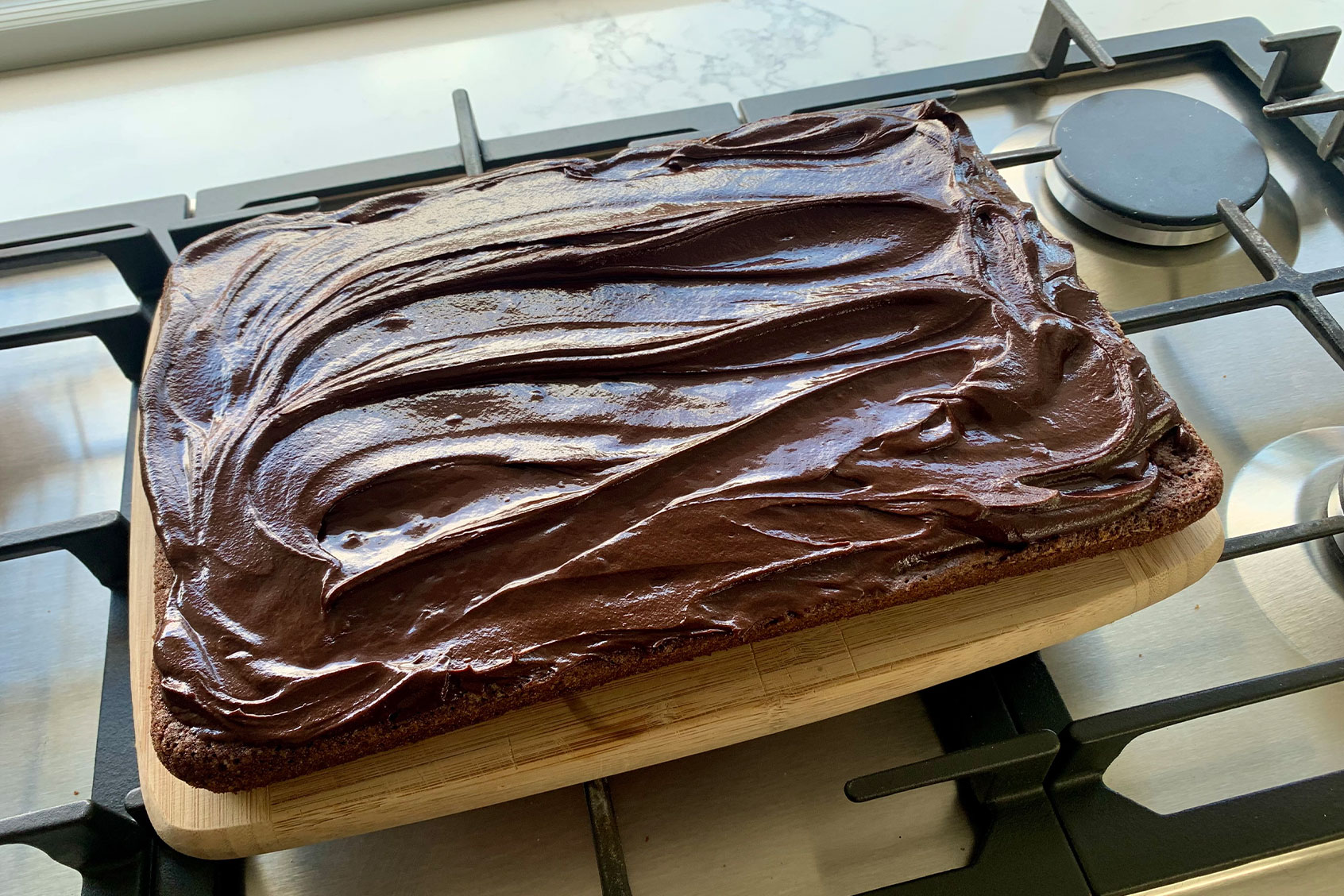
Stay in and enjoy diner vibes at home with this stellar pie. As Salon Senior Writer Mary Elizabeth Williams writes, “At home, chocolate peanut butter is a surprisingly easy indulgence. It comes together in minutes, and it’s ready to eat almost immediately.”
 
It doesn’t get much better than that, does it?
BrownieBrownie (Getty Images/Jennifer A Smith)Image_placeholder
Columnist Bibi Hutchings attributes her love for food to her mother and grandmother and their respective prowess in the kitchen. As she notes, “these brownies are a perfect example of what my mom did best: deliver something extraordinary from something most food is ordinary.”
 
These are so special in Bibi’s family that they’ve earned the title “The Brownies” because no one other brownies can measure up.
 
A quick word of warning from Hutchings herself: “Don’t say I didn’t warn you: be careful when you make these. They are rich and wield great power. They are impossible to ignore, and you will over-indulge. They will call out to you like Sirens, particularly in the night, beckoning you over to their foil covered pan with the promise of pure bliss. They deliver on that promise as you will see.”
Whiskey Pear CobblerWhiskey Pear Cobbler (Mary Elizabeth Williams)Image_placeholder

While other cobblers may find themselves in the spotlight more often, this particular cobbler — jam-packed with warm, tender pears and the sharp bite of whiskey — creates an amazing bed for multiple scoops of ice cream or perhaps whipped cream.
 
You’ll definitely want to heat this up a bit if you’re eating it after it’s fully cooled down; a bite of this when it’s warmed through is a comforting, satisfying experience.
Creamy yogurt panna cotta with fresh strawberry sauce in glassCreamy yogurt panna cotta with fresh strawberry sauce in glass (Getty Images/yumehana)Image_placeholder

Panna cotta may at first seem a bit intimidating to make at home, but do not fret! It is actually quite simple and the bulk of the “process” asks the refrigerator to do the work — not you. 
 
This simple, super-light yet creamy panna cotta is also the perfect vessel for practically any topping, from strawberries to dried fruit to fresh herbs.
 
As Bibi Hutchings poetically puts it, “Love is a night in with homemade panna cotta.”
 

Want more great food writing and recipes? Subscribe to Salon Food’s newsletter, The Bite.


Teddy graham tiramisuTeddy graham tiramisu (Mary Elizabeth Williams)Image_placeholder

A real blast from the past, this adorable, Teddy Graham-topped tiramisu melds two worlds: the nostalgic fun of the sweet, graham cracker classic and the timeless joy that is the Italian stalwart, tiramisu. 
 
Tiramisu is a tradition for a reason: it’s delicious, it’s forgivable, it’s customizable and it is a blast of comfort. By swapping ladyfingers for Teddy Grahams, though, the dish feels a bit more approachable — and downright fun. 
 
One note: don’t skimp on the cocoa powder! It really helps add that special, final touch, both aesthetically and flavor-wise. 
Chocolate SnapsChocolate Snaps (Mary Elizabeth Williams)Image_placeholder

Veering more into the Milk Bar-inspired, savory dessert realm, this gem is possibly as salty as it is sweet. For those who aren’t especially fond of saccharine desserts, this might be the ideal option for you and your loved ones. 
 
Incredibly simple yet outrageously flavorful, this unique assortment of flavors (complete with peanut butter, potato chips, dark chocolate and cookies!) is combined to make a handheld dessert that is sure to both impress and satisfy. 
 
 
Red Wine Whoopie PiesRed Wine Whoopie Pies (Courtesy Meghan McGarry/Buttercream Blondie)Image_placeholder

A rich, soft dessert “sandwich” containing red wine? Your Valentine is sure to thank you. 
 
Combining mascarpone with a red wine reduction and then stuffing it between whoopie pies redolent of cocoa, vanilla and buttermilk is certainly a statement that says “I love you” (just don’t give it to your dog). 
 
This is one of the more time-consuming recipes on this list, so feel free to make the cream one day and the whoopie pies another, so that that way, all you have to do on Valentine’s Day itself is combine and decorate. 
 

Sicilian Love CakeSicilian Love Cake (Mary Elizabeth Williams)Image_placeholder

If you’re not familiar with this cake — there’s never been a better time to acquaint yourself. 
 
As Salon’s Williams describes it, “Like the hot fudge cake or the St. Louis gooey cake, the Sicilian love cake is a little bit of culinary magic. A cheesecake-ish filling is spooned atop a regular old chocolate cake mix batter. The filling sinks as the cake bakes, transforming the entire dessert into something new and amazing. What’s more, it gets topped with a chocolate pudding frosting. The end result is a sheet cake guaranteed to make any crowd swoon.”
 
There may be no better way to celebrate the holiday. It’s even heart-shaped!

Forget the Big Game. “Puppy Bowl” vs. “Great American Rescue Bowl” is the matchup to watch

Networks don’t pour much sweat and stress into Super Bowl counterprogramming anymore – not since Animal Planet came up with the solution to beat them all in 2005: “Puppy Bowl.” Legend has it that a network executive in search of a Yule Log equivalent proposed unleashing a lineup of fuzzy poopers into a fun-sized Plexiglas “stadium” with a bunch of toys.

It is the year’s most adorable way to do nothing on a midwinter Sunday.

Puppy BowlPuppy Bowl (Elias Weiss Friedman / Animal Planet)

Other Big Game alternatives have come and gone in the years since “Puppy Bowl” first debuted, including Hallmark Channel’s comparably precious “Kitten Bowl” in 2014 and NatGeo’s “Fish Bowl” which . . . existed.

But all came to understand that that old showbiz rule about never following puppies or children applies to Animal Planet’s annual cuteness showcase. “Fish Bowl” went belly up after four low-rated swims, and even Hallmark canceled the “Kitten Bowl” last year.

An assortment of fluffy stumblebums tussle over squeaky objects until they drag whatever they put in their mouth into an end zone. Which one? Who cares.

Thus “Puppy Bowl XIX” would’ve run unchallenged in 2023, if not for Great American Family stepping up with its “Great American Rescue Bowl,” bringing puppies to the field along with kittens, adult cats, and mature dogs. The “Puppy Bowl” always features kittens in its halftime show, but if you want to watch an agile mouser named Primrose pretend to catch a Hail Mary Pass, you’ll need to roll into the “Rescue Bowl.”

Great American Rescue BowlGreat American Rescue Bowl (GAC Media / © Great American Family)

Between the two you can completely ignore the Super Bowl LVII matchup between the Philadelphia Eagles and the Kansas City Chiefs and maintain the spirit of the Big Game day.

Here’s how this pair of pet alternatives to the Big Game compare in a wet nose-to-wet nose matchup.

Puppy BowlPuppy Bowl (Elias Weiss Friedman / Animal Planet)

“Puppy Bowl XIX”

In this 19th edition of the bowl that is anyone’s game, and Puppy Bowl Referee Dan Schachner’s 12th round, Animal Planet wrangled 122 puppies including dogs with special needs, by working with 67 shelters and rescue groups across 34 states, including a Native American animal organization, the NAGI group.

By now most people know how it works, but for those who don’t – and we envy you, since it’s never as good as the first time! – the canine version of the Big Game pits Team Ruff against Team Fluff, although team affiliation only matters to humans.

On the field, an assortment of fluffy stumblebums tussle over squeaky objects until they drag whatever they put in their mouth into an end zone. Which one? Who cares.

Sometimes a pup will score two touchdowns in a single magnificent run. Other pups add value by taking naps in the middle of the field. Halftime is when the kittens sashay on in, mainly because they don’t fetch, carry objects or follow directions. But the dogs are the stars, and this year the pack includes Kokobean, who comes from the Caribbean island of Dominica, and the artfully named Jimmy Kibble, a Pomeranian-husky mix.

Puppy BowlPuppy Bowl (Elias Weiss Friedman / Animal Planet)

Should you set your heart on a “Puppy Bowl” star with whom you simply must snuggle, we have sad news for you, although it means a happy outcome for the object of your desire: every cuddler in the show has already been adopted. But there’s untapped talent at your local shelter, which is the point of these annual specials. If you think these dogs are adorable on TV, wait until you run around with one in person. 

The “Puppy Bowl” pre-game show airs on Sunday, Feb. 12 at 10 a.m. PT/1 p.m., followed by “Puppy Bowl XIX” at 11 a.m. PT/ 2 p.m. ET. The game will be simulcast across Animal Planet, Discovery Channel, TBS, discovery+, and HBO Max.


Want a daily wrap-up of all the news and commentary Salon has to offer? Subscribe to our morning newsletter, Crash Course.


Great American Rescue BowlGreat American Rescue Bowl (GAC Media / © Great American Family)

“Great American Rescue Bowl”

If this “new” event sounds like you’ve seen it before, that means you’re either a cat person or a Hallmark viewer or – what are the odds? – both.

Great American Family is run by the previous regime that managed the Hallmark Channel. Under its CEO Bill Abbott, nearly all of Hallmark’s holiday movies remained whiter than Tony Robbins’ chompers until he left in 2021, taking Candace Cameron Bure with him, and assuming the reins of Great American Country.

Resurrecting “Kitten Bowl” as the “Great American Rescue Bowl” and returning Beth Stern as its host, is another instance of Abbott picking up a Hallmark castoff and luring the audience that channel abandoned away to his new place. It’s a bit like the Tampa Bay Buccaneers plucking Tom Brady out of retirement. Well, not quite that . . . more like that neighbor who usurped your long-standing Super Bowl Party by announcing he has a brand spanking new home theater so why doesn’t everyone go to their place this year? He’s a pill, and your snacks are legendary, but how can you compete with dogs and cats playing together on a wall-sized screen?

Great American Rescue BowlGreat American Rescue Bowl (GAC Media / © Great American Family)

Anyway. Much as there is to adore about “Puppy Bowl,” this special highlights senior dogs and cats along with its infant felines and canines. Baby animals promote themselves simply by showing up in their disarming natural state, whereas the public needs to be reminded that geriatric pooches and pusses are capable companions needing homes too.

Some of its four-legged athletes were rescued from the aftermath of Hurricane Ian, including pets from South Carolina, West Virginia and Antigua. Others are special needs adoptions and dogs saved from puppy mills.

We’ll grant you, if you checked out Bure’s first holiday masterwork on GAF, you may be hesitant to dip into “Rescue Bowl.” Completely understandable! But the kittens are merely its gateway lure into the world of pet adoption. “100,000 shelter pets got adopted during the decade of ‘Kitten Bowl,'” a GAF spokesperson told Salon. “‘Great American Rescue Bowl’ proudly continues the goal of finding a loving home for every pet.”

“Great American Rescue Bowl” airs Sunday, Feb. 12 at 7 a.m. PT/ 10 a.m. ET and repeats at 1 p.m. PT/4 p.m. ET on Great American Family.

Nobody’s stopping you from watching both specials, which you can certainly do since each repeats throughout the day. Regardless of which one you decide to sit and stay with you might want to keep track of the game clock at State Farm Stadium in Glendale, Ariz. Gazing at cats and dogs might be your bag, but since both of these events are pre-recorded, that limits their mystery.

Rihanna’s half-time show, however, promises to be a communal revelation that should not to be missed . . . and it’s likely to happen some around or after between 5 p.m. PT/ 8 p.m ET. And in case you’re curious, she’s a dog rescuer.


The Pill Club reaches $18.3 million Medicaid fraud settlement with California

The Pill Club, an online women’s pharmacy, has reached an $18.3 million settlement with California authorities over claims it defrauded the state’s Medicaid program by prescribing birth control pills without adequate consultation and shipping tens of thousands of female condoms to customers who didn’t want them. 

Attorney General Rob Bonta announced the agreement Tuesday, a day after a state court unsealed a whistleblower complaint against The Pill Club, which markets convenient reproductive health services to women nationwide. The whistleblowers’ complaint alleges the Silicon Valley company also bilked private health insurers in at least 38 states, including California. 

The Pill Club agreed to pay $15 million to the state Department of Justice and $3.3 million to the Department of Insurance. California officials said they believe it’s the first such enforcement action against the company. The Pill Club formed in 2016 as an online-only pharmacy distributing birth control pills and other contraceptives. It serves more than 3 million customers nationwide, according to its website

Liz Meyerdirk, The Pill Club’s CEO, said in a statement that she is “glad to have the opportunity to resolve these issues and to bring our full focus back to expanding access to contraceptive care for all who need it.” The company, which denied wrongdoing, noted that California is not requiring it to change its business practices. However, it said it has improved its billing and taken steps to make sure customers receive only products they request. 

The whistleblower complaint was filed in 2019 by two of the company’s former nurse practitioners, Happy Baumann and Cindy Swintelski. They alleged that the company’s nurse practitioners prescribed birth control pills and related products without proper supervision by medical doctors, in violation of California law, as The Pill Club “increased its profits while putting women’s health in danger.” 

Investigators also found the company sent customers “massive quantities” of the female condoms, sometimes an entire box containing 96 of the barriers, for which the company was reimbursed as much as $2,253.80 for a single delivery. 

The whistleblowers and their attorneys will receive nearly $4.6 million from the two state settlements. Justice Department officials said the settlement will cover all the losses to Medi-Cal, California’s Medicaid program. 

The whistleblower complaint alleges nurse practitioners “rubber-stamped” birth control prescriptions, spending from 15 seconds to a few minutes on each case. 

The company billed taxpayers for multiple half-hour live or telehealth counseling sessions, but in truth, investigators and the whistleblowers said, the company’s nurse practitioners had no such interaction with customers. Instead, customers filled out a 23-question health history questionnaire, or “self-screening tool,” on its website. Nurse practitioners looked at the questionnaire, wrote a prescription, the products were sent to the customer, and Medi-Cal was billed. 

But the company’s highest profits came from the female condoms, the Department of Justice said in sharing details from its three-year investigation exclusively with KHN. Not only do they bring a high reimbursement rate, but the company also billed Medi-Cal more than 250% of the retail price on average, investigators found. 

The problem for The Pill Club was that few of its customers had any interest in female condoms. 

A pre-checked box at the bottom of the company’s website sign-in page said customers would receive additional items — including the condoms — free if they were covered by their insurance, investigators said. The whistleblower complaint says the deliveries would come with “chocolate and sample gift items.” 

Further, investigators said, the company would bundle the condoms with customers’ shipments of monthly hormonal birth control pills and any order for emergency contraception, often known as the “morning-after pill,” both of which carry low profit margins and reimbursement rates. 

But the company sent them anyway, by the dozens, by making it difficult or impossible for customers to opt out, investigators with the state’s Division of Medi-Cal Fraud and Elder Abuse discovered. In all, investigators found nearly 37,000 such condom claims filed for reimbursement through Medi-Cal. 

“Lmao who does the pill club think I am? A nympho?” said one customer in a Twitter conversation discussing the bounty of unsolicited products. 

“The pill club sent me female condoms… I opened one and bout died,” added another unsuspecting customer. 

Even after customers told the company to stop, it kept sending the condoms — and billing Medi-Cal for them, investigators said. The settlement says the company also billed Medi-Cal for emergency contraceptives “in quantities in excess of medical necessity,” and for prescriptions sent to California customers by a Texas-based pharmacy that wasn’t licensed to provide them to California patients. 

Bonta, the state attorney general, said the company “siphoned off Medi-Cal funding intended to help vulnerable communities access essential healthcare.” 


This story was produced by KHN, which publishes California Healthline, an editorially independent service of the California Health Care Foundation.

KHN (Kaiser Health News) is a national newsroom that produces in-depth journalism about health issues. Together with Policy Analysis and Polling, KHN is one of the three major operating programs at KFF (Kaiser Family Foundation). KFF is an endowed nonprofit organization providing information on health issues to the nation.

Subscribe to KHN’s free Morning Briefing.

The marriage conundrum: Research suggests single people live shorter lives

When it comes to living a long and healthy life, a person may just be better off married than single.

Researchers recently published yet another study, this time in the Journal of Aging and Health, suggesting that single life lacks long-term benefits. Over 8,700 Norwegian adults between the ages of 44 to 68 participated in the study examining correlations between the participants’ likelihood of being diagnosed with dementia after the age of 70. In the study, researchers found that divorced and single adults were 50% to 73% more likely to end up with a dementia diagnosis after filtering out other potential risk factors. Thus researchers concluded that there is a strong association between being married and a person’s risk of getting dementia.

And this isn’t the first study to tie marital status to dementia risk. It adds to a running list of evidence that continues to suggest there are possibly more health benefits to being coupled up than alone.

Researchers found that divorced and single adults were 50% to 73% more likely to end up with a dementia diagnosis.

Of course, this largely depends on the characteristics of a marriage as not all marriages are created equal. Gender, socioeconomic status, and race all play a role in the quality of a marriage, and presumably a person’s happiness. But it’s worth asking: Can being married give someone the advantage of living a longer and healthier life?

Dr. Andrew Sommerlad, an associate professor at University College London’s Division of Psychiatry, who has done research on social contact and dementia, told Salon it’s not necessarily about having a ring on one’s finger but more about what marriage can provide.

“There is nothing about wearing a wedding ring that reduces risk of dementia, but it is likely that the health behaviors that accompany marriage, promote a healthier lifestyle and improve brain health,” Sommerlad said. “So that might partly be due to lifestyle factors like eating more healthily or exercise.”

In 2016, Sommerlad and his colleagues examined studies that looked at the potential role of marital status and dementia risk in more than 800,000 participants from Europe, North and South America, and Asia. The analysis found that single people were 42% more likely to develop dementia compared to those who were married.

It adds to a running list of evidence that continues to suggest there are possibly more health benefits to being coupled up than alone.

“I think the findings speak well to all people, whether married or not, about the need to maintain social contact and participation alongside other healthy factors that we know have a beneficial effect on our brain health and reduce dementia risk,” Sommerlad said. “Aside from marriage, having more social contact, and being less lonely, is associated with better cognitive ability and a lower risk of developing dementia.”

Dr. Carla Manly, a clinical psychologist and author of “Joy From Fear,” told Salon she believes that people “who are in healthy partnerships tend to have better mental health compared to those who feel isolated or chronically lonely.” As Sommerlad mentioned, loneliness can often lead to poor health outcomes, hence why health studies on marriage tend to favor the married.


Want more health and science stories in your inbox? Subscribe to Salon’s weekly newsletter The Vulgar Scientist.


“Given that loneliness—which is at epidemic levels—is associated with both poor mental and physical health, one of the key upsides of a healthy partnership is the natural reduction in the stress associated with feeling isolated and alone,” Manly said. “Many people find that marriage gives them a sense of internal and external stability; loving partnerships tend to provide emotional and social support—both of which boost mental health.”

Another analysis found that single people were 42% more likely to develop dementia compared to those who were married.

This is likely why there are many more studies that have found a link between marriage and improved physical health — because loneliness can put the physical body in a chronic state of stress. Studies have suggested that loneliness is strongly linked to depression and anxiety.

However, more research suggests that when it comes to being married the quality of the marriage matters. For example, in 2013, researchers explored the link between marriage and inflammation, which has been associated with autoimmune diseases, such as cancers, arthritis and heart disease. When looking at the biomarkers of inflammation, researchers found that women (but not men) had higher levels of inflammation in marriages with lower levels of spousal support. Researchers of the study suggested that scientists needed to take a deeper look at inflammation and marital quality, as they suspected marital strain can worsen the effects of stress on inflammation.

“On a pragmatic level, stress is reduced when partners share in household duties, financial matters, and childrearing tasks,” Manly said. “And, of course, when partners are attentive to each other, physical health can benefit by increased attention to each other’s overall wellbeing.”

Loneliness can put the physical body in a chronic state of stress.

By its nature, marriage provides more opportunities for social contact. But it also provides people with more economic opportunities and resources, which can help contribute to better health, too. For example, in 2018 Vanderbilt researchers published a report that found legalizing gay marriage led to an increase in healthcare access for gay men. Notably, the trend did not apply to women.

“We found that lesbian, gay, or bisexual adults were more likely to get married after having access to legal same-sex marriage, and for men, that is associated with a statistically significant increase in the probability that they have health insurance, have a usual source of care, and have a routine health check-up,” said co-author Gilbert Gonzales Jr.

But this doesn’t mean single people are doomed to die young and unhealthy.

“Aside from marriage, having more social contact, and being less lonely, is associated with better cognitive ability,” Sommerlad assured us. “It seems that taking part in social activities, leisure activities and hobbies is also linked to a lower risk of developing dementia.”

Married or not, we all must be less lonely to live a long life. 

Does pancake batter belong in your ice cube tray?

My childhood smelled of maple syrup. After discovering the TikTok-induced reemergence of freezing pancake batter in ice cube trays, my days may once again become maple-scented.

Back in a time when there was a clear distinction between good (eating pancakes) and evil (learning math), the classrooms, school buses, and friends I knew almost always smelled like an iHop. Also, everything — and everyone — was always sticky. For whatever reason, as I got older, the pancakes, maple syrup, and stickiness in my life vanished. I’m hoping this TikTok pancake hack will change that.

The process is straightforward: make a standard pancake batter, pour it into ice cube trays, add toppings (like blueberries, chocolate chips, or bananas), and keep it frozen until you are ready for homemade pancakes sans measuring, whisking, or excess cleaning. When you’re craving pancakes, pop out a few cubes of batter onto an oiled pan over low heat. Flip once and serve.

While meal prepping doesn’t typically excite me, I do appreciate how this technique gives you an opportunity to preserve fruit that may be on its last legs. If you’ve got a couple of berries hanging around (or perhaps a single, nearly-all-brown banana) throw them into the batter cube instead of the trash can.

Also — as noted in the comments of the video above — the batter can last in the freezer for up to three months, but is best eaten within a month of its initial freezing. So, if you do love how these hold up over time, it’s entirely possible that the fifteen minutes it takes to mix the batter and pour it into cubes might be all the breakfast prep you’d need for the next month.

More than anything, I love how preparing these frozen pancakes is a passive exercise. Since they go slowly over low heat (about 3 minutes per side), you’re able to work on other morning tasks (make coffee, think about drinking a glass of water, make more coffee) while the pancakes cook.

The death of Tyre Nichols — and the cost of stereotypical Black masculinity

It’s been more than a week since the Memphis Police Department released bodycam footage of Tyre Nichols’ fatal encounter with law enforcement on the night Jan. 7. Police Chief Cerelyn “C.J.” Davis cautioned beforehand that the video would stir anger. Indeed it did. Even as some refused to watch yet another wrenching display of Black grief, protests broke out across the country and have spurred conversations not just about ongoing police brutality, but also about the nature of institutional or organizational racism — regardless of the identity of the perpetrator — and about anti-Black sentiment among Black people themselves.

Those are important discussions, and ones that we desperately need to make headway on. But I’m struck by the silence around the issue of masculinity, specifically Black masculinity. The #MeToo movement cracked open space to talk more directly about “toxic masculinity” or the behaviors and attitudes associated with a strand of masculinity that valorizes aggression and dominance over others, particularly those deemed weak or inferior. The problem is that it’s abusive, can be deadly and is damaging to all parties involved, including the aggressor.

Still, Black masculinity is different. The lessons that little Black boys learn about being tough, conquering others and inhibiting their emotions all too often bleed into their sense of racial identity. The pressure to live up to stereotypes about Black men is greater for little Black boys because they have fewer options than their counterparts. In other words, we might extend Black feminist scholar Patricia Hill Collins’ remarks about the “controlling images” that dehumanize Black women and justify their mistreatment — such as the mammy figure or the promiscuous Jezebel — to Black boys and men. 

The Open Society produced a report detailing that Black men are most likely to be associated with crime and poverty, and that these media representations affect how they are treated by others, including the police. Perhaps that group of Black officers unleashed their violent rage on a young man they perceived as as the embodiment of those negative depictions. 

But people have been left to wonder how Black men could treat another Black man that way: Didn’t they know that those stereotypes are just that, stereotypes that dehumanize and diminish? Haven’t they themselves been subject to them? They most likely have, perhaps at the hands of other Black boys and men when they were younger — who taught them to pound on other Black people who threaten the ideal of masculinity they are striving to embody themselves. 

After all, the five police officers who were fired and charged with second-degree murder — a sixth officer, who is white, was later fired but has not been charged — were not just Black men in positions of power and authority over Tyre Nichols. They also literally towered above him: All were physically much larger than Nichols, whom CNN’s Van Jones described as a “145-pound skateboarder.” He loved photographing sunsets, and was close to his mother — who he called out for on the night he was brutally attacked. A slender man on a skateboard, camera in hand, is not the stereotypical image of the strong Black man.  


Want a daily wrap-up of all the news and commentary Salon has to offer? Subscribe to our morning newsletter, Crash Course.


When I first saw his image and then those of the officers, I immediately thought about the pain and bullying that Black men and boys endure at the hands of other Black men. In school, when they do not properly perform Black masculinity, they get teased, bullied and sometimes literally stomped. Their Blackness is questioned, along with their sexuality and manhood. This abuse and harassment — a form of racialized gender punishment — can continue into adulthood. I wonder how many times those officers called Nichols that word that boys and men are called when they are seen as too soft, too feminine, or as somehow otherwise failing at manhood. 

When I first saw the image of Tyre Nichols and those of the officers, I thought about the pain and bullying that Black men and boys endure at the hands of other Black men.

I’m not suggesting that Tyre Nichols was gay — I do not know one way or another, and that’s not the point. What I am saying is that homophobia is often lurking, not far below the surface, when boys and men viciously attack other boys and men. And I’m saying that we need to have more conversations about the experiences of Black boys and men who do not fit stereotypical images of Black masculinity, and encourage them to share those experiences. 

We don’t hear enough about the lives of Black girls and women, but we hear even less from boys and men, especially those who do not conform to the limited expectations society seems to have for them. One of the obstacles is that speaking up and sharing are gendered as feminine, so that doing so can lead to greater teasing and isolation.   

There’s still a lot to piece together about the night Tyre Nichols was pulled over for that traffic stop and the days following, leading up to his death. That shouldn’t keep us from having a conversation about Black masculinity, one that is perhaps even more challenging than the one we’re struggling to have about institutional racism and Black self-hatred.

Superb Owl: How an internet typo took flight and became a fine-feathered celebration

It’s wordplay that has legs. Surprisingly long, slender legs with sharp, killing claws on the ends. It’s Superb Owl, a typo of Super Bowl (running the B from “Bowl” onto “Super”) — and the phrase has taken on a life of its own, rising from the depths of an internet joke to become a popular, actually lauded day.

Where did Superb Owl come from? How did the phrase gain prominence, where does it appear in pop culture, and if football isn’t your thing, or even if it is, what are some ways to celebrate our feathered friends on Sunday? Salon digs our talons into the history of the resplendent bird and its day.  

The meme

It’s hard for our children to believe, but there was actually life before the internet, and someone must have made the joke there, in the real world. But as far as online goes, the phrase Superb Owl can be traced back to at least 2008 when a user by the name of @shawnw tweeted, “Superb Owl party tonight!” The post only received three likes and two retweets. It was 2008, after all. 

Three years later, in 2011, the subreddit /r/Superbowl was started with the rules: “(1) Image posts must contain an owl (2) Text posts must be about owls.” It currently has over 400,000 members and is in the top 1% of reddit communities. Recent posts include a carving a user did of an owl out of white pine wood, and a closeup of a Barred Owl with the caption “1 of 6 Superbowls I saw last night.”

The subreddit is active all year along, not just when early February rolls around and people start making dips. 

“The Colbert Report”

In 2014, Stephen Colbert brought the phrase to late night TV on “The Colbert Report when he utilized it heavily to circumvent saying “Super Bowl,” after receiving a letter from the network, which he read on air, about the strict protections taken around the trademarked phrase. Most media tend to use the phrase “the Big Game” to circumvent the restrictions, but Colbert of course had loftier plans.

“I believe we can cover the story like nobody else simply by moving one consonant in the title,” Colbert said before a video montage rolled of the comedian with football pads over his suit and tie, an owl swooping majestically in the background and hooting. In the bit, Colbert also referred to “the big game” as “tight pants man clash” and “America’s pastime.” 

Superb Owl “In the Shadows”

In 2020, in its second season, the superb show “What We Do in the Shadows” featured a Superb Owl episode. Titled “Brain Scramblies,” the episode centered on the vampire roommates’ confusion about the modern human world. Invited by neighbor Sean to their first-ever Superb Owl party, they’re all disappointed when it turns out to be a football party and, like the great pumpkin, the mighty bird himself never shows. 

Birders

The “What We Do in the Shadows” vampires may have been drawn to the big bird because of its nocturnal and Gothic associations, but their love underscores an important aspect of the Superb Owl: owls are cool. 

As NPR writes, “For birding enthusiasts . . . Superb Owl Sunday is a sacred day, a chance to appreciate the majestic creature by posting owl pics on social media en masse.” That’s the main way Superb Owl has come to be celebrated, the flood of owl images online. 

Nature groups and others have seized the day as an opportunity to spread awareness. “Soon,” National Geographic tweeted in 2019 with a slo-mo video of an owl headed toward the camera with reaching talons and narrowed eyes.

The Sierra Club and various national parks have all gotten in on the social media fun. As far as offline enjoyment, is anyone actually hosting Superb Owl parties (and how can I score an invite)? Yes, actually. The Audubon Center for Birds of Prey held a pre-Sunday fête this year with “owl themed games and crafts, an owl presentation with live owl ambassadors, and a moonlit walk.” That’s the best way to celebrate, according to a birder interviewed by NPR, who said, “Just take a walk in nature, especially at dawn and dusk.”


Want a daily wrap-up of all the news and commentary Salon has to offer? Subscribe to our morning newsletter, Crash Course.


Yes, it’s silly wordplay that may have started as a spelling mistake, but Superb Owl has grown to be chance to learn about and appreciate the more than 200 species of these weird and wonderful loner night birds, some of whom are threatened by habitat loss, climate chaos and changes in land use. In 2019, Superb Owl was even its own category on “Jeopardy!

As Sporting News writes, “In reality, you’re either here because you made a mistake or because you legitimately want to look at owl pictures.” Either way, it’s a hoot.

Alien Twitter is going wild over all of these “objects” being shot down

This weekend, there was a flurry of discourse on Twitter over whether or not literal aliens are in the beginning stages of a possible invasion.

After last week’s takedown of a Chinese “surveillance balloon” over the Carolina coast, there have been other sightings of yet-to-be explained “objects,” with one being shot down on Friday off the remote northern coast of Alaska, and the word UFO being used by outlets to describe them has had many people jumping to conclusions. 

On Saturday, the North American Aerospace Defense Command (NORAD) announced that a U.S. F-22 fighter jet brought down an “unidentified cylindrical object” over Canada, shortly followed by news that airspace had been shut down while fighter jets investigated a “radar anomaly” in Montana according to Reuters

“As Canadian authorities conduct recovery operations to help our countries learn more about the object, the Federal Bureau of Investigation will be working closely with the Royal Canadian Mounted Police,” Pentagon spokesperson Brig. Gen. Pat Ryder said in a statement obtained from ABC

The anomaly in Montana is still being monitored, but the situation was diffused enough to allow for the re-opening of airspace.

“I am aware of the object in Montana air space and remain in close contact with senior DOD and Administration officials,” said Montana Senator Jon Tester. “I am closely monitoring the situation and am receiving regular updates. I will continue to demand answers for the American public.”

The latest of these events was brought to the public’s attention on Sunday afternoon when the military shot down an “octagonal” object flying 20,000 feet over Lake Huron, according to ABC News.

“The object has been downed by pilots from the U.S. Air Force and National Guard,” Rep. Elissa Slotkin, D-Mich., tweeted. “Great work by all who carried out this mission both in the air and back at headquarters. We’re all interested in exactly what this object was and [its] purpose.” 

While few answers are being given as to what these objects are, people seem to be taking up one of two possible conclusions based on what we’ve been told: spy surveillance, or little green men from Mars.

“I hope President Biden can step away from the Governors Ball in the White House and tell the American people what the hell is going on,” Rep. Marjorie Taylor Greene tweeted on Saturday night. “Montana is the site of multiple nuclear missile silos. After shooting down ufo’s in Alaska & Canada, we deserve answers.”

“There has been a lot of weird news in recent years. We don’t really know what’s going on with all these flying objects that keep getting shot down, but feels like this could be right up there,” journalist Aaron Rupar weighed in. “That governments are playing it so close to the vest definitely raises suspicions.”


Want a daily wrap-up of all the news and commentary Salon has to offer? Subscribe to our morning newsletter, Crash Course.


A CNN segment with Natasha Bertrand, national security reporter, rang the “alien” alarm bell for many when she stated that pilots involved in the Alaska takedown were baffled by what they saw.

“When they looked at the object they could identify no identifiable propulsion system and they did not know how it was actually staying in the air,” Bertrand said.

Bertrand’s clip led me to weigh in with my own commentary, as the idea of aliens making their presence known just in time for Rihanna at the Super Bowl was too fun to pass up on.

These situations are all being monitored and investigated further by government agencies. 

Why everyone is suddenly freaking out about bird flu

An avian disease that is spreading and killing tons of birds is more frequently making the jump to mammals, which has health experts appropriately concerned. So far, the risk to humans of so-called avian influenza is relatively low, experts say — but they also warn that could change. And if things were to intensify, we’d have another pandemic on top of the current COVID pandemic.

The virus is called H5N1, sometimes known as “bird flu.” It mutates quickly and is highly virulent, meaning it can cause severe illness and death. Humans can catch it too, though this is rare, with symptoms ranging from mild flu-like upper respiratory issues to pneumonia requiring hospitalization. Death is uncommon, but it happens.

Because the vast majority of people have no immunity to H5N1, a lot of people could potentially catch and spread it, creating another pandemic similar to COVID, which has not ended despite a diminished public health response. Even if we avoid a bird flu pandemic in humans, which luckily has been the case historically, if the outbreak in animals worsens it could put further strain on an already stressed agricultural sector.

H5N1 is part of the reason why egg prices are so out of control in the United States lately. In February 2022, an outbreak of H5N1 hit the poultry industry, killing about 27 million egg-laying chickens in just six months. As of this month, that number has more than doubled, according to the Centers for Disease Control and Prevention. Coupled with overall inflation, the number of dead chickens has sent the cost of eggs soaring. But if this virus starts spreading among humans, what we eat with our toast will be the least of our worries.

The virus is rapidly spreading in other parts of the world as well, notably in Peru, where authorities have been battling outbreaks since last year. Recently, about 55,000 wild birds have succumbed to the disease. Penguins, pelicans, vultures and various gulls have all been susceptible. Even more worrying, the virus is jumping from birds to mammals more frequently. On Tuesday, Peru’s government said H5N1 had killed about 585 sea lions. Locals are being advised not to touch dead animals.

The jump from birds to mammals is especially concerning because that raises the risk of humans catching it. Our bodies and immune systems are pretty different from birds, so when humans do catch H5N1, we usually have a hard time spreading it to other humans. That’s because the virus has evolved to specifically infect bird cells. It’s not very efficient at attacking our mammalian cells, so therefore it fizzles out before it gets too far.

When a virus jumps from animals to humans, it’s known as zoonosis. It’s a big problem with SARS-CoV-2, the virus that causes COVID, because that means no matter how hard we try to stamp out the pathogen, there will likely always be populations of wild animals that can spread it back to us again. COVID is still a far bigger threat than bird flu because it targets a cell receptor, ACE2, that is found in many different animals. One study found that more than 400 different species have this receptor, including many birds, reptiles and fish, making them susceptible to COVID infection.

Every time a virus reproduces, using the genetic material of other living microorganisms, it does so pretty sloppily. These mistakes or mutations can help the virus or not. If a virus gets a mutation that helps it breed better, that’s a big problem for hosts. As we’re witnessing, H5N1 is making this leap more and more in mammals, giving it plenty more opportunities to develop ways of making humans not only sick but highly contagious. Unfortunately, we’re seeing a lot more cases of mammalian infection across the globe.


Want more health and science stories in your inbox? Subscribe to Salon’s weekly newsletter The Vulgar Scientist.


Across North America, a whole host of dead or euthanized mammals have tested positive for the virus, including skunks, foxes, otters, grizzly bears, coyotes and at least one tiger. Minks, those weasel-like creatures that are farmed for their fur (but really, really should not be) have also been catching large amounts of H5N1. Last October in Spain, an outbreaks of H5N1 among farmed mink resulted in nearly 52,000 mink being euthanized. The animals were housed in wire cages placed in rows, which made it easy for the virus to jump from one mink to another. Luckily, no farmers seem to have caught it.

But when the virus was analyzed, it was revealed that the mink were infected with a new variant of avian flu, including genetic mutations that are known to make it easier to spread in mammals. This is “uncharted territory,” Wendy Puryear, a virologist at Tufts University in Medford, Massachusetts, told Nature News. It presents a severe problem because mink have a respiratory system very similar to humans.

On February 8, Dr. Tedros Ghebreyesus, the director-general of the World Health Organization, alerted the public that this situation “needs to be monitored closely,” but said the risk to humans was low. He noted that human cases of H5N1 have been historically rare. “But we cannot assume that will remain the case and we must prepare for any change in the status quo,” Tedros said.

For all the reasons given above, there’s no guarantee that H5N1 will remain a threat to only wild or farmed animals. Viruses mutate and evolve, it’s in their nature to evade immune defenses and new workarounds to infect their hosts, reproduce and keep spreading. The possibility of H5N1 upgrading to a pandemic-level virus exists, and that’s why health officials are concerned, but for now, there’s little we can do beside monitor the situation and stop farming mink. We can also reduce our consumption of eggs and poultry, at least for a little while. While it is perfectly safe to eat eggs and chicken during an avian flu outbreak, assuming they are washed and cooked properly, you may personally feel differently about adding strain to an already overwhelmed industry.

One of the main reasons H5N1 hasn’t become a huge problem in the past is because public health workers have taken it seriously. We know that this virus would mean bad news if we lost control of it. That’s why it makes sense to keep an eye on it. But for now, no one needs to panic, we just need to hope that this bird flu outbreak, despite its historic proportions, will extinguish itself like previous outbreaks.

As long-term care staffing crisis worsens, immigrants can bridge the gaps

When Margarette Nerette arrived in the United States from Haiti, she sought safety and a new start.

The former human rights activist feared for her life in the political turmoil following the military coup that overthrew President Jean-Bertrand Aristide in 1991. Leaving her two small children with her sister in Port-au-Prince, Nerette, then 29, came to Miami a few years later on a three-month visa and never went back. In time, she was granted political asylum.

She eventually studied to become a nursing assistant, passed her certification exam, and got a job in a nursing home. The work was hard and didn’t pay a lot, she said, but “as an immigrant, those are the jobs that are open to you.”

A few years later her family joined her, but her children didn’t want to follow her career path. When she was a teenager, Nerette’s daughter, now 25, would ask, “Mom, why are you doing that?” Nerette said. Her daughter considered the work underpaid and too physical.

After many years, Nerette, now 57, left nursing home work for a job with the Florida local of the labor union SEIU1199, which represents more than 25,000 health workers. As the local’s vice president for long-term care, she is keenly aware of the staffing challenges that have plagued the industry for decades and will worsen as aging baby boomers stretch the limits of long-term care services.

The U.S. is facing a growing crisis of unfilled job openings and high staff turnover that puts the safety of older, frail residents at risk. In a tight labor market where job options are plentiful, long-term care jobs that are poorly paid and physically demanding are a tough sell. Experts say opening pathways for care workers to immigrate would help, but policymakers haven’t moved.

In the decade leading up to 2031, employment in health care support jobs is expected to expand by 1.3 million, a nearly 18% growth rate that outpaces that of every other major occupational group, according to the federal Bureau of Labor Statistics. These direct care workers include nurses of various types, home health aides, and physical therapy and occupational therapy assistants, among others.

Certified nursing assistants, who help people with everyday tasks like bathing, dressing, and eating, make up the largest proportion of workers in nursing homes. In the decade leading up to 2029, nearly 562,000 nursing assistant jobs will need to be filled in the United States, according to a far-reaching report on nursing home quality published last year by the National Academies of Sciences, Engineering, and Medicine.

But as the U.S. population ages, fewer workers will be available to fill those job openings in nursing homes, assisted living facilities, and private homes. While the number of adults 65 and older will nearly double to 94.7 million between 2016 and 2060, the number of working-age adults will grow just 15%, according to an analysis of census data by PHI, a research and advocacy organization for older and disabled people that conducts workforce research.

Immigrants can play a crucial role in filling those gaps, experts say. Already, about 1 in 4 direct care workers are foreign-born, according to a 2018 PHI analysis.

“We do think that immigrants are critical to this workforce and the future of the long-term care industry,” said Robert Espinoza, executive vice president of policy at PHI. “We think the industry would probably collapse without them.”

Nursing homes and other long-term care facilities have long struggled to maintain adequate staff. The problem worsened dramatically during the pandemic, when those facilities became hotbeds for covid-19 infections and deaths. More than 200,000 residents and staff members died during the first two years of the pandemic, representing about a quarter of all covid deaths during that time.

Since March 2020, the long-term care industry has lost more than 300,000 jobs, bringing employment to a 13-year low of just over 3 million, according to an analysis of BLS payroll data by the American Health Care Association and the National Center for Assisted Living.

Immigration policies that aim to identify potential workers from overseas to fill long-term care job slots could help ease the strain. But unlike other countries that face similar long-term care challenges, the U.S. generally hasn’t made attracting direct care workers from abroad a priority.

“Immigration policy is long-term care policy,” said David Grabowski, a professor of health care policy at Harvard Medical School whose research focuses on the economics of aging and long-term care. “If we really want to encourage a strong workforce, we need to make immigration more accessible for individuals.”

Most of the roughly 1 million immigrants to the U.S. annually are family members of citizens, though some come in on employment visas, often for highly skilled jobs.

On his first day in office, President Joe Biden proposed comprehensive immigration reform that would have created a pathway to citizenship for undocumented workers and revised the rules for employment-based visas, among other things, but it went nowhere.

“There hasn’t been a lot of interest or political will behind opening up more immigration opportunities for mid- to lower-level care aides such as home health aides, personal health aides, and certified nursing assistants,” said Kristie De Peña, vice president for policy and director of immigration policy at the Niskanen Center, a think tank.

The Biden administration didn’t respond to requests for comment.

Some local and regional organizations are working to connect immigrants with health care jobs.

Ascentria Care Alliance provides social services, refugee resettlement, and long-term care services in five New England states. With state and private philanthropic funding, the organization is beginning to help refugees from Ukraine, Haiti, Venezuela, and Afghanistan get the supportive services they need — language, housing, child care — to enable them to take health care jobs at Ascentria’s long-term care facilities and those of health care partners.

The group has long helped refugees resettle and find jobs in traditional settings like warehouses or retailers, said Angela Bovill, president and CEO of Ascentria, which is based in Worcester, Massachusetts. “Now we’re looking at what it would take to move them into health care jobs,” she said.

The alliance is applying to the Department of Labor for a grant to scale up the program. “If we get it right, we’ll build a pathway and a pipeline to move at the fastest rate from immigrant to effective health care worker,” Bovill said.

Some long-term care experts say the U.S. can’t afford to drag its feet on putting policies in place to appeal to immigrants.

“We’re competing with the rest of the world, other countries that also want these workers,” said Howard Gleckman, a senior fellow at the Urban Institute.

Canada, for instance, is going all in on immigration. In 2022, it welcomed more than 430,000 new permanent residents, the most in its history. Immigration accounts for almost 100% of Canada’s labor force growth, and by 2036 immigrants are expected to make up 30% of the population, the government said.

In the U.S., immigrants account for about 14% of the population, according to an analysis of census data by the Migration Policy Institute.

Canada’s Economic Mobility Pathways Pilot aims to identify and recruit refugees who have skills Canadian employers need. In January, after visiting a refugee camp in Kenya, recruiters offered jobs in Nova Scotia to 65 continuing care assistants.

In a December survey of 500 U.S. nursing homes, more than half said staffing shortages have forced them to turn away new residents.

These staffing challenges, said industry representatives, are likely to become an even heavier lift, with more closed facilities, units, or wings, after the Biden administration announced last year that it would establish minimum nursing home staffing requirements.

A government mandate alone won’t solve long-standing problems with inadequate training, pay, benefits, or career advancement, experts said.

“Young people aren’t going to clean 10 to 15 patients for $15 an hour,” Nerette said. “They’ll go to McDonald’s. We need to face that reality and come up with a plan.”


KHN (Kaiser Health News) is a national newsroom that produces in-depth journalism about health issues. Together with Policy Analysis and Polling, KHN is one of the three major operating programs at KFF (Kaiser Family Foundation). KFF is an endowed nonprofit organization providing information on health issues to the nation.

Subscribe to KHN’s free Morning Briefing.

Melanie Lynskey, like her “Last of Us” character, proves her strength beyond physicality

Tom Cruise, the 60-year-old, 5-foot-7 actor with dozens of action film credits to his name and several more in the works, has never had a week like Melanie Lynskey just had.

While Cruise, and other male actors like him, are rarely called upon to defend their casting in action roles despite what some could view as physical limitations, Lynskey gave a tutorial on how strength goes beyond build when she was pulled into a position to defend her casting in the role of revolutionary movement leader Kathleen Coghlan in HBO’s “The Last of Us.”  And she didn’t just do it for other women, she did it for everyone who’s looked upon as weak because of their outsides rather than their insides, where true strength originates. See the kind of selfless wisdom a life lived without your head being completely up your own crack can bring? 

Fanboys and other likeminded naysayers have sounded off on Reddit and elsewhere since Lynskey was cast in the series adaptation of the popular video game of the same name, but the biggest and most surprisingly unnecessary panning came from model Adrianne Curry, who commented on a photo of Lynskey on Wednesday to say that the actor’s body made her a bad fit for the part.

“Her body says life of luxury . . . not post-apocalyptic warlord. Where is Linda Hamilton when you need her?” Curry said about the photo, which was from an InStyle magazine cover shoot unrelated to the character Lynskey plays.

In an initial response that led to a threaded take-down of the “bless your heart” variety, Lynskey retweeted Curry’s post and addressed her directly saying, “I am supposed to be SMART, ma’am. I don’t need to be muscly. That’s what henchmen are for.”

After an expanse of others rallied to Lynskey’s defense, including her husband Jason Ritter, Curry deleted her account. 

Lynskey, who has battled body-shaming since her debut role in “Heavenly Creatures” at the age of 16, made many good points in her takedown on Curry’s comment as to why body shaming is a petty move that says far more about the shame-er than the shame-ee, but there is one that stands out the most that Linda Hamilton, who almost assuredly had to defend her own casting in the “Terminator” role referenced by Curry, would likely co-sign.

“Other than the moments after action is called, when you feel like you’re actually in someone else’s body, the most exciting part of my job is subverting expectations,” Lynskey said. 

The expectation that the most muscular person in the room is the best person to take charge in the sort of fungus-zombie post-apocalyptic hellscape Lynskey’s character finds herself navigating in “The Last of Us,” is almost as ridiculous as presuming that men are better at problem-solving than women. Ever place an Instacart order and get linked to a man as your shopper? Good luck getting that vanilla almond milk even in the best of circumstances, let alone in a situation where he’s being pursued by zombies.


Want a daily wrap-up of all the news and commentary Salon has to offer? Subscribe to our morning newsletter, Crash Course.


When we first see Lynskey as Kathleen Coghlan in Episode 4 of “The Last of Us,” titled “Please Hold to My Hand,” it’s after an uprising against the Federal Disaster Response Agency (FEDRA) resulting from a personnel member killing her brother. Taking over for her brother, Coghlan relies on her wits and the manpower of loyal bandits who respect her for what she is, a leader. Using what was once the FEDRA compound as her command center, she focuses on locating a man named Henry whom she views as a traitor responsible for her brother’s death, and encourages her team to kill anyone who tries to infiltrate their headquarters or who she suspects is withholding information. 

“Other than getting to work with creative geniuses who I respect and admire (Neil & Craig) the thing that excited me most about doing ‘The Last of Us’ is that my casting suggested the possibility of a future in which people start listening to the person with the best ideas,” Lynskey said on Twitter in defense of her role. “Not the coolest or the toughest person. The organizer. The person who knows where everything is. The person who is doing the planning. The person who can multitask. The one who’s decisive.”

In a later tweet, the actress goes on to say that she intentionally played the character as “feminine and soft-voiced” because those are characteristics so often categorized as weak and, in her own words, “f**k that.”

Melanie Lynskey as Kathleen Coghlan in ‘The Last of Us’ (Liane Hentscher/HBO)A character that comes to mind while watching Lynskey in this role is that of Clarice Starling, played by Jodie Foster in “The Silence of the Lambs.” As a trainee in the FBI put in front of more seasoned male agents in an effort to charm the cannibalistic killer Hannibal Lecter, Starling also has a soft femininity that provides a compelling juxtaposition to the male-dominated field she found herself excelling in. 

When Starling first meets Lecter, he sizes her up and sniffs her through the holes in his bulletproof holding cell, telling her, “You use Evian skin cream, and sometimes you wear L’Air du Temps . . . but not today.”

She had made the decision to dull down her femininity, only to learn that she didn’t need to because the brilliant serial killer she was interviewing ended up having more respect for her than her superiors did. Just another example of strength coming from within as something earned, not exercised for. 

Craig Mazin didn’t only make a thoughtful casting decision with Lynskey; “The Last of Us” features a vast cast of characters that offer representation to disabled people, members of the LGBTQ community, and a broad spectrum of ethnicities. This allows viewers to better imagine what it would be like to be in the terrifying scenarios shown onscreen as they fully reflect a dystopian version of a life that includes all people, not just supermodels. 

Mazin had a lot of actresses to choose from for the role of Kathleen Coghlan, but he went with the right one. The one we needed to get the job done, not only in the show, but in reminding people like Adrianne Curry that oftentimes the person to do you in is the one you don’t see coming. 

The rise of Rep. Scott Perry: The most dangerous insurrectionist you’ve never heard of

How does a Republican congressman from central Pennsylvania — who is currently facing a federal investigation after allegedly spitballing ideas for a “paperwork coup” on behalf of Donald Trump — wind up with a committee seat that could allow him to see open Justice Department files about himself? Meet Rep. Scott Perry, the retired Army National Guard brigadier general who is now one of the most powerful members of Congress. He didn’t get there alone.   

Last week, a bipartisan group of lawmakers — including House Minority Leader Hakeem Jeffries, of New York, and Republican House Speaker Kevin McCarthy, of California — voted unanimously to prevent the Justice Department from accessing Perry’s cell phone contents in its wider probe of Donald Trump’s 2020 election-subversion efforts.  

That’s only the latest turn of good luck for the embattled Perry, who’s fought the DOJ’s effort since the FBI seized his cell phone last August. On Jan. 5, a three-judge appeals court panel — including two Trump appointees — put a hold on a lower court’s ruling, delaying DOJ access further.

But the House’s latest move to back Perry against the DOJ highlights the fact that, unlikely as this may seem,  both the far-right House Freedom Caucus he now leads and the Democrats he views as his sworn enemies paved the way for his rise to power. 

Sewers to swamps 

It seems improbable now that Perry, whose record of wide-swinging claims goes back well before 2020, could have climbed the party ranks so quickly. 

Perry once recklessly suggested, on live air, that ISIS was responsible for the 2018 mass shooting in Las Vegas. On another occasion, he accused then-CNN host Chris Cuomo of fabricating the extent of devastation in Puerto Rico following Hurricane Maria in 2017

In a 2017 town hall meeting, Perry reportedly once blamed pollution on the almighty. While defending proposed budget cuts to the Environmental Protection Agency, Perry criticized the agency’s Chesapeake Bay cleanup plans, claiming only certain polluters were targeted while other culprits were unfairly ignored. 

“If you are spiritual and you believe in God, one of the violators was God because the forests were providing a certain amount of nitrates and phosphates to the Chesapeake Bay,” he said

That claim, unsurprisingly, was debunked by experts who note that water-side trees provide pollution runoff protection. But his divine deflection may have been less surprising to his constituents. 

Perry once blamed pollution on God, blamed ISIS for the Las Vegas mass shooting, and blamed Chris Cuomo for exaggerating Puerto Rico’s devastating hurricane.

Perry was running his family’s business, Hydrotech Mechanical Services, in 2002 when the company was caught dumping sewage sludge onto the banks of Stony Run Creek in south-central Pennsylvania. The state charged Perry with altering chemical-monitoring documents and he narrowly avoided a felony conviction. Instead, his company paid a $5,000 fine and Perry completed the state’s Accelerated Rehabilitative Disposition in what he called a “last-minute, at-the-courtroom deal that was never supposed to happen, but it did.” 

It wouldn’t be the last time Perry would face accusations of hiding evidence. 

Fireside chats

In the months after Trump’s 2020 electoral defeat, former chief of staff Mark Meadows kept his office fireplace well-kindled. The fire was lit first thing in the morning by staff, his former aide testified, then heaped with logs throughout the day. And every so often, Meadows would walk over to his fireplace, remove its covering, and throw a few documents into the fire

Meadows had been the chair of the House Freedom Caucus until 2019, a post Perry now holds, and the two men knew each other well. Perry had begun having meetings with Meadows that December, the aide said, arriving with physical papers and PowerPoint presentations to discuss former Vice President Mike Pence’s role in certifying the 2020 election results — and what Perry “believed could happen on Jan. 6.” 

Eventually, Perry brought a few others to meet with Meadows, the aide said. With the fireplace lit and a room full of warm bodies, Meadows left his office door propped open. The aide saw Perry and the others inside, and saw Meadows again burning documents.

Perry’s spokesman has denied he was ever part of these discussions, citing a Jan. 6 tweet from the congressman condemning the violence at the Capitol. But just hours after the attack, Perry joined other Republicans on the House floor in a failed attempt to prevent his own state’s electoral votes from being counted. Perry would then spend months parroting Trump’s baseless claims of election theft, arguing that Pennsylvania’s 7 million votes should be thrown out. 

Ultimately, the same aide who saw Perry leave Meadows’ office amid the presumed or apparent destruction of documents  would testify that Perry was among several members of Congress who had asked for her help in securing a preemptive presidential pardon. Perry has denied this, although not under oath.

Perry’s Democratic hall pass

Eventually, members of the House select committee investigating the Jan. 6 events developed a clearer picture of Perry’s role in Trump’s failed bid to overturn the 2020 election results. 

In a trove of texts leaked in December 2022, Perry and Meadows’ 2020 exchanges surfaced, illuminating an array of schemes and outlandish notions aimed at reversing Trump’s defeat. Perry sent YouTube conspiracy-theory videos about election-meddling Italian satellites, asking Meadows why the Italian government couldn’t help the group’s cause. Perry suggested seizing voting machines with a “cyber forensic team” after the election, and putting them under lock and key. 

Perry went on to urge Meadows to get Acting Attorney General Jeffrey Rosen replaced with a Trump-friendly figure in the DOJ, Jeffrey Clark. After Trump ordered Rosen to declare the election corrupt, Rosen refused. Trump responded by threatening to replace Rosen with Clark, who’d concocted a plan to help overturn the election results, but the then-president backed down from after a fiery meeting where several DOJ officials and Trump’s own White House counsel, Pat Cipollone, threatened to quit in response. Those exchanges are now part of the reason the DOJ wants access to Perry’s cell phone contents. 

But back in July of 2022, House Oversight Committee members knew significantly less about Perry’s role. They subpoenaed Perry, who responded by denying the legitimacy of the committee he now sits on, and refused to testify. 

Perry may have been behind the push to fire Acting Attorney General Jeffrey Rosen and replace him with a pro-Trump underling, one of the darkest moments of the coup attempt.

The committee’s chair at the time, Rep. Jamie Raskin, D-Md., had the authority to file contempt charges against Perry. But as CNN’s Manu Raju reported, Raskin seemed to have “little appetite to refer House Republicans who defy subpoenas to DOJ on contempt charges — saying it could lead to ‘wild goose chases.’ 

“I don’t know that Congress can take a member of Congress to court under the speech or debate clause,” Raskin said, referring to Perry’s defense that his cell phone conversations were immune from collection. “But our point here is not to come up with, you know, a dozen new dazzling theories to end up in a lot of wild goose chases all over the land.”

“Our point is to bring back a report to the American people to Congress about what happened to us,” Raskin told Raju.

Rather than facing contempt charges, Perry was referred to the House Ethics Committee, along with other members who refused to obey subpoena orders. But with a Republican majority in the House and Kevin McCarthy holding the speaker’s gavel, both the Ethics Committee and the House ethics review office have become partisan chokepoints. 

These days, Raskin sees Trump’s indictment as imminent.

“We think there will be charges probably on some things we didn’t even have, because we don’t have all of the prosecutorial resources that the Department of Justice has, and so we think they probably collected a lot more evidence than we got,” he told MSNBC on Friday

Even if Raskin’s prediction is correct, Perry’s role in Trump’s Jan. 6 plans may remain under a shroud of congressional secrecy. The party whose subpoenas he once dodged now, for its own reasons, has Perry’s back in his tug-of-war with the DOJ. 

On Feb. 23, the DOJ will get its chance to ask an appeals court in Washington for access to Perry’s phone contents. House Democratic leaders will once again fight to keep Perry’s evidence from coming out at all. 

Decisions by CVS and Optum panicked thousands of their sickest patients

NEW YORK — The fear started when a few patients saw their nurses and dietitians posting job searches on LinkedIn.

Word spread to Facebook groups, and patients started calling Coram CVS, a major U.S. supplier of the compounded IV nutrients on which they rely for survival. To their dismay, CVS Health confirmed the rumors on June 1: It was closing 36 of the 71 branches of its Coram home infusion business and laying off about 2,000 nurses, dietitians, pharmacists, and other employees.

Many of the patients left in the lurch have life-threatening digestive disorders that render them unable to eat or drink. They depend on parenteral nutrition, or PN — in which amino acids, sugars, fats, vitamins, and electrolytes are pumped, in most cases, through a specialized catheter directly into a large vein near the heart.

The day after CVS’ move, another big supplier, Optum Rx, announced its own consolidation. Suddenly, thousands would be without their highly complex, shortage-plagued, essential drugs and nutrients.

“With this kind of disruption, patients can’t get through on the phones. They panic,” said Cynthia Reddick, a senior nutritionist who was let go in the CVS restructuring.

“It was very difficult. Many emails, many phone calls, acting as a liaison between my doctor and the company,” said Elizabeth Fisher Smith, a 32-year-old public health instructor in New York City, whose Coram branch closed. A rare medical disorder has forced her to rely on PN for survival since 2017. “In the end, I got my supplies, but it added to my mental burden. And I’m someone who has worked in health care nearly my entire adult life.”

CVS had abandoned most of its less lucrative market in home parenteral nutrition, or HPN, and “acute care” drugs like IV antibiotics. Instead, it would focus on high-dollar, specialty intravenous medications like Remicade, which is used for arthritis and other autoimmune conditions.

Home and outpatient infusions are a growing business in the United States, as new drugs for chronic illness enable patients, health care providers, and insurers to bypass in-person treatment. Even the wellness industry is cashing in, with spa storefronts and home hydration services.

But while reimbursement for expensive new drugs has drawn the interest of big corporations and private equity, the industry is strained by a lack of nurses and pharmacists. And the less profitable parts of the business — as well as the vulnerable patients they serve — are at serious risk.

This includes the 30,000-plus Americans who rely for survival on parenteral nutrition, which has 72 ingredients. Among those patients are premature infants and post-surgery patients with digestive problems, and people with short or damaged bowels, often the result of genetic defects.

While some specialty infusion drugs are billed through pharmacy benefit managers that typically pay suppliers in a few weeks, medical plans that cover HPN, IV antibiotics, and some other infusion drugs can take 90 days to pay, said Dan Manchise, president of Mann Medical Consultants, a home care consulting company.

In the 2010s, CVS bought Coram, and Optum bought up smaller home infusion companies, both with the hope that consolidation and scale would offer more negotiating power with insurers and manufacturers, leading to a more stable market. But the level of patient care required was too high for them to make money, industry officials said.

“With the margins seen in the industry,” Manchise said, “if you’ve taken on expensive patients and you don’t get paid, you’re dead.”

In September, CVS announced its purchase of Signify Health, a high-tech company that sends out home health workers to evaluate billing rates for “high-priority” Medicare Advantage patients, according to an analyst’s report. In other words, as CVS shed one group of patients whose care yields low margins, it was spending $8 billion to seek more profitable ones.

CVS “pivots when necessary,” spokesperson Mike DeAngelis told KHN. “We decided to focus more resources on patients who receive infusion services for specialty medications” that “continue to see sustained growth.” Optum declined to discuss its move, but a spokesperson said the company was “steadfastly committed to serving the needs” of more than 2,000 HPN patients.

DeAngelis said CVS worked with its HPN patients to “seamlessly transition their care” to new companies.

However, several Coram patients interviewed about the transition indicated it was hardly smooth. Other HPN businesses were strained by the new demand for services, and frightening disruptions occurred.

Smith had to convince her new supplier that she still needed two IV pumps — one for HPN, the other for hydration. Without two, she’d rely partly on “gravity” infusion, in which the IV bag hangs from a pole that must move with the patient, making it impossible for her to keep her job.

“They just blatantly told her they weren’t giving her a pump because it was more expensive, she didn’t need it, and that’s why Coram went out of business,” Smith said.

Many patients who were hospitalized at the time of the switch — several inpatient stays a year are not unusual for HPN patients — had to remain in the hospital until they could find new suppliers. Such hospitalizations typically cost at least $3,000 a day.

“The biggest problem was getting people out of the hospital until other companies had ramped up,” said Dr. David Seres, a professor of medicine at the Institute of Human Nutrition at Columbia University Medical Center. Even over a few days, he said, “there was a lot of emotional hardship and fear over losing long-term relationships.”

To address HPN patients’ nutritional needs, a team of physicians, nurses, and dietitians must work with their supplier, Seres said. The companies conduct weekly bloodwork and adjust the contents of the HPN bags, all under sterile conditions because these patients are at risk of blood infections, which can be grave.

As for Coram, “it’s pretty obvious they had to trim down business that was not making money,” Reddick said, adding that it was noteworthy both Coram and Optum Rx “pivoted the same way to focus on higher-dollar, higher-reimbursement, high-margin populations.”

“I get it, from the business perspective,” Smith said. “At the same time, they left a lot of patients in a not great situation.”

***

Smith shares a postage-stamp Queens apartment with her husband, Matt; his enormous flight simulator (he’s an amateur pilot); cabinets and fridges full of medical supplies; and two large, friendly dogs, Caspian and Gretl. On a recent morning, she went about her routine: detaching the bag of milky IV fluid that had pumped all night through a central line implanted in her chest, flushing the line with saline, injecting medications into another saline bag, and then hooking it through a paperback-sized pump into her central line.

Smith has a connective tissue disorder called Ehlers-Danlos syndrome, which can cause many health problems. As a child, Smith had frequent issues such as a torn Achilles tendon and shoulder dislocations. In her 20s, while working as an EMT, she developed severe gut blockages and became progressively less able to digest food. In 2017, she went on HPN and takes nothing by mouth except for an occasional sip of liquid or bite of soft food, in hopes of preventing the total atrophy of her intestines. HPN enabled her to commute to George Washington University in Washington, D.C., where in 2020 she completed a master’s in public health.

On days when she teaches at LaGuardia Community College — she had 35 students this semester — Smith is up at 6 a.m. to tend to her medical care, leaves the house at 9:15 for class, comes home in the afternoon for a bag of IV hydration, then returns for a late afternoon or evening class. In the evening she gets more hydration, then hooks up the HPN bag for the night. On rare occasions she skips the HPN, “but then I regret it,” she said. The next day she’ll have headaches and feel dizzy, sometimes losing her train of thought in class.

Smith describes a “love-hate relationship” with HPN. She hates being dependent on it, the sour smell of the stuff when it spills, and the mountains of unrecyclable garbage from the 120 pounds of supplies couriered to her apartment weekly. She worries about blood clots and infections. She finds the smell of food disconcerting; Matt tries not to cook when she’s home. Other HPN patients speak of sudden cravings for pasta or Frosted Mini-Wheats.

Yet HPN “has given me my life back,” Smith said.

She is a zealous self-caretaker, but some dangers are beyond her control. IV feeding over time is associated with liver damage. The assemblage of HPN bags by compounding pharmacists is risky. If the ingredients aren’t mixed in the right order, they can crystallize and kill a patient, said Seres, Smith’s doctor.

He and other doctors would like to transition patients to food, but this isn’t always possible. Some eventually seek drastic treatments such as bowel lengthening or even transplants of the entire digestive tract.

“When they run out of options, they could die,” said Dr. Ryan Hurt, a Mayo Clinic physician and president of the American Society for Parenteral and Enteral Nutrition.

***

And then there are the shortages.

In 2017, Hurricane Maria crippled dozens of labs and factories making IV components in Puerto Rico; next came the covid-19 emergency, which shifted vital supplies to gravely ill hospital patients.

Prices for vital HPN ingredients can fluctuate unpredictably as companies making them come and go. For example, in recent years the cost of the sodium acetate used as an electrolyte in a bag of HPN ballooned from $2 to $25, then briefly to $300, said Michael Rigas, a co-founder of the home infusion pharmacy KabaFusion.

“There may be 50 different companies involved in producing everything in an HPN bag,” Rigas said. “They’re all doing their own thing — expanding, contracting, looking for ways to make money.” This leaves patients struggling to deal with various shortages from saline and IV bags to special tubing and vitamins.

“In the last five years I’ve seen more things out of stock or on shortage than the previous 35 years combined,” said Rigas.

The sudden retrenchment of CVS and Optum Rx made things worse. Another, infuriating source of worry: the steady rise of IV spas and concierge services, staffed by moonlighting or burned-out hospital nurses, offering IV vitamins and hydration to well-off people who enjoy the rush of infusions to relieve symptoms of a cold, morning sickness, a hangover, or just a case of the blahs.

In January, infusion professionals urged FDA Commissioner Robert Califf to examine spa and concierge services’ use of IV products as an “emerging contributing factor” to shortages.

The FDA, however, has little authority over IV spas. The Federal Trade Commission has cracked down on some spa operations — for unsubstantiated health claims rather than resource misuse.

Bracha Banayan’s concierge service, called IVDRIPS, started in 2017 in New York City and now employs 90 people, including 60 registered nurses, in four states, she said. They visit about 5,000 patrons each year, providing IV hydration and vitamins in sessions of an hour or two for up to $600 a visit. The goal is “to hydrate and be healthy” with a “boost that makes us feel better,” Banayan said.

Although experts don’t recommend IV hydration outside of medical settings, the market has exploded, Banayan said: “Every med spa is like, ‘We want to bring in IV services.’ Every single paramedic I know is opening an IV center.”

Matt Smith, Elizabeth’s husband, isn’t surprised. Educated as a lawyer, he is a paramedic who trains others at Columbia University Irving Medical Center. “You give someone a choice of go up to some rich person’s apartment and start an IV on them, or carry a 500-pound person living in squalor down from their apartment,” he said. “There’s one that’s going to be very hard on your body and one very easy on your body.”

The very existence of IV spa companies can feel like an insult.

“These people are using resources that are literally a matter of life or death to us,” Elizabeth Smith said.

Shortages in HPN supplies have caused serious health problems including organ failure, severe blisters, rashes, and brain damage.

For five months last year, Rylee Cornwell, 18 and living in Spokane, Washington, could rarely procure lipids for her HPN treatment. She grew dizzy or fainted when she tried to stand, so she mostly slept. Eventually she moved to Phoenix, where the Mayo Clinic has many Ehlers-Danlos patients and supplies are easier to access.

Mike Sherels was a University of Minnesota Gophers football coach when an allergic reaction caused him to lose most of his intestines. At times he’s had to rely on an ethanol solution that damages the ports on his central line, a potentially deadly problem “since you can only have so many central access sites put into your body during your life,” he said.

When Faith Johnson, a 22-year-old Las Vegas student, was unable to get IV multivitamins, she tried crushing vitamin pills and swallowing the powder, but couldn’t keep the substance down and became malnourished. She has been hospitalized five times this past year.

Dread stalks Matt Smith, who daily fears that Elizabeth will call to say she has a headache, which could mean a minor allergic or viral issue — or a bloodstream infection that will land her in the hospital.

Even more worrying, he said: “What happens if all these companies stop doing it? What is the alternative? I don’t know what the economics of HPN are. All I know is the stuff either comes or it doesn’t.”


KHN (Kaiser Health News) is a national newsroom that produces in-depth journalism about health issues. Together with Policy Analysis and Polling, KHN is one of the three major operating programs at KFF (Kaiser Family Foundation). KFF is an endowed nonprofit organization providing information on health issues to the nation.

Subscribe to KHN’s free Morning Briefing.

My first marriage was an illusion. My second, real magic

One night at the Magic Castle in Hollywood, a bride and groom transformed into my ex and the woman he left me for, right before my very eyes.

Michael, my second husband, and I knew a wedding had taken place downstairs. Hard not to notice the wealth of flowers and confetti filling the space.

“You just missed it,” a night manager said, picking up a fallen streamer.

Well, darn. I would’ve liked to see another couple find happiness in this enchanted place. Indeed, Michael and I had met there only a few years prior. He, an actual magician. Me, an actual magic fan, intrigued by this handsome stranger sharing facts about the Castle while following me and my college friends around in a charming, non-stalker-ish way. Halfway through the evening, he bade our group to gather around and treated us to an impromptu show. He fanned the deck and asked me to pick a card, any card. “Now place it where I can’t see it,” he said. “Like under your throbbing thigh of ecstasy.”

My friends laughed. Me, too. And did as I was told.

He appeared again while I was waiting for my car at the valet and invited me back to the Castle, just the two of us. A few weeks later he came over to my apartment for the first time with a kitty toy up his sleeve for my cat, an opening gesture I loved. By the time we nearly stumbled upon my first husband and the woman whose company he preferred during our last year of marriage, I’d been divorced for five years and married to Magic Michael for three.

Of course, I hadn’t known who the newlyweds were at first. After seeing the wedding remnants downstairs, we went back up to stand in line for that evening’s stage magic show. I heard a small commotion across the way but all I could see were the backs of the bride and groom rushing by. Another tux soon followed in their wake. The Best Man? I leaned forward to get a closer look, and then my heart … stopped. There was no mistaking that was my ex-husband’s best friend.

By the time we nearly stumbled upon my first husband and the woman whose company he preferred during our last year of marriage, I’d been divorced for five years and married to Magic Michael for three.

I flashed back to the glimpse I’d just seen of the bride and groom. White veil over brown, shoulder-length hair … the groom’s familiar stride … Oh my God.

“What’s wrong?” Michael asked.

Nothing. Everything. Do I tell him the bride and groom gliding by was my first love and the woman he left me for? Actually, what had I told him about my previous marriage?

Certainly the first part, about how my ex and I had started out as high school sweethearts, eager to get engaged despite my parents saying I was too young and not thinking straight. Right after graduation, he’d joined the Navy, coming home after boot camp to pop the question, and again after basic training to tie the knot.

Those first few years he was often out to sea. Not until he finished his service did we really get to know each other. Not until we settled into a mortgage and gainful employment did the fairytale start to fade.

He decided he wanted to go back to college to finish his degree and, in the process, became pals with a female classmate. No, he said, he didn’t think he was spending too much time with her. Yes, they were just studying — Jesus, why didn’t I trust him?

I tried. I really did. But all I could see was how he and his new study partner would sit so cozy close whenever I’d join in for drinks after class. He’d start out next to me only to gravitate towards her, their heads eventually bent in quiet conversation, looking so intimate that in some ways it was worse than if someone had slipped me a grainy black-and-white photo of them getting sweaty under the covers.

 Michael stroked my arm. “Honey?”

“Sorry. I got distracted by the wedding party flying through.” Little laugh. “Can’t believe we missed it again.”


Want a daily wrap-up of all the news and commentary Salon has to offer? Subscribe to our morning newsletter, Crash Course.


I made an excuse — “ladies room” — and snuck downstairs while Michael went to check on our dinner reservations.

I saw him even before I got to the bottom of the stairs. Not my ex but the Best Man again. He’d been my friend, too, back in the Navy days. I tapped him on the shoulder.

“It’s you,” he said, a touch of slurred wonder in his voice, no doubt from the half-empty drink in his hand.

Nervous laugh. “It’s me,” I said, scanning the room.

He pointed with his glass toward the exit. “They’re gone. ‘Bout an hour ago.”

My turn to stare. He’s gone. Vanished. Just like the night he’d left me and I’d collapsed, broken, on the floor. He’s gone. And that, I finally understood, was a good thing. We’d both moved on.

A few weeks later he came over to my apartment for the first time with a kitty toy up his sleeve for my cat.

I smiled. “Hey, I got married again, too — to a magician. Would you like to meet him?”

My old friend steadied himself and nodded.

“Wait here,” I said. “I’ll be right back.”

I hurried back upstairs to find Michael. “Remember that wedding downstairs?” No use sugarcoating it. “That was my ex-husband.”

That raised an eyebrow. “It was?”  

“Yes, and the bride was the girl he always insisted was just a friend.”

Surprised changed to understanding on my new beloved’s face. He nodded. “Are you OK?”

“Yeah.” I managed a wry smile. “And they didn’t even invite us.”

I explained how I’d recognized the Best Man. “He was one of our Navy buddies.” I hesitated, measuring my next question. “I don’t suppose you’d like to meet him?”

Michael smiled, perhaps relieved I wasn’t asking him to shake hands with my ex. “Sure,” he said and followed me downstairs.

And so my new husband met my old friend who was also the Best Man at my ex-husband’s wedding, which we almost crashed.

Later, as Michael drove us home, I said, “Remember the night we met? Did you rig the cards so that I’d pick the queen of hearts?”

As usual, he told me nothing about the mechanics of magic — magicians code — and simply reached over to cover my hand with his. “You’re my queen of hearts.”

And just like that, my magic man made any lingering jealousy, any regret, disappear.

Grab a bowl of this smoky chili with cinnamon and chocolate — just in time for the Big Game

Whether you’re attending or throwing a “Big Game” extravaganza, aiming to get romantic in a pre-Valentine’s Day  moment or have plans to do nothing of the sort, there is one dish that will work perfectly for any of these options: chili — albeit not your average recipe. 

Because I don’t like spice and don’t eat beef or beans, chili unfortunately often falls off the menu for me, so I wanted to change that.

I always loved the “down-home,” comforting, rich and filling energy of a big ol’ bowl of chili with a veritable treasure trove of garnishes and toppings. It’s an ideal slow-cooker meal and, of course, it’s probably one of the foremost at-home “game foods” (after wings) to be enjoyed whilst watching sports.

That said, I am not a spice person. I don’t do heat; I tell the server at my favorite Thai restaurant that I want my spice level to be “0” and my brother harasses me regularly because I’m incapable of consuming any level of spice. Also, the next point we must address: I’m also not a bean guy (I know, I know, I have a wonky palate). For whatever reasons, though, beans have just never done it for me.

But in an effort to expand said palate, I used this recipe as a way to embrace the world of fruity, sweet or smoky chiles, of which I’ve always been fond, by reconstituting some dried chiles. I even opted for some chipotle-in-adobo, which is generally pretty hot for me, as well as some hot sauce in order to further kick it up a notch, as Emeril — a true icon! — would say. 

I wanted to ensure that this chili was a chili, not a mere approximation of a Bolognese with some spices, and incorporating all of these flavor profiles results in a more rounded, complex and dynamic final product. The heat also blossomed considerably; the first bite was great, flavorful, delicious — and then suddenly, a warmth and subtle bitterness began to shine at the back of my palate. When contrasted with the cooling flavors of the garnishes, this was a truly perfect juxtaposition. 


Want more great food writing and recipes? Subscribe to Salon Food’s newsletter, The Bite.


I also went in a slightly mole-influenced direction, complete with cinnamon and unsweetened cocoa powder, as well as the traditional chili spices. 

To be frank, I impressed myself. I was really fond of this (and even separated some to freeze for later). I hope you have a similar reaction. Perhaps this can become your new cool weather mainstay? 

Smoky, thick, not-too-spicy chili
Yields
08 servings
Prep Time
 20 minutes
Cook Time
1hour15minutes

Ingredients

2 tablespoons neutral oil

1 large white or yellow onion, halved, peeled, trimmed and cut into a fine dice

Kosher salt

3 to 4 Poblano peppers, halved, stem and seeds removed and cut into a fine dice

An assortment of chiles (I used 2 Guajillo and 2 New Mexico)

4 to 6 cups stock, broth or water, divided

1 small can chipotle-in-adobo

1 pound ground turkey, chicken or vegan protein crumbles

8 cloves garlic, peeled and minced

2 tablespoons tomato paste

3 bay leaves

28 ounce box or can of crushed or chopped tomatoes

Freshly ground black pepper 

2 to 3 tablespoons unsweetened cocoa powder

1 to 2 tablespoons ground cinnamon

3 tablespoons chili powder (or Ancho chili powder)

3 tablespoons ground cumin 

1/2 tablespoon dried oregano

2 tablespoons coriander

1 tablespoon ground allspice

3 tablespoons paprika

1 tablespoon ground sumac

1 tablespoon adobo seasoning

Hot sauce, to taste, optional 

2 to 3 tablespoons masa harina, optional 

Cornstarch, whisked with water to make a slurry, optional

The wide world of chili garnishes: take your pick! (sliced or cubed avocado, sour cream or crema, lime, tomatillo, cilantro, sliced radishes, hot sauce, Fritos, cotija, shredded cheddar, raw red onion, cubed tomato, cornbread croutons and the list goes on and on)


Directions

  1. Place your largest pot or Dutch oven over medium heat, add oil and let warm. 
  2. Add onion and a healthy amount of salt. Stir and let cook at least 5 minutes or until the onion begins to turn translucent.
  3. Add peppers and cook another 5 minutes, stirring occasionally. 
  4. As the onions and peppers cook, place chiles in a small pot and cover with water, stock or broth. Place over medium-low heat until chiles are pliable and soft. Transfer to blender or VitaMix and puree until fully smooth. (You can also add your desired amount of chipotle-in-adobo at this point, too, if you also plan to puree the chipotles). Set aside.
  5. Add ground protein choice to peppers and onions and break it apart. Cook, stirring occasionally, until the protein’s fat has been released and the protein begins to brown, about 8 to 10 minutes.
  6. Add garlic and tomato paste. Cook for 2 to 3 minutes, stirring well, until fragrant. 
  7. Add tomatoes, the remaining cooking liquid of your choosing (stock, broth, water) and bay leaves. Stir well.
  8. Add all seasonings: black pepper, cocoa powder, cinnamon, chili powder, cumin, oregano, coriander, allspice, paprika, sumac and adobo. Stir well.
  9. Add as much or as little of the chili-water puree, along with any chipotles you’re including. Stir well. 
  10. Put a lid on the pot, lower the heat to medium-low and cook for a good 20 minutes or so.
  11. Add more salt, plus hot sauce and taste to adjust the seasonings as you see fit. 
  12. If you’d like to thicken the chili at this point, add masa harina directly to the pot and stir well or conversely, create a cornstarch slurry and add it to the chili, stirring, until you’ve reached your desired consistency. If you’re happy with the consistency, there’s no need to add either.
  13. When everything is to your liking, ladle into bowls and top with as many garnishes as you’d like! I opted for shredded, super-sharp white cheddar, a heaping spoonful of sour cream and a handful of Fritos. 

Cook’s Notes

-As stated, beans are not my jam, but if you’re into them, please feel free to throw quite literally any variation in here! I also like the idea of a pureed bean mixed into the chili at the end to keep the flavor bright and fresh and to help further thicken the chili a bit.

-If I were throwing a shindig of sorts and serving this chili, I think it’d be outrageously fun to make a little “make your own” garnish bar. Put your big ol’ pot of chile alongside a heaping amount of bowls and then create a line-up of smaller bowls consisting of all of the usual garnishes. This’ll allow for some interaction, some customization and result in your party-goers making their own, personalized bowls. Win-win-win!

-Forego the listed garnish ideas and instead go in more of a “gumbo” direction with a heaping scoop of hot, cooked white rice right in the center of your chili.

-Delve into the realm of Cincinnati chili and spoon the chili over a bowl of spaghetti, then top with lots and lots of shredded cheddar. You can also up the amount of cinnamon in the recipe itself or serve a warm bowl alongside some cinnamon buns!

-Ensure you have a difference of textures in your garnishes, as well as colors. I love opting for a green, a crunchy element, a creamy or smooth topping and of course, a cheesy component. 

-Of course, you can never go wrong serving this with cornbread.

Here’s how to avoid food poisoning on Super Bowl Sunday, according to an expert chef and the USDA

Whether you’re in it for the game, the commercials or the halftime show performance, there’s never a dull moment on Super Bowl Sunday. To add to the fun, of course, is the food. We’re talking about buffalo wings, dips, nachos, sliders, short rib chili and pigs in a blanket — all the snacks and finger foods your heart (and stomach) desire!

But with increased food preparation and hosting duties comes the risk of food poisoning, which peaks during Super Bowl festivities. Chaos in the kitchen means higher risks of cross-contamination between raw and ready-to-eat foods. And long hours spent watching TV means foods are more prone to spoilage.

“As families and friends safely gather to watch the big game, keep food safety in mind. No matter who you’re rooting for, foodborne illness is a dangerous opponent we face during the game,” said Agriculture Secretary Tom Vilsack in a February press release. “Millions of people get sick from food poisoning each year. Following guidance on keeping food at safe temperatures, proper handwashing and avoiding cross-contamination will protect you and your party guests.”

To help stay safe and enjoy the big game, Salon spoke with Stephen Chavez​, a chef-instructor at the Institute of Culinary Education who shared his go-to food safety tips. Here’s the full list of tips along with recommendations from The U.S. Department of Agriculture:

Wash, wash and wash your hands

Cross-contamination is no joke and the easiest way to prevent it is by washing your hands frequently. Per the USDA, wash your hands with warm water and soap for 20 seconds before and after handling raw meat, poultry and seafood. Additionally, clean your surfaces, cutting boards and utensils in between uses. Warm water and dishwashing soap will do the trick for boards and utensils while disinfectant spray works best for surfaces. The USDA also suggests using a homemade sanitizing solution of 1 tablespoon of liquid chlorine bleach per gallon of water.

Be mindful of the temperature you’re storing your foods at

Chavez​ specifies that bacteria thrives between 40 F and 140 F, a temperature range also known as “the Danger Zone.” That means cold foods should be kept at a temperature of 40 F or below by placing them either in ice or the refrigerator before serving. On the other hand, hot foods should be kept at a temperature of 140 F or above by placing them in a crock-pot, preheated oven or slow cooker before serving. Chavez​ also recommends investing in a digital food thermometer and a fridge thermometer to help monitor your foods.

Don’t leave your foods out for more than four hours

It’s easy to lose track of how long served foods have been left out, especially while watching the game. A helpful tip from Chavez​ is to not leave perishable foods, like chicken wings, dips and meat-filled appetizers, outside for more than four hours. Such foods should be stored in the fridge or freezer, where the temperature must be 40 F or below. If foods are left out for longer, they are not safe to consume and should be discarded to avoid any food borne illnesses.

Beware of sliced melons and boiled potatoes! 

According to Chavez, the sources of the most deadly foodborne illness outbreaks in recent years weren’t meats, seafood, eggs or dairy. Instead, they were melons (cantaloupes, watermelons and honeydew melons) and boiled potatoes — which both contain high levels of moisture and can easily trap bacteria. Melons, in particular, have a high risk of causing food poisoning due to Listeria bacteria, which can grow on their rind and spread to the flesh once cut.

“Between 1973 and 2011, there were 34 reported outbreaks of food poisoning associated with melons in the US,” Healthline reported. “This resulted in 3,602 reported cases of illness, 322 hospitalizations and 46 deaths.”

The report continued: “Cantaloupes accounted for 56% of the outbreaks, watermelons accounted for 38% and honeydew melons accounted for 6%.”

Chavez said to keep an eye out for fruit salads and potato salads, which should be stored in the refrigerator and not left outside for more than two hours.

Properly store your takeout foods

If you’re ordering large quantities of takeout food prior to watching the game, the USDA recommends dividing the food into smaller portions and storing them in shallow containers in the refrigerator until they are ready to eat. If the foods are hot, you can keep them in a preheated oven, warming tray, chafing dish or slow cooker that is 140 F or above.

“When reheating food containing meat or poultry, make sure the internal temperature reaches 165 F as measured by a food thermometer,” the USDA adds.

When it comes to heating food in the microwave, be sure to stir the food well until it has reached a safe internal temperature throughout.

The simple trick that will keep scallions fresher, longer

We’re putting aside the confusion about scallions vs. green onions for a second (they’re the same thing, for the record) to talk about how to store these alliums. When you pick up a bunch of scallions from the grocery store, you’ll find that they’re delicately packed into bundles and stacked into piles. But because of their thin skin, they don’t last long without proper care. Don’t just throw them in the back of your fridge and toss a package of deli meat, more produce, and a bottle of sparkling water on top. Treat them with some care, dang it!

Think of scallions like flowers. They need moisture to stay fresh and are best when they’re upright. So we’re going to make a bouquet of them: Grab a mason jar or tall glass and submerge the scallions’ roots in an inch or two of water. Leave the green tops out of the water while keeping the white parts generously damp. From here, you can store them on a windowsill (because who doesn’t need a little bit of sunshine), or in the refrigerator on the bottom shelf.

If you’ve experienced one too many spills using this method with other types of produce (been there, done that) and want to forgo it altogether, there’s another trick that will keep scallions fresh for days. Wrap the scallions gently in a damp paper towel, tuck them into an airtight zip-top bag, and store them in the crisper drawer of your refrigerator. And always, always, always label and date the bag or container that you’re storing scallions in so that you know exactly what they are and when to toss them out (if they start to wilt, that’s a good indication that they’ve seen better days).

To prepare scallions for stir-frys or sautés, cut off the root (compost it to avoid food waste!) before cooking. Or, keep the scallions raw and thinly slice them for a crunchy garnish. Not sure where to start? Here are five recipes that celebrate the scallion in all its forms.

Recipe ideas for all your fresh scallions

1. Spicy Scallion Pasta with Ricotta

Scallions take center stage in this spicy, creamy pasta dish. The sauce comes together in about the same amount of time it takes to boil rigatoni (or whatever your preferred short pasta shape is), meaning it’s an undeniably weeknight-friendly meal.

2. Brown Butter-Maple Romesco with Charred Scallions

For the first installment of Food Editor Emily Ziemski’s column “Plus One,” she turned to the humble scallion for inspiration. “With a quick char, the scallions are tenderized and their sharp bite is rendered mellow,” she writes. A garlicky romesco sauce, enriched with brown butter, completes the dish.

3. My Mother’s Lebanese Tabbouleh

This tabbouleh finds the ideal balance between satisfying bulgur, cooling vegetables like cucumber and tomato, and zingy herbs and aromatics. Scallions play a key role in creating the latter, alongside curly parsley, mint, and lemon juice.

4. Win Son’s Bacon, Egg, and Cheese Scallion Pancake

A classic breakfast sandwich is made even better when, instead of two slices of bread, the bacon, egg, and cheese are wrapped in a flaky, crispy scallion pancake. The Taiwanese American dish, featured in the new cookbook from the founders of Win Son Bakery, is bound to become your new breakfast standard.

5. Crispy Yangnyeom Chickpeas with Caramelized Honey from Eric Kim

Scallions act as the garnish in this sweet-and-spicy chickpea dish from Eric Kim — but their role is an important one. His trick for soaking strands of scallions in icy water is brilliant for two reasons: The cold water softens the harsh bite of the alliums while also giving them an impressively curled appearance.

“I’ve done my share of bombing”: Marc Maron on taking comedy risks, failure and unfunny edgelords

“I don’t want to be negative,” says Marc Maron in his first-ever HBO special, “but I don’t think anything’s ever going to get better ever again.” 

In the aptly named “From Bleak to Dark,” the comedian and former “GLOW” actor takes on despair, dementia and depression with the trademark wry weariness familiar to fans of his long-running “WTF” podcast. But it’s his blunt retelling of the aftermath of the sudden 2020 death of his partner, filmmaker Lynn Shelton, that forms the hilarious, cathartic heart of the performance. It’s the most exhilarating exploration of grief you’ll likely see this year.

In the past few weeks, Maron has also been vocal about the controversy surrounding his “To Leslie” costar Andrea Riseborough’s Oscar nomination — and the Academy’s subsequent “review” of the grassroots campaign for that nod. Now, in a candid conversation for “Salon Talks,” Maron discusses the “institutional insecurity” that has clouded this year’s Oscars, as well as what he’s learned from bombing on stage, and why the things he says in his new special “could be dangerous to my life.” 

This conversation has been lightly edited for clarity.

I can’t think of a special recently that has truly lived up to its name the way “From Bleak to Dark” does. I want to ask you about that.

I’ll tell you because it’s a funny story. I was developing a show for FX with Sam Lipsyte, the novelist, and my good friend. We sold this show and we’d written one script for them, and they wanted another script. So we outlined a story through the second script and we turned it in to FX and we had a notes call. Nick Grad, the head of FX, is at the top of this Zoom pyramid, and there’s FX people and my people and me and Sam. [Grad] says, “Look guys, it’s great, great story, loved it, really great writing. Have no specific notes, but is there any way we can get it from bleak to dark?” And I thought, “Yeah, that’s what I do.” That’s my whole life.

What is the next gradient shade on that spectrum? 

I would think “From Dark to OK.” I’m really OK, which is implicit in the presentation because I’m a comedian and I obviously have a handle on this stuff. “From Dark to Joy” would be good, but that seems like a big jump.

This grief that is the central part of this show is such a universal experience. We all go through it, but we often go through it privately. You went through grief in a really public way. You talk about that in the special. Is there anything good about having loss in such an open way?

I certainly chose to make it more open than it was necessary. Outside of magazines and trades and the show business community picking it up, I didn’t need to make it as public as I did, but I did, because I’m a guy that shares his life. In terms of isolation being how most people handle grief because of shame or that people don’t know what to do with it, I was actually isolated because it was COVID. The sort of things that are afforded people in grief, even just sitting with other people or spending time with family or even a f**king funeral were not there. It was not a possibility.

“I knew that it would be unmanageable and unruly and not in any way controlled or pretty.”

The choice [was] to do my podcast and treat her death as we treated other guests on the show at that time, which was to repost to the episode and maybe have some feelings or thoughts about it. That was difficult because that was two days after, and I was deeply in shock and shattered.

My producer said, “Look, we don’t ever have to do another podcast again. You do whatever you want to do here.” But I thought, well, this is something that everyone is going to experience or has experienced. Whatever I’m going through right now in one form or another is one of the most common human experiences, though I’ve never had it. I said to myself, “Well, I’m in the guts of it, and you can share this if you want.” I knew that it would be unmanageable and unruly and not in any way controlled or pretty. I just chose to do it mostly out of service to others, honestly. And out of respect for her, though, that would not be ongoing.

I knew that there would be another time where I could honor Lynn, but to honor those feelings and then to make them public because I felt that they needed to be shared. That was really most of the incentive. I don’t know if I’d call it selfless, because it was gnarly, but that was why I thought to do it in that day.

The public thing became a little tricky because people wanted to talk to me about it, and one of her cousins reached out to me and said, “Maybe cool it. You’re not the only one who’s grieving. You’ve got to give other people the space for that.” I was offended by that at first. I thought, “Hey, f**k that. F**k you. My grief is my grief.” But I realized, I am in the position to make it public and I don’t have to. There are people that knew her longer, that have long relationships. She had a son and a ex-husband and family, and I’m the one who’s getting this attention. So I stopped doing interviews about it.

“When someone dies, you’re not the victim. They are.”

That’s the thought in the special, about that really realizing that when someone dies, you’re not the victim. They are really, so manage that. Out of respect for them, behave properly.

It was difficult with her family because I didn’t really know them. If I hadn’t asked her for the code to her cell phone when they were taking her away in the ambulance, I don’t know what would’ve happened. It was really one of these situations where I had to call an intensive care nurse and say, “Go get her phone and give me some Sheltons because I don’t know who to call.” It was heavy because she had put me down as her contact, but she didn’t think she was not going to come out. I had to loop these people in, and these were not people I had a relationship with because we weren’t together that long. It was heavy, man. 

When you are having dinner with your loved one or you’re dating somebody or you’re talking to your kids, you don’t say, “Hey, so here’s what we need to know in case I die suddenly.” 

You’ve had people like Patton Oswalt and Rob Delaney on your show, who have also done works that are really sad, really intense, but also absurd and funny. Did you look to those other people who were doing creative works about loss as well and talk to them about it?

No. I didn’t. I know Patton and I know Rob and I recently interviewed Rob. I didn’t consult anybody really. I just had to process it on my own. The spectrum of grief, I felt, was odd to me because I was in this situation where I’d known Lynn for years and our relationship as partners was relatively fresh. It was all still very new to the point where I didn’t have a relationship with her family. There was part of me that I didn’t really know what my place was. On top of her passing is that it happened in my house. I’m the guy that was there when she passed away. So my experience was really specific and a little different in that Rob lost a child, which I can’t even imagine. I don’t have children. Patton lost his wife and was certainly taken by surprise by the horror of that.

But there was something strange with me that there were all these people in her life that had these long and deep relationships. We were still in this sort of honeymoon period. And I was the guy that she died with. It was a horrendous. I had to reach out to her husband, who was just a recently ex-husband. She had just moved down here. I said, “Look, man, there’s no reason for you to like me or want to talk to me. I was with her when this all happened, and I’ve been with her the whole time here. So if you want to talk about it, I’m willing to do that.” But that’s not in the show.

The bottom line is that I found my experience to be specific, and I didn’t know how or when, if, I was going to talk about it and how that would unfold for me. I didn’t want to do any research. I was sad for those guys. Certainly when Patton’s wife died, we were in touch. I was trying to show up for him, like everyone showed up for me. But no, I just took it head on and didn’t really think of it as a creative undertaking or think to even . . . well, I read the Joan Didion book.

You point out that you have those two responses: Thanks for the book. Also, oh damn, now am I supposed to do something with my own tragedy? Are you kidding me?

Some of these things just sort of folded in around that. Patton actually sent me the C. S. Lewis book on grief, which is daunting. I couldn’t even really handle it. Because really what you want is some advice and to feel better. But the second part of that joke, “Should I be writing a book?” came later than the first one. The first joke was, “I’m sad she lost her husband. This doesn’t help me at all.”

Going through grief, maybe I just want a novel about people who are having a really good time somewhere else. You never know what you’re going to want.

The funny thing is what you want is food. And that is something that comes.

You want people to show up at your house with a chicken.

Yeah, chicken and cake, everyone. Yeah.

You talk about really tough things in this special. Not just death, but dementia, Nazis, guns, suicide. Then you talk about “anti-woke” comedians, and what is so galling about that stance. There are people who say, “Oh, you can’t make any jokes anymore now, and everybody is a snowflake, and comedy is dead, and nothing’s funny anymore.” You are living proof that comedy can make people uncomfortable and can push boundaries. What’s the difference, and what is it that pisses you off about self-proclaimed anti-woke comedians?

I think it’s hackneyed. It’s a hack. A lot of people that rally around that idea are not fundamentally comedy fans, but there’s a tribalism to it. They’re going to champion these guys who see themselves as victims in this big war against woke censorship. The truth is, there’s two or three tropes that they all hit. If you’re a guy that’s not that talented, or not that imaginative, or not that creative, and perhaps not that funny, you can don the cloak of anti-wokeness and just hit these few topics and consider yourself an edgelord and somebody that’s too risque to get work when really it’s just a grift. It’s a kind of cowardly ideological disposition that you can just manufacture without having any sort of talent or taking any real risk at all.

You can say whatever you want. I say that in a special. You can even say the things that they’re worried about saying in a way that would provoke real humor and real empathy and a kind of balance. But I think they just feel so threatened, and so much of it is coming from some weird conservative anger. A comic made a good point. In comedy historically, there’s been plenty of punching down. People loved it. There was no end to punching down. It was hilarious for centuries.

Once there’s the idea of race and religion and gender, once you get people like Lenny Bruce who spread the abuse out across the board to make a point that we’re all in it together, you had something different happening, and there were real risks being taken. Now it just seems like all they’re fighting for is the right to be ignorant bullies. They’re probably dealing with their own PTSD or their own trauma and taking it out in a way that they’re couching in this point of view.

“I know in this special, I took some real risks.”

I know I took some risks in talking about things that could be dangerous to my life in terms of who I’m talking about and how I’m talking about it. But I thought those were calculated risks. The truth is, a lot of people don’t say a lot of the stuff I say in that because, not out of fear of being canceled or wokeness, but because it really takes on the people that are truly scary and threatening to democracy and to physical autonomy and to people wanting to live their lives as who they are. So I don’t know, it can be done. 

You are also, Marc, in [“To Leslie,”] a movie that has been nominated for an Academy Award. You have spoken up on your podcast about the nomination for your co-star [Andrea Riseborough]. What has this controversy this year revealed about the wiggly underside of the rock that is the award system in Hollywood?

I don’t know that it revealed anything that no one knew. There was no crime at hand, and there was no malfeasance, and there was no shady business. I think that the status quo was shaken by and taken by surprise, by what was fundamentally the support of other actors to deliver an actor. I don’t know. Look, politics and campaigns and money that goes into getting people these statues has been happening since the beginning of the Academy Awards. Why they chose to make an example out of her is very dubious and really disappointing. I think they were muscled by moneyed interests as to how could this have happened. There’s a whole industry of consulting and publicity and movie money that goes into getting these statues. And then there was also the optics of it being loaded because of who wasn’t going to be nominated because of this.

I thought they just decided to make this public declaration, somehow thinking that would get them off the hook somehow. I guess after investigating it and after journalism’s journalists took a shot at it, there was nothing really inappropriate about it. The truth seems to be that if new rules need to be made around how social media is involved in these campaigns, then you could have done that quietly and figured it out for next year as opposed to make an actor, Andrea Riseborough, who is not looking for this type of attention, was not an awards whore, and never was doing it for that. She does it for the work. She’s a real artist. And now this beautiful thing happens, and it’s just toxic as hell because of institutional insecurity and moneyed interests being upset.

You wrote recently about playing music and about getting over fear and failure. You even cited one of my all-time favorite songs, Johnny Thunders’ “You Can’t Put Your Arms Around A Memory.” Tell me what’s changed for you? Because we’re all afraid of failing. We’re all afraid of being bad at stuff. 

I don’t know where it changed specifically. With comedy, I have really done my share of bombing. I’ve definitely done a lot of failing as a stand-up, and that’s just part of it. I don’t know that I saw that as it just is part of it. With other things like acting, I realized when I did “Maron” that I was not going to be good, and that I was just going to have to suck that up. There’s no way I could walk into doing my own show on television and nail it because I’d seen my peers start to do acting and they all kind of were bad. They just didn’t know what they were doing. I think that was the first kind of moment of realizing, just accepting that I was not going to be great. And I wasn’t. Arguably, I wasn’t that great all the way through it. I was good enough, but I did learn.

“Truth of the matter is, my favorite guitar players are sloppy.”

I did a few things with nights where they’d have comics sing and play and just start getting over the fear, but then to actually play with other people and practice and stuff. Flanagan, the guy who runs and books Largo here in Los Angeles, says, “Just do it. I’ll give you a couple of guys. You call them, see if they work out.” I realized it was never my dream to be in a band. I always wanted to, but I never did it. I’ve always played guitar, but I didn’t ever have anything invested in it. I never was like, this is the thing, I’m going for music. But I always played and I like playing.

I guess it was really, well, this is it, man. If you really don’t have any expectations out of it, but you enjoy it, why not do it? I just do it and I do it honestly, and I think I’m good enough to do it. I think that’s the other thing. I think my guitar playing, I had to believe that I was good enough. All that took was realizing most of the guys that I love are not good guitar players, but they are their own thing. I’m always judging myself against either arena acts or guys who can play fast and read music and all this. But truth of the matter is, my favorite guitar players are sloppy. Johnny Thunders. What a mess. I can play three or four chords with feeling, so just do it. That was really it. It was just sort like, “F**k it. Enough already.”

And just be sloppy. Sloppy is really beautiful, I think.

Sure it is. Also, if you’re playing with good musicians, you’re not going to look that bad. Jimmy Vivino, who was Conan’s band leader forever, and is the consummate studio player and side man, wanted to play with me. He played in a band. He still does. So he’s not going to let me fall.

I tried to play “Isis” by Bob Dylan, and that song’s an hour long. In the middle of it I lost confidence. I’m like, “Oh my God, there’s still so many verses.” I told the audience, “All right. So I tried. We did what we could.” And I’d stop. Sometimes I’ll stop songs. I tried to do “Jealous Guy” by John Lennon. I couldn’t hit the note, and I’m like, “I’m going to do it again.” They afforded me that. I’m not sure that’s what people expect from an evening of music, but my fans are sort of like, “All right, try again.”

The world doesn’t stop spinning if you try again.

No, and what’s on the line usually with these things is embarrassment, which oddly is the worst thing. There’s really, in your mind, nothing worse than being embarrassed. But there are dying, getting in an accident, getting cancer, losing an arm, whatever. But for some reason, embarrassment and whatever happens after that and knowing that that’s there, it’s just horrible. I remember every moment that I found profoundly embarrassing, and it’s still horrendous.

“Marc Maron: From Bleak to Dark” premieres Feb. 11 on HBO Max.

The case to let children vote: Why law professor Adam Benforado calls for a “minor revolution”

Life was bleak for children of working-class families before the “child savers” movement of the early 1900s that gave us child labor laws, among other reforms. But even though most kids today are not worked to the bone, life for many American children is similarly bleak, as scholar Adam Benforado reflects. 

“A hundred years on, children still go hungry,” Benforado, a Drexel University law professor, writes in his new book on the topic, “A Minor Revolution.” He continues: “Children still end up on the street when their families can’t make rent. Not a handful of children — millions.” They experience lead poisoning, toxic metals in baby food, death trap bassinets, and vaping. “Among the twenty richest countries in the world, America is dead last on childhood mortality,” Benforado says: “Car crashes and firearm injuries persist as the leading causes of child fatalities because we’ve vigorously blocked gun and vehicle safety laws that our peers passed years ago.” He argues, “We know so much more about what is good and bad for young people, but we do so much less about it.” Why? Because we prioritize other principles, like parents’ rights and corporate profit, over child welfare.

I first met Benforado when he and I worked for judges on the same court. He was an unabashed critic then and stayed that way, dedicating his first book, “Unfair: The New Science of Criminal Injustice,” to questioning the way we as a nation define criminal behavior and then police, convict, and sentence it. “A Minor Revolution” is arguably even more ambitious. In it, Benforado sets out a breadcrumb trail of facts and anecdotes leading his reader to indict everything from the foster system to military recruiting to self-financed higher education. His unifying argument is anti-inertial: We don’t have to do things the way we’ve always done them; we can change the rules to put kids first in a way that will benefit us all.

That starts by being honest with ourselves about some discomfiting contradictions in the status quo. “We’ve somehow ended up with a justice system that treats kids as adults when it comes to policing and punishment but not when it comes to basic rights,” he writes, noting that each year 76,000 children who aren’t allowed to watch R-rated movies are prosecuted as adults. In some states, they’re deemed fully responsible for rash choices made under peer pressure but not responsible enough to sell a bike or go to the dentist alone. These rules aren’t just wildly inconsistent; they’re also backwards, according to science. Studies show that a teen’s “capacity to understand and reason her way to a decision is comparable to an adult’s ability in situations that allow for coolheaded deliberation,” Benforado explains. In other words, research on the adolescent brain says “yes” to letting them vote and “no” to prison. 

“We need to notice children, notice the suffering of children, and rethink our approach to law, to business, to every field.”

Benforado knows his recommendations — which include changing the way we tax investment income and inheritance, allowing youth to serve on juries, and much more — will be met with dismissal and defense: “[S]econd-class citizenship always seems natural, obvious, and justified to the privileged,” he writes, drawing parallels between kids today and women in the 1800s. That comparison seemed fair to me, but also ludicrous. So I gave him a call to better wrap my head around these big arguments for recognizing little people. Our exchange has been edited for length and clarity.

You start and end the book with tales of kids with incarcerated parents, even arguing for considering whether a person has dependent children in criminal sentencing. Why do you keep coming back to these families?

For this book, I really wanted to have conversations. Some of the most powerful moments, the ones where I just felt overcome with emotion, were talking to people whose parents had been locked up when they were kids. They drove home what is at stake when we talk about children’s rights. The plight of these children is also a particularly powerful example of one of the book’s core themes: Most harm to kids really doesn’t come from the intentional actions of bad people; it comes from our failure to consider them at all as we build products and infrastructure, as we create laws. We built this system of mass incarceration without a thought for what it would do to the millions — and it really is millions over the last several decades — of kids whose parents end up taken away from them.

“It was just devastating to be speaking to a grandmother who was incarcerated when her girls were little, hearing about what they went through and how it resulted in drug abuse and their own trouble with the law, and then learning that her grandson is now in foster care.”

We need to notice children, notice the suffering of children, and rethink our approach to law, to business, to every field. When I first became a law professor, I taught business organizations, and whenever I’d bring up the possibility of holding a corporation criminally liable — instead of just the officers running it — my students’ reaction would be, “Well, that wouldn’t be fair to innocent shareholders.” And I’d say, “But what about the kids of all the people we lock up?” And the response I’d get is, “Huh, yeah, I didn’t think about that.” And I think if we stop to notice the impact of our processes, we have this incredible chance to rebuild society.

And your argument is that this “child-first” reimagining would move, say, the criminal justice system toward prevention and rehabilitation, which should be its overall goals anyway, right? 

That’s exactly right, and it makes this book a different type of rights book. I say we shouldn’t prioritize the interests of children simply because it’s the right thing morally to do; it would also allow us to be the society we all want to live in. And that’s because the most pressing societal issues are best addressed in childhood. If we want to deal with crime or public health or underemployment, childhood is our highest-impact intervention window. One of the most upsetting truths that came out of the interviews I did for the book was the intergenerational trauma that comes from locking up the parent of a young kid. It was just devastating to be speaking to a grandmother who was incarcerated when her girls were little, hearing about what they went through and how it resulted in drug abuse and their own trouble with the law, and then learning that her grandson is now in foster care, having mental health problems, already teed up for the criminal justice system. 

So part of your argument is that children are a bit of a canary in the coalmine, and what’s hurting them eventually hurts us all. But a separate thread says children aren’t mini-adults. What does research say about how kids are different, and why should we have different rules for them?

Well, take the fact that young people are three times more likely than adults to confess to crimes they didn’t commit. The standard approach to interrogating someone in the U.S. is you bring them down to the station, you kind of assess whether they’re lying to you, and if the detectives sense they are, the police go into a manipulative attempt to get a confession that involves both maximization, with threats that very bad things are going to happen unless you confess, and minimization, the idea of “It’s not a big deal … just say you did it, and everything will be okay.” And the data suggests that young people are especially vulnerable to these techniques. And because confessions are considered such a weighty type of evidence, false confessions produce wrongful convictions. 

And this is true even when they’ve been read their Miranda rights?

Two-thirds of kids don’t understand all of their Miranda rights. Even when they do, young people are particularly likely to waive them, in part because they tend to be more trusting of authority. They also exhibit what’s referred to as “the illusion of transparency,” meaning they think what’s obvious to them is obvious to other people.

Like police officers or a judge.

Yeah, so they may think to themselves, “I know I didn’t commit this murder, but I’m experiencing acute distress in this windowless room with these two cops screaming at me. This is horrible. I want to go home. If I just say back exactly what they’re telling me happened, they’ll go and interview other people and collect evidence and realize I’m innocent.” What they don’t know is that after you confess, the police stop looking for anyone else. And this isn’t research that’s just come out in the last six months; it’s stuff people have been studying for four decades. Have you watched “Making a Murderer”?

No. 

Well, there’s this powerful scene where they have this interrogation of a kid at school. And the police are pressuring and pressuring him, and he basically says, “Okay, yes, I did it,” after these very leading questions, and then he says, “I have a project due, can I go back to class now?” And that’s how their thinking goes. It’s like, oh my God, what?


Want more health and parenting stories in your inbox? Subscribe to Salon’s weekly newsletter The Vulgar Scientist.


I see that tying into the research you cite on adolescent brains focusing more on immediate rewards than long term consequences. Another bit of social science you surface is that they’ll do almost anything to avoid disappointing a peer. I just interviewed someone who was prosecuted under the felony murder rule, so he hadn’t pulled the trigger but was treated as if he had. He was offered a plea deal which was bad for him but good for the loved one who’d fired the weapon. That guy, to his credit, said, “It’s okay if you want to go to trial.” But sitting there as a 14-year-old, the man I interviewed said, “I seen the sadness in his eyes.” That was his calculus: He took the deal, at least in part, to make his peer feel better.

Yeah, we see peer effects in a whole range of areas. It’s not simply that young people are risk-taking in all situations. When it comes to raising their hand in class, for example, they can be quite risk-averse. But they do tend to take more risks, and when peers are present that tendency is amplified.

So what should the new rules be? Should the police not be allowed to lie to kids the way they can lie to adults? Should a therapist or licensed clinical social worker have to be in the room for these interrogations?

This is a great example of the coal mine thing. Illinois is at the forefront of banning lying to juvenile suspects. All states should do it. But they shouldn’t stop there. They should ban all lying by the police. That’s just been shown to create horrible injustices in our system. Focus on kids, fix it, and then our next step is fixing it for the population at large.

Let’s switch gears and talk about parents’ rights. Two quotes on that topic jumped out at me. You say, “In America, our old cars are scrutinized far more than our young homeschoolers,” and then, “The education of children is not a private matter.” What’s the legal history of how parents got so much control over what their children learn and are exposed to?

Sometimes it can feel like the argument over parents’ rights is this entirely new thing. Like we go onto CNN, and there’s a story about parents’ rights. But it’s not. If you go back to the 1920s, there were some foundational Supreme Court cases — Meyer, Pierce — announcing the fundamental liberty interest of parents in the upbringing and education of their kids. The Court said in Pierce, if it is your kid, you have a right to “direct his destiny.” In these twentieth-century parenting cases, the Court was focused narrowly on parents choosing a school or deciding whether children spend time with their grandparents or whatever. But now it’s kind of seeped into our culture as a larger parents-first mindset. Our starting point today, when we’re talking about kids, is “Well, the parents ….”

With all we know about gun violence and its impact on today’s children, we can’t interpret the Second Amendment by asking, “Well, what did people living in a time of cartouche boxes and muskets think these words meant?”

It’s interesting reading your book in a post-Dobbs era. As you know, I write a lot about education and whenever people ask me what one thing would I do to advance equity, I say I’d reverse Pierce, which said parents can choose private school rather than all kids going to public school. My thinking is that if everybody’s kids were in the same boat, privileged parents would force a rising tide to lift it. But that plan has always had a dismal chance of working, because the legal system has for so long respected precedent. You could chip away at the edges of an old case like Pierce or carve out an exception, but settled precedent was settled. Dobbs is horribly unsettling. When it came to a woman’s right to choose, the Court basically said, “Nope, we changed our mind.” So maybe that means we can question those parents-first rulings too?

I think that’s exactly right. And we should also talk about how the Court interprets the Constitution. We have long been told by conservative legal scholars that originalism …

Hold on one sec. For non-lawyers to catch up, the two opposing schools of thought have been “originalism,” which basically means asking what the language meant to the people who created it at the time it was written, and then the idea of a “living Constitution,” where we think about the principles and the underlying values those folks were going for, and construe their words in light of our times.

Right. And we are now in a moment, as a result of the conservative takeover of the Supreme Court and to a lesser extent the whole judiciary, where conservatives are actually admitting that originalism was a fraud from the outset. They’re saying, it was a useful tool to constrain libs when we were in the minority, but we won and we should now just follow conservative principles. And this is maddening for a lot of progressives, who are like, “But you went to these conferences and told us over and over that originalism was the only legitimate way to interpret the Constitution, and now you’re just throwing it out the window?” And I want to say, “Yeah, toss it out.”

And go with a living Constitution instead?

I think the best path forward for ensuring that all children have access to books and medical care is to focus on children’s rights, not to try to forge some progressive parents’ rights movement to combat the conservative parents’ rights movement. 

Yeah, a child-first approach to interpreting the Constitution is a version of the living Constitution, and I think one that has more substantive bite. With all we know about gun violence and its impact on today’s children, we can’t interpret the Second Amendment by asking, “Well, what did people living in a time of cartouche boxes and muskets think these words meant?” I want to think about “What ought this to mean in light of the lived experiences of children today?” That has a lot more substantive legitimacy than originalism ever had, in part because it’s forward-looking. A child-first mode of interpretation also makes sense because it steers the judiciary back to what it’s supposed to be: a countermajoritarian force. Young people cannot vote, cannot hold office. They are the voiceless that the Court has a special responsibility to speak for. And then if we’re gonna use this mode of Constitutional interpretation or statutory interpretation after the fact, what if we also take a child-first perspective on the front end?

And this would be like requiring child impact statements the way we already require environmental impact statements? 

Exactly, and that is a component of lawmaking in other parts of the world. It’s similar to some states, New Jersey for example, trying to utilize racial impact statements. This is a way to get lawmakers thinking about children on the front end. Tennessee has tried for it.

I want to come back to kids not being able to vote, but before we leave the topic of parents’ rights, I see a pretty glaring difference between your message and that of others who argue for similar reforms (like federal childcare). New York Times opinion columnist Jessica Grose recently said: “If … it works for you and your family, it’s none of my business. Just leave me out of it. The second you’re trying to ban books so MY children can’t read them, either, or prevent my children from getting any kind of proper education, then we have a problem.” This is kind of like a principle in the law known as, “Your right to swing your arms ends just where the other man’s nose begins.” But you draw the line in a fundamentally different place.

I think that’s a really right-on observation. As a parent, I certainly share Grose’s frustration and anger. But I think the best path forward for ensuring that all children have access to books and medical care is to focus on children’s rights, not to try to forge some progressive parents’ rights movement to combat the conservative parents’ rights movement. I want to talk about kids, I want to think about things from their perspective, to empower them. We can’t shrug our shoulders and say, “Well, my kids are properly educated and those other kids aren’t mine. They won’t learn about evolution or racism or climate change. That’s sad, but not my business.” And I don’t want the childless to think, “I don’t have kids so this doesn’t involve me at all.” We are all in this together. 

I like your civics education tie-in, because it distills your argument to two parts: children’s rights for the sake of children’s rights, and then also children’s rights for the sake of democracy.

Yes, love that.

One more thing on parents: You and I have exchanged emails about your discussion of helicopter parenting in the book. What you’re calling “helicopter parenting,” I call “intensive parenting.” It’s this idea that parents today, even if they aren’t hovering and micromanaging, are having to invest time, energy, planning — all of this labor into their children’s lives.

I’m happy for us to just say “intensive parenting.”

Great. So that has become an ideal, across backgrounds, across income and wealth levels. The result is, first, that kind of behavior pays off for individual children whose parents have the resources to parent them intensively. In terms of standard metrics, that subset of privileged kids does get ahead. The second result is that intensive parenting has sort of become non-optional for parents, because its widespread adoption has ushered in social mores like “children should be observed at all times.”

I think that’s right, and it’s really different from previous generations. We have put the business of raising children squarely on the shoulders of individual parents, and it’s incredibly resource-intensive and exhausting. We have just abandoned this idea that raising kids is a communal enterprise. And it asks too much of parents. It’s one of the reasons American parents are feeling so burned out and depressed.

I think this line of argument proves your overarching point more than you realize, because kids are the canary in the coalmine here too. The ones “benefiting” from all these enrichment experiences might be getting great test scores or getting into elite colleges, but there are other metrics we should be considering. We are in the midst of a mental health crisis for our adolescents. Coming at it from a different angle, youth injury rates are through the roof. ACL surgeries are being done younger and younger, because kids playing club sports train with the intensity of much older athletes. Levels of narcissism in adolescents have gone way up over the decades. So I wouldn’t say that all this enrichment is really putting those kids ahead. But many parents feel like they can’t opt out and, say, send their kid to play pick-up basketball at the park a few blocks away because we have changed our laws and expectations around kids being attended. 

Exactly. Any individual parent who wants to give their kid more responsibility, who believes it’s good for them to make decisions and be out in the world … your kid is going to be stopped by the police. In the book, I tell the story of an 11-year-old who tries to go to the art museum by himself. They wouldn’t let him in. We’ve gotta look out for kids when they’re not around their parents. There is so much research on the benefits of independent play and exploration. It’s in the United Nations Convention on the Rights of the Child for a reason.

Hear, hear. Okay, so voting: The book blew my mind when you say letting teenagers vote wouldn’t be skewing politics more progressive, it would actually be rectifying what for years has been a thumb on the conservative side of the scale. “We have blindly accepted rule by the old,” you wrote. 

One of the findings that comes out of the field of cultural cognition is that we all view life through the lens of our backgrounds and experiences, and young people have different backgrounds and experiences. Gen Z is the most diverse generation America has ever seen. They are a lot more concerned about climate change. They are a lot more concerned about inequality. If the whole point of democracy is for government to reflect the population, we’re missing out on 18 years. It’s a fairness issue, and it’s also dangerous for America. We are going to make different decisions and ones that are in many ways shortsighted, because the stakes on a lot of issues are very different for someone who is 85 than someone who is 15. 

That’s true for The Paris Agreement, obviously, but also taxation, social security … 

Geographic mobility, zoning laws. If you already own your house, you’re going to do whatever protects and increases the value of your home, even if that means less housing being available for folks who don’t already own a home. Another downside of a government that skews old, according to research, is people’s natural reluctance to take risks as they age. We should be taking good risks as a society, not be locked into the status quo. Young people are less wedded to party orthodoxy. They’re more willing to consider individual issues independently rather than saying, “I’m Republican, therefore I believe X.” I think the big pushback, even from liberal people, is …

They’ll just vote the way their parents do?

Yes, and we have data that counters that assumption. Research also counters the claim that high schoolers don’t have the necessary capacity.

In the book, you say we’ve almost got it backwards since current law presumes that adults are competent to vote and teens are not, but with aging … 

Concerns about cognitive capacity, on average, are much better directed not at 16- and 17-year-olds but at 90-year-olds and 95-year-olds. Now sometimes people say, “Well, even if that’s true, they just don’t have the necessary life experience.” And I think that’s wrong.

If I understand your arguments about risk-aversion and party loyalty, you’re saying there are benefits to not having life experience.

Yes, and also young people do have a wealth of experience with some of the most pressing issues: regulating social media, trans rights, racism, the effects of gun violence, the effects of inequality.

So where things get tricky, and a really interesting kind of tricky, is how we would go about giving kids a vote. You offer up a bunch of different options. 

There are lots of paths forward, and the best news is we actually have models in countries that have already done this. Austria and Brazil have already lowered the voting age to 16. Other countries like Scotland have lowered it for specific issues. So I think one possibility is lowering the voting age just as we did to 18, we could simply lower the voting age to 17 or 16 or 15. A few jurisdictions in the U.S. have already lowered it to 16 for municipal elections. We could do that, get comfortable with the idea of young people voting, and then maybe 20 years later you lower it to 14 and so on.

When you say “just as we did to 18,” you’re referring to the 26th Amendment, right? The voting age in the U.S. used to be 21.

If we were leaving this up to researchers on cognition, 18 would not have been the choice. Around the Vietnam War, we moved it to 18 to satisfy those who were rightfully outraged that a whole swath of Americans was considered old enough to be drafted and sent to their deaths but not to vote. But eighteen is a terrible time because it’s a moment of disruption in a lot of people’s lives. People are leaving home. They’re moving to college or starting work. It makes more sense to lower it so people can first vote when they are in a stable period, learning the ropes with their parents. 

So one approach would be this gradual lowering of the voting age for everything. A second one you mention in the book is partial suffrage.

Yeah, so that can be like a learner’s permit for voting. Maybe at 17 you get half a vote, at 16 you get a quarter vote, at 15 you get an eighth of a vote. This was an idea that was floated in California a few years back, and what it has going for it is sort of a gradual extension of rights rather than the flip of a switch which is not how development works. And we recognize that when it comes to driving. I’m reluctant to embrace it though, because our country has a really ugly history when it comes to thinking of people as partial persons. And children are full people.

Another form of partial suffrage would be to give them a full vote but only on some issues. 

Yeah, but then what is a “kids’ issue”? Well, education, clearly. But what about energy policy? That is too. On a fundamental level, all issues are kids’ issues. Now another way to do partial suffrage is to grant children a full vote but allow others to exercise it until children possess the requisite independence and capacity to take the reins. Of course, then we have questions about how we decide when that is. I think the most appealing approach is to allow the child to demonstrate competence simply by applying. Some might want to do that earlier, some later. 

So even a baby would have a vote but it would be cast by their parents or their guardians?

Yes. I had a conversation with a young person who was 10 or 11 and said something like, “It’s really unfair that my family has four people but we only have two votes.” He’s right. It would align better with the “one person, one vote” ethos. Some people say that’s over-voting for parents, but I don’t think it is. It’s representative democracy.

And you argue that we have a roadmap for doing this because we already make reasonable accommodations for voting under the Americans with Disabilities Act.

The Children’s Bureau was actually created back in 1912 by President Taft to focus on the child. But over time, we moved away from organizing agencies around particular individuals and centered them on function instead.

Kids have opinions about a lot of stuff, even at very early ages. And if we worked hard in the same way that we work hard to build ramps and provide an interpreter or have someone read the ballot to a person who is visually impaired, we can do the exact same thing with children. If your concern is even if the logistics could work, children aren’t informed enough, guess what, we could require civics education. In many states that’s either not required or it’s one year in high school. We could make it an important part of a young person’s education, and that would put them in a position to exercise this right.

Let’s shift to the private sector. Right now, you say our focus is on managing liability for harm rather than addressing harm. You write, “A business that cannot innovate and can only remain profitable if it harms children isn’t a business that should stay open.” And then you have some interesting suggestions. Can you talk about the child primacy norm and the Children’s Bureau?

One of the first law review articles I wrote was about the obesity epidemic, and I spent a lot of time researching how fast-food companies and beverage companies targeted children. I became convinced that a large part of the problem had to do with the “shareholder primacy norm,” this idea that companies must maximize profit for shareholders. And then if that produces harm, well, it’s up to the EPA and other government agencies to keep companies in line. That has produced some real horrors over the course of the twentieth century, whether that’s tech companies that built platforms without thinking about the impact on kids, or whether it’s companies that make baby food and reclining sleepers. Just like child impact statements would change the government’s approach, industry would have to proceed under a child primacy norm. A new product, a new marketing campaign would center the impact on children, not just profit, from the outset. The funny thing is if we do this right, we won’t actually have less profitable businesses. But truly sustainable business practices will only come when we change what we tell businesses their job is.

Now, I also mention this idea of a stand-alone federal agency focused on ensuring the welfare and empowerment of the whole child. The Children’s Bureau was actually created back in 1912 by President Taft to focus on the child. But over time, we moved away from organizing agencies around particular individuals and centered them on function instead. So now a whole host of different agencies are tasked with protecting kids in bits and pieces. As a result of that, we often miss the big picture. To tackle the scourge of lead paint, lead in the water, you need an entity that understands the implications not simply in the way the EPA does, but also the educational implications of lead exposure, the criminal justice effects of lead exposure, lead exposure in public housing, all things currently delegated to separate agencies. Having a stand-alone agency again would allow for coordination of those child impact statements too. And it would send a message to the country, that child welfare is something we value; it’s cabinet level, as fundamental as Homeland Security.

I love how you’re questioning allowing parents’ preferences to trump what experts say is best for a kid. And I love the idea of a Children’s Bureau. But then I’m left wondering, whose experts? Because there’s this guy who’s got legit-sounding credentials and goes around saying that less gun control makes communities safer. He’s the conservatives’ expert. What happens when progressives like you lose an election and experts like him are in control of this new Children’s Bureau?  

That’s a great point, and it is a genuine danger. But experts are already weighing in on children’s issues in countless ways. Government actors are already weighing in. So we’re not adding experts necessarily. We’re giving them different marching orders. Telling them to focus on children — not parents’ rights, not business interests — has real value in and of itself. But it does not eliminate the danger. I think to further keep it in check we need to empower children with real political power.

So they would have positions within the Children’s Bureau?

Children might have positions, yes, as formal advisors with actual power. Or they’d just be voters. That’s a way to ensure we get political appointees who value what kids think is important.

What about kids running for office themselves?

Absolutely. 

Not to answer my own question, but I’m sitting here realizing that my disaster scenario actually did just happen. We had a Secretary of Education who said the Department of Education should not exist. And it was awful in many ways. But in some ways it wasn’t, because it takes a long time to undo the work of an agency and not everyone is a political appointee. A lot of good programs kept chugging and offices that were hamstrung got right back to work after the 2020 election.  

Yeah, I think that’s a great example. And I want to emphasize that I don’t think experts are the only answer here. I think it takes all of us: parents, business … I think it’s going to take all of us adopting a different mindset.

Last question: With our current mindset, do you think seatbelt laws would pass today?

I love this question. It makes me laugh, because the scary thing is, no, I don’t think so. And that should tell us that something is deeply, deeply wrong. Seatbelt laws are absolutely a good idea. They save countless children’s lives every year. They decrease healthcare and insurance costs. They are a minor encumbrance. But I genuinely don’t think this sensible legislation would pass in a time of prioritizing parents’ independence. And I think that means we’ve got to change course. 

These 12 products from Trader Joe’s are perfect for game day snacking

A football viewing party is only as good as the food served with it. Sure, your favorite team may have made it all the way to the Big Game, but if you’ve got a tray of rubbery chicken wings and flavorless hummus, you better hope and pray that the players are scoring big time (or at least that you have enough alcohol on hand to mask the disappointment).

But guaranteeing a successful sports soirée on Sunday, Feb. 12 isn’t a difficult feat with the help of good ol’ Trader Joe’s. The beloved grocery store chain offers a bevy of chips, dips, desserts, and frozen apps that are a touchdown for the tastebuds.

Check out 12 of our favorite celebration-worthy products below, both new and old, that will carry you through the most-watched sporting event in the world (or at least the Rihanna Halftime Show which is, frankly, the only reason why many of us are tuning in anyway).

1. Chili & Lime Flavored Rolled Corn Tortilla Chips

These spicy, salty, citrusy corn twists are perhaps TJ’s most addictive item. Thus, it came as absolutely no surprise when they garnered top honors in this year’s 14th Annual Customer Choice Awards. Dip them in salsas and cremas or simply enjoy them on their own — the red-stained fingers are entirely worth it.

2. Kibbeh

Middle Eastern-inspired fried and stuffed meatballs? Sign. Us. Up. These spice-forward ground beef delicacies, chock-full of coriander and cumin, are the ideal finger food to pair with other Trader Joe’s delights like Zhoug Sauce, Herbed Tahini Sauce, and Tzatziki Garlic Cucumber Dip. And they couldn’t be easier to make; all you need is an air fryer or oven.

3. English Cheddar With Caramelized Onions

A charcuterie board is a party must-have, and no board is complete without this creamy, sweet-and-savory block with actual caramelized onion marmalade swirled throughout it. Of course, it enhances any cracker, but it can also be melted on top of a sandwich or burger if you’re really spoiling guests this year.

4. Gluten-Free Pizza Crusts

Ordering pizza on America’s most famous Sunday (other than Easter) is like camping in front of a Best Buy before Black Friday: It’s going to take forever and the payoff is never worth the wait. Why not turn your game day party into a pizza party by buying these gluten-free (they taste just as delicious as gluten-full which, surprisingly, TJ’s doesn’t seem to offer) crusts that guests can top with their favorite ingredients like tomato sauce, shredded cheese, veggies, and sliced meats. If they concoct a creation that they end up not liking, it’s entirely on them—allowing you to continue to sit back, sip your beer, and enjoy the game.

5. Buffalo-Style Seasoned Almonds

If you’re craving the spicy tang of buffalo sauce but frying up chicken wings requires too much effort, these almonds are an excellent alternative. Serve them on that charcuterie board as a zesty departure from rich cheeses, dips, and breads.

6. Hold The Cone! Mini Ice Cream Cones

Setting out tubs and pints of ice cream can get messy, so it’s in your best interest to opt for these mini ice cream cones that will satisfy any sweet tooth. These small-but-mighty treats leave a lasting impression, thanks to their hard chocolate shell and variety of craveworthy flavors like maple and chocolate chip.

7. Mediterranean-Style Hummus

Hummus is a party-time staple. It’s filling, it’s customizable, and it can double as a condiment to upgrade boring breads and crackers. This Mediterranean variety takes everything you love about hummus but elevates it with pine nuts, parsley, red bell pepper, and olive oil. In fact, it will likely have you dreaming of that Greek vacation you’ve been putting off for way too many years.

8. Ratatouille Bites

Sure, the Disney rodent bearing the same name may have made this French dish famous (at least in the States), but it’s the Trader Joe’s reinterpretation of the rustic vegetarian entrée that now has people talking. These eggplant, zucchini, bell pepper, onion, and tomato-filled bites are rolled in panko breadcrumbs and fried to golden-brown perfection so that you and guests can mutter “c’était très bon” while watching the most American TV event of all time.

9. Seasoned Waffle-Cut Fries

The only thing more exciting than Rihanna performing decades of her biggest hits is an at-home fry bar. Serve up bags of these seasoned waffle fries alongside rows of your favorite sauces like honey mustard, barbecue, and ketchup — your guests will go into a dipping frenzy far more memorable than any throw of the ol’ pigskin.

10. Organic Vegan Nacho Dip

If you’re vegan or lactose-intolerant, you can have your cheese dip and eat it, too. Introducing TJ’s dairy-free take on queso: a savory, sharp blend of “cheddar” (made from cashews) and spices that you can spoon on any tortilla chip for a football fiesta. Plant-based iterations of our favorite comfort foods have come so far, and this product is proof.

11. Brookie

This brownie and cookie hybrid needs no introduction. You get a cookie…you get a brownie…and you get both in one bite. Who is going to say no to that? Nobody, that’s who. But in the rare case that someone turns it down, remember to add them to next year’s no-invite list. (Kidding, kind of.)

12. Sweet Cannoli Dip

While you can certainly eat this cream cheese, sour cream, and ricotta-based dessert tub with a spoon, it’s even better when consumed with a variety of cookies that serve as dipping vessels. This may even be the velvety dip you hide in the fridge and wait to chow down on after guests leave. After all, you deserve a reward after an evening of being hostess with the mostess.

Bringing John Lennon and Elton John together, and other rock tales from “The Tastemaker” Tony King

Today’s professionals would do well by themselves to take a glance back at the 1960s and 1970s, a period in which the music industry experienced unprecedented change. Relative outsiders in the unlikely forms of Elvis Presley and the Beatles upset and ultimately redefined the seemingly iron-clad business models that preceded them.

We live in an age of extraordinary change, an era in which entire industries have been born, while others have been scuttled aside, victims of our rapidly shifting technologies. New jobs exist that we never could have imagined, with countless other employment opportunities on the horizon.

Former music executive Tony King’s enthralling new memoir “The Tastemaker” could serve as the textbook for a masterclass on responding to change’s unceasing onslaught and the challenges and prospects that it presents. Subtitled “My Life with the Legends and Geniuses of Rock Music,” King’s book offers a whirlwind tour from nascent rock ‘n’ roll in the 1950s through the present. As with the one-time head of A&R for Apple Records himself, the book proves to be endlessly interesting, a heartwarming, often moving story about the soundtracks of our lives.

Readers will especially enjoy King’s tales about promoting the industry’s superstars, including the likes of John Lennon, Elton John, the Rolling Stones and Queen, among others. Beatles fans will relish the opportunity to experience King’s insider’s view of Lennon’s Thanksgiving 1974 performance with John at Madison Square Garden. Save for an April 1975 TV special in honor of Sir Lew Grade, it would mark the last time the Beatle played a live show.

But getting there was no easy feat. As King shared with me during a recent interview, Lennon and John’s collaboration began earlier that summer in New York City when King and John visited Lennon in his hotel suite at the Pierre. In short order, Lennon invited the Rocket Man to sing a vocal duet on “Whatever Gets You Thru the Night,” which became the lead single from the “Walls and Bridges” LP.

Later that summer, as King prepared Lennon’s new album for the pop music marketplace, he proposed the concept of a Thanksgiving gig to the former Beatle. “So he says to me,” King recalled, “‘I’ll tell you what, if the record gets to number one, I’ll do it.’ Of course, he was never thinking it was going to get to number one.” Propelled by a deft marketing campaign — and aided, no doubt, by Elton’s superstardom during that era — “Whatever Gets You Thru the Night” topped the U.S. charts.


Love the Beatles? Listen to Ken’s podcast “Everything Fab Four.”


Having made his promise, Lennon got over a severe case of stage fright and performed with Elton at Madison Square Garden, rounding out a sizzling set with a rendition of the Beatles’ “I Saw Her Standing There,” which Lennon famously introduced by saying, “I’d like to thank Elton and the boys for having me on tonight. We tried to think of a number to finish off with so I could get out of here and be sick, and we thought we’d do a number by an old estranged fiancé of mine called Paul. This is one I never sang. It’s an old Beatle number, and we just about know it.”

The result made for an epochal rock moment, rendered especially poignant by Lennon’s senseless murder in December 1980. King will never forget the heartbreak of Lennon’s loss, as well as his friendship with the Beatle. “On the day before John was tragically shot,” says King, “he did an interview with the BBC. He was asked how he knew Elton John. ‘We have a mutual friend, Tony King,’ John explained. I can’t explain how much those words have meant to me since then. The fact that he described me as a friend, the day before his death, means everything.”

As “The Tastemaker” so powerfully demonstrates, King left an indelible imprint upon a slew of rock music’s greatest stars. In turn, their trust in his marketing instincts made for extraordinary collaborations that unleashed their hits upon the world in fine style.