Spring Sale: Get 1 Year, Save 58%

New video: Trump defense secretary calls BS on his Jan. 6 lie that he had 10K troops ready to deploy

Former acting Defense Secretary Chris Miller testified to the House Jan. 6 committee that former President Donald Trump never ordered 10,000 troops to be ready to deploy to the Capitol on Jan. 6 despite his repeated claims.

Trump and former chief of staff Mark Meadows previously claimed that the administration had 10,000 National Guard troops ready to deploy to the Capitol.

Miller told the committee that there was no “accuracy” to those statements in a new deposition video released by the panel on Tuesday.

“I was never given any direction or order or knew of any plans of that nature,” Miller told the committee, adding that he was “surprised by seeing that publicly” because there was “no order from the president.”

Miller explained that “obviously we had plans for activating more folks but that was not anything more than contingency planning.”

“There was no official message traffic or anything of that nature,” he added.

Pressed again on whether the Defense Department had 10,000 troops ready for Jan. 6, Miller said that a “nonmilitary person could have some sort of weird interpretation but no, the answer to your questions is no.”

“That was not part of my plan or the Department of Defense’s plan,” he said.

Not only did Trump not order the National Guard to be ready, but he also urged Miller to “do whatever is necessary to protect the demonstrators that were executing their constitutionally protected rights,” Miller testified in May.

Meadows in an email released by the committee even suggested that the National Guard would “protect pro-Trump people.”

The 10,000-troop claim has been repeatedly cited by Trump and his allies to cast blame for the deadly Capitol riot on House Speaker Nancy Pelosi, D-Calif.

“Don’t forget, President Trump requested increased National Guard support in the days leading up to January 6. The request was rejected — by Pelosi, by congressional leaders, including requests, by the way, from the Capitol Police chief,” Fox News host Sean Hannity said while interviewing Meadows in December.

Meadows has repeatedly made the claim about the troops.

“What we also know is that President Trump wanted to make sure that the people that came, that there was a safe environment for that kind of assembly. And I’ve said that publicly before — the 10,000 National Guard troops that he wanted to make sure that everything was safe and secure,” Meadows told Hannity at the time. “Obviously having those National Guards available, actually the reason they were able to respond when they did, was because President Trump had actually put them on alert.”

Trump made the claim as early as February 28, 2021, just weeks after the riot.

“I requested … I definitely gave the number of 10,000 National Guardsmen, and [said] I think you should have 10,000 of the National Guard ready,” he claimed in a Fox News interview. “They took that number. From what I understand, they gave it to the people at the Capitol, which is controlled by Pelosi. And I heard they rejected it because they didn’t think it would look good. So, you know, that was a big mistake.”

Trump earlier this month updated his claim, falsely writing on Truth Social that he requested up to “20,000 troops to stand guard at the Capitol.”


Want a daily wrap-up of all the news and commentary Salon has to offer? Subscribe to our morning newsletter, Crash Course.


The committee has shown copious evidence that Trump never acted or made any calls to law enforcement or military officials on Jan. 6, watching the violence play out on Fox News in his dining room instead.

Trump in a video recorded on Jan. 7, 2021, falsely claimed that he “immediately deployed the National Guard and federal law enforcement” to secure the Capitol.

The Jan. 6 committee previously released video last month of Trump of Joints Chiefs of Staff Chairman Gen. Mark Milley revealing that it was then-Vice President Mike Pence who demanded National Guard support.

“Vice President Pence – there were two or three calls with Vice President Pence,” Milley testified. “He was very animated, and he issued very explicit, very direct, unambiguous orders. There was no question about that. And I can get you the exact quotes, I guess, from some of our records somewhere. But he was very animated, very direct, very firm to Secretary Miller: Get the military down here, get the Guard down here, put down this situation, et cetera.”

He added that he later received a call from Meadows urging him to “kill the narrative” that Pence was calling the shots.

“He said – this is from memory, he said: ‘We have to kill the narrative that the vice president is making all the decisions. We need to establish the narrative, you know, that the president is still in charge and that things are steady or stable,’ or words to that effect,” Milley told the committee. “I immediately interpreted that as politics, politics, politics. Red flag for me, personally, no action. But I remember it distinctly. And I don’t do political narratives.”

Pence’s national security adviser Gen. Keith Kellogg and Trump aide Nick Luna also testified that they were unaware of any requests Trump made to the National Guard or any law enforcement agency.

Committee Vice Chair Liz Cheney, R-Wyo., said at a hearing last month that Trump not only refused to call off his mob but “placed no call to any element of the United States government to instruct that the Capitol be defended.”

“He did not call his secretary of defense on Jan. 6. He did not talk to his Attorney General. He did not talk to the Department of Homeland Security,” Cheney added. “President Trump gave no order to deploy the National Guard that day. And he made no effort to work with the Department of Justice to coordinate and deploy law enforcement assets.”

The walls are finally starting to close in — so expect Trump to announce his 2024 run soon

I will be shocked if Donald Trump doesn’t announce his candidacy in short order. Why? Because for the first time since he became president, beguiling Republican voters with his astonishing upset in 2016, Trump seems to be losing his iron grip on Republican voters.

Sure, he still has many avid followers but that sense of control and command over the party, the awe at his sheer ability to survive and prevail even when he loses, is suddenly looking a bit weak. Watching his appearances over the last couple of weeks, it appears that Trump is aware of the shift and since giving up is clearly not in his nature — particularly when the need for vengeance and vindication is his reason for being — he will have to try to grab the spotlight and take control sooner rather than later.

And boy has it been a bad week for Donald Trump.

In fact, it’s been a bad summer. The January 6th Committee hearings have obviously gotten under Trump’s skin. His shrill, shrieking tantrums on Truth Social, his sad social media platform, attest to that. He seems brittle and unfocused at his rallies, even though his most devoted supporters still cheer for his patented insults and chant along with the greatest hits. The act is stale — but he’s too narcissistic to admit it.

On Tuesday, Trump went back to Washington, D.C. for the first time since his ignominious departure on January 20th, 2021. He was there ostensibly to deliver a policy speech on law and order but when has he ever delivered such a thing? He had his prepared remarks which sounded suspiciously like a reworked version of his infamous “American carnage” inaugural address but, as usual, he quickly devolved into his schtick, whining about the 2020 election and mocking people for sport. His only “policy” pronouncements were an idea to round up homeless people to put them in camps outside of America’s cities, the summary execution of drug dealers and allowing the president to call in the National Guard to crack heads without regard to governors’ wishes, basically turning the service into a presidential Praetorian Guard.

Of course, Trump has never read nor would he understand the Constitution and has shown repeatedly that he doesn’t care about it, so any protestations that these ideas are unconstitutional and unAmerican would fall on deaf ears. But his crowd of D.C. sycophants seemed to love it. Still, it was a ragged performance, verging on a nostalgia act, and you get the sense that on some level he knows it.


Want a daily wrap-up of all the news and commentary Salon has to offer? Subscribe to our morning newsletter, Crash Course.


He also must know that he’s losing elite right-wing media support.

It is clear that the Murdoch empire is cutting him loose. Fox News isn’t showing his appearance live anymore and even had the temerity to counter-program his rally last week with a fawning interview with Florida Gov. Ron DeSantis, Trump’s young, upstart rival for the MAGA crown. Both the New York Post and the Wall Street Journal turned against Trump in scathing editorials asserting that he is unworthy to run again. Anchor Bret Baier hosted Liz Cheney his January 6th nemesis and allowed her to make the case against him for the Fox News audience. The evening opinion hosts are still with him but they’ll go where their audience goes and the Murdochs have evidently decided that they won’t lose their audience if they extricate themselves from the Trump orbit.

Perhaps more telling than anything is the fact that the GOP’s small donor fundraising has fallen out of bed. Polls still show that people say they are enthusiastic about voting and many of them say they still love Donald Trump but they are not putting their money where their mouths are. Trump is almost certainly aware of this — it’s about money, after all, his first love.

So all of this adds up to what they used to call back in the 90s “Clinton fatigue,” which was just a sense of exhaustion with the endless drama. Many of the pundits attributed Al Gore’s loss to George W. Bush in 2000 to the knowledge among the voters that the Republicans were going to dog him just as they did his predecessor and they just weren’t up for any more of it. Trump fatigue has got to be a hundred times worse. He made Clinton look like an amateur when it came to scandals, the worst of which was that he tried to stage a coup and incited an insurrection in order to prevent the peaceful transfer of power!

The news on that front is devastating.

The Washington Post reported late Tuesday that the Justice Department (DOJ) is investigating Trump’s actions leading up to Jan. 6, citing four people familiar with the matter. Attorney General Merrick Garland, meanwhile, declined to rule out prosecuting Trump in an interview with NBC News’ Lester Holt on Tuesday. This comes after two top aides to Vice President Mike Pence testified to the federal grand jury probing the Capitol riot last week. The testimony of Pence’s former Pence chief of staff, Marc Short, the most high-profile Trump official known to have appeared before the grand jury, is a sign that the DOJ’s investigation of the attack and the fake elector plot is heating up.

While the Republican poll numbers haven’t moved much in response to the January 6th hearings, opinion among Independents has shifted. And there can be little doubt that the ceaseless drumbeat of criticism from his own former staff and appointees as shown in the hearings has contributed to the Trump fatigue. Having to defend his actions against these accusations from fellow Republicans — members of his own White House — causes uncomfortable emotional dissonance and even his stalwart supporters are feeling the weight of it.

More importantly, the legal threats are becoming very serious.

That plan to have fake electors send alternate ballots for Trump, a plan which the January 6th Committee has established Trump approved, may be the plot that nails him. The New York Times obtained copies of damning emails sent among Trump’s cadre of co-conspirators (which includes the head of the Republican National Committee Ronna McDaniel), one of which even said, “We would just be sending in ‘fake’ electoral votes to Pence so that ‘someone’ in Congress can make an objection when they start counting votes, and start arguing that the ‘fake’ votes should be counted.” This case is being actively investigated by both the Justice Department and the Fulton County, Georgia District Attorney.

We don’t know exactly what Pence’s former top aide and counsel testified about last week, but, as the Washington Post reported on Tuesday night, the case has been building for many months with phone records of former Chief of Staff Mark Meadows obtained last April (which may explain why they declined to prosecute him for the congressional contempt charge.) The Post concluded that Trump himself may be under criminal investigation for the attempt to delay or obstruct an official proceeding, with which many of the 850 defendants in the January 6 insurrection cases have been charged. And, yes, he is also possibly being investigated for fraud — election fraud  — for that fake elector scheme. Oh, the irony.

That’s not even all of the pressure that has been brought to bear on Trump in the last couple of weeks.

As many of us have observed, Trump is not only driven to run again in 2024 to redeem himself as the one true president but he is also convinced that being an official candidate gives him some protection against all this legal exposure. He’ll claim it’s all a political witch hunt, as he has been doing non-stop for more than six years now. The question is if “Trump fatigue” makes that relentless mantra have the effect of making him even less politically appealing. There are warning signs everywhere that it’s a risky gambit.  

Feeling connected enhances mental and physical health. Here’s how to cultivate such connections

A woman and her fiancé joke and laugh together while playing video games after a long day.

A college freshman interrupts verbal harassment aimed at a neighbor, who expresses gratitude as they walk home together.

A man receives a phone call to confirm an appointment, and stumbles into a deep and personal conversation about racism in America with the stranger on the other end of the line.

Each of these scenarios was recalled by a research participant as a moment of meaningful human connection. One’s sense of belonging and emotional safety with family, friends and communities is built through actual interactions. As these examples suggest, these connections can come in a variety of shapes and sizes. Often small and fleeting and sometimes powerfully memorable, moments of connection occur with loved ones and strangers, in person and online.

I spent the past several years exploring moments of connection as a graduate student in psychology, with a particular eye toward how people experienced meaningful connection during the pandemic. It’s not just a little bonus to forge these connections; they have real benefits.

Feeling well connected to others contributes to mental health, meaning in life, and even physical well-being. When loneliness or isolation becomes chronic, human brains and bodies suffer, straining a person’s long-term well-being at least as significantly as major health risks such as obesity and air pollution.

Researchers know what kinds of behavior enhance feelings of social connection. Here are four ways to connect.

1. Heart-to-hearts

For many people, the first thing that comes to mind when asked about meaningful connections are heart-to-heart conversations. These are key moments of emotional intimacy. One person opens up about something personal, often emotional and vulnerable, and in return another person communicates understanding, acceptance and care – what researchers call responsiveness.

For example, I could open up to you about my current experience of becoming a new father, sharing complex and precious sentiments that I would not disclose to just anyone. If I perceive in that moment that you really “get” what I reveal to you, that you accept my feelings as valid, whether or not you can relate to them, and that I matter to you, then I’ll probably feel a sense of closeness and trust.

In emotionally intimate moments, personal sharing is often reciprocal, though a sense of connection can arise whether you are the one opening up or offering responsiveness.

2. Giving and receiving help

A key way that people bond is by giving and receiving support. There are two kinds of social support that often figure in moments of connection. Instrumental support is tangibly helping with the practicalities of a solution. For example, if you bring me groceries when I’m under the weather, we would be bonding through instrumental support.

Emotional support is nurturing another’s feelings. If you dropped by to give me a hug when I’m stressed out, this would be emotional support.

Either way, your actions are responsive: You understand my situation and by taking action you show that you care.

While it’s perhaps no surprise that you might feel connected when someone offers you responsive kindness, it works in the other direction too. Supporting others builds that feeling of connection, especially if you sincerely want to help and feel your aid is useful.

To be effective, though, you need to be responding to another person’s needs rather than your own idea of what they need. Sometimes this means offering emotional support to help another person calm down so they can tackle their own problem, despite your own desire to jump in and solve the issue for them.

3. Positive vibes

Vulnerability and support are no joke, but meaningful interactions need not be somber. Research shows that people gain a sense of connection by experiencing positive emotions together. And this sense of connection is not only in your mind. When two people share this kind of good vibe, their bodies coordinate too. They synchronize, with simultaneous gestures and facial expressions, and even biomarkers such as heart rate and hormones shifting in similar patterns.

Human beings rely on these positive, synchronous moments as a basic connecting force beginning in infancy, and people continue to seek out synchronous interactions throughout life. Think of enjoyable activities like singing and dancing together – they’re embodied forms of connection that actually release endorphins that help you feel bonded. Same goes for laughing together, which comes with the bonus that a shared sense of humor suggests a similar sense of reality, which enhances connection.

When someone tells you about a positive event in their life, a reliable way to enhance bonds is to sincerely and enthusiastically respond to their good news: celebrating, congratulating, saying “I’m so happy for you.”

4. Affirming expressions

Those moments when you let people know how much you appreciate, like or love them can be brief but powerful. Expressing and receiving affection and gratitude are especially well-researched means of bonding. Outright manifestations of affection can come in the form of direct verbal declarations, like saying “I love you,” or physical expressions, like holding hands.

Imprecision and imperfection

Attempts at connection can be complicated by two people’s individual perceptions and preferences.

Humans aren’t mind readers. Anyone’s sense of what others think and feel is at best moderately accurate. To feel connected, it’s not enough that I genuinely understand you or care for you, for example. If you don’t perceive me as understanding or caring as we interact, you likely won’t walk away feeling connected. This is especially an issue when you’re lonely, because loneliness can lead you to view your interactions in a more negative way.

Each person also has different preferences for ways of connecting that more reliably help them to feel bonded. Some people love to talk about their feelings, for example, and may gravitate toward emotional intimacy. Others may open up only with those they deeply trust, but love to connect more widely through humor.

Of course, not all interactions need to be meaningful moments of connection. Even well-bonded infants and caregivers, in that most vital of relationships, are in an observable connected state only 30% of the time.

Moments of connection also need not be extravagant or extraordinary. Simply turning your attention to others when they want to connect yields great relationship benefits.

Gaining insight into various ways of connection may allow you to practice new ways to engage with others. It may also help you simply pay attention to where these moments already exist in daily life: Savoring moments when you feel close to others – or even just recalling such events – can enhance that sense of connection.


Dave Smallen, Community Faculty in Psychology, Metropolitan State University

This article is republished from The Conversation under a Creative Commons license. Read the original article.

Doomsday? Nearly half of “strong Republicans” believe it’s almost time for armed violence

America in the Age of Trump and ascendant fascism is a political volcano.

Specifically, America in this moment is a type of “gray volcano”.

As explained in the new documentary “Fire of Love“, these are the real killers: they are full of unpredictable primal ferocity because of the pressures created when tectonic plates collide, the gases build up, eventually causing a massive explosion.

Jan. 6 and Trump’s coup attempt and the attack on the Capitol by his followers was one such eruption. There will in all probability soon be larger ones.

The University of Chicago’s Institute of Politics (IOP) surveyed 1,000 registered voters between May 19 and May 23. Its findings are another alarm about America’s worsening democracy crisis, summarized in a new report called “Our Precarious Democracy: Extreme Polarization and Alienation in Our Politics.” Here are some of its conclusions:

A majority of Americans agree that the government is “corrupt and rigged against everyday people like me.” In the aggregate, two-thirds of Independent and Republican voter believe that the government is “rigged” and “corrupt” against people like them while Democrats are evenly split on the question.

A majority of respondents report that they “generally trust” the country’s elections are conducted “fairly” and “counted accurately.” But the partisan divides are extreme. Approximately 80 percent of Democrats hold these beliefs while only a third or so of Republicans believe that the country’s election are fair and trustworthy. That number is even lower for Trump voters.

The IOP’s findings are especially troubling for what they suggest about the legitimacy of the country’s governing institutions and democracy, and about the growing possibility of widespread political violence and other unrest:

Nearly half of Americans (49 percent) agreed that they “more and more feel like a stranger in my own country,” with 69 percent of strong Republicans and 65 percent who call themselves “very conservative” leading the way. Fully 38 percent of strong Democrats agreed.

About three-quarters (73 percent) of voters who identify themselves as Republican agree that “Democrats are generally bullies who want to impose their political beliefs on those who disagree.” An almost identical percentage of Democrats (74 percent) express that view of Republicans. A similarly lopsided majority of each party holds that members of the other are “generally untruthful and are pushing disinformation.”

As seen on Jan. 6, 2021, with Donald Trump’s coup attempt and the attack on the Capitol by his followers, America’s democracy crisis is also being accelerated by a Republican-fascist and larger “conservative” movement that embraces political violence as a way of advancing its revolutionary goals. On this, the IOP warns:

And 28 percent of voters, including 37 percent who have guns in their homes, agree that “it may be necessary at some point soon for citizens to take up arms against the government.” That view is held by one in three Republicans, including 45 percent of self-identified strong Republicans. Roughly one in three (35 percent) Independent voters and one in five Democrats agreed.

These findings complement other social science research and polling which has repeatedly shown that a plurality, if not a majority, of Republicans (and Trump supporters specifically) are prepared to support or condone political violence against the Democrats, the Biden administration and other “enemies” in order to protect what they understand as America’s “traditional values.”

Experts in international relations, terrorism, law enforcement and related fields have also quantified the level of risk that the country faces from an increasingly radicalized and violent Republican-fascist movement. Some estimates suggest that tens of millions of Americans would take up arms against the country’s multiracial democracy — no doubt describing their actions as “patriotism” or fighting back against “the deep state” — if commanded to by Donald Trump or other right-wing leaders and violence entrepreneurs.


Want a daily wrap-up of all the news and commentary Salon has to offer? Subscribe to our morning newsletter, Crash Course.


As political scientists Nathan Kalmoe and Lilliana Mason told Salon, this embrace of violence by the Republican-fascists reflects a larger trend in American society:

We found steadily rising levels of support for partisan violence from our first survey in 2017 through our last … in February 2021. Our vilifying questions for partisan moral disengagement also steadily rose over that time. Support for threats against leaders and citizens were a little more variable, rising at times of greatest contention and then dropping afterward. Those results tell us that, even within our current contentious period, those radical views are becoming more prevalent.

The trends in our survey work generally comport with rising levels of threats against leaders. For example, the Los Angeles Times cataloged steadily rising threats against Congress from 2016, when they numbered just under 1,000, to 2021, when they nearly reached 10,0000 — an order of magnitude more in just four years.

The most lucid insights into the political and social dynamics of a given society — especially one in the midst of a democracy crisis — come from a combination of quantitative and qualitative research. These types of descriptions help to create a more comprehensive narrative and picture of the public mood by highlighting both the big picture and also the more granular details of how individuals and groups are experiencing this moment of great change and disruption. Journalistic accounts and other types of reporting can be especially important aspects of this truth-telling project, helping to make complex social dynamics and questions of power more legible.

A new article at the Washington Post details how Republicans are increasingly obsessed with or compelled toward a second American civil war and other forms of violence. Here is a Republican candidate for Maryland attorney general:

Days before Maryland’s July 19 primary, Michael Peroutka stood up at an Italian restaurant in Rockville and imagined how a foreign enemy might attack America.

“We would expect them to make our borders porous,” Peroutka told the crowd, which had come to hear the Republicans running for state attorney general. “We would expect them to make our cities unsafe places to live. We would expect them to try to ruin our economy.” The country was “at war,” he explained, “and the enemy has co-opted members and agencies and agents of our government.”

On Tuesday, Peroutka easily dispatched a more moderate Republican to win the nomination. State Del. Dan Cox, who won Donald Trump’s endorsement after supporting the former president’s effort to subvert the 2020 election, also dispatched a Republican endorsed by the state’s popular governor, Larry Hogan.

Both candidates described a country that was not merely in trouble, but being destroyed by leaders who despise most Americans — effectively part of a civil war. In both swing states and safe seats, many Republicans say that liberals hate them personally and may turn rioters or a police state on people who disobey them.

This article also describes a new political ad from Catholic Vote, “a conservative group spending $3 million this month to target vulnerable Democratic members of the House, which focuses on an “alleged assassination plot” against Justice Brett Kavanaugh. “Radical liberals are behaving like terrorists, calling for a summer of rage,” says the ad’s narrator. “An assassination attempt on a Supreme Court justice. Domestic terrorists calling it ‘open season.'” 

J.D. Vance, the bestselling author and Republican nominee for U.S. Senate in Ohio, has “argued that the rise in fentanyl deaths looks like an ‘intentional’ result of the Biden administration’s border policies — a way for an unpopular president to ‘punish the people who didn’t vote for him’.”

Such reporting is essential, but should be approached with great caution because those kinds of narrative frameworks, prey to the journalistic clichés of “balance” and “fairness,” risk normalizing fascism and other forms of right-wing extremism. The same Washington Post article offers this comparison:

The rhetoric is bracing, if not entirely new. Liberal commentators made liberal use of the word “fascism” to describe Trump’s presidency. The baseless theory that President Barack Obama was undermining American power as a foreign agent was popular with some Republicans, including Trump, who succeeded Obama in the White House.

Many Democrats saw the backlash to Obama as specific to his race, and saw Biden as unlikely to inspire mass opposition to Trump in the presidential election. But many Republicans also portray Biden as a malevolent figure — a vessel for a hateful leftist campaign to weaken America.

The facts are that Trump, the current Republican Party and the larger movement meet the definition of fascism. Birtherism and other right-wing conspiracy theories that Barack Obama was a “foreign agent” (i.e., not white and therefore a type of usurper) are manifestations of white supremacy and white racial paranoia.

Political scientists and other experts have repeatedly shown that the backlash against Obama was a function of white racism and racial resentment. Such values and beliefs disproportionately shaped support for Donald Trump and the current Republican-fascist movement.

Calling Donald Trump a fascist is not “bracing rhetoric.” It is true. Accusing Barack Obama of being a “foreign agent” is not just “backlash.” It’s a manifestation of racist paranoia.

Joe Biden is not, by any reasonable criteria, waging a “hateful leftist campaign to weaken America.” Across many decades of public service, Biden has shown himself to be an agent of neoliberalism, a moderate “uniter” desperate for compromise and bipartisanship who has supported many of the Republican Party’s policies and positions, and frequently says that some of its leaders are his friends.

Allowing for those shortcomings, the new Washington Post article remains important because it highlights how Republicans and members of the larger white right actually believe that they are morally righteous victims who are justified if they turn to violence. This dynamic is frequently seen in societies descending into political turmoil. Here is David Kilcullen, an expert on counterinsurgency and military strategy, from my conversation with him for Salon in November 2020:

[I]f the United States wants to avoid where it looks like it is all heading toward, with political violence, there needs to be reconciliation and listening and compromise. As I see it the problem is that the media environment is so polarized — which includes social media — that the situation is like a non-overlapping Venn diagram. People on the right are looking at a completely different reality than the people who are on the left. There is very little overlap, to the point where basic facts are not in agreement. The right wing and the left wing in America disagree on the nature of reality. An echo chamber has replaced consensus knowledge of the world….

Many of the right-wing militias have only five or 10 members. They are very small, and they are also very defensive-minded. Likewise, on the left much has been made of Redneck Revolt and the John Brown gun clubs. They too are defensive and are trying to protect people on the streets from the possibility of violence.

Now, that does not mean they’re not violent. Analysts often look for hate as the key driver of violence. But the research on civil war and our experiences with counterinsurgency and guerrilla warfare generally shows that most of the worst atrocities are not driven by hate. They are instead driven by fear. Obviously, that fear can be a much bigger problem when there is a spark that triggers violence.                           

And then there are the insurgents. They are at the top of the threat pyramid. We have not really seen any of that type of action in the United States. That is why the country at present is in a “pre-insurgency” or “incipient” state of insurgency.

The American people know something is wrong with their country and society. There is an abundance of empirical evidence to show in clear, uncertain terms that American democracy and the larger society face an existential challenge and worsening threat from today’s Republican Party and larger “conservative” movement.

Fascism and right-wing political violence are not “on the horizon” or “approaching,” as too many among the mainstream news media continue to suggest: They are here now and will only get worse. Framing those facts as if they were unanswered questions enables the Republican-fascist movement. Pro-democracy Americans must move from a position of reaction, passivity and denial to a proactive posture, and go on offense in the war to save America’s future and their own.

Do right-wing evangelicals really want a “Christian nation”? Hell no!

Perception is not reality. I know many people who are more obsessed with how they are perceived than with actually being the person they are claiming to be. The political world is no different. Many of today’s evangelical Republicans desire the perception of wanting a “Christian nation,” but without any intention of ever creating a truly Christian nation.  

A genuinely Christian America would be forced to do some things that most evangelicals will never be on board with. Following the teachings of Christ would make certain demands upon our society that these evangelicals would vehemently fight against.  

On immigration, the teachings of Jesus would demand that every foreigner residing in this country would be given citizenship. When I was a teacher, I remember one student who came in on a Monday morning and told the story of watching her uncle being dragged out of their car by INS officials. They never saw him again. This student was constantly scared that her father would just disappear in the same way. A Christian nation would never do such things, and instead would welcome all foreigners.    

On health care, Jesus was clear about the importance of healing the sick, as is the rest of the Bible. I don’t think he would ever turn anyone away for lack of money. I recently visited a friend of mine, a 70-year-old man who is physically disabled and currently lived in a nursing home that is understaffed and underfunded. My friend is regularly neglected while he and the rest of the patients live in filth and wait for death. It costs my friend $16,000 a month for that level of care. A Christian nation would never tolerate any of that.

It seemed that every other room at this nursing home had a sign outside the door that stated that the patient inside was a veteran. These men and women who served their country are now ignored and abandoned. A Christian nation would treat those who have served with love and tenderness. It would care for the sick and the elderly, and turn no one away. 

When it comes to the military-industrial complex, to use President Eisenhower’s famous phrase, I feel confident that Jesus would not be impressed with all these bombs, guns, missiles and tanks, or with the billions of dollars being spent so we can murder the so-called evildoers. A Christian nation would value peace as its first priority. Jesus spoke of turning the other cheek and loving our enemies. That is never an easy thing to manage, but I think it becomes much harder if you destroy an entire neighborhood with bombs in an effort to kill one supposed terrorist. A Christian nation would abhor violence. The Christian way to stop a bad guy with a gun is a good guy without a gun. 

On the educational system: I went to high school in a wealthy, largely white community. Almost everyone I graduated with now owns a home, has a good career and has done just as well as their parents. There was nothing so remarkable about my classmates, and they were certainly made their share of stupid mistakes. With their opportunity and privilege, however, they nearly all found relative success.  


Want a daily wrap-up of all the news and commentary Salon has to offer? Subscribe to our morning newsletter, Crash Course.


In my years experience working with first-generation and low-income students, I have seen tremendous disparities. Many of these students have been hard-working and highly engaged, with a keen awareness of social responsibility. One young man I had in class was working more than 40 hours a week, on overnight shifts, while trying to stay afloat in a poorly performing high school. His loyalty to his family, to his community and to the values of hard work that America supposedly cherishes will in all likelihood condemn him to a life of poverty and struggle. A Christian nation would be founded upon equality, and would never permit such unfairness. 

In the justice system, as the Supreme Court and other federal judges hand down decisions that clearly treat people differently based on gender, sexual orientation, race and class, evangelicals who claim to want a Christian nation continue to fight on the side of the oppressors. A Christian nation would want a justice system based in compassion and mercy first of all.  

Right-wing evangelicals claim to want a Christian nation, but continue to fight on the side of oppression, discrimination and inequality. A truly Christian nation would never tolerate those things.

I remember being in family court watching one person after another screwed over by an unequal and unfair judicial process. If a person could afford a lawyer, they generally won. If they did not, they always lost. Truth and justice were not relevant, only smoother legal arguments. I saw one woman who could barely speak English and came to court seeking to get her ex-husband to pay her child support. It was clear he had money, much of it off the books, and he also had a lawyer. Everyone in that courtroom could see that this woman was a caring mother, desperate for help. She lost her case. Whatever the arguments involved might be, a truly Christian nation would never allow such injustice to occur.  

A Christian nation would hold that the entire society has responsibility for the elderly, the sick, the disabled and the poor. It would grant amnesty to all those who have come to this country in hope of a better life. It would demand peace, and extend mercy to all this country’s enemies. It would demand equality in the education and justice systems, and extend special care to those who are poor in spirit, those who mourn, those who are persecuted and those who hunger and thirst for righteousness, as Jesus put it in his most famous sermon.

But a Christian nation is not what these evangelical Republicans want. They, and especially their leaders, seek power, money and vengeance against anyone that stands in their way. If America’s current health care system is killing people, then fine. If the justice system condemns the poor to prison and lets the rich walk free, then fine. If poor neighborhoods are plagued with violence and become traps nearly impossible to escape, then fine. These so-called Christians have no interest in equality of opportunity, in healing the sick, in welcoming the foreigner or in serving the poor. In other words, while conservative evangelicals may claim to want a Christian nation, they will do nothing to make that a reality. It’s the last thing they want. 

It’s been long enough: Time for Biden to remove Cuba from terror list

As the Cuban government celebrates the July 26 Day of the National Rebellion — a public holiday commemorating the 1953 attack on the Moncada Barracks that is considered the precursor to the 1959 revolution — U.S. groups are calling on the Biden administration to end the cruel sanctions that are creating such hardship for the Cuban people. In particular, they are pushing President Biden to take Cuba off the list of state sponsors of terrorism. 

Being on this list subjects Cuba to a series of devastating international financial restrictions. It is illegal for U.S. banks to process transactions to Cuba, but U.S. sanctions also have an unlawful extraterritorial reach.  Fearful of getting in the crosshairs of U.S. regulations, most Western banks have also stopped processing transactions involving Cuba or have implemented new layers of compliance. This has hampered everything from imports to humanitarian aid to development assistance, and has sparked a new European campaign to challenge their banks’ compliance with U.S. sanctions.

These banking restrictions and Trump-era sanctions, together with the economic fallout from COVID-19, have led to a severe humanitarian and economic crisis for the very Cuban people the Biden administration claims to support. They are also a major cause of the recent increase in migration of Cubans that has become a major political liability for the administration.

At the beginning of Biden’s presidency, he stated that Cuba’s designation on this list was under review. Eighteen months later, with the administration obviously more concerned about Florida politics than the welfare of the Cuban people, the results of this review have still not been revealed.  Cuba remains on the list, with no justification and despite Biden and his foreign policy officials repeated hailing diplomacy — not escalation of tension and conflict — as this administration’s preferred path.

During the Obama administration, when there was a warming of bilateral relations with Cuba, the White House undertook its own review and certified that the government of Cuba was not supporting terrorism and had provided the U.S. with assurances that it would not do so in the future. As a result, Cuba was taken off the infamous list.

When Donald Trump became president, he not only imposed over 200 harsh new sanctions on the island, but in the last days of his administration, in a final move to curry favor with anti-normalization Cuban-Americans, he added Cuba back onto this list. The only other countries with this designation are Syria, Iran and North Korea. 


Want a daily wrap-up of all the news and commentary Salon has to offer? Subscribe to our morning newsletter, Crash Course.


The addition of Cuba to the list by then-Secretary of State Mike Pompeo curtailed a process of congressional consultation and avoided conducting any actual formal review of Cuba’s supposed actions to justify its addition to the list again. 

The nonsensical rationale by Pompeo was that Cuba was granting safe harbor to Colombian terrorists. But these Colombian groups were in Cuba as part of an internationally recognized process of peace negotiations that the U.S., Norway, Colombia and even Pope Francis supported. 

Trump specifically cited Cuba’s refusal to extradite 10 members of the ELN (National Liberation Army), as requested during Colombia’s Ivan Duque administration. But Cuba was under no obligation to extradite anyone, as it has no extradition treaty with the U.S., nor is the failure to extradite someone solely because the U.S. wants them an act of “terrorism.”  In addition, Colombia’s constitution states that “extradition shall not be granted for a political crime.” Moreover, Gustavo Petro, a former member of another rebel group called M-19, will soon be inaugurated as the next president of Colombia. He has said to the ELN and all existing armed groups that “the time for peace has come” — a message the Biden administration should embrace.

In 2020 the Trump administration claimed that Cuba harbors U.S. fugitives from justice — but all three cases cited by the State Department involve political incidents almost 50 years ago.

The other reason stated by the Trump administration for adding Cuba to the list is that the Cuban government harbors U.S. fugitives from justice. The 2020 State Department report cited three cases, all involving incidents from the early 1970s. The most famous is the case of Assata Shakur (born Joanne Chesimard), who has become an icon of the Black Lives Matter movement. Shakur, now 75 years old, was a member of the Black Liberation Army. In a trial that many deemed unfair, she was convicted of killing a state trooper when, in 1973, the car she was traveling in was stopped on the New Jersey Turnpike for a broken taillight. Shakur escaped from prison and was granted political asylum in Cuba. Fidel Castro called her a victim of “the fierce repression against the Black movement in the United States” and “a true political prisoner.” Her co-defendant Sundiata Acoli, now in his mid-80s, was granted parole this year.  Given how old these claims are and the fact that these considerations were previously reviewed by the Obama administration and not found sufficient to justify designation as a state sponsor of terrorism, it’s certainly time for the Biden administration to remember that and bury the hatchet. 

In any case, U.S. attorney Robert Muse insists that providing asylum to U.S. citizens does not justify putting Cuba on a terrorist list. U.S. law defines international terrorism as “acts involving the citizens or the territory of more than one country.” None of the U.S. citizens residing in Cuba committed a terrorist act that was international in nature.

Using this terrorist list for purely political reasons undermines the legitimacy of the terrorism designation itself. As Sen. Patrick Leahy, D-Vt., said, “This blatantly politicized designation makes a mockery of what had been a credible, objective measure of a foreign government’s active support for terrorism.  Nothing remotely like that exists [in Cuba].” On the contrary, Cuba has often been praised for its international cooperation and solidarity, especially in providing free or low-cost health care and medical support to poor countries worldwide, including throughout the global pandemic

If anything, it is Cuba that has been the victim of international terrorism, emanating mainly from the United States. This ranges from the 1961 Bay of Pigs invasion and hundreds of assassination attempts against Fidel Castro to the downing of a Cuban civilian airplane (the attacker in that case was provided cover by the U.S., and lived out his life peacefully in Miami) and the bombing of Cuban hotels. Just last April, the Cuban embassy in Washington came under an armed attack by a U.S. citizen.  The U.S. continues to provide millions of dollars in taxpayer funding every year to organizations engaged in defamation and smear campaigns against Cuba, and to directly undermine the sovereignty of another government with little to no oversight.

Removing Cuba from the terrorist list would facilitate the island’s ability to receive loans, access critical foreign assistance and benefit from humanitarian aid. This outrageous Trump-era designation is unjust, harmful to the Cuban people and damaging to U.S.-Cuban relations.

“Really inexcusable”: Democrats set to let unpopular Trump tax cuts for the wealthy stay in place

Not a single Democrat in either the House or the Senate voted yes in 2017 when Republicans and then-President Donald Trump—hellbent on delivering big for their wealthy donors—rammed through legislation that slashed the corporate tax rate to 21% and lowered the top marginal rate for the richest people in the United States.

But despite the law’s deep unpopularity with the American public, it remains largely intact five years later even as Democrats—many of whom campaigned on reversing some or all of the regressive GOP tax law—narrowly control Congress and the presidency.

The persistence of the Trump tax law, which delivered a massive windfall to the rich and corporate forces that helped shape the measure, has drawn growing attention in recent days as Democrats head into the crucial November midterms having failed to pass the bulk of their domestic policy agenda, largely due to the obstruction of Sen. Joe Manchin, D-W.Va.

While Manchin voted against the Tax Cuts and Jobs Act of 2017 and has voiced support for at least partially rolling back the law, he has repeatedly blocked progress on a legislative package that would include tax increases targeting large companies and ultra-rich individuals.

Sen. Kyrsten Sinema, D-Ariz., too, has stood in the way of corporate tax hikes, imperiling Democrats’ efforts to finance child care, Medicare expansion, and other priorities by bringing in more federal revenue. Sinema, then a member of the House, joined Manchin and other right-wing Democrats in opposing the Trump tax cuts in 2017.

“There are many implications to the failure of talks on what was once the Build Back Better Act and what is now the Negotiate Prices on Ten Drugs Starting in 2026 Act of 2022 (working title),” The American Prospect‘s David Dayen wrote in a column earlier this month, sardonically referencing the watered-down package that Senate Democrats are currently negotiating.

“But one of the biggest is that the Trump tax cuts will make it through the first two years of the Biden administration unscathed—and could very well become permanent, a symbol of the one-way ratchet in favor of the top 1% that characterizes U.S. policymaking,” Dayen continued. “If the so-called party of the people cannot raise taxes on the ultra-rich they have little purpose other than being yet another handmaiden for the wealthy in Washington.”

“If you have unanimous opposition to a bad policy with no real political proponents and then can’t get a single thing done about it in the space of five years, it speaks to an essential malfunctioning at every level of the party and the process,” he added. “Nobody should get a pass for it. It’s nothing short of an embarrassment.”

Amy Hanauer, executive director of the Institute on Taxation and Economic Policy, echoed that assessment in an interview with the Wall Street Journal on Tuesday, calling Democrats’ failure to undo the Trump tax cuts “a crushing defeat in a lot of ways—and really inexcusable.”

“I’m not going to pretend we’re happy about it or I’m capable of my usual hopeful take on things,” said Hanauer. “It’s a pretty tough moment.”

On the campaign trail in 2020, then-presidential candidate Joe Biden vowed to “get rid of the bulk of Trump’s $2 trillion tax cut,” which the Democratic contender criticized as “irresponsible.”

Now, a year and a half into his presidency, Biden and his party are barreling toward the November midterms with their congressional majority at stake and that promise unfulfilled. Democrats argue that given Manchin and Sinema’s obstruction, they need a larger majority in the Senate to pass their agenda, including repeal of the tax law.

Absent any changes to the law, the rate cuts for individuals and households under the Tax Cuts and Jobs Act are set to expire in 2025. The reduction in the corporate tax rate, though, was made permanent by the measure’s Republican authors.

“If the question is where do Democrats go from here, it feels like the short answer is nowhere,” Vanessa Williamson, a senior fellow and tax expert at the Brookings Institution, told the Journal. “You can’t just keep asking people to vote harder. If a party is in power, people expect them to be able to achieve the things they want to achieve.”

“Barbaric” Texas abortion ban turned one woman’s wanted pregnancy into a “dystopian nightmare”

Reproductive healthcare advocates on Tuesday recoiled at a harrowing report describing how one Texas woman’s wanted pregnancy became a “dystopian nightmare” after she suffered potentially deadly complications but was still initially denied lifesaving care under the state’s extreme abortion ban.

“Anti-abortion zealots should be forced to read this,” tweeted journalist Emily Singer in response to a Tuesday NPR article on the traumatic experience of 26-year-old Houston resident Elizabeth Weller. “The horror this woman endured because of the abortion bans they’ve pushed for for decades is unimaginable.They are responsible for her suffering.”

Weller and her husband James wanted to have a baby. Although she believes in the right to choose abortion, the graduate student insisted that she “personally never would get one.”

“We skipped over the genetic testing offered in the first trimester,” she explained. “I was born with a physical disability. If she had any physical ailments, I would never abort her for that issue.”

At 18 weeks of gestation, Weller suffered a premature membrane rupture, a condition affecting roughly 3% of pregnancies. With almost all of her amniotic fluid lost, there was very little chance that Weller’s fetus would survive.

According to NPR:

For the women, expectant management after premature rupture of membranes comes with its own health risks. One study showed they were four times as likely to develop an infection and 2.4 times as likely to experience a postpartum hemorrhage, compared with women who terminated the pregnancy.

In some cases, the infection can become severe or life-threatening, leading to sepsis, hysterectomy, or even death. In 2012, a woman died in Ireland after her waters broke at 17 weeks and doctors refused to give her an abortion. The case spurred a movement that led to the overturning of Ireland’s abortion ban in 2018.

However, in Weller’s case she was informed that under Texas law, she would have to wait for the fetus’ heartbeat to stop before a medical abortion could be performed. Meanwhile, her own health deteriorated dangerously. She was cramping and passing clots of blood and foul discharge. But she was told none of that was severe enough to warrant an abortion. After her condition worsened to the point where she was instructed to rush to the emergency room, a hospital ethics committee determined she could finally terminate her pregnancy.

Although Weller first blamed hospital staff—”to them, my life was not in danger enough,” she said sardonically—she eventually came to attribute her “dystopian nightmare” of “physical, emotional, and mental anguish” on the Republican state legislators who passed Texas’ six-week abortion ban and GOP Gov. Greg Abbott, who signed the measure into law in May 2021.

“We live in a culture that advocates small government and yet… we are allowing our Texas state government to dictate what women do with their own bodies and to dictate what they think is best, what medical procedures they think [are] best for them to get,” Weller lamented.

Abbott came under fire Monday in a new political advertisement attacking his crusade to strip more than half the people in his state of their bodily autonomy.

In the ad—which was released by Mothers Against Greg Abbott PAC—an actor playing a doctor tells a distraught couple their child will suffer agonizing seizures before dying within hours of birth from a catastrophic brain anomaly. The doctor informs her that “only one person” can make the choice for her before phoning Abbott to ask if abortion is an option.

“Yeah,” the doctor tells the couple after hanging up the phone, “that’s gonna be a no. Best of luck to you.”

Healthcare providers and patients already have numerous real-life horror stories to share in the nascent post-Roe era.

Dr. Jessian Munoz, a San Antonio OB-GYN who treats high-risk pregnancies, told the Associated Press earlier this month that with the U.S. Supreme Court’s recent reversal of Roe v. Wade, “the art of medicine is lost and actually has been replaced by fear” as doctors struggle to determine whether patients are “sick enough” to justify an abortion under Texas’ six-week ban.

Munoz told of a pregnant patient who had begun to miscarry and developed a potentially life-threatening womb infection. But because the fetus still had a detectable heartbeat, abortion was illegal under the new law.

“We physically watched her get sicker and sicker and sicker” until the fetal heartbeat stopped the next day, “and then we could intervene,” Munoz said. As a result of the delay in critical care, the patient developed complications, lost multiple liters of blood, required surgery, and had to be connected to a breathing machine.

Marlena Stell, a popular YouTuber, found out 9.5 weeks into her pregnancy that she had suffered a miscarriage. She was even more horrified to learn that due to Texas law, she would be forced to carry the dead fetus inside her for two weeks.

“I felt like a walking coffin,” Stell told The Washington Post last week. “You’re just walking around knowing that you have something that you hoped was going to be a baby for you, and it’s gone. And you’re just walking around carrying it.”

“I get so angry that I was treated this way because of laws that were passed by men who have never been pregnant and never will be,” Stell told her nearly 1.5 million YouTube subscribers. “I’m frustrated, I’m angry, and I feel like the women here deserve better than that.”

Because the Texas law contains no exceptions in cases of rape or incest, some women have gone to extreme measures to protect against pregnancies resulting from crimes perpetrated against them.

Sexual assault survivor Julie Ann Nitsch told the AP that she “saw the writing on the wall” and chose to have herself sterilized at age 36 rather than risk being impregnated by another rapist.

“I ripped my organs out” to avoid that, she said, adding that “it’s sad to think that I can’t have kids, but it’s better than being forced to have children.”

Corporate donors have given $21.5 million to GOP ‘Sedition Caucus’ since Jan. 6 attack

In the month of June, as the House January 6 committee revealed alarming new details on former President Donald Trump’s coup attempt, corporate trade groups and Fortune 500 companies donated more than $819,000 to the Republican members of Congress who voted against certifying the 2020 election results.

That’s according to a new analysis provided to Common Dreams by the watchdog organization Accountable.US, which has been tracking corporate contributions to the so-called “Sedition Caucus”—the group of 147 Republican lawmakers who, just hours after the January 6 attack on the U.S. Capitol, voted to overturn the 2020 election in an attempt to help Trump maintain his grip on power.

Accountable.US shows that since January 6, 2021, corporate trade organizations and the political action committees of top individual companies have donated a total of $21.5 million to Sedition Caucus members including House Minority Leader Kevin McCarthy, R-Calif., Rep. Steve Scalise, R-La., and Sen. Ted Cruz, R-Texas. 

Those three lawmakers are among the 23 GOP members of Congress set to join Trump this week at the America First Policy Institute Agenda Summit, an event led by a think tank aligned with the former president. Trump is slated Tuesday to deliver the keynote address at the Washington, D.C. summit, which has been billed as an effort to outline a right-wing agenda as the former president gears up for another run.

McCarthy and Scalise have been the top recipients of corporate donations since January 2021, bringing in $701,000 and $617,500 respectively from corporate interests, some of which made a show of condemning the January 6 attack and voicing support for the democratic process.

“The more the January 6th committee details how close we came to losing our democracy, the more corporations owe an explanation as to why they keep funding Donald Trump’s pawns in Congress who tried to finish what the insurrectionists started by voting to throw out the 2020 election results,” said Kyle Herrig, the president of Accountable.US.

The group’s updated donation tracker shows that the National Beer Wholesalers Association Political Action Committee, the American Bankers Association PAC, Home Depot’s PAC, the National Automobile Dealers Association Political Action Committee, and Boeing’s PAC have been the top contributors to seditious Republicans since the January 6 attack.

In the month of June, the top donors were the National Cotton Council of America Committee For The Advancement of Cotton, Regions Financial, the National Cattlemen’s Beef Association Political Action Committee, Charter Communications, and Verizon Communications.

Several PACs, including the Snack Food Association Political Action Committee and the National Air Transportation Association Political Action Committee, donated to Republican election objectors for the first time since the insurrection after the House January 6 panel’s series of public hearings began last month, according to Accountable.US’ review of campaign finance disclosures.

“Companies that claim to support democracy but fail to align their political spending with their stated values need to make it clear to their customers, shareholders, and own employees that they value something much more—having political influence over lawmakers no matter how dangerous their views,” said Herrig.

“Companies that dismiss the majority of Americans who want to see businesses more engaged in the defense of democracy,” Herrig added, “do so at the risk of their reputation.”

From sugar cookies to smoked clams, 17 food safety recalls you should know about right now

Summer is arguably the best season for food, whether it’s smoky barbeques, fresh produce or classic, simple meals like coconut-corn chowder, seafood paella or a Niçoise-inspired salmon salad.

But in order to enjoy your delicious foods to their fullest, it’s also important to routinely check their safety in order to prevent any foodborne illnesses that could ruin all the fun.  

Food recalls are issued when a specific food item, both processed and unprocessed, has either been mislabeled or contaminated, typically with a disease-causing bacteria or an allergen. Consuming contaminated foods can trigger an allergic reaction or cause other severe symptoms, like stomach pain, nausea, fever and even brain and nerve damage.  

Most recalls and safety alerts are posted on the United States Department of Agriculture (USDA) and the U.S. Food and Drug Administration (FDA) websites. To help make the process easier, Salon Food surveyed both online databases to compile the top 16 most recent recalls that you need to know about.

From sugar cookies to smoked clams, here are all the recalls, listed from newest to oldest:

01

AIVIA Whey Protein & Power Herbs (Recalled on July 22)

IAIVIA Whey Protein + Power Herbs ChocolateAIVIA Whey Protein + Power Herbs Chocolate (FDA)

Nature’s Sunshine Products Inc. has voluntarily recalled two AIVIA Whey Protein & Power Herbs meal replacement products due to the presence of undeclared milk. The affected products were distributed nationwide between September 1, 2021, and July 20, 2022, through direct-to-consumer online sales and independent distributors.


Individuals who have a milk allergy or severe sensitivity to milk may suffer from a serious allergic reaction after consuming the product. The FDA has advised consumers who have these allergies or sensitivities to dispose of the product or return it to the place of purchase to receive a full product credit. Those who do not have a severe allergy or sensitivity to milk can continue consuming the product.


At this time, no illnesses, complaints or deaths have been reported.


Read the full recall announcement here.   

02

Natural Grocers Brand Organic Amaranth Grain (Recalled on July 22)

INatural Grocers Brand 1-pound Organic Amaranth GrainNatural Grocers Brand 1-pound Organic Amaranth Grain (FDA)

Vitamin Cottage Natural Food Markets, Inc., a natural grocery retailer based in Lakewood, Colorado, has voluntarily recalled the Natural Grocers brand of Organic Amaranth Grain due to a possible Salmonella contamination.


The recall was initiated after the company learned about the possible contamination from its supplier. Salmonella can cause “serious and sometimes fatal infections” in young children, elderly individuals, and individuals with weakened immune systems. Symptoms of a Salmonella infection include fever, diarrhea, nausea, vomiting and abdominal pain.


The Organic Amaranth Grain was packaged in 1-pound clear plastic bags that have the “Natural Grocers” label. They contain a UPC code of “000080125501” and the following pack dates: “22-102,” “22-103,” “22-130,” and “22-194.” They were also distributed to Natural Grocers’ stores located in Arkansas, Arizona, Colorado, Iowa, Idaho, Kansas, Louisiana, Minnesota, Missouri, Montana, Nebraska, Nevada, New Mexico, North Dakota, Oklahoma, Oregon, Texas, Utah, Washington and Wyoming.


At this time, there have been no reports of illness or injury.


The FDA has advised consumers who recently purchased the product to discard or return it to the place of purchase for credit or a full refund.


Read the full recall announcement here.

03

Enjoy Life Natural Brands Bakery Products (Recalled on July 20)

ITrader Joe's Soft Baked Snickerdoodle CookiesTrader Joe’s Soft Baked Snickerdoodle Cookies (FDA)

Enjoy Life Natural Brands LLC has recalled four additional products, including its Soft Baked Snickerdoodle cookies, Soft Baked Fruit & Oat Apple Cinnamon Breakfast Ovals, Soft Baked Fruit & Oat Berry Medley Breakfast Ovals and Trader Joe’s Soft-Baked Snickerdoodle Cookies. The recent announcement is a continuation of the company’s initial recall issued on June 30th.


The recall was prompted due to the potential presence of hard plastic pieces, which were discovered after an internal investigation. All four affected products were sold nationwide in both retail and online stores.


The FDA has advised consumers who recently purchased any of the recalled products to not eat them and discard them immediately.


Read the full recall announcement here

04

JUST Egg Chopped Spring Greens Products (Recalled on July 20)

IJUST Egg Chopped Spring GreensJUST Egg Chopped Spring Greens (FDA)

Eat Just, Inc. has voluntarily recalled three lots of JUST Egg Chopped Spring Greens products over possible Listeria monocytogenes contamination. The affected products were distributed to a select number of retail stores located in Arizona, California, Oklahoma, Louisiana and Texas.


Although the recalled lots tested negative for Listeria monocytogenes prior to leaving the manufacturing facility, another lot that contains the same ingredients as the recalled lots tested positive for the bacteria strain. The latter lot has not been released to the public, but Eat JUST still issued a recall for the former lots “out of an abundance of caution.”


Listeria monocytogenes can cause “serious and sometimes fatal infections” in young children, elderly individuals, and individuals with weakened immune systems. Short-term symptoms of a listeria infection include high fever, severe headache, stiffness, nausea, abdominal pain, and diarrhea. Long-term symptoms can cause miscarriages and stillbirths among pregnant women.


At this time, only 21 packages of the recalled products have been sold to consumers. They contain use-by dates between June 10 to June 30, 2023 and a UPC code of “1 91011 00101 5.”


There have been no reports of illness associated with the recalled JUST Egg products. The FDA has advised all consumers who recently purchased the products to discard them.


Read the full recall announcement here.
  

05

Select ReadyMeals Seafood Products (Recalled on July 19)

IReadyMeals Shrimp Cooked with Cocktail Sauce food labelReadyMeals Shrimp Cooked with Cocktail Sauce food label (FDA)

Albertsons Companies has voluntarily recalled three ReadyMeals seafood products prepared in store because they contain allergens not specified on the individual ingredient labels. The specific allergens may cause severe allergic reactions in those who have food allergies or severe sensitivities.


The recall was issued following an internal technical review that identified the “missing ingredients containing allergens.” The ReadyMeals seafood products were sold at the following Albertsons Cos. store banners: ACME, Albertsons, Andronico’s Community Markets, Balducci’s, Carrs-Safeway, Eagle, JewelOsco, King’s, Pak ‘N Save, Safeway, Shaw’s, Star Market and Vons.


The listed store banners are also located in the following states: Alaska, California, Colorado, Connecticut, Delaware, Idaho, Illinois, Indiana, Iowa, Maine, Maryland, Massachusetts, Nebraska, New Hampshire, Nevada, New Jersey, New Mexico, New York, Pennsylvania, Rhode Island, South Dakota, Vermont, Virginia, Washington state, Washington D.C., and Wyoming.


At this time, there have been no reports of injuries or adverse reactions from consumers.


The FDA has advised individuals who recently purchased any of the three seafood items to discard them or return them to the place of purchase for a full refund.


Read the full recall announcement here.

06

Sweet Loren’s Sugar Cookie Dough (Recalled on July 16)

ISweet Loren's Sugar Cookie DoughSweet Loren’s Sugar Cookie Dough (FDA)

Sweet Loren’s, a cookie company and brand based in New York, NY, has voluntarily recalled a single lot code of its 12 oz. Sugar Cookie Dough over an erroneous product label. The Sugar Cookie Dough, which is labeled as “gluten free,” may contain traces of gluten.


In-house testing found that the oat flour used to make the recalled product contains small amounts of gluten, even though documentation (COA) states that it’s gluten-free. Individuals who have an allergy or a severe sensitivity to gluten may suffer from an allergic reaction after consuming the recalled product.


Sweet Loren’s Sugar Cookie Dough was distributed to retail grocery stores located in Florida, Louisiana, Massachusetts, New York, New Jersey, South Carolina, North Carolina, Oregon, Utah, Illinois, Texas, Georgia, California, Colorado, Washington, Indiana, Pennsylvania, Maryland, Washington, D.C., Tennessee, Alabama, Michigan, Ohio, Kentucky, Arkansas and Alaska. The product contained a lot code of “AF22 115” and a best-by date of 12/1/2022.


To date, no illnesses have been reported.


The FDA and Sweet Loren’s, Inc. have urged customers who recently purchased the recalled product to return it to the place of purchase to receive a full refund.


Read the full recall announcement here.

07

Crown Prince Natural Smoked Baby Clams in Olive Oil (Recalled on July 15)

ICrown Prince Natural Smoked Baby Clams in Olive OilCrown Prince Natural Smoked Baby Clams in Olive Oil (FDA)

Crown Prince, Inc. has voluntarily recalled its 3 oz. canned Natural Smoked Baby Clams in Olive Oil after FDA testing found “detectable levels” of per- and polyfluoroalkyl substances (PFAS).


PFAS are described as a “diverse group of human-made chemicals used in a wide range of consumer and industrial products.” The substances do not break down easily, with some varieties causing build-up in both the environment and in our bodies. Exposure to or consumption of these specific kinds of PFAS can cause “increased cholesterol levels, increases in high-blood pressure, pre-eclampsia in pregnant women, developmental effects, decreases in immune response, changes in liver function, and increases in certain types of cancer.”
  
The recall was issued “out of an abundance of caution” after Crown Prince received the FDA test results. At this time, no illnesses have been reported. 


Crown Prince Natural Smoked Baby Clams in Olive Oil were distributed across the United States to natural food stores, grocery stores and online retailers. The product’s can contains a UPC code of “0 73230 00853 5.”


The FDA and Crown Prince have advised consumers to return the recalled products to the place of purchase for a full refund.


Read the full recall announcement here.

08

Natierra Organic Freeze-Dried Blueberry (Recalled on July 14)

INatierra Organic Freeze-Dried BlueberriesNatierra Organic Freeze-Dried Blueberries (FDA)

BrandStorm Inc. has voluntarily recalled 2 lots of Natierra Organic Freeze-Dried Blueberry pouches due to the possible presence of lead. The recalled products were sold exclusively in the United States through retail and online stores.


The company was notified of the contamination following a lab test, which was conducted in Maryland, and a subsequent investigation, which found that the blueberries originated in Lithuania. Since then, the packing site has been enhancing its food safety system by “implementing mandatory batch testing for heavy metal[s].”


High levels of lead in food products may cause damage to the nervous system and internal organs and lead poisoning. Symptoms of lead poisoning include “abdominal pain, muscle weakness, nausea, vomiting, diarrhea, weight loss, and bloody or decreased urinary output.”


The affected batches of Natierra Organic Freeze-Dried Blueberry were sold in white and blue colored pouches with both the Natierra brand and logo on display. They had best-by dates of 12/2024 & 01/2025 and lot codes of “2021363-1” and “2022026-1,” respectively.


At this time, BrandStorm Inc. has not received any reports of illness or complaints from customers.


The FDA has advised all individuals who recently purchased the recalled products to not consume them and instead, dispose of them immediately. Consumers can also return the products at the place of purchase to receive a refund.


Read the full recall announcement here.

09

Belfonte Dairy “Chocolate to Die For” Premium Ice Cream (Recalled on July 13)

Belfonte Dairy Chocolate to Die For Ice-CreamBelfonte Dairy “Chocolate to Die For” Ice-Cream (FDA)

Belfonte Dairy recalled its “Chocolate to Die For” Premium Ice Cream because it may contain undeclared peanuts.


The recall was issued following a consumer complaint, which prompted the company to discover that the packages in which the ice cream cartons were distributed in did not specify the presence of peanuts, a known allergen. Consumption of the product may trigger severe allergic reactions in individuals who are allergic or sensitive to peanuts.


At this time, Belfonte has not received any reports of illness or complaints from customers in connection with the ice cream.


The recalled product was sold and distributed at Hy-Vee, Cash Saver, Harps, Price Mart and Heartland Stores. Other distributors are located in the following locations: Kansas City, Missouri Metro Area, including Kansas City, Kansas; Tulsa, Oklahoma; Columbia, Missouri; and Springfield, Missouri, and surrounding areas.


Per the announcement, the recalled ice cream was produced in the company’s ice cream manufacturing facility based in Kansas City. It was sold in a 1.5-Quart carton with a UPC code of “83057-17049.”


The FDA has advised all customers who recently purchased the ice cream to dispose of it or return it to the place of purchase for a refund.


Read the full recall announcement here.

10

Kingdom Honey (Recalled on July 13)

IKingdom Honey Royal Honey VIPKingdom Honey Royal Honey VIP (FDA)

Shopaax.com voluntarily recalled all lots of Kingdom Honey Royal Honey VIP, which was found to contain undeclared Sildenafil. Per the FDA, Sildenafil is an active ingredient in the brand-name prescription drug Viagra, used to treat erectile dysfunction.


The recall was issued after an FDA laboratory analysis found traces of Sildenafil in the recalled honey. The recalled product was primarily consumed and used for “sexual enhancement.” It was sold in a golden box and contained 12 sachets of 20 grams of honey with various expiration dates found on the back side. 


Shopaax.com has stopped selling the honey product and temporarily removed all other products from its affiliate websites. At this time, the product may still be available for purchase on other websites and retail stores. 


The FDA has clarified that Viagra should only be used under the supervision of a licensed health care professional. If consumed without proper notice, Sildenafil may react with nitrates found in other prescription drugs and “cause a significant drop in blood pressure that may be life threatening.” Thus, individuals with diabetes, high blood pressure, high cholesterol, or heart disease are particularly at risk as they often take nitrates.


If you recently purchased the recalled honey product, you should stop using it and dispose of it immediately.


Read the full recall announcement here.

11

Big Olaf Creamery Ice Creams (Recalled on July 13)

IBig Olaf Brand Ice Cream ProductsBig Olaf Brand Ice Cream Products (FDA)

Big Olaf Creamery of Sarasota, Florida, recalled all flavors and lots of its ice cream products over possible Listeria monocytogenes contamination.


Following an outbreak investigation by the Florida Department of Health and Florida Department of Agriculture & Consumer Services on July 1, the creamery immediately stopped both production and distribution of its ice cream.  


Per the announcement, the recalled product was sold in plastic pint size containers, 1/2 gallon containers and 2.5-gallon tubs at company retailers in Florida. It was also readily available at restaurants, senior homes and an undisclosed location in Fredericksburg, Ohio.


As of Friday, July 8, a total of 23 people were infected with the outbreak strain of Listeria monocytogenes, according to the CDC. The investigation, which is still ongoing, revealed that 18 of the affected individuals consumed generic brands of ice cream while 10 individuals consumed either Big Olaf Creamery brand ice cream or ate at locations that distributed the ice cream in question. 


At this time, Big Olaf Creamery and all retailers that sold the ice cream received no complaints “regarding product defect or sickness.”   


The FDA has advised consumers who recently purchased Big Olaf Ice Cream Products to dispose of them immediately. They also recommend cleaning any areas, containers, and serving utensils that may have touched the ice cream.


Read the full recall announcement here

12

Stormberg Foods’ Chicken Dog Treats (Recalled on July 12)

IBeg & Barker Chicken Breast Strips Dog TreatsBeg & Barker Chicken Breast Strips Dog Treats (FDA)

Stormberg Foods recalled all sizes and batches of is chicken dog treats, including Beg & Barker Chicken Breast Strips Dog Treat, Billo’s Best Friend Chicken Breast Strips Dog Treat, and Green Coast Pets Chicken Crisps Dog Treat products, over possible Salmonella contamination.


The recall was issued after a sample of the dog treats tested positive for Salmonella during a July 6 inspection done by the North Carolina Department of Agriculture & Consumer Services (NCDA & CS).


Salmonella affects both pets and humans, although the symptoms in the latter are more severe. A salmonella infection can spread just by handling contaminated pet products, especially if individuals do not wash their hands or clean affected surfaces thoroughly.


Symptoms of a Salmonella infection in humans include nausea, vomiting, diarrhea or bloody diarrhea, abdominal cramping and fever. Serious, but rare, symptoms include arterial infections, endocarditis, arthritis, muscle pain, eye irritation, and urinary tract symptoms. If you are suffering from any of the ailments listed, the FDA recommends contacting your health provider as soon as possible.


In pets, Salmonella infections may cause fatigue, diarrhea or bloody diarrhea, fever, and vomiting. Additional symptoms include a decreased appetite, fever and abdominal pain.


If your pet has recently consumed the recalled products, you should dispose of them and promptly contact the veterinarian.


At this time, no illnesses have been reported.


Read the full recall announcement here.

13

Tovala Gochujang-Glazed Protein Bowls (Recalled on July 12)

Tovala Gochujang Glazed Pork BowlsTovala Gochujang Glazed Pork Bowls (FDA)

Tovala, a food-tech company based in Chicago, Illinois, voluntarily recalled its Gochujang-Glazed Pork Chop Bowl and Gochujang-Glazed Salmon Bowl over undeclared peanuts, which were not specified on the items’ food labels. Individuals who are allergic or sensitive to peanuts may suffer from life-threatening allergic reactions if they consume either products.


The recall was issued after Tovala found an unnamed “ingredient sourced from a third-party supplier contained an undeclared peanut allergen.” The ingredient in question was specifically used in the gochujang glaze that is used in both of the recalled bowls.


At this time, the company has received one report of an adverse reaction. 


The recalled Gochujang-Glazed Pork Chop Bowl and Gochujang-Glazed Salmon Bowl were available for delivery the week of July 4 and distributed to customers via Tovala’s weekly direct-to-consumer meal delivery service. The company later notified customers, who purchased the recalled meals, by email and push notifications.


The recalled meals were packaged in either individual meal sleeves or boxes that included a meal card, a QR code and a product label. Both meals contained Enjoy By-dates between July 11 and July 14, 2022. 


The FDA has advised all consumers who still have the recalled bowls to dispose of them as soon as possible. 


Read the full recall announcement here.

14

Bumble Bee Smoked Clams (Recalled on July 6)

Bumble Bee Smoked ClamsBumble Bee Smoked Clams (FDA)


Bumble Bee Foods, LLC voluntarily recalled a 3.75 can of smoked clams after an FDA test found detectable levels of Per- and polyfluoroalkyl substances (PFAS) in samplings of the product. 


PFAS are human-made chemicals, commonly found in consumer and industrial products, that do not breakdown easily when consumed. Per the FDA, studies have found that PFAS exposure in humans may cause “increased cholesterol levels, increases in high-blood pressure and pre-eclampsia in pregnant women, developmental effects, decreases in immune response, changes in liver function, and increases in certain types of cancer.”


At this time, there have been no reports of illness associated with the recalled product. The Bumble Bee Smoked Clams came from a third-party manufacturer in China and contain a UPC Label of “8660075234.”  
 
The FDA has advised all consumers who purchased the product to discard them and contact Bumble Bee Consumer Affairs via phone to request a refund.    


Read the full recall announcement here

15

Raw Frozen Primal Patties for Dogs Beef Formula (Recalled on July 6)
Raw Frozen Primal Patties for Dogs Beef FormulaRaw Frozen Primal Patties for Dogs Beef Formula (FDA)

Primal Pet Foods voluntarily recalled a single lot of Raw Frozen Primal Patties for Dogs Beef Formula over a possible Listeria monocytogenes contamination. 


Sixty-six cases of the frozen beef patties were distributed to Maryland, Georgia, Texas and British Columbia, back in late April of 2022. The recalled patties can be identified by a Lot code of “#W10068709” along with a best-by date of May 22, 2023. They were also sold in flexible packaging in the freezer sections of select pet stores, which were not specified by the FDA.


The recall was issued after Listeria monocytogenes was found in one sample from one lot of the raw beef patties during a routine sampling done by the FDA. Listeria monocytogenes, which is a species of disease-causing bacteria, can cause illness in dogs, even though the possibility is quite rare. Some symptoms of a possible infection include diarrhea and vomiting.


Asymptomatic pets can still be carriers of the bacteria and run the risk of spreading it to other animals or humans. Symptoms of a possible infection in humans are more severe and include fever, headache, muscle aches, stiff neck, nausea, abdominal pain, confusion, loss of balance and convulsions.


At this time, Primal Pet Foods has received no complaints or reports of illness in pets or humans who may have come in contact with or handled the raw beef patties.


The FDA has advised all pet owners who recently purchased the recalled product to dispose of it immediately. For owners who have a dog that has consumed the recalled product in the past months, the FDA encourages them to consult their veterinarian.


Read the full recall announcement here

Natreve's Vegan French Vanilla Wafer Sundae Protein PowderNatreve’s Vegan French Vanilla Wafer Sundae Protein Powder (FDA)

The sustainably-focused wellness company voluntarily recalled select batches of its French vanilla wafer sundae-flavored vegan protein powder due to the presence of undeclared milk. An “external manufacturing production error” was cited in the announcement posted by the FDA.


Trace amounts of whey were discovered in a pair of batches of the protein powder. Whey, one of the primary proteins found in milk, may trigger serious or life-threatening allergic reactions in individuals who are either allergic or sensitive to dairy. 


One illness linked to the recall was reported in the manufacturer’s notice. A review by the contract manufacturer revealed the mix-up was caused by a production error. A “whey-derived flavoring ingredient” was mistakenly included in the blend for the impacted items.


In total, two contaminated batches were sold in retail and online outlets in the U.S. Both contain a best-by date of February 2025. The UPC codes are as follows: “628831120003,” “628831110073” or “628831120003.”


Read the full article on the recall here and its FDA announcement.

17

Hy-Vee Potato Salad Varieties (Recalled on July 1)

Hy-Vee Potato SaladHy-Vee Potato Salad (FDA)

Hy-Vee, the supermarket chain based out of Iowa, voluntarily withdrew all varieties and sizes of its potato salads at the beginning of July, citing safety concerns. An announcement posted by the FDA reported a “presumptive positive microbial result” on the line where the potatoes had been processed.


“Out of an abundance of caution,” the products involved in the recall were pulled from store shelves ahead of the July 4 holiday weekend as the company awaited “final test results.” The Hy-Vee and Mealtime Potato Salads in question were previously available in both deli service and grab-and-go refrigerated cases across all Hy-Vee, Hy-Vee Drugstore and Dollar Fresh Market locations. Recalled products were also sold at Hy-Vee Fast and Fresh convenience stores in Illinois, Iowa, Kansas, Minnesota, Missouri, Nebraska, South Dakota and Wisconsin.


The following items were involved in the recall: Hy-Vee Old Fashioned Potato Salad, Hy-Vee Country Style Potato Salad, Hy-Vee Dijon Mustard Potato Salad, Hy-Vee Green Onion and Egg Potato Salad, Hy-Vee Chipotle Ranch Potato Salad, Hy-Vee Diced Red Skin Potato Salad, Hy-Vee Loaded Baked Potato Salad, Mealtime Old Fashion Potato Salad, Mealtime Country Style Potato Salad and Mealtime Dijon Mustard Potato Salad. The affected products have expiration dates between July 31, 2022, and Aug. 4, 2022.


No illnesses or complaints from customers related to the recalled items had been reported at the time the notice was first posted earlier this month.


If you have one of the impacted products at home, do not eat it. Instead, safely throw the potato salad away or return the container to your local Hy-Vee store for a full refund.


Read the full article on the recall here and its FDA announcement.

More recall stories you might like:

Deciphering cosmic cornrows in “Obi-Wan Kenobi”: Why natural hairstyles belong in the future-past

My first glimpse of Moses Ingram as Inquisitor Reva Sevander in the teaser trailer for the Disney+ show “Obi-Wan Kenobi” transported me way back, beyond the days when I watched my family’s VHS tapes of “Star Wars” movies on rewind, to when I used to get my hair braided

I’d sit between my Mom’s legs as she strung white beads on my braids in pearly white rows like Venus Williams (they’d clink together like chandelier crystals whenever I turned my head). Eventually I exchanged the floor cushion for a folding chair in the middle of our living room, getting the ebonied expanse of my 4c hair traversed in micros by the dexterous fingers of a trusted family friend who came over our house to braid me and my Mom’s hair.  

I couldn’t help but wonder how did the Imperial Inquisitor, in between hunting down rogue Jedi across the stars, get her hair done? Because, even in a galaxy far, far away, our braids demand time, a community, and special knowledge.  

Later on, as a high school student, I would be at an African braiding salon all day (and some of  the evening) one Saturday, with two African women standing on either side of my seat like seraphic sentinels simultaneously fusing natural coils and straight 1B hair into shoulder-length micros half the width of my pinky. I can still remember getting “my ends burned” with a cheap neon-pink lighter too, how the stubby strands at the end of a synthetic braid melted into a molten onyx tip that pricked the bare skin of my arm with a hot kiss when the stylist dropped the braid and moved on to the next one, and the next, and the next. 

My childhood memories are why when I saw Ingram’s immaculate cornrows in the trailer for “Obi-Wan Kenobi,” I couldn’t help but wonder how did the Imperial Inquisitor, in between hunting down rogue Jedi across the stars, get her hair done? Because, even in a galaxy far, far away, our braids demand time, a community, and special knowledge.  

I wasn’t the only one to have such speculative musings. 

A few hours after the first trailer dropped, Wakandan Sith Witch (@southerncynic) tweeted a  profile close-up of Ingram’s coiffed cornrows as Inquisitor Reva with the description: “I’m stuck  on envisioning the good sith sis making an appointment to get her hair braided before heading  out to slaughter Jedi.”

twitter.com/southerncynic/status/1501617481953288192

Liked and retweeted by more than 15,000 people, the post inspired a host of  origin theories about how the Imperial Inquisitor gets her hair braided, the most popular of which  credited Reva with either:  

. . . using the Force or . . .

. . . going to a salon droid (specifically one that “specializes in protective hairstyles” according to  @sagevalentine, and is “fluent in 6-million forms of hair braiding” clarifies @JoeOrgana).

Even if the hair and makeup team behind the actor’s soon-to-be iconic braids didn’t build an  entire backstory for exactly who or what did Inquisitor Reva’s hair, there was plenty of discussion surrounding the style itself.

“We had a lot of conversations about hair and what the right hair might be,” explains Ingram in an interview with EW about her character. “And Deborah [Chow]  was really great about moving from what the initial vision was for hair to what we arrived at for  Reva’s hair.” The Emmy-nominated actress, who previously starred in Netflix’s “The Queen’s Gambit” and Apple TV+’s “The Tragedy of Macbeth,” also said she wanted “Black kids with kinky hair” to be able to dress up for Halloween and talked about how this wish influenced her decision  to keep her hair natural on the Disney+ show.

The (in)temporality of natural hairstyles

Star Trek: DiscoverySonequa Martin-Green as Burnham and Stacey Abrams as United Earth President in “Star Trek: Discovery” (Marni Grossman/Paramount+)In the larger TV landscape, Ingram and her cornrows-and-bun hairstyle as Reva joins a small fellowship of other Black actresses portraying characters with natural hairstyles. Sonequa  Martin-Green sports waist-length braids as the character Michael Burnham in the Paramount+ series “Star Trek: Discovery,” as much an appropriate protective style, it turns out, for going on summer trips (#vacationbraids) as for battling clawed Ripper monsters in cold space. In Amazon’s series “The Wheel of Time,” Zoë Robins plays Nynaeve, a character who, like the other women from her fictional village Two Rivers, wears her hair in a long, intricate braid. Rather than a straight hair piece, Zoë’s braid was made from her own curly “natural hair texture.” And even though the actress didn’t wear her hair in braids, Nathalie Emmanuel’s character Missandei in the HBO series “Game of Thrones” was popular among viewers for her natural curls. 

Ironically, many of these natural hairdos stand out because they belong in narrative worlds of the future. 

“Do not be fooled by the futuristic appearance of African hairstyles,” author and journalist  Emma Dabiri cautions us in her 2019 book “Don’t Touch My Hair,” “or misled by the fact that  they remain at the cutting edge of fashion. Many of the hairstyles we’re talking about are  ancient.”  

Black hair disobeys temporality as surely as it does gravity …

Ancient indeed. Dabiri goes on to describe how traditional West African hairstyles, like  cornrows, have been represented in cave paintings that date as far back as 3000 BCE as well as art and sculptures from over 2,000 years ago. 

Black hair disobeys temporality as surely as it does gravity; the cornrows I wore as a 10-year-old crowned a Black woman’s head a millennia ago, and will be the same cornrows a Black girl will don a millennia after I’m gone. Our natural hairstyles are nodes on a sliding timescale — the  past, the present, and the Afrofuturistic — occupying the liminal spaces existing between the point in time when cornrows doubled as maps to freedom, and the points on a star chart of interwoven coordinates revealing the location of Drexciya, imagined home world of the sea-dwelling descendants of pregnant African women whom enslavers brutally threw overboard during the Middle Passage.

Black hairstyles are both changeable and yet unchanging. Are they the work of Force-powered droids with hyper-fast grippers? A braided circuit board for conducting cosmic energy?  

It depends on who’s telling the story. And whenever that story is being told makes no difference;  cornrows and other Black hairstyles belong on whatever timeline, real or fantastical, from Westeros to deep space. And it’s not that Black characters and our hairstyles belong just as much as the exotic alien characters. It’s that we belong just as much as the white characters in these fantasy storylines.

Unlike on the desert planet of Tatooine or some other far-flung planet though, this truth is yet to be a reality in the world of Hollywood. 

The reality of hair discrimination offscreen

Jacob Anderson and Nathalie Emmanuel in “Game of Thrones” (HBO)Racist self-proclaimed fans of “Star Wars” and other franchises have targeted new actors of color  in these films and TV shows with vicious social media campaigns. Media companies like Disney  haven’t proactively defended actors of color from this vitriol and moreover, racist sectors of  fandom have even monetized the denigration of actors who they think are “replacing” white ones. 

Black actors in particular encounter racism even when trying to get their hair and make-up done on film and TV sets. While it’s stimulating to speculate about the story-within-a-story of how a character would get her hair braided in between hunting Jedi, it’s less fun to wonder how  Black actors got their natural hair styled offscreen. I went to the African braiding salon to get my hair done for a reason; I couldn’t just bring myself and my tightly coiled hair to Jason at the local JC Penney’s salon. I went where there was special knowledge to do my natural hair in its natural state, a choice too many Black actresses and actors (who are required to use union stylists on Hollywood sets) don’t have. 

No matter how much a Black actor’s natural hairdo is celebrated onscreen, Black hair in our everyday society is still stereotyped, crudely appropriated, and policed as being below “white beauty standards.”

In order to get their hair styled for a role, Black actors have been subjected to everything from experiencing forehead burns, to being told there wasn’t a “budget” to do Black hair onset, to 4 a.m. barber visits and getting their hair “cut or styled” before coming to set, while their white coworkers don’t have to incur the expense or the disadvantage.  

This disparity in haircare behind the scenes on film and TV sets is representative of a sad irony as we welcome more Black actors in lead roles in both contemporary and epic fantasy franchises: representation onscreen doesn’t always equal respect offscreen. We celebrate the recent renaissance of leading ladies with natural hairstyles in the past couple of years, including Susan Kelechi Watson’s Beth Pearson in “This Is Us” and Issa Rae’s character Issa Dee in “Insecure.” Still, no matter how much a Black actor’s natural hairdo is celebrated onscreen, Black hair in our everyday society is still stereotyped, crudely appropriated, and policed as being below “white beauty standards [that] have been officially sanctioned in classrooms and workplaces across the country.” 

This is why the House of Representatives passing the Creating a Respectful and Open World for Natural Hair Act of 2022 (or the CROWN Act), a bill that “prohibits discrimination based on a  person’s hair texture or hairstyle” and “provides for enforcement procedures under the applicable laws,” was so necessary.  


Want a daily wrap-up of all the news and commentary Salon has to offer? Subscribe to our morning newsletter, Crash Course.


According to the 2021 Dove CROWN Research Study for Girls conducted by JOY Collective, “100% of Black elementary school girls in majority-white schools who report experiencing hair discrimination state they experienced the discrimination by the age of 10,” and more than 40% of  Black school girls ages 5-18 reported experiencing hair bias and discrimination in all school environments. Moreover, according to the 2019 version of the study, “80% of Black women said they believed they had to alter their natural hair to gain acceptance in the office.” 

As Black women we put our natural hair through a lot in order to personify what is perceived as “professional,” “neat,” and “beautiful,” in a society that values a different hair texture and skin hue than ours, and we sometimes do this — with chemicals, heat, and weaves that “tame” our natural hair — even at the expense of irrevocably damaging both our coils and our physical  health.

Hope from a new hair-story

The Wheel of TimeZoë Robins as Nynaeve al’Meara on “The Wheel of Time” (Amazon/Sony Pictures)Is there another place from which to view our hair though, other than from at the foot of  pedestalized European physical features? What if we could go back to our roots, in more ways than one? Could our hair-story have started even before we ourselves began? 
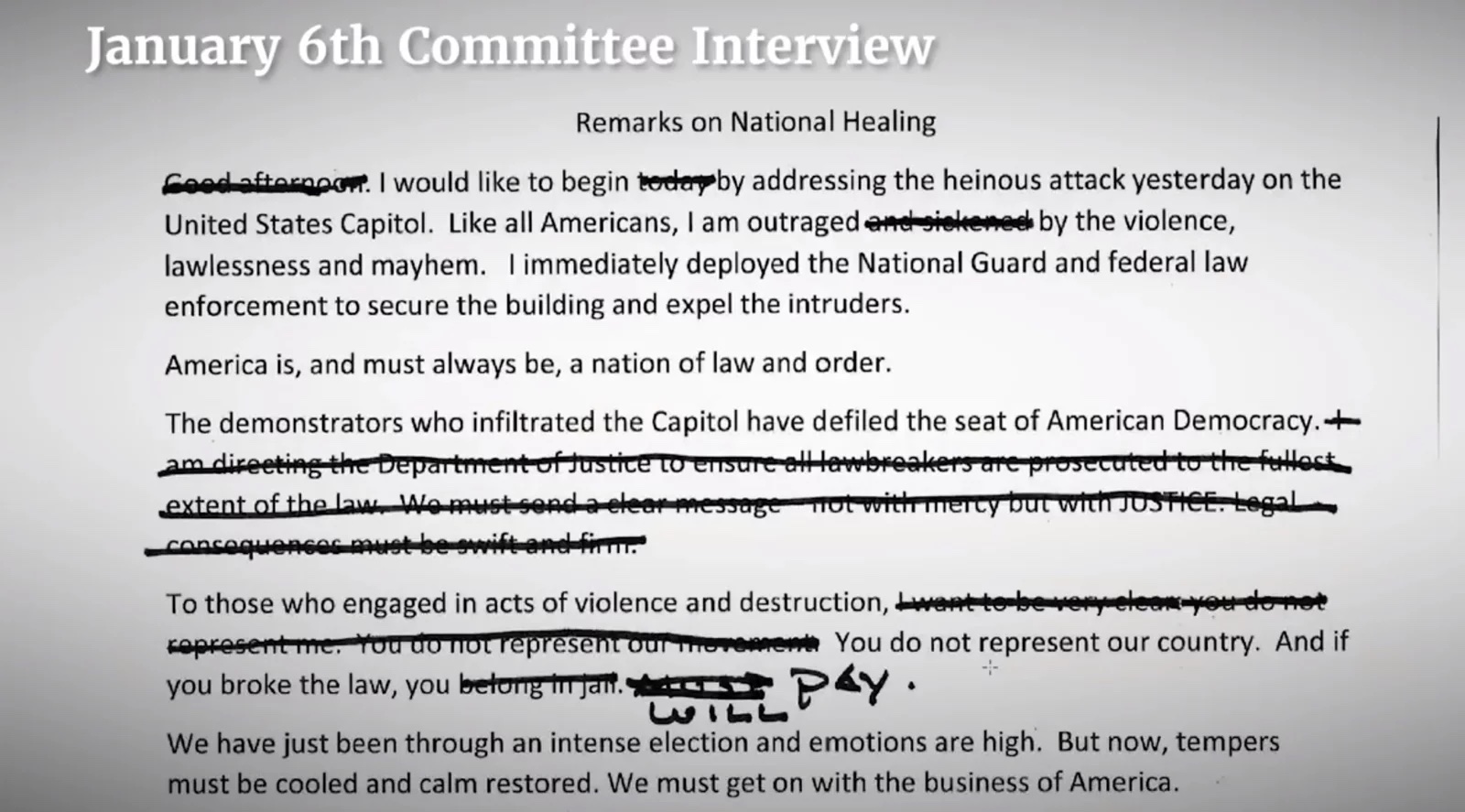
I’m convinced that my scalp has never been healthier than when I used to get my baby-fist-tight coily hair braided, a long time ago. My hair had been cultivated by a community of Black women then — my  Mom, an “Auntie” who was a stylist, the women in all of the braiding salons I visited — and in environments that valued care over comparisons, where I spent hours sitting at their feet or beneath their expert fingers. 

Our braids pull together this inherited past, our current reality, and the future we hope for into an inheritance that simultaneously invokes, preserves, and reimagines cultural knowledge.  

Because a long time ago . . . before chemical straighteners . . . before colonization and slavery . . . our women ancestors had everything we needed to care for, style, and adorn our hair. Both as a physical and symbolic exercise, our braids pull together this inherited past, our current reality, and the future we hope for into an inheritance that simultaneously invokes, preserves, and reimagines cultural knowledge.  

My personal memories of braids are why I can be in awe of a bloodshot lightsaber-wielding  Inquisitor from a galaxy far, far away with smart-aleck multi-appendaged droids, modeling a  hairstyle from a long time ago, why I feel like I can recognize all of us in the future (past). 

Field of greens: The curious history of ballparks doubling as edible gardens

On Friday night, as the Pittsburgh Pirates squared off against the Miami Marlins, a fan posted an unusual photograph of the bullpen. The Twitter user, whose handle is @Christz9, captioned it: “The Pirates bullpen out here growing banana peppers for some reason.” 

Upon closer inspection, that wasn’t the only thing growing in the bullpen, the area where relief pitchers warm-up before entering a baseball game. There were little boxes of what appeared to be squash and cucumbers, as well.

Inevitably, jokes started to roll in based on the Pirates’ performance this season. (As of Friday, the team was running 39-55 with little hope of a playoff appearance.)

“With ticket sales plummeting, the Pirates have resorted to growing banana peppers in the bullpen to pay rent,” the Twitter account for Pointsbet Sportsbook wrote, while another user replied, “Watching produce grow is more exciting than the games.” 

However, those barbs were far outnumbered by comments expressing support for the unique utilization of that space.

“I am not a sports person. I am not a plant person,” one Twitter user wrote. “But I am a fan of the ecosystem and food. Good job, Pirates.” 

The initiative started about four years ago as a way to supplement the edible garden that currently grows on the suite level of the ballpark, according to Matt Brown, the director of field operations at PNC Park where the Pirates play.

“It’s a way to soften up that space and also provide something that could be a little different for our park,” Brown said in a phone call with Salon Food. “We started with nine planter boxes four years ago, and now we have five to six different types of peppers, cucumbers, zucchini, blueberries. The main thing is that we have to get stuff that stays relatively small so it doesn’t block the sight line of pitchers who are actually trying to watch the game.” 

That’s not to say the players don’t interact with the garden. Brown relayed that some members of the team started taking bets on who could eat ghost peppers — which measure around 1,000,000 Scoville Heat Units compared to jalapeños’ 5,000 — straight off the vine. However, he quelled any rumors that the players assist in tending to the plants — even during the slowest of games. That’s something the interns, who are now pulling in weekly harvests, do. 

“Whatever is harvested is given to our clubhouse chef, who makes great dishes out of it,” Brown said. 

“Whatever is harvested is given to our clubhouse chef, who makes great dishes out of it.”

PNC Park isn’t the only ballpark in the country where the field is used for more than just playing ball. One of the most famous examples was at the former Memorial Stadium in Baltimore, where in 1970, groundskeeper Pasquale “Pat” Santarone tended to a crop of tomatoes that he’d planted in foul territory down the left-field line. 

This led to a friendly, 17-season feud between Santarone and Orioles manager Earl Weaver over who could grow the best tomatoes. Weaver grew his tomatoes at home, while Santorone grew his at the park using a mix of ground-up sod and infield dirt. This competition continued until the Orioles moved to Oriole Park at Camden Yards in 1992. 

Other parks followed suit, especially as concepts such as green initiatives and farm-to-table cuisine have gained mainstream popularity. Some of the endeavors are quite large. In 2014, leadership at Fenway Park, home of the Red Sox, oversaw the development of a 5,000-square-foot farm on a previously-underutilized rooftop. 

As Matt Monagen wrote for MLB.com, the farm produces “nearly 6,000 pounds of produce per year. Herbs, tomatoes, potatoes, lettuce, broccoli, eggplant, carrots and zucchini are all grown there, and fans can try them out at various places throughout the ballpark.” 


Want more great food writing and recipes? Subscribe to Salon Food’s newsletter.


Coors Field in Denver, as well as Oracle Park in San Francisco, both have farms, further demonstrating the possibilities of this distinct type of urban agriculture. Vegetables have also been growing in the bullpen of Petco Park, the home of the Padres in San Diego, for almost a decade. 

As in Pittsburgh, the hot peppers have always been popular among the players. 

In a 2013 interview with Fox 5 San Diego, the Padres’ then-reliever Joe Thatcher described how the team had been on a losing streak until the players “decided we needed to get hot as a team, so guys started picking them [the peppers] off the plants and just eating them.” 

The Padres’ closer at the time, Huston Street, confirmed the peppers did their job: “We just said, ‘Let’s eat the peppers, maybe we’ll get hot.’ Like as a joke. We won that day, then we won the next day and the next day.”

How David Warner stole “Time Bandits” from the thieves

There was an unforgettable line from “Time Bandits” that my cinema major friends would repeat in college, likely annoyingly, when people approached the microwave oven in the dorm kitchen: “Mom, Dad. It’s evil. Don’t touch it.” 

I had learned of “Time Bandits,” the 1981 Terry Gilliam-directed film, long before. As a child who couldn’t sleep, it was one of the late-night offerings that confused and delighted my childhood, and likely helped turn me into the strange adult I am today. “Time Bandits” is a British fantasy about a group of would-be marauders who steal a map that identifies holes in the spacetime continuum. Along the way, they pick up a child called Kevin, who loves history and adventure books, to the annoyance of his humdrum, TV-zombified parents. Kevin and the crew push through the wall of his bedroom, falling into a hole that lands them far in the past. Two hours of madcap time adventures follow. 

Star-studded, the film feels like a roll call of British genius from John Cleese as a politician Robin Hood to Sir Ian Holm as a Punch and Judy-loving Napoleon. Though I was initially drawn to the film due to the leader of its motley thieves: the magnetic performer, the late David Rappaport, so wonderful in “The Wizard,” another star stands out too: David Warner, who died July 24 at the age of 80.

“Time Bandits” came about in the late ’70s because Gilliam was unable to get initial support for his film “Brazil.” Instead, he proposed a family film. Do you like your family films co-written by Gilliam and Michael Palin of “Monty Python,” produced by Beatle George Harrison, and including a nightmarish game show, jokes about the Titanic and prescient remarks about technology? I mean, I do.   

The best art is sometimes hard to understand, because it defies understanding. It simply is.

The critical response to the film was mostly positive, though Roger Egbert wrote: “I’m usually fairly certain whether or not I’ve seen a good movie. But my reaction to ‘Time Bandits’ was ambiguous.”

The best art is sometimes hard to understand, because it defies understanding. It simply is, weirdly so. In “Time Bandits,” Warner plays Evil Genius, a malevolent being capable of twisting and warping reality. He needs the map to be able to escape the Fortress of Darkness, where he’s been imprisoned. But Evil has big plans. He considers himself better than any Supreme Being, including God, because God is so focused on creating multiple kinds of random animals: “I mean, are we not in the hands of a lunatic?”

Evil is different because Evil understands technology, and in his (clawed) hands: “The world will be different. Because I have understanding.” What’s that he has an understanding of? Digital watches. “And soon I shall have an understanding of cassette recorders and car telephones.” Dismissing God’s focus on multiple species of parrots, Warner’s character muses: “I would have started with lasers.”

Warner delivers this line like he delivers all the many words of his career, some more ridiculous than others: seriously. His comedy is the most convincing, the most hilarious because he plays it like drama, as if he is on stage performing Shakespeare at the Globe Theatre and not looking like a turtlenecked David Cronenberg cyborg in a red cape with bone shoulder pads. As The Wrap wrote “The actor never had more fun” than in this film.

He brought the same gravity to each role. His Evil is contemplative, brilliant and bored.

Warner was known for his villains, making dastardly characters from Jack the Ripper to a corrupt executive (and the Master Control Program’s voice) on “Tron” not only believable, but understandable, able to be beloved. He played three different species on the “Star Trek” franchise, and an ape — who was a senator — in Tim Burton’s 2001 “Planet of the Apes.”

His proficiency was only eclipsed by his prolificity. As the Hollywood Reporter wrote, “He rarely refused a role, as evidenced by his 220-plus acting credits on IMDb. ‘When others say no,’ he once said, ‘I say yes.’ Sometimes, he got the part because he was the ‘cheapest’ one available, he joked.”

He brought the same gravity to each role. Warner could take on anything and make it his own. His Evil is contemplative, brilliant and bored. That makes him relatable. “I am all powerful,” he tells one of his henchmen in plastic onesies after the man dares to question him, destroying the character like Darth Vader with a wave of his long-nailed hand, then acknowledging: “That’s a good question.” 

The role was physically hard, Warner said. And it included a lot of spinning. Despite being clad in a breastplate and bone-looking helmet with an “Aliens”-like spine, Warner rarely moves his face, his voice ranging from the sonorous projection of the stage actor he was, to subtle, almost sad asides. “I shall have to turn you into a dog for a while,” he says, resignedly, to a henchman.  


Want a daily wrap-up of all the news and commentary Salon has to offer? Subscribe to our morning newsletter, Crash Course.


“You feel he has a dream and he’s able to get it up there on the screen,” Warner said when asked in 2019 about working with Gilliam on the film. 

But Warner had a dream too, and he got it up there on screens and stages, big and small, for all of us. Warner survived a difficult childhood, including parents who weren’t together and attending eight different schools. “I became an actor only to get out of the house,” he said in a 2021 podcast. 

And get out he did, into our houses where he ruled with an unquestionable authority buoyed by great love. As Evil, Warner says: “No one created me . . . I made myself. I cannot be unmade.” Neither can the legacy of the great Warner’s many roles.

Surprisingly, studies find that Americans are actually becoming more cooperative

Politically and culturally, there is a widespread perception that Americans are more divided and insular than ever. Many experts, from cultural critics to researchers, have blamed a rise in individualism and materialism for the inability of Americans to work toward the common good.

Yet new research says that the popular perception of Americans as hyper-individualistic and selfish may not be entirely true. Indeed, new research from the American Psychological Association found that Americans have actually become more cooperative towards strangers since the 1950s. Amid a torrent of bad news regarding the climate, the pandemic and our nation’s enduring political rifts, the findings are a glimmer of good news that suggest that there may be hope yet for our collective ability to battle our civilization’s existential threats, such as climate change. 

Understandably, the authors of the study expected social experiments to reflect a decline in cooperation, but a meta-analysis of 511 social experiments conducted between 1956 and 2017 revealed a slight uptick instead. 

“Greater cooperation within and between societies may help people tackle present and future challenges that take the form of public goods, such as responses to a pandemic, reducing climate change, and the conservation of resources,” lead researcher Dr. Yu Kou, a psychology professor at Beijing Normal University, stated in a press release.

Previous research has shown that Americans have become less civically engaged, less socially connected, less trusting, and less committed to the common good. Notably, Robert Putnam, in his seminal work, “Bowling Alone,” suggested that the American social fabric has simply become too frayed to lend itself to cooperation. The study contends that in the fast pace of an urbanized, technologically driven world, Americans are more willing to work toward the common good than once believed.

Highlighting the popular perception of America as increasingly Balkanized, the study also found that even as Americans appeared to be more cooperative than expected in their experiment, participants perceived Americans collectively as uncooperative. 

The results come with a caveat: gains in cooperative behavior were only found in simulated social dilemmas. In the researcher’s experiments, participants could either put aside personal gain for the common good of a group or act out of pure self-interest. This juxtaposition defines the social dilemma both in real life as well. 

So if Americans truly are more cooperative, why has the social fabric frayed so much during the pandemic? Mask mandates and stay-at-home orders could have prevented the effective suppression of a deadly virus; vaccine hesitancy meant that the virus mutated more rapidly and continued spreading. These conspiracy theory–driven movements suggest a collective spirit of antipathy towards cooperation for the common good.

It may be that compared to a lab study, there are too many complicating factors in something as thorny as the pandemic, which affected our lives, households, work and interactions in ways that are complicated for sociologists to extricate. Professor Cristina Bicchieri, head of the University of Pennsylvania Behavioral Ethics Lab, explains that the study only investigated one kind of cooperation, and applying it to real life is a difficult matter.

“Take this study with a grain of salt, because comparing cooperation in real life to what undergrad students do in a lab experiment is a little hard,” she told Salon.

“One intriguing implication of these findings is that while Americans’ cooperation has increased over time, their beliefs about others’ willingness to cooperate has actually declined,” the authors wrote.

There is often a moral bent to cooperation within “in groups,” which share a certain identity, underpinning the social fabric of the group. Sometimes people will attribute unconditional cooperative behavior to a moral compass, or an intuitive sense of right and wrong; as Bicchieri points out, “we’re not angels.” 

Highlighting the popular perception of America as increasingly Balkanized, the study also found that even as Americans appeared to be more cooperative than expected in their experiment, participants perceived Americans collectively as uncooperative. 

“One intriguing implication of these findings is that while Americans’ cooperation has increased over time, their beliefs about others’ willingness to cooperate has actually declined,” the authors wrote of their findings in the Psychological Bulletin.

Pew Research polling has shown that, since the early 1970s, the only time that a majority of Americans said that they “trusted the government to do what was right most of the time” was in October 2001, immediately following 9/11; and then again in the subsequent year when Congress first authorized the Iraq War. These events likely reinvigorated xenophobia, asserting a clear picture of who the “out-group” was. Still, Americans were able to unite under the guise of a common enemy, if briefly. Just as experimental data shows, Americans only needed a condition that necessitated cooperation — though, ironically, Iraq War and 9/11 had a side effect of sparking widespread xenophobia

A shared narrative to guide cooperative behavior may be difficult to find currently, but the authors believe that the urban landscape lends itself to conditional cooperation. With more people living alone, Americans have a greater willingness to cooperate with total strangers.

“It is possible that people gradually learn to broaden their cooperative orientation from friends and acquaintances to strangers – which is called for in more urban, anonymous societies,” Dr. Paul Van Lange, a professor of social psychology at VU Amsterdam added in the press release. “Societies may have become more individualistic, but people have not.”

Talk of Alyssa Farah Griffin joining “The View” officially upsets Wanda Sykes and viewers

Alyssa Farah Griffin, the former White House Director of Strategic Communications under the Trump administration, is said to be joining “The View” officially as its 23rd co-host and new conservative panelist, multiple unnamed sources told Variety.

Farah Griffin has previously sat in as a guest co-host alongside the show’s current lineup, which includes Whoopi Goldberg, Joy Behar, Sara Haines and Sunny Hostin. At this time, Farah Griffin’s upcoming stint has not been formally announced, but sources close to the show confirmed that ABC executives have already made their decision and are set on finalizing the deal.

A spokesperson for “The View” reportedly told Variety, “We do not have a co-host announcement to make at this time. Stay tuned.”

Ana Navarro, who is a part-time co-host on the show, allegedly auditioned for the same position. Several sources said she was “disappointed” after losing the seat to Farah Griffin.

If Farah Griffin is indeed hired in this position, she’ll join a running list of conservative hosts, which includes Meghan McCain, who was on “The View” from 2017 through 2021, and Elisabeth Hasselbeck, who was on the show from 2003 to 2013.  

Following the Jan. 6 insurrection, Farah Griffin notably transformed from a Trump supporter to a vocal Trump critic. Despite her shift in loyalty, Farah Griffin’s personal political takes, specifically on gun control, mask mandates and abortion, have landed her in arguments with the show’s more liberal-leaning co-hosts, like Goldberg, Behar and Hostin.

Although Farah Griffin’s “View” hosting gig is not set in stone, the recent speculation has inspired blacklash. Per a July 19 Daily Beast article, actor and comedian Wanda Sykes, who was set to appear on the show two weeks ago, suddenly backed out after learning that Farah Griffin was co-hosting.

“She didn’t want to be part of helping a Trumper launder her reputation,” a “View” insider later disclosed.


Want a daily wrap-up of all the news and commentary Salon has to offer? Subscribe to our morning newsletter, Crash Course.


On Twitter, fans threatened to boycott the show if Farah Griffin’s appointment becomes a reality.

“I get the feeling they will hire Alyssa full time. I’m not a fan all,” wrote one viewer. “They should keep the rotating guest host.”

A separate viewer tweeted in response, “If she is hired I’m out all over again! Do the producers not see how excited we all were when Meghan left?!! I have not missed her for one second! We don’t need toxic Trump rejects for this show to be interesting!”

Prior to her appearances on “The View,” Farah Griffin worked as a press secretary for former Vice President Mike Pence from 2017 to 2019 and a press secretary for the United States Department of Defense before joining Trump’s White House staff. In 2021, she joined CNN as a political commentator and frequently spoke about her time working alongside Trump.

If you drink this much coffee every day, you may live a longer life

If you’re a moderate coffee drinker — that means up to 3.5 cups a day — you may live a longer life, according to a study recently published in Annals of Internal Medicine, an academic medical journal established by the American College of Physicians.

Over a seven-year period, researchers tracked the daily coffee intake and health outcomes of 171,616 participants, who had a mean age of 56 and were both cancer and cardiovascular disease (CVD) free. Participants who routinely drank between 1.5 and 3.5 daily cups of coffee were about 30% less likely to die than non-coffee drinkers, according to the results.

Within that specific time frame, a total of 3,177 deaths were recorded, including 1,725 cancer deaths and 628 CVD deaths. The specific type of coffee beverage — such as decaffeinated, instant or single origin — didn’t impact the final results.

Additionally, researchers found that coffee drinkers enjoyed a longer life span even if their cup(s) of joe were sweetened with sugar. However, the study clarified that “the association between artificially sweetened coffee and mortality was less consistent.”

“Previous observational studies have suggested an association between coffee intake and reduced risk for death,” lead author Dr. Dan Liu said in a statement to Internal Medicine News, “but they did not distinguish between coffee consumed with sugar or artificial sweeteners and coffee consumed without.”

For the record, Dr. Christina C. Wee, deputy editor of the Annals of Internal Medicine, noted that “the average dose of added sugar per cup of sweetened coffee [in the study] was only a little over a teaspoon, or about 4 grams.”


Want more great food writing and recipes? Subscribe to “The Bite,” Salon Food’s newsletter.


The recent research doesn’t prove that coffee, on its own, decreased the overall mortality risk of participants. Other sociodemographic, lifestyle and clinical factors, which weren’t explicitly outlined, may also impact health outcomes.

The study, however, reminds us of the numerous health benefits of drinking coffee, which include associations with reduced risk of Type 2 diabetes and heart, liver, and neurological disorders, such as depression and Parkinson’s disease.

But don’t forget: There’s such a thing as caffeine toxicity.

Trumpworld splinters over Senate GOP primary

A GOP civil war is brewing in Missouri around the embattled U.S. Senate campaign of Eric Greitens, an avowed Donald Trump backer whose poll numbers are now tumbling as more attention is brought to allegations that he physically abused his ex-wife and son. 

Poll after after reveals that Greitens, once thought of as the party’s shoe-in nominee, is trailing behind both of his primary contenders, Missouri Attorney General Eric Schmitt and U.S. Rep. Vicky Hartler, R-Mo, according to a Politico report.

In one poll from Missouri Scout, a Missouri-based news outlet, Schmitt was leading the pack at 32 percent of the vote count, with Hartzler and Greitens garnering just 25 percent and 18 percent respectively. Another poll, released by the Trafalgar Group, put all three candidates in the exact same order. 

Greitens’ precipitous drop-off comes as a newly-formed anti-Greitens super PAC pours millions into attack ads against the Senate hopeful. The group, dubbed “Show Me Values,” launched last month and has reportedly bought up $6 million in ads calling attention to the candidate’s alleged history of abusing his wife. 

Gregg Keller, a Republican strategist affiliated with a pro-Schmitt super PAC, said that the ads are likely “a case of the straw that broke the camel’s back.”

“I think Missouri Republican primary voters have, and rightly so, a lot of skepticism about what they read in the press,” Keller told Politico. “But at some point, when Missouri’s former first lady comes forward and says Greitens beat her when they were married, and says the same thing about his young son, voters think, ‘The number and the seriousness of the charges against him are just too much for me. I’m tapping out.'”


Want a daily wrap-up of all the news and commentary Salon has to offer? Subscribe to our morning newsletter, Crash Course.


Apart from allegations of abusing his ex-wife and son, Grietens’ past is also checkered by damning allegations from 2018, during his tenure as the governor of Missouri, of sexually assaulting his hairstylist and threatening to post nude photos of her if she ever spoke of it to the press. 

Though the race is not playing out in Greitens’ favor, that could quickly change with an official imprimatur from Trump, who Republicans believe might be kingmaker in many of the GOP primaries. 

At present, Trump’s inner circle appears to be divided between their support of Greitens and Schmitt, as Politico noted. Former Trump officials Pam Bondi and Matt Whitaker have both reportedly lobbied the former president to throw his weight behind the latter, deeming Greitens too controversial for a general election. Meanwhile, Donald Trump Jr. and his fiancée Kimberly Guilfoyle have reportedly encouraged the former president to stand by Greitens.

Last month, Trump said that would refuse to endorse Hartzler, saying he doesn’t think “she has what it takes to take on the Radical Left Democrats.” By contrast, the former president called Greitens the candidate that “the Democrats legitimately want to run against.”

“Eric is tough and he’s smart. A little controversial, but I’ve endorsed controversial people before,” Trump added at the time, declining to give an official endorsement. “So we’ll see what happens.”

Back in June, The Washington Post reported that many Republican operatives and donors in Washington and Missouri began aggressively angling to prevent Greitens from being nominated after the Senate candidate released a controversial ad about going “RINO” hunting, suggesting that he might “hunt down” members of his own party who fail to show enough fealty to the MAGA agenda.

How extreme heat increases your risk of death, no matter where you are

At this time last year, the internet was celebrating what was hoped would be a “hot vax summer.” This year, it’s just a plain old hot summer

Temperatures are soaring across the Northern Hemisphere, with record-setting highs and heat waves in Europe, North America and Asia. In the Pacific Northwest, public health officials are expecting heat index values to reach dangerous levels this week as several high-temperature records will likely be set. In the Northeast, a heatwave has led states like New Jersey to set triple-digit temperature records over the past week. Earlier this month, it was estimated that nearly 70 million Americans were facing a heat wave or advisory.

Meanwhile, in China — where temperatures have been increasing faster than the global average — 70 cities are currently facing a warning that temperatures are expected to 104 degrees Fahrenheit this week. Europe’s most recent heatwave has reportedly melted roads, and caused wildfires in Britain.

Climate change researchers have long warned us of the link between rising greenhouse-gas emissions and more frequent, boiling temperatures. Those temperatures, in turn, have a deleterious effect on human health — and increase the risk of death for everyone.

While there are many stories about extreme heat being deadly, and regarding the death tolls from heat, how exactly heat kills is not as often discussed. (Indeed, heat has been called the “number one killer.”) Clearly, exposure to heat and sun can kill: if you were to, say, wander through the desert in the summer without water, death would be a likely outcome.

But extreme heat deaths are happening in highly urbanized areas, where shelter, electricity, and even air conditioning are commonplace. So how does heat kill in these types of places?

RELATED: Europe is getting hotter and drier

“As temperatures get warmer, certainly this is going to be more of an issue,” Dr. Nicole McCoin, Department Chair for Emergency Medicine at Ochsner Health, told Salon. “There’s a concern with people, particularly when they’re not used to the heat, and they’re getting out in the heat and exerting themselves — there’s a huge risk.”

In other words, exertion in a heat wave can kill. You may live in an air-conditioned apartment block in the urban jungle of New York City, but if you are already frail and go out and exert yourself during a heat wave, you may be putting yourself at risk. 

The most concerning thing about extreme heat is how it affects the cardiovascular system. An overheated person might find that their cardiovascular system is struggling to regulate heat, which results in heat stroke.

Retrospectively, researchers are just beginning to understand the toll that extreme heat has had on humans over the last couple of decades. A recent study published in the Journal of the American Medical Association found that an increase in summer days where it felt like at least 90 degrees or hotter was associated with an average of 1,373 extra deaths each year, based on data from 2008 to 2017. In a separate recent study, researchers from the University of Southern California published a paper analyzing more than 1.5 million deaths in California between 2014 and 2019. They found that the risk of death increased by six percent on days when there was extreme heat, and 21 percent on days where extreme heat was coupled with air pollution. In other words, if someone is already ill or frail in some way, extreme heat can push them over the edge.

According to the Environmental Protection Agency, heat waves are occurring more often and more intensely in major U.S. cities. Specifically, their frequency has increased from an average of two heat waves a year to six from the 1960s to 2010s.

In other words, extreme heat and extremely hot days are going to become more common in the future. So what exactly is the risk of prolonged extreme heat on the human body?

“Eventually, the temperature and/or humidity is too high for us to be able to compensate physiologically through sweating and that convective heat loss, and we’re no longer able to maintain a stable body temperature.”

Tony Wolf, a postdoctoral scholar at Pennsylvania State University’s Noll Lab who studies thermoregulation and microvascular physiology, explained to Salon that the most concerning thing about extreme heat is how it affects the cardiovascular system. The cardiovascular system helps regulate our body heat by redistributing heat between internal organs. An overheated person might find that their cardiovascular system is struggling to do that, which results in heat stroke — a condition in which the body can no longer control its temperature. Heat stroke is the most serious heat-related illness.

The way that our bodies deal with heat starts with sweat. Sweat is how the human body is able to maintain its core temperature when faced with extreme heat.

“We sweat to dissipate heat, and we also redistribute blood out to our skin to cool the blood through convection, so air passing over the skin cools the blood just underneath the skin and that blood then gets delivered back to the core to keep the core temperature relatively stable,” Wolf explained. “Eventually, the temperature and/or humidity is too high for us to be able to compensate physiologically through sweating and that convective heat loss, and we’re no longer able to maintain a stable body temperature, and we have a continuous rise and internal or core temperature.”

When that happens, the heart has to work harder to deliver blood. And if a person isn’t sweating, they will lose plasma and blood volume, once again causing the heart to have to work even harder. Wolf said this is why when we see increased heat-related deaths, they’re “cardiovascular in nature” and often affect older populations or people with heart-related comorbidities who might have weakened cardiovascular systems.


Want more health and science stories in your inbox? Subscribe to Salon’s weekly newsletter The Vulgar Scientist.


McCoin explained to Salon that when the core temperature of the body can no longer be maintained due to extreme heat, this is when a person will start to experience organ problems or an altered mental state.

Before experiencing a heat stroke, McCoin said a person should look out for signs that they might be experiencing heat exhaustion, too.

“People will see signs that their heart rate speeds up and their blood pressure falls, they usually will start to feel really weak — some people become lightheaded, they can have nausea, vomiting, diarrhea, muscle cramping,” McCoin said. “If they transition into having a heat stroke, the big difference there is that then their mental status really starts to change and they start to get very confused, they can even have seizures, and so that is where you get into even more serious territory.”

McCoin said when people start to feel these symptoms, if they can, it’s important to remove themselves from the source of the heat.

“And then use cool water on the body,” McCoin said. “Then if you can use that in combination with fans, that’s very effective because then you have all that evaporative cooling from the fans on that wet skin.”

The point at which heat is too extreme for the human body has recently been debated. Wolf from the Noll Lab has worked on research around “wet bulb temperature,” which, as Peter Reiners wrote previously in Salon, is a specific measurement of heat and humidity that “makes it clear how close conditions are to lethal.”

“The closer wet bulb temperature gets to our body temperature, the less heat is lost and the closer we are to heat death,” Reiners, a geosciences professor, writes. Wet bulb temperature is measured by observing the temperature of a wet thermometer in the shade as water evaporates off of it. 

“It has been known for more than a century that wet bulb temperatures higher than 88 °F (31 °C) make it impossible to do physical labor, and a wet bulb temperature of 95 °F (35 °C) kills healthy humans within a few hours,” Reiners wrote in 2021.

However, Wolf’s research says that the wet bulb temperature that is lethal may be lower than previously understood. 

Previously, researchers thought the upper limit for the human body was 95 degrees Fahrenheit at 100% humidity, or 115 degrees Fahrenheit at 50 percent humidity. This would be the limit to which the human body can no longer cool itself by sweating to maintain a stable body core temperature. But Wolf and his colleagues’ research has suggested that the upper limit could be closer to 88 degrees Fahrenheit with 100% humidity, or 100 degrees Fahrenheit at 60% humidity.

Wolf said he hopes their research helps drive some policy change as the world faces a future with more frequent, intense heat waves.

“Once we establish these upper limits for a maintenance of stable core temperature above which the risk of heat-related illnesses starts to increase, we’re hoping that the data can be used for policy and guidelines to help prepare you,” Wolf said. “Whether that comes down to increasing availability of cooling centers, or whatever it may be.”

Ex-Boebert campaign manager breaks down crying on Bannon podcast while demanding sham “recount”

Sherronna Bishop, a former campaign manager for Rep. Lauren Boebert, R-Colo., choked up on Tuesday while insisting that “elections matter.”

Bishop appeared on Steve Bannon’s podcast with Mesa County Clerk Tina Peters. The homes of both women were raided by the FBI in connection to an election fraud case. Peters also recently lost her bid to become the Republican nominee for Colorado secretary of state. She disputes the results of her election and the results of the 2020 presidential election.

Bishop told Bannon that she had started an organization called America’s Mom because she was unhappy with elected officials.

“Our children were under attack,” she said without explaining how her children had been threatened. “That’s how America’s Mom was born and naturally from there that’s elections.”

Bishop’s voice cracked with emotion as she mentioned elections.

“Election matter!” she cried before pausing to compose herself. “Sorry. These people who have no backbone, no courage, who are easily manipulated and will not talk about what matters to ‘we the people.’ They’ve used their offices now to go after our kids.”

Bishop said that she is demanding a recount following Peters’ recent loss in a Colorado primary election.

“She is symbiotic [sic] of what has happened in our entire nation,” she insisted. “And they are going after our children. We’re not having it.”

Watch the video below from Real America’s Voice.

Trump’s inner turmoil: He craves credit for January 6 — but can’t admit it for fear of prison

The video didn’t have a clip of Donald Trump complaining about how he can’t pronounce “yesterday” in it, but nonetheless, it’s worth paying attention to it. On Monday, January 6 committee member Rep. Elaine Luria, D-Va., posted a video indicating that, even when he wasn’t mispronouncing common words, Trump spent the day after the Capitol insurrection focused on finding that sweet spot between continuing to encourage domestic terrorism and not risking criminal exposure for doing so. 

As hinted at by the deposed witnesses in the video, including both Ivanka Trump and Jared Kushner, one of the major reasons that his staff and family were pushing Trump to give a speech denouncing the Capitol riot on January 7, 2021 was to keep him out of legal trouble. Any fool could tell, from Trump’s inciting speech and his extreme reluctance to call off the rioters, that Trump wanted the violence that day and was thrilled that his plans for an insurrection had gone as well as they had. But having him offer a statement, however reluctantly, claiming that he was appalled by the violence was a necessary step to constructing a legal and political defense. It was about having a document Trump’s lawyers could point to when arguing (falsely) that Trump didn’t mean for the riot to happen and that he was unaware of the effect his words would have. 

The problem is that Trump’s desire to stay out of jail was in direct conflict with another guiding Trump impulse: to gloat about the violence he inflicted on Congress and take full credit for unleashing the Capitol insurrection. 

The inner battle between Trump’s desire to evade legal consequences and his longing to yell “yeah I did it” was amply displayed in the “blooper reel” that the House committee investigating January 6 shared on Thursday night. While most of the public discussion about the video was mocking Trump for not wanting to say “yesterday,” what is really most crucial is his unwillingness to either admit the election was over or to call for legal consequences for the rioters he sent to the Capitol. 


Want more Amanda Marcotte on politics? Subscribe to her newsletter Standing Room Only.


But the video Luria released Monday gives even more crucial context. It really underscores how much Trump was being pressured by his staff to release a video for purely legal reasons. No one seems to believe Trump felt anything but glee over the chaos he caused. No, the post-riot condemnation was ass-covering, pure and simple. But Trump, who lies about everything all the time, was struggling to pretend to feel anything but joy over the riot. Distancing himself from the rioters meant he couldn’t take credit for the insurrection, and that was clearly bumming him out. 

Not only is Trump not sorry about January 6, he’d be happy to do it again.

That’s why the still shot of how much ink Trump spilled over the remarks, in an attempt to take out any language that sounded too sorry about what happened, is such crucial evidence. 

Particularly noteworthy is how reluctant Trump was to say that the rioters don’t represent him. Because, of course, he wants the whole world to know that they do represent him. For someone as narcissistic as Trump, being able to convince so many people to risk their jobs, families and freedom on his behalf must be quite exciting. Not being able to brag about Jan. 6 must be incredibly painful for Trump. 

This story, however, is about a lot more than Trump’s ego. It’s about the ongoing threat of right-wing domestic terrorism, and how Trump’s antics after the Capitol insurrection created a roadmap for other Republican politicians and GOP propagandists to dial up the violent rhetoric. It’s not a surprise, in retrospect, that Trump was reluctant to condemn the rioters too harshly. This is the same man who told the Proud Boys to be on “stand by” for him during a 2020 presidential debate. His behavior since he left office indicates that Trump’s affection for political violence has not dimmed. Worse, it’s spreading throughout the GOP. 

Not being able to brag about Jan. 6 must be incredibly painful for Trump. 

Salon’s Chauncey DeVega has been doing the thankless work of tracking Trump’s rhetoric on his app Truth Social and during his rallies. Taken together, DeVega outlines that a clear message is being sent to Trump’s followers: Not only is Trump not sorry about January 6, he’d be happy to do it again.

Trump endorsed a post on Truth Social calling for “civil war” in response to the supposed enemy “within.”  This was right after a mass shooter in Buffalo, New York opened fire on mostly Black customers in a grocery store, having been hyped up on the racist “great replacement” conspiracy theory that Trump also likes to hint at. Trump has also really amped up the white nationalist rhetoric, unsubtly gesturing towards the eliminationism that such views always logically point to by arguing that “this nation does not belong” to “corrupt radicals,” which is Trumpian code for American citizens who aren’t part of the right-wing tribe. 


Want more Amanda Marcotte on politics? Subscribe to her newsletter Standing Room Only.


Over the winter, Trump pounced on another violence-stoking opportunity by joining in the Fox News frenzy over the anti-vaccine “trucker” protest in Ottawa, Canada’s capital. For weeks, the pundits on Fox hyped the protest and openly longed for violence to break out between the protesters and Canadian law enforcement. Trump himself joined in on the fray with one of his usual threats disguised as a “warning,” telling Fox host Sean Hannity, “You can push people so far and our country is a tinderbox too, don’t kid yourself.” He used the word “tinderbox” repeatedly, understandably believing his followers might not pick up on his hint the first time.

Trump has also taken multiple opportunities to hint to his followers about his true feelings of pride and joy over January 6.

He floated the idea of pardoning the rioters at one rally. He’s tried to turn Ashli Babbitt, the insurrectionist who was shot to prevent her from leading a mob to chase down fleeing members of Congress, into a martyr. He’s claimed the people arrested for rioting that day are “being persecuted so unfairly.” When asked about the people who were chanting “hang Mike Pence,” he publicly defended them by saying it was “common sense” and they were “very angry.” Trump’s supporters, like most of us, know to ignore the condemnations of the insurrection as mere ass-covering language. They know that these other statements reflect his true feelings of approval for political violence. 

Trump may not know that injecting bleach into your lungs will kill you, but he sure does have a strong grasp of how to signal violent intent to his followers while maintaining plausible deniability to law enforcement.

Unfortunately, the signals he’s sending are spreading to other Republican politicians. As I noted yesterday, Dave Weigel of the Washington Post published a piece worth reading in full that really shows how normal this “civil war” talk has become among Republican candidates on the campaign trail. The Republican candidate for attorney general in Maryland, Michael Peroutka, routinely describes Democrats as foreign enemies and recommends that “the Second Amendment” is a good response to Black Lives Matter protests. As Weigel writes:

That argument has been dramatized in ads that, for instance, show one armed candidate appearing to charge into the home of a political enemy, and another warning of “the mob” that threatens ordinary Americans. In many cases the candidates are brandishing firearms while threatening harm to liberals or other enemies.

In central Florida, U.S. Army veteran Cory Mills has run ads about his company selling tear gas that was used to quell riots in 2020. “You may have seen some of our work,” he says, introducing a montage of what are labeled “antifa,” “radical left” and “Black Lives Matter” protesters running from the gas.

There are too many other examples to recount here, but the gist is clear: January 6 was, for Trump and his most adamant allies in the GOP, not the end of the political violence but an excuse to ramp up the inciting rhetoric. 

As intelligence analyst Malcolm Nance told DeVega this week at Salon, the “attack on the Capitol was really a template for the right-wing to do it correctly next time.” It’s unlikely that it will play out exactly the same way, of course. But Nance is right. Trump is encouraging his supporters to be at the ready should he call for violence again. 

GOP hit with “alarming” fundraising collapse while Trump gobbles up cash amid Democrats’ donor surge

Even though Republicans are still widely projected to win back at least one chamber of Congress in this fall’s midterm elections, the party’s fundraising machinery has had an unexpected slowdown in recent weeks.

The New York Times’ Shane Goldmacher reports that the drop in online donations to the WinRed platform dropped by 12 percent in the second quarter of 2022, which he says has left party officials “alarmed” about their ability to compile a large enough war chest to deliver truly punishing defeats to Democrats.

In addition to the GOP’s unexpected online fundraising woes, Democrats have also seen a surge in small-dollar donations despite the fact that President Joe Biden is dealing with record-low approval ratings for a president at this point in his first term.

This has resulted in Democrats widening their edge in online donations by roughly $100 million over the first half of 2022.

According to Goldmacher’s reporting, at least part of the problem for Republicans can be traced back to the deeds of former President Donald Trump.

“Exacerbating the fund-raising problems for Republicans is that Mr. Trump continues to be the party’s dominant fund-raiser and yet virtually none of the tens of millions of dollars he has raised has gone toward defeating Democrats,” he writes. “Instead, the money has funded his political team and retribution agenda against Republicans who have crossed him.”

Liz Cheney rips Tom Cotton for January 6 hearings comments

Rep. Liz Cheney, R-Wyo., tore into Sen. Tom Cotton, R-Ark., on Monday for criticizing the January 6 hearings, even though he apparently hasn’t watched any of them.

“Hey @SenTomCotton – heard you on @hughhewitt criticizing the Jan 6 hearings,” she tweeted. “Then you said the strangest thing; you admitted you hadn’t watched any of them.”

“Here’s a tip,” Cheney added. “Actually watching them before rendering judgment is more consistent with “Anglo-American jurisprudence.”

https://twitter.com/replizcheney/status/1551693934094696448

Cheney’s remarks came after Cotton made an interview appearance with conservative radio talk show host Hugh Hewitt, where he claimed that the panel’s failure to cross-examine witnesses does not align with traditional “Anglo-American jurisprudence.”

“I think what you’ve seen over the last few weeks is why Anglo-American jurisprudence going back centuries has found that adversarial inquiry, cross-examination is the best way to get at the truth,” Cotton said.

“There is no one on that committee who takes a view different from Nancy Pelosi, or even a view that’s like, we should examine the full context of all of these statements, of all of these recordings, of all of this video,” the Arkansas senator added. 

RELATED: Tom Cotton’s “Army Ranger” dissembling goes back at least eight years

Later during the interview, Cotton openly admitted that he hadn’t watched any of the hearings. 


Want a daily wrap-up of all the news and commentary Salon has to offer? Subscribe to our morning newsletter, Crash Course.


“I did not watch that hearing, and I have not watched any of the hearings, so I’ve not seen any of them out of the context that I see a snippet here or there on the news.”

“They’ve never released the full transcripts. They’ve never released the full videos,” Cotton added. “We have no idea what those witnesses said in the full context of their depositions. And even if we had those, there was no lawyer in the room who was probing in the other direction.”

Cotton’s remarks echo past GOP claims that the hearings have been overly one-sided, since most of the committee is comprised of Democrats, with the exception of Cheney and Rep. Adam Kinzinger, R-Ill. 

During the panel’s formation, Democrats sought to create a bipartisan committee in order to avoid accusations of partisan bias. However, when House Minority Leader Kevin McCarthy, R-Calif., nominated to Reps. Jim Jordan, R-Ohio, and Jim Banks, R-Ind., to be on the panel, House Speaker Nancy Pelosi, D-Calif., rejected them, citing the fact that both men sought to overturn the 2020 presidential election in Donald Trump’s favor. 

RELATED: How did the Secret Service lose its Jan. 6 texts? So far, the explanations won’t wash 

Since then, Republicans have widely accused the panel of operating akin to a kangaroo court, eschewing traditional legal procedures. Some conservatives in Congress have even vowed to investigate the committee’s activity if they regain control of the chamber in 2022.

Ex-Pence aide shuts down Matt Gaetz’s attack: “It’s more likely that he’ll be in prison” by 2024

A top Pence aid tore into Rep. Matt Gaetz, R-Fla., who is under an investigation for the possible sex trafficking of a minor, after the lawmaker suggested that former Vice President Mike Pence has no chance of becoming the next next president of the United States.

Gaetz’s comments came last week during the Turning Point USA Student Action Summit in Tampa, Florida, where the firebrand delivered a medley of inflammatory remarks designed to rile up his base. 

“Let me just say what everyone here knows,” Gaetz said at the event, garnering cheers from the crowd. “Mike Pence will never be president.”

Those comments did not sit well with Pence’s ex-aide Marc Short, who responded by saying that he’d be “I’d be surprised if [Gaetz] is still voting.”

“I don’t know if Mike Pence will run for president in 2024, but I don’t think Matt Gaetz will have an impact on that – in fact, I’d be surprised if he’s still voting,” Short said in a CNN interview on Monday. “It’s more likely that he’ll be in prison for child sex trafficking by 2024, and I’m actually surprised that Florida law enforcement still allows him to speak to teenage conferences like that.”

Asked to comment on Short’s response, a Gaetz spokesperson told Insider: “Marc can repeat debunked conspiracies on CNN, but nobody can deny that dunking on Pence was Gaetz’s best applause line of an epic speech.”


Want a daily wrap-up of all the news and commentary Salon has to offer? Subscribe to our morning newsletter, Crash Course.


Short and Gaetz’s tiff speaks to a broader rift growing within the GOP, which has seen a growing number of former Trump officials speak out against the former president as the January 6 hearings have ramped up. According to CNN, Short gave private testimony to the select committee investigating on Monday. Short, who is the highest-ranking Trump official thus far to provide testimony, was also reportedly joined by ex-Pence aide Greg Jacob. 

Gaetz, for his part, has remained a loyal Trump supporter despite the committee’s increasingly damning hearings around the former president’s complicity in fomenting the riot. 

Since early 2021, the Florida congressman has also been steeped in a federal investigation into the possible sex trafficking of a minor. Those allegations, which Gaetz has vehemently denied, have been backed up by ex-Gaetz confidante Joel Greenberg, a former Seminole Valley tax collector who has already pled guilty to child sex trafficking, according to The Daily Beast. Greenberg is currently cooperating with the Justice Department as part of a plea deal, providing investigators with additional information for the Gaetz probe.

Ex-Mueller prosecutor catches Trump in Jan. 6 lie: “Cover-up” included Jared Kushner, Stephen Miller

Rep. Elaine Luria, D-Va., tweeted a video compilation from the House Select Committee investigating the Jan. 6 attack on Congress.

Among the things included in the video were questions to Jared Kushner and Ivanka Trump about the draft of a speech that former President Donald Trump would give on Jan. 7 to help stave off his Cabinet secretaries from invoking the 25th Amendment to remove him from office.

The Jan. 6 committee asked several questions about the speech and what was crossed out by Trump, but Andrew Weissmann, a former prosecutor for ex-special counsel Robert Mueller, noticed something that was included.

“I immediately deployed the National Guard and federal law enforcement to secure the building and expel the intruders,” the speech said. “America is, and must always be, a nation of law and order.”

The statement is a lie. Trump never deployed the National Guard or law enforcement.

Speaking to MSNBC’s Nicolle Wallace on “Deadline White House,” Weissmann explained that therein lies a Trump administration cover-up.

“One of the things I was struck by was not what was crossed out but something that was in there and that was the statement that ‘I immediately deployed the National Guard and federal law enforcement to secure the building and expel the intruders,'” quoted Weissmann. “So, if I was the Justice Department right now I would view that as a cover-up that Jared Kushner, and Stephen Miller and the former president of the United States engaged in to make it seem like the president had not engaged in a coup and he actually was against what happened on Jan. 6th. And that was actually part of the planned speech. And that’s the kind of thing that we want to see the department doing is interviewing those people and issuing grand jury subpoenas and if necessary putting those people in the grand jury and forcing them to testify and account for their actions.”

He noted that if that was happening it would be well known by now because while lawyers and jurors must keep the proceeding secret, witnesses can speak out that they appeared before a grand jury.

“So I’m waiting to see that kind of aggressive action by the department,” he continued.

He also quoted Punchbowl’s Mike Schmidt, who described the DOJ as like a tank that is patient and slow and not a lot happens until they’re aimed at the target. That’s only when everything explodes.

“I hope that is right. I am somewhat pessimistic, although I do think the Jan. 6th committee has sort of lit a fire under the Department of Justice and that’s why you’re seeing the heartfelt statements by the attorney general,” said Weissmann.

Last week, Attorney General Merrick Garland was short with some of the reporters asking if he was going to do anything about the obvious crimes that were being revealed from the Trump White House by the committee. All Garland would say is that no one is above the law.

“There is a lot of speculation on what the department is doing, what it’s not doing, what our theories are and what they aren’t, and there will continue to be speculation,” said Garland. “That’s because of the central tenet of the way in which the Justice Department investigates, a central tenet of the rule of law is that we do not do our investigations in public. This is the most wide-ranging investigation — and the most important investigation — that the Justice Department has ever entered into. And we have done so because this effort to upend a legitimate election, transferring power from one administration to another, cuts at the fundamentals of American democracy. We have to get this right. And for people who are concerned, as every American should be, about protecting democracy, we have to do two things: we have to hold accountable every person who is criminally responsible for trying to overturn a legitimate election, and we must do it in a way filled with integrity and professionalism, the way the Justice Department does elections. Both of these are necessary in order to achieve justice and to protect our democracy.”

When pressed on it, specifically with the mention of Trump, Garland snapped at the reporter saying that he doesn’t know how else to say it other than no person in the United States is ever above the law.

See the full discussion below and the video from the Jan. 6 committee. You can also watch at this link.