Spring Sale: Get 1 Year, Save 58%

In defense of celery, a criminally underrated ingredient

I can recall a time not so long ago when buying a head of celery inspired the sort of anxiety someone new to scuba diving might feel upon submerging themselves underwater for the first time: that they’ve entered a literal race against time. 

Perhaps it’s a tad dramatic to compare running out of oxygen to letting a few celery ribs turn floppy, but at this point probably enough celery has gone bad in my crisper drawer to warrant a bit of theater

Back then I’d buy celery with a single dish in mind (yes, tuna salad), then despair at the sheer size of the remaining stalk. “Why can’t you grow in single ribs?” I’d admonish poor celery. In a few particularly dark moments, I’d call up that myth about celery containing negative calories because it’s so laborious to chew (this is in fact, untrue), as if this gave me some sort of power over the vegetable. “You’re nothing but crunchy, stringy, watery labor!” I spat. “You can’t even provide net-positive sustenance.”

Deep down, celery and I both knew I simply felt inadequate. 

The fact is, celery is a beautiful, versatile, flavorful vegetable. When served raw, its tingly crunch lends vibrancy and parsley-like earthiness to salads — whether citrusy or mayo-based, chopped or shaved into slaw. Don’t neglect its leaves, by the way. They make for a beguiling garnish — especially on mustardy salads — and a delicious topper for salami sandwiches. They also yield terrific pesto when mixed with pine nuts, garlic and parsley. 

Celery stands up masterfully to pickling, whether quick or long. I’ve been known to dunk it briefly in red wine vinegar and pickled jalapeno brine alongside carrots, cauliflower and red onion before tossing said veggies with feta, basil and olives; I call this giardiniera salad. Celery is also the quintessential aromatic base to soups and stews. (I can’t think of any vegetable that more perfectly complements lentils. I’d also argue that chicken soup and beef stew couldn’t achieve powerhouse comfort food status without it.) 


Want more great food writing and recipes? Subscribe to Salon Food’s newsletter, The Bite.


I’ve punched up many a potato salad with fresh chopped celery, chives and capers. I’ve wok-seared julienned celery with strips of steak, ginger, leeks and tons of black pepper with gorgeous results.    

While we’re on the subject of browning, it is a very good idea to hard-sear and braise celery in wine and a little chicken or veg stock with thyme and garlic. Extra points if you cap this luscious melange with grated gruyere and parm then stick it under the broiler for a few minutes before serving it with torn pieces of baguette for lunch. 

I still fret about using every rib in that formidable stalk from time to time. But you know what? A panicked five-minute shaved celery, Parmesan and chickpea salad tastes great topped with a fried egg and drizzled with chili crisp. For that matter, soup never cares if celery goes in limp, so long as it imparts that telltale mild, herby sweetness. 

Now that I’m scuba-certified in celery usage, though, I relish a little race against time. (Ooh! Pickled celery relish!) Just call me an adrenaline junkie.   

Celery and white bean salad with fried garlic
Yields
2 servings
Prep Time
10 minutes, plus cooling
Cook Time
10 minutes

Ingredients

4 fat cloves garlic, sliced ¼-inch thick (inner green sprouts removed) 

½ cup grapeseed or vegetable oil

Kosher salt

Zest and juice of 1 lemon (about 3 Tbsps juice), plus more as needed

Freshly ground black pepper

Extra virgin olive oil, as needed

1 can cannellini beans, drained and rinsed

2 large stalks celery, thinly sliced on a bias

½ an avocado, sliced

1 Tbsp torn cilantro leaves, for garnish (parsley works well here too)


Directions

  1. Combine the sliced garlic and oil in a small saucepan, and set over medium-high heat. Cook, stirring frequently with a heat-resistant rubber spatula, until garlic begins to bubble steadily, 2 to 3 minutes.

  2. Continue cooking, stirring frequently to keep the garlic from sticking and scorching, until the garlic turns pale golden brown, about 5 minutes longer. Cut the heat, remove the garlic with a slotted spoon, and set on a paper towel-lined plate. Sprinkle the garlic with salt while it’s still warm. Pour the frying oil into a heat-proof bowl and set aside to cool for at least 15 minutes while you prep the vegetables and beans.

  3. Add the lemon zest and juice to the bottom of a medium bowl along with a good pinch each of salt and black pepper. Whisking constantly, stream in half the reserved garlic oil (saving the rest for another use).

  4. Whisk in about 1 tsp olive oil, then taste and adjust the seasoning or acidity as needed. 


    Add the beans, celery, avocado, and fried garlic to the bowl with the dressing, and toss gently to combine. Check the seasoning, and adjust as needed with salt, pepper or lemon juice. Garnish with cilantro leaves and a drizzle of olive oil, and serve.


Cook’s Notes

Frying garlic is a finicky business, but oh — is it worth the effort. I find removing the little green sprouts in the middle to be an essential step to preventing burning. Be sure to start the garlic in cold oil, as well. 

Salon Food writes about stuff we think you’ll like. While our editorial team independently selected these products, Salon has affiliate partnerships, so making a purchase through our links may earn us a commission. 

The secret ingredient your bacon is missing

Bacon, at its core, is deeply smoky, pork-y, savory and inherently salty. Regardless of the animal or plant it’s made from or how it’s cooked, bacon is a handheld joy that can be either chewy or impossibly crisp.

Few foods are as iconic as bacon, with a flavor that is so widely recognizable. You may wonder, then, if adding additional flavorings, seasonings, spices and/or syrups to bacon is actually nothing more than gilding the lily or perhaps even ruining a good thing.

As Kelly Clarkson famously said (way back in Season 1 of “American Idol“), “If it ain’t broke, why fix it?”

Well, there are two ingredients that truly elevate bacon to another stratosphere: maple syrup and white miso. Supplying a sweet-and-savory interplay (with a bit of richness and salinity from the miso), this combination emboldens the bacon, deepening its already rich flavor and turning it into something else altogether. It even shifts the texture a bit, as the caramelized syrup helps add an extra layer of crunch, chew and bite. It’s a really sensational flavor profile — especially if you’re using thick-cut bacon.

It’s a really sensational flavor profile — especially if you’re using thick-cut bacon.

I advise using high-grade, pure maple syrup. If you’re trying to make better bacon, you definitely don’t want to reach for anything labeled “pancake syrup,” which is typically just an amalgamation of high fructose corn syrup and artificial ingredients. High-grade maple can be a bit expensive, but it should last you for quite some time.

When it comes to the miso, I’d wager that you’d want to pick white over red (or any other color), for a subtle salinity and savory note that will be both satisfying and beguiling. If you haven’t cooked with miso before, I can’t recommend it enough. Nowadays, it’s not too tough to find this ingredient in most grocery stores or supermarkets, and it isn’t exorbitantly priced either. Miso is essentially a pure distillation of umami, which bolsters the flavor of bacon exponentially, especially when used in conjunction with maple.

In addition to the maple and/or miso, some may like to harness a little heat or spice (but it’s not necessary if you like to keep things on the mild side). There’s a deep complexity that comes through when you’re tasting smoke, pork, sweetness, saltiness, umami and spice all at once. Your taste buds are experiencing everything simultaneously — and it’s quite a remarkable taste sensation.


Want more great food writing and recipes? Subscribe to Salon Food’s newsletter, The Bite.


You could throw your maple-miso bacon on a BLT; serve it with scrambled eggs and toast; enjoy it on a bacon, egg and cheese; or add it to a cheesy dip or beefy burger. However, the nuances and complexities of this flavor upgrade deserve to be enjoyed on their own volition.

One final thought: I’m a heavy salter, but do not season your bacon with salt, especially if you’re using the miso. You’ll end up with a real salt lick. (I’m not a black pepper guy, but if you like a few grinds, go wild.)

Flavor aside, when making bacon at home, there’s truly only one method to use. Click here for our recipe for the crispiest, easiest and most delicious bacon ever.

11 easy, cheesy recipes that taste like comfort

There’s a National Cheese Lovers’ Day, but this food “holiday” shouldn’t be regulated to one fleeting day. We deserve cheese pulls galore every day — am I right, fellow cheese lovers?

If you’re hoping to make this weekend a cheese extravaganza, why not try some of Salon Food’s stellar, uber-cheesy dishes? They’re all immensely, deliciously cheese-laden — and we couldn’t recommend them more.

To really up the cheese factor, you could pair one (or more than one) of these recipes with a cheese plate or cheese-centric dessert. On Netflix’s superb new show “Pressure Cooker,” one of the chef-contestants states during a cheese challenge that “you’ve never heard of pecorino ice cream.” But, frankly, why not?

When it comes to cheese, does the limit exist? Without further ado, here are 11 easy, cheesy recipes from Salon Food that taste like comfort:

Pizza with chopped meat, spinach and cream saucePizza with chopped meat, spinach and cream sauce (Getty Images/Eugene Mymrin)Image_placeholder
If you’re in the mood for amping up the cheese quotient but a standard plain pie isn’t your desired vibe, then this pizza is a top-tier option.
 
With plenty of verdant kale to bulk up the nutritional component, a choose-your-own-crust, a mountain of not one but three separate cheeses and the inclusion of a ground, browned protein option, this pizza is your new super-cheesy go-to.
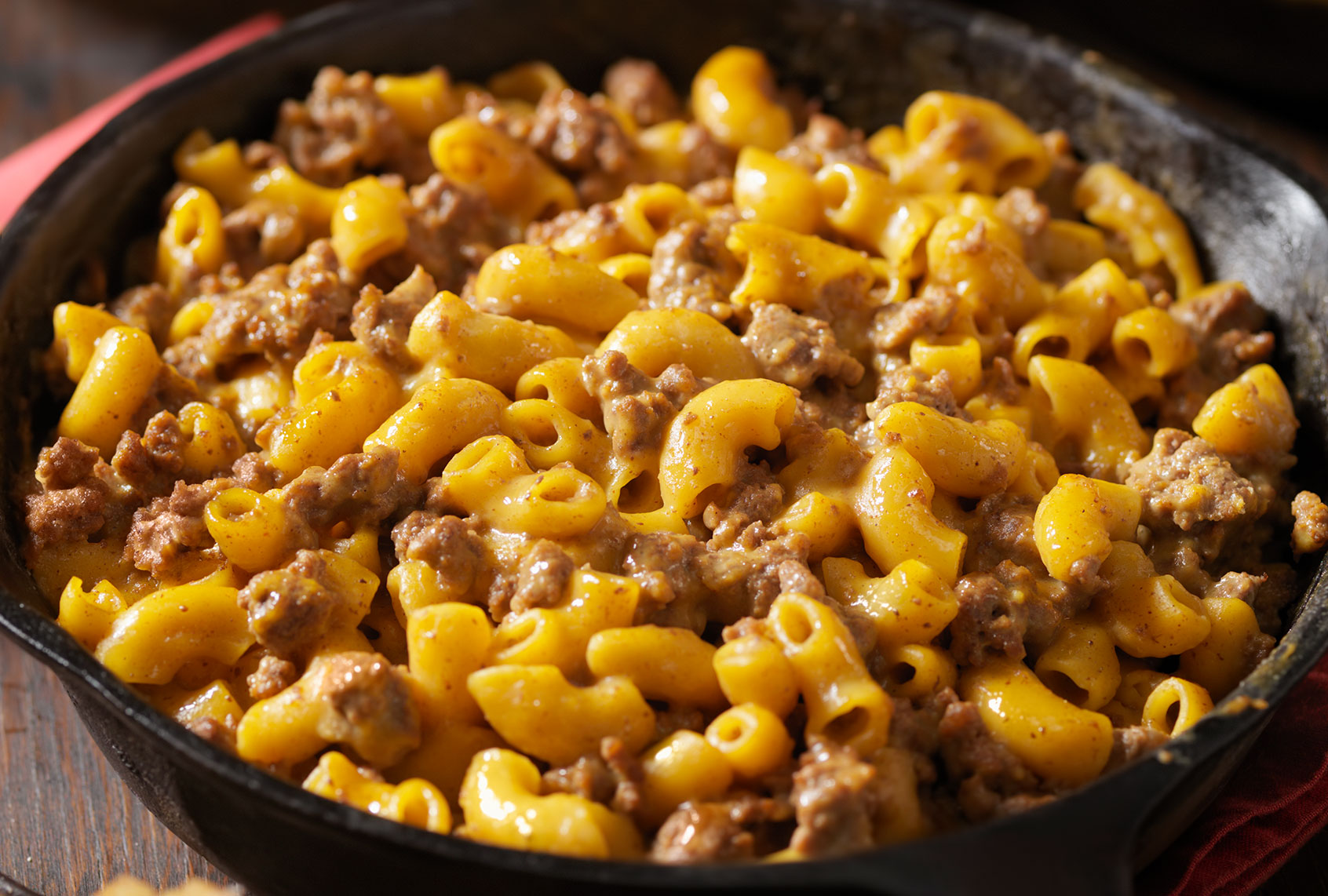
Cheesy Hamburger and Macaroni DinnerCheesy Hamburger and Macaroni Dinner (Getty Images/LauriPatterson)Image_placeholder
Toss that old box in your pantry out and make this instead. While you can customize, mix-and-match or swap as you see fit, the end result will be delicious, definitively cheesy and tailored precisely to your own tastes. With the unique inclusion of buttermilk powder, lots of cheddar and interesting notes of smoked paprika, you’ll be amazed by this super-comforting dish.
 
As deputy food editor Ashlie Stevens writes, “This recipe takes a one-box convenience meal and turns it into a multi-ingredient dinner. Packed with surprising punches of flavor, it belongs in your winter recipe rotation.” Sounds like an A+ option, no?
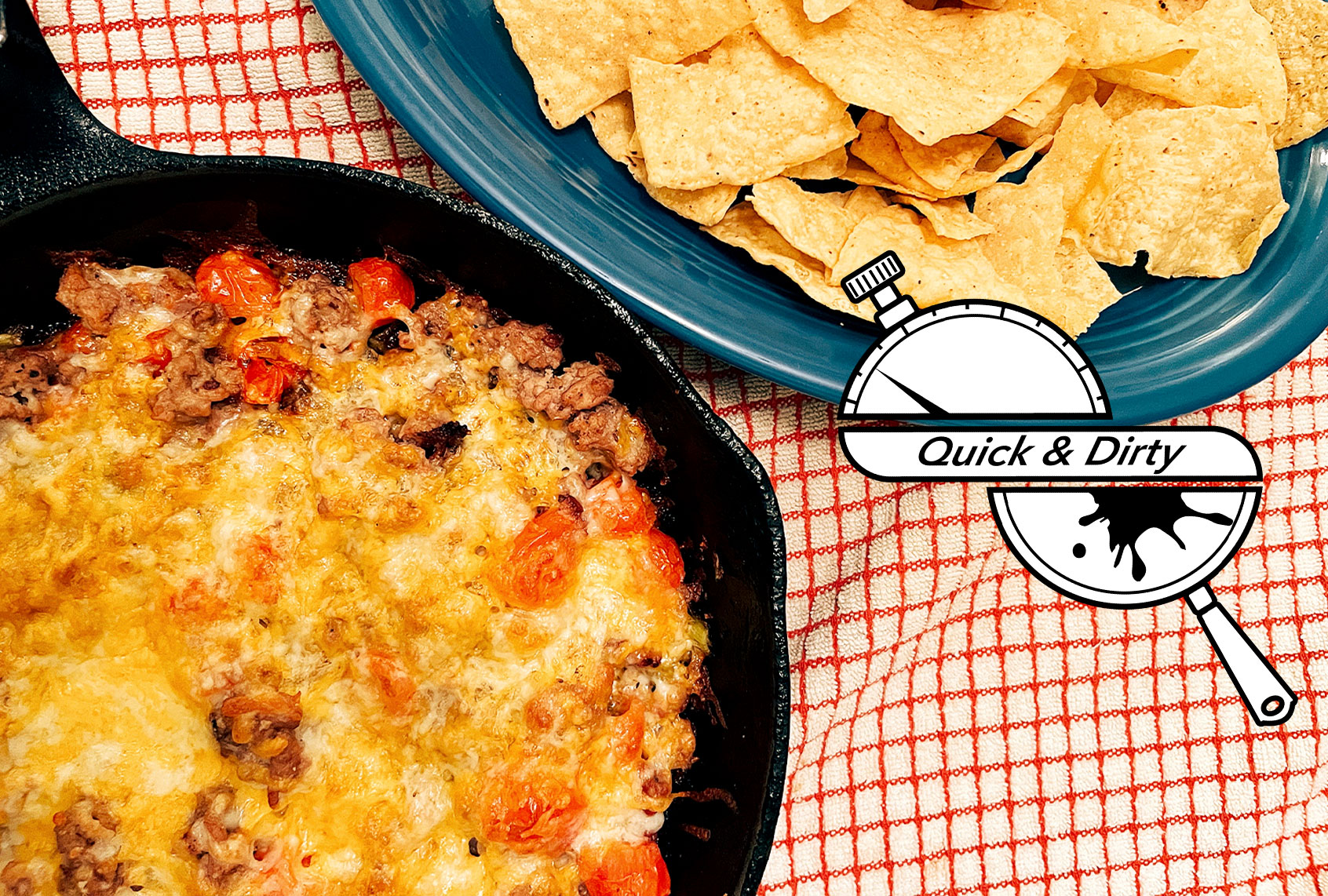
Cheesy Chicken Reverse NachosCheesy Chicken Reverse Nachos (Mary Elizabeth Williams)Image_placeholder

Nachos are pretty unquestionably terrific, but in this case, senior writer Mary Elizabeth Williams takes some inspiration from Mark Bittman and makes a cheesy, spicy and flavorful “reverse nacho” dish, complete with lime, cherry tomatoes, ground turkey and heaping amounts of tortilla chips.
 
If that hasn’t sold you yet, perhaps this will, as told by Williams herself: “I made this on a recent evening after a rough day of blood work at the doctor, and I felt comforted and fortified after only one bite. I can’t guarantee it will fortify you in the same way, but I do know there aren’t too many days that can’t be made better with cheese and chips for dinner.”
French onion soupFrench onion soup (Getty Images/Anastasia Dobrusina)Image_placeholder

There’s no need to wax poetic about French onion soup. It’s an iconic dish and a stalwart for all of the right reasons. This version eschews beef stock and soggy bread, instead focusing on the highlights: a rich, sumptuous, dark broth and cheese atop of cheese atop of cheese, with some crispy, toasted bread (and lots of onions) to tie it all together.
 
Rush to your kitchen and start chopping because this is one seriously impressive soup.
Home made freshness beef lasagna with fine chopped parsleyHome made freshness beef lasagna with fine chopped parsley (Getty Images/haoliang)Image_placeholder

Lasagna is a true beacon of a dish. A perfect one-pot meal, it’s an easy dish to make and then wrap up with foil to deliver to a new neighbor or grieving friend. While lasagna doesn’t require any sides, a green salad, some crusty bread and some extra sauce and grated cheese on the side are certainly welcome at dinnertime.
 
Moreover, you can tweak the flavors, ingredients or inclusions as you see fit. I also love lasagna because it’s a built-in leftover machine. If you make this recipe, you’ll be having lasagna for lunch for the next few days. I don’t know about you, but lasagna for lunch sure sounds lovely to me.
Dutch baby pizzaDutch baby pizza (Mary Elizabeth Williams)Image_placeholder

As Williams writes, “I like this Dutch baby pizza in an easy to manage small portion, because it says ‘dinner is served’ when you don’t even want to wait for takeout. The only trick is to show some restraint; this is a baby after all, it can’t handle a heavy hand with toppings.”
 
While many often go the sweet or breakfast-y route with a Dutch baby, who says it shouldn’t be a cheesy, savory pizza
Mashed potato in cooking panMashed potato in cooking pan (Getty Images/Anjelika Gretskaia)Image_placeholder

The culinary equivalent of a plush, warm pillow, this dish is a dependable standard at every one of my holiday meals. Lush, soft, deeply cheesy and redolent with butter and cream, these mashed potatoes will never, ever go out of style.
 
While these potatoes are a holiday go-to for me, who says you can’t enjoy them on a particularly frenzied Wednesday afternoon? If you don’t have mascarpone or chives on hand, no worries. All you really need here are potatoes, cheddar, cream, butter, water and salt.
Pumpkin PizzaPumpkin Pizza (Mary Elizabeth Williams)Image_placeholder

Williams writes that she “discovered my very favorite pizza in the world several years ago, on an autumn visit to a friend in Missoula. Normally, I would be skeptical of Montana as a pizza destination, but my friend is a former New Yorker and full-time Italian, so I trusted her. At Biga Pizza, we ate a magnificent creation of squash, caramelized onions and two kinds of cheese. I returned home determined to have as much of exactly that in my life as possible.”
 
In her iteration of the pizza, Williams utilizes a can of pumpkin purée in a marvelous manner, combining it with two cheeses, some herbs and a batch of caramelized or sautéed onions. While some might lean into pumpkin (or pumpkin spice) only in the fall, there’s no reason to limit your intake or minimize your pumpkin love to only one season. We eat butternut all year long, don’t we?
Conchiglie pasta with pumpkin stuffingConchiglie pasta with pumpkin stuffing (Getty Images/VICUSCHKA)Image_placeholder

This stuffed shell recipe utilizes brown butter, pesto, cream and pumpkin seeds, along with butternut squash, herbs and ricotta to bolster your stuffed (and baked) pasta love to new heights. This recipe has a ton of different cheeses, herbs and flavorings, which will impress and tantalize even the most pasta-averse (if people of that ilk even exist).
 
On the recipe page, I write that “there’s something deeply comforting and reassuring about stuffed shells: perfectly cooked, pliable pasta shells filled to the brim with the creamiest ricotta mixture imaginable, doused in sauce and cheese galore and baked until perfectly golden. It doesn’t get much better than that, especially on a holiday.” It doesn’t get much better than this.
Mozzarella BallsMozzarella Balls (Mary Elizabeth Williams)Image_placeholder
A smaller version of a mozzarella stick? We’re in.
 
As Williams writes, “You can buy regular, low-moisture supermarket mozzarella, cube it up and fry it pretty effortlessly any night of the week. But there’s something really cute — and really tempting — about those little cheese balls known as bocconcini. Round stuff is just fun.”
 
Enjoy some piping hot, freshly fried mozzarella at home with this stellar recipe. The cheese pulls will be truly Instagram-worthy.
Chicken Parmesan Baked in Tomato SauceChicken Parmesan Baked in Tomato Sauce (Getty Images/Lauri Patterson)Image_placeholder

Alas, the piece de resistance!
 
I worked really hard to develop this approach to classic chicken parmigiana, swapping the sauce-chicken-cheese parameters and instead going in a slightly different direction, which helps to place the focus on the crispness of the fried chicken cutlets and the sheer amount of cheese used.
 
This is one of my favorite recipes of all time. I hope you will say the same after making it.

7 new shows worth looking out for, from “Fatal Attraction” to “American Born Chinese”

There is no such thing as a lighter midseason anymore in the world of TV. Quite the contrary. The coming months bring a colossal amount of premieres, including those for returning shows and new ones. Nobody can possibly watch them all, but the 10-day Television Critics Association Winter Press Tour, which took place in Pasadena, CA., enabled us to see a healthy selection of what’s on their way to our screens. Better still, journalists covering it had an opportunity to question the creative minds behind each show – and the answers they give can often provide clues about a show’s quality and longevity.

Granted, several sell themselves by dint of who’s starring in it. “Better Call Saul” viewers jonesing for a fresh Bob Odenkirk fix are going to show up for AMC’s “Lucky Hank” regardless of what the critics say. (It’s good, in case you were wondering.)

Ditto for Peacock’s “Poker Face,” the road-trip noir from “Glass Onion” creator Rian Johnson, starring Natasha Lyonne. If the only thing people knew about Apple TV+’s “Shrinking” was that it pairs Harrison Ford with Jason Segel, that would be enough. Knowing that “Ted Lasso” star Brett Goldstein created the comedy should be enough to persuade fence-sitters.

Star power is a powerful gravitational force. But so is familiarity, as is the case with Hulu’s extension of Mel Brooks’ classic with “History of the World, Part II” and FX’s continuation of Raylan Givens’ adventures with “Justified: City Primeval.” And if you’ve heard of “The 1619 Project” but haven’t read it, Hulu’s not-to-be-missed adaptation crafted by the Pulitzer Prize-winning project’s creator, journalist Nikole Hannah-Jones, debuts Thursday, Jan. 26. 

With those noted, here are a handful of other new shows you shouldn’t pass up.

01
“Dear Edward,” AppleTV+. Premieres Friday, Feb. 3
Dear EdwardColin O’Brien and Taylor Schilling in “Dear Edward.” (Courtesy of Apple TV+)

Catharsis seems to be in fashion among this spring’s new dramas. But this expressly pushes us to weep openly, early and often. Unsurprisingly, it comes from “Parenthood” creator Jason Katims, who reunites with “Friday Night Light” star Connie Britton for this adaption of a bestseller by Ann Napolitano.
 

Britton and Taylor Schilling may be the known factors here, but the show’s magnet, and great discovery, is Colin O’Brien’s sensitive rendition of a 12-year-old boy and sole survivor of a plane crash. His character, Edward Adler, becomes the focal point of a network of grieving people directly affected by the crash or inspired by the miracle that he lived.


02
“The Company You Keep,” ABC. Premieres Sunday, Feb. 19 at 10 p.m.
The Company You KeepCatherine Haena Kim and Milo Ventimiglia in “The Company You Keep” (ABC/Eric McCandless)

How do you follow up six seasons of playing American television’s favorite (dead) dad? If you’re “This Is Us” star Milo Ventimiglia, you jump from that heartwarming family drama into the shoes of Charlie Nicoletti, a world-class con man, and heartthrob.
 

However, Ventimiglia assures fans that this new role isn’t about “getting away from Jack . . . [it] let me stretch into something new creatively.”
 

He added, “I was kind of running toward a job like this. I was running toward a character like this.” 
 

Although this show gives off some serious “Out of Sight” levels of chemistry and enabled Ventimiglia to coax out his inner Clooney, it’s based on the Korean drama “My Fellow Citizens” although the circumstances are similar: Ventimiglia’s Charlie sparks a hot romance with Emma (Catherine Haena Kim), an undercover CIA agent, without either realizing the truth about who they’re sleeping with.
 

However, the show’s executive producer Julia Cohen stresses that their affair is simply one aspect of the complex story they’re trying to tell. “We liked the idea of imagining sort of the Asian American Kennedys . . . in D.C. and Emma as the kind of the black sheep of that family,” she said.  


03
“Fatal Attraction,” Paramount+. Premieres Sunday, April 30
Fatal AttractionLizzy Caplan as Alex Forrest and Joshua Jackson as Dan Gallagher in “Fatal Attraction” (Monty Brinton/Paramount+)

More than 35 years after the movie made unhinged mistress Alex Forrest an iconic stereotype and cemented Glenn Close‘s stardom, “Dirty John” creator Alexandra Cunningham invites us to reconsider the story from a modern lens.

By expanding Alex’s profile through Lizzy Caplan’s portrayal, along with that of Dan Gallagher (Joshua Jackson) and his wife Beth (Amanda Peet), Cunningham told reporters that her version of the story is “about entitlement and midlife crisis and how some of the sausage gets made in our broken justice system, Cluster B personality disorders, isolation, fathers and daughters, and murder.”
 

“I find it very difficult to watch the film in the way that I originally watched it, which is . . .the ’80s audience sees this as a very binary, black and white, villain-versus-hero story,” Caplan observed. “If you watch the movie again, I find it very, very difficult to see Alex as a straight villain, to not ask yourself the question as an audience member, like, ‘Well, what’s going on with her? And also, what about consequences for him?'”
 

Silver Tree’s directing aids in ensuring that a woman’s point of view drives this story, which in 1987 was shot by Adrian Lyne, from a screenplay written by another man, James Dearden.

04
“Great Performances: Richard III,” PBS. Premieres Friday, May 19 at 9 p.m.
Richard IIIDanai Gurira in Shakespeare’s “Richard III.” (Photo by Joe Sinnott)

Actor and playwright Danai Gurira continues to prove she can do anything with her muscular embodiment of what may be Shakespeare’s greatest villain. This filmed edition of The Public Theater’s Free Shakespeare in the Park production was directed by Robert O’Hara (“Slave Play) and employing a highly inclusive cast, demonstrates the Bard’s universal accessibility.
 
“I think, to both Danai and myself, that it doesn’t just start with me casting her as Richard III but that making the world of the play feel like it reflected the world that we live in, in a way,” O’Hara explained to critics.  “For other people to see someone in a wheelchair or to see deaf actors or a smaller statured actor is exciting because it reflects who they are and also opens up the space of what Shakespeare is.”


05
“A Small Light,” Disney+ and National Geographic Channel. Premieres this spring
A Small LightBel Powley and Liev Schreiber in “A Small Light.” (Courtesy of NatGeo)
There have been many examinations of Anne Frank and adaptations of her story through her diary. Less has been dramatized about Miep Gies, the young employee of Anne’s father Otto who hid them from the Nazis and kept their secret for more than two years. Bel Powley and Liev Schreiber breathe life and tenderness into Miep and Otto’s partnership, and Powley ennobles Miep with a range of emotions including a plausible measure of humor.
 

Creators and showrunners Tony Phelan and Joan Rater sought to write all of their characters in a way that balances their commonness with their bravery. Powley says she marveled at knowing that before she risked her life to hide the Franks and a few others. “She was a party girl.  She loved dancing . . . she was a frivolous, fiercely independent young woman, and I related to all of those attributes about her,” the star said.
 

She added, “What I loved about this story and this script from when I first read it is that Miep is an ordinary person who ended up doing an extraordinary thing.” 


06
“Tiny Beautiful Things,” Hulu. Premieres this spring
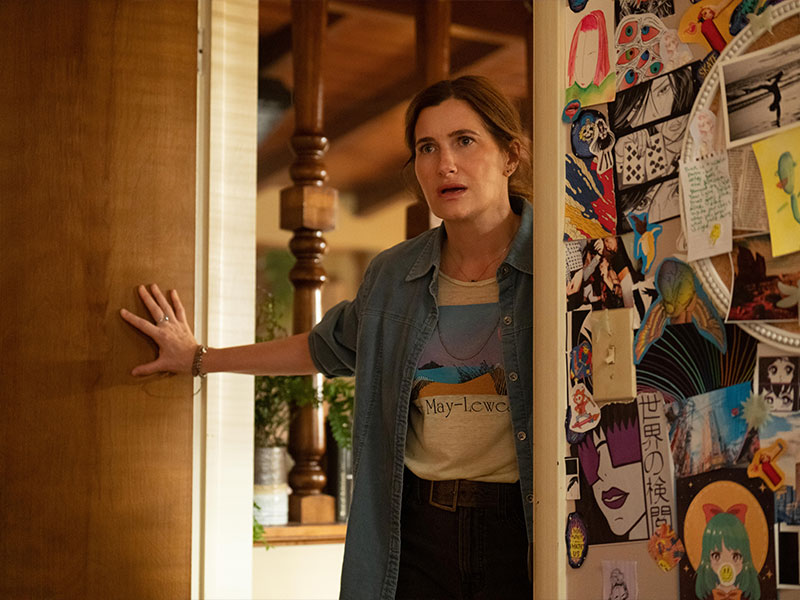
Tiny Beautiful ThingsClare (Kathryn Hahn) in “Tiny Beautiful Things” (Elizabeth Morris/Hulu)

“Little Fires Everywhere” showrunner Liz Tigelaar returns with this adaptation of Cheryl Strayed’s book based on her contributions to the Rumpus’ advice column Dear Sugar. Strayed is an executive producer on the project, but what makes it sparkle is Kathryn Hahn‘s performance as Clare, a struggling writer whose takeover of the Sugar mantle inspires her to look within.
 

Tigelaar grappled with the challenge of creating something unique from a book that’s already been adapted as a play and a podcast and found the story’s guideposts in a universally relatable place.
 

“I think there’s a difference between being messed up and being a mess,” she said. “We brought our own messiness, and that was what I think everybody drew from as artists.  And that’s, to me, what made it so deep and brave and powerful.”


07
“American Born Chinese,” Disney +. Premieres this spring
American Born ChineseBen Wang and Jimmy Liu in “American Born Chinese” (Photo courtesy of Disney Plus)

The year of Michelle Yeoh continues with Disney’s adaptation of Gene Luen Yang’s graphic novel about Jin Wang (Ben Wang), an average teen who finds himself caught up in an adventure involving the gods of the Chinese pantheon, including Yeoh’s Guanyin, the Goddess of Mercy.
 

“When you’re casting that role – and American audiences may not know that, like, it’s sort of like casting the Queen of England or the Great Gatsby or something – you need somebody that has that kind of weight,” explains showrunner Kelvin Yu. “And I don’t know that there’s anybody more than Michelle Yeoh who can enter a room and you’re like, ‘Yeah, that’s a goddess. I just totally believe that’s a goddess.'”
 

As if that weren’t enough of a divine reason to tune in, the show is also an “Everything Everywhere All at Once” reunion thanks to Ke Huy Quan’s appearance as 1990s sitcom favorite Freddy Wong.

“Slow” director on creating an intimate, asexual romance: “We wanted this film to be very corporeal”

There are not many romances featuring asexual characters, but the disarming Lithuanian film, “Slow,” screening at the Sundance Film Festival (in person and online) sets a gold standard. This moving drama has Elena (Greta Grineviciute), a dancer, falling for Dovydas (Kestutis Cicenas), a handsome sign-language interpreter. As they get to know each other casually, he blurts out that he is asexual — specifying that he is not attracted to anyone sexually. This rocks Elena’s world a bit; she meets up with her ex, Vilius (PIjus Ganusaukas), in an almost knee-jerk response.

“He is not repulsed by sex, as some asexual people are. We say clearly that he is not like that. He just doesn’t want it or need it.”

Elena and Dovydas start dating seriously, however, getting cozy and intimate, and even having sex on occasion — because asexual does not mean nonsexual. Moreover, Dovydas cares deeply about Elena, and wants her to feel passion even if he doesn’t need the same physical connection himself. As they negotiate their relationship, and she tries to accept the arrangement, Dovydas suggests she see other people if she has a desire to do so. 

“Slow” shows the pitfalls, such as jealousy, that the couple experience as they fight about their relationship. Elena rejects Dovydas at certain times, and Dovydas overcompensates at moments that have them determining if and how they can be together. The appealing actors both give strong performances that capture their conflicted emotions.

Writer/director Marija Kavtaradze spoke with Salon about her sensitive romance.

What prompted you to tackle the topic of asexuality, and what informed Dovydas’ character?

I wasn’t familiar with asexuality. I read an article about it, and I didn’t see a lot of asexual characters, but the topic stayed in my mind. I was reading and researching, and then I decided to write a screenplay about it. It’s a relationship story and a love story. I thought it was interesting and important to make Dovydas asexual because he is a man. Our expectations of gender in relationship are often that if she had been asexual, for us, as an audience, it would be much easier to accept. In my country, growing up, the narrative was that men always want sex — and it is the only thing they want — and women don’t, and that’s how it is. Their characters helped me rethink things about gender that go without saying.

The film is an “issue” movie in that the characters must navigate his asexuality with the drama hinging on will they stay together? Can Dovydas be the person Elena needs? He may be asexual, but he is not nonsexual. Can Elena accept that? What decisions did you make in charting the couple’s relationship?

It was tricky, but very interesting, that he can perform sexual activities. He is not repulsed by sex, as some asexual people are. We say clearly that he is not like that. He just doesn’t want it or need it. For Elena, it is not enough, so we, as viewers, hope that they could work it out. They could have an open relationship; he brings this topic up. But I didn’t put emphasis on her just needing sex; she wants desire from him more than sex. He feels he is still not enough, even though he is trying. There is an intimate scene where she performs oral sex ,and he goes to give pleasure and she stops him. The film is about sex, but the main issues they have are not only about sex. They are both trying to give each other what they think the other person needs, but they do not think about their own needs. Their communication is not as strong as it could be.

The film is told mainly from Elena’s point of view. What was your intention in addressing asexuality from the perspective of someone in love with an asexual person rather than from Dovydas’s experiences? It certainly gives the audience an identification point, but we only get to know him through her eyes. Can you talk about that approach?  

I was thinking about perspective. I do identify with her more; she’s a female character, and audiences who are not familiar with asexuality will be trying to understand about what asexuality means if they haven’t read about it, or don’t have their own experiences, or don’t know anyone who is asexual. I wanted it to be balanced. It is more of a relationship story; it’s not just her story. We are not only with her; we get to know him and his feelings too, even though the film is seen more through her eyes.

We first see Elena in a romantic clinch where she is being coerced by her partner. She also navigates issues of consent with Dovydas as they engage in physical contact touching and sexual intimacy. Can you talk about presenting sex and consent in this way? 

“I found we did not need nudity in any scene. I felt that every sex scene that we shot were not approached as sex scenes.”

I haven’t thought about it in that way, but she is coerced in that first scene, and we can see that in her expression. When I was thinking about Elena’s character, I was thinking about boundaries and how close she can get physically to Dovydas. She asks him if she can kiss him and perform oral sex. I want them both to be respectful to each other because we see how they care about each other and love each other. I want the audience to root for them to be together and be happy. So, when they ask, “Is this OK?” and check their boundaries, it shows how much they care. But I think the biggest question mark is when her ex-boyfriend Vilius, comes and Dovydas starts to have sex with Elena. There is not a moment where he checks if touching is OK, and she doesn’t have time to process what is going on. In that moment, she doesn’t want to reject him, but she is letting something happen that she does not really want.

Yes, she has a more physical relationship with Vilius, and an emotional relationship with Dovydas and the film suggests that dichotomy. I want to talk about the bodies in the film. I like that she is a dancer, and he is a sign language interpreter, so both characters have “expressive” careers. You focus on their bodies, but they are rarely sexualized or objectified. The sex is discreet; there is no nudity, no objectification of bodies. Can you talk about filming bodies in “Slow?”

I didn’t decide not to show naked bodies, but I found we did not need nudity in any scene. I felt that every sex scene that we shot were not approached as sex scenes. That’s why it doesn’t feel objectified, because I’m still with the characters and I am more interested in what they are feeling than how do they look. We had an intimacy coordinator with the project, and I was so happy about that, because we could dive precisely into every moment. I wanted everything to look real, and natural, and recognizable, but I wanted the actors to feel as comfortable as possible. We all had trust. I didn’t want the intimate scenes to make them feel less of their character or like an object for the audience to enjoy.

I am curious how you approached the film visually? Much of the film is shot in an intimate style with close-ups that emphasizes the couple’s closeness. But there is a terrific scene of Dovydas dancing in a bar, he is seen in a mirror and Elena is mirroring his actions. Can you talk about how you filmed the characters and conveyed their connection?

The way I developed the visual style was by using a mood board with a lot of pictures by Nan Goldin, who makes intimate images with naked bodies. I was interested not in the bodies, but in the intimacy that I felt she had with her subjects. I talked with the cinematographer about how to convey this feeling of intimacy and bodies. We wanted this film to be very corporeal, to feel it in the dance and everywhere that would be natural. We used lights to feel the tone of the skin to create a feeling of realness and closeness to the characters. What do we need to do to put this intimacy we created with the actors on screen and not lose it? There was this feeling and chemistry. What helped was using a long lens for the close-ups. It gave me such a romantic feeling. 


Want a daily wrap-up of all the news and commentary Salon has to offer? Subscribe to our morning newsletter, Crash Course.


Ultimately, what do you want viewers to understand about asexuality after seeing your film?

Researching the film, I was reading about asexuality and talking to people who identify as asexual. There is such a big spectrum. Every story is different, and people have different experiences. I am not explaining clearly what it is. I am sure there will be a lot of questions. When I first saw or heard something about asexuality, I had questions — what is it?, and so on, so maybe this can be the start for people to dive deeper, get more familiar, and talk openly about it. I feel empathy for asexual people. In many stories, I kept hearing this narrative that you have to prove yourself all the time, because no one believes you. If you are asexual, people say, “You just haven’t had good sex yet,” or “You will become sexual,” or “Maybe you are homosexual and don’t accept it.” Every asexual person has this experience. If we read and see more, we might know more rather than open your mouth and say something stupid. If you have questions, you can Google it after the film to learn that asexual people masturbate. I want to respect what Dovydas’ character says and believe it. I am not explaining it for everyone.

“Slow” premieres at the Sundance Film Festival in person on Jan. 21, with encore screenings Jan. 22, 23, 25 and 27. The film will also be available for viewing online Jan. 24-30. For tickets and more information, visit the Sundance site.


The absolute best way to make sugar cookies

In Absolute Best Tests, Ella Quittner destroys the sanctity of her home kitchen in the name of the truth. She’s boiled dozens of eggs, mashed a concerning number of potatoes, and seared more Porterhouse steaks than she cares to recall. Today, she tackles the sugar cookie.


Most sugar cookies are just fine. Good, but not great.

I don’t mean to toss undue ill will toward the entire category of sugar cookies, which in name alone contains two of the very best words. It’s just that most variations taste like a missed opportunity.

Perhaps that’s due to their roots. The sugar cookie can be dated back to the 1700s, when a group of Pennsylvania settlers set out to create a cookie that contained only the most basic ingredients and shaping techniques. Though simplicity as a holy grail doesn’t necessarily mean a dish has to be dull in flavor or texture — unsweetened whipped cream is, after all, one of the best arguments for getting out of bed in the morning.

Unfortunately, the vast majority of sugar cookies offer no such argument. They can taste of nothing, or even worse, hit the mouth with a saccharine punch. Their texture can hover between soft and crumbly in a way that checks neither box. But then, once in a while, a sugar cookie will be exceptional. It will taste of buttery blankets draped over pockets of crystalline caramel. Its carapace will delicately crunch as your front teeth pass through into the lush center. It will bend almost ninety degrees before its chewy center gives way and it finally snaps into two pieces. It will whisper in your ear that you are beautiful and perfect and that the only way in which you could improve would be to eat another cookie.

This latest round of Absolute Best Tests was conducted in the pursuit of that exceptional sugar cookie.


Control

Baking is wildly fussy. To ensure that any differences in flavor, texture, and appearance were in fact due to recipe tweaks, I . . .

  • Used an oven thermometer religiously
  • Used the same brand of ingredients for each batch
  • Weighed all ingredients on a digital scale
  • Used butter and eggs that were at the same temperature

Each batch was a riff on this classic chewy sugar cookie recipe.

Ingredients:

  • 1/2 cup (113 grams) unsalted butter, at room temperature
  • 1/2 cup (99 grams) granulated sugar
  • 1/4 cup (52 grams) light brown sugar
  • 2 teaspoons vanilla extract
  • 1 large egg, at room temperature
  • 1 1/2 cups (180 grams) all-purpose flour
  • 1/2 teaspoon kosher salt
  • 1/4 teaspoon baking soda
  • 1cup turbinado sugar

The tests

1. Original recipe

  • 1/2 cup (113 grams) unsalted butter, at room temperature
  • 1/2 cup (99 grams) granulated sugar
  • 1/4 cup (52 grams) light brown sugar
  • 2 teaspoons vanilla extract
  • 1 large egg, at room temperature
  • 1 1/2 cups (180 grams) all-purpose flour
  • 1/2 teaspoon Diamond Crystal kosher salt
  • 1/4 teaspoon baking soda
  • 1 cup turbinado sugar
  1. Heat oven to 375°F. Line two large sheet pans with parchment paper.

  2. In a stand mixer fitted with the paddle attachment, or in a large bowl using a hand mixer, cream butter and sugars for 1 minute. Scrape sides of bowl. Continue beating for another 1 to 2 minutes, until lightened and fluffy. Scrape bowl again. Add vanilla. Beat for 1 minute. Scrape sides of bowl. Add egg. Beat for 1 minute, until combined. Scrape sides of bowl.

  3. Add flour, salt, and baking soda. Beat 1 minute. Scrape sides of bowl and beat for 1 minute or until combined and no flour clumps remain.

  4. Place turbinado sugar in small, shallow bowl. Using a small cookie/ice cream scoop (about 1 1/2 inches in diameter), scoop balls of dough and drop a few at a time in the coarse sugar and gently roll around. Place balls of dough on parchment, leaving about 1 1/2 inches of space around each. Do not press the balls down. This will ensure a chewy middle.

  5. Bake for 8 to 10 minutes, turning pans midway through baking, until cookies have spread into rounds and the edges look set. Resist the urge to bake your cookies longer, or they won’t be chewy. The tops don’t get much color, but the bottoms will be nicely golden.

  6. Place pans on cooling racks. When cool, store cookies in air-tight containers up to a week.

Findings:

The control batch yielded a thick and chewy cookie with a satisfying crunch on the exterior from turbinado sugar and a plushy interior. After cooling, each center was sunken and gratifyingly chewy. My only complaint was flavor. They tasted faintly of vanilla and cane sugar, which was neutral — maybe net positive, but ultimately not thrilling. The recipe would be an admirable blank canvas on which to splatter or swirl flavor like with caramelized pumpkin purée, cinnamon, or hunks of fresh ginger.


2. Sliced from log

Follow the original recipe as written until Step 3, then proceed accordingly:

  1. Use a spatula to scrape onto a flat, nonstick surface, like a long sheet of parchment paper, or a lightly floured countertop. Gently use your hands and the wrap to form a log about 1 1/2 to 2 inches in diameter.

  2. Transfer log to plastic wrap or parchment paper, fully wrap, and let chill in refrigerator for about 30 minutes, or until log is firm enough to slice.

  3. Spread turbinado sugar on a large cutting board. Transfer log to the board and roll, pressing gently, until the long sides of the log are coated in turbinado. Slice cookies about 1/2-inch-thick, and place on parchment-lined sheet pans with about an inch between each cookie.

  4. Bake for 8 to 10 minutes, turning pans midway through baking, until centers look set. Resist the urge to bake your cookies longer, or they won’t be chewy. The tops don’t get much color, but the bottoms will be nicely golden.

  5. Place pans on cooling racks. When cool, store cookies in air-tight containers for up to a week.

Findings:

While this sliced from log batch had the same exact dough preparation as the control batch, they were more gratifying to eat, owing to the textural difference. They had mostly flat tops, which were buttery and crisp like shortbread, with only a stripe of the sweet turbinado crunch around their waists. The interiors were still soft and chewy, but without the thick centers of the control batch. The reduced surface area coverage of turbinado gave the other flavors of the dough some room, which allowed the butter to mount a more prominent position than the sweetness alone.


3. 24-hour rest

Follow the original recipe as written until Step 4, then proceed accordingly:

  1. Cover with plastic wrap and let chill in refrigerator for 24 hours.

  2. After 24 hours, bake for 10 to 12 minutes, turning pans midway through baking, until cookies have spread into rounds and the edges look set. Resist the urge to bake your cookies longer, or they won’t be chewy. The tops don’t get much color, but the bottoms will be nicely golden.

  3. Place pans on cooling racks. When cool, store cookies in air-tight containers for up to a week.

Findings:

It pains me to recommend something more labor-intensive than an old standby (I hate to sous vide, for example), but these 24-Hour Rest cookies really were orders of magnitude more delicious than the Control batch. The stock reasons that recipes will provide for the resting and chilling of dough are that the respite in the process allows the moisture to distribute more evenly among the dry ingredients and that it deepens the flavor. Both proved true in this case. The cookies had a better texture throughout, were chewier in the centers and crispier on the exteriors, spread less, and the flavor was leagues more interesting, with more intense brown sugar notes than the control batch.


4. Bread flour

The ingredients for this variation are the same, with the exception of a bread flour swap — use 1 1/2 cups bread flour in place of the original all-purpose flour. Follow the steps in the original recipe as written.

Findings:

Bread flour has a higher protein content than all-purpose flour, so I hoped this batch would produce even chewier cookies. I was disappointed to bite into one and find that instead, it only produced a firmer specimen, with less overall chew. The texture was also extremely consistent all the way through, whereas the other batches had more chew in the center and more softness toward the sides.


5. Brown butter

The ingredients for this variation are the same. Use the ingredients in the original recipe as written.

Heat oven to 375°F. Line two large sheet pans with parchment paper.

Brown the butter: In a small saucepan, heat butter over medium until it foams and sizzles and subsides, leaving golden brown bits in its wake, about 5 to 7 minutes. Pour browned butter into a heat-safe glass measuring cup and let cool about 10 minutes. Add a splash of milk or cream to get the browned butter to meet the 1/2 cup mark (some water will have evaporated during the browning process). Stick in the refrigerator to bring butter back to room temperature, stirring occasionally. Once the butter is solid again, proceed with the steps of the original recipe as written.

Findings:

For the first batch, I only let the butter brown to a midpoint, a sort of golden walnut tone; the flavor in the resulting cookies was so subtle, I went back for another round. For the second batch of Brown Butter sugar cookies, I let the butter brown until it was a dark mahogany. It lent the cookies nutty undertones that played nicely with the vanilla sweetness. That said, the cookies lacked the toffee flavor of brown butter chocolate chip cookies; the effect was more understated, and likely could’ve been heightened by swapping out some of the all-purpose flour for a toasted nut flour.

Brown the butter: In a small saucepan, heat butter over medium until it foams and sizzles and subsides, leaving golden brown bits in its wake, about 5 to 7 minutes. Pour browned butter into a heat-safe glass measuring cup and let cool about 10 minutes. Add a splash of milk or cream to get the browned butter to meet the 1/2 cup mark (some water will have evaporated during the browning process). Stick in the refrigerator to bring butter back to room temperature, stirring occasionally. Once the butter is solid again, proceed with the steps of the original recipe as written.


Findings

For the first batch, I only let the butter brown to a midpoint, a sort of golden walnut tone; the flavor in the resulting cookies was so subtle, I went back for another round. For the second batch of Brown Butter sugar cookies, I let the butter brown until it was a dark mahogany. It lent the cookies nutty undertones that played nicely with the vanilla sweetness. That said, the cookies lacked the toffee flavor of brown butter chocolate chip cookies; the effect was more understated, and likely could’ve been heightened by swapping out some of the all-purpose flour for a toasted nut flour.

  • A classic composition, deeper flavor, and maximum chew, use the control recipe above, but let the dough rest 24 hours before baking.
  • Extra crispy flat outsides and soft interiors — like a shortbread-sugar cookie hybrid — roll into a log and slice.
  • Custardy texture with a crisp and browned exterior, add an egg yolk
  • More nuanced flavor, use deeply browned butter in place of regular.
  • Less chewiness, use baking powder.

Scientists don’t know for sure why we have pubic hair — but they have some compelling theories

For such an uncomfortable subject as pubic hair, people sure are vocal about their opinions. A 2015 study found that women tend to have strong convictions regarding their partners’ pubic hair. Meanwhile, pubic hair styling has grown into a genuine industry. And serious injuries that take place while shaving one’s pubic hair are not uncommon. 

Whether we are comfortable talking about it with it or not, public hair is an inimitable part of our anatomy. But why, exactly, do we have the stuff?

“I think looking across primates is a really useful as a way of getting insights into ourselves.”

Pubic hair does not serve a self-evident purpose, like other body parts such as one’s heart or bones.

As it turns out, scientists are not sure why we have pubic hair — but they do have some fascinating theories.

“We think of ourselves as naked apes,” Dr. Michael L. Wilson, a professor of ecology, evolution and behavior at the University of Minnesota, told Salon. He referred to a book by English zoologist Desmond Morris called “The Naked Ape“: The title referred to the fact that humans, though related to other primates like chimpanzees and gorillas, look “naked” (i.e., hairless) compared to them. Yet that title, as Morris himself noted, was not literally accurate.

“We’re not really naked!” Wilson observed. “We’re covered in hair.” It’s just that the hairs are often small, or not visible.

When a human being is born, their bodies are often covered in various hairs like lanugo hairs (which cover the bodies of fetuses and newborns) and vellus hairs. We still have vellus hairs on our bodies, although they are so fine that we barely notice them. The same cannot be said of terminal hairs, which are darker, thicker and longer. While we are born with some of these hairs as well, they do not start sprouting all over our bodies until we hit puberty. We grow hair in our underarms, on our pubic regions and (in some cases) on our limbs, torsos and faces.

“Pubic hair really has at least two functions,” Wilson told Salon. The first is to visually declare the obvious: That the person has undergone puberty and is now physically mature. The other is to trap the scents from our crotches and underarms, which in theory could be considered attractive. 


Want more health and science stories in your inbox? Subscribe to Salon’s weekly newsletter The Vulgar Scientist.


Pavol Prokop, a behavioral ecologist at Comenius University in Bratislava and Institute of Zoology of the Slovak Academy of Sciences, has extensively studied the evolution of the human body. Prokop agreed with Wilson’s observations that if nothing else, scientists do know for sure that pubic hair signals sexual maturity. Not only are they visually apparent, but pubic hairs help spread pheromones which stimulate sexual activity and desire. This reality would actually reinforce the notion that, somehow, this was then considered attractive.

“It is also hypothesized (but never experimentally investigated) that pubic hair in men could have signaling function not only to females, but also for other males,” Prokop wrote to Salon. “Considering that males are highly concerned regarding their penis size and pubic hair in our ancestors, who did not wear clothes, could make [the] penis more visible for a longer distance. We are actually not entirely certain about its function and a lot of research is necessary before firm conclusions can be made.”

“Humans perceive shaved pubic hair as more clean than genitalia with pubic hair, which goes against the biological explanation of pubic hair functioning.”

Prokop’s hypothesis has a certain logic to it. In an era before clothing, human males would need to signal to each other that they had reached sexual maturity and could thus out-compete potential mating rivals. If men react by feeling emasculated when encountering a large beard or a large penis, would it not stand to reason that — in an era before clothing — a large mound of pubic hair could serve a similar function?

Prokop also observed that pubic hair seems to assist the body in protecting the genitals from sexually transmitted diseases (bacteria and fungi), as well as protecting the region from injury during intercourse and assisting in thermoregulation. Yet pubic hair also comes with its downsides.

“There is some evidence that pubic hair removal is associated with decreased ectoparasite loads (particularly crab lice, Pthirus pubis), and humans perceive shaved pubic hair as more clean than genitalia with pubic hair — which goes against the biological explanation of pubic hair functioning,” Prokop observed.

The final important piece of context when cracking the mystery of pubic hair hearkens back to the title of Morris’ book — that we are primates.

“I think looking across primates is a really useful as a way of getting insights into ourselves,” Wilson observed. “I’ve spent a lot of time looking at the private parts of primates. They’re on display.” They have different hair colors and textures.

“Patas monkeys’ scrotums are a beautiful robin’s egg blue color,” Wilson told Salon. “There are other monkeys like mandrills that have bright yellow beards and yellow pubic hair.” Indeed, it varies from species to species.

“There is lots of that kind of coloration in other primates that draws attention to the pubic region in sexually mature individuals,” Wilson explained. “And so we’re not really unusual that way. We’re unusual in that we have less body hair in general.”

Why we’re *still* obsessed with breakfast pasta

Does pasta have a place on the breakfast table? According to recipe developer Olivia Mack McCool the answer to that question couldn’t be simpler — and she has the recipe to prove it.

“I started making this pasta out of sheer necessity,” writes McCool, describing the dish that became known in her home as “Breakfast Pasta.” At the time, McCool was suffering from severe morning sickness, which left her unable to enjoy many of her favorite foods. The combination of pasta, butter, and egg, however, still held promise.

@food52 Pasta for breakfast! #breakfastpasta #foodtiktok #easyrecipe #breakfastideas #foodtrend ♬ Midnight – Prod. By Rose

“When I was pregnant, during the first trimester, I had horrible morning sickness and just about all food made me nauseous,” McCool says. “Buttered pasta was one of the only things I could stomach. One day, I thought to add an egg to it for protein.”

The dish ended up being a staple throughout the rest of her pregnancy. It was filling, incredibly quick to make, and used ingredients she always had on hand.

So what exactly is breakfast pasta? In McCool’s version, drained pasta (any short shape will do) gets added back to the still-hot pan it was cooked in — along with a generous hunk of butter. Once the butter is mostly melted, just crack an egg into the pan and stir the whole concoction vigorously. The residual heat from the pasta and pan cooks the egg, while the emulsification of the egg and butter creates a glossy sauce. Top the saucy, coated pasta with a sprinkle of everything bagel seasoning, and you’ve got a solid breakfast (or lunch, or dinner).

Avid home cooks will likely recognize this technique — of using egg to create a silky pasta sauce — as the same principle behind a Roman-style carbonara. However, where carbonara employs pork (typically guanciale or pancetta) and a generous dose of cheese (often Pecorino or Parmesan), McCool keeps her ingredient list as simple and no-frills as possible to save herself from extra trips to the supermarket or specialty butcher.

“I make carbonara all the time. I love carbonara,” McCool says, elaborating on the technique behind her recipe. “That was what my Italian dad made us when we didn’t have a lot of time.”

The idea of taking carbonara — in all of its bacony, eggy goodness — and turning it into a breakfast dish is not an entirely new one. The Kitchn’s version substitutes white cheddar for the traditional Pecorino or Parm. Alton Brown’s recipe, adapted for The New York Times, incorporates breakfast sausage, scallions, and a panko breadcrumb topping. And in 2018, we wrote about champion boxer Laila Ali’s cookbook, “Food for Life” — and the breakfast pasta (made with eggs, turmeric, and cheese) she often served to her two young children.

According to McCool, the reason for the dish’s enduring popularity is simple: “I think people like something that is super simple to make but wows them when they take a bite,” she says. “Good quality ingredients and simple techniques and you can feed yourself quite well.”

Ready to try breakfast pasta for yourself? Find the recipe below — and be sure to tell us what you think.

Recipe: Breakfast Pasta

Happy Year of the Rabbit! Or is it the Year of the Cat? Well, it depends …

Happy Year of the Rabbit! Sunday, Jan. 22 officially marks the start of the Lunar New Year, time to reunite with family, eat dumplings and noodles and engage in other practices that augur a prosperous new cycle.

The Lunar New Year, sometimes called the Chinese New Year or the Spring Festival, is celebrated in China and other Asian countries (and throughout the diaspora), and predominantly follows a lunar calendar that originated in China. Festivities officially begin with the first new moon of the lunar calendar and end 15 days later, on the first full moon of the lunar calendar. Because the holiday operates on the cycles of the moon, its dates of celebration vary from year to year (since we follow a solar calendar in the West), often beginning some time between Jan. 21 and Feb. 20, per Britannica.    

While most Westerners are familiar with the 12 astrological signs of the zodiac that correspond with constellations and when a person is born in a given year, the Chinese zodiac is different, cycling through one sign per year, over a cycle of 12 years. The animal signs follow the same order every dozen years: Rat, Ox, Tiger, Rabbit, Dragon, Snake, Horse, Goat (also translated as Ram and Sheep), Monkey, Rooster, Dog and Pig. 

But if there’s a Rat and a Dog, where’s the Cat in all of this? Well, if one goes by the Chinese zodiac, there isn’t one. But the Vietnamese people, despite being inspired by the Chinese lunar calendar, actually have a Cat in place of the Rabbit. That’s right; this year is also the Year of the Cat.

Here’s how the Cat’s zodiac absence or presence has been explained in each culture:

Why there’s no Cat in the Chinese zodiac

Sewer rat vs Pet ratSewer rat vs Pet rat (Photo illustration by Salon/Getty Images)On the historical side, the absence of the Cat isn’t anything personal or related to ailurophobia. Rather, it’s thought that the Chinese zodiac was conceived a good thousand or more years before the domesticated cat was introduced to China. Of course, wild cats were familiar, which is why the Tiger is included. 

Mythology offers a far cheekier explanation for the Cat’s absence. It’s the fault of that dirty Rat, of course. According to the Chinese legend, the order of animals in the zodiac cycle was determined by a “Great Race.” Some stories say Buddha (and in other popular versions, the Jade Emperor) declared that the first 12 animals to sign up for the race would be eligible to participate, per a post from The Royal Mint. The order they finished in would ultimately determine the order of the lunar calendar. 

Another myth tells the story of Cat and Rat’s close friendship prior to the “Great Race”:

“Cat liked to sleep late so on the morning of registration, Rat had agreed to wake him up. But, when the day came, Rat forgot all about his promise,” The Royal Mint wrote. “And without his friend’s alarm call Cat overslept, missing his chance to sign up, which is why there’s no cat in the lunar calendar.”

As for Rat, the cunning rodent quietly left for the race and met the other animals, who were all much stronger and faster than him. The Rat then asked the Ox, who was the “most straightforward and hardworking” of all the animals, for a ride. The Ox agreed under one strict condition — that the Rat sing to him. Amid their journey, the Rat serenaded the Ox. But once they reached the palace, the Rat abandoned the Ox and ran, making him the first animal to reach the emperor.

Legend says that Cat still holds a grudge against his ex-friend, which is why cats continue to chase and hunt rats to this day.

Although there is no Cat in Chinese zodiac, there’s still the Tiger. Tiger is ranked third in the cycle — just one spot before the Rabbit. After Rabbit came Dragon, Snake, Horse and then Sheep. Monkey eventually came in ninth place while Rooster, Dog and Pig were the last three to finish.

Why there’s a Cat in the Vietnamese zodiac

Sad catSad cat (Getty Images/LeoCH Studio)Many believe the Cat’s inclusion in the Vietnamese zodiac comes down to etymology. Somewhere in history, the ancient Chinese word for rabbit pronounced “mao” was misinterpreted as “meo” for cat in Vietnamese. Thus began the Year of the Cat as the start of Tết Nguyên Đán (Tết), or Lunar New Year in Vietnam.

Furthermore, a similar story of the “Great Race” also exists in Vietnamese mythology. In this version, the Cat and Rat both made it to the race and were riding across a river on a the Water Buffalo (aka Ox). At the last moment, however, the Rat pushed the Cat into the water, but the Cat persevered and swam all the way across. The Rat still came in first place while the Cat came in fourth.

Another theory suggests that the cat’s association with good fortune and prosperity in Vietnamese culture is why the animal continues to be celebrated today. In particular, it’s believed that cats played an important role in Vietnam’s prized rice fields:

“Rice is a huge part of Vietnam’s agriculture, but with the threat of many rats in the fields, the cats (which can hunt them) are a popular animal for the Vietnamese,” Nguyen Hieu Tin, an expert on traditional Vietnamese culture, told AFP.  

Tin added that “another explanation is that the Vietnamese don’t want to observe two years with a similar animal. They see the mouse [rat] and the rabbit as being closely linked.”

Conclusion

Despite the differences, both Chinese New Year and Tết involve putting up New Year decorations, spending time with loved ones and enjoying plenty of good food. Since the lunar cycle is celebrated more widely than just these two countries, it’s safe to greet those who observe a Happy Lunar New Year or, you know, just Happy New Year.

And one doesn’t have to offer a specific Happy Year of the Rabbit or Cat greeting. (Although Vietnamese people understand more people observe the Rabbit’s year.) But just as in Western astrology, it is a fun topic of conversation to ask a person their sign, and who else shares their sign. Because of the 12-year cycle differences, this can create bonds across generations and between strangers. But if you happen to be born in one of the years for the Cat, maybe don’t trust a Rat when you meet them.

Biden’s documents: Democrats, media fall into GOP trap one more time

Some years ago, my mother went shopping at a department store in the local mall. After she had left the store and was walking around the mall, she noticed that people were pointing and laughing at her. What had she done to become an object of scorn and mockery? Did she have toilet paper on her shoe? Was her hair unkempt, or her clothing disarranged? Did she have something on her face?

Finally a young man came up to my mother and told her that a long robe from the department store had gotten stuck to her jacket. She was unknowingly dragging it behind her, like a queen or a bride with an enormous train.

My mother was horribly afraid that police or security guards would arrest her as a thief. It was not an irrational fear. Like many Black boys and girls, while growing up I was lectured on the importance of getting a receipt after making any purchase, and also told to have cash in my pocket anytime I left the house, in order to prove that I could buy whatever I wanted to. As a man from the Black working class who has mostly operated in majority-white spaces throughout my life, that advice has served me well. In order to survive, Black people in America must carry their receipts, both literal and metaphorical. 

My mother used a payphone to call the store’s security office and “confess” to her accidental shoplifting. Almost unbelievably, the security guard who picked up the phone told her not to bother bringing the robe back — it was being marked down for the end-of-season sale and, more to the point, his shift was nearly over. My mother accepted this strange gift reluctantly. Some 25 years later, I still have that robe: I think of it as a magical security blanket, and wear it often.


Want a daily wrap-up of all the news and commentary Salon has to offer? Subscribe to our morning newsletter, Crash Course.


While watching the newly-hatched fake scandal about the classified documents that Joe Biden apparently took with him after leaving the vice presidency in 2017, I keep thinking about my mother and that robe.

As ABC News summarizes the case, Biden’s lawyers have found various classified documents during their own searches of his home in Wilmington, Delaware, and his private office in Washington. Attorney General Merrick Garland has felt compelled “to appoint a special counsel to review Biden’s handling of classified materials.” 

As others have observed, up to and including right-wing operatives on Fox News, Joe Biden (or perhaps a member of his staff and aides) almost certainly took these documents by accident, in a case of accidental shoplifting categorically similar to the one involving my mother and the robe. There is no direct or fair comparison between Biden’s documents case and the top secret or classified documents that Donald Trump took from the White House, and his repeated and blatant attempts to defy the law.

Biden and his representatives are fully cooperating with the Department of Justice, and have immediately returned classified documents as they are discovered — not two years later, after repeatedly lying about them. The documents in Biden’s possession, by all accounts, do not include nuclear secrets, intelligence sources and methods, and other information that might legitimately compromise national security.

Republicans and their propagandists, of course, do not care about the truth. This “scandal” has become a prop in their political theater, and part of a larger effort to undermine the Biden administration through impeachments, bogus investigations and show trials.

Predictably, the mainstream news media is helping to amplify this fake scandal. It is almost inexorably compelled toward stories of scandal and controversy, especially around presidents and other leading political figures. Those stories are driven by personality, gossip and conflict, feature a supposed mystery or “unanswered questions” and follow a familiar script. Even more important, mainstream media has also been systematically bullied by the right wing into overcorrecting for supposed “liberal bias.” That leads to false equivalencies, in which the gross misdeeds and actual law-breaking of Republicans are routinely downplayed and any unethical or questionable behavior by Democrats, no matter how minor or inconsequential, is amplified.

Indeed, the Trump regime and today’s Republican Party are so spectacularly corrupt and criminal that the mainstream media still struggles with how to report on their misdeeds accurately. As Salon columnist Brian Karem wrote recently:

There are some — especially among my brethren in the press — who refuse to look beyond the surface similarities of the [Trump and Biden] cases in a brazen and crude attempt to be “even-handed.” Then there are those who refuse to look at either case objectively because they feel either Biden or Trump are above reproach. There are also those who are incapable of discerning the differences and those who benefit from refusing to recognize them. The press is filled with the same face paint, rubber noses and oversized shoes as the GOP.

All these viewpoints are based upon perception and appearance, not reality. There are those who believe it is horrible that Biden is being investigated by the DOJ. For them, it makes him look guilty, and they argue about why the DOJ picked up the Biden case so quickly when it took so long to investigate Trump, “and he’s the real criminal here.” Then there are those who have the mental acuity of a moth circling a light bulb, believing it’s circling the sun (I speak of reprobates like Jim Jordan), so convoluted in their thinking that they believe a DOJ investigation, should it exonerate Biden, will have been conducted merely to give the president cover. Appearance versus reality.

Democrats, meanwhile, continue to be experts at self-sabotage. Rather than defending Biden and highlighting his great accomplishments across a range of issues — from the economy to the COVID pandemic, student loan reform, infrastructure and the war in Ukraine — some leading Democrats are choosing to advance the narrative about the classified documents, undermining their own president. 

Of course Republicans don’t care about the truth. The Biden “scandal” is just a prop in their political theater, and part of a larger effort to undermine not just the Biden administration, but democracy in general.

Republicans and “conservatives,” for all the evil they have done over the last few decades, do have some important lessons to teach Democrats and the “left.” Most prominent is the importance of message discipline and rallying around their leaders. In this existential battle for American democracy and the country’s future, Democrats would be wise to finally learn those lessons and resist the perpetual temptation to convene a circular firing squad.

At this point, Biden’s documents “scandal” has been amplified to such a degree that it is clearly beginning to impact public opinion. Andrew Romano reports that a new Yahoo News/YouGov poll finds that nearly two-thirds of adults surveyed (64%) favor a congressional investigation of the documents found at Biden’s home and office. That includes a majority of Democrats, only 27% of whom oppose such an investigation:

This broad bipartisan consensus represents unwelcome news to the White House, which has struggled over the last two weeks to manage a steady drip of revelations about additional documents discovered in various locations — revelations that echo the ongoing clash between former President Donald Trump and federal authorities over the “highly classified” materials seized from his Mar-a-Lago estate in 2022.

If this pseudo-scandal grows into a conflagration that burns down Joe Biden’s presidency, Democrats and the mainstream media will only have themselves to blame. The winners, as usual, will be the Republican fascists and their endless campaign to end American democracy. The losers will be the American people.

Lauren Boebert’s first bill of the year centers on defunding Planned Parenthood

In a press release sent out on Friday, Rep. Lauren Boebert, R-Colo announced her first bill of 2023, the Defund Planned Parenthood Act. As detailed in the release, the intent of this bill is to effectively block federal tax dollars from going to Planned Parenthood by redirecting them to community health centers. 

“The nation’s largest abortion provider has no business receiving taxpayer dollars,” Boebert said in a statement issued along with the announcement of the new bill. “Planned Parenthood claims these funds go to healthcare for women, but last year, Planned Parenthood performed a record number of abortions while also reducing the number of well-woman exams and breast cancer screenings it performed. Instead of funding Planned Parenthood, my bill will redirect this funding to community health centers that actually meet the health needs of women across the country.” 

In response to the news of the bill, Democratic activist Andrew Wortman tweeted out that, contrary to Boebert’s statement, “Planned Parenthood provides critical health services to over a million women across the country every year.”


Want a daily wrap-up of all the news and commentary Salon has to offer? Subscribe to our morning newsletter, Crash Course.


Planned Parenthood details on their website just what defunding would look like for them saying “Defunding refers to stopping Planned Parenthood from being able to be reimbursed for providing services to people who rely on
Medicaid insurance or who are eligible for free or reduced fee services through the Title X program.”  

Breaking down how funding is distributed, the organization clears up a few misconceptions highlighting that “Title X and Medicaid insurance are only used to pay for family planning services such as preventive exams, screening
services and birth control. A federal law, the Hyde Amendment, is already in place to block federal funding from going to abortion services and PPWP is audited annually to verify our compliance.”

“House in the Pines” thriller author on the “dark side of nostalgia” with a narrator no one believes

The seed for Ana Reyes’ first novel “The House in the Pines” came to her as a child, an image she held on to for years. It’s an image that anchors the book, that of a cabin in the woods. 

But there’s more to this cozy-seeming image in Reyes’ novel, a thriller that includes the mysterious deaths of several young women, a charming man who may be behind the murders, and a flawed main character struggling with painkiller withdrawal, based on the author’s own experience. Living in Los Angeles, Reyes was prescribed Klonopin for sleep, but in a new city, with a new doctor, she was cut off from the medication suddenly and treated like a criminal as she struggled through sudden and confusing benzodiazepine withdrawal symptoms. 

The main character of “The House in the Pines,” Maya, is in the throes of similar withdrawal — and trying to solve a crime while no one believes her. After seeing news footage of a young woman who dies suddenly at a diner while sitting at a table before a man, Maya is thrust back into the past and the unsolved death that haunts her. Her childhood best friend Aubrey died as a teenager under similar circumstances, and in the presence of the very same man: Frank, a charming and toxic figure. Did Frank kill these girls without touching them? Did he kill others?

Salon talked to Reyes about scary stories, believability and withdrawal — and the news that “The House in the Pines” is the latest selection for Reese Witherspoon’s Book Club. 

This interview has been lightly edited for clarity and condensed. 

I read an interview where you said that “The House in the Pines” was written because of something that you dreamed, an image that that came to you. Could you describe that image?

It was sort of built around the house. And it wasn’t in a dream, exactly, but I wrote about this house in the first story that I ever wrote when I was 11 years old, for a contest at the public library in Pittsfield, Massachusetts. It’s the same house that appeared on the page over 20 years later, when I sat down to write the novel. It’s been this image that’s been in the back of my mind for a very long time. I ended up building the novel around that image.

The image is both comforting and really sinister at the same time once we learn more about it.

Exactly. That’s definitely what I was going for, that dark side of nostalgia. 

Something else that’s important in the book is a friendship between two girls. You go back and forth from the past to the present day and their friendship anchors the book. How did you create that closeness and that bond between the two characters?

I thought back on some of my own friendships at that age and a little older. I had really close friends around that time, and I think that that bond was something that felt very natural to me was, writing about these two friends. I also wanted to make sure that was on the page, so it would land with more impact since we know that Aubrey’s dead at the beginning. That’s not a spoiler — we know she’s dead. I think that I did my best to make you care about her so that that would matter.

“What were the last weeks of her life like? What were the choices that she made in her final days that might have led up to what happened?”

The structure is interesting, too, because we have very short chapters at times. Was that a conscious choice? Was that your original structure, to have both the past and the present day? Or, did it evolve as you wrote?

That absolutely evolved. As I wrote, it started off almost entirely in the present day with flashbacks here and there. But as I wrote the flashbacks, and as I got feedback from readers from the workshops that I was in, when I was writing the book as my thesis, I realized that people were interested in the backstory. The friendship was an important part of the story that people were interested in seeing on the page — and I was interested in writing it.

And I also felt, because we know that Aubrey is dead pretty early on, I thought it would be interesting to show what were the last weeks of her life like? What were the choices that she made in her final days that might have led up to what happened? I just felt there was a lot there to mine this question of a person who you know they’re going to die. It lends a level of gravity to what you’re seeing them do in their final weeks, days and then hours.

How did you create the character of Frank?

“There’s something extra scary about something when it could actually happen to you.”

Frank was always a very manipulative character who evolved a lot over the course of the writing. This book took me seven years to write. It started out as my thesis in the MFA program at LSU. The first Frank that I wrote wasn’t as manipulative. He wasn’t as skilled and powerful as the Frank that appears in the book. He was kind of a little bit more morally ambiguous — and also more magical. But as the story evolved, he became smarter and more of a villain, I think. The things that he does are more grounded in reality, ultimately,

Which in a way probably makes it scarier. 

I think so. That’s what I was hoping. There’s something extra scary about something when it could actually happen to you, even if it’s not likely. It could happen.

I’m glad you brought up manipulation as one of Frank’s tools. Did you study cult leaders or “bad men” in history to help form Frank?

I really didn’t. It was more in response to the twist of the book, which I knew from the beginning would require somebody who was exceptionally manipulative. I read “Helter Skelter” when I was probably too young, so I did have an interest in that kind of manipulative, evil genius. So that was very intriguing to me. But, a lot of what Frank does evolved in response to the twist of the book. Which I knew going in was always part of the story.

You mention growing up in Pittsfield. Are there other aspects of the novel that are based on your life, real experiences woven into the book?

[The main character]’s half Guatemalan — Maya — and I am, too. So a lot of her character development has to do with understanding her past because her father was dead when she was born. She never got to know him, and she never got to really connect with that side of her culture. That’s part of her journey as a character in the book. And that was certainly something that I thought about as I was writing, about how I too had never been to Guatemala. And thank God, my dad is alive. But I didn’t go to Guatemala with him until I was 17. So that aspect of: you grew up hearing about a place but not really knowing it your whole life. And then when you go there, how does the reality of the place match your expectation? A lot of that was based upon my own experience completely.

It makes sense to hear you say that because the house becomes so important in the book to Maya, having this place. A comforting place that she knows.

Absolutely. That was a really important theme.

Maya also struggles with withdrawal from painkillers and with drinking, which helps make her real. Do you think it’s important for it for characters to be imperfect, even our main character?

“Is it possible that this man who she thinks killed her best friend could have actually done it even though he never touched her, there’s no proof?”

I do. I think that for me that was also important because I had dealt with Klonopin withdrawal. That was something that I was able to write about — it was actually very helpful to me to write about it. But as I was writing, I thought: Oh, this is actually a good way to make her unreliable, because I did want there to be a question of her reliability, and is it possible that this man who she thinks killed her best friend could have actually done it even though he never touched her, there’s no proof, there’s no evidence at all that he killed her? So I wanted it to be up in the air about if she was right, or if this was all a result of Klonopin withdrawal, which can make you feel very unstable and just very disoriented.

You write about the withdrawal so vividly. Maya’s struggles with believability also seem to relate to what it’s like being a woman and not being believed, continually having your story be distrusted. 

That sort of emerged as a theme as I went on. But as I wrote about it, this idea of women being believed ended up becoming very important. I thought a lot about that as I drafted and developed the story.

https://www.instagram.com/p/Cm9ejDmotDD/?hl=en

How did you find out your book had been selected for Reese’s Book Club?

“Every time I wanted to tell someone, I would just imagine Reese Witherspoon being disappointed. That would be enough to keep me quiet.”

I got a call an email from my editor asking me to set up a Zoom with her the following day. I had no idea what she wanted to talk about. It could have been good, could have been bad. It was with her and my agent. And they just told me. I was shocked. I was like: how, how? I still don’t know how they even got it to [Reese Witherspoon]. I don’t know how it happened. When they told me I was just utterly shocked, and then I had to keep it secret, which was one of the hardest things I’ve ever done. But every time I wanted to tell someone, I would just imagine Reese Witherspoon being disappointed. That would be enough to keep me quiet.


Want a daily wrap-up of all the news and commentary Salon has to offer? Subscribe to our morning newsletter, Crash Course.


Are you working on a new book? 

I am working on a new book. I haven’t told anyone about it yet, but it is another thriller. And I’m really excited about it because I feel like writing the first book took me a long time because I was partially figuring out how to write a book. There was a lot of trial and error. I also had to sort of figure out how to make the story creepy and scary. But I’ve learned so much from that book, I feel like the second one is coming out creepier from the beginning. 

How Edgar Allan Poe became the darling of the maligned and misunderstood

Edgar Allan Poe, who would have turned 214 years old on Jan. 19, 2023, remains one of the world’s most recognizable and popular literary figures.

His face – with its sunken eyes, enormous forehead and disheveled black hair – adorns tote bags, coffee mugs, T-shirts and lunch boxes. He appears as a meme, either sporting a popped collar and aviator shades as Edgar Allan Bro, or riffing on “Bohemian Rhapsody” by muttering, “I’m just Poe boy, nobody loves me” as a raven on his shoulder adds, “He’s just a Poe boy from a Poe family.”

Netflix has sought to capitalize on the writer’s popularity, recently releasing the mystery-thriller “The Pale Blue Eye,” which features Poe as a West Point cadet, where he spent less than a year before being court-martialed. Netflix also has a Poe-inspired miniseries, “The Fall of the House of Usher,” set to be released sometime in 2023.

But as a Poe scholar, I sometimes wonder whether Poe’s appeal is less about the power and complexity of his prose and more about an attraction to the idea of Poe.

After all, Poe’s most famous literary creations tend to be unsympathetic villains. There are psychopaths who perpetuate seemingly motiveless murders in “The Black Cat” and “The Tell-Tale Heart“; protagonists who abuse women in “Ligeia” and “The Fall of the House of Usher“; and characters who exact cruel, fatal revenge on unwitting victims in “The Cask of Amontillado” and “Hop-Frog.”

The degenerate characters whose perspectives Poe invites readers to inhabit don’t exactly align with a cultural moment characterized by the #MeToo movement, safe spaces and trigger warnings.

At the same time, the conception of Poe the writer seems to tap into a cultural affection for outsiders, nonconformists and underdogs who ultimately prove their worth.

A character assassination that misfires

The idea of Poe the underdog began with his death in 1849, which was greeted by a cruel notice in the New York Tribune: “This announcement will startle many, but few will be grieved by it.”

The obituary writer, who turned out to be Poe’s sometime friend and constant rival Rufus W. Griswold, claimed that the deceased had “few or no friends” and proceeded with a general character assassination built on exaggerations and half-truths.

Strange as it seems, Griswold was also Poe’s literary executor, and he expanded the obituary into a biographical essay that accompanied Poe’s collected works. If this was a marketing ploy, it worked. The friends that Griswold claimed Poe lacked rose to his defense, and journalists spent decades debating who the man really was.

During Poe’s lifetime, most readers encountered his work through magazines, and he was rarely well paid. But Griswold’s edition went through 19 printings in the 15 years after Poe’s death, and his stories and poems have been endlessly reprinted and translated ever since.

Griswold’s defamatory portrait, along with the grim subject matter of Poe’s stories and poems, still influences the way readers perceive him. But it has also produced a sustained reaction or counterimage of Poe as a tragic hero, a tortured, misunderstood artist who was too good – or, at any rate, too cool – for his world.

While translating Poe’s works into French in the 1850s and 1860s, the French poet Charles Baudelaire promoted his hero as a kind of countercultural visionary, out of step with a moralistic, materialistic America. Baudelaire’s Poe valued beauty over truth in his poetry and, in his fiction, saw through the self-improvement pieties that were popular at the time to reveal “the natural wickedness of man.” Poe struck a chord with European writers, and as his international stature rose in the late 19th century, literary critics in the U.S. wrung their hands over his lack of appreciation “at home.”

Poe’s underdog story takes off

By the turn of the 20th century, the stage was set for Poe to be embraced as the perennial underdog. And Poe often did appear on stage around this time, as the subject of several biographical melodramas that depicted him as a tragic figure whose lack of success had more to do with a hostile cultural and publishing environment than his own failings.

That image appeared on the silver screen as early as 1909 in D.W. Griffith’s short film “Edgar Allen Poe.” With Poe’s wife, Virginia, languishing on a sick bed, the poet ventures out to sell “The Raven.” After meeting rejection and scorn, he manages to sell his manuscript and returns home with provisions for his ailing wife, only to find that she has died.

Later films also depict Poe as being misunderstood or underappreciated in his lifetime. A wildly inaccurate biopic, “The Loves of Edgar Allan Poe,” released in 1942, ends with a voice-over commenting, “. . . little did [the public] know that the manuscript of ‘The Raven,’ which he tried in vain to sell for $25, would years later bring the price of $17,000 from a collector.”

In real life, while an early draft of “The Raven” was declined by one editor, Poe had no trouble selling the poem, and it was an immediate sensation.

But here “The Raven” becomes a stand-in for Poe himself, something dark and mysterious that, according to legend, people in Poe’s time failed to appreciate.

Poe is an obscure writer and amateur detective in the 1951 film “The Man with a Cloak,” which ends with a saloonkeeper allowing the rain to wash away the ink on an IOU that Poe gave him. On the reverse side of the note is a manuscript of the poem “Annabel Lee,” as its bearer declares, “That name’ll never be worth anything. Not in a hundred years.”

Of course, the audience watching this film almost exactly 100 years after Poe’s death knew better.

The most interesting plants grow in the shade

Which brings us to “The Pale Blue Eye,” in which Henry Melling portrays Cadet Poe, an outcast with a keen crime solver’s intellect. In a refreshing change, this younger Poe is not a tortured artist or a haunted, brooding figure. He is, however, picked on by his peers and underestimated by his superiors – yet again, an underdog viewers want to root for.

In that sense, the Poe in “The Pale Blue Eye” fits well with his contemporary image, which also permeates the early episodes of “Wednesday,” Netflix’s Addams Family spinoff set at Nevermore Academy that’s chock full of Poe references.

The headmistress of Nevermore Academy – a Hogwarts-like school for outcasts – refers to Poe as “our most famous alumni,” which explains why the school’s annual boat race is the Poe Cup and why there’s a statue of Poe guarding a secret passage.

The delightfully antisocial protagonist, Wednesday, played by Jenna Ortega, is an outcast among outcasts – the Poe figure at a school whose name evokes Poe. In one scene, a sympathetic teacher urges her not to lose “the ability to not let others define you. It’s a gift.” She adds, “The most interesting plants grow in the shade.”

When John Lennon sang, “Man, you should have seen them kicking Edgar Allan Poe,” in “I Am the Walrus,” he didn’t have to say who was kicking him or why. The point was, Poe deserved better; the most interesting plants do grow in the shade, unlovely and unloved.

And that’s exactly why so many people – aspiring writers and artists, but also everyone when they’re lonely and misunderstood – see a little bit of themselves in the weary-but-wise image of Poe.

Scott Peeples, Professor of English, College of Charleston

This article is republished from The Conversation under a Creative Commons license. Read the original article.

Experts say gas stoves are a huge cause of childhood asthma. Here’s what parents should know

Chatter about a fictitious gas stove ban in America has sparked a right-wing culture war. The uproar was initiated by a stray comment made by Richard Trumka Jr., the commissioner of the U.S. Consumer Product Safety Commission (CPSC). Trumka had suggested that his agency might pursue regulation of gas stove installation, because of the health risks associated with them.

Researchers at Rocky Mountain Institute estimated that 12.7 percent of all current cases of pediatric asthma in the United States can be attributed to the use of gas stoves.

Long before gas stoves lit up the world of political discourse, they were a topic of concern among health-conscious parents due to research that suggested that kids were endangered by the presence of these air pollutant-generating appliances. 

The concern surfaced after a new study published in the International Journal of Environmental Research and Public Health by researchers at Rocky Mountain Institute estimated that 12.7 percent of all current cases of pediatric asthma in the United States can be attributed to the use of gas stoves. Some states have higher percentages attributable to gas stoves: 21.1 percent of cases in Illinois, 20.1 percent in California, 18.8 percent in New York, 15.4 percent in Massachusetts and 13.5 percent of pediatric asthmas cases in Pennsylvania. Currently, the Centers for Disease Control and Prevention (CDC) estimates that 6.5 percent of children under the age of 18 have asthma.

“Our results quantify the U.S. public health burden attributed to gas stove use and childhood asthma,” the researchers wrote in the study published in December 2022. 

The latest meta-analysis found that children who live in a home with a gas stove have a 42% higher risk of having asthma.

Brady Seals, a co-author of the study and manager in the Carbon Free Buildings program at Rocky Mountain Institute, explained to Salon the methodology of the study, noting that it is based on 50 years of health and science studies that shows there is a link between gas stove cooking and poor health outcomes.

“Our latest study tried to essentially calculate, is there some way we can quantify the childhood asthma burden related to gas stoves?” Seals explained. Seals says that the latest meta-analysis — which looked at all the studies that preceded it — found that children who live in a home with a gas stove have a 42 percent higher risk of having asthma. Seals and her colleagues took that relative risk and U.S. census data on gas stoves to land on the number (12.7 percent) that represents the proportion of all current cases of pediatric asthma in the United States can be attributed to the use of gas stoves.

Seals explained that this means that “theoretically if we got rid of the exposure” — meaning gas stoves — we could “prevent 12.7% of childhood asthma” cases in the US.

In other words, this study is not stating a definitive causation between the two, but merely research that leads to an estimate. That being said, that estimate is based on ongoing evidence that suggests gas stoves can cause asthma in children.

So just how concerned should parents be amid the flurry of alarming headlines?

“Gas stoves, along with other combustion/fuel-burning appliances, add to harmful indoor air pollution,” Melanie Carver, Chief Mission Officer, Asthma and Allergy Foundation of America, told Salon in a statement. “This includes gas stoves and fireplaces, wood-burning fireplaces, wood stoves, and more.” Carver said “electrifying homes is a healthier option for lung health” as air pollution puts people — especially children, seniors and pregnant women – at a higher risk for respiratory and cardiovascular diseases, adding that indoor pollution can be five times worse than outdoor pollution in the United States.


Want more health and science stories in your inbox? Subscribe to Salon’s weekly newsletter The Vulgar Scientist.


The asthma-triggering problem with gas stoves isn’t innate to the appliance, but to the pollutants they emit. Gas stoves release nitrogen dioxide, which is a gaseous air pollutant composed of one nitrogen atom and two oxygen atoms. According to The American Lung Association, exposure to nitrogen dioxide (NO2) can lead to a range of harmful effects — including inflammation in the airways, worsened wheezing or coughing, an increased likelihood of hospital admissions,  and increased asthma attacks.

“Kerosene or gas space heaters and gas stoves also produce substantial amounts of nitrogen dioxide,” The American Lung Association states. “If those heaters or stoves are not vented fully to the outside, levels of NO2 can build up indoors.”

In June 2018, researchers published a paper in Frontiers in Pediatrics raising concerns about the increase in childhood asthma rates globally, specifically in children in low-middle income countries. A study published in 2022 found that families who use gas stoves with poor ventilation can exceed safe exposure levels within a few minutes; the Environmental Protection Agency’s outdoor exposure limit is 100 parts per billion (ppb) per hour. The same study found that gas stoves can also leak methane when turned off.

According to a separate report published in the American Academy of Pediatrics journal Pediatrics, higher concentrations of NO2 “have been linked to worse asthma in children with asthma.” Although data is scant regarding interventions, the researchers recommend that a gas stove “is properly vented and using the vent while the stove is in use would be expected to reduce indoor NO2 concentrations.”

Seals told Salon she hopes that people see that her paper is based on 50 years of research, and that she and her colleagues aren’t saying anything new. For this reason, she is surprised by how much press the study has received.

“This study helps put it into perspective,” Seals said, adding that the 12.7 percent number is comparable to pediatric asthma cases caused by secondhand smoke. “I think most of us know that secondhand smoke is bad, and there are policies to protect us from secondhand smoke — you can’t smoke in restaurants anymore, and I think that this helps put the risk into perspective that exposure to gas cooking could be similar.”

Seals emphasized though that using a hood range can help mitigate the exposure. From a policy perspective, Seals believe there are takeaways from her study, too.

“My feeling is that most people are reasonable and are looking at their gas stove a little bit differently.”

“We need policy makers to be protecting us, especially the more vulnerable groups, and at the very minimum, the Consumer Product Safety Commission should ensure that this consumer product, the gas stove, is meeting a minimum performance standard that it’s not going to be releasing extreme levels of health-harming pollutants,” Seals said. “So I think that there’s a place for individuals raising awareness but also, it can’t only be on us— policymakers have to step up to protect these products.”

Hence, the politicization of the matter. Seals said she believes that there has been some misinformation about what the CPSC would do. For example, nobody from the government is going to show up at a person’s house and take their gas stove away— despite how Sen. Tom Cotton (R-Ark.) framed it on Twitter.

“[But] I think the benefit [of the publicity] is that these very real and very well documented health risks are finally seeing the light of day, and my feeling is that most people are reasonable and are looking at their gas stove a little bit differently,” Seals said. “And hopefully, it’s not fear-mongering. I know that the stats can be scary […] we’re trying to say there are things that we can do, but it’s really on policymakers to better protect us.”

Indeed, earlier this month in an interview with Bloomberg News, Trumka said all options would be on the table to regulate the appliances. On Twitter he later clarified: “To be clear, CPSC isn’t coming for anyone’s gas stoves,” as ” regulations apply to new products.”

“For Americans who CHOOSE to switch from gas to electric, there is support available – Congress passed the Inflation Reduction Act which includes a $840 rebate,” Trumka noted.

Is the war in Ukraine at a major turning point? It sure looks that way

The thing you’ve got to understand about chairmen of the Joint Chiefs of Staff and CIA directors is that they don’t just wake up in the morning and decide to do the kind of stuff they did this week. Last Friday, CIA Director William Burns met secretly with Ukrainian President Volodymyr Zelenskyy in Kyiv. On Monday, Gen. Mark Milley was in Germany to observe the training of a new Ukrainian mechanized infantry battalion that is destined for the front lines in the conflict with Russia. On Tuesday, Milley traveled to a secret location in eastern Poland to meet with his Ukrainian counterpart, Gen. Valerii Zaluzhny, the highest-ranking officer in Ukraine’s armed forces. On Monday, John Finer, the deputy national security adviser, Wendy Sherman, the deputy secretary of state, and Colin Kahl, the undersecretary of defense for policy, met with President Zelenskyy and his top advisers in Ukraine to discuss the status of the war and U.S. support for Ukraine.

The whole week was a full-court press by the U.S. defense establishment on Ukraine’s behalf. Under normal circumstances, weeks of preparation go into arranging these kinds of meetings and the travel involved. In this case, the planning probably took days, rather than weeks. The meetings that took place over the last week had three targets, the first of these being the war itself. Contacts between high-level officials last week involved war-planning and intelligence sharing, crucial to gains on the battlefield. The second target was Vladimir Putin. No attempt was made to conceal these very high-level contacts, so the whole week can be understood as a message to Putin and the Russian military that the U.S. government and its military and intelligence and diplomatic leaders stand foursquare behind Ukraine in its war against Russian aggression. The third target of the meetings was the U.S. Congress. It will be much more difficult for Speaker Kevin McCarthy and his unruly right wing to continue their threats to reduce support in the Congress with such high-level meetings between American and Ukrainian officials taking place. 

The most important signals were sent by Milley and Burns. General officers like Milley don’t make personal visits and put their imprimatur on events they expect to end in loss and disaster, and thereby have negative impacts on their careers and legacy. Milley doesn’t have boots on the ground in Ukraine, but he’s got everything else invested in a Ukrainian victory over Russia. As the war closes in on its first anniversary, I think Milley and Burns and Secretary of Defense Lloyd Austin have concluded that Ukraine can win its war against Russia and win it in this calendar year. Austin was at Ramstein Air Base in Germany on Friday for a meeting of the Ukraine Defense Contact Group, which consists of NATO defense leaders and meets monthly. 

Generals like Mark Milley don’t make personal visits and put their imprimatur on events they expect to end in loss and disaster — and thereby damage their careers.

This month’s meeting was primarily about pressuring Germany to allow the shipment of its Leopard II tanks from Poland to Ukraine for use against the Russian military. Several NATO nations have the German Leopards in their militaries, but Germany won’t allow the export of its key weapons system to other nations without its consent. Zelenskyy made an impassioned plea for the Leopard II tanks by video to the gathering of defense officials at Ramstein. German officials have not yet agreed to shipping these tanks to Ukraine, although in statements to the press after the meeting, Austin seemed to indicate the decision was imminent. Britain has already agreed to send its Challenger II tanks to Ukraine, but there are no plans for the U.S. to send M1 Abrams tanks, for reasons I’ll get to in a moment. But Austin reminded reporters in Germany that American Bradley Fighting Vehicles and Stryker Combat Vehicles are already scheduled for shipment to Ukraine in support of the war. In fact, Milley was in Germany to observe the training of a Ukrainian mechanized battalion that will be equipped with Bradleys. 

The U.S. reluctance to send Abrams tanks to Ukraine stems from a number of reasons. These are the most highly advanced armored vehicles in the world. They are basically an armored interface with the electronic battlefield mounted on tracks:  Everything on board is connected to satellite guidance and intelligence systems with computerized targeting, all defended by complicated high-tech armor and attack-avoidance devices. Training in the combat use of the Abrams takes months, but that’s not the only issue. Everything on the Abrams is in danger of breaking down and the whole apparatus needs constant maintenance, much of which can only be done by specialized civilian technicians. In places like Kuwait, where stockpiles of Abrams tanks stand ready for use against possible aggression by Iran, there are warehouses of spare parts and civilian technicians on constant standby. None of that can be readily established in the Ukraine combat zone. 

During his visit to the training site in Grafenwoehr, Germany, Milley pointed out that the Ukrainian battalion was being trained in using its Bradleys in combined operations, a tactic that integrates armored and infantry units with artillery and air defenses in attacks on the enemy. Combined operations are baked into U.S. tactics and are basic to the training of all soldiers, from privates in the foxholes to colonels and generals who command thousands of combat troops. 


Want a daily wrap-up of all the news and commentary Salon has to offer? Subscribe to our morning newsletter, Crash Course.


U.S. officers go to schools throughout their careers to learn combined operations in each of the Army’s combat branches – infantry, artillery, armor, signal and engineers. As lieutenants, officers first attend basic training in their branch, then they attend branch advance schools as captains who will command infantry, armored, artillery or air defense companies. As majors, they are sent to the Command and General Staff College at Fort Leavenworth, Kansas, to learn battalion and brigade combined operations. As colonels, they attend the Army War College at Carlisle Barracks, Pennsylvania, to learn division and army-size operations. (An “army” is designation for a combination of divisions for operational combat purposes.) In all these schools, officers are taught how to serve on battalion, brigade, division, and army staffs, doing jobs like operations, intelligence, personnel and logistics.

That kind of across-the-board training is basic to the U.S. military, and the challenge with Ukraine is transferring all this tactical knowledge to another army at warp speed. The Russian army, on the other hand, seems to do little training in combined operations. Military experts have said that’s the major reason why so many Russian generals have been killed in Ukraine. Their command structure is strictly top-down. Russia doesn’t have the layers of well-trained staff officers and commanders of lower units that the U.S. Army has as a matter of course. Generals have had to take battlefield front-line positions because they are the only ones in the chain of command authorized to make key decisions.

Ukrainian soldiers are currently at Fort Sill, Oklahoma, learning to use the Patriot air defense missile system that will soon be deployed in Ukraine. Now hundreds of them are undergoing American military training at U.S. Army facilities in Germany, learning to deploy multiple combat units and equipment all at once against the Russians. 

The U.S. may not have boots on the ground in Ukraine, but it’s got damn near everything else: armored personnel carriers, howitzers, air defense systems and anti-tank weapons, just for starters.

The U.S. may not literally have boots on the ground in Ukraine, but it’s got pretty much everything else on the ground there, from MRAP mine-resistant armored personnel carriers to 155mm howitzers to Avenger radar-controlled air defense systems to Javelin anti-tank weapons to Stinger shoulder-fired anti-aircraft missiles to HIMARS rocket systems to Humvees and personal-protection equipment such as helmets,bulletproof vests, boots and winter uniforms. And now there are reports that U.S. officials are contemplating giving Ukraine weapons capable of striking deep into Crimea, the peninsula seized byRussia in 2014. That can only mean longer-range American truck-mounted precision rockets, which can strike targets between 250 and 350 miles away.

And then there was the meeting between CIA Director Burns and Zelenskyy last week, which may have been as important as all the military hardware combined. The CIA and NSA can see everything Russia does in Ukraine from satellites. They know where every Russian battalion group is located, what its unit designation is and most likely the name of the Russian battalion commander. They can see every movement of every Russian tank, armored personnel carrier, and resupply truck, and see what is loaded on every flatbed railroad car headed from Russia into eastern Ukraine. It was probably CIA intelligence that led to the recent Ukrainian rocket strike on the Russian weapons stockpile and barracks in Makiivka, a suburb of Donetsk, which killed more than 60 Russian soldiers. 

All of this — the training of Ukrainian troops, the shipments of heavy weapons, the visits by Milley and Burns — is being done in an in-your-face manner, in full view of Putin and his military commanders. That’s just as important as the weapons and training and intelligence. The U.S. and NATO are sending a specific message to Putin: We’re in this fight with Ukraine in a serious way. Milley told reporters traveling with him in Germany that the goal of training and equipping the Ukrainian combined-forces mechanized battalion was so it could be used “sometime before the spring rains show up. That would be ideal.”

That could be a statement of fact, or it could be a feint, intended to get Putin to prepare for an offensive that might come before the spring, as Milley said, or in the summer or even next fall, like last year’s offensive that recaptured the entire Kharkiv region. You don’t get to be chairman of the Joint Chiefs of Staff because you’re a kiss-ass or a game-player, and Putin knows this. Milley and Zelenskyy are going to keep Putin guessing until he wakes up one morning and finds his troops once again on the run toward the Russian border. That’s what this week was about. Putin just doesn’t know when Zelenskyy will pull the trigger that Milley and Burns and the U.S. trainers in Germany are giving him.

The unexpected barrier preventing American small towns from accessing federal climate funds

The bipartisan infrastructure legislation that President Joe Biden signed in 2021 allocated more than $50 billion to make America’s roads, bridges, power lines, and other infrastructure more resilient to climate change. But much of that money comes with a catch. According to a new analysis, 60 percent of the law’s funding for projects that are designed to help communities prepare for climate disasters requires communities to pony up between 20 and 30 percent of the cost of a given project. This is known as a “local match,” a certain amount of money that a grantee is required to contribute to the overall costs of a project in order to qualify for a federal grant. 

The analysis — by Headwaters Economics, an independent research group that focuses on community development and land management — warns that local match requirements are putting rural communities in particular at a disadvantage. Many lack the resources to both apply for grant projects and also to sustain their portion of funding through the lifetime of a project. 

Yet many of these rural communities are on the front line of climate change. 

“They’re experiencing floods, they’re experiencing fires, and we see these events getting more and more extreme,” said Kristin Smith, a researcher at Headwaters Economics and the author of the analysis. “These are also the places that tend to have really small local governments.” Such communities are in a poor position to get the money together to invest in the projects they need to keep them safe. 

Local match requirements for federal resilience grants usually manifest as a fixed percentage of a project’s cost, without considering the size or wealth of a community. But critical climate resilience infrastructure projects are often more expensive in rural places than urban ones, since rural communities need larger-scale projects to cover a greater geographic area. With a smaller tax base to help cover the costs of these fixed-priced projects, rural governments find it difficult to secure the finances to cover grant requirements. 

A relatively new federal program called Building Resilient Infrastructure and Communities (BRIC) program, was launched in 2021 to support climate resilience projects that protect vulnerable communities from natural disasters. The bipartisan infrastructure law is providing $1 billion over five years for the program. At its conception, BRIC was touted by the Federal Emergency Management Agency as a more equity-focused program that would better assist disadvantaged communities. But an analysis of BRIC’s first year found that the projects that the program had selected for funding were heavily concentrated in wealthier, coastal regions of the country — in part, Headwater Economics argues, because of the local match requirement. BRIC prioritized applications from communities that could pay a higher match. “The intent was to incentivize local investments, but in practice the scoring rubric made it more difficult for smaller communities to compete,” Smith’s analysis found. 

Match requirements are just one factor that prevent rural and under-resourced communities from getting the climate resilience grants they need. A lack of expertise and access to professional grant writers can also contribute to rural communities’ failure to compete successfully for resilience grants against larger and better-resourced communities. These barriers have eroded rural trust in federal institutions.  

Some rural communities have opted out of the process of applying for grants altogether. But Smith sees hope in a new federal program that will provide direct technical assistance to local communities that need help with grant writing and project identification and design, as well as simply navigating the federal system.  

In the long term, Smith and her fellow researchers at Headwaters Economics have proposed bigger-picture solutions to the local match requirement. One proposal is to allow a wider variety of expenses, such as long-term maintenance costs, to count towards a local match, which would acknowledge that communities are already invested in the overall success of the project even if they lack the finances to pay upfront costs.

A second option would be for states to create specific funds to help local governments meet local match requirements. A number of states have already done so: Colorado has allocated $80 million of its general budget to help counties, municipalities, and federally recognized tribes pay for local matches. Texas has also created a fund specifically to provide matches for community flood projects.

Finally, getting rid of the local match requirement altogether may just be the most equitable solution. The local match “is something that is preventing rural communities from applying for federal funding,” said Smith. With an elimination of the local match requirement, as well as stratifying grant funds so that poor rural communities aren’t competing directly against larger, wealthier communities, Smith argues, “you’re making big strides to having a more equitable distribution.”

The lessons of Jacinda Ardern: Women in politics still face an uphill battle

New Zealand Prime Minister Jacinda Ardern announced on Jan. 19 that she will soon resign from office. “I know what this job takes. And I know that I no longer have enough in the tank to do it justice,” Ardern said.

Ardern was 37 when she was elected prime minister in 2017, and is the youngest female head of government to have served in any country. During her tenure, Ardern oversaw New Zealand’s strict COVID-19 response and also dealt with other crises like the Christchurch mosque shooting in 2019.

The prime minister also received unwanted attention that many observers — and Ardern herself — dubbed sexist. This included questions and comments about Ardern’s plans to have a child, as well as about her eventual pregnancy in office. Ardern herself noted in her resignation speech that she is looking forward to spending more time with family once she leaves office in February.

She also addressed her young daughter, saying, “And so to Neve, Mum is looking forward to being there when you start school this year.”

The Conversation spoke with Virginia Tech political science scholar and women in politics expert Farida Jalalzai to provide context about the unique challenges facing Ardern and other women in positions of power.

Two young white women wear formal clothing and appear at podiums.

Jacinda Ardern, right, fended off questions from a reporter in 2022 about whether she was meeting with Sanna Marin, prime minister of Finland, because they had so much in common. (Getty Images)

1. What does Ardern’s resignation say about the experiences of women in top political jobs?

Women in leadership positions will get asked certain questions that men do not. New Zealand is obviously a country that has had many women in political positions — Ardern was the third female prime minister there. Still, Ardern, for example, faced questions about her appearance and personal life, like her plans for marrying her partner.

Men tend to receive less media coverage about their personal lives. People also tend to think of places like New Zealand as countries where women have shattered the glass ceiling, politically speaking. But if this kind of sexist questioning and speculation is what’s happening at the highest levels in the most egalitarian societies like New Zealand, then of course it must be happening in all of these other places where women are facing political violence, for example.

2. How can having a woman as a political leader impact societies and the way they consider gender?

When women hold really visible positions worldwide, that sends a signal to the public that politics is more open and that women bring competency to the position. Some of my research shows that having women in these political roles has encouraged other women to become more engaged in the political system and to believe that politics is more open to everyone. It has also led men to feel similarly.


Want a daily wrap-up of all the news and commentary Salon has to offer? Subscribe to our morning newsletter, Crash Course.


There is also power that comes with seeing the first woman rise to a very visible leadership position. Even though Hillary Clinton didn’t clinch the presidential victory in 2016, it certainly seemed to shape people’s views of what was possible. I don’t think that it’s a coincidence that in the following election, so many more women — and women of diverse backgrounds — threw their hats in the ring, even at local and state levels.

3. What are the risks, if any, facing women in these high-profile roles?

I’ve written about, for example, the 2016 impeachment of Brazil’s former president, Dilma Rousseff. She faced overt sexist attacks and was the victim of essentially a witch hunt, where she ultimately did nothing that would have normally led to the corruption charges she faced. What we found in a 2021 book I co-authored with Pedro dos Santos was that after Rousseff’s removal, people’s beliefs that women could be competent leaders declined over the short term, for about a year.

4. What’s the precedent for having a female leader with young kids?

It’s uncommon for women to give birth in executive office. The other head of state or government who was pregnant during her tenure was Pakistan Prime Minister Benazir Bhutto in 1990. There was a deliberate attempt by Bhutto’s opposition to schedule elections for when she was having the baby. But she cleverly lied about the due date so that she could throw the opposition off, because she knew they were going to try to make it impossible for her to campaign.

Ardern took six weeks off for maternity leave. But cases of women with very young children are still few and far between because women tend to wait until they’re older to become part of the political realm — and then it takes awhile to make it to the top.

A woman with brown skin wears a headscarf and flowing clothing and holds up a small white piece of paper.

Former Pakistan Prime Minister Benazir Bhutto was the first female head of state to give birth in office, in 1990. (Getty Images)

5. Has there been a shift over the last few years in how women in politics address their personal lives?

It’s becoming more common to not hide that personal side of yourself. In a way, female leaders in politics can control the narrative if they don’t hide the facts, or they could even make that a positive aspect of their tenure.

Michelle Bachelet, who was president of Chile from 2006 to 2010 and then again from 2014 to 2018, was a single mom. When she ran for office, she gained a lot of support from single mothers and working mothers, who understood what it’s like to be in the same position.

But generally, women in positions of power have to achieve balance in such a way that you don’t want to come across as too hard and too aggressive, because they will get hit for that. If they are conceived of as overly soft and an emotional person, then they are going to get criticized for that, as well. There isn’t an easy way around it.The Conversation

Farida Jalalzai, professor of Political Science; associate dean of the College of Liberal Arts and Human Sciences, Virginia Tech

This article is republished from The Conversation under a Creative Commons license. Read the original article.

Marshal didn’t make justices sign sworn affidavits in leak case

The Marshal of the Supreme Court on Friday released new information about her investigation into the leak of a draft decision that overturned one day after revealing that she had not determined the identity of the leaker.

In the statement, Marshal Gail Curley said that she “spoke with each of the Justices, several on multiple occasions” about the leak of the decision that ended five decades of precedent for protecting reproductive rights in the United States.

“The Justices cooperated in this iterative process, asking questions and answering mine,” she said. “I followed up on all credible leads, none of which implicated the Justices or their spouses. On this basis, I did not believe that it was necessary to asked the Justices to sign sworn affidavits.”

Slate legal columnist Mark Joseph Stern reacted with frustration to this revelation, as he believed it was a tool that should have been used in such an important probe.

“Sworn affidavits were THE main tool that the marshal used to secure truthful statements from everyone she interviewed because lying on an affidavit is a crime,” he wrote. “Yet the justices were exempt from this requirement. The marshal’s justification for not making the justices sign sworn affidavits is odd. She says no ‘credible leads… implicated the justices or their spouses.’ OK, but surely that was true of many of the other 82 people who were interviewed. Yet they had to sign affidavits.

Kentucky GOP group screens gruesome footage of Breonna Taylor raid to unsuspecting diners

Diners at Anna’s Greek Restaurant in Bowling Green, Kentucky were caught totally off guard when a local Republican group showed up to hold an event for one of the police officers from the raid that killed Breonna Taylor — and aired body camera footage from the incident in front of all the patrons.

The event, which was reported by NBC News on Friday, enraged many of the onlookers.

“The Republican Women’s Club of South Central Kentucky scrambled to find a new venue for an event featuring former-Louisville-police-officer-turned-conservative-author-and-pundit John Mattingly after the initial location for its dinner, the Bowling Green Country Club, said it would no longer host the group,” reported Michelle Garcia. “Additionally, gubernatorial candidate and Kentucky Agriculture Commissioner Ryan Quarles backed out of the event because of the mounting controversy around Mattingly’s attendance, according to Spectrum News in Louisville.”

“Mattingly was one of the three police officers who raided Taylor’s home and fired shots while searching her apartment for her ex-boyfriend, Jamarcus Glover. He was not in the apartment at the time. Glover was handed a five-year probation sentence in 2021 after he accepted a plea deal from prosecutors for charges related to narcotics,” said the report. “The Tuesday night event took place in the balcony of Anna’s Greek Restaurant, while it was still open to patrons unaffiliated with the event. According to the Bowling Green-Warren County NAACP and restaurant patrons’ accounts online, the lights went dark, as patrons unaffiliated with the event heard and saw graphic descriptions of the incident that killed Taylor. The audio from that night could be heard throughout the restaurant, through its speaker system.”

The NAACP of Bowling Green-Warren County condemned the event, calling it “threatening and inappropriate.” One of the patrons that night, Cayce Johnson, confirmed she and other unaffiliated diners were given no warning and blasted the GOP group and the restaurant, saying, “Words can’t even describe how absolutely disgusting it is, what this group put on, the platform they gave him and what he showed to them.”

A Kentucky grand jury indicted only one of the three officers involved in the fatal raid, and on a relatively minor charge. However, one officer, Joshua Jaynes, was also charged federally for lying on the application for the “no-knock” warrant

Kyle Rittenhouse blames “woke mob” for cancellation of event at Vegas hotel

After expressing disappointment over the cancellation of a “rally against censorship” event that was to be held at a Texas brewery towards the end of January, Kyle Rittenhouse has been hit with another shut down that he blames on the “woke mob.”

On Wednesday, The Oak Room at the Venetian casino’s Grand Canal Shoppes in Las Vegas had an event sponsored by the National Association for Gun Rights on the books, but chose to wipe it from their itinerary after it was promoted by Rittenhouse, according to Huffpost.

During an interview with Sebastian Gorka on the America First podcast, Rittenhouse discussed the Vegas cancellation saying “The Oak Room room at the Venetian canceled us and bent to the woke mob saying we aren’t going to host you guys anymore.”

In their coverage of the now canceled event, local network Fox 5 described it as a “first come, first serve” event with an open bar and food that was to be a “private reception” to coincide with the Shot Show convention.

In a statement provided to Fox 5 by a spokesperson for the Grand Canal Shoppes they say “Our tenant informed us that they have canceled the event. We do not speak on behalf of our tenants, but want to emphasize this event did not align with our property’s core event guidelines.”


Want a daily wrap-up of all the news and commentary Salon has to offer? Subscribe to our morning newsletter, Crash Course.


Rittenhouse, who was acquitted in 2021 after pleading not guilty after fatally shooting two men and seriously wounding another during a Black Lives Matter protest in Kenosha, Wis, under the claim of self defense, has made a personal platform out of the tragedy, positioning himself as a hero because of his actions during that protest.

While the earlier cancellation at the Texas brewery has now been rescheduled, and Rittenhouse still managed to meet with people in Vegas at a NAGR booth set up at a different location, he expressed bitterness over the flip flop while on Gorka’s podcast.

“It’s just because of my name and they’re just being unfair and biased,” said Rittenhouse.

A tiny gingerbread house got listed on Zillow for 31 days, and the price felt all too real

It dropped this morning in the group chat where my friends and I dissect real estate listings for fun, the McMansions with bewildering custom sinks, murder house photo gallery jump-scares, wildly overpriced neighborhoods we remember used to be affordable, even just barely. This house, however, took the cake — if you’ll forgive the pun. A 1 bedroom, zero bath, 1-sq. ft. home in Louisville, Kentucky, listed for sale by owner, and priced at a cool $399,999. The kicker? It was a gingerbread house — a real one, as the listing owner assured me when I called the number on the listing. Comes in a kit. Fits on a table. Decorated with candy. Edible, kind of. As a recent buyer in this market, I was surprised it wasn’t snapped up in a cash offer in the first 24 hours.

A screenshot of the now-delisted 123 Gingerbread Lane listing, Zillow, taken Friday, January 20, 2023. 

“NEW CONSTRUCTION!!!” the listing for “123 Gingerbread Lane” trumpeted for 31 days before Zillow removed it after I contacted the company for comment, because of course. “This environmentally friendly home boasts charming historical elements, such as Gum Drop ™? string lights and actual peppermint sculptures along the rooftop, made of course by Harry P Peppermint of Austria.”

I have read enough online listing BS — and watched enough terrible HGTV to make my own realtor’s head hurt — that the line between parody and straight-faced is probably permanently blurred for me. The internal adjustments you learn to make to the manic cheerleading for basic structural details—sorry, “charming historical elements”—are a reflex at this point, to say nothing of the eye strain from listings that considered proper capitalization and punctuation and chose violence instead. I’m looking right now at a listing near my own house rhapsodizing about the kitchen’s “Hood Vent!!” with, yes, two exclamation points. I would pay to watch an hour of Billy Eichner reading these out loud.

123 Gingerbread Lane continued its brag sheet with, “CUSTOM molded lights and holly, you won’t find this ANYWHERE ELSE!! Stop now! Hot (baked) neighborhood!”

At first glance—ignoring the actual gingerbread house in the photos, of course—this home description (“Flooring: Other.”) wouldn’t even be out of place in any established (even “Hot,” perhaps due to gentrification) neighborhood where “vintage charm” means the house has settled into a cheerful slump, leaving no angles perfectly right. “Environmentally friendly home” usually means “give it a week for the radon mitigation to kick in” but in this case, it’s just a house that literally biodegrades in front of your eyes, a not-so-subtle visual metaphor for how home ownership will drain your finances and your energy.

“Comes with a WORK FROM HOME OPPORTUNITY! Own and operate your own Cocoa stand, selling thimbles full of hot cocoa, which is located STEPS from your own front door.”

With housing costs that rose 30-40% in 2022, according to NPR, that side hustle slinging tiny artisanal cocoas can’t hurt. “It’s gotten nearly twice as expensive to buy basically the same house in just two years,” correspondent Chris Arnold told Scott Simon on Weekend Edition last June, which, after a couple of years of pandemic home-buying energy, has once again priced many first-time would-be millennial buyers out of the market. 

“Rising prices, decreasing inventory and high mortgage rates shut out younger buyers,” the Washington Post reported in November. By the middle of the year, “the share of homes purchased by first-time buyers plummeted from 34 to 26 percent, the lowest level in at least four decades.”

I interpreted the gingerbread house listing as clever satire, a bit of gallows humor performance — with a side of whimsy — to call attention to the current housing market squeeze. But Michael Dugan, 44, a sales manager in Louisville, created the listing using a photo of the candy house kit he and his family built over the holidays for a laugh. “I thought it would be funny,” he said. 

Dugan said he got daily inquiries about the “property” despite the photos clearly showing a roof held together with royal icing. The interior photos posted weren’t his — he said he found them by searching online, and one showed the eerie twin girls from “The Shining,” in gingerbread form — but the exteriors were on display in his real home during the holidays. (“We built the cocoa stand first.”) He credits his sister with writing the listing copy, which really sells the whole thing if you ask me.

“I initially thought there’s no way they would let this through,” Dugan said when we spoke by phone Friday. “Surely someone verifying this information wouldn’t let this be listed on Zillow.”

And yet. Dugan told me Zillow contacted him to confirm details of the property through an automated system. He didn’t have a chance to tell an actual Zillow employee, as he did straightaway when I contacted him, “It’s a real gingerbread house.”

I reached out to Zillow for comment and the listing disappeared pretty quickly. That’s good news for folks concerned about actual scams on the platform, and understandable but still a bummer for those who just wanted a wholesome laugh on a Friday afternoon. 

“We love a bit of holiday cheer here at Zillow — we even created a 3D tour of Santa’s house! At the same time, for buyers and renters outside the North Pole, we strive to provide the most accurate listings on our platform, and we recommend finding a home made of sturdier material than gingerbread,” a Zillow spokesperson said in an emailed statement.

Dugan, who worked in the mortgage industry for years before recently switching industries, says he’s “happy to be renting right now” and might look more into buying “once things settle down” in the housing market.

This isn’t the first baked goods home to grace Zillow’s site. In November, Pop-Tarts collaborated with the real estate platform for a promotion featuring a house made entirely from toaster pastries, encouraging people to build their own Pop-Tart home and post it to social media for a chance to win $15,000. Pop-Tarts refused to put a price on their dream house, located “Just north of the Wild Berry Woods in the foothills of the Applefritterlachians,” of course. 

Even if Zillow hadn’t acted to remove the listing, Dugan said the structure itself was already on its way out. “The house was condemned due to mold,” he deadpanned. 

8 questions about cheese and cheesemaking, answered by a famous cheese taster and judge

The saying may be “we all scream for ice cream,” but I think we should all be screaming for cheese.

For as long as I can remember, cheese has been my absolute, undisputed favorite food. Sometimes, when I confess this to others, they appear confused, and I’ve often wondered why.

For starters, cheese has such a range of flavors, textures and consistencies. A bite of brie is very different than a bite of gorgonzola, which is wildly different than cave-aged Gruyère or fresh, salty mozzarella.

I love eating cheese straight out of the fridge, when it’s at room temperature, when it’s melty and ooey gooey or when it’s melted and uber-crispy. From edam and Fontina to Manchego and taleggio, the world of cheese has so much to offer. I love cheese.

Cheese has such a range of flavors, textures and consistencies.

If cheese isn’t your favorite food, maybe the reason is because it feels intimidating to shop for or work with at home. Sometimes, it’s hard to know where to start when putting together a cheese platter for a group of friends. Picking up some shredded mozzarella for a lasagna isn’t a huge effort, but identifying the best complexities and varieties of quality cheeses for a cheese board is a little more of an undertaking.

To demystify all things cheese, Salon Food spoke via email with Craig Gile, the northwest regional sales manager at Cabot Creamery Co-operative. Gile is a former Cabot cheese grader who tasted up to 200 cheese samples a day. He now judges cheese competitions and presents “sensory presentations” on how to pick the best cheeses to retailers.

The following interview has been lightly edited for clarity and length.

What got you started in the “cheese world?”

Having grown up on a small dairy farm in northern Vermont, I have always had a passion for dairy products. I started working at Cabot soon after I finished my undergrad. After spending years as a cheese grader (taster), I started getting involved in the wider cheese world when I began doing trainings related to cheese, presenting at cheese conferences and serving as a cheese judge.

Tell us about your experiences at Cabot Creamery.

It’s been incredible working for farmers who are focused on long-term success and working with coworkers that are often very long-tenured. It’s an incredible resource working for a company that has such low turnover and passionate employees. You always know exactly who to turn to when you need advice and help on a project.


Want more great food writing and recipes? Subscribe to Salon Food’s newsletter, The Bite.


Having farmer owners as my bosses ensures that we’re always making decisions that are in the long-term interest of the company, the consumers and the environment — rather than ones that appease short-term interests. It’s also great to work for such a socially and environmentally-conscious company. We’re the first dairy co-op to achieve B Corp status, a certification that signals the highest levels of environmental and social responsibility.

Do you have any stand-out experiences from your cheese-tasting background, memorable moments or top cheeses?

“. . . an artist making a sculpture out of a 700-pound block of cheese.”

One of my most memorable moments came from my first judging experience with the United States Championship Cheese Contest. The venue was the phenomenal Lambeau Field in Green Bay, Wisc. On the first day, I was able to explore the top floor of the stadium and overlook the atrium full of cheese experts in white lab coats, thousands of cheeses and an artist making a sculpture out of a 700-pound block of cheese.

Do you prefer the nuances and complexities of cheese on its own accord? Or do you often enjoy it as a cooked component in dishes?

I typically prefer tasting cheese on its own. I usually actively like to think about what I’m tasting and how I’m experiencing the body of the cheese. There’s always a little bit of detective work where I think about what is causing positive or defective flavors. Having jumped on board with more pandemic cooking in the past three years, I have a deeper appreciation for trying to cook with cheese.

Do you find that the “best cheeses” tend to come from particular countries or regions?

In the U.K. and Europe, legal cheese definitions tend to be tied to regions and very specific make practices. I think this results in more consistent quality, but there is a lack of creativity. In the U.S., legal cheese definitions are not tied to regions, and the make requirements are not as restrictive. This results in having a wider range of quality, but you do have the opportunity to develop new cheese recipes and it opens the gates for new passionate people to get involved in the industry since cheeses are not region locked.

Vermont, for example, is a premier cheesemaking region ripe for innovation. In 2003, we developed a cheese recipe with the Cellars at Jasper Hill Farm in Greensboro, Vt., to age a special batch of our cheddar. The result? A delicious collaborative cheese with a nutty aroma and caramel sweetness. While the U.S. has pockets full of tremendous artisan makers (Vermont, Wisconsin, New York, California, Oregon, Washington), it’s still worth exploring outside these regions. The main regional issue is likely going to be how the climate affects the animals. The added stress from extremely hot areas does not usually result in the best cheeses.

What does a typical “sensory presentation” look like in terms of selecting the best cheeses? What are the standout components of the top cheeses?

I like to get people thinking about what they are tasting first. The vast majority of the time, we’re not treating eating like a cognitive exercise. I get people to look at the cheese, feel the body of the cheese, chew slowly, think about what they are tasting. Just focusing on the basic tastes is a great place to start. How salty do I think this cheese is? How sour or acidic do I think it is? From there, it’s understanding what a typical flavor profile for a specific cheese is and which additional flavors may be present in some samples and what are the common defects.

Just how competitive is the world of cheese competitions? What cheeses do you recall as being especially noteworthy in terms of taste, consistency and aroma?

The most successful cheese competitions in the world are typically the ones that are most open to the producers when it comes to who the judges are, how scoring is handled and in giving cheesemakers feedback. In almost every cheese competition I have been a part of, the message to all stakeholders involved is that we are assembling experts who want to grade cheese and offer feedback. The actual awards are secondary. Cheesemakers want to know that a contest is being run by an open and honest organization.

Do you have a favorite all-time cheese?

Luckily, I have been fortunate enough to sample amazing cheeses from all over the world. I’m partial to Cabot Alpine Cheddar, but I do not have a specific favorite cheese. I more have favorite cheese experiences. Some of my favorite experiences are when I am invited to visit a cheesemaker and engage with them while sampling their product.

Leslie Jones blazed brightly on “The Daily Show.” But is a star really what its new era needs?

Despite everything that Kevin Costner‘s, Jeff Bridges‘, and Harrison Ford‘s small screen takeovers imply, the maxim about stars and television remains true. That is, famous people don’t make TV shows. Television makes people famous.

The post-Trevor Noah return of “The Daily Show” proves this. Tuesday marked the first new episode of the venerable fake news rundown and the kickoff of its celebrity anchor parade starting with Leslie Jones, the first of 10 established comics and actors set to cycle through the studio over the coming weeks.

Hers was precisely the perspective we needed to make sense of The Embrace, Hank Willis Thomas’ 22-foot-tall bronze sculpture depicting what is said to be Martin Luther King Jr. and his wife Coretta Scott King’s arms wrapped around each other. The concept sounds better than reality, which has left many people speechless.

Not the queen of hard and fast riffing, though. “Has anyone in here ever been (bleeped) out?” she asked the “Daily Show” audience, sending them into roars of laughter. “I’m serious! I’m serious! Has anyone in here ever participated in the munchy munch munch munch? ‘Cause they celebrating you right now. They are celebrating you in Boston right now.”

This is classic Jones – loud, brash, and unfiltered, throwing out punchline after punchline at a high decibel. That doesn’t change regardless of whether she’s losing it in the presence of “The Best Man: The Final Chapters” stars Morris Chestnut, her Tuesday night guest, or endeavoring to have a conversation with Planned Parenthood President and CEO Alexis McGill Johnson, as she did on Wednesday.

Jones has been a joy to watch on “The Daily Show.” She’s also a specific force jammed into a system that’s ill-suited for her wattage, a blazing star obscuring the familiar correspondents and contributors. Those are people who make “The Daily Show” feel, look and sound like the bedtime send-off it’s been for more than 25 years.  Only on Thursday, however, did “The Daily Show” feel like a version of itself and not Jones, in her words, making its desk her bitch.

Plainly Jones was having a ball, and her energy was infectious.

This demonstrates the fundamental difference between a talk-variety show where the title delineates the host by using a preposition, “with,” instead of a transitive verb, i.e, “starring.” There was never a question that Jon Stewart’s or Trevor Noah’s “Daily Show” were manifestations of their specific visions, but their leadership also elevated the correspondent team, connecting each of them to the audience.

The Daily ShowAlexis McGill Johnson and Leslie Jones on The Daily Show (Matt Wilson/Comedy Central)

To be a famous face in this formula divides a performer from its central purpose and is antithetical to the show’s joke of having “invented news.” The news leads “The Daily Show,” with the host acting as its embellishing conduit. But on her first two nights, Jones gleefully hijacked the program to make it hers. And she acknowledged that on Thursday night.

“Now everybody, this here is ‘The Daily Show,’ so I know that there’s some people out there thinking, Is she ever going to take about policy? Or is she going to spend all week saying, ‘Pussy, pussy, pussy?'” she joked.  “Well, don’t worry. I take my job seriously. You want me to talk about the debt ceiling? I will talk about the debt ceiling. So: the debt ceiling is, uh, kind of like America’s pussy.”

Then, her face breaking out into a gleaming grin, she held up four fingers and said, “Four pussies in a row, I love it!”

Plainly Jones was having a ball, and her energy was infectious. Her episodes were a delight to watch. She’s also as far from her show’s traditional “type” as one can imagine.

She’s a Black American woman sitting in a chair that’s been held by two white men and a biracial South African man. She’s a performer whose forte is her off-the-cuff reactions that informs her delivery of lines like, “Listen: I know Dr. King went down in history, but this is not how you show it.” But her knowledge of politics and world events is minimal at best. She doesn’t obscure that and spun a stupendous promotional video to set expectations on that front with the help of Roy Wood, Jr.

 Stars are stars for a reason, but they alone are not enough to hold our gaze forever.

But the main speed bump is Jones is a comedy brand unto herself, known to the audience on a level that Noah wasn’t. The same is true of every upcoming celebrity guest host, with Wanda Sykes getting behind the desk for the week of Jan. 23, followed in order by D.L. Hughley, Chelsea Handler, and Sarah Silverman. (Remaining celebrity guest hosts Al Franken, John Leguizamo, Hasan Minhaj, Kal Penn, and Marlon Wayans have yet to be scheduled.)

Somewhere in this mix may be a star who fits in with the team and in that regard, the odds would seem to favor Minhaj. However, even he has a style that the show might struggle to accommodate since he’s a kinetic performer who stalks the stage and may seem limited by a desk.

The Daily ShowLeslie Jones on The Daily Show (Matt Wilson/Comedy Central)

Noah’s era of “The Daily Show” did not begin smoothly, but eventually, he made the show necessary viewing by building upon the foundation Stewart instituted while shaping it to speak to a new and now dominant cultural voice, one that looked at the United States in the context of global politics. The fact that he was an unknown here among stateside comedians helped with that, allowing new voices to emerge. One of the best segments of Jones’ debut telecast pairs her with Dulcé Sloan, who delivered her own perspective on The Embrace.


Want a daily wrap-up of all the news and commentary Salon has to offer? Subscribe to our morning newsletter, Crash Course.


Sloan will hopefully get her shot at the chair, as should Roy Wood Jr. and their colleagues Ronny Chieng, Desi Lydic, and Michael Kosta.

Returning to the larger point of what Jones’ performance augurs, one wonders what the producers are going for in enlisting this group of heavies instead of featuring their correspondents first, as Stewart did on his way out, or bringing in today’s version of Noah. Granted, we understand the obvious reason – the star factor maintains the audience’s attention and keeps its ratings high.

That part of the strategy makes sense unless the goal is to land on someone who can cultivate a unified vision as opposed to being the bright sun around which everyone else revolves.

According to a Los Angeles Times breakdown of her first night, Jones “far exceeded [fan] expectations” which is . . . a positive assessment, I guess? But that review also implies how little was expected of her in the first place and underscores both how transient and hollow this exercise may soon feel.

And while I plan to enjoy Sykes, Silverman, Minhaj, Penn and the rest of the famous faces set to play anchor on “The Daily Show,” one hopes that its producers land on someone who can be with the audience, and not blind us to its central vision. Many big names proved this over the years by attempting to transition to TV and failing once the audience discovered one person’s gravitational pull was the only thing holding them there. Stars are stars for a reason, but they alone are not enough to hold our gaze forever.

Ex-RNC chief brutally fact-checks MTG — and offers blunt advice: “Stop with the stupid”

The former chair of the Republican National Committee (RNC) has a blistering response to Rep. Marjorie Taylor Greene’s, R-Ga., recent remarks about debt.

According to HuffPost, Michael Steele was not pleased with Greene’s adamant pushback against the proposed initiative of raising the debt limit. Her remarks came as Democratic lawmakers push for what is described as a “clean” bill to increase the debt limit for financial flexibility.

The U.S Department of Treasury could benefit from Congress raising the debt limit so it can borrow the funds needed to cover the cost of the country’s financial obligations. Although there is a legitimate reason for the initiative, Greene has publicly disapproved of it.

During a recent appearance on Fox News, Greene declared, “I for one will not sign a clean bill raising the debt limit.”

Steele appeared for an interview with MSNBC News’ Stephanie Ruhle and the two offered critical reactions to Greene’s remarks. Ruhle pointed out that members of the House technically do not “sign” bills. Steele wasted no time sharing his opinion as he agreed with Ruhle.

With a look of disbelief, Steele said, “She doesn’t know what the hell she’s talking about. This woman has no clue.”

The former Republican leader went on to offer hard facts with a direct statement to Marjorie Greene as he explained how legislation actually works. He also offered her a blistering word of advice.

“If you understand how this works, Marjorie, then you know that this is about bills that have already been created, not new spending. So this is not a spending question. This is just paying the damn credit card of the country for the $8 trillion your president ran up between 2016 and 2020. So stop with the stupid.”

Watch the video below or at this link.