Spring Sale: Get 1 Year, Save 58%

A family dinner is never actually about how good the food is, says Andrew Zimmern

“I’ve always been a dinner guest in search of a family that would have me for dinner,” says Andrew Zimmern. The chef, writer and host is perhaps best known for his classic shows like “Bizarre Foods,” “Driven by Food” and “What’s Eating America,” but in latest series, “Family Dinner,” he may have found what he calls “the perfect job.” The Emmy and James Beard Award-winner sat down recently on “Salon Talks” to talk about sobriety, fried chicken, our national hunger problem and what he’s learned inside the kitchens of America’s home cooks.

“Family Dinner,” now in its second season, airs on Magnolia Network and HBO Max

This conversation has been lightly edited and condensed for clarity.

I have read that when you were approached about doing a new show, this was the first idea out of your mouth. What was it about this concept that you knew you wanted to do?

It was very important to me for a lot of different reasons. I wanted the world to understand that we all are here for the same purpose, to love each other and be of service to each other. In a world that’s constantly measuring itself by divisive instruments, we should look at our commonalities and the ways in which we are the same, because my experience was, we all have the same hopes and dreams for our kids. We all sit down to meals, for those of us lucky enough to eat them.

I think showing how people eat in their own homes with their own stories is something that reinforces our humanity and connects us to each other. I also think, just from an ideation standpoint, the simplest ideas are the best. If you look at the biggest hits on television, what’s timeless? “The Tonight Show,” “Jeopardy!,” “Days of Our Lives.” These are very simple ideas. Once you get into it show by show, there may be some complexities, but it’s a very simple thing to explain to someone. I found that the simplest things often connect with the greatest depth.

You’ve also talked about how this arises out of your own life, your own experience of family, and also found family and who we invite to the table.

I had a very, very big family, and then by the time I hit age 13, I had no family at all. That was traumatizing. It was one of the two or three most traumatizing moments in my life, and in an effort to help myself, nurture myself, take care of myself, survive, I had to find in other families what I wasn’t getting in mine. So I did. It’s part of the reason why I really pushed into the food career. I knew when I was five or six I was going to be in food. Maybe that really cemented it, because not only could I go to friends’ houses and adopt other people’s families as my own, they’d adopt me as their own.

“I’ve always been a dinner guest in search of a family.”

So, too, in cooking for other people, could I supply that nurture, that codependence. I’m not saying it’s right or healthy, but that codependent side of things where, “OK, I’m going to make other people happy and I’m going to do it with food.” That’s what jump-started my career. We look at these things that define us as human beings, and we don’t swim against that. We swim with it for good or ill, and it worked out for me. I’ve always been a dinner guest in search of a family that would have me for dinner. Maybe we’ve come full circle and it’s the perfect job.

On the show, you talk about grace and gratitude and respect in a way that seemed to me informed by your sobriety. As someone who is in the food world that we think of as very excessive, very rock ‘n’ roll, you have a very different approach. How has that informed you in your culinary career?

I’m almost 31 years sober. I almost died in the week before I started this sober journey for myself. I was homeless for a year before that, living on the streets and stealing. I had become a user of people and taker of things and a reprehensible and deplorable human being, but a human being nonetheless. I was scooped up and given one more chance that I did not deserve. I had tried to drink and drug myself to death just in the weeks prior to getting sober. I had relinquished all of my chips on second chances, yet somehow I got one. And so on one hand I wasn’t going to waste it. On the other hand, it was not, in a sense, my idea, and that type of experience changes you forever. You are forever changed.

“I was scooped up and given one more chance that I did not deserve.”

So while I certainly understand those ways you define the food business, generationally, trends change. I look at the food world and the restaurant world and the food systems and food culture through a much different lens because of my life experiences, and most importantly the sobriety. In sobriety I learned generosity and selflessness. I learned about patience, tolerance and understanding. I learned about the value of other human beings. I learned, through my own story, that if you sprinkle a human being with dignity and respect, incredible things happen. I learned that a shared life, a true sense of community, is a necessary part of success, however you define that.

All of those things are not only found in my work, but they’re found in what I do in the food space, whether it’s in television, whether it’s my work with the United Nations World Food Program, with the International Rescue Committee, with the boards that I sit on, with the social justice advocacy work that I do. Anywhere you look at any of my stuff, it is foundationally built on those characteristics that, did I learn them in the sandbox when I was five? Yep. Did I ignore them for the next 25 years of my life until I changed 30? You bet I did. Did I pay the price for that? And how. Was I going to not learn from that experience? No. I was going to learn from that experience and I was going to try to live life on a different premise, a different way of living, and it informs everything that I do.

For someone who’s been in the business for as long as you have, what have you learned from going into these families and learning about the ways that they cook and prepare and talk about food that maybe you didn’t know before?

“Everyone takes food seriously. There’s just varying degrees of it.”

Everyone takes food seriously. There’s just varying degrees of it. We’re shooting season three right now. I just returned from a firehouse in Union, New Jersey, where they take food extremely seriously because they’re away from their families. They spend their time together as a unit. They are in life and death situations frequently, and the food tethers them together. It’s the one time, although it can be interrupted by a signal call out, they can just gather as a group and decompress and maybe process something horrific that they’ve just been through that no one should have to witness. Remember, firehouses, the EMT and EMS are based there. They go on lots of other rescues. They show up at car crashes. If there’s other disasters, they are first responders. They run into everything, not just fires that we run away from, and they need a place to decompress.

On one hand, the food is important and they all take the food quality seriously because that’s how they nurture. But when sitting around the table and you talk about what’s most important, none of them mentioned the quality of the food. None. Despite the fact that the food was very high [quality], and prior to sitting down they all talked about how seriously they take the food. Both things can exist at the same time. It’s just that the men and women of our firehouses connect, and find it necessary to connect over meals in the same way that a family does, where they have monthly dinners because they’re all separated. And maybe they’ve lost a loved one that spurred them to reconnect on a regular basis.

I’ve spent time with families that always have a dinner once a week no matter what, and it’s been going on for generation after generation after generation, sometimes by choice, sometimes by religious practice. A Shabbat dinner, for example, that always takes place on a Friday night for family where the door is open to other guests, but is keenly observed. For some people with kids, it is a mandatory way in which they protect themselves and nurture their own families that dinners or certain meals are taken together at the same time every week or every day. It really is a mixed bag. It’s quite extraordinary. When you look at the series as a whole to date, that’s probably the biggest learning for me.

It’s not about the quality of the food. It’s about all the other reasons. I’ve been in some family homes where quite frankly, the food was not great, for me, but they loved it. That’s all that matters. It’s not about me. It’s about them. Did they all like the food and think it was good? Absolutely. Do they have a different taste than I do? Absolutely. But what I learned is, it’s the prescriptive nature of why they gather, not what they gather over, if that makes sense.


Want a daily wrap-up of all the news and commentary Salon has to offer? Subscribe to our morning newsletter, Crash Course.


You’ve eaten in some of the best places in the world. When we think about American food, there’s no one American food. It’s so regional, it’s so specific, it’s so cultural. But if you were to say, “You know something that America does really well with food?” what would you say it would be?

America does have a cultural cuisine that we can tether to. It changes all the time because we are truly a melting pot. I believe it is that melting pot that has defined our cuisine, and that’s very difficult for food historians and food wonks to get their arms around. But the facts on the ground prove out that we are a nation of assimilation, appropriation, melding, and the sooner that we understand that and stop arguing about why or where, or trying to debate this but simply accept who we are, I think we’re going to be a little bit better off.

If you’re asking me what I see as America’s food, it’s the food of the Southeastern United States. This is the food whose foundations were birthed in Africa in the 16th and 17th century and made its way here during the most repugnant era of our history, the period in which slavery was a part and parcel of our existence. Our country was birthed on a slave agricultural economy and those tendrils.

All of that reaches down into our food today. However, as repugnant as that is, it came into the Southeastern United States at the same time it came into the Caribbean, at the same time that it came from Central America and moved up into the South.You have this incredible, incredible stew of flavors that has created what I think is universally the most important American cuisine. It is not the white European cuisine that came over into the Northeast, which defines just that culture up there and other cultures around the country, because obviously those immigrants then moved across the United States. The barbecue trail is a great example that goes down from the East Coast to the mid-Atlantic states, Maryland, Virginias, Carolinas and down through into Texas. It morphs along the way as which immigrant group came into what place with what kind of needs.

Our nation is not based on the cuisine of three-star Michelin restaurants and fancy ingredients.

It’s a fascinating study of Americana, but the food of the Southeastern United States is American food. When we look at it more broadly, and you say, “Well, what do we do well?” I would tick off the hallmarks of that cuisine. Family style portions, portions enough to share, to account for people who show up, who come through that door, a nod to what I guess would be a prudent spend on food. Our nation is not based on the cuisine of three-star Michelin restaurants and fancy ingredients. It’s not. It’s based on platters of fried chicken and stewed greens and bean pots. That’s the food of America. It’s generous, which is why it’s in such conflict with the reality on the ground that so many are hungry today. You can’t separate the lack of civic virtue when it comes to food in America with the food of America that is quintessentially ours.

That generosity of spirit is not extended to everyone. We are able to feed all Americans. Roughly 24% of Americans don’t know where their next meal is coming from. That’s just statistically the hunger quotient, and more and more as the economy falters and our food system falters, we’re marginalizing more people. It’s vitally important that we understand that food is a basic human right and necessity. It is not a privilege. It should be something that’s accessible to all people, and that drives my social justice advocacy work. I can’t separate them. What really, really is upsetting as I talk about this to you is that on one hand we don’t care about feeding 25% of Americans. The reason I say we don’t care as a country  is that we can solve hunger in a week, statistically. Literally in a week.

We have the distribution mechanisms, the food, et cetera, et cetera, et cetera. Maybe it’s two weeks, if we really decided to do it. We have the money. We just choose not to. So I find it really incongruous that that sits side-by-side with the very tenets of what I think makes up the generosity of American cuisine, which is sharing. Which is people sitting down, whether it’s a farm in Missouri or a large extended family in Georgia or any other state where people gather over food, there is that generosity of spirit that has always driven our food systems here in America, but somehow is now not applicable to a certain group of people. It makes no sense to me whatsoever.

I think the cuisine of the American South is our cuisine. At a larger picture, because I don’t mean to marginalize any other groups, if you wanted a bigger, 10,000 foot above sea level point of view, you look at the cuisine of the Southwest and all of its Mexican, South American, Central American influence. You look at the Western European influence in the Northeast. You look at a lot of the Asian influence that is in a lot of our West Coast cuisine, and Mexican Central American. We can’t separate that from the French and Spanish colonial experience that was here, or the English colonial experience here, or the Dutch colonial experience here, as small as that was, which is why the umbrella under which those other two platforms sit is this acceptance that we are a melting pot of cuisines. It’s OK for us to have regional influence. We don’t have to all be alike in all ways. We just have to accept each other, and each other’s food.
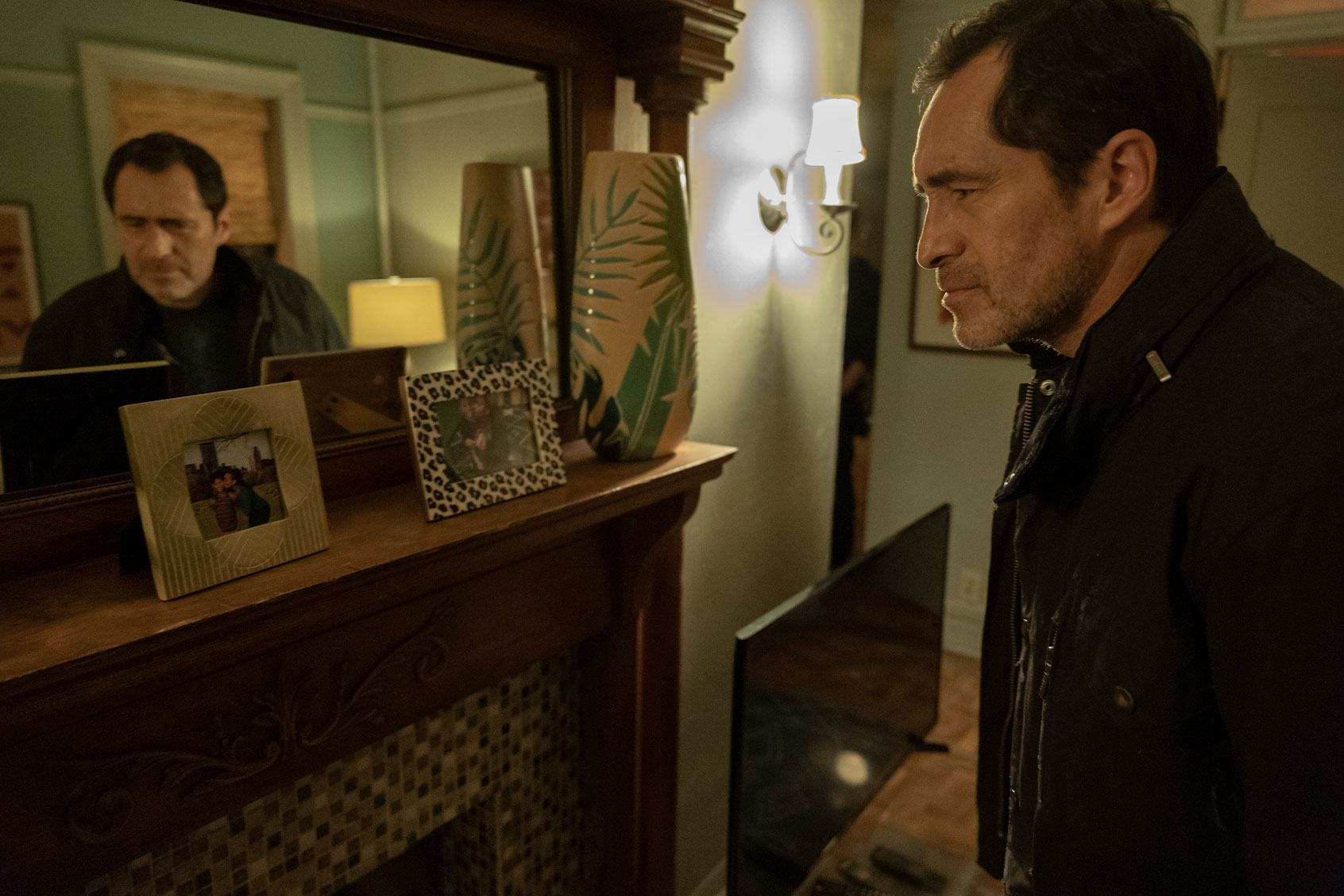
What is Canadian Thanksgiving (or L’Action de grâce) and what foods are commonly enjoyed by locals?

In the United States, Thanksgiving is notably celebrated on the fourth Thursday of November. But for our neighbors up North, the annual festivities begin a month earlier on the second Monday of October. This year, Canadian Thanksgiving will fall on Monday, October 10. And while the day will be devoid of classic American traditions — namely football, turkey trots, the Macy’s Thanksgiving Day Parade and Black Friday shopping — there’s still a slew of unique celebrations and good foods to enjoy!

Here’s a closer look at the history of Canadian Thanksgiving and how it’s celebrated by locals:

The history of Canadian Thanksgiving

Per the Canadian Encyclopedia, the first official and annual Canadian Thanksgiving was celebrated on Nov. 6, 1879, although indigenous peoples have been celebrating the fall harvest long before the arrival of European settlers. Over a century after English explorer Martin Frobisher hosted the first Thanksgiving celebration in North America in 1578, the festivities were introduced to Nova Scotia in the 1750s and later, became a widespread event in most parts of Canada by the 1870s.

The first national Thanksgiving in Canada was celebrated in the Province of Canada in 1859, as per the request of leaders of the Protestant clergy. The holiday was primarily held for the “public and solemn recognition of God’s mercies.” But some citizens “objected to this government request, saying it blurred the distinction between church and state that was so important to many Canadians,” according to historian Peter Stevens.

In the following years, Canadian Thanksgiving was celebrated on different dates, including April 5, Nov. 6 and the first Monday in the week of Nov. 11. An official date was finally established in 1957, when the government declared Thanksgiving an annual event to occur on the second Monday of October. 

Today, Canadian Thanksgiving is an official statutory holiday throughout the country except in New Brunswick, Nova Scotia and Prince Edward Island. According to CNN, families often celebrate the day before or during the weekend because employers aren’t required to grant their employees paid time off for the day.

As Ellen Gray wrote for Salon, those who celebrate the holiday “might be taking advantage of the mild October weather against a backdrop of vibrant foliage” instead of partaking in the boisterous festivities that are characteristic of American Thanksgiving.

Gray adds, “Canadians are apt to don their sensible down vests and Hudson Bay–inspired scarves for an extended jaunt outdoors. Thanksgiving weekend is quite possibly the last of the pleasant weather in Canada before the onslaught of frigid temps.”

The typical Canadian Thanksgiving menu 

Similar to American Thanksgiving, Canadian Thanksgiving meals tend to lean into the bounty of the season, concentrating on autumnal flavors and produce. For instance, Canadian Living’s 2022 “Ultimate Thanksgiving Dinner Guide” includes recipes like: cider-glazed turkey, squash and quinoa pilaf, sausage and apple stuffing and pumpkin pie

However, there are several culinary traditions that distinguish the Canadian celebration from its American counterpart. For instance, turkey is not the centerpiece on some dinner tables; in Newfoundland, its common for families to share a Jiggs dinner


Want more great food writing and recipes? Subscribe to Salon Food’s newsletter.


Consisting of boiled salt beef, cabbage, vegetables and pease pudding — a savory pudding made of boiled legumes — the meal is actually named after Jiggs, one of the main characters of the long-running comic strip “Bringing Up Father.” Jiggs is an Irish immigrant to North America who won a million dollar sweepstakes, yet remains connected to his working-class lifestyle, including his favorite meal of corned beef and cabbage. 

Salmon and wild game are also common main courses. 

In addition to pumpkin pie, other regional desserts may be incorporated into the menu, like Nanaimo bars — a no-bake chocolate dessert named after the city in British Columbia — or Ontarian butter tarts. 

However, some things are consistent across cultures. The Canadian Football League usually holds a nationally-televised doubleheader called “The Thanksgiving Day Classic.” I guarantee our neighbors up north enjoy nodding off while watching the game after dinner just as much as we do.

Molly Yeh’s nutty no-bake marshmallow squares are too good to share with your kids

Parents know — the food we ruthlessly scavenge off our children’s plates is often the best food. Those half eaten squeezy yogurts, those gentle purees of blueberry and spinach, these are finest delicacies for the exhausted maternal soul. My own kids are now college-aged, and I am frankly still not over Pirate’s Booty discontinuing their hauntingly ambrosial Fruity Booty flavor. Yet few of us have the ingenuity of “Girl Meets Farm” star Molly Yeh to turn those tot treats into full blown culinary adventures.

In her newest cookbook, Yeh, a mother of two young daughters, offers new interpretations of her trademark crowd pleasing style, with dishes like pretzel chicken nugget salad and a chickpea hot dish topped with smiley face potatoes.

It was her lighthearted spin on the classic Rice Krispies Treats, however, that first and most powerfully grabbed my attention. The only way such an iconic treat could ever be improved upon, in my opinion, would be with peanut butter or chocolate. Yeh helpfully provides both.


Want more great food writing and recipes? Subscribe to Salon Food’s newsletter.


Officially, these are Bamba marshmallow squares, because Yeh makes them with the addictive snack whose marketing pitch promises “the winning flavor that has made Bamba part of Israeli culture.” Bamba is definitely more melt in your mouth and Cheeto-y than typical peanut butter puff cereal, but if don’t feel like ordering online or your local supermarket disappoints you, relax and work with what you’ve got.

Flecked with a finishing hit of flaky salt, these ring all the crunchy, nutty, chewy, chocolatey bells you could ask for in an after school snack or homey dessert, without turning on an oven. And while they’re kid friendly by design, I wouldn’t blame you if you hid them away and savored them all for yourself.

* * *

Inspired by Diaspora Dinners and “Home Is Where the Eggs Are: Farmhouse Food for the People You Love” by Molly Yeh

Peanut butter puff marshmallow squares
Yields
16 squares
Prep Time
 10 minutes
Cook Time
 10 minutes, plus setting

Ingredients

  • 1/2 stick of butter
  • 1 10 ounce bag of mini marshmallows, or 10 ounces of regular marshmallows
  • 2 teaspoons of vanilla extract
  • 1 cup of Bamba peanut butter puffs or peanut butter puff cereal
  • 1 cup of bittersweet chocolate chips or chopped chocolate
  • Flaky salt


Directions

  1. Grease a square baking pan and line with parchment paper.
  2. Melt the butter over medium heat in a large pot. Add the marshmallows and stir until just melted, then stir in the vanilla.
  3. Remove from heat and, working quickly, stir in the puffs.
  4. Fold in the chocolate, letting the heat gently melt it. 
  5. Quickly pour the mixture into the pan and spread evenly. Pat it very gently down, and then top with a few pinches of salt. 
  6. Let set an hour or so, and then cut into even squares. Serve and enjoy. Store any remaining squares in an airtight container for up to a week.

Cook’s Notes

Tweak this to your delight with different kinds of cereal or chocolate.

Salon Food writes about stuff we think you’ll like. While our editorial team independently selected these products, Salon has affiliate partnerships, so making a purchase through our links may earn us a commission.

“Let the Right One In” files down its fangs for it TV adaptation, preferring to stake the heart

John Ajvide Lindqvist created what may be the perfect modern vampire story in his 2004 novel “Let the Right One In,” the story of a bullied boy befriended by a strange girl who is more than she seems, bonded by a shared sense of separation from the world around them. Few stories better encapsulate the tragedy of the vampire as a creature capable of intense emotion and humanity but unable to age, feel or permanently quell the urge to feed on human blood.

Lindqvist’s monsters are a girl who isn’t really a girl, and her caretaker, a guardian who isn’t her father.

The book and subsequent movie adaptations of the story, including the cold, haunting 2008 Swedish version and Matt Reeves’ American remake, “Let Me In,” soften some of the story’s central frictions, primarily the queasy sexual tension between the child and the man providing for her.

Let The Right One InDemián Bichir as Mark Kane in “Let The Right One In” (Francisco Roman/SHOWTIME)
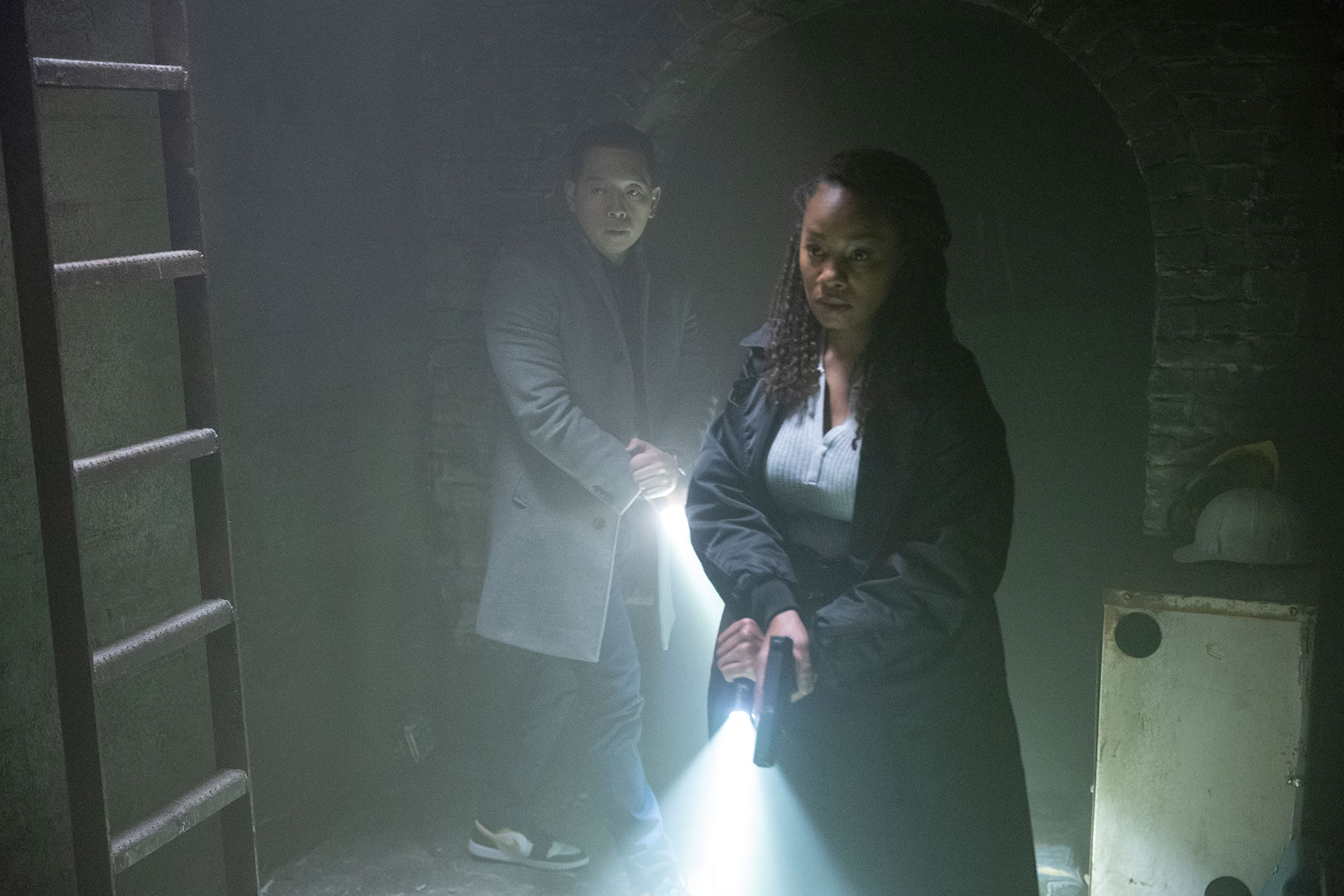
Showtime’s version, in addition to reclaiming the original title of “Let the Right One In,” removes that weirdness entirely by making Eleanor (Madison Taylor Baez) and her father Mark (Demián Bichir) a true father and daughter, and the girl vampire an actual girl, one who has been 12 for a decade instead of centuries.

But then, transforming an encapsulated story about a vampire hiding out in a small town into one that stretches over 10 episodes of television requires broadening the plot’s territory. Instead of a Stockholm suburb or a Los Alamos, New Mexico neighborhood, Eleanor and Mark move into a New York City apartment where Eleanor happens to share a wall with the shy Isaiah (Ian Foreman).

It’s fairer to think of Showtime’s “Let the Right One In” as loosely inspired by the source material instead of directly tapped into it.

They meet in the usual way: she’s hanging out in a tree in the courtyard, shoeless in the dead of winter, and notices him standing around by himself. But moments before she makes him her prey, Isaiah performs a coin trick that enthralls her. He’s an aspiring magician, she’s fascinated by the cosmos – although the sunlight would burn her to ash.

Eleanor, like her cinematic predecessors, is charmed by Isaiah’s innocence and drawn to his loneliness, a feeling with which she’s painfully familiar. Her father is paranoid they’ll be discovered before he can find a cure for her and discourages her from making friends. Loyal fans of the films and Lindqvist’s book may find the TV adaptation bland in comparison. Then again, it’s fairer to think of Showtime’s “Let the Right One In” as loosely inspired by the source material instead of directly tapped into it.

Some of the choices series creator Andrew Hinderaker makes to expand the story into a TV series land beautifully, particularly the emphasis on Mark’s fatherly care for Eleanor and the toll that keeping her safe takes on him.

Bichir’s stouthearted portrayal provides the core of the show around which everything and everyone else orbits. Baez matches him in passionate assuredness, ably vacillating between the personalities of a curious, innocent pre-teen and someone a decade older than she claims to be, and who has strength and power she’s grown weary of hiding.

Let The Right One InJimmie Saito as Ben Jones and Anika Noni Rose as Naomi Cole in “Let The Right One In” (Francisco Roman/SHOWTIME)

The familiar beats in “Let the Right One In” work decently enough to purchase patience for the parts of the plot that smack of being made for a small screen audience, starting with the detail that Isaiah’s mother Naomi (Anika Noni Rose) is a homicide detective.

A cynic might snort at the convenient inconvenience of this manufactured circumstance, placing a cop in the place next door to a man obligated to kill people to keep his daughter, a monster, alive. But that part makes more sense, at first, than a parallel plot involving a morally (and financially) bankrupt pharmaceutical baron (Željko Ivanek) who draws his estranged daughter Claire, a research scientist (Grace Gummer) back into the family fold to find a cure for his son’s (Jacob Buster) vampiric condition.

There is a link between these pain pill peddling pseudo-Sacklers and Mark and Eleanor, but it’s only hinted at once over five episodes of the series initially provided for review.

Figuring out what that is requires us to keep watching. The question is how much patience people will have to get there.

Let The Right One InZeljko Ivanek as Arthur Logan and Grace Gummer as Claire Logan in “Let The Right One In” (Emily Aragones/SHOWTIME)

It takes a while for the adrenaline to kick into these subplots, and the ordinary familiarity of Naomi’s investigation of missing people and unsolved murders around the city adds to the sense of narrative ambling in the slacker portions of these episodes. But the restrained intensity and warmth in Rose’s performance bridge well with the rumpled grief Bichir presses into his. They’re both single parents aching to ease the social awkwardness and psychic pain their children are going through, but unable to entirely comprehend the extent of it.


Want a daily wrap-up of all the news and commentary Salon has to offer? Subscribe to our morning newsletter, Crash Course.


“Let the Right One In” trades terror for another feeling that has yet to be fully defined.

That relationship, bound by the burgeoning affection their children have for each other, makes a lot more sense than whatever monkey business is unfurling with Claire at her father’s haunted mansion, even if Nick Stahl’s serene presence as the family henchman provides a reason for us to pay attention.

One welcome innovation that Hinderaker makes to the “Let the Right One In” framework, however, is in the way he uses Eleanor’s condition to demonstrate the ways that a debilitating condition can arrest the progress of everyone connected to it.

Naomi and Isaiah are accustomed to not counting on Isaiah’s father (Ato Essandoh), a recovering addict. Mark, an extraordinary chef, risks everything by staying in one place, including the lives of those who care about him, like Eleanor’s godfather Zeke (a wonderful Kevin Carroll).

The show’s title, “Let the Right One In,” announces one of the classic rules binding Eleanor from harming people; she has to be invited into someone’s home before she can cross the threshold. From there, anything could happen. But it also speaks to the possibility that something wonderful could result in trusting a new edition of a familiar creation, even one that trades terror for another feeling that has yet to be fully defined.

“Let the Right One In” debuts Sunday, Oct. 9 at 10 p.m. on Showtime.

The absolute best way to make s’mores

In Absolute Best TestsElla Quittner destroys the sanctity of her home kitchen in the name of the truth. She’s boiled dozens of eggs, mashed a concerning number of potatoes, and seared more Porterhouse steaks than she cares to recall. Today, she tackles s’mores.


I used to think there was no such thing as a bad s’more.

Summoned into the American lexicon in the early twentieth century by the Girl Scouts, s’mores — sandwiches of roasted marshmallows, chocolate bars, and graham crackers — have since become a staple of summer.

And I have eaten many of them, very happily. (Even a “raw s’more” — an untoasted marshmallow and a wedge of chocolate, in between two grahams — is delicious.)

So cocky was I on the topic of s’mores that for this latest installment of ABT, I decided to branch out beyond the standard SEO-bait — beyond “roast over an open fire” and “microwave,” to “broil” and “cigarette lighter.” “Deep fry,” I mused to myself as I put together the list for my editor. “Wouldn’t that be fun.”

It was not.

More specifically . . .

Controls

For each test, unless otherwise noted, I used a single Honey Maid graham cracker broken into two equal squares*, three squares of Hershey’s Milk Chocolate, and a single Jet-Puffed marshmallow.

For my ABT trials, I stuck mostly to the classic cracker-choc-mallow composition for consistency, but you can and should riff at home. A few ideas . . .

Swaps and additions

  • White chocolate
  • Dark chocolate
  • An entire candy bar, such as a Snicker’s or a Twix
  • A Reese’s cup
  • Nutella spread
  • Raspberry jam
  • Tahini
  • Peanut butter

*Except for the blasted instances in which the grahams would break unevenly, which made me want to be shot directly into the sun.

Equipment

Round 1: Method tests

All with graham crackers, milk chocolate, and store-bought marshmallows as controls.

1. Roast (open fame)

  • 1 graham cracker broken into two equal-size square halves
  • 1 cracker-sized chunk of milk chocolate
  • 1 marshmallow

Arrange chocolate on one of the graham crackers, and set aside within arm’s reach.

Skewer marshmallow on a stick or any flame-proof implement that will allow you to keep a safe distance from the fire. Over an open flame — say, a campfire, or one in your fireplace — roast your marshmallow turning every minute or so, until you achieve a golden-brown exterior.

Carefully use the graham crackers to sandwich the marshmallow and slide it off the stick.

Findings:

Roasting a marshmallow over an open flame obviously makes a delicious, superior s’more. It offers a number of benefits, including the ability to control the degree of browning (unless you’re distracted by, say, reaching behind you for another beer) and the flavor enhancement offered by campfire proximity. The downsides are that it is not always possible to build a campfire, and that if you do become distracted, your marshmallow can go from perfect to carbon in mere moments. Also, while it is possible to roast multiple marshmallows at once over an open fire, the risk that you will ruin at least one is higher than with, say, the oven-bake method, or the air fryer.

2. Bake

  • 1 graham cracker broken into two equal-size square halves
  • 1 cracker-sized chunk of milk chocolate
  • 1 marshmallow

Heat oven to 400 degrees Fahrenheit.

Lay out one of the graham crackers on a parchment-lined baking sheet. On the cracker, place the chocolate, then the marshmallow.

Bake for about 4 to 5 minutes, until the marshmallow is golden and puffed up. Remove from oven, top with other graham cracker, and serve.

Findings:

I was skeptical of the oven-baked s’more, because on paper it sounds extremely lame. But the method turned out to be efficient, foolproof, and effective, producing consistently golden-brown marshmallows with molten centers in minutes. The clean-up was painless, thanks to the parchment paper. Because the oven is less hot than an open fire, there was also more wiggle room in the way of forgetting to take out the toasting marshmallow before it burned. One additional advantage of the oven method was that it allowed me to decide whether or not I wanted the chocolate melted onto the graham cracker completely, or just softened. Finally, the oven-bake method proved to be especially useful at scale, as when I made ten s’mores at once for dinner party guests.

3. Broil

  • 1 graham cracker broken into two equal-size square halves
  • 1 cracker-sized chunk of milk chocolate
  • 1 marshmallow

Heat broiler.

Set an oven rack about 6 inches below the broiler.

Lay out one of the graham crackers on a baking sheet. On the cracker, place the chocolate, then the marshmallow. Broil for about 1 to 2 minutes, watching closely, until the marshmallow is golden and puffed up. Remove from oven, top with other graham cracker, and serve.

Findings:

The broiled s’more was, put lightly, a nightmare. The marshmallow turned to a pile of smoldering black ash in less than a minute. I suppose if I had been watching it more closely, I could have pulled it out at, what, the twenty-seven second mark? But if you have a broiler, it stands to reason that you also have an oven, so, just use that. The few minutes you could save is not worth the risk of encountering an over-broiled marshmallow.

4. Grill

  • 1 graham cracker broken into two equal-size square halves
  • 1 cracker-sized chunk of milk chocolate
  • 1 marshmallow

Heat grill to medium-high.

Lay out one of the graham crackers on the grates. On the cracker, place the chocolate, then the marshmallow. Close grill, and cook about 2 to 4 minutes, checking intermittently, until the marshmallow is puffed up and molten.

Remove from grill, top with other graham cracker, and serve.

Findings:

The grill method didn’t exactly toast the marshmallow so much as it melted it onto the graham cracker. The result was a s’more that was still delicious, sweet and melty and soft, and which tasted most like the open-flame s’more. That said, I would only recommend this method if you’re already grilling, because it was a pain to set everything up just for a s’more, and a s’more that didn’t brown at that.

5. Microwave

  • 1 graham cracker broken into two equal-size square halves
  • 1 cracker-sized chunk of milk chocolate
  • 1 marshmallow

Lay out one of the graham crackers on a microwave-safe plate. On the cracker, place the chocolate, then the marshmallow. Microwave on high about 30 to 60 seconds, until marshmallow is puffy and molten. Remove from microwave.

Remove from microwave, top with other graham cracker, and serve.

Findings:

Microwaved s’mores were a journey! At the 30 second mark, my marshmallow was puffy and gooey and exciting, a swollen pillow of promise. I put it back in for another 30, hoping to achieve a bit more cook on the exterior, and when I went to retrieve it, the marshmallow had developed a smoking black hole in the center, as though it had been shot with a twentieth century rifle. Somehow, even the graham cracker had begun to smolder and smoke in that 30 second lapse. I love my microwave for certain things (see: frozen meatballs), but s’mores are not one of them. I would, however, turn to this method and keep a very close eye if I didn’t have access to an oven or open fire.

6. Roast (handheld lighter)

  • 1 graham cracker broken into two equal-size square halves
  • 1 cracker-sized chunk of milk chocolate
  • 1 marshmallow

Arrange chocolate on one of the graham crackers, and set aside within arm’s reach.

Skewer marshmallow on a stick or any flame-proof implement that will allow you to keep a safe distance from the fire. Use a handheld lighter to carefully toast the exterior of the marshmallow until golden all over. Carefully, use the graham crackers to sandwich the marshmallow and slide it off the stick.

Findings:

This worked, but it bummed me out. It worked in the sense of many things that I don’t recommend, but which technically “work,” like putting on jeans right after lotion. Also, my thumb may never recover from all the sparking, which totally sucks.

7. Deep-fry

  • 1 graham cracker broken into two equal-size square halves
  • Canola oil
  • 1 cracker-sized chunk of milk chocolate
  • 1 marshmallow

Fill a saucepan about halfway with canola oil and bring to a temperature of about 350 degrees Fahrenheit.

Arrange chocolate on one of the graham crackers, and set aside within arm’s reach.

Skewer marshmallow on a stick or any oil-proof implement that will allow you to keep a safe distance from the pot. Submerge marshmallow in hot oil, turning every so often, and cook until golden brown on the outside. You will have to hold it in place, because it will want to float to the surface. (Note: Marshmallow will burst a bit but should mostly stay together.)

Transfer to a paper towel-lined plate for a quick drain, then carefully, use the graham crackers to sandwich the marshmallow and slide it off the stick.

Findings:

Of all of the methods I tested, deep-fry is the one I regret most. Once submerged in the oil, the marshmallow first did a sort of shocking and cool thing where it unspooled into a puffy, bubbling mass of fluff (enticing, fun), and then it did a sad thing where it shrunk into a greasy pile (upsetting, existentially triggering). It tasted odd, sweet with an oil-soaked texture, and by the time it had cooled enough for use in a s’more, it was unpleasantly chewy, like old gum.

8. Air-fry

  • 1 graham cracker broken into two equal-size square halves
  • 1 cracker-sized chunk of milk chocolate
  • 1 marshmallow

Heat air fryer to 370 degrees Fahrenheit.

Lay out one of the graham crackers in the air fryer basket. On the cracker, place the chocolate, then the marshmallow. Air fry about 2 to 3 minutes, until the marshmallow is golden and puffed up. Remove from air fryer, top with other graham cracker, and serve.

Findings:

The air-fried s’more was extremely solid, and comparable to the oven-baked version. The only knock against this technique is that the marshmallow was less consistently gold all over than with the oven-baked technique, but do we care? I don’t think we care. It’s summer baby!

Round 2: Composition

All using the Bake method and milk chocolate as controls, and unless otherwise stated in the below recipes, store-bought marshmallows.

1. Extra Big Cheez-Its

  • 2 Extra Big Cheez-Its
  • 1 Cheez-Its-sized chunk of milk chocolate
  • 1 mini marshmallow

Heat oven to 400 degrees Fahrenheit.

Lay out one of the Cheez-Its on a baking sheet. On the Cheez-It, place the chocolate, then the marshmallow.

Bake for about 2 to 3 minutes, until the marshmallow is golden and puffed up. Remove from oven, top with other Cheez-It, and serve.

Findings:

Hell yes! But I would eat a spoonful of cat food off a Cheez-It, so I am biased.

The obvious downside here was that even Extra Big Cheez-Its are too small to comfortably house a regulation ‘mallow, but if you’re down to get crazy with minis, this path could be for you. (If, like half of the internet, you hate Cheez-Its, move right along.)

2. Ritz

  • 2 Ritz Crackers
  • 1 Ritz-sized chunk of milk chocolate
  • 1 marshmallow

Heat oven to 400 degrees Fahrenheit.

Lay out one of the Ritz Crackers on a baking sheet. On the Ritz Cracker, place the chocolate, then the marshmallow.

Bake about 4 to 5 minutes, until the marshmallow is golden and puffed up. Remove from oven, top with other Ritz Cracker, and serve.

Findings:

The Ritz is a very viable alt to the graham cracker. The size turned out to be a perfect landing pad for the marshmallow, and the salty-sweet flavor complemented the chocolate beautifully. Ten of ten thumbs up. (I have five hands.)

3. Saltines

  • 2 Saltines
  • 1 Saltine-sized chunk of milk chocolate
  • 1 marshmallow

Heat oven to 400 degrees Fahrenheit.

Lay out one of the Saltines on a baking sheet. On the Saltine, place the chocolate, then the marshmallow.

Bake about 4 to 5 minutes, until the marshmallow is golden and puffed up. Remove from oven, top with other Saltine, and serve.

Findings:

Saltines produced an acceptable and interesting s’more, though I suspect it would offend a traditionalist, and bore an adventurous palate. I got notes of salt. Lots of salt.

4. Homemade marshmallow

  • 1 graham cracker broken into two equal-size square halves
  • 1 cracker-sized chunk of milk chocolate
  • 1 homemade marshmallow

Heat oven to 400 degrees Fahrenheit.

Lay out one of the graham crackers on a baking sheet. On the cracker, place the chocolate, then the marshmallow.

Bake about 4 to 5 minutes, until the marshmallow is golden and puffed up. Remove from oven, top with other graham cracker, and serve.

Findings:

I wanted to like this best, but honestly, it tasted a little too plain. I missed the chemicals! The texture was delightful, though, melty and luscious, more like fluff than a hard-and-fast marsh. (I, too, hate myself.)

5. Choc-in-marsh

  • 1 graham cracker broken into two equal-size square halves
  • 1 cracker-sized chunk of milk chocolate, broken into smaller pieces
  • 1 marshmallow

Heat oven to 400 degrees Fahrenheit.

Lay out one of the graham crackers on a baking sheet. Take the marshmallow, and jam the broken shards of chocolate into its center. (You can use a paring knife to make a little pocket first, if you please.) Place the chocolate stuffed marshmallow on the cracker.

Bake about 4 to 5 minutes, until the marshmallow is golden and puffed up. Remove from oven, top with other graham cracker, and serve.

Findings:

I enjoyed the crunch of the piece of chocolate nestled most deeply within the marshmallow, in contrast to the meltier bits closer to the incision point. Overall, though, the ratio was off because I couldn’t stuff as much chocolate in as I would have been able to layer on the graham. I could see myself enjoying a choc-in-marsh with an additional choc-on-graham section.

TL;DR

  • Roast over an open fire, or, for a crowd, bake at 400 degrees Fahrenheit or air fry at 370 degrees Fahrenheit.
  • When it comes to marshmallows, Ina Garten and I agree that store bought is fine.
  • Graham crackers are a classic for a reason, though it wouldn’t kill you to branch out. Ritz crackers are a pretty perfect swap, and Cheez-Its make for a delightful, if oddly sized, s’more swaddle.

What is déjà vu? Psychologists explore this phenomenon

Have you ever had that weird feeling that you’ve experienced the same exact situation before, even though that’s impossible? Sometimes it can even seem like you’re reliving something that already happened. This phenomenon, known as déjà vu, has puzzled philosophers, neurologists and writers for a very long time.

Starting in the late 1800s, many theories began to emerge regarding what might cause déjà vu, which means “already seen” in French. People thought maybe it stemmed from mental dysfunction or perhaps a type of brain problem. Or maybe it was a temporary hiccup in the otherwise normal operation of human memory. But the topic did not reach the realm of science until quite recently.

Moving from the paranormal to the scientific

Early in this millennium, a scientist named Alan Brown decided to conduct a review of everything researchers had written about déjà vu until that point. Much of what he could find had a paranormal flavor, having to do with the supernatural — things like past lives or psychic abilities. But he also found studies that surveyed regular people about their déjà vu experiences. From all these papers, Brown was able to glean some basic findings on the déjà vu phenomenon.

For example, Brown determined that roughly two thirds of people experience déjà vu at some point in their lives. He determined that the most common trigger of déjà vu is a scene or place, and the next most common trigger is a conversation. He also reported on hints throughout a century or so of medical literature of a possible association between déjà vu and some types of seizure activity in the brain.

Brown’s review brought the topic of déjà vu into the realm of more mainstream science, because it appeared in both a scientific journal that scientists who study cognition tend to read, and also in a book aimed at scientists. His work served as a catalyst for scientists to design experiments to investigate déjà vu.

Testing déjà vu in the psychology lab

Prompted by Brown’s work, my own research team began conducting experiments aimed at testing hypotheses about possible mechanisms of déjà vu. We investigated a near century-old hypothesis that suggested déjà vu can happen when there’s a spatial resemblance between a current scene and an unrecalled scene in your memory. Psychologists called this the Gestalt familiarity hypothesis.

For example, imagine you’re passing the nursing station in a hospital unit on your way to visit a sick friend. Although you’ve never been to this hospital before, you are struck with a feeling that you have. The underlying cause for this experience of déjà vu could be that the layout of the scene, including the placement of the furniture and the particular objects within the space, have the same layout as a different scene that you did experience in the past.

Maybe the way the nursing station is situated — the furniture, the items on the counter, the way it connects to the corners of the hallway — is the same as how a set of welcome tables was arranged relative to signs and furniture in a hallway at the entrance to a school event you attended a year earlier. According to the Gestalt familiarity hypothesis, if that previous situation with a similar layout to the current one doesn’t come to mind, you might be left only with a strong feeling of familiarity for the current one.

To investigate this idea in the laboratory, my team used virtual reality to place people within scenes. That way we could manipulate the environments people found themselves in – some scenes shared the same spatial layout while otherwise being distinct. As predicted, déjà vu was more likely to happen when people were in a scene that contained the same spatial arrangement of elements as an earlier scene they viewed but didn’t recall.

This research suggests that one contributing factor to déjà vu can be spatial resemblance of a new scene to one in memory that fails to be consciously called to mind at the moment. However, it does not mean that spatial resemblance is the only cause of déjà vu. Very likely, many factors can contribute to what makes a scene or a situation feel familiar. More research is underway to investigate additional possible factors at play in this mysterious phenomenon.


Anne Cleary, Professor of Cognitive Psychology, Colorado State University

This article is republished from The Conversation under a Creative Commons license. Read the original article.

Are late dinners making us sick? New research says yes

It’s news to no one that what we eat is important for our health. But scientists are increasingly learning that when we eat may be nearly as important — and two of their biggest recent findings may forever change how we think about dinner.

You’ve probably heard about one of those big dietary findings: humans are healthiest when we confine our eating to a narrow window of no more than 12 hours. The benefits increase with every hour we shave off that 12, down to perhaps six hours. That discovery is behind the escalating trend of daily fasting.

But few people know of the other big finding: we’re even healthier when we set our eating window early in the day—specifically, when we eat from an hour or two after we wake until mid-afternoon. Most people who practice intermittent fasting do so by skipping breakfast, but the research shows it’s far healthier to skip dinner; or, better said, to eat dinner no later than about 3 p.m.

These discoveries have implications even for those who don’t intermittent fast, because researchers are increasingly finding that if we make our evening meal the biggest of the day, as so many of us do, we’re putting ourselves on a path to disease and maybe even early death. Their advice? Follow the adage “Eat breakfast like a king, lunch like a prince, and dinner like a pauper.”

The full story behind this science is told in my new book “The Oldest Cure in the World: Adventures in the Art and Science of Fasting.” Here’s the short story.

***

In 2012, a Salk Institute researcher named Satchin Panda published a groundbreaking study in which he fed a high-fat diet to genetically identical mice. Half of the mice ate all their food in 8 hours during the night, as mice usually do, while the other half ate ad libitum, anytime they wanted. That meant that the mice stretched their feeding across both night and day, much as humans do today. Both groups ate the same amount of food, a special chow that, in 11,000 previous rodent studies, induced obesity and other metabolic disorders. Sure enough, after three months, the mice who ate ad lib were stricken with obesity, diabetes, liver disease, and a host of other ugly conditions.

But a quite remarkable thing happened to the mice who ate within eight nocturnal hours: they stayed healthy, utterly free of the metabolic diseases their siblings developed. Their weight, blood sugar, and cholesterol were normal, their livers were less fatty than those of the free-eating mice, their motor coordination was better, and their entire bodies were less inflamed. Eating in an eight-hour nighttime window had, in Panda’s slightly hyperbolic words, “completely protected” them. Better yet, when Panda later put sickly ad-lib eaters on the 8-hour feeding schedule, their diseases reversed, even though they were eating the same unhealthy diet.

Since the cellular repairs don’t start until six hours into our fast, most of us are getting only three or four hours a night of repairs — and we’re never reaching repair overdrive at 12 hours.

Researchers have long focused on what animals — including humans — should eat to be healthy. But in a couple of simple experiments, Panda brilliantly showed when animals eat might matter as much as what.

What, to be clear, still mattered. When Panda ran the experiment again but with different diets, mice who ate healthier, low-fat chow in the nighttime eight-hour window fared even better than mice who ate high-fat chow in the same window. The eight-hour window, it seemed, could negate much of the harm of a bad diet, but optimal health required good food.

Other researchers duplicated Panda’s findings, and trials were run in humans to see if longer overnight fasts would make us healthier too. They did. In multiple trials, volunteers who ate in narrower windows, usually of about eight hours, lost weight, had lower blood pressure, and saw improvements in markers for oxidative stress.


Want more health and science stories in your inbox? Subscribe to Salon’s weekly newsletter The Vulgar Scientist.


As researchers explored the mechanisms, they found that longer fasting periods gave the body time to make more repairs. Our bodies are constantly repairing and replacing damaged cellular parts—patching up faulty DNA, recycling worn-out organelles—which, if not taken care of, can result in disease. But these repairs usually occur at a very low rate because the body is so busy doing all the other tasks that make up our lives, including the immense work of digesting our meals, processing the nutrients from those meals, and putting the nutrients to work in cells all over the body.

But when we stop eating for long enough, the body takes advantage of the break from all that heavy work, and our cells use the downtime to supercharge their repairs. There is, however, a catch: it’s a lot of work for the body to switch from its daytime mode of digesting and processing nutrients to its nighttime mode of making repairs, so the body doesn’t start those repairs in earnest until it’s absolutely sure we’re done eating. About 6 hours after we eat or drink our last calories the repairs start, and they ratchet up slowly, hour by hour, until they reach a kind of repair overdrive after another 6 hours, which is to say 12 hours after our last consumed calorie.

Unfortunately, studies show that most of us are eating or drinking something caloric across 14 or 15 hours a day, which means we’re fasting just 9 or 10 hours a night. Since the cellular repairs don’t start until six hours into our fast, most of us are getting only three or four hours a night of repairs — and we’re never reaching repair overdrive at 12 hours.

But we can change that. If we confine our eating to, for example, an 8-hour window and fast the other 16 hours, we’ll get 10 hours of substantial repairs, 4 of those hours in overdrive.

These findings, the work of several labs, were a big leap toward making out eating habits healthier. But an even bigger leap lay just ahead, when scientists discovered that eating in early windows induce far more repairs than eating in late windows.

***

For years, researchers had been picking up clues that this was so. Many of the clues came from studies that showed skipping or skimping on breakfast was unhealthy. For instance, in one Israeli study from 2012, obese volunteers were randomized to one of two weight-loss regimens, both totaling 1,400 calories a day. One group ate 700 calories at breakfast, 500 at lunch, and 200 at dinner, while the other group ate the reverse: 200 at breakfast, 500 at lunch, 700 at dinner. After three months, the first group — those who breakfasted like kings, lunched like princes, and dined like paupers — lost more weight, had better blood pressure and cholesterol, and were far more sensitive to insulin than the group that breakfasted like paupers, lunched like princes, and dined like kings.

This rhythm of insulin is so potent that you can feed prediabetics the same meal at 7 a.m. and again at 7 p.m., and although their blood sugar will hardly rise after the morning meal, after the evening meal the sugar lingers so long in their blood that some of them will test fully diabetic.

A 2007 study from the National Institute on Aging found something similar. In that study, volunteers were asked to eat between 5 p.m. and 9 p.m. every day for eight weeks in the expectation their health would improve. But they hardly got better at all, and a few of their biomarkers, like cholesterol, actually took a turn for the worse. Eating only at night did them few favors.

One reason people do better when taking more of their calories in the morning is because our circadian rhythms have hardwired us to process food more efficiently early in the day. Take our body’s management of the hormone insulin, for example. Insulin’s job is to move glucose (the sugar from our meals) out of our arteries and into the cells that use the glucose for fuel. Cued to a circadian rhythm, our pancreases make a lot of insulin in the morning and early afternoon, but production wanes by mid-afternoon. When we eat in the late afternoon or at night, there’s less insulin in our bloodstream, so glucose lingers longer in our arteries, where it dings up the arterial walls. Over time, the arteries can harden, putting us at risk of heart attacks, strokes, dementia, and other calamities.

This rhythm of insulin is so potent that you can feed prediabetics the same meal at 7 a.m. and again at 7 p.m., and although their blood sugar will hardly rise after the morning meal, after the evening meal the sugar lingers so long in their blood that some of them will test fully diabetic. In similar trials, some healthy people will test prediabetic after a late meal. Evidently, we just weren’t made to process nutrients late in the day.

This fact was demonstrated even more startlingly in a 2012 analysis of 15,000 attempted suicides in Sri Lanka, where the preferred method is pesticide. The study found that people who poisoned themselves in the evening died only half as often as people who poisoned themselves in the morning, apparently because in the morning their digestive tracts quickly absorbed the pesticide and efficiently shuttled it throughout their bodies. By the time they were found and rushed to a hospital, they were usually beyond saving. In evening suicide attempts, by contrast, the poison moved more slowly and the victims could frequently be saved.

On the same principle, scientists have learned there’s an ideal time to give chemotherapy — which is, after all, a glorified poison. Against some cancers, chemo can be up to five times less toxic to the patient and twice as effective against the cancer when delivered at the right hour.

There’s apparently little we can do to change the circadian hardwiring that makes our bodies digest, absorb, and store nutrients more efficiently in the morning and early afternoon than in the evening. We can, however, learn to eat in accordance with the rhythm, as was shown by a pair of brilliant trials from 2018 and 2019 by Courtney Peterson, a nutritional biochemist now at the University of Alabama at Birmingham.

In one trial, Peterson fed her volunteers for half the study in an early window that began an hour or two after they woke and finished six hours later. In the other half of the trial, they ate the exact same meals in a window starting at the same time but running for twice as long — 12 hours. After five weeks on the early window, the volunteers’ cholesterol dropped from 176 to 163, their triglycerides plunged 57 points, and their blood pressure fell from a prehypertensive 125/77 mm Hg to a normal 114/67, which was on par with what the best antihypertensive drugs could achieve.

Peterson’s volunteers were all prediabetics, so it was especially gratifying that their cells became about 20 percent more sensitive to insulin. That meant their overworked pancreases could produce less insulin to clear the same amount of sugar from their blood as before and were consequently less exhausted. They also had smaller sugar spikes, probably because, since the day’s three meals were so close together, there was more insulin hanging around in their bloodstream from the last meal to move the next meal’s sugar along. Also, the insulin-making factory in their pancreases probably hadn’t shut down from the previous meal, so when more insulin was called for, their pancreases needed less effort to produce it.

For those who wish to eat dinner at the normal time, scientists advise keeping it light and earlyish and stacking most of the day’s calories before mid-afternoon: breakfast like a king, lunch like a prince, dinner like a pauper.

In Peterson’s other trial, which used the same six-hour window but only for four days, the volunteers enjoyed a 22 percent increase in autophagy, which is the vital recycling of worn-out cellular parts. They also saw a 10 percent increase in the activity of their SIRT1 gene, which has been nicknamed the longevity gene because it not only keeps our telomeres (the protective tips at the ends of our DNA, which are crucial to long life) from disintegrating but also reduces life-shortening inflammation and oxidative stress. Those were awfully big gains in longevity markers from just four days of changing not what but only when the volunteers ate.

Better still, Peterson’s volunteers were no more hungry, and were sometime less hungry, while eating in the six-hour morning window than when eating across 12 hours. That was probably because they burned a little more fat during the night, and the fat was broken down into ketone bodies, which suppress hunger. All in all, it was a spectacular set of findings, and other labs have since corroborated them.

Early time-restricted eating (eTRE), as the practice is known, has been declared safe in study after study, and scientists in the field now recommend nearly all adults eat in a narrowed window, starting an hour or two after waking and ideally closing 6 to 8 hours later, although windows up to 12 hours will deliver health benefits. For those who wish to eat dinner at the normal time, scientists advise keeping it light and earlyish and stacking most of the day’s calories before mid-afternoon: breakfast like a king, lunch like a prince, dinner like a pauper.

There are a few caveats. Scientists strongly recommend that people on medications inform their doctors before changing their eating schedule. Diabetics, for example, may need less insulin during their fasting hours to avoid hypoglycemia. Scientists also say adolescents can safely practice a TRE of about 12 hours, but the verdict is still out for younger children, and infants should never be put on TRE.

Yes, democracy is in trouble — but “age caps” aren’t the solution

In the United States and around the world, the dangers posed to democracy have become both more numerous and more dire, but also easier to spot. Voter suppression, disinformation campaigns and outright coups are neither subtle nor morally ambiguous tactics, and their practitioners — almost always from the far right — have grown brazen, taking less and less care to hide their true motives. But even at this moment of overwhelming peril for our democratic institutions, whose significance is recognized by an increasing number of Americans, one anti-democratic policy has gained support from a startling number of people across the political spectrum: barring older citizens from holding public office.

Two polls released in September found that nearly 75% of respondents (including 71% of Democrats in one survey) favored establishing a maximum age for elected officials, a substantial increase from a YouGov poll conducted at the beginning of the year that found 58% support. While the motivations for favoring an age cap vary, most supporters are not tyrants in waiting. Instead they have bought into a simplistic solution to the broader and deeper problem of inequality that faces our democracy. Such a ban is virtually impossible to implement, since it would require a constitutional amendment. It would accomplish very little, compared to how severely it would disenfranchise tens of millions of older Americans. In fact, the entire idea of an age cap presents a dilemma: How can we thwart the most virulent attacks on democracy if we don’t really believe in it ourselves?

Just as the best propaganda contains a kernel of truth, the most harmful policies purport to address a real problem. Numbers suggest that the 117th Congress is the oldest in history. The median age of senators is about 65 and House members about 59, while the median age of registered voters is about 50 and the overall median age of U.S. residents is just under 40. It’s true that the American population is aging, but while that may account for the trend of aging leadership in absolute terms, it doesn’t explain the widening gap between elected representatives and their constituents. In other words, the problem is real, but the emphasis placed on it and the extremity of the solutions on offer are distorted.

Some proponents of an age cap claim to be concerned about representation, and present themselves as advocates of a more robust democracy. Members of Congress are out of touch, they claim, because they came of age in a different era and cannot wrap their minds around the pressing issues of the day and the interests of a new generation. Representation, however, is multifaceted, as are the failures of our political system. Women, for example, remain underrepresented by about 50% in Congress. There are only three Black U.S. senators — and there have only been 11 in our entire history — although about 14% of the population is Black. The median net worth of House members in 2018 was nearly five times that of the median American household, while the median net worth of senators was nearly 17 times greater.

Members of Congress are definitely older than the median registered voter. They’re also disproportionately white, male, wealthy, heterosexual, abled, Christian and college-educated.

While the fact that House members and senators are about 18% and 30% older than the median registered voter, respectively, is arguably significant, the fact that our leaders are also disproportionately male, white and wealthy (as well as heterosexual, abled, Christian and college-educated) almost certainly plays a larger role than age, and probably skews how we understand the age issue in the first place. Younger voters need greater direct representation, but throwing out older leaders simply for being older will do nothing to address the problem of unresponsive government, and will only distract us from the solutions that could. 

Even taken on its own terms, an age cap is unlikely to increase youth representation in any meaningful way. Proponents do not agree on precisely where to place the cap, but in multiple polls a plurality of respondents chose age 70 as the cutoff. About one-third of U.S. senators and one-fifth of House members are 70 or older, so barring them would initially have a significant impact. A far larger number of members, however, fall between 50 and 69; that range accounts for more than half of the House and Senate. Some of those members would obviously hit the limit sooner than others, but the average age of new members — about 50 in the House and 55 in the Senate — paired with an average tenure of about nine years in the House and 10 in the Senate (both calculated from the past four Congresses), means that our leadership would immediately start getting older again. Within a short time, a new equilibrium would be established, somewhat younger but more tightly clustered than the previous one. Rather than causing Congress to become more representative, an age cap would likely lead to further homogenization: Young people would gain little or nothing, senior citizens would be excluded entirely and the already-dominant group of middle-aged politicians would become even more so.  


Want a daily wrap-up of all the news and commentary Salon has to offer? Subscribe to our morning newsletter, Crash Course.


Another argument that cap-proponents make is that older people are a liability in government because they may develop dementia. It’s true that the risk of dementia increases with age, but of course old age doesn’t guarantee that one’s mind will falter, nor does youth guarantee that it won’t. A small but growing number of people will develop younger-onset dementia in their 30s or 40s. If the goal is to reduce the risk of dementia, but not to increase youth representation, then an age cap could be moderately successful but only by resorting to scorched-earth tactics. Barring everyone older than 70 because a small fraction of them will develop some degree of dementia is collective punishment for a disorder that no one can control, and to which everyone is potentially susceptible. It’s a clumsy and cruel solution to a comparatively small and unpredictable problem — it would not eliminate the risk of dementia among political leaders, but would certainly eliminate many qualified leaders who will never develop dementia, and would further erode the idea that older people can contribute meaningfully to our increasingly complex society. 

The best thing we can say about an age cap as public policy is that it might succeed modestly, where another policy could have accomplished much more while causing less damage. As a political project, however, it’s entirely futile. Imagining two-thirds of Congress and three-quarters of state legislatures agreeing to amend the Constitution for any reason at all is challenging; imagining that for a proposal that would directly threaten congressional power is inconceivable. Furthermore, this is just a terrible idea. A one-size-fits-all ban would serve only to lump older people into an undifferentiated mass, and to further obscure the fact that every generation of human beings is politically, economically and culturally diverse.

Disenfranchising older people is a first step down the dangerous path of dehumanization, which as history teaches, can lead to the disposal of those deemed undesirable.

Implicit bias against the elderly is among the strongest against any social group. Baby boomers have been labeled a “generation of sociopaths,” and the COVID-19 pandemic has been called a “boomer remover.” Like other forms of social stigma, ageism can be internalized, potentially increasing the likelihood of early death and cognitive decline, and leading some to buy into the worst stereotypes leveled against them. That may help explain, for instance, why even many older people support an age cap. The disenfranchisement such a measure would establish is also a first step down the dangerous and well-trodden path of dehumanization, which as history teaches can lead to the disposal of those deemed undesirable. It also represents a reckless subversion of democracy, at a time when its foundations are already buckling.

The great aspiration of democratic politics is collective self-governance: Everyone works together to guide society toward the common good. This is an ideal worth fighting for, but it has not yet come to pass. As we strive for something better, democratic participation can be understood as a means of self-defense: Getting a seat at the table is how you become visible, fight for what you need and combat those who threaten to take these things away. We need more young people in government not simply because government is failing to serve them, but because they have the right to participate.

Enfranchisement is not just the right to vote, as it seems to be commonly understood. It’s also the right to serve. And the right to serve, to have a place at the table, is not simply a means to an end but also a matter of dignity. Barring older people from holding office would risk leaving them defenseless within our degenerating political system. In the best of times, this would be abhorrent and risky — a perversion of democracy at its most basic level — but these are not the best of times. Asking whose fundamental rights can be revoked, and which swaths of the electorate can be excluded from full participation in the democratic process, should be unthinkable: It amounts to an inadvertent surrender to fascism. 

FBI witness in Mar-a-Lago case wounded in “midday attack”

The case of the woman who infiltrated Mar-a-Lago by pretending to be a Rothschild family heiress took another bizarre turn after a shooting in Canada.

The French language newspaper LaPresse reports Valeriy Tarasenko, 44, was shot in a midday attack the Pittsburgh Post-Gazette reported.

“Mr. Tarasenko was a former business partner of Inna Yashchyshyn, a Russian-speaking Ukrainian immigrant who gained recent notoriety after an investigation by the Pittsburgh Post-Gazette and the Organized Crime and Corruption Reporting Project in August revealed that she masqueraded as a member of the Rothschild family and went to Mar-a-Lago, where she made inroads in the former president’s inner circle,” the newspaper reported.

The newspaper reported, “in the months before the shooting, Mr. Tarasenko met with the FBI and turned over a host of documents and photos tied to an investigation into Ms. Yashchyshyn, her trips to the former president’s estate, and businesses she formed – two with Mr. Tarasenko – over the past seven years, records and interviews show.”

The victim was reportedly shot in a parking lot at the resort.

The Montreal Gazette, citing information received from provincial police force (Sûreté du Québec)described the event as a “targeted shooting.”

Maika Monroe: The thinking woman’s scream queen will not go quietly into this gaslit night

Astrology is not my thing, but I did smash that “like” on a social media post labeling the ones born under my sign as always right in a horror movie

That would be Maika Monroe too. The actor has made a name for herself playing the heroine in horror. The one who knows and stubbornly persists. The one who is ignored, mistreated and disbelieved. No one listens to Monroe in the movies and they should. Quietly insistent, her performances in recent fare have made her a forerunner for that most uneasy of titles: scream queen. 

Picture: the prom crown of Carrie, covered in blood. The moniker “scream queen” emerged first as a label for damsels in distress. Though the appearance of women in scary movies dates back to the silent film era, it was in the 1970s when scream queens took off with films like “Black Christmas” and “The Last House on the Left.” Marilyn Burns closes “Texas Chainsaw Massacre” screaming in the back of a truck. Bloody and hysterical, her screams turn to relieved laughter in what may be one of the best horror endings ever. Burns was really, really good at screaming. 

You don’t have to actually scream to be a scream queen. Though Jamie Lee Curtis as Laurie Strode does, her babysitter turned bitchin’ vigilante is smart and capable in the “Halloween” films. And the cries of a teenager turn to the determined shouts of a grandmother as Laurie ages and grows more determined as the series goes on. Laurie and Michael will have a showdown once more later this October in “Halloween Ends,” rumored to be the final installment in this trilogy timeline of the scary story.

Significant OtherMaika Monroe stars in “Significant Other” (Paramount +)Monroe seems like the natural inheritor of Curtis’ legacy. Her performances have the smart, considered nuance of Curtis in other horror roles like young hitchhiker Elizabeth in “The Fog.” Monroe wields the competent strength of a classic final girl, perhaps because she’s an athlete in real life. She intended (and still intends) to be a professional kite-boarder, like her father. First acting professionally in a Pizza Hut commercial, her first major film was 2013’s “Labor Day,” followed quickly by her break-out part in 2014’s “It Follows.”
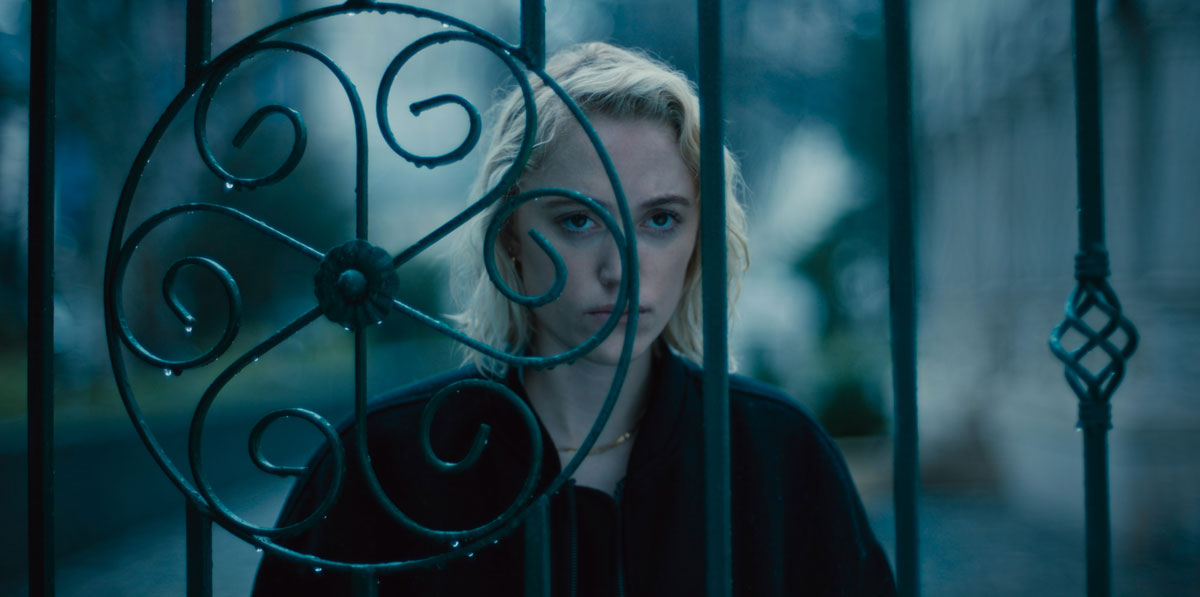
No one sees what she sees, which is a common thread in Monroe’s films. No one believes her.

Monroe plays Jay in “It Follows,” a traditional final girl name in a horror film that is anything but traditional, where her teen character is followed by a mysterious and malevolent supernatural force after a sexual encounter. The film is brooding, dark and smart. So is Monroe. Jay is subtly destroyed, regret and resignation etched on her face, her naïve illusions of love shattered, in scene after scene as the force keeps coming. Sometimes in the guise of people close to her, sometimes as a very tall man, sometimes naked. 

No one sees what she sees, which is a common thread in Monroe’s films. No one believes her. In Chloe Okuno’s 2022 “Watcher,” she plays a young wife who follows her husband to Bucharest, where he has a job and she has . . . nothing. Like a horror “Lost in Translation,” her character wanders around the city, watches TV in a language she is trying to learn but does not know, and begins to suspect that a neighbor in the apartment building across the street is watching her. Is doing more than watching.

The film is a slow burn, and Monroe is a subtle blaze of anxiety as everyone around her — all the men, anyway — distrust her and chip at the cracks of her foundation, causing her to waver in her own sense of self.

WatcherMaika Monroe as ‘Julia’ in Chloe Okuno’s “Watcher” (Courtesy of IFC Midnight)
She will not go quietly into this gaslit night.

Rosemary’s Baby” mined this territory and so have many films before and since: the woman whose observations cannot be trusted, whose reality is not her own. But Monroe brings something new to the genre: persistence that is as subtle as it is undeniable. At a time when real life has become a horror show for women, girls and so many others in America, her characters cut through. She will not go quietly into this gaslit night.


Want a daily wrap-up of all the news and commentary Salon has to offer? Subscribe to our morning newsletter, Crash Course.


At the start of any career, you do what you can to get by. You take what is offered, but Monroe — who told The Hollywood Reporter she “wasn’t really sure if acting was what I wanted to do” anymore a few years ago — continues to choose scary roles, now that she has a choice. A few times, it’s an accident. More than that, it’s a pattern, which thriller fans will be delighted to see twice this Halloween season, as Monroe stars in Paramount+’s woods horror “Significant Other.” 

With Monroe, horror comes quietly. Gone is the hysterical screaming which first defined the queens of the genre. In performance after performance, she is thinking. She is plotting. She is moving forward, albeit on the strength of her personal belief alone. And we, existing in our own homes lit by flickering gas lamps, need to listen. 

“Significant Other” is now streaming on Paramount+. Watch a trailer via YouTube below:

Strangers explain my autism to me

What does it mean to be autistic? In theory, one would presume the people most qualified to answer that question are those who are autistic.

In practice, however, those who are on the spectrum — like this author — often find that our neurodivergent traits are questioned by strangers.

“I get frequent complaints about my autistic traits and pretty much all of them tend to follow a certain false logic,” explains Max Perlin, a 16-year-old high school sophomore in Maryland whose mother Kimberly is a mental health therapist. Perlin told Salon in writing that people will tell him that he must not be really autistic if he does not fit their narrow view of how autism is “supposed” to look.

Perlin’s experience is familiar to me. Growing up autistic, I was often told that if I simply explained my disabilities to people, they would understand and treat me as an equal. Since in part the autistic condition involves differences in how people communicate with each other, the end result of being autistic is often embarrassment and rejection for the autistic individual.

Like most autistic people, I have on countless occasions attempted to directly and clearly communicate the struggles of being autistic to neurotypicals — that is, people who are neither autistic nor otherwise neurologically atypical.

“There is this general feeling that we can’t possibly understand what we actually experience because we don’t have theory of mind… It’s also a way of not allowing us to advocate for ourselves.”

The good news is that, in my experience, many neurotypicals are sympathetic and accepting. Yet what about the countless occasions when an autistic person explains their autism to a neurotypical and the neurotypical takes it upon themselves to disagree? What if an autistic person tries to encourage understanding by dispassionately stating facts, and a neurotypical with tremendous certainty spews a series of incorrect takes — with perhaps a soupçon of condescension?

Unfortunately, this is not a subject on which I need to speculate, because it happens all the time. Indeed, many autistic people with whom I spoke attested to this common experience, of being invalidated by neurotypicals who believe that they have the right to tell autistic people whether or not they are actually autistic.

“Basically if you aren’t a stereotypical autistic person you cannot use it as an explanation for your behaviors,” Perlin told Salon. “Some examples of this logic in specific responses I’ve gotten are ‘Well you’re not that on the spectrum’ ‘You’re only a little autistic,’ etc. All these are followed by them dismissing my explanation.”

Perlin concluded, “I’ve tried to surround myself with people more aware of the nuance of autism but there will always be ignorant people I have to interact with.”


Want more health and science stories in your inbox? Subscribe to Salon’s weekly newsletter The Vulgar Scientist.


Generation Z is not alone in experiencing ignorance toward autism. Stephanie Hastings, who was diagnosed later in life than Perlin, identifies as a member of Generation X’s “gifted and talented kids,” to use Hastings’ own words. Today Hastings works in digital and social marketing/outreach “thanks to my understanding of patterns and the science of studying humans.” Yet even her career successes have not spared Hastings from doses of neurotypical ignorance. Because she is described as “verbally capable,” Hastings finds that others are prone to telling her that her autism can’t be that bad, may not be real, or perhaps “could be cured with some fitness magic nonsense they heard on talk radio.”

“Or they have someone in their family who is also neurodivergent but maybe they’re non-verbal so it’s a small box we must fit in for any consideration or grace,” Hastings pointed out. She added that, because she is a woman, Hastings faces an additional layer of ignorance.

“As a female autist, I get a lot of misunderstanding stemming from the expectation that women in society are supposed to be more fawnish or ‘sweet,’ but that only sabotaged my nature and required masking (which we know is exhausting).”

“As a female autist, I get a lot of misunderstanding stemming from the expectation that women in society are supposed to be more fawnish or ‘sweet,’ but that only sabotaged my nature and required masking (which we know is exhausting),” Hastings told Salon.

Like Hastings, Danielle Lynn Fountain is a successful professional — in her case, she is a neurodivergent staffer at Google and author of the book “Ending Checkbox Diversity: Rewriting the Story of Performative Allyship in Corporate America.” Yet despite her impressive achievements, she still has to fight autism stereotypes.

“When I first ‘came out’ as autistic, sharing my diagnosis with family and friends, a common response was ‘you’re not autistic, you’re just lazy sometimes,’ attributing my masking/executive functioning burnout to a laziness ‘common amongst millennials,'” Fountain wrote to Salon. “Along the same vein, when I disclose my neurodivergence, a common response is that if I only paid a little more attention, used a planner or to-do list, or invoked other tools of productivity, the ‘symptoms’ I claim are part of my neurodivergence would actually disappear.”

As one example, Fountain cited this email from close family members sent in response to a recent health update.

“We read your note with great surprise,” the note read. “We are so worried that people are putting thoughts in your mind. You are a wonderful person. Can tackle any problems head on. Then get them sorted before others have made the first phone call. There are many people we are sure would like to see you fail. But please don’t go looking for problems that we don’t believe are there.”

It is tempting to say that this trend of neurotypicals “ablesplaining” to autistic people comes from a place of good intentions, but sometimes I wonder. In my career as a writer, I think of how the term “autist” is often used as an insult (I’ve been singled out by trolls as an “autist”), especially by people who disagree with the ideas in my articles. Conversely, some trolls will pick apart the exact nature of my own individual autism as they perceive it, often while discussing their own neurodivergency experiences. These seemingly disparate acts — one that uses autism as an insult, the other invalidating or minimizing others’ autistic experiences — are both manifestations of a culture that habitually marginalizes people based on their neurological status, and yet through that process acknowledges how a degree of social power can be reclaimed by openly embracing one’s own neurodivergency.

Could these dynamics drive neurotypicals when they doubt an autistic person’s autism? A brief foray into psychological theory may help illuminate. Some autism advocates argue that instead of defining autism as a disability, experts should instead refer to a “double empathy problem.” This theory holds that, instead of autism being the “wrong” way to communicate, neurotypicals and neurodivergents (that is, all kinds of non-neurotypical people) simply have different ways of interacting. By extension, this means that neurotypical people as well as autistic people have a responsibility to be accommodating to how others process reality and communicate differently. Misunderstandings and hostility are inevitable unless good faith efforts to communicate are made by all parties — not just neurodivergent people like me, whom society takes for granted should learn how to mask, but also the neurotypicals who benefit from that same status quo.

If the double empathy theory is accurate, then there are many neurotypicals who are miserably failing to rise to the occasion. Perhaps that is why we still live in a world where the neurotypical approach to communication is deemed “correct,” and neurodivergent approaches are quite simply “wrong.” It is also why I’ve often suspected that sometimes, when an unqualified third party challenges an autistic person’s diagnosis, they do so to make sure neurodivergent behaviors remain stigmatized and neurotypical behaviors remain privileged. By doing this, would it not allow them to claim that they aren’t really discriminating since they are rendering the reality of their target’s differences into something “debatable”?

When speaking with my friend Morénike Giwa-Onaiwu, an author and autism advocate, I shared my own hypothesis about neurotypical tendencies to reject autism when it is explained to them. Is it possible that this is done deliberately (whether consciously or subconsciously) to blame the autistic person for their own autistic traits and thereby justify excluding and mistreating them? After all, other groups with privilege engage in gatekeeping behaviors because on some level they realize that they accrue social benefits when marginalized groups stay marginalized. Could the same thing be happening when neurotypicals insist that autistic behaviors not be rendered “acceptable” by acknowledging that they are due to autism — an act that, out of necessity, would erode the privileges that come when only neurotypical behavior is widely accepted?

Giwa-Onaiwu was inclined to agree, and she has had many examples of situations where people denied her understanding. She has been accused of trying to physically strike a neurotypical person “because of the way I was flapping my hands,” was accused of using her sensory sensitivity as an excuse to “get out of class,” and was told that she was “overreacting” while she was in tears because of a flight complication.

“I am pretty certain that in some instances it’s partly — heck, I’d even say largely — gatekeeping (whether deliberate or subconscious).”

“Although I think both the former (double empathy) and the latter apply, I am pretty certain that in some instances it’s partly — heck, I’d even say largely — gatekeeping (whether deliberate or subconscious),” Giwa-Onaiwu told Salon.

Autistic political journalist Eric Garcia, who wrote the book “We’re Not Broken: Changing the Autism Conversation,” offered a complementary take on how gatekeeping occurs. During our brief conversation, we discussed how even people who dismiss or minimize autistic experiences frequently do so because they already are biased against the target for their autism. For many neurotypicals if someone says they are autistic, that means they are not credible in the first place, even when discussing their own condition.

“I think that there is this general mistrust of autistic people when they try to explain their own experiences,” Garcia told Salon. “There is this general feeling that we can’t possibly understand what we actually experience because we don’t have theory of mind. We don’t understand what is actually happening to us. As a result, it’s also a way of not allowing us to advocate for ourselves.”

Perhaps the underlying issue is that, among neurotypicals, there is a distinct pattern of either not understanding — and, when given the chance, of not wanting to understand — how autism-related traits affect the way we communicate. There is an unyielding, hostile and at times aggressive belief among many neurotypicals that they have a right to decide what is and is not related to autism: the autistic person’s diagnosis be damned. The neurotypical person will insist that their way of interpreting the autistic individual’s behavior — an interpretation that is invariably negative, often attributes the behavior to bad motives or character flaws, and can frequently be infantilizing and patronizing — must be correct.

If the issue was merely one of ignorance, then a clear and reasonable explanation would be enough to change things. When that does not work, it is reasonable to suspect that the rejection is born from more than mere pride. The most obvious response to it is for autistic people like myself to tell neurotypicals (and, for that matter, unsympathetic neurodivergents who for whatever reason throw their lot in with reactionaries) this: Their opinions about our bodies don’t count. Unless a third party is professionally qualified and personally familiar with the specific autistic person in question, they possess neither the authority nor the right to disagree with the stated realities of that autistic person’s abilities and disabilities. 

And our experience mirrors something that happens to others with all kinds of conditions physical and mental. One might notice clear analogies to mansplaining or the general experience of having any invisible disability questioned

In the meantime, autistic people will have to find a way to put up with neurotypical bad behavior.

“It sucks to have to endure these moments but, also remember, if they’re not going to listen to you as you as the one living the life — then they’re choosing to stay in their limited thinking,” Hastings wrote to Salon.

“Is it frustrating? Absolutely.”

What’s protected under the Clean Water Act? The Supreme Court is about to decide

The Supreme Court opened its new session Monday by hearing oral arguments in a case that could roll back protections for more than 50 percent of the nation’s wetlands and thousands of other federally regulated bodies of water.  

The suit, Sackett v. EPA, challenges a definition at the heart of the Clean Water Act, a landmark 1972 law that prevents the discharge of hazardous substances – from oil and chemicals to rock and sand – into the “navigable waters of the United States.” 

The lawsuit was filed in 2007 by a couple in northern Idaho who bought a soggy lot near a lake and began filling it with sand and gravel to allow construction on a new home. Their plans were stalled after the Environmental Protection Agency, or EPA, and Army Corps of Engineers showed up and informed them that the land may be subject to Clean Water Act protections because it contained a wetland.

Rather than apply for a permit to carry out the development, Michael and Chantell Sackett filed suit against the EPA, challenging the federal government’s ability to dictate development decisions on their property.

Historically, the EPA has interpreted “waters of the United States,” popularly known as WOTUS, to mean any body of water that may exert a significant influence on a larger water source. That has included marshland and “ephemeral” streams, those where water flows for just part of the year. Some 59 percent of the nation’s streams are ephemeral, and they are particularly important in the Western United States, where water supplies are already scarce.

A year before the Sacketts purchased their plot of land on Priest Lake in Idaho, the Supreme Court heard Rapanos v. United States, a suit brought by a developer who wanted to build a mall on top of a wetland in central Michigan. The court was ultimately divided in the case, with justices split 4-1-4 over how to characterize the scope of the Clean Water Act’s protections. The definition of WOTUS has been up in the air ever since – becoming fodder for political partisanship and additional lawsuits. 

In 2020, the Trump administration revised the definition of WOTUS to exclude isolated wetlands and ephemeral streams. The environmental watchdog Earthjustice subsequently sued the EPA on behalf of six tribes and won, thereby repealing the new definition.

“Property owners should be able to stand on their property and be able to tell if a water is federal or not without hiring outside professionals,” former EPA administrator Andrew Wheeler said in 2019

Damien Schiff, the Sacketts’ attorney, used the same argument yesterday when he claimed that his clients’ property should not be subject to federal protections, since its waters do not directly empty into a larger body of water. Justice Ketanji Brown Jackson, the court’s newest addition, emphasized that such reasoning does not align with Congress’ goal of protecting “traditional navigable waters,” which may be substantially impacted by wetlands even if those wetlands are not visibly connected to the larger water source. Even some of the court’s conservative justices appeared skeptical of the plaintiffs’ argument, with Justice Brett Kavanaugh asking Schiff why seven different presidential administrations did not agree with his proposed definition of WOTUS.  

Recognizing the challenge associated with the Clean Water Act’s vague language, and the likelihood that other legal suits will arise in the future, the Biden administration set out last year to revise the definition of “waters of the United States” to reflect current scientific consensus. Environmentalists have criticized the Supreme Court – with its new conservative supermajority – for agreeing to hear the Sackett’s case before the agency publishes its official definition. 

The case comes on the heels of West Virginia v. EPA in June, in which the court substantially limited the environmental agency’s authority to regulate greenhouse gas emissions.

“We are seeing the culmination of a long-term campaign to transform the court from an institution that protects real people, into one that serves deregulatory industry interests,” Sam Sankar, Earthjustice’s senior vice president for programs, said in a press release. “If the court uses the Sackett case to roll back Clean Water Act protections, that will demonstrate the breadth of its deregulatory agenda and the threats to our environmental laws.”

The court will issue its final decision on Sackett v. EPA next year. 

Super sounds of “Reservoir Dogs”: How this heist film changed indie soundtracks forever

Over a black screen we hear a voice say, “Let me tell you what ‘Like A Virgin’s’ about. It’s a song about a girl who digs a guy with a big dick. The entire song is a metaphor for big dicks.”

“Reservoir Dogs” represents a changeover in power as the Baby boom generation’s vise-grip on the culture starts to give way to the burgeoning Generation X.

And just like that a revolution was sparked. The voice belongs to Mr. Brown, a member of a gang of jewel thieves, portrayed by writer-director-costar Quentin Tarantino. The movie is “Reservoir Dogs,” a booby-trapped heist-gone-wrong postmortem released 30 years ago that turned out to be an adrenaline shot to the heart of the American Independent film movement. Before “Dogs,” beginning with John Cassavetes’ “Shadows” in 1959, independent American movies were viewed as scrappy, stitched-together artistic expressions that posed no real threat to the 800-pound gorilla that was the Hollywood studio system. The fact that “regional authenticity” was stitched into these movies’ DNA was seen more as a liability than an asset. And whenever an indie movie managed to crack the mainstream (“Sweet Sweetback’s Baadasssss Song,” “Pink Flamingos,” “The Return of the Secaucus Seven”) they were viewed as anomalies.

That all changed with “Reservoir Dogs.” Tarantino decided to look to the recent past — particularly the discarded detritus of the 1970s — in order to pave a way for the future. “Reservoir Dogs” used the outline of a jewel-heist-gone-horribly-wrong story in order to get at what it was really all about: talk. The movie is about the babbling brook of obsessive conversations over the things that really matter – pop culture – and how they can reveal one’s humanity (or, lack thereof).

This is on full display in the movie’s opening circular sequence as the Dogs share their opinions on the work of Madonna. They are about to pull off a major crime but, at the moment, the most important thing to them is which era of Madonna’s work was her best. (“I used to like her early stuff — “Borderline.” When she got off on that “Papa Don’t Preach” phase, I tuned out!”) At one point, co-ringleader Nice Guy Eddie (Chris Penn) asks if anyone else has been listening to K-Billy’s Super Sounds of the ’70s. Songs like Little Tony DeFranco and the DeFranco Family’s “Heartbeat – It’s a Love Beat” and “The Night the Lights Went Out in Georgia” get mentioned and dissected. (It turns out that Nice Guy didn’t realize that Vicki Lawrence was the one who shot Andy. He thought it was the cheating wife.) All this crosstalk added up to a new world vision where everything old is new again.

Reservoir DogsReservoir Dogs (Lionsgate)As the scene ends we get our first needle drop. We first hear the voice of K-Billy Super Sounds of the ’70s, Steven Wright as he name-checks songs like The Partridge Family’s “Doesn’t Somebody Want to Be Wanted” and Edison Lighthouse’s “Love Grows Where My Rosemary Goes.” Then, we hear the rock groove of the George Baker Selection’s “Little Green Bag,” a minor hit from 1971. The song’s reference to a “bag on the track” slyly suggests the bounty they are about to get. As the song plays, the actors skulk toward the camera in slow motion in what amounts to the coolest fucking title sequence you’ve ever seen powered by the coolest fucking song you’ve ever heard. It’s shocking when the groove is interrupted by the immediacy of the story as we are confronted with the sweaty reality of Mr. Orange (Tim Roth), gut-shot and writing in pain in the backseat of a car, and Mr. White (Harvey Keitel) as they make a fast getaway.
So, what is the point of Tarantino using forgotten minor hits from the early ’70s to populate his new-style, old-fashioned genre heist movie? There are a couple of factors at play.

First of all, “Reservoir Dogs” represents a changeover in power as the Baby boom generation’s vise-grip on the culture starts to give way to the burgeoning Generation X. The previous year had seen the release of Richard Linklater’s seminal Gen-X non-narrative triumph “Slacker.” Now, with “Dogs,” it looked as if the children of the Boomers were stepping out and letting their voices be heard. For the longest time it looked as if the gatekeeping Boomers were embarrassed by the 1970s and all that it encompassed – Nixon, disco, the energy crisis, Punk, the fall of Saigon, bell-bottoms. They much preferred to move headlong into the nihilism of the go-go ’80s. Just as depicted in “Boogie Nights” (another movie drenched in ’70s details), the changeover from the free-spirited days of analog to the calculating harshness of video could almost be a stand-in for Gen-X’s feeling of dislocation as the creature comforts of their youth gives way to career uncertainty and distrust in institutions.

[Tarantino] stages a scene of taboo-smashing violence only to turn it into a pop reverie.

Another thing that is occurring is the reclaiming and repurposing of one’s youth. Just as the Movie Brats of the New Hollywood era (Spielberg, Scorsese, Lucas) retooled the serials, TV shows, and studio movies that shaped their sensibilities, the latchkey kids of the ’70s were doing the same. They not only grew up on ’70s classics like “The Godfather” (1972), “Taxi Driver” (1976), and “Star Wars” (1977), but also gorged on reruns of classic serials and TV shows like “Leave it to Beaver,” “The Honeymooners,” and “Green Acres.” It was a witch’s brew of pop culture.

But Tarantino went a little deeper. He not only revered the stalwarts of the New Hollywood, but he also held in equal esteem grindhouse renegades like Jack Hill, John Carpenter, and Tobe Hooper. As the New Hollywood gave way to the all-climax-all-the-time blockbuster ’80s, the Gen-X kids saw the calcification of American movies. They turned into one, continuous blockbuster. The thrill was gone. So by going back to their youth, the Gen-X filmmakers were looking to do nothing less than reenergize American movies. They wanted to make blockbusters, too. They wanted to make them with a cutting edge.

Reservoir DogsKirk Baltz, Harvey Keitel and Chris Penn “Reservoir Dogs” (Lionsgate)This is never more apparent than in the “Reservoir Dogs” centerpiece sequence: the ear-slicing torture scene. The gang’s warehouse rendezvous has emptied except for a passed-out Mr. Orange, a tied-up police officer (Kirk Baltz), and a prowling Mr. Blonde (Michael Madsen), a taciturn Lee Marvin-ish type whose cool demeanor conceals a hair-trigger temper. Mr. Blonde is not really interested in talking to the cop. He’d rather torture him because he finds that amusing. After taking out a straight razor, he turns on the radio to K-Billy Super Sounds of the ’70s. The DJ introduces the Stealers Wheel hit single “Stuck in the Middle With You.” As the song starts to play – with its syncopated hand claps and cowbell, countrfied guitar picking, Dylan-esque vocals – Mr. Blonde starts to dance around the room. As he begins to cut and torture the cop you want to look away in horror, but don’t because the scene is so galvanizingly “cool.” You realize Tarantino is at once on everyone’s side and no one’s side. He stages a scene of taboo-smashing violence only to turn it into a pop reverie. It’s shock theater with a laid-back groove.
The most significant aspect of the “Reservoir Dogs” soundtrack is the fact that it even had one.

There are a few other notable needle drops throughout the movie. Following the bravura opening-credit sequence, members of the gang start to reassemble at a warehouse, including the overcaffeinated Mr. Pink (Steve Buscemi), who insists there is a “rat” in the gang. When Mr. Blonde shows up with a tied-up cop in his trunk, the three men proceed to kick and punch the officer. The scene is set to Joe Tex’s “I Gotcha,” an un-PC piece of funk that’s all about Tex demanding a woman satisfy his urges. As the scene goes on, the song is recontextualized into a taunting cackle at the police officer’s helplessness. 

During the movie’s most extended flashback sequence, we are shown who the infiltrator is and how he worked his way into the gang. In a brief scene in his apartment we watch him get ready as Sandy Rogers’ “Fool for Love” plays on the radio. The unmistakable country song is jarring as it breaks from the AM Gold that has populated the rest of the soundtrack. In a scene where several of the Dogs are driving around, Blue Swede’s 1974 horn-inflected, uptempo cover of B.J. Thomas’ “Hooked On a Feeling” can be heard on the radio. The song is used as a backdrop as they discuss the merits of Pam Grier versus “Get Christie Love!”

Reservoir DogsSteve Buscemi and Harvey Keitel in “Reservoir Dogs” (Lionsgate)The final significant needle drop comes at the end as Mr. White discovers he has misplaced his trust in the wrong person. Choosing to dispense with a form of justice that will seal both their fates, the movie does a hard cut to black followed by a title card that reads, “Written and Directed by Quentin Tarantino.” Then, Harry Nilsson’s calypso-flavored ditty “Coconut” starts to play. With its refrain of “Is there something for my bellyache, doctor” (a callback to Mr. Orange’s unfortunate condition), the song is like one final rimshot of pop ecstasy.

Possibly the most significant aspect of the “Reservoir Dogs” soundtrack is the fact that it even had one. Due to their budgetary limitations, indie movies rarely received companion soundtrack albums. They were the province of big-studio releases. In the early 1980s, when MTV and Hollywood entered a synergistic relationship, soundtracks were viewed as a vital marketing tool. It seemed as if every major studio release got one. The hope being that a hit single would help the box office. It wasn’t just movies like “The Big Chill” (1983), “Footloose” (1984), and “Less Than Zero” (1987) that got their own platinum-selling soundtracks. Unlikely movies like “Legal Eagles” (1986) and “Scrooged” (1988) also had soundtracks. That all changed after “Reservoir Dogs.” Before “Dogs,” indie movie soundtracks consisted mostly of plaintive scores and maybe one or two mood-setting songs. After “Dogs,” indie movies were viewed as a gateway to the burgeoning Alternative youth music market. Movies like “Amongst Friends” (1993), “Clerks” (1994), and “Trainspotting” (1996) had notable soundtracks. Indie movies were now ready to rock. 

Reservoir DogsTim Roth, Harvey Keitel, Steve Buscemi and Michael Madsen in “Reservoir Dogs” (Lionsgate)The impact of “Reservoir Dogs” the movie and soundtrack were not immediately felt like, say, that of “Saturday Night Fever.” But there is no denying its lasting legacy. The following year would bring us Richard Linklater’s spirit-of-’76 all-night-long chronicle “Dazed and Confused,” with its classic-rock soundtrack used to connect the disaffected kids of the ’70s  with the Grunge generation of the ’90s. The Gen-X touchstone “Reality Bites” (1994) gave unironic shout-outs to Peter Frampton and The Knack’s power-pop classic “My Sharona.” The biting Australian rom-com “Muriel’s Wedding” (1995) used the music of ABBA (arguably the most important pop band of the ’70s) for its romantic bedrock. (the movie’s soundtrack is more or less responsible for our continuous appreciation of ABBA.) Danny Boyle’s junkie-without-a-cause chronicle “Trainspotting” (1996) took its tone from ’70s glam classics like Lou Reed’s “Perfect Day” and especially Iggy Pop’s thunderous “Lust for Life.” Movies like “Crooklyn” (1994) and “Dead Presidents” (1995) highlighted R&B and Soul classics from the early-’70s. Disco finally got the long overdue respect it deserved with Whit Stillman’s swirling, talk-and-dance fest “The Last Days of Disco” (1998). Cameron Crowe’s band-on-the-run rock-crit memoir “Almost Famous” (2000) used early-’70s rock (Zepplin, the Allman brothers, Elton John) as a way of chronicling the slow death of a revolution. Then, there’s Paul Thomas Anderson’s porn-world epic “Boogie Nights,” which uses a wideranging soundscape that is generous enough to include everything from the pop beauty of K.C. and the Sunshine Band and the Emotions to the end-of-the-world power ballad doom of Night Ranger as a way of depicting the transition from the free-spirited ’70s to a new world where technological advances were mistaken for human connections. Even the MCU got in on the ’70s revival when the first (and best) installment of “Guardians of the Galaxy” used a cassette tape of AM Gold staples (including the lost classic “Come and Get Your Love” by Redbone) as a Monaurual counterpoint to the intergalactic action.

Want a daily wrap-up of all the news and commentary Salon has to offer? Subscribe to our morning newsletter, Crash Course.


As it turned out “Reservoir Dogs” was merely a sneak preview of Tarantino’s grand vision of reclaiming the ’70s. In his crime triptych “Pulp Fiction,” he pulled off a sleight-of-hand miracle by resurrecting the career of the most indelible star from that decade: John Travolta. In doing so, Tarantino did nothing less than resurrect the spirit of ’70s American filmmaking. Along with his fellow Gen-X filmmakers (P.T. Anderson, Wes Anderson, Noah Baumbach, Spike Jonze, Richard Linklater, Doug Liman), they helped to usher in a New New Hollywood. Before “Reservoir Dogs,” American indie movies traveled on an inferior track to mainstream Hollywood movies. After “Reservoir Dogs,” they would be on a parallel (and sometimes elevated) track. American independent movies no longer had to struggle with garnering mainstream acceptance. They now are the mainstream.

“Reservoir Dogs” first premiered October 9, 1992. A 30th anniversary 4K Blu-ray edition – boasting deleted scenes and two featurettes – is available Nov. 15 from Lionsgate.

America is divided and broken — so is my church. Is there hope? Absolutely

It is easier to hate than to love. It is easier to cut someone off than to work on a relationship.  This has never been more clear to me than in my own family this year. Suddenly people are not speaking with each other, vitriol is shared back and forth, and “I’m never talking to …” has been uttered. It’s crazy, and I believe my family is only a small reflection of the current state of this country. At the same time, I have also experienced tremendous unity, love and the good feelings of family this year. As I discuss the brokenness of my religious world in the evangelical church, I will share the unity that I have found all around me.

As I think about how to help my own family heal, I worry outwardly about my fellow evangelicals as this election approaches.  I listened all last week to the Rev. Tony Evans speak about what he calls “Kingdom Politics.” Evans is a big deal in evangelical circles and his message is absurdly and blatantly misleading. Evans leaves anything relating to the blue-collar, working-class values that I believe sustain this country out of his message. Listening to Evans preach this divisive doctrine, I realize that not only the evangelical leadership needs to be ignored but so do all the political talking heads, and most of our political leaders. We must start listening to each other — and being with each other.  

My first unity story is about seeing my old high school football coach, a wonderful man with a wonderful family. He was turning 90 and many of his old players came to see him at a VFW hall. Coach was and is a unique individual. He’s a former Navy SEAL who used to do push-ups on his fists at practice, and was both intimidating and incredibly kind at the same time. As a player you felt his love for you, and we loved him. As we gathered for his birthday we laughed together and shared stories of getting into trouble. We talked about our kids and the daily struggle of paying our bills. We talked about working hard and maintaining relationships. There was no politics, no division, just the unity of our shared experiences growing up in a blue-collar town. Of course there were political, class and racial division found within that VFW hall, but none of that was on display. Only the fellowship of sharing the difficult and wonderful parts of real life. That is the America we seem to have lost — and the America we can find again.

I’d like to issue a challenge to Tony Evans and his fellow evangelical candidates: Just back your chosen candidate — and start paying taxes. After all, Jesus told you to.

Pastor Evans seems intent on preventing that unity. He pretends not to favor a political party but then preaches about voting for the candidate who values “life” and “family” and, believe it or not, voting for a candidate who believes in more freedom and less regulation. He said that and still tried to claim that he favors neither party. People write me some pretty nasty emails in response to my articles in Salon, but at least I don’t hide who I am. I’m also not trying to save my nonprofit status. I’d like to issue a challenge to the church, and especially to Pastor Evans and his fellow evangelical leaders: Just back your candidate — and start paying your taxes. It might mean you can’t fuel your $12 million private jet this week, but I think you can afford it. Jesus did say, “Pay your taxes,” as you may remember.

While Evans and the evangelicals divide us, real life brings many of us together. My second story is about visiting a church where I used to pastor, in Bristol, Rhode Island. It’s a gorgeous old New England town, home to the oldest Fourth of July parade in the country. The families there are hard-working, good people, giving and kind. Their political views range from far right to far left to straight down the center. Yet there we all were, laughing and crying, and sharing about all the things happening in our lives. We remembered friends that have passed. We talked about people who are struggling, we talked about the joys and difficulties we find in our families. Love and unity are possible when we listen to each other and engage, work on what is similar and put aside what we find different, wrong and even evil about each other in favor of fellowship.  

It’s clear to me that evangelical leaders like Tony Evans would prefer division. They value nothing above their own fame, wealth and glory. Evans is currently offering a good deal on his new book (also called “Kingdom Politics”), but you need to act fast. He made it clear this past week that his followers had better buy the book before they accidentally vote for the wrong side and end up going to hell. That would suck. 


Want a daily wrap-up of all the news and commentary Salon has to offer? Subscribe to our morning newsletter, Crash Course.


I noticed some prominent issues missing from Evans’ sermons last week. Not a word for the working class, for the poor, the sick, the foreigner, the prisoner or the importance of peace. Instead, it was all about deregulation and the importance of marriage between a man and a woman — assuming, of course, that the man and woman stick to their proper biblical roles. Any guesses what those roles are? Feel free to read my previous article about the evangelical ideals of sex and marriage. Spoiler alert: It’s a sin for the wife to say no to sex with her husband. Sorry, ladies. Lastly, Evans made sure to mention that abortion is murder and that if you devalue unborn life during pregnancy, then God will devalue your life and the life of this country.  

How in the hell can a country survive with divisive language like that? It is no wonder if liberals and progressives sometimes use divisive language themselves. We are not in a good place in this country.

Here’s my last story: I recently had the pleasure of officiating my father’s wedding. He and his lovely bride had a long journey before meeting each other. My father, a career plumber, has brought his knowledge and hard work to Haiti, to a few countries in Africa, to rural Mississippi and beyond. He has done nothing but work his tail off and help every person that has crossed his path and continues to do so in his 70s. He still works full-time and makes it to work every day by 5:15 a.m. His wife, a lifelong social worker, has brought her heart and love and service into every case she has come across. Those blue-collar values I was talking about have carried them through their entire life. She is also not retired at age 70. Here’s a picture of my father and his wife on the day of their wedding, just after they got out of his pickup truck. 

(Nathaniel Manderson)

During the service they allowed me to share a brief message about love, family and the personal pathways that led them to each other. This was an emotional service, which ended up with an entire room of weeping people caught up in the idea of loving in all the shattered parts of who we are. I discussed how both of them had been broken by some of the most difficult things life has to offer. My father’s bride is Jewish and to honor her tradition they broke the glass at the conclusion of the service and the room filled with people of all different faiths yelling out, “Mazeltov!” The glass is broken not to remember something good or glorious but to honor the Jewish temples that were destroyed. It is to remember the impermanence of life, of relationships, of family and even of love.

We are all broken, hurt, wounded and weak, yet we carry on. We still love, and if love fails we hope to love again. We still forgive, even those who will likely hurt us again. We still fight, even in a losing cause.

Some might think that’s an odd thing to celebrate, but not me — and not anyone who has lost in this life. We are all broken, hurt, wounded and weak, yet we carry on. We still love, and if love fails we hope to love again. We still forgive, even those who will likely hurt us again. We still fight, even in a losing cause. We still serve each other, even if our service is not returned. Many are afraid to look at how broken they are, how broken their families and their country are. But not those of us who know that love, true love, is found in the brokenness.  

This country, my family and certainly my Christian church are as broken as I have ever seen. That means it’s the perfect time to come together and discover the truth. It is time to turn away from anyone who stands before a microphone to tell us how evil the other side of the political, religious and cultural divide is. It is time to come together, have a few drinks, share a meal, go on a date and make fellowship with people of all races, all faiths, all backgrounds. You might be surprised at what people say. We all have struggles in our families, our careers, our personal lives. We all struggle to finding our place, find our purpose. Perhaps we are broken and divided, but that does not mean we need to be separated. The truth of this country is found in our national motto: E pluribus unum, “Out of many, one.” Nelson Mandela may have said it best: “It is not our diversity which divides us; it is not our ethnicity, or religion or culture that divides us. … [T]here can only be one division amongst us: between those who cherish democracy and those who do not.”

Read more on the Jan. 6 committee:

Oath Keepers founder Stewart Rhodes allegedly spent dues on sex workers

The former wife of Oath Keepers founder Stewart Rhodes detailed how her ex-husband became a “brownshirt for Trump” in a new interview with The Daily Beast.

Tasha Adams spoke from her home in Montana as Rhodes is being held in jail on seditious conspiracy charges.

Adams first began dating Rhodes in Las Vegas in 1991.

“Rhodes treated her like an ATM,” The Beast reported. “Adams says he pressured her to turn over her college fund of $4,600 so he could buy a 1967 red Camaro convertible after totaling his own car.”

She recalled thinking he was “acting like a pimp” when he would grab money from her after he pressured her to become a stripper.

Adams said Rhodes was worried Y2K was going to be a disaster and bought a trailer, stuffing it with “tons of food, clothing, weapons, fuel.”

Rhodes then attended Yale Law School before founding the Oath Keepers after Barack Obama was sworn-in as president in 2009.

“Soon, Oath Keepers’ dues were rolling in, directly to Rhodes, says Adams, who ‘spent freely on custom weapons, expensive clothing, over a hundred pairs of shoes, hundred-dollar steak dinners at the Denver airport.’ Adams also claims Rhodes dropped dues money ‘on hookers’ and about $65,000 to sponsor Jeffrey Earnhardt in NASCAR races,” The Beast reported. “Meanwhile, she and her six children ate ‘dehydrated apple slices and canned oatmeal.'”

Voters in Marjorie Taylor Greene’s hometown are embarrassed by her

In a deep dive into the unlikely possibility that Rep. Marjorie Taylor Greene (R-GA) will lose her seat in November, some voters in her highly conservative district expressed dismay that they have to admit that she is their representative in Congress.

According to the Guardian’s David Smith, reporting from the controversial lawmaker’s hometown of Rome, Georgia, MTG —as the House member is commonly referred to — is a heavy favorite to retain her seat in Congress in a district dotted with Confederate flags where “Three in four people are white and three in four voted for Donald Trump in the 2020 presidential election.”

With one local voter offering faint praise of the first-term lawmaker while also acknowledging she is short on being an effective lawmaker (“She puts her foot down and stands on a situation. Not backbone because she’s accomplished anything but backbone because she’ll stand up face to face with people”) other are not as pleased.

According to two-term city commissioner Wendy Davis, Greene slipped into office because no one asked the hard questions.

“The runoff was basically who loves Trump more? Although the media and some people had dug into this QAnon mess that she was a part of, none of the other Republicans made that an issue in their primary. Nobody had said, ‘She’s a little out there.’ Nobody had said, ‘What do you mean September 11 was a fake inside job?'” she explained.

According to the Guardian’s Smith, Taylor Greene is not overly popular with local GOP leadership either.

“Local Republican officials here are said to be privately dismayed by Greene’s antics since she took her seat in Congress, which have included calling for Joe Biden’s impeachment and prison visits to rioters arrested after the January 6 insurrection. Mirroring their national counterparts’ deference to Trump, however, they mostly remain silent in public,” he wrote.

Julie Svardh, 49, a local insurance agent, didn’t remain silent when asked about her representative in Congress.

“I’m embarrassed to be from her district. She’s a national laughingstock. The things that she says, she doesn’t know basic words. She couples off with the worst people in Washington and is very annoying. She’s not bright and she’s a bully. She’s definitely not somebody you want representing where you live,” she lamented.

She elaborated, “People blindly supported Trump in this area and so anyone who supported that person just got lumped in. People didn’t read a lot or really look at the details and see what people stand for.

John Bailey, the executive editor of the Rome News-Tribune is also not a fan and laid some of the blame for Taylor Greene’s election on the voters in a district that has become known as a “hotbed of extremism.”

“Do you have that? Yes. Is that the minority? I think so. Do you have reasonable people who don’t consume good information? A lot. I’m not saying these are dumb people, I’m just saying their information consumption is habitually bad,” he explained. “I have friends who are intelligent people but their information consumption habits have been bad for a long time. They don’t intelligently consume media. Top that on decades of ‘those politicians don’t care about us’, top that on ‘the media is looking for an angle’.”

As for why voters in the district look the other way over Taylor Greene’s harsh rhetoric, Bailey offered, “They’re very forgiving of gaffes and other things that they may not like because this person kind of speaks for them. The problem that you’re dealing with is rooted in apathy and rooted in this feeling of not being connected or not being important or not being represented.”

Nobel prize awarded for “click chemistry” — an environmentally friendly method of building molecules

The 2022 Nobel prize in chemistry has been awarded to a trio for developing click chemistry, an environmentally friendly method for rapidly joining molecules to develop cancer treatments, create materials and illuminate the workings of cells.

Carolyn R. Bertozzi from Stanford University in the US, Morten Meldal from the University of Copenhagen in Denmark, and K. Barry Sharpless from Scripps Research, also in the US, will share the 10 million Swedish kronor (£808,554) award “for the development of click chemistry and bioorthogonal chemistry”.

Chemistry made the modern world, from drugs to synthetic materials, batteries to fuels, flat screens to fertilisers. Often these creations have caused environmental and medical problems, two obvious examples are plastic pollution and health problems associated with “forever chemicals“.

So today chemists are acutely aware of the need to consider the environment and ethical impact of their creations. This has driven scientists to carefully consider how to innovate in a green and sustainable way, while creating new compounds and materials to tackle the world’s challenges.

Building new molecules is hard. It often requires a multitude of sequential individual reactions, each one hampered by side reactions that reduce the purity of the sample. This increases the number and complexity of any further reaction steps, while producing harmful waste that needs careful and expensive disposal.

How it happened

A solution to this problem was conceived by Barry Sharpless at the turn of the millennium. He coined the term “click chemistry”. It’s a concept in which molecules are simply, quickly, reliably and repeatedly joined together in much the same way as a seatbelt clips into its buckle. The idea was the chemical equivalent of the flat-pack wardrobe, while everyone else was building furniture from scratch.

Sharpless also stipulated that click reactions should be carried out in water, instead of harmful solvents commonly used by synthetic chemists to dissolve their reactants. This was a fabulous concept as it would allow quick, reliable and environmentally friendly molecule creation for new products.

But the challenge was making the chemical belts and buckles. The first example of click chemistry was devised by Morten Meldal in 2008 while working on a well studied reaction between two chemicals; azides and alkynes. These are frequently used to join chemicals together, however they normally produce a mucky mess of reactants. But when copper was added to the mix, the reaction produced one, incredibly stable product.

The reaction became extremely popular as it allowed chemists to rapidly change the functionality of a chemical or material. A fibre could have the chemical buckle attached during manufacturing and later extra functionality could be added. The reaction made it easy to click in anti-bacterials, UV protective compounds, or substances that conduct electricity.

In 2004, Carolyn Bertozzi took click chemistry a step further by applying the principle to a biological problem. A common technique for studying the behaviour of molecules in a cell is to attach a fluorescent, glowing label which is clearly visible under a microscope. However, connecting the label to exactly the right part of the cell is tricky.

Bertozzi realised that click chemistry offered a solution. Unfortunately copper, used in Meldal’s original click chemistry method, is toxic to living things so it could not be directly applied to Bertozzi’s problem. Instead she came up with a technique that works without the copper. She attached the azide “buckle” to a sugar molecule. This gets absorbed to the cell, incorporated, and presented on the cell’s surface. A modified alkalyne (the clip) connected to a green fluoresent molecule then gets added to the cell where it clicks to the azide sugar. Then the cell can be easily tracked under a microscope.

Bertozzi’s technique has led to insights into how tumour cells evade our immune systems and helped develop methods to track cancerous cells. It has also helped to target radiotherapies directly to cancer cells, reducing the harm to nearby healthy cells.

Click chemistry is elegant and efficient. It has allowed chemicals to be joined together almost as smoothly as clicking together two blocks of Lego. Its simplicity has seen its uses spread rapidly through the field of chemistry with applications in pharmaceuticals, DNA sequencing and materials with added functionality (such as magnetic and electrical). There is little doubt the applications of the technique will expand and be applied to the world’s most pressing issues.


Mark Lorch, Professor of Science Communication and Chemistry, University of Hull

This article is republished from The Conversation under a Creative Commons license. Read the original article.

Lusty Puritans and the theological roots of free love: America’s sex story is wildly contradictory

America as “puritanical.” We hear this often, but what does it mean? The term harkens back to a group of the country’s earliest European immigrants — the Puritans — who established the Massachusetts Bay Colony in the 17th century. They fled England, seeking freedom to practice their particular form of Christianity. As a loose political and theological movement, their name derives from members’ desire to purify the Church of England as well as their emphasis on moral purity. Puritanical, as a pejorative term, now conjures visions of austere religion, a censorious attitude, and strict demands for adherence to behavioral rules.

The heritage of the Puritans lives on in the United States they helped found through an enduring leeriness toward sex. We see the persistence of this puritan impulse in what’s sometimes referred to as “pearl clutching”: a shocked, wide-eyed, disapproving stance of Oh, my! Do people really do that? and That must stop at once! (Cue visual of an older lady, hand to throat, catching hold of her proverbial string of pearls, but note also the misogyny of that stereotype, as if only women are stodgy reactionaries.)

Where do these narratives about sexuality come from? How does a society use them to regulate its people’s attitudes and behaviors? The high-stakes nature of sexuality certainly poses a challenge for any society. To better understand America’s particular story about sex, we can turn to the work of sociologists John H. Gagnon and William Simon. They developed an influential theory about how societies navigate this challenge by crafting stories or “scripts” about sexuality.

The heritage of the Puritans lives on in the United States they helped found through an enduring leeriness toward sex.

According to Gagnon and Simon, these sexual scripts train people in what counts as proper conduct or allowable sexual behavior in any given time and place. The culture tells us how to live out our sexuality, but people also craft their own stories that either fall in line with the dominant discourse or tell a counternarrative. Sexual scripts interact with gender scripts—stories about what it means to be a man or a woman, cultural codes that teach you how to perform your gender role “properly,” in accordance with the dominant norms—that, again, people either enact or push back against, particularly when the role doesn’t make for a good fit. Social script theory thus argues that norms about sexuality and gender are not purely natural or God-given but are shaped by societal expectation and interaction. The script gains its authority, however, precisely through the claim that these norms are not a product of the culture but a fact of the natural order or divine will.

What is the sexual script in American culture? It’s actually twofold—and contradictory. That’s why the culture often feels puritanical and porn-saturated, both at the same time: a nation shaped by a Puritan founding history, inhabiting a pop culture landscape saturated with sex. America talks about sex through two contrasting scripts that function as the legacy of two warring impulses, two different master narratives twisted together in the country’s history. The root of this complicated American attitude toward sex is the puritan versus the free love view of sexuality and sin, a dynamic itself rooted deep in Christian theology.


Want a daily wrap-up of all the news and commentary Salon has to offer? Subscribe to our morning newsletter, Crash Course.


While the American reserve and squeamishness about sex speak to the influence of the early Puritans, it’s not entirely fair that we use their name to mean prudish and anti-sex. The history and theology are more complex than this derogatory stereotype suggests. Like Augustine, Puritans were not against sex, per se. They saw sex in marriage as good. Women were entitled to sex from their husbands, partly so they could have children; a husband’s impotence was an allowable reason for a woman to request divorce. Even more so, sexual pleasure in marriage was held to be good and fitting and sanctioned by God. Puritans could be quite sex-positive, delighting in the lusty bed play of husband and wife.

John Cotton, a revered Puritan minister of the Massachusetts Bay Colony, preached a 1694 wedding sermon on the goodness of marriage and sex using the biblical phrase that woman is “companion and helpmeet” to man (Gen. 2:18). “She is a most sweet and intimate companion, and an entire friend; there is no stricter or sweeter friendship than conjugal; as it was the first in the world, so it is most natural.”

It’s sex outside these sanctioned limits that poses a problem. Here’s where this particular sexual script starts to sound rather, well, puritanical. The script mandates that sex must be married, heterosexual, monogamous, reproductive, not too kinky, and patriarchal—part of a male-led structure of family and society. Yes, sex is good—even very good—but the goodness adheres only within these strict limits said to define moral purity. Violating the norms comes at a high price. This is true especially for women: the scarlet letter A for adulterer continues in double-standard purity codes that still function to regulate the sexual behavior of women, more so than men, and that punish deviation from the norm.

Today, women get branded with a scarlet S: she’s such a slut. The sneer echoes across college campuses in the ritual of the morning-after-the-night-before “walk of shame,” she in her heels, tugging on her skirt too short for the morning sunlight, the guy getting high fives back at the frat house. This puritan version of America’s sexual script—the story that the culture tells its people about sex—blends elements of traditional gender roles, religion, and capitalism (sex as reproductive, making new workers for farm and factory and citizens for the state). The script, with its regulatory mechanism of slut-shaming, benefits the status quo and keeps intact entrenched systems of male power and control.

Today, women get branded with a scarlet S: she’s such a slut.

In contrast to the puritan sexual script is the script of America’s free love movement of sexual liberation. The free love script stands in the 2,000-year-old history of what scholars call antinomianism in Christian thought. Nomos means “law” in classical Greek; antinomian refers to the “anti-law” tradition in Christianity. An early instance of antinomian free love provokes the apostle Paul to write to the Corinthians in his New Testament letter. The first-century CE community of Christian converts in Corinth, Greece, had apparently been indulging in sexual licentiousness—Paul mentions a “man living with his father’s wife” (1 Cor. 5:1), adultery, prostitution (1 Cor. 6:9)—with the belief that faith in Christ frees them from the old law and the sexual purity codes of the Hebrew Bible. Paul counters this anti-law argument: “All is permitted, although not all is edifying” (1 Cor. 10:23). Paul’s corrective points out a misunderstanding: being freed from some laws doesn’t mean you’re freed from all laws.

But what laws, then, are binding, and how are we to know? Antinomians raise questions about the efficacy of the law or whatever a society takes to be the standard moral order. They view society’s traditional moral rules as nonbinding and consider at least some norms of religion or society as open to revision based on new insight. Versions of the antinomian controversy raged throughout Christian history, debated by theologians and enacted by various groups. Early Christianity and Paul himself are antinomian in their rejection of many Jewish laws, as the new sect of the Christ-followers separated itself from its origins in Judaism. Paul, for example, rejects the Jewish laws of circumcision and kosher dietary practice. Centuries later, the Protestant Reformation would be antinomian in its rejection of Catholic Church law on various points such as the celibacy of the clergy.

The question animating these debates is how correct any particular set of behavioral rules is in aiding the individual and the community to achieve the good. And who gets to decide? Is the authority for setting and revising the rules to be individual conscience, societal tradition, new consensus, government regulation, religious claims about God’s will, or something else entirely?

In terms of sexuality—who is allowed to marry or be sexually intimate with whom, what makes sex “good” in our dual sense of ethical and pleasurable—the antinomian debate evolved in America into what became known as the free love movement. From the 19th century to the 1960s to today, this version of America’s story about sex argues for freedom from the received sexual norms and freedom to rewrite these sexual scripts. The free love movement was complex, with different aims, and often used “free” in different senses: that people should be free to choose the love partner they please, that unions should be free from the interference of governmental marriage and divorce laws, that parenthood should be voluntary through freely available birth control (often outlawed by US and state governments well into the twentieth century).

Some, but not all, free love thinkers advocated against monogamy as a restriction of individual freedom.

Some, but not all, free love thinkers advocated against monogamy as a restriction of individual freedom. Many explicitly linked free love to the early women’s rights movement, comparing marriage to slavery in a time when the law granted men control over a wife’s money and property and allowed a husband to beat and rape a wife. Antinomian reform efforts led to experimental social utopian communities such as Oneida, in the state of New York, founded in 1848 by the Christian writer John Humphrey Noyes. Noyes is the one who coined the term free love, as well as complex marriage, to describe the open, although still regulated, sexual relationships practiced by the members of the Oneida community.

A century later, the sexual liberation movement of the 1960s echoed many of these same principles raised by various nineteenth-century free love advocates: sex outside traditional marriage, birth control, women’s rights. New elements entered the debate as well. Gay rights marched onto the scene—now celebrated in annual Pride parades—after a 1969 police raid on a New York City gay bar resulted in the watershed Stonewall uprisings (notably led by transgender women of color). Protests against censorship followed landmark obscenity trials for the long-banned novel Lady Chatterley’s Lover. Anti-war activism swelled as countercultural protesters linked personal freedom to political freedom: “Make love not war” became the rallying cry of the day.

This 20th century antinomian version of the sexual script aligned with a long-standing American defense of individual rights, personal autonomy, and self-determination. It aligned with libertarian concerns about government overreach—that government had no place in the privacy of the nation’s bedrooms. It resonated with America’s overall championing of freedom as a central ideal, although never yet a full reality achieved equitably for all.

This freedom refrain—to unchain sexuality from unnecessary restrictions, to liberate love from restraints that impede the good that sexuality makes possible—resounds from biblical Corinth, to Renaissance Germany, to nineteenth-century Oneida, to 1967 San Francisco when one hundred thousand hippies gathered for the “Summer of Love,” to the American college hookup scene. Which brings us to the present.

Ackee and saltfish bites, lamb tarts and custom-made sneakers: A travel writer’s guide to Toronto

I loved visiting Toronto, with its long streets filled with lots of little shops and restaurants, alongside the parks and greenery. Nearly every person we encountered in this city of nearly 4 million was kind and thoughtful, not to mention generous with their recommendations. The city has so much to explore and enjoy — which we did. 

Here is a breakdown of where to stay, what to eat and what to do in the city, from finding delectably crisp Jamaican ackee and saltfish bites to designing my own custom pair of sneakers. 

Where to stay

Shangri-La Toronto 

Staying in the Toronto Shangri-La hotel is an experience. On the drive up, you’ll see the hotel in all its glory as one of the tallest buildings in Toronto, soaring high and standing out against the city skyline. The lobby is just as glamorous, with extremely high ceilings and two-story windows, a comfortable check-in area, and a lobby lounge called Toronto’s Living Room. Fireplaces are scattered throughout, providing warmth and a cozy vibe despite the size of the space.  

Our room was comfortable and spacious, with huge floor-to-ceiling windows offering a magnificent view of Toronto’s downtown. The European-style bathroom is massive, with a deep soaking bathtub that I can easily fit into, but a relatively standard-size shower and water closet. The walls and floor are covered with marble, and the massive mirror comes with an embedded TV, just in case you like doing your makeup with some entertainment. 

But, most importantly, the bed is really, really comfortable, perfect for sinking into at the end of a long day exploring the city. 

Hotel view (Jodyann Morgan )The lobby lounge serves food all day, and a roster of pop-up restaurants means you’ll be getting the best food for any meal that you choose to eat in. We dined at Veuve Clicquot Patio, which has since closed, but if it’s a reflection of the quality of the food, I have to say that I’m impressed. Meat cooked to the perfect medium-rare, scallops perfectly seared, and delectable crispy salmon skin
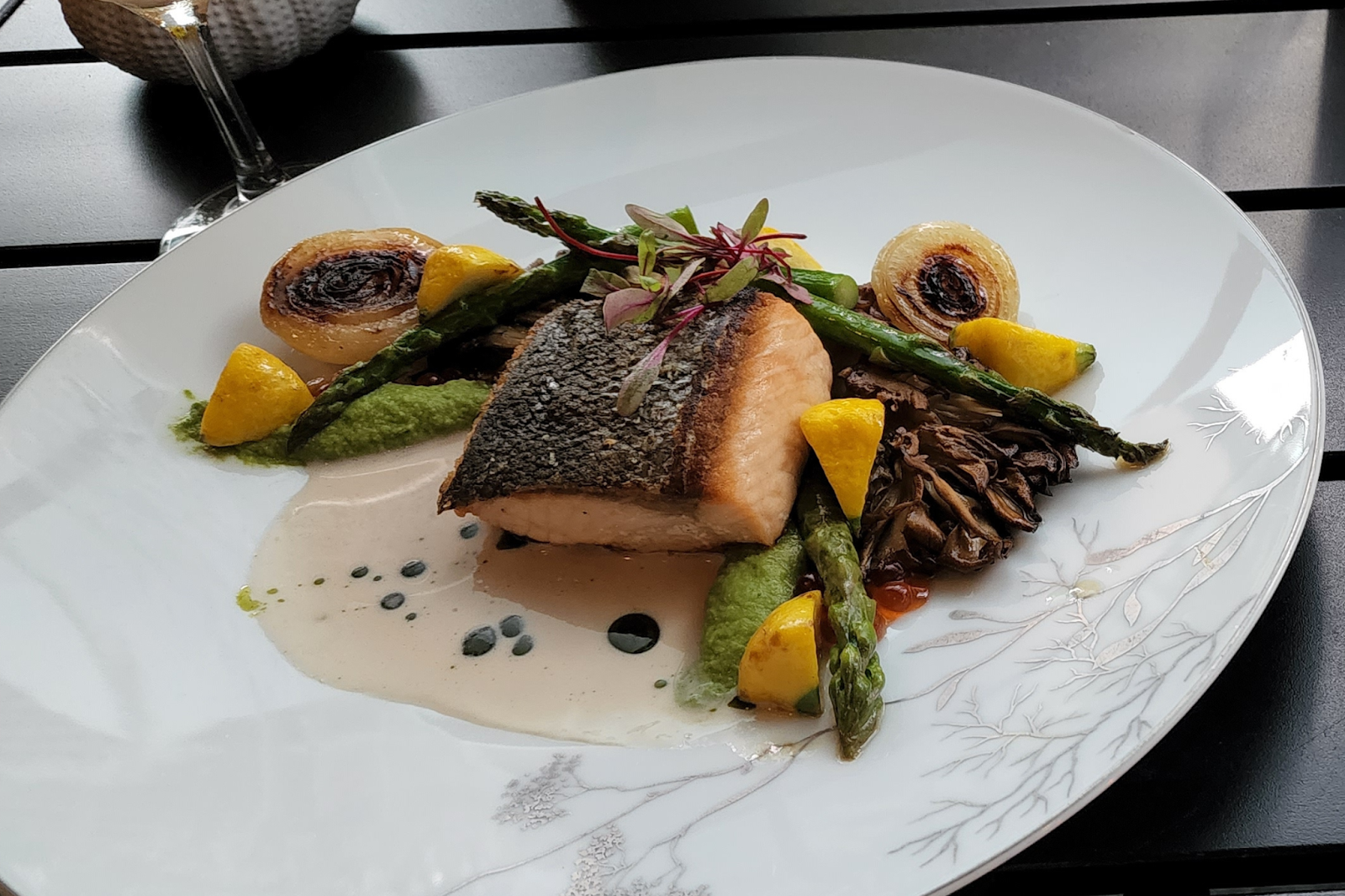
Salmon with crispy skin at the Shangri-La restaurant (Jodyann Morgan )

Sheraton Gateway in Toronto International Airport

I’ve never stayed at an airport hotel that I loved until I stayed at the Sheraton Gateway in Toronto’s International Airport. Having recently undergone a $30 million top-to-bottom makeover, the Sheraton is visually stunning. The beds are extremely comfortable and the view takes the already great hotel to the next level. Since the Sheraton is attached directly to the airport, many rooms give you a clear view of the planes taking off and landing, which is stunning during the day, but simply magical at night. Just keep in mind that the hotel is not attached to the terminal where US flights fly out, so give yourself at least an extra 30 minutes (so you don’t miss your flight like Morgan and I did). 

Where to Eat

This section primarily focuses on luxurious, romantic, once-in-a-lifetime restaurants — but it’s not representative of the wide variety of incredible food in Toronto. Travel is all about experiencing. Living in the moment. Walk down the streets of Little Tibet and choose a restaurant at random to order momo. Stroll through Kensington Market and eat dinner by trying a little at a whole bunch of little food shops.

Chubby’s Jamaican 

My wife is from Jamaica, and we live in a relatively smaller city, so there isn’t much Jamaican food. When we travel, especially to major metropolitans, we constantly gravitate to Jamaican restaurants, especially the ones that serve ackee and saltfish, which is my wife’s favorite and is hard to find, even when there is a Jamaican restaurant in town. 

I wish you could have seen the smile on her face when she walked into Chubby’s Jamaican Kitchen. The restaurant has a rustic feel, with exposed beams and a lot of natural light. The service was fantastic and incredibly attentive, and the food came really quickly. The Everything Nice was a hit on the cocktail menu — featuring rum, Aperol, mango, lemon, tamarind and scotch bonnet. The rum punch wasn’t super strong, so if you want a stronger drink, add a shot. 

You’re going to want to order the ackee and saltfish bites. The ackee and saltfish are piled onto a fried dumpling, which has been cut down the middle. Ripe plantains were deep fried, producing a wicked crispy exterior and a super ripe, super sweet interior. While the mac and cheese was not reminiscent of a Jamaican macaroni pie,it was out of this world. It featured  little bits of saltfish that acted as a flavor-booster like anchovies do in Caesar dressing. Creamy and delicious.


Want more great food writing and recipes? Subscribe to Salon Food’s newsletter.


Squish factor: The bathroom is small, but doable. Half the seating is on the main floor, but half is upstairs with a flight of stairs to walk up. Ask for lower-level seating when making your reservation if stairs are not your thing. 

Byblos Downtown

The outside of Byblos, an Eastern Mediterranean restaurant, is pretty nondescript, but after you walk down the stairs into the restaurant, it’s a whole different world. The restaurant is dimly-lit, filled with large round tables for group dining. Booths line the right side of the restaurant. The staff treat you like family and are incredibly familiar with the dishes served. Skip the beef tartar, which was just OK because the menu is full of absolutely incredible food. 

The wagyu lamb tart was amazing, a perfect balance of flavors surrounded by a chewy crust for a great balance of texture. We were informed that the lamb shoulder main course was the restaurant’s signature dish, and it was crystal clear why that was as soon as it got to the table. Beautifully prepared with pomegranate seeds on top and served with a variety of sauces, like zhug and labneh, as well as delicate wrappers to make your own bites. My wife loved the bronzino, served whole, deboned and butterflied. 

Leave room for dessert. The chocolate cake is made for chocolate lovers and skeptics alike, and their version of baklava is out of the world. 

Squish factor: Must walk down the stairs to get to the restaurant. Very narrow bathroom stalls. 

MIMI Chinese

Just having opened a year ago, MIMI Chinese feels like luxury from the moment you walk in the door. The restaurant is extremely dark (actually, a little too dark) with crimson velvet upholstered chairs and booths, and a large, striking lotus flower mural. The leather-bound menu is extensive, featuring dishes from all over China, but focused on Cantonese food from Guangdong province. Morgan and I got the chef’s tasting menu, which featured many of the dishes from the menu in smaller formats so we could try a wide variety. The star of the show is a visually stunning (and pretty tasty) four-foot-long single noodle dish, a MIMI Chinese version of  Shaanxi Biang Biang noodles, traditionally served with Sichuan chili oil and cut with scissor table side. I’ve been lucky enough to have a lot of great Chinese food over the years, and in a lot of ways, this is a restaurant you go to for the ambiance and decor. The food is good, but there is a lot of absolutely stellar Chinese food in Toronto. 

Canoe

For luxury dining with panoramic views, you’ll have to make reservations at Canoe. Located on the 54th floor of the TD Bank Tower, Canoe serves a menu that celebrates local Canadian ingredients. The service is attentive,but leaves plenty of room for you and your dining companion or partner to enjoy each other’s company. Let’s just say that Canoe is definitely proposal-worthy

We started our meal by sharing a perfectly cooked scallop served on its shell, covered in pastry dough “en croûte,” and bison tartare, which offers a lighter flavor profile than the traditional beef tartare.  Our main course was a flaky, wild Pacific halibut, served with roe and an onion ring, cooked perfectly. Halibut is one of my favorite fish to order at a restaurant and Canoe did not disappoint. 

I’d skip the surf and turf, which included an aged California strip loin and a half lobster, in favor of something on the menu that’s more unique. The dessert menu is extensive, featuring Canadian cheeses and pastries. We ordered an Ontario rhubarb terrine with camelina oil cake and goat yogurt mousse, and it was simply divine and perfectly balanced.

Expert Tip: Make a reservation a little bit before the sun is set to go down, allowing you to admire the city both in the daylight and in the dark as the lights twinkle around you. 

Activities 

Hammam Spa by Céla

Located in a high-end mall, the Hamman Spa by Cela is tucked away, an oasis where you can re-energize. Morgan and I got the Céla Seed to Skin Ritual, which was unlike anything we’ve ever experienced. Walking into the treatment room, you’ll find a massive stone table, large enough for both of us to lay down on, which we were encouraged to do in just our bikini bottoms. What followed was incredible, and somehow super funny at the same time. We were covered in bubbles and washed from our neck down to our toes using buckets of water that were dumped on us. Then nearly every inch was scrubbed before being washed yet again and finally covered in body cream. It was an incredibly relaxing experience; my skin was so soft and vibrant for days after the treatment. Hammam Spa by Céla will help take your vacation to the next level.

Squish factor: The largest robe was a tad too small on me, but still worked. If you wear over a size 24, you’ll be more comfortable in your own robe. We got a tour of the place, and I would not recommend getting a pedicure due to the high-level positioning of the chairs.

Make your own lipstick at Lip Lab

Ever since I heard of the Lip Lab, I’ve been dying to make my own customized lipstick. The Lip Lab is dedicated to helping you make the perfect lipstick for day-to-day or occasion wear. They make it so easy! You’ll choose your shade, your finish, and even the scent the lipstick will have. My wife made a glossy sheer lipstick, which fits her masc style best, while I went with my go-to lip, a bold red. They will mix the color and let you try it, adjusting it until it’s exactly what you want. Once the color is perfect, you’ll choose the tube and they will pour the melted lip into the mold, creating the perfect bullet tube of your go-to color. The final step is choosing a name for your color, and getting the name engraved into the tube. The whole experience is such a good time and you leave with a souvenir you’ll actually use.

Squish factor: You’ll be seated on high bar stool-like chairs at a large counter. It was OK for the short experience, but there isn’t any other seating if the bar chairs don’t work for you.

Ripley’s Aquarium of Canada

There’s something special about wandering around an aquarium and enjoying the beauty of 20,000 aquatic animals. The Ripley’s Aquarium of Canada features North America’s longest underwater-viewing tunnelI, which is absolutely breathtaking. There’s a moving path, so you can simply stand and take it all in. Even the building is impressive! If you’re looking for something a little different, get tickets for the second Friday night of the month, which is Jazz night.

Food tour of Kensington Market

First of all, throw everything you think a market is out of the window because Kensington Market is different. It’s less of a market, and more of a neighborhood filled with loads of tiny shops and restaurants crammed together, with housing above the stores and behind them. 

We love taking food tours in as many cities as we can, so a Tasty Tour’s food tour of Kensingtom Market was on our agenda, and it didn’t disappoint. We started our tour with two types of coffee, including an iced coffee that wasn’t acidic, and a boureka, a handheld Jewish pastry with potatoes and cheese inside. The guide told us about the evolution of the market from a Jewish neighborhood, and the many different immigrant groups that currently thrive there, as we made our way around the market, eating Jamaican beef patties, Egyptian falafel, and a Persian omelet before ending the tour with a freshly-fried churro. 

Squish factor: The food tour involved a moderate amount of walking, but many of the visited establishments had steps in order to get in. At the end of the tour, there was a 3 flight up view point which I skipped.

Car Tour of Toronto (Tours by Locals)

Tours are a dime a dozen in any big city, so it can be hard to decide which tour to take. I’m all for tours that explore a city from the perspective of someone who lives there, rather than someone just showing off the tourist landmarks. Tours by Locals allows you to book a wide variety of tours, and we decided on a car tour by Mitch. The tour is super customizable, and when Mitch learned that we were exhausted and just finished a three-hour local tour, he was able to adjust the itinerary to fit what we wanted to do. We got to see unique houses, cars and neighborhoods, and even grab a delicious iced coffee during the 3.5 hour driving experience. It was such a great time, and a wonderful way to learn about Toronto.

Customize your own sneakers at Mack House Labs

Located in a shipping container market with lots of little micro-businesses, Mack House Labs has a small studio where you can customize your sneakers. They recommend solid white ones for more versatility. The space is cozy, but has everything an art studio needs. In the center, taking up most of the room sits a massive plastic-covered table surrounded by white metal chairs. 

Custom sneakers (Jodyann Morgan )

After setting up your stations and sneakers, the artist will walk you through the process and all the stations before you can dive deep into the process.  You can use paint or marker to customize every part of your sneaker. The artist will assist with answering questions about specific techniques, but leaves the specifics of the process to you. Finish off your sneaker with your choice of laces, varnish, and even the aglets, the metal pieces at the end of the laces. 

Squish factor: The only seating in the studio is high-up metal bar chairs, which can be uncomfortable for a bigger person.

Taste the decadent, dark chocolate and strawberry pie my dad describes as a keeper

Most every evening, like some vampiric craving, it hits me. Just one tiny bite of rich, dark chocolate (definitely no more than three bites) is all I need. For me, it’s the perfect finish and leaves my taste buds completely satisfied after supper. After years of dedication, I believe I’ve even developed a superior way to savor chocolate: Don’t chew it but rather patiently allow it to melt slowly between your tongue and the roof of your mouth until it’s gone. I have actually spent time explaining how much better it tastes when you give your taste buds time to appreciate it, urging people to “Resist the Chew!” 

And as an added bonus, my method prevents it from getting stuck in your molars, which I really don’t like. I’m here to help where I can.    

Interestingly enough, and as much as I love chocolate, I don’t want it in the summer. I don’t even think about it. For three months, I don’t buy it, I don’t crave it or even take it when it’s offered. I don’t know if it’s the heat or that I’m getting the magic that’s in chocolate from somewhere else, but whatever the reason, my lack of interest in it for three months out of the year has always been a predictable oddity of mine. 

I like my chocolate like I like my coffee — dark, rich and some may say fancy. I like chocolate with the highest cocoa content I can find with the fewest ingredients and definitely without milk. I find my chosen darker-than-dark variety of chocolate very palatable, but a few of my friends call it “black butter.”

I like my chocolate like I like my coffee — dark, rich and some may say fancy

I admit I am pretty much the target consumer for smaller artisan, organic chocolatiers, and coffee producers for that matter, with their clever names, beautiful packaging and eco-friendly practices. I love being romanced by their promises of protecting birds and treating their workers well with their shade-grown, pesticide-free beans. I use the purported health benefits of high-quality chocolate as part of my elaborate rationalization for spending a little more for my near-daily fix. 

There is some science behind why I love my chocolate like I do. For one thing, the higher the cocoa content, the higher the flavonoids, antioxidants and even polyphenols, those wonderful compounds that can lower your blood pressure, protect your heart, prevent cancer and protect blood vessels. Quality chocolate is also high in magnesium, which helps relax your muscles. It has theobromine and a little caffeine, which when combined provide a mild cannabis-like effect, calming your nerves and making you feel at peace. Additionally, chocolate has naturally occurring L-tryptophan in it, which helps make serotonin in your brain, which in turn makes you feel happy! And if that weren’t enough, phenylethylalanine, an amino acid that triggers the release of dopamine, is also in chocolate. Dopamine is a vital part of the brain’s reward system and makes you feel really good. 

So yeah, summer’s over and it’s hurricane season! I think I might need to pick up a lot more chocolate.                      

Fall is definitely in the air despite being unseasonably hot, and like clockwork, my chocolate cravings are back. This pie is one of my favorites for this time of year as strawberries are still in season and still so delicious, and my love of chocolate has returned after hibernating for the summer. This is an unbaked pie, except for the quick-bake vanilla cookie crumb and butter crust that is easy to make and amazingly good. It’s served cold, so it bridges the gap between the fruit desserts I enjoyed throughout summer and fall’s call for chocolate.   

For this pie I use Equal Exchange Bittersweet Chocolate Chips 70% Cacao Content, but any bittersweet chips will do. If you don’t like dark, bittersweet chocolate (or don’t think you do), understand that the cream cheese and whipped cream mellow the chocolate in the filling, so you need the strength of flavor the bittersweet provides to hold its own when combined with the other ingredients. 

This pie has four layers of flavor that, without fail, give you a dopamine hit of pure sensual pleasure with every bite.

This pie has four layers of flavor that, without fail, give you a dopamine hit of pure sensual pleasure with every bite. It’s that good. To this day when I take my first bite, my shoulders drop, my eyes close, a little guttural grunt of bliss escapes as I exhale — as my dad says, “This pie…now it’s a keeper.”

The vanilla cookie crust is wonderful just on its own, but the filling on top is better than any chocolate pie I’ve ever had. It has a bolder, truer chocolate flavor with an amazing, creamy mouth feel. Similar to how a bit of salt enhances the sweetness of watermelon, the bright zingy acidity of the fresh strawberries provides just enough contrast to the filling to somehow elevate it even more. Lastly, the drizzle! The pure bittersweet chocolate drizzle dashed across the strawberries is the final slaying. If this pie could sing, it would sing in perfect harmony with lots sex appeal.   


Want more great food writing and recipes? Subscribe to Salon Food’s newsletter.


Whatever your stressors happen to be right now — having a hurricane entering the Gulf of Mexico, back-to-school issues for yourself or your children, work stress, car trouble or maybe you just read the current news headlines — this pie makes it all better. Feel free to re-name it “Happiness Pie.” It is magical! Whatever you decide to call it, you are going to love it.

Chocolate strawberry pie 
Yields
8 servings
Prep Time
30-45 minutes
Cook Time
10 minutes, plus two hours of chilling

Ingredients

Crust:

1 1/2 cups crushed vanilla cookies (I use MadeGood) 

4 tablespoons butter, melted

Filling:

1/2 cup bittersweet chocolate chips, melted and cooled slightly

8 ounces cream cheese

8 ounces packaged whipped topping or *freshly whipped and sweetened heavy cream 

2-4 tablespoons brown sugar (in addition to the sweetener you may use if you are making your own whipped cream)

1/2 teaspoon vanilla

Strawberry Topping:

Fresh strawberries, washed, dried and sliced – a pint will do but you can always use more if you have more.

4 tablespoons bittersweet chocolate chips

1-2 tablespoons butter


Directions

  1. Heat oven to 325

  2. Mix cookie crumbs with melted butter and press into the bottom and up the sides of a buttered pie plate.

  3. Bake for 10 minutes and allow to cool completely.

  4. Melt chocolate chips in the microwave on low in a glass measuring cup and set aside to cool slightly.

  5. Note: If you are making your own whipped cream, use your mixer to do this first so you don’t have to wash and dry your mixer before going to the next step. You will need 1/2 cup of heavy cream to make the 8 ounces in a tub of store-bought whipped topping. Sweeten it to your liking. Scape into a bowl and set aside or place in the refrigerator to keep cool.

  6. Using an electric or stand up mixer, beat the cream cheese until light and fluffy.

  7. Add brown sugar and vanilla and mix well.

  8. Add cooled melted chocolate and mix well.

  9. Fold whipped topping into your chocolate mixture.

  10. Spoon chocolate mixture into crust and chill.

  11. Once thoroughly chilled, cover the top with sliced strawberries.

  12. Melt 4 tablespoons of bittersweet chips and combine with 1-2 tablespoons melted butter. (If it is too thick add a bit more melted butter or melted coconut oil.)

  13. Drizzle over the strawberries and return to the refrigerator. Serve after the chocolate has hardened slightly. 


Cook’s Notes

Cookies for Crust:
-Use any simple vanilla cookie you like from Nilla Wafers to my preference, MadeGood Vanilla Cookies. 
-Make your crumbs very small and uniform in texture.
-Some cookies require more butter. You can easily add it right in the pie plate as you’re making it. I have even melted the butter in the pie plate while the oven is preheating, then added the crumbs to the butter and made the crust right in the pie plate.

Brown Sugar:
-There are no raw eggs or other raw ingredients to prevent you from tasting brown sugar on its own. Additionally, you may find you don’t want to add sugar to your filling as your whipped topping may provide enough sweetness. It is entirely up to you. 

Whipped Topping:
-Make your own or use store bought. If you make your own, make sure to sweeten it to your liking.  
 

Salon Food writes about stuff we think you’ll like. While our editorial team independently selected these products, Salon has affiliate partnerships, so making a purchase through our links may earn us a commission. 

4 tips for stretching your food dollars as prices continue to rise

Inflation has dominated the headlines for much of 2022, with prices for fuel, food and household goods rising dramatically across the country. While there are some signs that inflation in the general economy may finally be cooling down, food prices are still up, with no sign of falling. With prices up an average of 11% from last year, we are all feeling the pinch. There’s a variety of reasons for these increases: food supply chains are complicated, and many are still reeling from pandemic disruptions and other disturbances. There’s also the distinct possibility that grocery chains, logistics companies and large-scale food producers might be taking advantage of the situation, given that they’re posting record-high profits that suggest they’re doing more than just passing on their increased costs to consumers.

So while regulators are attempting to reign in food inflation and make things more affordable, it might take a while before we get relief from higher prices at the register. With this in mind, here are our best tips for making the most of your groceries, stretching what you buy to cover multiple meals that don’t skimp on sustainability, taste and nutrition.

Reduce food waste

The average household wastes around 40% of the food it buys. That loss is not only an environmental problem, it’s an economic problem — you would never throw away 40% of your money, and so it makes good sense to try not to waste 40% of your food. Making sure all the food you buy gets eaten is hard, but with a little planning and a mindshift towards making the most of what you’ve got, you can stretch your grocery dollars. Planning out your meals for the week, buying smaller quantities, organizing your fridge and using every part of the food you buy are all great strategies.

Resources:

Eat less meat, but better meat (or eat no meat at all)

Meat is one of the grocery items that has seen the steepest increase. From April 2021 to April 2022, beef prices went up almost 15%. There are lots of reasons for that, including both inflation and possibly price gouging by the highly consolidated meat industry, but it means there was never a better time to change what kind of meat you buy, and how much (including none!). When quality and smart use becomes the focus rather than quantity, it’s easy to avoid the sticker shock and divest from price-gouging meatpacking corporations. We have advice to help you to switch to better meat (grassfed, pasture-raised, local if you’re able) and to eat less of it: eat meat less often, try smaller portions or use it in different ways: as part of stir fries, or as a flavoring agent, with a few pieces flavoring an entire dish.

Resources:

Eat beans

While beans have long been mainstream staples in many other countries and an essential part of vegetarian diets the world over, they haven’t always gotten enough respect with American cooks. But what’s not to love? Beans are an extremely affordable protein, whether canned or dried. One can, used right, can feed a family — and a bag could feed a family twice. They can be eaten hot or cold, in salads, soups, stews, burgers and more. They are delicious, versatile, just as happy in a cocktail dress as they are wearing sweatpants. We have tons of guidance for how to get startedhow to use up any leftovers; and even what the heck Rancho Gordo bean club is and why you should sign up.

Plus, a couple of books to inspire you:

Grow your own

Growing some of your own food can be less expensive than buying it, and often less wasteful, too. There are ways to start gardening no matter how small the space, or how limited your resources. For example: ever bought fresh herbs only to use a few and have the rest get slimy and brown in your fridge? Growing your own herbs, even just on a windowsill, can be a great way to access affordable herbs and cut only what you need when you need it. As your confidence grows, you can build up your repertoire and save money on everything from peppers to tomatoes to greens.

Resources:

“The Rings of Power” are here to fight climate change

Good news, trolls! If “The Rings of Power” didn’t give you enough fuel for hatred with its cast of color and women characters with agency who aren’t victims of sexual violence all the time, here’s something else for you to chew on: the series seems awfully concerned with a changing climate. 

The “Lord of the Rings” prequel from Prime Video is set thousands of years before the J.R.R. Tolkien stories we know and love. One of the strengths of the new series is how it builds upon existing lore while adding its own rich narratives. Like, if smart fan fiction were given a $500 million budget. The Southlands isn’t a place found in Tolkien’s work specifically, but in Episode 7, titled “The Eye,” “The Rings of Power” supplies a pretty compelling origin story for how Mordor got its boom. Most of the inhabitants of this world, save the evil ones, are preoccupied with the environment. They know something is off; they believe it’s changing and unlike about 25% of Americans, they’re ready to fight. 

“The Rings of Power” follows several groups on disparate journeys bound to intersect. Elf hero Galadriel (Morfydd Clark) gave up her eternal reward because she can’t shake the unsettling feeling that evil has not been vanquished. She’s right, of course, and leads the charge of human soldiers to save the day (at first) when a Southlands village is besieged by orcs, led by the darkly intriguing Adar (Joseph Mawle). Meanwhile an elf who has a crush on her (doesn’t everyone?), Elrond (Robert Aramayo), has rekindled his friendship with dwarf prince Durin (Owain Arthur) and the two are making headway on a forge. Hobbit ancestors, known as Harfoots, are making their annual migration, assisted by the mysterious Stranger (Daniel Weyman) who happens to be quite large and may or may not be truly helpful.

The Lord of the Rings: The Rings of PowerDylan Smith (Largo Brandyfoot), Markella Kavenagh (Elanor ‘Nori’ Brandyfoot) and Megan Richards (Poppy Proudfellow) in “The Lord of the Rings: The Rings of Power” (Ben Rothstein/Prime Video)Of all the groups, the Harfoots seem most clearly connected to the land. They live off it, existing as foragers in a simple, difficult life where blackberries are treats and snails are eaten raw. They wear nature in their curly hair – acorn headbands, leaf fascinators, grass caps – and famously, go barefoot. Their migration, an essential part of their culture, is routed around what’s edible in season. Because of this and because of past struggle, they know to conserve. Main Harfoot Nori (Markella Kavenagh) admonishes her friend Poppy (Megan Richards) for eating an apple when the day before, the trees seemed depleted. Nori also says sagely that some trees do talk. If you know your Tolkien, you know she’s right. 

You would think a species who live infinitely longer than everyone else would be concerned about the destruction of the world, and you are correct.

Elves might also be the group that comes to mind when one thinks of Tolkien’s creatures and the natural world. Their crowns are leaves. They’re often pictured strolling amid groves of yellow birch trees. And the only thing that will save them? A precious metal known as mithril, which just so happens to be in the mines of the dwarves. The elves are endangered – specifically, the Light of the Eldar is fading out – and according to legend, mithril sounds a lot like the shiny power rumored to be the only thing that can restore them. 

You would think a species who live infinitely longer than everyone else would be concerned about the destruction of the world, and you are correct. For the elves and for others, a yellow leaf from the Tree of Lindon serves as a litmus test, the canary (it’s the right color) in the coal mine about their changing lands.

The Lord of the Rings: The Rings of PowerNazanin Boniadi (Bronwyn) and Morfydd Clark (Galadriel) in “The Lord of the Rings: The Rings of Power” (Courtesy of Prime Video)In “The Rings of Power” the natural world dictates choices, a magic 8-ball for deciding. The White Tree shedding its blossoms causes the queen regent (Cynthia Addai-Robinson) to reverse her decision and help Galadriel. A yellow leaf falling and becoming corrupted with smoky darkness like ink shot into its veins causes dwarf Durin and his wife Disa (the fantastic Sophia Nomvete) to scream for Elrond to return. They’ll assist him gathering mithril, secretly. Characters in “The Rings of Power”? They pay attention. They also help. If actual climate change did come to these fantasy lands, the characters would fare a lot better than those selfish a**holes in Westeros. Or, us on Earth.

Evil comes first in the form of nature’s destruction.

Mining doesn’t sound especially environmentally conscious, but the dwarves are just as attuned to the underground as elves and Harfoots are to above. Their mining involves, as Disa explains, singing. Screenrant writes, “Dwarves use the resonance of their booming voices to detect where mineral lodes are located within the mountain,” summing it up neatly as sonar. But for Disa and other dwarves, it’s even more interconnected than that. She sings to the mountain when several miners are trapped. They’re eventually freed. The mountains tell her where to dig, and crucially for the preservation of the natural world and everyone’s way of life: “where to leave the mountain untouched.”

Recent horror movies have mined, to put it terribly bluntly, the darkness of the extraction industry. 2021’s “The Devil Below” is set in an Appalachian town abandoned after a coal mine fire. “Unearth” from 2020 straight up has the tagline: “A fracking horror story.” Something lurks in the dwarves’ mines too and digging too deep, as the elves fly too close to the sun, taking too much, will soon awaken it.

The Lord of the Rings: Rings of PowerOwain Arthur (Prince Durin IV) in “The Lord of the Rings: Rings of Power” (Prime Video)But by Episode 6, we’ve already had an ecological disaster in Middle-earth. The secret weapon, which sneaky Waldreg (Geoff Morrell) with his shirtless aprons apparently swapped, is a key. It turns in the hillside Sauron shrine, “Lost”-style, and unleashes the Anduin river. The industrious and apparently engineering orcs have been digging trenches, not only to surprise-attack townspeople, but to speed the river along. When the surging river reaches a sleepy volcano, which has been watching over the verdant lands, it creates a reaction. The dormant volcano isn’t so dormant anymore.

The land is forever changed, and a good part of Episode 7 finds some characters walking shell-shocked through an apocalyptic landscape: red skies as in a dust storm, falling ash as if from a wildfire. Evil comes first in the form of nature’s destruction, a delicate balance of life upset, triggering cataclysmic chain reactions, because of the work of man (and orc).

Sound familiar? This piece will no doubt trigger an avalanche of unwanted emails and DMs from strange men, who love to hate this show with its elf and dwarf played by actors of color, and its women kicking ass. But as trolls conveniently forget the essential women characters in Tolkien’s books – such as Éowyn, who when told by the Witch-king he cannot be killed by a living man, declares “But no living man am I!” a line slightly tweaked for Peter Jackson’s film  – they also skip over Tolkien’s love of and concern for nature. It seeps through his work in loving descriptions of forests, from the woods of Lothlórien to Fangorn.

Part of the work of the orcs is razing trees, destroying nature in the service of the evil industry which chugs along like a locomotive. The line from “The Two Towers,” which struck me as ominous even as a bookworm child, goes, “There is always smoke rising from Isengard these days.” And there is also always a climate emergency in our world these days: a hundred year flood, a hurricane, smoke from more frequent and less distant fires. Our Earth does not have the stewards of Tolkien’s Middle-earth, the wise and tragic Ents, those noble tree-giants who care for the woods, including walking and, as Nori knows, speaking.


Want a daily wrap-up of all the news and commentary Salon has to offer? Subscribe to our morning newsletter, Crash Course.


In the first episode of “The Rings of Power,” a burning meteor bearing The Stranger slashed through the sky. All the lands are linked, as all nature is, and the series showed each group of characters watching the blazing streak in the darkness: the Harfoots, the elves. In a leafy glen in a very small, beautiful moment, the trees watched too. They shifted, reached out branched arms to comfort each other. The trees know what’s coming, even if we still refuse to.

“The Rings of Power” streams its season finale on Friday, Oct. 14 on Prime Video. Watch the trailer via YouTube.

“Toxic masculinity”: what does it mean, where did it come from — and is the term useful or harmful?

It’s hard to avoid encountering the term “toxic masculinity” these days.

It has been linked to Australian soldiers’ war crimes in Afghanistan, the Morrison government’s low credibility with women in the lead-up to this year’s election – and further afield, the rise of Donald Trump and the Capitol riots.

It is regularly applied to pop-culture characters as diverse as the hypersensitive dinosaur nerd Ross Gellar from “Friends,” the alcoholic adulterer Don Draper in “Mad Men,” and the violent, repressed Nate in “Euphoria,” who regularly tells his girlfriend, “If anyone ever tried to hurt you, I’d kill them.”

The term “toxic masculinity” was obscure in the 1990s and early 2000s. But since around 2015, it has become pervasive in discussions of men and gender.

So what does it mean?

“Masculinity” refers to the roles, behaviours and attributes seen as appropriate for boys and men in a given society. In short, masculinity refers to society’s expectations of male people.

In many societies, boys and men are expected to be strong, active, aggressive, tough, daring, heterosexual, emotionally inexpressive and dominant. This is enforced by socialization, media, peers, and a host of other influences. And it plays out in the behavior of many boys and men.

The term “toxic masculinity” points to a particular version of masculinity that is unhealthy for the men and boys who conform to it, and harmful for those around them.

The phrase emphasises the worst aspects of stereotypically masculine attributes. Toxic masculinity is represented by qualities such as violence, dominance, emotional illiteracy, sexual entitlement, and hostility to femininity.

This version of masculinity is seen as “toxic” for two reasons.

First, it is bad for women. It shapes sexist and patriarchal behaviors, including abusive or violent treatment of women. Toxic masculinity thus contributes to gender inequalities that disadvantage women and privilege men.

Second, toxic masculinity is bad for men and boys themselves. Narrow stereotypical norms constrain men’s physical and emotional health and their relations with women, other men, and children.

Origins of the term

The term first emerged within the mythopoetic (New Age) men’s movement of the 1980s.

The movement focused on men’s healing, using male-only workshops, wilderness retreats and rites of passage to rescue what it saw as essentially masculine qualities and archetypes (the king, the warrior, the wildman, and so on) from what it dubbed “toxic” masculinity.

In the 1990s and early 2000s, the term spread to other self-help circles and into academic work (for example, on men’s mental health). Some U.S. conservatives began applying the term to low-income, under-employed, marginalised men, prescribing solutions like restoring male-dominated families and family values.

“Toxic masculinity” was virtually non-existent in academic writing — including feminist scholarship — up until 2015 or so, other than in a handful of texts on men’s health and wellbeing.

But as it spread in popular culture, feminist scholars and commentators adopted the term, typically as a shorthand for misogynist talk and actions. Though the term is now associated with a feminist critique of the sexist norms of manhood, that’s not where it started.

It is virtually absent from the scholarship on men and masculinities that developed rapidly from the mid-1970s, though its use in that area has increased in the last decade. This scholarship has, however, long made the claim that culturally influential constructions of manhood exist, and that they are tied to men’s domination of women.

Merits and risks

Understood properly, the term “toxic masculinity” has some merits. It recognizes that the problem is a social one, emphasising how boys and men are socialised and how their lives are organized. It steers us away from biologically essentialist or determinist perspectives that suggest the bad behaviour of men is inevitable: “boys will be boys”.

“Toxic masculinity” highlights a specific form of masculinity and a specific set of social expectations that are unhealthy or dangerous. It points (rightly) to the fact that stereotypical masculine norms shape men’s health, as well as their treatment of other people.

The term has helped to popularize feminist critiques of rigid gender norms and inequalities. It is more accessible than scholarly terms (such as hegemonic masculinity). This has the potential to allow its use in educating boys and men, in similar ways to the concept of the “Man Box” (a term describing a rigid set of compulsory masculine qualities that confine men and boys) and other teaching tools on masculinity.

By emphasizing the harm done to both men and women, the term has the potential to prompt less defensiveness among men than more overtly political terms such as “patriarchal” or “sexist” masculinity.

Toxic risks

“Toxic masculinity” also carries some potential risks. It is too readily misheard as a suggestion that “all men are toxic.” It can make men feel blamed and attacked — the last thing we need if we want to invite men and boys to critically reflect on masculinity and gender. Persuasive public messaging aimed at men may be more effective if it avoids the language of “masculinity” altogether.

Whether it uses the term “toxic masculinity” or not, any criticism of the ugly things some men do, or of dominant norms of manhood, will provoke defensive and hostile reactions among some men. Criticisms of sexism and unequal gender relations often provoke a backlash, in the form of predictable expressions of anti-feminist sentiments.

The term might also draw attention to male disadvantage and neglect male privilege. Dominant gender norms may be “toxic” for men, but they also provide a range of unearned privileges (workplace expectations of leadership, freedom from unpaid care work, prioritizing of their sexual needs over women’s) and inform some men’s harmful behaviour towards women.

“Toxic masculinity” can be used in generalizing and simplistic ways. Decades of scholarship have established that constructions of masculinity are diverse, intersecting with other forms of social difference.

The term may cement the assumption that the only way to involve men in progress towards gender equality is by fostering a “healthy” or “positive” masculinity. Yes, we need to redefine norms of manhood. But we also need to encourage men to invest less in gendered identities and boundaries, stop policing manhood, and embrace ethical identities less defined by gender.

Whatever language we use, we need ways to name the influential social norms associated with manhood, critique the harmful attitudes and behaviours some men adopt, and foster healthier lives for men and boys.

Michael Flood, Professor of Sociology, Queensland University of Technology

This article is republished from The Conversation under a Creative Commons license. Read the original article.

Why bees love weed — and why it might even be good for them

“Isn’t it beautiful?” a friend once asked me as we shared a joint in The Netherlands. “We’re only smoking flowers.”

She was right. Marijuana, the dried and processed product of Cannabis sativa plants, is the flowery part, as opposed to tobacco or tea leaves. When people say they enjoy smoking “bud,” it’s meant literally. Despite how obvious this may seem, it’s always struck me as quietly awe-inspiring.

While humans clearly love these flowers, so do insects, especially bees, albeit for different reasons. And just like medical marijuana has been shown to improve human health by effectively treating epilepsy, chronic pain, chemotherapy nausea and more, insects can benefit from cannabis as well.

Honeybee health is extremely important to farmers who rely on the flying little workers to pollinate more than 100 different crops, which provides about $6.4 billion in annual economic value. But against a backdrop of catastrophic insect decline, driven by the overuse of pesticides and unchecked urbanization, honeybee populations are suffering.

Parasites, diseases and pesticides have contributed to widespread honeybee deaths, a phenomenon known as Colony Collapse Disorder. In some cases, tens of thousands of bees would drop dead in days, sometimes wiping out entire hives. While this trend is slowly being reversed, it’s still a big concern for beekeepers and those who enjoy eating most fruits and vegetables.

In an attempt to improve honeybee health, researchers at the University of Life Sciences in Lublin, Poland have tried feeding their bugs many different substances, including caffeine, black pepper extract and curcumin, the main ingredient in turmeric. Despite some positive results, none of these substances have been a silver bullet. They don’t seem able to balance effectiveness with strict safety requirements necessary in beekeeping.

So these Polish researchers, Patrycja Skowronek, Łukasz Wójcik and Aneta Strachecka, have turned to hemp extracts. Hemp is cannabis that is low in THC, the chemical responsible for the stoney, “high” feeling. In contrast, hemp is high in CBD, a chemical largely associated with the medical benefits of cannabis.

Previous research by this team has shown that hemp extracts increased the lifespan of honeybees and could “help them with the fight against environmental pollution and the increase of oxidative stress.”


Want more health and science stories in your inbox? Subscribe to Salon’s weekly newsletter The Vulgar Scientist.


But they weren’t exactly sure how this was happening. Newly published results in the journal Animals took a closer look at the immune system of honeybees after being given CBD, to tease out the mechanisms that could make bees healthier. In this experiment, they also kept the bees outside, exposing them to more environmental stress, while previous trials mostly used caged bees. This means the results may better reflect what a honeybee would encounter in the real world.

 The bees on CBD not only lived longer than controls, they had higher concentrations of biomarkers, such as albumin, a protein that acts against inflammation.

Bees have very different immune systems than humans. They don’t exactly have blood, but a liquid called hemolymph functions about the same way. Instead of livers, honeybees have a fat body that doubles as nutrient storage and an immune shield that fights viruses and other pathogens. So how does a compound like CBD work on both humans and bugs if we’re so different? (Note that bees and other insects do not get high from cannabis or any of its components; they lack the necessary receptors.)

In this experiment, there were three groups of bees, with 320 bees sampled in total. Some were fed CBD in sugary syrup, some were given CBD via a cotton strip placed in the hive, and the rest acted as controls, fed nothing but sugar and glycerin.

Every few days, the researchers took some bees and extracted their hemolymph, which was analyzed for certain biomarkers that indicate good health. The bees on CBD not only lived longer than controls, they had higher concentrations of biomarkers, such as albumin, a protein that acts against inflammation.

“The higher concentration of total protein in the groups supplemented with CBD indicate a higher production of immune proteins in the bees’ organism,” the authors wrote, leading them to conclude, “CBD extract may prove to be a good supplement and can have positive effect on the immune system of honeybees.”

It likely wouldn’t be difficult or expensive to give honeybee colonies CBD, so this may be a good tool for farmers to help their favorite pollinators. Besides, they can grow the plant and extract the CBD themselves, a strategy increasingly suggested by experts.

Other pollinators, like native bee species, butterflies, flies and bats are at risk of extinction thanks to pesticides, habitat loss and climate change.

Even though hemp does not produce any nectar, bees are huge fans of this plant because it pumps out large amounts of pollen. In 2018, researchers from Cornell University visited 11 hemp farms across the Finger Lakes region of New York and noted that hemp flowers supported 16 different bee species. Their research, published in Environmental Entomology, reported “hemp has the potential to provide a critical nutritional resource to a diverse community of bees during a period of floral scarcity.”

Similarly, a 2019 study in Colorado observed 23 different types of bees swarming hemp flowers, leading the authors to “strongly urge” farmers to use hemp to “develop an integrated pest management plan designed to protect pollinators while controlling pests.”

In other words, bees really love weed and it may even be good for them.

However, it’s really worth noting that honeybees aren’t truly facing extinction, despite what you may have heard from certain “bee-friendly” corporations. The yellow-and-black bug we’ve all come to associate with honey is just one species, Apis mellifera, the European honeybee. It’s a domesticated species not actually native to North America and was brought over by colonizers. Indigenous Peoples relied on other bees (of which, there are nearly 4,000 other species) for pollinating their crops.

Honeybees are extremely important, yes, but they are agricultural animals, akin to tiny flying chickens or cows. They are no more at risk of dying out than any other factory farmed creature. Colony collapse disorder is a genuine problem, as it makes things harder for farmers, but it is unlikely to ever truly eradicate the honeybee. The issue also seems to be improving. A 2020 report from the U.S. Department of Agriculture reported that honeybee colonies had risen eight percent from the year before.

However, other pollinators, like native bee species, butterflies, flies and bats are at risk of extinction thanks to pesticides, habitat loss and climate change. Conservation efforts should focus on preserving the less visible insects as well. The Polish researchers didn’t test if CBD could help other bugs, but it might work just as well given the similarities in bee immune systems.

Using CBD to prevent colony collapse in honeybees is a novel strategy for agriculture and should certainly be explored more. But it shouldn’t distract from the fact that our natural environment is being actively destroyed while domesticated insects are doing relatively fine. Let’s develop strategies for improving the health of all beneficial insects, not just the ones that give us honey.