Spring Sale: Get 1 Year, Save 58%

It was a bad year for the world: But yes, there were 10 good things in 2021

This year, 2021, began with a huge sense of relief as Donald Trump left office. We hoped to emerge from the ravages of COVID, pass a hefty Build Back Better (BBB) bill, and make significant cuts to the Pentagon budget. But, alas, we faced a Jan. 6 white nationalist insurrection, two new COVID mutations, a sliced-and-diced BBB bill that didn’t pass, and a Pentagon budget that actually increased.

It was indeed a disastrous year, but we have some reasons to cheer: 

  1. The U.S. survived its first major coup plot on Jan. 6 and key right-wing groups are on the wane. With participants in the insurrection being charged and some facing significant jail time, new efforts to mobilize — including September’s “Justice for J6” rally — fizzled. As for Trump, let’s remember that in early 2021, he was impeached again, he lost his main mouthpiece, Twitter, and his attempt to build a rival social media service seems to have stalled. QAnon is in decline — its major hashtags have evaporated and Twitter shut down some 70,000 Q accounts. We may still see a resurgence (including another Trump attempt to take the White House), but so far the insurrection seems to have peaked and is being rolled back.
  2. Latin America is undergoing a massive shift toward progressive governments. Gabriel Boric, a young Chilean progressive who campaigned for broad reforms, including universal health care and a higher minimum wage, won a landslide victory in December. His victory follows the victories of Xiomara Castro in Honduras in November, Pedro Castillo in Peru in June, and Luis Arce in Bolivia in October 2020. In Brazil, former president Lula da Silva may soon return to the presidency via next year’s elections. All of this bodes well for policies that benefit the people of Latin America and for greater solidarity with Cuba, Venezuela, Nicaragua and other nations in the U.S. crosshairs.
  3. The struggle for racial justice and accountability saw some major wins in 2021. Former police officer Derek Chauvin was found guilty on all three charges related to the murder of George Floyd and has pled guilty in the federal civil rights version of the case. The three Georgia men who killed Ahmaud Arbery for the crime of going out jogging were also convicted. Progressive district attorneys in cities and counties across this country are fighting to end cash bail and no-knock warrants, mass incarceration, and mandatory sentencing minimums. We see a backlash against these DAs, such as in Los Angeles and San Francisco, but they have strong community support.
  4. U.S. troops left Afghanistan, winding down a deadly 20-year intervention. Some of us were against this U.S. invasion to begin with, and pushed for 20 years for our troops to leave. The exit was carried out in the same shameful, chaotic way as the 20 years of war, and the U.S. is once again targeting the Afghan people by freezing the billions of dollars of Afghan money held in overseas banks. That’s why we have joined the effort to #UnfreezeAfghanistan. But we do recognize that the U.S. troop withdrawal was necessary to give Afghans the chance to shape their own future, to stop spending $300 million a day on a failed war, and to roll back U.S. militarism.
  5. COVID has returned with a vengeance, but we have been winning battles against other deadly diseases. Malaria, which kills half a million people a year, mostly in Africa, might be vanquished thanks to a groundbreaking vaccine, the first ever for a parasitic disease. On the HIV front, a new vaccine has shown a 97% response rate in Phase I clinical trials. Almost 40 million people were living with HIV in 2020, and hundreds of thousands of people die from AIDS-related illnesses each year. While the vaccine is still in Phase I trials, it is an extremely hopeful sign for 2022. 
  6. The UN Treaty on the Prohibition of Nuclear Weapons, adopted in 2017, went into effect this year after fulfilling the requirement that it be ratified by at least 50 countries. The U.S. and the world’s other nuclear powers have not signed the treaty and it has no enforcement mechanism. But for the first time in history, nuclear weapons are illegal under international law. With 86 signatories so far, the treaty helps to delegitimize nuclear weapons and reinforce global norms against their use. At a time when the outcome of the nuclear talks with Iran are uncertain, and when conflicts with Russia and China regarding Ukraine and Taiwan are intensifying, such a reminder is critical.
  7. In the U.S., workers are actually gaining power amidst the ravages of COVID. Wages are going up and unions are starting to re-emerge. With millions of workers quitting their jobs from burnout or re-evaluation of life goals (dubbed the “Great Resignation“), the resulting labor shortage has given workers more space to push for better wages, benefits and working conditions. There were over 300 strikes from hospitals to coal plants to universities — many of them successful. Starbucks workers in Buffalo succeeded in forming the first union at a Starbucks store in the U.S. Amazon workers in Bessemer, Alabama, lost their attempt to form the first Amazon union, but the National Labor Relations Board has ordered a new election due to management’s improper conduct. So 2022 may well be a banner year for worker’s rights and unions.
  8. While not nearly enough, there were some key environmental gains, with Biden starting his term by re-entering the Paris climate accords. The COP26 meeting put a spotlight on the urgent need for revved up environmental action, with environmental activists worldwide pressuring their own governments to step up. Some 44 nations are now committed to ending the use of coal, and the G7 countries vowed not to fund coal plants any more. Here in the U.S., thanks to sustained environmental activism, the Keystone XL and PennEast pipelines were officially canceled and the Biden administration nixed oil and gas drilling on federal land. Renewable energy installations are at an all-time high and wind farms are planned along the entire U.S. coastline. Another major polluter, China, is building the largest energy installation in history, a whopping 100 gigawatts of wind and solar power (the entire capacity, as of 2021, of U.S. solar energy), and plans to plant a Belgium-sized area of forest every year going forward. 
  9. Yes, there have actually been some advances for women’s choice this year. When we look beyond the outrageous anti-abortion law in Texas that empowers private citizens to sue abortion providers, we see that many countries in the rest of the world are moving in the opposite direction. In 2021, abortion was legalized in South Korea, Thailand and Argentina, while safe access increased in New Zealand, Ecuador, and Uruguay. A major victory in a very Catholic country came in September, when Mexico’s Supreme Court decriminalized it. Isn’t it ironic that, prior to Roe v. Wade, thousands of women from U.S. states along the Mexican border would cross into Mexico to get (illegal) abortions? Now, they might again be going, and this time for legal abortions.
  10. Another reason to celebrate: 2021 is over. And 2022 may actually be the year we conquer COVID and move forward on a full agenda of pressing issues, including pushing Congress to pass a version of the Build Back Better bill; pressing for passage of the voting rights legislation that will stop the outrageous statewide voter suppression; mobilizing against the far right — and a return of Trump or Trump-lite; stopping the Cold War with China; preventing a military conflict with Russia in Ukraine; and cutting the outrageous Pentagon budget to invest in the health of our people and planet. 

If we could make gains in a year as bad as 2021, just think what we can accomplish in 2022. 

Read more from Medea Benjamin on the global struggle for justice:

Tom Holland pushes back against “Marvel movies aren’t cinema” argument

“Spider-Man: No Way Home” is the most successful film in the world right now, by a wide margin. In fact, it’s the first movie since 2019 to make over $1 billion at the box office, and it did that in only 12 days. In the history of Marvel movies, only “Avengers: Infinity War” and “Avengers: Endgame” have reached that milestone faster, and neither of them came out during a global pandemic.

Might there be awards gold for No Way Home in addition to immense popularity? According to The Hollywood Reporter, Marvel Studios is going to make an Oscars push for the film, with president Kevin Feige comparing the movie to 2003’s “The Lord of the Rings: The Return of the King,” which picked up a boatload of Academy Awards back in the day. “In the way ‘The Return of the King’ was sort of a celebration and culmination of all of that amazing work that had been done on that trilogy, this is a celebration both of our ‘Homecoming’ trilogy and of the five other incarnations of ‘Spider-Man’ that had happened before,” he said.

Sony exec Tim Rothman also made his case: “Like the third ‘Lord of the Rings,’ this is the conclusion of an epic series, and is quality commercial cinema. ‘Black Panther’ was quality commercial cinema. It is essential that the Academy does not lose its connection with quality commercial cinema.”

I get the idea that Tim Rothman is a fan of quality commercial cinema, don’t you?

Tom Holland vs Martin Scorsese

But once you start talking about giving out Oscars for Marvel movies, you inevitably run into the “Are Marvel movies cinema?” debate, the one kicked into overdrive by legendary director Martin Scorsese a couple years back. “Honestly, the closest I can think of them, as well made as they are, with actors doing the best they can under the circumstances, is theme parks,” Scorsese said at the time. “It isn’t the cinema of human beings trying to convey emotional, psychological experiences to another human being.”

One person who strongly disagrees is Tom Holland, who has played Peter Parker in the Homecoming trilogy. “You can ask [Martin] Scorsese, ‘Would you want to make a Marvel movie?’ But he doesn’t know what it’s like because he’s never made one,” Holland told THR. “I’ve made Marvel movies and I’ve also made movies that have been in the conversation in the world of the Oscars, and the only difference, really, is one is much more expensive than the other. But the way I break down the character, the way the director etches out the arc of the story and characters – it’s all the same, just done on a different scale. So I do think they’re real art.”

I mean, you can also ask Benedict Cumberbatch or Robert Downey Jr. or Scarlett Johansson – people who have made the kinds of movies that are ‘Oscar-worthy’ and also made superhero movies – and they will tell you that they’re the same, just on a different scale. And there’s less Spandex in ‘Oscar movies.’

Mr. Scorsese, any response?

Original Boba Fett designer criticizes Disney’s take on the character

Boba Fett first made his debut in 1980’s “The Empire Strikes Back,” and immediately became a favorite among fans. The faceless bounty hunter didn’t have many lines, but he instantly became the epitome of “Star Wars” cool, a competent mercenary who would do any job that needs doing, no questions asked.

Fett was quickly killed off in 1983’s “Return of the Jedi,” but his legend only grew in the years to come. Once Disney bought Lucasfilm, they brought Boba Fett back in “The Mandalorian,” now played by actor Temuera Morrison, the same guy who played Fett’s clone-father in the “Star Wars” prequel series. And now he’s getting his own series in “The Book of Boba Fett,” which sees him take over the criminal underworld once managed by Jabba the Hutt.

So it’s high times for Boba Fett, but one person isn’t all the way happy: art director and filmmaker Joe Johnson, who worked with concept artist Ralph McQuarrie to design the look and feel of Boba Fett for the original trilogy. Johnson talked to The New York Times about how he would have treated the character differently:

I never would have shown his face. I would never have had an actor underneath where he takes the helmet off and you see who it is. I think that eliminates a lot of the mystery. Before that helmet comes off, he can be anybody.

Original Boba Fett designer wouldn’t have removed his mask

Johnson’s original idea for Boba Fett was for him to be a sort of anonymous mercenary, “neither a hero nor a villain . . . You could hire Boba Fett to do whatever job you wanted him to do.” That is pretty far from what he’s becoming, which is a complex character in his own right. With Disney in charge and hoping to squeeze every Disney+ subscription they can out of the “Star Wars” universe, it was never a question of whether they’d open up Boba Fett, but when.

But Disney’s first “Star Wars” spinoff series “The Mandalorian” has been pretty good, so hopefully “The Book of Boba Fett” will still be worth watching. It premieres tomorrow, Dec. 29, on Disney+!

From ghosts to cannibals, here are the 10 breakout TV performances of the year

This year brought a new crop of talent, and we couldn’t be more grateful. Whether it’s as a teenage cannibal, future supervillain, doomed death-game participant or lively ghost, these roles were given life by actors who hadn’t yet made a name for themselves. But we’re paying attention now.

There’s nothing better than discovering a new face, especially onscreen. Not only is it galvanizing to witness a bright talent exercising their craft, but there’s an excitement in looking them up to see what else they may have done.

Some of the performers  who made Salon’s breakout list have been playing supporting roles that haven’t allowed them to shine until this year. Some have proven their acting chops before – either in foreign TV or in a different medium, such as the stage. Occasionally we can watch them on YouTube in other productions or interviews. But in some cases, this is their official debut.

RELATED: 2021 was a very nonbinary year

No matter what their history is, it’s clear that these are actors to watch in the future. Here’s Salon’s 10 breakout performers of the year you should check out:

Paulina Alexis from “Reservation Dogs” (FX on Hulu)
Role: Willie Jack
Why they’re a standout: It’s not often that a complete newcomer makes a role so entirely theirs that it looks like they were born to it. This is the feat Alexis pulls off with Willie Jack, the second quietest member of her four-person crew fresh in the mourning of their fifth friend’s absence. While much of the action in the first season of “Reservation Dogs” centers on the dual journeys of Bear (D’Pharaoh Woon-A-Tai) and Elora Danan (Devery Jacobs), along with Cheese (Lane Factor), Alexis’ Willie Jack is always ready with a deadpan joke or a gutsy move that saves the day. But it’s in the pensive sixth episode written and directed by series creator Sterlin Harjo, “Hunting,” where Alexis proves how naturally she travels through heartrending drama. Willie Jack spends a day hunting with her father Leon, and the two of them finally grieve the loss of her cousin Daniel. Father and daughter share gentle tears while sitting in wait for their quarry, and while waiting for the other to unburden themselves of the weight of their mourning. The episode’s quietude enables Alexis to hold the tension between being the child her father adores and the adulthood towards which she’s inexorably advancing, a clue of the array of tones to which we can look forward in her second season performance. Before that, you can check her out in “Ghostbusters: Afterlife.” – Melanie McFarland

Darnell Besaw in “Hawkeye” (Disney+)
Role:
Young Maya

Zahn McClarnon and Darnell Besaw in “Hawkeye” (Marvel Studios)Why they’re a standout: There’s a good reason why Darnell Besaw, young Maya in Disney+’s “Hawkeye,” looks like the mini me of Alaqua Cox, the actor who plays Maya as an adult. Besaw is a cousin of Cox’s, and both actors are from the Menominee tribe. Besaw and Cox play a deaf role: Maya, who will grow up to be a high-ranking mob boss set on avenging her father’s death. I’ve read conflicting reports as to whether Besaw herself is deaf, as Cox is, but Besaw’s sign language is better than most adult actors, and from her very first appearance on screen, she conveys the watchfulness, isolation, and loneliness of deaf life like I’ve never witnessed before: silent in a busy classroom, nervously studying other children for clues as to what to do. Her portrayal of a deaf child is almost too painful for me, too real—which is why I think it’s important that hearing people watch it. Besaw’s eyes contain worlds, and her smile is nervous, slight, uncertain if the situation warrants smiling, or if she should draw attention to herself. She conveys so much with so little. You can feel the love and tenderness between young Maya and her father (Zahn McClarnon), which makes his loss more devasting. In her acting debut, Besaw is unforgettable. We know that Maya will become the villain Echo. But she’s a villain with a soul, and as Echo is getting her own spin-off, I hope that Besaw joins that cast and plays a major role. Besaw brings empathy to her character’s backstory and is a big reason why, villain or not, I root for Maya/Echo and always will. – Alison Stine

Carl Clemons-Hopkins in “Hacks” (HBO Max)
Role:
Marcus 
Why they’re a standout: Carl Clemons-Hopkins takes the role of beleaguered manager to a fading celebrity legend (Jean Smart) and deepens it, playing Marcus on HBO’s “Hacks” with the quiet desperation of someone who has always wanted more — though he struggles to speak up about it — and has had to fight for everything he has. Marcus is super organized and has the patience of a saint, but beneath the hyper-competent exterior, he struggles to find personal happiness and even to know himself. Clemons-Hopkins, who is nonbinary, describes the queer character as “a bit repressed, nonpracticing homosexual with a full-time job.” Marcus doesn’t allow himself to want too much, to feel, and when the professional facade cracks, the grief and loneliness makes a gulf wide enough to swallow Las Vegas. Emmy-nominated Clemons-Hopkins has a tall presence; the actor could dominate any scene in any room, but the sadness radiating from their eyes as Marcus makes you realize how small Marcus feels sometimes. And Clemons-Hopkins makes dancing in sprinklers with a cocktail, deliberate sabotage to try to lure a flirty city water official over for romance, an act of radical joy. – AS

Elliot Fletcher in “Y the Last Man” (FX on Hulu)
Role:
Sam 
Why they’re a standout: One of the new aspects of “Y the Last Man,” the television adaptation of the comic book series by Brian K. Vaughan and Pia Guerra, was the addition of characters not found in the original, including Sam. It was not enough for FX, or it was too much, and “Y the Last Man” was canceled after only one season. Sam is a trans man, played with quiet strength by Elliot Fletcher, known for roles in “The Fosters” and “Shameless.” A performance artist in NYC, Sam can’t go back to his small town in Maine, where he survived a difficult childhood, and he also can’t leave the side of Hero (Olivia Thirlby), his best friend who he may be more than a little in love with. Fletcher takes the relatively minor role of Sam and turns the character into something heartfelt and unforgettable. His power is in subtlety. Emotional and complex, he says more with a searching glance than other characters do with a whole speech (looking at you, Yorick), and his pleas to common sense turn him into one of the show’s moral compasses. He had my partner and I screaming at my laptop screen, at bad decision-making Hero: Stay with Sam! In a world with few men, Sam is the definition of a good one, and Fletcher, named the Hollywood Reporter’s Next Big Thing in 2020, a rising star. – AS

Samantha Hanratty from “Yellowjackets” (Showtime)
Role:
 Teenage Misty Quigley, the Yellowjackets’ equipment manager
Why they’re a standout: Whether she’s annihilating high school bullies with a Plato quote or impulsively amputating and cauterizing her coach’s injured leg, Misty never fails to keep us on our toes. The ostracized and unhinged teen emerges from the sidelines as a newfound leader following a harrowing plane crash that leaves the surviving Yellowjackets stuck in the wilderness. Misty is quick to save her teammates and tend to their fresh wounds. But in subsequent scenes, she smashes the plane’s emergency transmitter and poisons her coach with warm tea.

Hanratty meticulously feigns Misty’s innocence with wide-eyed stares, toothy smiles and a timid demeanor. Her perky voice and displays of unabridged enthusiasm give life to Misty’s sadistic ploys. It’s a daunting role to tackle at any age, much less as a young actress, but Hanratty walks that tightrope, never letting Misty get too over-the-top, while maintaining that smiling menace. Her attention to detail – such as establishing how Misty pushes up her glasses just so – pays off with a seamless transition to adult Misty, as played by Christina Ricci.  Episode after episode, it’s clear that Misty will do whatever it takes to get whatever she wants —  she is a force to be reckoned with. We can’t help but wonder how Hanratty will tackle Misty’s slow yet brutal descent to cannibalism.  – Joy Saha

Lee Yoo-mi from “Squid Game” (Netlfix)
Role: Ji-young, aka No. 240 (not to be confused with the new “Sesame Street” character of the same name)
Why they’re a standout: Ah, 240, we hardly knew ye. Lee steals every scene she’s in, whether she’s wordlessly transfixed by pulling a thread taut between her fingers or sassing a religious game player. Joining the show midway through the season, she nevertheless leaves a mark in the infamous episode “Gganbu” when she and fellow young woman Sae-byeok (Jung Ho-yeon) realize that by the end of their marbles game, one of them must die. Instead of battling it out, they spend the next half hour swapping background stories, and it’s bittersweet to see the friendship develop even as we know it will end in tragedy. When Ji-yeong daydreams about them drinking mojitos on Jeju Island together after the game, her mirth stops short. “Oh . . . right,” she reminds herself. At times sardonic, nihilistic, even joyful but never maudlin, Lee makes the viewer feel the heartbreak of losing such a vibrant young character through her sacrifice, not just in the game, but in the stacked game of life against her. We can’t wait to see where she turns up next, hopefully in a sunnier, mojito-filled role. – Hanh Nguyen


Want a daily wrap-up of all the news and commentary Salon has to offer? Subscribe to our morning newsletter, Crash Course.


Rose Matafeo from “Starstruck” (HBO Max)
Role:
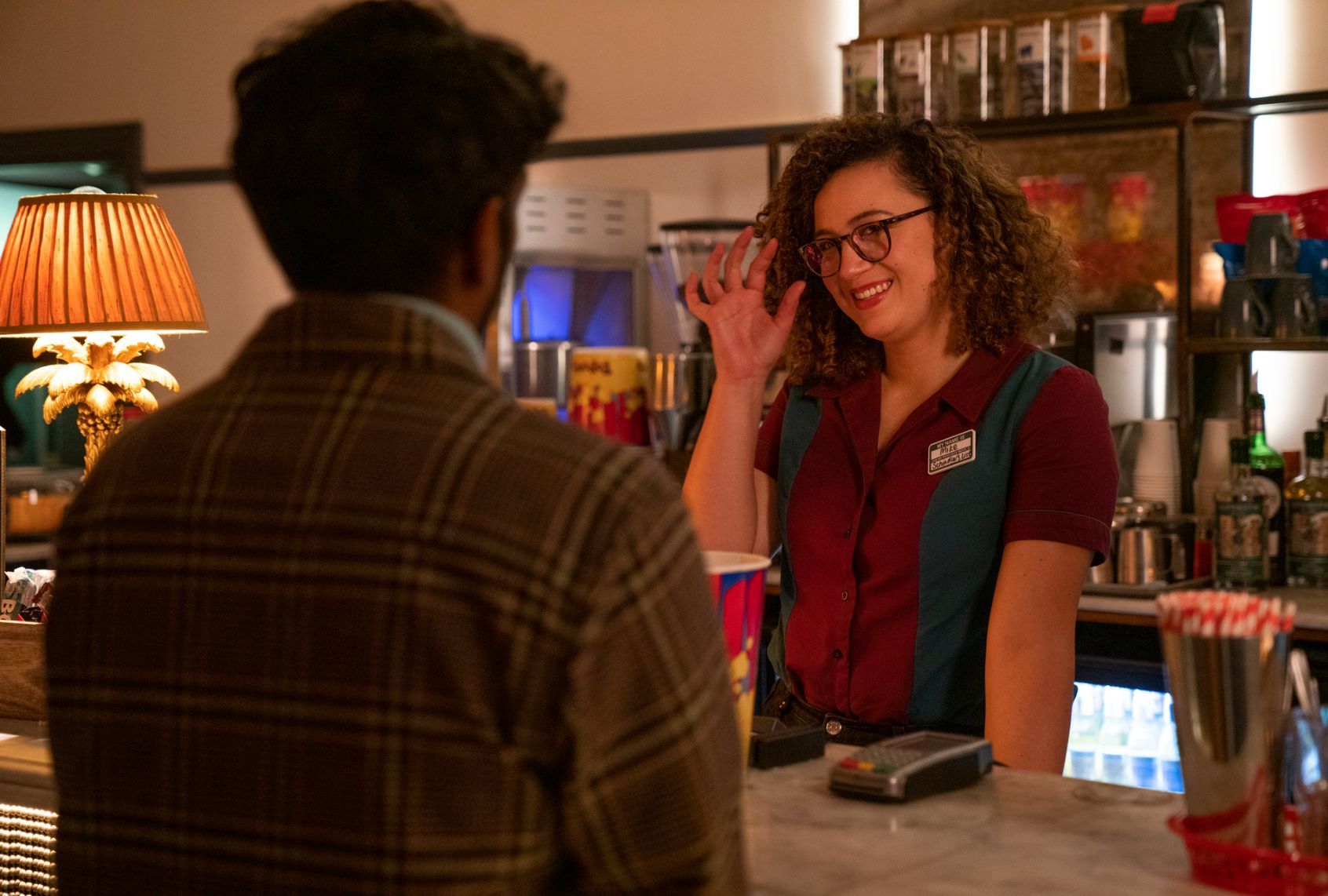
Jessie

Jessie (Rose Matafeo) talking to a film bro in “Starstruck” (HBO Max)Why they’re a standout: Move over, Phoebe Waller-Bridge. There’s a hilarious new actress-creator on the TV scene. OK, as the lead in her own TV show Kiwi comedian Rose Matafeo (watch her stand-up special “Horndog”) may not be a household name yet, but her British rom-com “Starstruck” was such a solid first endeavor that a second season is already on the way. In the series, she stars as part-time nanny/movie theater concessionist Jessie, an expat in England who has a one-night stand with Tom (Nikesh Patel), only learning afterward that he’s an uber-famous British actor. Their initial meet-cute in the men’s bathroom on New Year’s Eve captures the entirety of Matafeo’s hilarious oddball appeal. Wearing a rainbow-striped sequined dress, she’s a drunken, glam optimist who owns her sloppiness while also somehow being both funny, adorable and vulnerable. When her best friend marvels that a celebrity deigned to sleep with such a “little rat nobody,” Jessie crows, “I am forever a stain on his sexual history!” Despite her declarations, for both Tom and the audience, time spent with Matafeo is nothing to regret. – HN

Thuso Mbedu from “The Underground Railroad” (Prime Video)
Role: Cora
Why they’re a standout: This South African actor is still early in her career and Barry Jenkins’ 10-episode masterwork represents Mbedu’s introduction to an international audience. But as Cora, a young woman who escapes enslavement, she conveys an expressiveness that holds decades’ worth of emotion – anger, bliss, sorrow, relief, joy, fright, all in her eyes and the corners of her lips. Mbedu styles Cora as an adventuress more than a fugitive, a woman daring to hope for better places where she and her brothers and sisters can have true freedom, who never resigns herself capture of conquest by the man hunting her. But she also does more than simply laugh or smile brightly in Cora’s joyful moments or weep when that’s all she can do. In every second that she draws our gaze, Mbedu and Jenkins remind us of the blamelessness of every person ensnared in captivity. Whether waltzing at a party in a fictional South Carolina town or drinking the wine of freedom at Valentine Farm, an independent Black community in Indiana, Mbedu never lets us forget the legacy Cora carries – that even as she tumbles unpredictably through circumstance, she’s the daughter of a people’s great hope. Appropriately her next role casts her beside Viola Davis in Gina Prince-Bythewood’s historical epic “The Woman King.” – MM

Danielle Pinnock from “Ghosts” (CBS/Paramount+)
Role: Alberta Haynes
Why they’re a standout: If you must live in a haunted house, you could do a lot worse than having the spirit of a jazz queen from the Harlem Renaissance to keep you company. Pinnock is a familiar face to CBS comedy viewers, having played Sheldon Cooper’s eternally patient algebra teacher Ms. Ingram. As Alberta, however, she’s able to showcase more of her boisterousness, not to mention her powerful singing voice, whose range is impressive enough for Alberta to reach out of the beyond and be heard by the living. “Ghosts” is generous to every member of his ensemble, dead and living. But Alberta, draped in her wine-colored velvet and ropes of pearls, does the improbable by making being stuck in an old mansion with strangers from different centuries and circumstances look like a blast. Through Pinnock’s performance, Alberta’s joie de vivre is unassailable, a product of a life luxuriously lived cut short at the height of her revelry.  We are only starting to get a sense of this underappreciated songstress’ life story. But even if we now know the circumstances of the singer’s demise, revealed in the hilarious episode “Alberta’s Fan,” Pinnock never allows Alberta to descend into the shadows of regret. Granted, discovering that her superfan collected one of her toenails does give the otherwise unflappable spirit a serious case of the willies. Even so, think of it as one of the ways Alberta, and Pinnock, remind us that if we play the right notes, any situation can be entertaining. – MM

Lucie Shorthouse from “We Are Lady Parts” (Peacock)
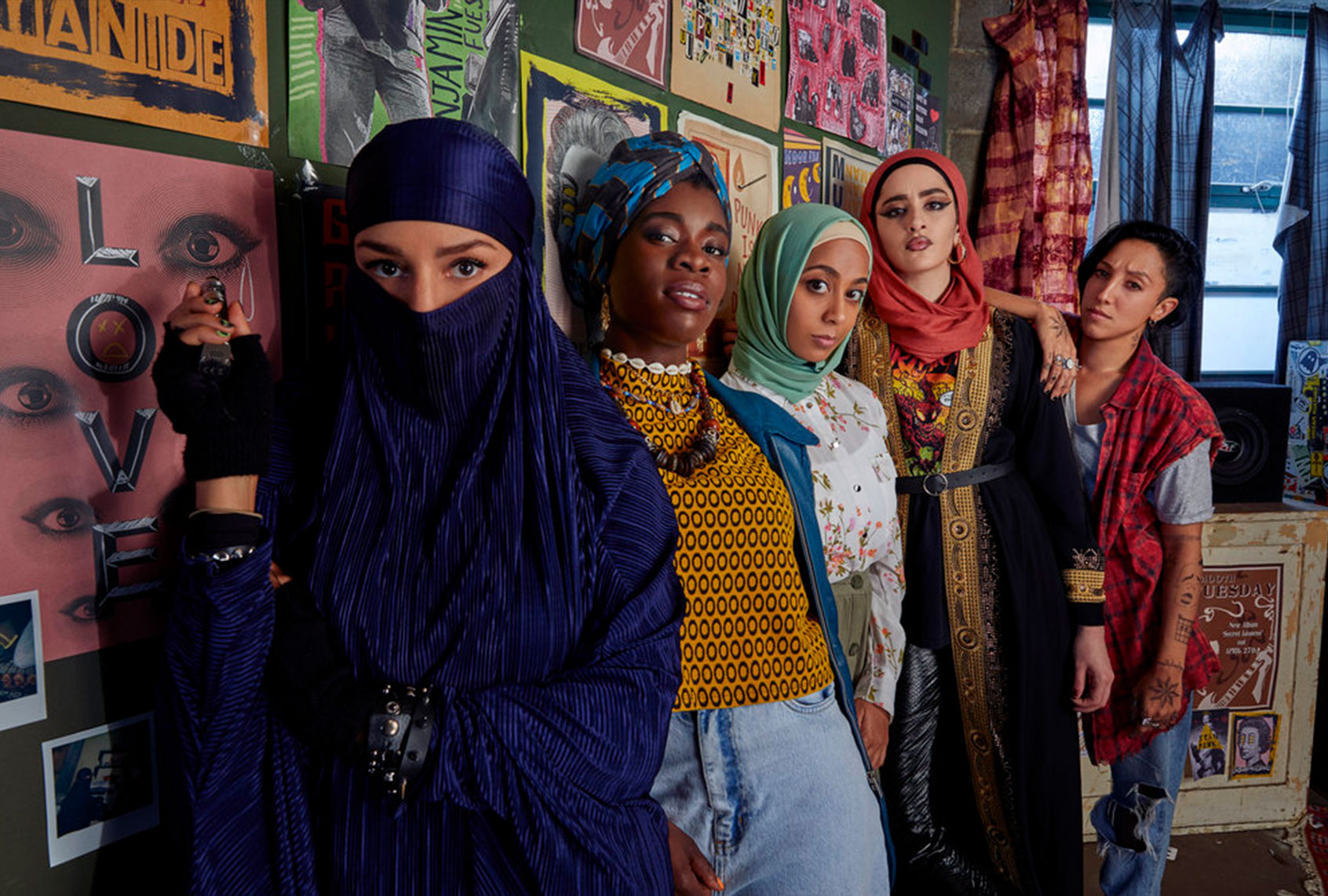
Role: Momtaz, manager

We Are Lady PartsLucie Shorthouse as Momtaz, Faith Omole as Bisma, Anjana Vasan as Amina, Juliette Motamed as Ayesha, Sarah Kameela Impey as Saira in “We Are Lady Parts” (Laura Radford/Peacock)Why they’re a standout: Frankly, every member of the all-female Muslim punk band that is the namesake of “We Are Lady Parts” deserves recognition for creating a lively, magnetic ensemble. (The show a true joy.) But Shorthouse – despite not having the same angsty performance outlet as the band members – commands attention as their manager Momtaz. She’s bluntly practical, opinionated and wisecracking with an intense energy that jumps off the screen. When she enters a room and tosses out, “Salaams, everyone,” it’s a greeeting that speaks volumes – from her harried tone to her begrudging adherence to manners before she gets down to business. When dancing in a field during a much-needed escape from town, her grand arm sweeps and undulating form reveals her openness and confidence. That she delivers such a performance almost completely covered with the exception of her eyes is a testament to her mastery. While she has a handful of TV credits to her name, it’s her musical theater chops (she was Pritti in 2017’s “Everybody’s Talking About Jamie” West End production) that reveals why she has such control of her vocal and physical performance. Sign us up for any gig Shorthouse books next. – HN

More stories you might like: 

My year of cooking quick and dirty: How I lowered the bar and set myself free

It started with a pasta dish that I didn’t want to make with pasta, and a sandwich that I wanted to fill with chocolate. It’s one of my favorite beginnings, ever.

Cooking and baking have, for much of my adult life, been my refuge and my creative outlet. I am a person who falls asleep composing meals in her head, who has a Pinterest AND a 3-ring binder of cross-referenced food favorites and inspiration. I’m also a stressed, overextended and incredibly anxious individual whose to-do list will explode in my face if I put one more thing on it.

In 2020, I wrote a few stories for Salon about the things I was slapping together in my kitchen to make it through — an aptly named Depression cake, 3-ingredient peanut butter cookies, caramelized onions lazily done in the slow cooker. I wrote about my frustration and exhilaration as the daily demands of family meal preparation escalated over the pandemic, the ways in which cooking had transformed for me into something simultaneously therapeutic and punishing. It connected with readers like few things I’ve ever done in my career, and it motivated us at Salon to launch a weekly column devoted to the kind of cooking so many of us are doing now — the quick and dirty kind.

I was out for breakfast recently with a friend who’s a professional chef. We talked excitedly and obsessively about the dishes we’ve been making, the cookbooks we love. And although his level of training and skill is stratospherically above mine, he said something that resonated with me as the entire motivation for this column. “Everybody,” he said, “should know how to cook a meal.”

In much the same way that I am uncoordinated and bad at math but exercise and keep a budget anyway, I too absolutely believe that everybody should know how to cook a meal. And everybody can. Life is not a competition and Gordon Ramsay isn’t going to smush our faces if the omelette doesn’t turn out perfectly. We don’t have to be master chefs, and with every other obligation in our lives, who would have the time to become anyway? But we can nourish ourselves, and feed our loved ones, in a way that satisfies the stomach and the soul. In our darkest times, it’s what sustains us.

Writing about food every single week of this year challenged me and changed me. It has made me accountable — accountable for pushing outside of my comfort zone and trying new things, accountable for making sure the things I eat are good enough to tell others about. It has made me really consider the way my food looks, not for the sake of pointless Instagram perfection, but as a humble means of making a little bit of beauty in an often ugly time. It has also made me accept — nay, embrace — my apparently permanent lowered expectations regarding my own cooking. Good enough is good enough, and I’m all in.

RELATED: Joshua Weissman’s cinnamon French toast has nothing to apologize for

Writing about food has enabled to have meaningful conversations with people I admire about the ways in which they get it done. It will go down in my life’s highlight reel that I talked to Nigella Lawson about the simple pleasures of brown food, with Frances Lappé about sustainability, and Eric Ripert about spaghetti pomodoro. Sharing our insights and experiences always connects us, so deeply. It connects us with the entire human family, through all of history, all of us together just standing over our pots and stirring their contents.

And, because everybody eats and everybody has opinions about it, that conversation also provokes strong reactions. The two most controversial subjects I have ever written about, the ones that have generated the most scathing hate mail, are, hands down, abortion and pasta. I already knew that Roe v. Wade was controversial, now I also know that if there is any kind of noodle involved in the story, just brace for impact. Pro tip: If you use words like “cacio e pepe” or “carbonara,” even in conjunction with “an adaptation of,” in a column called “Quick & Dirty,” buckle on up.


Want more great food writing and recipes? Subscribe to Salon Food’s newsletter.


Along with getting a hamster and finally seeing “Company” on Broadway, writing about cooking and baking — the kind of real world, improvisational, sometimes wonderful and sometimes flustered and resentful cooking and baking that so many of us are trying to do here — has been one of true great joys of a brutal year. It’s enabled me to look at cooking through the eyes of the best cookbook writers in the world. I would never in a bajillion years have had Nadiya Hussain’s lightbulb insight that you can make the best bread pudding in the world with melted ice cream. I would never have discovered Hetty McKinnon’s sheet pan chow mein, and now I can’t live without it. I likely never would have devised the original recipes that I came up with, and now I’m like, yeah, candy granola, this can be my legacy. I’m definitely still a pasta desecrating monster, but I am also a more confident, knowledgable home cook, and I love that.

I know that getting food on the table can be difficult, and boring, and just a massive pain in the butt at the end of a day full of nothing but pain in the butt. It is for me too. It’s work, yes, but it doesn’t have to be that hard. You don’t have to get a stack of new cookbooks (although there are a hell of a lot of great ones) or try a new recipe every week. You can, however, experiment more. You can try something you’ve never cooked before, or cook if you’ve never cooked before. It’s a pretty low stakes project, at a moment when just going to the supermarket feels like a very high stakes one. And it’s worth it, it really, really is. Doing things with your hands is legitimately good for your brain, it makes other people happy, and at the end you sometimes actually have something to show for your all hard work. Sometimes it’s even pie.

Quick & Dirty recipes to try: 

“The View” has an anti-vaxxer problem: Why replacing Meghan McCain is reportedly so hard

The ABC show “The View” has been struggling to replace conservative co-host Meghan McCain after she parted ways with the show this year.

One of the biggest problems for the show is that they want a conservative that can disagree with them on politics, but not on reality. It’s a characteristic that a former staffer said was like “looking for a unicorn.”

The Daily Beast reported that the network had hoped to bring on Lisa Marie Boothe, according to a source close to Boothe. But the conversations stopped once she made it clear that she wouldn’t get vaccinated against the coronavirus.

“An ABC News source confirmed to The Daily Beast that the network had conversations with Boothe, among ‘dozens and dozens’ of candidates,” said the report. “The show never had an opportunity to offer her a guest-hosting spot or book a potential date. And once Boothe’s stance on vaccinations became apparent, the source said, further conversation became a ‘moot point’ and a ‘non-starter’ due to the network’s strict policies.”

READ MORE: Alex Jones says he’s personally ‘hurt’ by Trump’s vaccine promotion in latest emotional meltdown

ABC’s parent company, Disney, requires U.S. employees to be vaccinated.

Even if that weren’t the case, the women of The View have taken the virus seriously. Co-host Whoopi Goldberg had a difficult case of pneumonia in 2018 that ended with her going to the hospital. It was found that she also had sepsis, making the illnesses so intense that she told “The View” audience she, “came very, very close to leaving the Earth.”

Fellow co-host Joy Behar left the show early on in the 2020 pandemic because at 77-years-old, she said she can’t afford to get the virus.

So, the idea that Boothe would join the show as an anti-vaxxer would put her colleagues in danger, making it a non-starter. The decision for her also wasn’t based on any medical problems that Boothe could have that would preclude her from being vaccinated. Speaking on Fox, she confessed it was all political. Saying she wouldn’t get the shot “as a giant middle finger to Joe Biden’s tyranny.”

She isn’t the first conservative on “The View” to come up against the same barrier. When former Fox and View host Jedediah Bila appeared on the show in November, she had to tape her appearance from a remote location because she refuses to get vaccinated.

It led to a battle online when co-hosts like Sunny Hostin, whose husband is a doctor, accused Bila of twisting information. Bila said that the vaccines were only created to prevent the severity of illness and it doesn’t stop anyone from getting COVID or spreading it. The vaccine was actually created to prevent people from dying from the virus. Afterward, Bila played the victim, saying that she was “ambushed” with a “pre-planned” attack.

Read the full report at the Daily Beast.

“Sick madness”: The public reacts to the CDC’s decision to cut COVID-19 self-isolation time in half

Prior to this week, those who tested positive for COVID-19 were urged by government officials to isolate themselves for 10 days.

That changed on Monday, when the Centers for Disease Control and Prevention (CDC) cut the quarantining recommendation in half, instead urging infected Americans to avoid interpersonal contact for five days.

The reasoning behind these modifications are rooted in economics perhaps more than science. Dr. Anthony Fauci — director of the National Institute of Allergy and Infectious Diseases and one of President Biden’s chief science advisers — recently told CNN’s Jim Acosta that “we want to get people back to the jobs, particularly the essential jobs, to keep society running smoothly.”

Meanwhile, immunologist and rapid tests expert Dr. Michael Mina, reacting to the CDC’s new policies, told The New York Times that studies show wide variations in how long people will remain contagious after developing COVID-19. Some even wonder whether pressure from airline CEOs, who worry that long self-isolation periods hurt their bottom line, could have motivated the CDC.

This school of thought connects the decision to a recent letter by Delta Airlines CEO Ed Bastian to the CDC. According to Reuters, Bastian argued that “with the rapid spread of the Omicron variant, the 10-day isolation for those who are fully vaccinated may significantly impact our workforce and operations.”

The commentariat was livid at the implication that an airlines CEO was pushing to put lives at risk for the sake of profit. Steve DaSilva of Jalopnik observed that “Bastian seems to acknowledge the possibility that this could lead to higher transmission rates, noting that Delta could ‘partner with CDC’ to collect data from its planes. Because, after all, that’s the way you want to collect data on a highly contagious disease: By throwing still-infected people into an enclosed tube with others and just seeing what happens.” 

Similarly, Sara Nelson, president of the Association of Professional Flight Attendants–CWA, said in a statement on Monday that “the CDC gave a medical explanation about why the agency has decided to reduce the quarantine requirements from 10 to five days, but the fact that it aligns with the number of days pushed by corporate America is less than reassuring.”

The CDC did not simply impose a blanket reduction in self-quarantining time for infected individuals. The agency added that the rule only applies to people who do not exhibit symptoms and are willing to wear a mask around others for at least five days after leaving isolation. The agency also revised its self-quarantining guidelines for people who have merely been exposed to the virus; partially vaccinated individuals are now asked to either isolate for five days and then wear a mask around others for another five days, or to wear a mask for all 10 days (if self-quarantining is not feasible).

Even without directly mentioning the letter from the Delta CEO, many observers still felt the CDC’s new policies are misguided.

“It’s been glaringly obvious many of the CDC’s recommendations are tied to [political] and economic concerns, leaving the public confused/second guessing advice about masks, protocols, vaccines while the anti-science sect sticks to singular (and horribly incorrect) messaging,” tweeted author Gregory Han. Dr. Eric Feigl-Ding, an epidemiologist at Harvard University, stated in a Twitter thread that the CDC’s decision is a “crazy move” and “sick madness,” concluding that “it will go down in the annals of the pandemic as a terrible horrible no good very bad politically/business-influenced decision that will endanger millions and squander public health trust!”  Comedian Judah Friedlander quipped, “Congrats to the Airline CEOs on being appointed head of @CDCgov,” while Scripps Research Executive Vice President Eric Topol tweeted, “The data that supports the new @CDCgov 5 day isolation period without a negative test” followed by an image showing a blank box.


Want more health and science stories in your inbox? Subscribe to Salon’s weekly newsletter The Vulgar Scientist.


Dr. Richard Wolff, the professor emeritus of economics at the University of Massachusetts Amherst and author of “The Sickness is the System: When Capitalism Fails to Save Us from Pandemics or Itself,” said he felt people who suspect the CDC is motivated by capitalism have good reason for doing so. (All of the people contacted for this interview were asked broadly about the criticisms of the CDC, and not specifically about the Delta Airlines letter.)

“In both Europe and the US, employers have frequently worked against [COVID-19] policies perceived by them to threaten profits,” Wolff told Salon by email, adding that we saw this in a number of ways both prior to and during the pandemic.

Wolff pointed out that in countries like New Zealand and the People’s Republic of China, where the influence of business interests was limited by institutions committed to other social priorities (such as unions, left-wing parties and so on), they were better prepared to cope with the disease. Because this has not been true in the United States, Wolff concluded that it would be “naive” to not be concerned that business interests, and public officials who are receptive to them, would make decisions based on their “need to secure the workers and customers that together generate their profits.”

Dr. William Haseltine, who chairs a global health think tank called Access Health International, criticized the CDC’s decision — but made it clear to Salon that he does not view this as a political issue and “a matter of the left or the right.” Haseltine, who has received international recognition as an expert in fighting the HIV/AIDS epidemic, emphasized the body of medical research about COVID-19 and infectiousness.

“I have pointed out repeatedly that countries that are best at containing the pandemic have a mandatory isolation policy of anybody who is exposed for two weeks — anybody who is exposed, much less infected,” Haseltine told Salon. “If you’re infected, you are isolated for a minimum of two weeks and sometimes three weeks. So we are exceptional, and I think this is a grave mistake because the data that I’ve seen suggests that people who are either exposed or infected may be continually infectious for at least two weeks and possibly three. This is a serious mistake.”

Haseltine added that he does not “pretend to know what is motivating” the CDC’s decision “other than for hospitals to get the hospital workers back to work. I don’t think it has anything to do with whether you’re a capitalist or not capitalist society. It’s getting hospital workers back to work. And I think it’s particularly dangerous thing for them personally, because they may suffer health consequences, and they still may be infectious for their patients and their families. So I think it’s a big mistake.”

Dr. Alfred Sommer, an epidemiologist and the dean emeritus at Johns Hopkins Bloomberg School of Public Health, has been personally involved in communicating life-or-death decisions about infectious diseases to the general public. He explained to Salon that it is understandable why many are concerned about the new policy. As Sommer noted, “the messaging by CDC throughout this pandemic has been far from optimal. It is indeed difficult for the average lay person to keep track of the reasoning, and the reasoning has changed.”

Sommer pointed out in his email that, while the initial goal of policymakers was to isolate infected individuals as a way of containing the pandemic, that goal now needs to be modified “to address a new problem, and that is too few ‘essential’ workers, particularly in health care settings.” He characterized the CDC’s decision as “attempting to ‘thread the needle.'”

For its own part, representatives of the government have presented the decision as simply the next logical public health choice given the current set of circumstances. In a statement, the CDC also defended its decision on medical grounds.

“The change is motivated by science demonstrating that the majority of SARS-CoV-2 transmission occurs early in the course of illness, generally in the 1-2 days prior to onset of symptoms and the 2-3 days after,” the agency explained in the statement. “Therefore, people who test positive should isolate for five days and, if asymptomatic at that time, they may leave isolation if they can continue to mask for five days to minimize the risk of infecting others.”

While some economists have advocated for governments to pay citizens to stay home until the pandemic has passed, those policies are usually opposed by critics who describe them as too expensive and as setting a dangerous precedent in terms of motivating people to work. Many business owners have struggled during periods of prolonged lockdown, and there is widespread public resistance to the idea of further lockdowns to eliminate the COVID-19 pandemic.

Read more on the omicron phase of the pandemic:

Best of 2021: Looking for Uncle Allan: A queer odyssey

At 9 p.m. on a warm October night, the air in the darkened city below was muggy and stale. But on the George Washington Bridge, a gale was roaring straight up the Hudson River. It wasn’t much of an issue for the bikers and joggers shuttling between New York and New Jersey under a pumpkin moon, much less for the 12 lanes of angry stop-and-go traffic. But it was for anyone hoping to scatter mortal remains into the river. I had my great-uncle Allan in two plastic Red Apple Grocery bags and was a little unsure how to pitch his ashes overboard one moment without inhaling him the next.

RELATED: The most L.A. love story ever: Why we scattered our mother’s ashes in Clifton’s Cafeteria

I’d had two other encounters with lives reduced to what would fit in an urn — my father and grandmother, both drizzled on our rose bushes at a family cottage in northern Michigan. Like all “cremains,” a term the funeral industry just won’t let go of, Uncle Allan’s had more the consistency of smashed seashells than the literal ash most people expect. Still, his cremains were, in their way, different from the others. Not to reinforce invidious stereotypes, but they were, well, more colorful than any I’d seen before, an earth-toned rainbow ranging from ivory to umber, dappled here and there with astonishing flecks of creme de menthe.

* * *

I was probably 10 when I found the letter. On a rainy, boring Saturday, circa 1965, I’d settled on rooting through my father’s dresser drawers as the morning’s entertainment. I kept a sensible ear cocked for my mother’s approach. Some drawers take time to rearrange and put back. But I was well-schooled in the sneaky arts, and knew I was safe for the moment. Downstairs, I could hear Mother, for whom cleanliness beat godliness every time, vacuuming the living room.

I’d just pulled open one of the top drawers, an immensely satisfying little slot a bit bigger than a cigar box. It slid open as if greased. Inside was a hardball signed by Detroit Tigers legend Ty Cobb, which as a youngster my father had unaccountably played with till the signature all but wore off; several white hankies, no monogram; two ancient-history silver dollars; and Uncle Allan’s suicide note. 

Addressed to my parents and dated 1946, it read, “Dear Phoebe & Wally: By the time you receive the enclosed, I will have stepped out into the great unknown. I wish it might have been more, but such as it is, I hope it comes in handy. My love to you all. Uncle Allan.”

Suddenly the room was echoing like a reverb chamber. I knew without question the letter touched on something vast, even monstrous, but what it was exactly remained dim and confused. I also knew it was a discovery that would be bad, very bad, to be caught with. I was working this through when things suddenly went quiet. The vacuum had stopped, replaced with Mother’s staccato steps clicking up the stairs.

Lung-collapsing panic. Adrenalin shrieking in my ears. I spent several clammy seconds refolding the letter and reassembling the remaining contents exactly as they had been — death note at the bottom, hankies, silver dollars and baseball on top. Then I thundered down the stairs, sideswiping my astonished Mom, and out the back door to the enveloping safety of our hay barns.

And with that forgetful magic kids sometimes work on disturbing information, I scarcely thought of that letter until Christmas vacation my sophomore year in college.

Much had transpired since that rainy Saturday. I’d moved to Boston, my mother had died, and my dad had remarried a lovely woman named Trace. The three of us were at the kitchen table, part-way through one of her great pot roasts, when Uncle Allan flickered up in the conversation. Dad remarked in an offhanded way, his voice going a little basso-profundo as it usually did on entering sensitive territory, “Of course, Uncle Allan was the black sheep of the family.”

“Why?” I wanted to know, and Dad looked at me astonished, mystified how I could’ve missed the punchline after all these years. “Why,” he said, “he was a homo!”

And that is how I discovered my gay roots.

I know Uncle Allan ditched Detroit for Manhattan lights as soon as he was able, sometime around 1912, but other than that, for all intents and purposes, I know almost nothing about him. When you’re the notorious family homosexual, poor at the end to boot, nobody collects and preserves your papers and treasures. They’re scattered, auctioned off, left in boxes on the porch for the Goodwill. Unknowing fingers pop photos out of frames for resale, smudging black and white portraits on their way to the trash. My parents, as it happened, played a small but significant role in this obliteration.

Mostly what I do know are stories from the war years — we’re talking World War II here — when a then-elderly Uncle Allan would blow into our little dairy farm north of Detroit a couple times a year to drink up all my parents’ liquor rations. Most of the family wouldn’t receive him. But Mom and Dad — young and, I suppose, a little daring — did, and he’d settle in for a week at a time. He was tall and garrulous, with a full head of bright white hair and a theatrical voice and manner my grandfather always called “fruity,” but which the women adored. At the slightest prompting, Uncle Allan would act out little bits, “mere snippets,” he called them, from the classics on Broadway, shows that had debuted some 30 years before.

The biggest mistake he ever made, he said, watery blue eyes amused, was turning down director Mack Sennett when he begged Uncle Allan to come out to that little California backwater they were setting up. “What do they call it?” he’d ask to rising laughter from his audience.  “Hollywood?” Uncle Allan smiled. “But no. It wasn’t Art, you see.”

One August afternoon, my mother, ever the striving farmwife, had the wives of the local gentry, married to doctors, lawyers and auto execs, over for a luncheon. The white linen tablecloth was on the big picnic table beneath the pear trees, crowned with dainty refreshments and a homemade fruit punch.

Into which, on the sly, Uncle Allan stirred the better part of a fifth of vodka.

Exactly what followed has never been properly archived. But family legend has it that in the throes of a festive moment, Gertrude Zacharias, declaring herself “hot,” crossed the driveway to the edge of the corn field and plunged head and shoulders into the horses’ water tank. Late that evening, Uncle Allan was sleeping it off, but Mother was still grieving the unfortunate turn of events. “I don’t know, Phoebe,” Dad said. “Never did see those ladies have a better time.”

My father always maintained Uncle Allan died a couple hours before a routine gall-bladder operation, that he never even made it to the table. The nurse checked at one and he was fine. By three he was cooling. At 64, the would-be Broadway star was working nights at the Whiting Hotel in Traverse City, Michigan. His health was failing. He’d run through the last of his inheritance from his mother. He wrote the note to my parents, licked the three-cent stamp and dropped it through the slot. The letter arrived first, the hospital’s wire second.

The hospital ruled the cause of death coronary thrombosis — a blood clot in a heart vessel. How did that square with Uncle Allan’s letter? The family speculated that the gaudy rings he wore, a couple sporting enormous gemstones, may have concealed poison beneath.

Mother handed the hospital telegram to Dad that night at 10, the first time he’d been off the tractor since morning. Dad smacked his head and groaned. In those days, Traverse City was a 10-hour drive from our farm. “The corn, the corn,” he said. “When the hell am I going to get in the corn?”


Want a daily wrap-up of all the news and commentary Salon has to offer? Subscribe to our morning newsletter, Crash Course.


“Listen to me,” Mother said, twisting her ring. “We’ve got to go. There’s no one else. He’s your uncle, for Chrissake. He left us some money.” She was standing in bra and panties, bed already turned down, watching lightning from a spring storm recede in the east. “Poor old fool,” she said, and closed the window.

* * *

Like a lot of homosexuals, I imagine, I’d always assumed I was all alone in my family. The fact that I had a gay forebear hit with stupefying force. And while at the time I corrected my father (whom I wouldn’t come out to for another 15 years) — “Jeez, Dad, they’re called ‘gay’ now, not ‘homos'” — inside, I was reeling. I wasn’t the only one. There was maybe a line of us extending who knows how far back onto the Scottish moors. In the distance, I heard bagpipes skirling.

Knowing about Uncle Allan before me has been a great comfort, balming some of the isolation that goes with being gay even in loving families. But he haunts me as well. I know that some well-intentioned sorts might suggest that identifying with a relative whose life ended badly isn’t the healthiest use of one’s free time. But I’m mesmerized by our similarities. Like myself, as soon as he could, Uncle Allan high-tailed it out of Michigan for the East Coast, and by 1925 appears in the Manhattan phone directory living, intriguingly, at the Harlem end of Riverside Drive. Like myself, he returned years later, wings clipped, to Michigan. Each of us suffered from addictive tendencies — his crippling (booze), mine not so much (marijuana). And like myself, Uncle Allan was defiantly “out” — just how early is unclear, but certainly by the 1920s, at which point most of the family reclassified him as untouchable.

I have just one picture of Uncle Allan, a sepia-toned headshot taken, I’m guessing, in his 50s at some photo studio on Tremont Street in Boston. For years I’d stashed it in an envelope in my desk, but finally bought a frame and hung him in my bedroom. He’s on the wall just beyond the foot of my four-poster bed. And that’s the problem. No matter what I do, he’s always peering out at me with those deer-in-the-headlights eyes. They beseech, but I’ll be damned if I know what they’re asking for. I realize that for months now, without thinking, I’ve been angling myself so that one of the bed’s posters blocks his gaze.

Years ago, I spent several days in Manhattan trying to nail down evidence of Uncle Allan’s alleged Broadway career. It was, in a way, I suppose, an attempt to redeem him against the family’s tut-tutting summary of his life: “Homosexual. Alcoholic. And a suicide.” Here the head invariably shook. “Such a waste.”

Looking back, I’m struck by how desperate I was to find proof that he’d actually accomplished something, to confirm that he was more than just a sad failure. It doesn’t take a therapist to point out that this had little to do with my uncle, and everything to do with me and my panicked insecurities. When I was young and still working up the courage to come out, Uncle Allan’s example was deeply distressing. In my youthful ignorance, I was terrified he represented the “typical” homosexual — a lonely alcoholic who dies by his own hand — and that prospect scared the bejesus out of me.

If Uncle Allan did have a stage career, however, it must have been under a different name, inasmuch as research in the Actors Equity archives, the Library of the Performing Arts, and the library of the celebrated Players Club in Gramercy Park turned up nothing. I still have more digging to do. It’s always possible he was mostly an extra, had a stage name I don’t know, or even, I suppose, that he performed in drag. (Now that would be great.)

Happily, my take on Uncle Allan softened with age as I got more and more comfortable with being what newspapers used to term an “avowed homosexual.” Far from being all that I dread, I now refer to him, affectionately as “my brave fool.” He seems to have been one of those hapless innocents incapable of faking it, of being anything other than what he was, even if coming out in the 1920s meant social ruin and family exile. I do not know where he found the courage; I’m quite sure I couldn’t have.

As for his Broadway myth, as I’ve gotten older I’ve come to assume he made most of it up in stories for the family, and in particular his gullible nephew, my father. One Thanksgiving in the 1930s, when Dad was in college back East, he visited Uncle Allan in Concord, Massachusetts, where he worked at a bed and breakfast. I asked if Uncle Allan owned the place. Dad wasn’t sure, but didn’t think so, adding, “He ran it with two maiden ladies.”

Lesbians.

We were talking in the kitchen, and at that revelation, everything suddenly went cloudy.  My lifelong desire for a larger gay family shifted into overdrive. They were friends from New York, I figured, who’d reached out to help one another during the great economic catastrophe. My picture of Uncle Allan had always been so solitary, so utterly alone, that I felt a great rush of gratitude that somebody might actually have looked out for him. This, of course, was all just speculation. Nonetheless, I had a dream once where I was doing the detective thing on Uncle Allan’s life and stumbled upon one of those “maiden ladies.”  She was over 100, in a Boston nursing home, and batty as an attic. But at one point she snapped into clarity: “Your uncle,” she said sternly, “was a brave man. Don’t you forget.” And with that out of the way, she sucked lips and cheeks against toothless gums and made a loud popping sound. It’s a dream I’ve never forgotten.

So at the end of the day, what if Uncle Allan made his whole show business life up? Nobody ever said public relations was a crime. At the ripe old age of 66, I’m too cozy with the terror of shrinking horizons to hold it against him. If he concocted a life to wow the folks back home, well, I find that deeply affecting.

And I remind myself that the complete man is vastly bigger than just what he did to put food on the table. Among other things, there’s the question of raw courage, where Uncle Allan  thoroughly outclasses me. I came out in the relatively tolerant 1970s. My uncle, by contrast, high-stepped out of his closet in a perilously hostile era. Living openly as a homosexual around World War I, even in New York, had to have involved a leap almost as daunting as that taken by Columbus. That my great uncle — the family sissy till I bounced along — should have had the grit and foolish heart for that sort of fight overwhelms me, and fills me with a fierce, protective pride.        

Recently, my friend Tim Retzloff, an academic who singlehandedly mapped out a great deal of Michigan’s gay history, included Uncle Allan in an oral history he was putting together. He got inspired to do a little digging, and found Uncle Allan’s death certificate, which I’d never seen. As expected, the cause of death was listed as “coronary thrombosis.” But under “Other Contributory Causes of Importance,” the document read, “Compression fracture of spine,” dated three weeks before his death at Munson Hospital.

“By the time you get this, I will have stepped out into the great unknown.”

Uncle Allan didn’t pop poison. He jumped and, tragically, didn’t even succeed at that. Still, I was confused — where did my father get the story about a benign little hospital suicide? Dad was one of the original boy scouts, and not prone to making things up or lying. Could this be an exception? Or, over the years had he conflated whatever the hospital told my mother, listed on the certificate as “Informant,” with an earlier surgery Uncle Allan actually had? Was my father running away from an ugly truth, or just unawares? I’m voting the latter.

* * *

Once I’d moved back to Detroit, I tried in earnest to find where Uncle Allan was buried. My father had always said he was in one of the cemeteries lining Detroit’s Woodward Avenue – there are three or four in a row – and I spent one afternoon when I should have been doing work for my employer, The Detroit News, stopping at each. I’d had a writing project about Uncle Allan in mind for – oh – a couple decades or so, and figured if I could just sit in front of his tombstone, it might help me get off the dime.

I struck paydirt at Green Lawn Cemetery, where the pleasant older woman with fading red hair found his record card. “Your uncle wasn’t buried,” she said, reading glasses propped at the end of her nose. “He was cremated. And,” she added, turning the card over and frowning, “his cremains were never picked up.” Where in the world are they? “Well,” she said, “in storage in our mausoleum.” I asked who was supposed to pick them up. She peered down her nose again. “A Walter Hodges.”

No, that would be Wallace Hodges – my Dad. Apparently, my parents cashed the check he sent, but didn’t bother picking Uncle Allan up. So here I was half a century later, looking to make things right by a great uncle I never knew. But things weren’t that simple. They needed a notarized letter from my mother authorizing me to reclaim him. I didn’t bother to explain that my mother was long dead, and that the letter would have to come from my stepmother. “Alright,” I said. “Anything else?” Yes. There’s a storage fee. “How much?” Sixty dollars – which didn’t seem out of line for 53 years’ accommodation.

By the time I got the notarized letter back to the cemetery, six months had passed. Now there was a new obstacle. “Oh,” said a different woman, this one more no-nonsense, more proprietary about the cremains, “we also need a copy of your father’s death certificate. With,” she added, chilly eyes drilling into mine, “the raised seal.”

More months passed before I finally hauled myself out to the county seat, paid my ten bucks, and got the paperwork. A year or more after my initial inquiry, I was back at Green Lawn with the certificate and my 60 pieces of silver. As I walked into the office, the faded redhead looked up and smiled. I presented all my evidence, which got the once-over by a series of cemetery functionaries. Finally, I won the go-ahead. I could have him. “But there’s a storage fee,” the redhead said. “Yes, I know,” I said. “Sixty dollars.”

“Oh,” she said, pursing her lips, “in January it went up. Now” – she consulted a printed handout – “it’s $360.” She smiled apologetically. My molars clenched but I wrote the damn check. Standing at the ready was a funny-looking, muscular maintenance guy with the sleeves of his white t-shirt rolled up, 1950s-style. His most notable feature was a black horse’s head tattooed on his bicep, its long, voluptuous red tongue hanging down. I asked if could accompany him to the attic. The redhead deferred to the cemetery director, she of the wintry eyes. “Absolutely not,” she said. I pushed the issue, saying I was working on a novel about this relative, and would just enjoy seeing where he’d roosted all these years, but she was shaking her head no, no, no. “If we let you in, we’d have to let everybody.” Well, I pressed, surely there can’t be that many people clamoring to see where urns have been storaged for half a century. “Oh,” she said in a superior tone, “you’d be surprised.”

When Uncle Allan arrived, he was in a little Japanese box neatly wrapped in brown paper, like a gift sent through the mail. “We’ll get a shopping bag for you to carry the cremains in,” someone said. Everything in me hoped it’d read “Green Lawn Cemetery,” but I was disappointed. I took possession and drove him home.

I’d thought a lot about what to do with Uncle Allan, and invited suggestions from friends. My friend Danny proposed discreetly depositing some of him at the Stonewall Bar, the reincarnation of the Greenwich Village dive that launched the modern gay-rights movement in 1969 when a police raid sparked a three-day riot. But it didn’t feel right — the bar’s not the original, nor even in the same location. Anyhow, that was all long after Uncle Allan. Another idea was drizzling him in front of distinguished theaters around Times Square. But the thought of New Yorkers screaming on their cellphones while grinding my uncle into the concrete didn’t feel right. So I chose the George Washington Bridge. Burial at sea — or burial at estuary, in this case — struck me as dignified. Plus, I liked the fact that the ashes would float downstream, paralleling Broadway, towards the theater district.

I’d roped Danny into this operation, not wanting to be alone, and he was thrilled because while a born-and-bred New Yorker, he’d never walked on the bridge. So we took the subway up to Washington Heights, and made our way toward the span. I can’t speak for Danny, but I was a little paranoid. Some of Danny’s friends had warned us in no uncertain terms that the bridge crawled with cops, and that in any case, dumping human remains anywhere in New York City was highly, hugely, extremely illegal. I was strategizing all sorts of alibis as we approached 179th Street: It’s dirt from my family’s farm, Officer; they’re just smashed seashells, Officer.

But once up on the great structure, luminous pearls scaling towers high above us, the candles of Oz glowing far downtown, it was hard to stay twitchy. Danny’s eyes were wide as we made our way slowly through the wind’s howl to the bridge mid-point.

Danny and I braced ourselves against the gusts, while I kept an eagle eye out for cops. Bikers whizzed by with just an annoyed glance. Danny was throwing himself into a spirited rendition of “Give My Regards to Broadway” as I tried to scoop out handfuls of my great-uncle from the two floppy plastic bags, harder than it sounds, and fling him out and down as forcefully as I could. My apprehension about the wind was on point. Midway through “Tell all the boys on 42nd Street,” part of Uncle Allan caught Danny in the eye. I had grit in my mouth.

Given the time and effort I’d put in to get to this point, you’d think I’d have whipped up something appropriately profound to say as I cast my queer forebear to the ages. But when push came to shove, all I could muster was, “God bless you, Allan. God bless you.” It took about two minutes, fistful by fistful, to fully dispose of him. If I’d expected some sort of catharsis at the end, none really materialized — just the satisfaction, perhaps, of fulfilling a pledge long delayed. I crumpled up the plastic bags, still dusty with my uncle, and Danny and I started the long walk back to Manhattan. But after a few steps, I stopped and found myself rubbing my right side. In my zeal, it seems, I’d succeeded in throwing my arm out. It was starting to ache like hell. 

Read more of Salon’s Best of 2021 Life Stories.

Scientists are testing whether a fourth shot — meaning a second booster — will be necessary

Earlier this month, U.S. public health officials took a strong stance on COVID-19 booster shots — telling the public that, if they are eligible, to get one to protect against the highly infectious omicron variant. As of December 28, 2021, more than 66.4 million Americans have received a booster shot. 

Yet while a booster campaign continues to be underway in America, scientists in Israel are studying the possibility that a so-called “fourth” shot — meaning, an additional shot after a two-dose vaccine and a single-dose booster — might be the key to raising immunity against COVID-19. 

Such a development would not be unprecedented in the world of vaccines. SARS-CoV-2, the virus which causes COVID-19, appears to be in a class of virus akin to influenza for which the body’s immune system cannot permanently maintain immunity. This is known as transient immunity, as opposed to durable immunity, which is afforded by infection of or vaccinations for viruses such as measles or chicken pox. Flu, on the other hand, requires an annual shot, because the body’s immune system forgets periodically how to protect against the influenza virus, and also because the influenza virus mutates year-to-year. 

Indeed, the fourth shot proposal — or second booster, if you prefer — for COVID-19 is somewhat analogous to the need for an annual shot to immunize against the flu, and may be needed for similar immunological reasons.

Hence, earlier this month, the Centers for Disease Control and Prevention (CDC) officially changed its guidance for people who received two doses of the mRNA COVID-19 vaccines. Everyone over the age of 16 who received their second dose over six months ago is now eligible to receive a third shot. Some workplaces and college campuses are now mandating that to be considered fully vaccinated, one must be boosted. Restaurants in San Francisco are requiring a booster for entry. 

The guidance is geared towards the biological specificities of the newly dominant omicron variant. Indeed, early studies suggest that current COVID-19 vaccines require three doses to offer sufficient protection against omicron. While the regular two-dose regimen still works, a Pfizer booster increases antibody levels by 25 times, and a Modern booster increased antibody levels 37 times.

But while the U.S. population is still getting accustomed to the idea of a third-shot booster, researchers in Israel are considering whether a fourth may be necessary to keep COVID-19 at bay.  

On Monday, Israeli scientists kicked off a small study to test the safety and effectiveness of a fourth dose in 150 medical professionals who had already received a third dose of the Pfizer-BioNTech vaccine at least four months ago. The study comes after a panel of medical experts advised the Israeli government to offer a fourth shot to people over 60, to those who are immunocompromised, and to medical workers. While the Isareali Ministry of Health has yet to approve and implement the recommendation, the study is a step toward an official recommendation. Since Israel was a global leader in studying the third shot, all eyes are on Israel now to see whether or not this is a preview for our future. Some additional countries, Germany and the United Kingdom, are considering a second booster, too.


Want more health and science stories in your inbox? Subscribe to Salon’s weekly newsletter The Vulgar Scientist.


“I think there will be people probably who will receive a fourth jab,” said Adam Finn, who is a member of Britain’s Joint Committee on Vaccination and Immunisation in the UK, according to The Guardian. “Whether that will be everyone, I think, is still very much in doubt… we do need to see how things go through this wave and beyond.”

So, is a fourth jab in the future for the U.S., too? Some experts aren’t convinced that it is necessary just yet.

“You have to then ask yourself, ‘What is the goal?'” L.J Tan, chief strategy officer for the Immunization Action Coalition, told Salon. If the goal is to “reduce hospitalizations, reduce the surge on the systems, and reduce the number of people getting severely ill,” Tan advised that objective should be to get booster shots to everyone first before offering a fourth dose. 

“But if the goal is to stop transmission and stop people from passing omicron from one person to another, then perhaps a fourth dose is necessary,” he added. Tan was unsure that there was data yet that said that a fourth dose would be useful, but said he was glad to see a clinical trial in progress and eager to see what it would reveal.

In the Israel trial, people who are participating must have antibody counts below 700. One medical professional who received the fourth shot said he wants to protect his heart transplant patients, according to the Washington Post.

“The idea is before the government decides whether to go ahead with another vaccination campaign, to check the efficacy of this vaccine,” said Steve Walz, a spokesperson for the Sheba Hospital where the study is being conducted.

Moreover, data from Britain suggests that protection against symptomatic Covid caused by the omicron variant, provided by boosters, might wane within 10 weeks.

Tan told Salon there is still a lot of data lacking around omicron and virulence (meaning how severe it is) to make the case that three shots aren’t effective enough — depending, like Tan previously said, on the goal of vaccinations.

“There’s not a lot of data out there to suggest three doses, which means two doses plus the booster, is going to be totally ineffective against omicron,” Tan said. “In fact, the data would suggest that it is not as effective at preventing transmission, but [the data] is suggestive that it’s effective at preventing severe disease.”

Tan added, “when you couple that with the suspicion that omicron is more infectious but less virulent or less severe, you have to then ask yourself, ‘What is the goal?'”

As scientists learn more about omicron, time will tell if a fourth dose is necessary. Initial data from the study in Israel are expected to be available in the coming days and weeks.

What we know about omicron

Trump suffers “a meltdown in Mar-a-Lago” as Jan. 6 probe closes in: report

Donald Trump’s actions in the lead-up to the deadly Jan. 6 insurrection have been increasingly coming into focus, according to a reporter who has broken some major news about the congressional investigation.

The House select committee will open an investigation of a call Trump made to the Willard hotel, where his allies Steve Bannon, Rudy Giuliani and others were huddled in a “war room” as part of an effort to disrupt the certification of Joe Biden’s election win, and Guardian reporter Hugo Lowell — who first revealed that call — told MSNBC’s “Morning Joe” what that means for the probe.

RELATED: Jan. 6 committee to investigate Trump’s calls to allies at Willard Hotel before Capitol riot

“It’s a pivotal moment the night of Jan. 5 and Jan. 6 when Trump picked up the phone call from the White House,” Lowell said. “According to sources, he instructed his operatives the find ways to stop the certification from taking place at all at the joint session of Congress on Jan. 6. If you speak to Trump’s allies, this is not a big deal — he was just trying to find ways to delay certification and find another day, but I always thought this was a really disingenuous characterization because, either way, through action or inaction, he managed to get the certification stopped, and the Capitol was attacked and now it’s going to loom large in the committee’s investigation.”

The twice-impeached one-term president has claimed executive privilege over hundreds of documents, and Lowell predicted the U.S. Supreme Court would decide in the spring whether Congress may see that evidence, and he agreed the committee would eventually take some action against Trump personally.

“It’s increasingly becoming more likely because they are looking at criminal referrals for the former president,” Lowell said. “They’re still looking at Bannon and they’re still looking at Giuliani and [John] Eastman. These are the guys at the Willard that Trump called up Jan. 5 and sought advice. There were multiple war rooms. There is one with Eastman, Giuliani and Bannon and there was a separate one is where people like [Michael] Flynn and Roger Stone and Alex Jones. There was, like, a massive operation happening at the Willard.”


Want a daily wrap-up of all the news and commentary Salon has to offer? Subscribe to our morning newsletter, Crash Course.


“This is going to bloom really pivotally in the investigation,” he added. “But it’s true, they are now focusing on the culpability of Trump himself and whether he directed the Willard to then direct the Capitol attack, and if there was some sort of ongoing conspiracy.”

The select committee has been criticized for moving too slowly ahead of next year’s midterm elections, but Lowell said they had already gathered substantial evidence despite Trump’s efforts to stall the investigation.”

RELATED: Jan. 6 committee zeroes in on GOP congressmen

“They’re up against this deadline,” he said. “It’s a hard deadline, it’s the end of this Congress at the latest because if Republicans retake the majority and this is the end of the committee, they’re not going to want to reinstate committee. So they are up against this time limit, but they have amassed a real trove of evidence. They spoke to [Mark] Meadows, he ultimately decided not to cooperate, and he did provide a trove of documents and communication and text messages which we have only seen a sliver of, and those are already quite damming, and Trump is in a bit of a meltdown, from what we understand, down in Mar-A-Lago.”

Trump’s struggling U.K. golf resorts claimed millions in COVID aid while he was president

Former President Donald Trump’s golf resorts in Scotland claimed nearly $4 million in COVID aid from the British government while he was in office, financial filings in the U.K. show.

The ex-president’s struggling resorts, Trump Turnberry in Ayrshire and Trump International Scotland in Aberdeenshire, lost millions last year amid the pandemic (whether counted in dollars or pounds) and received hefty furlough payments after slashing their workforce. The U.S. Constitution’s emoluments clause prohibits federal officials from taking payments from foreign governments, although Trump got around that by ostensibly turning over control of his company to his children while he was in office, although he retained his financial interest in his family-owned companies.

The British government provided the payments after the Turnberry and Trump International resorts reported $8.9 million in losses in 2020. The company’s filings partially blamed the losses on Brexit — the U.K.’s withdrawal from the European Union, which Trump ardently supported — saying it had disrupted supply chains, the BBC first reported.

“Brexit has also impacted our business as supply chains have been impacted by availability of drivers and staff, reducing deliveries and availability of certain product lines,” one filing said, according to The Independent.

RELATED: Trump’s New York golf club faces criminal probe over potential tax dodging: report

The company also blamed the British government’s lockdown policies. Even though 273 workers at the two courses were let go, Eric Trump said in one of the filings that government COVID aid was “helpful to retain as many jobs as possible” but that “uncertainty of the duration of support and the pandemic’s sustained impact meant that redundancies were required to prepare the business for the long term effects to the hospitality industry.”

A review by The Guardian found that the filings show that the two Scottish resorts owe nearly $180 million to Trump personally, even though their combined assets are currently valued only at about $133 million.

Trump opened the Aberdeenshire resort in 2012 after a legal fight with local residents and environmental activists. It has lost money every year since it opened. The Trump Organization bought Turnberry in 2014 for a reported $60 million and said it has spent $150 million to develop it. That resort has similarly failed to post a profit in any year since the Trump purchase.

Those transactions have raised various suspicions over the years. Though Trump has long financed purchases with borrowed money, he ponied up $60 million in cash for the Turnberry property just as he was defaulting on a $640 million loan from Deutsche Bank, and suing the bank claiming an inability to pay. The Avaaz Foundation, a U.S.-based human rights watchdog group, issued a report in 2019 calling on the Scottish government to use its laws against money-laundering to investigate the purchase.

The Avaaz report suggested that Trump had acquired the Turnberry property during a “cash buying spree” and that his transactions had links to “locations highly conducive to money laundering such as Panama and the former Soviet Union.” A Scottish lawmaker in February called for an “unexplained wealth order,” which would allow authorities to investigate where the purchase funds had come from, but that motion was defeated in the Scottish parliament. (Although still part of the U.K., Scotland has its own legislature and considerable autonomy in internal matters.) Avaaz asked a Scottish court to force lawmakers to investigate but a judge ruled against that request last month, while leaving the door open for the parliament to approve a probe if its members chose to.


Want a daily wrap-up of all the news and commentary Salon has to offer? Subscribe to our morning newsletter, Crash Course.


“I wish to make it clear that I express no view whatsoever on the question of whether the [criminal law] requirements were or appeared to be met in the case of President Trump,” the judge wrote. “Further, for aught yet seen the Scottish Ministers may still make a UWO application in relation to President Trump’s Scottish assets.”

Lord Advocate Dorothy Bain, Scotland’s top prosecutor, will now decide whether to pursue a criminal investigation against Trump or his company.

“The law may have been clarified, but a cloud of suspicion still hangs over Trump’s purchase of Turnberry,” Nick Flynn, the legal director for Avaaz, said in a statement. “By any measure, the threshold to pursue a UWO to investigate the purchase has easily been crossed. The Lord Advocate should take urgent action in the interest of the rule of law and transparency, and demand a clear explanation of where the $60m used to buy Turnberry came from.”

The Trump Organization dismissed the effort as a “ridiculous charade” and “self-indulgent, baseless nonsense.”

Trump, who faces a criminal investigation in Manhattan related to his business practices and a separate probe by the New York state attorney general, is also facing a new criminal investigation by the Westchester County district attorney into the Trump National Golf Club in Briarcliff Manor, New York (about 30 miles north of New York City). Prosecutors are looking at whether the company “misled local officials about the property’s value to reduce its taxes,” according to The New York Times, which is a subject of inquiry for other prosecutors as well, in relation to other Trump businesses.

Former Trump Organization vice president Michael Cohen, who served prison time after pleading guilty to numerous federal charges, testified to Congress in 2019 that it was routine for the company to provide misleading numbers.

“It was my experience that Mr. Trump inflated his total assets when it served his purposes, such as trying to be listed amongst the wealthiest people in Forbes,” Cohen told Congress, “and deflated his assets to reduce his real estate taxes.”

Read more on Trump’s failing resorts — and his burgeoning legal problems:

2021’s most despicable villains: Joe Manchin and Kyrsten Sinema

When Joe Biden won the presidential election, many progressives were relieved Donald Trump lost, yet remained anxious about the future. After Trump attempted to overturn the election, even going so far as to instigate a violent insurrection on January 6, that anxiety only rose. The moment called for a visionary president, an FDR type, someone who was willing to tackle the serious structural failures that had opened the door to the current democratic crisis. Biden spent most of his career as a centrist with an unfortunate tendency to favor rich bankers over working Americans. It was hard to imagine he would have the moxie to fight for the democratic reforms and progressive economic vision necessary to truly stop what was increasingly looking like a growing and successful fascist movement in the United States. 

But Biden’s actual presidency has been a wonderful surprise.

He went into office taking the threat to democracy seriously, studying “How Democracies Die” by Harvard political scientists Steven Levitsky and Daniel Ziblatt. His theory of how to meet the moment was a sound one: Prove to the public that democracy can work, and people will fight to keep it. So he focused his energies on passing Build Back Better, a massive social spending and economic reform package that was meant to be a New Deal-style rebuttal to the cynicism and disillusionment that allows authoritarianism thrive. There are reasons to criticize Biden’s approach — I certainly felt like he should have put more of a priority on shoring up electoral systems and imprisoning the coup ringleaders — but Biden was absolutely correct that any strategy to save democracy requires demonstrating its value to the public.  

RELATED: Infrastructure bill debacle proves Elizabeth Warren right: To get things done, first fix corruption  

Despite Biden’s boldness, however, here we are at the end of 2021, with fascists ascendant and the pro-democracy majority feeling demoralized. Biden’s approval ratings have been underwater for months, with more than half of Americans disapproving of his performance in office. Biden’s theory wasn’t wrong. Saving democracy does require showing that government can work. But Biden isn’t doing that. On the contrary, the message most Americans are getting is that he failed, Democrats failed, and maybe it’s time to give up fighting. 


Want more Amanda Marcotte on politics? Subscribe to her newsletter Standing Room Only.


The worst part of all of this is it’s mostly not Biden’s fault. Nor is it the fault of congressional Democrats, 96% of whom support Build Back Better and, almost certainly, some kind of bold democratic reforms to save election systems from Trump’s grubby little fingers. No, the fault lays entirely with two Senate Democrats, both of whom are awash in corruption: Joe Manchin of West Virginia and Kyrsten Sinema of Arizona.

As 2021 closes out, the verdict is clear: Manchin and Sinema managed to do more damage to the country, and to the future of democracy than anyone else throughout the year. And that’s in a year where the ex-president Trump was actively plotting his next coup! Why are these two more destructive even than the various Republicans who are working with Trump across the country to gut democracy? Mostly, it comes down to power.

Republicans are the minority party and, in theory, shouldn’t even have the power to rewrite our election systems to make it easier for Trump to steal the race in 2024. In theory, the Democratic congressional majority should have been able to preempt all these anti-democratic moves on the state level by passing robust voting protections, as well as backing Biden’s agenda and proving to voters that government can work. But, due to a toxic combination of selfishness, stupidity, and greed, both Manchin and Sinema have blocked every effort Democrats have made to fight back against the Republican assault on democracy. And worse, they did so while pretending, every step of the way, that they were on the verge of being won over to the side of good, when clearly neither ever had any intention of doing anything but destroy Biden’s agenda. 

RELATED: Destroying democracy can make you very rich

This isn’t a matter of evil triumphing because good men do nothing, either. Neither Sinema and Manchin are “good” in any meaningful sense. Their record suggests that they are sinister figures who have actively undermining Biden throughout the year — and, in doing so, assist the rise of authoritarianism. Through duplicity and bad faith, both led the Democratic majority to believe there was a real chance of accomplishing needed reforms through Congress, when, it’s becoming quite clear, neither ever had any intention of letting anything of note get past their firewall. Republicans are waging their war on democracy right out in the open. Manchin and Sinema, however, are snakes in the grass, using feints of allyship to lure Democrats into a trap before springing it. Over and over again. 


Want more Amanda Marcotte on politics? Subscribe to her newsletter Standing Room Only.


Witness, for instance, the months of nonsense with the Build Back Better plan. Republicans did not hide that they had no intention of voting for it. But both Manchin and Sinema repeatedly tricked the Democrats into believing there was a chance they would hand over the necessary votes to pass the bill this year. By feigning interest in voting for the bill, they were able to get Democratic leadership to spend months negotiating with them and wooing them, wasting time and energy that could have been focused on more fruitful endeavors. It was only this month that Manchin accidentally let slip that he never had any intention of voting for the bill, confirming what may progressive critics have said for months: He has never negotiated in good faith

Manchin played the same games with voting rights, even going so far as to seed Democratic hopes that he would support a democracy reform bill by writing his own. But instead of actually doing anything to pass his own bill, Manchin just keeps defending the Senate filibuster, giving Republicans to ability to block his bill. Which is not how one behaves if one is sincere about passing a bill. But, as Paul Waldman of the Washington Post points out, it’s clear that Manchin doesn’t give a crap about anyone but himself and his rich friends. After all, Manchin has the power to rewrite Build Back Better “to completely transform his state” with huge cash infusions, but instead, he does everything to keep Biden from helping the very voters Manchin claims to represent. 

Sinema, whose actual intelligence falls short of her ego, is a little less crafty at hiding her bad faith. She puts out petulant press releases insisting she’s for the whole bouquet of Democratic policies — higher minimum wages, a better social safety net, voting rights — but reliably sides with the wishes of her rich donors over the needs of the public. And she likes to throw a little curtsy in, mock her critics with photos or make an F-off gesture while she’s at it, unable to resist the urge to troll the people she was ostensibly hired to serve. 

It’s not just that betrayal from supposed friends feels worse than hatred from avowed enemies. It’s that they are just more effective than Republicans are at derailing Biden’s plans to save democracy. It’s hard not to wonder what the past year would have looked like if Democrats hadn’t been distracted by hopes of getting anything past these two jackasses. Not only did Manchin and Sinema waste a year of the very limited time Democrats have to save democracy, but they broke the spirit of the Democratic base in doing so. And, as Trumpists know full well, that kind of demoralization is the best friend a fascist could have. Republicans are sneering cartoon villains, but at the end of 2021, it’s clear that Manchin and Sinema were more destructive. They broke Biden’s vision and left him to take the blame going into the 2022 midterm elections, doing more to bring about the end of democracy than even the most energetic Trump acolytes ever could.

PEN America, the “human rights” careerists and the betrayal of Julian Assange

Nils Melzer, the UN special rapporteur on torture, is one of the very few establishment figures to denounce the judicial lynching of Julian Assange. Melzer’s integrity and courage, for which he has been mercilessly attacked, stand in stark contrast to the widespread complicity of many human rights and press organizations, including PEN America, which has become a de facto subsidiary of the Democratic National Committee.

Those in power, as Noam Chomsky points out, divide the world into “worthy” and “unworthy” victims. They weep crocodile tears over the plight of Uyghur Muslims persecuted in China while demonizing and slaughtering Muslims in the Middle East. They decry press censorship in hostile states and collude with the press censorship and algorithms emanating from Silicon Valley in the United States. It is an old and insidious game, one practiced not to promote human rights or press freedom but to envelop these courtiers to power in a sanctimonious and cloying self-righteousness. PEN America can’t say the words “Belarus,” “Myanmar” or the Chinese tennis star “Peng Shuai” fast enough, while all but ignoring the most egregious assault on press freedom in our lifetime. 

PEN America only stopped accepting funding from the Israeli government — which routinely censors and jails Palestinian journalists and writers in Israel and the occupied West Bank — for the literary group’s annual World Voices festival in New York in 2017 when more than 250 writers, poets and publishers, many members of PEN, signed an appeal calling on the CEO of PEN America, Suzanne Nossel, to end the organization’s partnership with the Israeli government. The signatories included Wallace ShawnAlice WalkerEileen Myles, Louise Erdrich, Russell Banks, Cornel WestJunot Díaz and Viet Thanh Nguyen. To stand up for Assange comes with a cost, as all moral imperatives do. And this is a cost the careerists and Democratic Party apparatchiks, who leverage corporate money and corporate backing to seize and deform these organizations into appendages of the ruling class, do not intend to pay.

PEN America is typical of the establishment hijacking of an organization that was founded and once run by writers, some of whom, including Susan Sontag and Norman Mailer, I knew. Nossel is a former corporate lawyer, listed as a “contributor” to the Federalist Society, who worked for McKinsey & Company and as vice president of U.S. business development for Bertelsmann. Nossel, who has had herself elevated to the position of CEO of PEN America, also worked under Hillary Clinton in the State Department, including on the task force assigned to respond to the WikiLeaks revelations. I withdrew from a scheduled speaking event at the 2013 World Voices Festival in New York and resigned from the organization, which that same year had given me its First Amendment Award, to protest Nossel’s appointment. PEN Canada offered me membership, which I accepted.

Nossel and PEN America have stated that the prosecution of Assange raises “grave concerns” about press freedom and lauded the decision by a British court in January 2012 not to extradite Assange. Should Nossel and PEN America have not taken this stance on Assange, it would have left them in opposition to most PEN organizations around the world. PEN Centre Germany, for example, made Assange an honorary member. PEN International has called for all charges to be dropped against Assange.

RELATED: The execution of Julian Assange: He exposed the crimes of empire — and that can’t be tolerated

But Nossel, at the same time, repeats every slanderous trope and lie used to discredit the WikiLeaks publisher who now faces extradition to the United States to potentially serve a 175-year sentence under the Espionage Act. She refuses to acknowledge that Assange is being persecuted because he carried out the most basic and important role of any publisher, making public documents that expose the multitudinous crimes and lies of empire. And I have not seen any direct appeals to the Biden administration on Assange’s behalf from PEN America.

“Whether Assange is a journalist or WikiLeaks qualifies as a press outlet is immaterial to the counts set out here,” Nossel has said. But as a lawyer who was a member of the State Department task force that responded to the WikiLeaks revelations, she understands it is not immaterial. The core argument behind the U.S. effort to extradite Assange revolves around denying him the status of a publisher or a journalist and denying WikiLeaks the status of a press publication. Nossel parrots the litany of false charges leveled against Assange, including that he endangered lives by not redacting documents, hacked into a government computer and meddled in the 2016 elections, all key points in the government’s case against Assange. PEN America, under her direction, has sent out news briefs with headlines such as: “Security Reports Reveal How Assange Turned an Embassy into a Command Post for Election Meddling.” The end result is that PEN America is helping to uncoil the rope to string up the WikiLeaks publisher, a gross betrayal of the core mission of PEN.

“There are some things Assange did in this case, or is alleged to have done, that go beyond what a mainstream news outlet would do, in particular the first indictment that was brought about five weeks ago focused specifically on this charge of computer hacking, hacking into a password to get beyond the government national security infrastructure and penetrate and allow Chelsea Manning to pass through all of these documents. That, I think you can say, is not what a mainstream news outlet or a journalist would do,” Nossel said on the Brian Lehrer Show on WNYC on May 28, 2019.

But Nossel did not stop there, going on to defend the legitimacy of the U.S. campaign to extradite Assange, although Assange is not a U.S. citizen and WikiLeaks is not a U.S.-based publication. Most important, and left unmentioned by Nossel, is that Assange has not committed any crimes.

RELATED: Julian Assange and the future of democracy: Is this a turning point in World War IV?

“The reason that this indictment is coming down now is because Assange has been holed up in the Ecuadorian embassy in London for years trying to escape his extradition request,” she said on the program. “He faces an extradition request to Sweden where he has been charged with sexual assault and now this huge indictment here in the U.S., and that proceeding will play out over a long period. He will make all sorts of arguments about why he faces a form of legal jeopardy that should immunize him from being extradited. But there are extradition treaties, there are legal assistance treaties where countries are able to prosecute nationals of other countries and bring them back to face charges when they have committed a crime. This is happening pursuant to that. There are U.S. nationals who are charged and convicted in foreign courts.”

WikiLeaks released U.S. military war logs from Afghanistan and Iraq, a cache of 250,000 diplomatic cables and 800 Guantánamo Bay detainee assessment briefs along with the 2007 “Collateral Murder” video, in which U.S. helicopter pilots banter as they gun down civilians, including children and two Reuters journalists, in a Baghdad street. The material was given to WikiLeaks in 2010 by Chelsea Manning, then known as Pfc. Bradley Manning. Assange has been accused by an enraged U.S. intelligence community of causing “one of the largest compromises of classified information in the history of the United States.” Mike Pompeo, who headed the CIA (and then the State Department) under Donald Trump, called WikiLeaks a “hostile intelligence service” aided by Russia, rhetoric embraced by Democratic Party leaders.


Want a daily wrap-up of all the news and commentary Salon has to offer? Subscribe to our morning newsletter, Crash Course.


Assange also published 70,000 hacked emails copied from the accounts of John Podesta, Hillary Clinton’s campaign chairman, and earned the eternal hatred of the Democratic Party establishment. The Podesta emails exposed the sleazy and corrupt world of the Clintons, including the donation of millions of dollars to the Clinton Foundation by Saudi Arabia and Qatar, and identified both nations as major funders of the Islamic State. They exposed the $657,000 that Goldman Sachs paid to Hillary Clinton to give talks, a sum so large it can only be considered a bribe. They exposed Clinton’s repeated dishonesty. She was caught telling the financial elites that she wanted “open trade and open borders” and believed Wall Street executives were best positioned to manage the economy, while publicly promising financial regulation and reform. The cache showed that the Clinton campaign interfered in the Republican primaries to ensure that Donald Trump was the Republican nominee, assuming he would be the easiest candidate to defeat. They exposed Clinton’s advance knowledge of questions in a primary debate and her role as the principal architect of the war in Libya, a war she believed would burnish her credentials as a presidential candidate.

The Democratic Party, which blames Russian interference for its election loss to Trump, charges that the Podesta emails were obtained by Russian government hackers. Hillary Clinton calls WikiLeaks a Russian front. James Comey, the former FBI director, however, conceded that the emails were probably delivered to WikiLeaks by an intermediary, and Assange has said the emails were not provided by “state actors.”

“A zealous prosecutor is going to look at someone like Assange and recognize that he’s a very unpopular figure for a hundred different reasons, whether it’s his meddling in the 2016 elections, his political motivations for that, or the blunderbuss nature of these disclosures,” Nossel said on Lehrer’s program. “This is not a leak that was designed to expose one particular policy or effectuate a specific change in how the U.S. government was going about its business. It was massive and indiscriminate, while in the beginning they worked with journalists to be careful about redacting names of individuals. I was actually working at the State Department during the WikiLeaks disclosure period, and I was briefly on a task force to respond to the WikiLeaks disclosures and there was really a sense of alarm about individuals whose lives would be in danger, people who had worked with the U.S., provided information, human rights defenders who had spoken to embassy personnel on a confidential basis. There is a problem of over-classification, but there is also good reason to classify a lot of this stuff and they made no distinction between that [which] was legitimately classified and not.”

RELATED: Why the Julian Assange case is the most important battle for press freedom of our time

Any group of artists or writers overseen by a CEO from corporate America inevitably become members of an updated version of the Union of Soviet Writers, where the human rights violations by our enemies are heinous crimes and our own violations and those of our allies are ignored or whitewashed. As Julian Benda reminded us in “The Treason of the Intellectuals,” we can serve privilege and power or we can serve justice and truth. Those, Benda warns, who become apologists for those with privilege and power destroy their capacity to defend justice and truth.

Where is the outrage from an organization founded by writers to protect writers about the prolonged abuse, stress and repeated death threats, including from Nossel’s former boss, Hillary Clinton, who allegedly quipped at a staff meeting, “Can’t we just drone this guy?” (and didn’t deny it later) or from the CIA, which discussed kidnapping and assassinating Assange? Where is the demand that the trial of Assange be thrown out because the CIA, through UC Global, the security firm at the Ecuadorian embassy, secretly taped the meetings, and all other encounters, between Assange and his lawyers, obliterating attorney-client privilege? Where is the public denunciation of the extreme isolation that has left Assange, who suffered a stroke during court video proceedings on Oct. 27, in precarious physical and psychological health? Where is the outcry over his descent into hallucinations and deep depression, leaving him dependent on antidepressant medication and the antipsychotic quetiapine? Where are the thunderous condemnations about the 10 years he has been detained, seven in the Ecuadorian embassy in London and nearly three in the high-security Belmarsh prison, where he has had to live without access to sunlight, exercise and proper medical care? “His eyes were out of sync, his right eyelid would not close, his memory was blurry,” his fiancée Stella Morris said of the stroke. Where are the demands for intervention and humane treatment, including an end to his isolation, once it was revealed Assange was pacing his cell until he collapsed, punching himself in the face and banging his head against the wall? Where is the fear for his life, especially after “half of a razor blade” was discovered under his socks and it was revealed that he called the suicide hotline run by the Samaritans because he thought about killing himself “hundreds of times a day”? Where is the call to prosecute those who committed the war crimes, carried out the torture and engaged in the corruption WikiLeaks exposed? Not from PEN America.

Melzer, in his book “The Trial of Julian Assange,” the most methodical and detailed recounting of the long persecution by the United States and the British government of Assange, blasts those like Nossel who blithely peddle the lies used to tar Assange and cater to the powerful.

When Assange was first charged, he was not charged with espionage by the United States. Rather, he was charged with a single count of “conspiracy to commit computer intrusion.” This charge alleged that he conspired with Manning to decrypt a password hash for the Department of Defense computer system. But as Melzer points out: 

Manning already had full “top secret” access privileges to the system and all the documents she leaked to Assange. So, even according to the U.S. government, the point of the alleged attempt to decode the password hash was not to gain unauthorized access to classified information (“hacking”), but to help Manning to cover her tracks inside the system by logging in with a different identity (“source protection”). In any case, the alleged attempt undisputedly remained unsuccessful and did not result in any harm whatsoever.

Nossel’s repetition of the lie that Assange endangered lives by not redacting documents was obliterated during the trial of Manning, several sessions of which I attended at Fort Meade in Maryland with Cornel West. During the court proceedings in July 2013, Brig. Gen. Robert Carr, a senior counterintelligence officer who headed the Information Review Task Force that investigated the impact of WikiLeaks disclosures on behalf of the Department of Defense, told the court that the task force did not uncover a single case of someone who lost their lives due to the publication of the classified documents by WikiLeaks. As for Nossel’s claim that “in the beginning they worked with journalists to be careful about redacting names of individuals,” she should be aware that the decryption key to the unredacted State Department documents was not released by Assange, but Luke Harding and David Leigh of the Guardian in their book “WikiLeaks: Inside Julian Assange’s War on Secrecy.”

RELATED: Former congressman offered Trump pardon to Julian Assange in exchange for discrediting Russia probe

When the ruling class peddles lies, there is no cost for parroting them back to the public. The cost is paid by those who tell the truth.

On Nov. 27, 2019, Melzer gave a talk at the Brandenburg Gate in Berlin to dedicate a sculpture by the Italian artist Davide Dormino. Figures of Edward Snowden, Julian Assange and Chelsea Manning, cast in bronze, stood on three chairs. A fourth chair, empty, was next to them, inviting others to take a stand with them. The sculpture is called “Anything to Say?” Melzer stepped up onto the fourth chair, the hulking edifice of the U.S. embassy off to his right. He uttered the words that should have come from organizations like PEN America:

For decades, political dissidents have been welcomed by the West with open arms, because in their fight for human rights they were persecuted by dictatorial regimes.

Today, however, Western dissidents themselves are forced to seek asylum elsewhere,  such as Edward Snowden in Russia or, until recently, Julian Assange at the Ecuadorian embassy in London.

For the West itself has begun to persecute its own dissidents, to subject them to draconian punishments in political show trials, and to imprison them as dangerous terrorists in high-security prisons under conditions that can only be described as inhuman and degrading.

Our governments feel threatened by Chelsea Manning, Edward Snowden and Julian  Assange, because they are whistleblowers, journalists and human rights activists who have provided solid evidence for the abuse, corruption and war crimes of the powerful, for which they are now being systematically defamed and persecuted.

They are the political dissidents of the West, and their persecution is today’s witch hunt, because they threaten the privileges of unsupervised state power that has gone out of control.

The cases of Manning, Snowden, Assange and others are the most important test of our time for the credibility of Western rule of law and democracy and our commitment to human rights.

In all these cases, it is not about the person, the character or possible misconduct of these dissidents, but about how our governments deal with revelations about their own misconduct.

How many soldiers have been held accountable for the massacre of civilians shown in the video “Collateral Murder”? How many agents for the systematic torture of terror suspects? How many politicians and CEOs for the corrupt and inhumane machinations  that have been brought to light by our dissidents?

That’s what this is about. It is about the integrity of the rule of law, the credibility of our  democracies and, ultimately, about our own human dignity and the future of our children.

Let us never forget that!

The tenuous return to power of the Democratic Party under Joe Biden, and the specter of a Republican rout of the Democrats in the midterm elections next year, along with the very real possibility of the election in 2024 of Donald Trump, or a Trump-like figure, to the presidency, has blinded human rights and press groups to the danger of the egregious assaults on freedom of expression perpetrated by the Biden administration.

The steady march towards heavy-handed state censorship was accelerated by the Obama administration, which charged 10 government employees and contractors, eight under the Espionage Act, for disclosing classified information to the press. The Obama administration in 2013 also seized the phone records of 20 Associated Press reporters to uncover who leaked the information about a foiled al-Qaida terrorist plot. This ongoing assault by the Democratic Party has been accompanied by the disappearing on social media platforms of several luminaries on the far right, including Donald Trump and Alex Jones, who were removed from Facebook, Apple, YouTube. Content that is true but damaging to the Democratic Party, including the revelations from Hunter Biden’s laptop, have been blocked by digital platforms such as Facebook and Twitter. Algorithms have, since at least 2017, marginalized left-wing content, including my own.

The legal precedent set in this atmosphere by the sentencing of Assange means that anyone who possesses classified material, or anyone who leaks it, will be guilty of a criminal offense. The sentencing of Assange will signal the end of all investigative inquiries into the inner workings of power. The pandering by press and human rights organizations, tasked with being sentinels of freedom, to the Democratic Party only contributes to the steady tightening of the vise of press censorship. There is no lesser evil in this fight. It is all evil. Left unchecked, it will result in an American species of China’s totalitarian capitalism.

Long Covid is pitting patients against doctors. That’s a problem

As of this month, nearly 250 million people around the world have recovered from Covid-19. But here, the word “recovered” refers only to the acute phase of the illness. Somewhere between 10 and 40 percent of Covid patients continue to experience symptoms several weeks to months after falling sick, a nebulous condition now referred to as post-Covid condition, or long Covid.

In long Covid, we are witnessing the emergence of a legitimate new illness, officially recognized by the World Health Organization’s International Classification of Diseases. Because it is difficult to diagnose and treat, however, long Covid has also become a subject of contention between the people who suffer from it and the health care professionals charged with treating them. Long Covid patients have described feeling dismissed and “gaslit” by doctors who seem to question their illness — or who seem at a loss for what to do about it.

Understandably, then, many long Covid sufferers have turned to patient and advocacy support groups for solutions. As physicians ourselves, we know that patient groups can provide needed social and emotional support, especially to patients who feel alienated and unheard by medical professionals. But we also know they can be cauldrons of misinformation — and feeding grounds for snake-oil salesmen hawking unproven treatments. And so it’s critical that patients and health care professionals find ways to work with, rather than against, each other in the effort to find solutions for long Covid. Otherwise, the problem is destined go from bad to worse.

The task is made difficult by the fact that we know so little about long Covid. Although the condition is frequently marked by symptoms including fatigue, headaches, muscle pain, and “brain-fog,” laboratory tests and physical examinations of long Covid patients may show nothing out of the ordinary. As a result, long Covid has drawn comparisons with so-called contested illnesses, such as myalgic encephalomyelitis (also known as chronic fatigue syndrome) and fibromyalgia, whose legitimacy are questioned by the medical profession. There is even some evidence that some cases of long Covid may be caused by something other than Covid-19. A recent study found that patients who believed they’d been infected with Covid-19 — but hadn’t confirmed that status with testing — tended to report more symptoms of long Covid than patients who were confirmed with blood tests to have actually had Covid-19.

Collectively, this doubt and ambiguity has contributed to a potentially adversarial relationship between doctors and patients. Headlines like the one for a recent story in The Atlantic, “Long-Haulers Are Fighting for Their Future,” have only contributed to the combative tone.

But it would be unfair to say that the medical community has entirely dismissed long Covid. Substantial amounts of effort and funding are now being put into long Covid research. The National Institutes of Health has announced more than a billion dollars of new funding for a program that will, among other things, follow a cohort of Covid-19 patients over time to track the evolution of long Covid symptoms and hopefully elucidate the biology of the condition. Similar research efforts are being mounted in other countries as well. In time, these efforts will help us more clearly understand the hallmarks of long Covid and develop best practices for treating it.

For now, however, the illness remains shrouded in unknowns, and there’s a legitimate concern that misinformation will fill in the gaps — as it seemingly has with almost everything Covid-19 related so far. Already, we have personally seen pseudoscientific groups claiming, without evidence, to have knowledge of how to treat long Covid. We have seen discussions about unproven treatments like extreme diets and ivermectin pop up frequently on long Covid social media boards. The misinformation seems to be spreading almost as fast as the disease itself.

Fortunately, there are steps that can be taken to mend the budding rift between long Covid patients and health care professionals — hopefully in time to stop the wave of misinformation before it crests.

First, the health profession will need to make a concerted effort to communicate new findings and developments about long Covid to the public. As research progresses, there will be a steady flow of new information about this illness, its epidemiology, and how to best treat it. It is imperative that clinicians, patients, and journalists have access to updated and accurate scientific information about long Covid as it emerges. Simultaneously, it will be important to identify, and counteract, long Covid misinformation. We recommend an infodemiology model, in which community members trained in effective communication techniques engage in discussions on patient forums to contextualize new findings and help correct misconceptions before they become entrenched.

Second, physicians can treat the symptoms of long Covid, even when they are unable to make a concrete diagnosis of the disease. Some long Covid patients, for example, describe numbness and tingling in their hands or feet — a condition that may respond to appropriate medication. Brain fog and cognitive difficulties may be treatable in some patients with cognitive therapy approaches. Depression, another prominent long Covid symptom, may be treatable with psychotherapy or antidepressant medications, whether or not the underlying cause was a coronavirus infection. (In a recent essay in The New York Times, physicians Adam Gaffney and Zackary Berger noted the importance of treating the symptoms of long Covid, even when causes can be difficult to identify.)

Public health and specialist societies can aid physicians in these efforts by providing guidelines and training for safely treating long Covid symptoms in the face of uncertainty — and for helping patients manage mental health issues. (It’s worth noting that the French government has already issued diagnostic and treatment guidelines for long Covid.)

But perhaps most important, doctors can listen to their patients, and show empathy. At times, health care professionals can get so caught up in the objective criteria for diagnosis that they lose the forest for the trees. The culture of “first, do no harm” can actually do harm when it leaves people suffering until a diagnosis can be made. Even if the diagnosis is uncertain, acknowledging the reality of a patient’s symptoms — and the potential for those symptoms to cause significant pain and suffering — is likely to offer some therapeutic relief. Making sure that patients feel heard, understood, and validated can go a long way toward reassuring them that health care practitioners are their allies, not adversaries, in the effort to solve long Covid.

Having a chronic illness is frustrating. People suffering with long Covid are right to feel impatient with what is, in many ways, a broken medical system. But it would serve no one to have millions of people with long Covid initiating adventures with unproven and potentially dangerous interventions. And it serves no one to pit doctors against patients. Covid-19 has already sown harmful division and polarization in our society. We should not let long Covid do the same.

* * *

Jack Gorman trained as a psychiatrist and worked in clinical neuroscience research at Columbia University and the Mount Sinai School of Medicine for over 25 years. He is co-author of the book “Denying to the Grave: Why We Ignore the Facts That Will Save Us” and co-founder of Critica, a nonprofit organization that seeks to improve the public’s acceptance of science.

David Scales is trained in sociology and internal medicine and is an assistant professor of medicine at Weill Cornell Medical College and Chief Medical Officer at Critica. He can be found on Twitter @davidascales.


This article was originally published on Undark. Read the original article.

Fascism in America: It’s nowhere near as new as you might think

When my siblings and I were growing up and we did something untoward that got us into trouble my mother would say, “Let that be a lesson to you!” I’ve remembered that line whenever someone thinks I’m overreacting when I say the Trump administration has opened the way to a functioning autocracy, rapidly morphing into full-blown fascism. 

I think about the truism that “history is prologue.” We should be taking that truth more seriously. 

A chilling December article in the Guardian by Jason Stanley revealed why. “America is now in fascism’s legal phase,” Stanley posits.

His article begins with a 1995 quote from the Nobel-winning novelist Toni Morrison. “Let us be reminded,” she said, “that before there is a Final Solution, there must be a first solution, a second one, even a third. The move toward a Final Solution is not a jump. It takes one step, then another, then another.” 

Morrison recognized the connection between racism, anti-Semitism and fascist movements propagated by and aligned with oligarchs, as Stanley does. His compelling article lays out the various ways in which Donald Trump led us to the tipping point “where rhetoric becomes policy.” 

RELATED: If America really surrenders to fascism, then what? Painful questions lie ahead

Among the issues Stanley discusses are the takeover of our courts by Trump appointees, right-wing attempts at voter suppression, increasing corporate influence, the crackdown on reproductive rights and enforced gender roles, Jim Crow laws and controlled school curricula, increased political and police violence, mass incarceration, particularly directed at Black people, vigilante and militia groups, and punitive actions towards journalists and those seen as “disloyal.” It’s a gobsmacking portrait of where we are now: a country on the brink.

This isn’t the first time America has had to confront insurrection and political violence, but it is a time to consider history, and to remember that this isn’t America’s first fascist threat.

The lessons of history include a close look at all dictatorships. In this moment, it is urgent that we consider Adolf Hitler’s rise to power. As Stanley and others make clear, Hitler and his minions were adept at using propaganda and lies to create a narrative that led to his winning an election — without anything close to an electoral majority! — and his subsequent hideous policies. Citing the Big Lie that the last election was stolen, Stanley notes that “we have begun to restructure institutions, notable electoral infrastructure and law” and that “the media’s normalization of these processes encourages silence at all costs.”

German fascism didn’t arise overnight. Germany’s National Socialist Party began small, but from the beginning was extremely right-wing and anti-democratic. Masked in nationalist rhetoric, its agenda resonated with people who felt worried and humiliated. They welcomed scapegoats. Stanley put it this way: “The central message of Nazi politics was to demonize a set of constructed enemies, an unholy alliance of communists and Jews.” Nazi leaders “recognized that the language of family, faith, morality, and homeland could be used to justify especially brutal violence against an enemy represented as being opposed to all these things.”


Want a daily wrap-up of all the news and commentary Salon has to offer? Subscribe to our morning newsletter, Crash Course.


Sound familiar? We’ve already heard talk of book burning, people spying on each other, and Jewish people (and members of other marginalized groups) altering their behavior as precautionary measures. We’ve witnessed racist violence, attacks on peaceful protesters and acts of white supremacy grounded in the claim that we are a “Christian nation.” Congress has its share of pro-autocracy politicians, and our local and state governments have all been infiltrated. Vigilante groups prowl the streets, often armed with both guns and hate. 

What more do we need to wake up?

This is not the first fascist threat to American democracy. The pro-Nazi movement of the 1930s and early 1940s was perhaps the most frightening to date. It culminated in an infamous 1939 rally at Madison Square Garden, when 22,000 members of the German American Bund delivered Nazi-style salutes before large banners — which depicted George Washington surrounded by swastikas.  

The Bund’s pro-Nazi movement included summer camps for children, billed as family-friendly venues, where Nazi indoctrination took place. At one of them in upstate New York, an annual German Day festival attracted 40,000 people. An entire generation of such brown-shirted camp kids became SS thugs, the elite troops of Hitler’s army and enforcers of the Holocaust.

The American Nazi movement, with which Charles Lindbergh sympathized, only ended after Hitler’s invasion of Poland later in 1939. By the time the U.S. entered the war in 1941, the Bund had been outlawed. All of this is captured in Philip Roth’s semi-autobiographical novel “The Plot Against America,” more recently an HBO series

Nevertheless, America has continued to witness Nazi-inspired acts. In 1978, a proposed Nazi rally in Skokie, Illinois — then a predominantly Jewish community, with thousands of Holocaust survivors — repeated the language of the Third Reich. Donald Trump coopted Lindbergh’s slogan “America First” to describe his nationalist, anti-immigration sentiments. Now white supremacist rhetoric is being spewed, as it was on the streets of Charlottesville in 2017. A year ago, a massive crowd of insurrectionists stormed the U.S. Capitol, some wearing T-shirts or flaunting banners with overtly Nazi or white supremacist memes and slogans.

In her speech at Howard University, Toni Morrison asserted that fascism relies upon media to convey an illusion of power to its followers. Now, at long last, the media is listening to the resonating alarm bell, and military and law enforcement officials are preparing for an all-out coup, which could happen in 2024 — or even sooner.

We hardly need to ask for whom the bell tolls. As Ernest Hemingway knew, it tolls for all of us.

Read more on the resurgence of fascism in America:

A New Year in misinformation: What garbage will spread on social media in 2022?

At the end of 2020, it seemed hard to imagine a worse year for misinformation on social media, given the intensity of the presidential election and the trauma of the COVID-19 pandemic. But 2021 proved up to the task, starting with the Jan. 6 insurrection and continuing with copious amounts of falsehoods and distortions about COVID-19 vaccines.

To get a sense of what 2022 could hold, we asked three researchers about the evolution of misinformation on social media.

Absent regulation, misinformation will get worse
Anjana Susarla, Professor of Information Systems, Michigan State University

While misinformation has always existed in media — think of the Great Moon Hoax of 1835 that claimed life was discovered on the moon — the advent of social media has significantly increased the scope, spread and reach of misinformation. Social media platforms have morphed into public information utilities that control how most people view the world, which makes misinformation they facilitate a fundamental problem for society.

There are two primary challenges in addressing misinformation. The first is the dearth of regulatory mechanisms that address it. Mandating transparency and giving users greater access to and control over their data might go a long way in addressing the challenges of misinformation. But there’s also a need for independent audits, including tools that assess social media algorithms. These can establish how the social media platforms’ choices in curating news feeds and presenting content affect how people see information.

The second challenge is that racial and gender biases in algorithms used by social media platforms exacerbate the misinformation problem. While social media companies have introduced mechanisms to highlight authoritative sources of information, solutions such as labeling posts as misinformation don’t solve racial and gender biases in accessing information. Highlighting relevant sources of, for example, health information may only help users with greater health literacy and not people with low health literacy, who tend to be disproportionately minorities.

RELATED: Donald Trump’s new social network has “highly suspect” Brazil ties, claims watchdog group

Another problem is the need to look systematically at where users are finding misinformation. TikTok, for example, has largely escaped government scrutiny. What’s more, misinformation targeting minorities, particularly Spanish-language content, may be far worse than misinformation targeting majority communities.

I believe the lack of independent audits, lack of transparency in fact checking and the racial and gender biases underlying algorithms used by social media platforms suggest that the need for regulatory action in 2022 is urgent and immediate.

Growing divisions and cynicism
Dam Hee Kim, Assistant Professor of Communication, University of Arizona

“Fake news” is hardly a new phenomenon, yet its costs have reached another level in recent years. Misinformation concerning COVID-19 has cost countless lives all over the world. False and misleading information about elections can shake the foundation of democracy, for instance, by making citizens lose confidence in the political system. Research I conducted with S Mo Jones-Jang and Kate Kenski on misinformation during elections, some published and some in progress, has turned up three key findings.


Want a daily wrap-up of all the news and commentary Salon has to offer? Subscribe to our morning newsletter, Crash Course.


The first is that the use of social media, originally designed to connect people, can facilitate social disconnection. Social media has become rife with misinformation. This leads citizens who consume news on social media to become cynical not only toward established institutions such as politicians and the media, but also toward fellow voters.

Second, politicians, the media and voters have become scapegoats for the harms of “fake news.” Few of them actually produce misinformation. Most misinformation is produced by foreign entities and political fringe groups who create “fake news” for financial or ideological purposes. Yet citizens who consume misinformation on social media tend to blame politicians, the media and other voters.

The third finding is that people who care about being properly informed are not immune to misinformation. People who prefer to process, structure and understand information in a coherent and meaningful way become more politically cynical after being exposed to perceived “fake news” than people who are less politically sophisticated. These critical thinkers become frustrated by having to process so much false and misleading information. This is troubling because democracy depends on the participation of engaged and thoughtful citizens.

Looking ahead to 2022, it’s important to address this cynicism. There has been much talk about media literacy interventions, primarily to help the less politically sophisticated. In addition, it’s important to find ways to explain the status of “fake news” on social media, specifically who produces “fake news,” why some entities and groups produce it and which Americans fall for it. This could help keep people from growing more politically cynical.

Rather than blaming each other for the harms of “fake news” produced by foreign entities and fringe groups, people need to find a way to restore confidence in each other. Blunting the effects of misinformation will help with the larger goal of overcoming societal divisions.

Propaganda by another name
Ethan Zuckerman, Associate Professor of Public Policy, Communication and Information, UMass Amherst

I expect the idea of misinformation will shift into an idea of propaganda in 2022, as suggested by sociologist and media scholar Francesca Tripodi in her forthcoming book, “The Propagandist’s Playbook.” Most misinformation is not the result of innocent misunderstanding. It’s the product of specific campaigns to advance a political or ideological agenda.

Once you understand that Facebook and other platforms are the battlegrounds on which contemporary political campaigns are fought, you can let go of the idea that all you need are facts to correct people’s misapprehensions. What’s going on is a more complex mix of persuasion, tribal affiliation and signaling, which plays out in venues from social media to search results.

As the 2022 elections heat up, I expect platforms like Facebook will reach a breaking point on misinformation because certain lies have become political speech central to party affiliation. How do social media platforms manage when false speech is also political speech?

This article is republished from The Conversation under a Creative Commons license.

Read more on social media and disinformation in politics:

Trump’s bank records could blow up his efforts to derail the Jan. 6 probe: report

Donald Trump has tried repeatedly to stall or disrupt the House investigation of his efforts to overturn last year’s election, but the select committee has been moving forward with new speed.

Some of the twice-impeached one-term president’s closest allies have resisted efforts to obtain documents and interviews, and Trump’s own efforts to shield himself from the probe has reached the U.S. Supreme Court, but CNN reported that House investigators are moving closer to revealing what happened in the leadup to Jan. 6.

“The panel’s attempt to reach deep into Trump world and behind the scenes in the West Wing on January 6 kicked into higher gear in the days before Christmas, offering new insight into its areas of focus,” wrote CNN analyst Stephen Collinson. “Trump responded by stepping up his own strategy of defying the truth. It is now clear committee members are trying to build a detailed picture of exactly what Trump said, did and thought in the days leading up to the insurrection and in the hours when it raged on Capitol Hill after he incited the mob with fresh election fraud lies.”

RELATED: Trump spokesman Taylor Budowich has provided 1,700 pages of documents and hours of testimony to Jan. 6th Committee

The panel has called for testimony from lawmakers who were closely involved in Trump’s efforts to stay in power, but the committee may be forced to subpoena recalcitrant Republicans such as Rep. Scott Perry (R-PA) and Rep. Jim Jordan (R-OH).

“From the outside, it is difficult to tell how deeply the House select committee has managed to penetrate what was happening in Trump’s West Wing on January 6,” Collinson wrote. “While several prominent associates of the ex-President are refusing to testify, the committee has conducted several hundred interviews with people inside and outside the former administration.”

“Not everyone has the political commitment or the financial resources to enter a legal battle by defying a subpoena,” he added. “And details from the lawsuit that emerged on Christmas Eve showed that [Trump spokesman Taylor] Budowich had supplied the committee with more than 1,700 pages of documents and provided about four hours of testimony. He sued on Friday night to stop the committee from obtaining records from a bank. The previously undisclosed records request is another indication the committee has made substantial behind-the-scenes progress and could at least partially derail Trump’s cover-up despite his best efforts.”

House Democrat calls for novel Jan. 6 commemoration: Expel GOP members who helped incite the attack

U.S. Rep. Cori Bush declared Monday that lawmakers should commemorate the upcoming one-year anniversary of the deadly January 6 attack by passing her resolution to “investigate and expel the members of Congress who helped incite the violent insurrection at our Capitol.”

The Missouri Democrat took office just a few days before the attack and announced House Resolution 25 just hours after a right-wing mob—encouraged by then-President Donald Trump and congressional Republicans’ lies about the November 2020 election—launched the attack.

Bush’s resolution—backed by 54 other Democrats—states that the House Committee on Ethics “shall investigate, and issue a report on, whether any and all actions taken by members of the 117th Congress who sought to overturn the 2020 presidential election violated their oath of office to uphold the Constitution,” or the chamber’s rules, and should be removed.

The takeover of the Capitol came immediately after an incendiary speech from Trump that led to his historic second impeachment—and as more than 100 Republican lawmakers were in the process of contesting the Electoral College victory of President Joe Biden.

“I believe the Republican members of Congress who have incited this domestic terror attack through their attempts to overturn the election must face consequences,” Bush said at the time, announcing her first-ever resolution. “They have broken their sacred oath of office.”

The congresswoman’s comments Monday echoed similar calls for accountability in recent months.

After Rolling Stone reported in late October that “multiple members of Congress were intimately involved in planning” Trump’s efforts to overturn his loss and the January 6 events, Bush and Rep. Alexandria Ocasio-Cortez (D-N.Y.)—an original co-sponsor of H.Res. 25—demanded the expulsion of members who helped spark the violence.

A few days later, John Nichols, The Nation‘s national affairs correspondent, wrote that “Congress should identify, investigate, and expel members of the House and Senate who aided and abetted the insurrectionists who stormed the U.S. Capitol in an effort to overturn the results of the 2020 election.”

“That is the constitutionally appropriate and practically necessary response to a coup attempt that now appears to have involved not just violent right-wing extremists from across the country but also Republican representatives,” he added, calling out some lawmakers by name.

The advocacy group Free Speech for People, which “works to renew our democracy and our United States Constitution for we the people,” has a petition urging the expulsion of “insurrectionist lawmakers.”

The petition states in part that “we cannot allow these members of Congress to continue representing the American people through the very democratic processes they sought to overturn.”

H.Res. 25 also blasts attempts to undermine U.S. democracy, saying that the House “condemns all targeted and malicious efforts to disenfranchise Black, Brown, and Indigenous voters.”

Bush’s new push to pass the measure comes as a House panel continues to investigate the deadly attack and the nation’s “backsliding” democracy faces growing scrutiny, particularly in the wake of Biden’s global summit earlier this month and amid rising concerns about GOP attempts to influence next year’s midterm elections through state-level voter suppression laws and gerrymandered political maps.

Democratic federal lawmakers are under mounting pressure to urgently pass legislation to protect U.S. democracy.

Though Democrats have a majority in the House, Republicans in the evenly divided Senate have repeatedly blocked pro-democracy bills this year, bolstering calls for abolishing the filibuster to send voting rights legislation to Biden’s desk well before 2022’s elections.

Joan Didion exposed political stories America is still telling itself in order to live

The death of Joan Didion steals from the United States not only one of its best literary artists, but also one of its most astute political analysts.

Because Didion was so prolific and accomplished, it was always inevitable that certain aspects of her oeuvre would overshadow others. In this case, her political commentary and journalism fails to elicit attention equal to her cultural correspondences, novels, and the harrowing personal writing she published after the deaths of her husband and daughter. Given the ideological and mercurial biases of the corporate press, there are ground for suspicion that book critics, journalists and obituary writers have reason to overlook Didion’s political work that goes beyond popular reputation.

RELATED: Joan Didion for Salon: “Election by Sound Bite,” commentary on the 2008 election

There was no fog on the sightline of Didion. When she analyzed the absurdities of American politics, she identified and accurately described the racism, corporate restraints, self-serving myths and lack of ambition that paralyze the political system, rendering it unable, despite the country’s inordinate wealth and educational resources, to adequately address the needs and concerns of the electorate. The inert process, Didion wrote in the foreword to a compendium of her political essays aptly called “Political Fictions,” “proceeded from a series of fables about American experience.”

With her brutal chronicle of the fictive nature of political debate, she committed a cardinal sin of the American press: She exposed the overwhelming failures of the boys club that was, and to a large extent, still is the New York-Beltway nexus of credentialed reporters. “Boys” is the best word, because of the patriarchal gender bias of the press corps, but also because, like children, mainstream pundits are often the most gleeful prisoners and propagators of political fable.

The story of Didion’s entry into political journalism is all the more remarkable for her reluctance. In 1988, Robert Silvers, then editor of the New York Review of Books, requested that Didion, a frequent contributor, write a lengthy essay on that year’s presidential campaign. He promised to acquire a press pass that would allow her to attend campaign events with insider access. She wrote that she was flattered, but largely disinterested. Domestic politics failed to capture her enthusiasm, and she worried that she lacked the political expertise of other NYRB writers, like Gore Vidal. Eventually, she relented and produced a series of essays of far greater clarity, insight, and ethical force than most comparably seasoned male and milquetoast writers of the New York Times and Washington Post school could ever muster. Didion’s essays, like Vidal’s, not only capture the reality of their time, but also undress ugly truths of the American experience, and the use of power more broadly, that make them, unfortunately, timeless.


Want a daily wrap-up of all the news and commentary Salon has to offer? Subscribe to our morning newsletter, Crash Course.


Almost immediately as a political writer, Didion was able to slice through the layers of foolishness and insulation that keep average Americans from seeing the truth of their democracy. This passage comes approximately 1,000 words into her first political essay, the cleverly titled “Insider Baseball”:

When we talk about the “process,” then, we are talking, increasingly, not about the “democratic process,” or the general mechanism affording the citizens of a state a voice in its affairs, but the reverse: a mechanism seen as so specialized that access to it is correctly limited to its own professionals, to those who manage policy and those who report on it, to those who run the polls and those who quote them, to those who ask and those who answer the questions on the Sunday shows, to the media consultants, to the columnists, to the issues advisers, to those who give the off-the-record breakfasts and those who attend them; to the handful of insiders who invent, year in and year out, the narrative of public life. “I didn’t realize you were a political junkie,” Martin Kaplan, the former Washington Post reporter and Mondale speechwriter who was married to Susan Estrich, the manager of the Dukakis campaign, said when I mentioned that I planned to write about the campaign; the assumption here, that the narrative should be not just written only by its own specialists but also legible only to its own specialists, is why, finally, an American presidential campaign raises questions that go so vertiginously to the heart of the structure.

Didion saw clearly that the structure, in the institutional sense, was under strict control of capital, writing about how it did not seem to concern most politicians or reporters that over half of the public did not vote, as long as commercial sponsors like Merrill Lynch were confident that the Republican National Convention and Democratic National Convention would score high ratings with “an upscale audience.” The “structure,” in the more metaphorical sense — the vocabulary and discourse that dominated the political imagination — passed through the “upscale audience” filter. The filter, as Didion painstakingly argued, created a fictional narrative so vast that few could escape it. 

RELATED: The meaning of words: Orwell, Didion, Trump and the death of language

As a writer, not a “political junkie,” Didion crashed the party by exposing the fictive status of the popular story. The prevailing obsession, then and now, with the personal biographies and foibles of the candidates prohibits other writers, and more importantly, politicians from doing the same clarifying work of her journalism. Didion wrote in “Insider Baseball” that “All stories, of course, depend for their popular interest upon the invention of personality, or ‘character,’ but in the political narrative … it is to maintain the illusion of consensus by obscuring rather than addressing actual issues.”

It is important to note that Didion is using “narrative” not as a synonym for argument or theory, as many dense pundits currently employ the term, but to mean an intentionally crafted story with heroes, villains, a setting, a problem and a proposed resolution. The story of 1988 bears strong resemblance, despite the dramatic difference in circumstances and crises, to the story of 2021.

The 1988 race was the first in three election cycles that the smiling reactionary Ronald Reagan would not dominate. On the Republican side, Didion saw the influence and proliferation of “reactive angers” illustrating a “quite florid instance of what Richard Hofstadter had identified in 1965 as the paranoid style of American politics.” Anyone minimally lucid can understand Didion’s assertion — fear of Black people, immigrants, the poor, uppity women, and the “radical left” creates an extreme anti-government and antisocial form of anti-politics on the right, which has only intensified and grown more dangerous in the past three decades. Invocation of “law and order,” as Didion and other analysts have well understood, is the Republican technique of telling their frightened voters that racial minorities, especially those who are poor, will not cut in on their action.

Democratic Party politics were and are more complicated. They are also more indicative of the middle class complacency that often inhibits societal transformation, and plays into the devilish hands of the Republican Party. There was one candidate in the 1988 race who Didion believed would present the U.S. with a profound opportunity to elevate itself out of the miasma surrounding systemic racism, oligarchic oppression, and the ongoing sabotage of democracy: Jesse Jackson. When I conducted research for my latest book, “I Am Somebody: Why Jesse Jackson Matters,” Didion was nearly alone in the mainstream press as treating Jackson with the respect and attention that his groundbreaking candidacy deserved. Demonstrating her keen political insight and her rare gift for literary flare, she wrote that Jackson “rode on a Trailways bus into the sedative fantasy of a fixable imperial America.”

RELATED: Democracy vs. fascism, part 1: What do those words mean — and do they describe this moment?

While all the other candidates in the race, including the eventual nominee, Michael Dukakis, could offer nothing more than buffering of America’s hard and often deadly edges, Jackson advocated for Medicare for All, tuition free public universities, a national public development bank, full employment through infrastructural programs, subsidized childcare, and paid family leave. He was the only candidate to articulate support for Nelson Mandela, and call for a reduction in the Pentagon budget and a withdrawal of American military from overseas bases and installations. He also was the first candidate, in American history, to make gay rights a major campaign plank. His policy platform was accessible in his soaring oratory, featuring rhetorical gems like, “We must leave the racial battleground to find economic common ground. Then, we can reach for moral higher ground.”

Bringing together a “rainbow coalition” of Black, Latino, Native American, Asian American and progressive white voters, from family farmers in Missouri to beleaguered manual laborers in Milwaukee and Detroit, Jackson nearly won the nomination, scoring, at the time, the closest second place finish in the history of the Democratic Party.

Didion wrote that Jackson offered an alternative to “what had come to be the very premise of the process, the notion that the winning and maintaining of public office warranted the invention of a public narrative based at no point on observable reality.” As part of his campaign, Jackson registered six million new voters. For his trouble, an unnamed Democratic superdelegate, while talking to Didion, likened Jackson to a “terrorist.” Then vice president and eventual president, George H.W. Bush, called him a “Chicago hustler” and “con man.” Didion, with the notable exceptions of Norman Mailer and Vidal, was the only mainstream white writer to identify the racism at the heart of opposition to Jackson, and the cruelty that those with power were showing not only to Jackson himself, but more important, the voters for whom he spoke. Bush’s racially-coded ridicule shows that the supposedly “decent” forebears of Donald Trump were not innocent on the charges of using bigotry to provoke white hostility in the favor of reactionary politics.

Didion’s most famous line is probably, “We tell ourselves stories in order to live.” Her political writing had captured the real story of the “process.” When she covered the 1992 campaign, she offered a perceptive examination of how the Democratic Party’s compromises, while perhaps setting themselves up for short term victory with an undeniably charismatic Bill Clinton at the top of the ticket, would poison the long term public interest. Jackson and former president Jimmy Carter were relegated to “losers’ night” at the Democratic National Convention, meaning the night that convention planners expected the lowest ratings, to make way for Clinton, running mate Al Gore, and a slate of corporate personalities to articulate a series of bromides: “forgotten middle class,” “character and values,” “an end to division,” “big government is over.” Gone was Jackson’s language of justice, and so too had his platform of peace, equality, and working class economics vanished.

In its place was a hierarchal agenda with white suburban anxieties at the top, and the concerns of all other voters competing for placement at the bottom. The “political narrative” of 2021, with its fixation on suburban parents, rising crime rates, and backlash against Black Lives Matter and Me Too in the form of whining about “cancel culture,” is a sequel to the story of 1988. 

Didion’s conclusion was grim, but should resonate in the present, as progressives in the House and Senate struggle to pass relatively moderate social reforms against the corruption of Joe Manchin and the timidity of Joe Biden: The Republican Party, “standing for ideology and interest” and “not compromise,” is the only real political party in the United States. The progressives, or what Howard Dean called the “Democratic wing of the Democratic Party,” have grown more powerful and influential in the past three decades, and much of the future of America rides on whether they can transform their party into a force more united and authentic. 

Before studying and writing about politics, Didion explained that she was a “Goldwater Republican,” whose reflexive political instincts were the consequence of spending her childhood and early adulthood in the almost exclusive company of California conservatives. Her experience and brilliance enabled her to accurately identify the self-preservation of power, wealth and majority status that motivated the American right. She cast her discerning eye not only on the machinations of presidential contests, but also the violent mechanisms of American power.  

In 1990, Joan Didion wrote a pamphlet-length essay on the Central Park jogger case — the miscarriage of justice that occurred when five Black and Latino teenagers were sentenced to lengthy prison terms for the assault and rape of a white woman after the police coerced confessions from the teens, violated their civil rights, and ignored any evidence that contradicted their assumptions of guilt. The prosecutor’s abusive behavior was arguably worse. Eventually, all five were exonerated, when the actual rapist confessed to the crime. After their release from prison, the five wrongly-convicted men filed a lawsuit against New York, and settled for $41 million as recompense for “malicious prosecution,” “racial discrimination” and “emotional distress.” Because Donald Trump took out a psychotic advertisement in the New York Times calling for the execution of the teens, even before opening arguments, and Ava DuVernay directed an acclaimed miniseries about the trial and aftermath for Netflix, the Central Park Five story has become emblematic of systemic racism and the culture of paranoia and hatred that scaffolds it.

Hindsight makes the injustice painfully clear, but at the time, few white writers or political figures were willing to defend the teenagers without equivocation or apology. Joan Didion wrote the first major essay arguing that the boys were innocent, and that the rush to prosecute and punish them was indicative of a dark undercurrent charging beneath the city, and the entire country. With references to the literature of slavery and the autobiography of Malcolm X, Didion connects the case — and, in her then-correct but minority opinion, the persecution of the teenage suspects — to the myths and mechanisms of white supremacy. At work in the case and coverage surround it were the same institutional and cultural evils responsible for immeasurable suffering throughout the United States and around the world, as well as the perpetual suffocation of democracy. At the center of the white supremacist mythology, from the slave fields to the Emmett Till case, Didion identified “a special emotional undertow that derived in part from the deep and allusive associations and taboos attaching, in American Black history, to the idea of the rape of white women.” 

Didion’s essay not only castigates the racist criminal justice system, but also makes clear how the liberal establishment of New York, including then mayor David Dinkins and governor Mario Cuomo, contributed to the noxious atmosphere of hostility toward the boys. Eventually, the U.S. would learn that a single rapist committed the ghastly crime, but the press, from the New York Times to the Wall Street Journal, did not hesitate to run wild with headlines and reports on the “wolf packs” terrorizing Central Park after sundown. The predatory “animals,” of course, always have dark skin, and prowl out of the poorest neighborhoods. Almost in isolation did Didion state the obvious that such language, comparable to Ku Klux Klan propaganda, strips Black criminal suspects of their humanity in a society that is supposed to afford them legal protections, and can morph into a lethal weapon against all people of color.

“The attack upon the jogger,” Didion wrote with contempt for conventional opinion,” became “an exact representation of what was wrong with the city, of a city systematically ruined, violated, raped by its underclass.” It was also convenient as a “frame in which the actual social and economic forces wrenching the city could be personalized and ultimately obscured.” 

The “law and order” reactionaries made predictable calls for the police to, in essence, occupy New York, but Didion shows that leading feminists, supposedly progressive, did not dramatically differ in how they chose to “frame” and “seize upon” the problem. Quoting Anna Quindlen and other mainstream feminists, Didion attacks the “abstraction” and “sentimentalization” of the case. Because the suspects were named, but the victim was not, the press and political class were able to cast the white victim as a symbol of the city’s “inspiration,” to use the word Didion most frequently quotes as descriptive of the jogger, and the suspects as its “defilement” and “endangerment.”

Not only was the nameless victim able to quickly achieve “favored victim status,” Didion wrote, because she was “white and middle class professional,” but the case arrived in the nick of time — perfect for exploitation from politicians who gain advantage by making interpersonal crime the main story in the life of a city, even the life of a country. The crime story, according to Didion, is “devised to obscure not only the city’s actual tensions of race and class but also, more significantly, the civic and commercial arrangements that rendered those tensions irreconcilable.”

The blunt force thesis that Didion posits complements her reading of presidential elections as theater in which nearly any topic is fair game, except scrutiny of the sociopolitical crises that collectively act as mockery of the Bill of Rights and patriotic verse:

Stories in which terrible crimes are inflicted on innocent victims, offering as they do a similarly sentimental reading of class differences and human suffering, a reading that promises both resolution and retribution, have long performed as the city’s endorphins, a built-in source of natural morphine working to blur the edges of real and to a great extent insoluble problems.

The horrific development of the tabloid fascist who wrote the ad calling for the execution of the Central Park Five becoming president of the United States, even after he continually refused to apologize for that offense and his myriad other misdeeds, confirms Didion’s argument that the inequities of racism, white panic, and class oppression extend far beyond bad cops, prosecutors and judges.

Joan Didion was a genius of story. Throughout her life, whether she was writing about the mourning of her husband and daughter or the failures of American democracy, she understood and was able to articulate, like few others, how the cultivation of narrative is an inescapable part of the human experience, and how it simultaneously liberates and shackles both individuals and communities. “We tell ourselves stories in order to live” is an equally promising and frightening summary of humanity.

With more sophistication, brilliance, and honesty than most American writers, she possessed a clarity of insight regarding U.S. inequality and injustice: For genuine reform to transpire, Americans must collectively change the story they tell themselves about their country, and its people.

Joan Didion’s flaw was her cynicism. She often dismissed the idea of progress, and even questioned the notion of trying to “make the world a better place.” As the United States faces an unprecedented threat against its already fragile democracy, and as the “tensions of race and class” continue to manifest in poverty and violence, it is essential to remember the faith that Didion’s work, no matter how cynical, offers to readers. Telling the truth, especially in a society of political fictions, always requires courage. It is always an act of hope.

More Salon stories about Joan Didion: 

2021 was an extraordinary year of making the nonbinary ordinary

In response to criticism about his casting of Javier Bardem, who is Spanish, as Cuban-American Desi Arnaz in the new film “Being the Ricardos,” director Aaron Sorkin told the Times: “Nouns aren’t actable. Gay and straight aren’t actable . . . So, this notion that only gay actors should play gay characters? That only a Cuban actor should play Desi? Honestly, I think it’s the mother of all empty gestures and a bad idea.”

Queer actors have historically not been given the same opportunities as straight actors for roles, even roles that dramatize queer lives, which is why actor Billy Eichner and others criticized Sorkin’s comments, with Eichner writing on Twitter that Sorkin was “Completely ignorant of how Hollywood has treated its openly LGBTQ+ actors for a century.”

Sorkin aside, some queer performers came out okay, on some level, in the terrible, horrible, no-good, very bad year that was 2021. So did our stories: specifically, nonbinary characters and performers.

The 2019-2020 survey “Where We Are on TV” from GLAAD found only five regular or reccurring nonbinary characters on shows last season, out of the more than 800 characters surveyed. But 2021, according to Autostraddle, saw “some major leaps for nonbinary characters played by nonbinary actors after years of virtually no explicit representation at all.” It may feel frustrating compared to the immense amount of straight and cisgender characters and storylines on TV and in film, but the portrayals of nonbinary characters this year, despite being small in number, were overwhelmingly nuanced and interesting.

RELATED: Who gets to play who on screen? The queer question of Julianna Margulies on “The Morning show”

At the head of the class is Dua Saleh’s soulful performance as new, nonbinary student Cal in season 3 of “Sex Education.” The British Netflix series has always presented candid questions about sex and relationships that many stories — and many Americans — shy away from, questions ranging from how might aliens have sex? to how do you enjoy consensual sex again after sexual assault? 

This season introduces Cal, who skateboards through the halls of Moordale Secondary School, changes clothes in a condemned and abandoned part of the school rather than in the girls’ or boys’ locker rooms or bathrooms, and feels uncomfortable in the tight-fitting uniforms introduced by a new headmistress, whose antiquated ideas of gender and sexuality threaten to set the school back years. 

Stoner Cal and golden boy athlete/head boy Jackson (Kedar Williams-Stirling), have an intense connection, an almost love affair that feels real and really heartbreaking, until Cal expresses concern that Jackson still sees them as a girl, which they are not. If the two were to have a relationship, it would be a queer relationship, and Jackson would have to be okay with that. He’s not there yet and he’s mature enough to say so.

One important thing that “Sex Education” does? Cal is not the only character who doesn’t fit rigid notions of gender. The show also includes the storyline of the minor but reccuring character of Layla (played by nonbinary actor Robyn Holdaway), another nonbinary student. Layla feels a bit of a rivalry with Cal and looks to them for guidance, including how to wear a binder safely.

Cal and Layla are not the same, and their journeys are not the same. So many shows tentatively wade into queer waters with a singular nonbinary or trans character (you can have one or the other — as a treat), but those identities are not interchangeable, and it’s time TV and films show the range of gender experiences, as they do with so many other human stories. 

This year, “Star Trek: Discovery” went where no show has gone before to feature a romance storyline between a nonbinary human character (played by nonbinary actor Blu del Barrio) and a trans alien character, a member of the Trill (played by trans actor Ian Alexander). Del Barrio said the role was personally instrumental, helping them realize their own identity, which they had been questioning for years.

Science fiction, more than other genres, has long included characters and stories that deviate from a strict gender binary, even if some of those roles were aliens or otherworldly creatures. As a genre that looks ahead, it’s unsurprising that nonbinary characters and storylines would have a home here. Take “The Matrix” series, the sci-fi saga which we now understand, on one level, as a metaphor for an experience of being trans. Its newest incarnation, “The Matrix Resurrections,” features an entire cast of queer-coded characters.

Importantly, in 2021 we’re seeing a shift toward nonbinary characters as complex, not just villains, even sexy villains, the trope that has long plagued those who do not fit rigid sexual or gender norms. Historically, queer characters have been dangerous, chaotic and promiscuous with edgy haircuts, black leather and bisexual lighting.

As my friend, Appalachian trans writer Stacy Jane Grover once said about queer characters: They need to be boring sometimes too, just like straight characters are. Nonbinary characters need to be ordinary, natural, their gender identities not the entirety of their personality or story but simply a facet of it. 

Last year, Jesse James Keitel became the first nonbinary actor to play a nonbinary series regular on primetime TV in the ABC crime drama “Big Sky,” and nonbinary actor Bex Taylor-Klaus starred as fan-favorite character Bishop, the sarcastic, nonbinary deputy in charge of security detail for Sheriff Bill Hollister in the Fox drama “Deputy.” When Taylor-Klaus auditioned, the role had originally been described as “compact lesbian supermodel.” Once they were cast, that character description changed in the script to “fiery androgynous badass.”

In 2021, we saw more nonbinary actors take on major roles, even if the parts they played were cisgender. Carl Clemons-Hopkins made history as the first openly nonbinary actor to be nominated for an Emmy, for their work as Marcus in the HBO show “Hacks.” Marcus is an emotionally cut-off, hyper-organized manager who is competent in work, unlucky in love, and according to Clemons-Hopkins, gay but not nonbinary: “I ascertained very quickly that Marcus is a ‘him’ because my personal exploration of my identity has come from a lot of time that I devote to that, a lot of research and a lot of unearthing whatever. That’s time that Marcus doesn’t allow himself.” 

Nonbinary actor and playwright Liv Hewson steals scenes and Taissa’s (Tawny Cypress) heart in Showtime’s 2021 “Yellowjackets,” playing Van, a wise-cracking high school athlete who is queer but not nonbinary so far.


Want a daily wrap-up of all the news and commentary Salon has to offer? Subscribe to our morning newsletter, Crash Course.


In 2021, singer Demi Lovato publicly came out as nonbinary via their Instagram feed, after coming out as pansexual earlier in the year. Actor and model Courtney Stodden, survivor of a child marriage with much-older actor Doug Hutchison, came out as nonbinary this year too, and actor Emma Corrin, who starred as Diana in Netflix’s “The Crown,” publicly updated their pronouns to she/they. 

These shifts reflect a larger awakening, an awareness that human gender is complex, and stories that ignore or gloss over nonbinary experiences may be failing to reflect a segment of humanity. As Lovato wrote in her public social media: “Every day we wake up, we are given another opportunity and chance to be who we want and wish to be.” In a 2021 Instagram post, which featured black and white pictures of themselves experimenting with binding, Corrin wrote, “It’s all a journey right. Lots of twists and turns and change and that’s ok! Embrace it.”

More stories like this:


December’s tornadoes show a country desperately in need of disaster reform

In less than a week in mid-December, two enormous storm systems plowed through the South, Midwest, and Great Plains, spawning 17 tornadoes and killing almost 100 people between them. The worst of the wreckage occurred in western Kentucky, where a tornado packing 190-mile-per-hour winds and bearing a footprint nearly a mile wide etched a 163-mile path of destruction that included the town of Mayfield. When President Joe Biden visited Mayfield the week after the tornado, he observed a town half-standing, many of its homes, businesses, and public infrastructure rubbed off the map by one of nature’s most powerful and bewildering disasters. Biden was quick to pledge limitless aid to Kentuckians affected by the event. 

“The president’s message today is that he and the federal government intend to do whatever it takes for as long as it takes by providing any support that is needed to aid recovery efforts and to support the people of Kentucky,” White House deputy press secretary Karine Jean-Pierre told reporters. It’s an assurance the Biden administration has had to give out many, many times over the course of the president’s short time in office, after hurricaneswildfires, and floods. But emergency management experts say that until the United States reforms its emergency management system from the ground up, sending the Federal Emergency Management Administration, or FEMA, out to clean up communities in the aftermath of disasters is akin to stanching a catastrophic injury with a Band-Aid. Ultimately, it’s unsustainable. 

Right now, the federal government responds to disasters with FEMA’s muscle. A disaster occurs, and FEMA comes in to repair the damage and dole out disaster aid. Meanwhile, states and municipalities haven’t done the work required to prepare for these events, mitigate damage and loss of life, and chart out a course for recovery ahead of the event. In many cases, towns don’t have the resources they need to make those plans or the know-how to access the federal grant money that exists to help them recover from extreme weather. In the view of experts Grist spoke to, this month’s tornadoes are more proof that the status quo isn’t working. 

“Until local agencies have their capacity substantially expanded in essentially every community across the country, we’re going to keep running into problems,” Sam Montano, an assistant professor of emergency management at the Massachusetts Maritime Academy, told Grist. “Either local governments can start funding them, state governments can start funding them, or the federal government can fund them. I don’t really care where the funding comes from, but that’s what needs to happen.”   

Residents of Greensburg, Kansas, know exactly what people in Mayfield are going through right now. On a Friday night in May 2007, an EF5 tornado — the strongest designation a tornado can receive, meaning that it has winds over 200 miles per hour — struck Greensburg head on, killing nine people. When the sun rose on Greensburg Saturday morning, more than 90 percent of the town was gone. “From Main Street west, there was nothing but piles of rubble three feet high,” John Janssen, who was head of the Greensburg city council at the time and later became the mayor of Greensburg for 11 months during the peak of its recovery efforts, told Grist. “There wasn’t much you could identify.” 

Instead of rushing to build Greensburg back to the way it was before the tornado hit, the Greensburg city council decided to build back better — and, surprisingly, greener. Three months after the disaster occured, Greensburg had published a long-term community recovery plan in collaboration with its county and FEMA. The plan established an office of Sustainable Development, which would be dedicated to building out renewable energy capacity and transforming Greensburg into a hub of sustainability in the middle of red-state Kansas. It established a Housing Resource Office that identified and applied for grants and loan programs and helped residents use those programs to rebuild and repair their homes. It revamped its building and zoning codes to encourage energy efficiency and tornado safety. 

Money and resources flowed into Greensburg from nonprofit aid groups, private funders, the Department of Agriculture, and the Department of Energy. The president at the time, George W. Bush, had just emerged from a scandal in New Orleans two years prior, when FEMA severely botched the Hurricane Katrina recovery effort. Greensburg indirectly benefited from that disaster — FEMA money came raining down. 

With help from Greensburg’s new Housing Resource Office, most homeowners rebuilt their homes stronger and more efficiently than before, with six-inch thick styrofoam walls reinforced with concrete. The thicker walls made houses cooler in the summer, warmer in the winter, and more resistant to tornado damage than the four-inch walls that were the norm in the 20th century. Homeowners also put in stronger roofs made of metal instead of shingles. Today, tornado shelters in Greensburg are plentiful; the Sustainable Comprehensive Plan recommended residents take advantage of FEMA funding for safe rooms and enhanced garage doors that help fortify basements, and many people did. Janssen built a safe room directly into his house. 

Greensburg is not tornado proof. The town knows that even the best building materials can’t withstand an EF5. But it’s considerably safer than it once was. Other towns in tornado-prone areas need to do what Greensburg did, preferably before a tornado comes through and levels every structure in its path. But not every town has the resources and expertise to follow in Greensburg’s footsteps, even if they might want to. “It’s just crazy that there’s no blueprint, no expertise, no guidance to help towns,” Daniel Wallach, a Greensburg resident and former executive director of Greensburg Greentown, a nonprofit he co-founded after the tornado to help the town rebuild.

If the federal government did work with states to put together a blueprint to help towns prepare for tornadoes, emergency preparedness experts say it would include a few common-sense solutions that work best with ample communication between residents, local politicians, and local emergency managers. First, every town needs an emergency manager — someone whose job it is to prepare residents for disasters and coordinate recovery efforts after an event occurs. Right now, many towns don’t have room in their budget to hire a full-time emergency manager. Experts say local governments and states need to start prioritizing those positions, and the federal government needs to earmark funding for them if state or local funding doesn’t exist. 

Next, municipalities need an effective emergency alert system in place to alert residents to extreme weather events — which is not always as simple as it sounds. Stephen Strader, a professor of geography at Villanova University, remembers attending an emergency management conference in Alabama a few years ago, where he suggested sending out tornado warning alerts to people’s cell phones to a local emergency manager. The manager “looked at me and he goes, ‘That would be great, except half of my county doesn’t have cellphone coverage,'” Strader said. “It made me realize that what’s going to work for one big city won’t work for a lot of places.” This is why it’s important for local officials to play an active role in emergency preparedness, instead of leaving it to the federal government. Following its tornado in 2007, Greensburg took advantage of the National Weather Service’s Storm Spotter training sessions, which trained volunteers how to spot severe weather events. Greensburg taught residents what to pack in their go-bags and where to evacuate to.  

The next step is the most straightforward: everyone who lives in tornado country needs to have access to a safe place to shelter. But some places don’t have tornado shelters due to lack of funds. “We have to provide programs and tax dollars for people to have shelters, particularly in places where they don’t have basements or can flee their homes,” Strader said. Cities and towns should build public tornado shelters, and homeowners should have access to grants to reinforce their basements or build tornado shelters into their homes.  

Another way local governments could keep people safe during tornadoes would be to implement smarter building codes that require people to build stronger and more resilient houses, like Greensburg did, and incentives for homeowners of mobile homes to anchor their units into the ground. Eric Holdeman, former emergency management director for King County, Washington, told Grist that building codes are key to preventing damage during all kinds of extreme weather events. People who live in substandard housing in the U.S., frequently low income and minority communities, have to bear the brunt of these increasingly frequent and intense disasters. Policies that require a certain standard for new buildings and policies that mandate retrofits of existing residential structures would help alleviate some of that burden. “We’re letting people put themselves in danger,” Holdeman said, “and they’re in danger sometimes only based on where they can afford to live and the quality of housing they have.”

It would be great if every town could make the investments Greensburg made. But right now, a federal program to help communities prepare for disasters doesn’t really exist.

FEMA used to administer a program called Project Impact, a $25 million initiative started in 1997 that ran until George Bush’s administration cut it in 2001. It gave out grants to communities seeking to prepare themselves for extreme weather events. Manhattan, Kansas, is one of the communities that used Project Impact funds to prepare for tornadoes. When a massive tornado struck the town in 2008, people ran into tornado shelters the program helped fund. “I’m sure it saved lives,” Dori Milldyke, the former director of Project Impact, said in a 2009 interview with the site Govtech. “One couple lived by hiding in their shelter under their concrete steps. Others found safe refuge in group safe rooms built in mobile home parks. And others knew where to grab the safest improvised shelter, following our Project Impact preparedness tips.”

FEMA administers a program now called Building Resilient Infrastructure and Communities, or BRIC. The bipartisan infrastructure bill that Biden signed into law in November directs billions more dollars to FEMA for resilience work. But BRIC is directed toward communities that have already experienced a major disaster, and it still isn’t funded at the scale necessary to ensure every community that needs it can access funds. More importantly, some places don’t have the know-how to apply for those funds in the first place. 

“We know that there are disparities in which communities are getting those dollars,” Montano said. A community that has a dedicated emergency manager is more likely to be able to tap into the federal government’s disaster aid programs. Communities without an emergency manager are far less likely to be able to get the help they need. “They don’t have the knowledge, the staff, and the expertise to even be able to apply for those mitigation grant programs,” Montano said. 

Until towns are equipped with the tools they need to prepare for disasters and recover from them in smarter ways,  tornadoes and other disasters will continue to destroy communities. Add climate change into the mix, and it’s clear that without serious emergency management reform, people will continue to die in events that could have been less catastrophic with the right planning. “If we don’t do that, we’re going to be stuck in this cycle,” Strader said. “We’re doomed.”

“There is no federal solution”: Biden says governors must take the lead in COVID response

President Joe Biden on Monday vowed to provide more federal support to states, but called on governors to take the lead in the nation’s pandemic response.

Before a video meeting with state governors, the president reiterated his administration’s plan to send out 500 million rapid COVID tests and expand testing capacity and federal aid as the omicron variant continues to spread, but said that governors will have to take charge even as many Republican governors continue to fight federal response efforts.

“There is no federal solution,” Biden said. “This gets solved at a state level.”

While acknowledging the limits of the federal response, Biden said his administration would support state efforts.

“My message to the governors is simple: If you need something, say something,” he said. “We’re going to have your back any way we can.”

The administration plans to launch a website next month where Americans can request free at-home tests. It will also deploy 1,000 military medical professionals to help shore up hospitals struggling with worker shortages. Last week, the Centers for Disease Control and Prevention shortened its isolation time for health workers who test positive to seven days if they are asymptomatic and test negative, in an effort to allow health workers to return to work more quickly.

RELATED: Live in a pro-Trump county? You’re nearly three times more likely to die of COVID-19

Biden throughout his first year has focused his efforts on vaccination. Omicron, however, can penetrate both vaccination and the natural immunity caused by prior infection, although people who have received two to three doses of the Pfizer or Moderna vaccine are less likely to become severely ill. Though omicron infections tend to be less severe than those from the delta variant and others, public health experts are alarmed that even a small percentage of those infected with the fast-spreading variant could quickly overwhelm hospitals. States like New York and New Jersey, which were among the first to get hit with the omicron wave, are seeing more new infections per day than at any other point during the pandemic.

Relying on states to lead the nation’s response could prove difficult in certain parts of the country. Many Republican governors have fought Biden’s federal vaccine mandates and other public health recommendations. Texas Gov. Greg Abbott earlier this year banned public entities and private businesses from requiring employees or customers to be vaccinated, even as data shows that unvaccinated people are far more likely to suffer severe illness or even death from omicron and other variants. Florida Gov. Ron DeSantis has also issued executive orders barring certain vaccine and mask requirements.

Although DeSantis touted the low infection levels in Florida this fall, after a massive summer spike had receded, the state’s seven-day average of daily new cases has increased by 326%. Nationwide, the seven-day average hit 176,000 last week, a 44% increase in just two weeks.

“Every day it goes up and up. The last weekly average was about 150,000 and it likely will go much higher,” Dr. Anthony Fauci, Biden’s top COVID adviser, told ABC News on Sunday.


Want a daily wrap-up of all the news and commentary Salon has to offer? Subscribe to our morning newsletter, Crash Course.


Though the new variant tends to result in fewer hospitalizations, the surging numbers could pose big problems for hospitals. Fauci said he is particularly worried about the unvaccinated, who are more likely to live in Republican areas.

“If you have many, many, many more people with a less level of severity, that might kind of neutralize the positive effect of having less severity when you have so many more people,” Fauci said. “And we’re particularly worried about those who are in that unvaccinated class. Those are the most vulnerable ones when you have a virus that is extraordinarily effective in getting to people and infecting them the way omicron is.”

Some Republican governors have instead taken steps to protect the unvaccinated. Five Republican-led states –– Florida, Arkansas, Iowa, Kansas and Tennessee – have extended unemployment benefits for people who lose their jobs because they are unvaccinated, despite cutting off enhanced unemployment benefits early for those laid off during the pandemic.

Health experts say these policies will only make it more difficult to control the pandemic.

 “The longer we have high levels of circulation in our communities, the more variants that are worrisome we’ll see,” Crystal Watson, a professor of public health risk assessment at Johns Hopkins University, told CNN. “From a scientific perspective, from a public health perspective, creating support for people who won’t get vaccinated, that’s really damaging.”

Democrats in Florida say DeSantis is incentivizing people to remain unvaccinated, effectively prolonging the pandemic.

“These are the same Republicans who say they want small government and let people decide for themselves,” state Rep. Anna Eskamani, an Orlando Democrat, told CNN. “But not only are you incentivizing policies that are anti-public health, but you’re rewarding them for it. You should be incentivizing people to make good decisions.”

Read more on the politics of COVID:

Best of 2021: Rapture in the Zoom

During the first July of the pandemic, my brother died on the floor of his living room in Tulsa, Oklahoma. Already for months we’d been reminded via Zoom how people can disappear in a blink. Thunder cracks and bulbs darken. Suddenly, faces freeze, startled, as if Mt. Vesuvius had just erupted and they’d caught their first sight of falling ash. My last conversation with my brother was via text. My last update about my brother was via Facebook. I found his body by calling the police in Tulsa and requesting a welfare check, so technically, they’re the ones who found him. He was on the floor, the officer told me two hours later. The living room floor. It looked like he’d collapsed while heading to the kitchen for a snack.

On Zoom, people are often abruptly snatched away: one taken, the rest left, like the rapture. My brother disappeared like someone fading into cyberspace, caught between breakout rooms. My younger brother drove from Kansas to Tulsa that night to close up the house. “It was like a crime scene,” he said. I pictured yellow tape, chalk outlining the shape of a body. You forget, from a distance, about the messiness of death.

RELATED: The “grief pandemic” will torment Americans for years

As I made plans to drive to Tulsa from Pennsylvania, that image repeated in my mind: my brother falling, my brother lying there for who knows how long, moments, hours, days, his frantic cat pawing at him.  Did he know he was dying? Did he suffer? Did he try to call for help? It was hard to bear this thought. To imagine the waiting, the hoping, the dawning of understanding. What was I doing those last hours as my constant, my closest of kin, the brother who frustrated and exasperated and entertained and amused me, quietly left this earth?  

Sometimes on Zoom, movements turn jerky like stop-motion claymation, or supermodels freezing into sequences of seductive poses. Or eyes and cheeks and mouths dissolve into a series of squares. And then the people shapeshift back to themselves, back to fluid human movement, like nothing ever happened. So I think about my brother, maybe this was a mistake, maybe that wasn’t actually him, maybe he’s actually in a hotel or hospital somewhere, maybe this was a practical joke, maybe it was just a brief blip of the internet.

But often on Zoom, when people freeze the internet fails to recover, and they are abruptly zapped away, wiped from the screen, with everyone else’s squares rearranging and enlarging to take their place.

My younger brother and cousins arrived in Tulsa before me. I drove up to what looked like a garage sale, furniture crowding the driveway. “It smelled pretty bad,” said a cousin. “We just wanted to get it out of the house.”

For some reason, I thought he meant everything smelled like cat pee. The first thing I noticed, walking into the sweltering living room, was the big black stain on the hardwood floor. It was the first thing anyone would notice, but we all carefully avoided staring at it. I knew it was the place where my brother had fallen and died, but I couldn’t quite process that stain, the idea that death is this messy thing that leaves behind its imprint in wood. I kept imagining there had been an overflowing litter box here, or that the cat was so distressed that she peed and pooped everywhere. My cousin’s new wife, an RN, told me that she’d cleaned up the floor. I said, “Oh, thank you for cleaning up the cat poop,” and she exchanged a glance with her husband.

My cousin said gently, “It wasn’t from the cat. There was blood and tissue everywhere.”

His wife had paused to retch as she scrubbed up blood, a piece of an ear. “I’m not immediate family, I didn’t know him that well,” she told me. “I didn’t want any of you to have to do it. I did it as respectfully as possible.” It looked like he pitched forward, she said, hit his head on the tile, split it open.

So did he stumble, did his legs go out, did he sustain a head injury, did he have a stroke, a low blood sugar episode, a heart attack?  Did the blow to the head take him out right away? Did the cat wander around crying as fluids seeped into the floorboards?

We are all only one fall from our lives changing forever, one of my boyfriend’s sisters said recently. Though I am younger, I too have a terror of falling. About ten days before she died, my mom fell inside the train station where she’d arrived to visit me. For so many people — my step-grandma, my boyfriend’s father, a friend who was energetic into her 80s — a fall is the beginning of the end.  

Almost six months before my brother fell in his living room and died, I fell and broke my arm. I’d been tubing, only moments before pummeling down an icy lane in an inner tube that slipped and skittered from side to side, threatening to plunge into an adjoining lane. The cold felt brutal, the wind like a wall my head kept bashing into until I was dizzy, my heart pounding. I was desperate to stop, go inside, warm up. The inner tube cruised to a halt, but when I stood, my peripheral vision disappeared. Blackness closed in. My feet hit unpredictable every-which-way ridges of ice and I went slamming down. My left arm shot out to catch me.

After my brother’s death, the funeral home was hushed, solemn and serious. Death during COVID is so complicated, most of the usual rituals impossible. Time Magazine reported that Jewish people couldn’t sit shiva together, mourners had to skip the Islam ritual of washing the body, Catholic priests had to settle for drive-through funerals. A friend stranded in Spain read to her father for eight hours over Zoom at his deathbed in Nebraska, just kept reading until he took his last breath.

I couldn’t imagine a funeral that would be appropriate for my brother, who would have rolled his eyes at stately music and weeping mourners. If he were here, he’d have made a joke. The whole idea of a funeral seemed tonally wrong and overcomplicated, shipping his body back to Kansas and then deciding who would be allowed to attend in masks, properly distanced, so as not to exceed space limitations. My little brother and I agreed that we weren’t going to do that, nor were we going to do a formal ceremony online, a laptop screen facing a gravesite. We decided on cremation.

Six months before, I’d raised my face from the snow and said to my boyfriend, “I can’t get up.” But at the top of the hill, a row of figures in bright puffy coats waited poised to barrel toward me, and panicked, I struggled back onto my feet. I couldn’t move my arm. I couldn’t move my fingers. My arm was crumpled and a dazzling field of snow spread around me, the lodge an impossible six feet away. I grabbed for a fencepost. It was just a flimsy stake holding a flimsy net marking off tubing lanes. If I took a step, I was going to fall again. My world had abruptly, senselessly narrowed from a long list of projects and tasks and plans to a desperate need to take a few steps through this dizzy whirling pixilated excruciating pain.

Someone slid an inner tube under me and dragged me to the lodge, out of harm’s way.

A couple of weeks after my fall, I asked my big brother, “Didn’t Dad have some kind of vertigo issue? Some inner ear problem?” He didn’t remember. He wasn’t that interested in talking about it. Maybe he knew he had bigger issues.

Sitting at a card table a few feet from the black stain on the floor, we all — my little brother, my big brother’s best friend, my cousins — speculated, as you do after a death, needing to bear witness somehow to the last hours of a life. What exactly was my brother doing? Had the TV been on when the police arrived? Packages and books had been piled all over the couches and chairs, so where had my brother been sitting? Where had he been sleeping in the oppressive heat? A cousin told me that there was a recliner by the wall under the air conditioner, that maybe he was napping there before he rose. My brother’s friend said no, my brother had probably just gone to that end of the room to plug in his phone, was turning to clear a place on the couch but fell before he got there.


Want a daily wrap-up of all the news and commentary Salon has to offer? Subscribe to our morning newsletter, Crash Course.


I wonder about his last thoughts. Did his body seize? Did he feel a sharp pain through his chest and down his arm? Did he grab his chest, gasping? Stagger sideways, go down, like a character on TV having a heart attack? Or did his head go light the way mine does when I’m dizzy and suddenly the earth tilts and rocks like a ship in a storm? How long did he lie there? The idea that it might have been hours or even days was agonizing.

My little brother insisted that he’d tried to crawl across the floor to his phone just three feet away. My little brother swore that there were handprints on the floor, scratches in the stains as if it had been clawed by fingernails. A cousin said no, he was likely gone before he hit the floor. Or maybe he died when he cracked his head on the bricks. There was, after all, so much blood. No, there wasn’t that much blood, another cousin said.

I pictured my brother’s phone plugged in a couple of feet from where he fell. I imagined the texts beeping in. The phone ringing a few feet from where he lay. Me, my younger brother, my brother’s boss, the phone ringing and ringing, chiming and dinging.

I was back at work the next week, in Zoom meetings with cameras and mics mostly turned off, so the screen felt like a cemetery, rows of rectangular gravestones with names carved on them. I resumed Zoom gatherings with friends, where it looked like you were studying others when you were really just looking at yourself. When you trained your gaze on the faces of others, your eyes instead seemed downcast, lost in daydreams. I hosted a Zoom memorial for my brother, thinking about how when you stared into the camera, that white pinpoint of light, it appeared that you were looking others right in the eye. And yet you weren’t looking at them at all. You were peering into a mythical beyond, the abstract blinding light of the afterlife.

Being on Zoom is like being outside of your own body, watching yourself from a distance. It was sometimes a shock to find myself rapidly returning to mine. Like when a mild stress reaction while calling the probate attorney or getting a COVID test before a procedure at the hospital suddenly escalated until I was so tight and tense I felt locked into place. As if my body was preparing itself to fight or flee, muscles forming an armor, rigid as steel. It could happen unexpectedly, like when I went to the bank to open an estate account. The bank officer insisted I put down the word “Executrix” next to my name. Young, clean-shaven, tie knotted at his throat, he even helpfully spelled the word executrix for me. I followed his directions even though the word made me feel demure, like a minx-like female named Trixie up to my wily feminine tricks, and I wished I’d just written, instead, the more active-voice, more decisive executor, or the more accurate representative. Afterward I felt wracked with tension, like someone at war with herself, telling myself that none of this mattered, really, in the face of death. In the midst of wondering if my brother suffered, if he knew in those final moments, or hours, or days, what was happening to him.

The medical examiner’s report came back. There had been no attempt to determine a time of death. My brother’s death was attributed to hypertensive atherosclerotic cardiovascular disease. I closed out bank accounts and claimed life insurance and stopped car insurance payments and tracked down a storage unit in Ohio. I sorted through credit card bills listing every purchase of restaurant food while my brother was on the road, every subscription service he’d belonged to. I gathered checks, signed Nancy McCabe, Executrix, and turned them over to the estate account. One day in the mail I got a bill from an urgent care clinic for a visit three or four weeks before my brother had died. I asked for his records, hoping to learn something new, but it turned out he’d gone in for leg muscle pain. In the end, I had to accept how little I would ever know about my brother’s final hours.

But sometimes I still wondered, retreating to my backyard after hours suspended in that strange out-of-body experience that is Zoom during the pandemic. That summer, for the first time ever, I’d planted things, and now I sat among my crazy tangles of oregano and mint, chives and parsley, my spurting strands of fountain grass, my wilting lettuce, the tickseed’s yellow flowers, the complicated green heads of the stonecrop, some hanging pots of geraniums that bloomed pink and red. On those breaks from the computer, the phone, the endless paperwork and details and tasks that follow a death, I swung, gazing out at the looming trees in the wood beyond my yard with their spooky draping layers of pine needles and drooping, weeping branches. There was something peaceful about staring into all of that green.

Next August, I would be older than my older brother would ever be, I calculated. I stared off into the trees ruffled by a light breeze, thinking about my brother’s fall, remembering the day I broke my arm. How as I lay, face planted in snow, it felt like I was in a long dark tunnel, and nothing mattered, nothing, nothing that I’d thought was important only moments before. As the blackness crowded my brain, it seemed so easy to just let it.

My friend whose father died in Nebraska while she Zoomed with him from Spain told me that he, too, had fallen and lain for days before someone found him and whisked him to the hospital. She too was haunted by the hours that he lay alone on the floor, but later he didn’t remember it as hours, didn’t remember feeling frantic or terrified. Time compacts during such emergencies, my friend told me. And now, looking back, it’s as if my own winter fall, despite all of the pain and inconvenience that had accompanied it, had been a kind of gift. Had shown me that with the urgency of all-consuming pain comes a kind of peace, a knowledge that you can die right then and there without resistance or regret. Shock provides insulation against panic and despair, hastens some semblance of acceptance.  

So maybe this insight was accurate, or maybe it was just one of those beliefs that helped me find comfort. Maybe it was one of those illusions, like how my brother and I joked as children about the miniature people inside the TV. An illusion like the home movies where my brother still appears to be alive as he blows out birthday candles or sits in a corner of the couch with a book propped in front of his face. An illusion like how when I watch my own image on a screen, I appear to be real, when in actuality I am nothing but pixels and soundwaves.

Read more of Salon’s Best of 2021 Life Stories.
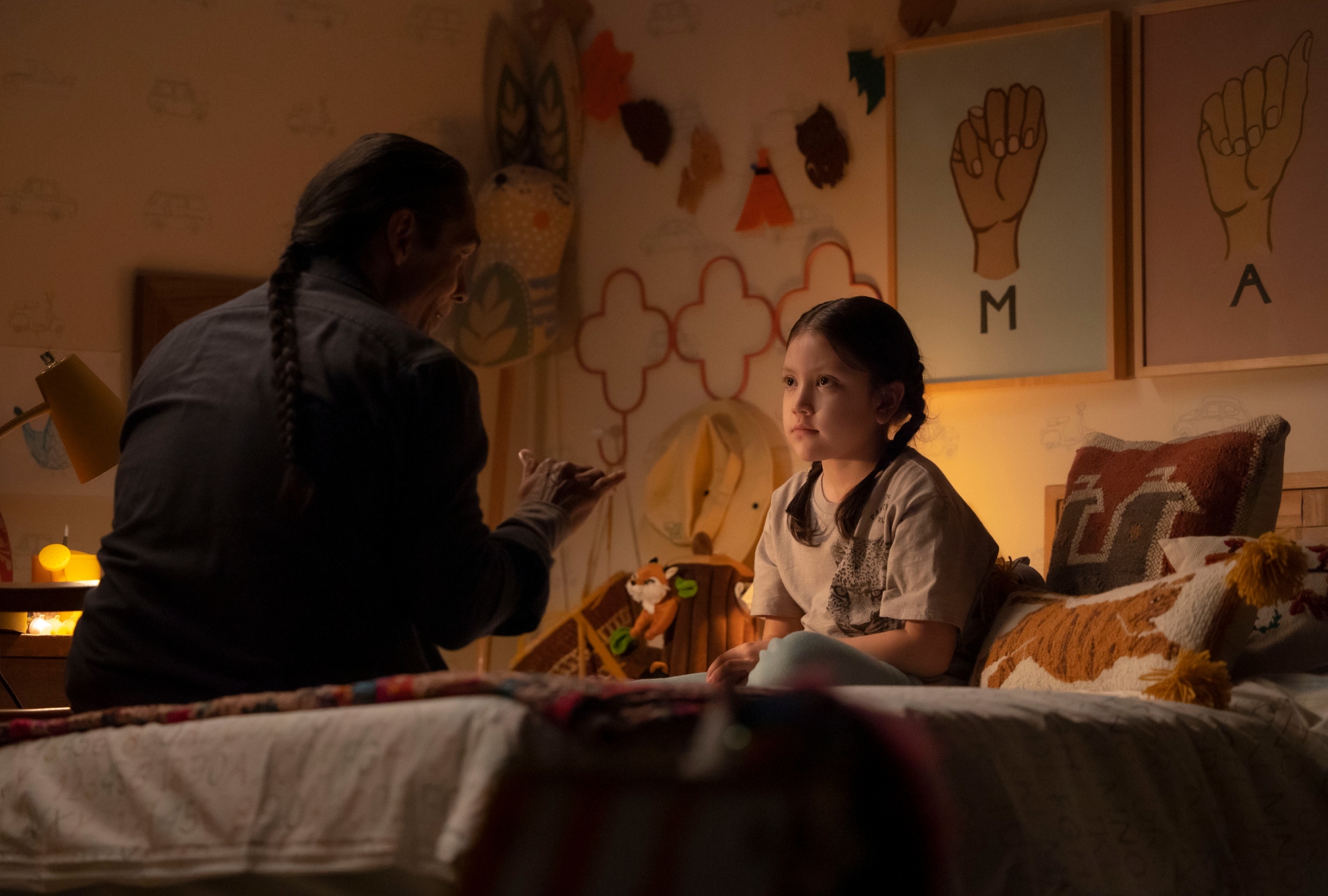
“The Georgia way”: What 2021 taught Democrats about how to win elections in the South

Corey Shackleford knew he could rely on Georgia’s Prince Hall Masons — named after the freed slave who created the civic-minded group’s first Black chapter in 1784. “We’re in those corners of the state, those rural areas, where others don’t normally go. But we are there.”

Shirley Sherrod, whose Southwest Georgia Project for Community Education has been active since the 1960s, trusted the young women on her staff to reach rural voters — even during a pandemic. “I really allowed them to take this program and just go, and it worked.”

And Keith Reddings, who leads Georgia’s Omega Psi Phi Fraternity and lives in Brunswick — where three white men killed Ahmaud Arbery, a Black jogger, in February 2020 — knew neither he nor his members could be idle in the 2020 election. “I’ve been in movements for quite a while. You get these waves where you’re involved; you can be involved.”

Their comments are from an oral history of the grassroots organizing across Georgia that led to the state’s historic voter turnout and election of Democratic candidates for president and the U.S. senate. The e-book, “The Georgia Way: How to Win Elections,” recounts the mindsets, values, tactics, challenges and solutions that coalesced in 2020 in a 21st-century voting rights triumph.

“What happened in 2020 in Georgia was the manifestation of coming together, setting ego to the side, and saying that we can be much more effective and efficient if we work together through coordination, collaboration and communication,” said Ray McClendon, the Atlanta NAACP political action chairman and a co-author of the e-book. “Once that happened, we became a much more effective group.”

The campaign’s organizers built on this model with some success in November 2021’s elections, and hope to deploy this model across the South in 2022’s federal midterm elections. Georgia’s GOP is trying to copy this template by opening community centers in Black neighborhoods.

The Georgia Way,” which was co-authored by Voting Booth’s Steven Rosenfeld, features the voices of three dozen organizers from an array of civic and civil rights organizations serving Georgia’s communities of color. Together, they made a determined effort to reach out to their communities in a coordinated and unprecedented manner. They did not start by focusing on voting, but first listened, validated, and sought to meet local needs. Those efforts prompted thousands of people not on any political party’s radar — or contact lists — to vote in 2020’s elections.

“Your work just didn’t revolve around voting, but around other issues that people cared about, that mattered to them, and impacted their lives,” said Dr. Gloria Bromell Tinubu in her interview with Sherrod in “The Georgia Way,” which Tinubu also co-authored. “That is really the crux of relational organizing — that you have a relationship with people outside of the formal voting process.”

Building Toward 2020

Inside the NAACP, Masons, Black fraternities and sororities (known as the Divine Nine), and civil rights groups, the leadership knew the 2020 election was going to be pivotal. Many leaders in these volunteer posts recalled their frustration after 2016’s presidential election, where voter turnout among communities of color was disappointing. The next big election, Georgia’s 2018 governor’s race where Democrat Stacey Abrams lost to Republican Brian Kemp, showed there was a deep vein of civic engagement to be tapped. But activists and voters had to be engaged.

“I started to understand what we needed to do going forward,” said Richard Rose, the Atlanta NAACP president, who noted that 77 percent of Georgia’s Black voters lived in 19 of the state’s 159 counties. “What I did know was that people were willing to help. Young people were willing to give up their time. Members of various fraternities, sororities and the Masons were willing to help. But it was fragmented.”

2020 brought a series of focusing events. Before the COVID-19 pandemic struck in March, the once-a-decade U.S. census got underway. Rose and many others were concerned their communities would be undercounted. One obstacle little noted by the media was food insecurity — hunger. People who were worried about their next meal had no patience for the census or voting. That reality led groups like the NAACP and others to step up food giveaways. Those settings led to relationships where people were later informed about vaccines and planning to vote.

“We used those food distributions and the long lines to try to get people to respond to the census,” recalled Bobby Fuse, a civil rights activist. “Out of that came this idea of feeding people at Thanksgiving and encouraging them to come back and vote in the runoff… See, all of this is about celebrating while we’re in the midst of this [challenging] thing.”

The pandemic, social distancing requirements, and a local legacy of poor health care among lower-income communities in the state forced the organizers to be innovative.

“Coming into the pandemic, we did have to be innovative because the old gathering, meeting, marching was not safe,” said Omega Psi Phi’s Reddings. “So different organizations, different groups, came up with different strategies to get the word out. There were billboards. There were buses that went around from city to city with voter information. There was phone banking where brothers and sisters would get on the phone, and they would make call after call. There were email blasts, caravans, motorcades.”

While Black voters are among the Democratic Party’s most reliable base — with 85 percent routinely voting for Democrats across the South, according to the Center for Common Ground’s Andrea Miller — this grassroots outreach had little logistical or financial support from the Georgia Democratic Party, several organizers emphasized.

“This was not necessarily a Georgia Democratic Party operation,” Fuse said. “Without being offensive, I’d like to say that the majority of our funding and resources came from outside any political party. And it came directly from these nonpartisan grassroots organizations with whom we interacted — and boy, did we interact.”

Many voters eyed by the coalition’s organizers have long been overlooked by the major political parties, and these voters don’t consider themselves members of any party, Miller said.

“The voters that we called, unfortunately, haven’t really been called by anybody,” she said. “They haven’t been called by candidates. They haven’t been called by political parties. So, they stopped voting, which means they’re not going to be called by candidates, political parties.”

There were several mindsets that emerged and shaped the outreach. The pandemic forced groups to innovate. Local organizing was prioritized. Hiring local campaign workers, including teenagers who knew where and when to find voters, was preferable to out-of-state volunteers. Teaching members of families and congregations to use online media was a necessity at first but evolved into an opportunity that expanded campaigning.

“COVID-19 really helped the younger generations to connect with the older generations,” said Tiffany Carr of the Southwest Georgia Project for Community Education. “I know for myself and my family, my mom will always call on me and my brother and ask, ‘How do you work Zoom?’ ‘How do I join this virtual meeting?’ ‘How do I get on Facebook?’ ‘How do I do this and how do I do that?’ So, it really opened the door for the older generation to learn more about technology and to see how convenient it is and how quickly you can reach a lot of people at one time.”

The leaders from the various groups spoke of enlisting their members and reaching out to their communities — in rural areas, in cities, and in colleges and universities. They often let young people be the frontline. They created events that set a tone and were highly visible, but kept the messaging personal. They used different media that various age groups were familiar with.

“We invited our undergraduates, and we pushed that information out to them,” said Sigma Gamma Rho’s Celestine Levanne. “We didn’t leave anyone of voting age out of this conversation, from our 18-year-olds to our 100-year-olds. Everyone got that information and if, for some reason, they couldn’t vote, they had that information to give to a relative or a church member. So, again, it was about making sure they understood their rights.”

“We had to be intentional about setting the atmosphere,” said the Masons’ Marvin Nunnally. “We built momentum, we kept building and building the audience, but more importantly, what we kept doing was working on their minds. And that was the beauty of all this moving around: the food, the music, the motorcycles [and motorcades] … It all played a role.”

As November’s U.S. Senate election headed to January’s runoffs, the Center for Common Ground — which by that fall had 40,000 volunteers across the country writing postcards to Black voters in Southern states, and also sent hundreds of thousands of text messages and made tens of thousands of phone calls — turned its full attention to the runoff.

By then, the numerous frontline efforts were well positioned to use the center’s various data-driven tools — for identifying eligible voters, reaching them by postcard (if their phone numbers weren’t correct in political data lists), or by text or phone, as well as by going door to door.

“What was most impressive was the organizations working together rather than in competition, and each of us really using our strengths,” the Center for Common Ground’s Miller said. “Our strength is building out the digital tools and platforms and that is what really made the difference, and making sure we weren’t duplicating efforts — that we were covering the entire state instead of 40 groups working in the city of Atlanta.”

“That’s what worked in 2020 and 2021,” the NAACP’s McClendon said, referring to the Senate runoff’s results and unexpectedly high turnout in Black communities in Georgia and Virginia that were targeted in November 2021’s general election. “That result was the result of several years of deciding that it was the time for us to coalesce, and manifest through the efficiency and effectiveness of collaboration. Now we are ready to ramp this up across several battleground states to get ready for 2022.”

This article was produced by Voting Booth, a project of the Independent Media Institute.