Spring Sale: Get 1 Year, Save 58%

Melania Trump under investigation related to Florida charity laws

In a deep dive into how Donald Trump has turned his four years as president into a money-making machine cashing in on his renewed celebrity, the New York Times notes that Melania Trump is being scrutinized for selling tickets to a meet and greet with a portion of the proceeds going to a charity that doesn’t appear to exist.

While noting that former first lady has already been attempting to make money by auctioning off some apparel, the Times’ Shane Goldmacher and Eric Lipton reported that Melania has a “high tea” event scheduled in April in Florida that is raising eyebrows.

According to the report, “Mrs. Trump is now selling tickets to the April ‘high tea,’ with organizers saying that some of the profits will benefit an initiative of her ‘Be Best’ endeavor called ‘Fostering the Future,’ meant to provide computer-science scholarships to young people who have been in foster care.”

With details vague as to what portion of the ticket sales will go to the former president’s wife, questions are being raised about her “Fostering the Future” charity.

“Florida requires any organization that raises charitable contributions in the state to register. No charity with the name ‘Fostering the Future’ or ‘Be Best’ is registered in Florida,” the Times reported with an official in the state admitting they are taking a look at the situation.

“Asked about the solicitation, officials at the Florida agency that oversees charitable fund-raising said they also could not find evidence of the required state registration and had opened an inquiry as a result,” the Times report states with Erin M. Moffet, an agency spokeswoman, pointing out “the state law requiring charities to register before soliciting money.”

According to Moffet, “Consumer Services Division is currently investigating whether this event involves an entity operating in violation of Chapter 496, Florida Statutes.”

The Times’ report also notes that Whip Fundraising is organizing the event and that a spokesperson for Melania Trump did not respond to questions about the investigation.

Breaking down why Trump’s document handling is important

During his four years in the White House, former President Donald Trump was known for tearing up documents — and some of the documents he didn’t tear up or shred found their way to Mar-a-Lago, where in January, the U.S. National Archives and Records Administration retrieved 15 boxes of documents, according to the Washington Post. Moreover, a forthcoming book by the New York Times’ Maggie Haberman reports that a White House toilet was repeatedly clogged with printed paper, although Trump is denying that he flushed any documents down the toilet.

Liberal Washington Post opinion columnist Eugene Robinson, in his February 10 column, notes that some pundits have been saying that Trump’s failure to obey the Presidential Records Act of 1978 is no big deal — or as Robinson calls it, the “Trump will be Trump” argument. But the columnist lays out some reasons why it is, in fact, a big deal.

“The Justice Department should indeed investigate whether Trump broke the law by destroying, stealing or flushing official documents that he was required to preserve and surrender to the Archives,” Robinson argues. “Granted, it is much more urgent that Justice investigate whether Trump committed the crime of seditious conspiracy by inciting the January 6 insurrection at the Capitol. But the question of the documents cannot simply be dismissed with a ‘Trump will be Trump’ shrug.”

Trump is infamous for failing to practice what he preaches. During his 2016 campaign, Trump had a lot to say about the Hillary Clinton e-mail controversy — and at one of his rallies, Robinson recalls, he told the crowd, “People who have nothing to hide don’t.… destroy evidence to keep it from being publicly archived as required under federal law.”

Under the Presidential Records Act of 1978, White House documents must be preserved. And the U.S. National Archives and Records Administration is responsible for maintaining them, which is why NARA retrieved those 15 boxes of documents from Trump’s Mar-a-Lago resort in South Florida.

“Most critical, obviously, is whether the security of highly classified information might have been compromised,” Robinson explains. “But the completeness and continuity of the historical record is also important. Unlike his cluttered business headquarters in Trump Tower, the Oval Office never belonged to Trump — or to any other president. It belongs to us, the American people, and so does the flood of paper that passes through.”

Robinson adds, “And while the Justice Department has to be deliberate in deciding whether to launch any investigation, let alone one into the actions of a former president, Congress is under no such constraint. Let’s have some hearings, people.”

E-mail had yet to be invented when President Jimmy Carter signed the Presidential Records Act into law back in 1978, but the federal law now includes electronic and digital documents as well as physical documents. Robinson doesn’t give former Secretary of State Hillary Clinton a pass over the e-mail scandal, but he stresses that what Trump did was worse because it was “deliberate” rather than merely “careless.”

“In one month alone, September 2016, the GOP-led House Oversight and Reform Committee held five days of ’emergency’ hearings about Clinton’s e-mails and issued a dozen subpoenas,” Robinson notes. “Clinton was indeed careless, but Trump appears to have been both deliberate and persistent in his unlawful destruction of documents. Either the Presidential Records Act means something, or it doesn’t. Congress must choose.”

This senator thought he had given his 279th and final speech on climate change. He was wrong.

A little over a year ago, Senator Sheldon Whitehouse, a Democrat from Rhode Island, stood on the Senate floor looking exuberant. To his right was his trademark green sign — a picture of the Earth and “TIME TO WAKE UP” in large capital letters. The senator, a longtime climate activist, was celebrating what he thought would be a milestone: his 279th and final speech urging the country to take action on global warming. President Joe Biden, who had campaigned aggressively on the subject of climate change, was in the White House and Democrats controlled both houses of Congress. The United States, Whitehouse was sure, was poised to pass significant legislation to curb greenhouse gas emissions. 

“A new dawn is breaking,” the senator said grandly. “And when it’s dawn, there’s no need for my little candle against the darkness.” It was time to put away his well-worn sign.

That announcement turned out to have been premature. On Wednesday, with Congress’s landmark climate legislation still stalled, Whitehouse returned to the Senate floor for his 280th speech, carrying the battered green sign. “I am not very happy to be back,” he said. “We just aren’t making progress.”

Prior to last year, Whitehouse had been making the “Time to Wake Up” speeches for 9 years. He began the practice in 2012, after the Obama administration failed to pass a bill that would have capped carbon emissions across the country. Nearly every week, the senator and his aides would carry the green sign in and he would expound, often to a mostly empty Senate, on the problem of global warming. 

Early on, the speeches just explained the basics of climate change and its consequences — warming oceans, rising temperatures, and increasingly dangerous weather events. But over time Whitehouse began to refine his views on climate change and its villains. He started calling out dark money in politics, corporate America’s anti-climate lobbying efforts, and government subsidies for oil and gas. On Wednesday, the senator pulled no punches. “The fossil fuel industry controls the Republican Party the way a ventriloquist controls a painted wooden dummy,” he said.

The return of the “Time to Wake Up” speech is a grim reminder of the U.S.’s holding pattern on climate change. The Build Back Better Act — which would have spent half a trillion dollars boosting clean energy, electric vehicles, and technologies to pull carbon dioxide out of the air — is frozen in Congress, thanks to opposition from Senator Joe Manchin, the coal-connected Democrat from West Virginia. And, while there is still a possibility to pass a stand-alone climate package with Manchin’s support, time is likely running out. Midterm elections are around the corner, and it’s unclear whether Democrats will be able to retain both houses of Congress in 2023. 

Whitehouse can’t say whether his dogged persistence in making the speeches has helped raise awareness of the U.S.’s sluggish progress on climate change. But, he says, one “indisputable consequence” of making them so frequently is that he has learned a lot — and the speeches have given him a platform to critique fossil fuel companies and corporate America for their delay tactics. “And it certainly annoys the hell out of that operation to be called out,” he said wryly.

A year ago, when Whitehouse was planning to end the speeches for good, the Smithsonian Institution asked if they could take the old, tattered green sign — they suspected it was the most-used sign ever on the Senate floor. But Whitehouse said something held him back from handing it over: a suspicion that, no matter how promising things looked at the time, his work might not be over yet. 

“When we reignite work on a strong climate bill, I’ll get this battered poster over to the Smithsonian,” the senator said during his speech on Wednesday. “If we cannot, I’ll be back here, again and again, to call on this chamber to wake up.”

How to write about murder for teens, as an adult: Consider Piggy in “Lord of the Flies”

Answer #1: I have no idea.

Answer #2: In which I divert from talking about my book, “Cold,” for a moment, to talk about a book I had to read in high school. Spoilers ahead. A few things about my book (nothing major). Mostly the spoilers are about a book you probably also read in high school.

The first book to hit me like a bolt of lightning was William Golding’s “Lord of the Flies,” which was assigned in my Grade 10 English class. I hated and was obsessed with this book. I hated the spiked pig head on the cover. I loathed the very idea of being trapped on an island with my fellow private school students. (Yes, like the boys in this book, I also went to a private school — in my case, an all-girls school in Canada.)

RELATED: “Yellowjackets” unapologetically follows YA logic, from the Big Dance to bitter betrayals

I saw right away which character I was in the book. It wasn’t Ralph, the protagonist. It definitely was not Jack: upstart, rebel, hunter and bully. No. I was clearly Piggy: chubby, unpopular, prophetic, possibly too real and unreasonably opinionated. When I realized that Piggy was going to die (see: foreshadowing) I was both freaked out and not at all surprised.

Near the end of reading the book, my English teacher did an “experiment” where one day she didn’t show up for class, to see what we would do. To see what could happen in the hour we were without supervision. Pretty obvious, but also weird. Haha, everyone joked, I guess this is our Lord of the Flies. Haha, look out.

Ha ha.

The first piece I ever wrote that anyone thought was actually good writing (for a 16-year-old) was a response to this experiment, and to “Lord of the Flies” as a whole. It was essentially a pretty self-righteous open letter to my fellow classmates, which read, in part: You jerks? Are the beasts.

Long before I outed myself as queer, I outed myself as Piggy.

Now, let’s say this. Was I in any real danger of having someone in that class throw a rock at me? In the hour my teacher left us alone or any of the hours I was at school, supervised and not? No. Let’s say I am and was very lucky that that was true.

But anyone who has lived it knows there is a danger in being on the outside in high school, to being illegible, visibly weird, helplessly unable to fit in. Maybe it’s not getting-killed-with-rocks danger, but it can definitely seem that way. It feels horrible. It feels unsafe. It is like you’re always walking in the cold, on thin ice.

As a student, I was obsessed with “Lord of the Flies” because it was the first time I saw that part of my experience, my fear, laid out in a book. It made me feel less crazy, seeing it in print. Like, yes, this is real. Yes, kids (not all kids but at least some) are mean. I also hated “Lord of the Flies” specifically because it left me nothing but an uninterested grown-up at the end of the book, who comes to take Ralph home to safety. And yeah, I was also mad because Piggy dies.

Even if I saw it coming, I was mad.

Needless to say, I thought about Piggy a lot while I was writing my latest YA novel, “Cold.”

“Cold” is a murder mystery set in a frigid East coast winter. It is about two teenagers, Todd and Georgia, who do not know each other, but who have spent very similar early school years being pushed out and pushed around. Both of these characters are queer, and both have been labelled the Piggy of their school. For Todd, this experience ends, tragically, with his murder.

RELATED: The power of pop literature: Why we need diverse YA books more than ever

YA writers, I think more than people who write for adults, are often asked about what it means to write for teenagers; what lessons they hope or think they are imparting to teens with their stories. I am never clear on what messages or lessons readers get from my books. What warnings I’m imbuing. (I did stop including smoking in my books a few years ago because I thought it made smoking a default trying-to-be-cool thing, and I wasn’t super comfortable with that – even though I smoked for most of my teen years. Gross.) Most of the time I try to focus less on lessons and more on staying as true to the experiences and feelings that I remember having as a teenager. Reflecting rather than instructing, maybe? I try to be honest.

On that note, to be honest, if there’s any teen I’m writing for, it’s probably teen me. Which is why so many of my protagonists are queer, why many are Asian. I’m writing what I know and I’m also writing the things I wanted to see when I was reading books as a teenager, and didn’t. And that is definitely true of “Cold.”

More than anything, I wanted “Cold” to be honest to that dangerous feeling of being outside. But I also wanted it to be more than that.

While “Cold” is a murder mystery, it’s not just a story about death. It’s about survival.


Want a daily wrap-up of all the news and commentary Salon has to offer? Subscribe to our morning newsletter, Crash Course.


I wanted “Cold” to be a story with a tragic ending and a resilient one. One of the characters, Todd, doesn’t see any hope for his situation. He isolates himself and pulls away from the people trying to help him. He embraces the role of the cold outsider. The other character, Georgia, refuses to take on the stories people tell about her. She refuses to be the Piggy even when people call her (essentially) pig-like. She suspects the story people tell about Todd because it sounds familiar.

I wouldn’t say this is just a book for kids who feel like outsiders. It’s a book for people who like murder mysteries, both teens and adults. It’s for people who like funny books and people who like sad books.

For the kids who do feel that danger of standing on the outside, for the kids who suspect they are the Piggy, I hope this book feels hopeful, because it is. And I am.

More stories about YA books:

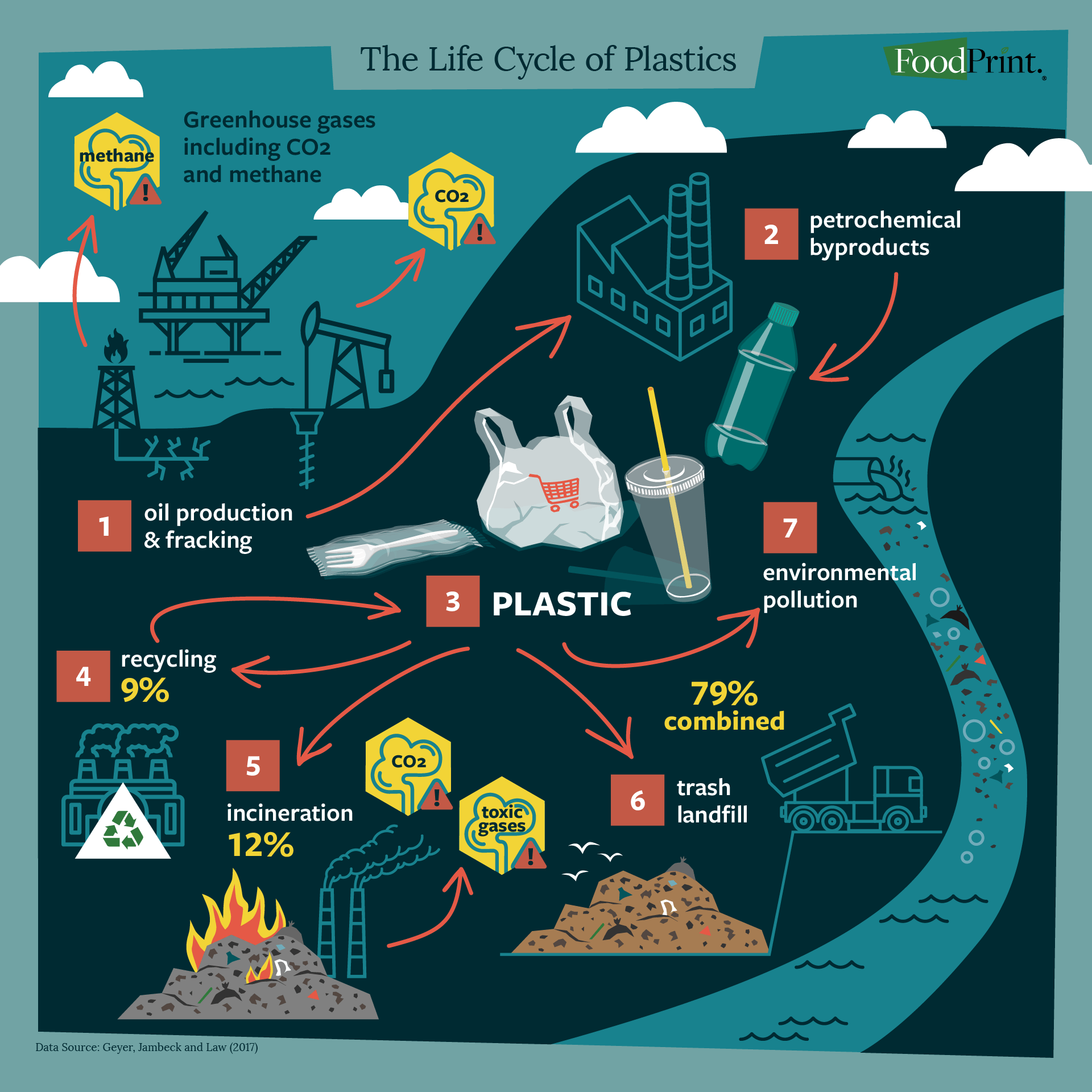
More than just litter: The relationship between plastic and climate change

Caring about your environmental impact, especially being careful about your plastic use, can often feel like a lonely uphill battle. Whether it’s discovering hidden layers of plastic wrapping up a new purchase or watching a barista make your drink in a disposable cup before pouring it into your reusable mug, avoiding plastic can feel impossible. And with worldwide plastic production projected to keep rising, you might begin to wonder whether it’s even worth the effort.

As a recent piece in The Atlantic explores, the ubiquity of plastics has more to do with the petrochemical industry’s need to sell its byproducts than any inherent need we have for disposable goods. Plastics, which were virtually unused in US households before World War II, became a good way for chemical companies to keep their wartime production moving to a new market. By advertising stress-free convenience, manufacturers made single use dishes and food packaging the norm in American households. As new generations became accustomed to throwing things away, plastics — and their waste — became commonplace.

As plastic waste piled up around the world, people woke up to the reality that new plastic had nowhere to go. Environmentalists have long fought plastic industry expansion, with attempts to ban plastic bags in some areas as early as the 1980s. But in every case, the plastic industry has lobbied successfully to avoid downsizing while shifting the blame for plastic’s problems to us. One of the earliest efforts was Keep America Beautiful, an anti-littering organization founded by the manufacturers of the same waste that was piling up around the country.

By far their most successful ploy was overselling the potential of recycling, which was supposed to end the treadmill of waste. But recycling old plastic has always been more expensive than making virgin plastic, so companies are more likely to use new plastic packaging than recycled. There’s also the problem of most plastic never making it into the recycling system. Despite investigations showing oil and plastic companies knew it wasn’t a solution, focusing on recycling successfully pivoted the conversation around plastic to one of personal responsibility, with the onus falling to individuals to navigate a complicated and inconsistent recycling system. With such inadequate infrastructure around plastic disposal, the only way to avoid adding to the problem is cutting back on how much we use in the first place. But plastic is so entrenched in our lives that it’s hard to turn that into substantial progress.

But disposal is only part of the problem with plastic, and broadening the conversation to the entire life cycle shows how much change is needed from the industry before we even get to the question of individual behavior. Plastic production is resource and emissions-intensive, and this means that curbing plastic use worldwide is an urgent climate issue that demands more action from governments rather than just concerned individuals and sustainability-focused companies.

Emissions from plastic production

Plastic is so ubiquitous today that it’s easy to forget its origins as once-undesirable petrochemical byproducts. But that connection continues, and the mass production of virgin plastic from oil and gas — far cheaper than recycling old plastic — means that the two industries’ problems are inextricable. Oil and gas extraction emit an enormous amount of greenhouse gases into the atmosphere, and this will continue as long as our cultivated demand for plastic remains high. Even if demand for fossil fuels slows, plastics are a “Plan B” for the survival of the petrochemical industry.

These close ties to the petrochemical industry are especially evident looking at recent trends in US plastic production. The recent boom in fracking — an environmentally destructive way to extract oil and natural gas — made the US the world’s chief energy producer. It also left petrochemical companies with abundant supplies of ethane, which can be turned into plastic. The result is that chemical companies have invested more than $200 billion in new plastic and chemical facilities since 2010, threatening to dramatically increase US plastic production once they’re operational. New plastic facilities that have opened since 2019 alone are already set to generate the carbon dioxide equivalent of 27 coal power plants. Meanwhile, European plastic manufacturers are increasingly cashing in on cheap ethane gas sourced from US fracking operations, counteracting progress at reducing plastic consumption in the EU.

So how do all these emissions from plastic production stack up? Recent estimates put total emissions from the US plastics industry at more than 232 million metric tons of carbon dioxide equivalents, more than 50 million cars’ worth of emissions every year. Because so much of US plastic production comes from fracking, these emissions are methane-heavy, which means they have a more potent short-term warming effect than carbon dioxide emissions alone.

Despite a patchwork of bans on bags, straws and other single use plastic, global production continues to climb, with production expected to double by 2040. Emissions are climbing with it: one 2019 report estimated that global emissions from plastic production could total 56 gigatons by 2050, making the plastic industry responsible for 10-13% of the remaining carbon the world can emit before unavoidable climate disaster. Even worse, these numbers are likely underestimated; hidden sources of greenhouse gases, like methane leaks at fracking facilities, are hard to track, but add to plastic’s carbon footprint even further.

End-of-life emissions

Unfortunately, emissions from plastic don’t stop at production. As the long carbon chains that make up plastic products degrade, they naturally emit greenhouse gases, particularly methane and ethylene, which have a much more potent warming effect than carbon dioxide. The rate at which plastic releases these gases varies, but given the amount of plastic waste in landfills and the environment — 4900 million metric tons — researchers are concerned degrading plastics will stretch our global emissions budget even thinner.

The risks from decomposing plastics go beyond greenhouse gases.  Plastics are made of more than just oil, and many of the additional chemicals added to plastic — phthalatesBPAPFAs and more— to add qualities like strength, softness, flexibility and color pose unique risks as plastic slowly degrades. As microplastics (tiny pieces of degraded plastic that are everywhere in the environment) break down, they release these chemicals into the air, soil and water around them, resulting in a slow-release poisoning of ecosystems around the planet. Researchers have identified more than 1500 chemicals used in plastic that pose this risk.

Plastic that isn’t thrown in a landfill doesn’t contribute to plastic pollution, but this doesn’t make it better for emissions. Incineration and “chemical recycling” — which turns plastic back into raw petrochemicals for fuel or new plastic — also release huge amounts of greenhouse gases. A 2019 report estimated that plastic incinerated in the US alone accounts for 5.9 million metric tons of carbon dioxide, the same amount of greenhouse gases emitted by more than 1.2 million cars. Globally, the incineration of plastic packaging(much of it used in food) equates to 16 million metric tons of carbon dioxide annually. Chemical recycling, which claims to offset some of this by capturing the energy from incineration, still comes out negative because the processes used to break plastic waste into fuel are so energy intensive.

(FoodPrint)

Bioplastics aren’t much better

But what about plastic that doesn’t come from fossil fuels and instead comes from products like corn?

In many ways, the development of bioplastics mirrors the proliferation of conventional plastic, but instead of petroleum byproducts searching for a market, bioplastics represent the corn industry’s creative efforts to bring their extra products to another market. Some of these bioplastics, like Polylactic Acid (PLA), claim to solve conventional plastic’s problems by being biodegradable. But the fact that these materials are only compostable in certain industrial conditions means that many bioplastics end up sitting in landfills with their conventional analogs.

Looking more closely at the production of bioplastics further dismisses any idea that they’re fundamentally better for the environment. Much like ethanol, corn-based bioplastics have a veneer of being eco-friendly that shatters when you factor in the realities of industrial crop production. Chemical fertilizers are energy-intensive to produce, and industrial farming  causes degraded soil to release even more carbon, alongside other negative impacts on wildlife and water quality. Bioplastics like PLA are also more energy intensive to manufacture than most conventional alternatives. This means that over their entire lifecycle, PLA products can actually emit more greenhouse gases than fossil fuel-based plastics. Without major changes to disposal infrastructure that would make recycling or composting of bioplastics the norm rather than the exception, they represent another way for the chemical industry to greenwash single-use plastics without solving any of their fundamental problems.

We need urgent, coordinated action on plastic

So how can we divest from the plastic industry? Thankfully, there are a number of public campaigns to call attention to plastic’s full lifecycle costs, like the Beyond Plastics project and the Break Free from Plastics campaign. In addition to shedding light on the carbon costs of plastic, they also work to bring community groups together to oppose new projects. Considering that many of these new plastic plants in the US are being constructed in low-income communities of color, where polluting industries of all stripes (such as factory farms) like to set up shop, these projects are important for protecting communities from localized air pollution as well as slowing the expansion of this carbon-intensive industry.

Reducing new plastic production also means rethinking the way we use plastic we already have. This goes beyond the traditional approach to recycling, where a tiny proportion of disposables get melted back down into another (usually final) round of throwaway goods.

Reusing and repurposing plastic at home is a good way to reduce personal unnecessary plastic use, and that same principle has potential for the wider economy. Beyond ineffective traditional recycling programs are more detailed initiatives to reuse plastic at every stage of the lifecycle, whether by reusing containers at stores and other institutions. Groups like the Ellen MacArthur Foundation have suggested that these initiatives are most effective when paired with projects that simultaneously reduce plastic in the supply chain with renewable or more durable materials like wood or glass.

Ultimately, reducing plastic production worldwide will take more than just personal resistance and behavior change. But that doesn’t mean that being vocally anti-plastic is a lost cause. Regulation doesn’t come easily to industries, but when it does, it’s often in response to public outcry.

The best way to store chocolate-covered strawberries, plus a recipe

Somewhere along the way, Edible Arrangements got a bad rap. Is it impersonal? I suppose. But is an arrangement spiked with melon wedges, chocolate-dipped strawberries, and fresh pineapple formed in the shape of flowers delicious and succulent? Absolutely. Homemade chocolate-covered strawberries are, however, both personal and delicious. Give me a dozen for Valentine’s Day, along with a diamond ring from Tiffany for each of my fingers like I’ve won the last 10 Super Bowls and I’ll be a happy camper.

Food52’s Recipes Resident Caroline Gelen already won Valentine’s Day with her technique for making Marbled Chocolate-Covered Strawberries. If you decide to make these marble masterpieces too, a good technique is nothing without proper storage. So what’s the best way to store chocolate-covered strawberries? Before you do anything (snacking on chocolate wafers included), stick a baking sheet in the freezer. The metal tray will get ice cold, which will allow the warm chocolate to quickly firm up as soon as you lay the dipped berries on top of it. But let’s not get ahead of ourselves. Once the tray is in the freezer, you can begin washing and prepping the strawberries and melting the dark and white chocolates. And with the magic of television . . . the prep work is done! Time to pull the tray from the freezer (wear an oven mitt, so your fingers don’t stick to the metal).

Next, line the baking sheet with wax paper or parchment paper (wax paper has more of a nonstick surface, which is preferred, but parchment will do in a pinch). Lay the dipped chocolate strawberries on top of the lined tray, leaving a little bit of room between each berry. Once the tray is filled, pop it in the refrigerator for about an hour to allow the chocolate to completely harden. As soon as the berries are set, wrap them with plastic wrap and leave the strawberries at room temperature for up to 24 hours, at which point you can arrange them in a bouquet for your sweetheart. (Or just eat them yourself, I don’t judge.)

How long do chocolate-covered strawberries last, anyway? If you plan to keep them around for at least 48 hours, put them in the fridge, but do so with caution. The fridge will create extra moisture, causing the berries to appear as if they are “sweating.” Not cute. Once again, I will turn to the dependable Edible Arrangements for guidance as to how to navigate this new challenge: “You don’t want to store the berries in an airtight container, because this will cause decomposition and mold at a much quicker rate than if the strawberries are lightly covered.” Instead, E.A. (I have to give my crush a nickname, right?) recommends keeping the berries on the sheet tray but wrapping them with plastic wrap or aluminum foil, which will increase the airflow and prevent said condensation.

Better yet, place a sheet or two of paper towels dusted with baking soda at the bottom of the container, which will absorb even more excess moisture. Lay the wax or parchment paper on top, followed by berries, and then wrap the whole tray with plastic wrap. “When you refrigerate your chocolate-covered strawberries, they won’t taste as fresh or flavorful as keeping them at room temperature. But, of course, you’ll get more longevity out of them,” says Edible Arrangements on their website. A simple edible bouquet filled with chocolate-covered strawberries always has been, and always will be, there for me and that’s the greatest Valentine’s Day gift of all. But I will take ten little blue boxes, too.

***

Recipe: Marbled Chocolate-Covered Strawberries

Yields
15-20
Prep Time
40 minutes
Cook Time
5 minutes

Ingredients

  • 1 pound large ripe strawberries, at room temperature
  • 6 ounces (170 grams) dark or semisweet chocolate, chopped (1 cup)
  • 1 teaspoon refined coconut oil (optional)
  • 2 ounces (56 grams) white chocolate, chopped (1/3 cup)


Directions

  1. Place a sheet pan in the freezer. 
  2. Lay a clean kitchen towel on a work surface. Thoroughly wash the strawberries with room-temperature tap water, then dump them onto the towel. Gently move them around to dry. Now use another kitchen towel or paper towel to pick up each strawberry and make sure there is no remaining water or moisture. Transfer the dried strawberries to a dry kitchen towel. 
  3. Place roughly three-quarters of the chocolate in a mug or a tall, cylindrical dish. Melt for 60 to 75 seconds in the microwave, mixing at 30-second intervals. (You can also do this in a double boiler.) Once melted, mix in the remaining chocolate and 1 teaspoon of coconut oil (if using). In a separate dish, melt the white chocolate using the same method (but no need for any oil here). 
  4. Take the sheet pan out of the freezer and line it with parchment paper.
  5. Dry each strawberry one last time. Drizzle a quarter of the melted white chocolate on top of the dark or semisweet chocolate, then use a skewer or chopstick to lightly swirl—not too much! You want the colors to stay separate. Grab the strawberry by the leaves (or spear the stem with a skewer or chopstick), then drag and roll it across the surface of the chocolate; this shallow horizontal dip yields a marbled pattern, versus a deep vertical dip, which blends the colors too much. Hold the strawberry over the mug and shake the excess chocolate off. Place the chocolate-covered strawberry on the lined sheet pan. Repeat until no white chocolate remains, then add more white chocolate and repeat. (If you’d like, you can drizzle any remaining chocolate over the strawberries.) 
  6. Refrigerate for at least 20 minutes or up to 1 day before serving. If you’re refrigerating for more than 1 hour, transfer to an airtight container.

Can we learn to love old (and more sustainable) beef?

For all the articles that have appeared touting vaca vieja — also known as old or dual-purpose beef from mature, retired cattle — as the next big thing in meat with a rich, intensely beefy flavor and sustainable path to plate, the stuff is maddeningly hard for the average consumer to find. 

In January while researching the scant American purveyors of old beef, I discovered a small retail and online delivery shop in Perry, N.Y., called Butter Meat Co. Butter sells beef sourced from a USDA-certified organic dairy farm in Pavilion, N.Y., with about 200 cows. 

I must have filled, emptied and refilled my online shopping cart half a dozen times with the various combinations of burgundy-hued sausages, ground beef and steaks lined with yellow fat from “the girls,” whom I learned were between five and seven years old. They’d just finished their careers being milked by robots in free-stall barns, and spending all night during growing season grazing on 200 acres of grasses and clovers (and fermented grain in winter). 

RELATED: What is the next pork belly? How meat trends start, sizzle, and ultimately fizzle out

“If you rattle off a cow number, my mother-in-law knows which one you’re talking about and what her personality is like,” Jill Gould, Butter’s founder and owner, later told me. Gould herself loads up said cull cows from the farm where her husband Stephen Gould is the third-generation farmer, and hauls them to the closest organic processing facility, just over the Pennsylvania border in Troy. About two weeks later, she returns to load up a few thousand pounds of hanging-aged packaged beef, most of which will be sold from her charming shop just outside Letchworth State Park. 

I quickly confessed to Gould that I couldn’t go through with placing the order. Not just because of the $55 price of two-day shipping from Western New York to my home in Southern New Mexico (a region teeming with locally raised beef, by the way). It was the sense that my choice — driven by the naive optimism that I was helping tip the scales toward a more sustainable and humane agricultural system — was negated by everything that came after I hit “buy.” 

Did supporting rehabilitative agriculture matter when my purchase came with the destructive byproducts of packaging waste and emission-spewing miles? Wouldn’t I be better off approaching a local rancher and asking if he or she happened to have an old cow around? I wondered aloud. 

“This is a recurring question I’m growing so much more passionate about,” said Gould, who previously worked in food supply and fulfillment at Blue Apron, Sam’s Club and Walmart. “When we talk about regenerative agriculture, these things are so nuanced by region; we don’t talk about how, with such a globalized food system, we’ve lost the idea of how different things look and life cycles are so different in different parts of the country.” 

That’s why she makes shipping so expensive at Butter; well, that, and the hardcore foodies willing to drop $200 on 10 pounds of frozen Butter beef represent an essential revenue source until Gould can scale her business. 


Want more great food writing and recipes? Subscribe to Salon Food’s newsletter.


Currently, the overwhelming majority of beef sold in the U.S. comes from beef-specific cattle such as Black Angus, which are fattened up quickly on a diet of grains then slaughtered when they reach between 18 and 30 months of age. The math here is simple: the faster a head of cattle reaches to market weight, the higher the profit margins on said animal. Yet compared to a single beef cow, which produces 600 pounds of meat, dual-purpose cows produce about 80,000 pounds of food in their lifetimes — in the forms of milk, cream, butter and finally beef. 

As of 2018, about 20 percent of the U.S. commercial beef supply came from dairy cows and steers. Most of us eat it without knowing it — mixed with feedlot beef into packages of ground beef we mindlessly pluck from refrigerated shelves at the supermarket. Regardless if that beef was raised organic without growth hormones, dairy farmers usually receive commodity prices for it. 

“Right now, our beef is so homogenized, customers can’t choose,” Gould said. “Like if you walk the cracker aisle, there are 50 startups of crackers! That doesn’t exist in beef. I see a chance to build a brand that creates an option based on accessibility.”

Gould started Butter in 2020 with the aim of creating value around dual-purpose beef at a time when well-heeled American foodies were starting to take notice — thanks to high-profile chefs like Blue Hill Farm’s Dan Barber, who has touted its flavor perhaps more than its environmental benefits, and José Andres, who homages the long Basque region tradition of serving decade-old vaca vieja at his Bazaar Meats restaurants in Las Vegas and Chicago. 

By virtue of its age, mature beef is a completely different eating experience — more intensely meaty, almost gamey — with flavorful, butter-yellow fat from its more varied diet and a toothsome texture owing to more years plodding across the earth. 

At Bazaar Meats in Las Vegas, rib steaks from eight- to -10-year-old Holstein cattle are sourced from Mindful Meats in Petaluma, Calif. (As of publishing, Bazaar Meats hadn’t yet secured a supplier for its Chicago location.) The meat undergoes an hour-long tempering process — slowly coming up to about 100 degrees F — before it’s finished on a hot wood grill and plated as hulking bone-in steaks ($65 per pound) or a 6-ounce tasting portion ($45) alongside premium breeds like Oregon Washugyu/Angus and Texas Rosewood Wagyu to be sampled and compared based on how it was raised, its blood line and and what it ate — not unlike contemplating terroir in a fine wine. The menu verbiage leans into that narrative, calling it out as a “European tradition,” prepared “Jose’s way,” on an oak wood-fired grill. 

“If you can imagine veal and how light white it is, and how it’s not the most flavorful, that same animal reaching 20 months old changes into what we know as steak,” said Alex Pitts, executive chef of Bazaar Meats and Bar Mar. “Take and compound that by putting eight to 10 years of life behind it. The beef flavor really coats your mouth and almost lingers. It’s a beautiful narrative to explain and experience in the moment.”

Of course, it’s not for everyone, and not just because of the price point. Old beef still suffers from the connotation that it’s lesser, particularly in a country that still prizes tenderness and size in its steaks. 

John Manion, chef/owner of Argentine steakhouse El Che Steakhouse & Bar in Chicago, recently got a shipment of “at least five-year-old” grassfed vaca vieja strip loin from gourmet meat distributor D’Artagnan to sample. Manion enjoyed the meat’s pronounced funk, likening its beefiness to “the smell of suet and the taste of beef fat.” 

D'Artagnan stripD’Artagnan strip (Photo courtesy of Maggie Hennessy)

“That said, I also blinded it with a bunch of my staff and nobody liked it — texturally, it was like what mutton is to lamb,” he said. 

Manion and I have gone several rounds over the years about the potential of selling vaca vieja on his menu — where you’ll also find the toothsome sirloin cap (aka “picanha”) so beloved in Brazil; mild, tender sweetbreads (thymus gland of cattle); and full-flavored morcilla (blood sausage). Even if these items aren’t necessarily prudent to El Che from a food-cost perspective, they’re consistent with its South American-leaning, fire-cooked narrative; moreover, they’re not overly challenging for the diner. But when it comes to the steakhouse’s central pillar of beef, Manion said, consistency is king. 

“There’s a lot of things where I can say, listen: sweetbreads, morcilla, trust me; you’ll love it,” Manion said. “I do think if I put the vaca vieja on the menu as a New York strip — I’ve had experience with some smaller, purely grass-fed producers locally — it doesn’t have the marbling, it’s a little smaller. It’s, frankly, not what customers are looking for. They don’t want to be challenged when it comes to steak.”

Even barring the question of building enough mainstream demand for old beef at a markup in the vein of grass-fed beef, there’s still the supply problem. Gould doubts she has enough steaks to supply even one weekend of service at Bazaar Meats; she can barely supply her shop and direct-to-consumer orders in the surrounding markets, plus one private school in Buffalo and a sprinkling of food explorers around the country. While she admits that dual-purpose beef likely will never overtake industrialized beef, she’d like to make a dent by getting Butter beef on the shelves of a Wegmans or Costco — always with the goal of accelerating the agricultural infrastructure already in place in her home state.

In case you’re wondering exactly how much beef it would take to supply even a single Wegmans store, Gould ballparks 50 cows slaughtered per day — a scaling-up that would require working with a sizable co-operative of organic dairy farms. Then there’s the matter of finding a processor to handle the volume and stringent processing requirements the USDA hands down for older and certified organic animals. 

Meat processing in the U.S. is incredibly consolidated; just four companies (JBS, Tyson, Cargill and National Beef) control three quarters of the beef processing market for the 35 million cattle slaughtered annually in the United States, according to a recent analysis. (The majority of cull cows pass through these processors as well, per the USDA.) 

Gould has even considered taking meat processing in house. But the business itself is complex, expensive and high risk with razor-thin profit margins. A small-scale commercial facility costs about $2.25 million to build and needs to process at least 1,500 animals annually just to break even, closer to 2,000 to turn a profit, according to the Niche Meat Processors Assistant Network (NMPAN), an Oregon State University Extension group that supports the small and niche meat processing sector. 

“During the pandemic, a lot of volume moved to small and midscale because large plants were shut down or had to reduce capacity,” said Rebecca Thistlewaite, director of NMPAN. “Many are feeling the residual effects and still booked out for the rest of the year, but they’re struggling to keep up with demand or are unable to expand, and it all boils down to labor shortages.”

Last month, the Biden Administration vowed to direct $1 billion in American Rescue Funds toward expanding independent meat processing capacity as part of a broader initiative to break up what it calls a meat and poultry processor monopoly. But that heap of money doesn’t address the massive labor shortage or the other major problem facing regional processors in the shadow of the Big Four: market access. 

As Thistlewaite so succinctly put it, “You can’t just go and build a plant without a market.”

Small retailers like Gould have been riding a similar wave of artificial demand as local customers discovered her shop when their local supermarket didn’t have beef on their shelves; then perhaps they stayed because they loved the flavor and the environmental benefits of Butter, or they grew up on family farms where turning retired plowing or dairy cows into dinner was an age-old practice. 

“I do think there’s hope and people who want to work on this, and customers who want to see it and spend their money differently,” Gould said. “We’re not talking masses here. But I don’t need to reach that many customers direct-to-market to move a decent amount because there are so few options in beef. If you think about it, this wasn’t an option at all a couple years ago.”

As for me, I have a date with the local beef purveyor at next Saturday’s farmer’s market. If he doesn’t come through, there’s still 10 pounds of frozen Butter beef in my online cart. 

More by this author:

The sexiest Valentine’s Day dinner is an easy, no-cook meal — all you need is good cheese

With the caveat that he can “barely boil water,” a reader recently reached out to Salon Food for suggestions for a Valentine’s Day dinner that feels special. Fortunately, one of the best, most romantic meals in the world requires no boiling at all. In fact, dear reader, you don’t even have to turn on the stove.

Whether you call it an antipasto platter, a charcuterie board, a grazing board, a mezze platter or a smogasbord, the basic idea is the same. Nothing says “be mine” quite like a bunch of really delicious stuff on a platter.

I think everyone owes it to themselves to develop a basic level of cooking aptitude. When you’re trying to impress someone, however, what truly matters is being the most confident, generous, relaxed version of yourself. I can trace the moment my heart was done for with a former flame back to the night he wordlessly removed a pint of Ben & Jerry’s from the freezer — and two spoons from a drawer. I can recall sitting in the park with another man, laughing at his jokes as he cut us slices of salami with his old Boy Scout knife. Cooking is great, but the simple act of feeding somebody you like? Whew. That’s sexy as hell, all by itself.

The mixed plate offers a number of advantages to the at-home chef. For starters, you don’t have to keep track of time. No real measuring is required, and there’s no risk of burning or undercooking. You can be as extravagant or frugal as your budget allows. There’s enough variety on the plate that your date is almost certainly guaranteed to like something, even if you don’t know each other all that well yet. Best of all, you’re presenting foods that tend to make people really, really happy. (I’m looking at you, cheese).

Your plate can be whatever you want it to be. Estimate at least two ounces of each item per person, but don’t be fussy about it. I recommend a minimum of two kinds of cheese, two kinds of meat, one bread, one fruit and one vegetable. I have also never been able to get the suggestion, from Tamar Adler’s “An Everlasting Meal,” of a rough tumble of broken chocolate and a neat glass of whiskey out of my head as the epitome of casual hospitality. Do with that information what you will.

RELATED: Level up Valentine’s Day by giving whoopie pies a red wine makeover

On the plate I created here, I brought together an Applegate charcuterie trio of prosciutto, salami and soppressata; a block of Boursin and a wedge of hard goat cheese; and bread. I rounded everything out with some jarred artichokes, olives, orange slices and a bar of dark chocolate with almonds.

Imagine it: You smell good and you’ve got a cool playlist in progress. You offer your date a drink. It’s going really well — and you can eat whenever the hell you feel like it. Now, that’s amore.

***

Recipe: Romantic Cheese and Charcuterie Board for Two
Inspired by A Cozy Kitchen and Broma  

Yields
2 servings
Prep Time
15 minutes
Cook Time
0 minutes

Ingredients

  • Marinated artichokes, olives and/or roasted peppers
  • 2 ounces soft cheese, such as brie or chèvre 
  • 2 ounces hard cheese, such as cheddar or gouda
  • More cheese, if you wish, such as blue cheese or mozzarella 
  • 1 or 2 fruits, such as cherries, grapes, sliced oranges or strawberries 
  • Crusty bread, sliced 
  • 2 sliced meats, such as prosciutto and salami (more if you like)
  • Nuts, such as roasted almonds or cashews
  • 1 bar of good chocolate, broken
  • Optional: dried fruit, jam, mustard or small pickles

Directions

  1. Get out a clean cutting board, if you have one. Alternatively, a big plate or platter works fine.
  2. Unwrap the cheese and separate and fluff out the meat. Assemble on the board.
  3. Add the chocolate, fruit, nuts and whatever else you’re using. 
  4. Serve with bread and whatever you like to drink.


Cook’s Notes

Want to make it vegetarian? Omit the meats. Want to make it vegan? You can easily make this with more fruit and nuts, vegetables and an added spread like hummus.

In terms of fruit, I don’t opt for apples here because they discolor so quickly. You can also have crackers, but I think crackers are overkill.

When looking for optional add-ons, rummage around your cupboards and see what’s lurking in there. Maybe something from a holiday gift basket that a client sent?


Want more great food writing and recipes? Subscribe to Salon Food’s newsletter.


More romantic we love: 

Salon Food writes about stuff we think you’ll like. Salon has affiliate partnerships, so we may get a share of the revenue from your purchase.

KFC’s vegan nuggets are unremarkable, but here are 2 reasons why you should still try them

When considering a plant-based diet, there are plenty of factors to think about: accessibility, cost, food preferences. One thing that may be left as a secondary thought is perhaps one of the most gluttonous as well: convenience.

The excessive luxuries of living in the rockin’ USA sure are limited when you decide to stop eating meat and dairy. I have been deprived of many of my birth rights as an American, like getting a dollar slice of pizza after a night out or wandering to the McDonalds of my suburban college town like a liquor-filled zombie to slowly munch on fries and nuggets.

Times are changing, and the denizens of convenient fast food are finally recognizing it. Burger King led the pack with the release of the Impossible Whopper in 2019, and Dunkin’ Donuts tested a Beyond breakfast sandwich in 2019 as well. While the US has been slow to release other plant based friendly options in comparison to the UK or India, other chains have introduced or considered adding these types of options to their menus.

KFC is the latest to join the group, with their Beyond fried chicken nuggets. Though it is unclear if they will become a permanent menu item, the fried chicken chain boasts that the plant-based chicken substitute was developed exclusively for them, and is the first plant-based protein offered at a national chicken chain in the U.S.

RELATED: Sexy Colonel Sanders? How the face of KFC became a (kind of weird) sex symbol

It is important to note that KFC explicitly states that the nuggets are not considered “vegan,” because they are cooked in the same fryers as the regular fried chicken. As someone who has been vegan-ish for roughly 6 years, I have come to recognize that this is the case with most restaurants, and is part of the gamble of eating out. Whether you need a disclosure to recognize this or not is up to your discretion.

I ordered the 12 piece Beyond nuggets combo, which came with a drink and a side. For my side, I got the secret recipe fries (vegan) and a classic lemonade. This was priced at $14.99. Because I live in the best city on earth, the total cost with delivery fees and tip was around $31, which is actually pretty damn expensive considering it’s just nuggets and fries. (However, while writing this review I realized that I could have gotten a 6 piece for half the price that would’ve probably been a better idea.)

When I received my order, the food was still hot, and my cat Martin began to lose his mind, which may be a good measure for how realistic the chicken smelled. As I began to open the boxes, I was reminded of the few childhood experiences I had at KFC with that savory, peppery aroma I can really only describe as the scent of fried chicken.

The nuggets themselves are pretty unremarkable, but in exactly the right way. The outside is fried and crispy, and has that signature KFC spice blend, and the inside feels and tastes extremely similar to your typical white meat nugget. The Beyond meat has a good consistency to it, even providing that fibrous grain that real chicken has when you rip it. Some of the nuggets felt  a bit overcooked and were on the dryer side, but there is only so much I can expect from the local underpaid employees at my nearest KFC franchise.

I think these nuggets are solid and worth trying for two reasons: one, they have treated the plant-based meat in almost exactly the same way as the regular meat, and as a result, the final product with all the dressings (like a dip of honey-mustard, also not vegan) is basically indistinguishable from a regular nugget. What it lacks in bite compared to an actual thigh or leg piece, it makes up for with the knowledge you will never get a weird bit of gristle thrown in there. 

But the second reason, and perhaps the most persuasive (to me, at least) is the giddy rush of excitement you will get from getting to participate in the ease of not having to stress about food. I placed my order and received it within 25 minutes, perhaps the fastest delivery transaction I have ever participated in. 

Is fast food a good substitute for slow cooking, the newest frontier for vegan cuisine, or a healthy option to go for in a pinch? Absolutely not! But if you are plant-based and seeking to appease the dopamine gremlin in your brain with a quick hit, then these KFC Beyond nuggets are worth a try.

More stories about fast food: 

11 super shreddy pork shoulder recipes

Like many people, I’ve given a lot of thought to what I’d like my last meal on earth to be. I’ve always required a skillet of baked macaroni and cheese, made with a trio of Gruyere, cheddar, and Swiss and topped with golden brown breadcrumbs. But over the years, I’ve tweaked what I’d like alongside my mac. Sometimes it’s been butter-poached lobster, other times it’s been pulled pork, and sometimes it’s just more mac and cheese.

Currently, I stand by a plate consisting of half pulled pork and half mac and cheese. But the good news is that’s just my last meal on earth. I firmly believe that one day, I’ll find myself in hog heaven and I can rest easy.

A guide to cuts of pork

As delicious as pulled pork or roasted pork shoulder is, it doesn’t always come from the most attractive part of the pig. All of these recipes call for one of three common types of pork: pork shoulder (boneless or bone-in), pork butt, Boston butt, or picnic shoulder. But what’s the difference between them anyway? And can you swap one for the other in any of these Dutch oven or slow cooker recipes?

Pork butt

For the record, pork butt and Boston butt are the same cut of pork. In grocery stores and butcher shops, it’s more likely to be called pork butt but some recipes call for Boston butt; despite the conflicting names, you can use them interchangeably. Its name presents even further confusion, as pork butt or Boston butt actually comes from the shoulder of the pig. It rests above the pork shoulder or picnic shoulder and next to the pork loin (the latter of which is where pork chops come from).

According to Serious Eats, this cut of pork doesn’t get its name from where it’s located on the pig, but rather from some pretty interesting food history. “In colonial New England, butchers packed inexpensive cuts of meat into large barrels, called butts, for storage and transportation. The shoulder meat packed into these barrels became known as pork butt, and the name stuck,” writes Elazar Sontag.

Pork shoulder

The other two cuts of pork that you’ll generally find called for in a recipe for slow-cooked shredded pork are pork shoulder or picnic shoulder. Just like pork butt and Boston butt, these two cuts are exactly the same, just sold under two different names. Picnic shoulder is generally sold as a bone-in, skin-on cut of pork, which makes it more desirable. The skin gets super crispy when making roasted pork shoulder and the bone helps to prevent the meat from drying out, which is essential when cooking the pork for a long period of time.

Our best pork shoulder recipes

1. Slow-Cooker Pork Shoulder with Brown Sugar and Balsamic Glaze

Let’s be real with each other for a minute — if you’ve ever cooked boneless pork shoulder, it’s probably been in a slow-cooker or Instant Pot for game day. You slathered the juicy shredded pork with barbecue sauce, piled it high on a soft potato bun, and turned on the game. This recipe is a slightly more sophisticated version of that, ditching the BBQ sauce and using brown sugar, balsamic vinegar, soy sauce, ground sage, and mustard powder instead for a sweeter, neater pulled pork recipe.

2. Garlic-Studded Pork Shoulder with Anchovies and Calabrian Chiles

Cooking any big cut of pork — whether it be pork shoulder, Boston butt, or picnic roast — requires a lot of time. Like, hours. But what’s great about these pork shoulder recipes is that you don’t need to stand over the stove for four hours consecutively. Sear the meat, add some spices (in this recipe, we’re talking Calabrian chiles, anchovies, lots of garlic, and lots of herbs), and let it slowly braise in the oven while you tend to your never-ending list of errands.

3. Pulled Pork

Fun fact: You don’t need a slow-cooker to make delicious pulled pork. Our best-ever recipe, which calls for boneless, skinless Boston pork butt, is made entirely in a big ole Dutch oven with lots of ground spices, a teeny tiny bit of brown sugar, and a generous splash (OK, 1/4 cup) of cider vinegar.

4. Matilda, Maple, and Garlic Pork Shoulder with Crispy Skin

Bear with me: I know this pork shoulder takes more than 18 hours to cook. Don’t freak out. Just unleash your inner pitmaster and rest easy knowing that while you sleep, a giant cut of bone-in, skin-on pork shoulder is transforming into the sweetest, most succulent showstopper you’ve ever tasted.

5. Fennel-Rubbed Roasted Pork Shoulder with White Beans and Herb Oil

Fennel and pork are like peanut butter and jelly, Lambrusco and pizza. “Once the meat is seasoned with fennel seed, salt, and pepper, it goes into the oven at a high temperature to get a golden crust; then, it’s covered and cooked for hours at a lower temperature to ensure the meat falls apart,” writes recipe developer Colu Henry.

6. Crispy Pulled Pork Shoulder

The trick to cooking delicious pulled pork isn’t just about low heat and a lot of patience. Marinating the meat will also help; here, bone-in, skin-on pork shoulder is rubbed with a duo of granulated sugar and salt for 24 hours, which infuses it with flavor and keeps it super moist.

7. Andy Ward and Jenny Rosenstrach’s Pork Shoulder Ragu

Go beyond a pulled pork sandwich and make a saucy ragu with boneless pork shoulder. Pair the tomato-y shredded pork with thick noodles like pappardelle.

8. Martha Stewart’s Slow-Cooker Italian-Braised Pork Shoulder

If Martha slow cooks pork shoulder, then so do I. Crushed tomatoes, red wine, and fennel seeds give this tender pork shoulder recipe its decidedly Italian bent. Polenta makes the most natural accompaniment, although pasta and couscous are also good options. Serving it with red wine, however, is (almost) non-negotiable.

9. Caribbean Roast Pork

I will go to my grave believing that rum is an underappreciated spirit but this recipe is a step in the right direction. The tropical liquor is mixed with lime juice, minced garlic, allspice, and ginger for the most wonderful paste that’s spread over roasted pork shoulder.

10. Cider-Braised Pork Shoulder with Caramelized Onion and Apple Confit

From October 1st through the day before Thanksgiving, I would like to eat this autumnal preparation of pork shoulder and only this autumnal preparation of pork shoulder. It’s proof that you don’t need a playoff game or summer picnic to eat pork shoulder.

11. Sam Sifton’s Momofuku Bo Ssäm

This recipe for gingery, spicy pork butt went totally viral after it was published in The New York Times and for good reason. Former Food52er Coral Lee praises this recipe for how forgiving it is for pork, but also how versatile the sauces are (she’s even applied the same recipe to lamb shoulder and pork belly).

I’ve got $50, and I’m not a great cook. What should I make for a Valentine’s Day dinner at home?

A few weeks ago, a reader of The Bite, Salon’s weekly food newsletter, sent me this note:

“Hello, Ashlie! I’m a guy in my 20s wanting to (what else?) impress a date on Valentine’s Day. But I’m on a $50 max budget, and I’m admittedly not great in the kitchen. What can I make that’s cheap and easy, but still feels like I put in thought and effort?” 

I love this question because it gets to the heart of a culinary hat trick that so many of us try to pull off when cooking at home for someone special on a big night. The meal needs to be slightly elevated, but also affordable and attainable. Here are five pointers to keep in mind:

Let meat take a backseat 

Good meat is expensive (and rightly so when you consider the labor and time that goes into sustainable production and butchering). That’s one reason why I tend to leave meat for eating out and instead center my meals at home around flavorful produce and grains. I know this potentially doesn’t sound as straightforward as grilling up a ribeye, but trust me, finding a combination of those food groups — whether that’s a beautiful lemon spaghetti or a ratatouille and couscous — is an easy way to demonstrate that you know your way around the kitchen (at least a little bit). 

Reach for seasonal produce

Seasonal produce is a great place to draw inspiration for a special dinner menu. For starters, stuff that’s in-season runs cheaper than any hothouse counterpart. It also tends to be more flavorful, so you don’t have to worry about zhushing it up as much. For many in-season vegetables, a little olive oil and salt is enough to make the flavors pop. As a bonus, they add a nice element of color to the dinner table. 


Want more great food writing and recipes? Subscribe to Salon Food’s newsletter.


Keep it simple 

If you’re inexperienced in the kitchen, it’s easy to underestimate how long seemingly simple dishes can take to put together. Don’t put too much pressure on yourself to have multiple courses, each with multiple components. Stick with a main, (maybe) a side and a dessert. 

Also, if you have the budget, consider getting an element of your meal from a local restaurant or specialty food shop i.e. a cake from your favorite bakery or to-go cocktails from your favorite bar. This lightens your workload in the kitchen; plus, if you choose to grab something from a place that means something to you (like the location of your first date, for instance), it can be a really meaningful addition to your evening. 

Don’t feel like you have to completely recreate a restaurant experience 

While it can be tempting to look to restaurants as the platonic ideal of romantic meals, keep in mind that there’s often a full staff — from prep cooks to sauciers — behind your plate. Instead of trying to point-by-point recreate a restaurant experience, consider what elements of dining in a restaurant read as the “most romantic” to you. Is it the lighting? Dim the lights at home and light a few candles. Is it the music? Cue up a playlist. Those seemingly small, background touches are a big part of what makes dining out (and in!) so much fun. 

Presentation can make all the difference

A big part of what makes meals feel special is the presentation. Don’t feel like you have to go overboard with sauce bottles and tweezers, but definitely put away the paper plates for the night. You just made this thing! Be proud and show it off. Pro-tip: A little greenery, whether that’s a flourish of dill or finely-chopped parsley, can go a long way in making a dish look complete. Scan a few pages of a favorite cookbook or Instagram for inspiration. 

***

Now that we’ve covered the basics, what’s a meal our reader could make for his Valentine’s Day date? Here’s a suggested menu: 

Creamy polenta with mushroom ragù

Polenta is a cornmeal mixture popular in Northern Italy that can either be served fried or as a creamy porridge. Here, we’re going the second route, mixing in good quality cheese and topping it with mushroom ragù

The ragù is really simple to make. Melt a tablespoon of butter in a large pot and toss in the carrots and onion (see below for portions). Once those have softened, add another tablespoon of butter, followed by the sliced mushrooms. Salt and pepper everything generously and stir over medium heat until the mushrooms are slightly browned. 

Pour in the white wine (it will steam, which is fine!) and reduce the heat to low, stirring occasionally until the liquid reduces by half. This should only take about 5 minutes. Pour 1/4 box of vegetable stock over the mushrooms and play the reduction game again.

RELATED: 6 things we can learn from Ina Garten about date night cooking

Then add 1/4 box of stock over the mixture again. This may seem like a lot of the same, but what we’re doing here is building flavor. Finally, when the mushrooms are very brown and look like they’re in a thick sauce, cover and remove them from heat. 

Now, it’s time to get the polenta ready. This process is pretty simple: In another pot, add the polenta and the remainder of the vegetable stock. Salt and pepper generously and stir over medium heat. Once the polenta is thick and warmed through, finish with the remaining 2 tablespoons of butter and parmesan cheese. 

Separate the polenta between bowls and top with the mushroom ragù. Garnish with parsley. 

  • 8 ounces sliced portabella mushrooms: $2.49
  • 2 chopped carrots: $0.48 
  • 1/4 minced white onion: $0.24
  • 1/4 cup dry white wine: $3 (Chill and drink the rest, if you imbibe.) 
  • 1 box vegetable stock: $2.89
  • 18-ounce tube polenta: $3.49
  • 4 tablespoons heavy cream: $0.40
  • 4 tablespoons butter: $0.40 
  • 1 ounce grated parmesan: $0.55
  • Parsley for garnish: $0.10 

Total: $14.04

Broccolini with lemon zest 

Broccolini are one of my favorite vegetables to cook! They have long, lean stems that char beautifully and are a little more subtle in flavor than normal broccoli.

Bonus: They’re also super easy to cook. Drizzle one bundle of broccolini with a tablespoon of olive oil and generously add salt and pepper. Toss the broccolini on a sheet pan and into a 350-degree oven. Bake for 20 minutes, flipping once halfway through. 

Remove from the oven and garnish the bundle with the zest of one lemon and more salt, if needed. The flakier the better. 

  • 1 bundle broccolini: $2.99
  • 1 tablespoon olive oil: $0.12
  • Zest of 1 lemon: $0.89 (Reserve the juice for dessert!) 

Total: $4

Blood orange and mascarpone shortcakes 

When you’re grocery shopping, take a detour over to the bakery section of the supermarket and pick up a bag of pre-made shortcake “shells.” There are usually 6 to a pack, and all you have to do to make a complete dessert is add a filling.

What we’re going to make here is a really simple mascarpone filling. Mascarpone is like an Italian cream cheese, and it’s super velvety and almost buttery. You can totally sub in normal cream cheese, too!

Whip the mascarpone with 2 tablespoons of powdered sugar and the juice of the lemon leftover from the broccolini recipe. Fill the shortcake shells with the mascarpone mixture and top each shortcake with a few pieces of segmented blood orange

  • 6-count pre-made shortcake shells: $2.89
  • 8 ounces mascarpone: $4.49 
  • Juice 1 lemon: $0.00 (leftover from the broccolini recipe) 
  • 2 tablespoons powdered sugar: $0.08
  • 2 blood oranges, segmented: $1.90

Total: $10.08 

Wine 

There are still about 3 cups of wine in the bottle leftover from the ragù recipe. You’ve got some flexibility in your budget, but there are actually some great dry whites that come in around $10 a bottle. Check out this list from Food & Wine, or just cruise through the wine shop at your local Trader Joe’s, for inspiration. 

Total: $7 

***

Grand Total: $35.12 

In the end, we came in solidly under budget. Wondering what to do with the remaining $15 or so? You have options: Use it to buy some inexpensive flowers from the supermarket, grab a bottle or two of nice sparkling water and potentially some good bread to serve with dinner. Or just put it in the bank to save up for your next at-home date night. 

More super simple at-home meals: 


“The Girl Before” confirms the villainy of minimalism

Upon first seeing Edward Monkford in “The Girl Before,” we can tell how exacting he is. His gaze projects strength and certainty, his voice absolute calm. This makes him attractive and unnerving to Jane Cavendish, a single woman looking for a way to reset her life. But before they initially meet, Jane becomes intrigued with the house Edward designed. And to anyone watching her house tour, its imposing grayness is tantamount to a flapping red flag several stories high.

Edward, played with stark understatement by David Oyelowo (“Selma”), adheres to an extreme version of minimalism, although he doesn’t believe the term applies to him. “When you relentlessly eradicate everything unnecessary or imperfect,” he tells Jane (Gugu Mbatha-Raw), “it’s surprising how little is left.”

The walls of his Brutalist-style rental home tell the truth of this – they are impenetrable masses devoid of embellishment. The place echoes with emptiness, although from the standard of “good design,” it is impeccable. Anything interfering with form and line has been eliminated, including a handrail for the poured concrete stairs floating between the first and second levels. You know, that silly flourish that would prevent a person from accidentally falling to her death.

RELATED: Don’t judge a building by its walls: Architecture is about space, and how it feels

If that doesn’t scream, “Run, girl! Run!” the rental terms should have done the trick. As Edward’s agent explains to Jane, he sets an affordable rent for people to live in the house “the way he intended.” This means adhering to a list of more than 200 forbidden items and activities, including no snacking, no pets, no pictures or ornamentation of any kind on the walls. No carpets or rugs. No books. No drink coasters or knickknacks. No children.

Closet space is minimal, and absolutely nothing is allowed to be kept on the floor. Bizarrely, Jane is game to sign on the dotted line, even after she’s told the price the tenant pays for living inside this architectural wonder, set well below market value: providing his company full access to her data in real time. The house monitors her preferred temperature and helps optimize her sleep patterns.

Other aspects are more probing, and possibly violative, such as when the house locks Jane out of essential functions such as running water until she takes a quiz to evaluate and affirm her compatibility with Edward. Then there’s the matter of the home’s keyless entry, controlled by a slender bracelet bearing a suspicious resemblance to a link on a chain.

Television and film have a subtle history of making coded statements through design, but a common one equates minimalism with villainy. Minimalists confound us, in that they are typically portrayed as men with means. Their lack of accoutrements have nothing to do with an inability to afford them; rather, their spartan way of living is a choice. That makes a person wonder what manner of devilry they’re concealing; after all, if there’s literally nothing to see in front of us, surely it’s hiding elsewhere.

Westerners love surrounding themselves with heirlooms and comfortable furnishings. Our throw pillows are comfortable; our chairs overstuffed. This is true even of the average modernist. But even the snuggliest homebody can be drawn to the peaceful appeal of bare surfaces and open interior spaces, otherwise Marie Kondo’s “Tidying Up” would not have been such a huge hit.

But as a recent Salon article points out, Kondo is not a minimalist. She’s an evangelist for only keeping items that “spark joy” and finding peace by organizing your surroundings.

Certainly cinema has allowed heroes to cape for spare design in the right context. Who wouldn’t to live in an ultra-modern glass box suspended over water like the one constructed for 2006’s “The Lake House”? Scratch that – who wouldn’t want to live there with Keanu Reeves?

More often, though, the onscreen minimalist is written to be quirky at best, or perhaps unfeeling, like the upper-class family in “Parasite.” At their worst, they are Patrick Bateman in “American Psycho,” or use their immaculate homes to cage their wives and lovers, in the way Martin Burney isolates his abused wife Laura in 1991’s “Sleeping with the Enemy.”

And where does Julia Roberts’ Laura escape to once she gets away from her ruthless husband? A homey Victorian cottage happily cluttered with grandmotherly touches, like throw pillows, frilly curtains and a clawfoot tub. Such design elements evoke femininity and maternal comfort, a direct rebuke to the toxic masculinity of cinematic minimalism.

Despite all of this, Edward has sympathetic qualities that Oyelowo, an actor known for playing heroes, portrays by exuding gentleness between the character’s cold gusts. He tells Jane he’s a widower who lost a child, as she did, creating their first point of personal connection.

Naturally, Edward has darker parts of his personal history that he edits from his self-portrait that are easily discoverable online. But he’s not actually deceiving Jane, since most of the sinister lore in his life is attached to that house.

The Girl BeforeDavid Oyelowo in “The Girl Before” (Amanda Searle/ HBO Max)

As implied in the series’ title, Jane finds out that the previous tenant, Emma (Jessica Plummer), died on the property under mysterious circumstances. Since the series unfurls in Emma’s timeline and Jane’s, frequently cutting the two together, we retrace Emma’s steps and witness Edward’s highly structured and off-putting courtship habits.

He takes Jane to the same places he took Emma at the same junctures in their relationship. He makes the same proposal to each, offering a relationship with none of the fuss of romantic gesture, zero attachment or encumbrance, and only to last “for as long as it is perfect” and not a moment more. Even creepier is how much Jane and Emma look like each other . . . and Edward’s dead wife.

Edward lives his life like he designed this house, with clear efficiency. He does not appreciate suggested alterations to the plans he makes, or tardiness, or any deviations from schedules. And he requires assurance that his tenants, each of whom he turns into lovers, agree to meet those expectations.

Minimalist men – movies and TV teaches us – are particular and stubbornly low on empathy. They are motivated to master their world by shaping everything in it precisely to their specifications, including people. This is why “Fifty Shades”‘ S&M hunk Christian Grey could never thrive in a craftsman – it contains too many cozy nooks and crannies.

For the similar reasons Martin Vanger’s house in 2011’s “The Girl With The Dragon Tattoo” is made without comfort in mind, and the tech CEO’s isolated lair in 2014’s “Ex Machina” hits us as impressive and sinister all at once. Minimalist men create dungeons, not sanctuaries.

This is also why, in real life, our collective image of Brad Pitt as a dream boat was dented by that famous 2006 Jennifer Aniston profile in Vanity Fair when she revealed that in the home she once shared with Pitt, chicness was more important than ease. “Brad and I used to joke that every piece of furniture was either a museum piece or just uncomfortable,” Aniston told the interviewer.

I ask you, which is the greater crime: living in a dysfunctional marriage without a decent couch to retreat to on your worst days, or having the husband who insisted on purchasing that couch cheat on you with Angelina Jolie?


Want a daily wrap-up of all the news and commentary Salon has to offer? Subscribe to our morning newsletter, Crash Course.


Taking all of these examples into account, this is why “The Girl Before”‘s creator J.P. Delaney, who also wrote the 2016 novel upon which the series is based, has a brilliant antagonist in the fiercely minimalist Edward: We’d see him as a villain regardless of whether he’s committed the crimes of which he’s suspected. He has secrets, this barren elegant house tells us, for if he didn’t, he would pad the place with comfort and softness. But rugs and wall hangings tell stories and would absorb the memories that slide off every surface of his space.

He has a zealous devotion to control, treating his designs and the people in them like canvases onto which he can project his desires. This makes him seem protective, proven by each woman, at some point, telling him how safe they feel in his presence.

But that ability to drop one’s guard also makes him as dangerous as that floating staircase. “Let’s face it,” Jane says, “Anyone who could build this place could probably do pretty much anything they set their mind to.” That’s a frightening thought . . . but honestly, a little freeing too, as all clean slates should be.

All four episodes of “The Girl Before” are streaming on HBO Max. Watch a trailer for it, via YouTube.

More stories like this:

Why are people calling Bitcoin a religion?

Read enough about Bitcoin, and you’ll inevitably come across people who refer to the cryptocurrency as a religion.

Bloomberg’s Lorcan Roche Kelly called Bitcoin “the first true religion of the 21st century.” Bitcoin promoter Hass McCook has taken to calling himself “The Friar” and wrote a series of Medium pieces comparing Bitcoin to a religion. There is a Church of Bitcoin, founded in 2017, that explicitly calls legendary Bitcoin creator Satoshi Nakamoto its “prophet.”

In Austin, Texas, there are billboards with slogans like “Crypto Is Real” that weirdly mirror the ubiquitous billboards about Jesus found on Texas highways. Like many religions, Bitcoin even has dietary restrictions associated with it.

Religion’s dirty secret

So does Bitcoin’s having prophets, evangelists and dietary laws make it a religion or not?

As a scholar of religion, I think this is the wrong question to ask.

The dirty secret of religious studies is that there is no universal definition of what religion is. Traditions such as Christianity, Islam and Buddhism certainly exist and have similarities, but the idea that these are all examples of religion is relatively new.

The word “religion” as it’s used today — a vague category that includes certain cultural ideas and practices related to God, the afterlife or morality — arose in Europe around the 16th century. Before this, many Europeans understood that there were only three types of people in the world: Christians, Jews and heathens.

This model shifted after the Protestant Reformation when a long series of wars began between Catholics and Protestants. These became known as “wars of religion,” and religion became a way of talking about differences between Christians. At the same time, Europeans were encountering other cultures through exploration and colonialism. Some of the traditions they encountered shared certain similarities to Christianity and were also deemed religions.

Non-European languages have historically not had a direct equivalent to the word “religion.” What has counted as religion has changed over the centuries, and there are always political interests at stake in determining whether or not something is a religion.

As religion scholar Russell McCutcheon argues, “The interesting thing to study, then, is not what religion is or is not, but ‘the making of it’ process itself — whether that manufacturing activity takes place in a courtroom or is a claim made by a group about their own behaviors and institutions.”

Critics highlight irrationality

With this in mind, why would anyone claim that Bitcoin is a religion?

Some commentators seem to be making this claim to steer investors away from Bitcoin. Emerging market fund manager Mark Mobius, in an attempt to tamp down enthusiasm about cryptocurrency, said that “crypto is a religion, not an investment.”

His statement, however, is an example of a false dichotomy fallacy, or the assumption that if something is one thing, it cannot be another. There is no reason that a religion cannot also be an investment, a political system or nearly anything else.

Mobius’ point, though, is that “religion,” like cryptocurrency, is irrational. This criticism of religion has been around since the Enlightenment, when Voltaire wrote, “Nothing can be more contrary to religion and the clergy than reason and common sense.”

In this case, labeling Bitcoin a “religion” suggests that bitcoin investors are fanatics and not making rational choices.

Bitcoin as good and wholesome

On the other hand, some Bitcoin proponents have leaned into the religion label. McCook’s articles use the language of religion to highlight certain aspects of Bitcoin culture and to normalize them.

For example, “stacking sats” – the practice of regularly buying small fractions of bitcoins – sounds weird. But McCook refers to this practice as a religious ritual, and more specifically as “tithing.” Many churches practice tithing, in which members make regular donations to support their church. So this comparison makes sat stacking seem more familiar.

While for some people religion may be associated with the irrational, it is also associated with what religion scholar Doug Cowan calls “the good, moral and decent fallacy.” That is, some people often assume if something is really a religion, it must represent something good. People who “stack sats” might sound weird. But people who “tithe” could sound principled and wholesome.

Using religion as a framework

For religion scholars, categorizing something as a religion can pave the way for new insights.

As religion scholar J.Z. Smith writes, “‘Religion’ is not a native term; it is created by scholars for their intellectual purposes and therefore is theirs to define.” For Smith, categorizing certain traditions or cultural institutions as religions creates a comparative framework that will hopefully result in some new understanding. With this in mind, comparing Bitcoin to a tradition like Christianity may cause people to notice things that they didn’t before.

For example, many religions were founded by charismatic leaders. Charismatic authority does not come from any government office or tradition but solely from the relationship between a leader and their followers. Charismatic leaders are seen by their followers as superhuman or at least extraordinary. Because this relationship is precarious, leaders often remain aloof to keep followers from seeing them as ordinary human beings.

Several commentators have noted that Bitcoin inventor Satoshi Nakamoto resembles a sort of prophet. Nakamoto’s true identity — or whether Nakamoto is actually a team of people — remains a mystery. But the intrigue surrounding this figure is a source of charisma with consequences for bitcoin’s economic value. Many who invest in bitcoin do so in part because they regard Nakamoto as a genius and an economic rebel. In Budapest, artists even erected a bronze statue as a tribute to Nakamoto.

There’s also a connection between Bitcoin and millennialism, or the belief in a coming collective salvation for a select group of people.

In Christianity, millennial expectations involve the return of Jesus and the final judgment of the living and the dead. Some Bitcoiners believe in an inevitable coming “hyperbitcoinization” in which bitcoin will be the only valid currency. When this happens, the “Bitcoin believers” who invested will be justified, while the “no coiners” who shunned cryptocurrency will lose everything.

A path to salvation

Finally, some Bitcoiners view bitcoin as not just a way to make money, but as the answer to all of humanity’s problems.

“Because the root cause of all of our problems is basically money printing and capital misallocation as a result of that,” McCook argues, “the only way the whales are going to be saved, or the trees are going to be saved, or the kids are going to be saved, is if we just stop the degeneracy.”

This attitude may be the most significant point of comparison with religious traditions. In his book “God Is Not One,” religion professor Stephen Prothero highlights the distinctiveness of world religions using a four-point model, in which each tradition identifies a unique problem with the human condition, posits a solution, offers specific practices to achieve the solution and puts forth exemplars to model that path.

This model can be applied to Bitcoin: The problem is fiat currency, the solution is Bitcoin, and the practices include encouraging others to invest, “stacking sats” and “hodling” — refusing to sell bitcoin to keep its value up. The exemplars include Satoshi and other figures involved in the creation of blockchain technology.

So does this comparison prove that Bitcoin is a religion?

Not necessarily, because theologians, sociologists and legal theorists have many different definitions of religion, all of which are more or less useful depending on what the definition is being used for.

However, this comparison may help people understand why Bitcoin has become so attractive to so many people, in ways that would not be possible if Bitcoin were approached as a purely economic phenomenon.

Joseph P. Laycock, Assistant Professor of Religious Studies, Texas State University

This article is republished from The Conversation under a Creative Commons license. Read the original article.

How the pandemic warped Gen Z

Mikael Frey was a sophomore at Oberlin College in Oberlin, Ohio in March 2020, when he and his fellow college students were abruptly sent home. The pandemic’s swift ascent meant that colleges and universities were pivoting to remote learning for the remainder of the semester. Frey already suspected that online learning did not work for him, and he was right: Like so many other college students, after experiencing a partially-remote spring semester, Frey took a leave of absence and joined the workforce. By New Year’s Eve of that year, he was working the night shift at a nursing home’s Covid unit during a major outbreak of positive cases

Frey is one of many students who came of age during the pandemic and were forced to reassess their career priorities and college plans. Such students are uniformly part of Generation Z, defined by the Pew Research Center as those born after 1996; their futures have been uniformly warped by a major and unexpected world-historical event ripping through their lives at a formative age. 

What that means for this generation — in terms of collective trauma, and economic outlook — is still not well-understood. Yet Gen Z-ers themselves are unified by the loss of years of essential social and emotional development. Not only did the pandemic disrupt many normal transitions from childhood to young adulthood but also uncertainty about what the future holds has perpetuated a sense of powerlessness as well as grief over lost youth.

“I grew up quickly, but I think I’d be doing myself a disservice to take that into a resentful, regressive place — wanting something back that’s gone,” Frey said. “I’m choosing instead to be looking forward and looking at the now and to be happy with what I have and what I’m doing.”

Though he did not work on the Covid unit itself for very long, Frey recalls the question that went through his head every time he went into work: “Who’s died?”

Following his freshman year, Frey completed clinical training to become a certified nursing assistant and passed the exam that December. The process took months, but as a pre-med student, he hoped to gain more experience in the medical field. In August, the 21-year-old returned to Ohio and transferred his CNA credentials so that he could work as a state-tested nursing aide rather than return to classes.

Though he did not work on the Covid unit itself for very long, Frey recalls the question that went through his head every time he went into work: “Who’s died?”

“There was always an answer to that question,” he told Salon. “There were very few times that month where I went in and there wasn’t another death, and most of the time it was people who I knew, who I had talked with or cared for.”

He describes this experience as horrific and traumatic in many ways, but emphasizes the extent to which he is grateful for the ability to have some level of control over the direction of his life.

“In some ways, I feel weirdly very empowered,” Frey remarked. “Even when it was a little bit making me miserable, I was like, ‘This is a choice that I’m making. I have enough money saved up that I could quit and I could look for a job somewhere else or I could beg my parents to let me come back home.’ And I didn’t. I always made sure to be really acutely aware of my choices.”

Frey has since chosen to return to college with the shift back to in-person classes. 

“I’m really choosing to be here and choosing to do the things I’m doing, to take classes I’m taking,” he added. “I think I’m just a lot more thoughtful about my choices and aware of the fact that I have them.”

RELATED: Gen Z and millennials are embarrassed about being narcissists

Frey’s path may be exemplary in some ways. Estimates from the National Student Clearinghouse Research Center show that far fewer college-aged Americans enrolled in higher education during the pandemic. Undergraduate enrollment alone fell by 3.1 percent this year, following a previous drop of 3.6 percent from fall 2019 levels. Leaves of absence and a decline in new enrollments are largely responsible for the 1.2 million person shrinkage. Significantly, however, withdrawals remained in line with pre-pandemic rates.

Back in 2018, 57 percent of 18- to 21-year-olds no longer in high school were enrolled in either a two-year or four-year college program. Compared to 52 percent of millennials in 2003 and 43 percent of Gen X in 1987, Gen Z was on track to be the most educated generation in the United States. Prior to the so-called “Great Resignation,” both teens and young adults in Gen Z were less likely to have a job than members of older generations were at the same age.


Want more health and science stories in your inbox? Subscribe to Salon’s weekly newsletter The Vulgar Scientist.


Smith College freshman Shelby Ward currently lives in Northampton, MA, but is on a leave of absence for the current semester — the second one they have taken during the pandemic — in relation to a diagnosis of depression. Finding it difficult to stay engaged with the move to online classes in spring 2020, they had not returned for the fall semester.

“Speaking up in class is already difficult enough,” Ward said. “With the added pressure of everybody feeling really confused and uncomfortable and very poorly motivated, I got lost in the crowd in my Zoom classes and felt really uncomfortable speaking my mind while feeling no connection with my classmates or the professor.”

Ward also told Salon that they felt they would not be able to gain the necessary interpersonal skills for a career in clinical psychology in this setting. 

“I had this original trajectory in mind for psych,” they explained. “I wanted to graduate on time and then go to grad school and hopefully be in some type of PhD program. I was aiming super high, and my motivation level and my mental health was entirely different at that time in my life, but I can’t even imagine what my next steps are right now.”

“Speaking up in class is already difficult enough . . . With the added pressure of everybody feeling really confused and uncomfortable and very poorly motivated, I got lost in the crowd in my Zoom classes.”

From their abandonment of brand loyalty to staggeringly high rates of depression and anxiety, Gen Z has always confounded older generations. Now more than ever there is an emerging disconnect between those on the cusp of adulthood and older generations, even millennials — generational neighbors to whom Gen Z is often compared.

“There’s so much more uncertainty in terms of where people are gonna end up,” professor of sociology at the University of Michigan-Dearborn Pamela Aronson said. “There’s so much less certainty about what’s gonna happen day-to-day in the pandemic. ‘Am I going to be able to get a job, do the things I want to do, even go to school the way I want to go to school or experience education or friends.’ And I think there’s a lot of jadedness, hopelessness, powerlessness, and mistrust of the people who are supposed to be supporting you.”

As digital natives, Gen Z is in some ways a global generation, our cultural attitudes formed online rather than be geographically specific. Indeed, in finding common ground airing grievances about COVID-19, Gen Z has increasingly turned towards online forums.

One such forum is a Facebook page called Zoom Memes for Self Quaranteens. With a membership of nearly one million people, the group is a distillation of Gen Z’s emotions around the social isolation of COVID-19. Founded March 12, 2020, the humor page rapidly grew to become one of the largest public groups on Facebook. The group soon drew the attention of researchers including Professor Aronson, whose December 2021 paper analyzed generational identity of emerging adults through memes in the Facebook group.

“A lot of us are quite angry that we’ve had to go to the workforce straight away, and we haven’t had that experience that a lot of our parents had. . . and going out partying would be theirs, and ours would be maybe going on Facebook and looking up memes.”

“Memes are essentially a reflection of our culture, but they also create culture,” explains Professor Aronson. “What’s really exciting about this group, and what’s really interesting about it is you have people from all over the world who are sort of sharing in a similar internet culture, a similar popular culture. You have commonly recognized references that an older person wouldn’t understand.”

One moderator of the group, Abigail Masengi, a current junior at The University of Auckland in New Zealand, emphasized the importance of having a safe space for members of Gen Z.

“A lot of us are quite angry that we’ve had to go to the workforce straight away and we haven’t had that experience that a lot of our parents had, a lot of our older brothers and sisters and our grandparents had — and going out partying would be theirs, and ours would be maybe going on Facebook and looking up memes,” Masengi said. “Because we’re missing out on that experience, we should have the right to complain about it and talk about it.”

Content ranges from mockery of pandemic responses to workplace humor, though Professor Aronson suggests that the sarcasm of the humor is almost illegible to other generations. Because young people have little control over institutions that have a large influence on their lives, the style reflects a certain amount of powerlessness in the face of the pandemic. 

“Every life sphere for a young adult has been disrupted by the pandemic, and so much uncertainty is associated with that,” Professor Aronson stated. “Education, regardless of what level people are at, was disrupted. Work for a lot of people was disrupted. Romantic relationships, relationship formation, friendships — these are important developmental milestones. Generational conflict, generational animosity, — these are the things I think that are a result of that. To be honest, society has just dismissed the real and important needs of young adults during this period.”

More articles on psychology and the pandemic:

What came from Biden and Putin’s hour long discussion

Hours after the US moved some of its forces out of the Ukraine, President Biden met with Russian President Vladimir Putin for a lengthy discussion where Biden warned of “swift and severe consequences” in response to the continued threat of a push against Ukraine.

In a statement from the White House following the meeting representatives relay “President Biden was clear that, if Russia undertakes a further invasion of Ukraine, the United States together with our Allies and partners will respond decisively and impose swift and severe costs on Russia. President Biden reiterated that a further Russian invasion of Ukraine would produce widespread human suffering and diminish Russia’s standing.”

The pressing fear of a Russian invasion of Ukraine within the next few days has been flooding the news cycles and social media channels such as TikTok. In a recent Washington Post article they detail “hundreds of videos showing sophisticated Russian weaponry and military vehicles speeding by on railways, highways and local roads toward positions near Ukraine.” Despite evidence such as this, Putin and top Russian officials have been denying for months that Moscow has plans for an invasion against Ukraine.

RelatedU.S. troops on standby as tensions with Russia worsen over possible Ukraine war

In a CNN report Saturday afternoon they detail that “Russian Ministry of Foreign Affairs accused Western countries and the press of spreading a “large-scale disinformation campaign” about an allegedly impending Russian invasion of Ukraine “in order to divert attention from their own aggressive actions.”

In a statement published to its website the Russian Ministry of Foreign Affairs state that “at the end of 2021 and the beginning of 2022, the global information space faced a media campaign unprecedented in its scale and sophistication, the purpose of which is to convince the world community that the Russian Federation is preparing an invasion of the territory of Ukraine.”


Want a daily wrap-up of all the news and commentary Salon has to offer? Subscribe to our morning newsletter, Crash Course.


As of Saturday, Russia has confirmed reports that they’re pulling members of their own diplomatic staff from Ukraine citing “possible provocations by the Kyiv regime and third countries.” 

“We conclude that our American and British colleagues apparently know about some military actions being prepared in Ukraine,” Russian Foreign Ministry spokeswoman Maria Zakharova said in a statement responding to their decision to follow suit.

Read more:

The absolute best way to make buffalo wings, according to so many tests

The world’s largest chicken wing hangs from a hook outside of a Hooters in Madeira Beach, Fla. According to a blog post published by national chain restaurant Wings & Rings, the wing weighs half a ton and hangs from a 14-foot-tall crossbeam, over three buckets of hot sauce.

It is a replica of a drumette made from plastic, and when I called the establishment to inquire about why, the woman who answered the phone said simply, “It’s just a gimmick, a joke.”

I suppose I’d been hoping for more. The colossal drumette caught my eye because it captures something about the humble wing I’ve always felt quite deeply — that while it may be the smallest unit of a chicken carcass, it has the biggest range.

Wings can be enjoyed in endless permutations. There is of course the Buffalo wing. But there are also battered and deep-fried wings, like the ones served at New York City’s Bar Goto, which come with a crunchy coating, brushed with a miso glaze. There are barbecued wings, like the standout specimens at Dinosaur Bar-B-Que. There are wings stewed or braised in all sorts of savory elixirs. There are wings low-cooked in a different animal’s fat.

Wings have so much to offer. Their skin-to-meat ratio is unbeatable. A single one is a perfect handheld two-bite snack. The bones from several dozen consumed in haste make for an excellent stock. And they are a sort of hybrid between white and dark meat, which feels like a win for anyone who claims to have a preference.

So, yeah. I guess when I called the Hooters in Florida to ask why they had a half-ton drumette hanging in front of their entrance, I hoped the woman who answered the phone would say all that.

Controls

I used the same size of wings for each trial, and tested both flats (aka wingettes) and drumettes for every method. All were chicken, and none were made of plastic or “a gimmick” or “a joke.” I adapted techniques from a variety of sources (linked below), but to make the flavor profiles consistent, I tossed all wings with the sauce from Minimalist Buffalo Chicken Wings: a blend of butter, relatively mild hot sauce (I used Louisiana Hot Sauce and it was fantastic), sherry vinegar, and garlic.

Methods and Findings

Baked

Adapted from Bon Appétit.

Ingredients

  • 2 pounds chicken wings, tips removed, drumettes and flats separated 
  • 1 tablespoon vegetable oil 
  • 1 teaspoon kosher salt, plus more for sauce as needed 
  • 1/2 teaspoon freshly ground black pepper, plus more for sauce as needed 
  • 1/3 cup hot sauce 
  • 1/4 cup melted unsalted butter 
  • 1 tablespoon sherry vinegar or white vinegar 
  • 1 tablespoon minced garlic 


Directions

  1. Pat dry the wings with clean kitchen towels. Heat the oven to 400°F.
  2. Set 2 wire racks inside 2 large rimmed baking sheets if you have them — if not, just grab 2 large rimmed baking sheets. (The racks will increase crispiness.)
  3. Toss the wings, oil, salt, and pepper in a large bowl to coat. Divide the wings between the prepared racks and spread out in a single layer. Bake until cooked through and the skin is golden and crispy, 40 to 50 minutes.
  4. In a large bowl, combine the hot sauce, melted butter, vinegar, garlic, and salt and pepper to taste (you won’t need much). Toss the wings in the prepared sauce.


The high point of the Baked wings was juicy meat right after they were removed from the oven. The wings shrunk less than some of the other especially crispy batches, and that retained moisture was definitely perceptible. They did however dry out relatively quickly, probably 20 minutes after they came out of the oven. And while they were somewhat crispy, with an even, golden exterior, they weren’t quite as browned as the Air Fried or Deep-Fried or Broiled batches. The sauce coated them beautifully, like a velvet blanket over a strip of velvet.

Broiled

Adapted from Food52.

Ingredients

  • 2 pounds chicken wings, tips removed, drumettes and flats separated 
  • 1 tablespoon vegetable oil 
  • 1 teaspoon kosher salt, plus more for sauce as needed 
  • 1/2 teaspoon freshly ground black pepper, plus more for sauce as needed 
  • 1/3 cup hot sauce 
  • 1/4 cup melted unsalted butter 
  • 1 tablespoon sherry vinegar or white vinegar 
  • 1 tablespoon minced garlic 


Directions

  1. Pat dry the wings dry with clean kitchen towels. Toss the wings with oil to keep them from sticking. Add the salt and pepper and toss again. Spread them on a sheet pan, leaving at least an inch of space between each wing.
  2. Heat the broiler with a rack 4 to 6 inches from the flame. Broil until the wings are evenly browned and crisp, flipping them midway through. This should take 20 to 25 minutes total, but will depend on the strength of your broiler, so peek often!
  3. While the wings cook, in a large bowl, combine the hot sauce, butter, vinegar, garlic, and salt and pepper to taste (you won’t need much).
  4. When the wings are browned and crisp, add them to the bowl with the sauce and toss to coat. Return the wings to the pan, leaving the excess sauce in the bowl, and broil for a few minutes until sizzling and nicely browned on both sides, flipping once.


While the Broiled wings did get quite crispy in some spots — and more quickly than with the Bakedor Air Fried techniques — it should be noted that the method caused my kitchen to become incredibly smoky. Even after I battened down the hatches (put on my glasses, opened all the windows, shut the door to my bedroom), my eyes watered so profusely when I briefly waded into the kitchen to flip them that afterward, I continued sobbing because the hard part (starting) had already been done for me.

Anyway!!! The wings were OK. The spots that browned on the skin were extremely crispy, but the browning was erratic. The meat of the wings was pretty juicy, maybe a touch more succulent than the Baked batch and a touch less succulent than the Deep-Fried batch. Throwing the sauce back under the broiler did make for a delicious, caramelized coating, and I would definitely turn to this method again if I were in a rush, because it was the least fussy.

Deep-Fried

Adapted from Food52.

Ingredients

  • 1 cup Wondra flour (or 1 cup all-purpose flour plus 1 tablespoon cornstarch) 
  • 1 teaspoon kosher salt 
  • 1/2 teaspoon freshly ground pepper 
  • 2 pounds chicken wings, tips removed, drumettes and flats separated 
  • Neutral oil, as needed for frying 
  • 1/3 cup hot sauce 
  • 1/4 cup melted butter 
  • 1 tablespoon sherry vinegar or white vinegar 
  • 1 tablespoon minced garlic 


Directions

  1. In a large bowl, whisk Wondra flour, salt, and pepper to combine. Dredge the chicken wings in the flour mixture.
  2. Pat dry the wings dry with clean kitchen towels. Heat roughly 5 inches of oil in a deep Dutch oven or deep-fryer until it registers about 350°F on an instant-read thermometer. (Or do the wooden spoon trick: Stick the handle into the oil, and if little bubbles immediately form around it, you’re good to go.)
  3. Fry the chicken wings, in batches if necessary, about 6 minutes each, until just cooked through. Remove to a wire rack to drain and cool. Then, re-fry the wings until crispy and golden brown, about another 5 or so minutes. Drain again.
  4. In a large bowl, combine the hot sauce, butter, vinegar, garlic, and salt and pepper to taste (you won’t need much). Dredge or brush on, or toss the wings in the sauce to serve.


These Deep-Fried wings were wan and anemic-looking after the first fry, so I was pleased when they turned fairly golden after their second dip into the oil. They were delicious even before they were sauced, thanks to their seasoned coating — though, if I weren’t conducting head-to-head tests, I would have definitely added extra spice and flavor to the flour dredge. I was a little disappointed by the resulting crust, and think experimenting with a dry-wet situation or a batter might make sense next time, because for all the work of deep-frying, the flour dredge didn’t produce all that much more substantial a crisp-layer than the air fryer or oven or broiler. The meat was fairly tender, though I think I overcooked them in an effort to achieve a golden exterior, which again could be mitigated by a thicker batter providing more insulation.

Grilled

Adapted from Food52.

Ingredients

  • 1/3 cup hot sauce 
  • 1/4 cup melted butter 
  • 1 tablespoon sherry vinegar or white vinegar 
  • 1 tablespoon minced garlic 
  • 1 teaspoon kosher salt, plus more for sauce as needed 
  • 1/2 teaspoon freshly ground black pepper, plus more for sauce as needed 
  • 2 pounds chicken wings, tips removed, drumettes and flats separated 
  • 1 tablespoon vegetable oil 


Directions

  1. Prepare a charcoal grill with a medium-high fire. While the grill heats, in a large bowl, combine the hot sauce, melted butter, vinegar, garlic, and salt and pepper to taste (you won’t need much).
  2. Pat dry the wings with clean kitchen towels. Toss the wings with oil to keep them from sticking. Add the salt and pepper and toss again.
  3. Grill the wings over direct heat, flipping and rotating as needed for even cooking, until nicely charred on all sides, 5 to 7 minutes. Move the chicken pieces to indirect heat, close the grill, and continue to cook, turning often (and closing the grill lid in between), until cooked through, 20 to 25 minutes.
  4. Place the hot wings in the bowl with the sauce and toss vigorously until well coated, then serve immediately.


The thing about any Grilled trial in an Absolute Best Test is that it always spawns the same observation: There’s no way to otherwise replicate that charred flavor in a natural, delicious way.* The same was true for these chicken wings. Other than that, their meat was a pinch drier than some of the other methods, and their skin got crispy in spots but began to blacken in others before it could become consistently golden. The charred flavor complemented the sauce especially well.

*Do NOT try me today in the comments section about liquid smoke.

Air-Fried

Adapted from Food52.

Ingredients

  • 2 pounds chicken wings, tips removed, drumettes and flats separated 
  • 1 tablespoon vegetable oil 
  • 1 teaspoon kosher salt, plus more for sauce as needed 
  • 1/2 teaspoon freshly ground black pepper, plus more for sauce as needed 
  • 1/3 cup relatively mild hot sauce 
  • 1/4 cup melted butter 
  • 1 tablespoon sherry vinegar or white vinegar 
  • 1 tablespoon minced garlic 


Directions

  1. Turn the air fryer to its highest temperature (with the model I used, this was 400°F).
  2. Pat dry the wings with clean kitchen towels. Toss the wings with oil to keep them from sticking. Add the salt and pepper and toss again.
  3. Add the wings to the basket of your air fryer, tossing it once midway through to keep the wings from sticking. Cook for about 25 minutes, until golden brown and shatteringly crispy.
  4. While the wings cook, in a large bowl, combine the hot sauce, butter, vinegar, garlic, salt, and pepper to taste (you won’t need much).
  5. Place the crispy wings in the bowl with the sauce and toss vigorously until well coated.


I have talked a lot of shit about air fryers in this column over the years, and I am thrilled to say that I spoke too soon. There is an excellent use for the air fryer, and it’s chicken wings. Not only was the prep time the shortest of any method — my cheap air fryer, proffered in a rush from Amazon, took some two minutes — but the clean-up was de minimis, and the Air Fried wings were by far the crispest and the most consistently browned of any batch. Not that the meat suffered, either. While they appeared visually more shrunken than the Baked batch, they were only very slightly less juicy — like an indiscernible amount less juicy to a drunk person watching a football game. And the skin! It was so blistered and crispy, it was detached from the meat like an exoskeleton, and when I bit into it, flakes flew into the air.

Seared

Adapted from Better Homes & Gardens.

Ingredients

  • 2 pounds chicken wings, tips removed, drumettes and flats separated 
  • 2 tablespoons vegetable oil, divided, plus more as needed 
  • 1 teaspoon kosher salt, plus more for sauce as needed 
  • 1/2 teaspoon freshly ground black pepper, plus more for sauce as needed 
  • 1/3 cup hot sauce 
  • 1/4 cup melted butter 
  • 1 tablespoon sherry vinegar or white vinegar 
  • 1 tablespoon minced garlic 


Directions

  1. Pat dry the wings with clean kitchen towels. Toss the wings with 1 tablespoon of oil to keep them from sticking. Add the salt and pepper and toss again.
  2. In a very large nonstick skillet, cast-iron skillet, or a wok, add the remaining 1 tablespoon of oil and cook over moderate heat until shimmering. Add the chicken wings and cook, turning once, until golden, about 8 minutes. Lower the heat to medium-low and continue to cook about another 8 to 10 minutes. If things get too dry, add another splash of oil.
  3. Meanwhile, in a large bowl, combine the hot sauce, butter, vinegar, garlic, and salt and pepper to taste (you won’t need much).
  4. When the wings are cooked through, place the hot wings in the bowl with the sauce and toss vigorously until well coated, then serve immediately.


Skip the sear, if you can help it. Caveat: I am sure if there was a sauce reducing in the pan while they were cooking, the results would’ve been delicious. But to simply flip wings in a hot oiled pan over and over until they’re cooked through produces drier meat than other methods, because the lack of a consistent or immersive heat source (i.e., sans the surround sound of an oven, or pot of hot oil, or closed grill) means you’re basically cooking them a little at a time, most similar to the Grilled batch (which was also on the drier side) but without the added char flavor.

Braised and Fried

Adapted from The New York Times.

Ingredients

  • 3/4 cup rice vinegar 
  • 3/4 cup soy sauce 
  • 6 to 8 cloves garlic, crushed 
  • 3/4 teaspoon whole black peppercorns 
  • 2 pounds chicken wings, tips removed, drumettes and flats separated 
  • 1/4 cup neutral oil (such as vegetable) 
  • 1 teaspoon kosher salt, plus more for sauce as needed 
  • 1/2 teaspoon freshly ground black pepper, plus more for sauce as needed 
  • 1/3 cup hot sauce 
  • 1/4 cup melted butter 
  • 1 tablespoon sherry vinegar or white vinegar 
  • 1 tablespoon minced garlic 


Directions

  1. In a large saucepan, combine the vinegar, soy sauce, garlic, and peppercorns. Stir in 1 1/4 cups of water. Add the chicken wings and marinate at room temperature for 30 minutes.
  2. Cover the pan, place over high heat, and bring to a boil. Reduce the heat to low and simmer, covered, until the wings are tender, 30 to 40 minutes. Remove the chicken from the braising liquid and set aside on a rack to drain and dry.
  3. In a large skillet, heat the oil, add the wings, and fry until golden brown.
  4. In a large bowl, combine the hot sauce, butter, vinegar, garlic, and salt and pepper to taste (you won’t need much).
  5. Toss the wings in the sauce.


These wings were top-notch. The braising liquid imbued the meat with more flavor than any other method, and the stovetop fry after they were already cooked through, just to crisp the skin, worked wonders (and didn’t dry the meat out as I’d feared after the Seared batch, because it had extra moisture from the braising liquid). The tangy, savory liquid was so delicious, I did literally sip it like a consommé while the wings were crisping, and then I used it as the base of a chicken stock once all my trials were done, with extraordinary results.

The absolute best way to cook chicken wings

  • For the most delicious wings, Braise then Fry
  • For the most efficient wings, Broil
  • For the crispiest and most consistently golden wings, Air Fry
  • For the juiciest wings, Deep-Fry (but consider battering first)
  • For the world’s largest wing, go to the Hooters in Madeira Beach, Fla.

From “MacGruber” to “Dr. Death,” here are 12 shows to watch on Peacock besides the Olympics

The Winter Olympic Games in Beijing just wrapped up its first week of competition, and things have been quite eventful to say the least. And that’s not even counting Leslie Jones’ unfiltered commentary.

If you’ve been catching coverage on NBC or NBC.com you can’t help but be bombarded by ads for series on sister streaming service Peacock. And if you subscribed to Peacock specifically for its Olympics coverage (which it also carried for the 2020 Summer Games) you may want to check out its other entertainment options.

Salon has already reviewed and recommended several Peacock series in the past, but here’s a reminder. Lovers of female musical ensembles, check out Tina Fey’s comedy “Girls5Eva” and the even smarter, more irreverent “We Are Lady Parts.”  You can also binge all four seasons of “AP Bio,”  starring Glenn Howerton and Patton Oswalt getting up to high school shenanigans. And if you’re still mourning Mel and Sue’s exit from “The Great British Bake Off,” see them teamed up again in the action-comedy “Hitmen.”

RELATED: How Beijing manufactured snow for the 2022 Olympics

There’s also the nostalgic “Young Rock,” based on the life of actor and wrestler Dwayne “The Rock” Johnson, the hilarious small-town antics of “Rutherford Falls” and Amber Ruffin’s humorous and heartfelt takes on her weekly series “The Amber Ruffin Show.” 

Need more? Here are several more series that are worthy of checking out on Peacock. All are available to stream now unless otherwise noted.

“Baking It”

Maya Rudolph (“Big Mouth”) and Andy Samberg (“Brooklyn Nine-Nine”) host this jovial confectionary competition where eight teams of two home bakers face off to win a $50,000 prize and the title of “Best in Dough.” From pies and petite treats to three-tiered cakes and gingerbread houses, the bakers tackle them all in the ultimate Olympic Games of desserts. While it’s decidedly American, it can temporarily fill that “Bake-Off” sized hole in your bundt cake of a heart.

“Bel-Air,” premieres Feb. 13

The upcoming “Fresh Prince of Bel-Air” reboot stars newcomer Jabari Banks as street-smart teen Will. After escaping the streets of West Philadelphia, Will arrives in the posh Bel-Air to live with his Uncle Phil, Aunt Viv and three cousins — Carlton, Hilary and Ashley. Will’s signature swagger, which was once-revered in his old town, now ostracizes him from his peers and loved ones. In his new journey, which ditches the comedic tone for a more serious one, Will must decide how he’ll shape his future after getting a second chance at life.  

“Dr. Death”

Based on the real-life story of Dr. Christopher Duntsch, the limited crime series traces the downfall of the Texan neurosurgeon’s practice that left multiple patients either disabled or dead. As Duntsch’s victim count continues to increase, two physicians and a Dallas prosecutor take matters into their own hands to stop him. Joshua Jackson stars as Duntsch alongside Grace Gummer, Christian Slater, Alec Baldwin and AnnaSophia Robb.

“Grand Crew”

Described as both “warm and well-intentioned,” the comedy follows the lives of six young Black professionals and close friends living their lives in LA. There’s Noah (Echo Kellum), a hopeless romantic; Nicky (Nicole Byer), Noah’s younger sister who works as a realtor; Wyatt (Justin Cunningham), who is happily married; Sherm (Carl Tart) and his roommate Anthony (Aaron Jennings), who is a vegan accountant; and recently divorced Fay (Grasie Mercedes), who works at the group’s favorite bar. Together, they tackle the joys and chaos of adulthood — whether that involves dating or making strides in their careers — with great company and equally great wine.

One of the strongest new sitcoms of the past year, this series airs episodes first on NBC before debuting on Peacock, where you can binge at your leisure.

“One of Us Is Lying”

The teen drama series, based on Karen M. McManus’ novel of the same name, delves into a mysterious school detention that leaves one student dead. Simon, the deceased student in question, died from a fatal allergic reaction just moments before his online gossip app was set to reveal his classmates’ most intimate secrets. Each of Simon’s four peers have their own motives for murder, but they’ve all denied their involvement thus far. Who is lying and who is telling the truth? It’s a simple question with a far from simple answer.  

“MacGruber”

The “MacGyver” parody stars Will Forte as MacGruber, an ex-con and diehard patriot who attempts to take down Brigadier Commander Enos Queeth, a villain from his past. Kristen Wiig, Ryan Phillippe, Sam Elliott, Laurence Fishburne and Billy Zane also star in the action-comedy series based on the recurring “Saturday Night Live” sketch of the same name.


Want a daily wrap-up of all the news and commentary Salon has to offer? Subscribe to our morning newsletter, Crash Course.


“Meddling: The Olympic Skating Scandal That Shocked the World” 

Perhaps this year’s Olympics isn’t scandal-ridden enough for you? “Meddling: The Olympic Skating Scandal That Shocked the World” follows two figure skating pairs embroiled in controversy during the 2002 Winter Games: Canadian gold medal contenders Jamie Salé and David Pelletier and Russia’s Anton Sikharulidze and Elena Berezhnaya. Days after the gold was awarded to Sikharulidze and Berezhnaya, French judge Marie-Reine Le Gougne allegedly revealed that she was pressured to score in favor of the Russian pair.

Each episode explores the international scandal that took place both on and off the ice.

“Saved by the Bell”

In the revival of the classic 1989 series, former Bayside High student Zack Morris (Mark-Paul Gosselaar) is happily married to his high school sweetheart (Tiffani Thiessen) and serving as the Governor of California. His administration, however, is currently under fire after cutting $10 billion in education funding and closing multiple low-income high schools. Morris’ ultimate solution is to transfer the lower-income students to his prestigious alma mater, where drama and teenage antics ensue.

“True Story With Ed and Randall”

Ed Helms (“The Office”) and Randall Park ( “Fresh Off the Boat”) listen and react to ordinary people sharing their memorable and offbeat personal tales. From a catastrophic bridal party to a teen’s attempt to sneak his way out to prom, each episode highlights a different story or two. The stories are also brought to life on screen by a cast of comedians and actors. The finished product is a spectacular biopic unique to each guest and their narrative.  

“Wolf Like Me”   

The limited comedy-drama series stars Josh Gad as Gary, a single father of one, and Isla Fisher as Mary, a reclusive advice columnist. Gary and his 11-year-old daughter Emma are still mourning the death of Emma’s mother, Lisa, when Mary suddenly enters their lives. Fate brought them all together but unbeknownst to Gary and Lisa, Mary is more dangerous than she seems.

We’re all pretty smart here, and with a title like “Wolf Like Me,” it doesn’t take a full moon to shine a light on the hairy secret that Mary is hiding.

“Yellowstone”

We initially hoped this would be a dramatized version of Yogi Bear’s history of picnic basket heists set in a historic national park, but the actual show hasn’t done too badly for itself. For the Paramount Network show’s recent fourth-season finale, “Yellowstone” was the most-watched basic cable episode since “The Walking Dead” season 8 premiere way back in 2017. That’s not too shabby especially during the pandemic. 

The modern western series follows the dysfunctional Dutton family — which includes widowed patriarch John (Kevin Costner) and his children Kayce (Luke Grimes), Beth (Kelly Reilly) and Jamie (Wes Bentley) — on their Yellowstone Dutton Ranch. Outside of the family, there’s more drama involving the nearby Broken Rock Indian Reservation, local developers and the government.

While you’d think that a Paramount show would head to the Paramount+ streaming service, you’d only be partly right. The deal for “Yellowstone” to go to Peacock was already in place, so you get to enjoy all of its ranch-flavored charms here. Its period prequel series “1883,” however, streams on Paramount+.

“Zoey’s Extraordinary Playlist”

It’s been a while since a scripted musical series really charmed us (“Smash,” we still miss your messiness). In this comedy, Jane Levy plays Zoey Clarke, who is not your average software developer. After a botched MRI that takes place during an earthquake, Zoey’s brain is loaded with a lengthy playlist of songs. As a result, she can listen to people’s true thoughts in the form of song and dance, which she calls “heart songs.” Skylar Astin, Alex Newell, John Clarence Stewart, Peter Gallagher, Mary Steenburgen and Lauren Graham also star.

Although NBC had canceled the show recently after two seasons, the heart songs don’t necessarily end there. The Roku Channel of all places (yes, they make original content) commissioned a holiday sequel film, “Zoey’s Extraordinary Christmas,” which you can check out there. The idea was that if that was successful enough, more episodes could follow, although there’s been no word of that happening yet.

More stories to check out:

What is America’s favorite dip? The answer isn’t ranch

The upcoming Super Bowl presents a conundrum in that the entire country will have to find something they agree on besides how much everyone wants Tom Brady to lose. But it will not be about dips: Instacart did their annual data mining and survey to see how people really feel about various traditional game foods — and what those traditional foods are where they live.

Ninety-nine percent of Americans who plan to watch the Super Bowl plan to eat chips while they do it, and of those, the overwhelming majority lean toward classic tortilla and potato chips, rather than flavored ones, which means that game day is dip day. But the country disagrees on what that dip should be.

Based on purchases in the week leading up to Super Bowl Sunday last year, the company notes that while guacamole goes big along the West Coast and in the Midwest, in much of the interior of the West, spinach-artichoke dip and cheese-based dips see the biggest increases. The East Coast leans heavily on blue cheese dressing, while New England is solidly for salsa.

The blue cheese bent is likely driven by wings, because the Northeast overwhelmingly prefers that combination, even though ranch dressing is the national favorite for wings. The survey also answers the most important wing question, with a victory for drums over flats (44% to 26%, respectively). Drawing on the data from last year, they also show where the wing fans live: Almost 6% of people shopping the site in Maryland, Mississippi, and Connecticut bought chicken wings during Super Bowl week, followed closely by Georgia and New Jersey. At the other end of the spectrum, Oklahoma, Oregon, both Dakotas, and Louisiana failed to get wings in even 3% of the carts that week.

But coming back to the original search for something that most people agree on, Instacart did figure out that 65% of people planning to watch the game consider boneless chicken wings to be glorified chicken nuggets.

Separation of church and state? Let’s get real — that’s over. So what do we do now?

During oral arguments in the case of Shurtleff v. City of Boston, Supreme Court Justice Neil Gorsuch made a pointed reference to “so-called separation of church and state.” What precisely this aside was meant to convey is unclear. Yet Gorsuch’s dismissive comment laid bare what many have known for some time: “Separationism,” as a judicial and legislative doctrine, is on life support. Courtesy of the Christian right, it languishes in a theologically-induced coma. 

The many Americans who yearn for secular governance, believers and nonbelievers alike, must confront this truth, accept it and innovate accordingly. They need to do so expeditiously, given the Supreme Court’s hard pro-religion turn — a turn that advantages a white conservative Christian majority at the expense of religious moderates, religious minorities and nonbelievers. 

Gorsuch may have just been trolling, but he had a point. Let’s ask ourselves some hard questions about the “separationism” we know (and love). 

If we really had a “wall of separation,” the Supreme Court wouldn’t appear receptive, as it does in Carson v. Makin, to affirming “a religious right to government funds” for schools that teach a “biblical worldview.” Huge Christian crosses honoring fallen soldiers wouldn’t sit on state property (American Legion v. American Humanist Association). The recently re-established White House Office of Faith-based and Neighborhood Partnerships would not exist. Symbolically, Christmas videos from the Trump White House wouldn’t be permitted, nor would Joseph Biden’s shout-outs to St. Augustine on Inauguration Day. 

RELATED: “Christian flag” case reaches Supreme Court: Is the Proud Boys flag next?

We have no real separation in the United States. Luckily, separationism is just one type of secularism. There are others. The secularist movement in the United States, however defined, has an interest in learning about them and thinking outside of the box — as well as beyond the purported wall between religion and government. 

Secularism is a governing policy in which the state regulates the relationship between itself and its religious citizens, and also between religious citizens. A secular state strives to balance freedom and order. It must provide citizens who are beholden to very different worldviews with as much freedom of religion or — since demographics are changing rapidly in this regard — freedom from religion as possible. Simultaneously, it secures the civil calm required for them to enjoy those freedoms.  


Want a daily wrap-up of all the news and commentary Salon has to offer? Subscribe to our morning newsletter, Crash Course.


Other nations teach us that these secular goals are achievable without separationism. India’s beleaguered secular model accentuates sarva dharma sama bhava, or “equal respect for all religions.” Far from walling itself off, the government accommodates faith communities. India’s constitution, for instance, even makes provisions for Muslims to abide by their own law codes.

French secularism is altogether different. Laïcité, as it is known, doesn’t separate itself from religion: It actively controls it. French laws strike Americans as overly severe (e.g., prohibiting public display of religious attire, like burkas). French citizens, though, overwhelmingly prefer a strong state grip on religion, a preference conditioned by centuries of traumatic clashes with the Catholic Church.

France and India are constitutionally secular. The United States, as Christian conservative activists cheerfully note, is not. There is no constitutional guarantee of separation. Instead, there are a few dozen ambiguous words in our founding documents, 16 of which read: “Congress shall make no law respecting an establishment of religion; or prohibiting the free exercise thereof.” 

In 1802 President Thomas Jefferson interpreted these sparse clauses to say that a “wall of separation” must exist between church and state. That was a radical and unpopular opinion — especially with the Great Awakening on the horizon. Even James Madison, author of the First Amendment, did not share his colleague’s separationist zeal. Jefferson’s opinion was mostly ignored until 1879, when it surfaced in a Latter-day Saint polygamy case, Reynolds v. United States. It then lay dormant for another 70 years!

While separation is often assumed to be a foundational principle of American democracy, it was first operationalized as a judicial framework in the 1947 Everson v. Board of Education case. Soon thereafter, nondenominational prayer in public schools was deemed unconstitutional (Engel v. Vitale, 1962), as were daily Bible readings (Abington School District v. Schempp, 1962). Lemon v. Kurtzman (1971) prohibited “excessive government entanglement” with religion. When John F. Kennedy exclaimed in 1960: “I believe in an America where the separation of church and state is absolute,” he was trumpeting the new separationist status quo. 

By the 1970s, that status quo was in the crosshairs of a resurgent religious right. That triumphant onslaught aside, separationism’s constitutional basis was always wobbly. In Wallace v. Jaffree (1985), Chief Justice William Rehnquist pronounced the wall metaphor to be based on “bad history” which “should be frankly and explicitly abandoned.” As indeed it soon was; 37 years later, Justice Gorsuch took a victory lap. 

Instead of demanding something the Constitution doesn’t guarantee (i.e., a wall of separation), secularists ought focus on something it does: equal protection for all citizens, as guaranteed by the 14th Amendment. Borrowing from India, they might advocate for the equality of all believers (and non-believers). “Equal-rights secularism” would highlight the legal inequalities that conservative Christian political activism fosters. 

Thus, no county clerk could deny a marriage license to a same-sex couple in the name of religious liberty. No single notion of when life begins could assume the status of law. As dozens of religious organizations noted in their amicus curiae brief for Dobbs v. Jackson Women’s Health Organization: “[T]here is a diversity of views both within and across religions concerning the nature and timing of the beginning of life.” A secularist should argue that to subject a Jewish woman in Texas to a conservative Catholic standard of fetal viability renders the former unequal to the latter.

Borrowing from laïcité, American secularists might emphasize how privileging the rights of a few religious groups threatens order. When worshipers congregate during a pandemic, that’s not free exercise, but reckless endangerment. When extremists storm the U.S. Capitol, that’s not protected free speech, but sedition. Even colonial-era constitutions stipulated what the First Amendment somehow never mentioned: Your free exercise can’t threaten public safety. American secularists should demand equal protection, literally.

Enough with walls. This rigid (and illiberal) metaphor undersells the complex task secularism performs in multicultural societies. Instead, secular legal and cultural activism should focus on the lawlessness and inequality that arise when LGBTQ persons, nonbelievers, religious minorities and religious moderates are forced to live under one particular religious conception of God.

Read more from Salon on religion in America:

“Sweet Magnolias” is full of single moms – too bad it misses what solo parenting is really like

In the first scene of “Sweet Magnolias,” Maddie Townsend (JoAnna Garcia Swisher) storms out of divorce proceedings when her wealthy, soon to be ex suggests selling off their family home. Maddie has three kids who live in that home, and her struggles to adjust to life as a single mother – after her doctor husband cheats, fathering a baby with an employee – occupies much of the first season of the Netflix show. “There is nothing to celebrate,” Maddie says grimly when she and her lawyer and best friend Helen (Heather Headley) head to the restaurant run by the third best friend in the group, chef Dana Sue (Brooke Elliott).

This is a relatable portrayal of divorce and child custody proceedings, also known as one of the worst times in my life and the lives of many other single mothers I know. These experiences are a huge part of the show. It’s not just Maddie, but both Maddie’s friends — the magnolias themselves — who are or are in the process of becoming single moms in “Sweet Magnolias.” 

We’ve come a long way (baby) since Candice Bergen’s “Murphy Brown” became a single mother and was singled out by then Vice President Dan Quayle — who had not seen the show at the time — for “mocking the importance of fathers.”

But while shows like “Sweet Magnolias,” now in its second season on Netflix, reflect the prevalence of single mother headed-households — nearly every main female character in the show is a single mom — characterizations of single motherhood that are both realistic, relatable and unharmful still remain as elusive as a state championship for Serenity’s high school boys’ baseball team.

Related: Bless their hearts: The women of Netflix’s “Sweet Magnolias” need to do more than pour it out

“Sweet Magnolias” does a good job of dispelling the myth that by already having children, a woman is un-dateable, undesirable. Both Maddie and Dana Sue, who has a teenage daughter with her estranged husband, have no problem in that department. The issue as a single mother is not “Who will I ever find to love me?” (gag), but, “Is this person worth the babysitting money?” And, “How am I ever going to find the time?”

In Jeremy (Chase Anderson), a vegetable farmer, Dana Sue may have found a person who understands that her daughter must come first, always. It’s unclear that she recognizes that. It’s also unclear if Maddie’s boyfriend, Cal (Justin Bruening), with his explosive anger and obsessions about a previous relationship, is a good fit for her family. Maddie has enough to deal with; she doesn’t need a fourth, temper tantrum-throwing child.

Fortunately, “Sweet Magnolias” also resists that other myth about single moms and relationships: that single moms are easy to get to date you, desperate for a man and promiscuous. This trope runs thickly through TV portrayals of single motherhood from “Gilmore Girls” to “Ginny and Georgia,” though in the latter show, the single mom’s propensity for marriage is due more to a desperate need to just survive and provide for her kids.

The relationship fickleness ascribed to single moms like serial dater Lorelai in “Gilmore Girls” may be more due to the hectic nature of our lives. Parenting children alone means a lot of emergencies. Some potential partners don’t understand this, and nothing raises your standards quite like having a child you have to protect.

Early on, when my son was a baby and I was unexpectedly left to parent him alone, I learned quickly that some friends weren’t going to be around. Some friends weren’t going to be friends anymore, or to understand that the nature of parenting solo — with kids getting sick, kids having a terrible day, a non-custodial parent or babysitter not showing up — meant canceled plans, meant I was sometimes running late or fell asleep during movies because I was so exhausted, or couldn’t stay out late because I had to pay for a sitter. 

Where “Sweet Magnolias” starts to get a little sour is the lack of showing anything like this. 

The town where the characters live is called Serenity and never has a village been more aptly named. Like Lorelai, Maddie has a huge, beautiful house she gets to keep in the divorce. The fact that she does not seem to have worked outside the home before her unexpected divorce — a common experience that can doom many single moms due to the lack of their own career history, savings, education, even credit cards in their own name — is not a problem. Because Maddie and her friends start a spa, and it’s a huge success, and I guess they have health insurance. 

Nowhere is anxiety about money present for the single mothers of Serenity. They don’t struggle to find enough childcare to work and to find enough work to afford childcare, as nearly all mothers do, especially single ones. Either Helen must be the best lawyer to ever live or they exist in a utopia. “It would be years before women on TV and films could openly struggle,” writes Elena Nicolaou in a Refinery 29 piece about TV single motherhood. But I think we’re not there yet.

Maddie has plenty of help with her children. And it’s free. Her mother lives close and is always there for her, loving to babysit. For those of us who are parents without family nearby, especially in the childcare nightmare of the pandemic, this is basically porn. Dana Sue’s daughter is older, but despite some teen issues, she works in her mother’s restaurant dutifully where Dana Sue can keep an eye on her. 

The newest single mom in town is Noreen (Jamie Lynn Spears), the nurse whom Maddie’s ex-husband, Bill (Chris Klein) had an affair with. Bill and Noreen are no longer together, but Noreen makes the brave move to live with a friend — a new friend who’s willing to have a mom and newborn room with him, no problem — and not her parents, who have gamely offered help. 

But who’s going to watch the baby while Noreen works? Where is she going to work? Who’s paying for all this? How inexpensive is childcare in Serenity, and where are all the daycare centers (other than Bible camp, which seems to be the only place kids go in the summer here)? In most places in America, you need to get on the list for daycare before a baby is even born, and I don’t think Noreen did that.

Noreen also has no problem getting child support for her child. Bill is quick to reassure her parents that he’s supporting her and the baby. He’s also paid the hospital bill in full. What planet is Serenity on, and how can I move there? 

The struggle to receive proper, legal child support is unending for many single mothers — 70% of whom never receive any child support at all. Several mothers I know decided never to go to court to try to get support, not having the money for a lawyer as well as not wanting to provoke ex-husbands into violence. (The only reason I could afford a lawyer is that I sold a book; I signed over the entire book advance to her.) Single mother-headed households are almost five times as likely to live in poverty as married couples. 

“Sweet Magnolias” shows the lack of father involvement as Bill emotionally distances himself from his kids. For the most part, though, Bill is an easygoing ex, a non-issue. He doesn’t fight, perhaps because he was never really there, even when he was there — and now he’s distancing himself more than ever as he moves away. We get more than a hint of violence from Dana Sue’s ex-husband, but Bill is simply ineffective. He slumps and shrugs.

Noreen, the mother of Bill’s most recent child, falls into the single mom trope trap of being young and emotionally stunted, like TV single moms from Lorelai to Annie on “Good Girls.” They eat junk food, they stay up late with their kids. They go to the kids’ parties, wear their clothes. They are the cool mom. They are really just kids themselves. Noreen’s immaturity comes more in the decisions she makes: to refuse her parents’ help, to stay in a town where she doesn’t have a job, to visit one of Maddie’s other children without asking Maddie first. One hopes the show allows her to grow.


Want a daily wrap-up of all the news and commentary Salon has to offer? Subscribe to our morning newsletter, Crash Course.


The last, future single mother of Serenity, Helen, bucks the TV trope by being older, unmarried, successful and Black. She’s choosing to become a mother alone, a bit later in life (thankfully, the show has not yet age-shamed her). She tells her would-be partner Erik, one of the best characters of the show (the compelling Dion Johnstone in an emotional role) about her decision early in their relationship. She sticks with it, even though she may have unexpectedly found love with him. Not only is Erik not scared away by her desire to become a mother on her own terms, despite his own trauma about family, he doesn’t try to jump in and make everything better, either: offering to marry her or to have the baby with her.

Helen’s journey through IVF is an extraordinary opportunity for the show to delve into this often long, expensive and difficult experience some parents go through. But “Sweet Magnolias” has yet to talk about how the world treats single mothers, no matter what in life brought us there.

One thing I didn’t expect when I became a single mom was how mad everybody would be about it. Especially men. This wasn’t my idea, guys. Also? I didn’t do this having a baby thing by myself. But the whispering, shame and blame I have endured is nothing compared to what single mothers of color go through. 

So far, there doesn’t seem to be any racism or homophobia in the small Southern town of Serenity. Good for Serenity, I guess. But with a Black woman becoming pregnant alone, “Sweet Magnolias” has the opportunity to touch upon desperately needed, real stories of medical racism and Black maternal health. I hope they dare to engage with those storylines and to respect them.

Yes, “Sweet Magnolias” is a fantasy, but the danger of showing only the fantasy of single motherhood is how isolated it makes those of us — millions of us — living the reality feel. 

More stories like this:

Canadian police clear anti-vax protesters from Ambassador Bridge to U.S.

Canadian police are attempting to clear a blockage of the Ambassador Bridge caused by anti-vax protesters attempting to prohibit entryway into the United States. The disruption of passage through North America’s widely used crossing has been a problem of great concern for the past six days. 

The call to action was set in motion on Friday when an Ontario judge granted an injunction to allow Canadian police to begin their work in clearing the bridge. Current protesters at that time were given until 7 p.m. Friday night to clear out, and the numbers were said to steadily decrease at that point, according to CNN, but roughly 50 trucks, and a smattering of steadfast protesters remained until the early hours of Saturday morning.

RELATEDTucker Carlson: Canadian truckers protesting vaccine mandate being treated like “terror group”

“We urge all demonstrators to act lawfully & peacefully. Commuters are still being asked to avoid the areas affected by the demonstrations at this time,” said Windsor police in a statement posted to Twitter. 

Canadian police further warned that protesters refusing to clear their station on the Ambassador Bridge will be subject to arrest, and their vehicles may be towed. Additionally, those who remain face a $100,000 penalty, and a one year prison sentence.

“One by one, we’ll start towing the cars if required,” Windsor Mayor Drew Dilkens said in a statement. 


Want a daily wrap-up of all the news and commentary Salon has to offer? Subscribe to our morning newsletter, Crash Course.


These protests began last month when new rules were put in place that required Canadian truckers crossing the U.S.-Canadian border to be completely vaccinated against COVID-19 or to quarantine for two weeks upon their return. After news of the new measures broke, blockades began to appear at various border access points. 

Canadian police attempting to clear the Ambassador Bridge this morning are hoping to do so peacefully. According to The New York Times, the first wave of officers on the scene Saturday morning were not equipped with shields or riot gear, but do have reinforcements standing guard close behind in case things do get out of hand.

Read more:

Dave Mason on “Sgt. Pepper,” hanging with Harrison and Hendrix, and “Feelin’ Alright”

Legendary musician Dave Mason joined host Kenneth Womack to talk about being part of the London Rock Renaissance of the 1960s and much more on “Everything Fab Four,” a podcast co-produced by me and Womack (a music scholar who also writes about pop music for Salon) and distributed by Salon.

Mason, co-founder of the band Traffic and a Rock and Roll Hall of Fame inductee as a member of the group, got his start playing music as a teenager. As he says, England “is a small country. There were a limited number of studios in London, so it was easy to find other musicians and like-minded people. It was a very unique opportunity.”

RELATED: Ethan Russell on the Beatles’ final photos, why John Lennon liked him and his own unbeatable luck

In May of 1963, he first saw the Beatles in Worcester, when they were opening for Roy Orbison — though it wouldn’t be long before that billing order flipped. As Mason tells Womack, “I was just a fan in the audience at that time. Couldn’t hear a thing. But little did I know then that later I’d be at Abbey Road Studios, going to Paul’s house, or hanging out with George.”

And it was with “nice, easygoing guy” Harrison that Mason had the opportunity to hear the acetate of the “Sgt. Pepper’s Lonely Hearts Club Band” album in 1967. They were “at George’s house in Esher and smoked some hash” when Harrison played the as yet unreleased (at the time) album, blowing Mason away. “It was a game changer. For everybody.” He describes the Beatles’ sound as having “great melodies, great lyrics; fresh and a little raw. I try to do the same thing with my music.”

LISTEN:

Subscribe today through SpotifyApple PodcastsGoogle PodcastsStitcherRadioPublicBreakerPlayer.FMPocket Casts or wherever you’re listening.

Mason himself is recognized as one of the finest musicians and songwriters of his generation, having penned “Hole in My Shoe” and “Feelin’ Alright?” for Traffic, plus the solo hit “We Just Disagree,” among many others. And in addition to having played with Harrison and Paul McCartney, he was friends with Jimi Hendrix, singing on “Crosstown Traffic” and contributing acoustic guitar to “All Along the Watchtower.”

Originally wanting to join the Royal Air Force before realizing his math skills were not up to par, Mason “figured I was not going to be working a 9 to 5 job. It was either a life of crime or joining a rock band…and come hell or highwater, that’s what I was going to do. If you have a passion for something, it really isn’t work.”

Listen to the entire conversation with Dave Mason, including what John Lennon exclaimed upon running into him at a party in Los Angeles, on “Everything Fab Four” and subscribe via SpotifyApple PodcastsGoogle or wherever you’re listening.

“Everything Fab Four” is distributed by Salon. Host Kenneth Womack is the author of a two-volume biography on Beatles producer George Martin, the bestselling book “Solid State: The Story of Abbey Road and the End of the Beatles” and “John Lennon, 1980: The Last Days in the Life.”


Want a daily wrap-up of all the news and commentary Salon has to offer? Subscribe to our morning newsletter, Crash Course.


More “Everything Fab Four” conversations: 

The pain gap: Women (still) aren’t taken seriously by doctors — and it’s killing us

“I’m obsessed now with just hearing women’s doctor stories,” says Anushay Hossain. “Everyone has one.”

The author of “The Pain Gap: How Sexism and Racism in Healthcare Kill Women” definitely has her own. After growing up in Bangladesh, the writer, podcaster and policy analyst felt “relieved” to be delivering her baby in the nation with “the best healthcare in the world.” Instead, she almost died in childbirth, an experience that left her shocked at how ineptly her medical team had handled her pain and symptoms — and how uncharacteristically compliant she’d been in her vulnerability.

It was an ordeal that led Hossain to delve into the ways in which women are treated (and mistreated) in the American health care system, and “how misogyny in medical practice profoundly impacts women’s health.”

As she reveals, it’s not about that one insensitive, inattentive doctor here and there. It’s about the institutionalized forces that deeply influence how we treat heart disease, chronic pain, COVID, and every other physical condition that impacts women’s health.

Salon talked to Hossain recently about why these inequities persist, why they’re even more glaring for women of color — and what we can do, systemically and individually — to close the pain gap. 

This conversation has been lightly edited and condensed for clarity.


Want more health and science stories in your inbox? Subscribe to Salon’s weekly newsletter The Vulgar Scientist.


We cannot ever truly know what someone else’s pain is. But you start out very early talking about pain that is unique to women.

Gabrielle Jackson, the author of “Pain and Prejudice,” said something so true, which is women’s that pain is at once expected and denied. It’s like they expect us to have this really high threshold, but then they don’t believe us when we say that we’re in pain. What else is really interesting is that in addition to the pain gap, there’s a credibility gap. There’s a knowledge gap. Women don’t have any credibility, and it’s not just about pain. It’s about our health. It’s about our bodies. It’s amazing what women don’t talk about, and the stories they keep to themselves.

Where does that come from? Does it come from the fact that we’re just so used to dealing with a patriarchal system regardless of who is working in healthcare, regardless of the number of women who are doctors, because the system is still patriarchal inherently?  

I don’t feel like the onus should be on women, obviously. But then there is a lot that we can do and a lot of things that are changing. I grew up in Bangladesh and I was just taught, you just never question the doctor. You definitely don’t question a white man. Even after 25 years in America, the power balance is so off. This is not an anti-doctor, anti-medical establishment book. But I never knew that you have choices and that you can literally deny anything, refuse anything that you want, and you can switch doctors. You don’t have to stick with them.

Another interesting thing that I’ve seen with women is we really do try to be the perfect patient. A good student, the perfect mother.

We want to be good at being sick.

We approach our healthcare as though the most important person in that team is the doctor. But your healthcare is actually a team effort, and the most important member of that team is you. And we never give ourselves that authority. We will say, “I feel like this,” and the doctor will be like, “Oh, it’s probably in your head.” And most women are like, “okay, maybe.”

Almost every woman has been told that it’s all in her head or she’s imagining it, and almost every woman was never imagining it. It was almost always something like endometriosis or cancer. This is another thing I would really like to just make as a public service announcement. Women are not going to the hospital or to the doctor and just making stuff up. I’m sure there’s the odd one off, but most of the time, by the time we’re at the hospital or at the doctor’s office, we’re not there to just make crap up and waste everyone’s time. We have a lot to do. We’re really busy. We really don’t have the time to just like go to the hospital, make some s**t up. It’s so offensive. It’s so offensive and condescending.

RELATED: In defense of “onlies”: A growing share of American moms are having only one child — I’m one of them

I wonder if part of that is because our bodies are not well studied. They are not as well documented.

It’s infuriating to me, the standard of health in America is a middle-aged white man. And it hasn’t improved. We have studies showing that women are still not being included in trials. It’s dangerous. When they released Ambien, everything was great, and then women started having a lot of side effects, getting in to car crashes, and they found out that women take longer to digest the medicine.

About like 75% of people who suffer from chronic pain are women. But the tests are done overwhelmingly on male mice. There’s even a mice patriarchy. My favorite example is heart disease, because we really think of that as a male disease, and it’s actually one of the leading killers of women in America, and black women especially. We imagine heart attacks as a man holding his chest like this dramatic heart attack in a movie, but women experience it really differently. We get nauseous, we get pain in our necks. If you have in pain in your neck and if you’re 55 and older, you’re actually seven times more likely in America to be dismissed from the hospital mid-heart attack.

Tara Robinson works for the American Heart Association now. She’s an advocate for them. She had three heart attacks in 48 hours, and the third time she went to the hospital, she was like, “I am not leaving.” They kept sending her home like, “You’re fine.” Then she was like, “You don’t understand the pain that I am in.”

You also talk about violence in the book. Violence is a health issue. I am constantly amazed, when we talk about healthcare, that we talk almost exclusively about sickness.

We never ever think about violence against women. It is a healthcare issue. They’re calling it the shadow pandemic, because obviously it’s just skyrocketing. Everything we do to isolate for COVID, self isolation, social isolation, lockdown . . . Imagine for a woman in a domestic violence situation or in an abusive relationship. Those stories stayed with me the most. Some nights I just couldn’t go to sleep because it just made me think that there’s such a gendered impact of COVID. It’s also how intimately women experience the pandemic. So intimately, you couldn’t even imagine.

I just can’t imagine being beaten, abused, then isolated from your family. Wherever you go in the world, still it’s happening. Domestic violence, forget that it’s not being treated as a health issue. We still don’t think that it’s an issue that should be public. I feel like that silence is the biggest thing. We don’t see it as a health issue, but also people are still hesitant to get involved.

Women are scared to ask for help. One woman I interviewed was like, “I was so scared,” because any time she coughed or anything, her abuser would get really, really mad. He wouldn’t let her out of the house. She was so scared that he was either going to kick her out or he was going to beat her to death. At the peak of lockdown, people thought that if you were just out on the street, you would die. There was a period where people were just not leaving their house.

A big thing around violence is more women have to say it. It is a health issue because the people who are killed the most in America through domestic violence are women and pregnant women.

I interviewed Shannon Watts from Moms Demand Gun Action, and she said what makes it so dangerous in America, more than any other country, is the access to guns. At one point in the pandemic, when they started opening things up, guns were deemed essential businesses. Gun stores opened up. I still can’t believe that. And then of course these men are already under financial stress of the pandemic. They’re buying guns, they’re going home, taking it on their victims, on their partners. So many experts also said in the book that they’re seeing more extreme wounds in domestic violence victims during COVID. Gun wounds, cigarette burns, all these things. It’s a health issue, and we need to say that. We need to say that more.

Violence doesn’t exist in its own lane. We think of violence as existing purely within the legal system and the judicial system and the justice system. We don’t discuss it as within the medical system.  

And violence against women, domestic violence, even rape, even today, is seen as the woman’s fault. Rape culture is real. And what is rape culture? Every time I say this, people think I’m talking about like a culture that endorses rape. That’s not what it is. Rape culture is when we blame women for men’s sexual violence. We still do it. We might not say, “What were you wearing?” anymore, but we’ll be like, “Oh, she was drunk.” Or, you know, this, “What did you do to put yourself in that situation?” And women do this, too.

That’s another thing that the book calls for. It’s a cultural shift that we need. And one of the most radical proposals in the book is, can we believe women? Believe women.

You discuss in the book a new Marshall Plan. Tell me what that means.

Reshma Saujani, who founded Girls Who Code, has a whole movement around it, The Marshall Plan for Moms. We should give moms like $2,400. We should build back moms until they can rejoin the workplace. They can be at home, but they need money. 875,000 moms left the workforce summer of 2020.

America’s fallback is women, unpaid labor, overworked women. The moms are not okay, and nobody gives a s__t. No one is coming to save us. It’s crazy. We’re burned out. We’re overworked. It’s going on and on. And nobody cares. It’s so traumatic, and people don’t realize what we’re going through. I was just thinking about how we keep framing this in the news as a pandemic of the unvaccinated. Well, what about these kids? We’re all like, “Oh, we have a vaccine for everyone,” but it doesn’t include the youngest children and pregnant women. Who are we? I just think it’s crazy that nobody wants to know about it. And it’s the moms’ problem. Can you imagine what it’s like when you know you can’t protect your child, and then they get sick? I feel like it’s because America doesn’t value caretaking, and everything is falling on unpaid labor of women.

Meanwhile, we’re getting sick.

That’s another thing. Women’s health is not an enigma. Where the F is the research? We have the money, we have the resources. Look at the controversy around insurance coverage for birth control and whatnot. We won’t even get in to abortion. But do you know that insurance covers Viagra? Penis pumps?

There’s the idea that our bodies are public property and are up for discussion, which is why then when we enter a healthcare situation, of course we feel disempowered. Of course we don’t feel any agency, because we’re used to having people who have opinions about our bodies tell us those opinions all the time.

All the time. Without bringing the whole abortion thing in, but just look what’s happening with abortion. In the year 2022 It might be overturned. How is this happening in America? In the ’60s and ’70s, what were women saying? We can’t be free without reproductive freedom. Reproductive justice. Reproductive control. Now it’s happening again.

What really bothers me is that America was so instrumental in bringing these choices to women around the world. The UN Conference on Population and Development in the 1990’s, initially started out very racist about population control. How did they intervene? They were like, “Oh, if you give women access to contraceptives and high paying jobs, guess what? They don’t want to have 10, 12 kids and die by the time they’re 20. They will actually choose to have smaller families themselves. Everybody benefits.” We already have the data on this, and America’s going to go backwards.

Tell me what we can do as patients in those dynamics that we are dealing with. How do we have that agency for ourselves as patients? We have to change ourselves.

We can change ourselves. The default now is not believing women, immediately. So I just ask to flip that. Just give her the benefit of the doubt and see where we go. That’s the cultural shift that I’m asking for. Not only to believe women, but believing women of color who really have even less credibility. The other thing, and I really hate recommending this, but apparently it’s very effective. Even Maya Dusenbery in her book “Doing Harm” said — women have said that when they bring in a male friend with them. The doctor is more likely to believe you. I wanted to say, bring a girlfriend with you, bring somebody with you. But apparently if he has a penis, it’s more effective.

Because people, not just men, but women, hear men’s voices.

And also do a lot of research. I think we also expect doctors to be magicians. Now you can be like, “No, this is my blood work. This is my family history.” Research the provider. Read the reviews. Just like for everything else, when you’re prepared and you’ve done your homework, you’re more confident. You can ask more informed questions, and everybody benefits.

Something happened with my dad’s endocrinologist, where he was like, “Oh, I don’t know the answer to that.” He had to do a little Google, too. I never thought about how hard it is for doctors to say, “I don’t know.” I don’t think they’re allowed to say that or encouraged to ever say that, and that freaks everybody out. But it’s been happening a lot in the pandemic because nobody knows. We’re all learning. I never even thought about that, because they just have so much power.

Read more of our favorite healthcare stories: 

Anti-abortion movement’s big plan: Supercharged “crisis pregnancy centers” and data harvesting

Oklahoma state Sen. George Burns, a Republican, introduced a new bill this month that would require anyone seeking an abortion in the state to call a designated hotline to receive counseling from “care agents” about abortion alternatives, and also to be screened for the possibility that they are victims of abuse, human trafficking or abortion coercion. The bill, SB 1167 or the “Every Mother Matters Act” (EMMA), is couched as an offer of resources, from housing to employment assistance, to provide “compassionate options for those faced with unexpected pregnancies,” as Burns said in a press release. He acknowledges, however, that his “ultimate goal is ending abortion altogether.” 

So far, generally so familiar. But there’s an important new twist here that looks to be the tip of a national iceberg: The Oklahoma bill also provides for the state Department of Health to assign each abortion-seeker who calls the hotline a “unique identifying number.” Abortion providers would be required to obtain and record that number, which would also be registered in a DHS database. 

Oklahoma’s bill is only one of seven pieces of current or imminent state legislation covering similar provisions: Four are under consideration; one, in Arkansas, has already passed; another will soon be introduced in Alabama; and another is headed back to court. Of the five bills introduced in the past year, four have virtually identical language. Reproductive rights advocates warn that the proposed creation of government registries to track and potentially collect information from people seeking abortions is only one cause for worry. The second concerns who they suspect will collect that data, and why.

On Feb. 15, a coalition group called The Alliance: State Advocates for Women’s Rights & Gender Equality will release an urgent brief warning that the crisis pregnancy center (CPC) industry — a network of an estimated 2,500 to 4,000 anti-abortion facilities that seek to dissuade women from choosing abortion, often through deceptive or coercive tactics — is poised to play a disturbingly broad new role as abortion access is increasingly endangered around the country. 

RELATED: When SCOTUS guts Roe: The covert plan to provide abortion pills on demand

Tara Murtha, director of strategic communications at the Women’s Law Project, a public interest law firm in Pennsylvania, authored the brief as an addendum to an Alliance report she co-authored last year. An advance copy of the brief, which Murtha shared with Salon, warns that legislation like Oklahoma’s seems intended to establish a closed system in which pregnant people are compelled to interact with state-funded CPCs, which might in turn share information with government agencies or other entities.

As the threat of Roe v. Wade’s reversal looms, Murtha and other reproductive rights advocates caution that two major anti-abortion strategies — to ban most abortions and to vastly expand CPC funding and influence — are now converging. Given the fact that CPCs already collect significant amounts of data, the Alliance brief continues, “The potential for privacy violations is profound and the consequences, if not addressed, could be dire — especially if abortion is criminalized and police investigations and state prosecutions become, as expected, common once again.” 

The legislation: “Every Mother Matters”

Before Oklahoma introduced its bill this month, at least three other “EMMA” bills were introduced last year, in Arkansas, Tennessee and Texas, although they’ve received little attention. Arkansas’ bill passed into law last February and is set to be implemented in 2023. Texas’ bill was introduced the same month by Sen. Angela Paxton, wife of state attorney general Ken Paxton (who orchestrated the Supreme Court case that aimed to overturn the 2020 presidential election).

Along with the provisions listed above, the four nearly-identical bills provide for many of the same things. States would contract with outside entities to administer new “abortion alternative” hotlines, and those contractors would be forbidden from either making referrals for abortion or employing anyone who either works with abortion providers or has performed an abortion in the past two years. Clinics and other providers would be responsible for collecting and registering patients’ identifying numbers before offering treatment. If they fail, they’re subject to $5,000 fines that — as with the infamous Texas six-week abortion ban, which deputizes private citizens to help enforce the law — are collectible either by state officials or individual citizens filing civil lawsuits. The bills also often require providers to maintain patients’ identifying numbers for at least seven years. 


Want a daily wrap-up of all the news and commentary Salon has to offer? Subscribe to our morning newsletter, Crash Course.


All four bills were created in partnership with Human Coalition Action, the political arm of a Texas-based anti-abortion nonprofit, Human Coalition, that uses digital strategies to intercept people seeking information about abortion online and divert them to its “Virtual Clinic”: a contact system that the group says is meant to connect women, particularly in rural areas, with resources from CPCs to Medicaid enrollment.

Human Coalition’s national director of public policy, Chelsey Youman, said the group doesn’t consider itself a CPC, but rather a comprehensive “resource bank.” The group’s website, however, notes that it “serves and supports over 45 pro-life pregnancy centers” with marketing and other services, and details the purpose of its “contact center” as seeking “to convert in-bound calls, chats, and texts into kept appointments at pro-life pregnancy centers across the country, including the seven clinics owned and operated by Human Coalition.”

RELATED: The Christian right didn’t used to care about abortion — until they did

This represents something of a branding change. “Anti-abortion activists began calling CPCs ‘pregnancy resource centers’ in the wake of bad press, but a rebranded CPC is still a CPC,” said Murtha, noting that the lack of regulations around the centers means labels can easily shift. Human Coalition is “part of the infrastructure of the CPC industry, which is a key part of the anti-abortion movement, working to advance the goals of both.” 

In a 2021 press release applauding the Texas bill, and another page on its website, Human Coalition Action noted its involvement in the Texas and Arkansas bills, and said other states were “poised to introduce similar legislation in the near future.” Youman confirmed that the group has worked with Tennessee and Oklahoma lawmakers on those states’ EMMA bills, as well as on legislation set to be introduced in Alabama in the coming days. 

The group also advised on a similar bill introduced last year in Iowa that doesn’t use the language of the model EMMA bills, but similarly calls for establishing contactor-run programs to intercept “pregnant women in real time who are … actively seeking an abortion” and to “employ specific scripting strategies” and “a virtual clinic model” to encourage them to choose an alternative. The bill also provides for tracking “key information throughout the entire cycle of the contractor’s interactions with a pregnant woman including but not limited to key demographic and socioeconomic information, services provided, referrals provided, and program enrollment.” 

In states where EMMA-style bills pass, Youman said Human Coalition is not yet contracted to run the proposed hotlines, but they will certainly apply to do so. “Our intent is to serve women. If they set it all up and it’s time to bid, we’ll be there.” 

In South Dakota, legislation first introduced in 2011 would have required anyone seeking an abortion to first undergo a “private interview” with a CPC and then provide a signed statement attesting to their visit to an abortion provider before receiving medical services. The statement would then be appended to the patients’ permanent medical records. That bill passed, but in June 2011 a Planned Parenthood lawsuit succeeded in blocking its implementation.

Now, however, state Republicans are trying to revive the law. In September, Gov. Kristi Noem — a Trump loyalist often mentioned as a future presidential candidate — announced that the state had retained American Center for Law and Justice attorney Jay Sekulow, who has represented high-profile right-wing clients and led Trump’s 2020 impeachment defense, to help appeal the case in the 8th Circuit Court. Noem has vowed to take the case to the U.S. Supreme Court if necessary. Just this month, that lawsuit’s prospects interfered with another state anti-abortion measure, as South Dakota Republican legislators, somewhat surprisingly, blocked Noem’s proposed six-week abortion ban, with one legislator citing fears that the bill could jeopardize the state’s lawsuit with Planned Parenthood. 

Murtha says that, while these bills are vaguely worded, there’s good cause to believe that CPCs are intended to serve as the contractors running the proposed hotlines. South Dakota’s law, she notes, specifically asserts that abortion seekers’ consultation must be with a “pregnancy help center.” And while the EMMA bills aren’t as explicit, they contain legal language often used in state agreements to fund Alternatives to Abortion or CPC programs, such as the bills’ ban on hotline employees who have been involved with abortion services or advocacy. 

“This suggests that the people implementing the provisions of this bill will be CPCs, or a rebranded CPC, or a newly created entity affiliated with CPCs,” said Murtha, “especially given the simultaneous increase in public funding of CPCs,” whose missions are aligned with the EMMA bills and which are increasingly winning new state contracts. 

A track record of “surveillance” 

So why exactly would states and CPCs want to start tracking and perhaps collecting information from people seeking abortions? That, said Murtha, “is the question of the hour.” On the most obvious level, she said, forcing everyone seeking an abortion to speak with either CPCs or groups affiliated with them could be used to help the centers refine their already-sophisticated targeting tactics. 

In the Alliance’s 2021 report on CPCs — an in-depth, two-year investigation of 607 such centers in nine states, which is also being re-released next week — Murtha and co-author Jenifer McKenna documented the deceptive marketing, limited or misleading services, and biased or medically inaccurate advice common to nearly all CPCs. The report also argues that the expansion of CPCs, thanks to a substantial influx of state and federal government funding, is a vitally important but largely overlooked aspect of anti-abortion advocacy — a complementary strategy alongside more overt abortion bans. 

“The CPC industry is basically being onboarded as a government program at this point,” Murtha said, noting that government support has helped CPCs outnumber abortion clinics by three to one nationwide, with disparities that are three to four times higher in some states.

The Alliance’s investigation also led to research conducted by outside advocacy groups that warns of serious privacy concerns in how CPCs have been collecting, and potentially exploiting, client data. 

Almost half of the CPCs the Alliance studied were affiliated with large regional, national or international CPC networks, which often offer digital infrastructure and support to help local CPCs market themselves online, whether through SEO or advertising strategies or methods like geofencing that capture cell phone data in specified locations. Using that technology, CPCs can literally send text messages to patients who are sitting in abortion-clinic waiting rooms. The largest network, Heartbeat International, maintains a sophisticated data management system called Next Level that creates what the U.K.-based organization Privacy International calls “digital dossiers” of clients’ information, including everything from demographic data to sexual and medical histories to ultrasound photos. On its website, Next Level explains, “Big data is revolutionizing all sorts of industries. Why shouldn’t it do the same for a critical ministry like ours?”

RELATED: Even if the U.S. did support mothers — and it doesn’t — there will always be a need for abortion

These digital tools are “enhancing the ability of CPCs to collect information for movement-building purposes,” said Kim Clark, a senior attorney at the gender justice organization Legal Voice, another Alliance partner. Clark and Murtha note that Heartbeat International advertises Next Level to affiliate CPCs as means of harnessing a massive amount of collective data in ways that could “serve the whole movement,” with CPCs “pulling on the same rope together.”  

Molly Bangs, director of the reproductive rights group Equity Forward, says that as anti-abortion state politicians replicate “Alternatives to Abortion” initiatives across the country, “we are repeatedly and widely seeing the most concerning aspects of these programs.” Chief among those concerns, say advocates, is the fact that most CPCs, regardless of how they market themselves, are not licensed medical facilities, and thus are not bound by laws regulating medical privacy. 

A 2020 report from Privacy International warns that Next Level’s privacy policy holds that the company “may share” the information CPCs collect “with Next Level affiliates, partners, vendors, or contract organizations.” Heartbeat additionally collects data through its online chat service “Option Line,” which Privacy International found also allows, in its terms of service, for using client information in any way deemed “appropriate to the mission and vision of Option Line.”

Last year’s Alliance report warned that CPCs’ “extensive use of sophisticated digital strategies to collect and mine client data” might combine to disastrous effect in light of new laws like Texas’s SB8, with its provision allowing private citizens to sue anyone they believe was involved in an abortion after six weeks. “CPCs are now positioned to surveil pregnant people and feed their data to vigilante anti-abortion hunters anywhere in the country,” the report suggested. 

The group’s new brief argues that the wave of EMMA bills greatly amplifies that threat, in attempting “to force pregnant people to go to CPCs and empower[ing] the government to target and track pregnant people and store their personal data.” 

“I have been concerned about the lack of regulation around data collection practices of CPCs for some time, because they’re not licensed health care providers, and they’re not billing for their services, so they’re not covered by HIPAA,” said Clark. But the convergence of new types of legislation, including the vigilante provisions of abortion bans like Texas’s SB8, “creates an incentive for the surveillance of pregnant people. And it seems that CPCs are perfectly positioned to do that because they are collecting all this information already.” 

There are additional concerns, Clark said, including the fact that CPCs often target marginalized communities of color — which already suffer disproportionate surveillance through numerous government entities — and that some CPC networks have discussed data collection “as a way of building profiles for people who might be likely to have an abortion again in the future. Which is creepy no matter what, but even worse in light of the fact that they’re very much targeting marginalized communities of color.” 

Bangs and Clark both warn that the new legislation could facilitate harassment, intimidation or coercion of people seeking abortions. 

“Just the specter that the state might be collecting information about patients will dissuade some people from accessing services,” said Clark, while Bangs adds that the new laws could end up either directly or indirectly delivering private information about patients to CPCs “so they are able to target and shame people out of seeking abortion care.” 

But as entities like the National Association of Criminal Defense Lawyers warn that the U.S. is poised to see “a shocking and dramatic expansion of its criminal legal system” as a result of mounting anti-abortion restrictions, an even more serious threat becomes visible: This data could be used to drive pregnancy- and abortion-related prosecutions. 

Consider abortion, go to jail?

Murtha imagines this scenario: A woman in a state with an eight-week abortion ban expresses ambivalence about an unplanned pregnancy to a CPC, decides to carry it to term but then suffers a miscarriage and ends up under investigation for self-aborting or “feticide.” In that scenario, her recorded early ambivalence about the pregnancy, and anything else she might have disclosed, could become part of the evidence against her in a criminal case. 

In fact, no speculation is necessary. “We already know that the fact that someone has disclosed that they considered abortion has been used to lead to the arrest of pregnant women,” said Lynn Paltrow, founder of National Advocates for Pregnant Women. Paltrow cited a 2010 case in Iowa in which a pregnant woman went to the hospital after falling down the stairs in her second trimester. In talking with a nurse, the woman disclosed that she had previously considered both abortion and adoption. After she was discharged, police stopped the woman in her cab ride home, and arrested her for attempted feticide. 

RELATED: What the Supreme Court has done to women: We will not forget

“When you start with a system of over-criminalization, in which prosecutors have literally thousands of criminal laws to choose from, and then constitutional protection for abortion is withdrawn, every admission that you’ve even considered an abortion could be used against you in a criminal case,” Paltrow said. 

Increasingly, people’s digital information is being used in similar ways, noted civil rights attorney Cynthia Conti-Cook in a 2020 University of Baltimore Law Review article, “Surveilling the Digital Abortion Diary.” In 2017, for example, a Black woman in Mississippi went to the hospital after suffering a stillbirth at home and was indicted for second-degree murder of the fetus after prosecutors reviewed her medical records, discussions with hospital staff, and online search history related to the misoprostol abortion pill.

As Conti-Cook wrote, her article presented “a sobering forecast; the inclusion of [the woman’s] alleged internet search history related to her reproductive health as evidence of criminal intent will become standard protocol across the country once abortion is again criminalized.” She noted that prosecutors could draw on digital sources as varied as internet search terms and online purchases to texts and emails to menstrual-cycle tracking apps. 

“Digital evidence fills a gap for prosecutors keen on prosecuting women for their pregnancy outcomes,” Conti-Cook wrote. “When medical theories fail to explain why some outcomes happened, prosecutors can now sift through an accused person’s most personal thoughts, feelings, movements, and medically-related purchases during their pregnancy, even if there is little evidence supporting the conclusion that their conduct caused the pregnancy to end.”

“When abortion is a crime, pregnant people are potential suspects, and any pregnancy outcome other than a healthy birth invites investigation and potential prosecution,” writes Murtha in the Alliance’s new brief. And it’s “reasonable to predict,” she concludes, that the information gathered under the proposed or passed EMMA laws could be used to that end. 

A stealth threat?

Youman dismissed the fears of abortion advocates that private information about patients or clients would be stored or exploited, saying that was “a fundamental misreading” of the bills. Most versions of EMMA legislation, she said, include disclaimers that women are not required to say anything at all on their mandatory hotline call. Youman also said that contractors running the hotlines would be bound by medical privacy laws, and that most of the information to be collected would be demographic data similar to what abortion providers must often already report. 

“The law explicitly states that there’s no information required to be collected if a woman voluntarily goes through a program. At that point, she is protected under the law like she would be at any other clinic or doctor’s office,” said Youman. As for the identifying numbers being registered with the states and in medical records, she says, “It’s such an anonymous process that there would be absolutely no way under this law to identify any individual woman that received an offer of assistance.”

Murtha says the bill’s provisions are too murky to be sure of that. “Legislation developed by anti-abortion activists that forces pregnant people to consult with anti-abortion ‘care agents’ so they can be tracked and surveilled by the state is already a serious privacy intrusion,” she said, “and reflects the anti-abortion movement’s long-standing efforts to inappropriately scrape personal information. Additionally, these bills do not assert clear privacy protections. The point is, the scheme itself is a privacy intrusion, and worse, we don’t know what they will and will not do with the data — especially in states where abortion will be criminalized after Roe.”  

RELATED: Republicans’ anti-abortion crusade won’t stop — even if the Supreme Court overturns Roe

While it’s still unclear how laws like this might be implemented, said Elizabeth Nash, a state policy analyst at the Guttmacher Institute, advocates’ fears don’t seem far-fetched. When she has searched for information about how Arkansas intends to implement the only EMMA bill enacted so far, Nash found few specifics. “It doesn’t look like there is any kind of protection here for patients or providers,” she said. “It’s much more about trying to follow a patient through this process.” 

Already, abortion clinics are reporting a significant uptick in hostility “from anti-abortion protesters very much feeling like they have the courts on their side or like they’re about to have a great victory,” Nash added. “To combine that with this kind of law, that is potentially putting someone’s name and this reference number in the hands of CPCs? That’s very concerning.”

There’s been surprisingly little coverage of the EMMA bills or their potential implications so far, which confounded even the advocates I’ve spoken with.

“I don’t know if it has simply taken this long to put together the link [between those bills] and legislation like SB8,” said Clark. 

Murtha said that the cone of silence around this issue has a certain logic. “CPCs thrive in a blind spot,” she said. “They operate in this liminal space of claiming medical legitimacy while not actually being subject to medical regulation. So it almost doesn’t surprise me that this type of legislation can advance under the radar for so long.”

And as with other model legislation, the EMMA bills may well continue to spread, Murtha added. “We don’t know, in six months, how many states will be advancing this.”